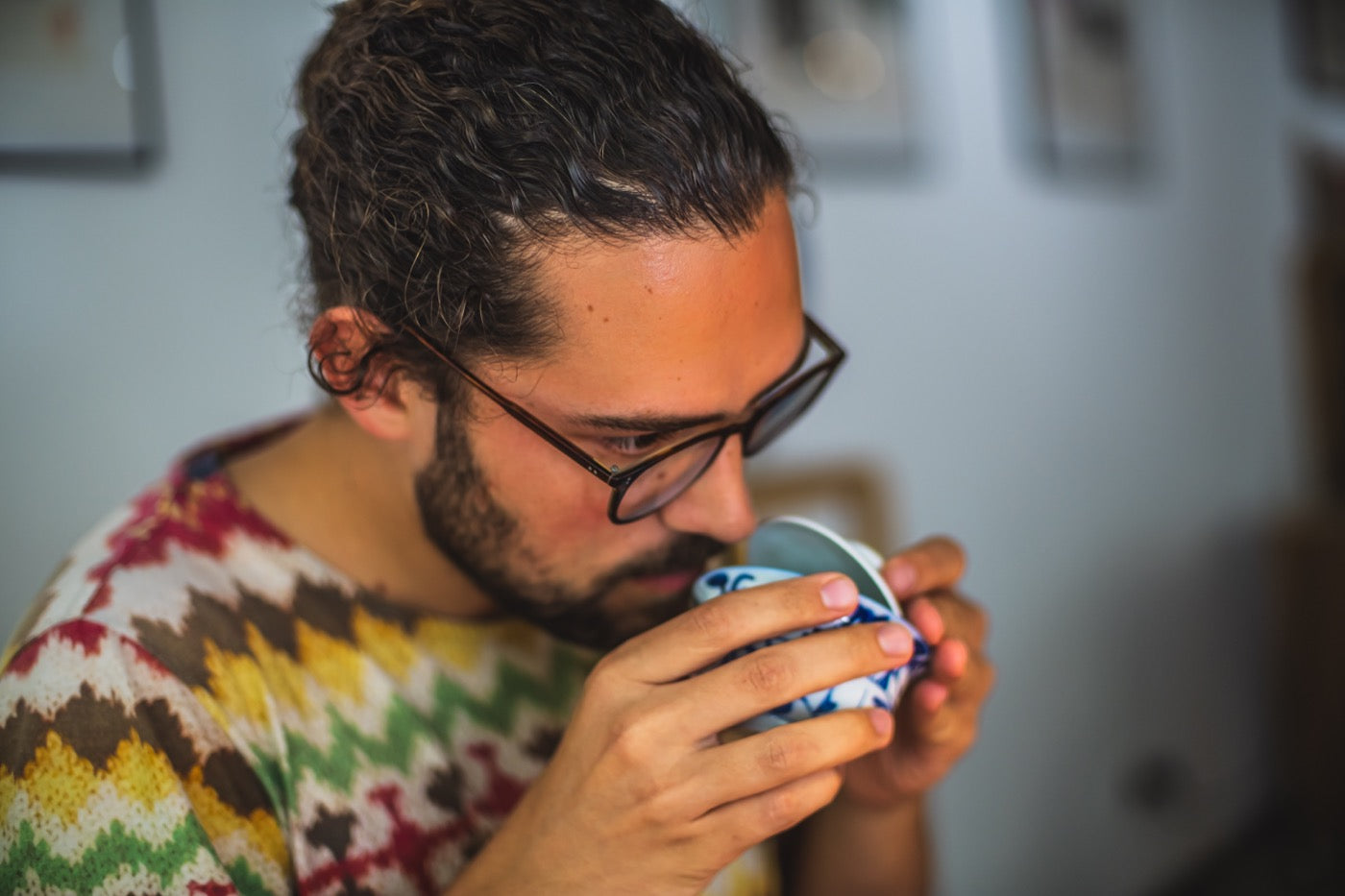


Munich drinks Matcha. That's true. But not every Matcha served in Munich deserves the name. Anyone who has once drunk real Usucha made from freshly milled Tencha — 70-degree water, whisked by hand in a Chawan — knows that what lands in most cafés in a glass with oat milk and vanilla syrup belongs to a different category entirely. This article is for anyone looking for genuinely good Matcha in Munich, and who wants to understand where the difference lies.
Specialty coffee and Specialty Matcha: the same logic
Anyone who followed the rise of specialty coffee in Munich will recognise a pattern: the cafés that started taking origin, harvest, and processing seriously for coffee began asking the same questions about tea. That's no coincidence. Specialty coffee is a way of thinking — it asks who grew it, how, where, and what that means in the cup. That logic transfers directly to Matcha.
Matcha from the supermarket or from an unknown brand's tea sachet typically comes from machine-harvested Tencha, processed in industrial ball mills, blended across batches from different growing regions and years. A stone mill is run slowly and grinds about 40 grams per hour, because higher speeds generate more frictional heat, which destroys chlorophyll and aromatic compounds. The quality gap is the same as between an industrial roast and a carefully sourced single-origin espresso.
Specialty coffee baristas understand this intuitively. They have learned to taste provenance. And the best of them apply the same care to Matcha: origin, harvest, preparation.

Munich: the cafés doing it right
There are a handful of places in Munich where Matcha is served with the same rigour as espresso. The list below makes no claim to completeness — it's a personal assessment built on years of observation and a lot of cups.
Keep Banana
Keep Banana is one of the more interesting cases in Munich's specialty coffee scene — and not only because of the coffee. Barista Yuki is from Aichi Prefecture, which is the fourth-largest Tencha producer among Japan's prefectures. Nishio, the historic Matcha city in Aichi, is regarded alongside Uji as a reference point for Matcha quality. When Yuki serves Matcha, it isn't a curated wholesale assortment — it's regional knowledge of origin that translates directly into the cup. The Nishio Matcha poured there has the characteristic sweetness and depth the region is known for: no bitterness, a clear umami-rich structure, vivid jade in colour.
Humpbackwhale Coffee
Humpbackwhale Coffee stands for what specialty coffee means in its most consistent form: transparency about origin, a focus on craft, no compromise on quality. Ordering Matcha here doesn't get you a convenience product. The café treats Matcha for what it is — a raw material with terroir that demands careful preparation. The baristas know which water, which temperature, which gram-to-water ratio makes the difference.
The Spirited Goat
The Spirited Goat has been a fixed point on Munich's specialty coffee map for years. The same principle applies here: a house that doesn't cut corners on coffee doesn't cut corners on Matcha either. The standard is consistent — from the roast profile of the espresso to the choice of Matcha powder. You can taste it in the result.
Calima Specialty
Calima stands for specialty coffee with a clear identity and a team that knows its products. Matcha here isn't an afterthought on the menu — it's a deliberate offering for guests who bring the same expectations to tea as they do to coffee.

The problem with Matcha bars
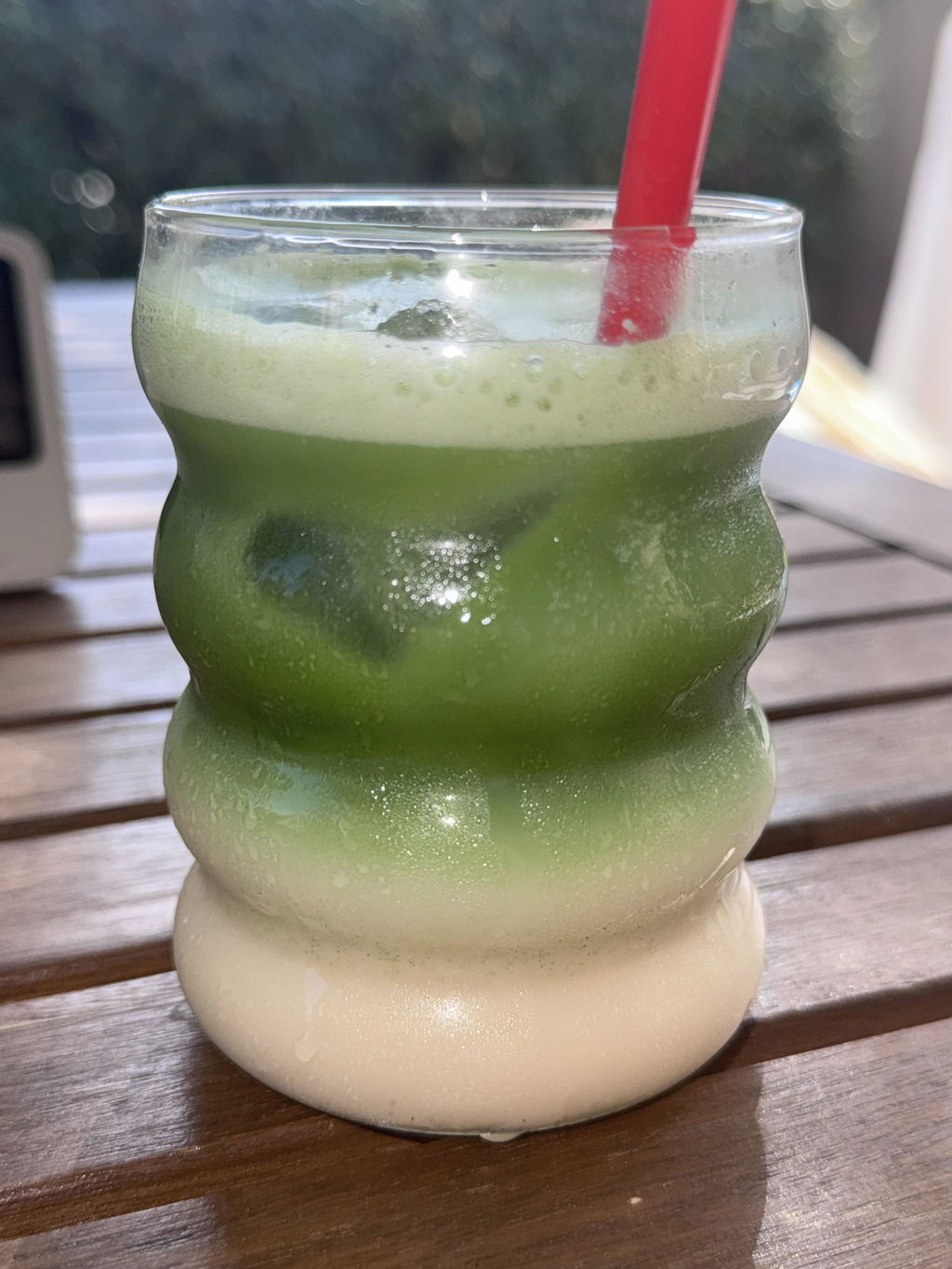
Alongside the specialty scene, a different category has grown in Munich: Matcha bars that treat Matcha as a visual product. Vivid green layers in tall glasses, mango-Matcha lemonade, strawberry-Matcha, ube-Matcha — Instagram content with a beverage component. That's not a judgment. But it is a different thing.
The problem starts with the quality of the powder. In a drink that is 70 percent fruit juice, syrup, and milk, a fine first-harvest Matcha makes no sense and no economic sense either. So a cheap kitchen powder is used instead, or worse: pre-made Matcha base syrups that contain Matcha as a colourant, not as a flavour. In some products, the Matcha content is under ten percent. What gets sold as a Matcha experience has about as much in common with freshly whisked Usucha as an instant cappuccino has with a well-pulled espresso.
Anyone who genuinely wants to get to know Matcha should try the comparison once: two grams of quality powder, 70 millilitres of water at 75 degrees, one minute with the Chasen. The result has nothing in common with the green drink made from Matcha syrup — it's a different category.
How to recognise a good Matcha spot in Munich
Three questions help make the call. First: where does the powder come from? A café that knows the origin — Uji, Nishio, Kagoshima, Yame — and can name it has engaged with the product. Second: is it whisked to order? Real Usucha is emulsified with a Chasen, not frothed with a milk steamer. The difference in flavour is fundamental. Third: what water temperature? Working with boiling water destroys L-theanine and gives the Matcha a coarse bitterness. 70 to 80 degrees is the standard for a Matcha that is drunk straight.
These three parameters separate knowledge from its absence — faster than any tasting.

Marukyu Koyamaen: the reference for home
Anyone who wants to drink good Matcha in Munich regularly is well served by taking preparation into their own hands. Marukyu Koyamaen, one of Japan's oldest and most respected Matcha houses, based in Uji, sets the standard the scene measures itself against. Soju, Meiju, and Oju — the three lines we carry at UNEARTHED — cover the range from everyday Usucha to ceremonial Koicha quality.
Soju is the entry point: lightly sweet, with a rounded umami depth that works well for latte preparations without sacrificing quality. Meiju is the middle tier — more balanced, more complex, suited to daily Usucha. Oju is the top of the range: concentrated sweetness, an almost velvety texture, for Koicha and for moments when Matcha is the point.
We carry all three at UNEARTHED in Munich. If you're not sure which tier fits, come in and taste. Matcha isn't a product you buy blind — it's one you should get to know.
Munich has a specialty Matcha scene that is growing — but not yet one that is widely documented. The cafés doing it right do so with the same standard they apply to coffee: origin matters, craft matters, quality is non-negotiable. Once you've experienced that, Matcha syrup no longer makes the cut.