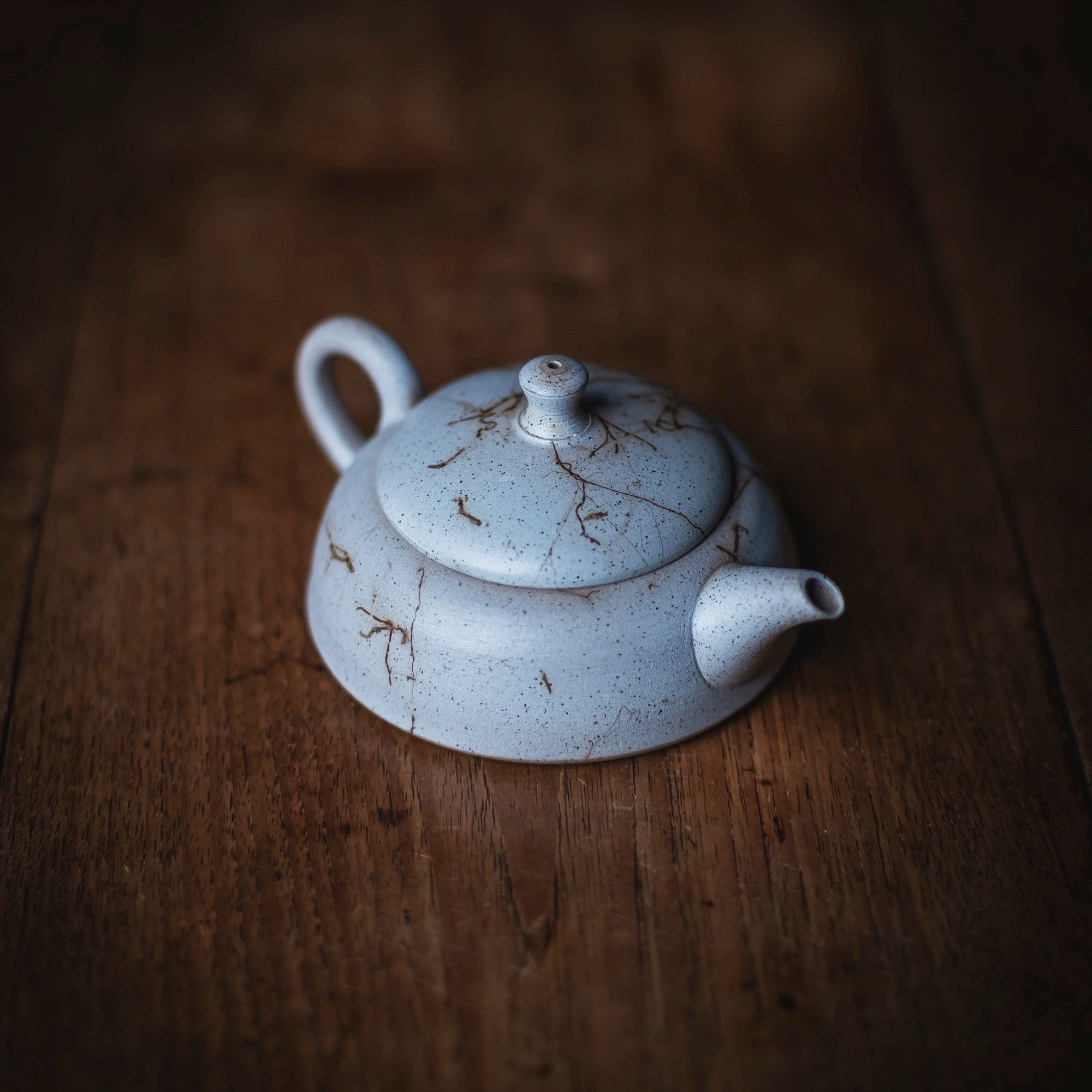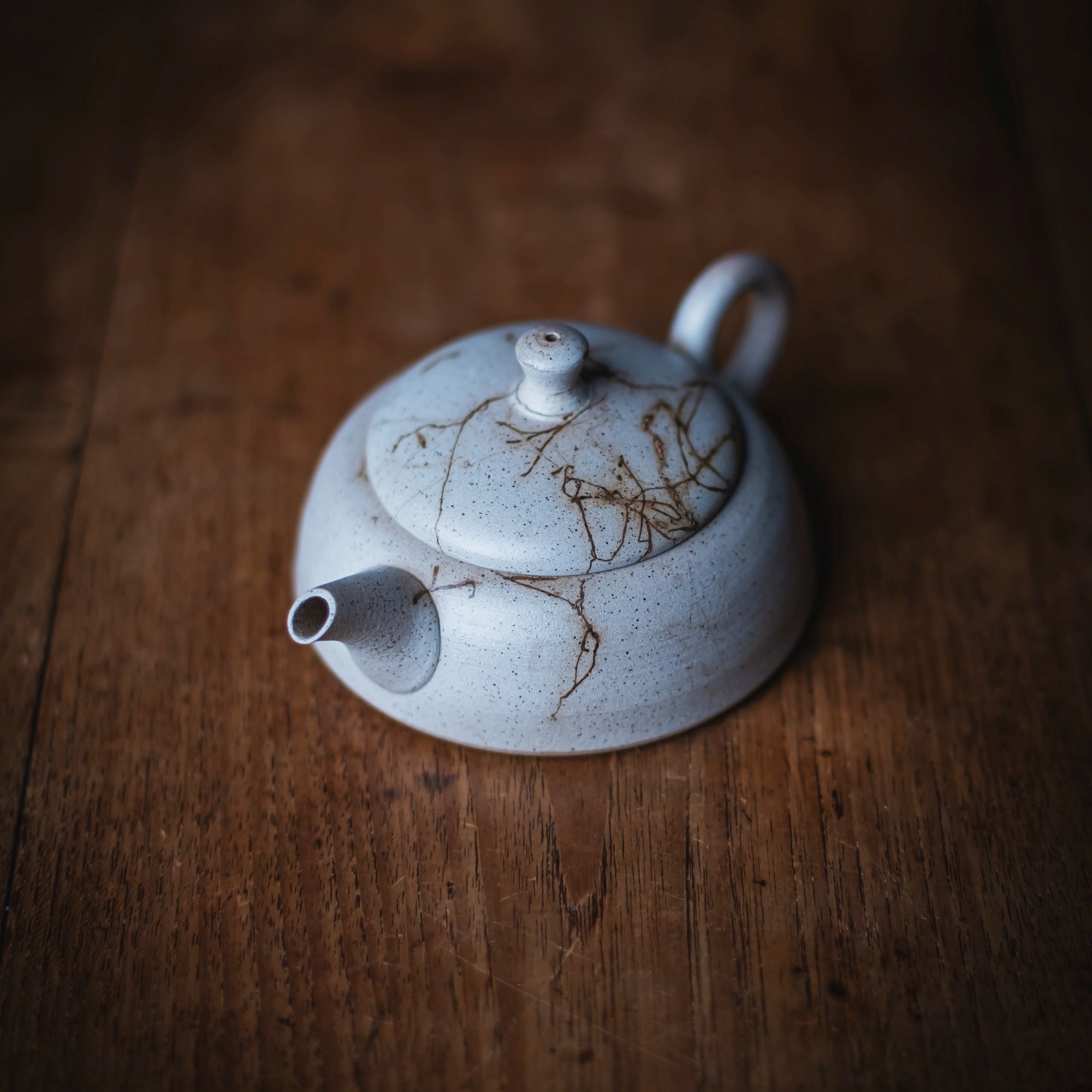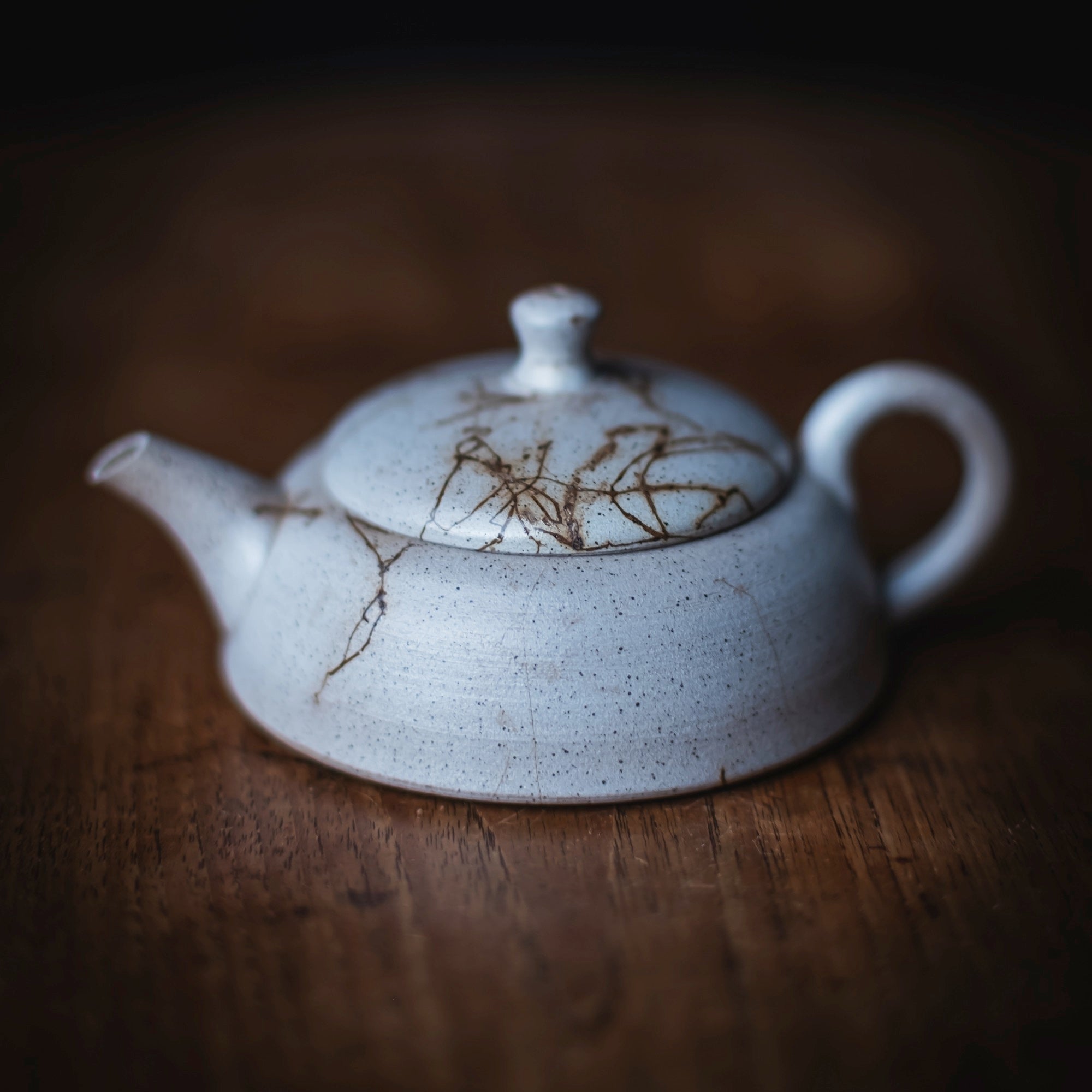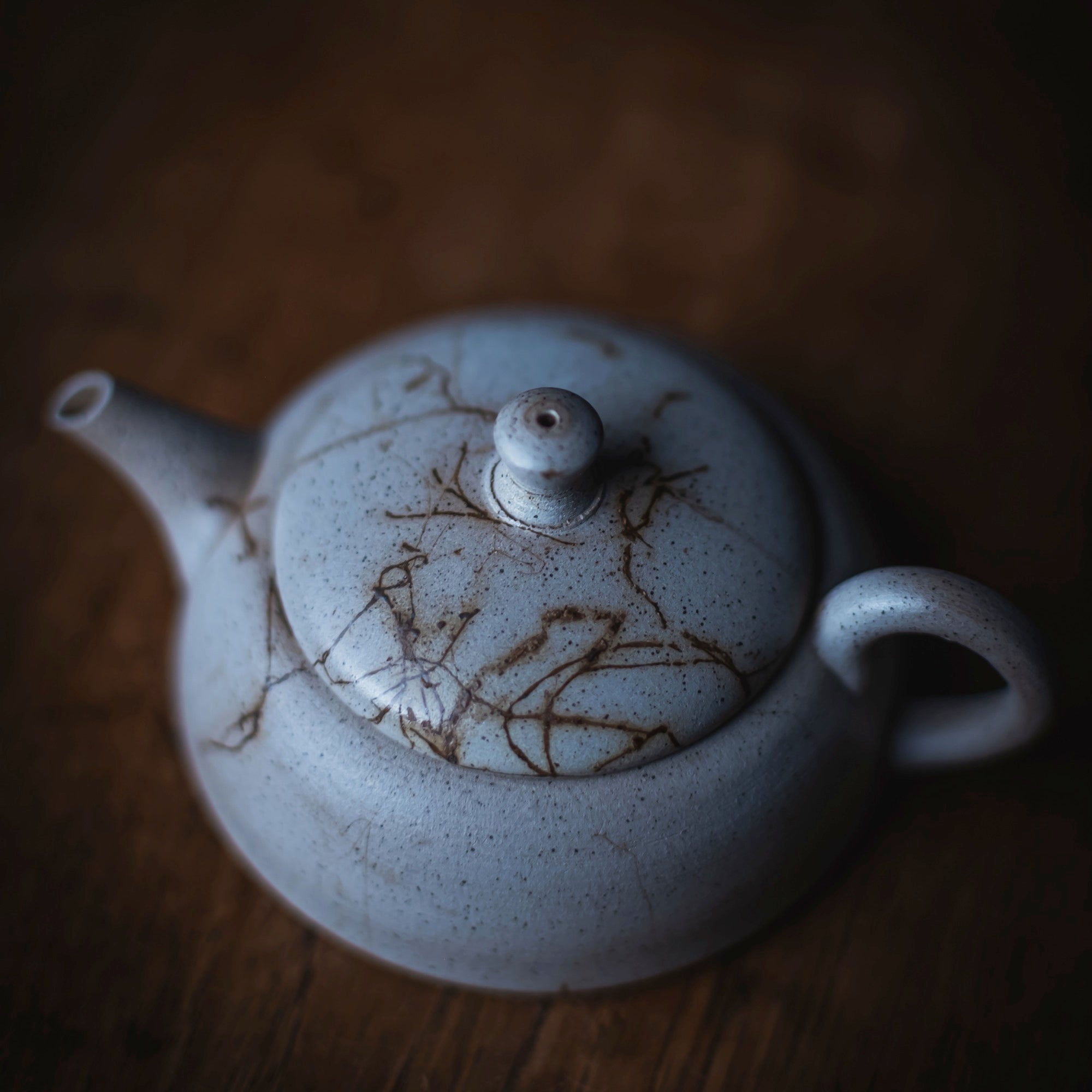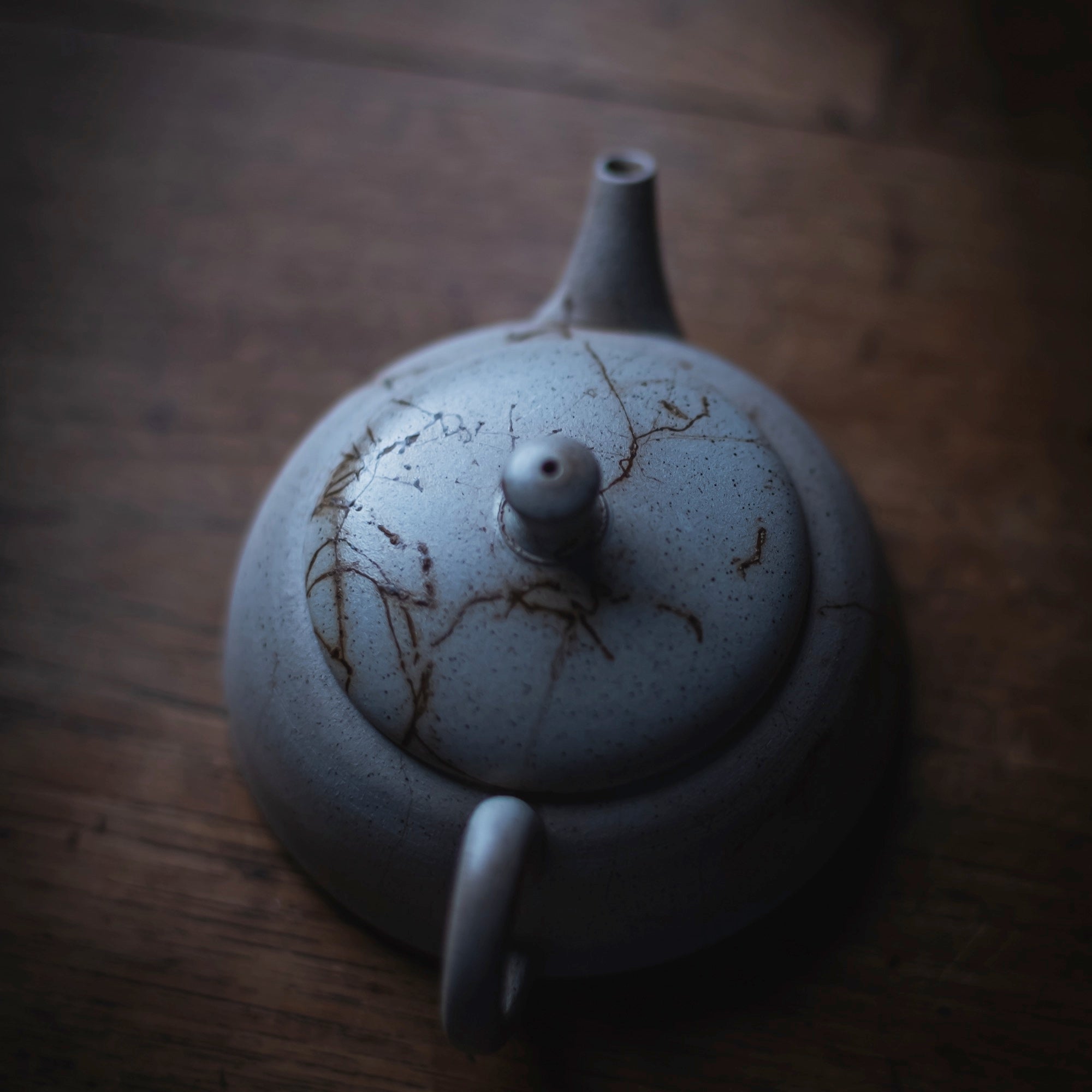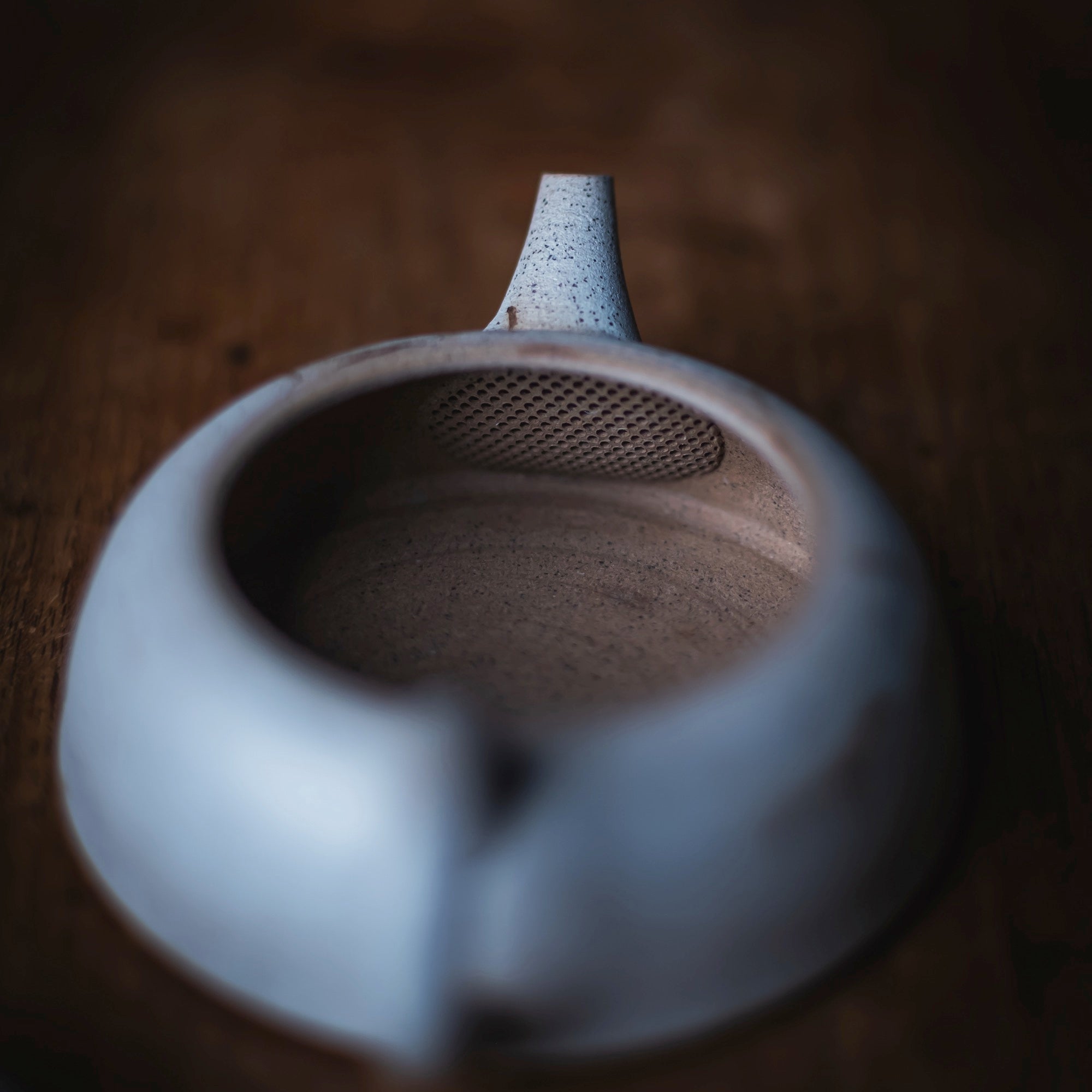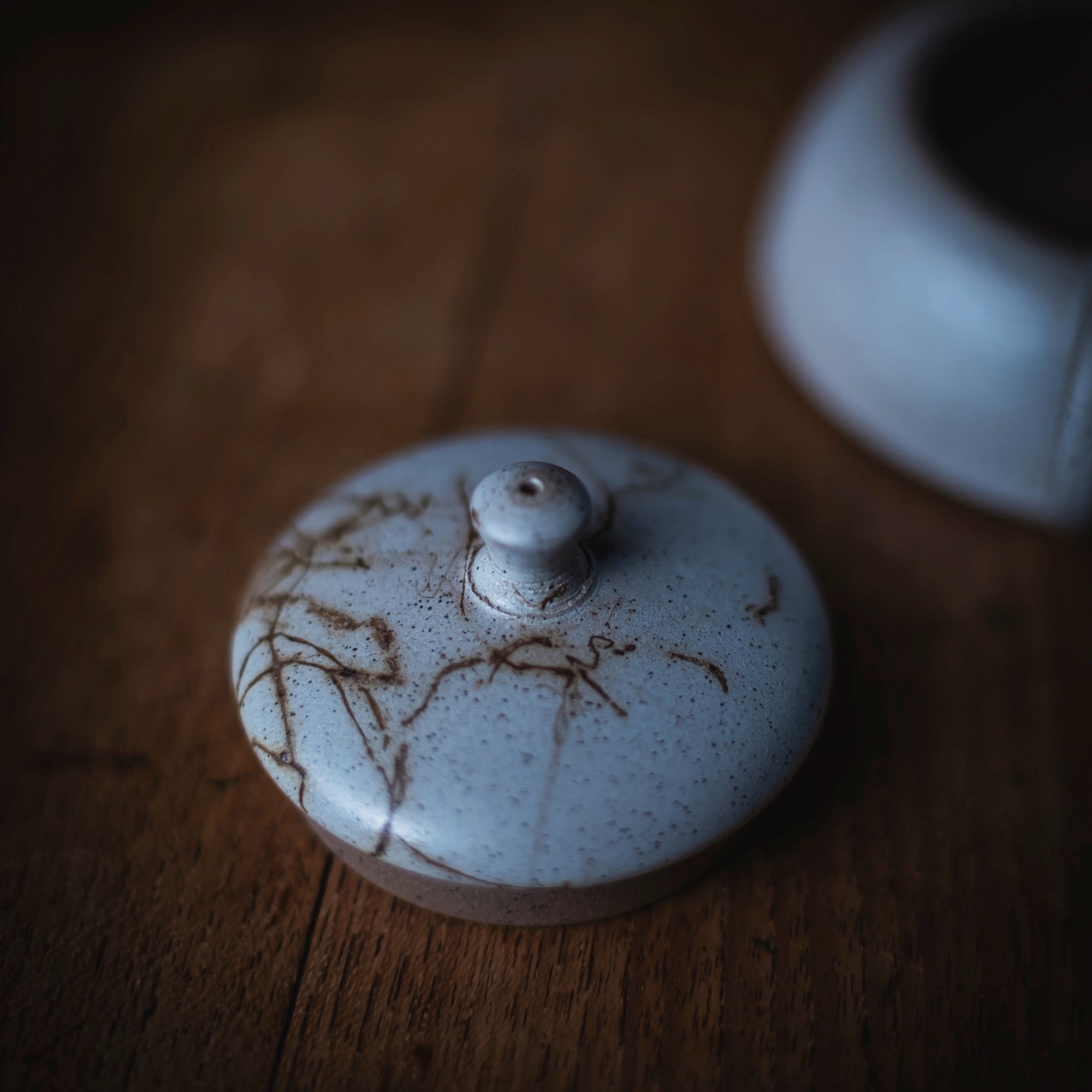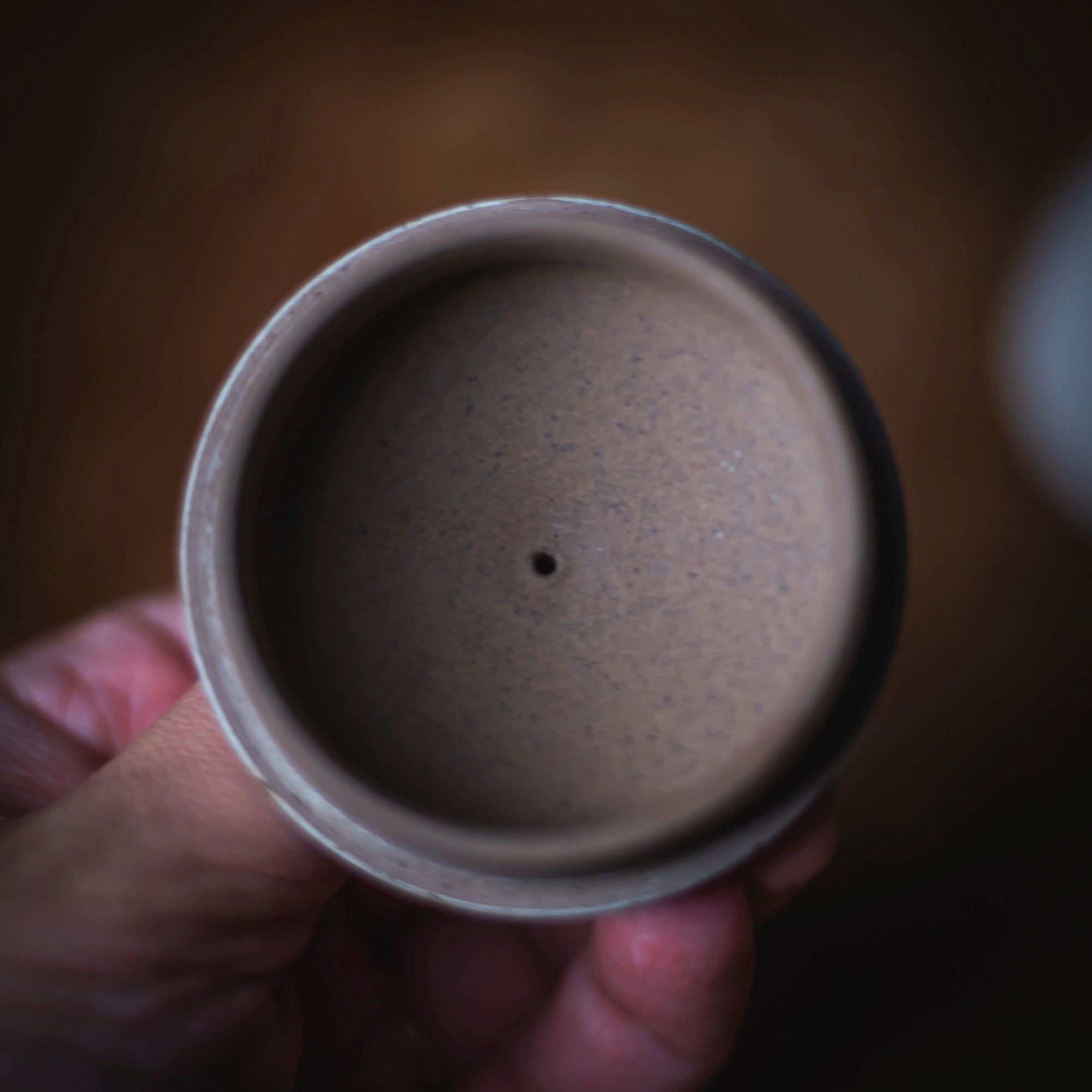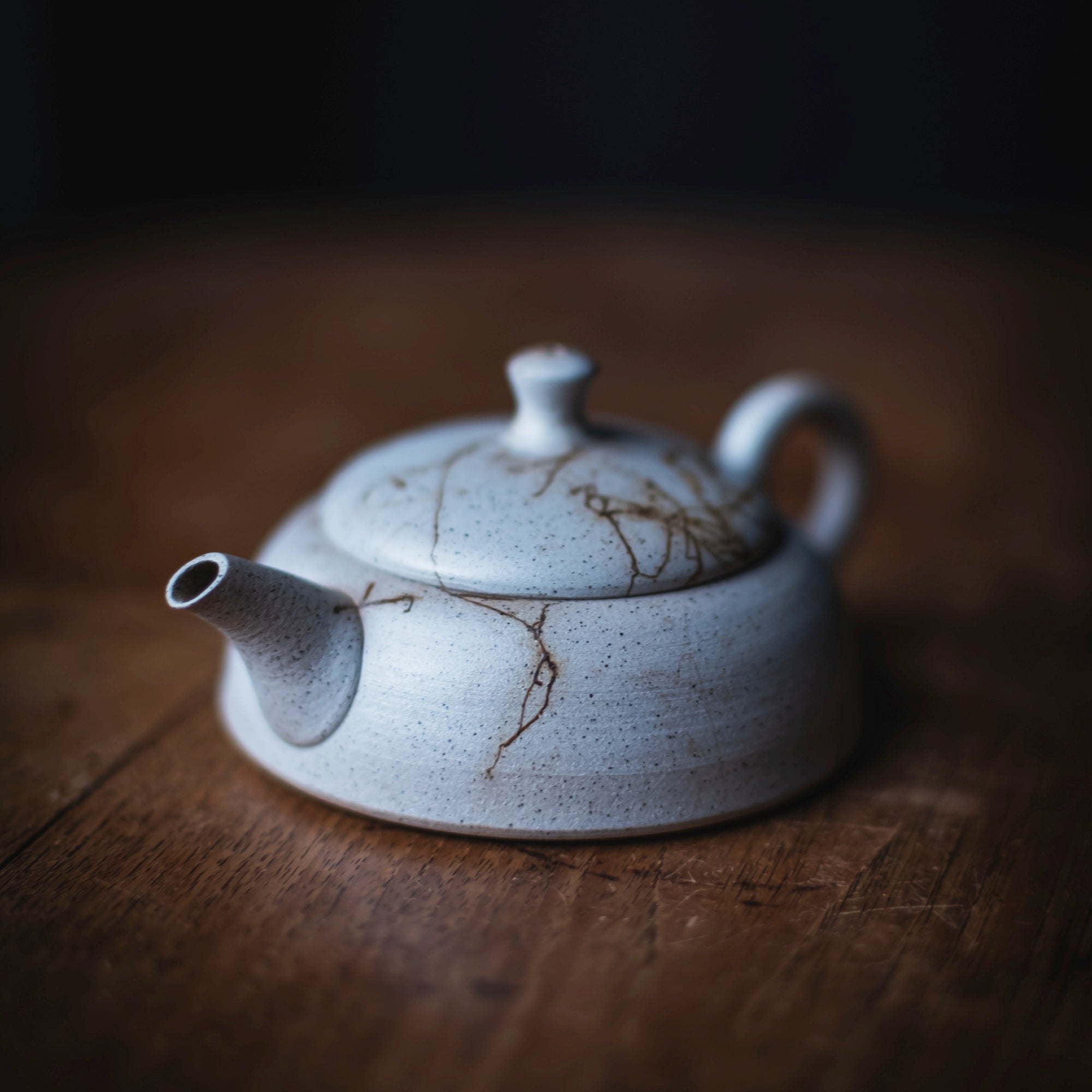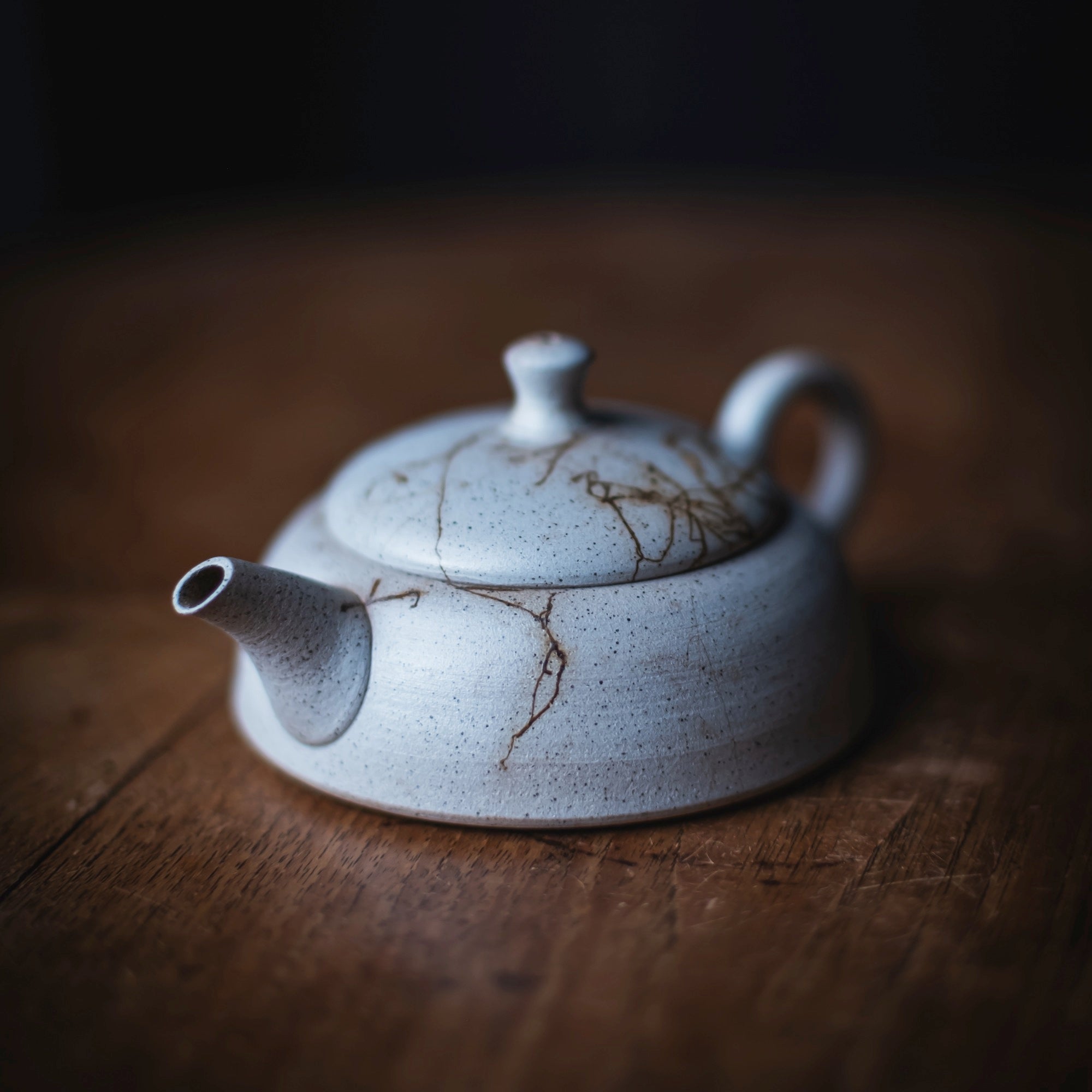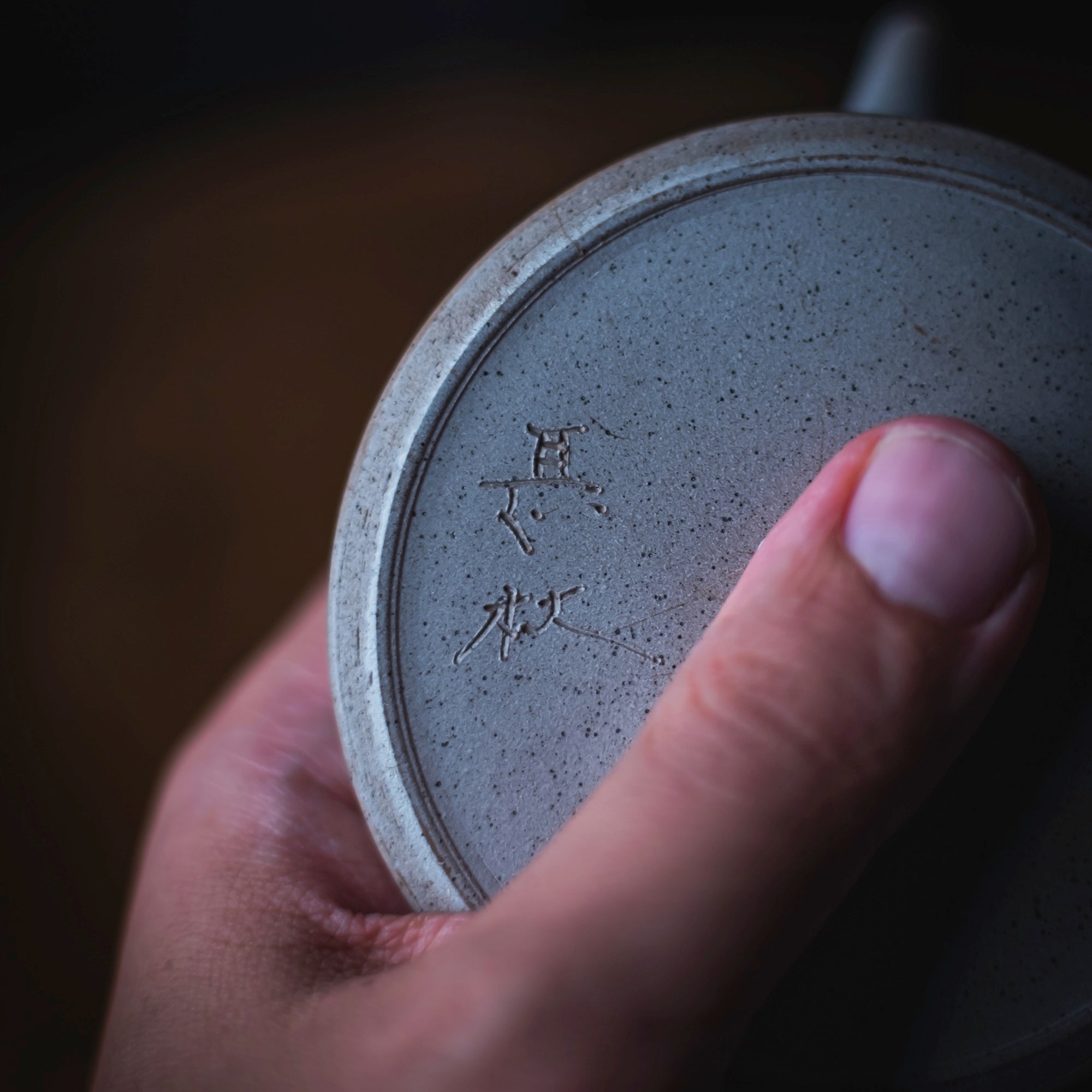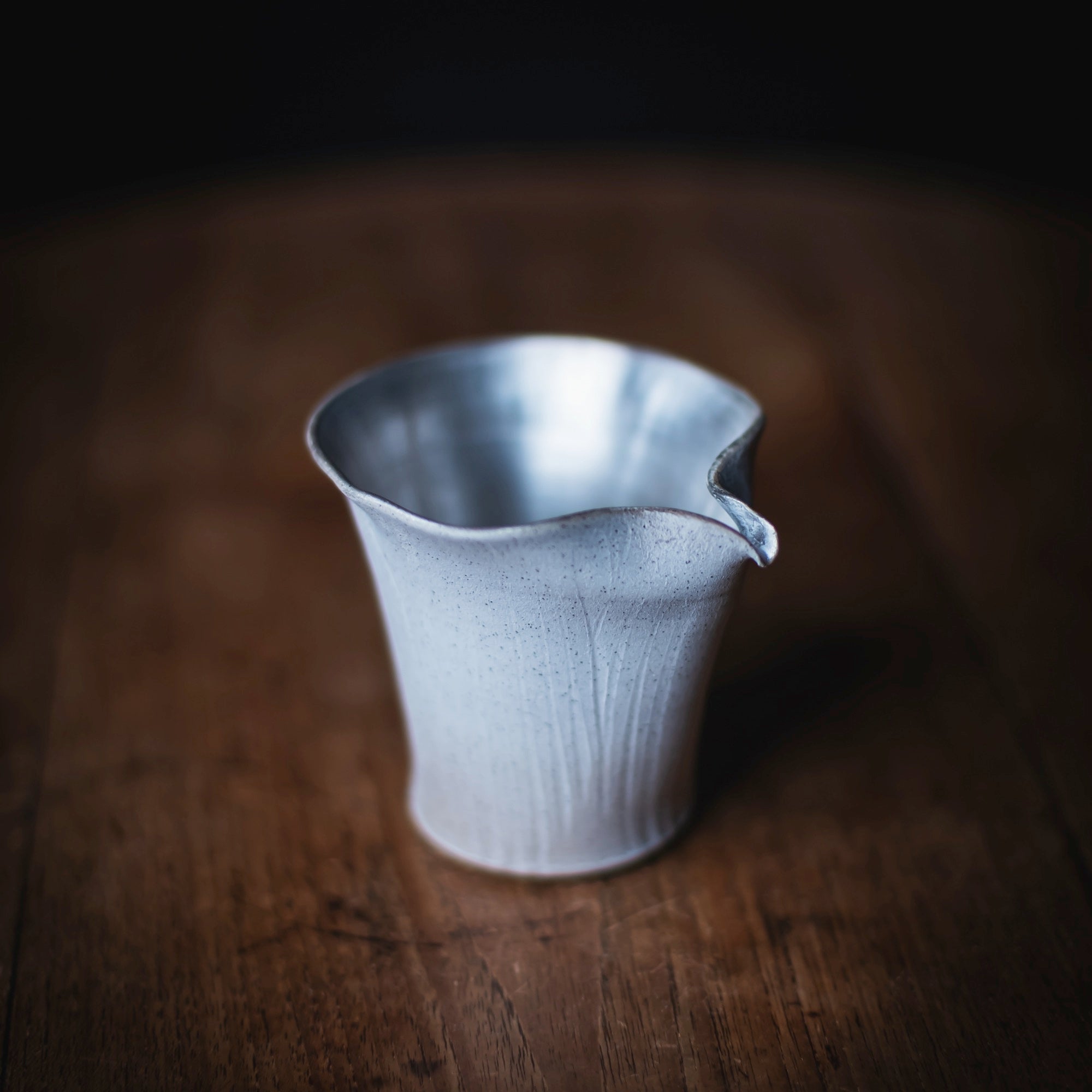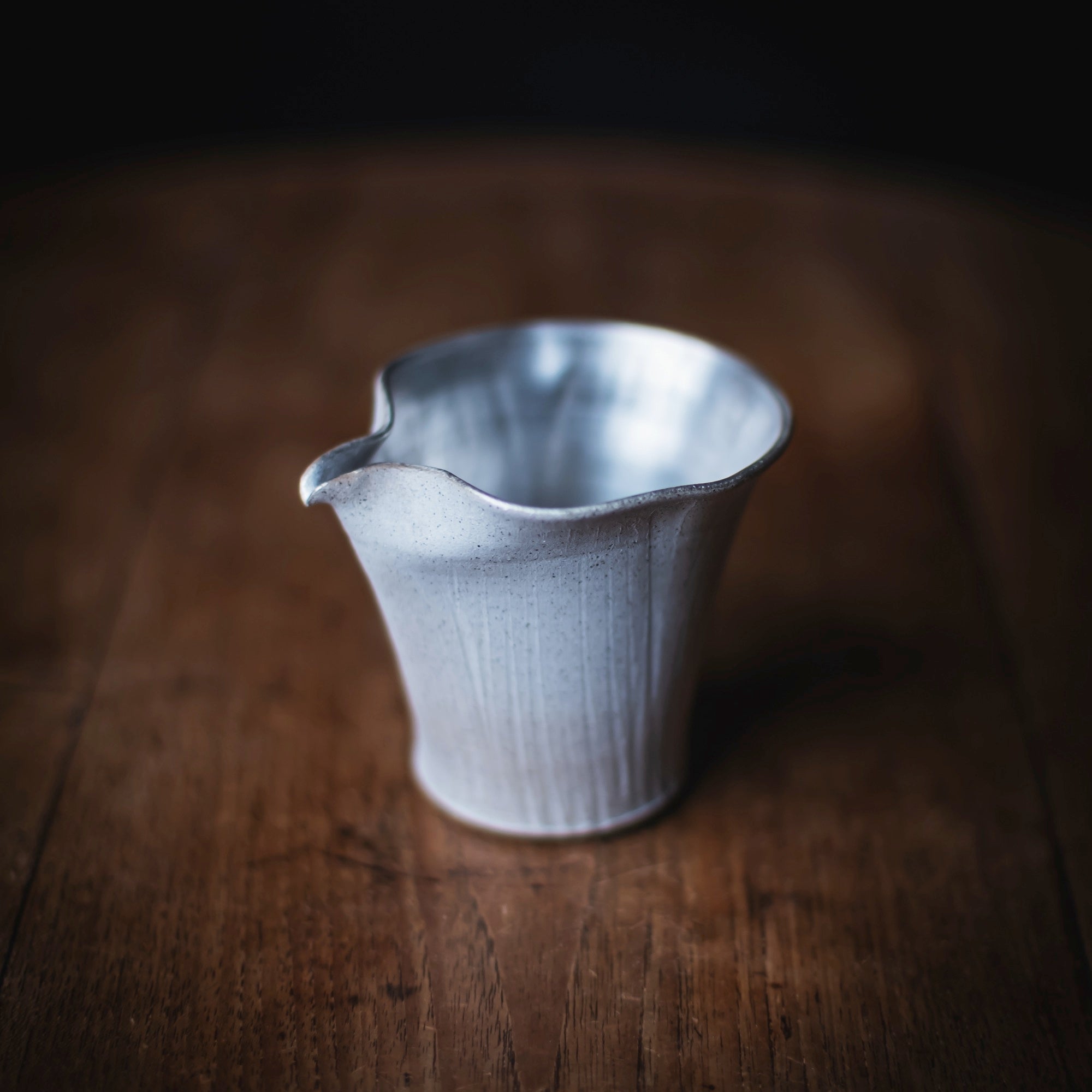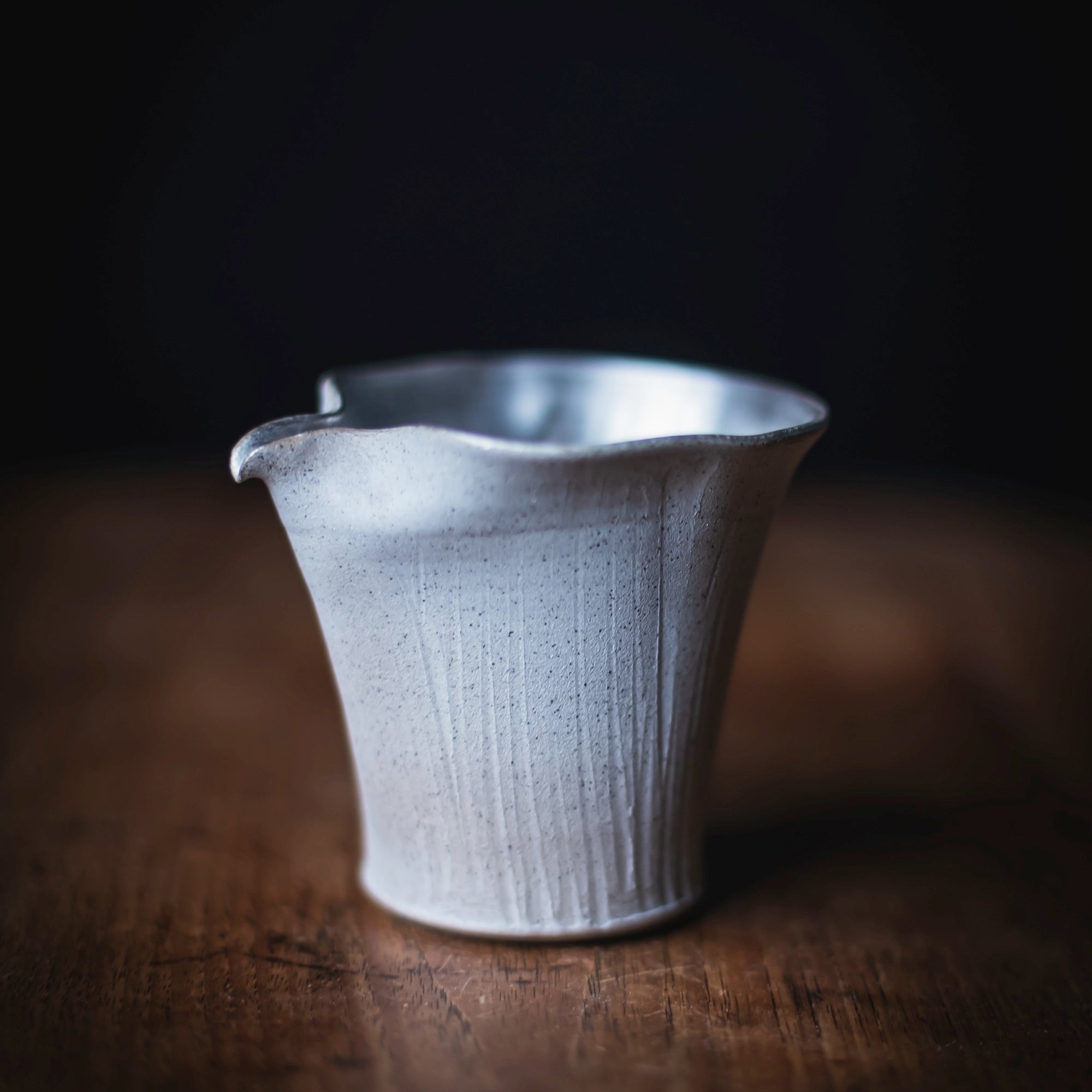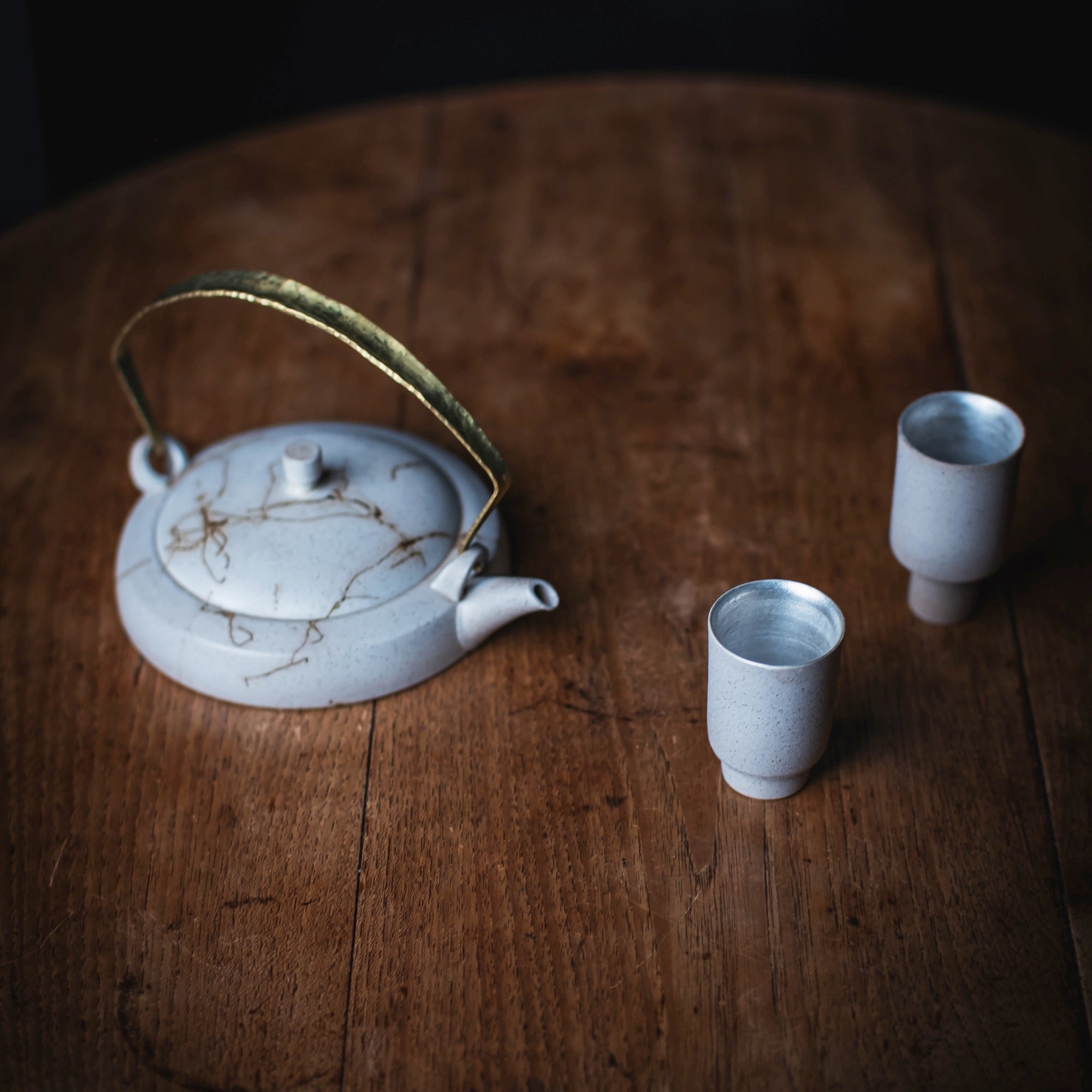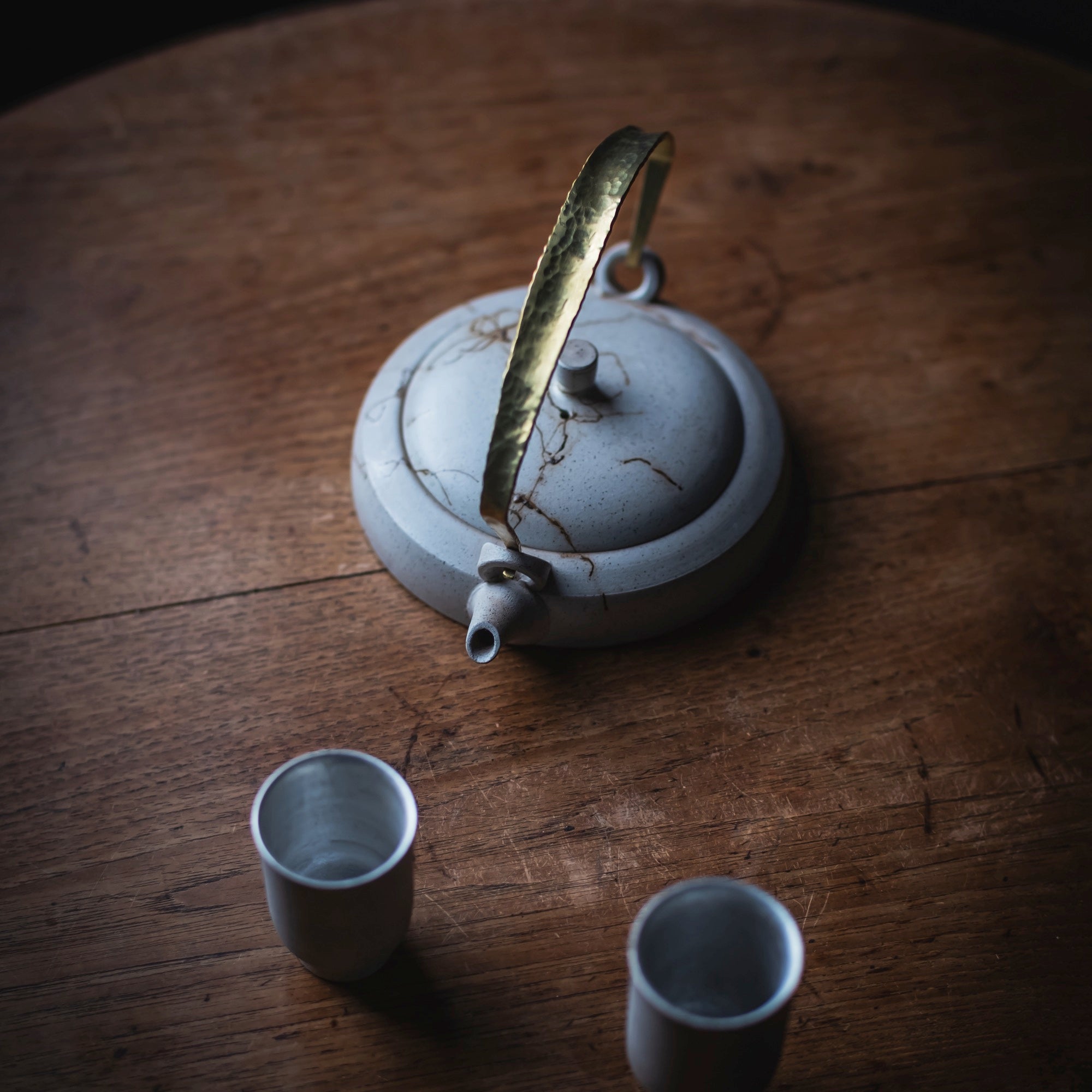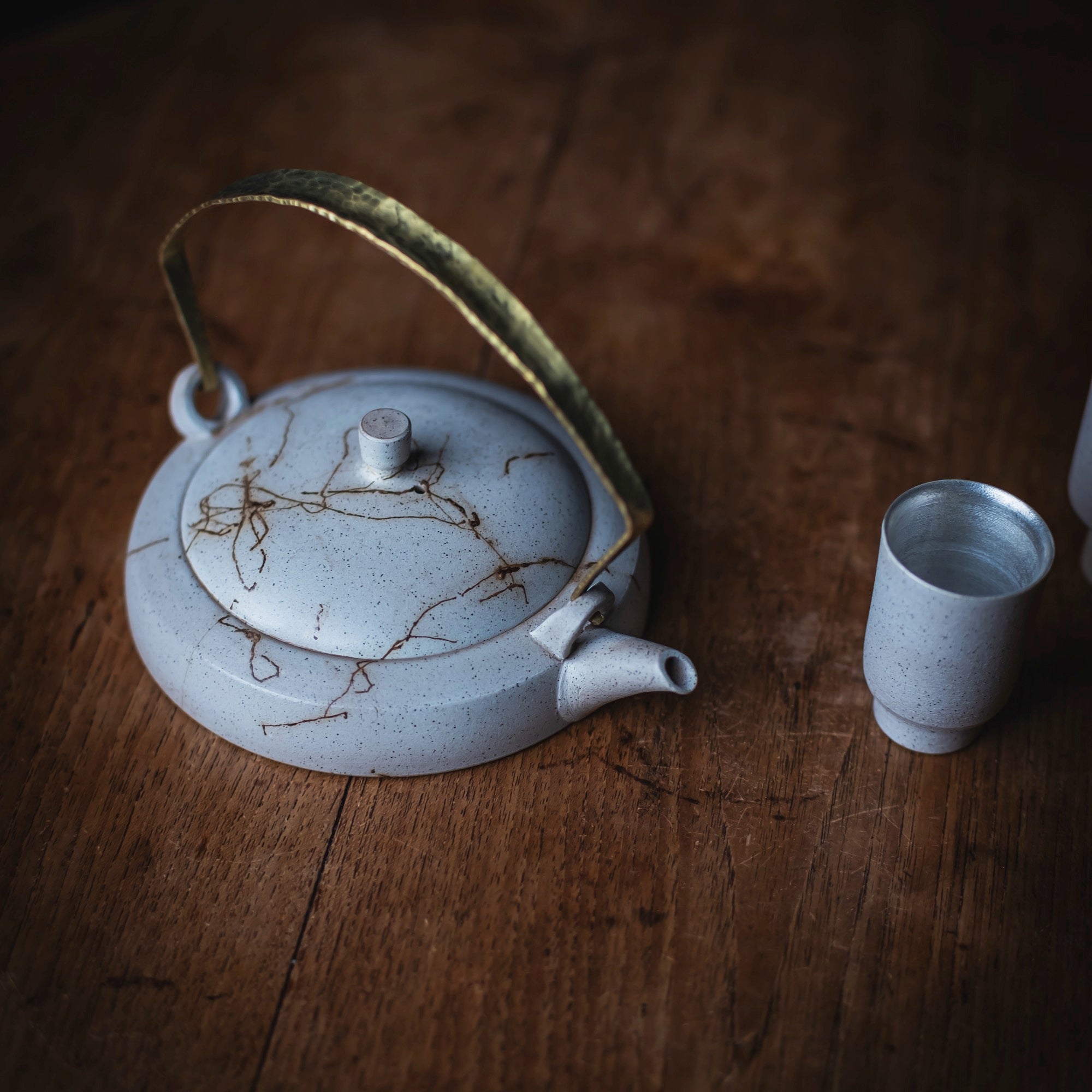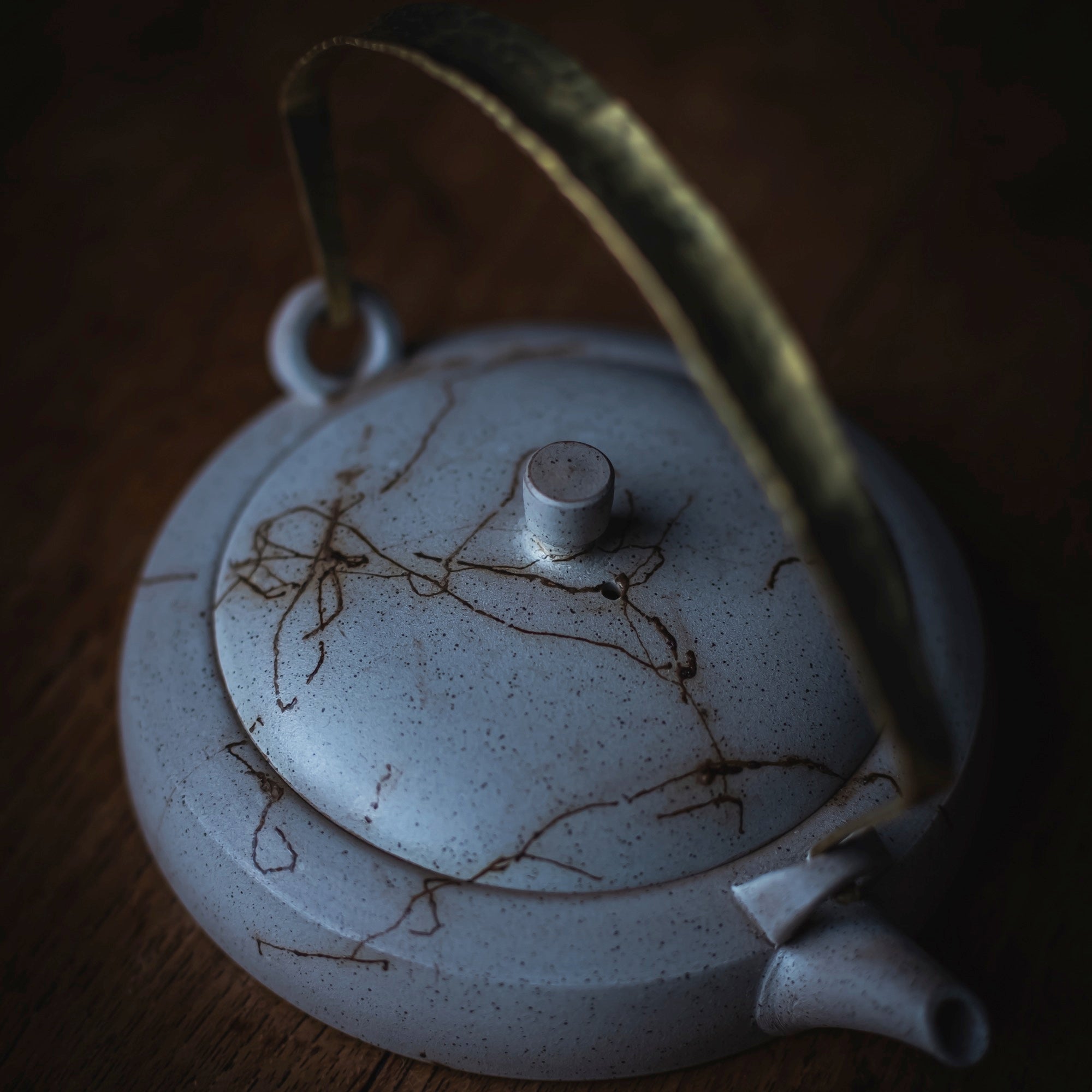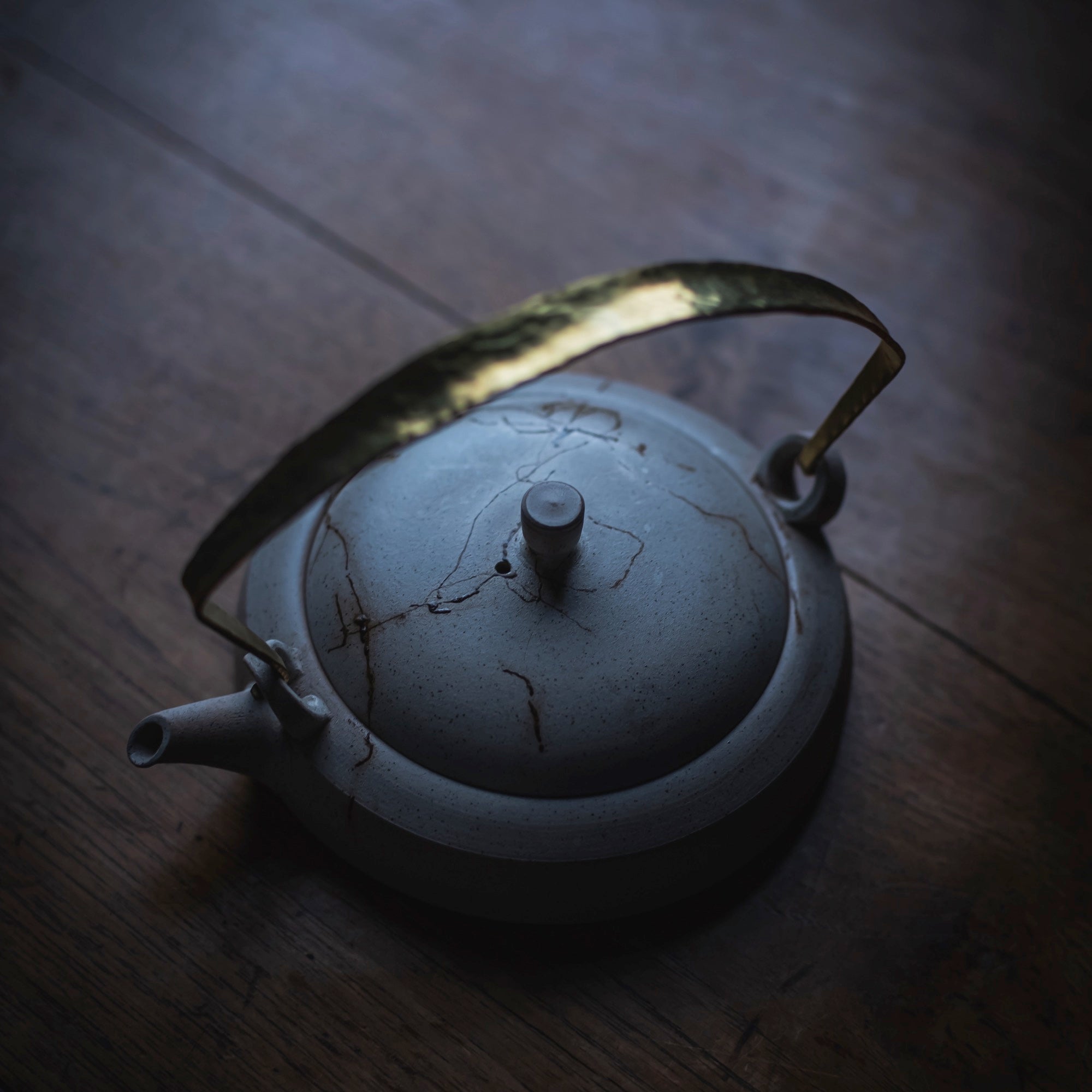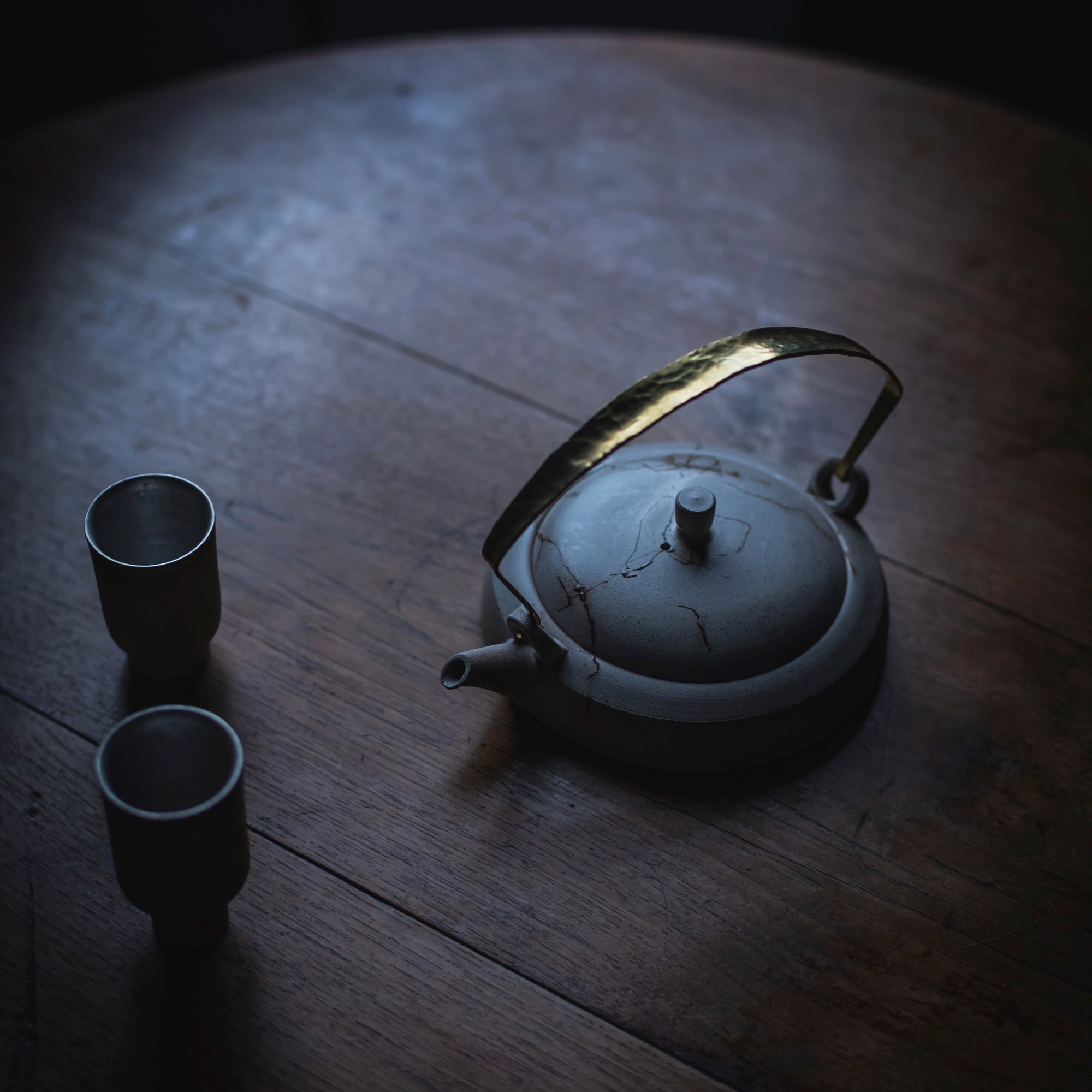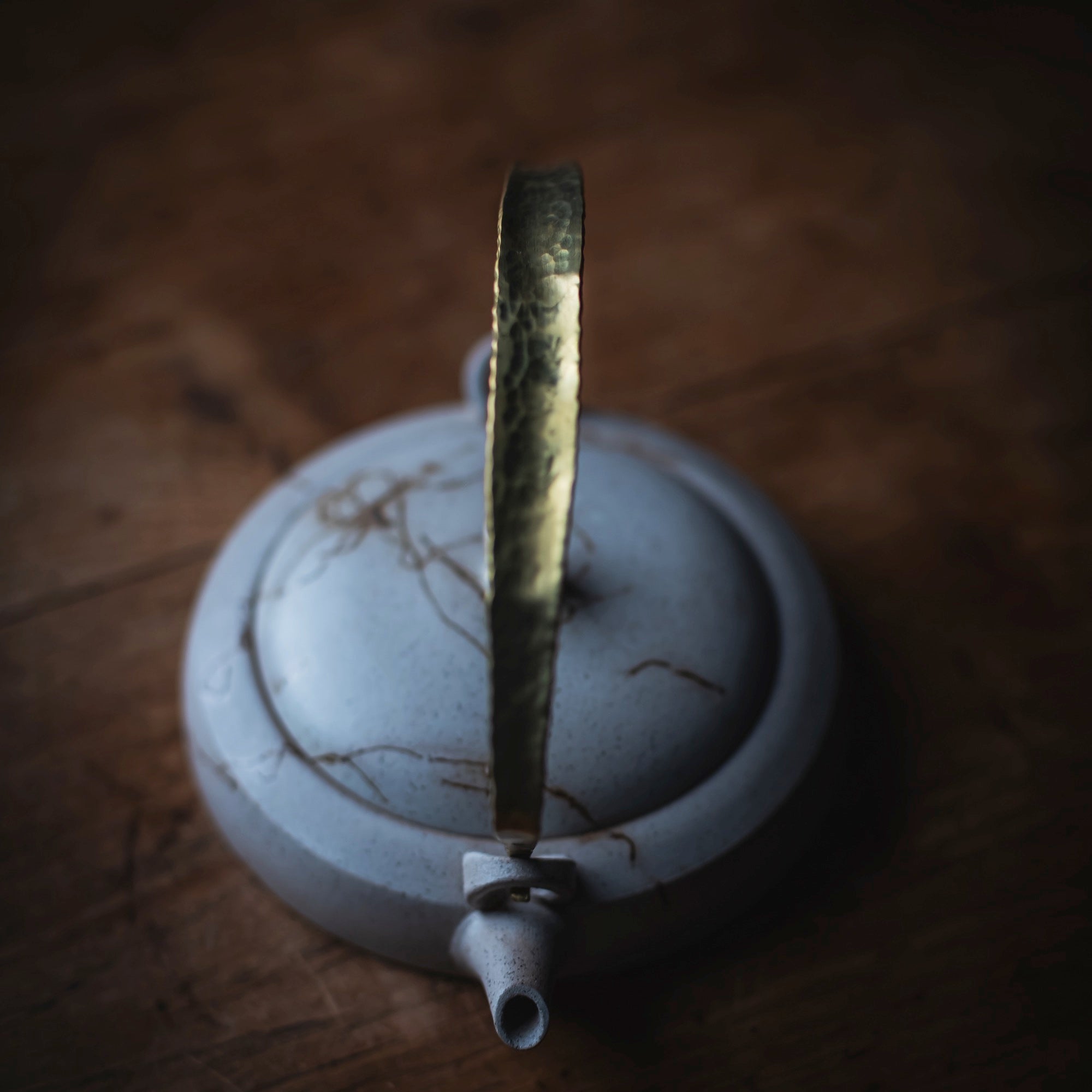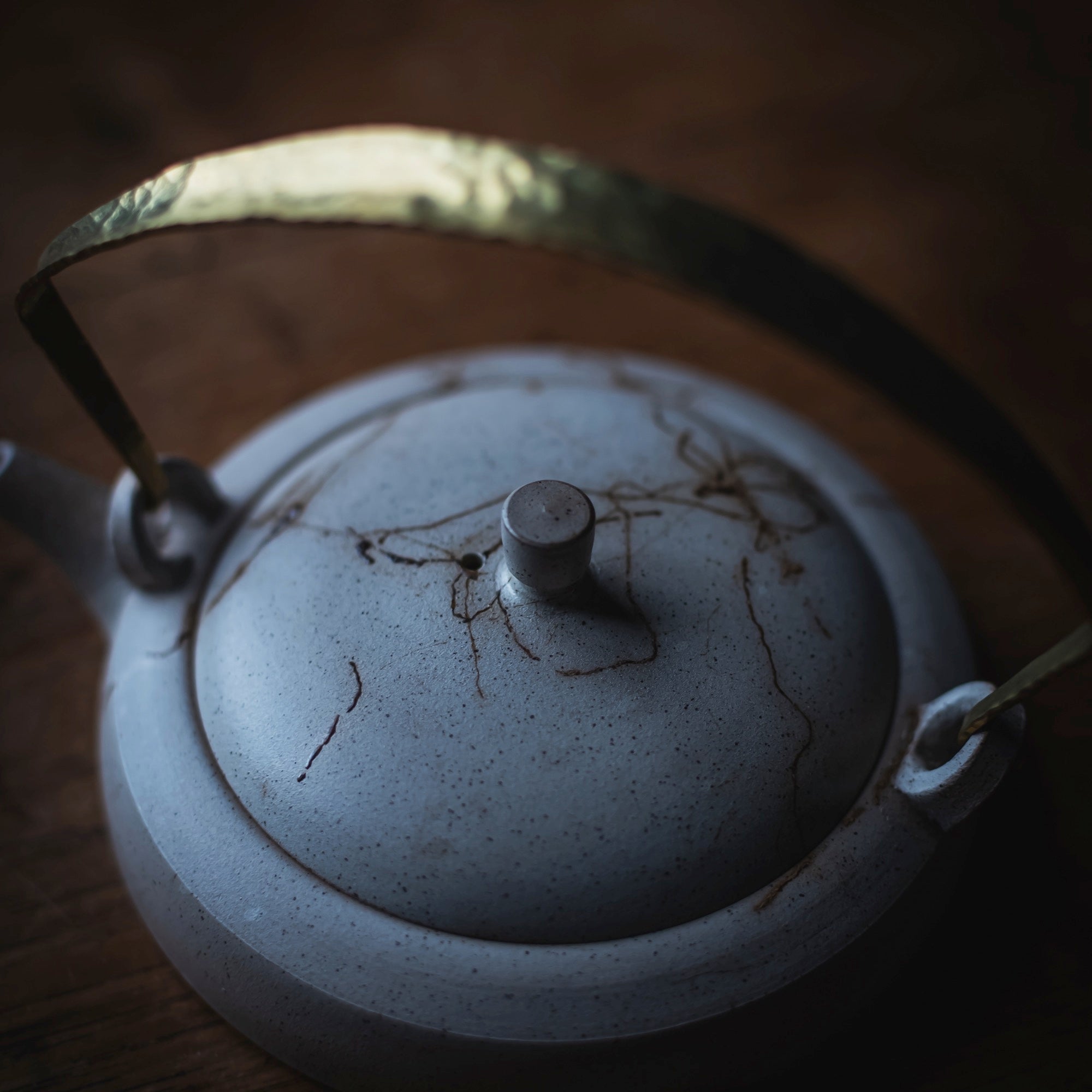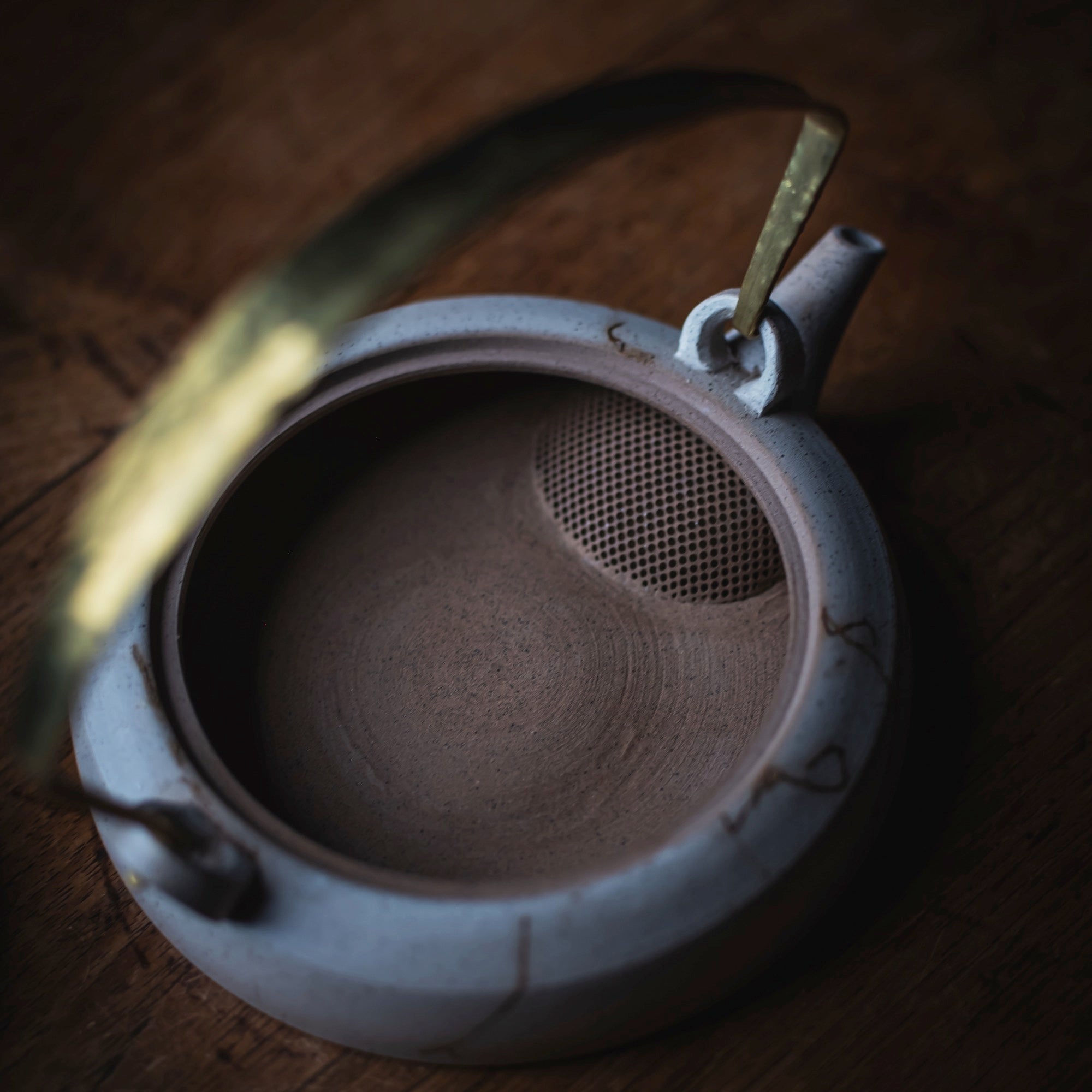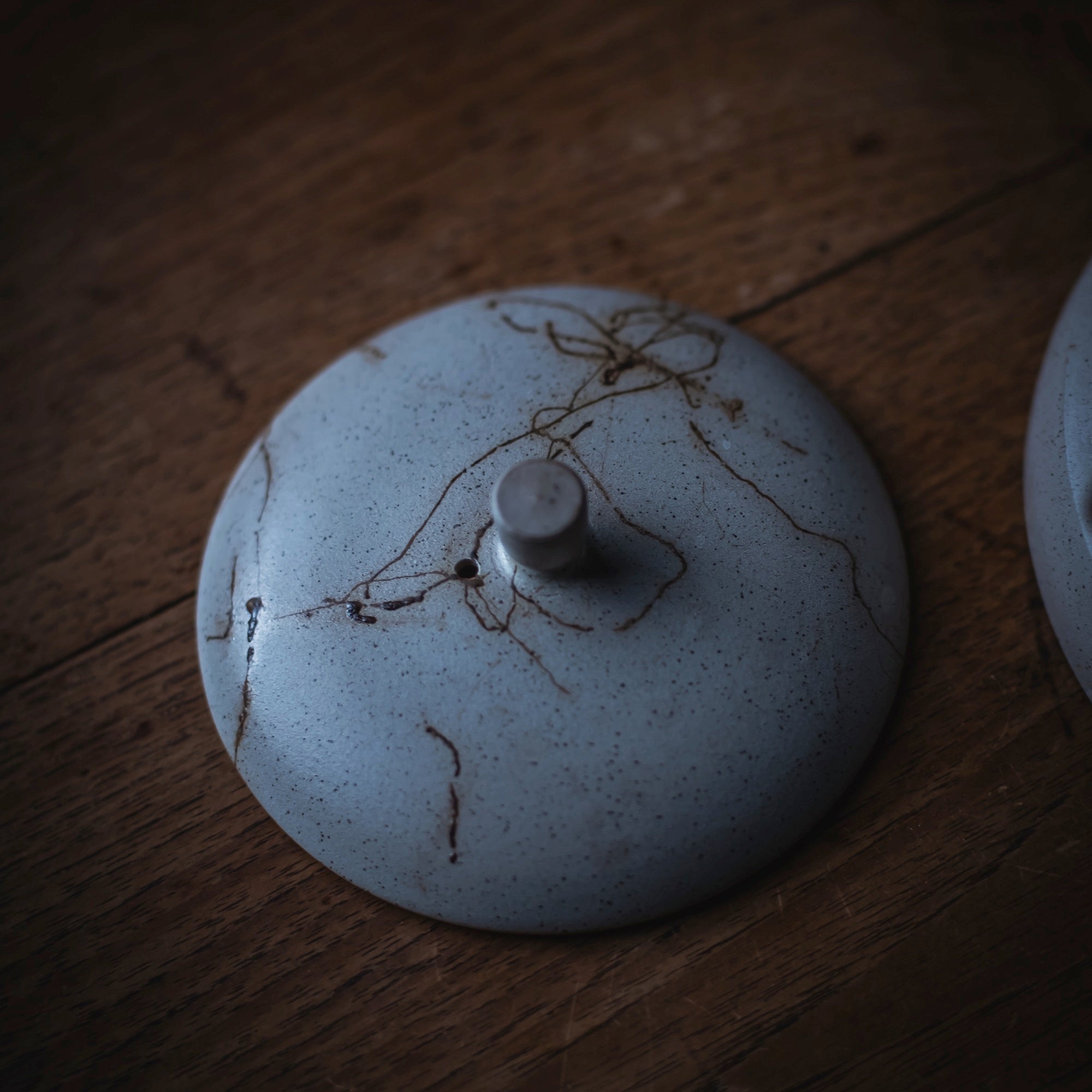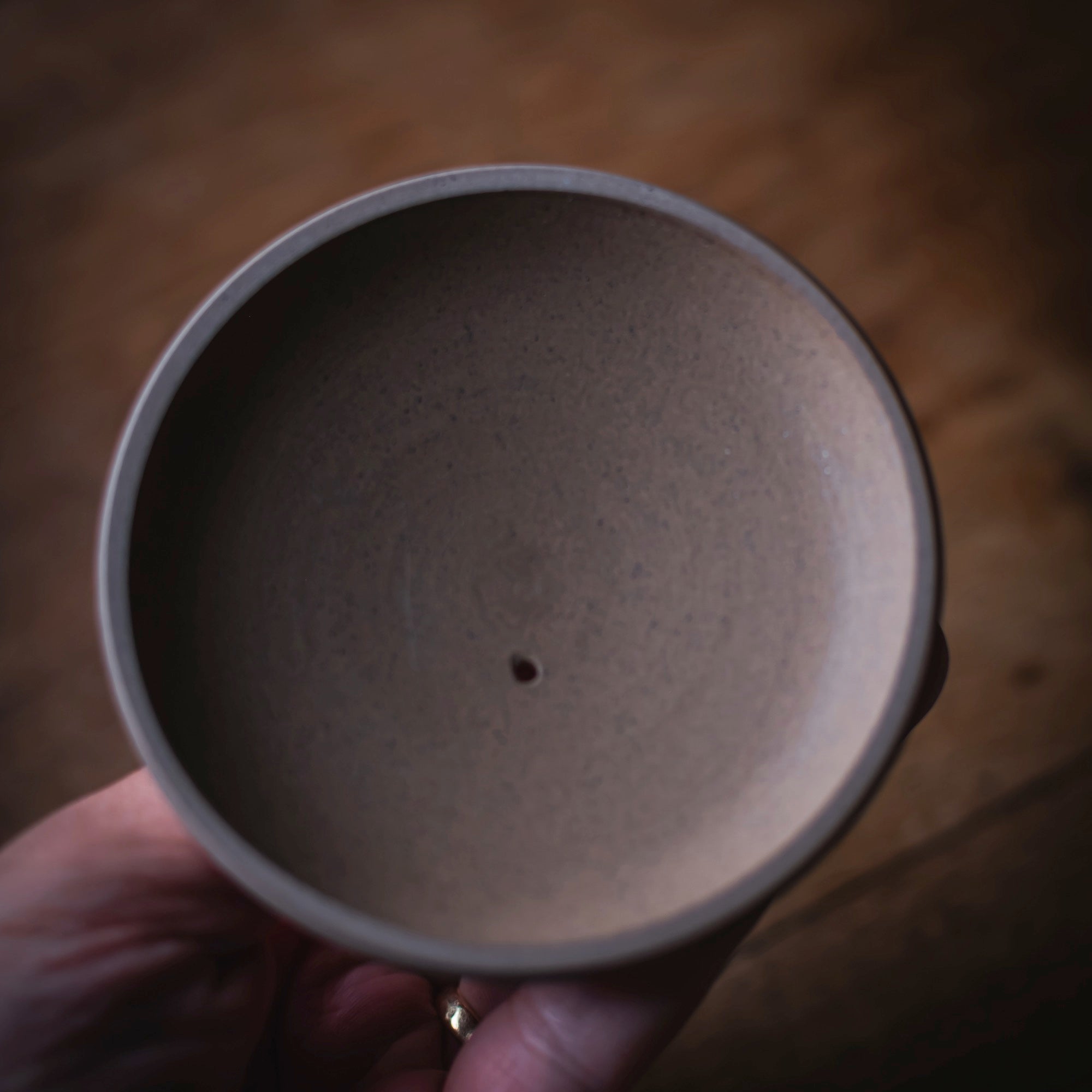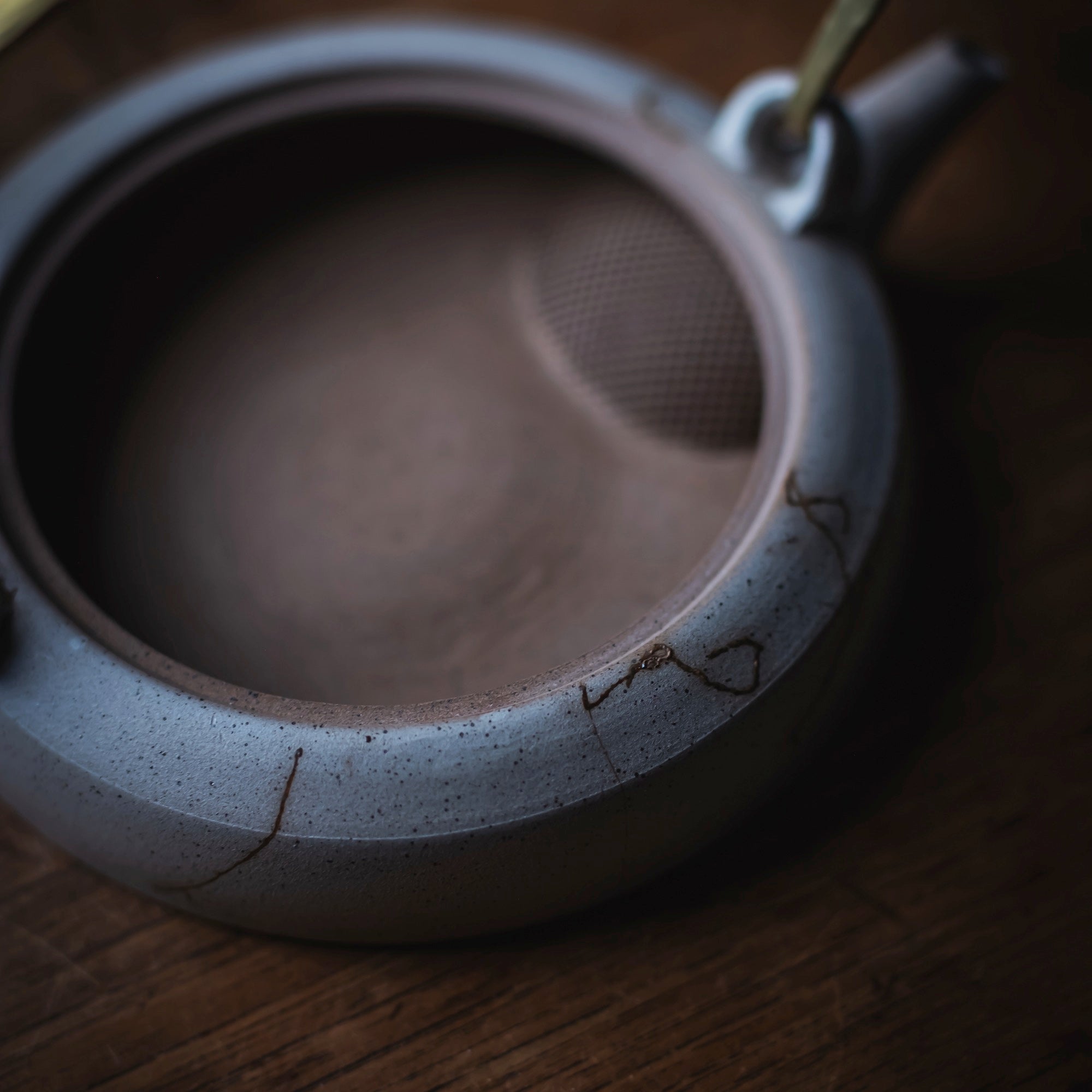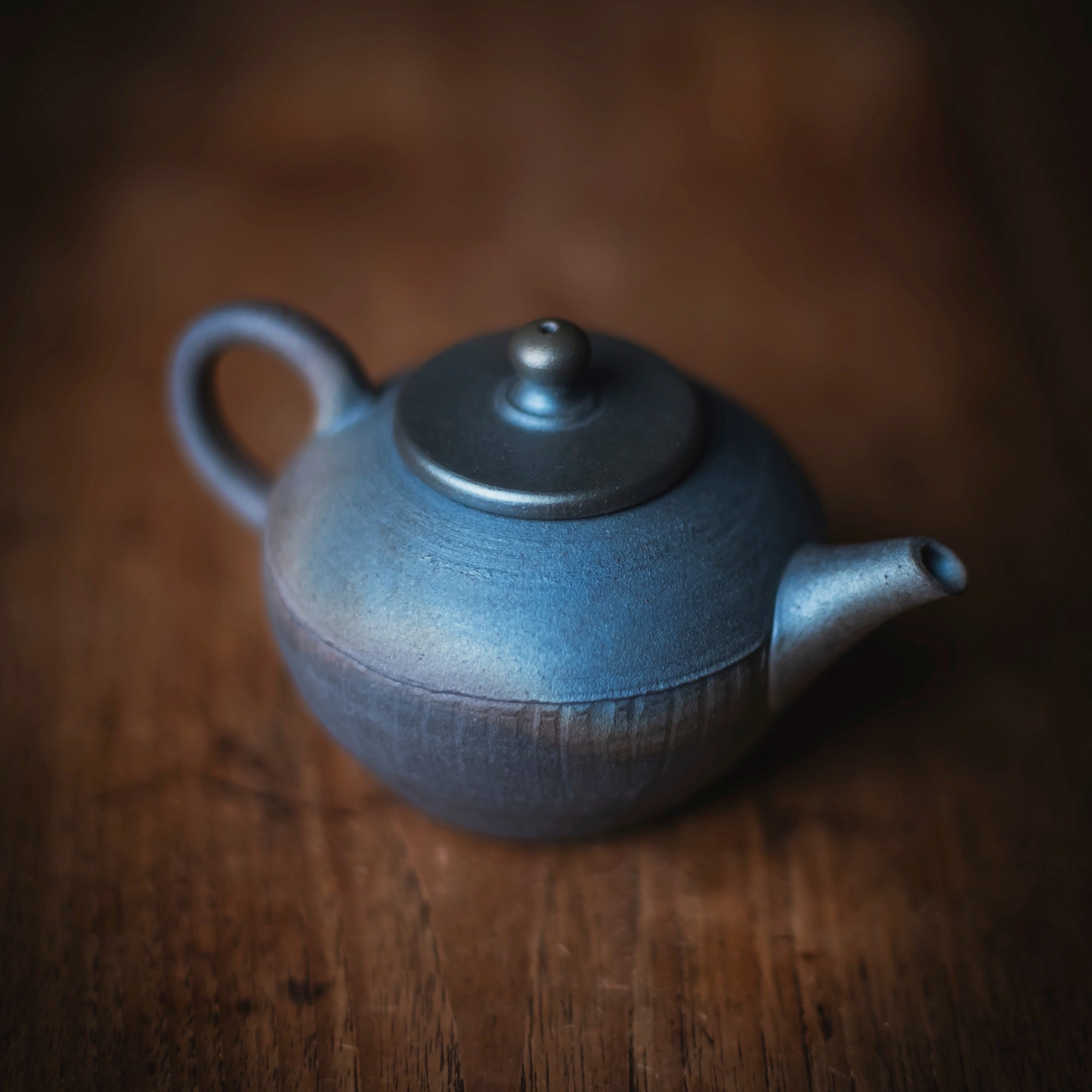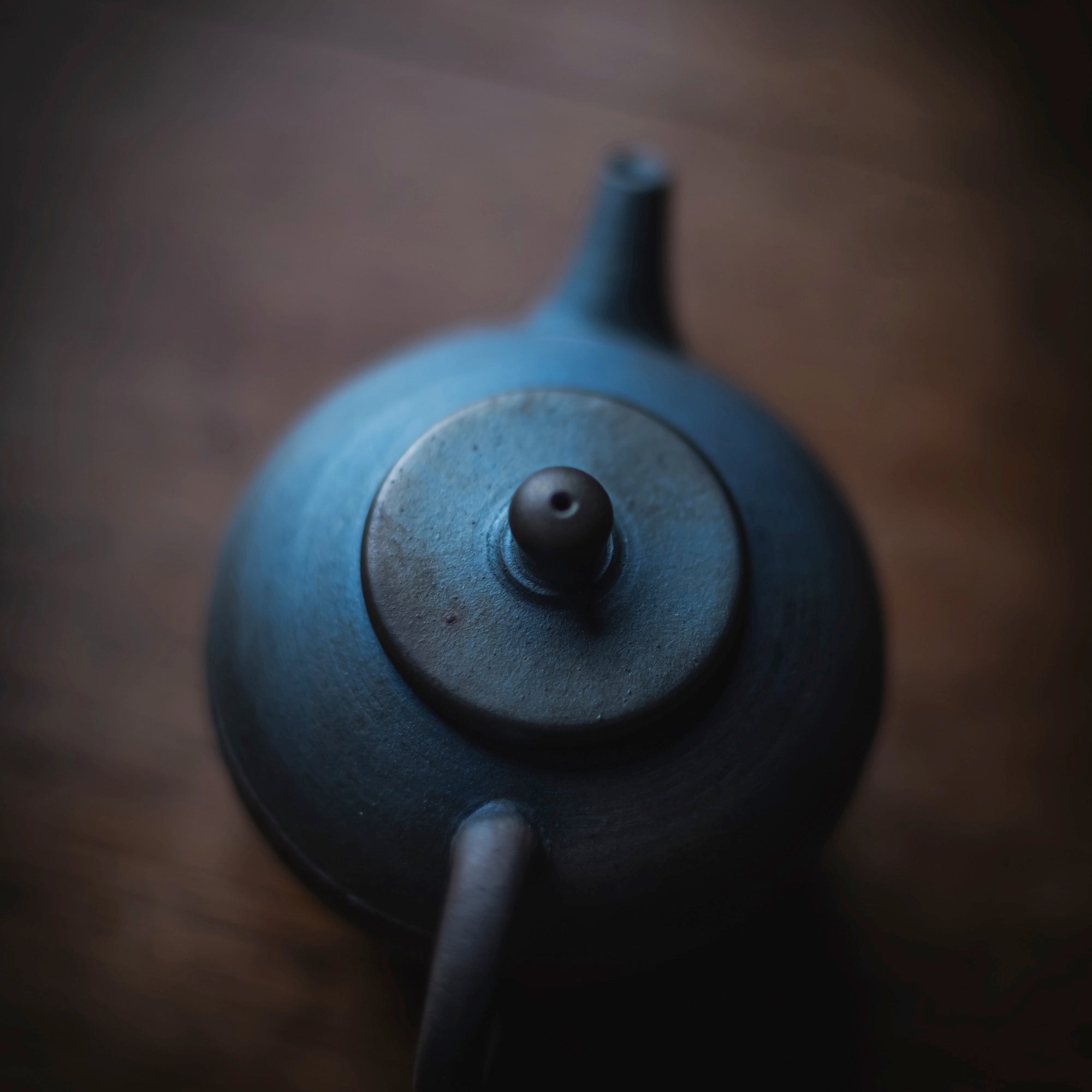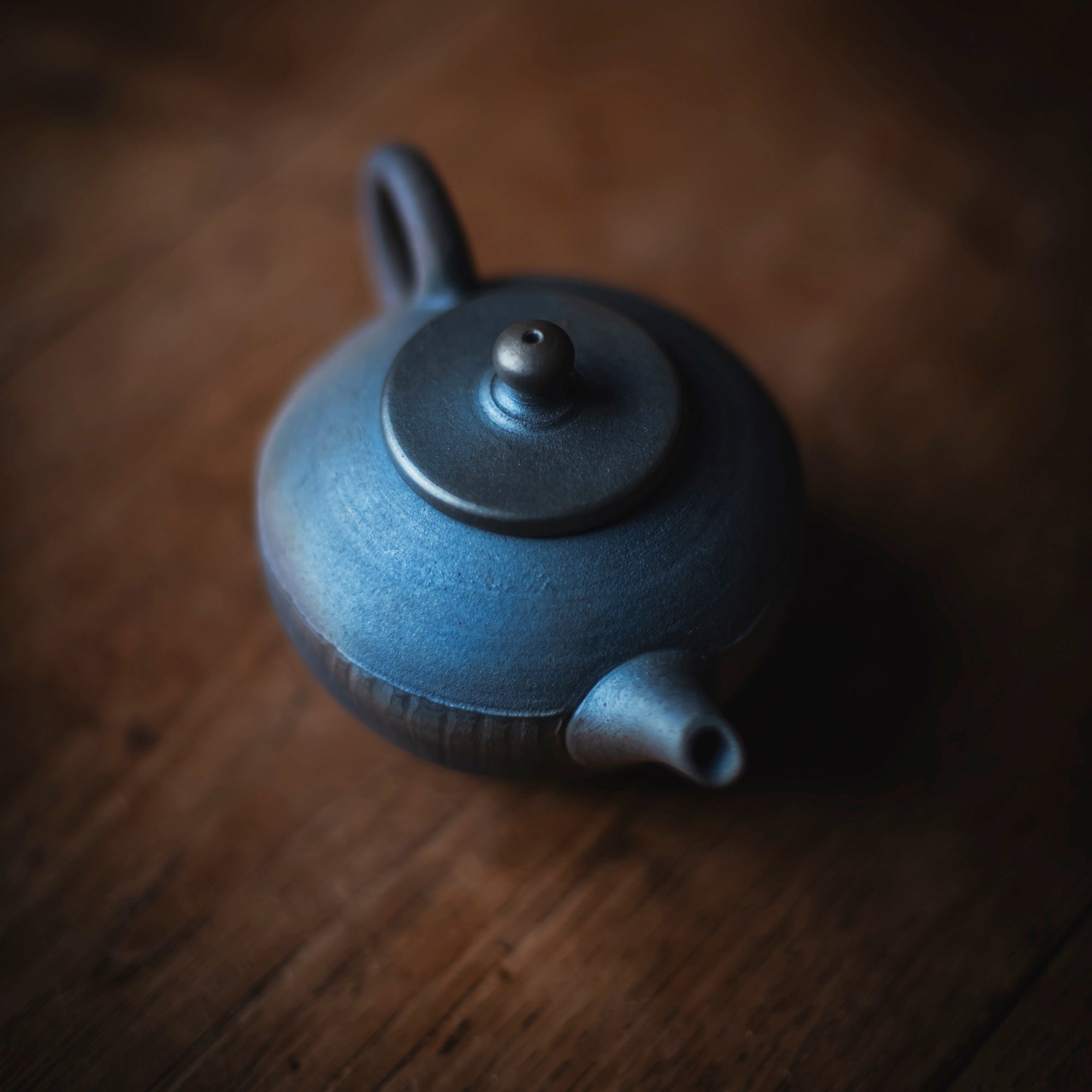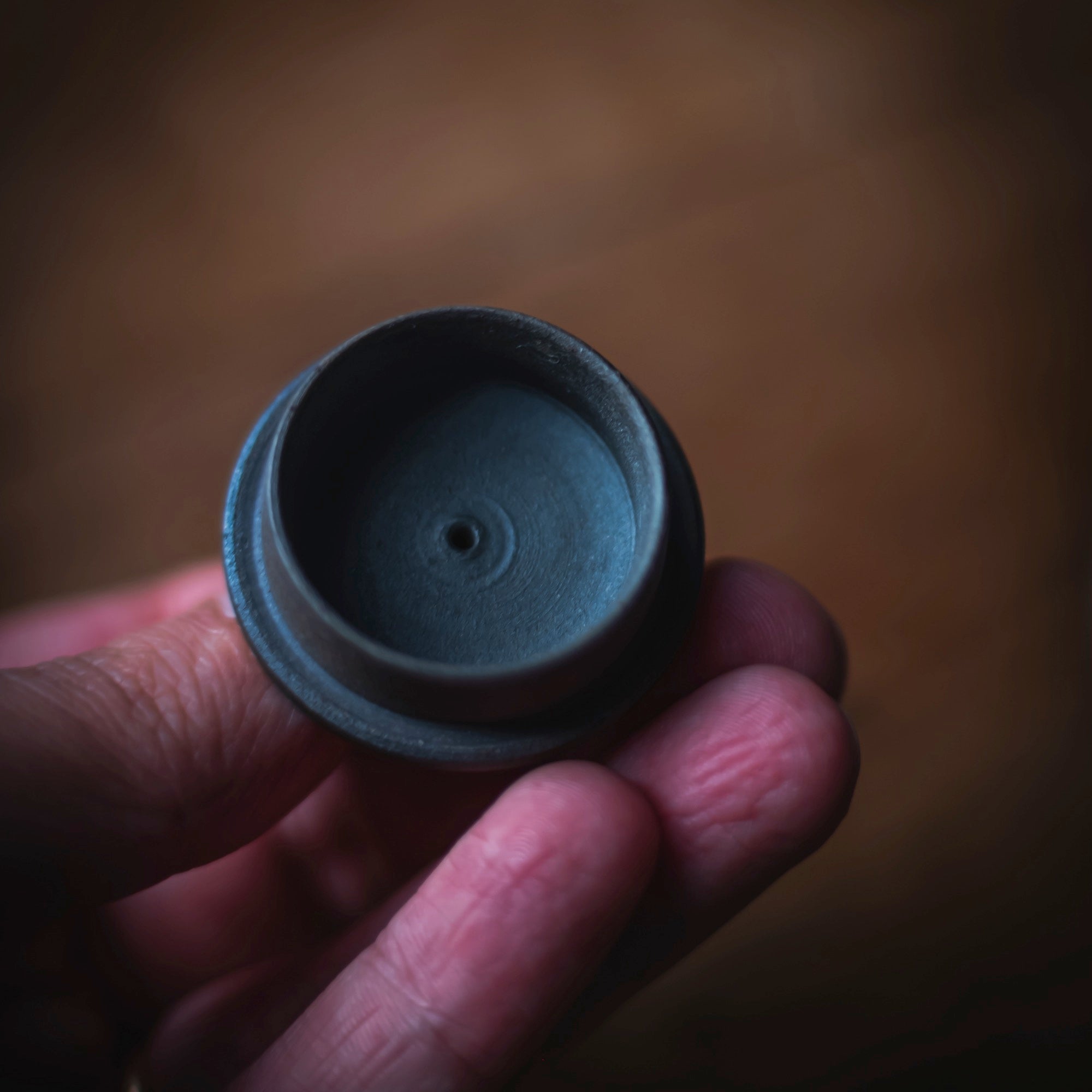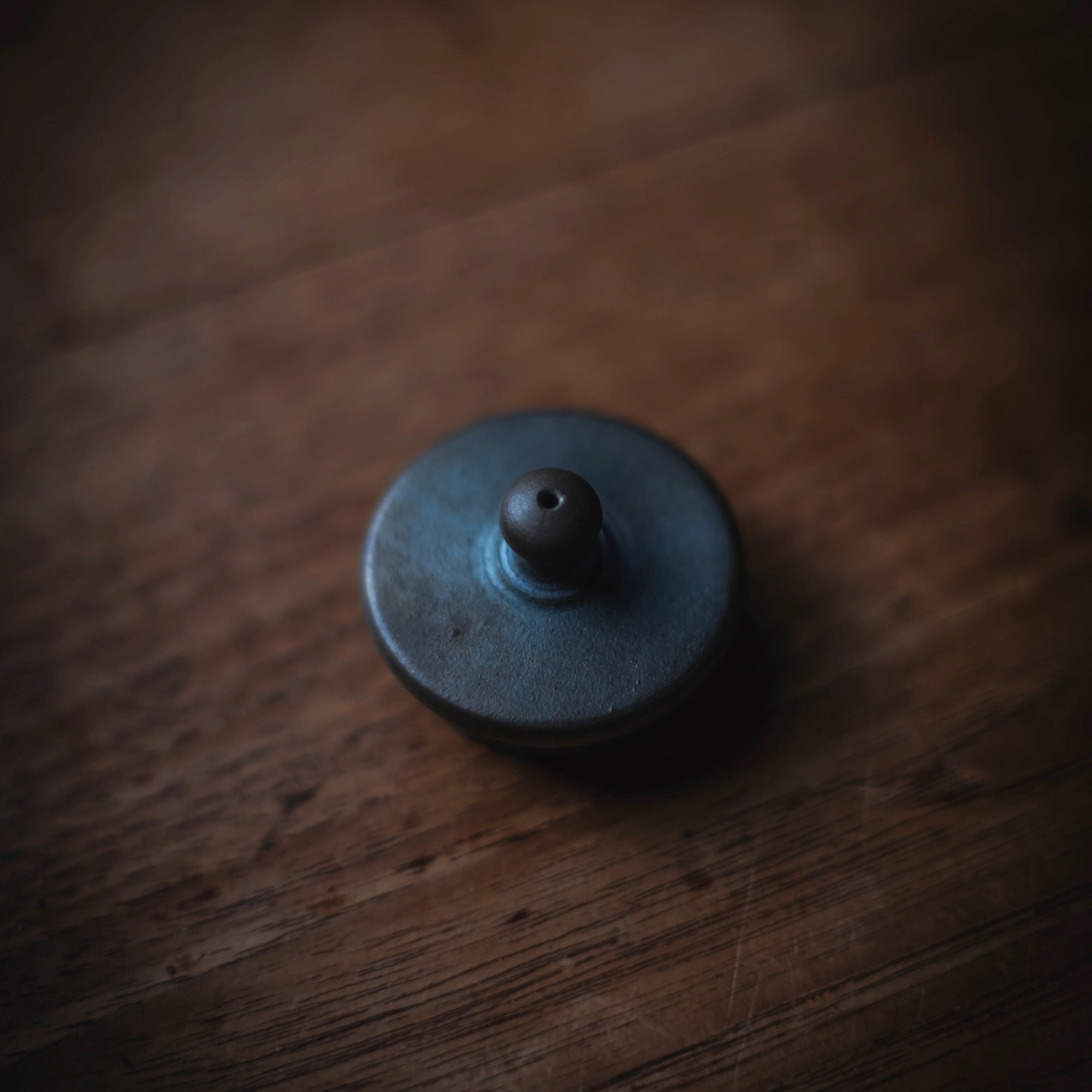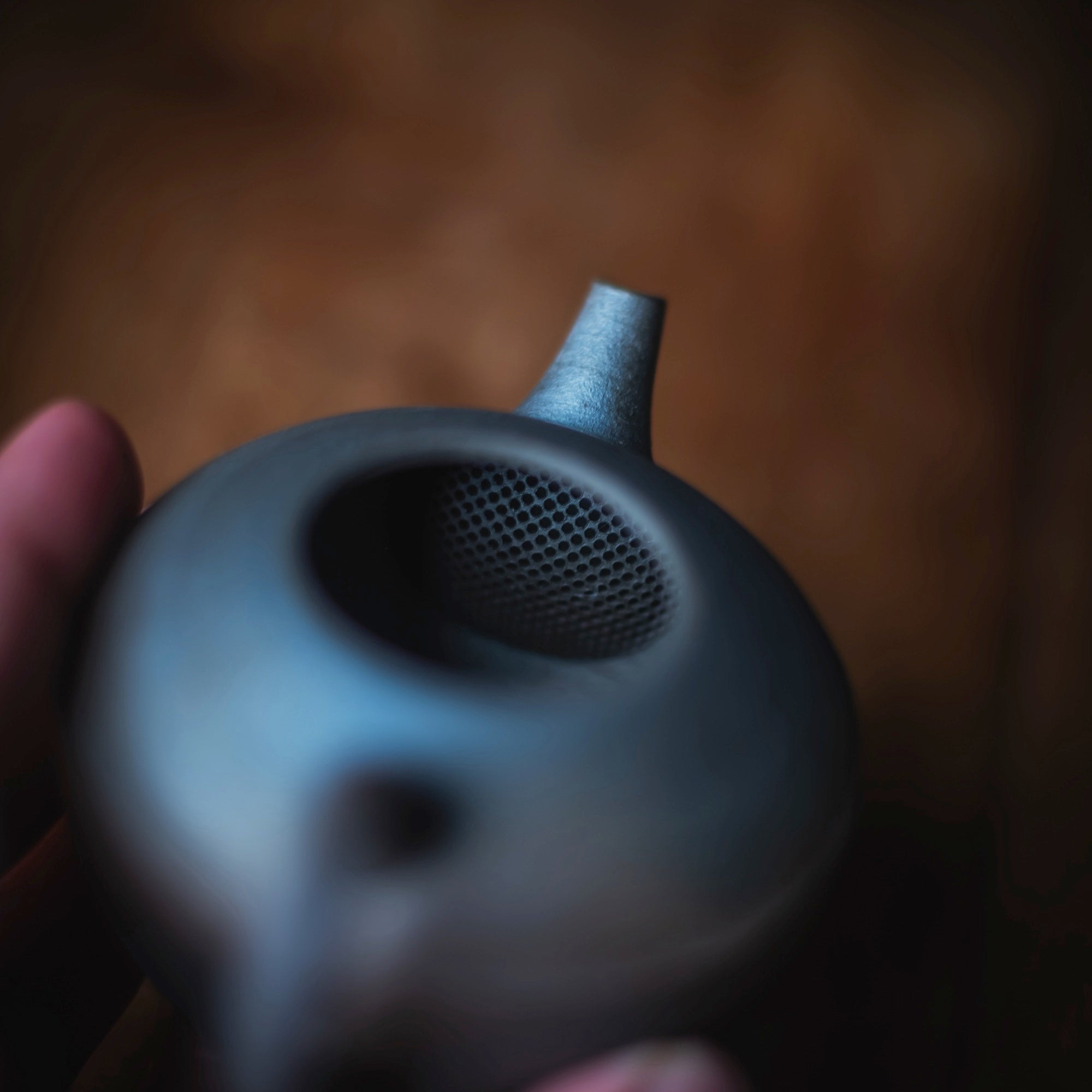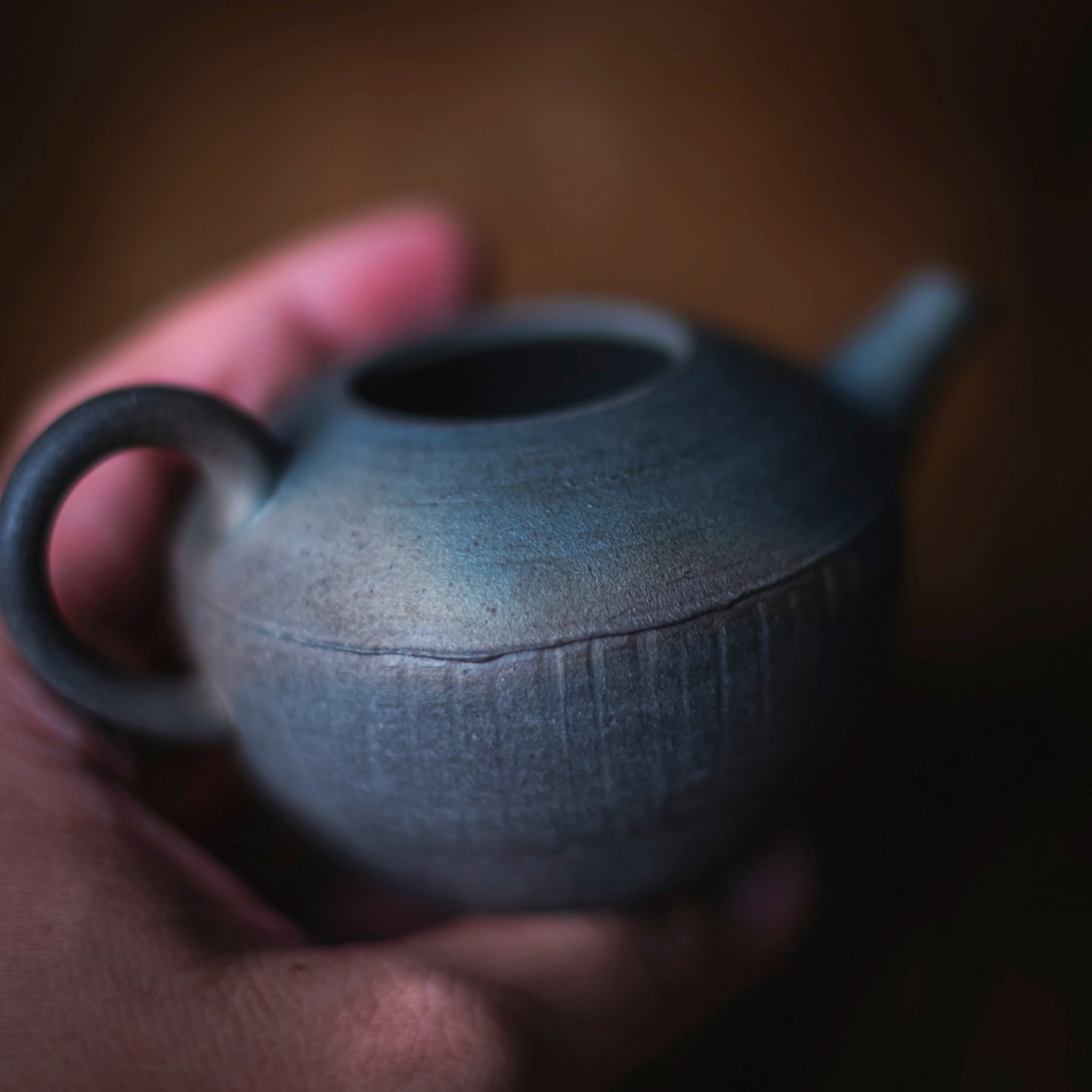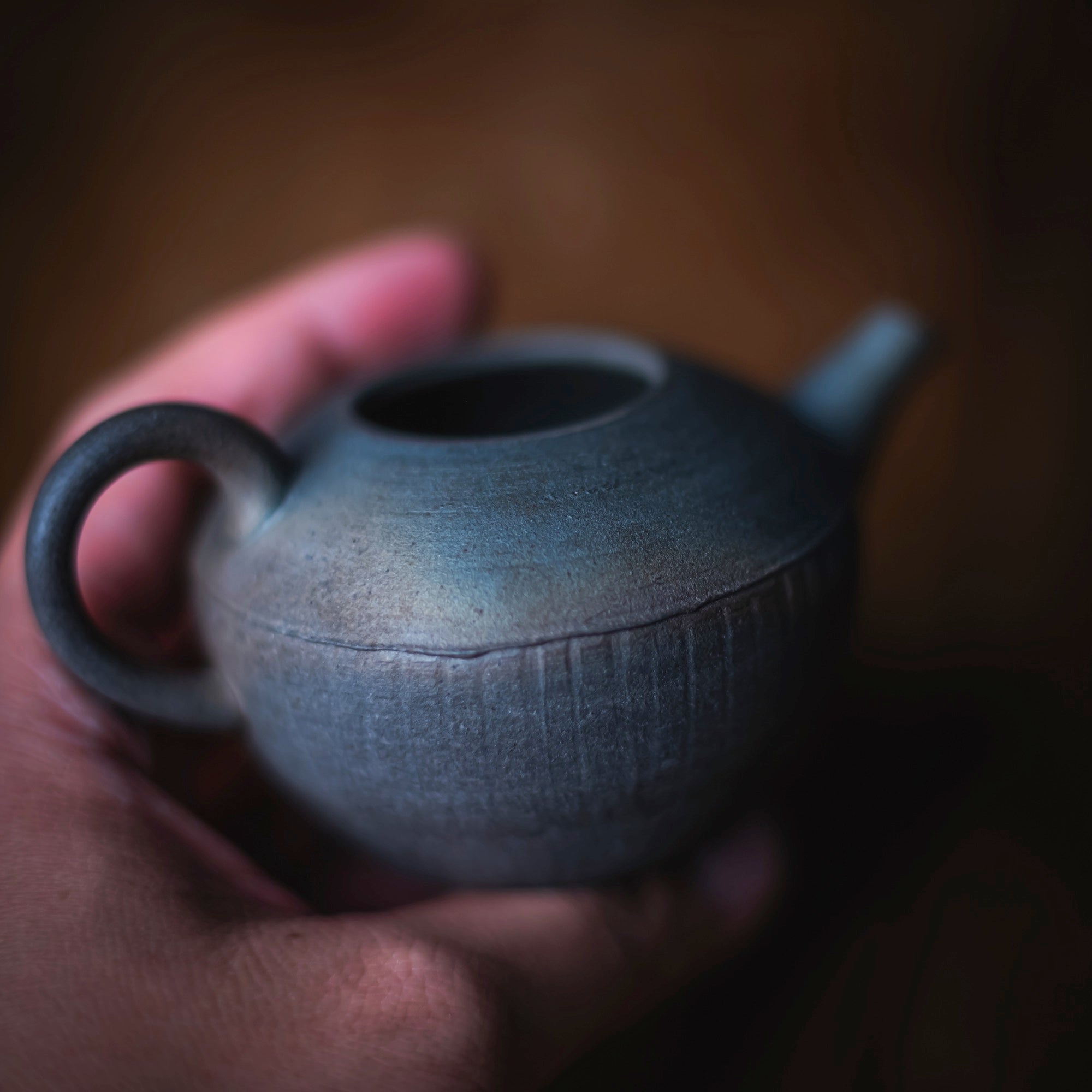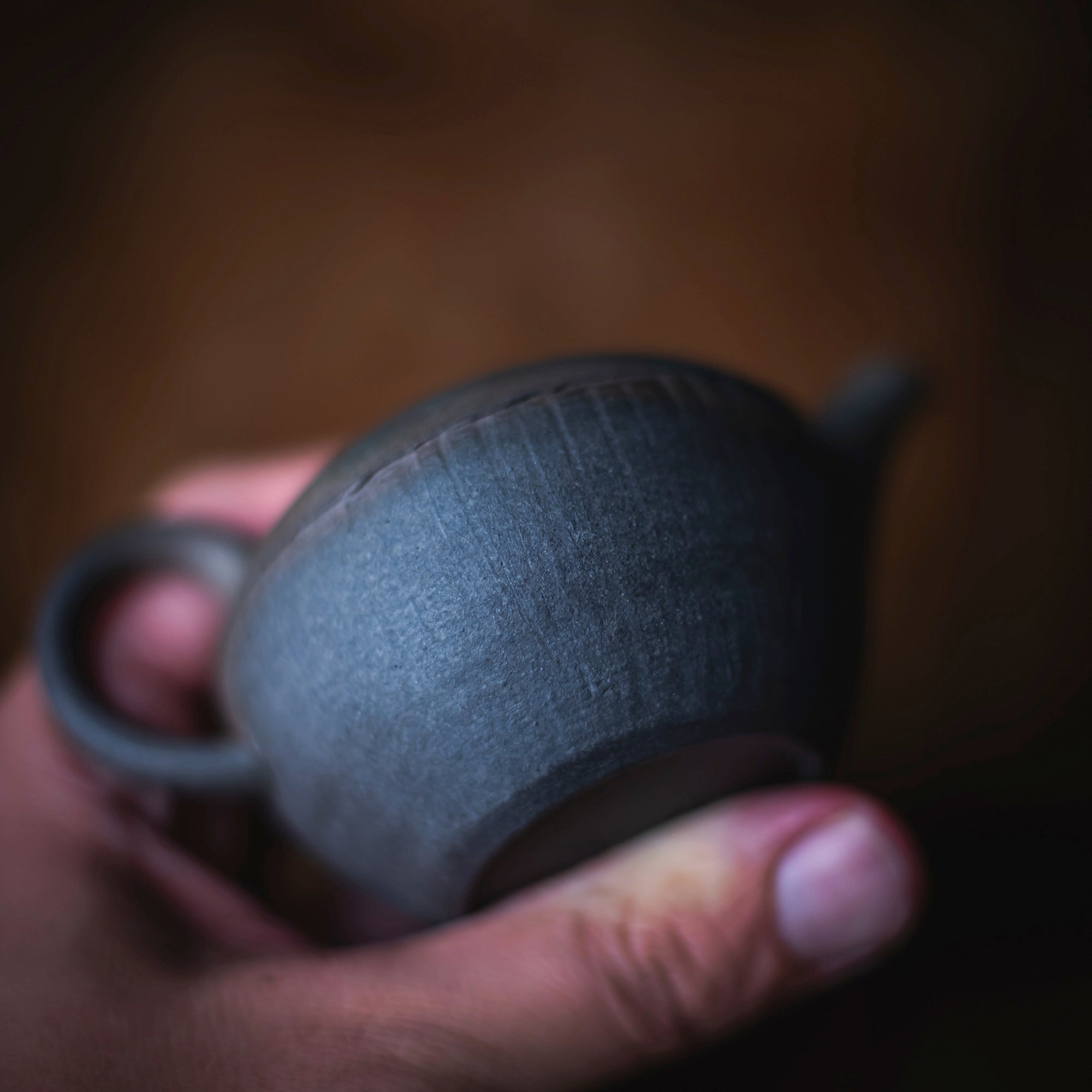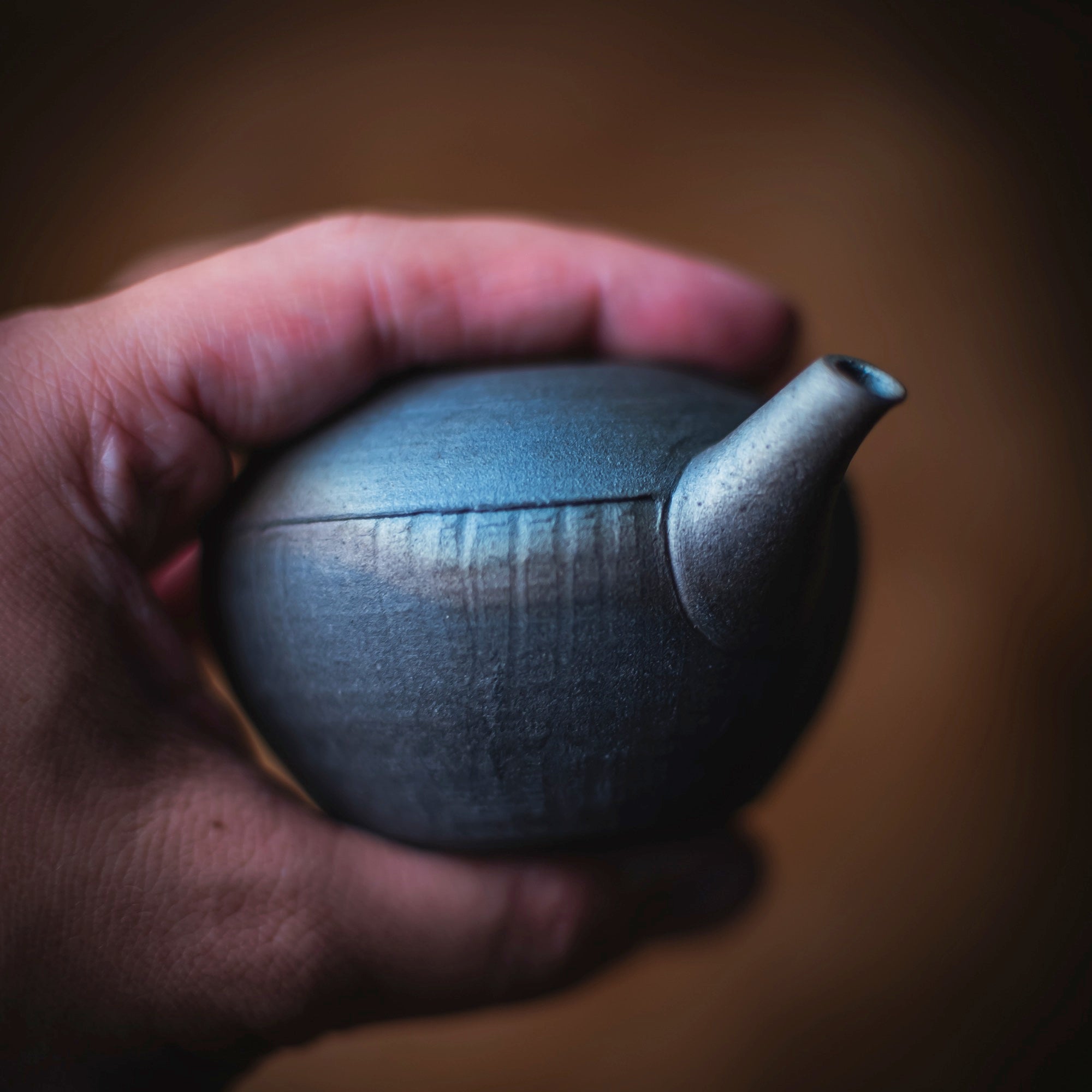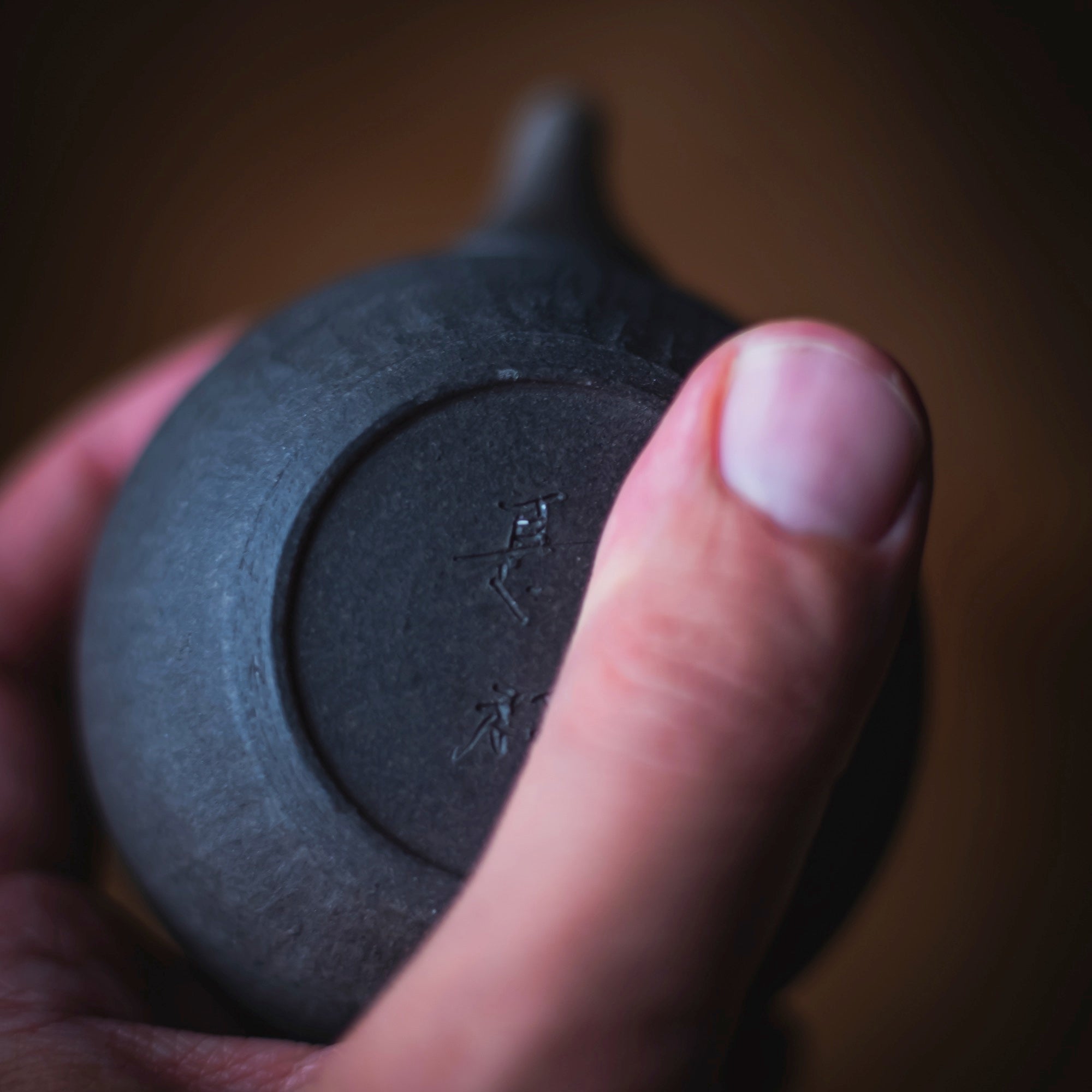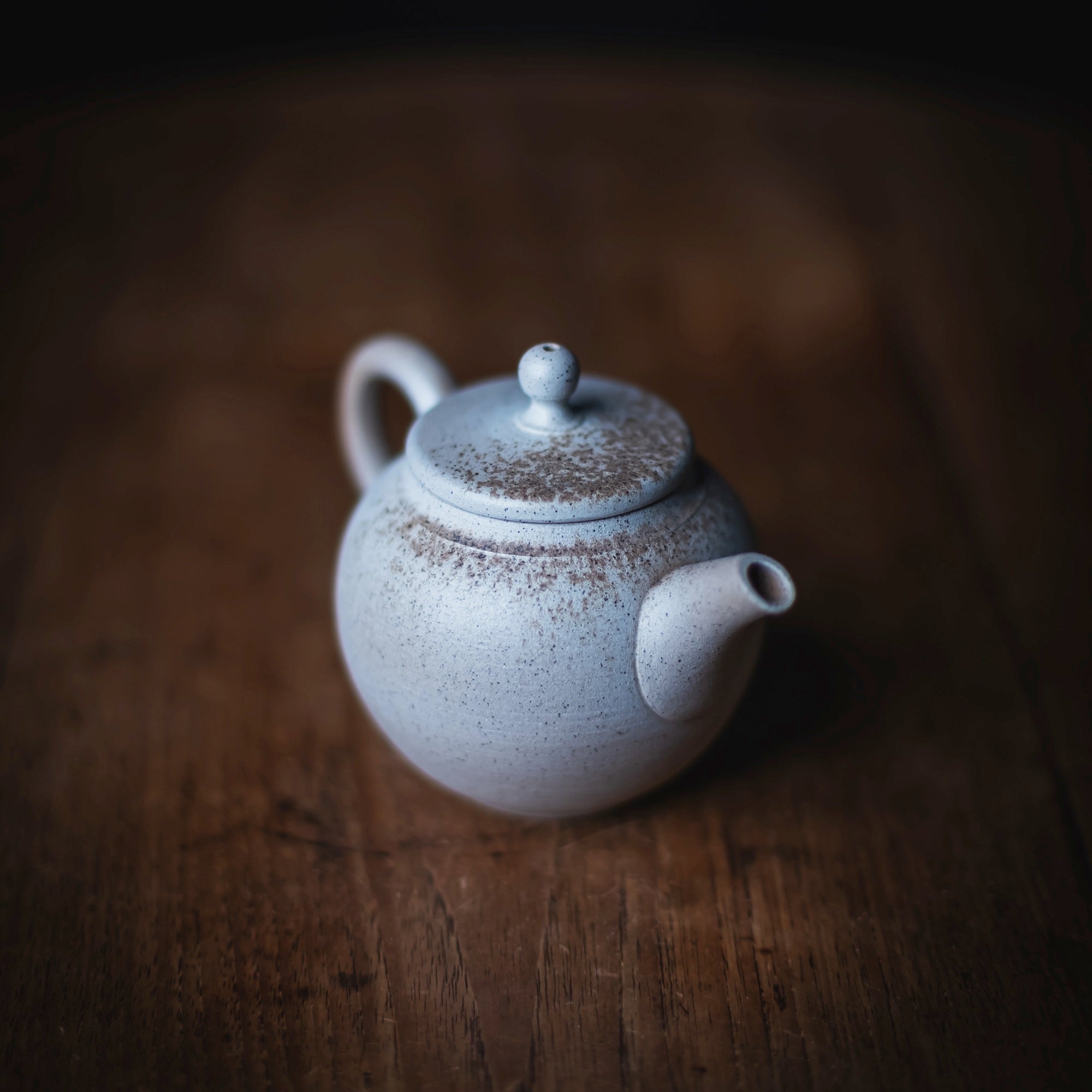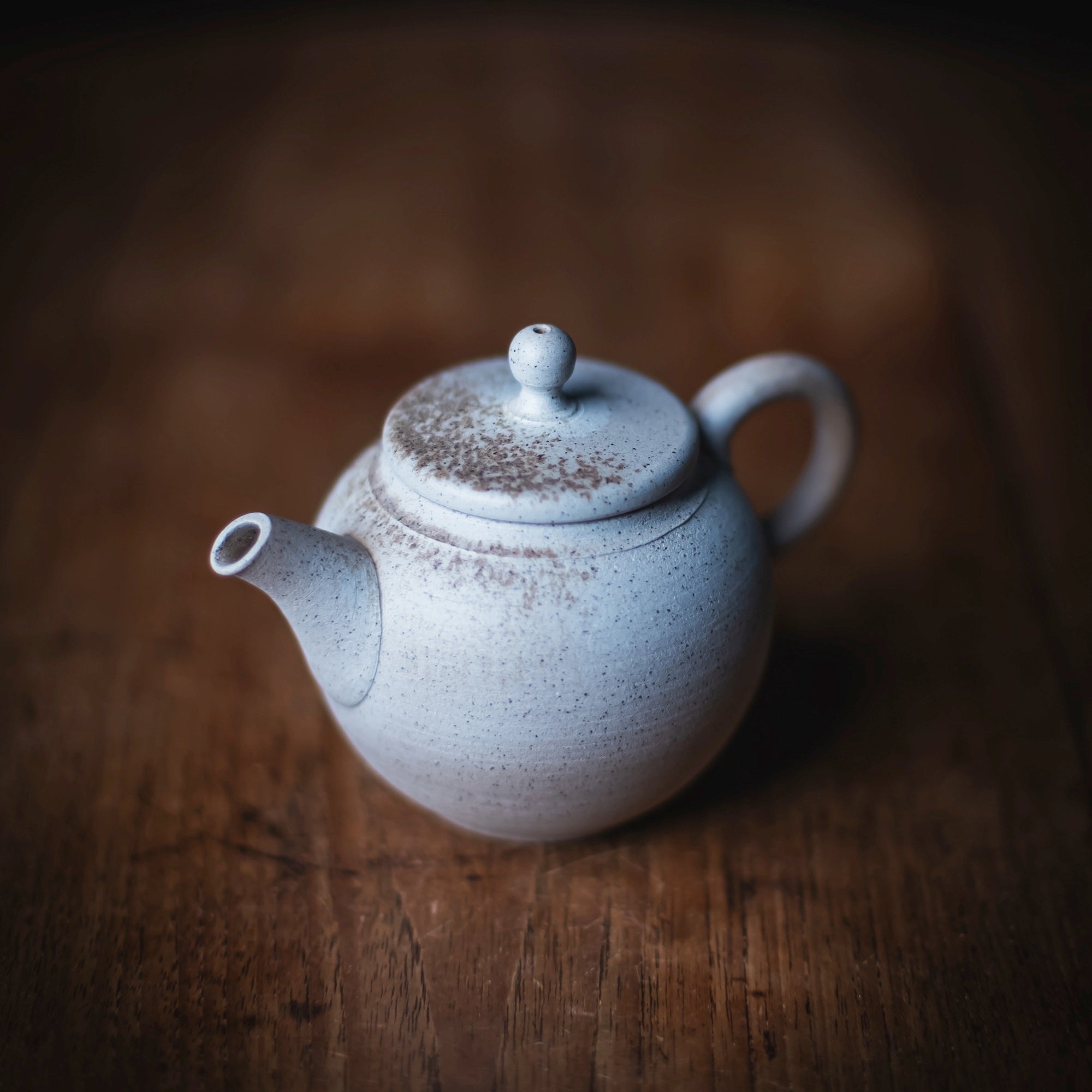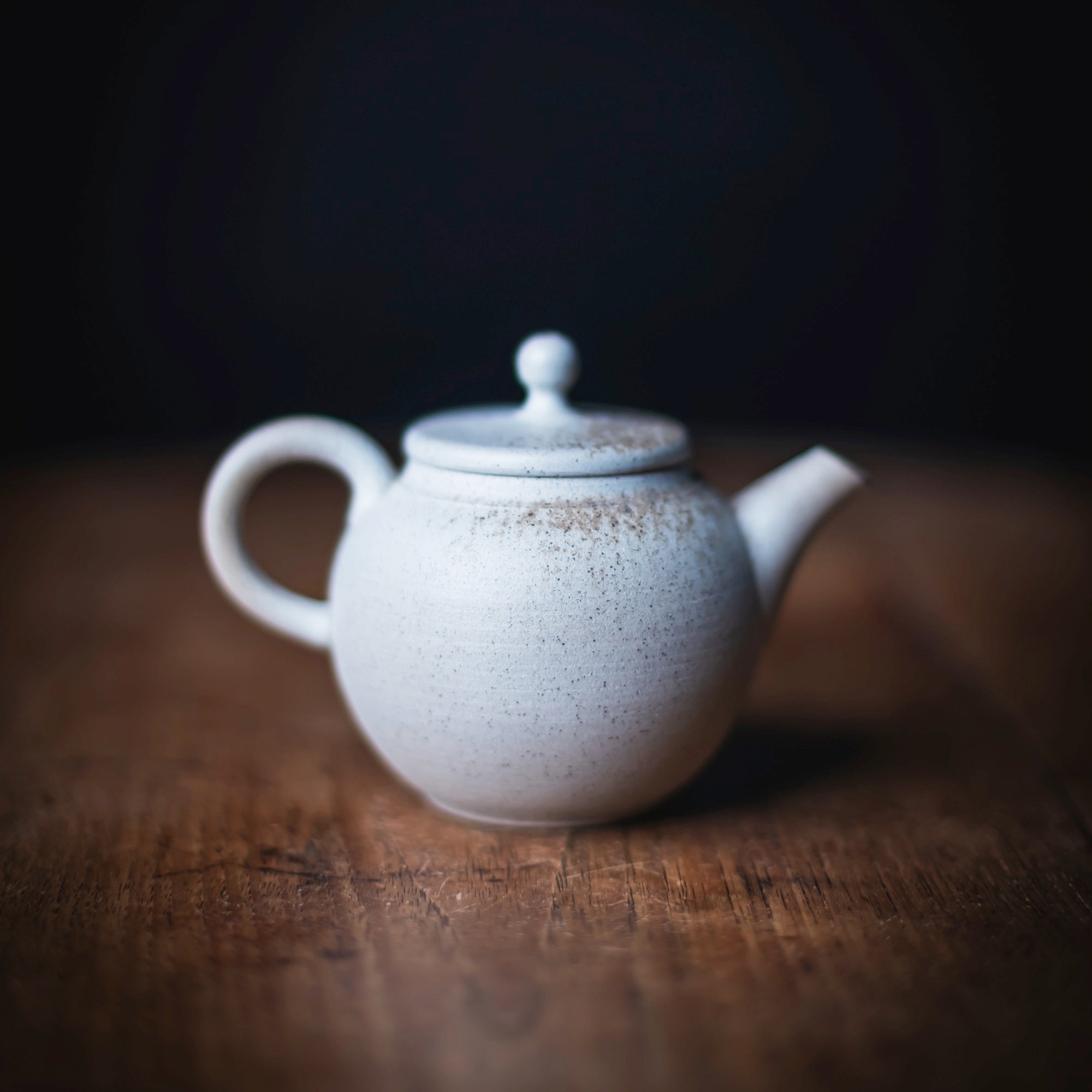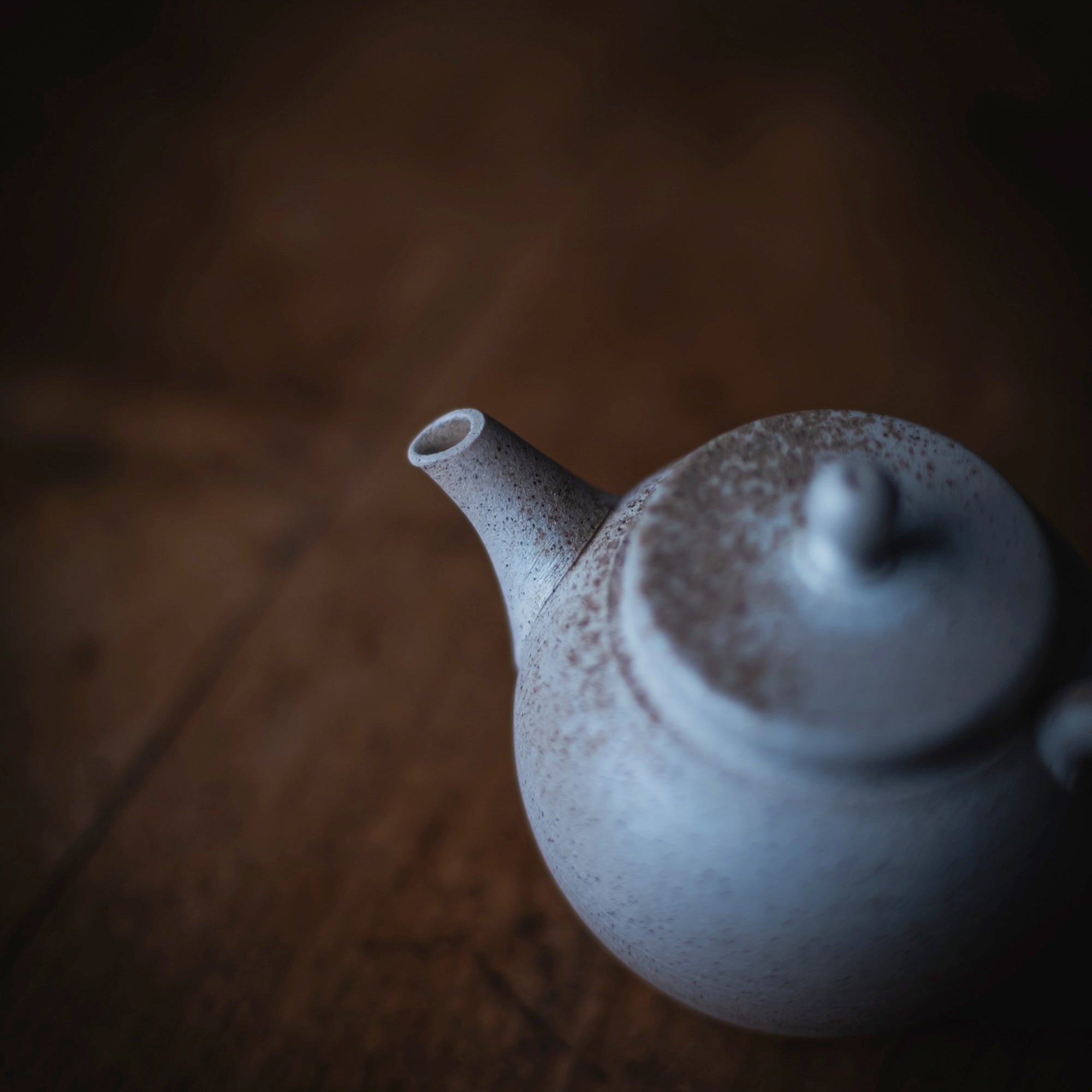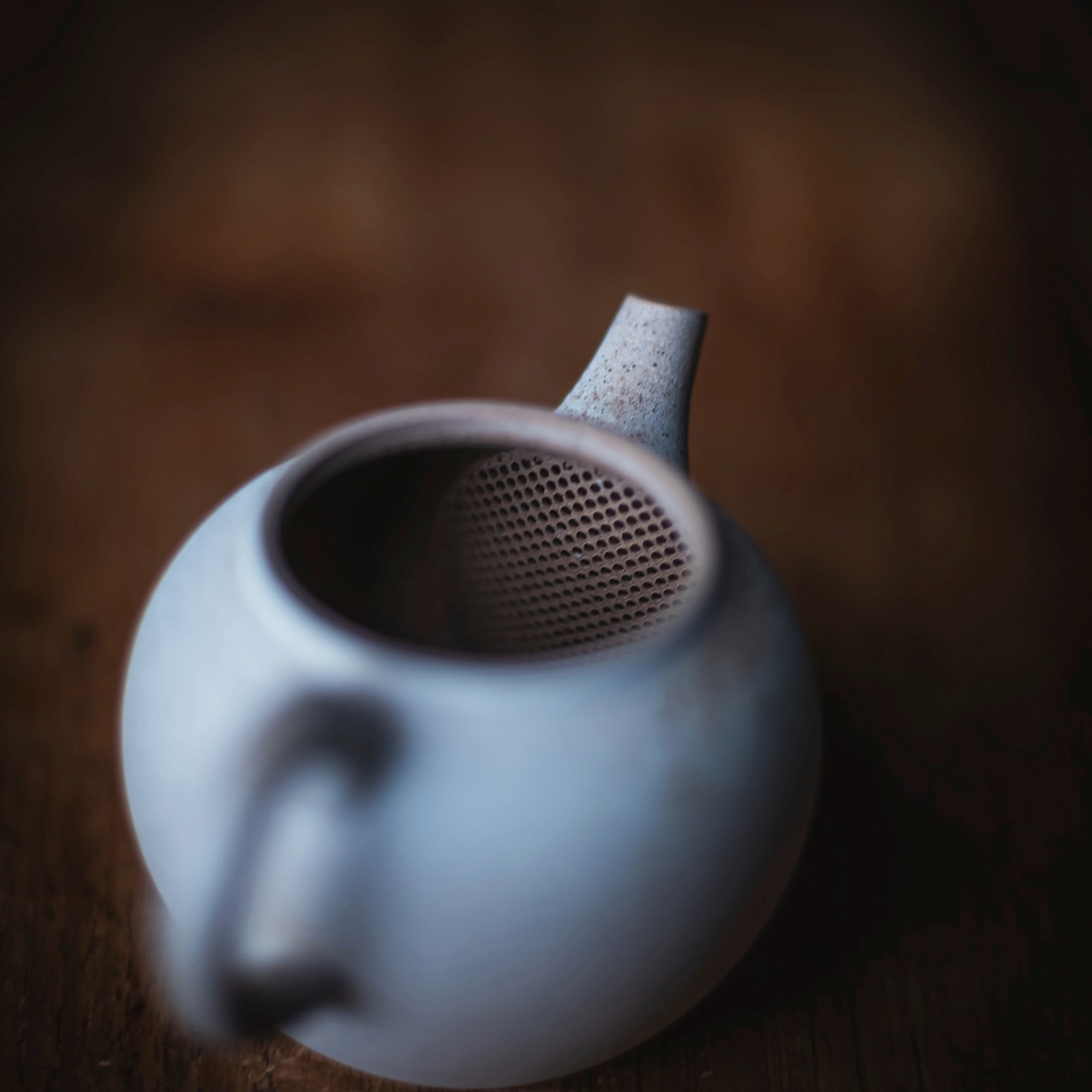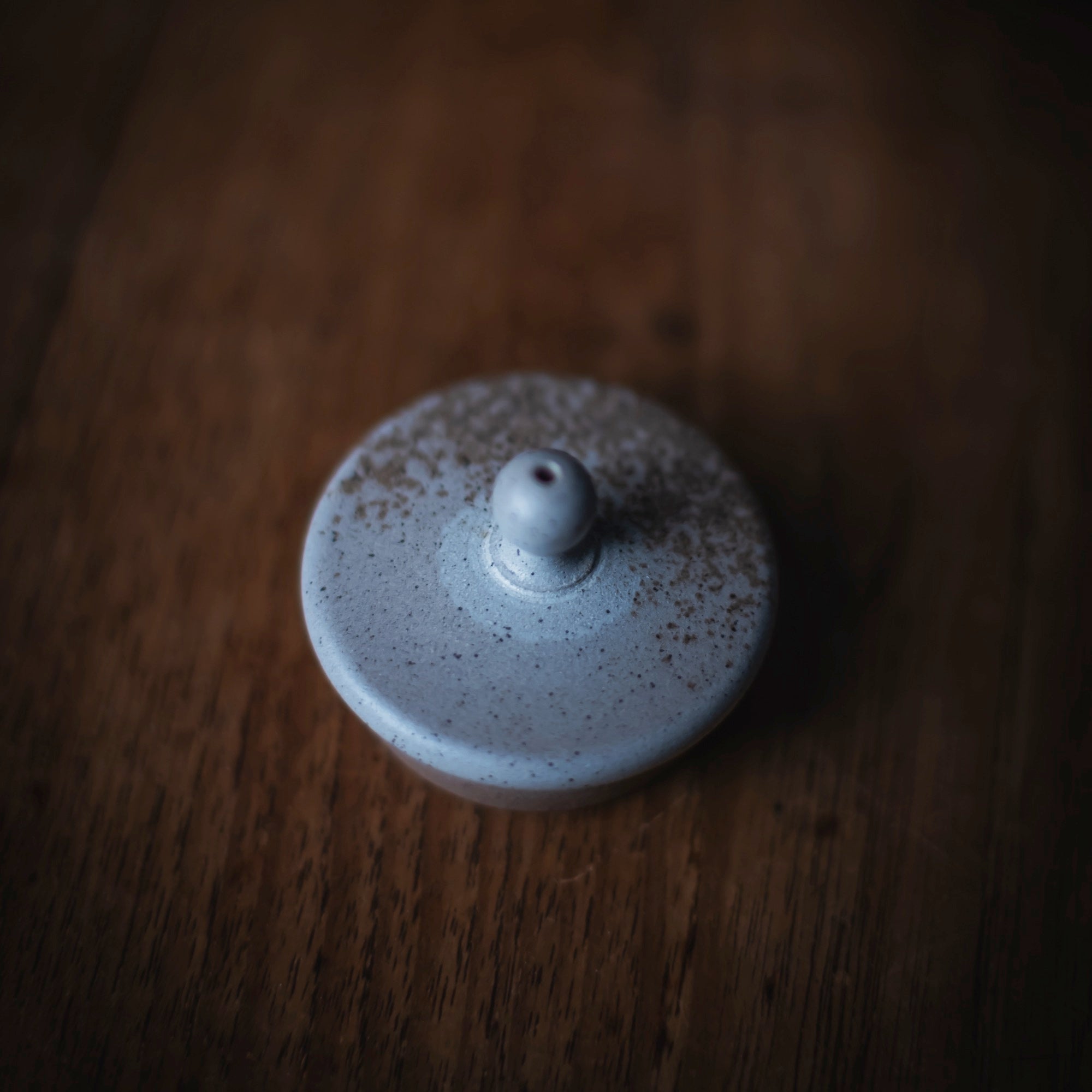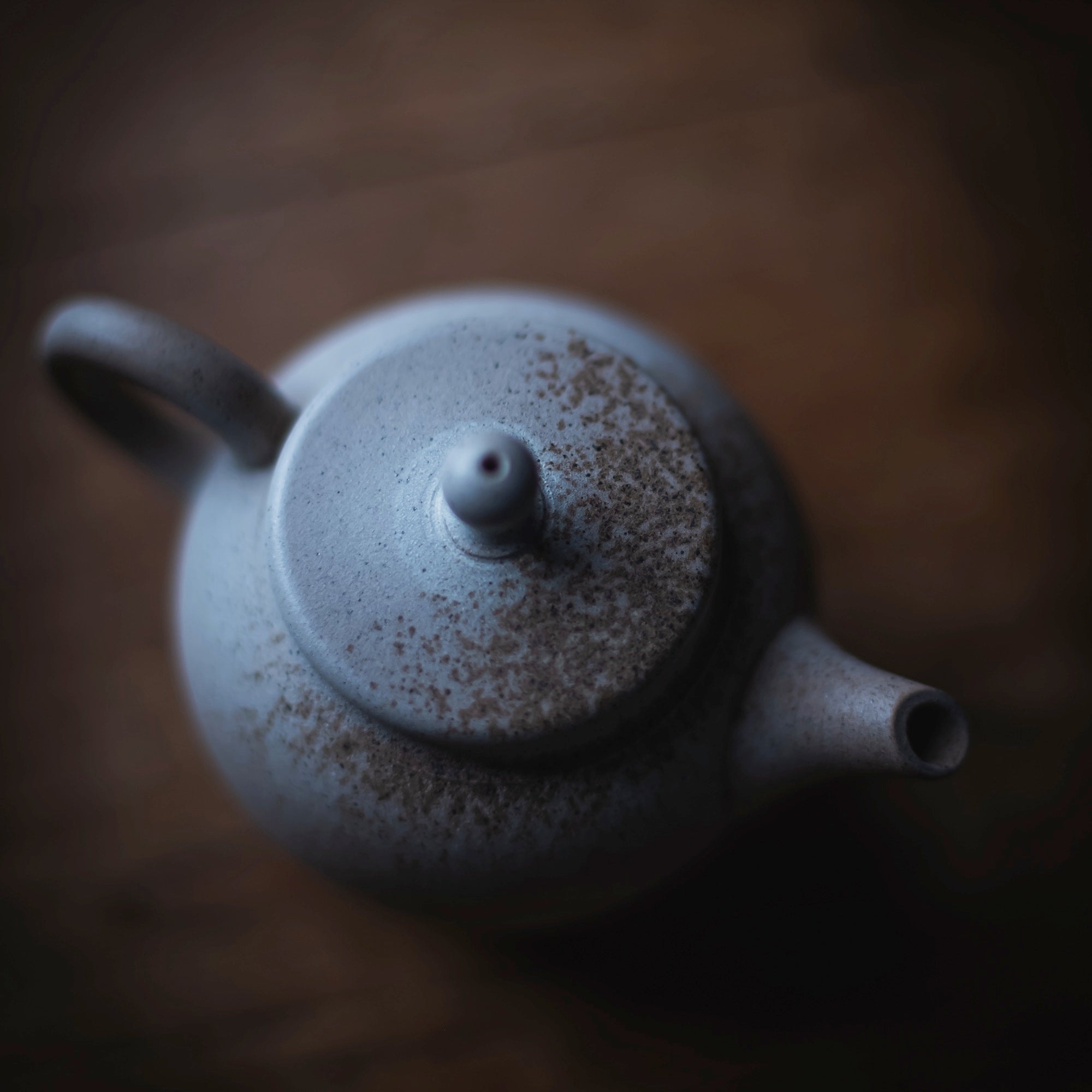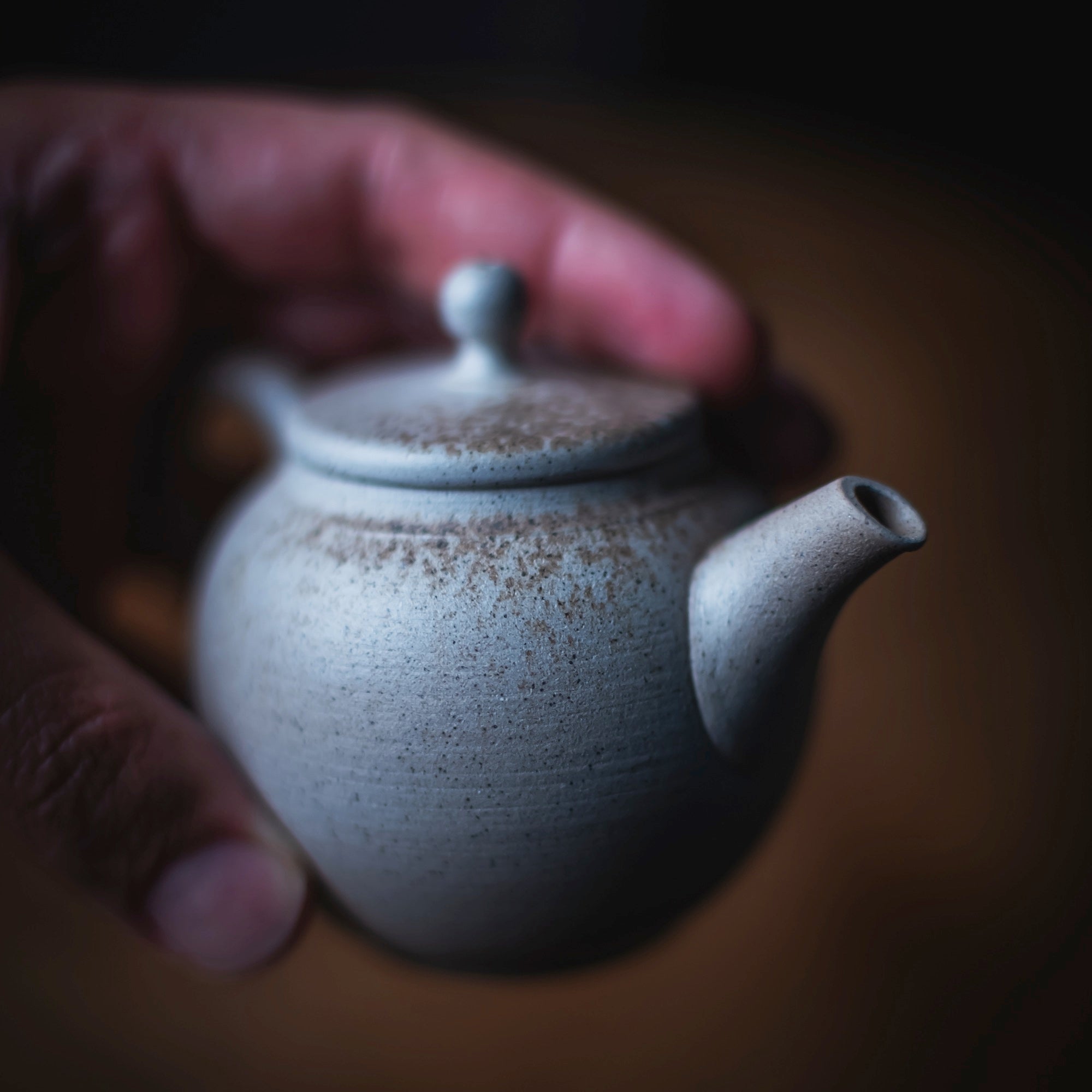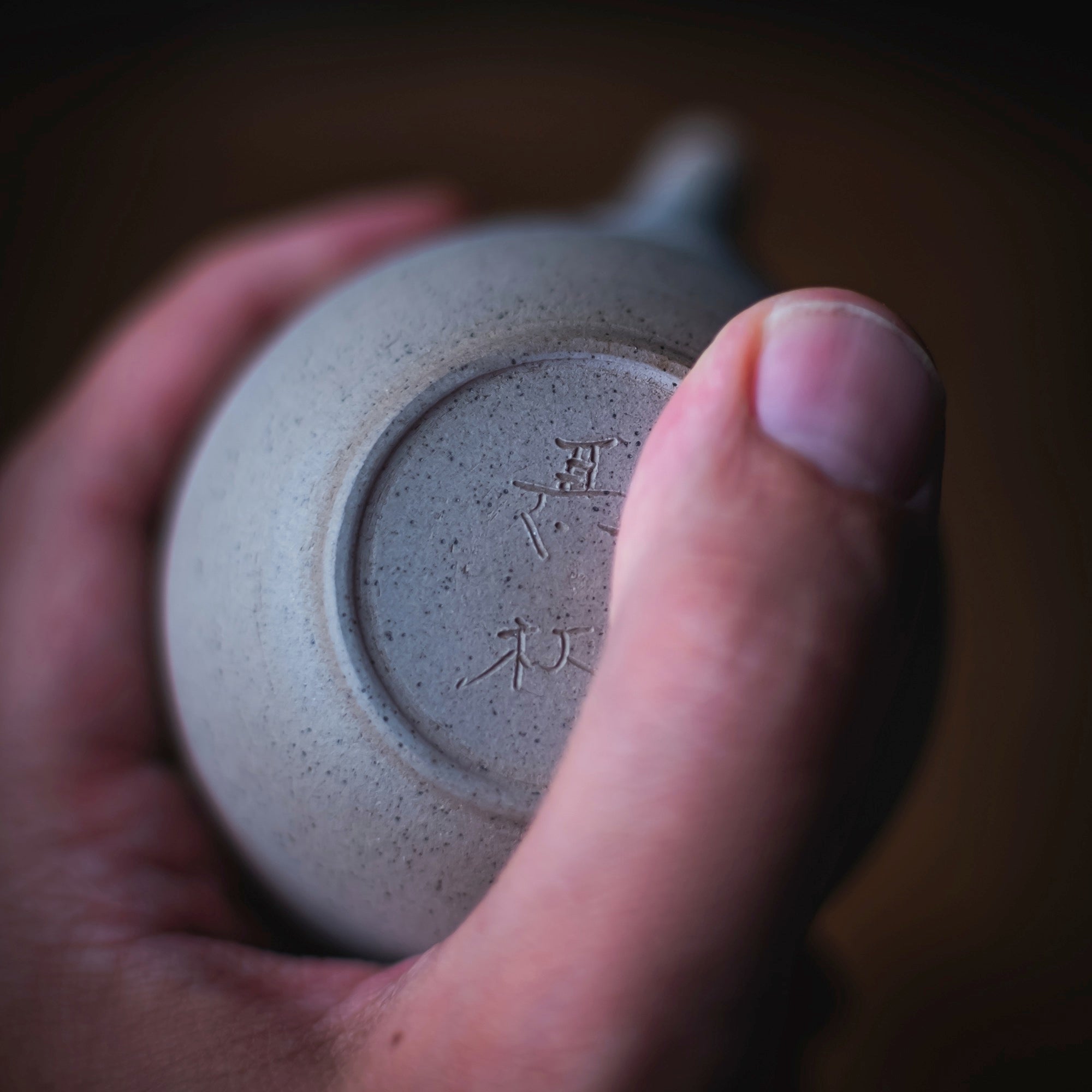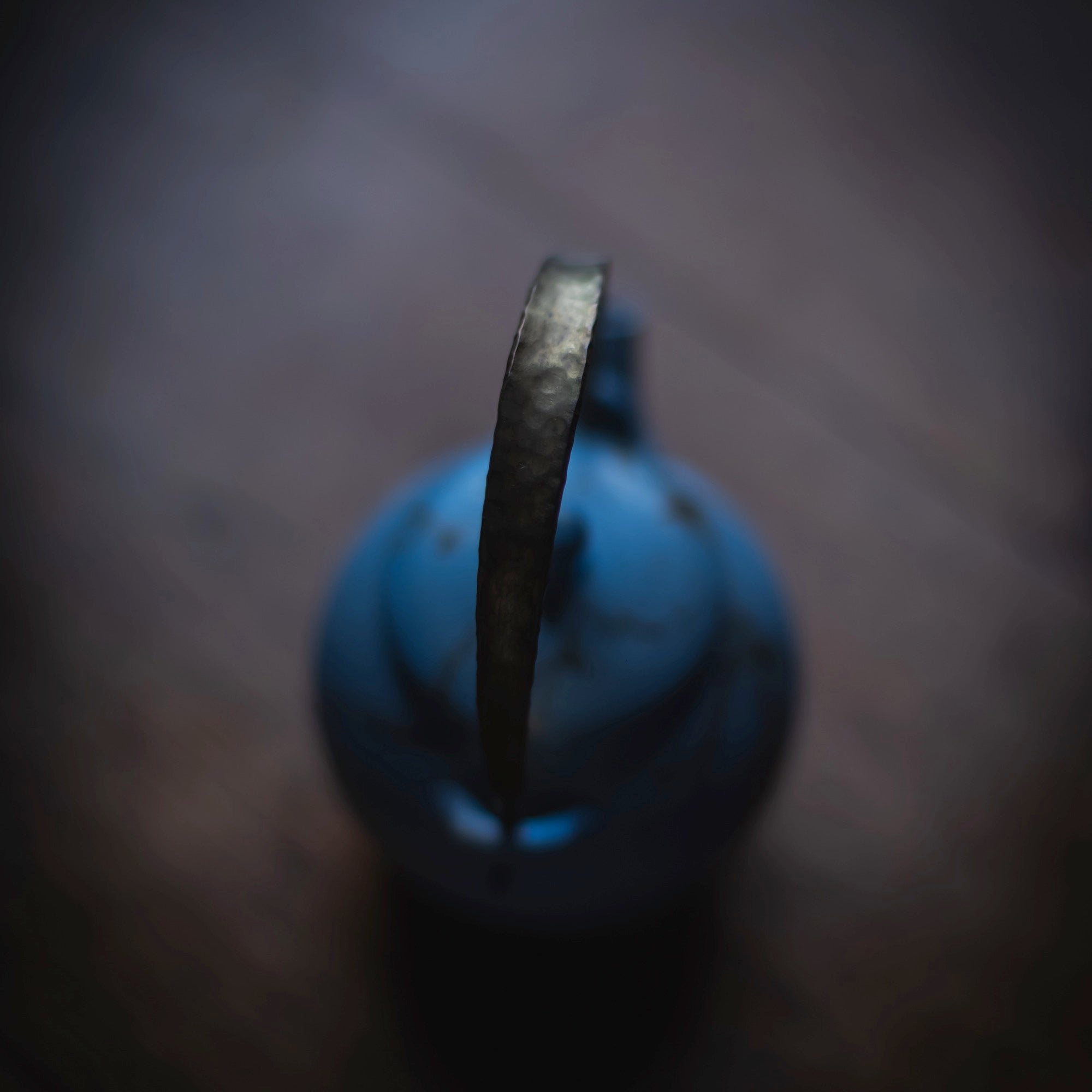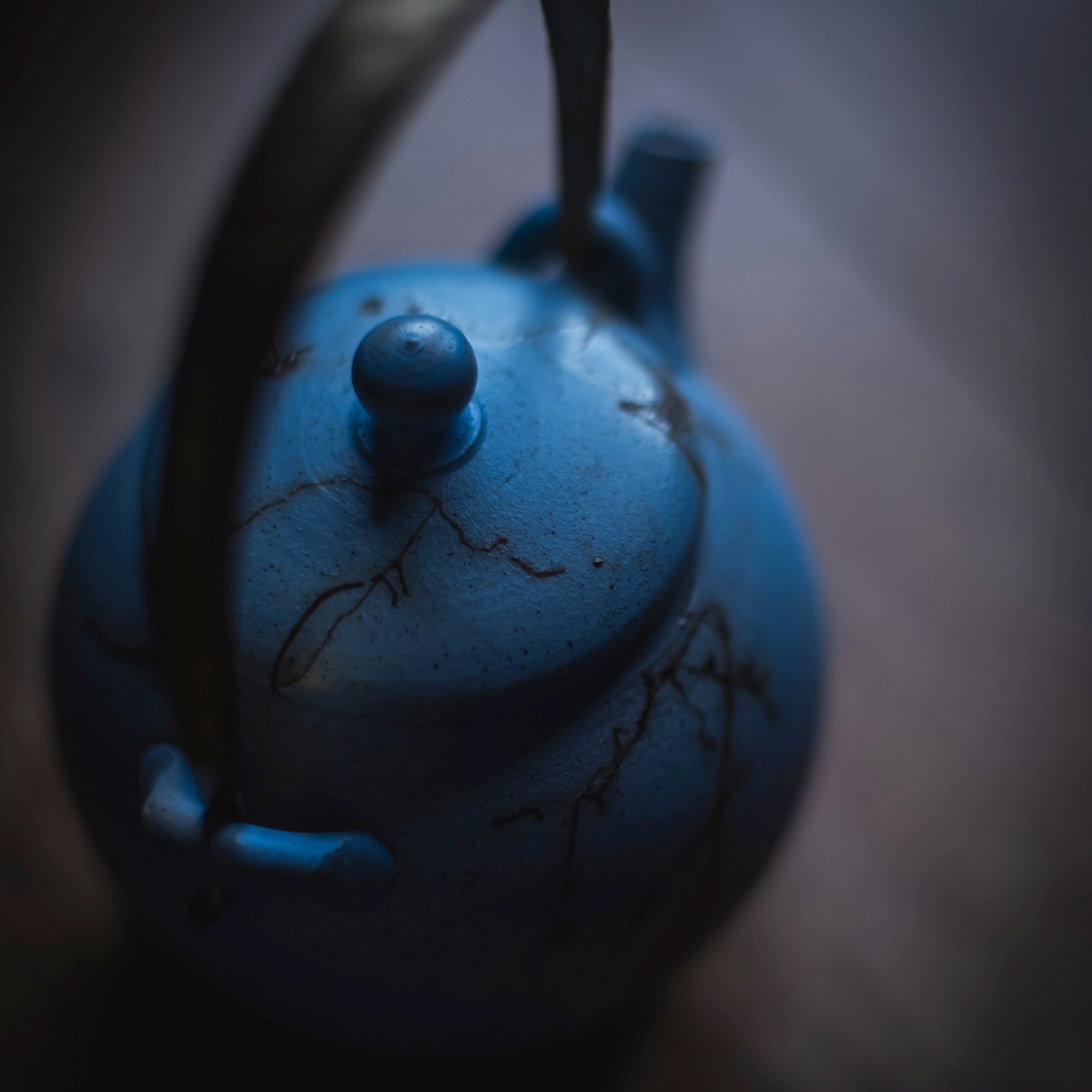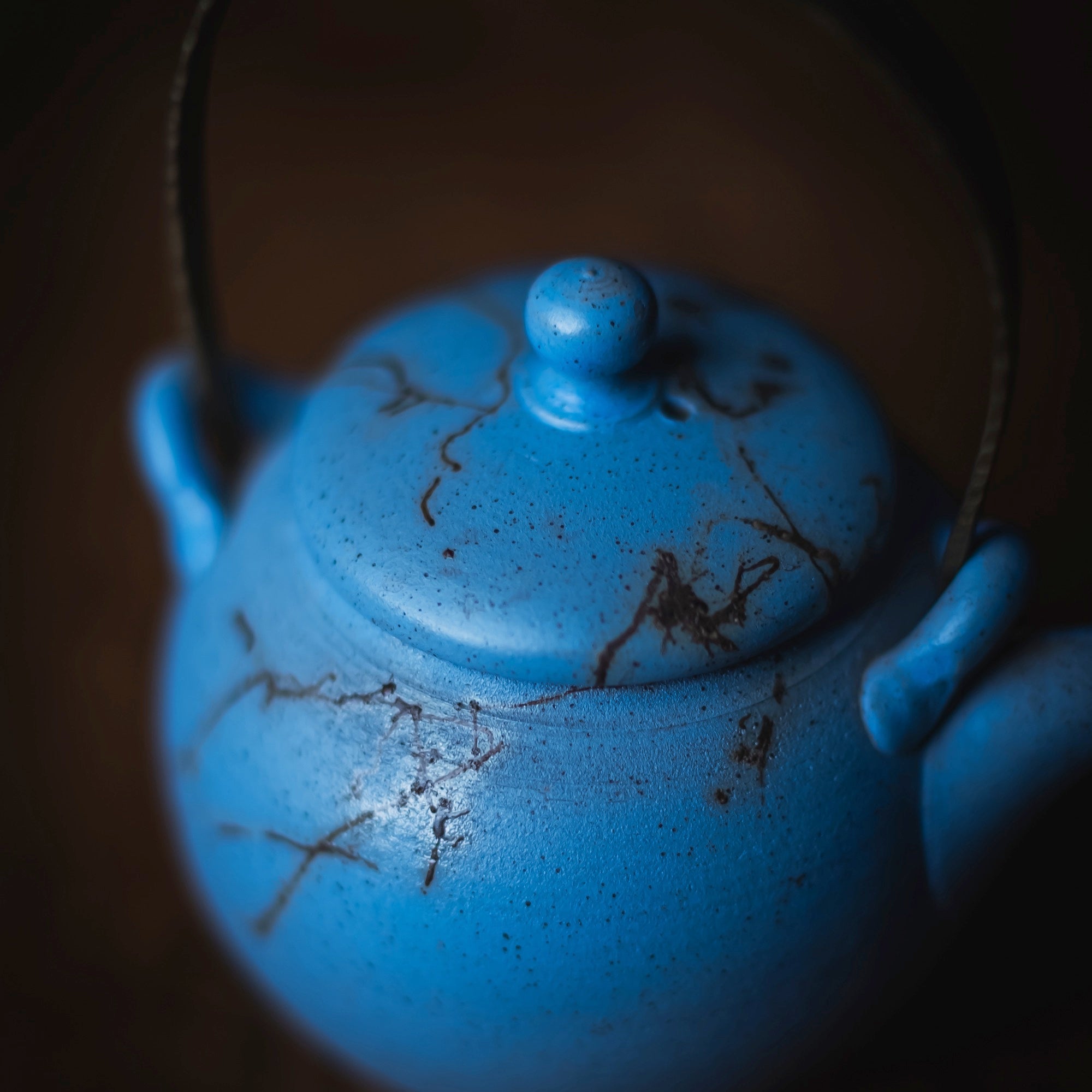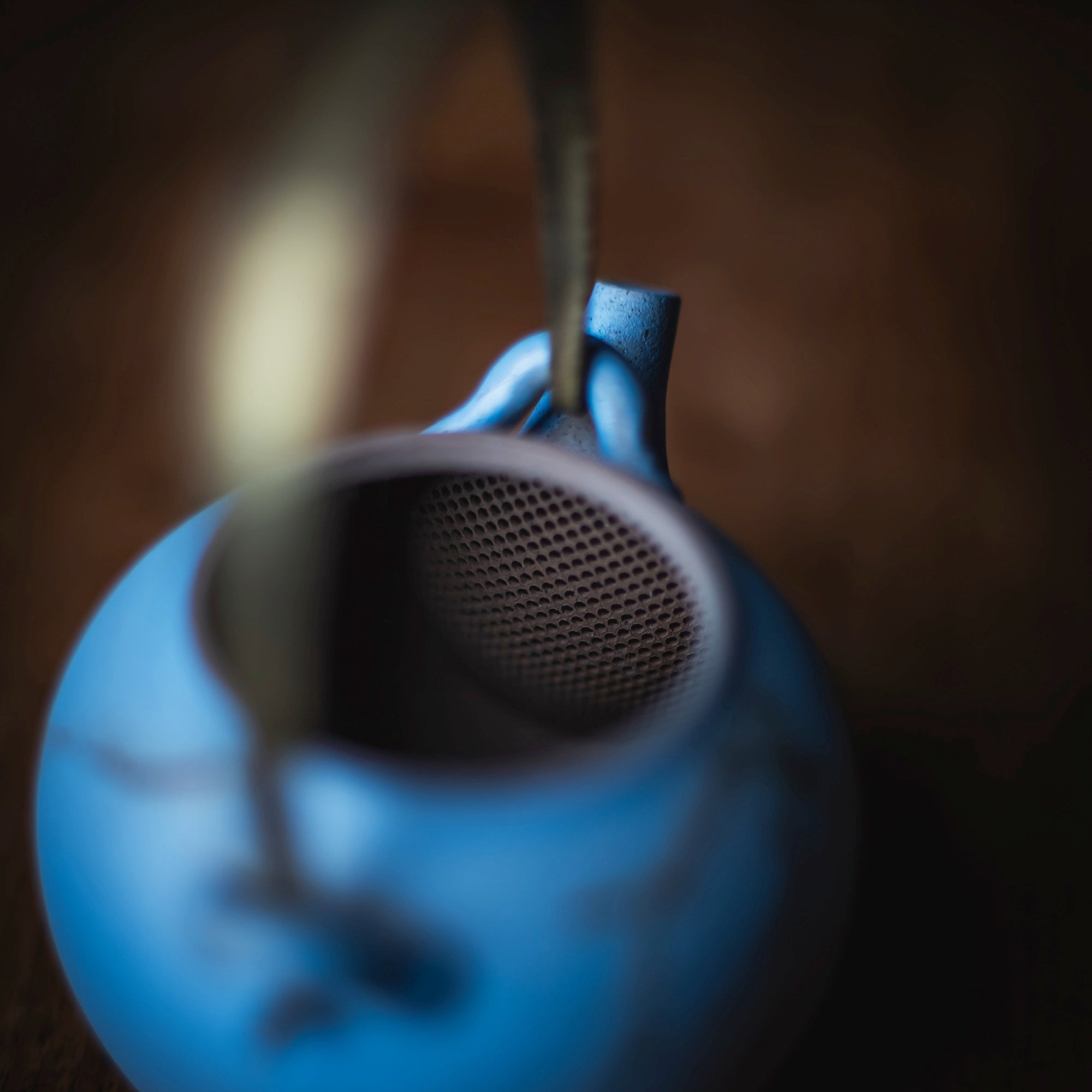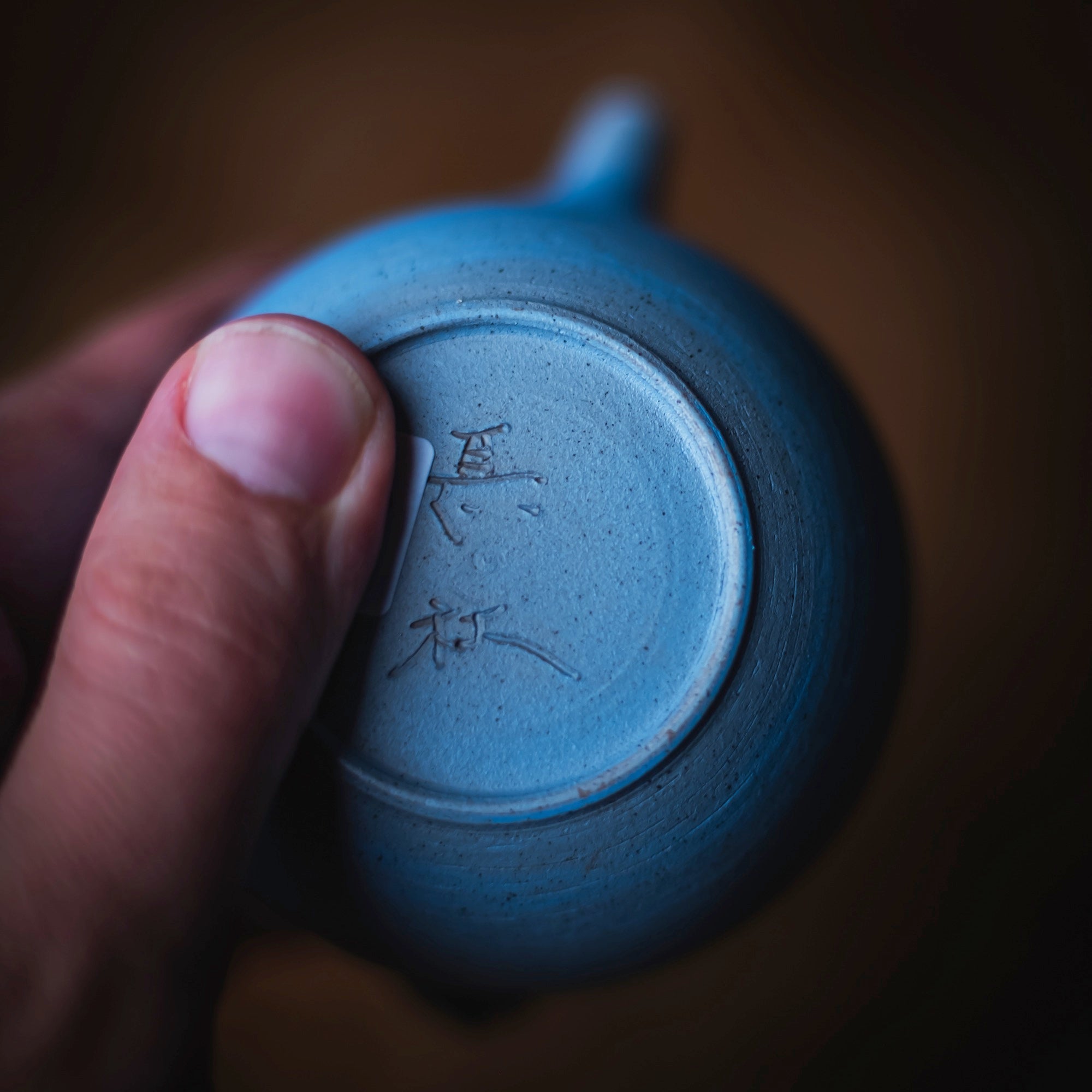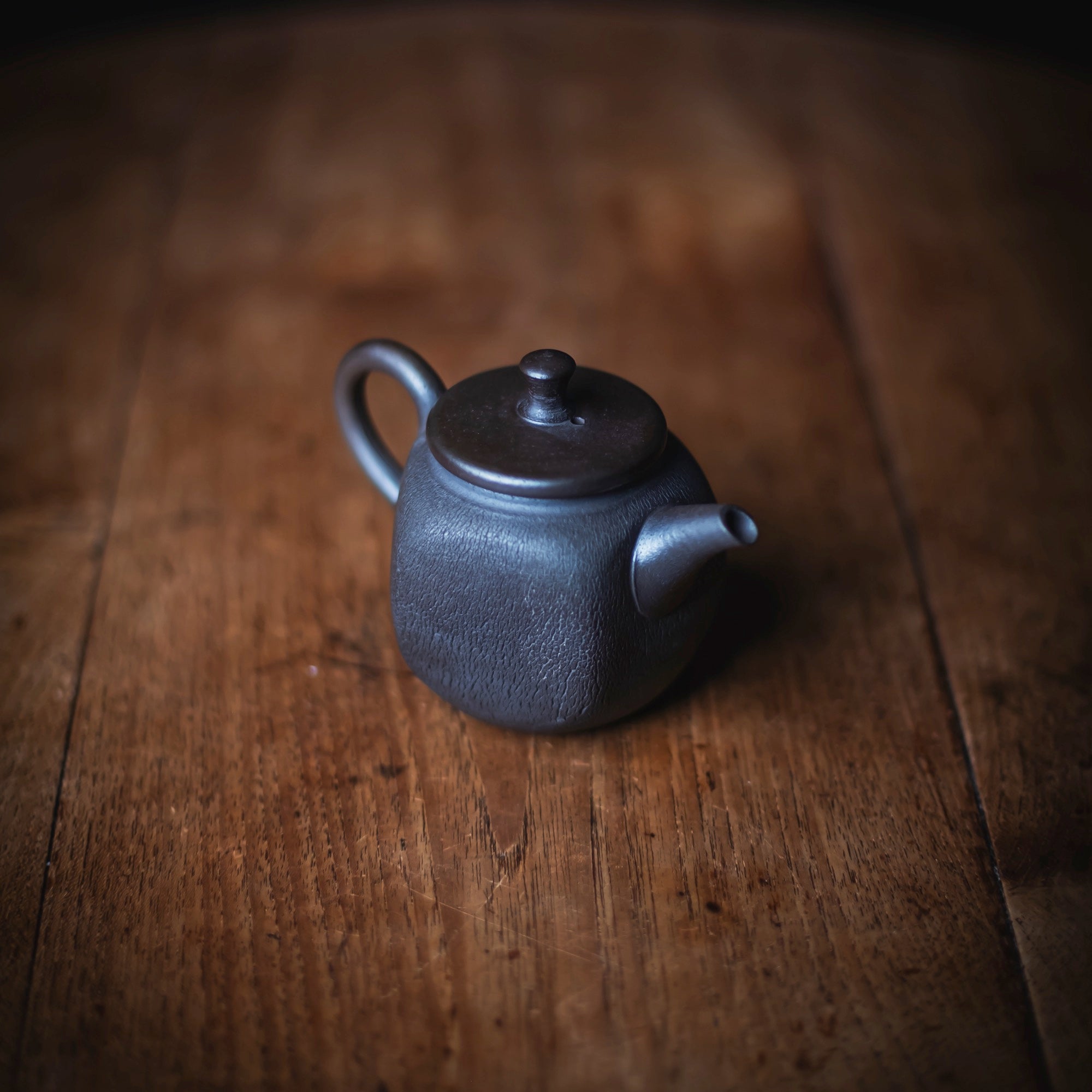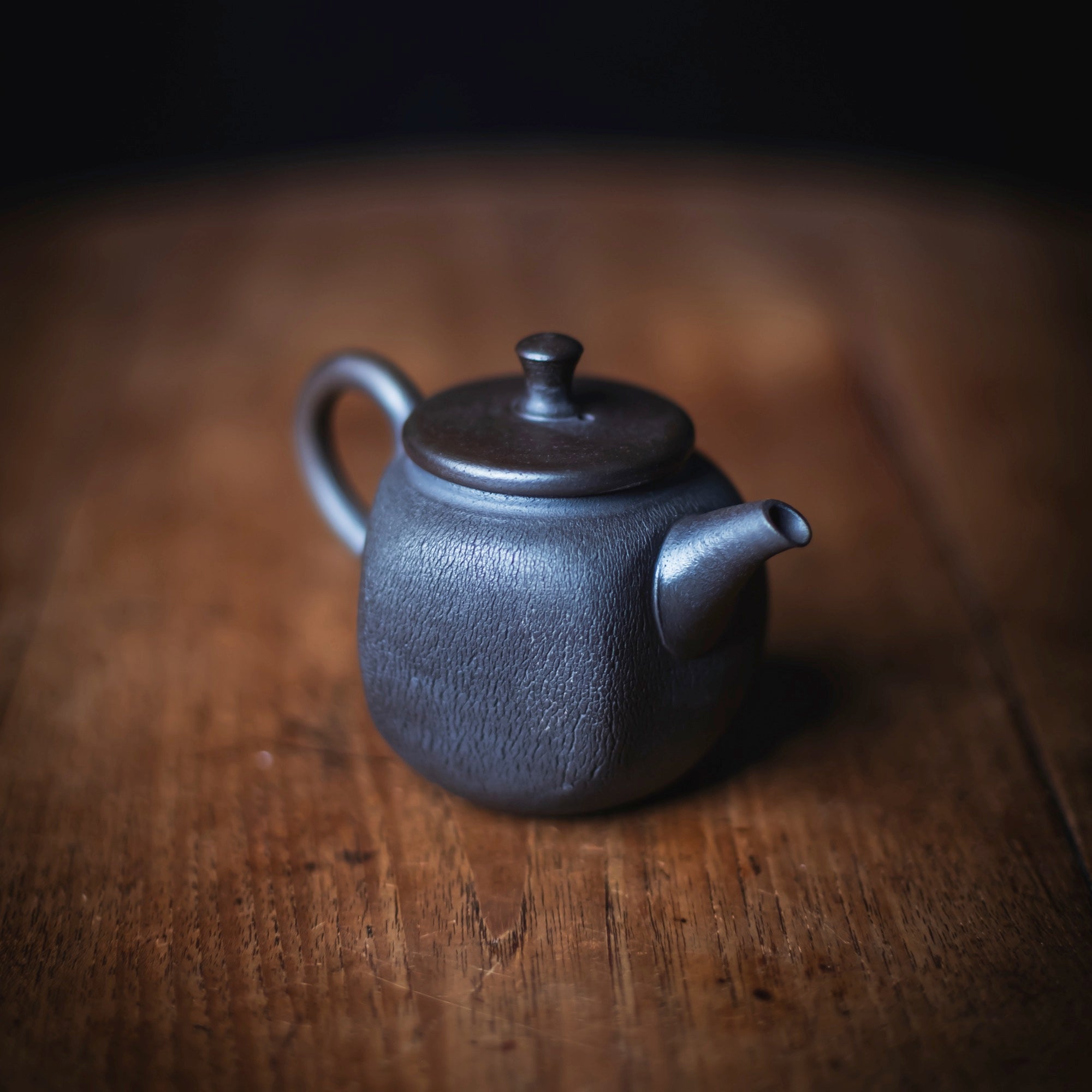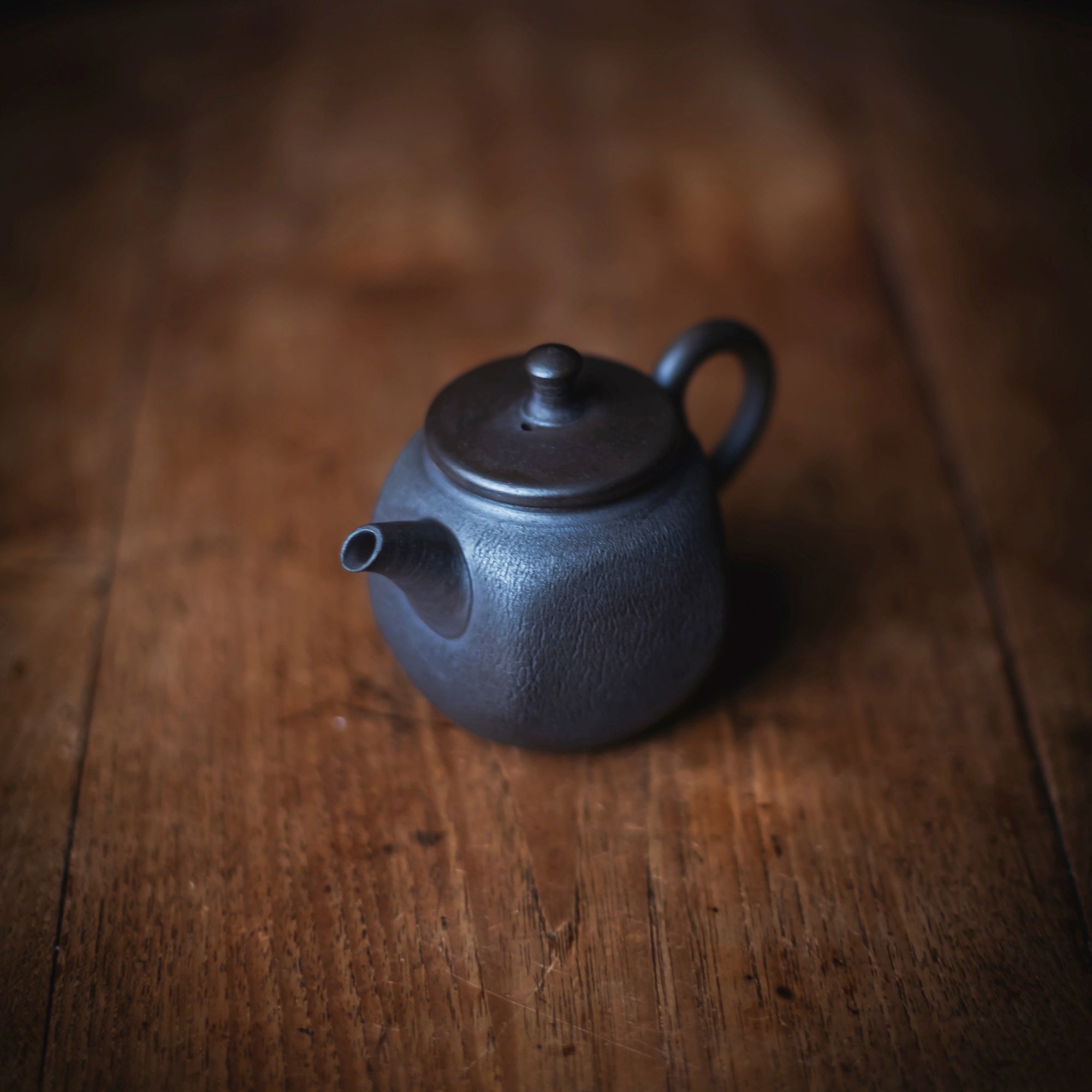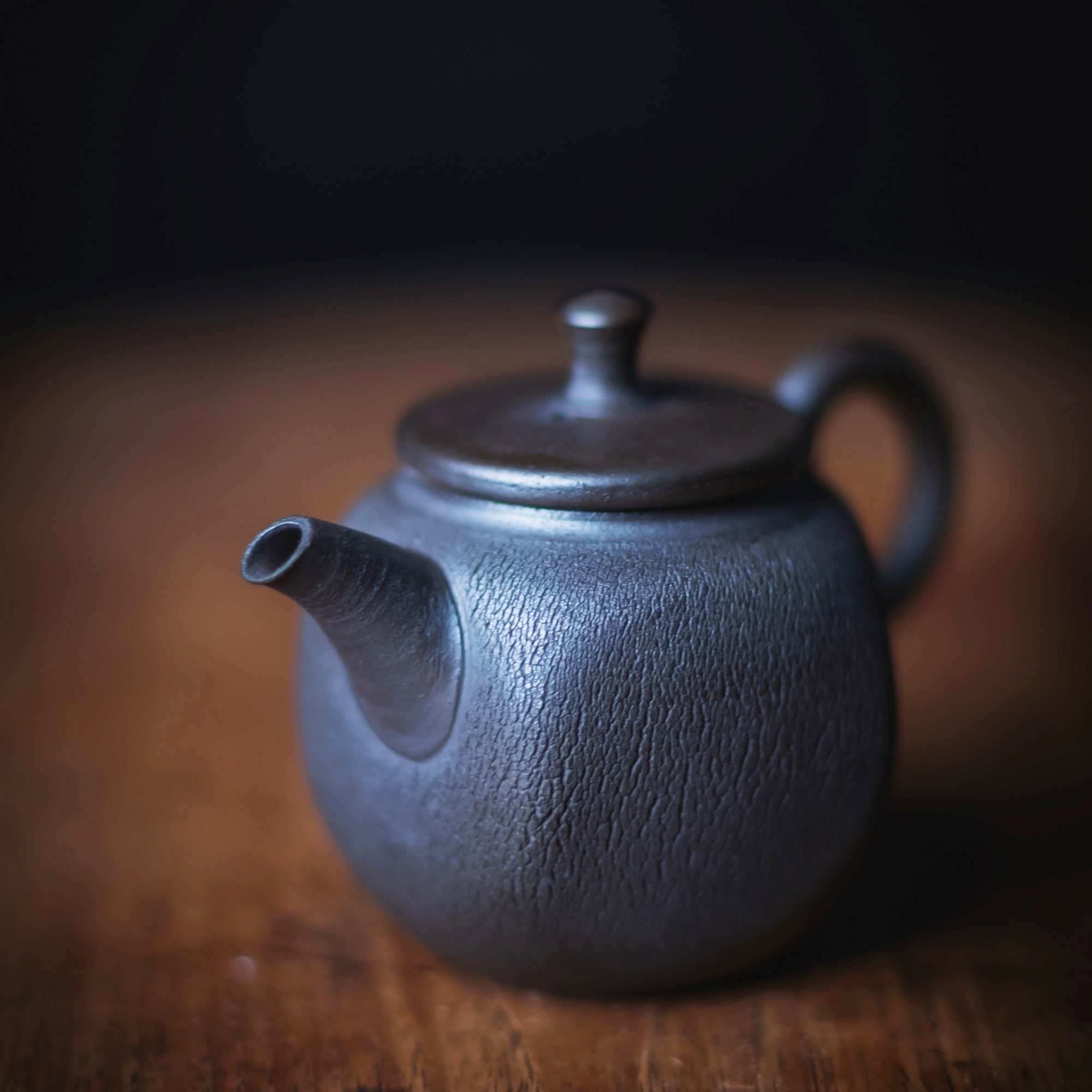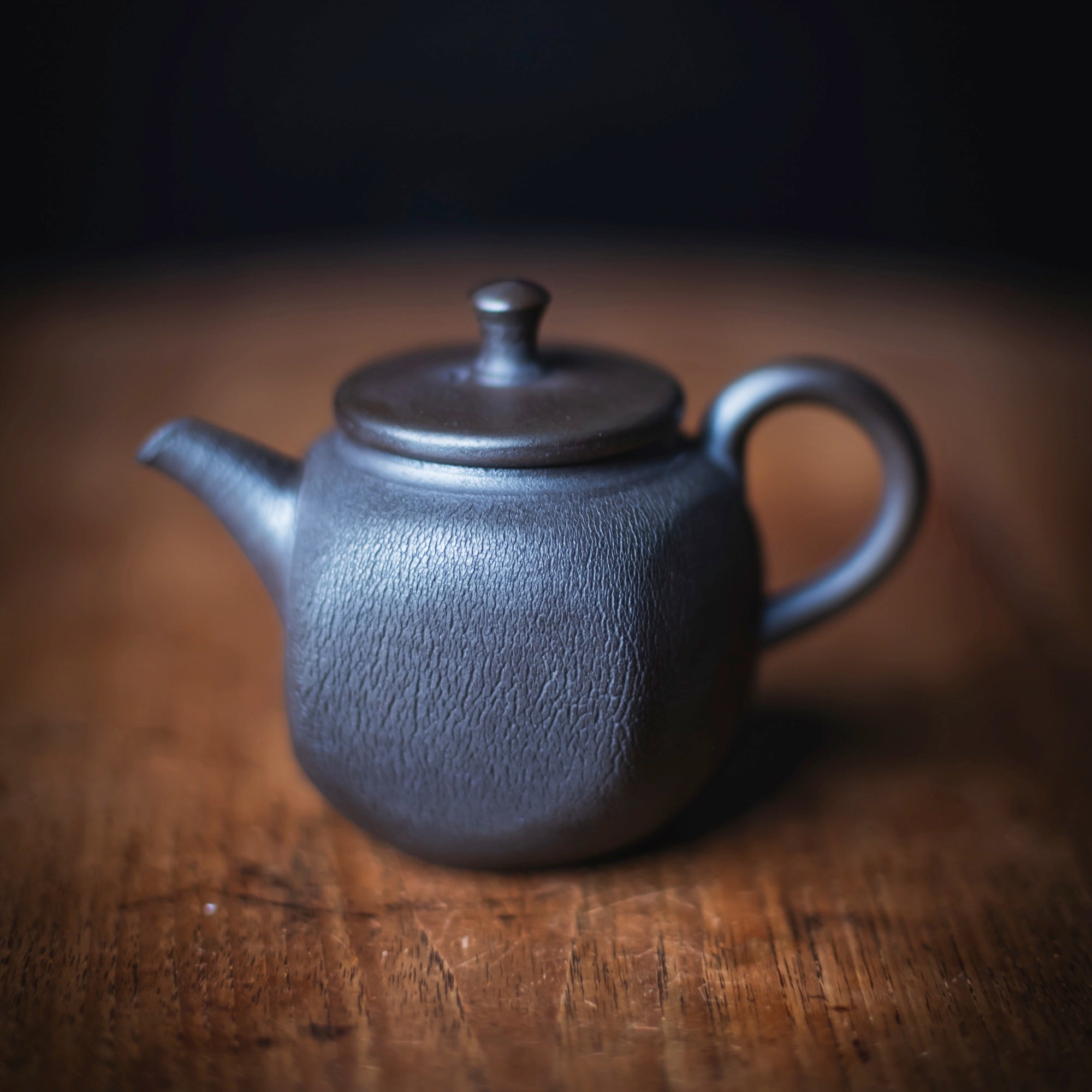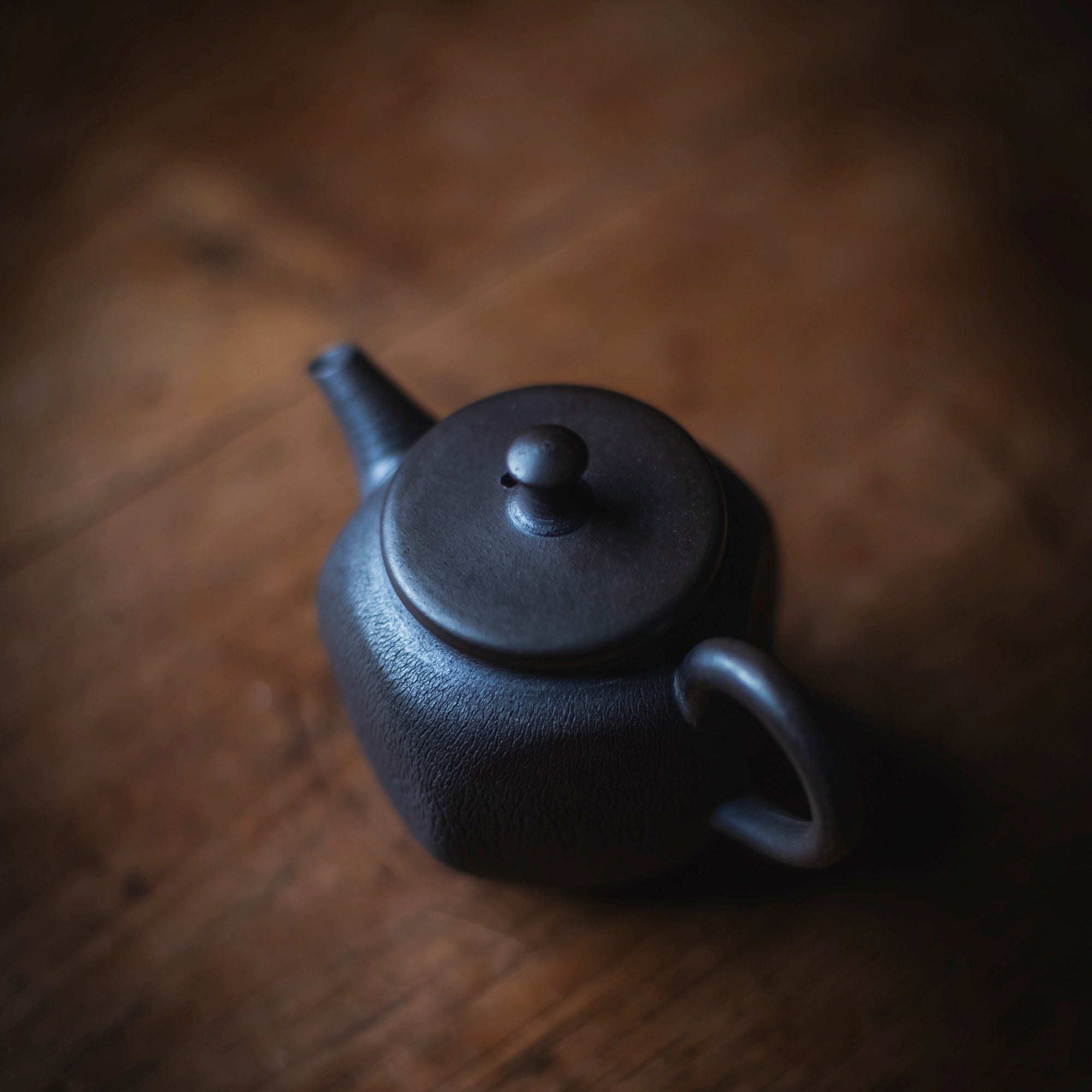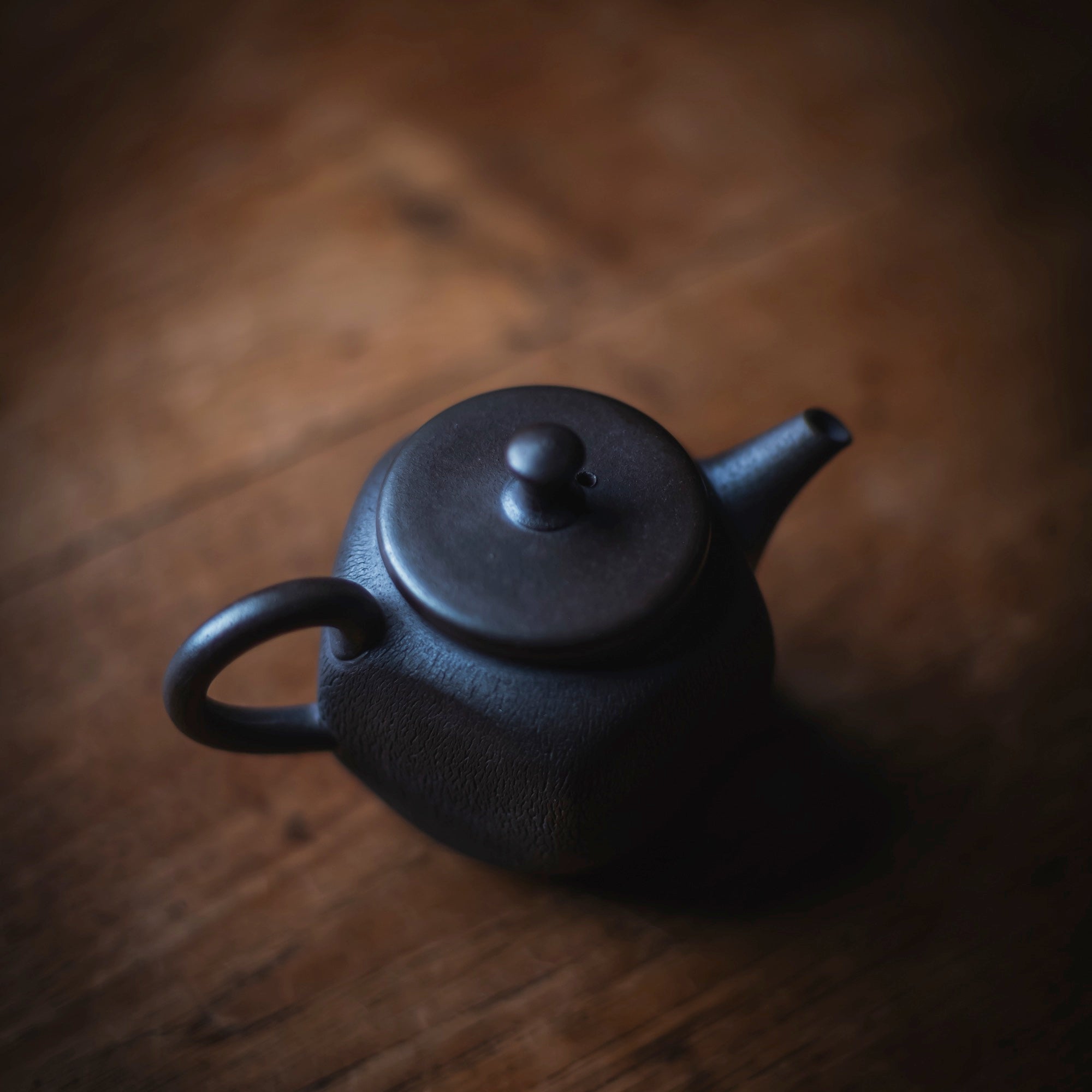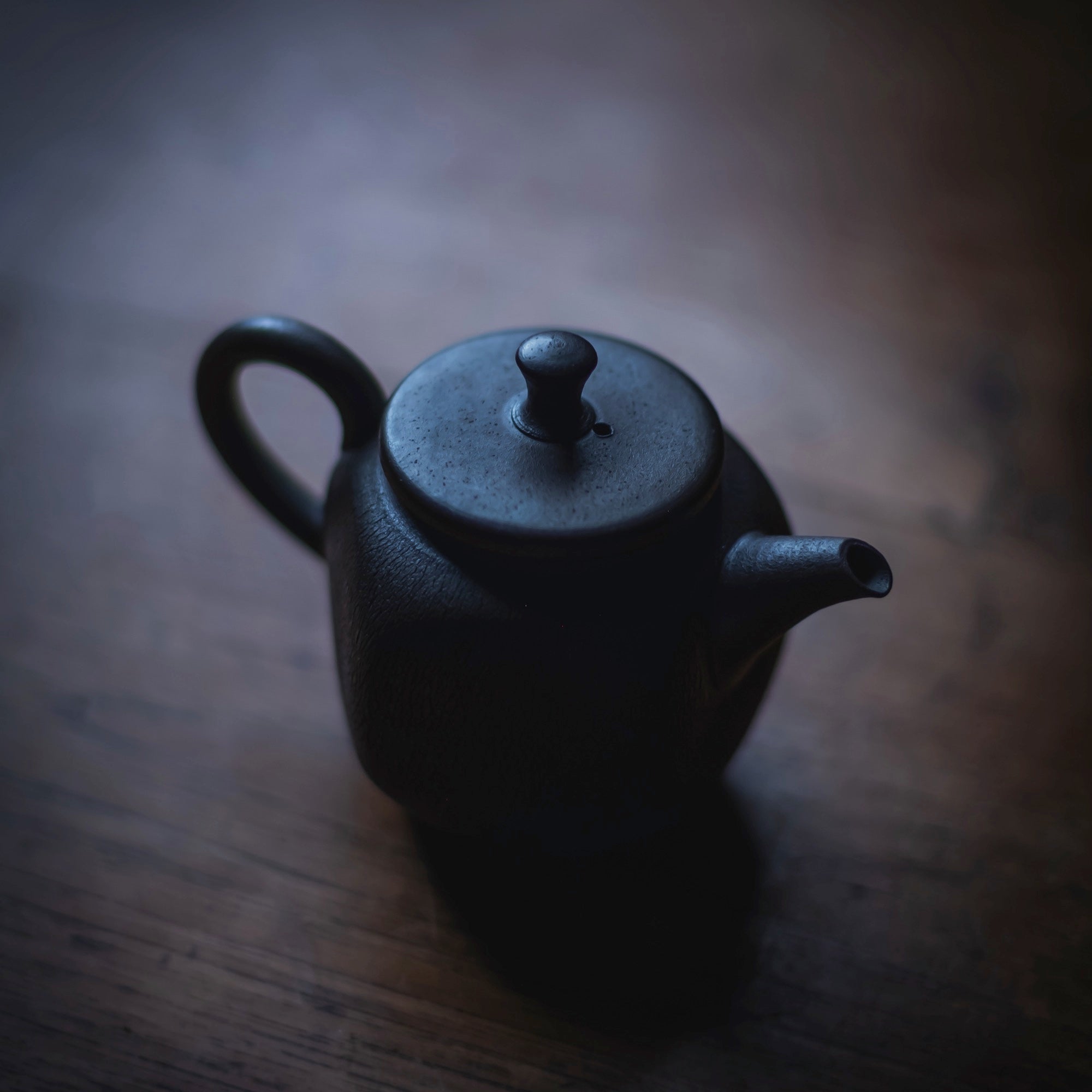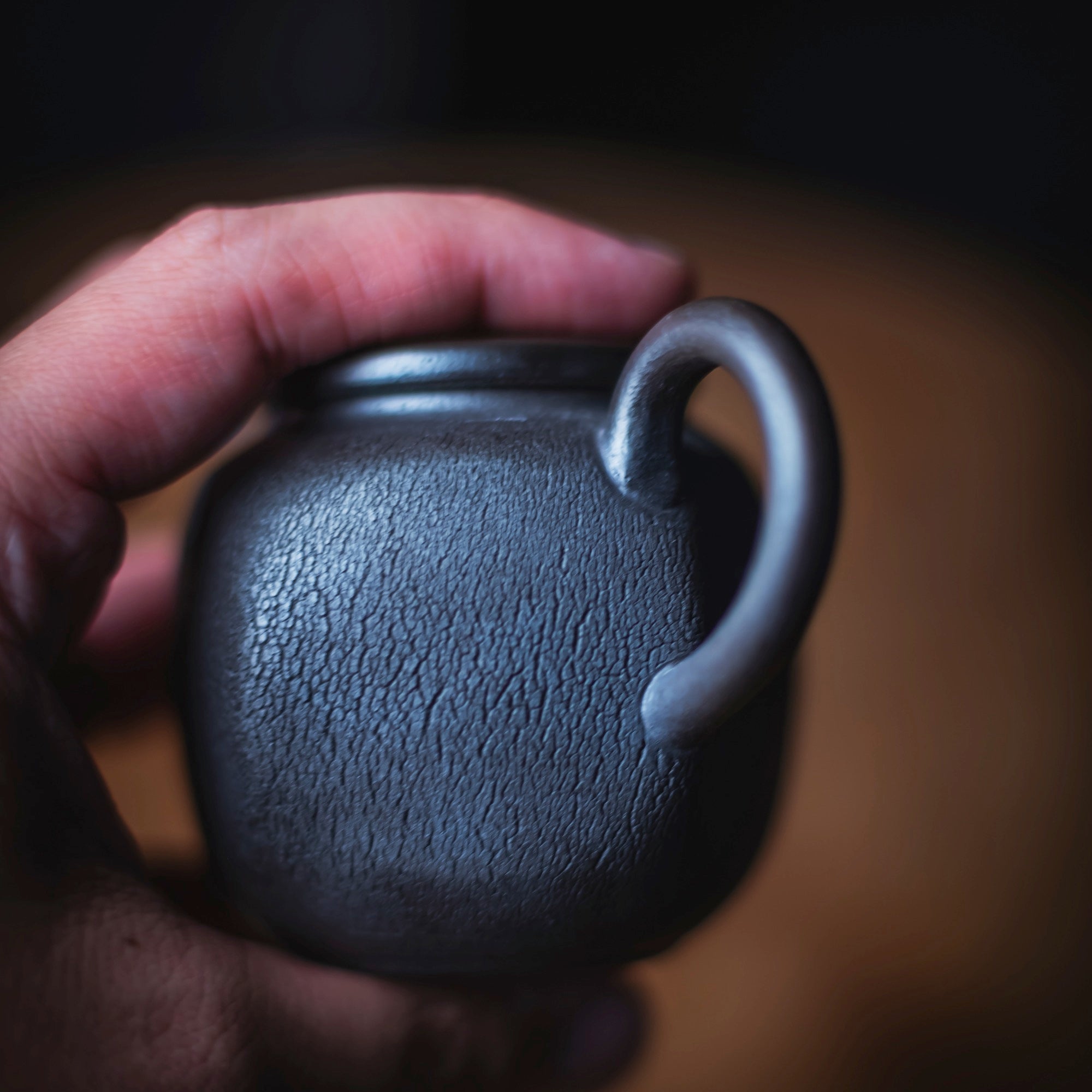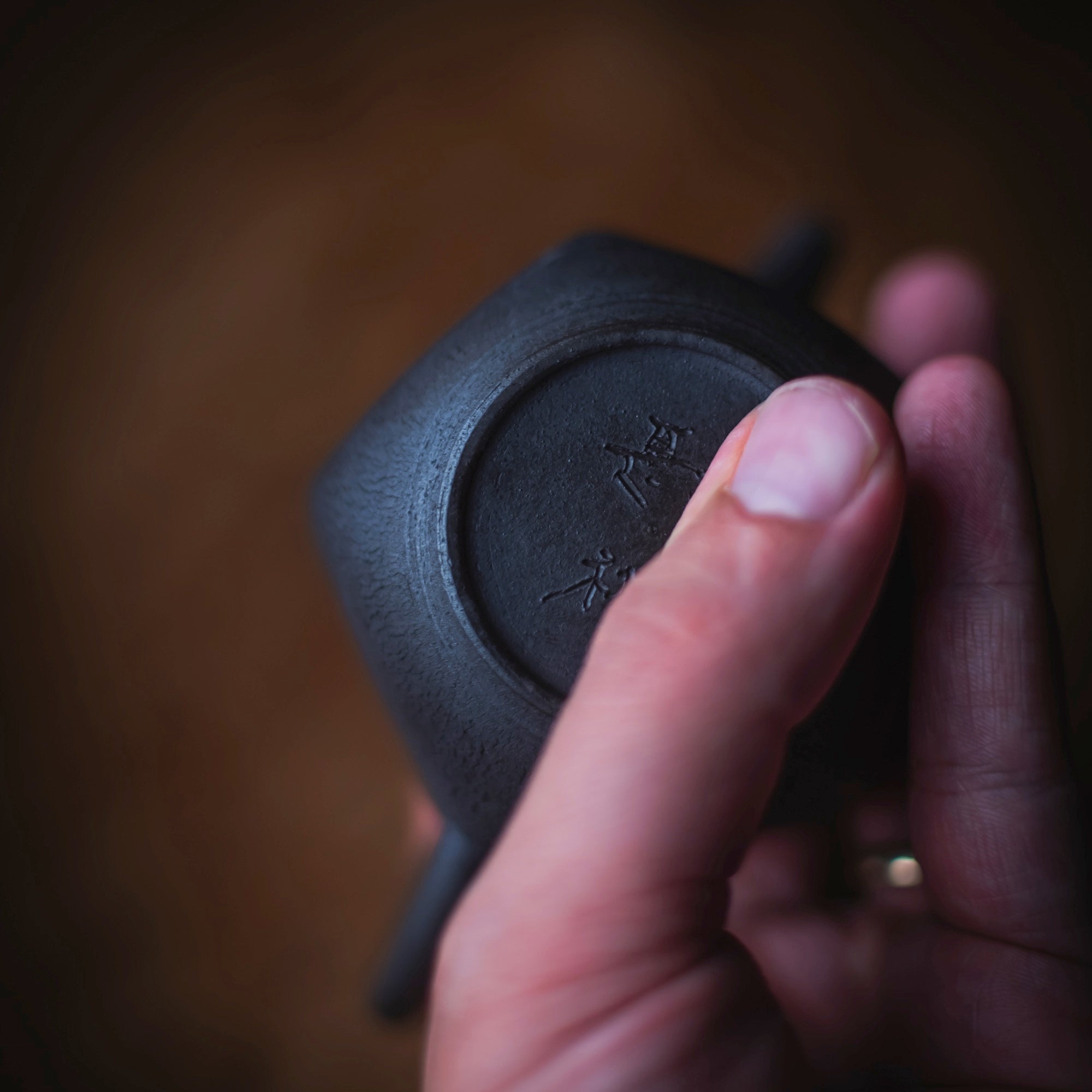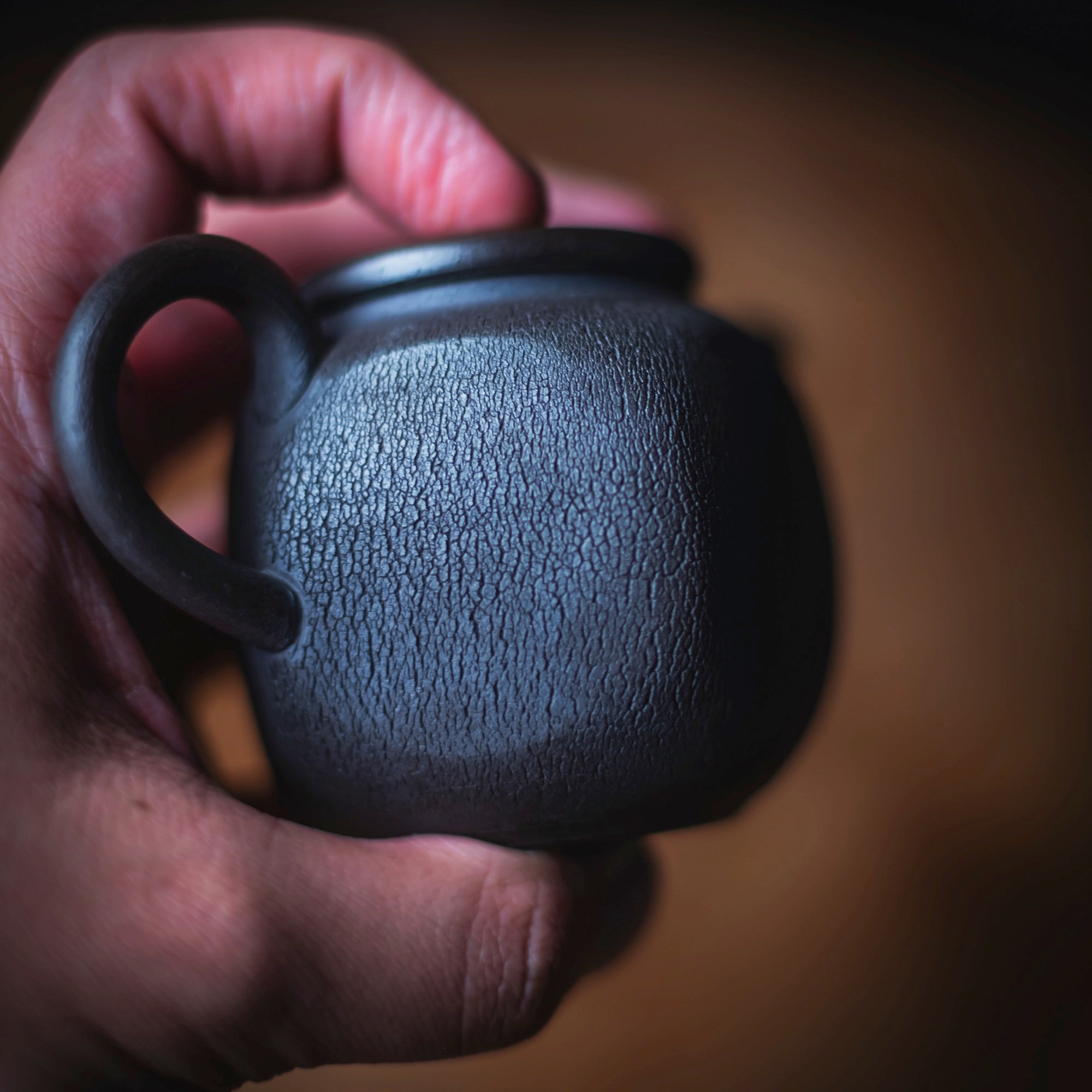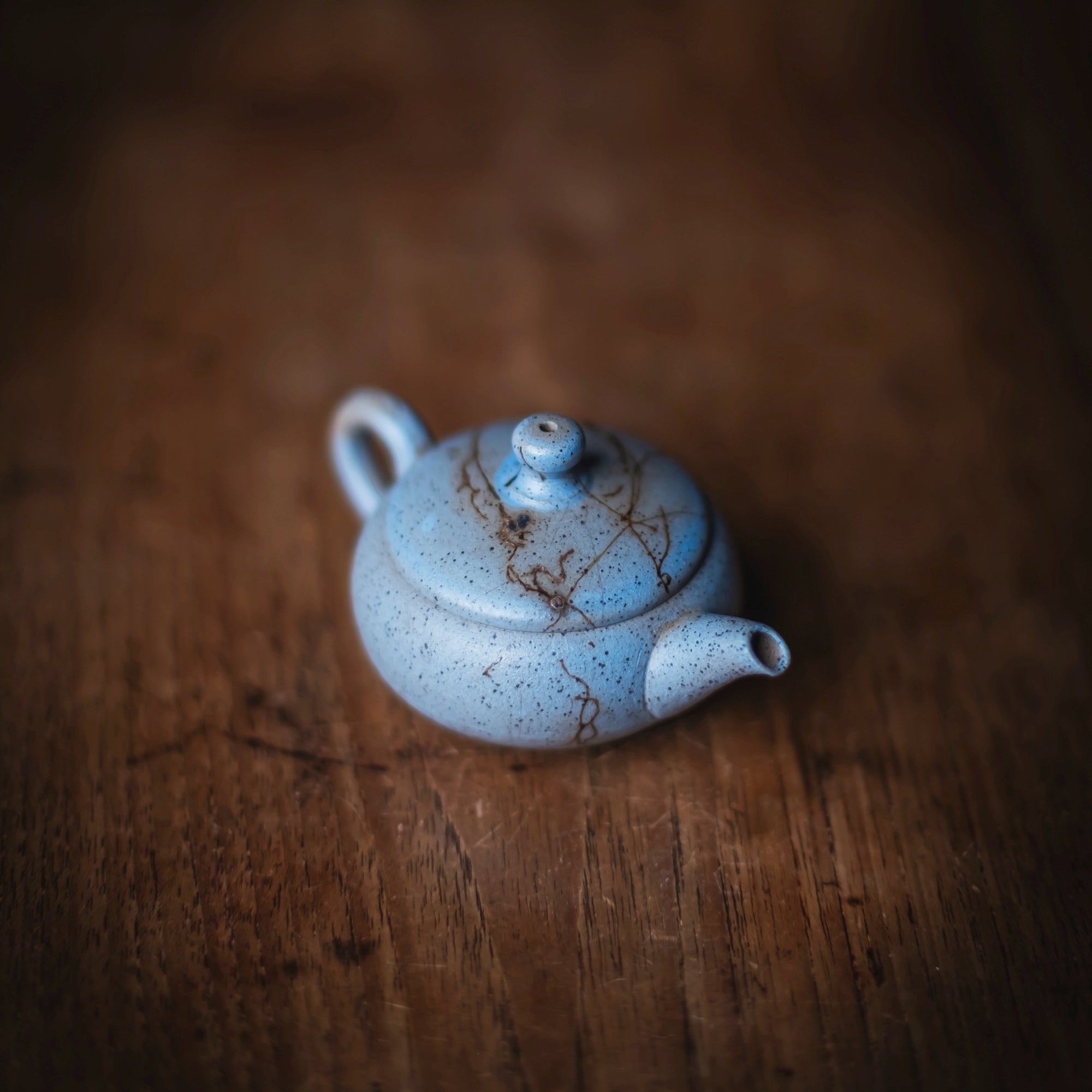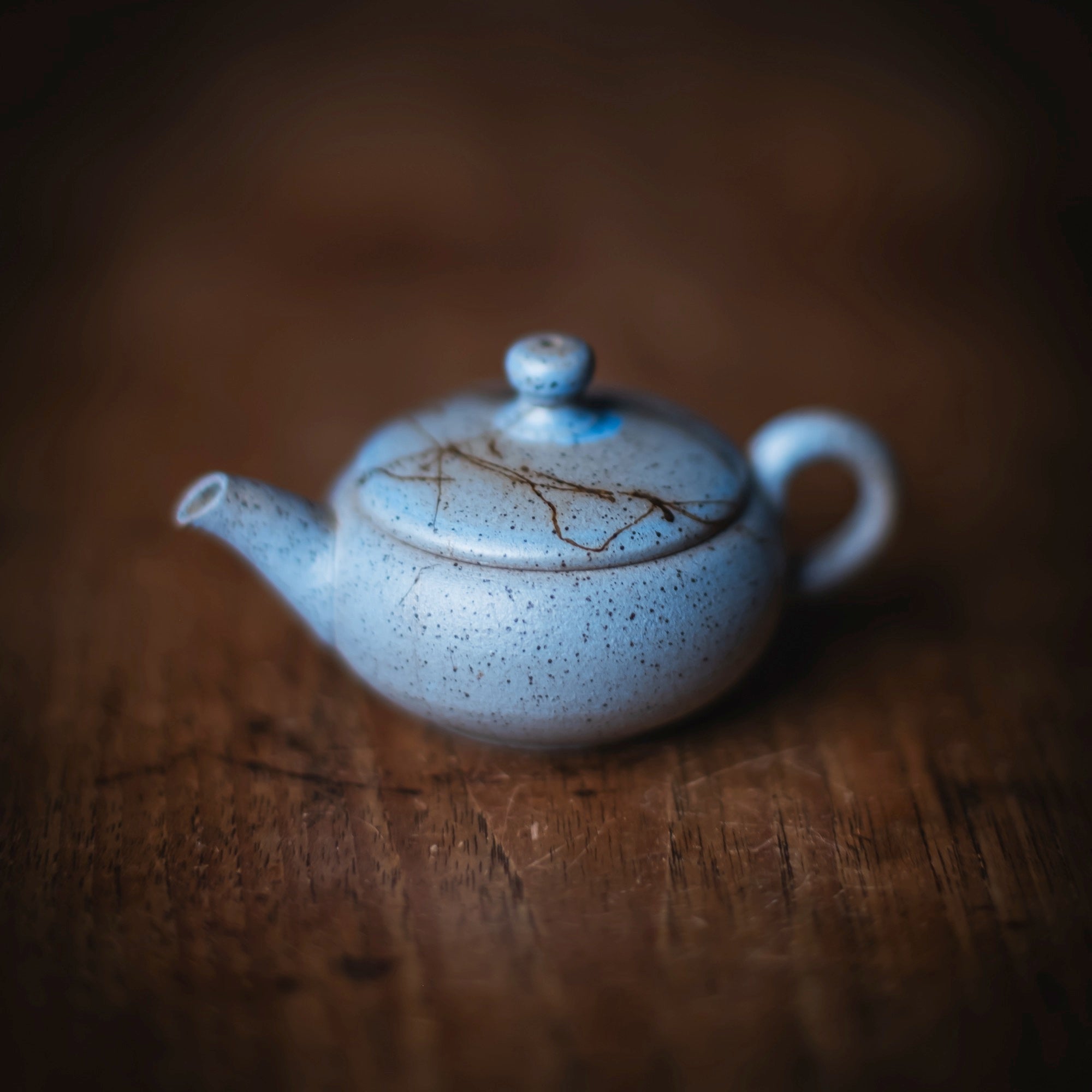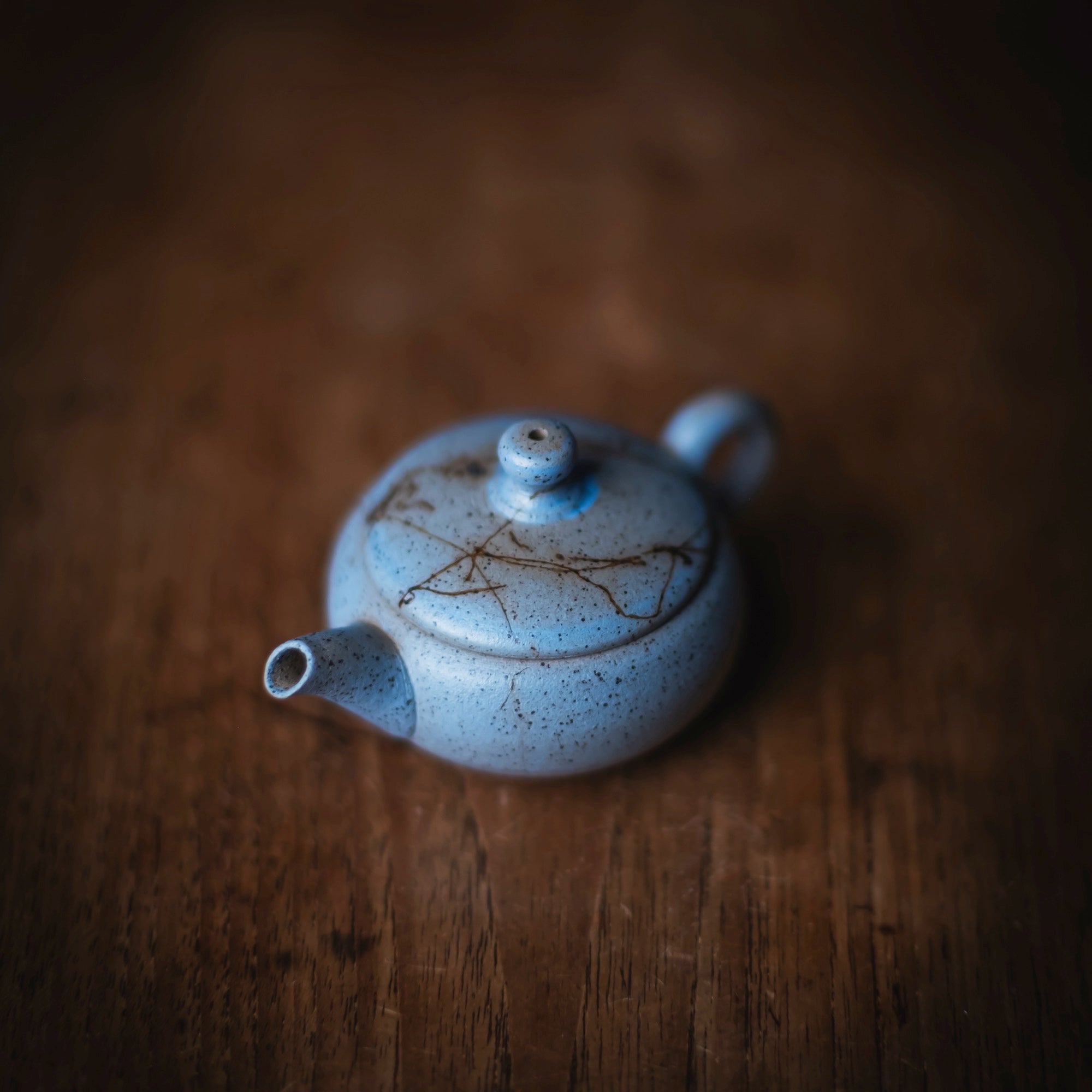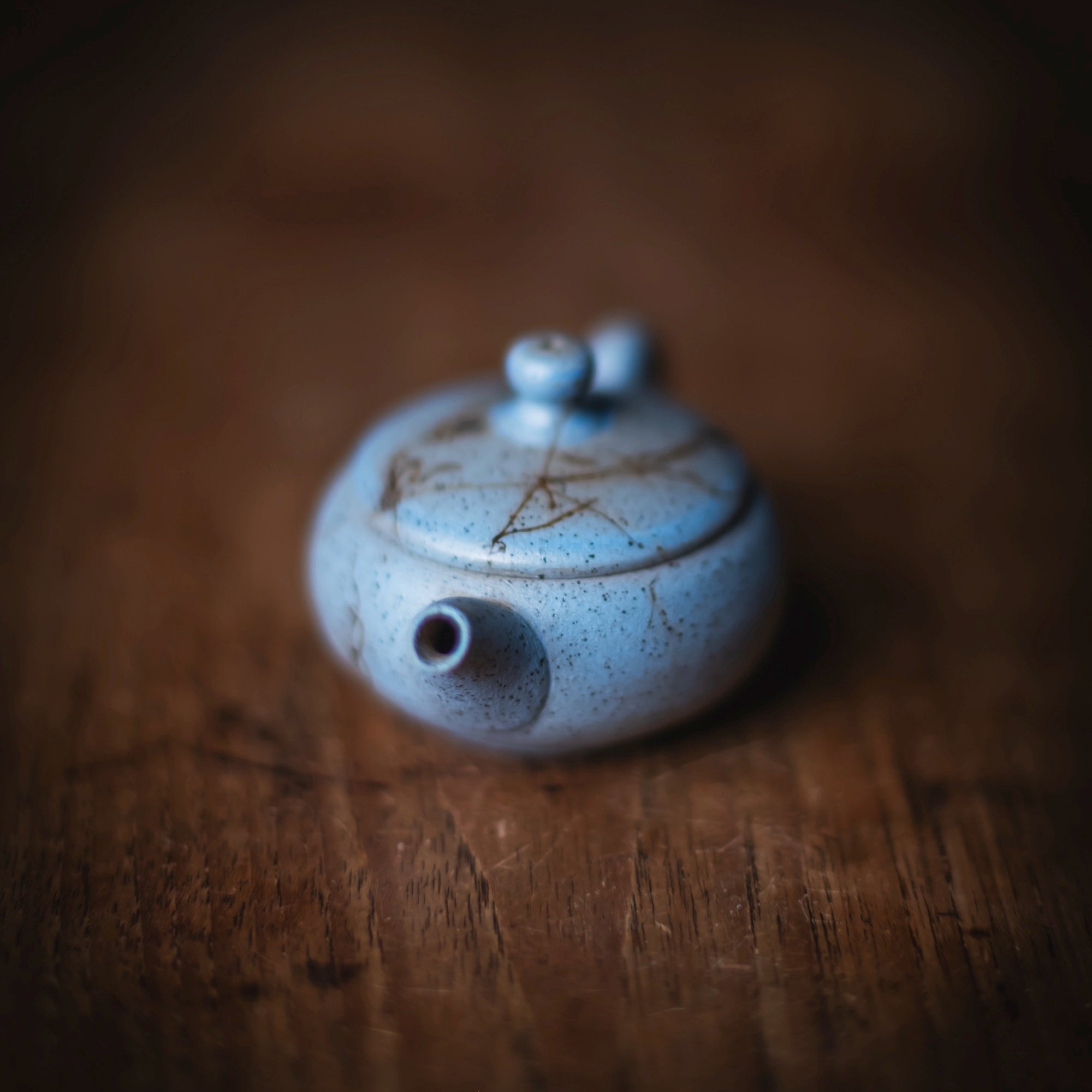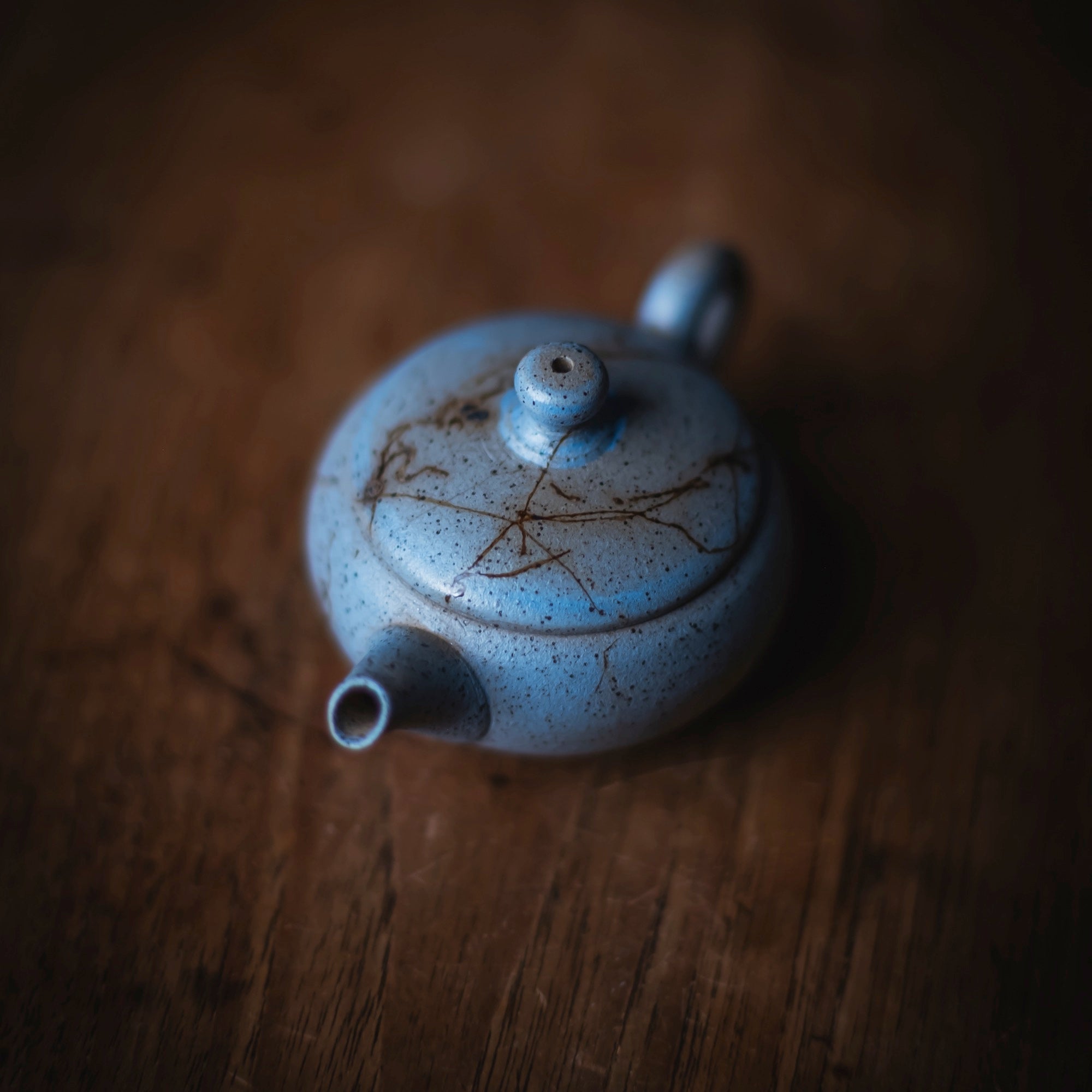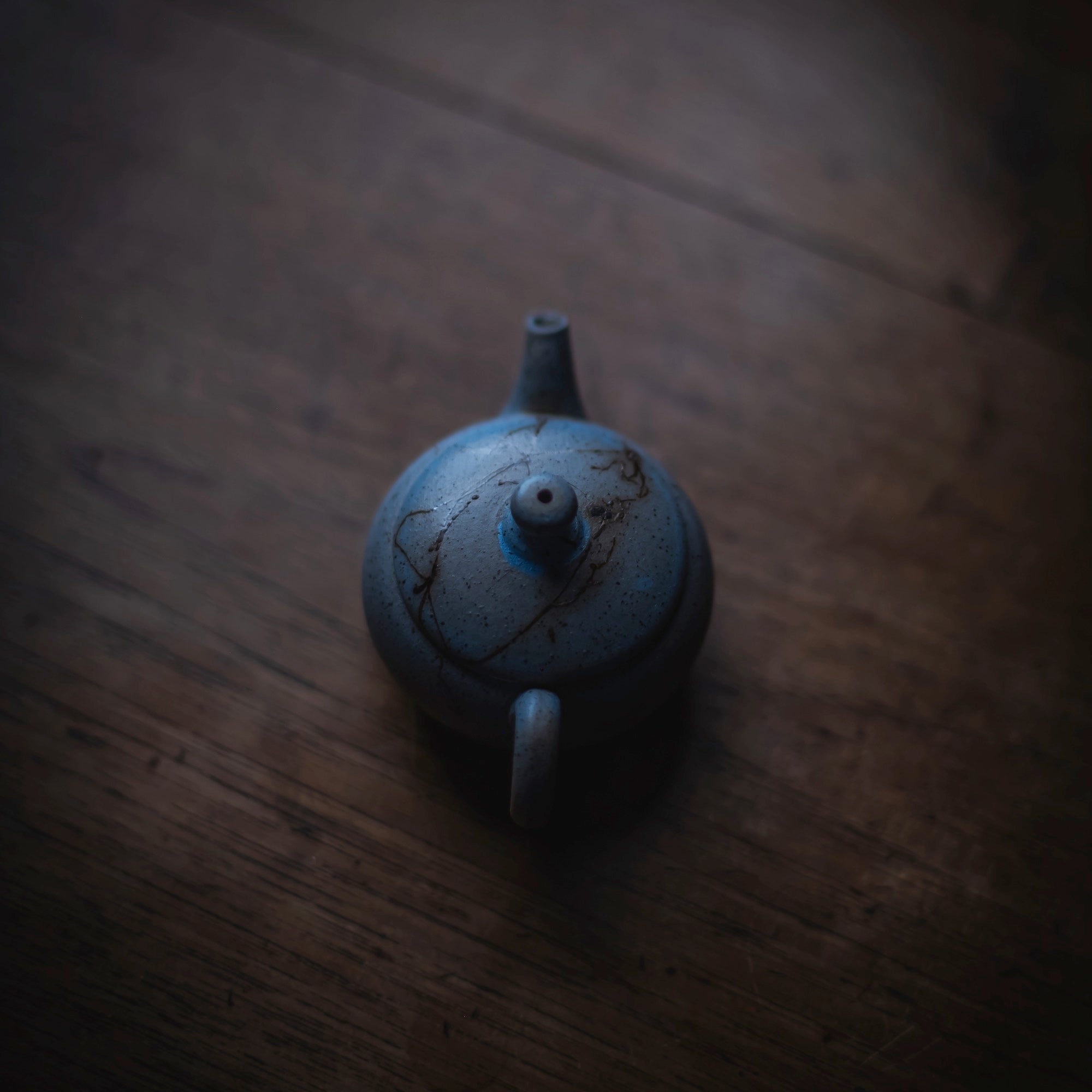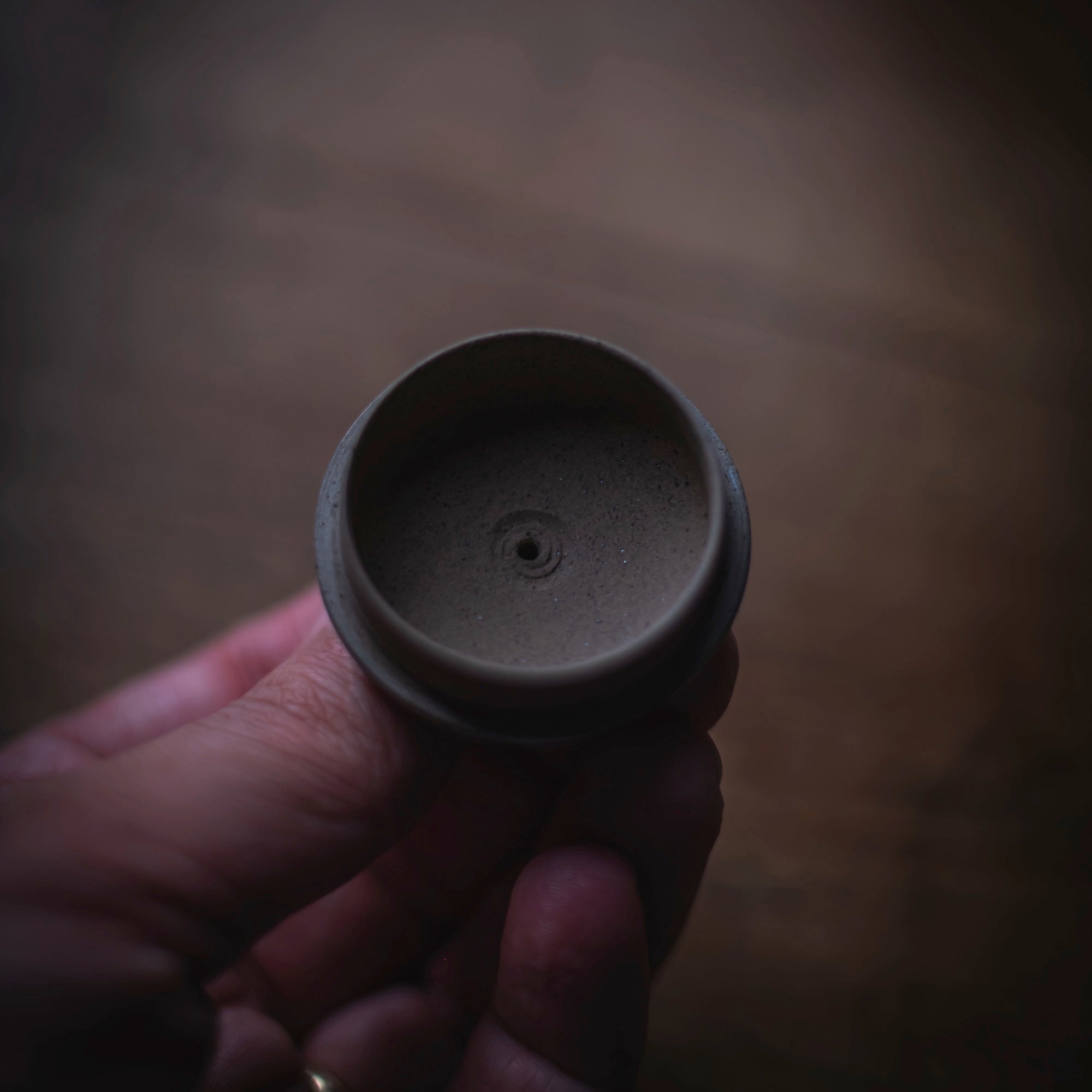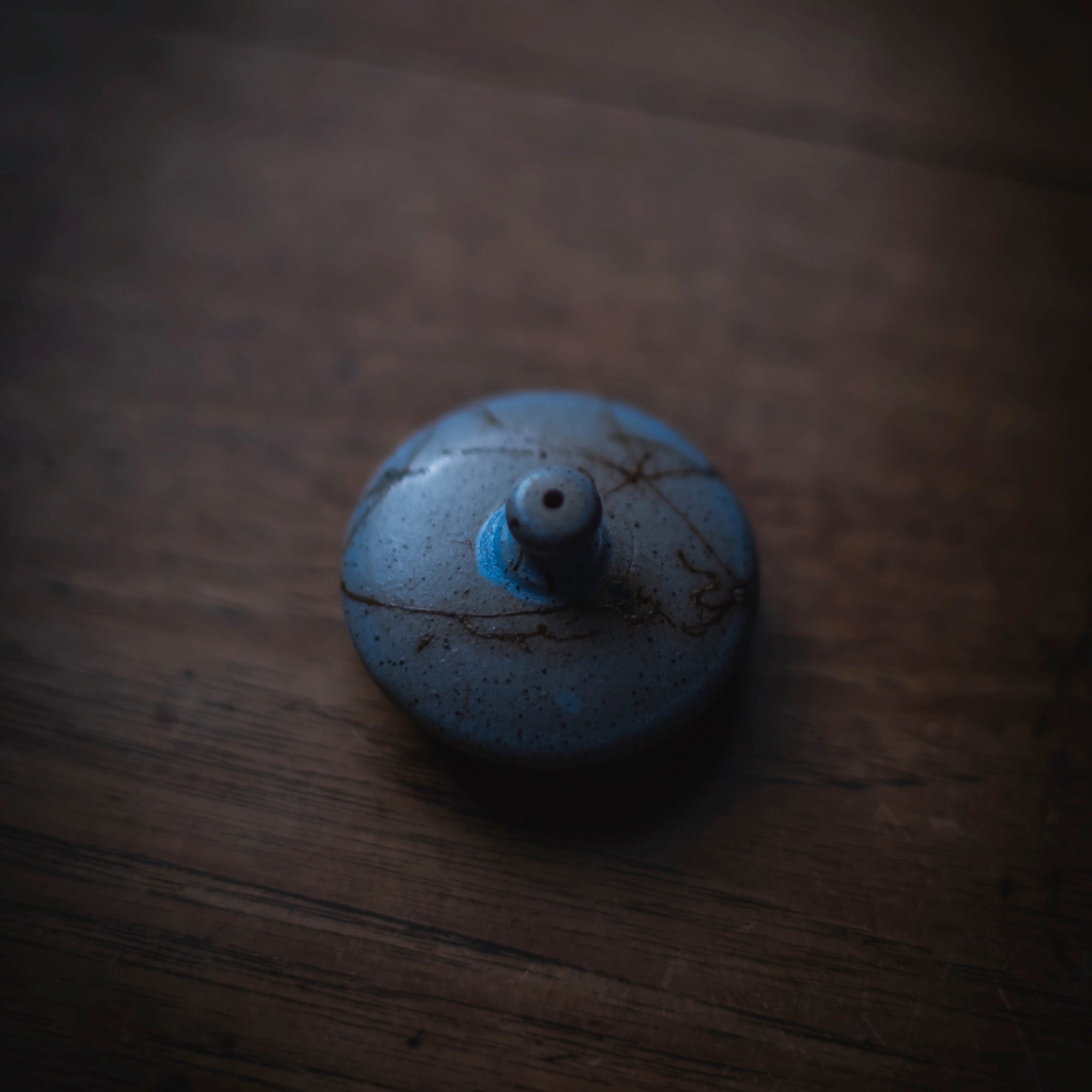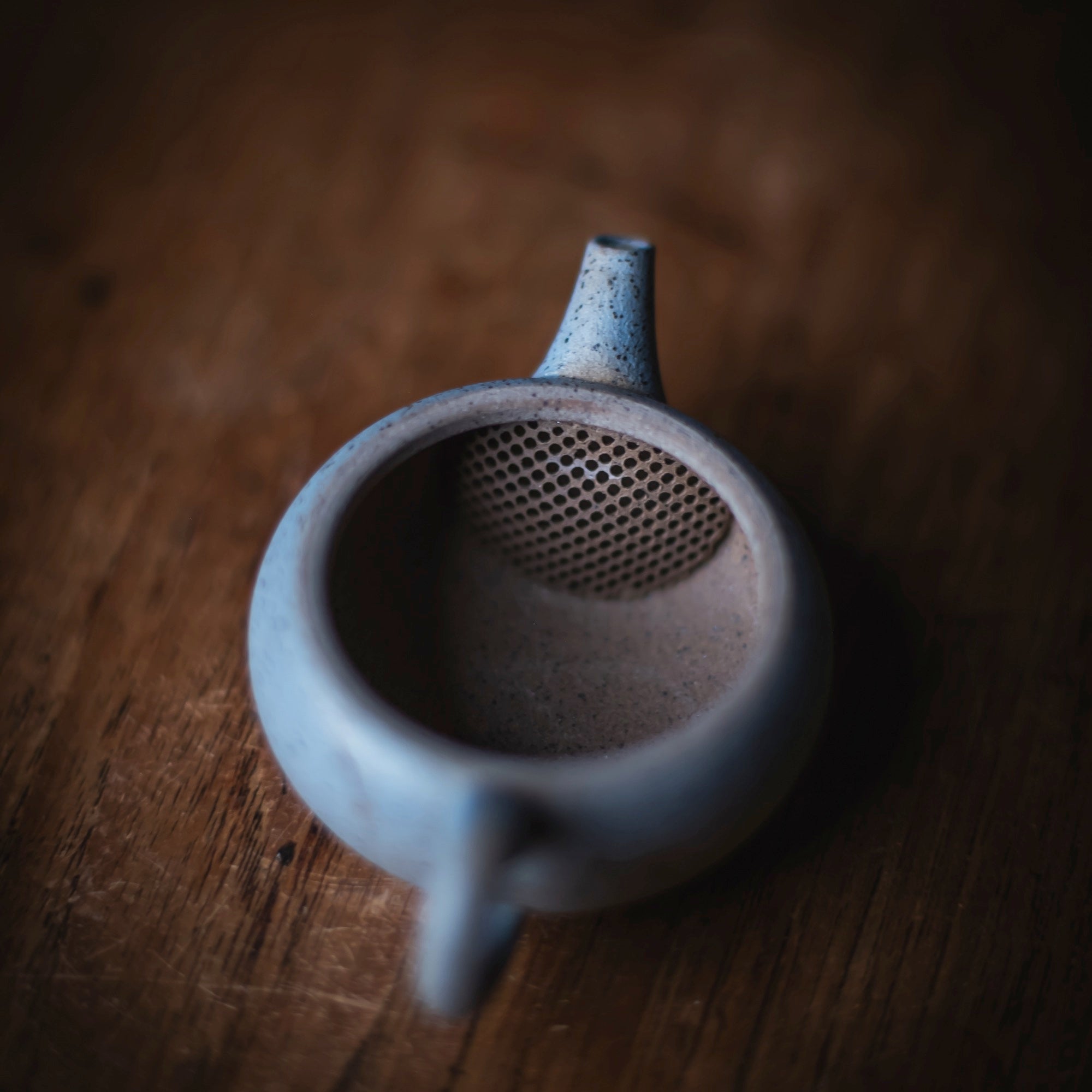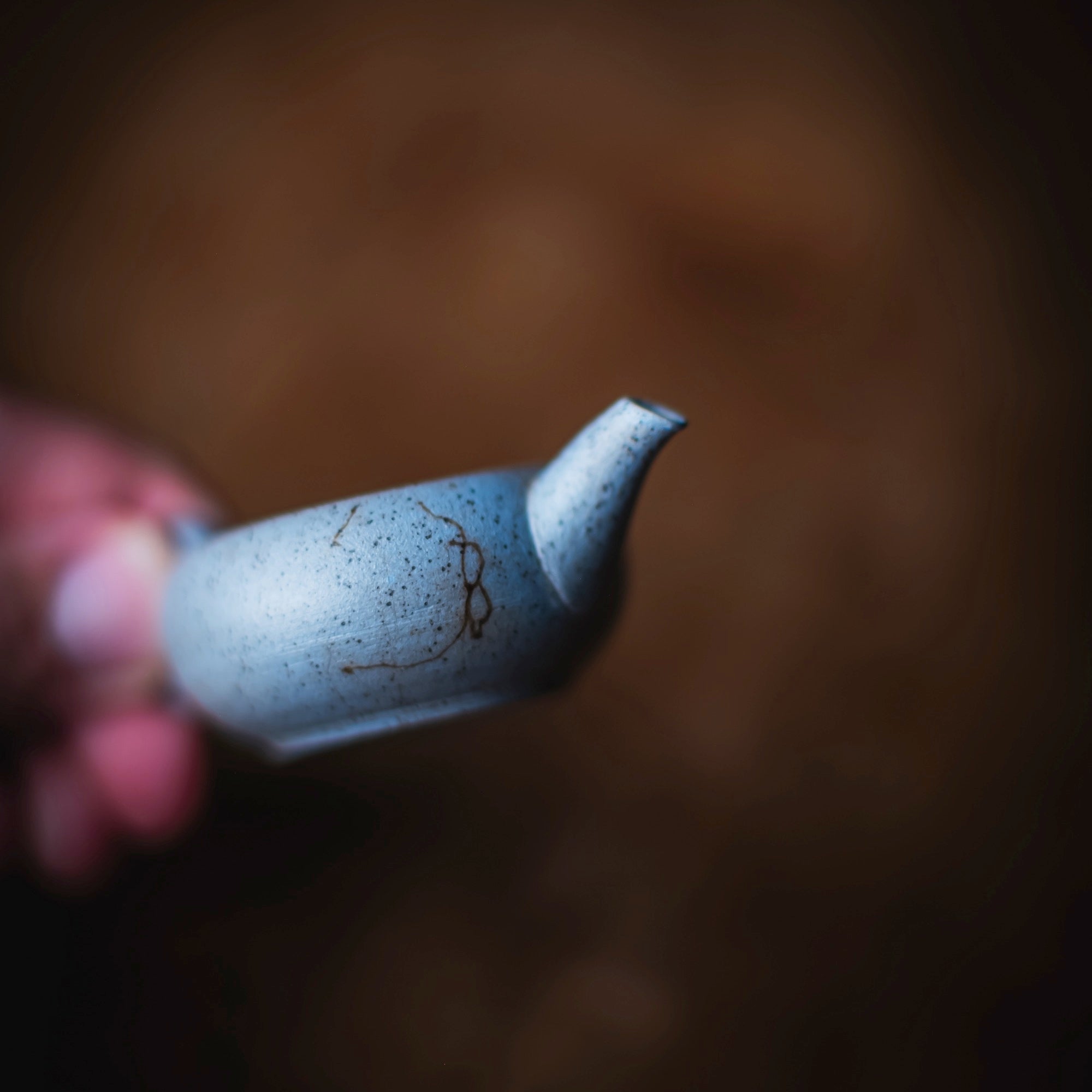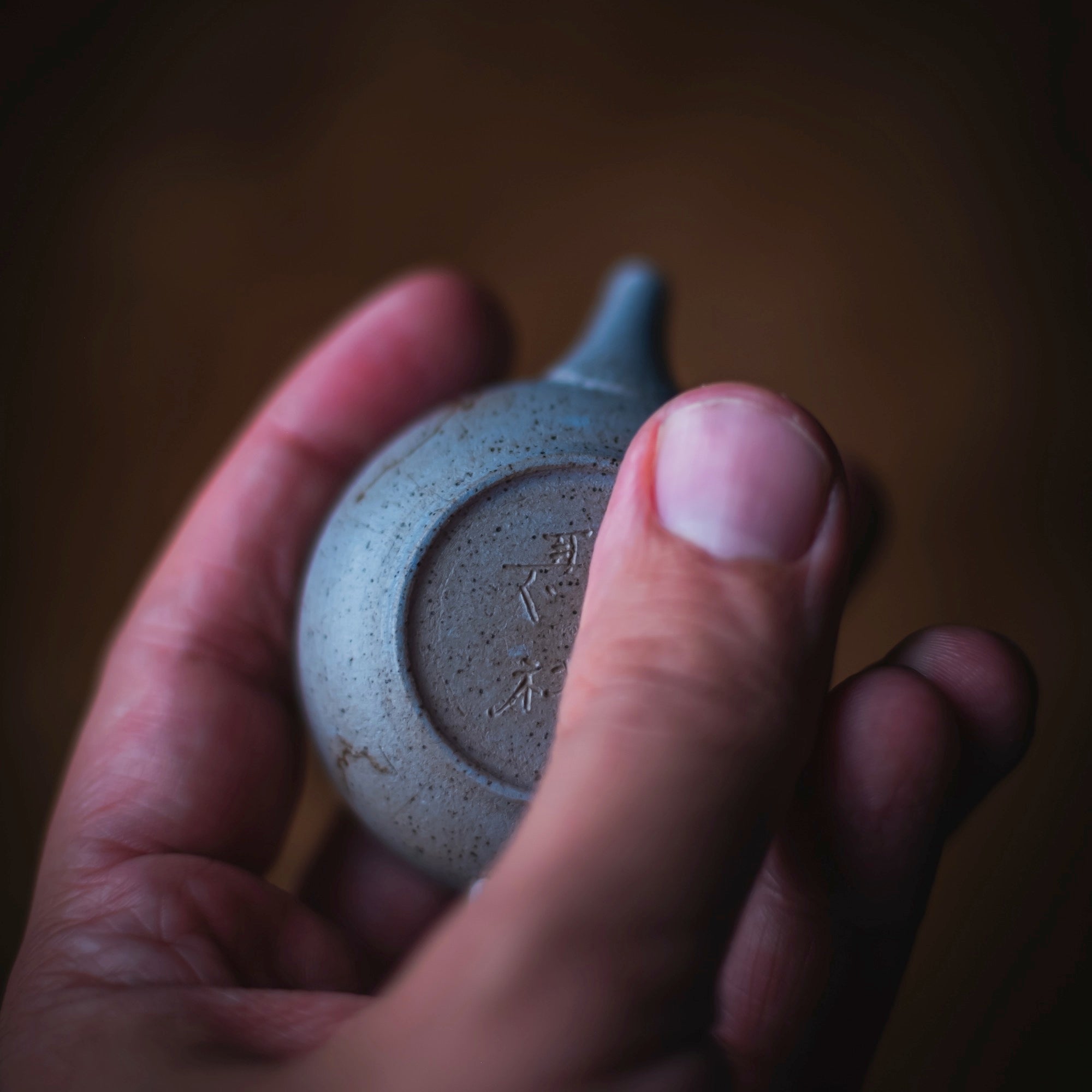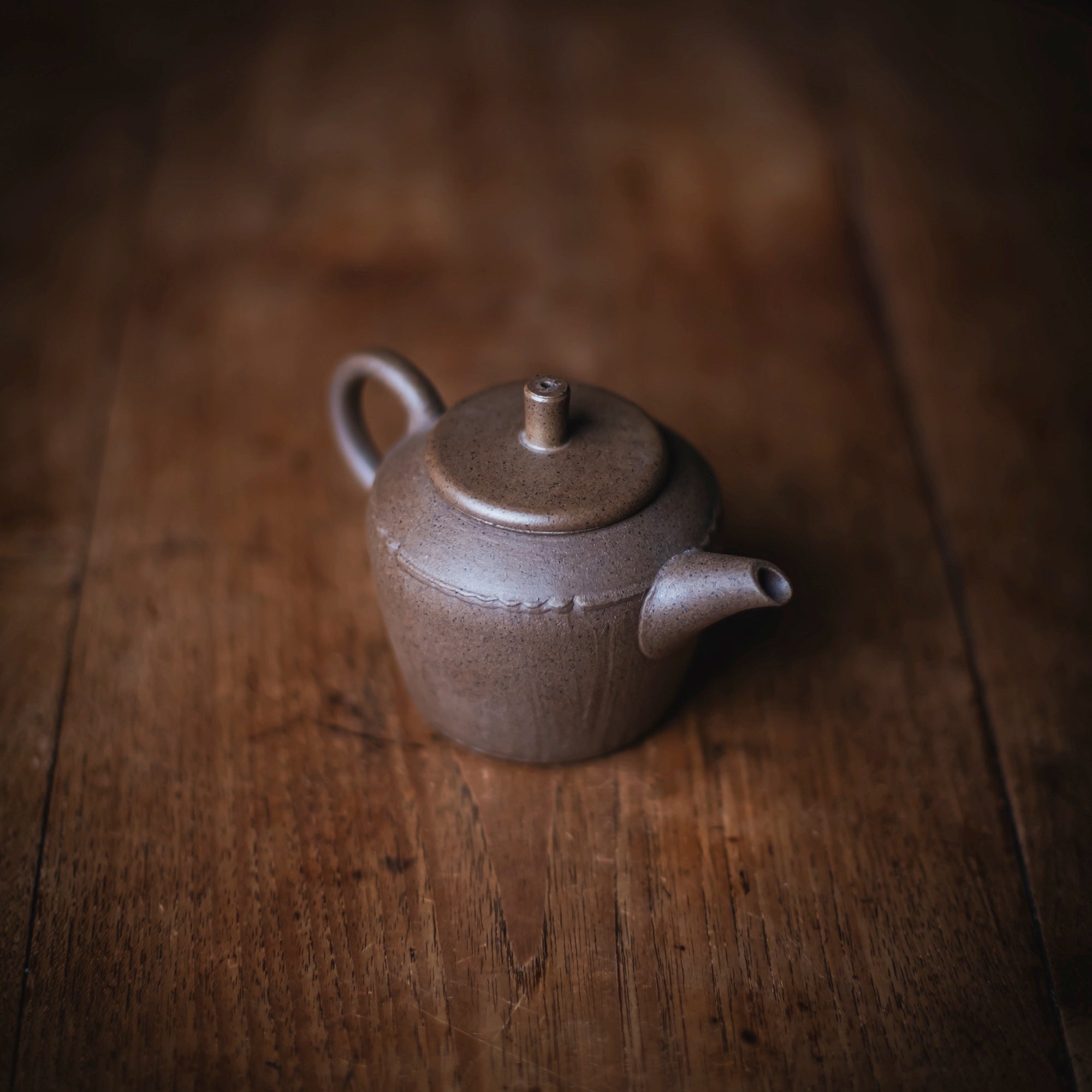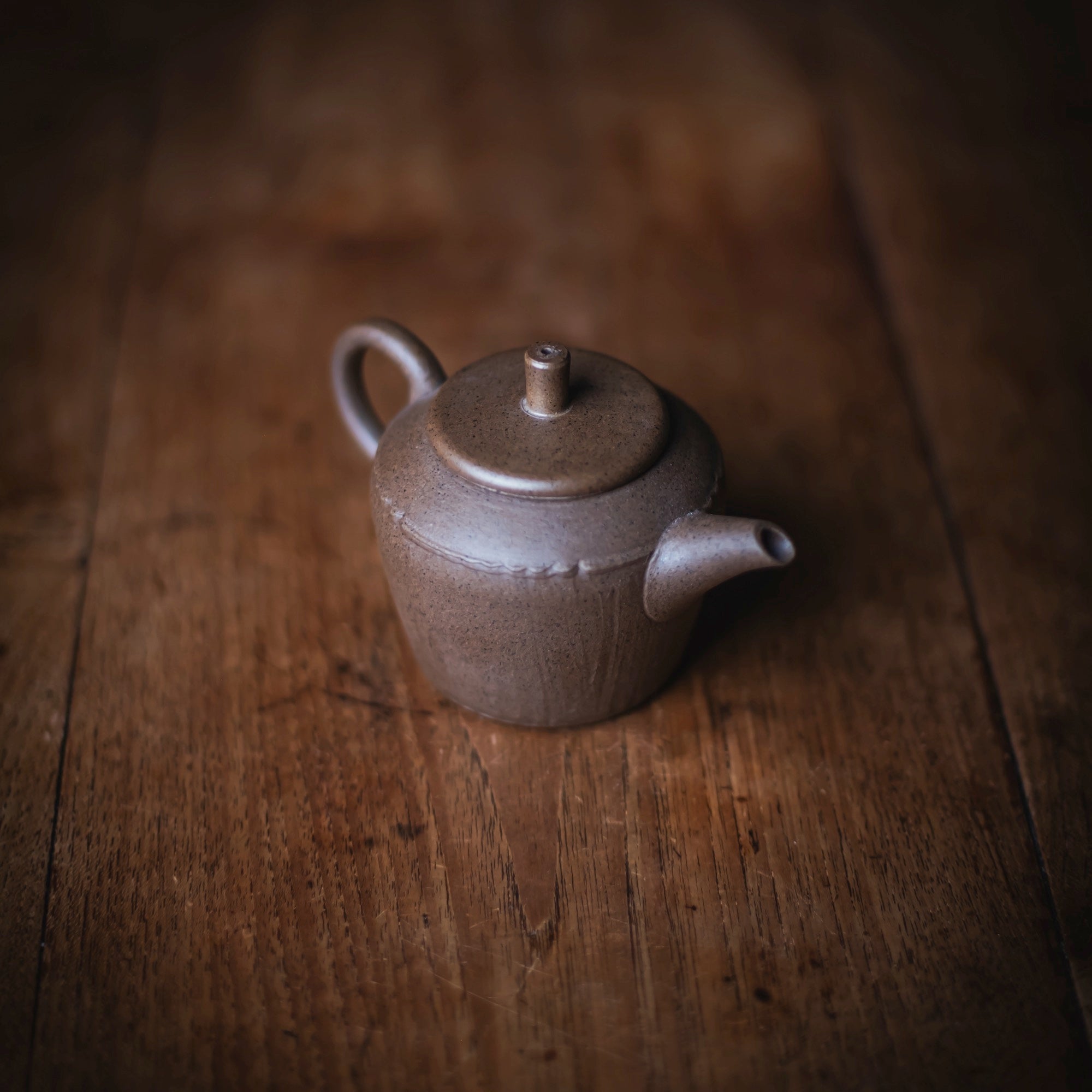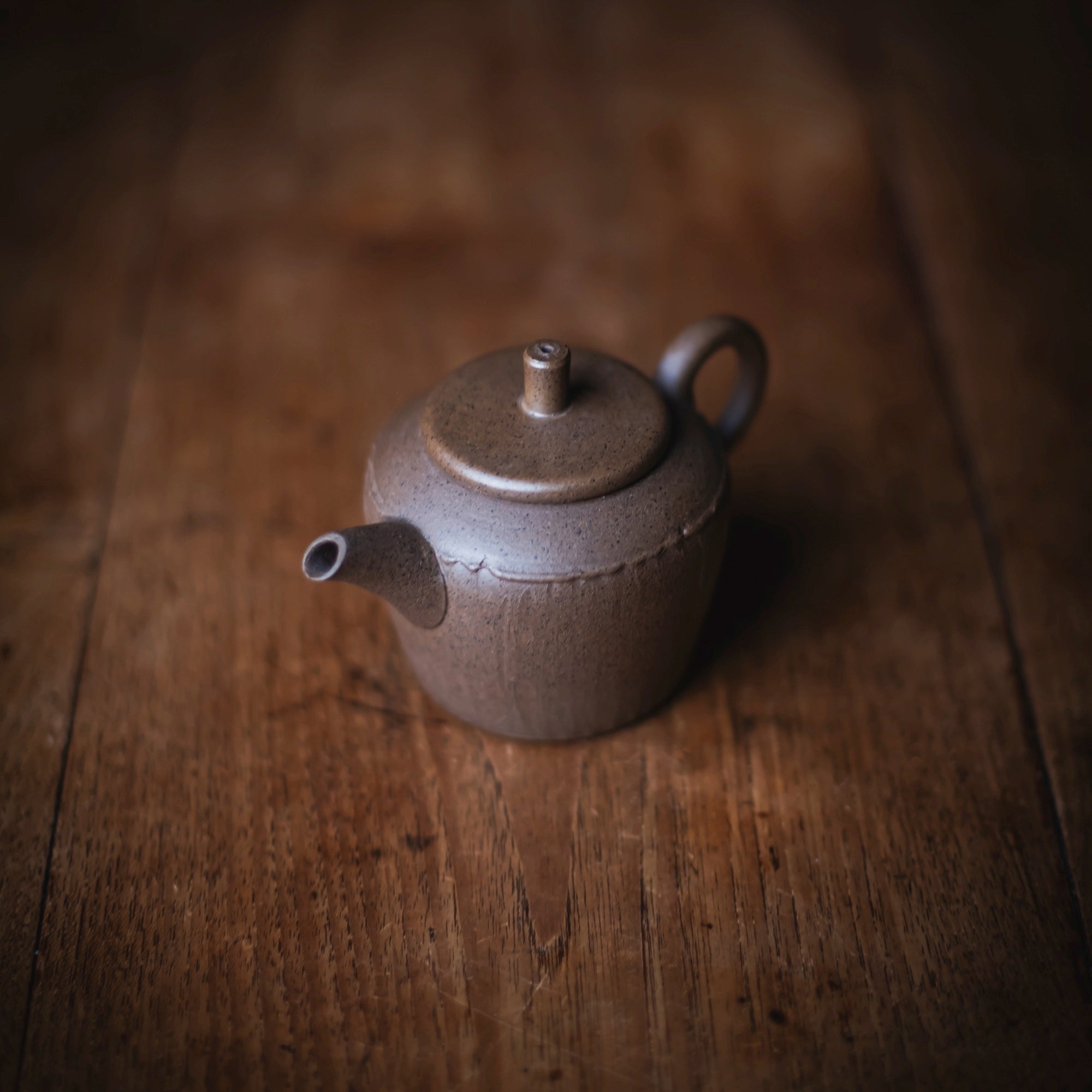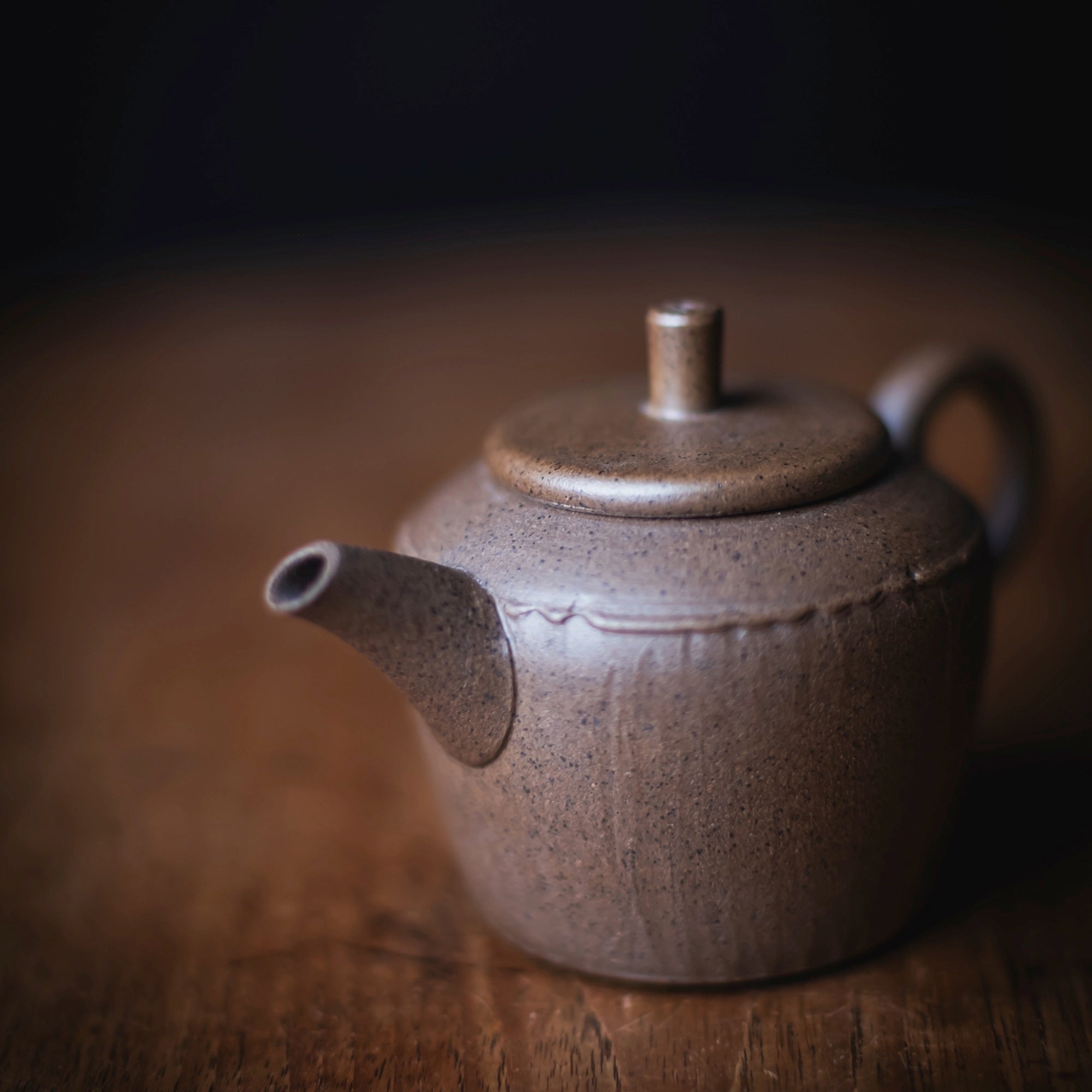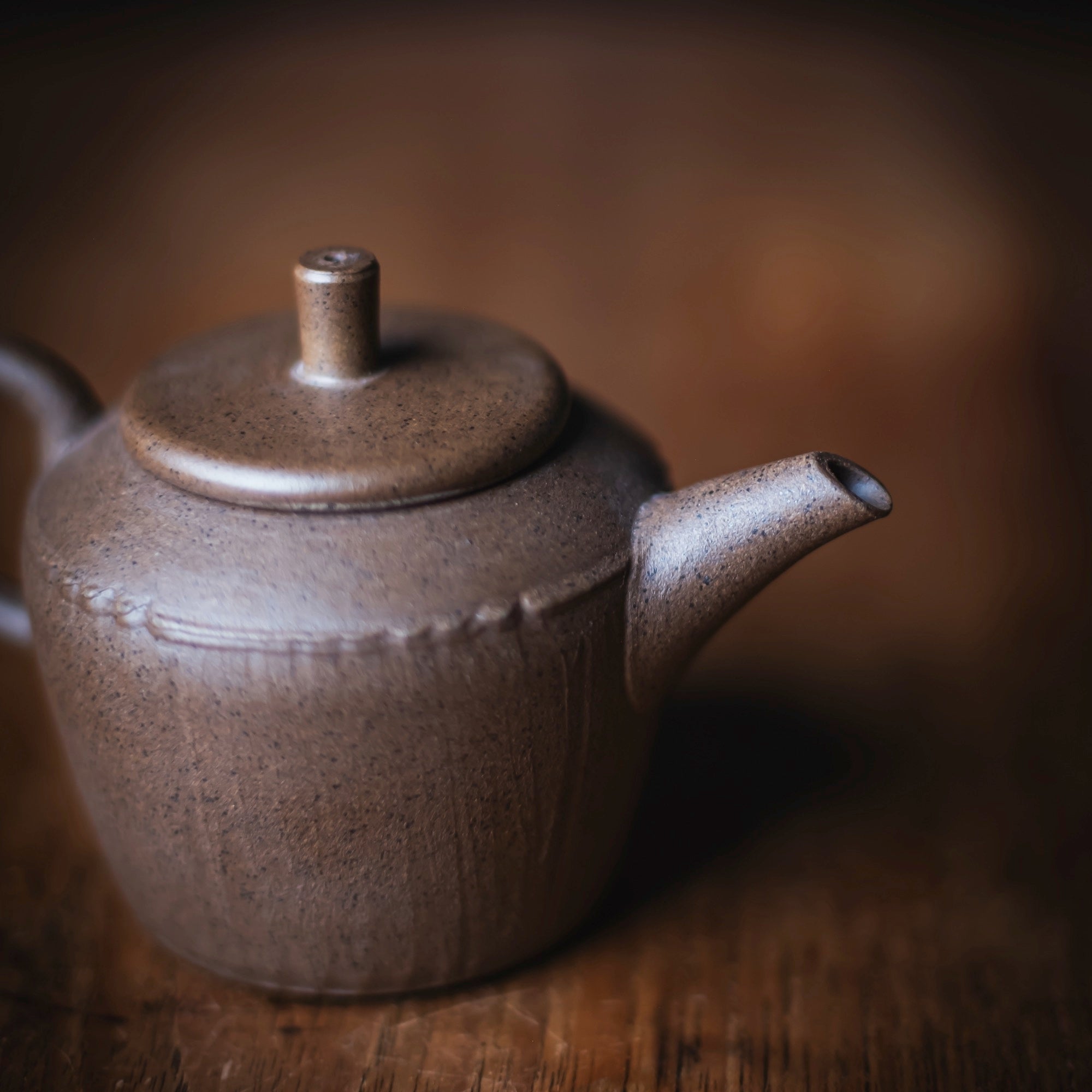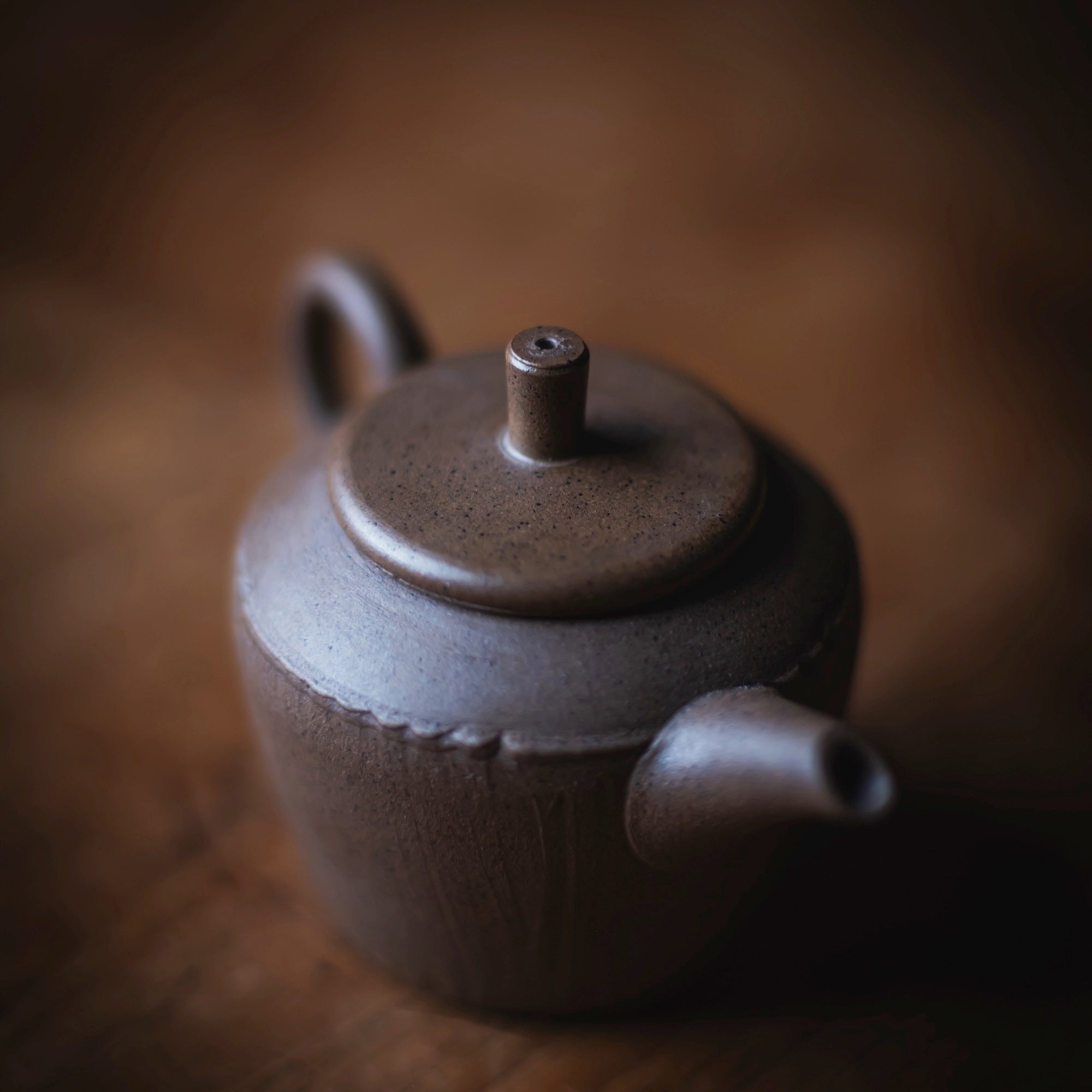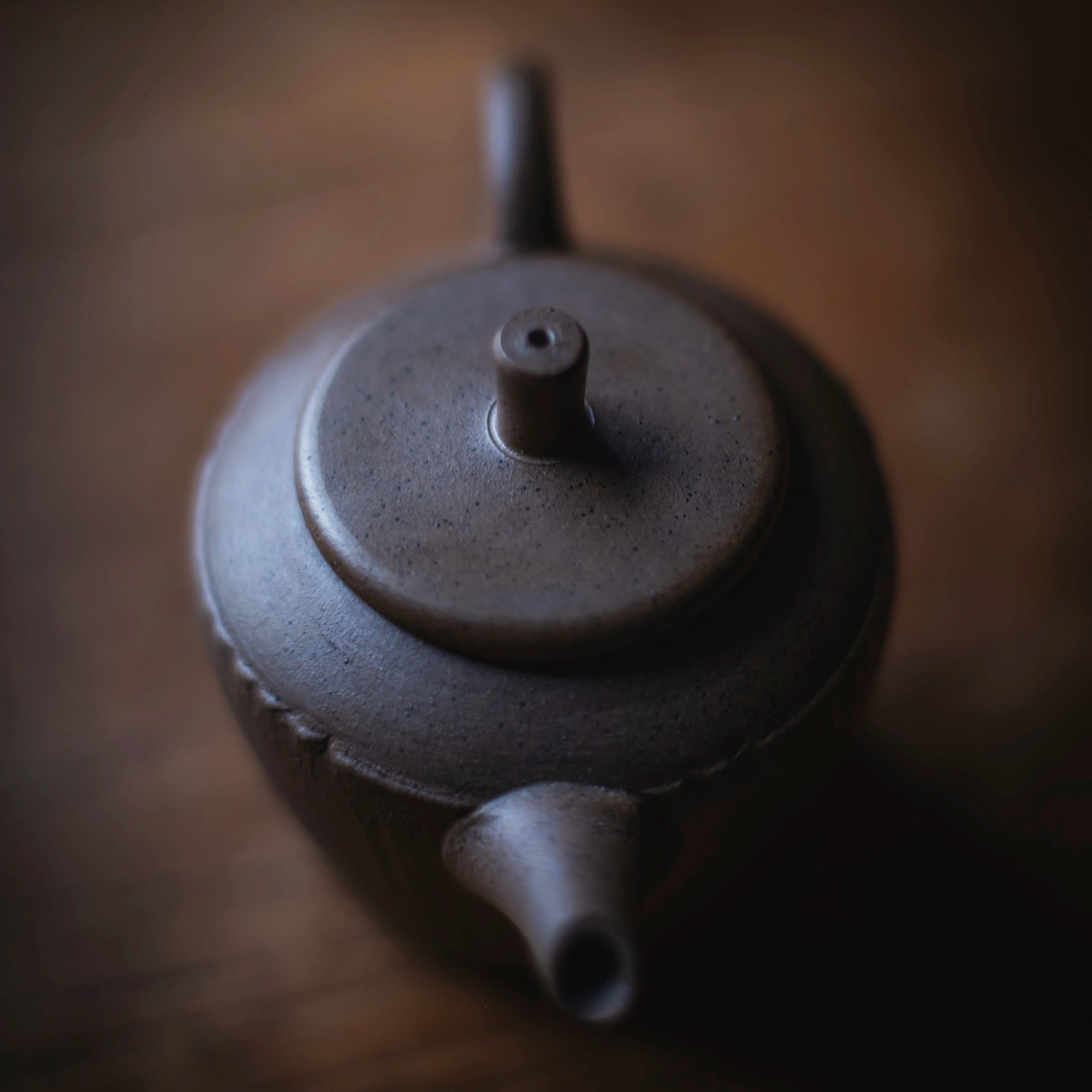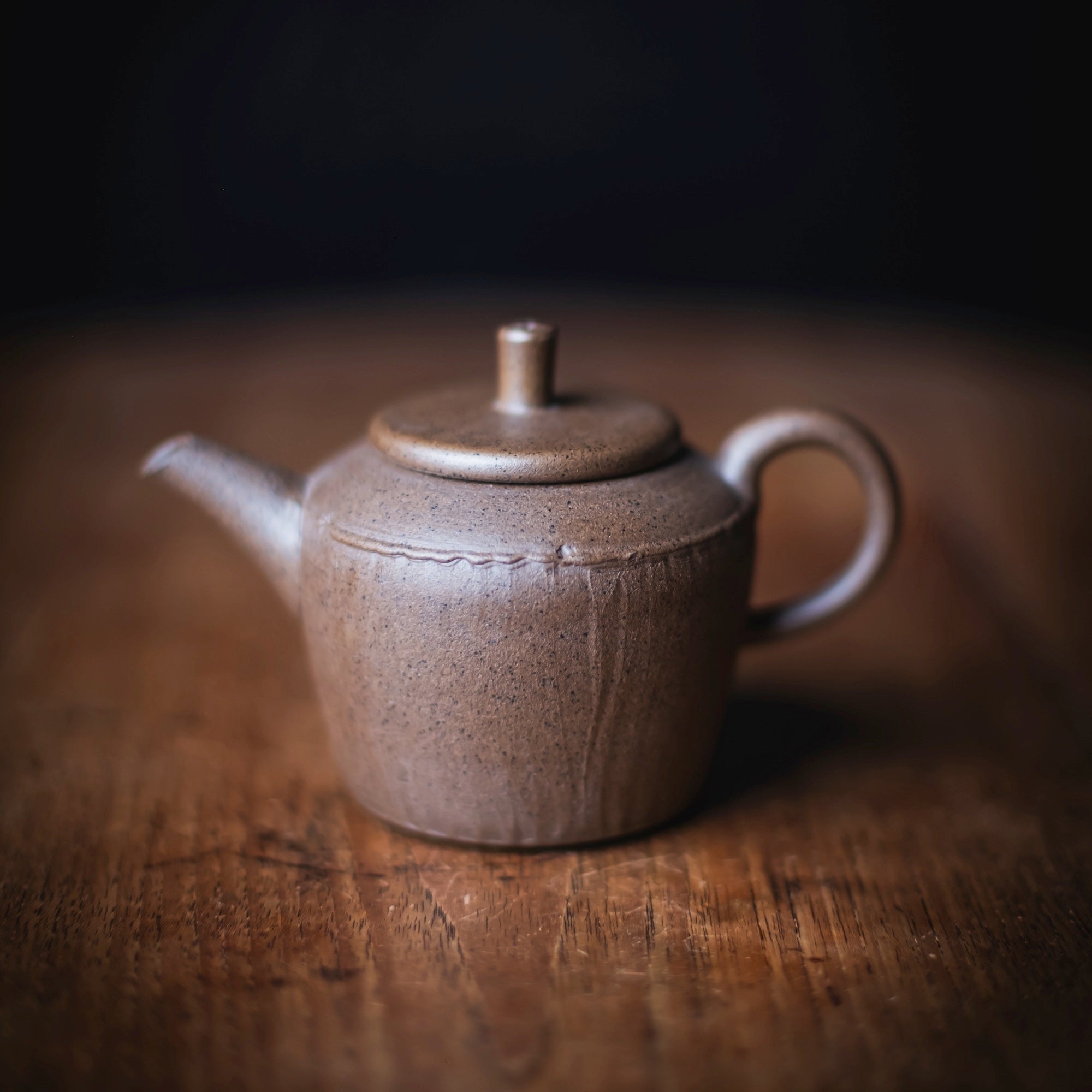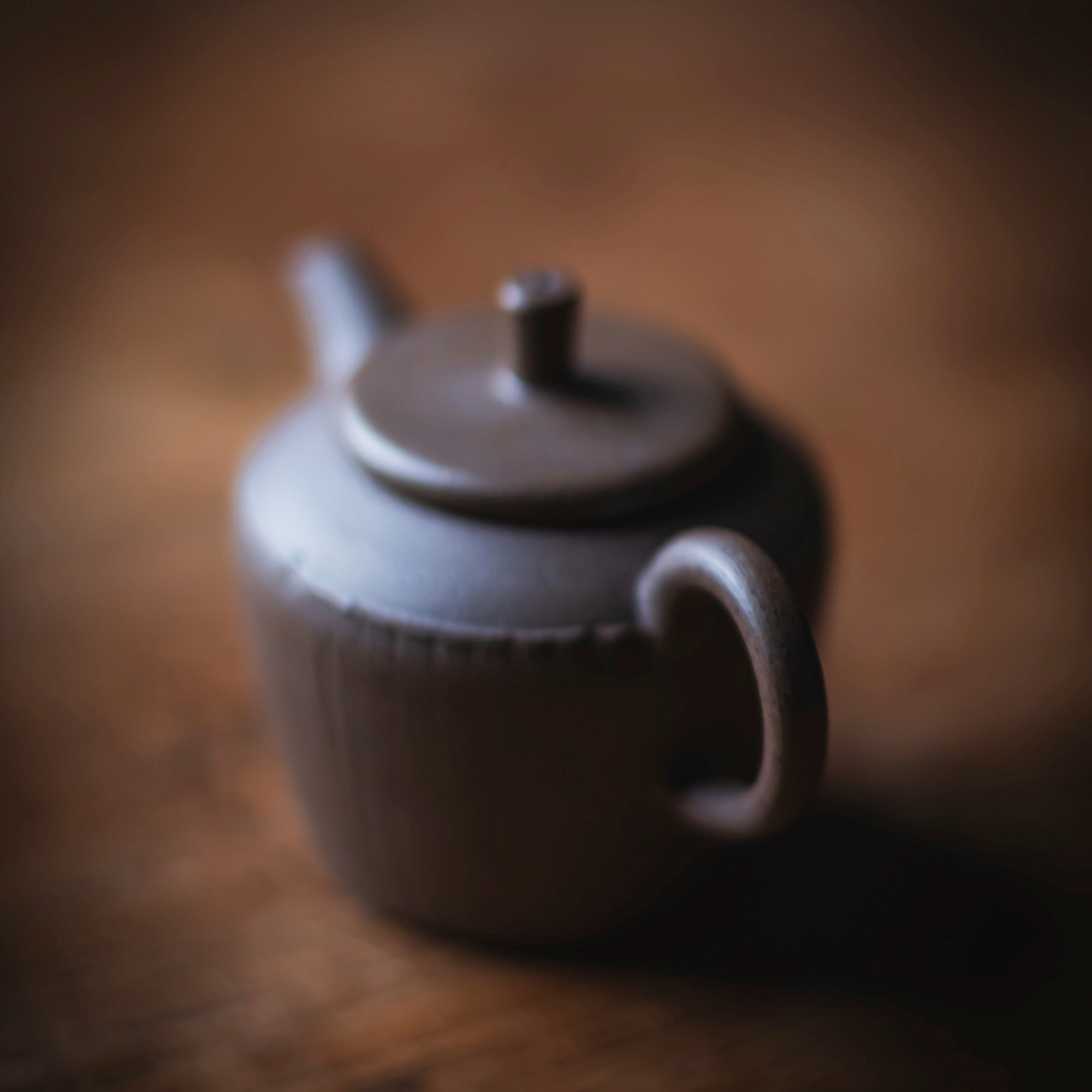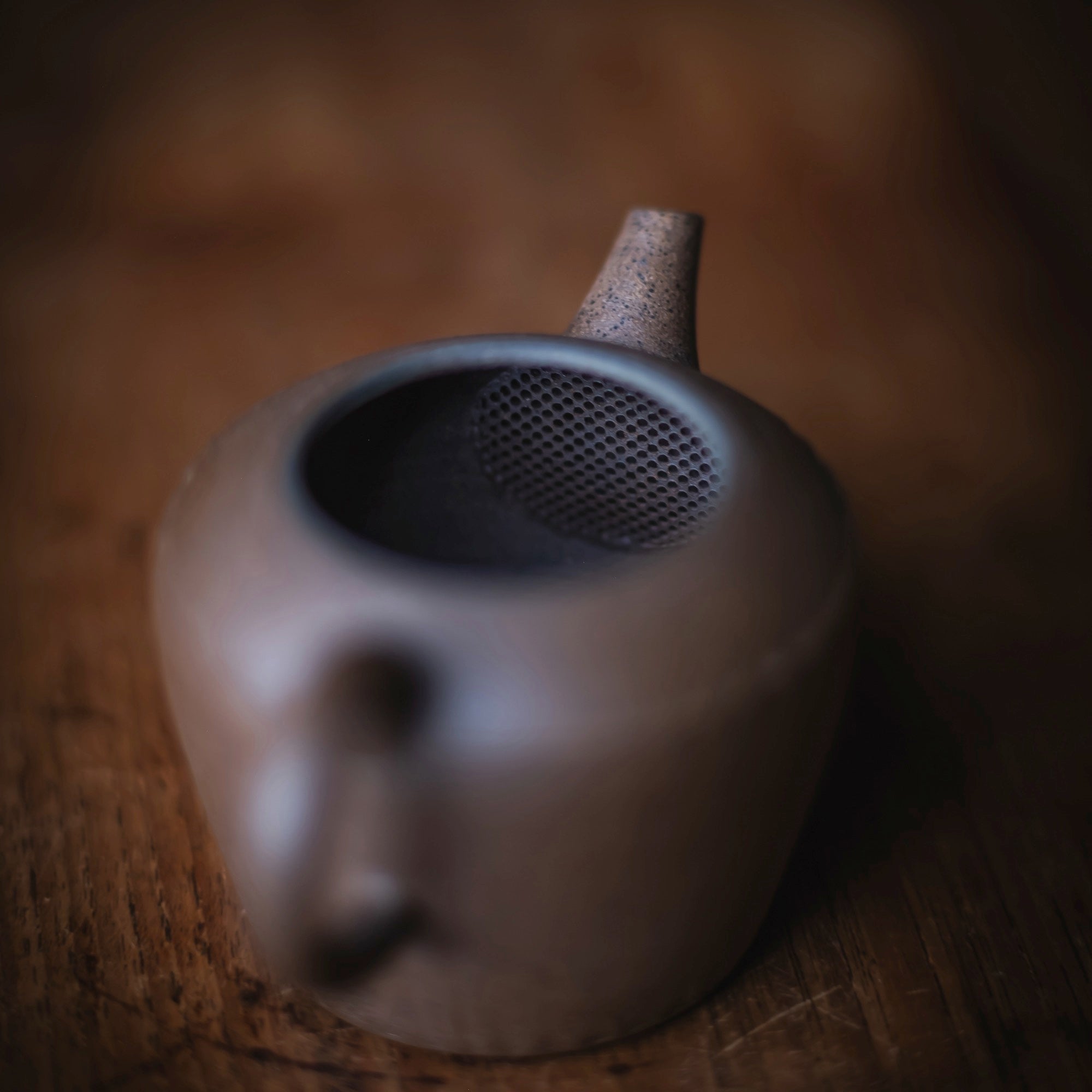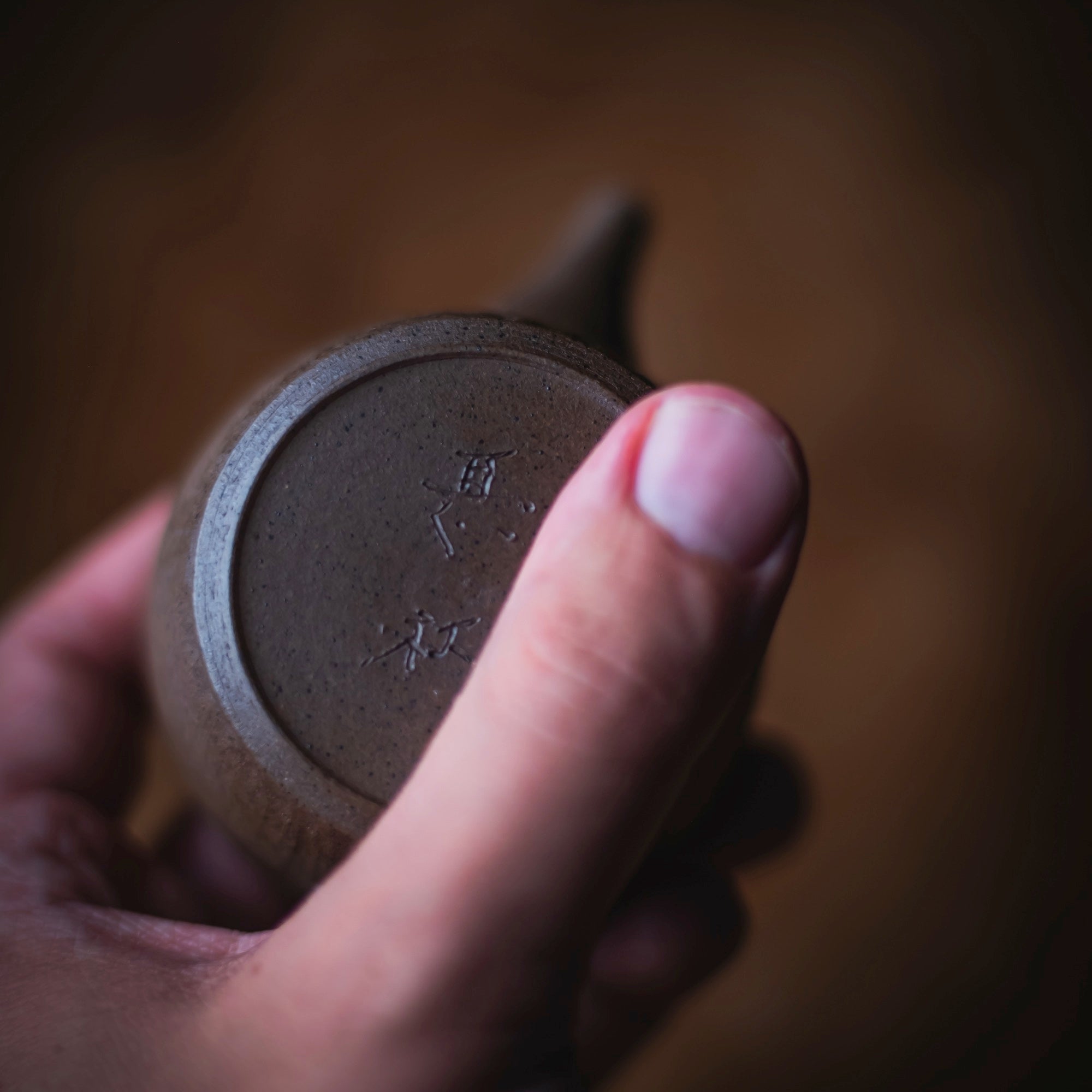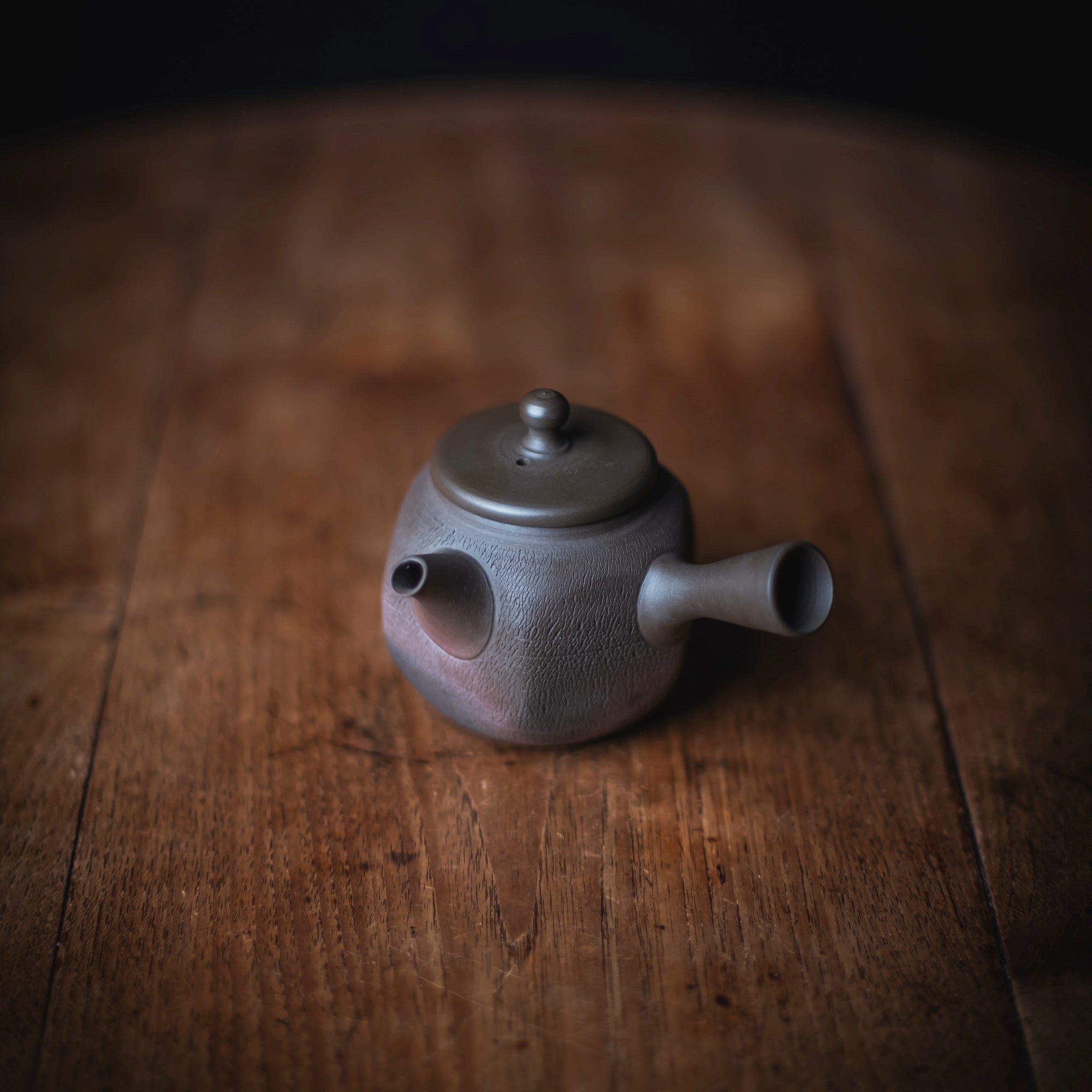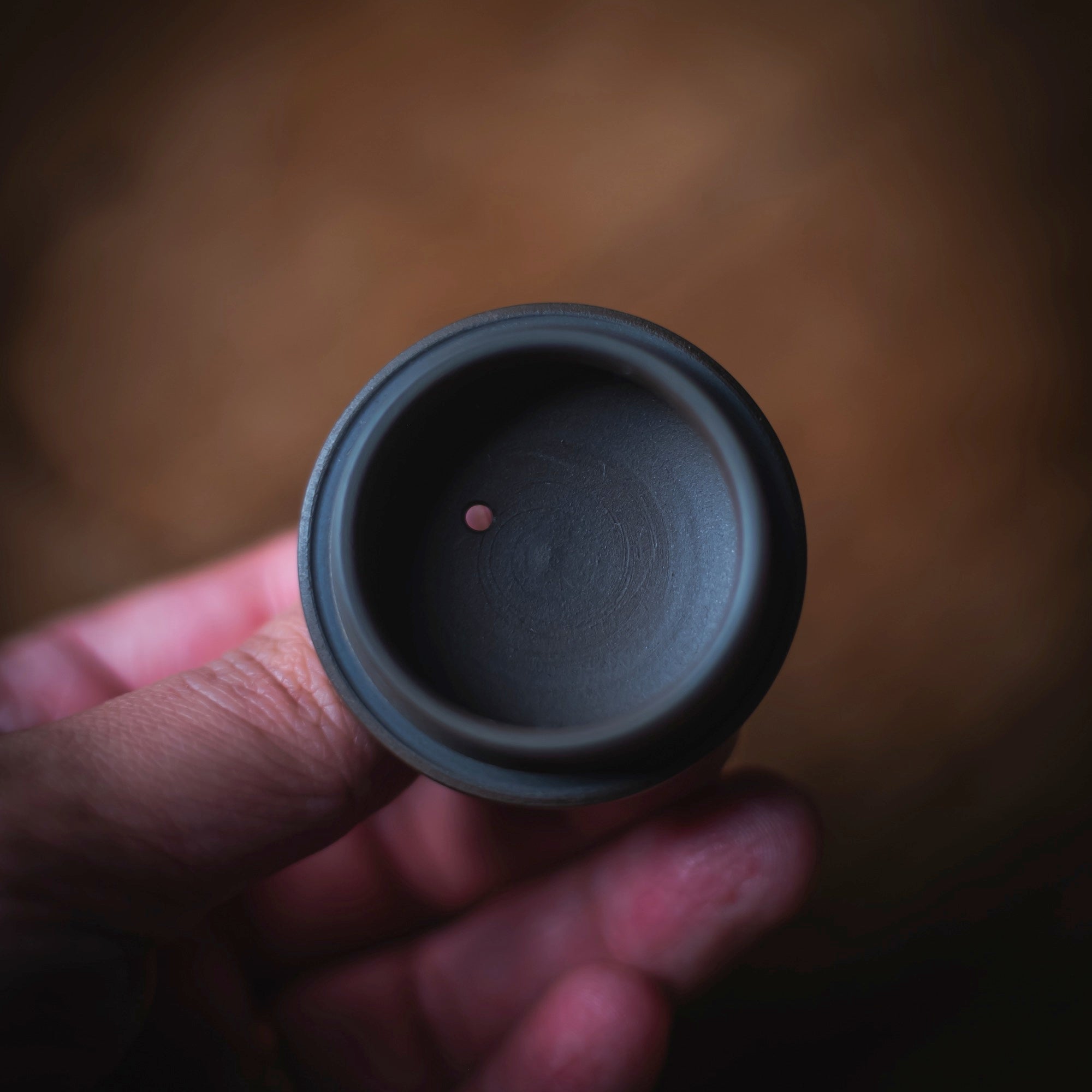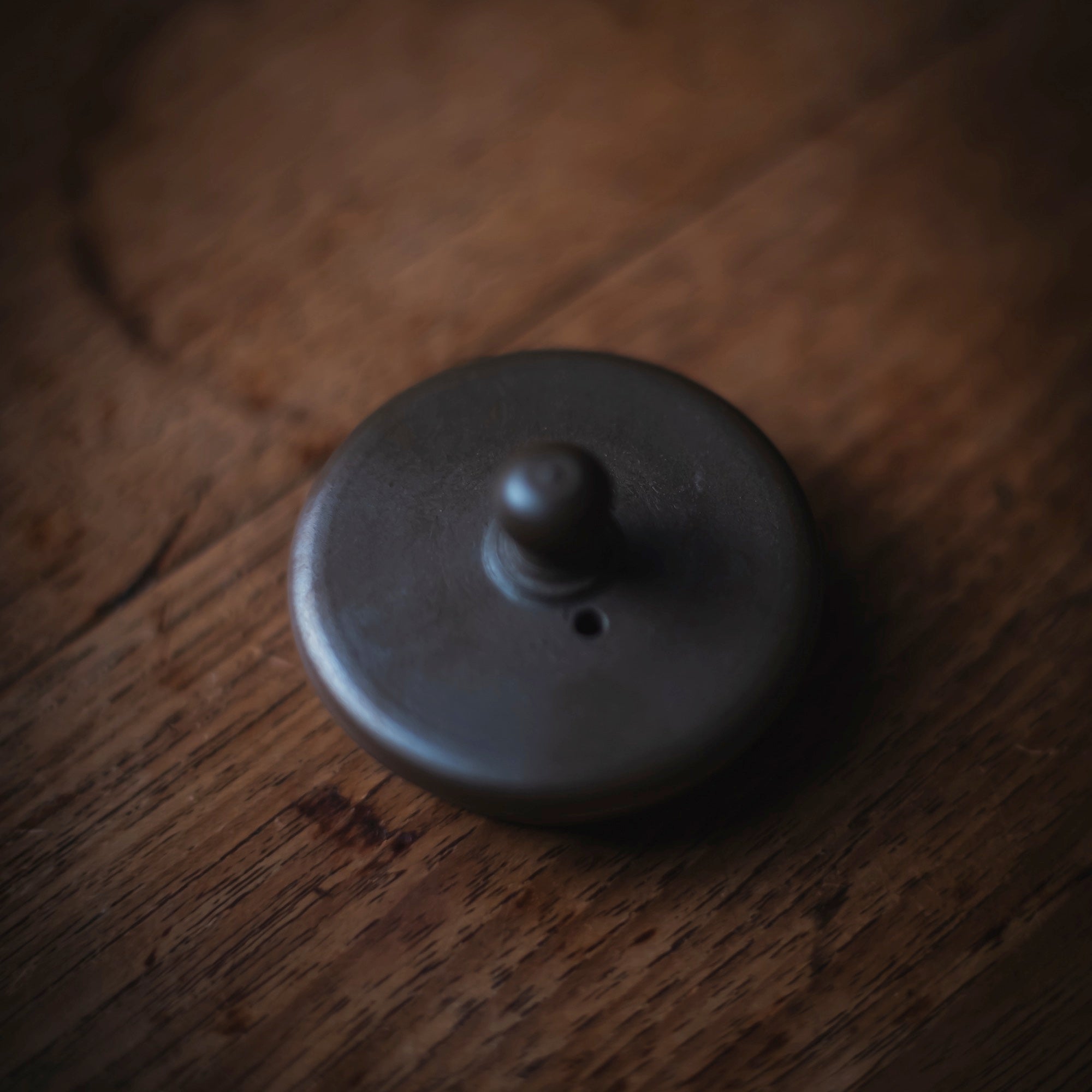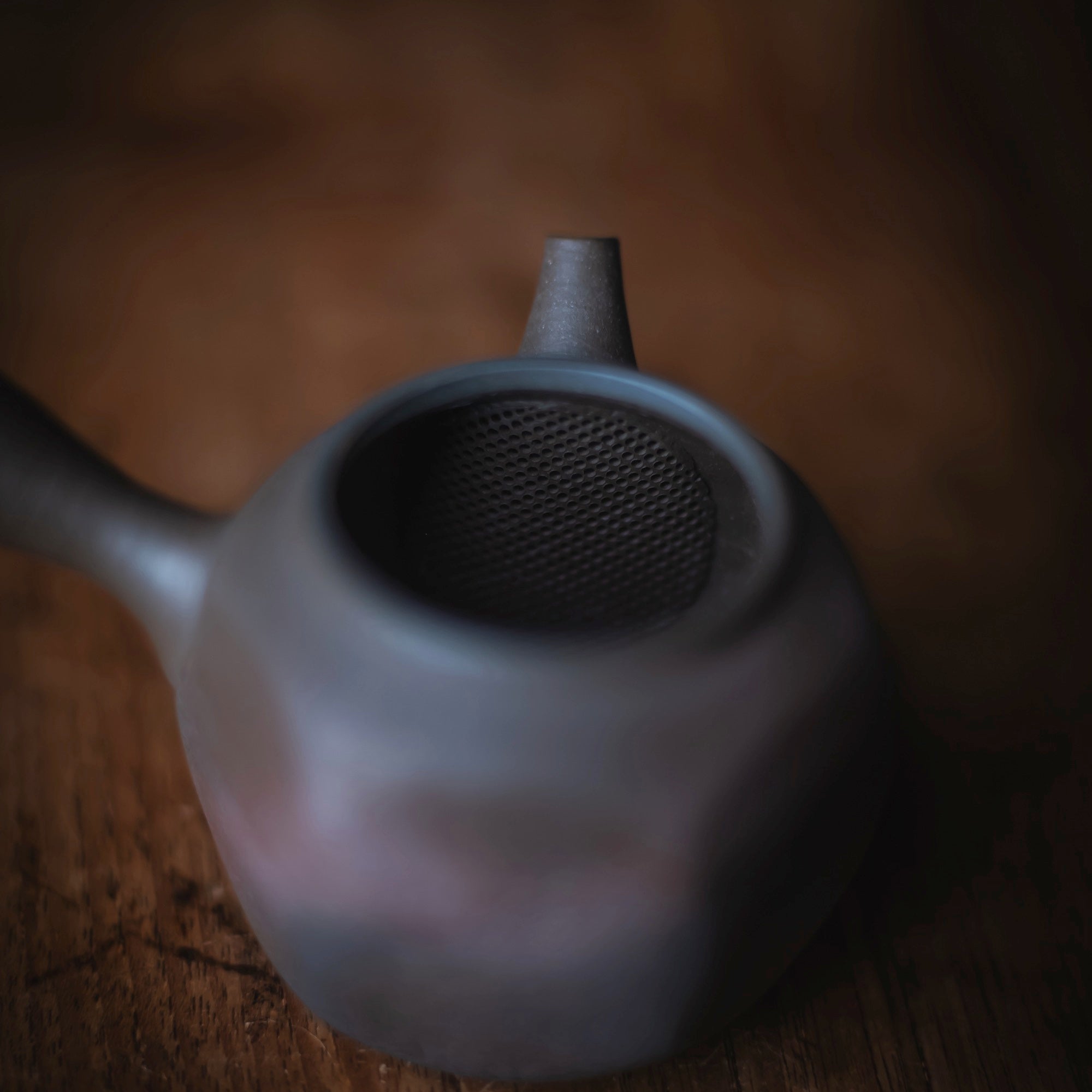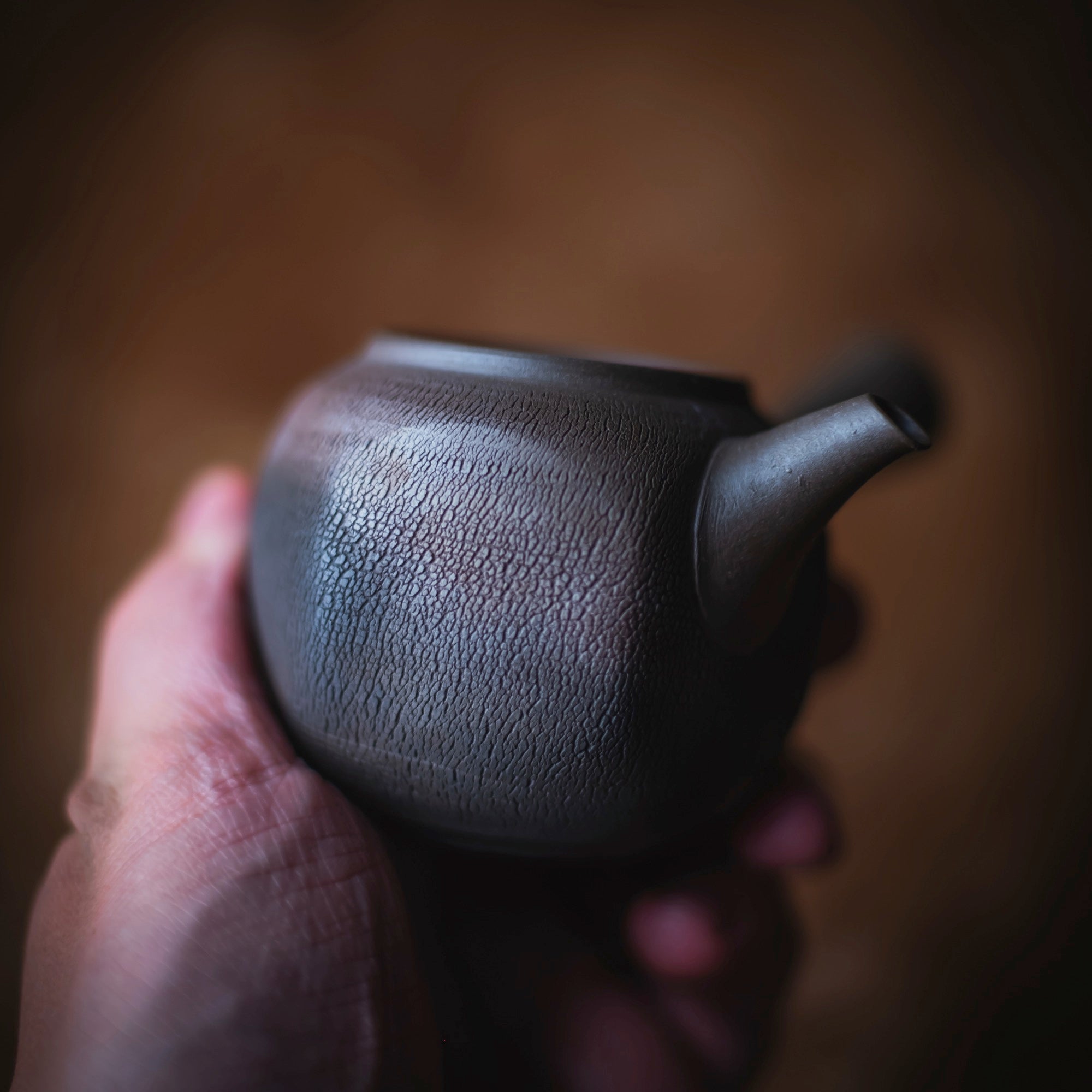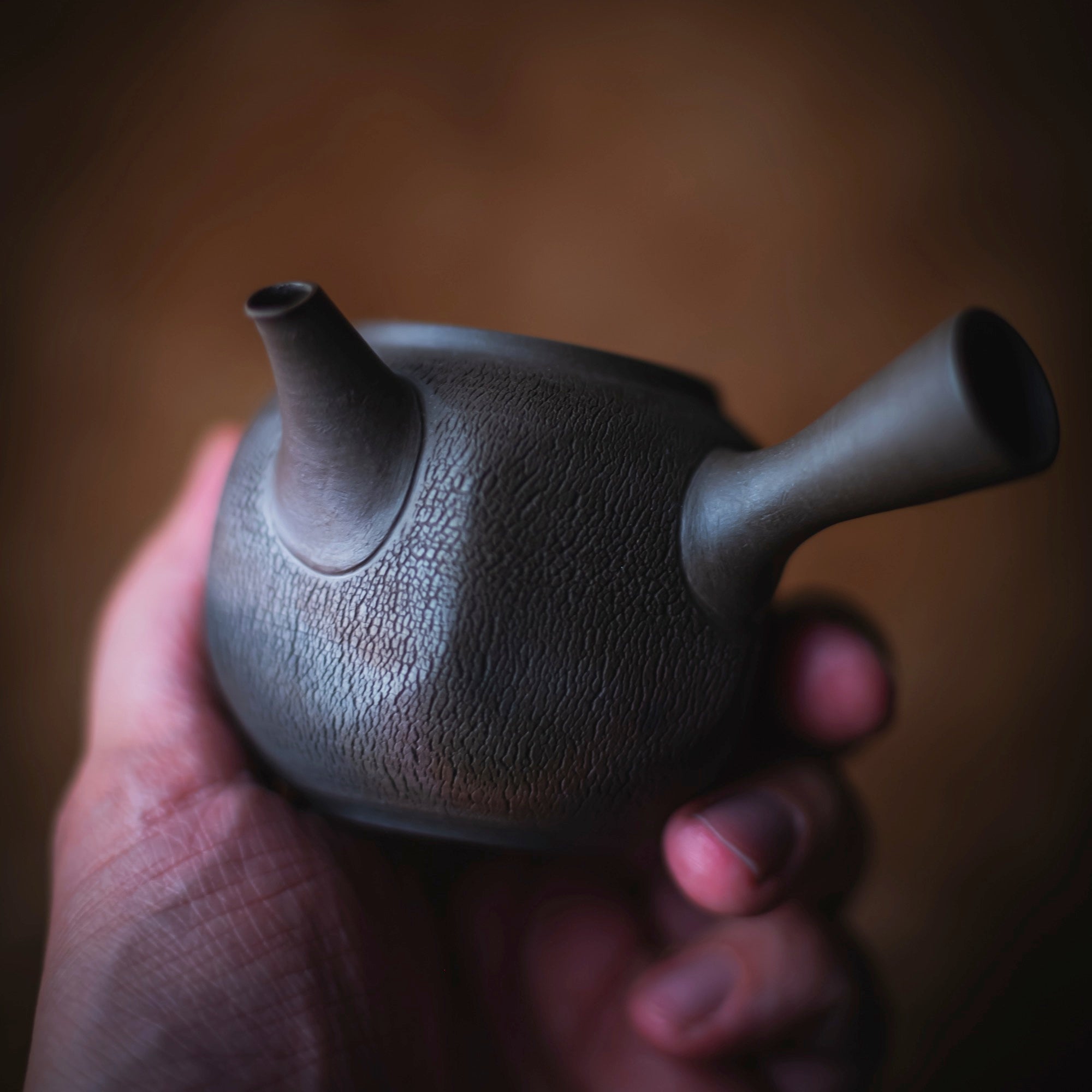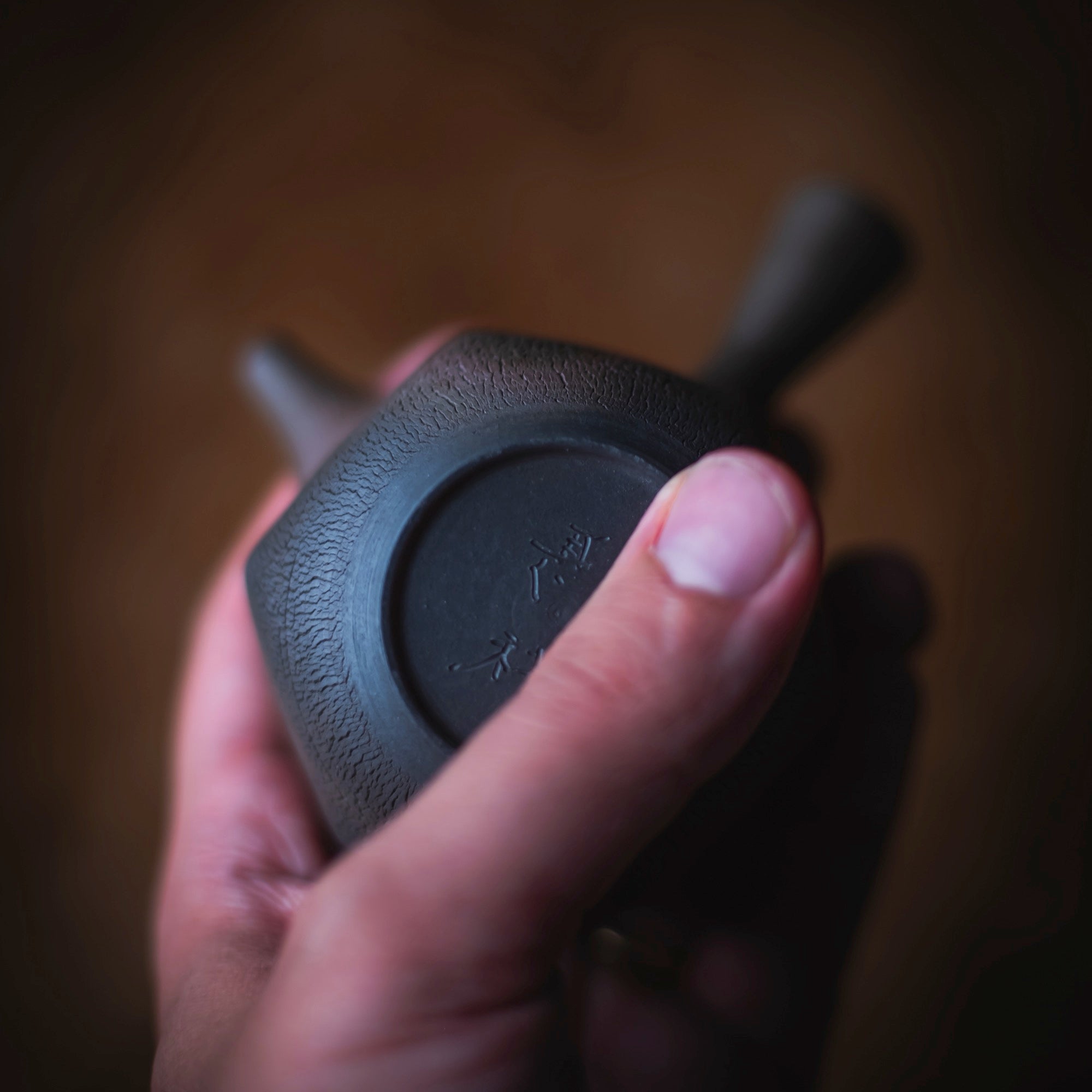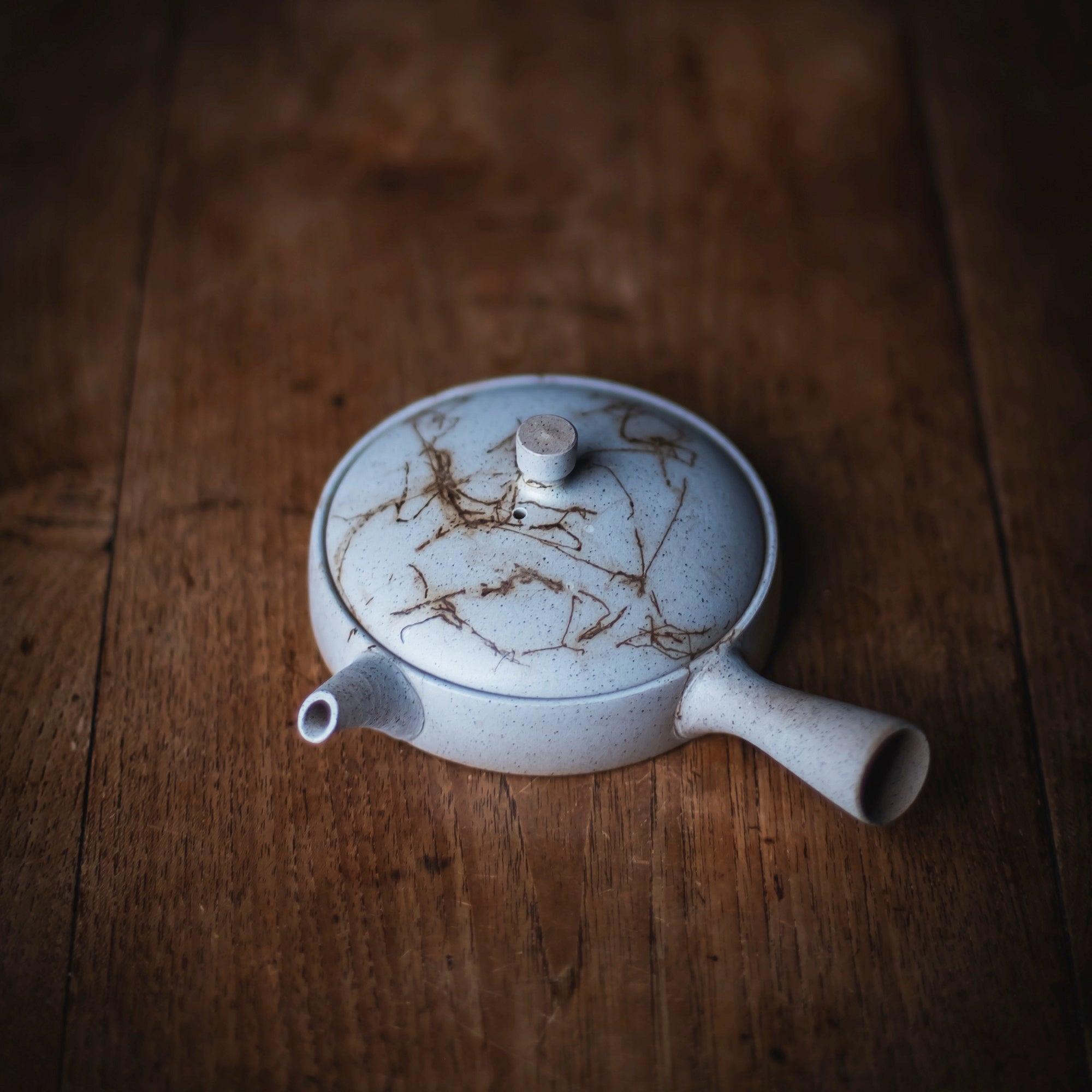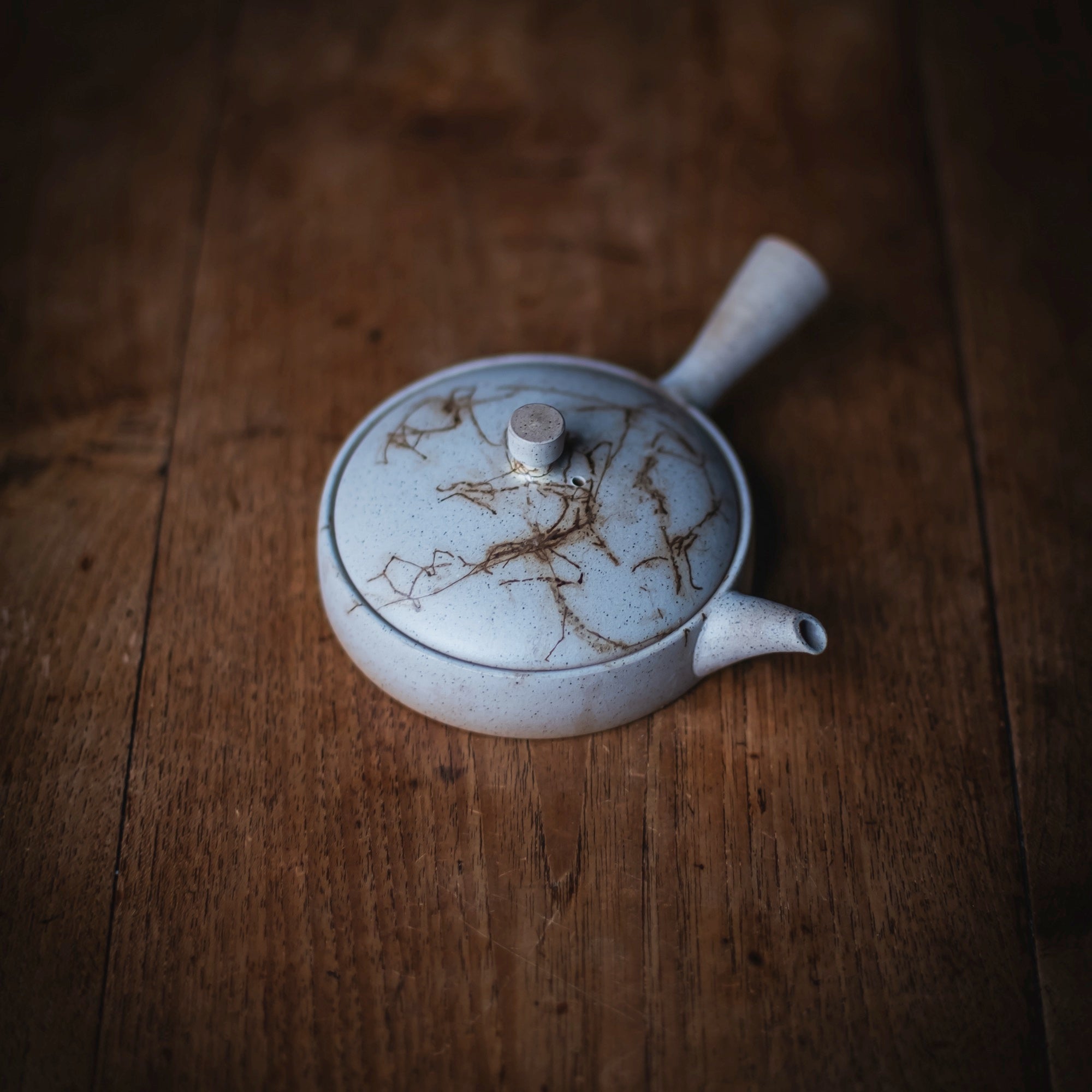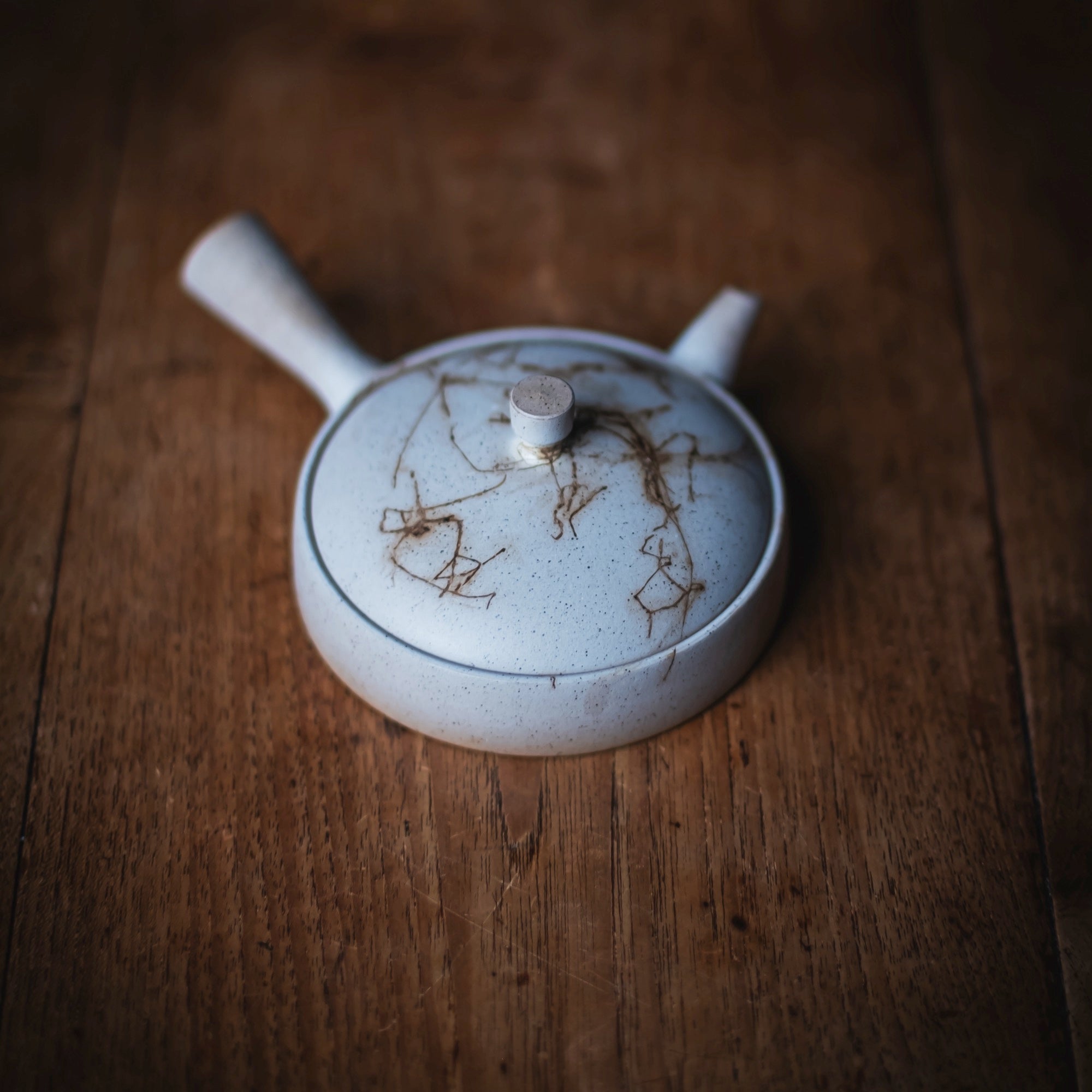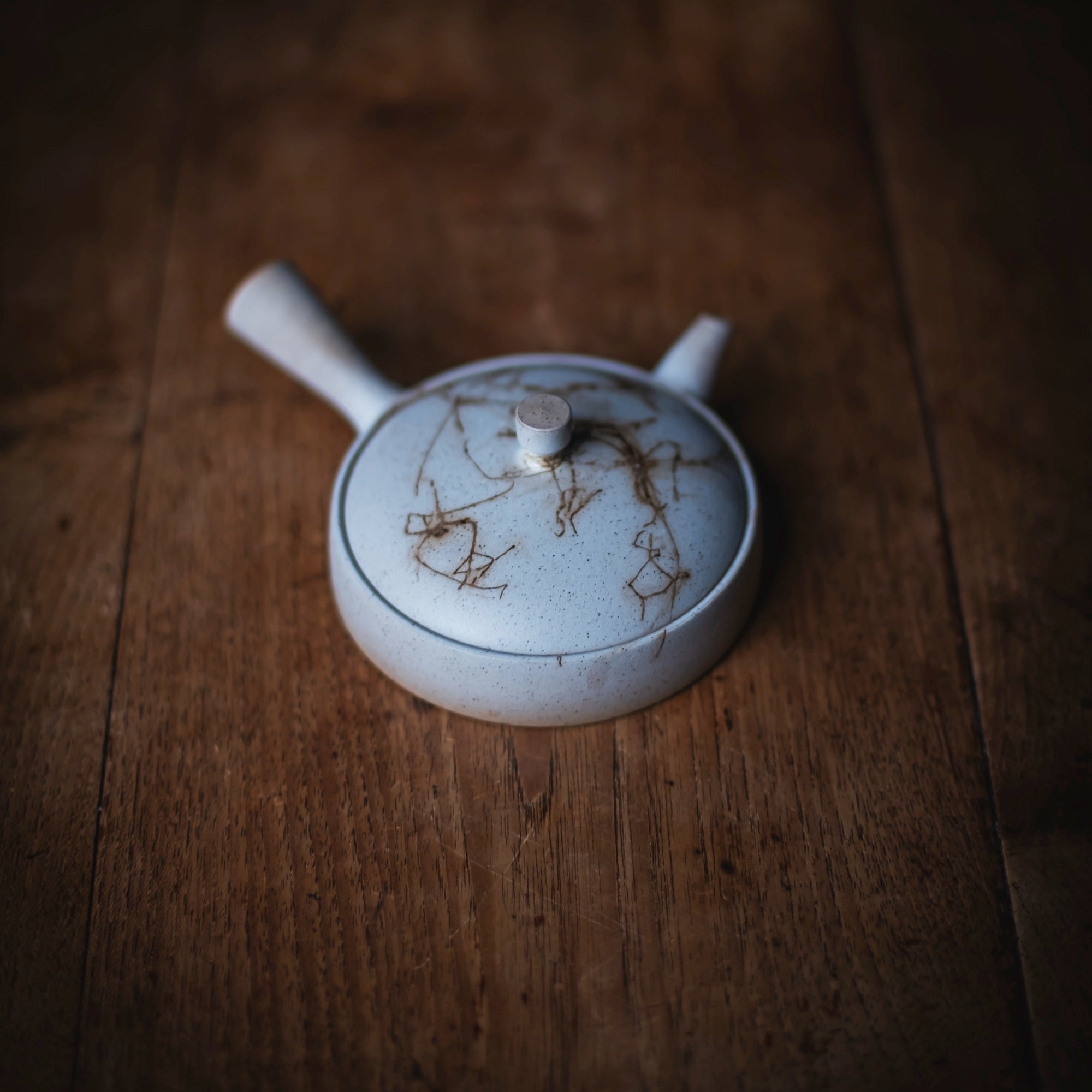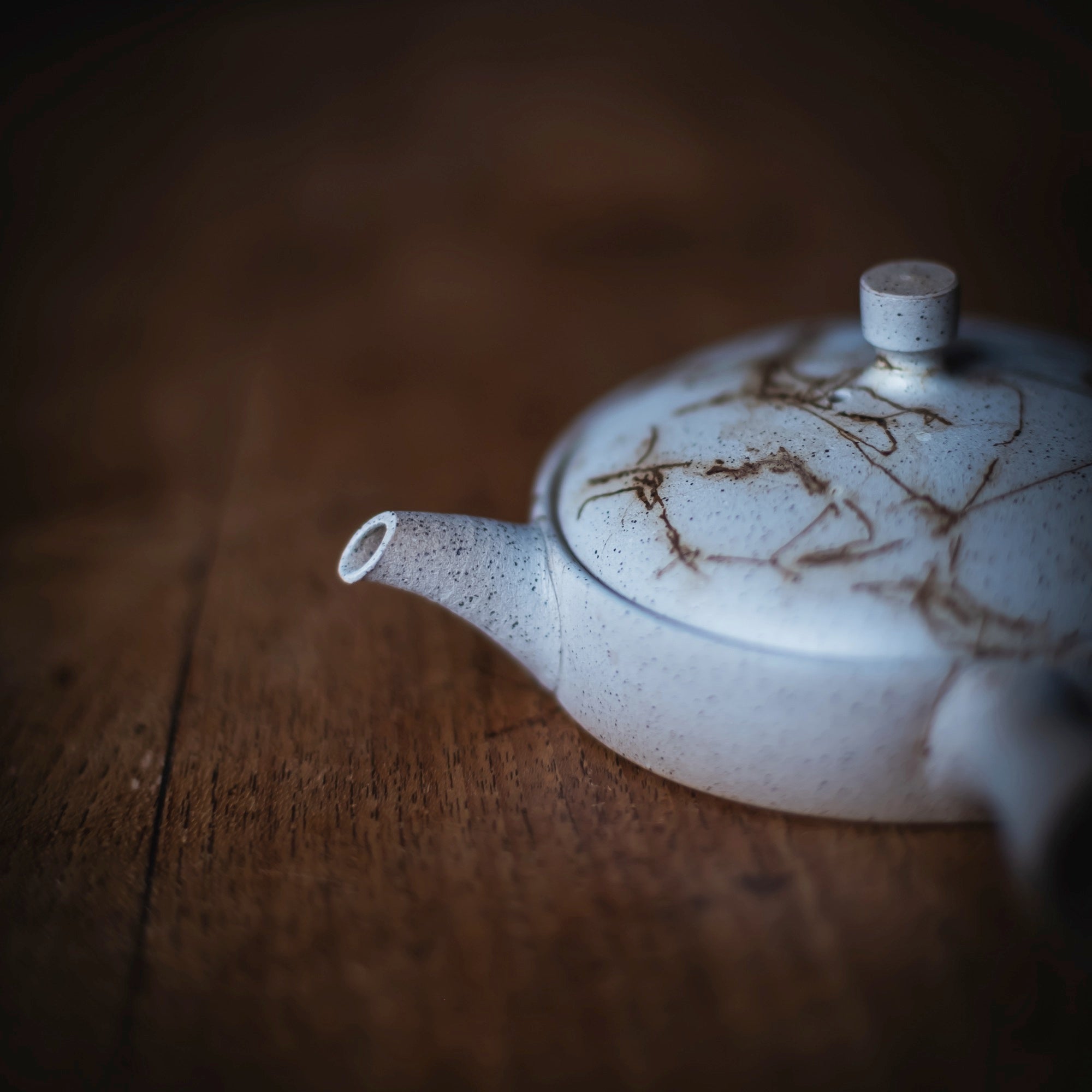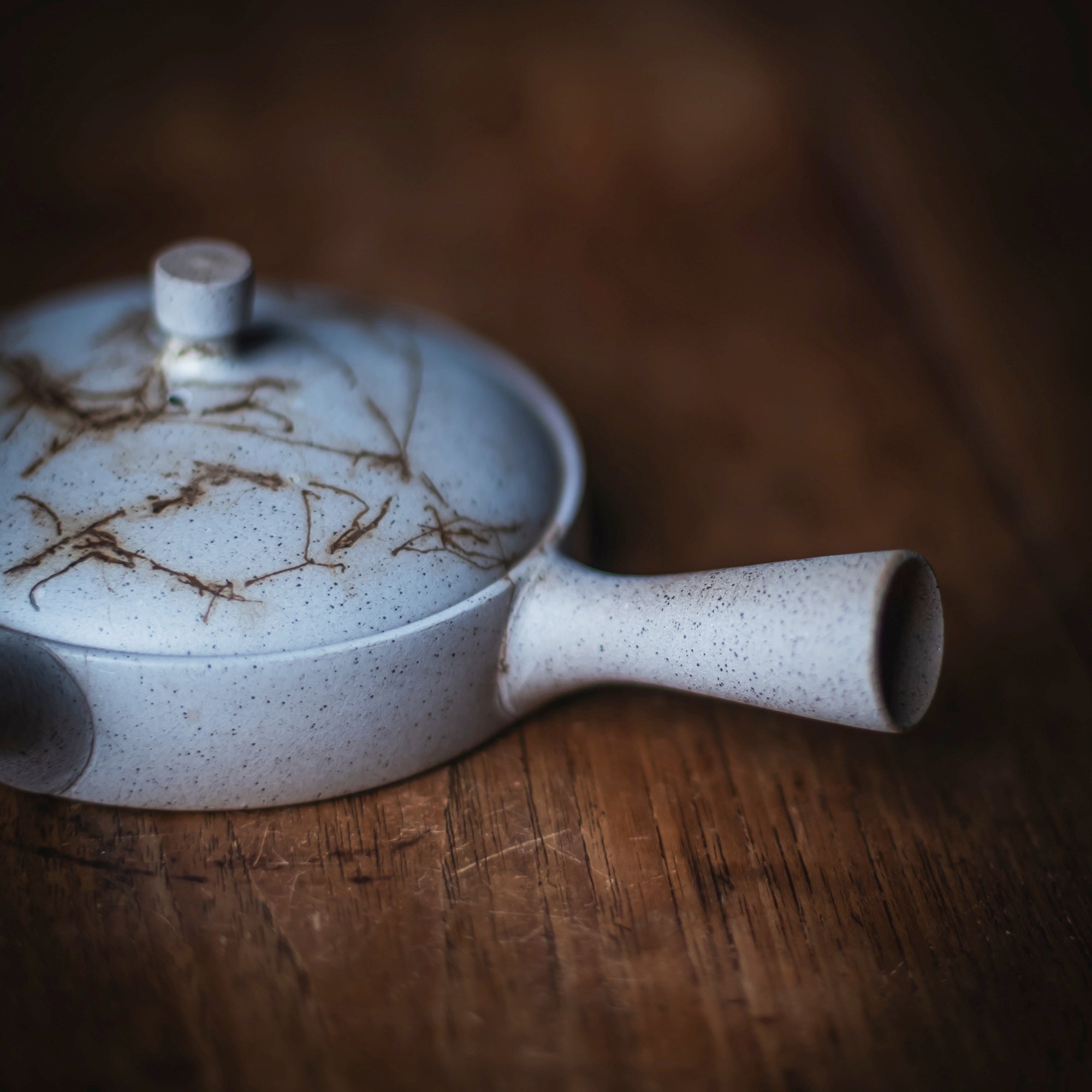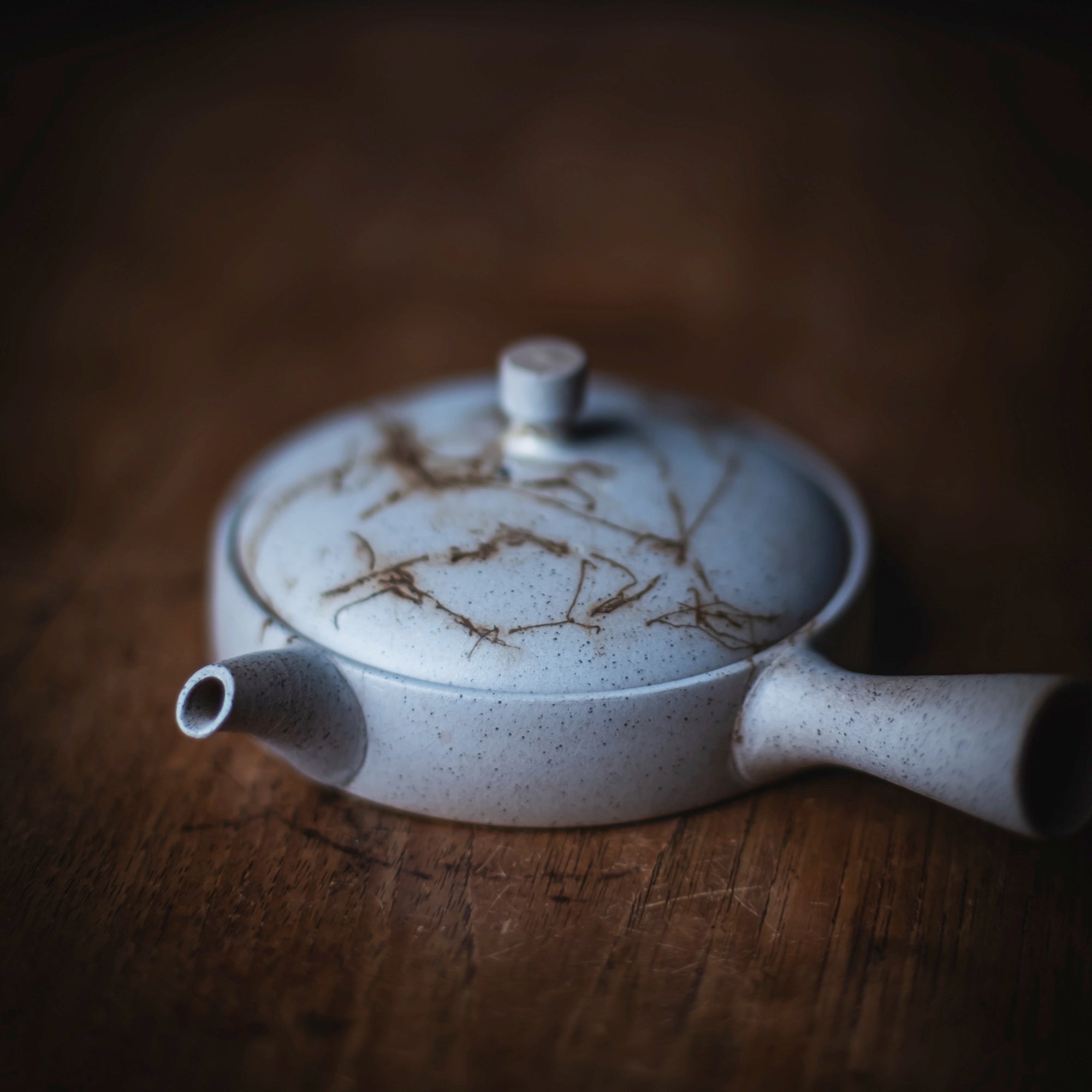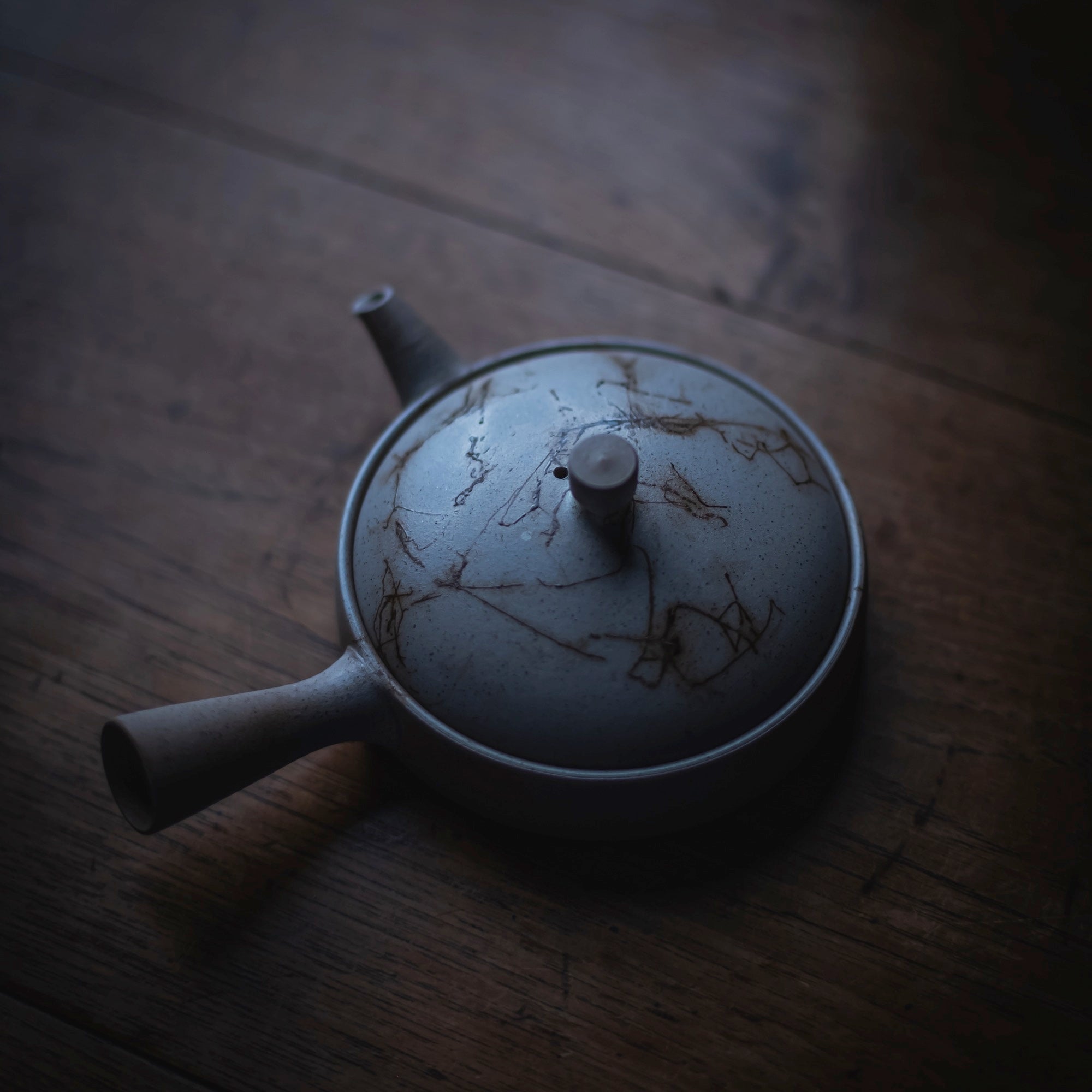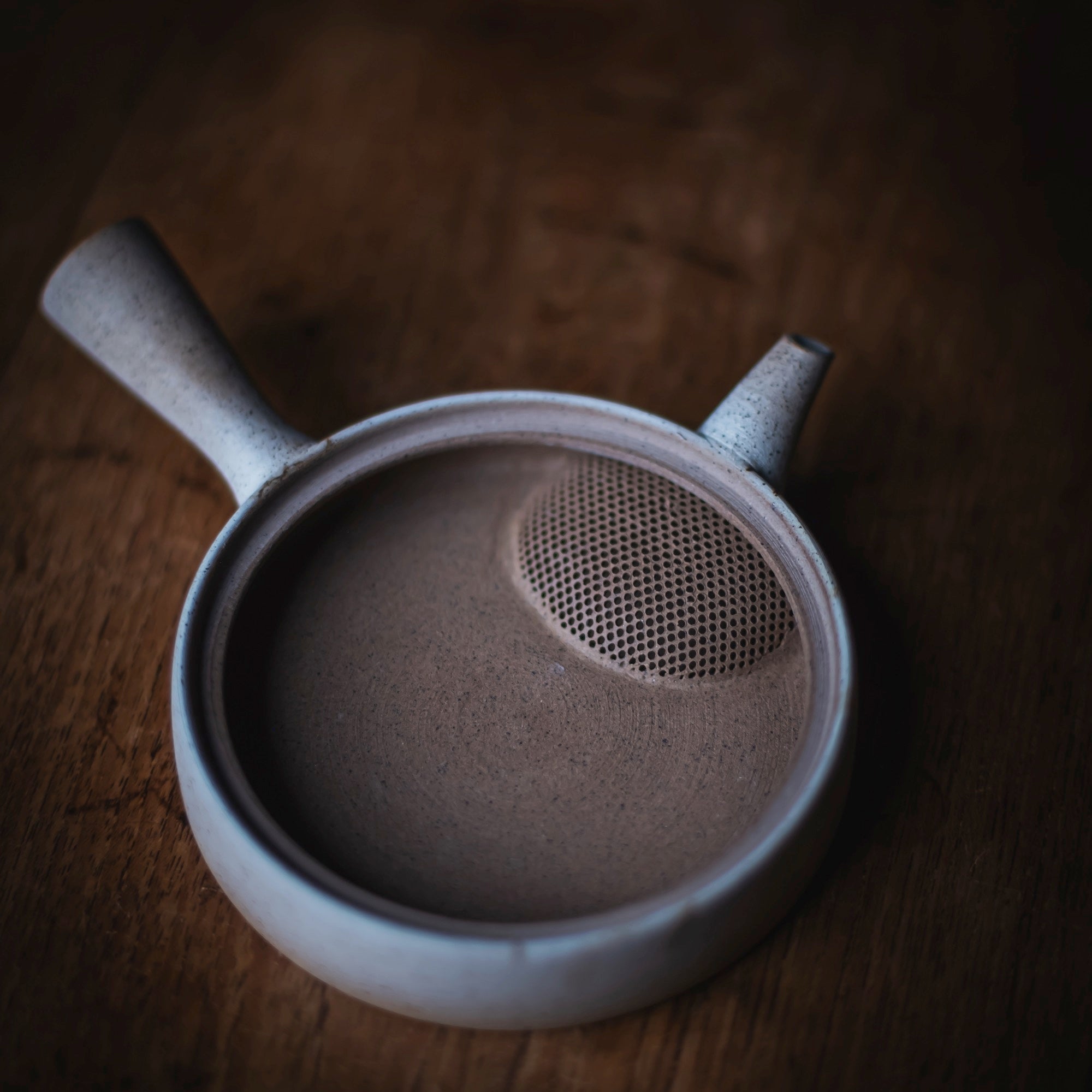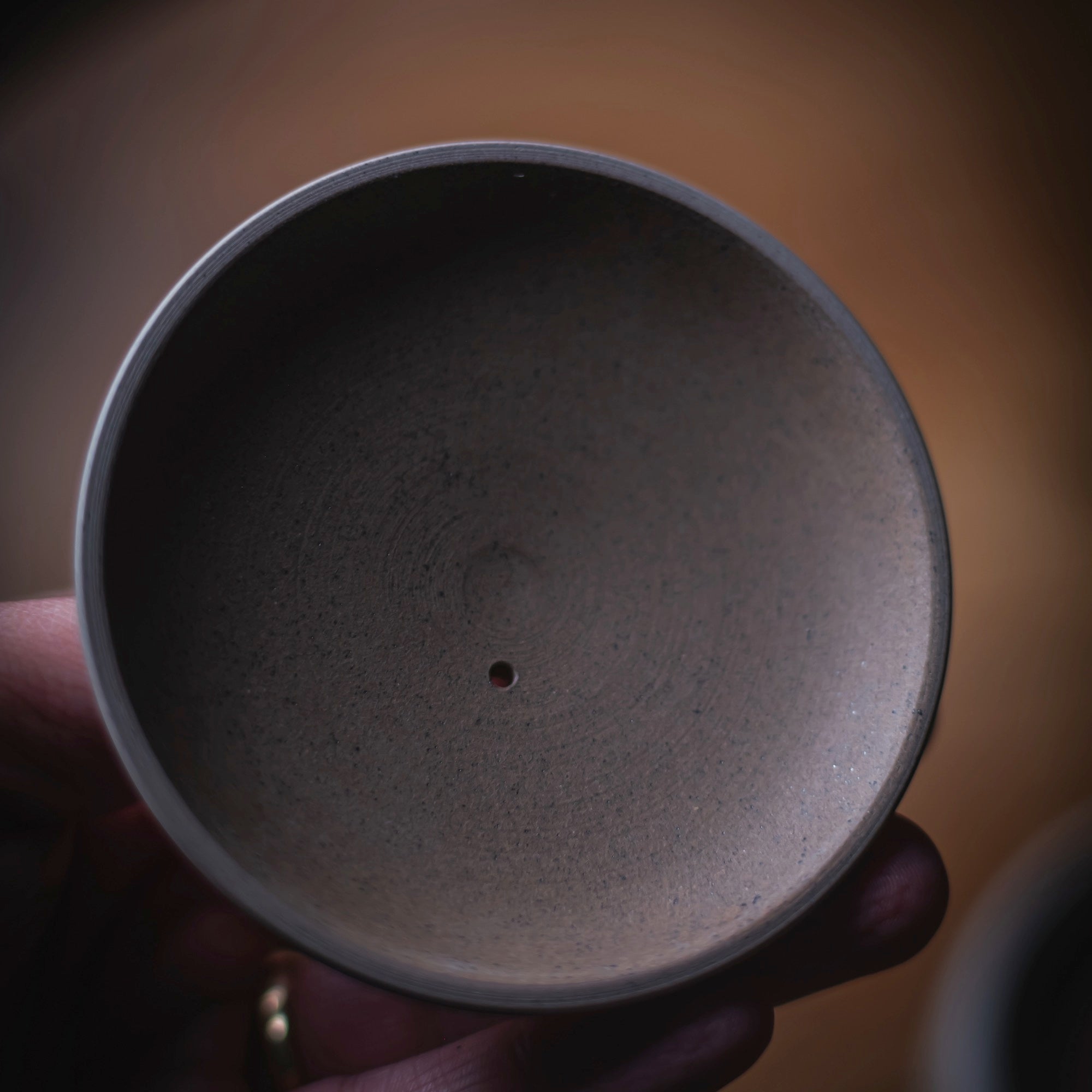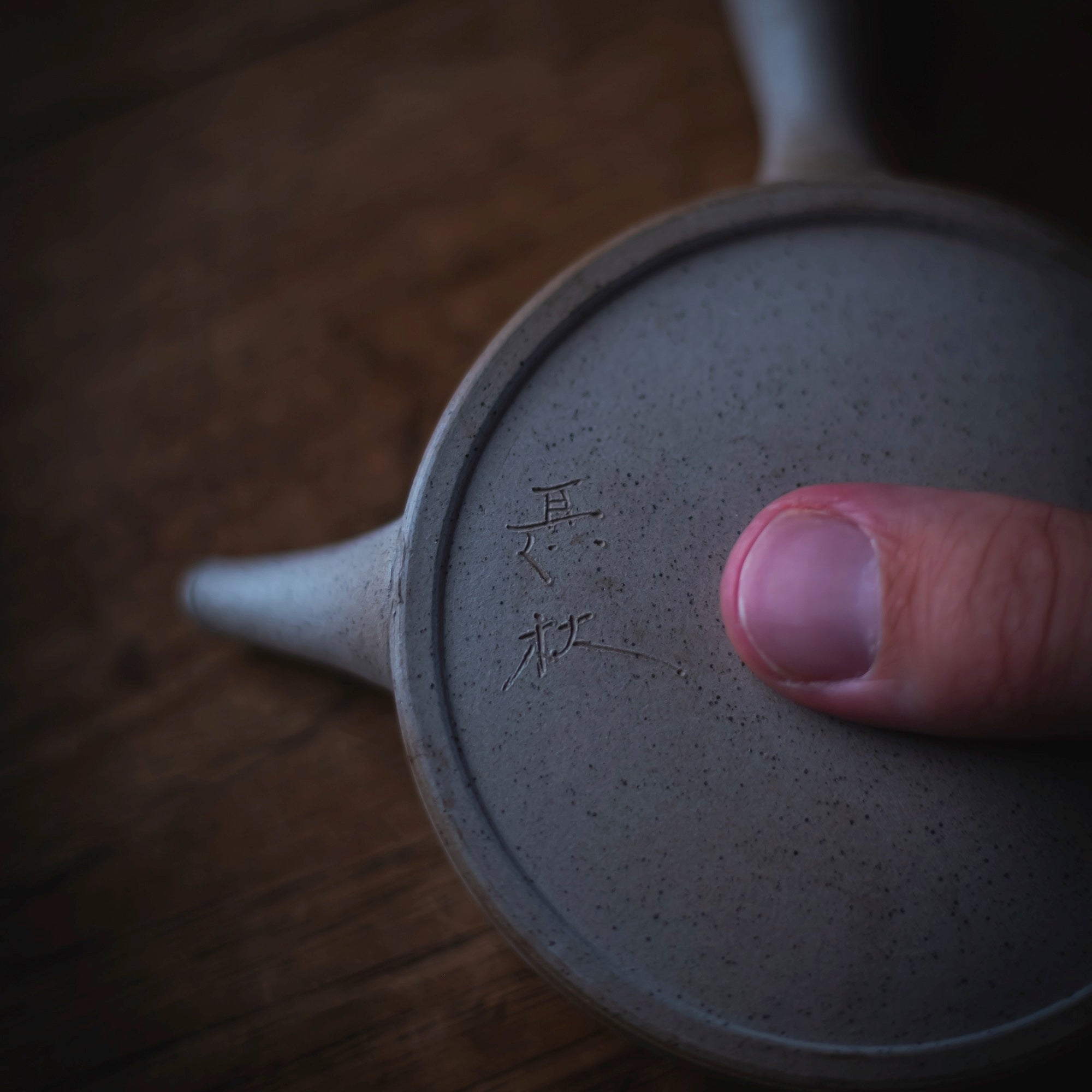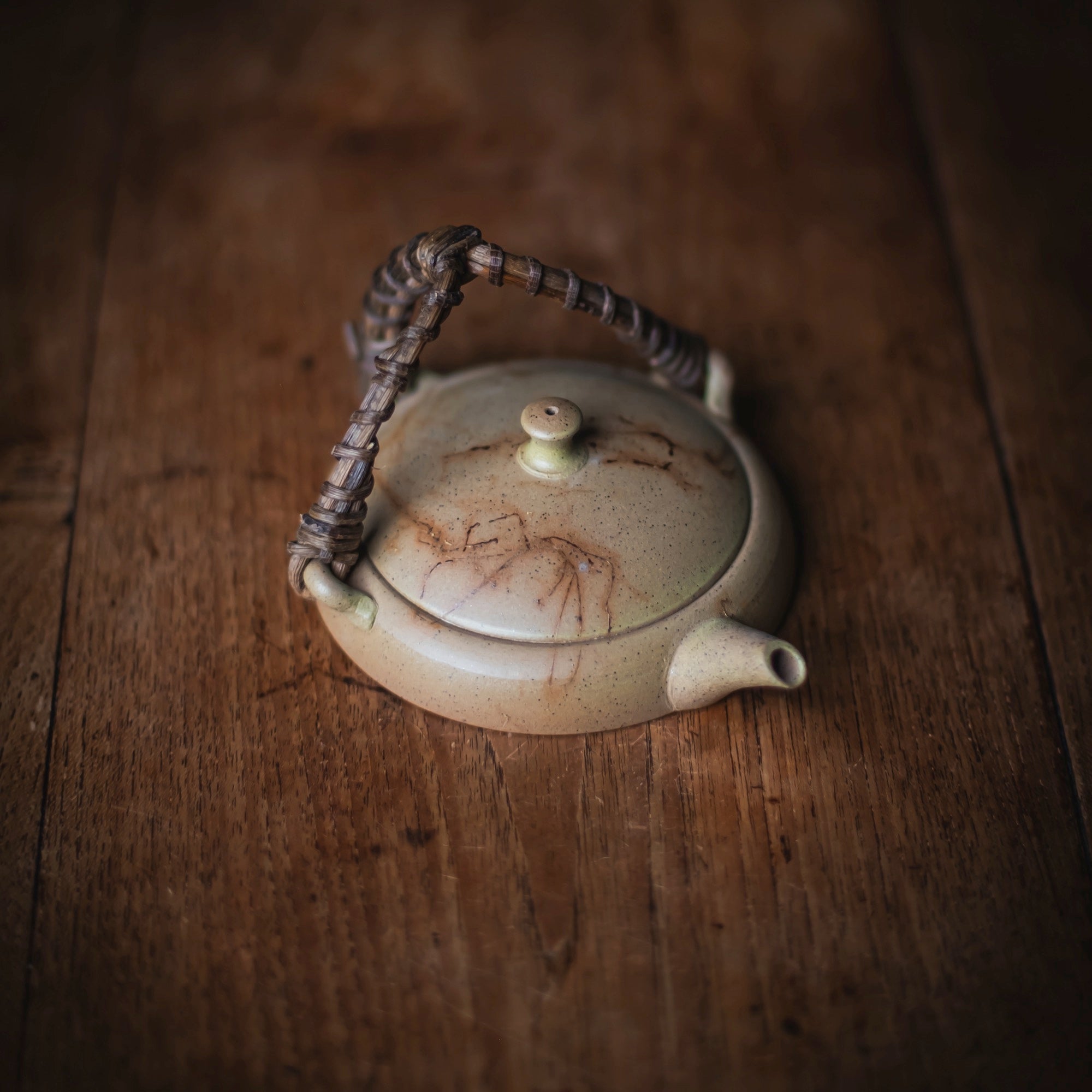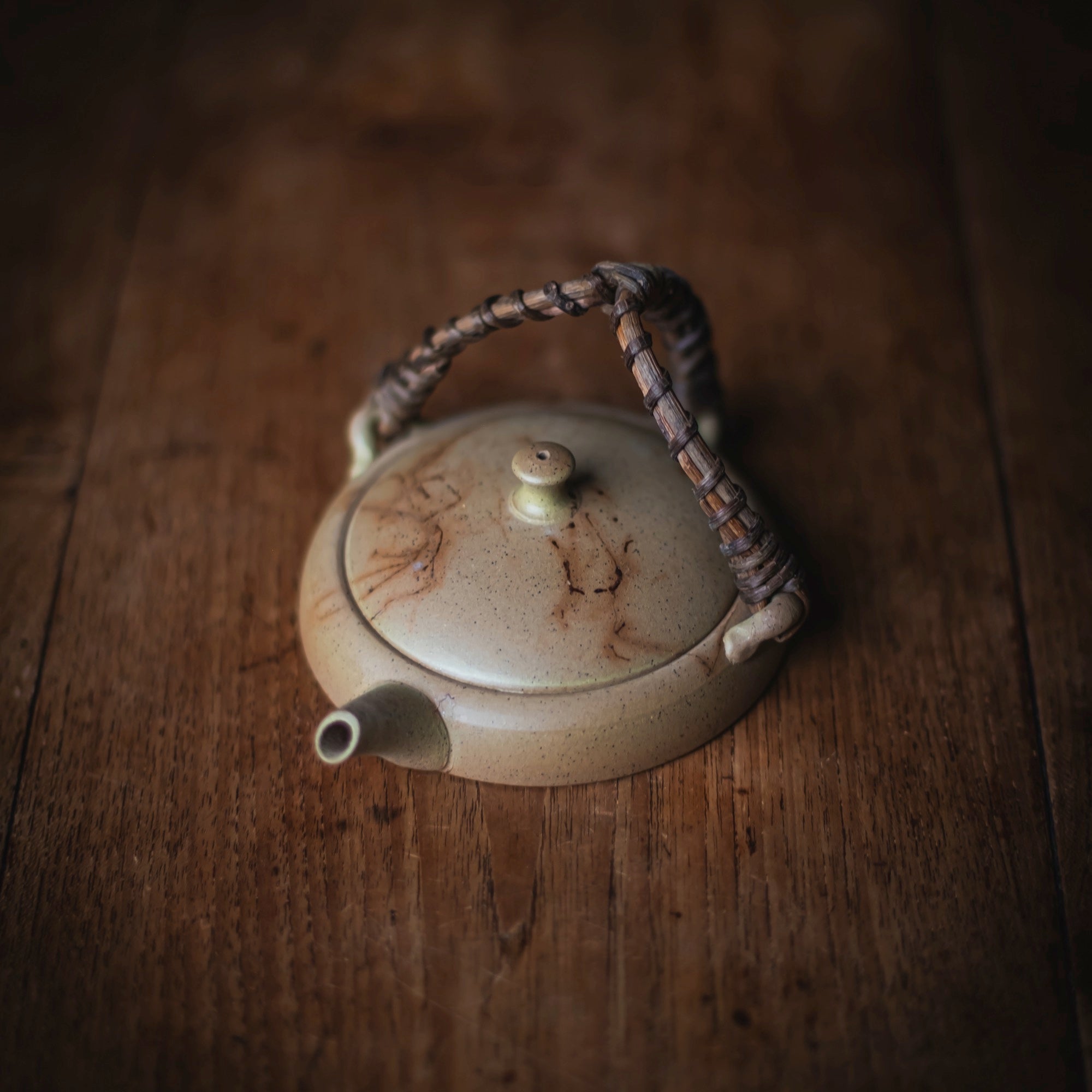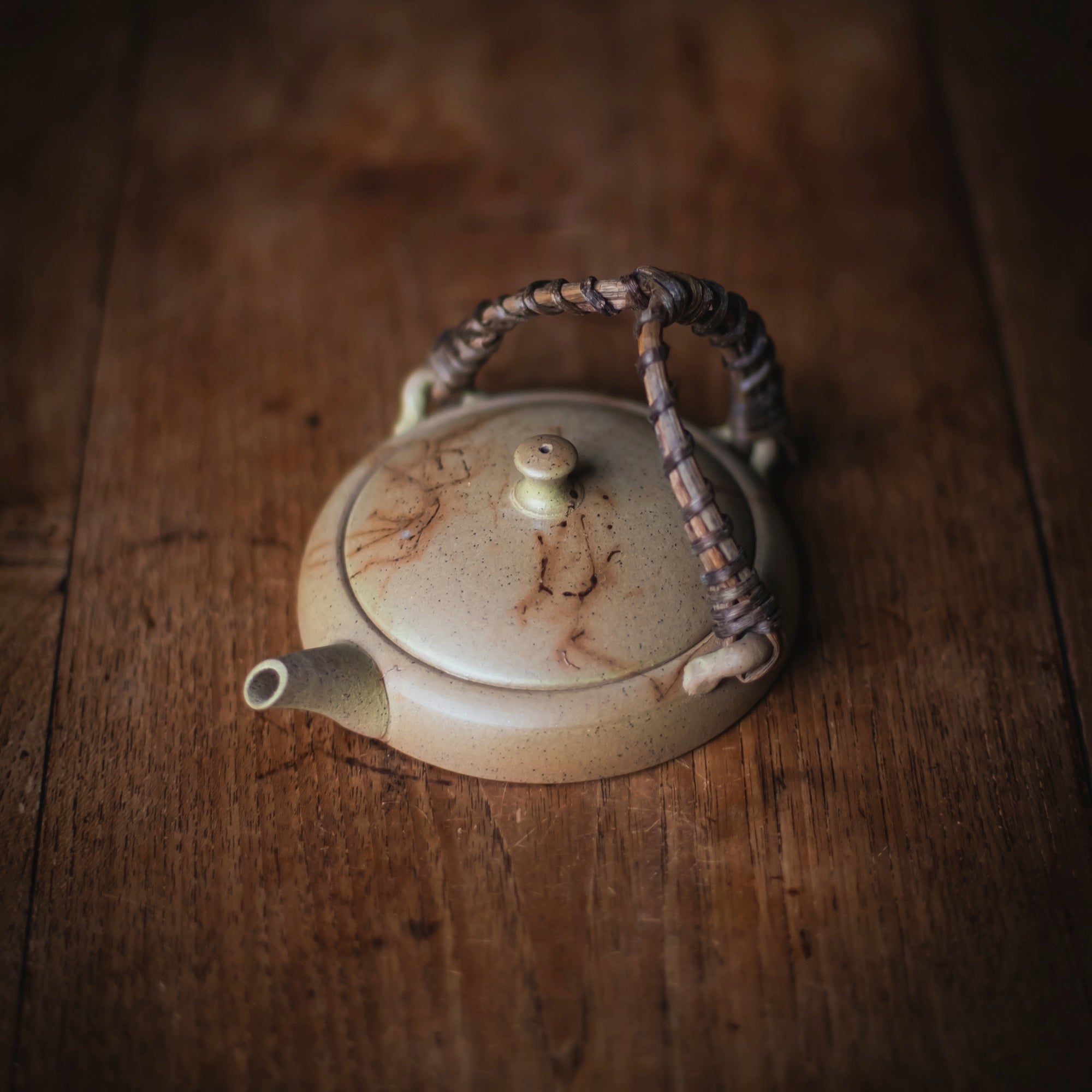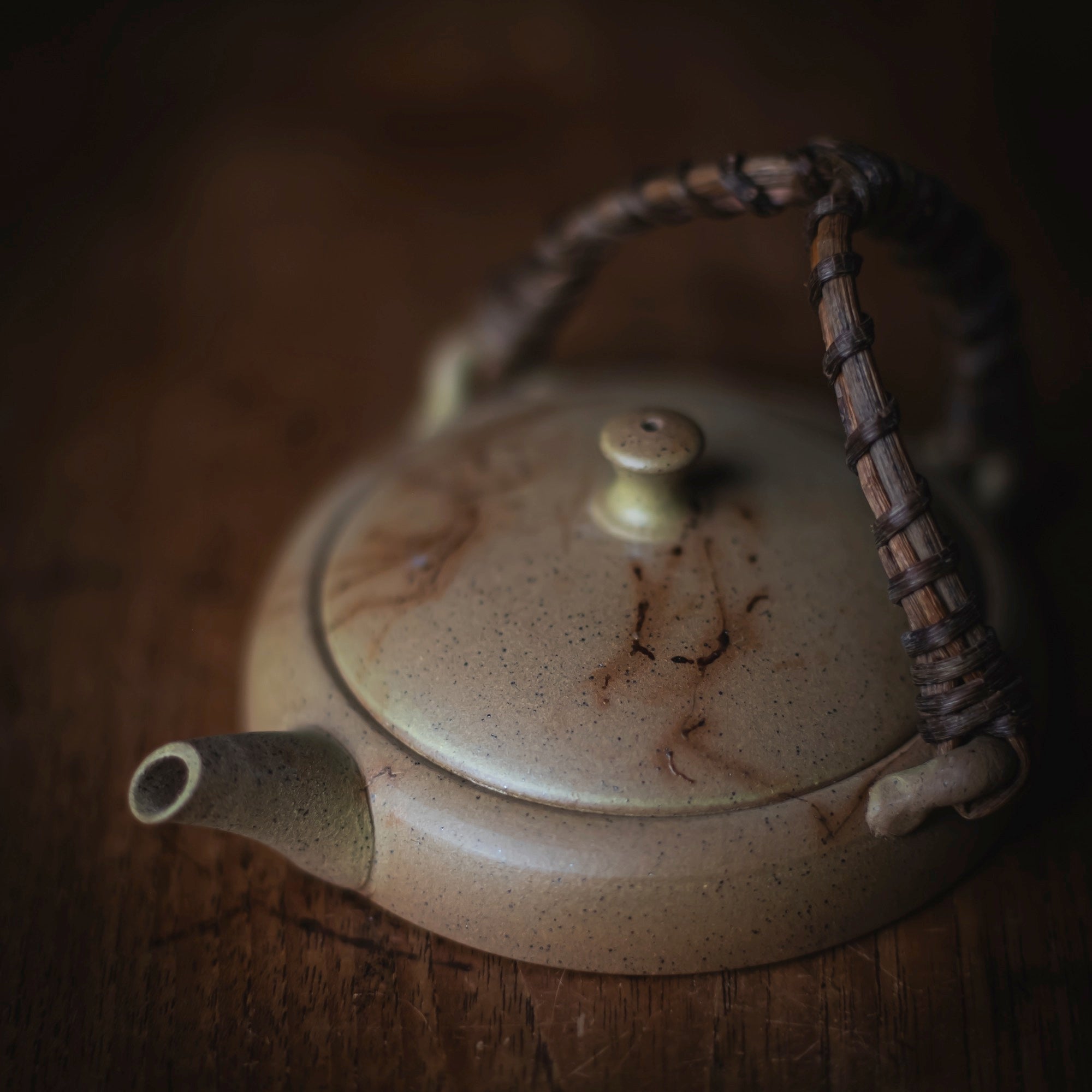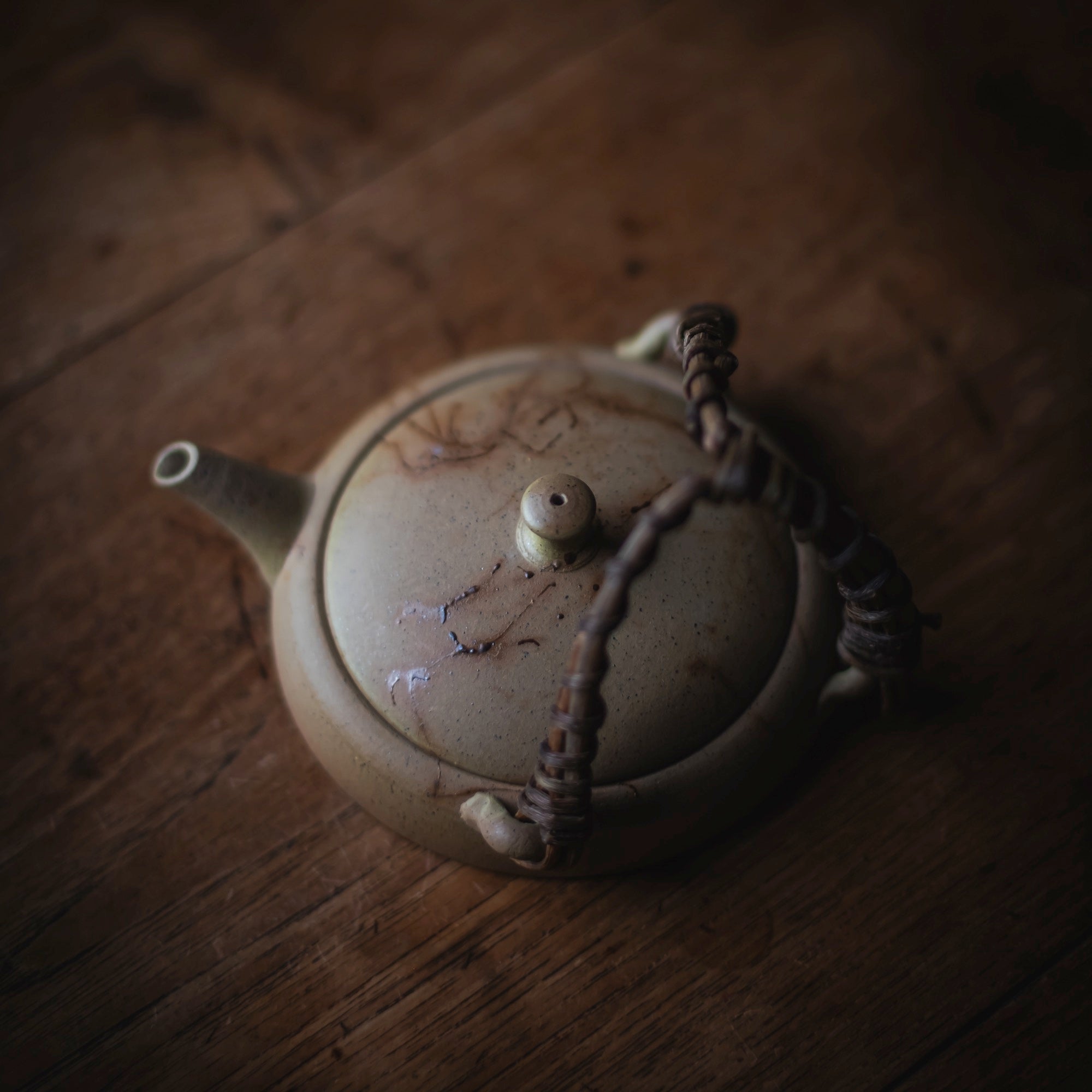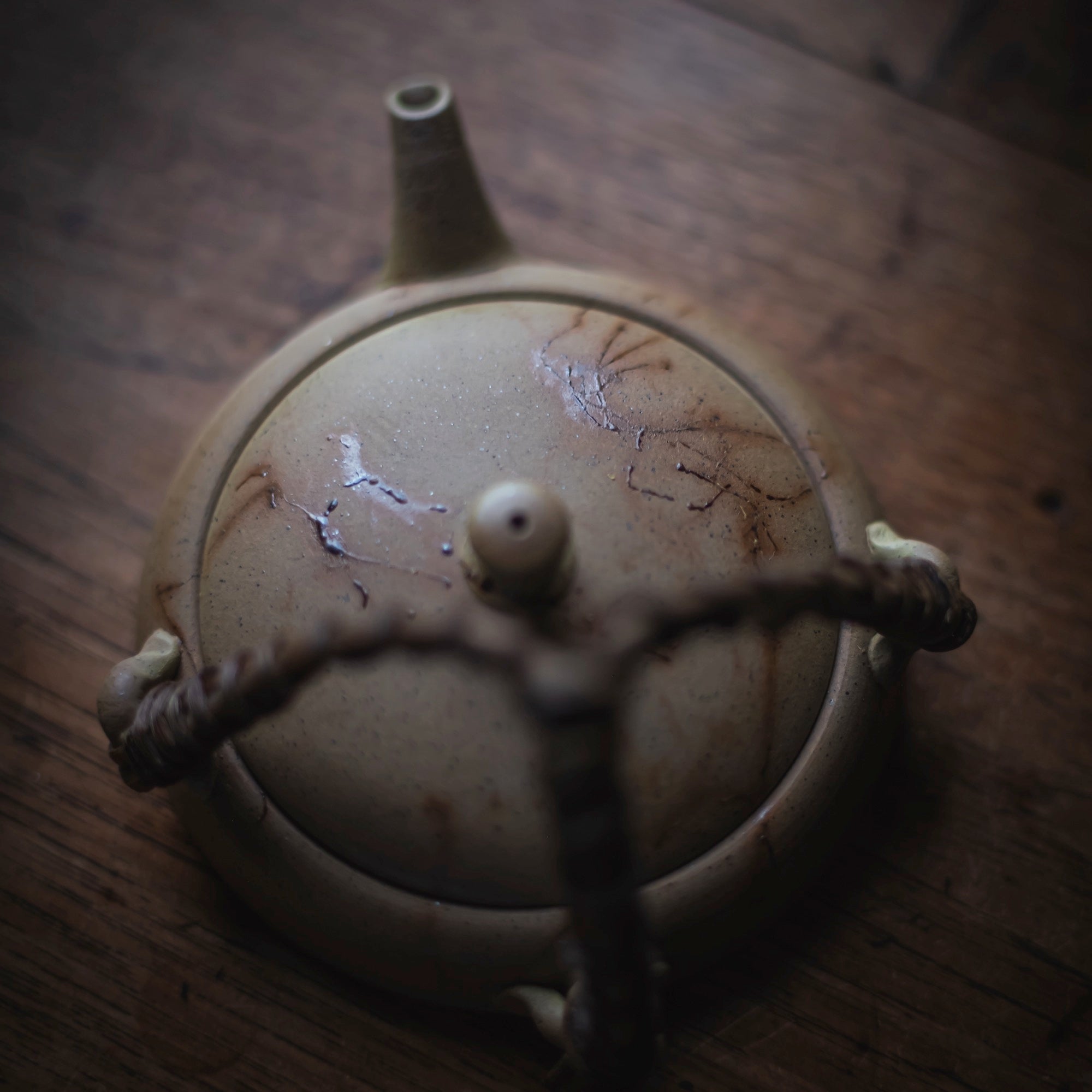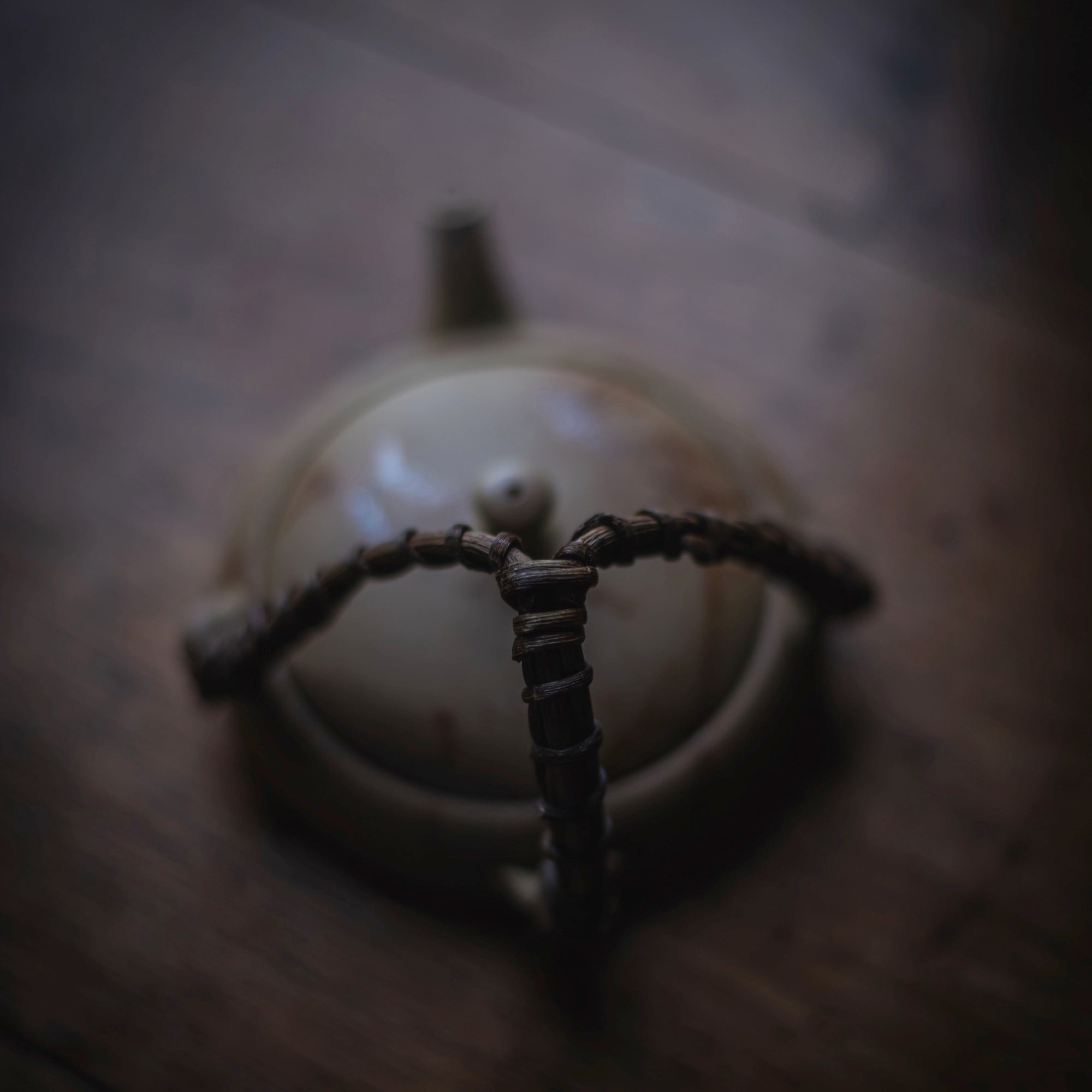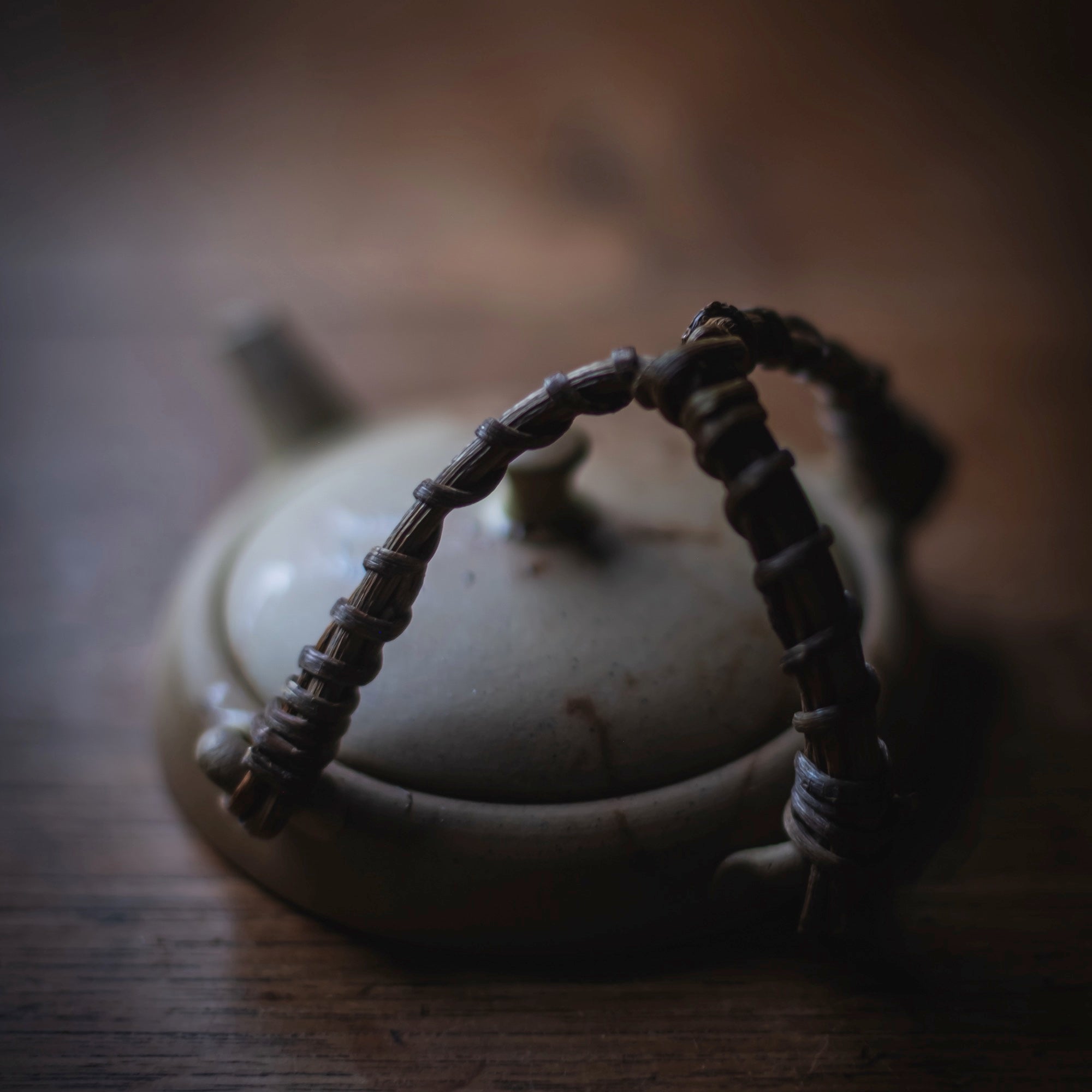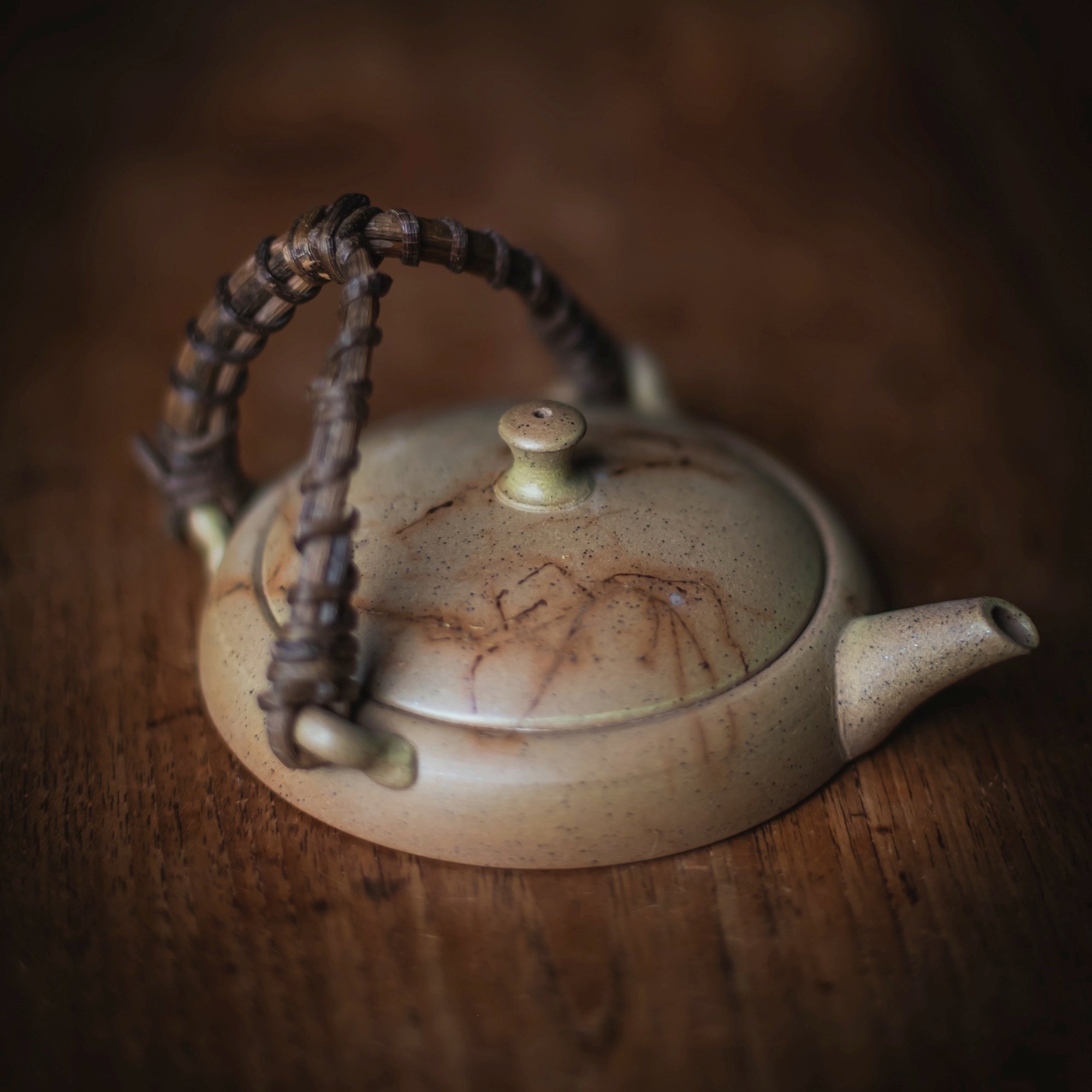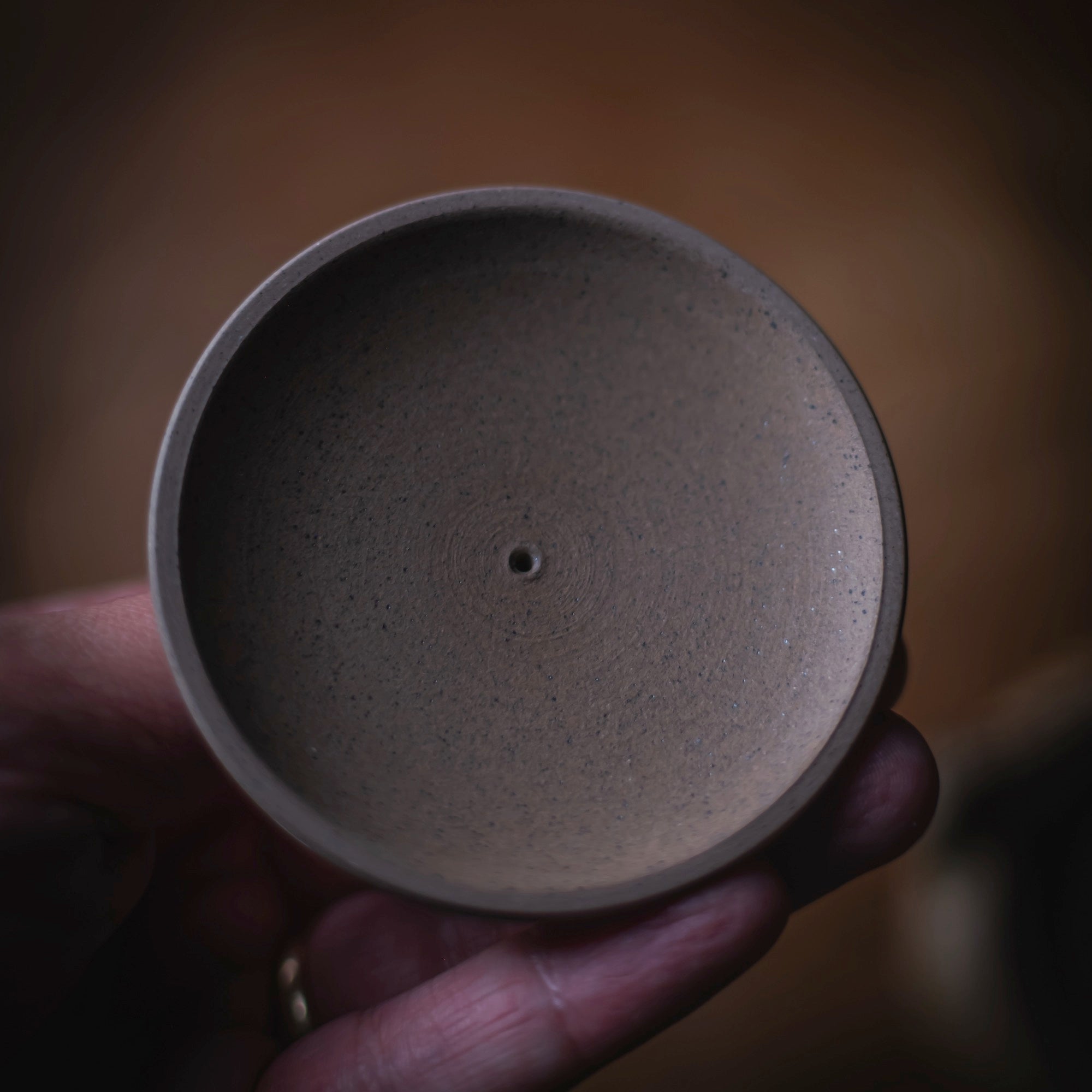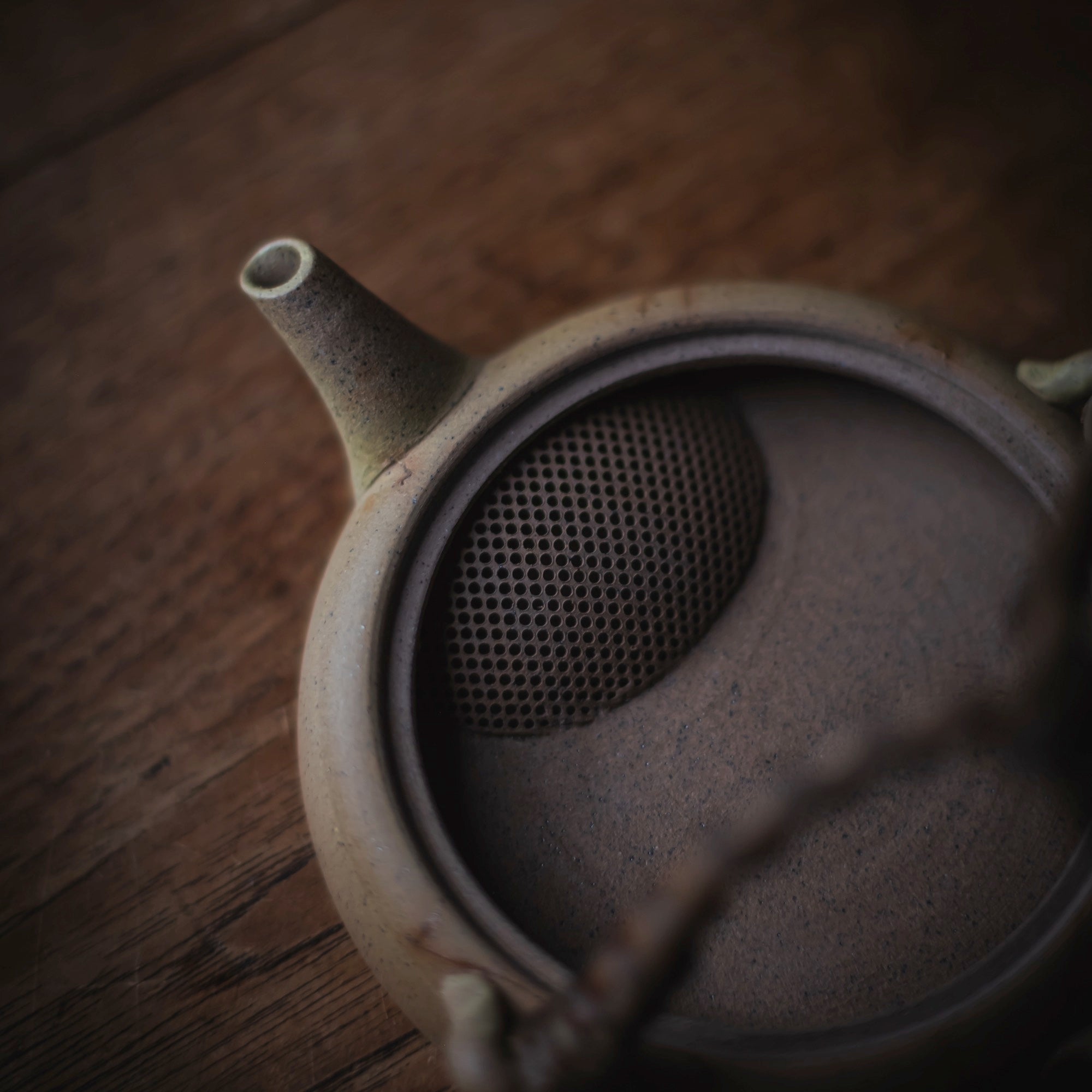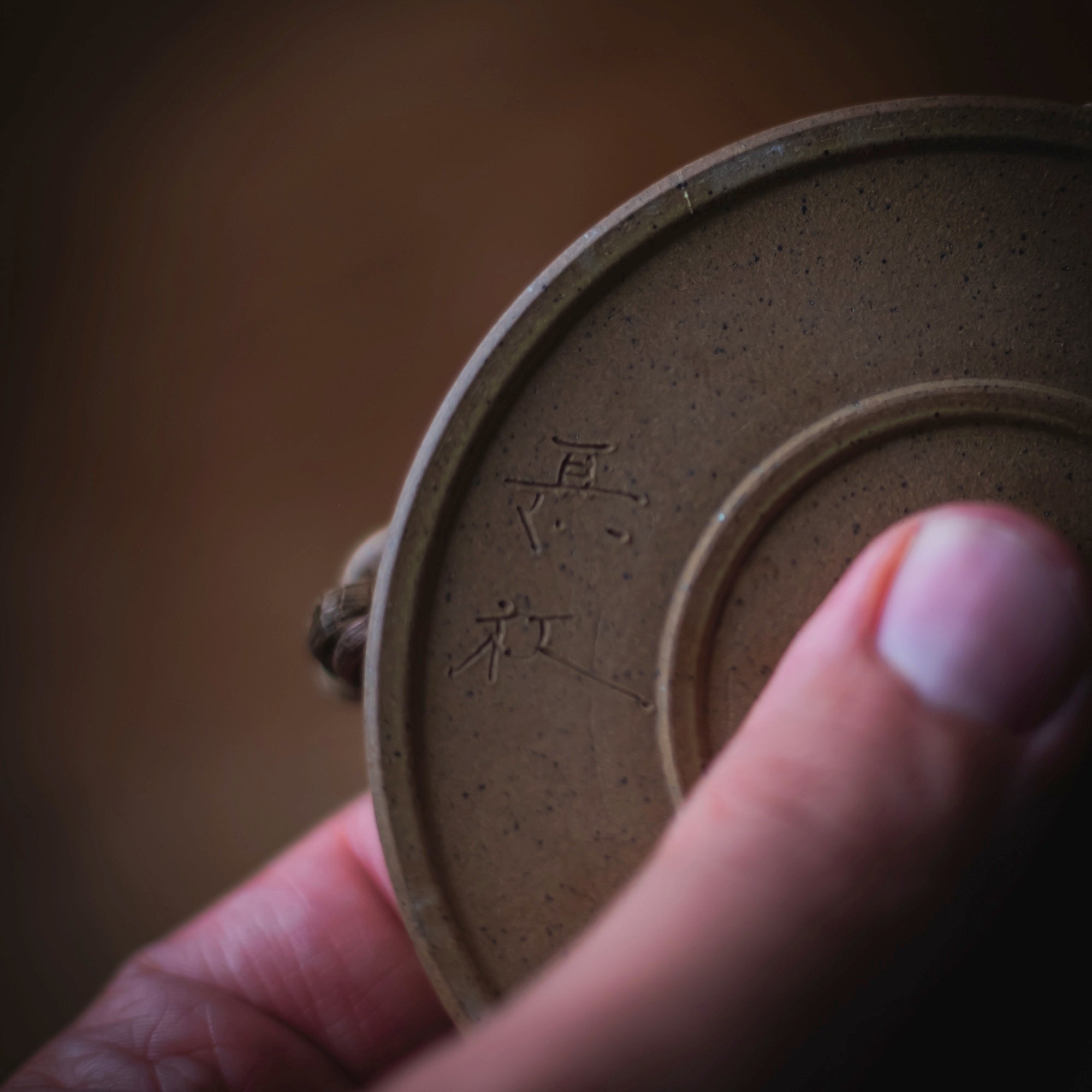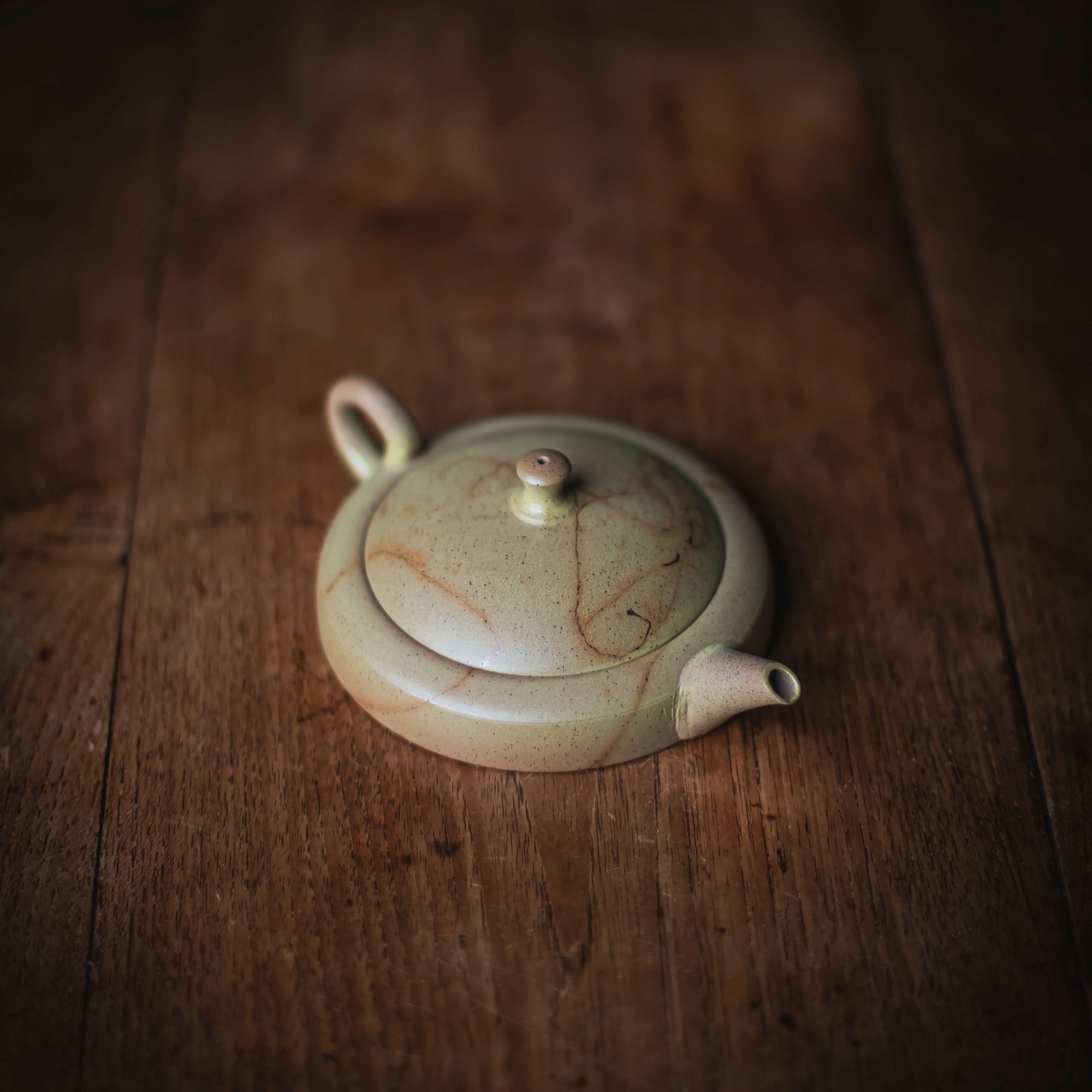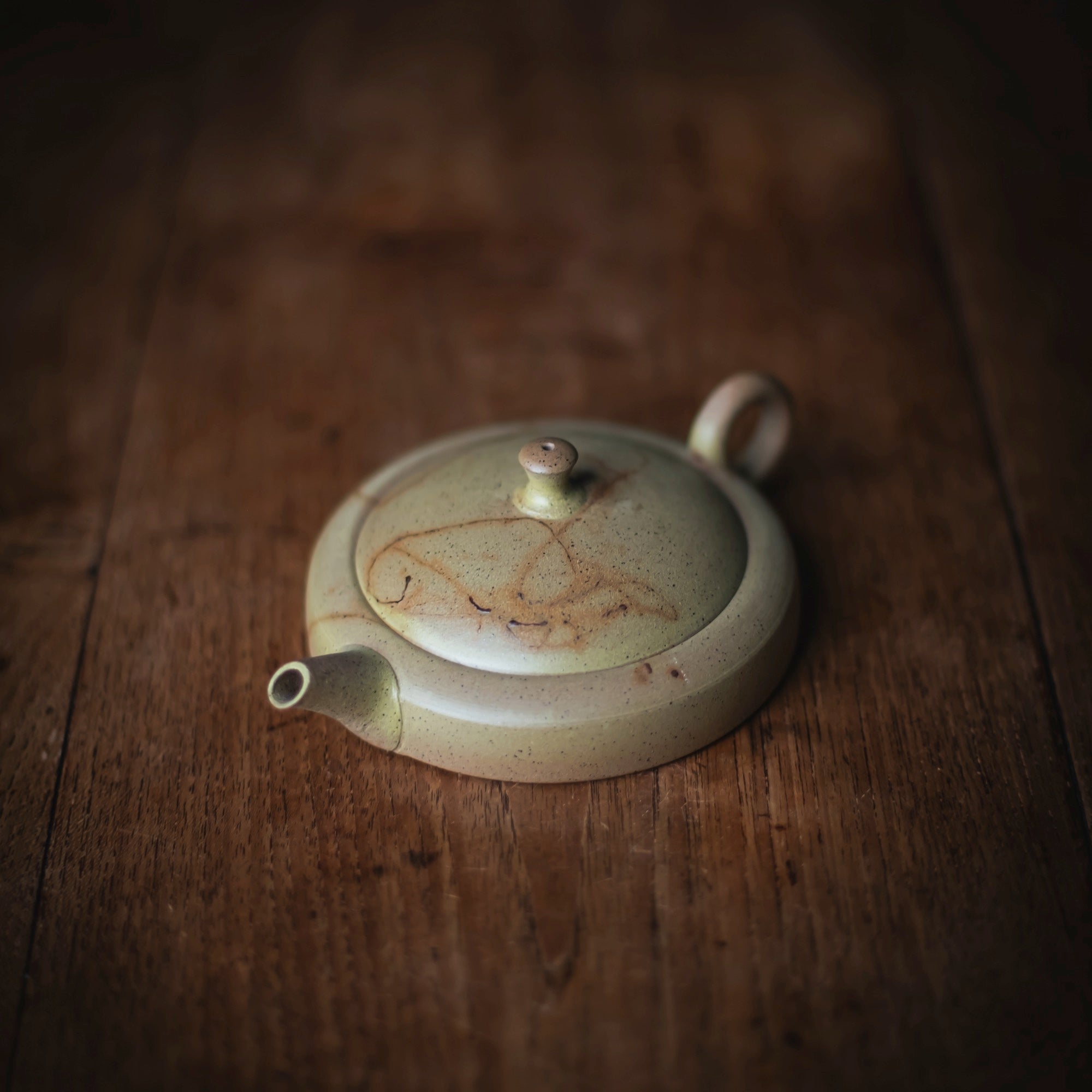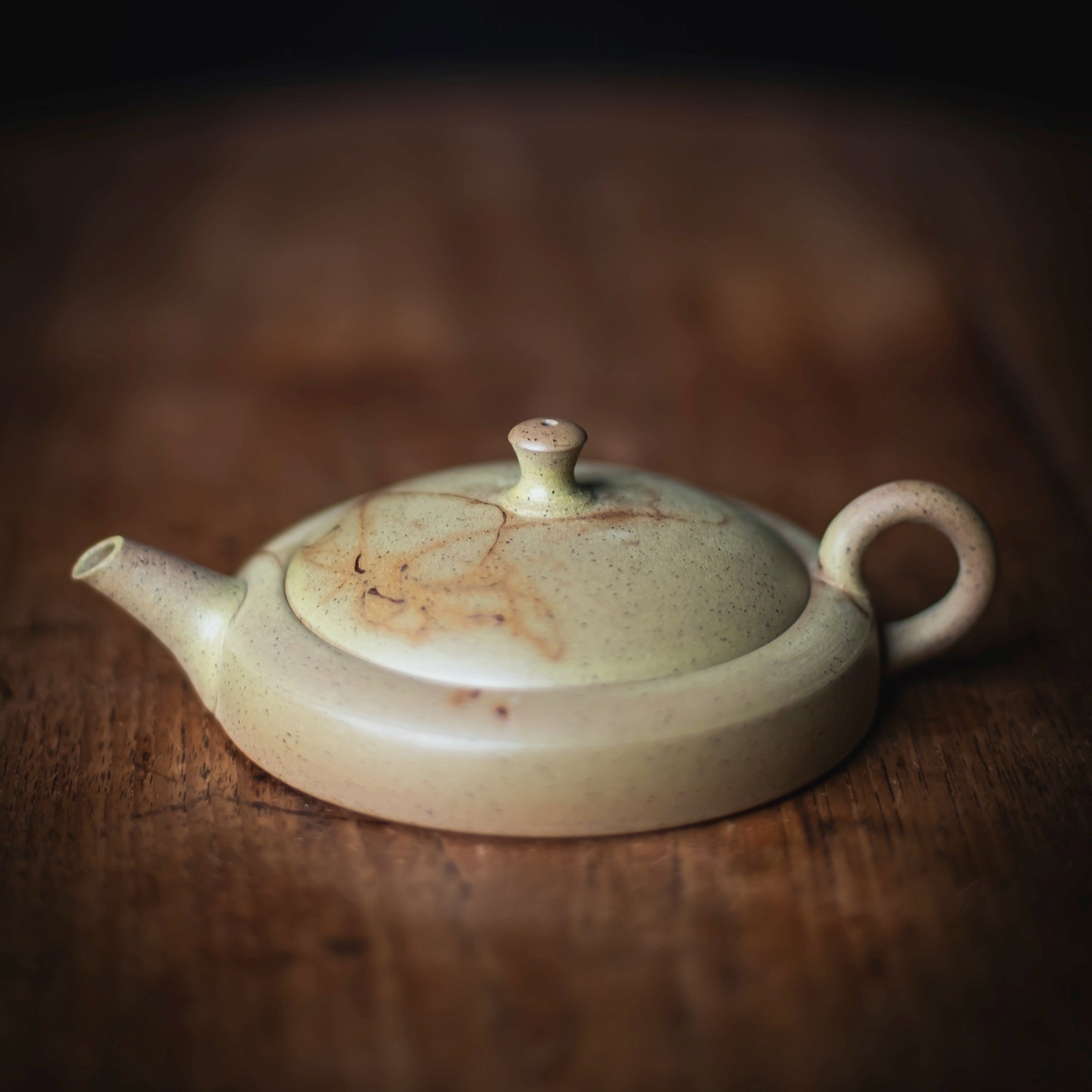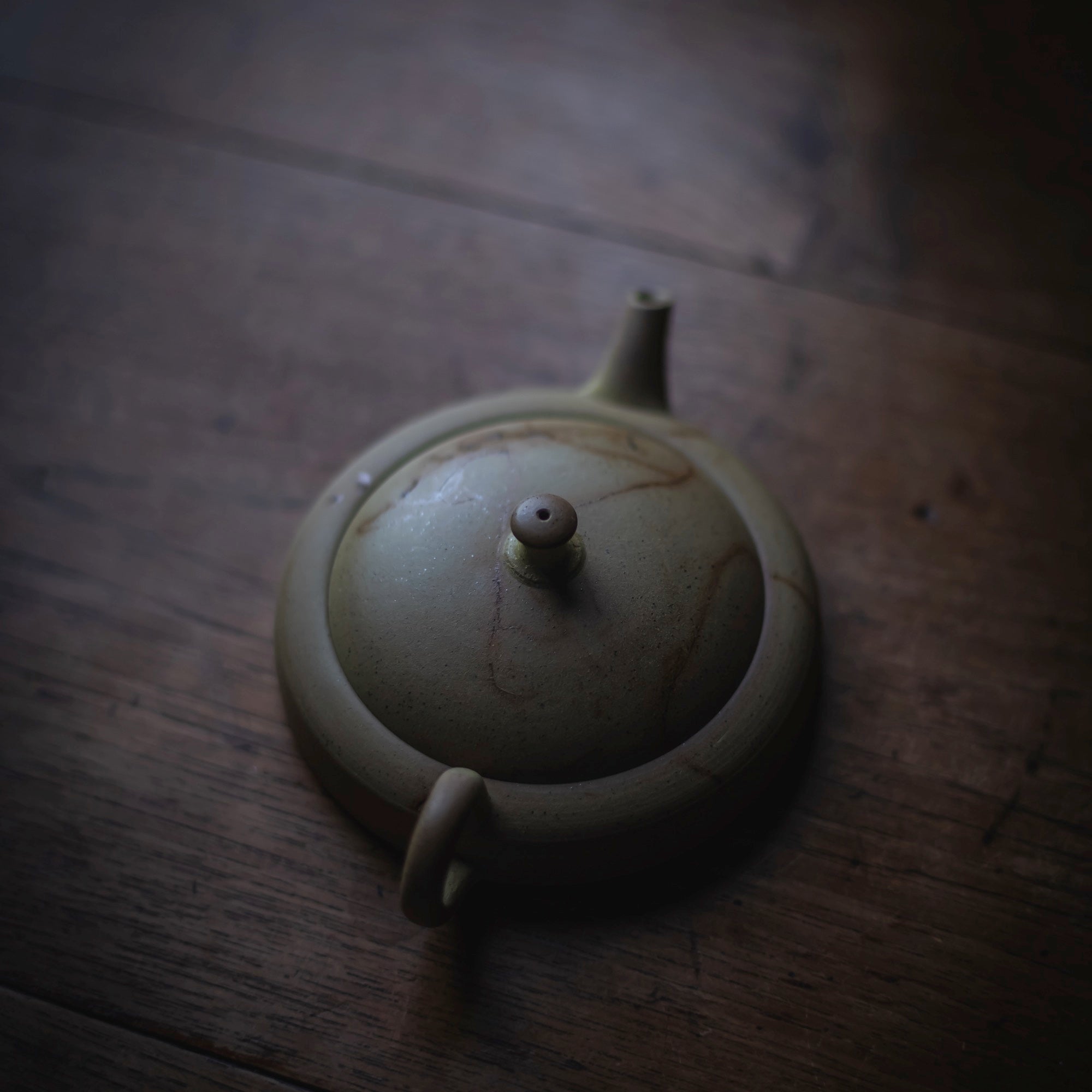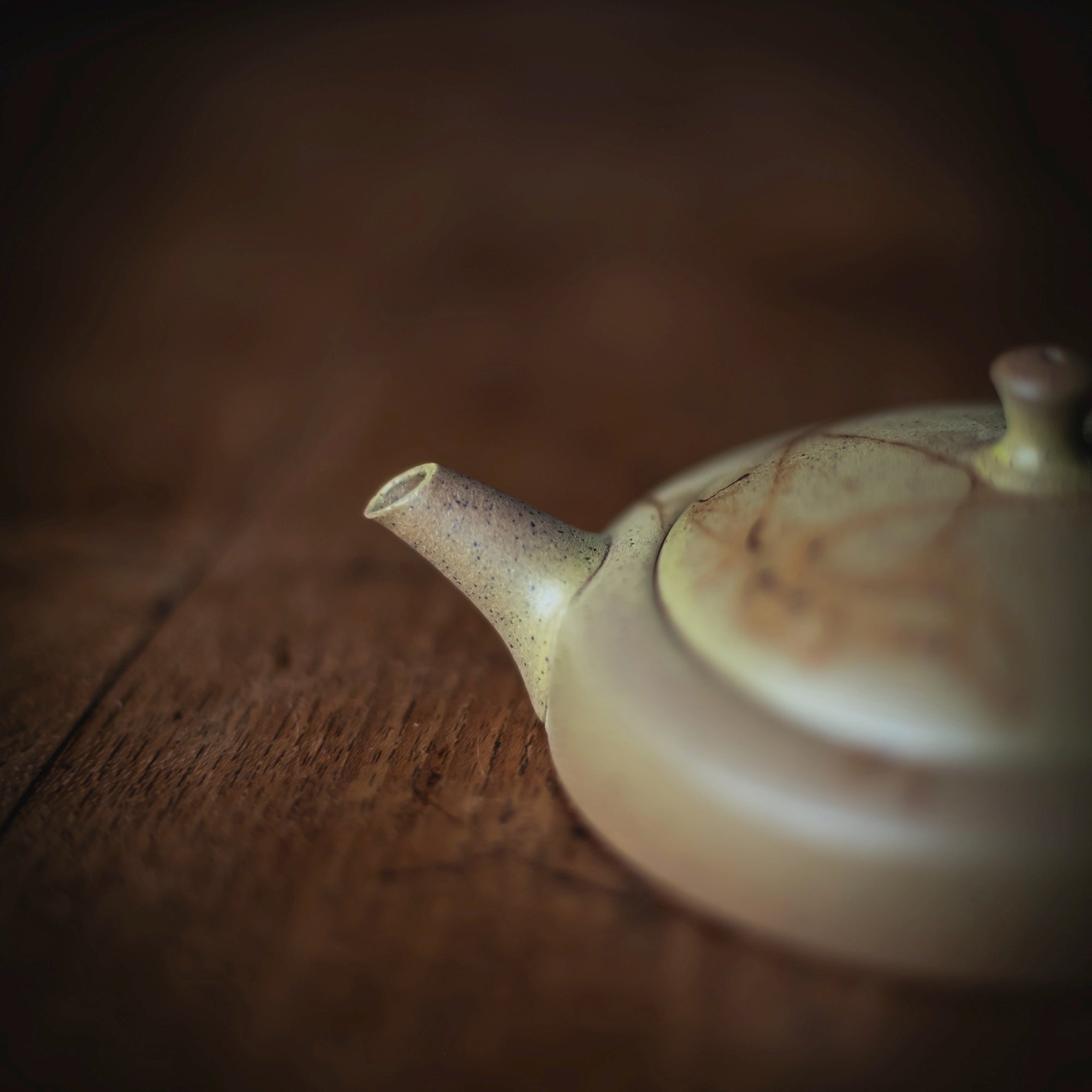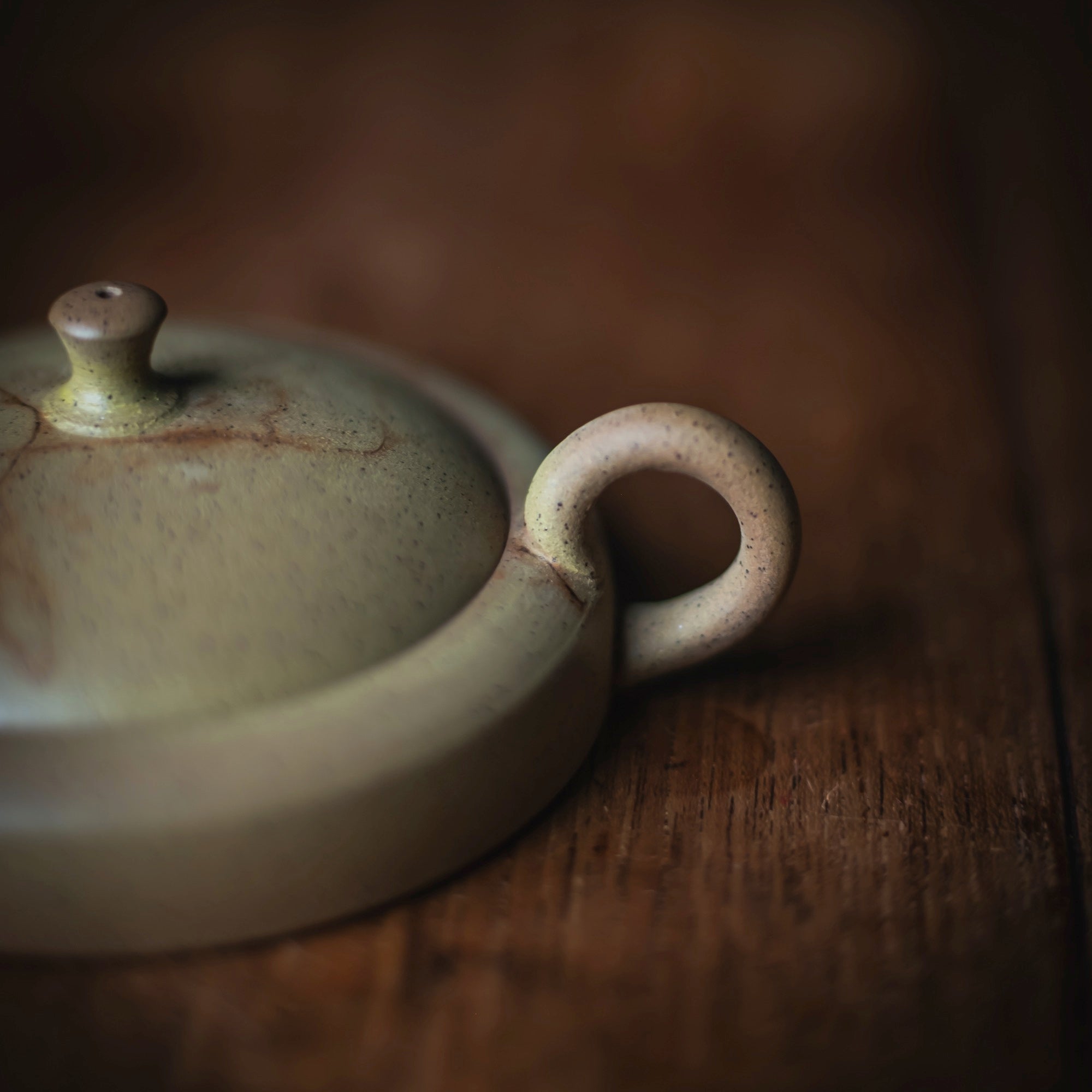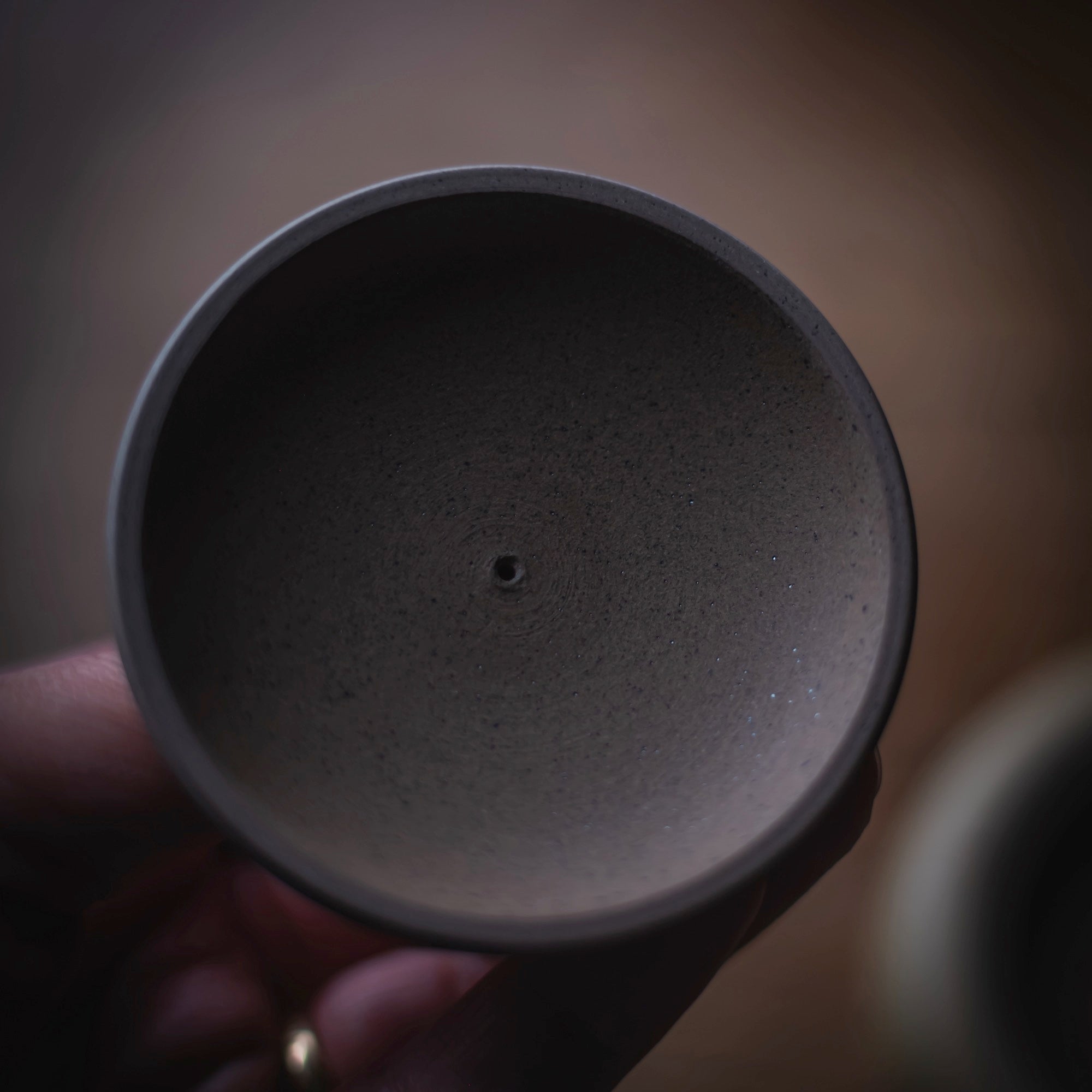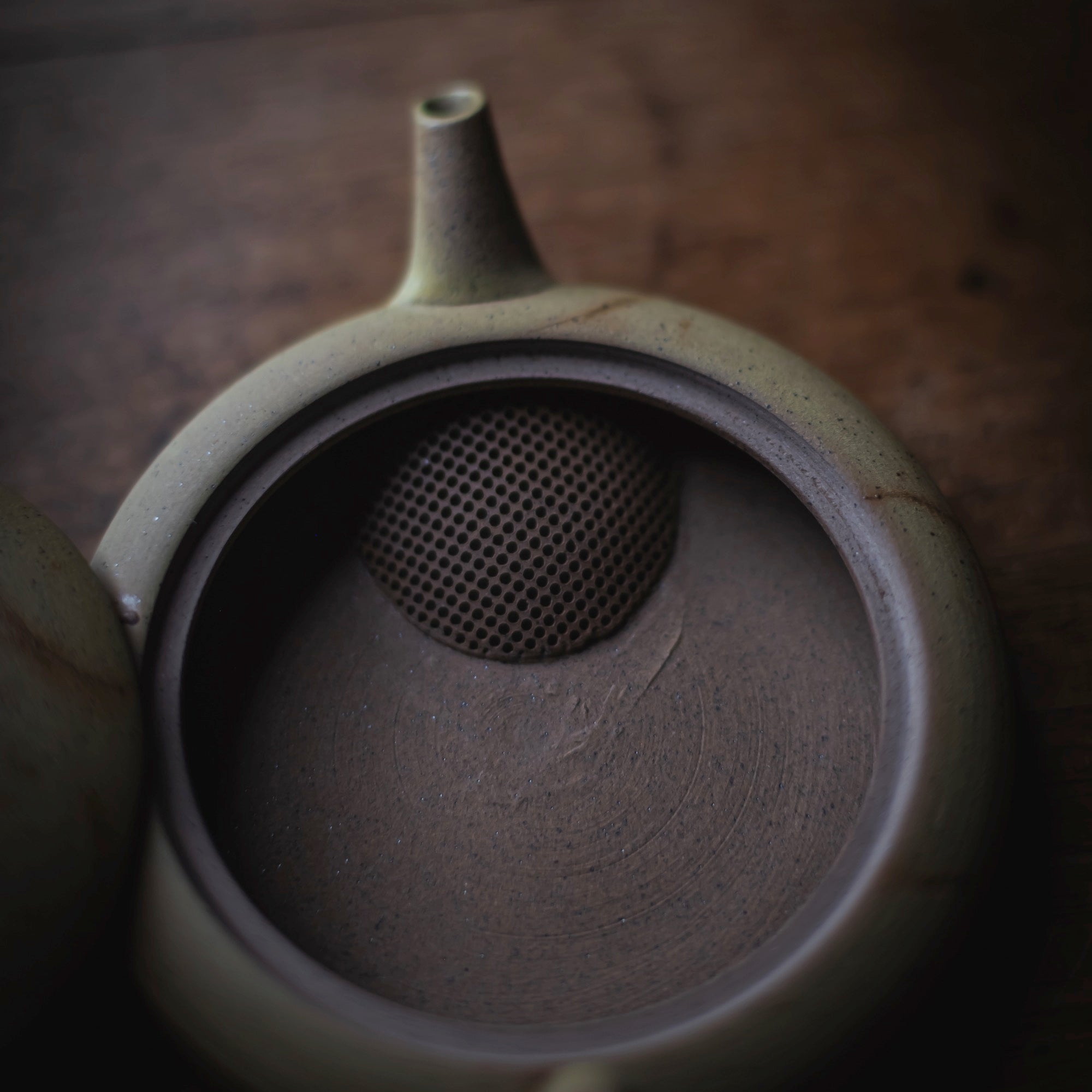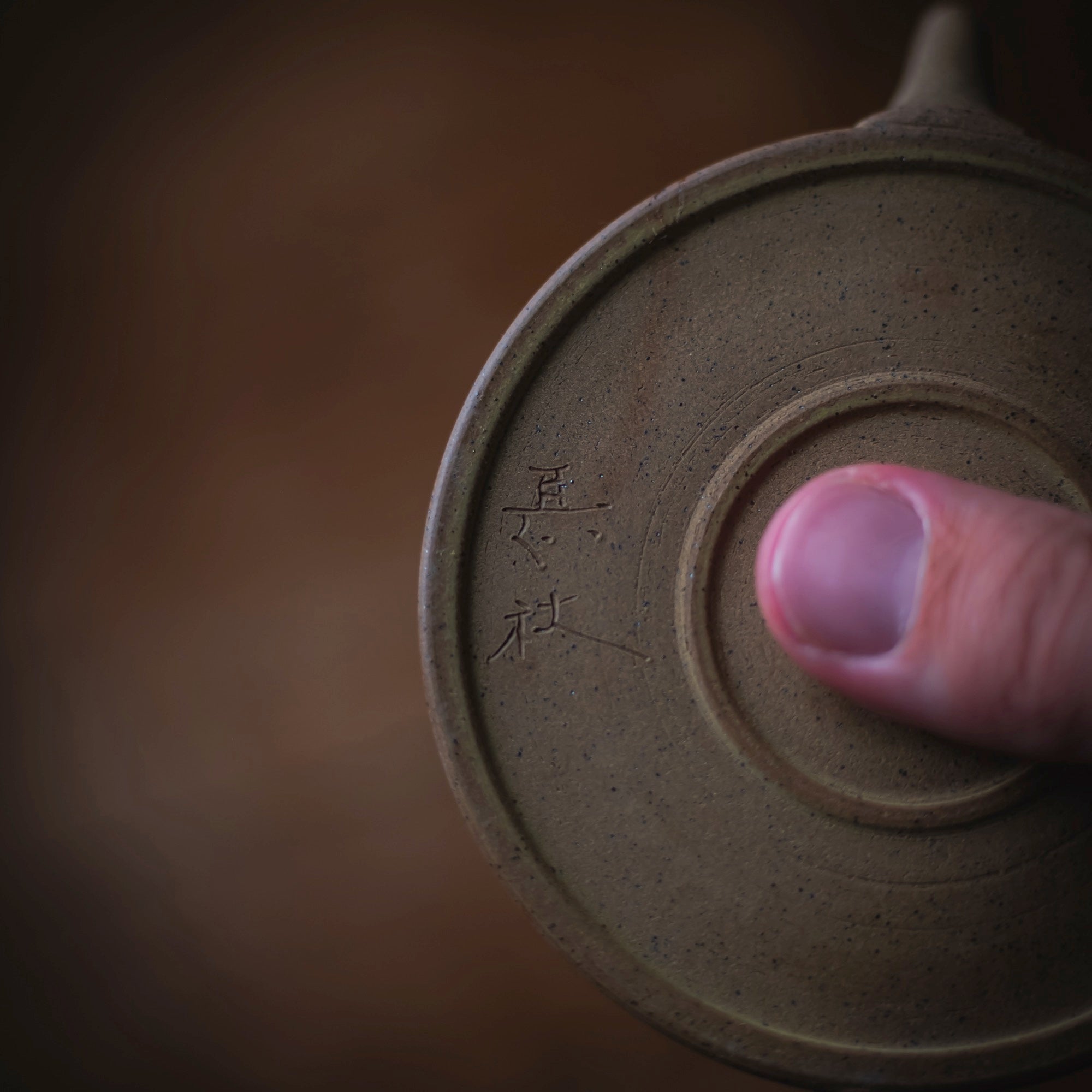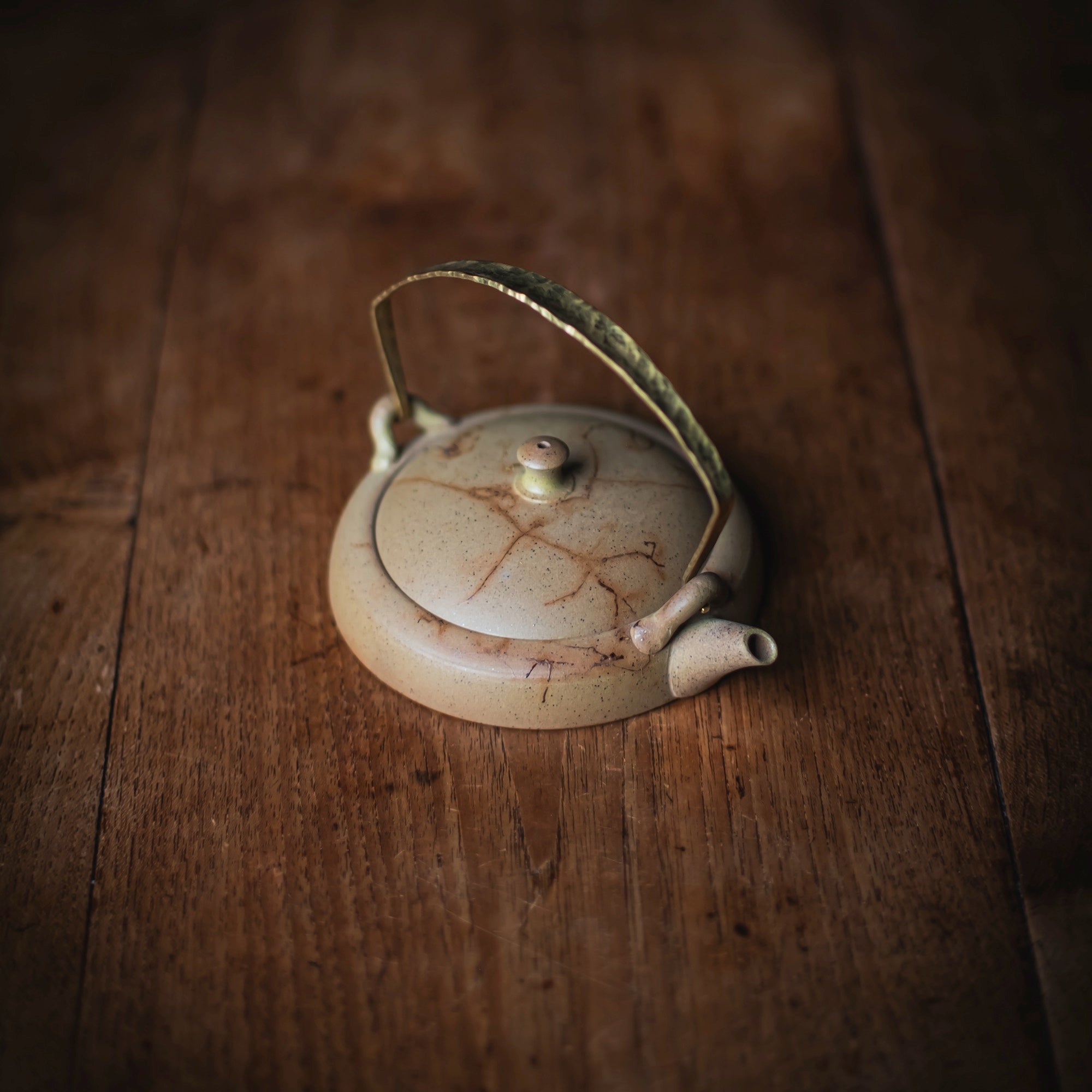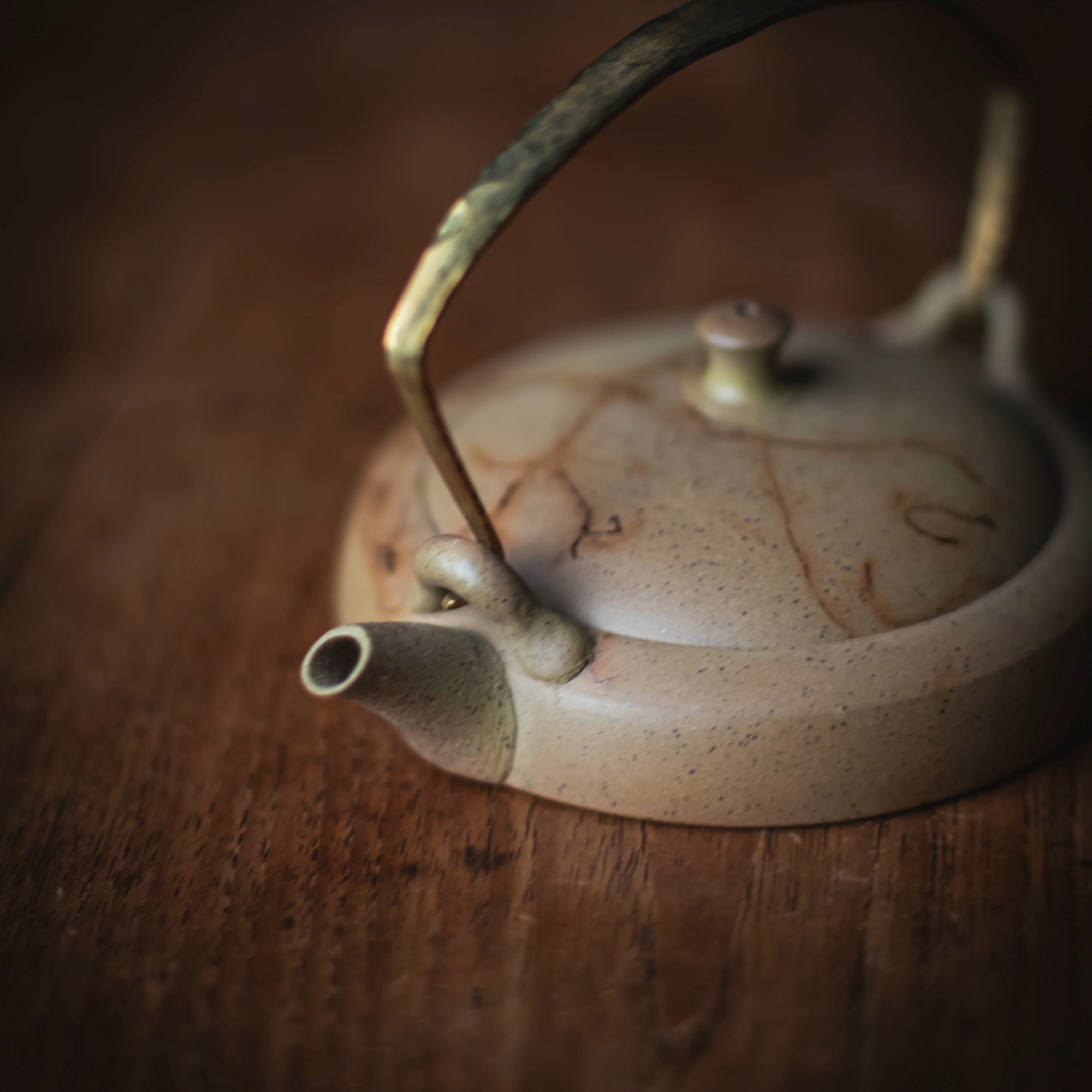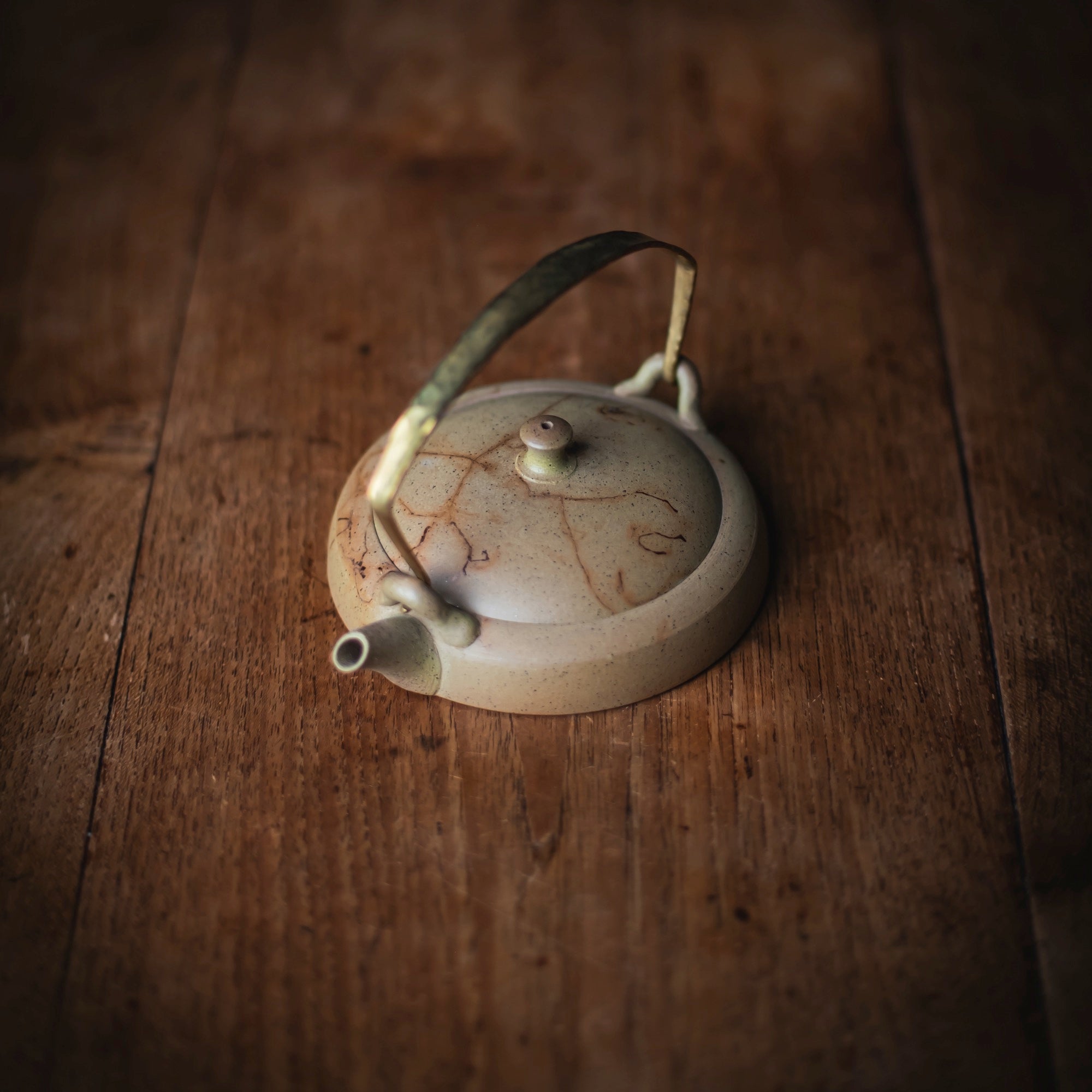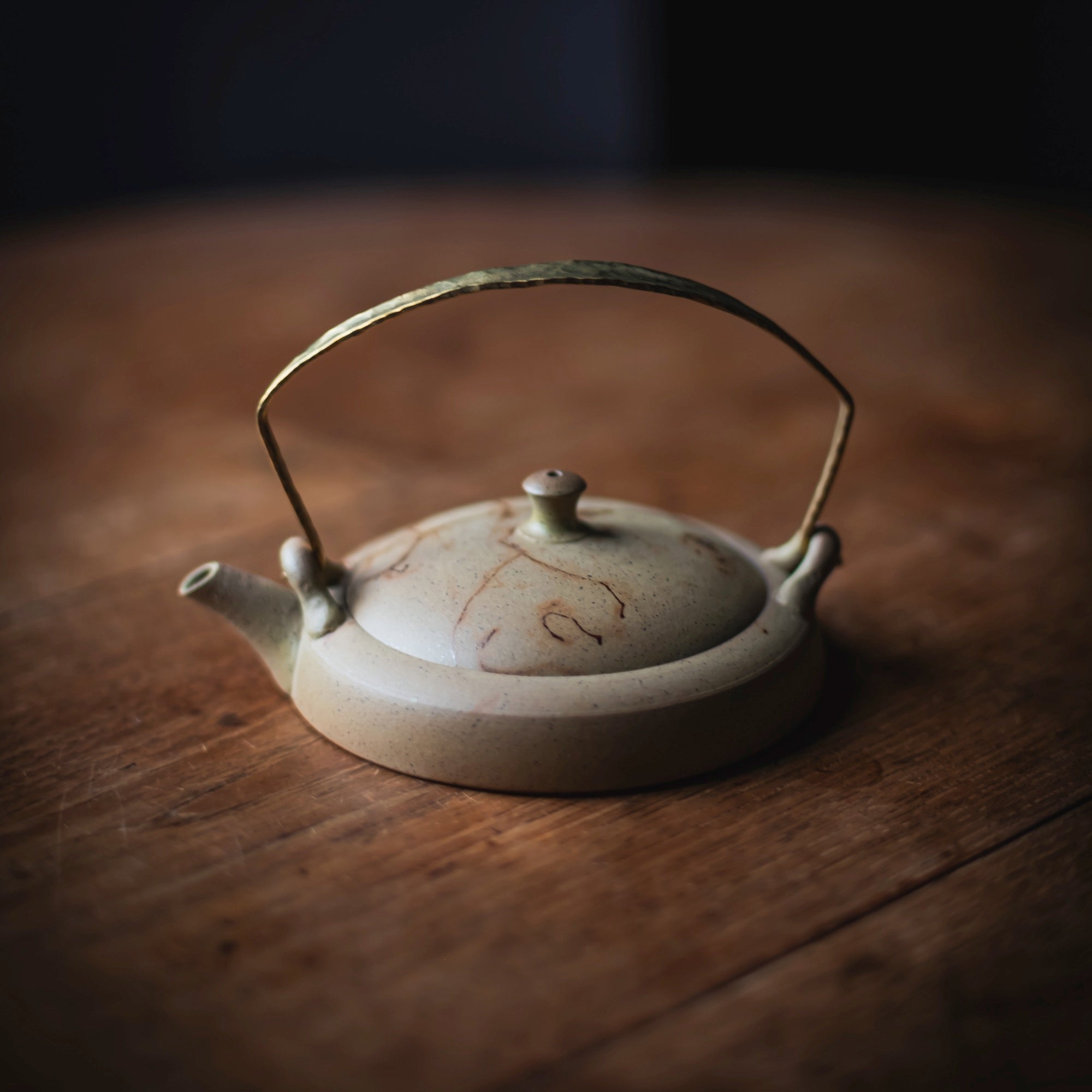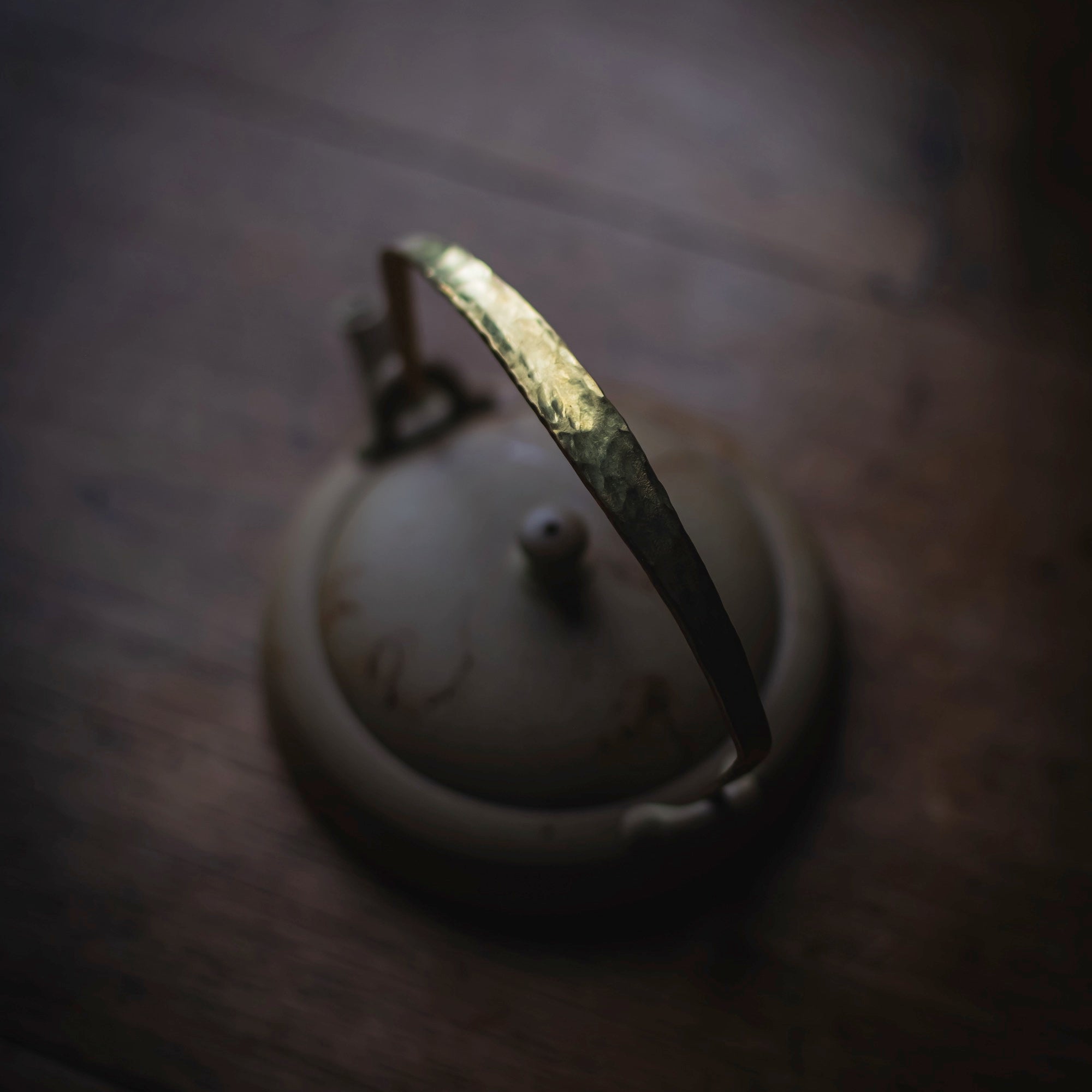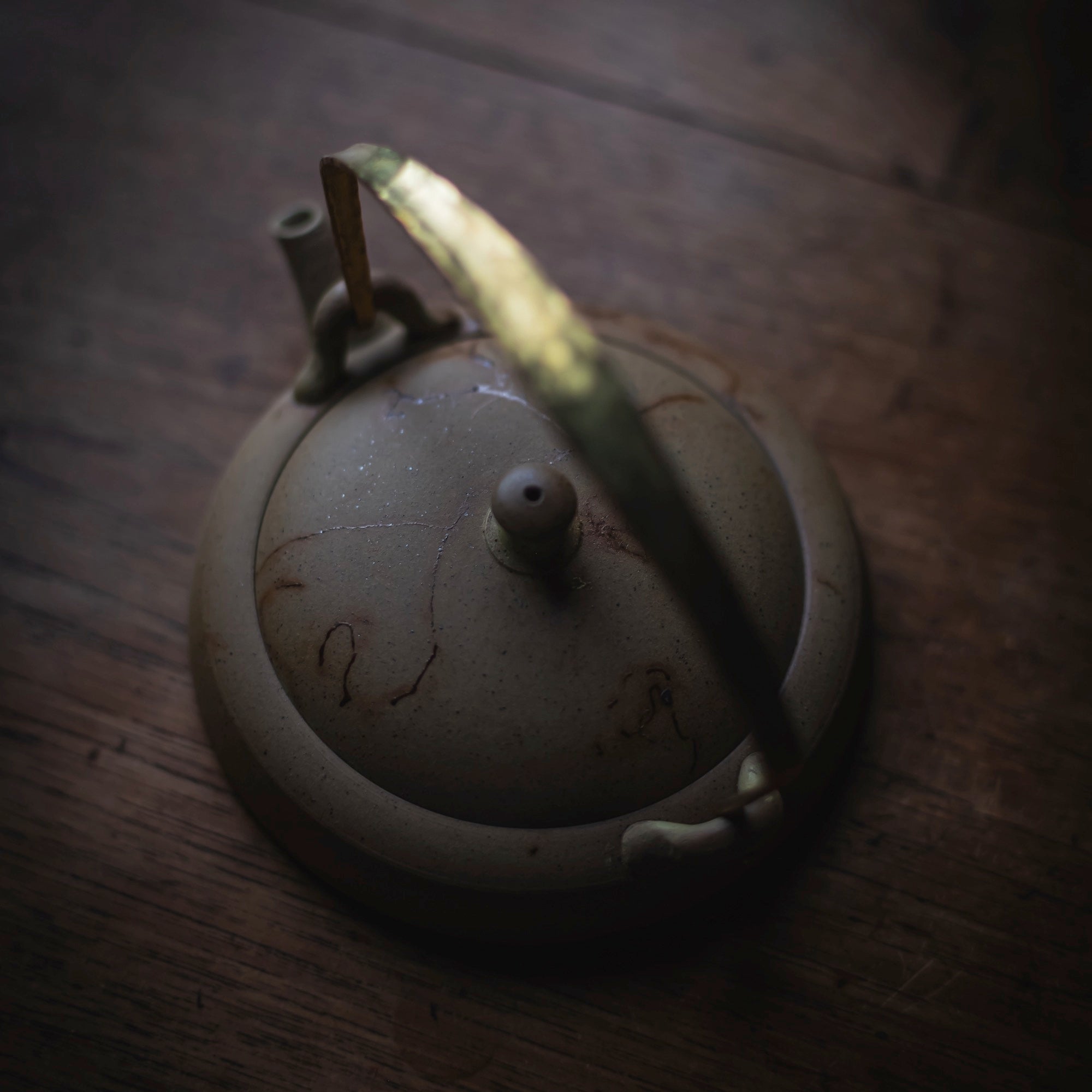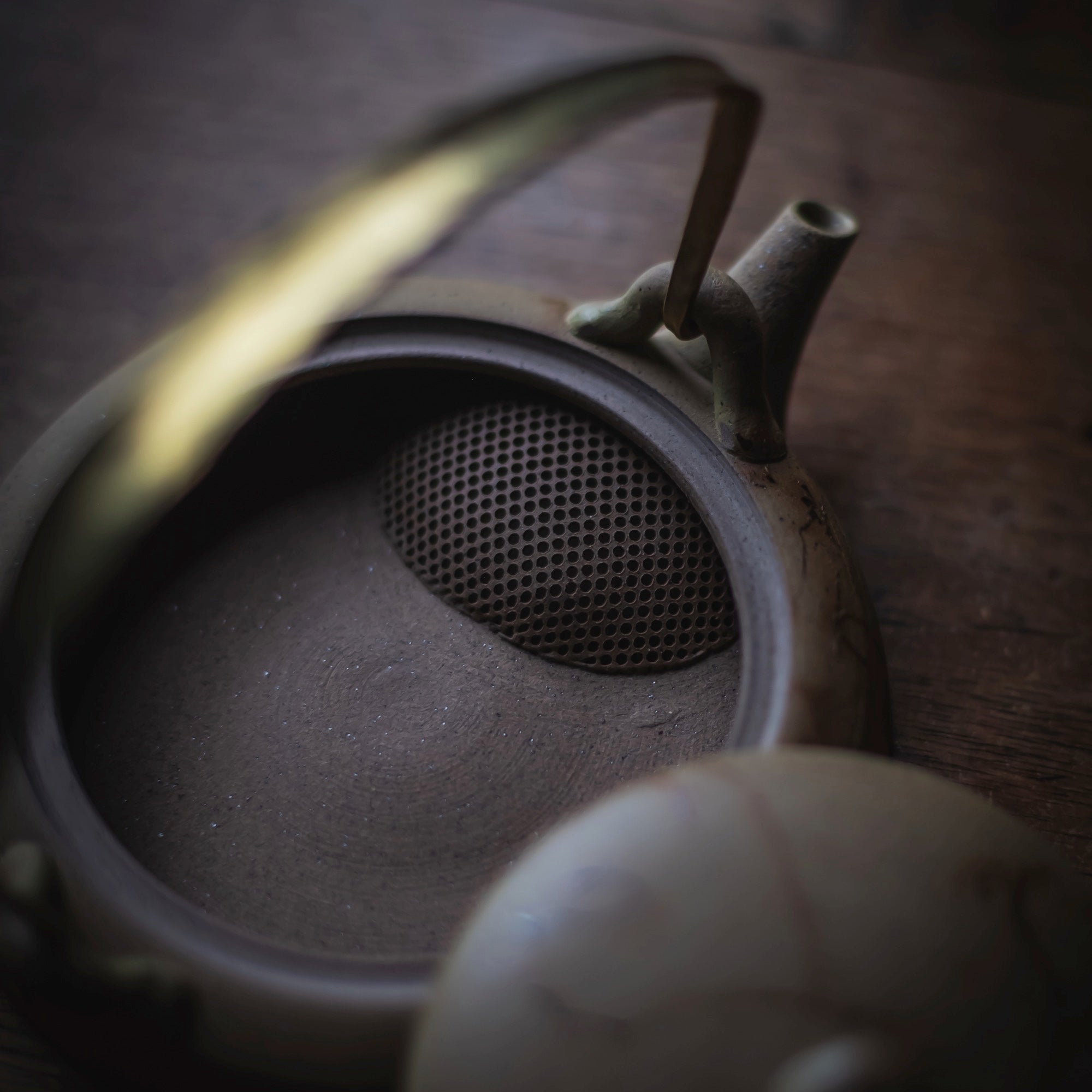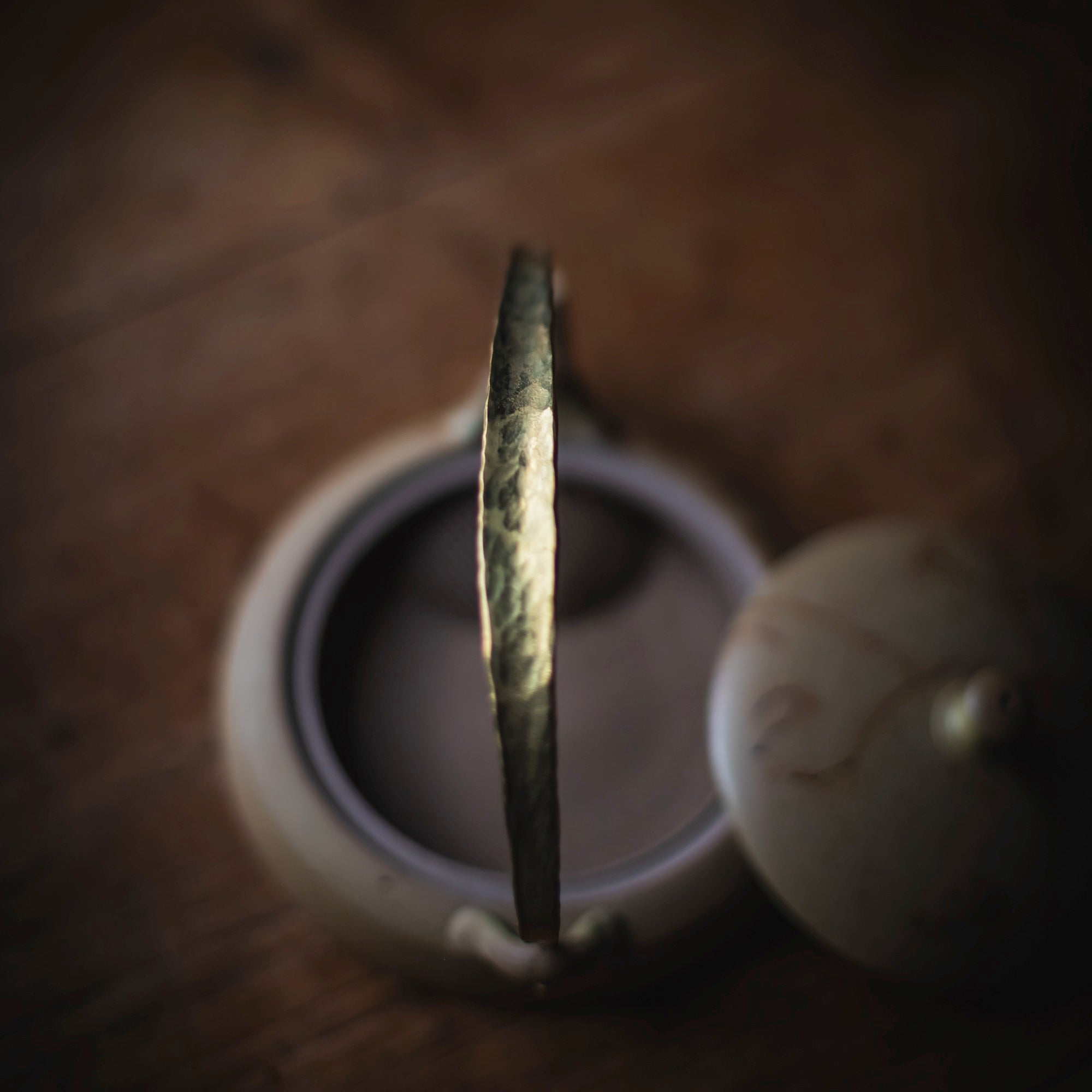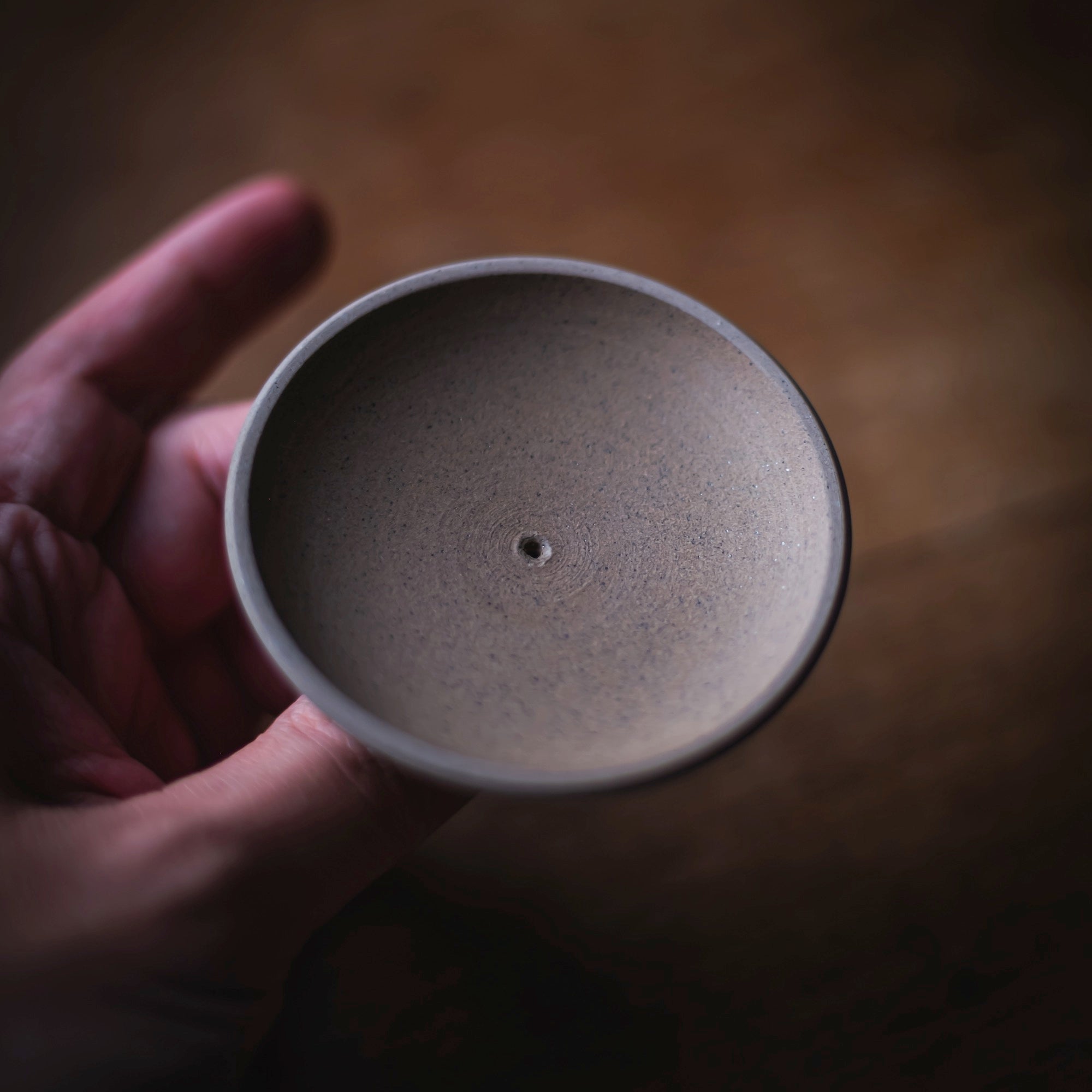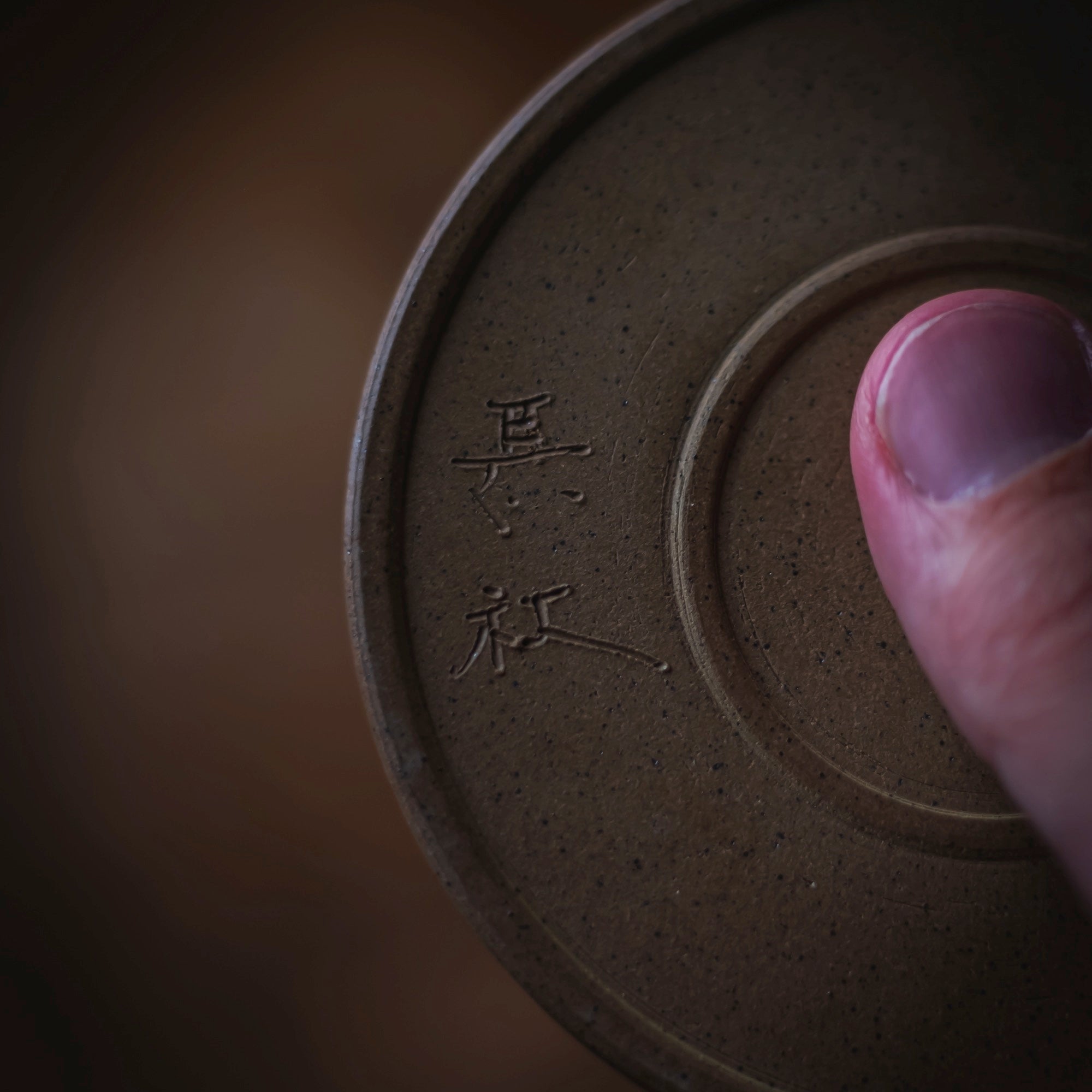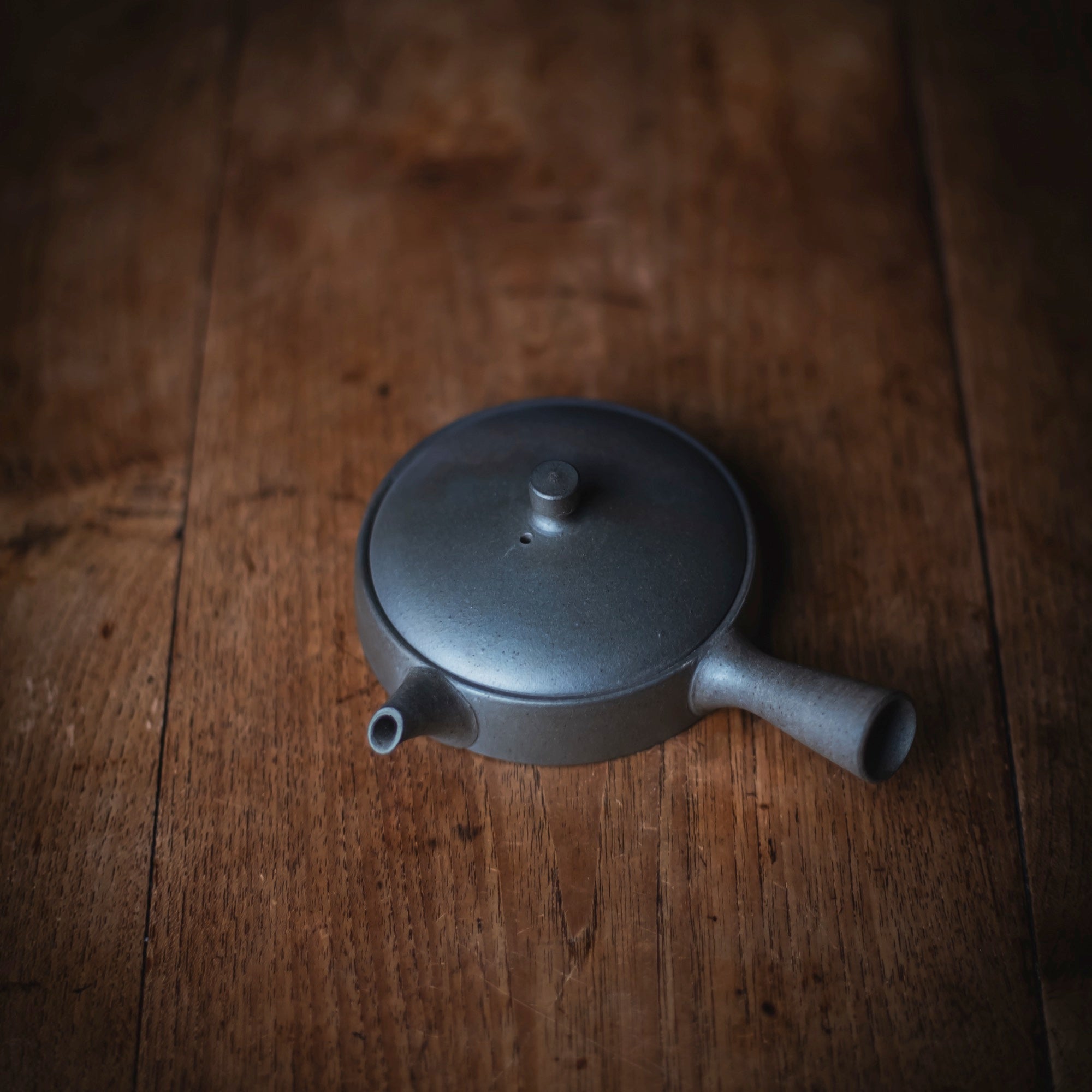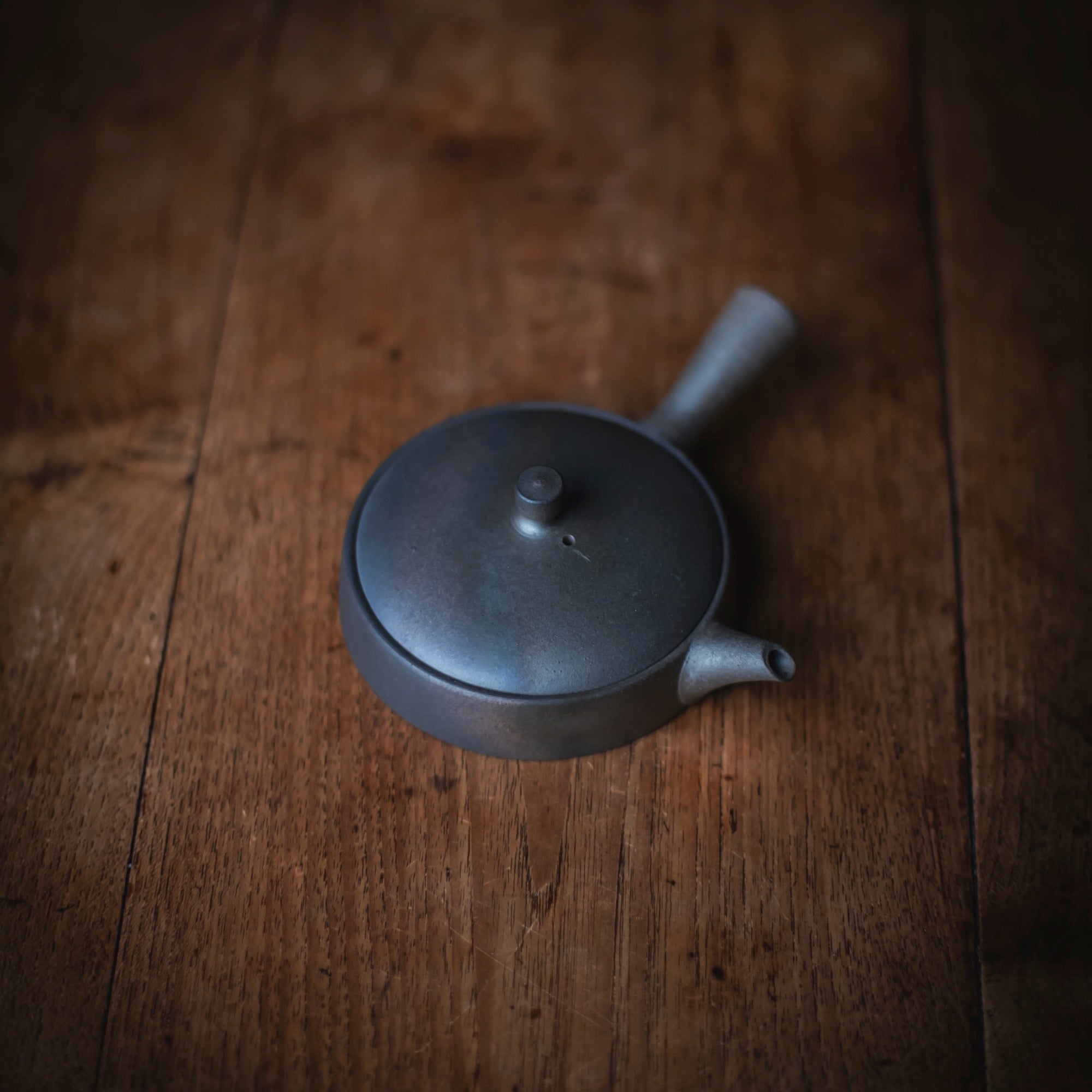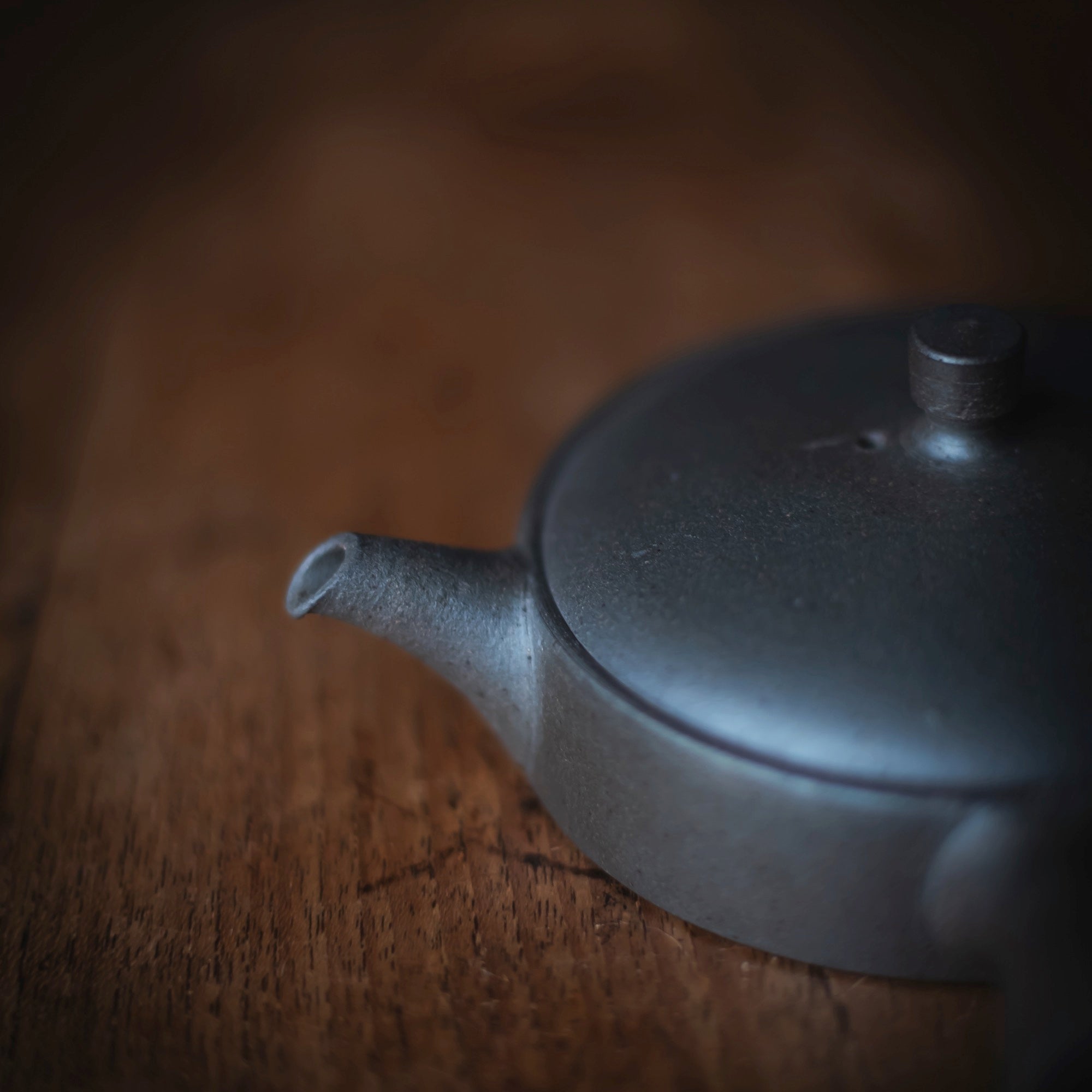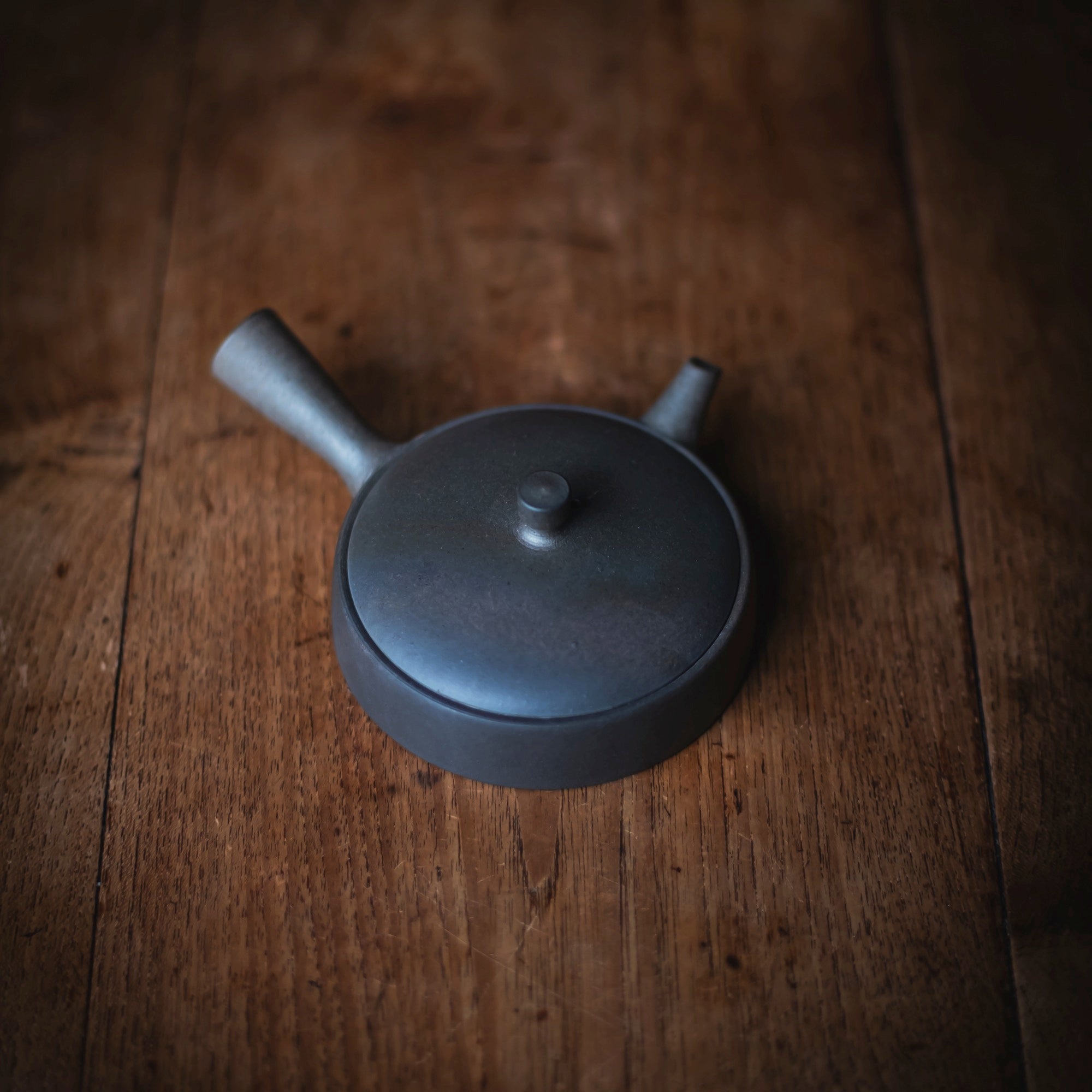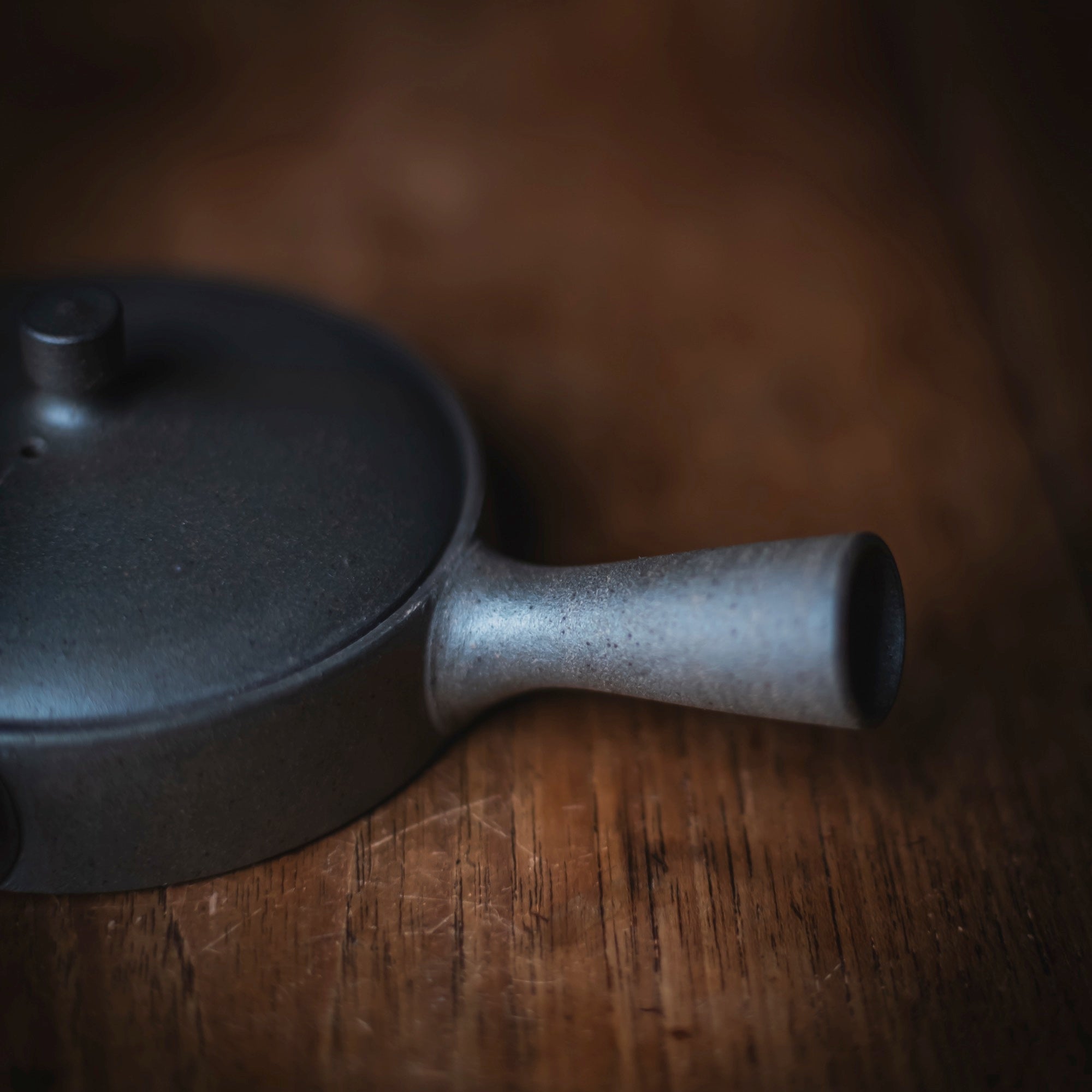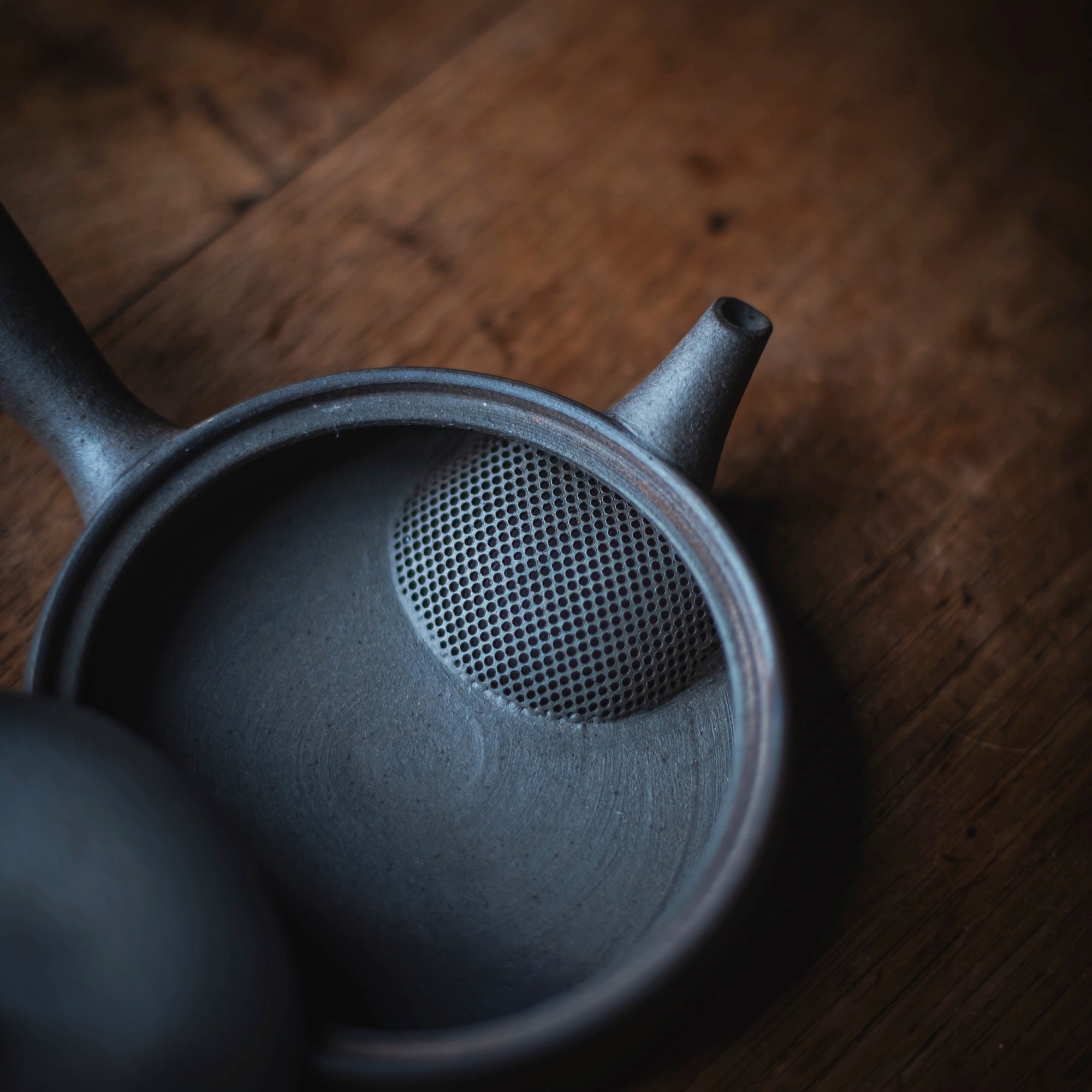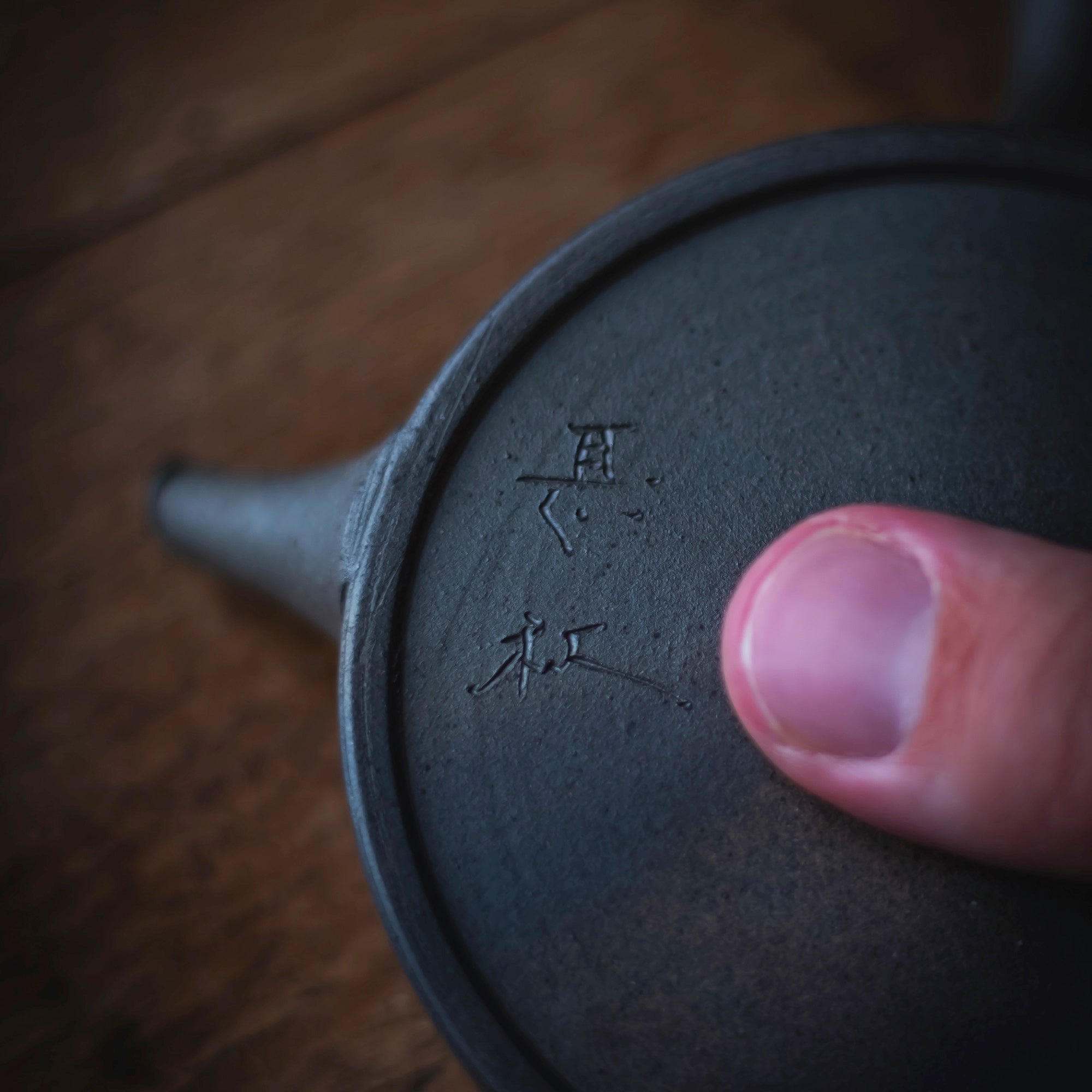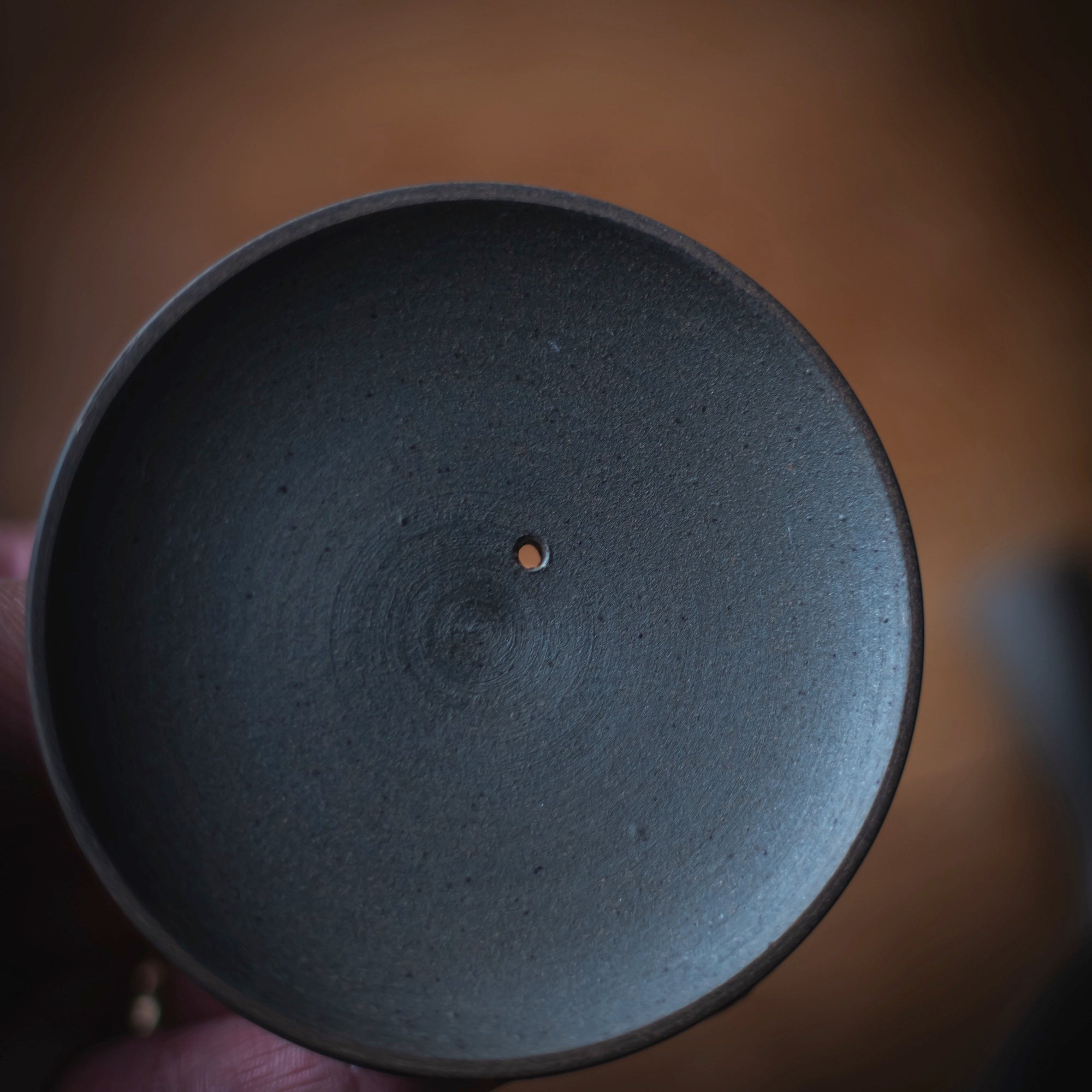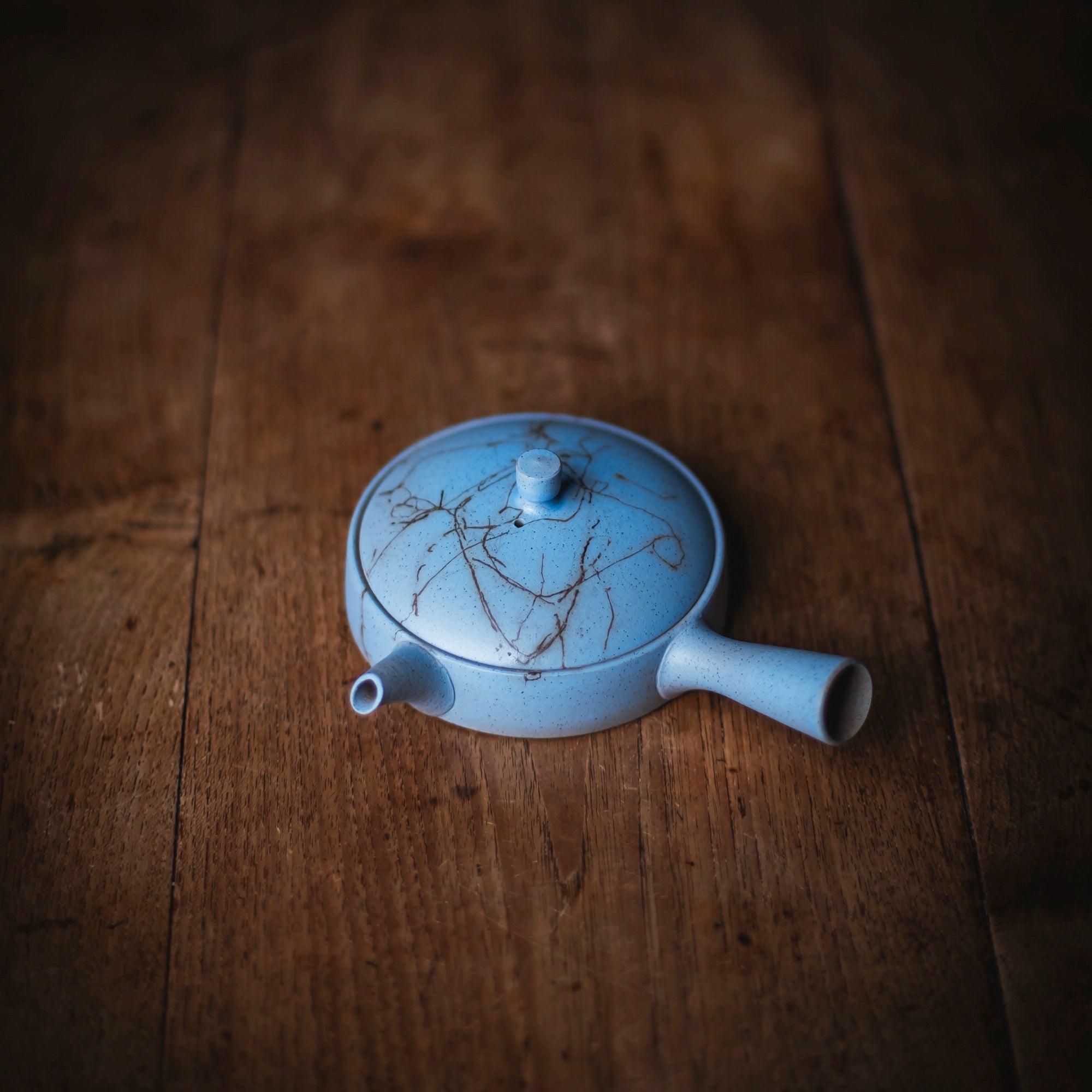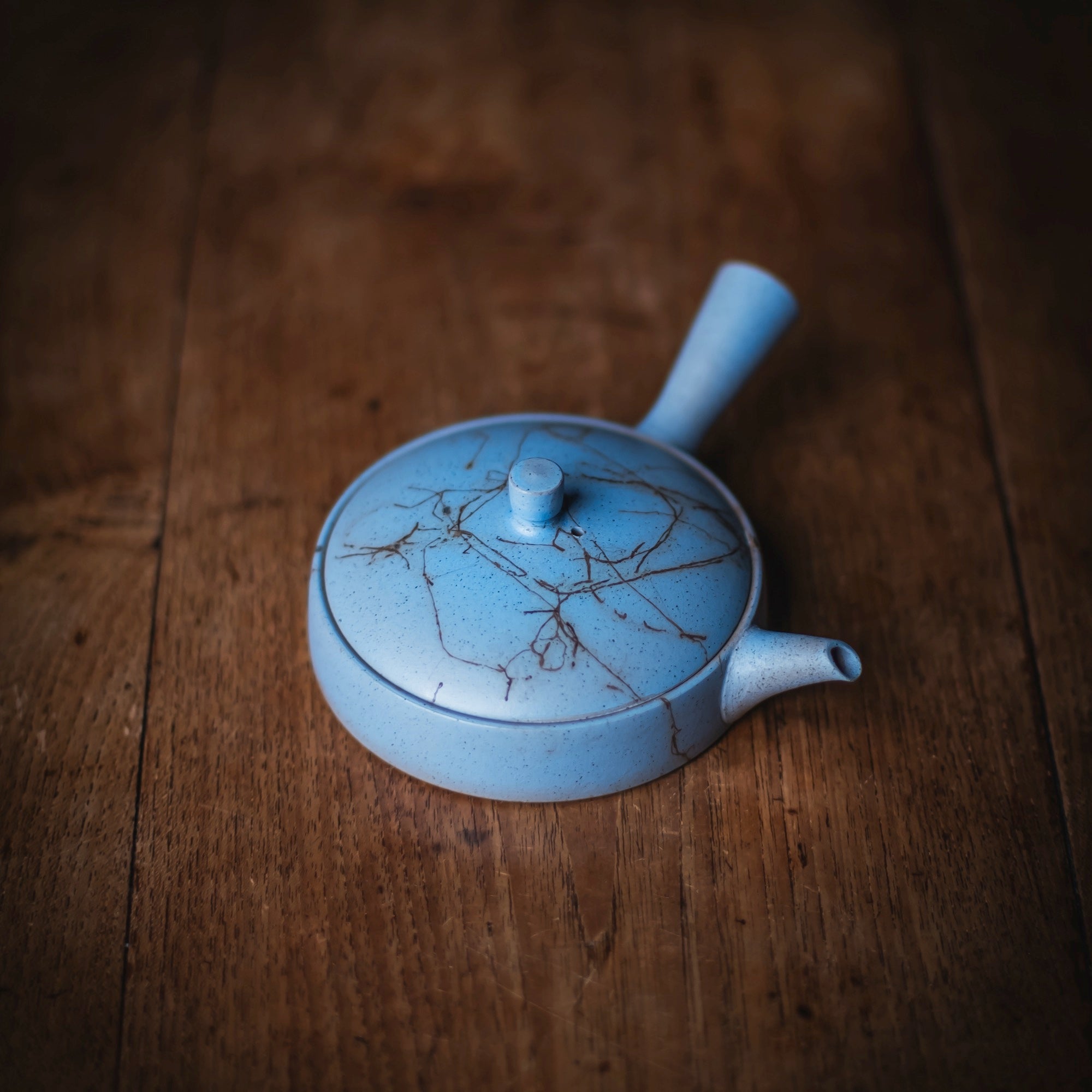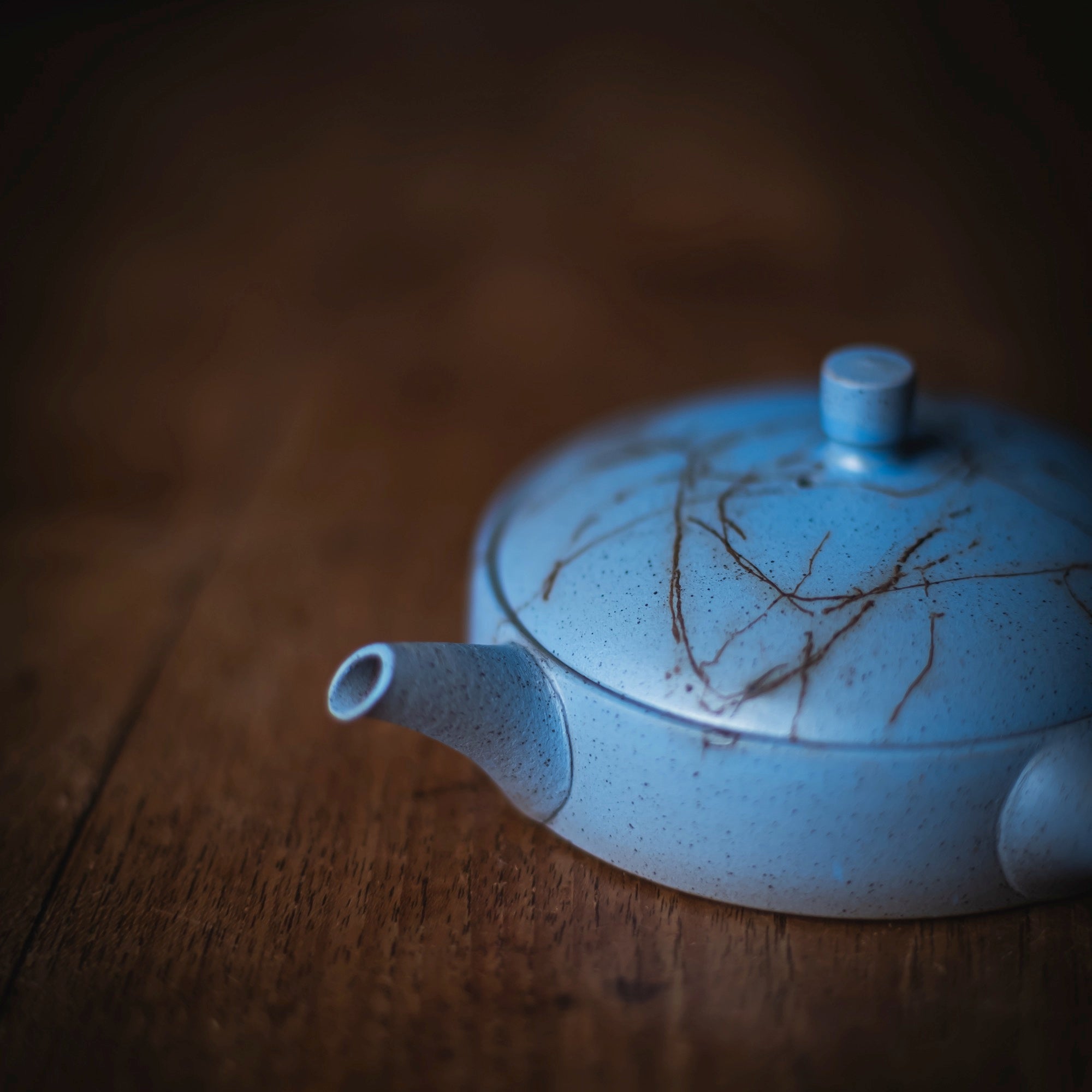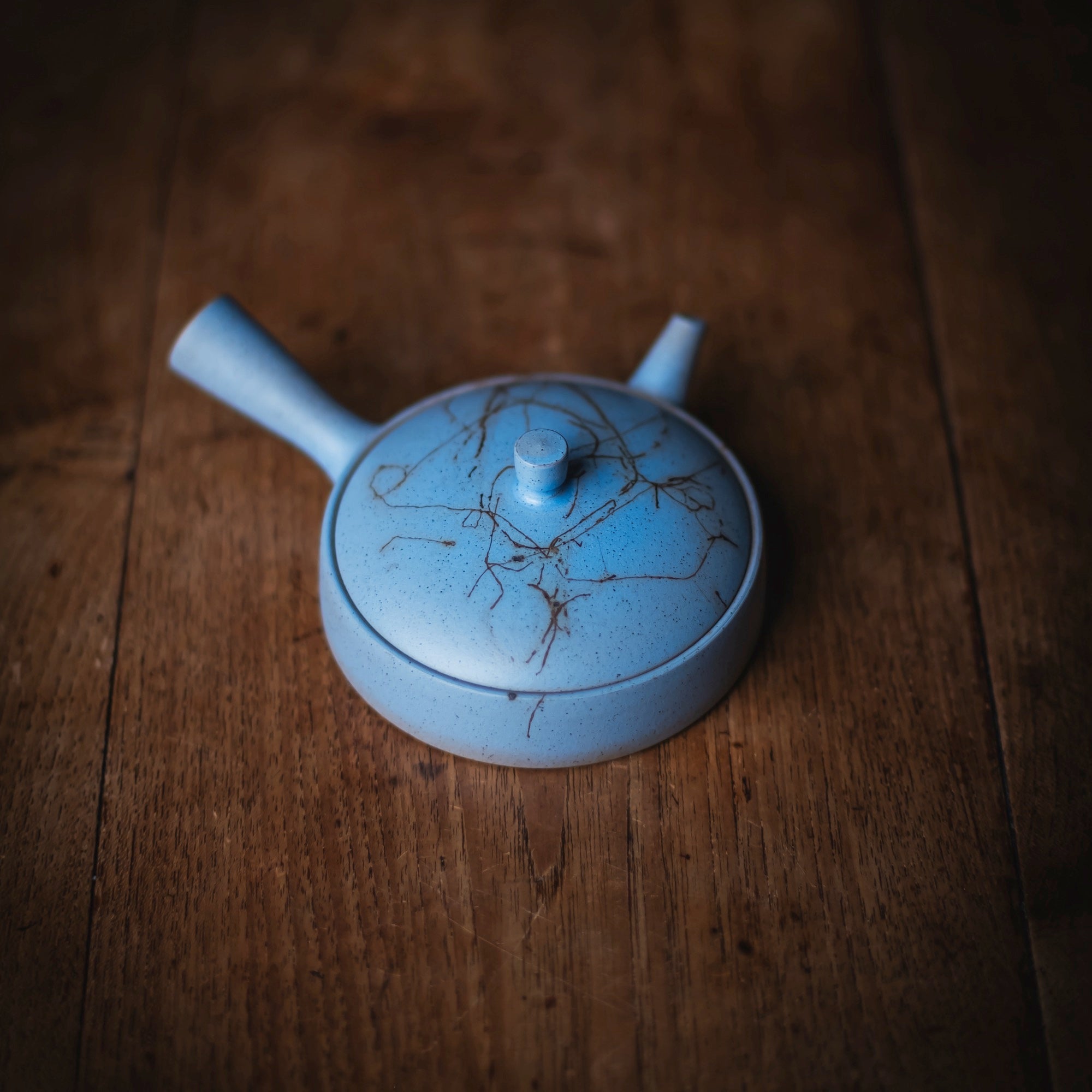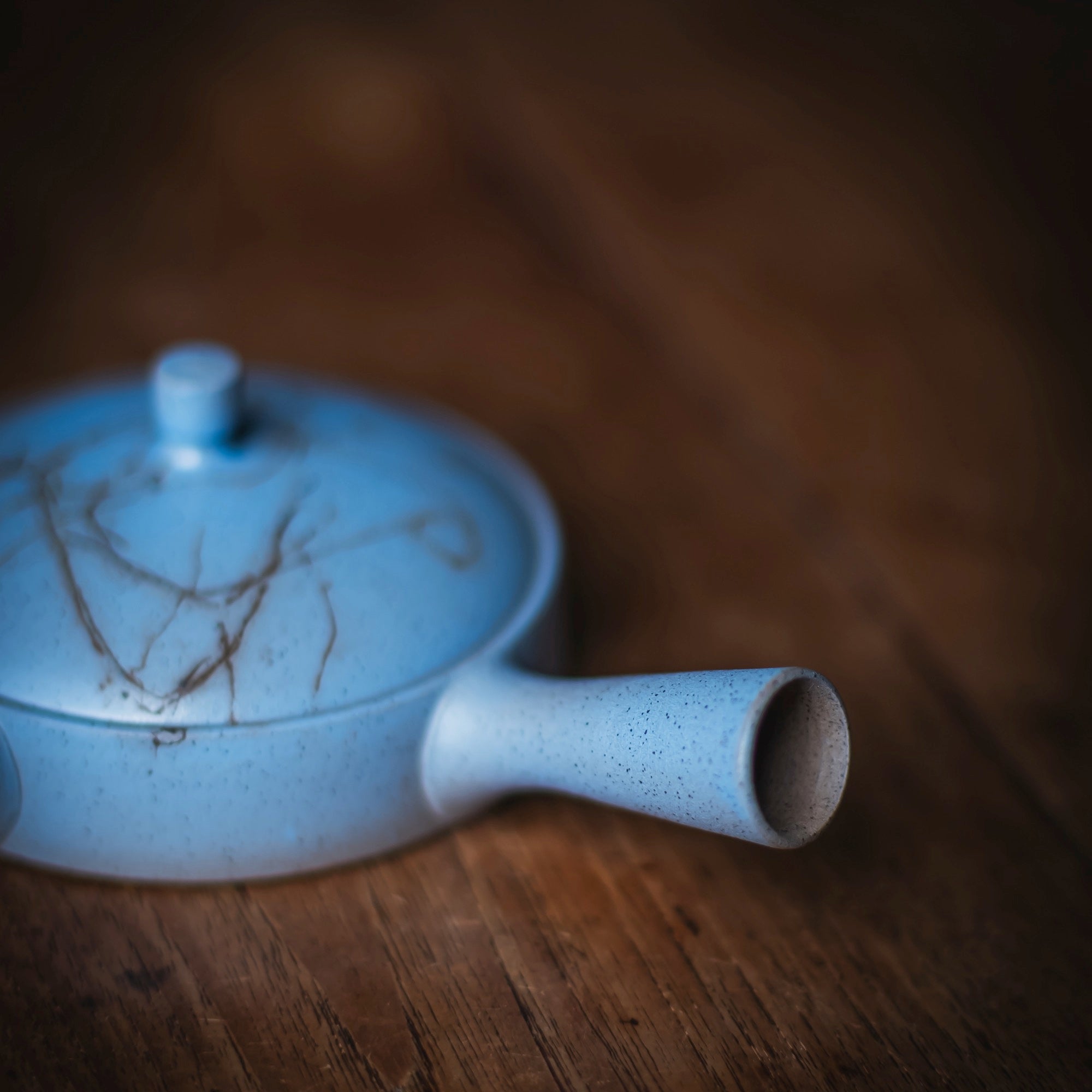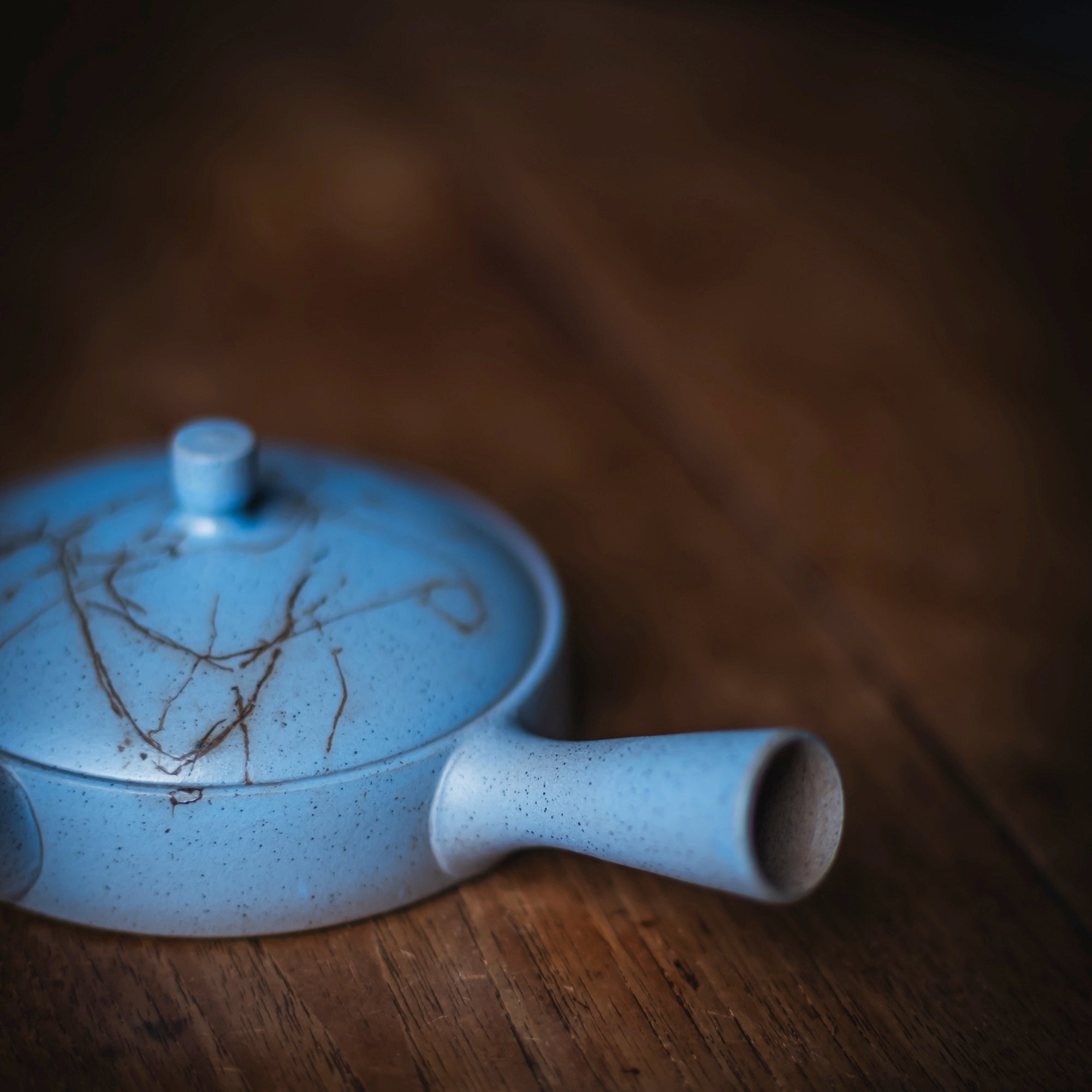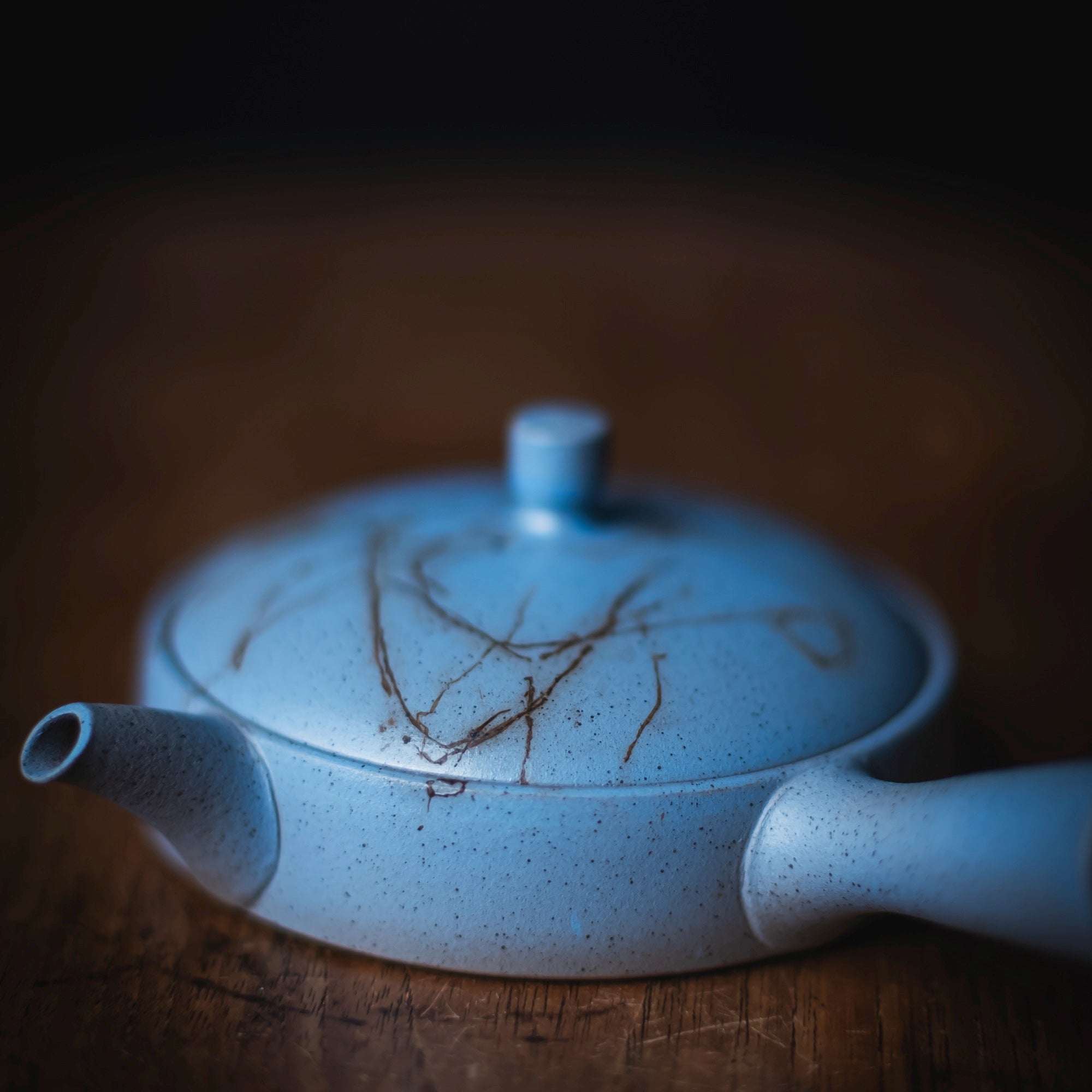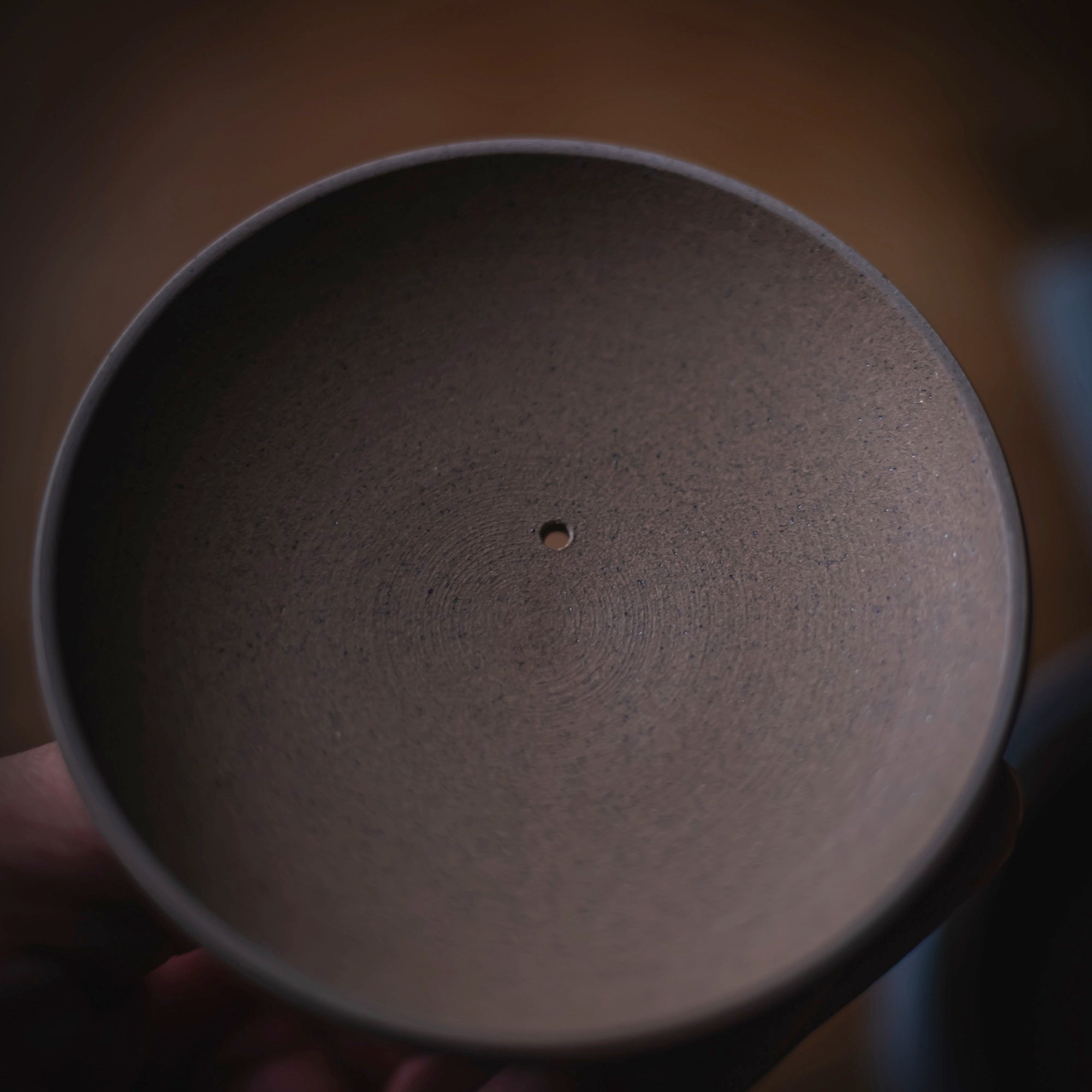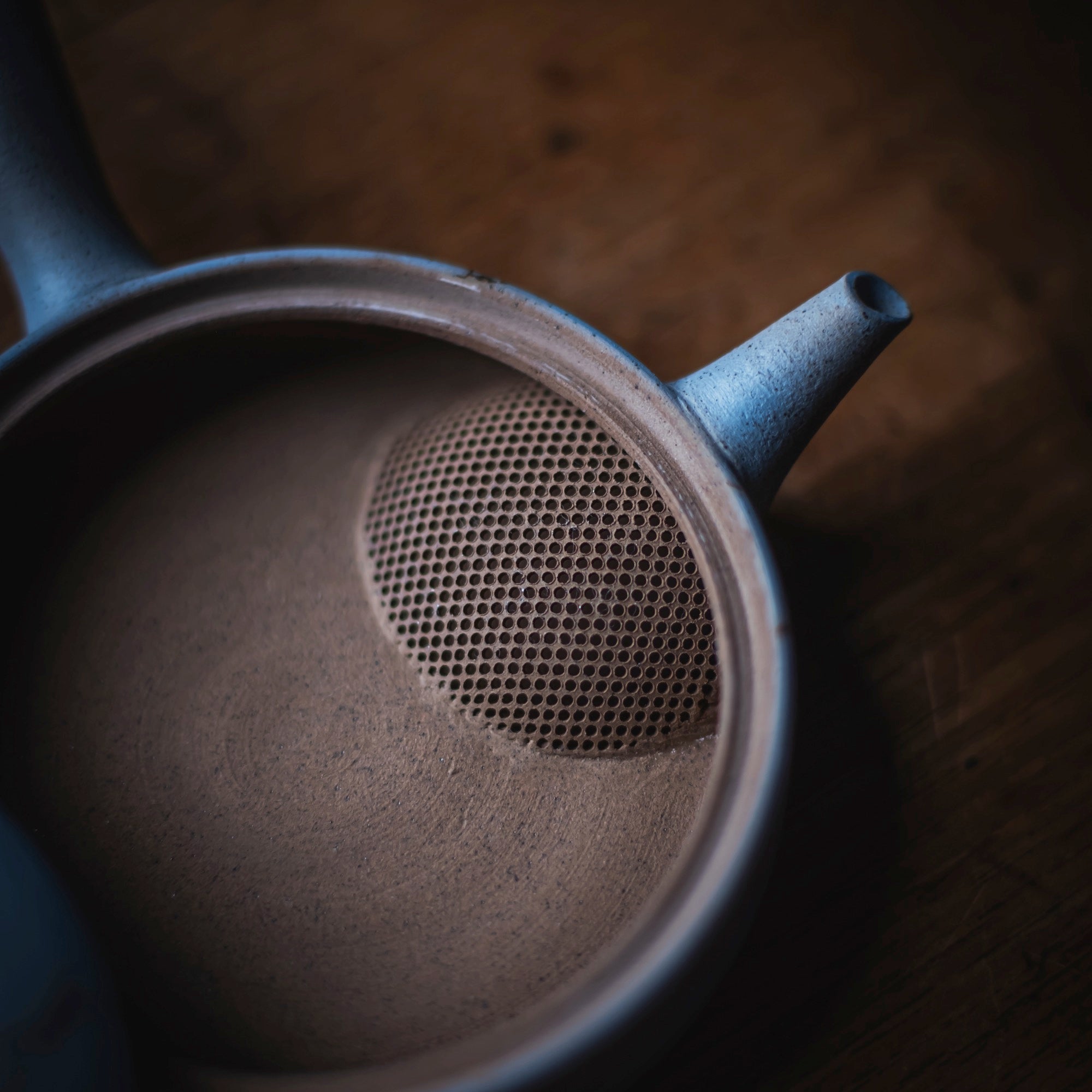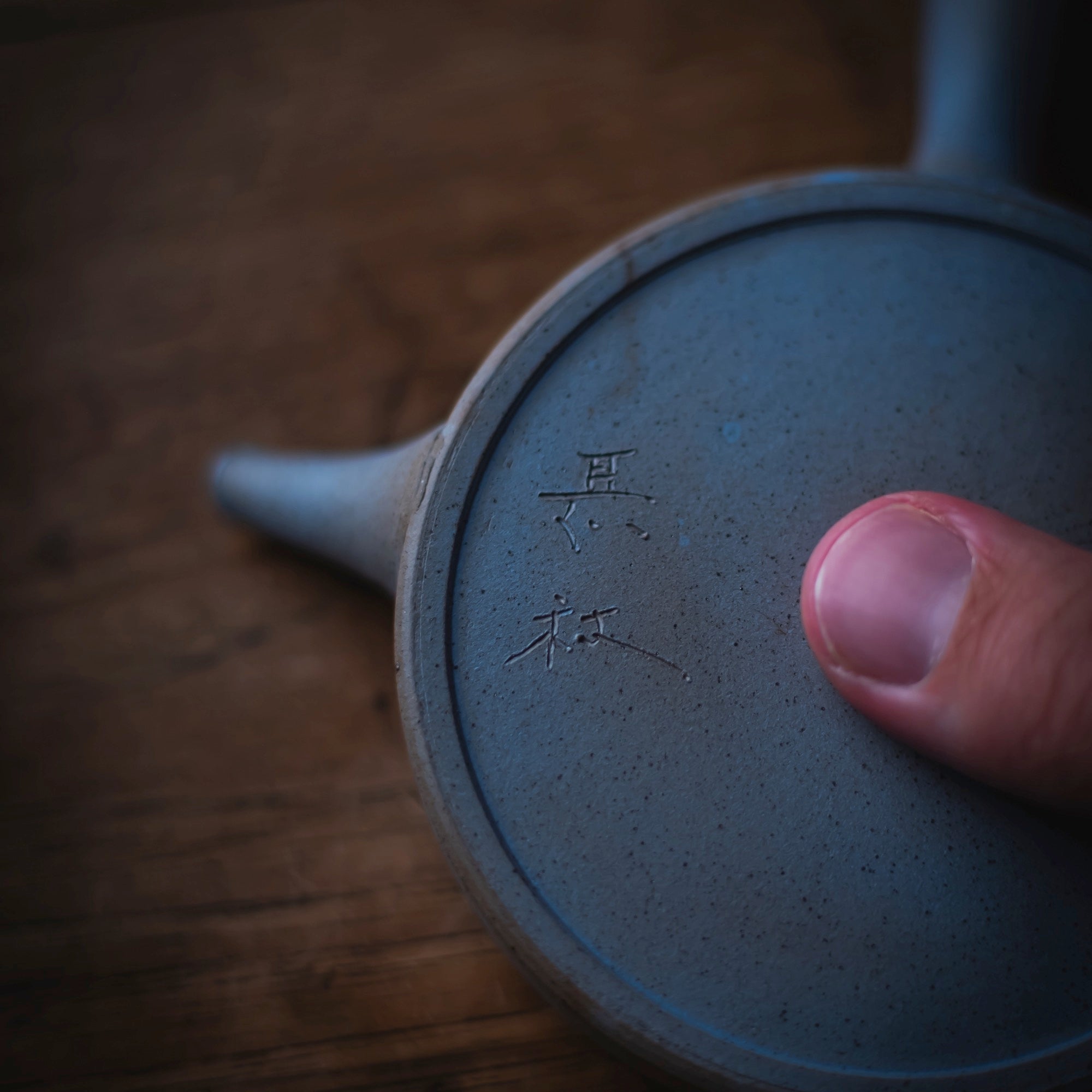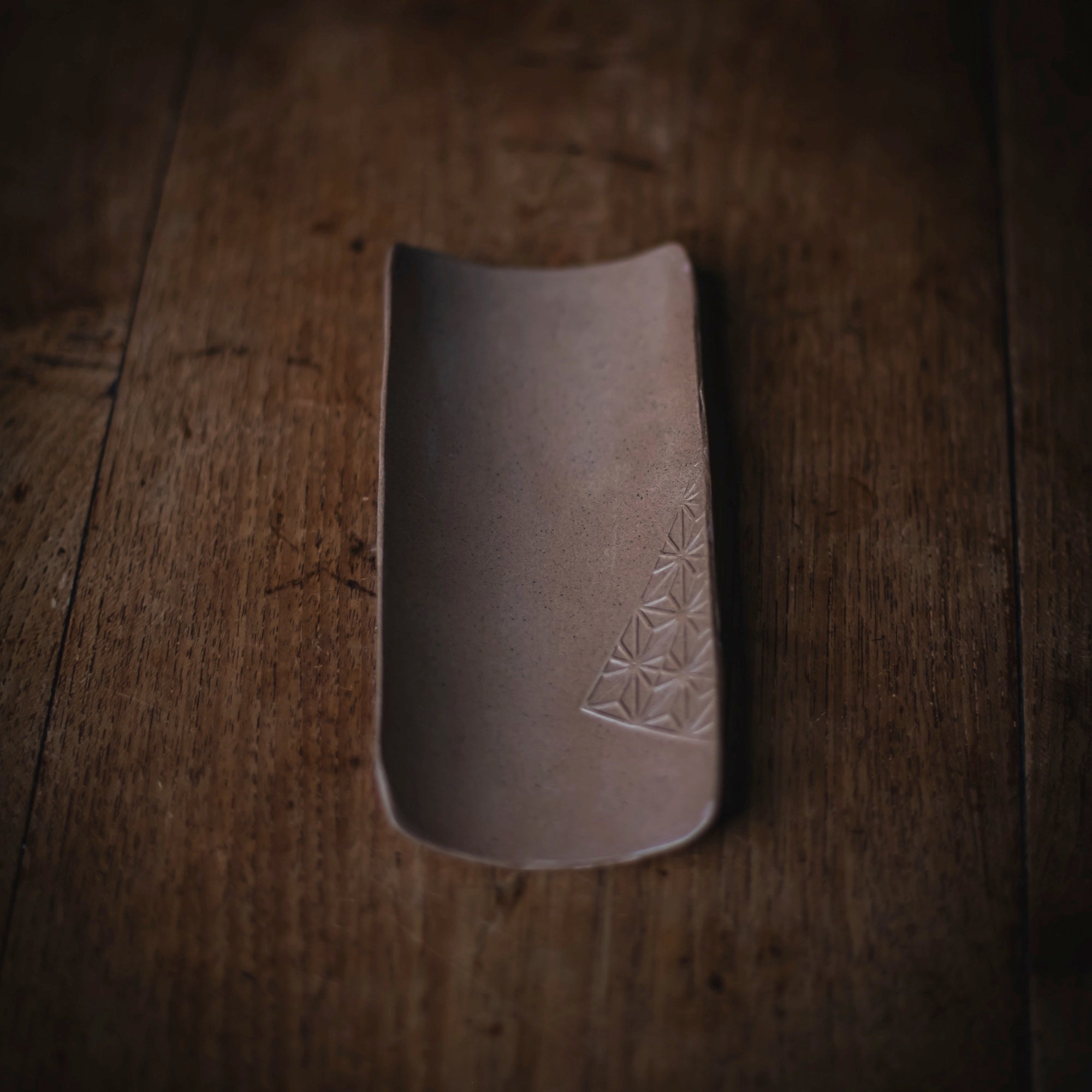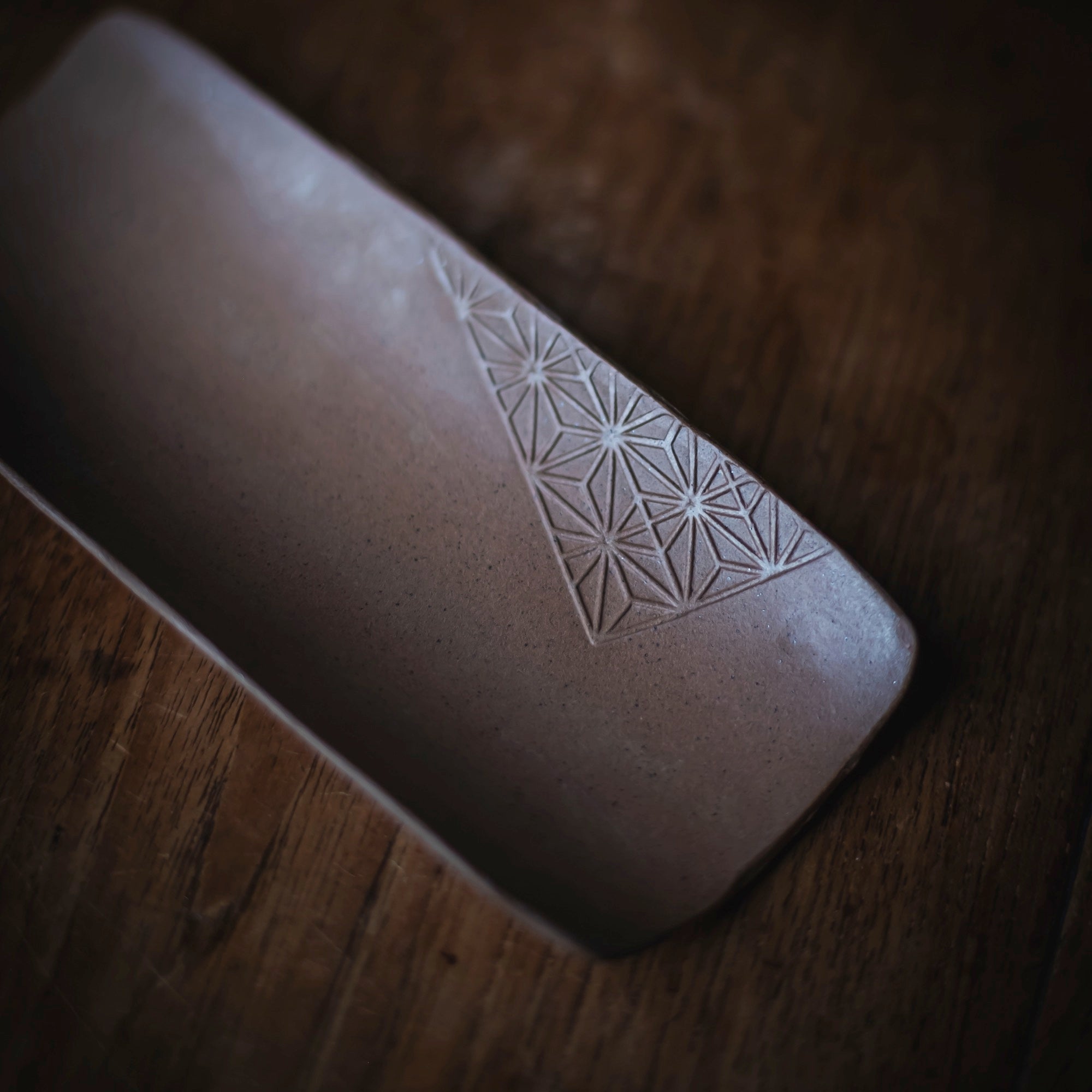
Hira Kyusu flat side-handle teapots on a glass tray with wooden surface and blurred background.
Indoors setting with storage boxes, tools, and plants near a window.

Seiji Ito

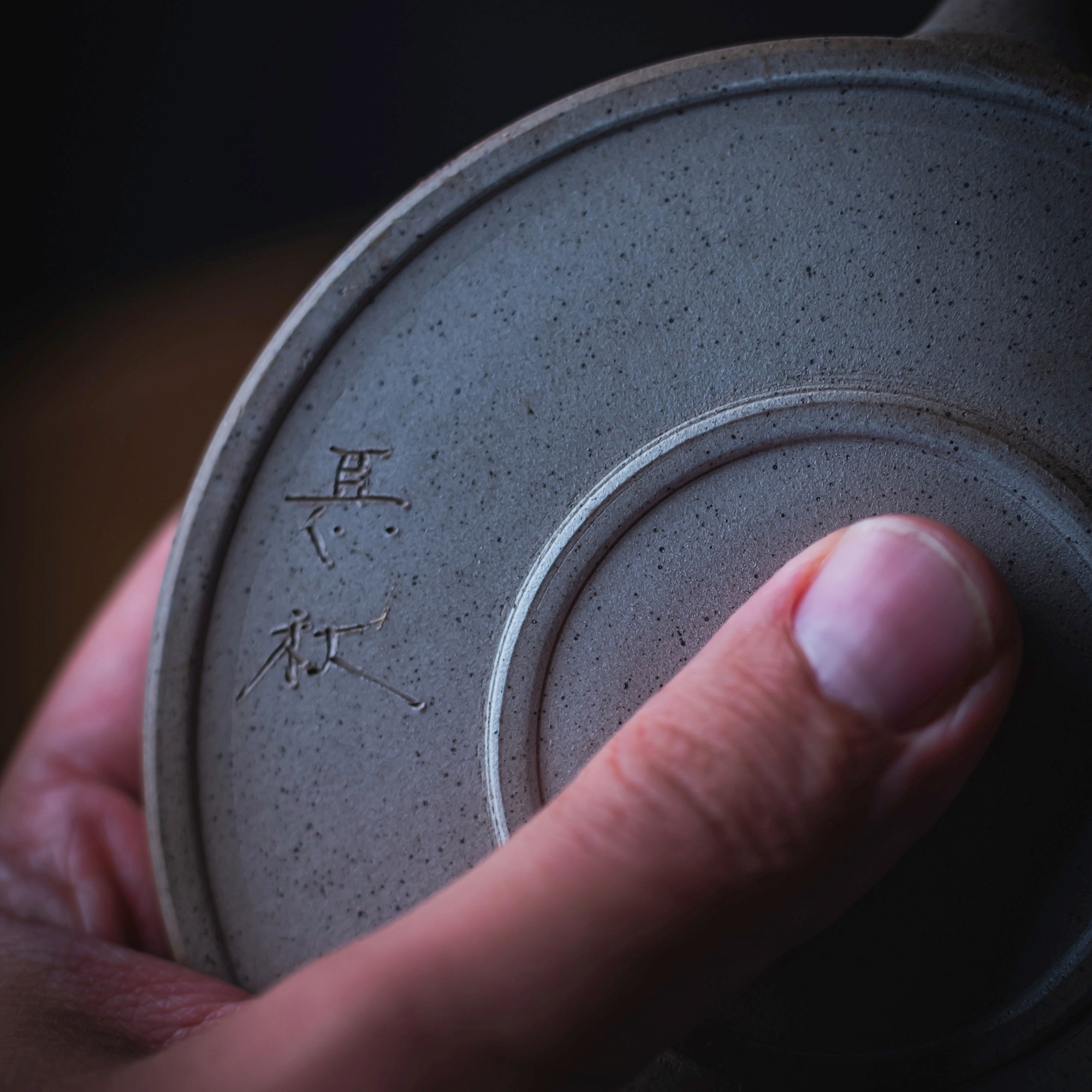
Seiji Ito, who works under the name Jinshu (甚秋), is a master of Tokoname teaware with more than fifty years at the wheel — renowned for his extra-flat kyusu and deep connection to the culture of tea.

About Seiji Ito (Tokoname, Japan)

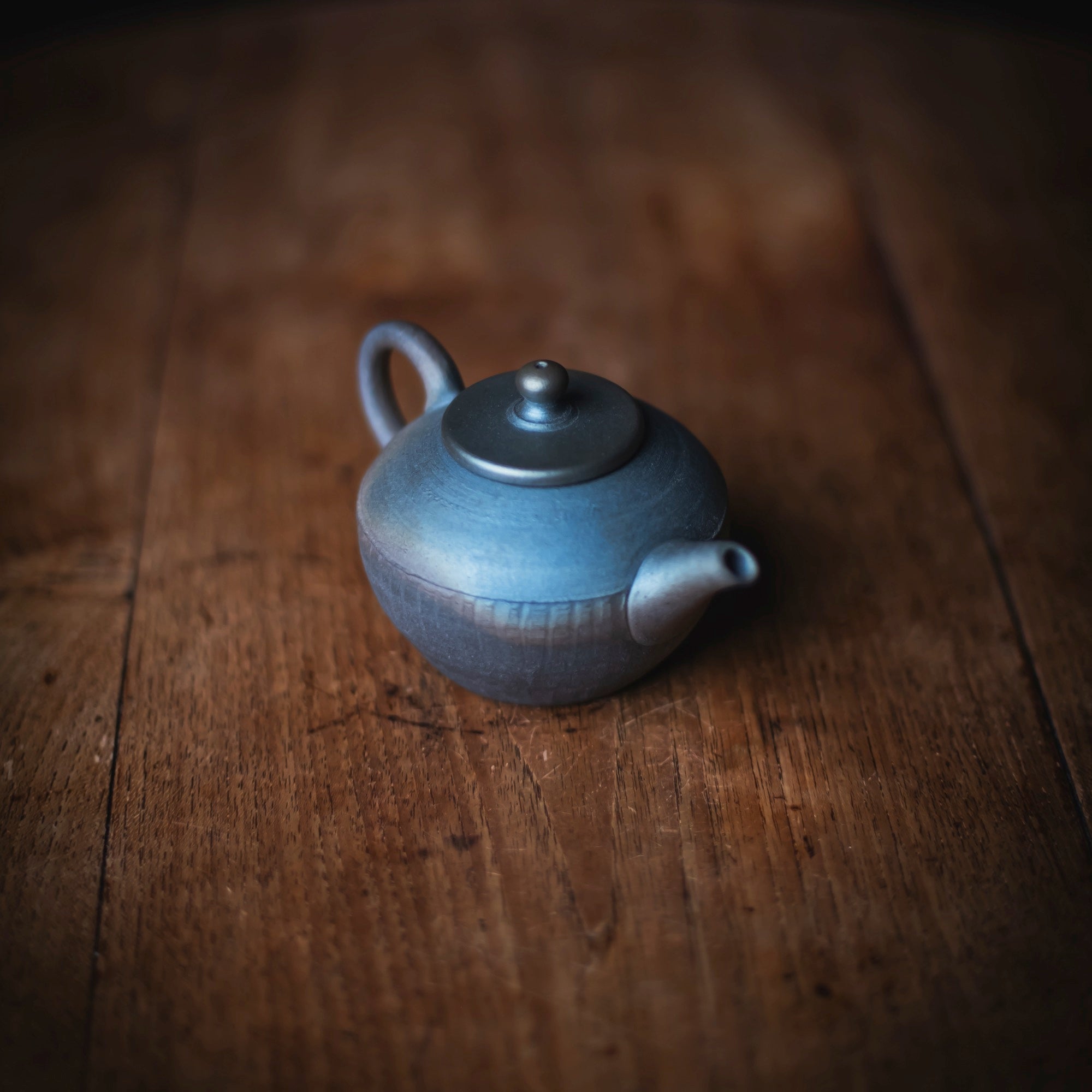
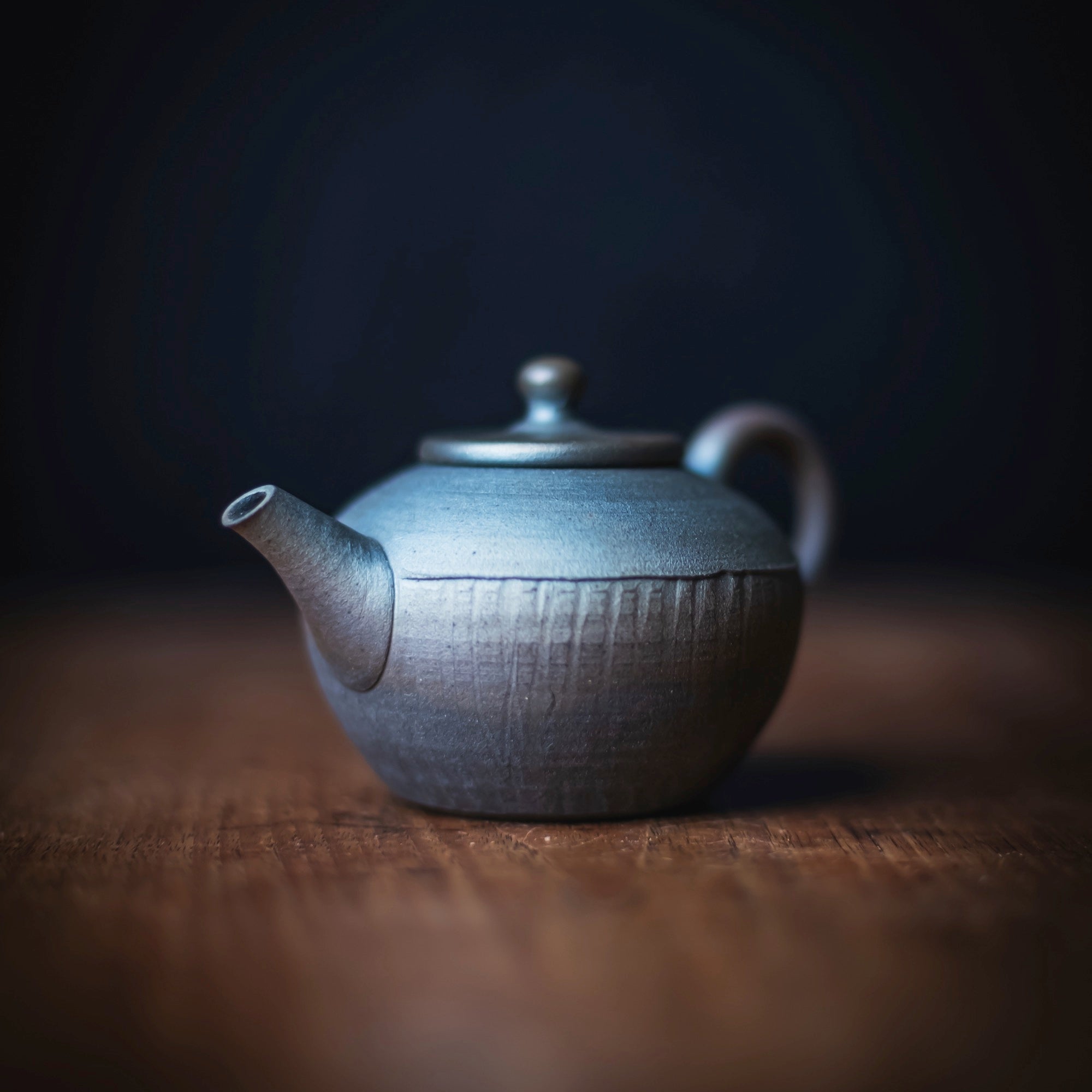
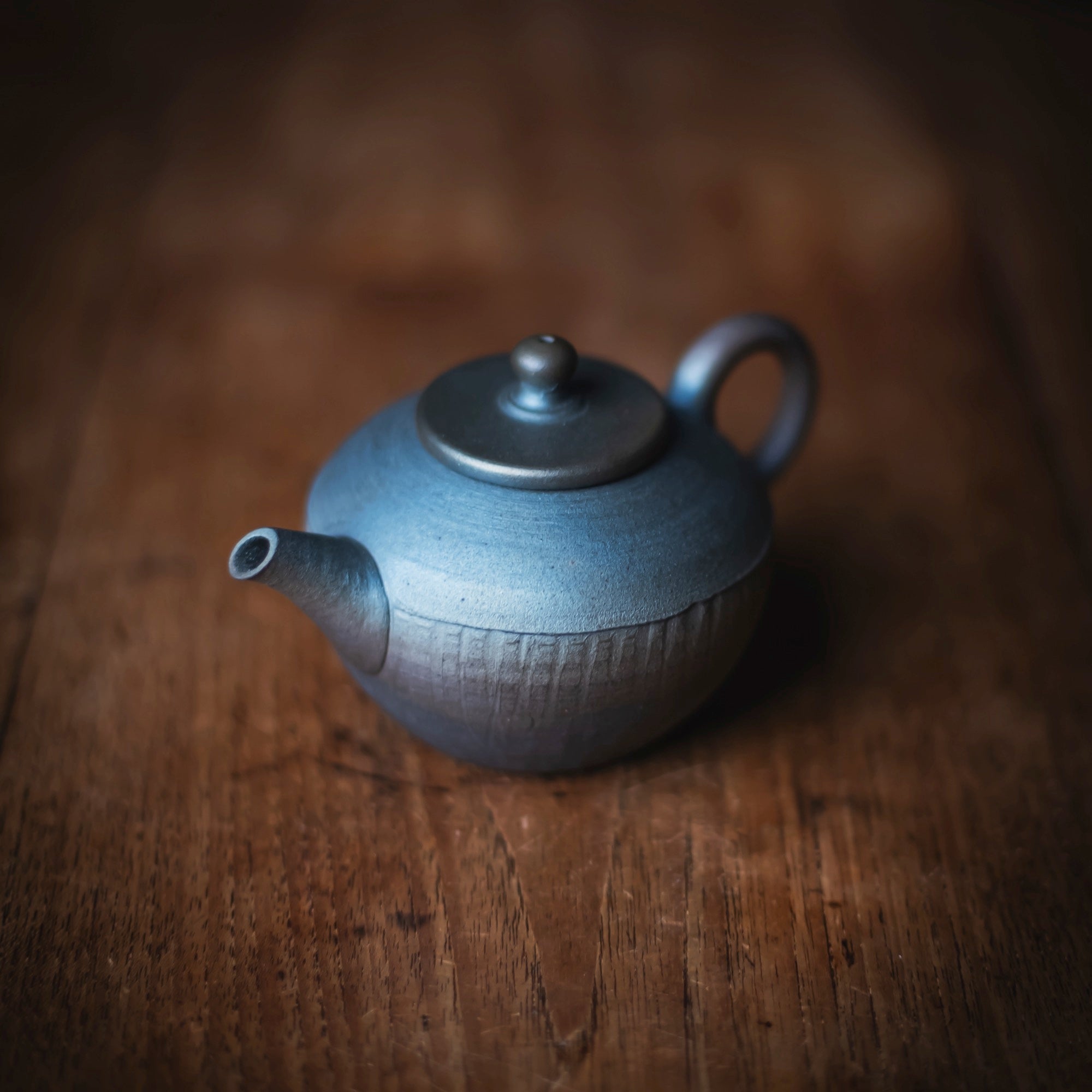
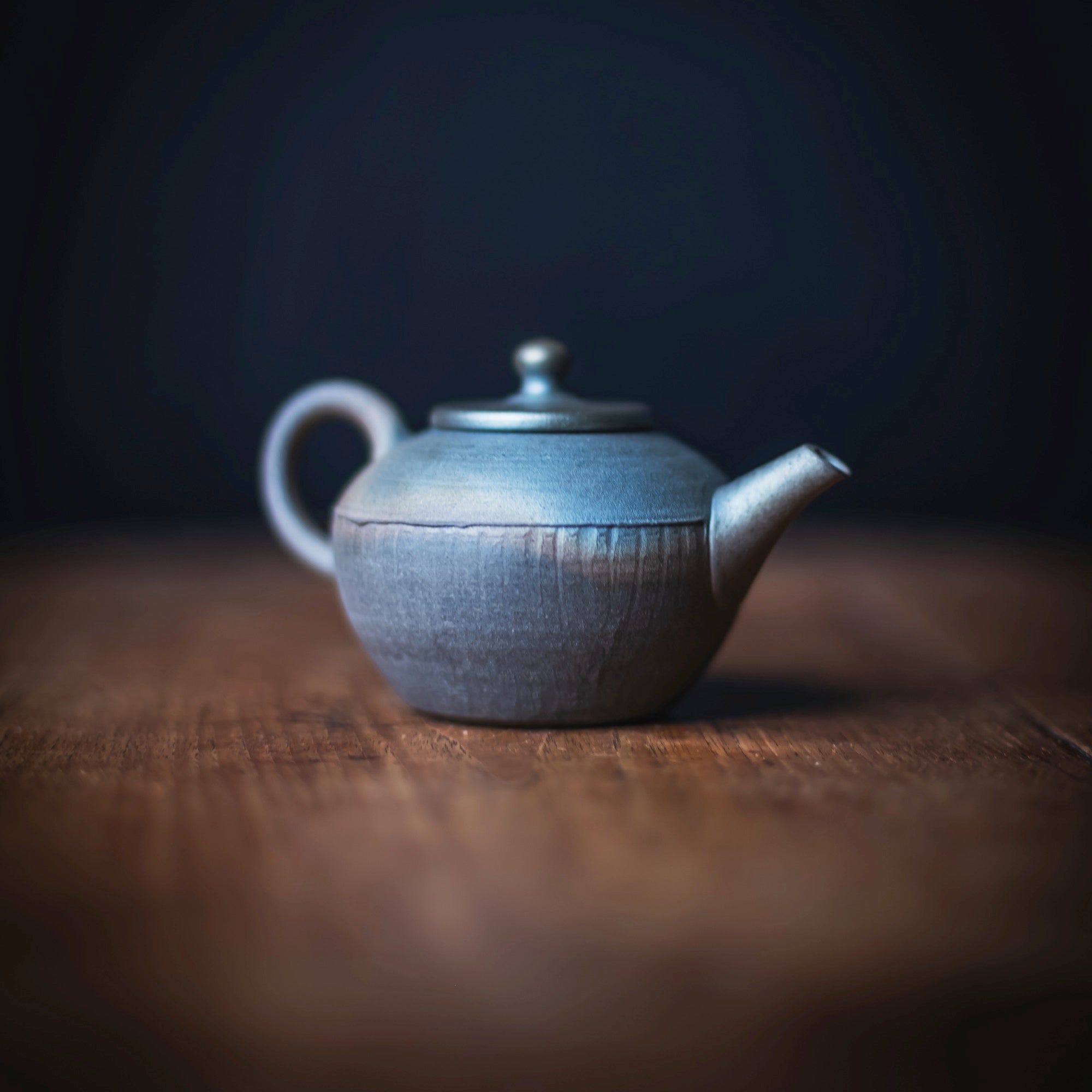
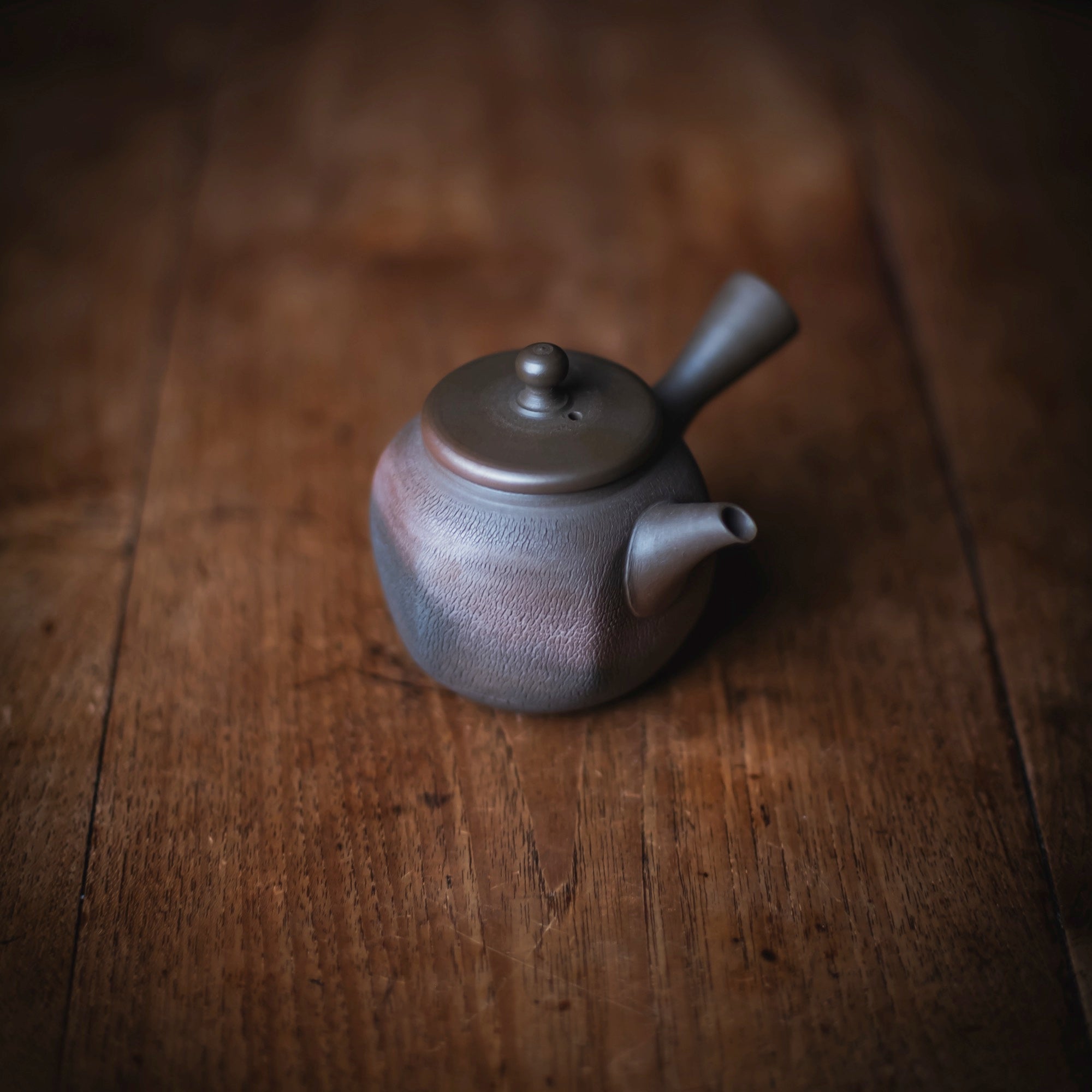
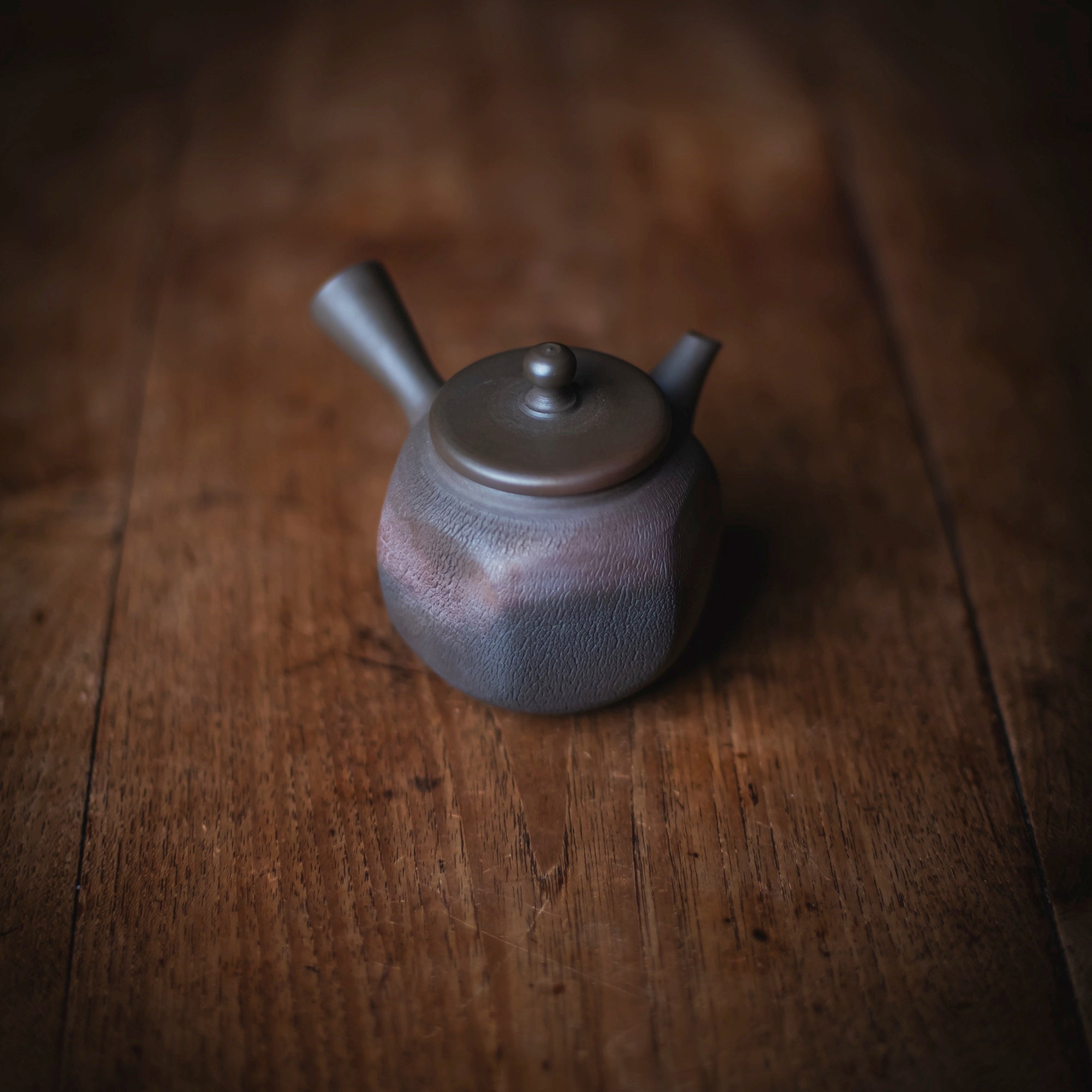
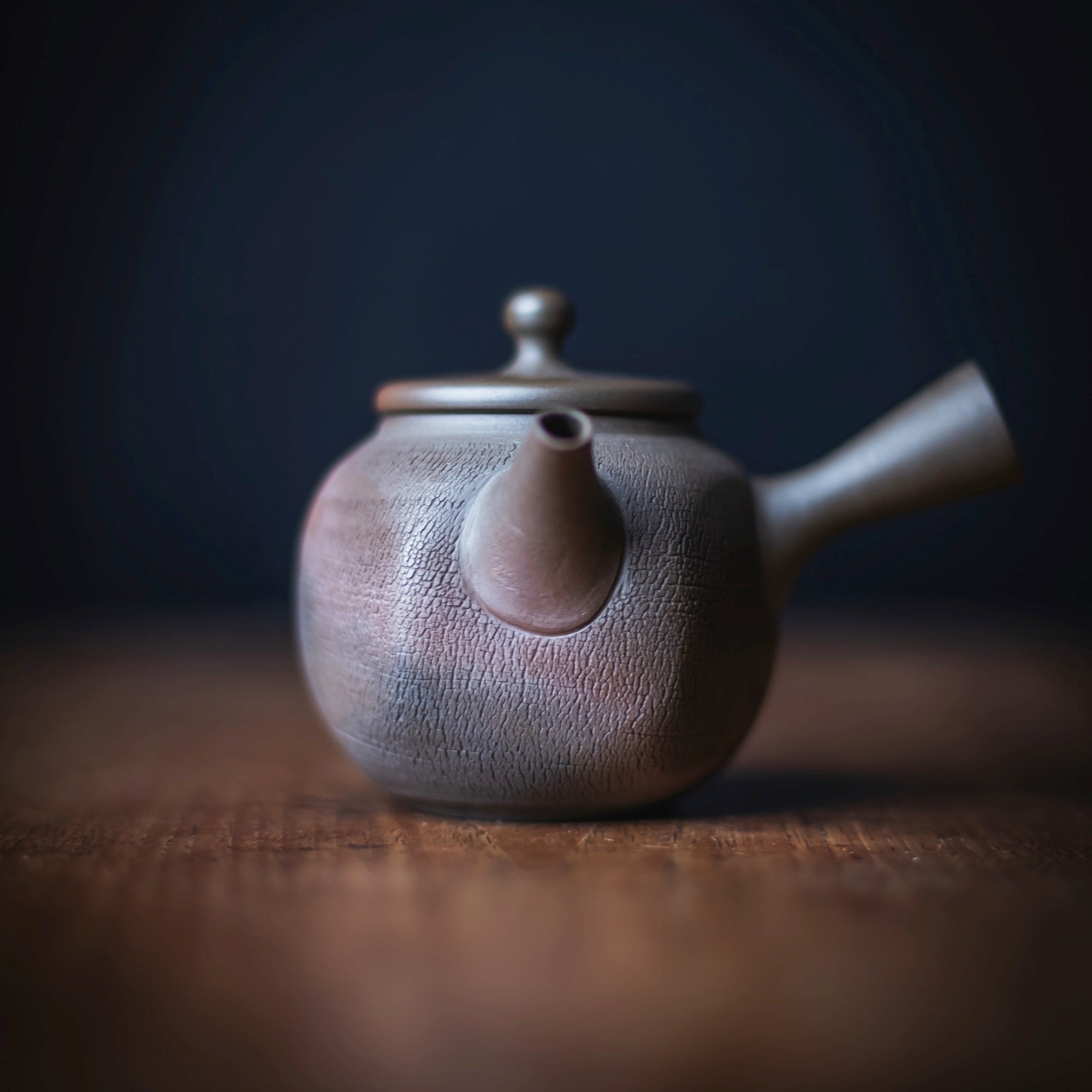
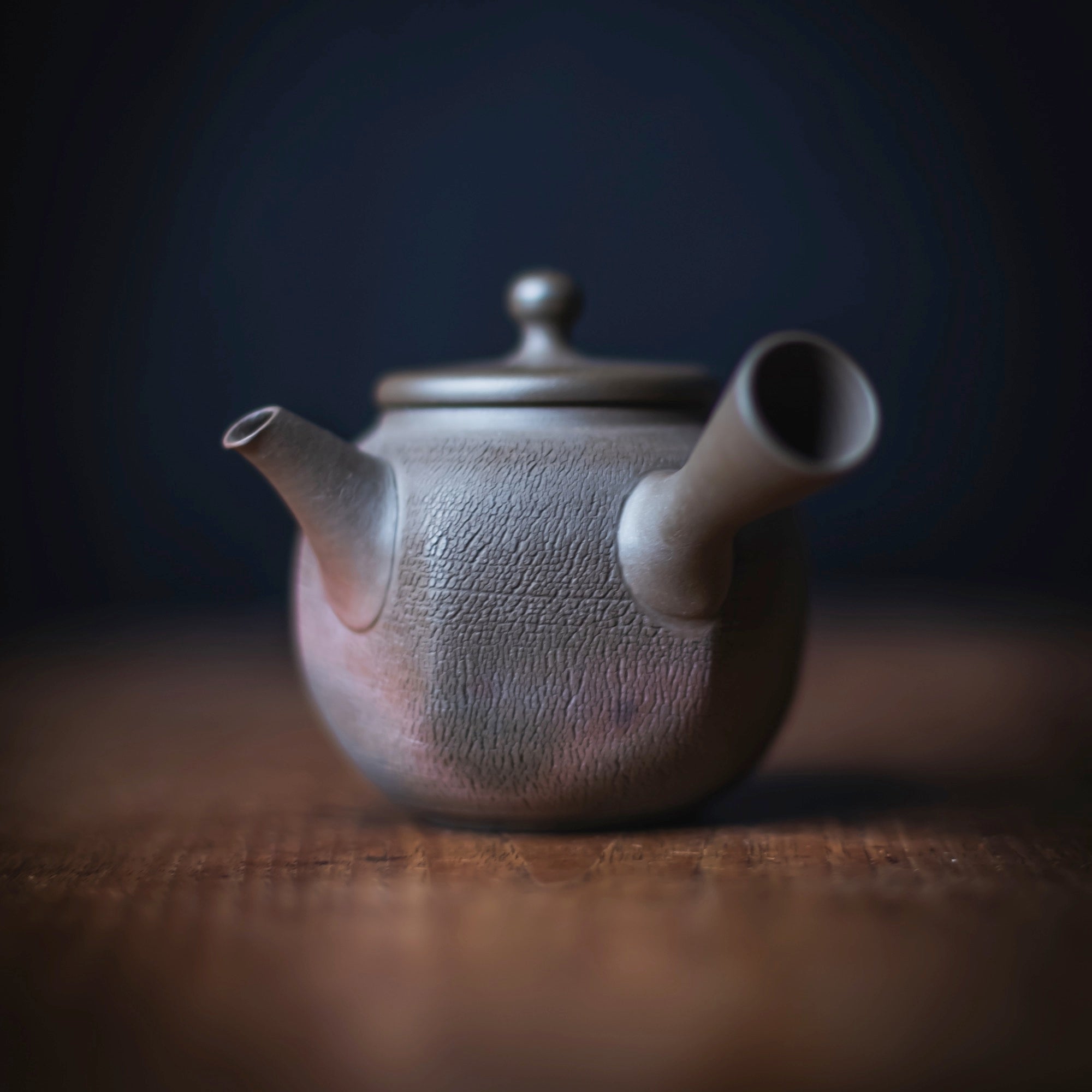
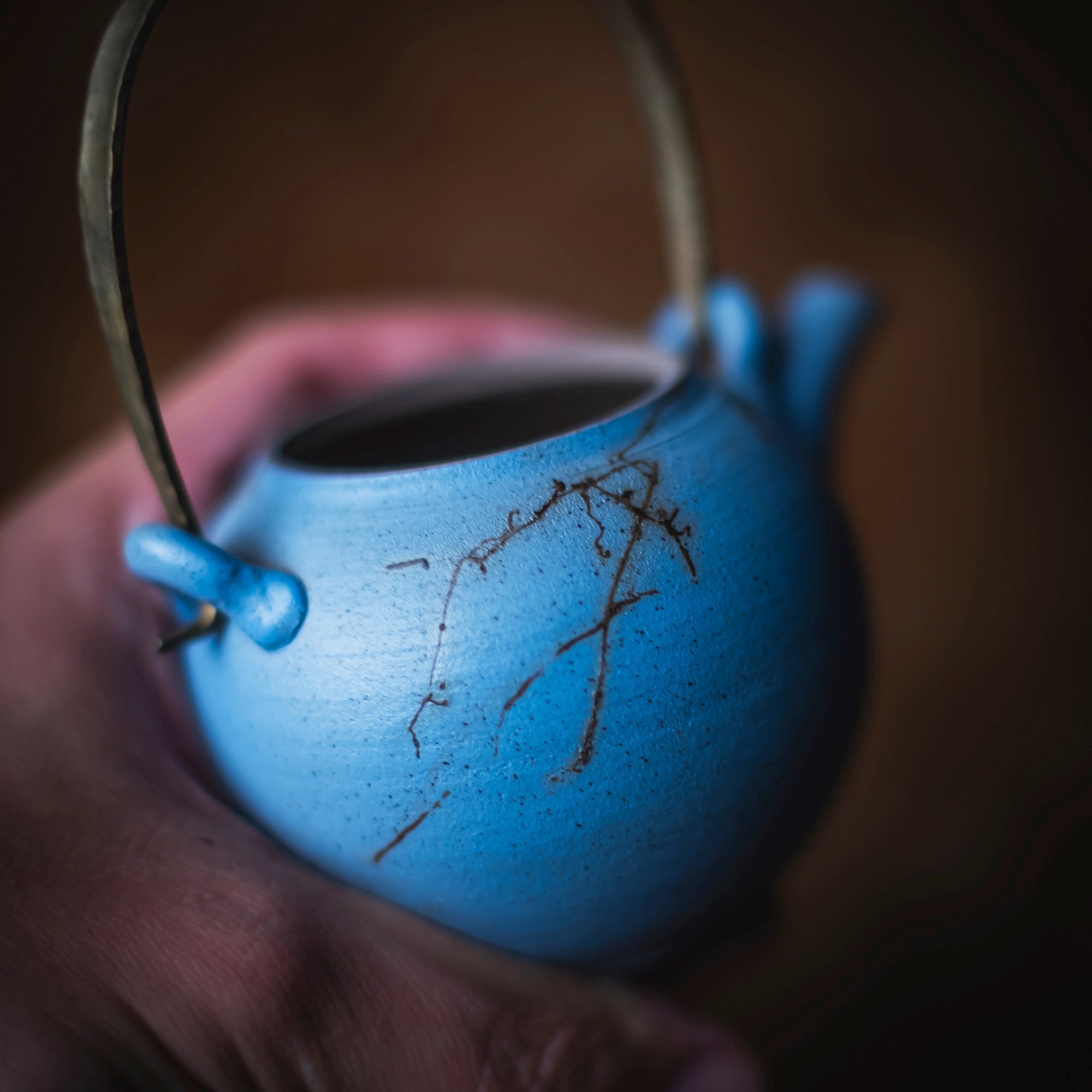
Jinshu's teapots reflect a mastery of form and function. Each piece is shaped with clarity and subtlety, often characterised by perfect balance, elegant spouts and carefully fitted lids. His subdued aesthetics reflect years of quiet refinement, drawing on the traditions of Tokoname while following his own sensibility. His most famous form is the extra-flat “gokuhira-gata” (極平型) kyusu — a low, wide teapot that lets the leaves spread for a fuller infusion, and for which he won the 41st Chosan Prize in 2012.
View of Seiji Ito's garden, seen from his tea room.

"We sit together in his simple tea room, with a view onto a small, meticulously arranged garden — gravel, stone, a single maple. Every detail reflects attention, yet nothing feels forced. The tea, a Taiwanese oolong, is both floral and deep."

My impressions when visiting Seiji Ito in April 2023.

Ceramicist Seiji Ito pouring tea from a silver kettle into a teapot on a wooden table in his owm tea room.

Short Bio

  • Born 1949 in Tokoname City, Aichi Prefecture; entered pottery at twenty and has worked under the name Jinshu (甚秋) since 1970 — over half a century of teapot-making.
  • Second-generation head of Jinshu Toen (甚秋陶苑), the workshop founded in 1955 by his father, Ito Minoru; Seiji refocused it from teacups onto kyusu.
  • A Certified Traditional Craftsman (伝統工芸士) of Tokoname ware — self-taught, and so unbound by convention.
  • Best known for his extra-flat “gokuhira-gata” (極平型) kyusu, whose low, wide body lets the leaves spread for fuller extraction; this form won the 41st Chosan Prize at the Chosan Prize Tokoname Ceramic Art Exhibition (2012).
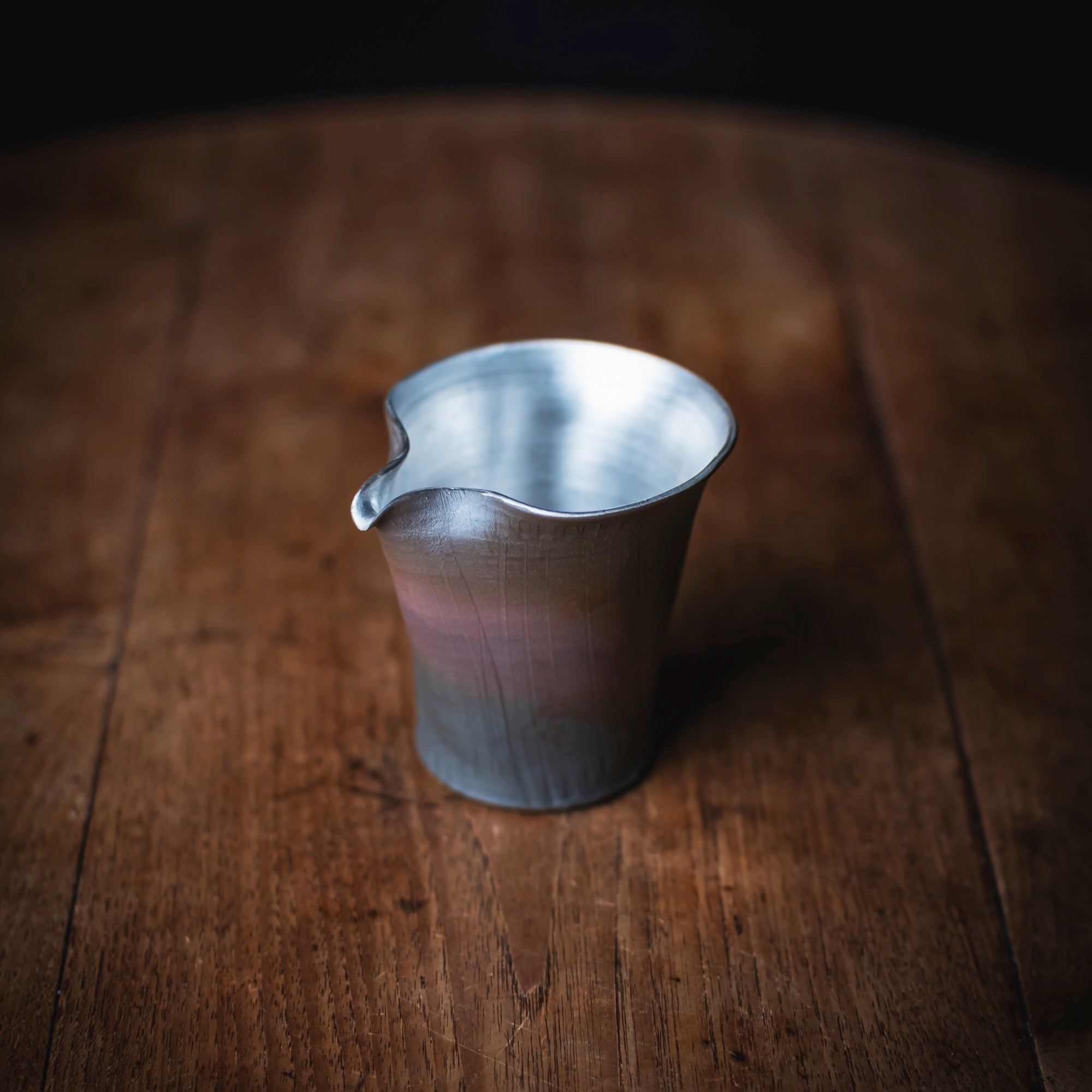
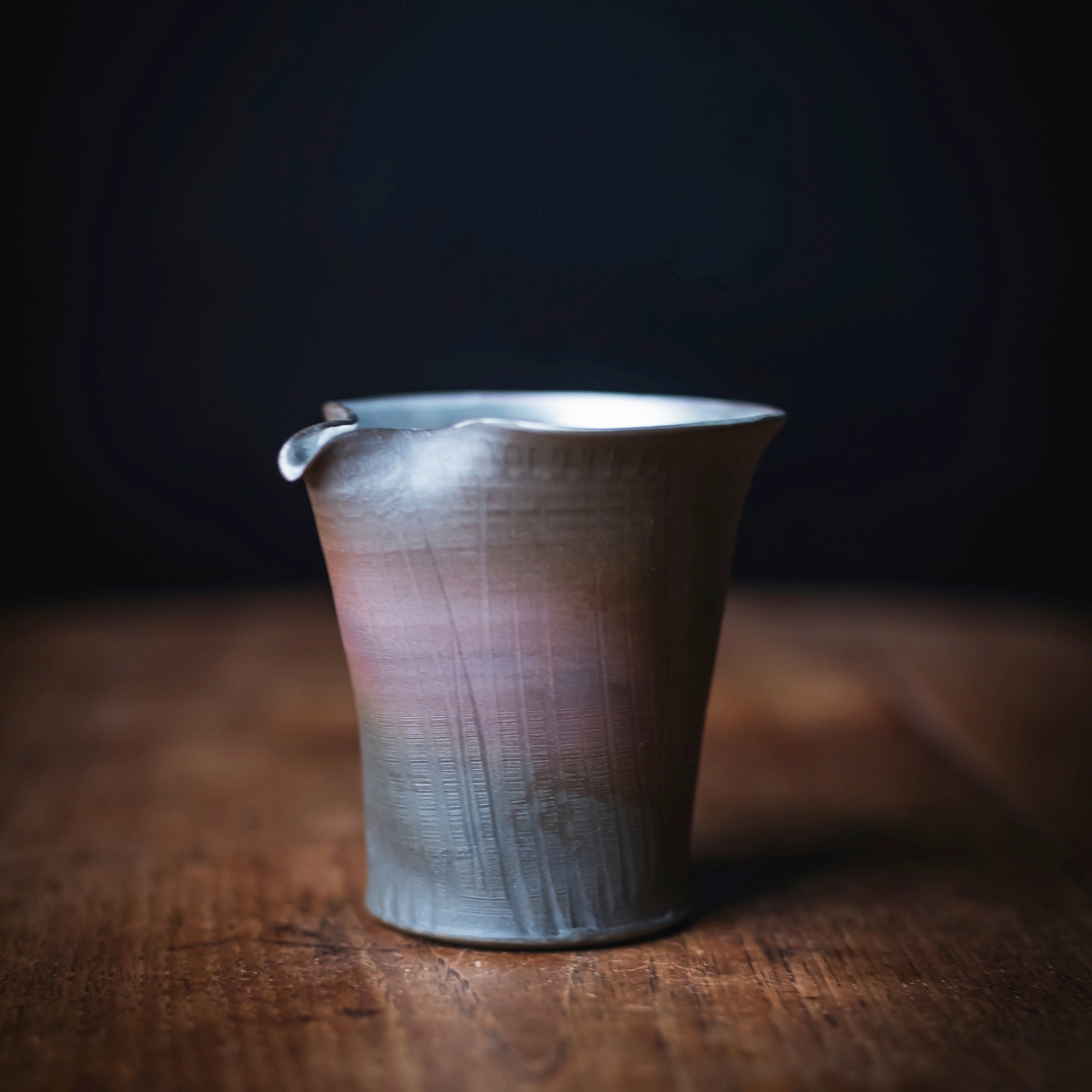
  • Works in unglazed Tokoname red clay (shudei), with white and black clays, decorated by signature techniques — mogake (藻掛け, seaweed firing-marks), chara (a matte slip-glaze), and local oyster-shell powder.
  • Exhibited and stocked widely in Japan (Takashimaya, HULS Gallery) and well regarded in China and Taiwan, where he has taken part in tea events.
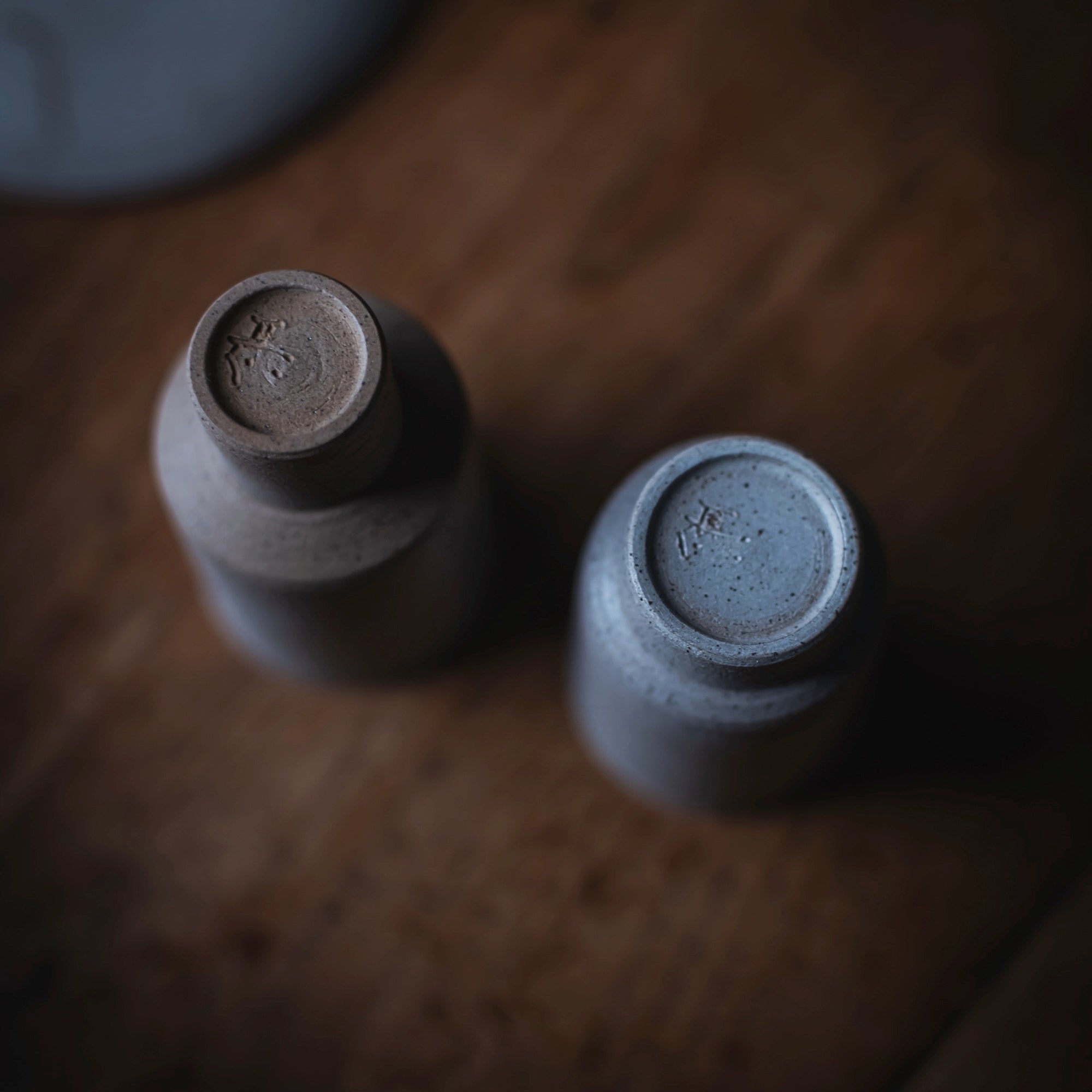
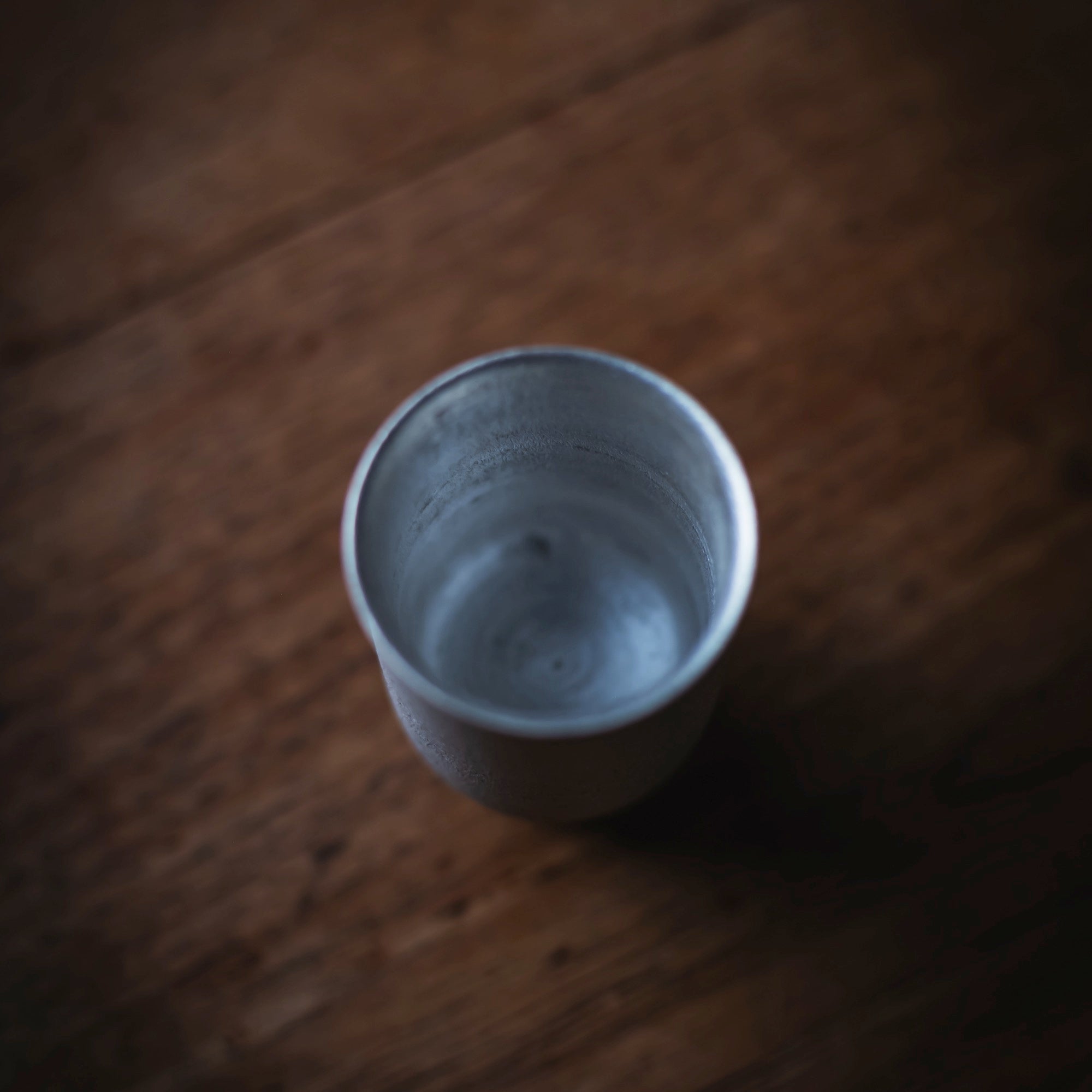
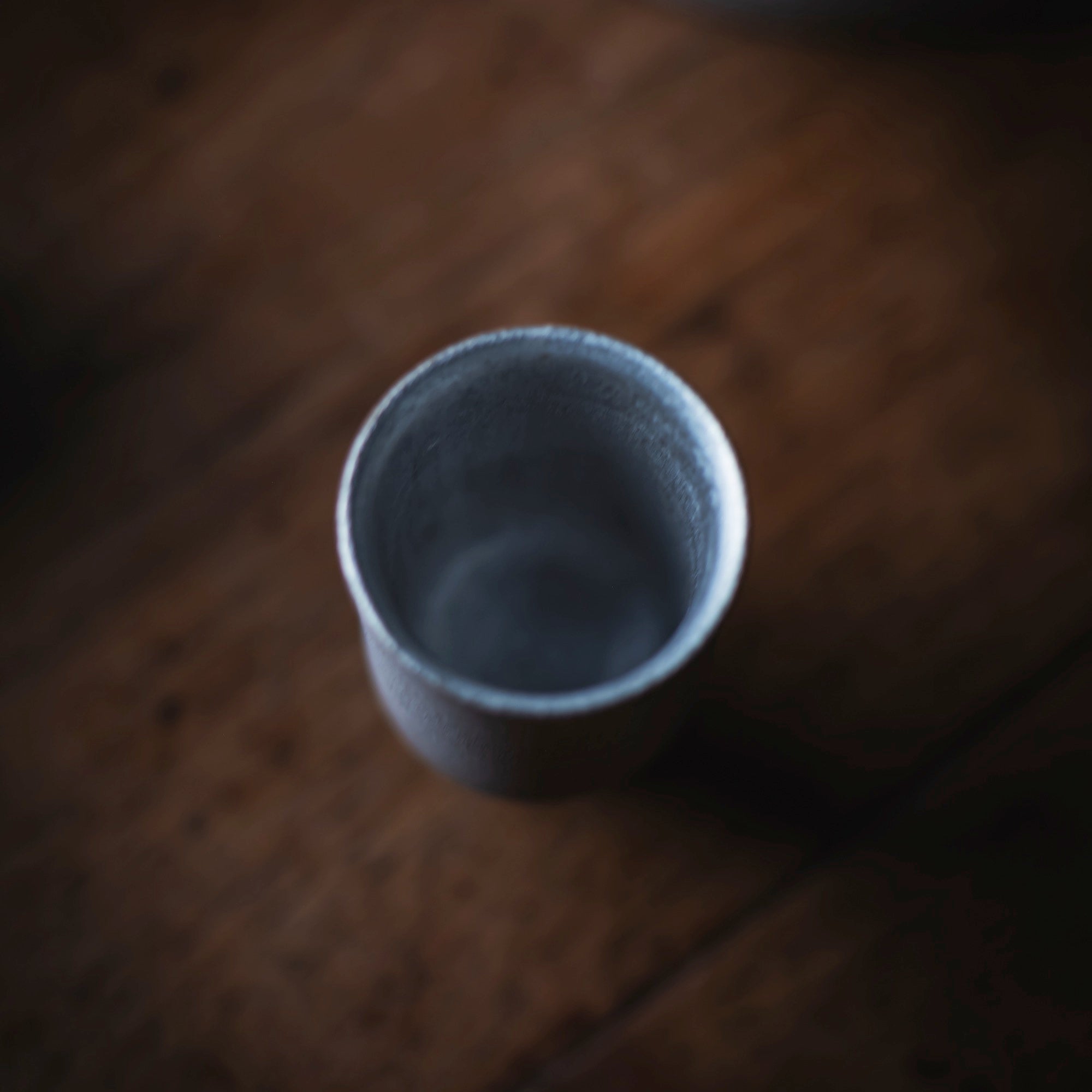
Unglazed Tokoname red clay (shudei), sometimes blended with white or black clays, all wheel-thrown. Most pieces are fired in traditional oxidation, while some are partly reduced and show fine yakishime effects. He decorates with signature Tokoname techniques — mogake (藻掛け, seaweed firing-marks), chara (a matte slip between glaze and clay), and powdered local oyster shell — and several of his works reflect influences from Taiwanese teaware aesthetics.
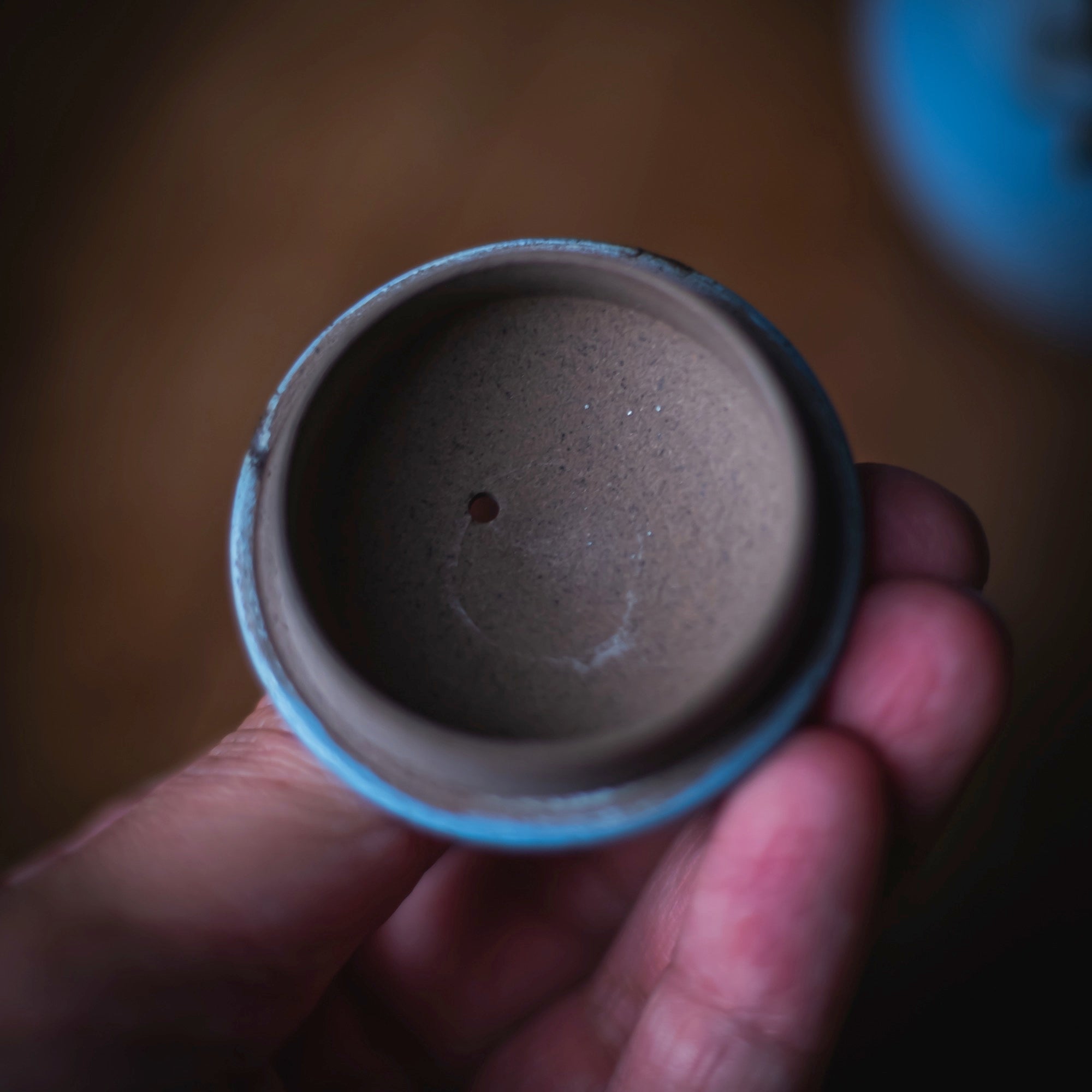
Seiji Ito attaching Ceramesh filter to Hira Kyusu teapot body.

You can feel in his pieces that Seiji Ito has a deep, lived engagement with tea culture. His vessels are not just shaped for brewing tea — they are born from a quiet, precise understanding of the way tea is shared and experienced.