


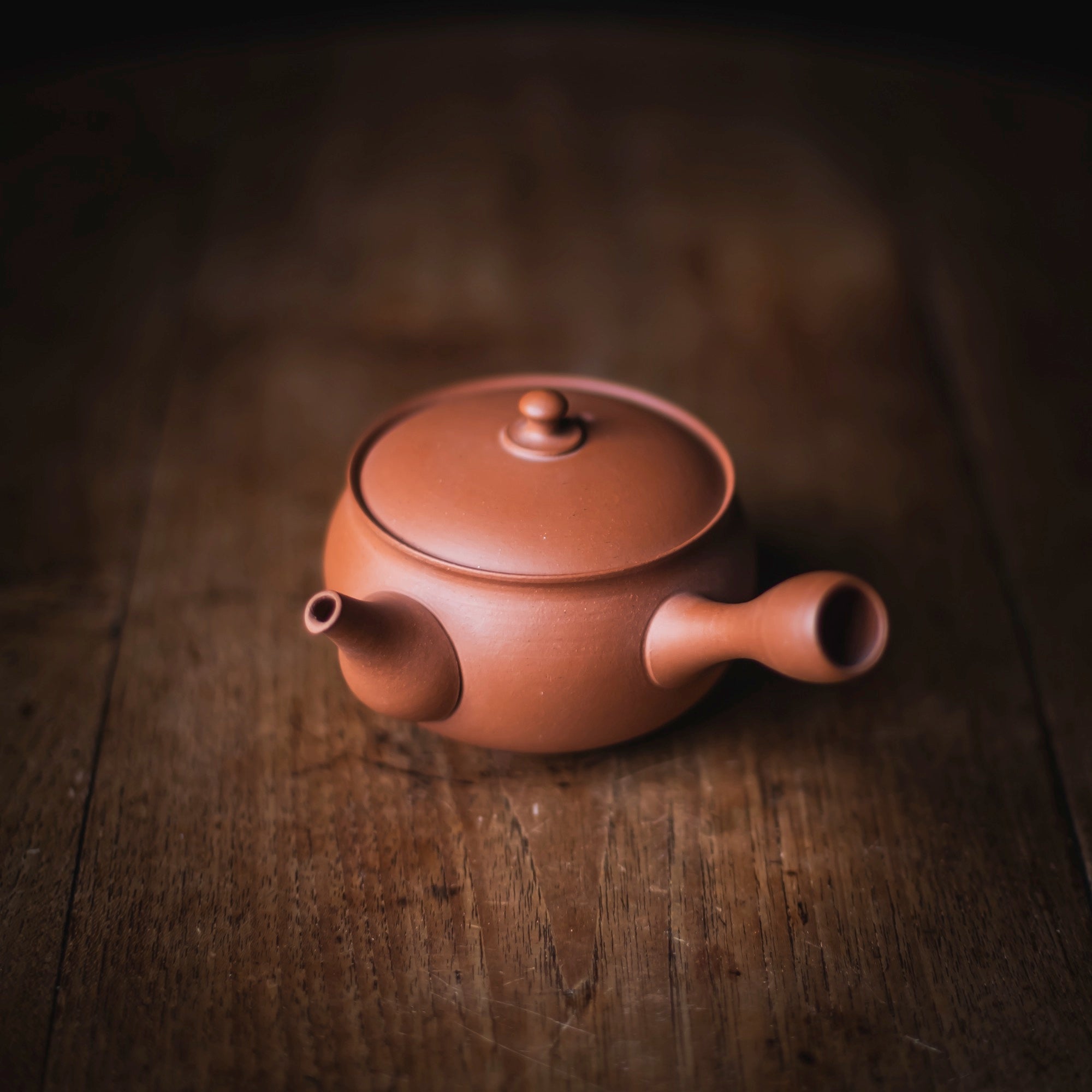
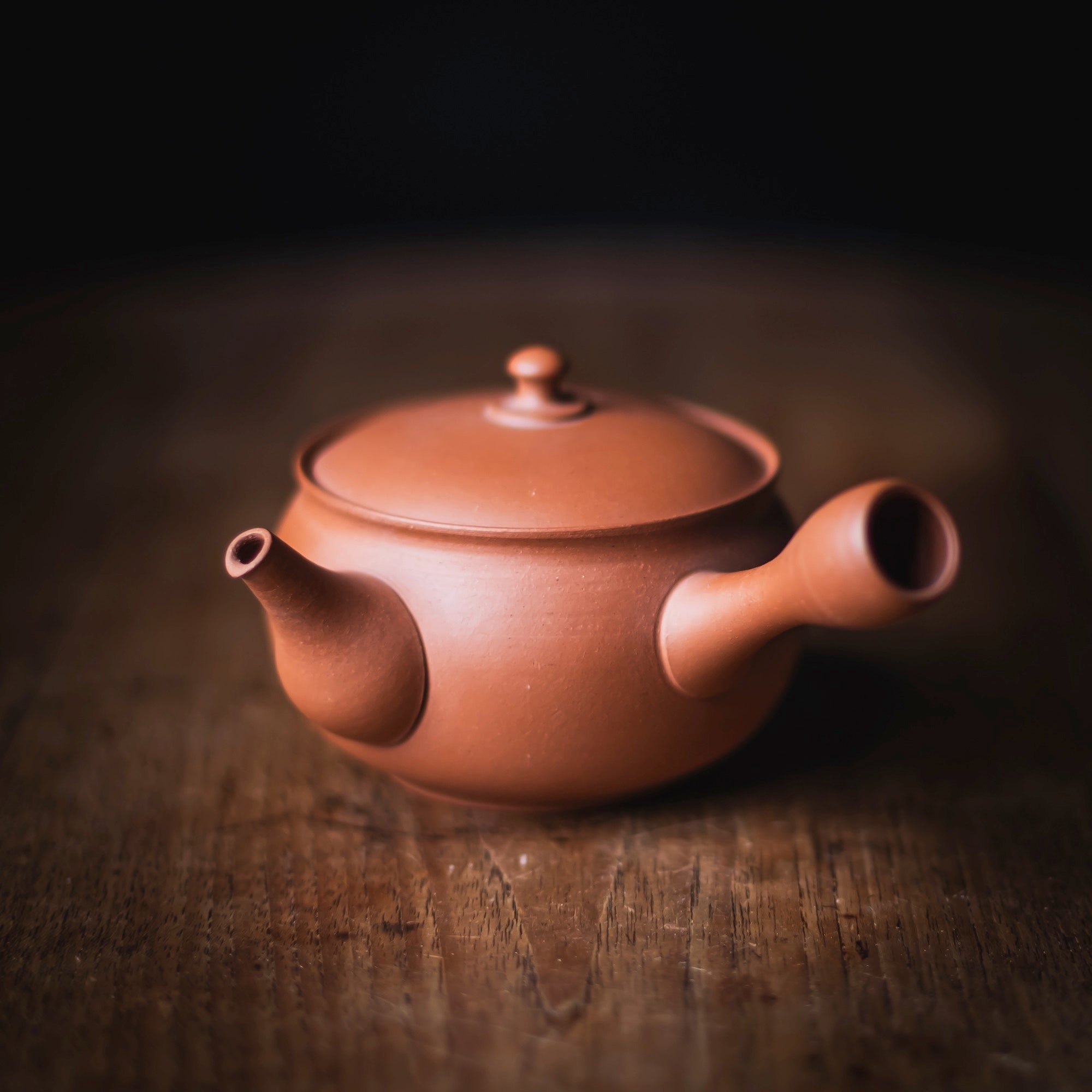
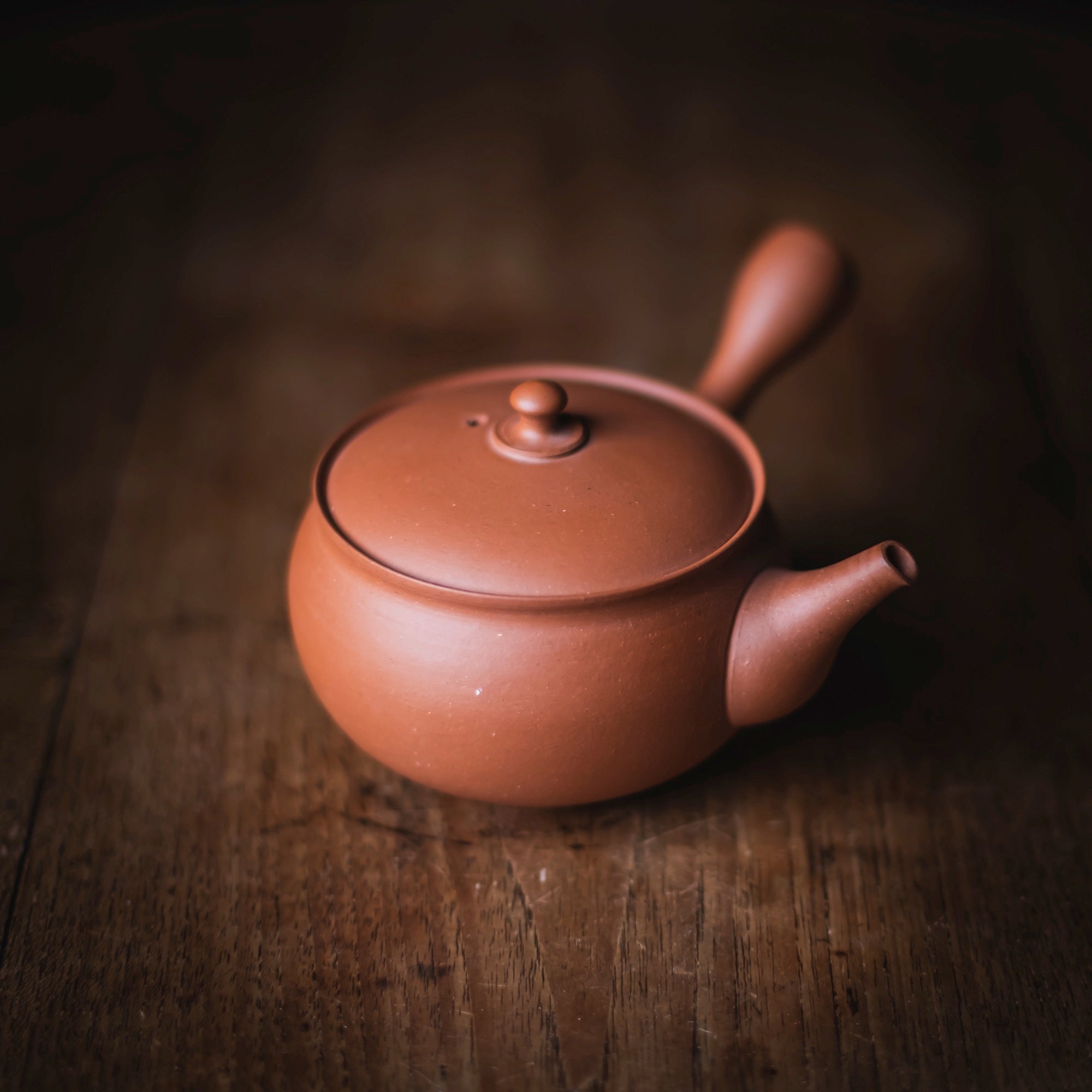
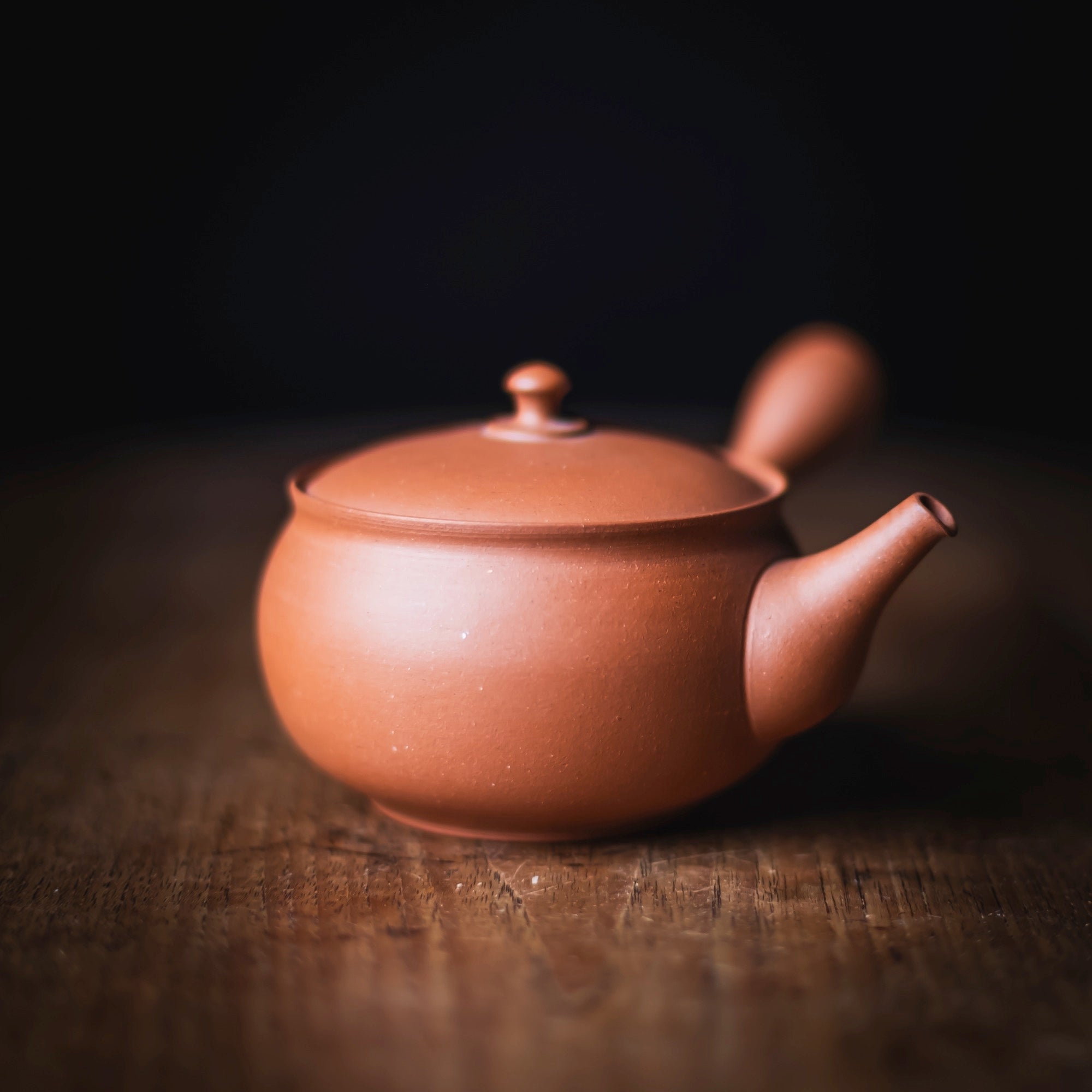
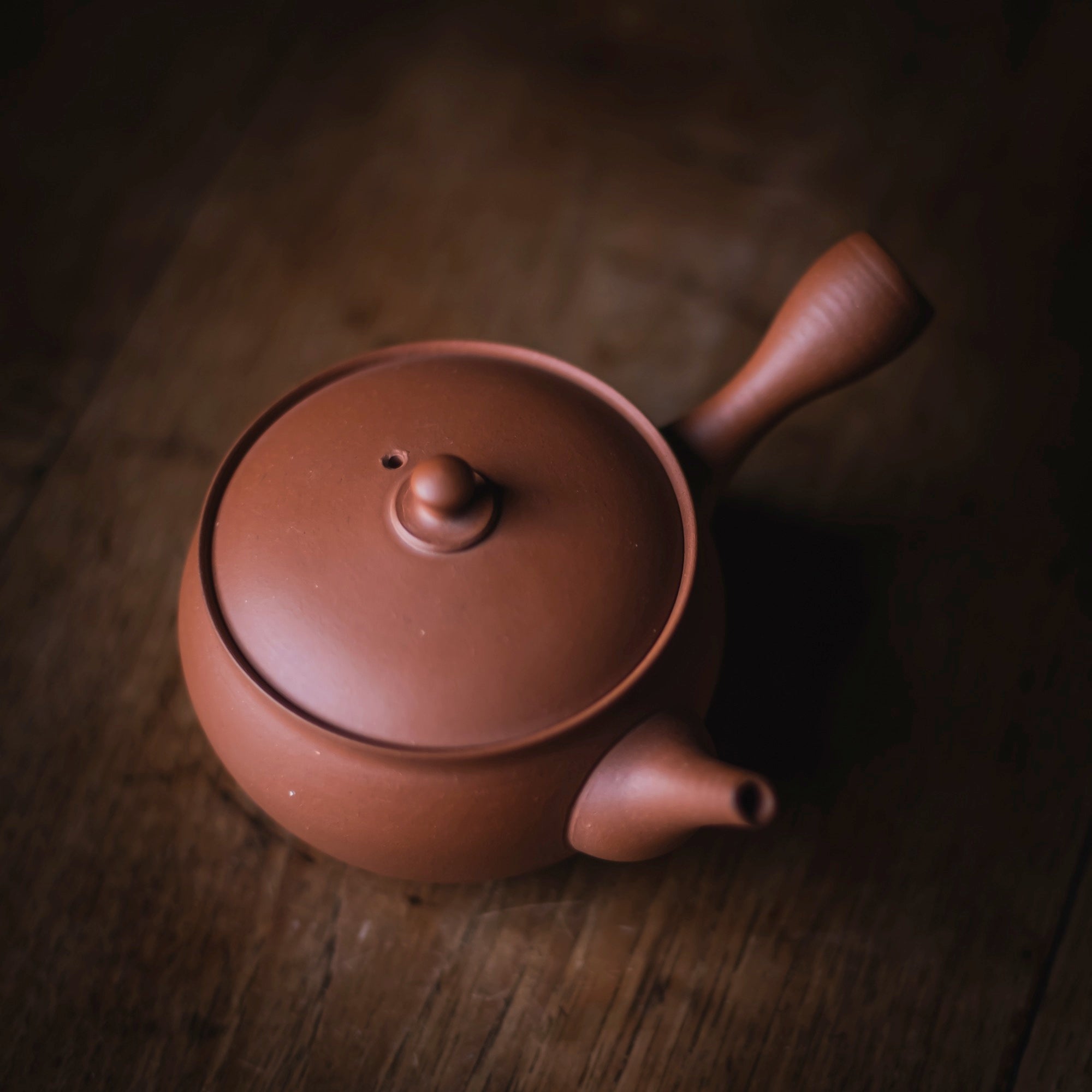
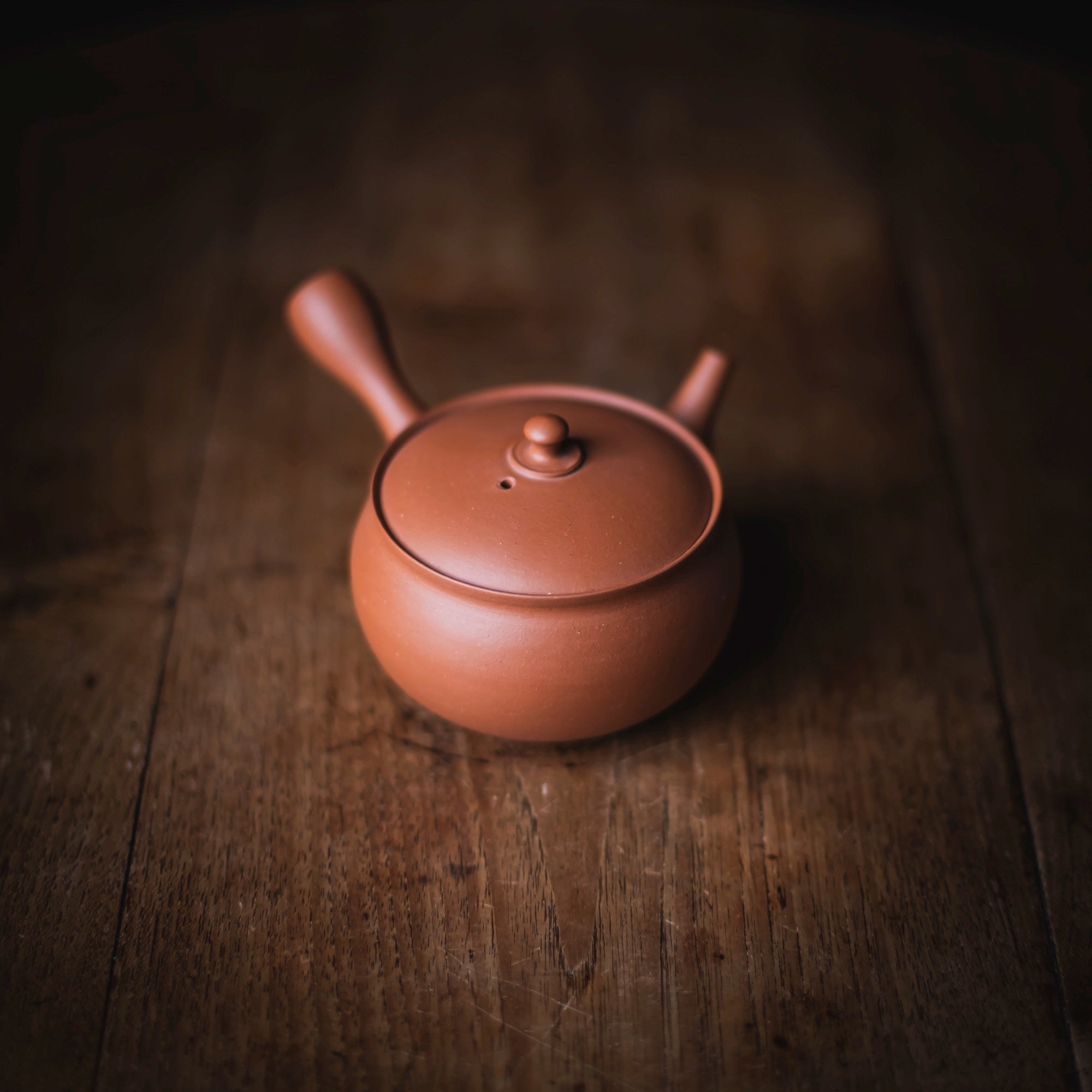
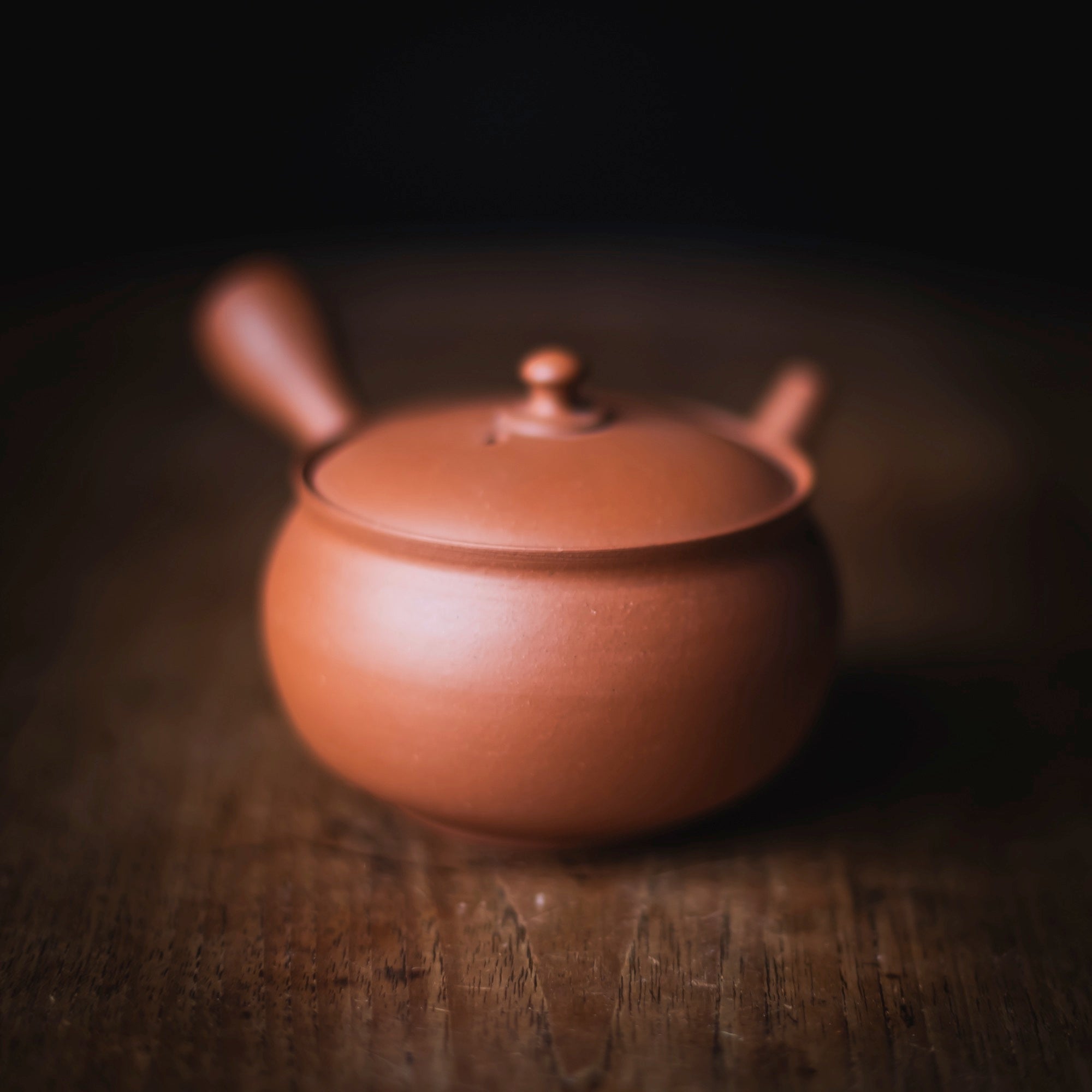
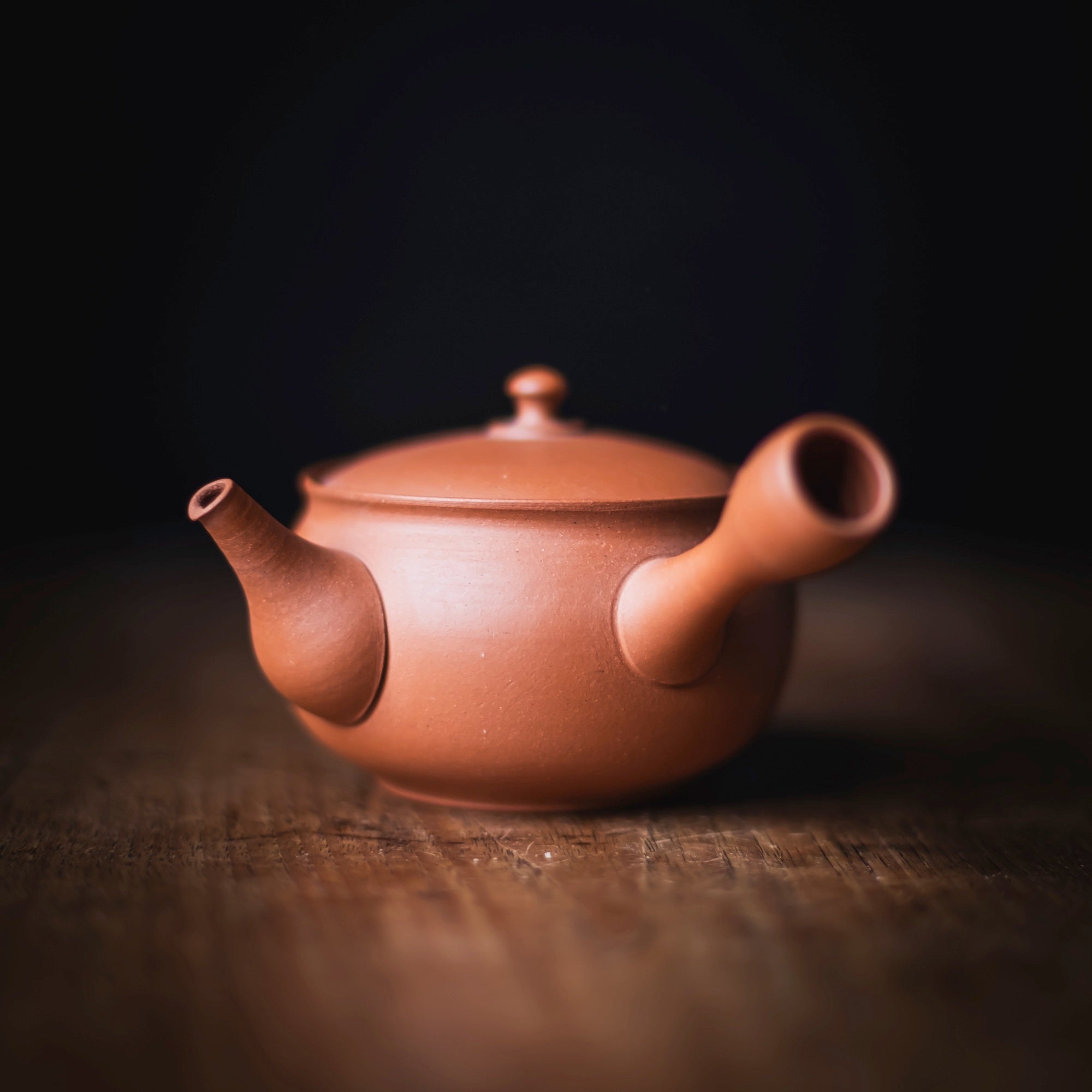
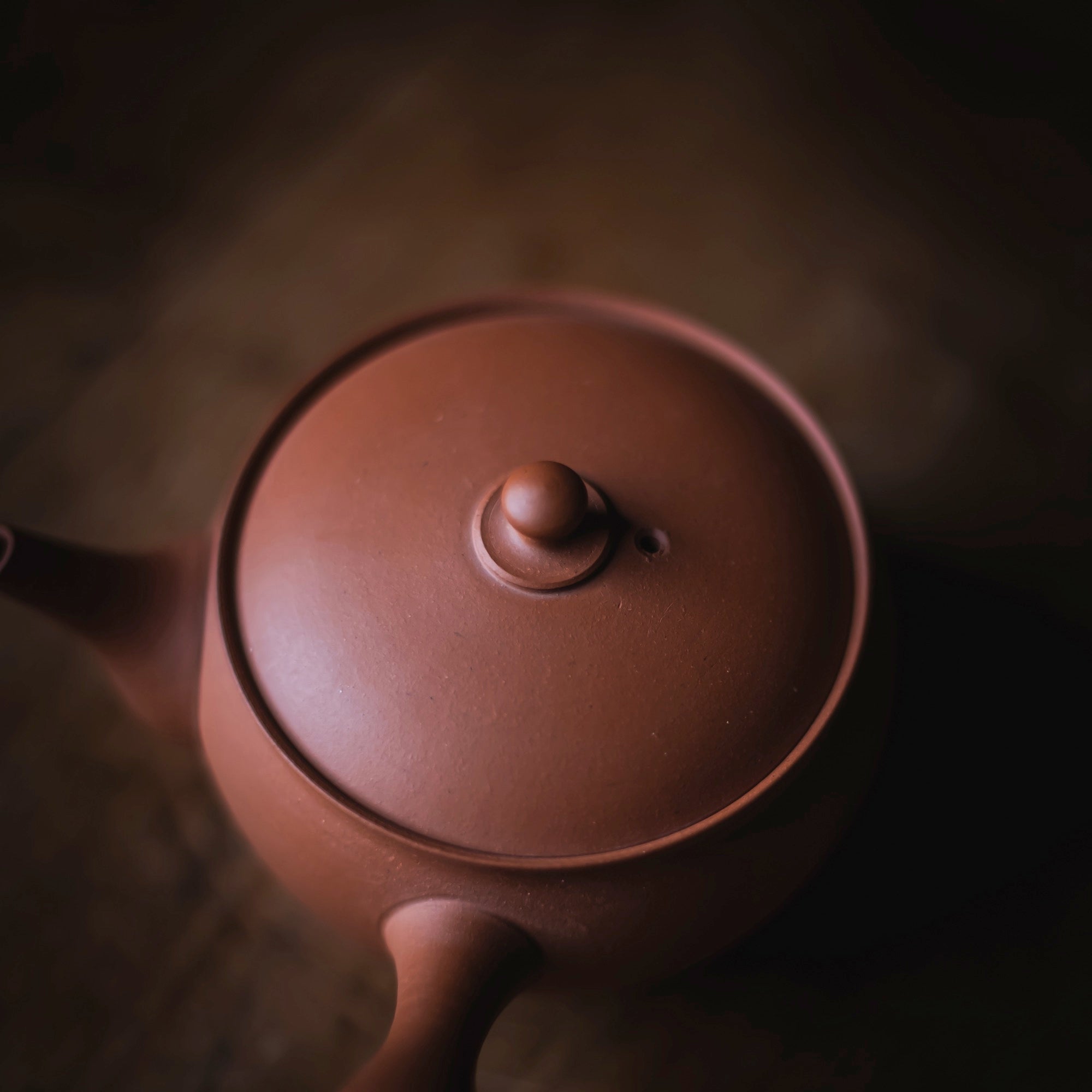
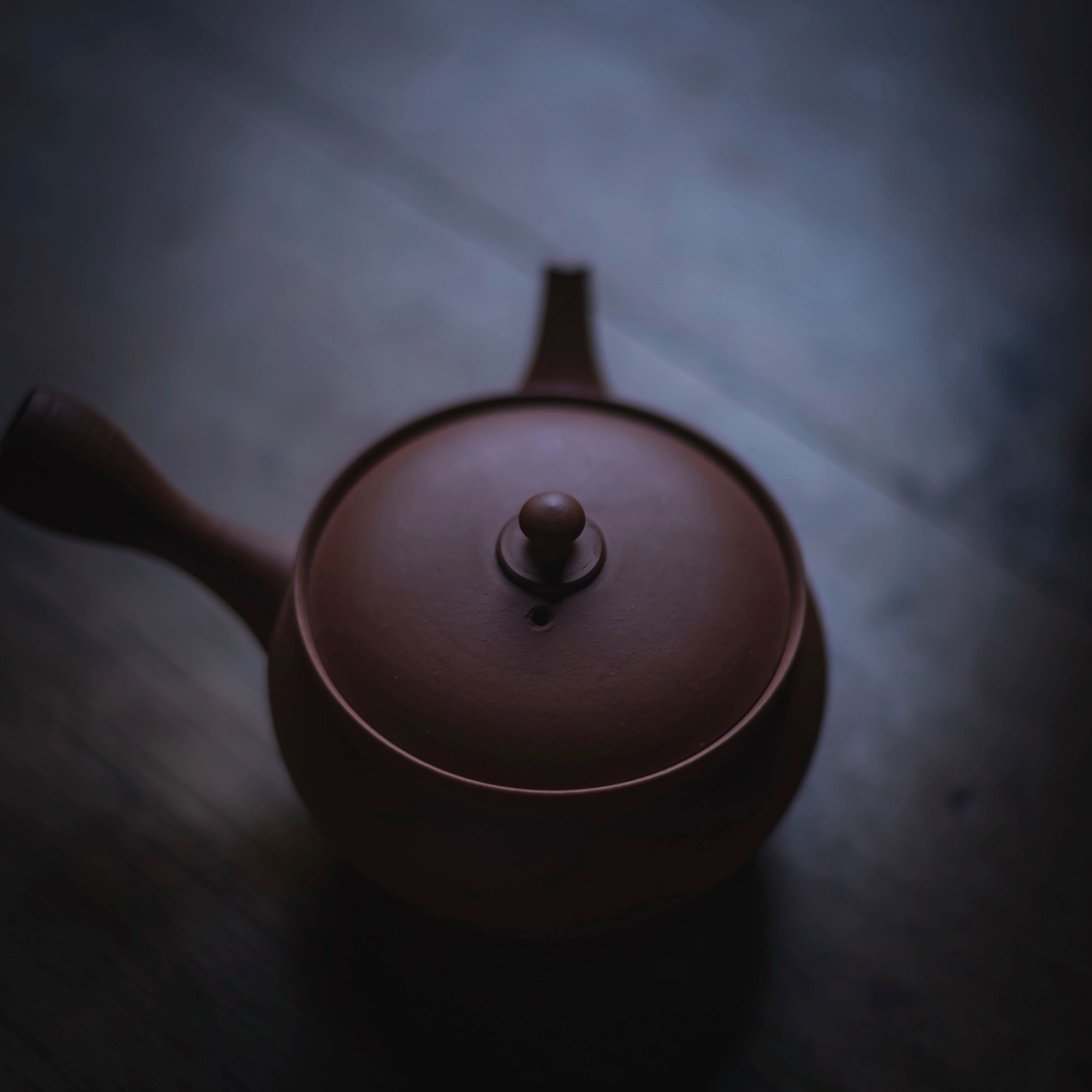
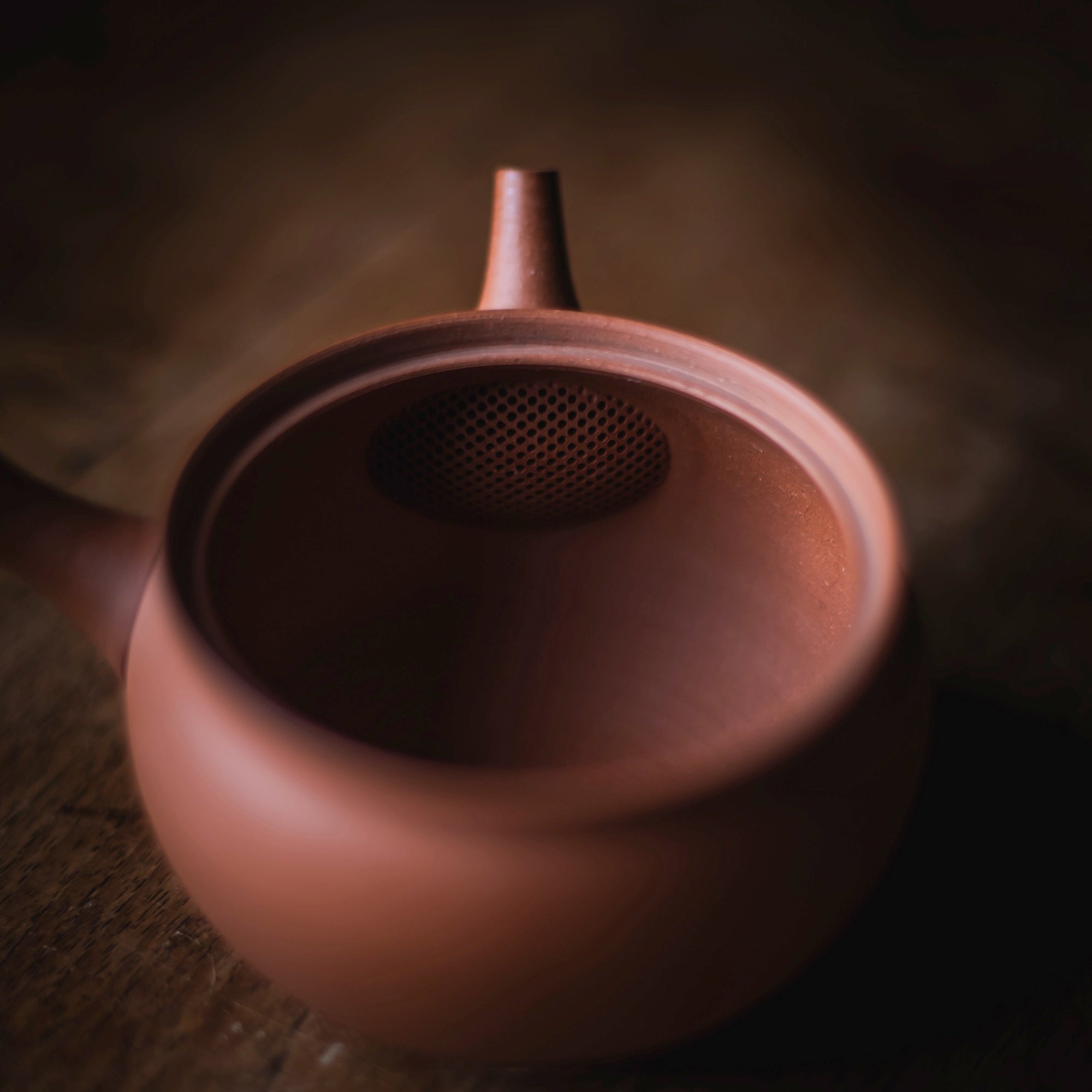
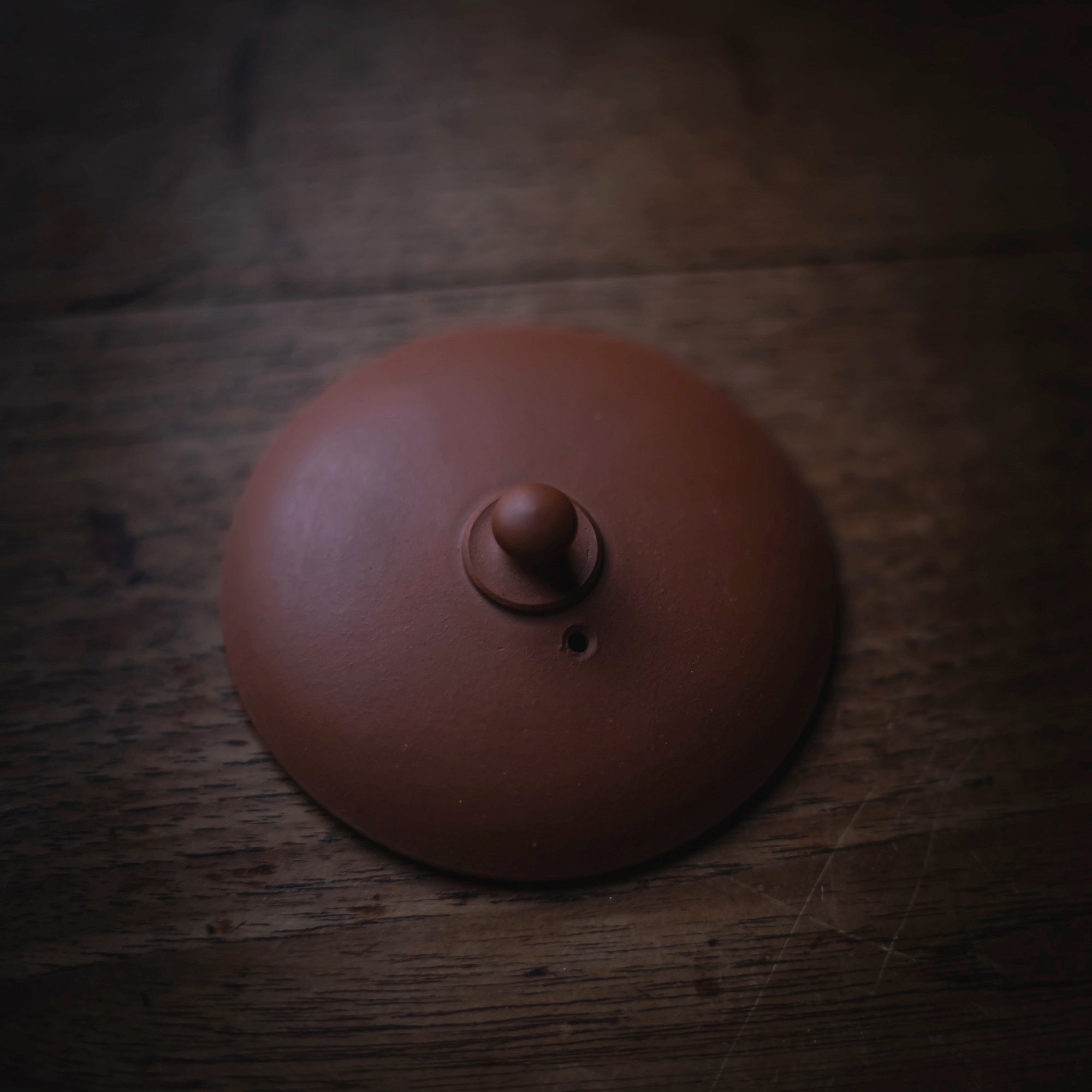
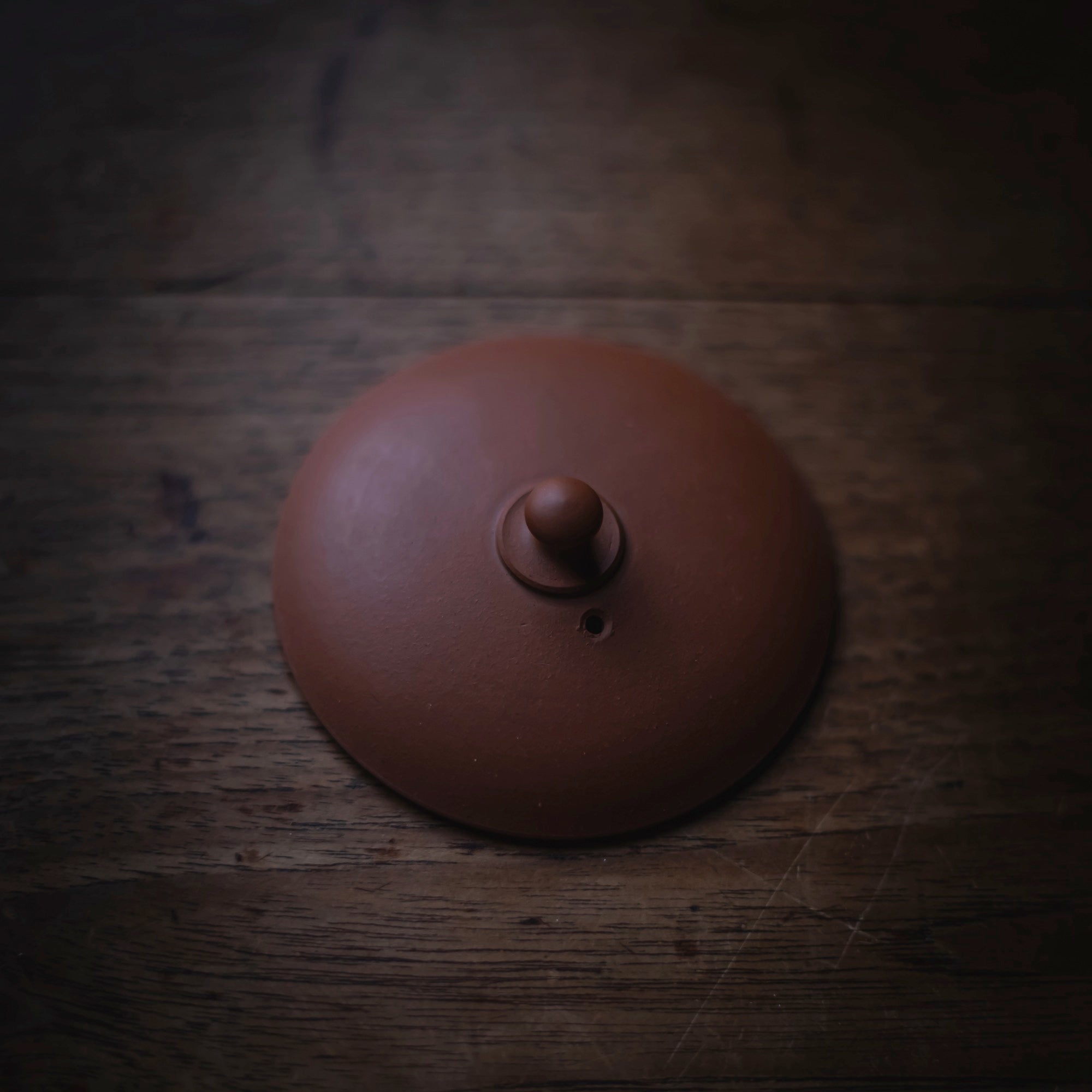
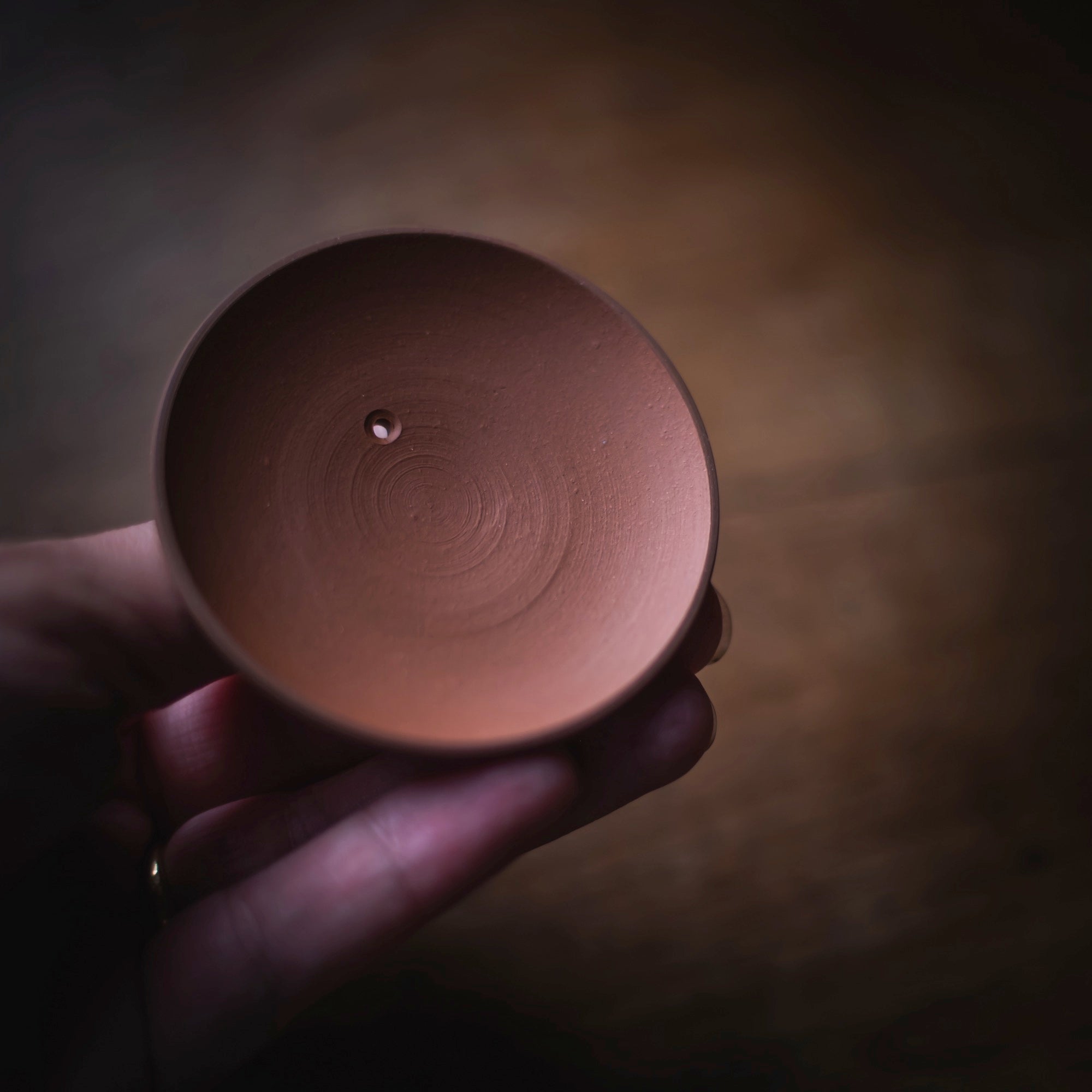
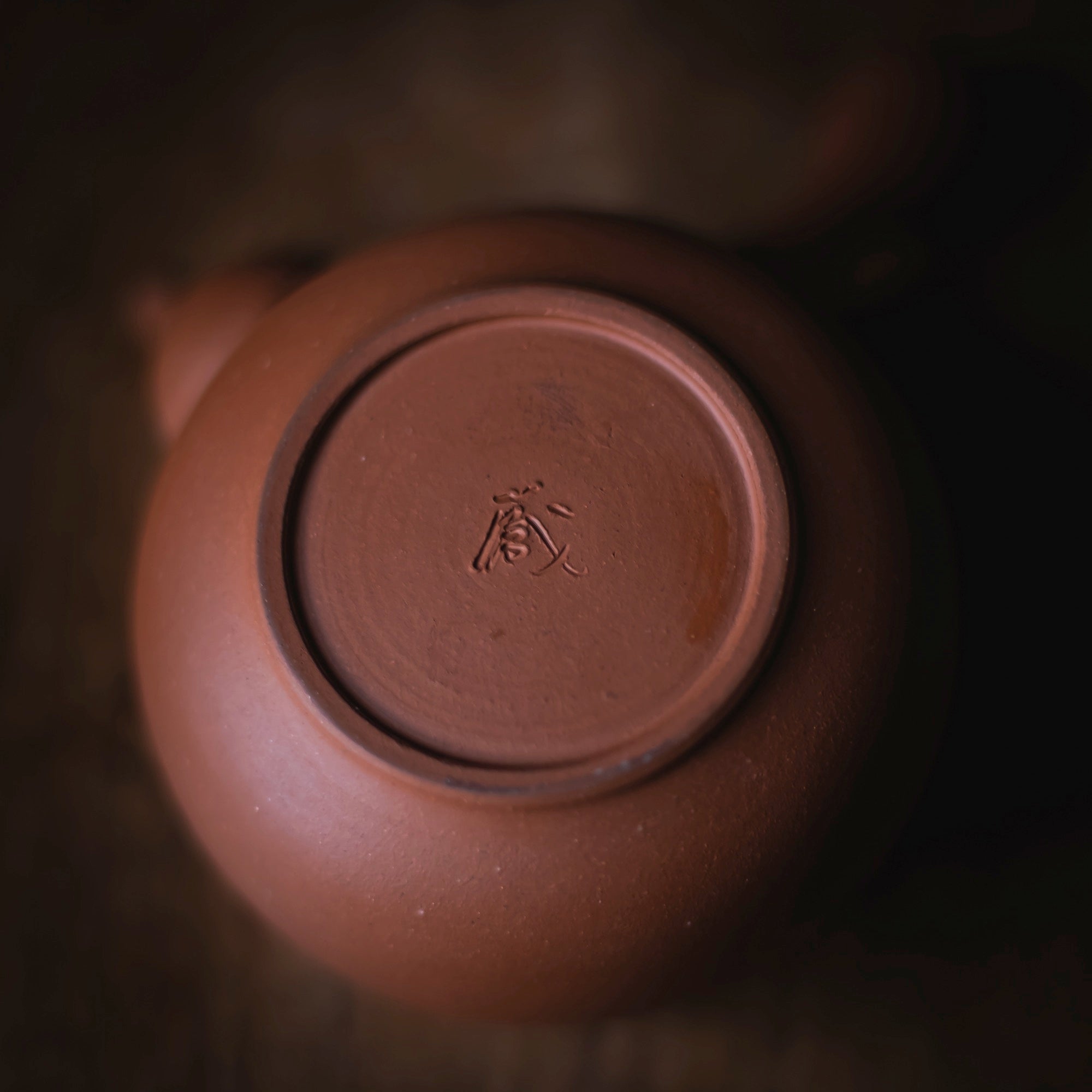
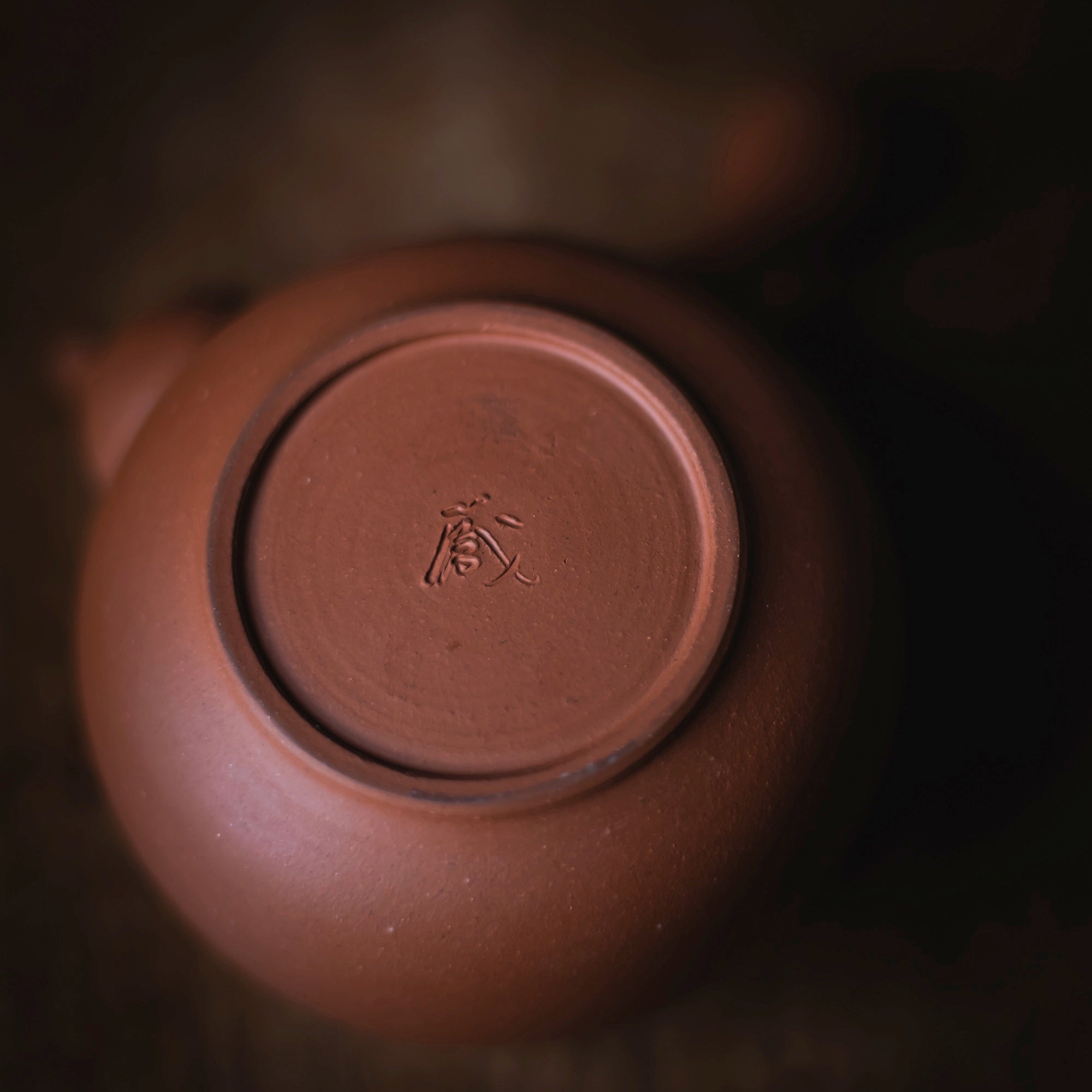
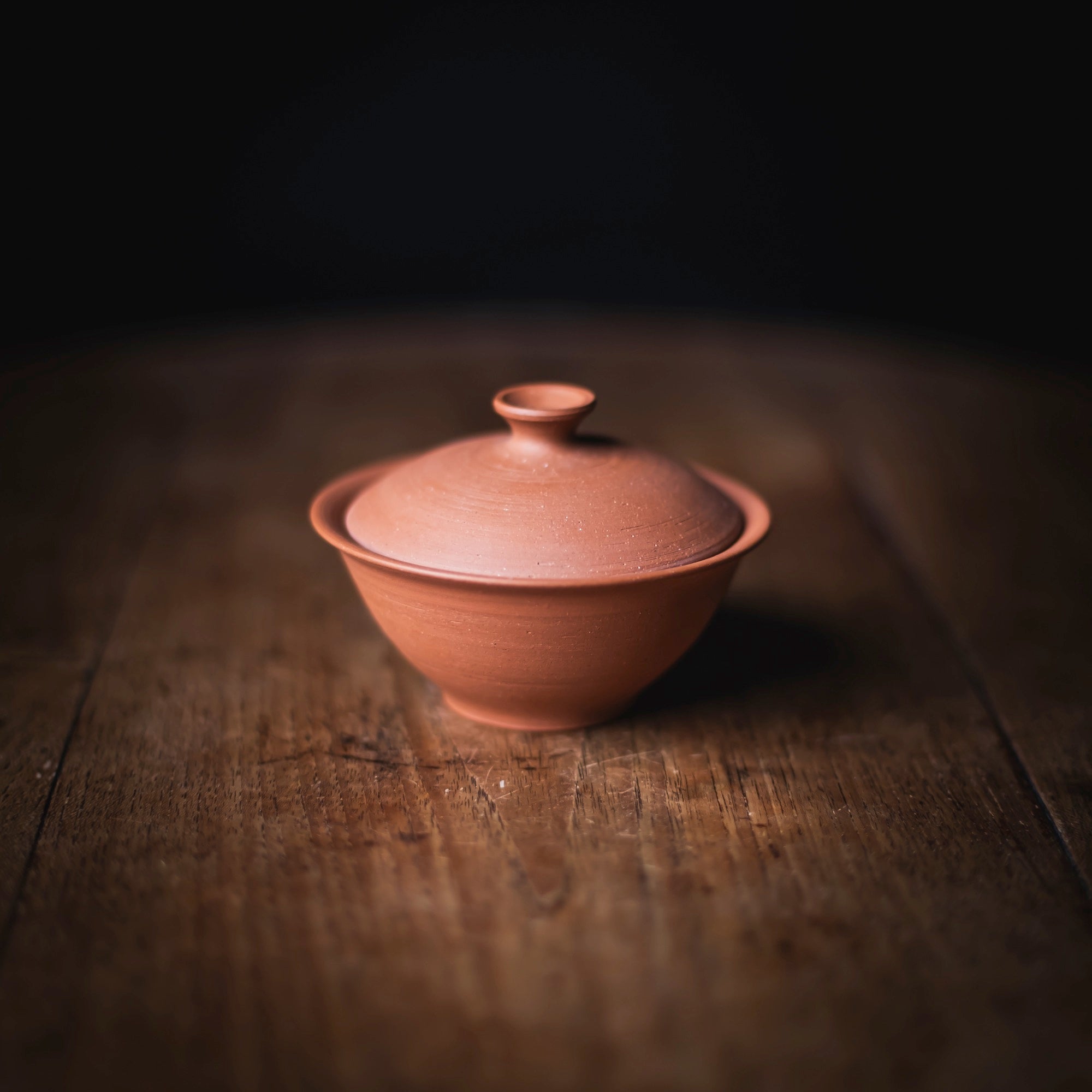
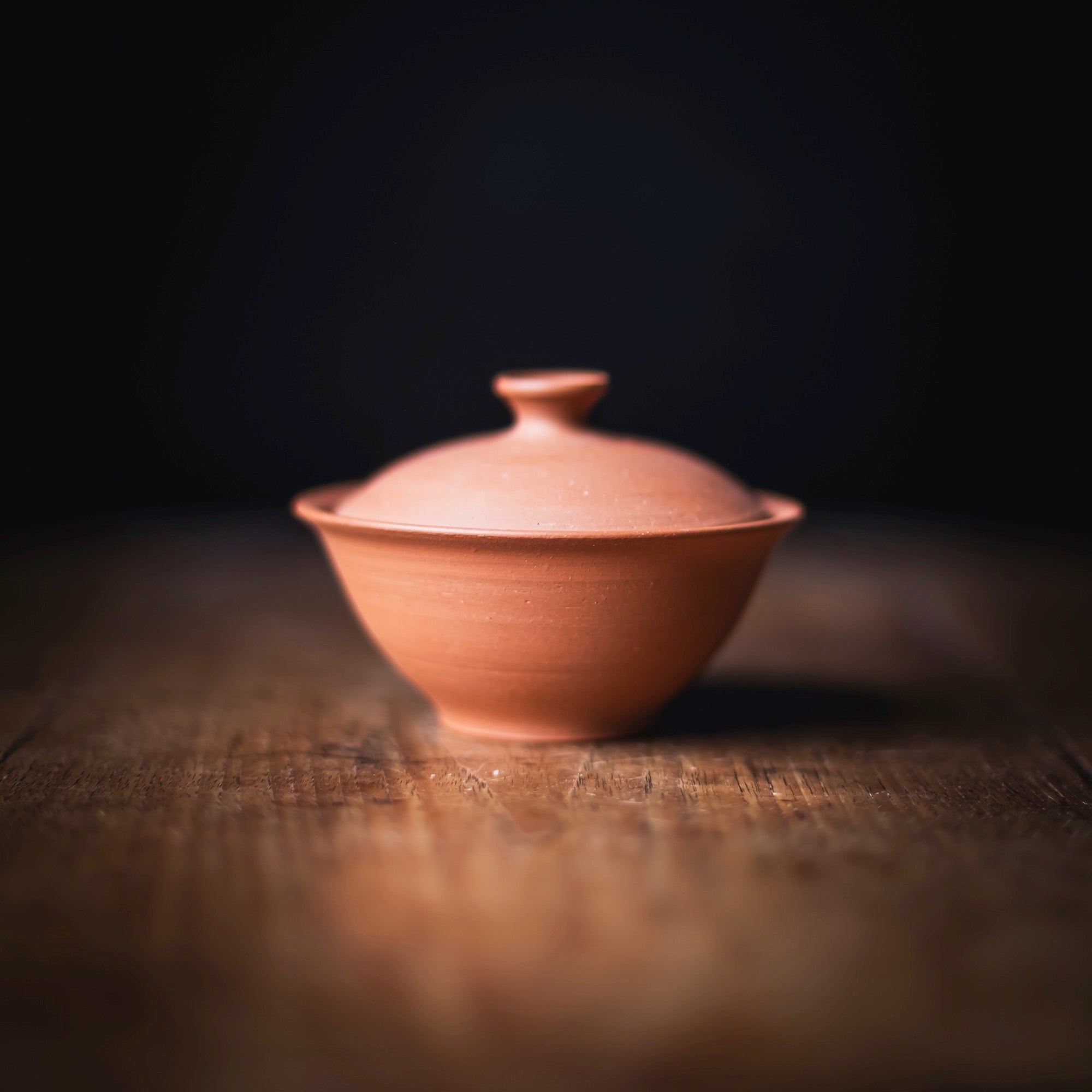
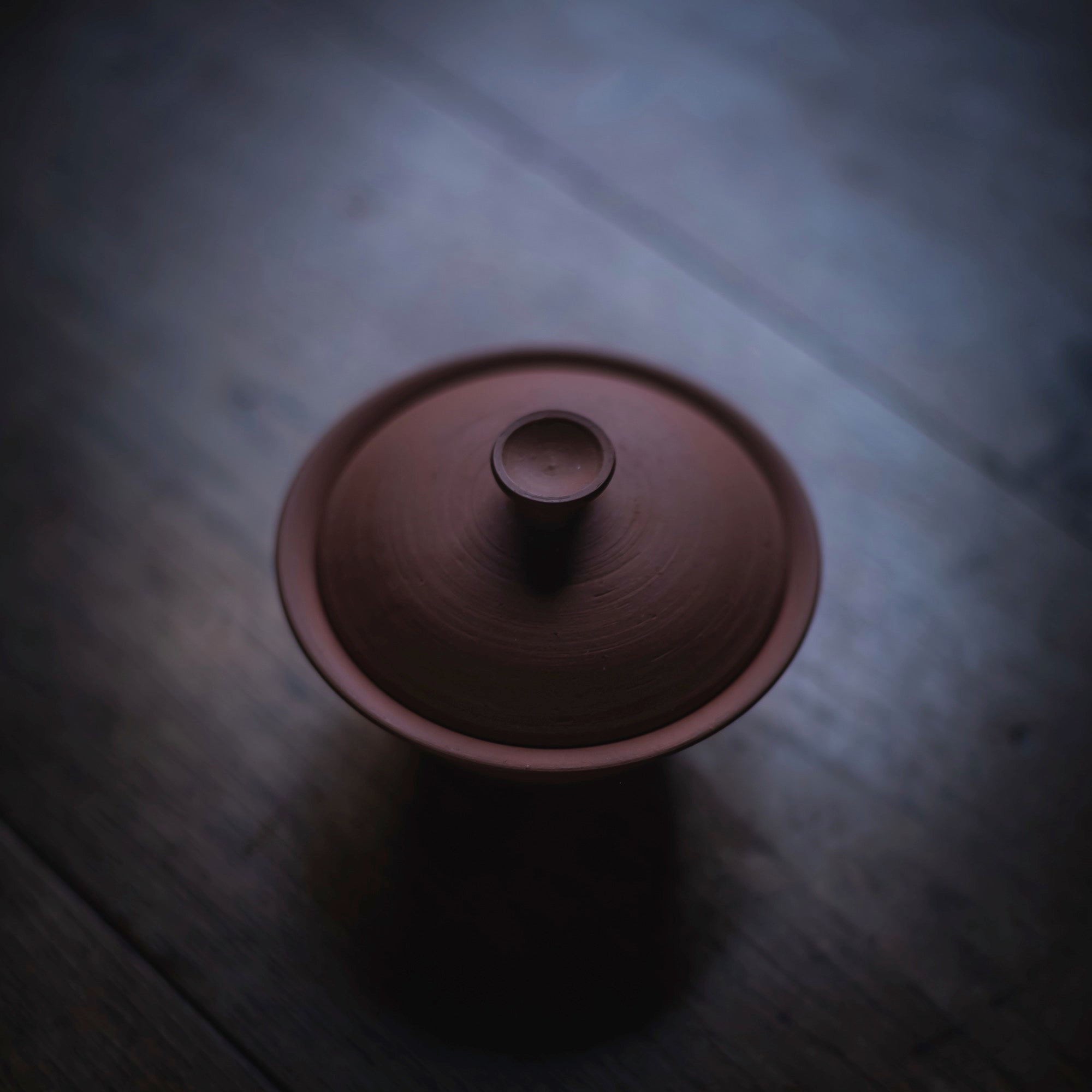
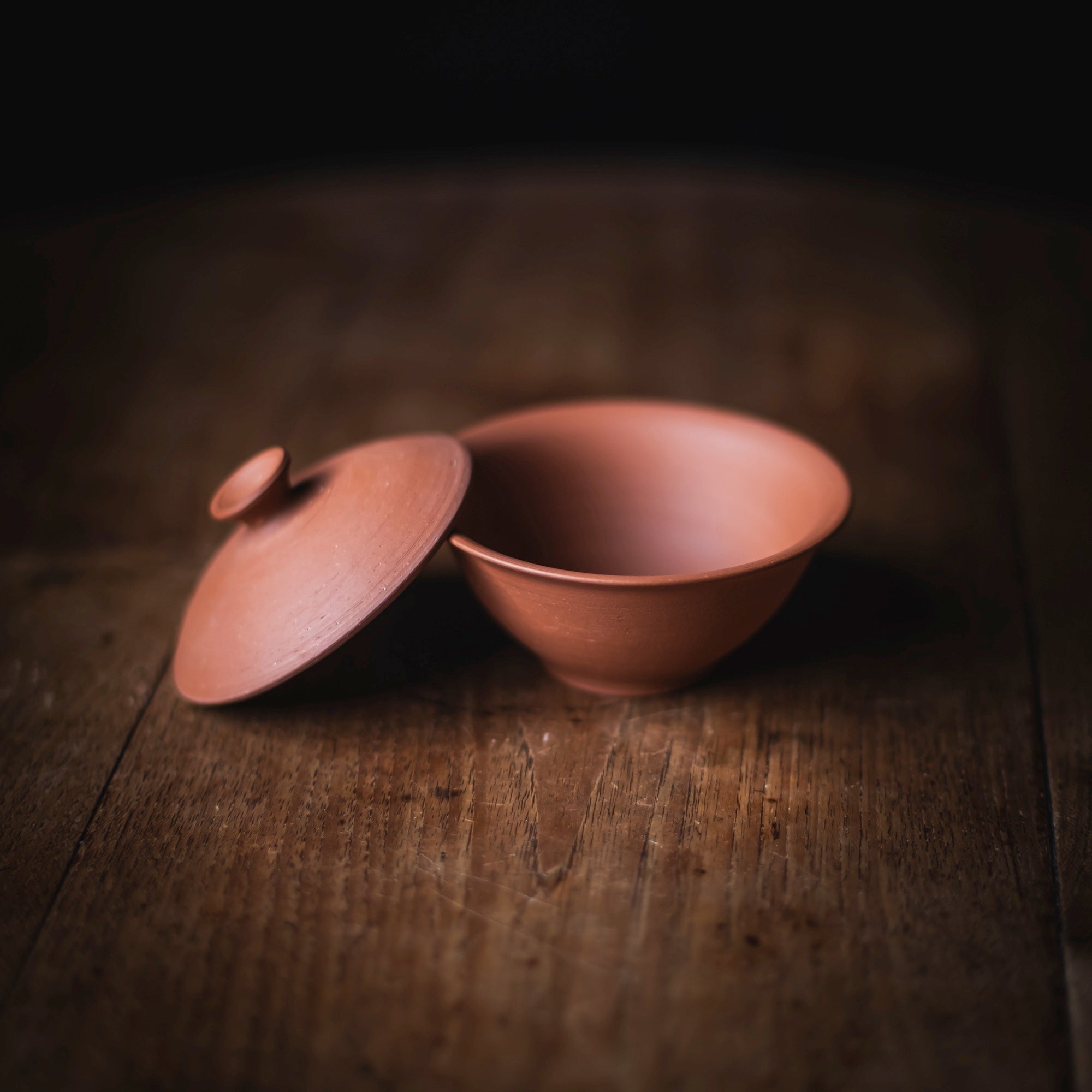
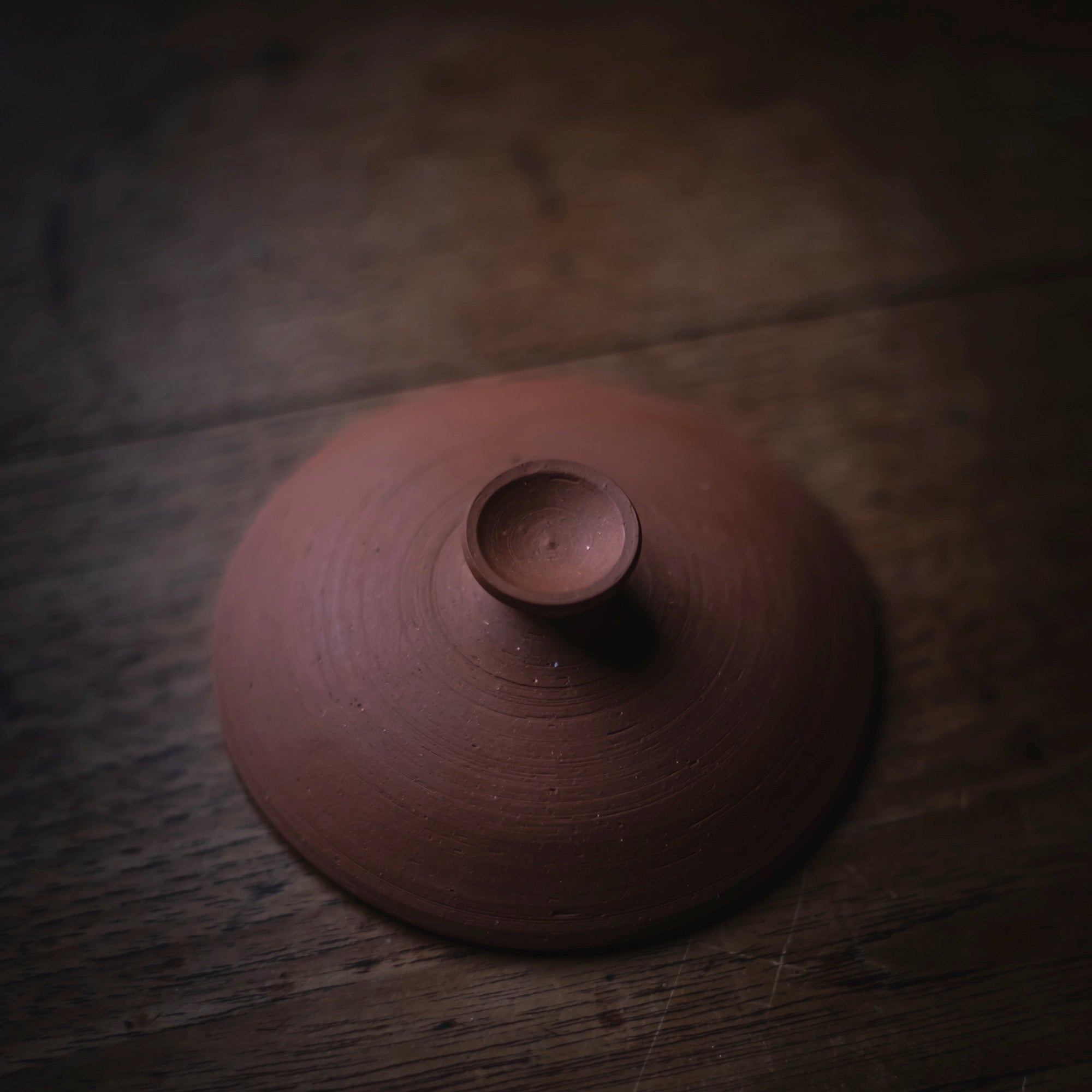
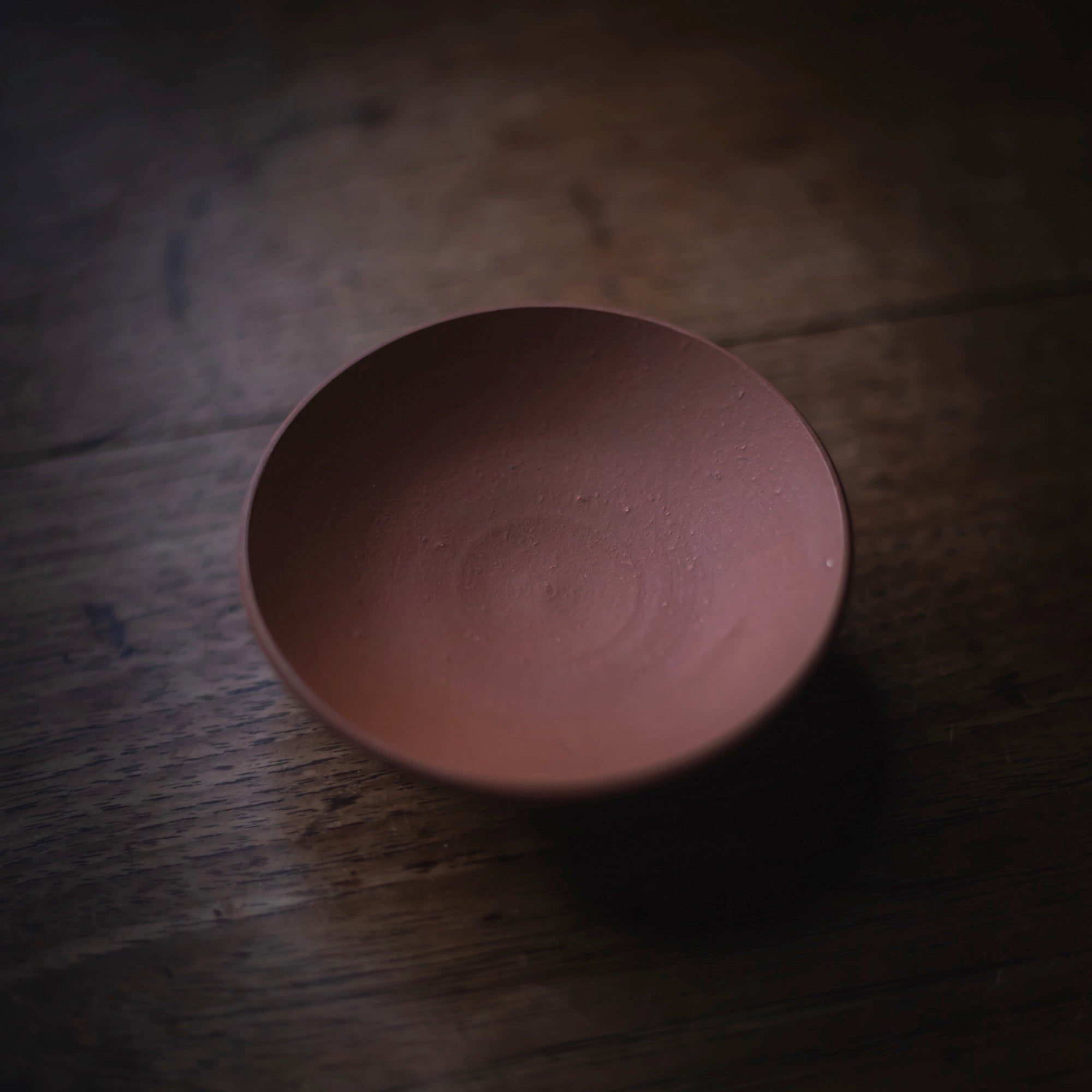
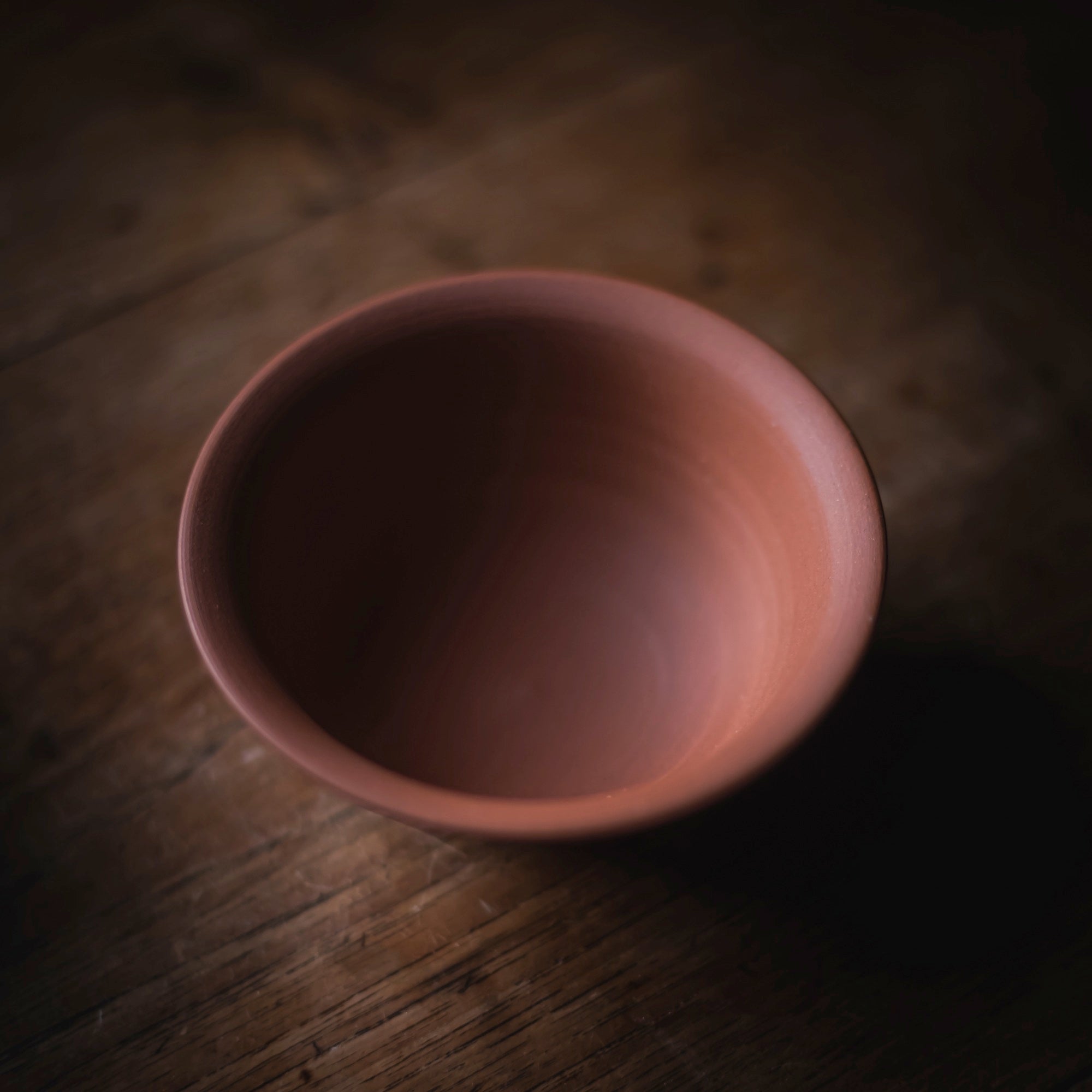
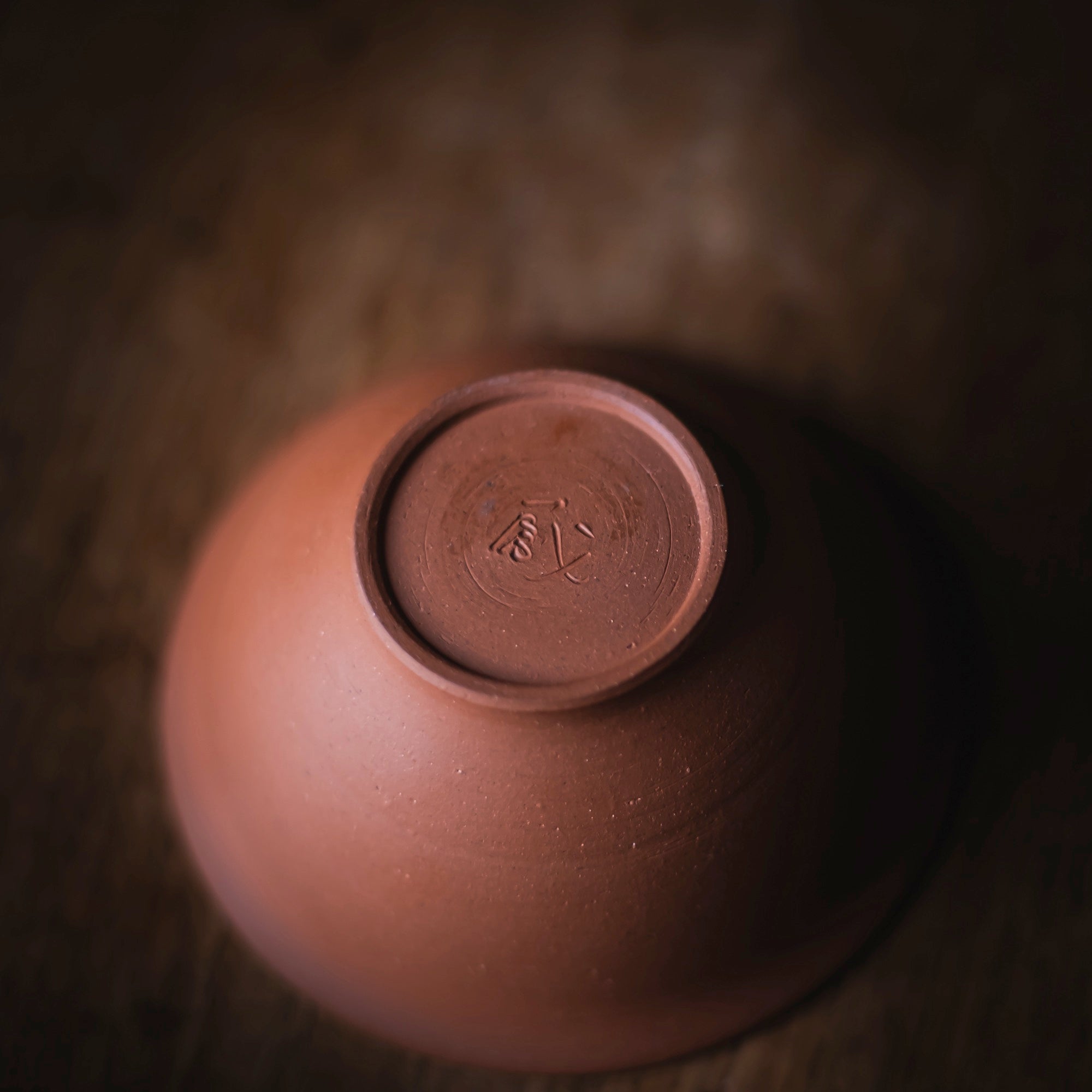
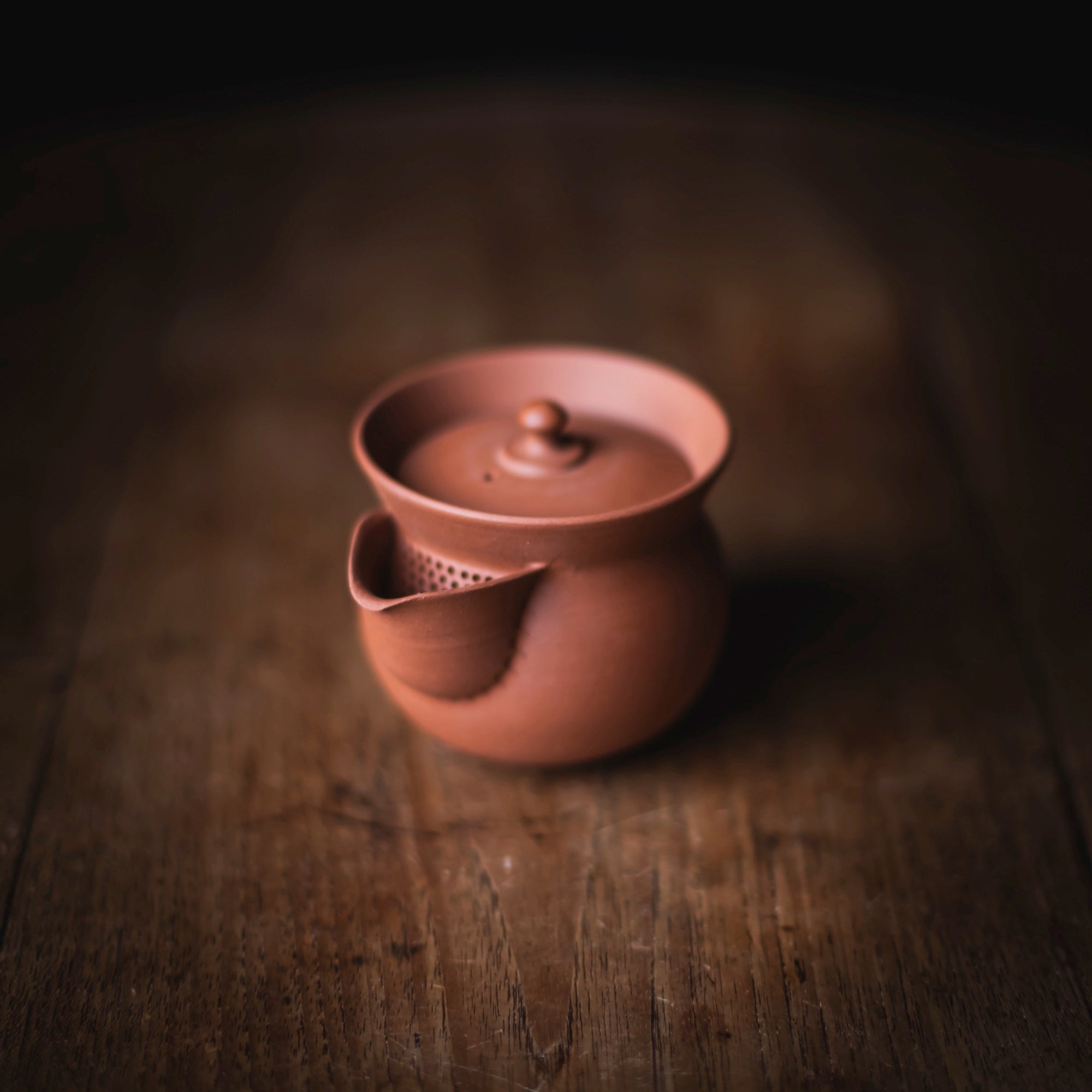
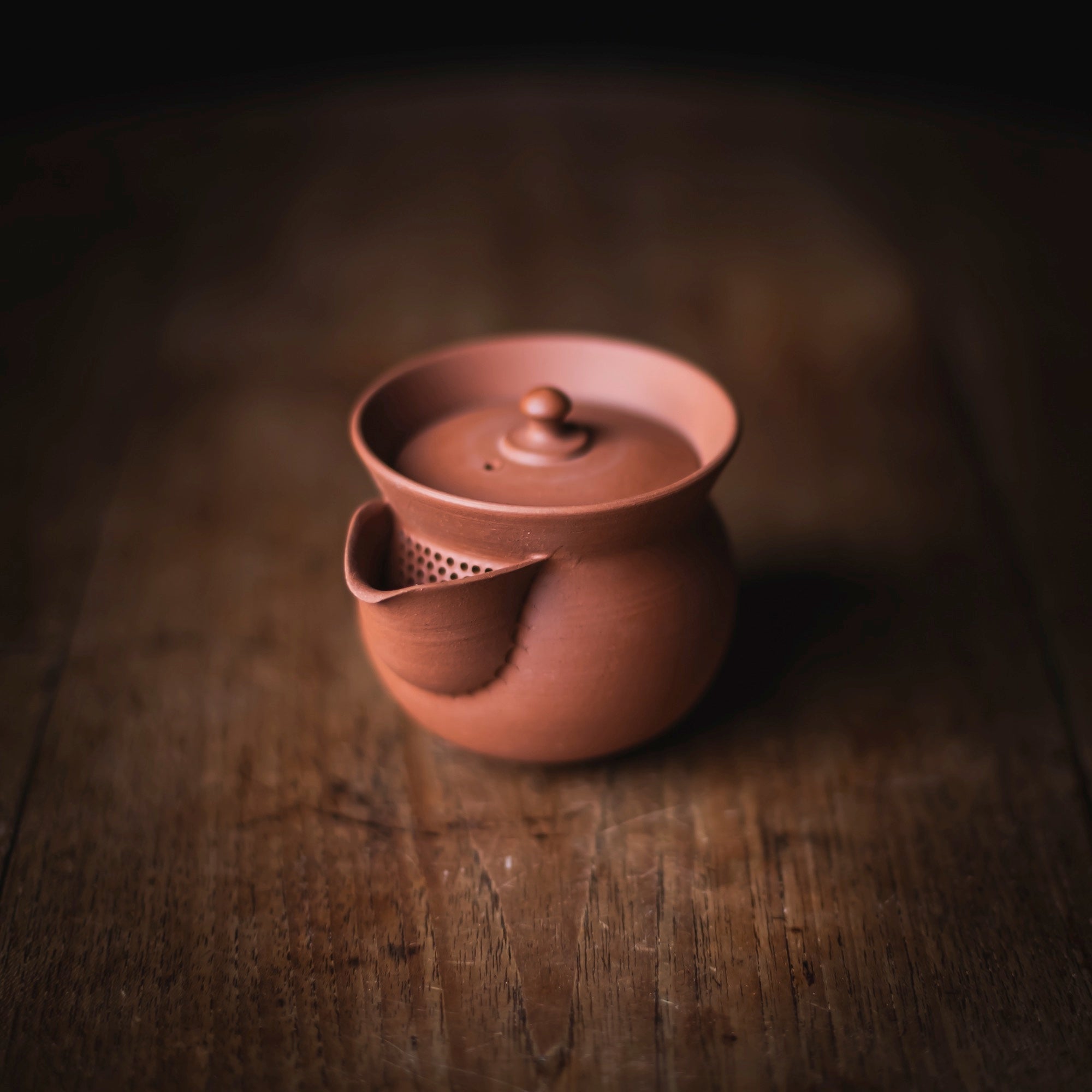
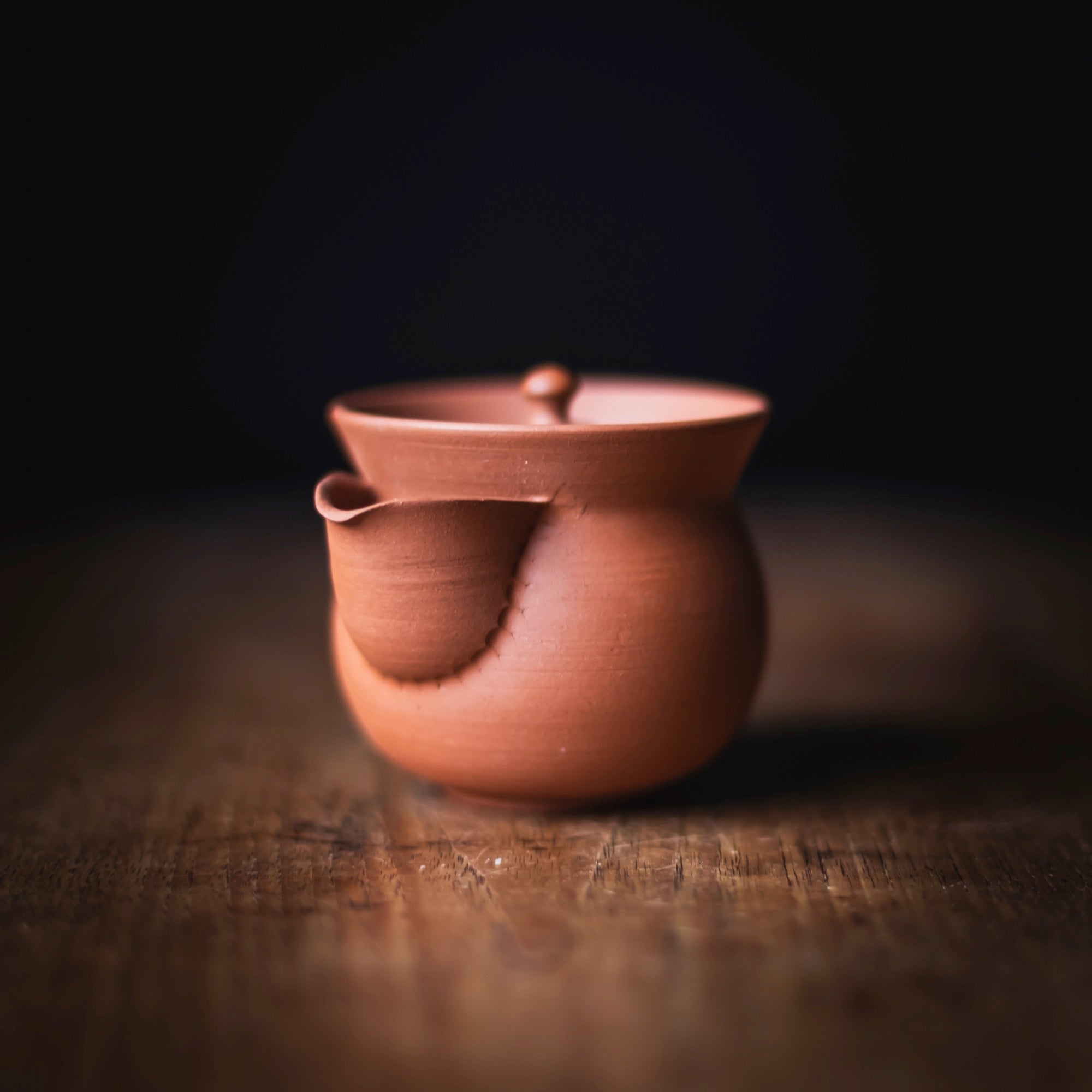

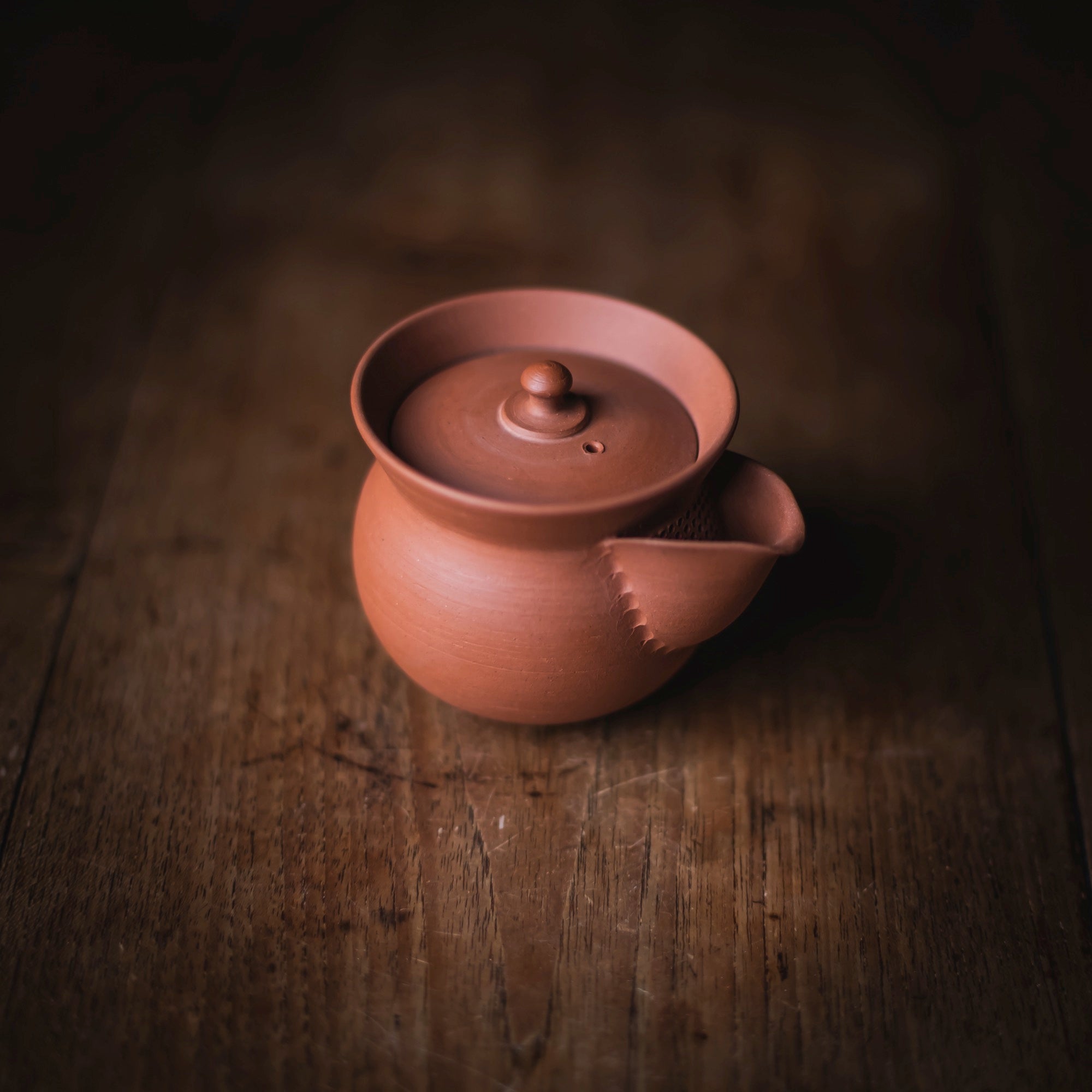
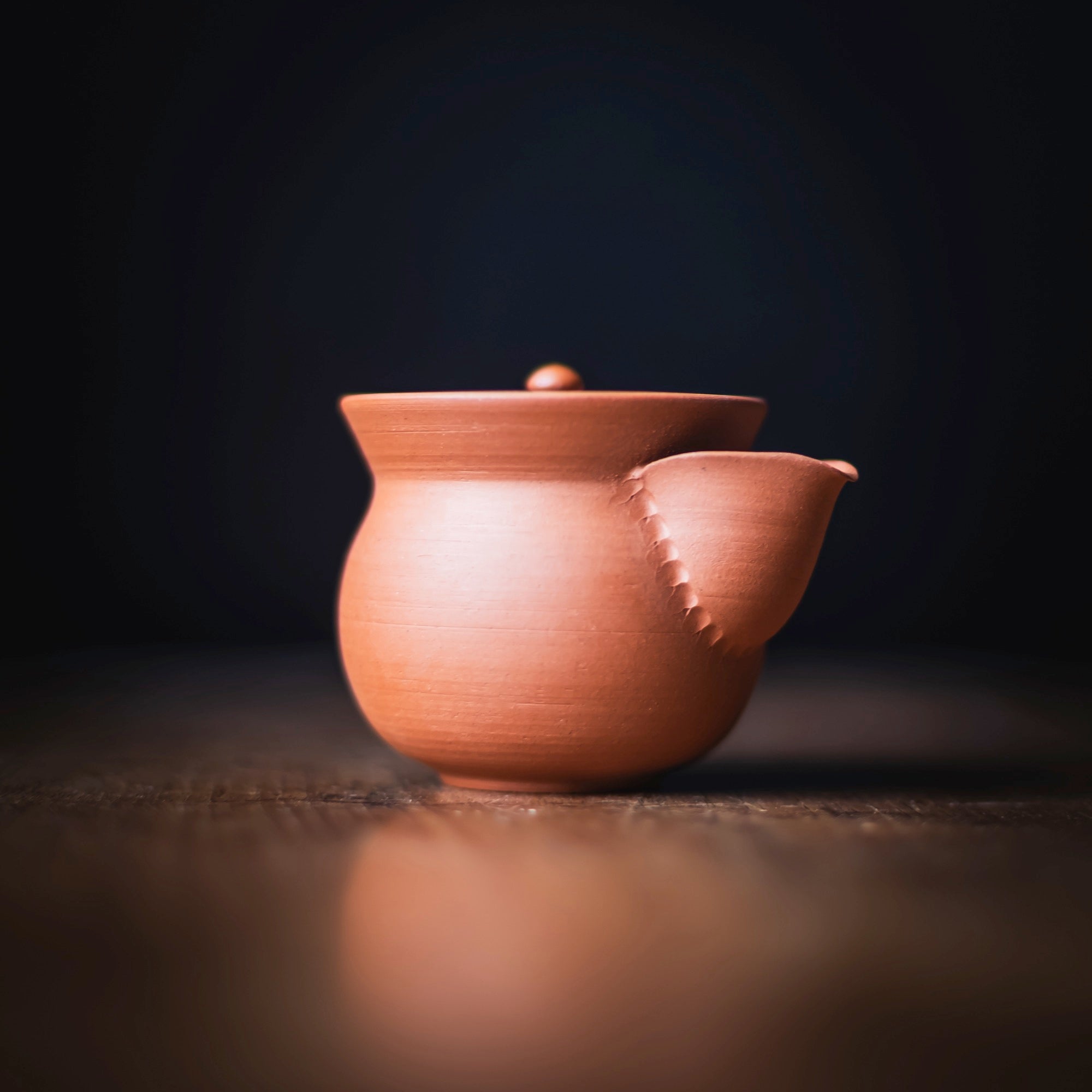
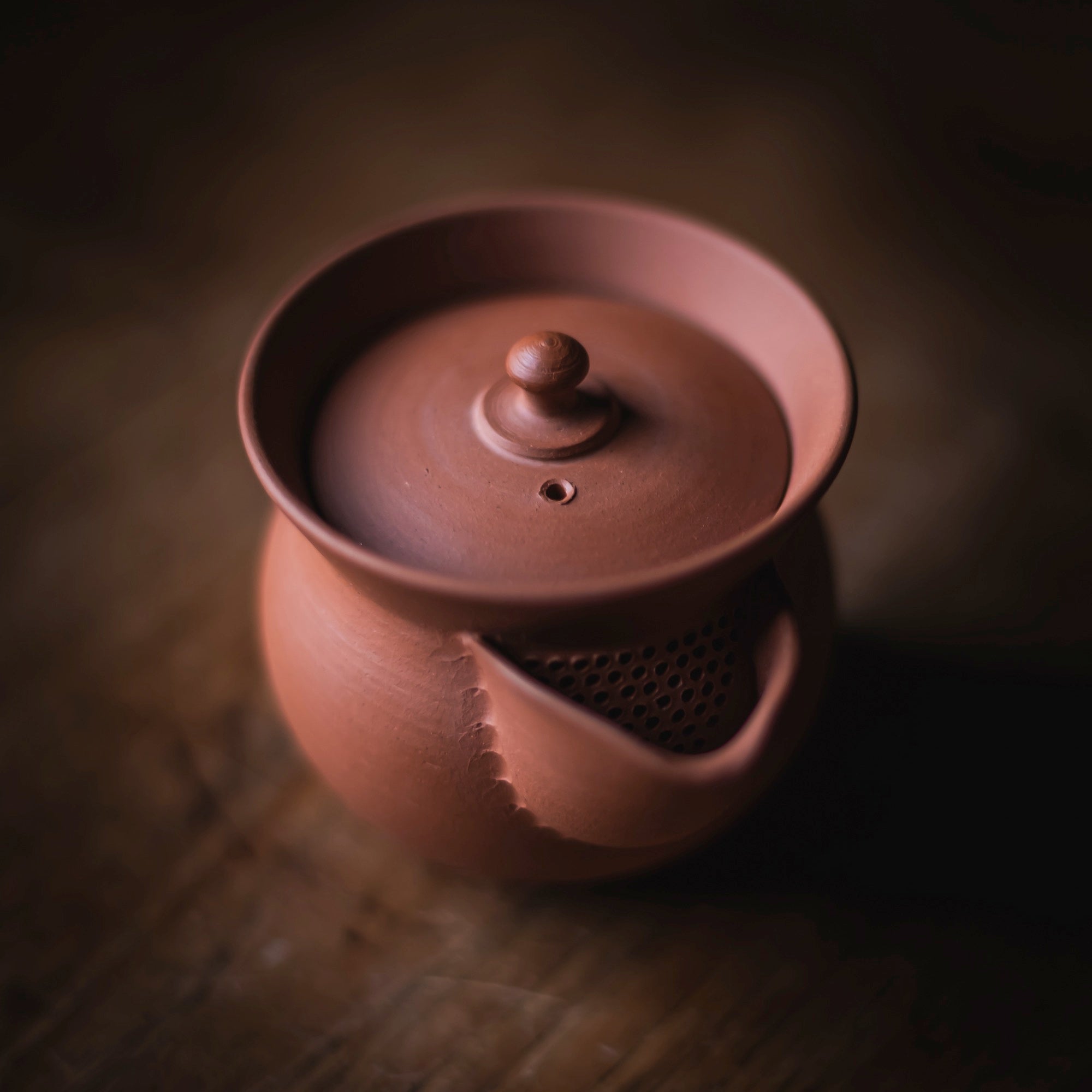
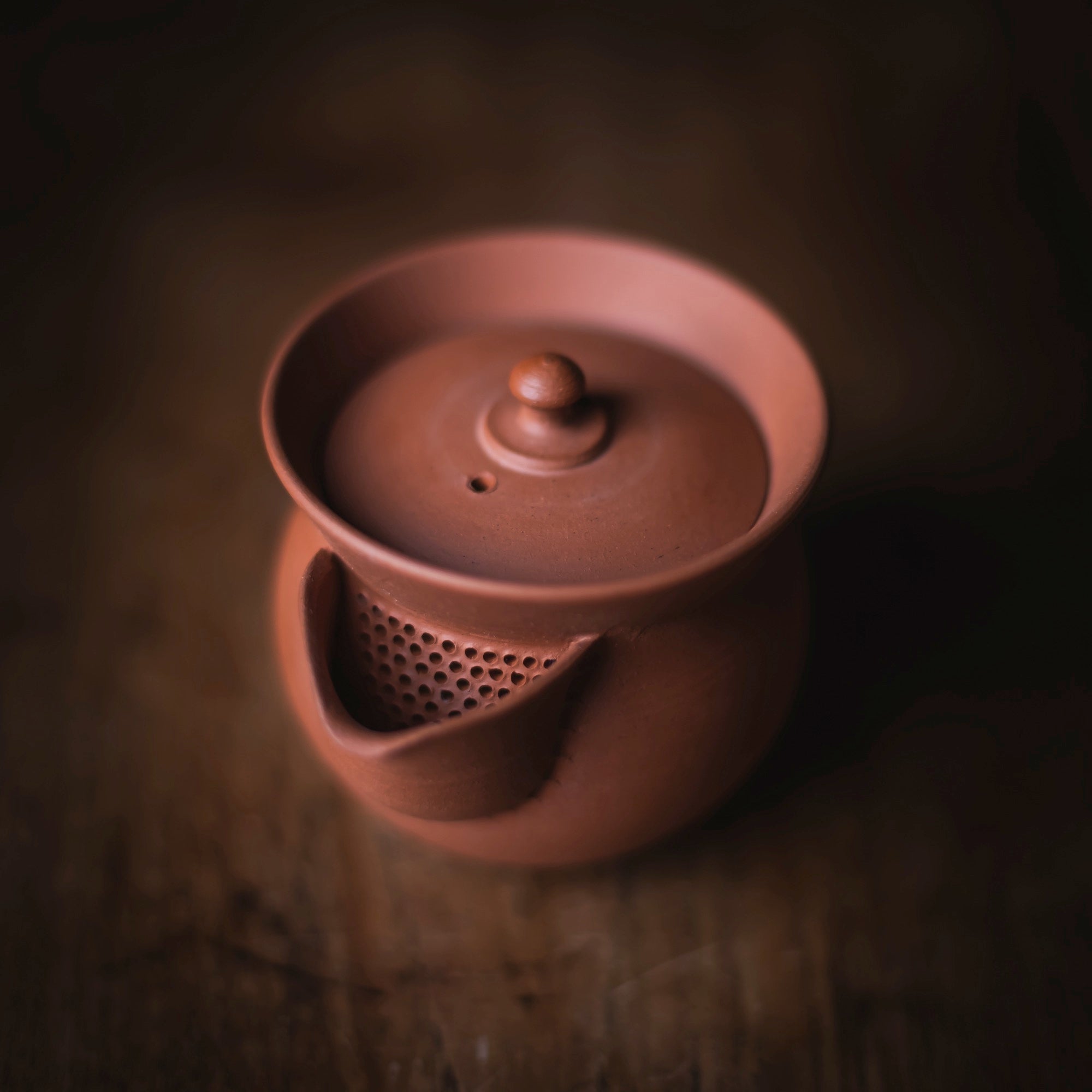

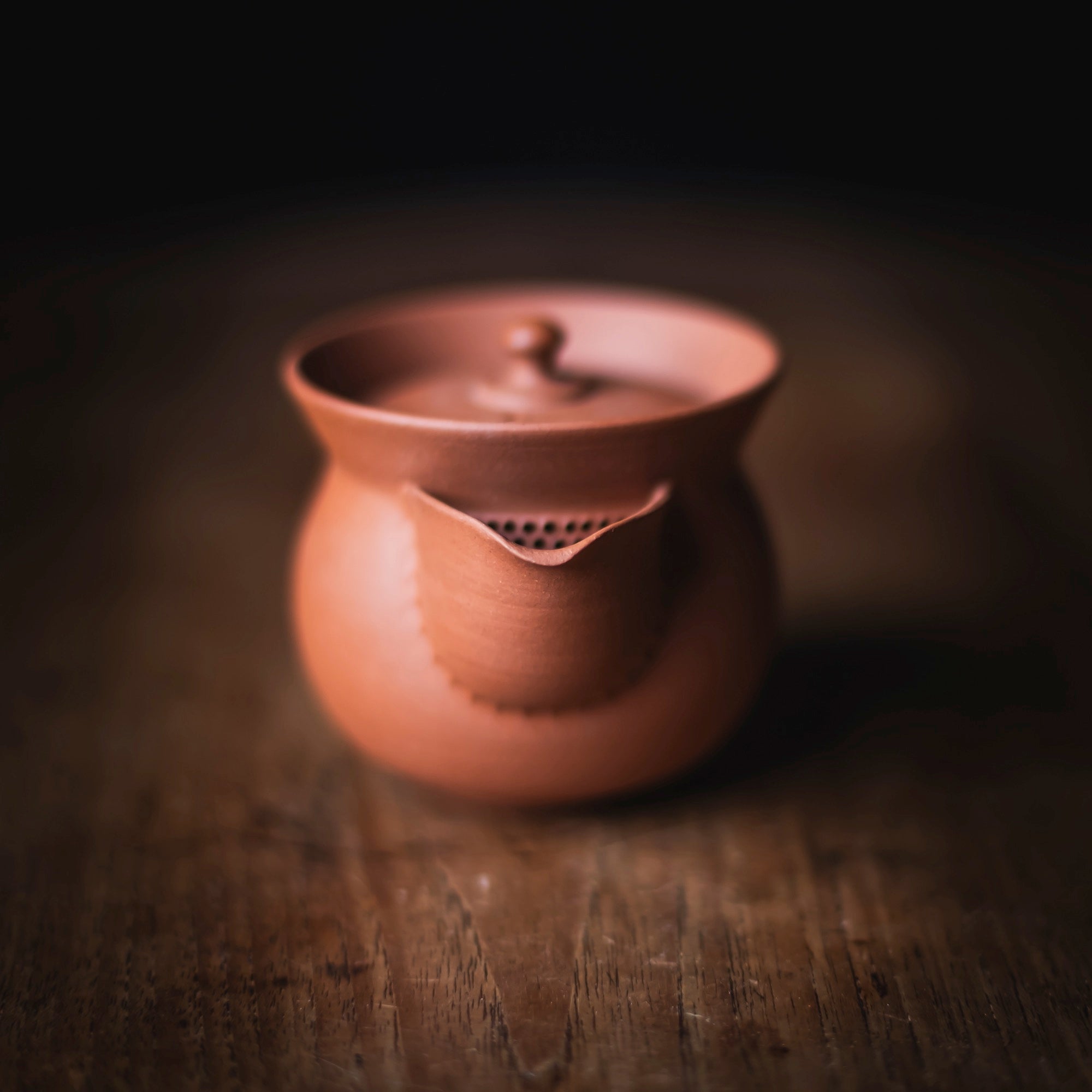
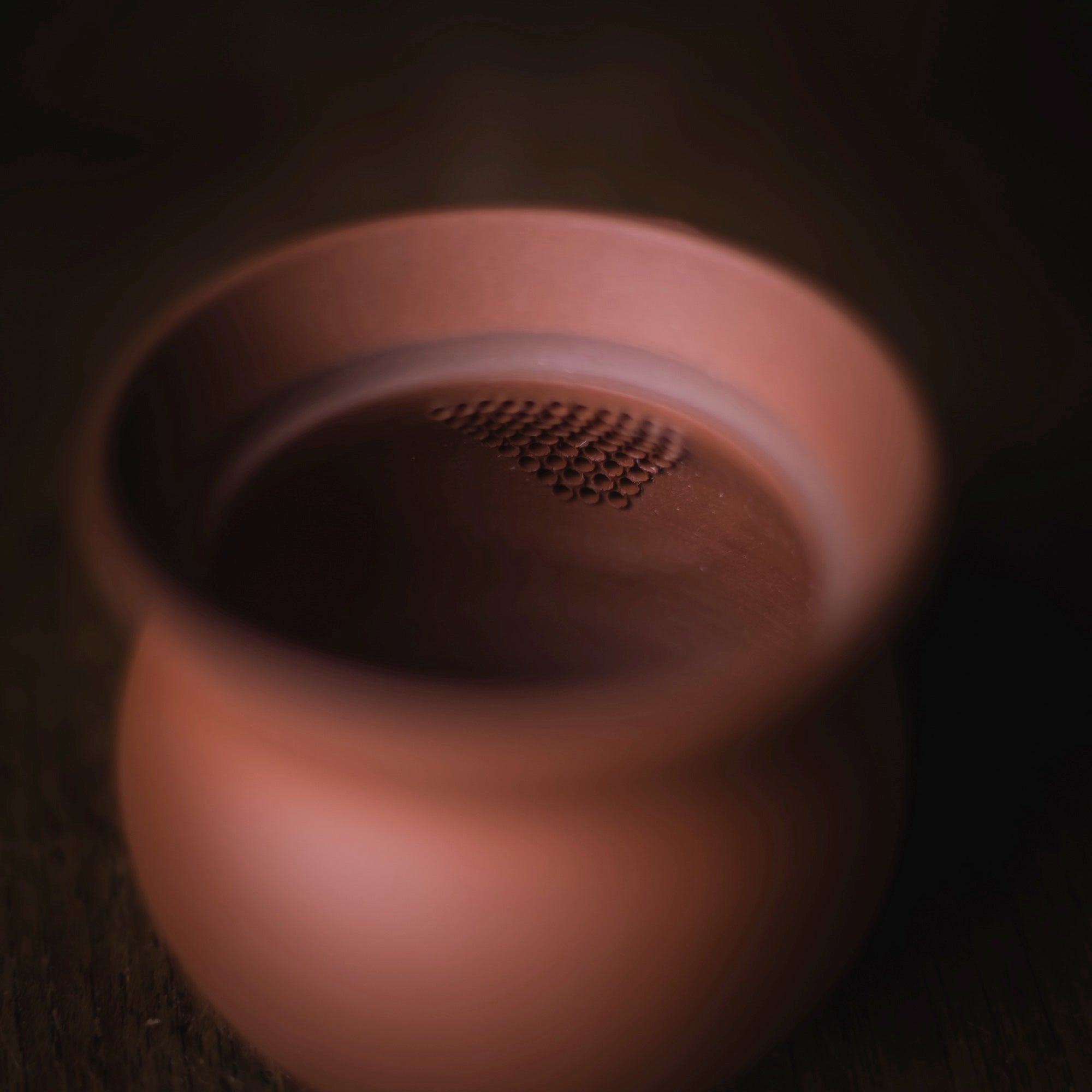
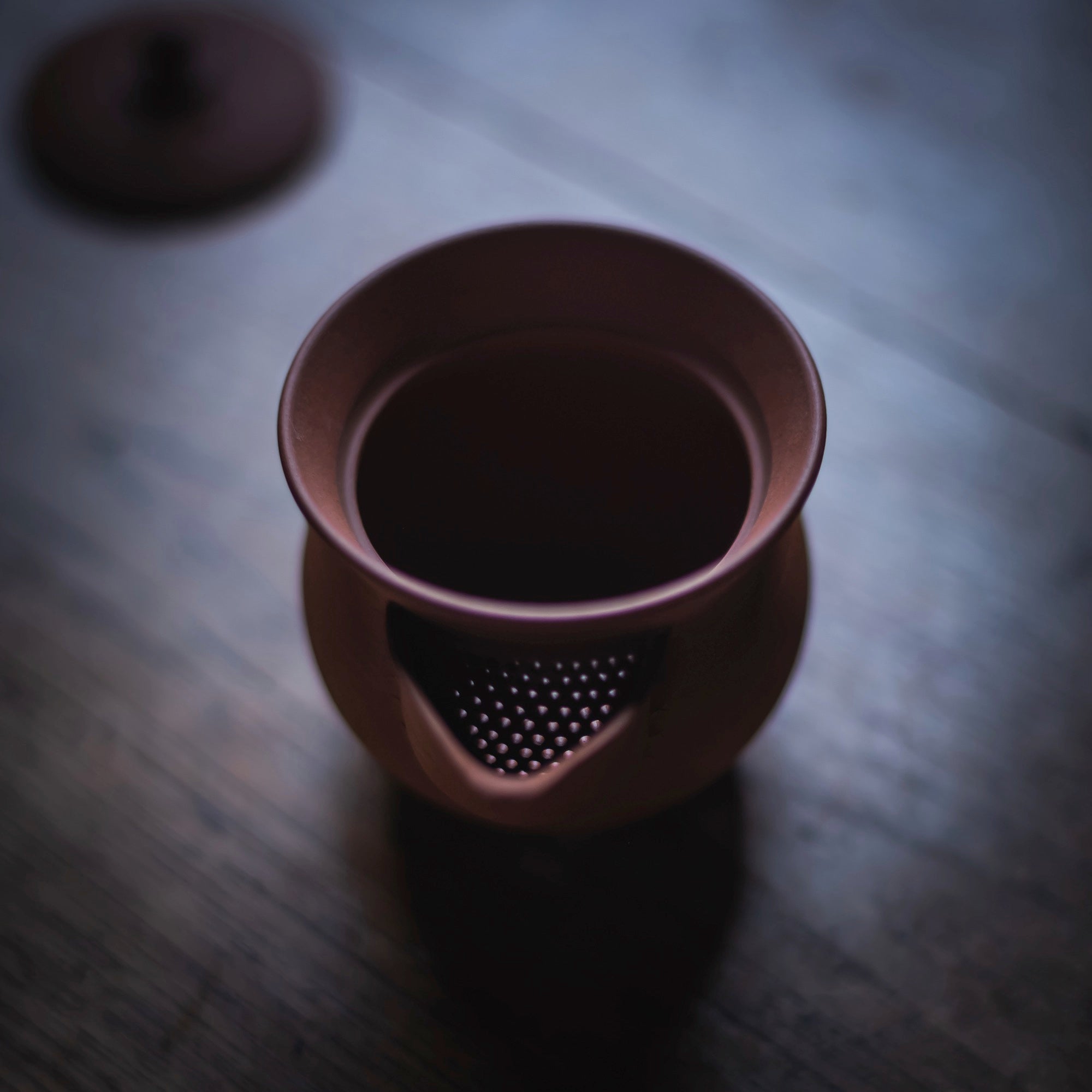
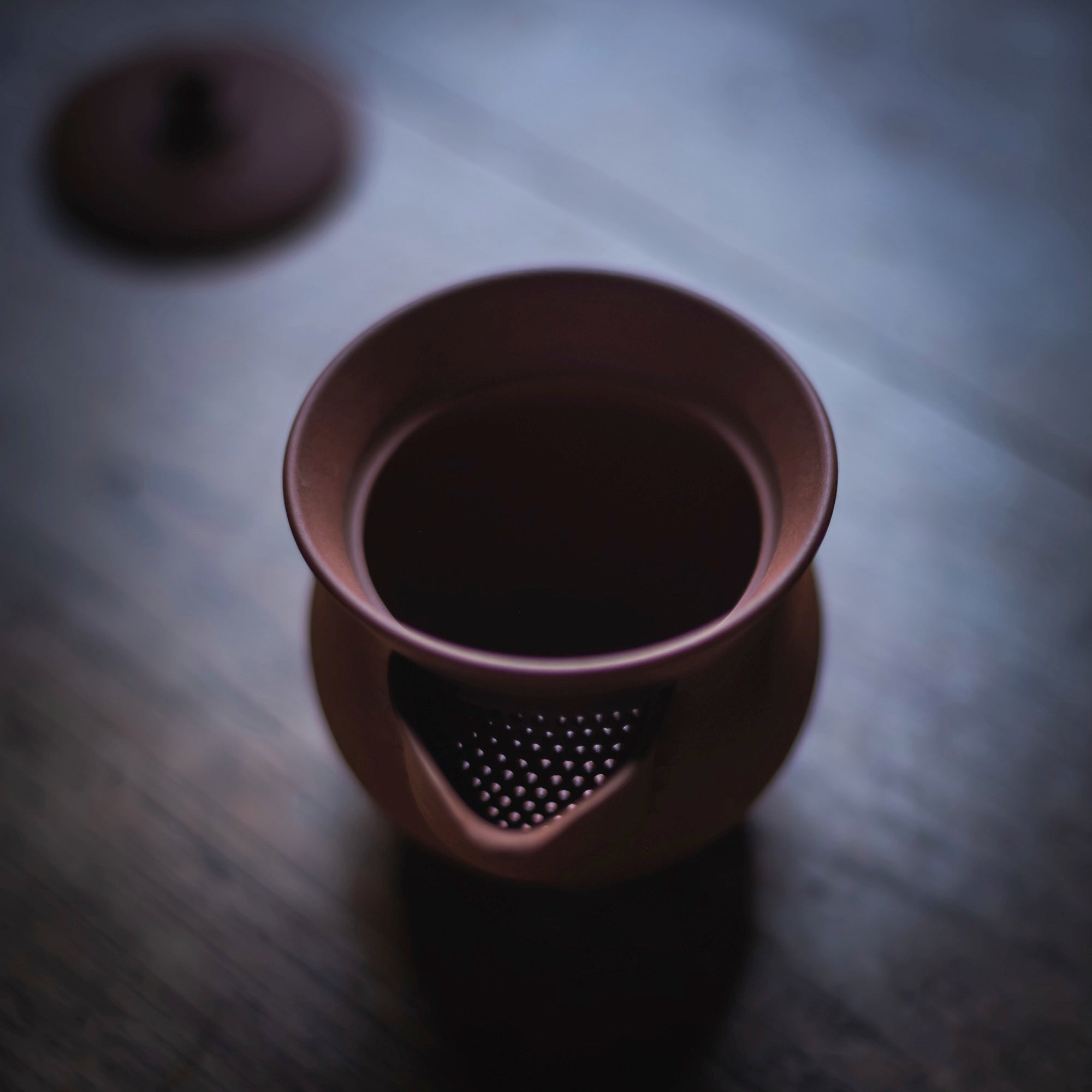
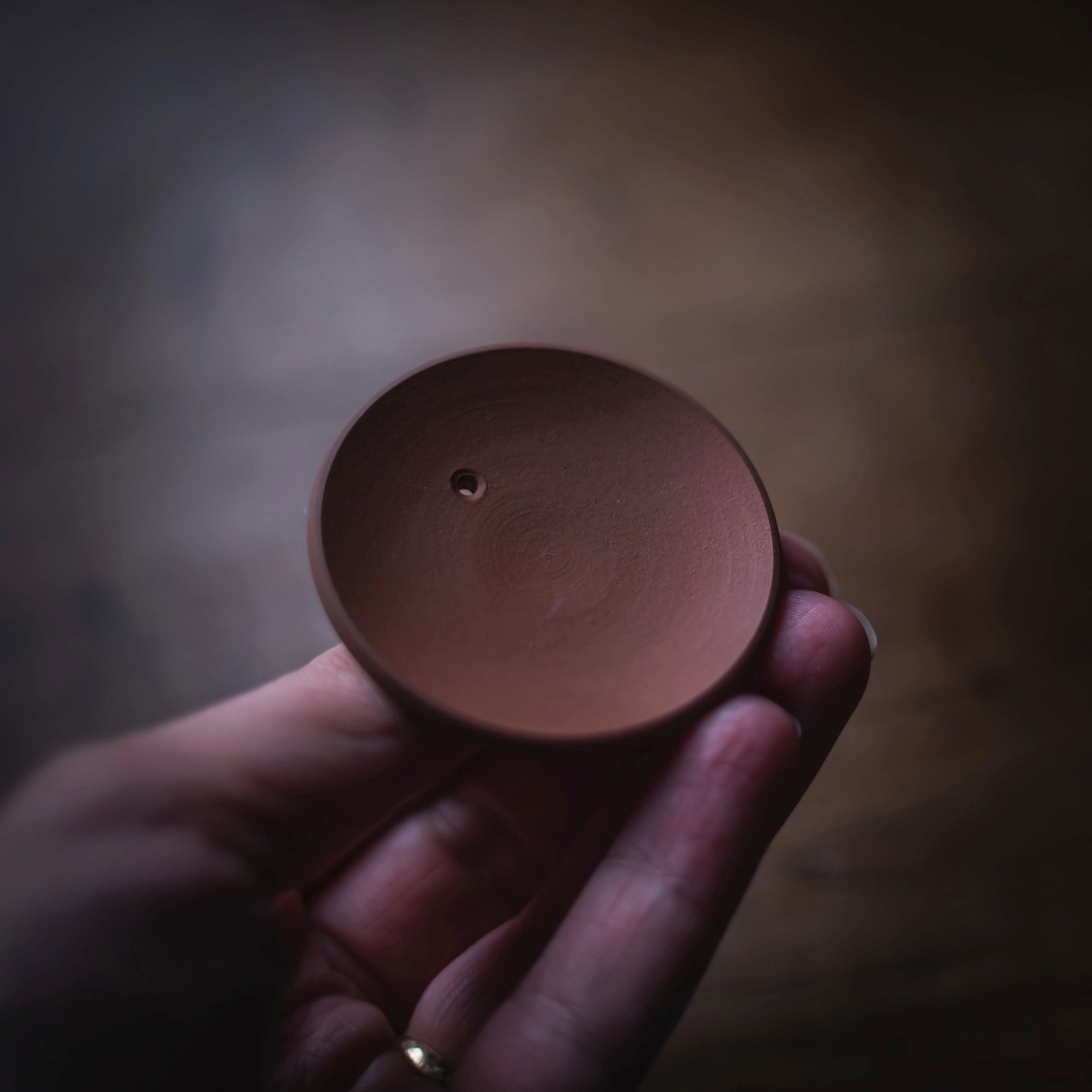
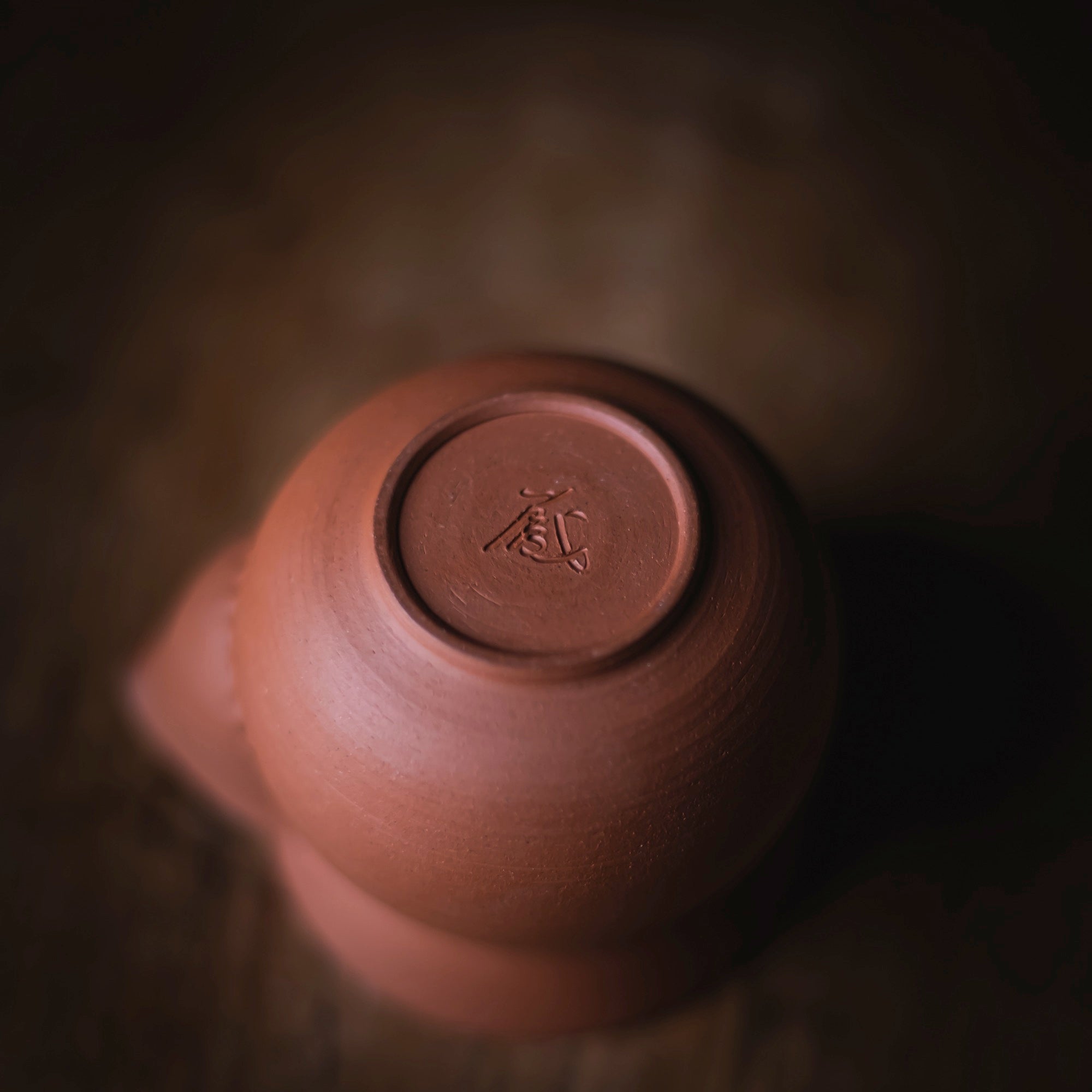
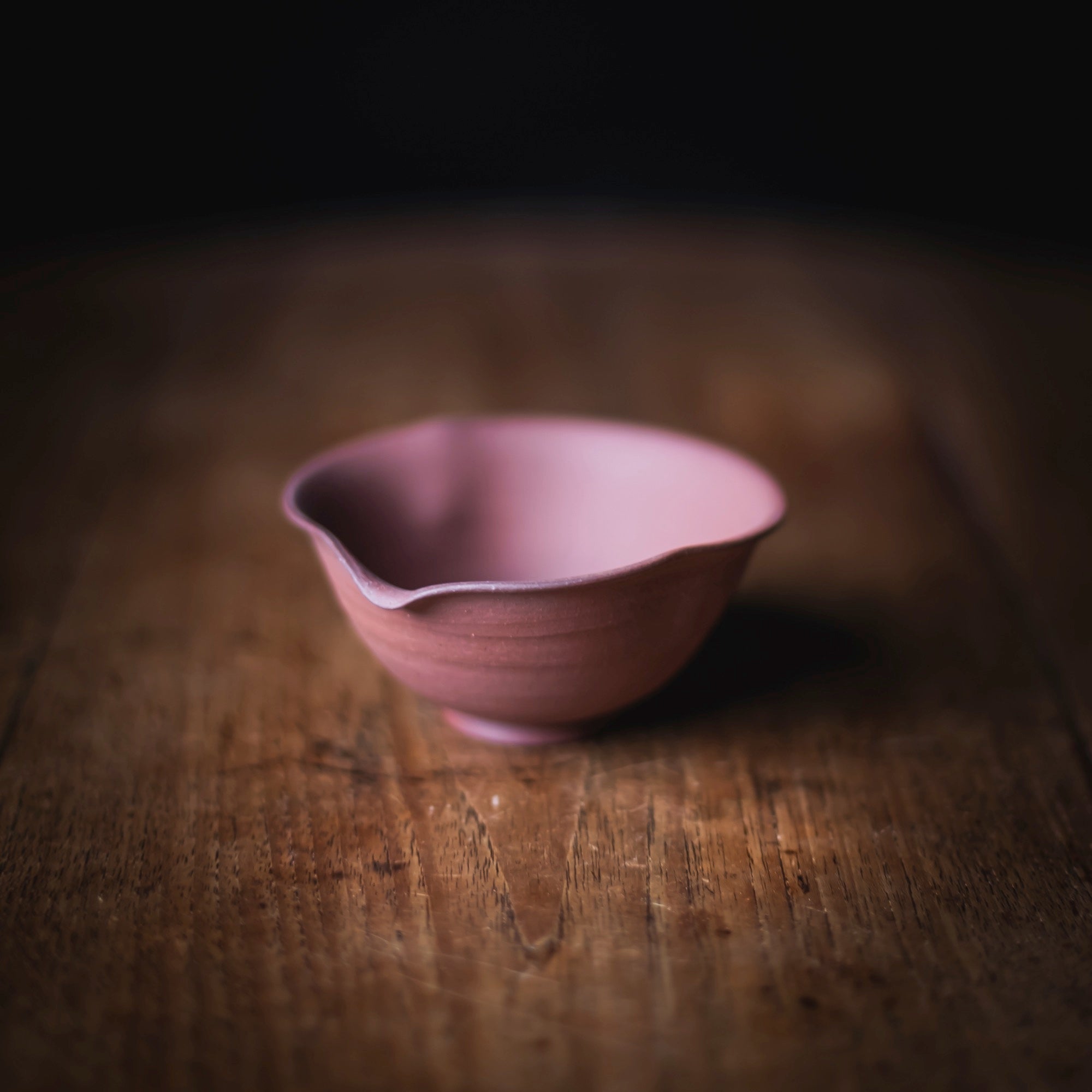
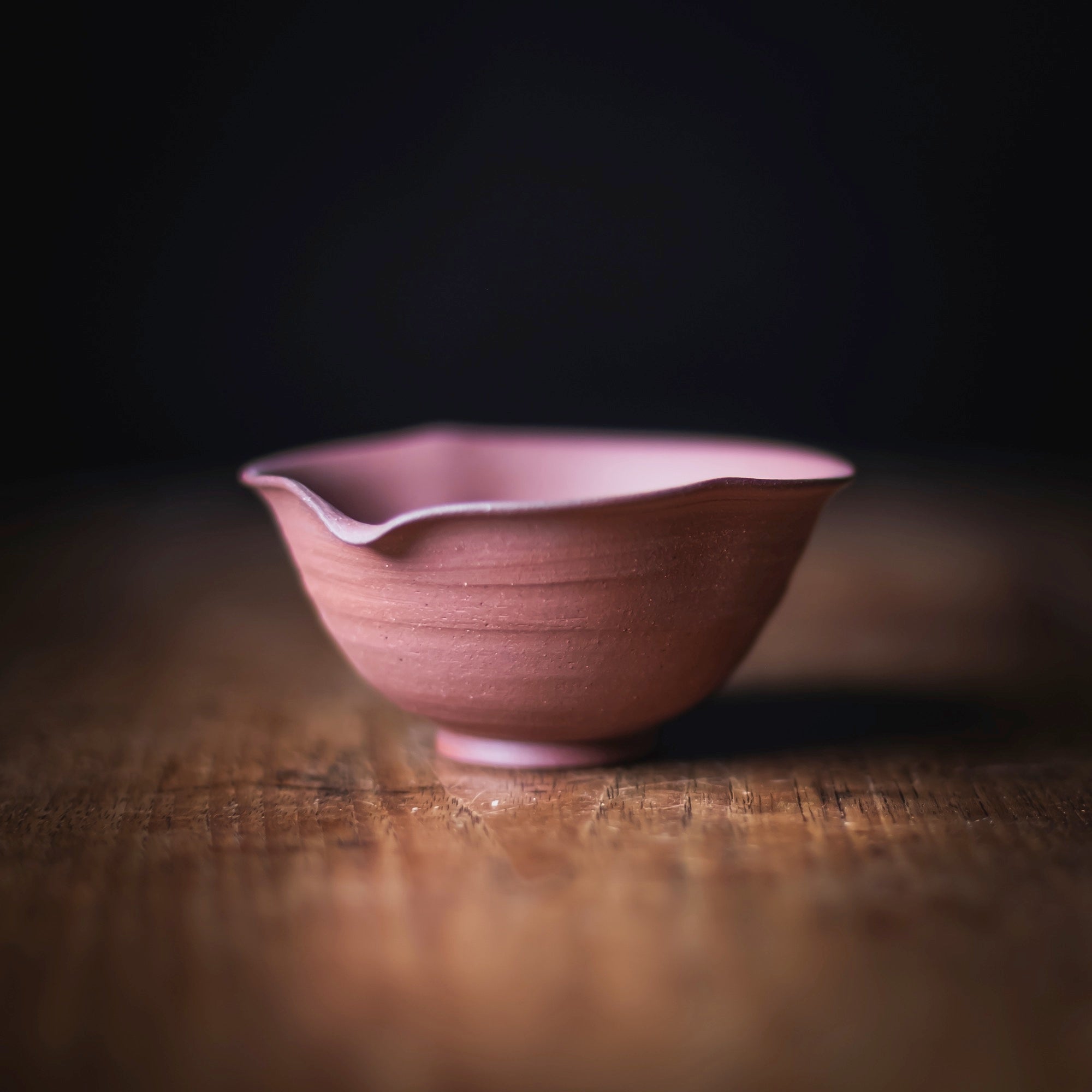
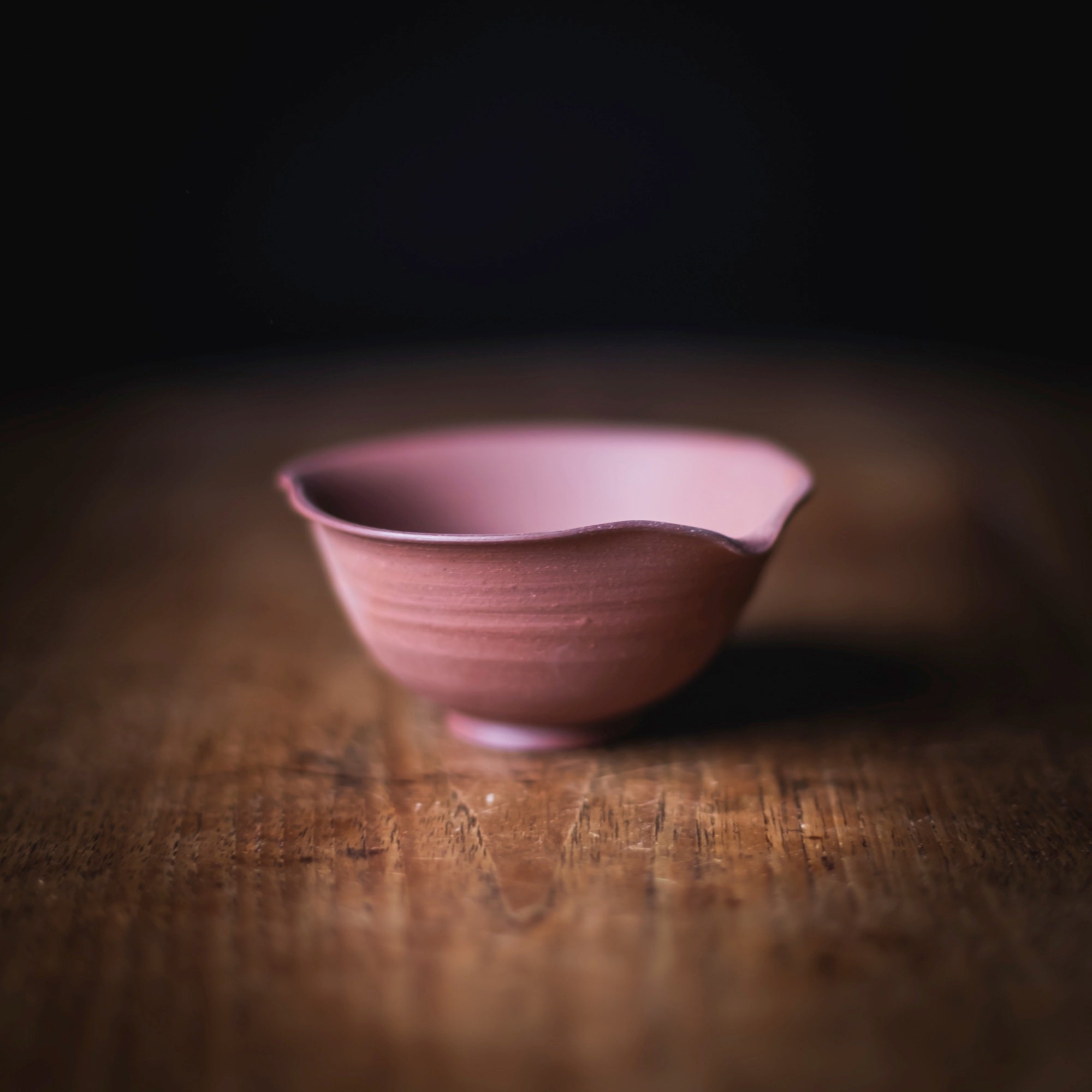
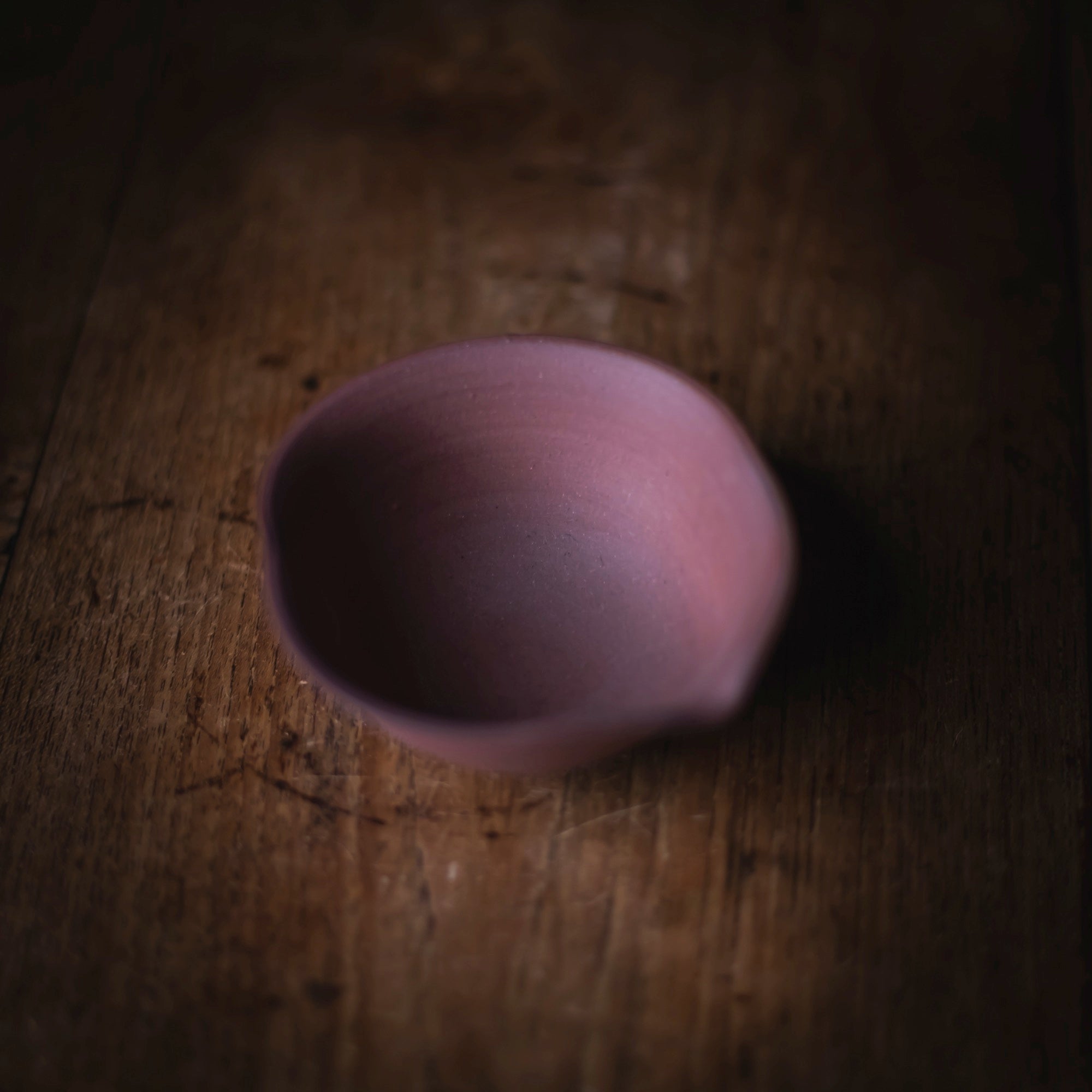
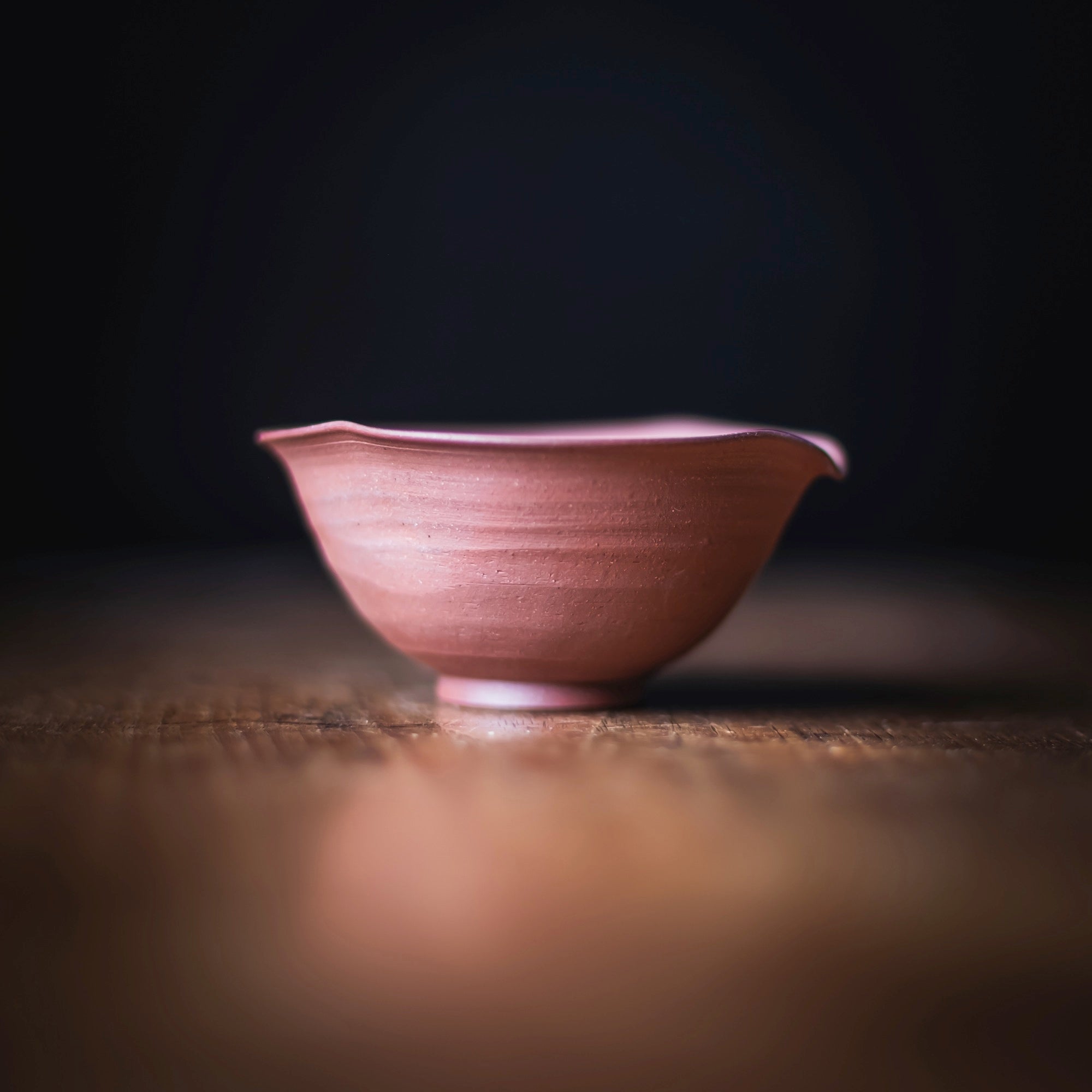
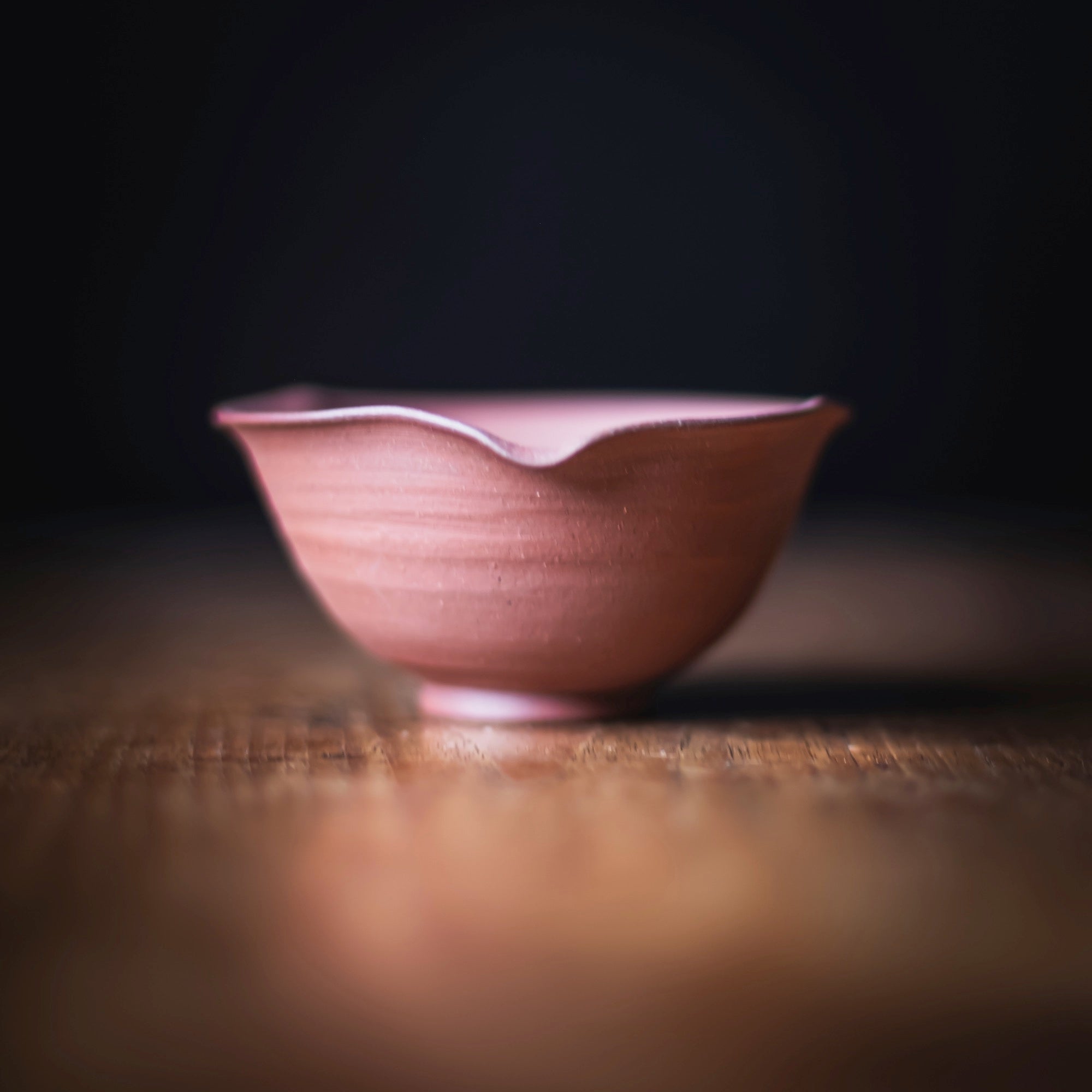
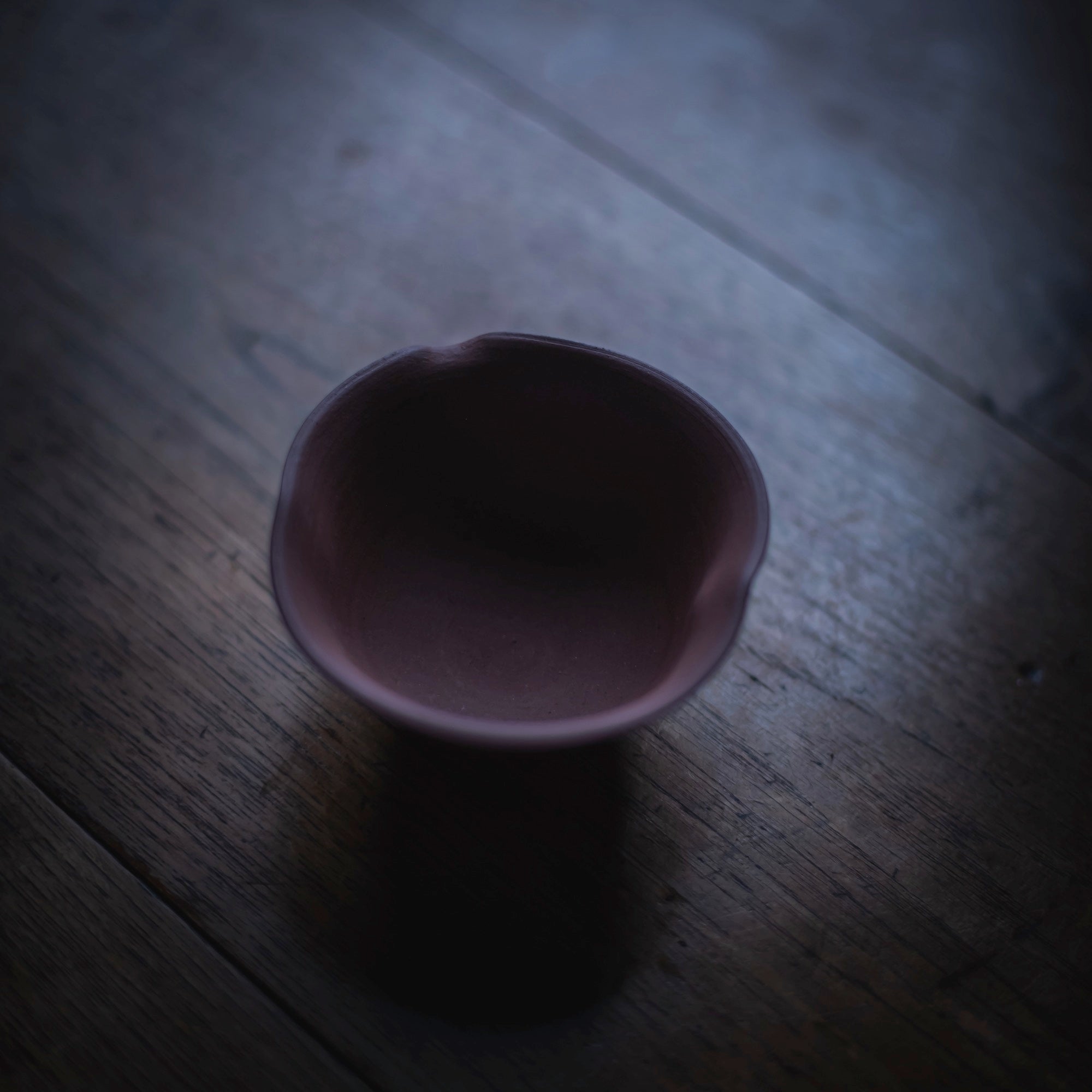
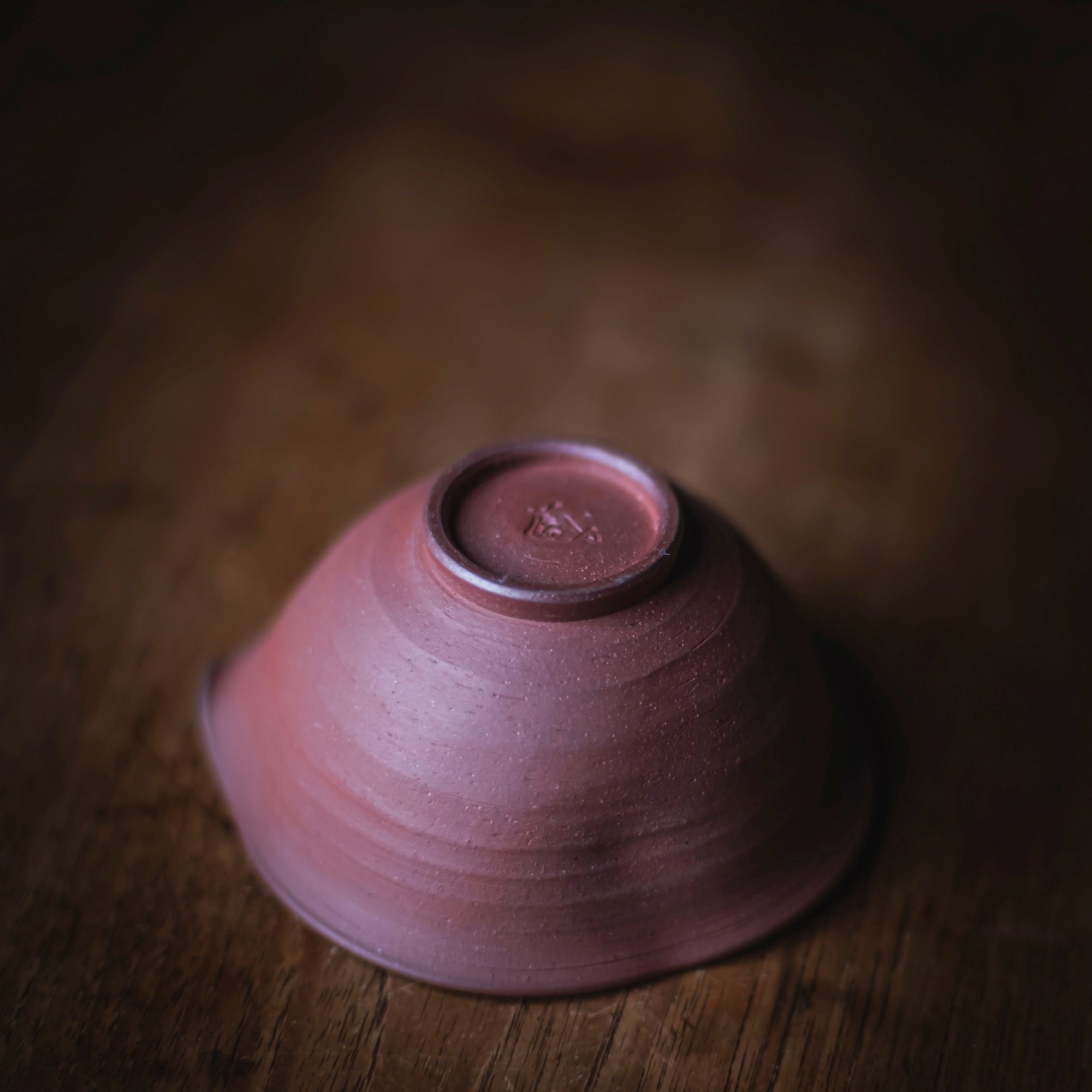
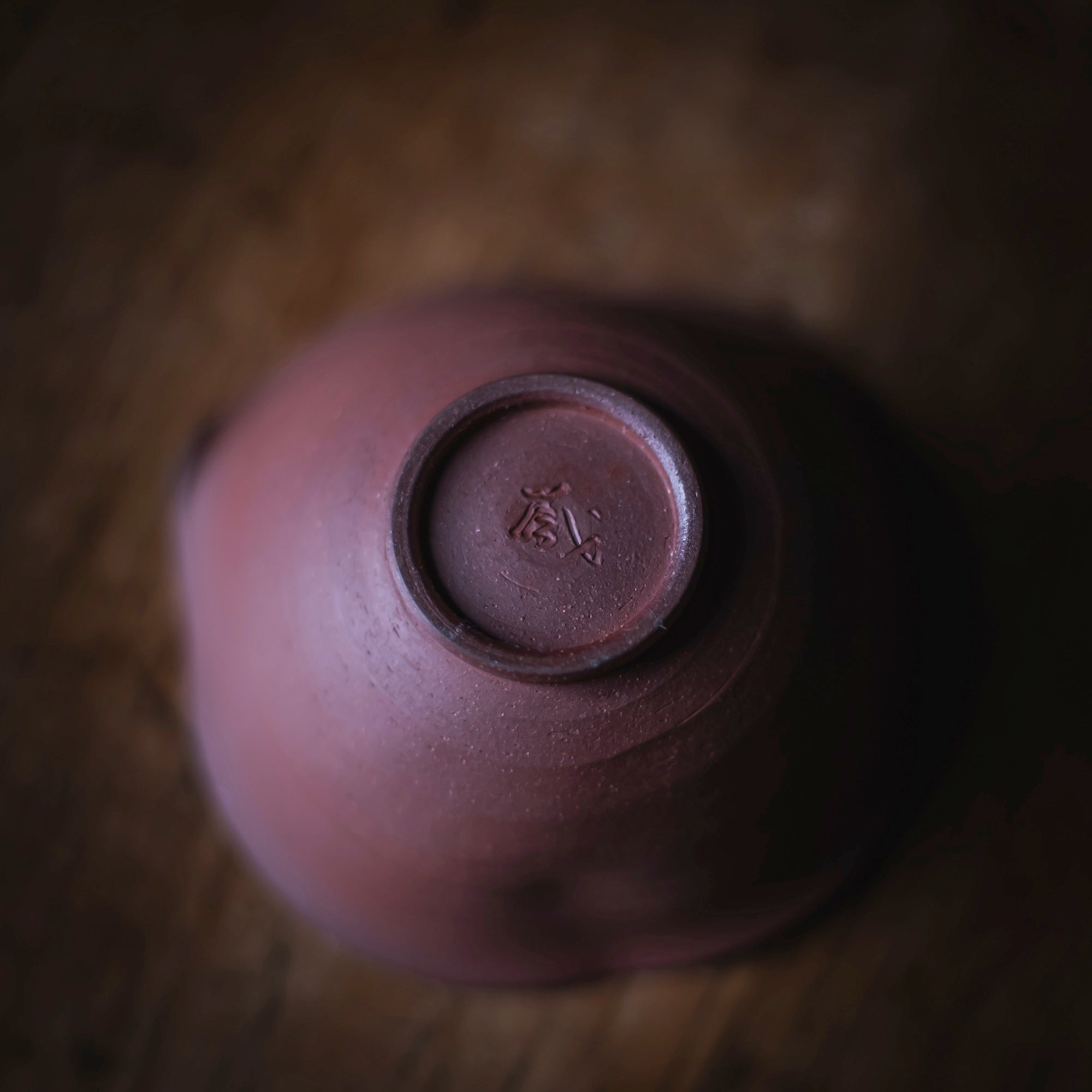
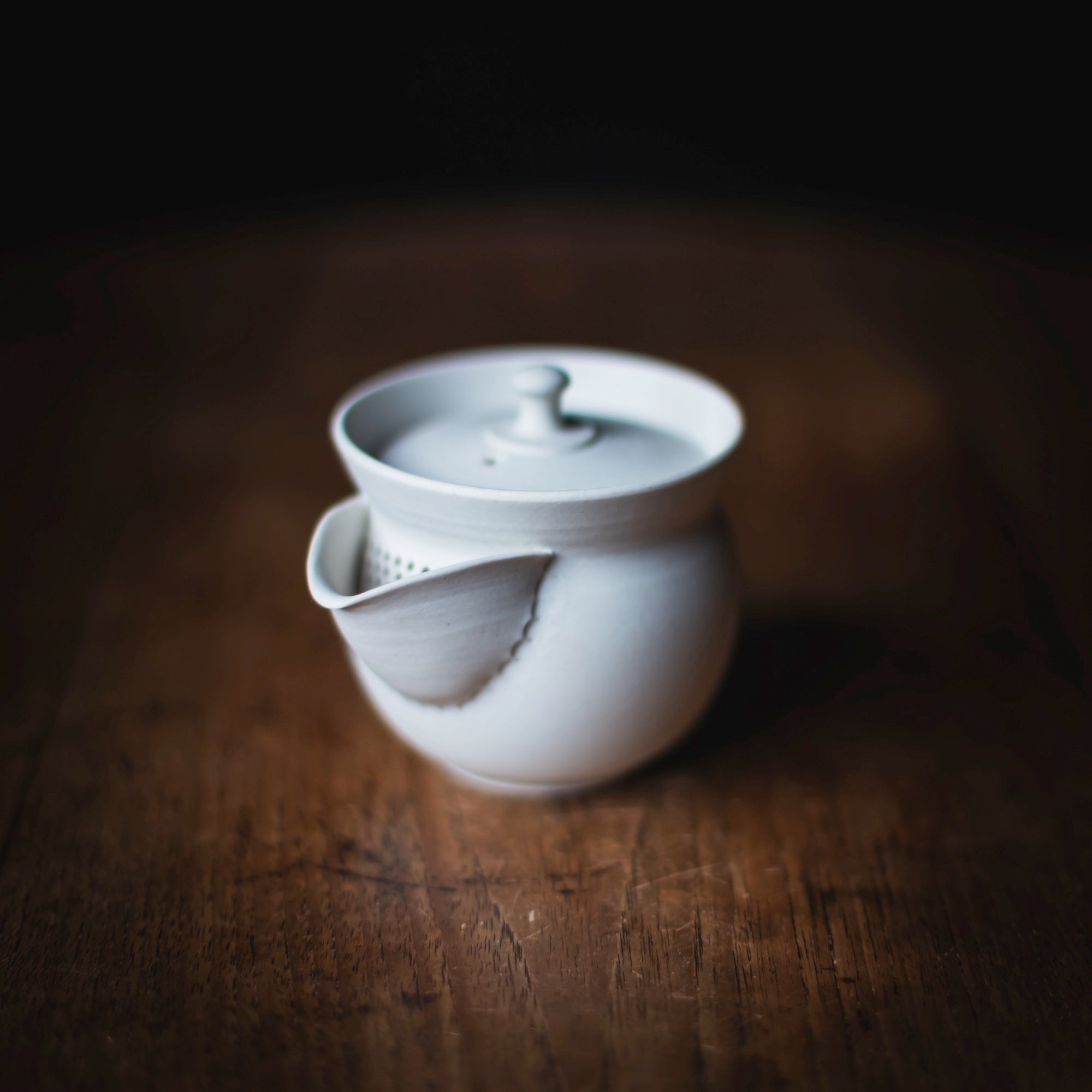
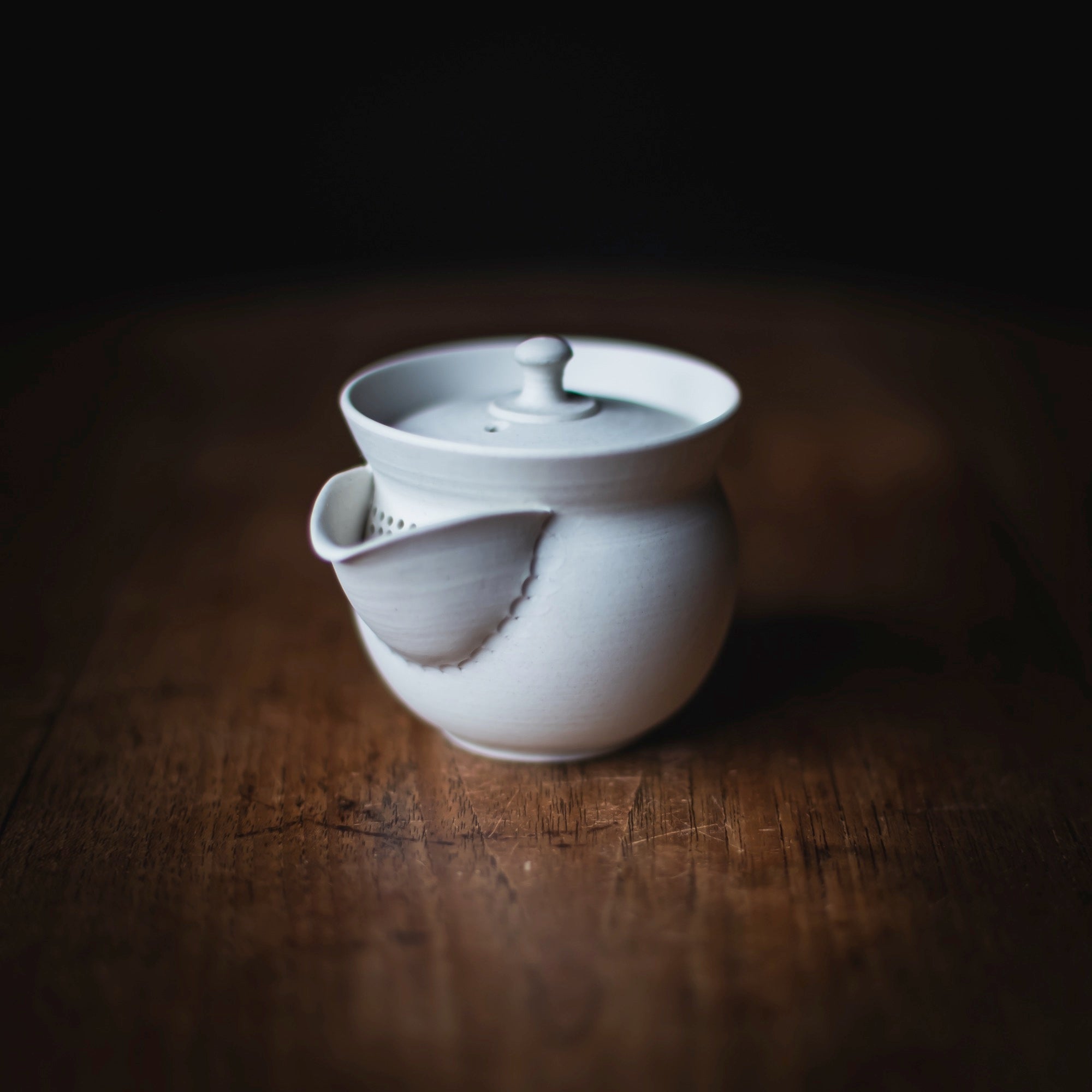
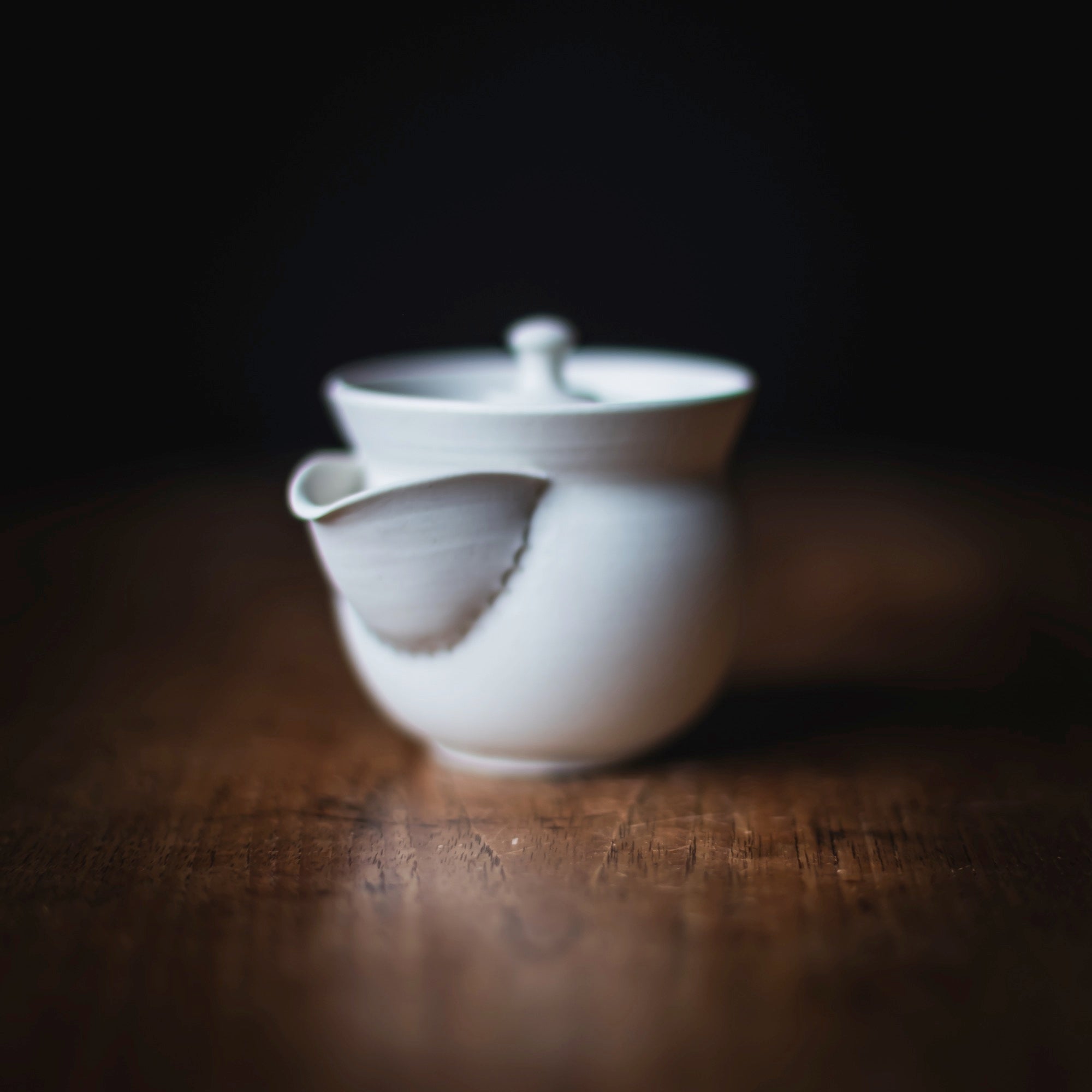

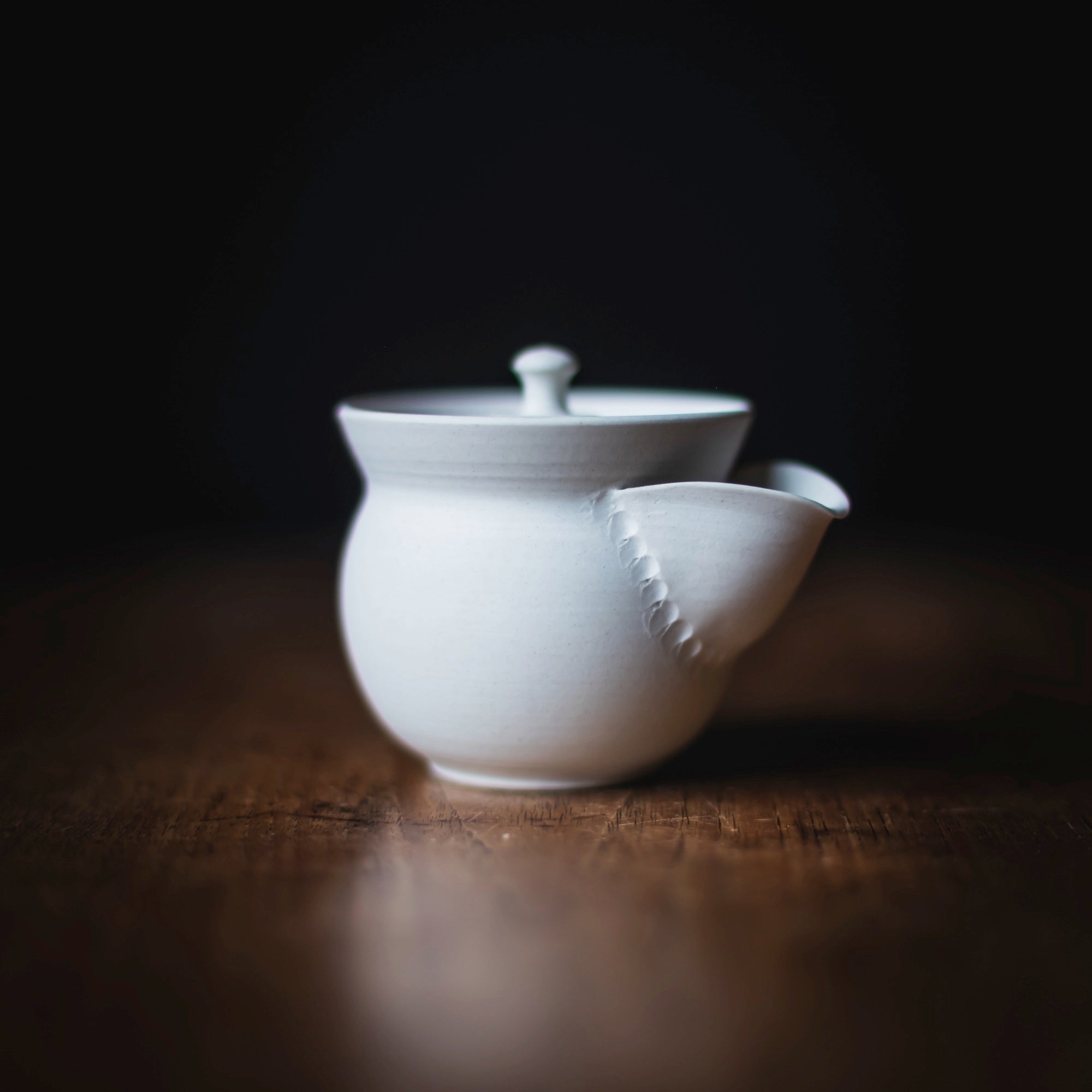
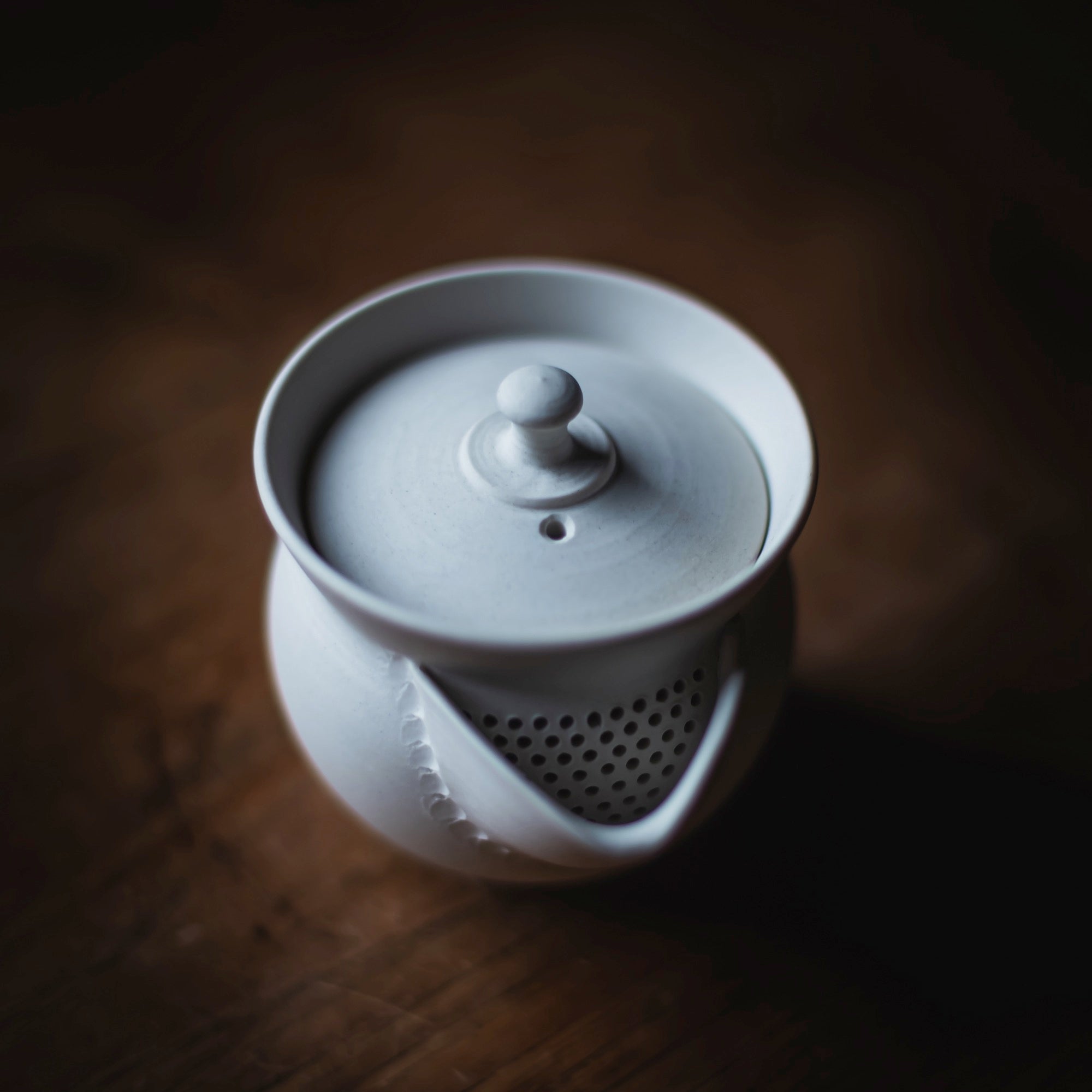
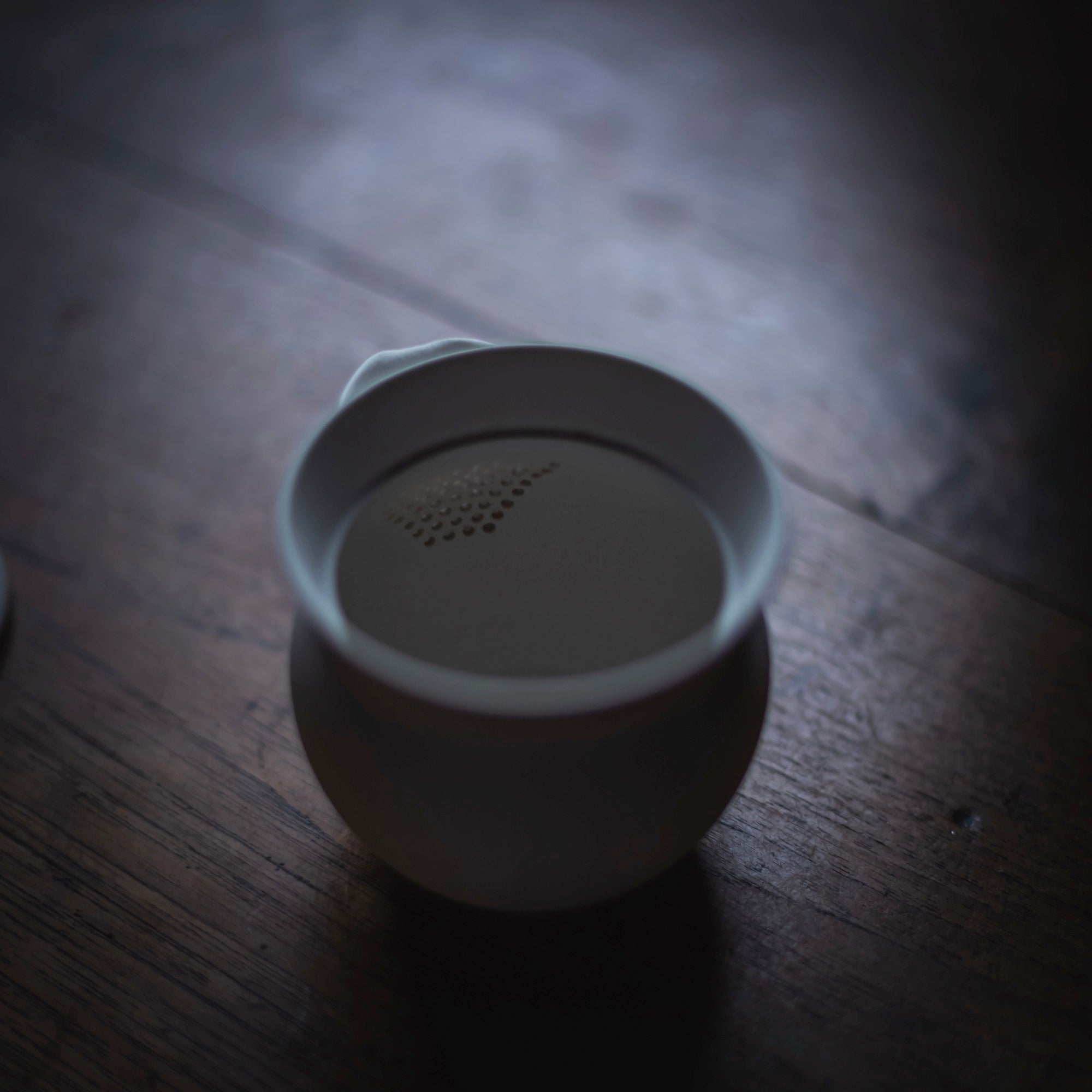
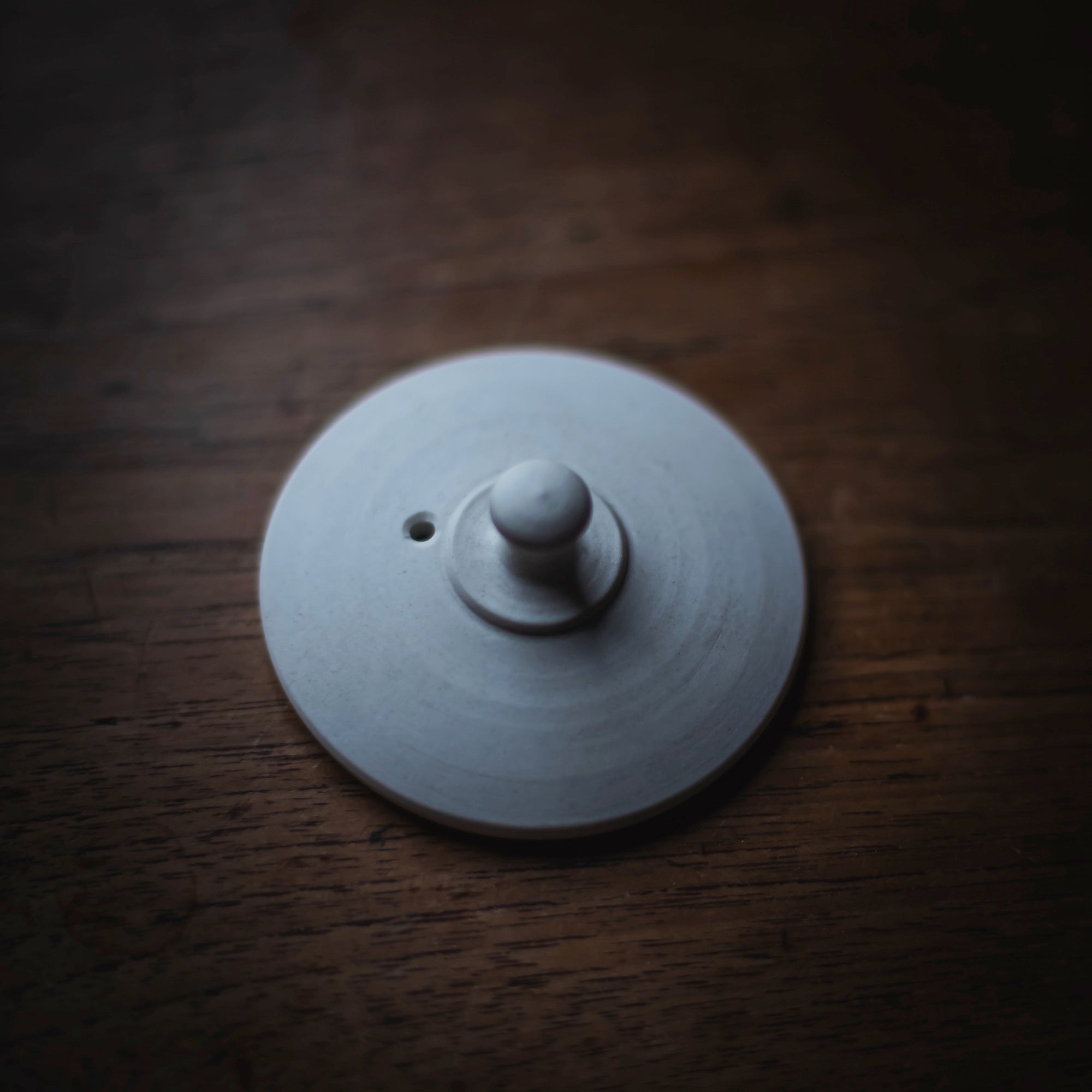
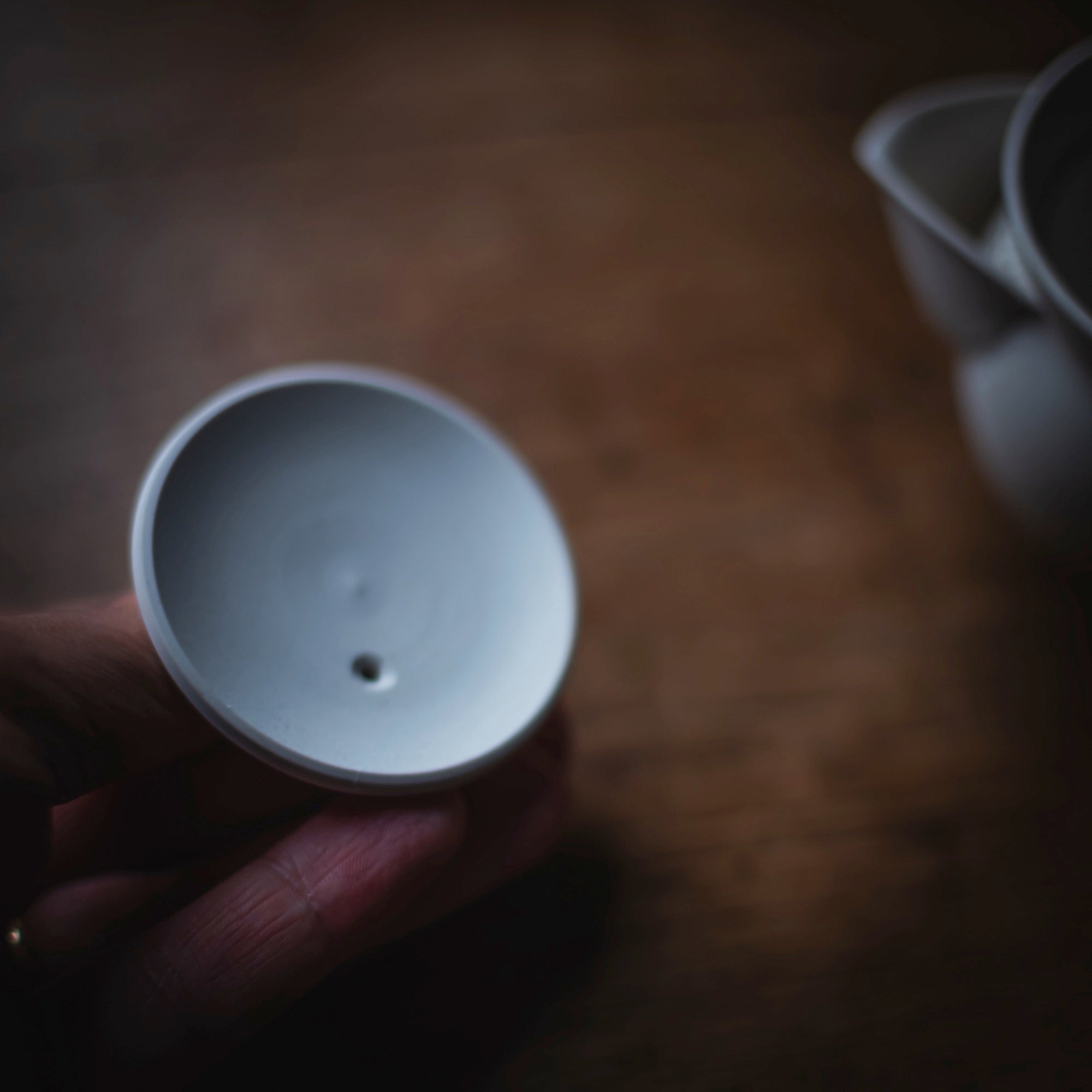
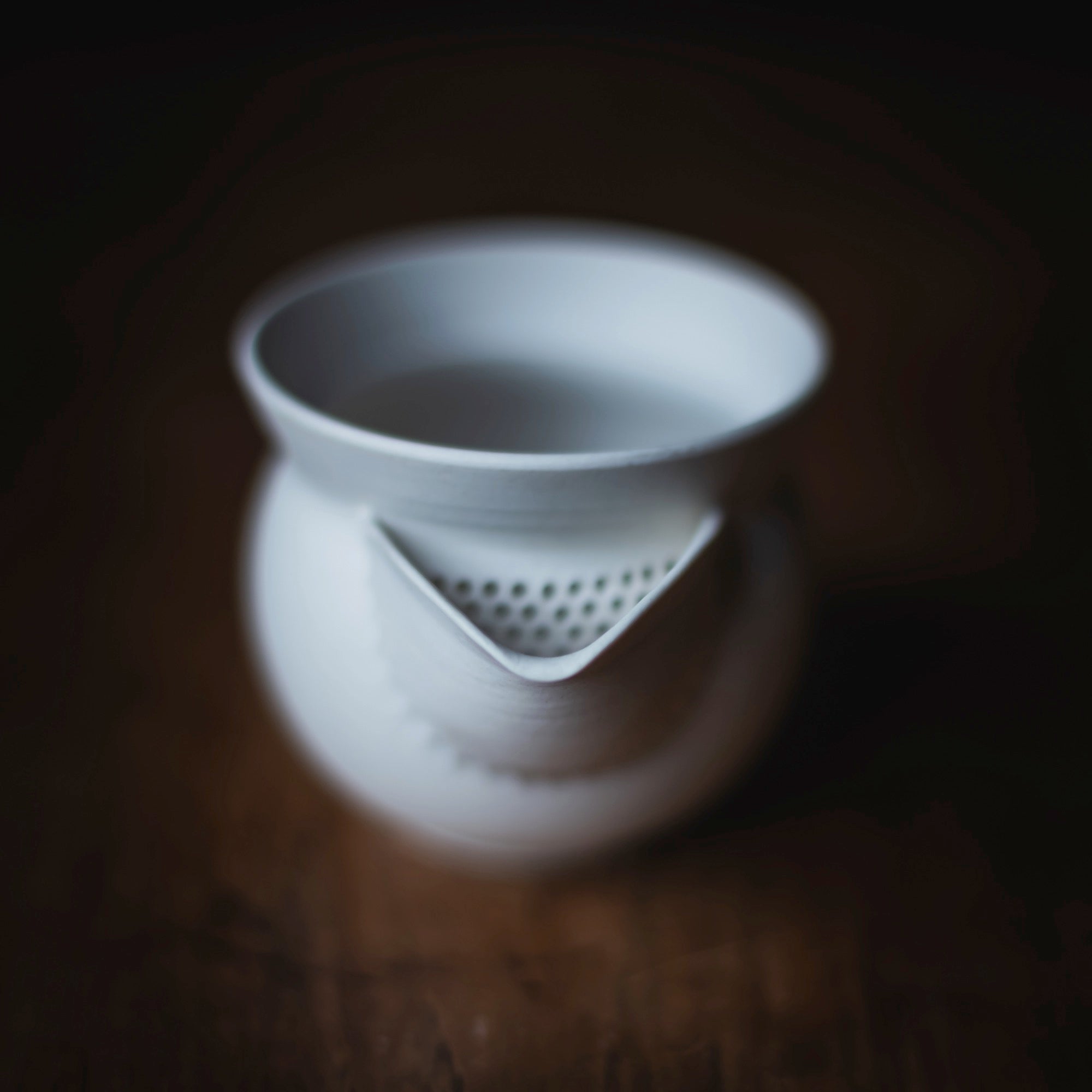
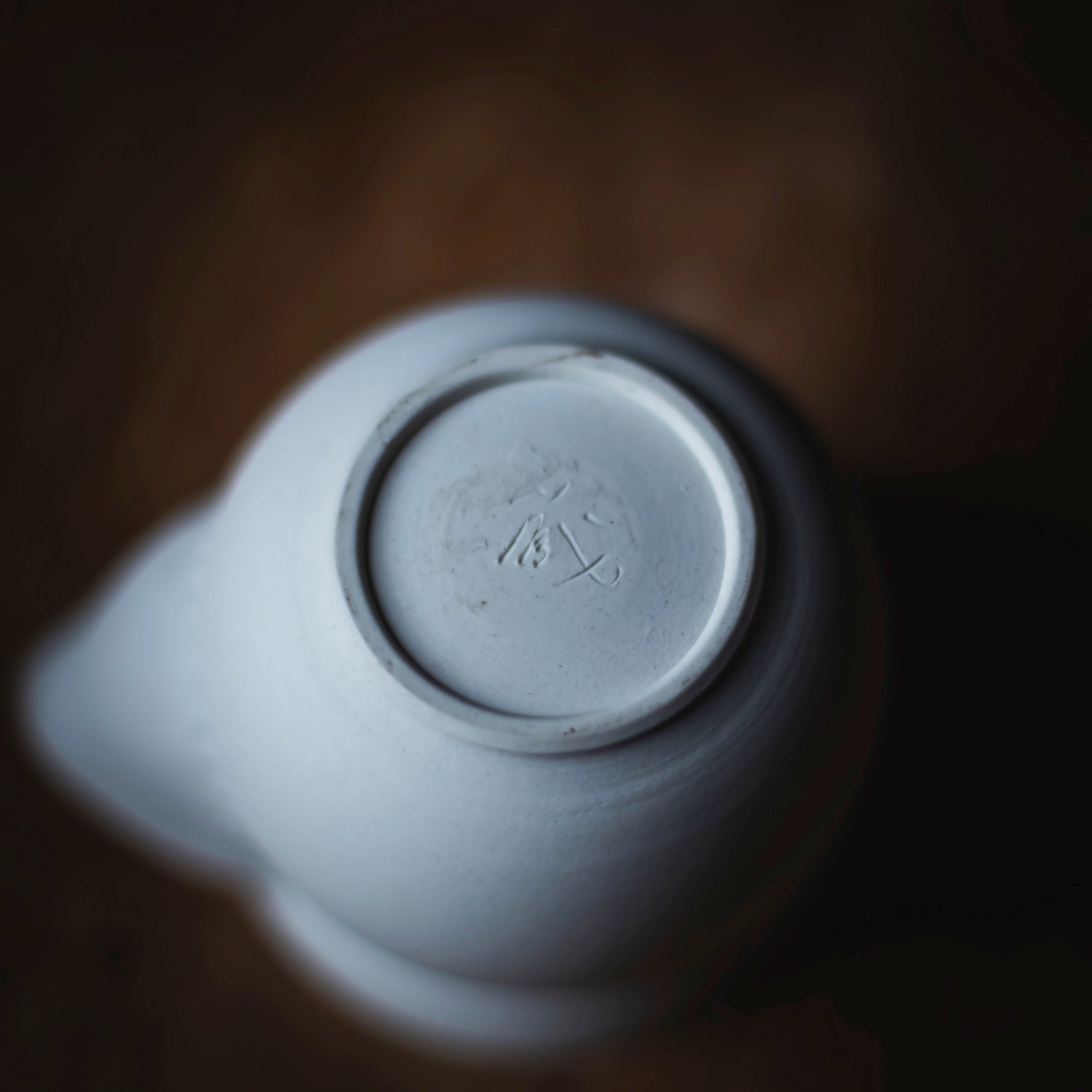
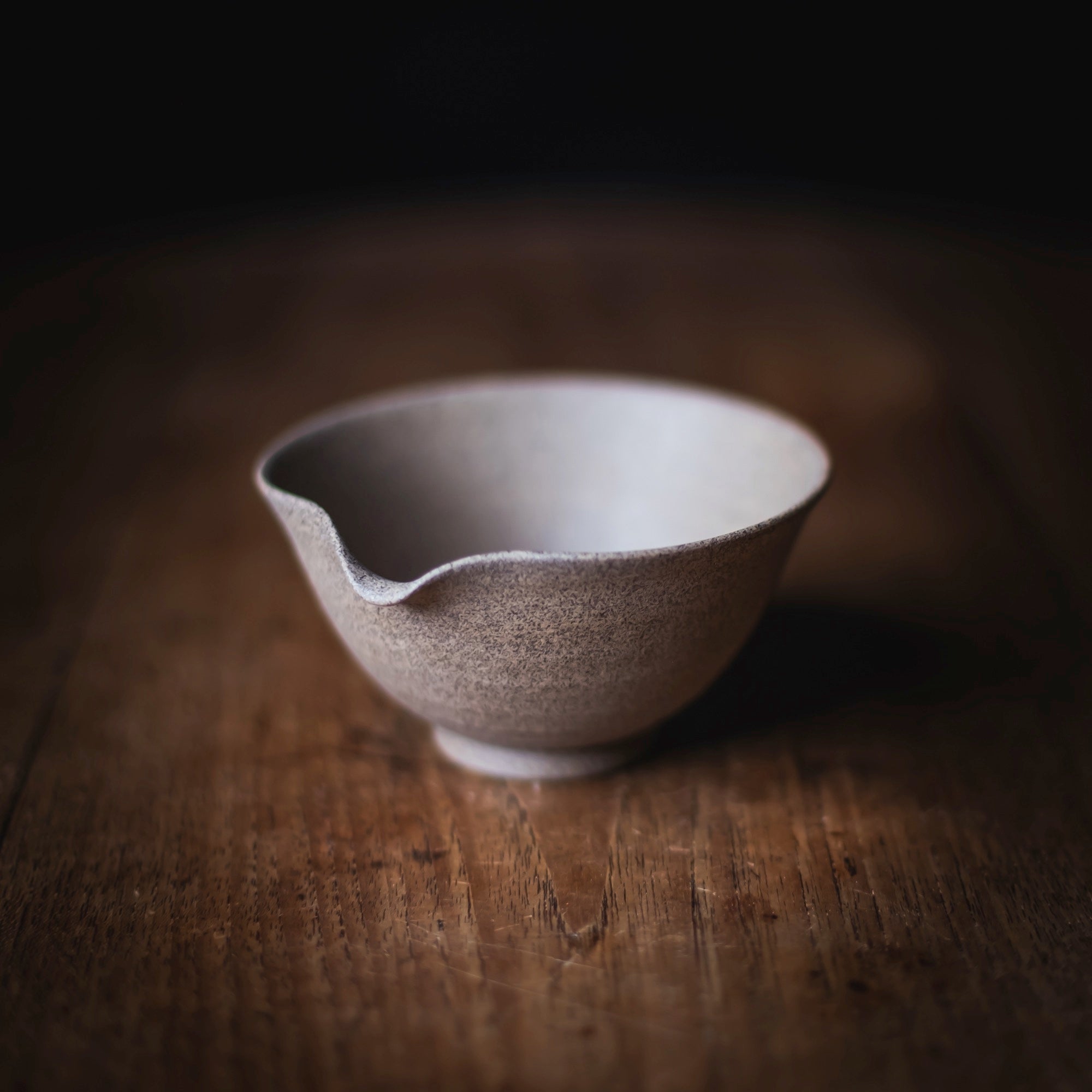
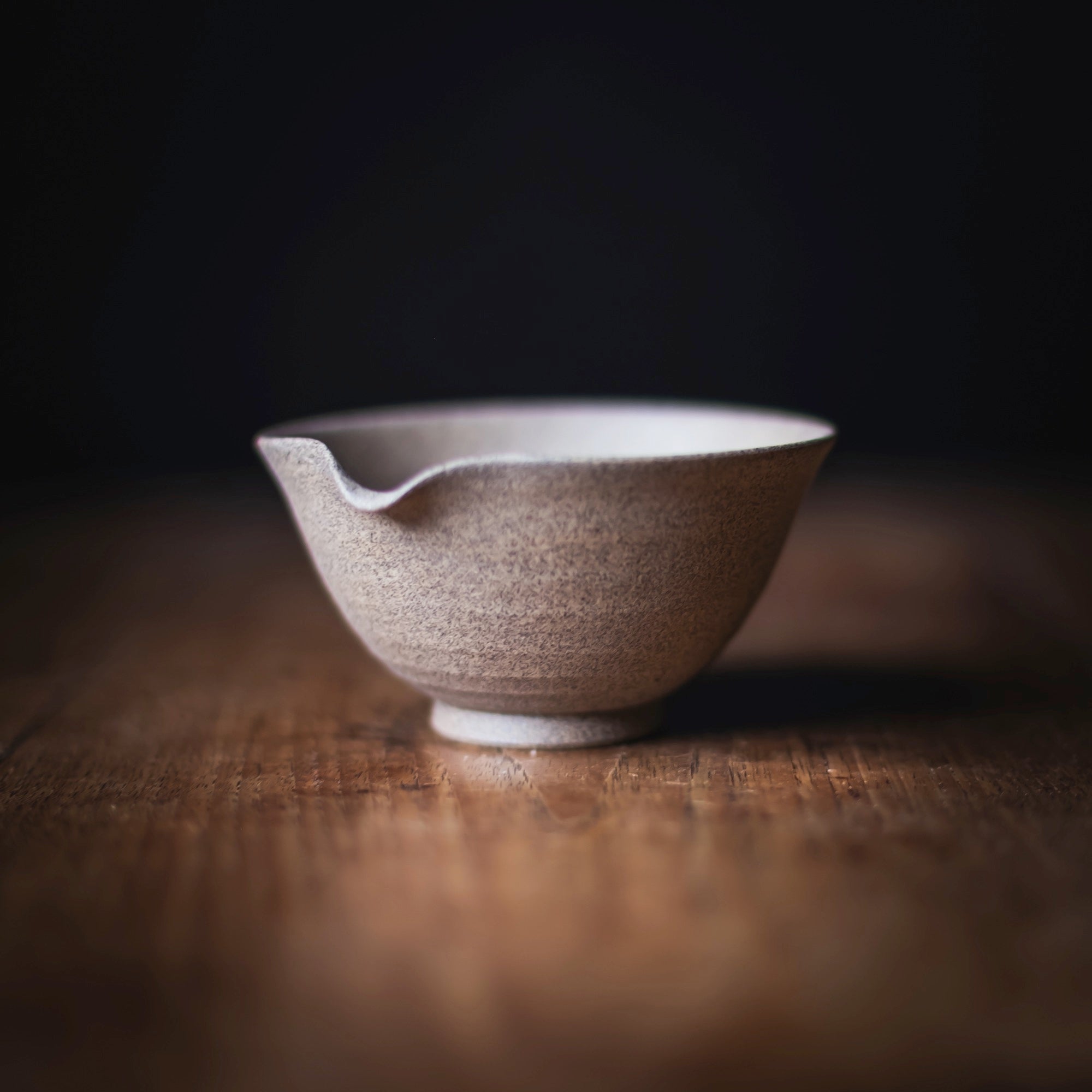
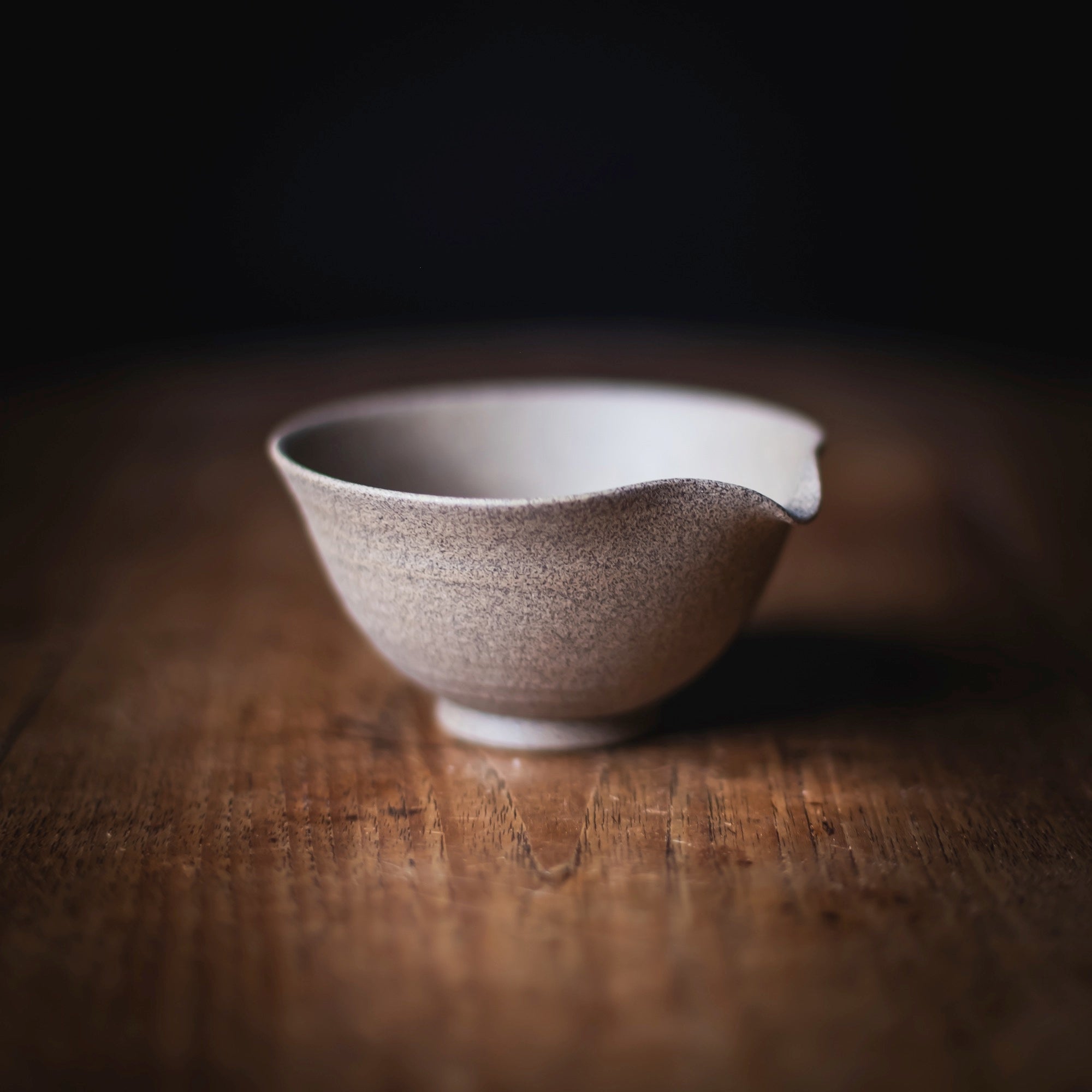
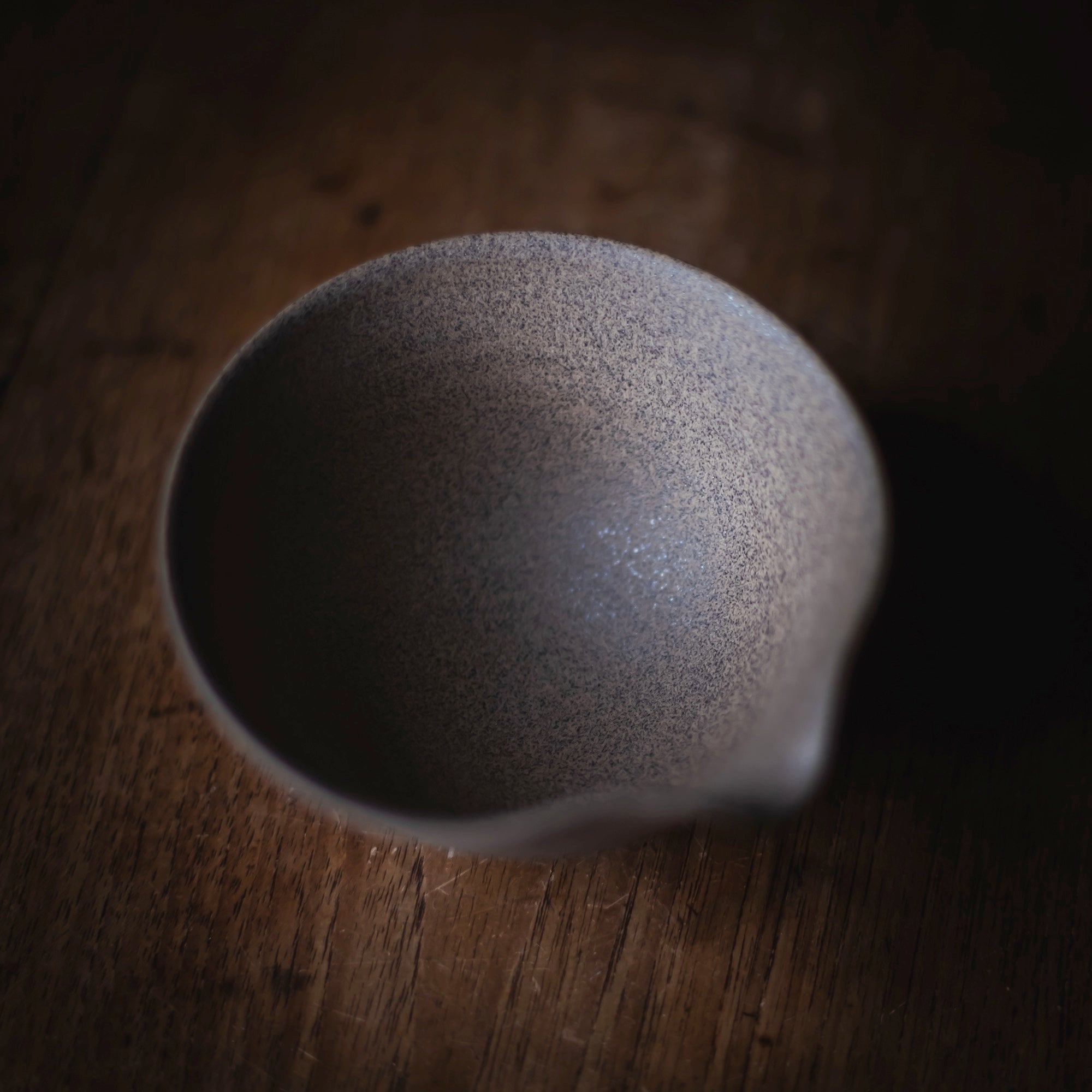
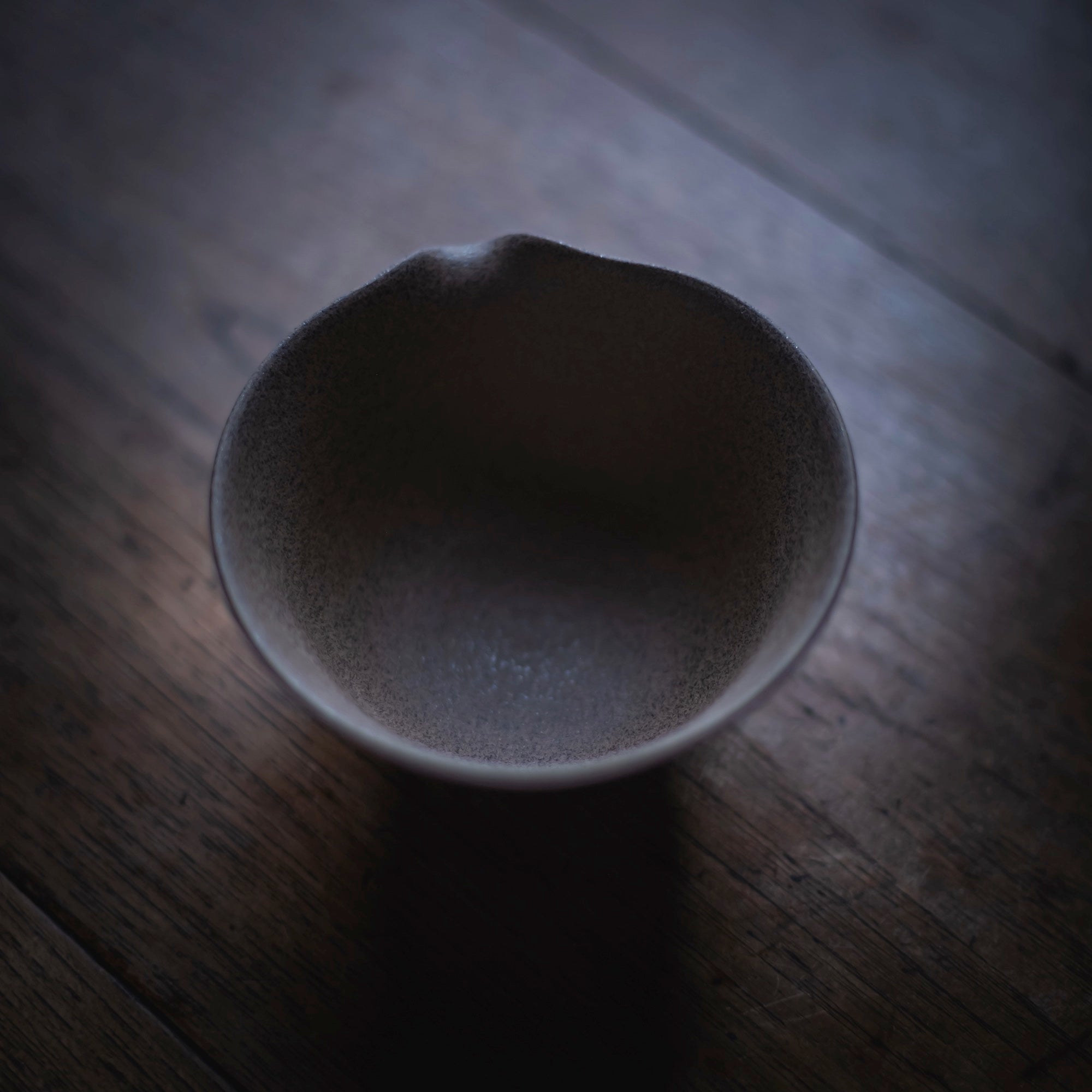
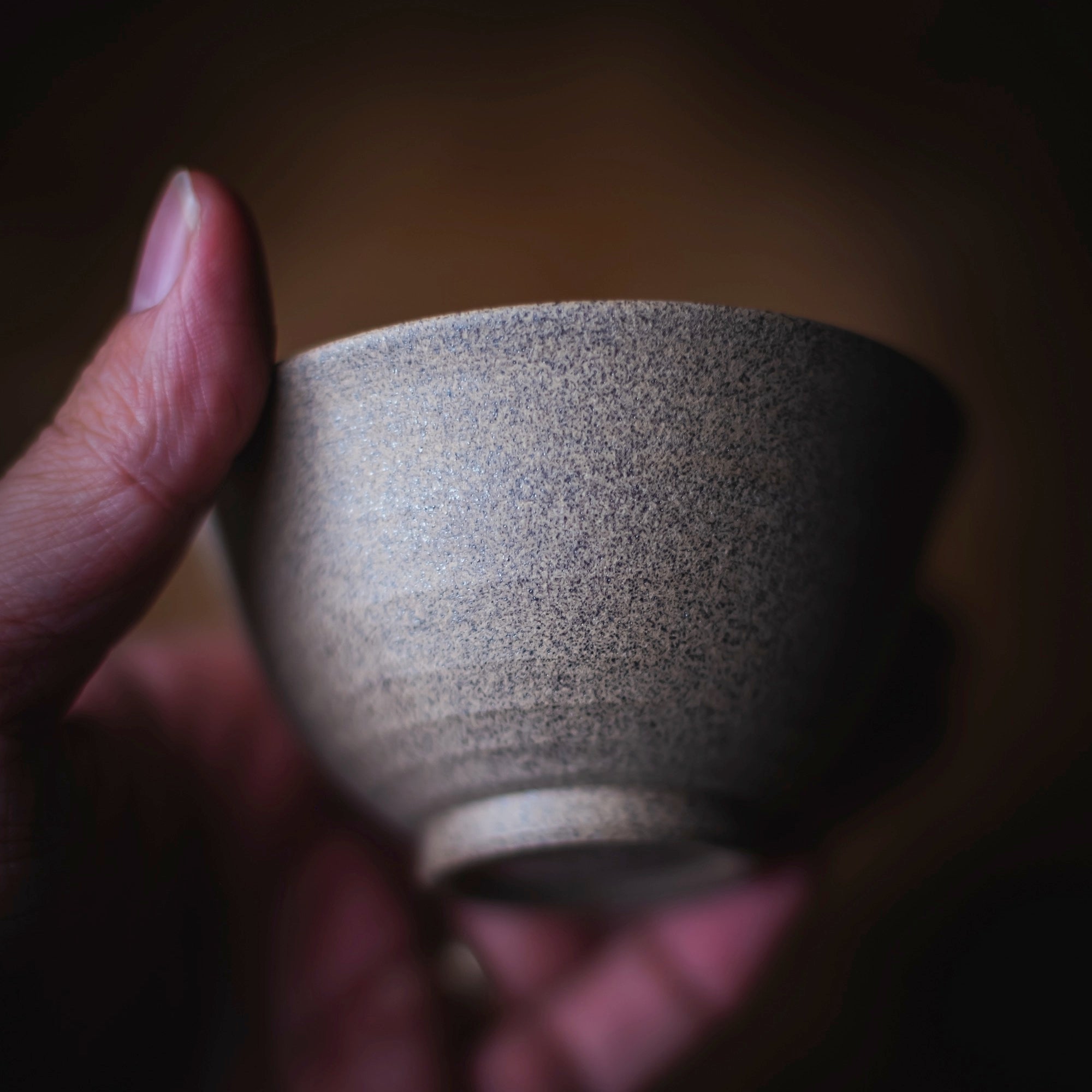
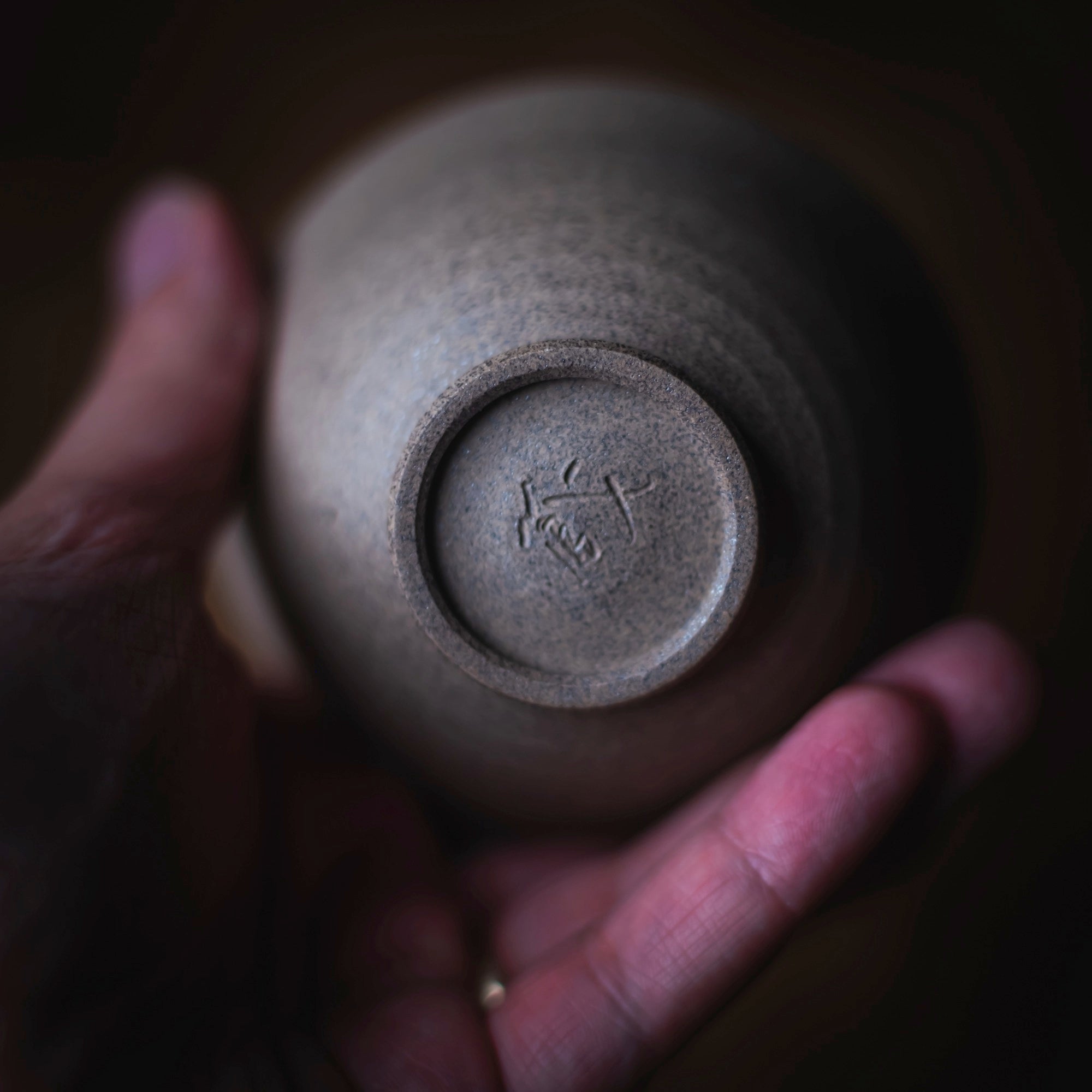
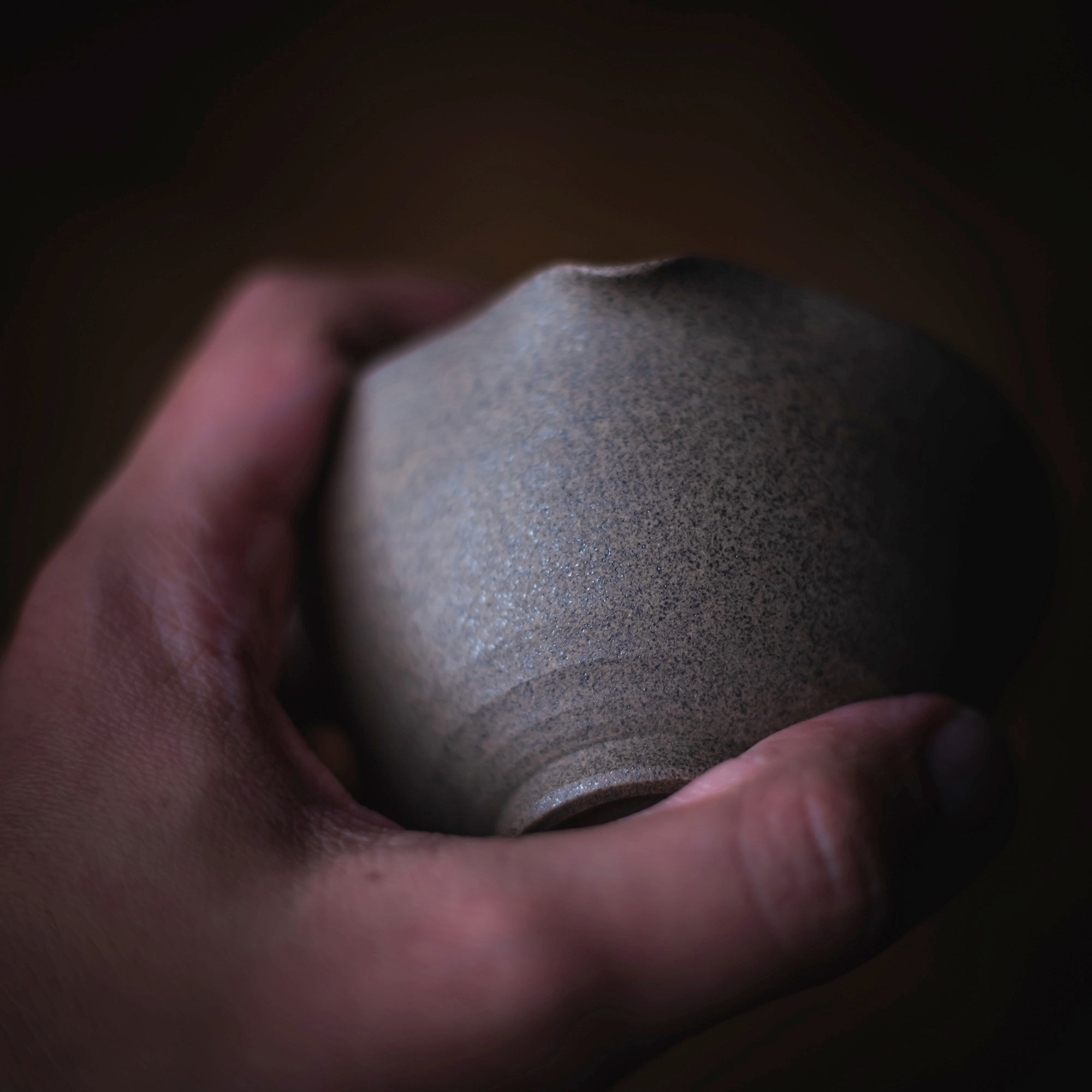
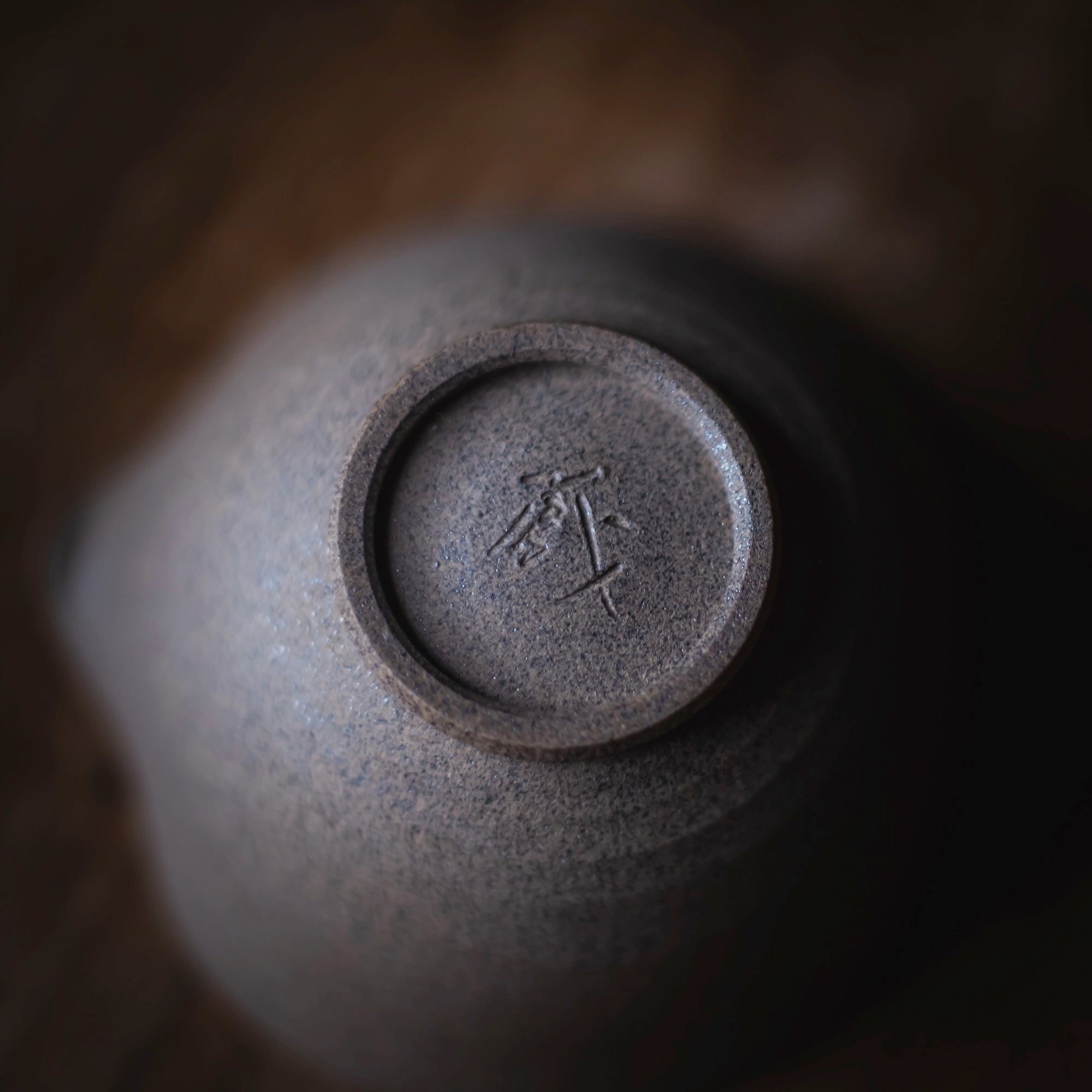
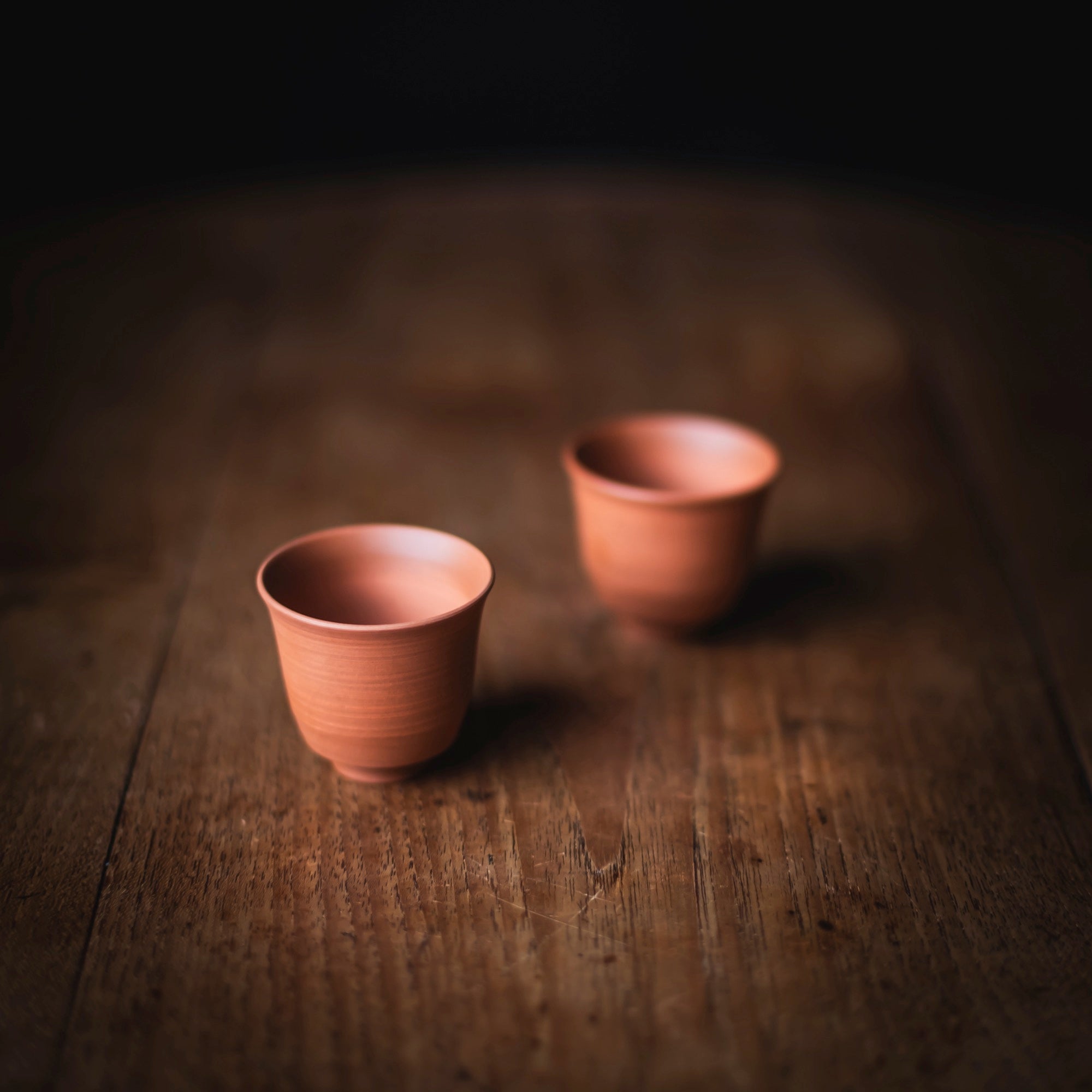
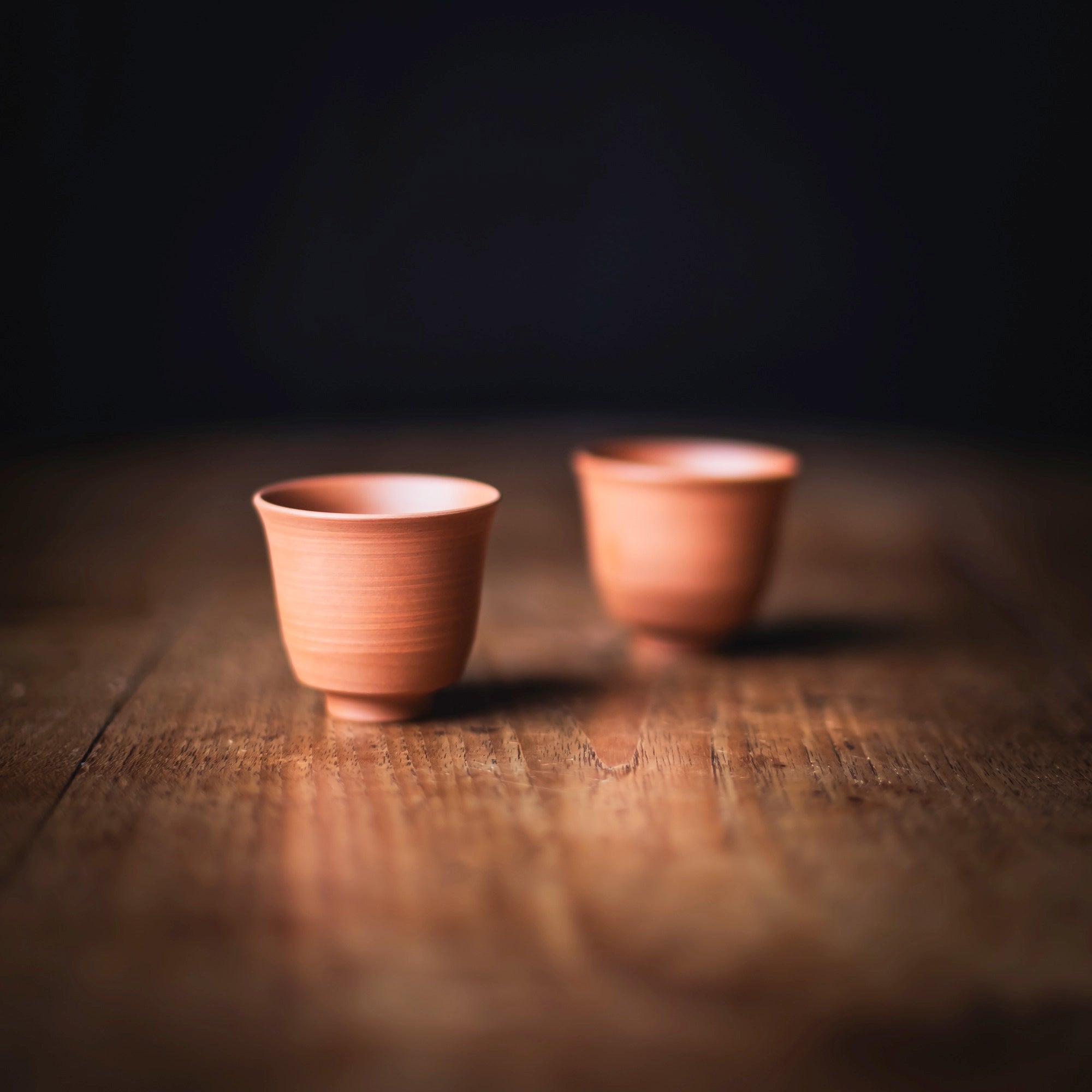
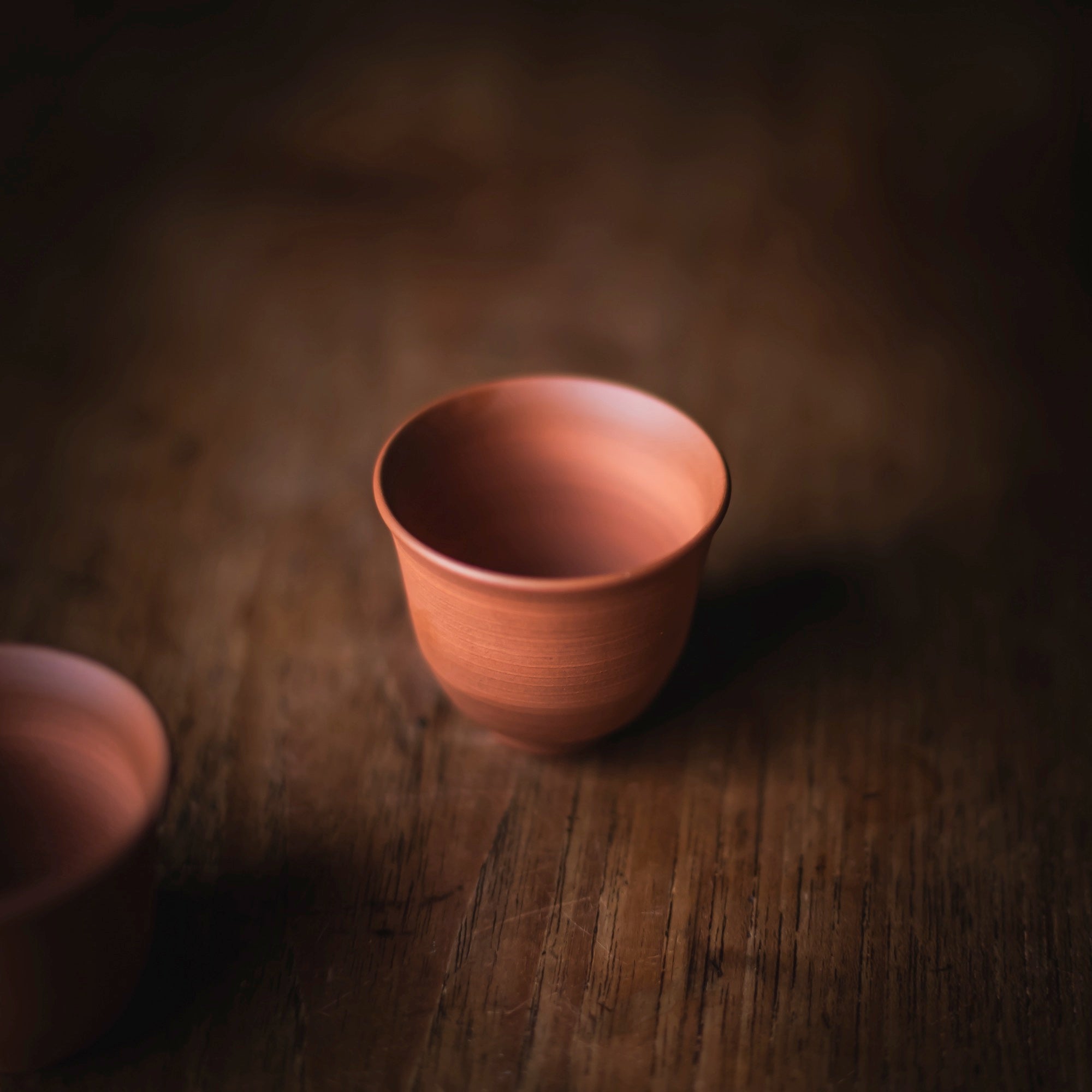
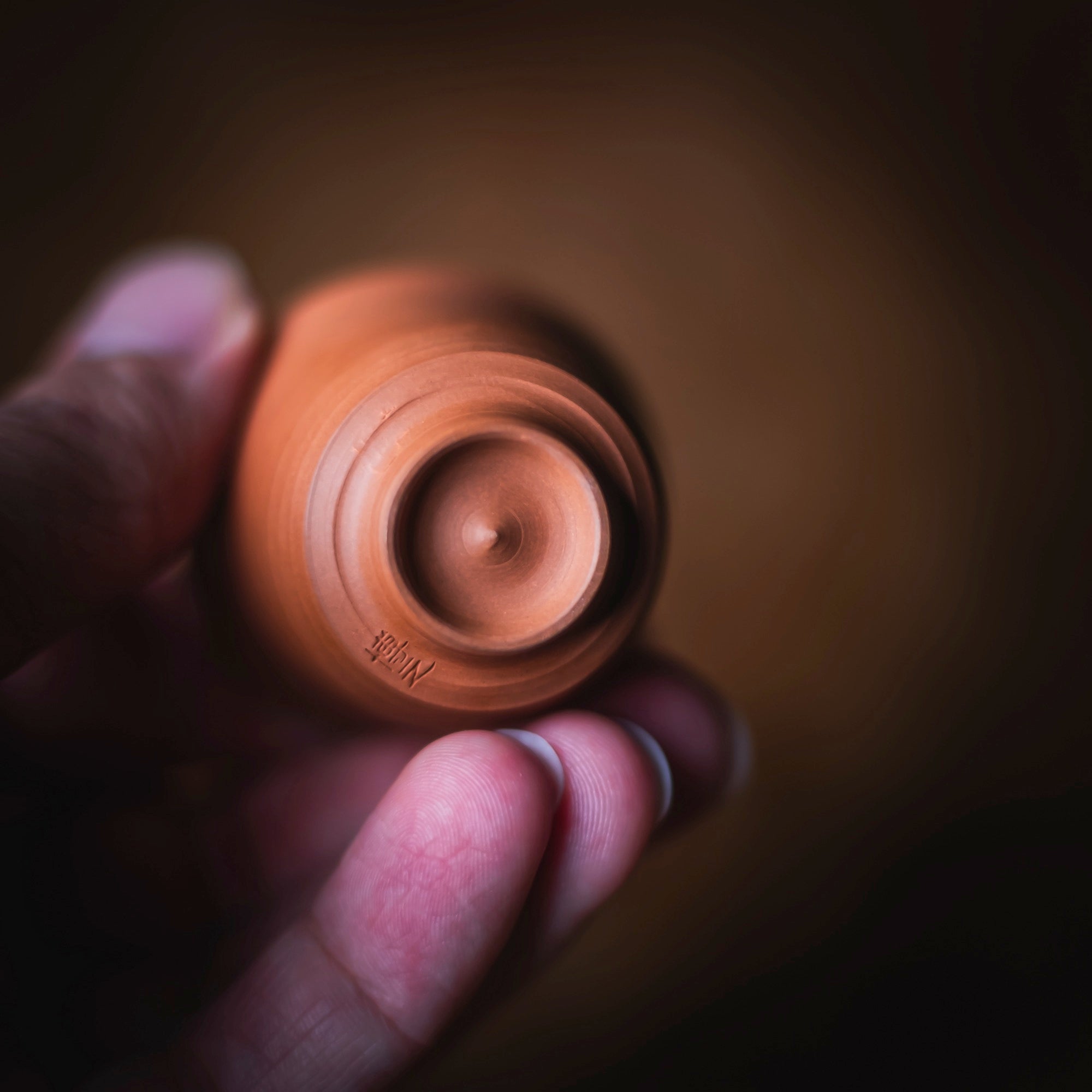
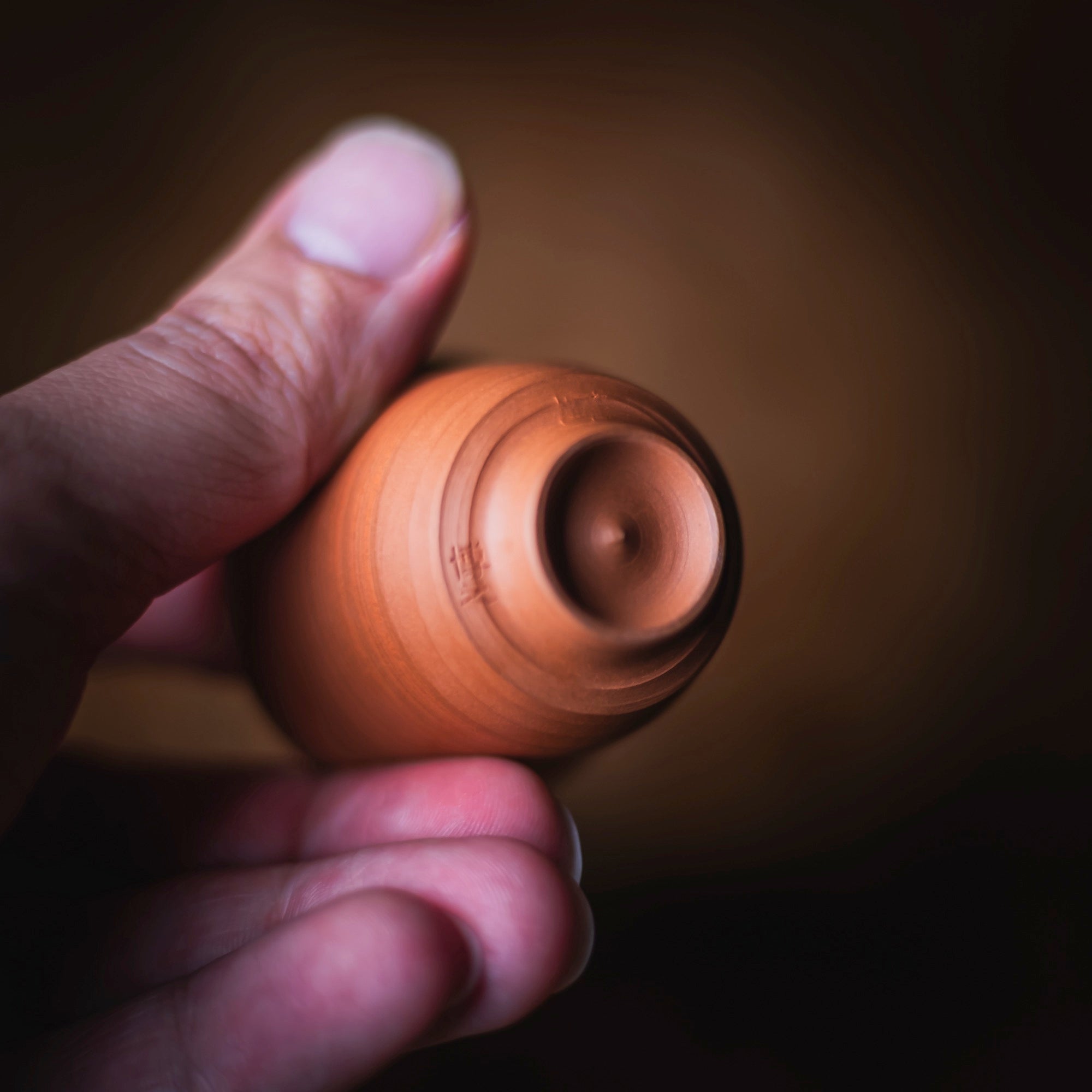
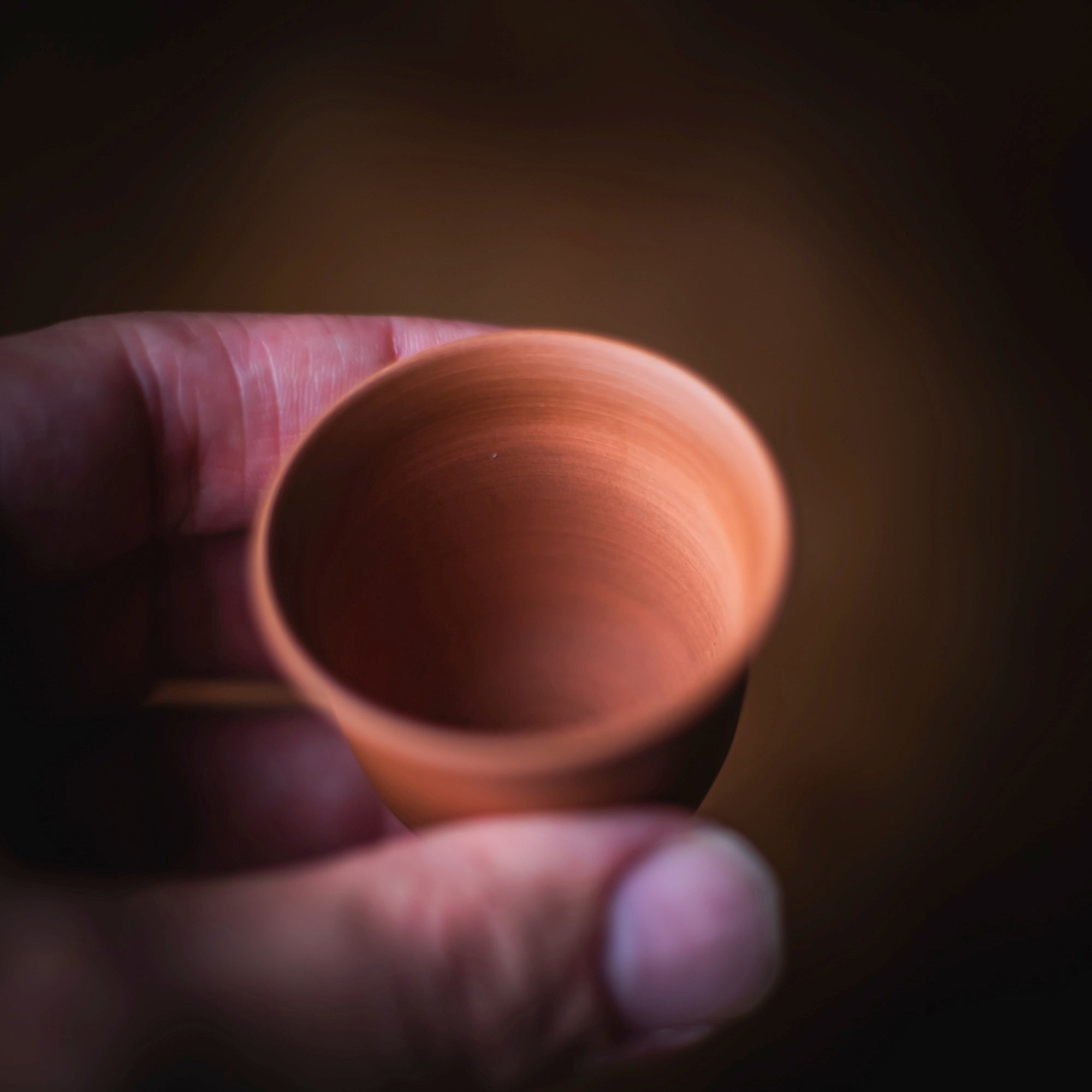
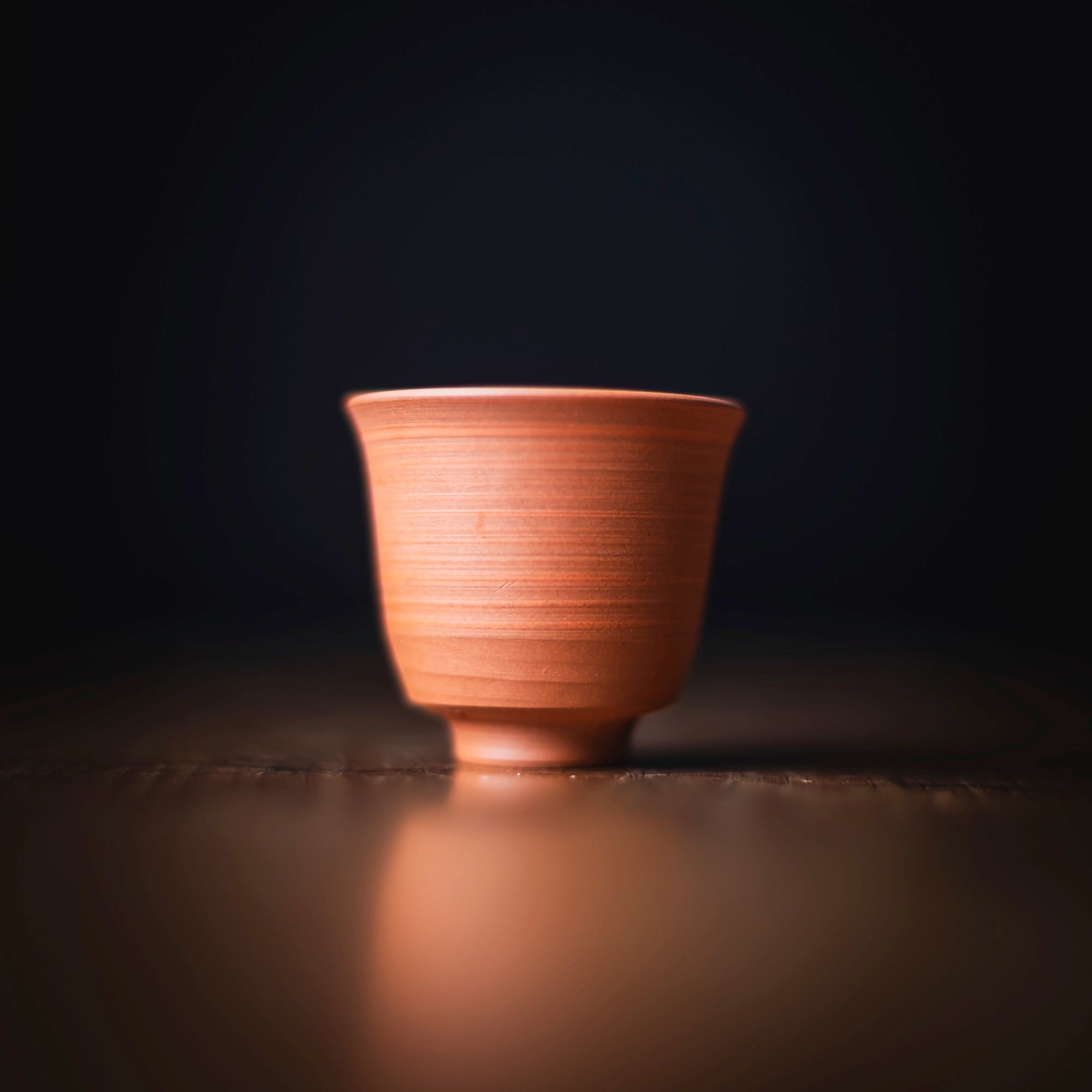
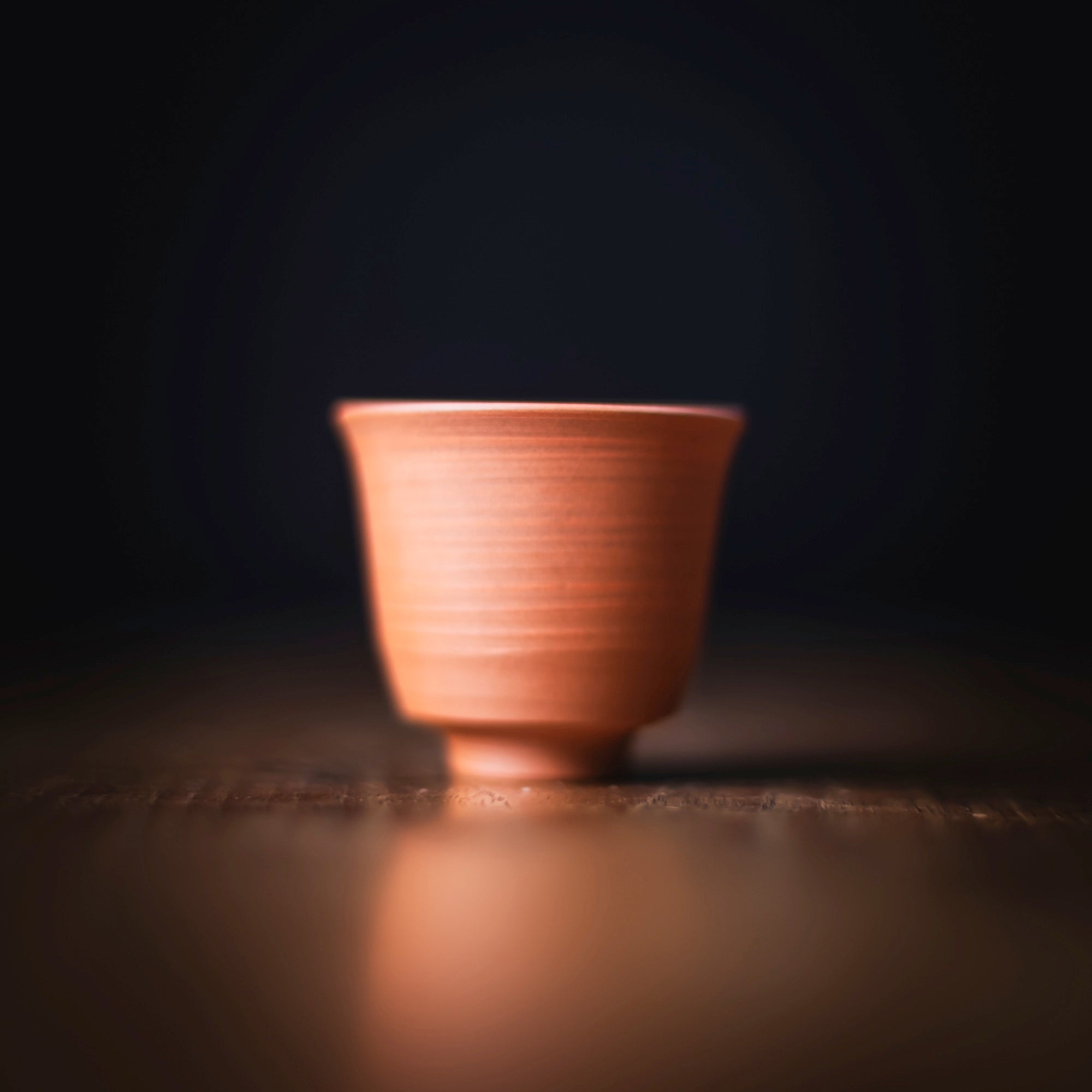
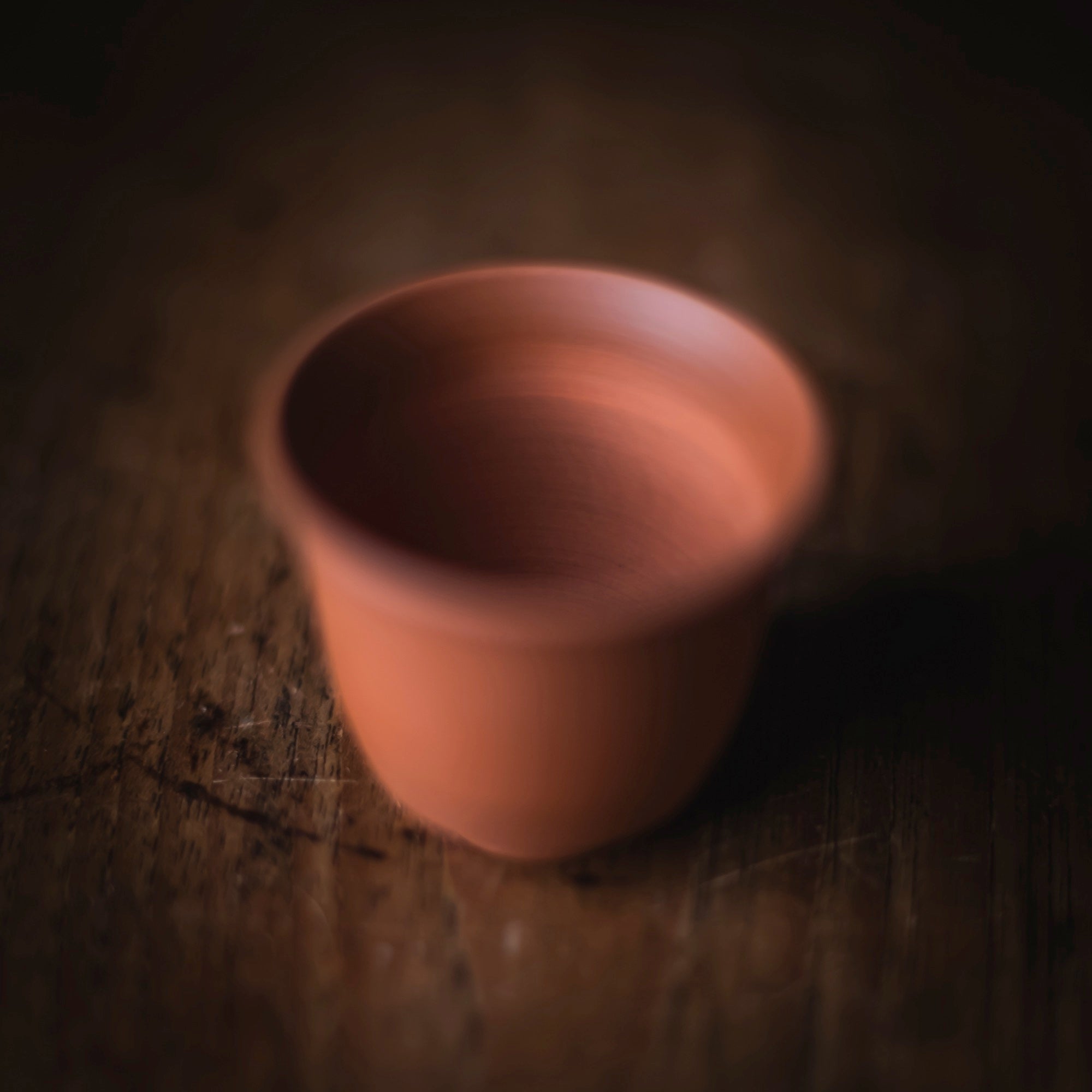
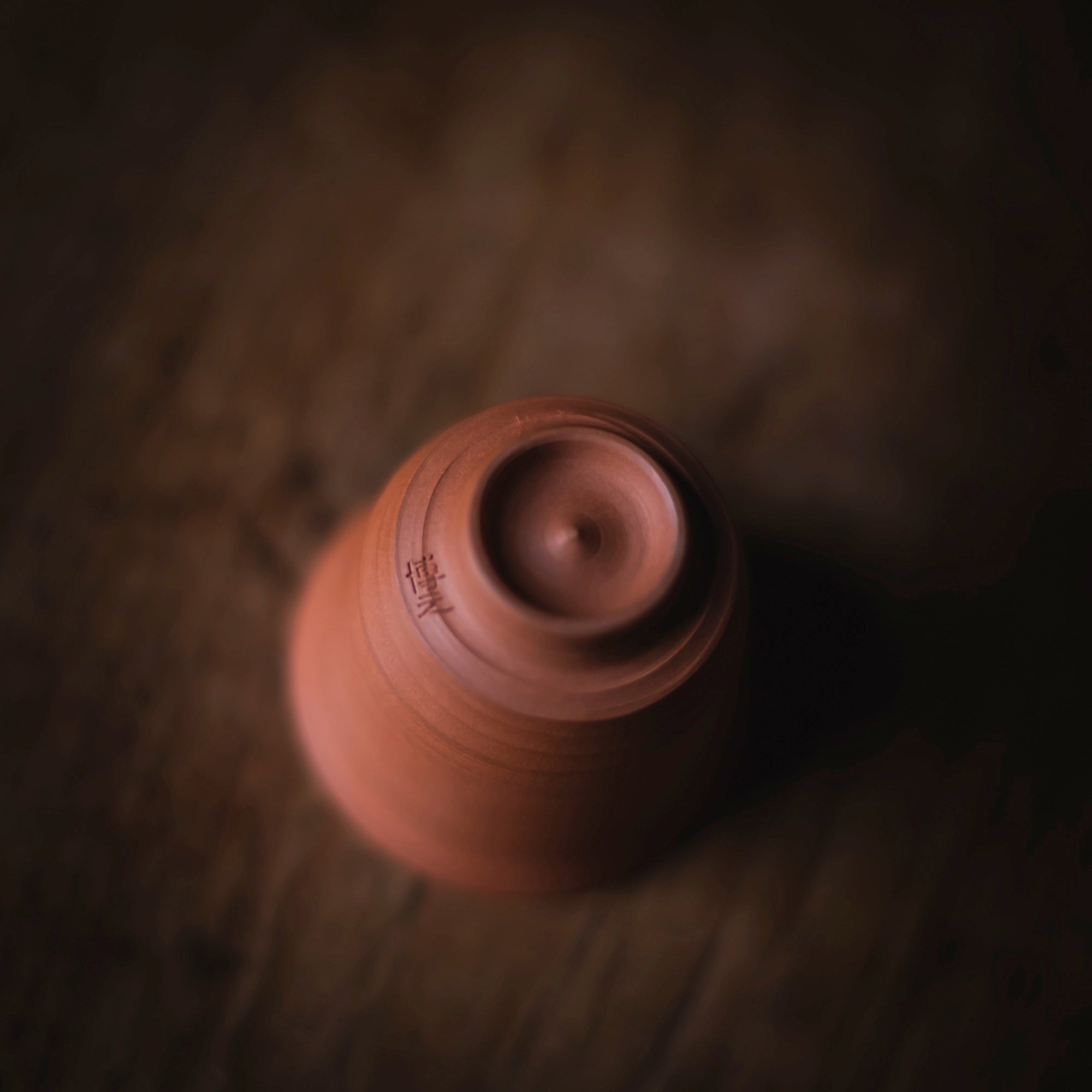
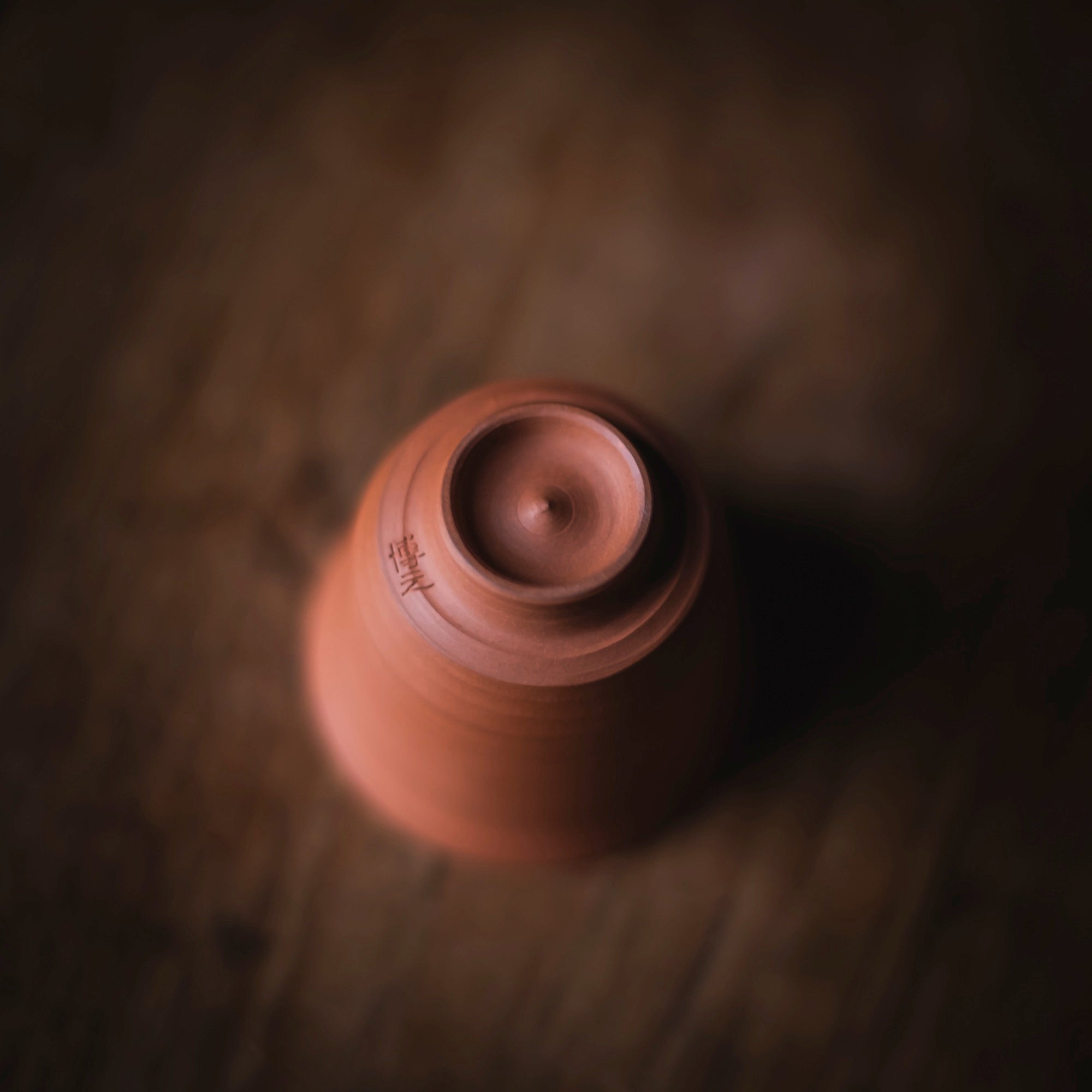
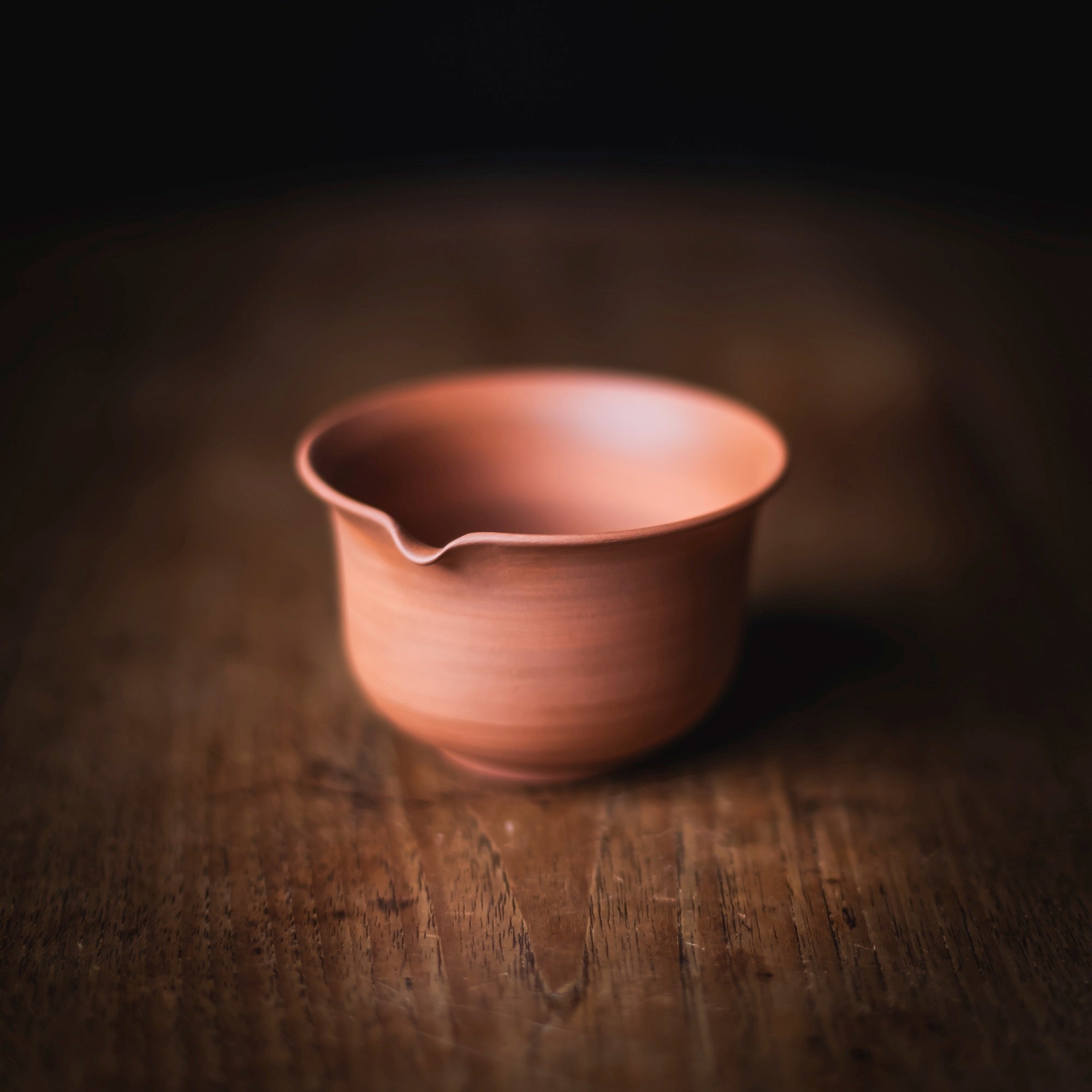
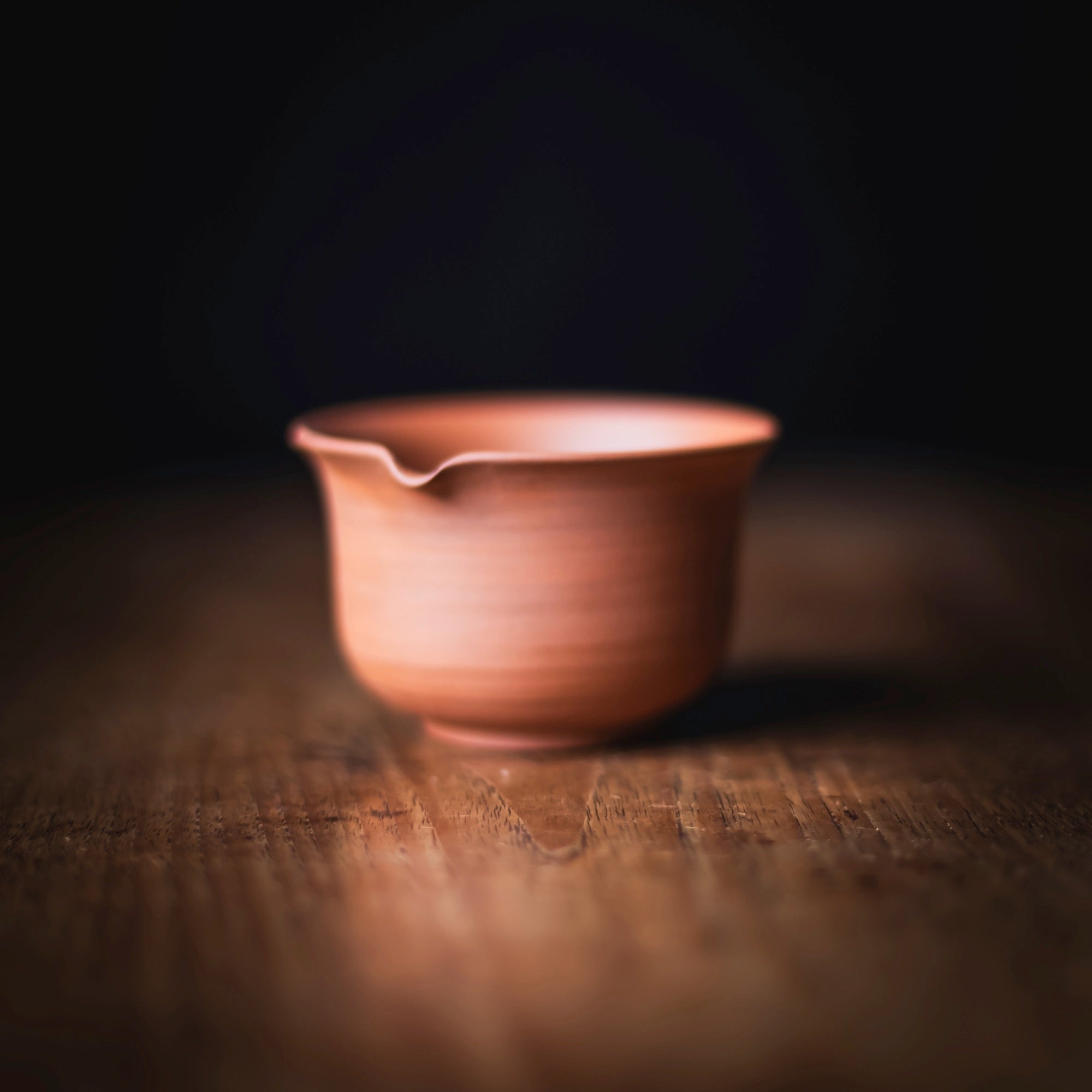
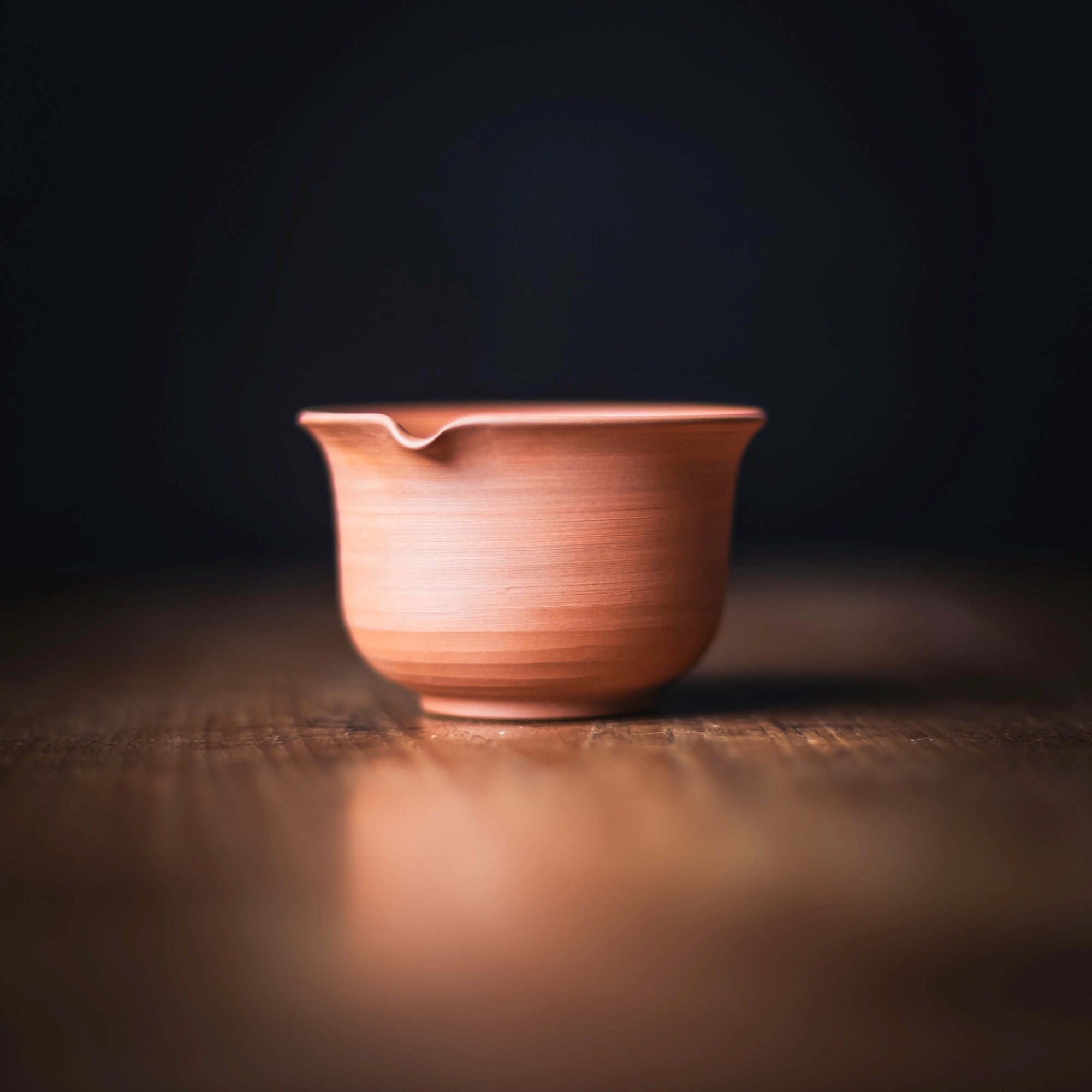
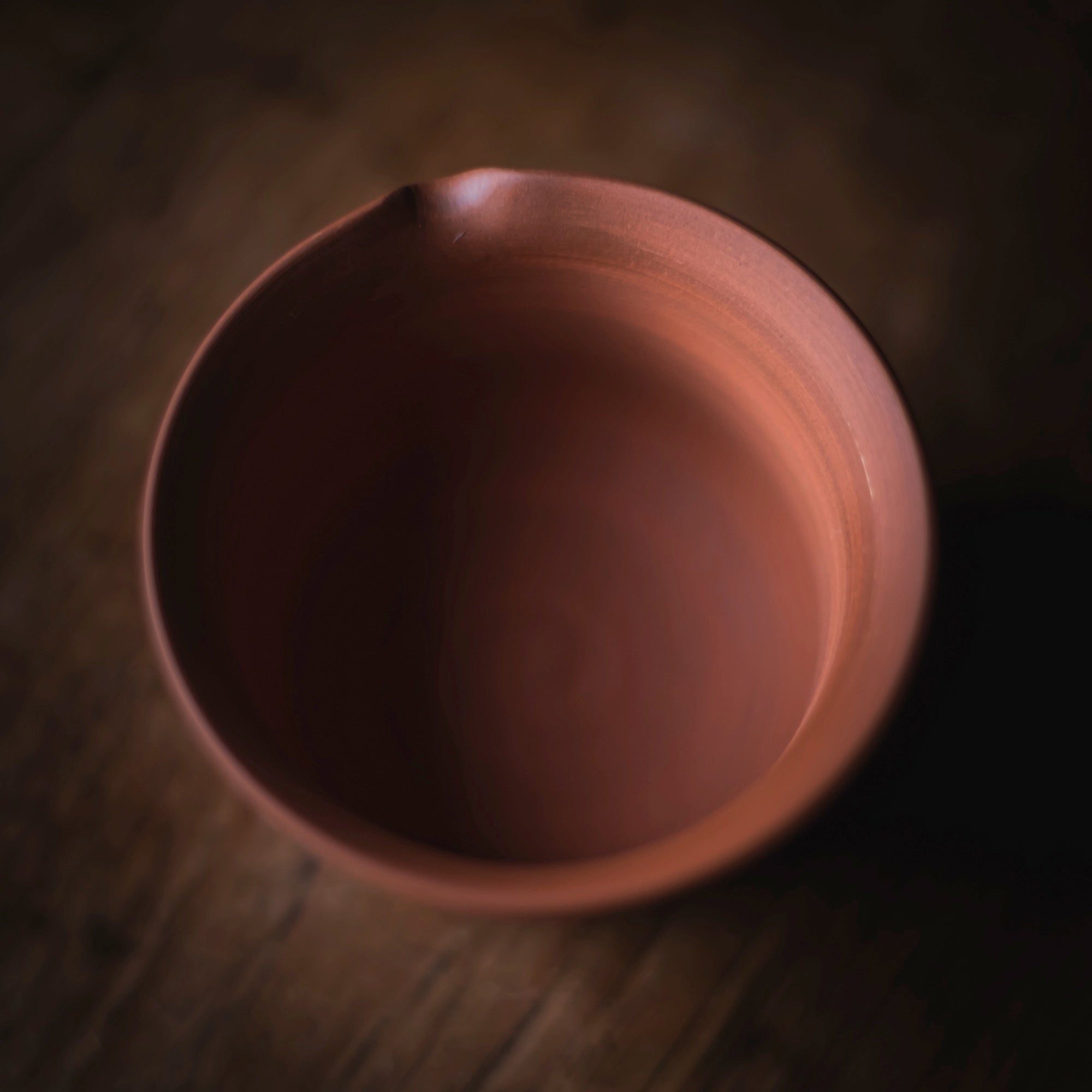
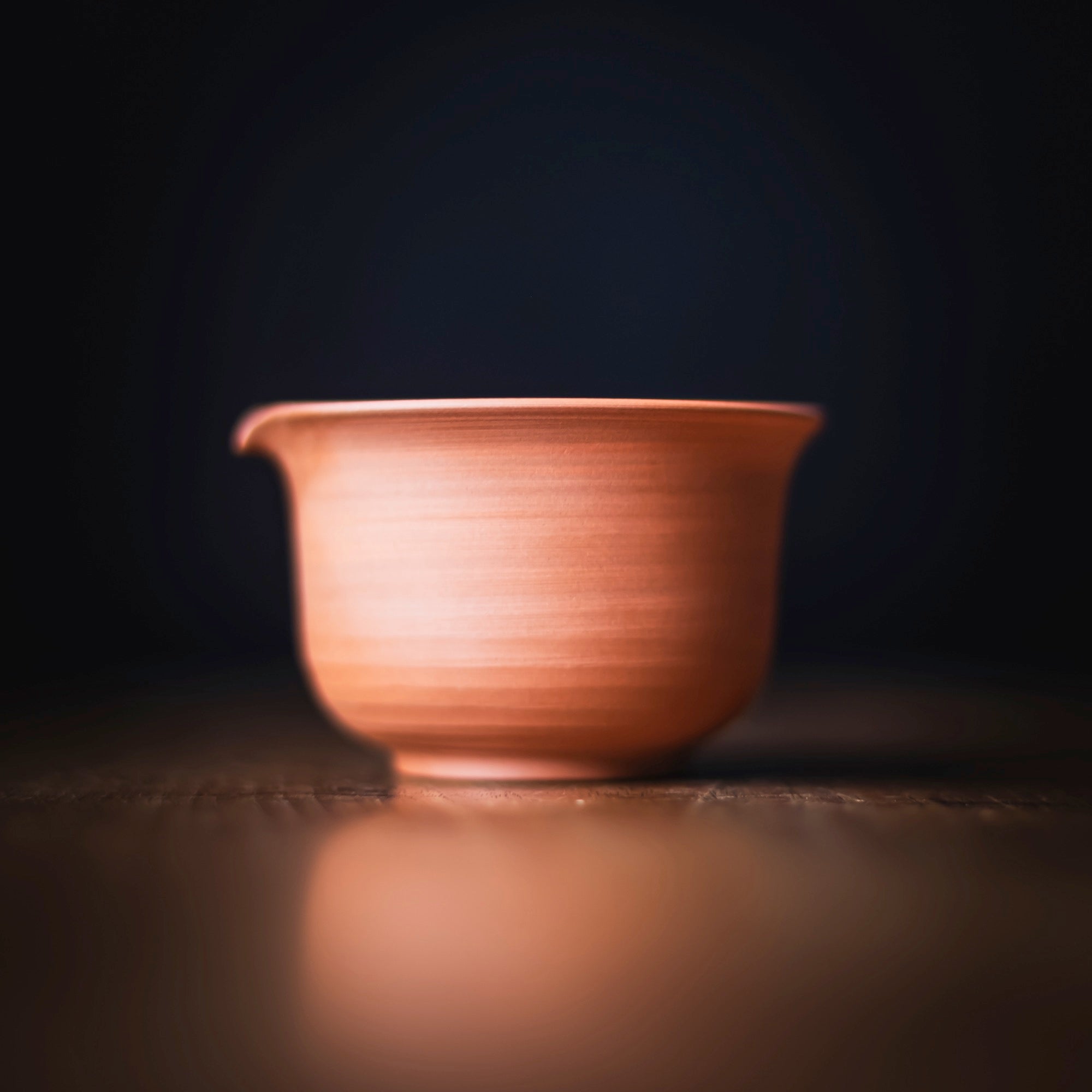
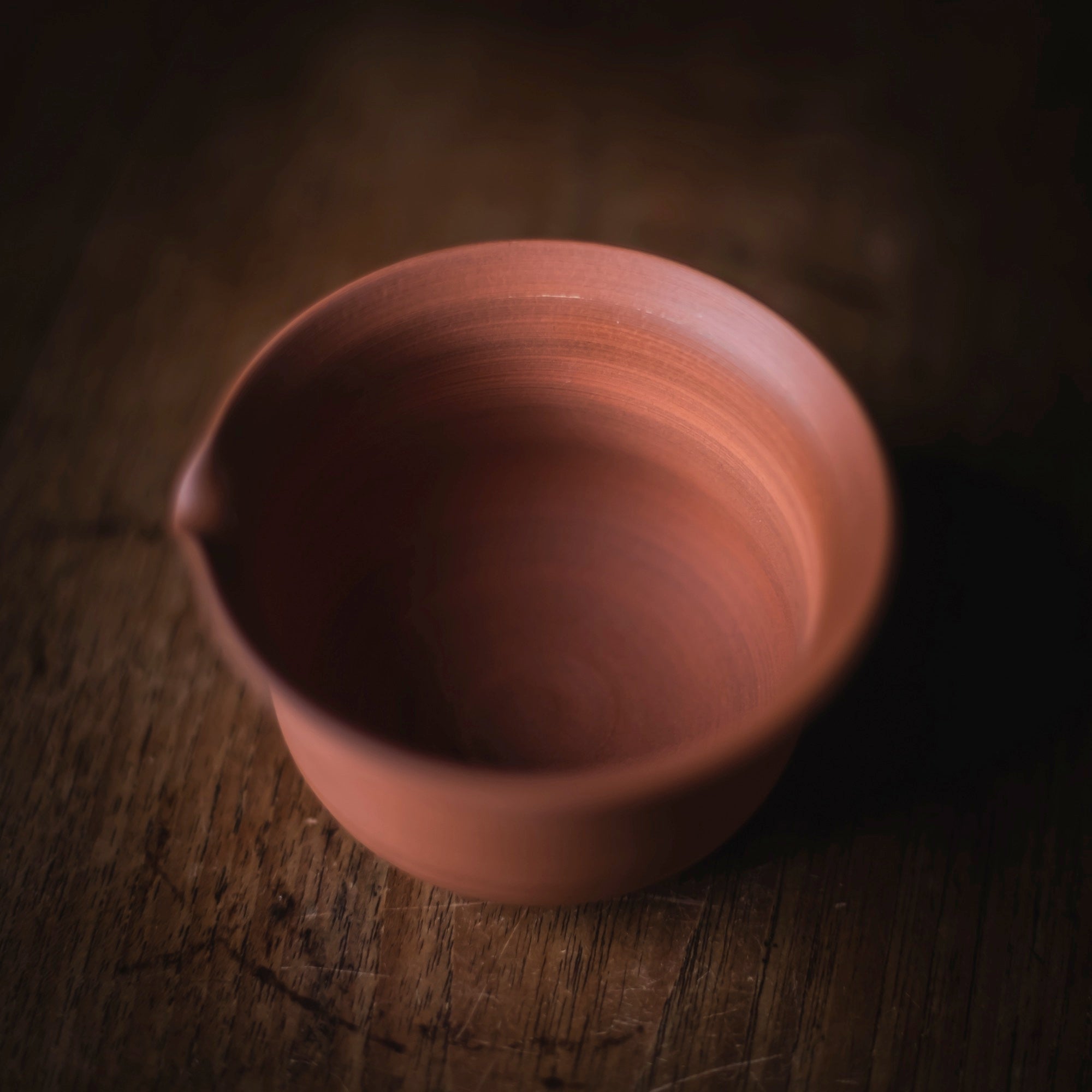
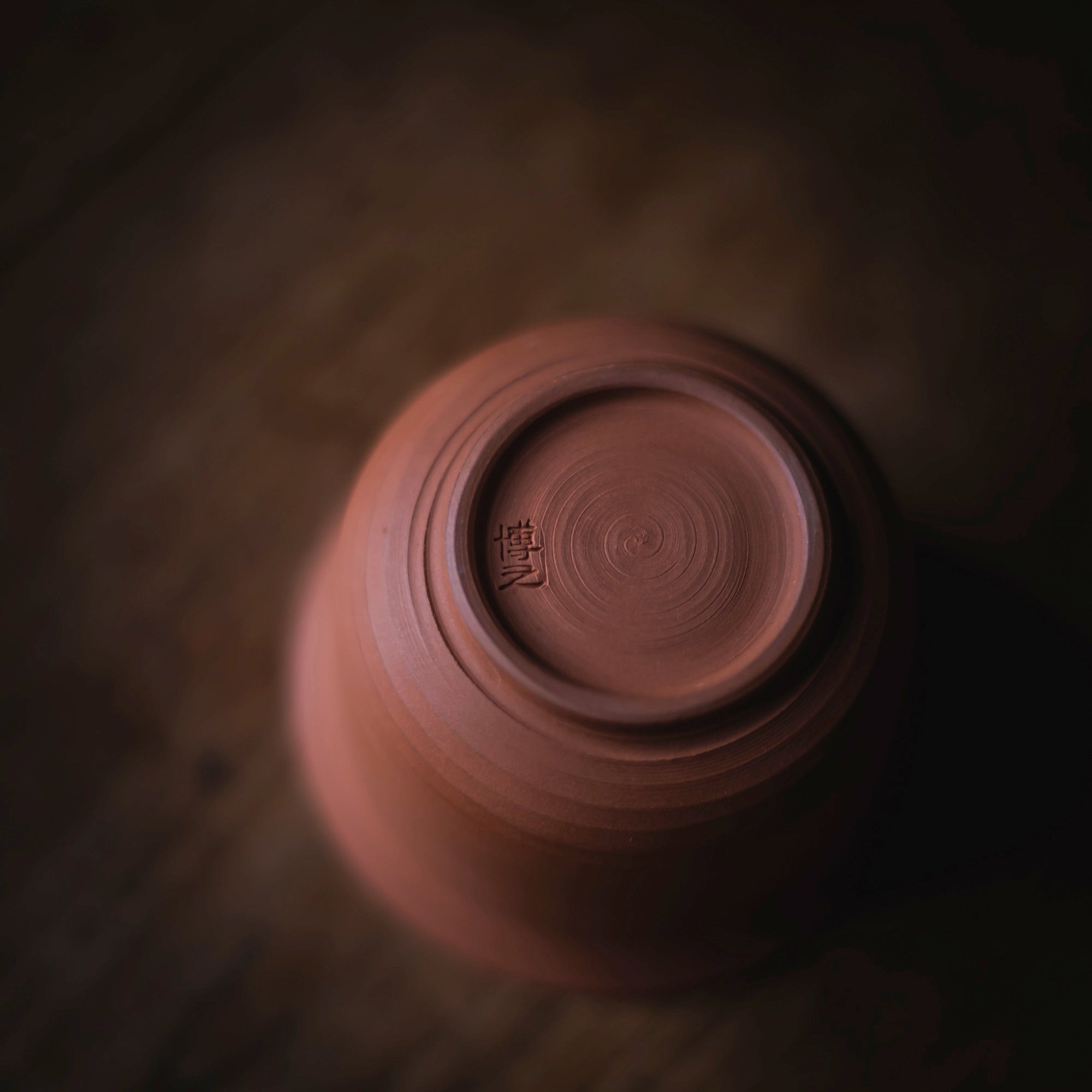
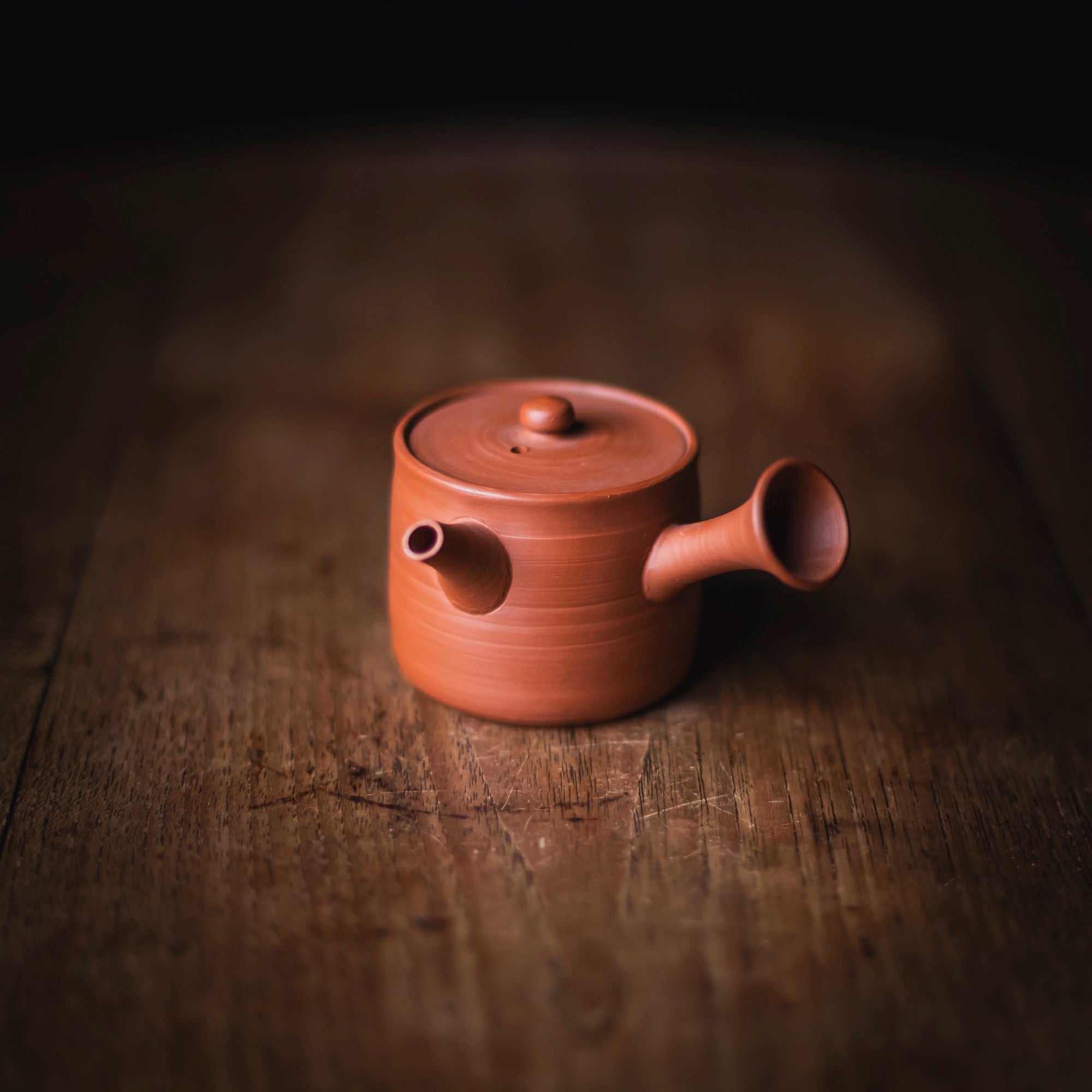
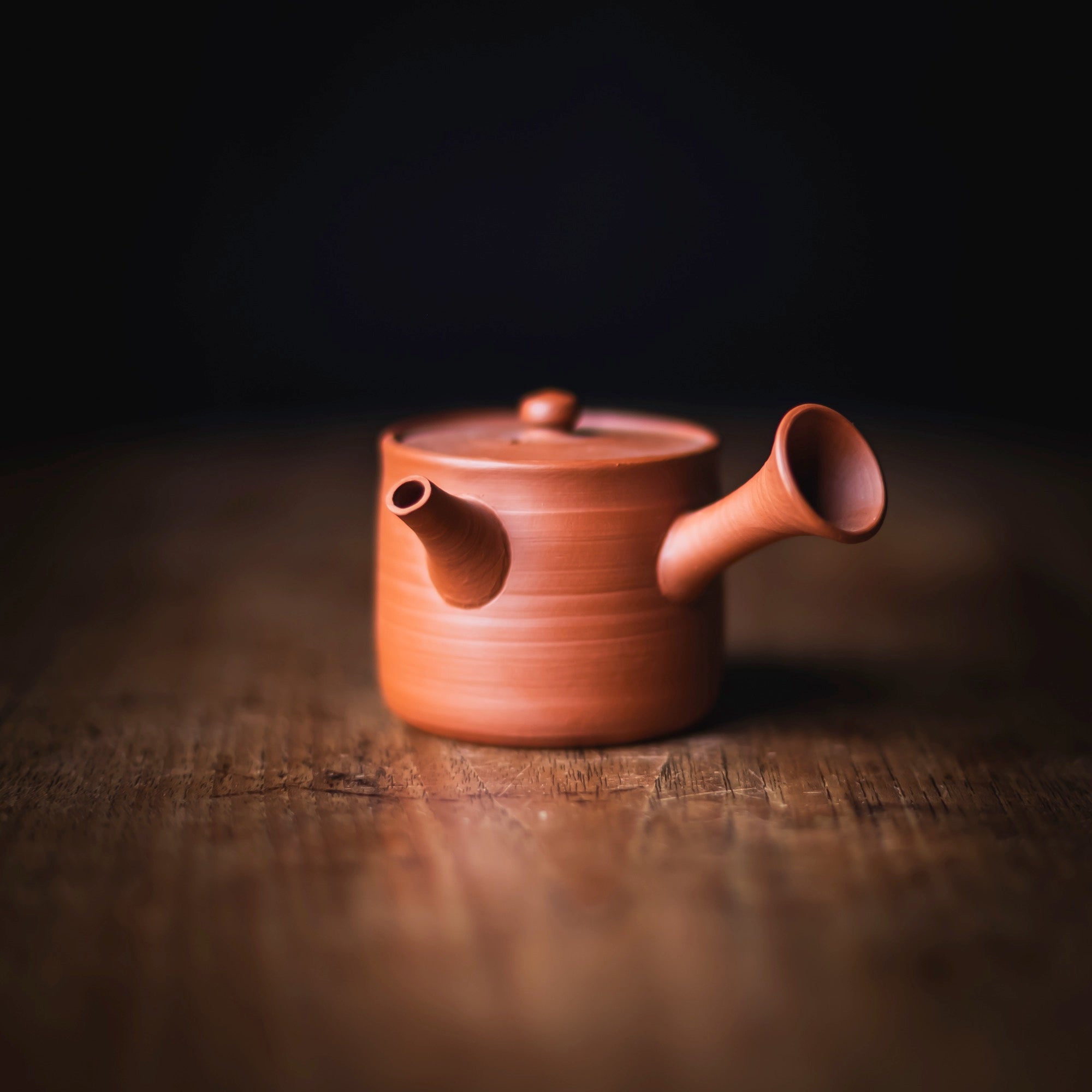
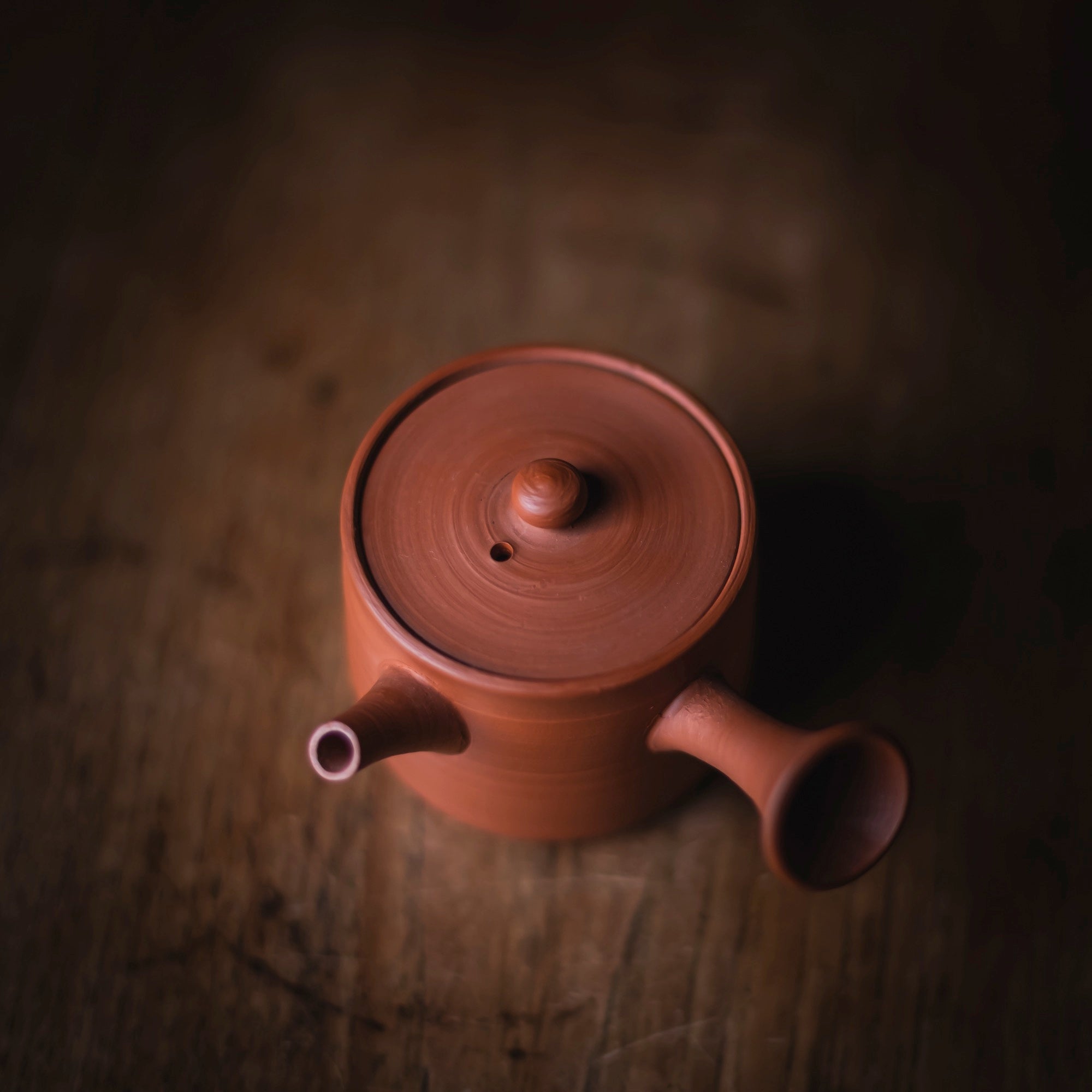
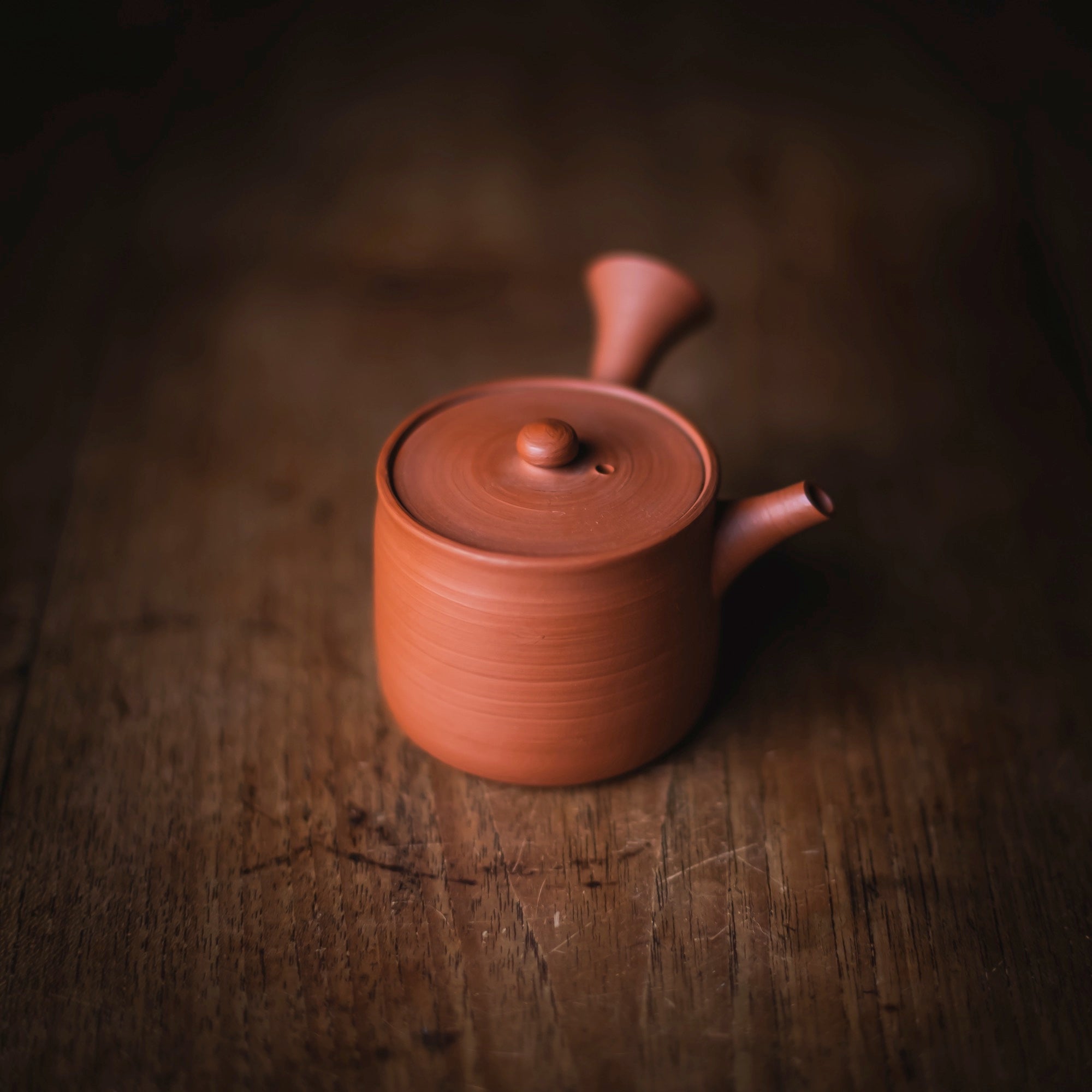
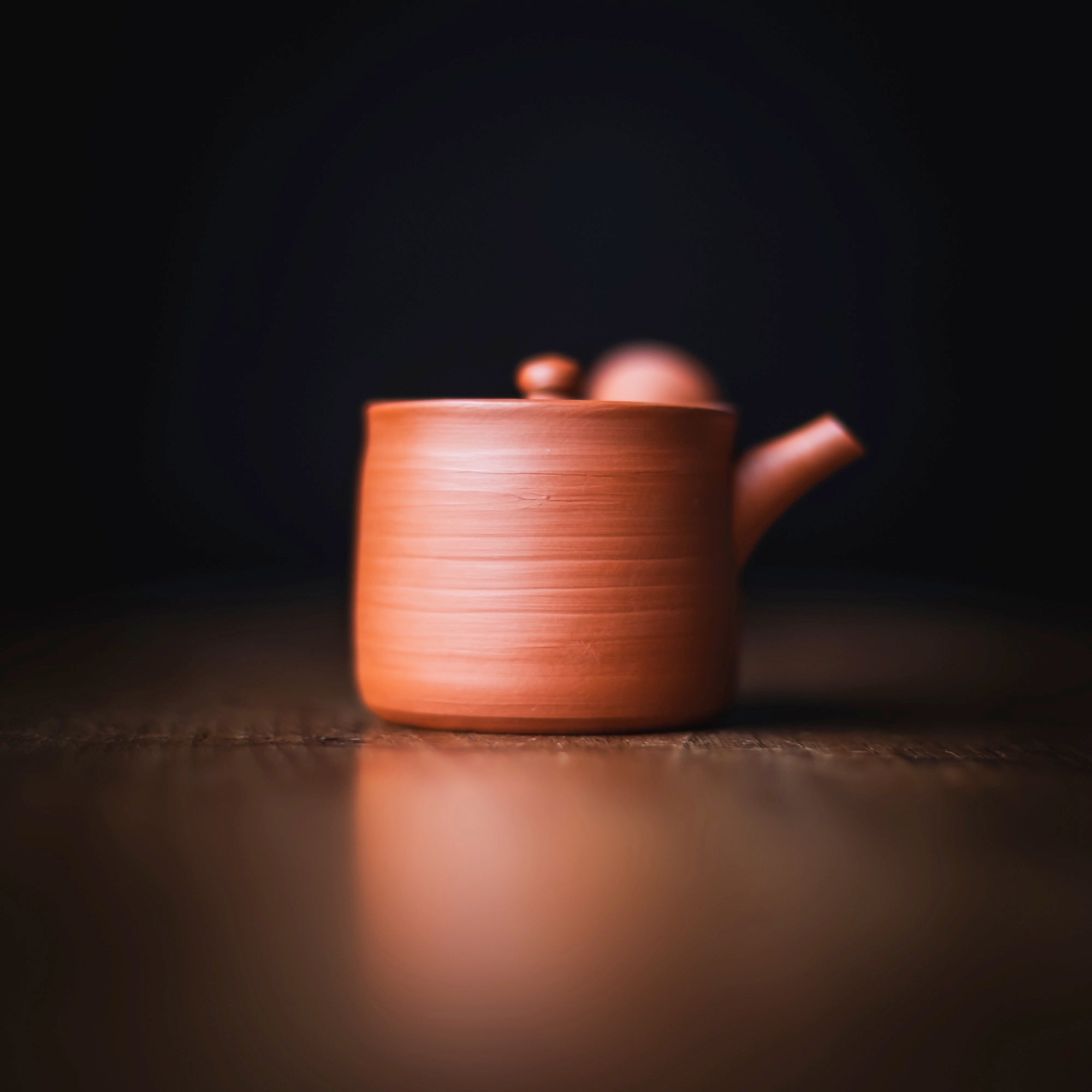
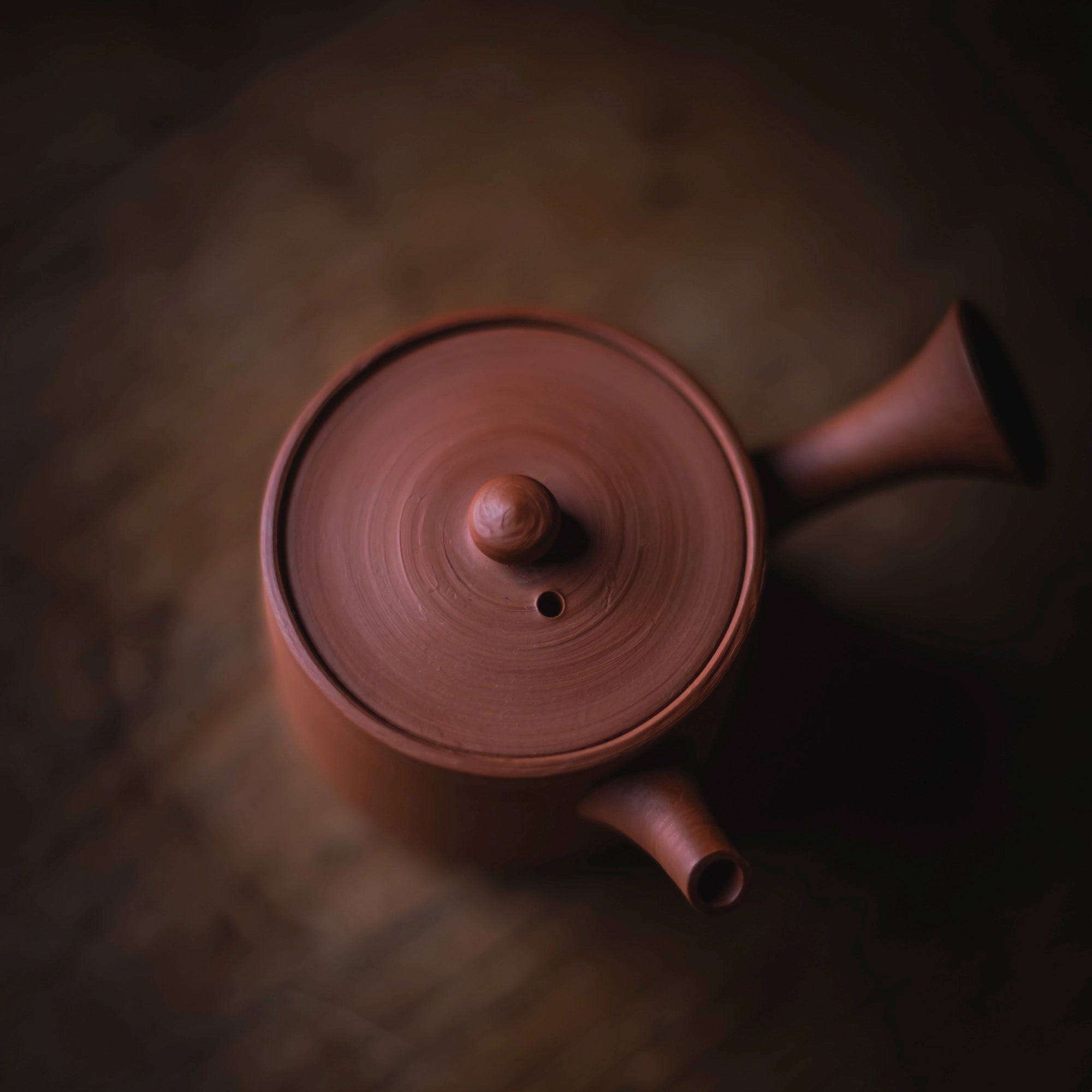
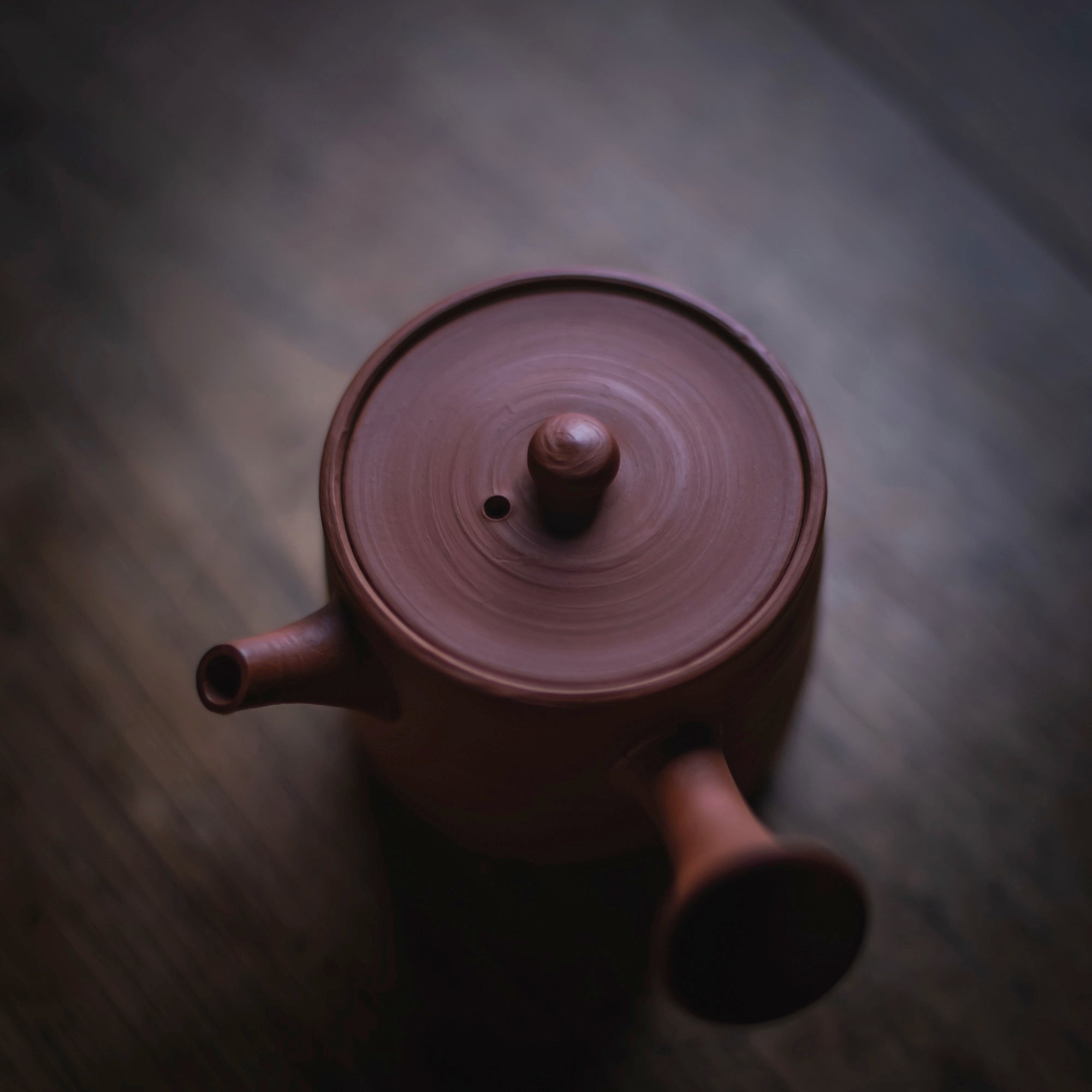
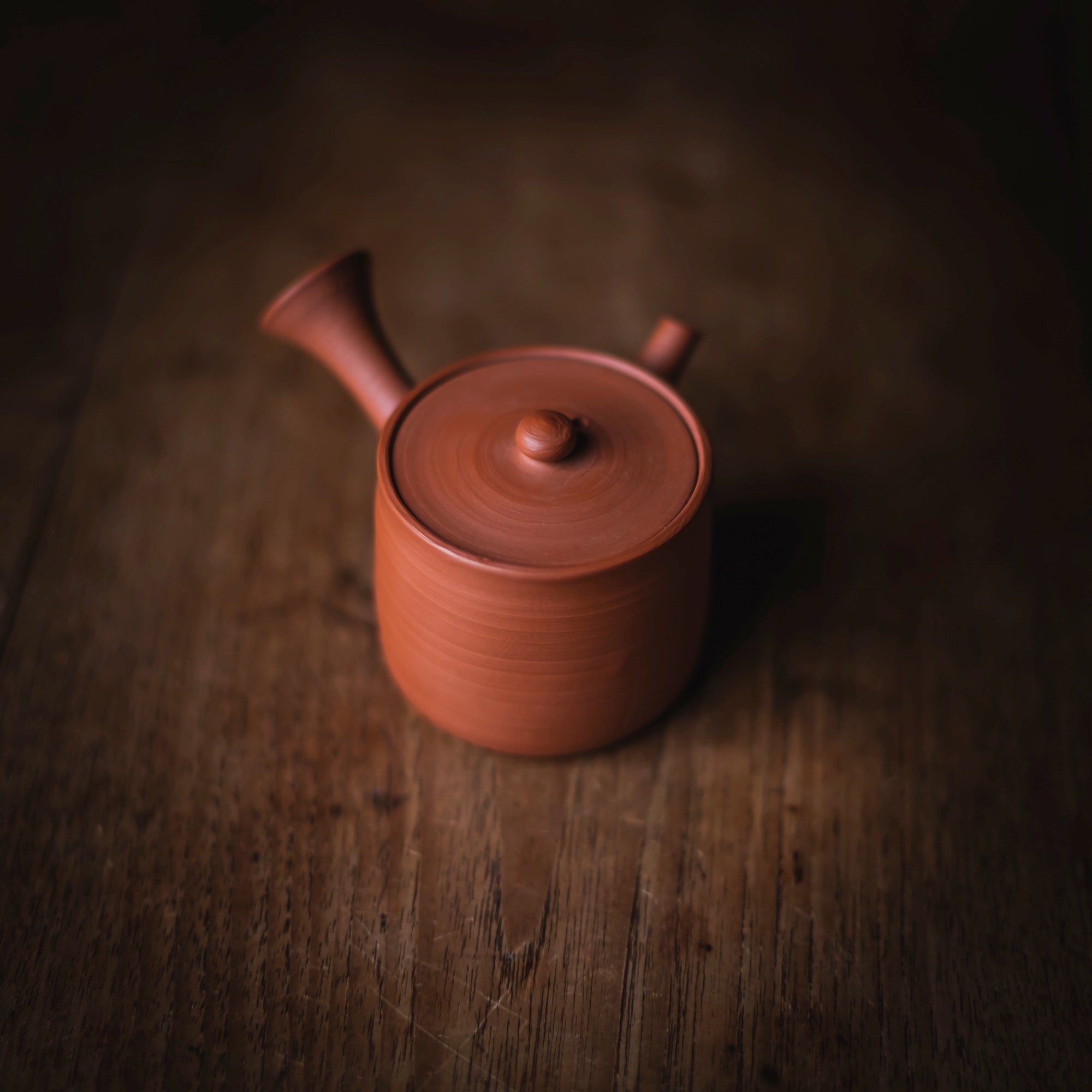
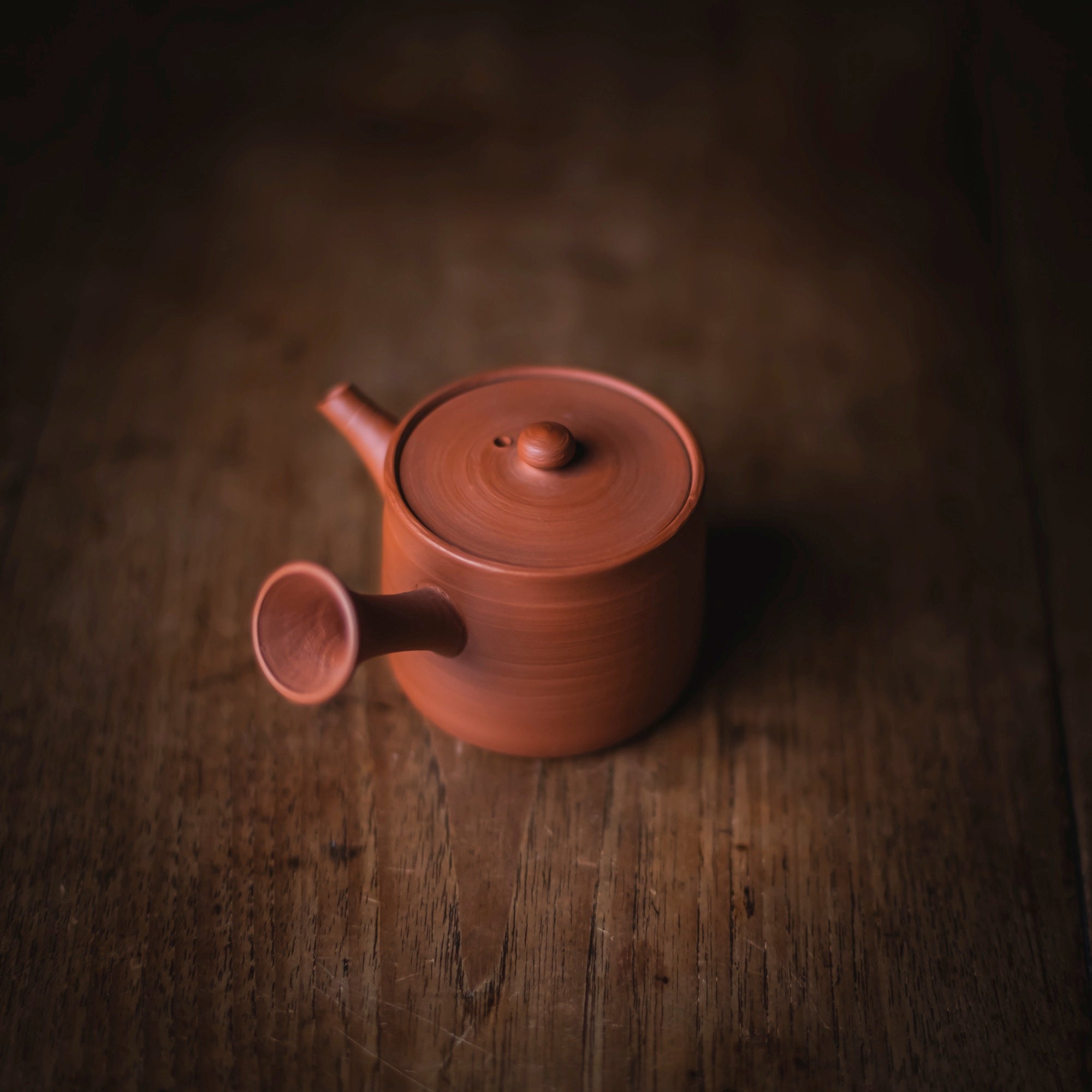
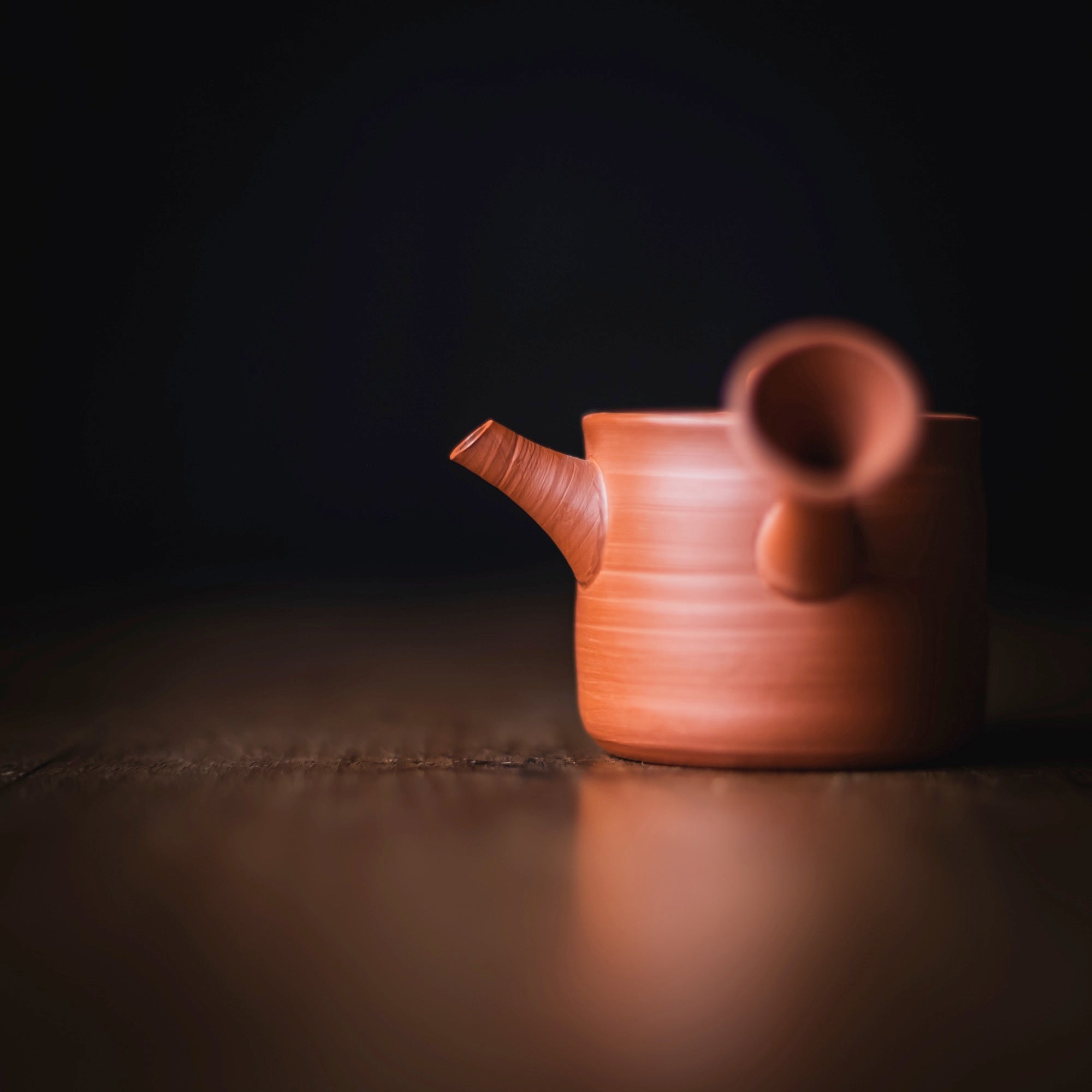
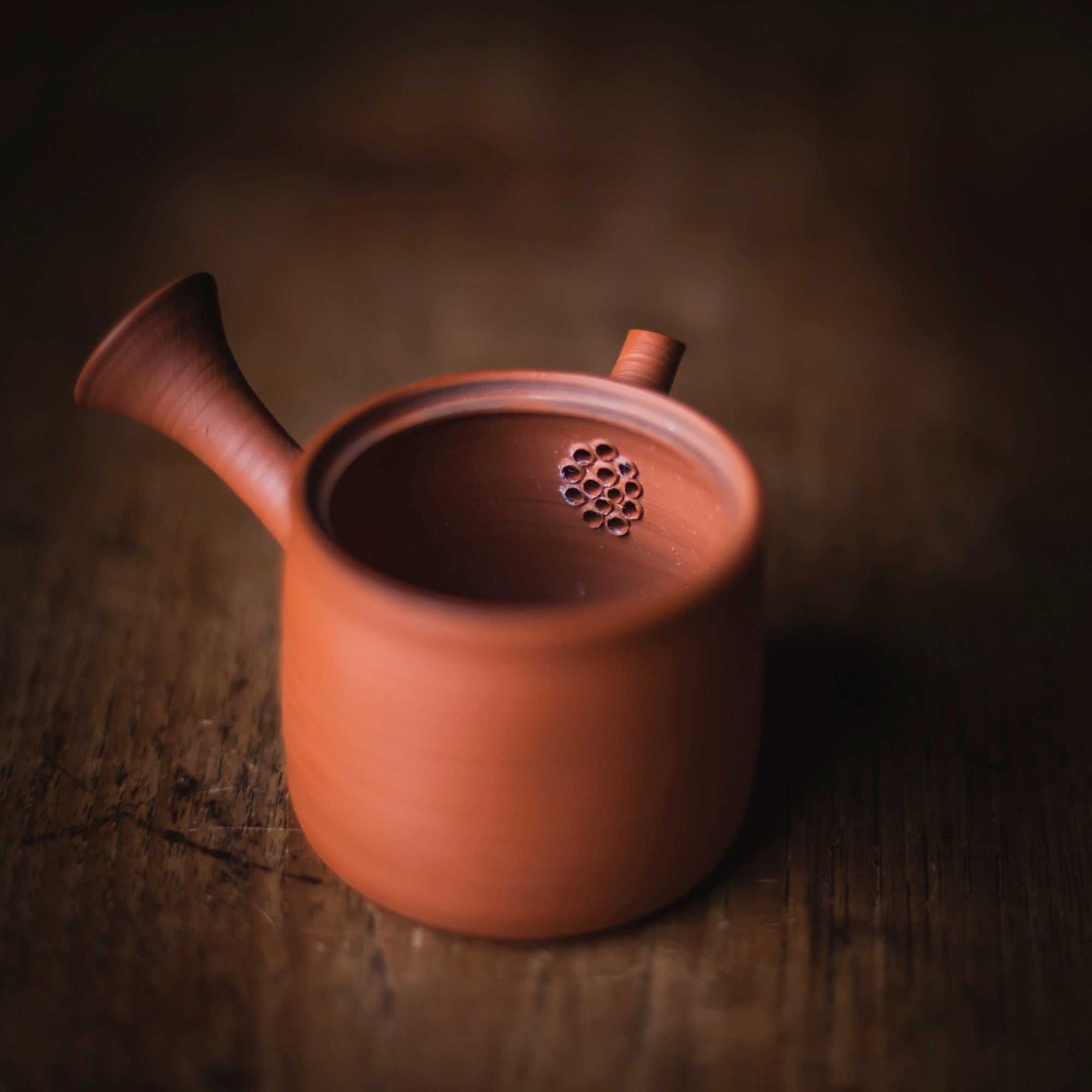
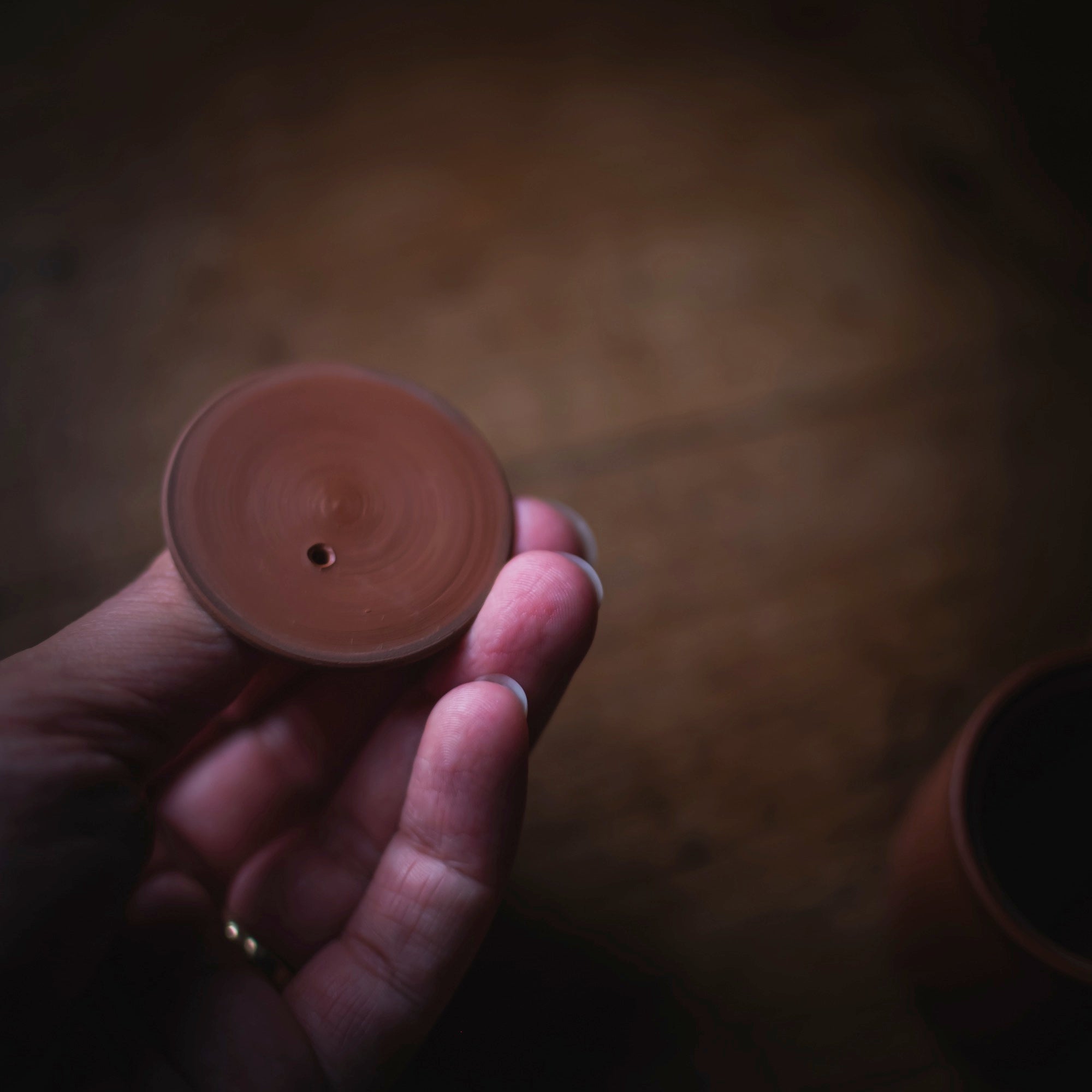
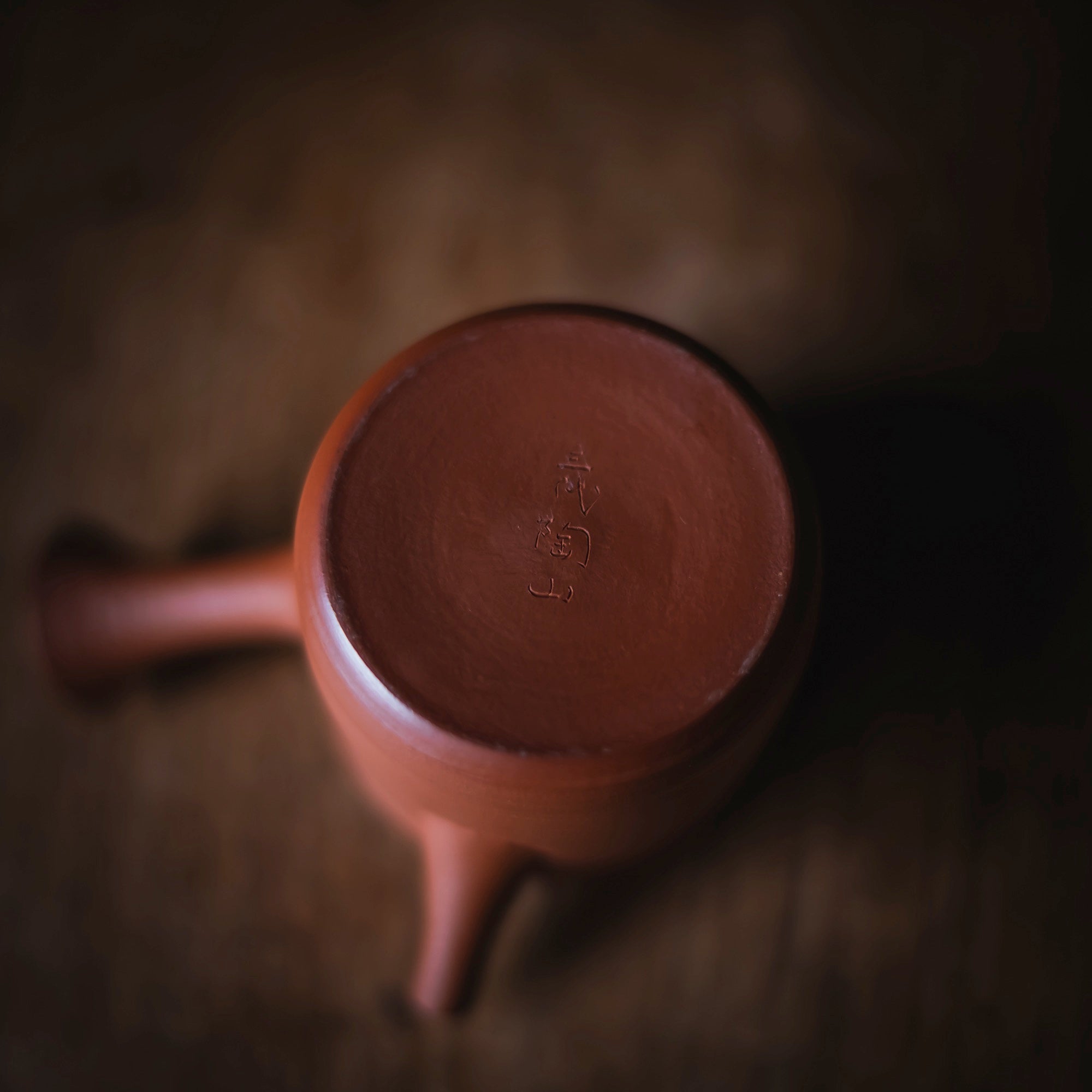
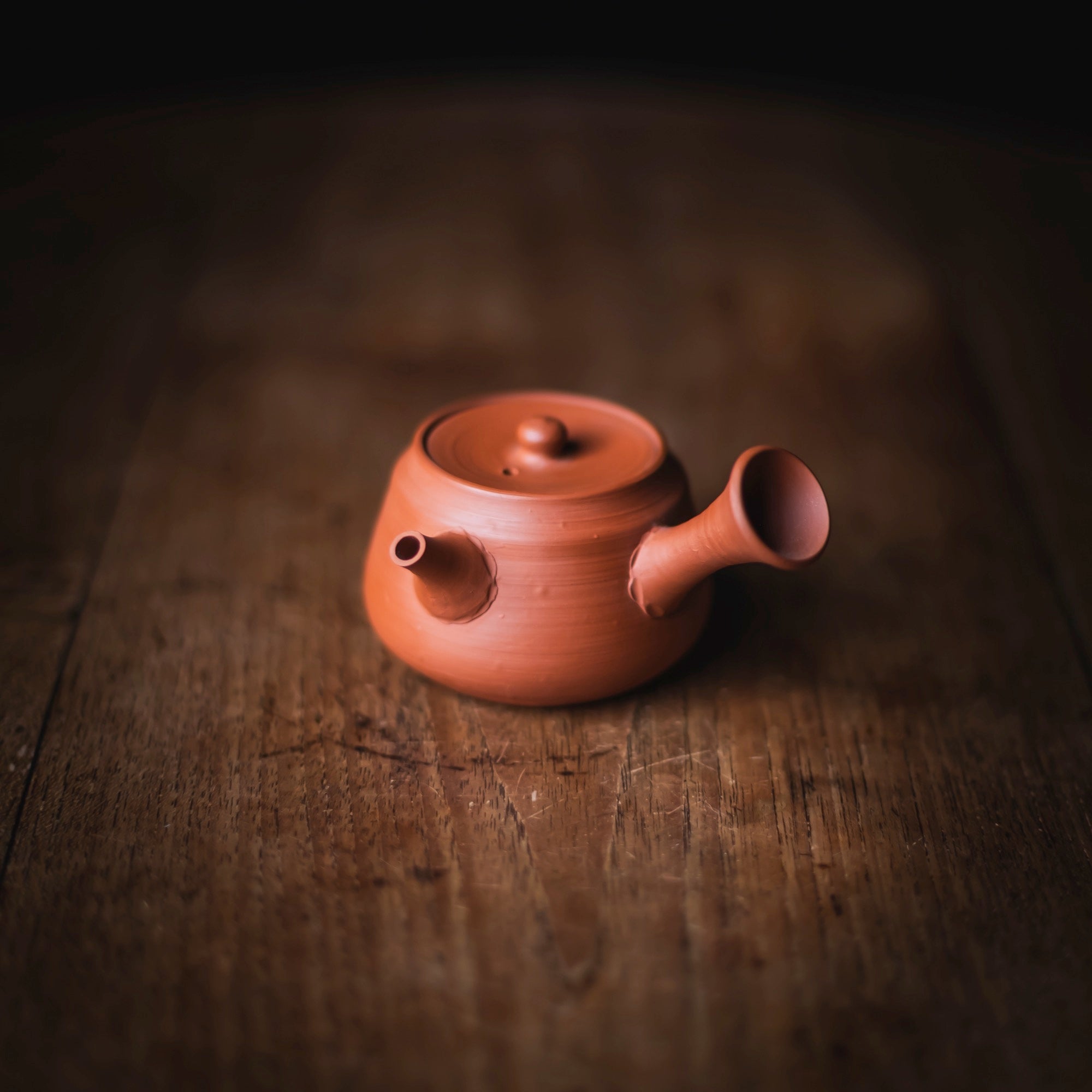
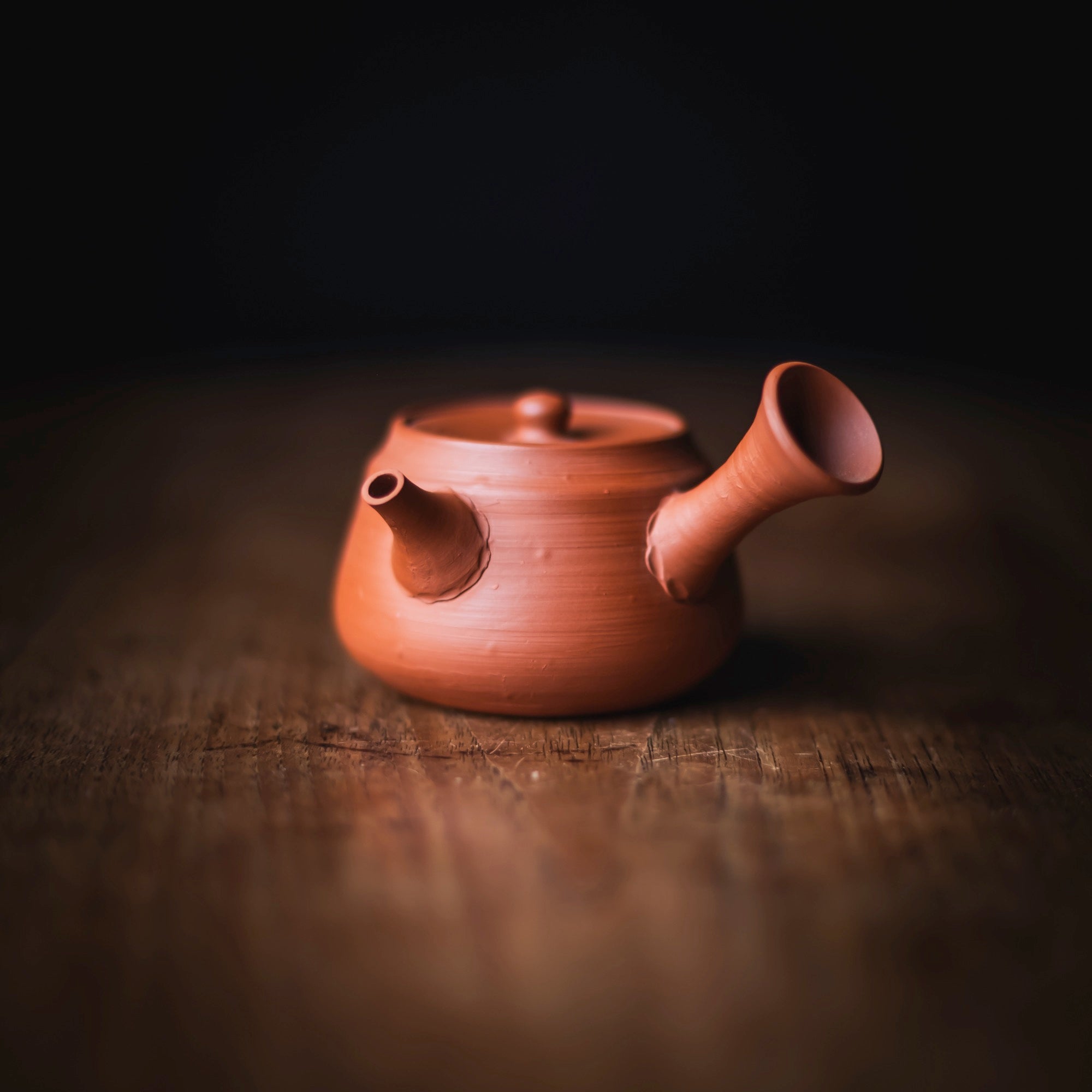
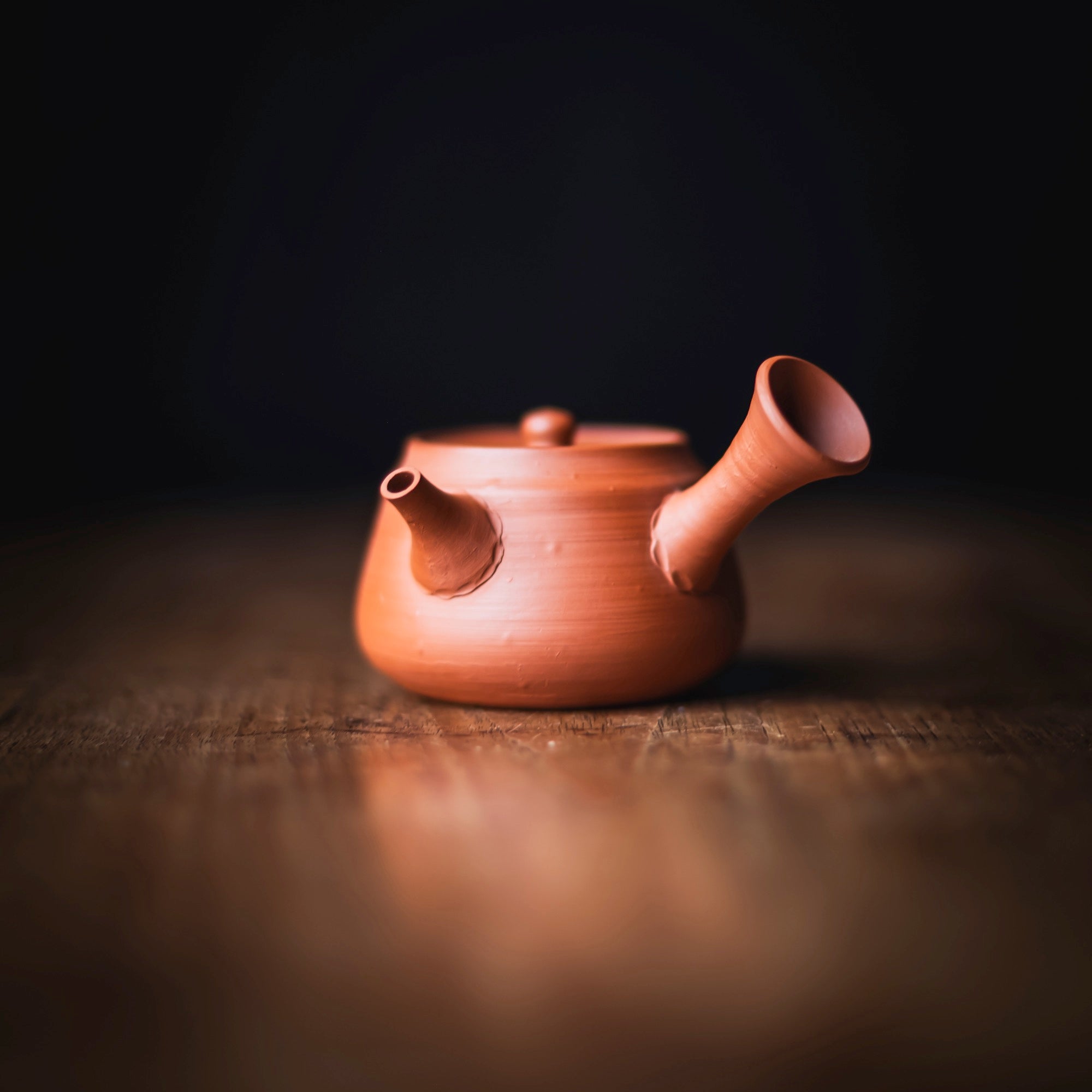
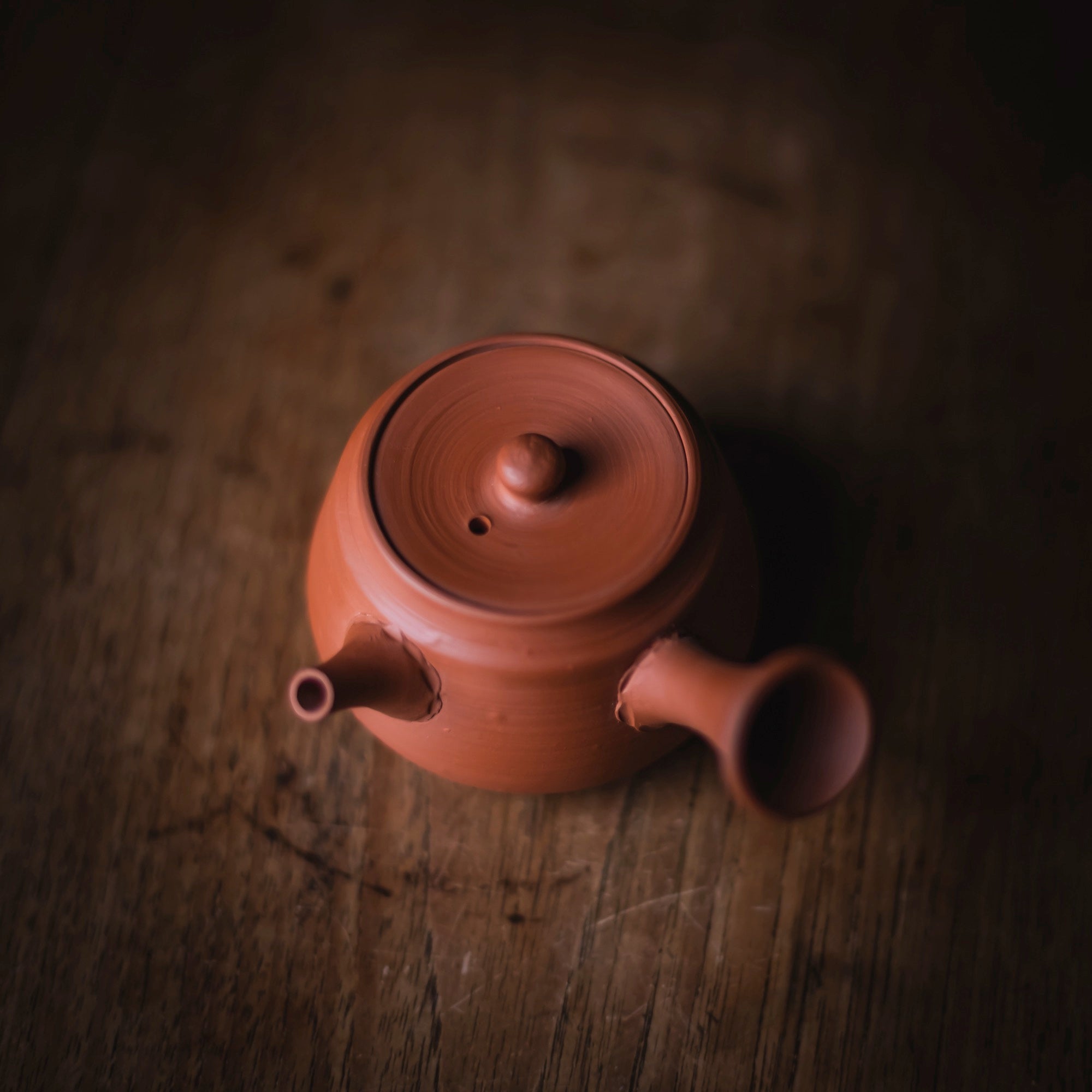
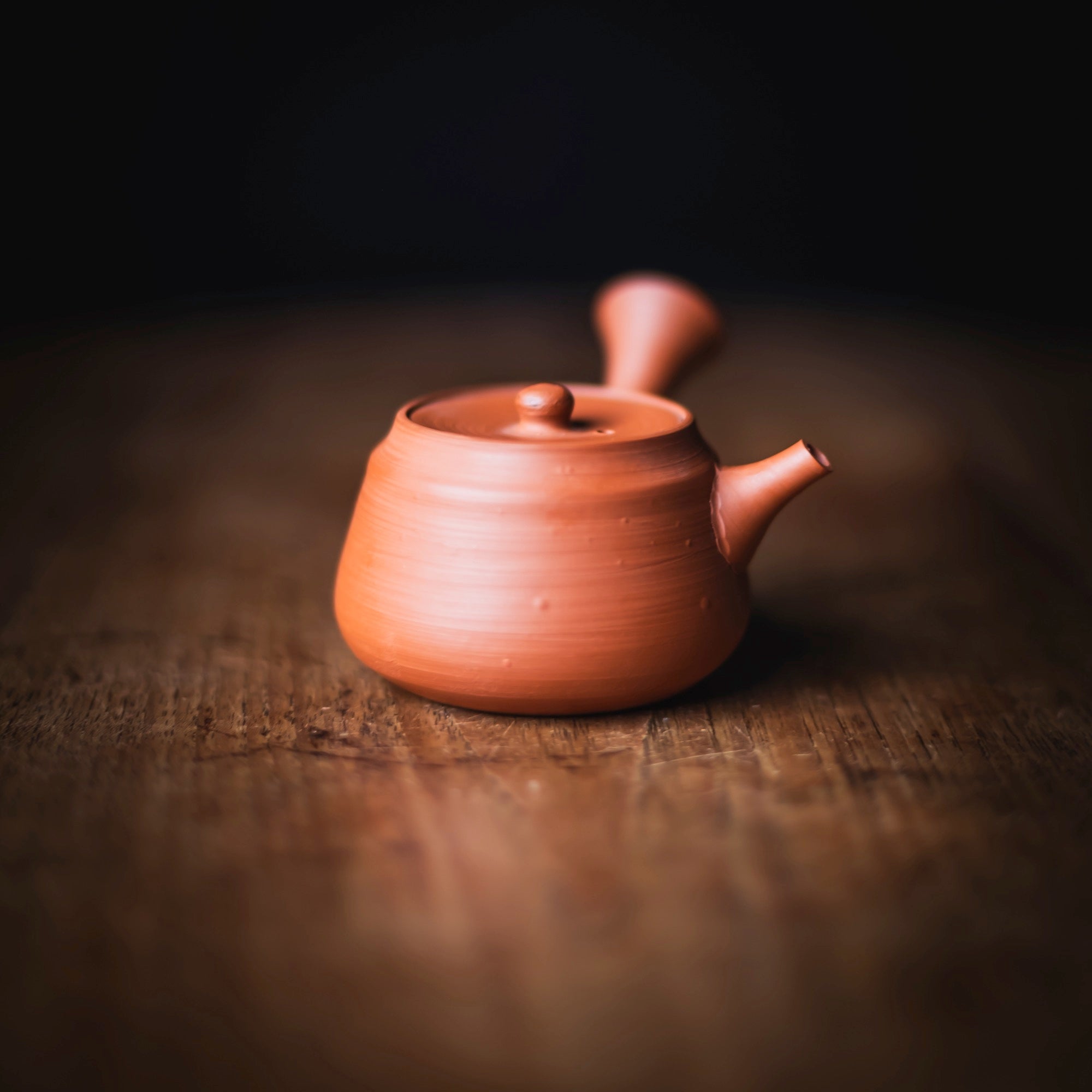
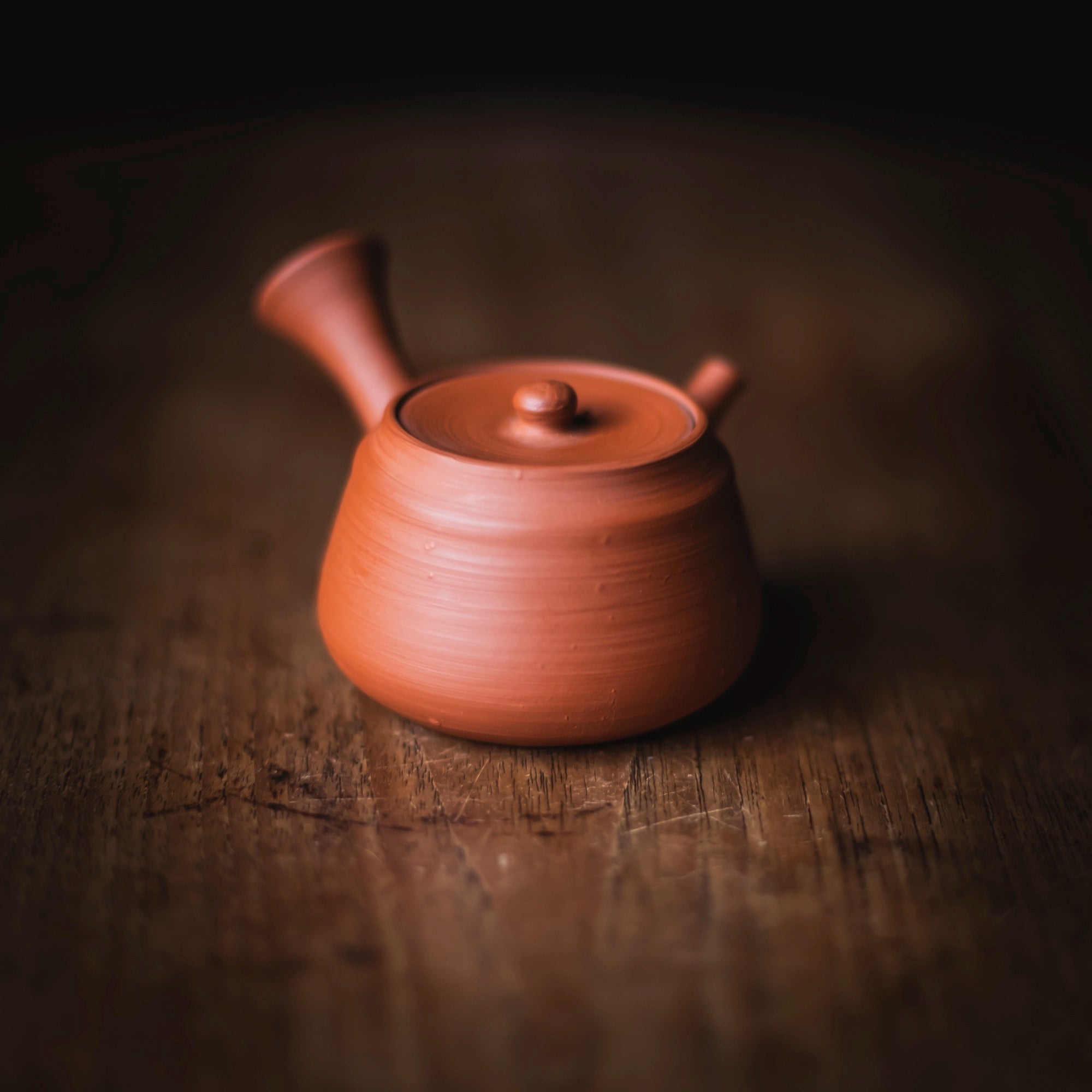
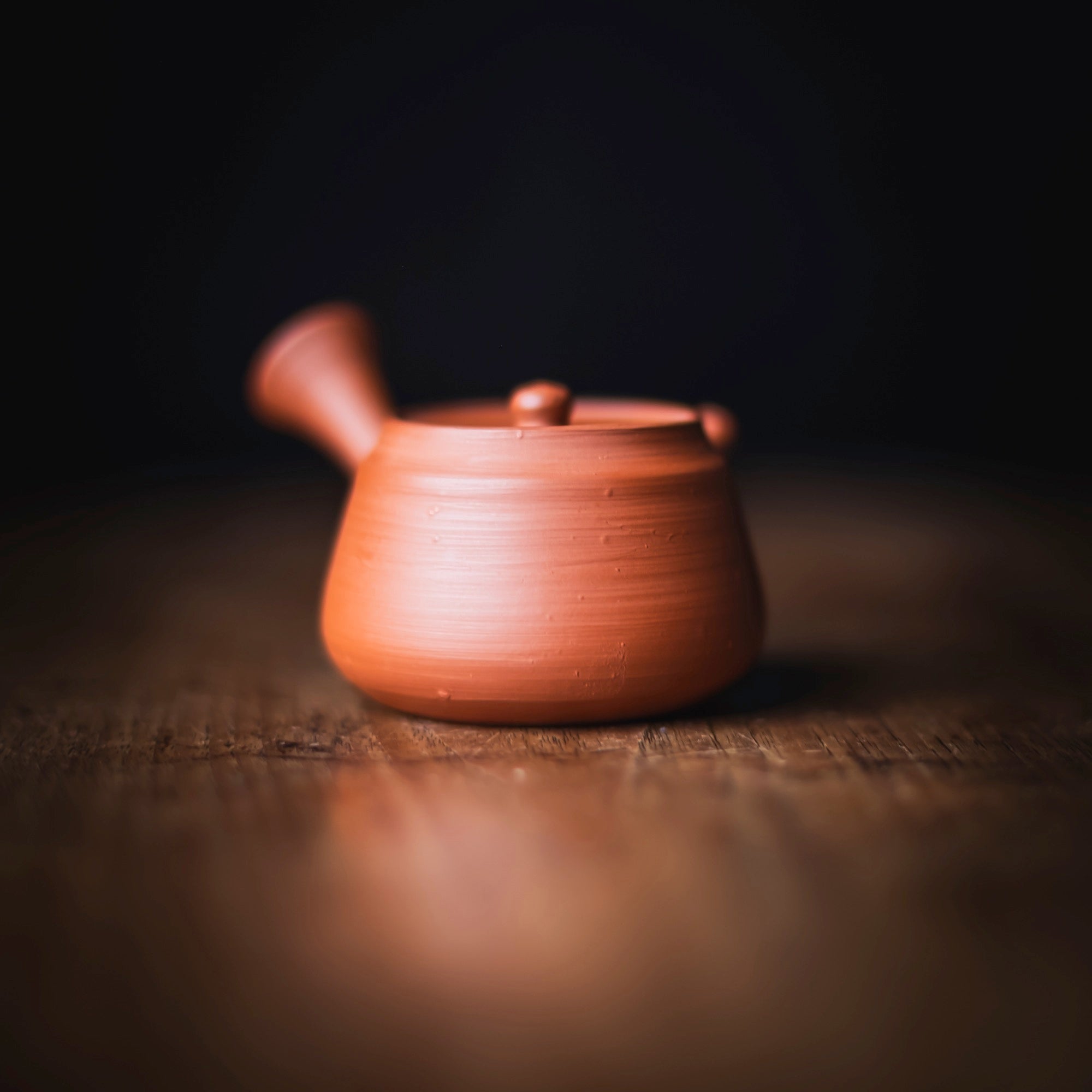
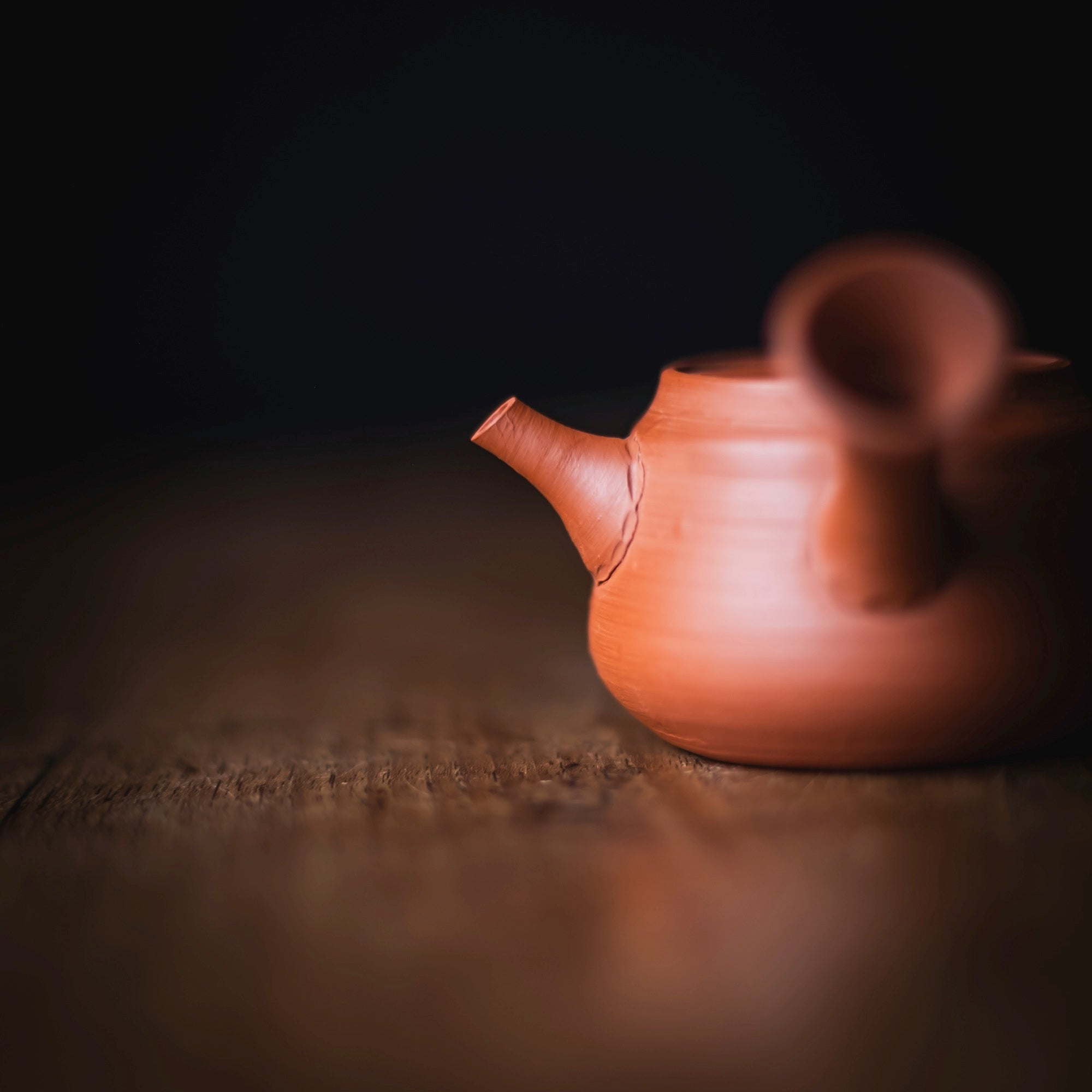
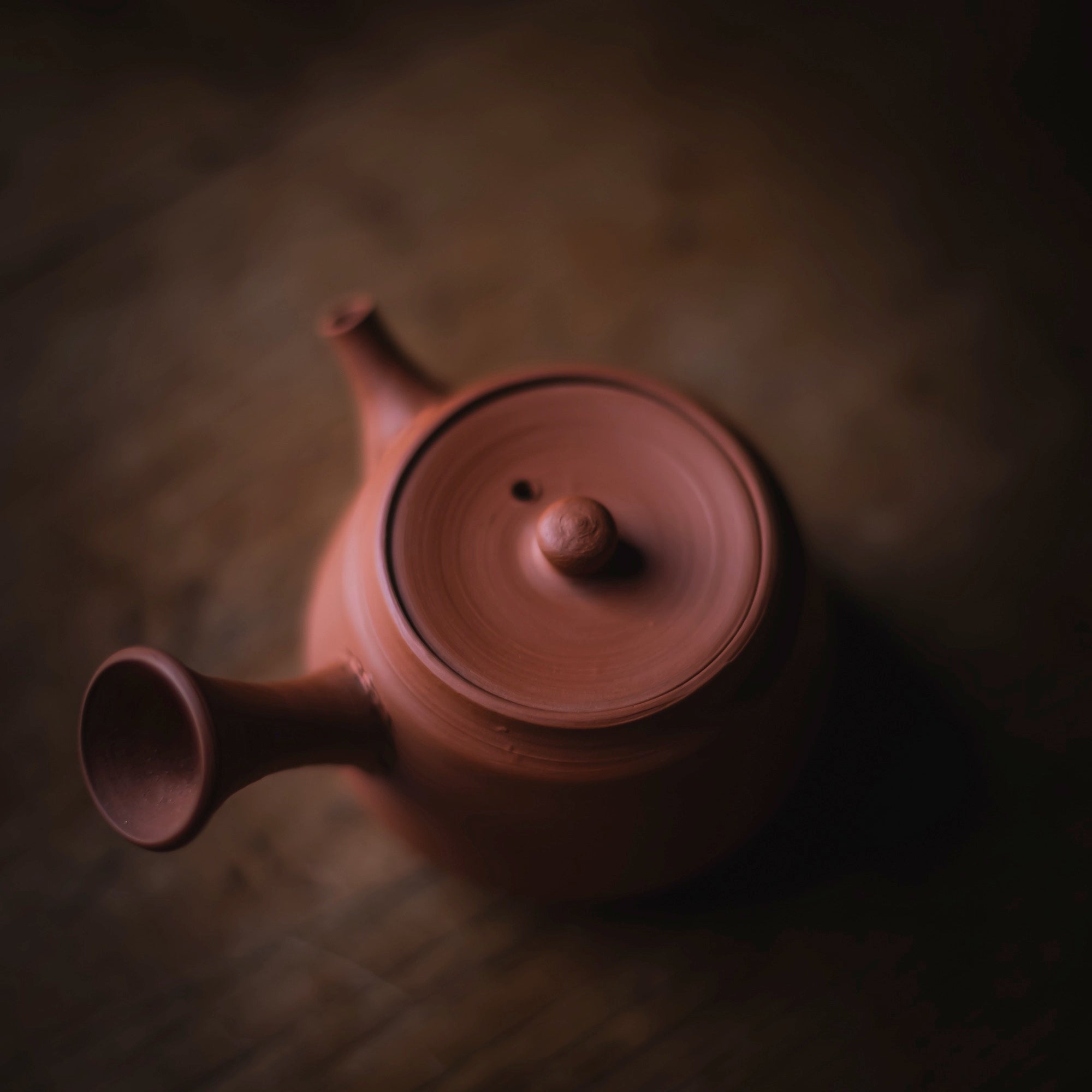
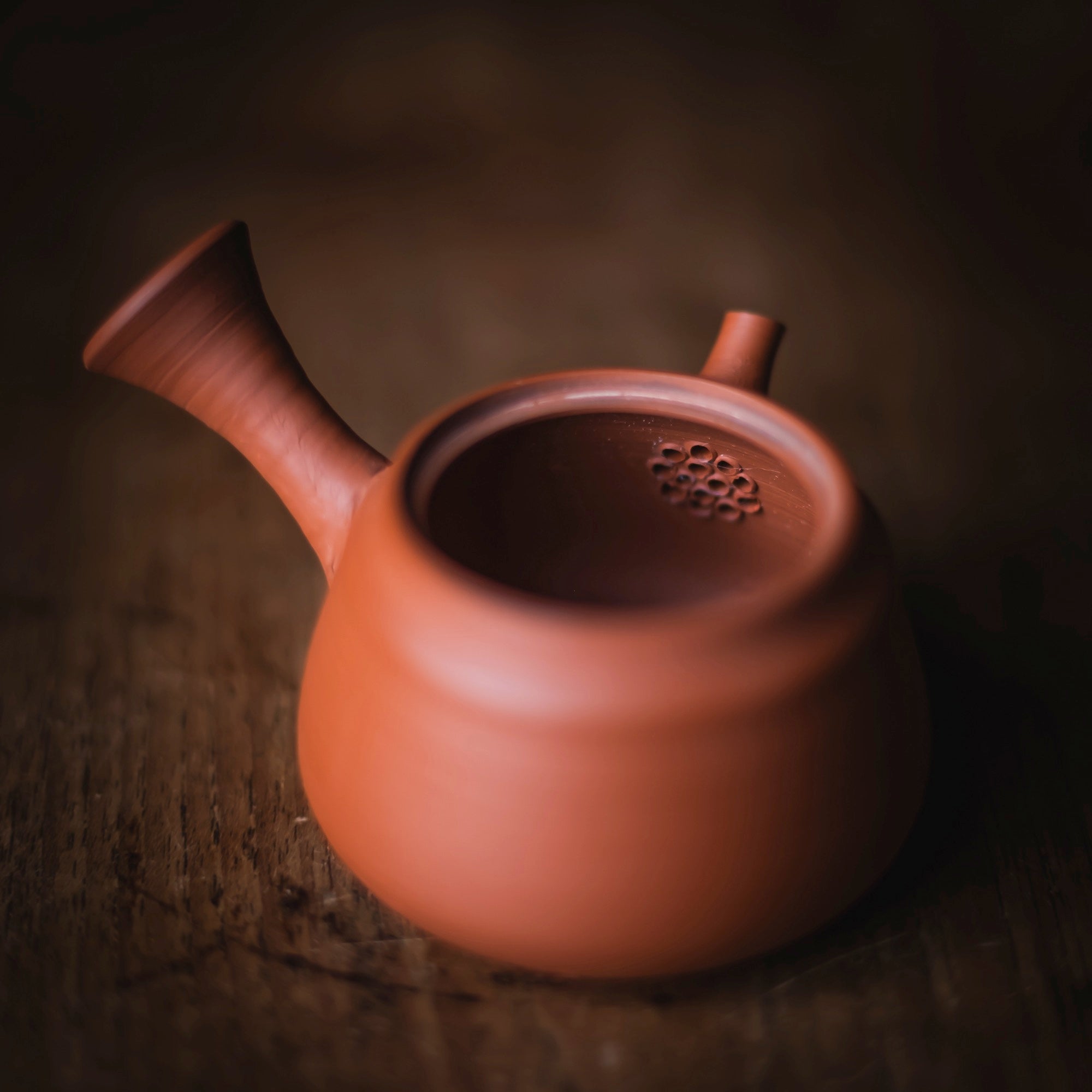
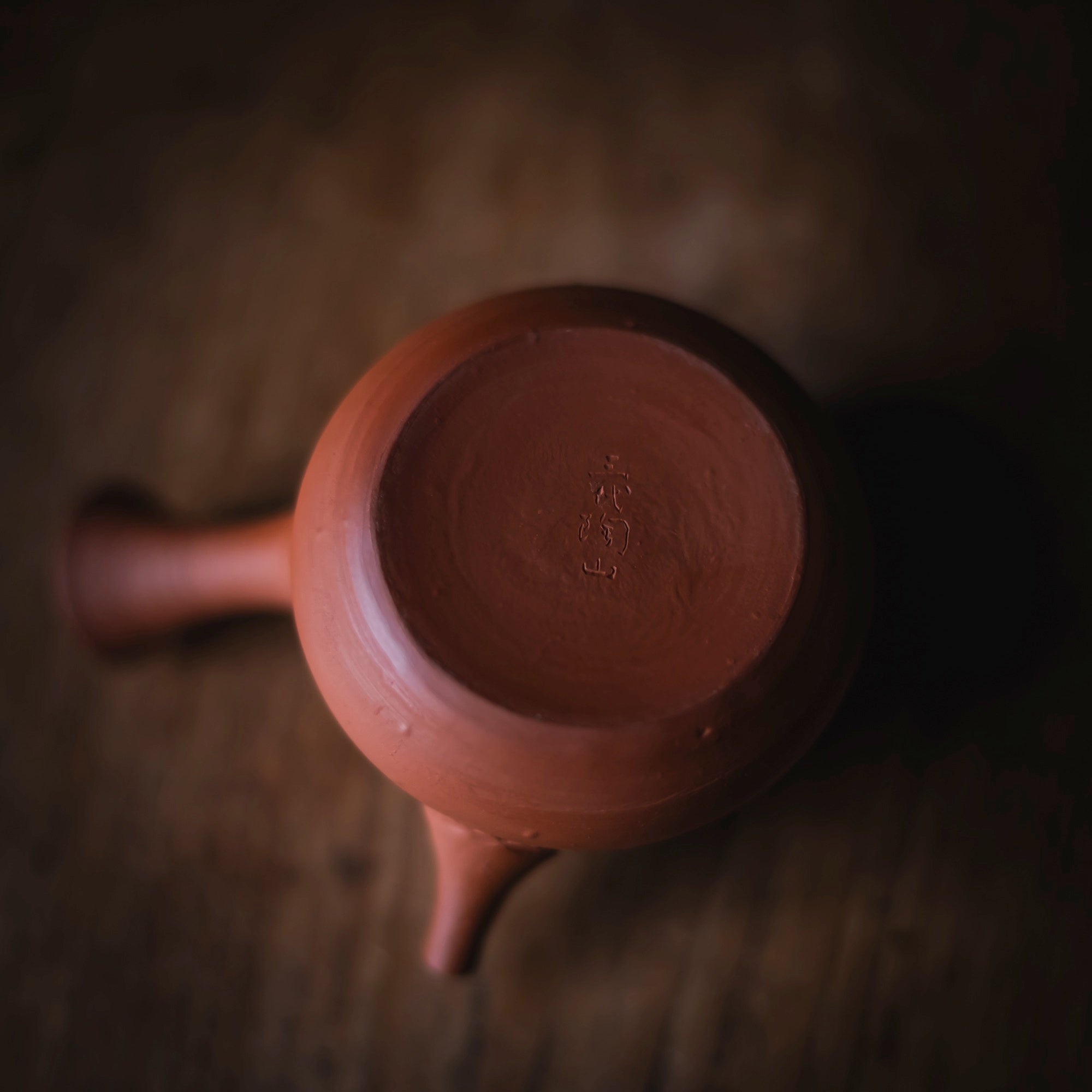
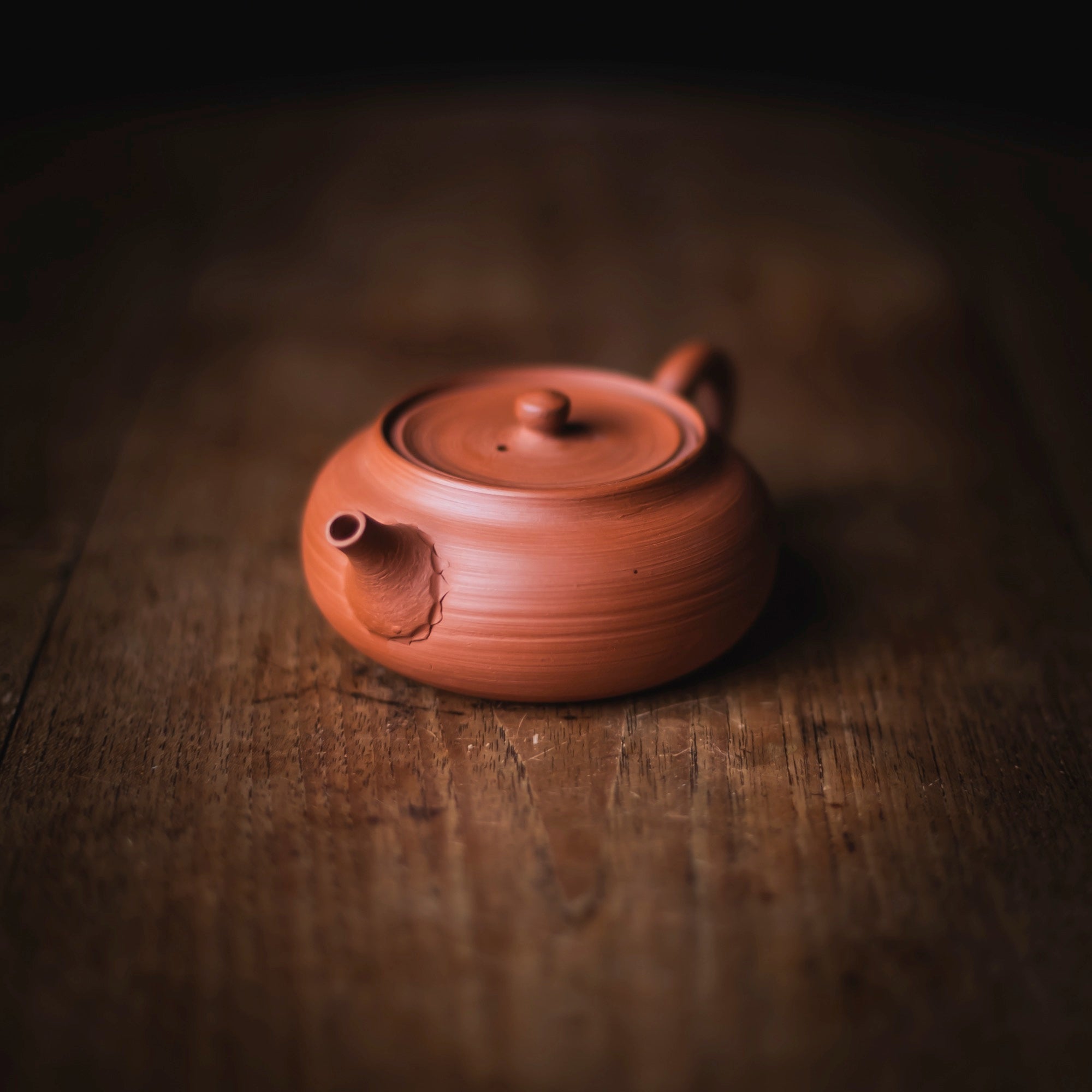
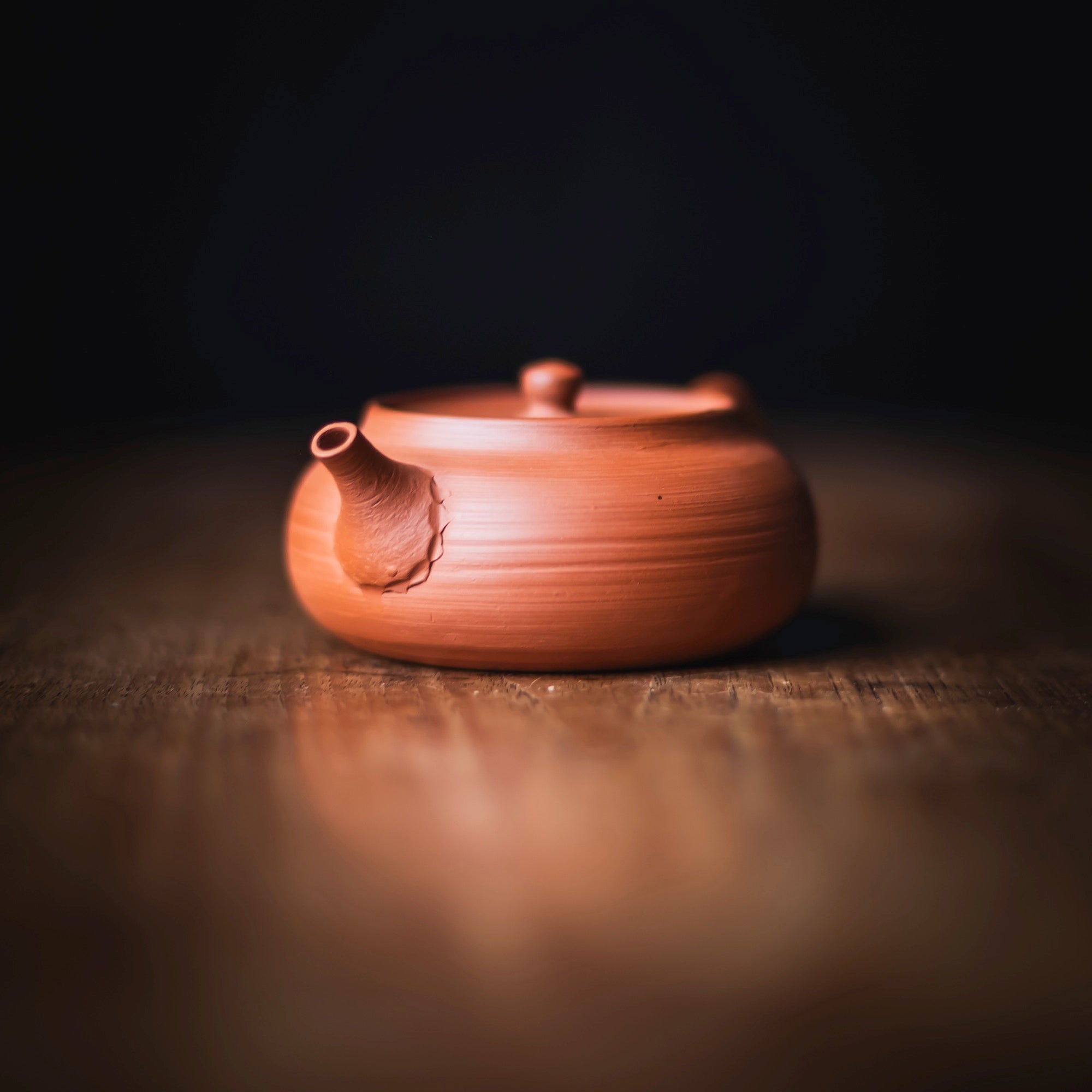
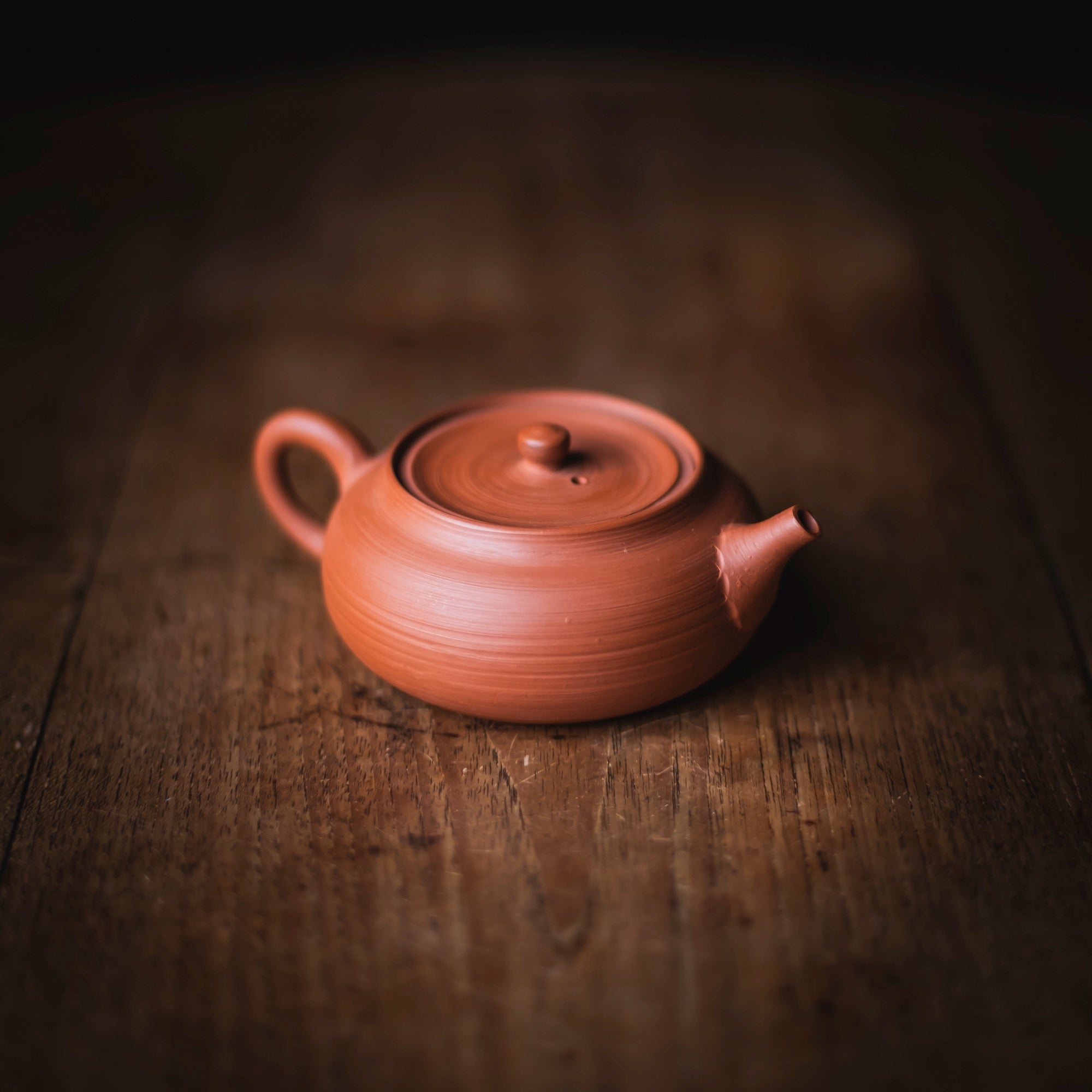
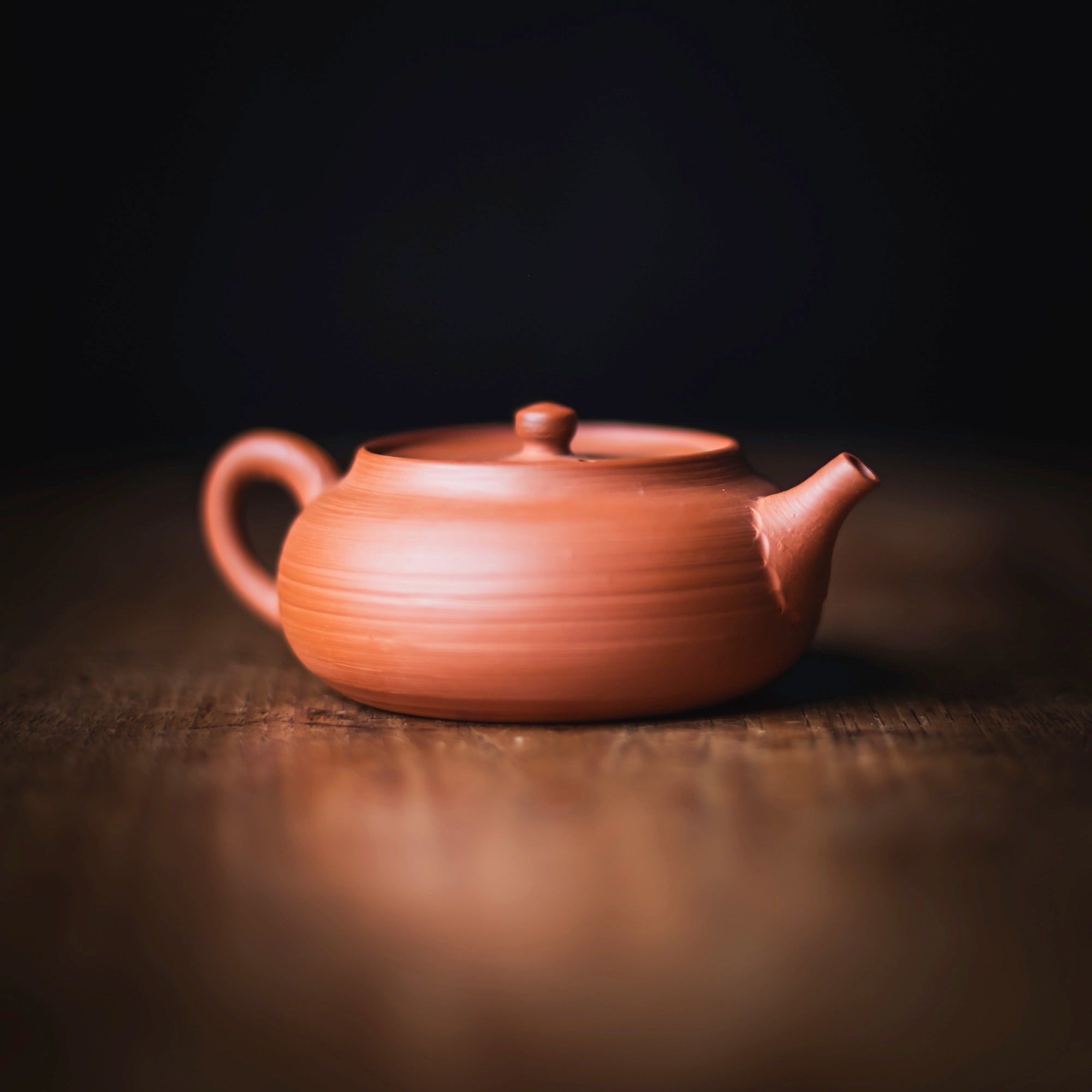
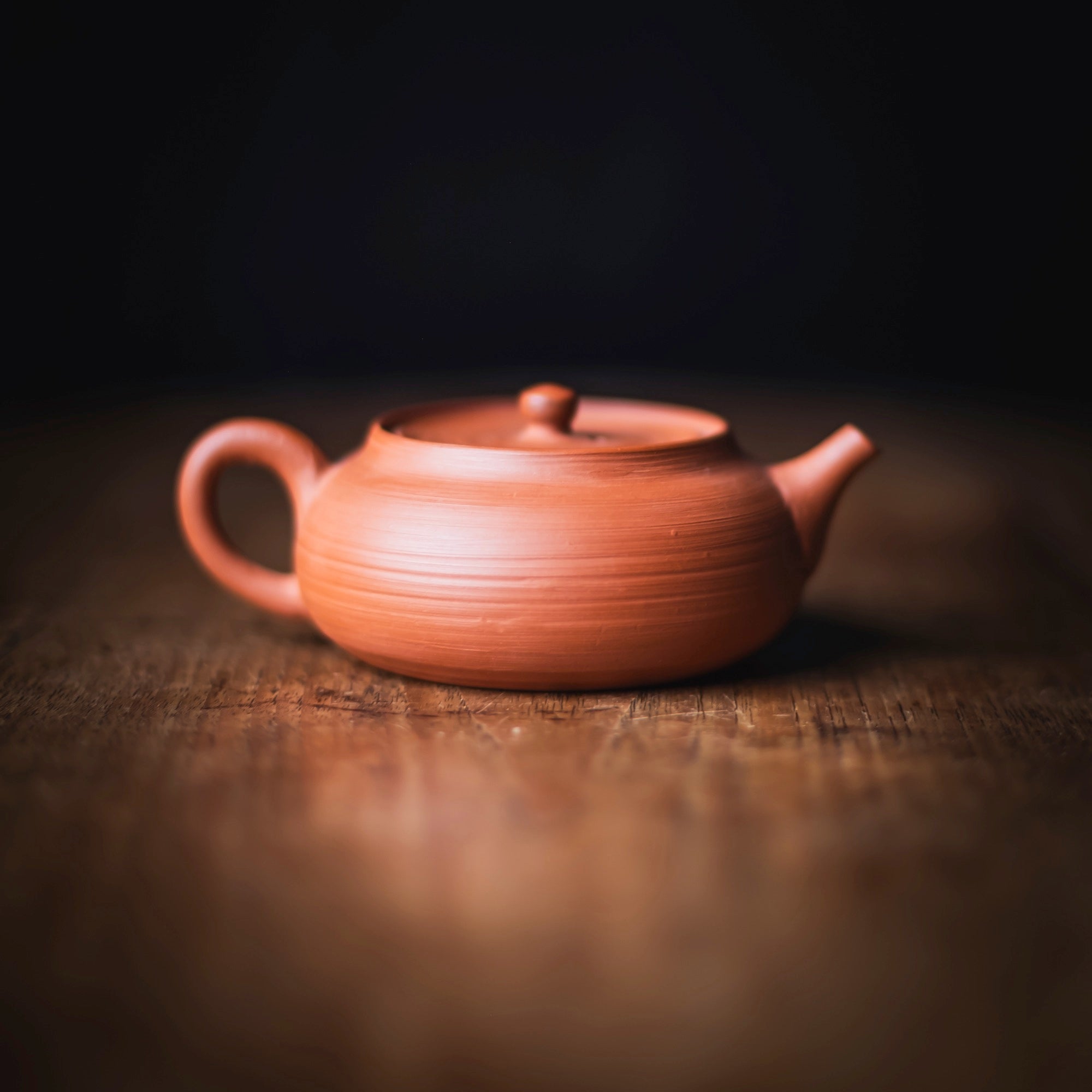
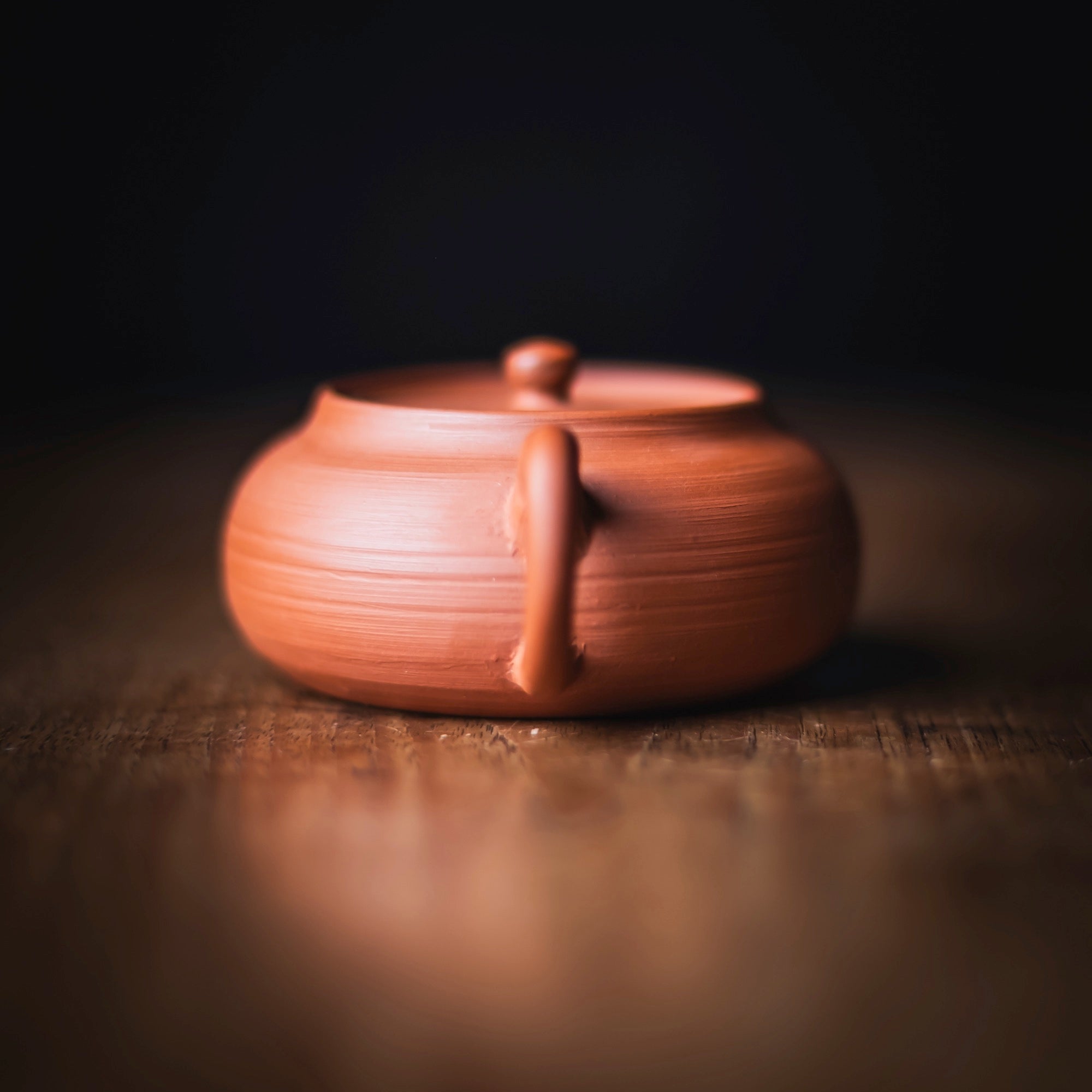
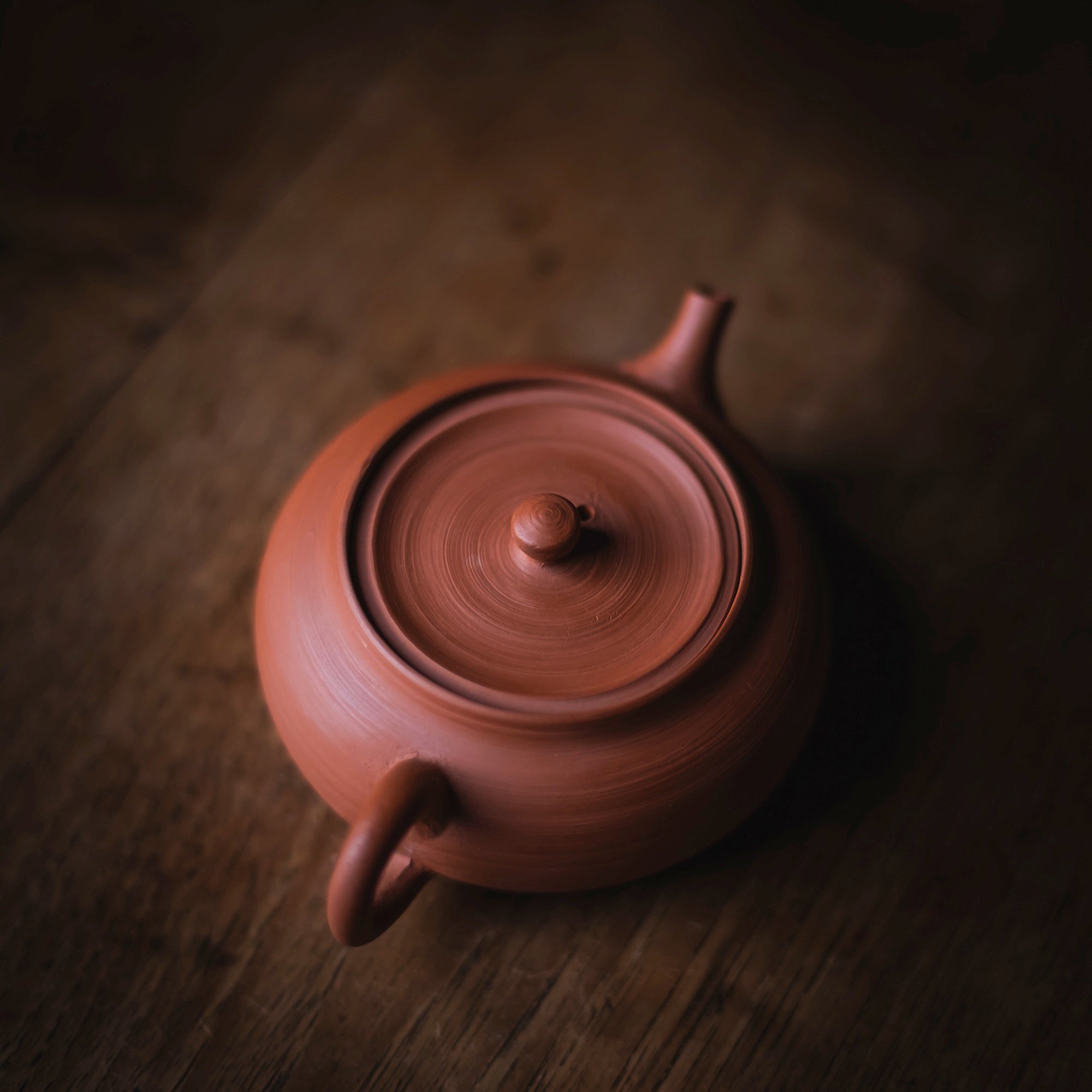

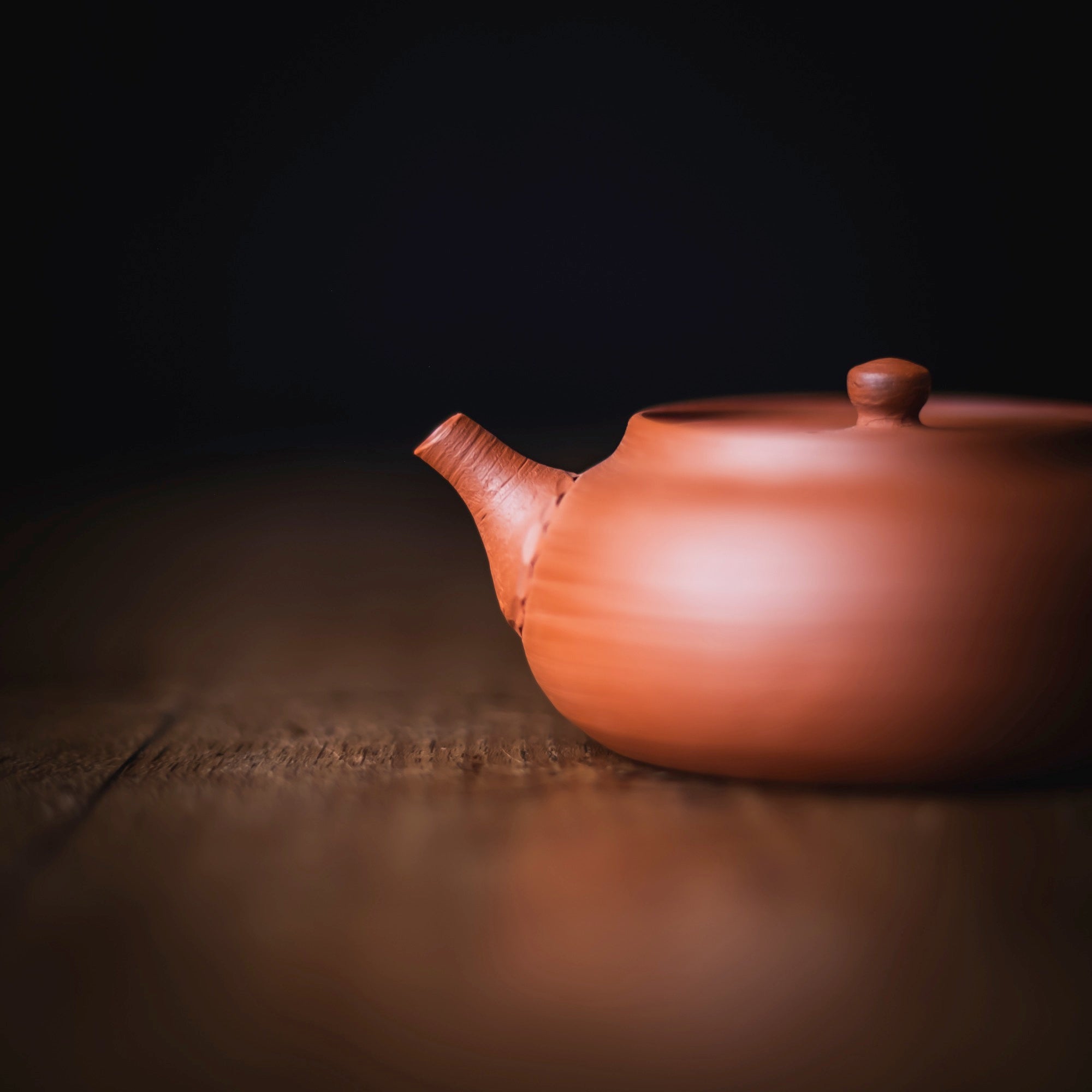
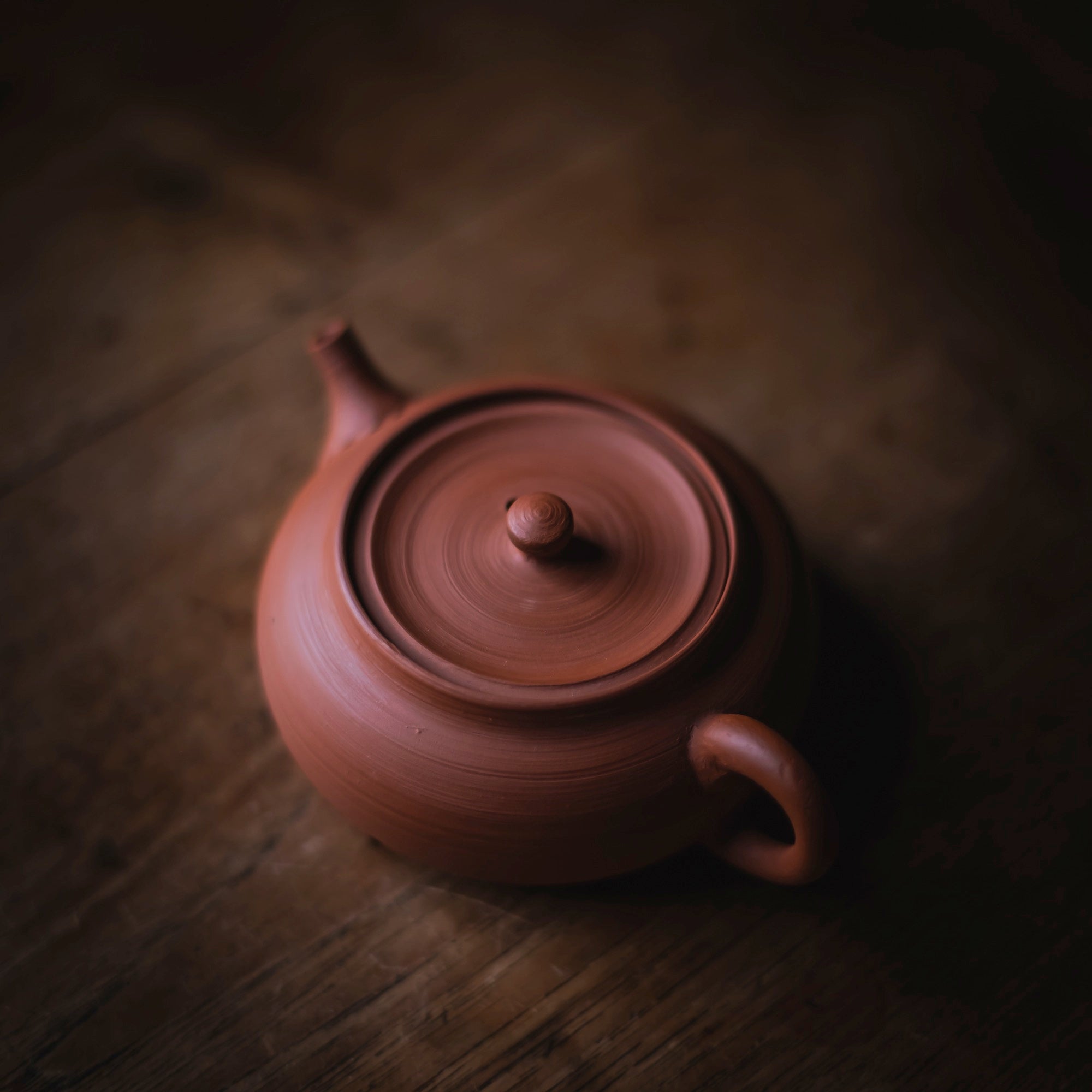
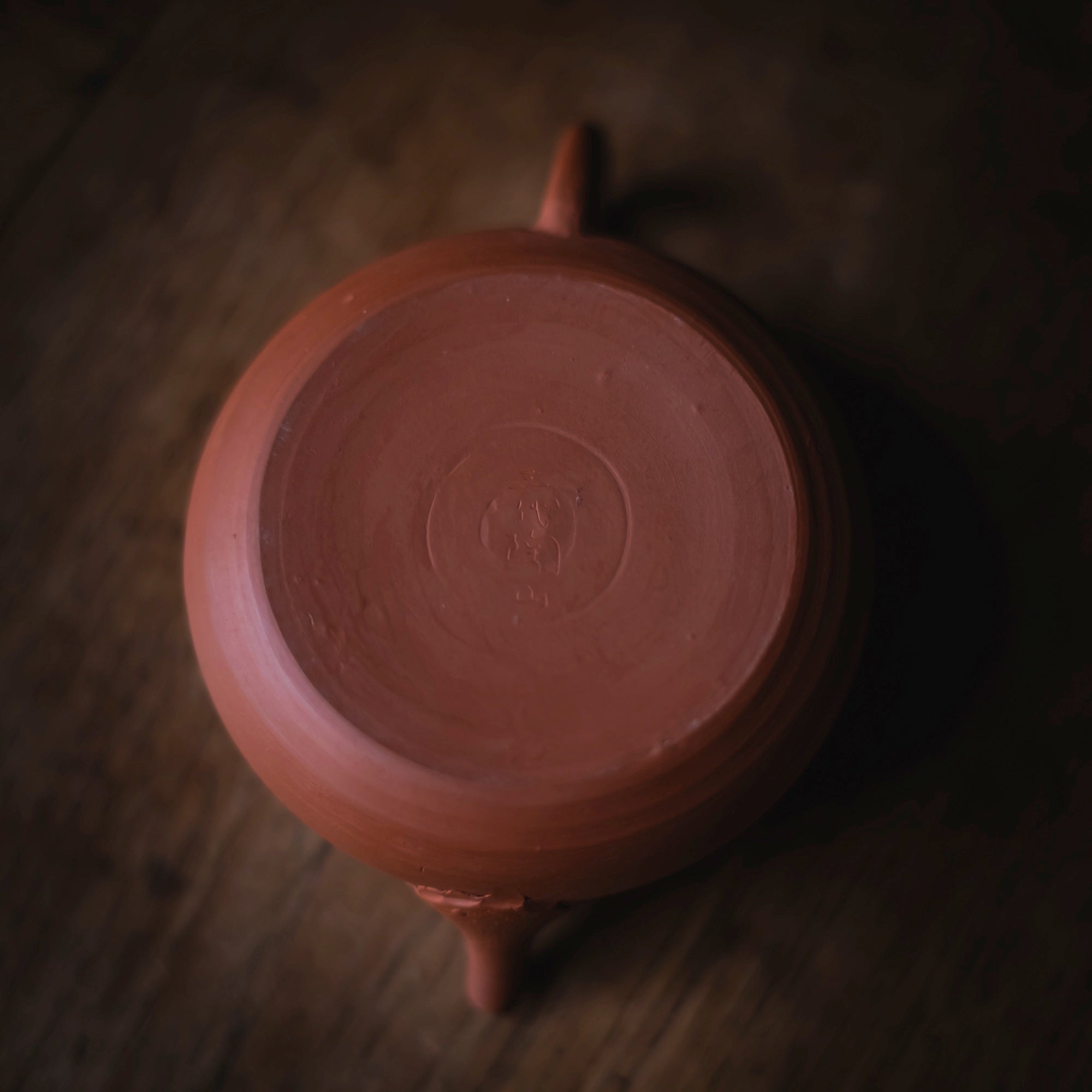
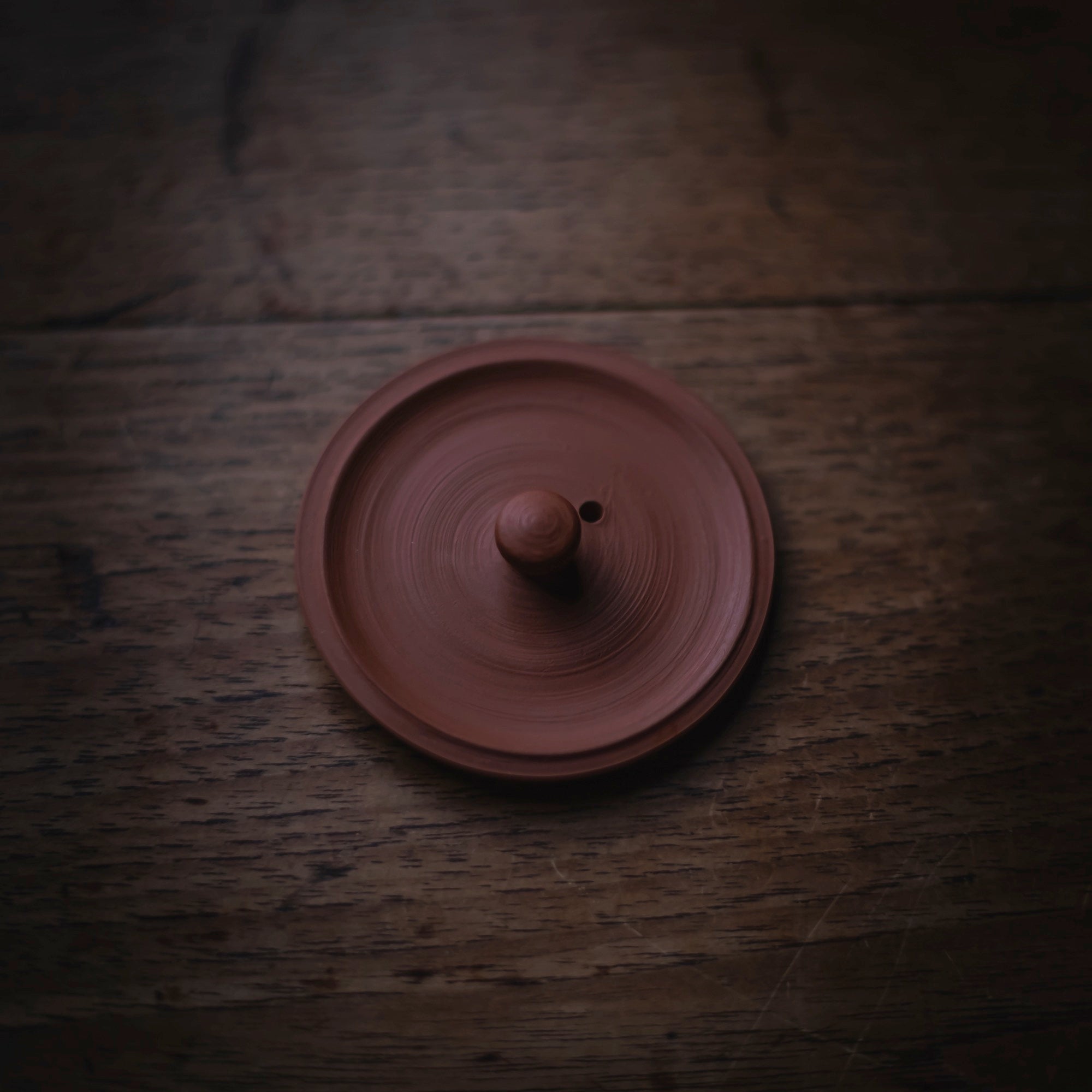
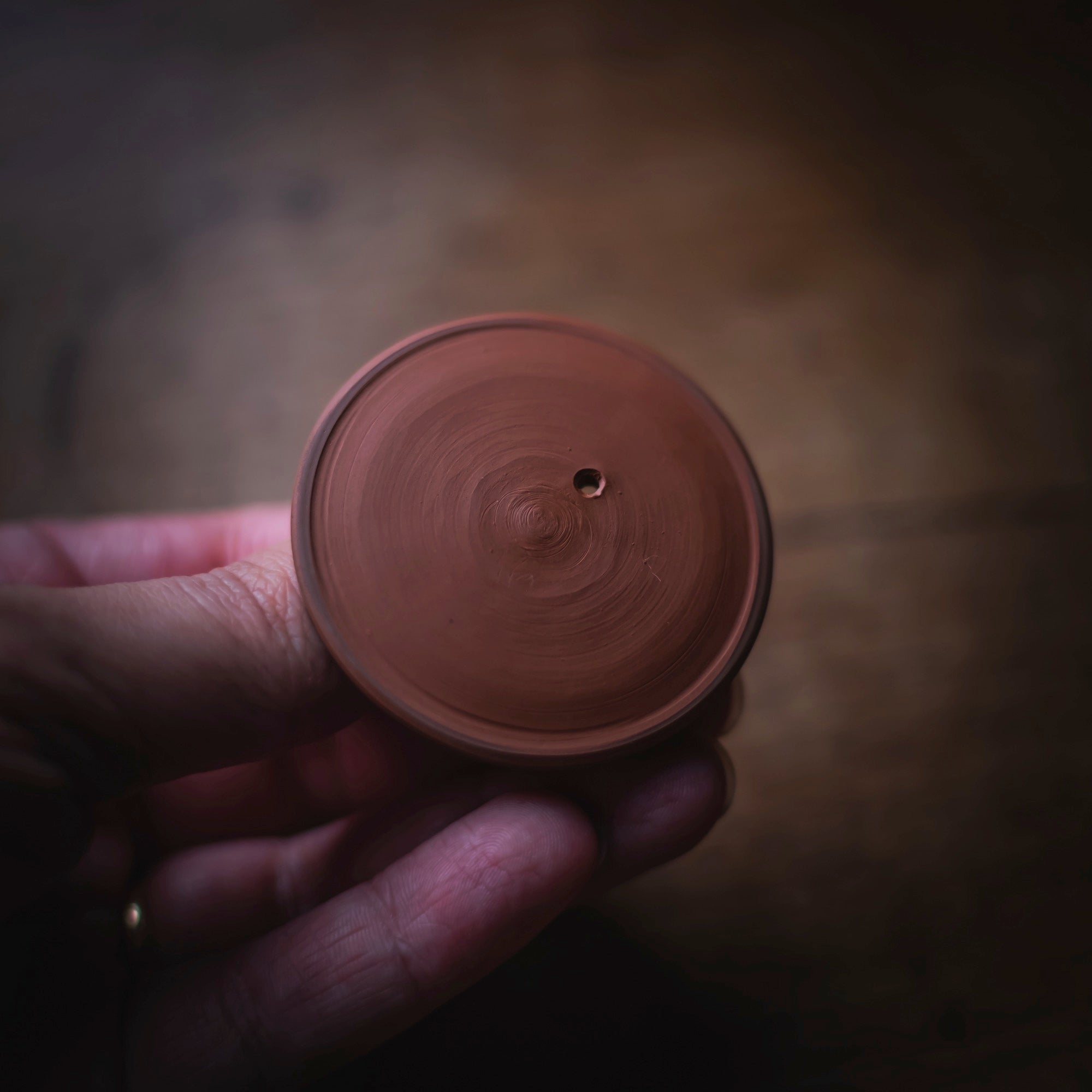
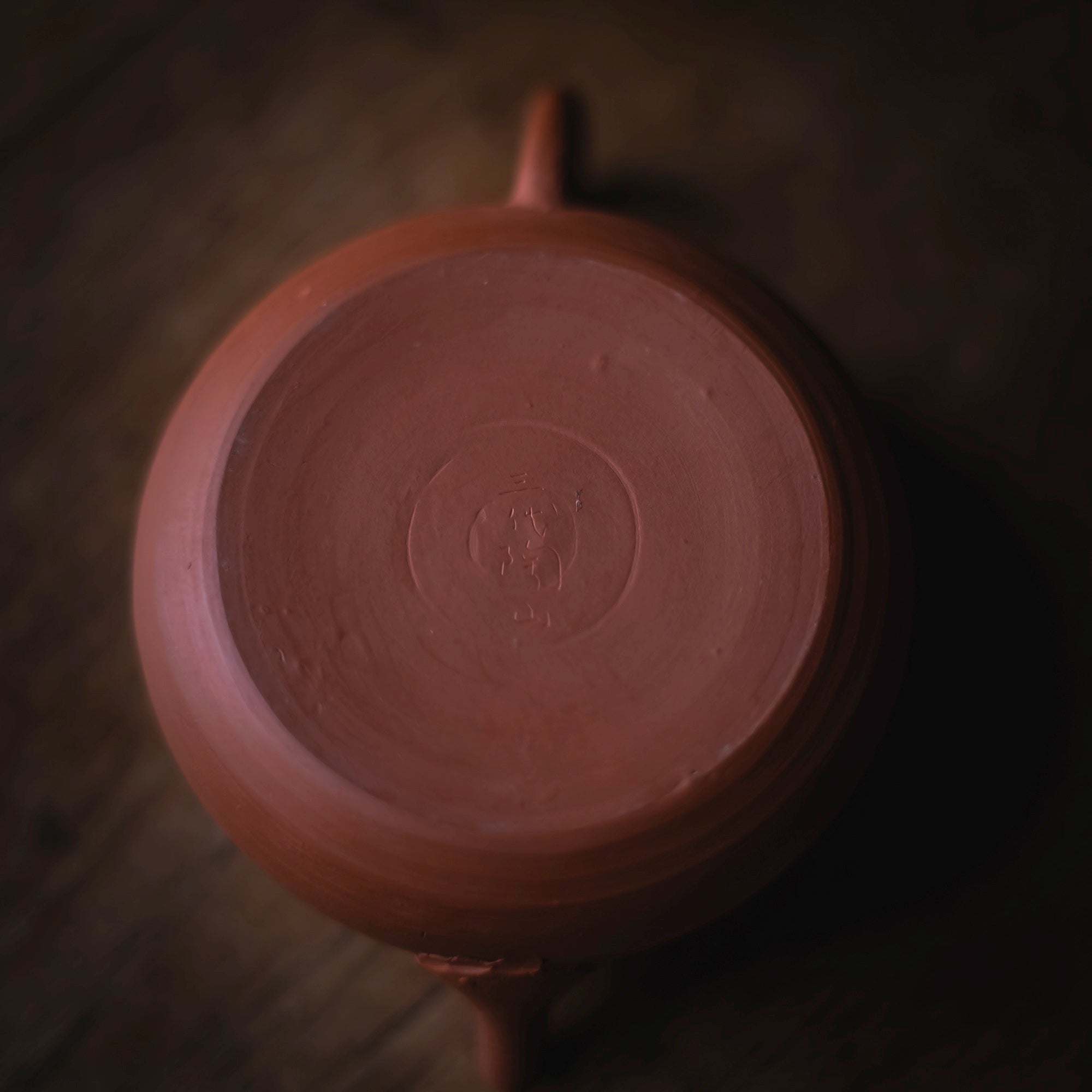
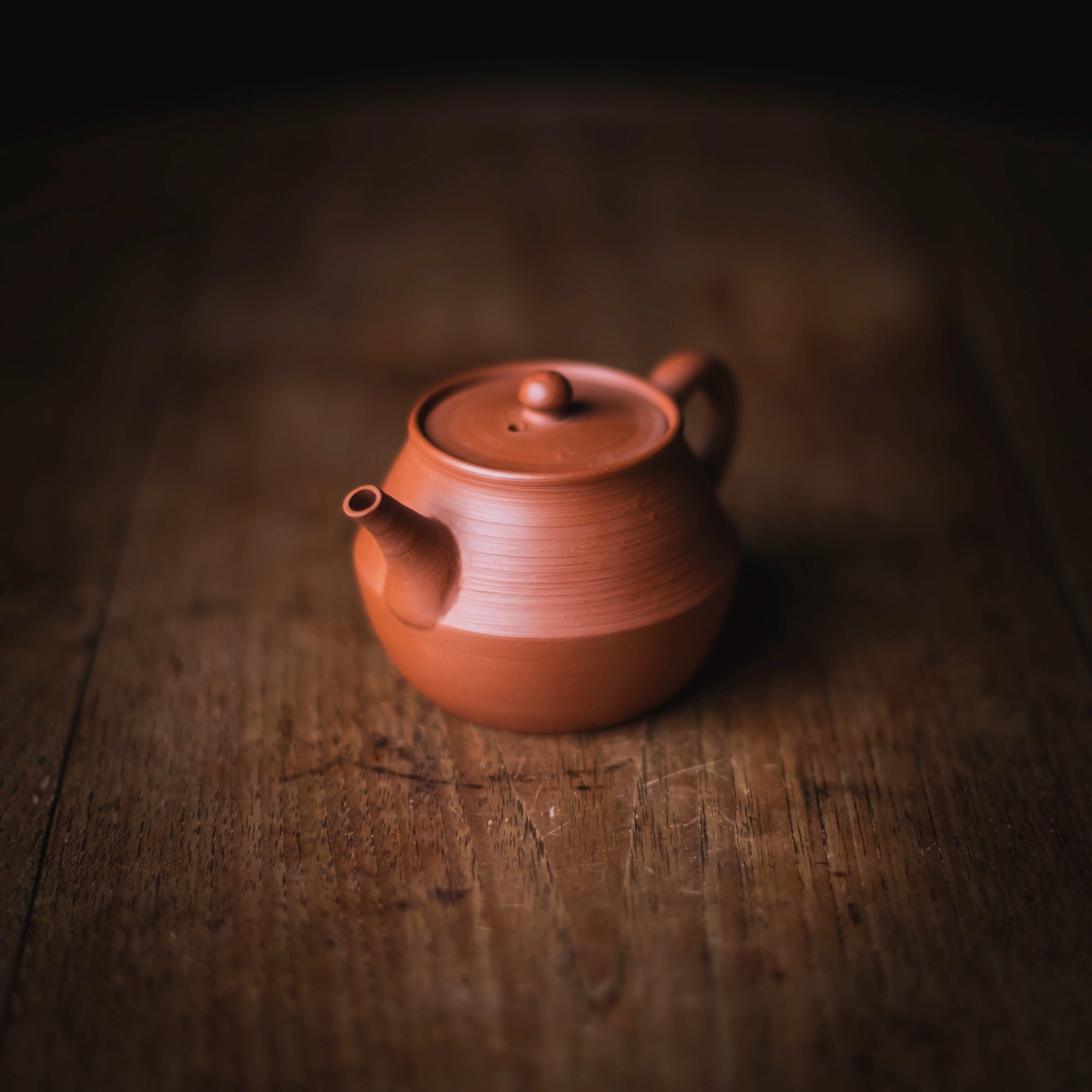
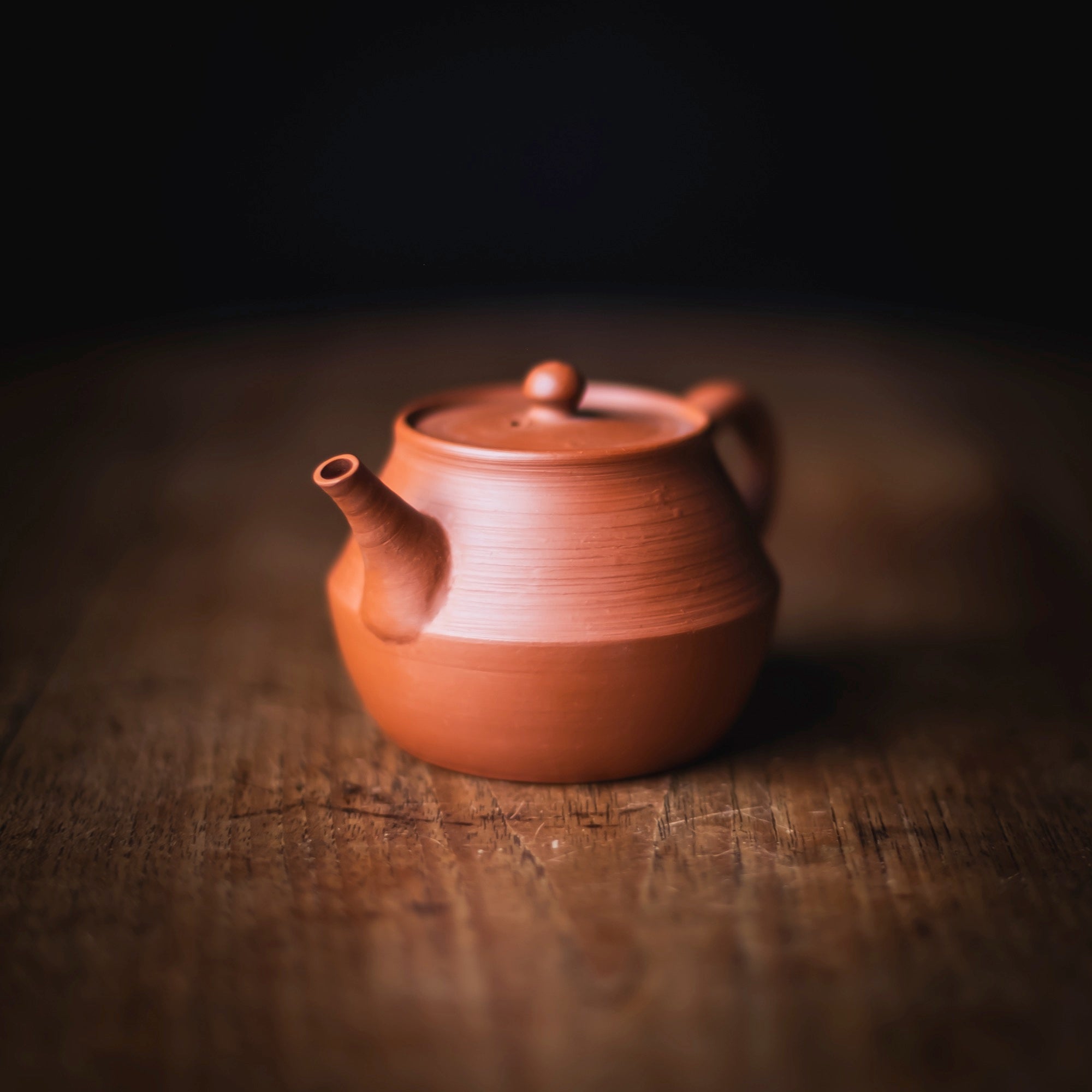
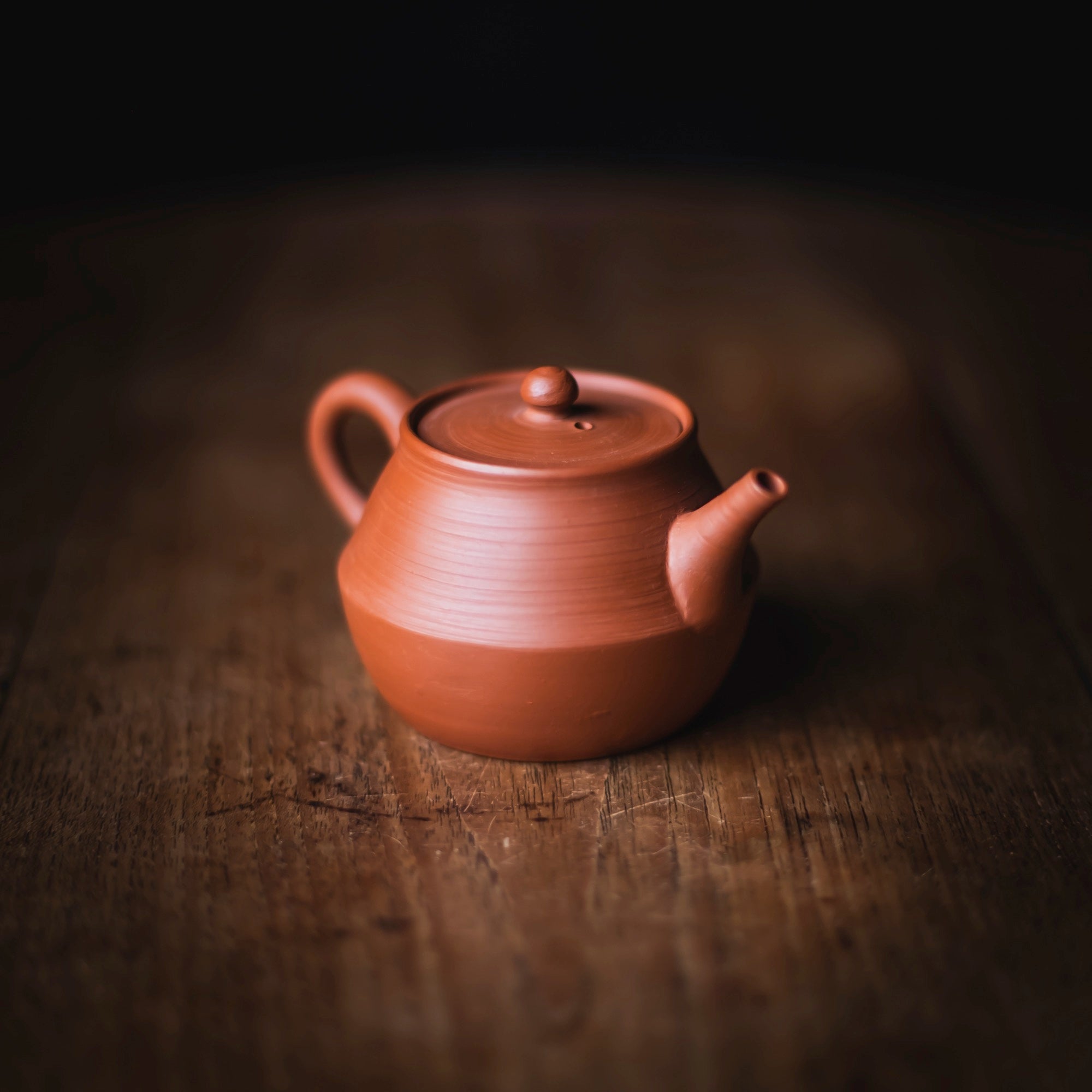
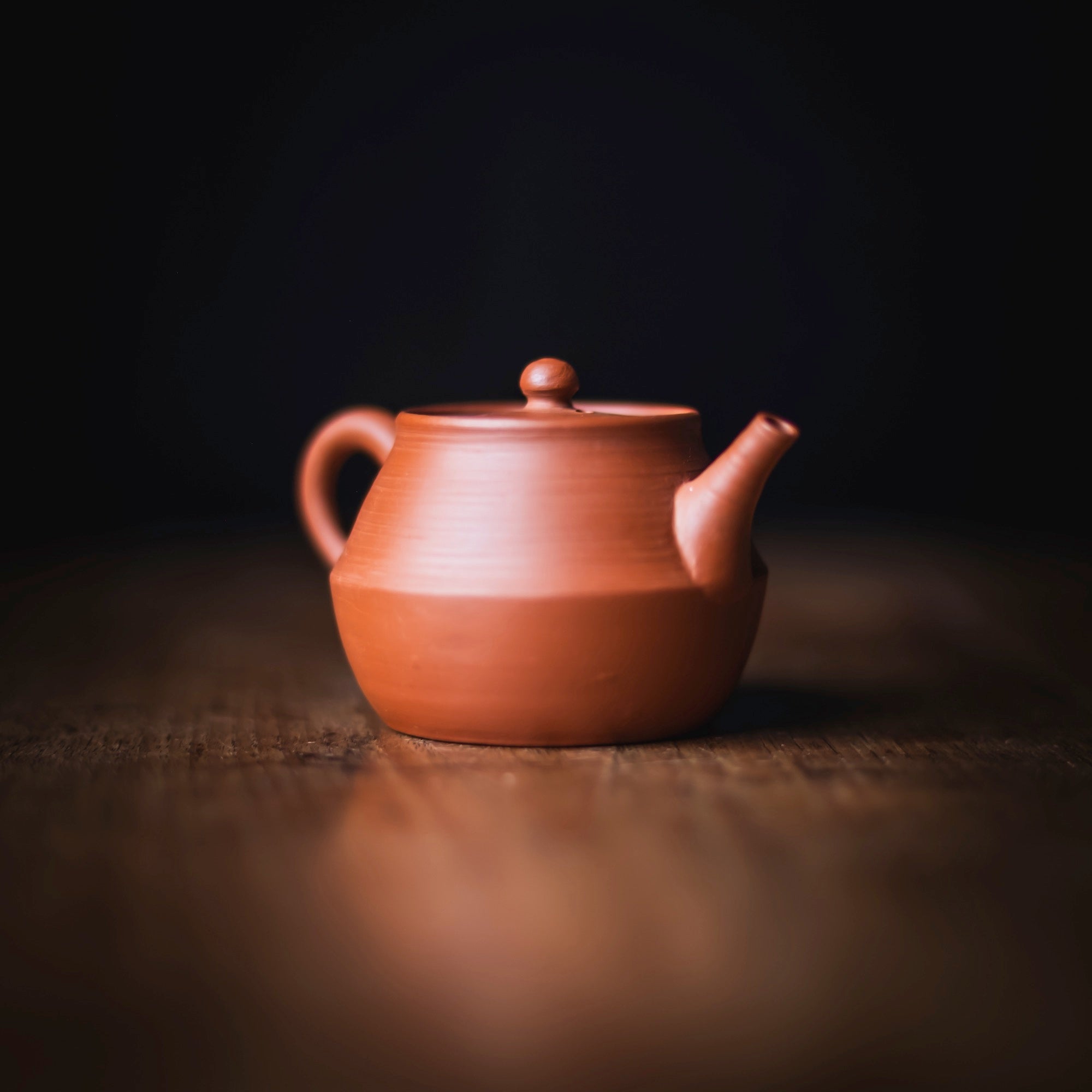
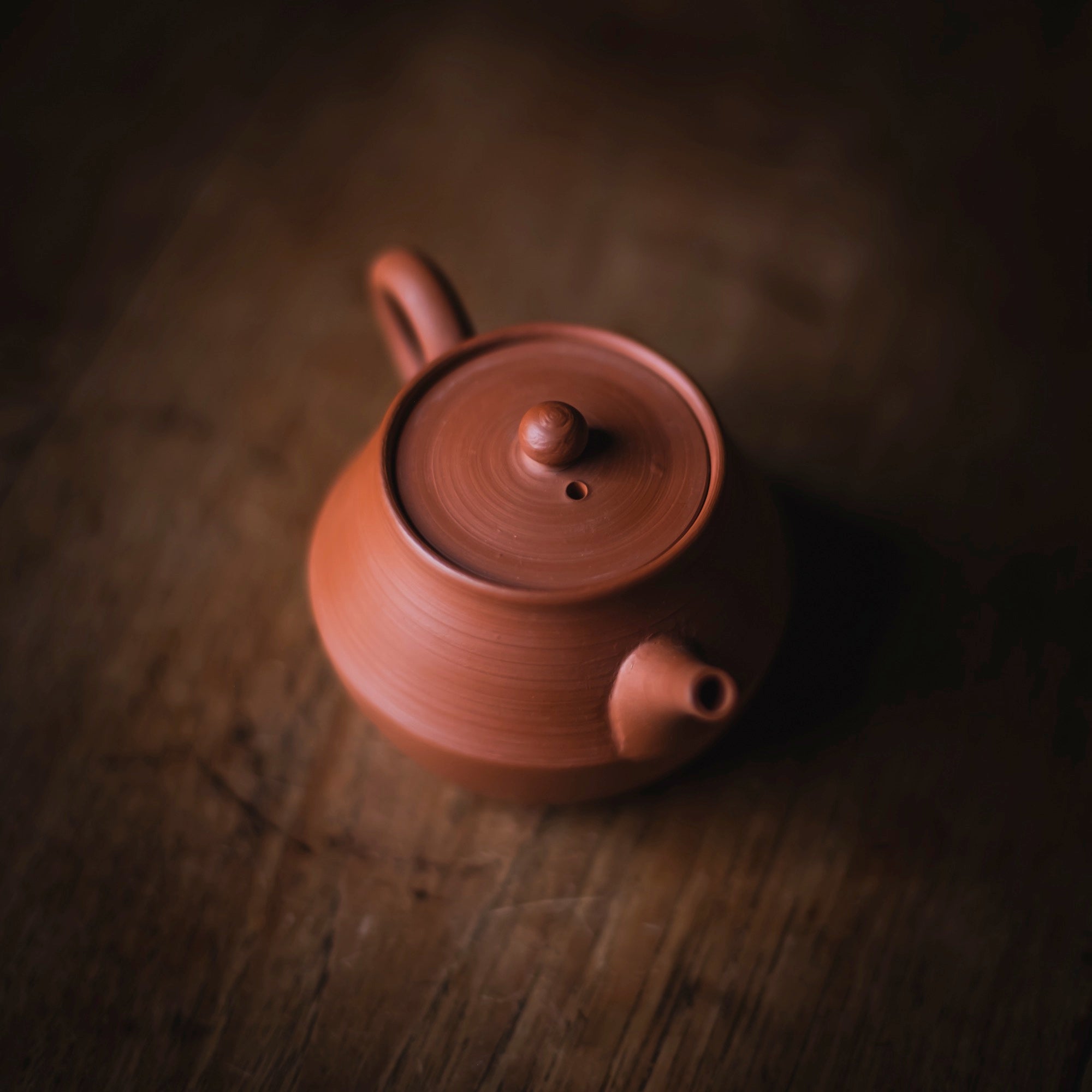
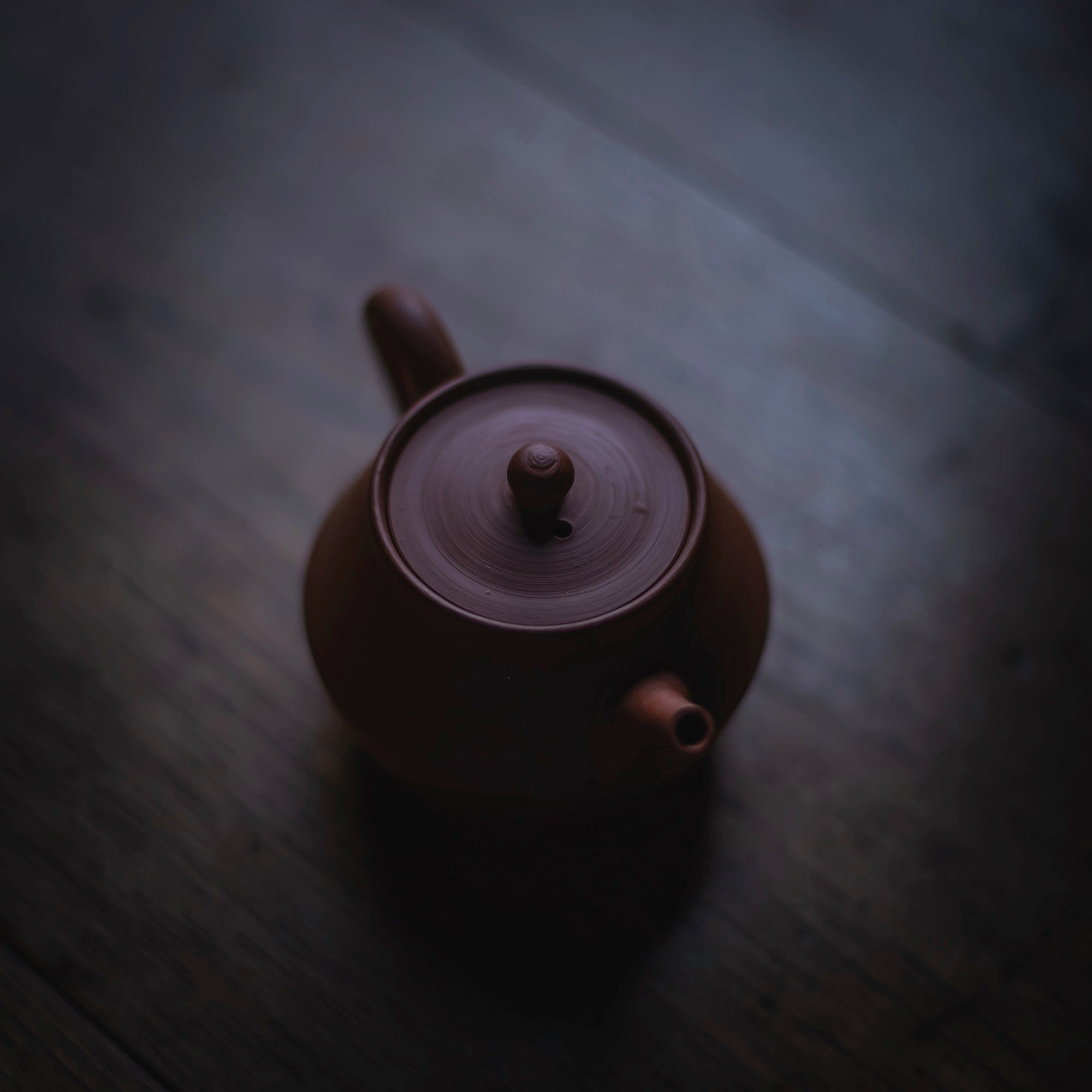

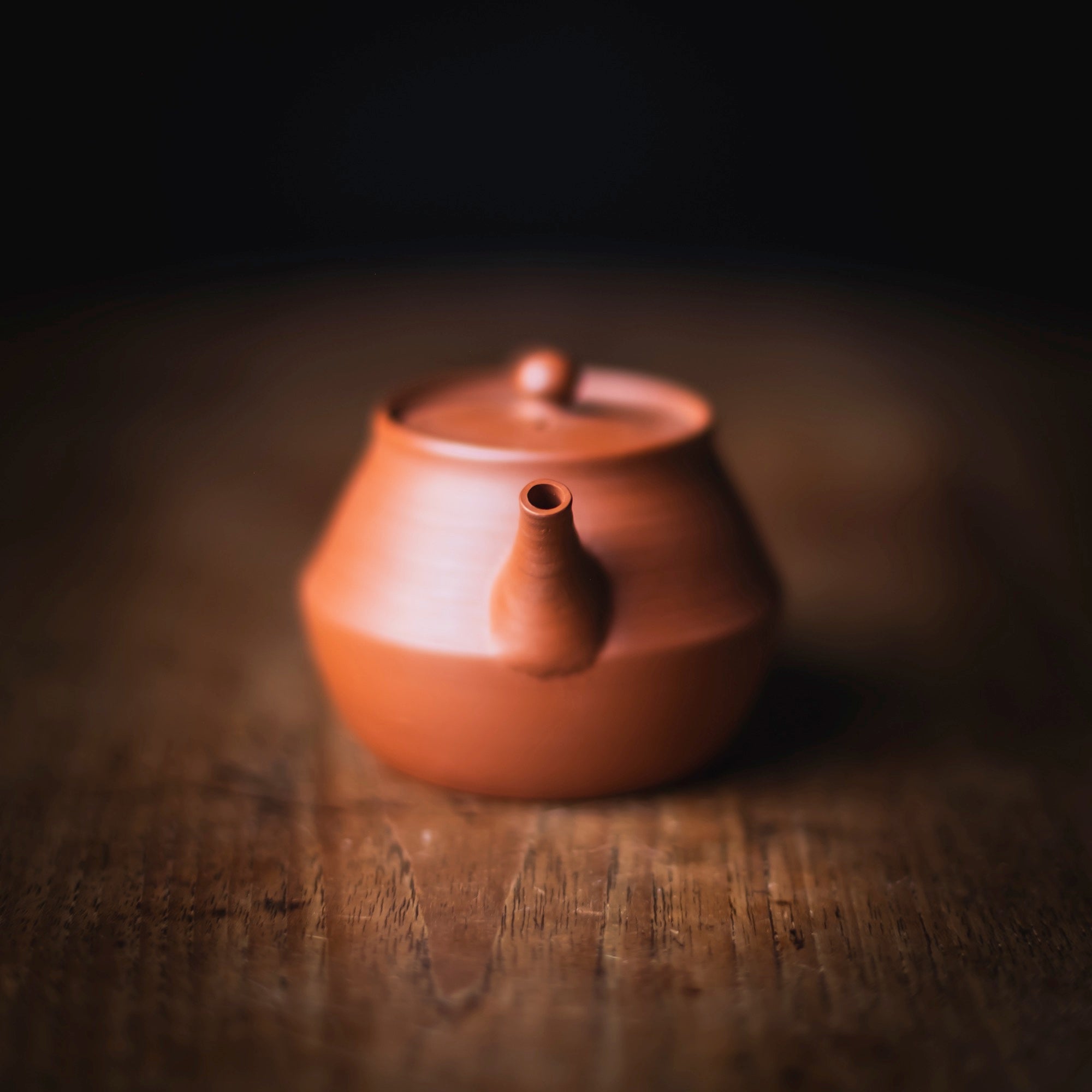
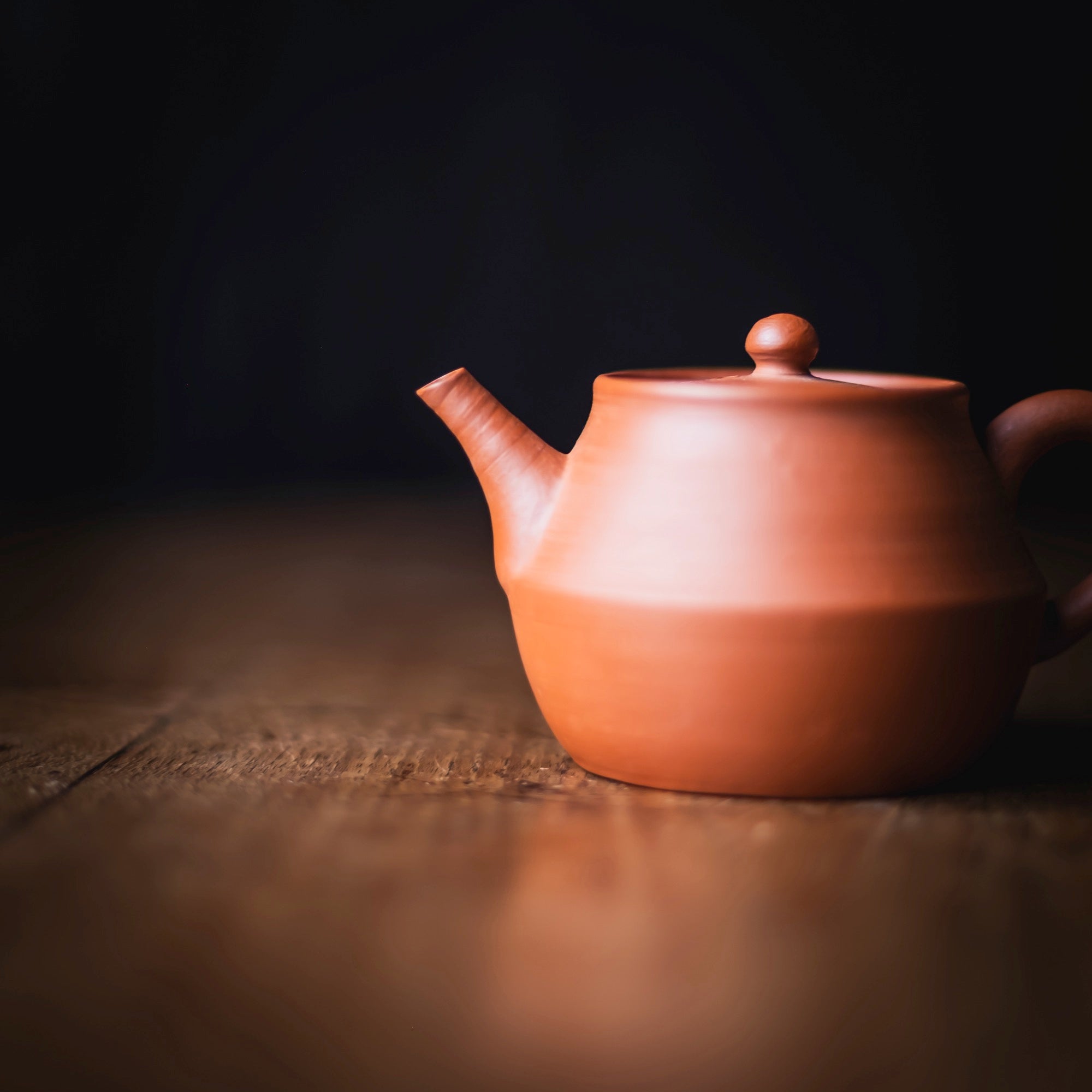
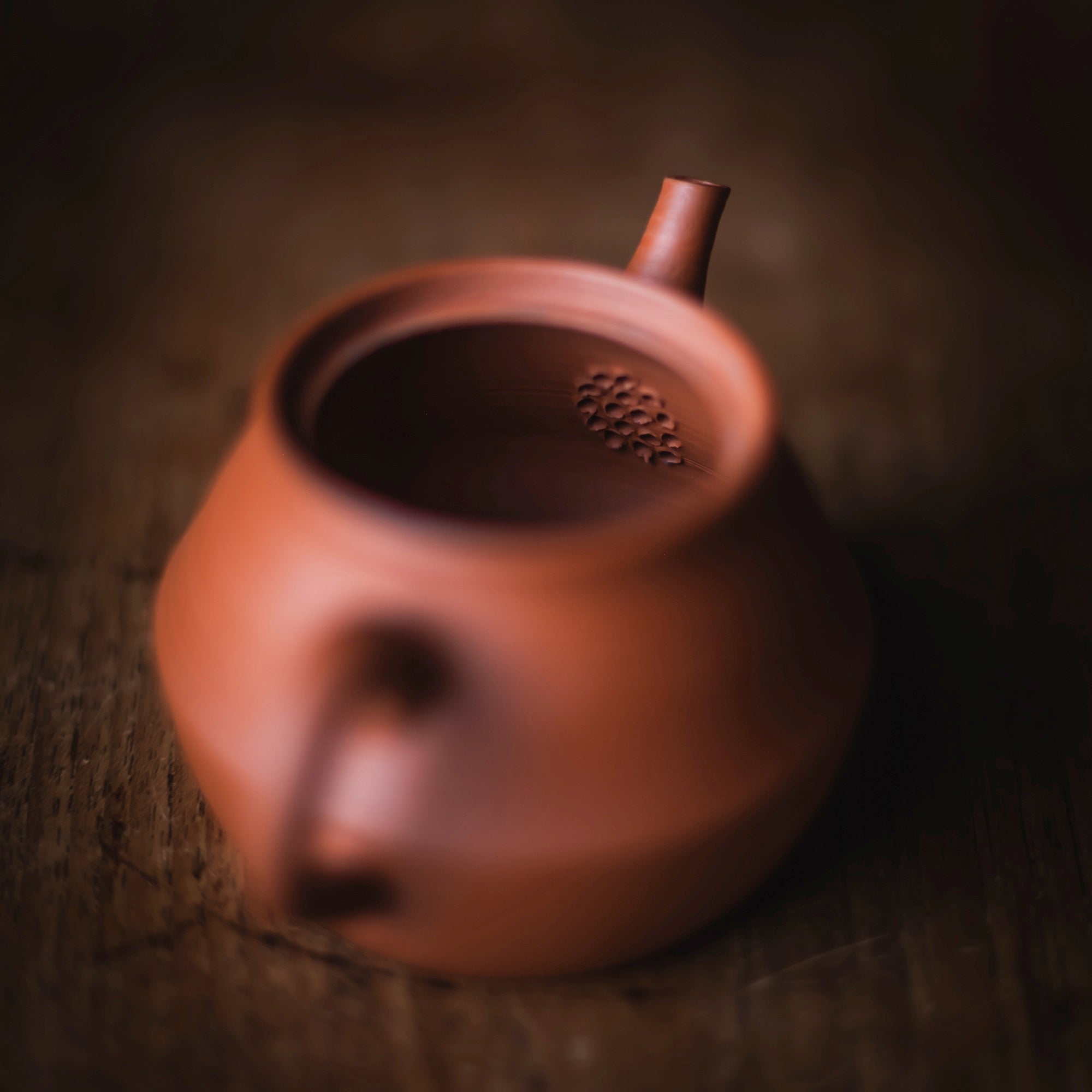
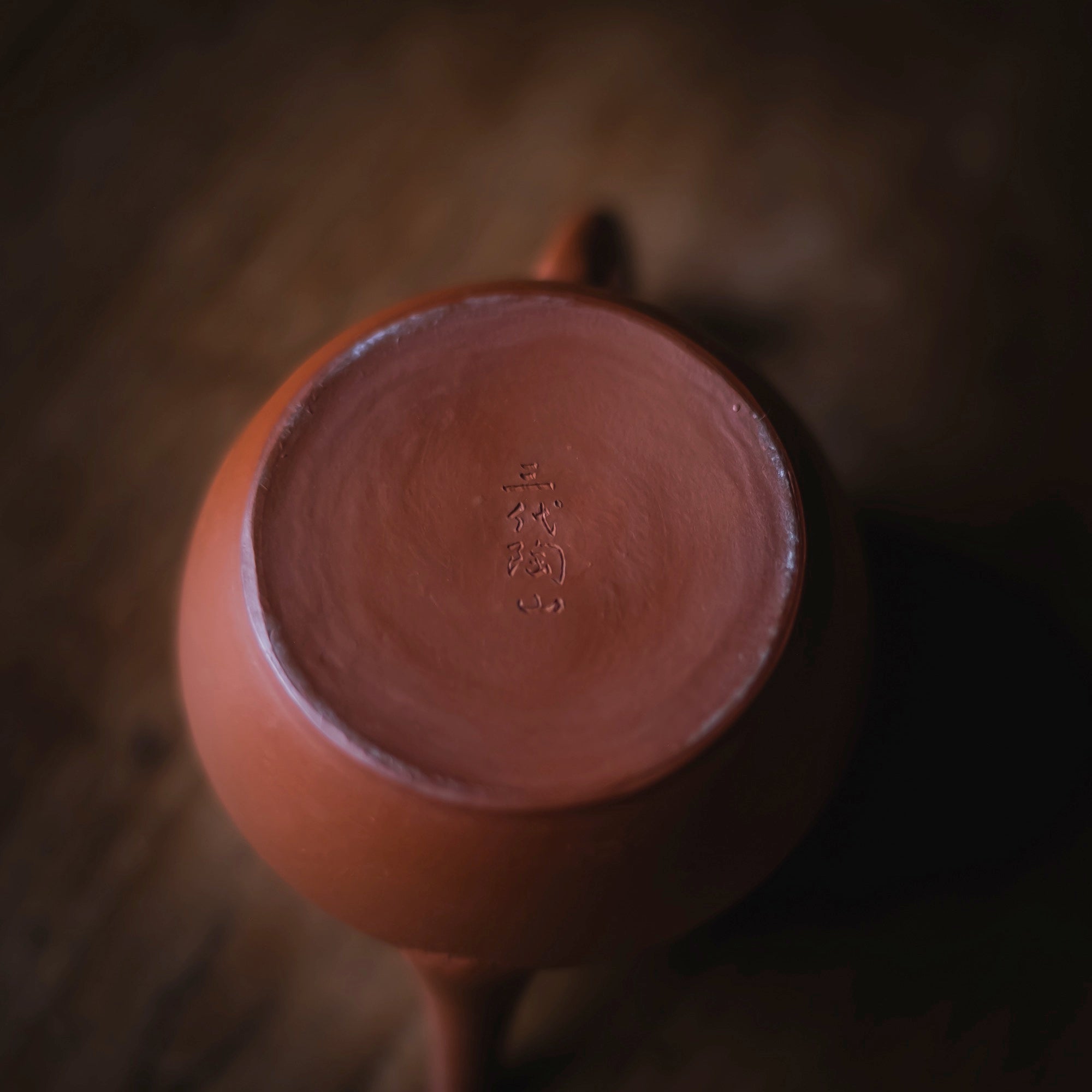
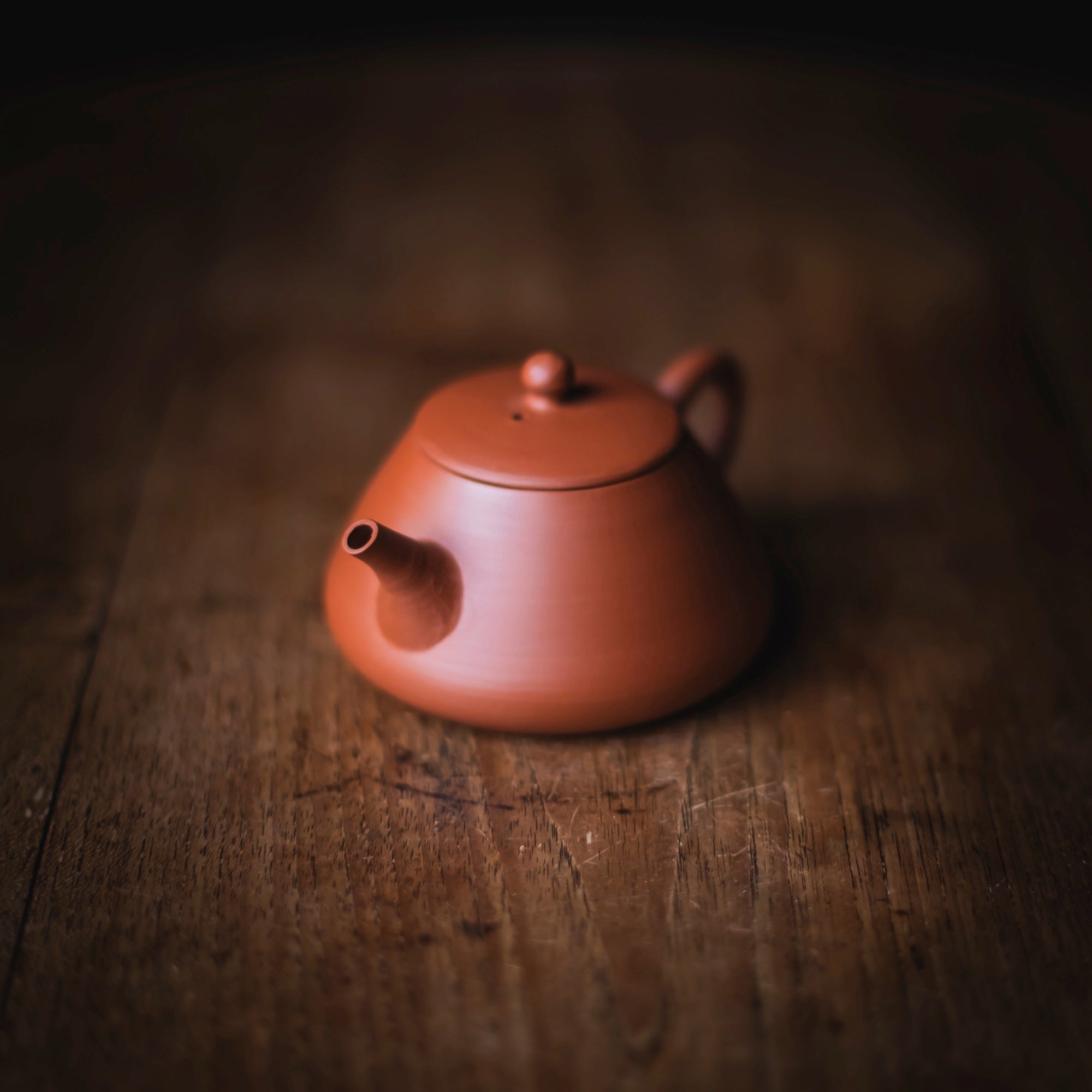
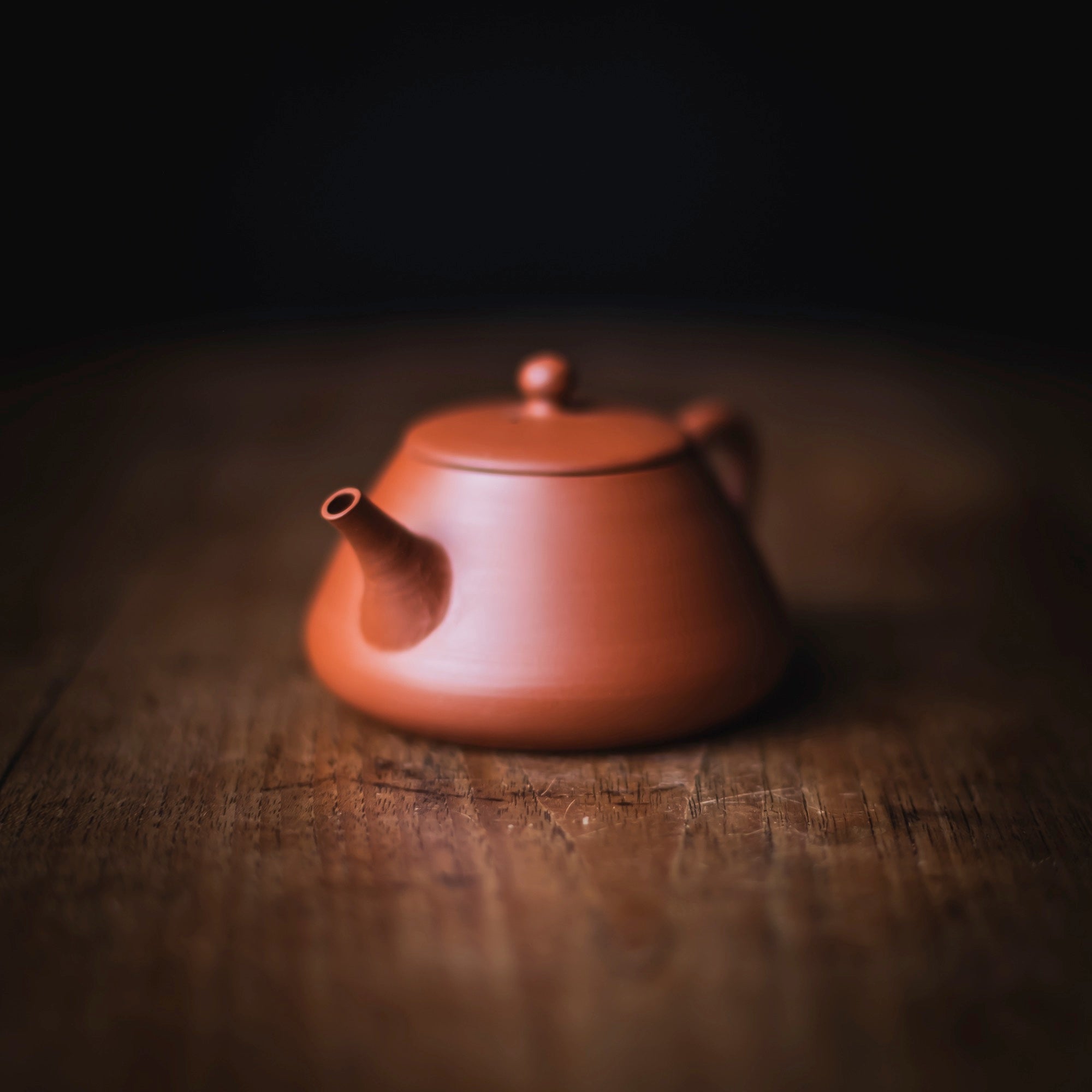
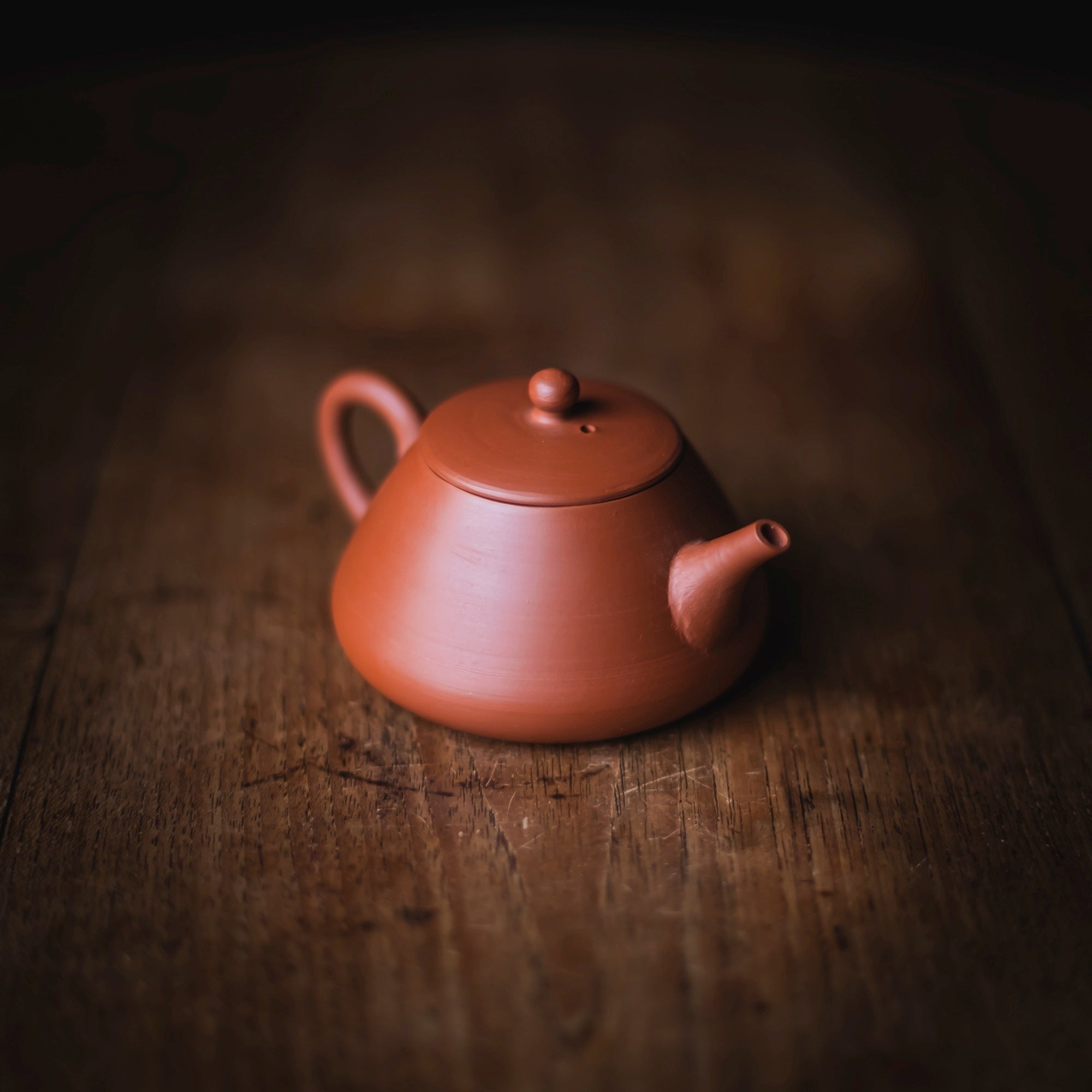
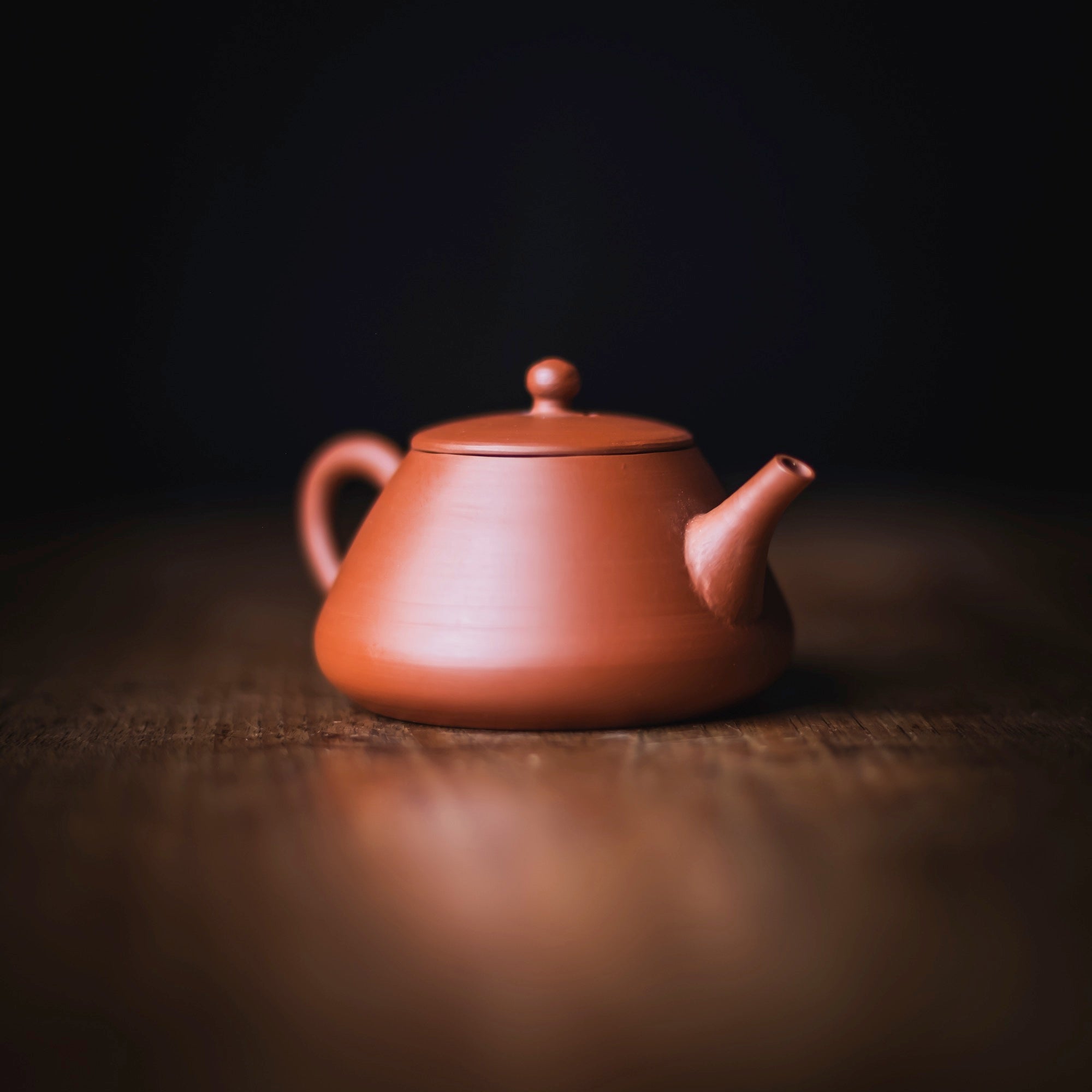
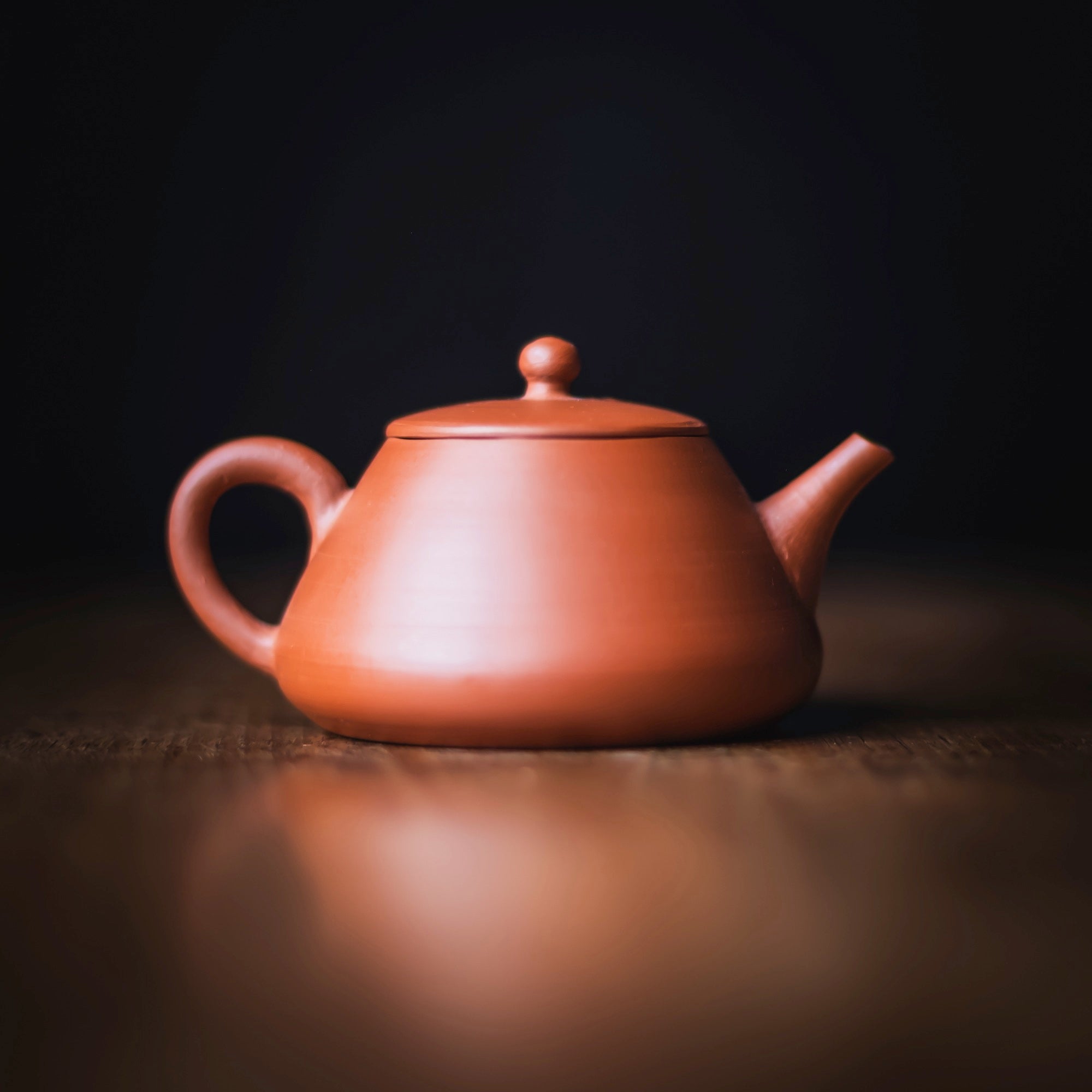
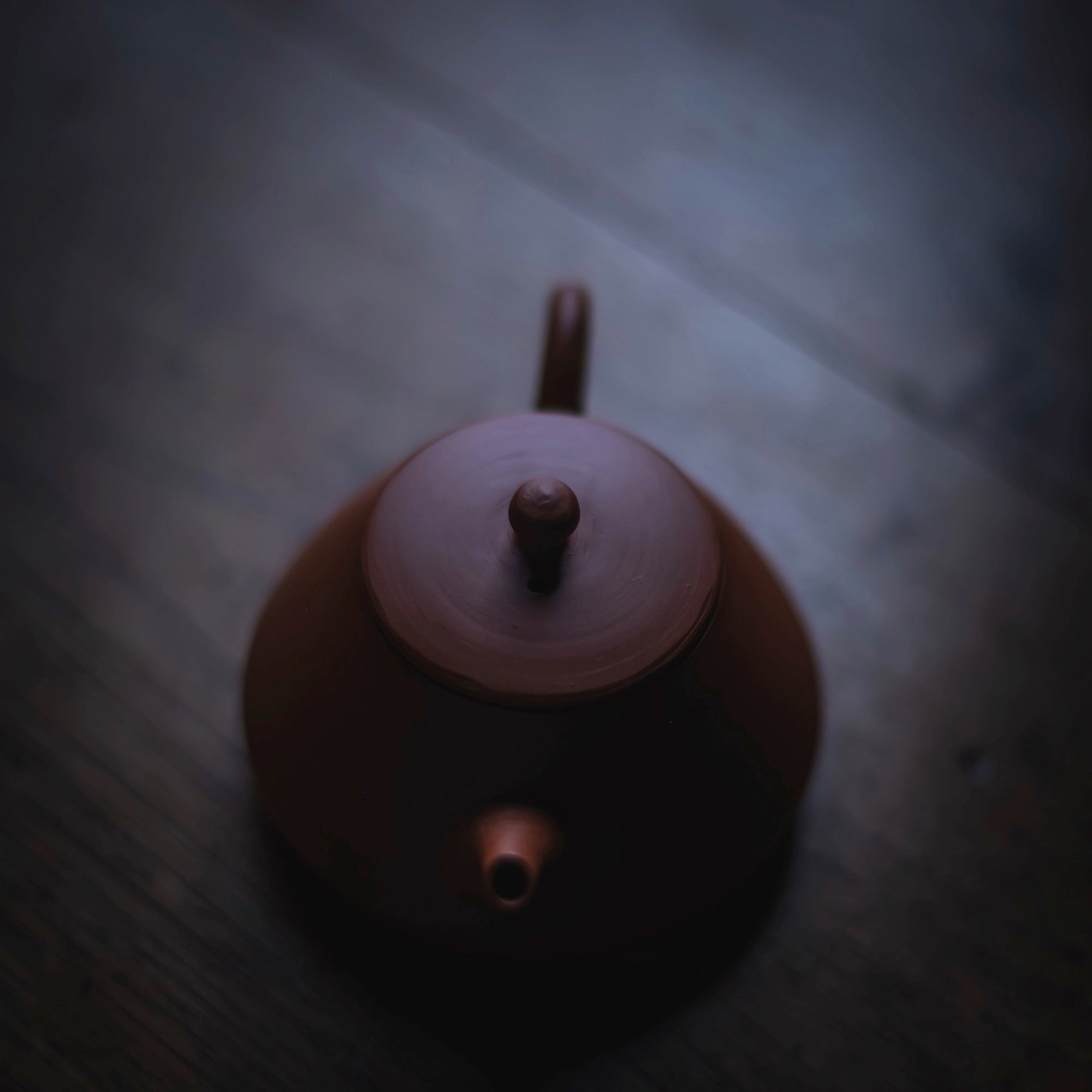
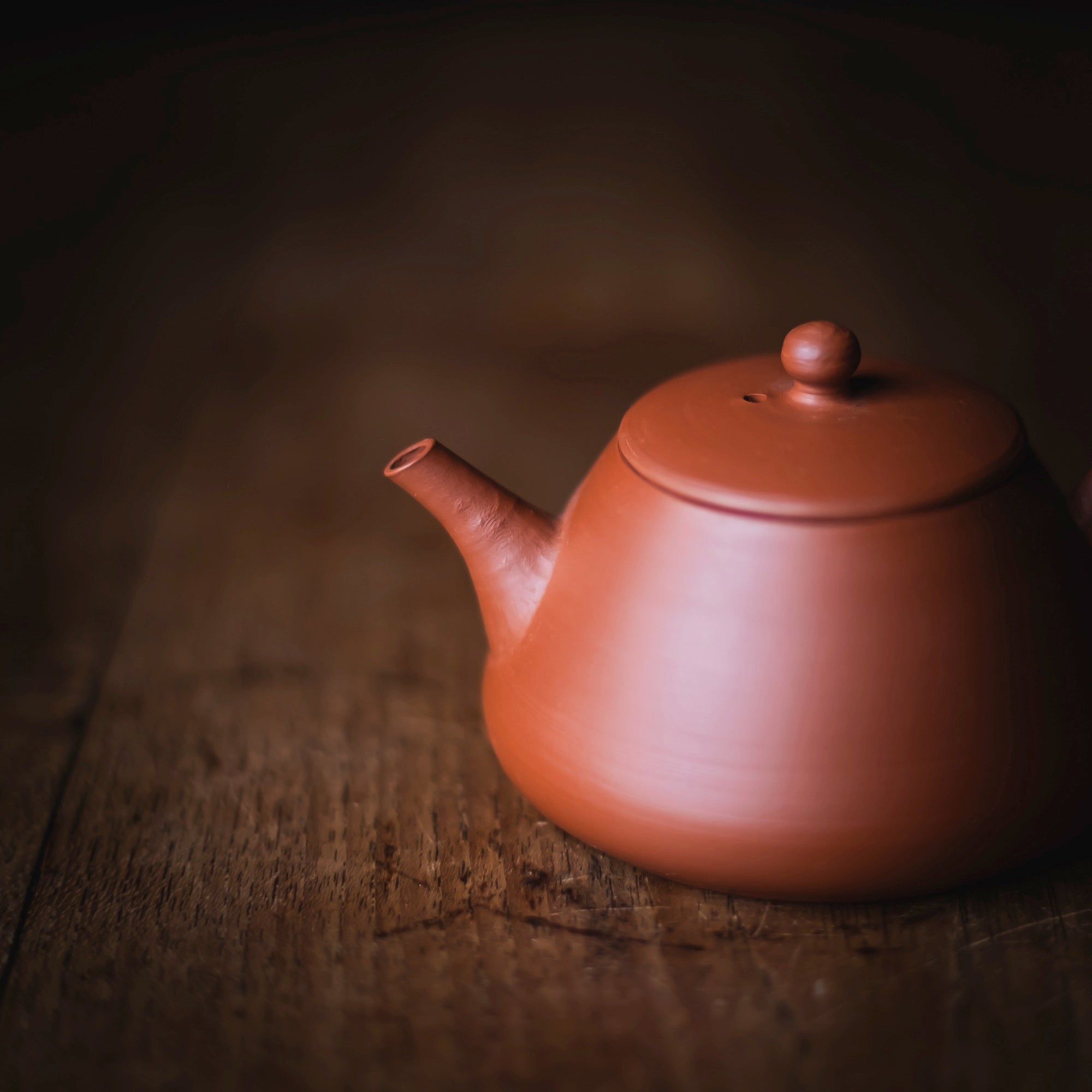
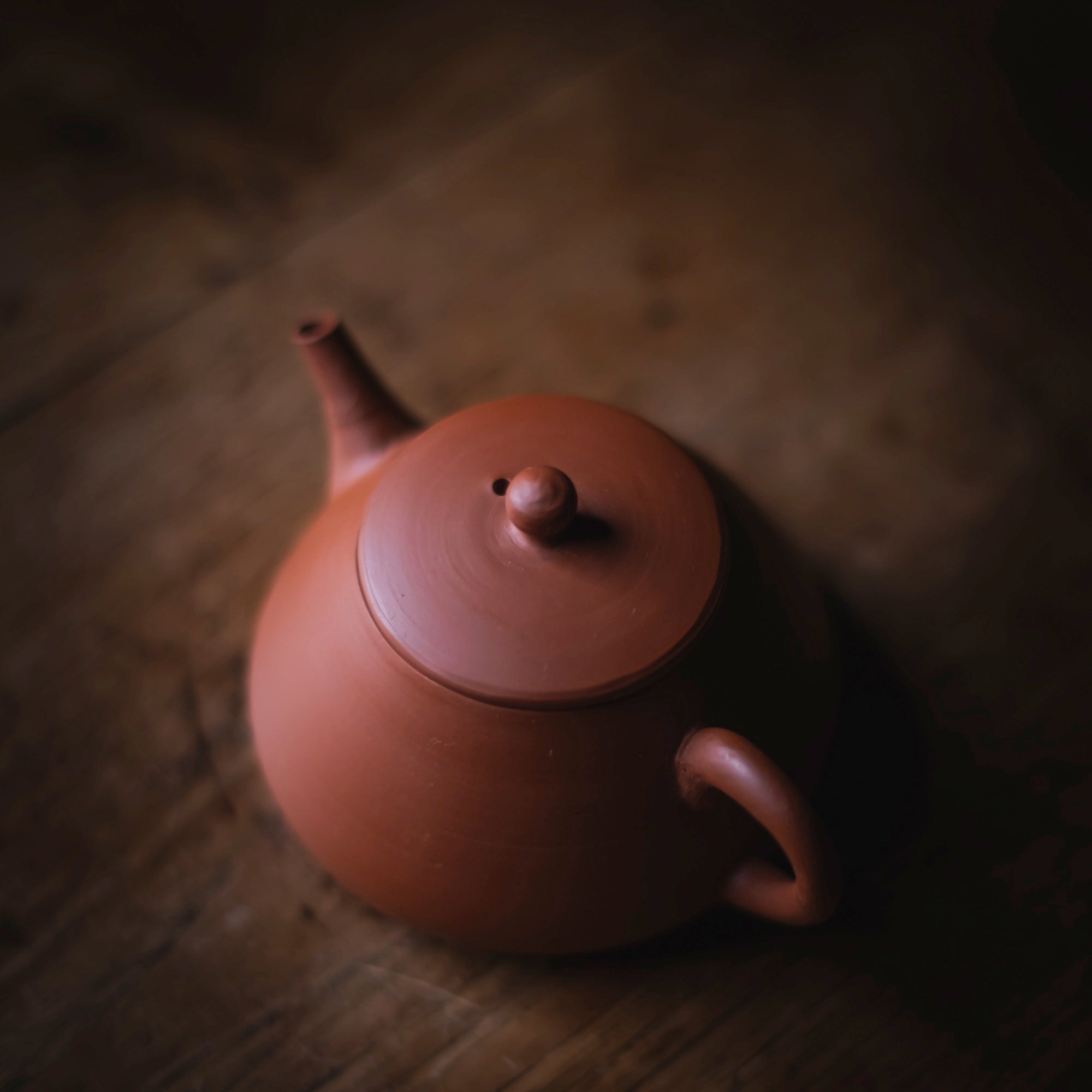
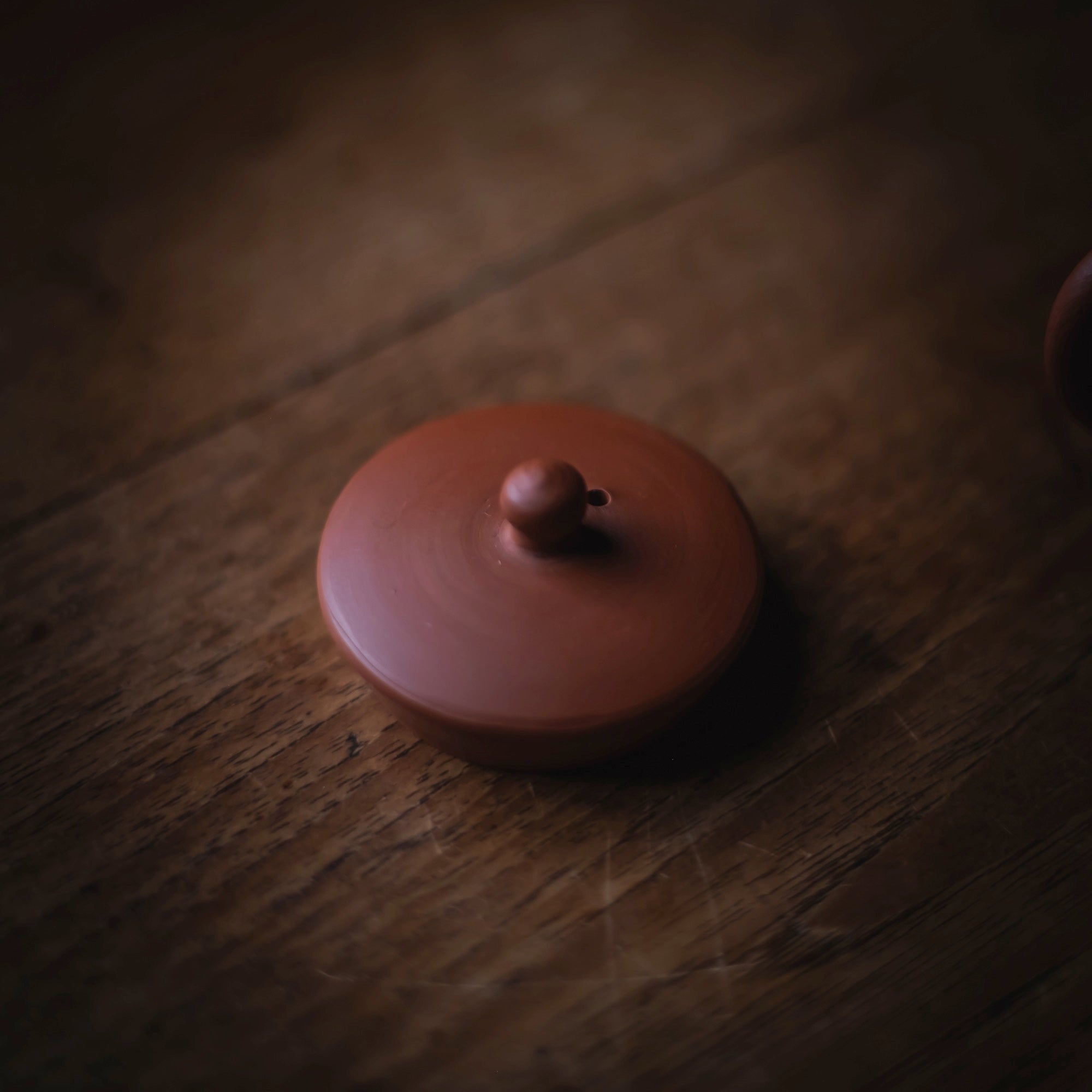
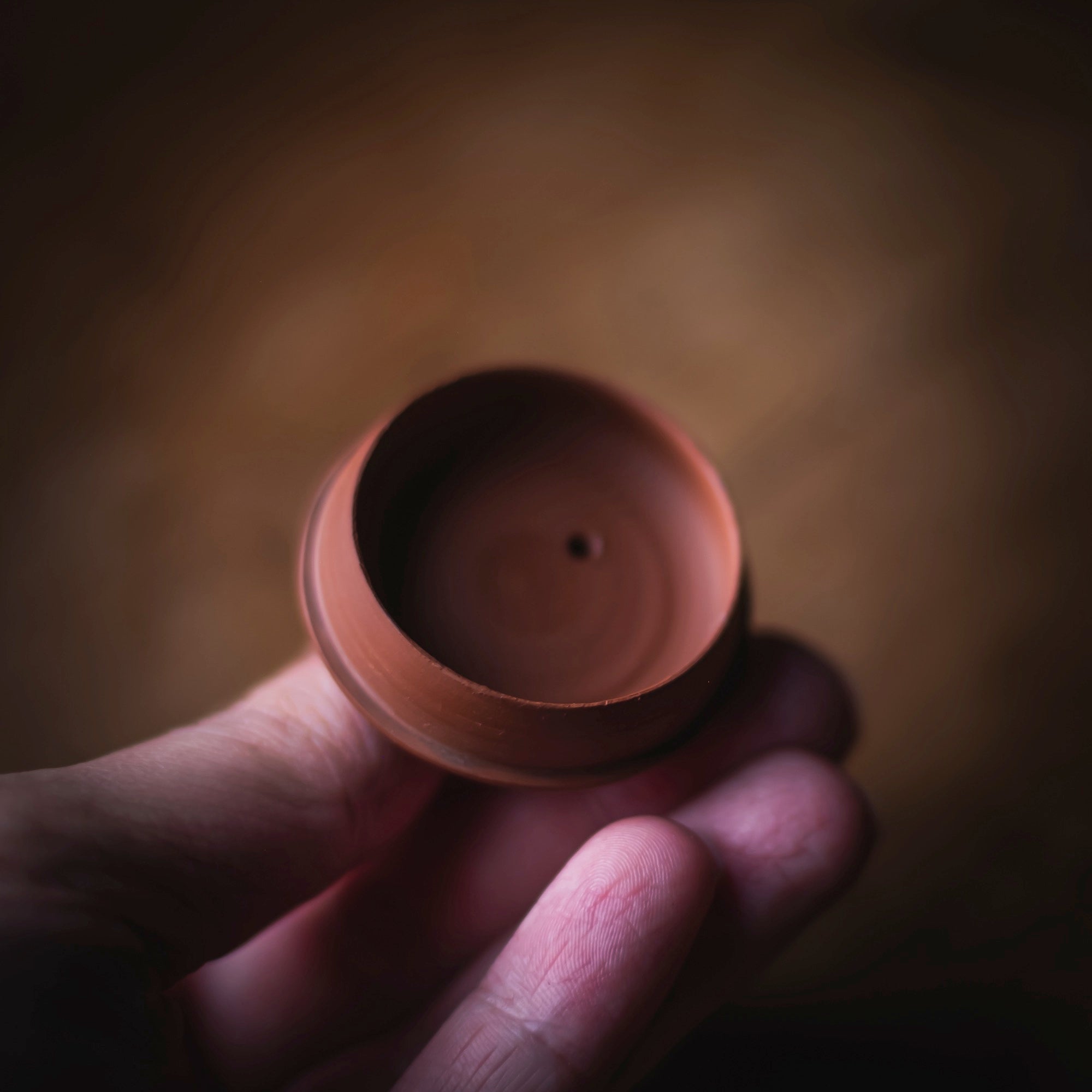
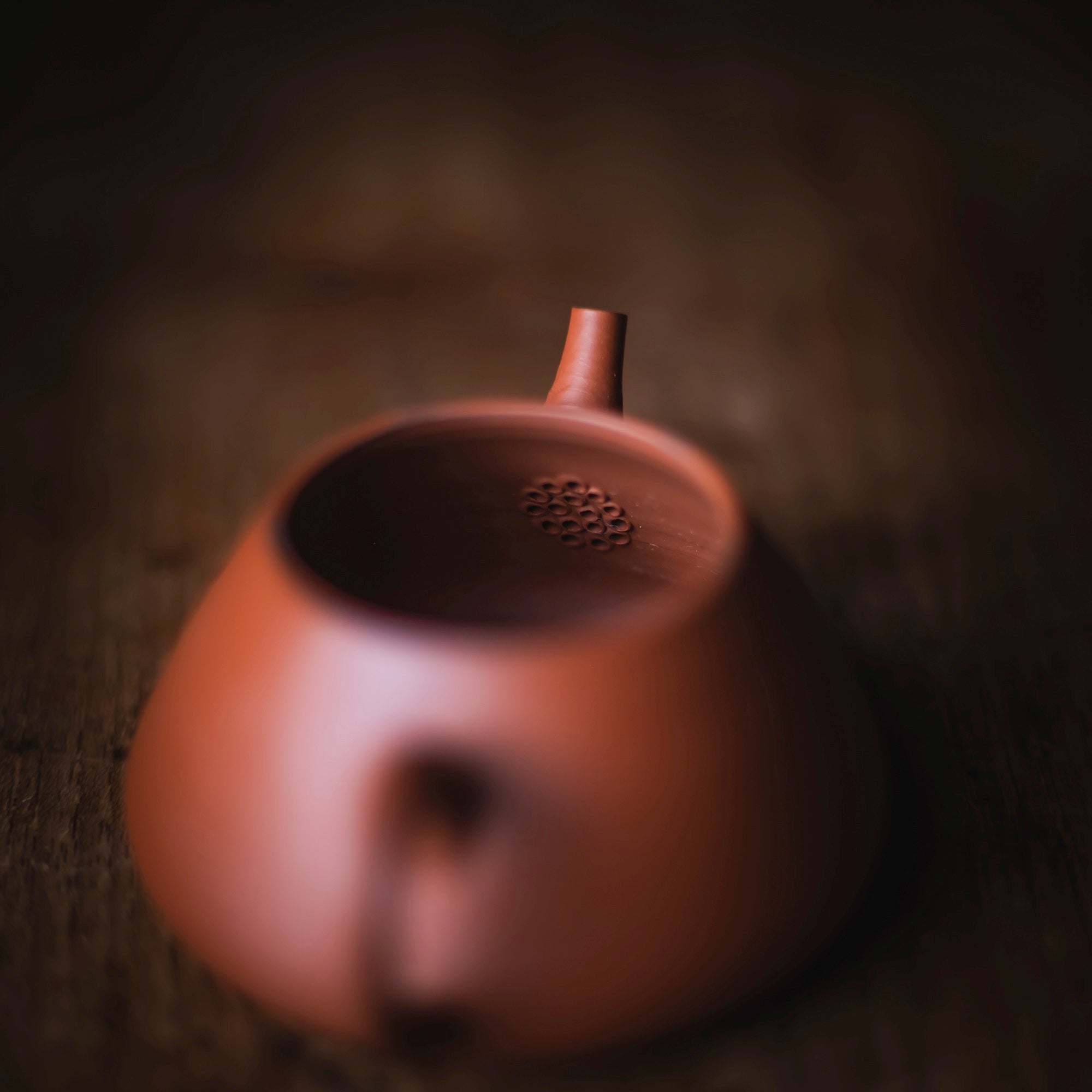
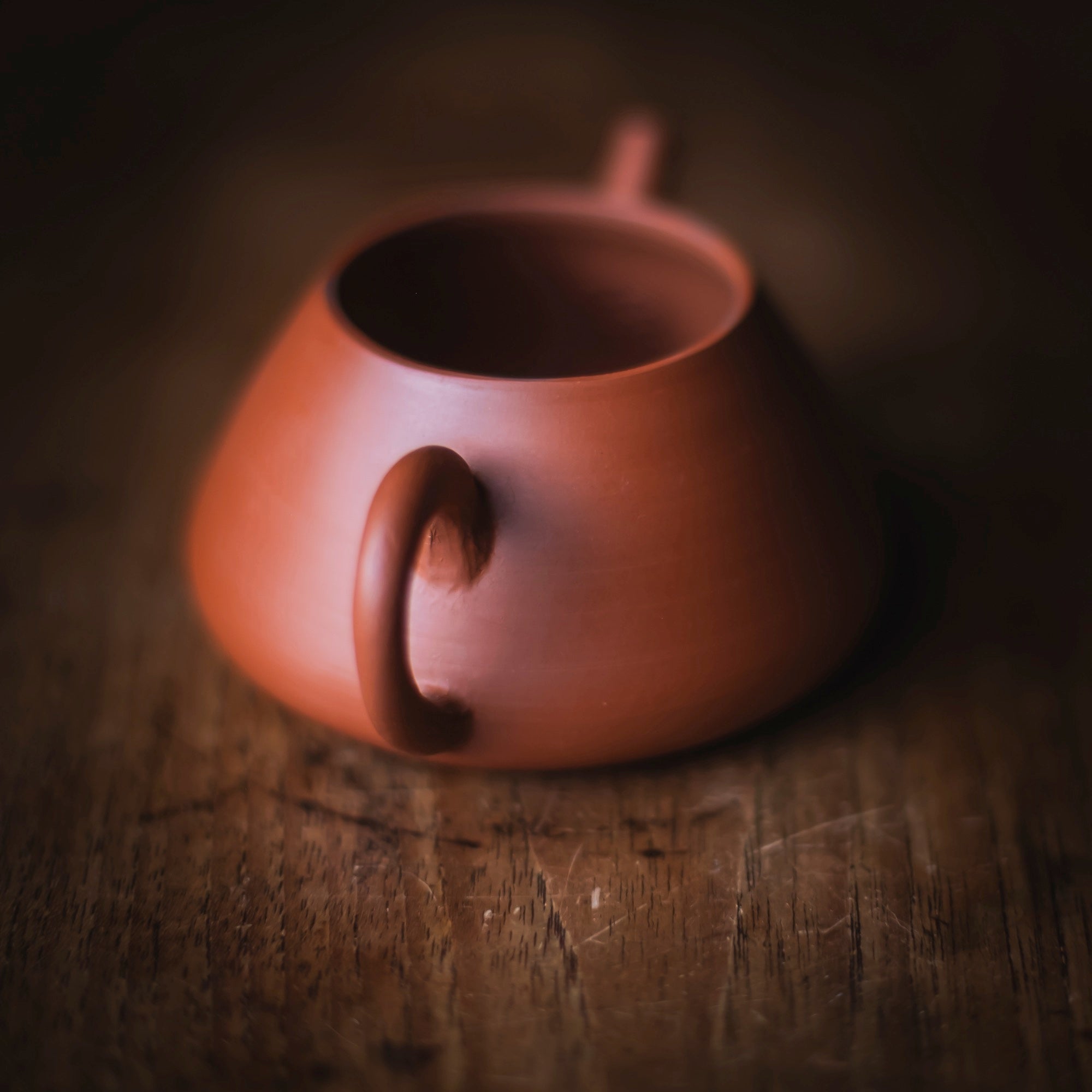
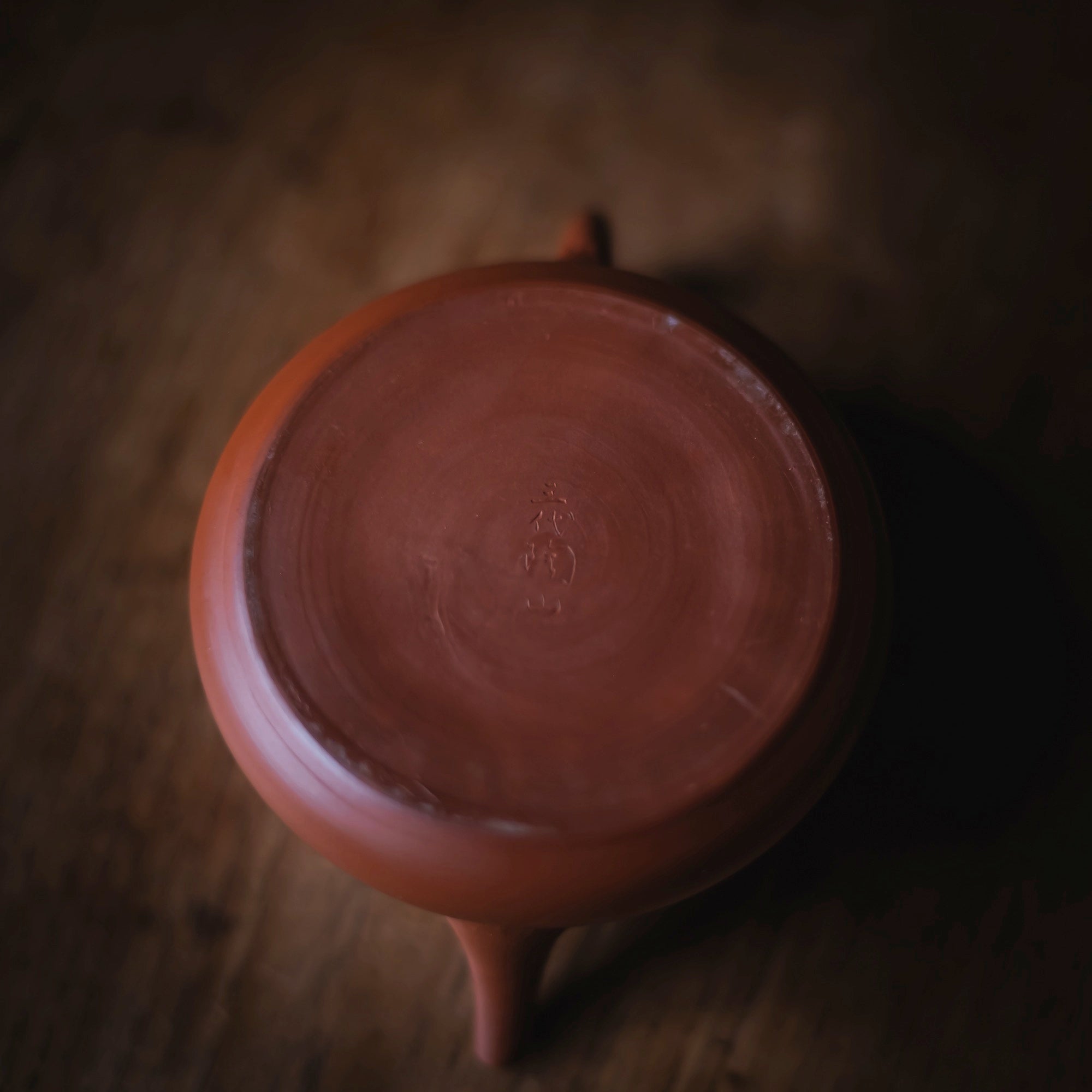
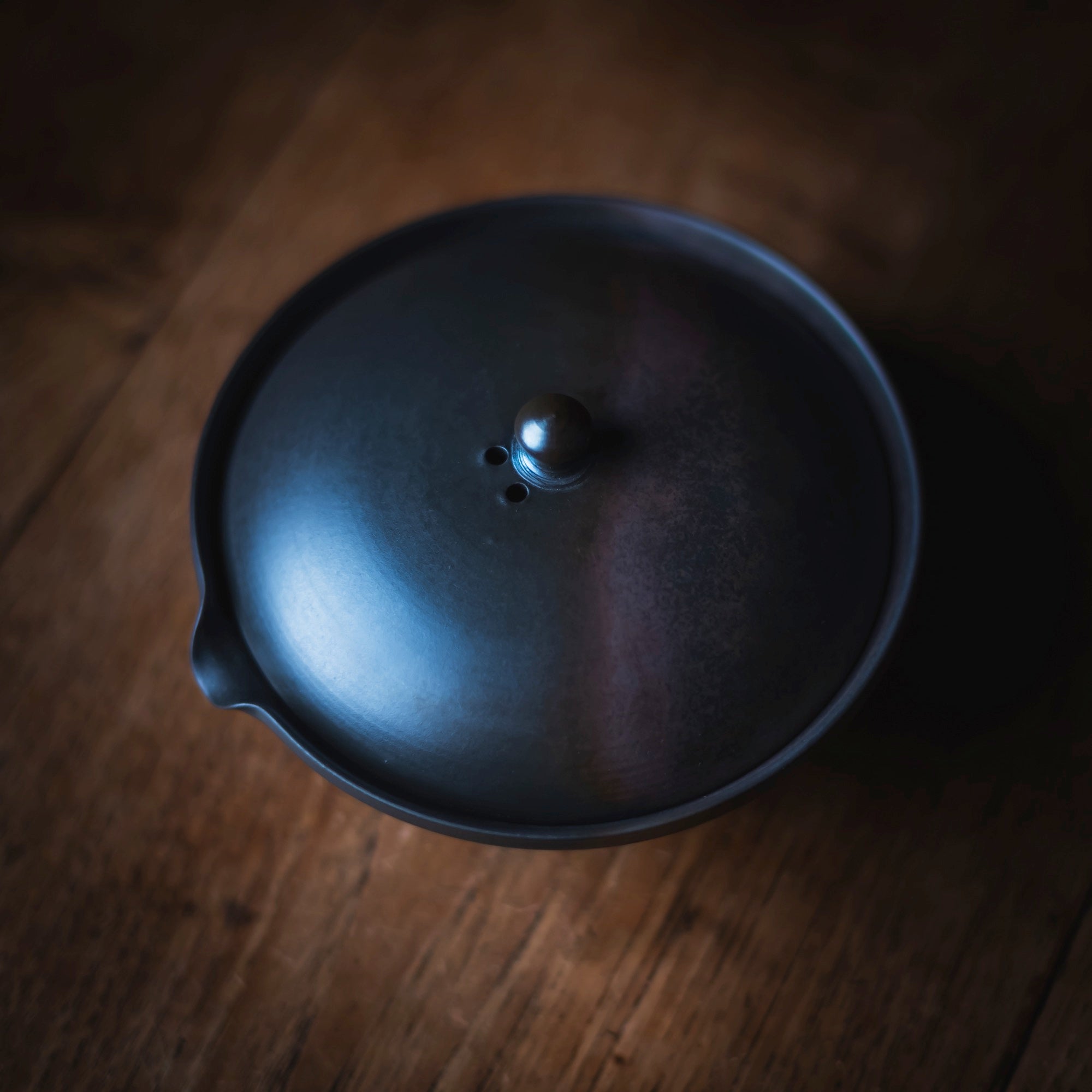
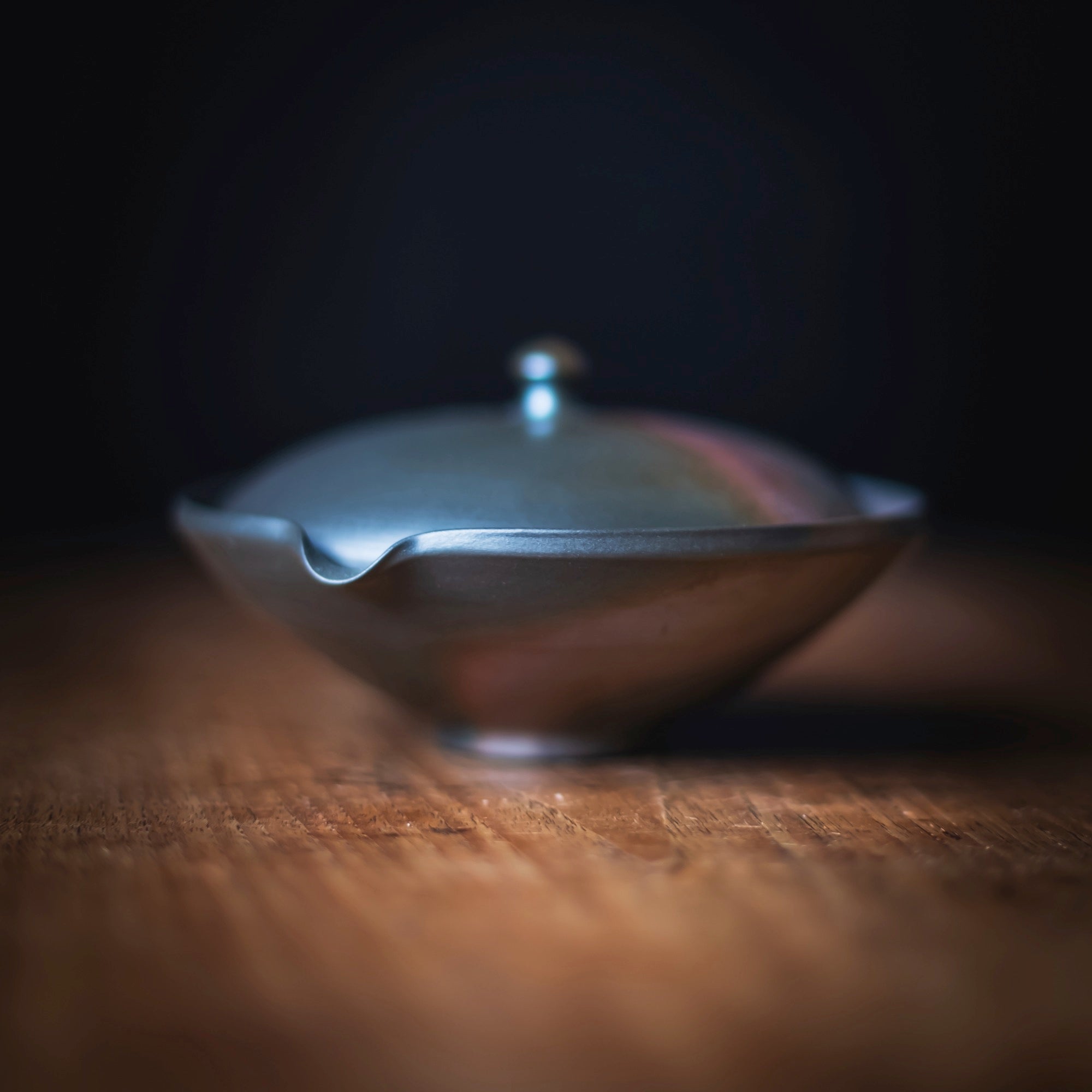
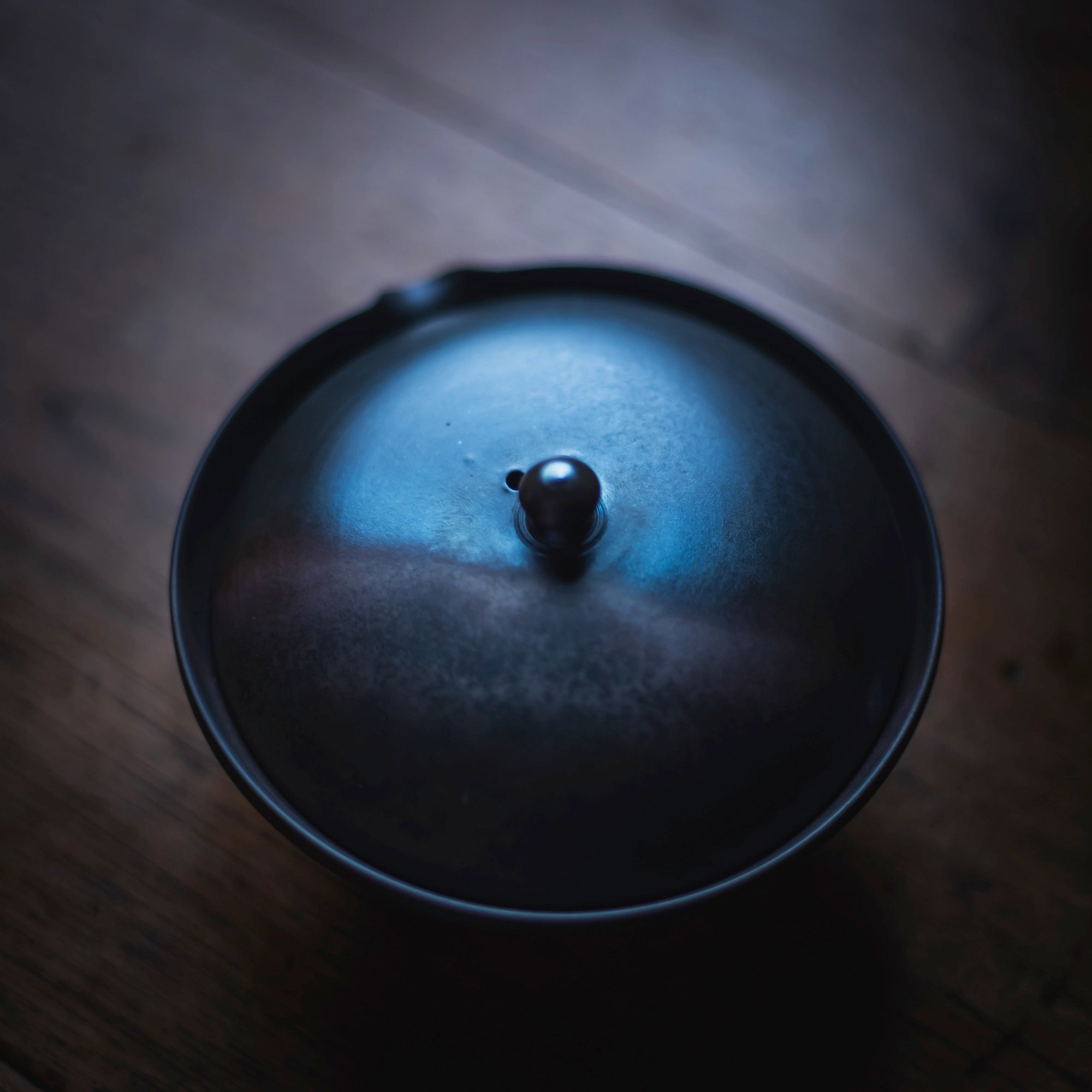
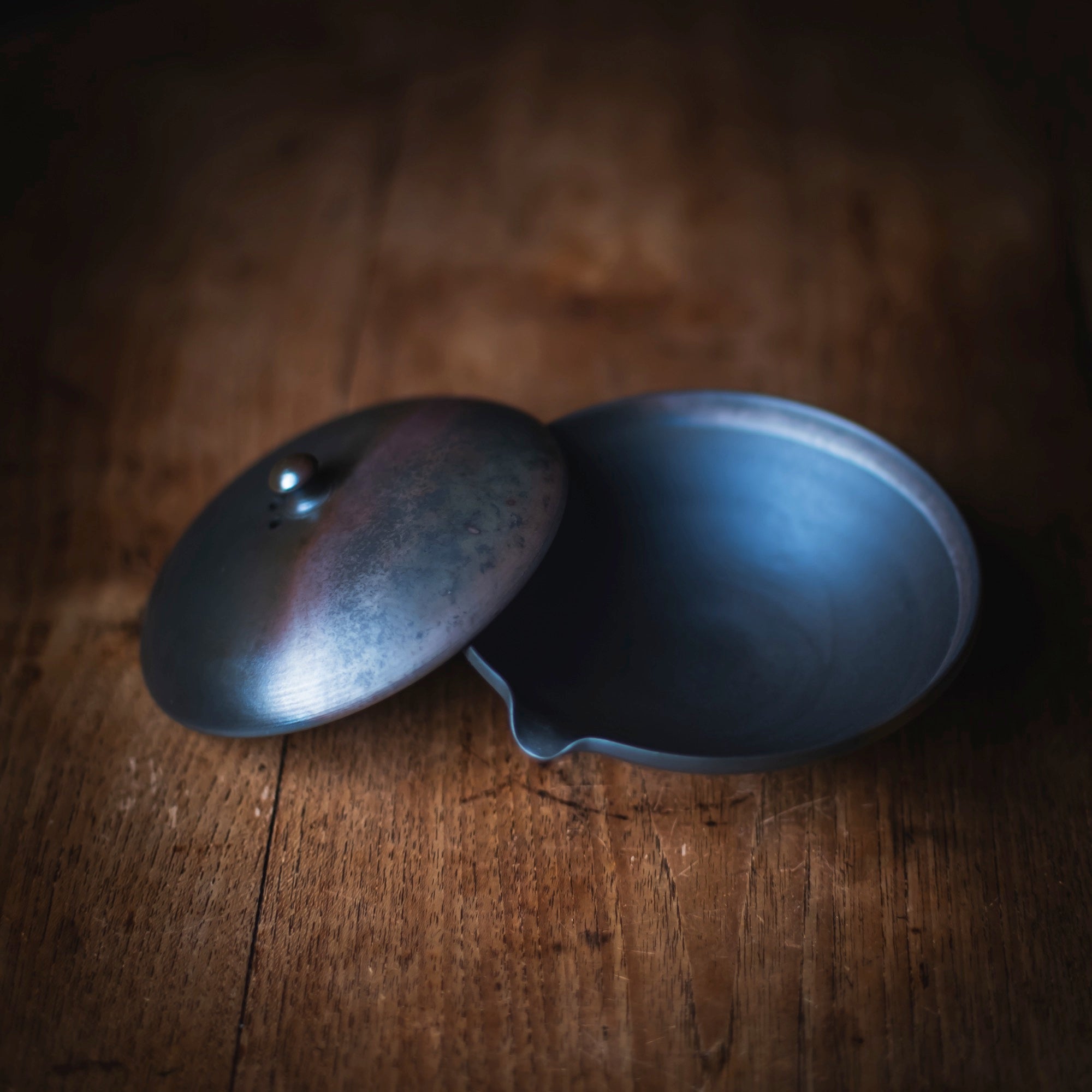
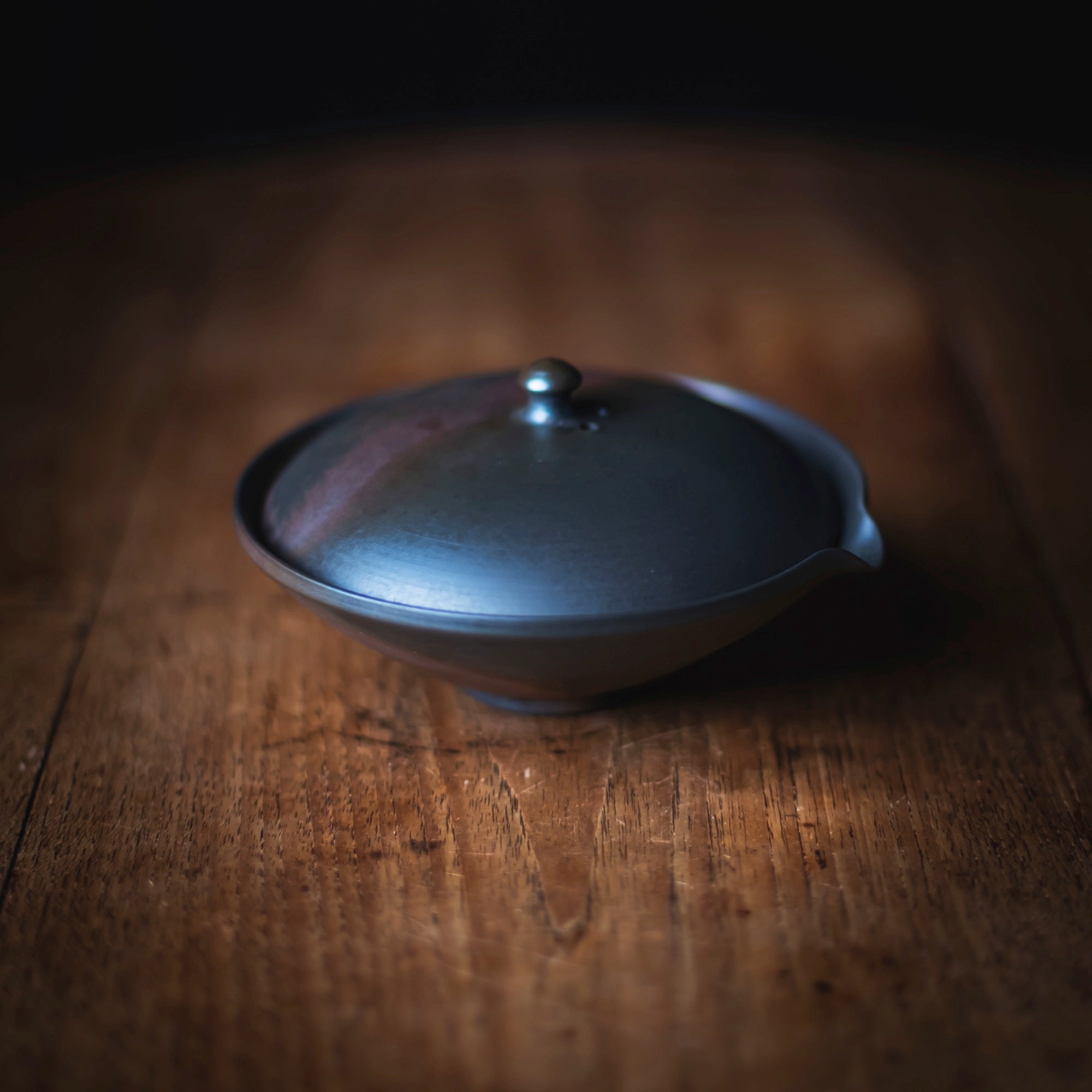
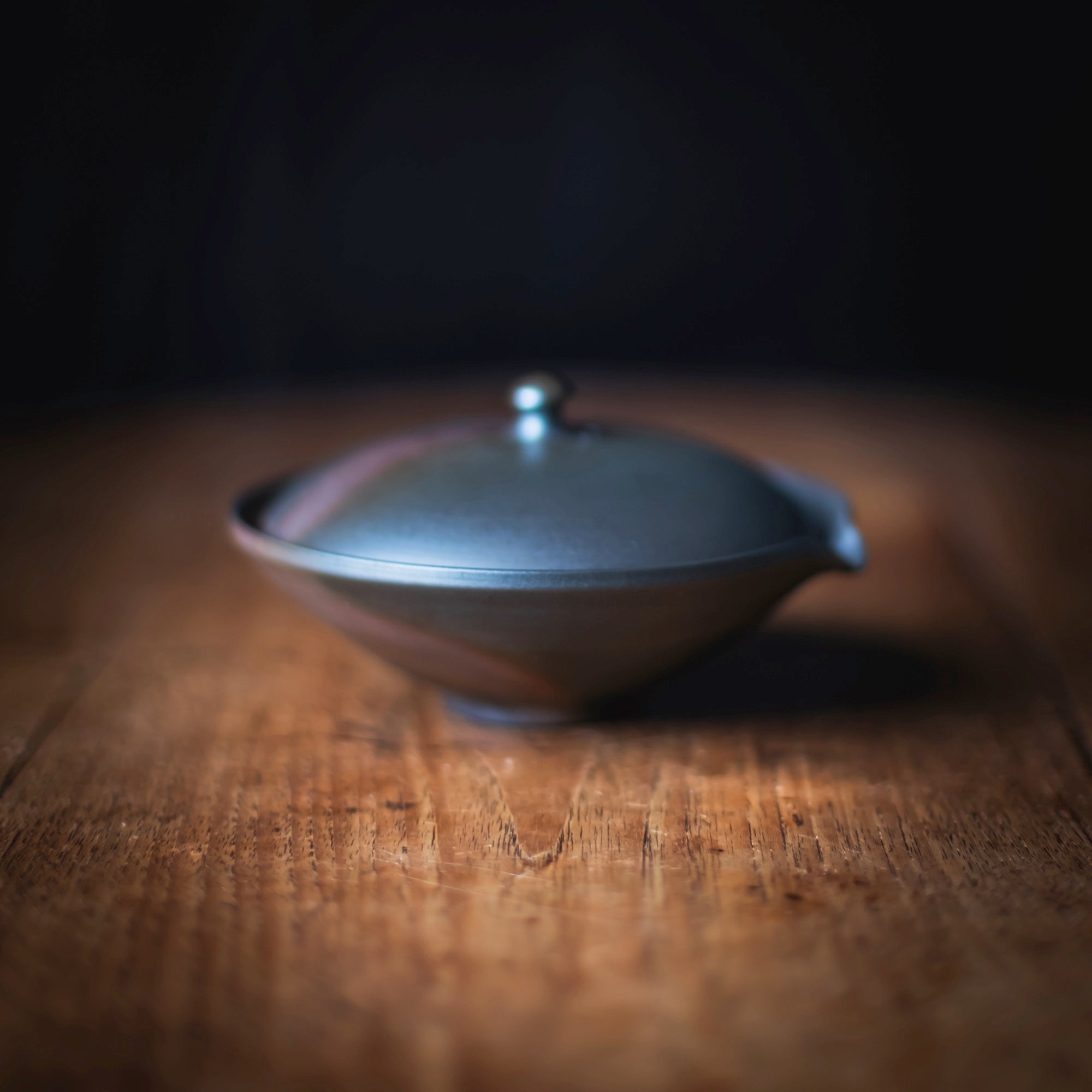
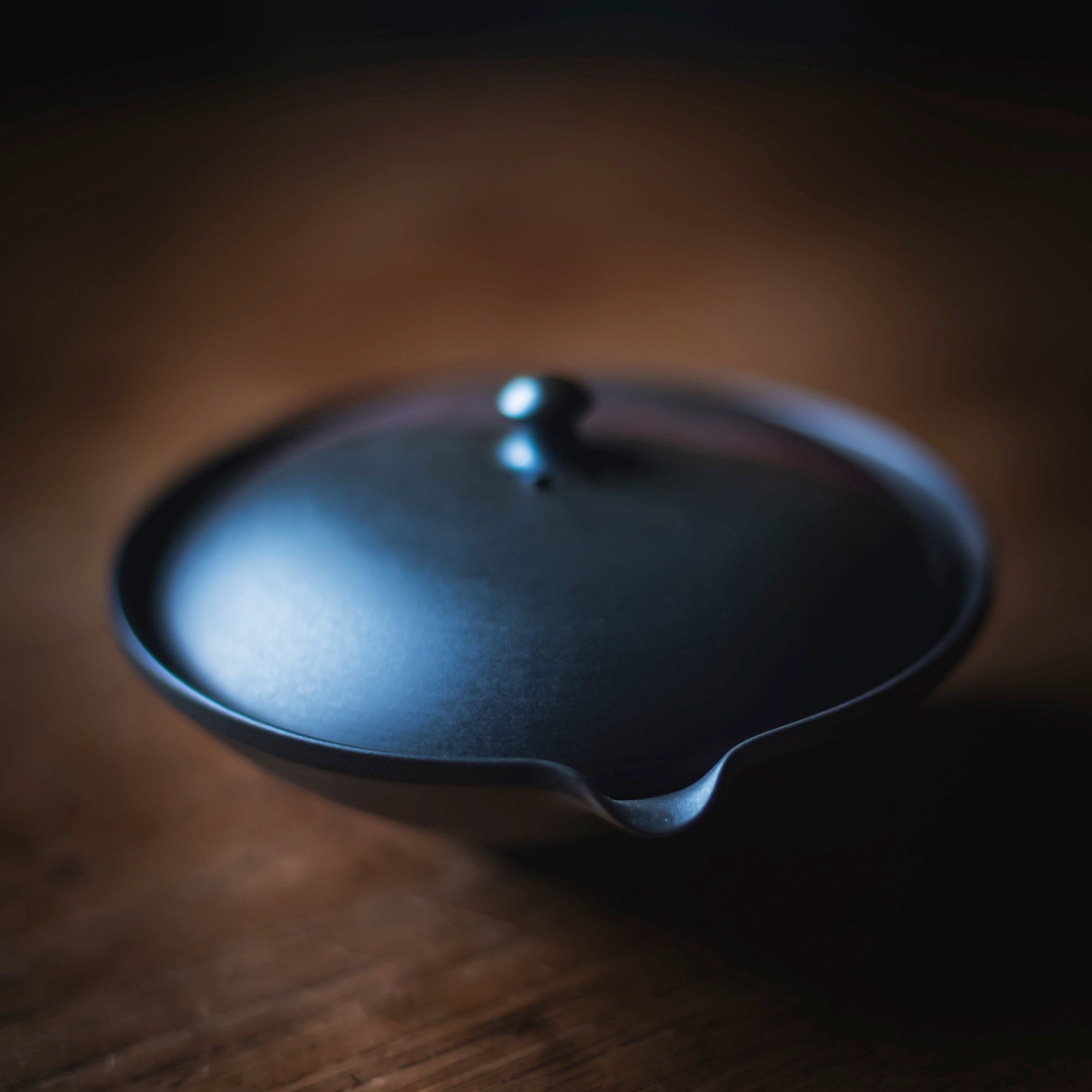
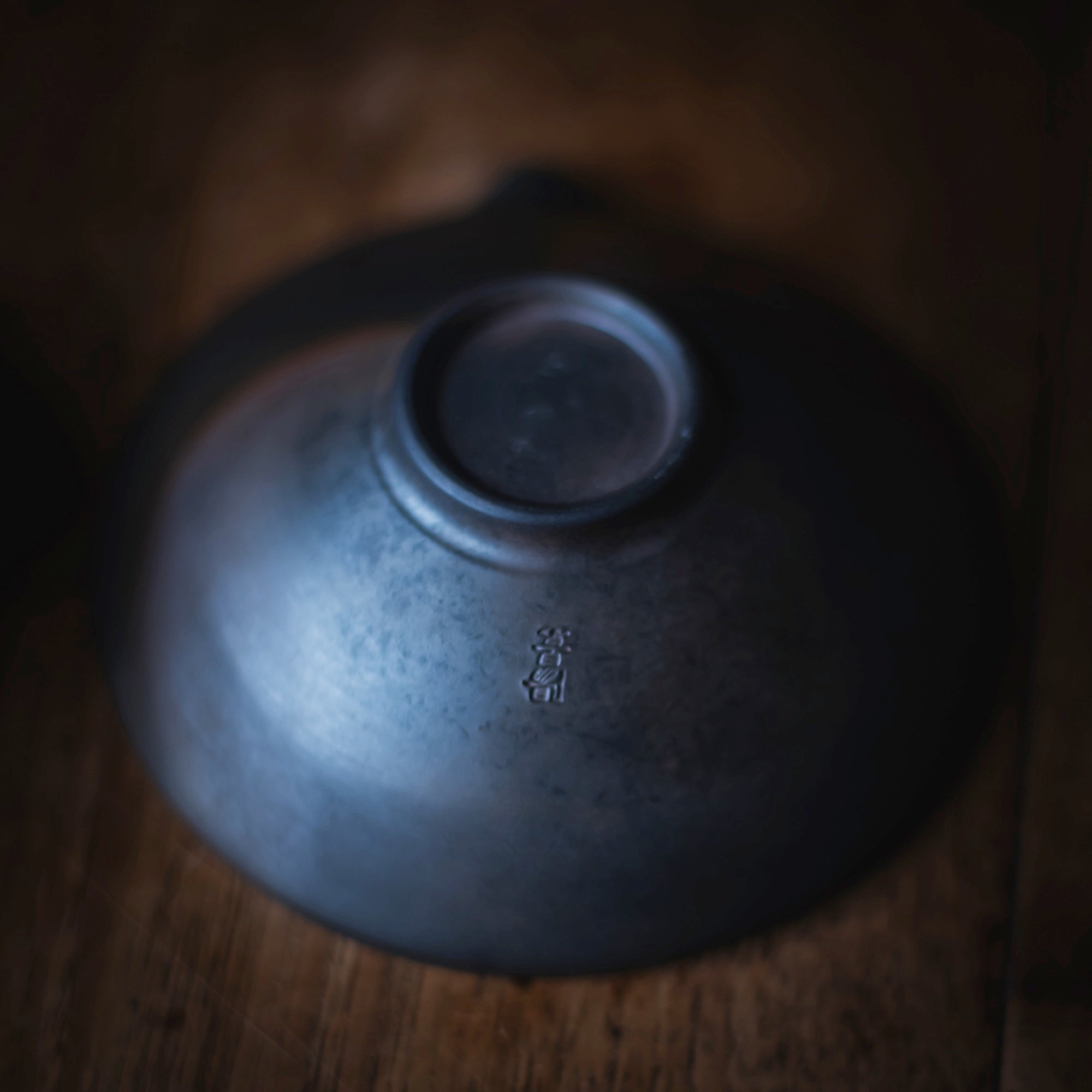
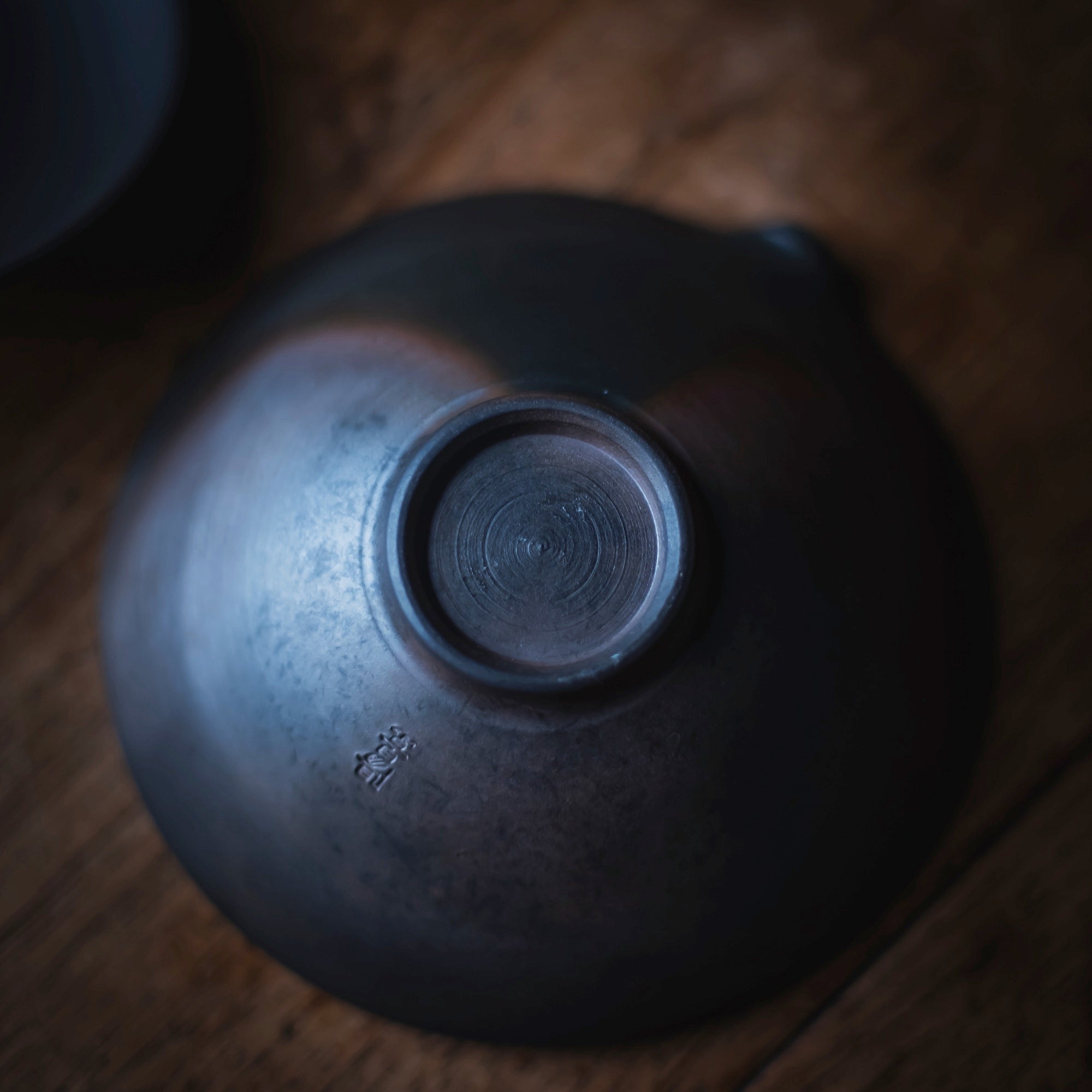
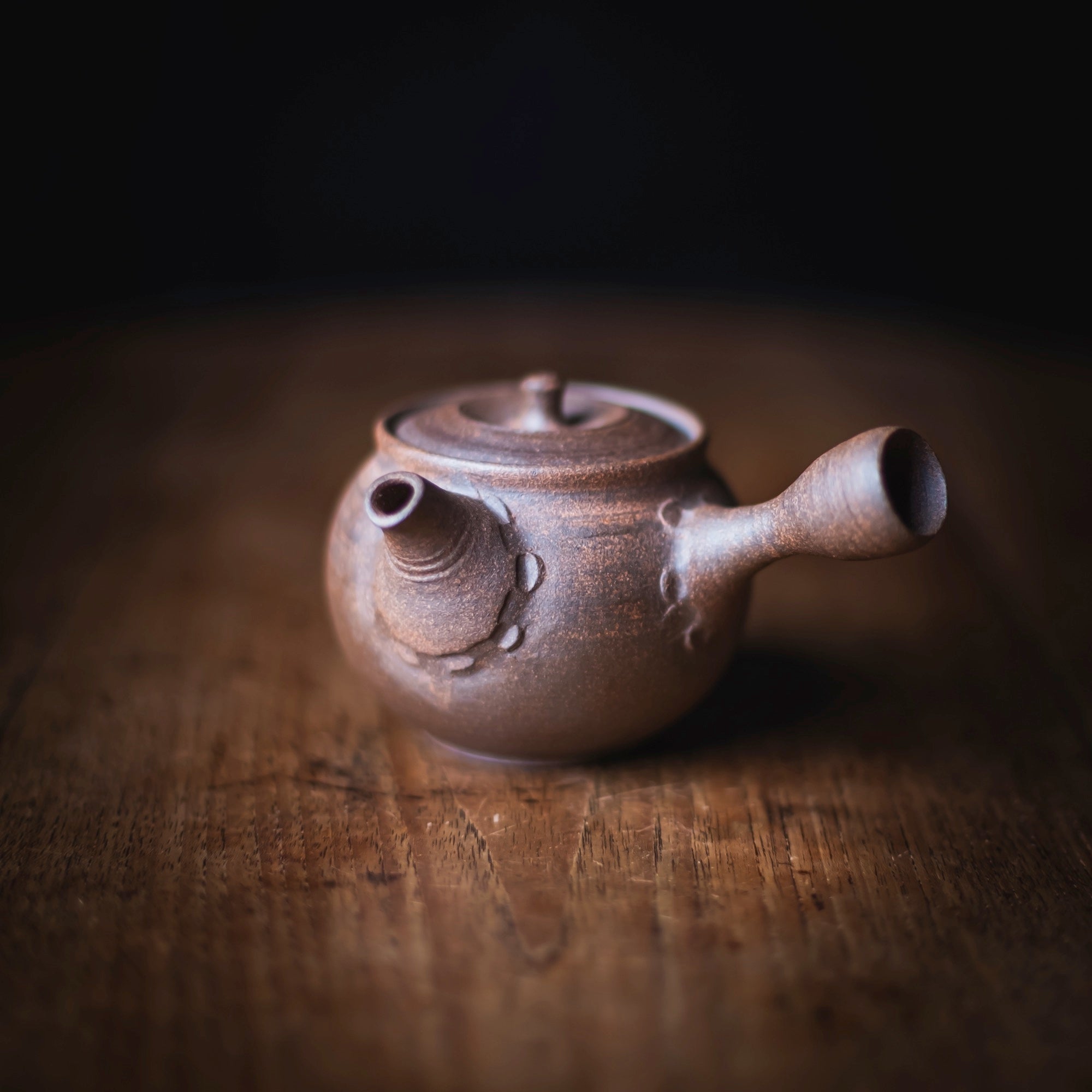
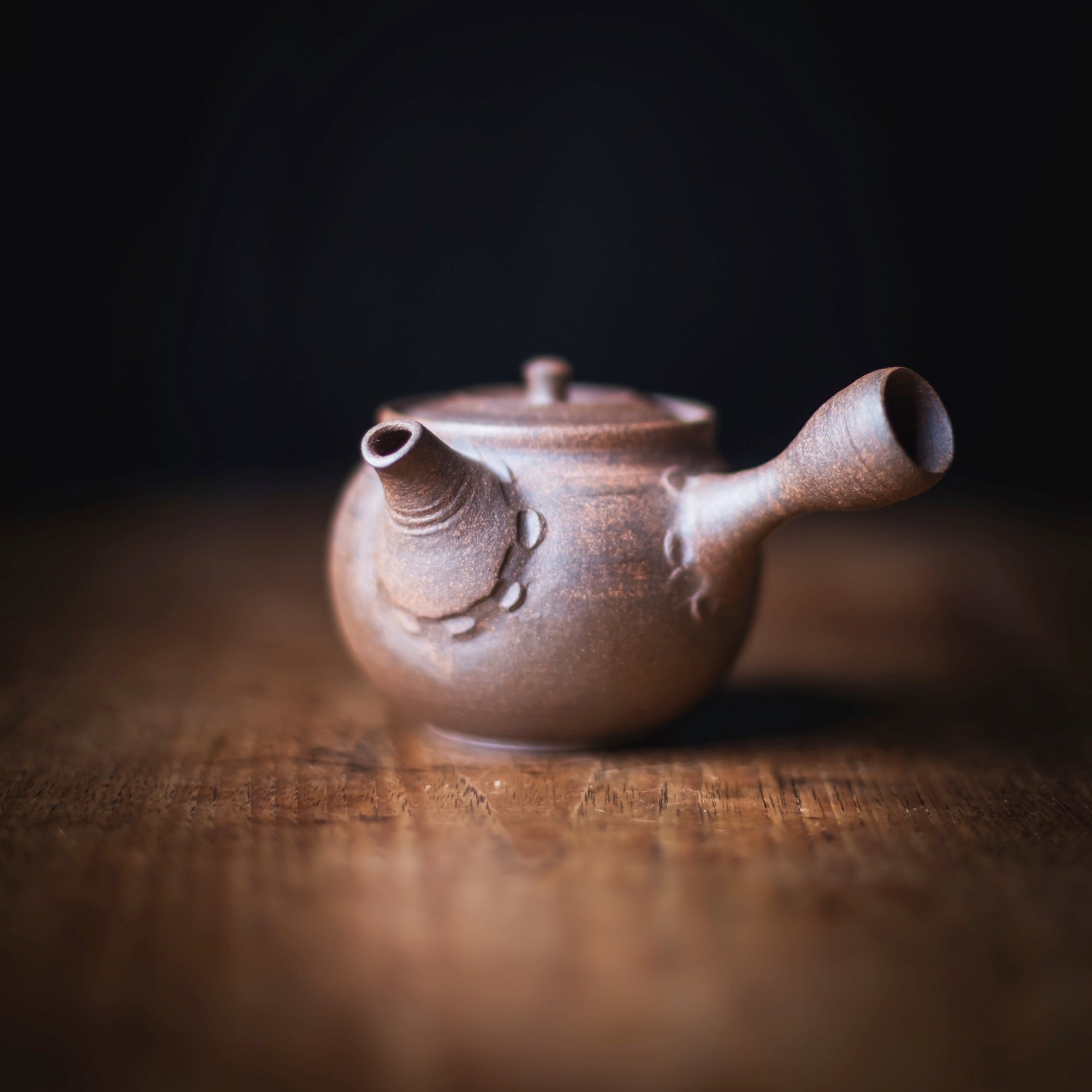
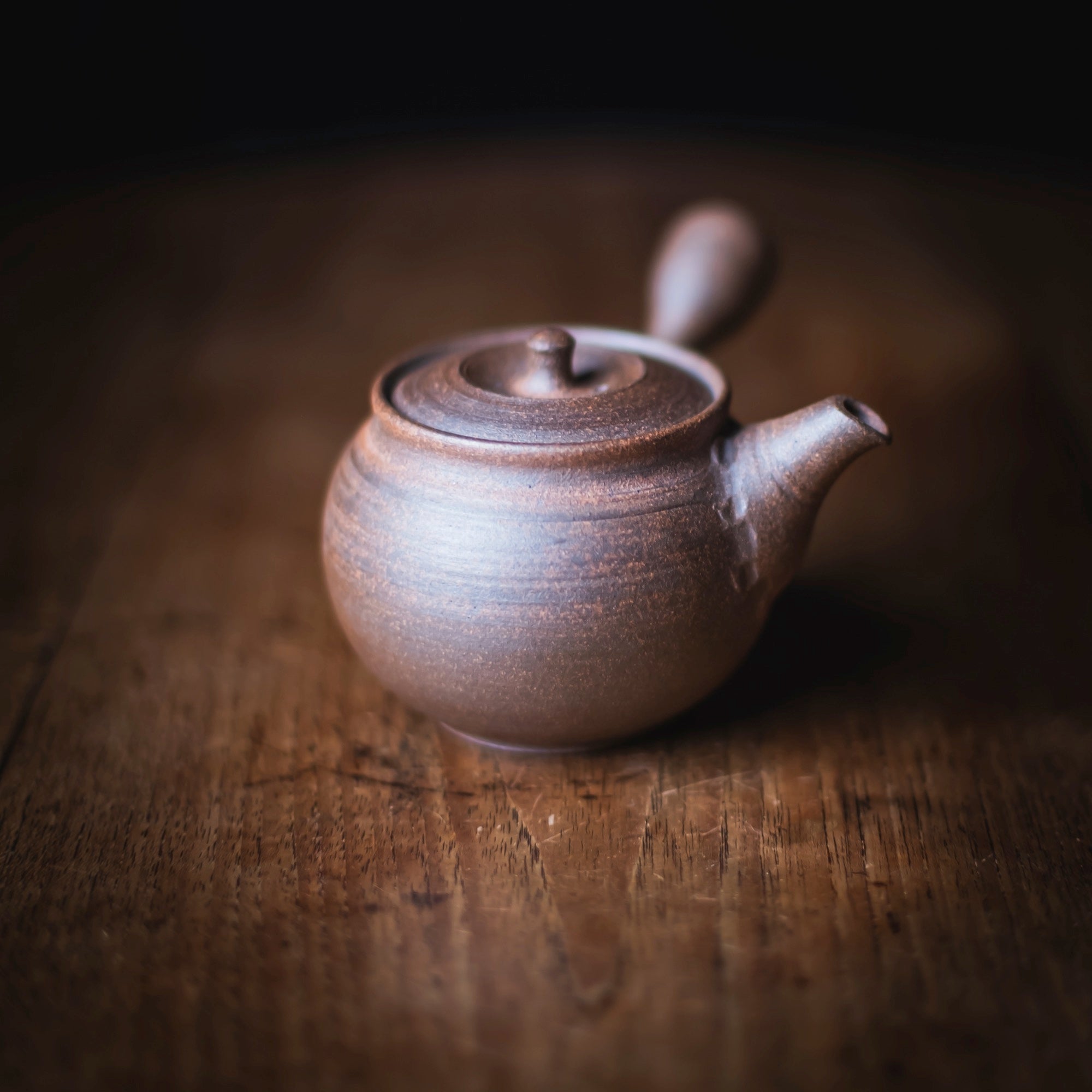
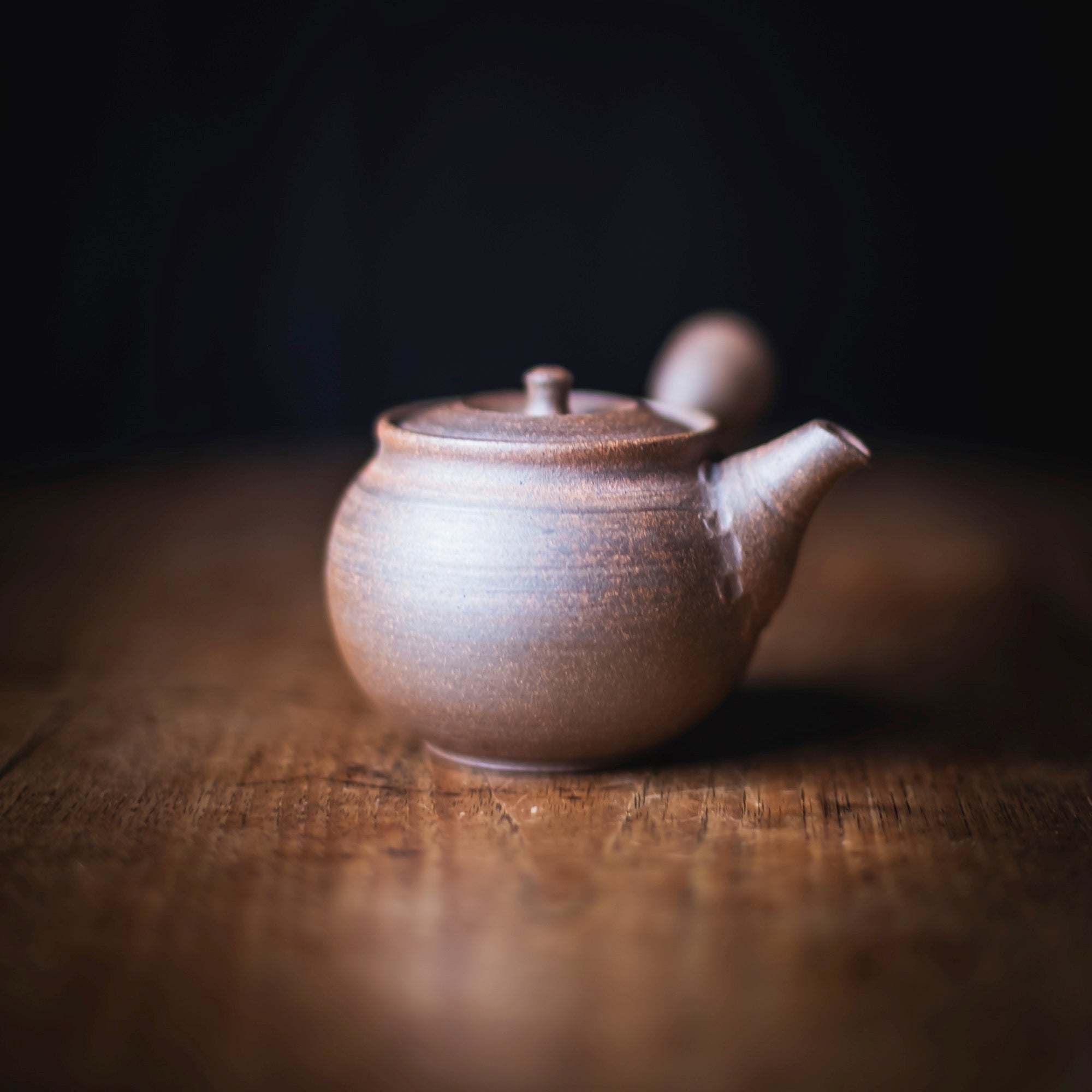
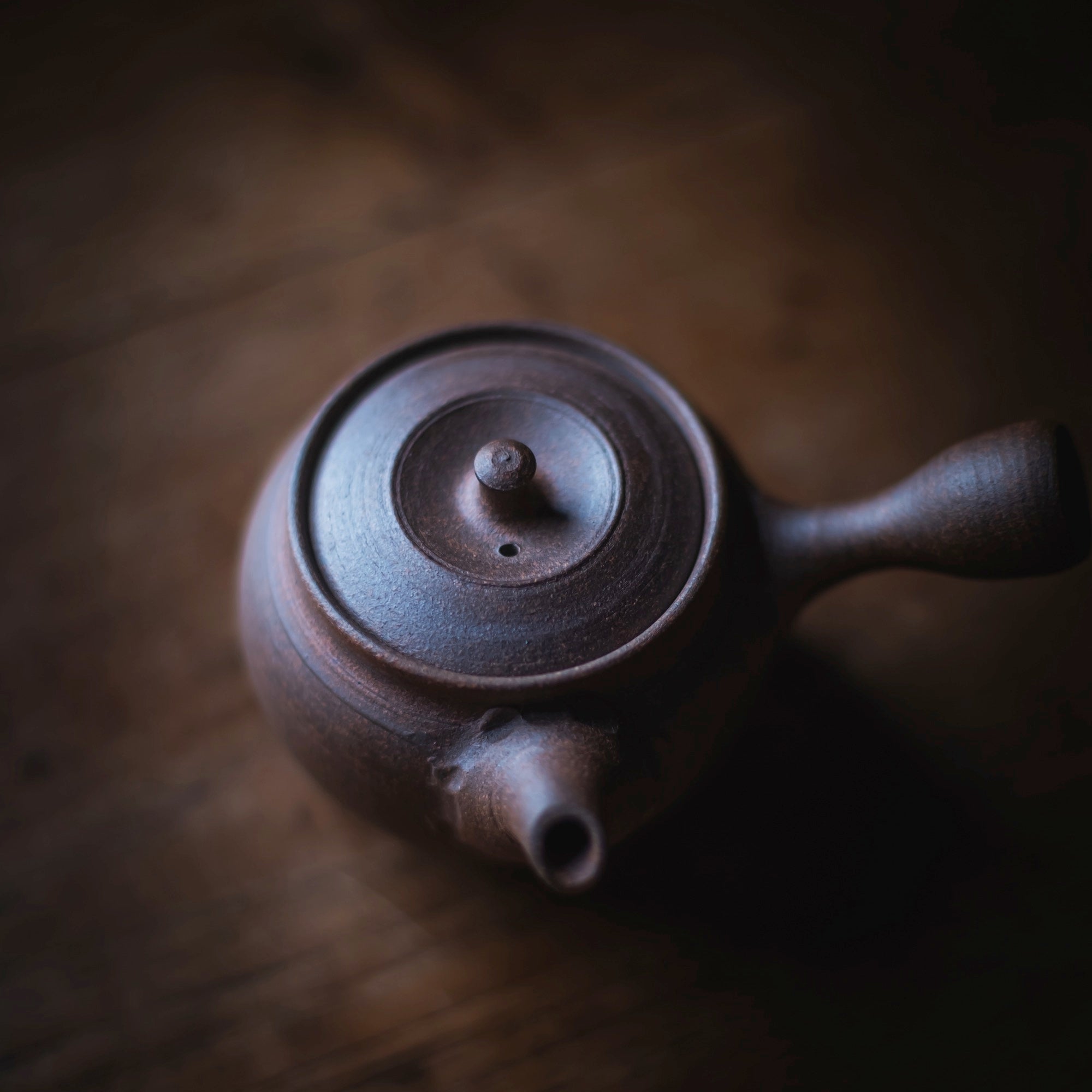
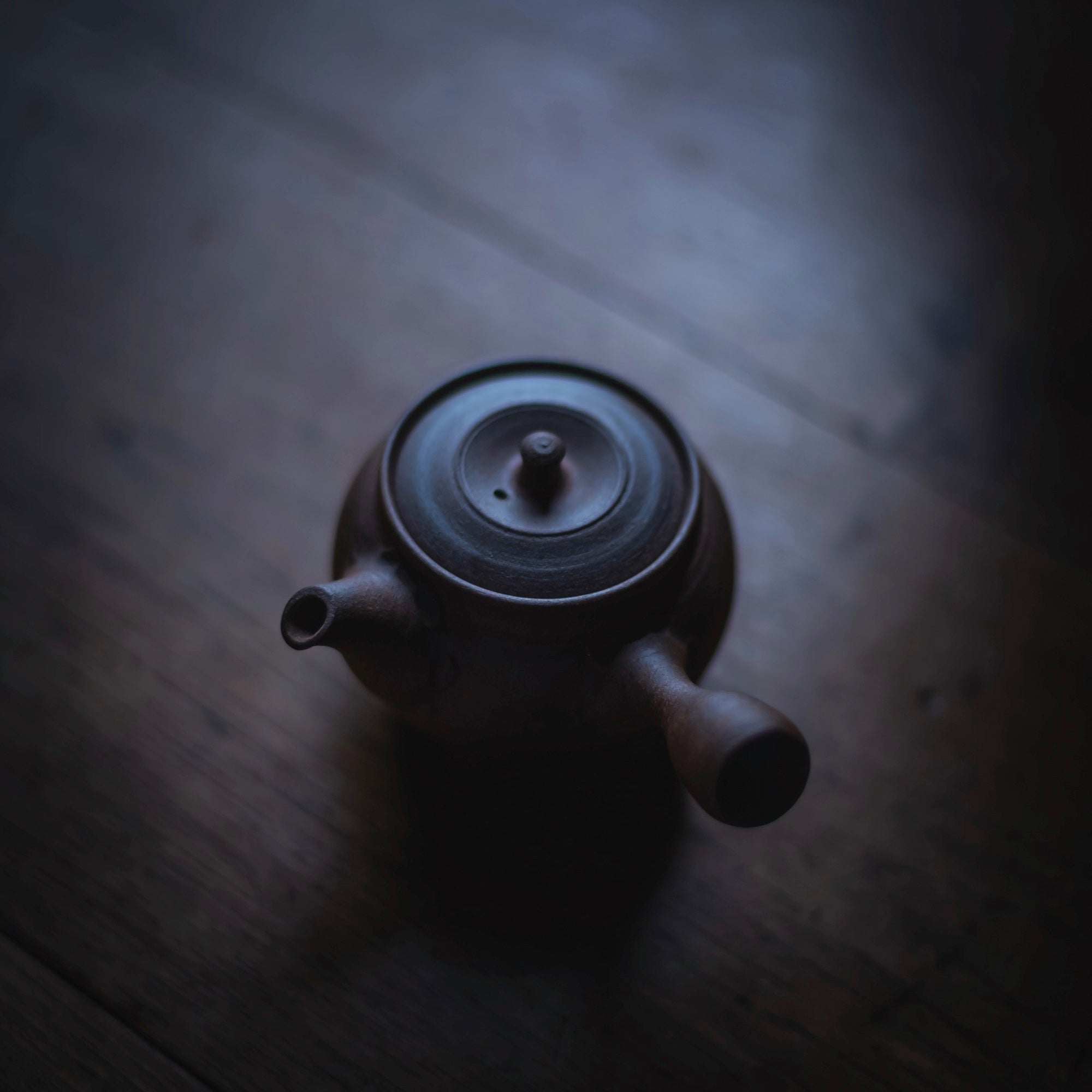
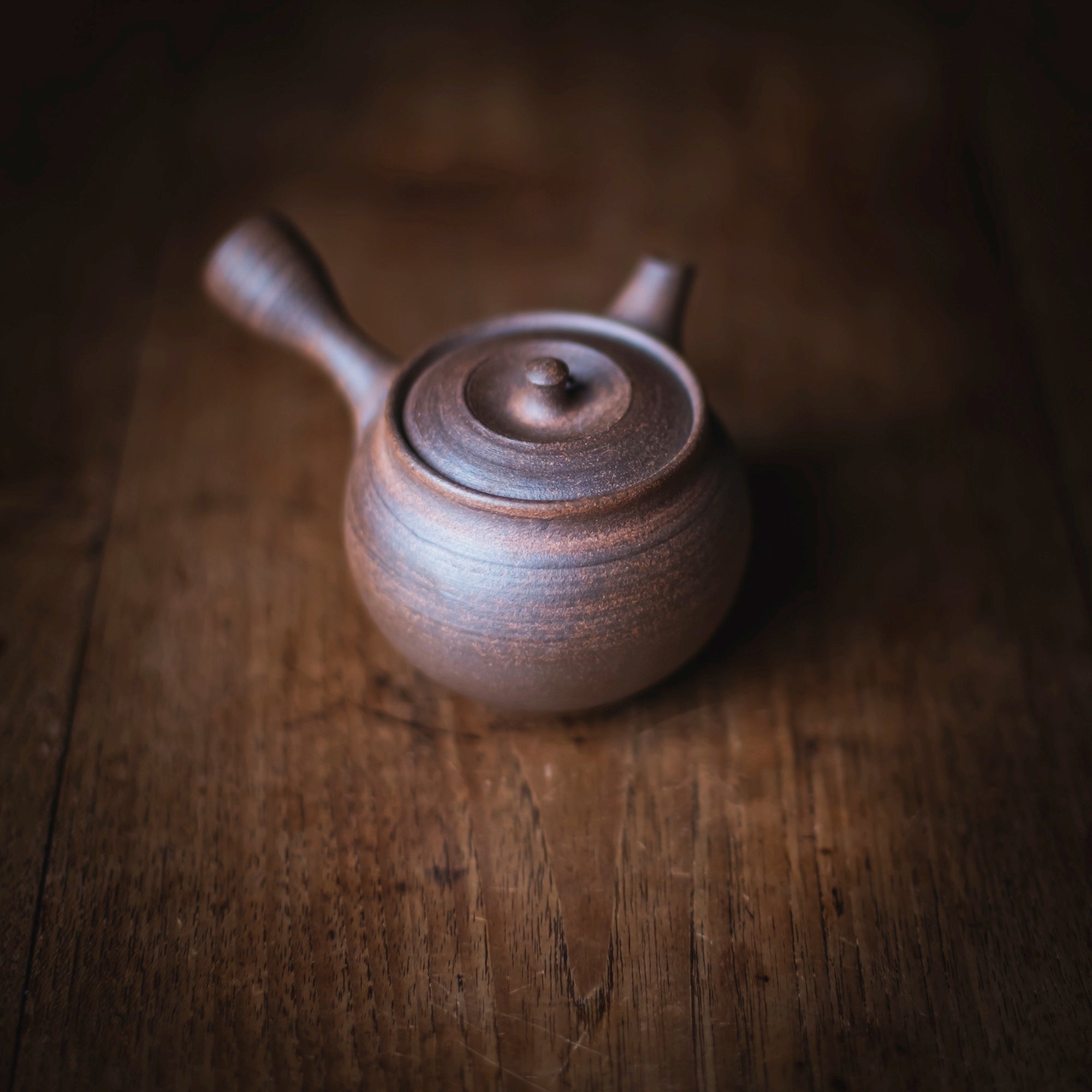
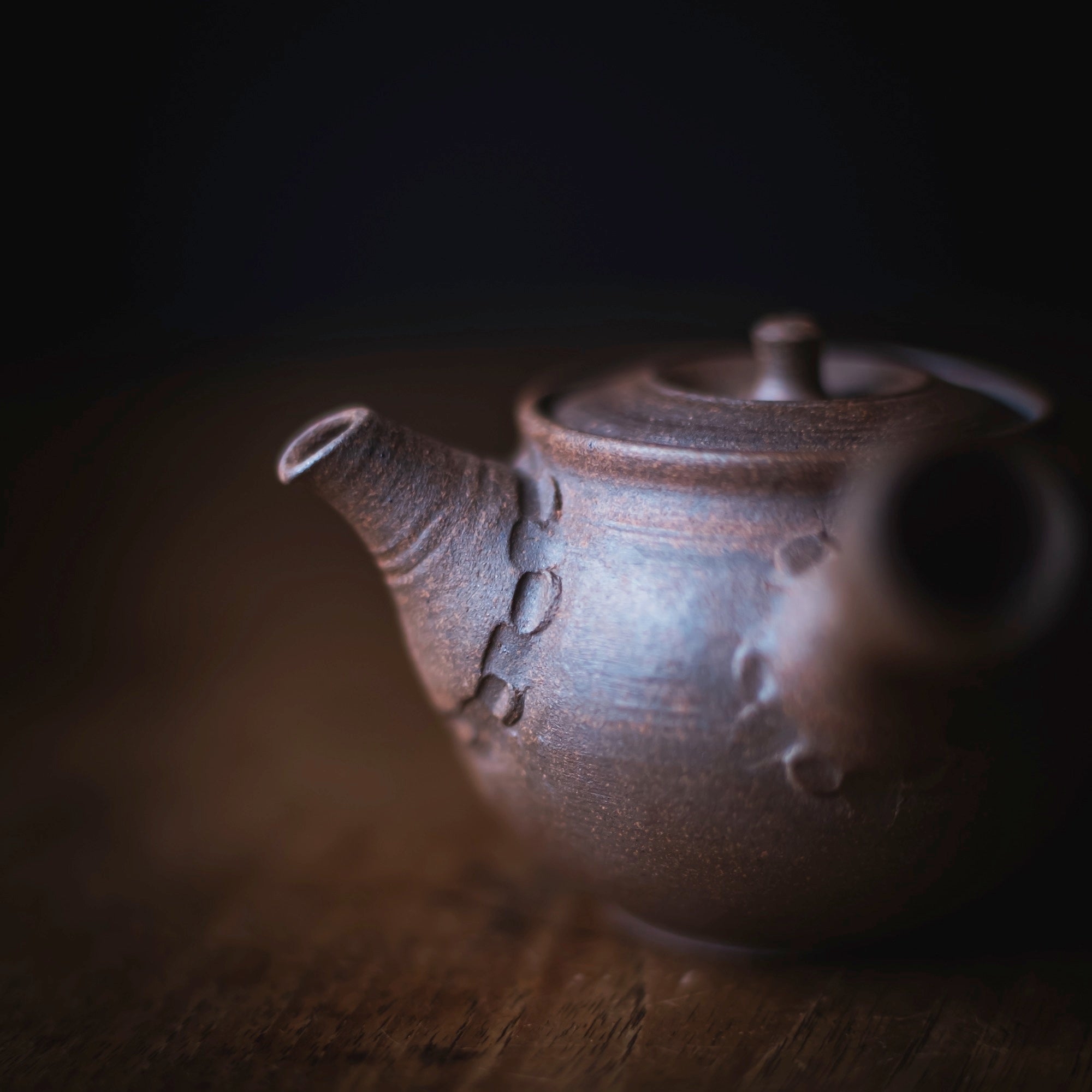
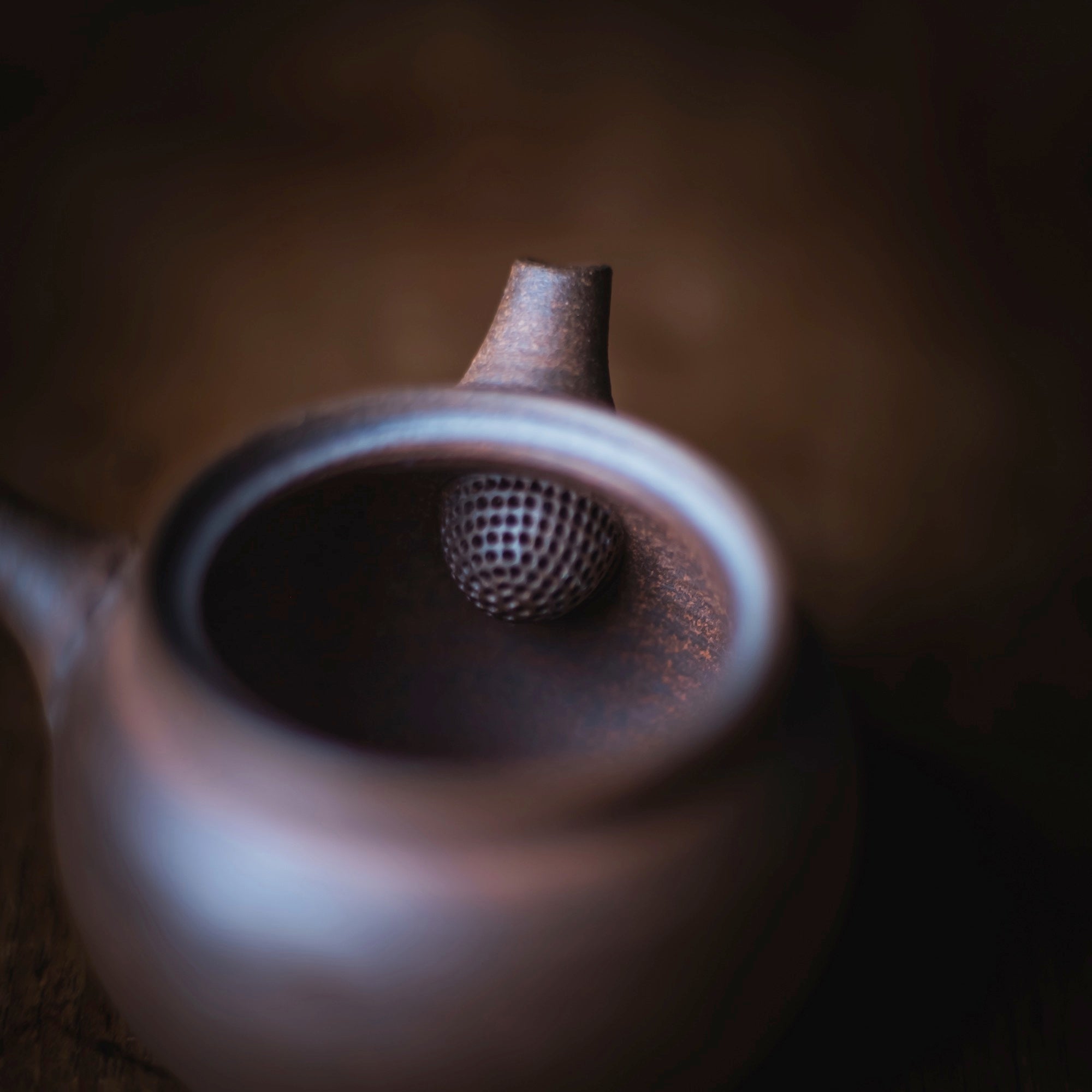
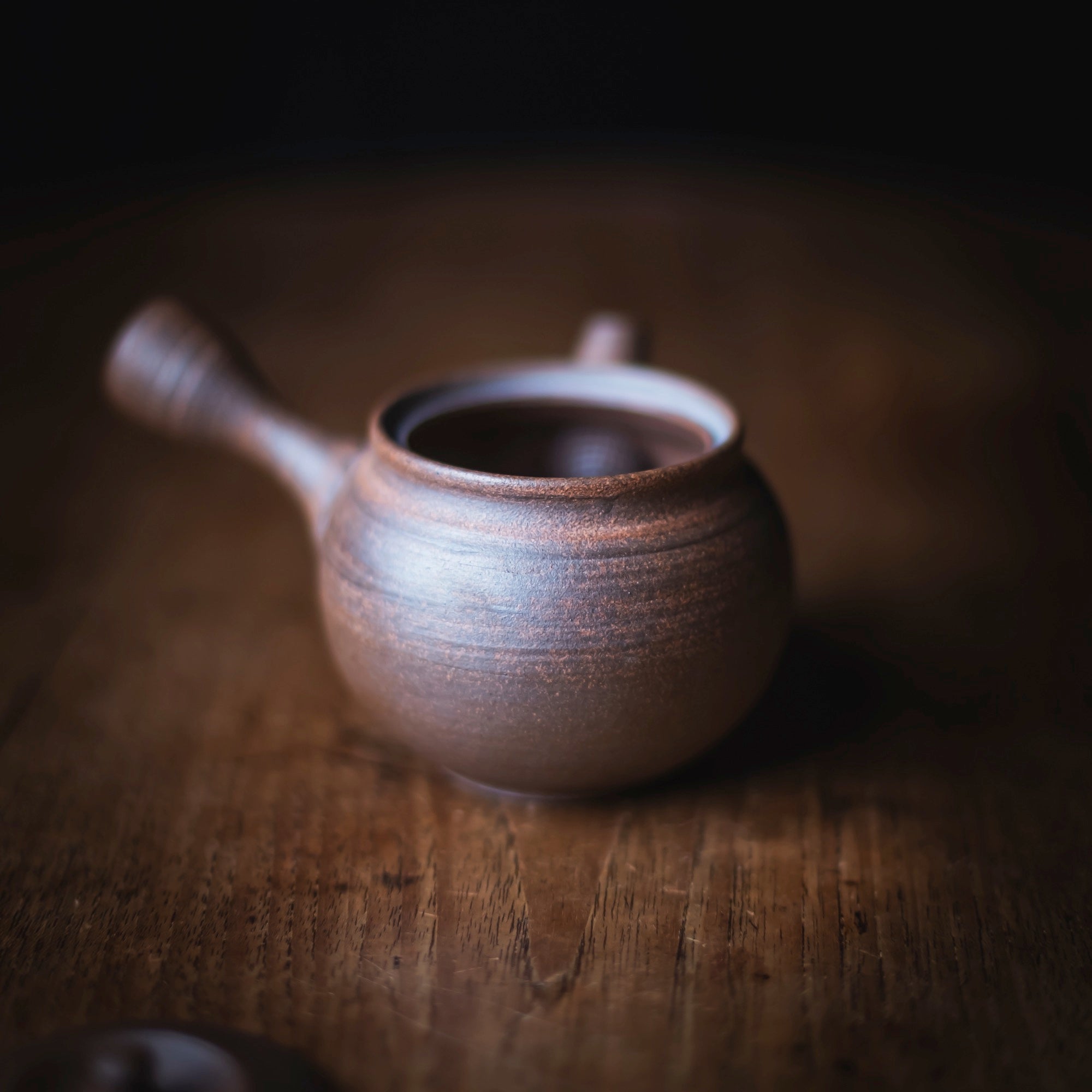
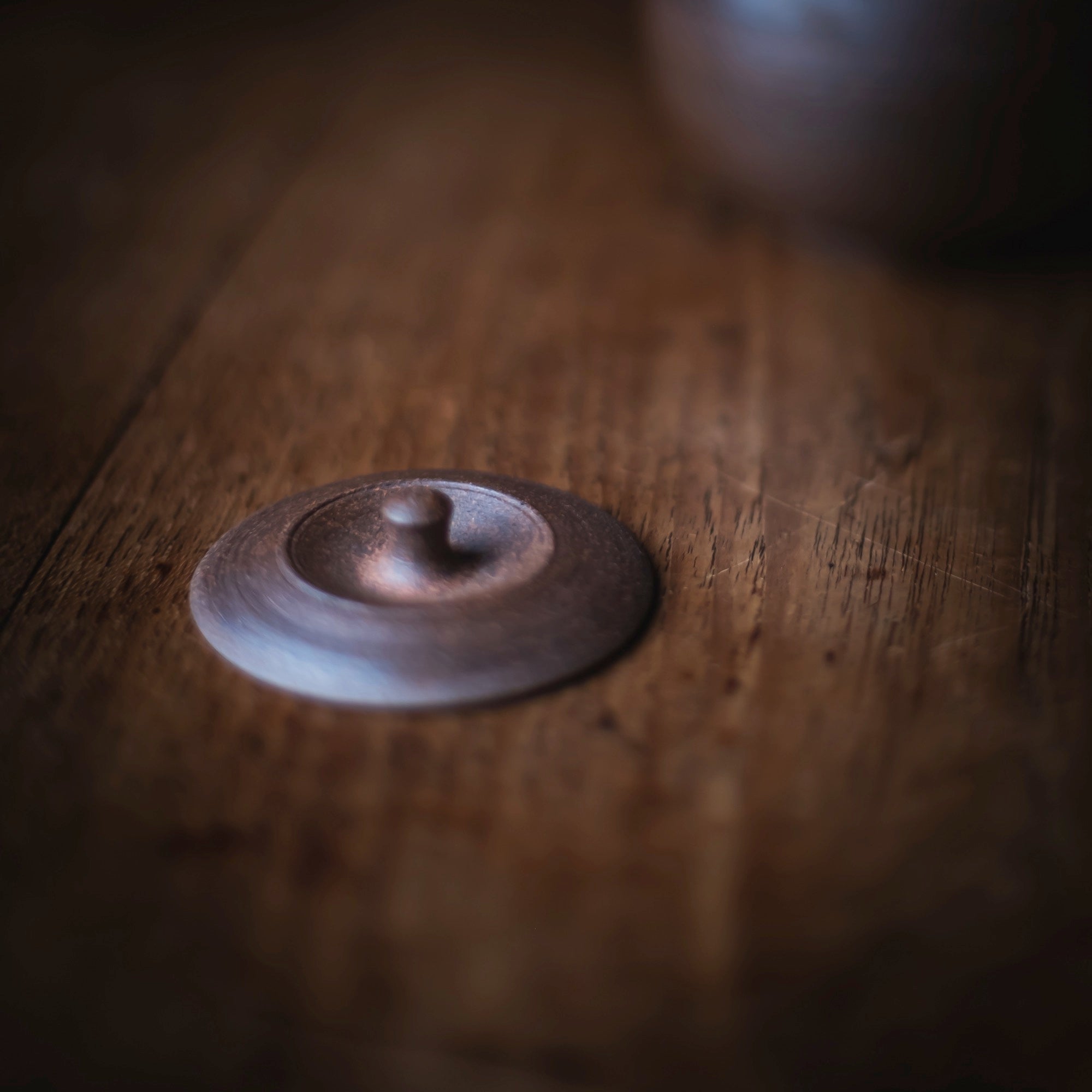
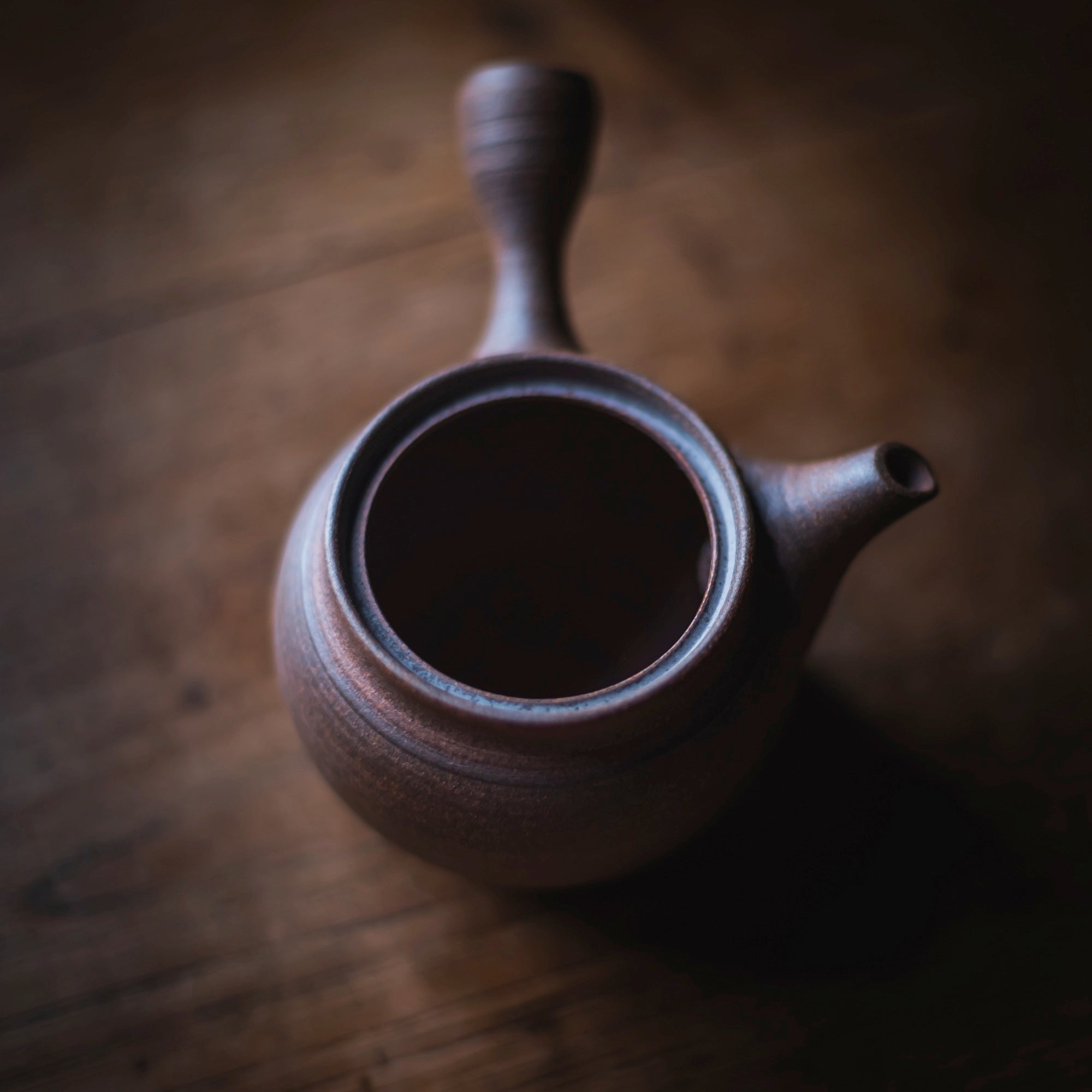
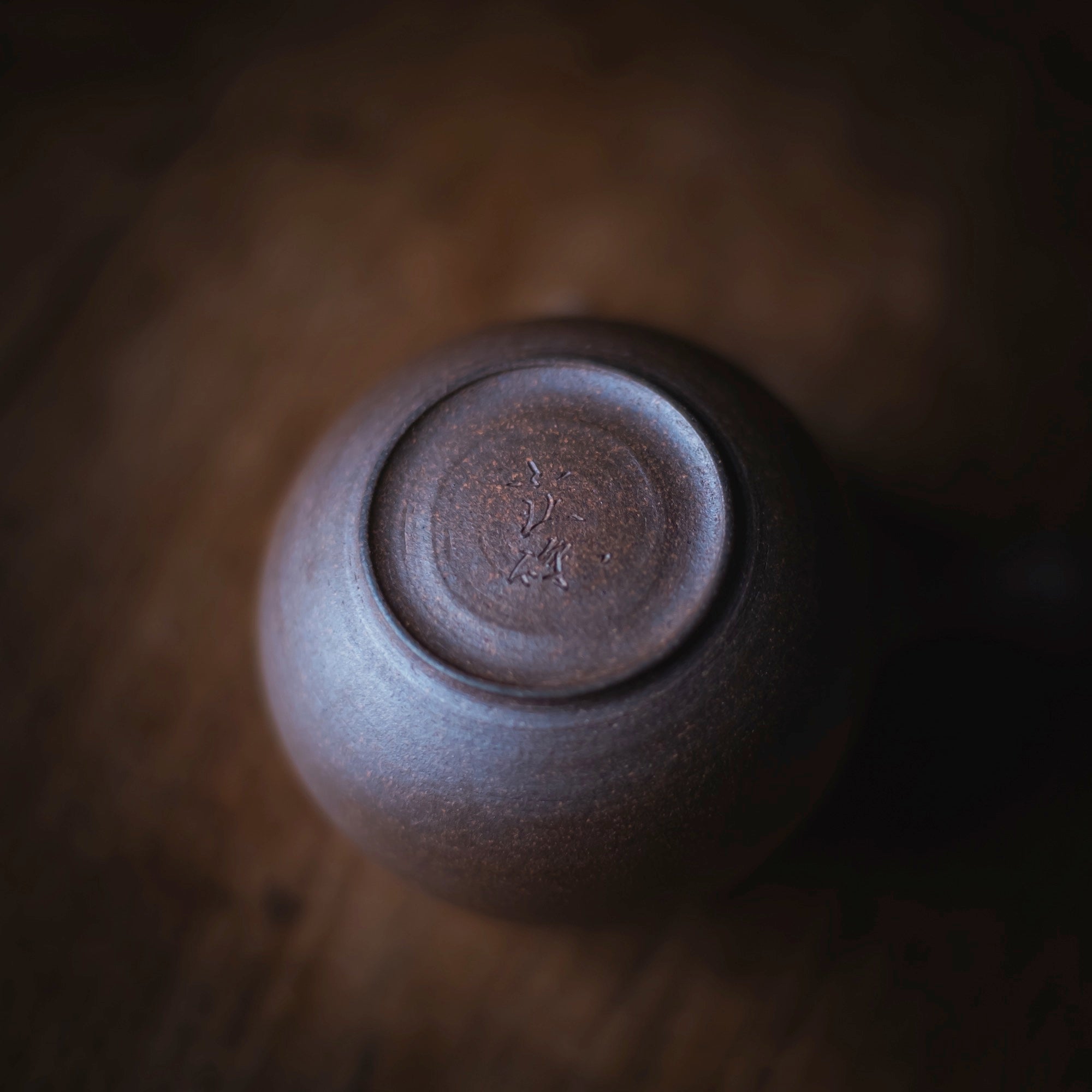
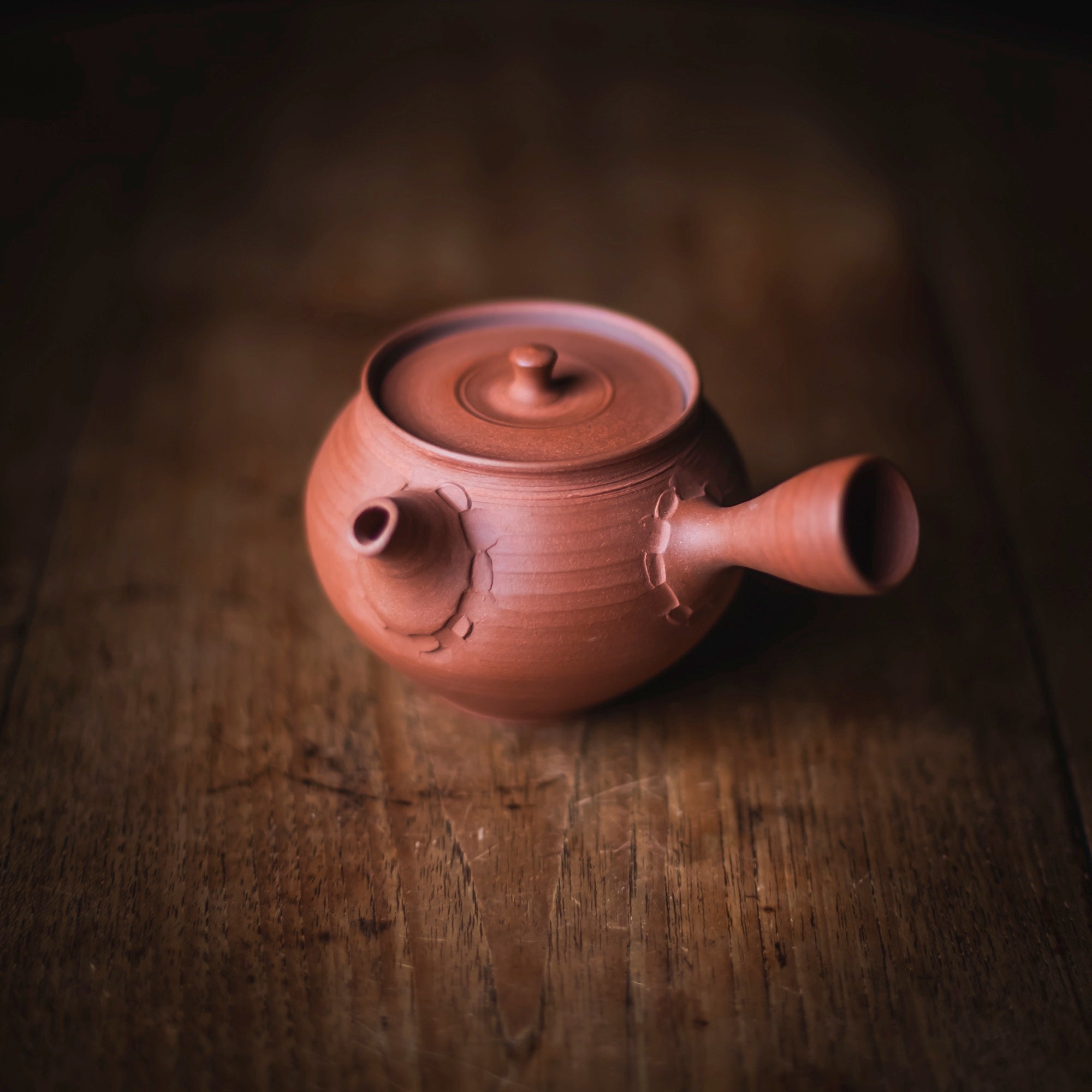
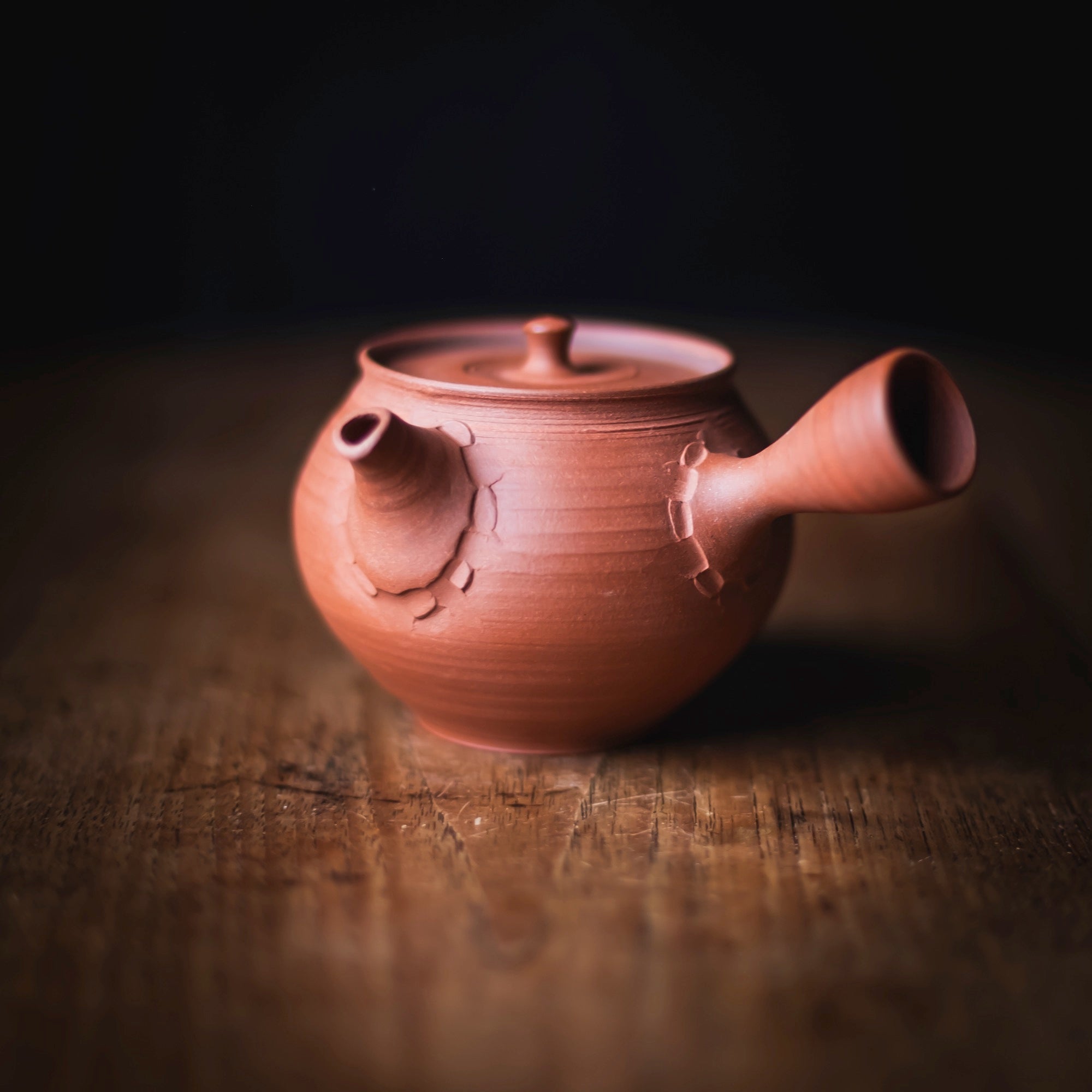
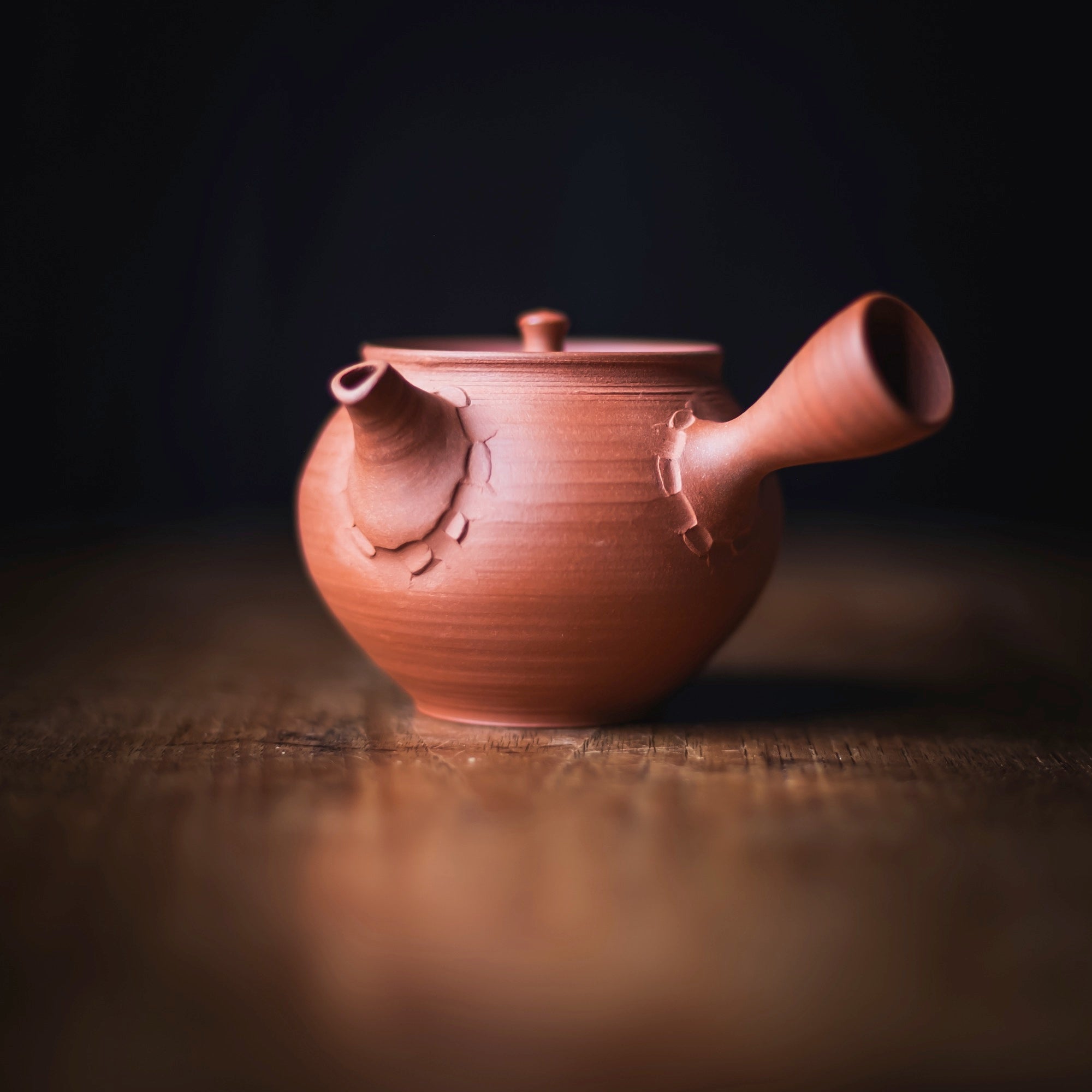
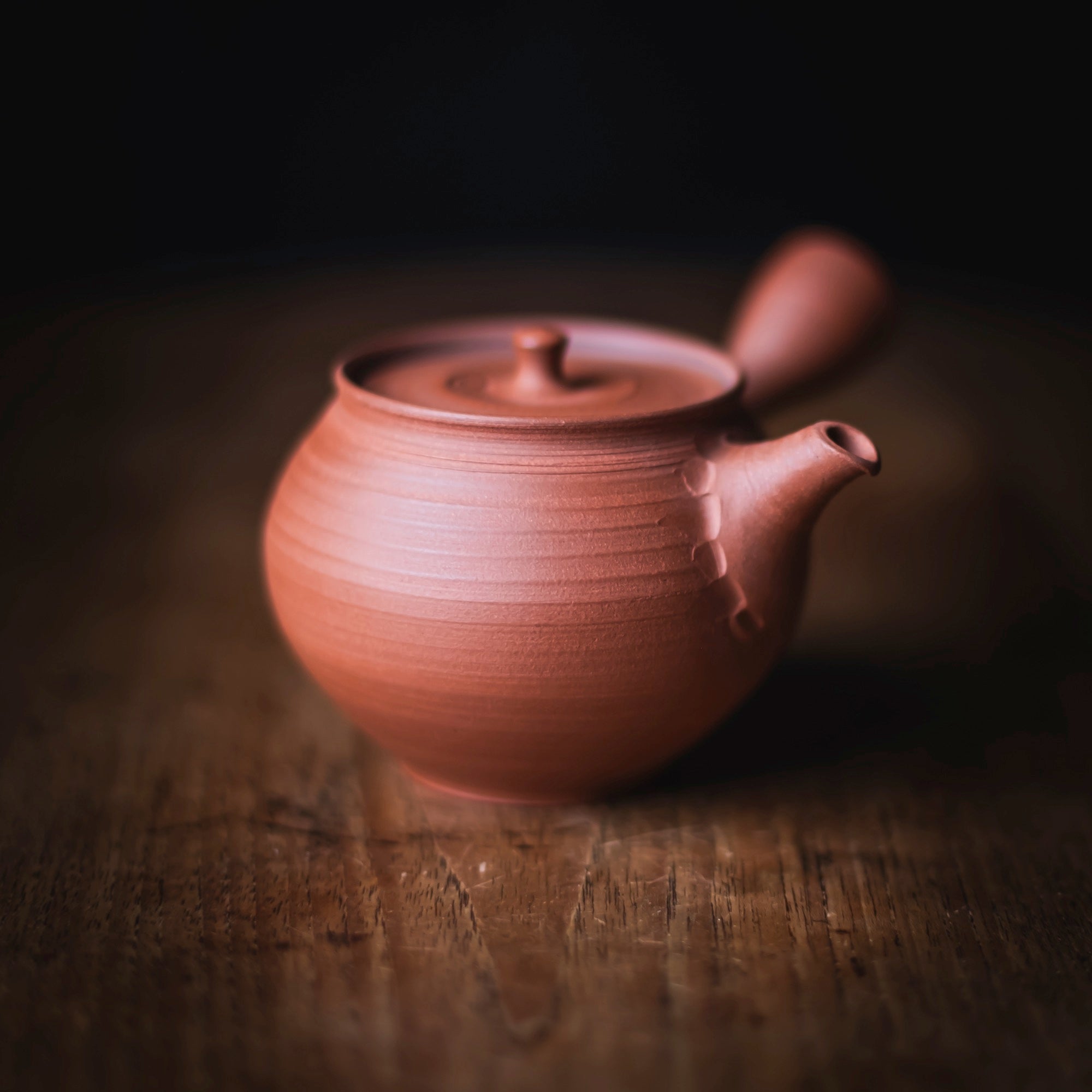
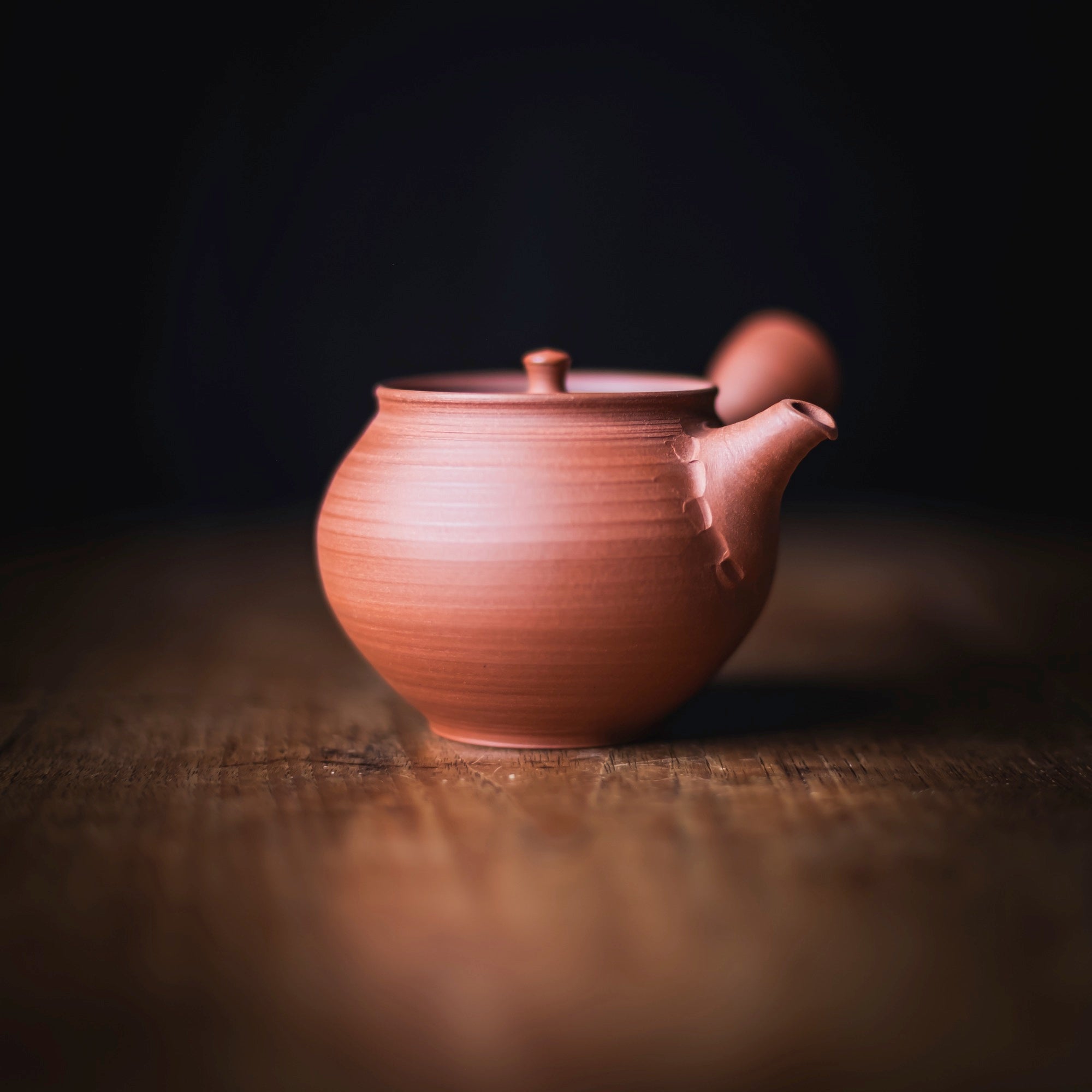
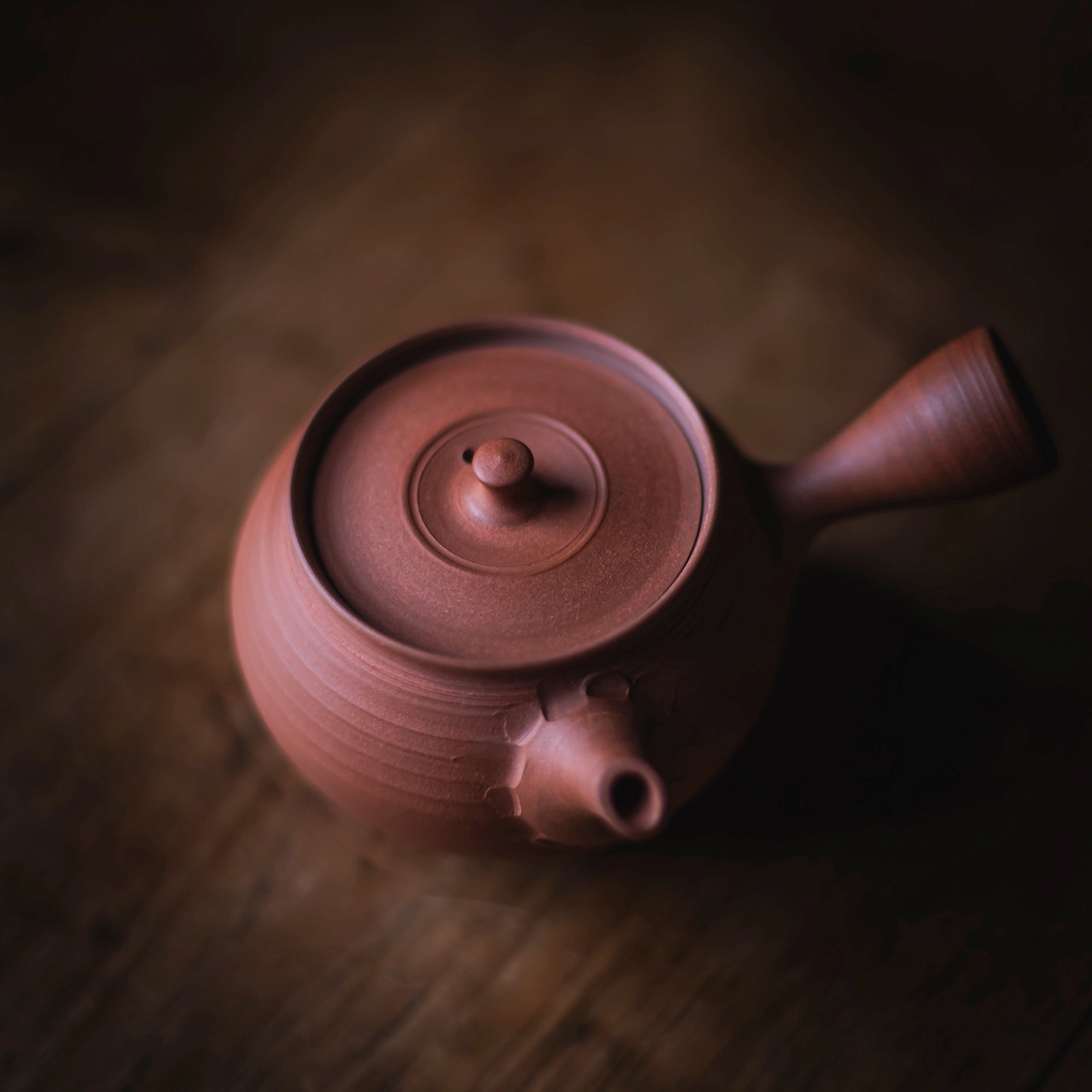
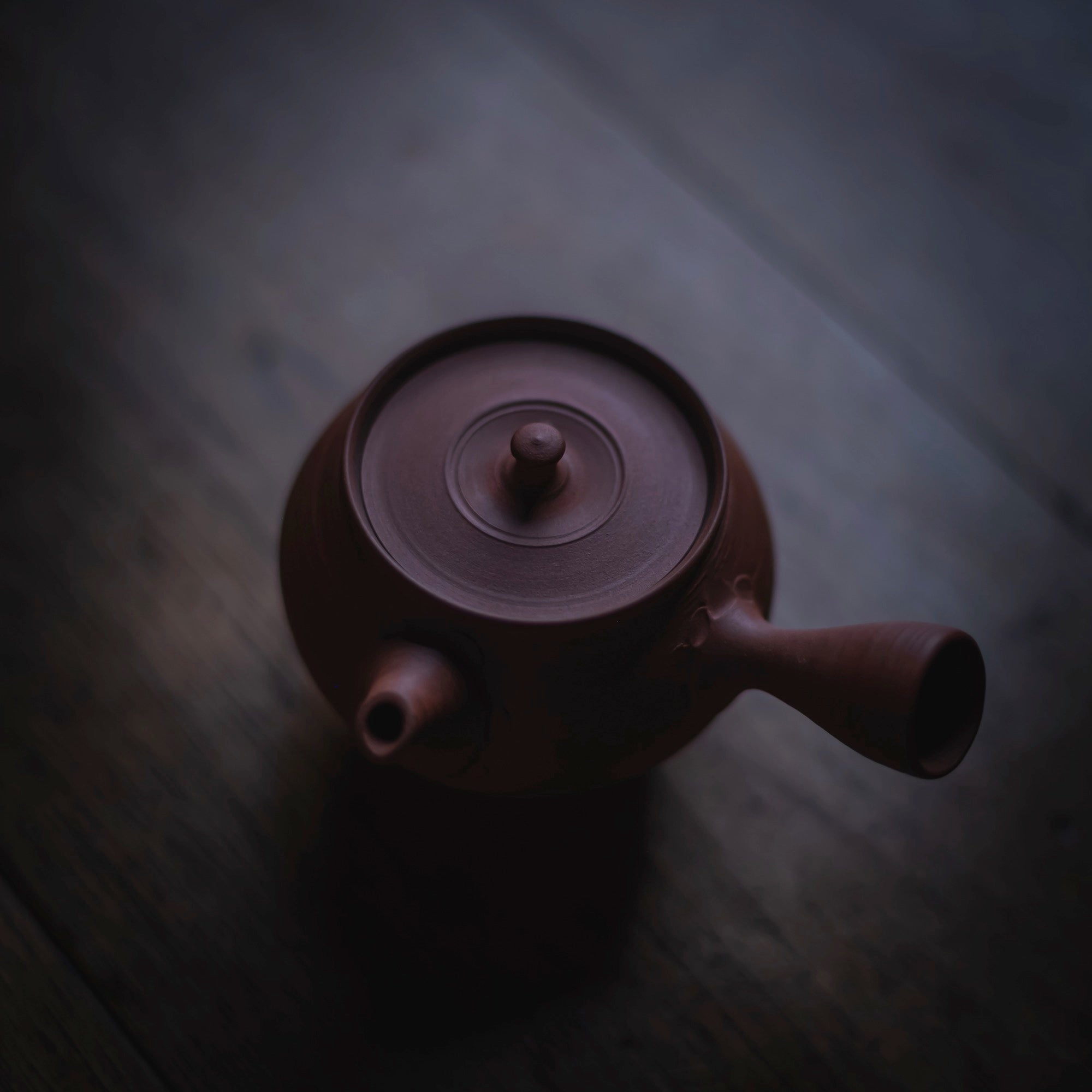
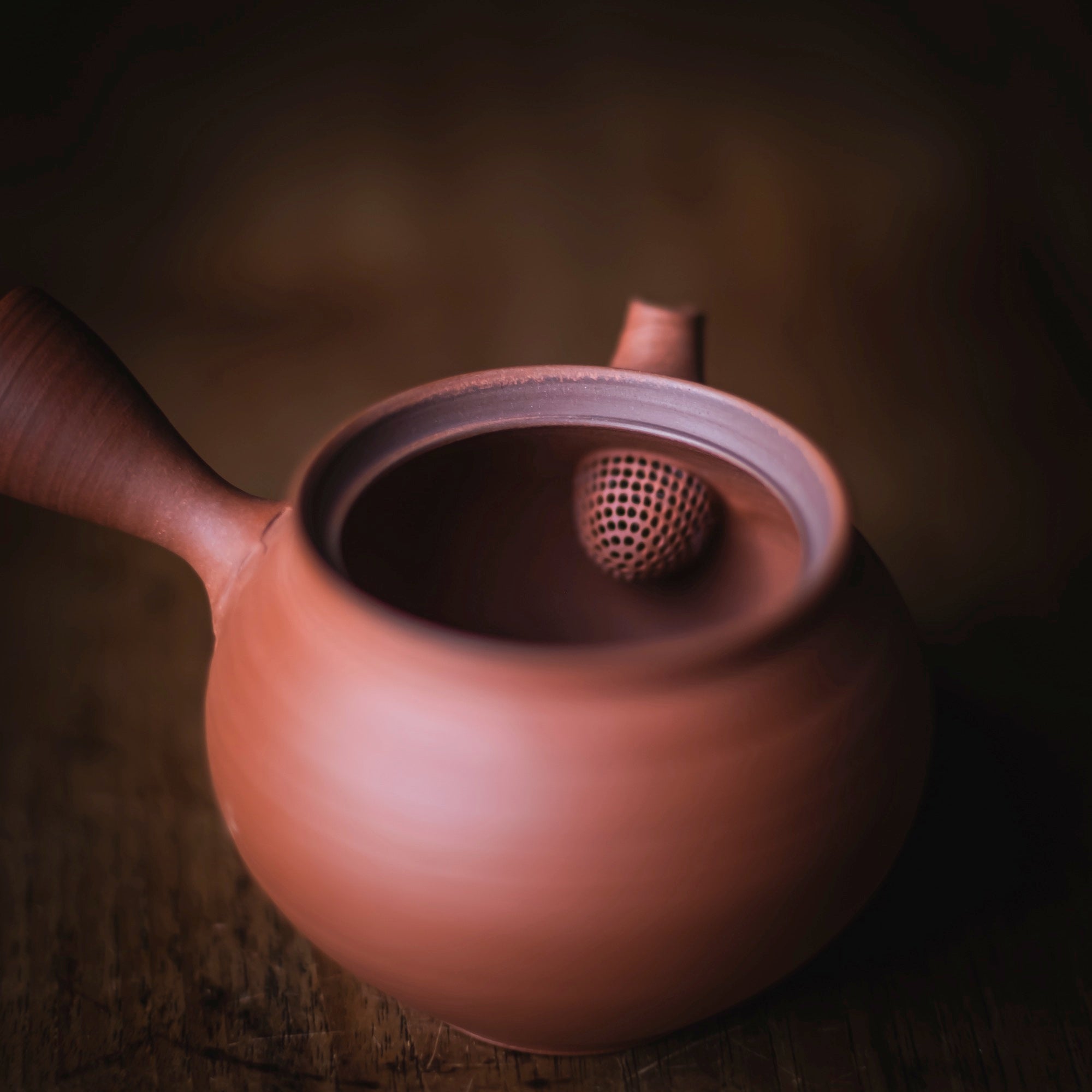
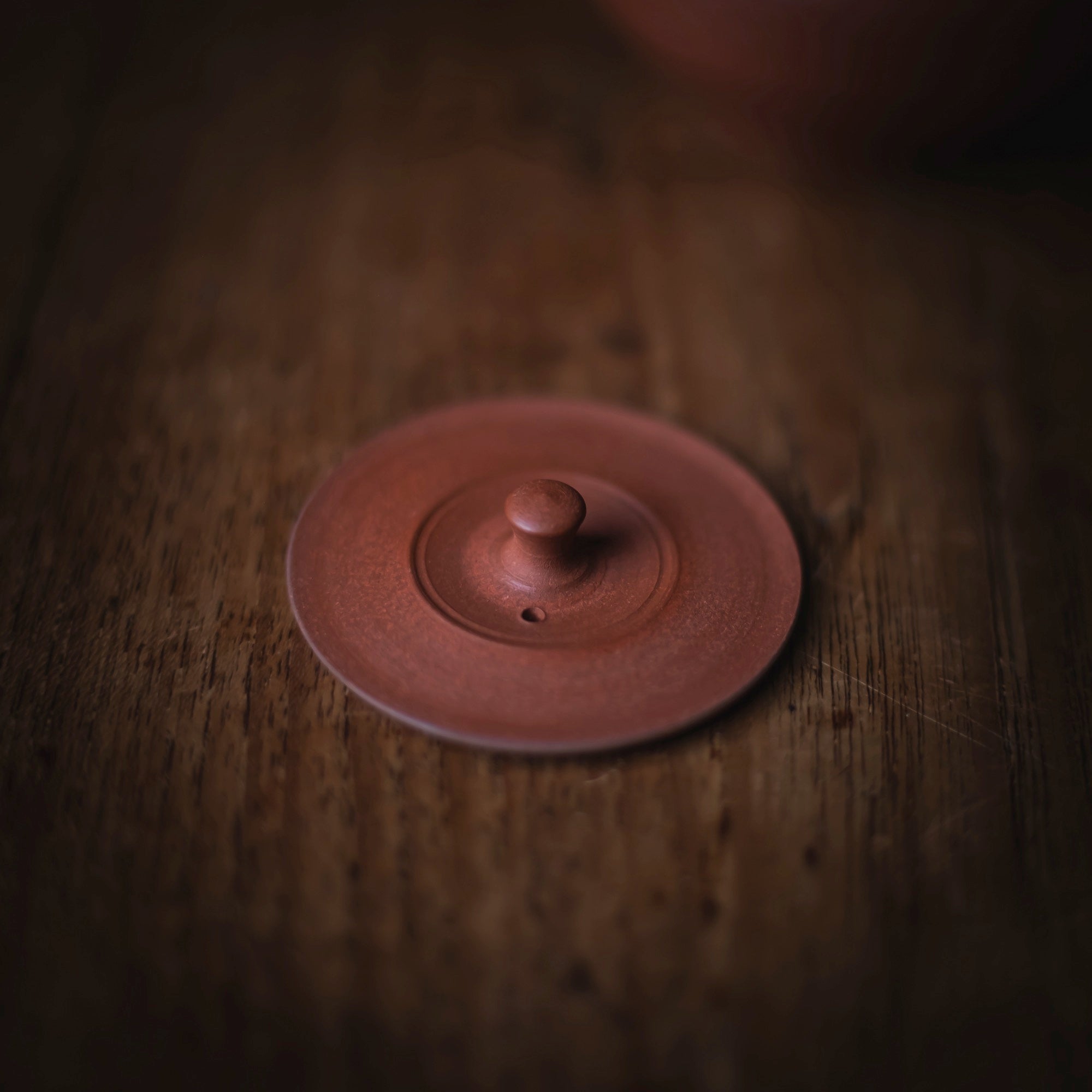
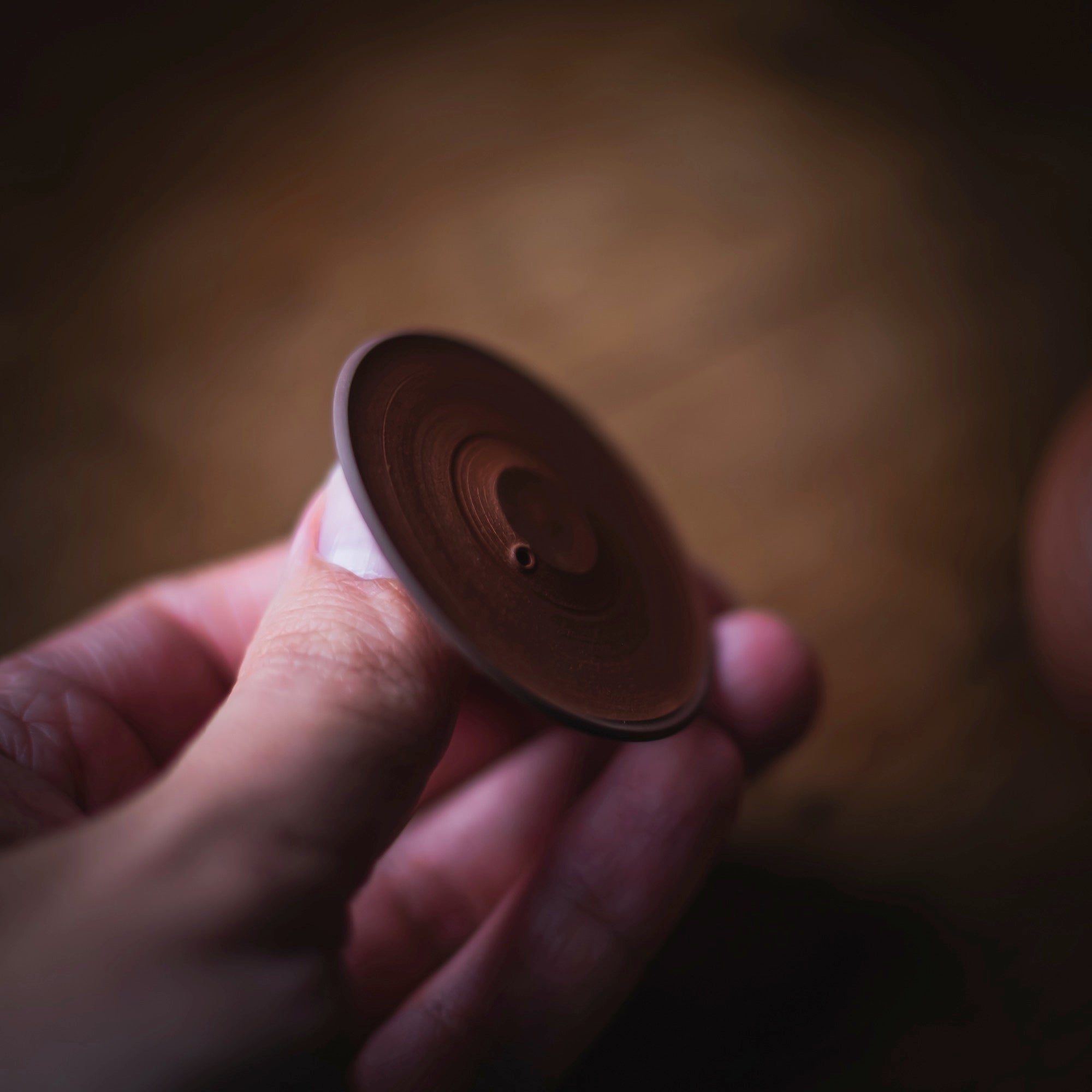
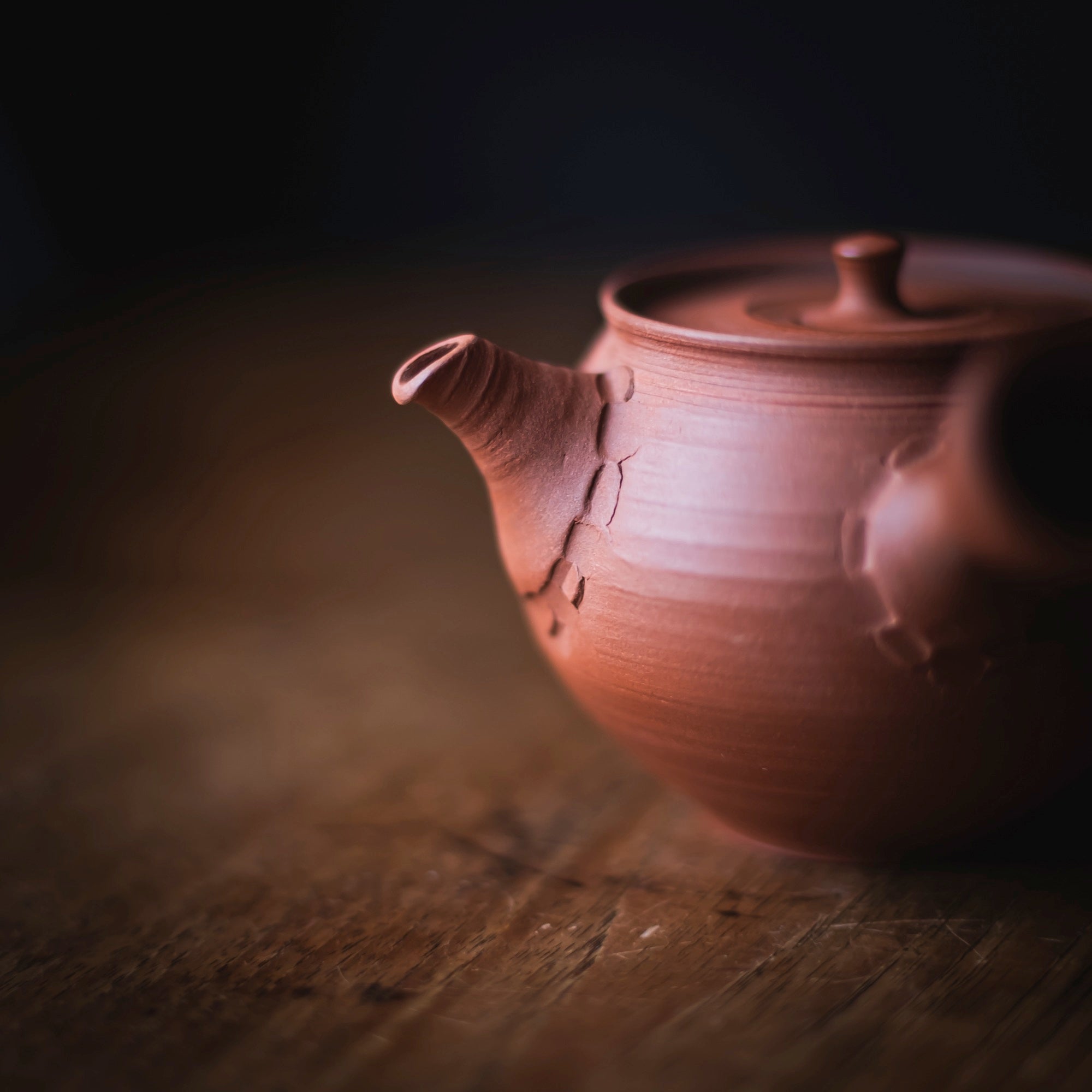
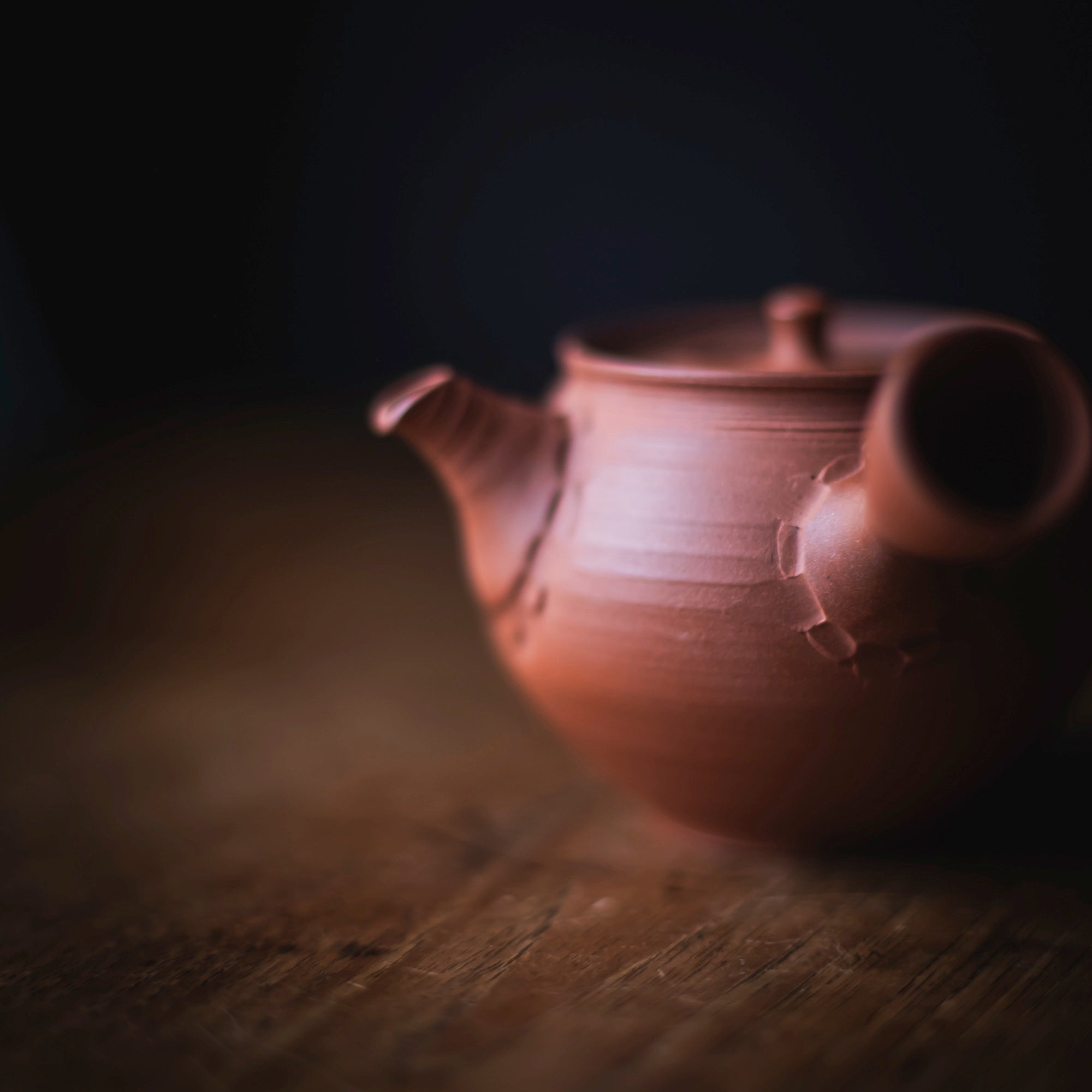
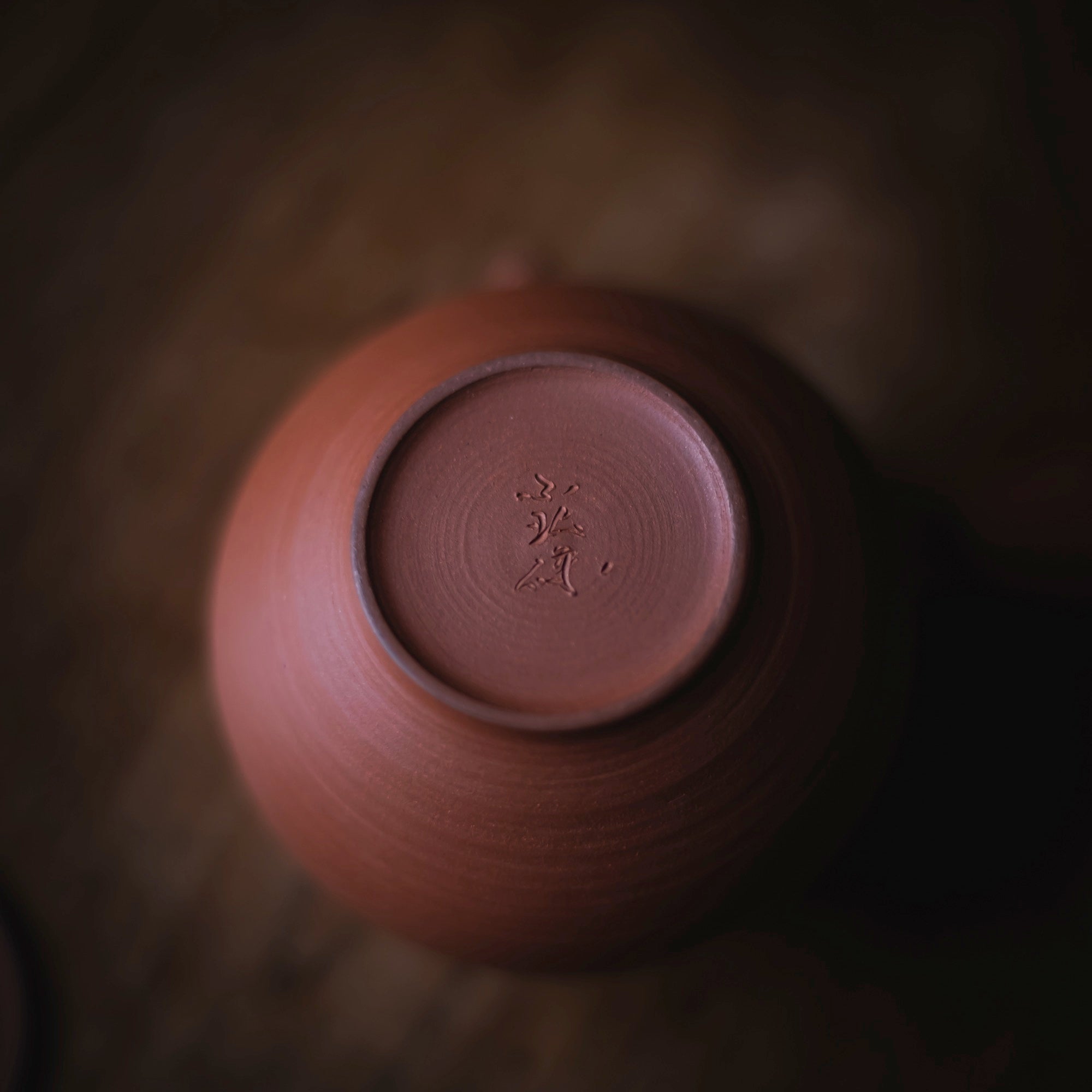
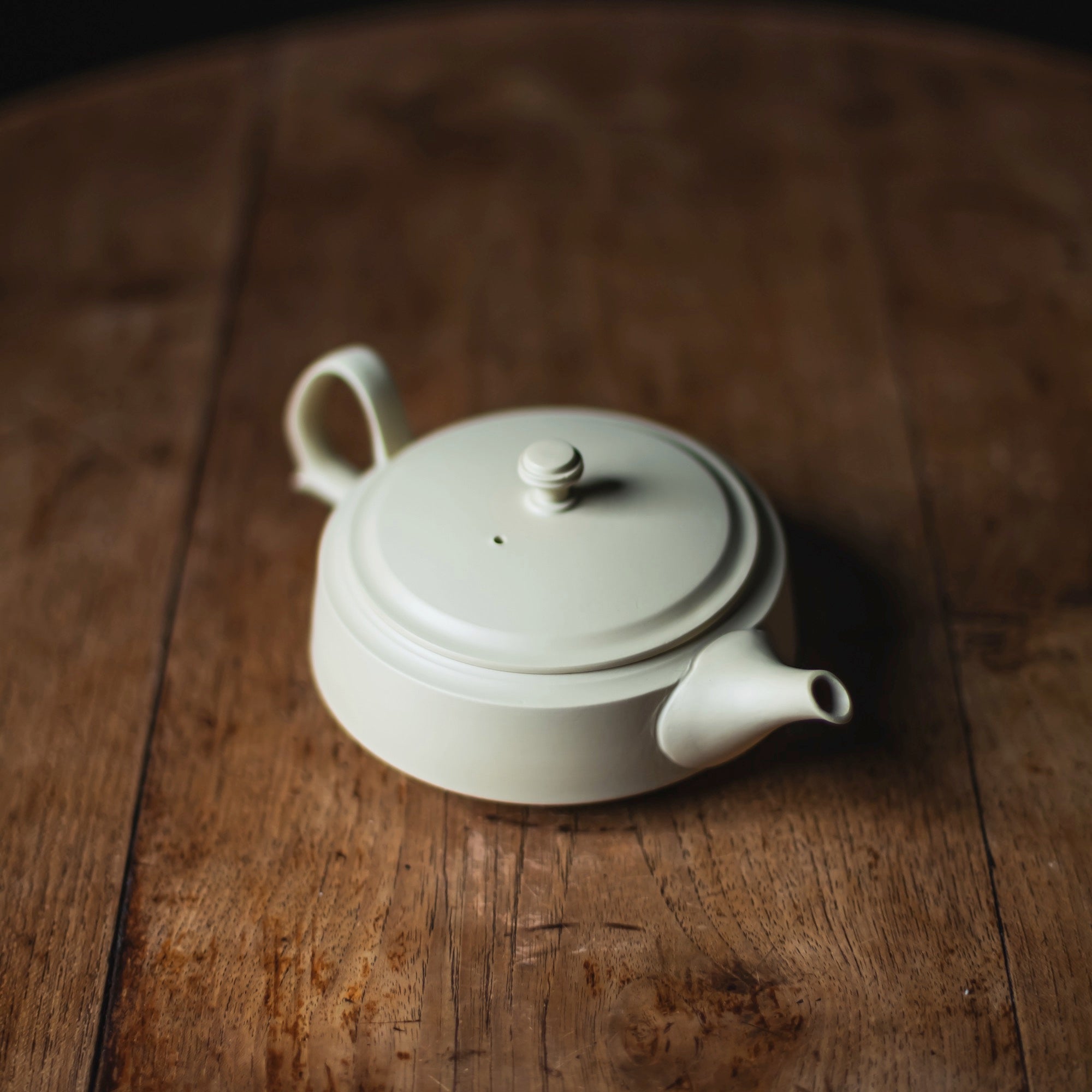
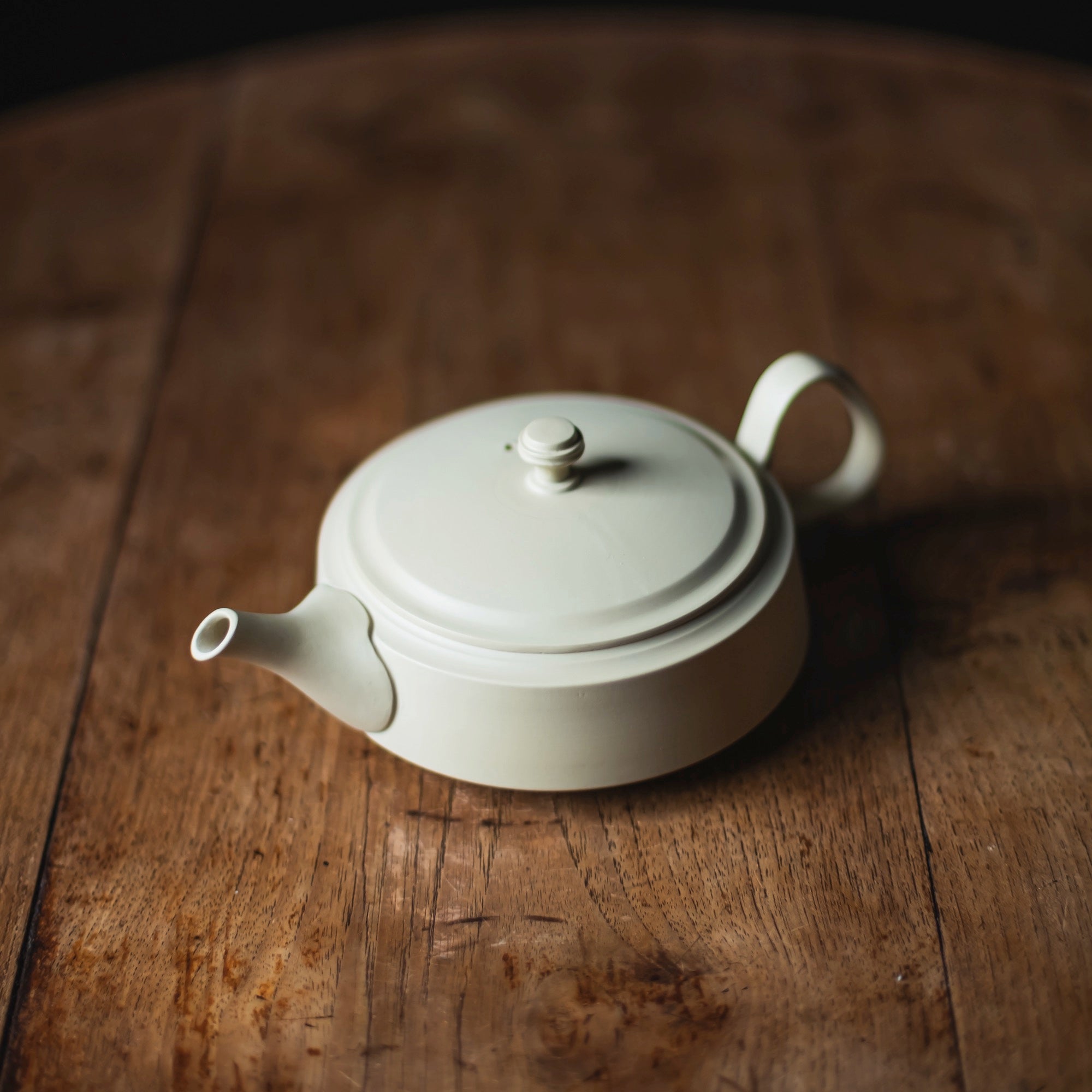
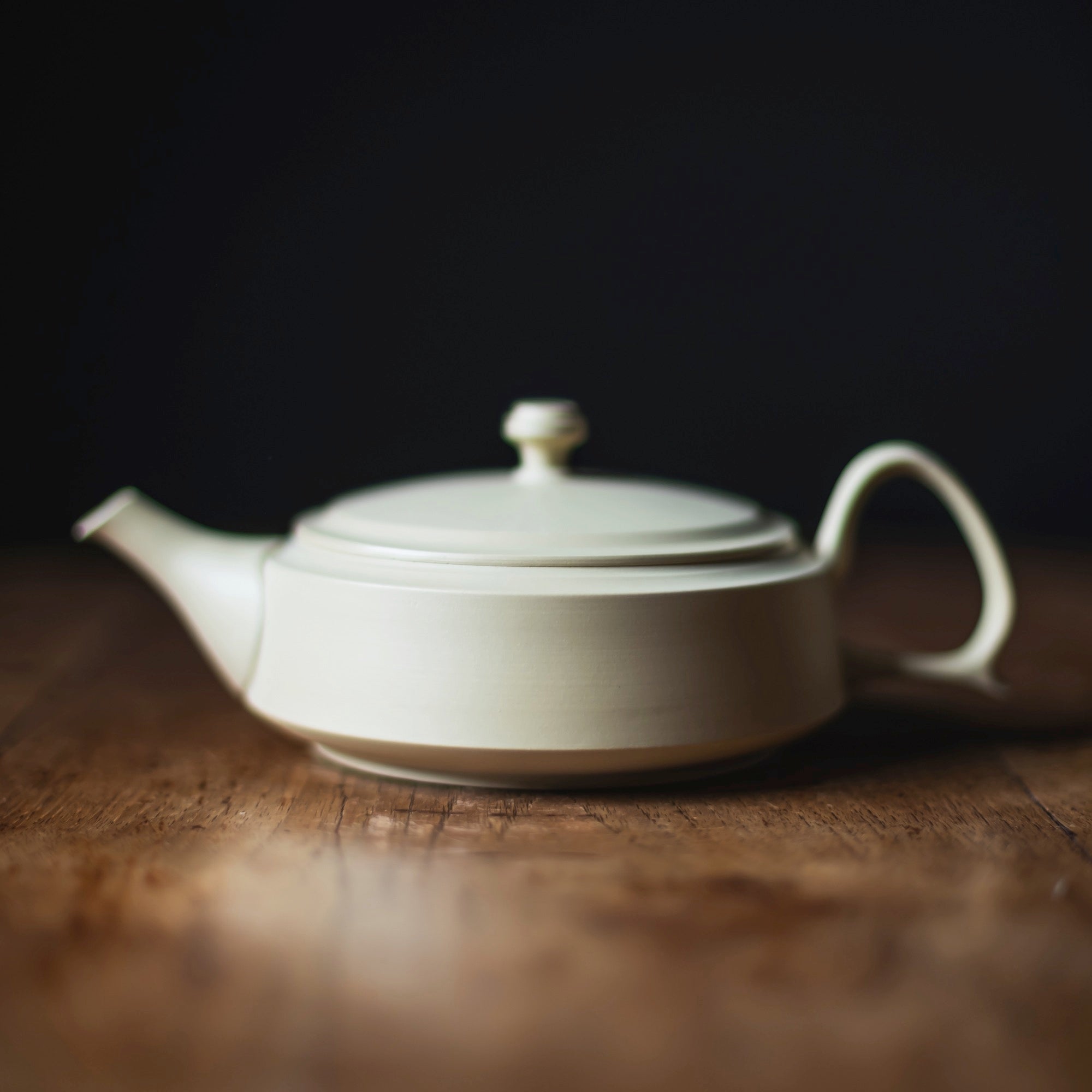
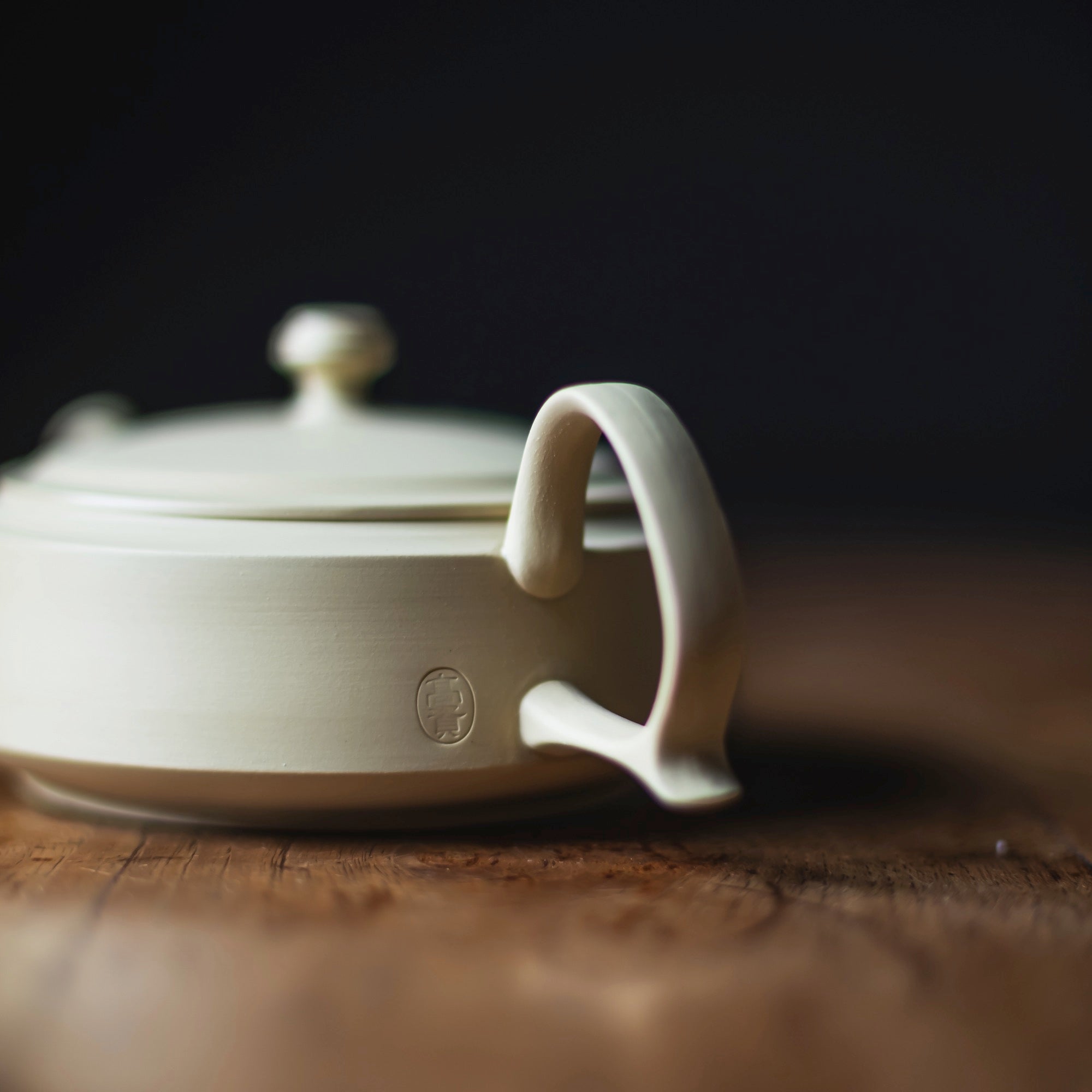
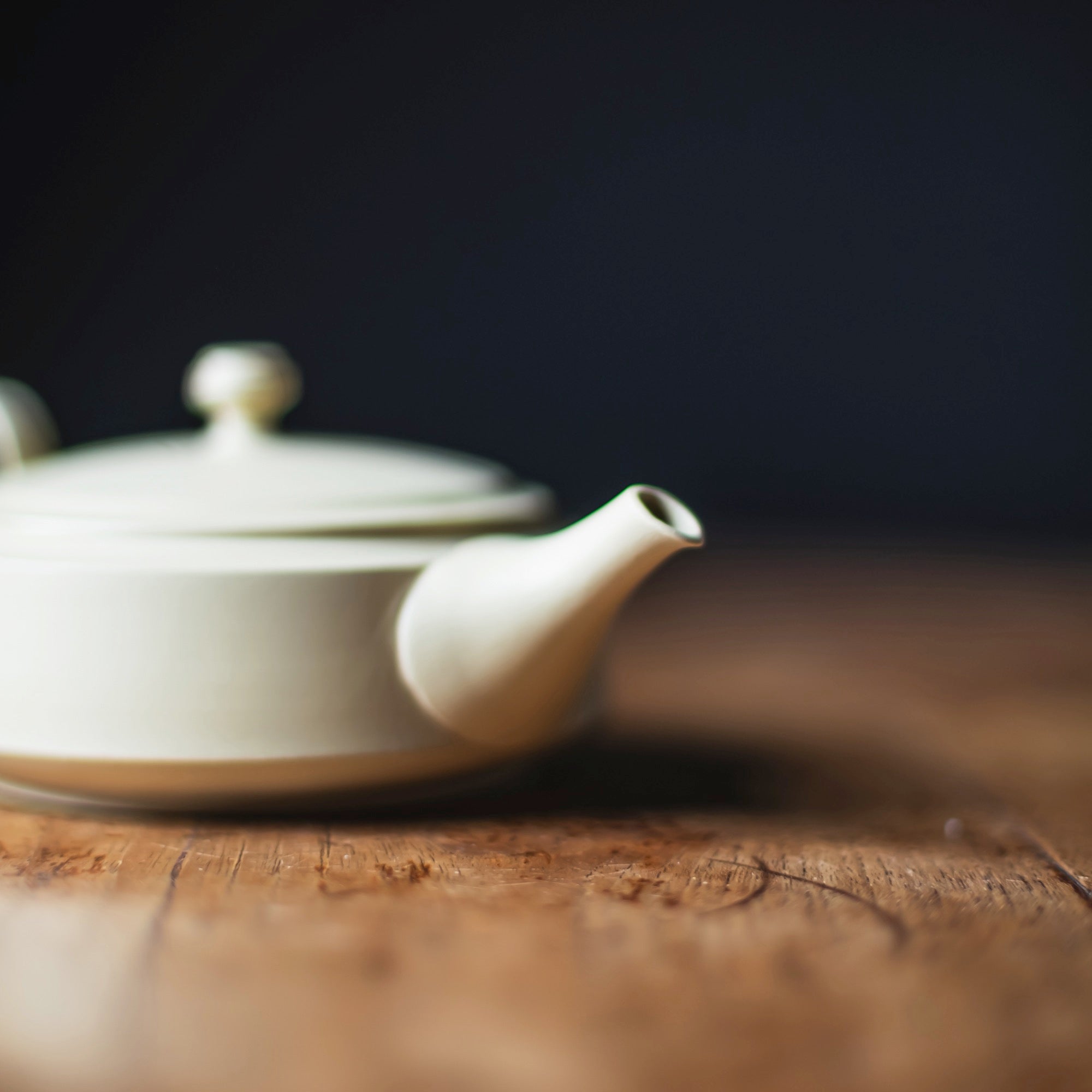
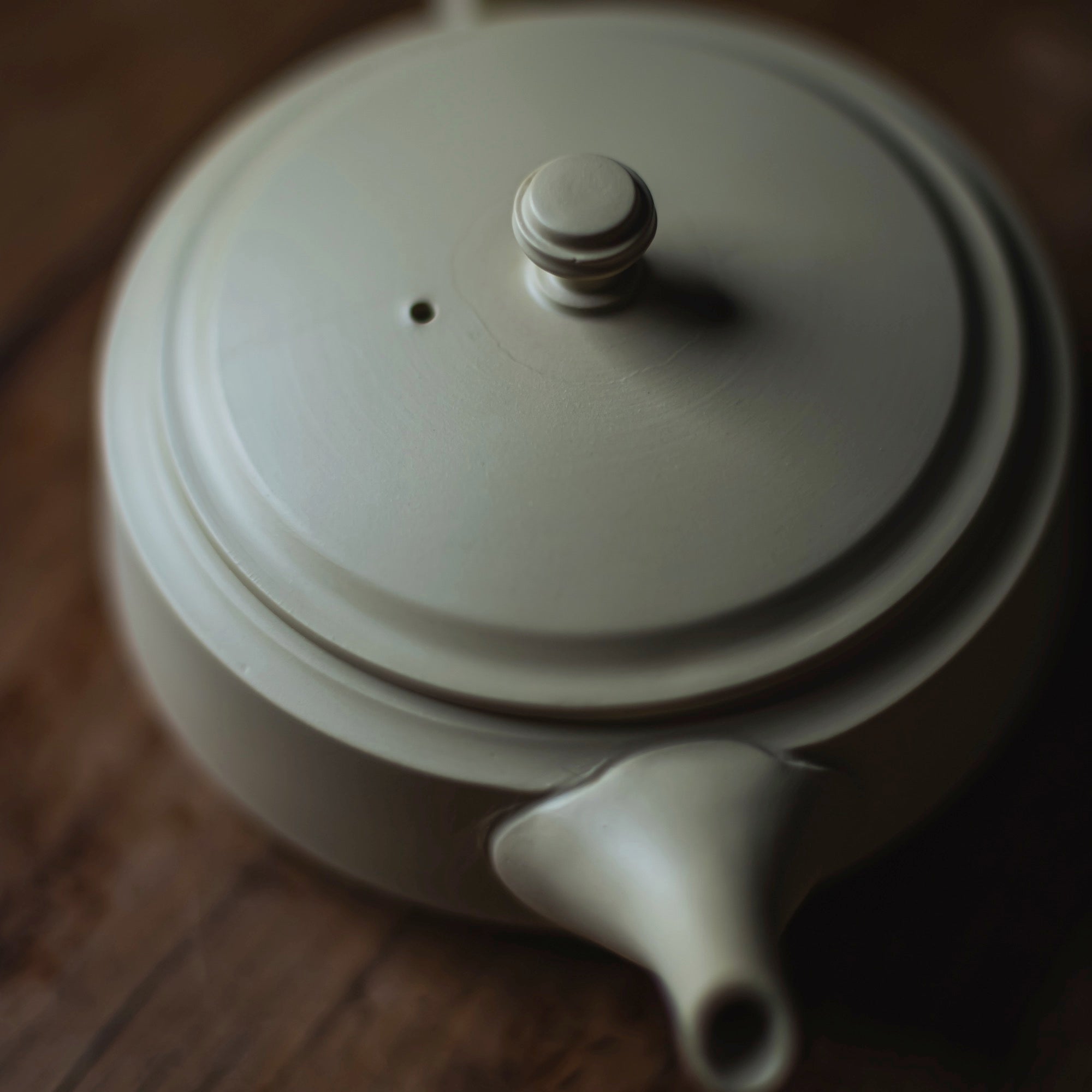
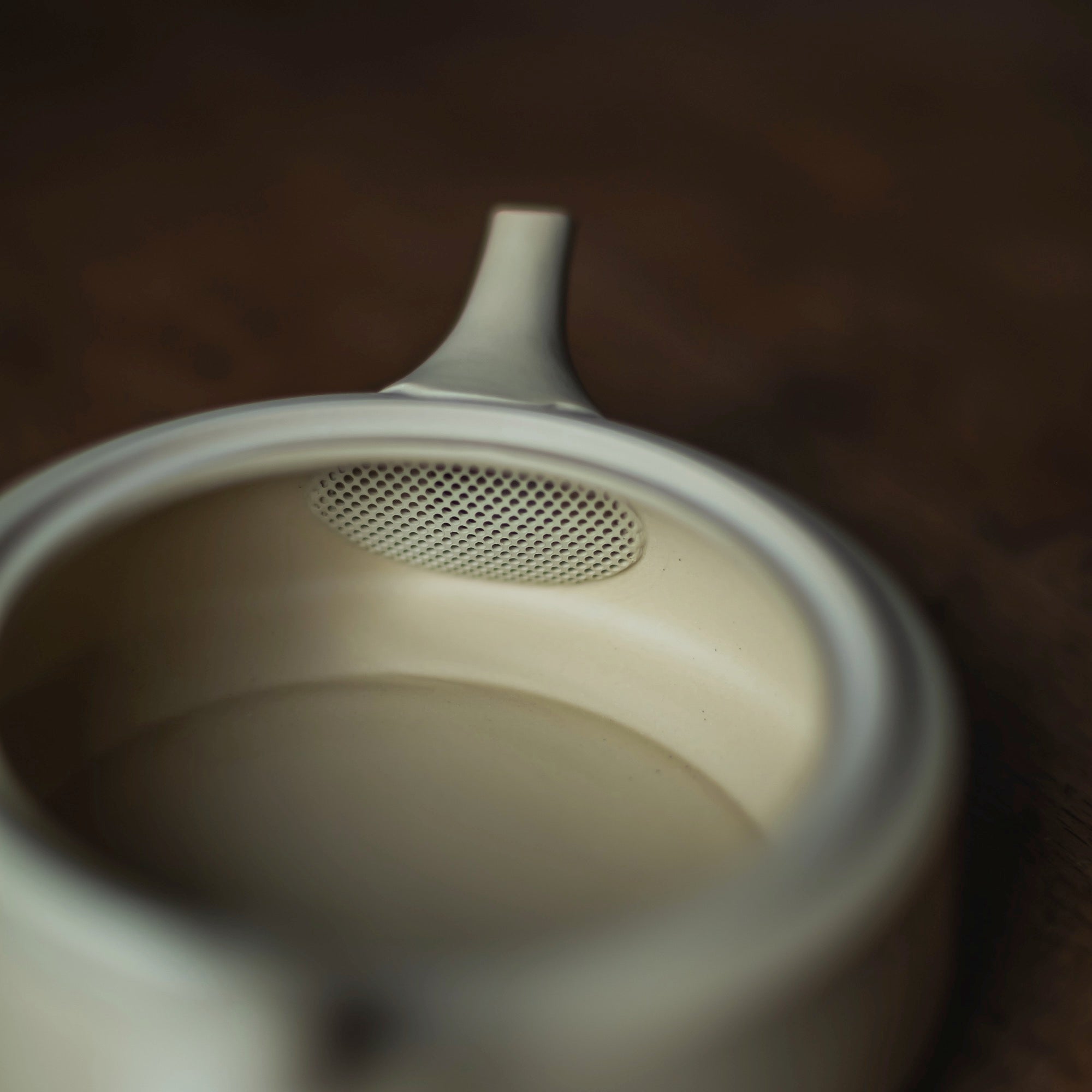
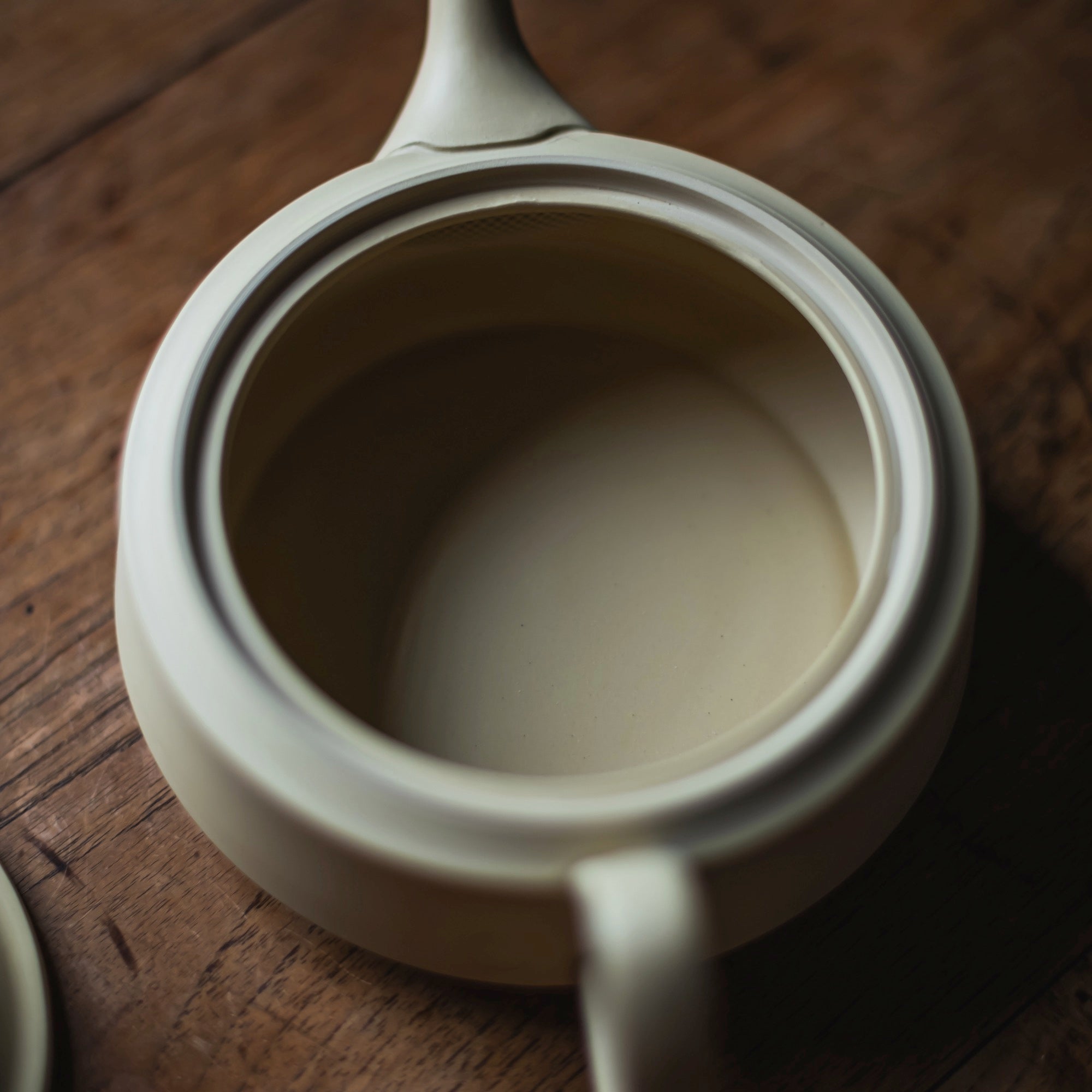
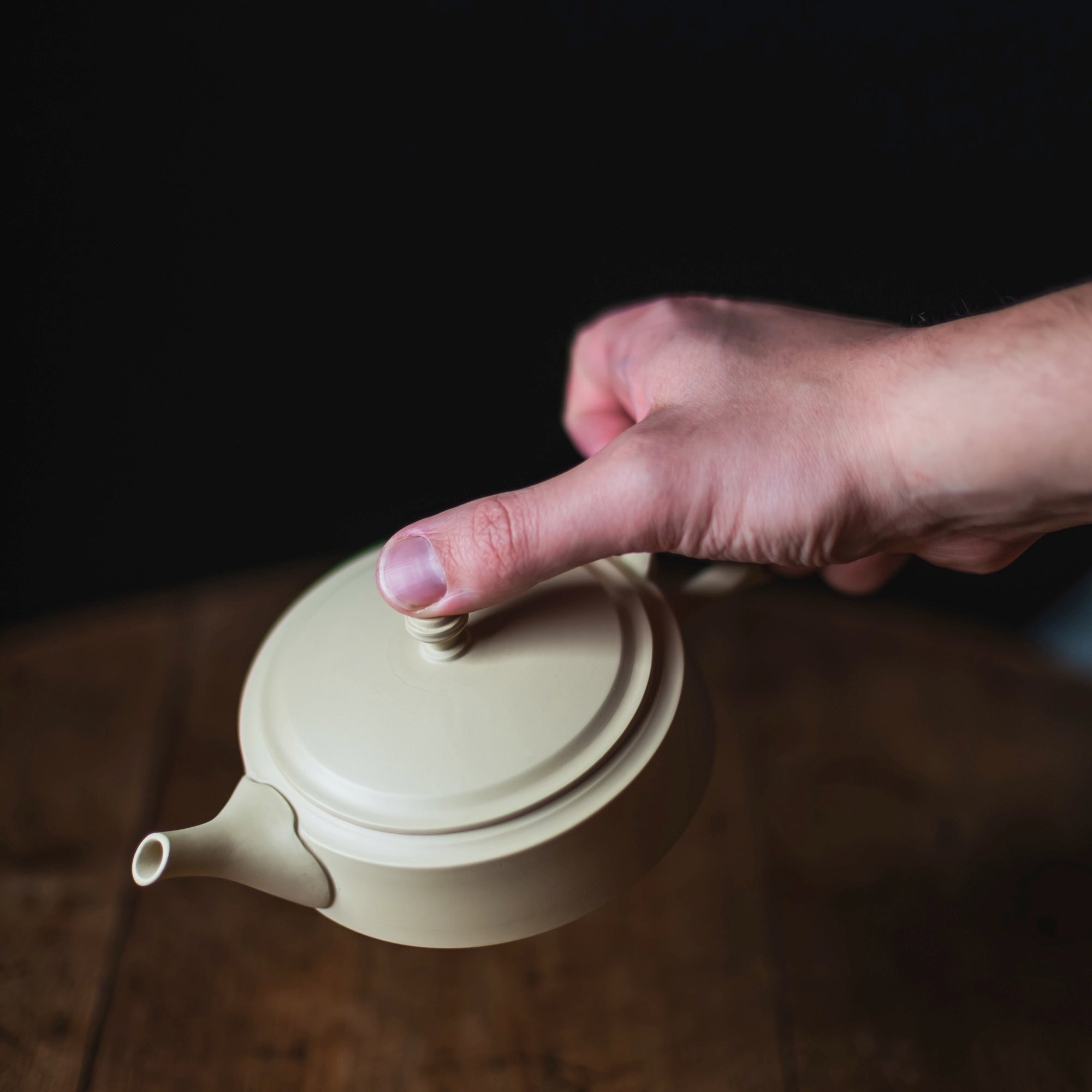
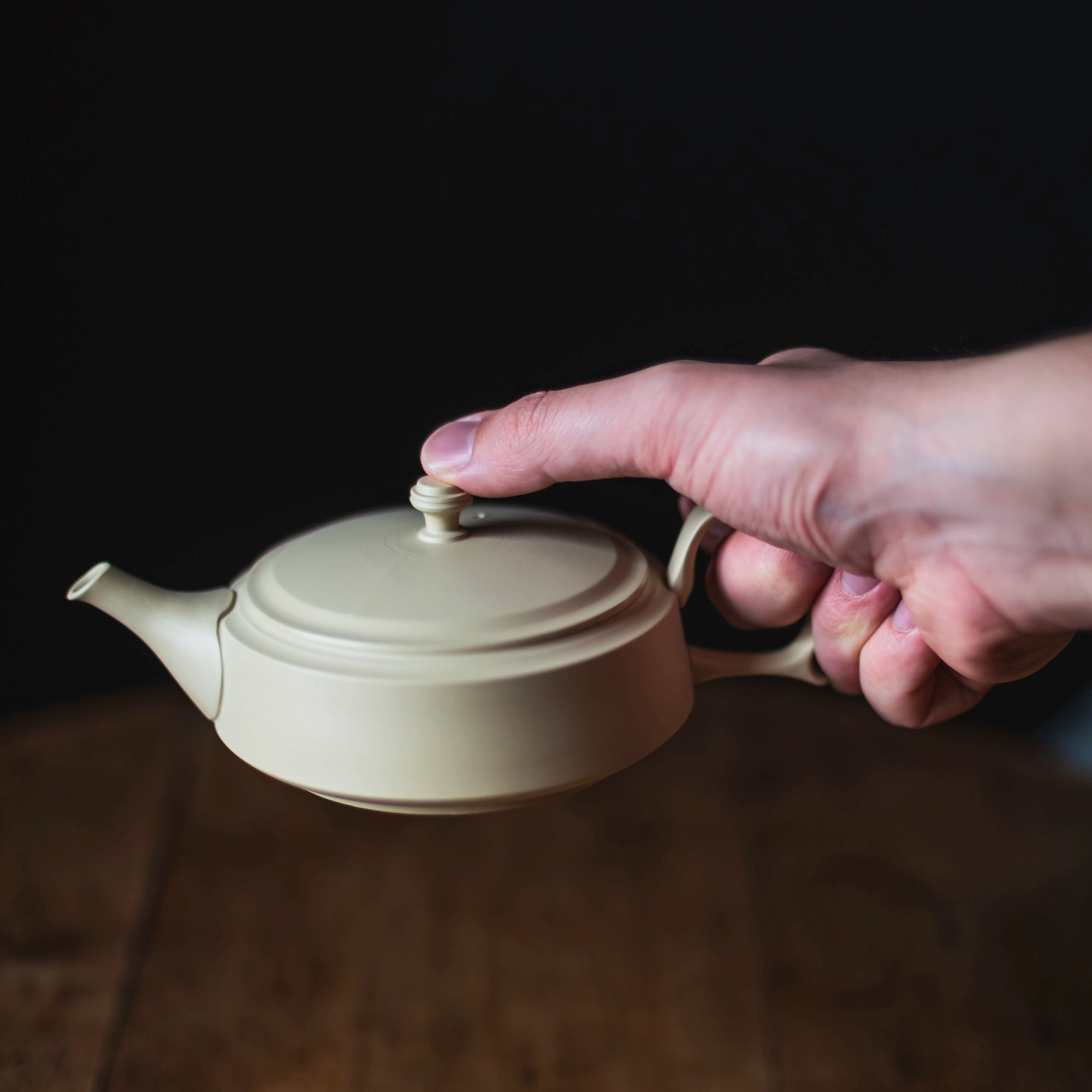
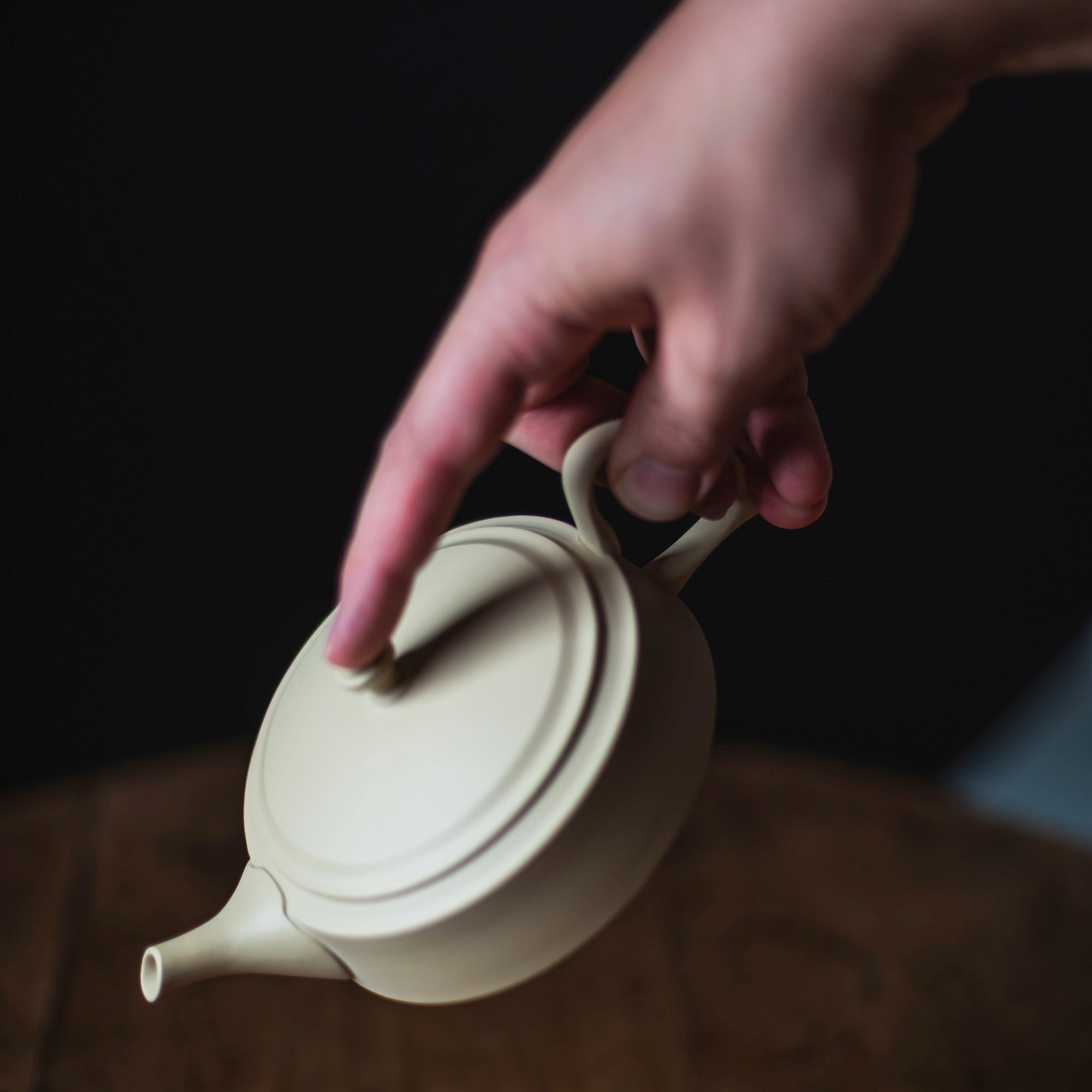
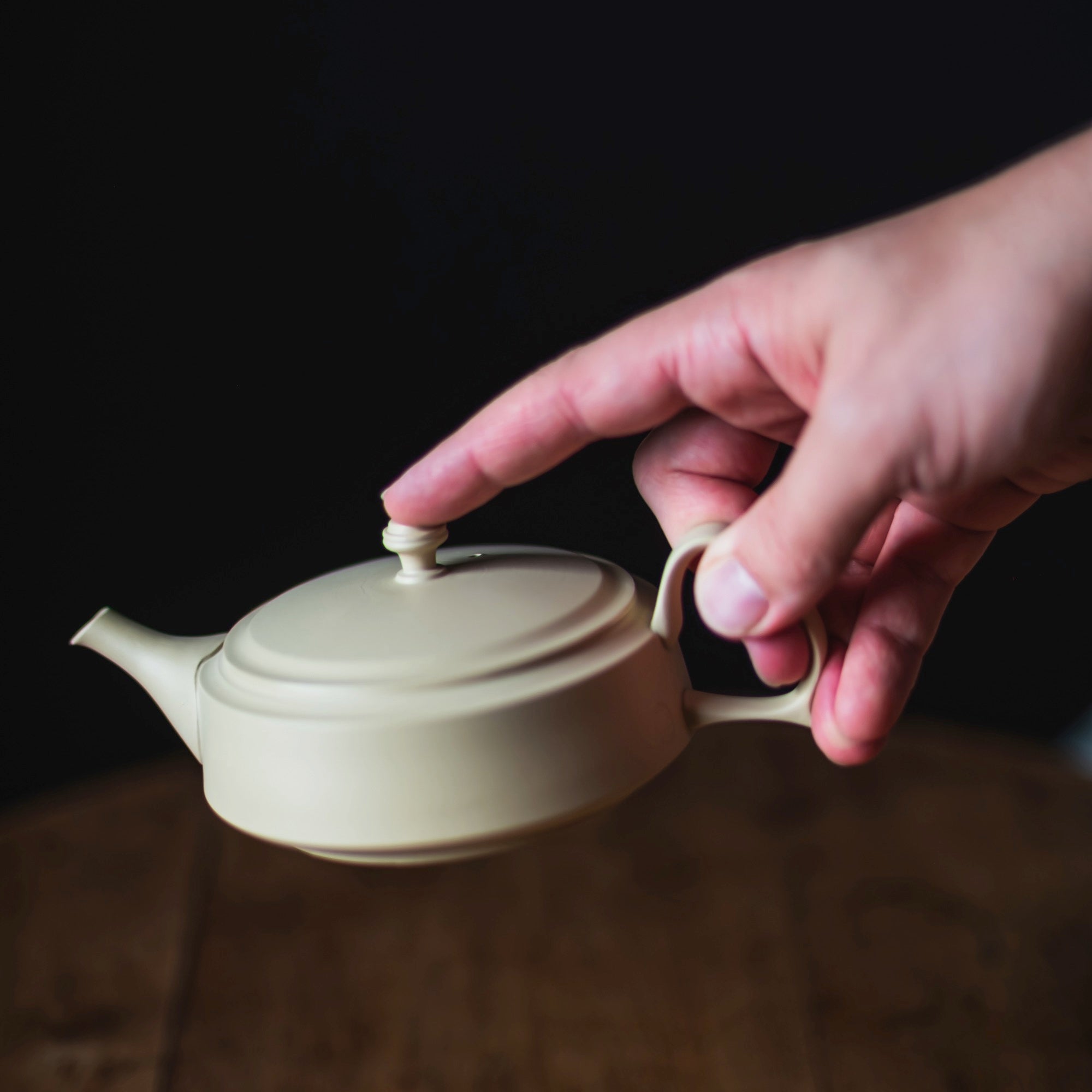
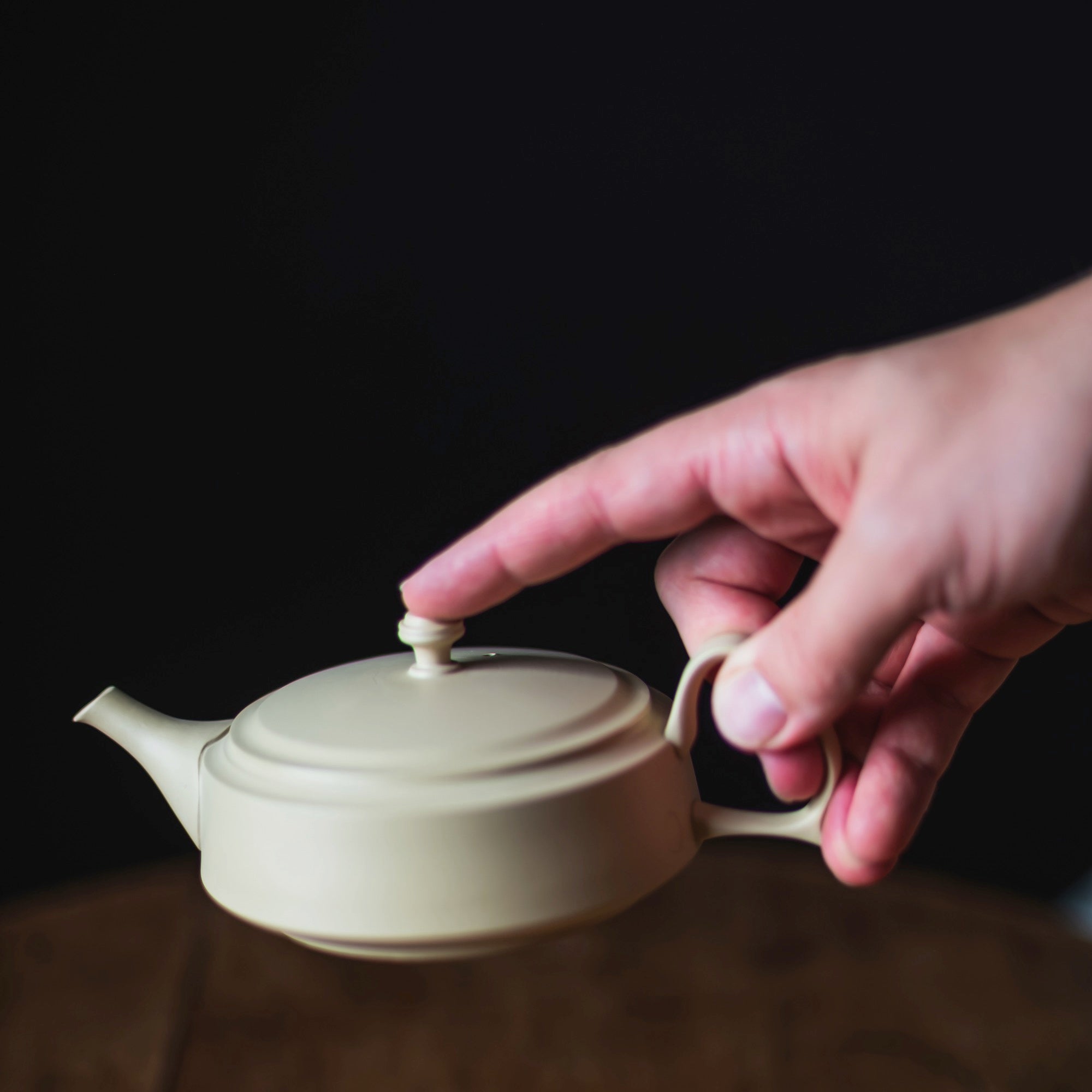
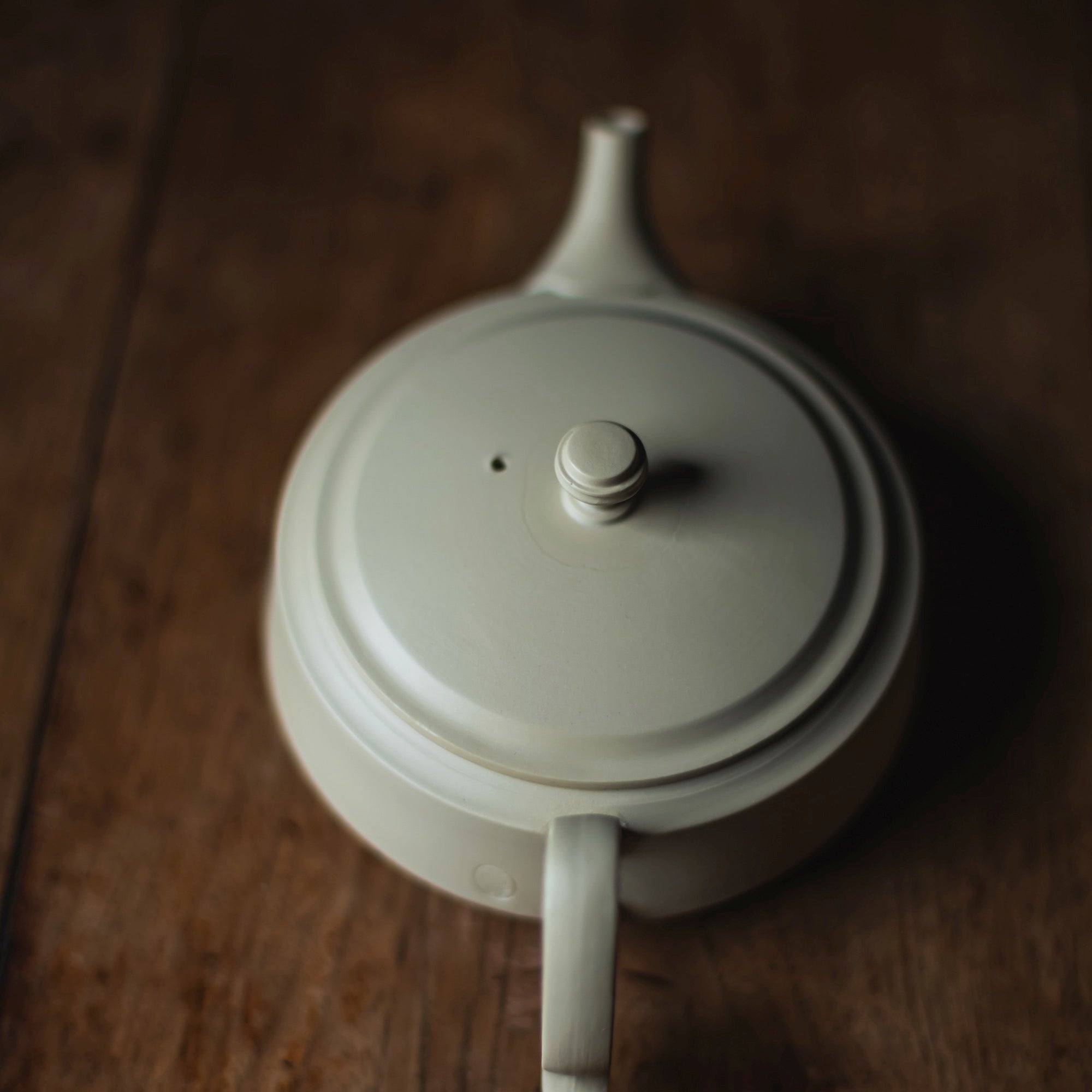
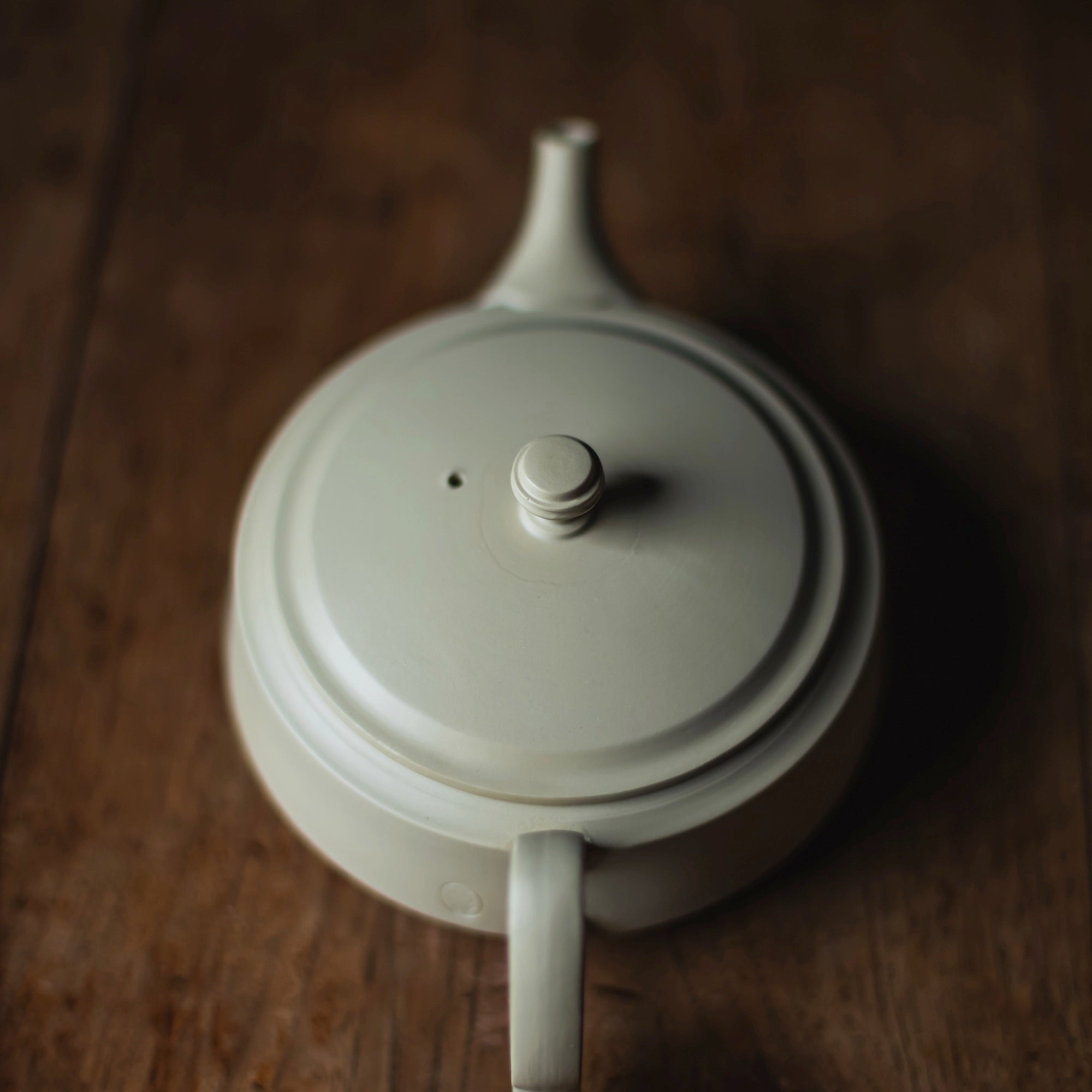
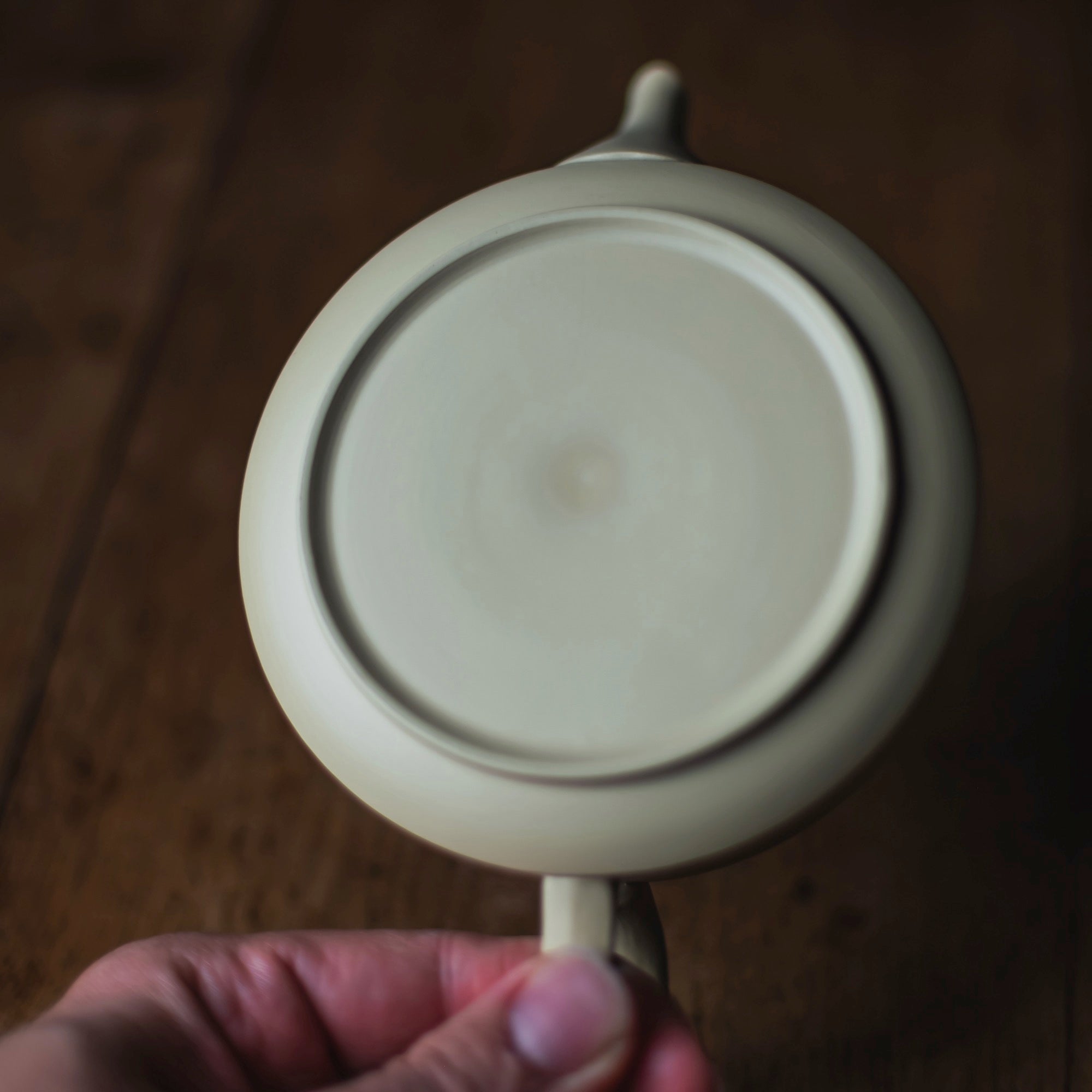
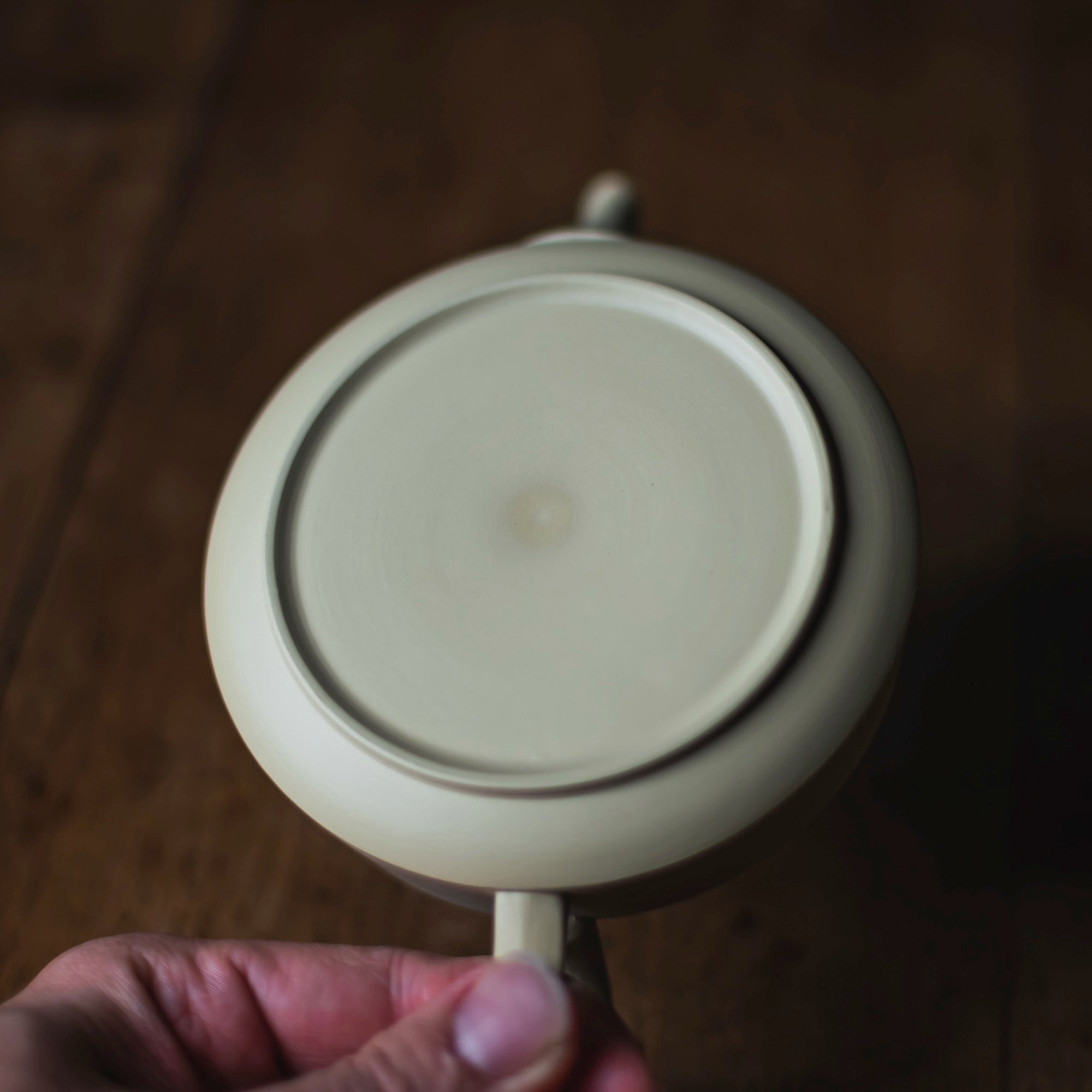
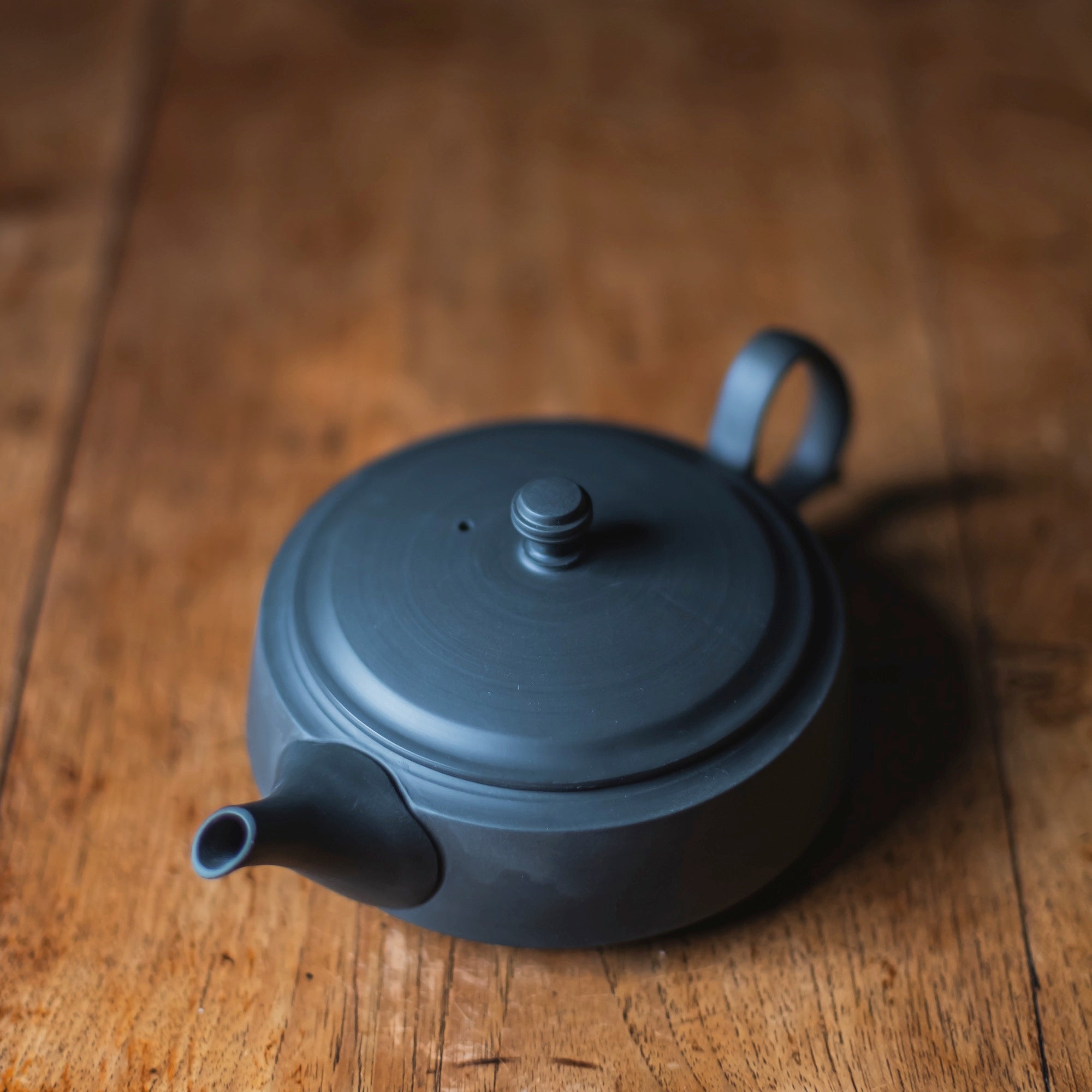
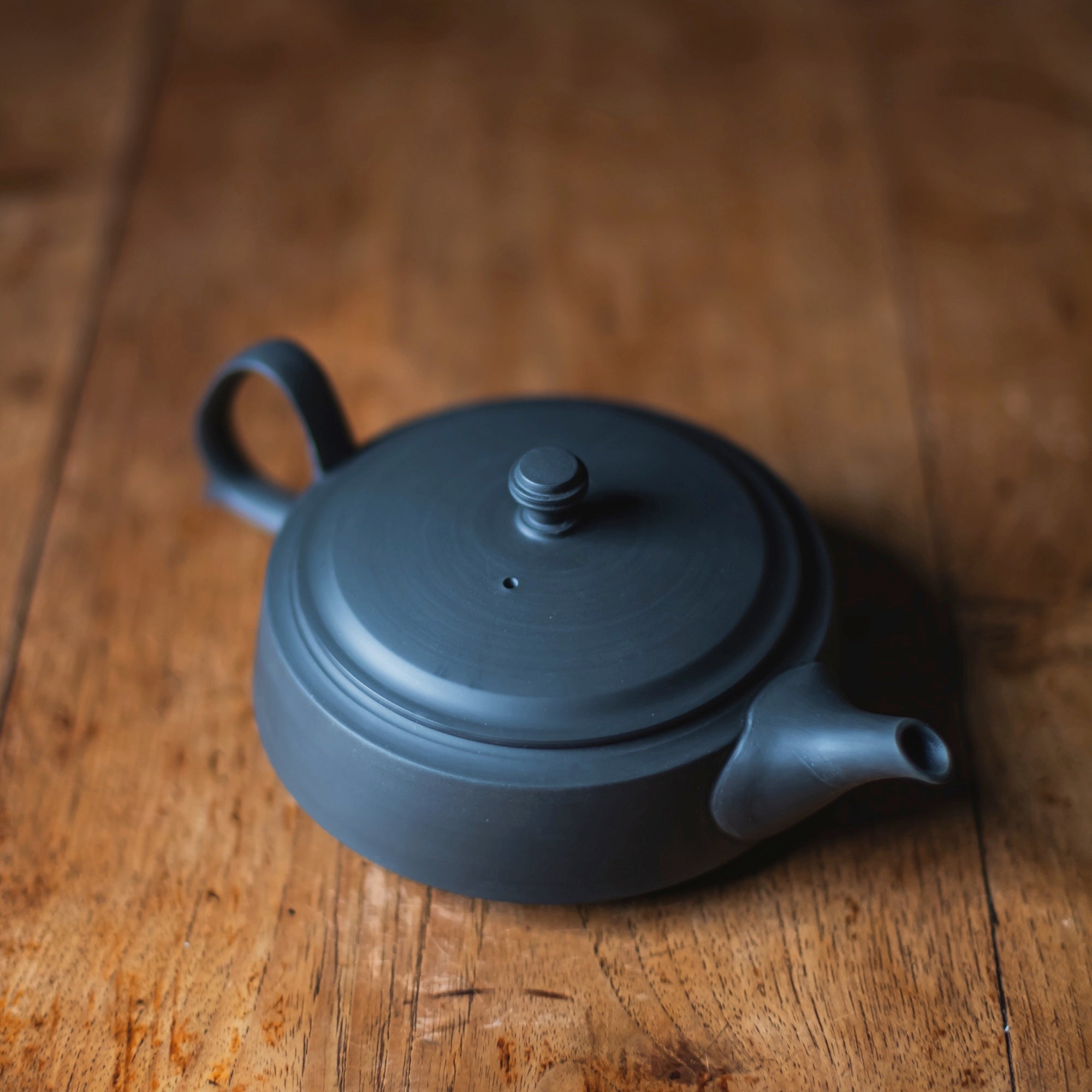
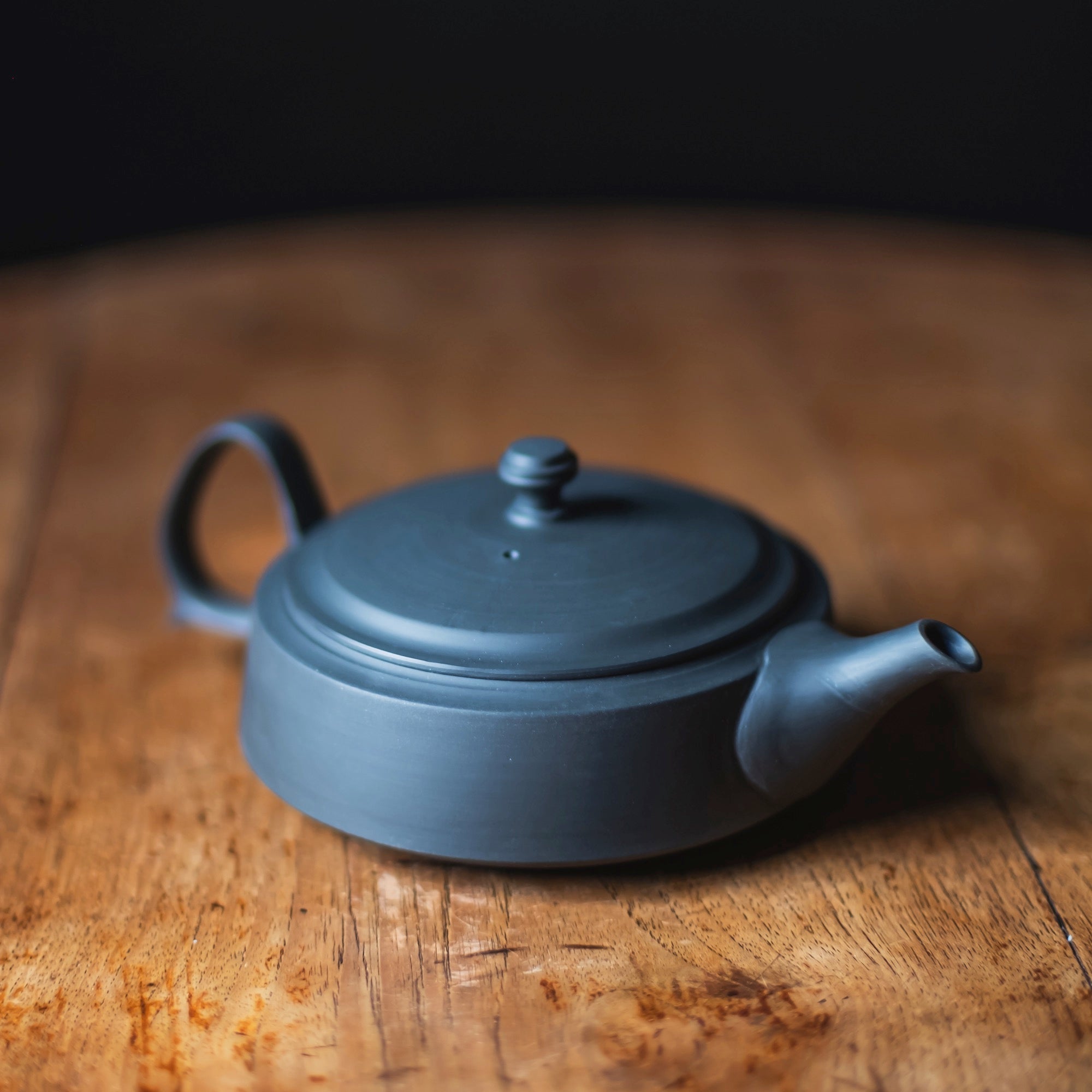
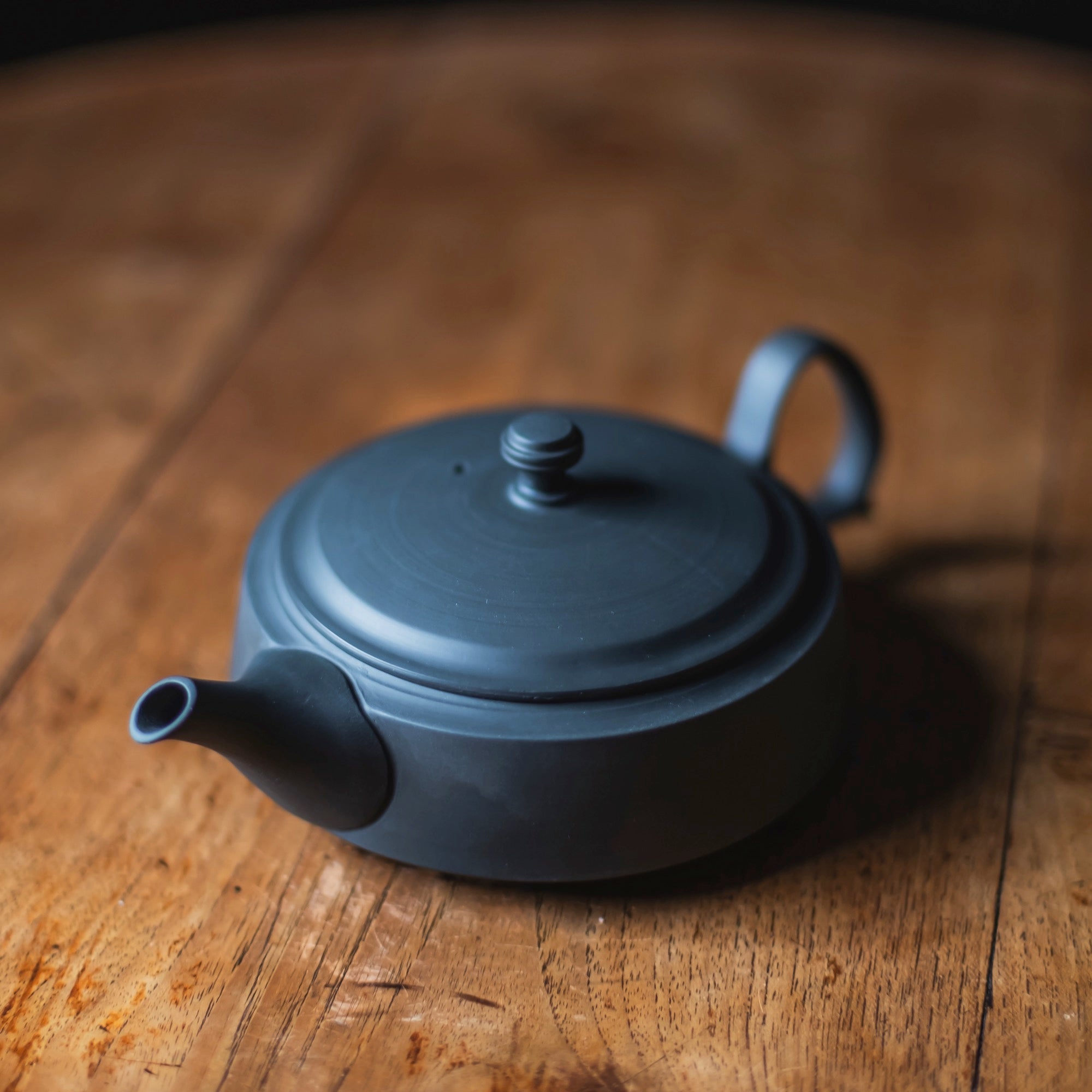
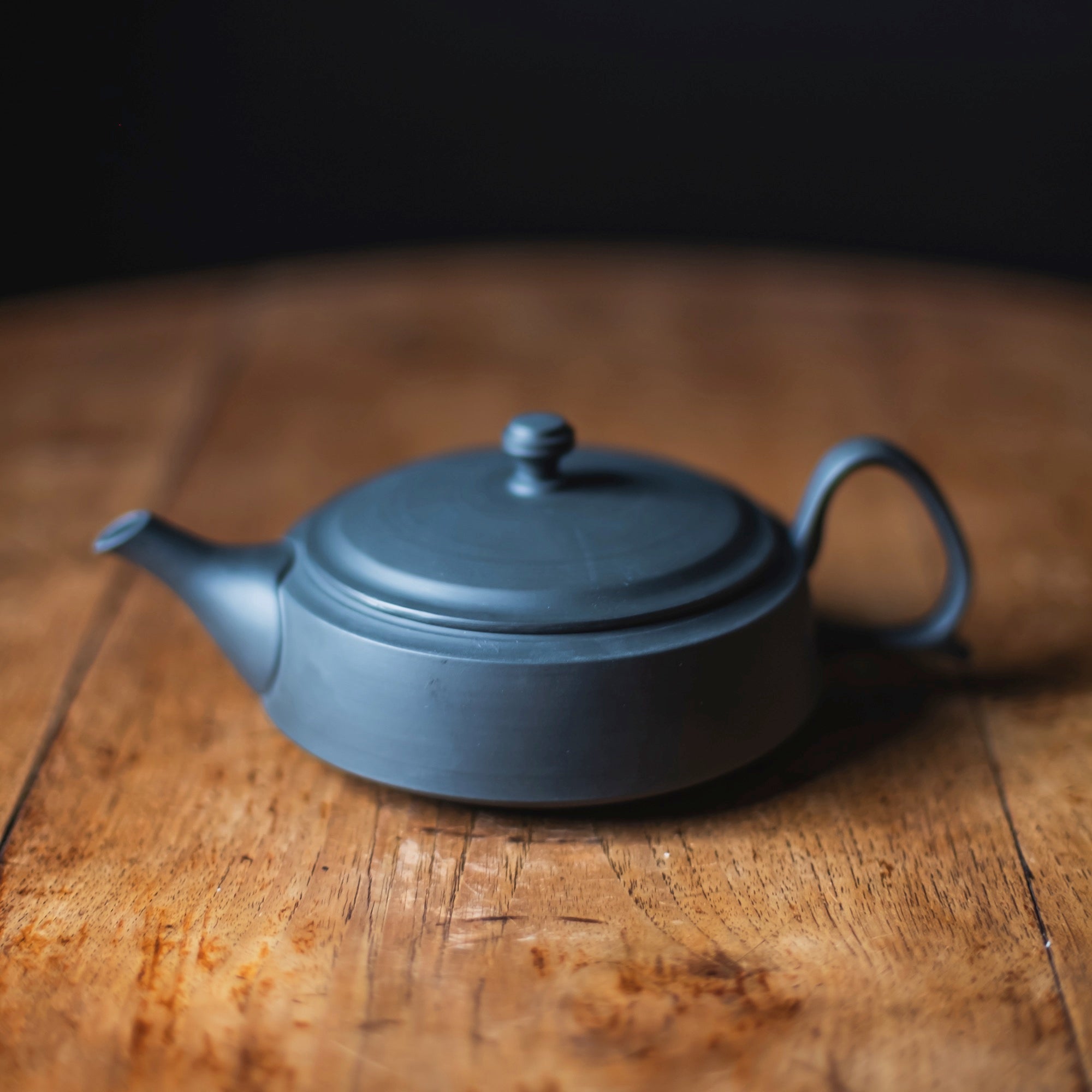
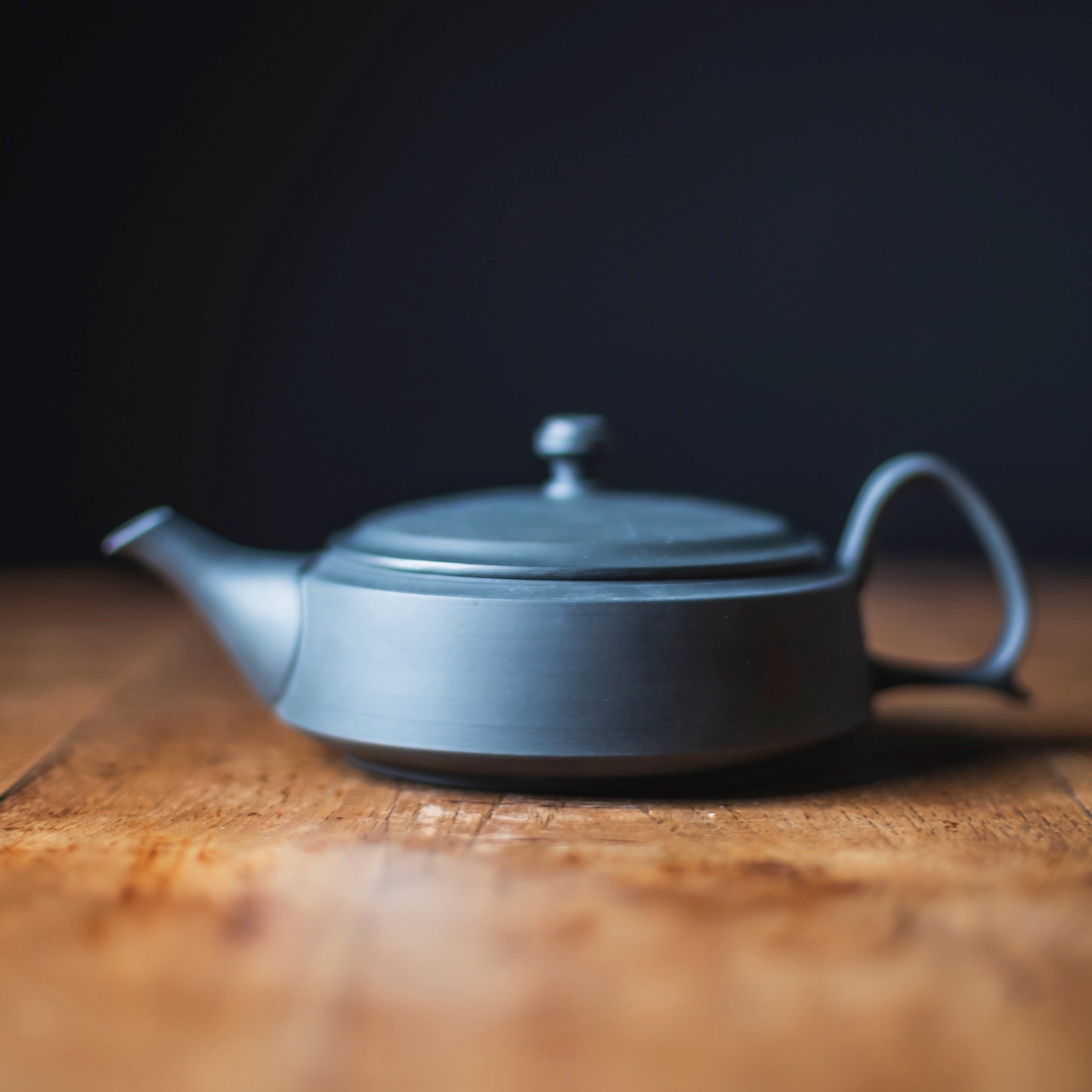
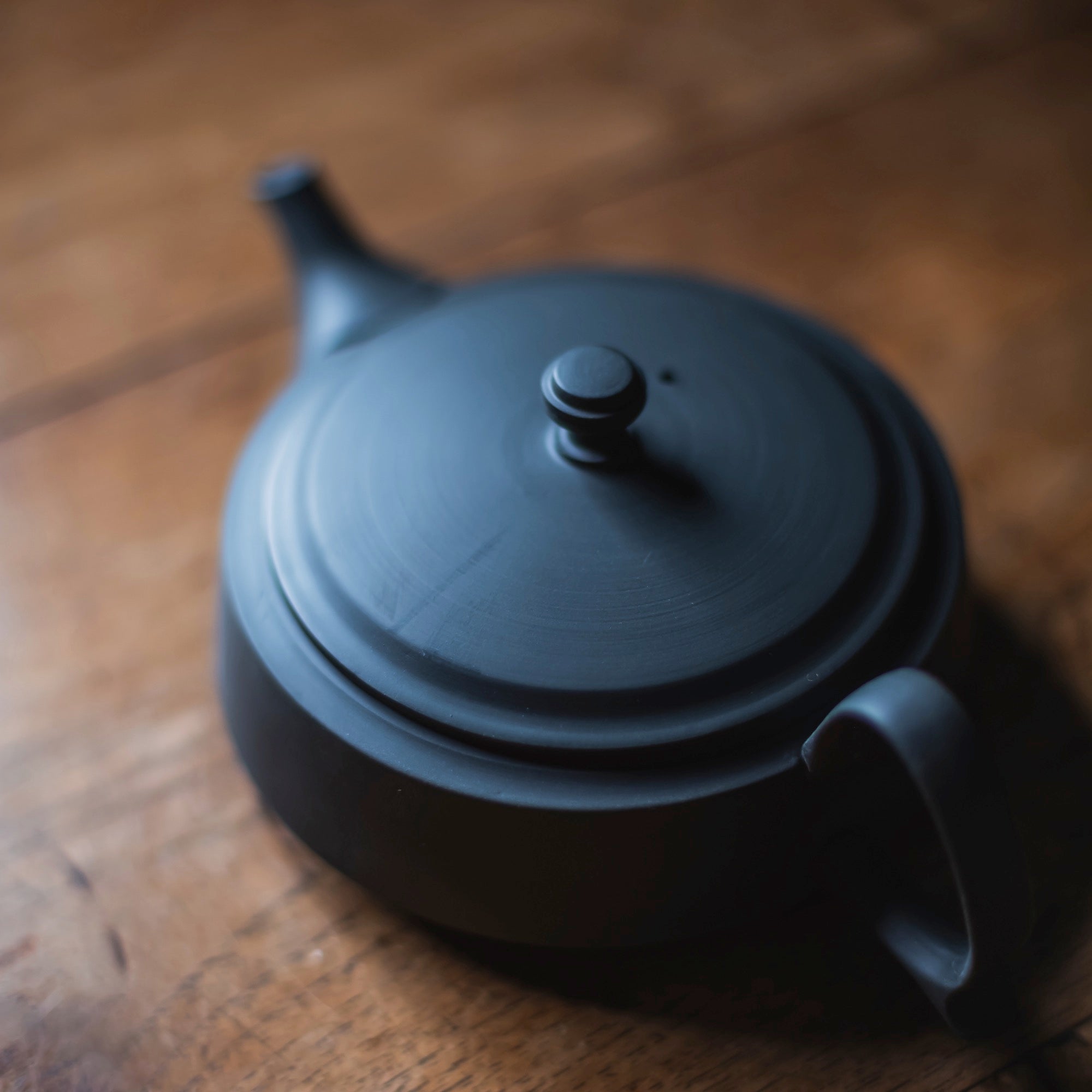
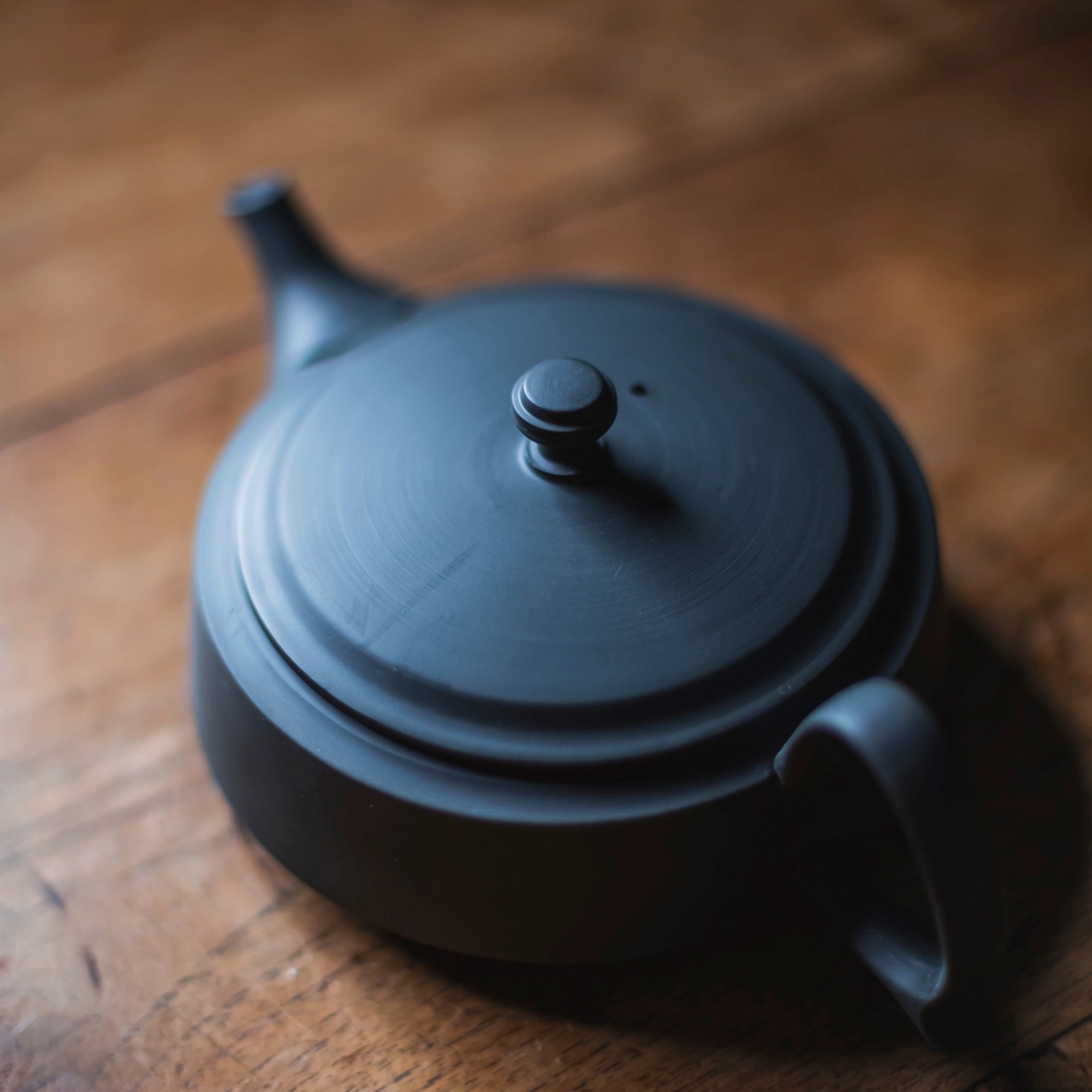
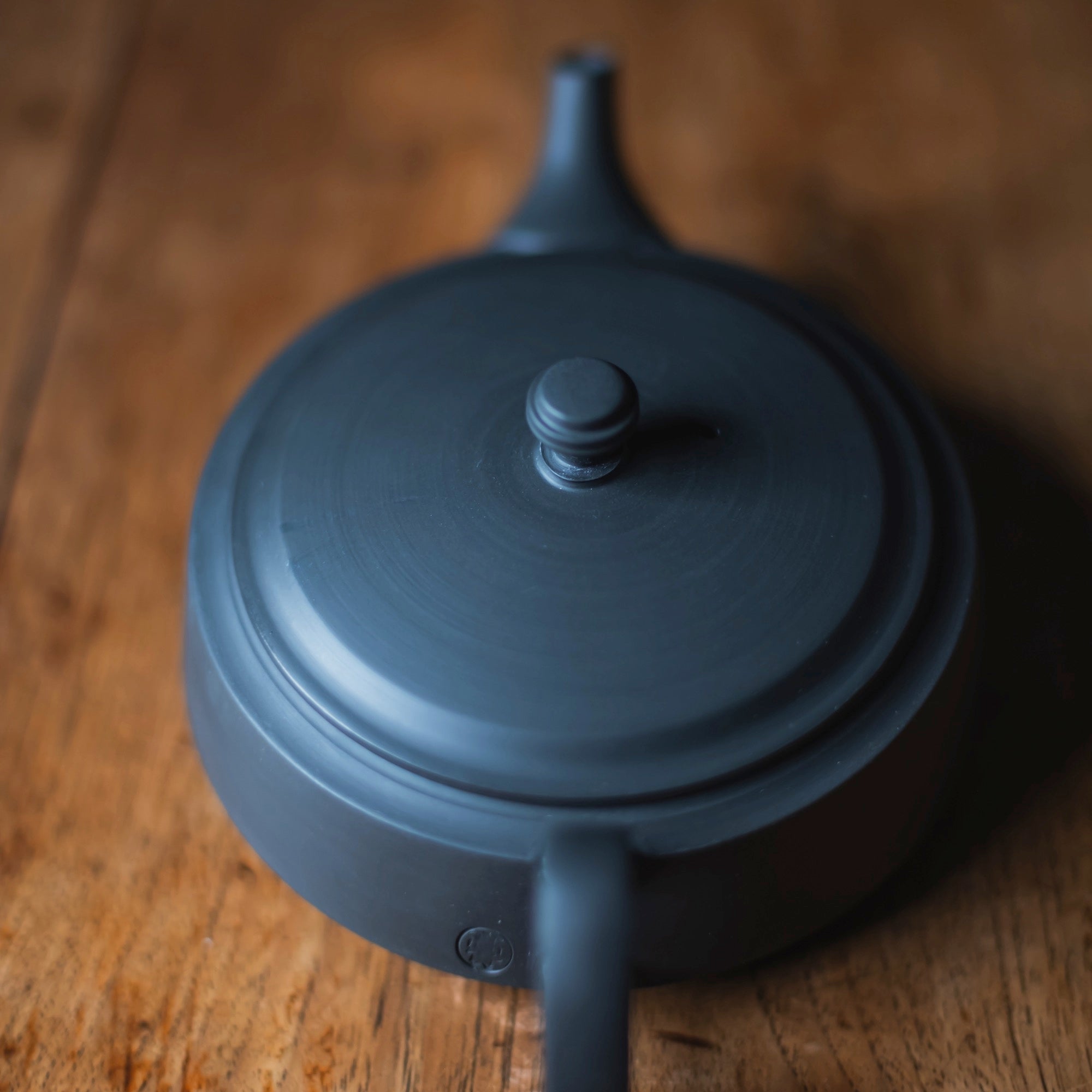
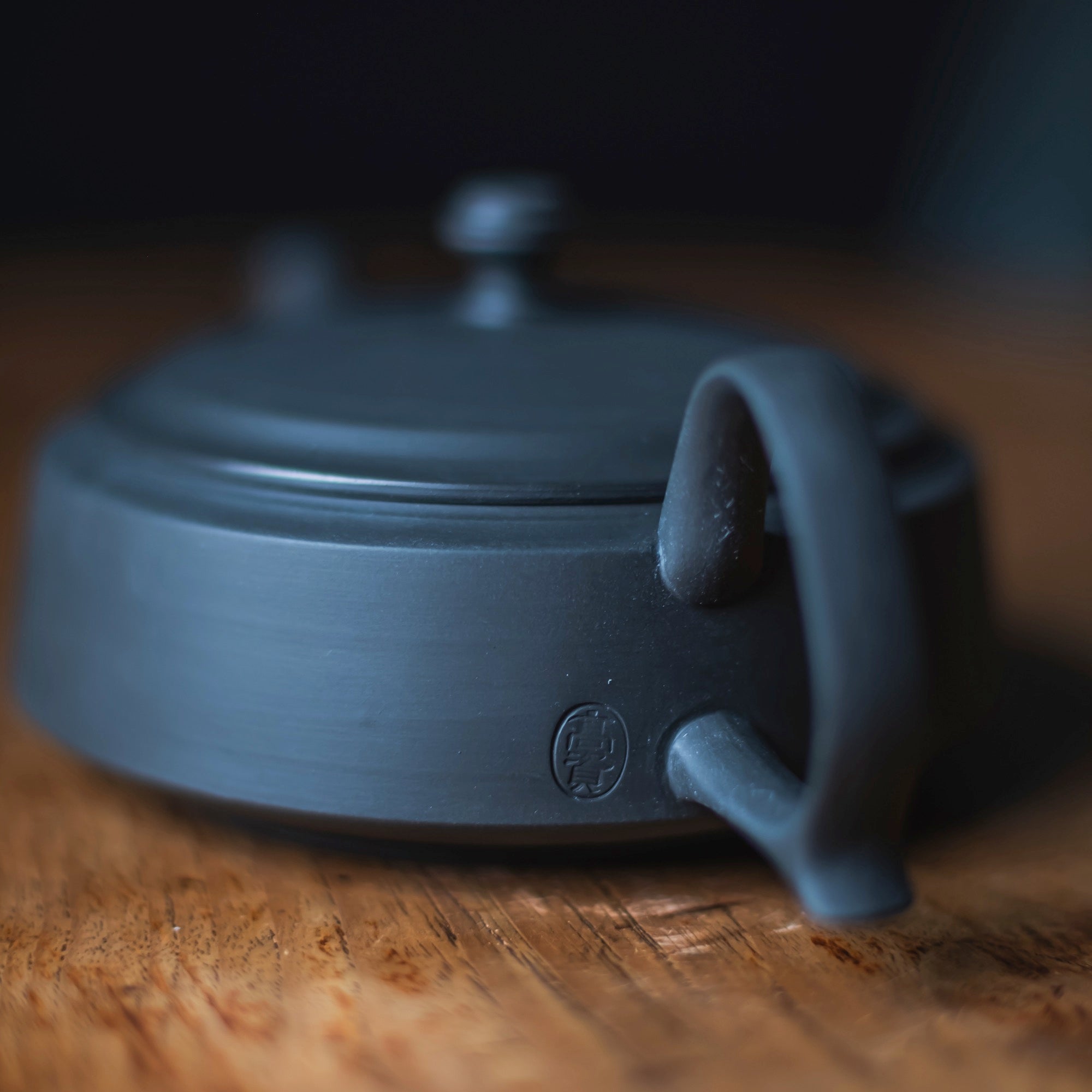
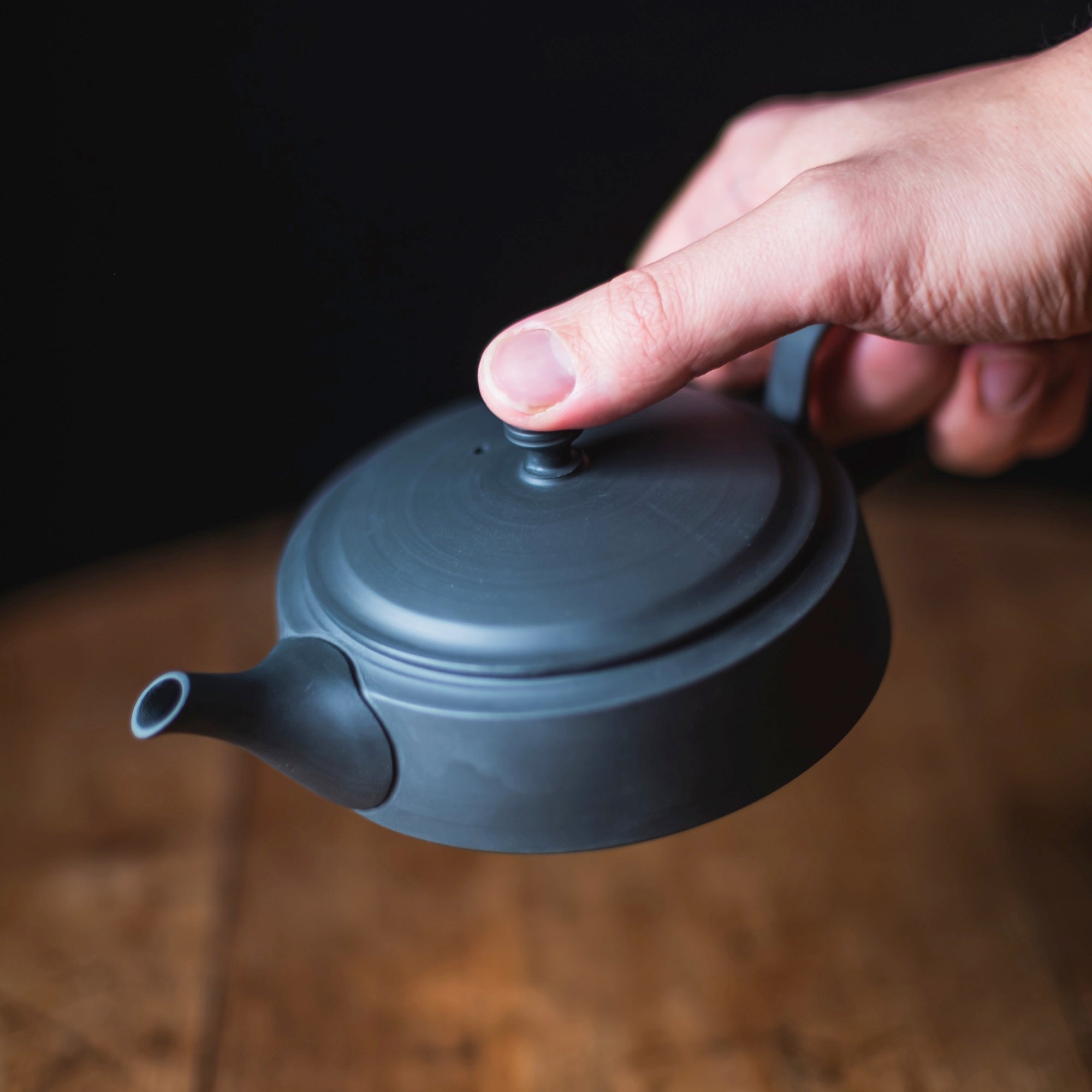
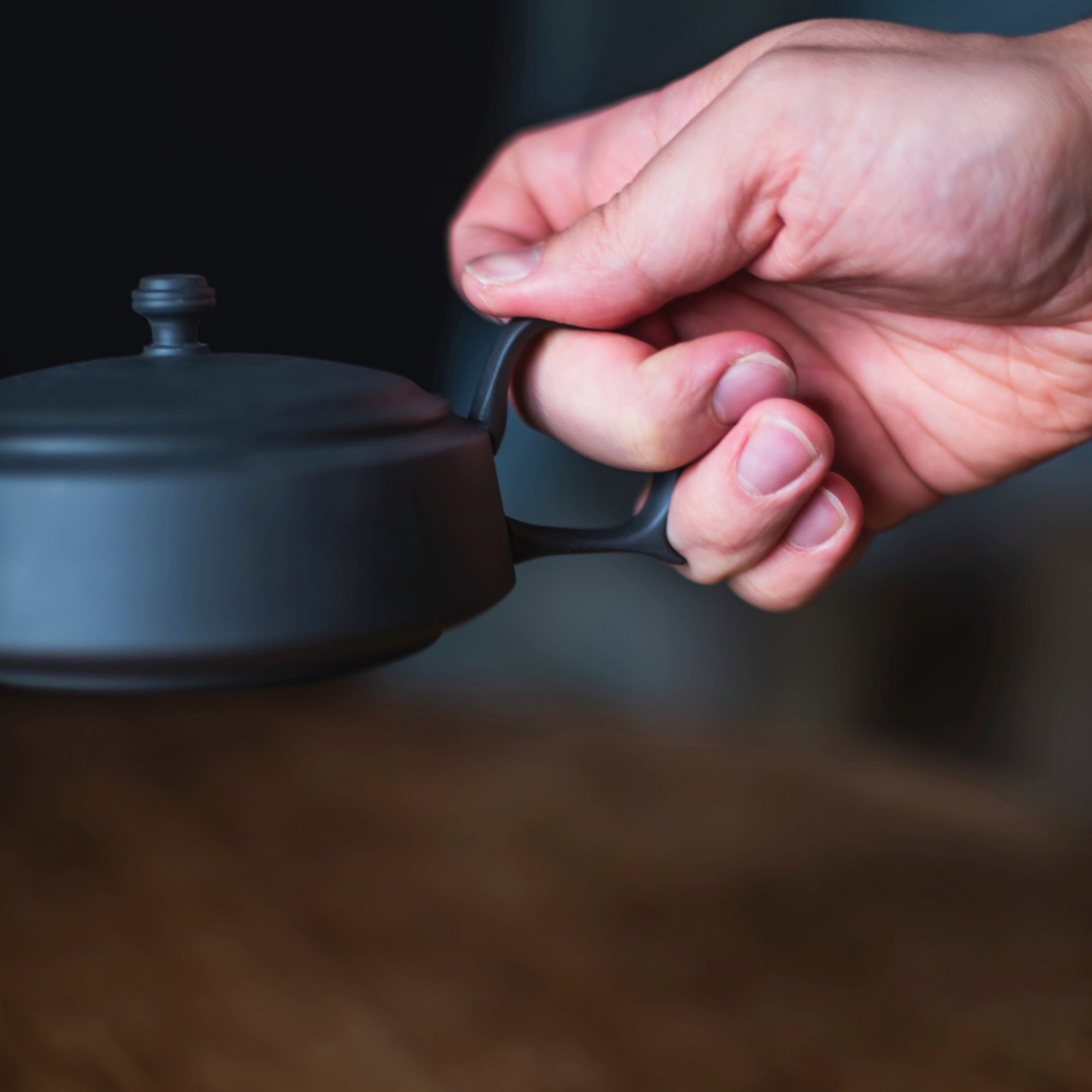
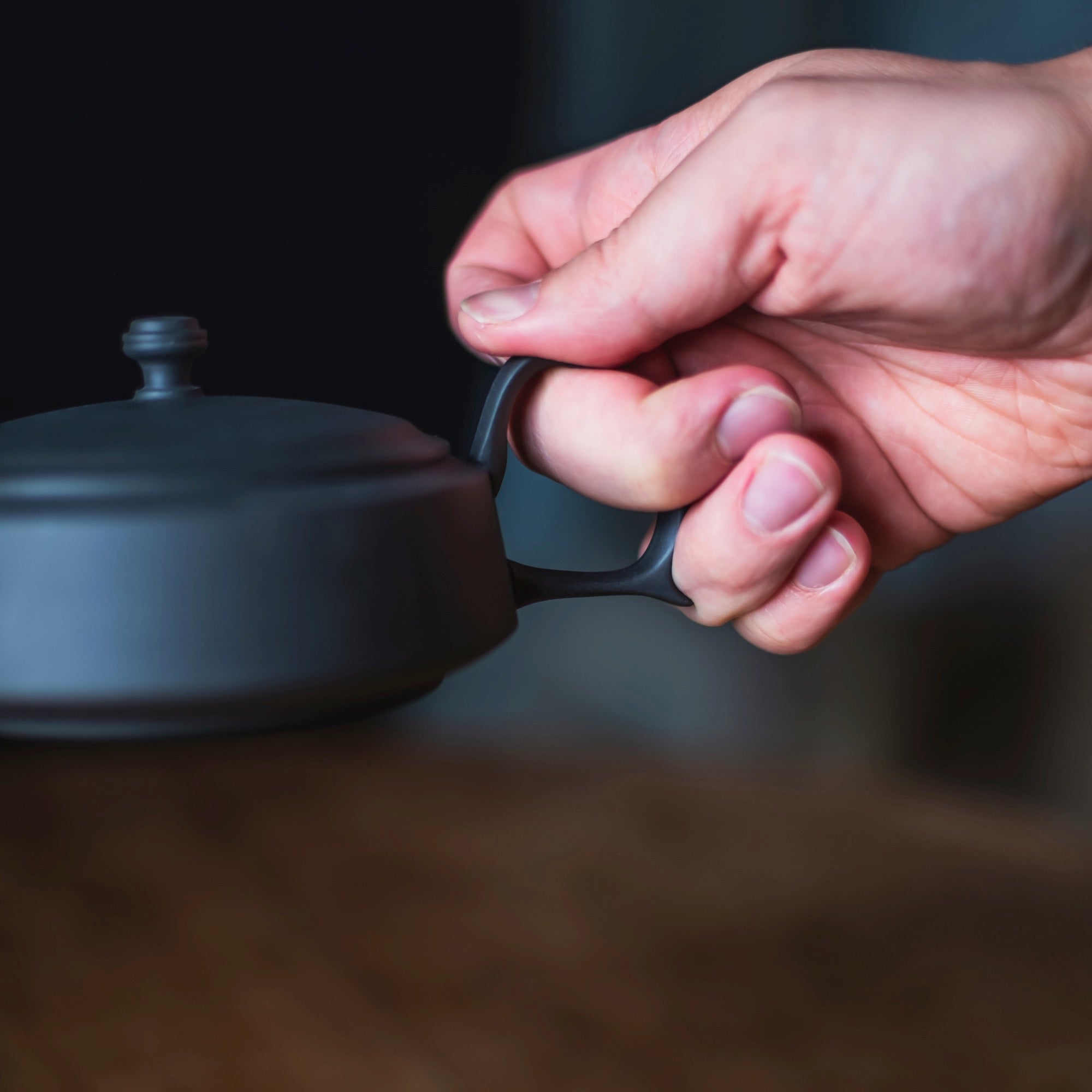
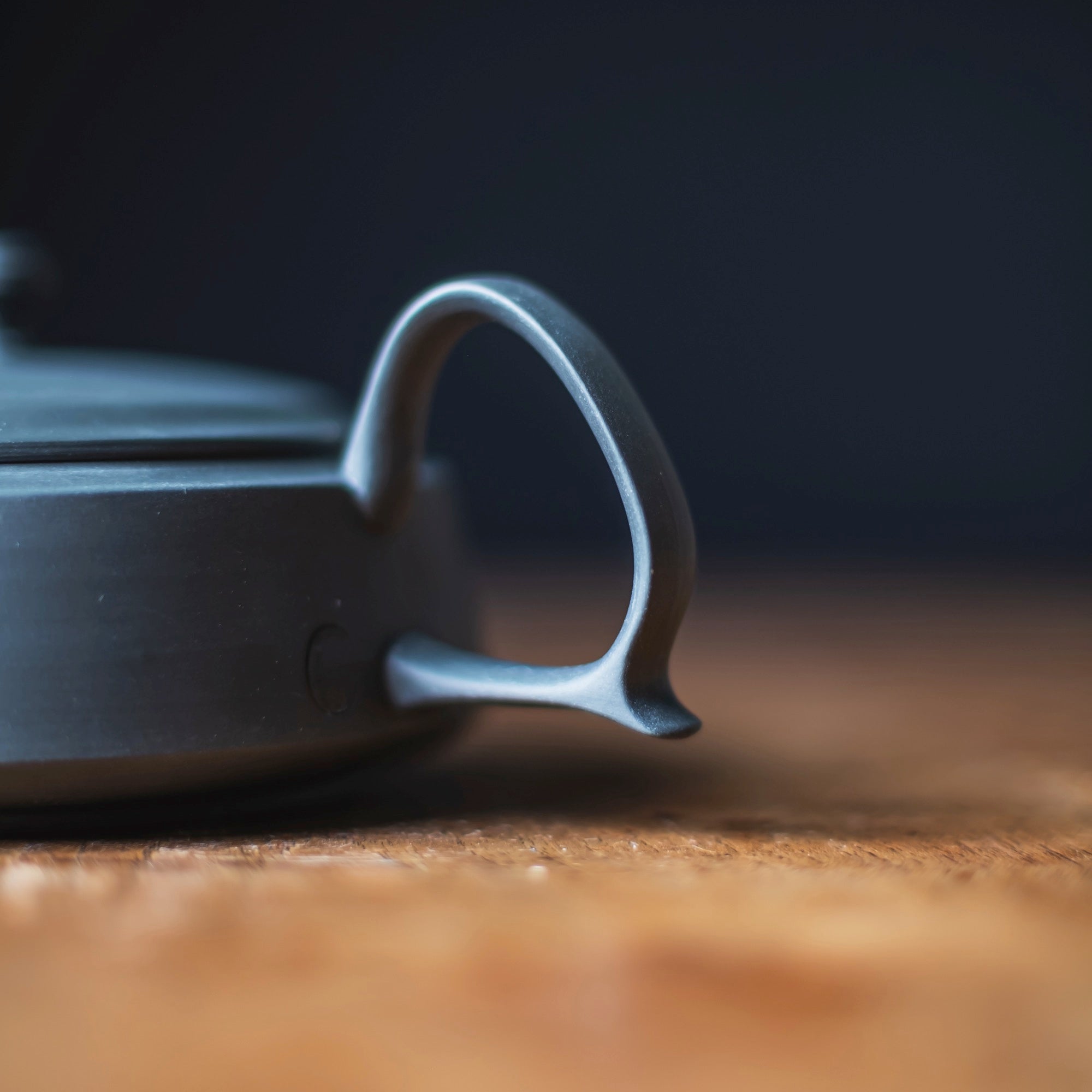
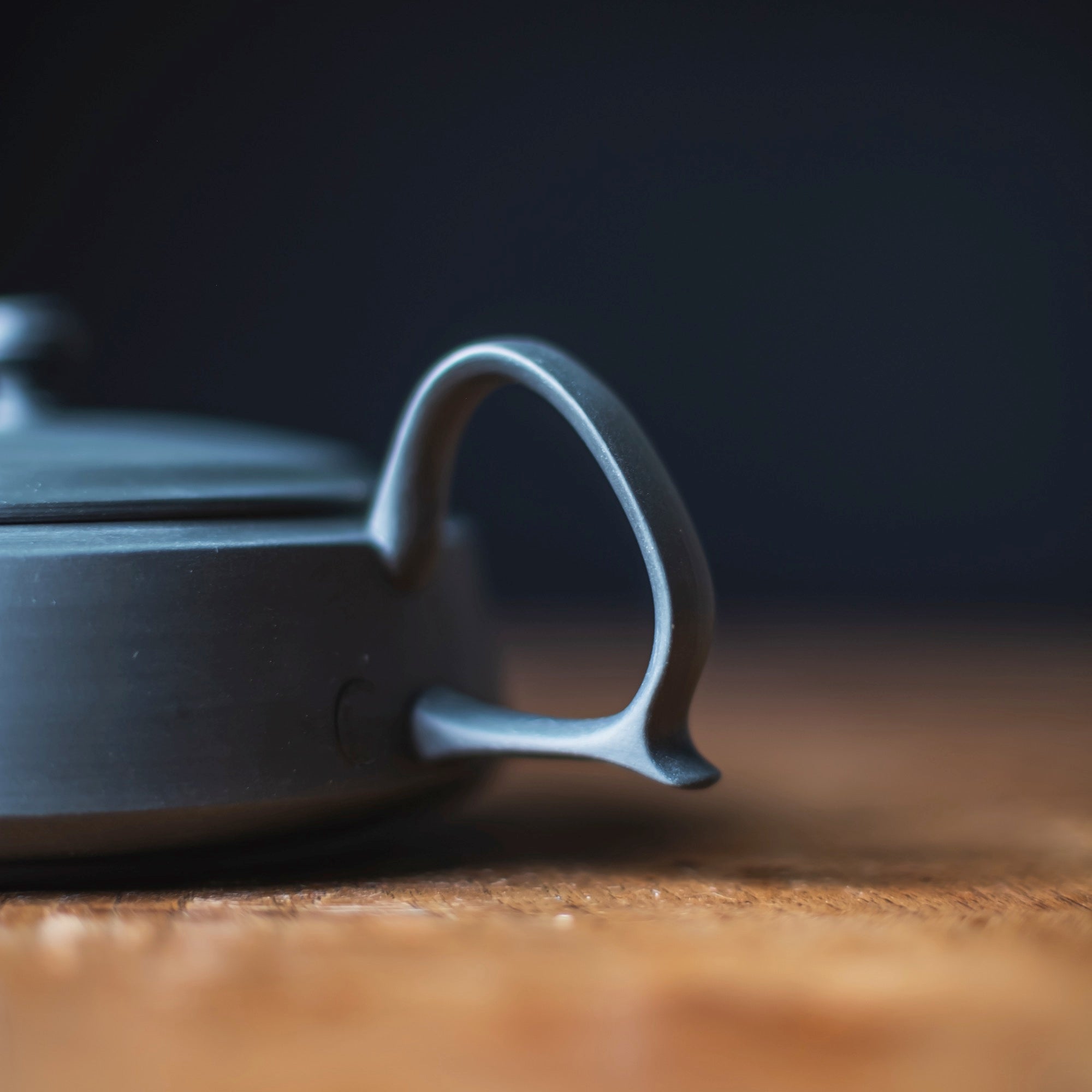
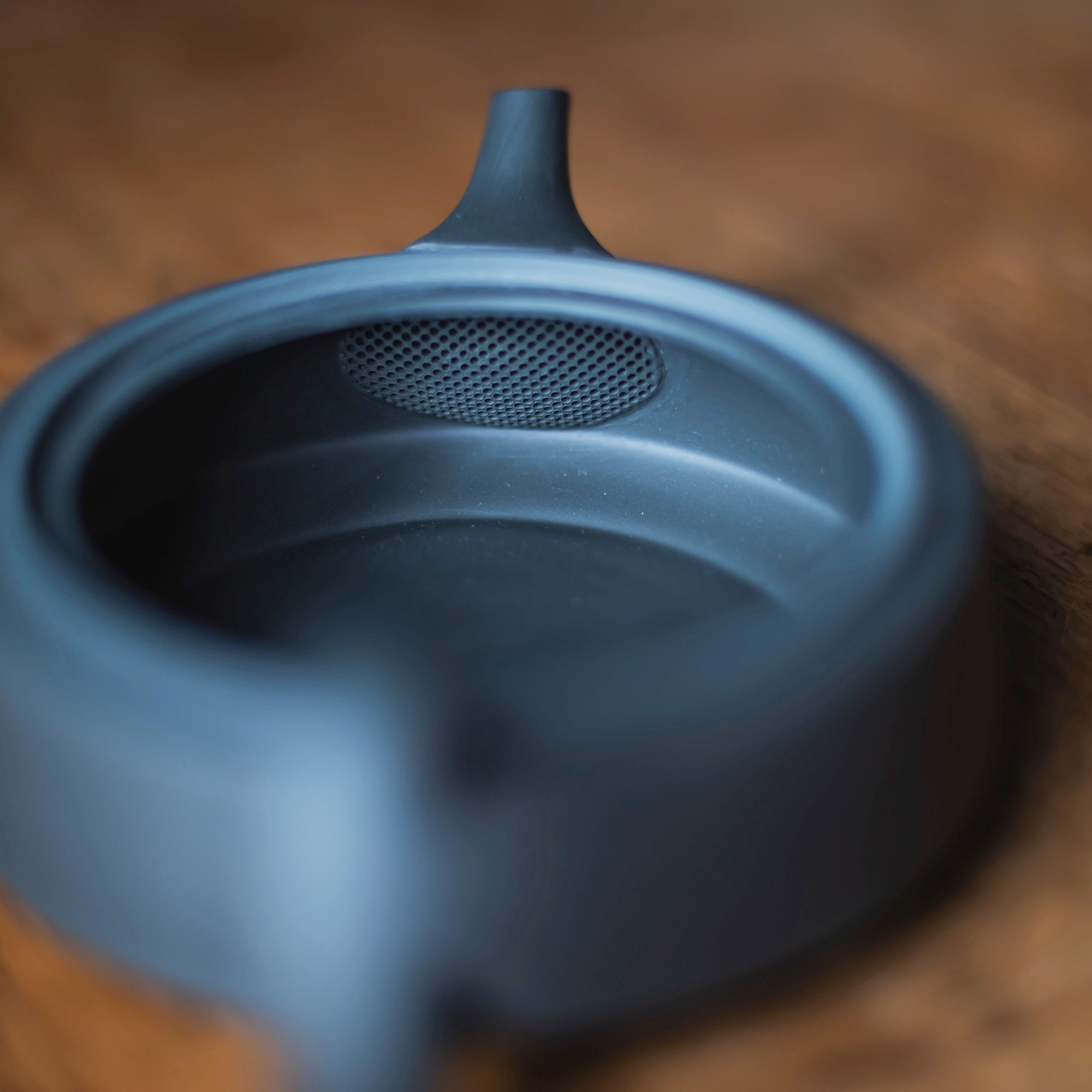
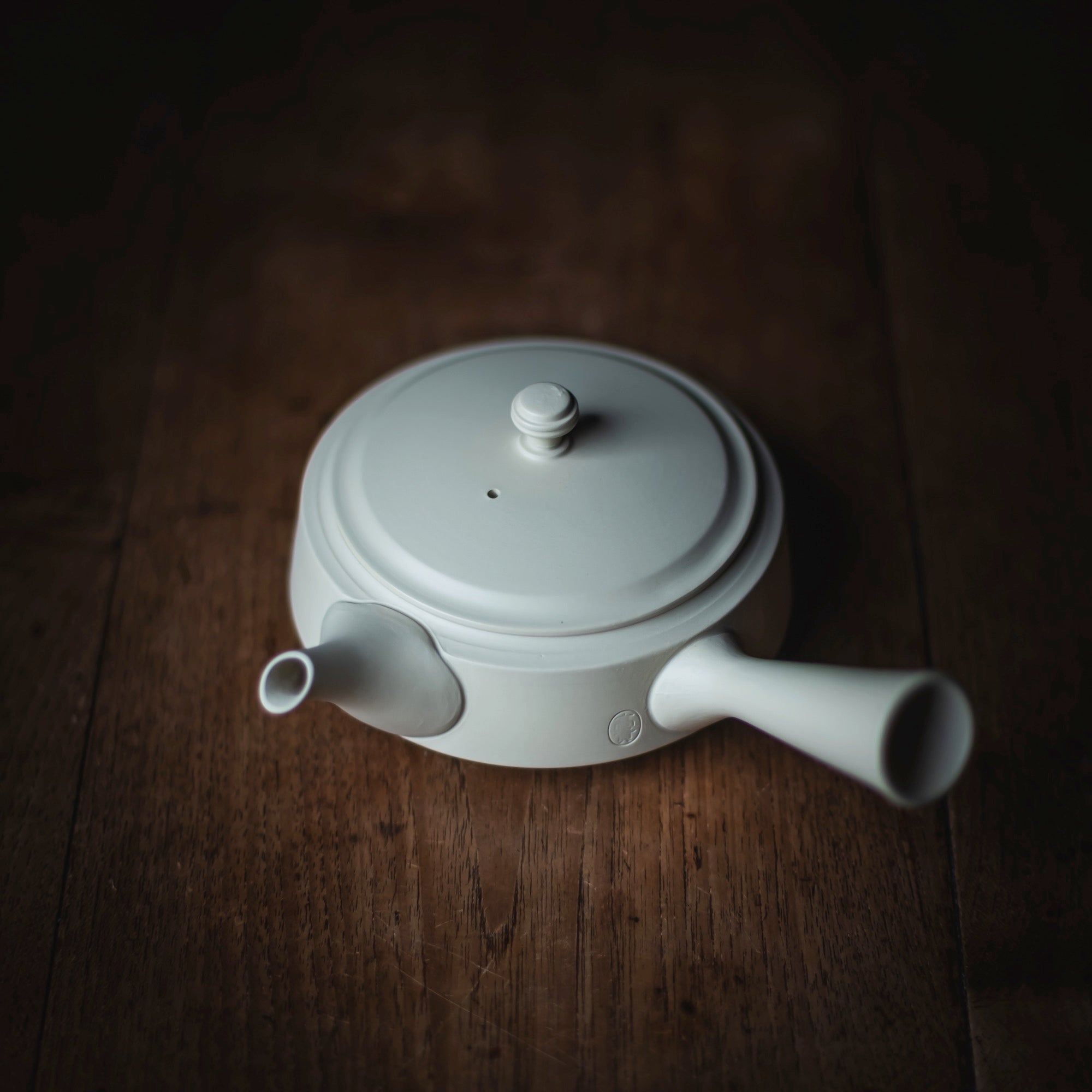
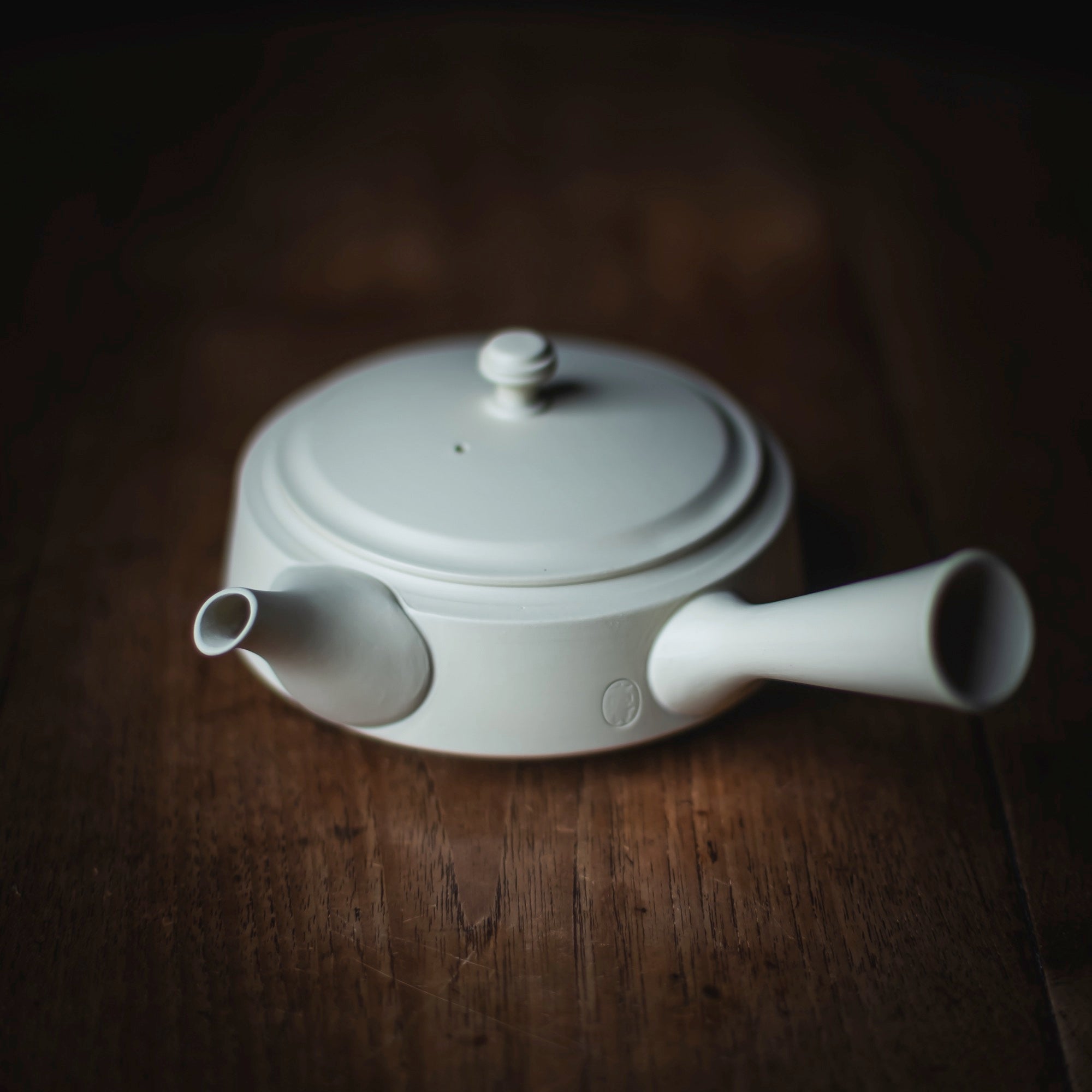
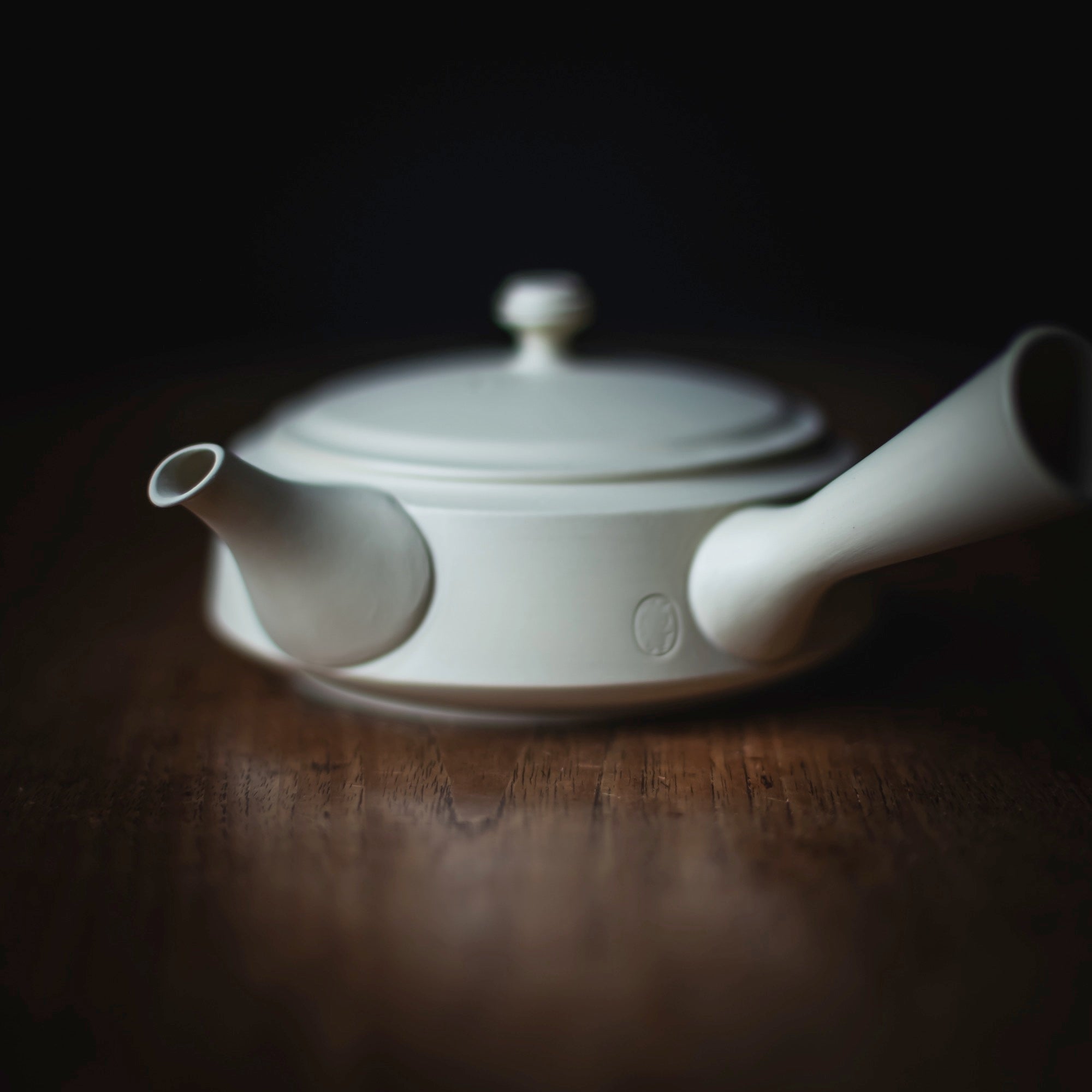
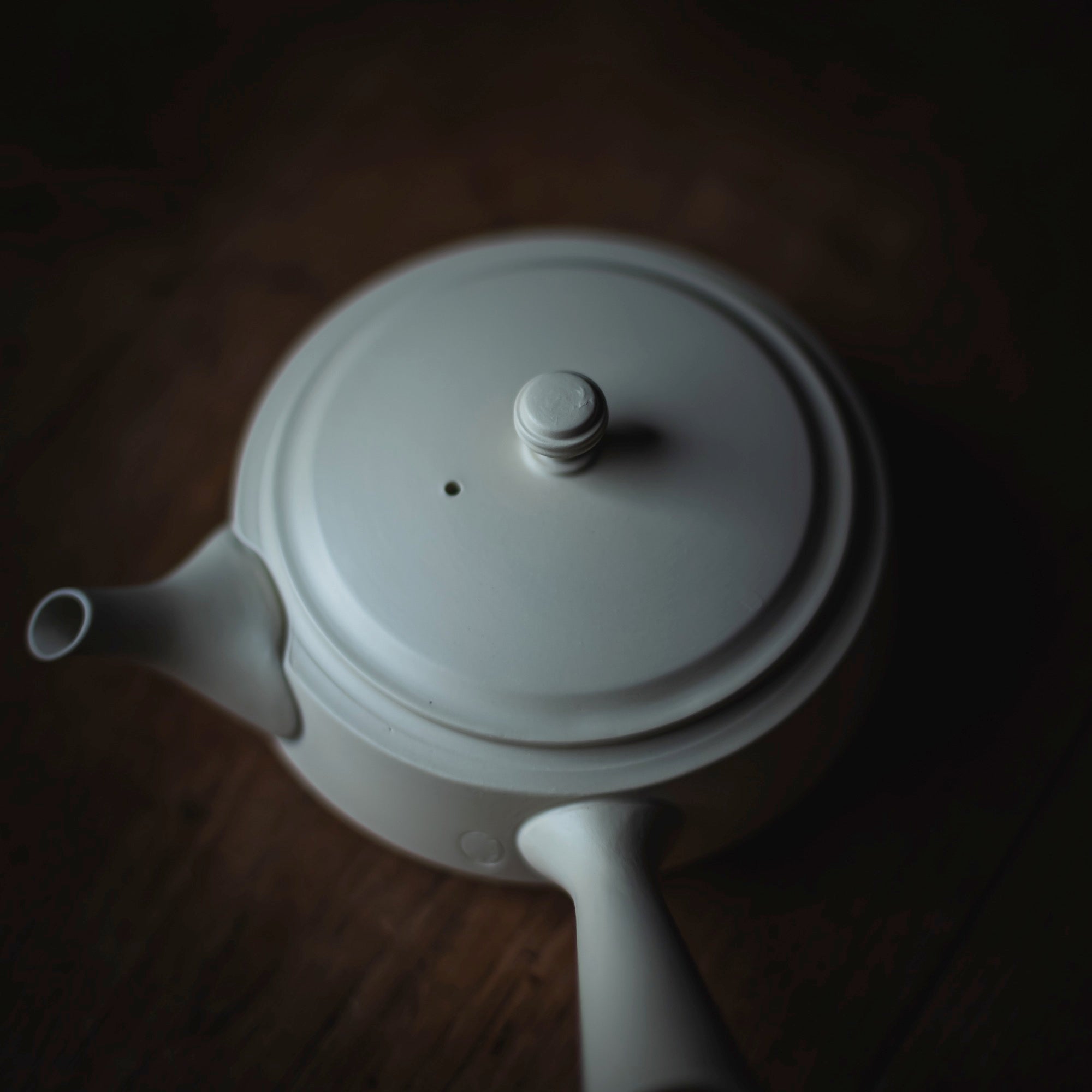
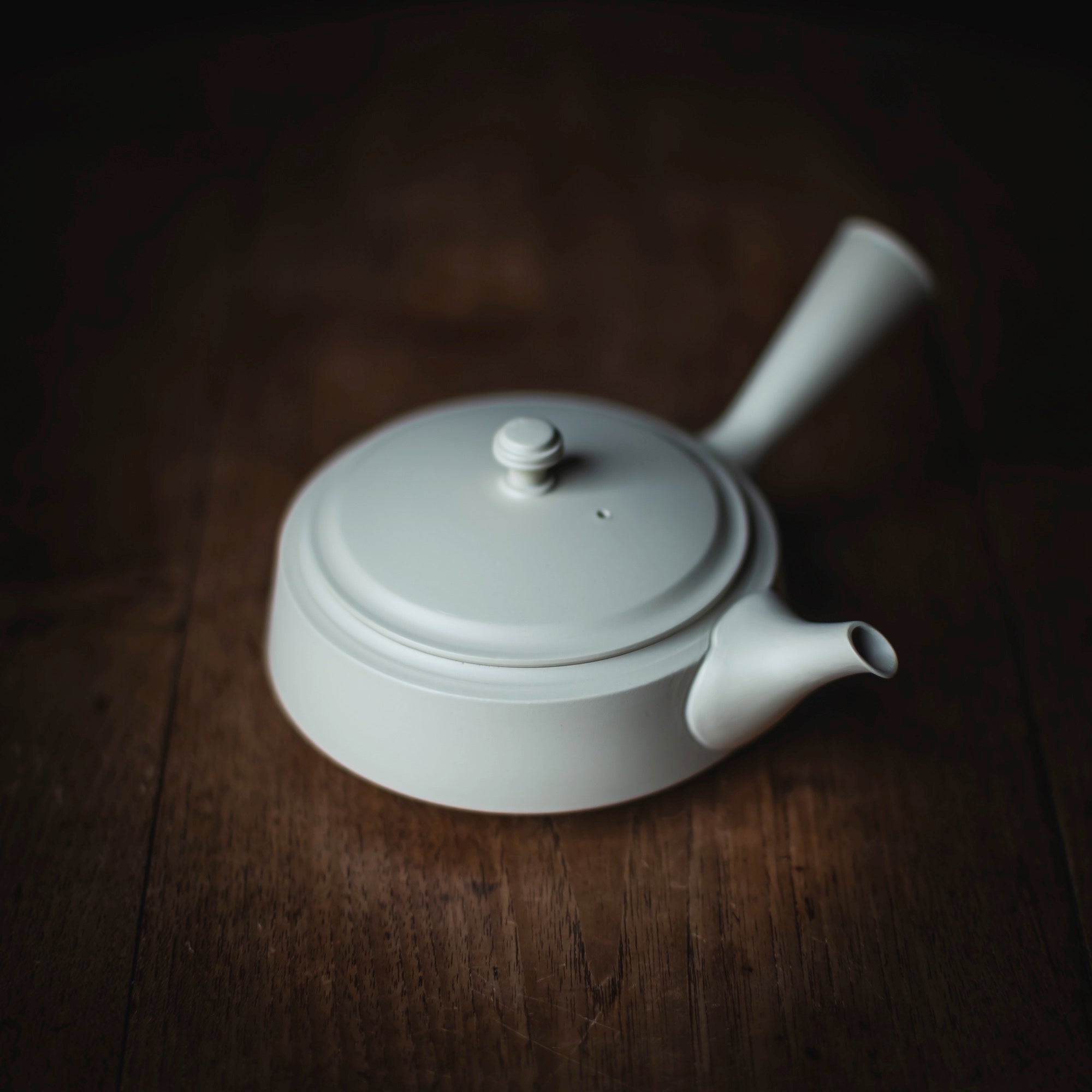
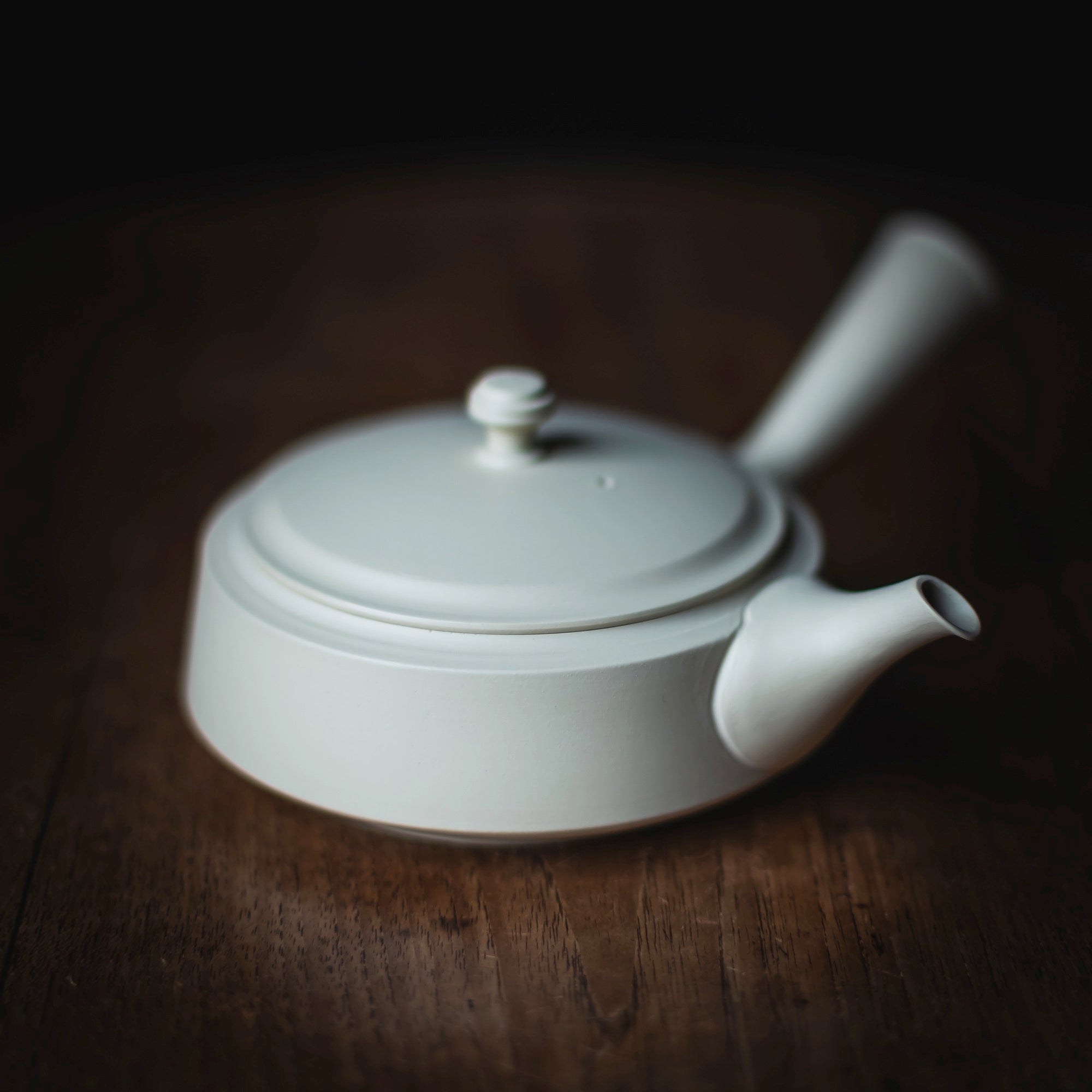
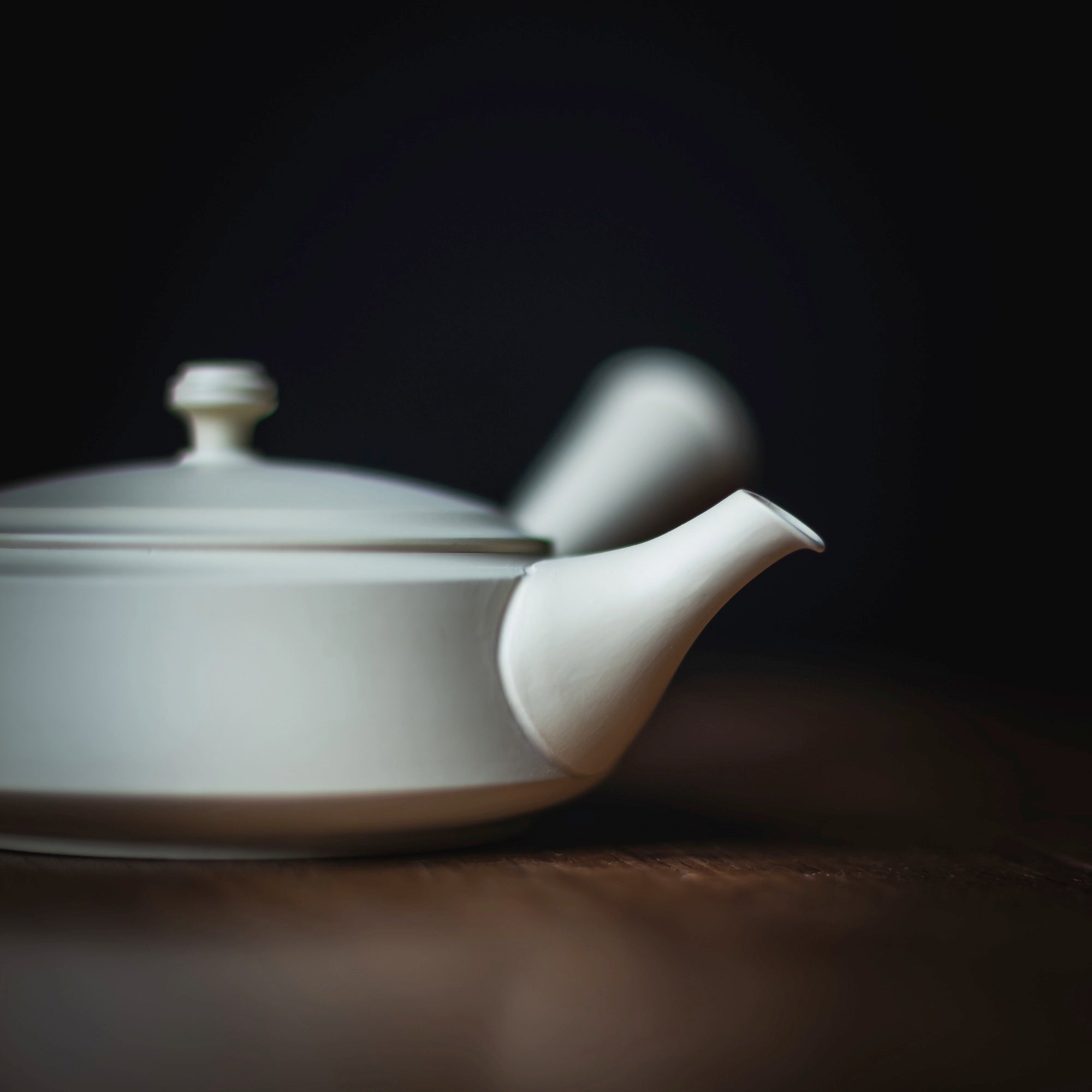
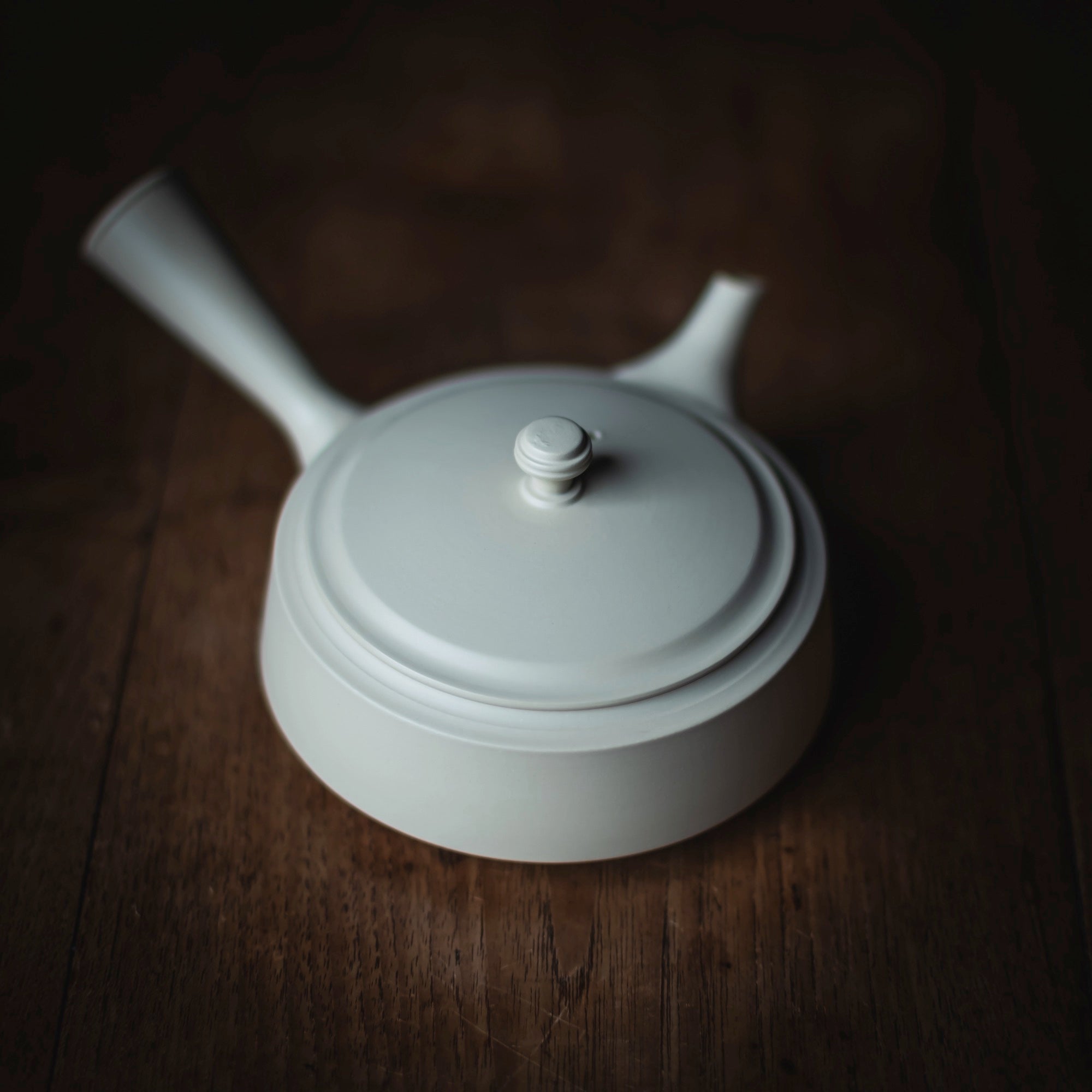
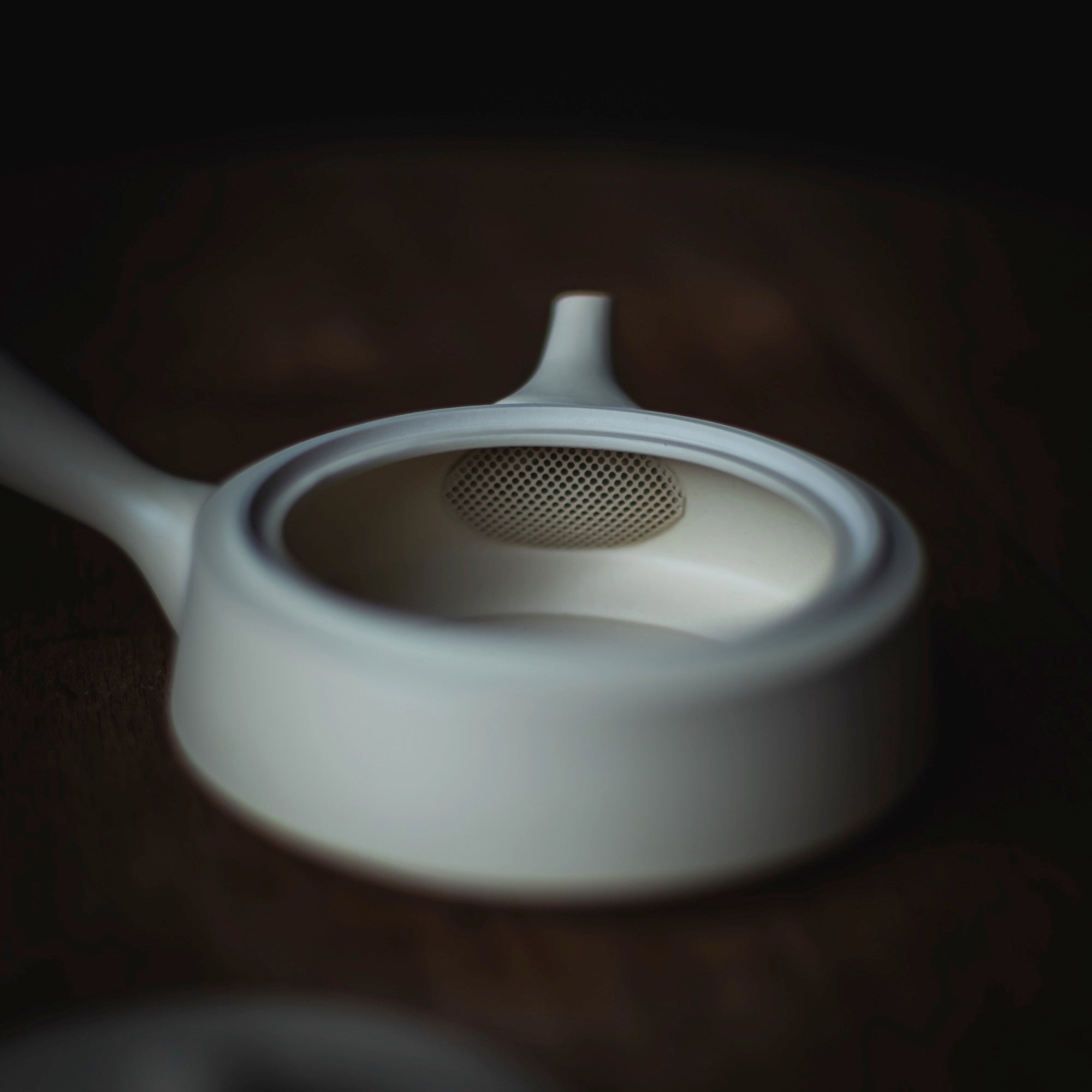
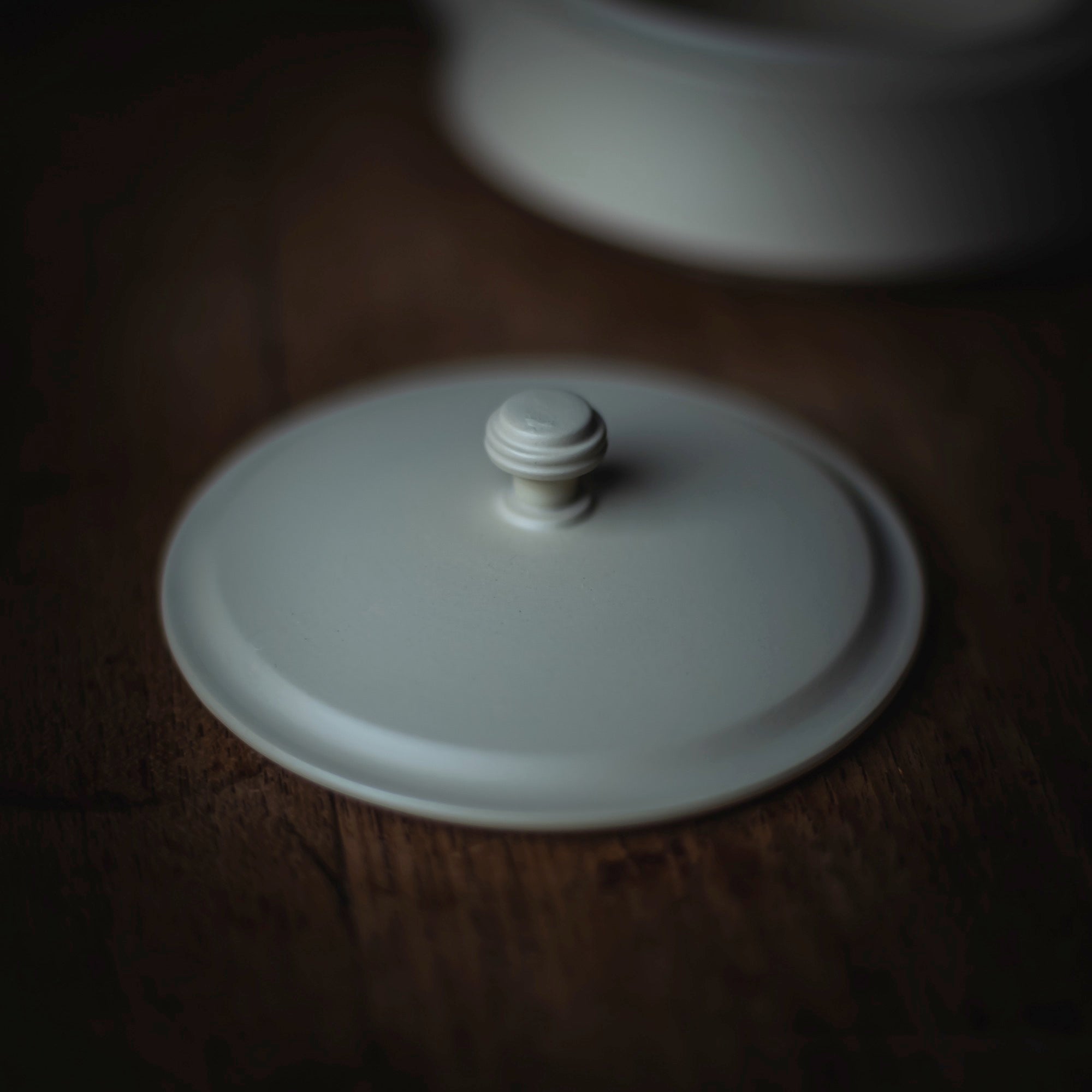
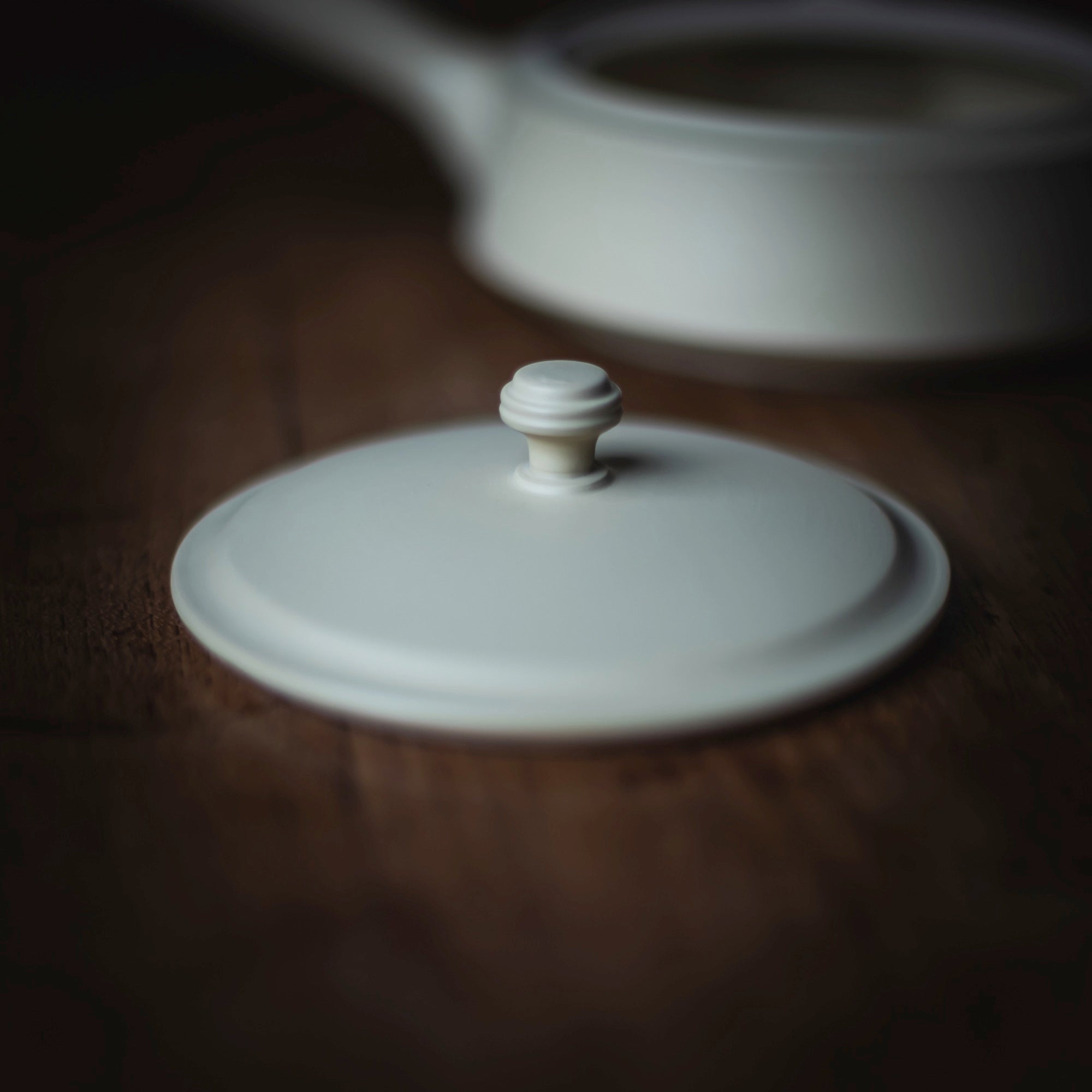
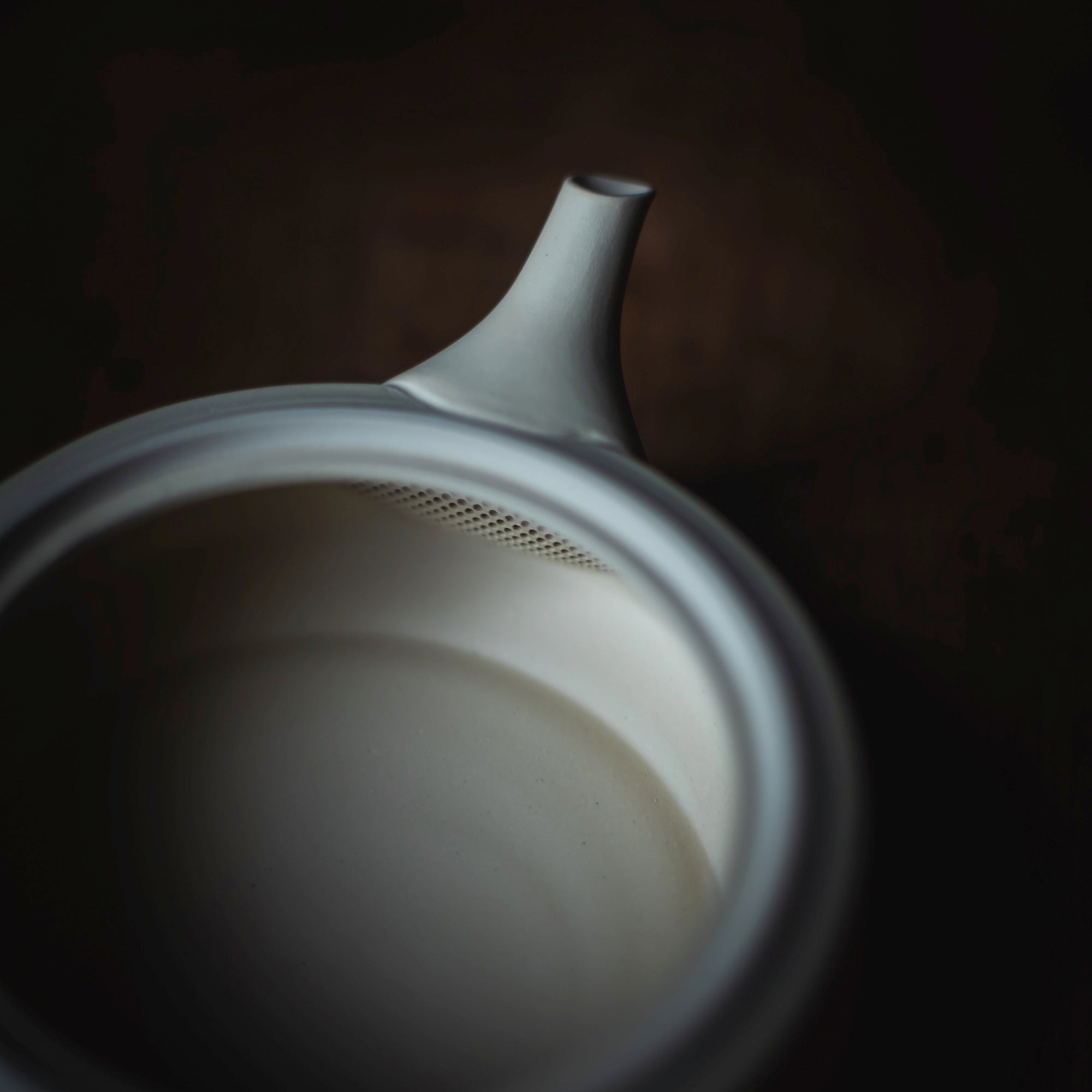
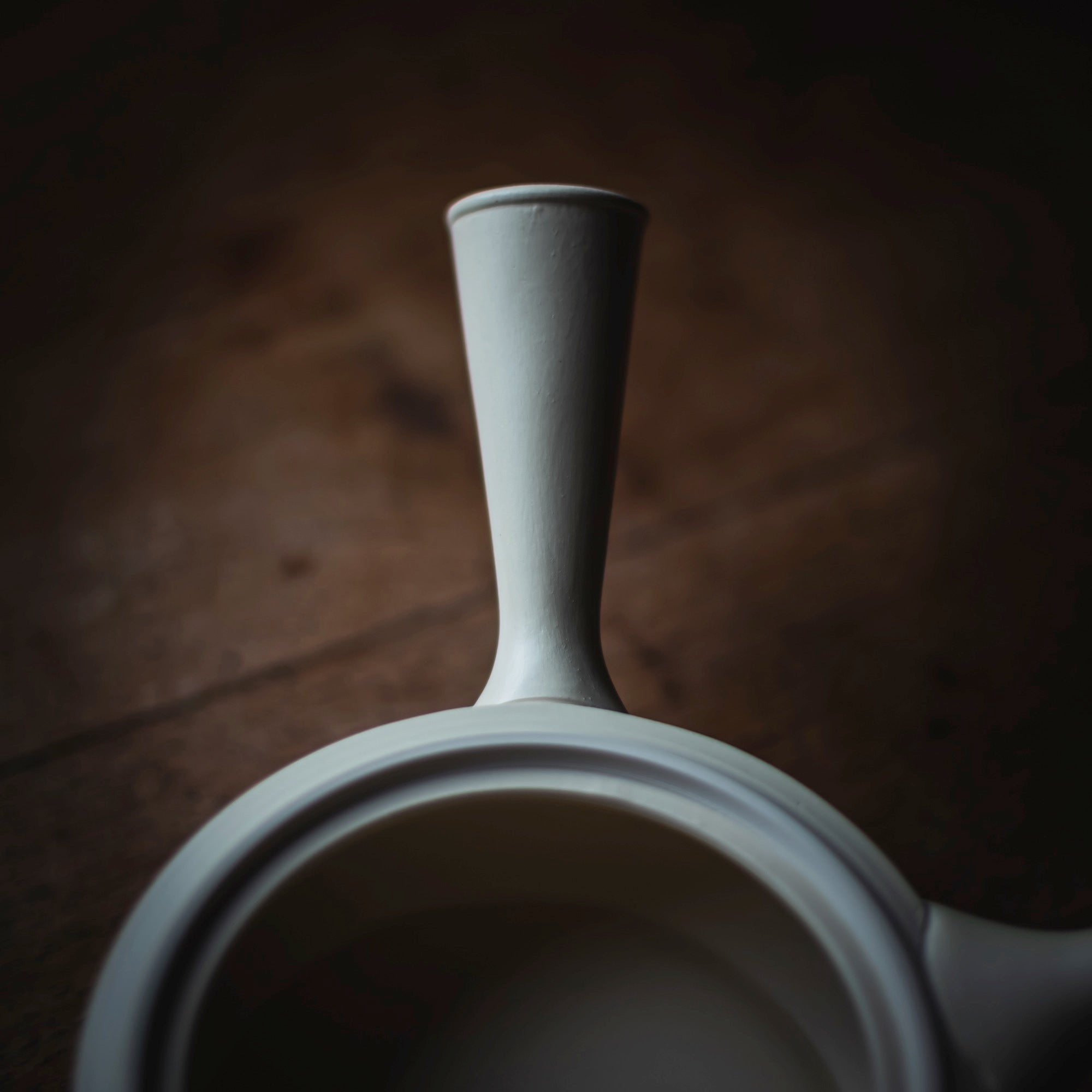
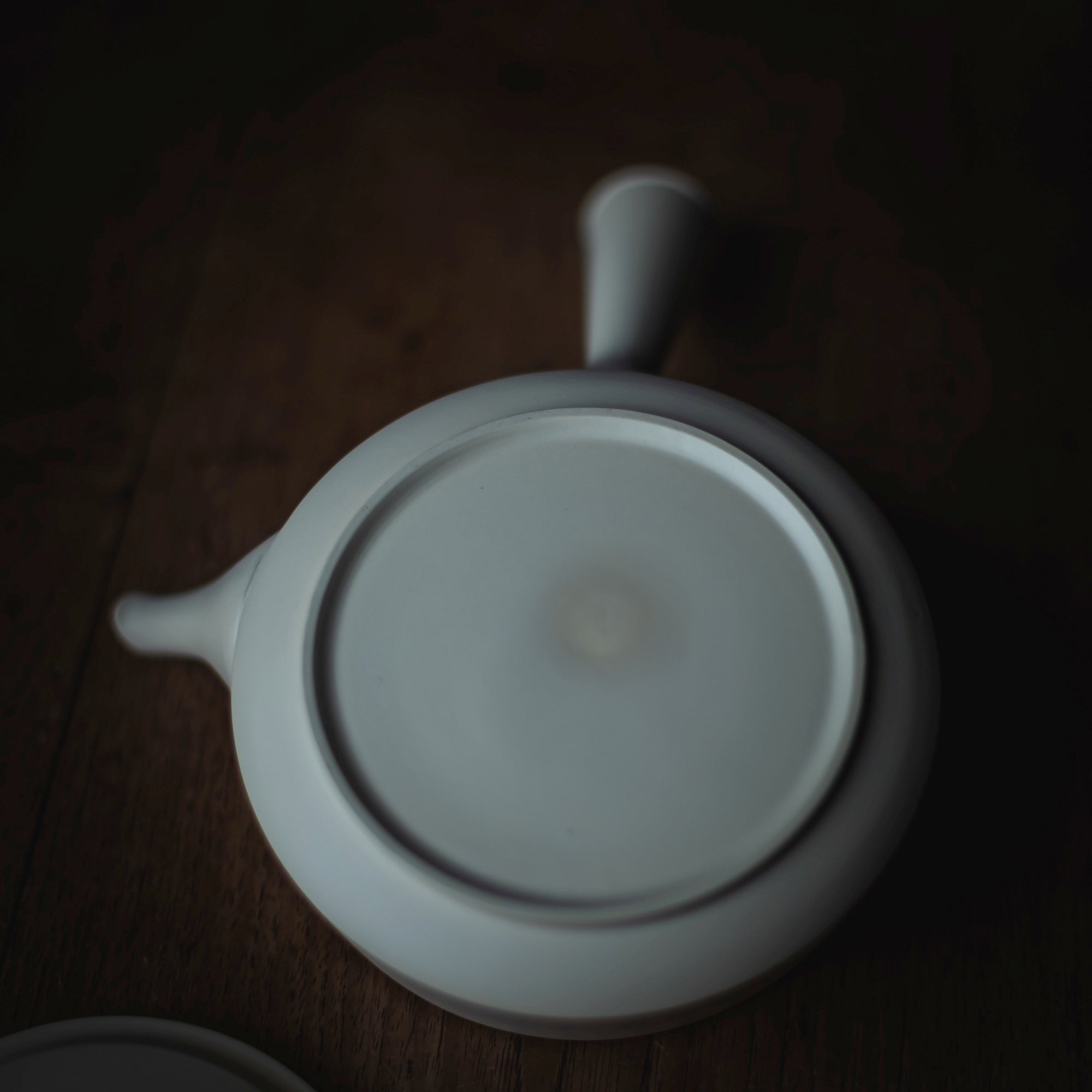
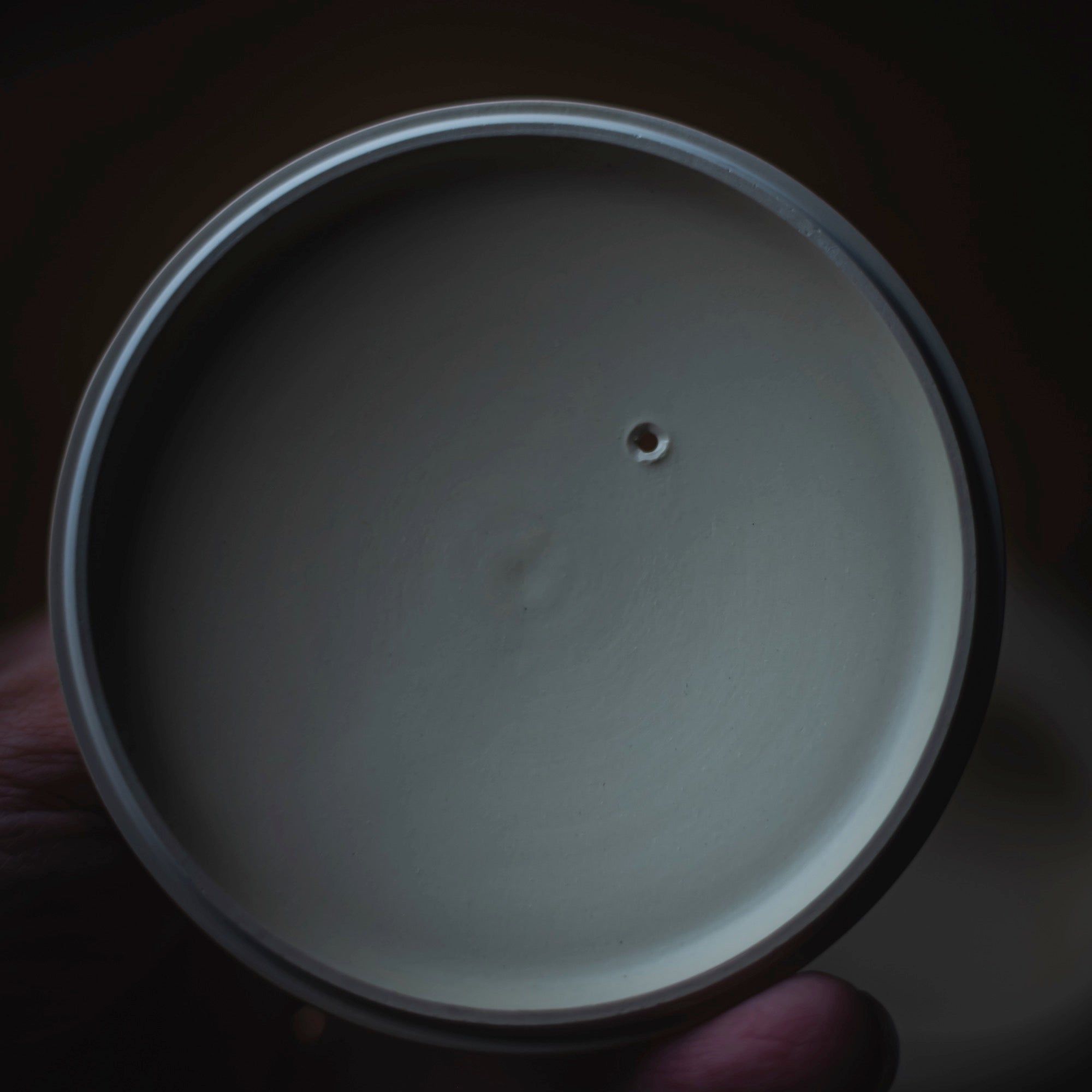
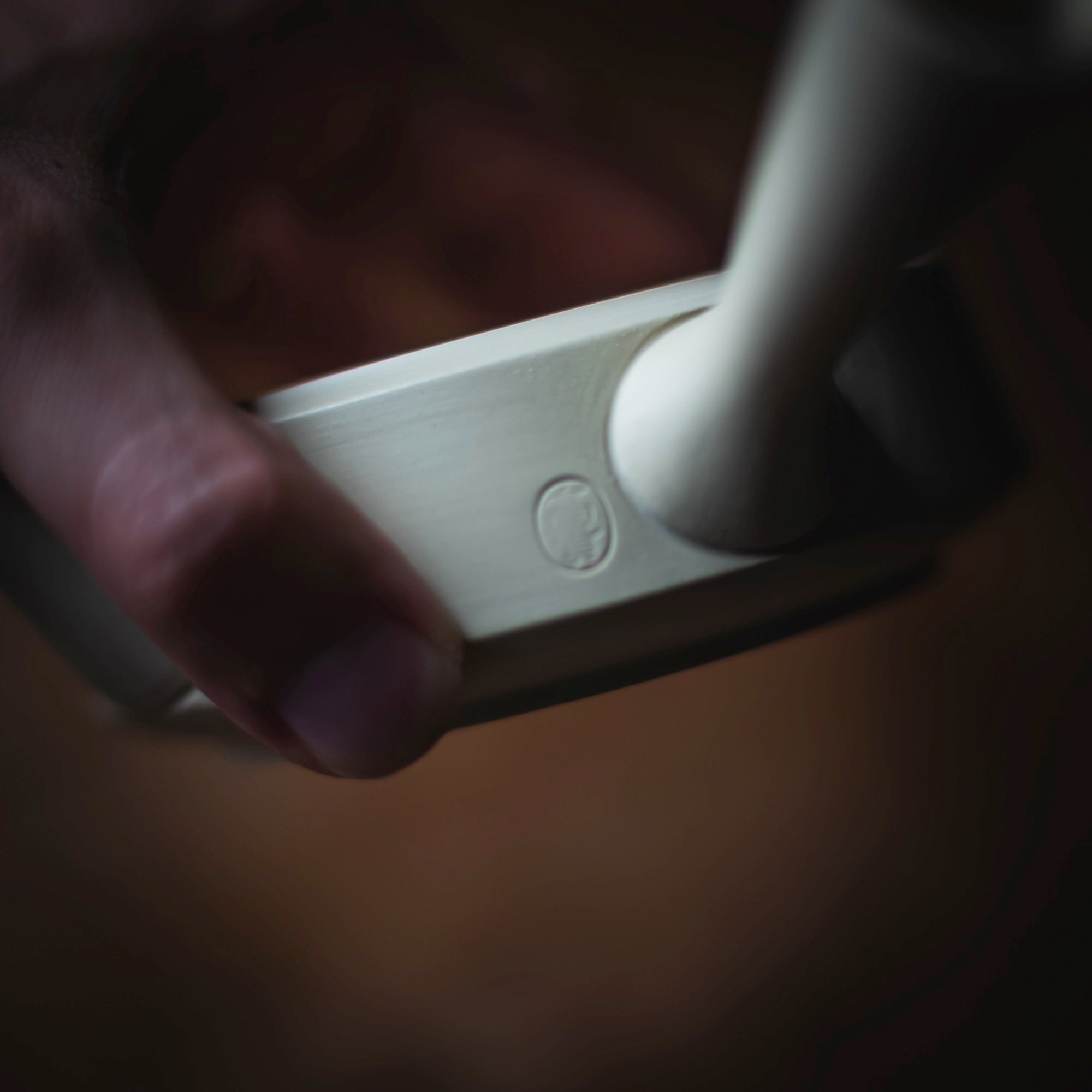
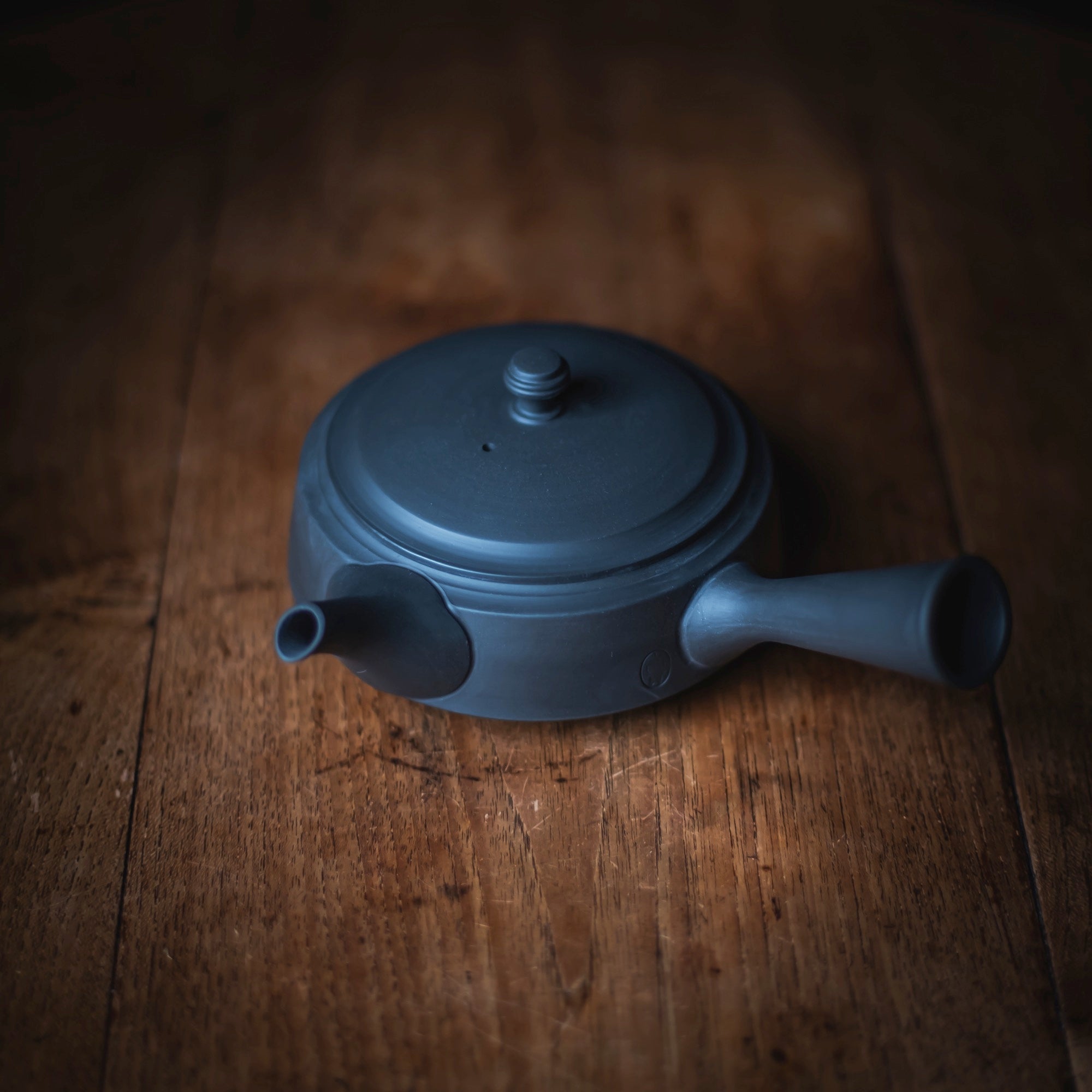
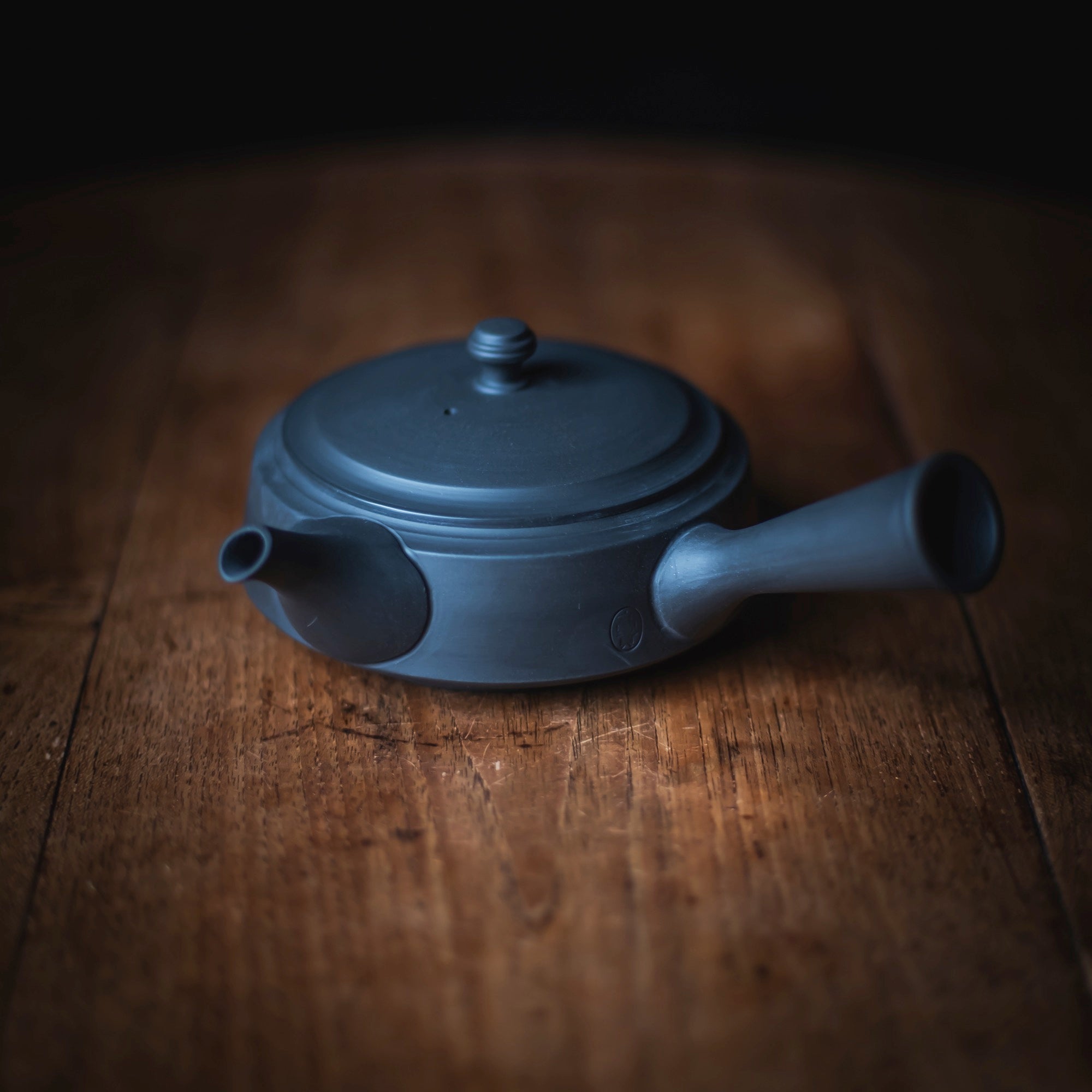
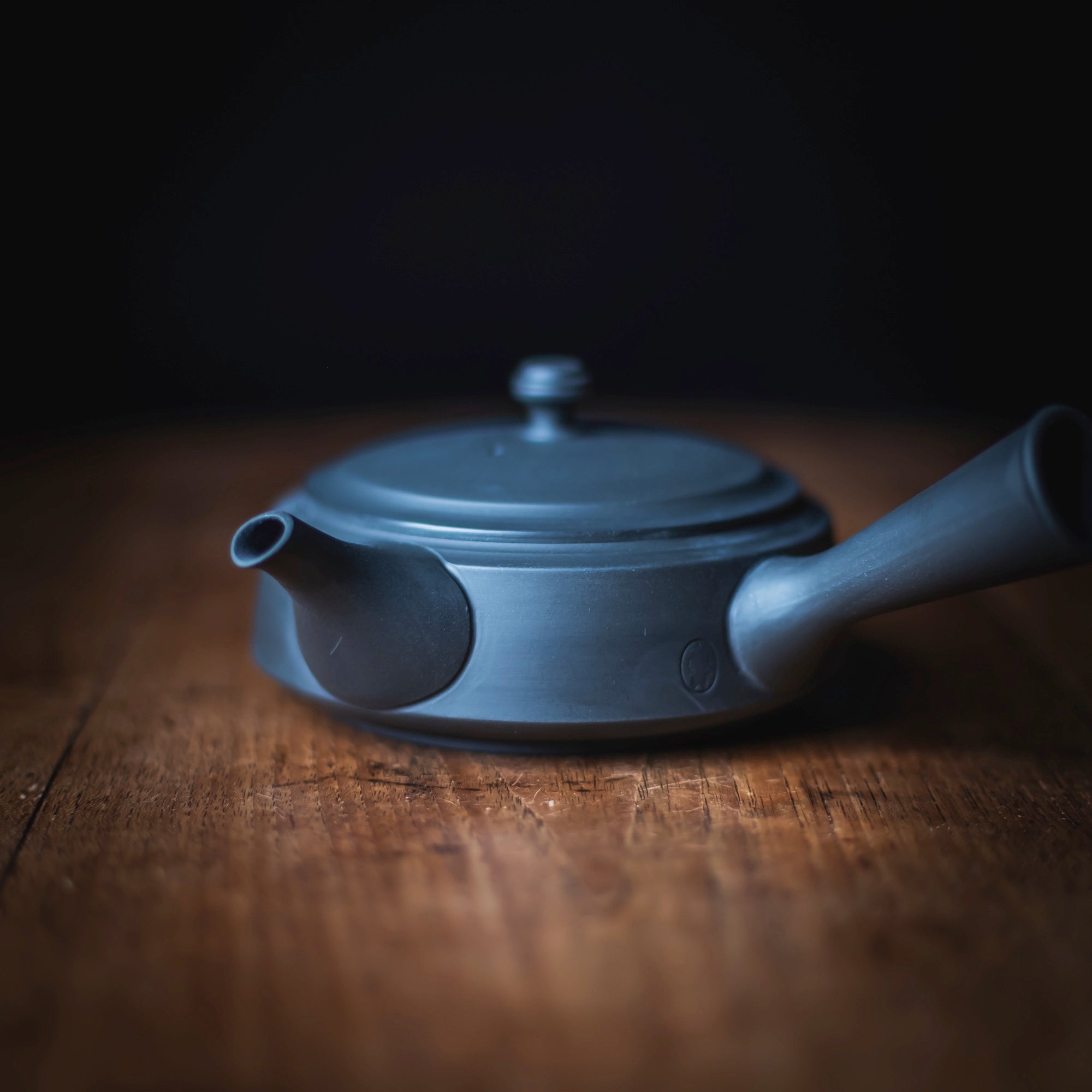
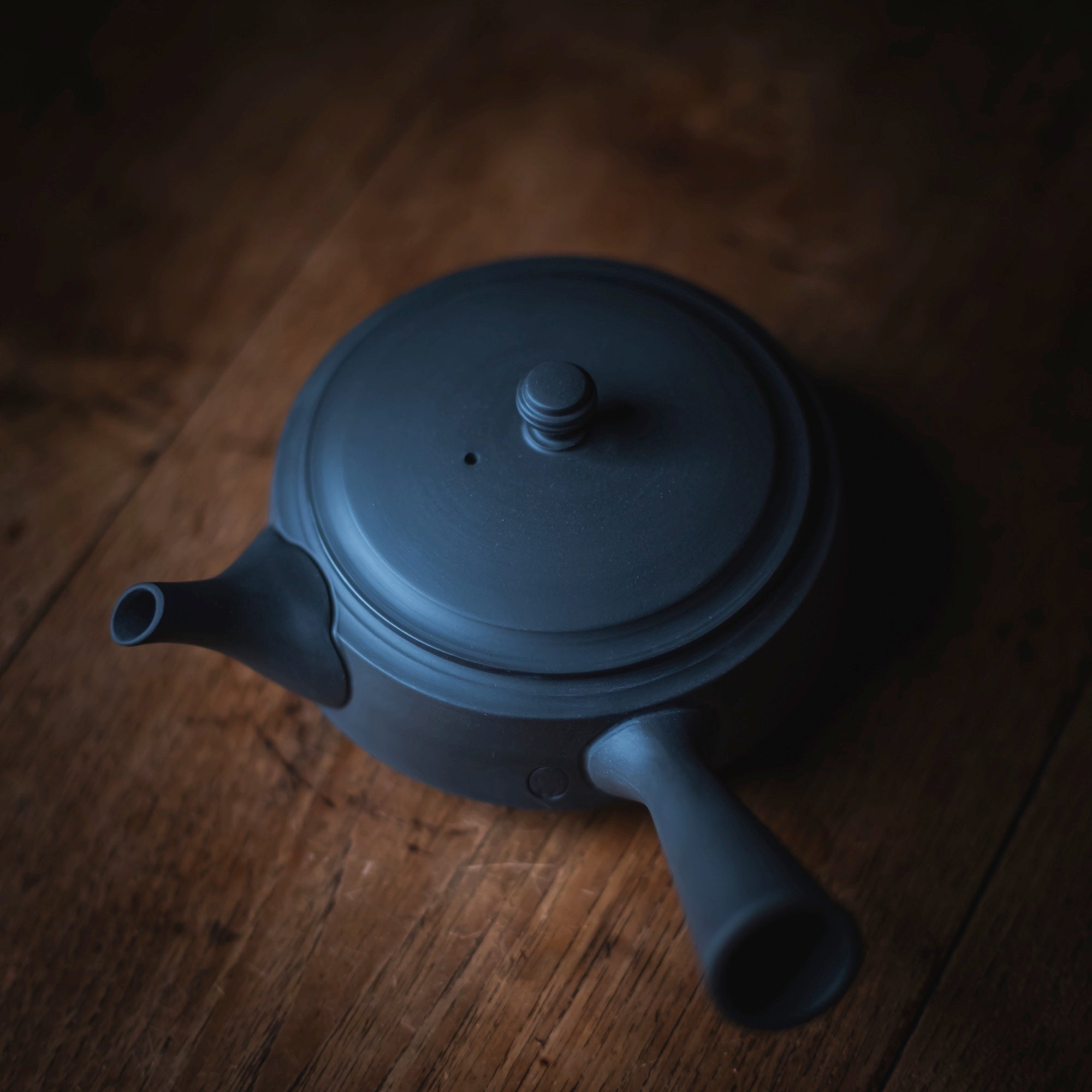
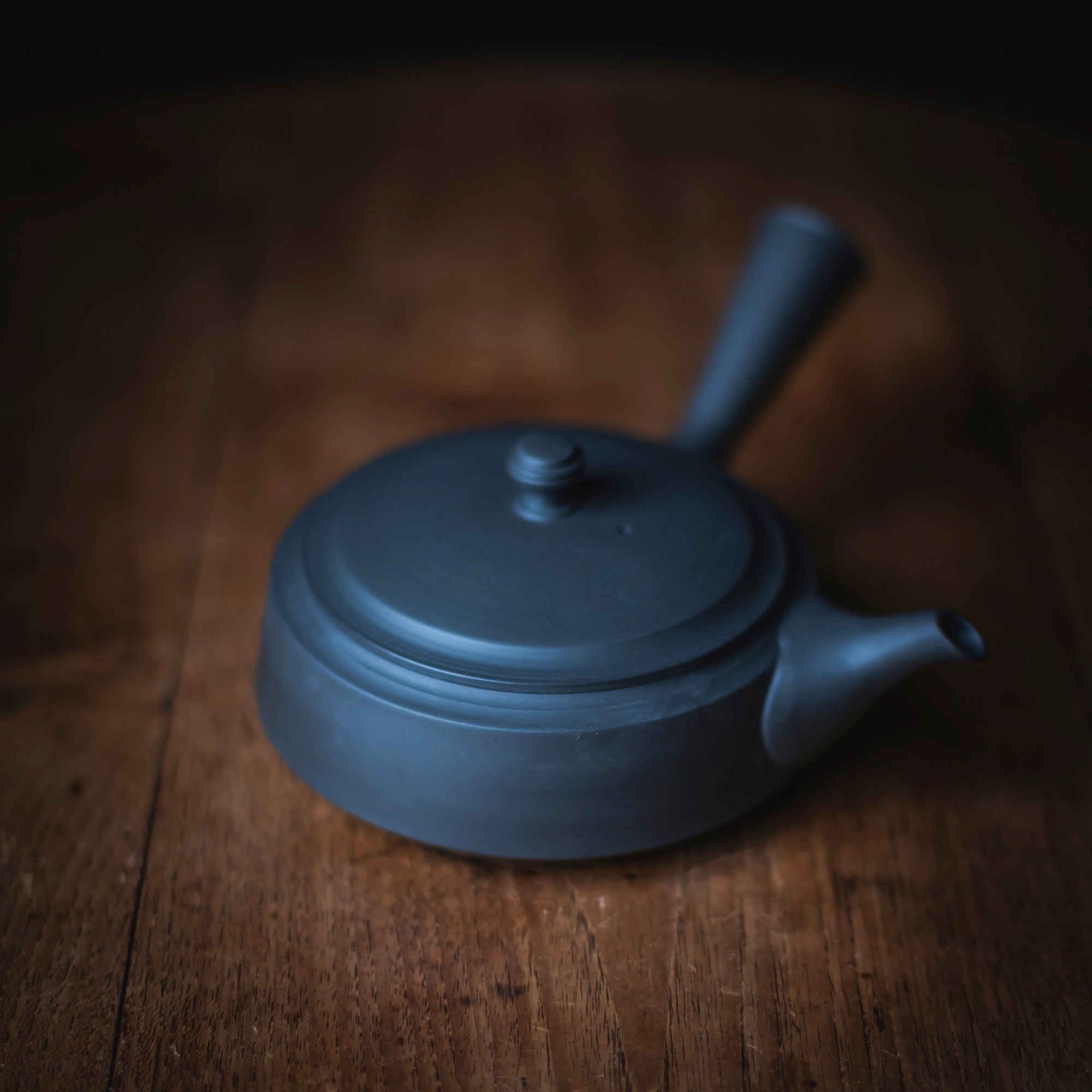
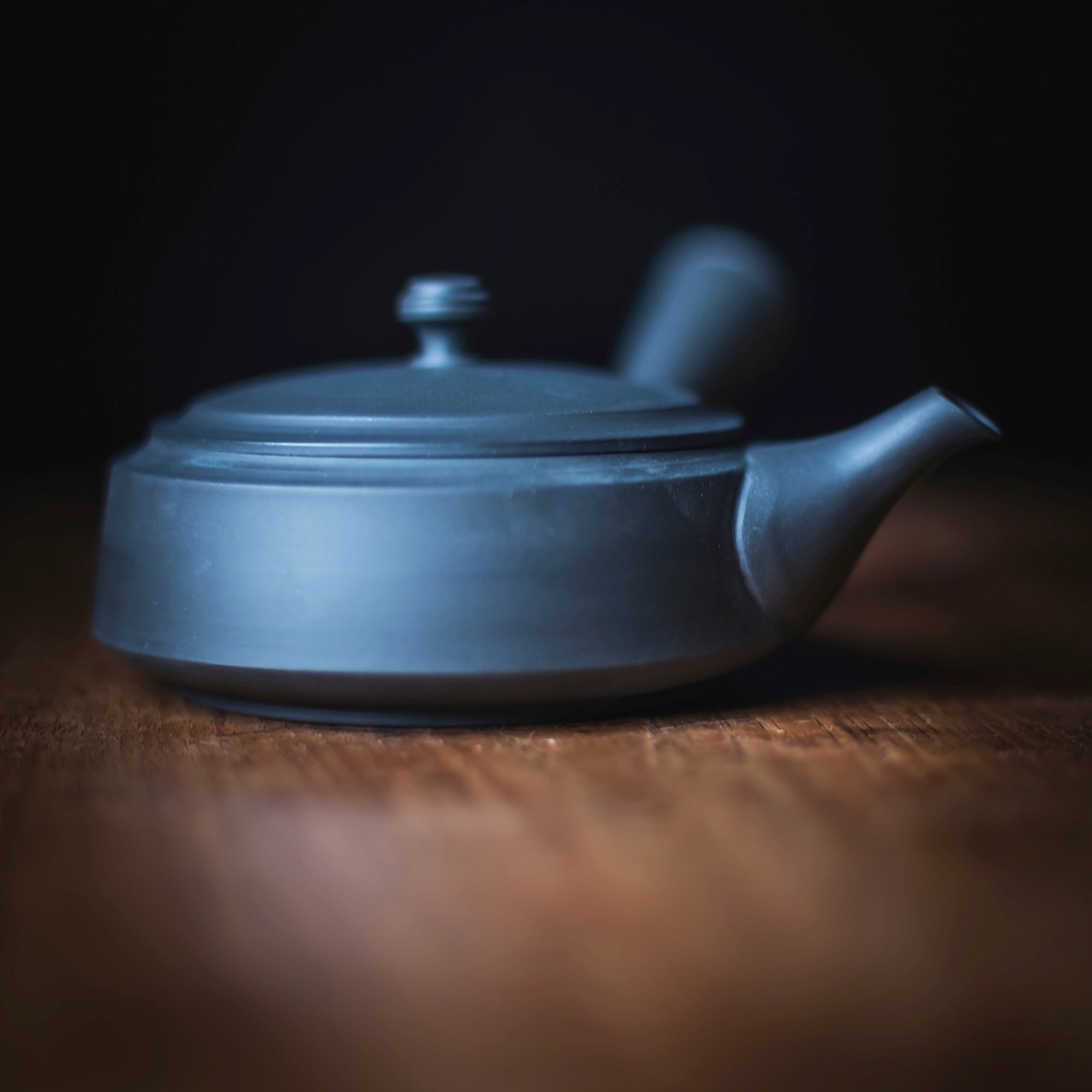
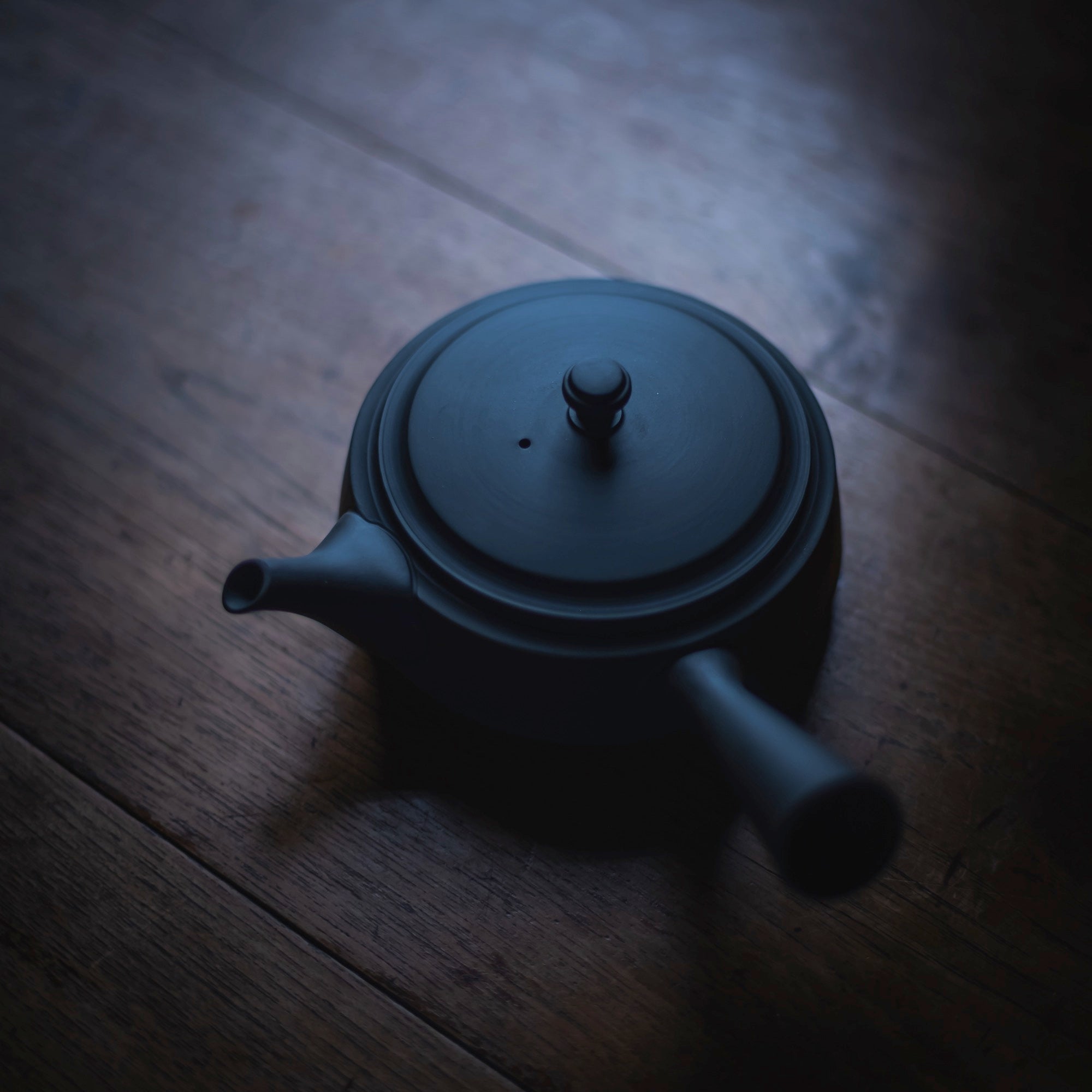
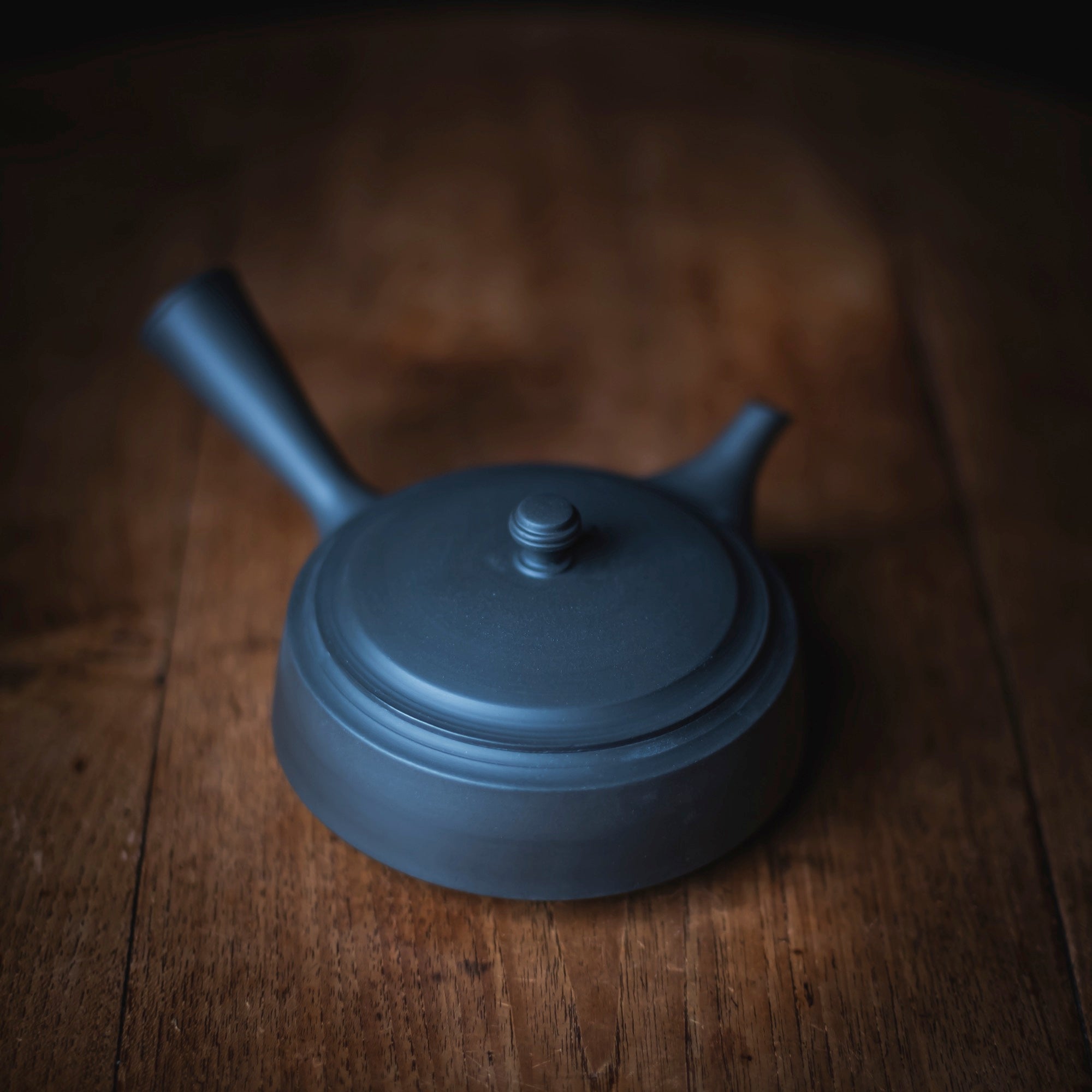
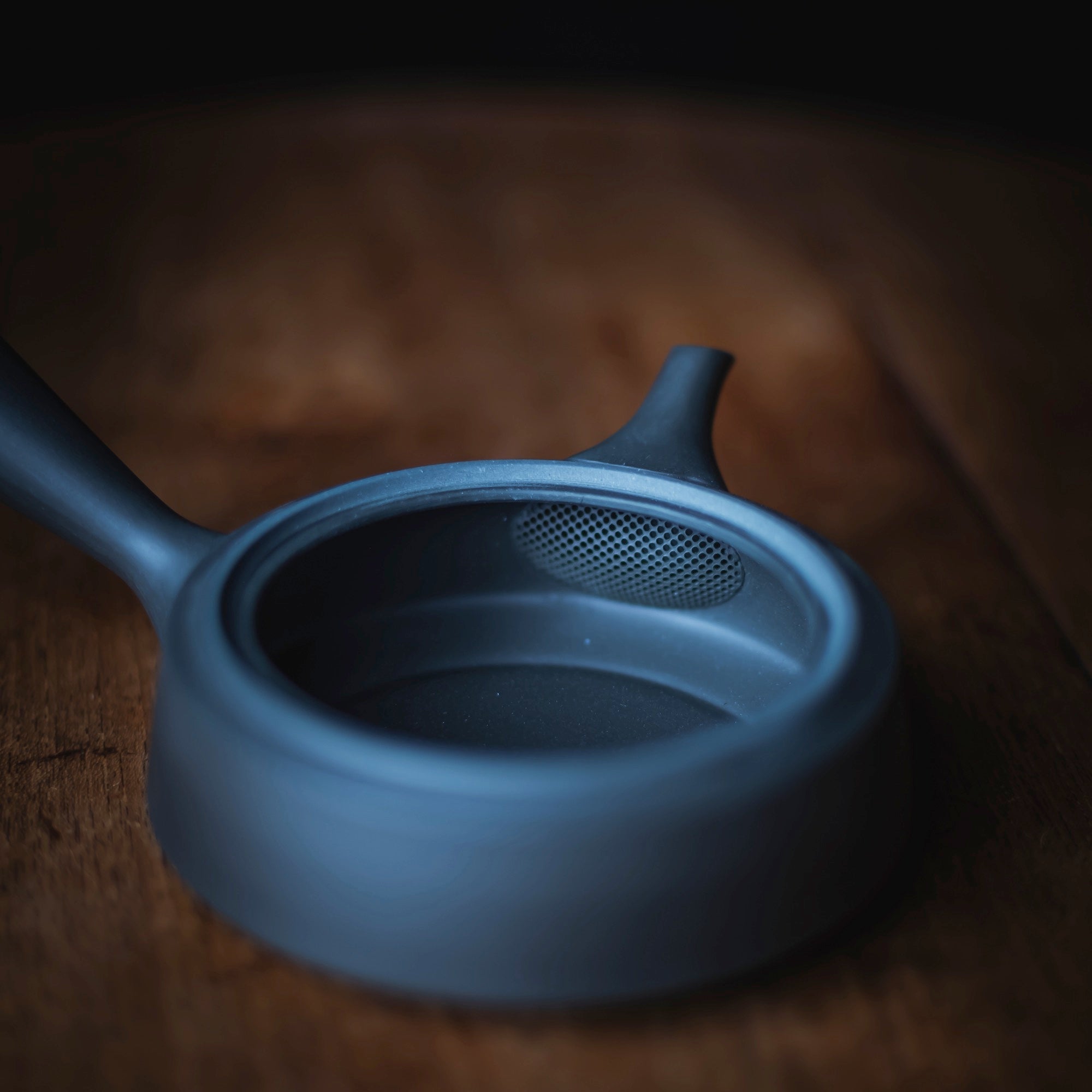
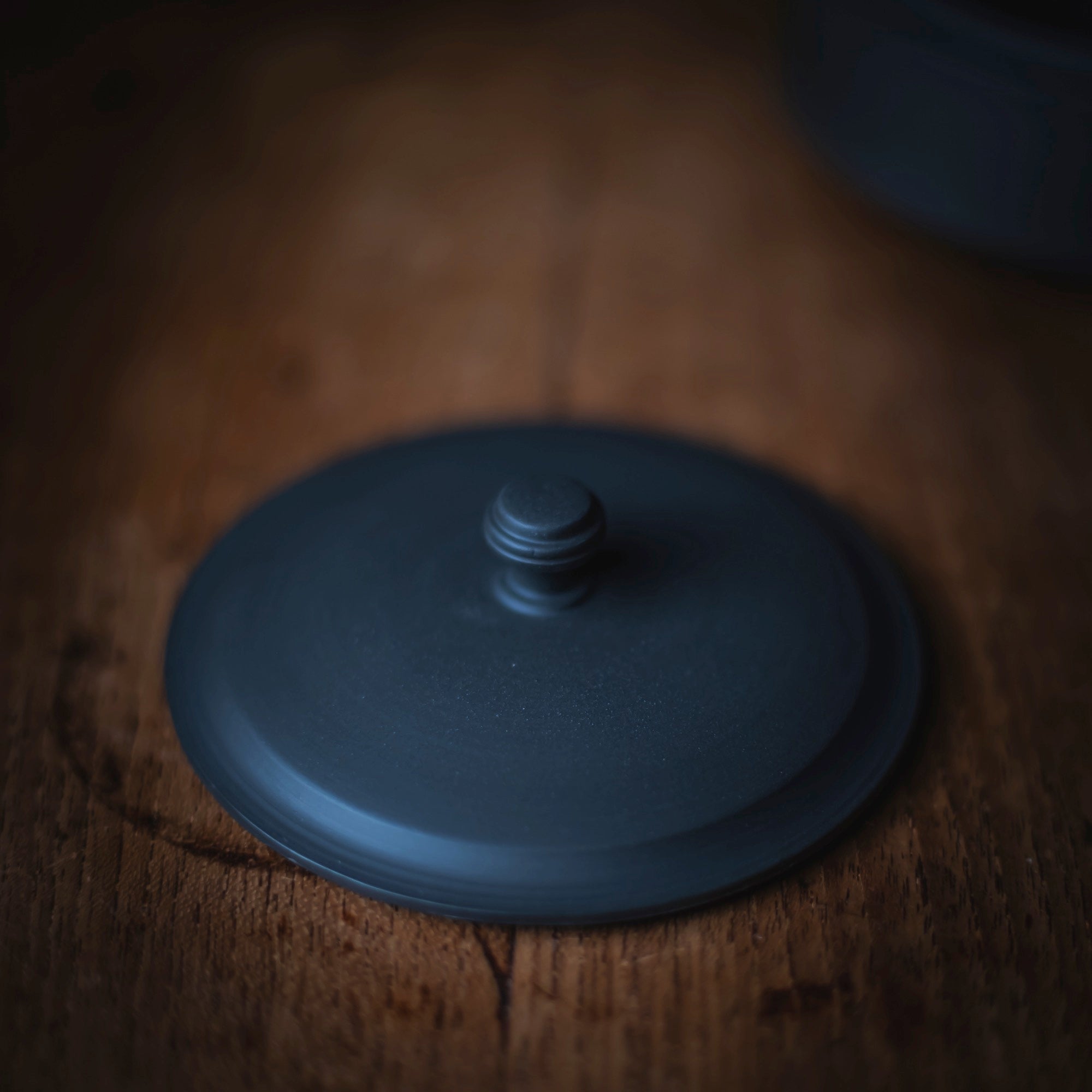
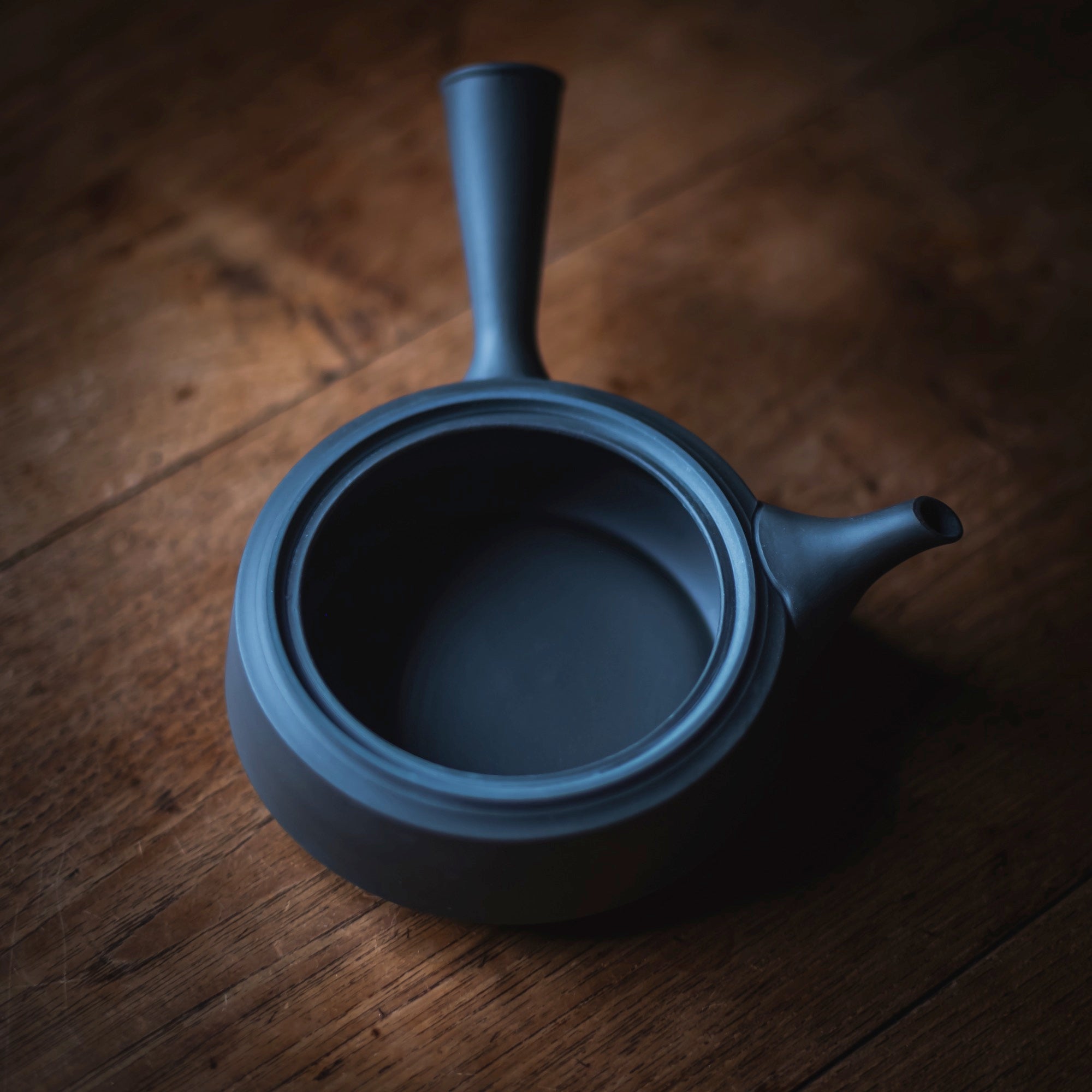
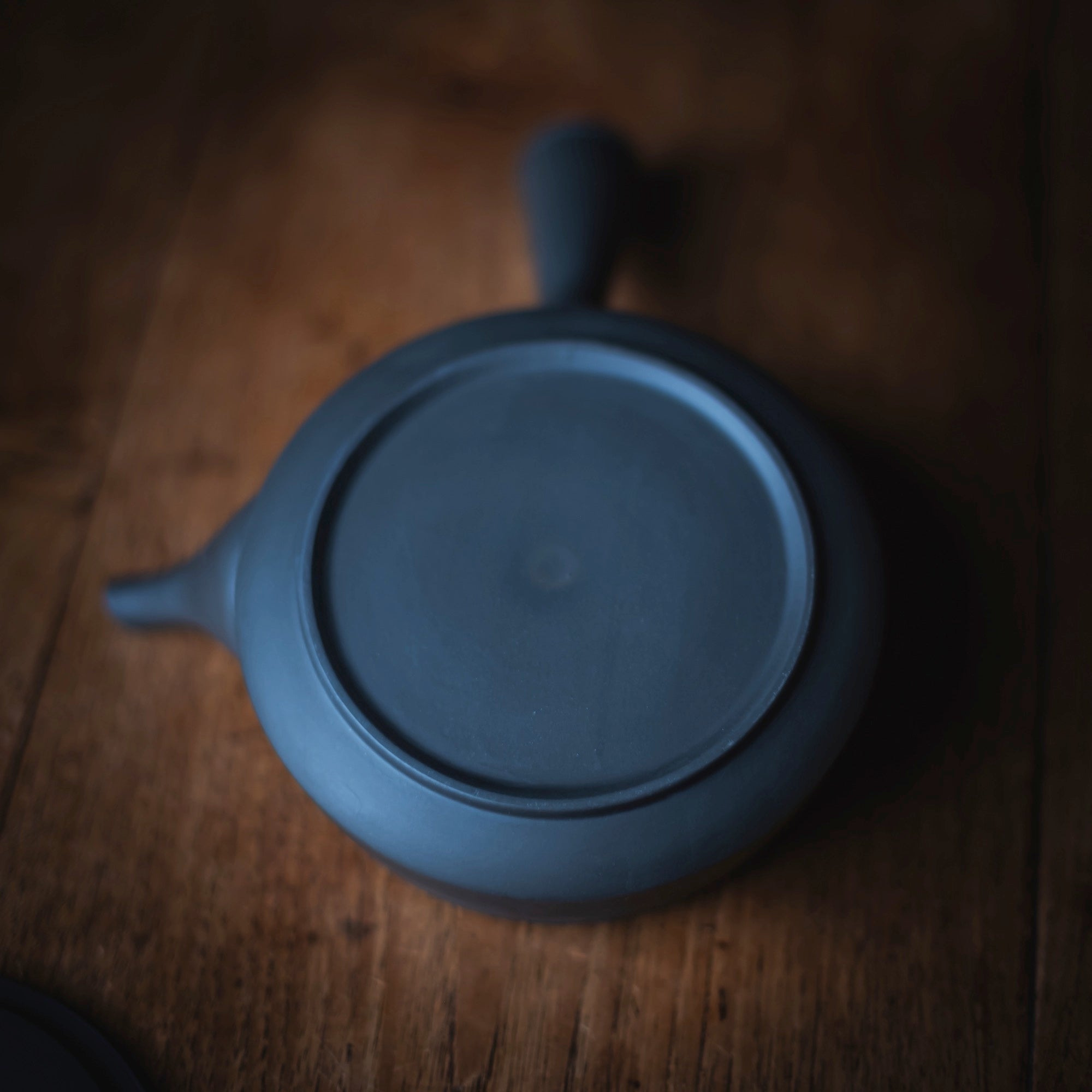
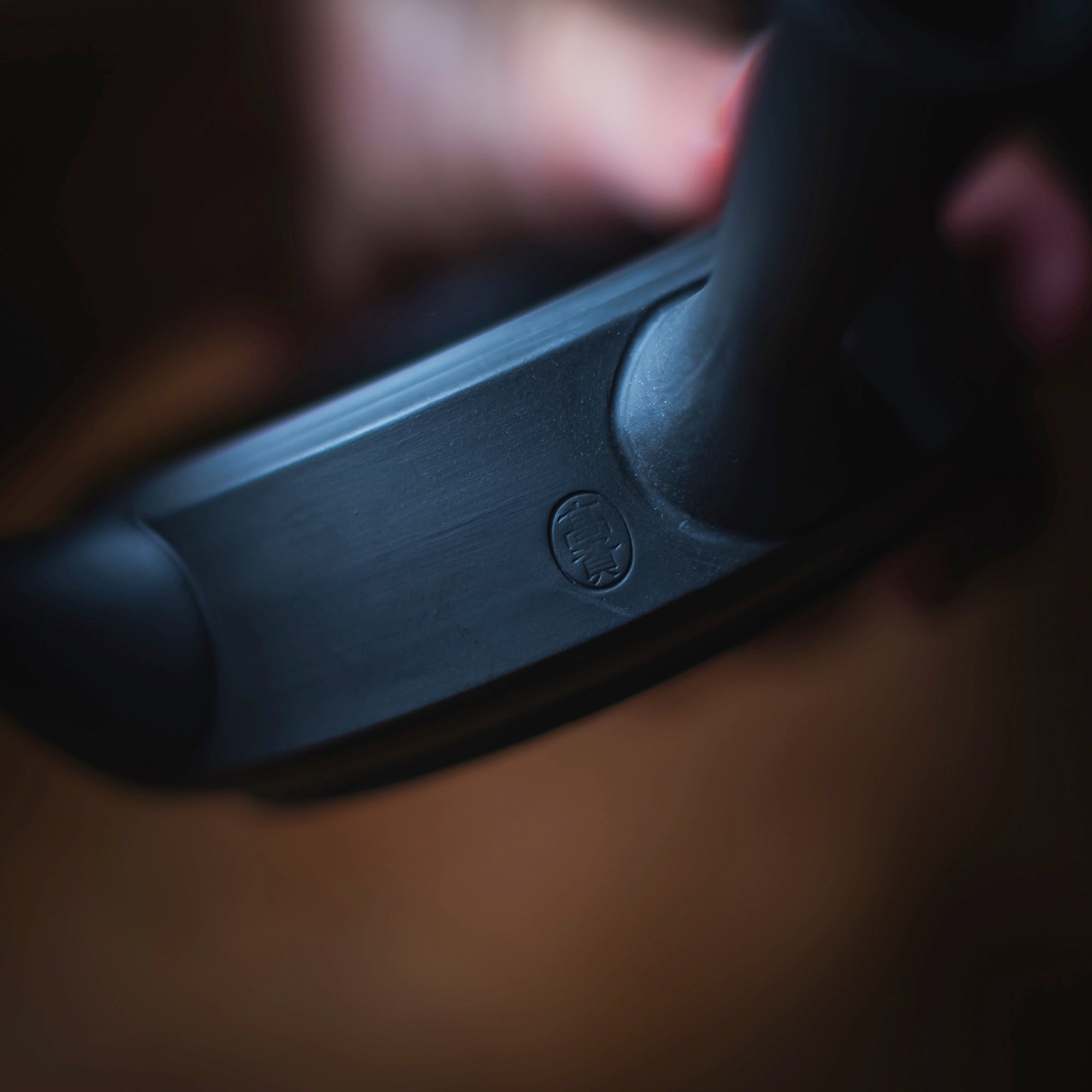
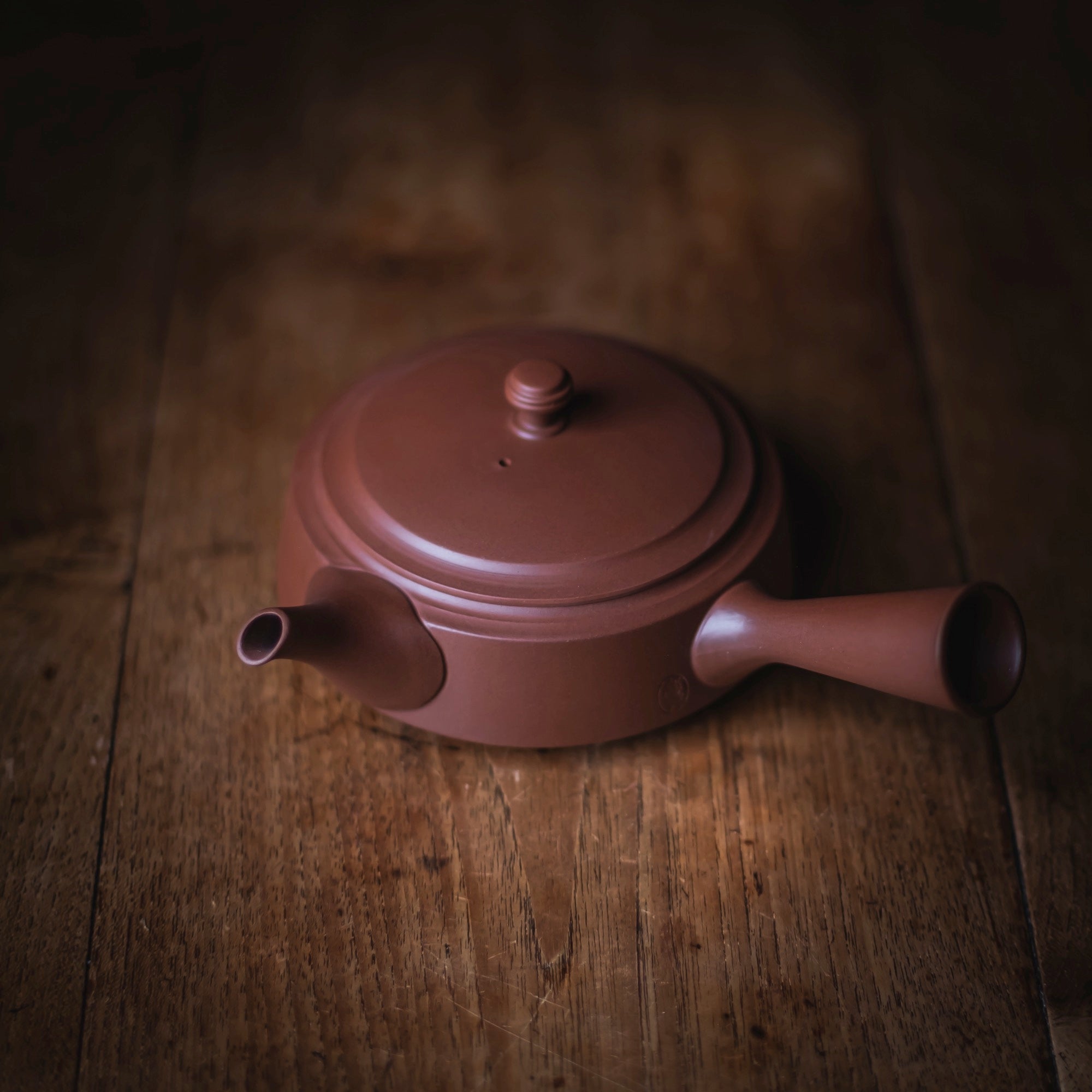
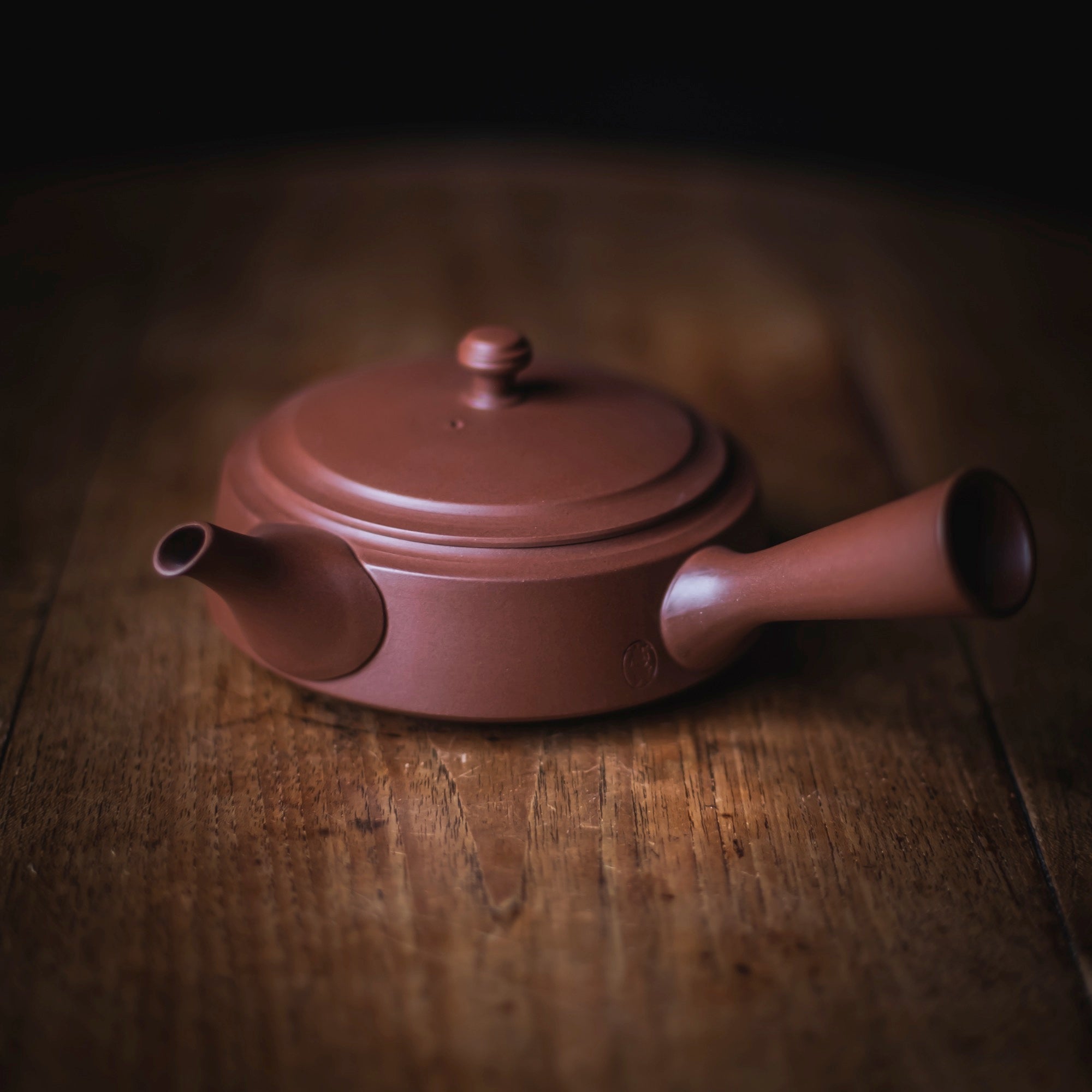
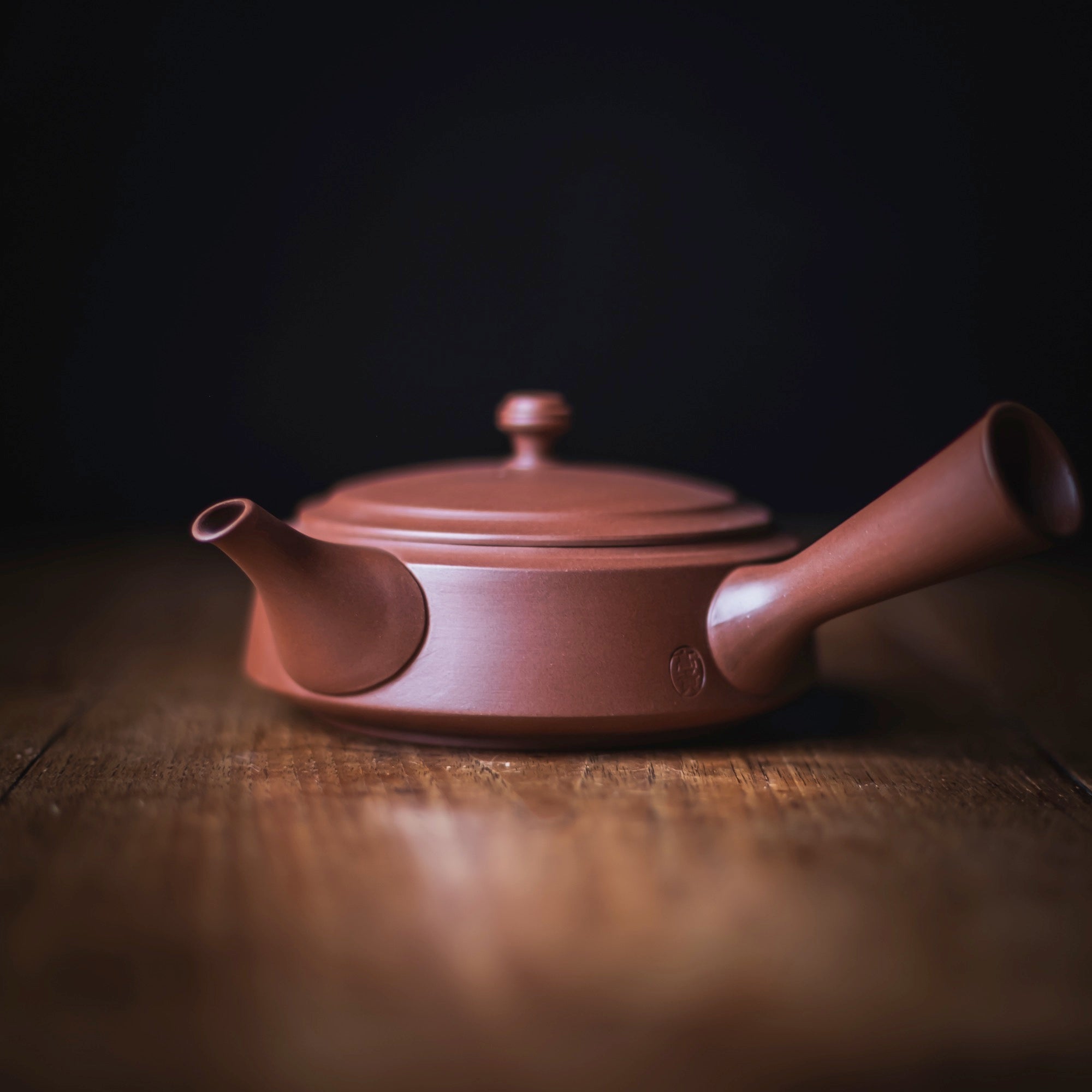
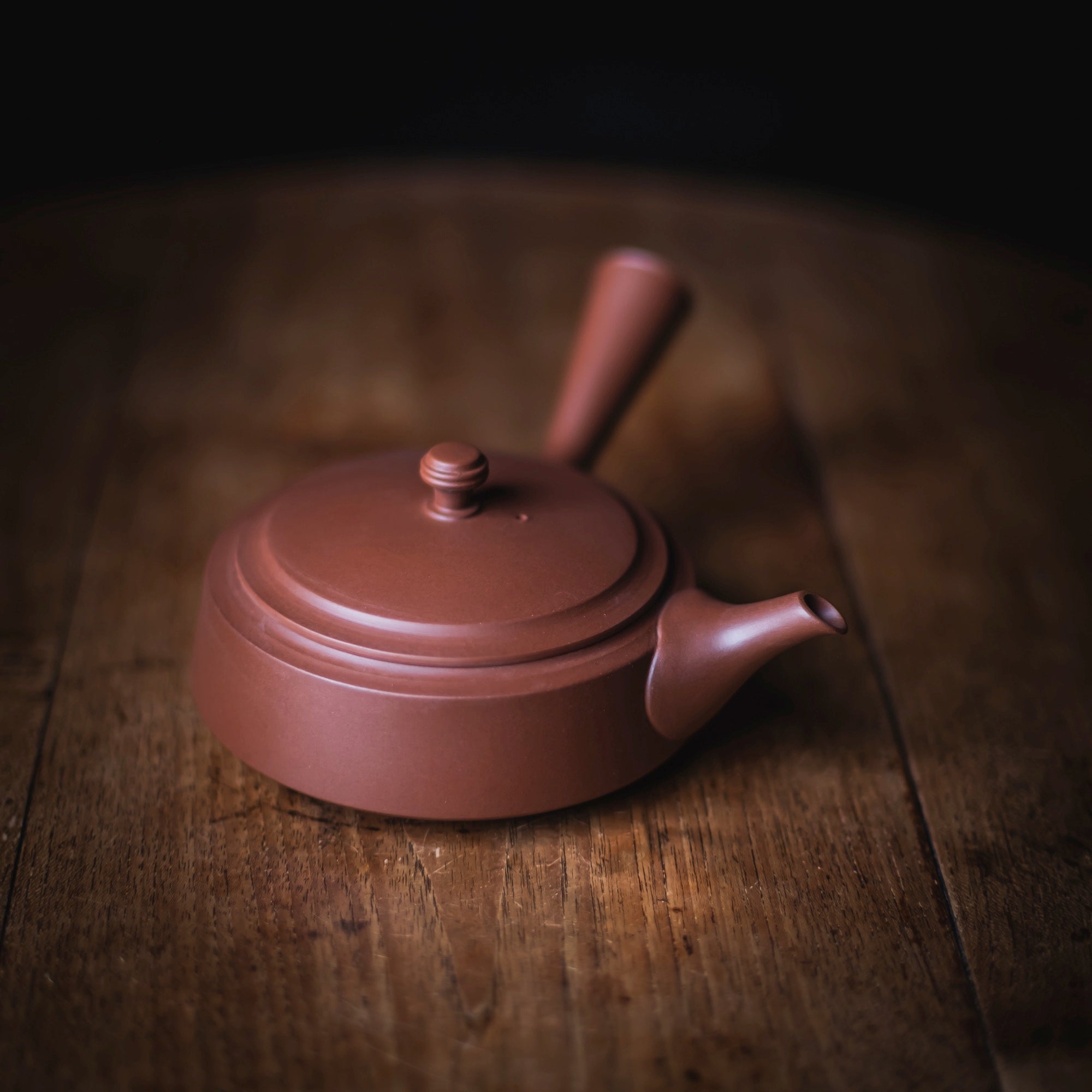
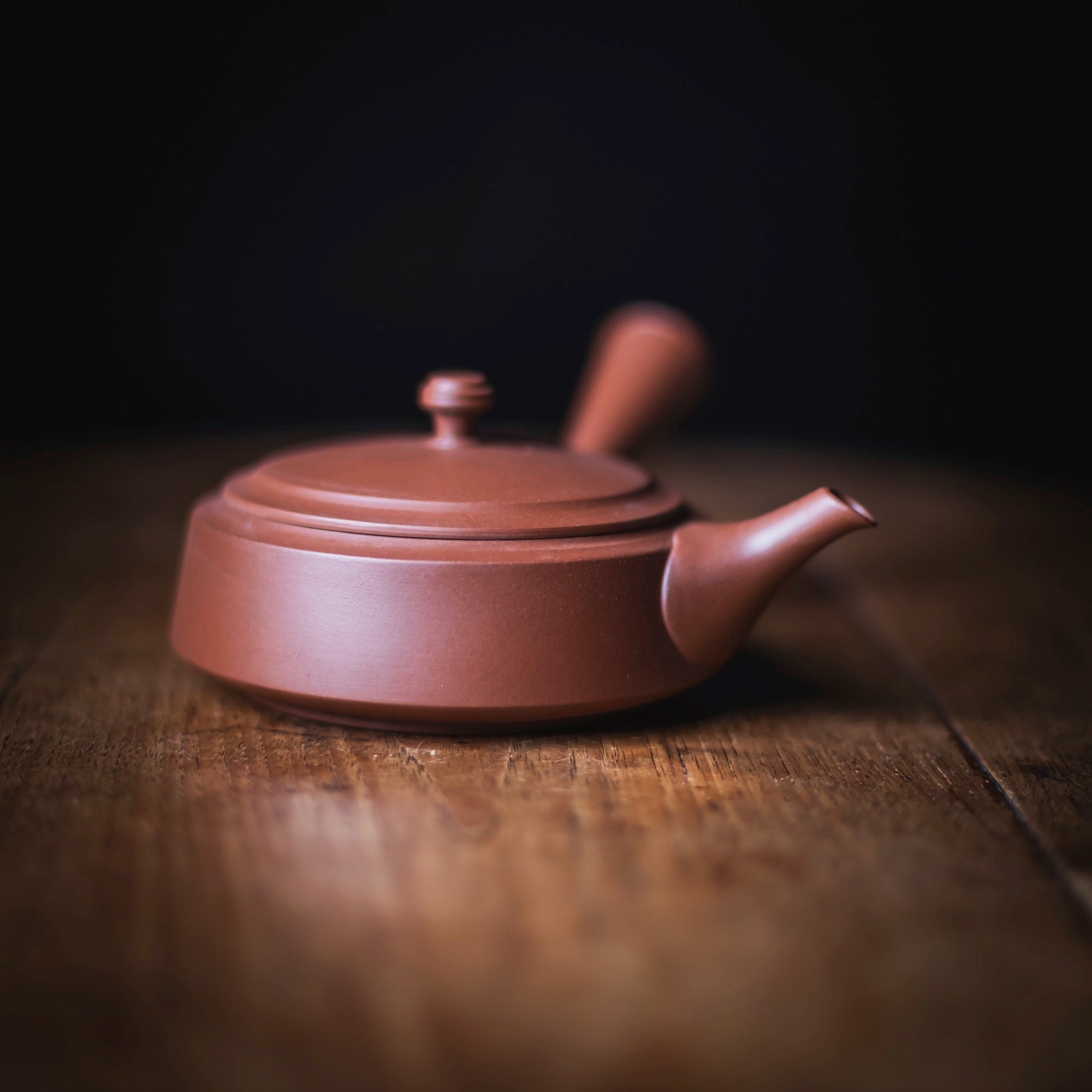
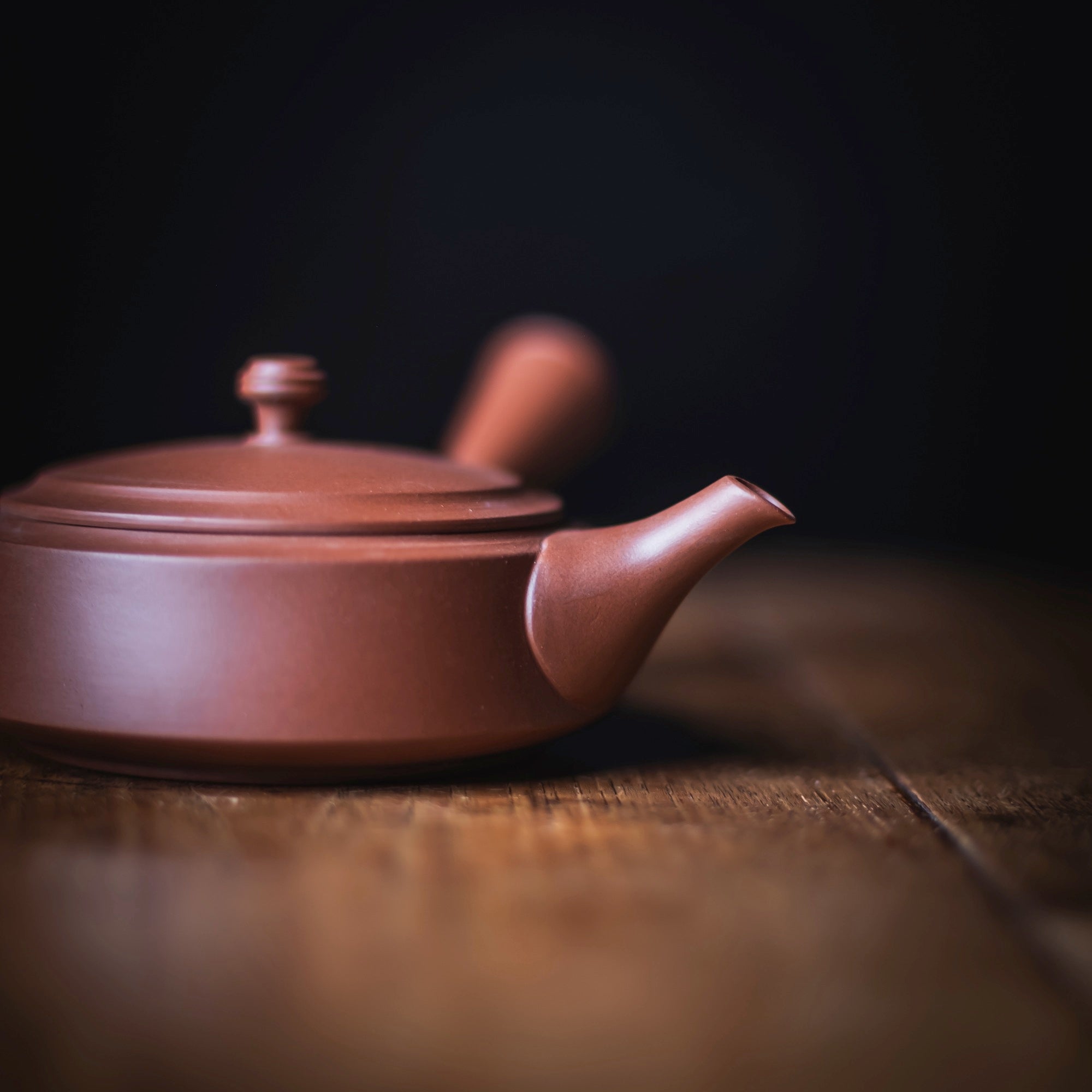
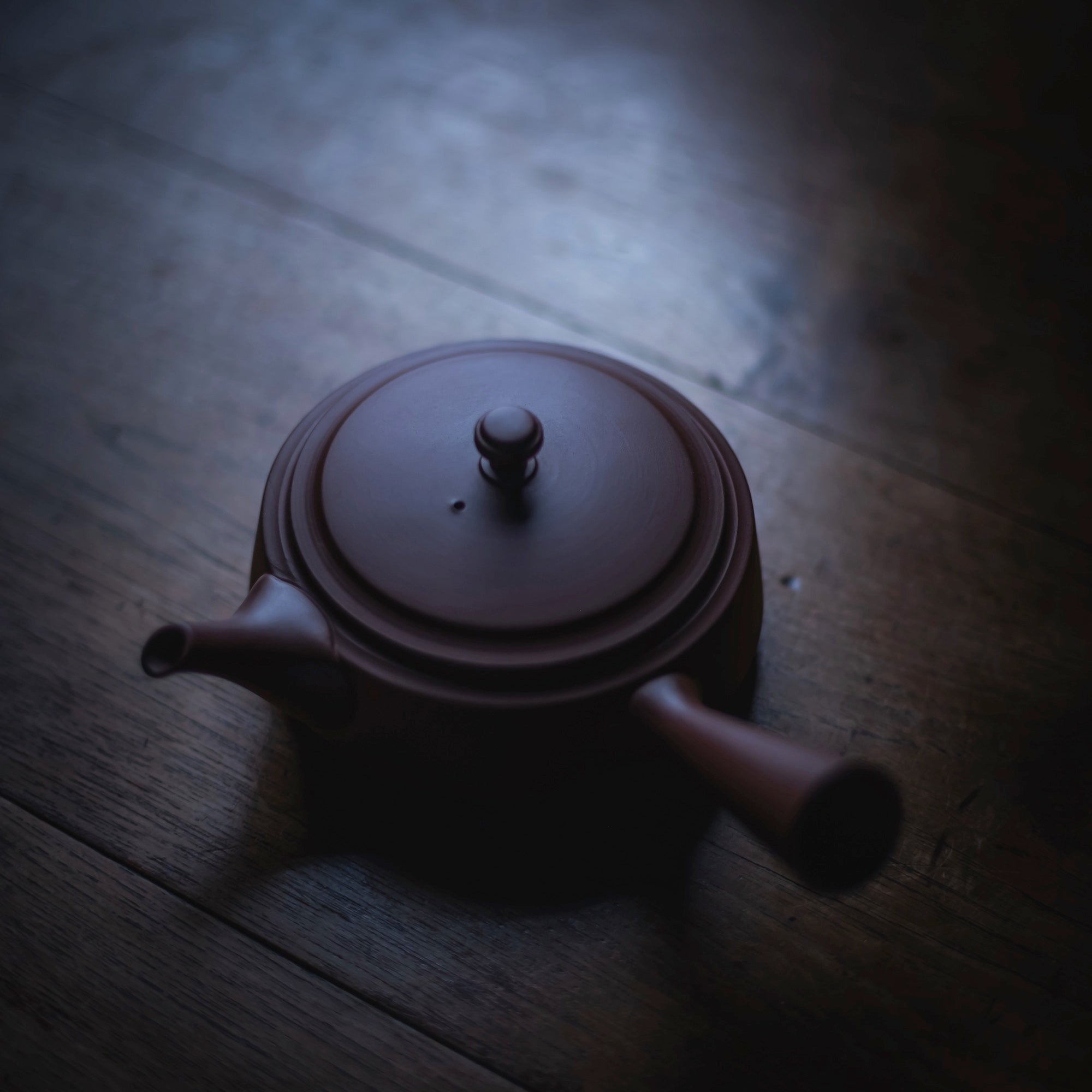
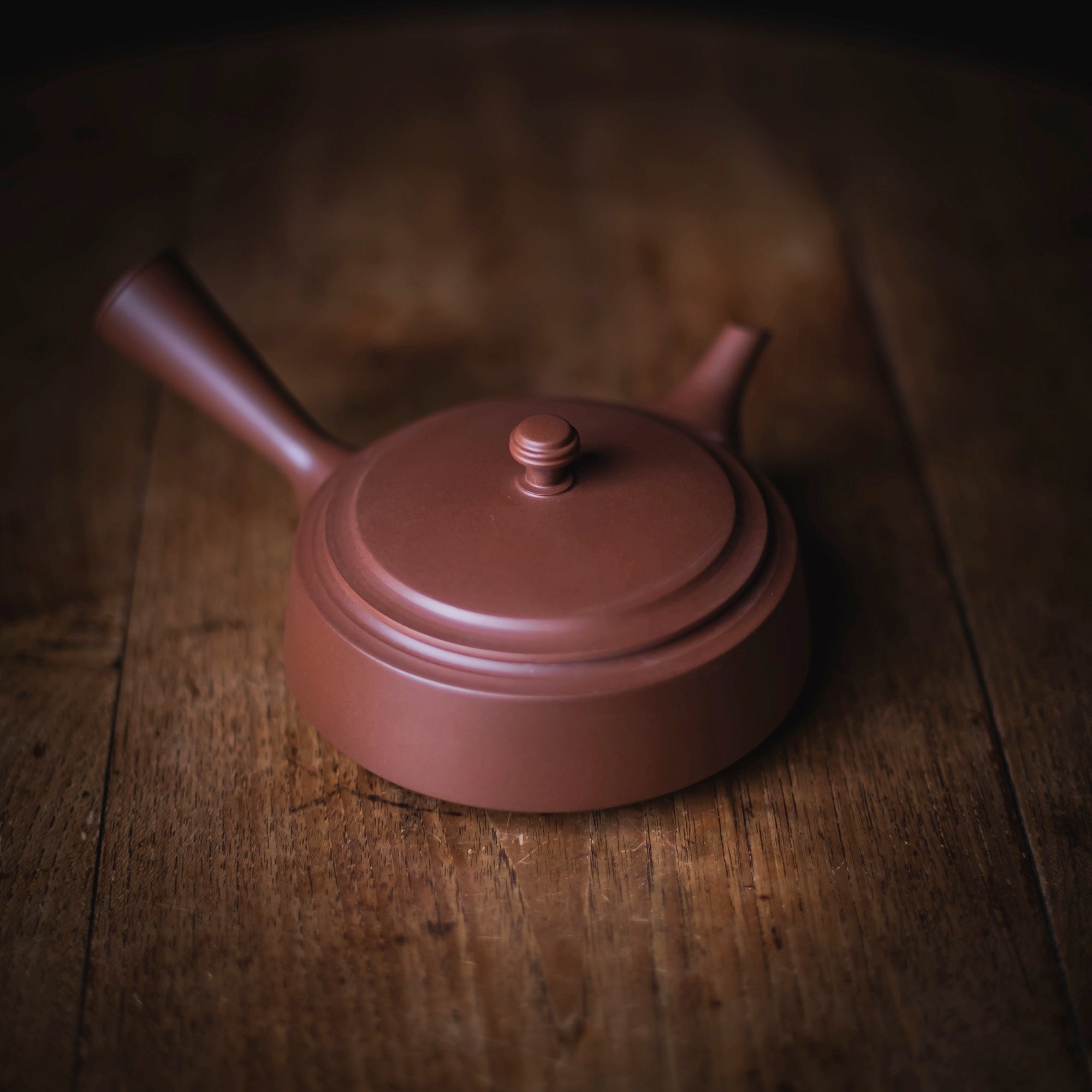
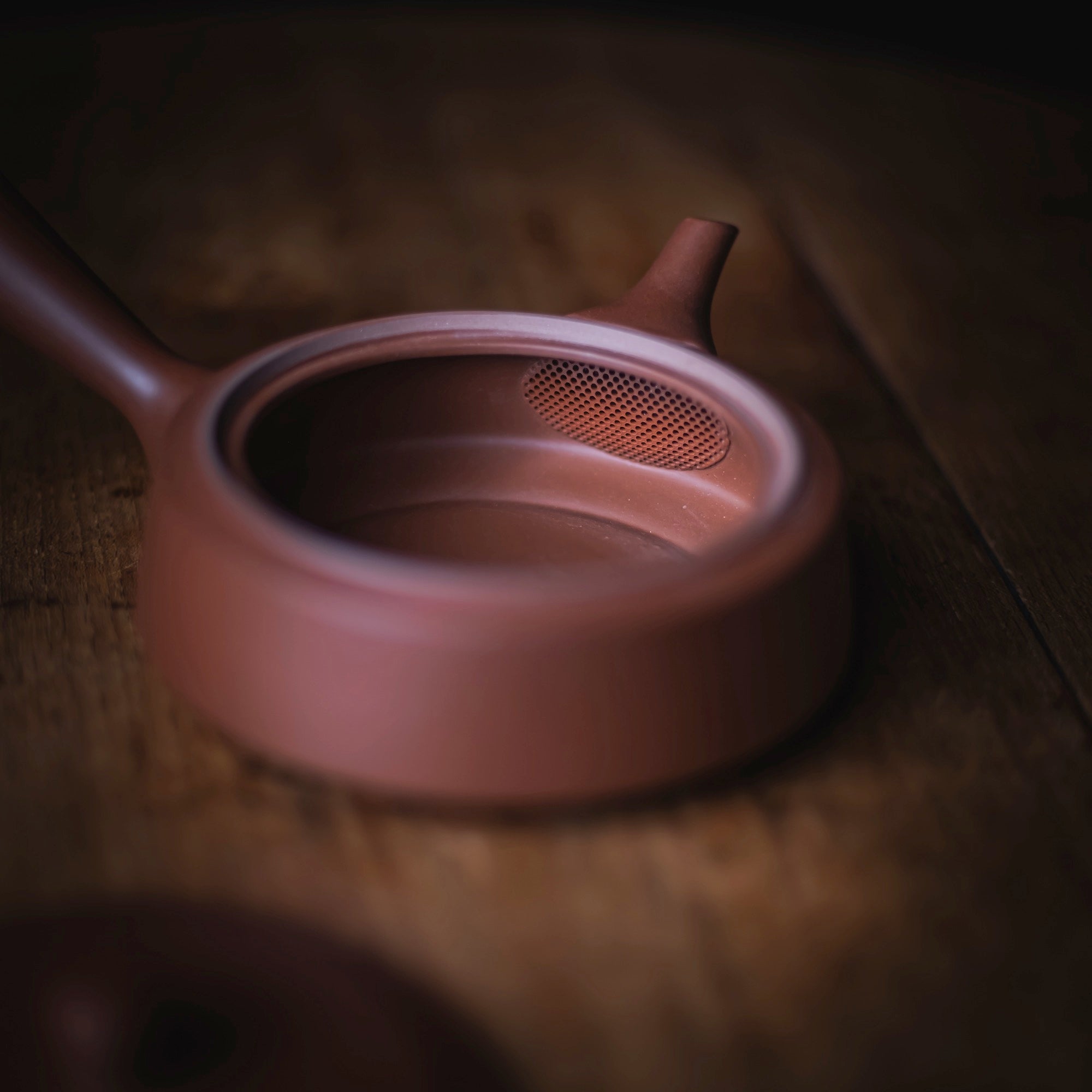
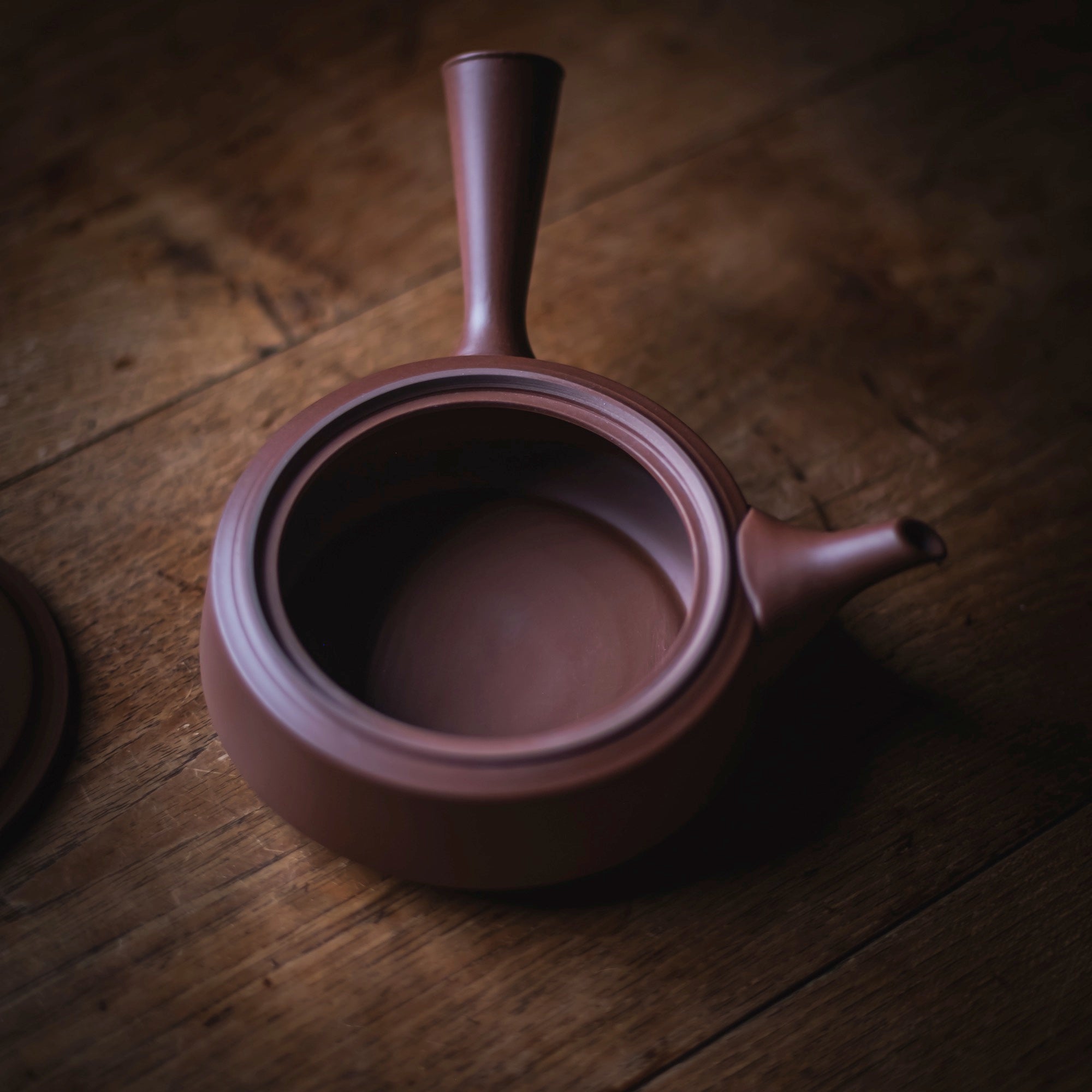
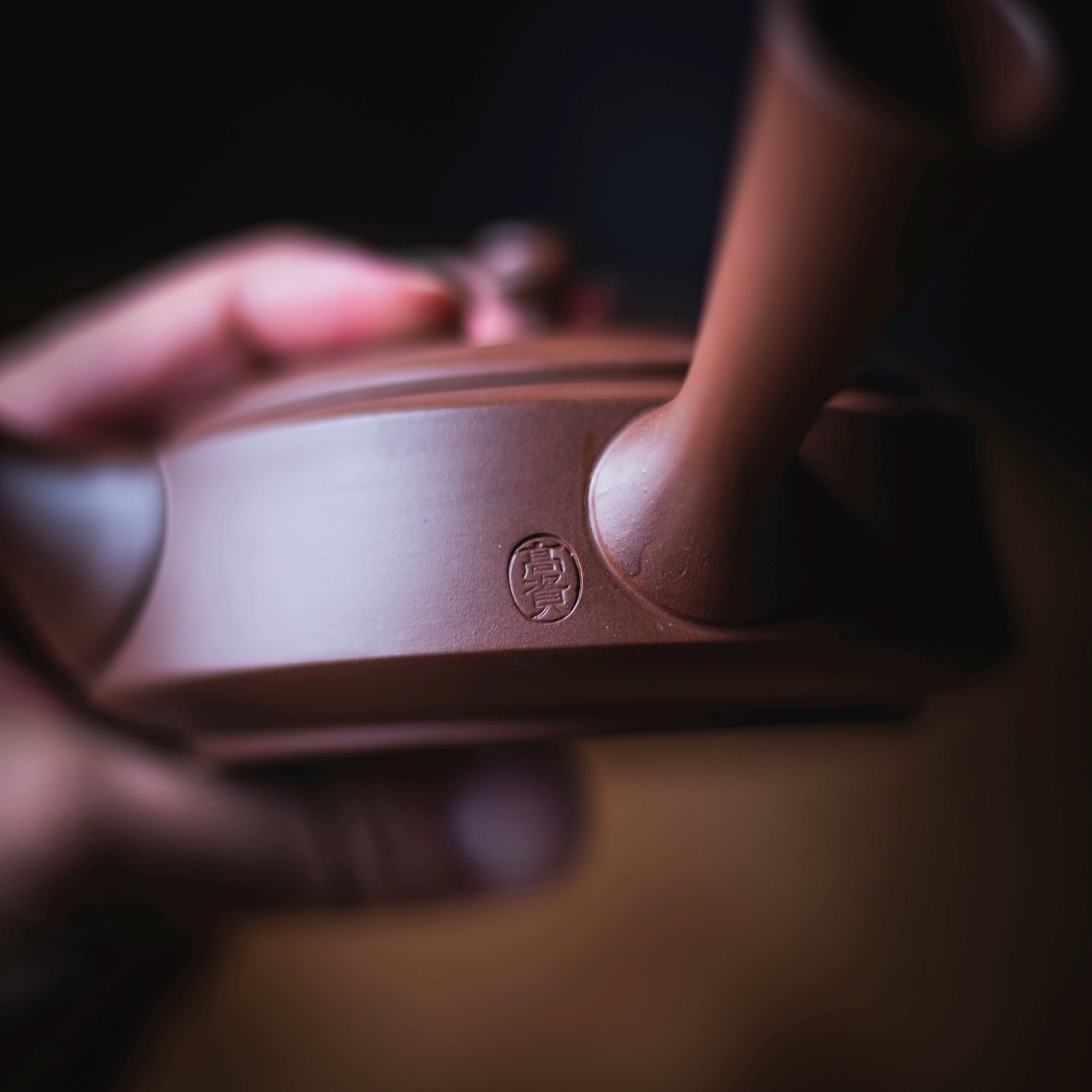
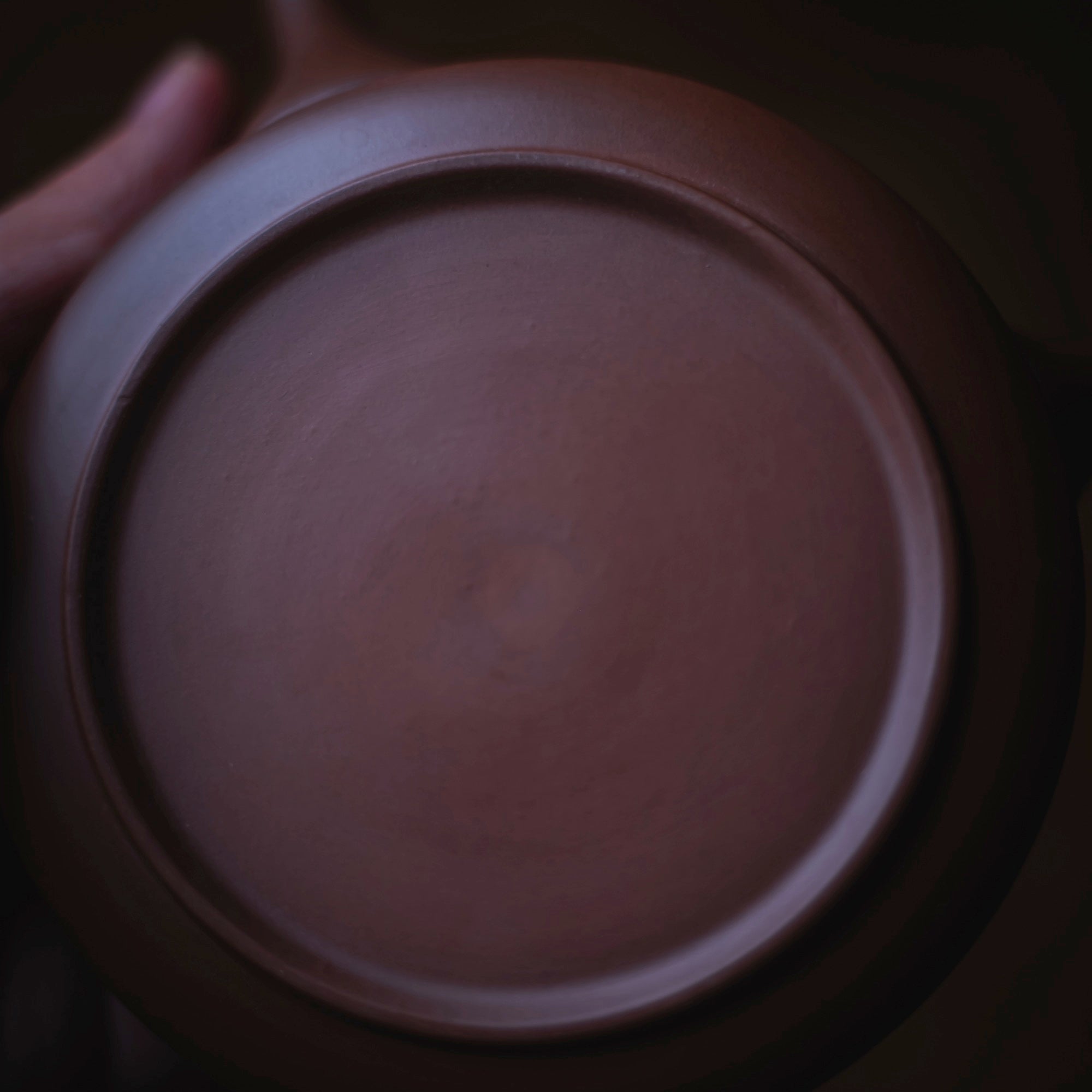
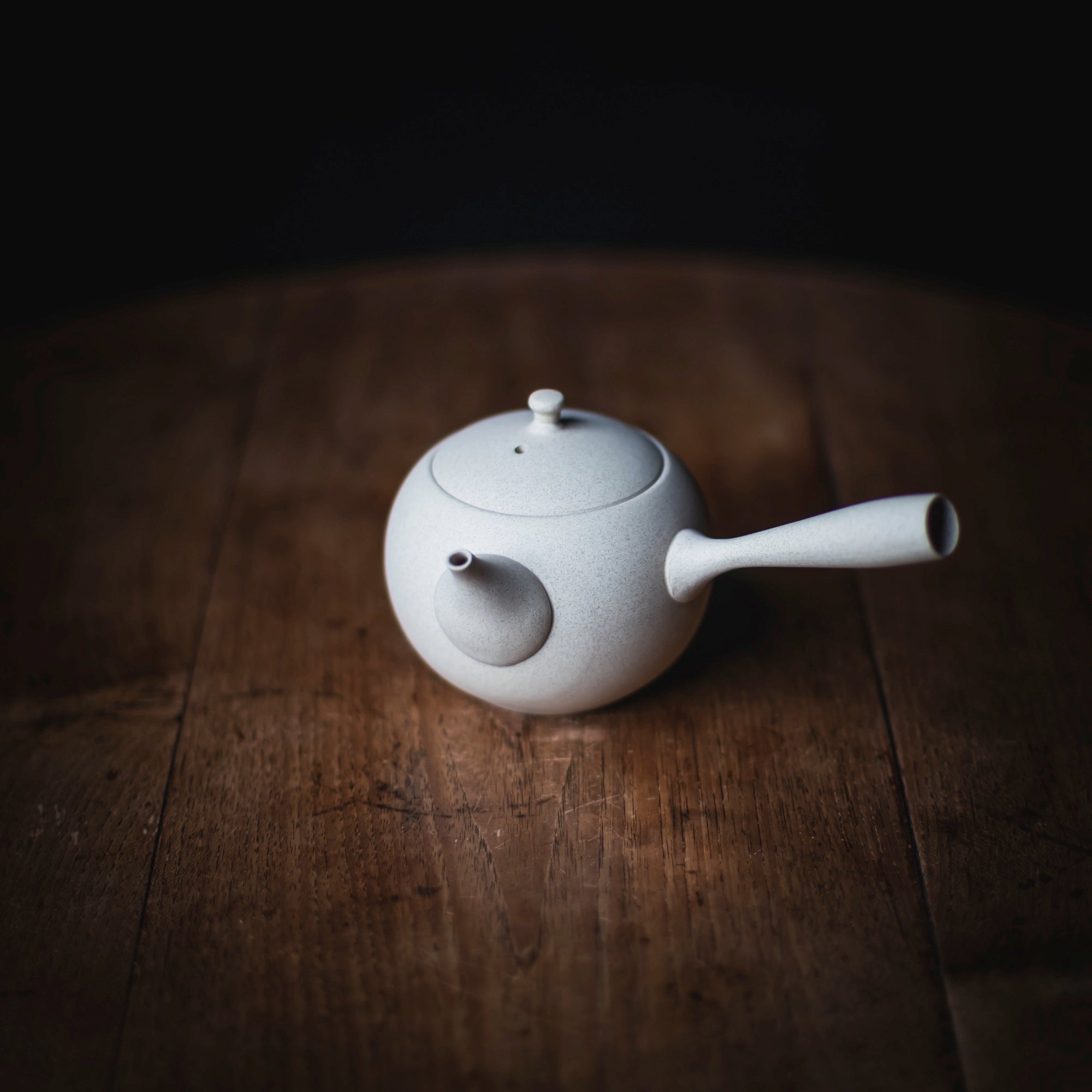
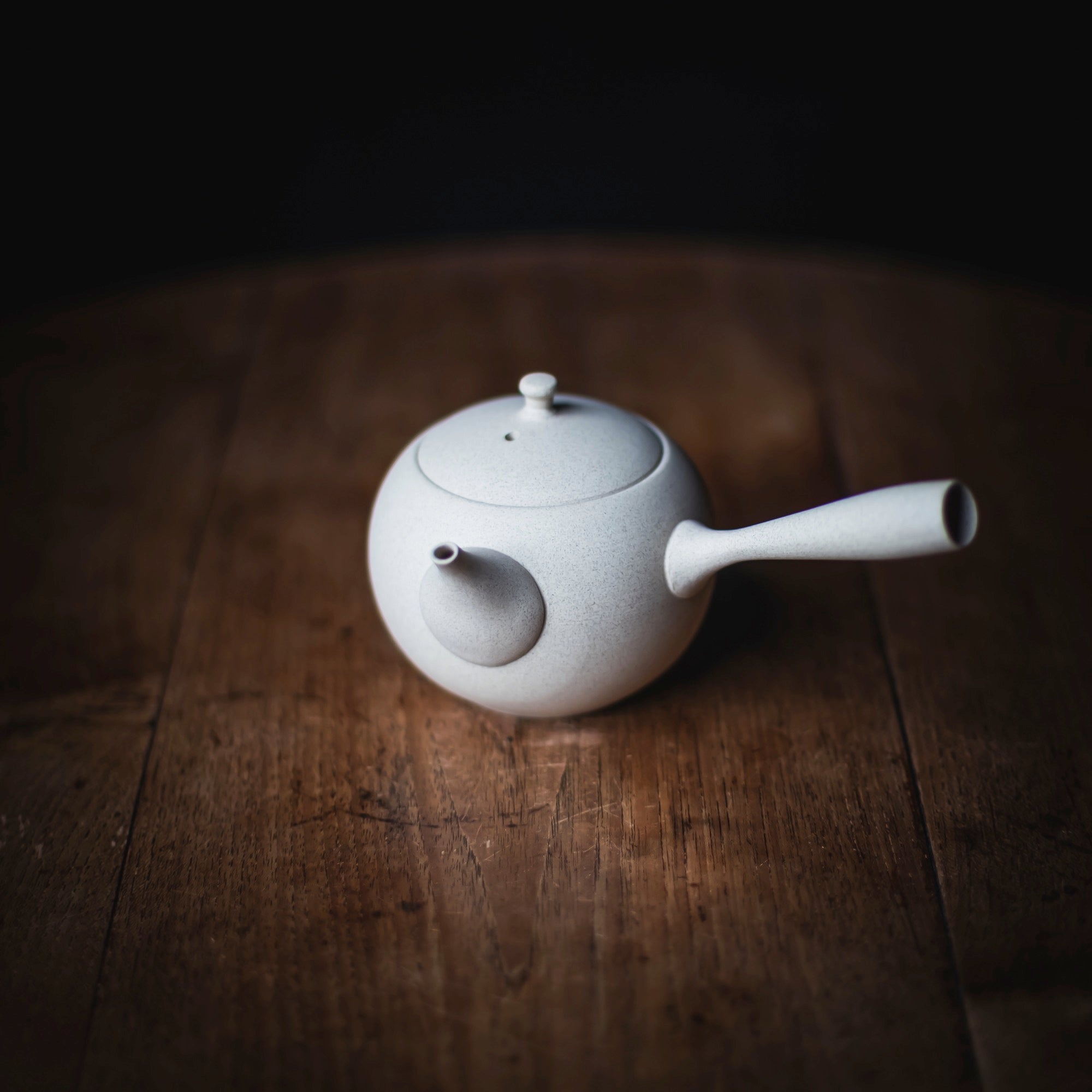
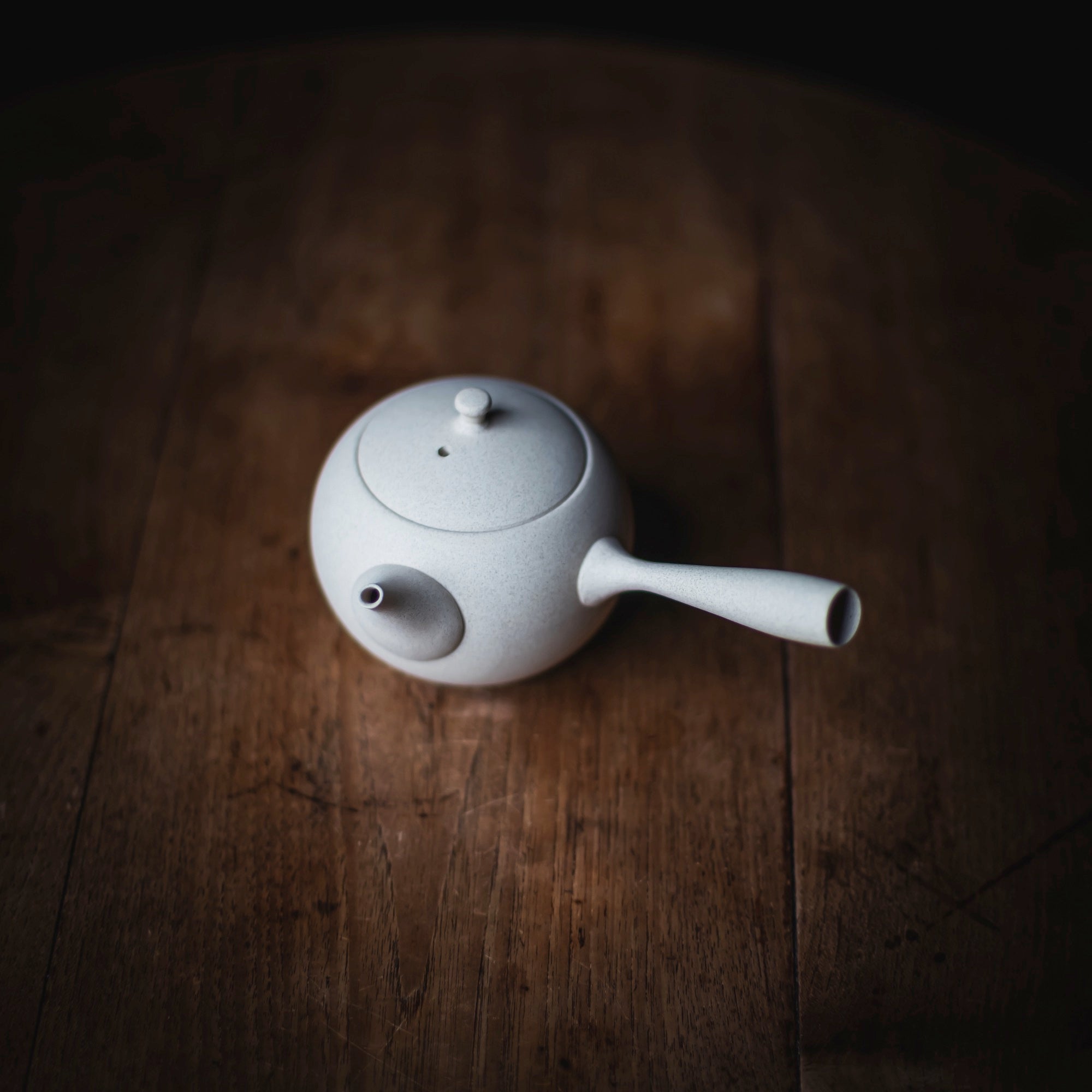
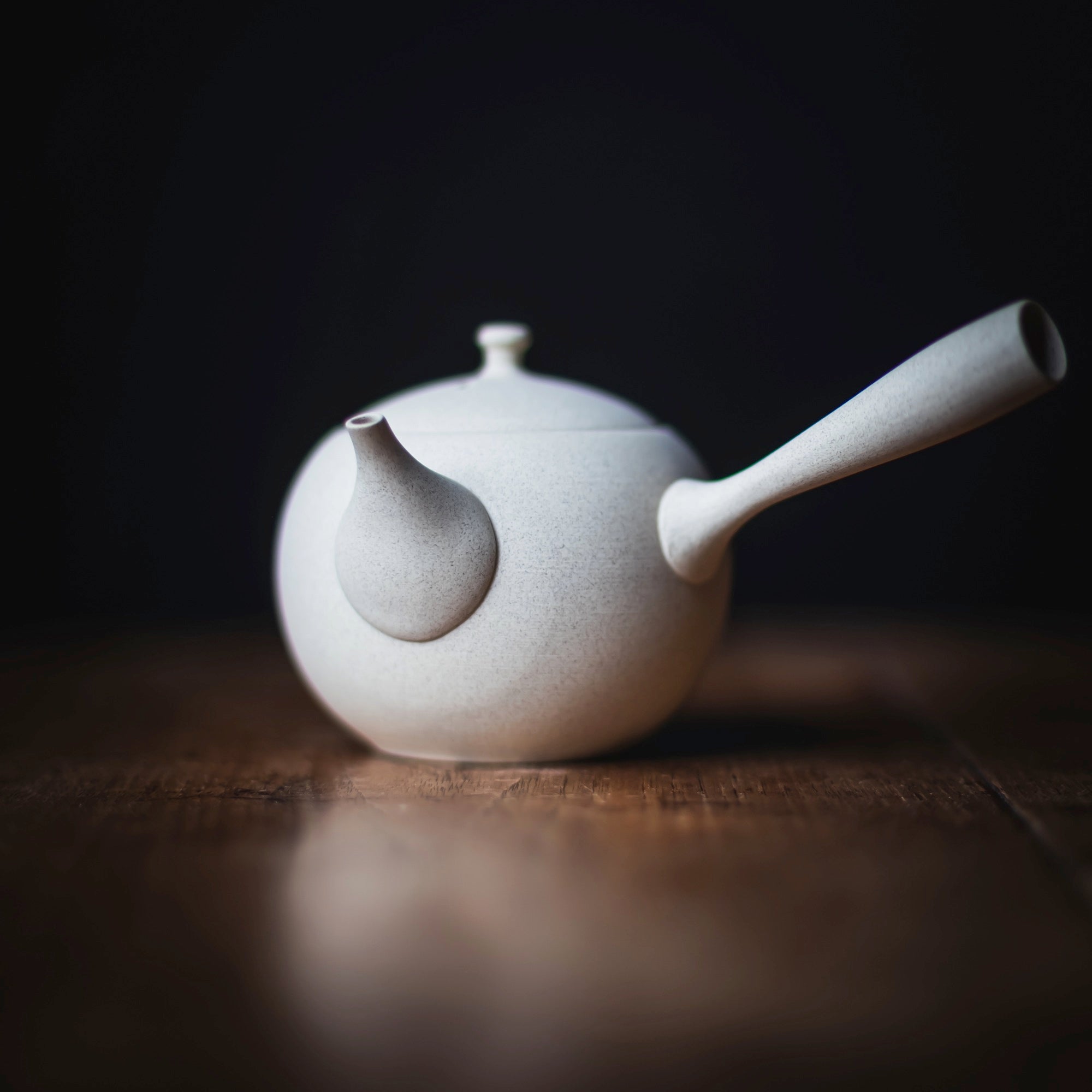
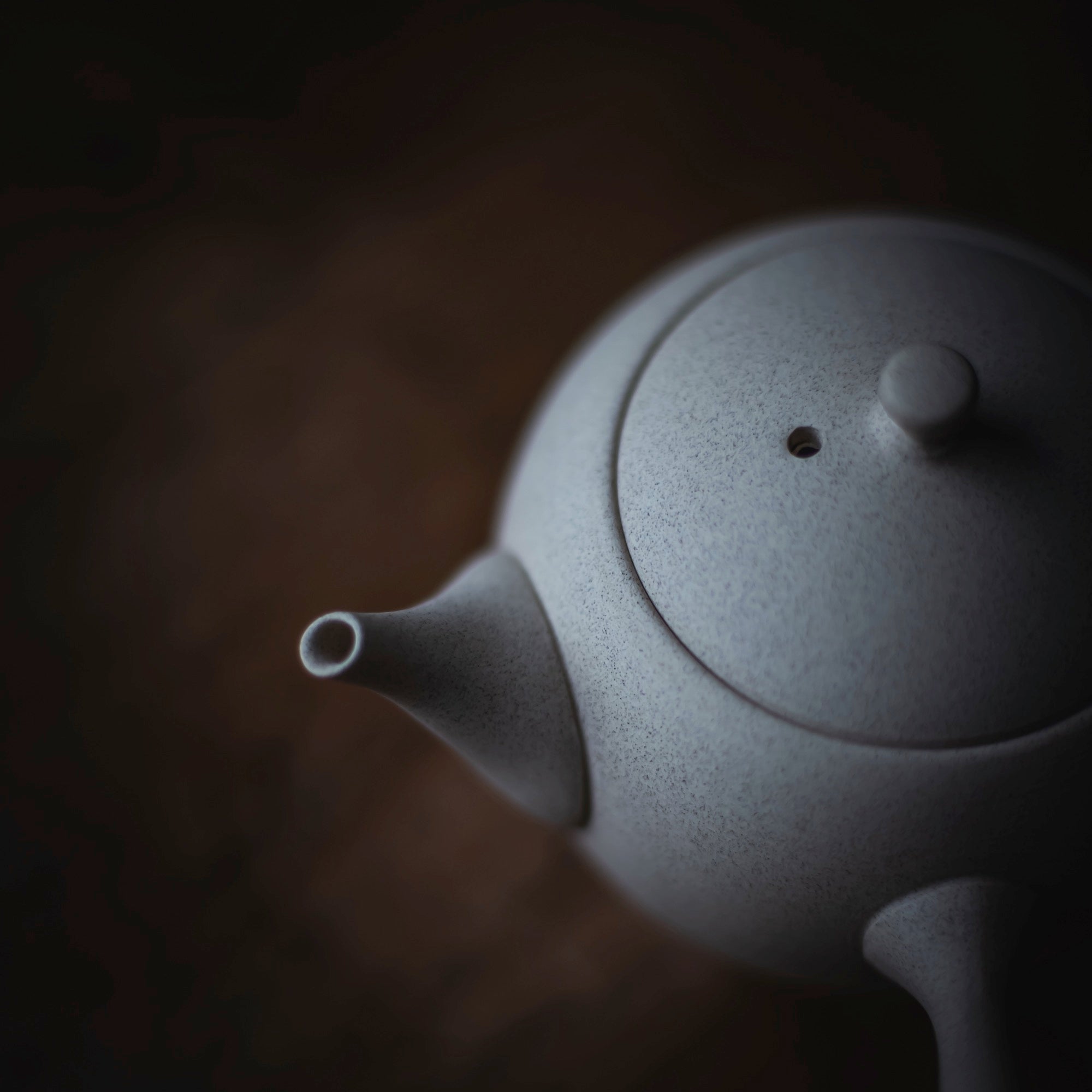
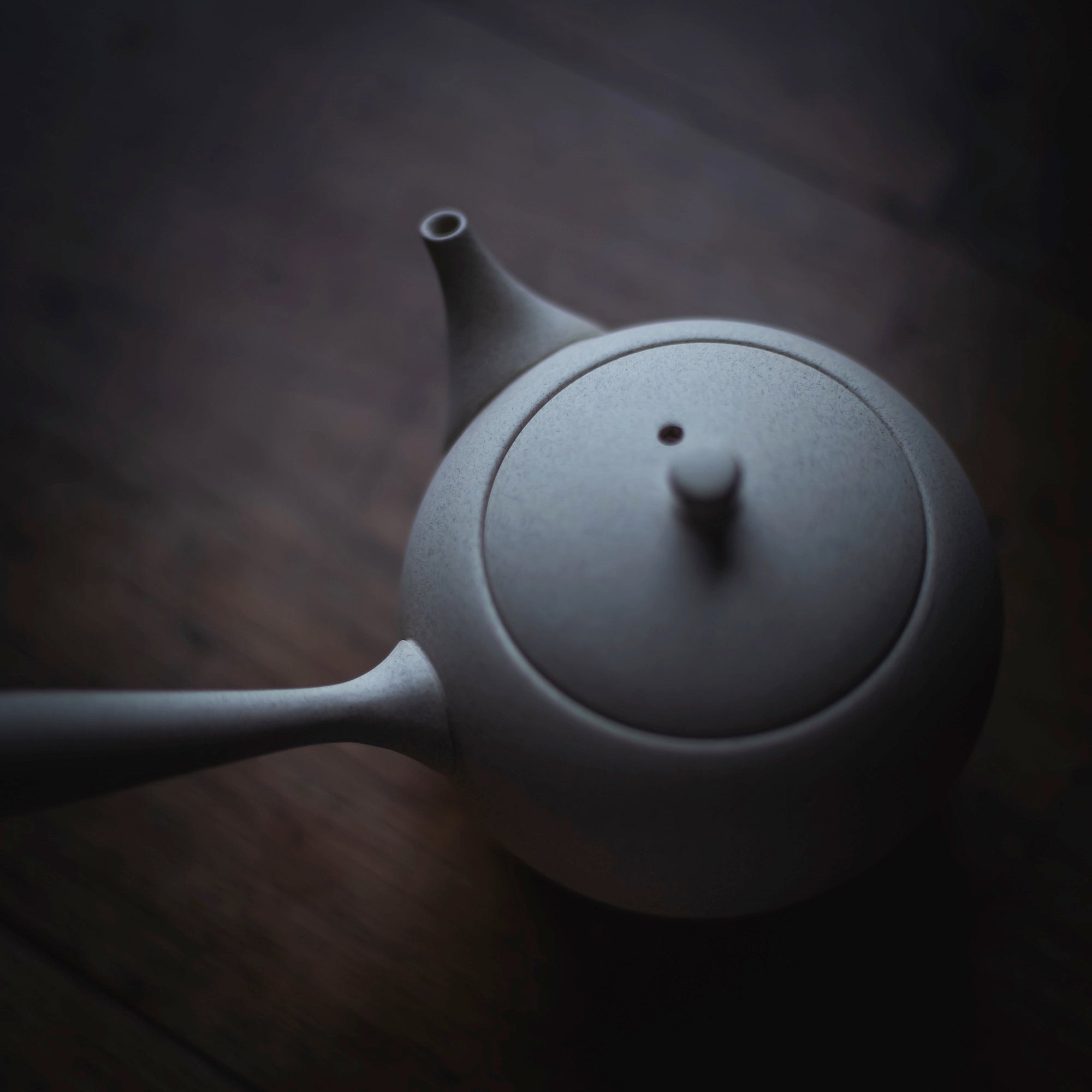
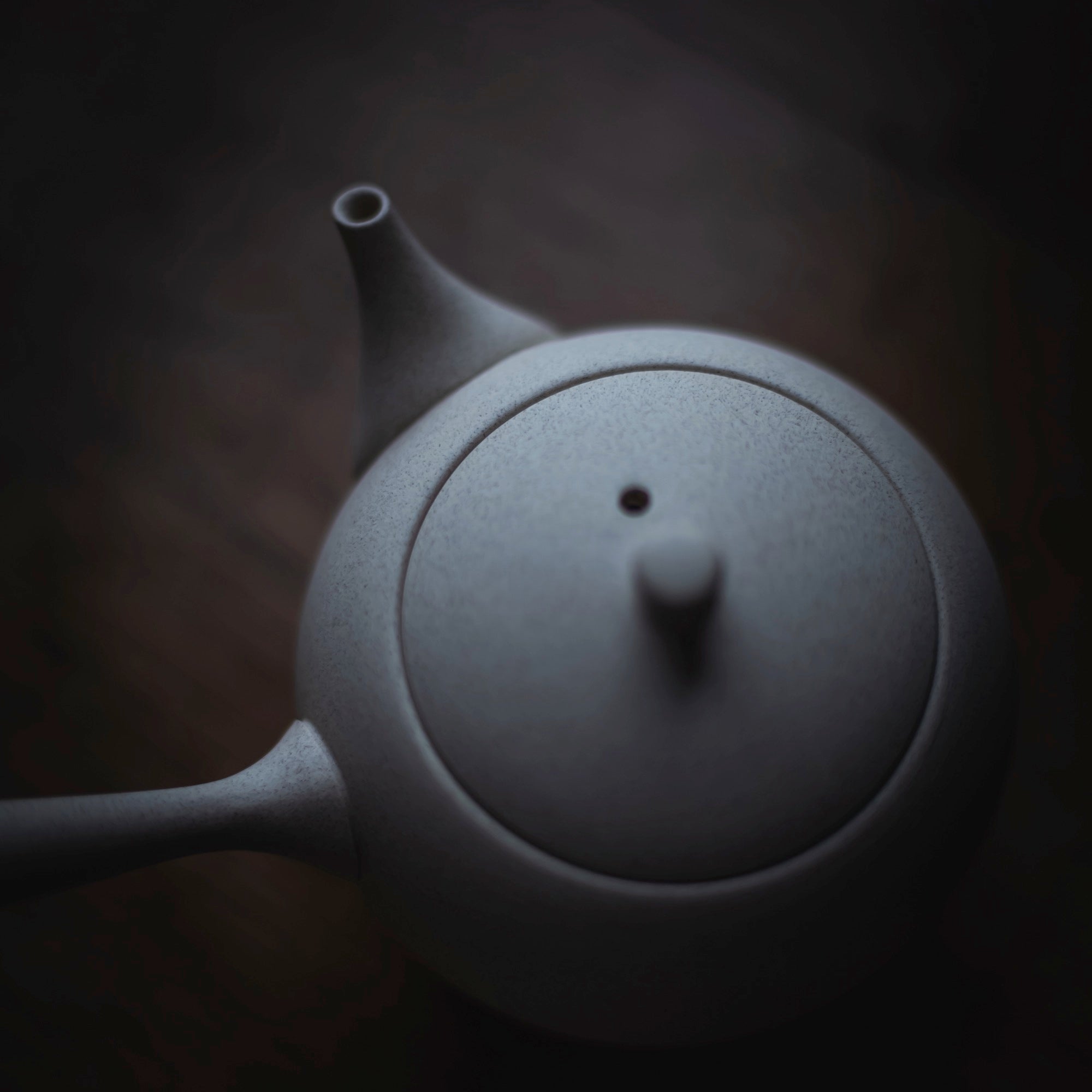
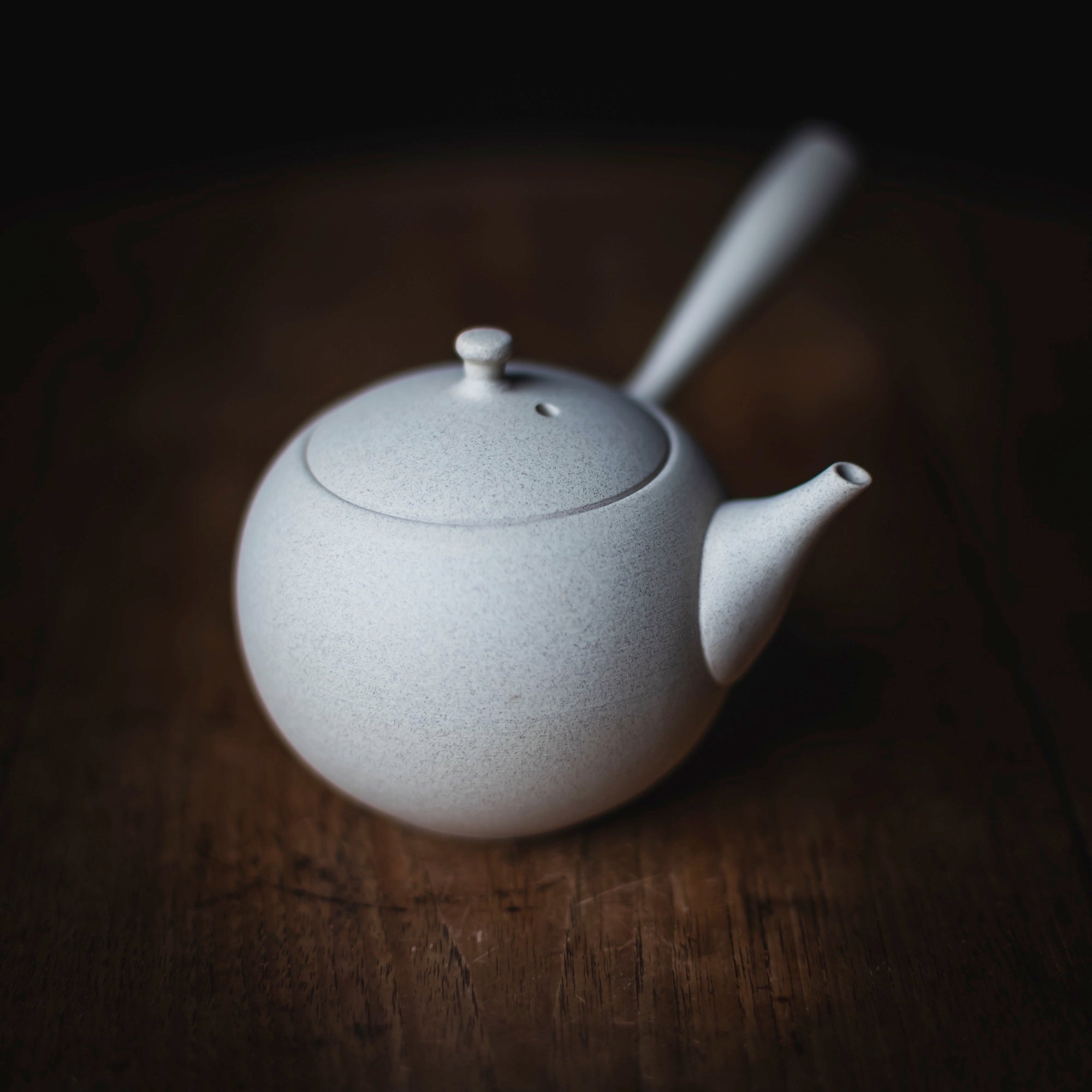
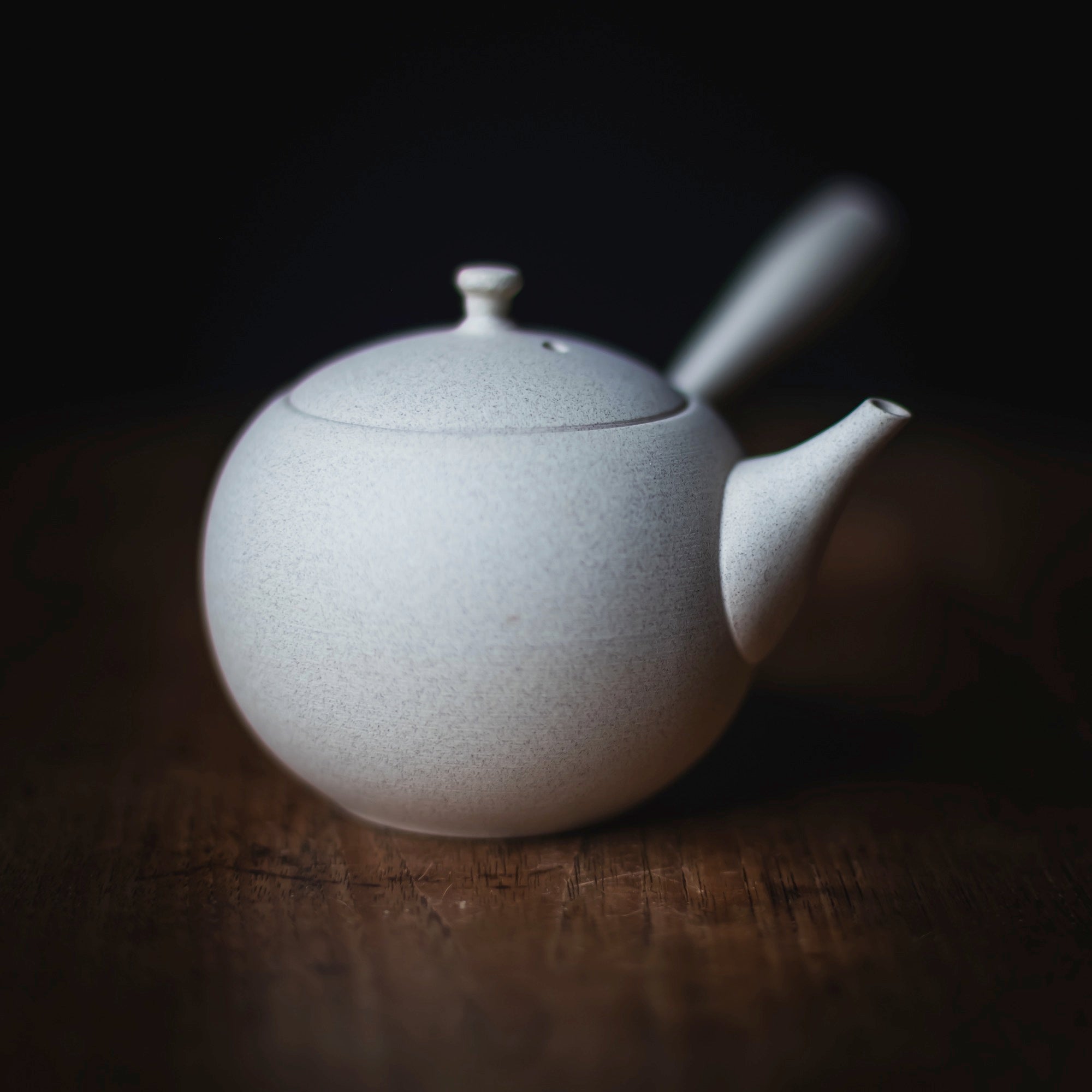
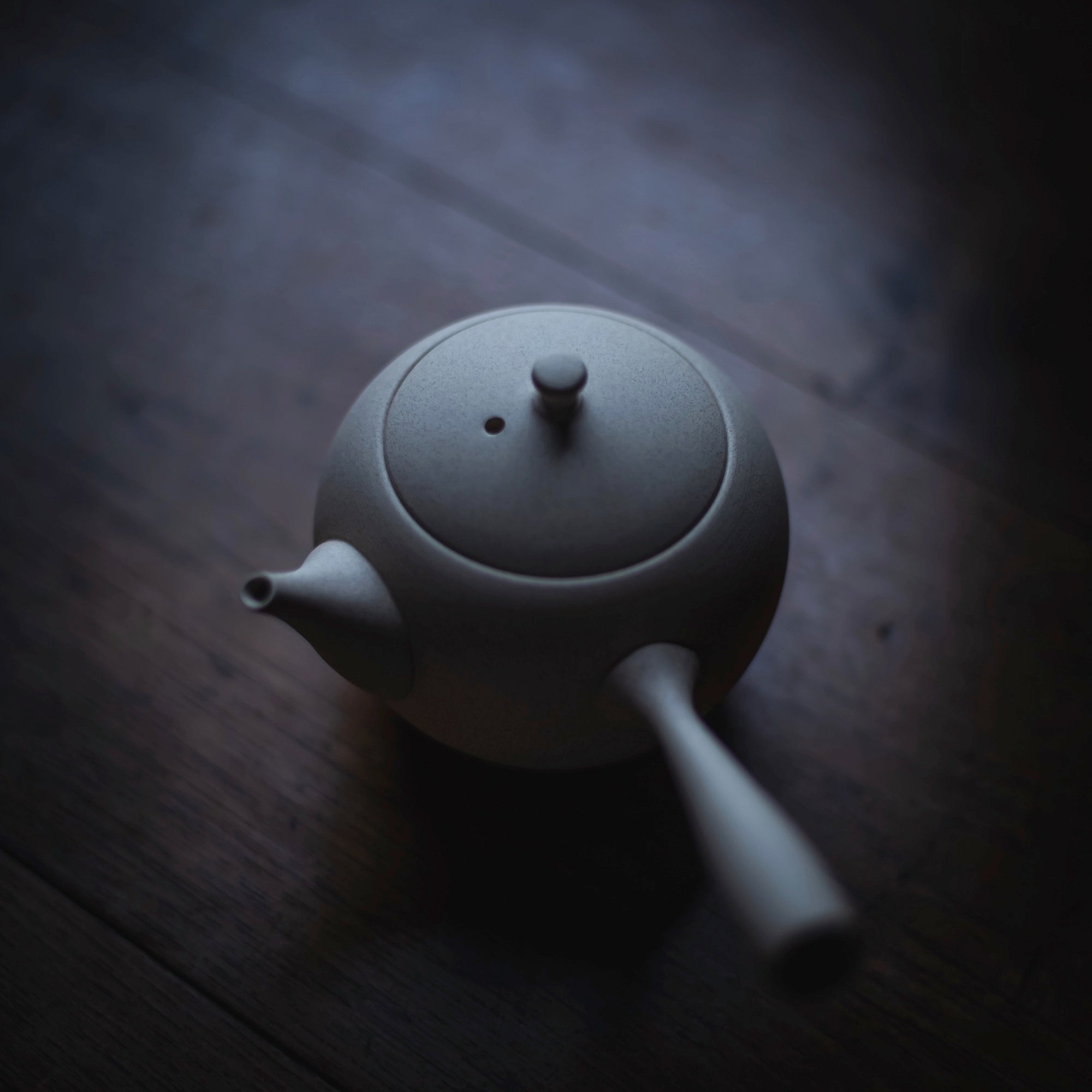
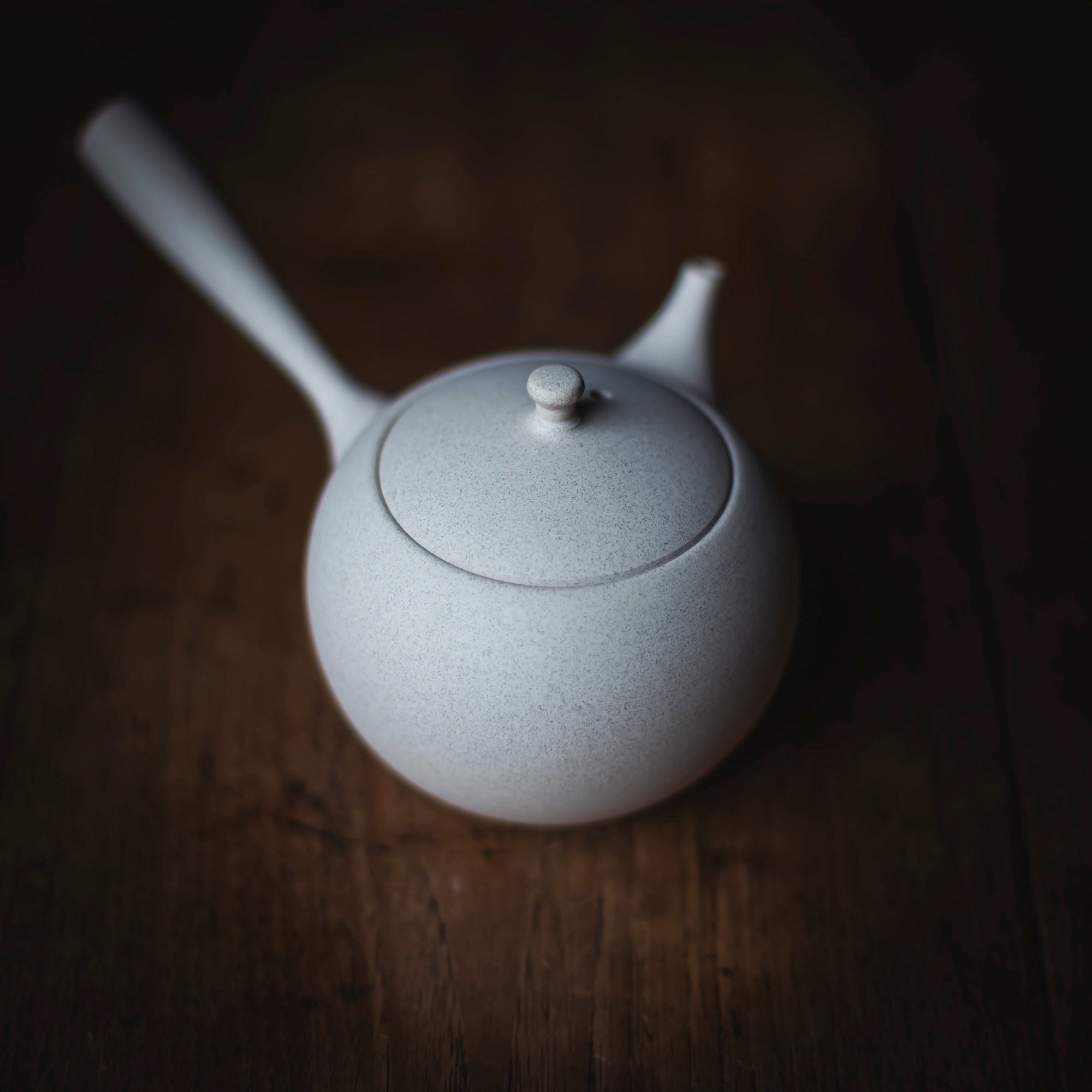
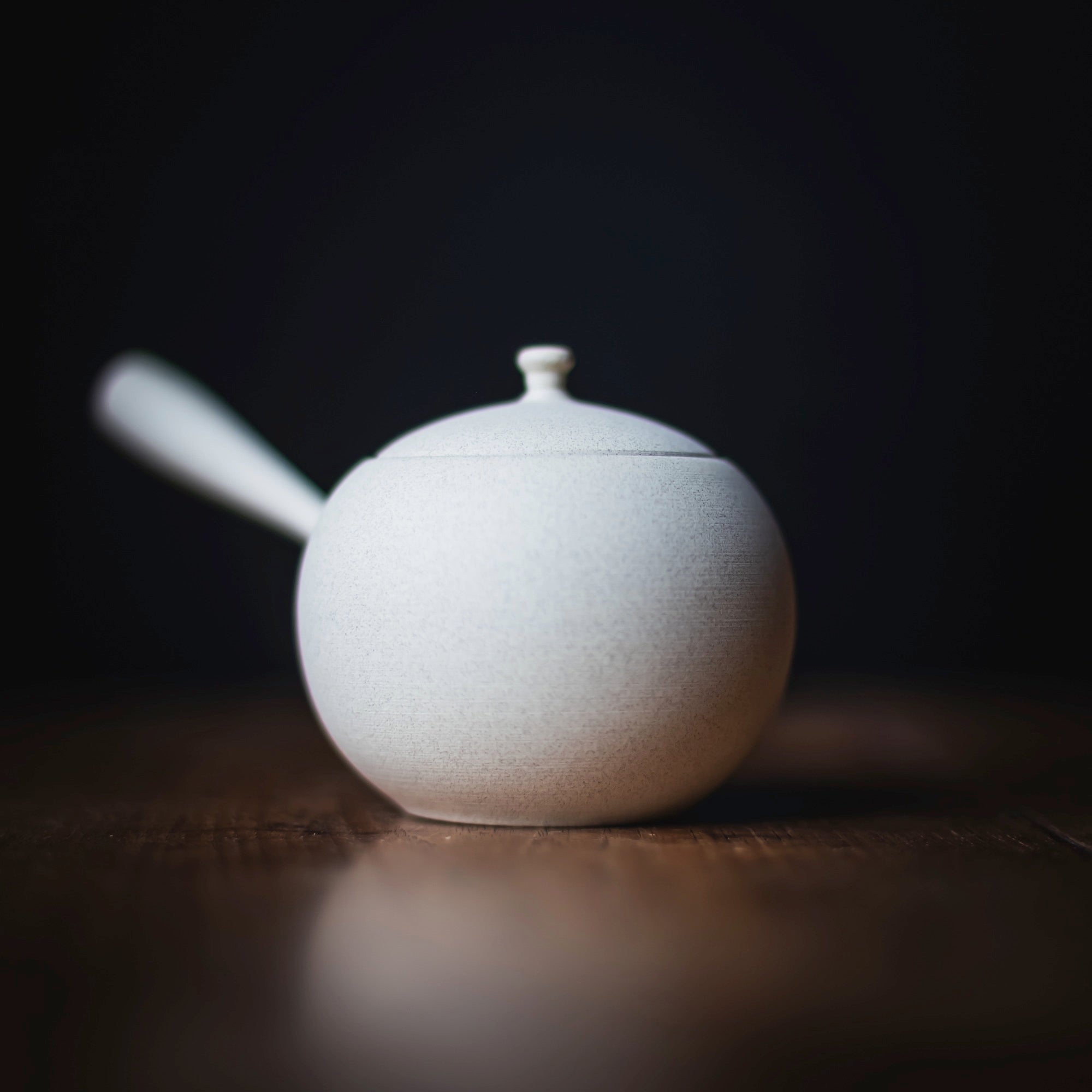
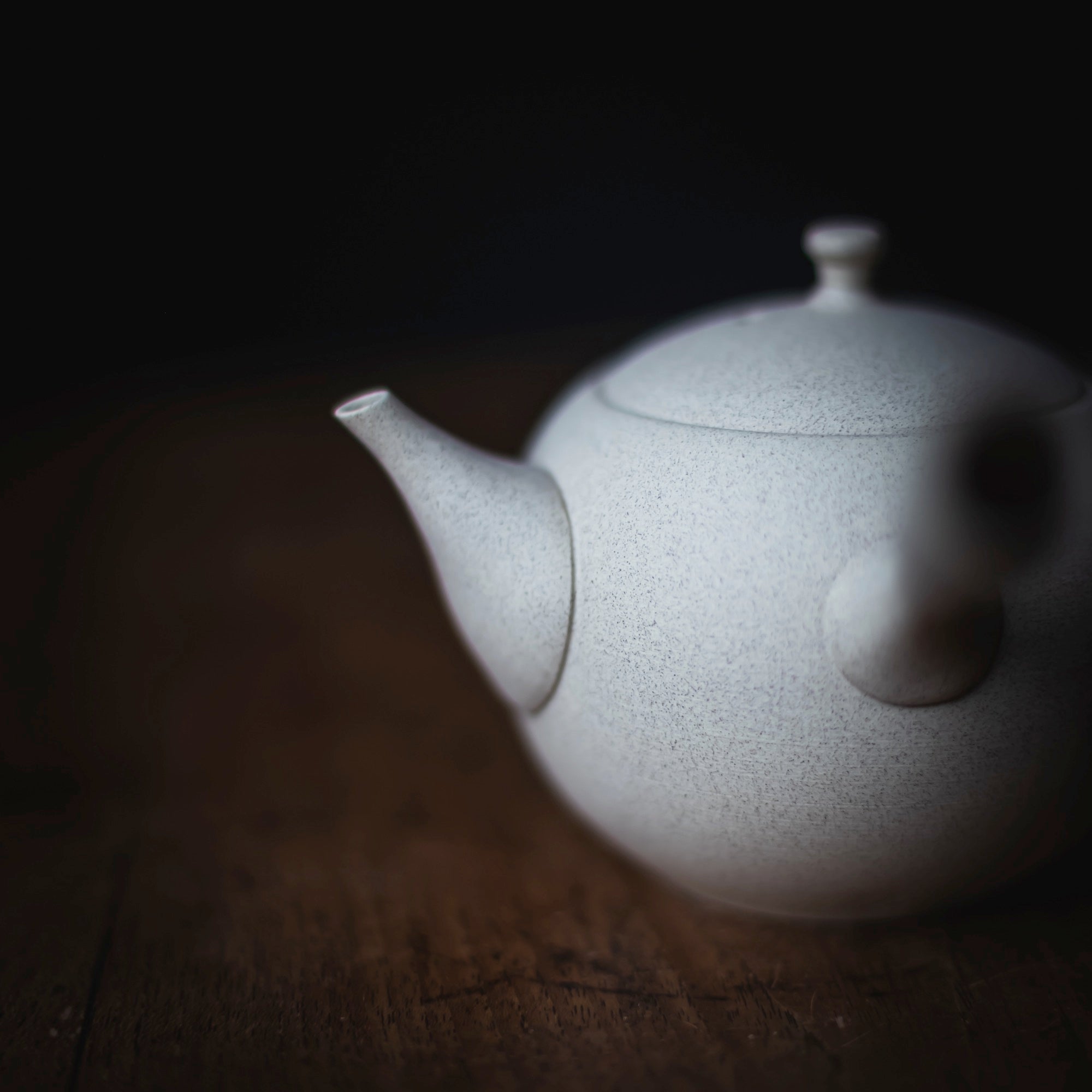
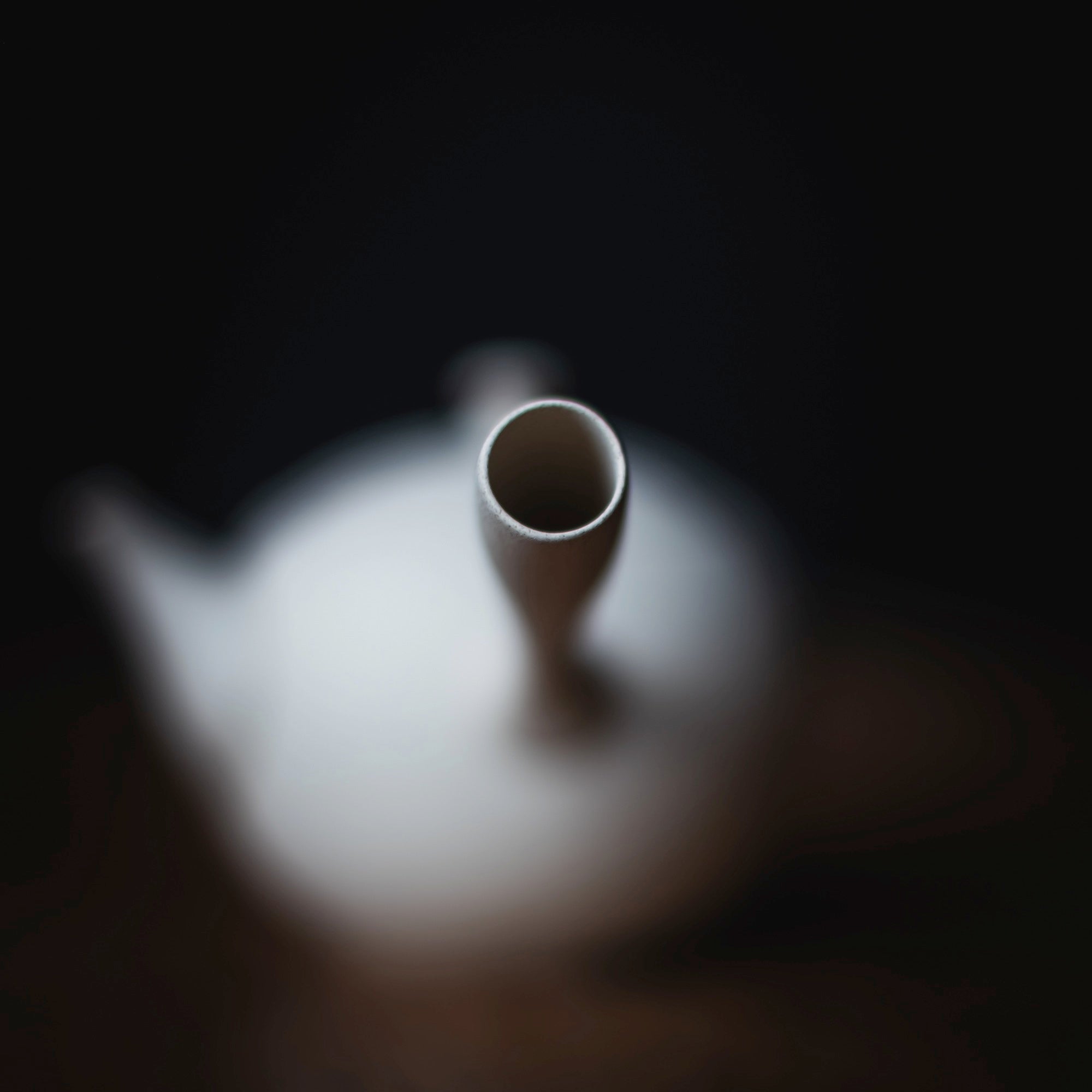
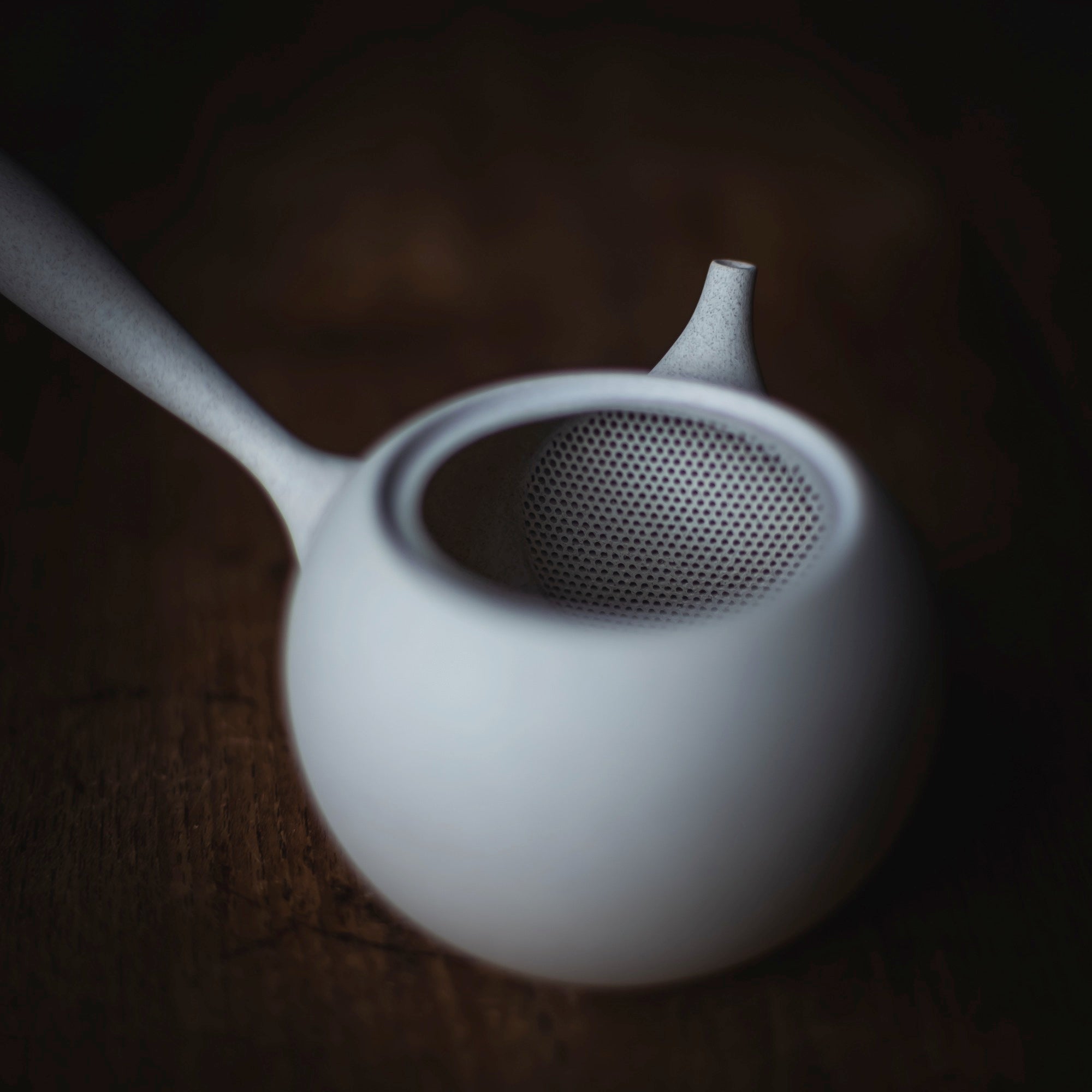
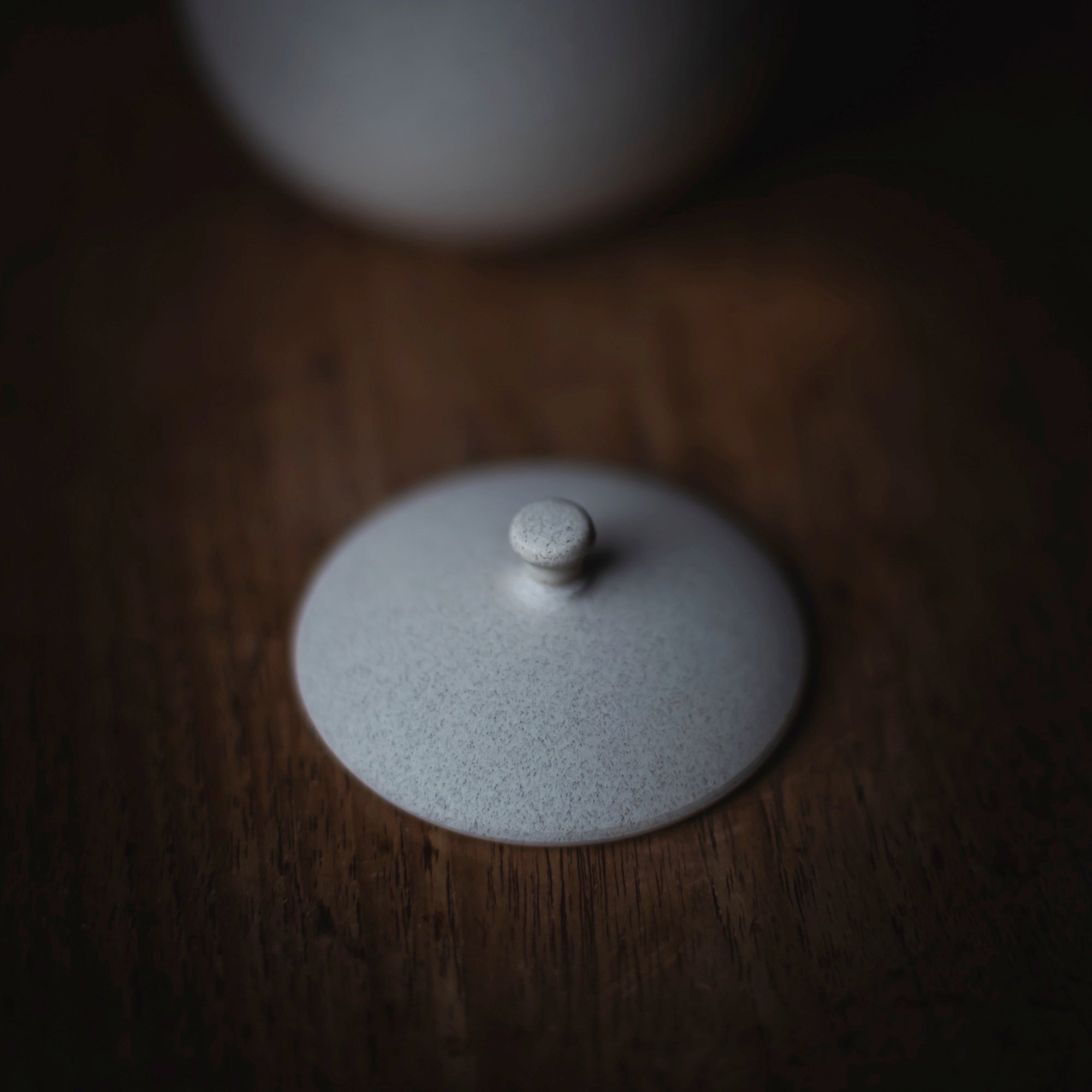
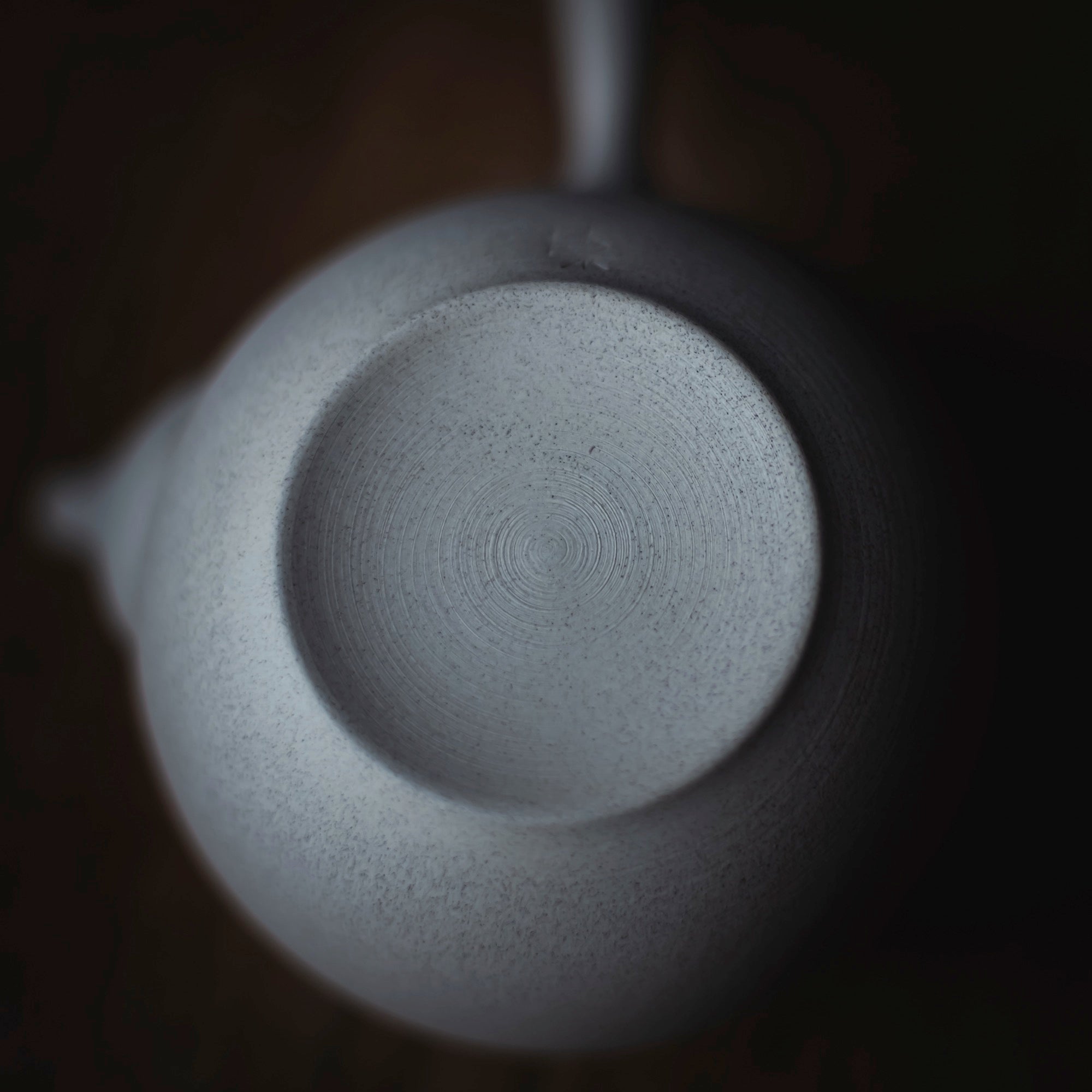
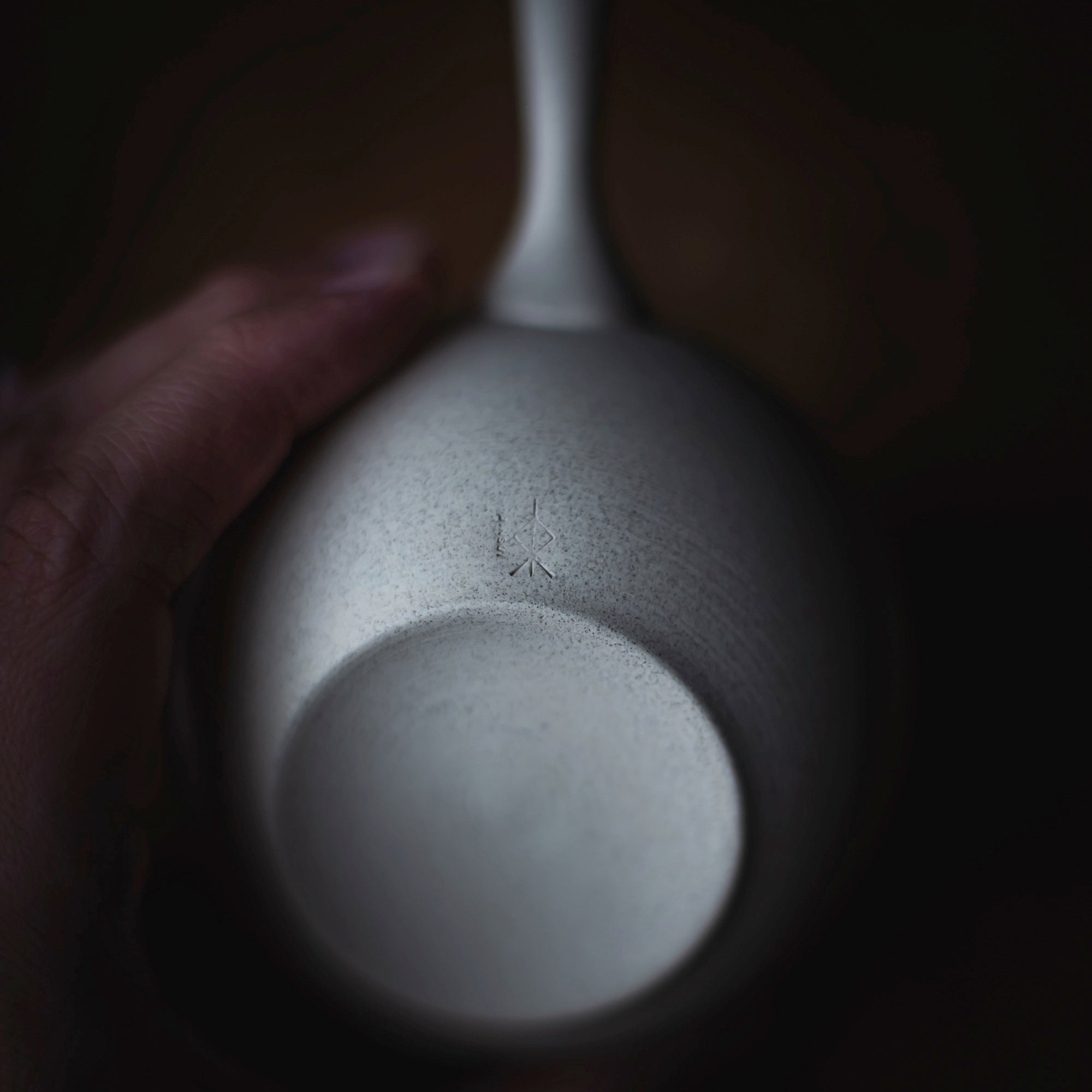
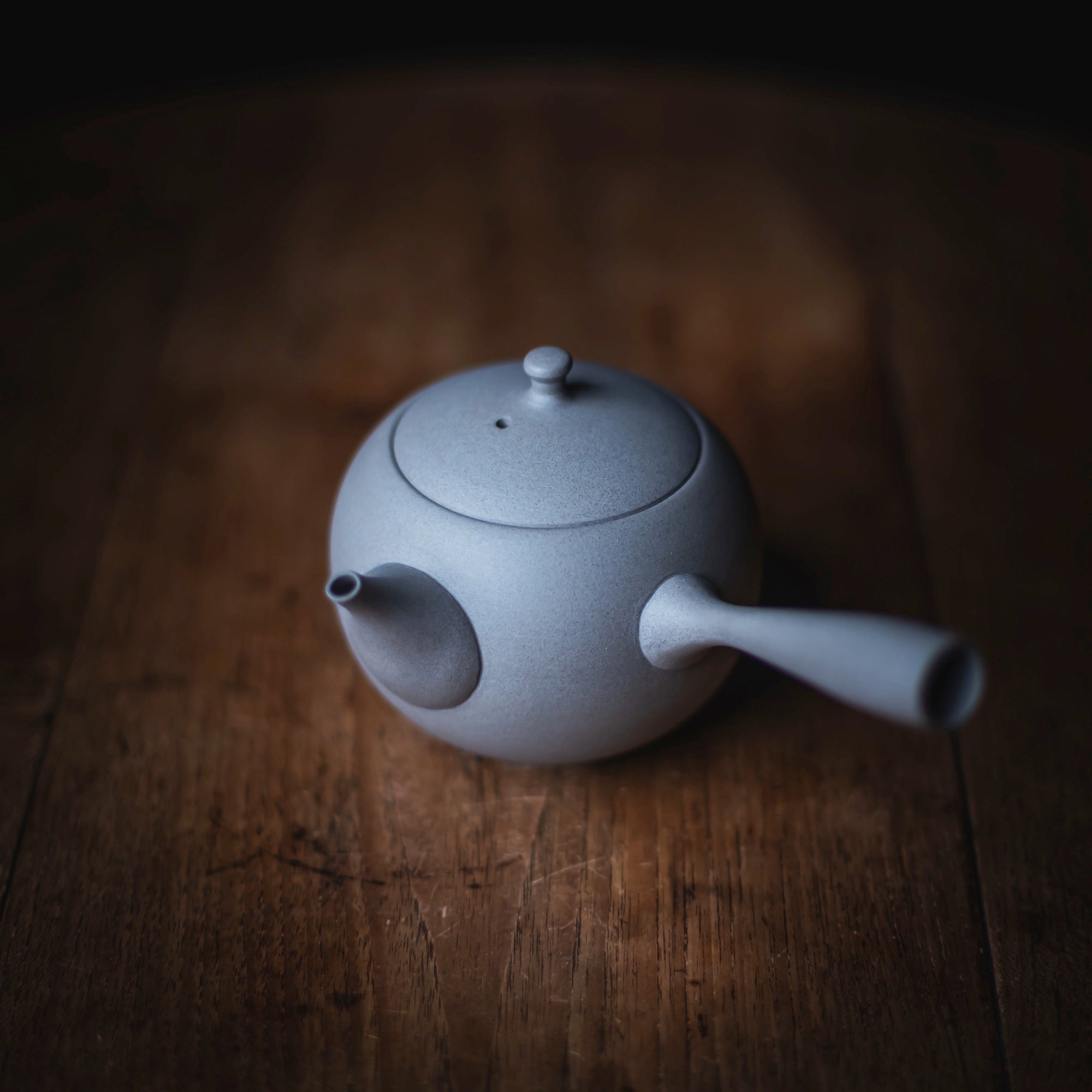
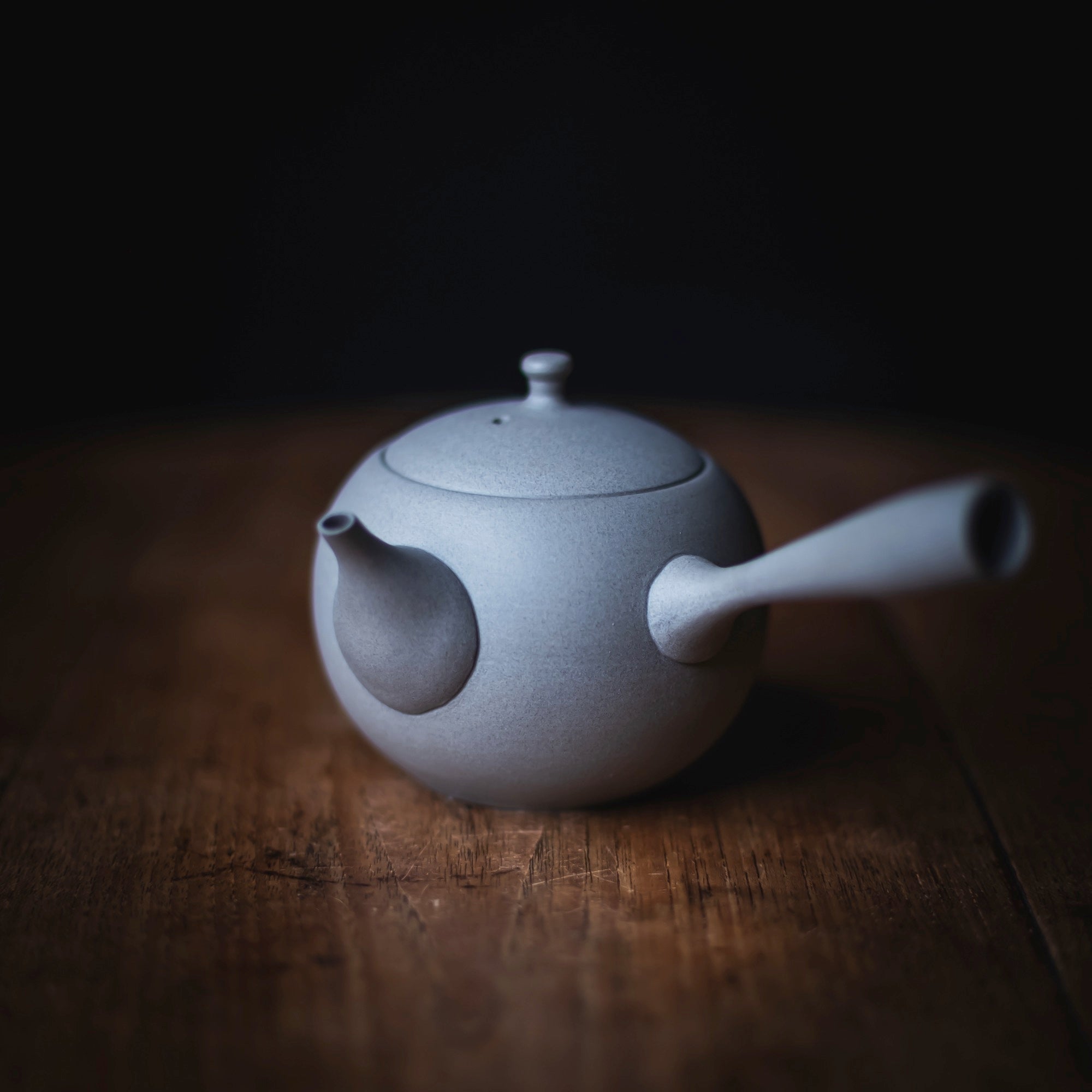
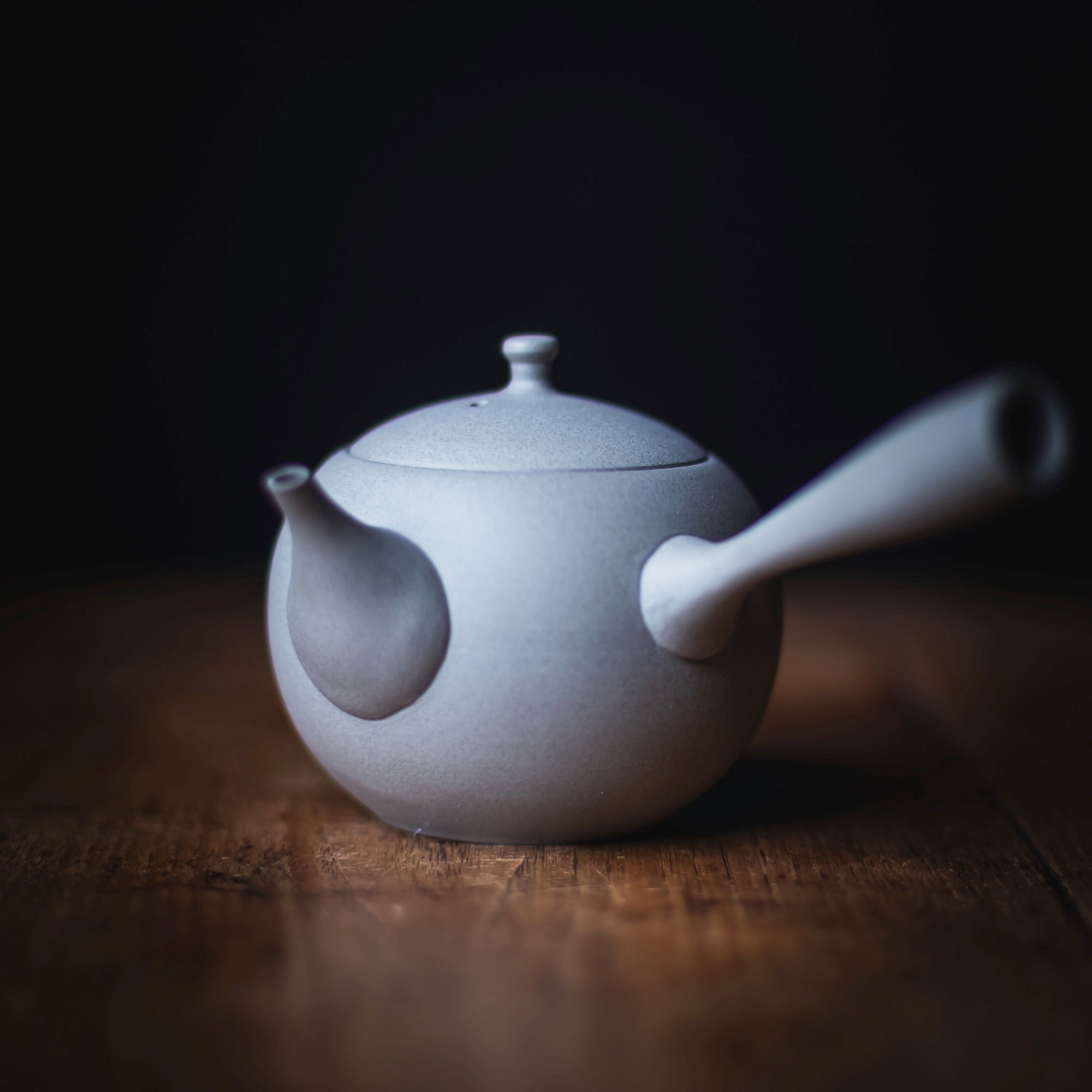
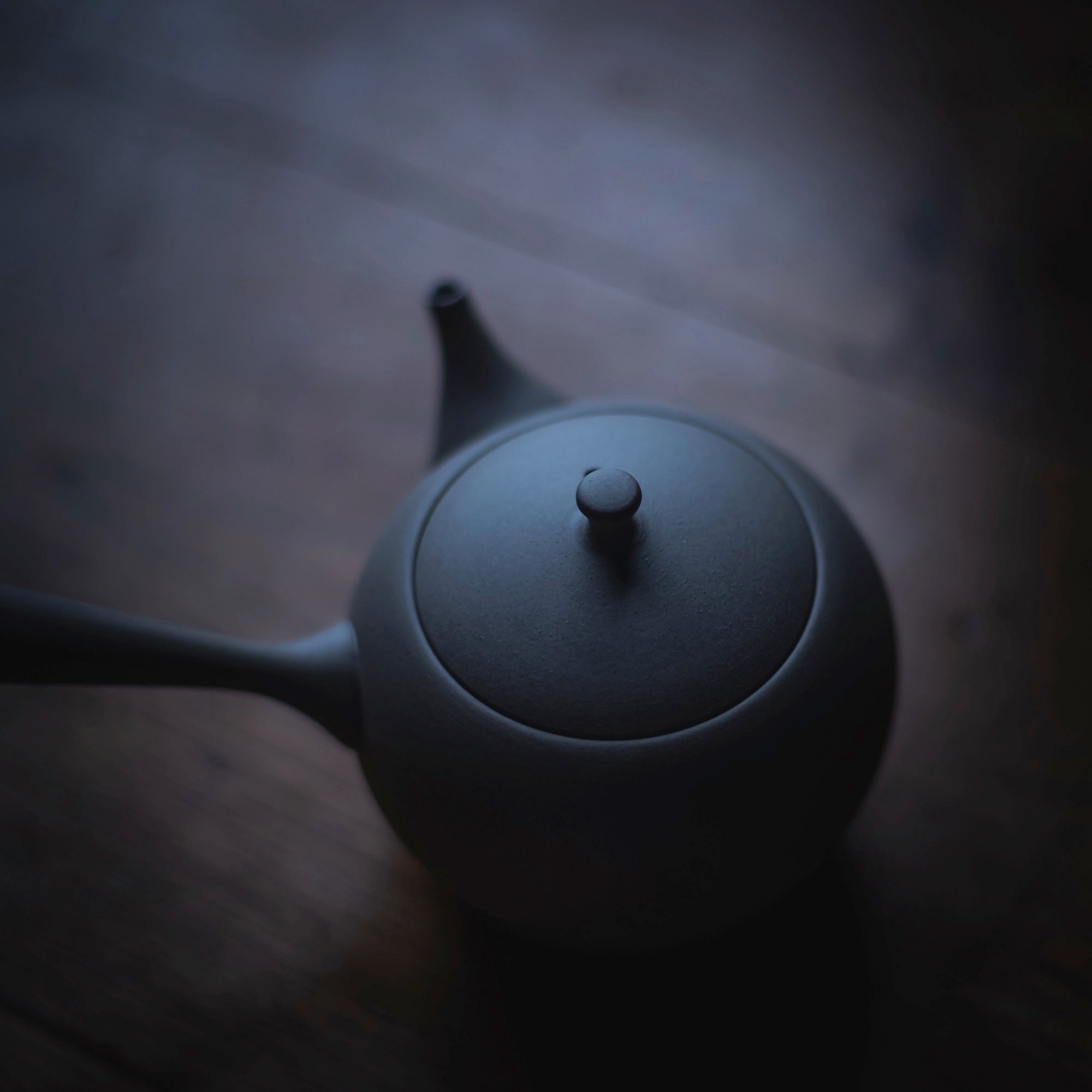
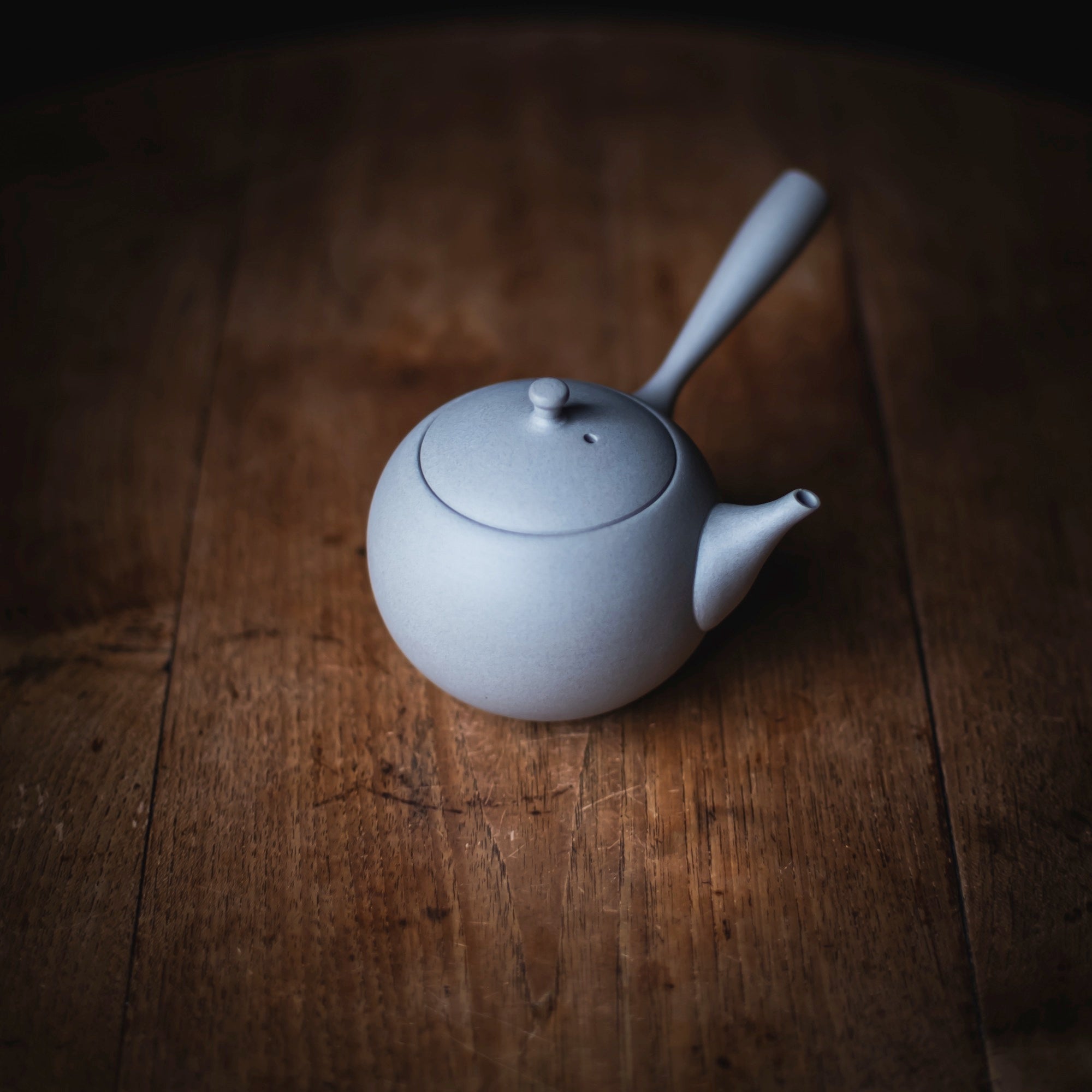
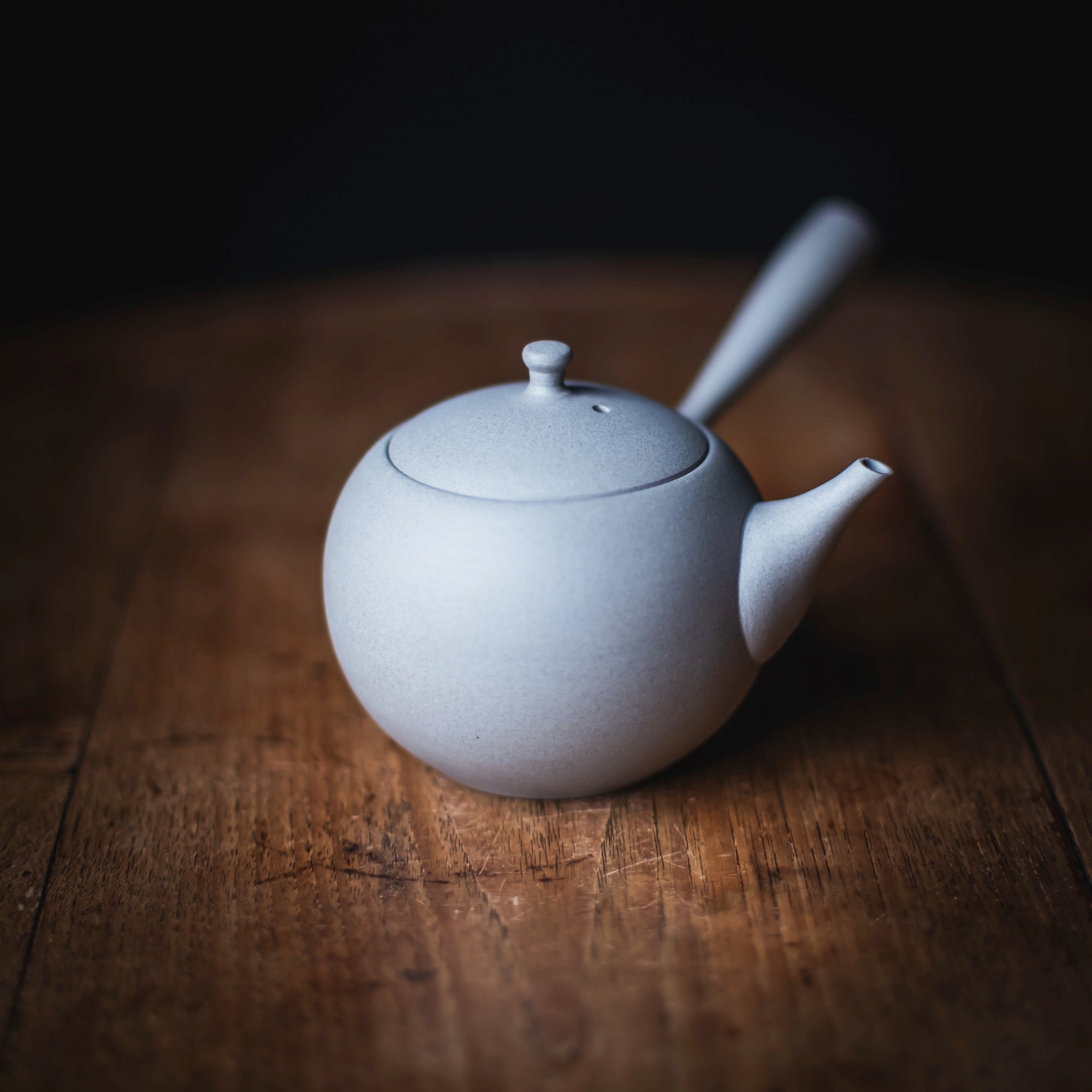
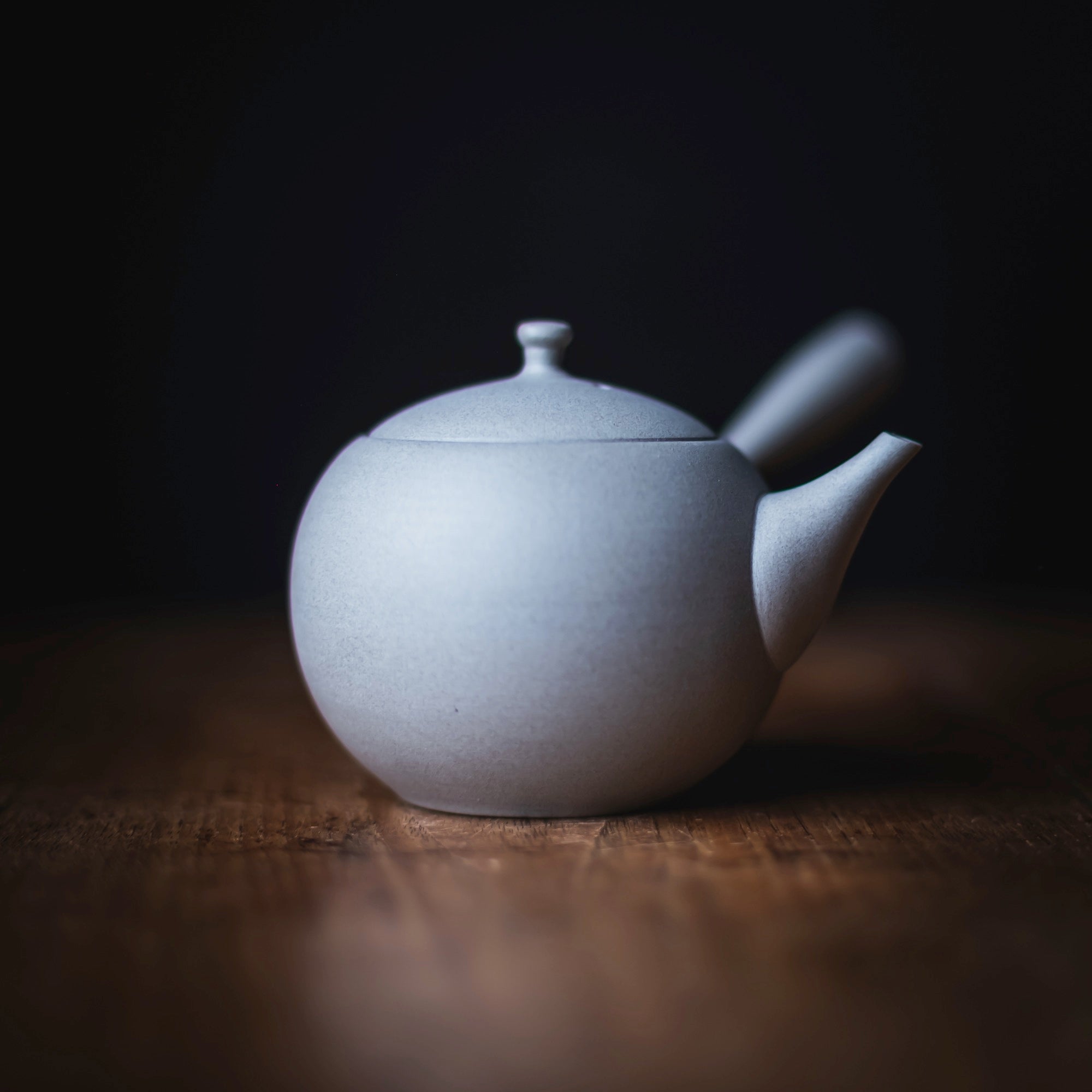
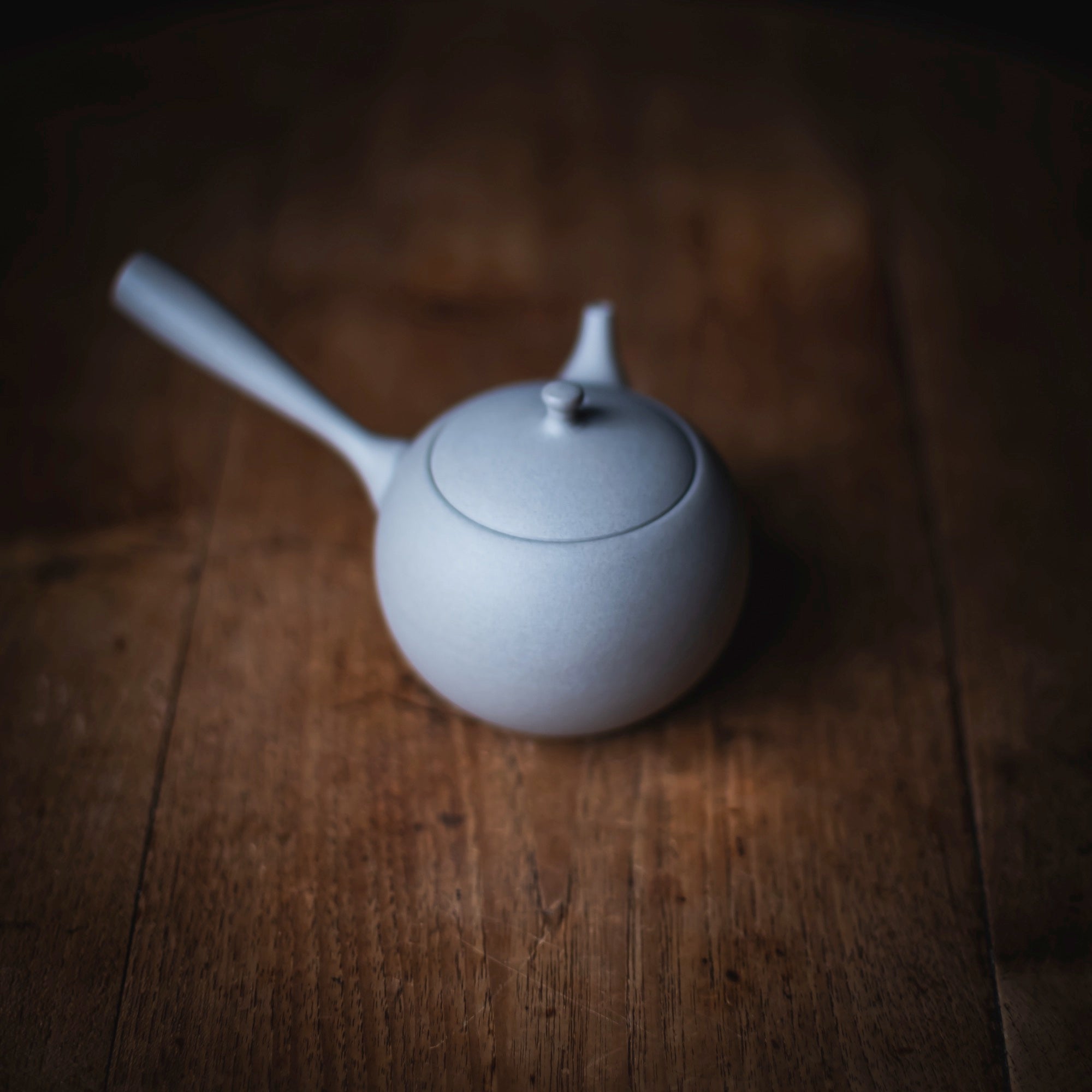
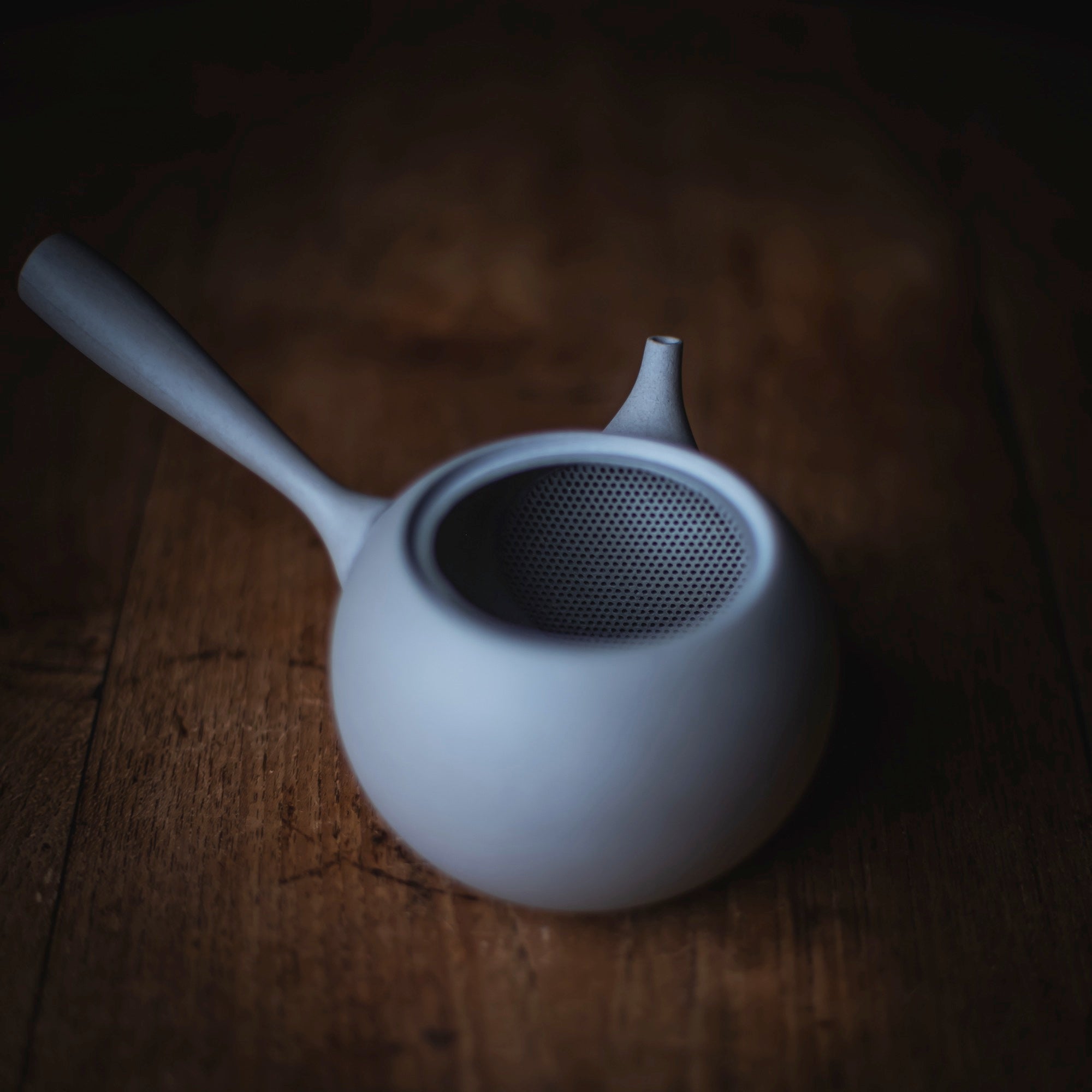
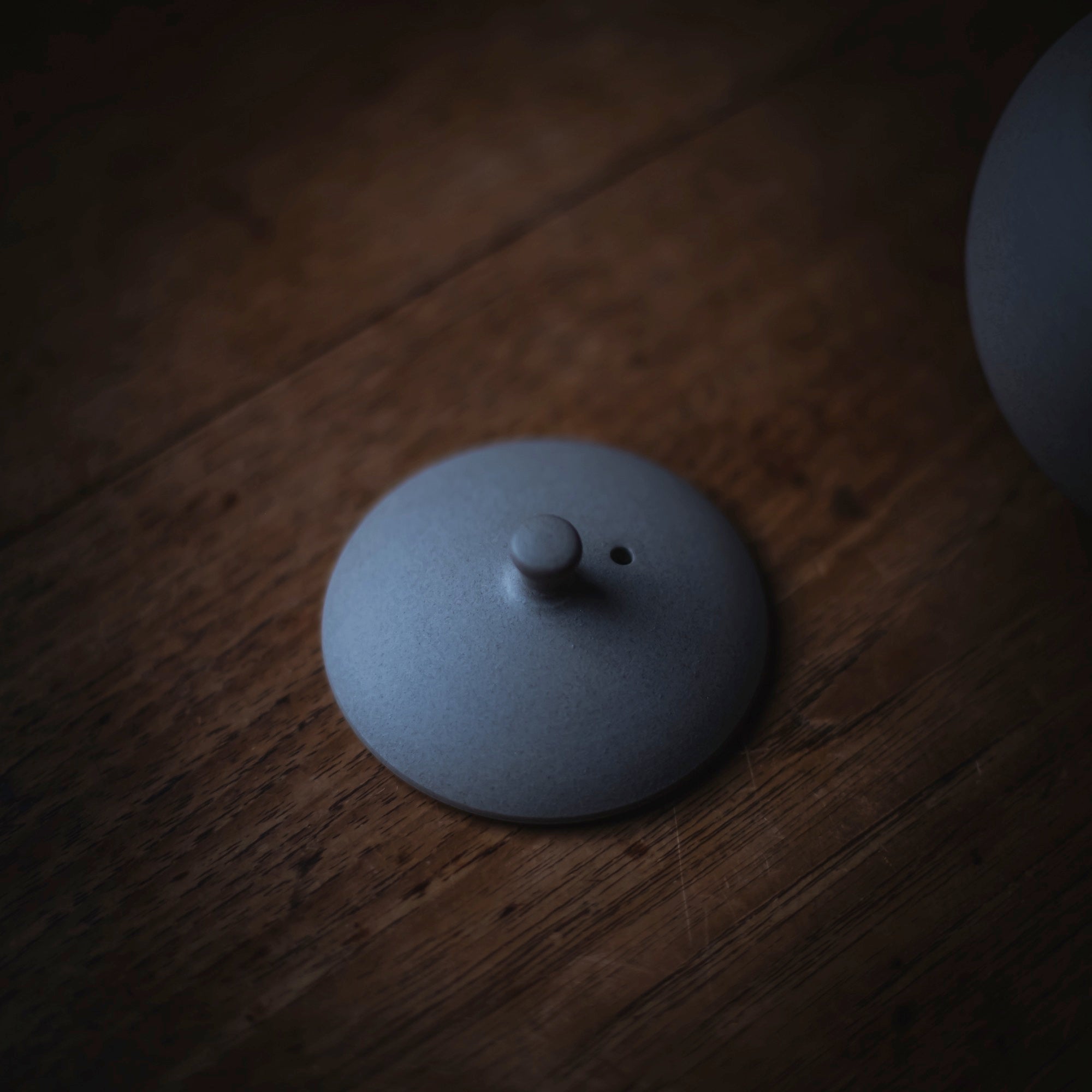
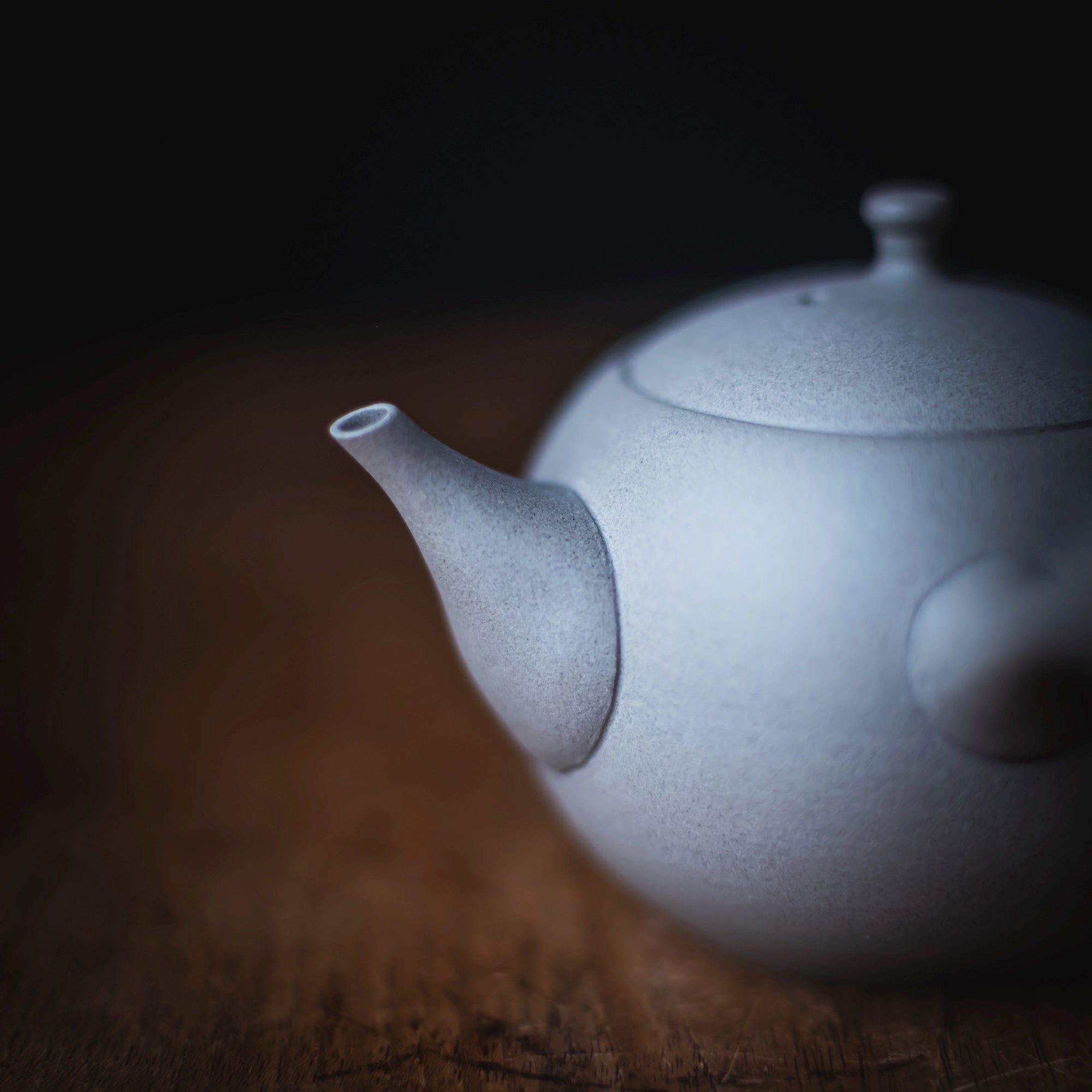
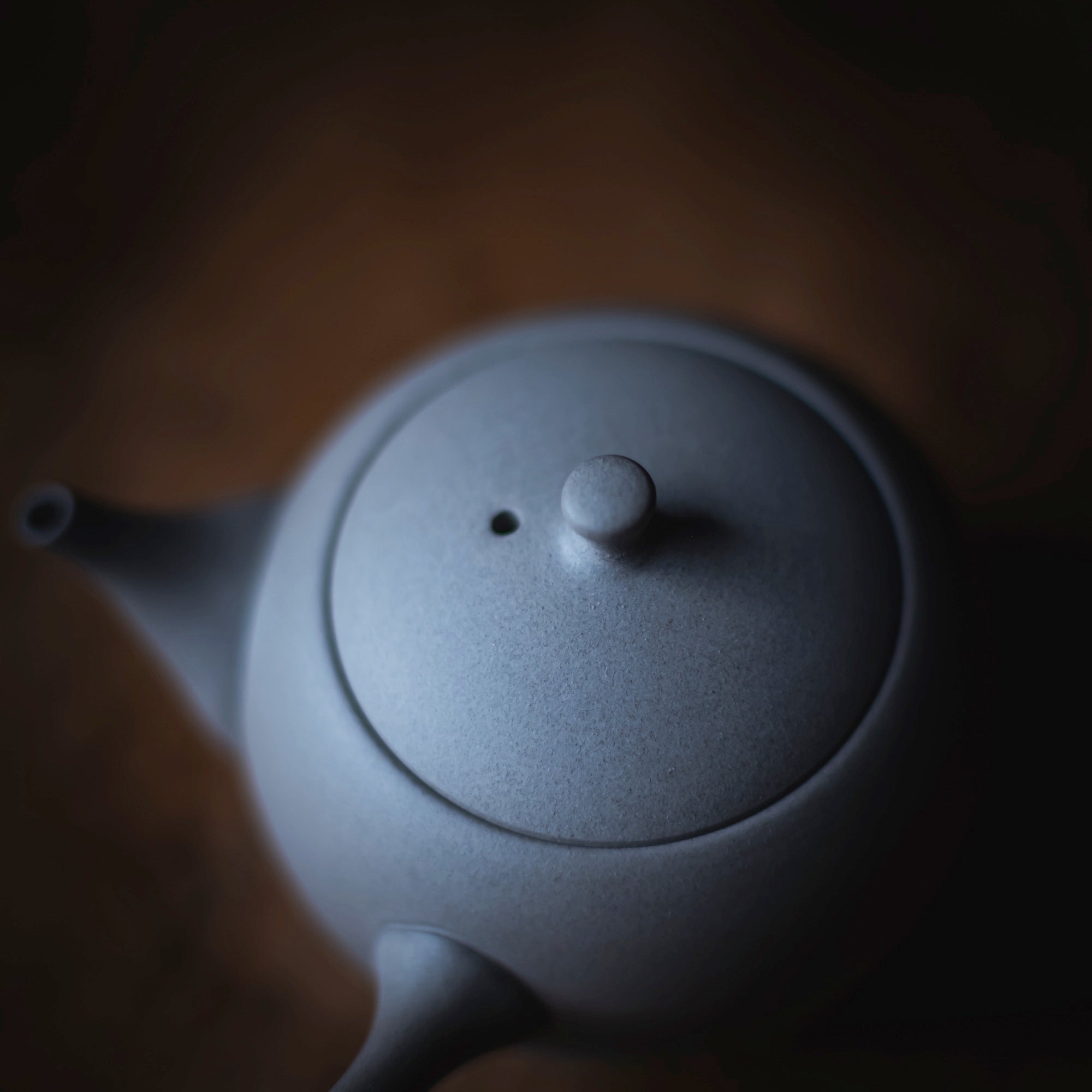
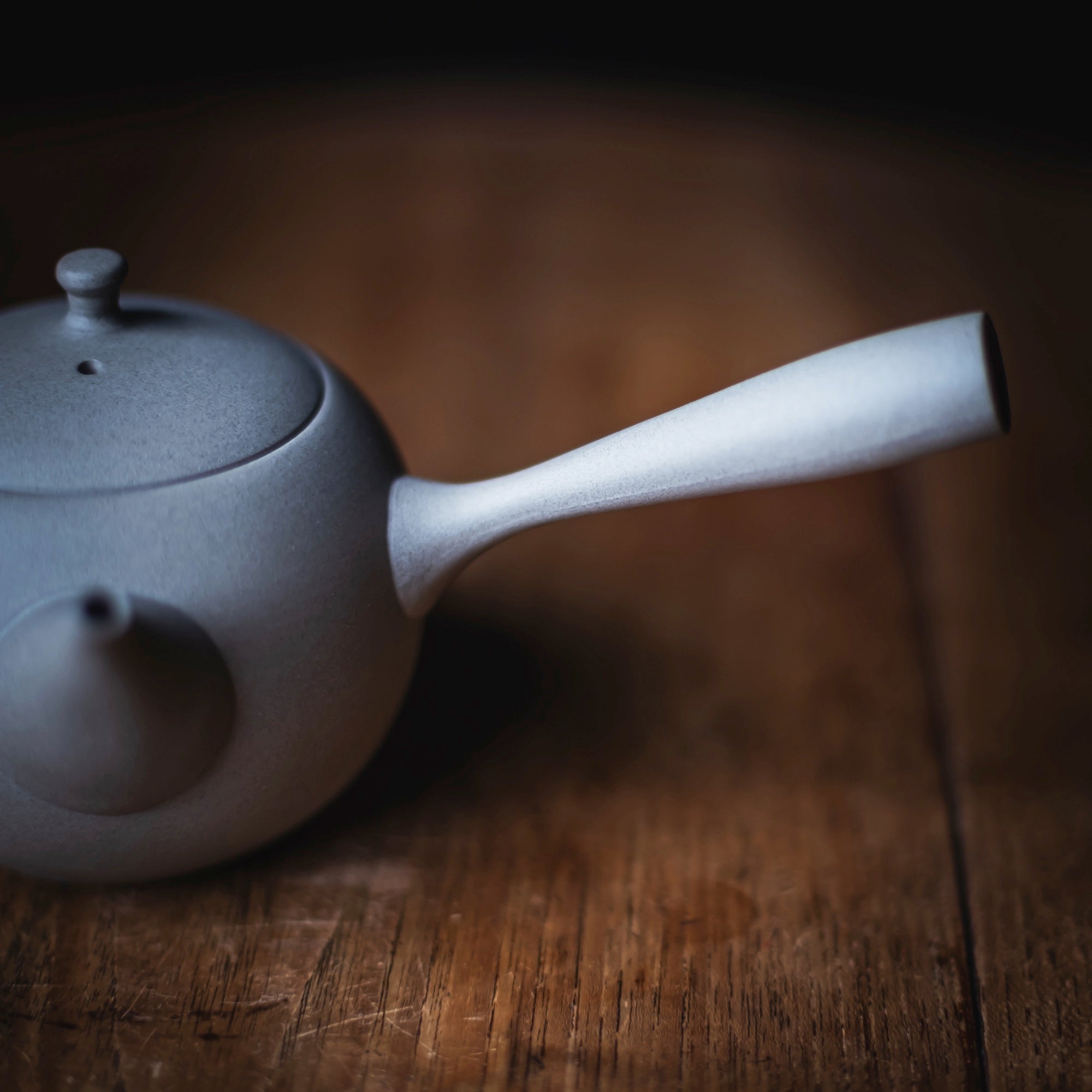
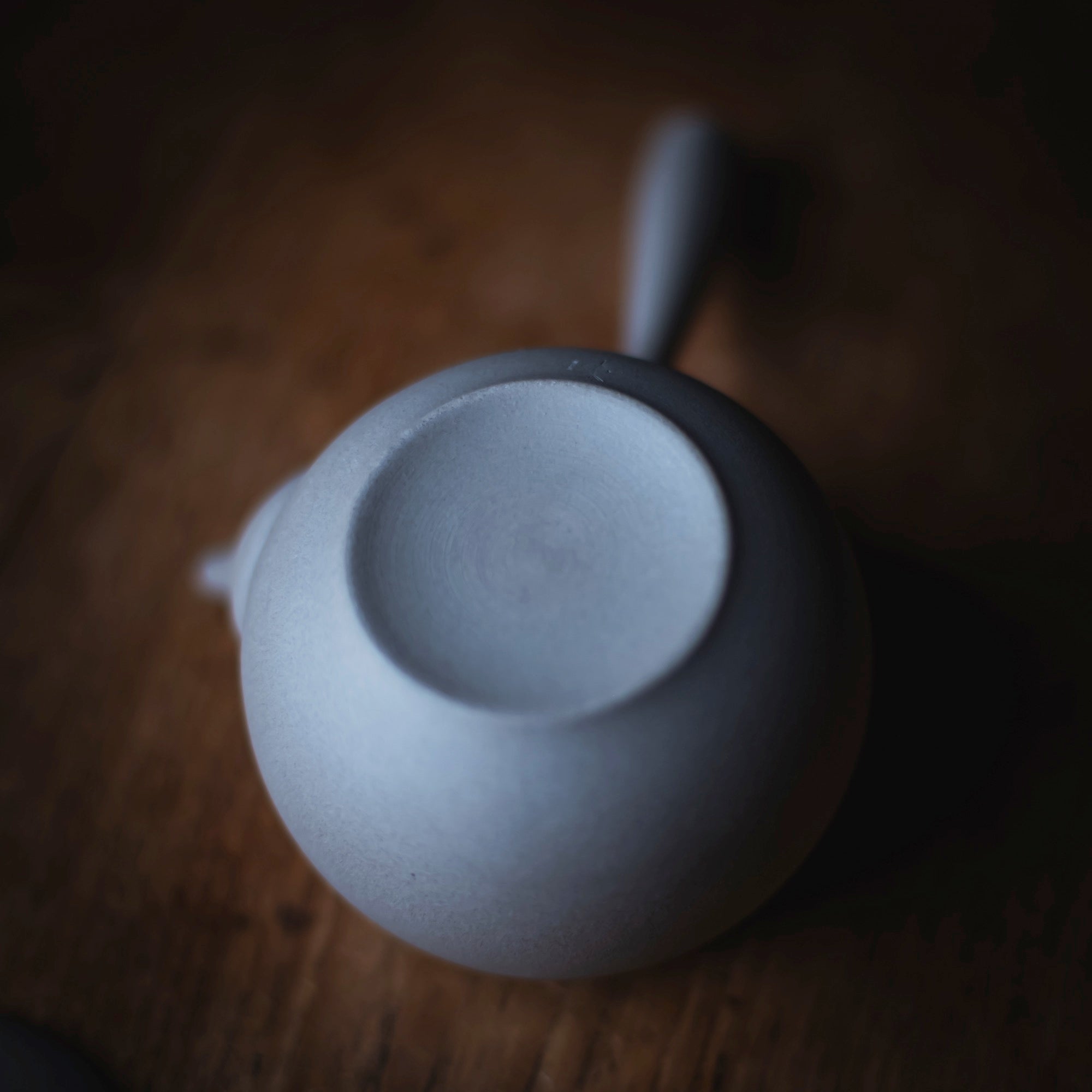
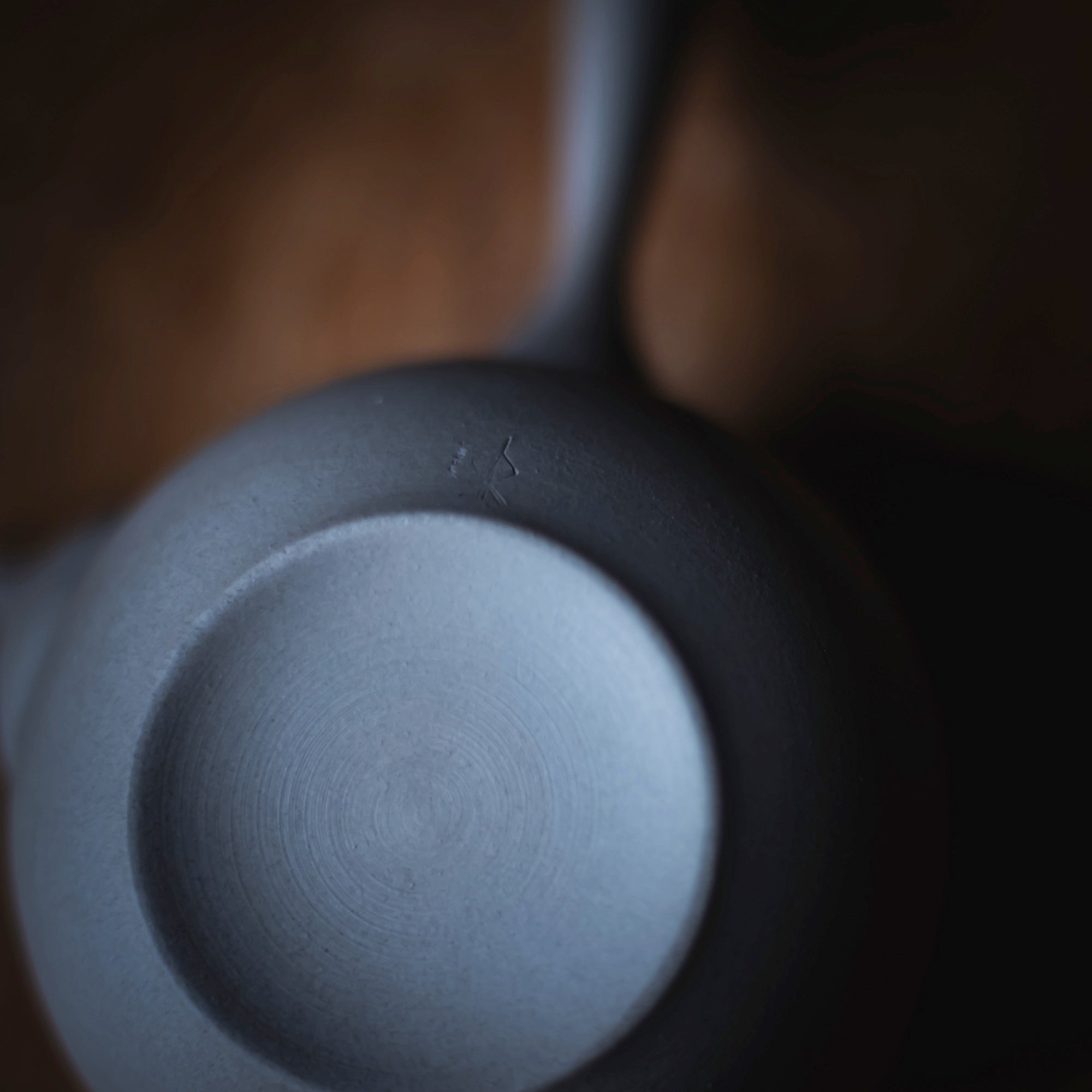
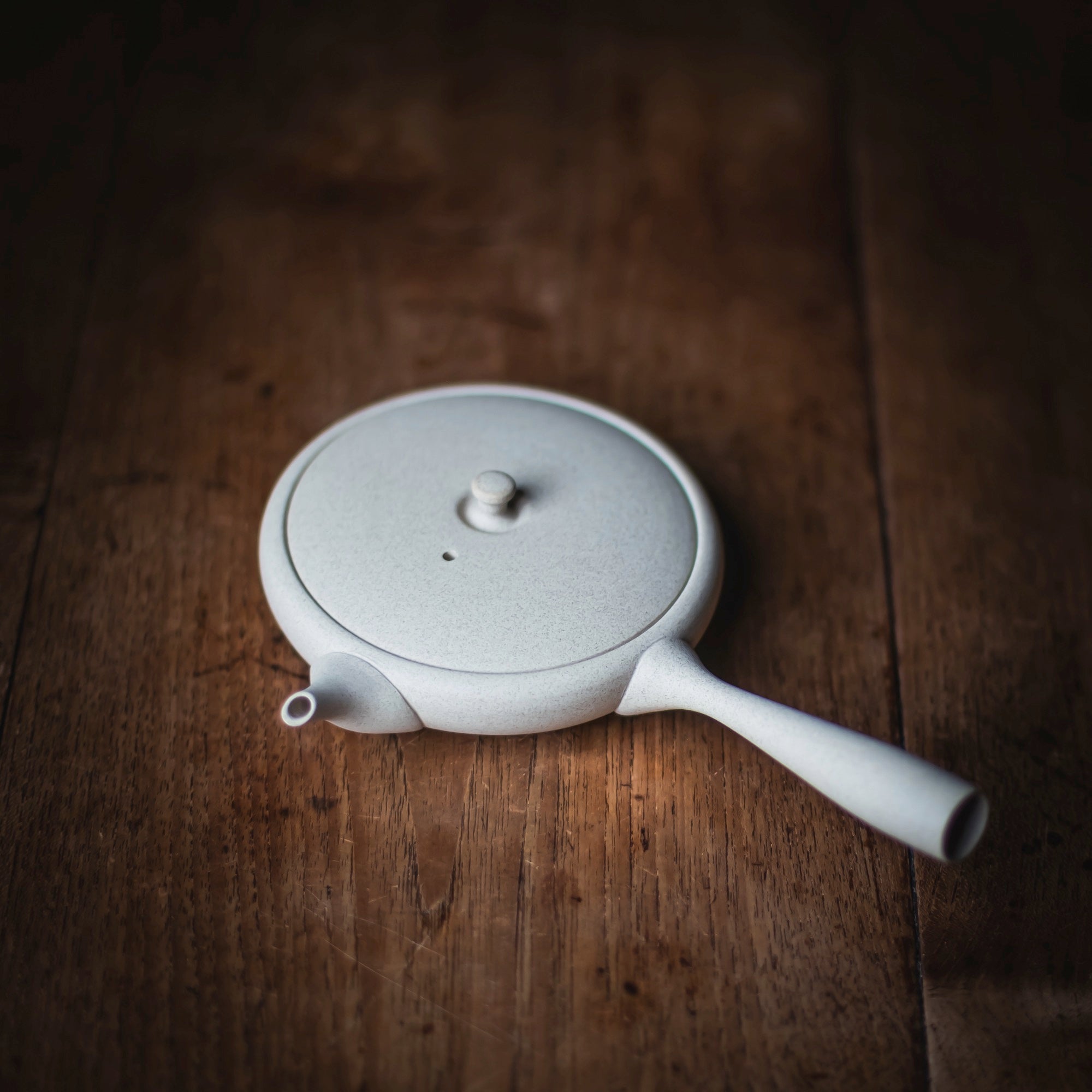
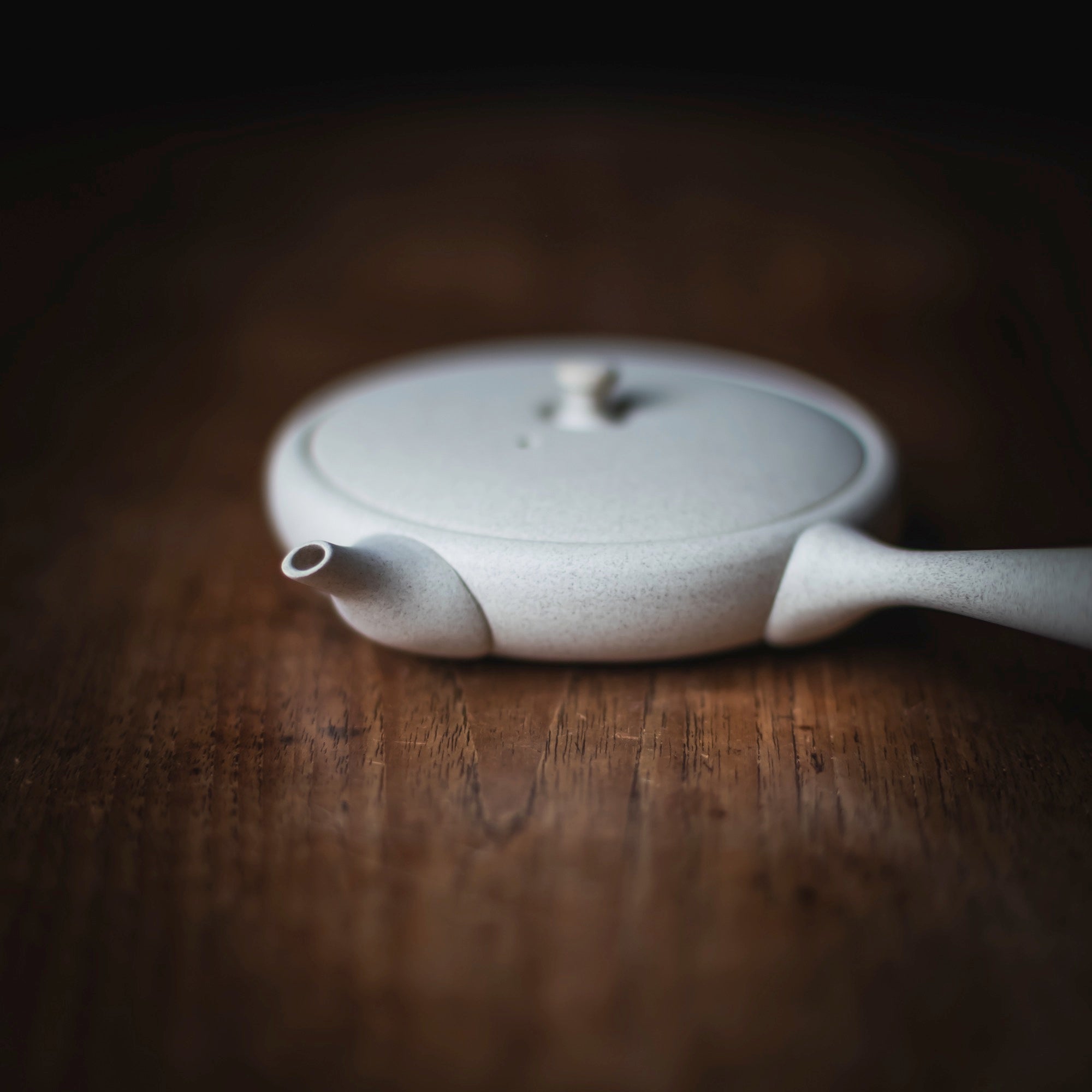
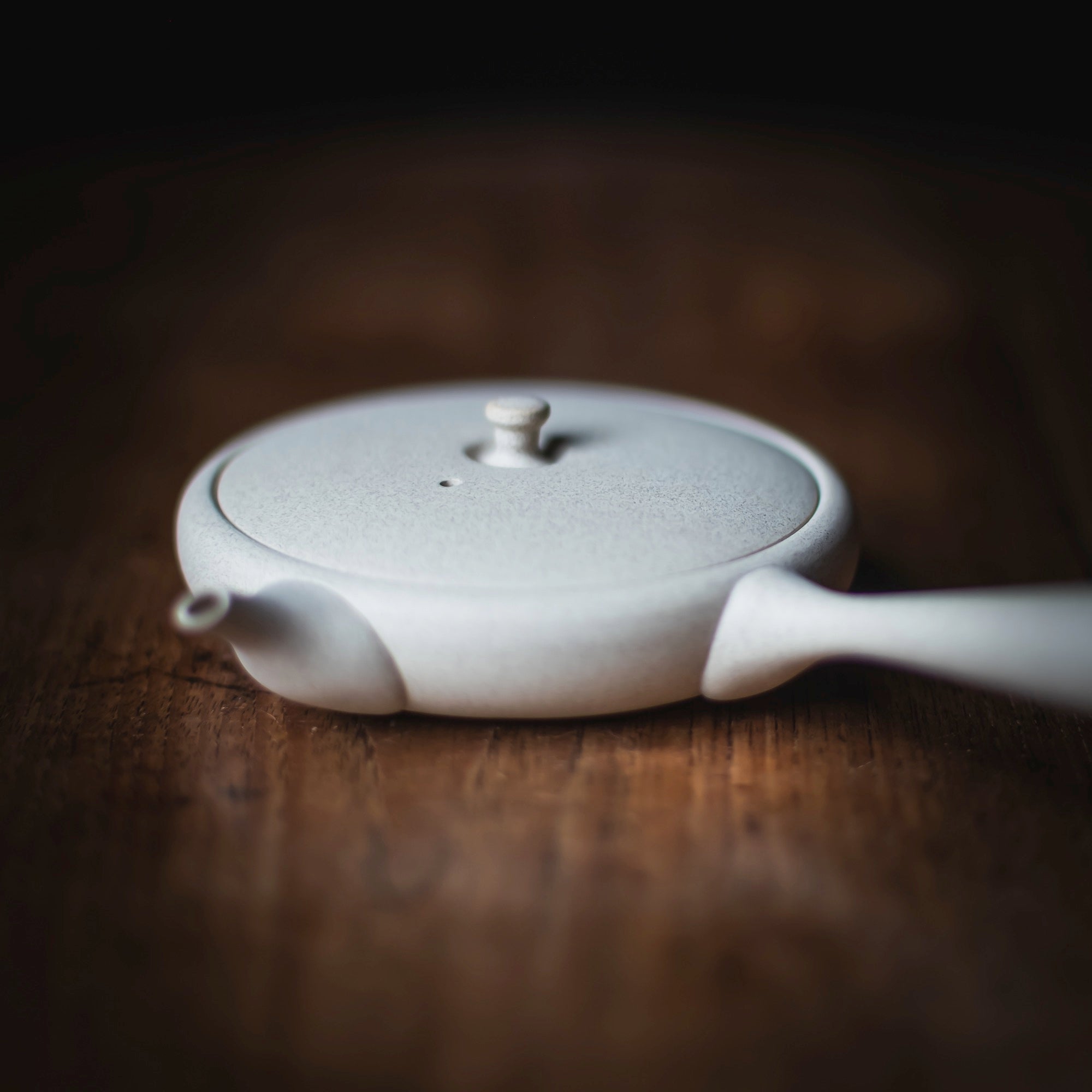
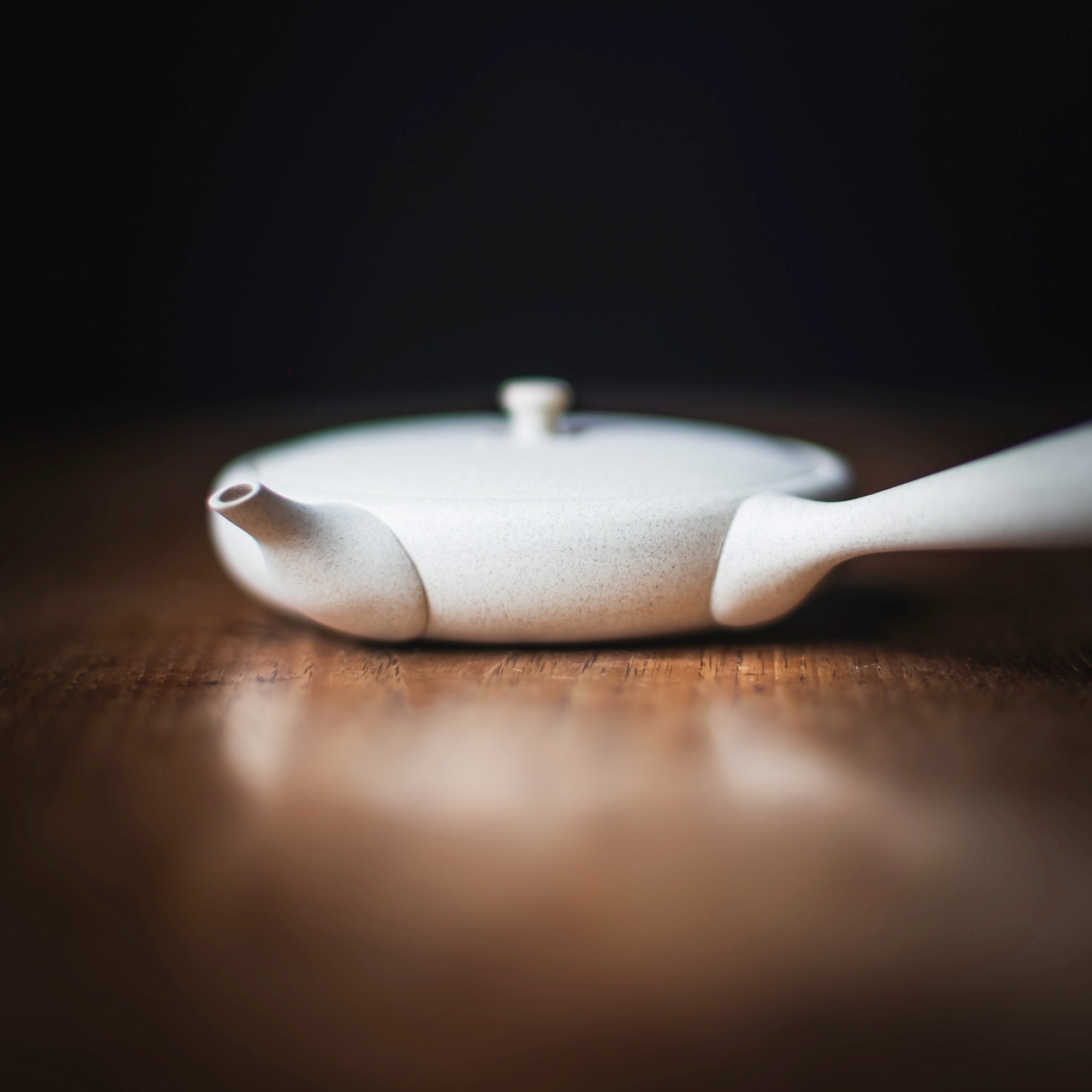
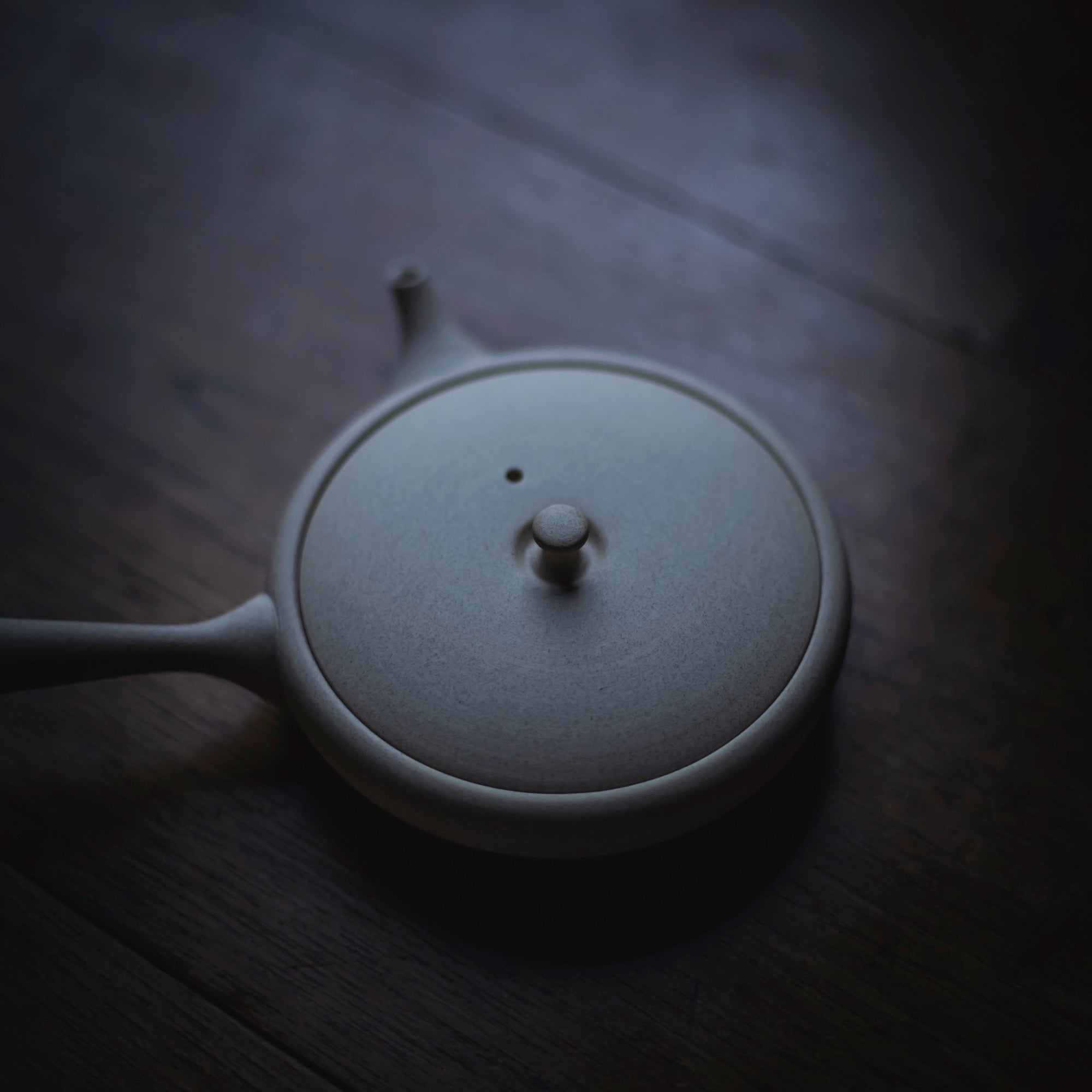
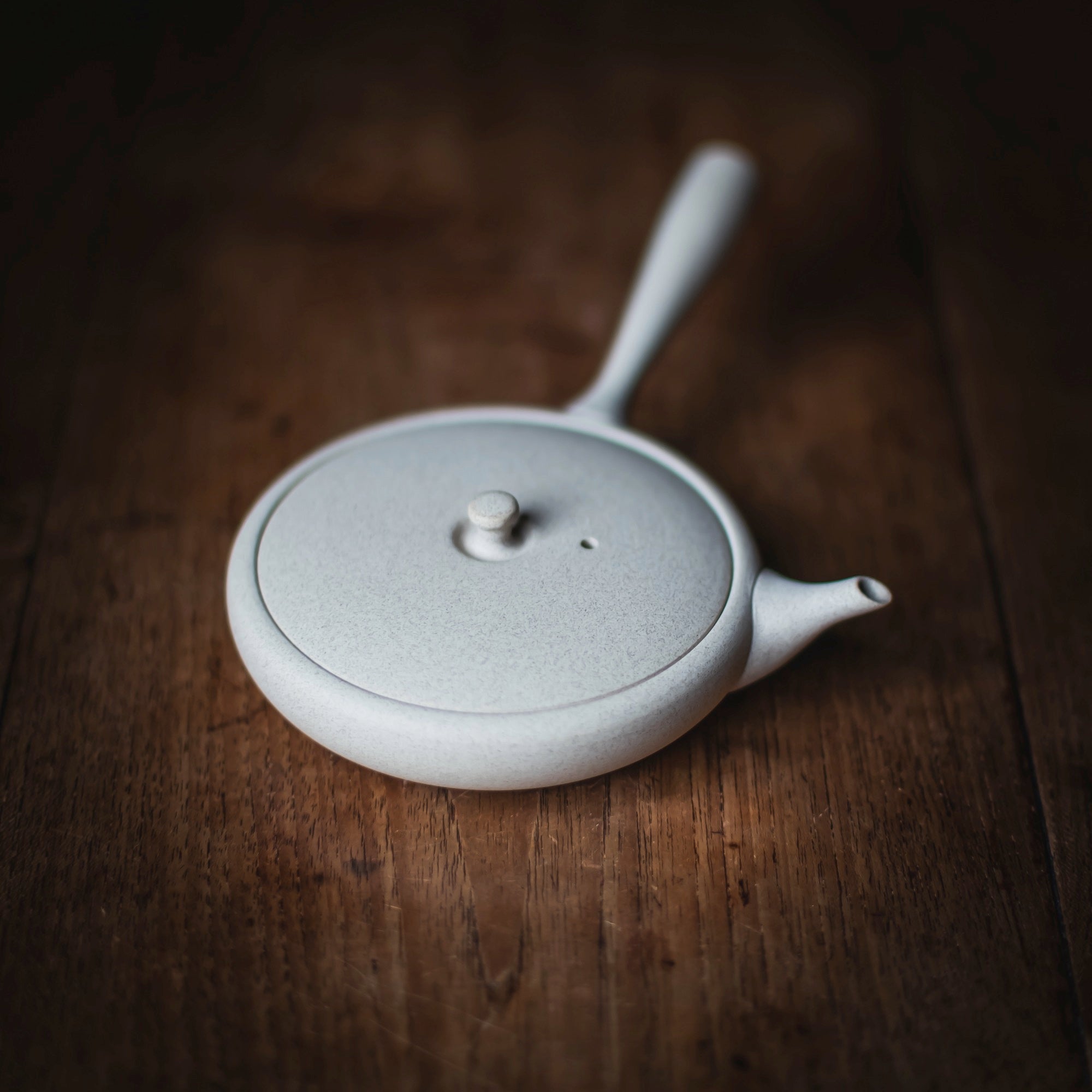
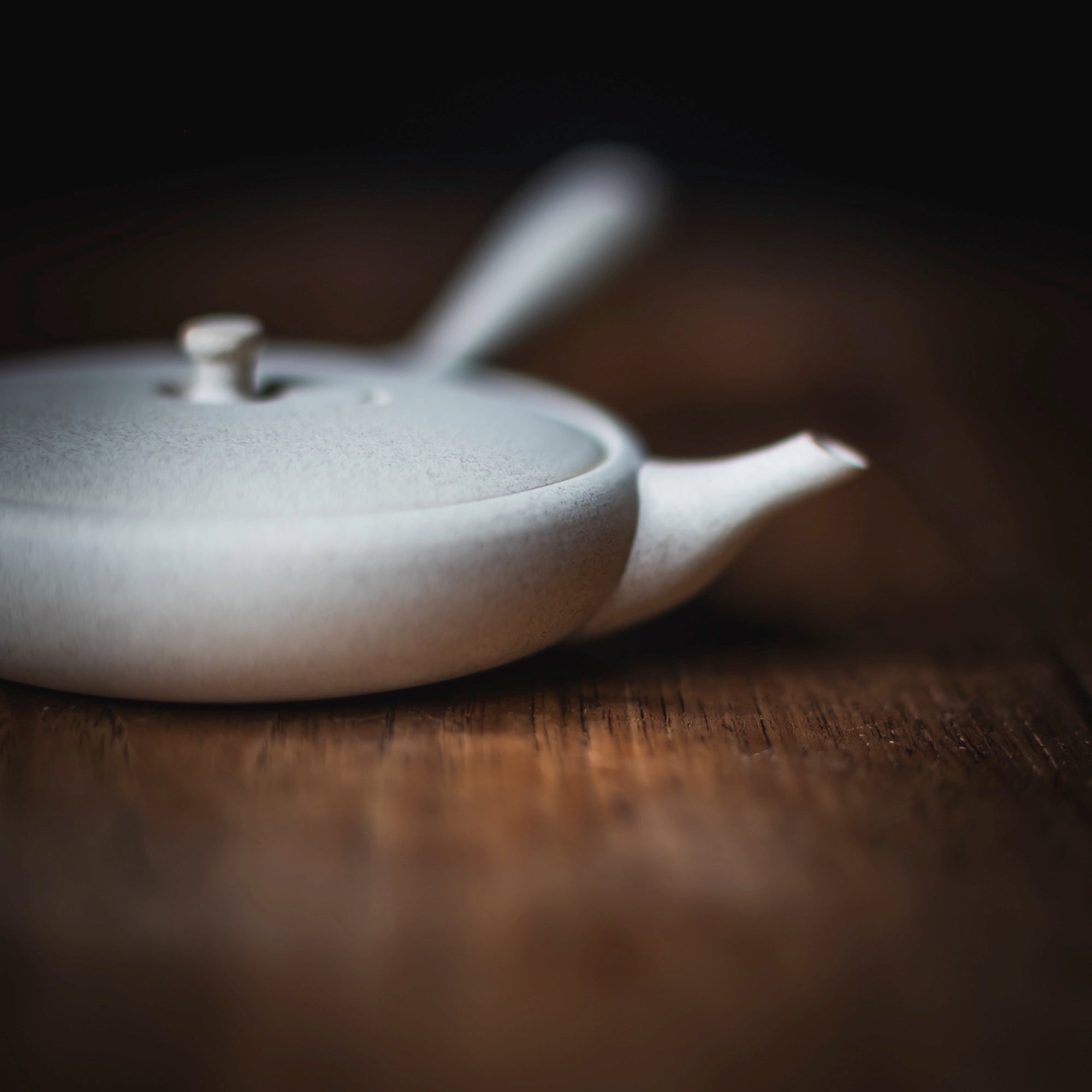
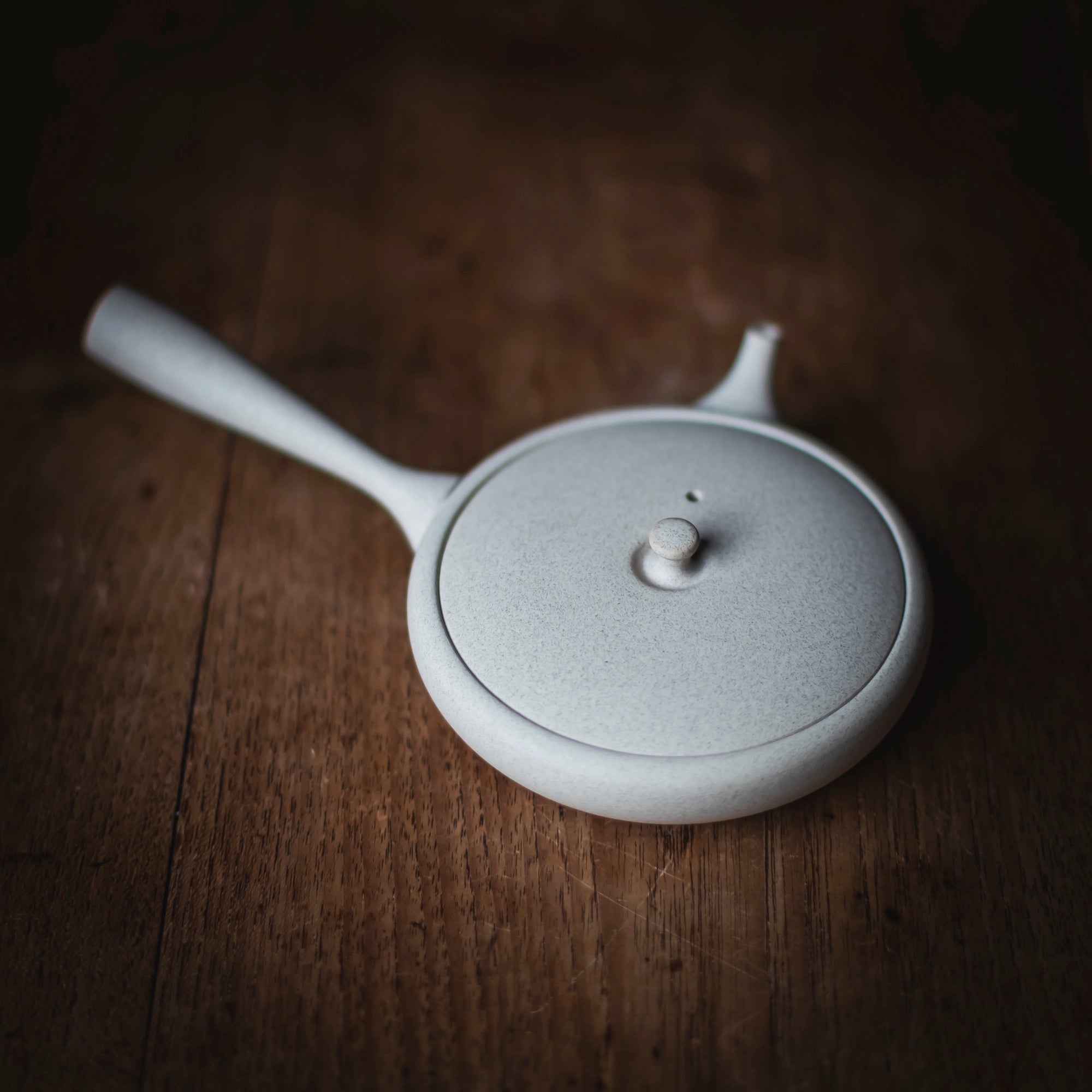
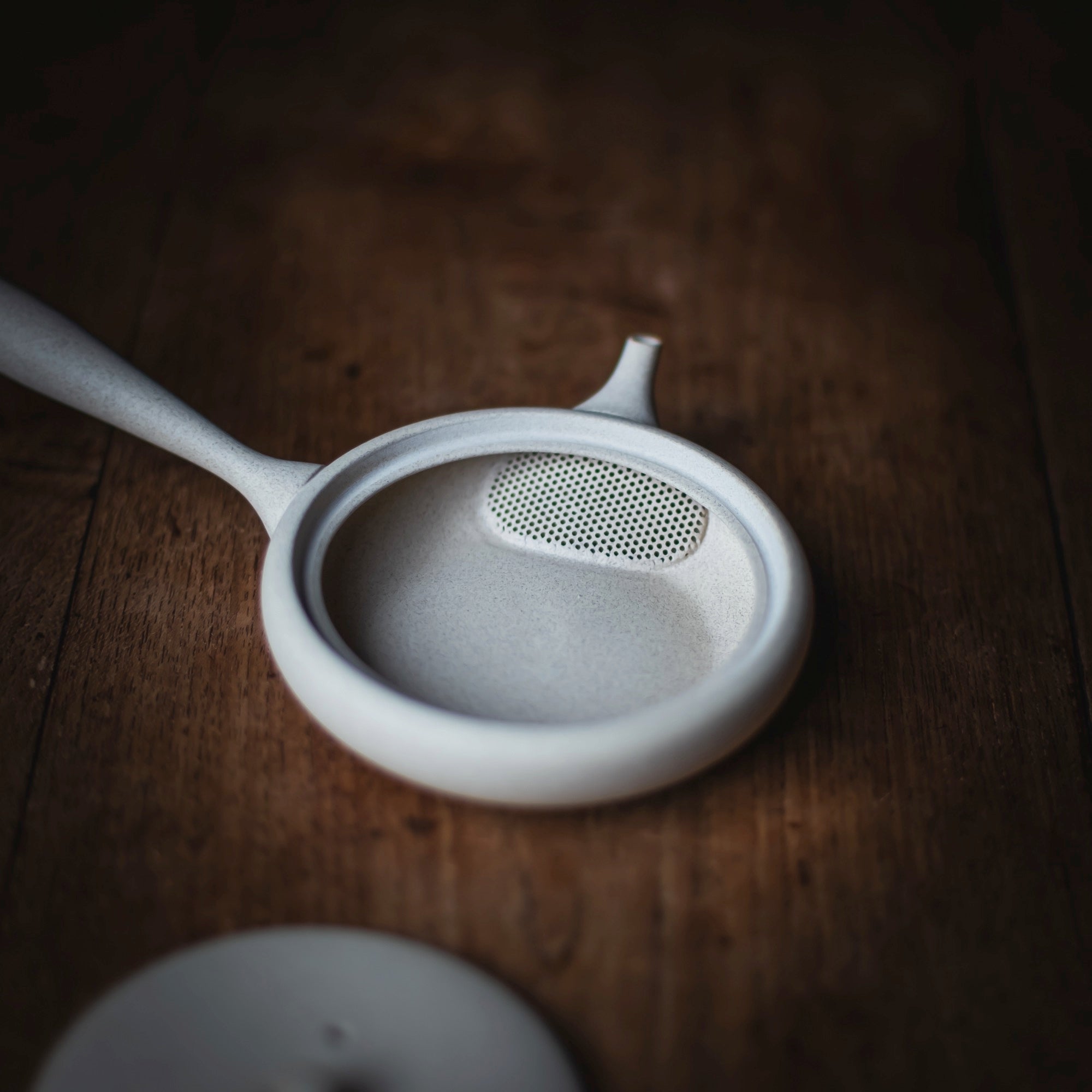
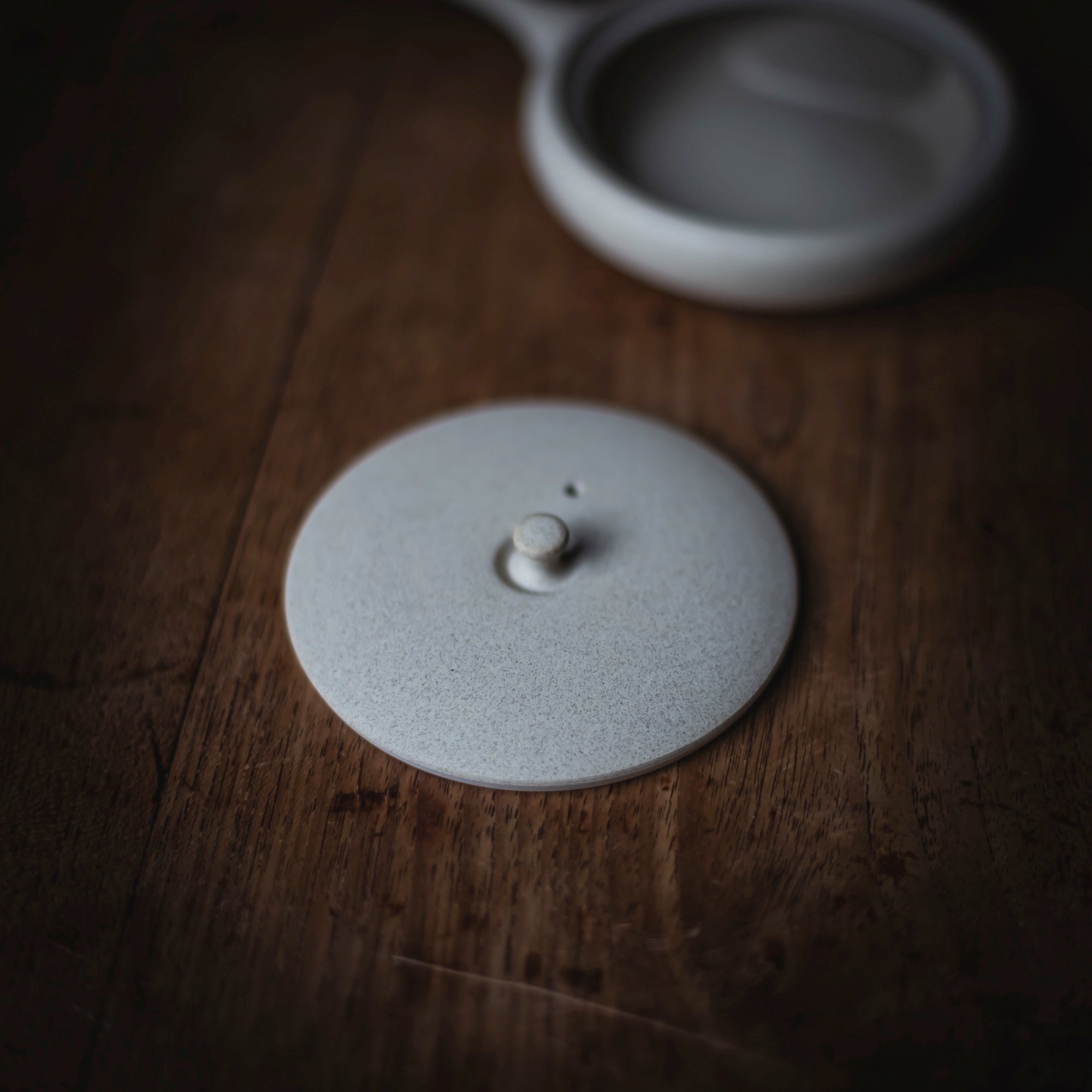
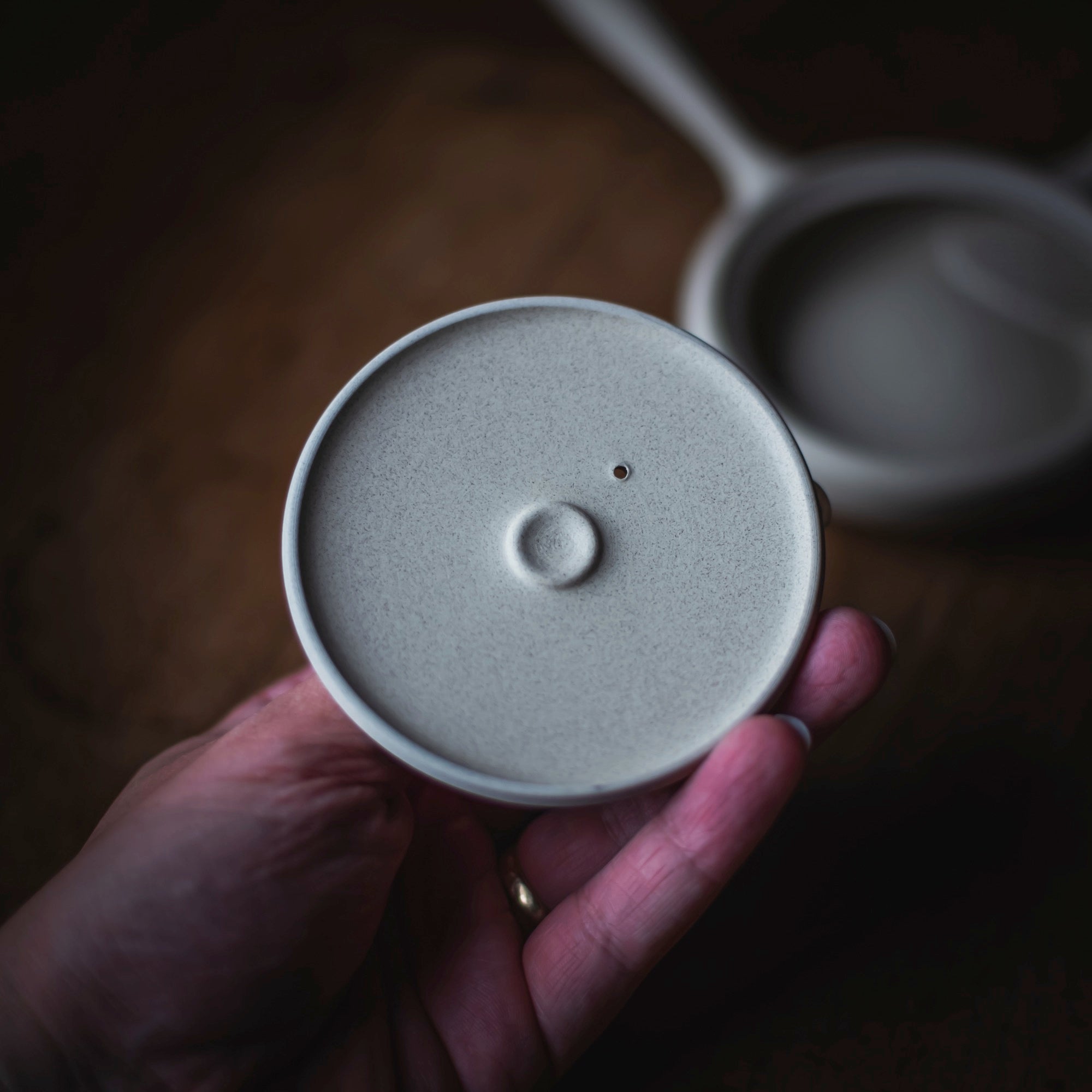
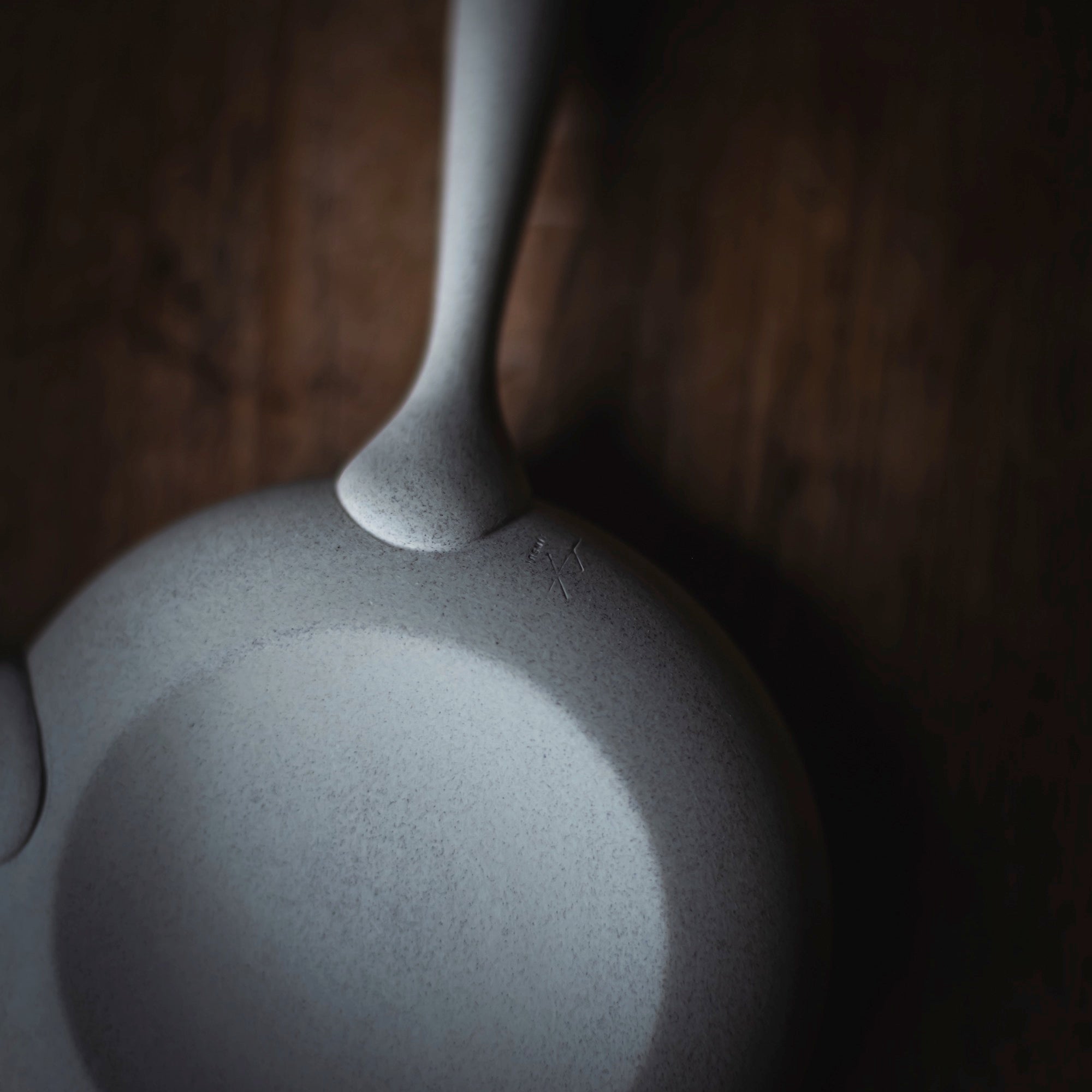
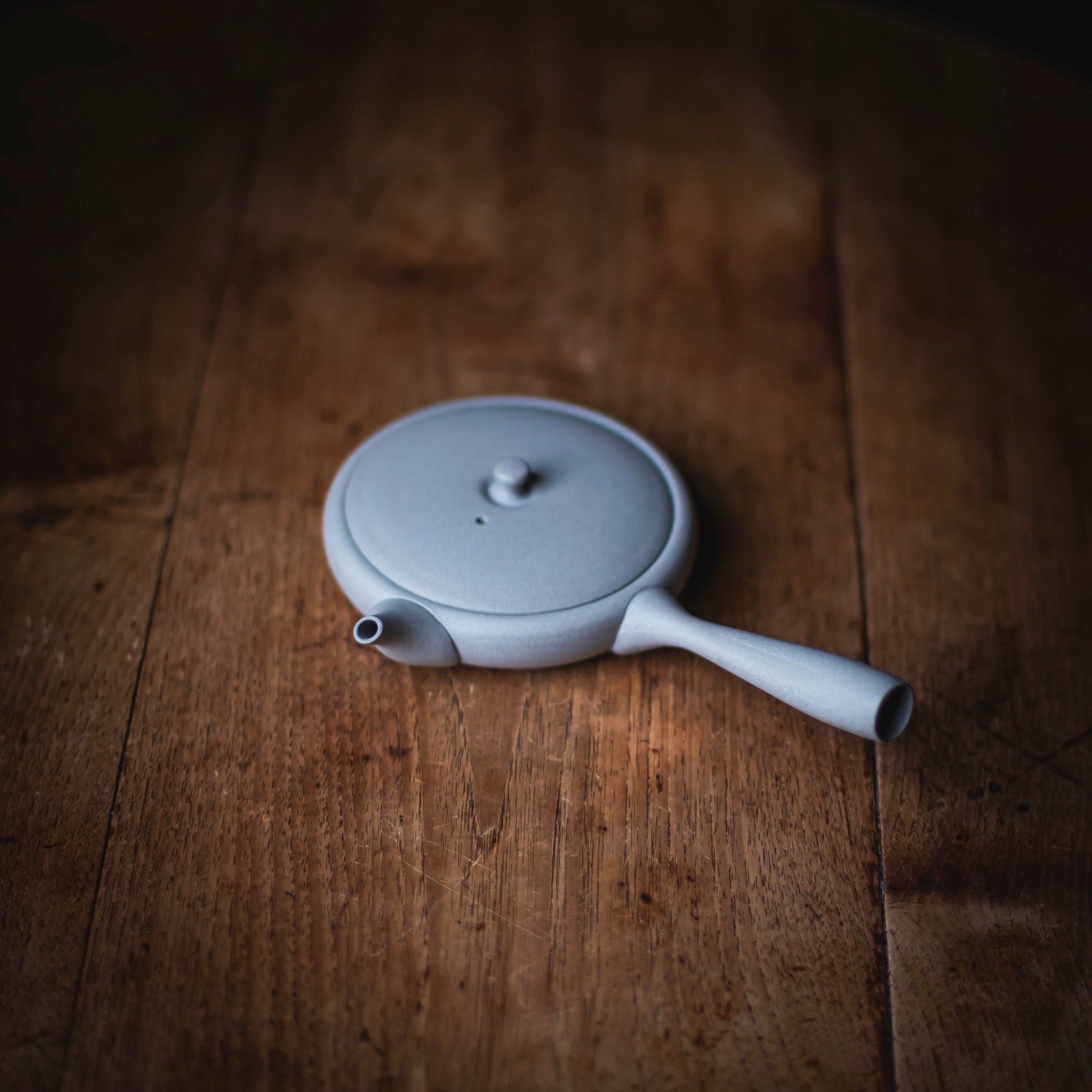
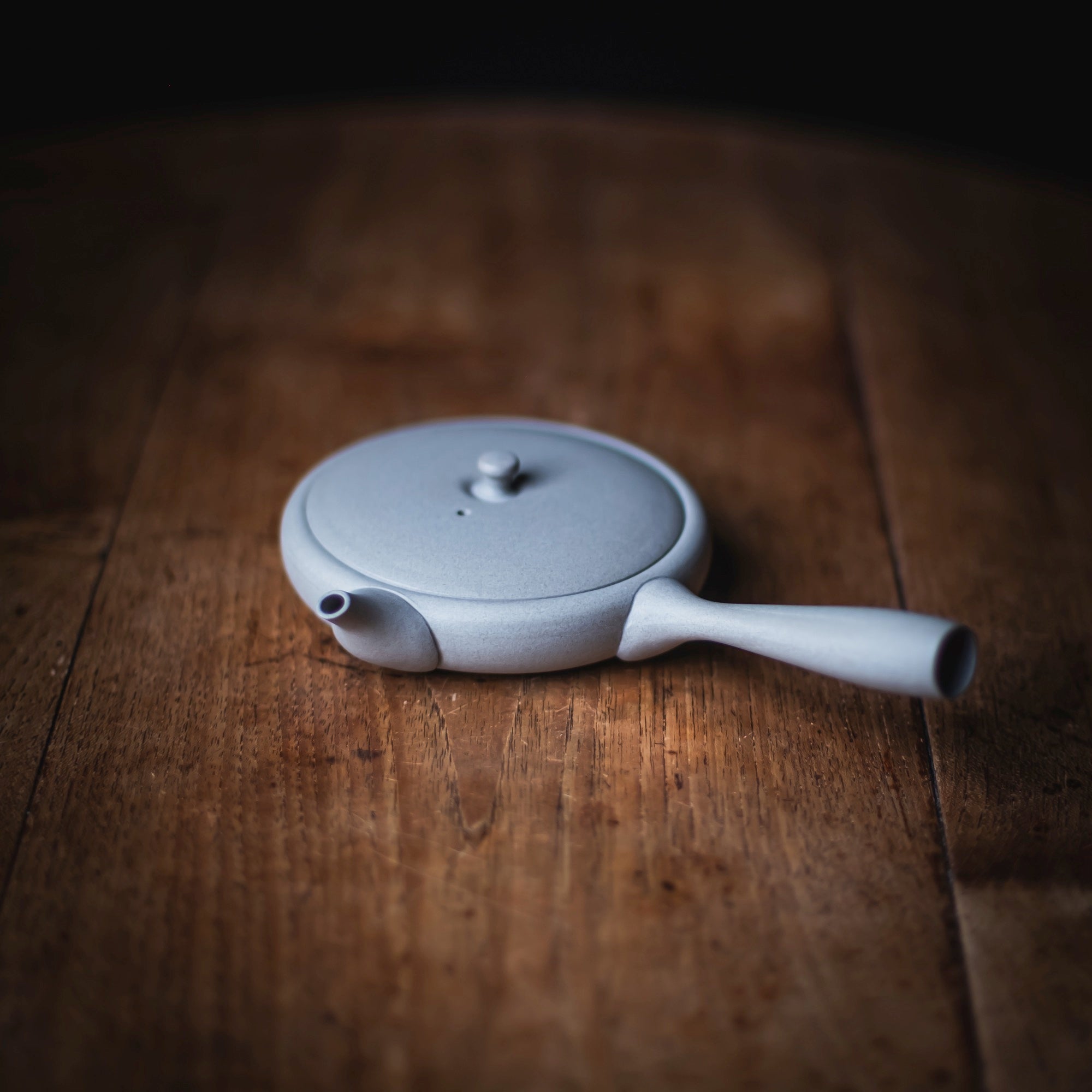
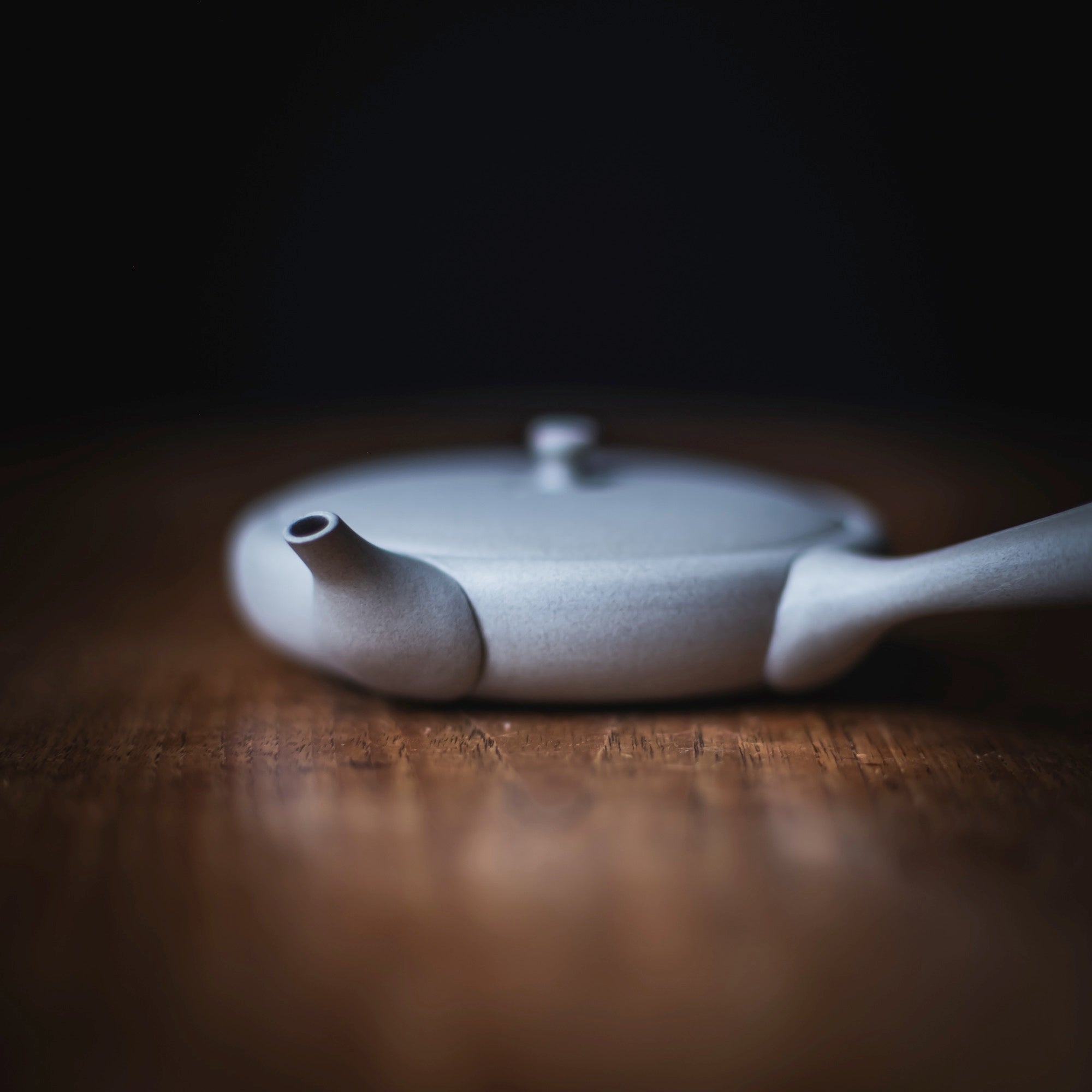
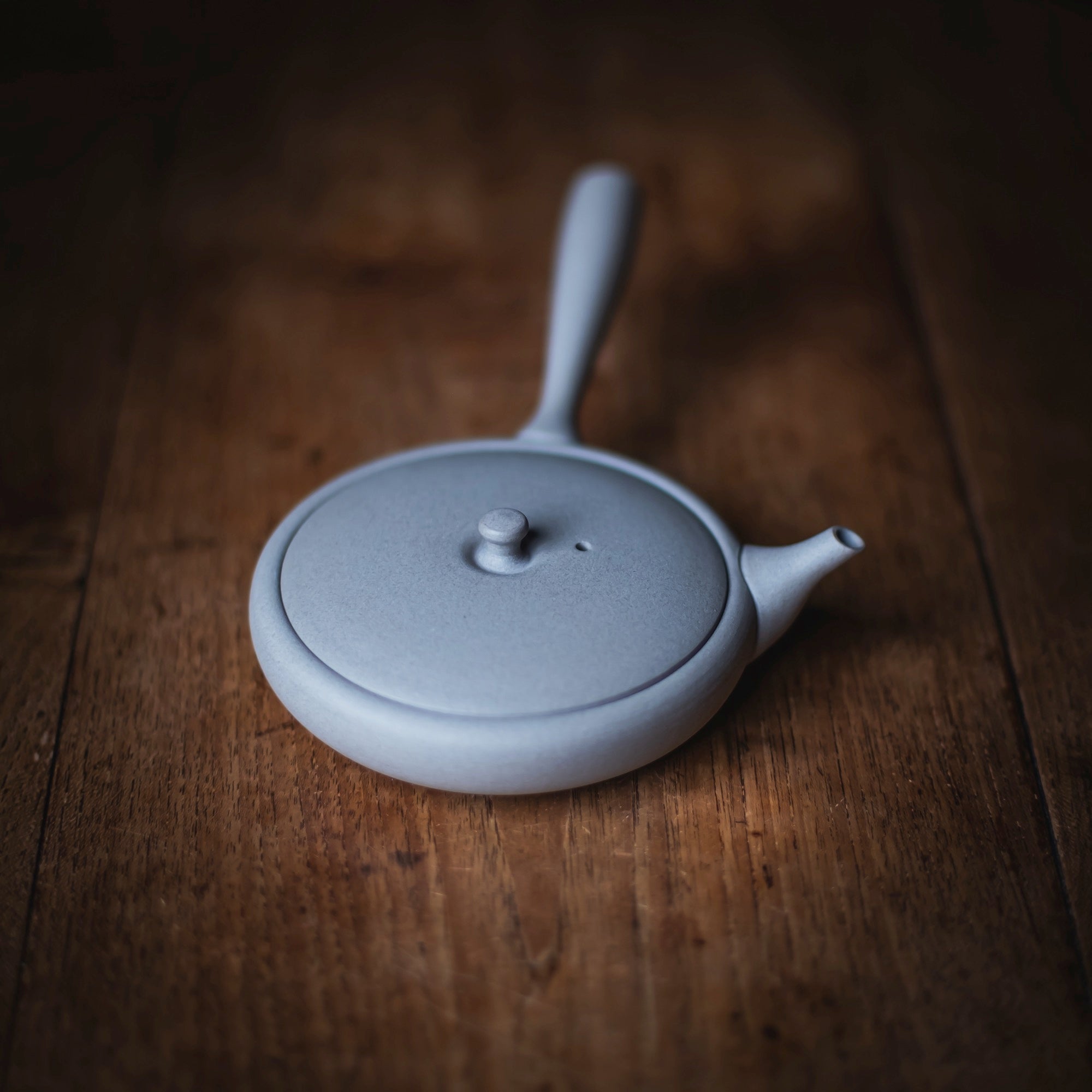
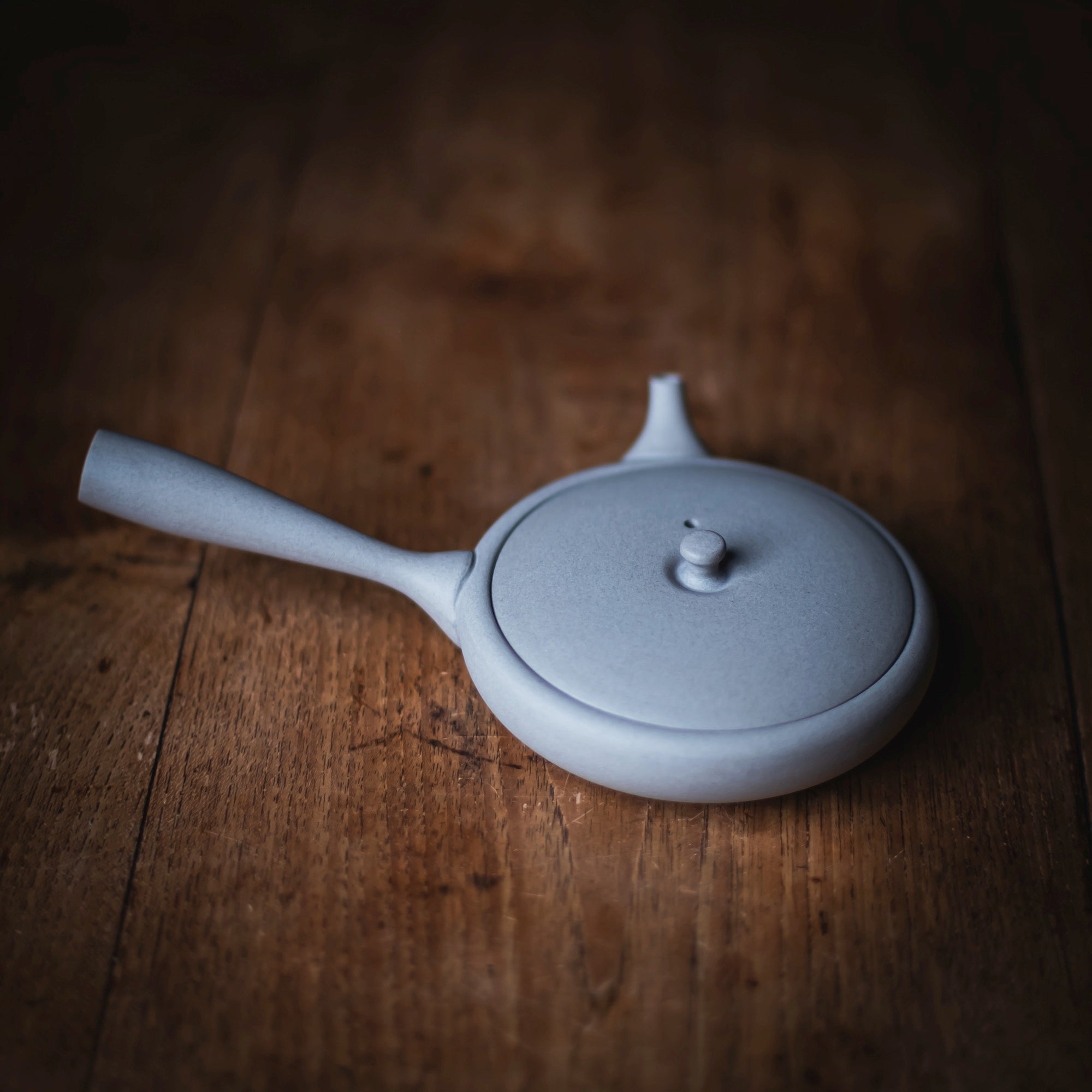
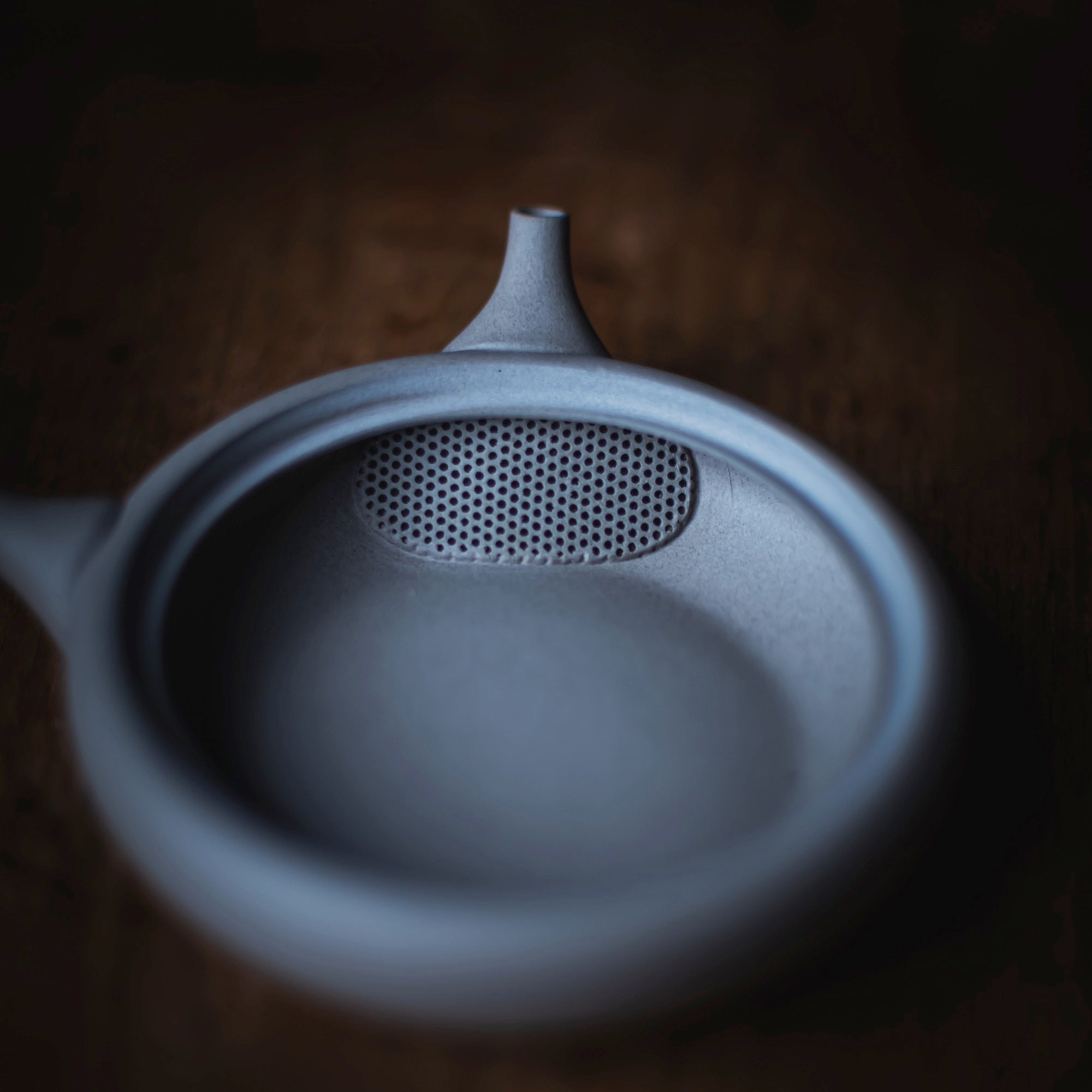
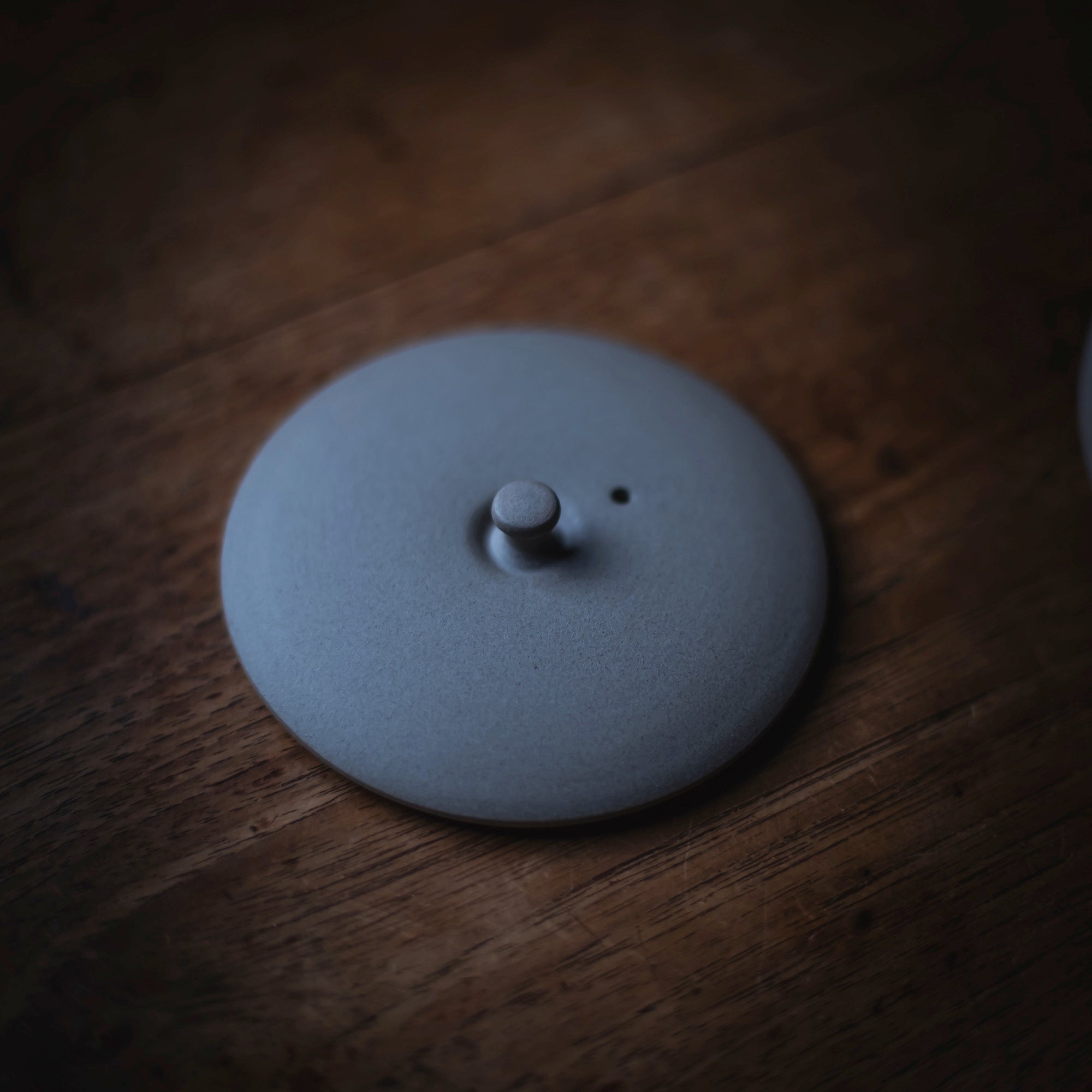
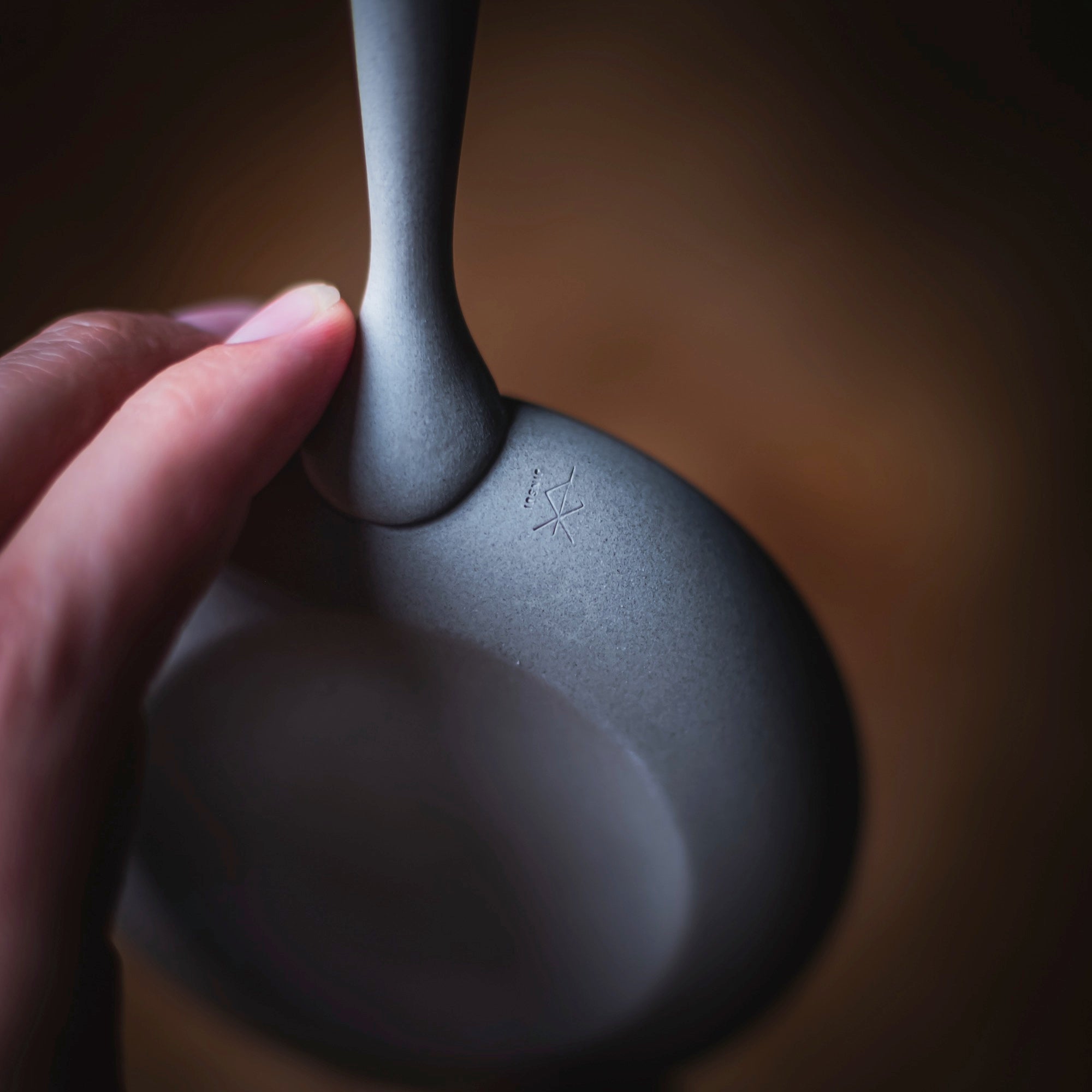
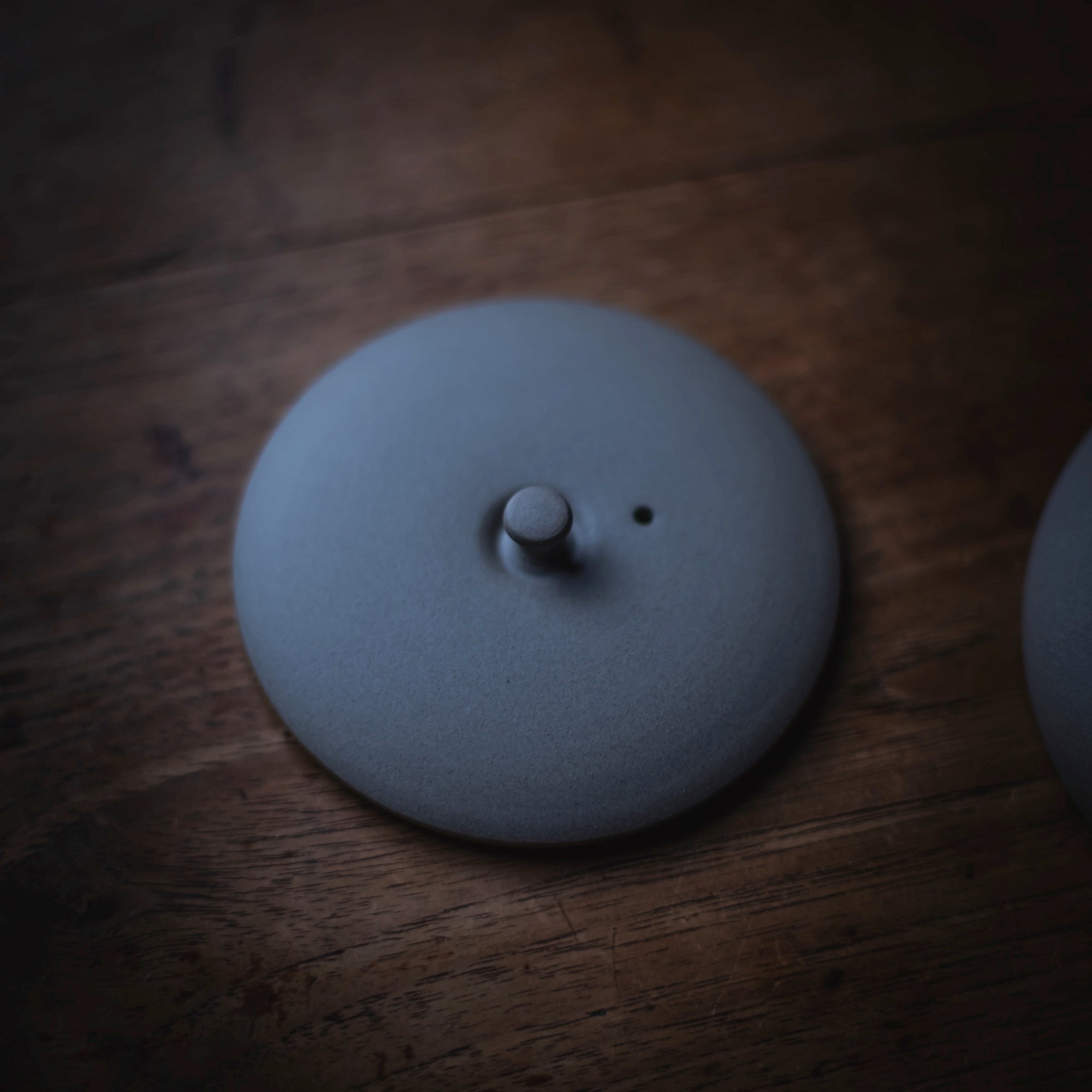
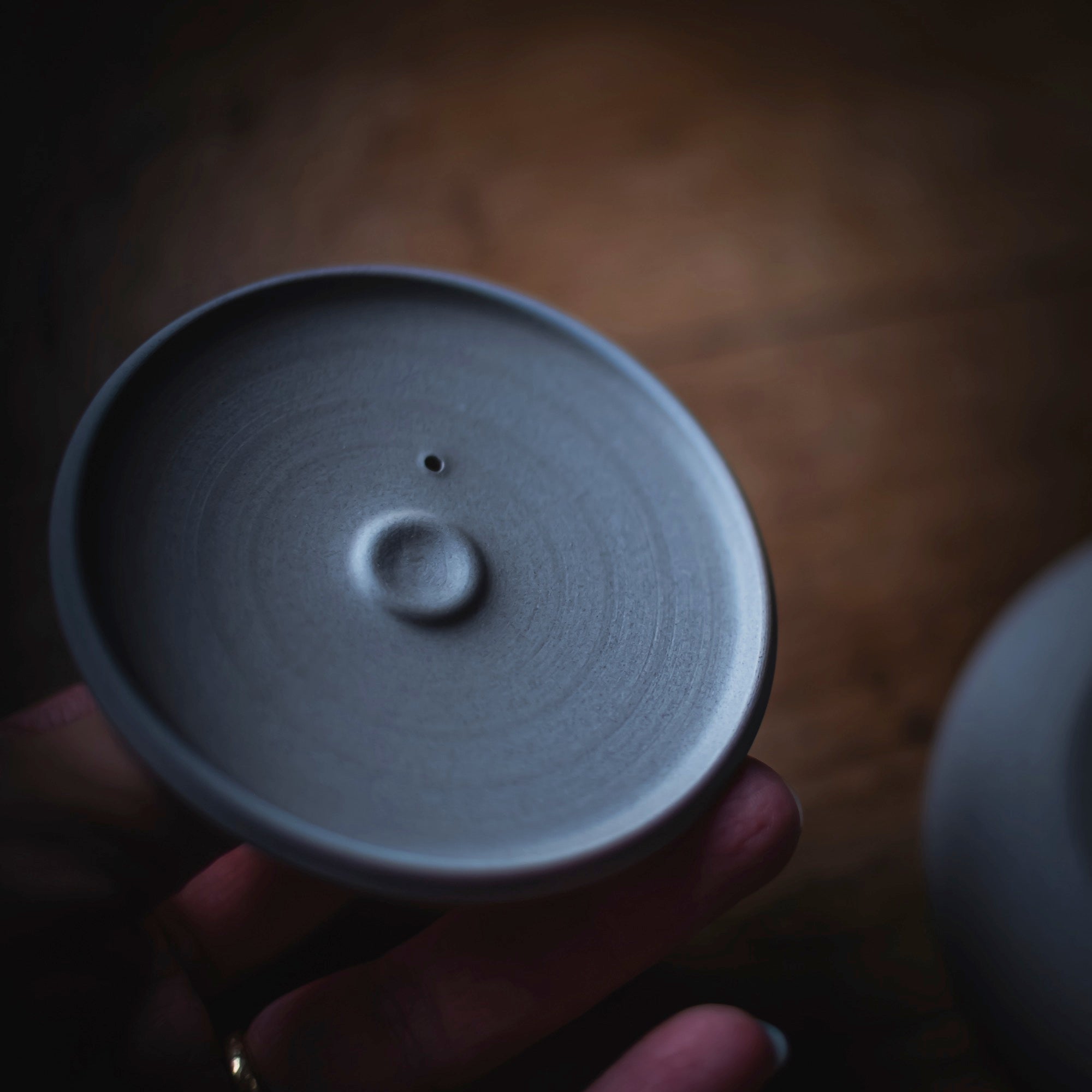
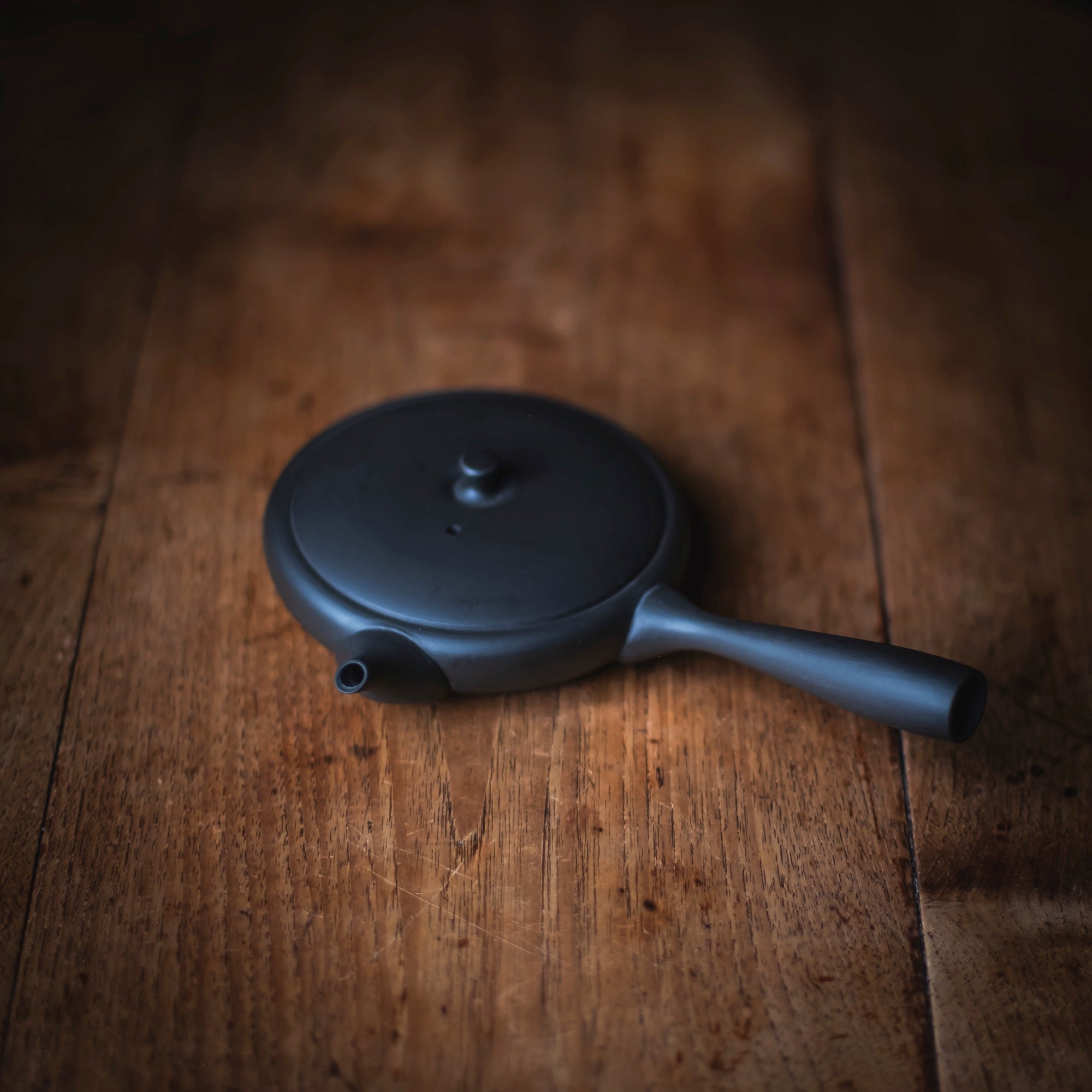
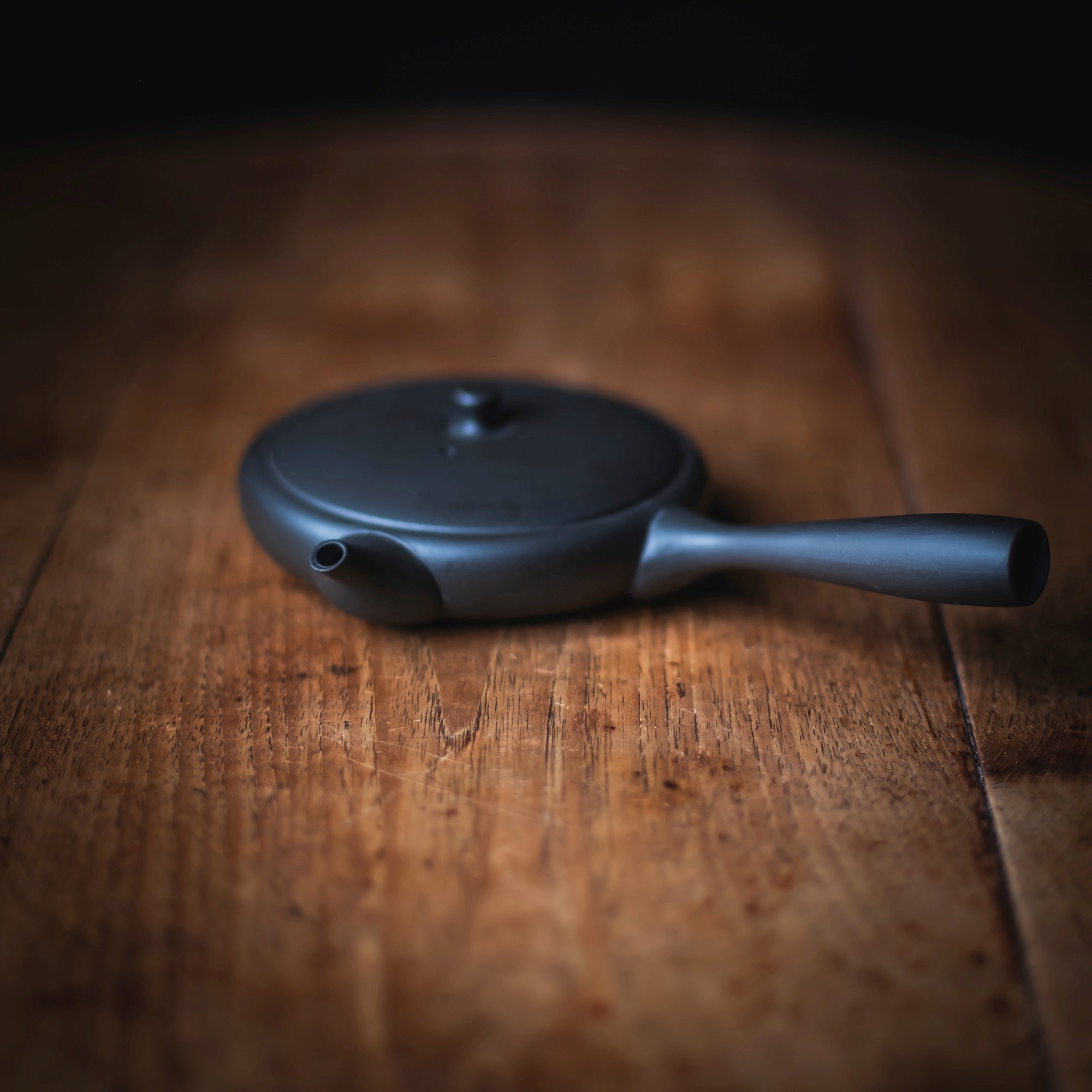
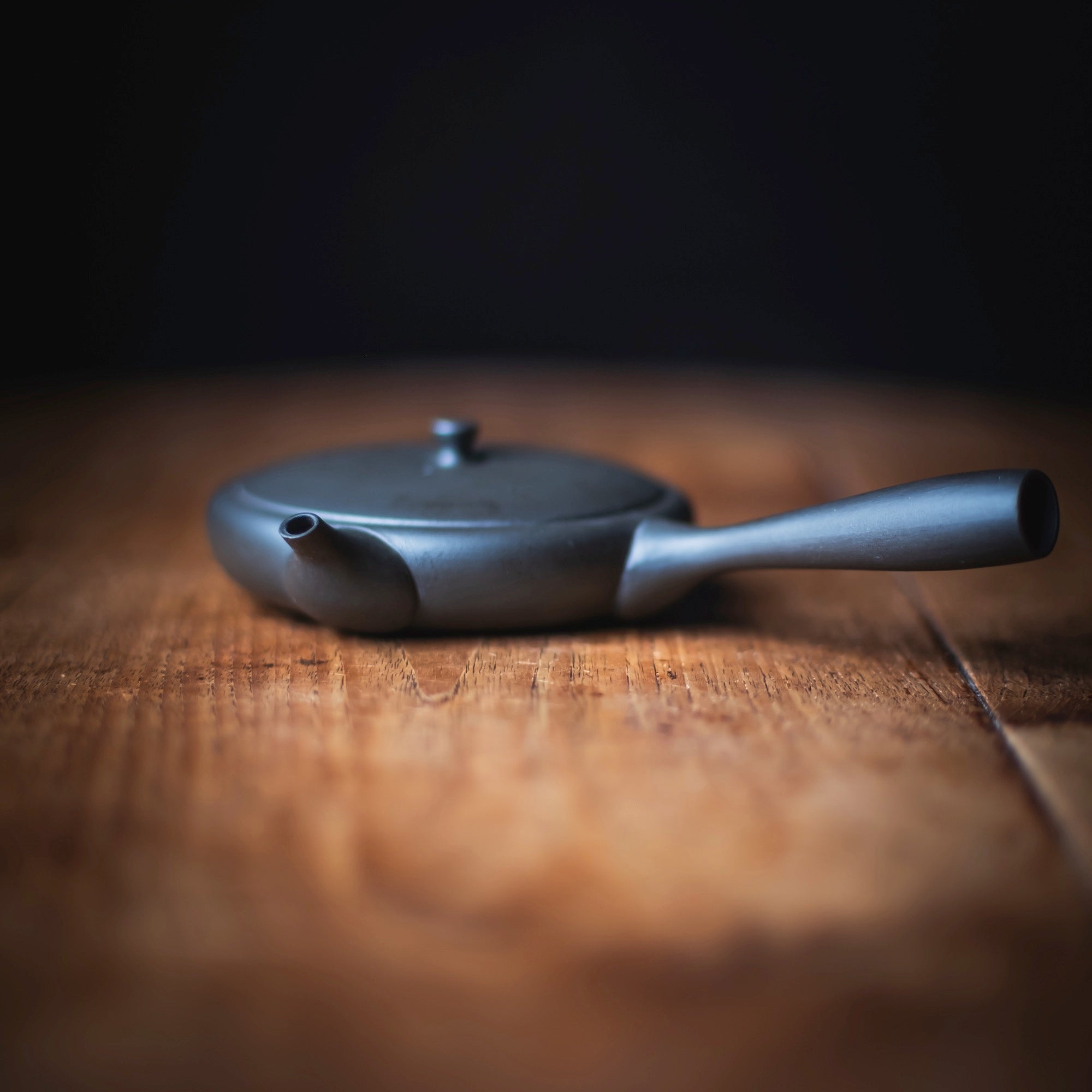
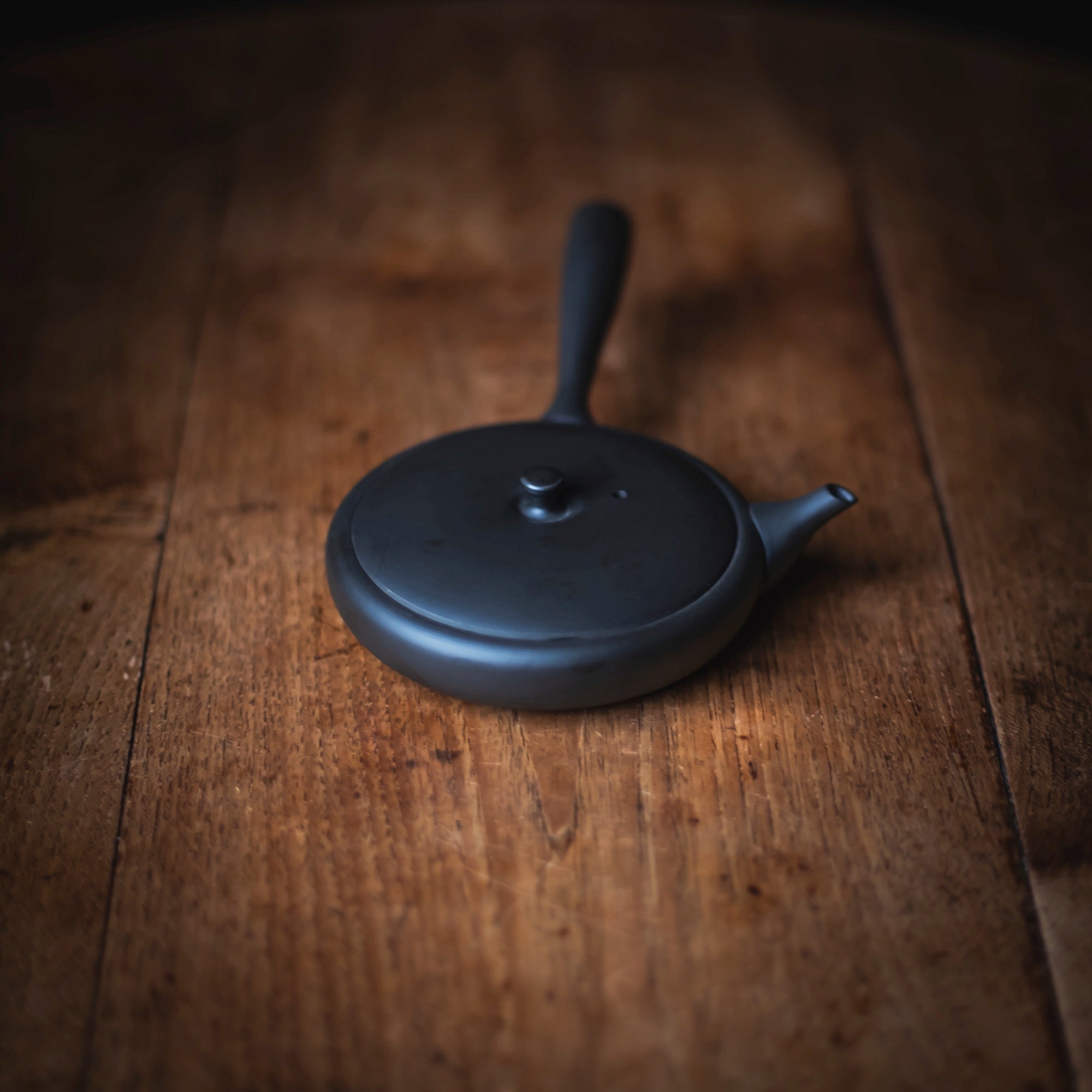
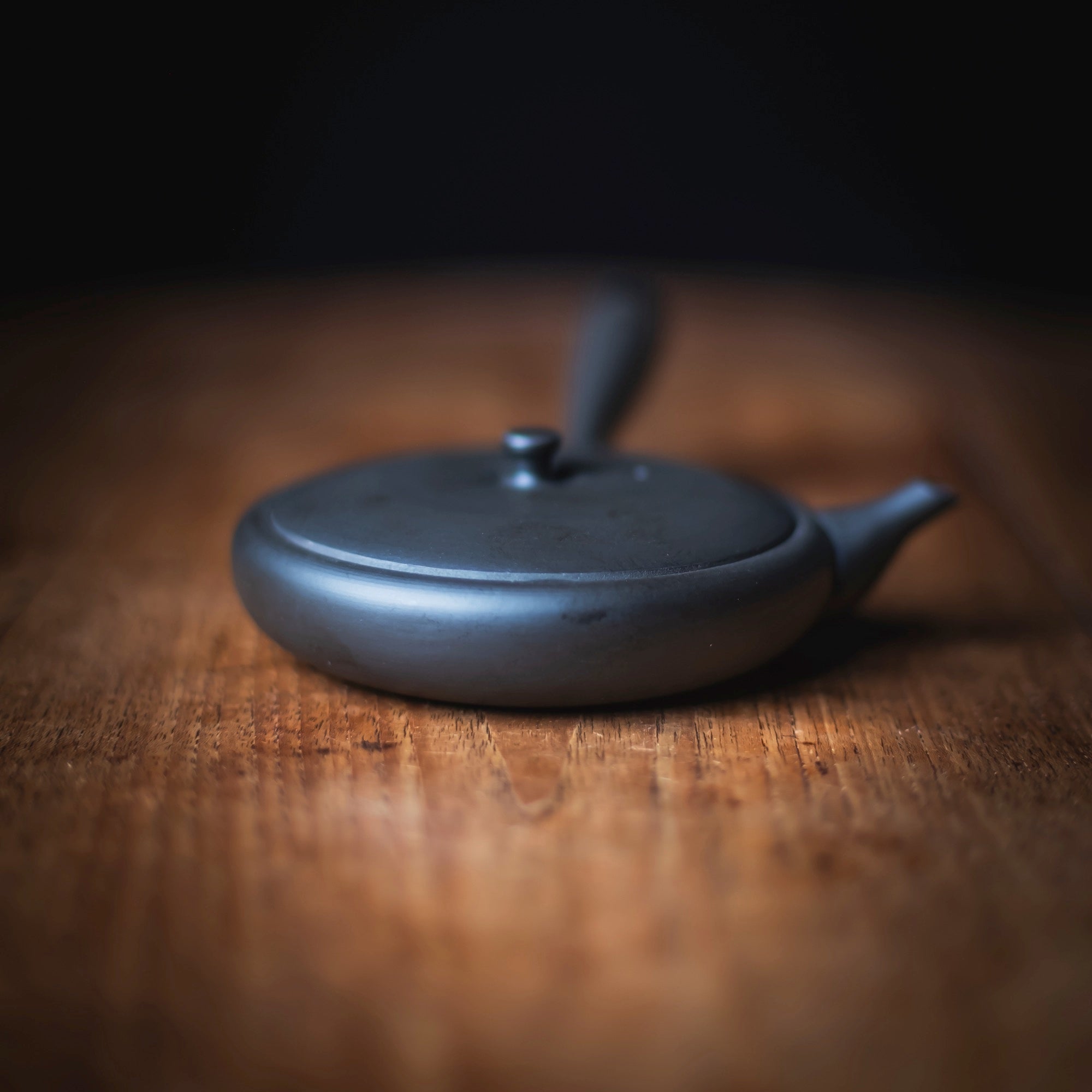
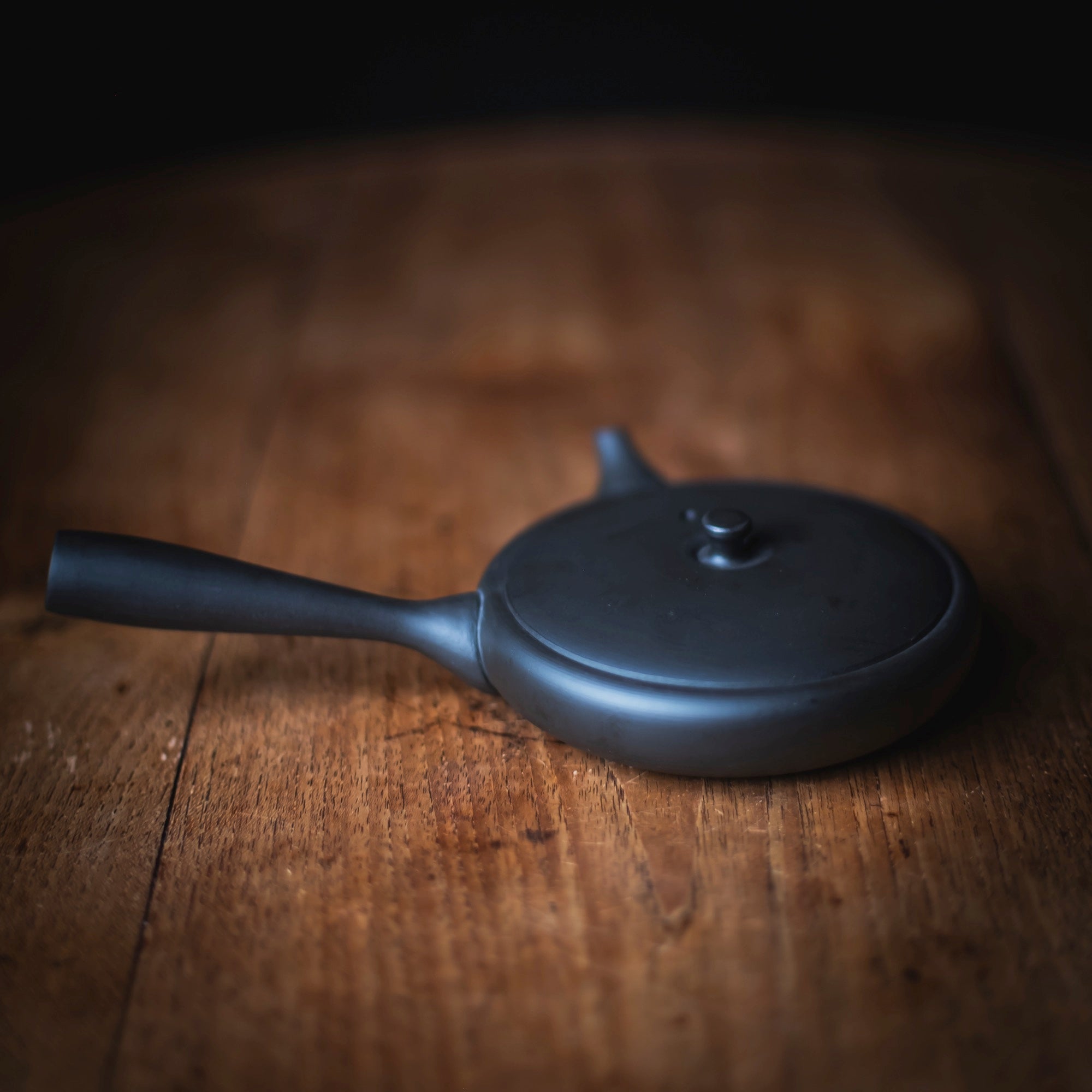
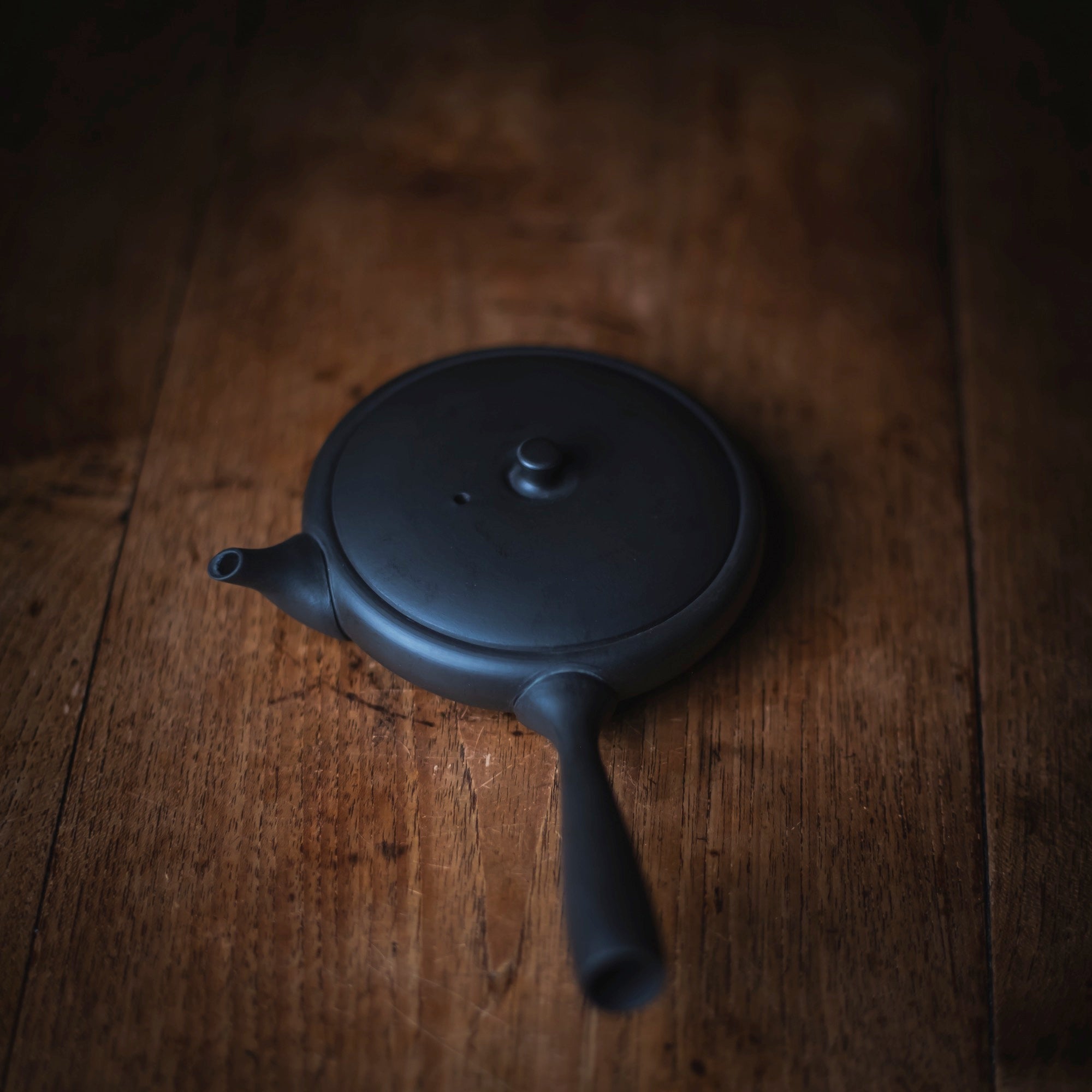
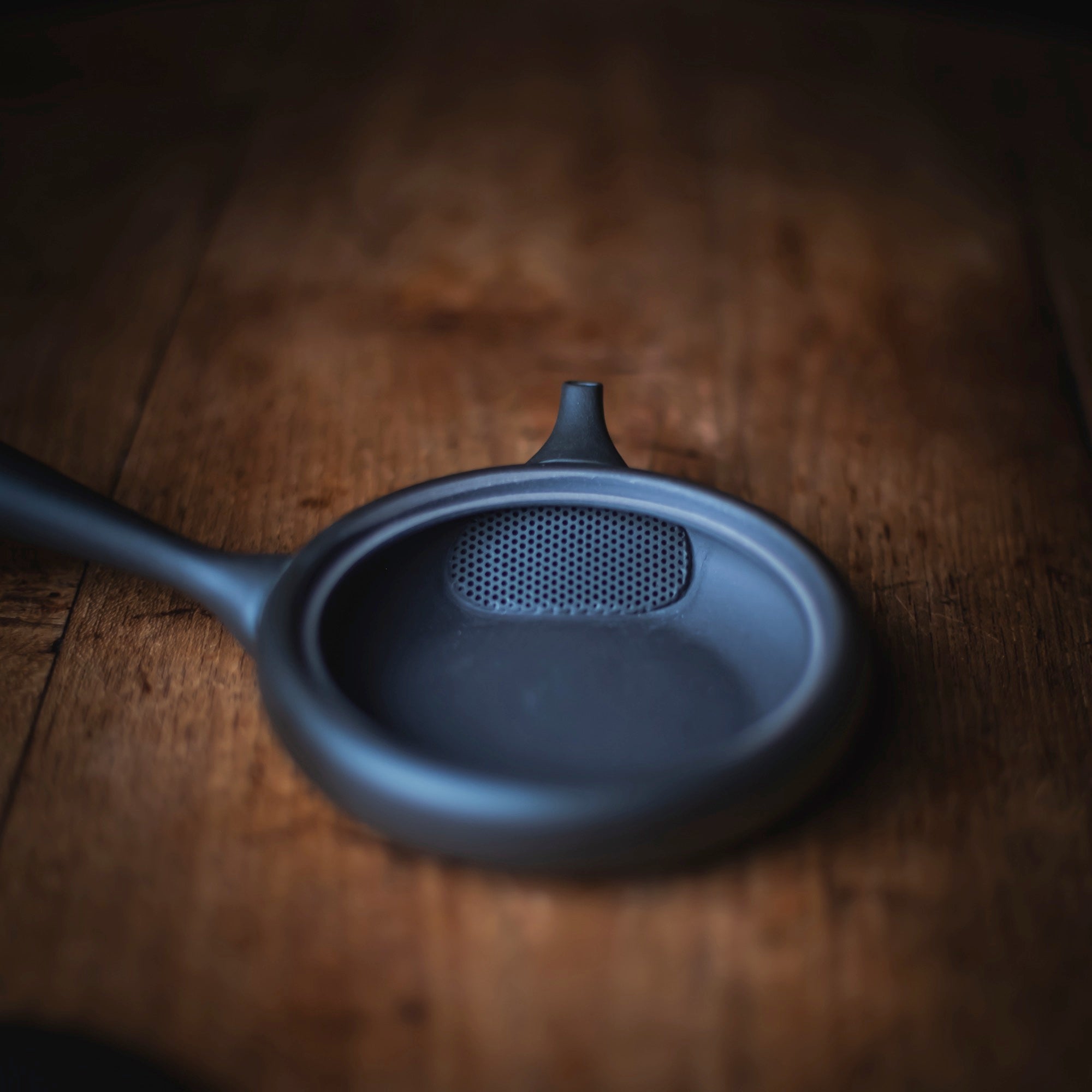
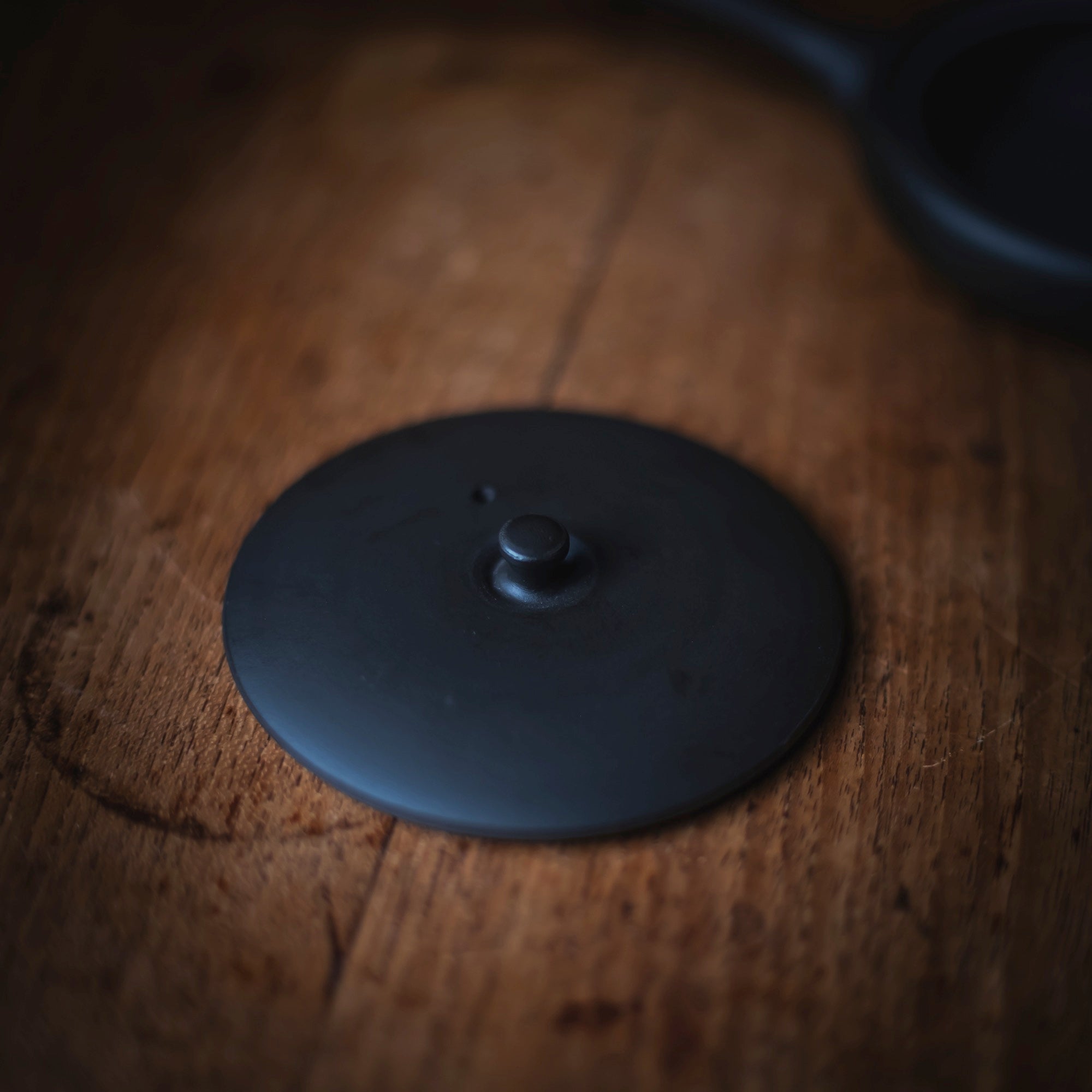
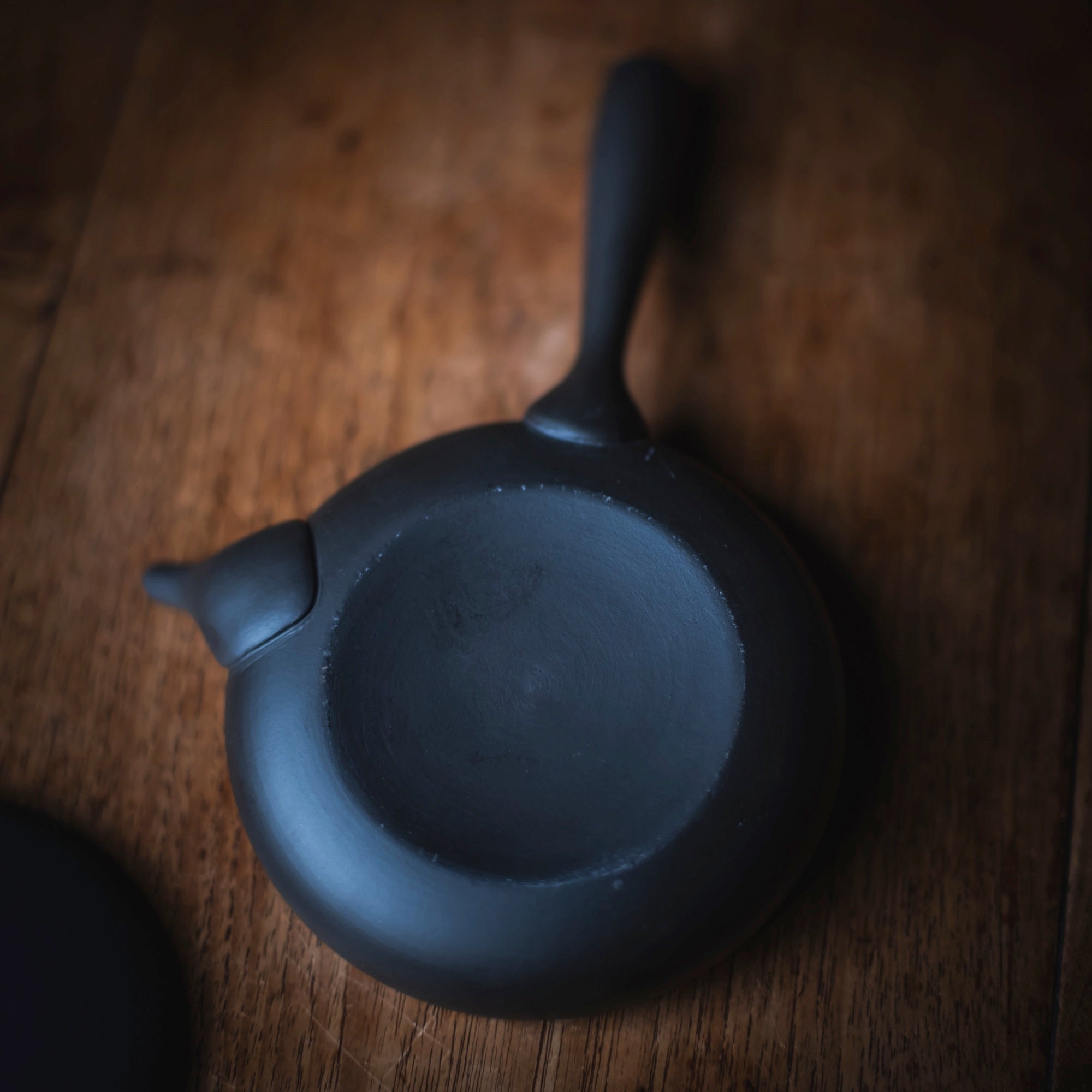
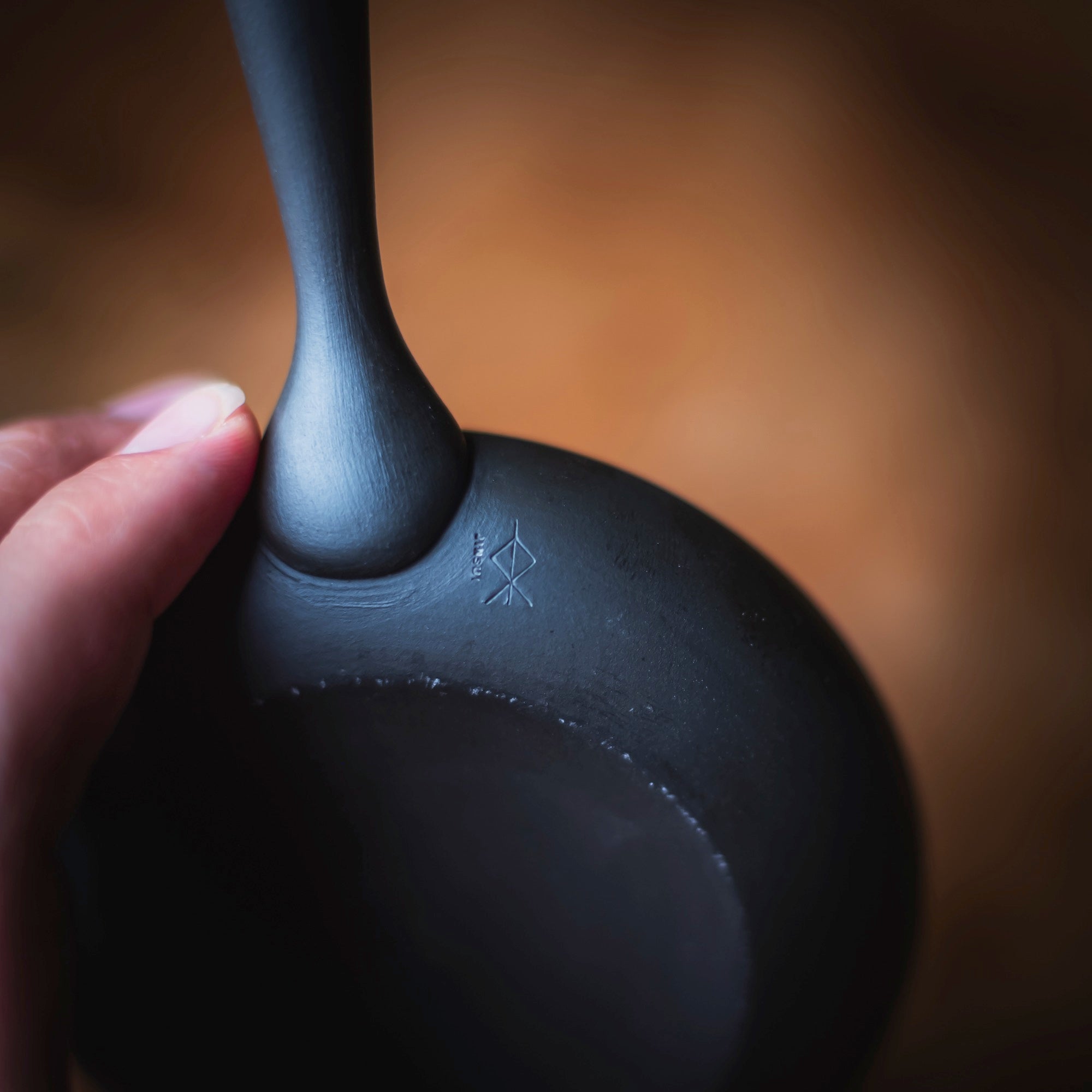
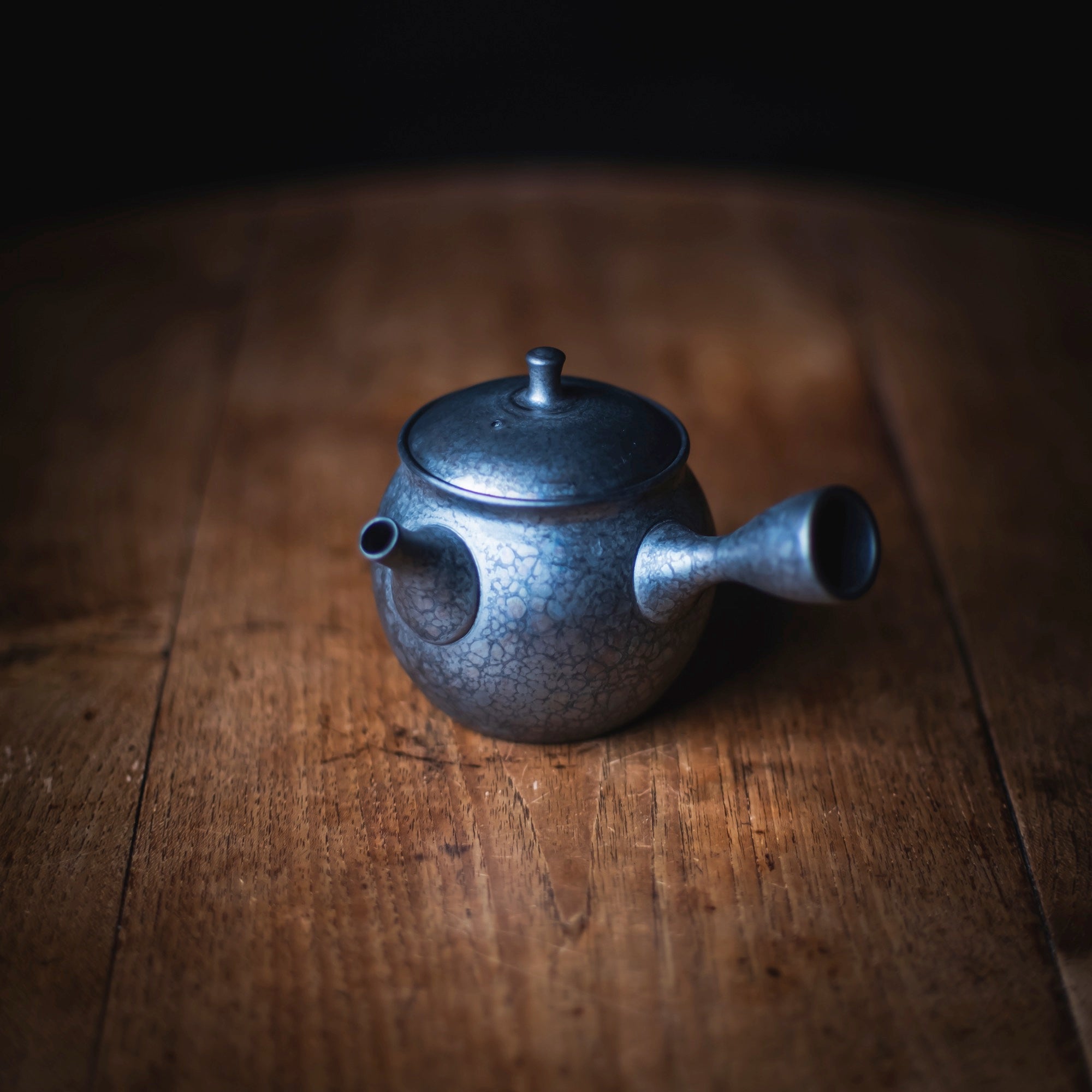
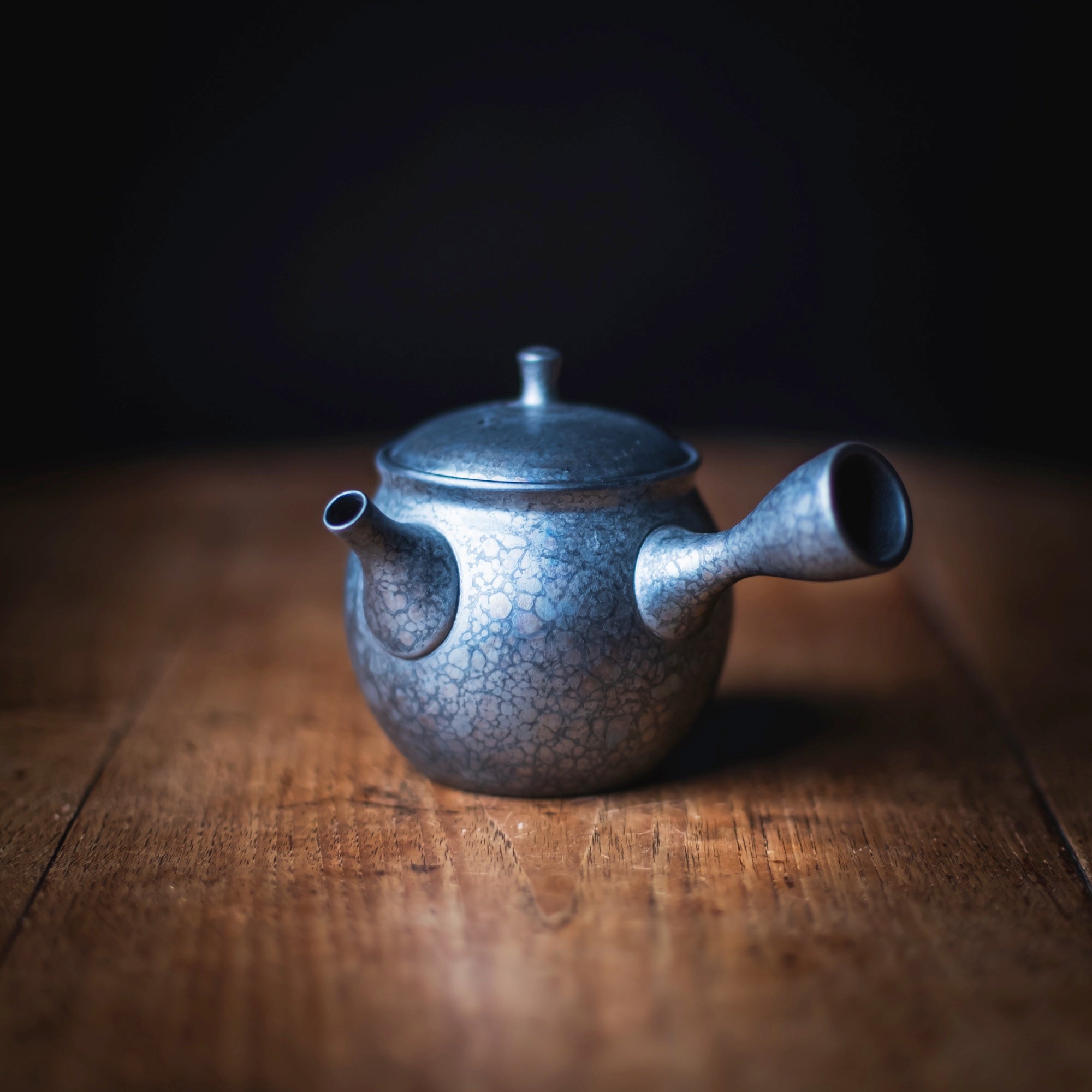
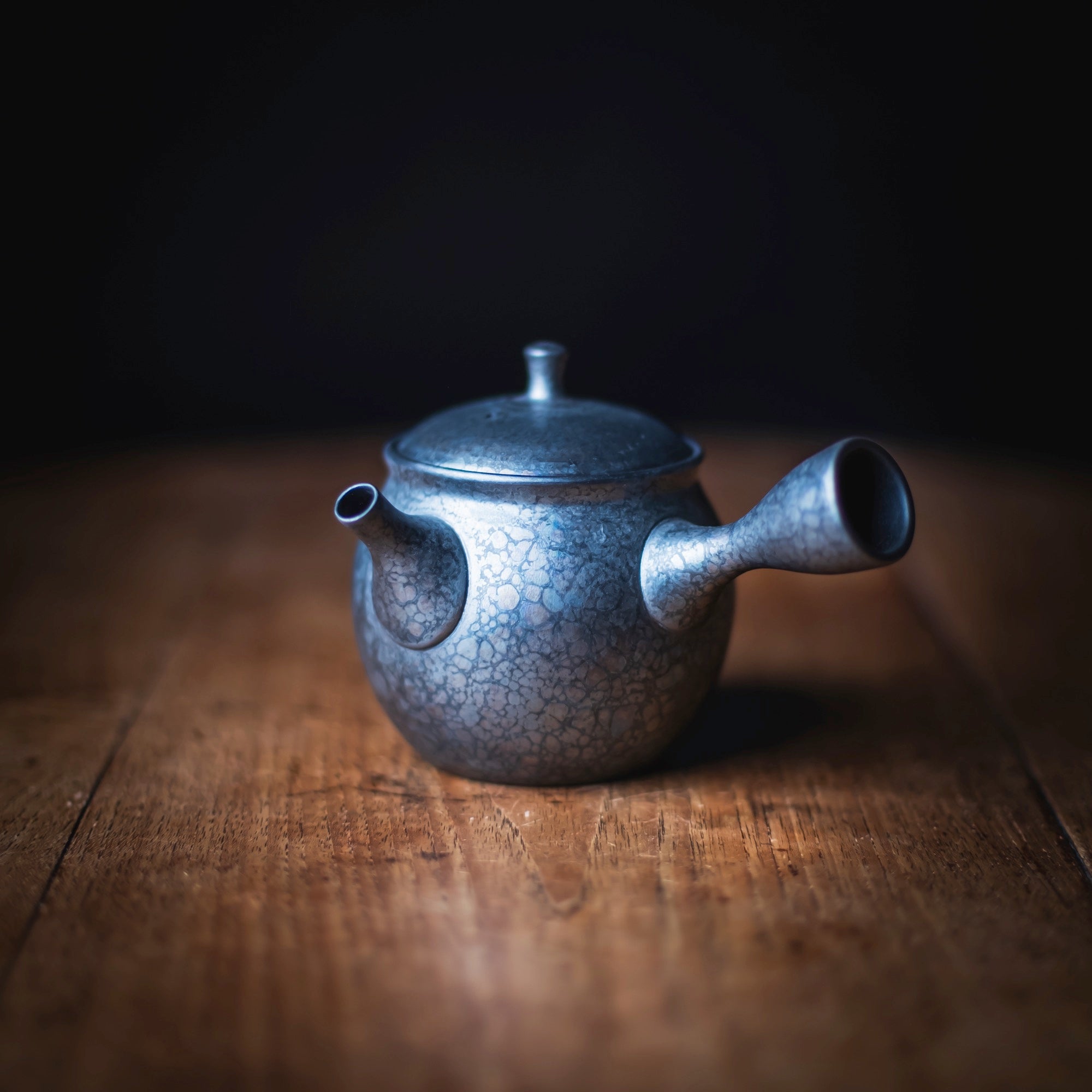
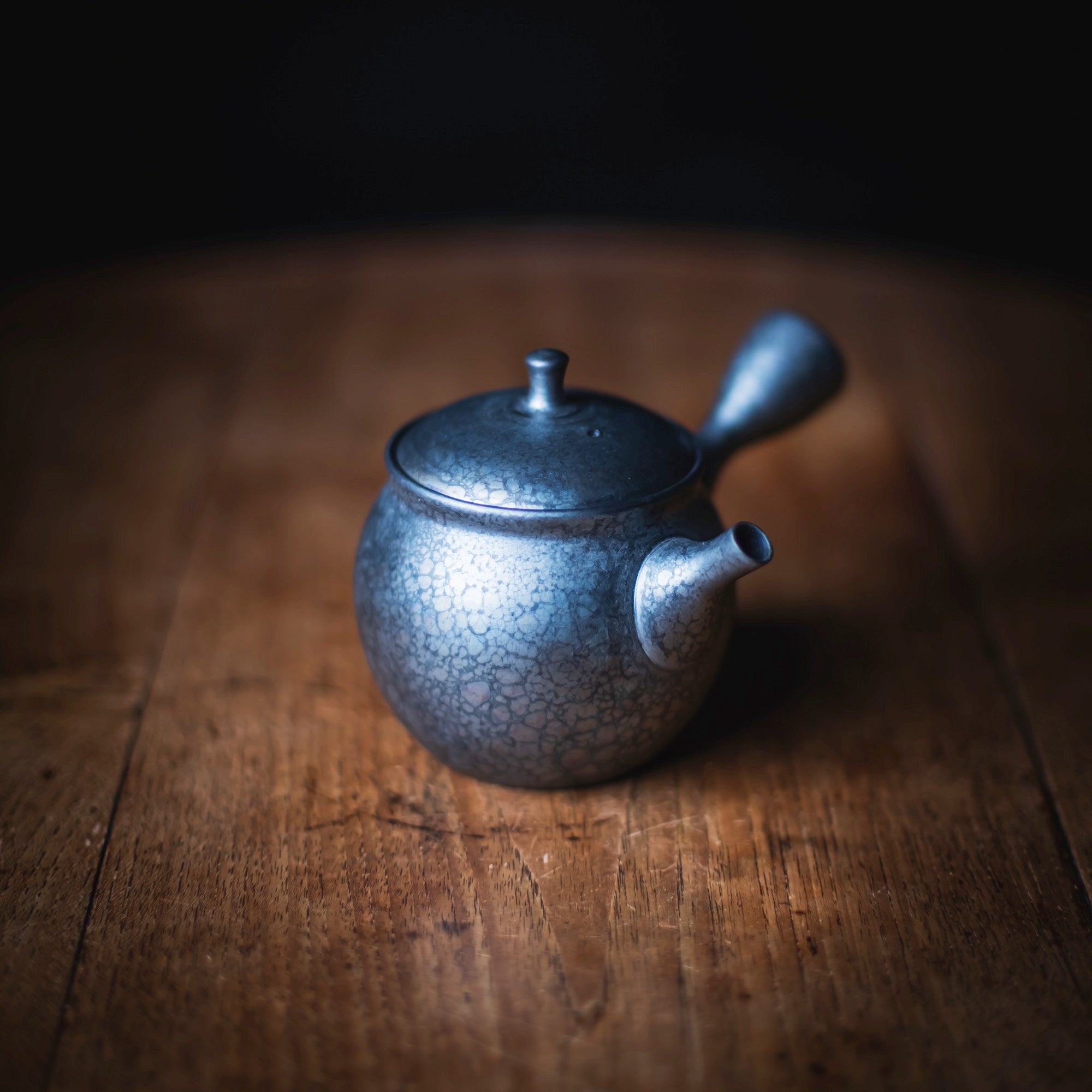
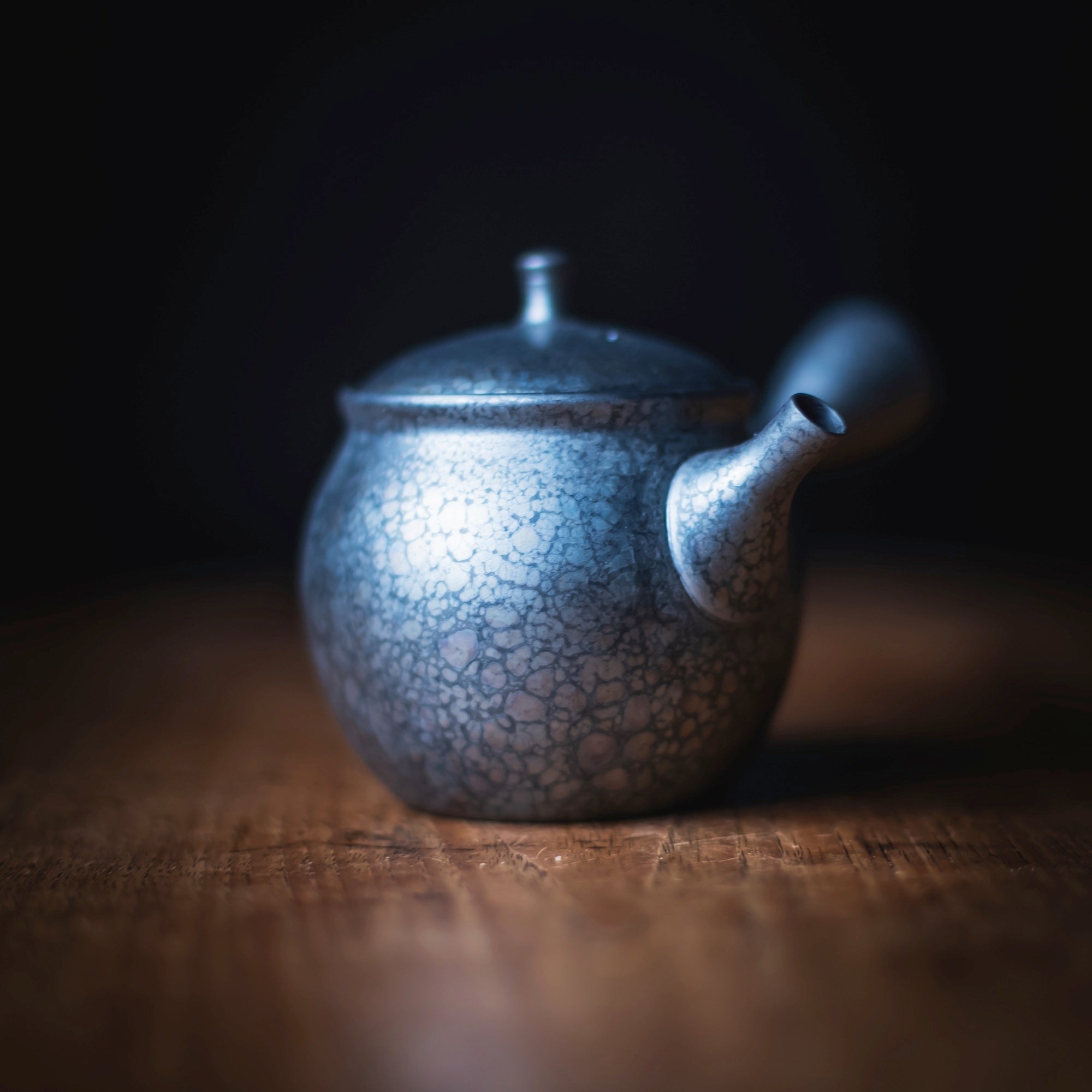
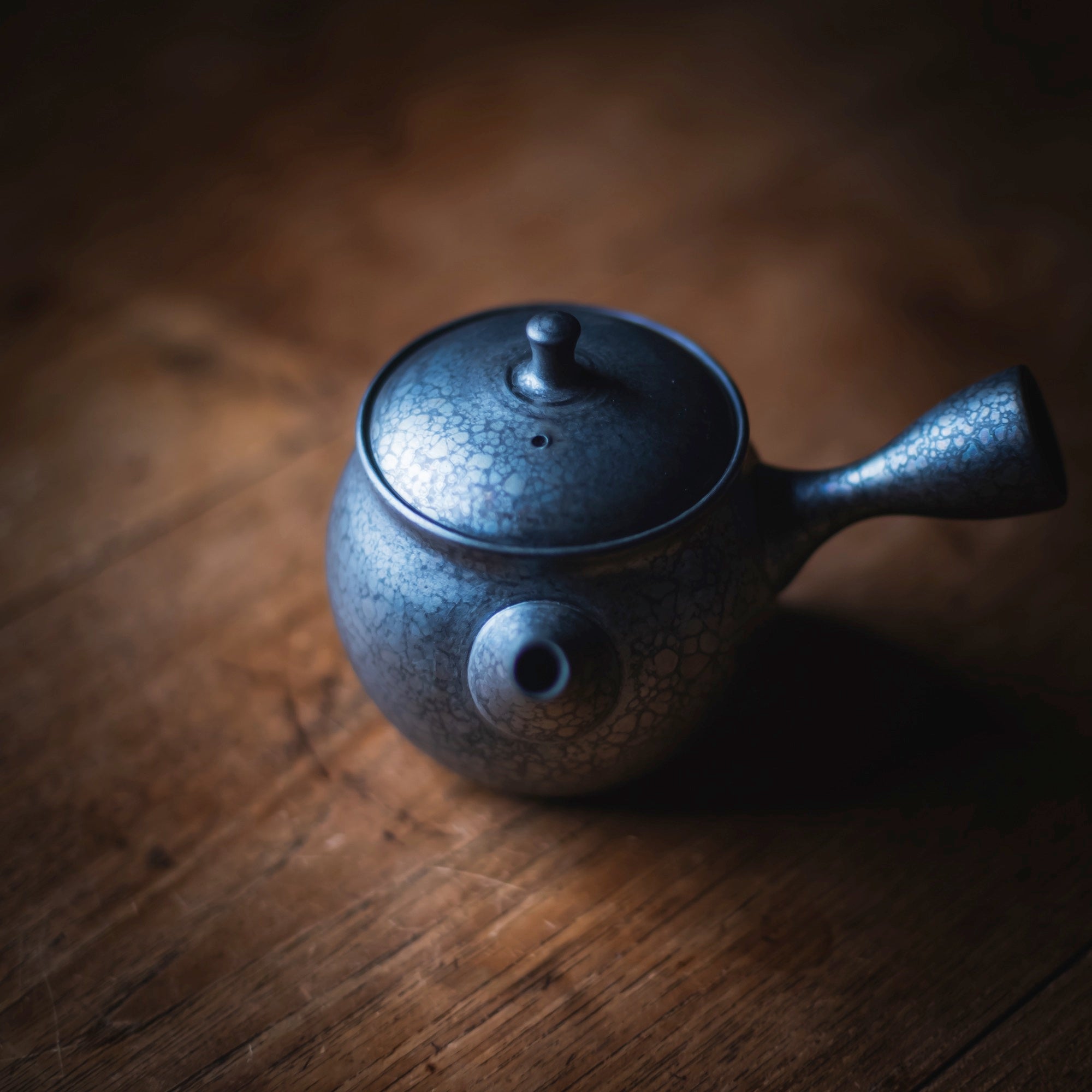
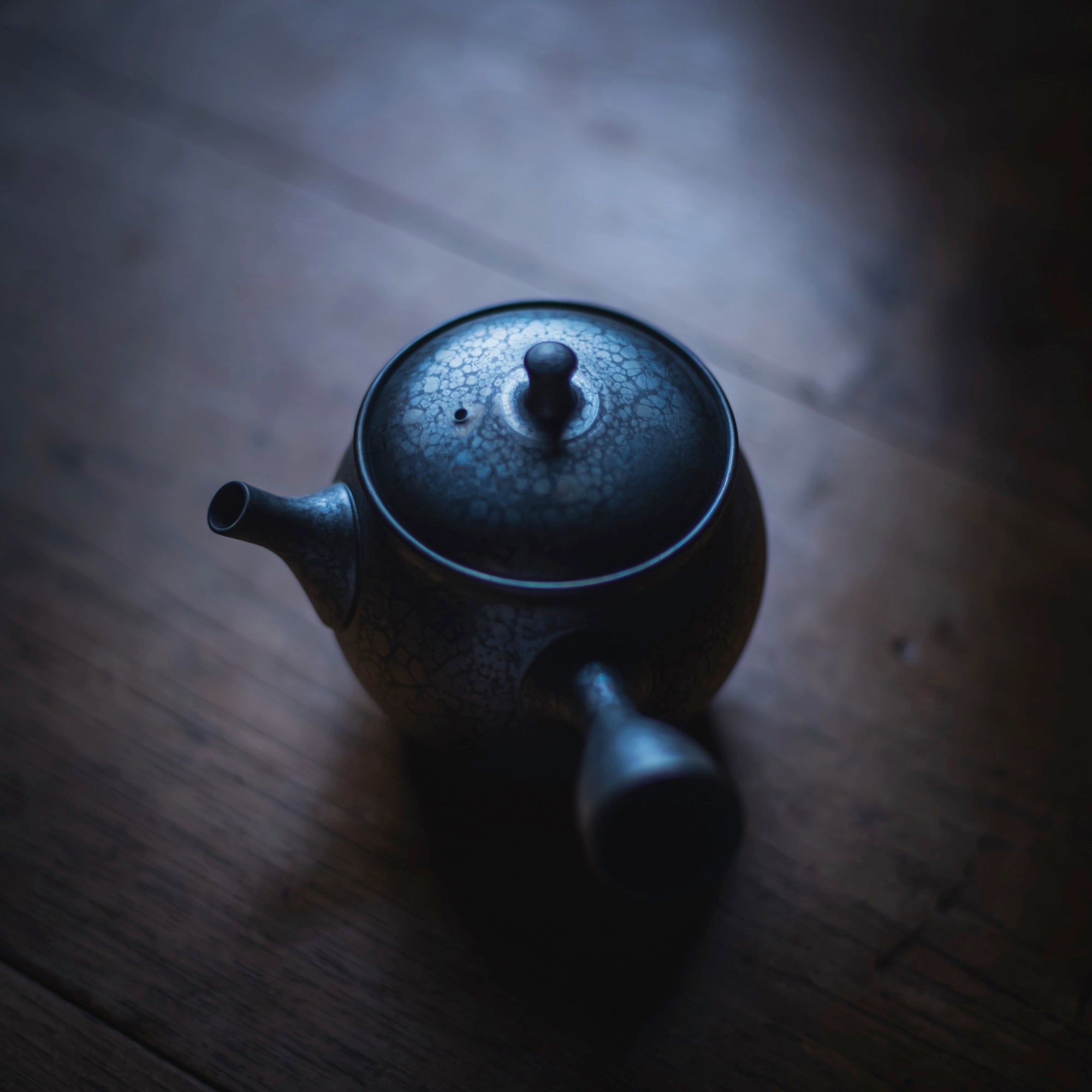
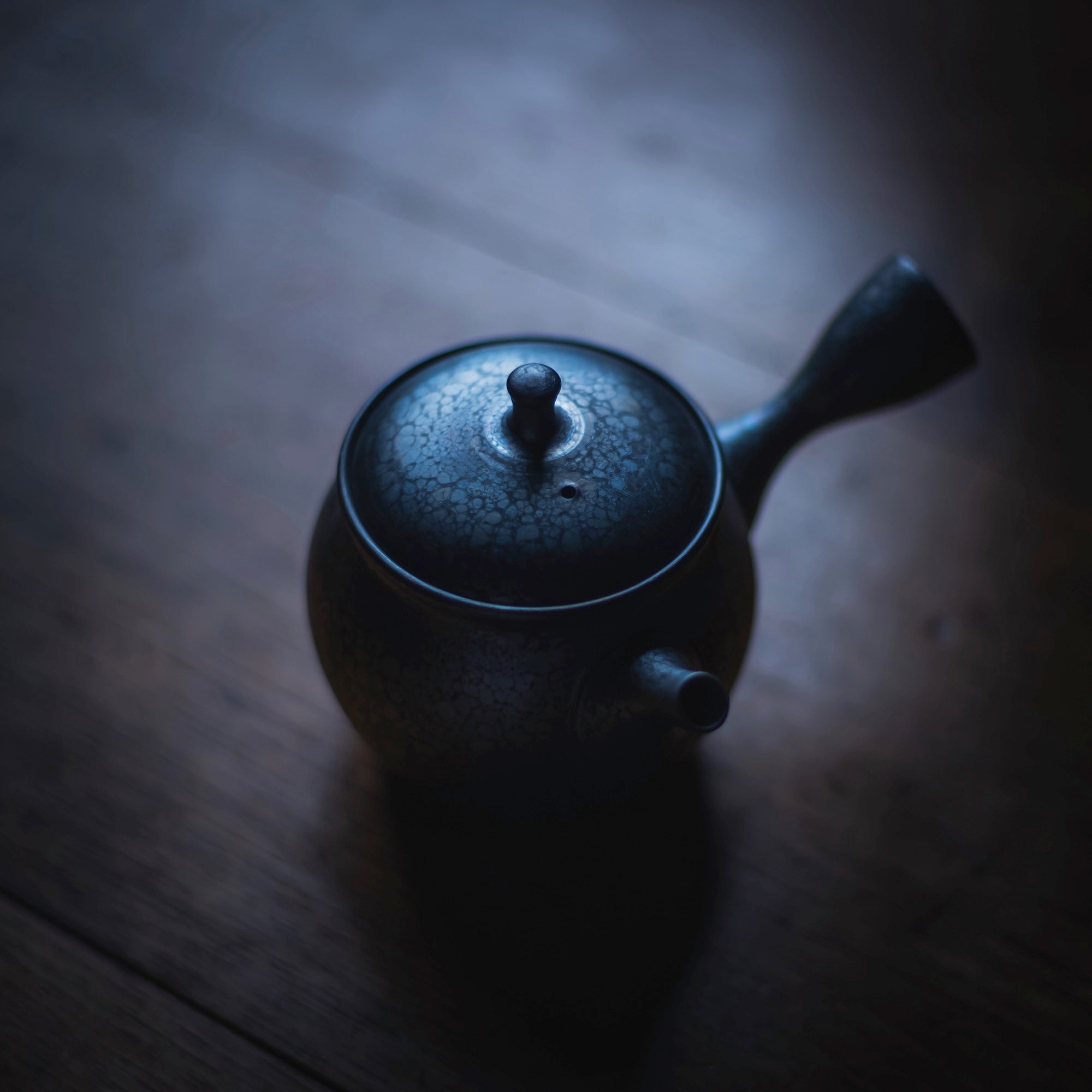
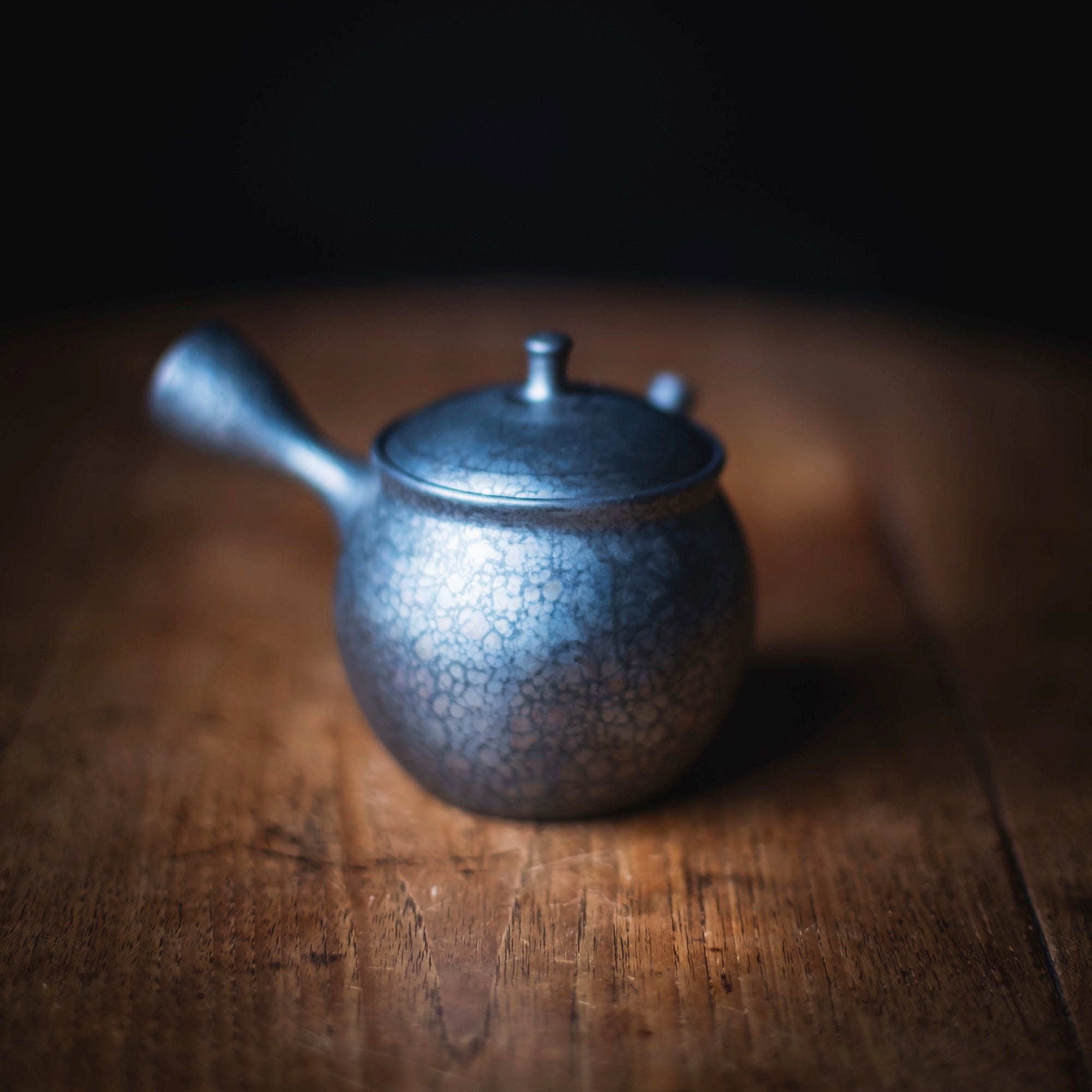
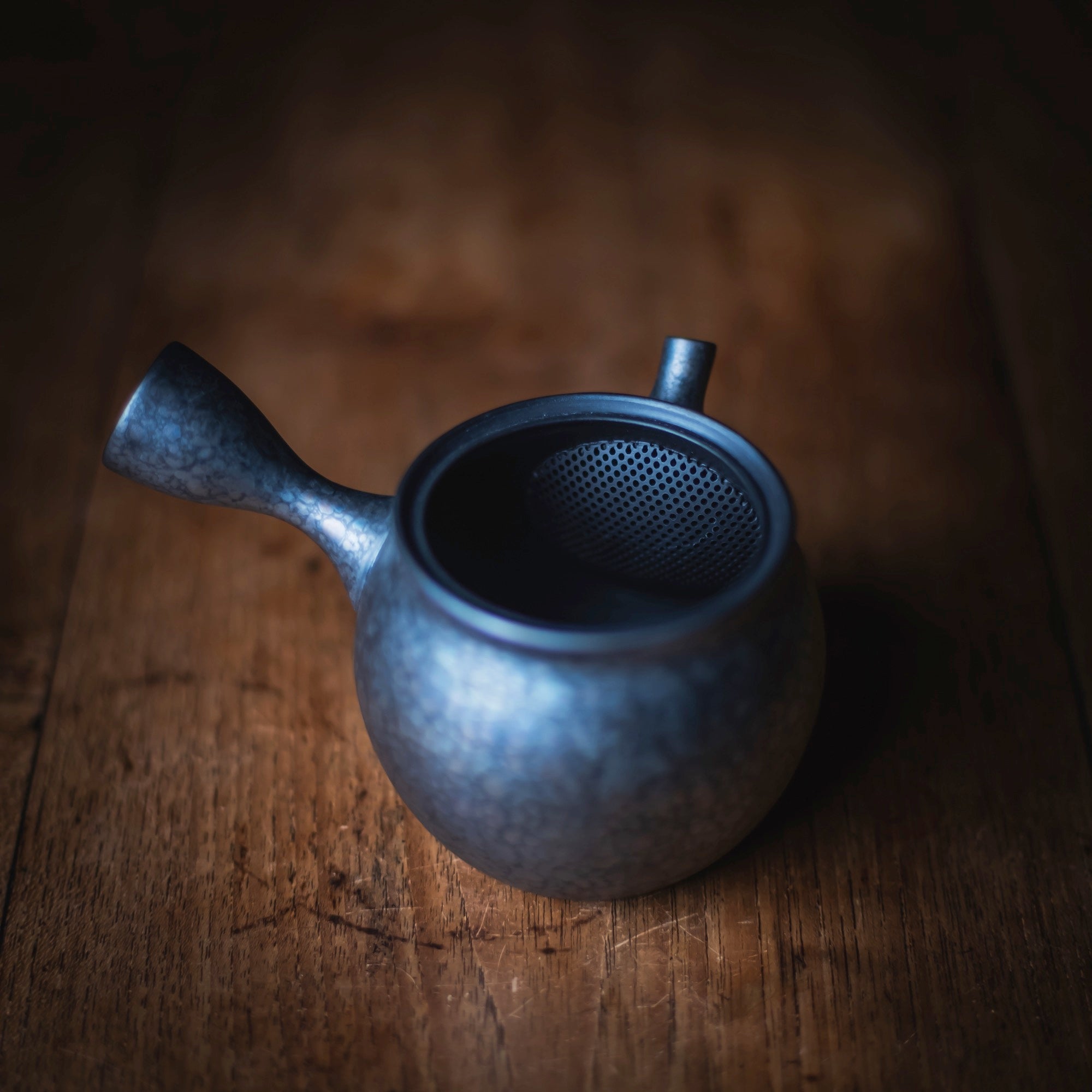
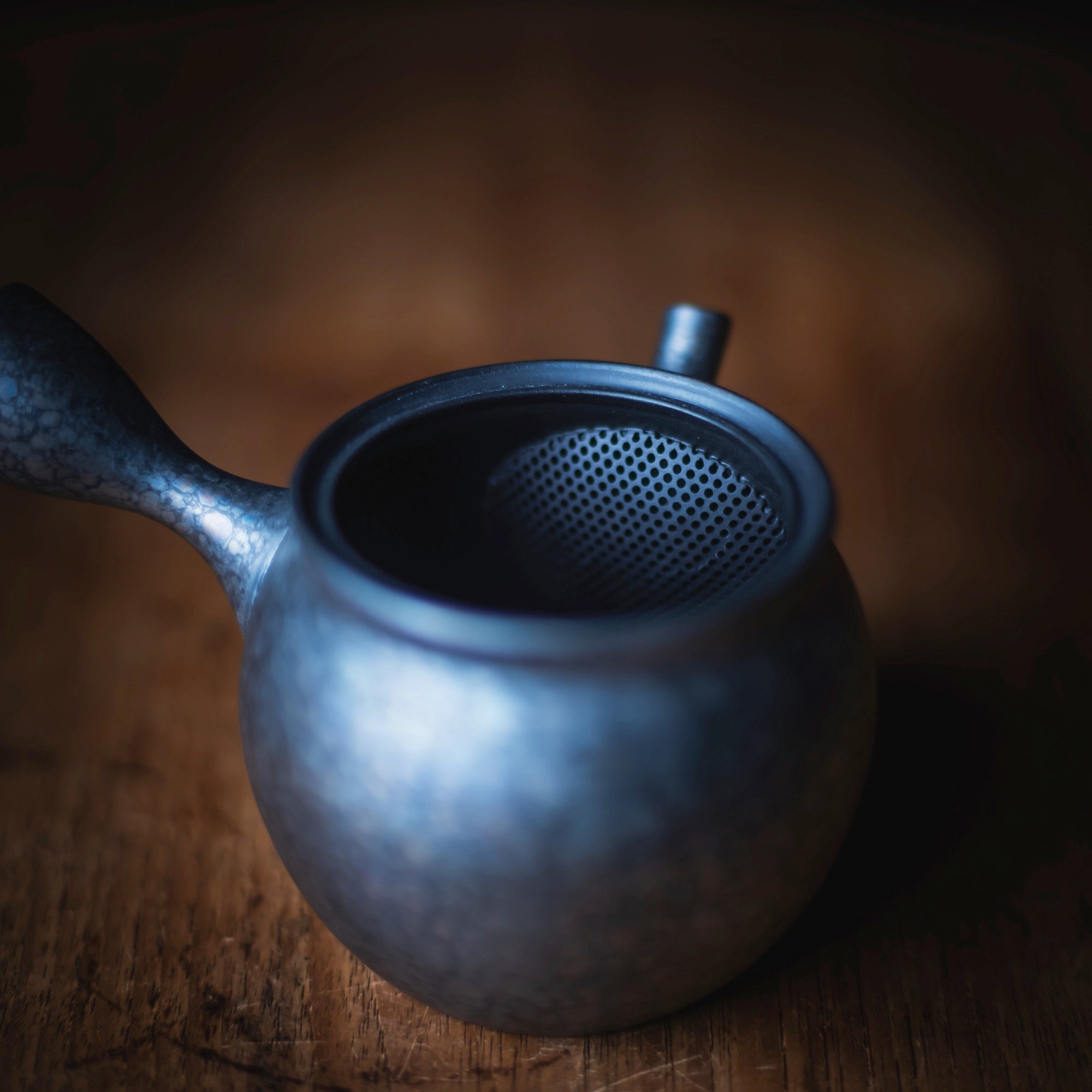
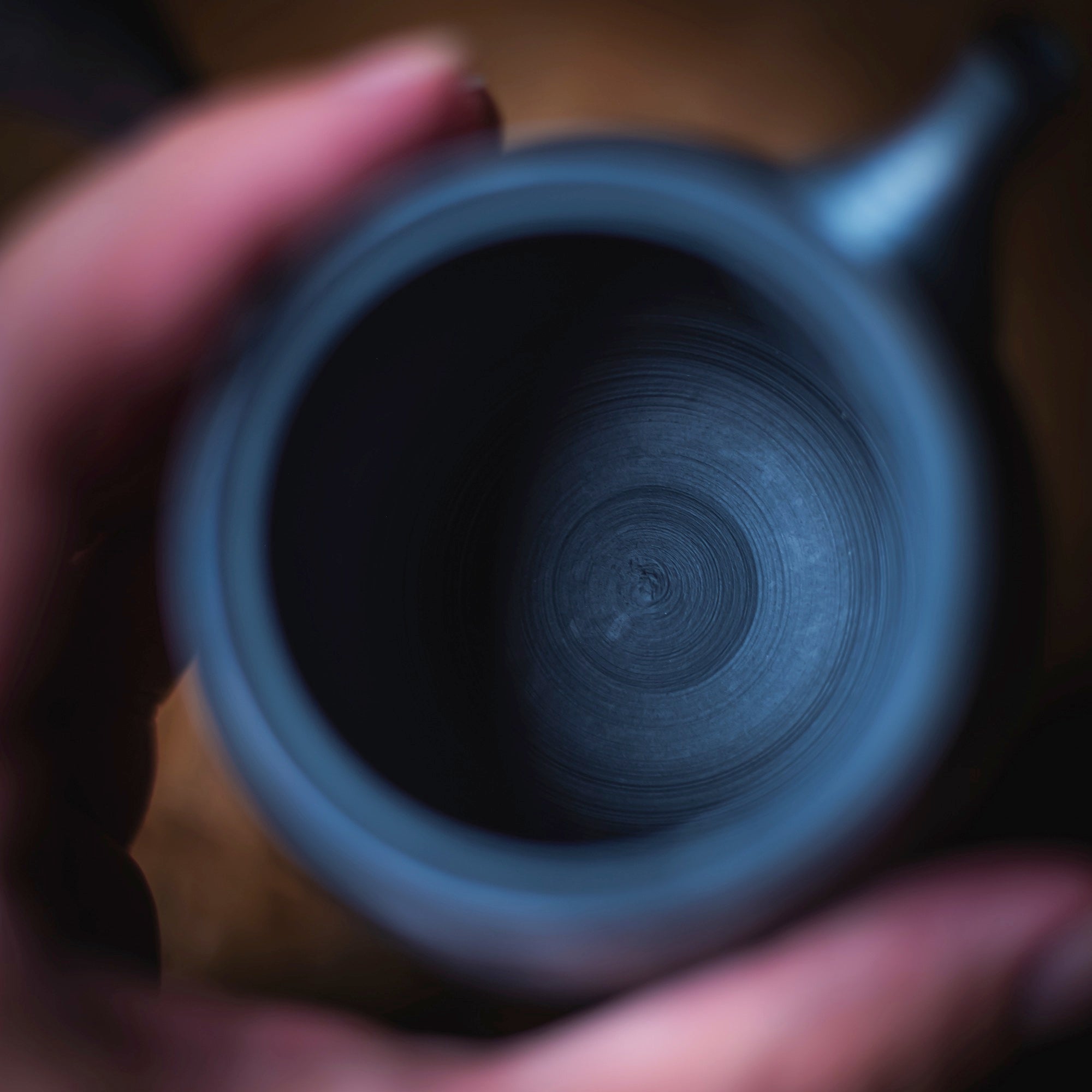
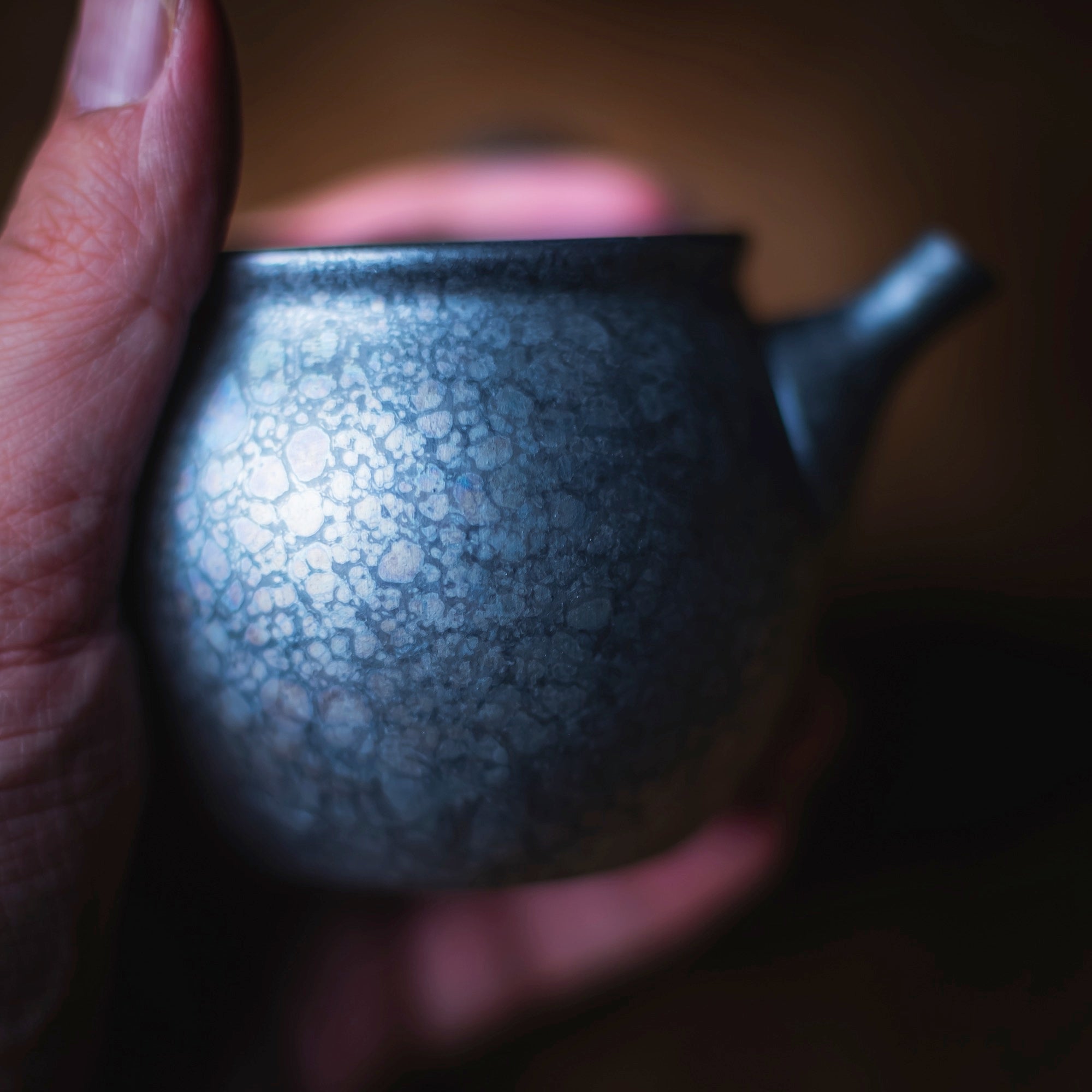
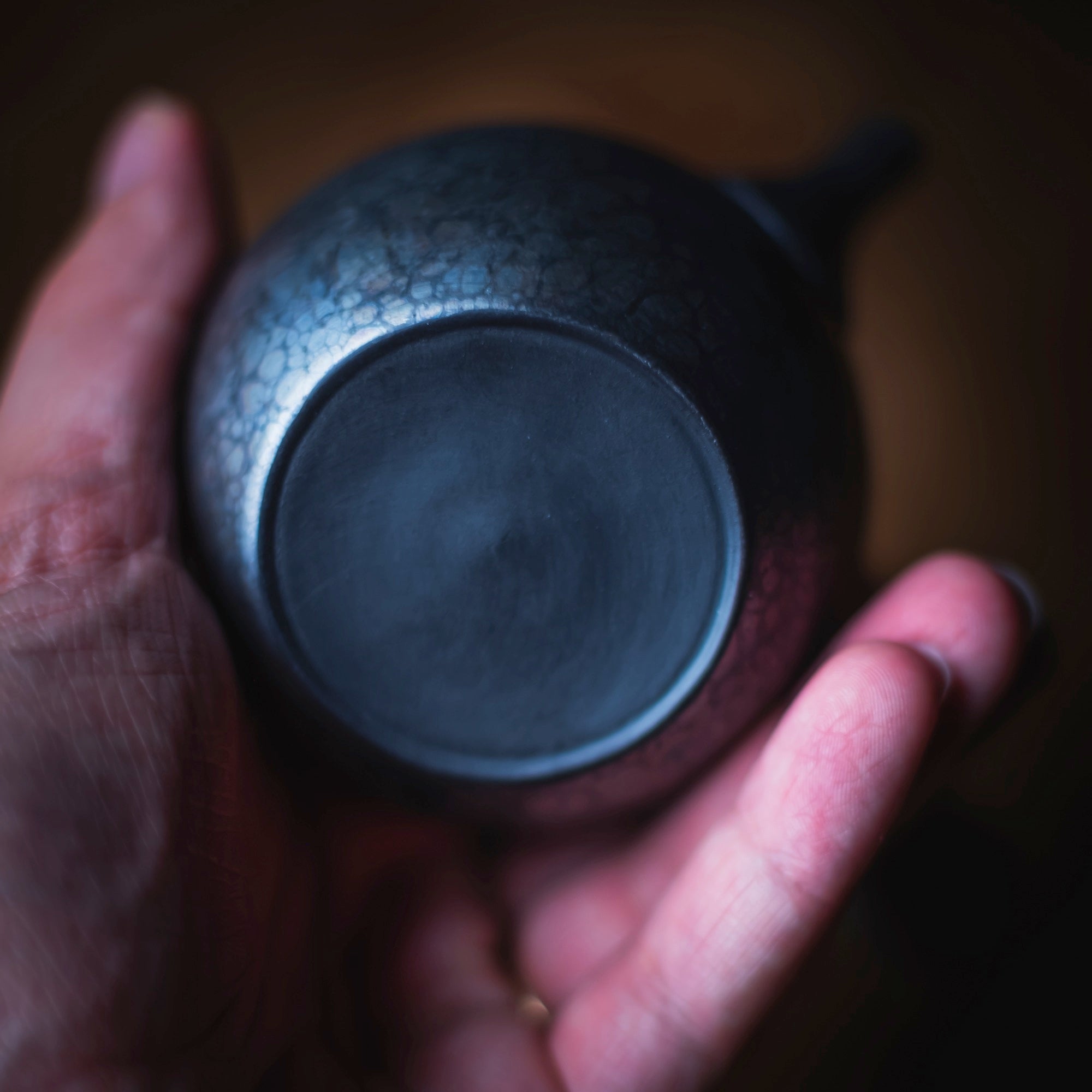
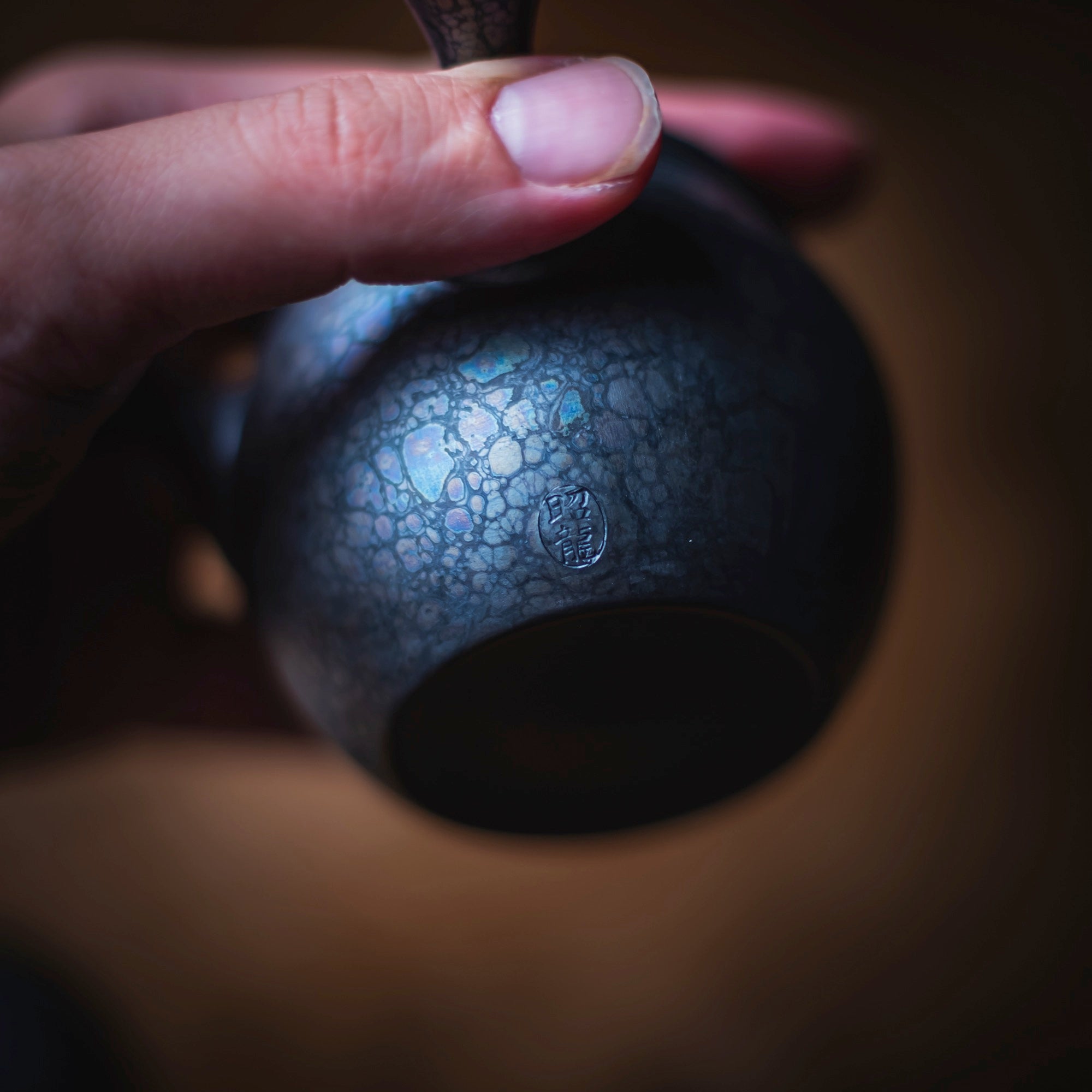
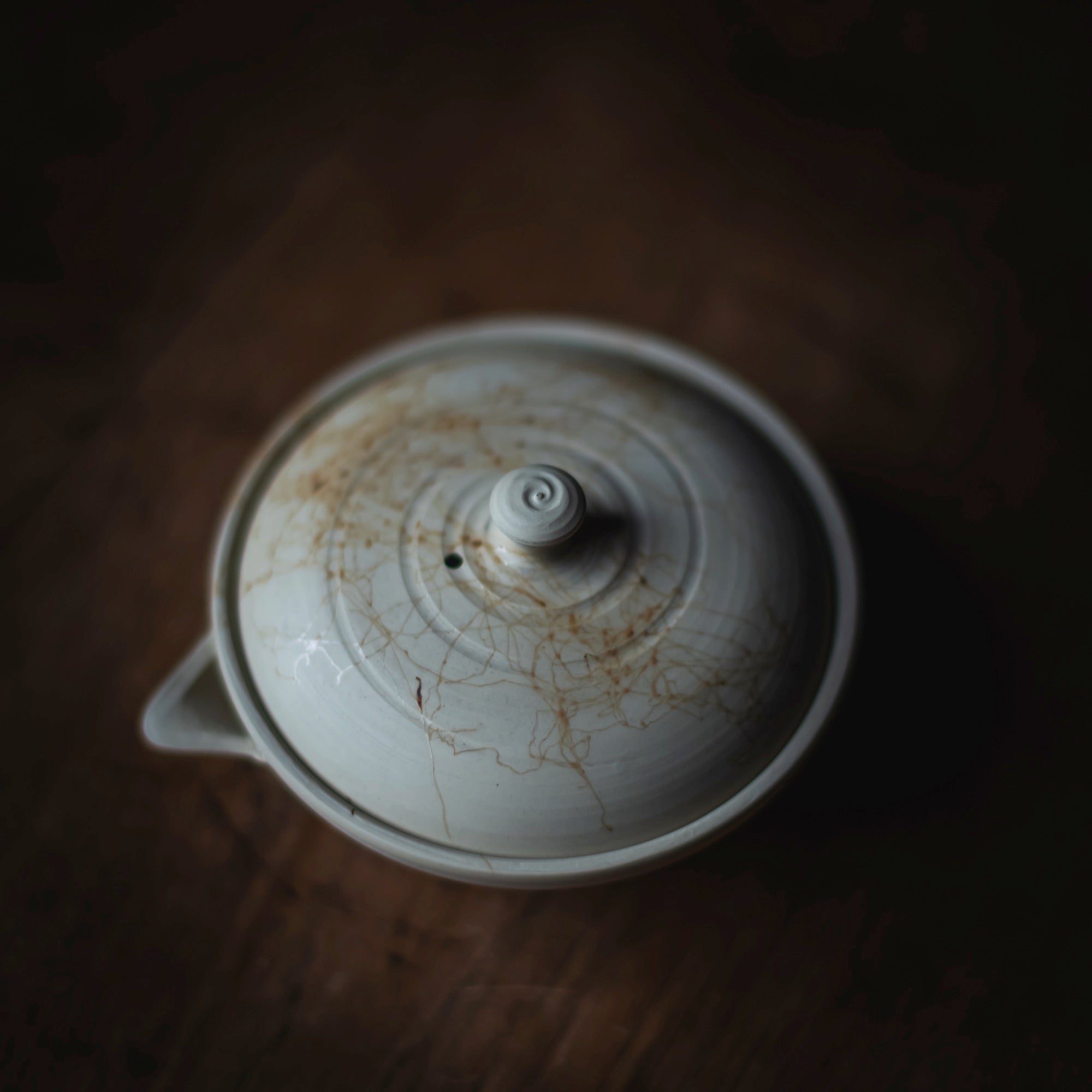
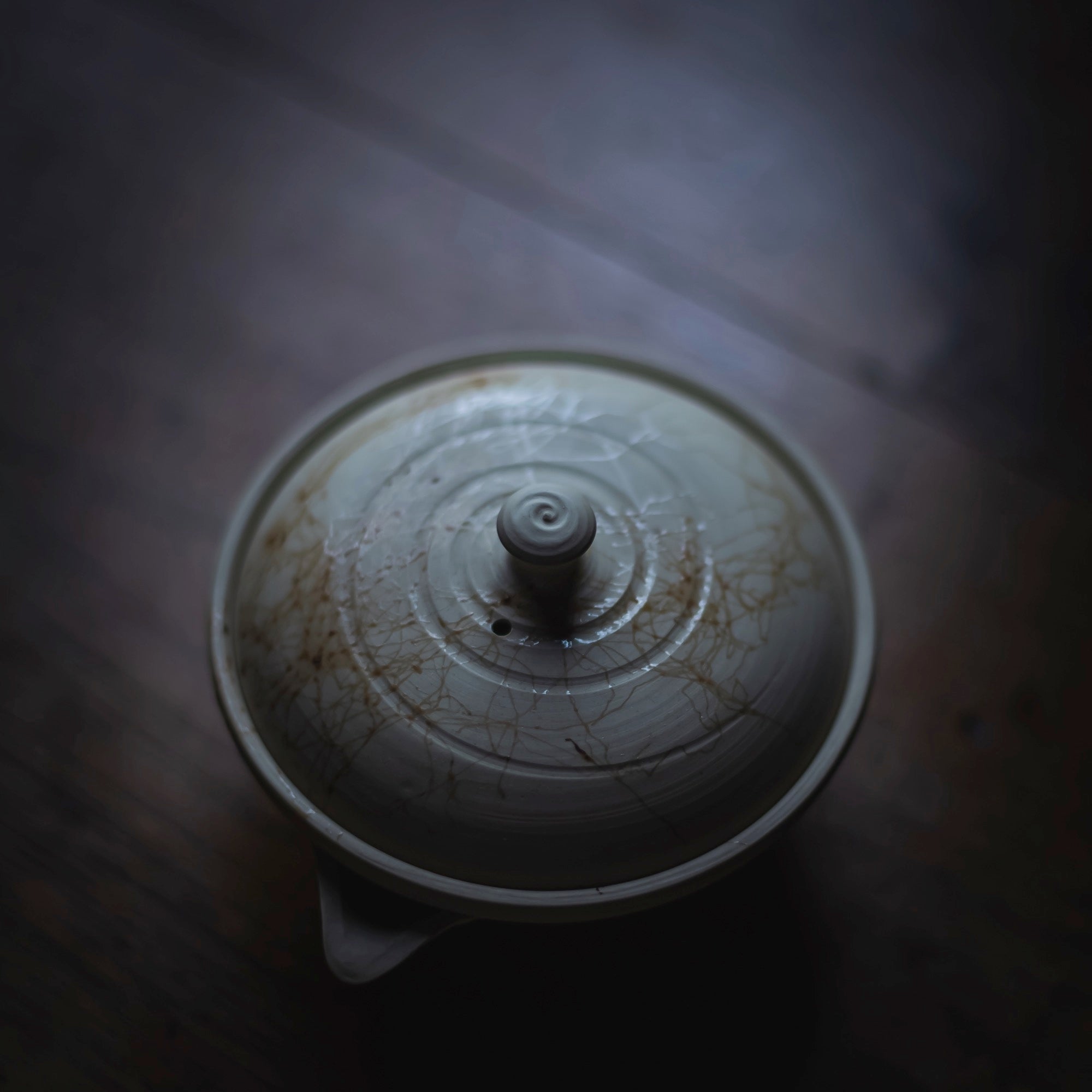
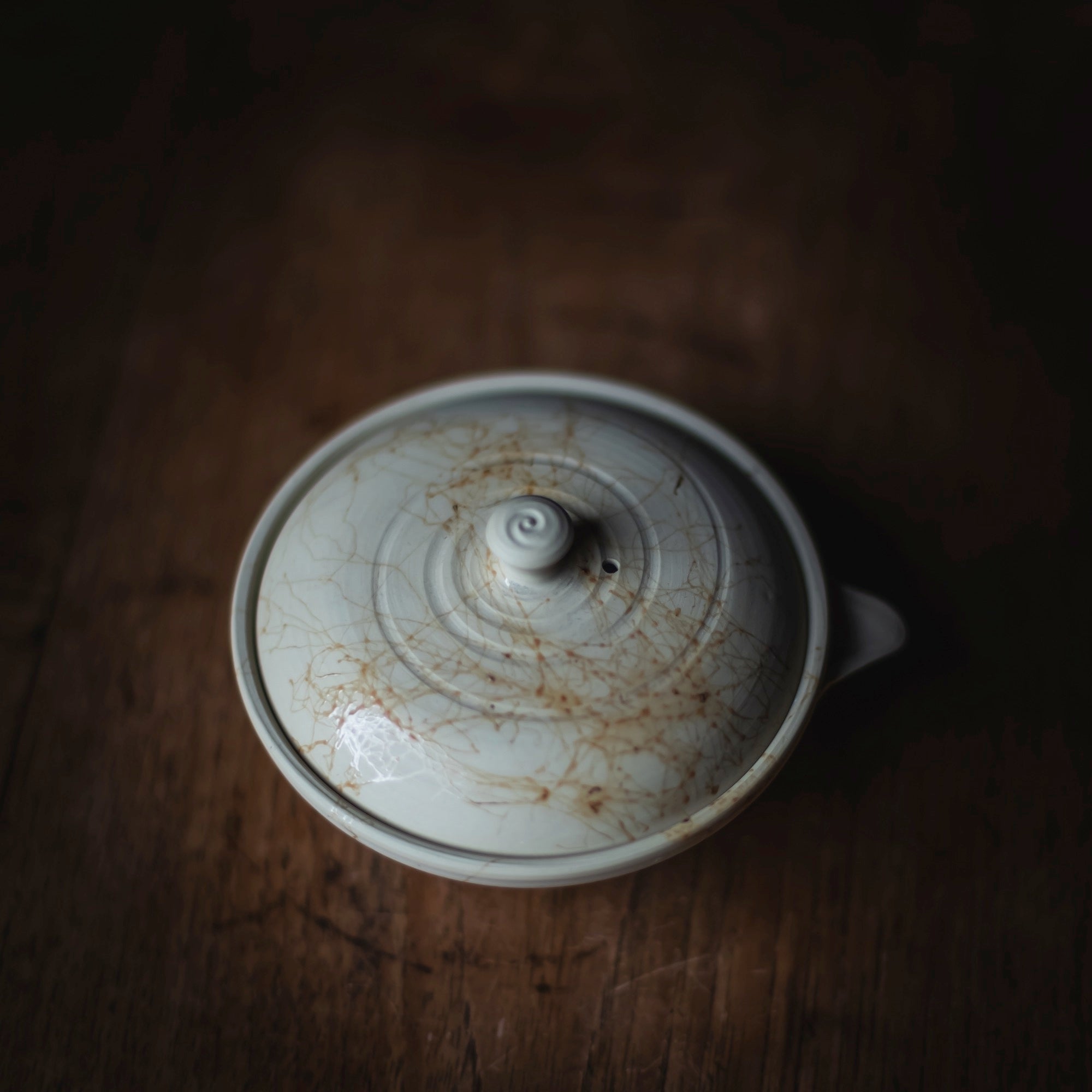
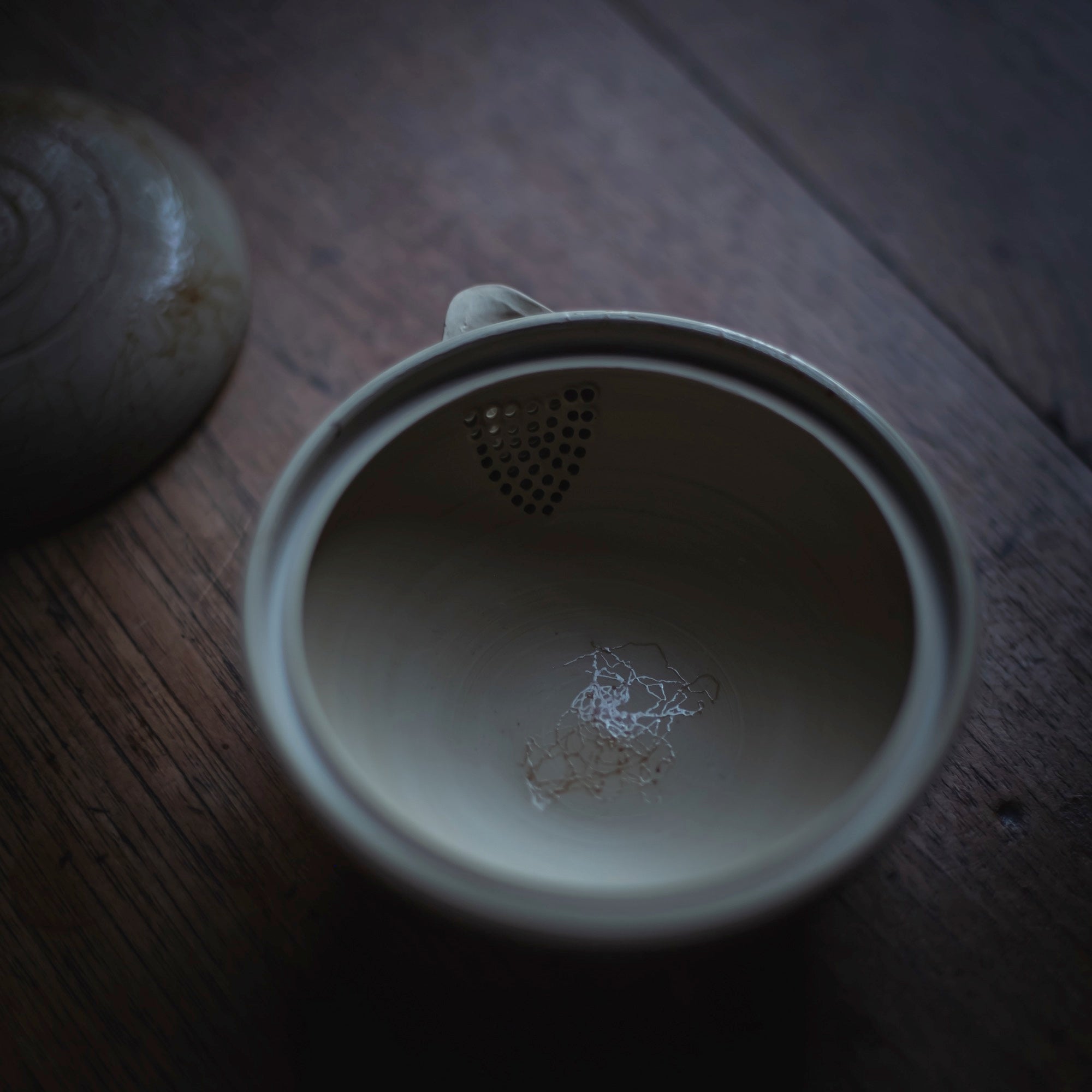
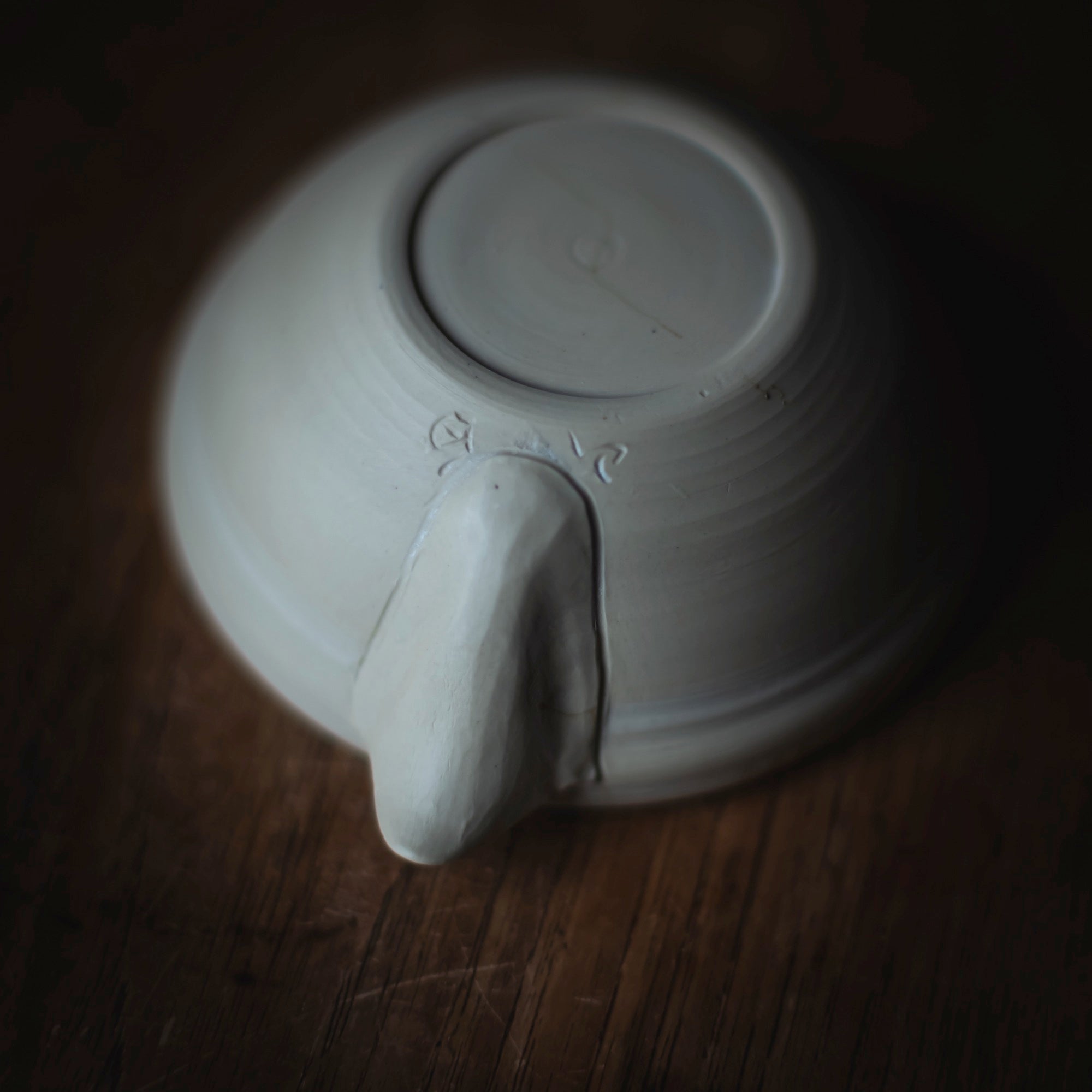
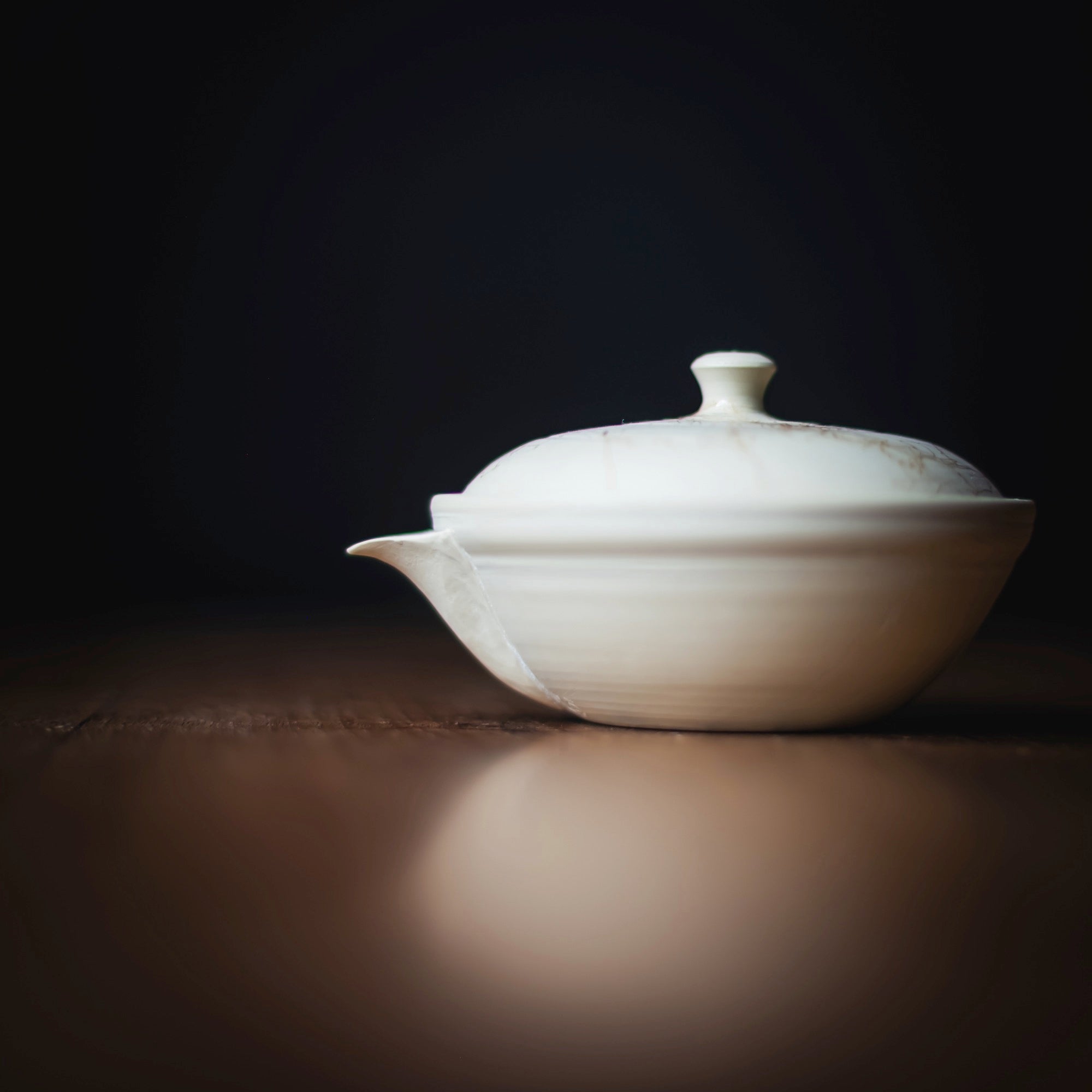
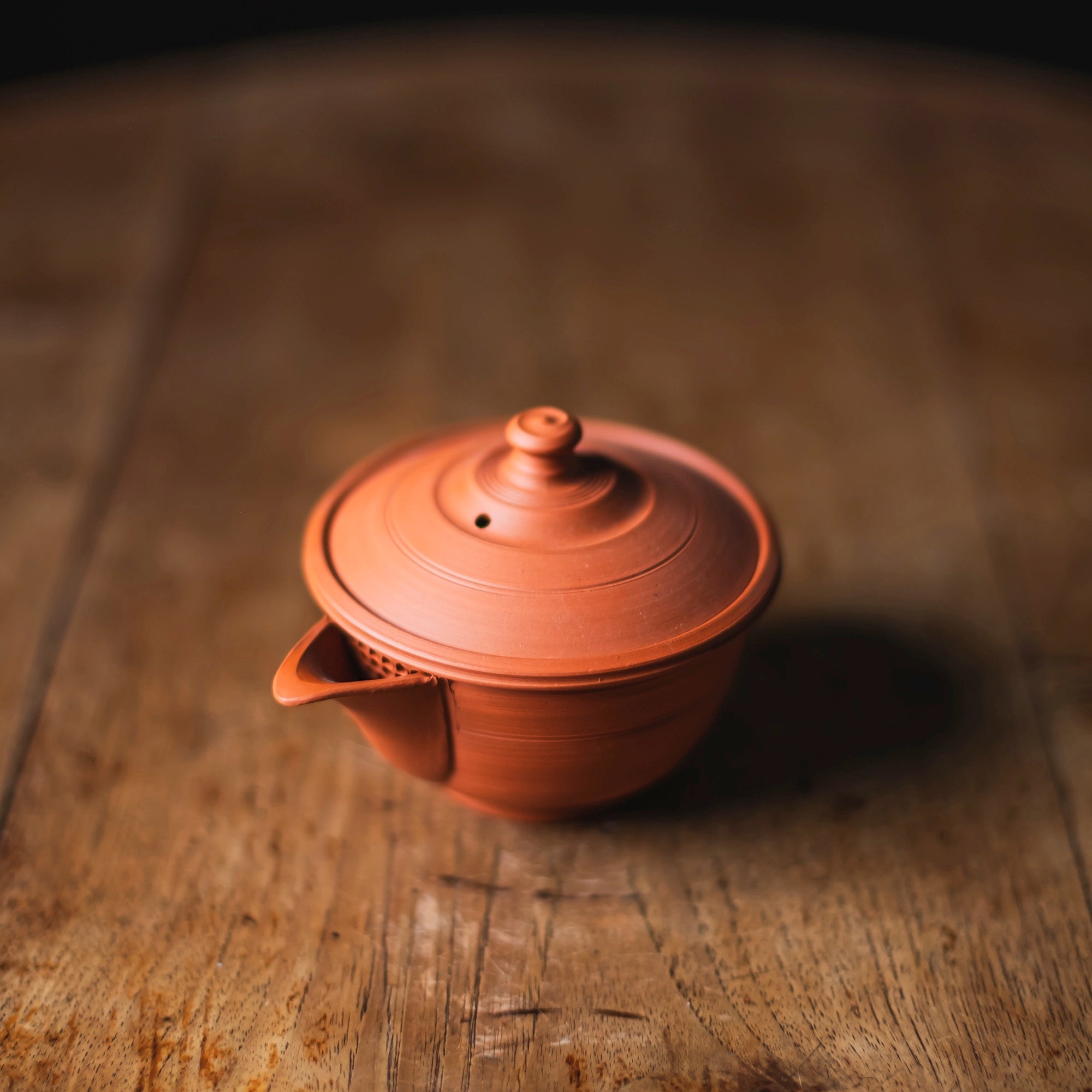
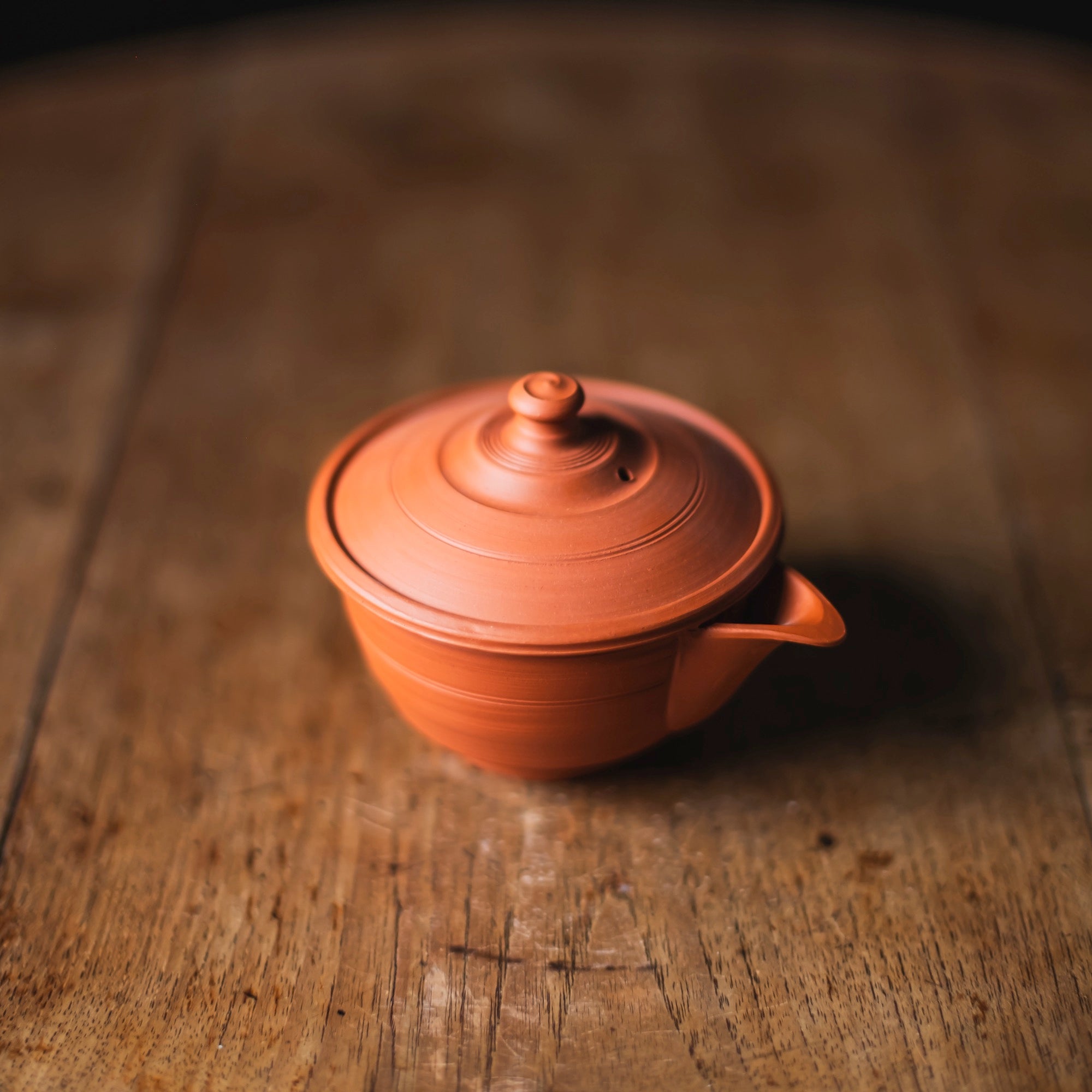
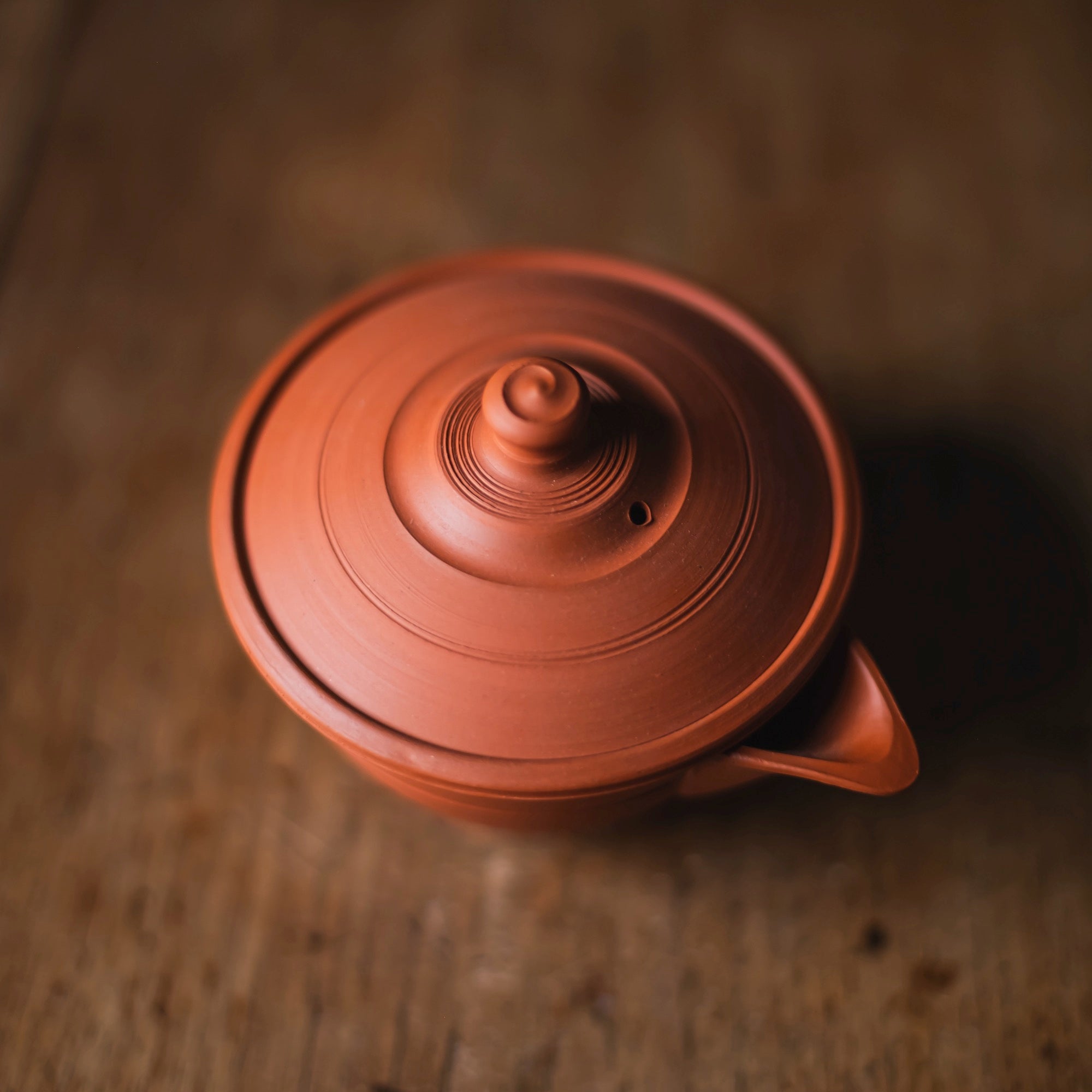
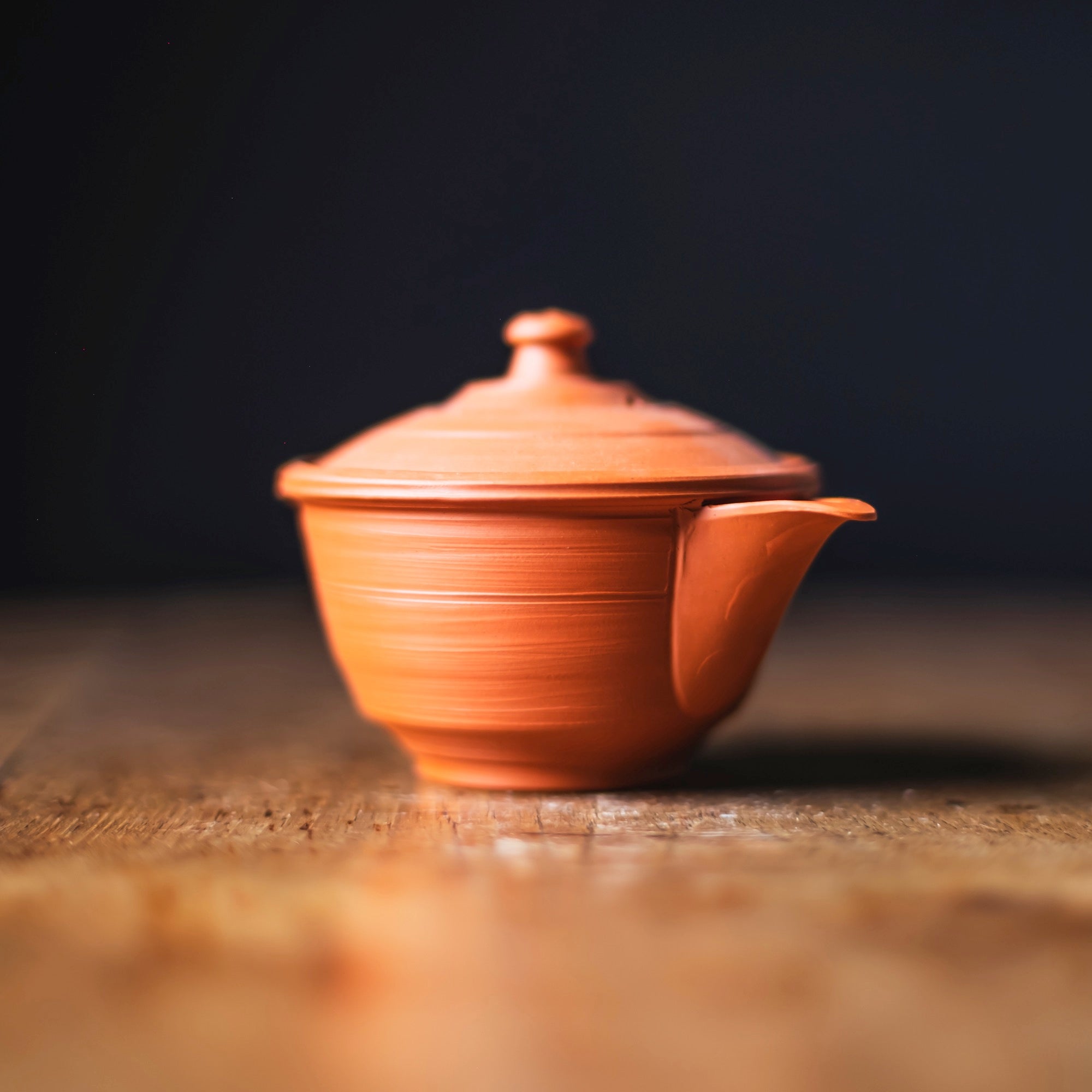
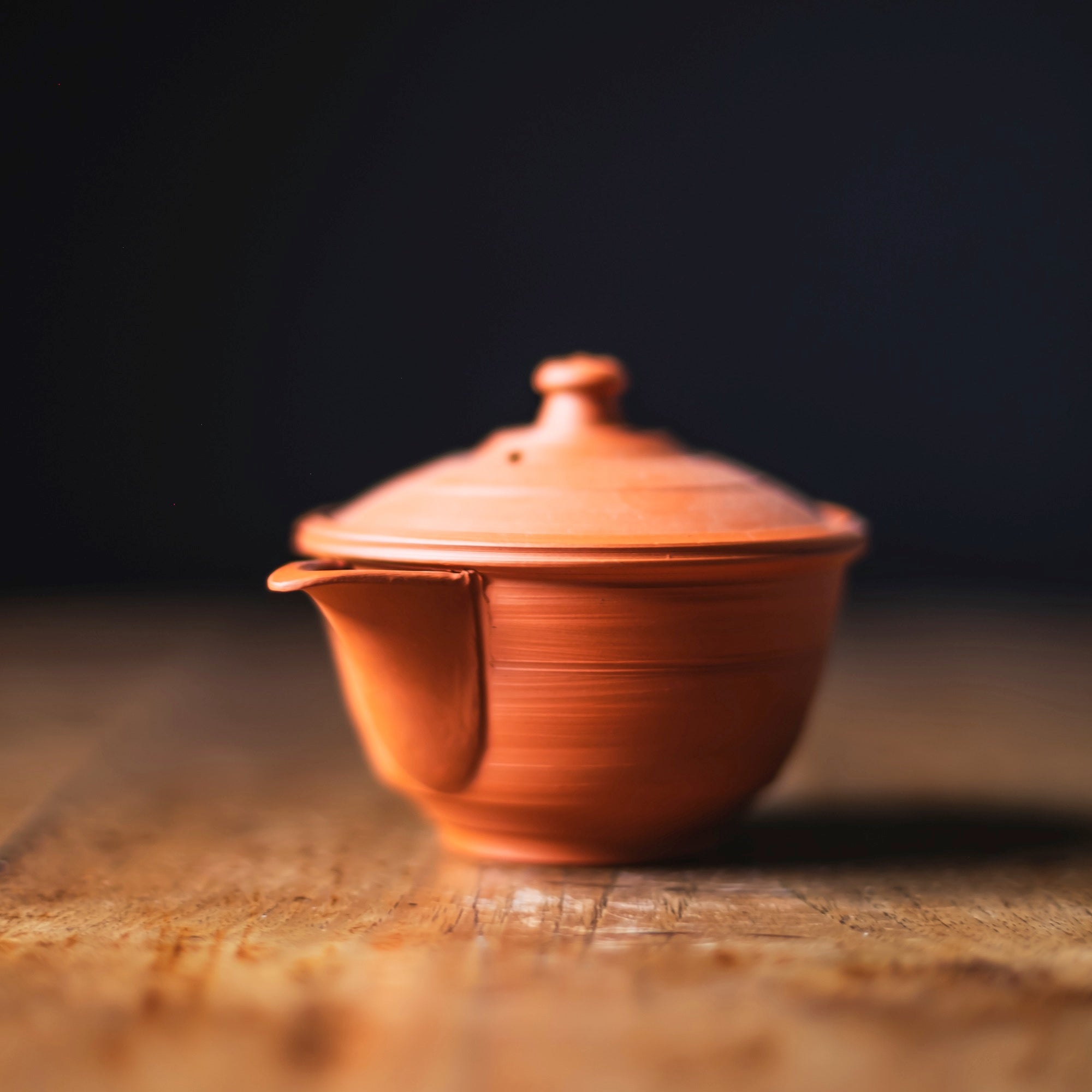
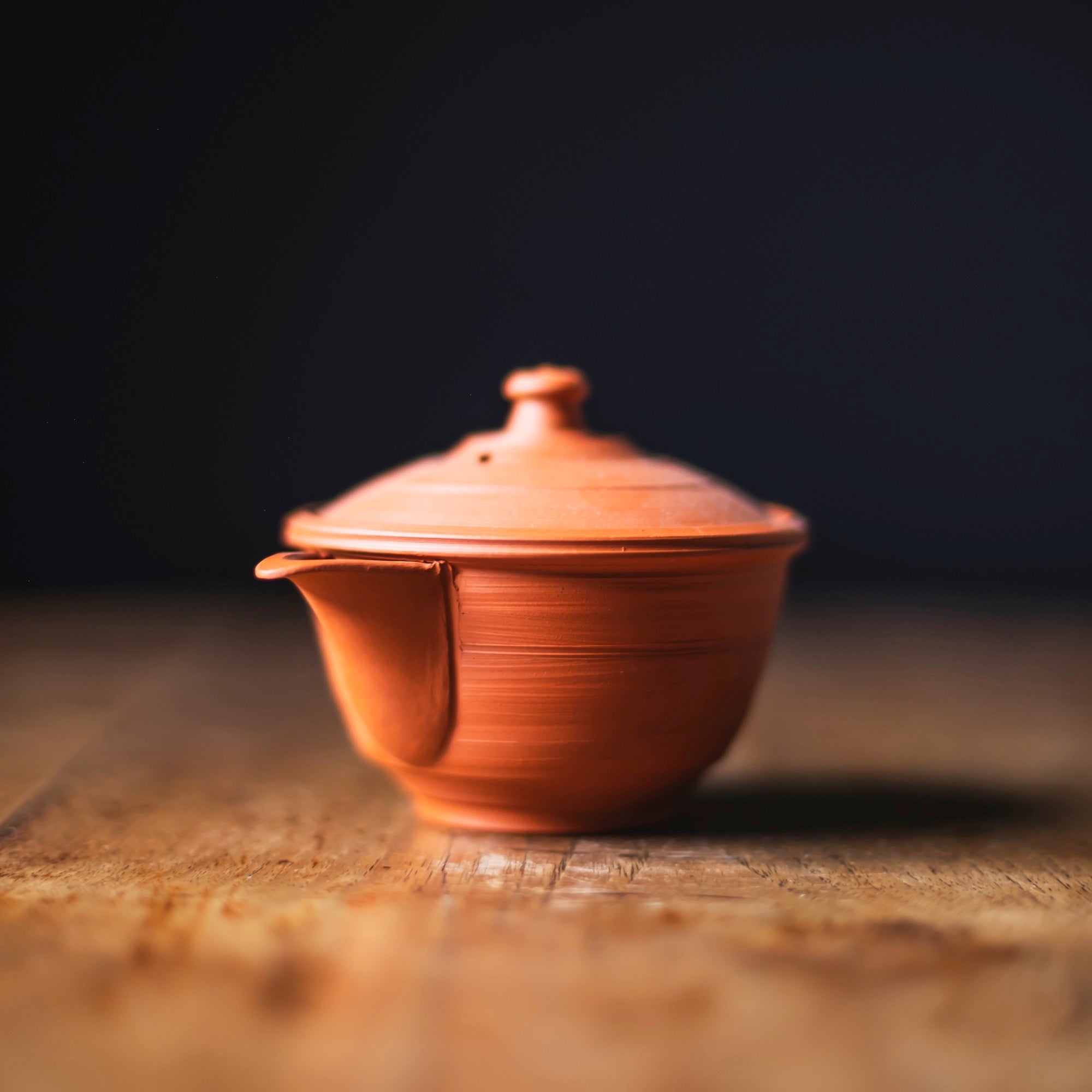
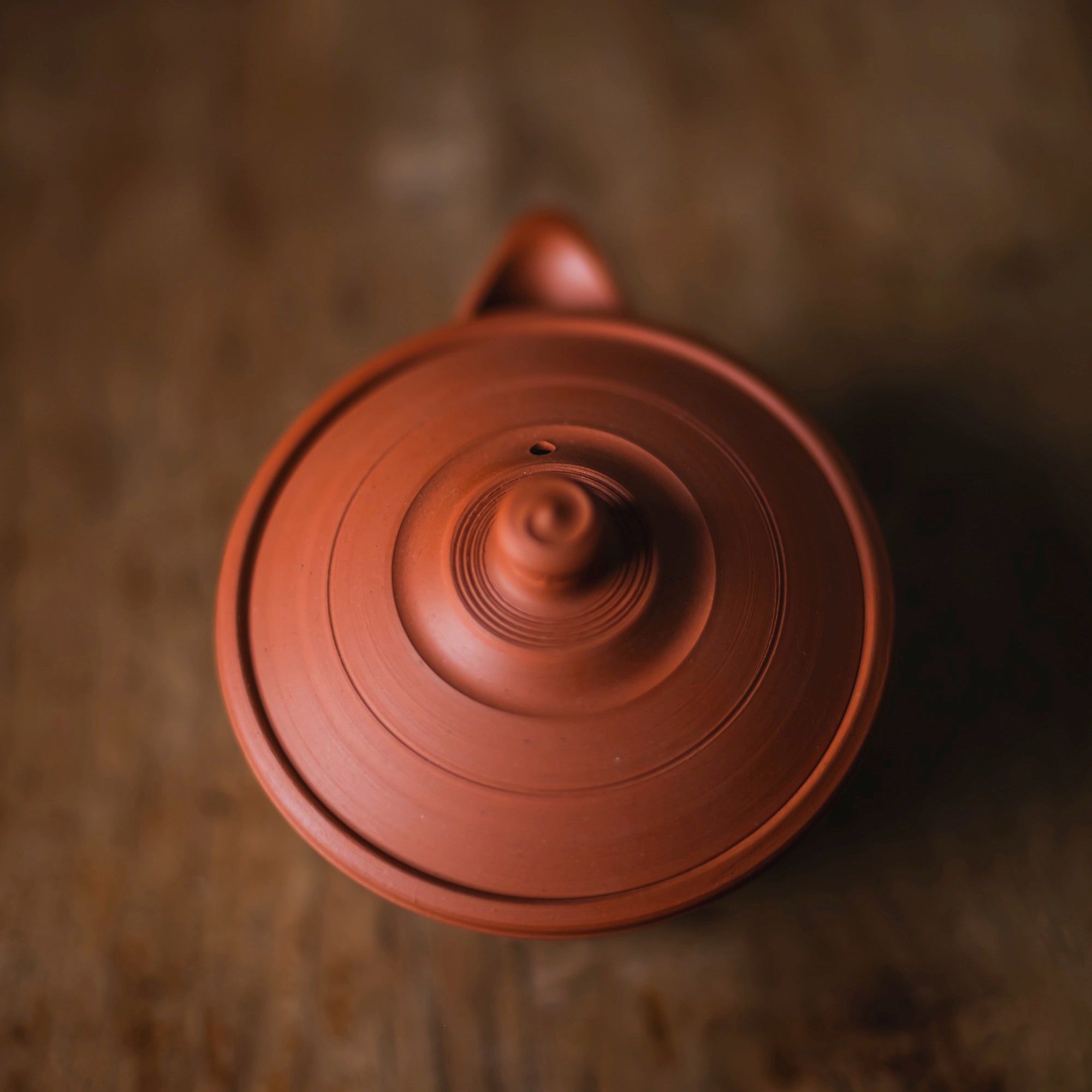
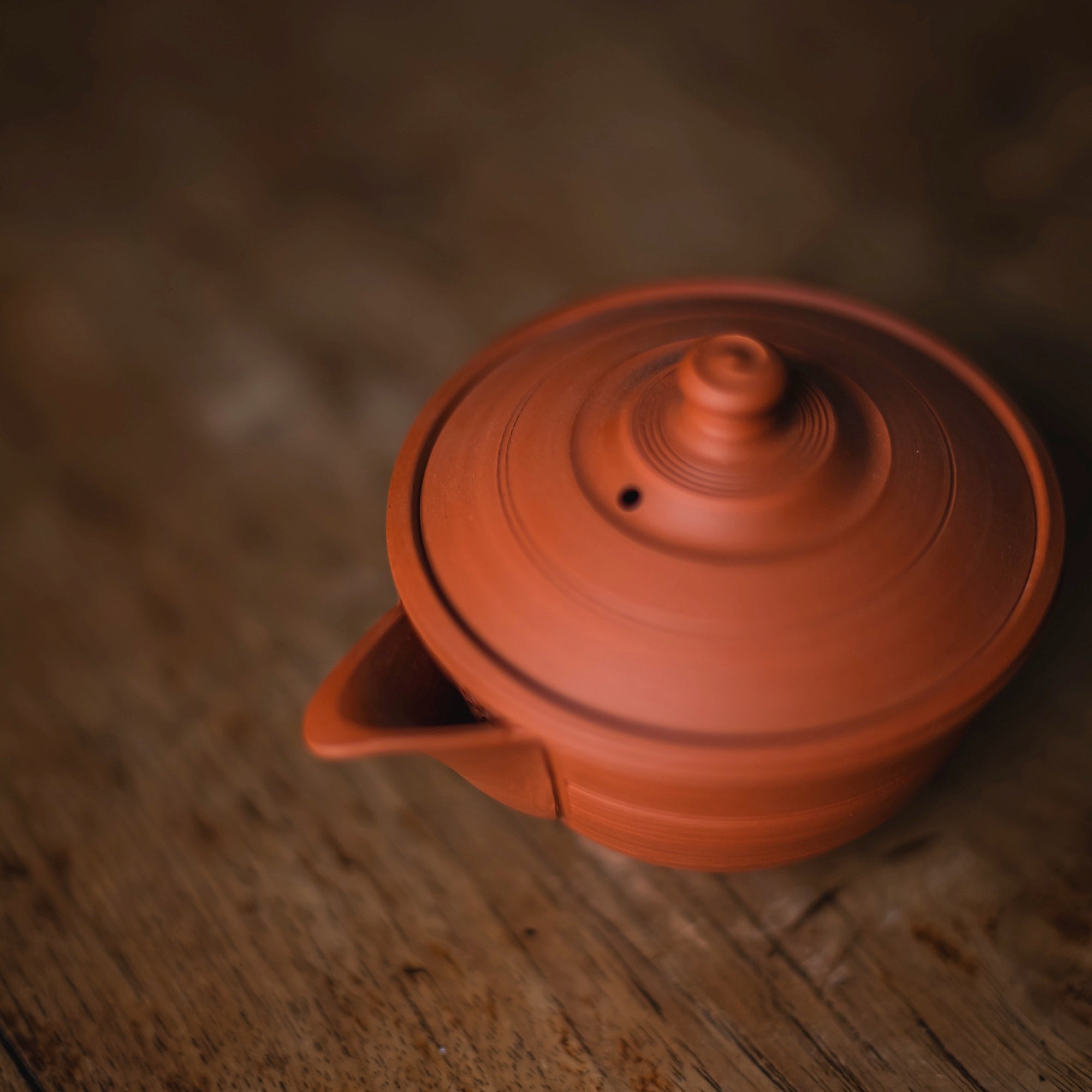
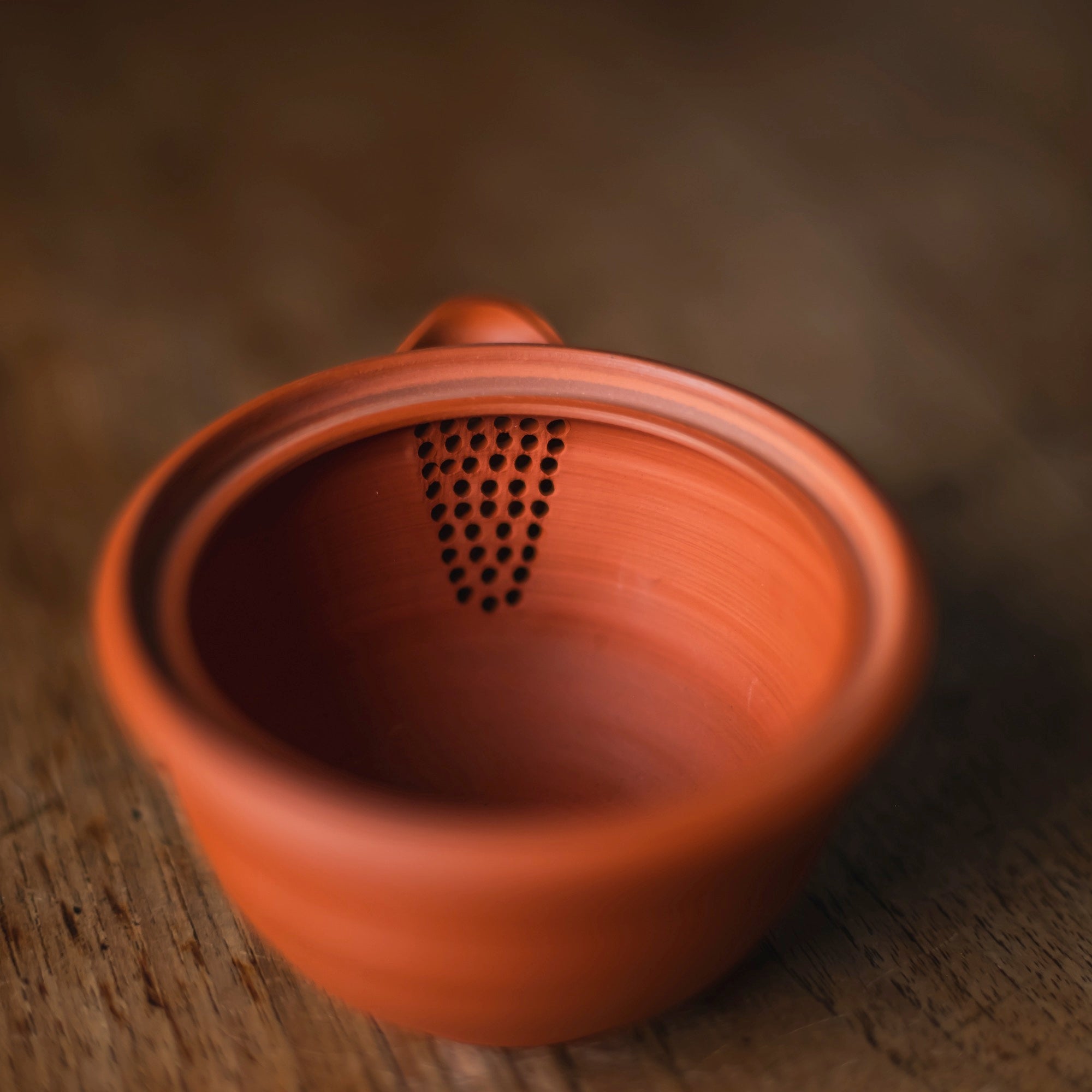
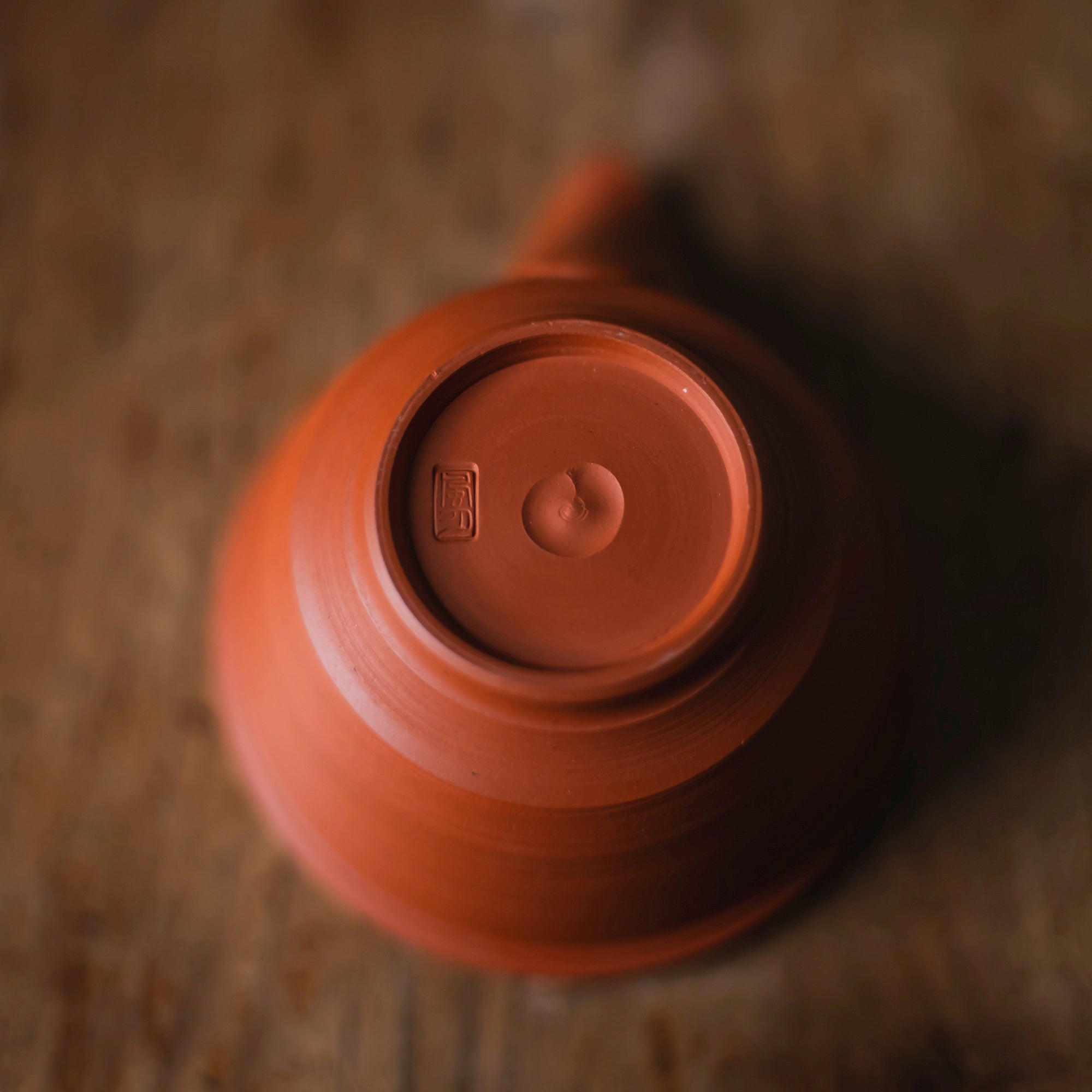
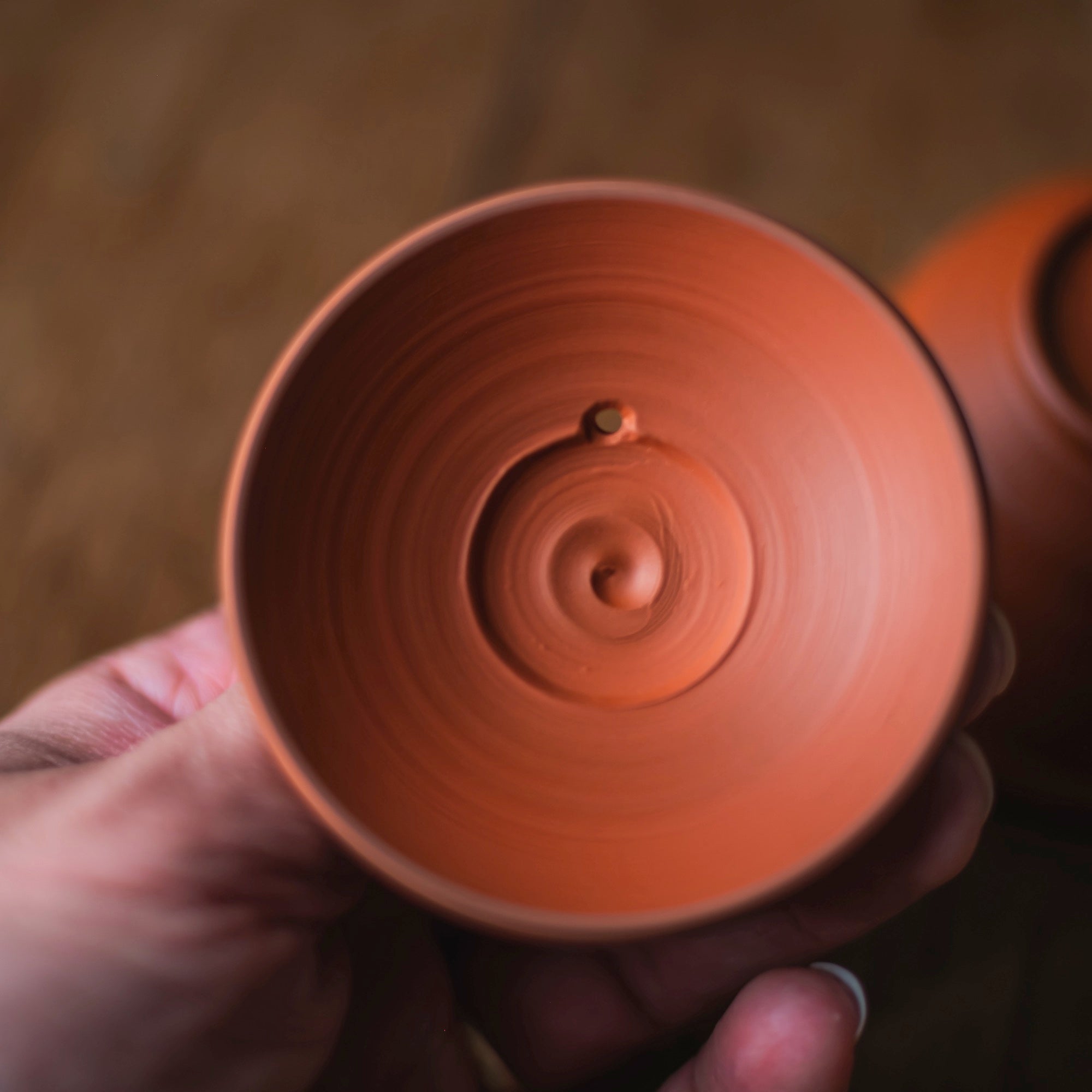
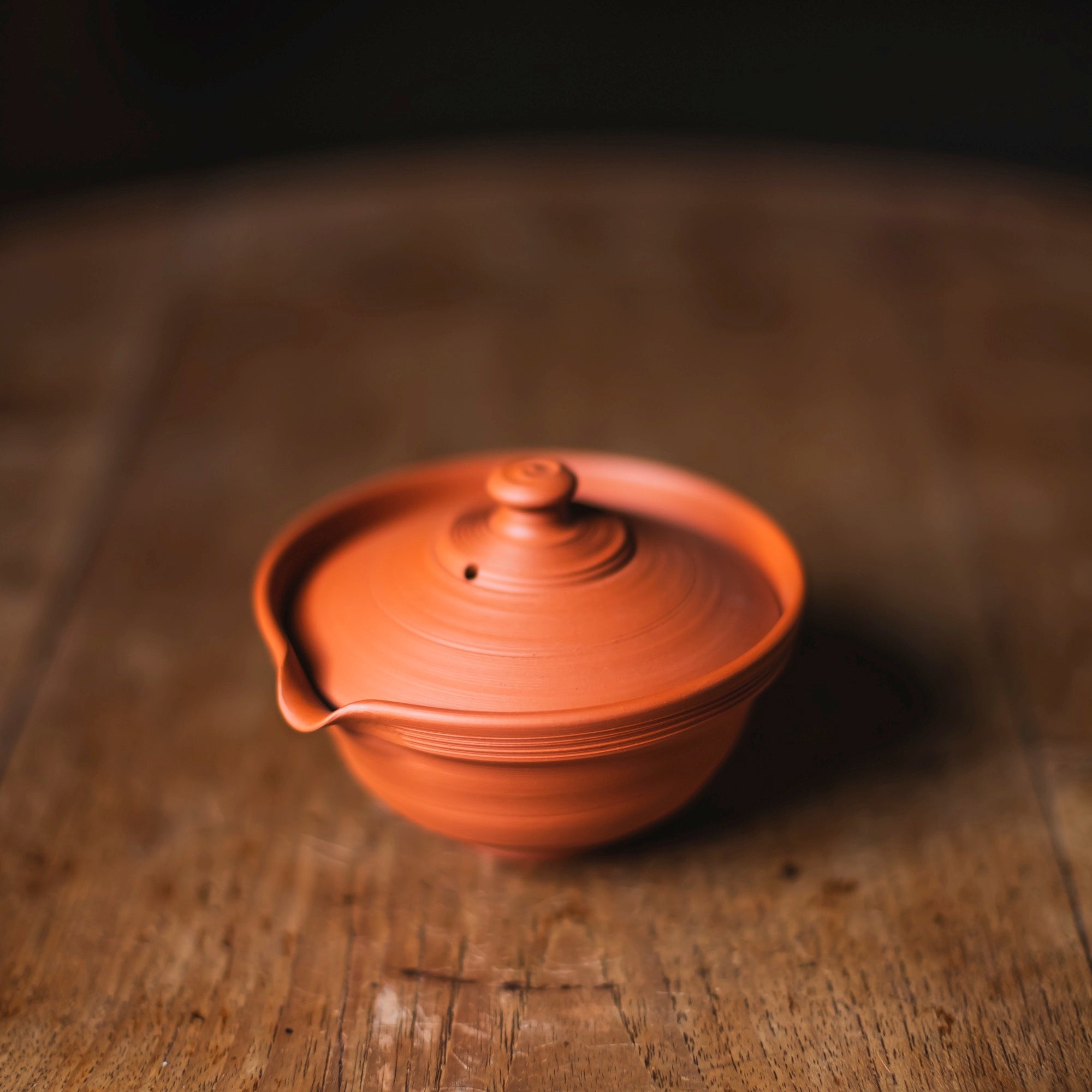
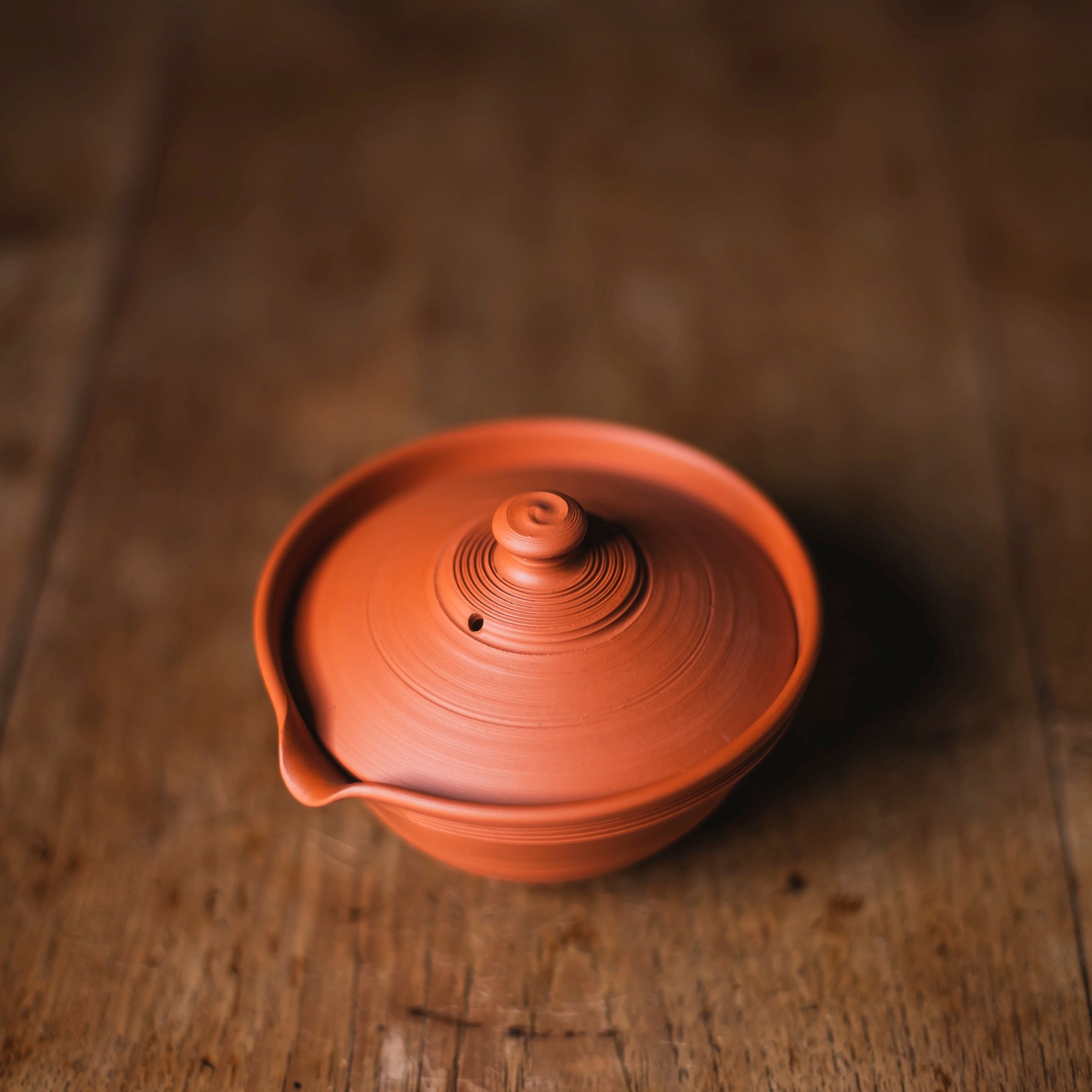
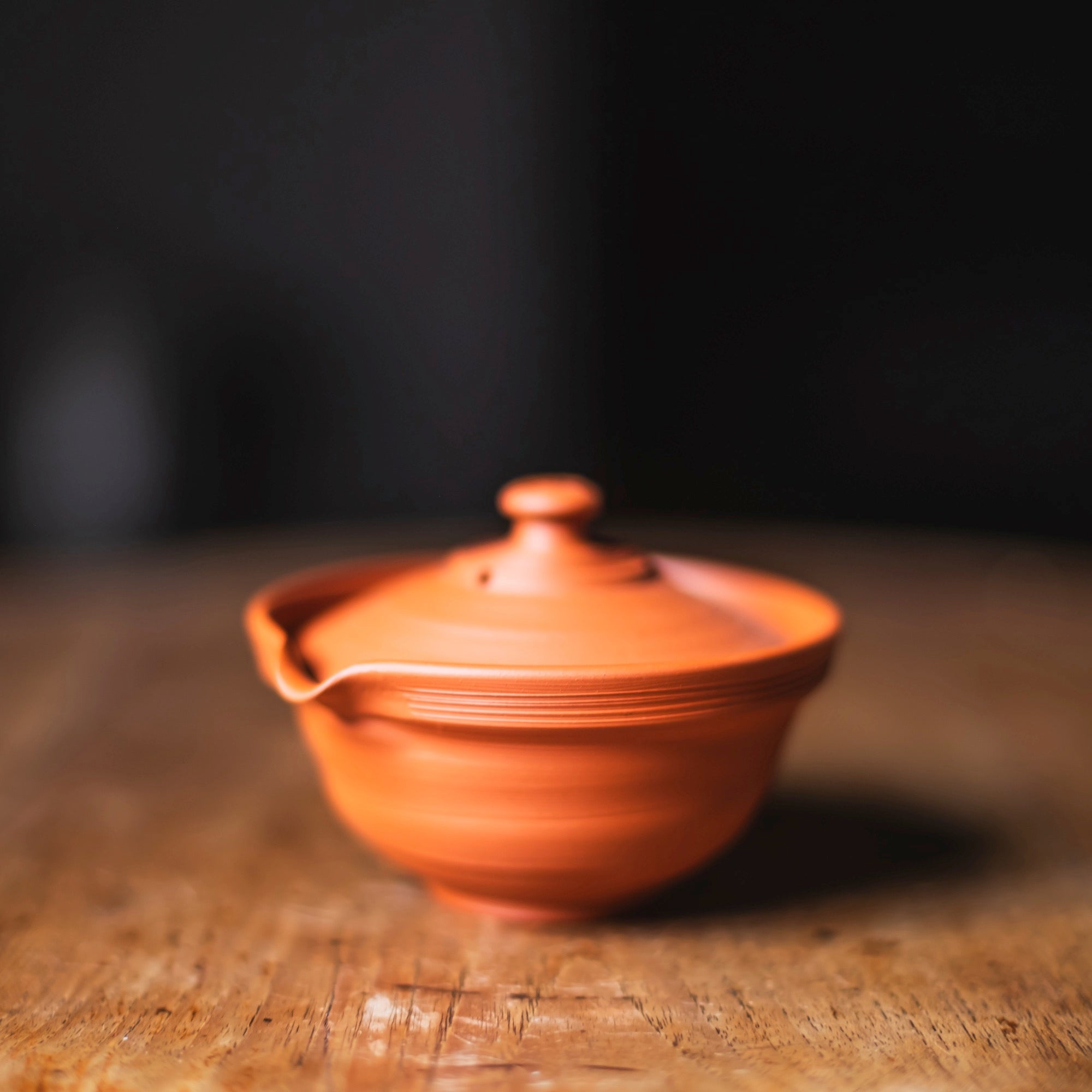
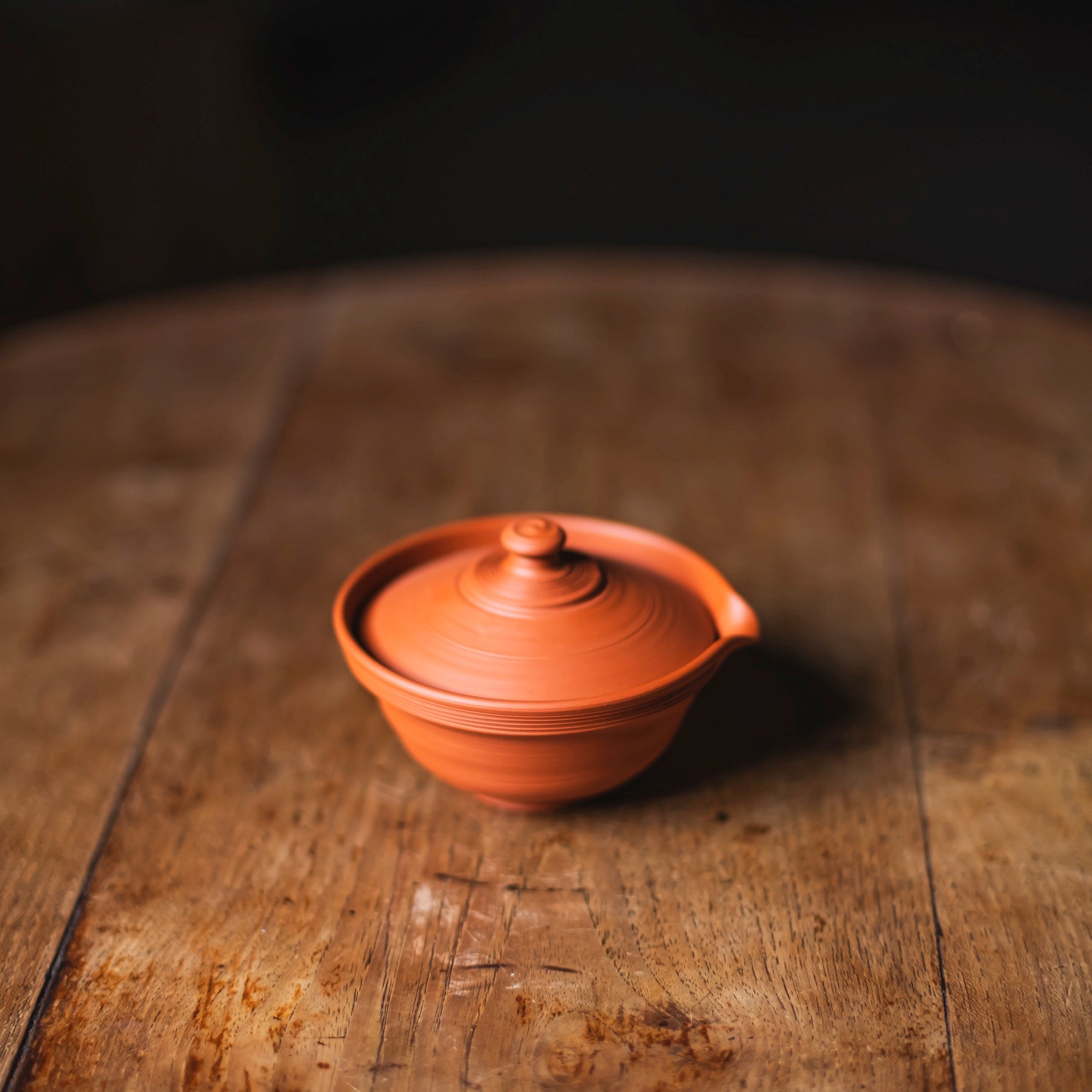
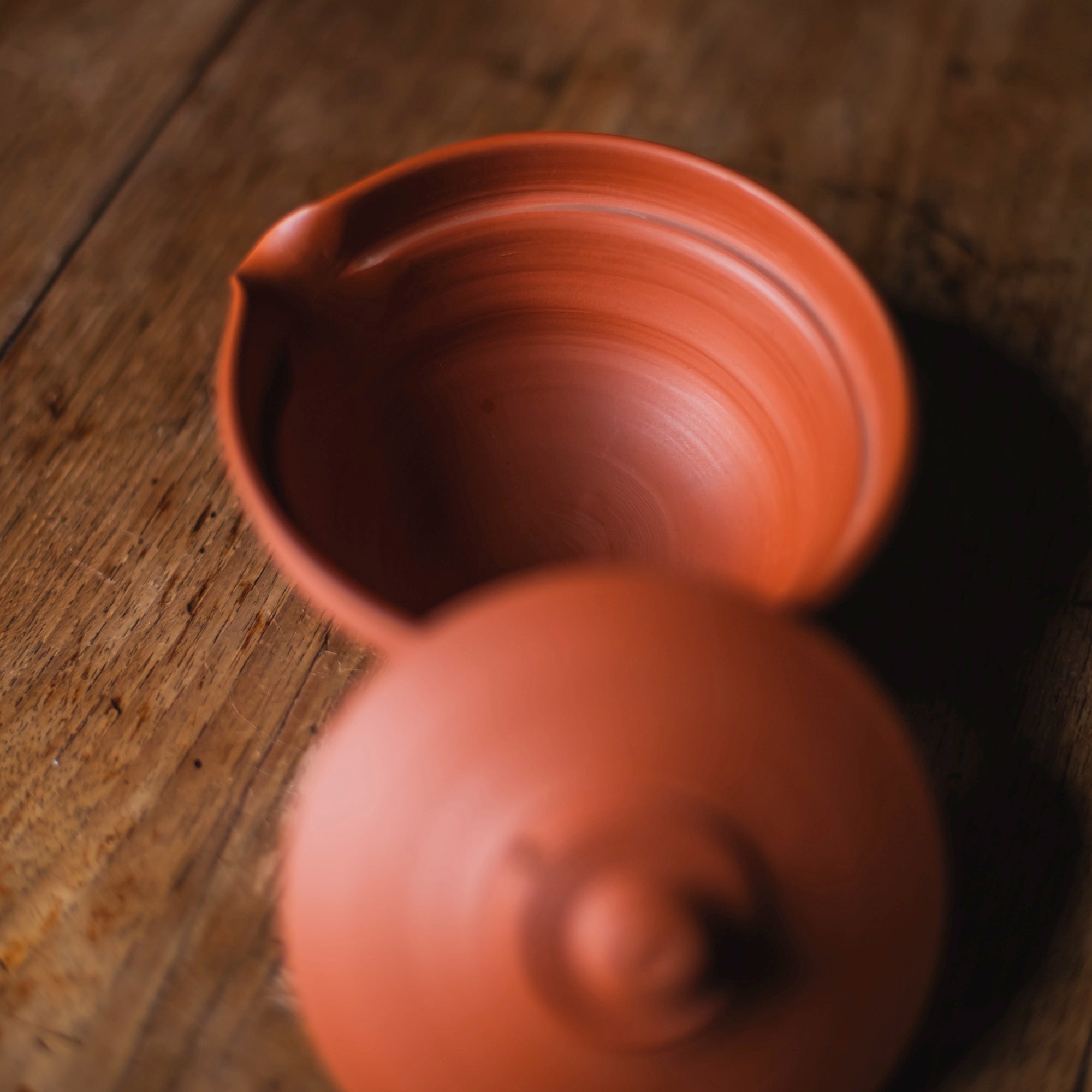
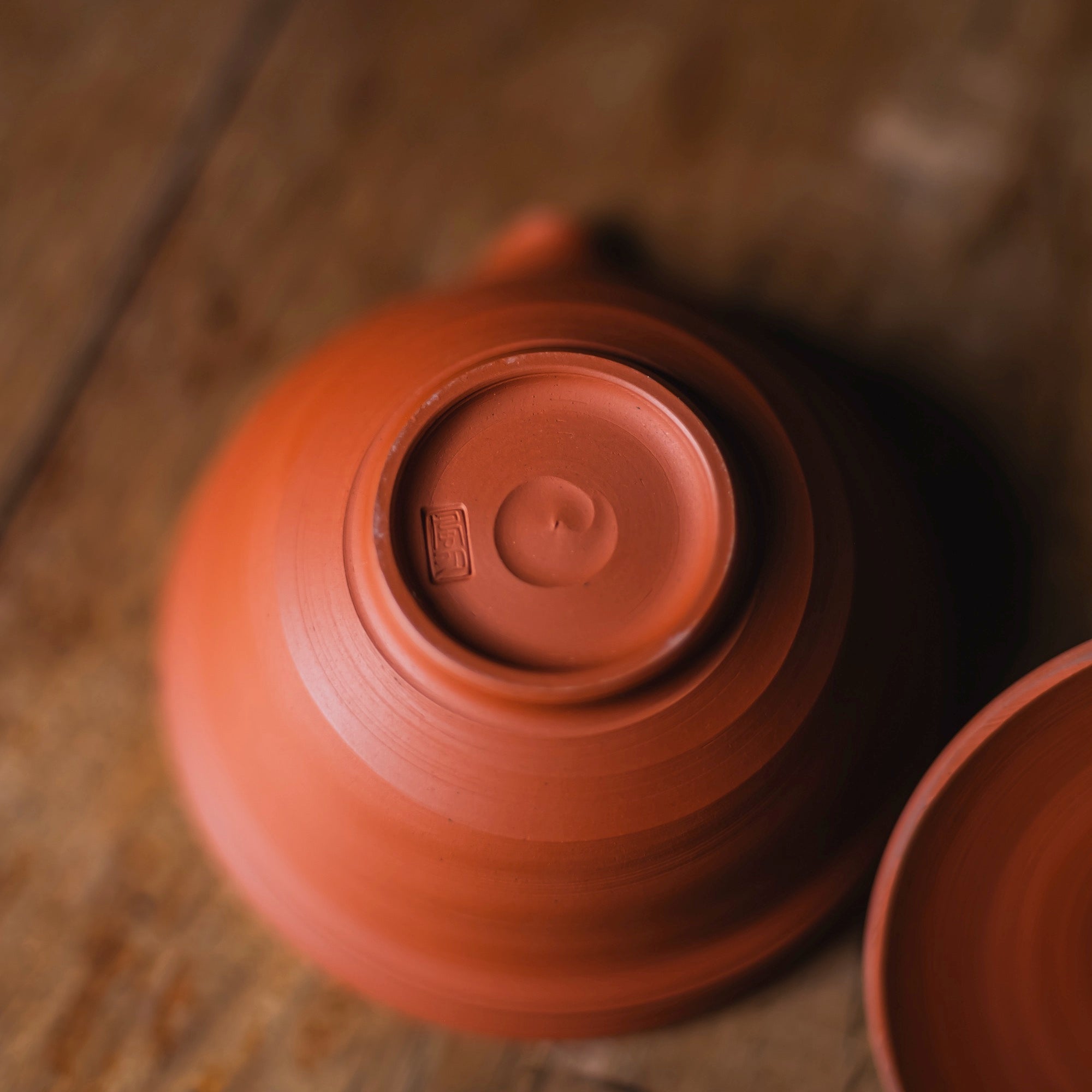
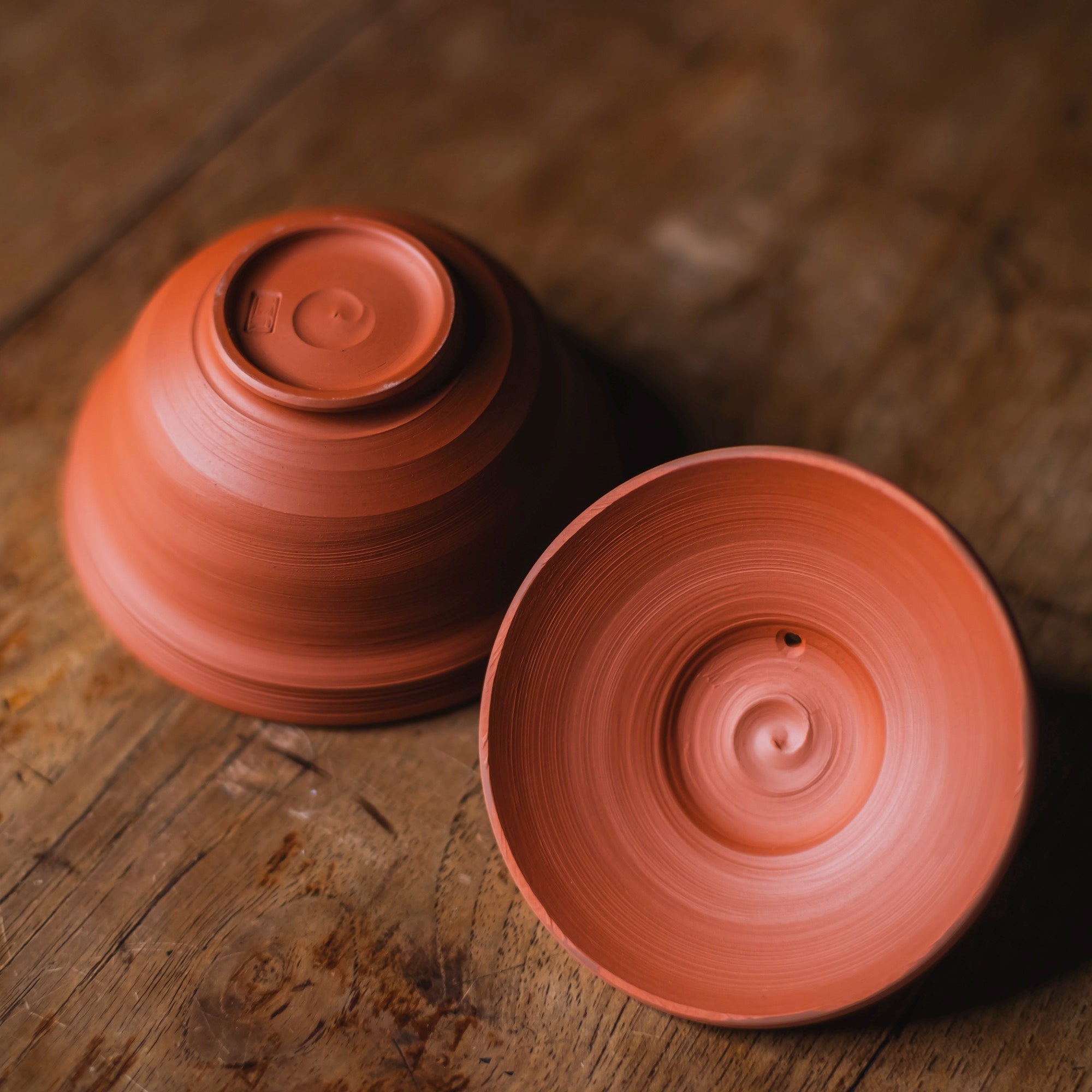
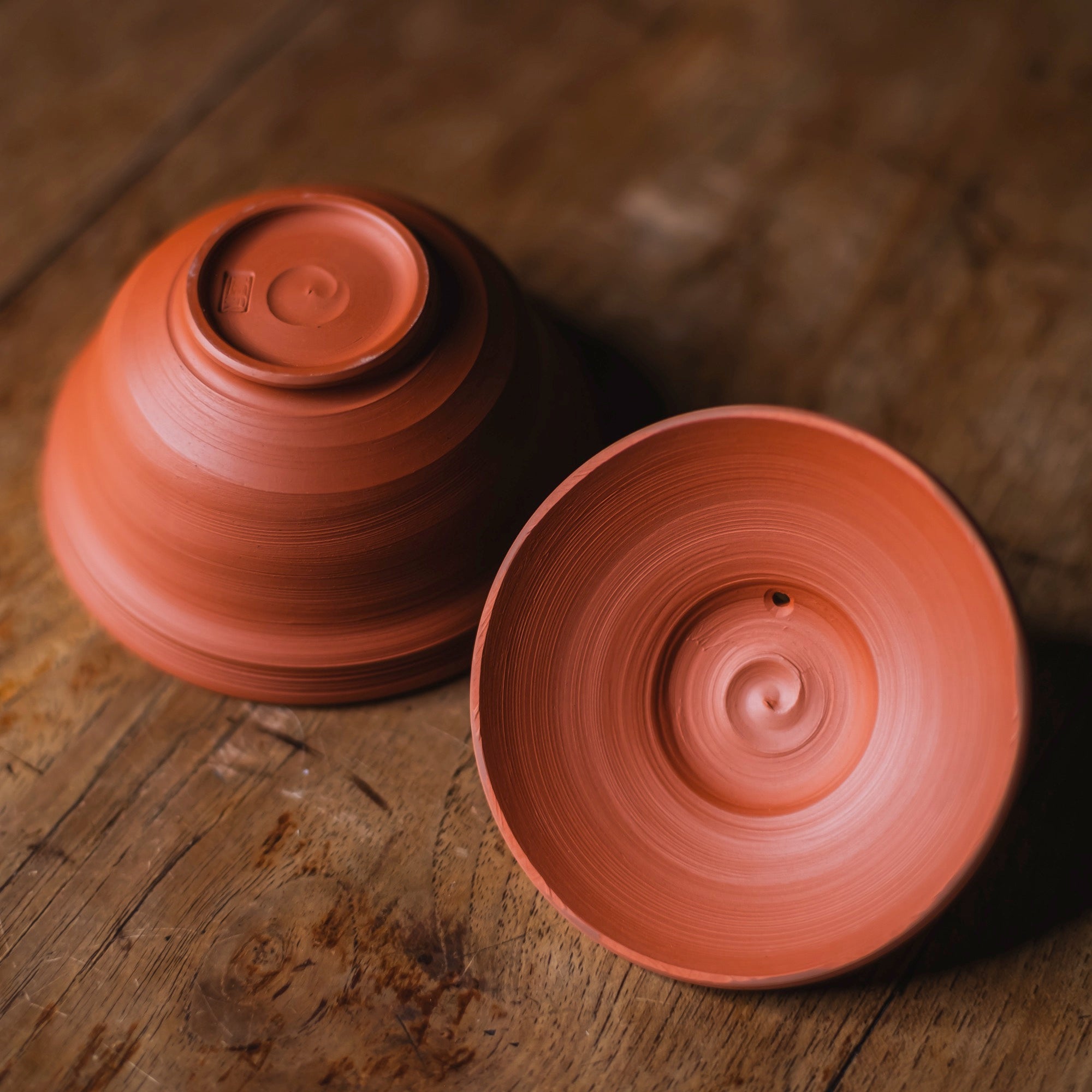
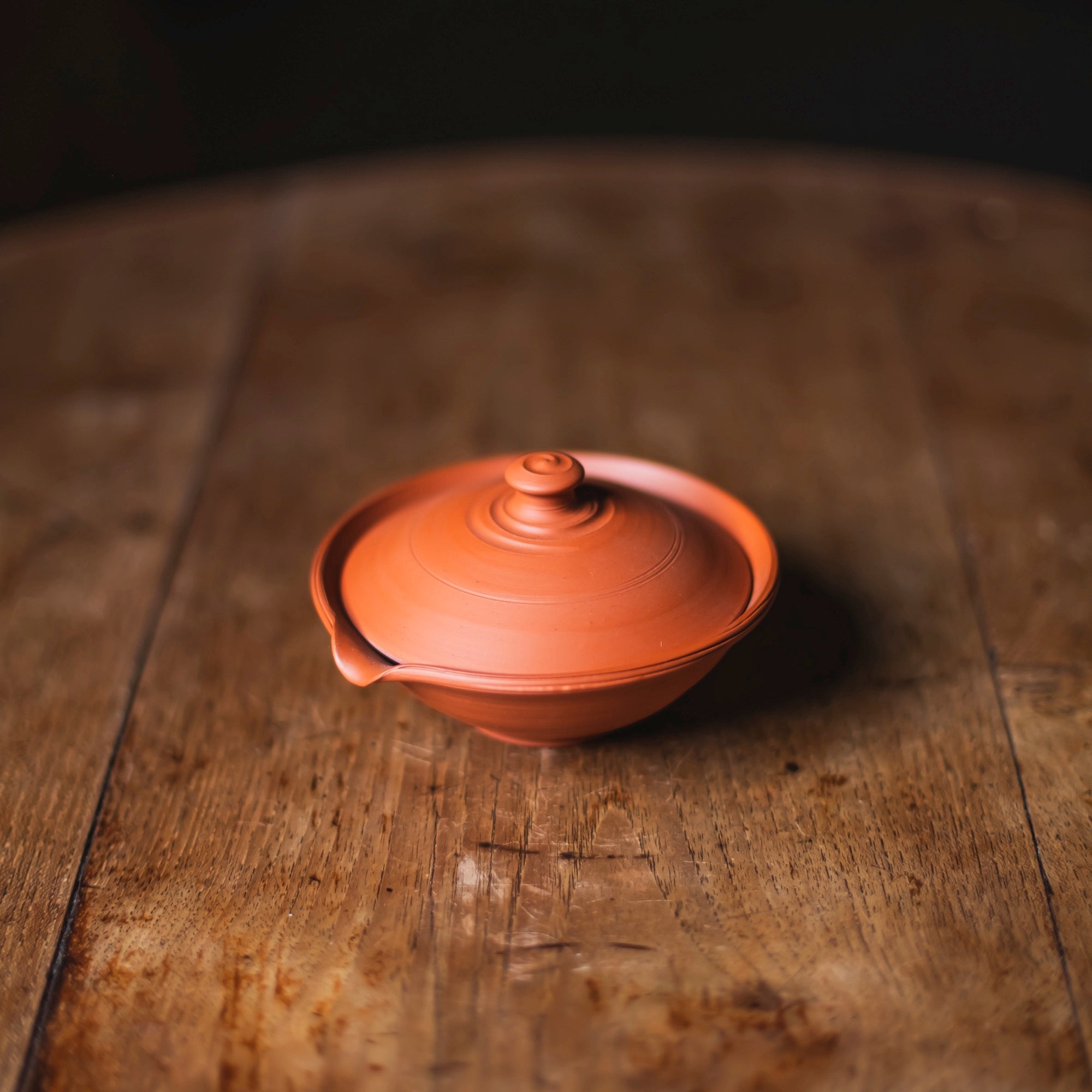
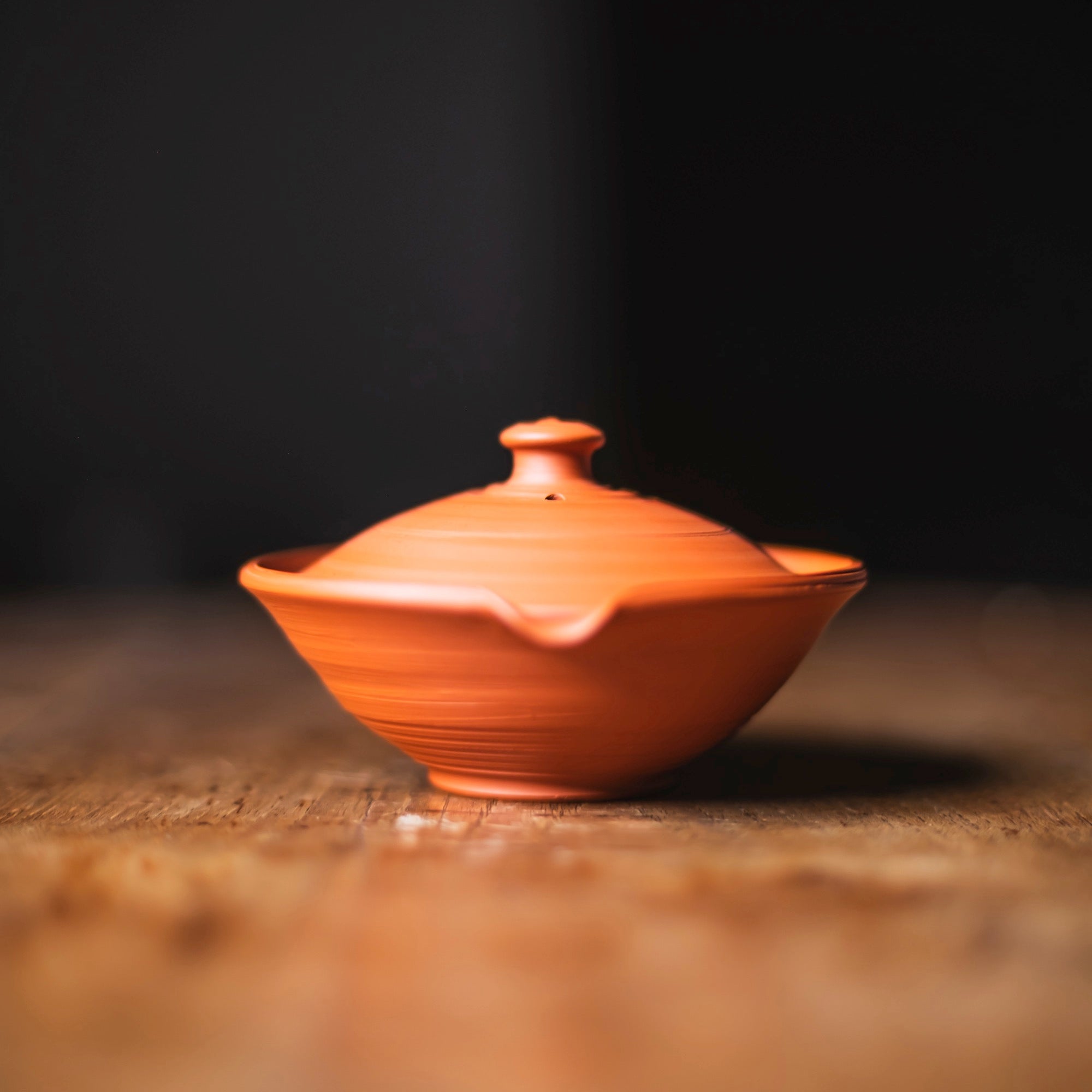
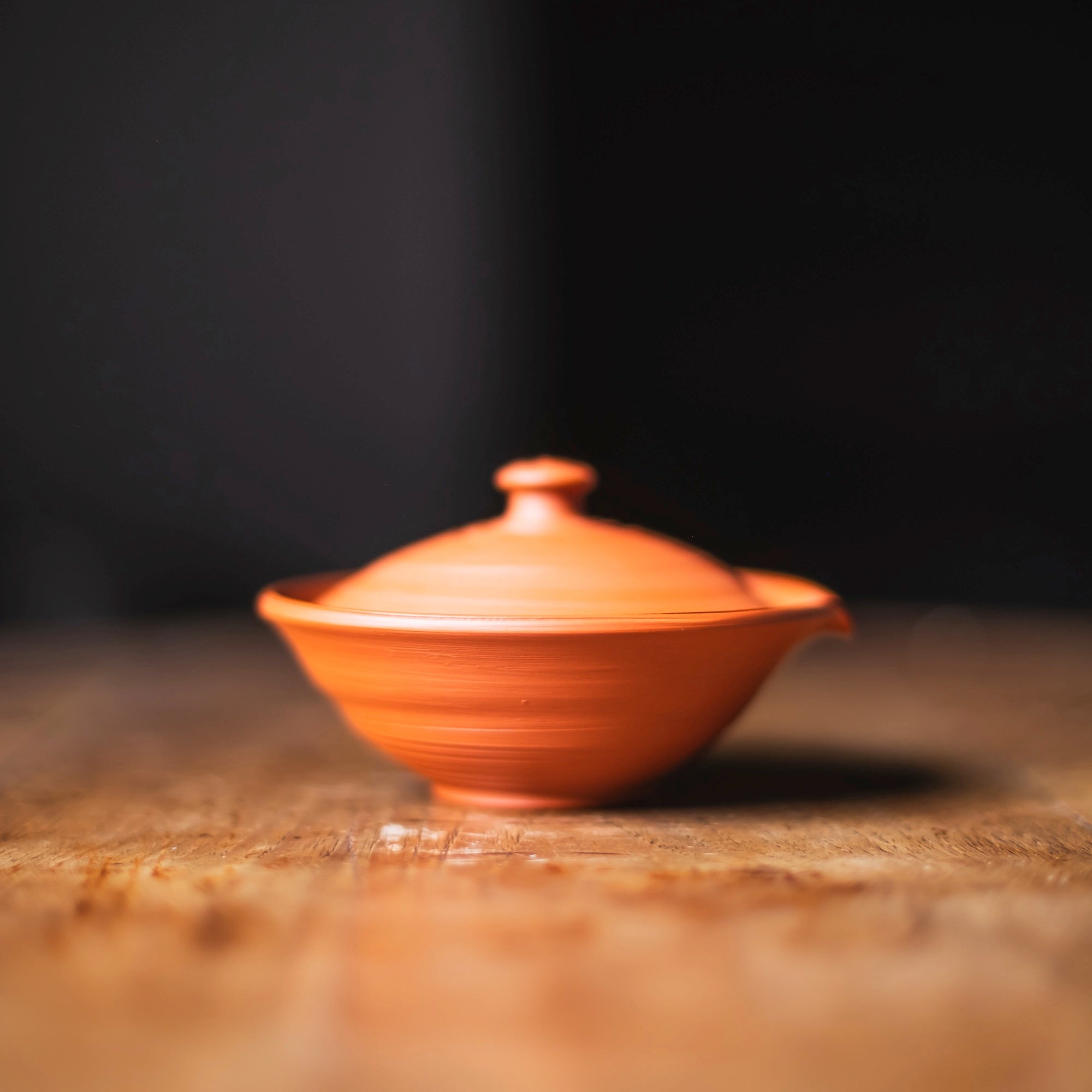
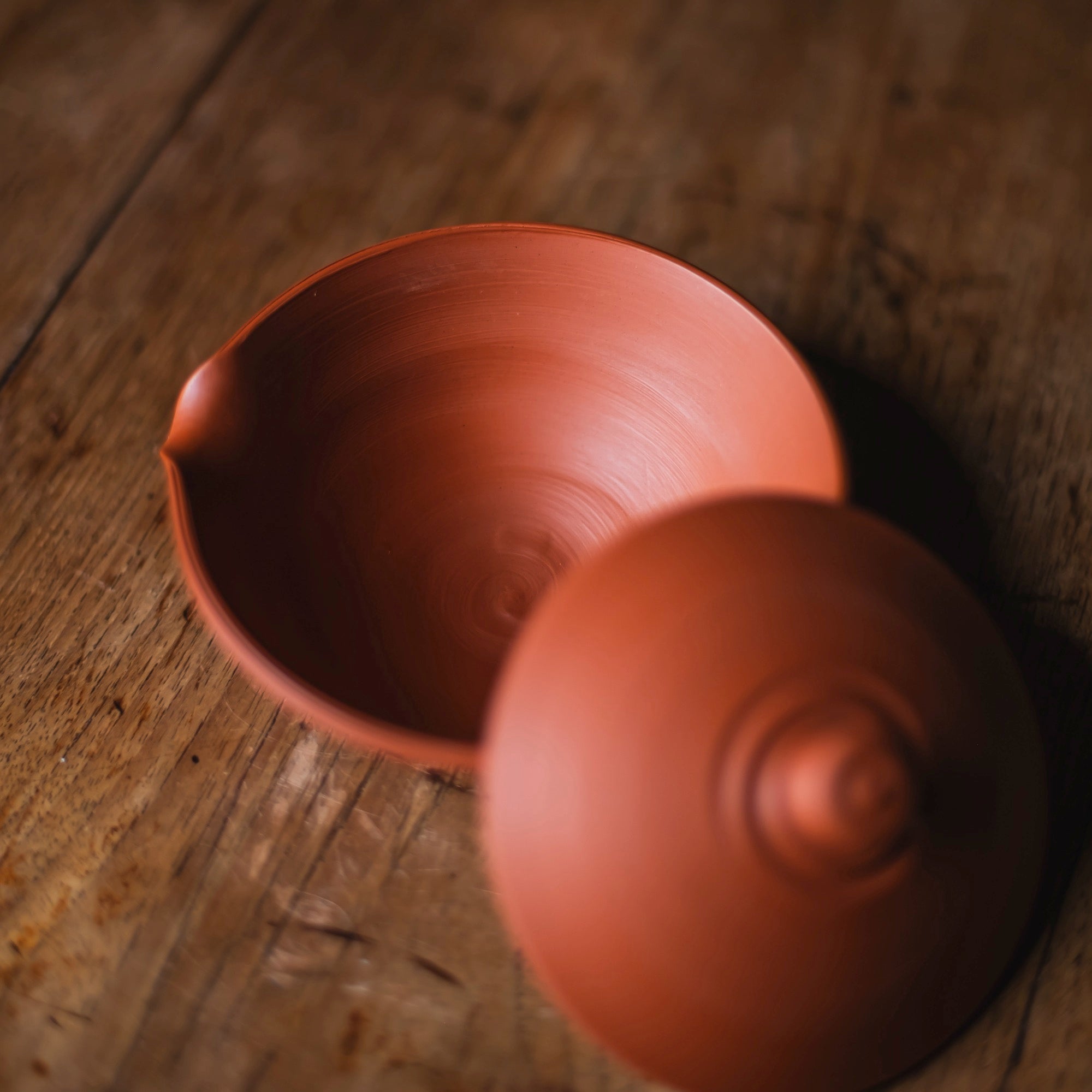
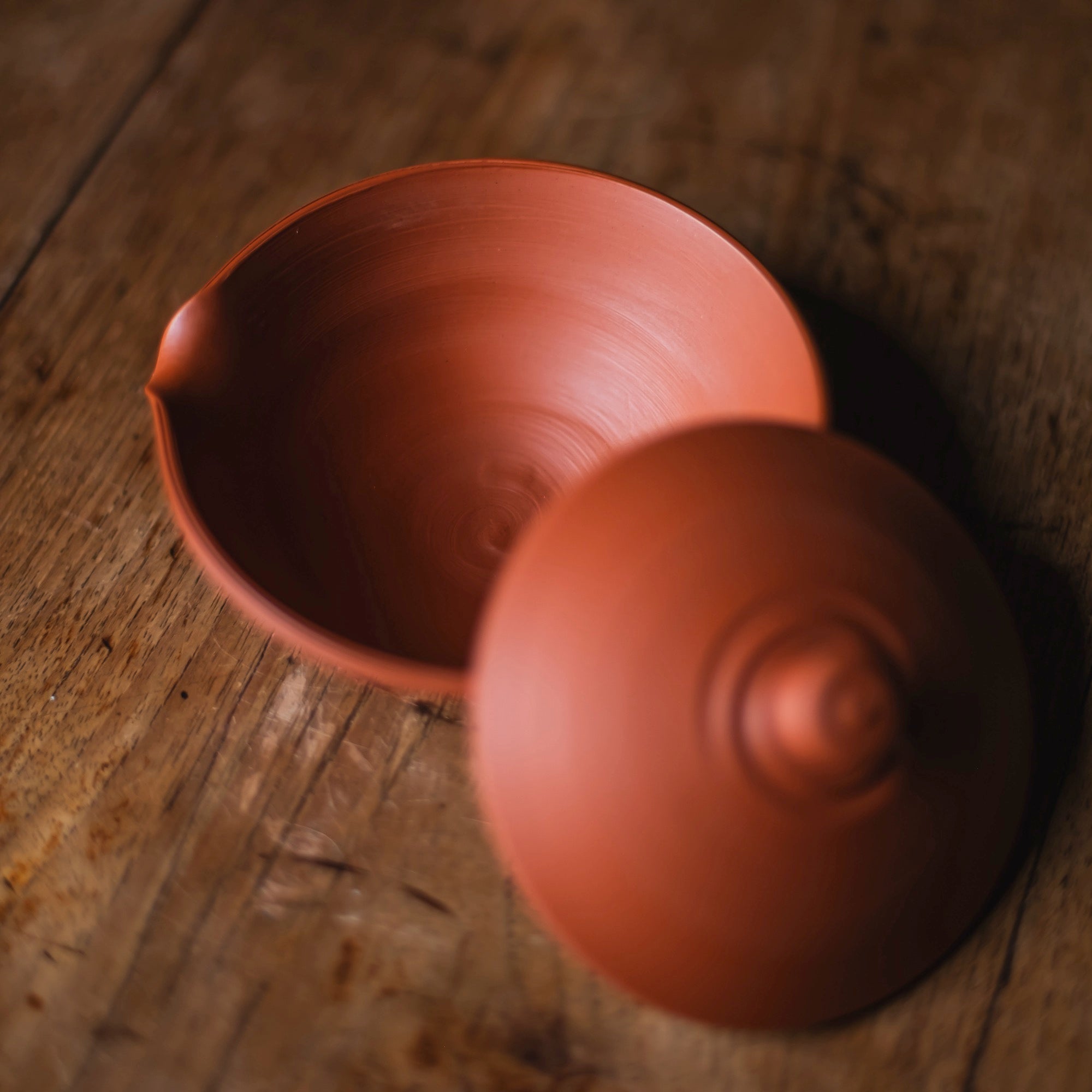
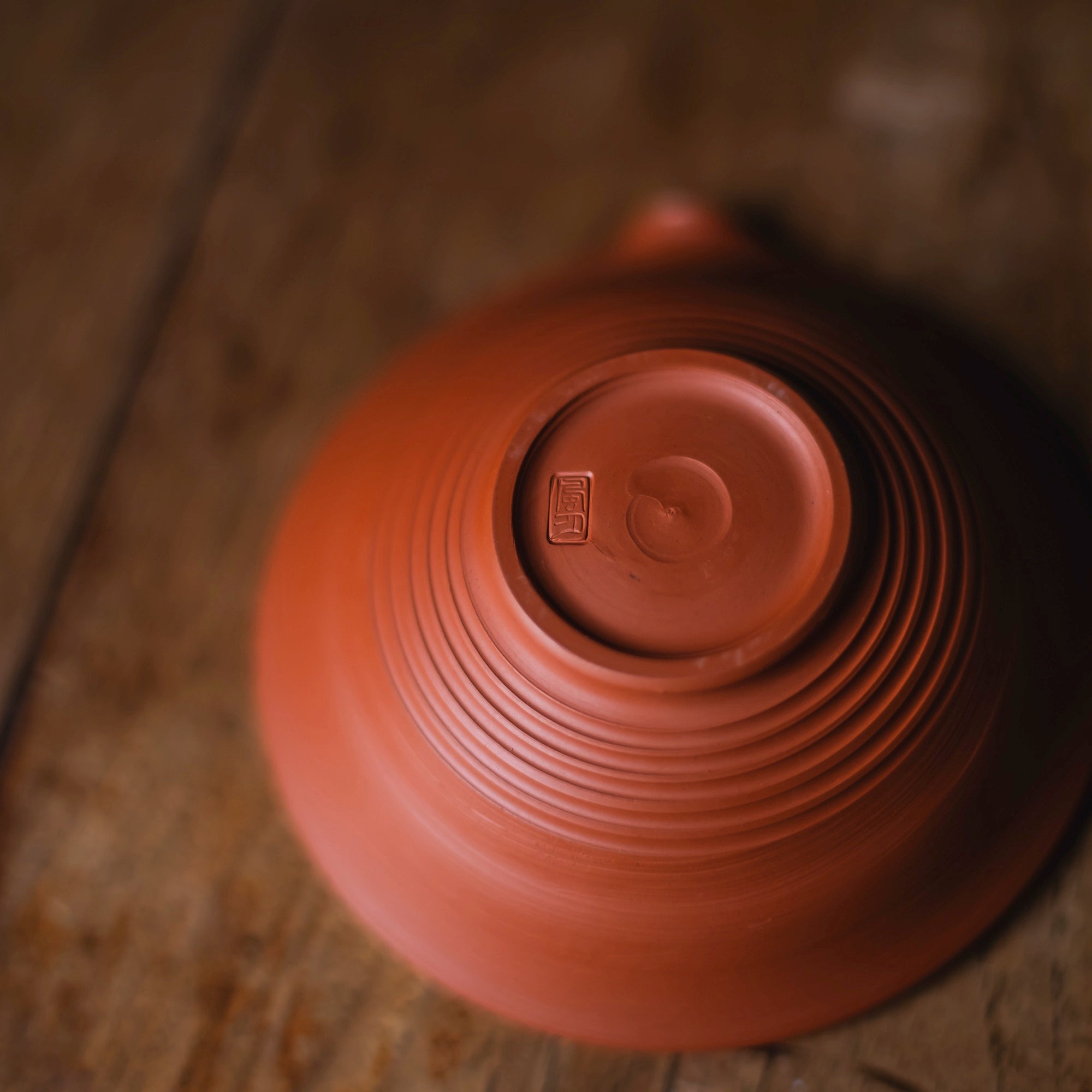
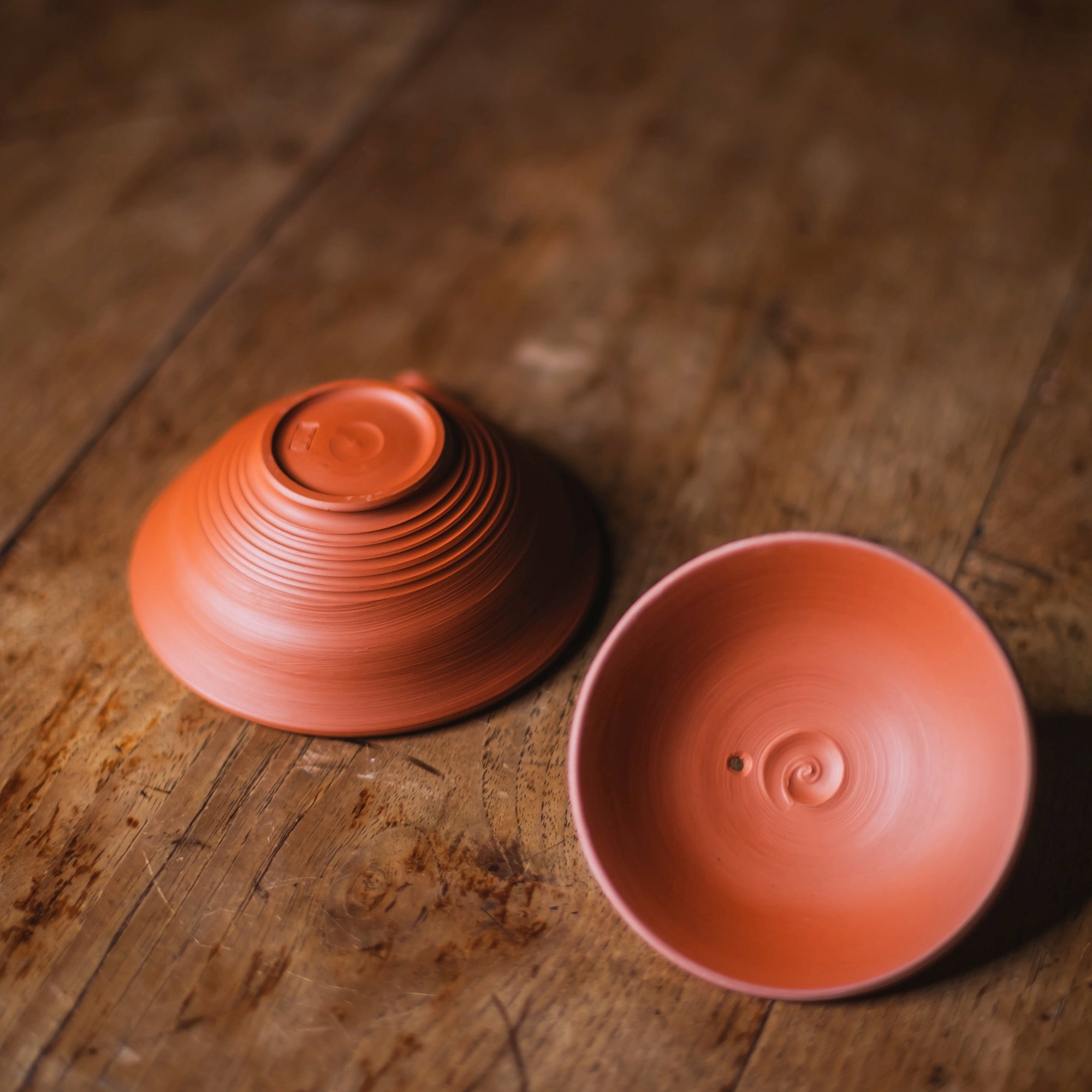
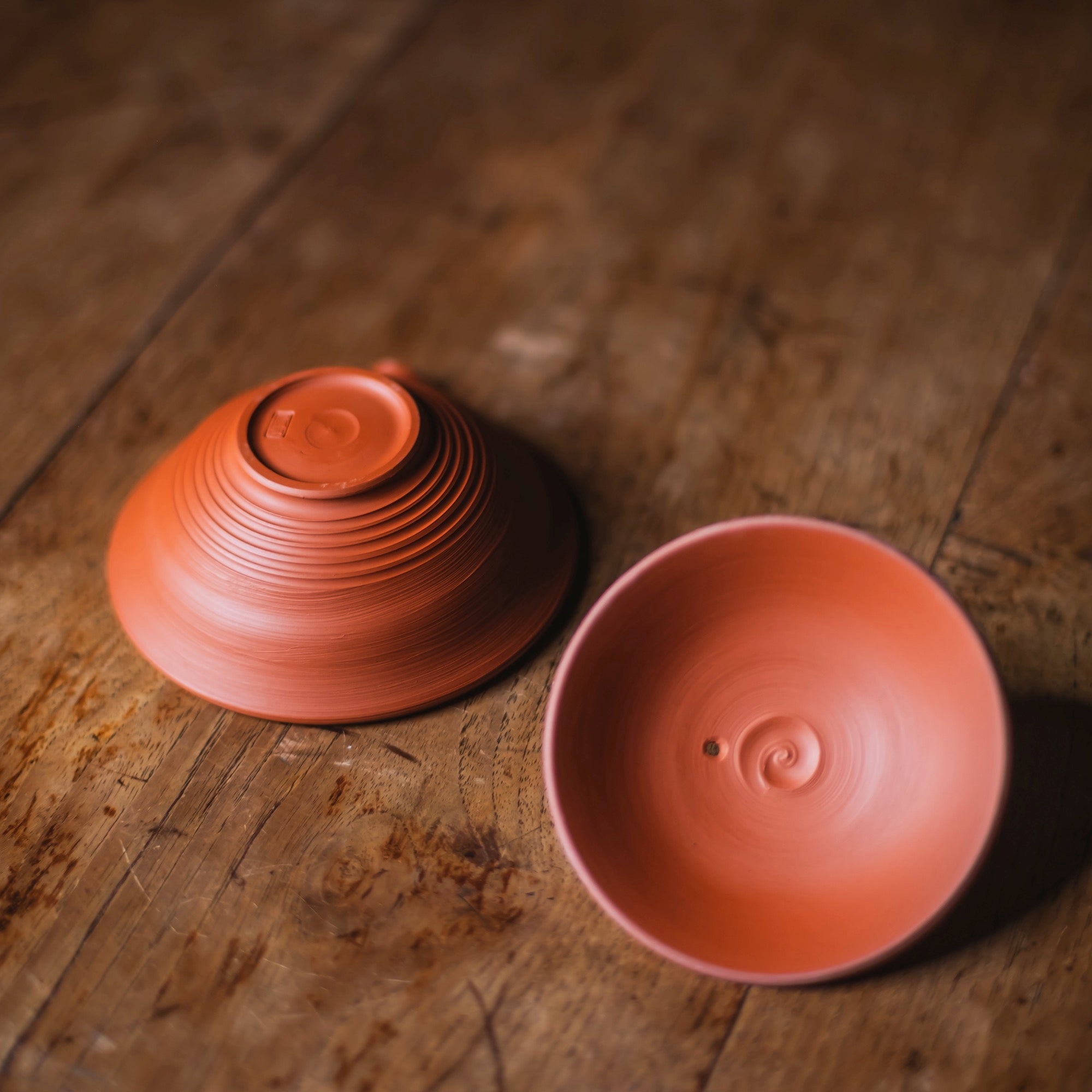
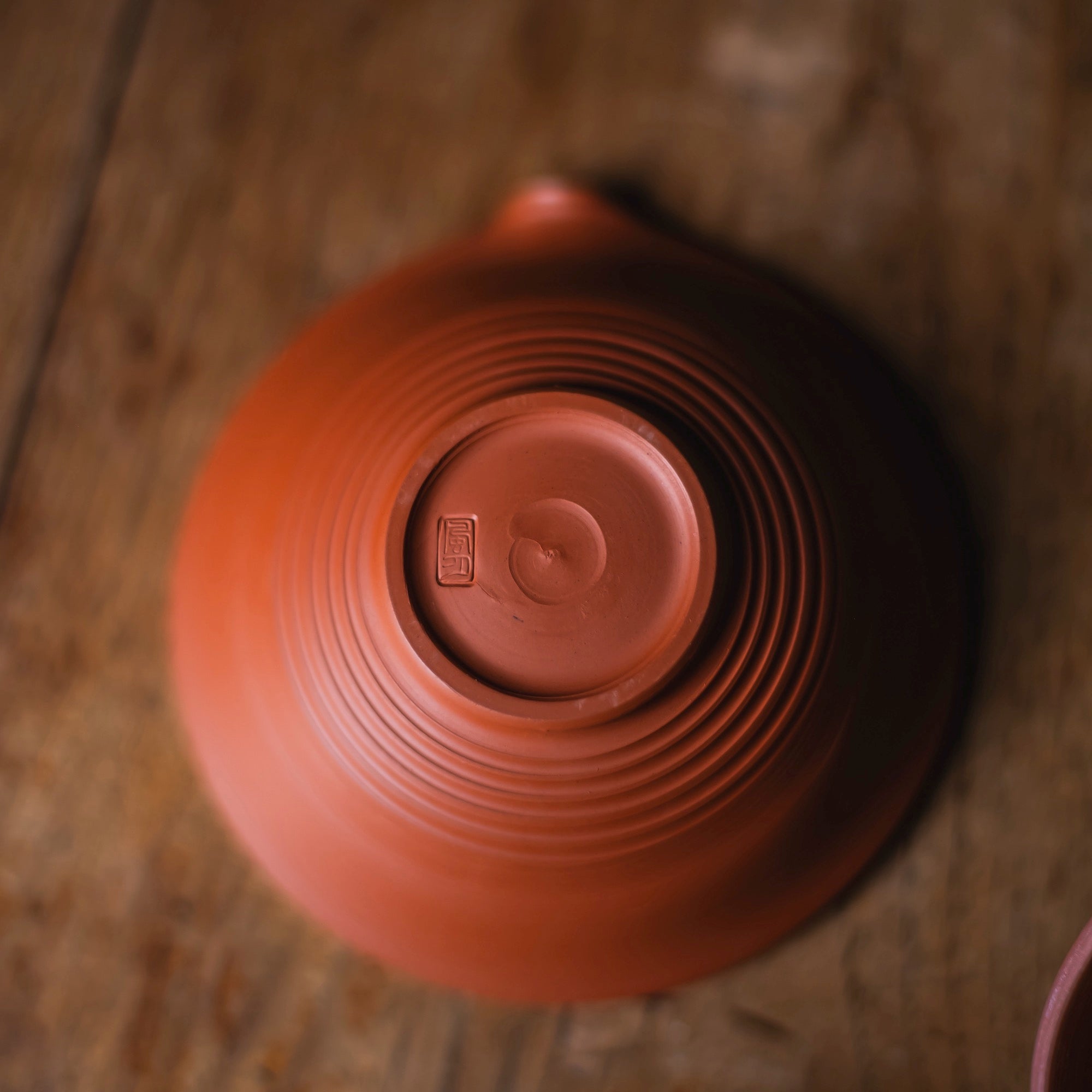
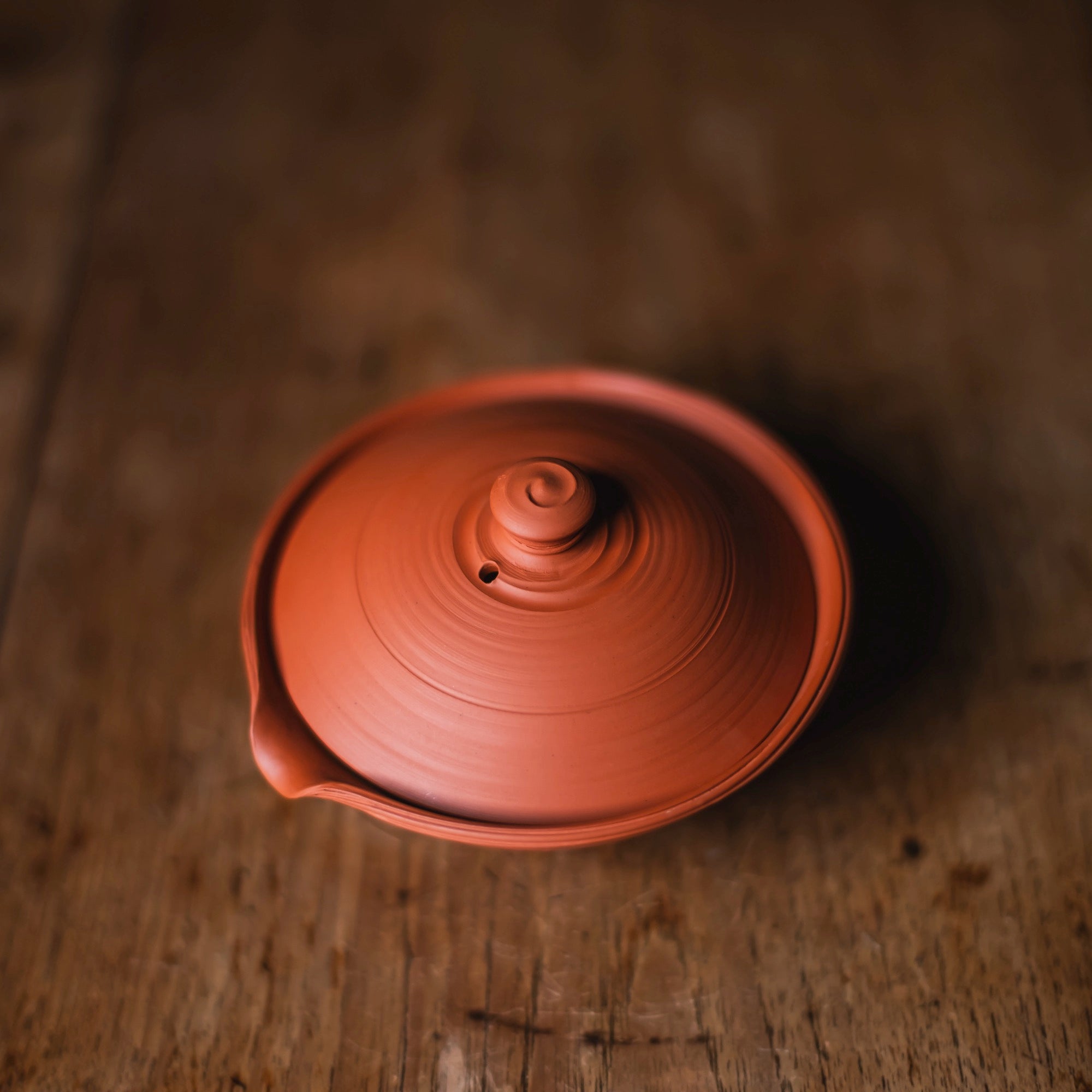
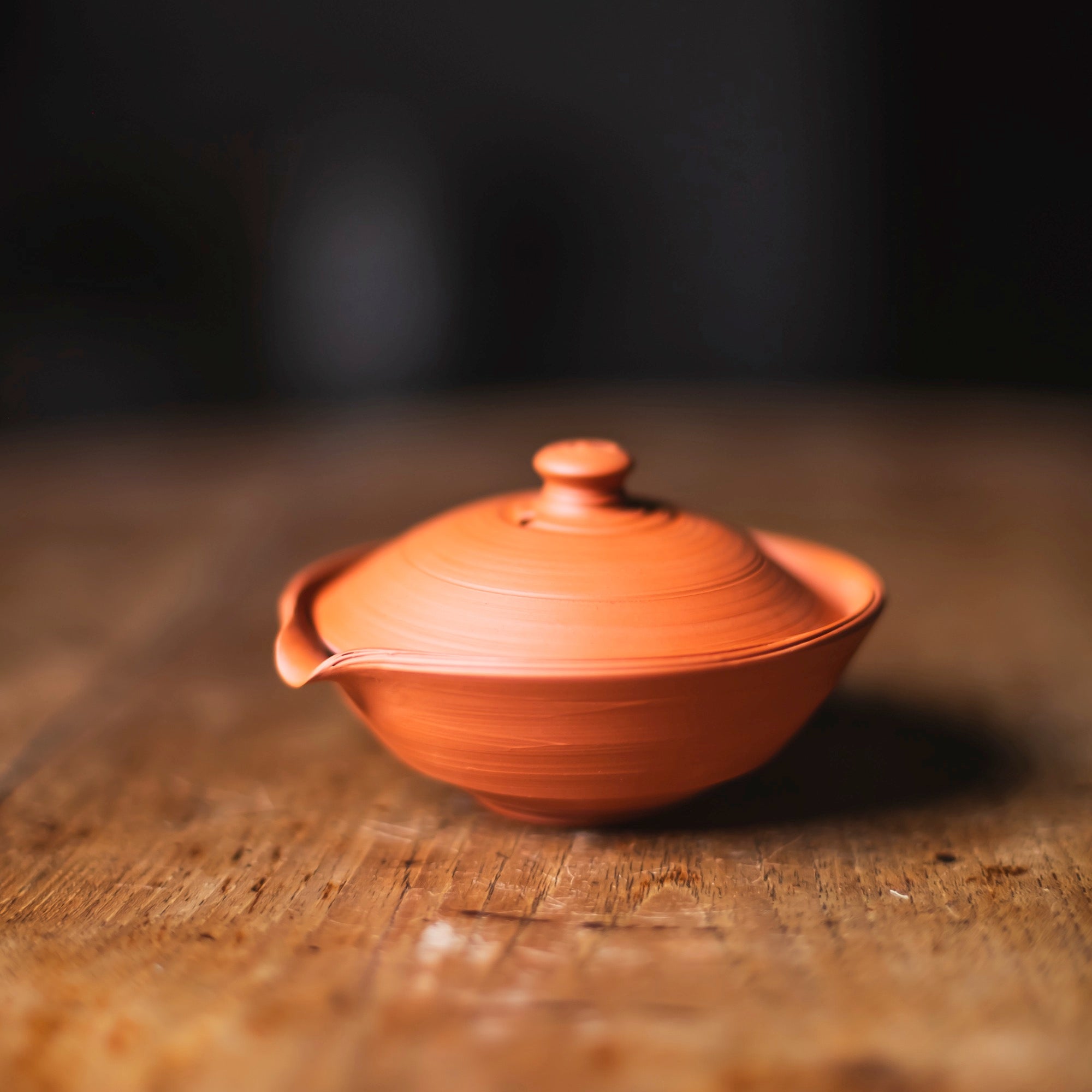
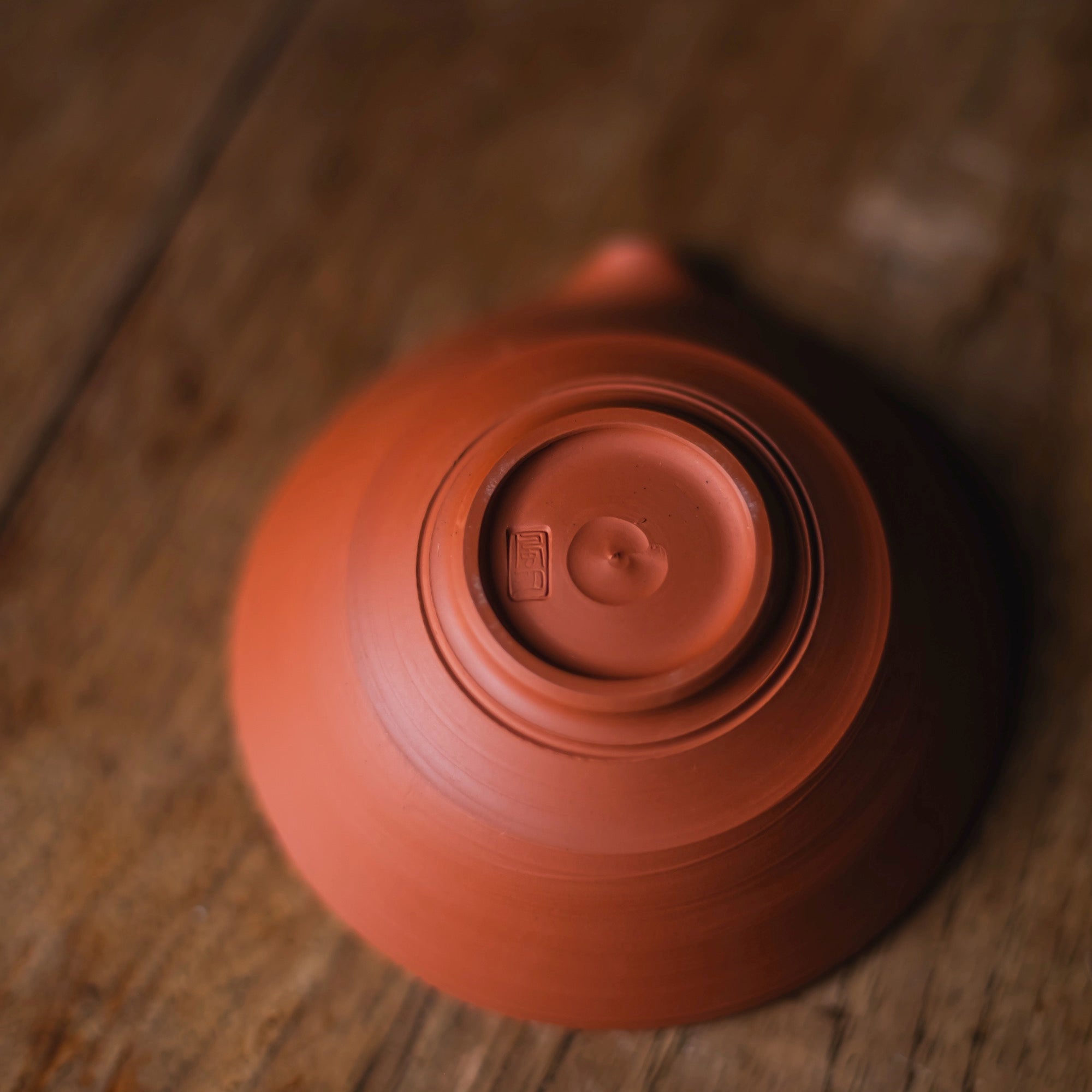
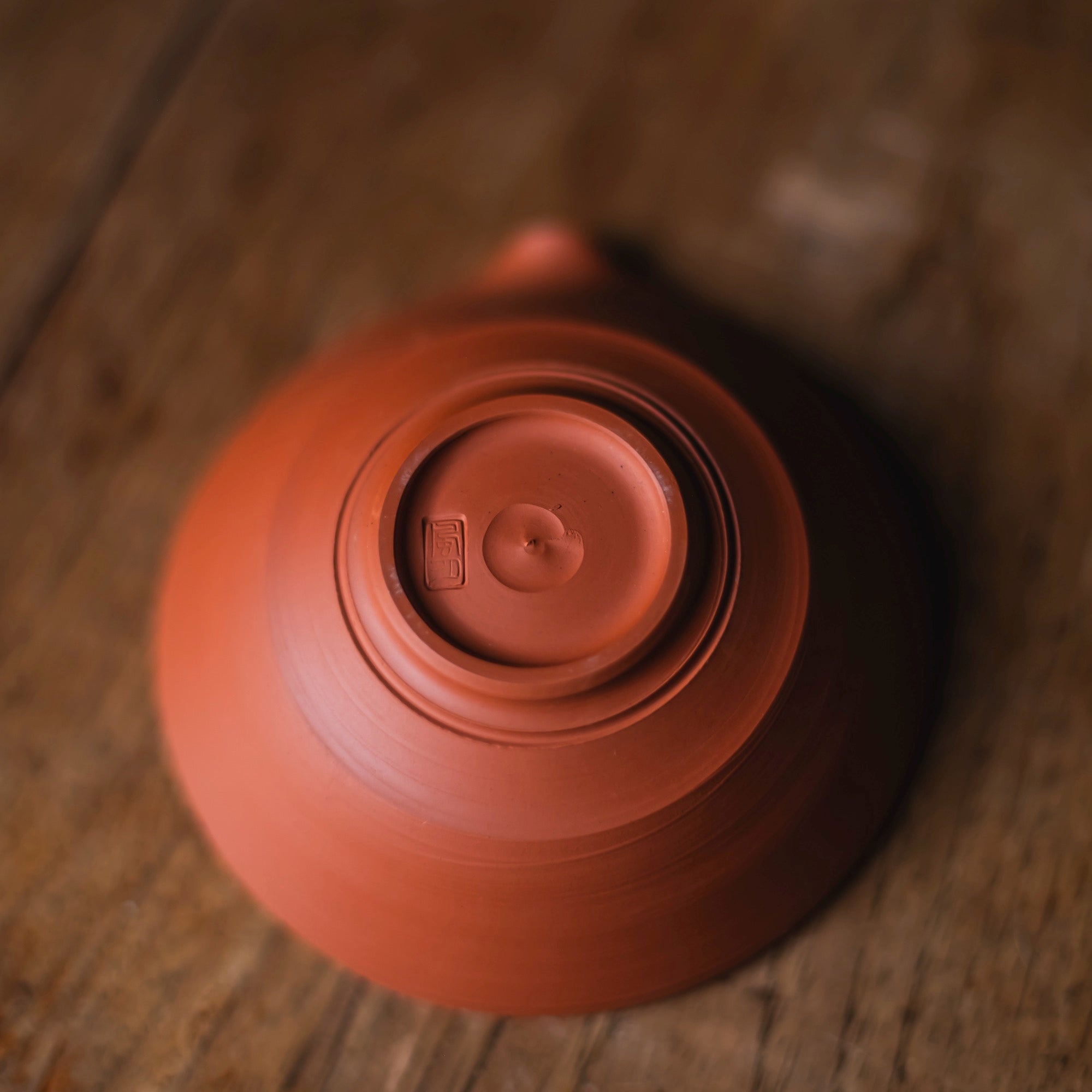
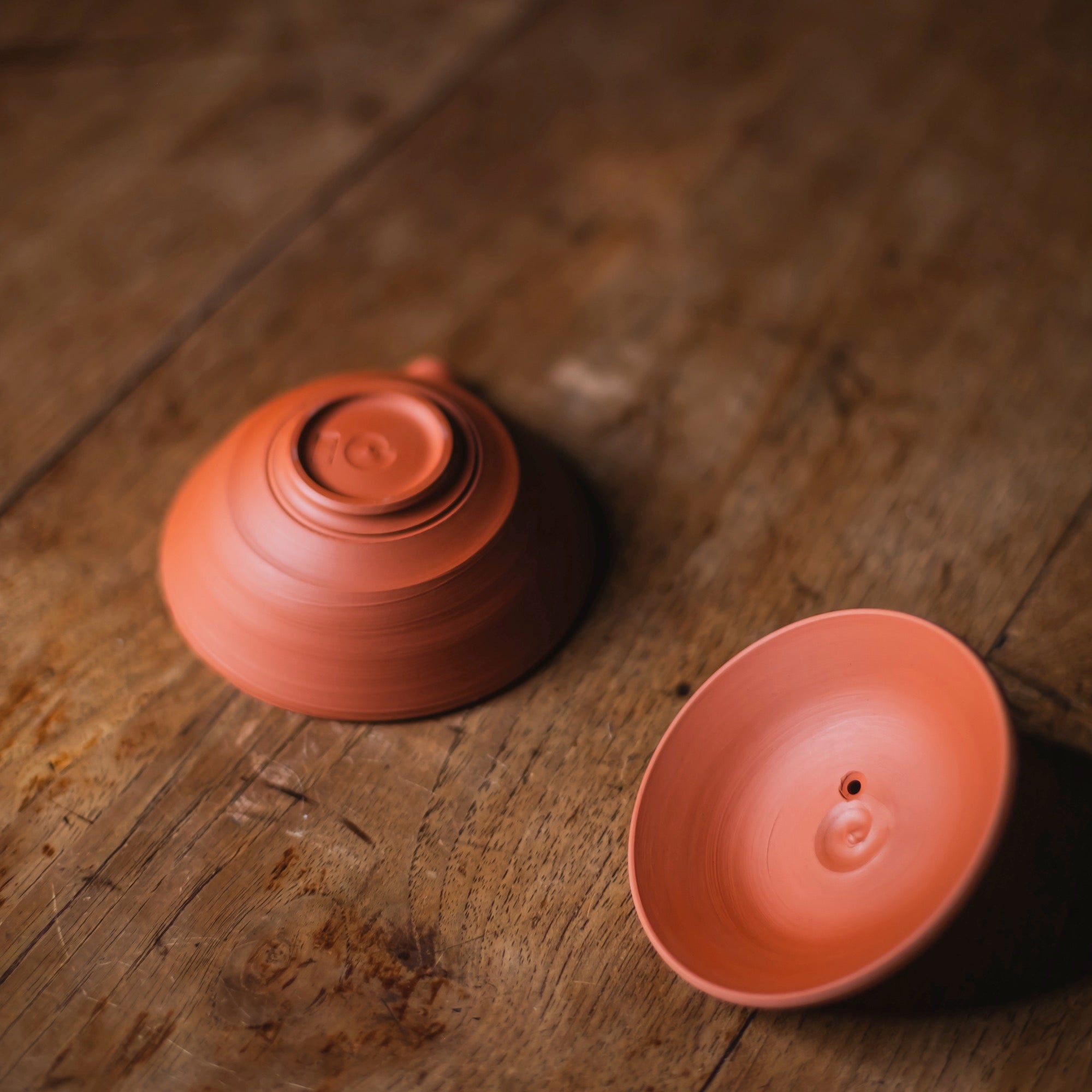
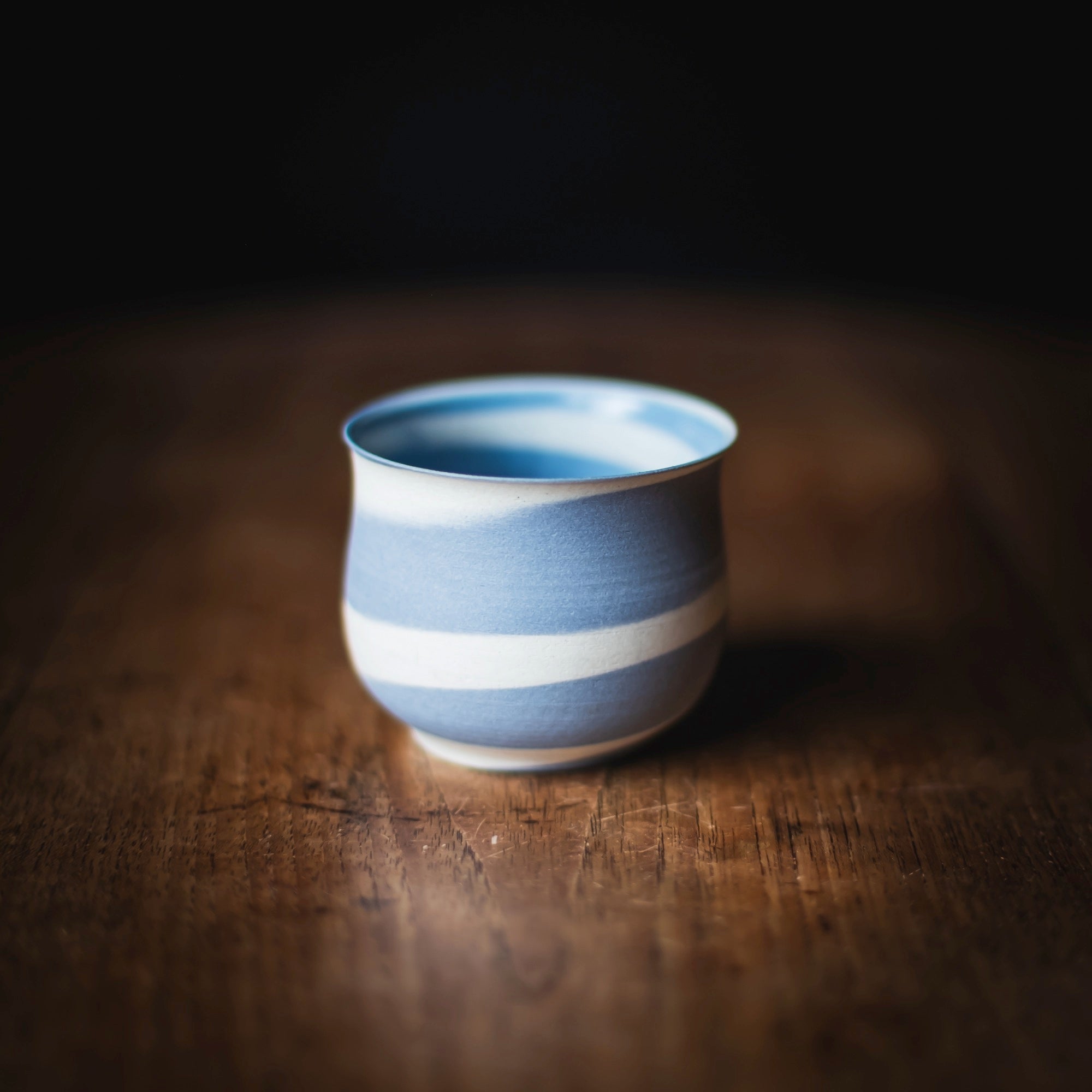
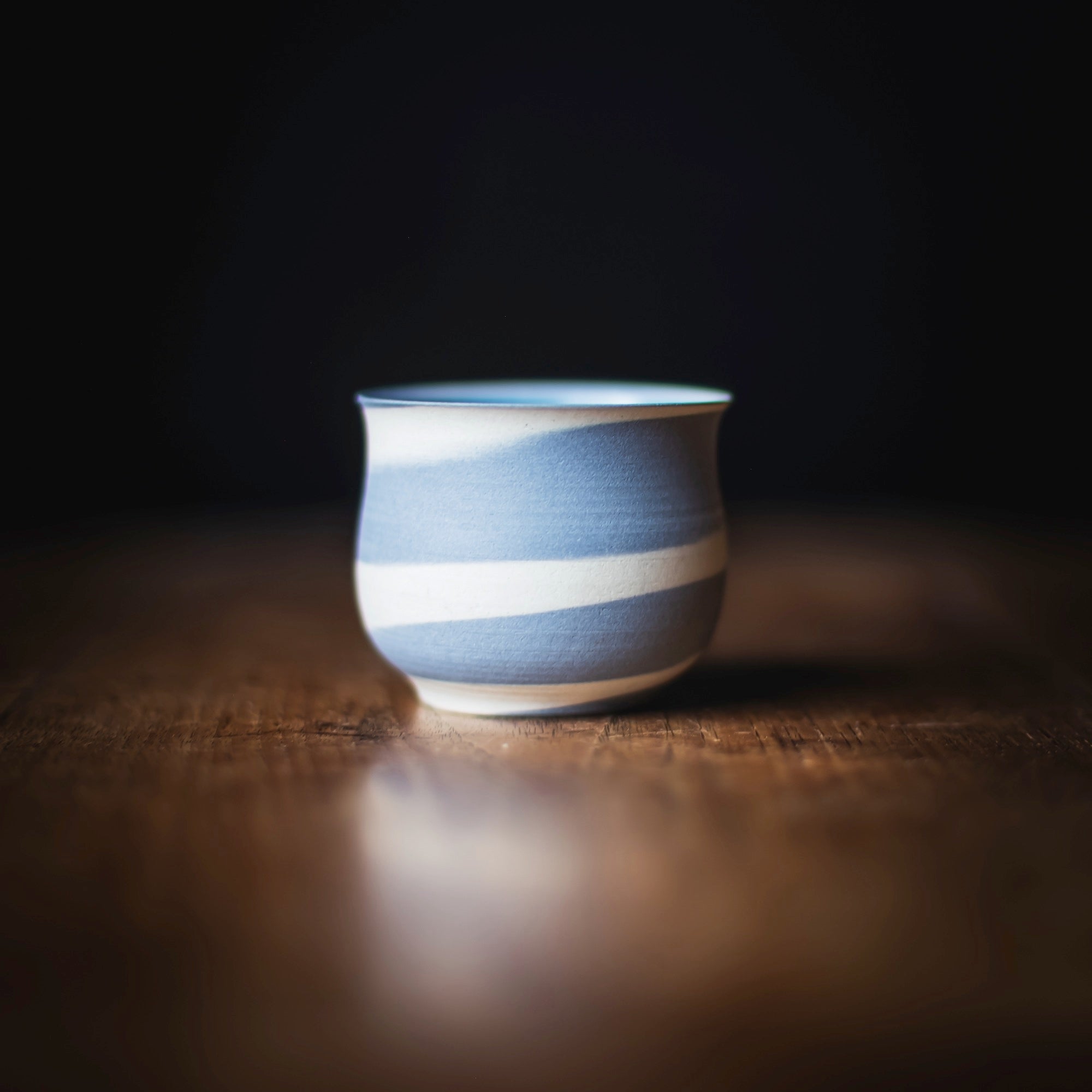
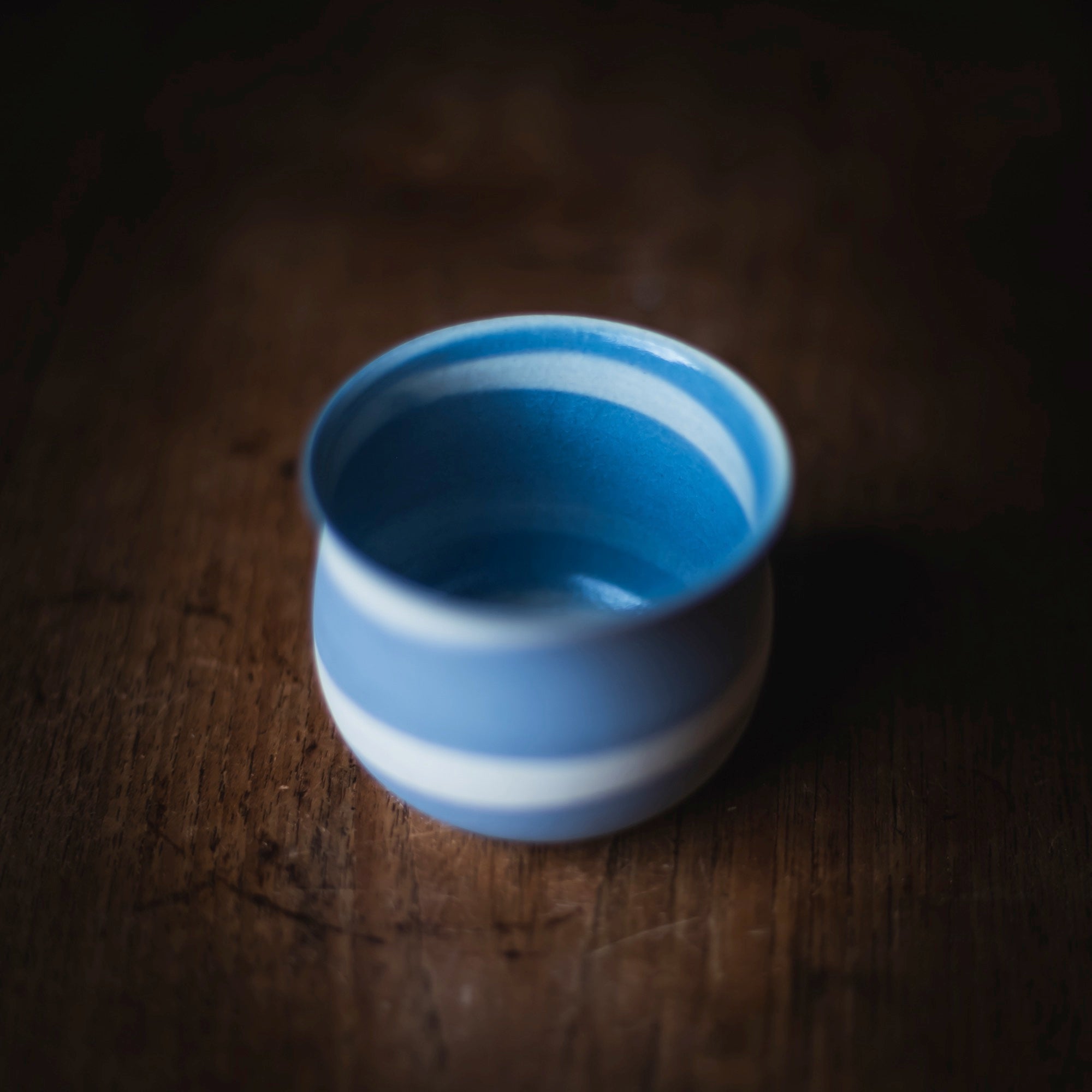
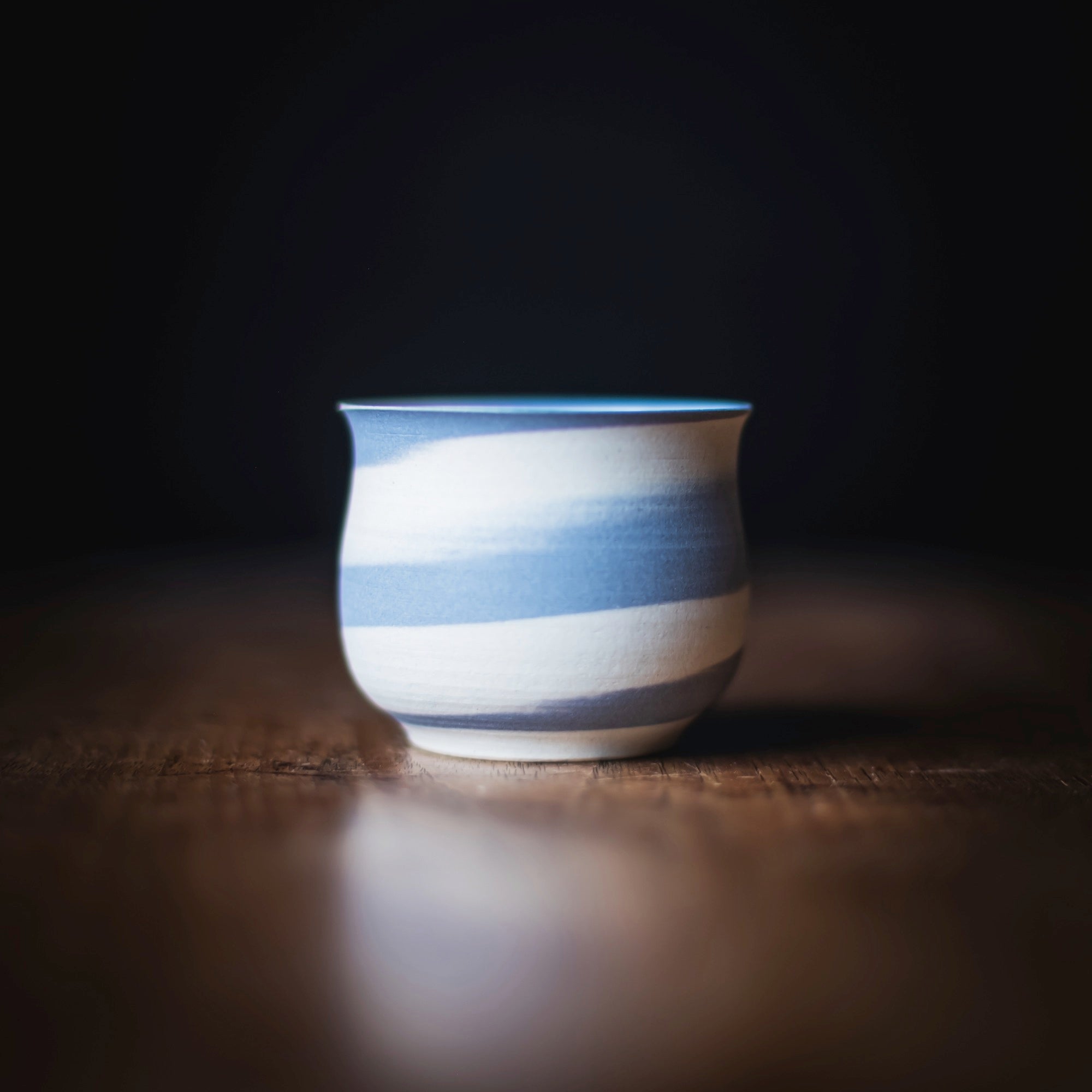
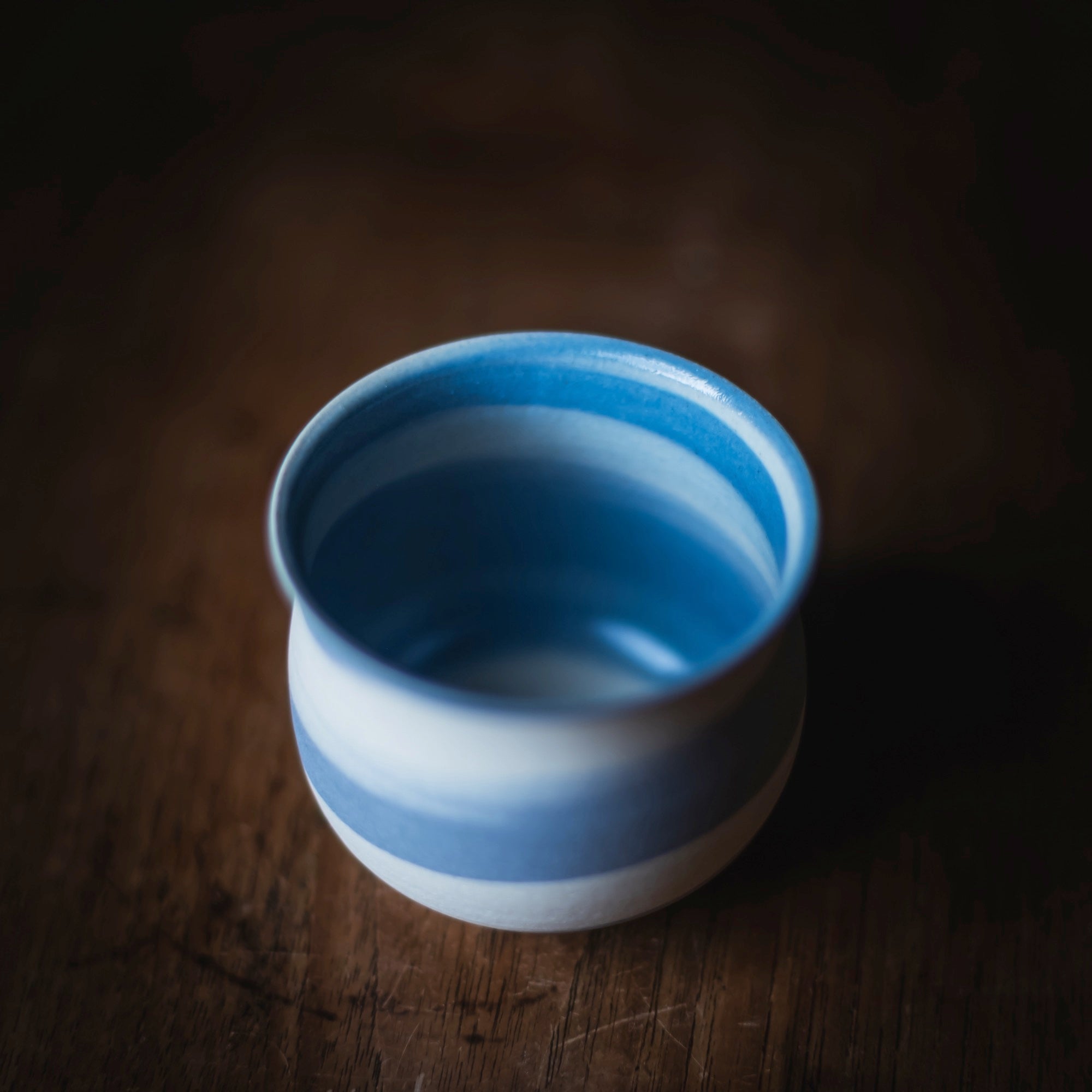
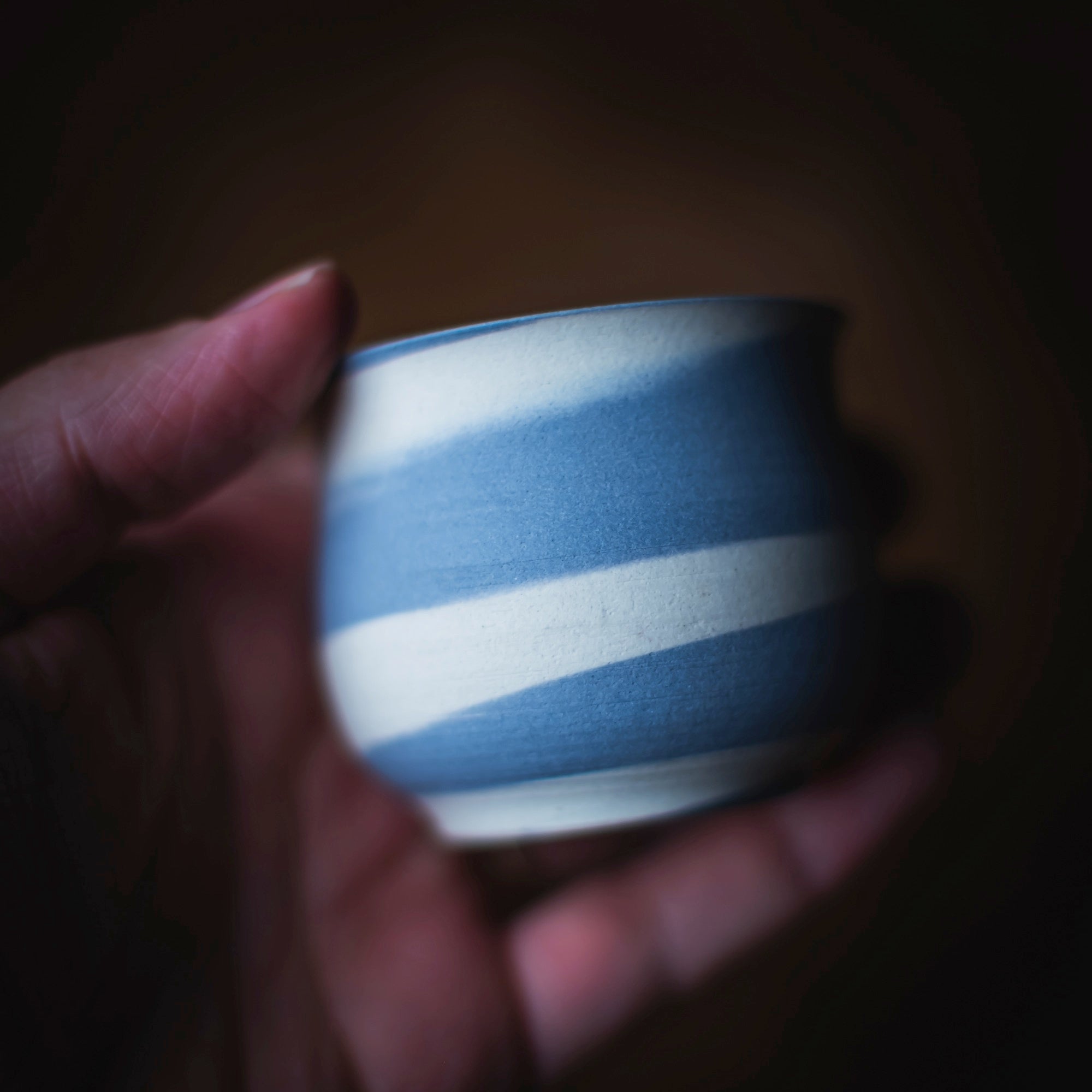
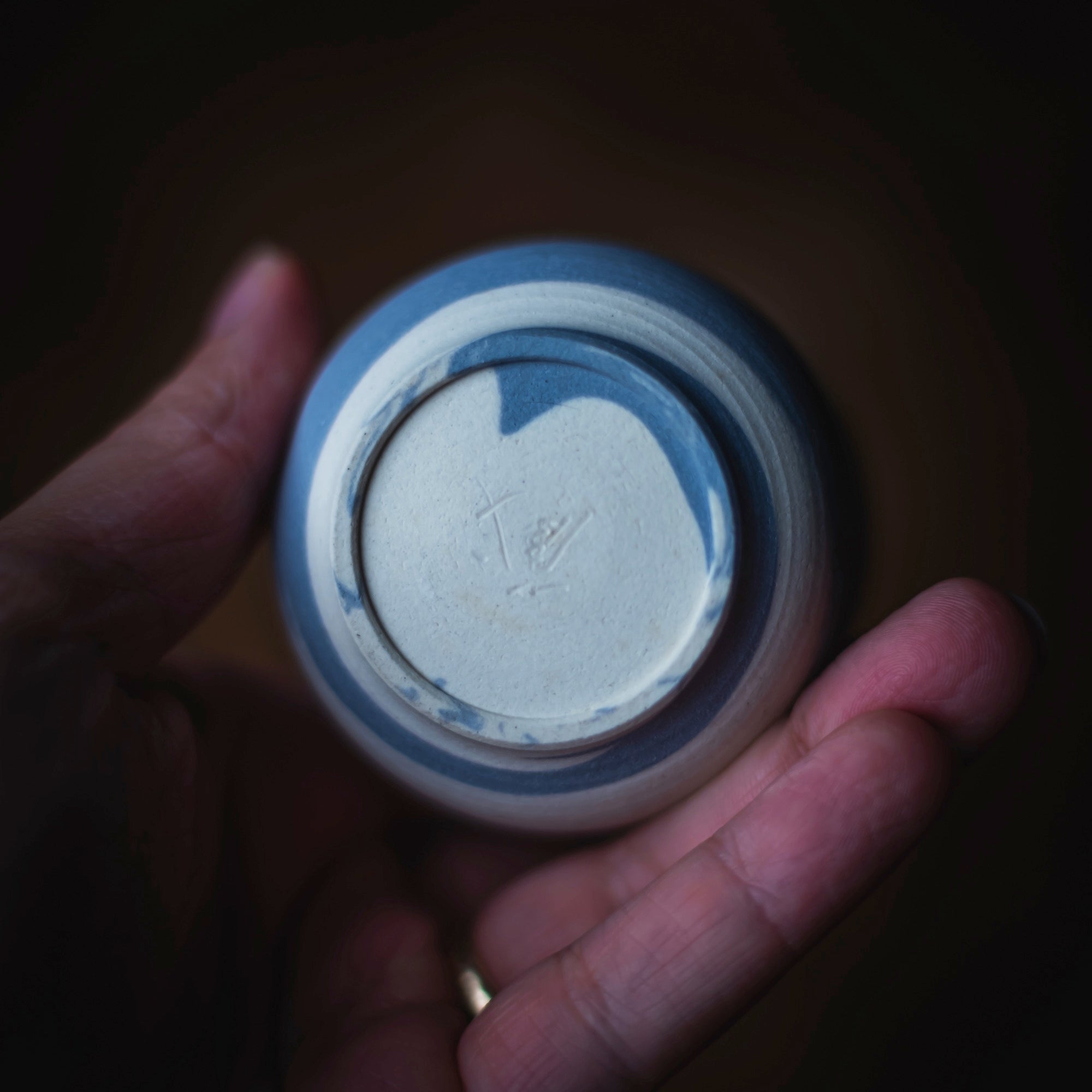
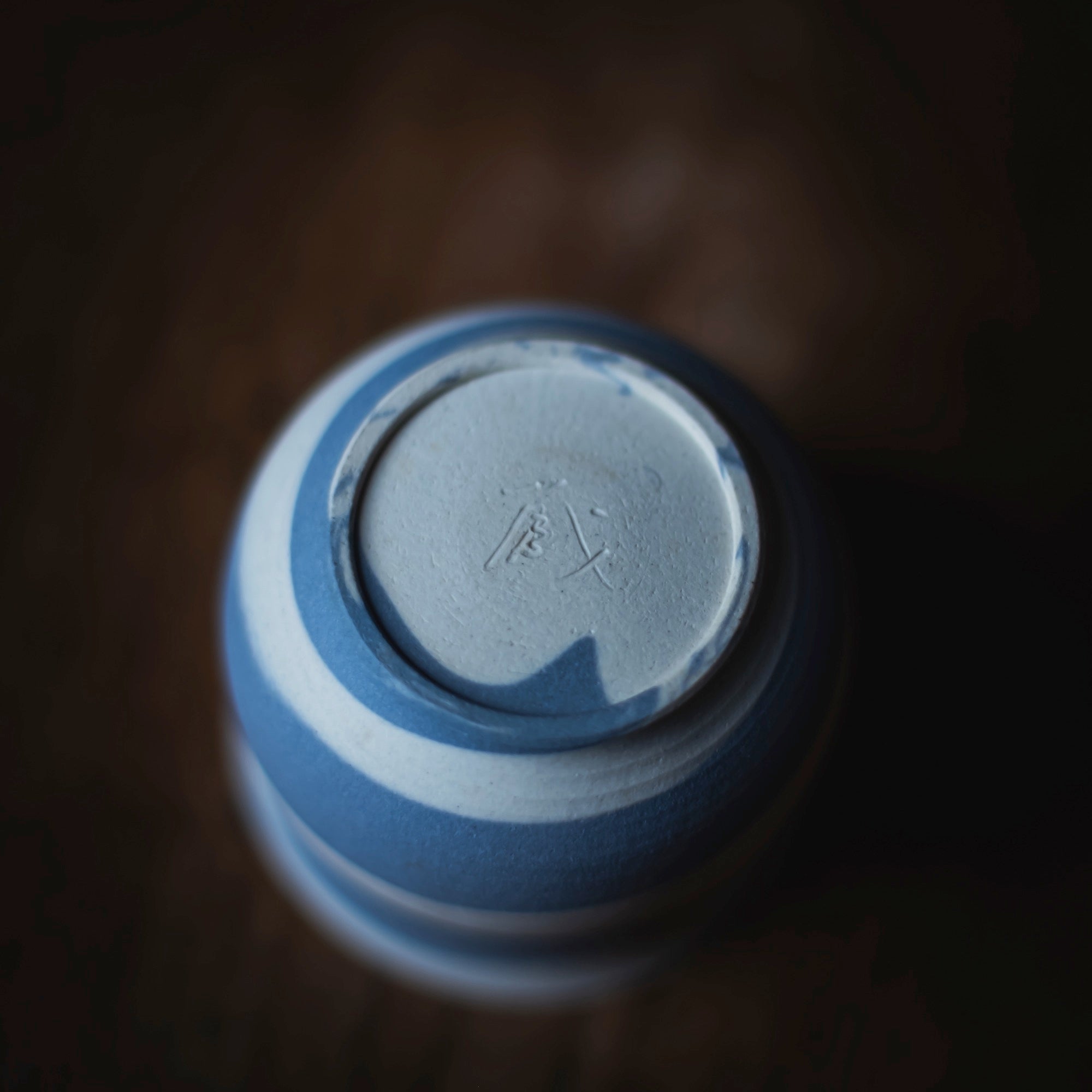
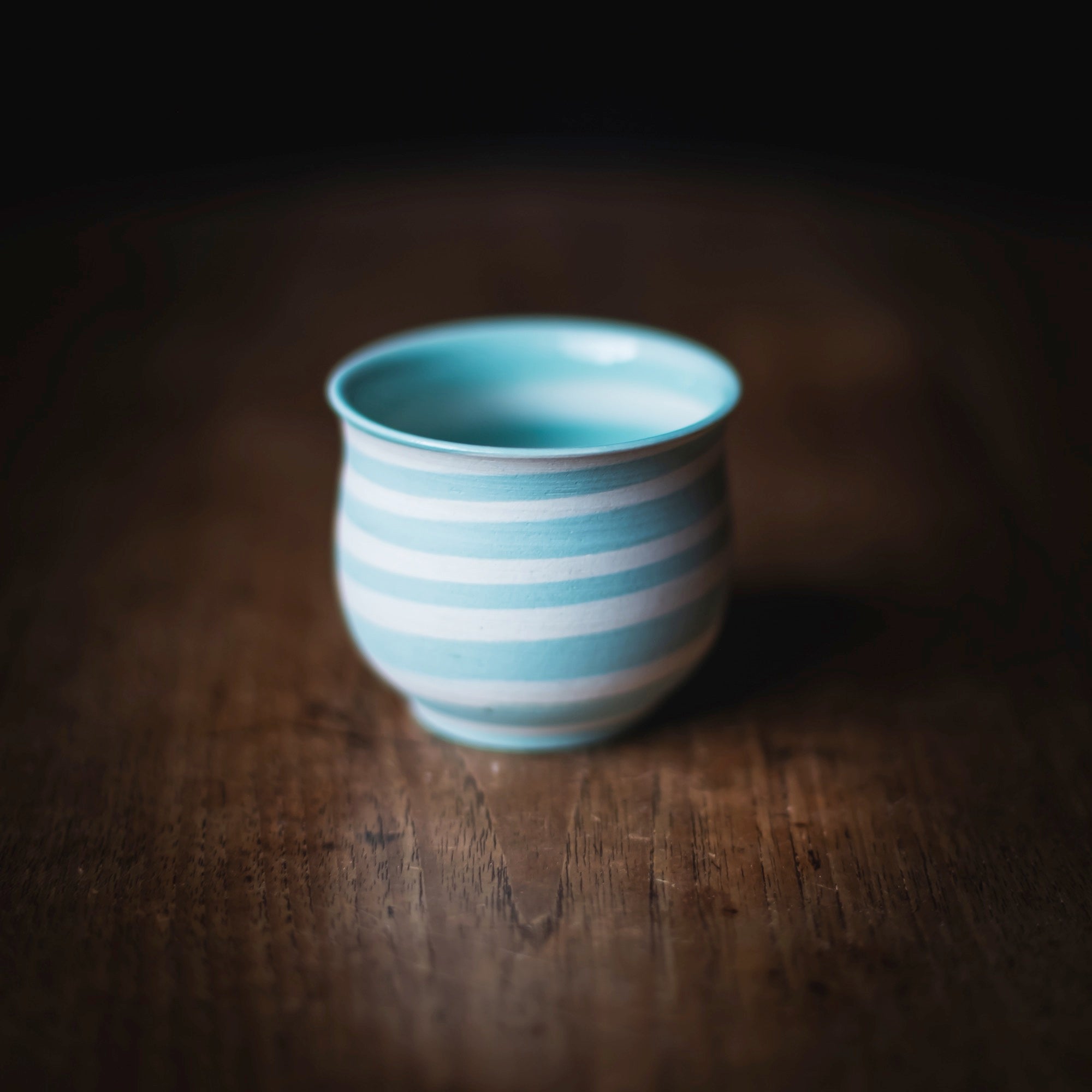
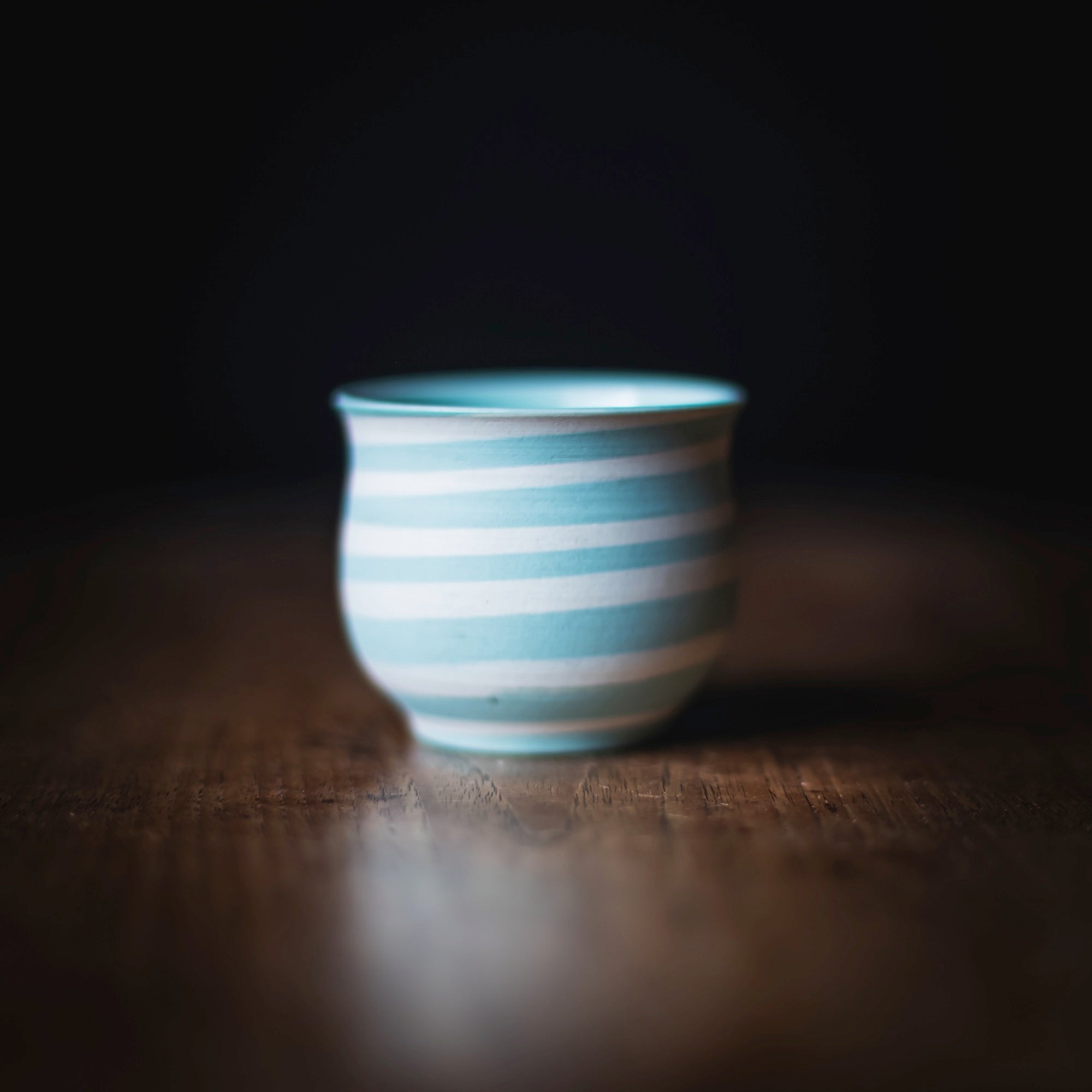
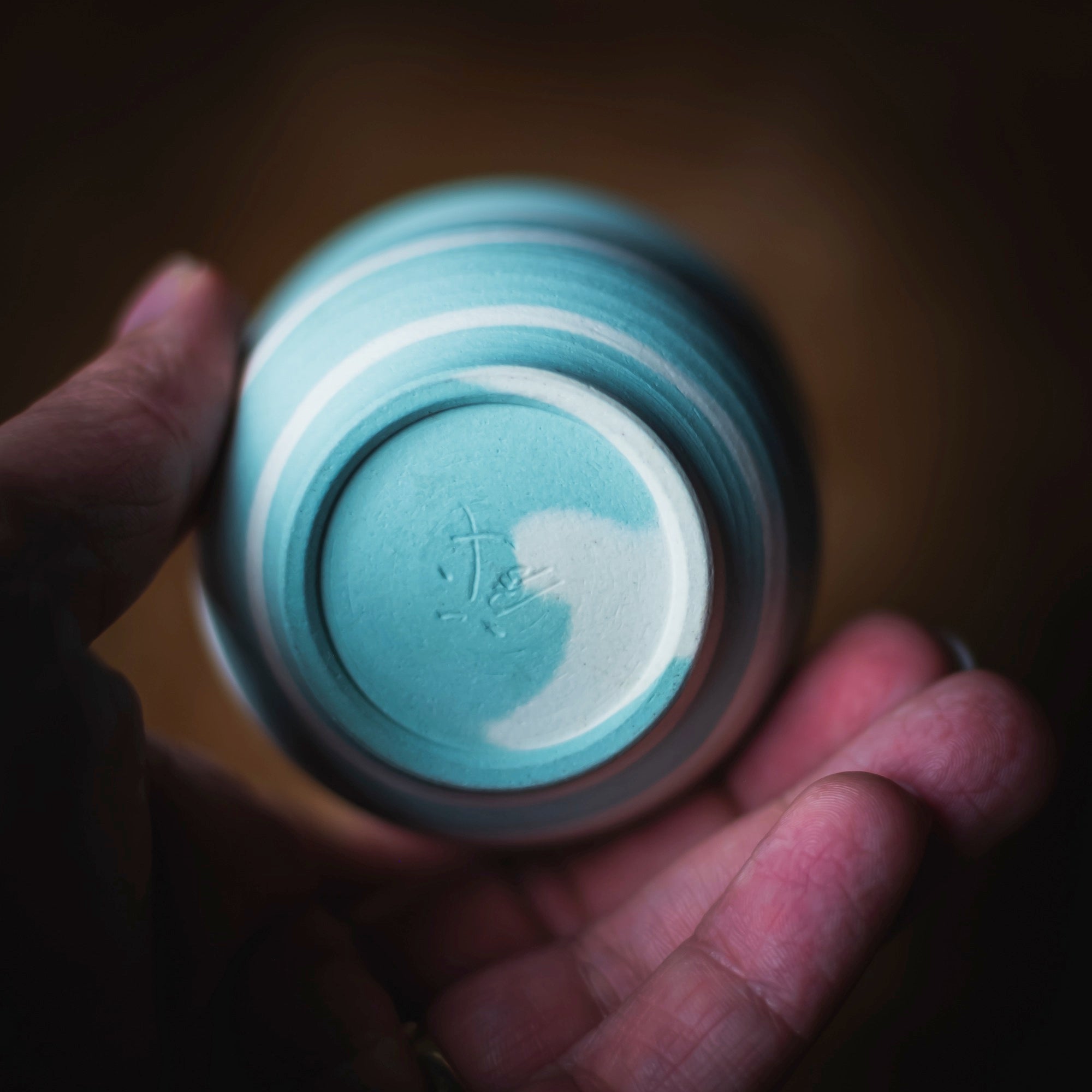
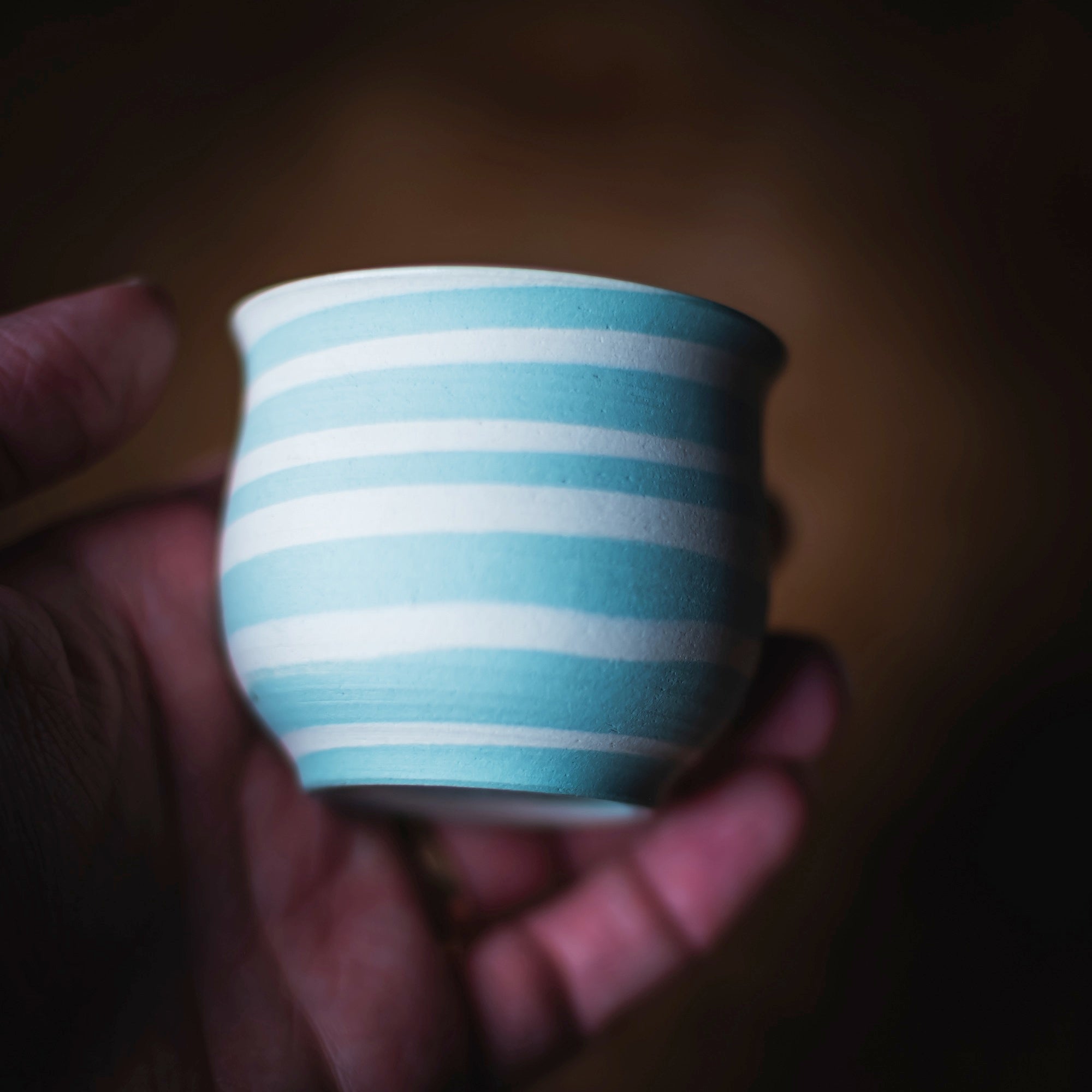
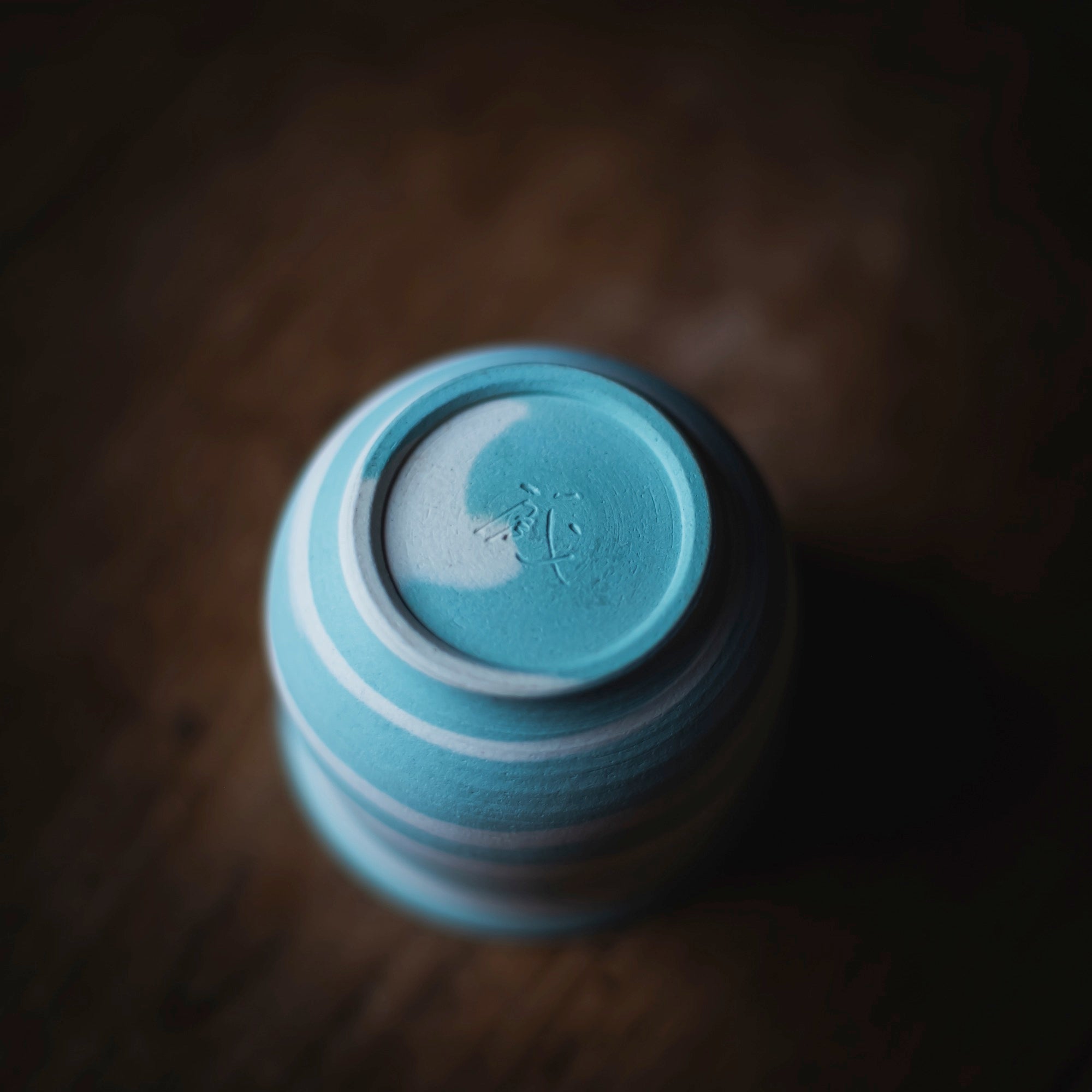
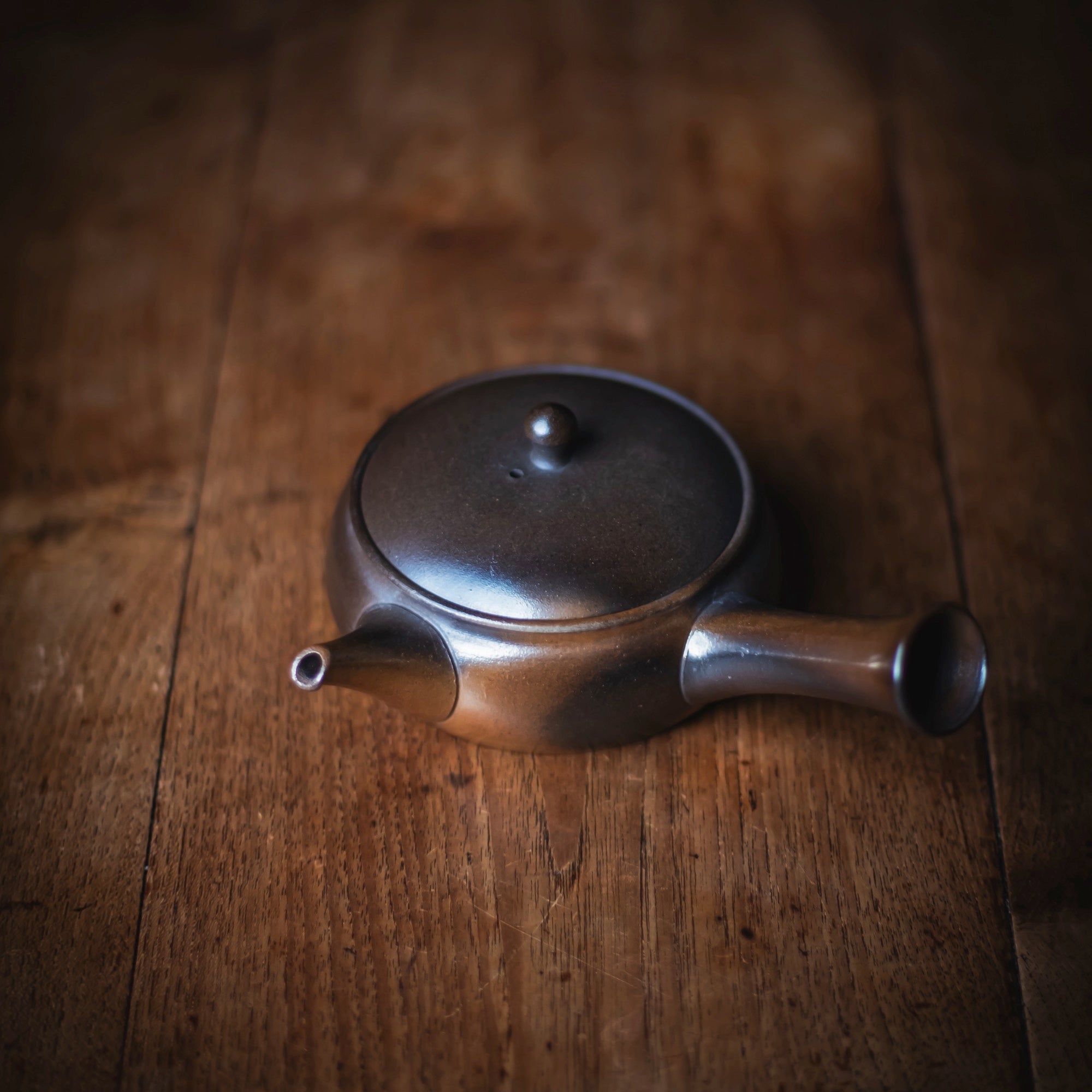
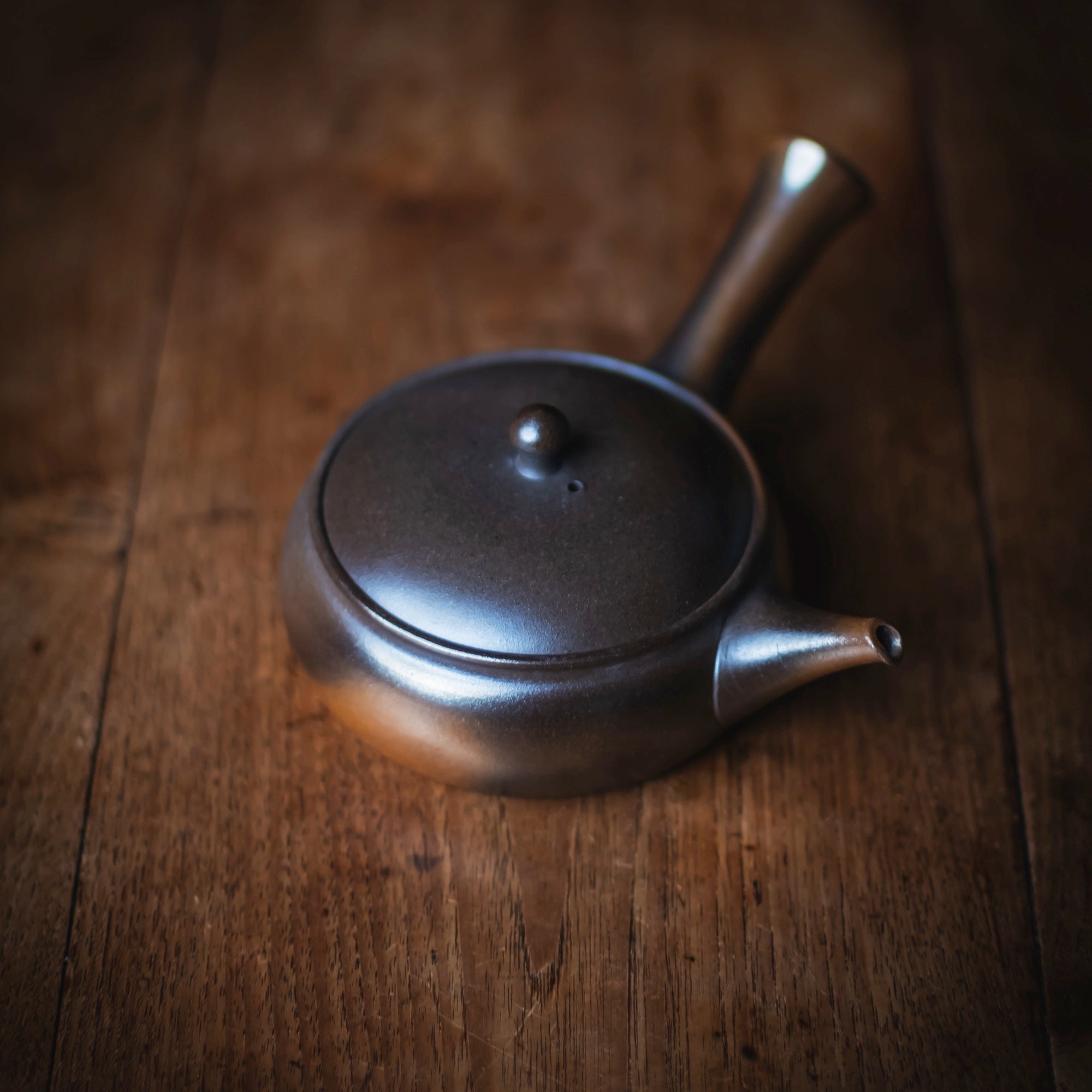
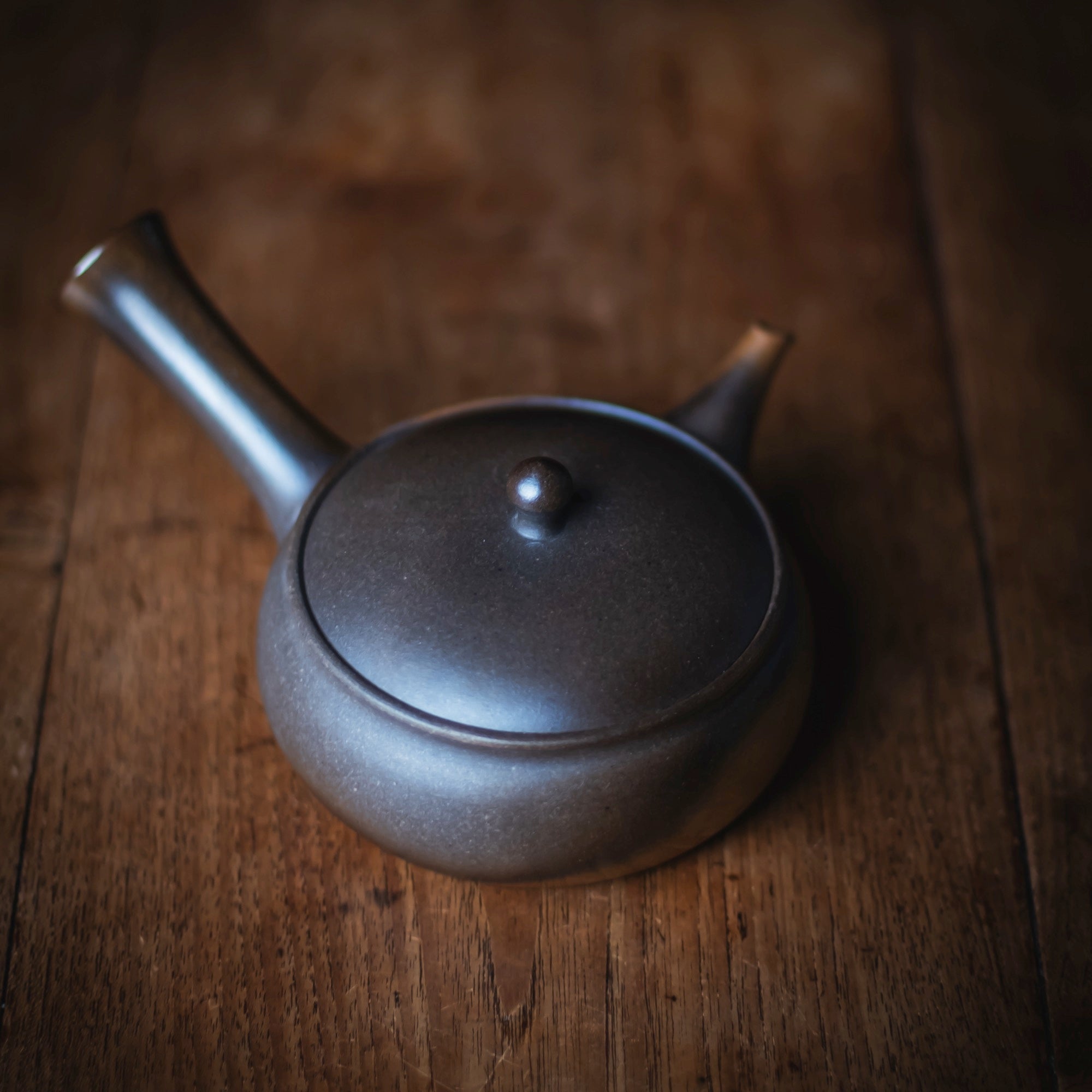
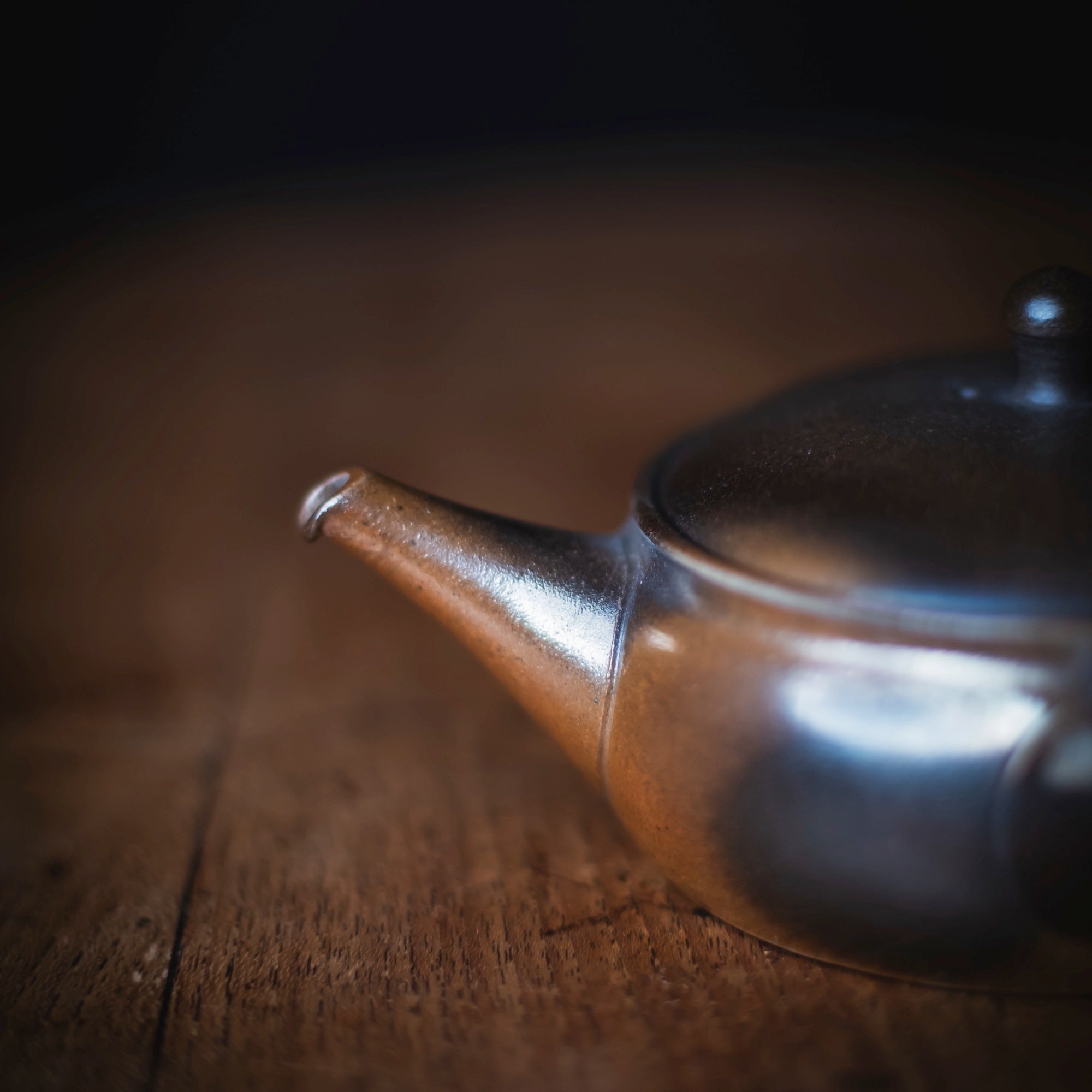
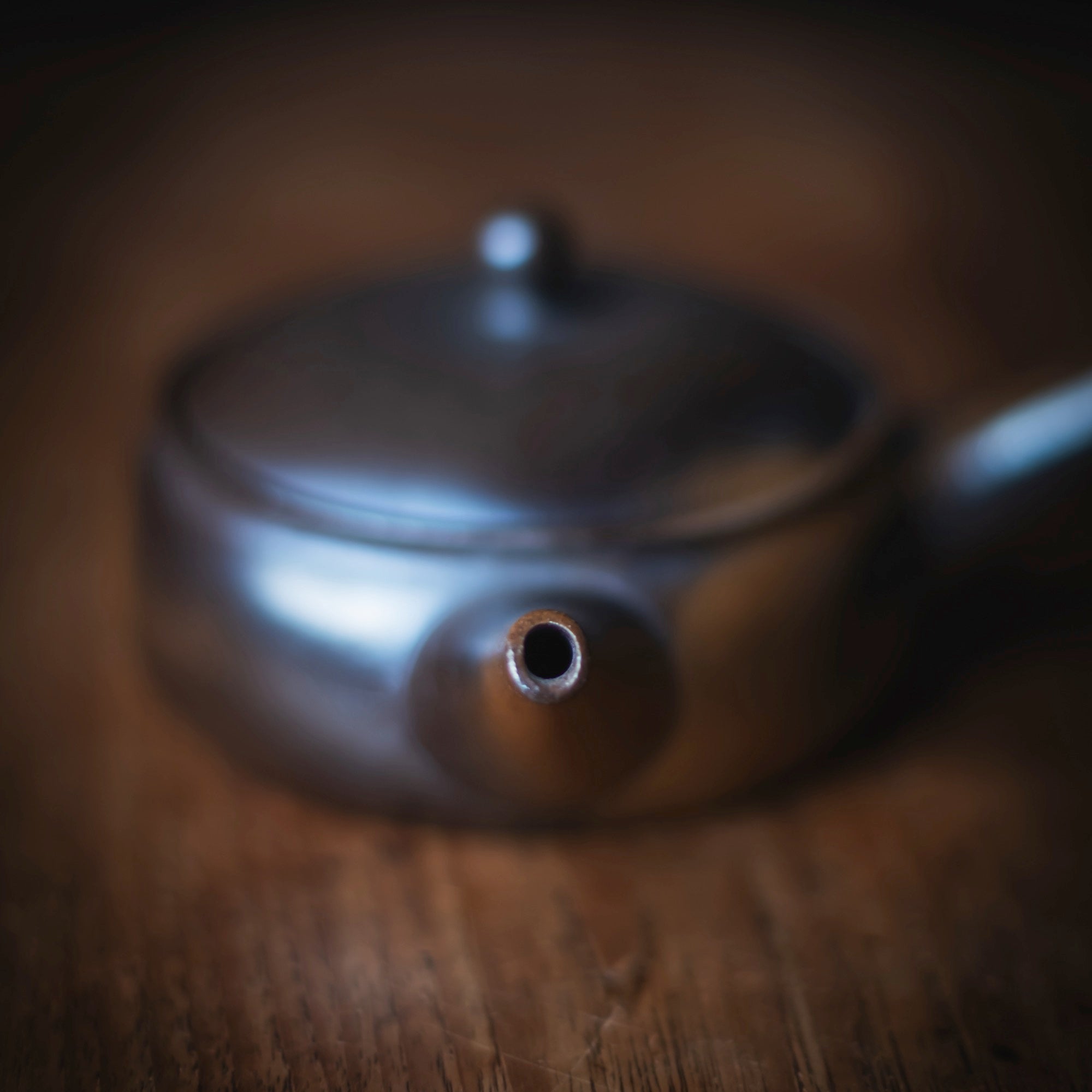
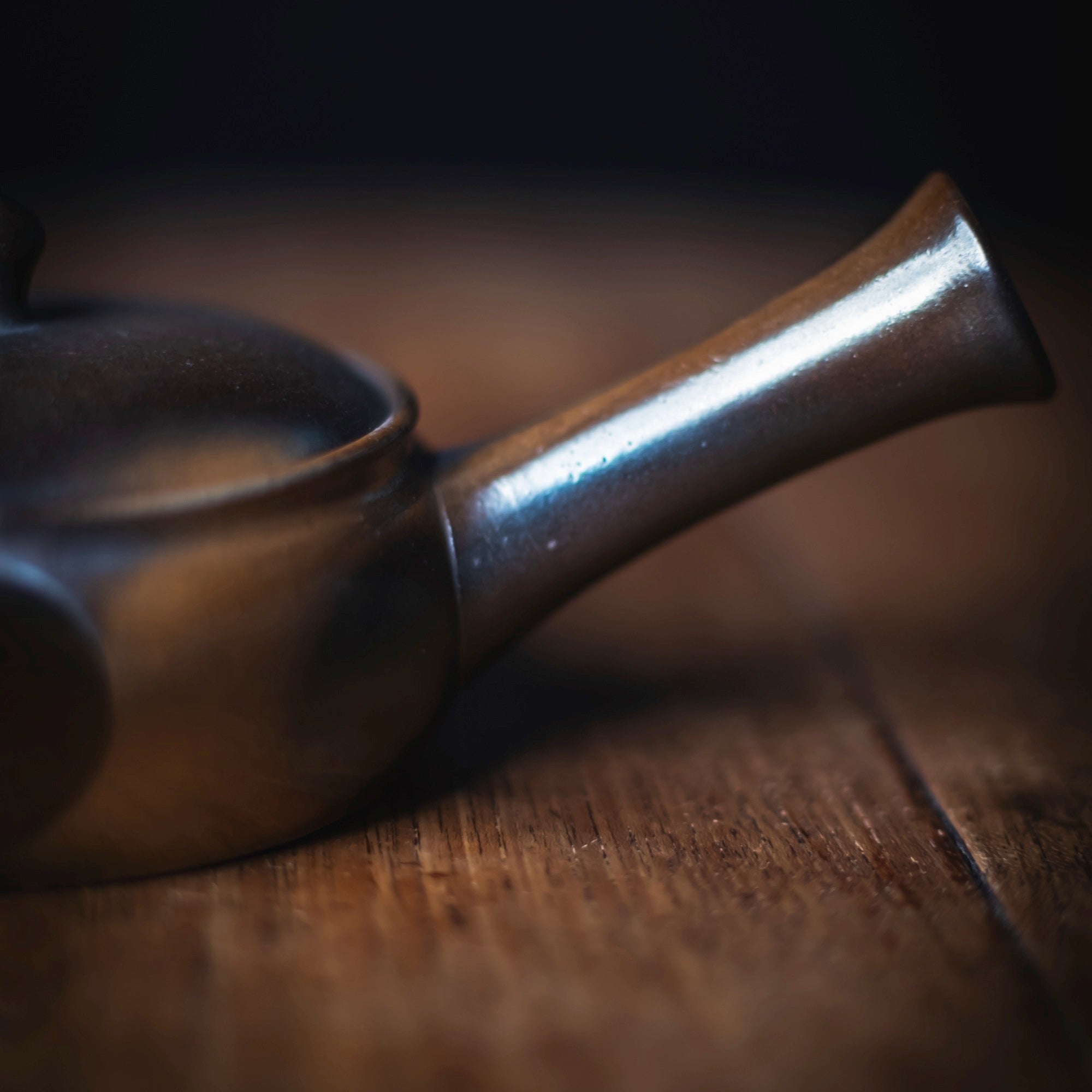
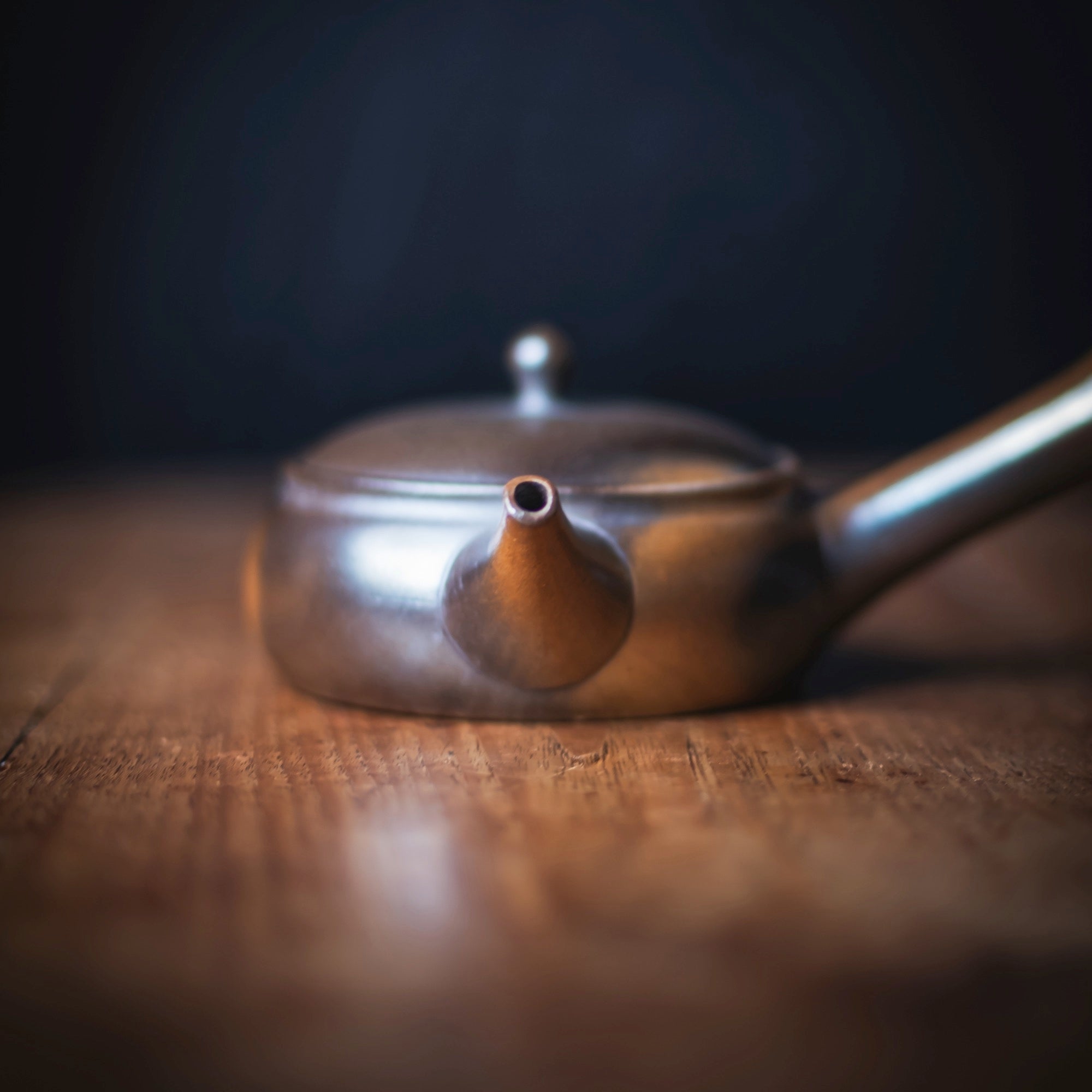
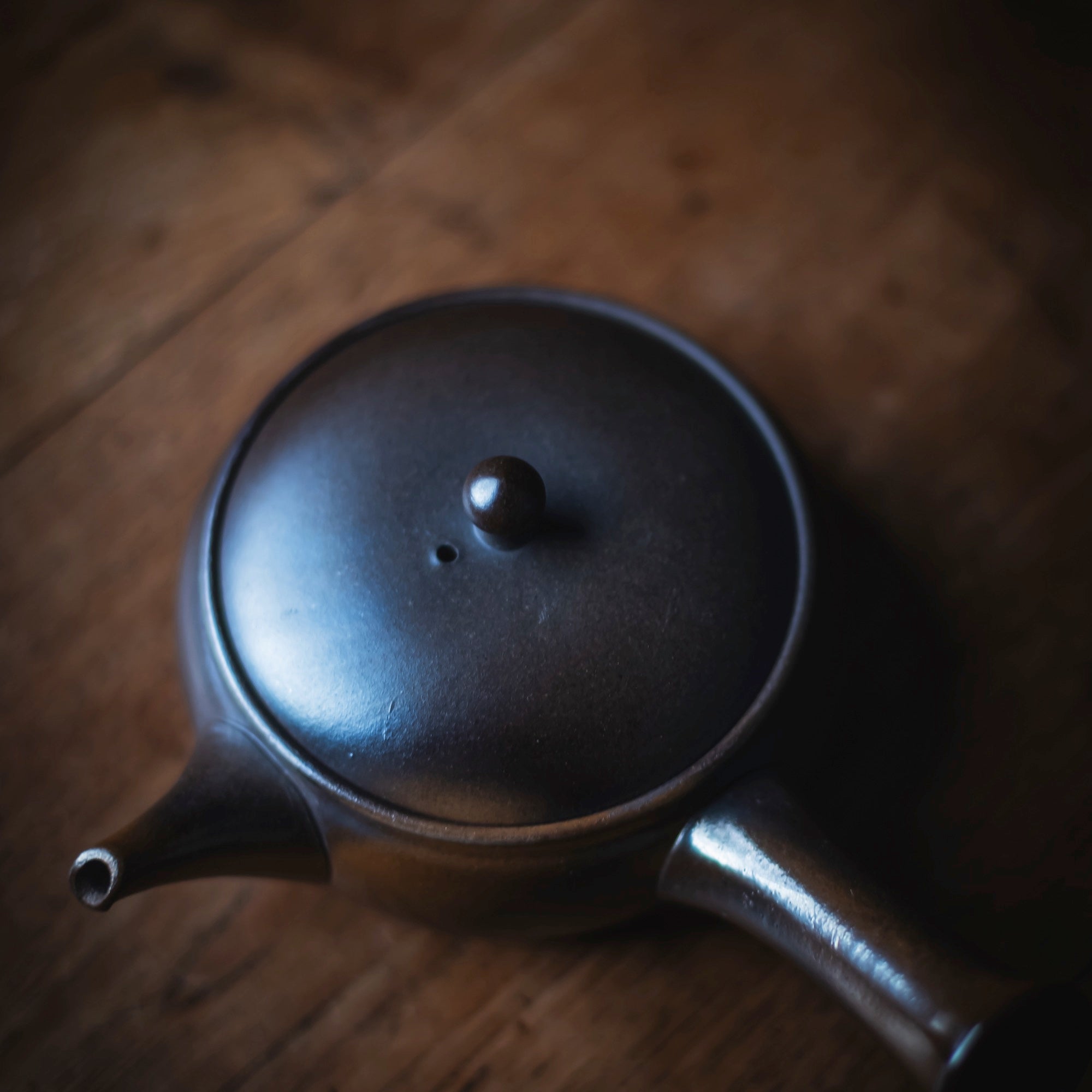
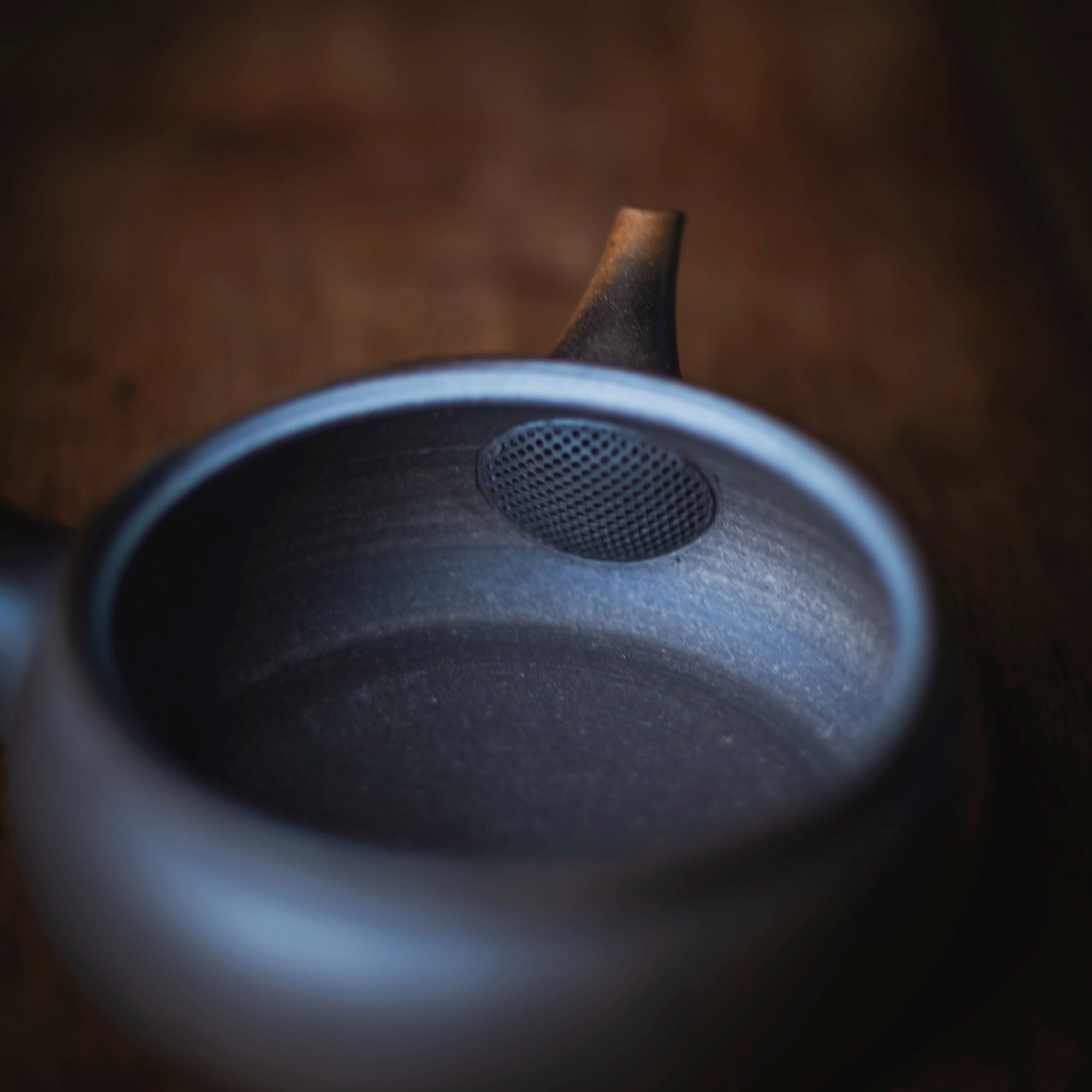
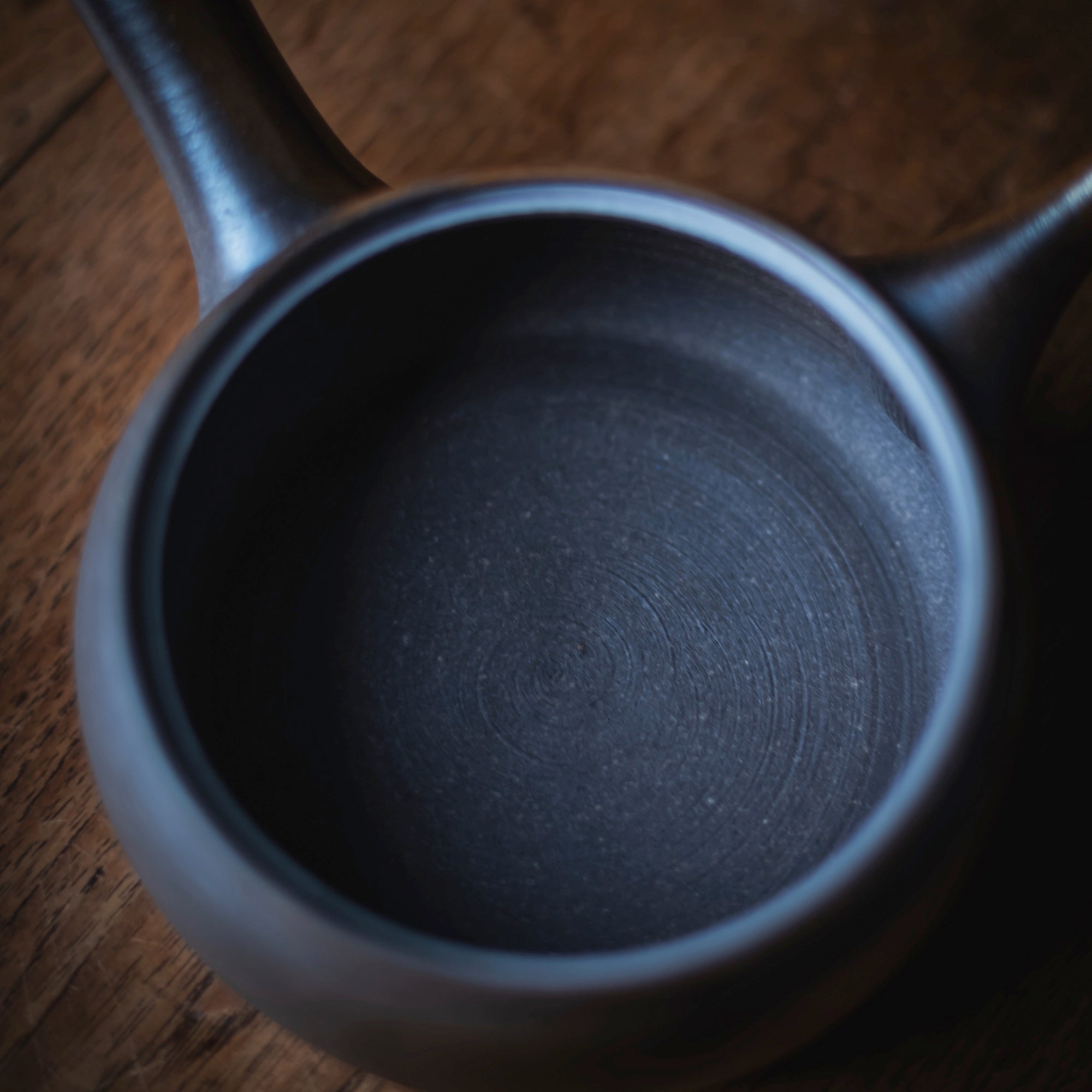
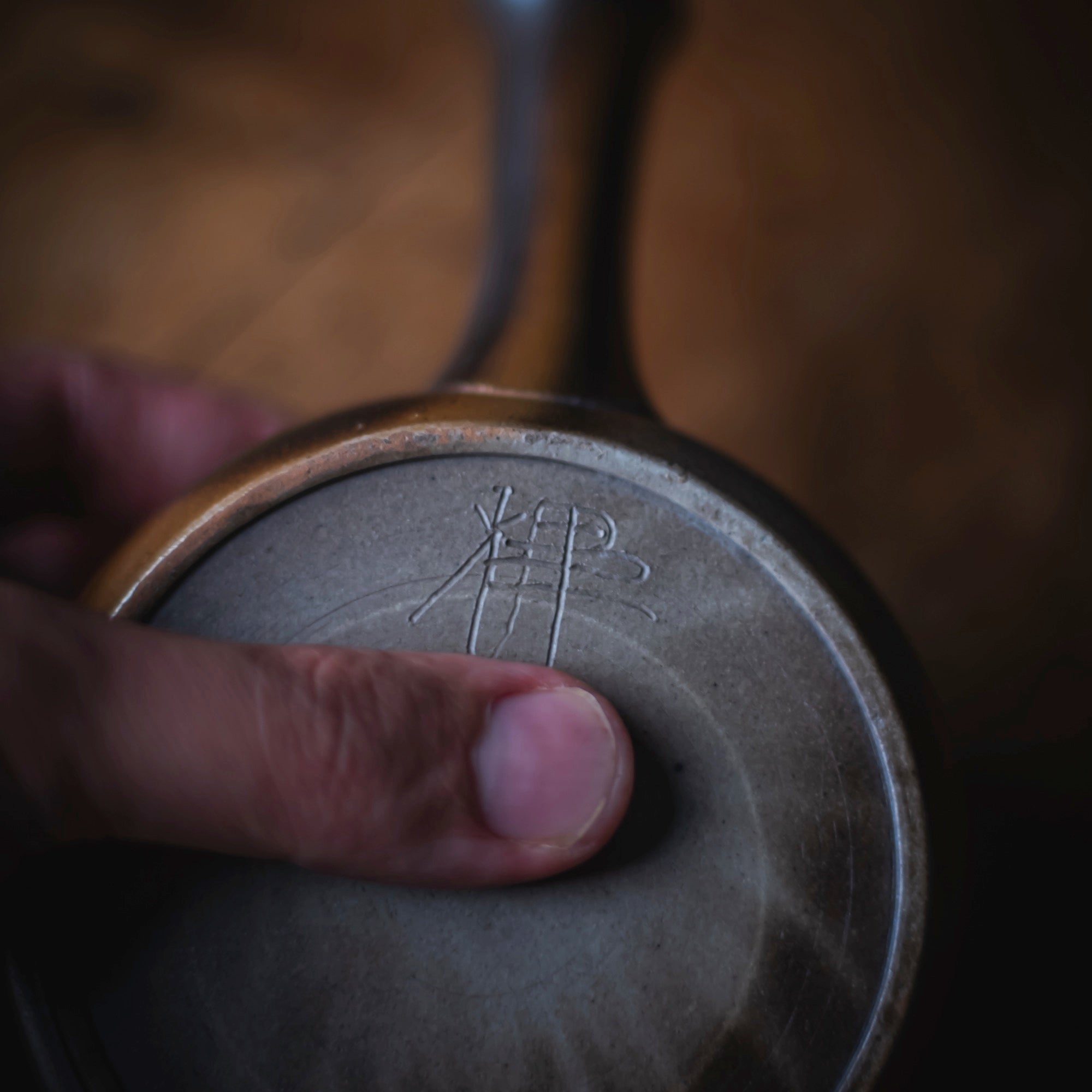
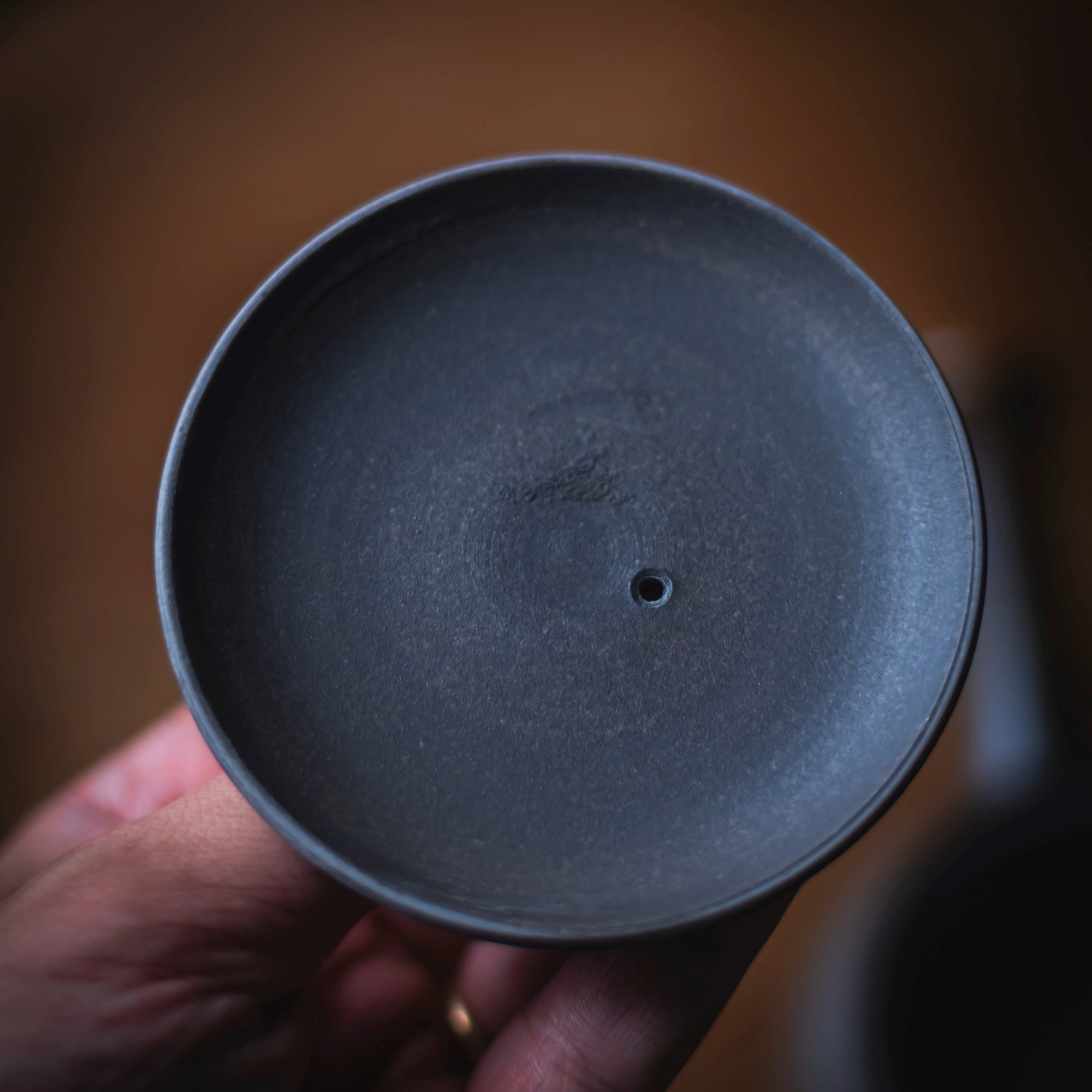
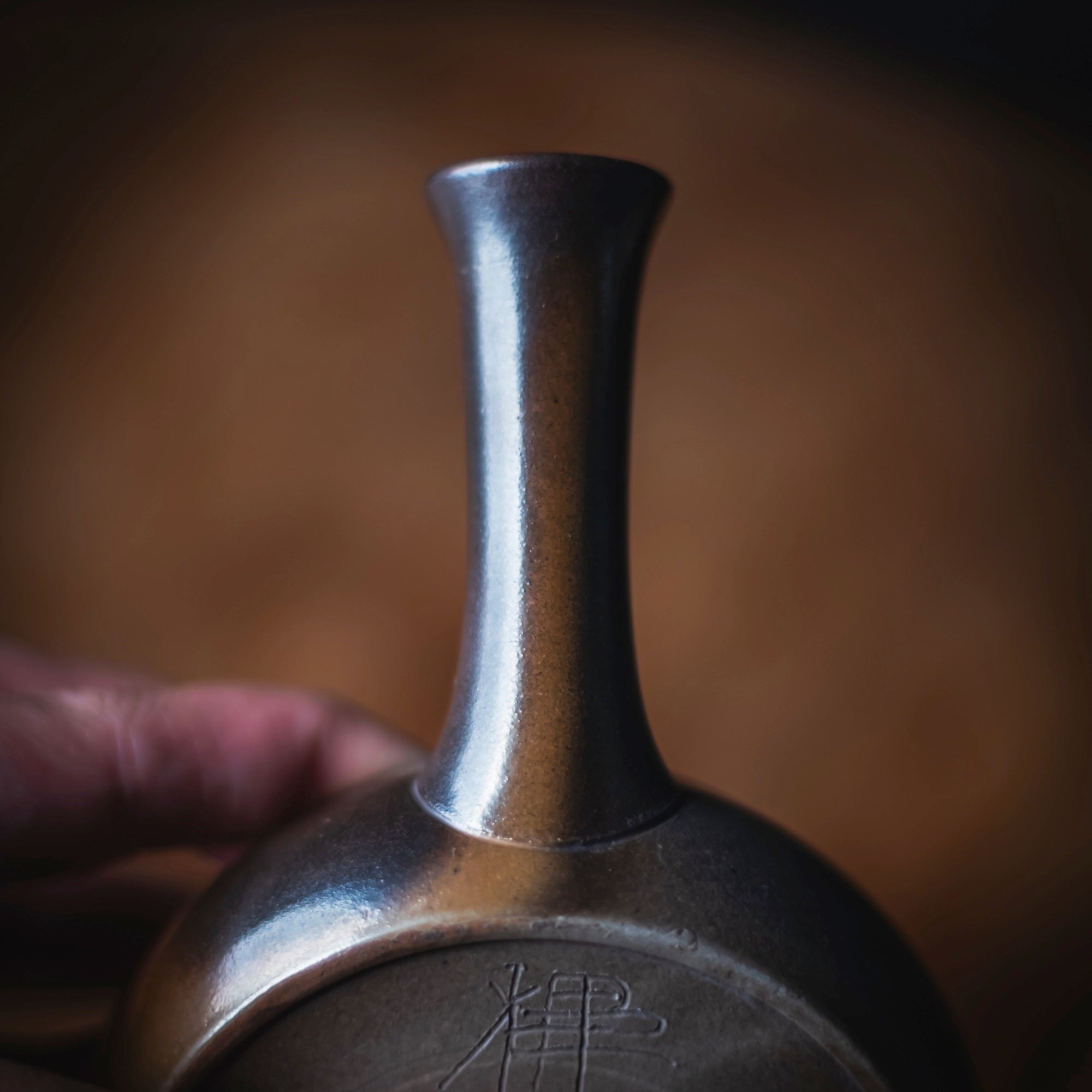
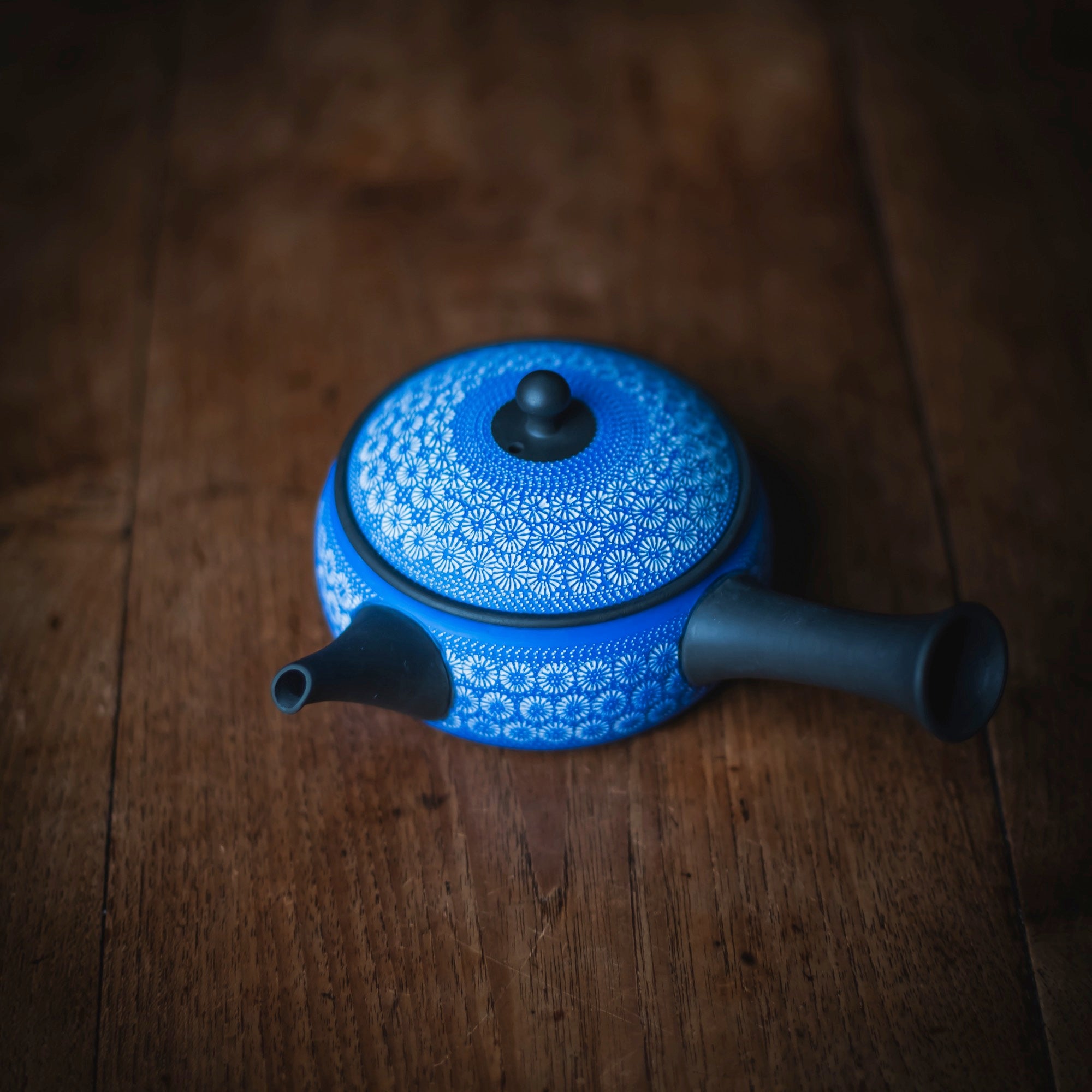
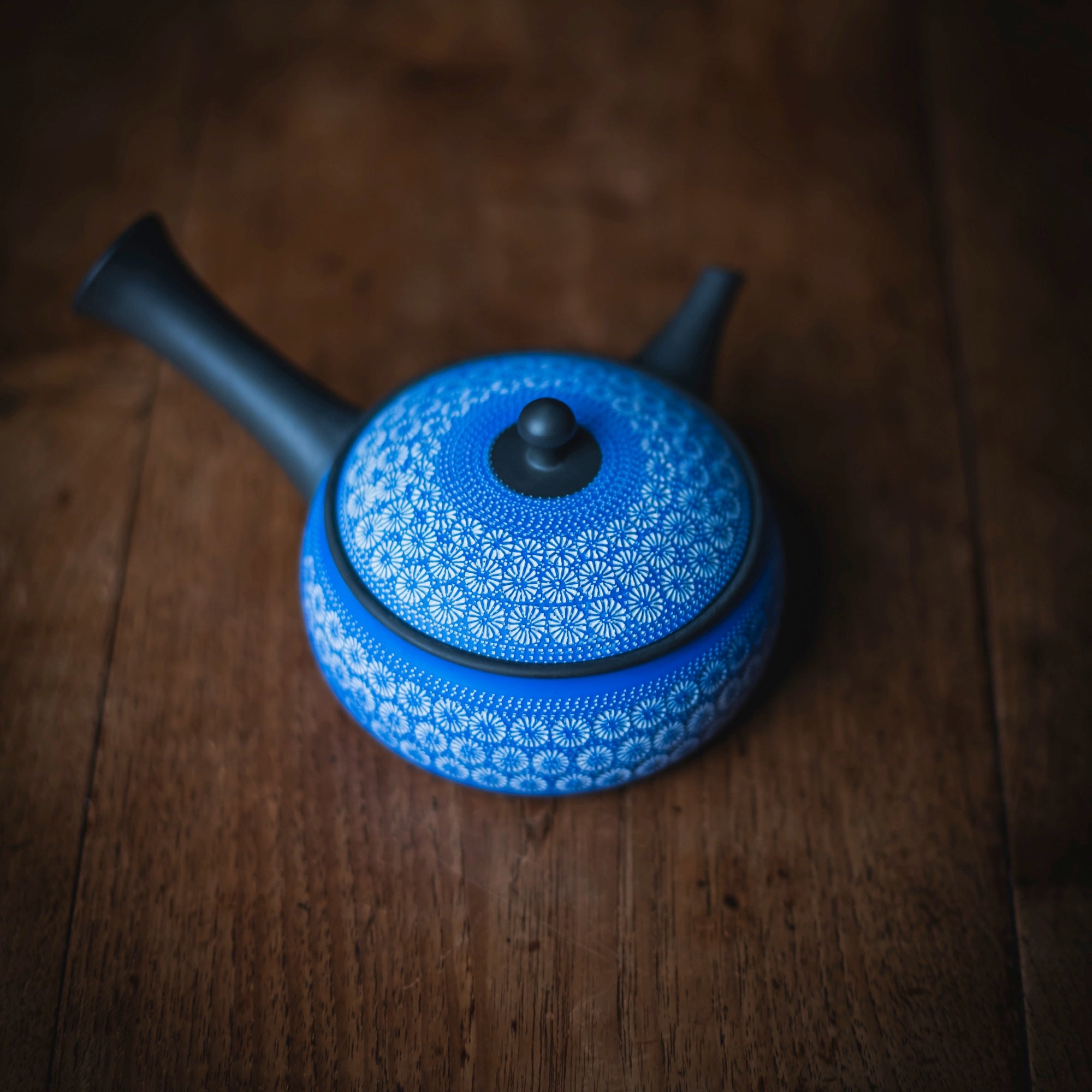
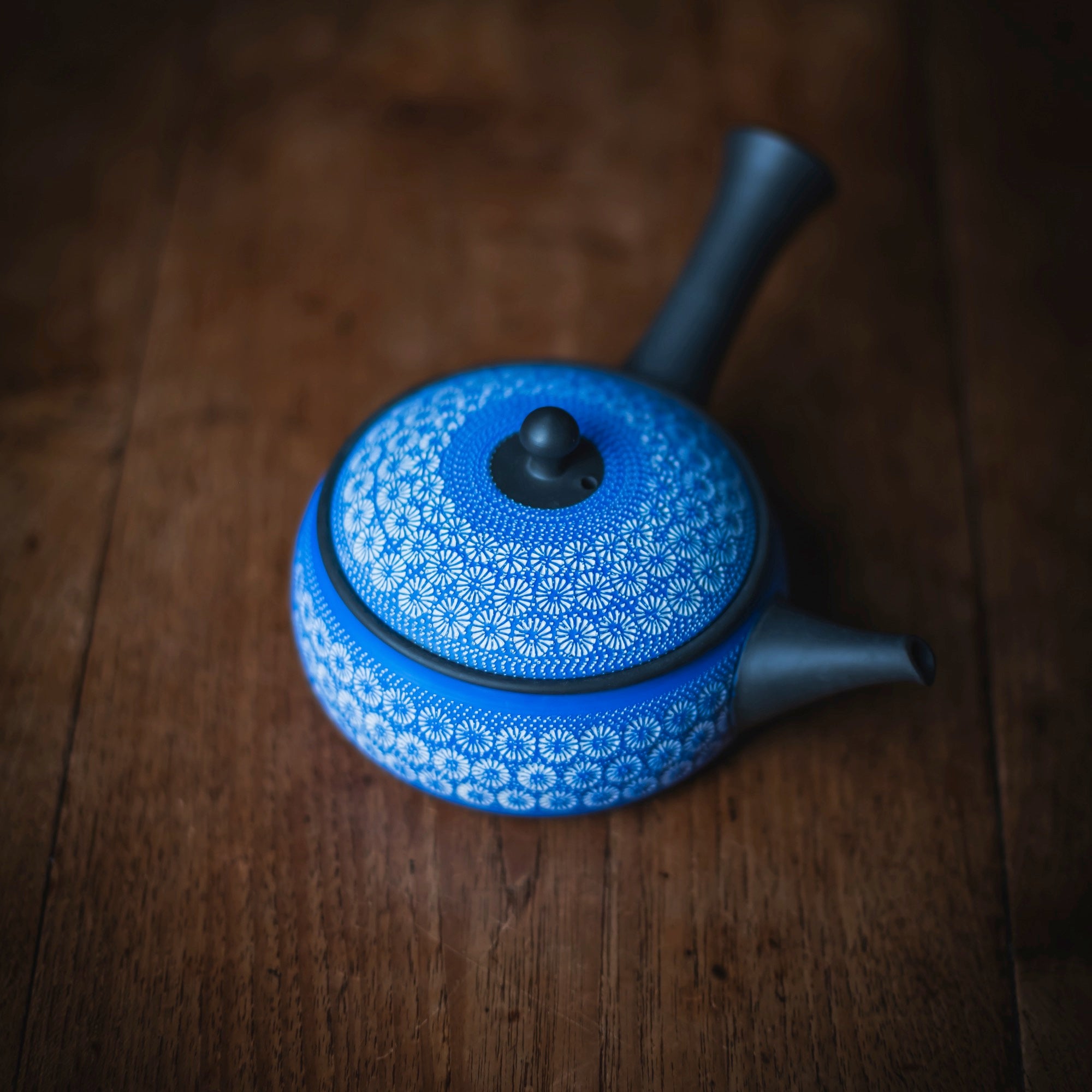
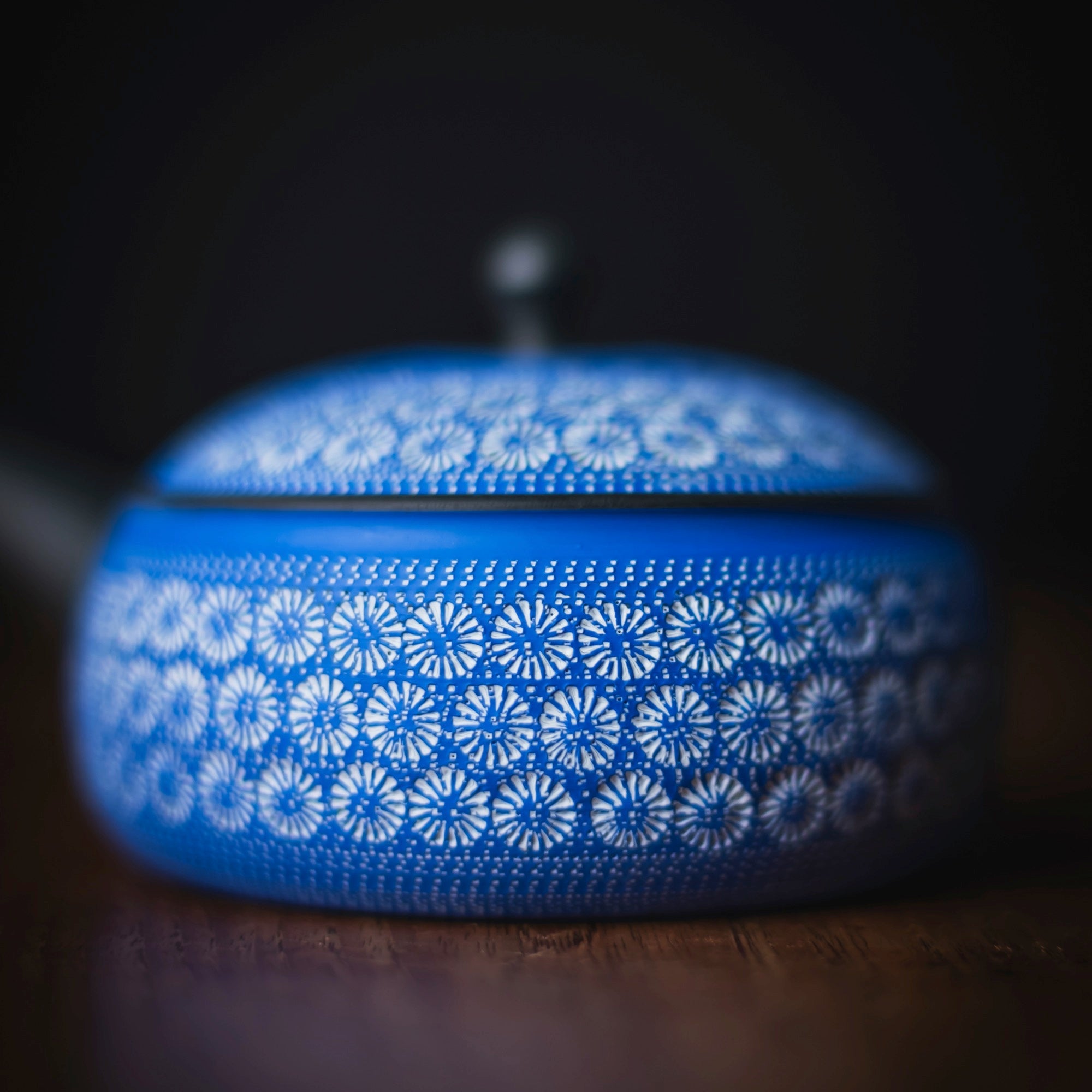
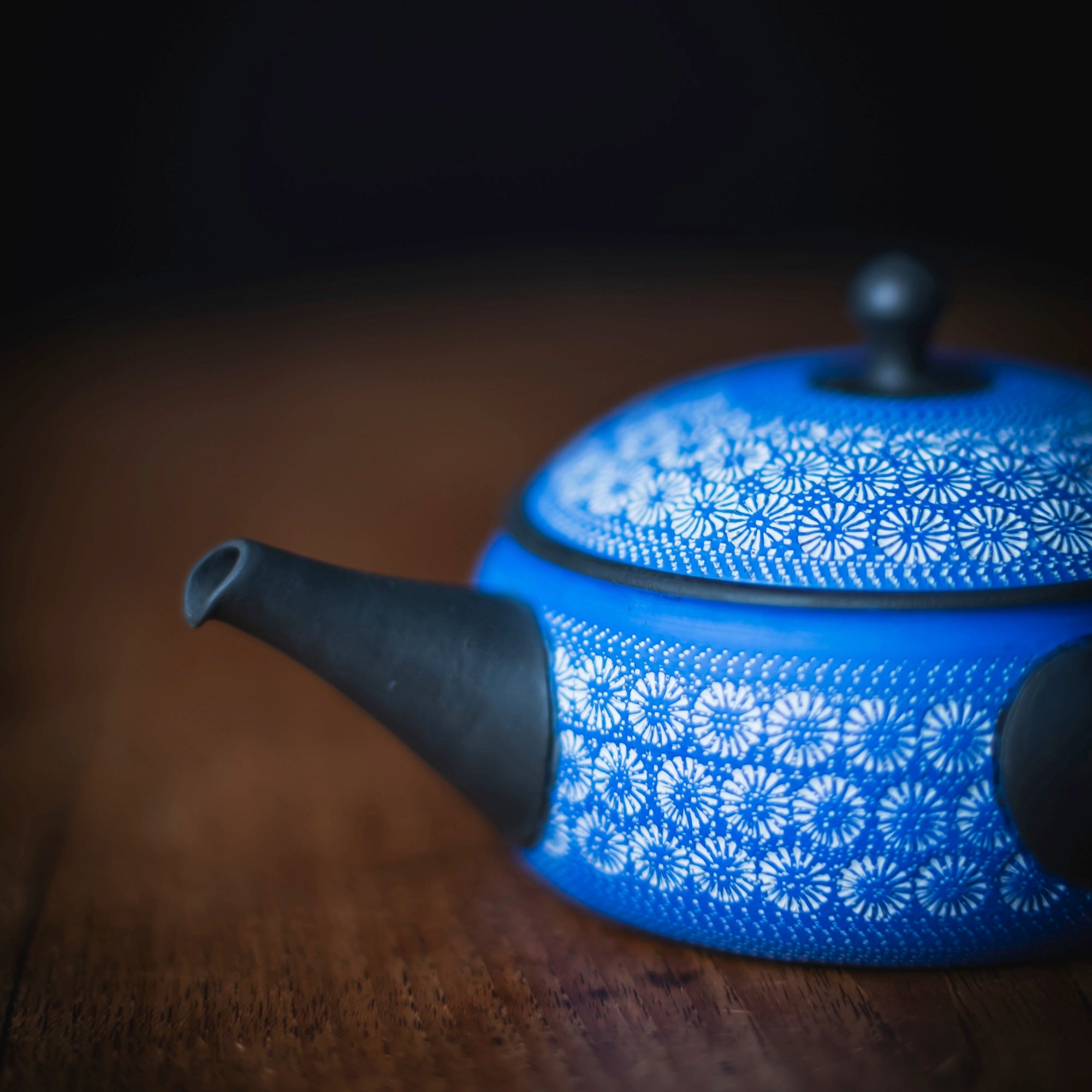
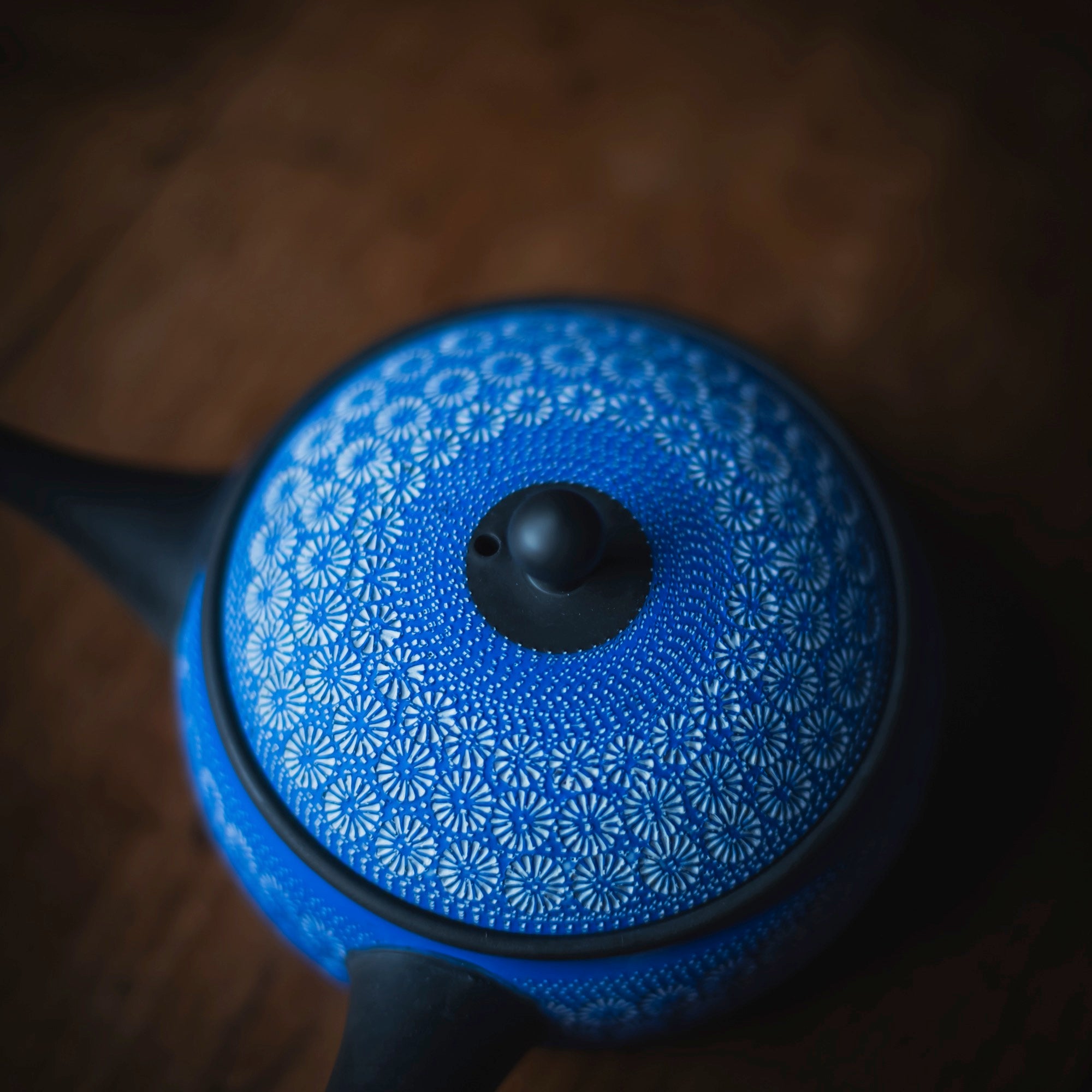
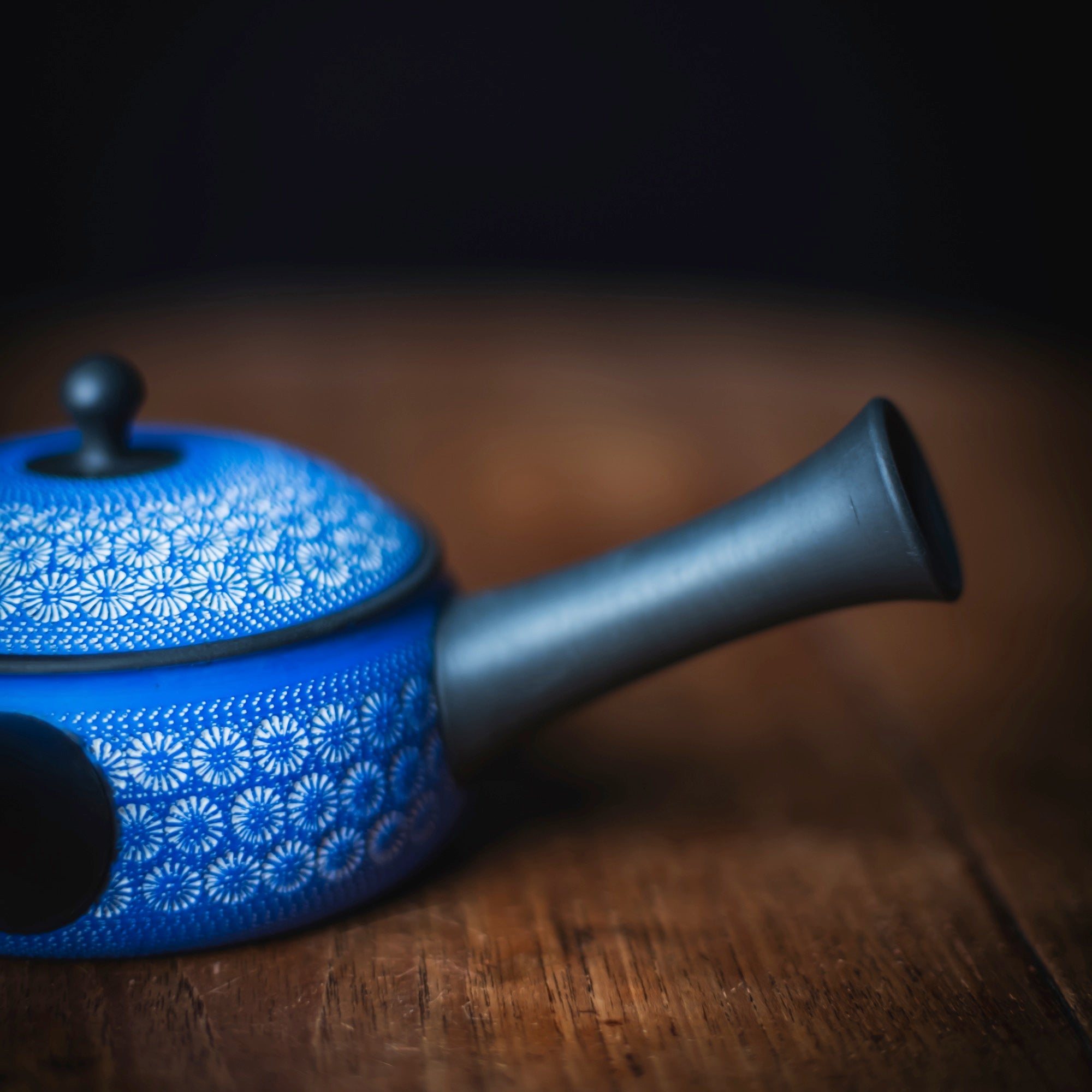
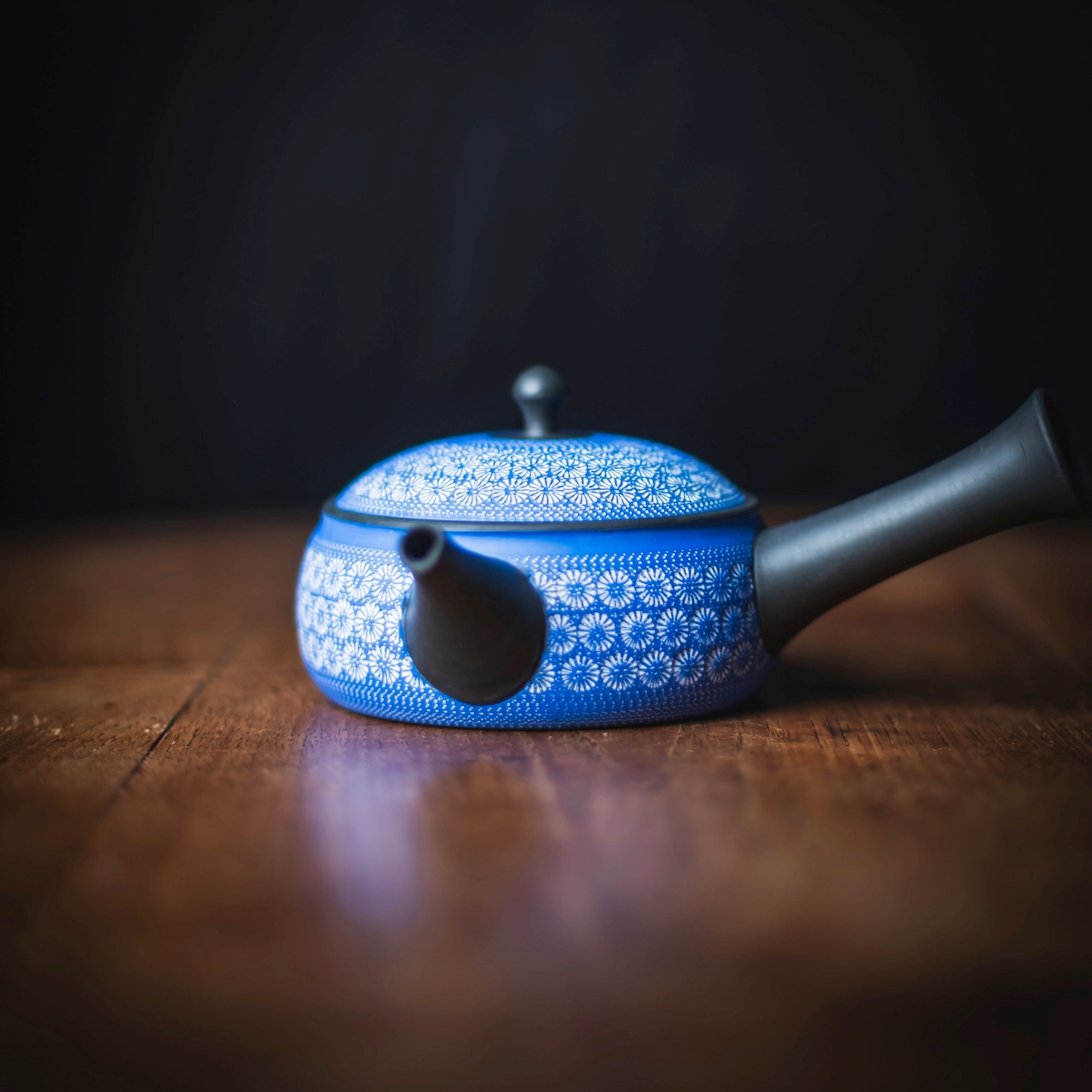
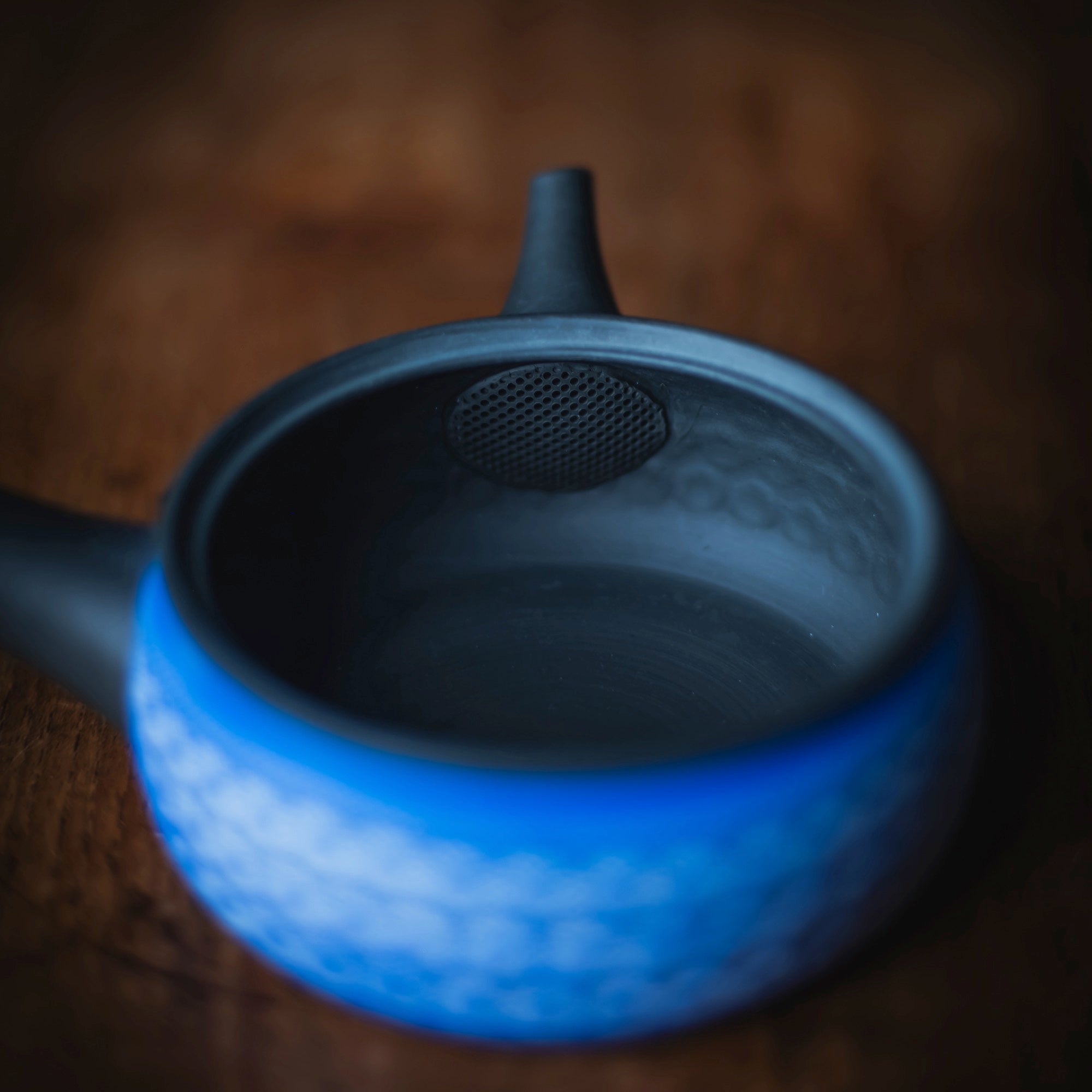
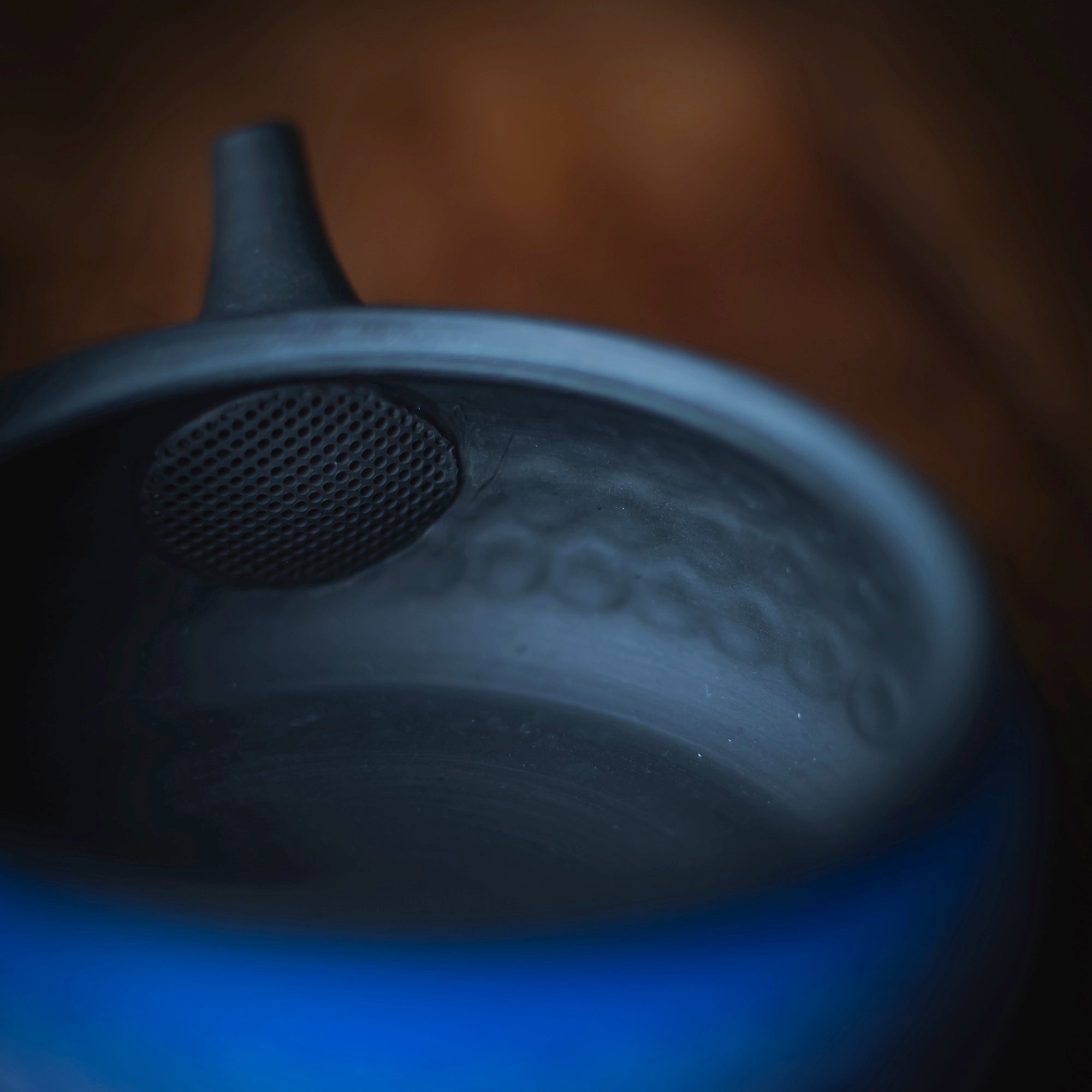
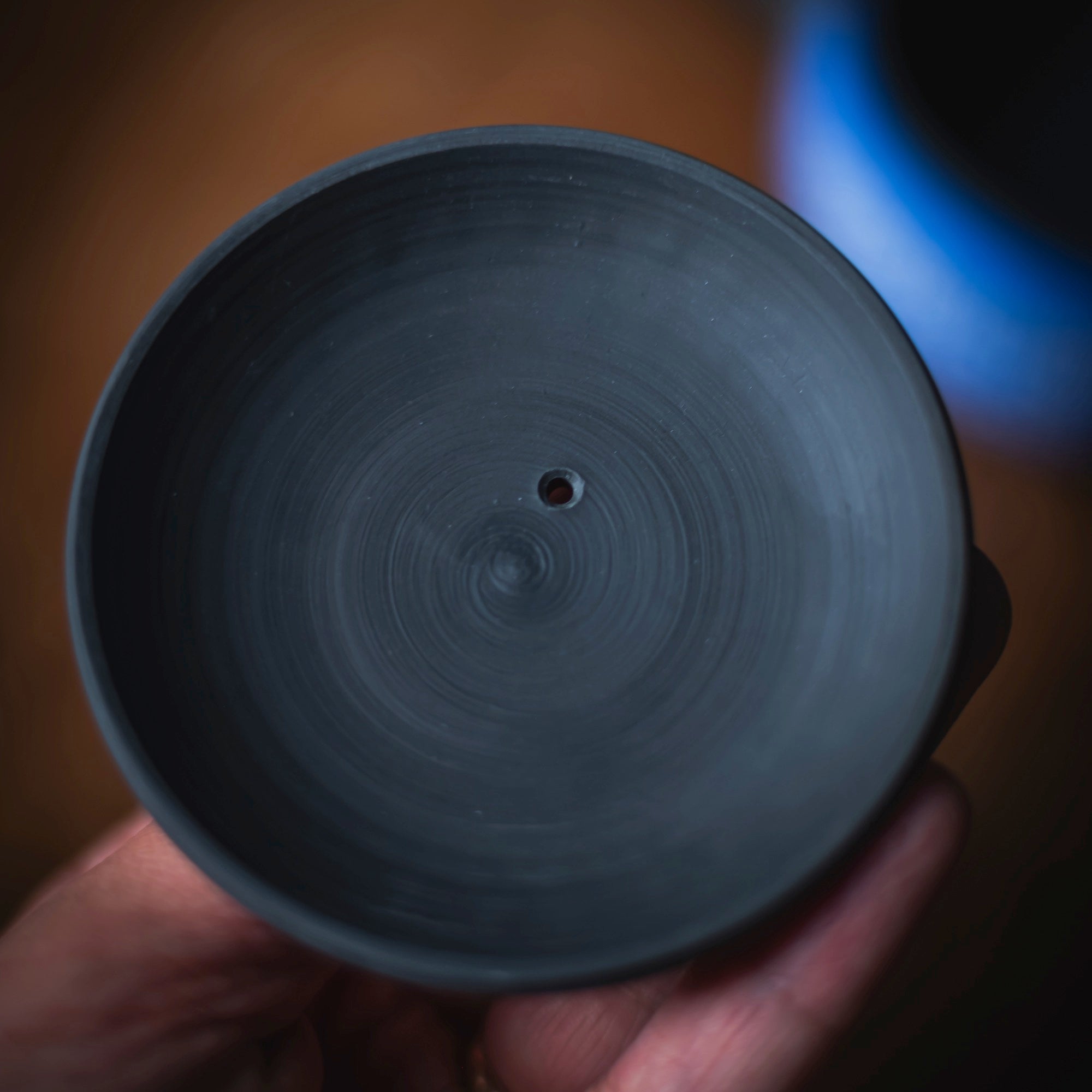
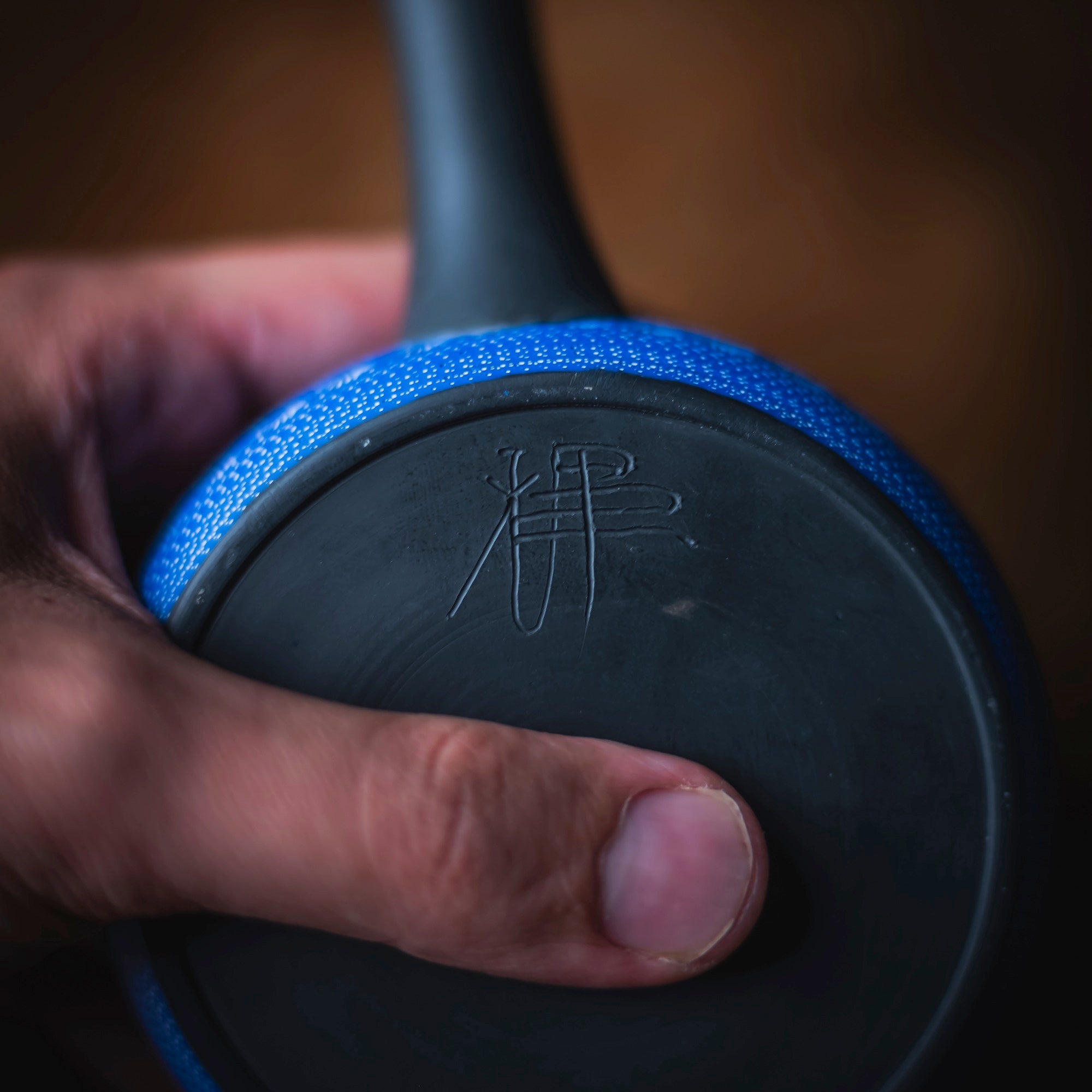
Tokoname, on the Chita Peninsula south of Nagoya, is the oldest of Japan's Six Ancient Kilns — and still the town most associated with the kyusu, the side-handle teapot. Our collection brings together over 160 pieces, from Seiji Ito of the Jinshu kiln to the young generation of Tokoname potters we showed in our 2026 exhibition.
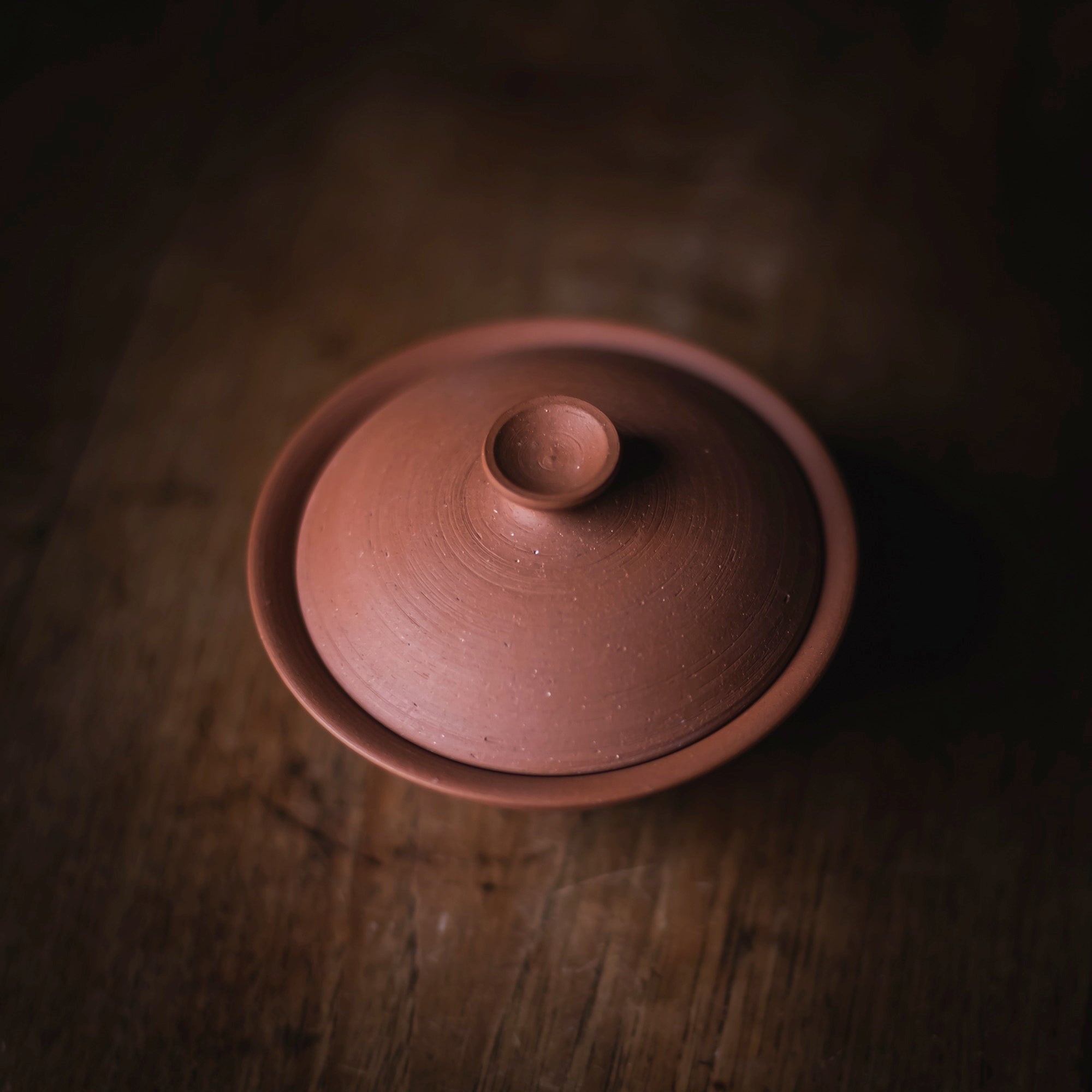
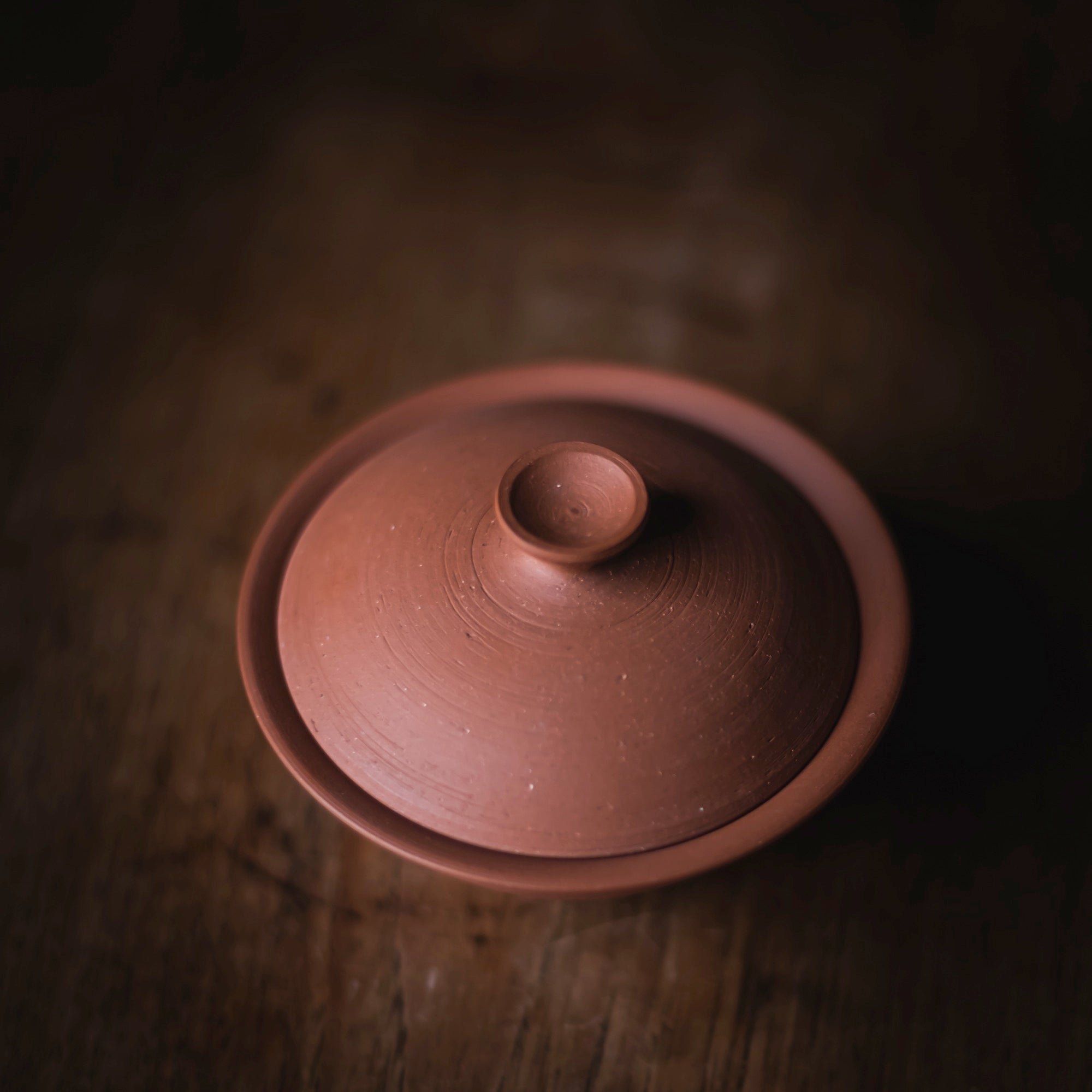
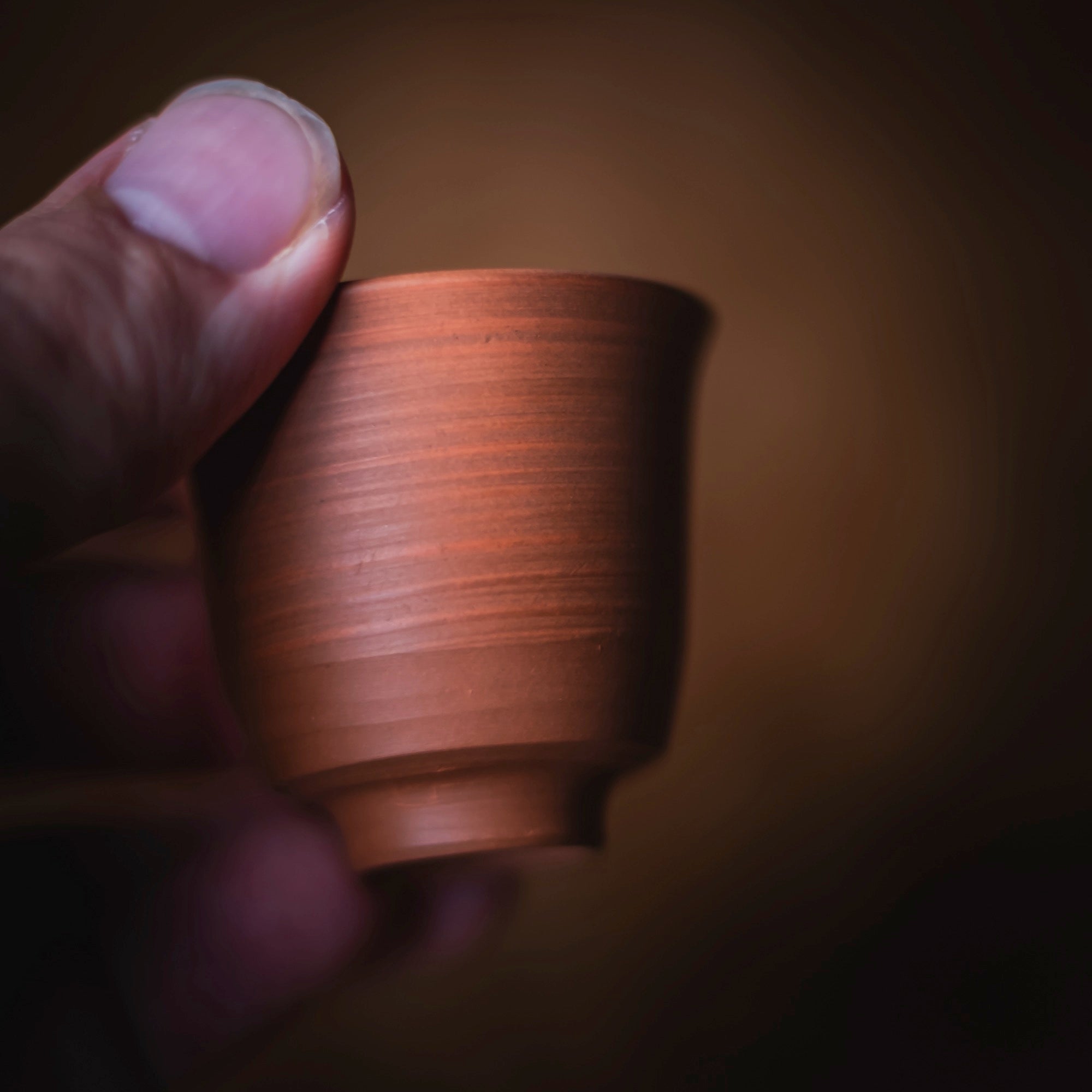
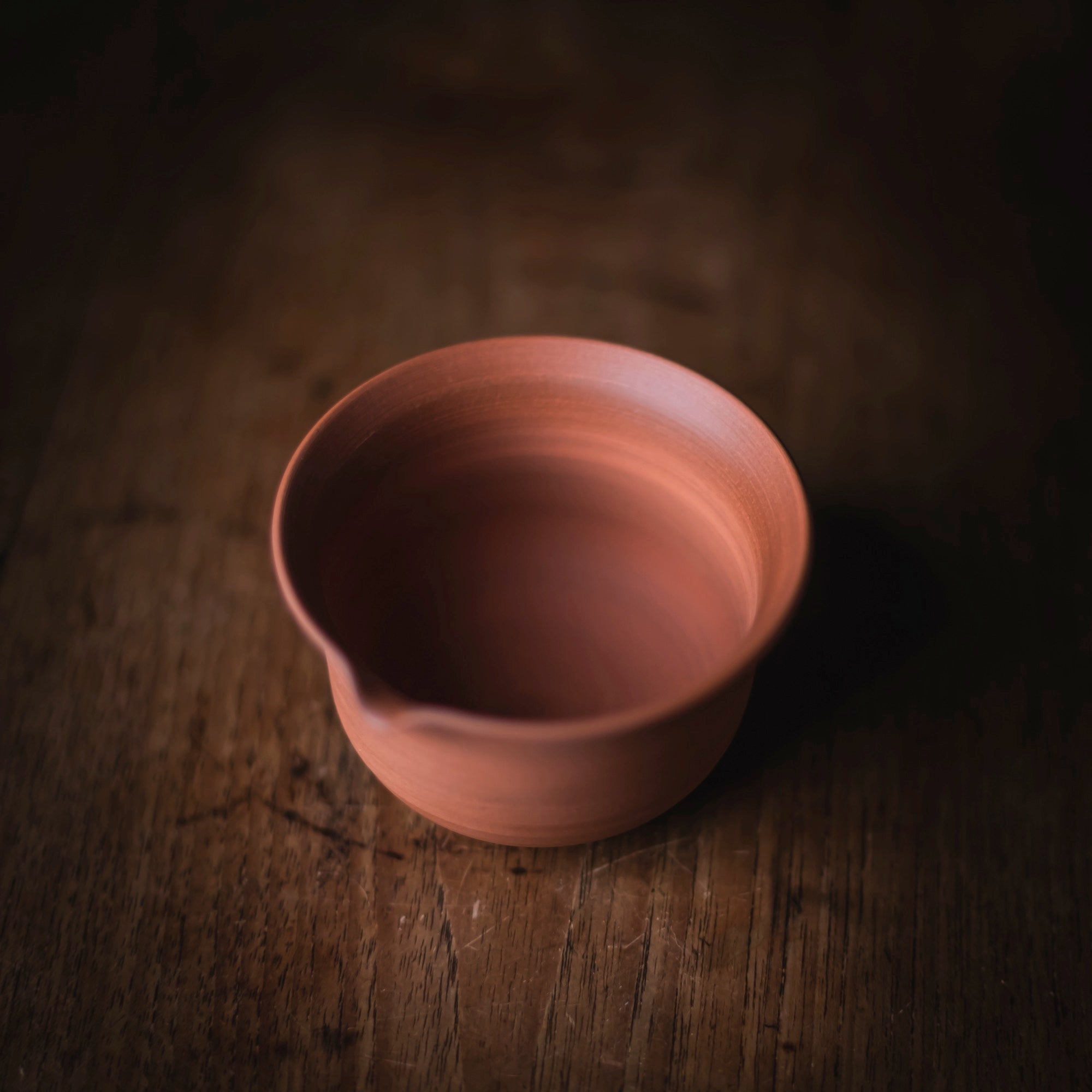
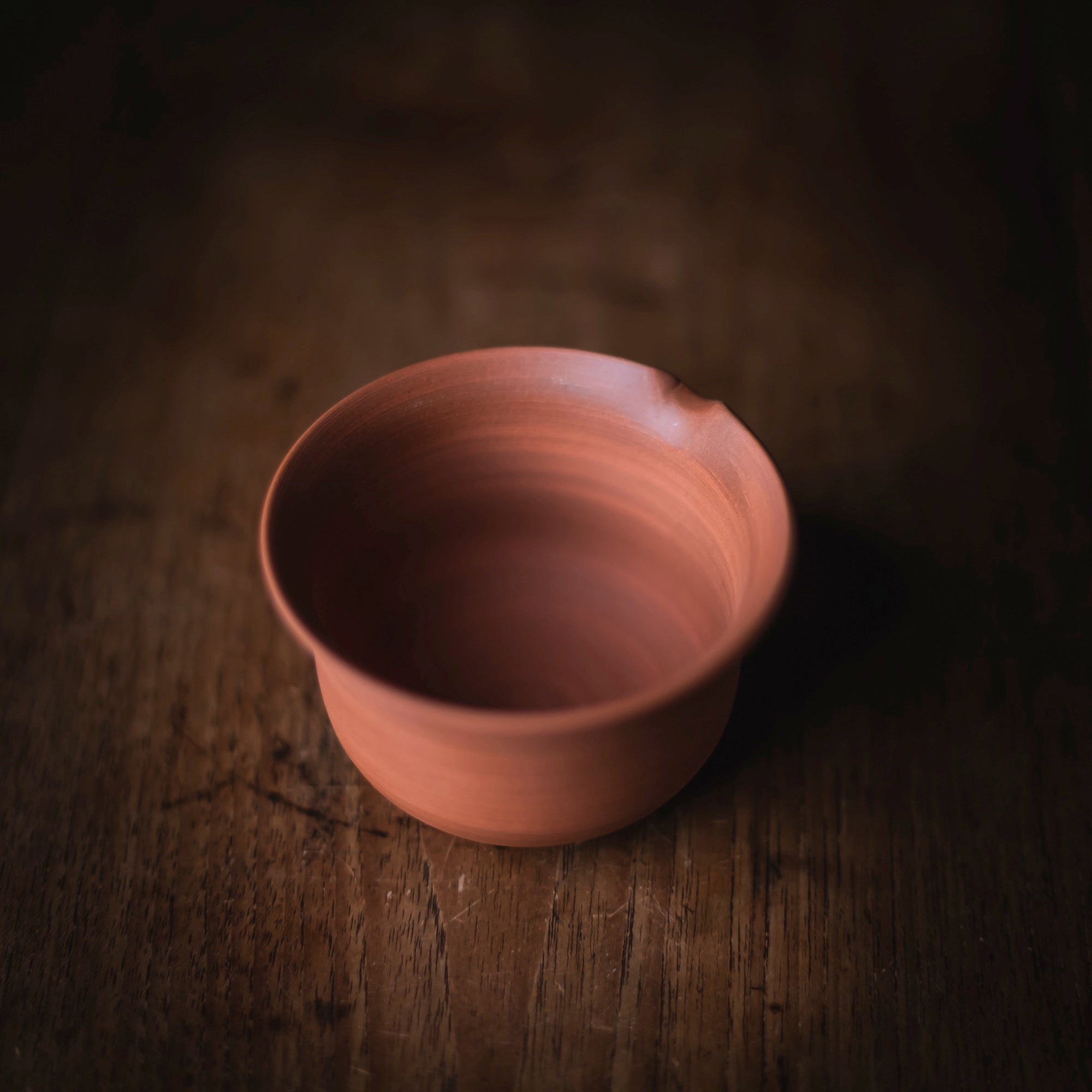
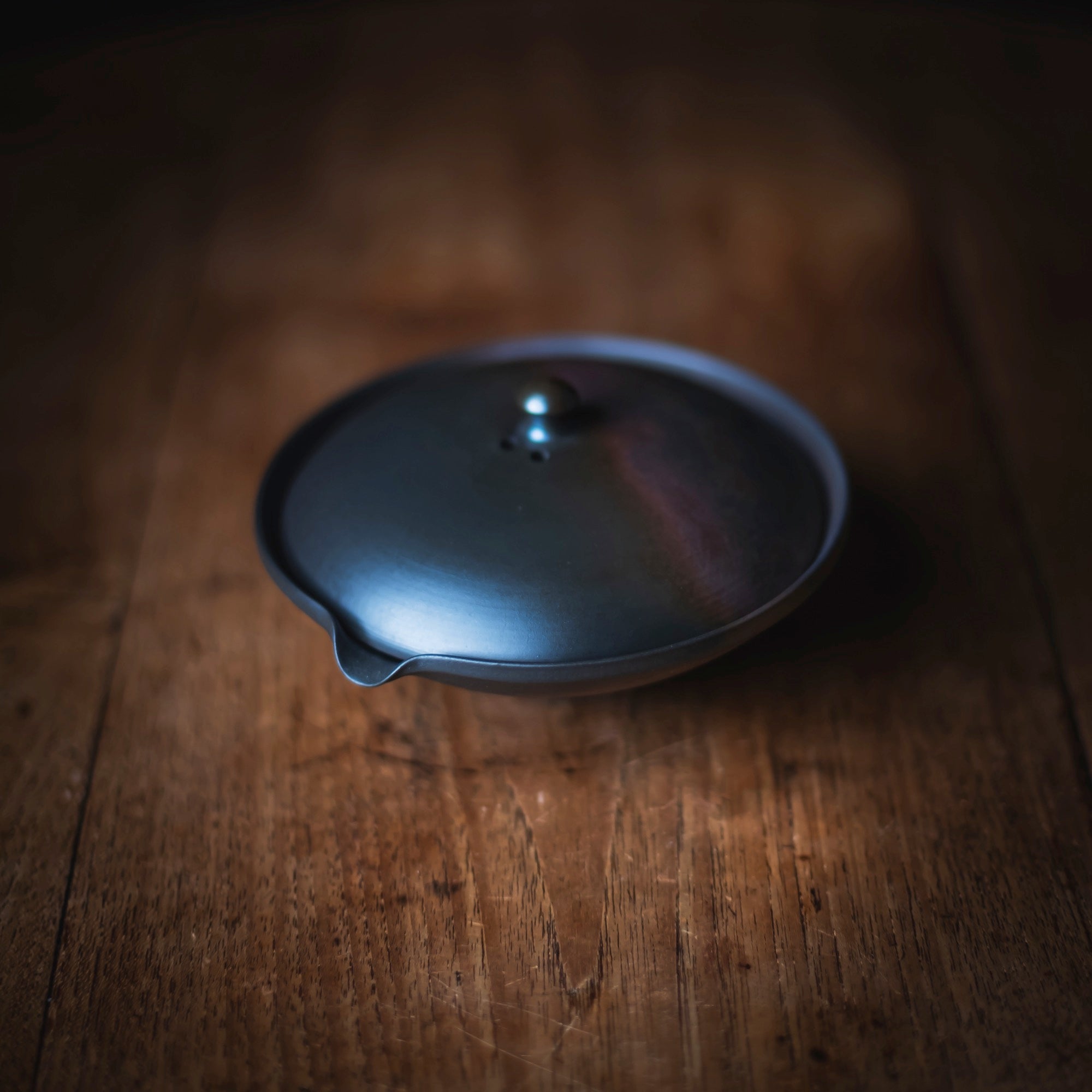
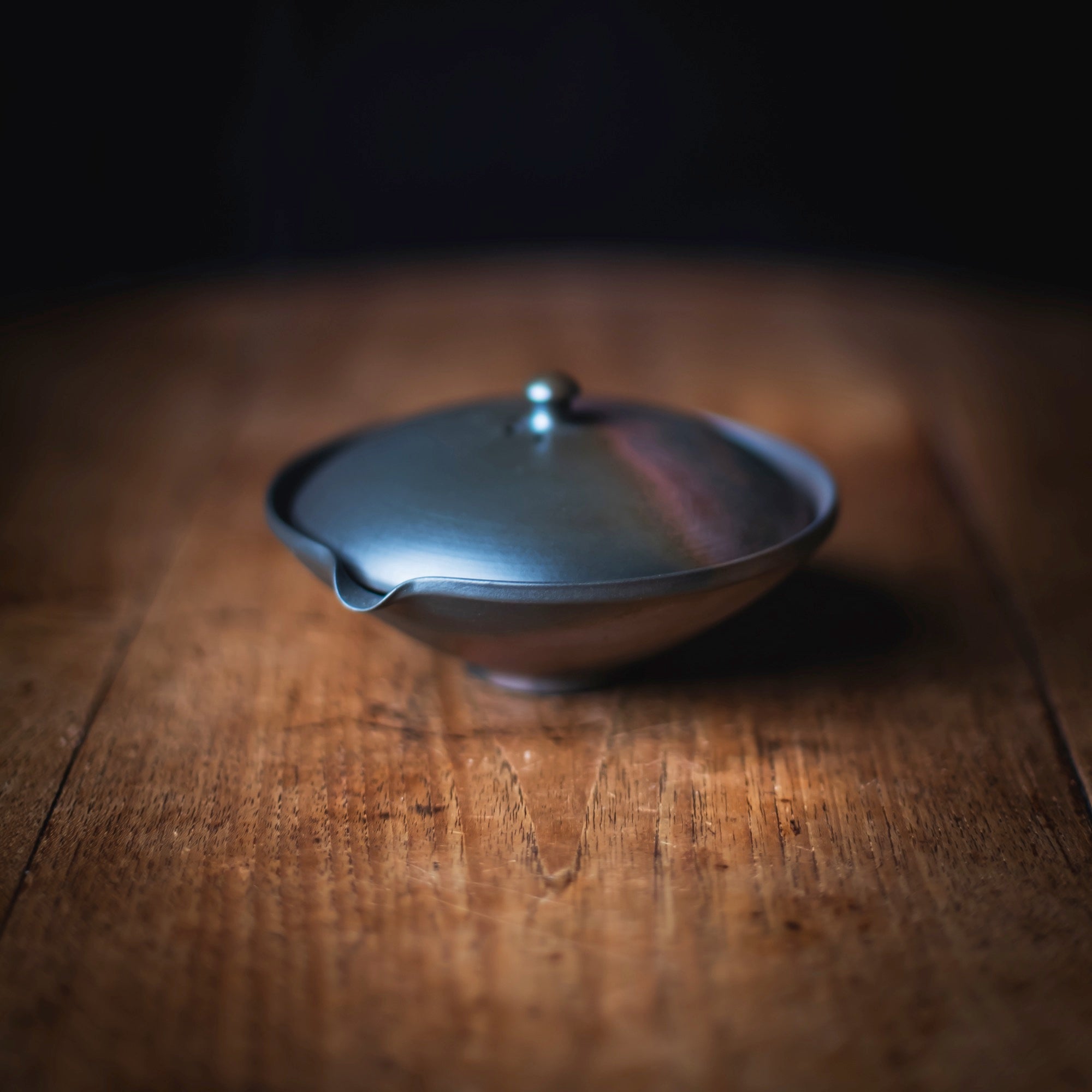
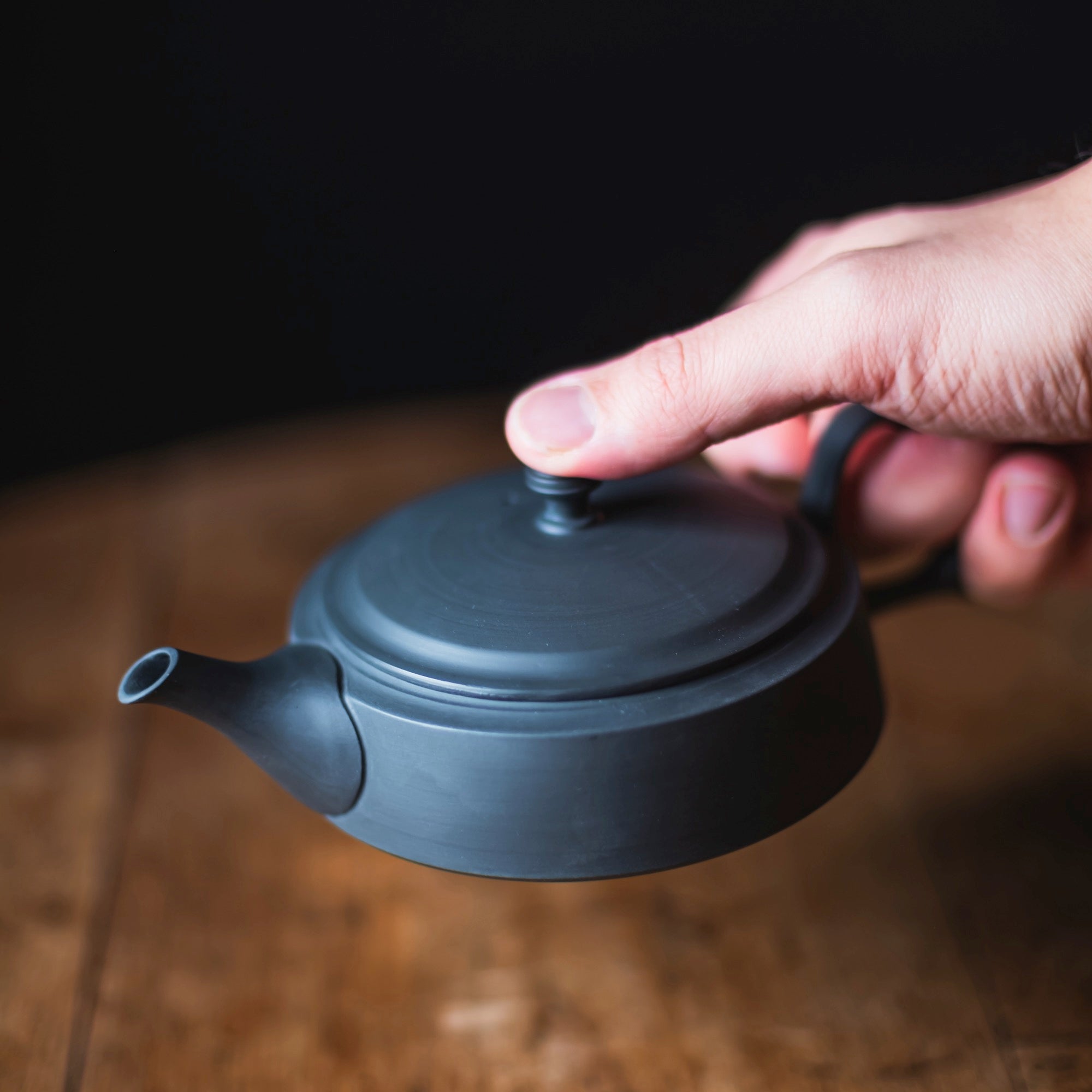
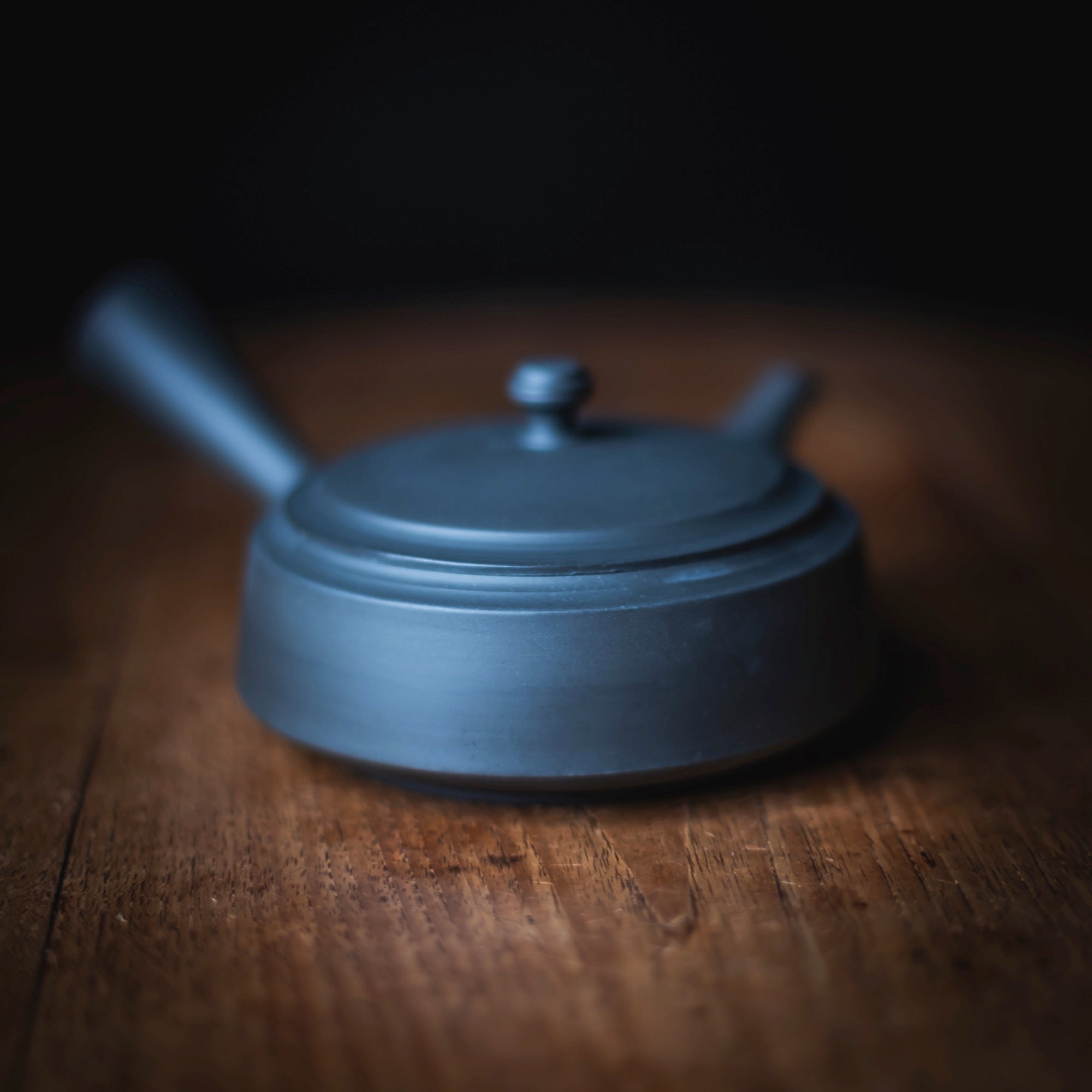
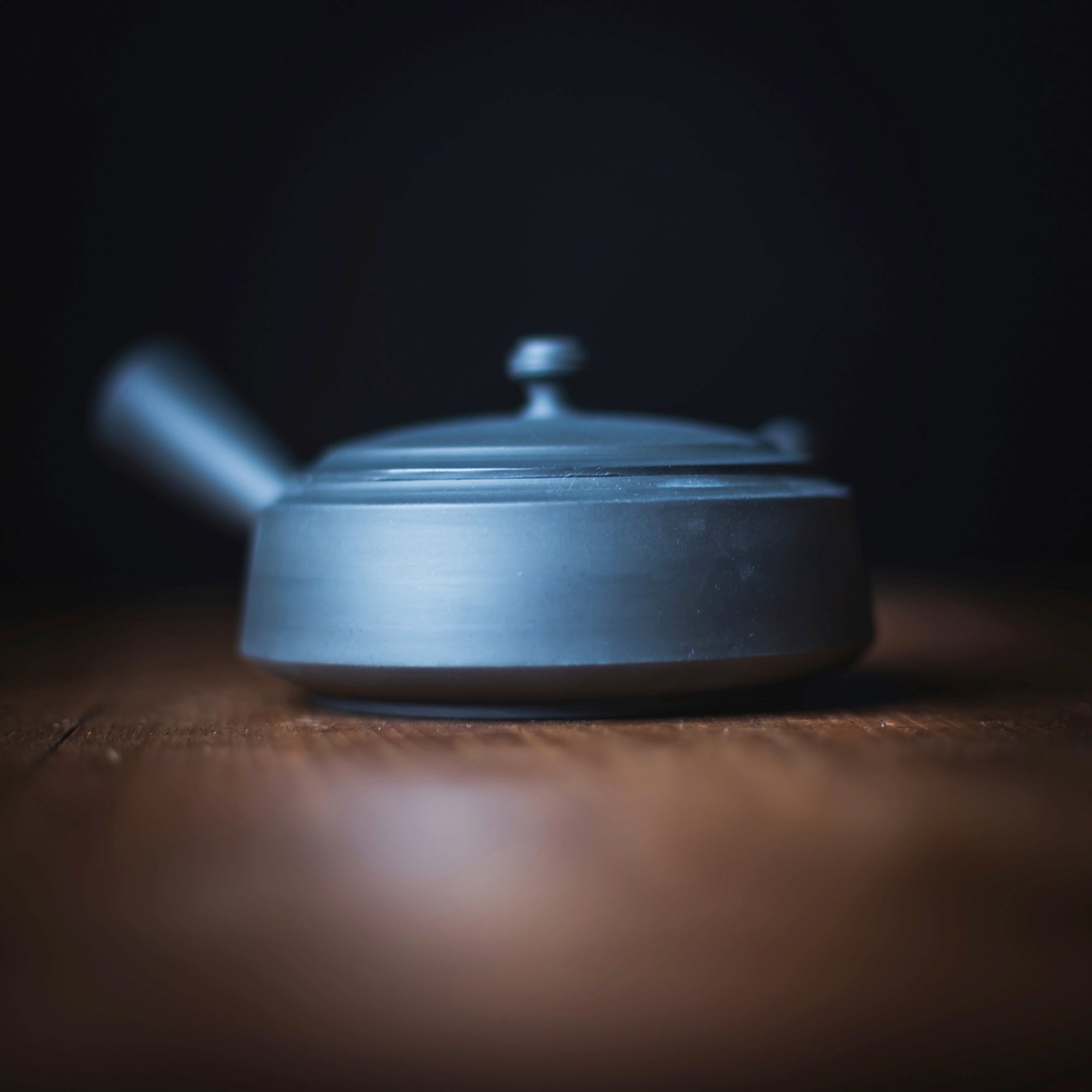
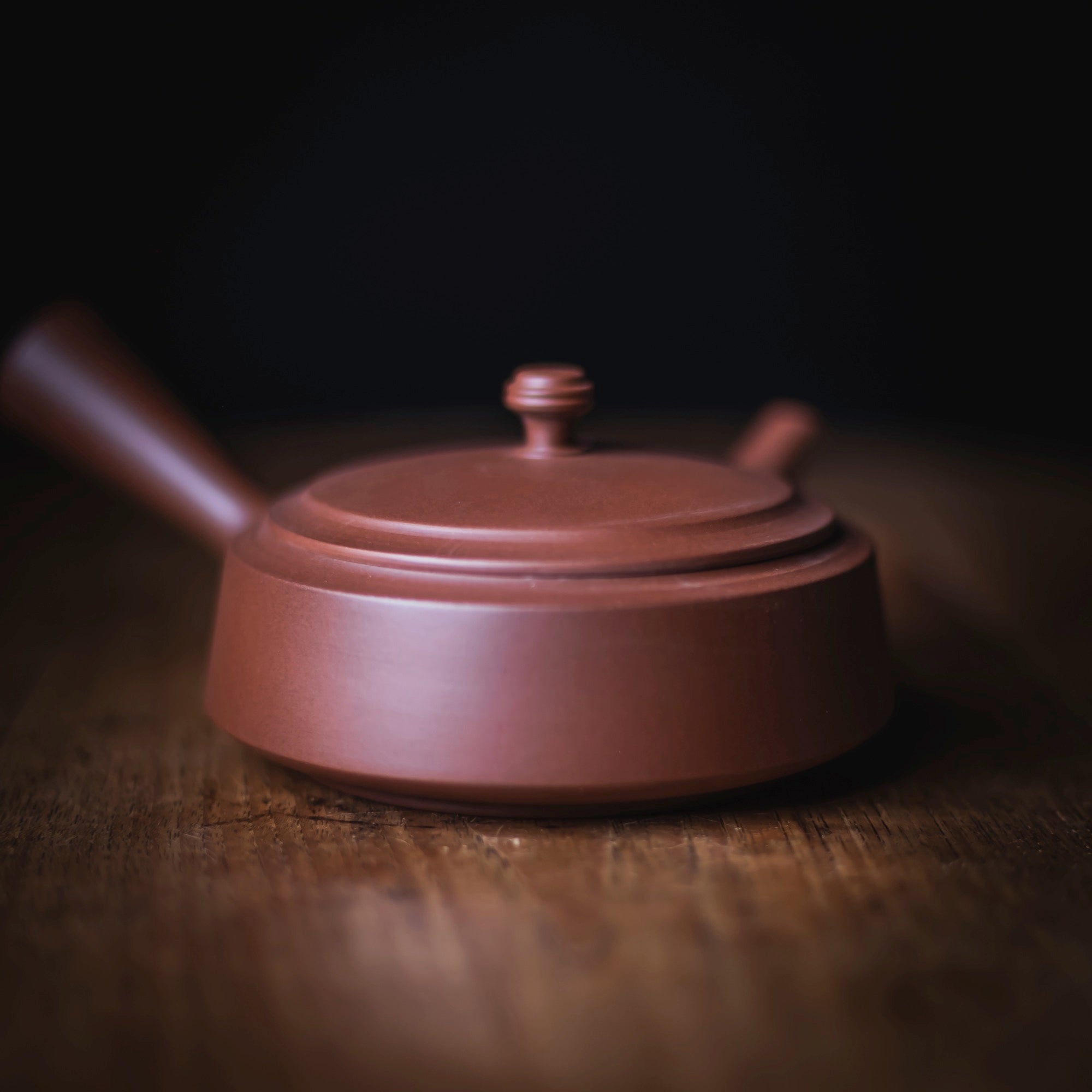
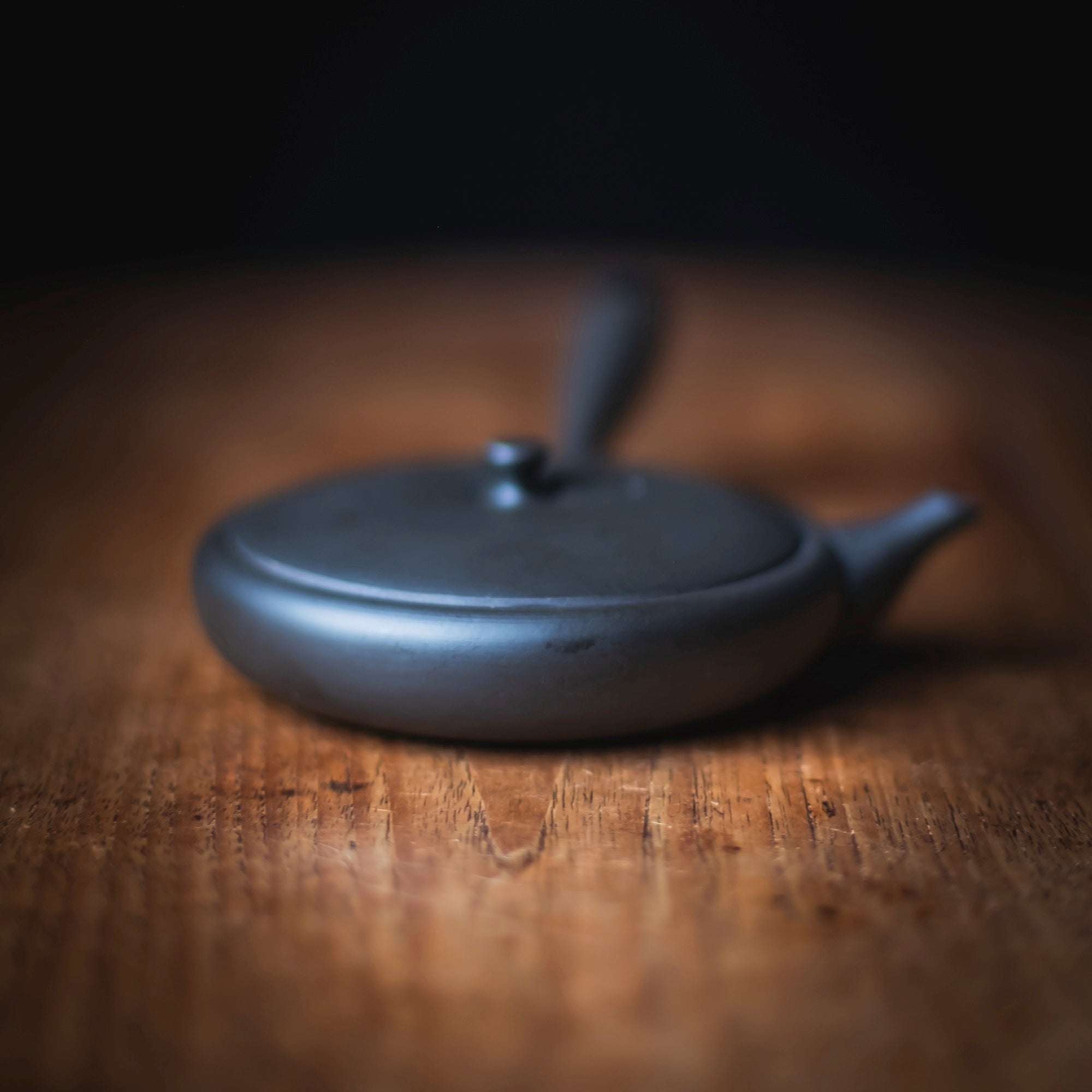
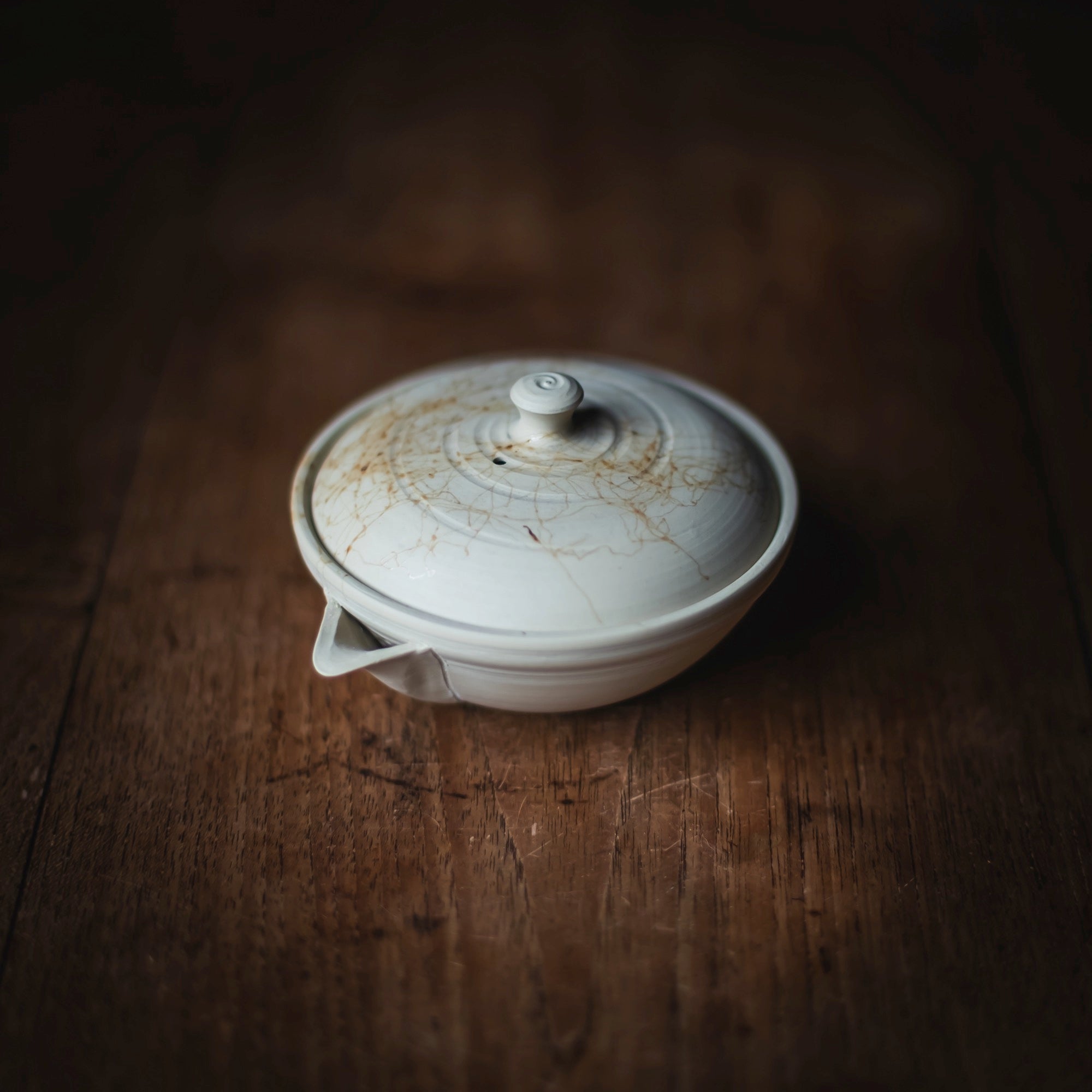
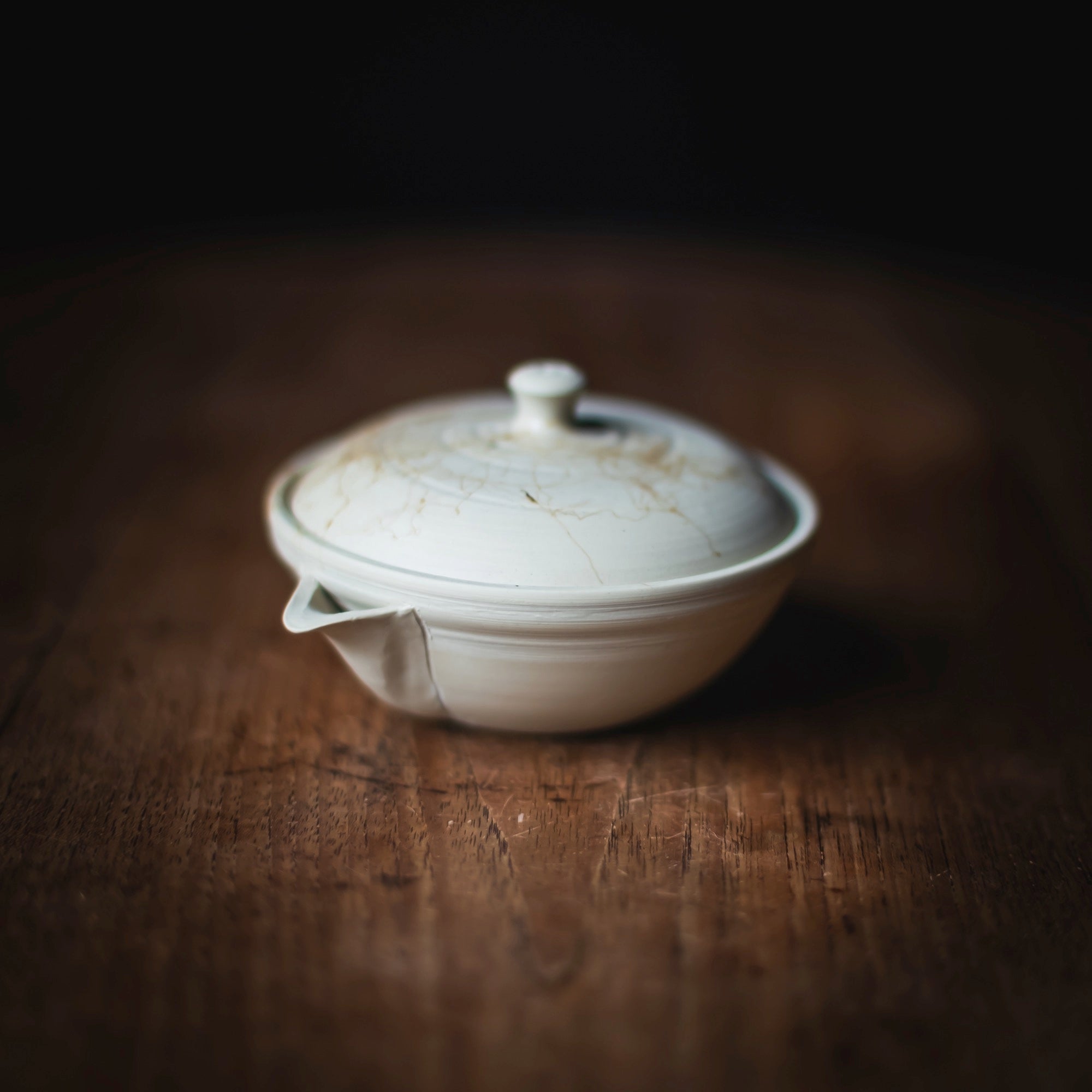
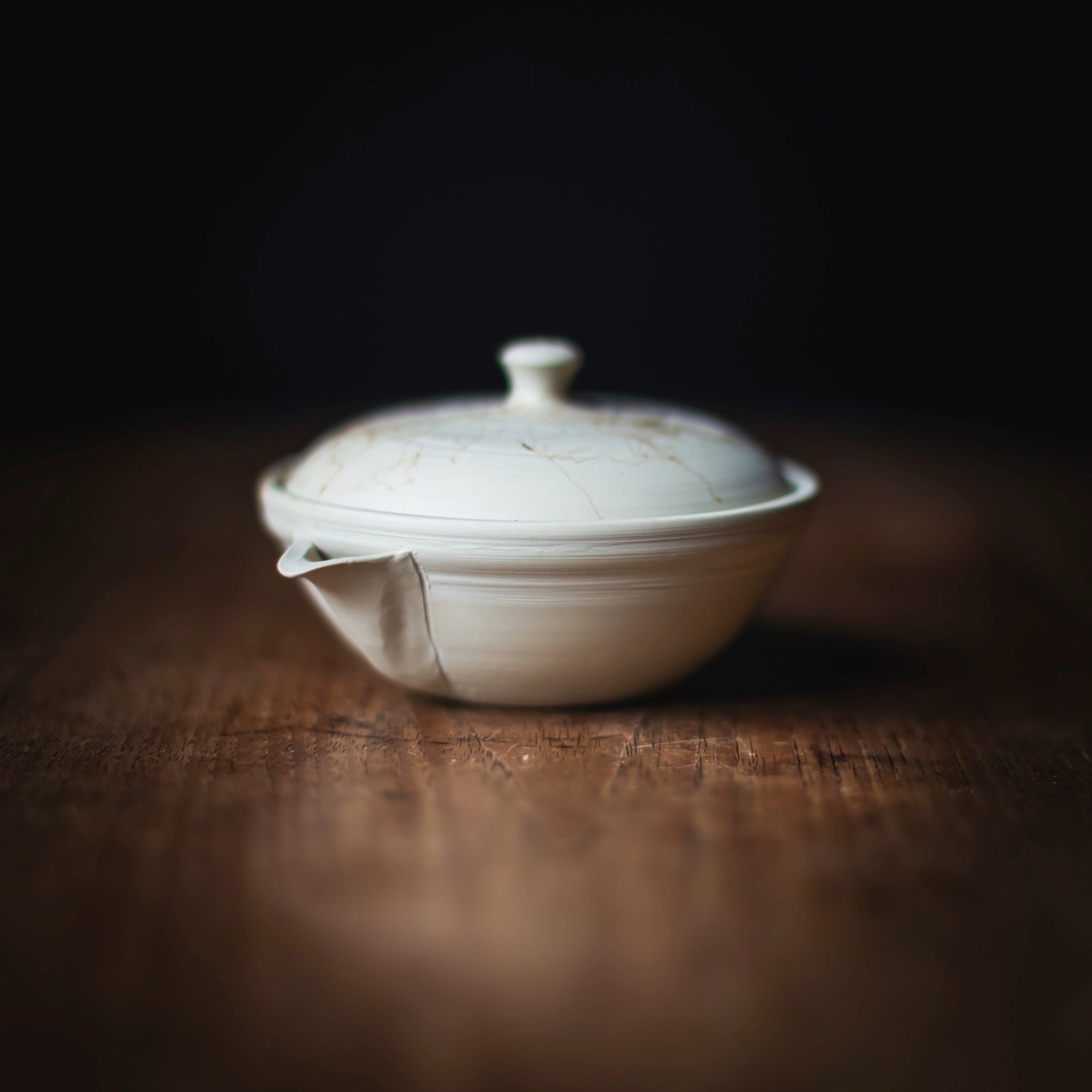
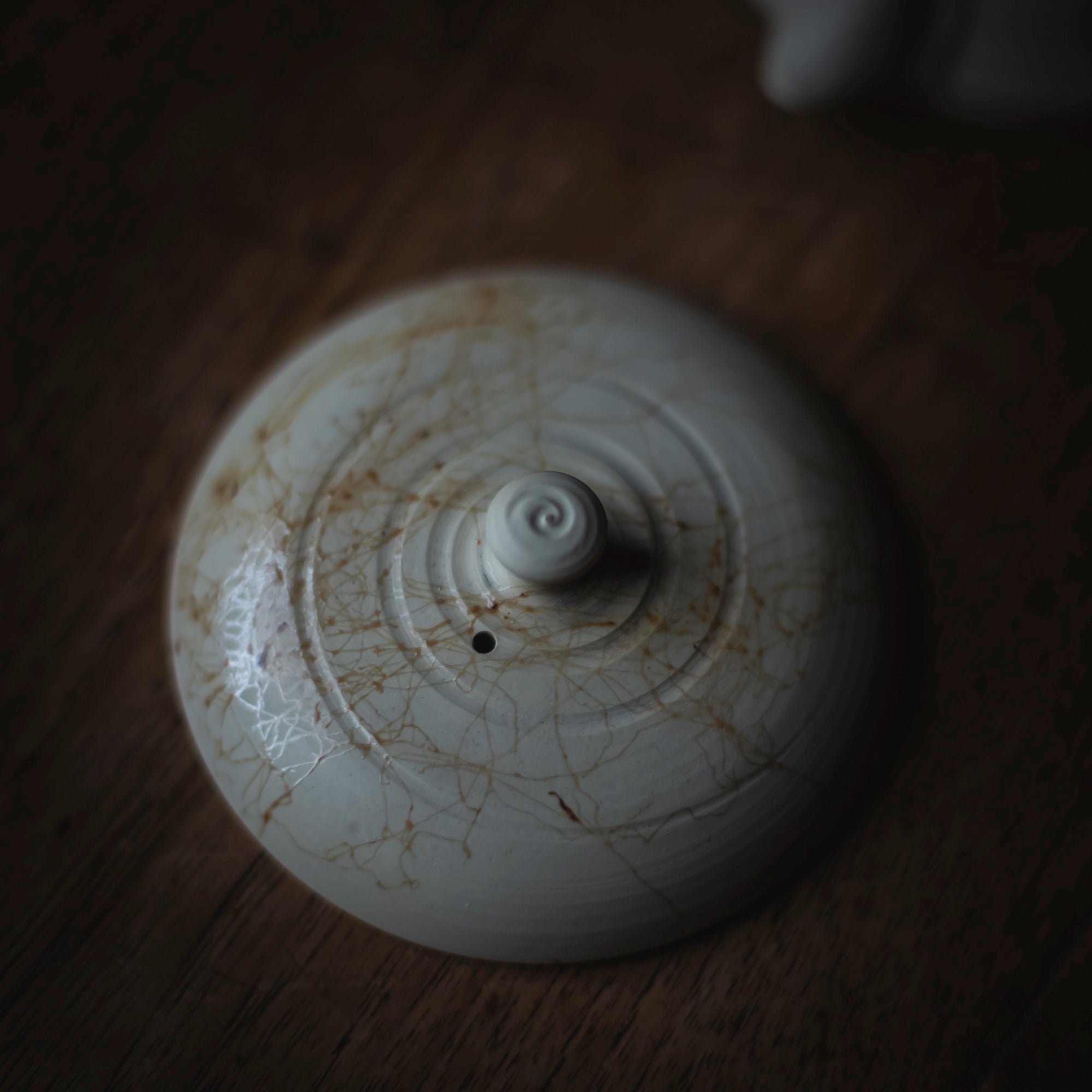
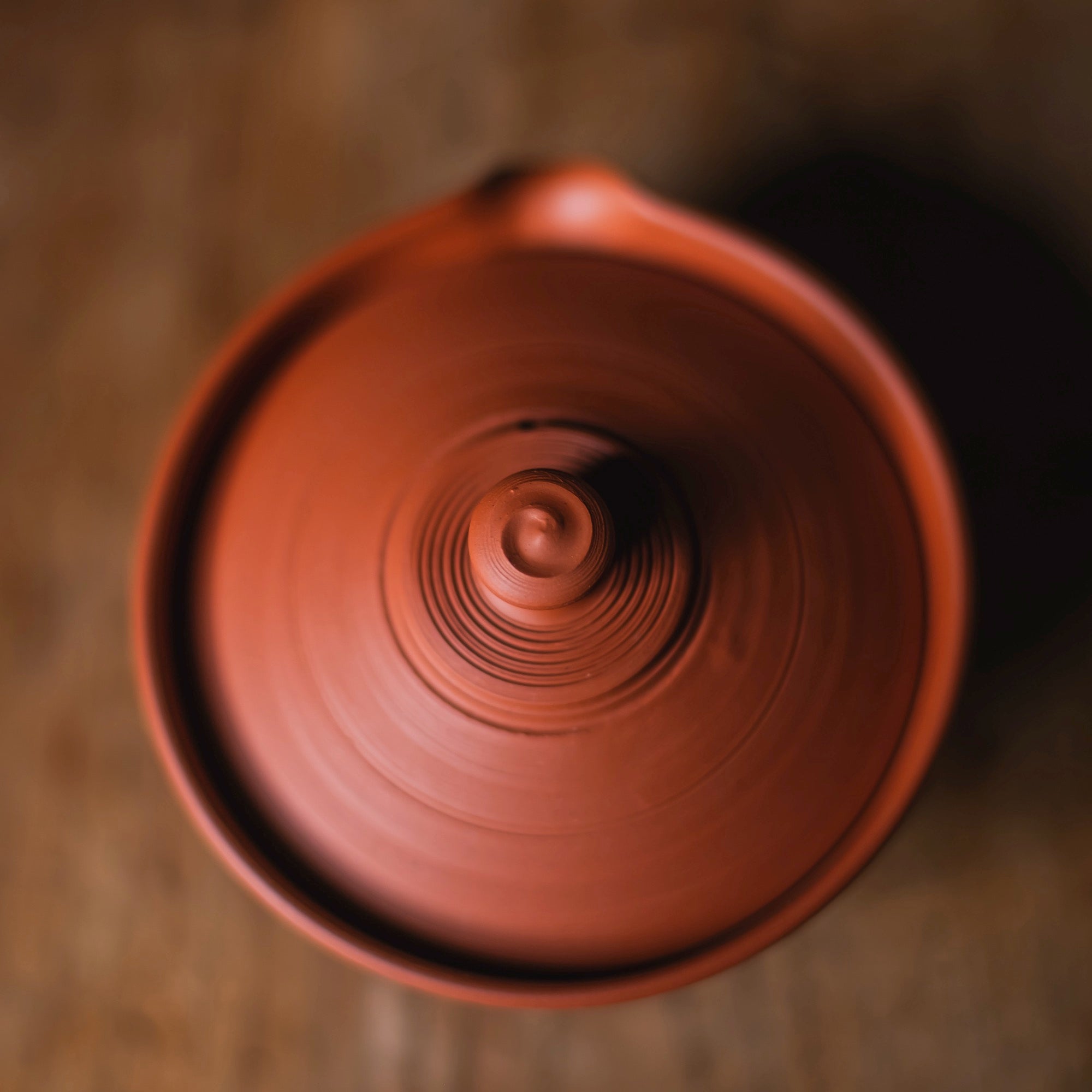
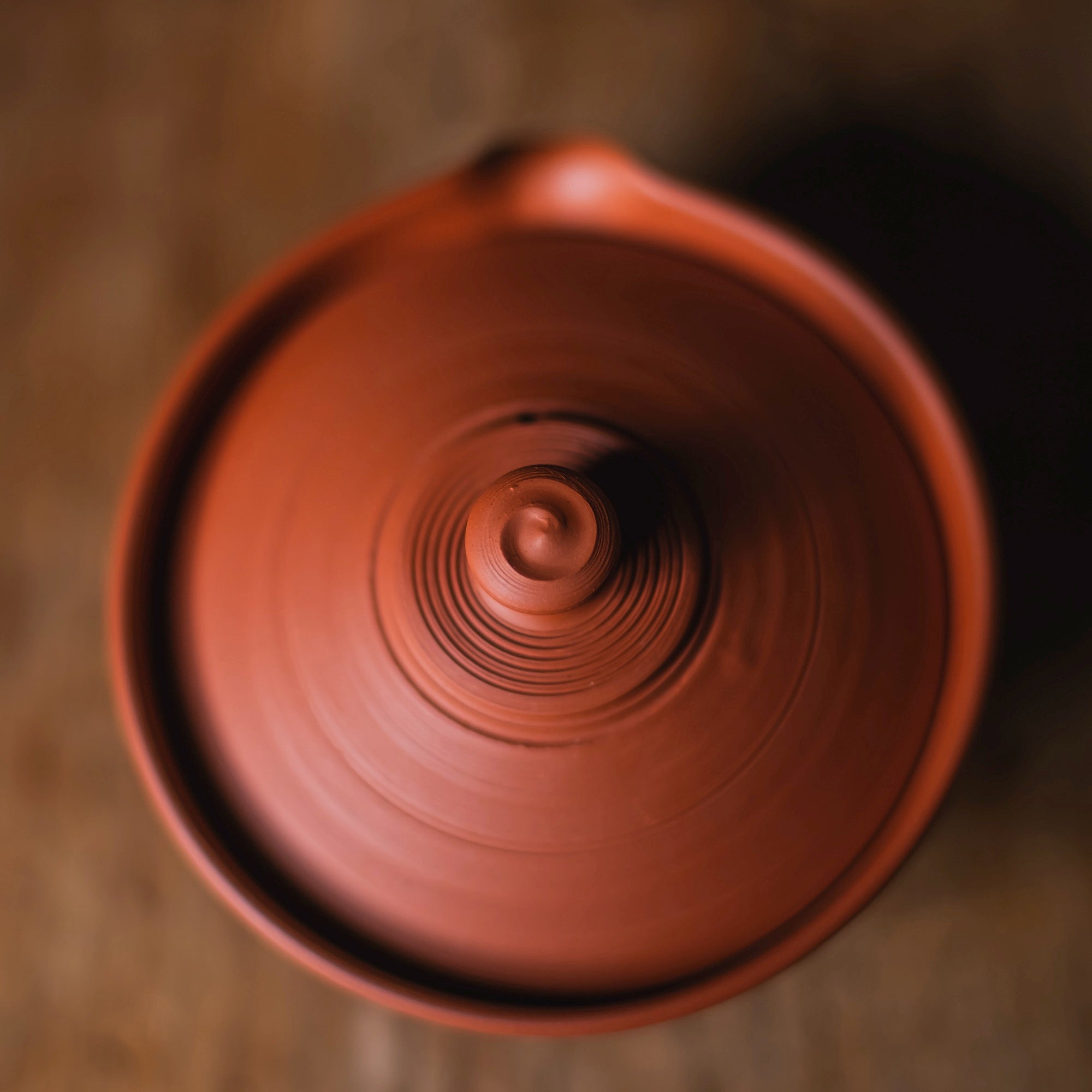
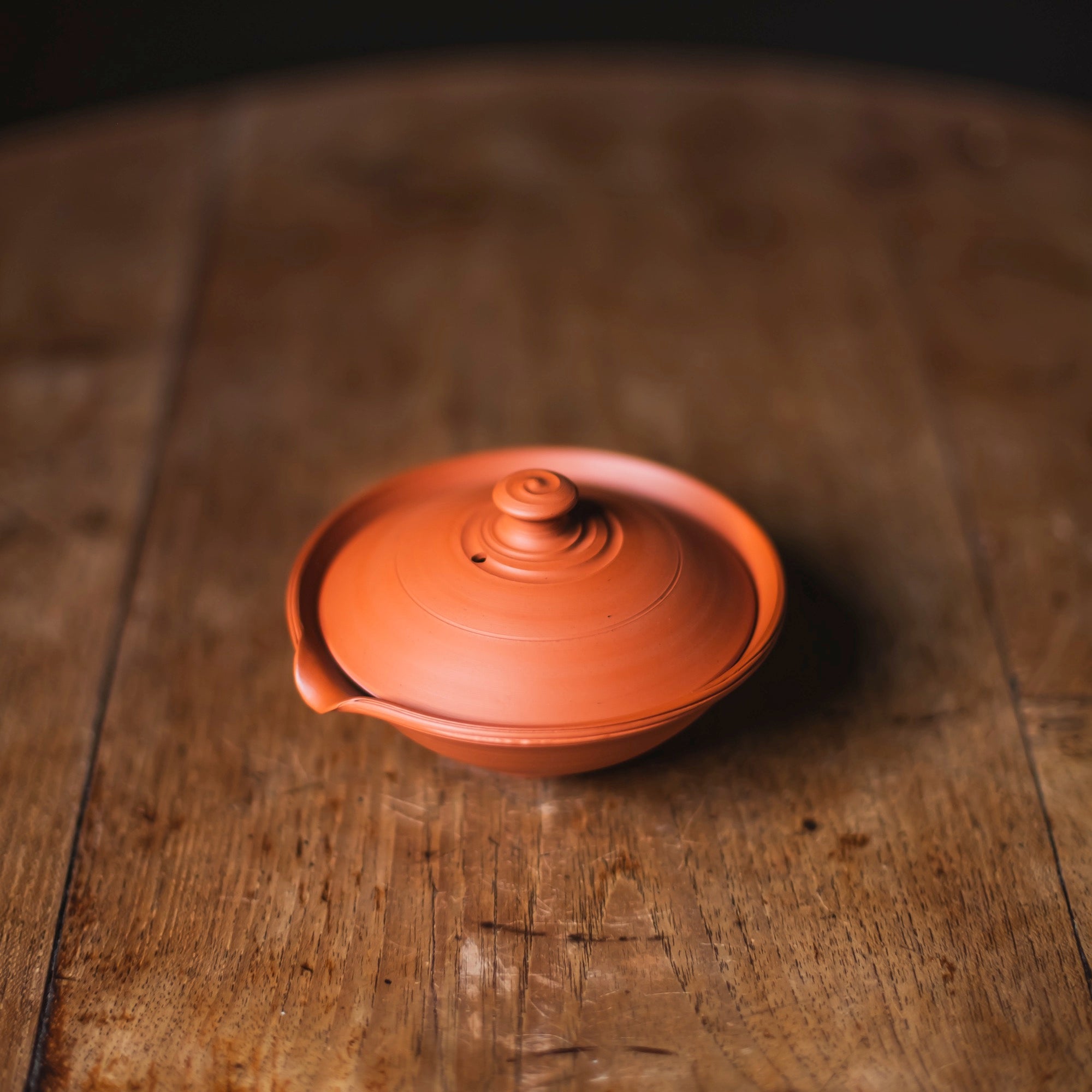
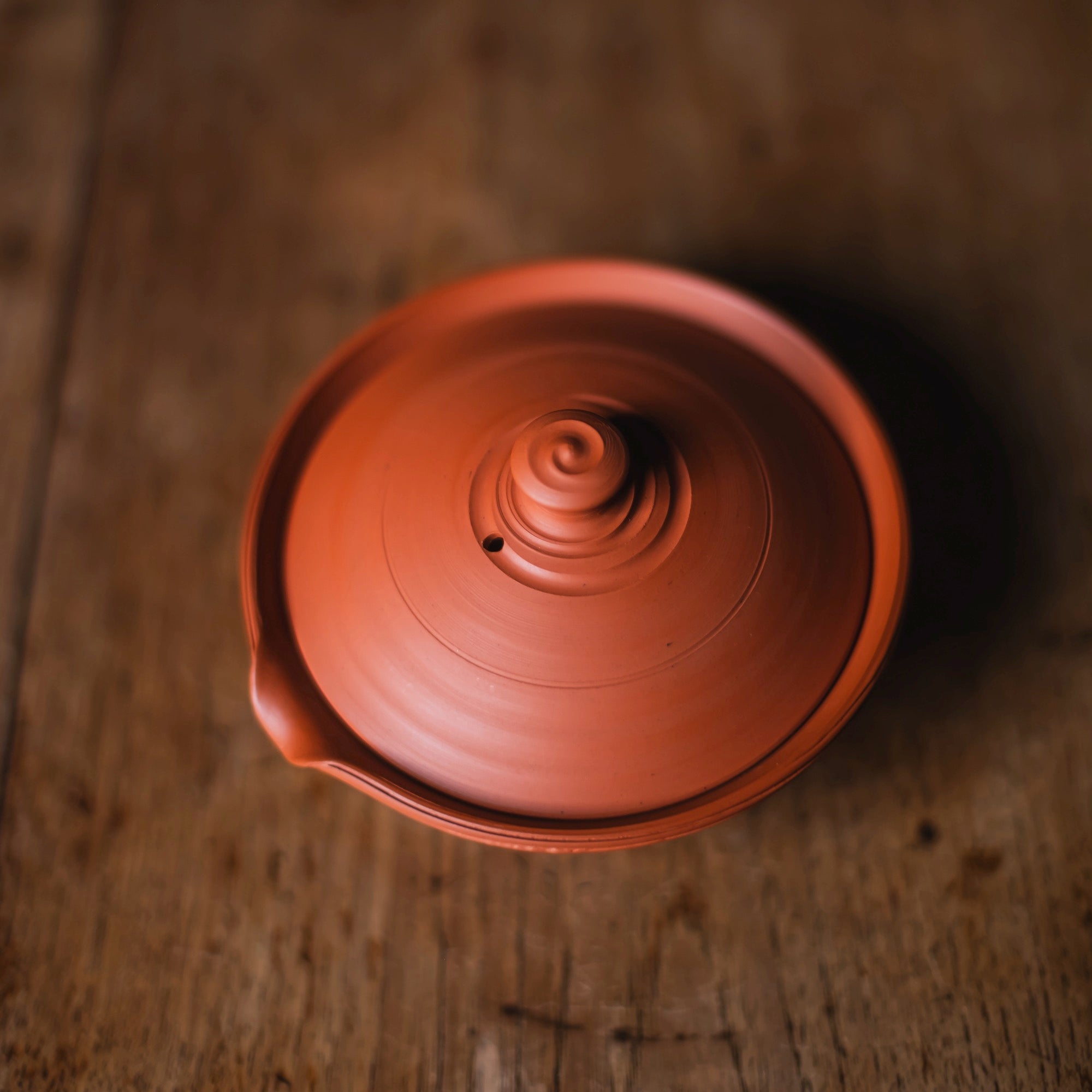
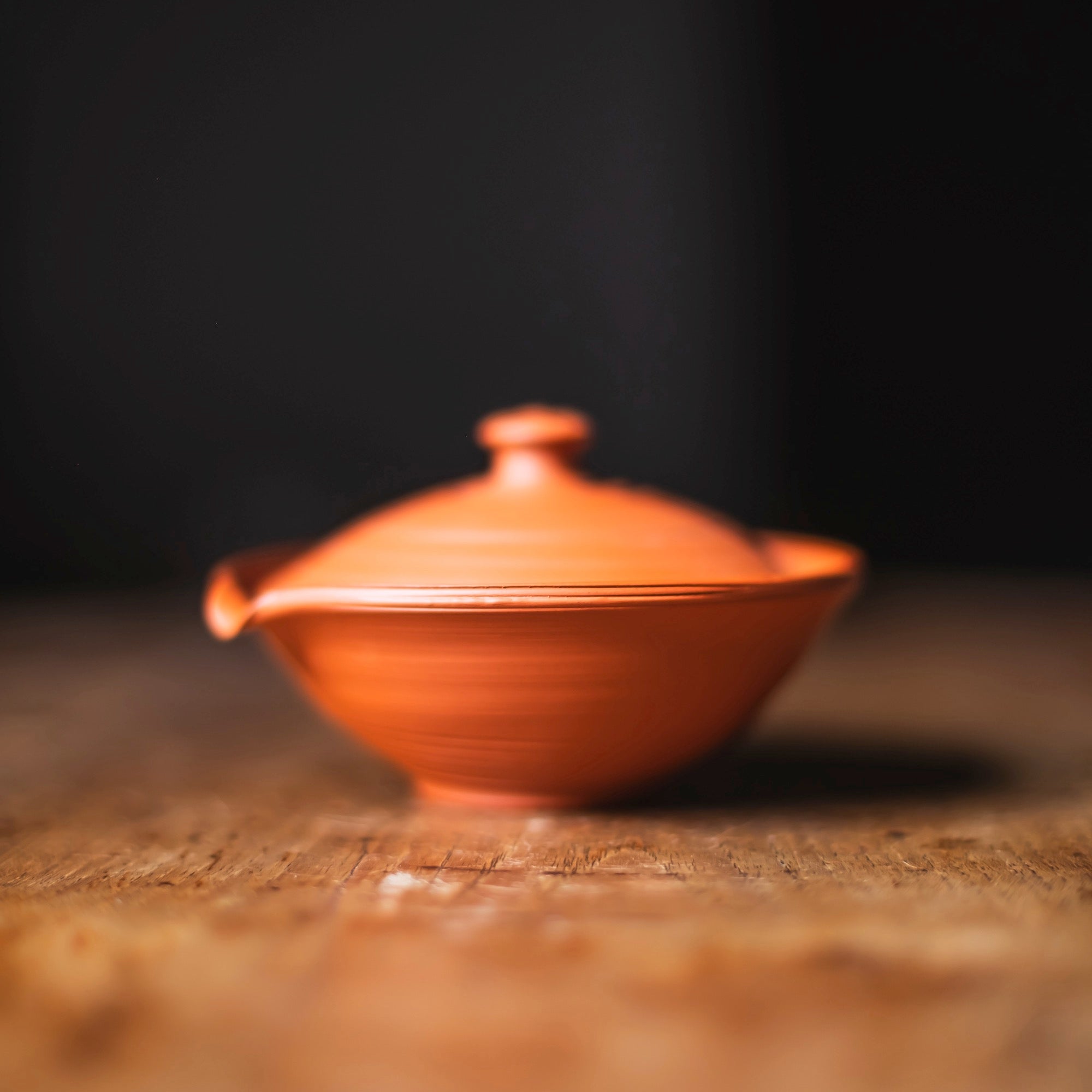
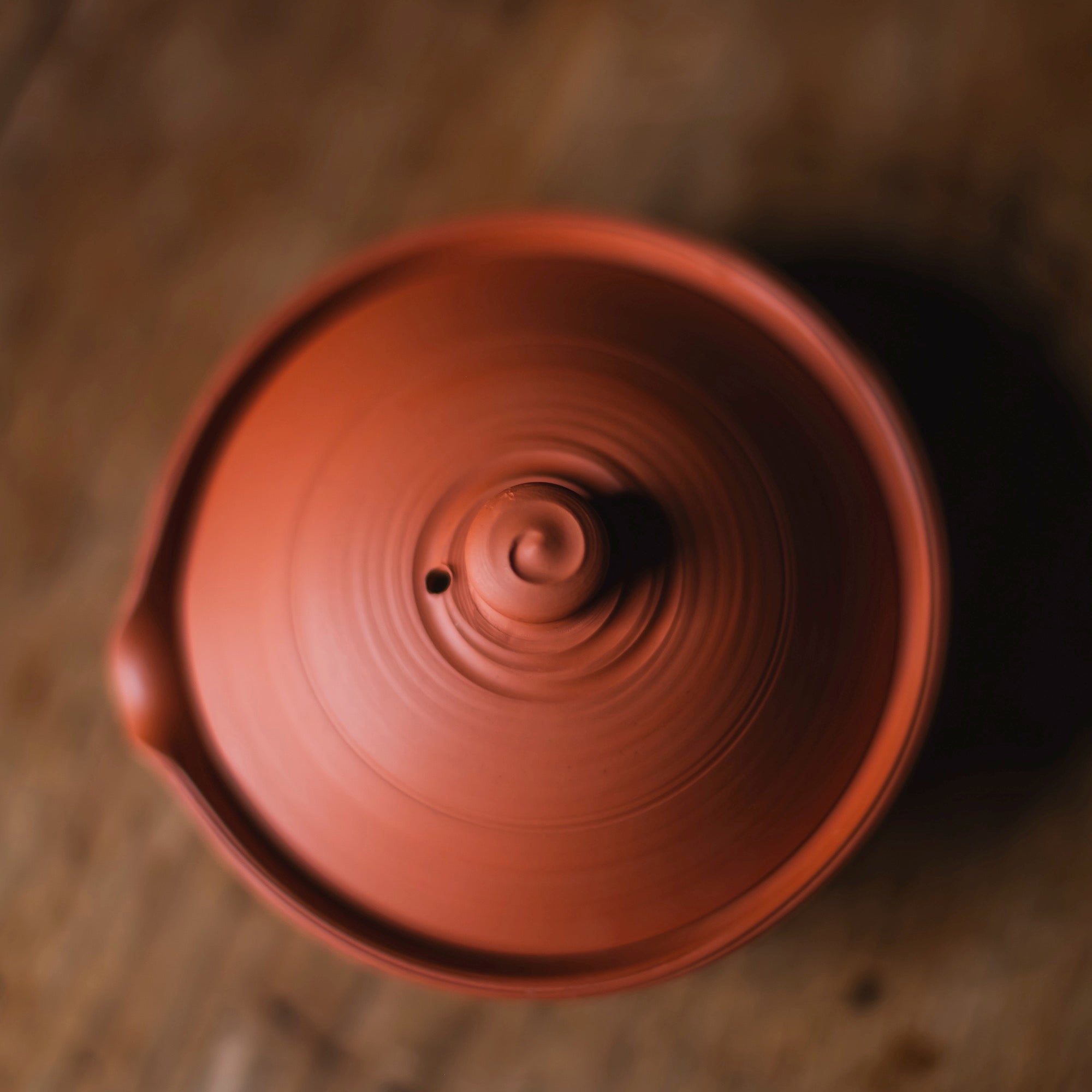
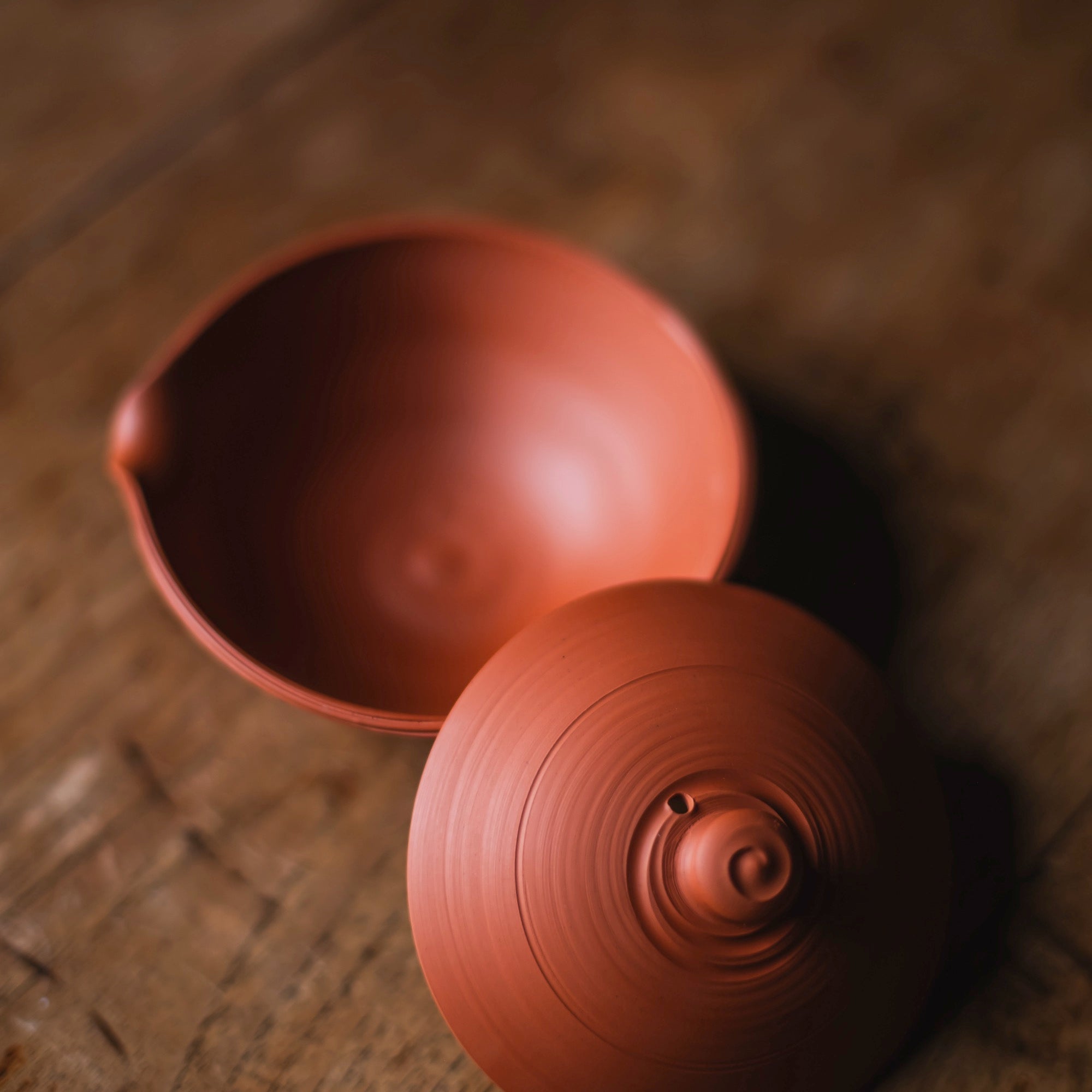
The styles to know: Shudei: the iron-rich red clay, left unglazed, prized for how it rounds off the edges of a sencha. Mogake: pots wrapped in seaweed before firing. The burning kelp leaves reddish-brown traces no glaze could imitate. Yakishime: high-fired, unglazed stoneware. And the Hira shape: flat and shallow, built for gyokuro and small volumes at low temperature.
Most pots hold 100–300 ml, the practical range for Japanese greens: smaller for gyokuro, larger for everyday sencha. If you are choosing your first kyusu, our guide to Tokoname explains the clays and makers. The full side-handle range across all origins is here.