

Cups + Guinomi + Sakazuki


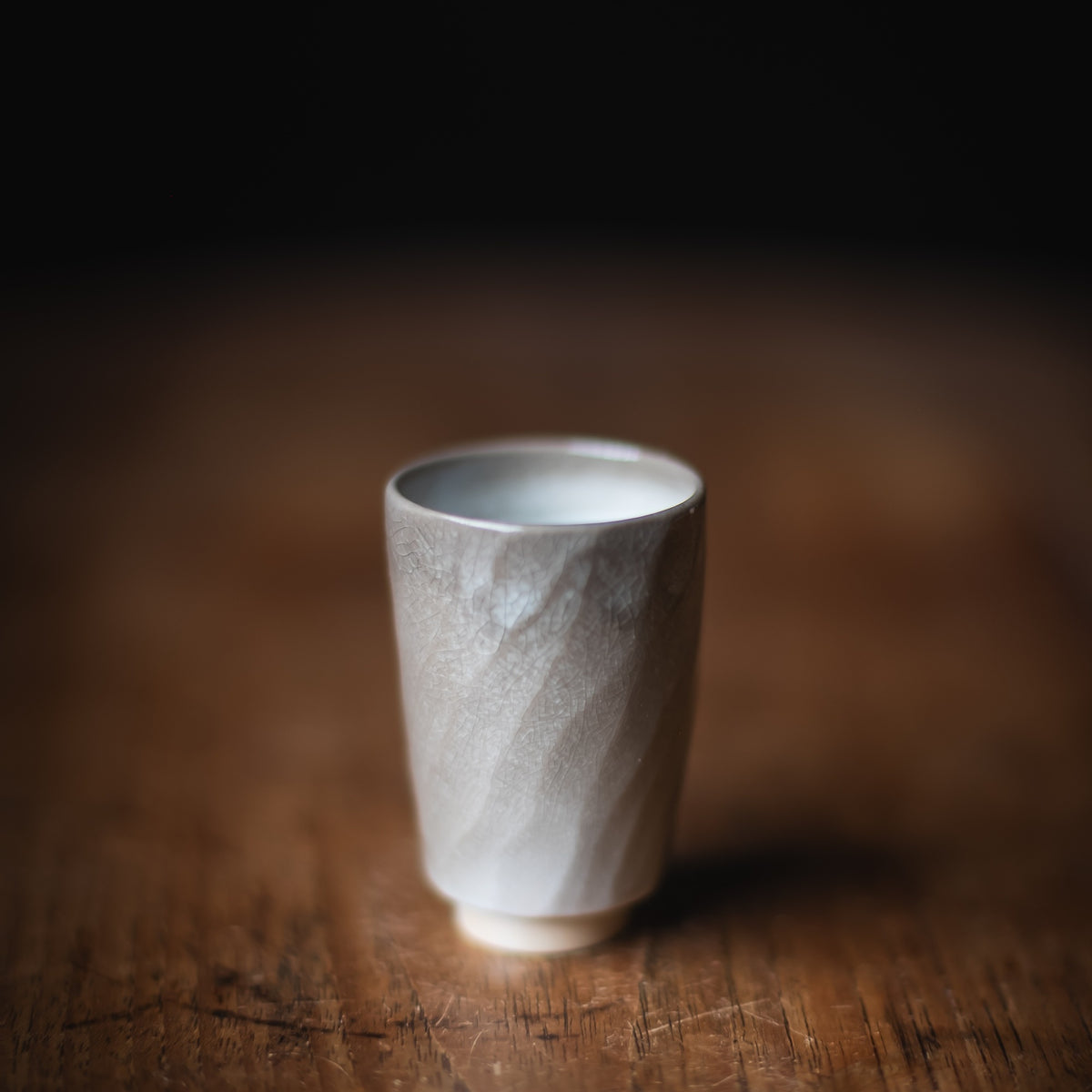


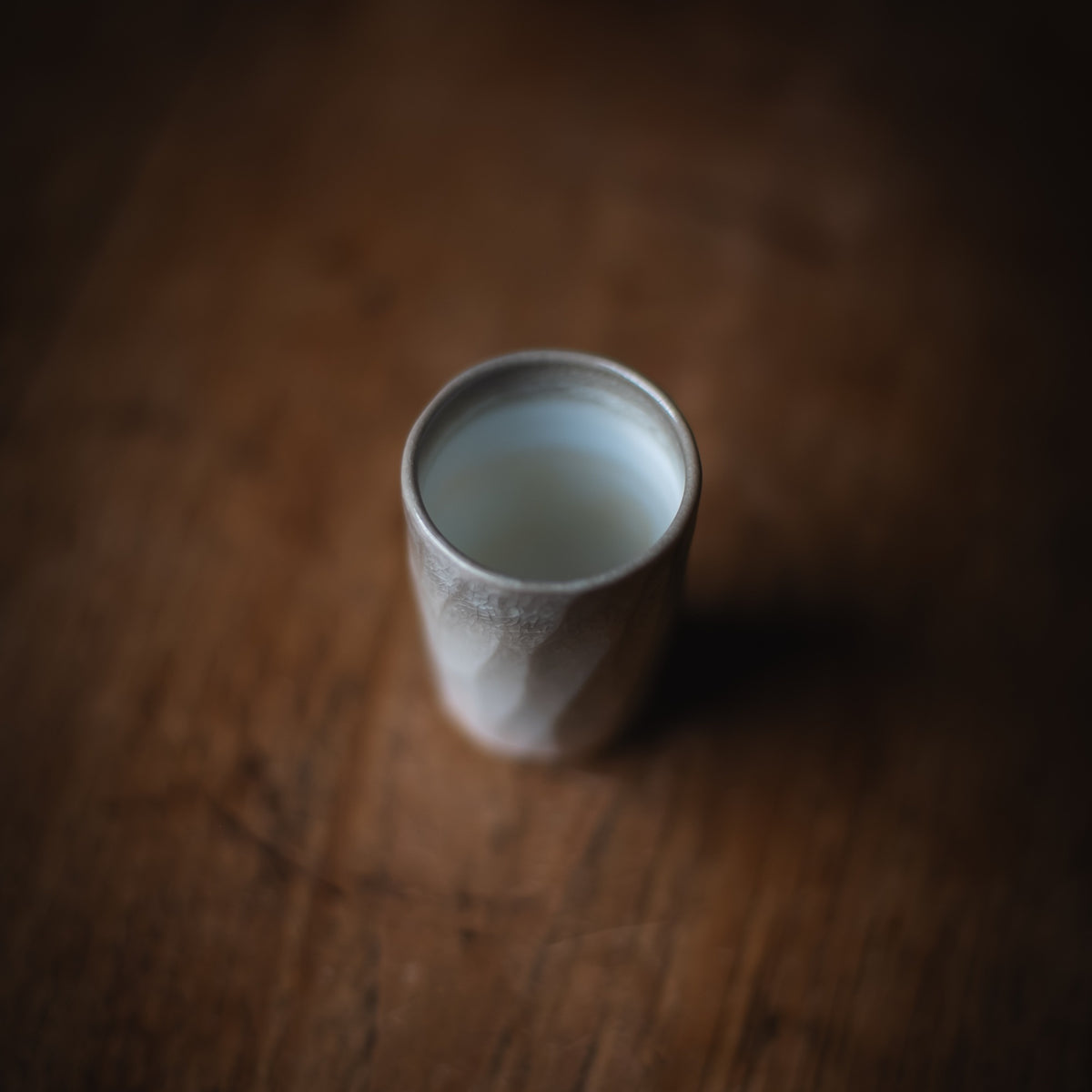


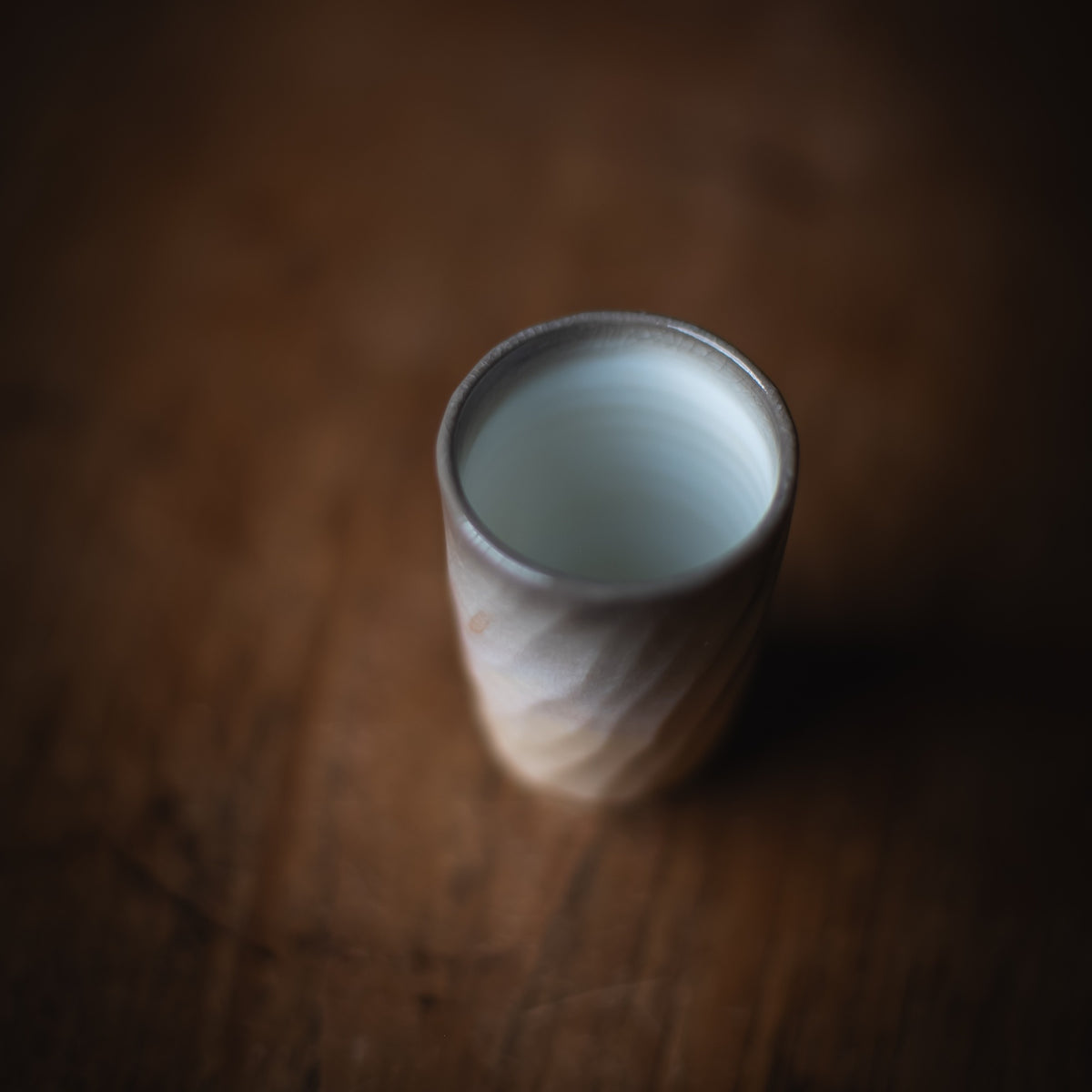


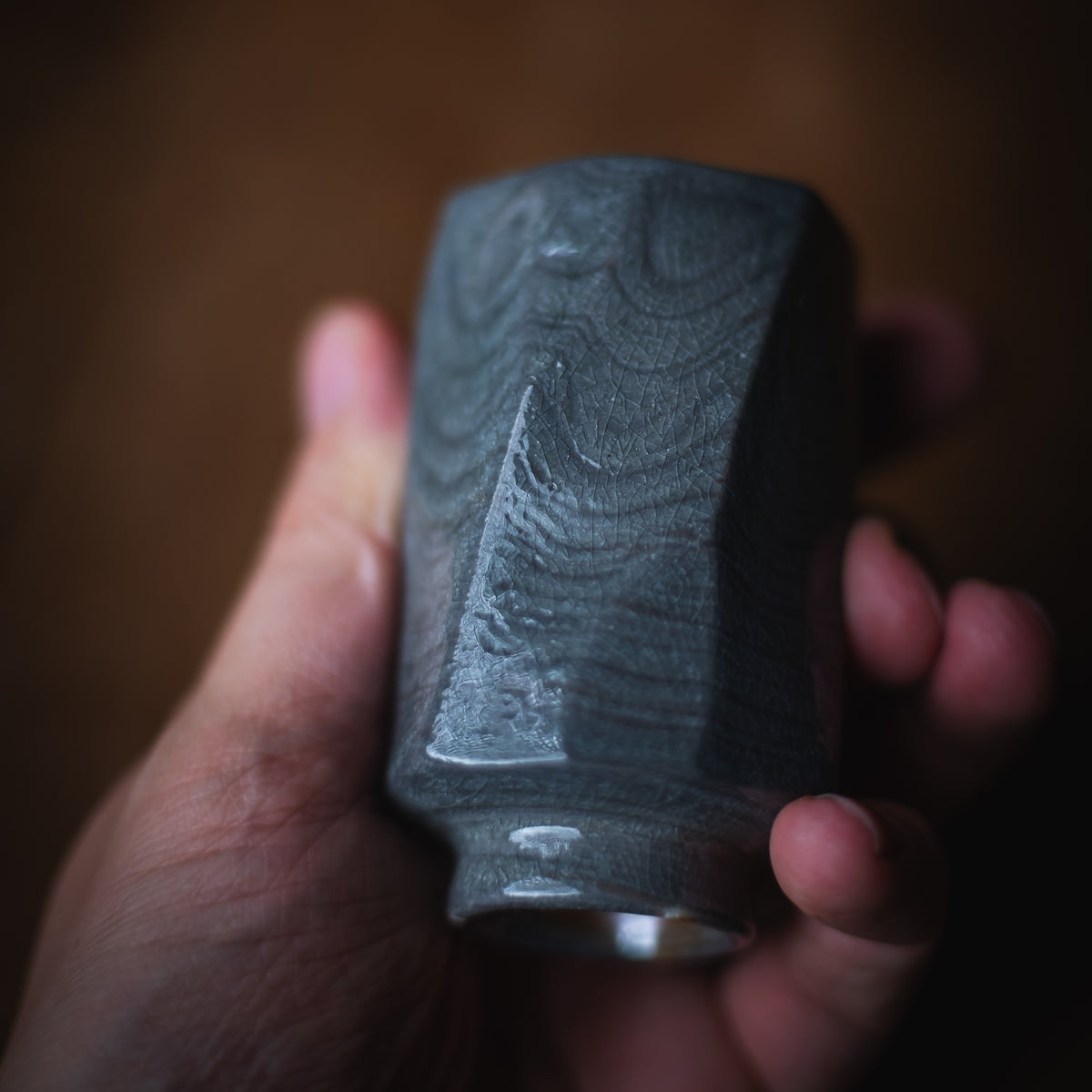
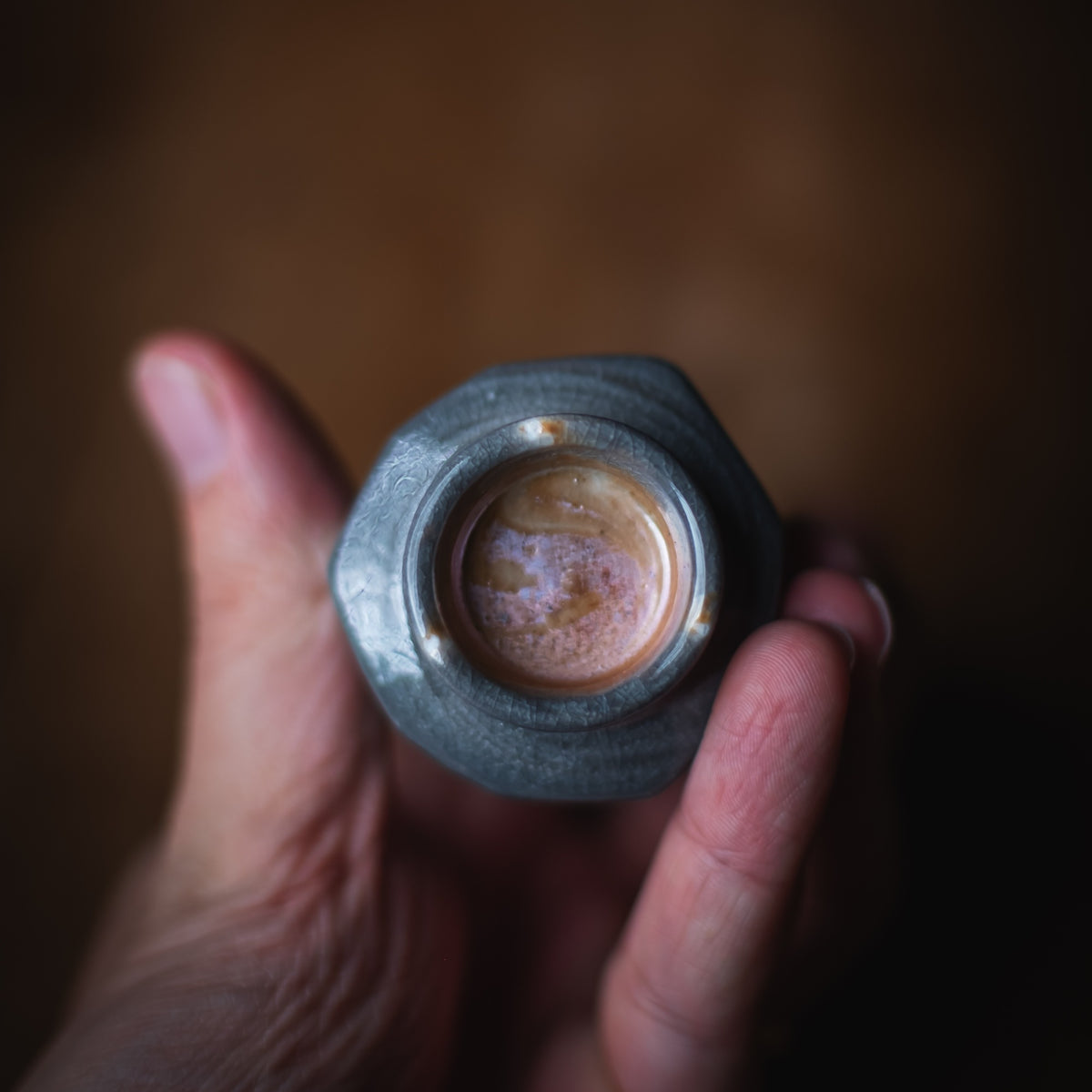


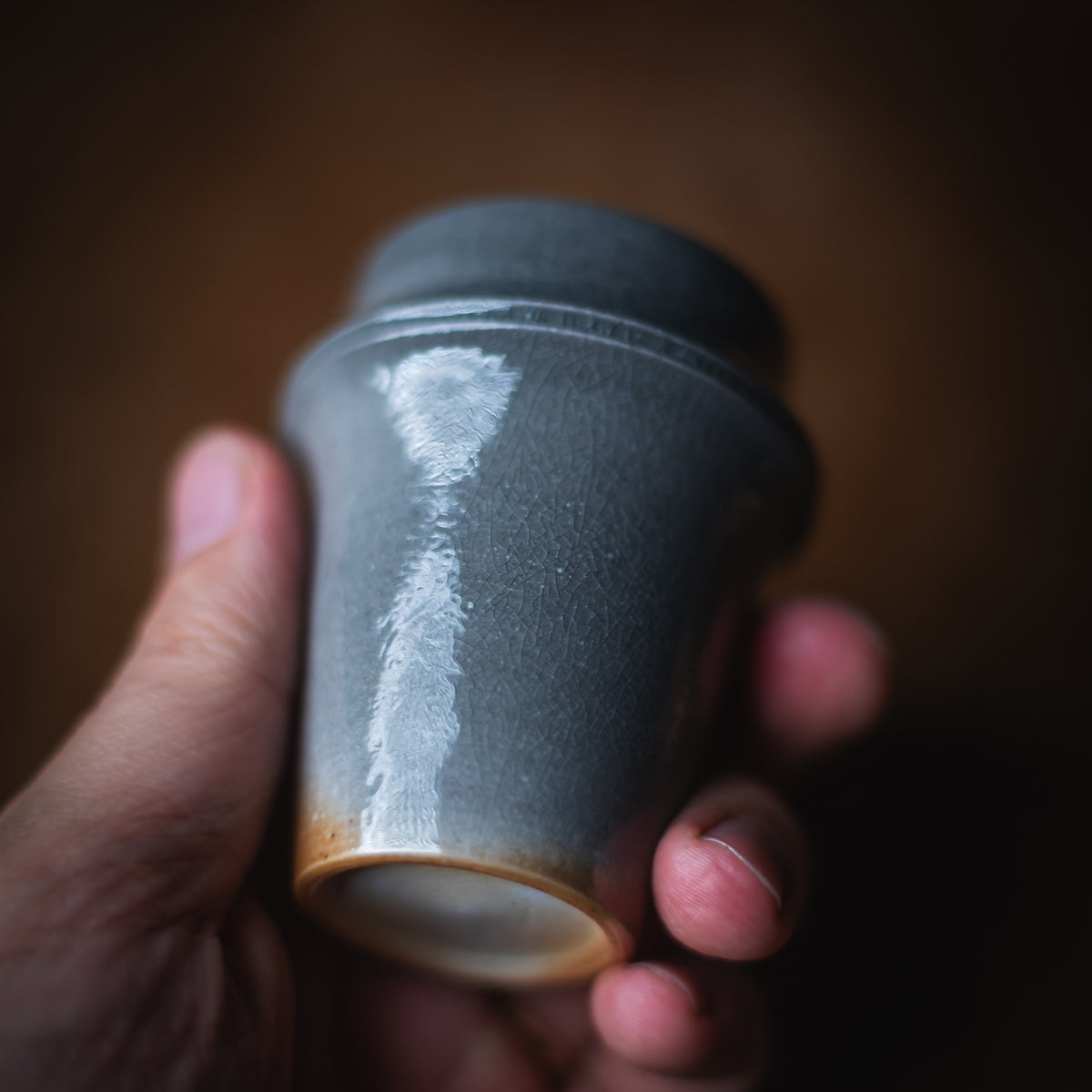


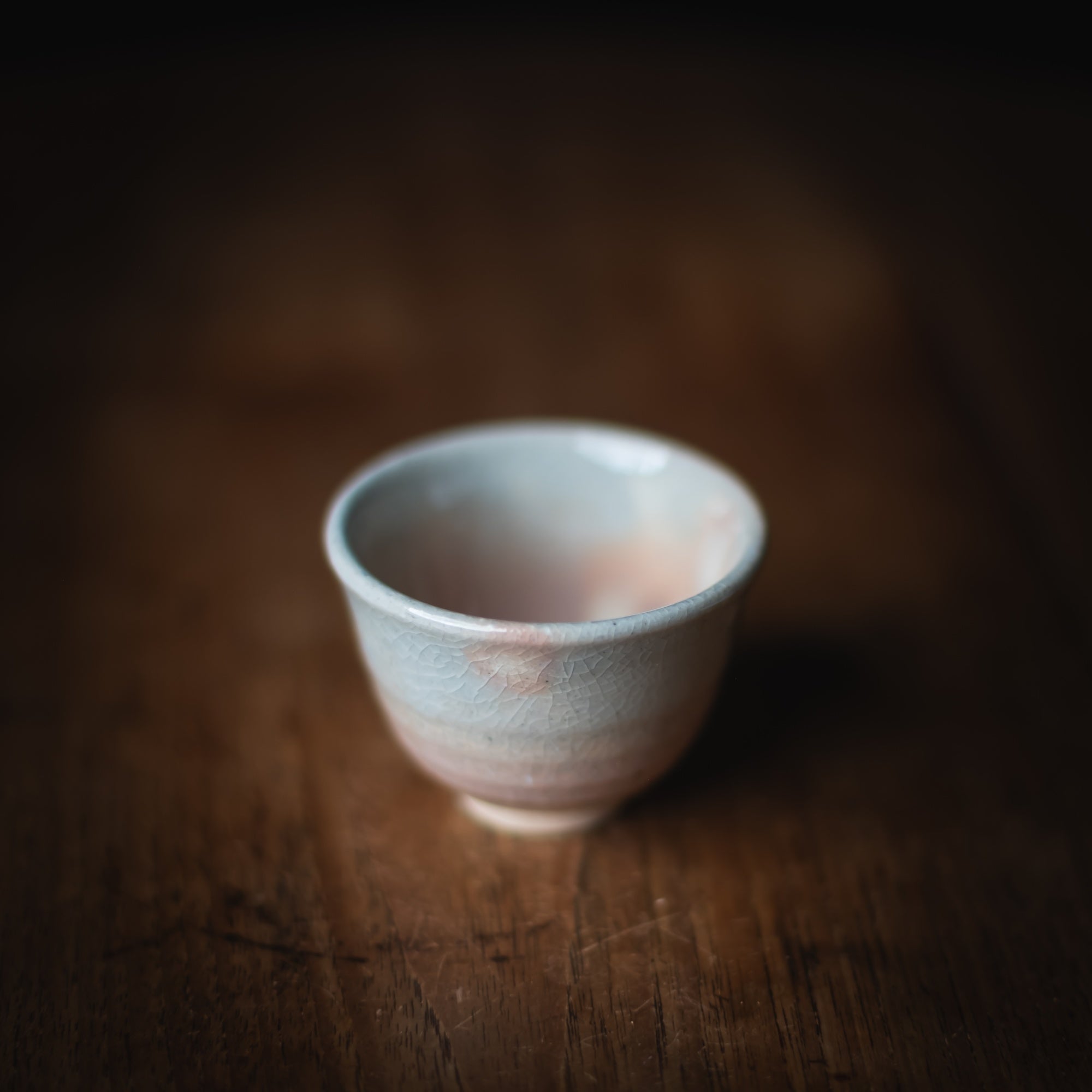


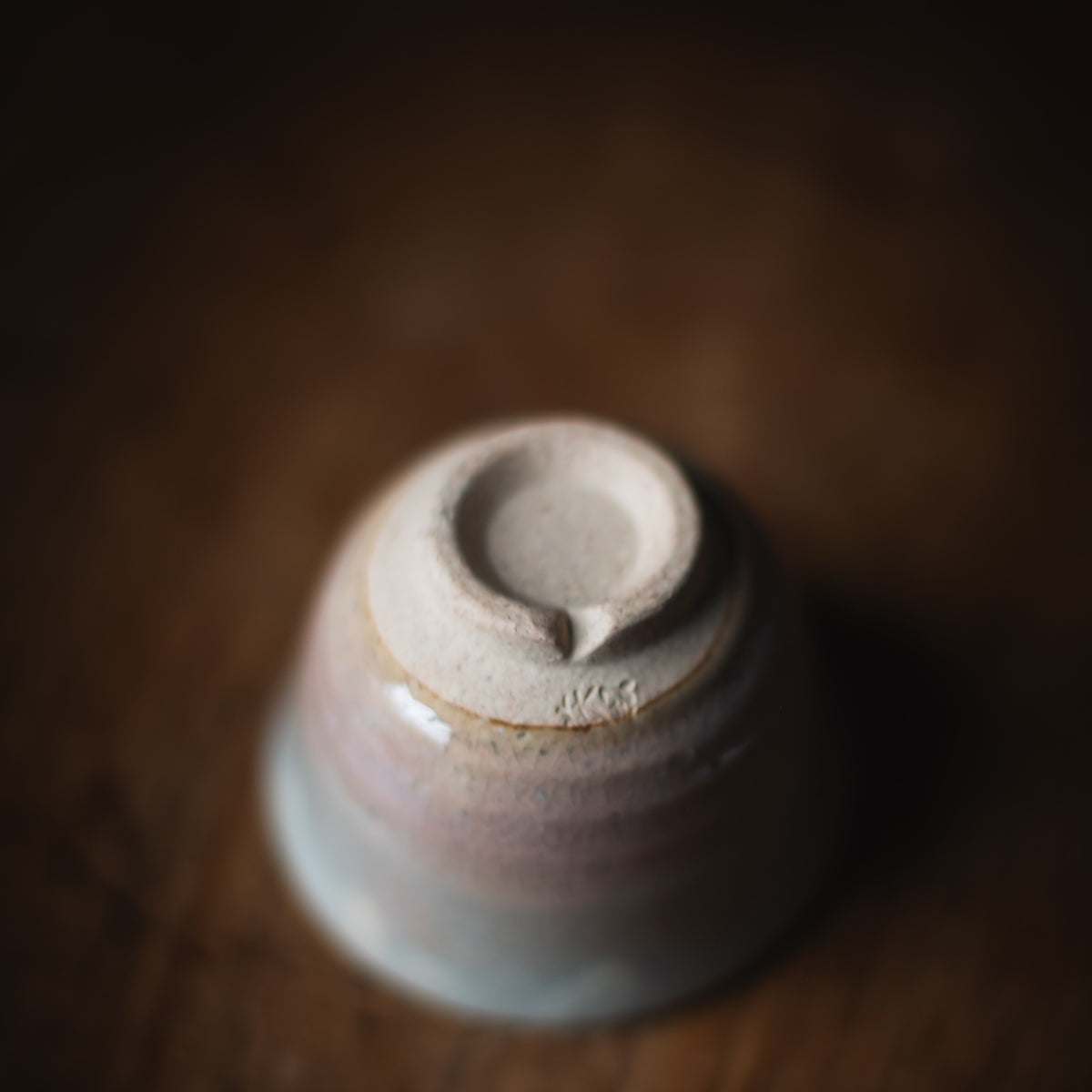


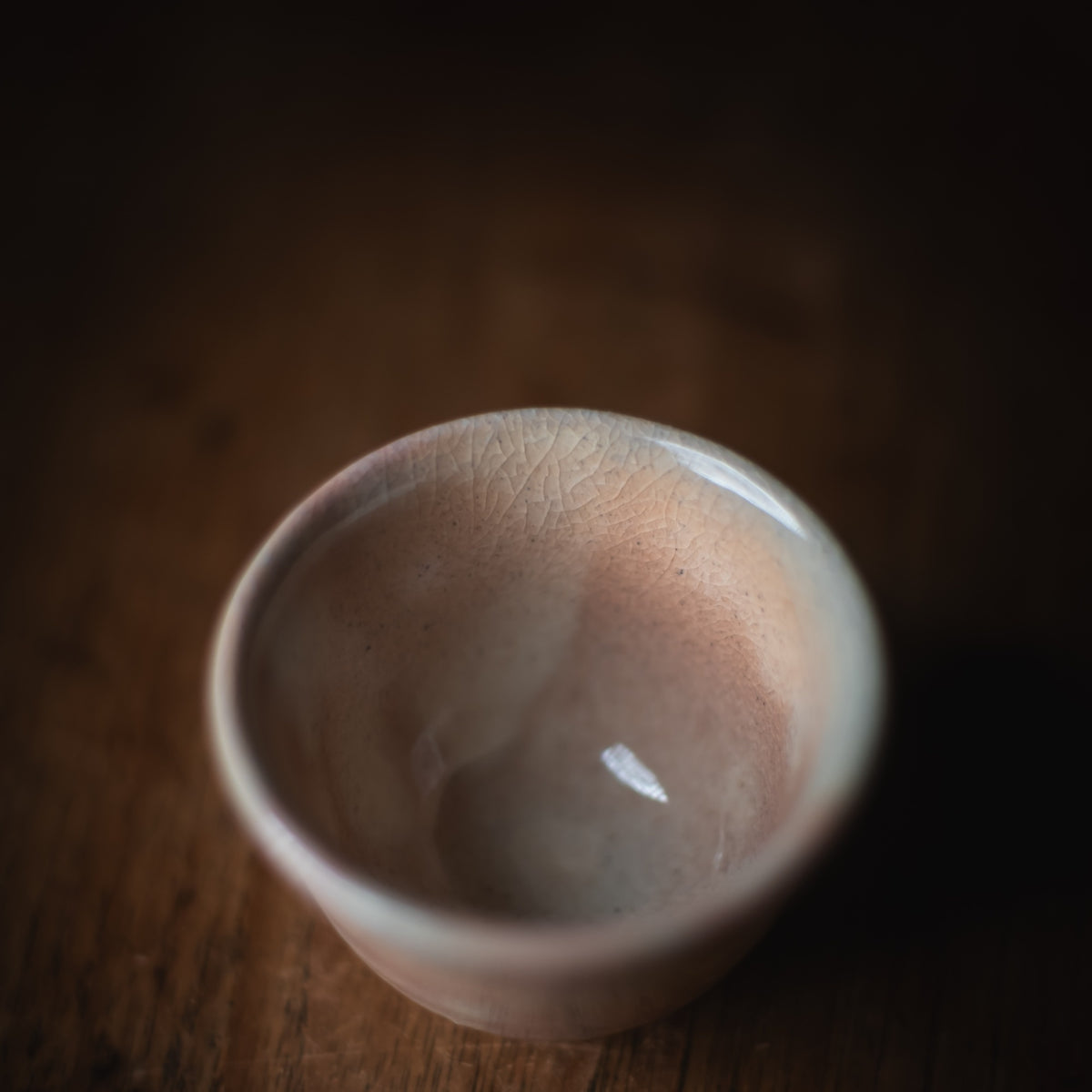


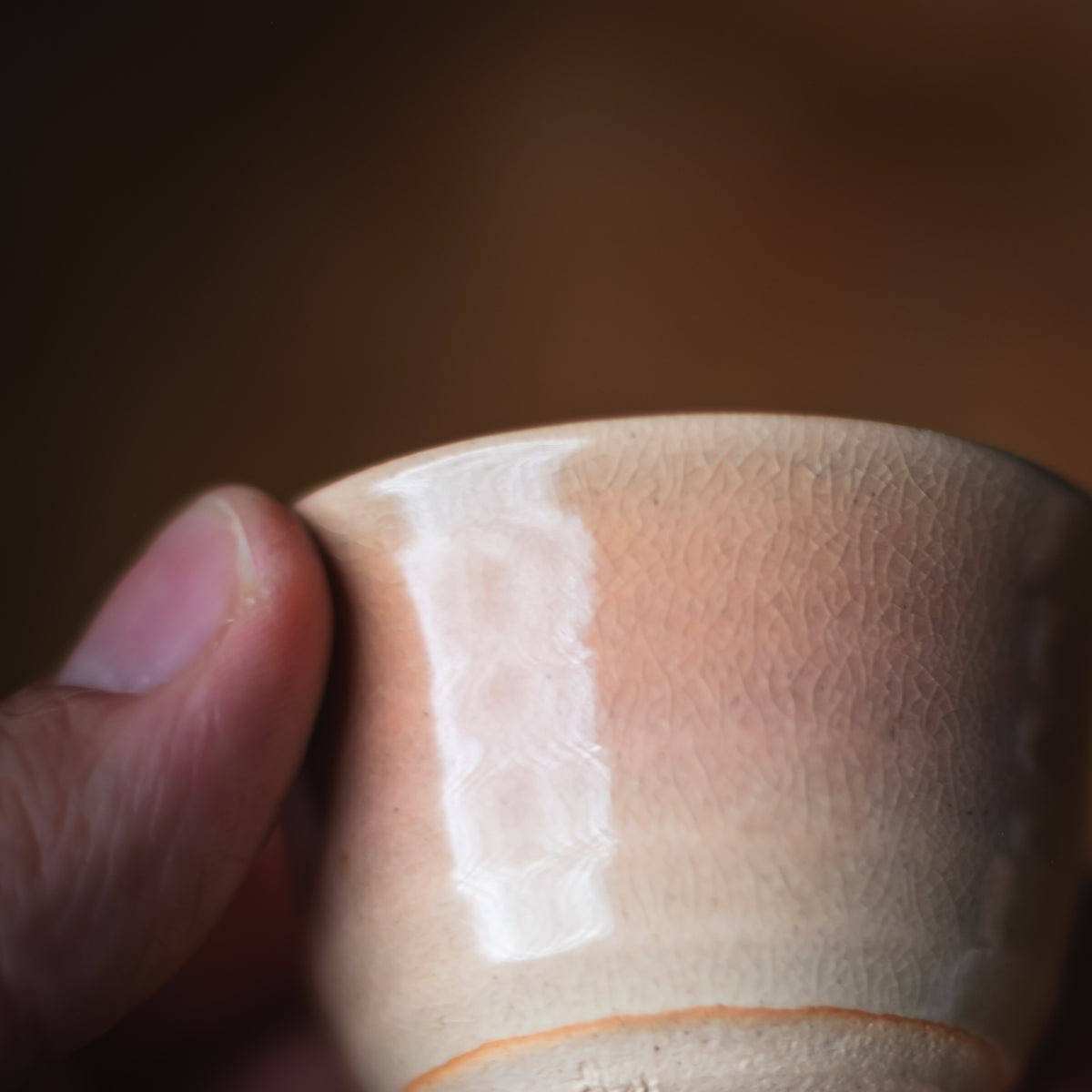


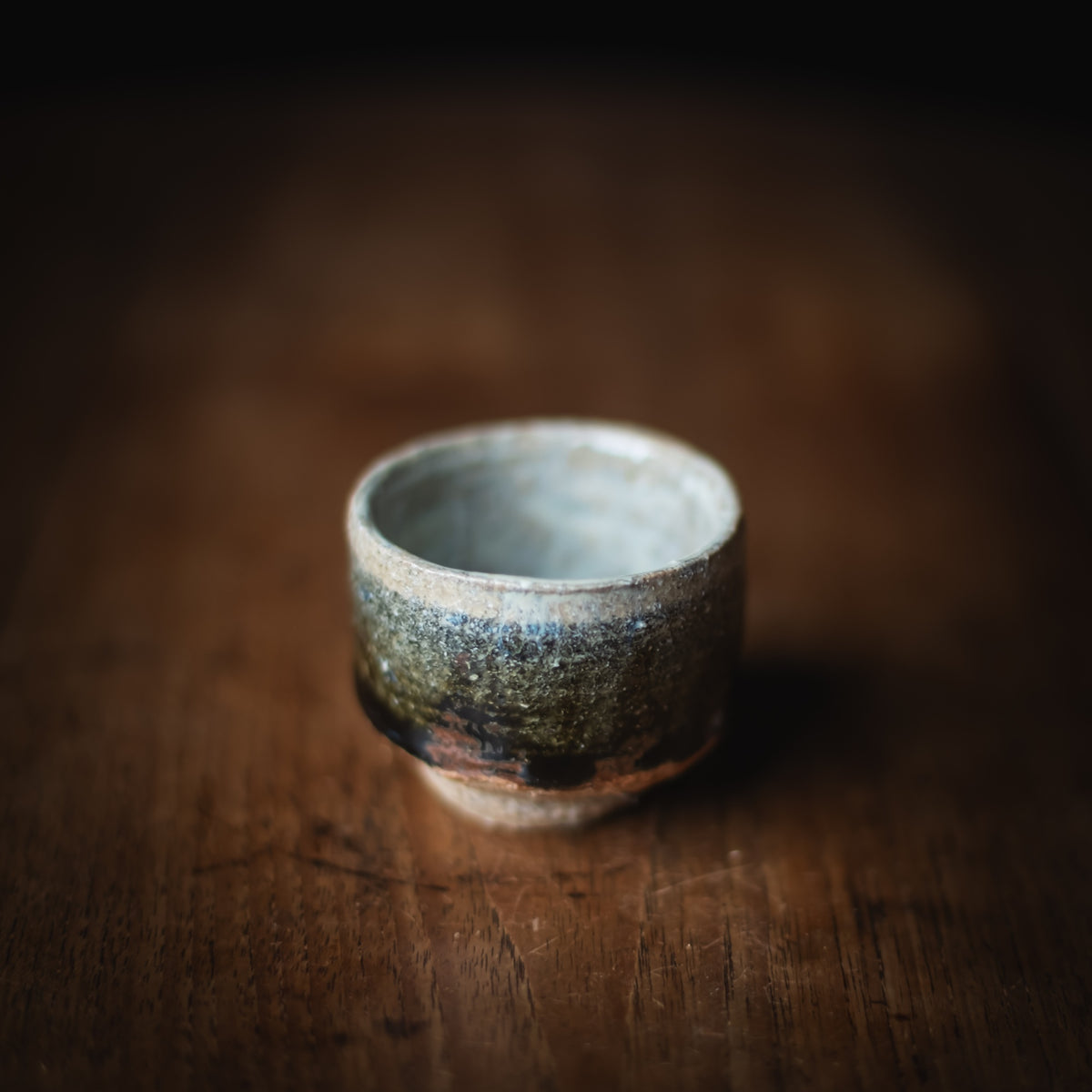


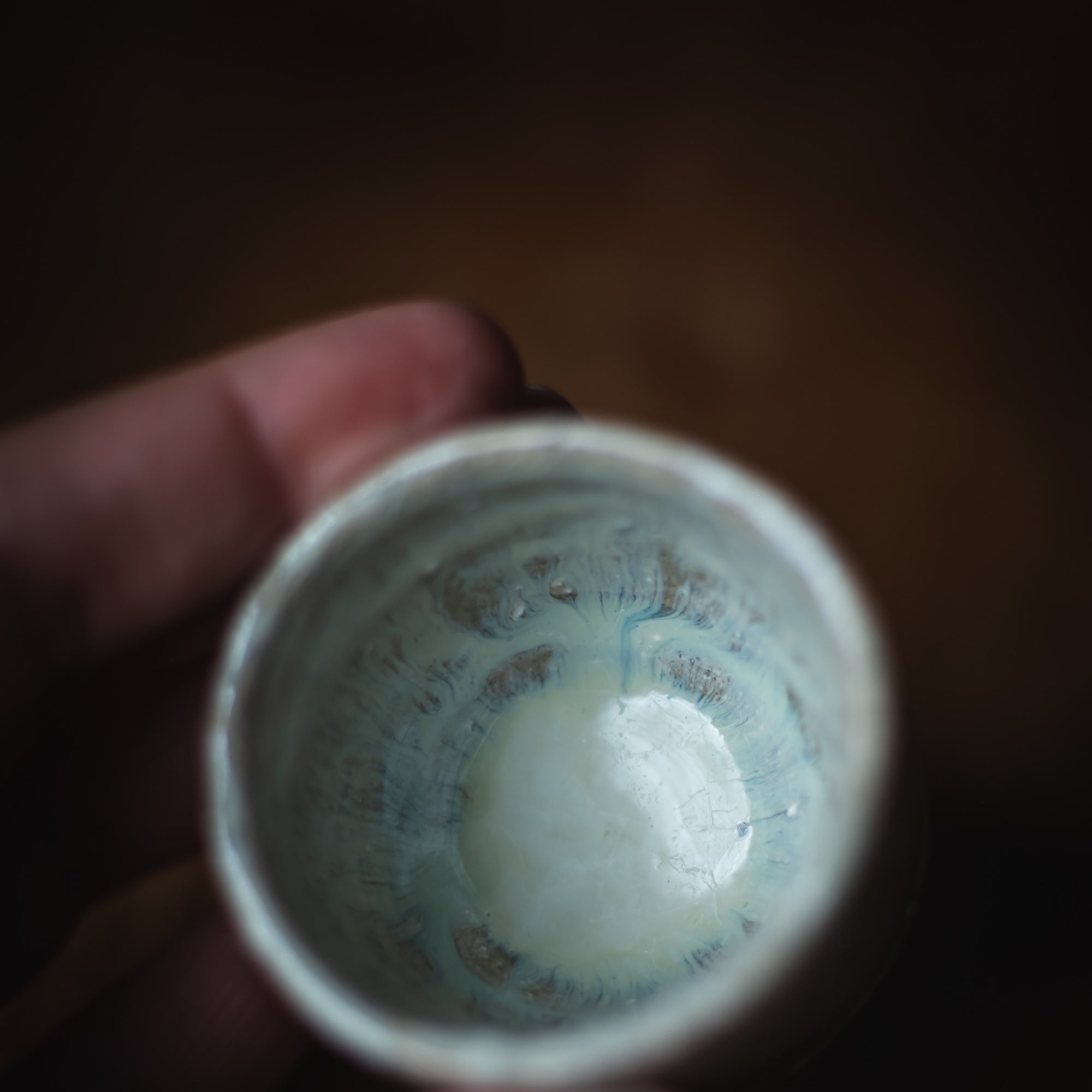

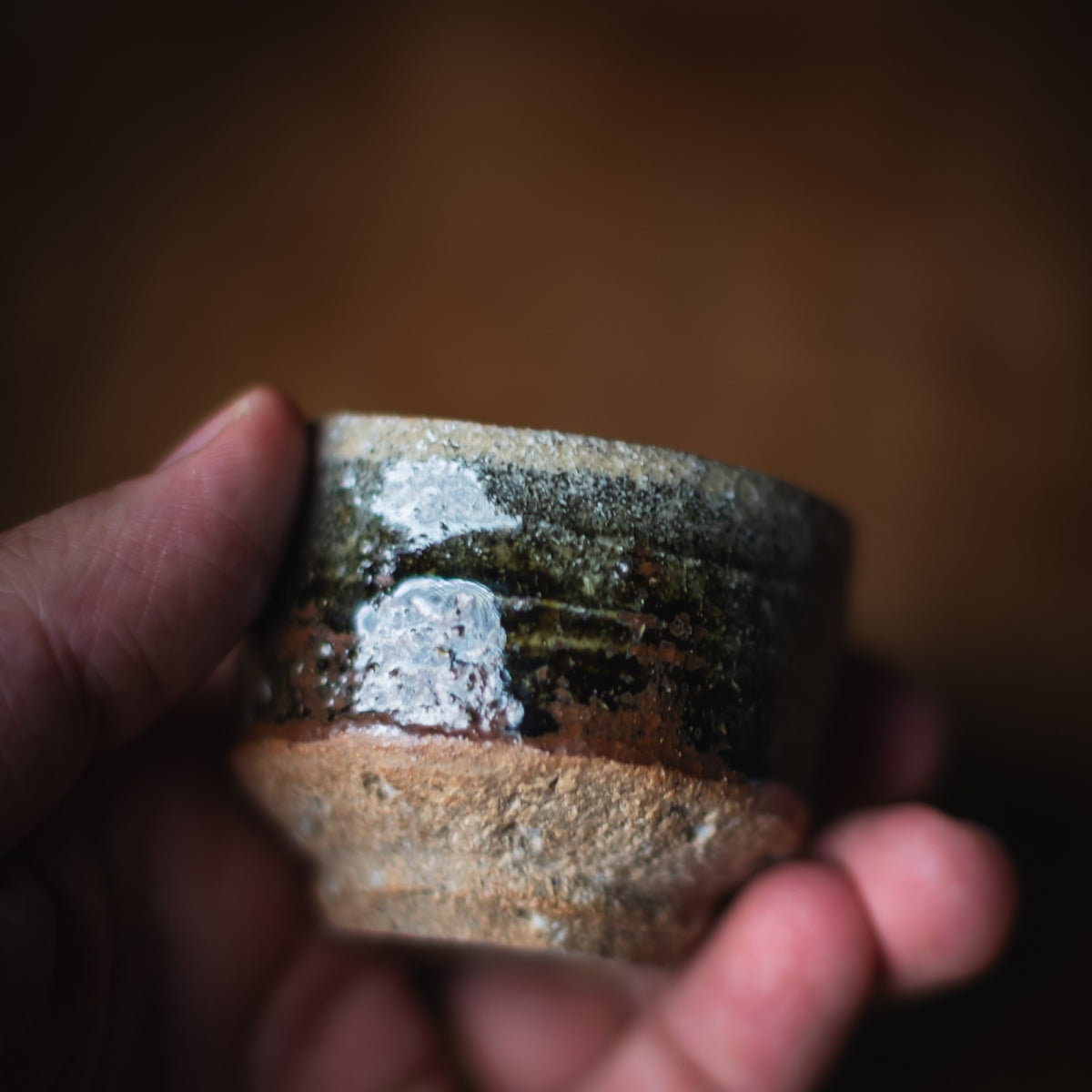

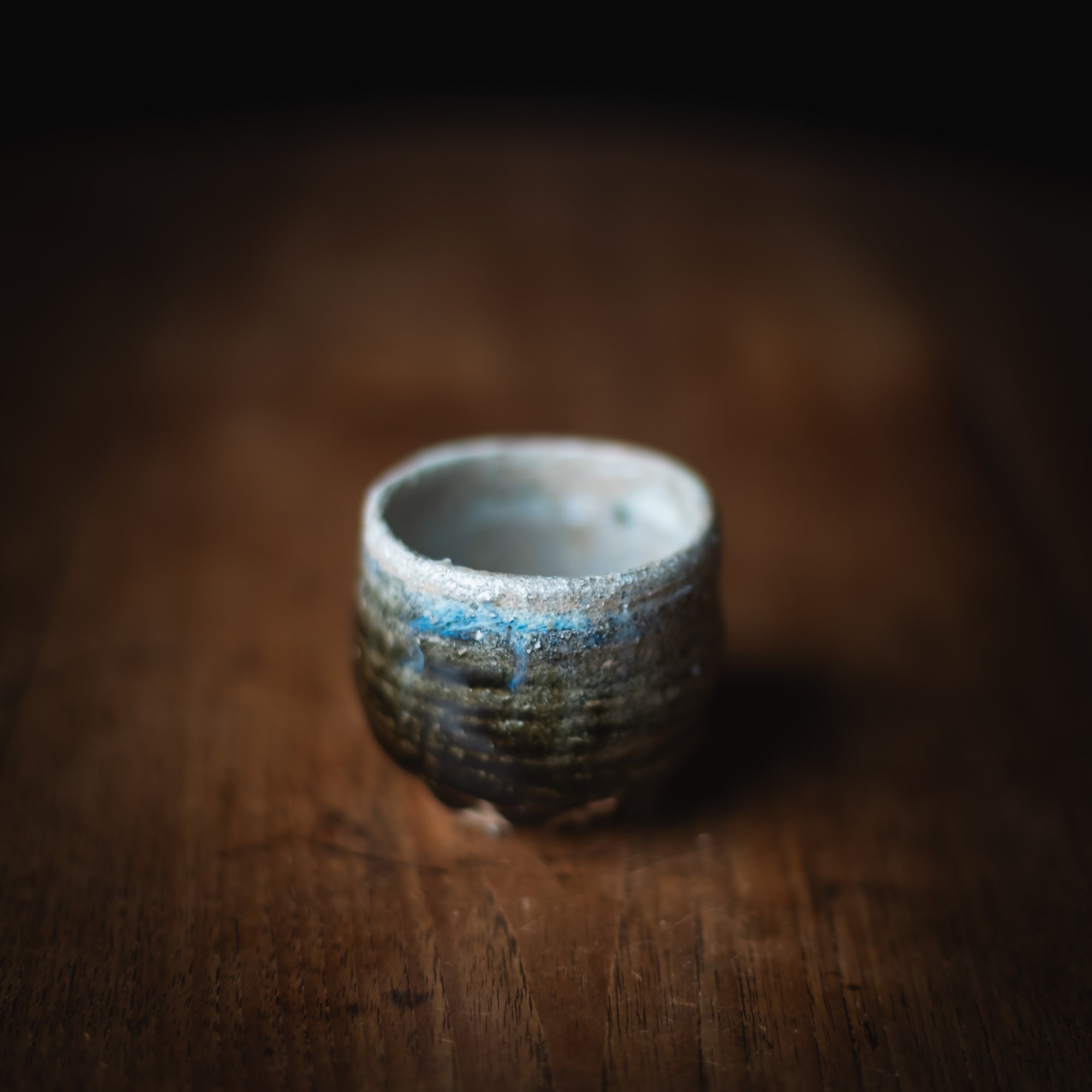


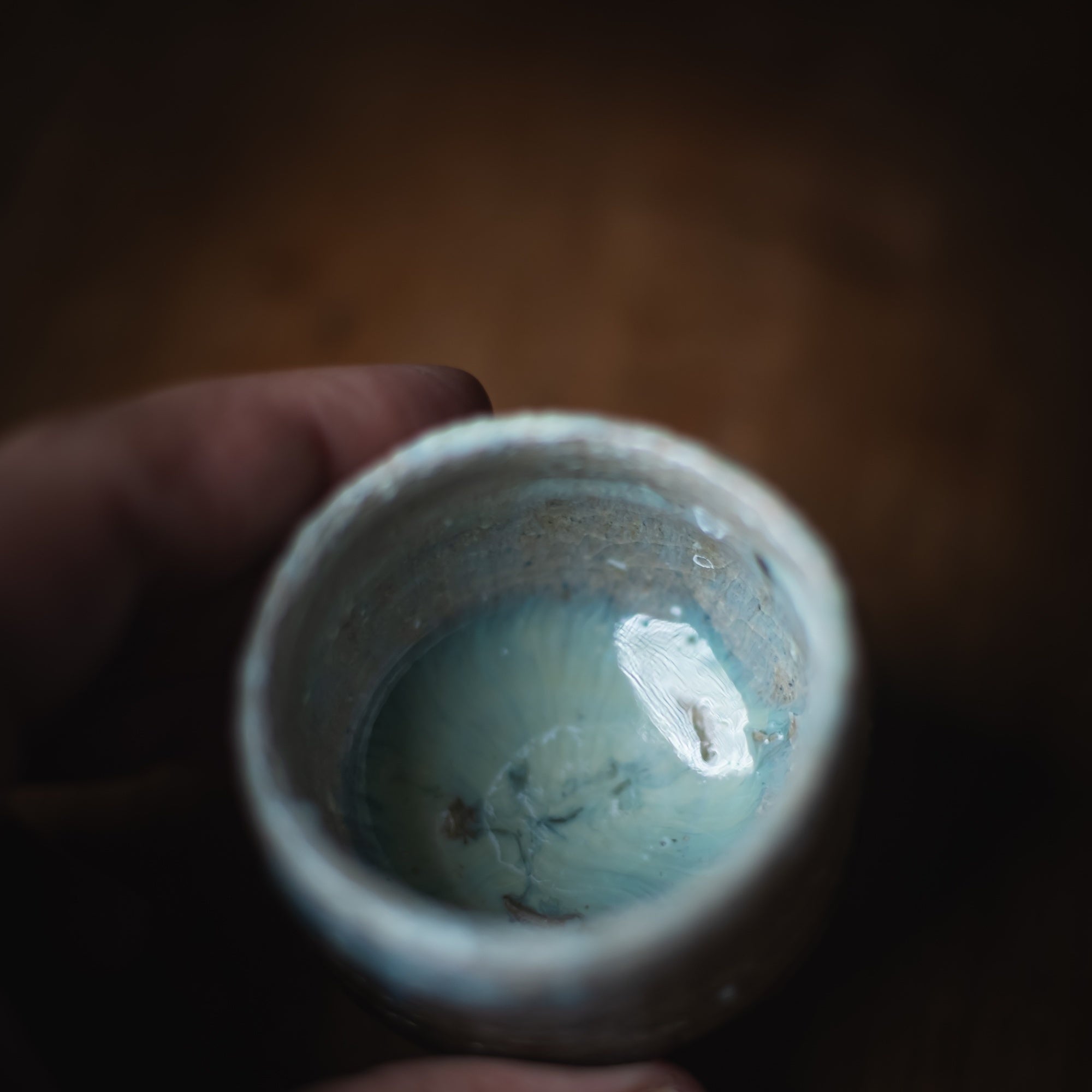


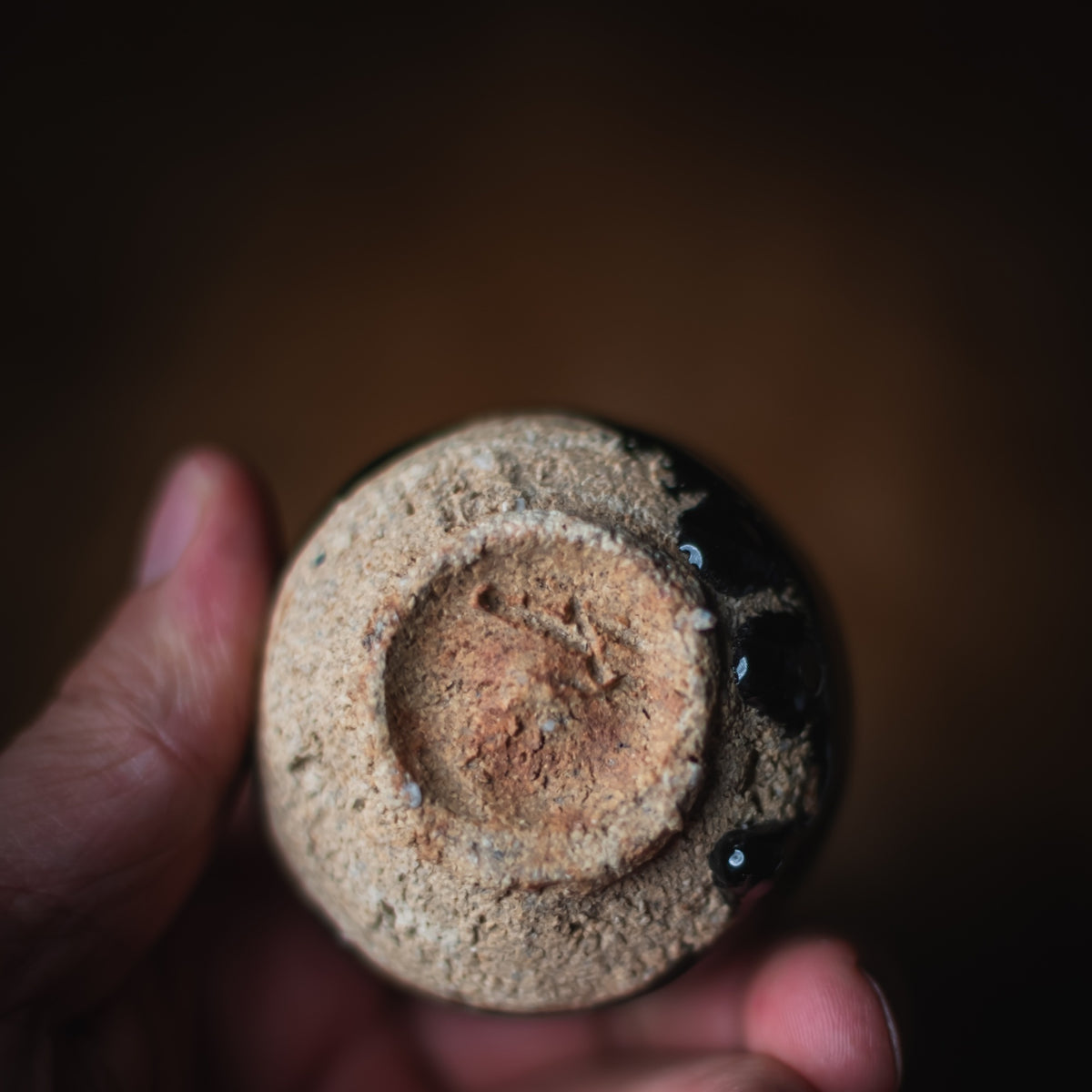

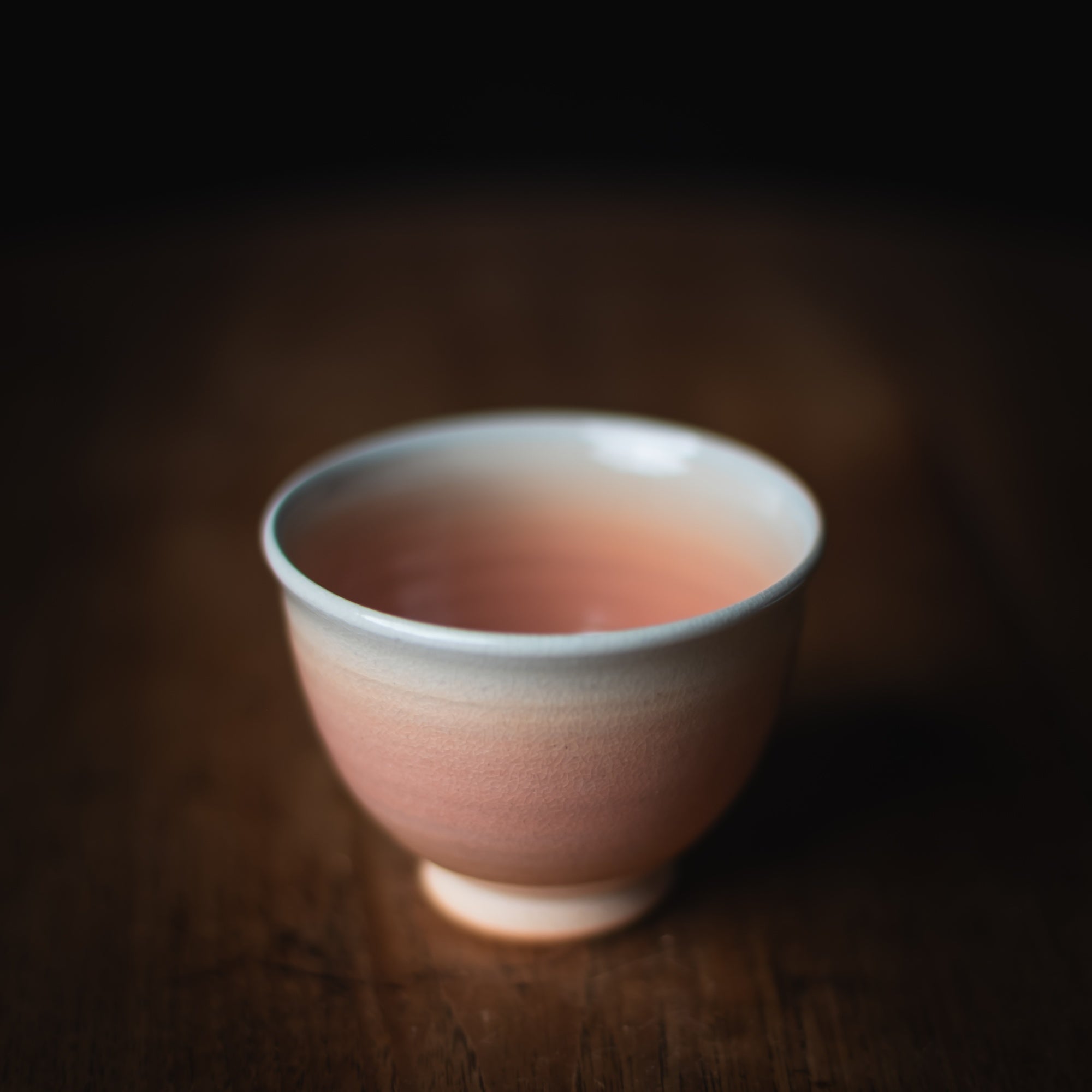

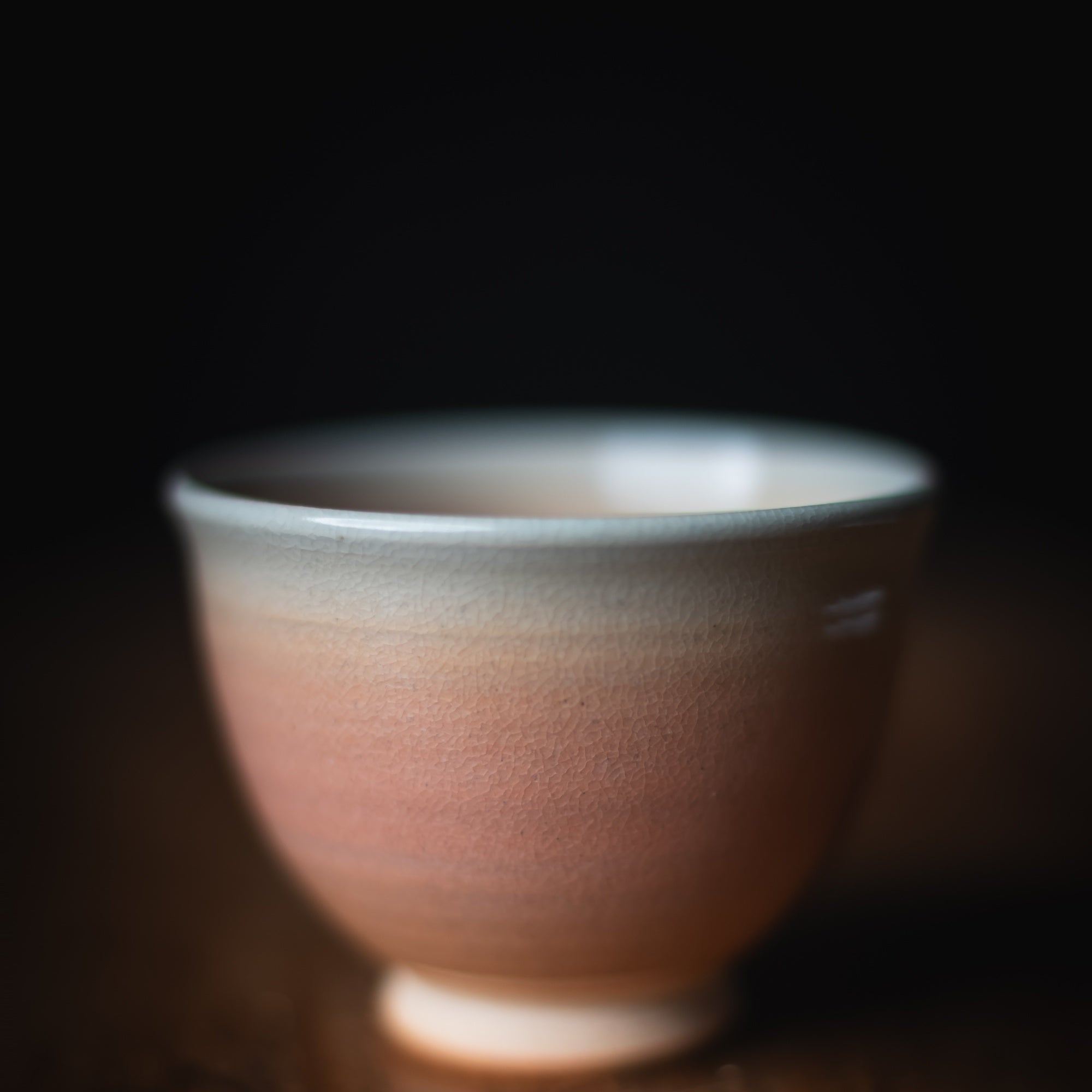


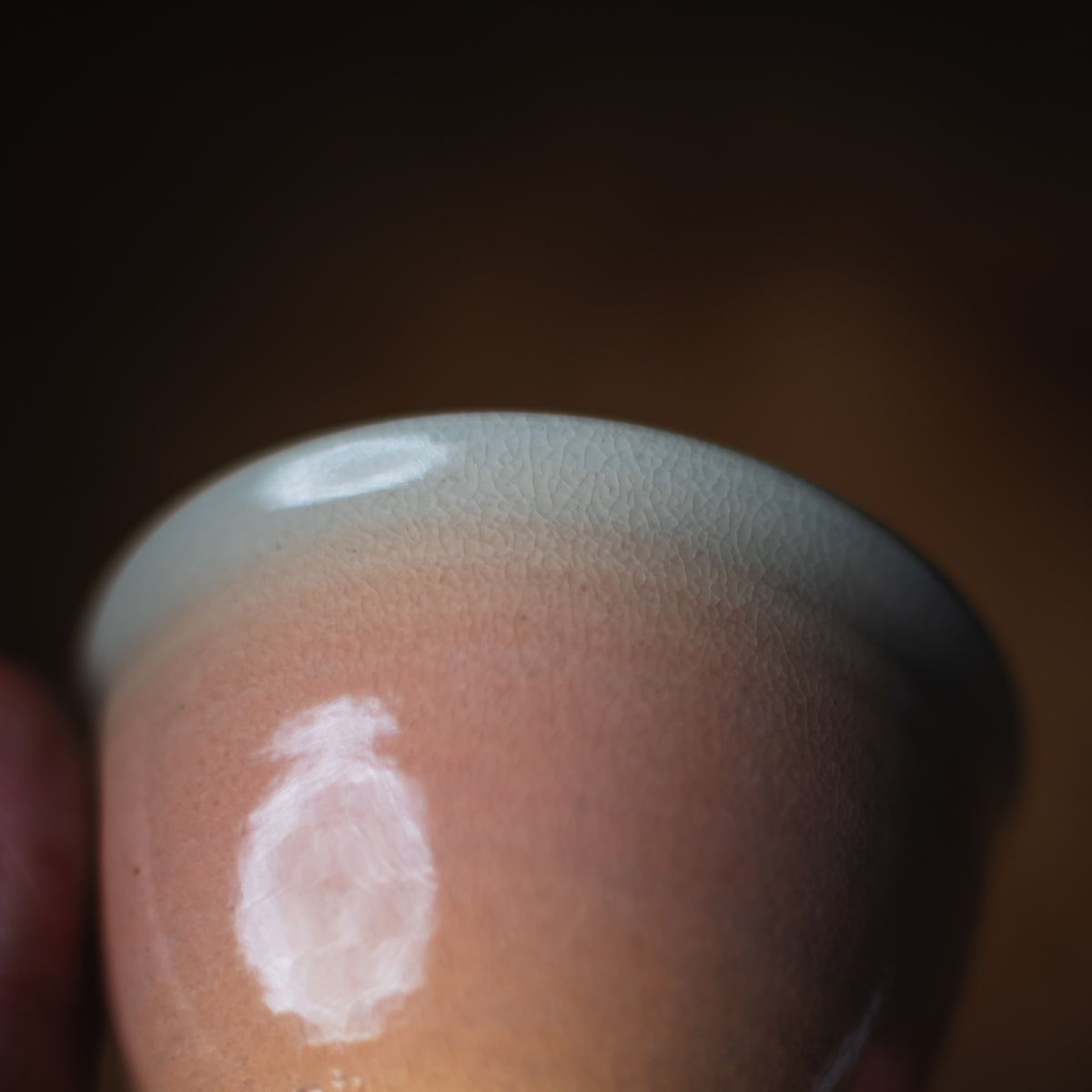


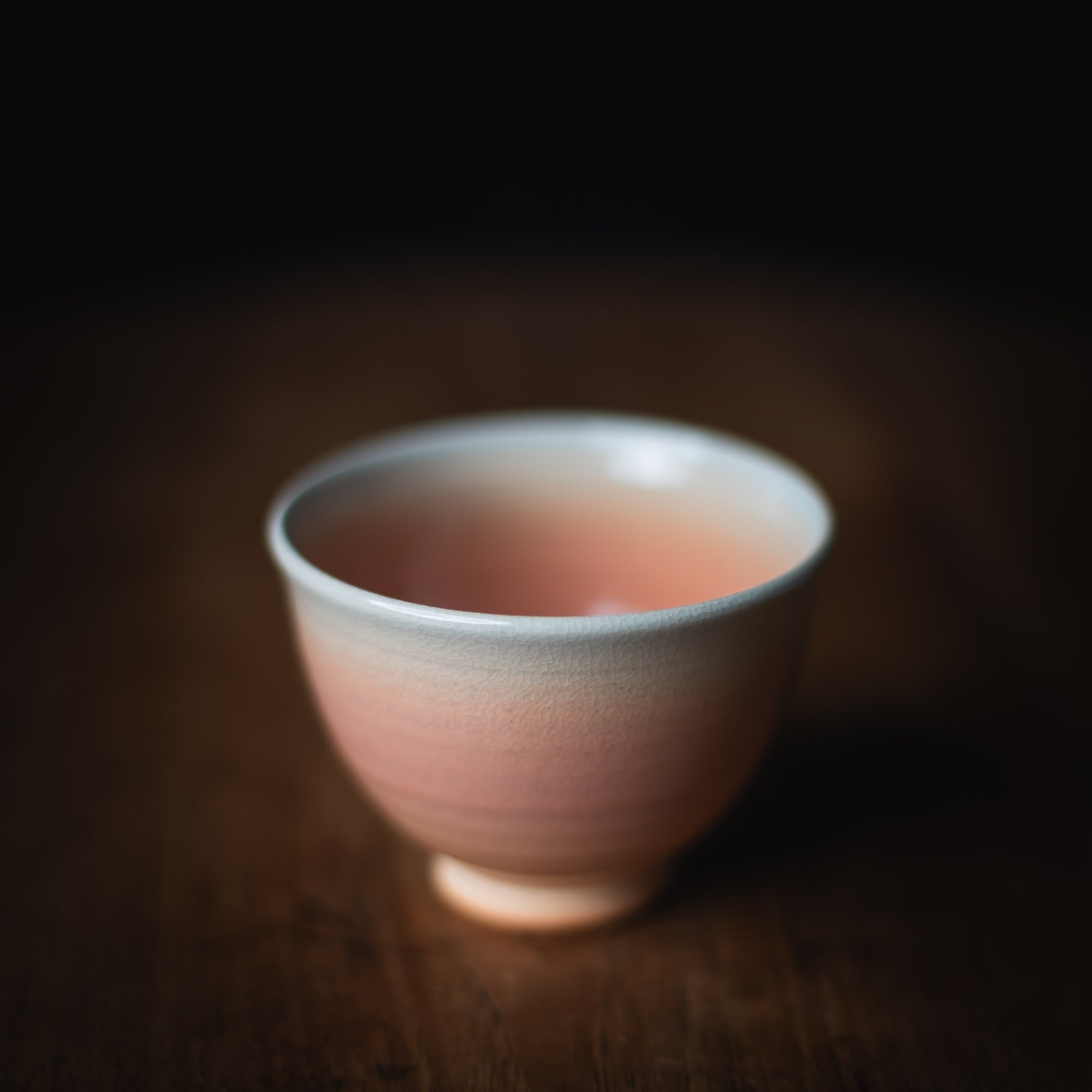

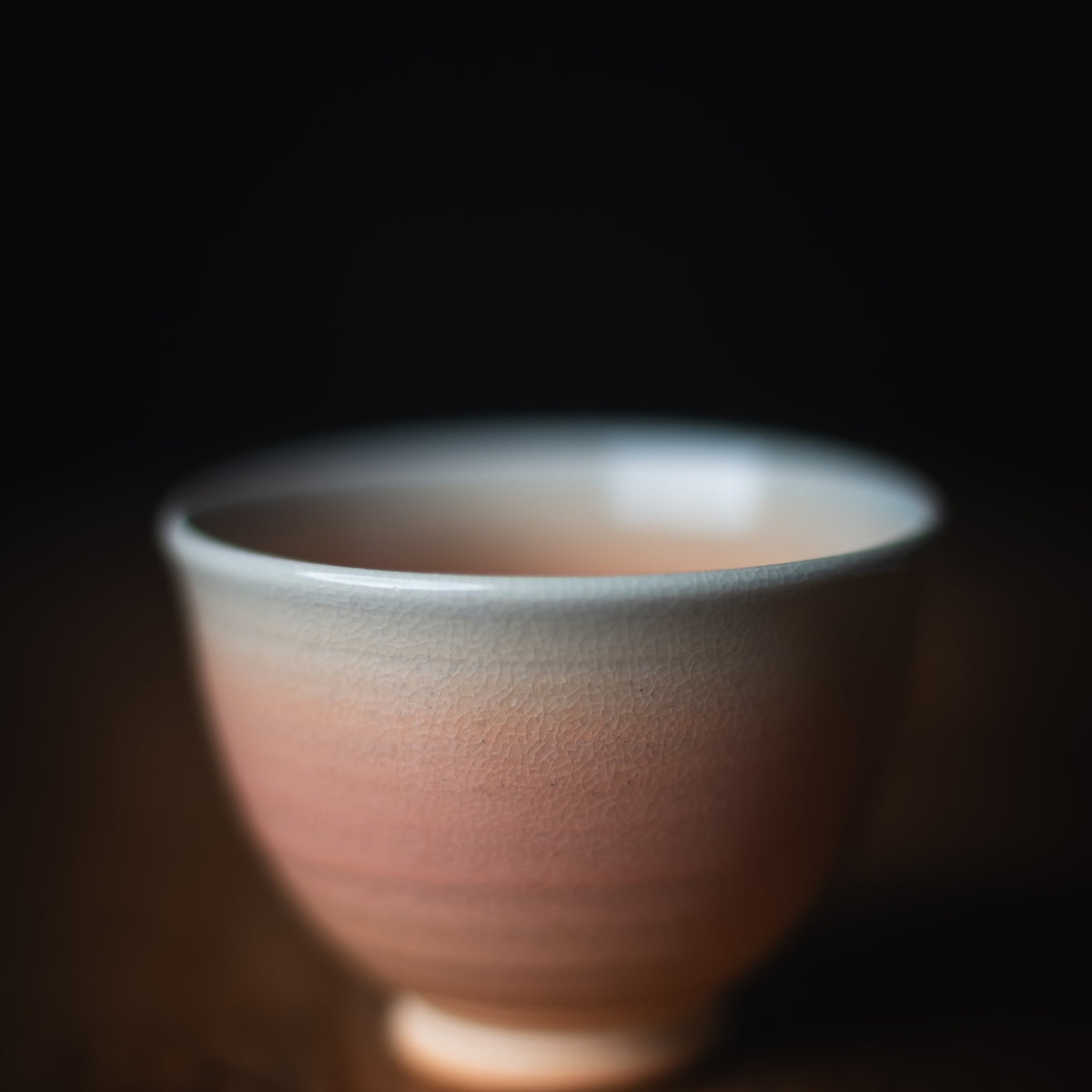

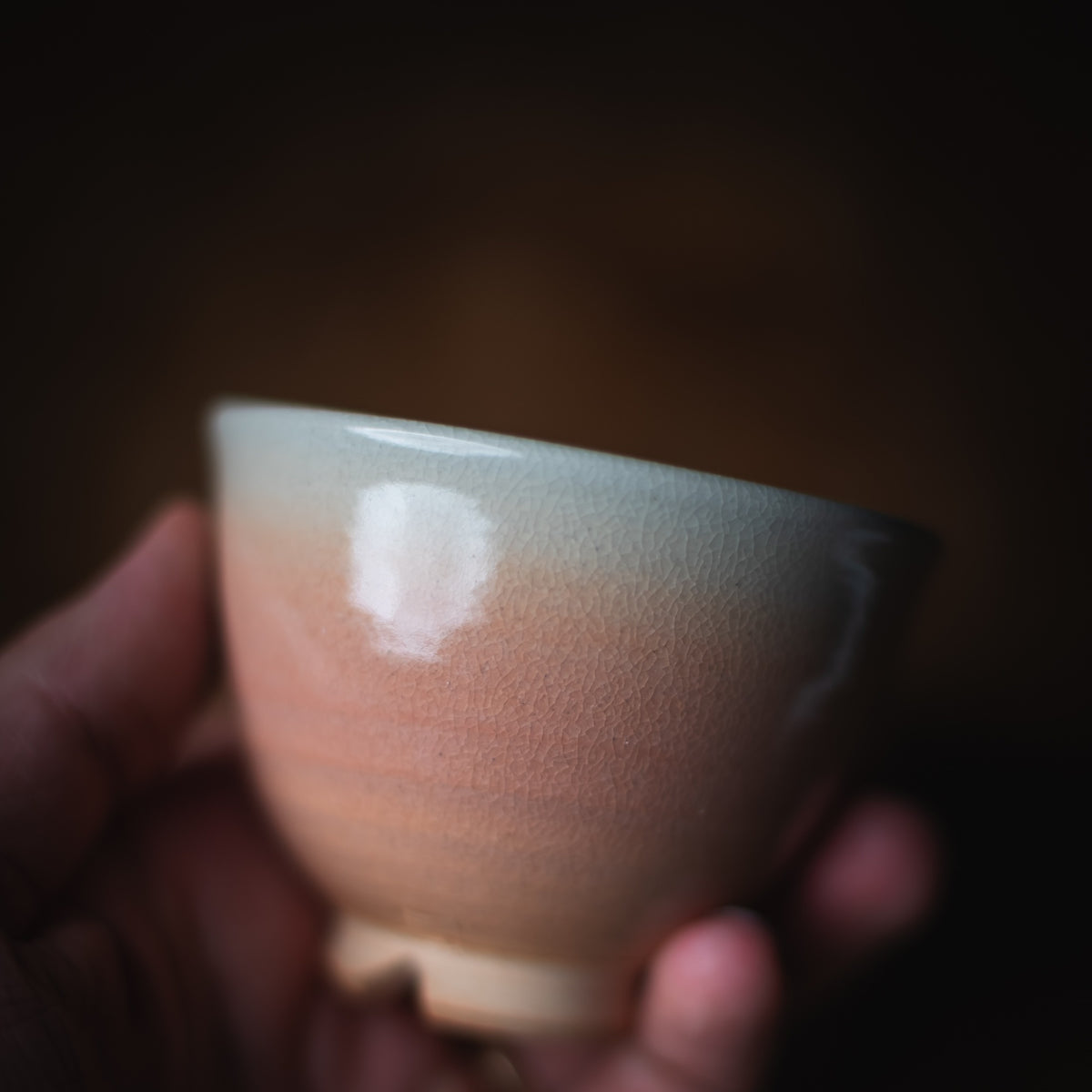


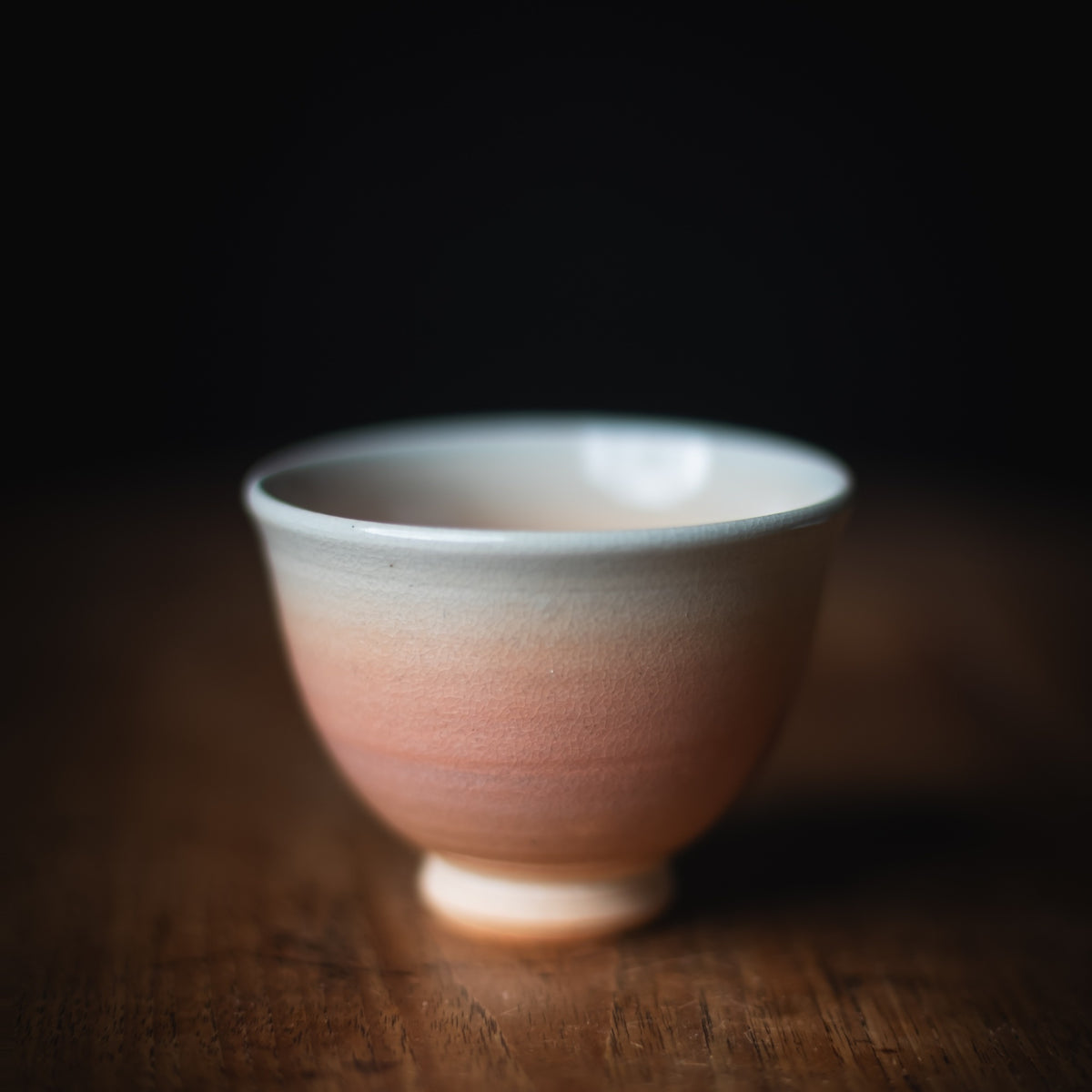
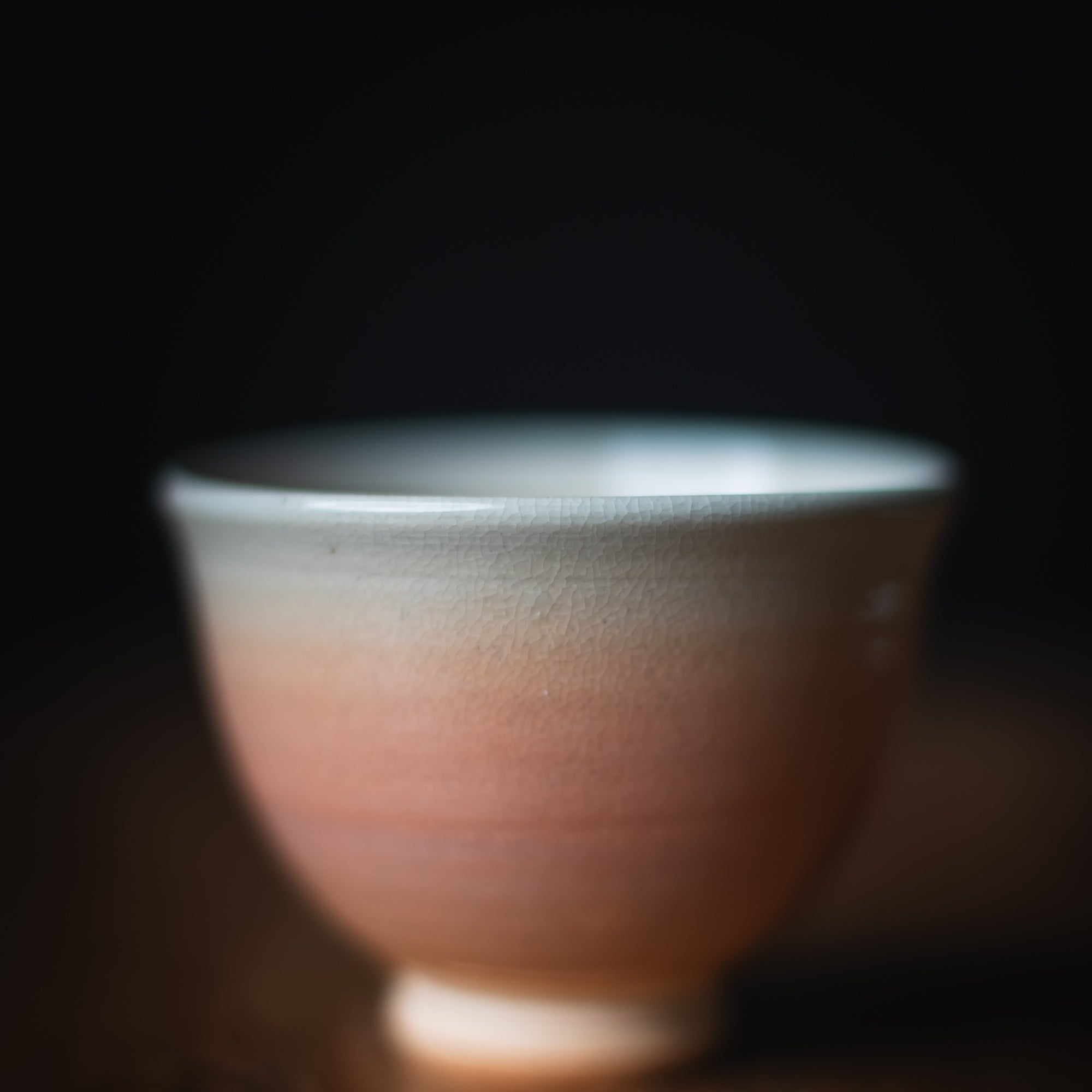


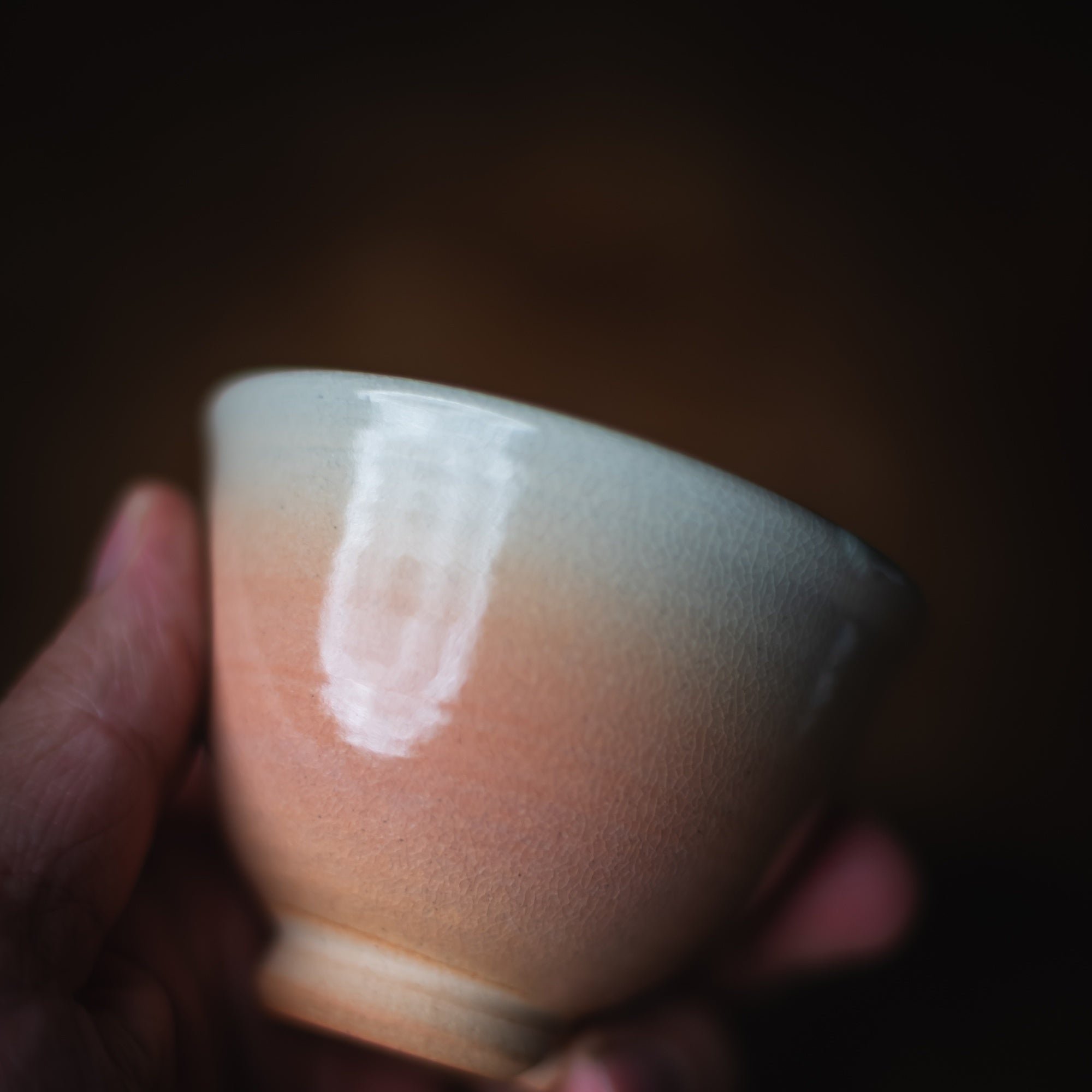


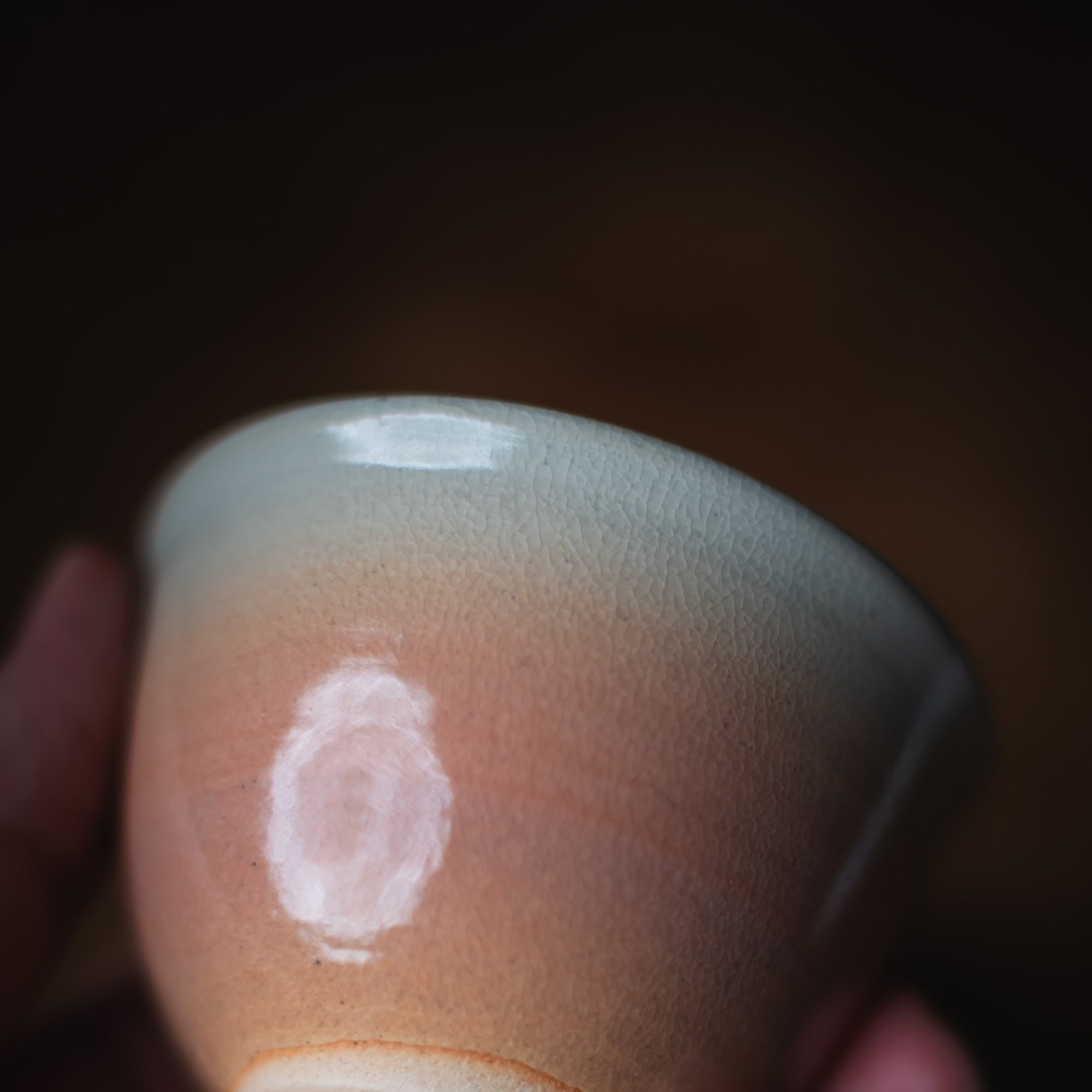


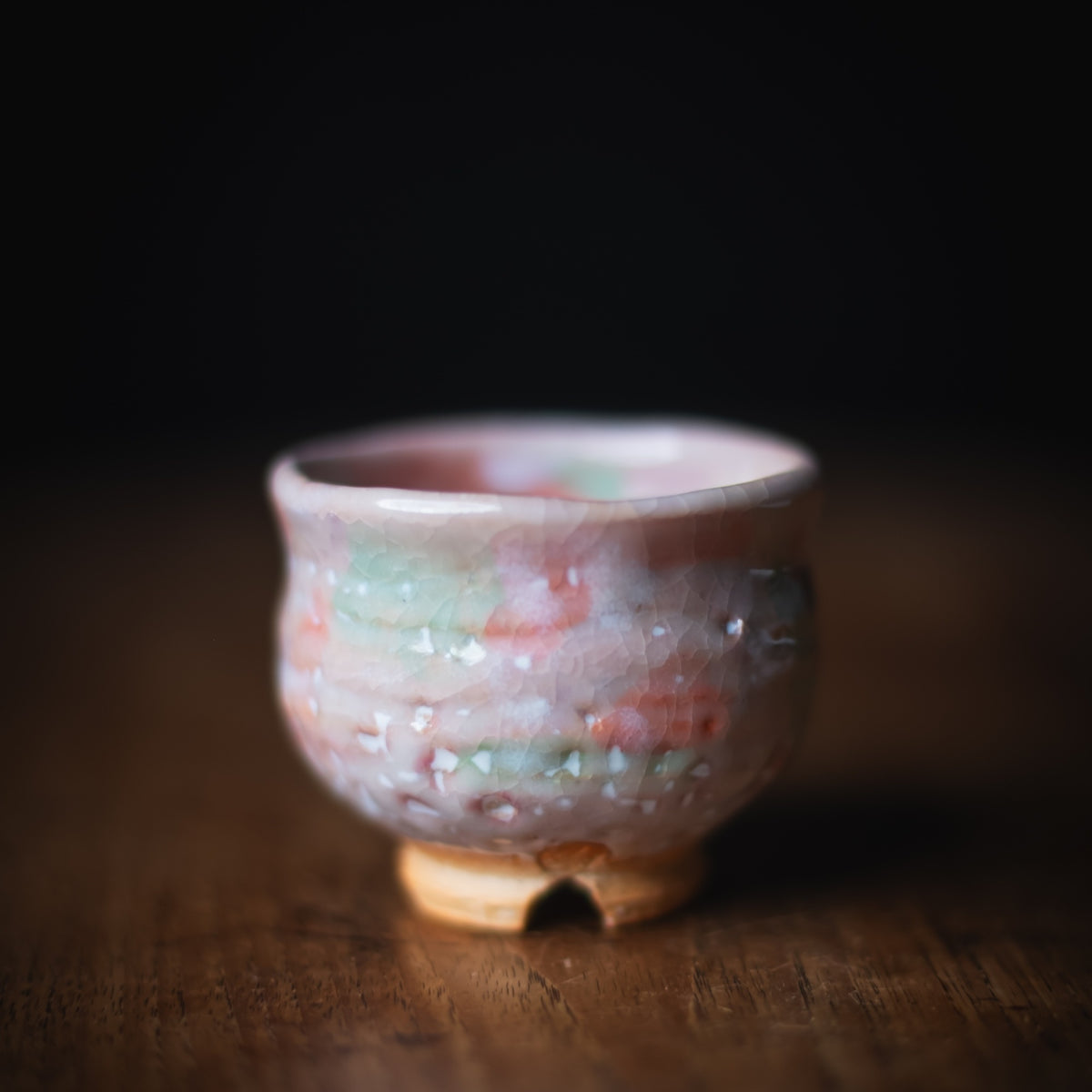
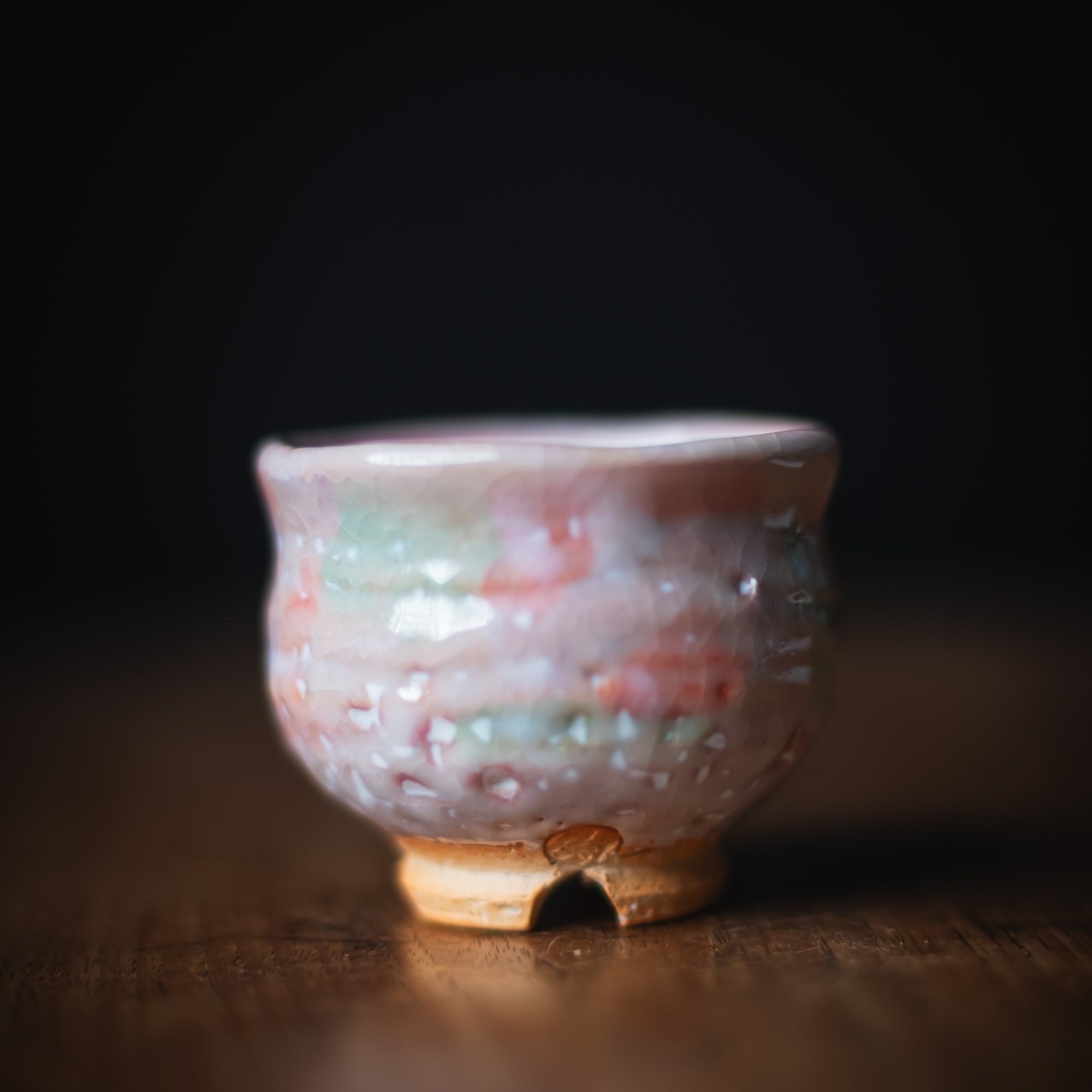


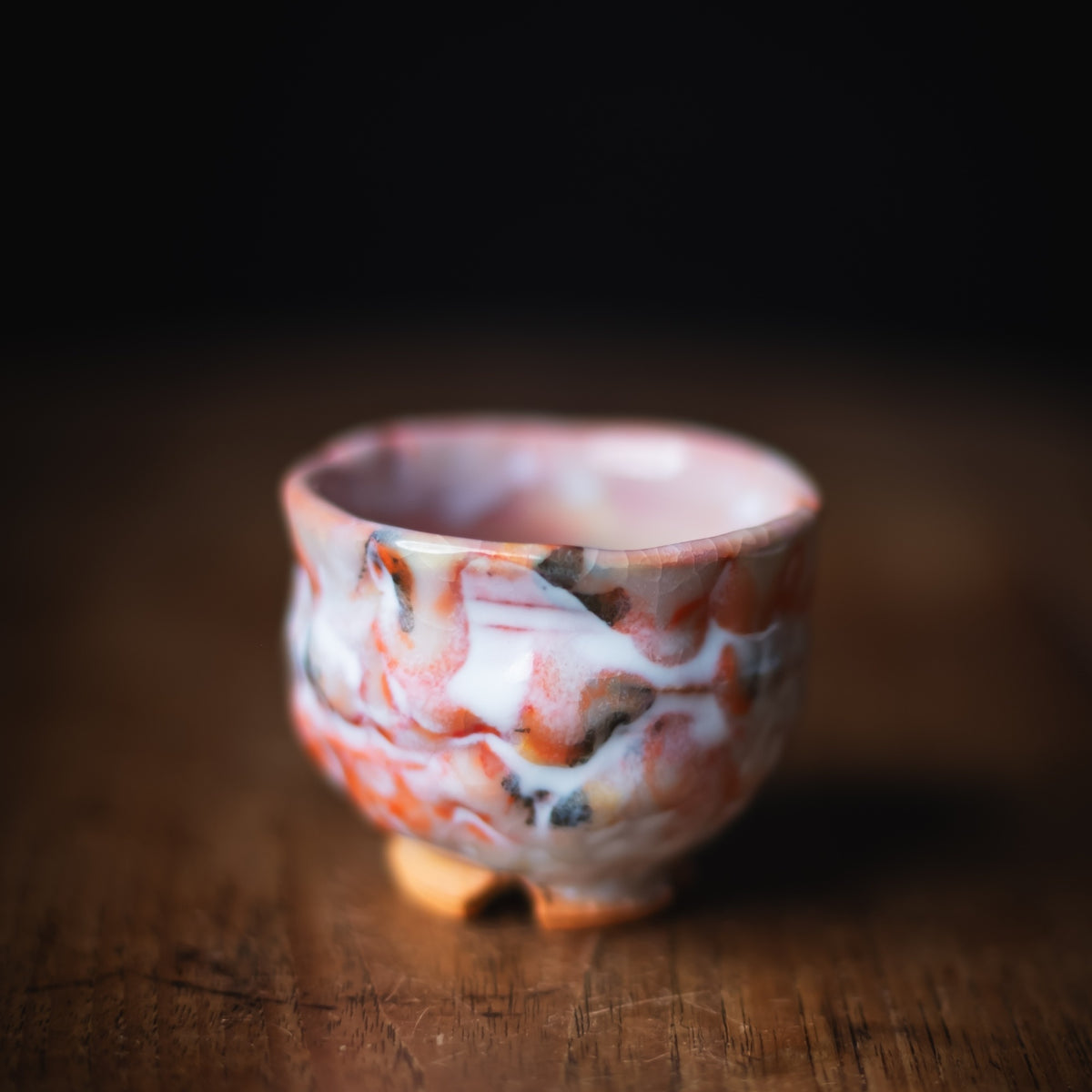


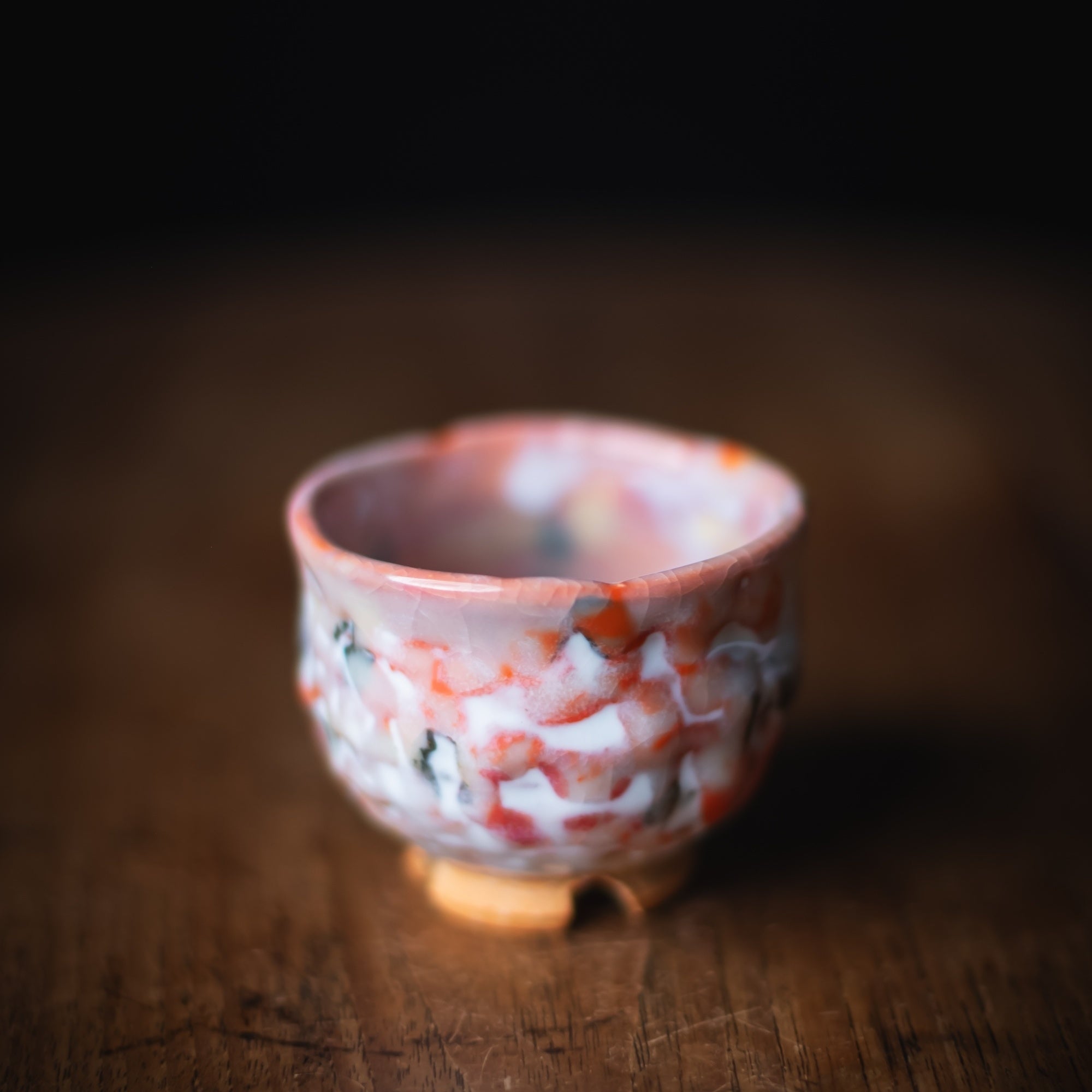
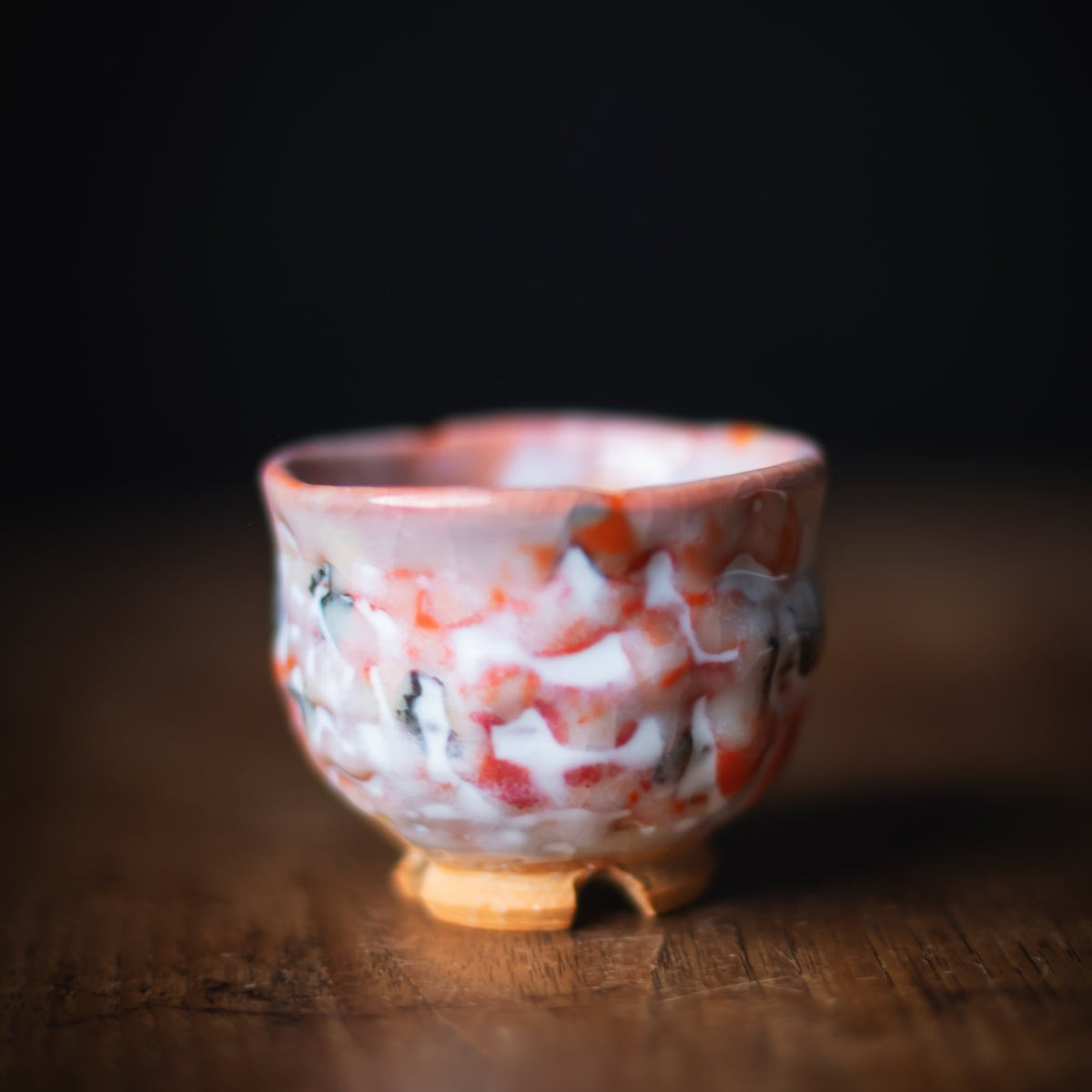

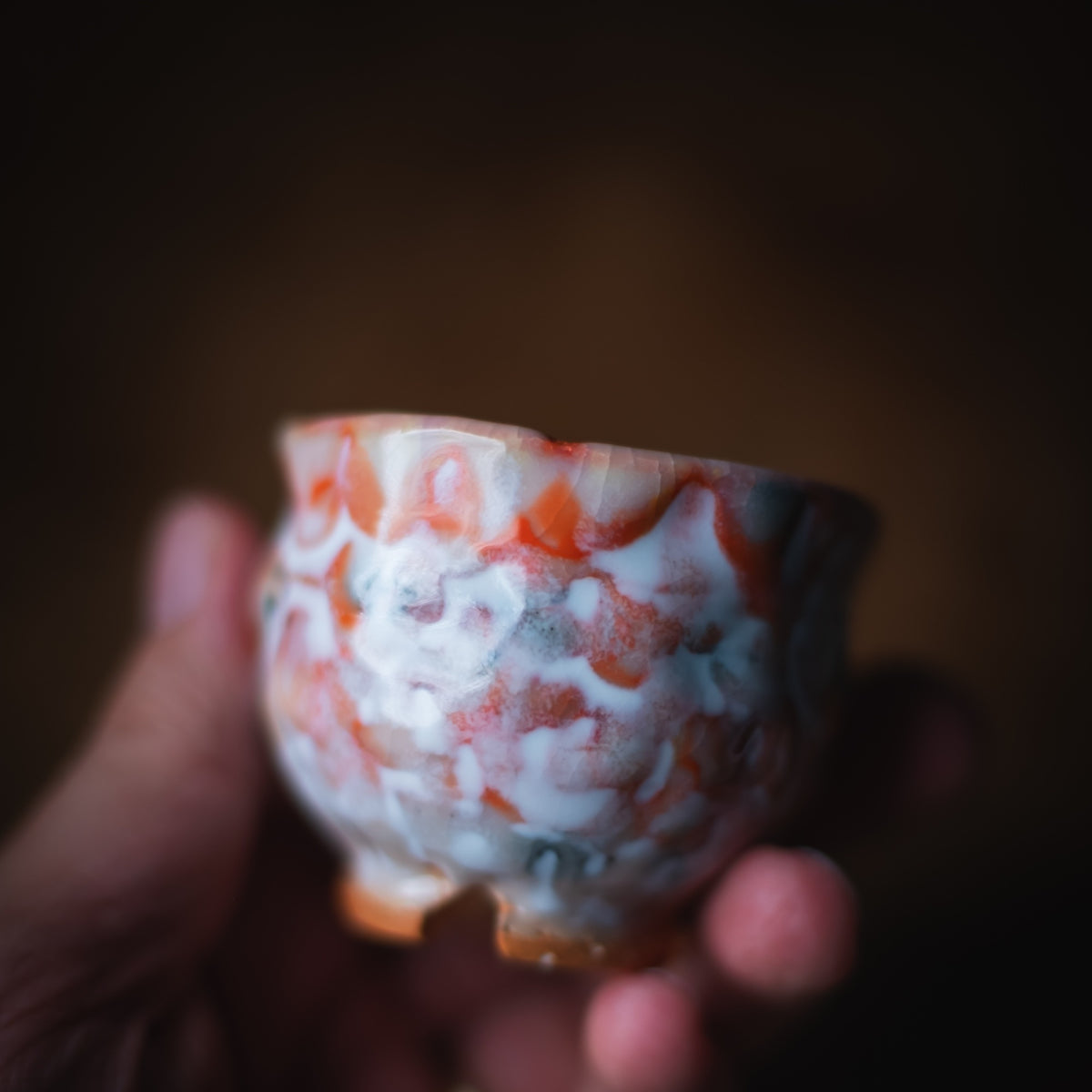
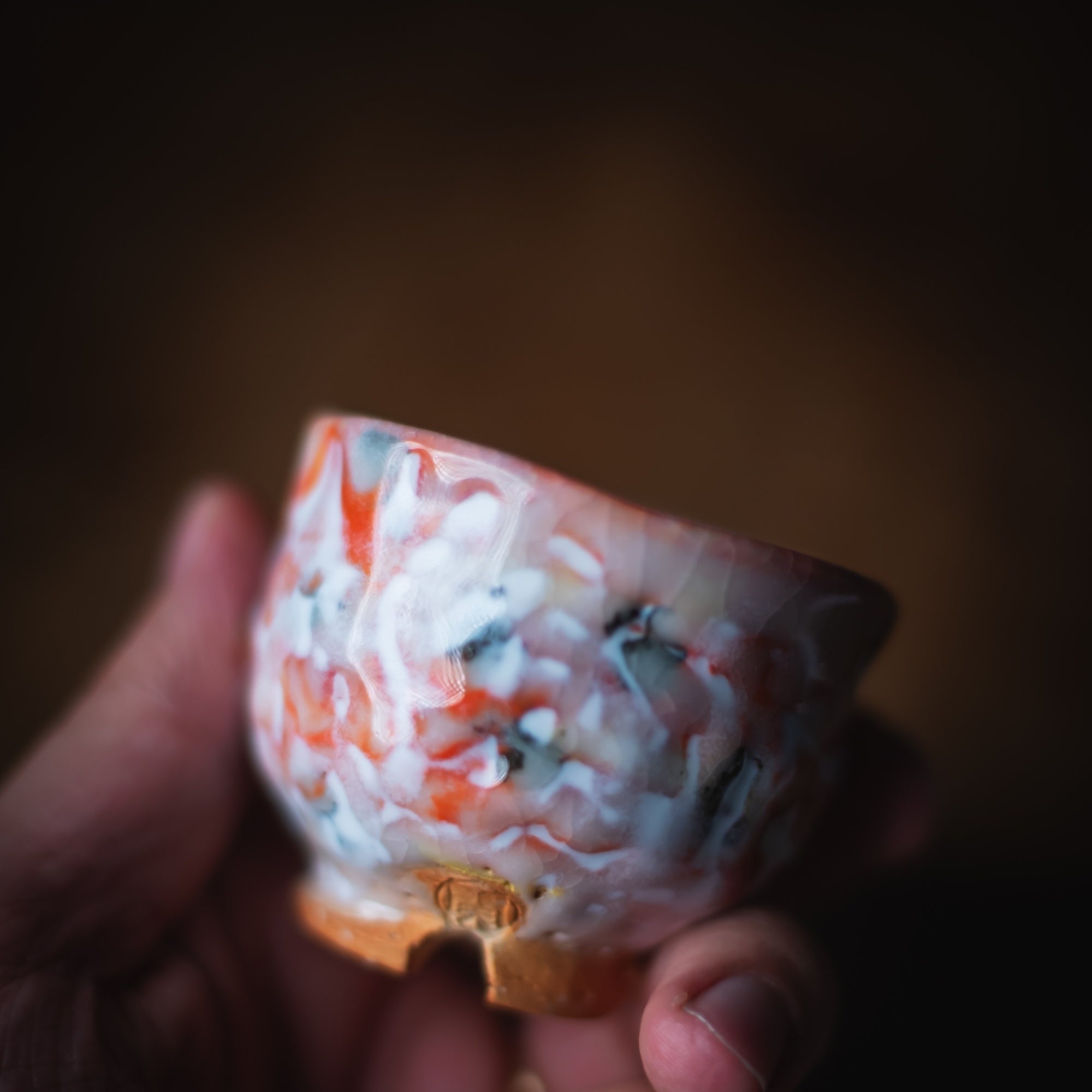


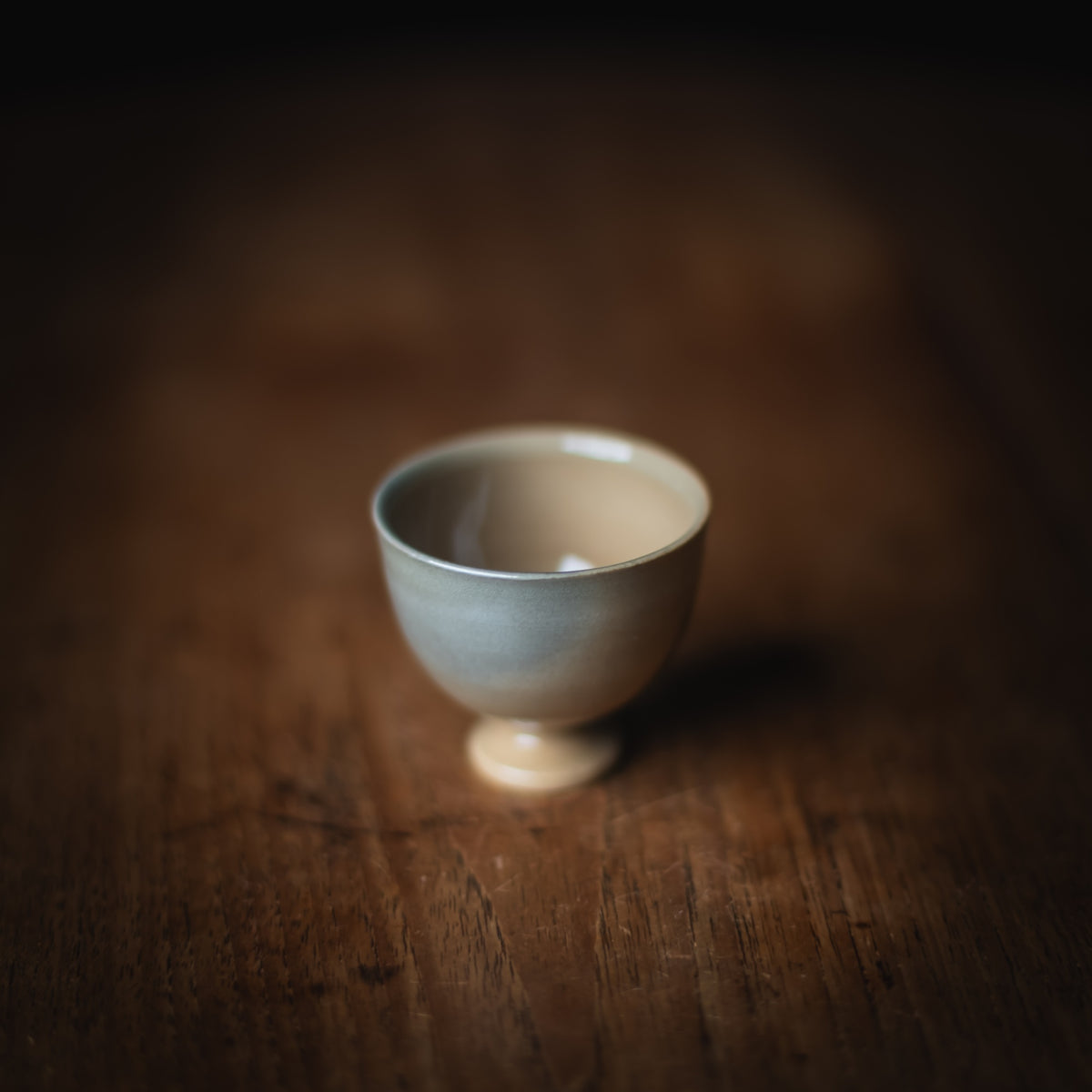
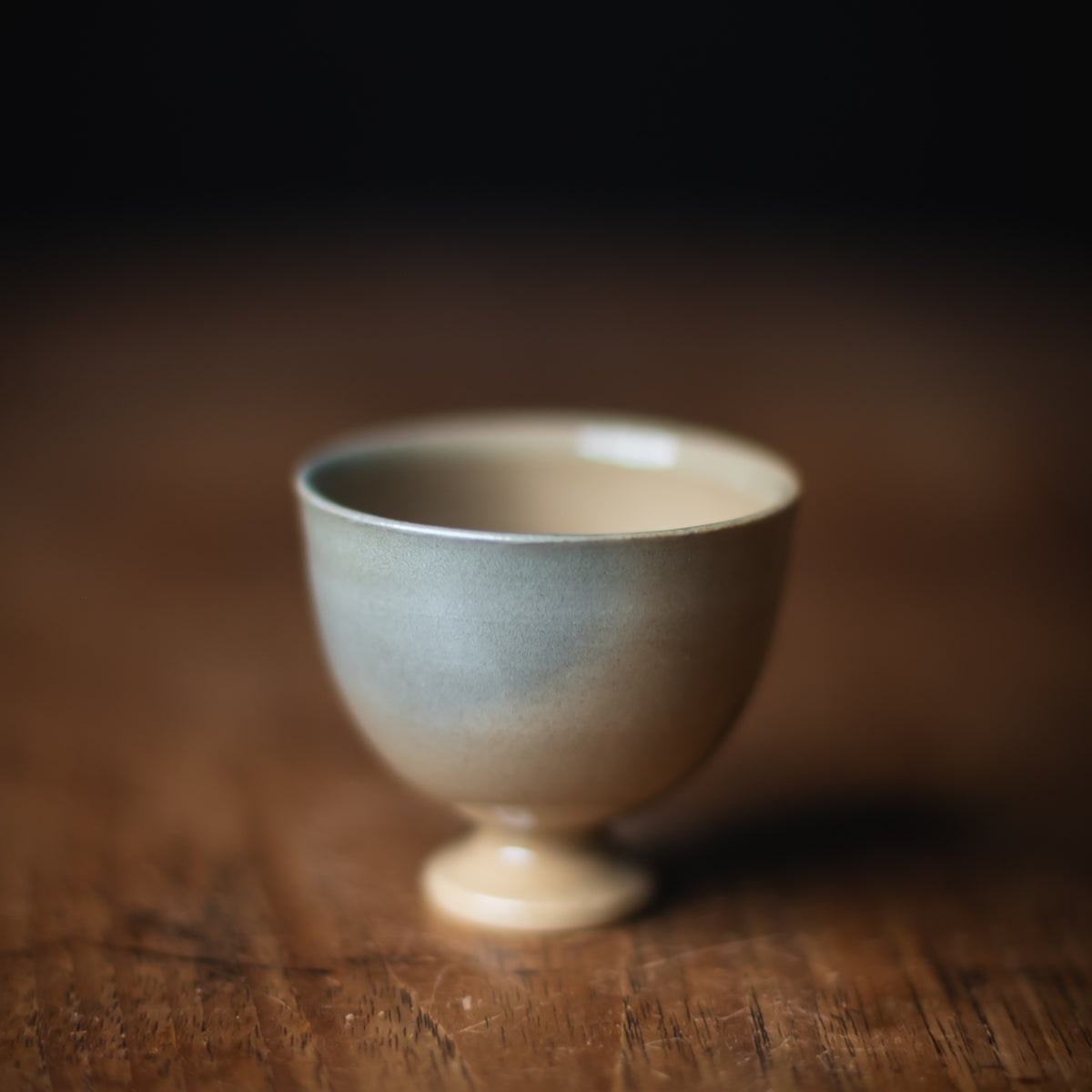
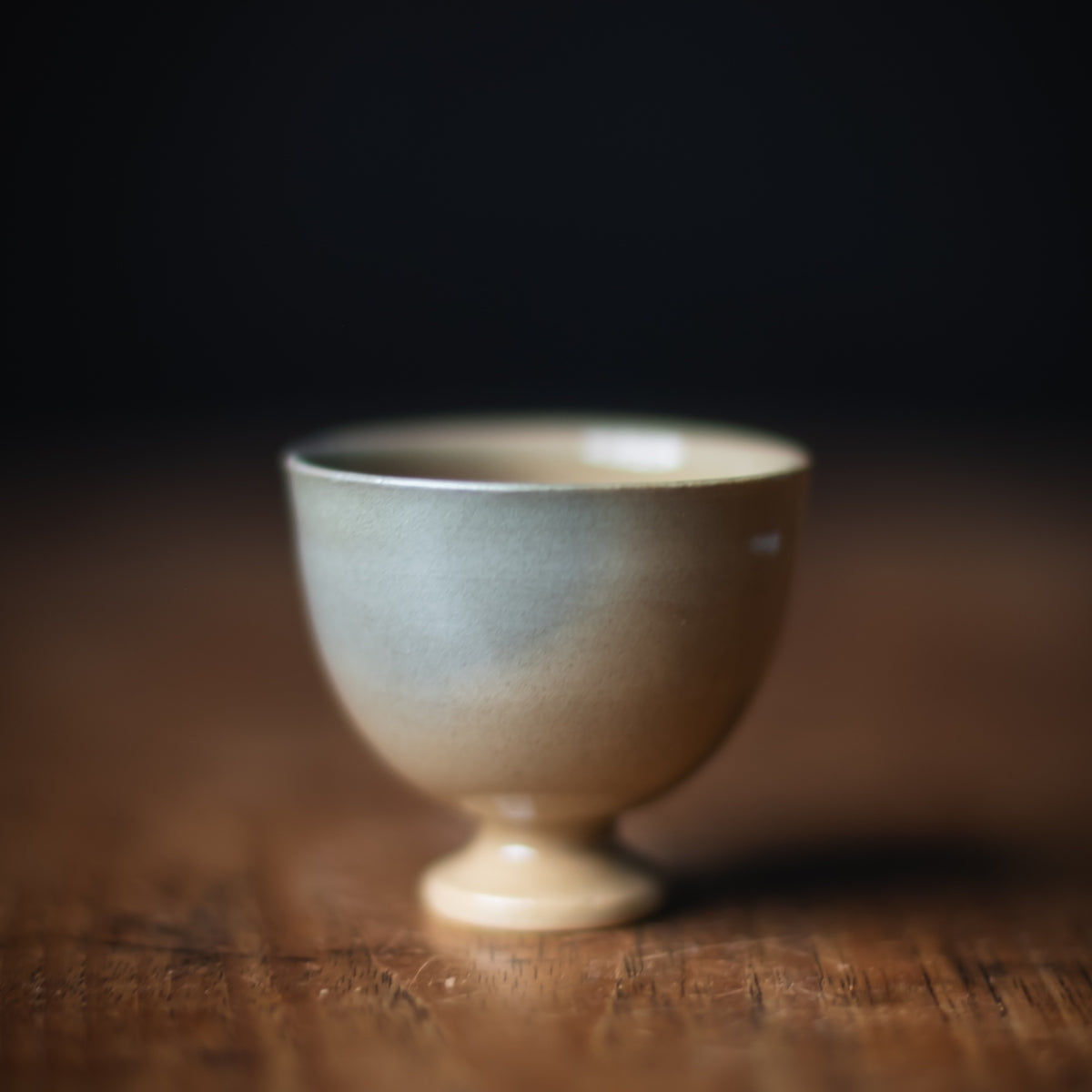
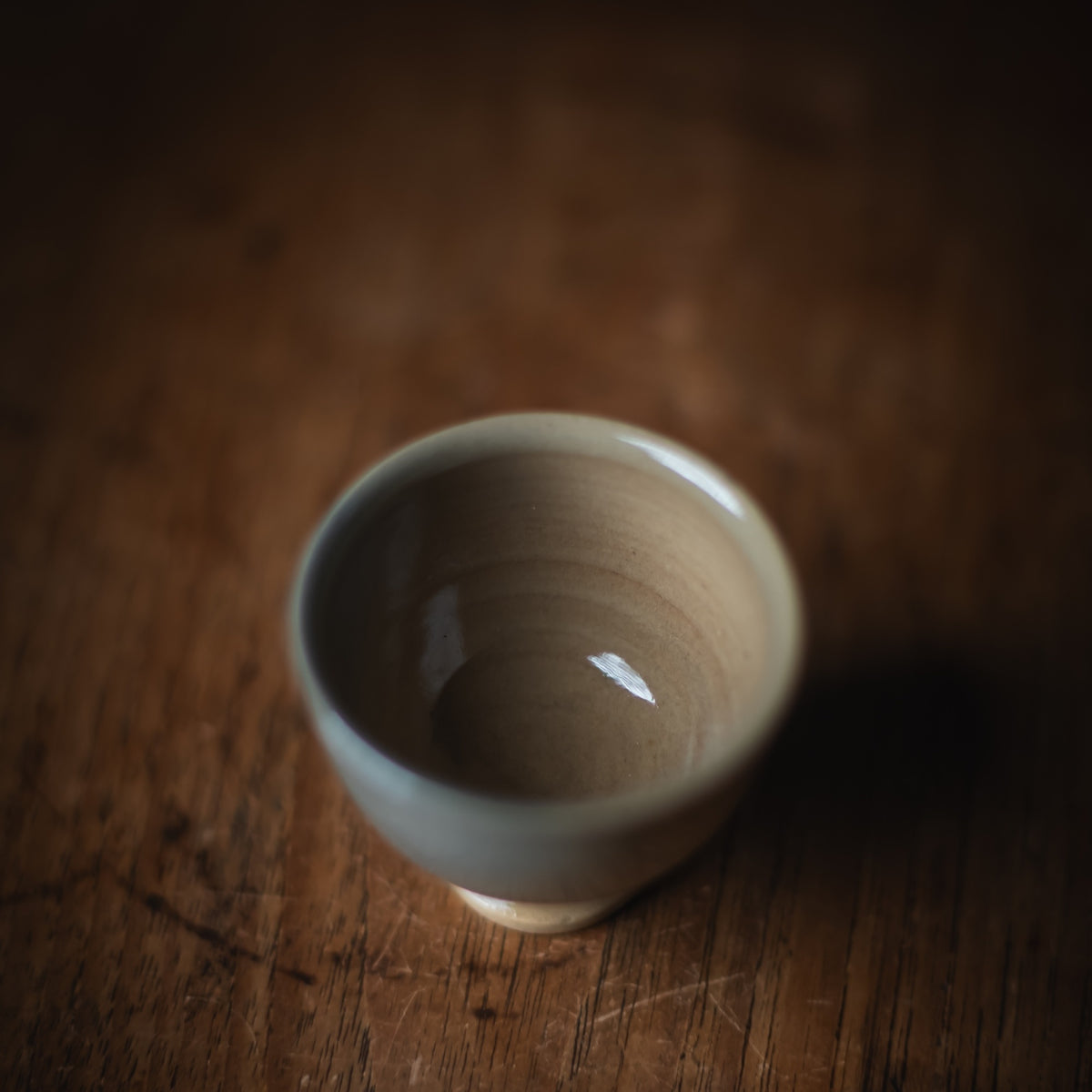
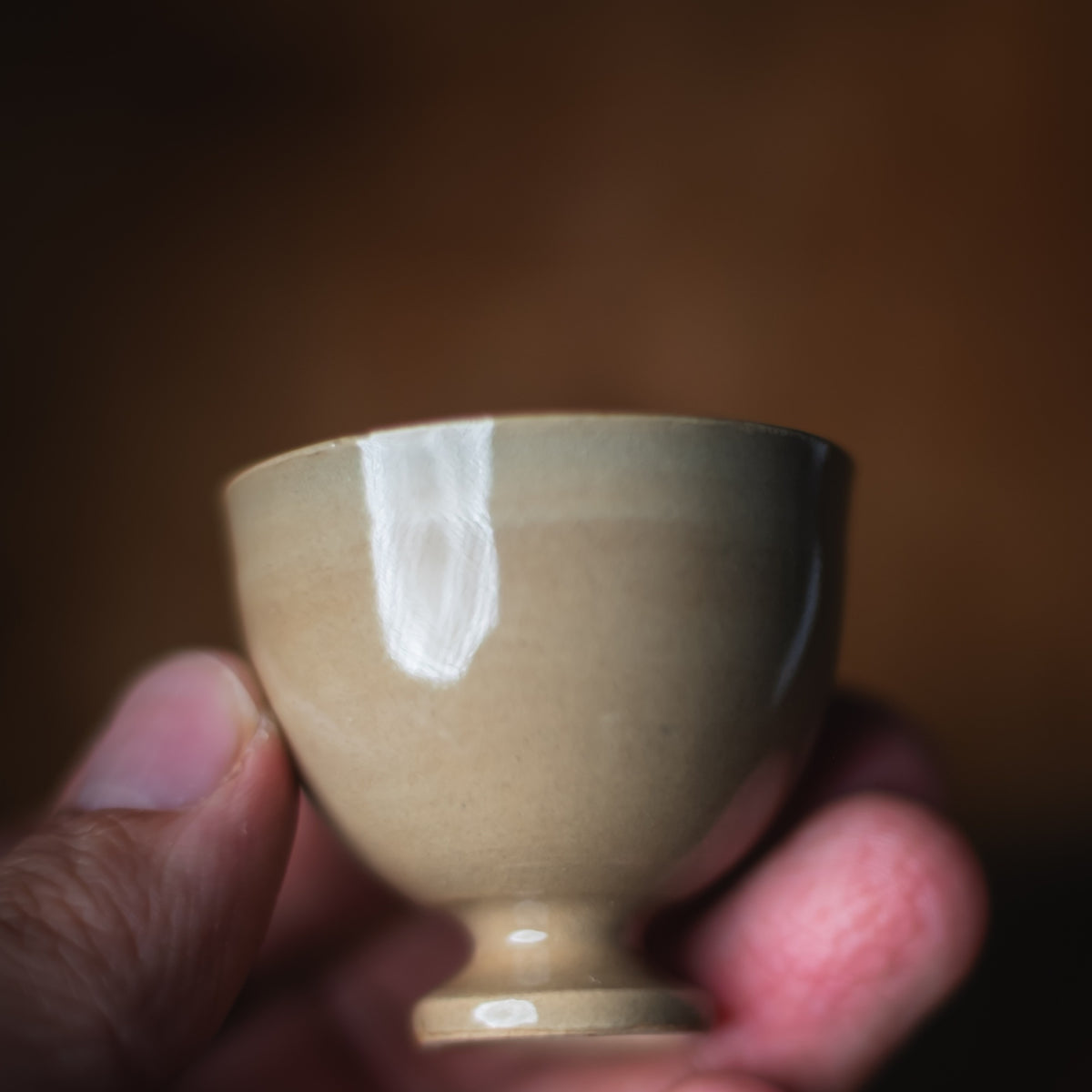
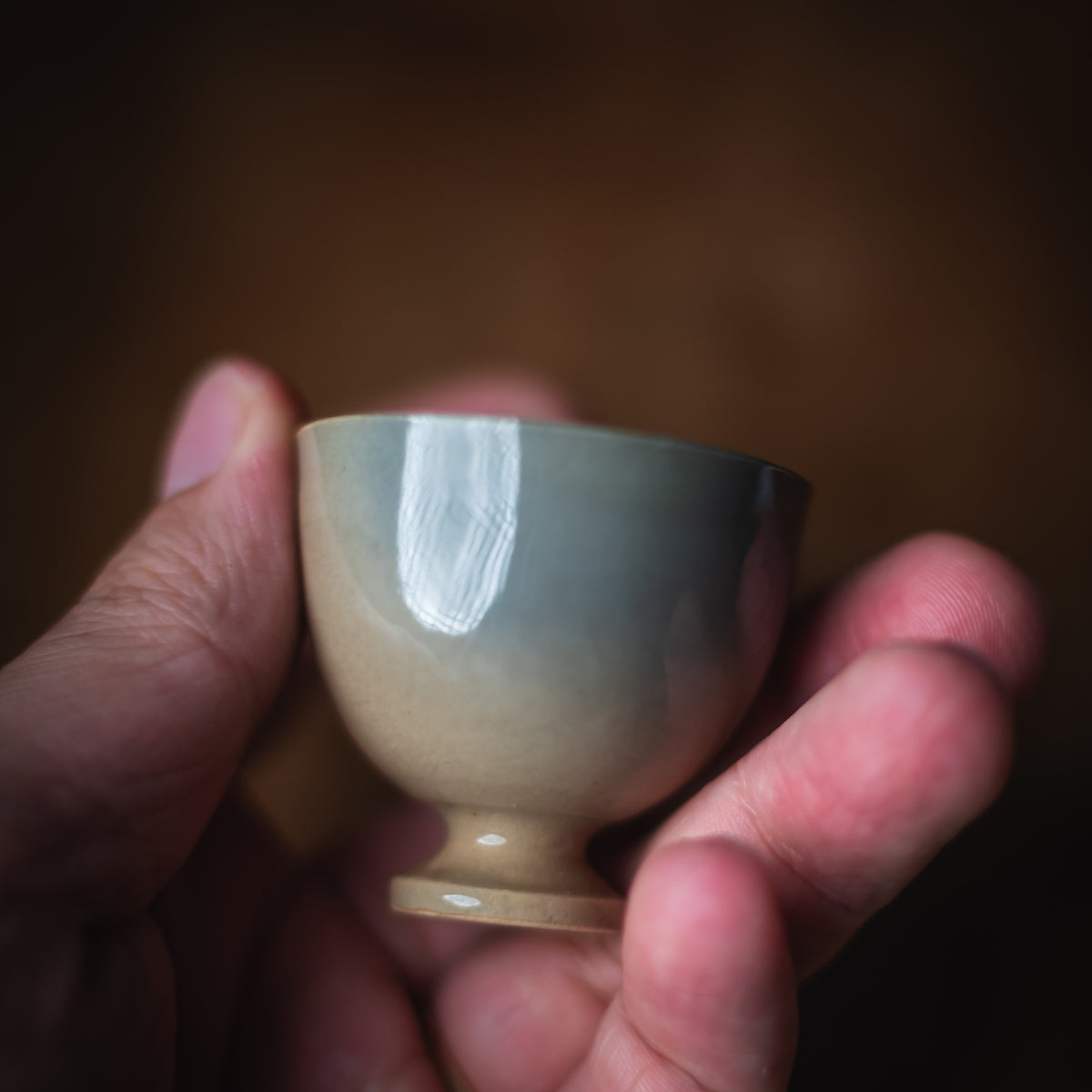
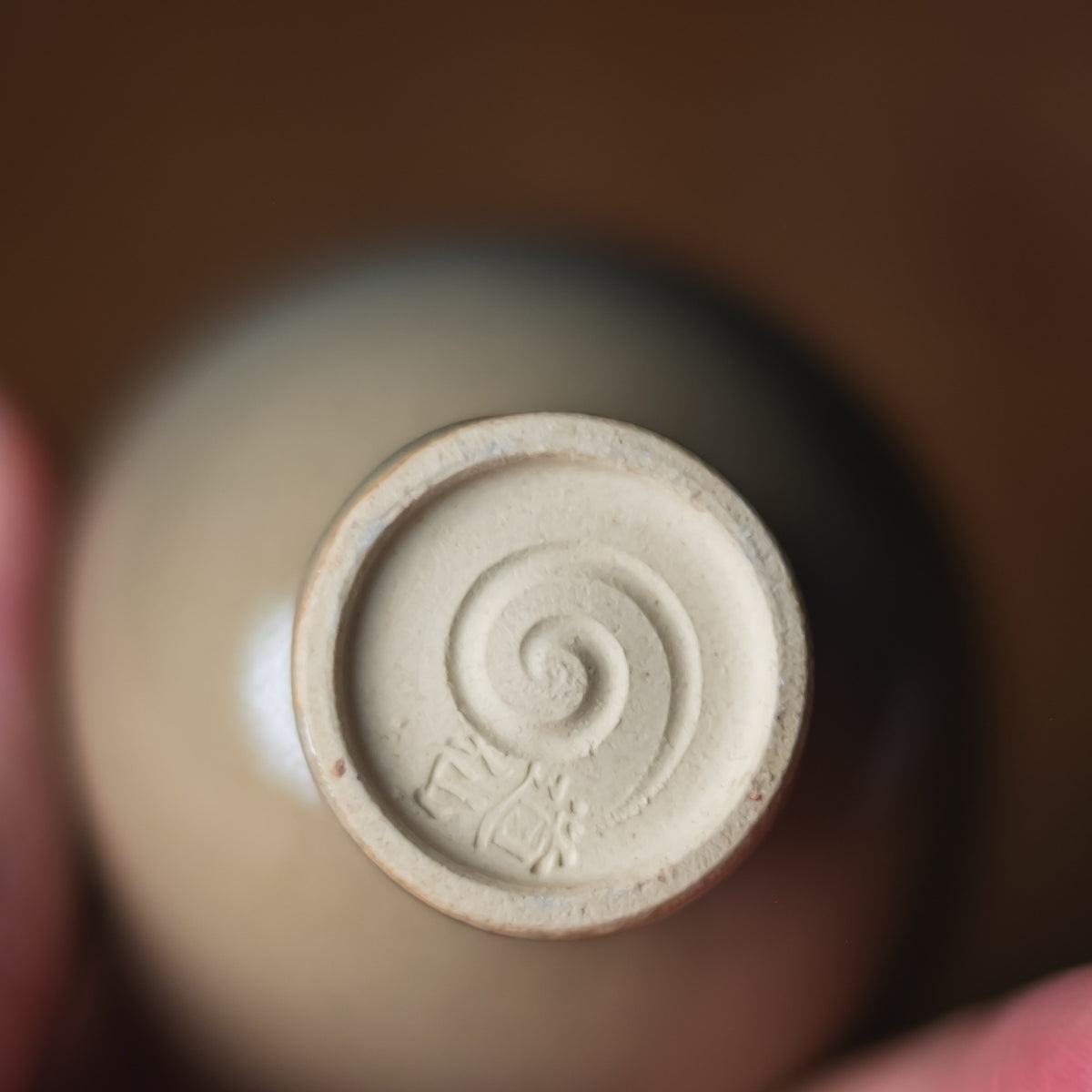


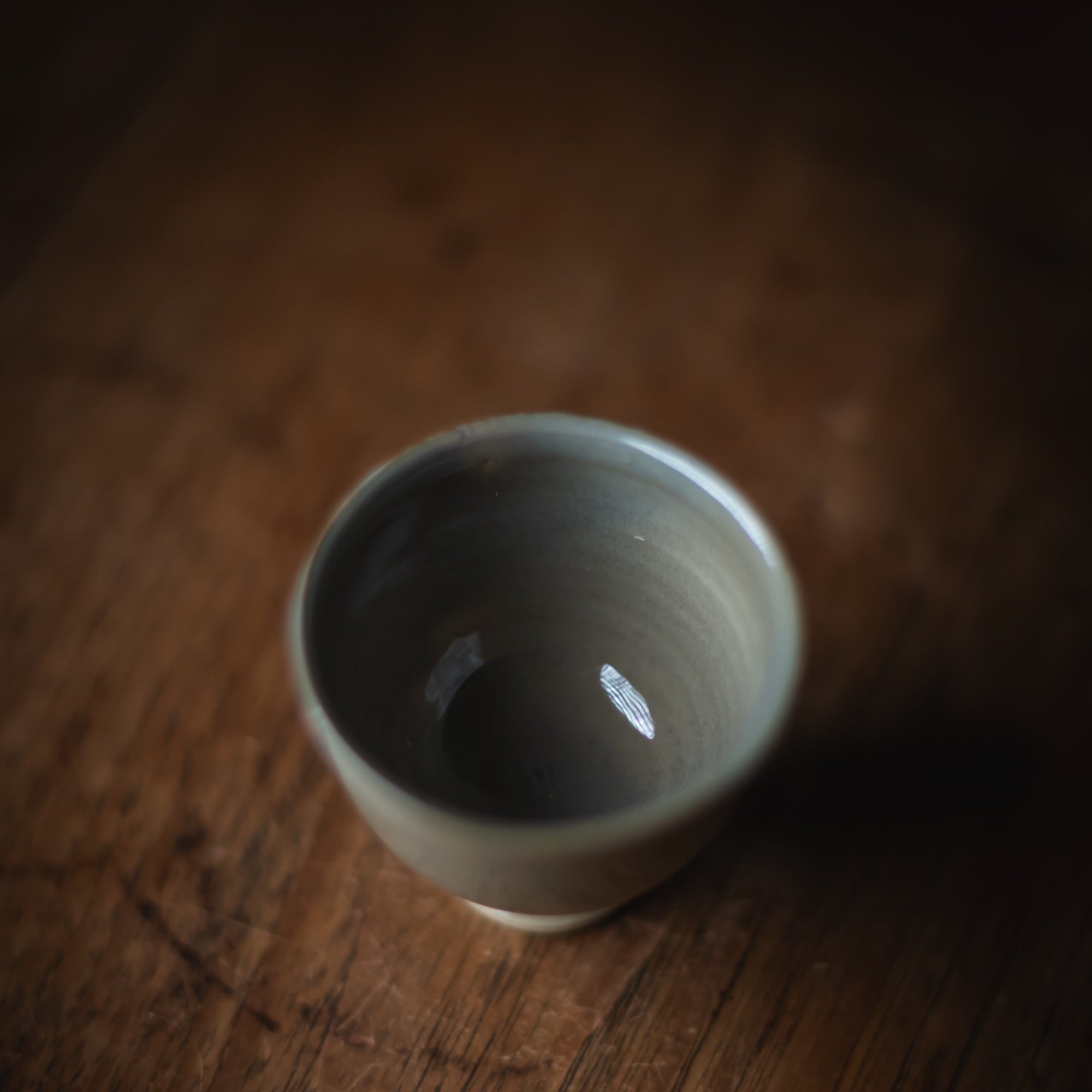

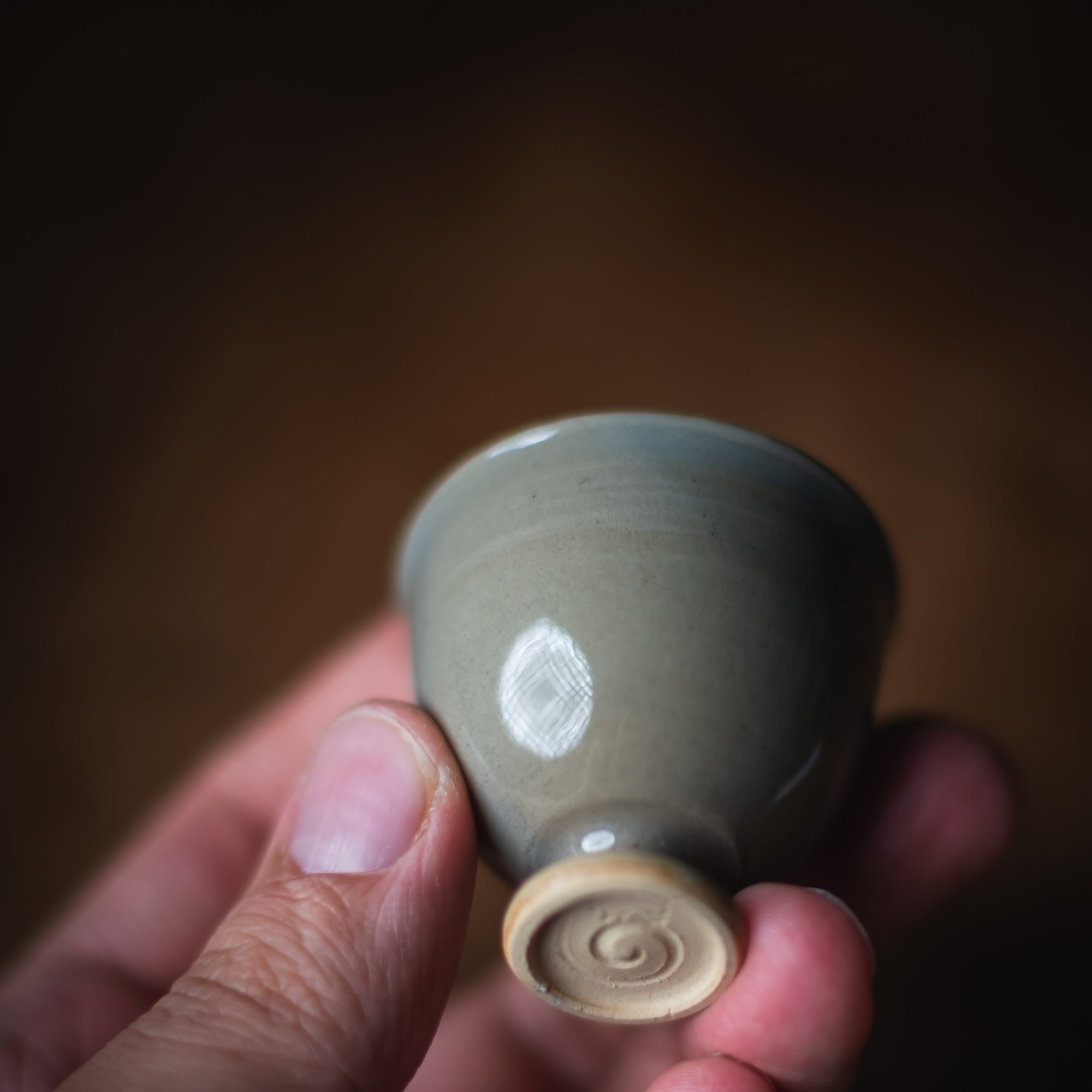


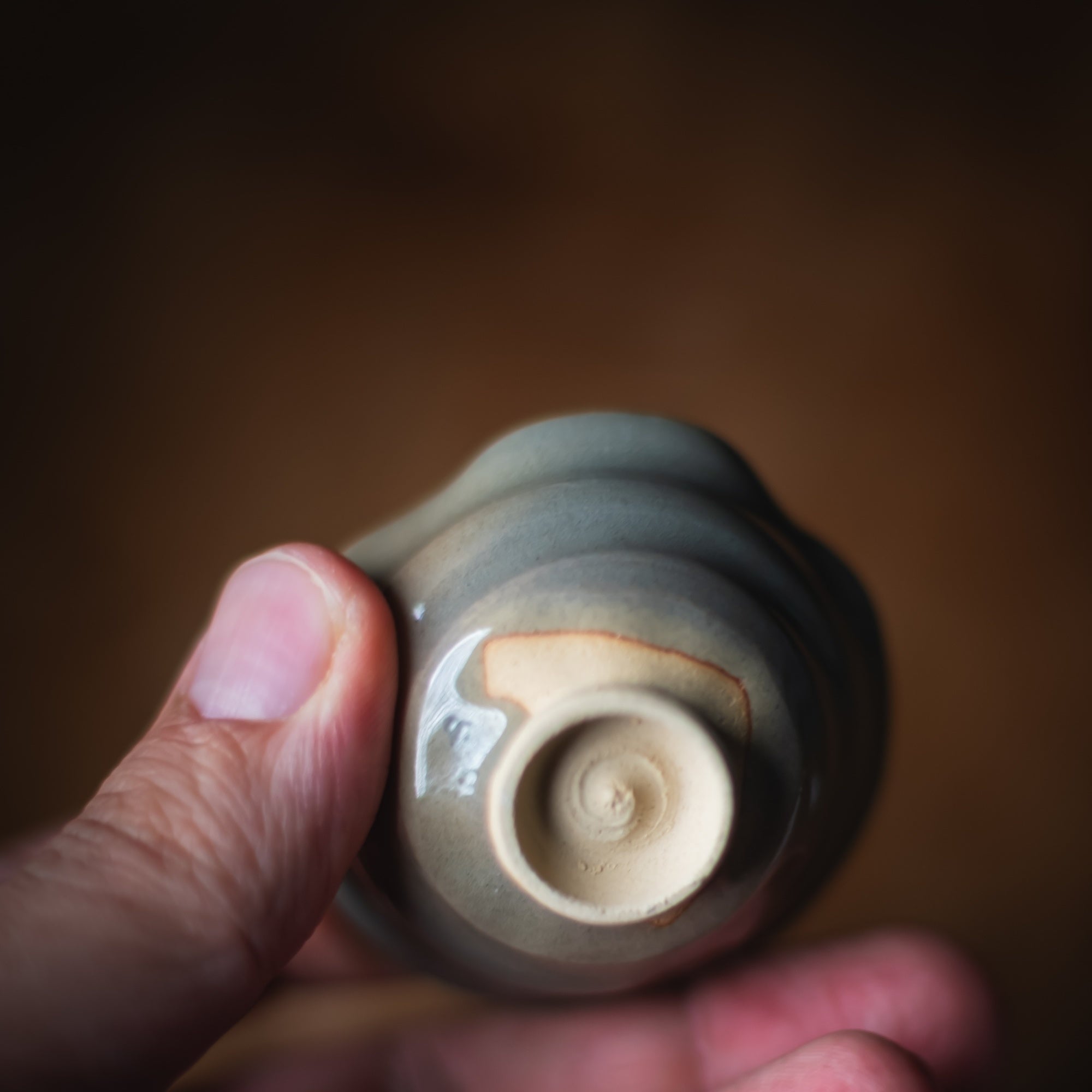





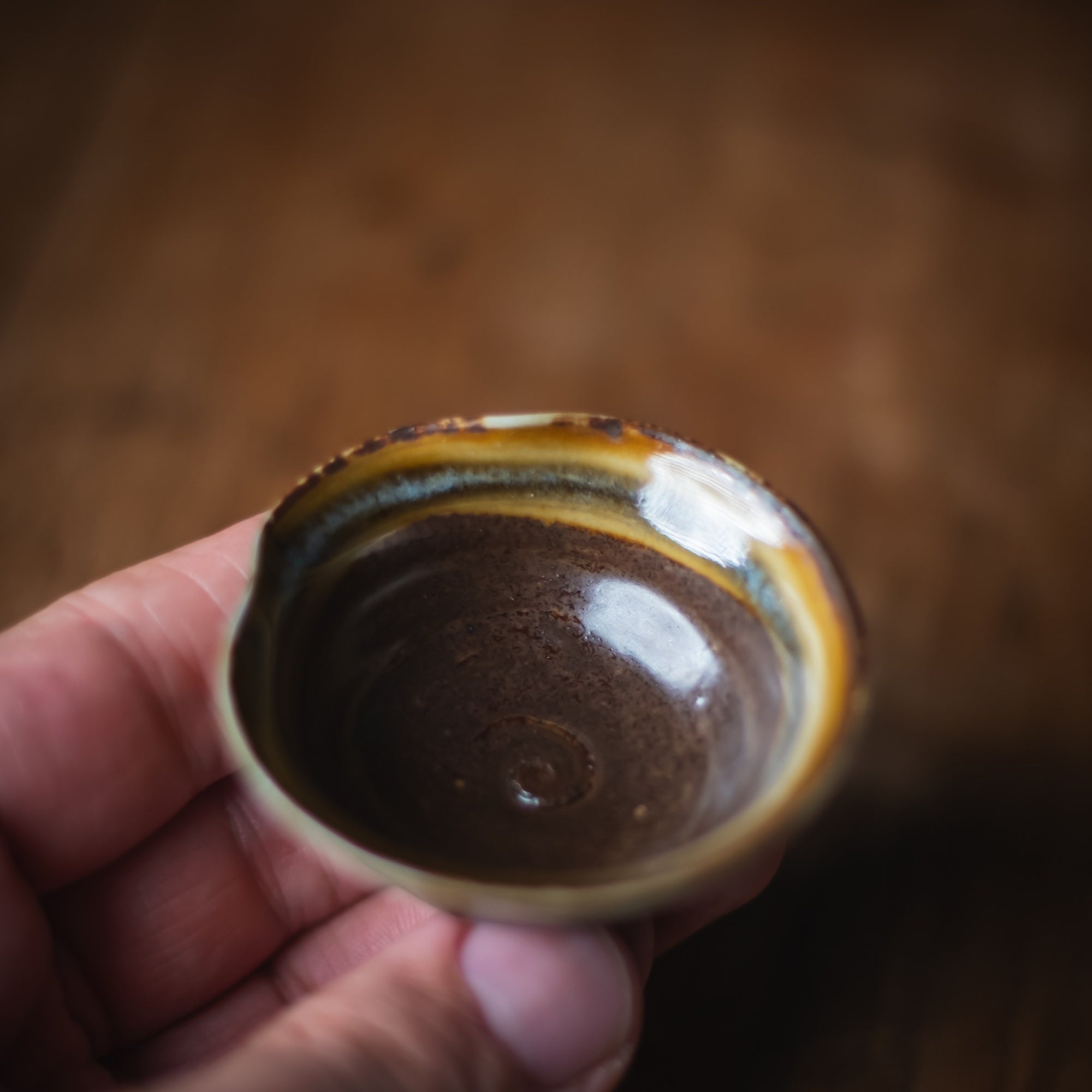


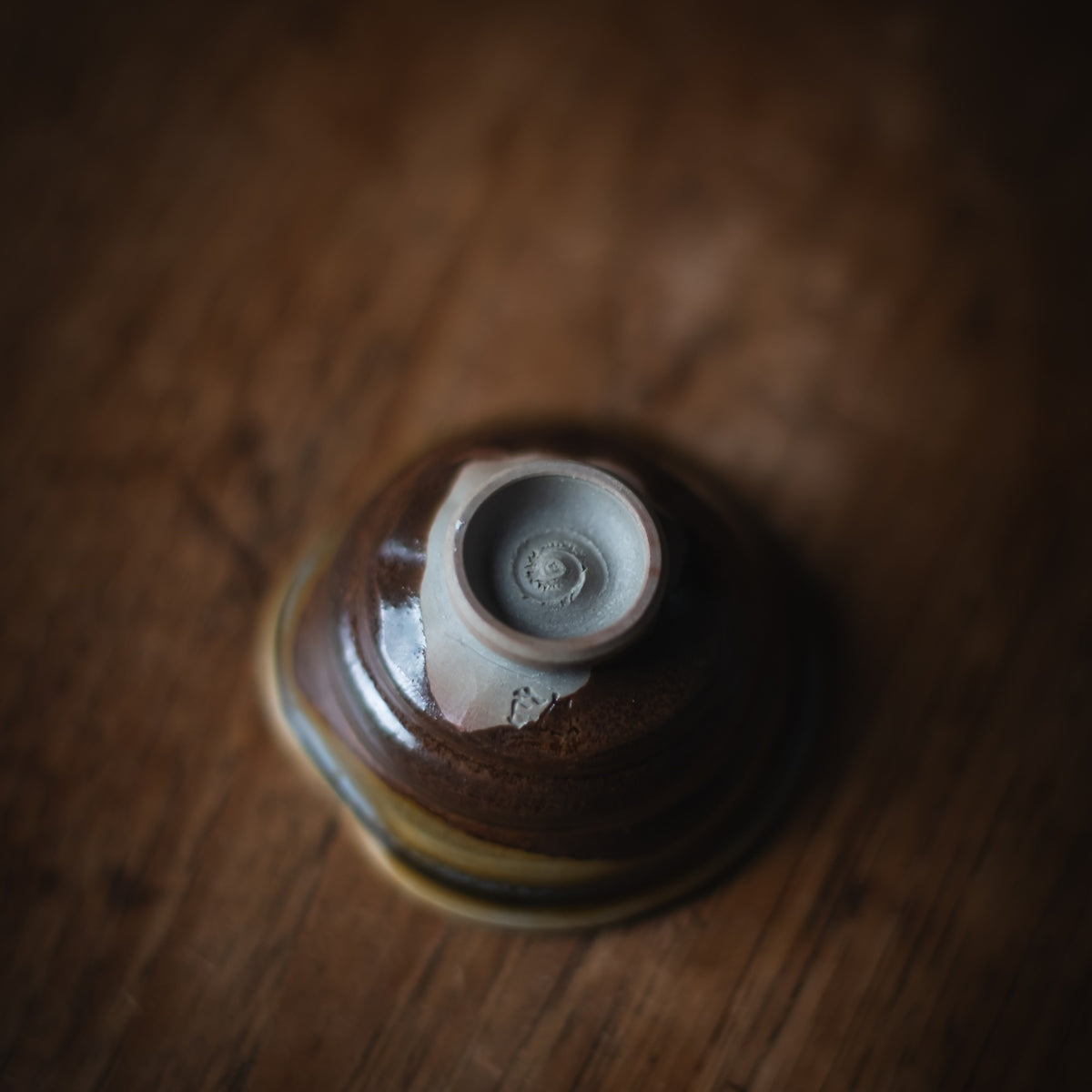
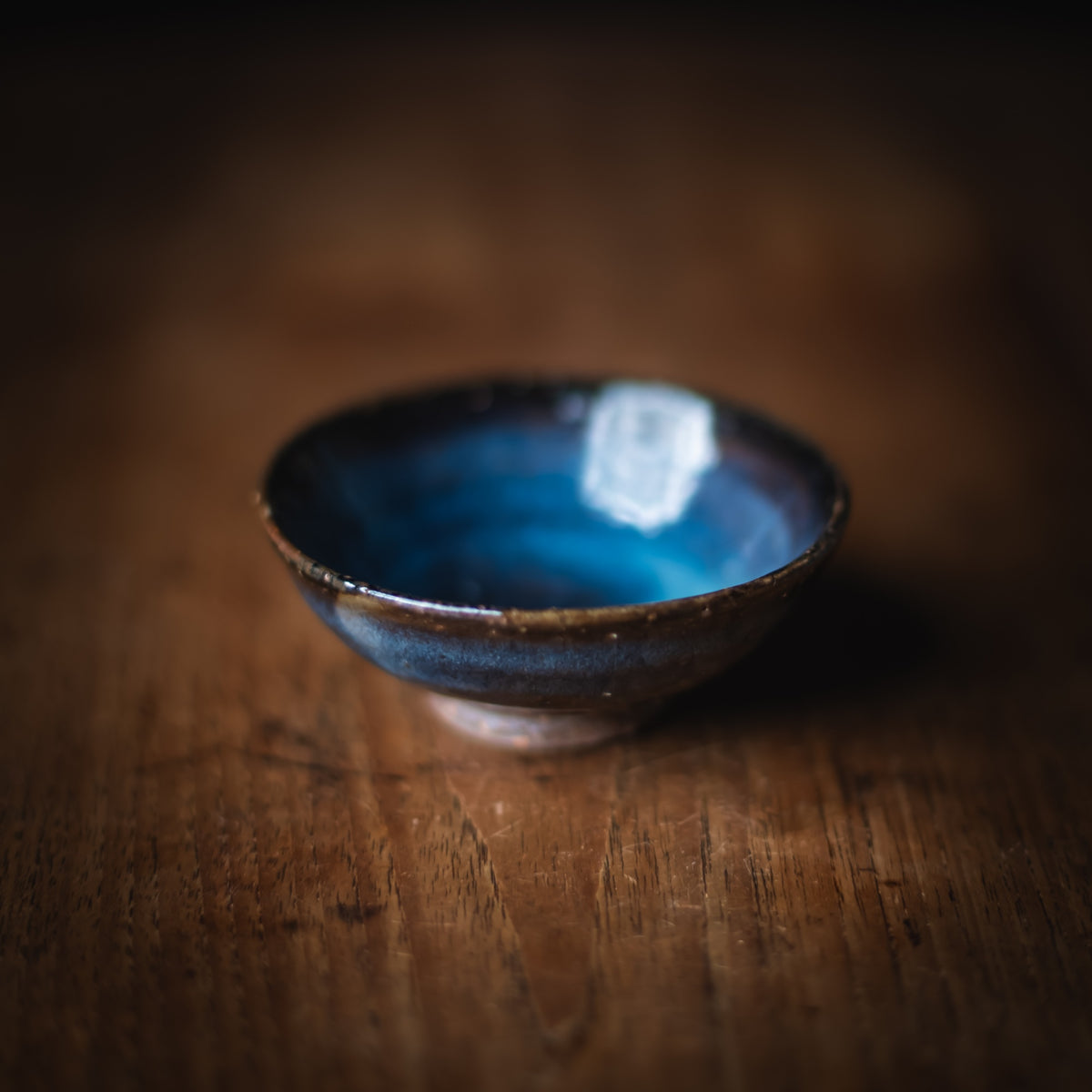


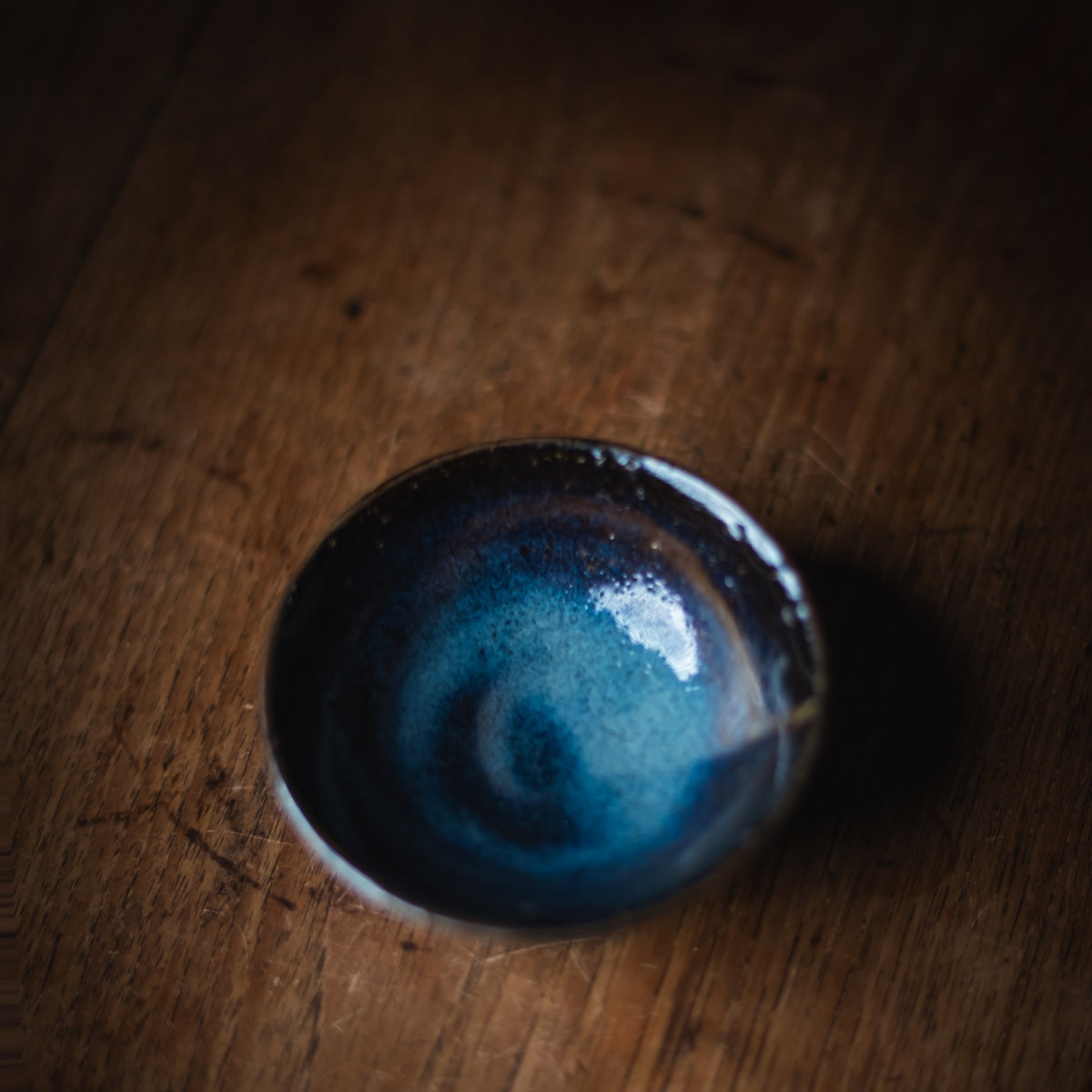


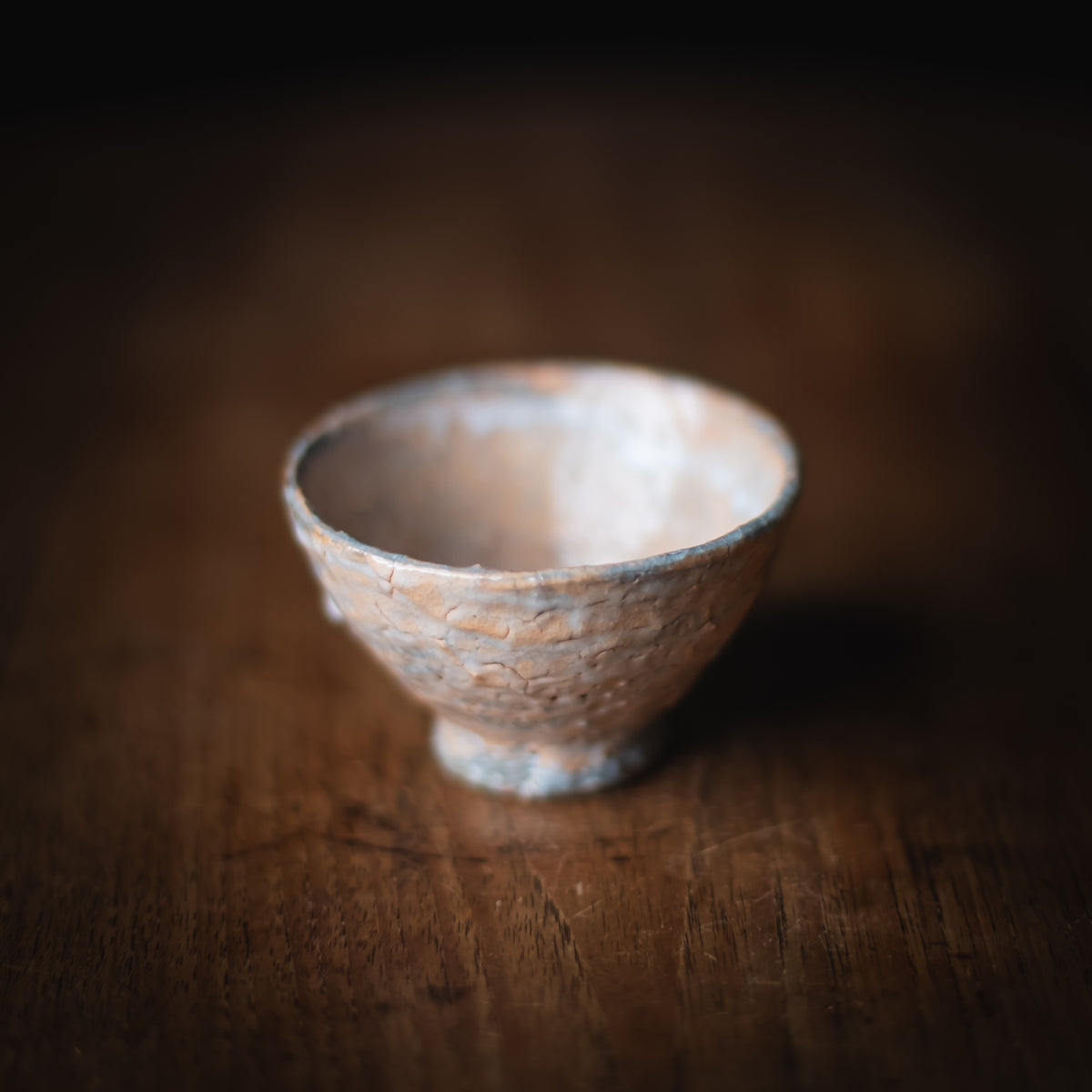
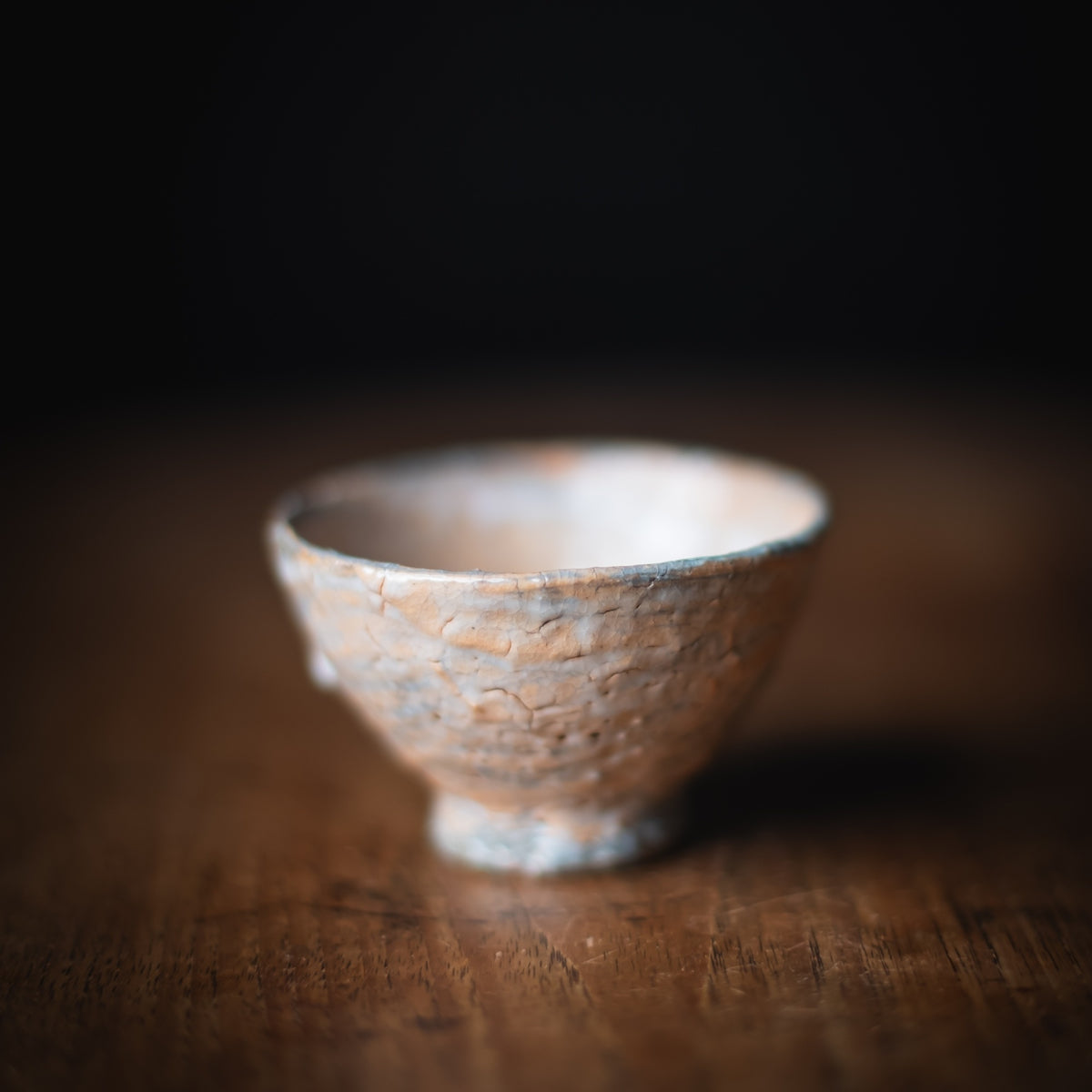
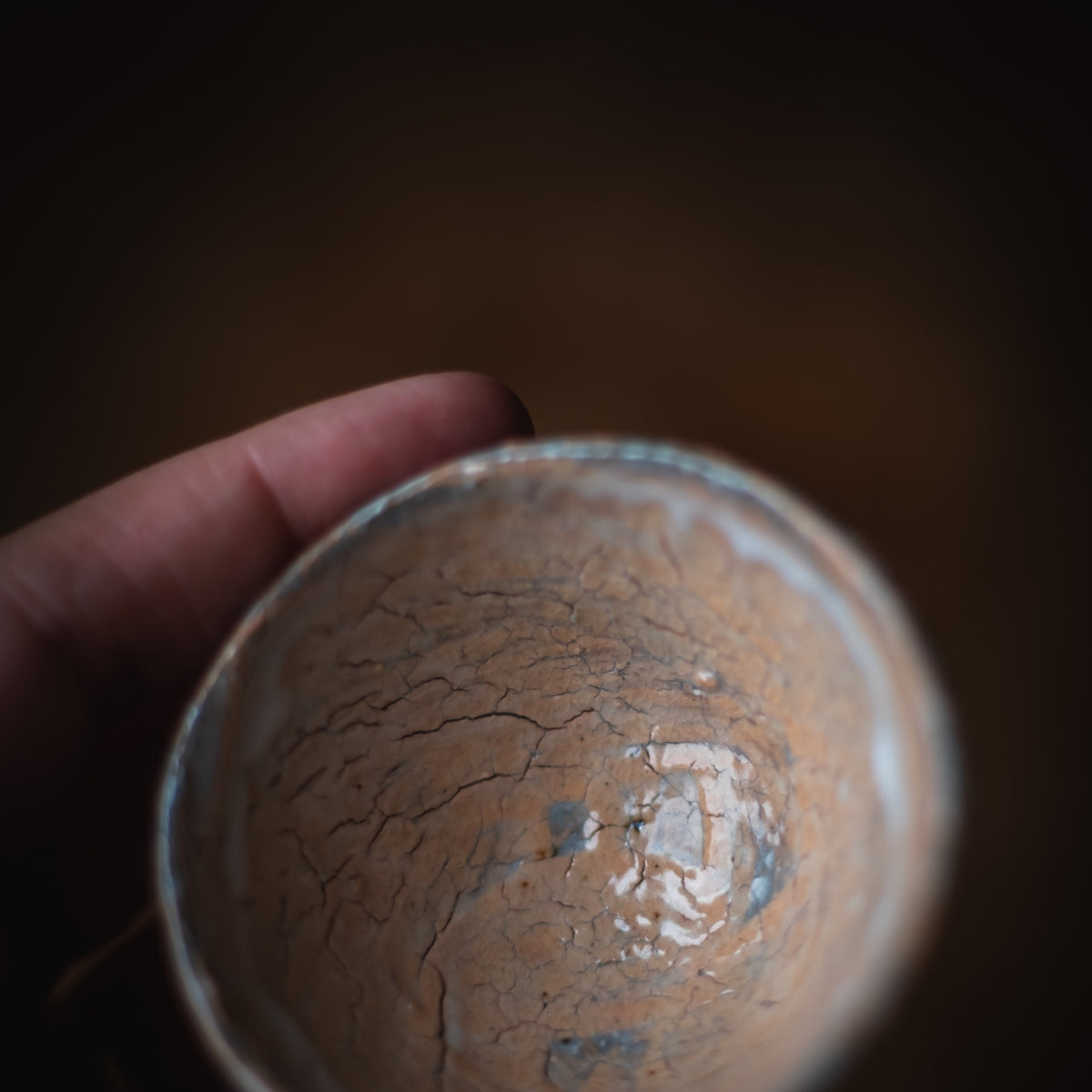
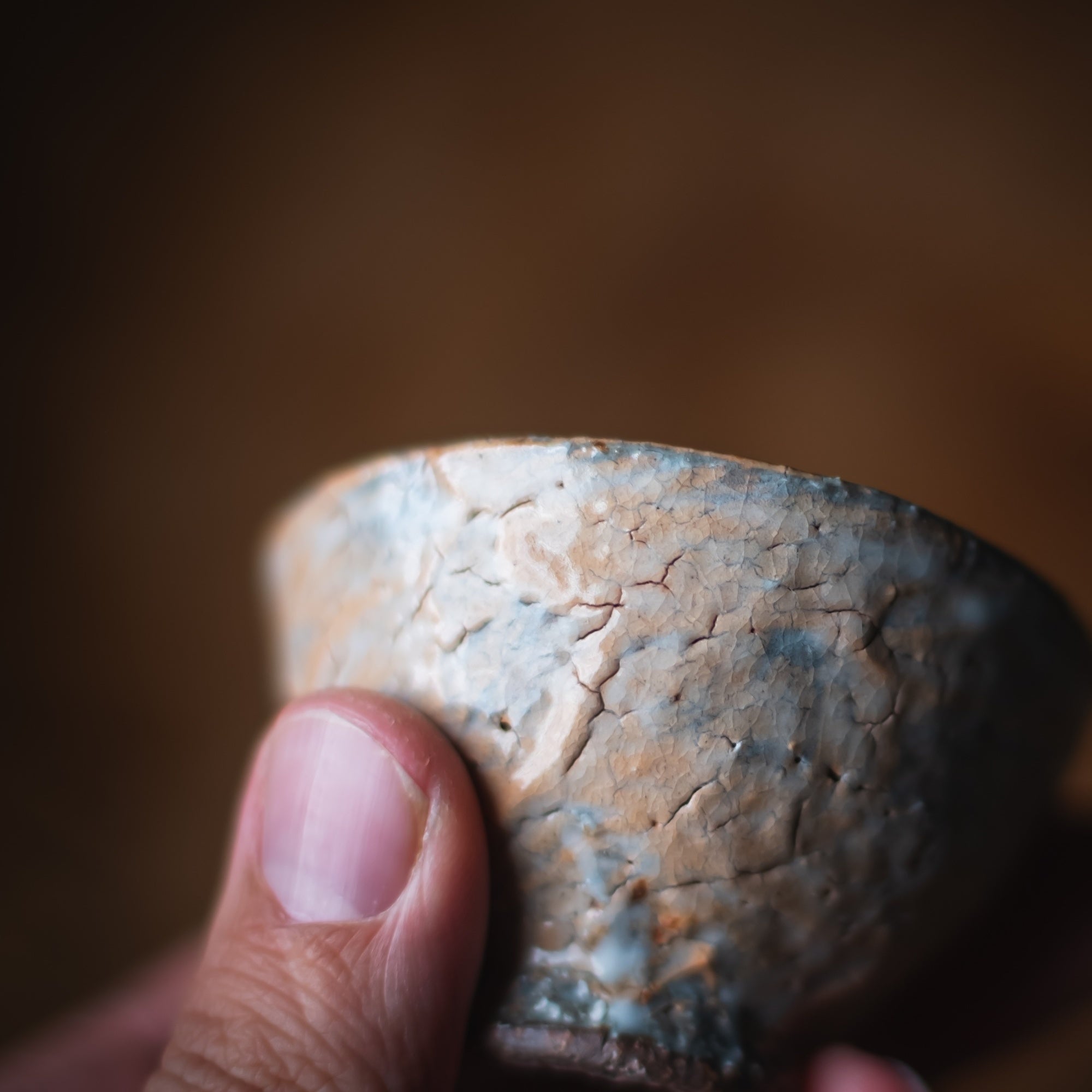
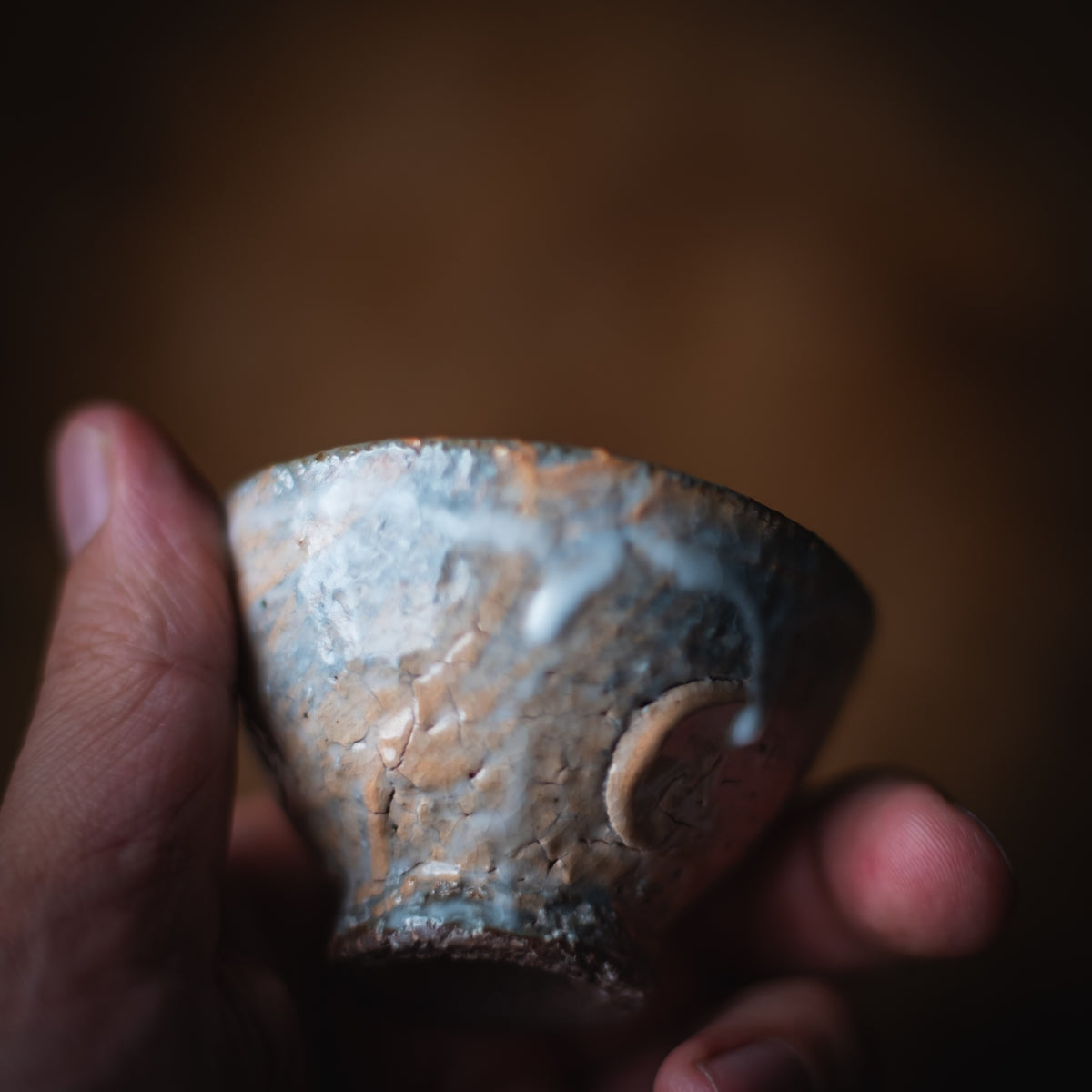
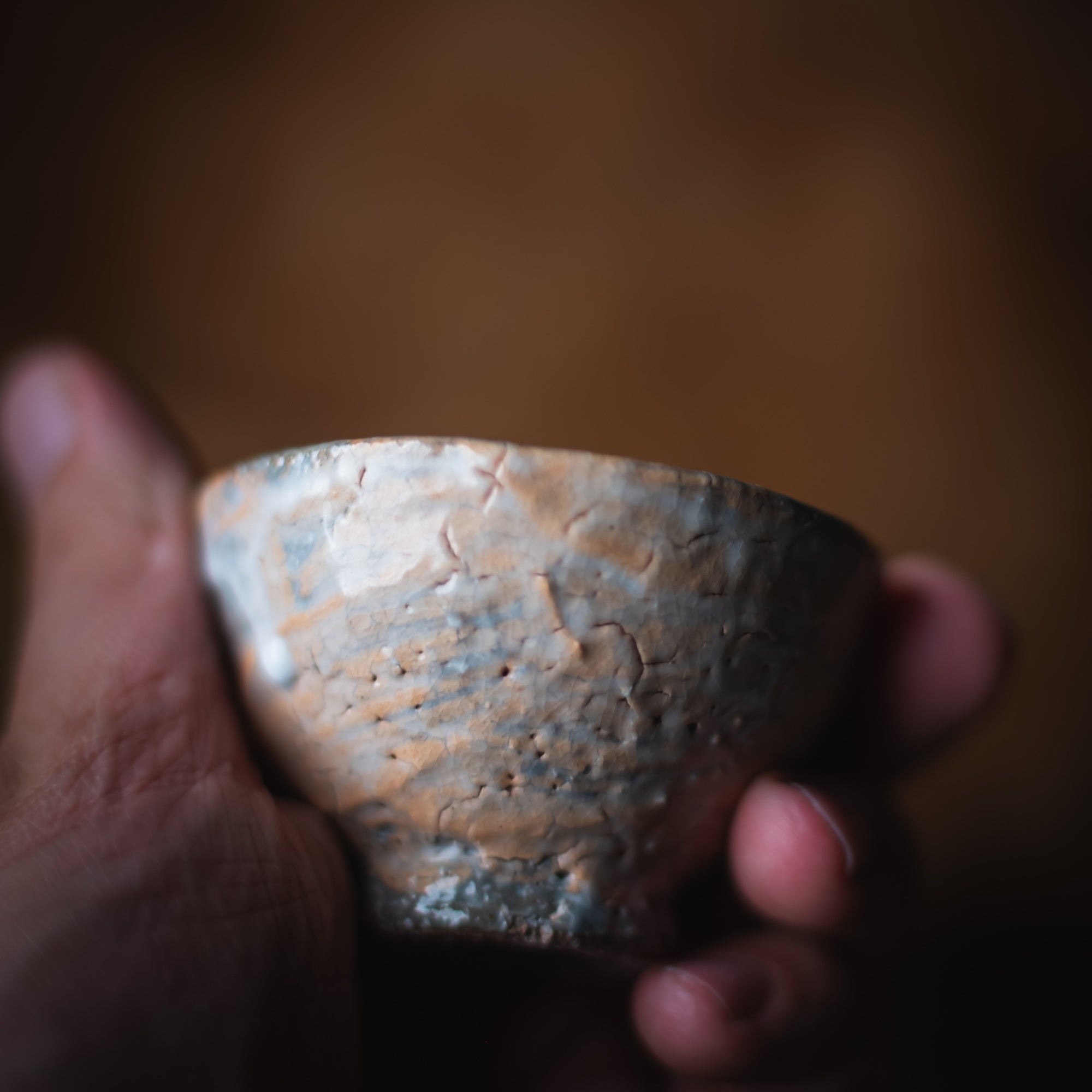
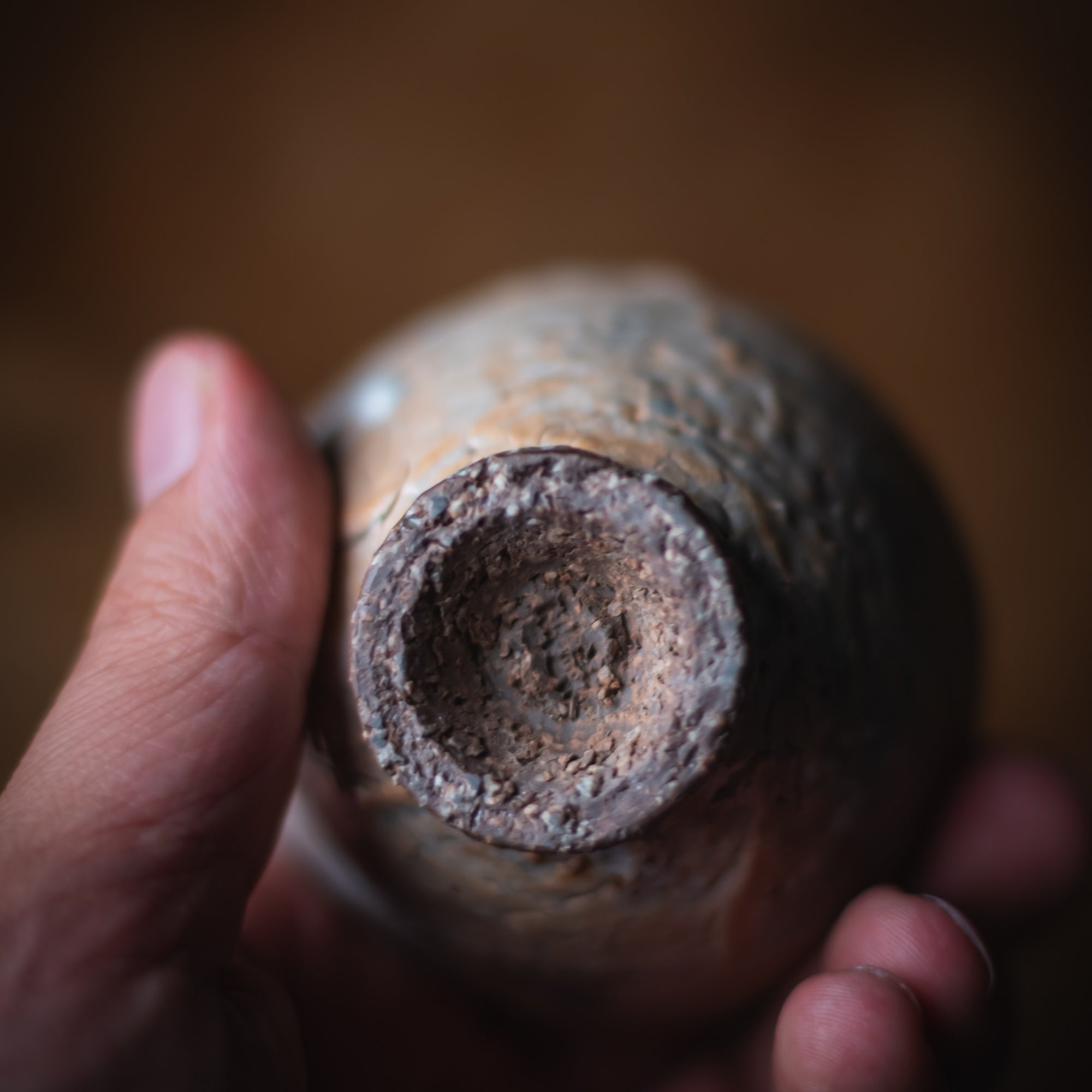

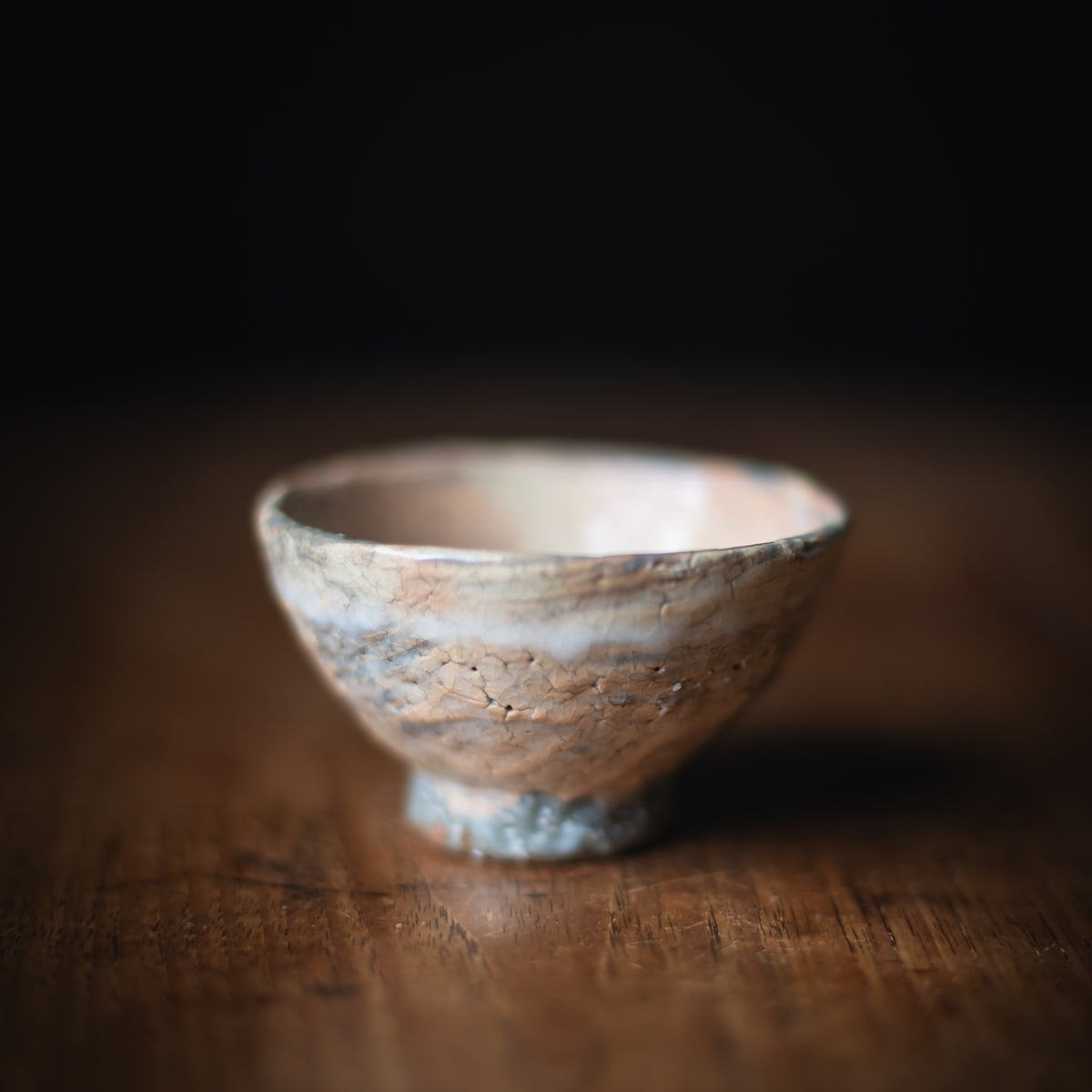
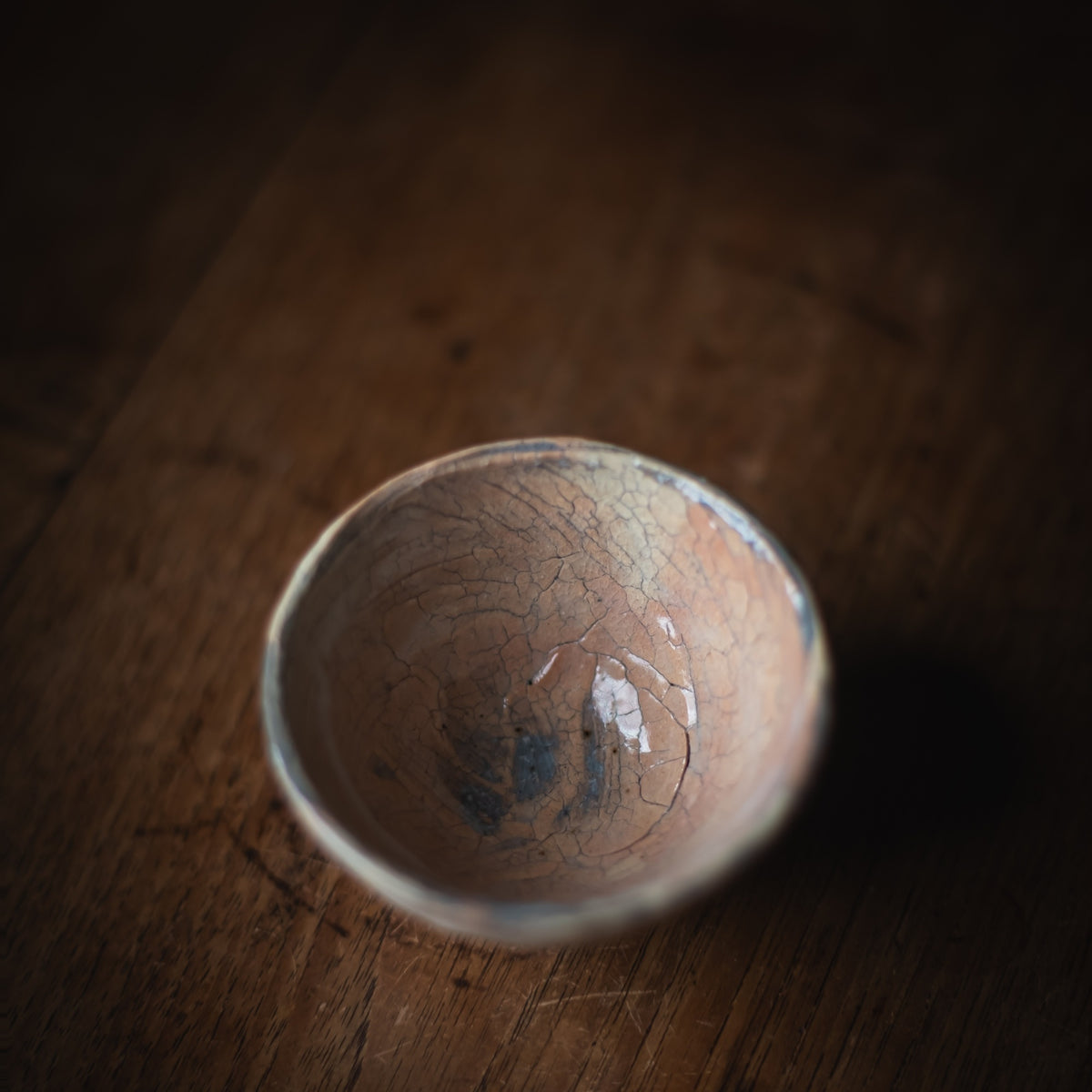
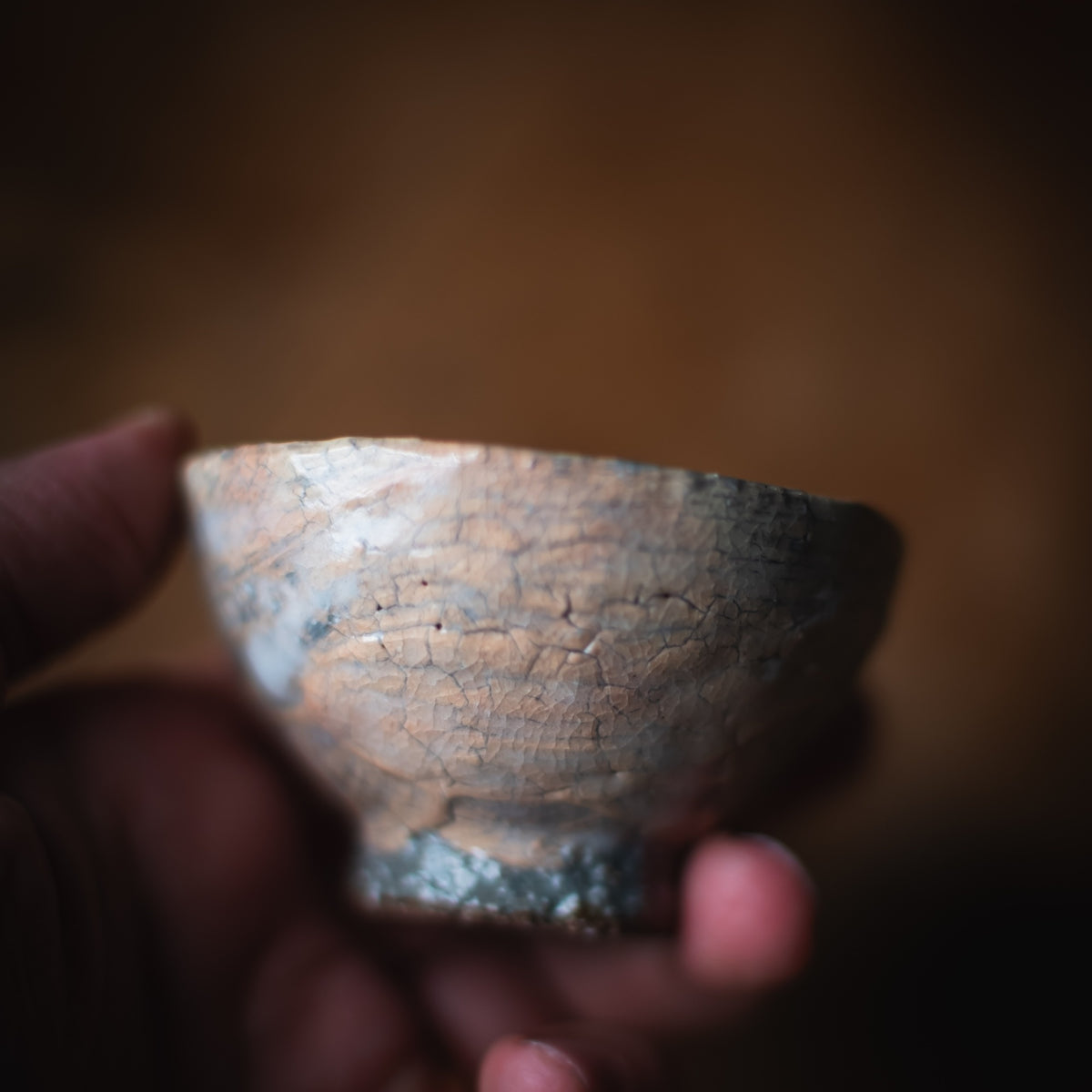


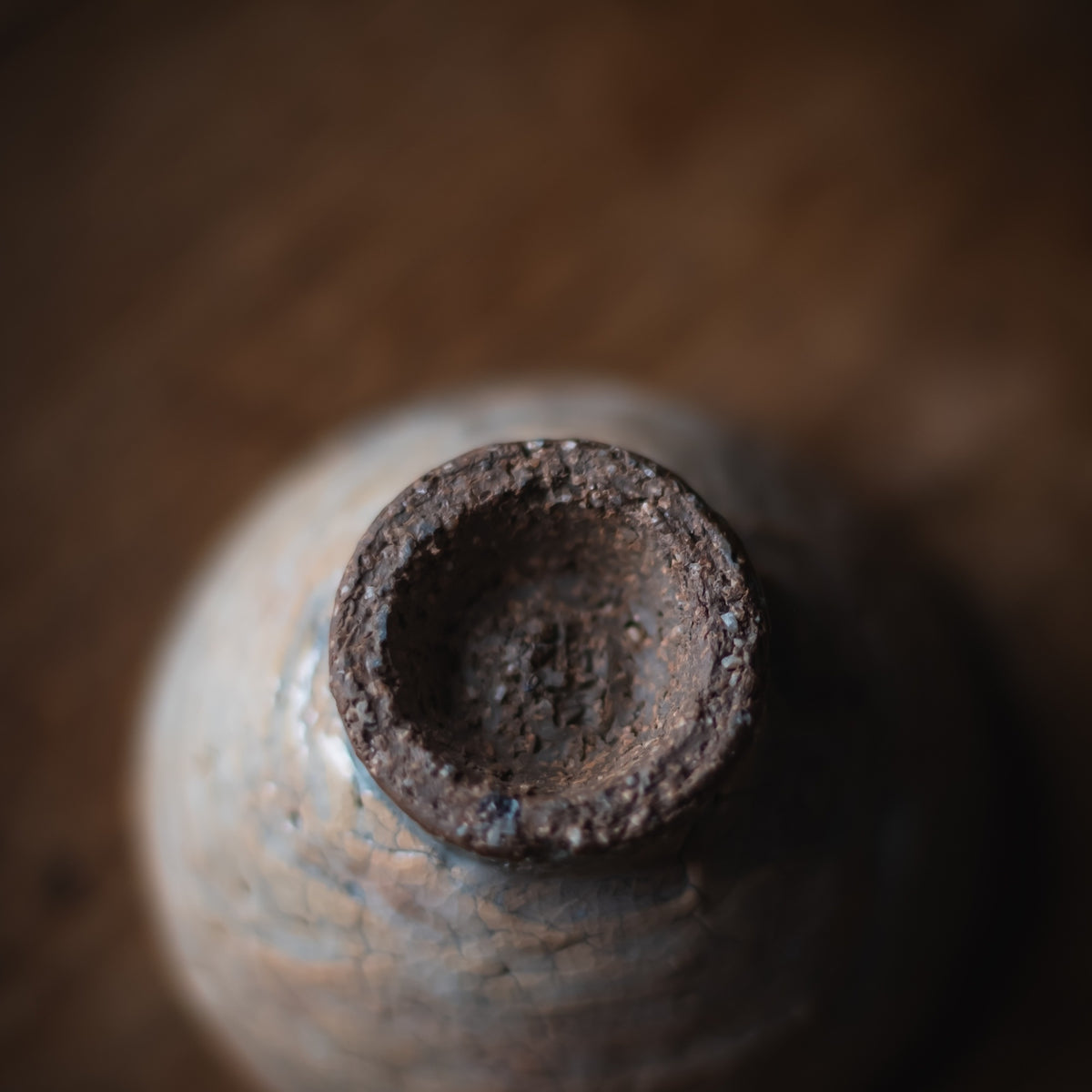
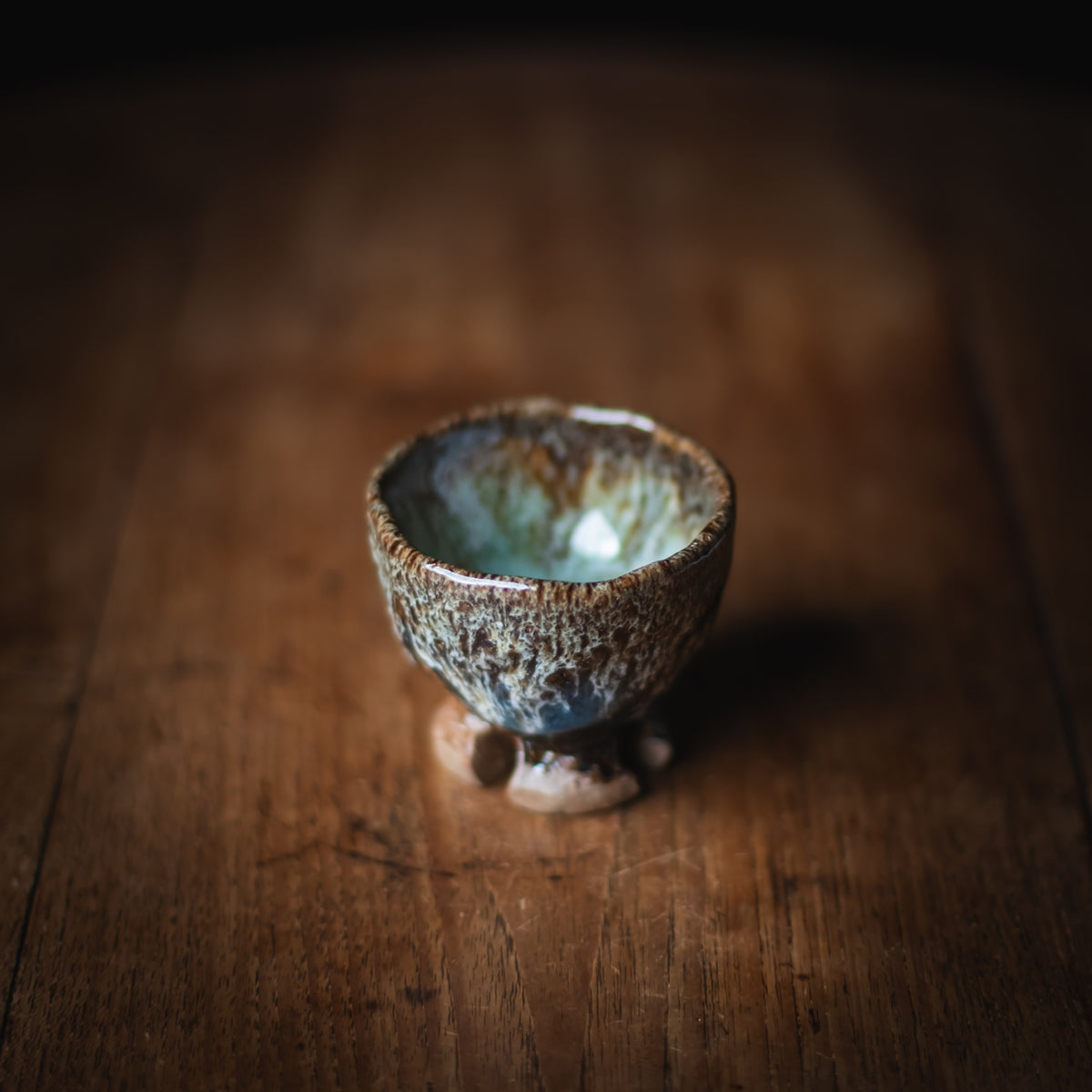
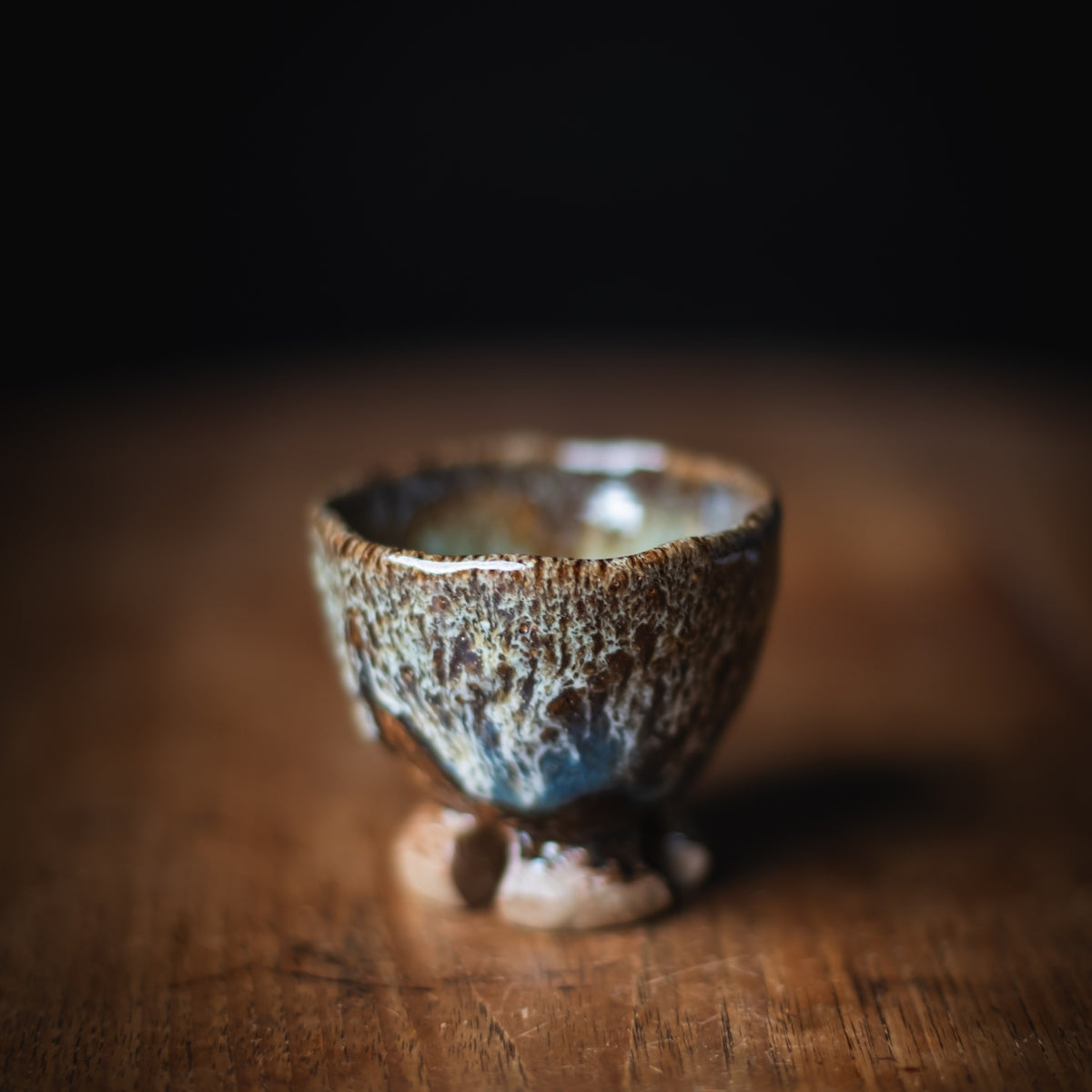
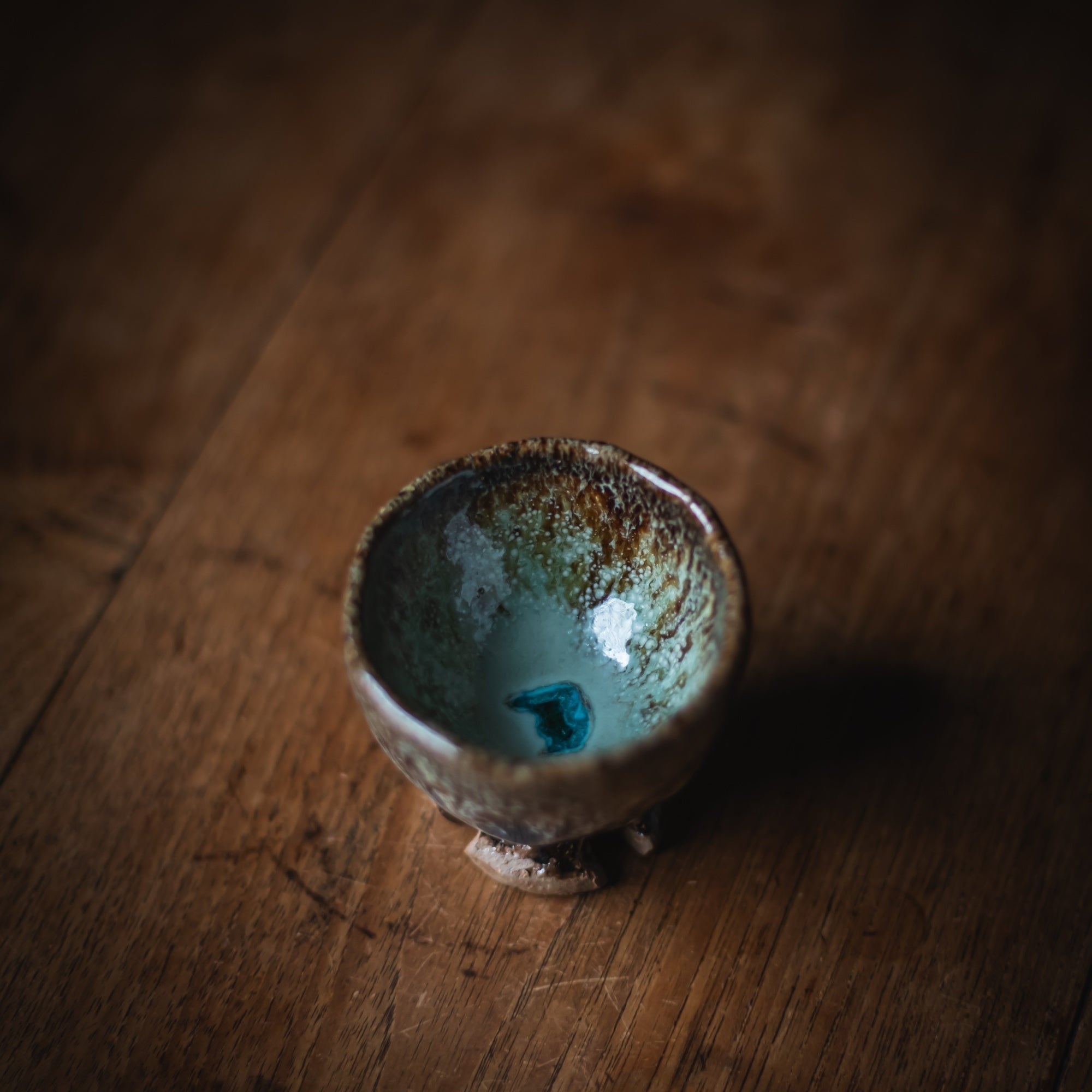
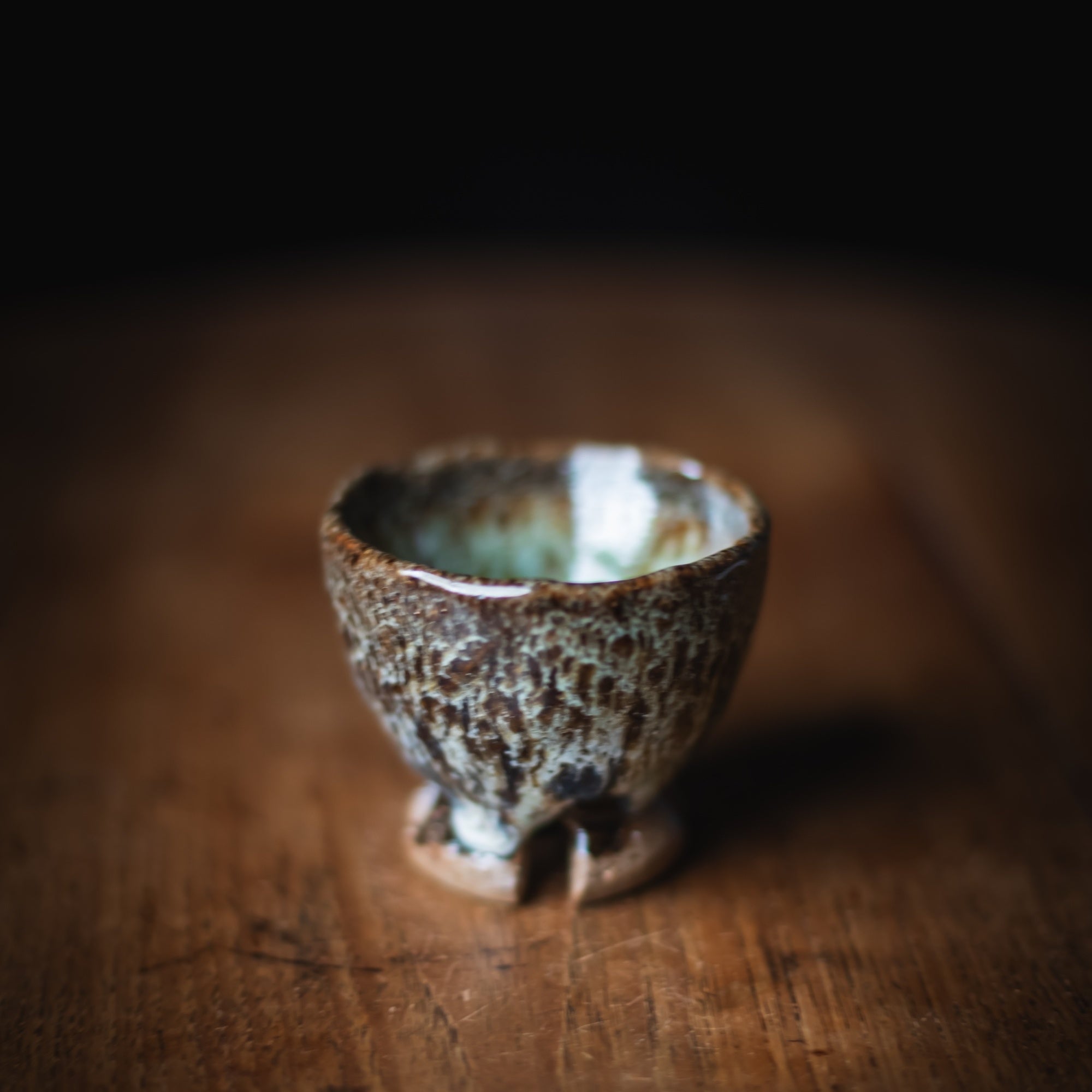
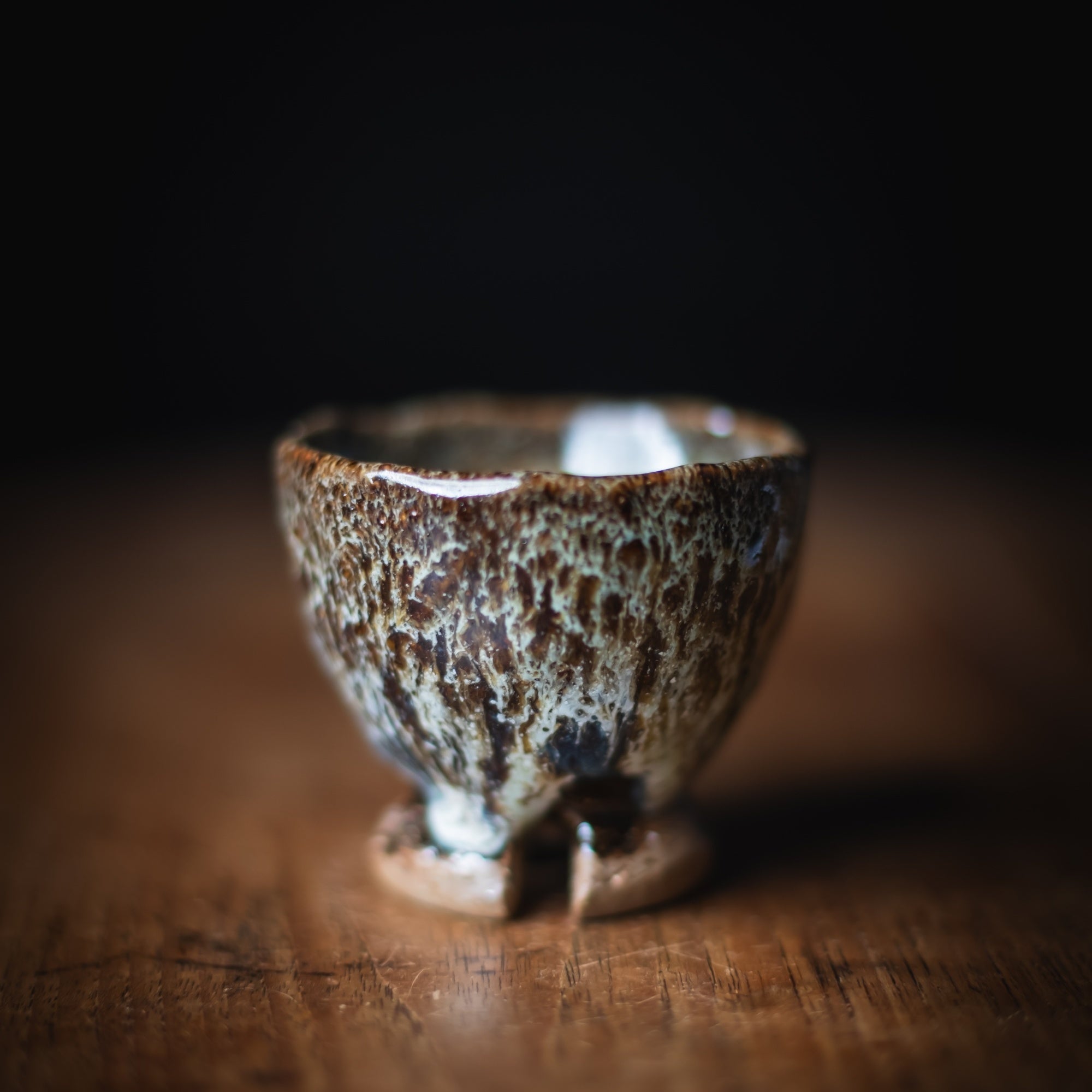
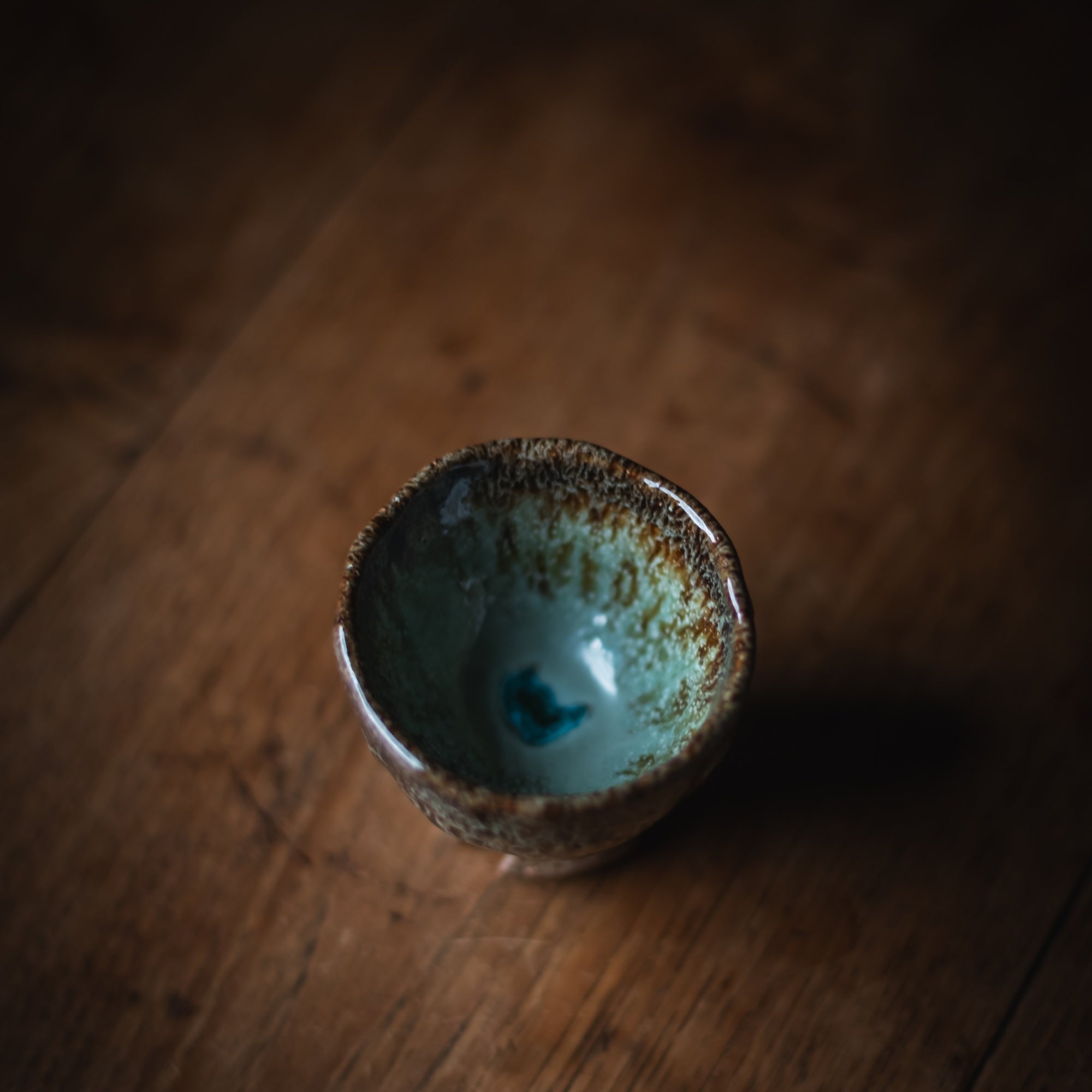
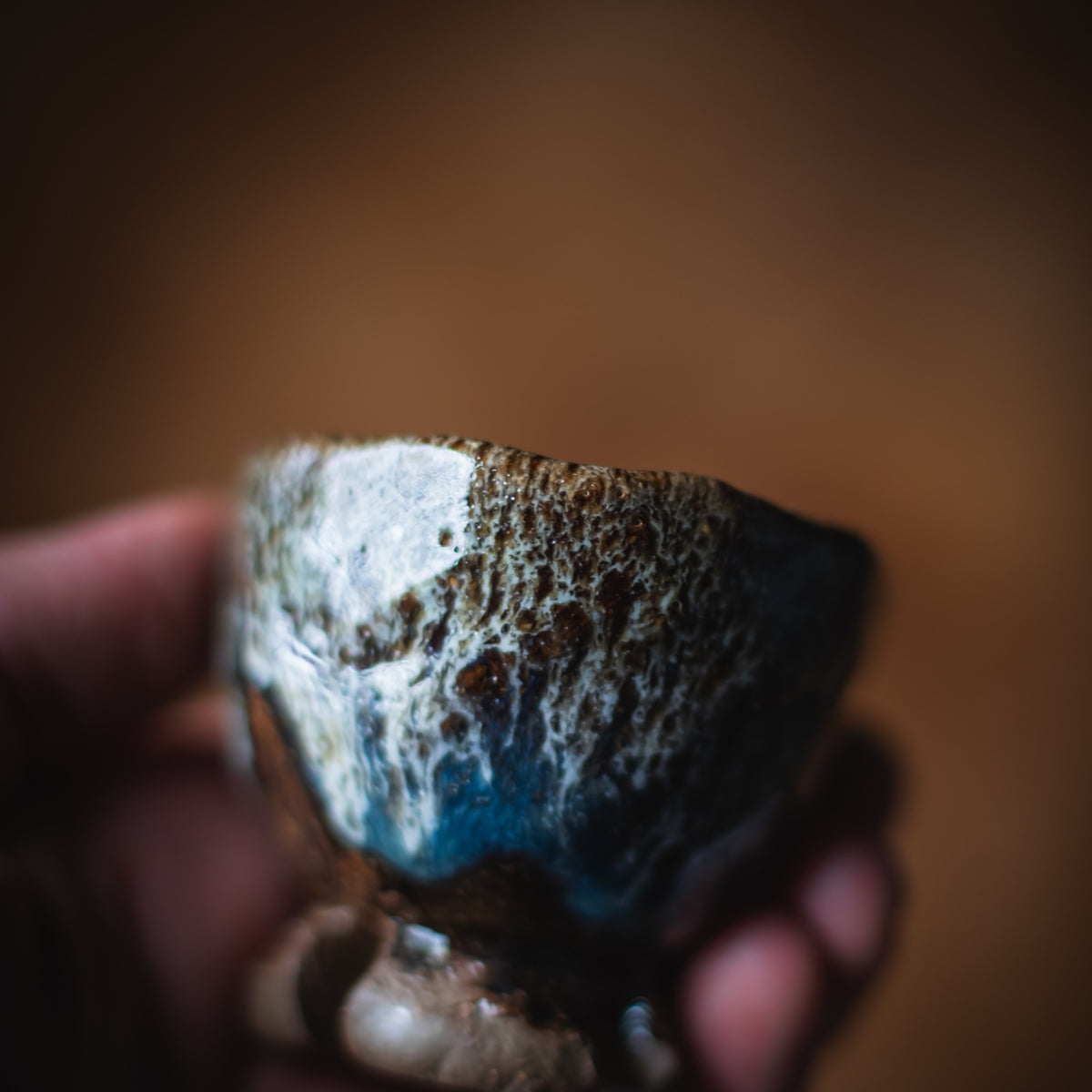
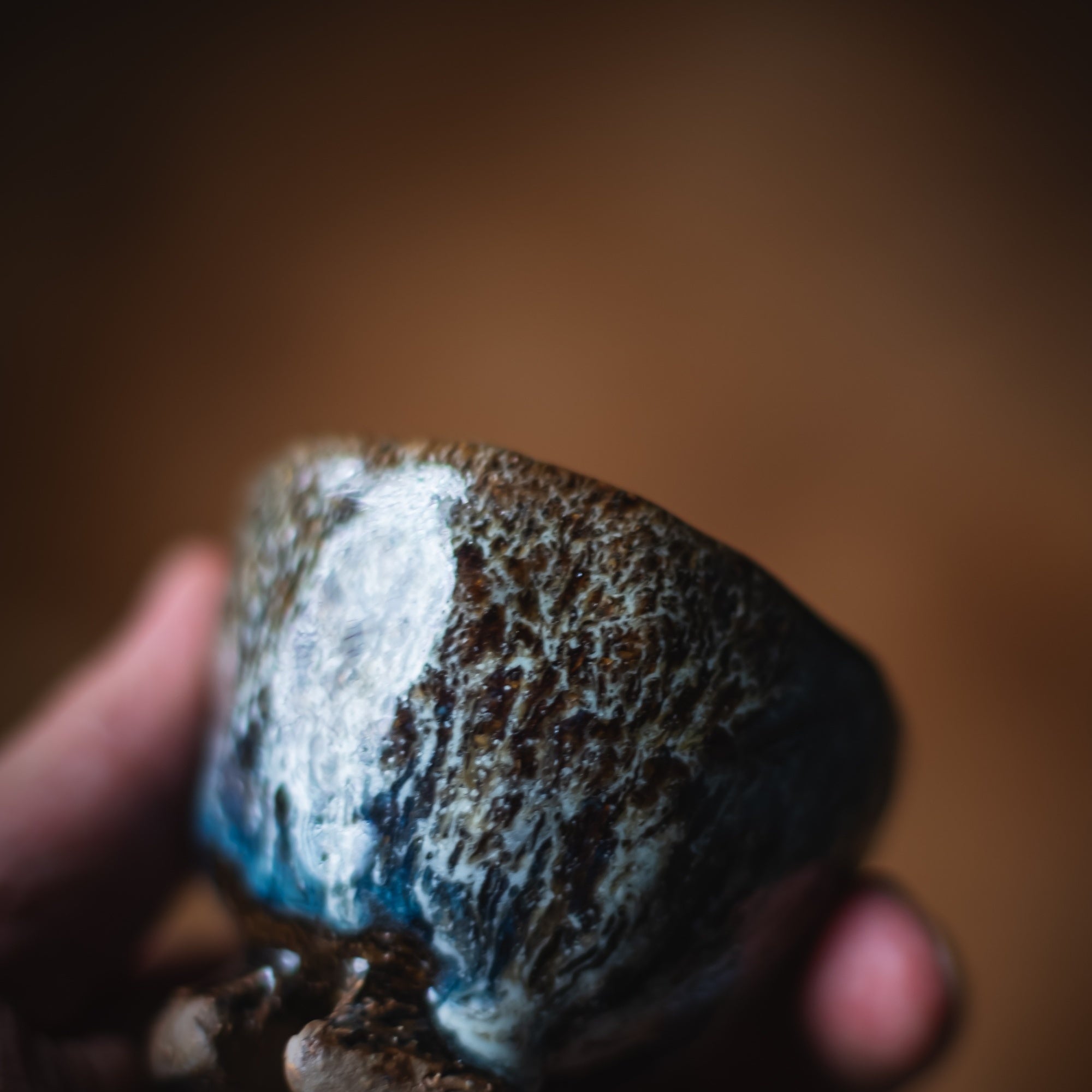
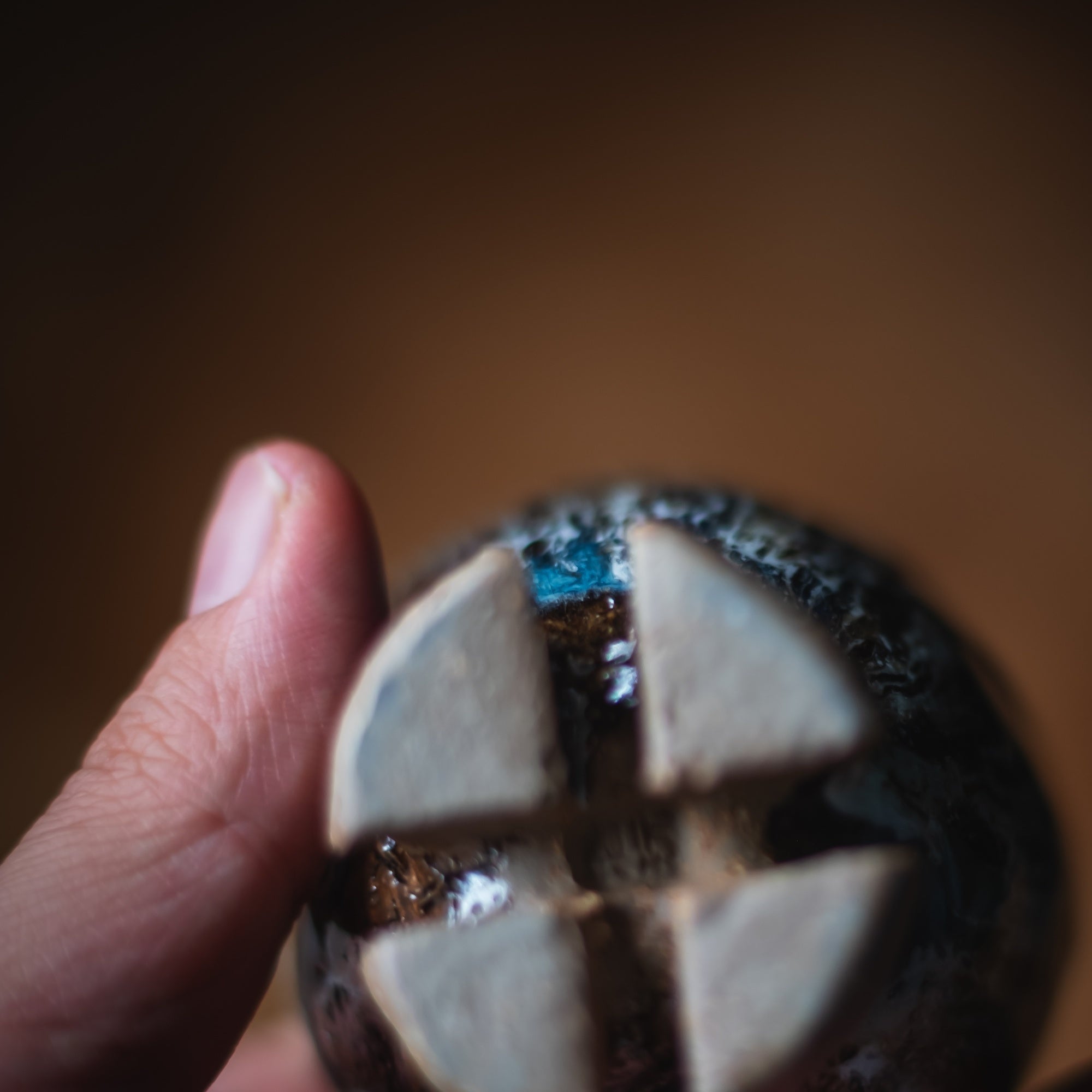
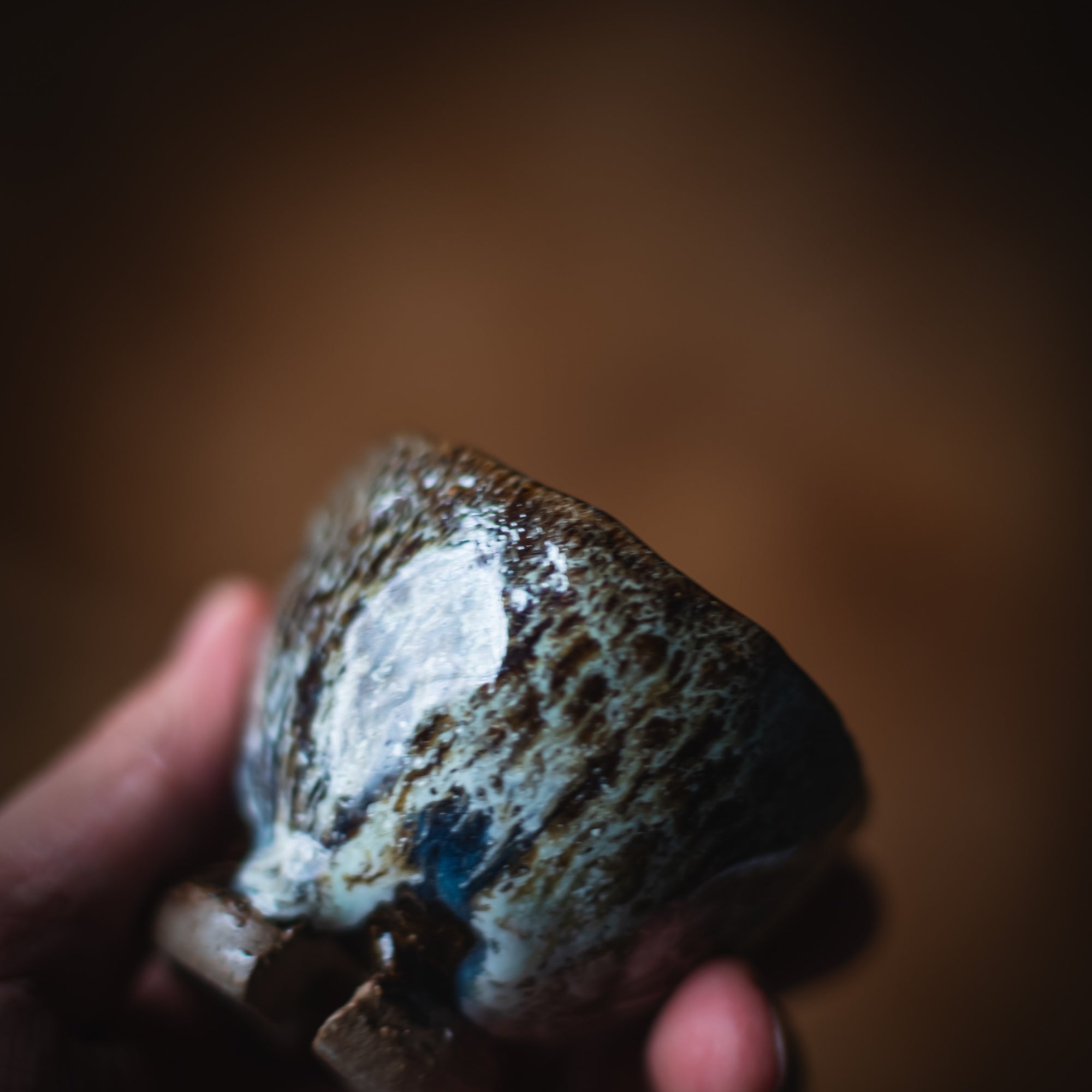
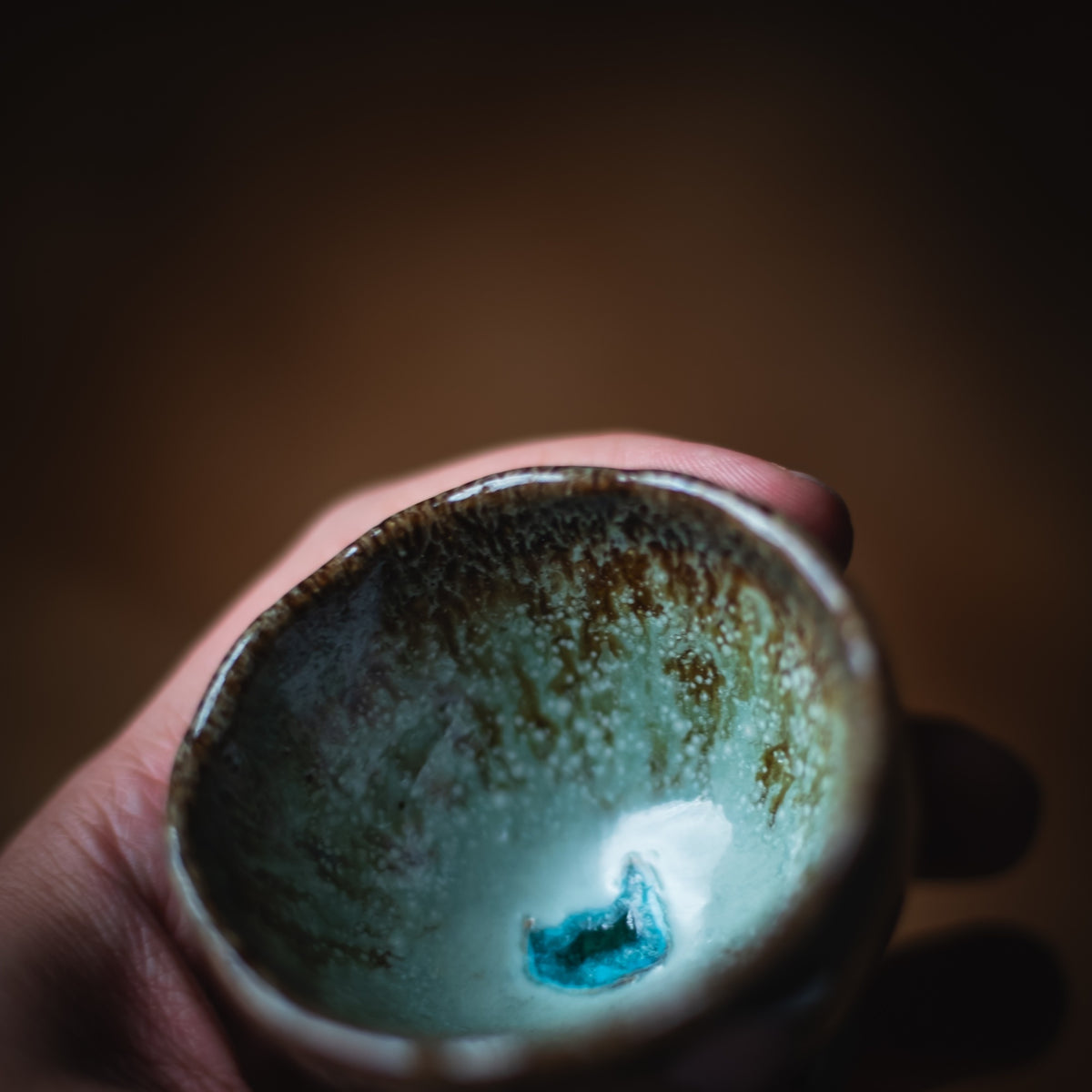
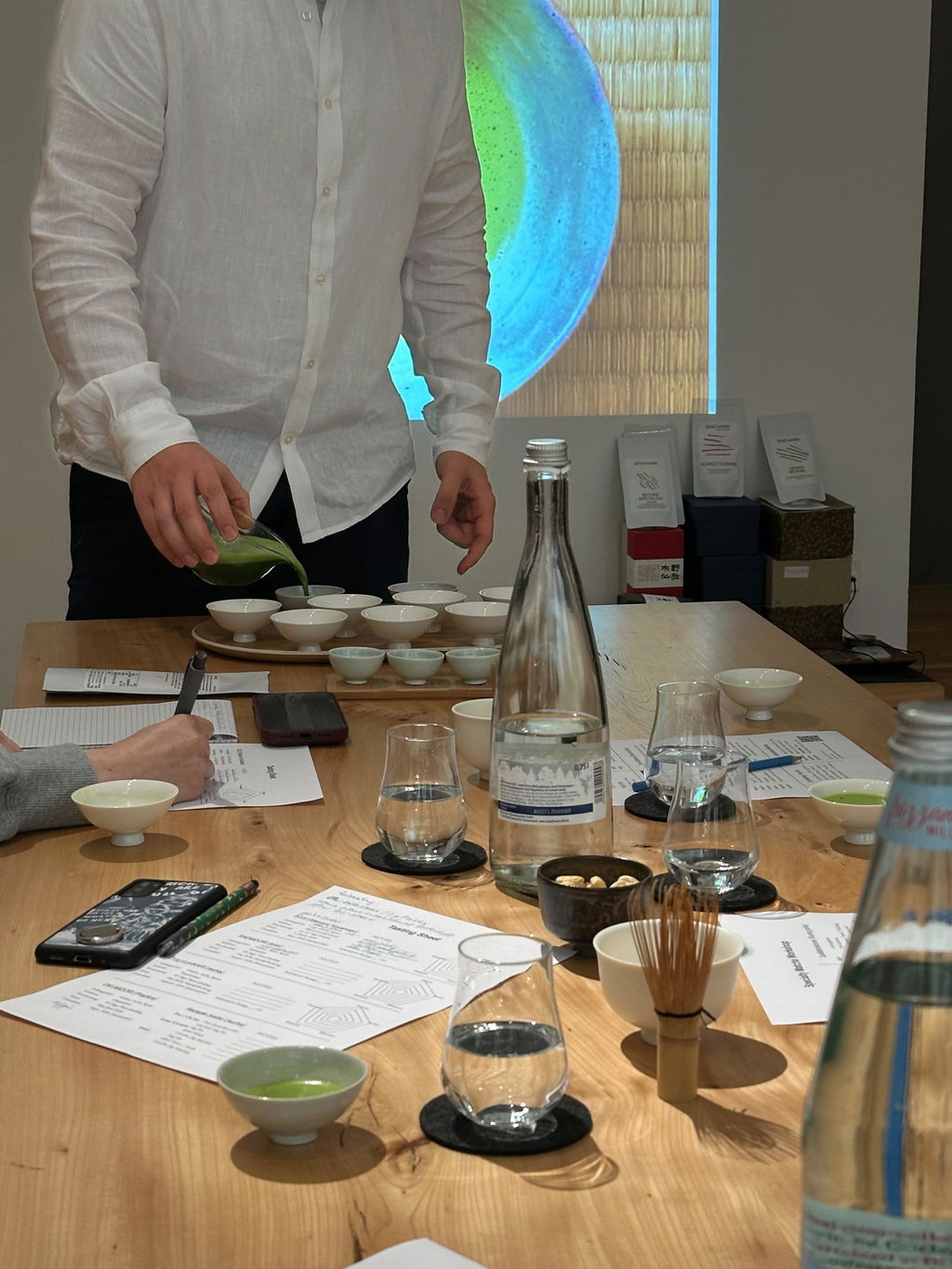
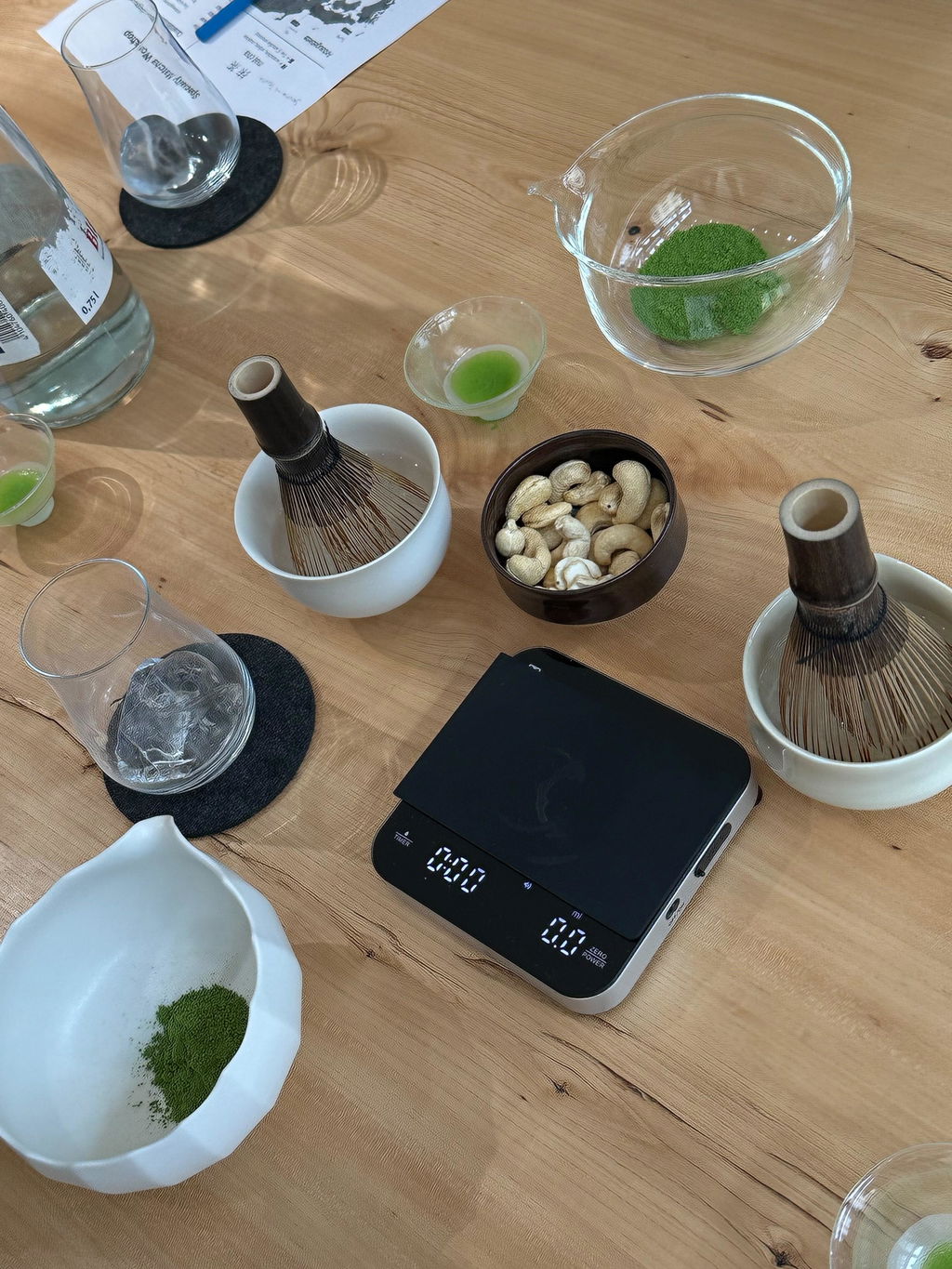
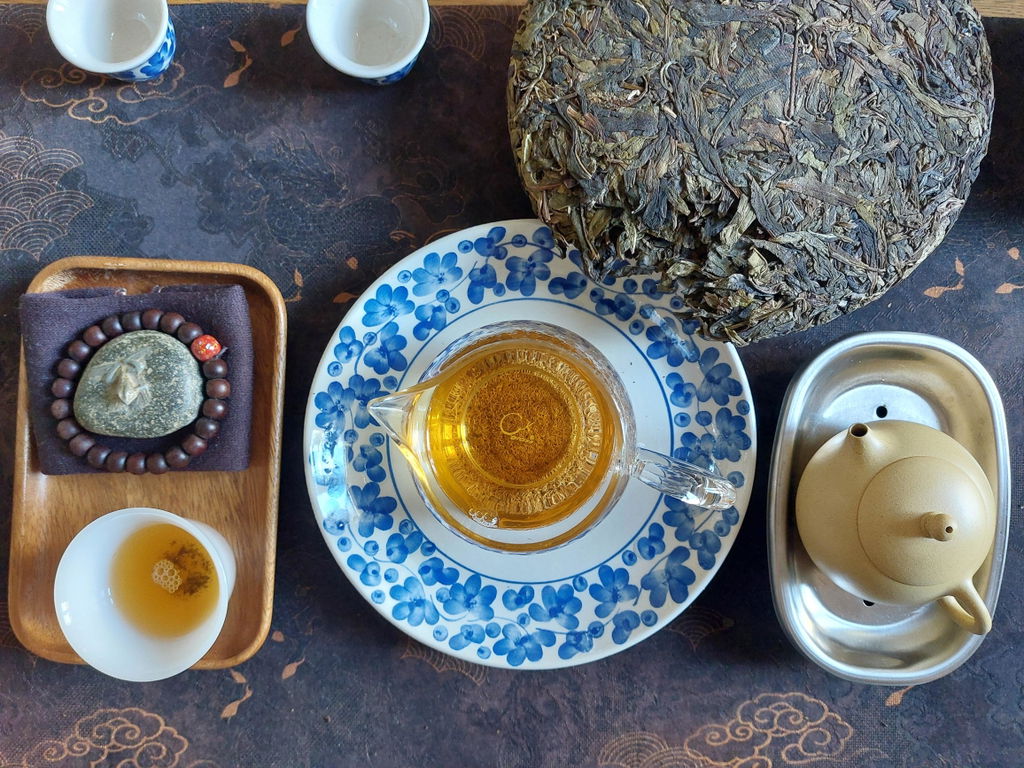
Nearly 300 cups have passed through this collection, and around 40 are in stock at any time. They are small on purpose: a Japanese or Chinese tea cup holds what one steeping of a good tea gives, and a second cup comes from the second steeping. The prices run from 25 to 140 euros, and almost every cup is a one-of-a-kind piece photographed on its own.
Which Size For Which Tea
The 20 to 40 ml cups are for gyokuro, shaded sencha and gongfu oolong, where a pot of 100 to 150 ml is poured out into three or four cups. David Louveau's hakuji porcelain cups (20 to 60 ml), Kanjo Omata's nashiji cups (25 ml), Miki Inoue's cups (30 ml) and the Hagi gyokuro cups (25 to 40 ml) all belong here. The 60 to 80 ml cups, such as Yutaro Yamada's yohen tall cup or the soda-fired gongfu pairs by Wang Yufeng, fit a 200 ml pot and a stronger oolong. The 150 ml Hagi tea cups and Nora Kain's soda-fired cups are the size for everyday sencha, hojicha or a bancha in the afternoon.
Guinomi And Sakazuki
A guinomi is the deeper sake cup of 50 to 100 ml, the sakazuki the flat, wide one of 30 to 70 ml that is drunk in one or two sips. Both come mainly from the Hagi potters in this collection, with the blue ao hagi glaze or the pale white shira hagi, and Hideki Yanashita adds a red raku guinomi from Iga. Many customers use guinomi for tea as well, because a 60 ml guinomi is a good gongfu cup with more weight in the hand. Glass guinomi come from Miki Inoue and Chiaki Asanuma.
What Changes The Price
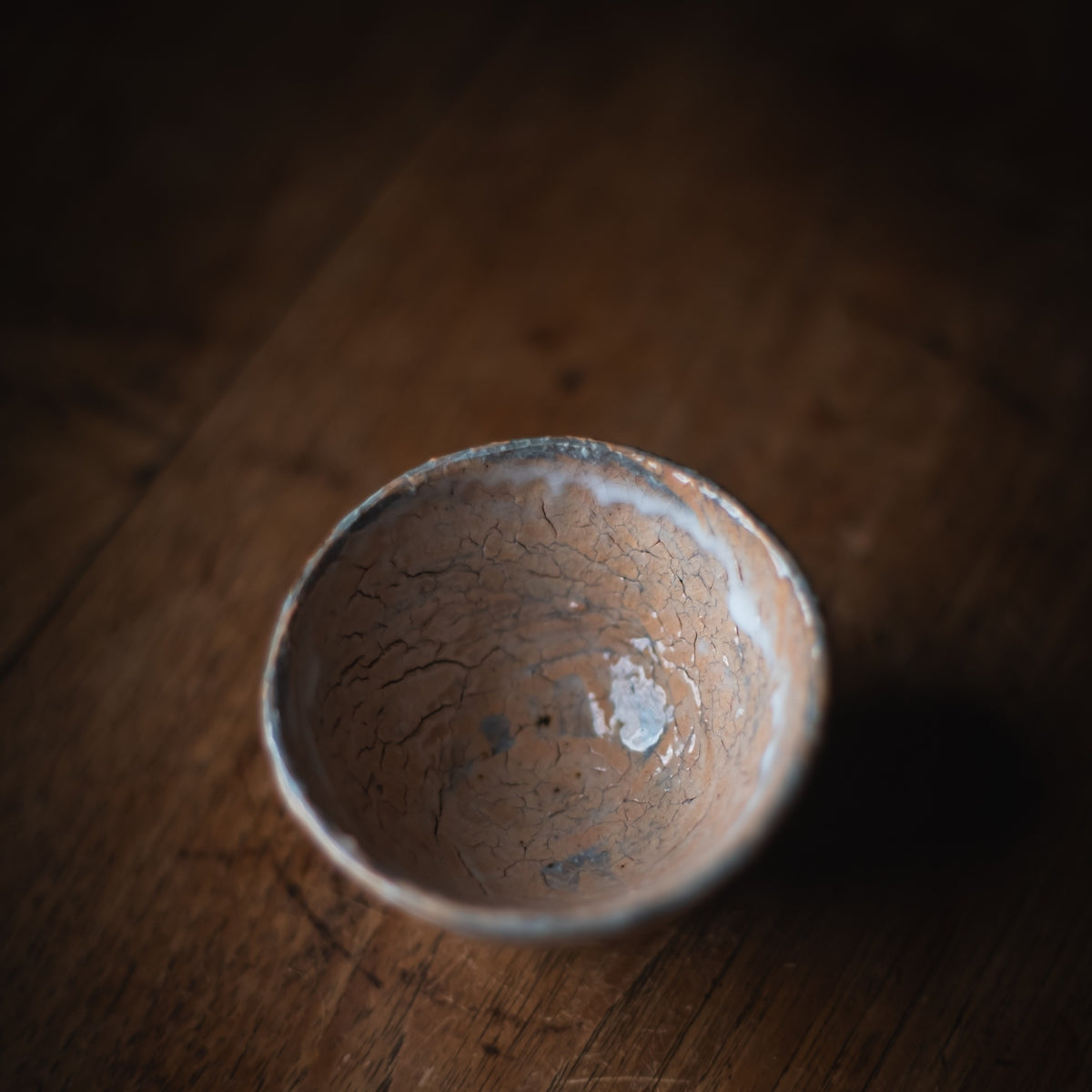
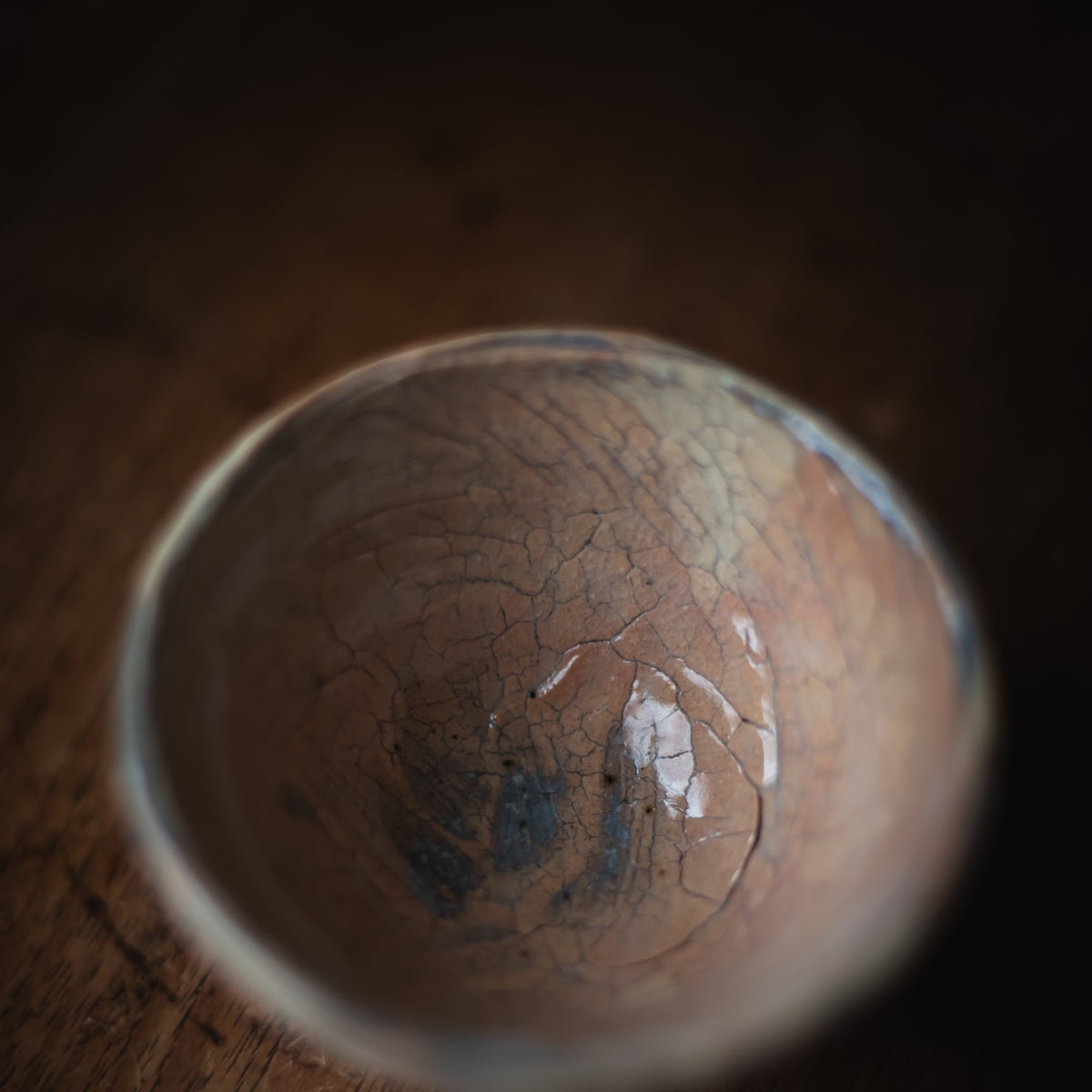
The cup itself changes little between 25 and 50 euros: that range is wheel-thrown work from a production kiln in Hagi or Tokoname, or a small run by a young potter. Above 80 euros the cup comes from a single maker's exhibition, is wood-fired or soda-fired (Nora Kain, Terre Teo, Wang Yufeng), or carries a glaze that takes several firings, like Michel François' chun glaze. Hagi ware in particular changes with use: the fine crazing of the glaze takes up tea over the years and darkens, which is why the Japanese speak of the seven changes of Hagi. Our article on Hagi ware explains why that happens and how to care for it.
The larger cups, yunomi of 200 ml and glass tumblers, have their own row, and the matcha bowls are under chawan and bowls.