

Buying Matcha means stepping into territory that goes well beyond the green colour of a trending drink. Matcha is the product of centuries-old cultivation techniques, precise processing, and a deep understanding of terroir. The vivid green served in cafés around the world today has its roots in the shaded tea gardens of Japan, where quality is measured in nuances. The decision about which Matcha to buy is a question of taste, intended use, and knowing what actually makes a powder exceptional.
Understanding origin
Nishio in Aichi Prefecture is one of Japan's largest Tencha-producing regions, alongside Uji and the newer fields of Kagoshima. Certified organic Matcha (JAS) requires three years of chemical-free cultivation. The EU organic regulation sets additional maximum pesticide residue levels that many JAS-certified farms do not meet, so "JAS organic" and European organic certification are not the same thing.
Matcha comes from Tencha, a shaded green tea grown under special nets for several weeks before harvest. That shading fundamentally alters the tea plant's metabolism. Chlorophyll concentrates, amino acids such as L-theanine accumulate, and bitter compounds are suppressed. The result is a leaf of deep green intensity and a sweet, Umami-rich flavour depth.
The traditional growing regions are Uji near Kyoto, Nishio in Aichi Prefecture, and Shizuoka. Each region produces its own distinct characteristics. Uji is considered the historical cradle of Matcha, a region that has cultivated tea since the 12th century. Nishio accounts for the largest share by volume, while Shizuoka's varied microclimates allow for a wide range of flavour profiles.

Quality starts in the field. Farmers like those in Hoshino or Yame tend their tea gardens with a care that shows in every gram of powder. They know when shading must begin, how deep the roots should reach, which cultivars thrive on which soil. That knowledge cannot be bought, because it is passed down, refined and adapted over generations.
Recognising quality
Shops sort Matcha into grades such as "ceremonial", "premium" and "culinary", and the first thing to know is that none of these terms is regulated anywhere. They are labels the seller chooses, and two powders with the same label can sit worlds apart. What actually decides the quality is the field work and the processing: which harvest the leaf comes from, how long the plants were shaded, whether the leaves were picked by hand, and whether the powder was ground on stone mills.
A Matcha for drinking straight is made from the youngest leaves of the first spring harvest, fully shaded and stone-milled. The colour is a vivid jade green, the texture silky fine, and the flavour is complex and sweet, with minimal astringency. Later harvests and faster milling produce a bolder, more bitter powder with a darker, more muted green, and that powder belongs in the kitchen, where it has to stand up against milk, sugar and butter rather than be drunk on its own.
Visual inspection gives early clues. High-quality Matcha has a luminous quality. It smells fresh, vegetal, faintly sweet. Lower quality reveals itself in yellow or brownish tones, a musty or hay-like smell. The texture should be powdery, free of clumps, almost weightless.
Processing and stone mills
After harvest, the leaves are steamed, dried, and stripped of their stems and veins. What remains are the pure leaf surfaces, the Tencha. This material is then ground in granite stone mills, and the process is slow: one mill produces around 40 grams per hour. Friction must be kept low to avoid the heat that would destroy the aromatic compounds.
Modern methods sometimes use ball mills or other mechanical approaches. They are faster and cheaper, but the result is noticeably different. Particle size varies more, the texture becomes coarser, the flavour less nuanced. Quality in Matcha depends significantly on this processing chain.
Pricing and value
Buying Matcha means navigating a price range that runs from a few euros to triple digits per 100 grams. That spread is not arbitrary. It reflects growing methods, processing, origin, and demand.
Inexpensive Matcha under ten euros per 100 grams typically comes from mass production, possibly from China, with mechanical processing. It works for kitchen experiments but not for drinking straight. The mid-range of roughly 20 to 50 euros offers solid quality from established producers. This is where you find first-harvest Matcha that can be drunk daily without strain on the budget.
The upper tier starts at around 60 euros. Here we are talking about Single-Cultivar Matcha, historic tea gardens, limited batches. The difference is not just measurable but tasteable. The sweetness is more intense, the texture creamier, the finish longer. Powders at this level are often sourced directly from producers like Marukyu Koyamaen, one of the most respected names in the Matcha world.
Small producers and Single-Cultivar
Alongside the established names, a growing number of smaller producers focus on specific cultivars. Samidori, Okumidori, Gokou, Asahi: each brings its own flavour character. Samidori is mild and sweet, Okumidori fuller with a broad, gently sweet Umami, Gokou has a pronounced Umami depth.
Single-Cultivar Matcha is for those who want to go deeper. It opens up a dimension of tasting comparable to wine, where variety, soil, and climate all play a part. A Samidori from Uji tastes different from one grown in Kagoshima, even when both are organically certified and stone-milled.

Preparation and tools
Buying Matcha is the first step. Preparation determines whether its potential is realised. Traditionally, Matcha is whisked in a Chawan, a ceramic tea bowl. The Chasen, a bamboo whisk, is the tool that emulsifies the powder into a fine foam.
The classic Usucha method uses around 2 grams of Matcha to 70 ml of water at 80 °C. The water should not boil, to avoid releasing bitter compounds. The powder is sifted to remove clumps, worked into a paste with a small amount of water, then whisked with brisk circular movements. The foam should be fine and even, not large-bubbled.
For Koicha, the thick tea, the amount of powder roughly doubles while the water is reduced. The consistency resembles liquid chocolate, and the flavour is concentrated. Koicha is the preparation of the formal tea ceremony, and it asks for stillness and attention.
Choosing a Chawan
The bowl is not incidental. Its volume, shape, and glaze all influence the preparation. A wide, shallow Chawan gives the Chasen room to move. A deeper one calls for different technique. Ceramics retain heat differently, and a glazed surface responds to water differently from a raw, unglazed one.
The Chawan collection at UNEARTHED shows the full range of these vessels. From Japanese Raku bowls to European interpretations, each carries the signature of its maker. A bowl by Takuya Kanamoto is fundamentally different from a work by Andrzej Bero, yet both are well suited to Matcha and each brings its own aesthetic.
Storage and shelf life
Matcha is sensitive. Light, air, heat, and moisture are its enemies. Once opened, a race against oxidation begins. The vivid colour fades, aromatic compounds dissipate, freshness gives way to a flat, hay-like taste.
Ideal storage means airtight containers, kept cool and dark. A double-walled metal tin does this well, and cherry-bark caddies (Kabazaiku Chazutsu) are the traditional wooden alternative. The lacquered Natsume you see in the tea ceremony is a presentation caddy for the tea room rather than a storage container. The refrigerator is an option, though the powder must be protected from condensation.
Unopened, high-quality Matcha keeps for around a year, provided it has been stored correctly. Once opened, it should be used within two months. Buying in bulk is tempting when the price is right, but quality beats quantity.
Organic certification and provenance
The question of organic certification is legitimate but not straightforward. Organic Matcha guarantees the absence of synthetic pesticides and fertilisers. In Japan, however, organic certification is less common than in Europe, because many small producers avoid the demanding certification process despite working in practice along organic lines.
Often more important than a label is direct contact with the producer. Transparency about growing region, harvest date, and processing builds trust. Reputable retailers name their sources, describe provenance precisely, and offer insight into the production chain.
Matcha in the kitchen
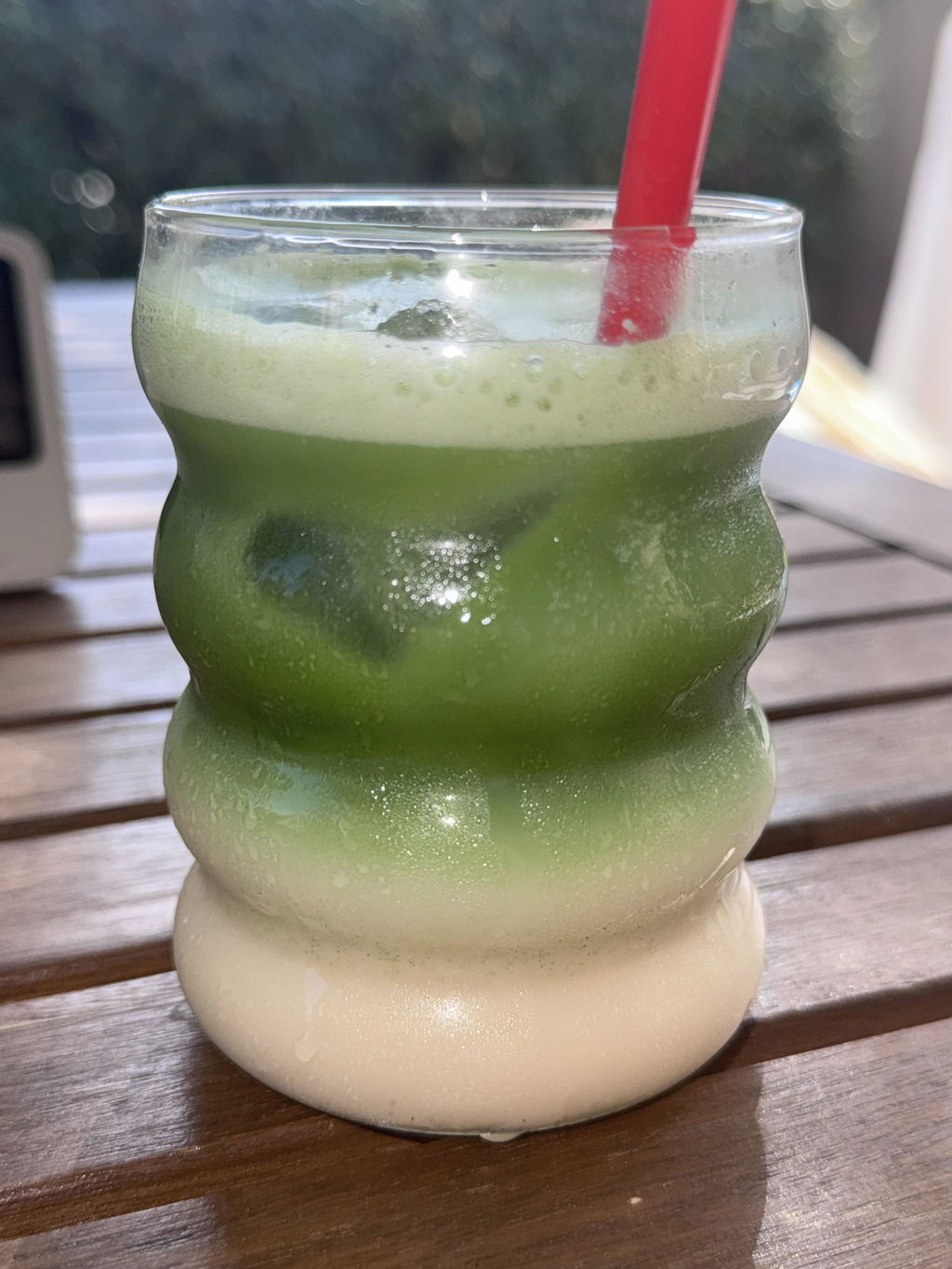
The Matcha latte trend has brought the powder to a wide audience. The combination of Matcha and milk, often sweetened, is gentle in flavour and easy to prepare. A bolder, later-harvest powder is sufficient here, because its character holds its own against milk and sugar.
In patisserie, Matcha shows its versatility. Macarons, cakes, ice cream, chocolate: the applications are numerous. The challenge is preserving the green colour. Heat destroys it, which is why many recipes add Matcha late in the process or use lower temperatures.
Savoury dishes benefit too. Noodles, dressings, marinades take on Matcha's vegetal, faintly bitter quality well. Japanese cooks have long experimented with Matcha beyond the tea context; Western kitchens are increasingly following.
The cultural dimension
Buying Matcha also means engaging with a tradition that began in the 12th century, when Eisai brought tea from China to Japan. Sen no Rikyū refined the tea ceremony in the 16th century into an art form that united aesthetics, philosophy, and social practice. The history of Matcha is closely bound up with Zen Buddhism, with the concept of Wabi-Sabi, with the search for beauty in imperfection.
That cultural depth resonates when you prepare a bowl of Matcha today. It is not merely a drink but an act of attention. The gesture of sifting, the whisking, the drinking: each follows a rhythm that calms and focuses.

Western interpretations take up these elements without replicating them directly. The collection of European ceramicists at UNEARTHED shows how makers like David Louveau or Hiroaki Watanabe rethink Japanese forms on their own terms. Their Chawan are contemporary, yet they respect the function, the tactility, the intention.
Where to buy Matcha
The market is crowded. Online retailers, specialist tea shops and drugstores all stock Matcha. Products found in drugstore chains are accessible and affordable, but they represent the entry level. For serious tasting, it is worth going to a specialist.
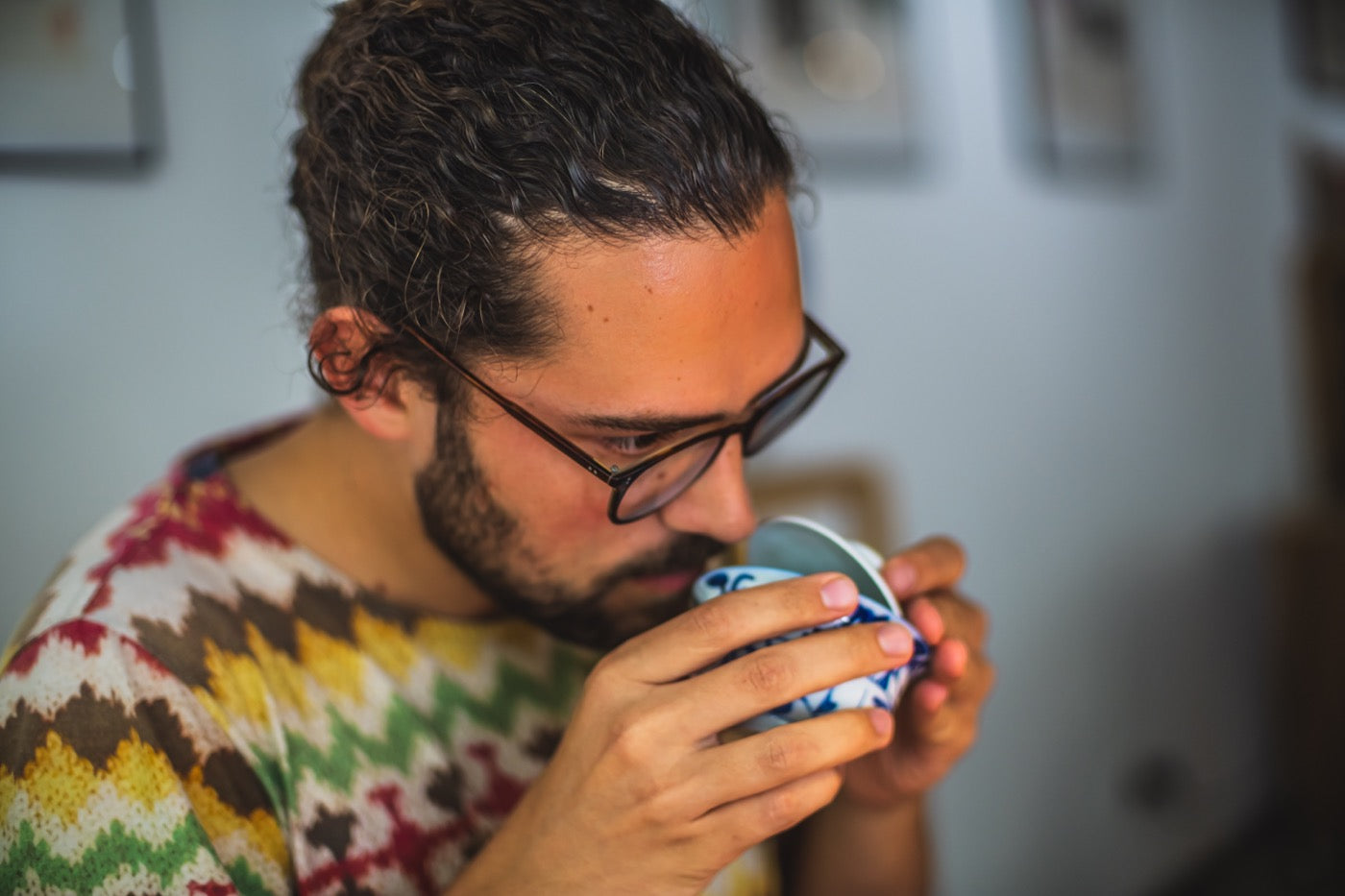
Galleries and tea spaces like UNEARTHED curate their range with care. Here you find not only Matcha but also the knowledge around it, the right tools, the opportunity to try before you commit. There is a difference between ordering a powder online and being able to hold it, check the aroma, perhaps taste it first.
Personal contact allows for questions: which Matcha suits my palate? How do I prepare Koicha? Which bowl would you recommend? That kind of guidance is invaluable, particularly for those still finding their way through the spectrum.
Import and freshness
Matcha ages in transit. Japanese producers often ship refrigerated and vacuum-packed. Reputable retailers state harvest dates, sometimes even batch numbers. The harvest date matters: Shincha, the year's first tea, is picked in May. Matcha from that harvest is at its best from April through autumn.
Buying Matcha in winter, it is worth checking whether you are looking at old stock or freshly imported material from the most recent season. Transparency on this point varies considerably. Retailers who disclose their sources earn trust.
Developing a palate
Matcha does not appeal to everyone immediately. The first encounter can be a lot: the intensity, the Umami, the slight bitterness. Taste is trainable. Drink it regularly and sensitivity to nuance develops. You begin to distinguish between cultivars, to appreciate the sweetness of a Samidori, to enjoy the broad, gently sweet umami of an Okumidori.
Tastings help. Trying several varieties side by side, prepared under the same conditions, sharpens judgement. You learn what matters, which parameters shape the flavour. Water temperature, powder quantity, whisking time: all of these factors interact.
Water quality is not to be overlooked. Hard water with high mineral content suppresses the aromas. Soft water lets them come through more clearly. Tea enthusiasts use filtered water or a neutral still mineral water.
Matcha and health
Matcha is regularly discussed in terms of health, though that should not be the main point of buying it. The powder contains high concentrations of catechins, in particular EGCG, together with L-theanine and caffeine, and because you drink the whole ground leaf, you take in more of all three than from an infused tea.
The caffeine is roughly comparable to a small cup of coffee. Many drinkers describe the effect as calmer and longer-lasting than coffee, without the abrupt drop.
Matcha is best approached as something to be enjoyed, not as medicine. The ceremony, the flavour and the craft are the actual reasons to buy it.
The right quantity
How much Matcha should you buy at once? Thirty grams provide around 15 servings of Usucha, which at daily consumption is roughly two weeks' worth. That is a sensible quantity for maintaining freshness. Larger amounts are more economical but only make sense if consumption is high or the Matcha is shared.
For a first purchase, a small amount of a good first-harvest Matcha is the right approach. It lets you find out whether Matcha is for you without a significant outlay. Later, once the palate has developed, it is worth stepping up to higher-grade varieties.
Buying Matcha is a decision that rewards knowledge and repays attention. The range runs from straightforward kitchen powders to rare Single-Cultivars, and each level has its place. Those who take the time to understand the origin, appreciate the processing, and refine their preparation will find themselves drawn into a tea culture that has endured for centuries. At UNEARTHED we bring that tradition together with curatorial care, from selected Matcha and handcrafted Chawan to workshops that deepen the knowledge. Visit us in Munich or online to explore the world of Matcha with all your senses.