

Quick answer — what is Seimei?
Seimei (せいめい) is Japan’s youngest premium tea cultivar, registered in 2020. A cross of Fushun (mother) × Saemidori (father) bred at Makurazaki, it delivers vivid green colour, high amino-acid umami and low astringency — with markedly better yield and frost resistance than its parent Saemidori.
Among Japan's tea cultivars, Seimei (せいめい) is one of the most recently registered — and one of the most ambitious. The name combines the characters 清 (sei, pure/clear) and 茗 (mei, tea leaf), and describes the goal the breeders at Japan's National Agriculture and Food Research Organization (NARO) set from the beginning: a green tea of exceptional purity, with vivid green colour, strong Umami, and low astringency. That Seimei was also meant to outyield established cultivars while showing better disease resistance only added to the challenge. The result is a cultivar that has noticeably shifted the Japanese tea landscape since its registration in 2020.
Why breed a new cultivar at all?
Japanese tea can look remarkably uniform: roughly three-quarters of the country's tea-growing area is planted with one cultivar, Yabukita — a selection made in Shizuoka Prefecture in the 1940s that has dominated ever since. That monoculture has its logic: Yabukita is reliable, versatile, and commercially straightforward. But it has its limits. For shaded cultivation — Kabusecha, Tencha, Matcha — Yabukita is not ideal. Shading does intensify the Umami, but the leaf colour falls short of what premium Matcha buyers expect. And with growing global Matcha demand comes growing pressure to improve quality.
At the same time, Japan's tea industry faces a structural problem: growing areas are shrinking, the workforce is ageing, and diseases like anthracnose and tea leaf rust cost growers harvests. A new cultivar had to taste better and be more economically viable to farm.

Lineage and breeding history
The cross that produced Seimei was made in 1992 at the Makurazaki research station in Kagoshima Prefecture, part of the NARO Institute of Fruit Tree and Tea Science (NIFTS). The seed parent was Fushun (ふうしゅん), a cultivar with strong growth habit and good yield. The pollen parent was Saemidori (さえみどり) — itself a relatively recent cultivar, known for early budding, vivid colour, and excellent processing quality, but with weak cold tolerance and modest yields.
The logic behind the cross was straightforward: combine the strengths of both parents, suppress the weaknesses. Fushun contributed vigour and robustness; Saemidori contributed the sensory qualities. From the F1 seedlings, a line was selected that was carried internally as Makurazaki 32. A decades-long evaluation phase followed, during which NARO tested the new cultivar under varying growing conditions — in Kagoshima as well as in other tea prefectures.
The formal application for variety registration was filed on 30 January 2017 (application number 31289). Official entry in the Japanese variety protection register — administered by the Ministry of Agriculture, Forestry and Fisheries (MAFF) — was completed on 30 March 2020 (registration number 27874). Plant variety protection runs for 30 years, until 2050.
Notably, Seimei was the first Japanese tea cultivar for which variety protection was applied for simultaneously in five countries outside Japan — Australia, Vietnam, South Korea, the EU, and China. That was deliberate. NARO and the regions involved wanted from the outset to prevent the cultivar from spreading abroad uncontrolled and being produced there without Japanese quality oversight.
Growing characteristics: early, vigorous, robust
The first thing tea farmers notice about Seimei is its budding date. The cultivar buds roughly four to five days earlier than Yabukita — measured at the Makurazaki research station, so under southern conditions. In cooler regions the gap narrows. In northern areas the harvest date can come close to or align with Yabukita. In warmer growing areas, though, an earlier first flush means a clear commercial advantage: Ichiban-Cha from an early cultivar typically commands higher prices.
The growth habit is upright and vigorous. Shoots show good uniformity, which matters for mechanical harvesting. In terms of yield, Seimei outperforms both Yabukita and Saemidori — and not just at the first flush: NARO trial data confirm that this yield advantage holds across all harvest rounds of the year, including Niban-Cha and Sanban-Cha. For farms running multiple harvest cycles, that is a significant economic factor.
Cold tolerance sits between the weak tolerance of Saemidori and the moderate tolerance of Yabukita. Seimei can be grown in all major tea regions south of the Kantō region — Kagoshima, Miyazaki, Shizuoka, Mie, and other established growing areas. In genuinely frost-prone locations north of Saitama, current research does not straightforwardly recommend it.
On disease resistance, Seimei shows a better profile than Yabukita: it is rated strongly resistant to grey blight (Pestalotiopsis), moderately strong against powdery mildew, and moderate against anthracnose and red leaf spot. Overall a more robust profile than the prevailing standard — relevant for farms looking to reduce or eliminate fungicide use.

Sensory profile: Umami, not grass
The most striking thing about Seimei infusions is the colour: a deep, luminous green with a blue-toned quality that is especially pronounced under shaded cultivation. Compared to Yabukita, the liquor reads richer and cleaner — not cloudy, not yellowish, but emphatically green. The biochemistry explains it: Seimei contains more free amino acids and fewer catechins than Yabukita and Saemidori, particularly less epigallocatechin gallate (EGCG). Amino acids, primarily L-theanine, drive the Umami character. Catechins are the main contributors to astringency and bitterness.
In the cup that translates as follows: the infusion is soft, round, and marked by a sweetish creaminess. The Umami presents immediately, without being overwhelmed by astringency. The finish is long and clean. For Sencha second steeps the cultivar is particularly interesting, because — unlike some others — it does not develop the unpleasant summer-tea aroma that often intrudes in later harvest phases.
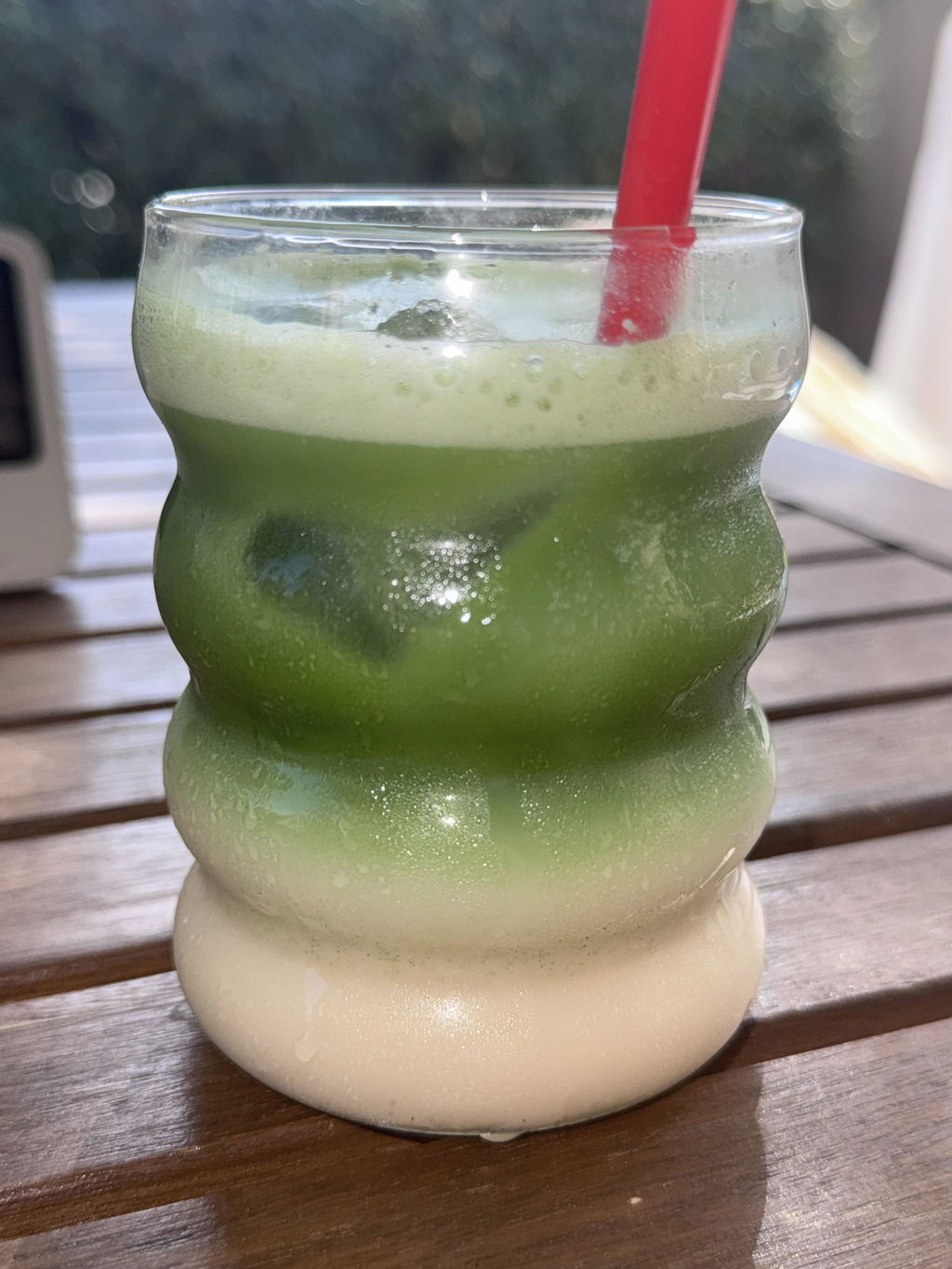
As Matcha or Tencha, Seimei reaches its full potential. The powder is more intensely green than Yabukita-based Matcha. The texture after whisking is velvety and dense. For tea houses and cafés offering Matcha lattes or drinks, that is a clear visual advantage — brightness has become a purchase criterion in the Matcha segment.
Regional adoption: Kagoshima leading the way
Kagoshima was the first prefecture to begin adopting Seimei systematically — unsurprisingly, since Makurazaki is located there and regional tea traders were involved in the development early on. The かごしま茶『せいめい』研究会 (Kagoshima-Cha Seimei Research Association) brings together producers and traders around the shared goal of establishing Kagoshima as the leading Seimei growing region nationally — particularly for Matcha processing.
Kagoshima has structural momentum behind it: the prefecture became Japan's leading Tencha producer in 2020, a position built through aggressive investment in shaded cultivation infrastructure and new cultivars. Seimei fits that strategy: high yield, excellent suitability for shaded growing, superior colour in Tencha. MAFF data show that Seimei cultivation area has grown to roughly ten times its Reiwa 1 (2019) level — an unusually steep trajectory for such a young cultivar.
Outside Kagoshima, the cultivar is beginning to spread, particularly in Shizuoka and Mie, where shaded-cultivation farms are looking for alternatives to Saemidori. Saemidori is sensorially excellent but low-yielding and frost-sensitive. Seimei offers comparable sensory qualities with considerably better economics — a substitution many farms are seriously considering.

Processing: Tencha, Kabuse, Sencha
The cultivar was developed primarily for shaded cultivation, and that is where its strengths lie. At around 85 percent shading — typical for Tencha — it surpasses both Yabukita and Saemidori in yield and processing quality simultaneously. That is unusual: more yield typically comes at the cost of quality. Seimei achieves both.
As Kabusecha — a shorter shading period of roughly ten to twenty days before harvest — the cultivar also delivers convincing results. The infusion is deeper, the Umami more pronounced, without the texture becoming heavy. For tea houses positioning Kabuse as an alternative to Gyokuro, this is an interesting cultivar to work with.
As an unshaded Sencha, Seimei is also viable — trial data consistently show superior yield across all harvest seasons. The fresh green of the leaves and the creamy character persist without shading, if less pronounced. The focus of breeders and early growers remains clearly on the shaded segment, where the cultivar plays to its greatest advantages.
Where Seimei sits: between generations
Every tea cultivar occupies a place within a network of lineages and quality promises. Seimei is the child of Saemidori — and is meant to surpass it. That is not a modest ambition. Saemidori has been regarded for decades as one of Japan's finest cultivars, regularly awarded at cupping competitions and commanding high prices at the top end. Its main problem: low yield, weak frost tolerance, demanding cultivation.
Seimei addresses those weaknesses without sacrificing the parent cultivar's strengths. Researchers publishing the complete chromosome-level genome of Seimei in the Oxford journal Plant and Cell Physiology in 2024 describe the cultivar as one of Japan's most promising new selections for premium green tea production — and as an important reference for future breeding work.
Compared to Okumidori — another premium Matcha cultivar — Seimei occupies a similar position but with higher yield. The contrast with Yabukita is sharper. Yabukita is solid, predictable, standardised. Seimei is more precise: fewer catechins, more amino acids, luminous green, early budding. For growers targeting premium quality in the shaded segment, Seimei is a tool designed for that purpose — not merely proven adequate for it.
What remains open
Some questions cannot yet be answered with confidence. How Seimei behaves over many decades in monoculture — particularly disease pressure at scale — is still unclear. The newest cultivar in a growing area is not necessarily stable over the long term; Saemidori arrived with similarly high expectations and now shows cold-event problems in certain regions.
How the flavour profile varies between different growing regions is also poorly documented. A Seimei from Kagoshima — with 2,000 hours of sunshine per year and mild winters — is not necessarily identical to a Seimei from a cooler Shizuoka site. Terroir matters, and the cultivar is young enough that region-specific expressions are still taking shape.
Seimei at UNEARTHED
We do not currently carry a Seimei product. Our Single-Cultivar Matcha collection shows what is available now. Despite its rapid spread in Japan, the cultivar is still rarely seen in European specialist retail — something that will likely change as growing volumes increase. It stays on our radar: as a Matcha cultivar that combines quality with viability, and as a cultivar that shows where Japanese tea breeding is heading — more precise, greener, more Umami-focused. Further reading: Okumidori as Matcha and the Saemidori cultivar guide.
Seimei’s place in the family tree

Where this cultivar sits in the wider family — and how it compares with the others we profile — is mapped in our guide to Japanese matcha cultivars.
Seimei (2020) is the youngest node here: Fushun (mother) × Saemidori (father). Through Saemidori it is a paternal half-sibling of Kirari-31 and a grandchild of Yabukita and Asatsuyu.
Seimei FAQ
What is Seimei?
Seimei (せいめい) is one of Japan’s youngest tea cultivars, registered in 2020 (MAFF No. 27874). Bred at Makurazaki from Fushun (mother) × Saemidori (father), it was designed for vivid green colour, high umami and low astringency.
How is Seimei different from Saemidori?
Seimei keeps Saemidori’s sensory qualities — luminous green, high amino acids, low catechins — but outyields it across every harvest round and tolerates frost and disease better. It is, in effect, an economically viable Saemidori.
Is Seimei used for matcha?
Yes — it was bred primarily for shaded cultivation. At around 85% shading (typical for Tencha) it beats both Yabukita and Saemidori on yield and quality at once, giving an unusually bright, dense matcha.
Can you buy Seimei matcha?
It is still rare, especially in Europe, but spreading fast: MAFF data show Seimei planting has grown to roughly ten times its 2019 level, led by Kagoshima. Expect it to appear in specialist retail as volumes rise.