

Quick answer — what is Saemidori?
Saemidori (冴え緑, “clear green”) is a premium Japanese tea cultivar registered in 1990 as Tea Norin No. 40, from a Yabukita × Asatsuyu cross. It is prized for dense natural sweetness, rich umami and almost no bitterness, which makes it a leading choice for competition sencha, gyokuro and matcha.
Walking through the tea gardens of Kagoshima or Uji, you encounter plants whose names carry history. Saemidori is one of them. The cultivar was crossed in 1969 at the Makurazaki Tea Research Station in Kagoshima, officially registered in 1990, and bears a name that translates as "fresh green." That is not poetic licence — it is a precise description of what distinguishes this plant: a vivid green leaf colour that persists even after processing, and a flavour profile that moves between gentle sweetness and genuine depth. While Yabukita dominates more than 70 percent of Japanese tea production, Saemidori is a cultivar for those who seek nuance.
The making of a cultivar
The cross that produced Saemidori was made in 1969 at the Makurazaki Tea Research Station (枕崎茶業研究拠点) in Kagoshima Prefecture. The breeders crossed Asatsuyu — a cultivar known for its sweet, mild character — with Yabukita, Japan's robust standard variety. The result was a plant that combined the sweetness of one parent with the hardiness of the other. After decades of selection and testing, official registration followed in 1990 under cultivar number 40. Saemidori buds four to seven days earlier than Yabukita — an advantage that becomes a liability in frost-prone years, but in favourable seasons brings the harvest in early.
What makes this cultivar distinctive is its ability to produce high concentrations of amino acids, particularly L-theanine. That is the compound responsible for tea's Umami quality — the meaty, full-bodied sensation that lingers on the palate. At the same time, catechin levels remain moderate, which means Saemidori tastes less astringent than many other cultivars. This balance makes it ideal for Matcha, but also for high-quality Sencha productions where a gentle, sweet profile is the goal.

The plant itself has some distinctive visual qualities. The leaves tend to be larger and softer than Yabukita's, with a deep green colour reminiscent of young bamboo shoots. That same texture makes the leaves more vulnerable to frost, which is why Saemidori is grown predominantly in warmer regions such as southern Kyushu — where mild winters and an early spring allow the harvest window to open ahead of schedule.
Growing regions and regional variation
Kagoshima is the heartland of Saemidori production. The prefecture sits at the southern tip of Kyushu, where volcanic soils and a subtropical climate create near-ideal conditions. Saemidori's early budding — four to seven days ahead of Yabukita — makes Kagoshima's mild winters a natural fit: late frosts are rare, and the harvest falls within the optimal window between March and April. Here the cultivar is often used for Matcha, as the soft leaves respond well to shading. Covering the plants with nets or straw mats in the weeks before harvest raises chlorophyll content and intensifies the green colour. With Saemidori, this practice produces a Matcha that impresses visually and, on the palate, opens into a creamy sweetness.
Saemidori is not confined to Kagoshima, however. In Uji, the historic tea region near Kyoto, some producers have been experimenting with this cultivar. The soils there are different — more clay-rich and nutrient-dense — which tends to produce a slightly more assertive flavour. Information on regional variation suggests that in Uji, Saemidori is often used for high-grade Gyokuro, where longer shading periods give the leaves more time to accumulate amino acids. The result is a tea with deep Umami intensity and an aftertaste that can persist for hours.
In Shizuoka, Japan's largest tea prefecture, Saemidori is less common, but some specialists grow it as an alternative to Yabukita. There it is typically processed as Sencha, with producers drawing on the cultivar's natural sweetness to create teas that need nothing added. Steaming times are shorter than in Matcha processing, which preserves the leaf structure and yields a cleaner, brighter liquor.
Flavour profile and sensory character
When you taste Saemidori, the colour comes first. The liquor is lighter than Yabukita's — a luminous jade green that reads almost translucent. The aroma is sweet, with notes of fresh grass and a faint suggestion of nori. That marine quality is characteristic of teas with high chlorophyll content, and shading amplifies it further.
On the palate, the full complexity unfolds. The first sensation is sweetness — not sugary, but closer to fresh pea pods or young edamame. Then comes the Umami: a soft, almost creamy texture that fills the mouth. Astringency is minimal, a gentle tingle at the sides of the tongue that dissipates quickly. The finish is long and continues to develop — first sweet, then lightly grassy, with a suggestion of chestnut or toasted nuts as the tea cools.
These qualities make Saemidori well suited to Matcha preparation, where the creaminess is amplified further by whisking with the Chasen. Matcha from Saemidori has a consistency that approaches velvety, with a sustained sweetness that sits in counterpoint to the bitter register of more traditional Matcha varieties. That makes this cultivar appealing to newcomers, but equally to experienced drinkers looking for a balanced cup.

Processing and use
Processing Saemidori follows the same fundamental principles as other Japanese green teas, but the soft leaves call for a careful hand. After picking, the leaves are steamed to halt oxidation. With Saemidori, steaming times are often shorter than with hardier cultivars, to avoid damaging the delicate leaf structure. This lighter steam — asamushi — preserves the natural aromas and keeps the flavour from turning overly grassy.
For Matcha, the leaves go through an additional step: after steaming they are dried without being rolled. This material, called Tencha, is then stripped of stems and veins by hand or machine before being ground to a fine powder in stone mills. Details on traditional stone milling show that this method gently breaks open the cell structure and preserves the aromas that industrial grinding would lose.
In Sencha processing, the steamed leaves are rolled to break down cell walls and release the aromatic compounds. Saemidori leaves are soft and break easily, so the rolling must be handled with care. The result is fine, needle-shaped leaves that unfurl elegantly on infusion — dark green with a slight sheen that signals the high chlorophyll content.
Some producers also use Saemidori for Kabusecha, the partially shaded tea that sits between Sencha and Gyokuro. A shorter shading period of one to two weeks enhances the sweetness without eliminating the grassy notes entirely. These teas have a round, balanced character that suits both quiet, meditative drinking and more convivial settings.
Less well known, but worth noting: Saemidori also lends itself to kama-iri cha, the pan-fired Japanese green tea. Unlike steamed Sencha, enzymatic activity here is halted with dry heat, which gives the tea lightly nutty, almost caramelised notes. Combined with Saemidori's natural sweetness, the resulting kama-iri teas have an unusual elegance — a niche that specialist producers in Miyazaki and Saga are increasingly exploring.
Saemidori in the context of Japanese tea culture
Japanese tea culture is rooted in an appreciation of nuance. Every cultivar, every region, every harvest brings its own character. Saemidori sits within that tradition as a cultivar that persuades not through intensity but through subtlety. It is not a tea people remember because it surprises them, but one they return to because it settles them.
In the tea ceremony — chanoyu — the quality of the Matcha matters above all else. Here Saemidori plays an increasingly important role. Tea masters value its creaminess and the cultivar's ability to remain non-bitter even at slightly higher temperatures. That makes it forgiving — well suited to those still learning to judge water temperature — while still offering enough complexity to hold the attention of experienced practitioners.
Outside Japan, interest in Saemidori is growing, particularly among Matcha enthusiasts looking for alternatives to the dominant Yabukita blends. The Specialty Matcha offerings from specialist suppliers increasingly include Single-Cultivar Matcha, Saemidori among them. These teas are often sourced from small producers who use traditional cultivation methods and tend their fields by hand.

The relationship between cultivar and terroir is especially pronounced in Japan. A Saemidori from Kagoshima tastes different from one grown in Uji — not only because of soil differences, but because of climate, harvest timing, and processing methods. Exploring those regional distinctions is part of what makes Japanese tea culture so absorbing. The point is not to find the one "best" tea, but to appreciate the range that every region, every cultivar, every harvest produces.
The future of Saemidori
Japanese tea production has been changing in recent years. Climate change is bringing milder winters and hotter summers, putting traditional growing regions under pressure. Cultivation practices and climate adaptation suggest that heat-tolerant cultivars like Saemidori may gain in importance. Its ability to deliver quality even in warmer conditions makes it a viable choice going forward.
For context: Okumidori and the newest generation Seimei indicate the direction breeding is heading. Today Saemidori accounts for around four percent of Japan's tea-growing area — well behind Yabukita at approximately 73 percent, but growing. Since the 2000s it has been the fastest-expanding cultivar in Japan, driven largely by rising demand for Single-Cultivar Matcha and premium Gyokuro.
At the same time, breeders are experimenting with new hybrids that build on Saemidori. One already-registered example is さえあかり (Saeakari), a cross between Saemidori and another parent cultivar, bred for even more intense colour development. This work shows that Saemidori is valued not only as a finished product but as source material for future cultivars.
In Europe, too, interest in Japanese tea cultivars is growing. Some tea gardens in Portugal and Switzerland have begun experimenting with Saemidori plants. Results are mixed — the climatic conditions differ considerably from Japan — but the trials demonstrate that the principles of Japanese tea processing can find application outside their region of origin. The craft tea tradition that UNEARTHED works within connects these different geographical and cultural threads.
Saemidori and the sensory experience
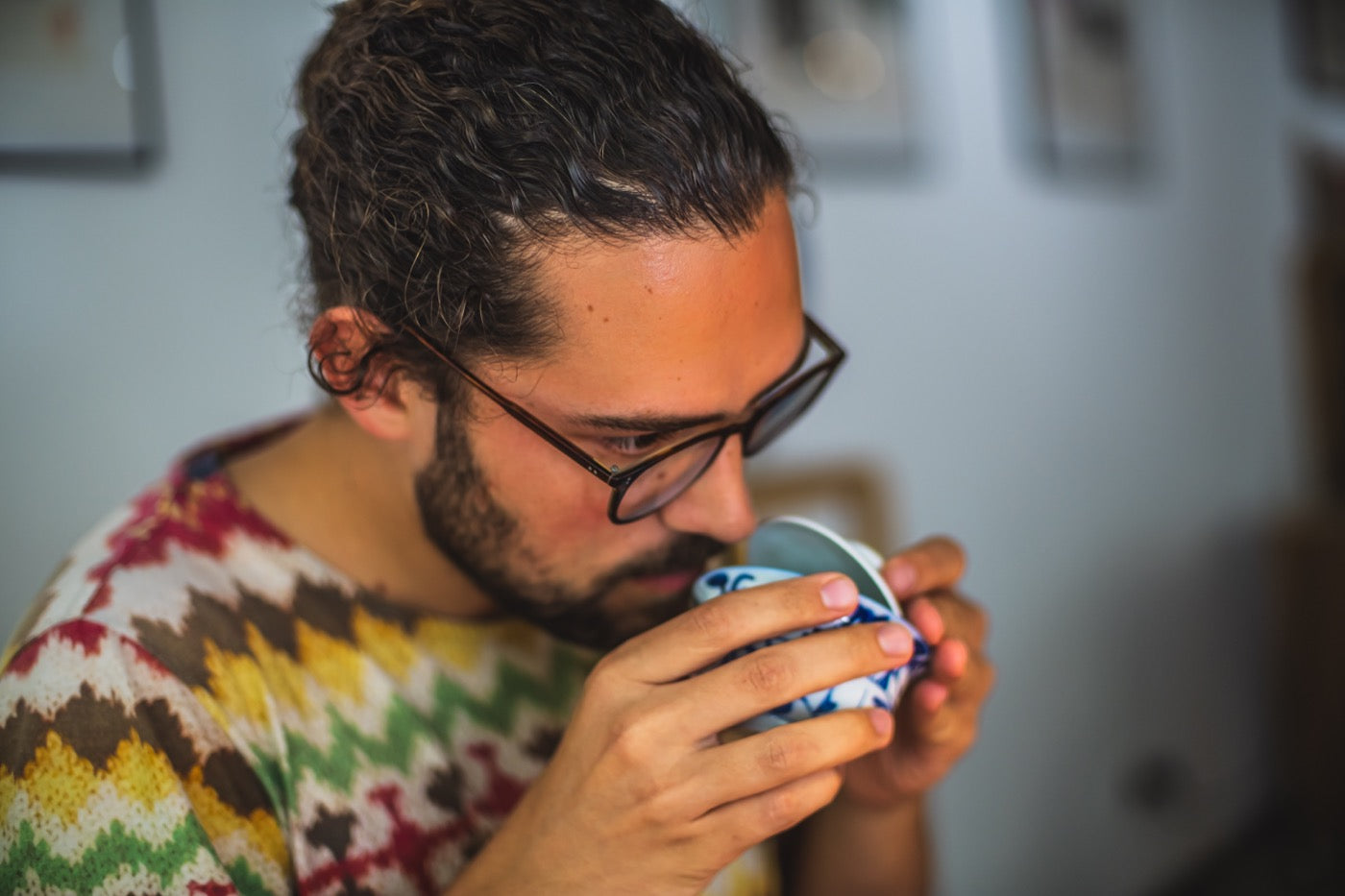
Drinking Saemidori is not only about taste. It is about texture, temperature, the way steam rises, the weight of the bowl in the hand. Japanese tea culture emphasises this multisensory dimension. The choice of vessel — a rustic Raku bowl or a smooth porcelain one — shapes how the tea is perceived.
Saemidori Matcha shows best in a bowl that allows its vivid colour to read clearly. A white or cream-coloured bowl provides the strongest contrast, though many practitioners prefer darker bowls, where the green appears quieter, almost meditative. Bowl temperature matters too. A pre-warmed bowl keeps the tea hotter for longer, but with Saemidori a cooler bowl can be an advantage — it emphasises the sweetness and prevents the delicate aromas from being pushed out by heat.
The preparation itself is a ritual. Matcha from Saemidori requires less effort when whisking than firmer cultivars. The powder dissolves readily, and after just a few strokes with the Chasen a fine, stable layer of foam forms. That foam should be creamy rather than airy, with small, even bubbles — a sign of good quality and correct technique.

For Sencha preparation, water temperature is decisive. Practical guidance on temperature recommends 60 to 70 °C for Saemidori. Higher temperatures extract more catechins and can tip the cup toward bitterness. Lower temperatures emphasise sweetness and Umami. Steeping time should be short — 60 to 90 seconds for the first infusion. Subsequent infusions can go a little longer, since the leaves are already open and release their aromas more gradually.
Craft and tradition
Producing high-quality Saemidori is craft work. It begins with field care — correct pruning, shading applied at the right moment. Each step draws on knowledge passed down across generations. The best producers are often small family operations that have worked the same fields for decades, sometimes longer.
Further detail on cultivation methods shows that growing Saemidori demands particular attention. The plants are more frost-sensitive and more nutrient-hungry than Yabukita. Some producers use organic fertilisers. Others opt for mineral supplements to enrich the soil. The philosophies behind these choices vary, but the goal is the same: tea of the highest possible quality.
In processing, the skill of the tea master becomes visible. Finding the right steaming time is an art that requires experience. Too short, and the leaves continue to oxidise. Too long, and the aromas are destroyed. Tea masters rely on their senses — the feel of the leaves, the smell of the steam, the colour of the wet material. Machines can assist, but the final decisions are made by people.
The connection between craft and culture runs deep in Japan. Tea is not only a drink but a medium through which values — respect, harmony, attentiveness — are expressed. Saemidori, with its gentle, open character, embodies those values. It is a tea that invites you to slow down, that creates space for reflection and presence.
Saemidori in contemporary tea practice
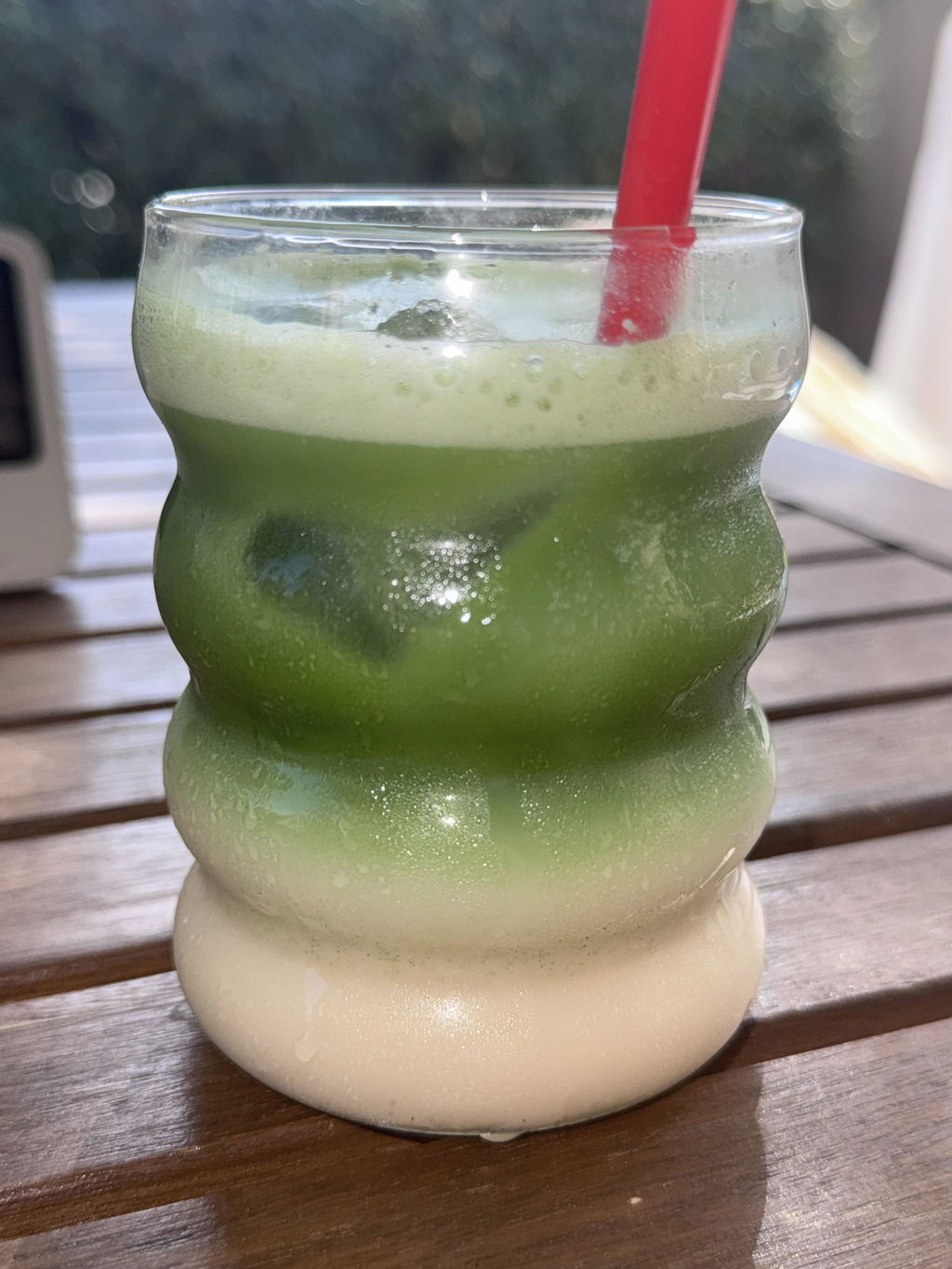
While traditional tea ceremony retains its place in Japanese culture, new forms of tea practice are also developing. In urban tea houses, Saemidori Matcha is prepared as lattes, with steamed milk and sometimes a touch of vanilla or honey. These contemporary preparations may unsettle purists, but they bring tea to new audiences and keep the culture moving.
Saemidori also has a presence in professional kitchens. Chefs value its mild sweetness and use the powder in desserts, ice creams, and occasionally savoury dishes. The vivid colour makes it a visual asset, while the flavour is subtle enough not to crowd out other ingredients. In high-end restaurants, Saemidori Matcha is sometimes served as a palate cleanser between courses — a contemporary reading of an old tradition.
In home tea practice, Saemidori is gaining traction, particularly among younger drinkers looking for alternatives to coffee. The calming effect of L-theanine, combined with a moderate caffeine content, makes Saemidori Matcha well suited to focused work or creative activity. Unlike coffee, which tends to deliver a sharp lift followed by a drop, Matcha provides a gentler, more sustained alertness.
The ceramic tradition plays a role here too. The choice of vessel — a hand-thrown Kyusu for Sencha, or a carefully made Chawan for Matcha — affects not only the aesthetic but the function. Different clay bodies retain heat differently, and the texture of an interior glaze can influence how the tea opens up. These details may seem small, but they accumulate into an experience that extends well beyond the act of drinking.
The material
Saemidori leaves have a specific cell structure that distinguishes them from other cultivars. The cell walls are thinner, which makes the leaves softer but also more vulnerable to mechanical damage. That is why harvesting at premium quality levels is often done by hand. Machine harvesting can bruise the leaves, triggering premature oxidation and reducing quality.
After picking, oxidation begins immediately. Transport to the processing facility is therefore time-critical. In traditional operations, the leaves are carried in flat bamboo baskets to allow airflow and prevent heat build-up. Modern facilities use temperature-controlled transport, but the principle is the same: the leaves must remain fresh and cool until they can be steamed.
Steaming itself is a precise process. High-temperature steam — around 95 to 100 °C — is applied to the leaves for 20 to 40 seconds. This step deactivates the enzymes that would otherwise drive oxidation. With Saemidori, the optimal steaming time often sits at the lower end of that range, to protect the delicate leaf structures. The result is leaves that retain their natural green colour and carry a fresh, grassy scent.
After steaming, the leaves are cooled and dried. This reduces moisture content from around 80 percent down to 12 to 15 percent. Drying happens in several phases — initially at higher temperatures to remove surface moisture, then at lower temperatures to draw out internal moisture without damaging the aromas. The dried leaves, called aracha, are the raw material that is then either further processed or held in storage.
Saemidori is more than a cultivar. It is an expression of a philosophy that places value on subtlety, quality, and the pleasure of small distinctions. For those who want to go deeper into Japanese tea cultivars, UNEARTHED carries both the Hand-Picked Saemidori Matcha 30g and the Honzu Yame Saemidori 20g as part of the Single-Cultivar range, alongside a carefully selected range of Matcha and Sencha and the handmade ceramics that go with them. The gallery is in Munich, or browse online.
Saemidori in the cultivar family tree

Where this cultivar sits in the wider family — and how it compares with the others we profile — is mapped in our guide to Japanese matcha cultivars. Every lot we carry is in the Saemidori collection.
Saemidori is Yabukita × Asatsuyu (1990) — and in turn the pollen (father) parent of both Kirari-31 and Seimei, which makes it a hub of the modern matcha family.
Saemidori at a glance
| Japanese | さえみどり / 冴え緑 (“clear green”) |
| Registration | 1990 · Tea Norin No. 40 |
| Parentage | Yabukita (mother) × Asatsuyu (father) |
| Bud break | 4–7 days before Yabukita (early) |
| Cold tolerance | Weak — warm regions only (Kagoshima heartland) |
| Signature | Dense sweet umami, luminous jade, almost no bitterness |
| Share of area | ~4% of Japan’s tea area, and rising fastest of any cultivar |
Saemidori teas at UNEARTHED
The Saemidori teas we currently carry — each product page shows its full spec table (producer, region, tasting notes):
- Hand-Picked Saemidori Matcha 30g — single-cultivar matcha
- Saemidori Matcha 30g
- Honzu Yame Saemidori Matcha 20g
- Hoshino Hon-Gyokuro Saemidori — shaded gyokuro
- Heritage-Grade Yame Gyokuro Saemidori
Saemidori FAQ
What is Saemidori?
Saemidori (冴え緑, “clear green”) is a Japanese tea cultivar registered in 1990 as Tea Norin No. 40, from a Yabukita × Asatsuyu cross made at NARO Makurazaki. It is known for dense natural sweetness, rich umami and very low bitterness.
What does Saemidori taste like?
Sweetness first — closer to fresh pea pods or edamame than sugar — then a soft, almost creamy umami, with only a faint astringency. The liquor is a luminous jade green, and the finish is long, drifting toward chestnut as it cools.
What is the difference between Saemidori and Okumidori?
Saemidori is sweeter, lighter and more floral; Okumidori is fuller-bodied, with deeper, structural umami and a deeper jade colour. Both are shading-bred premium cultivars and both descend from Yabukita, but Saemidori also carries Asatsuyu’s sweetness.
Is Saemidori good for beginners?
Yes. Its very low astringency means it stays smooth even if the water is a little too hot, so it is forgiving to prepare, while still offering enough depth to reward experienced drinkers.
Is Saemidori the same as Samidori?
No. Saemidori (冴え緑, 1990) is a modern Yabukita × Asatsuyu cross. Samidori (さみどり) is an older Uji landrace selection used for classic tea-ceremony matcha. Similar names, different plants.
Where is Saemidori grown?
Mostly in Kagoshima, on the warm southern tip of Kyushu, because the cultivar is cold-sensitive and buds early. Some Uji producers also grow it for high-grade gyokuro. It is rarer in cooler Shizuoka.
Shop Saemidori: the hand-picked Saemidori matcha lots from Nishio and Yame are gathered in the Saemidori matcha collection.