

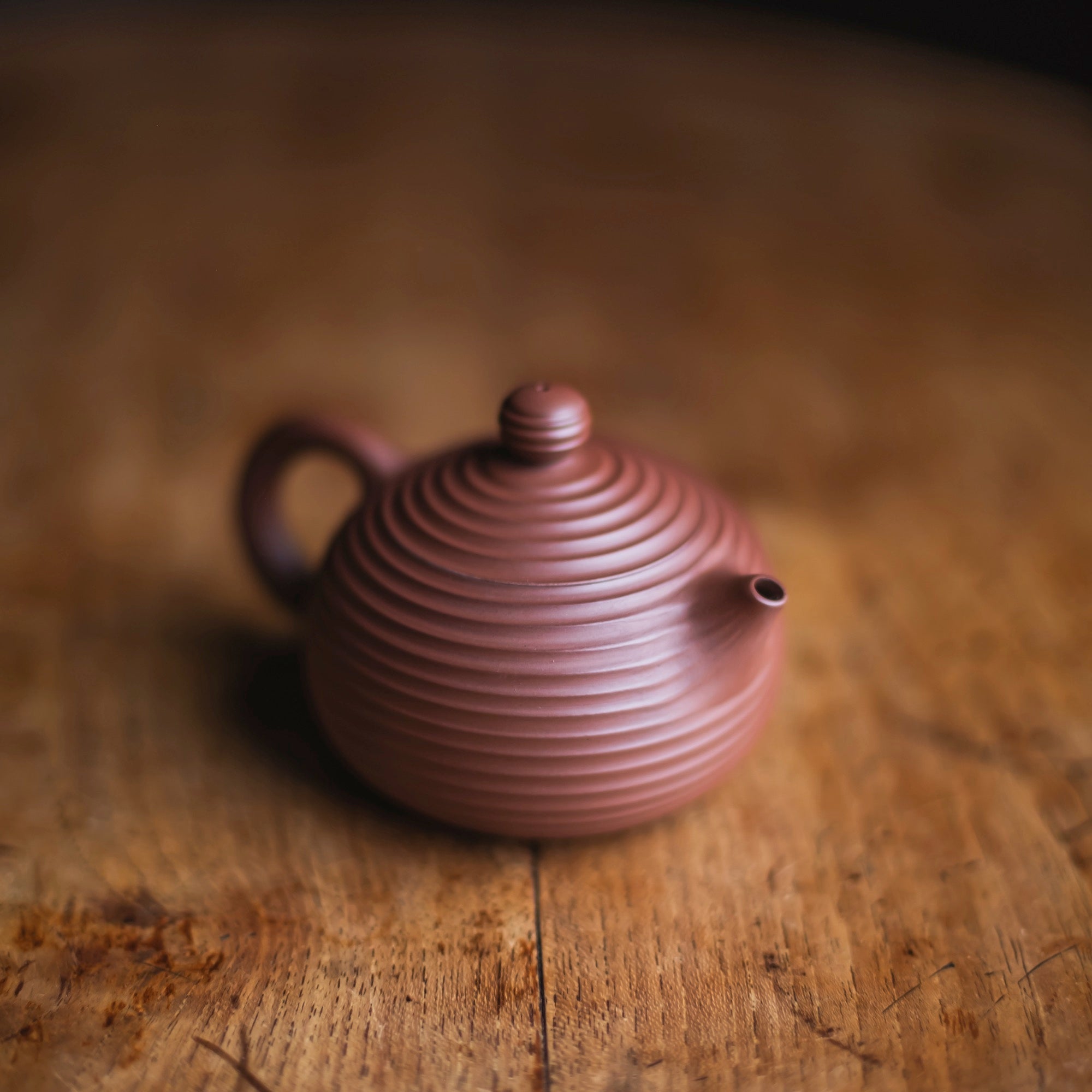
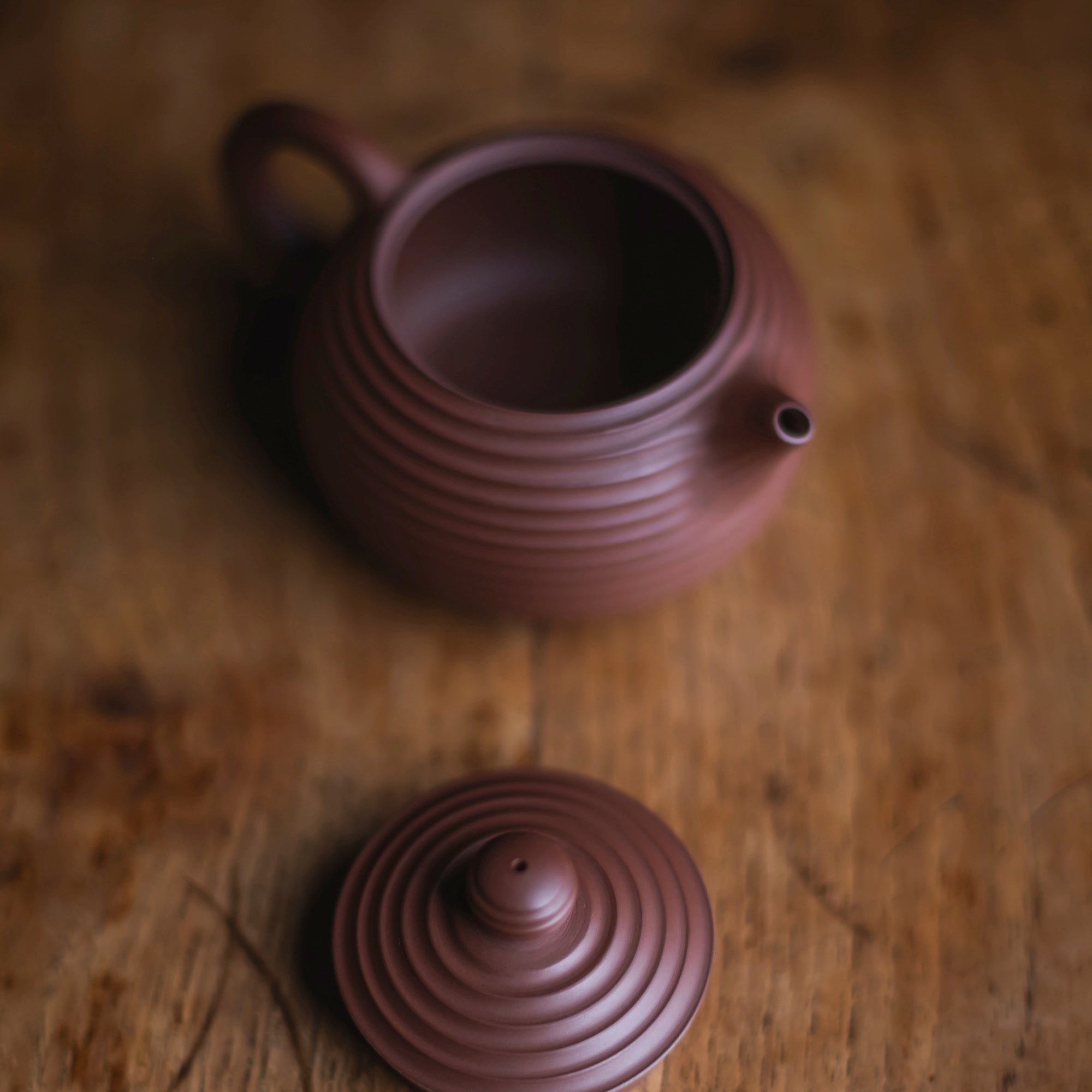
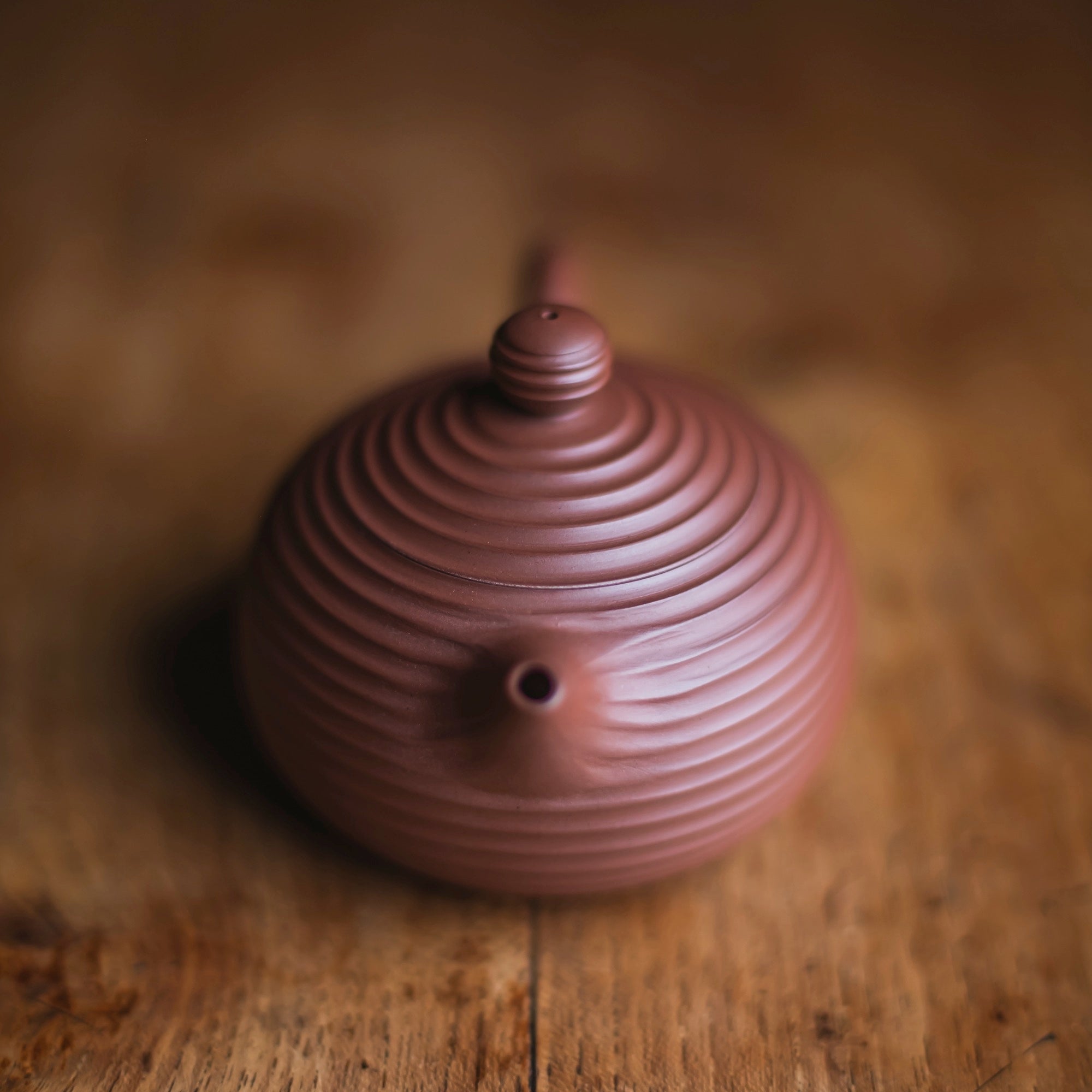
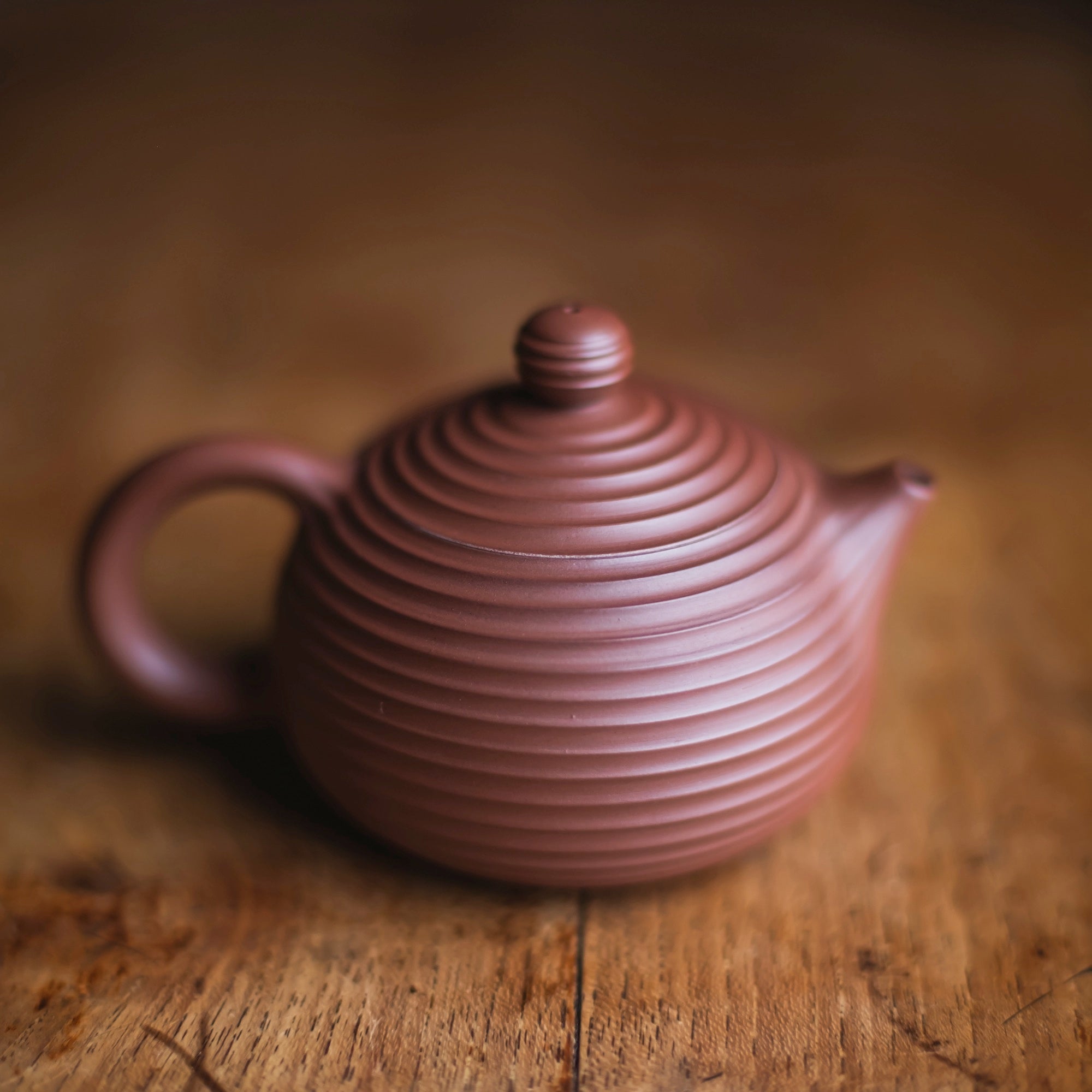
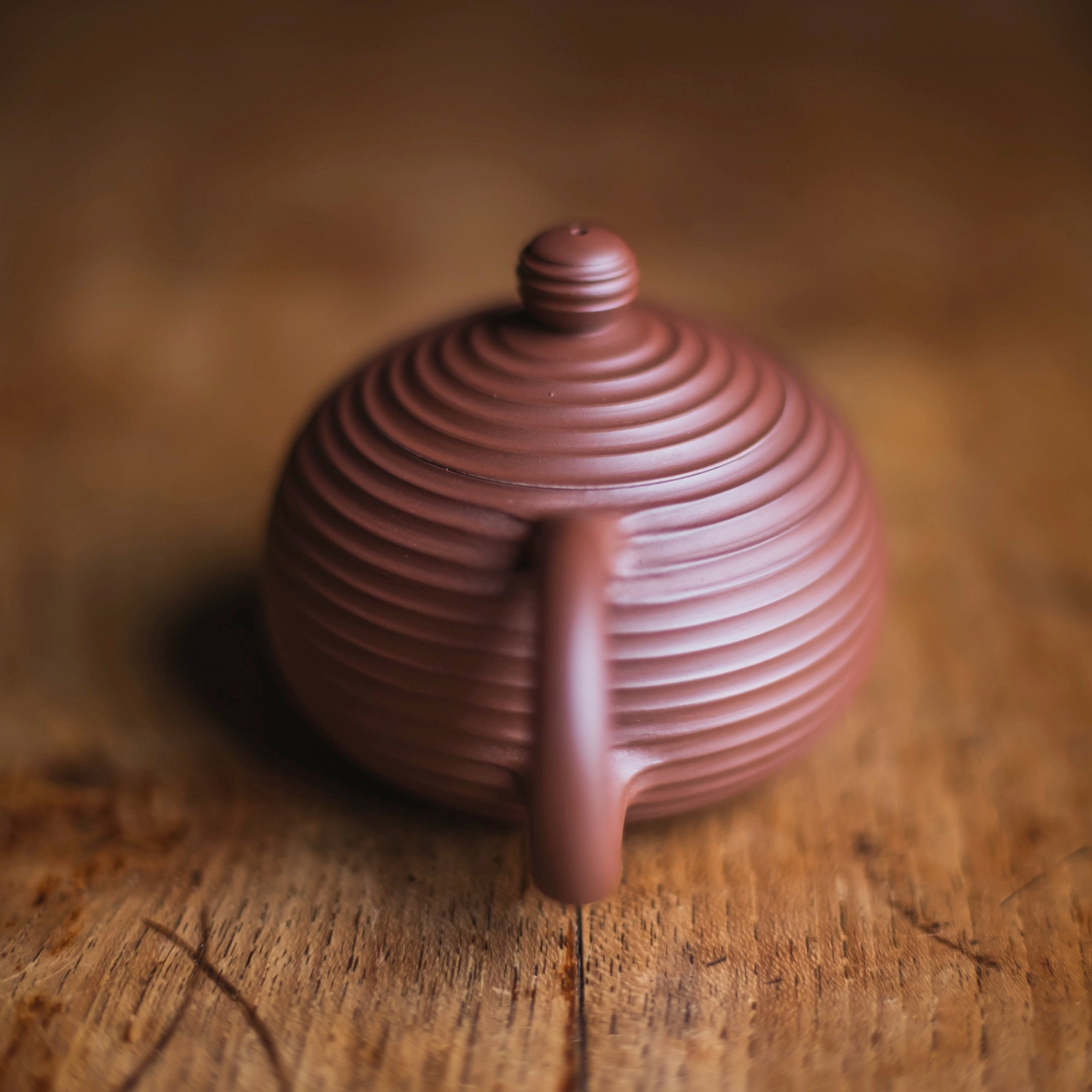
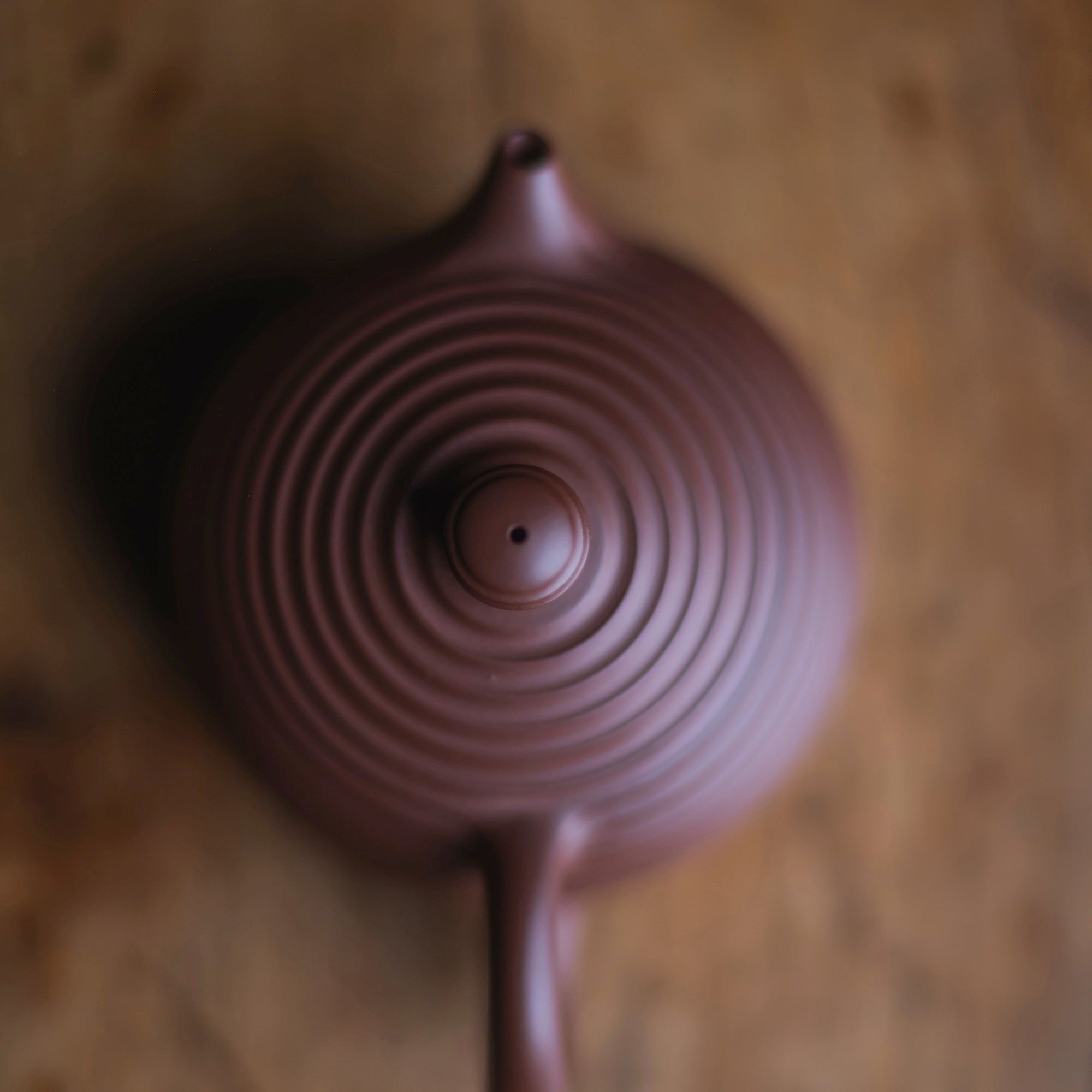
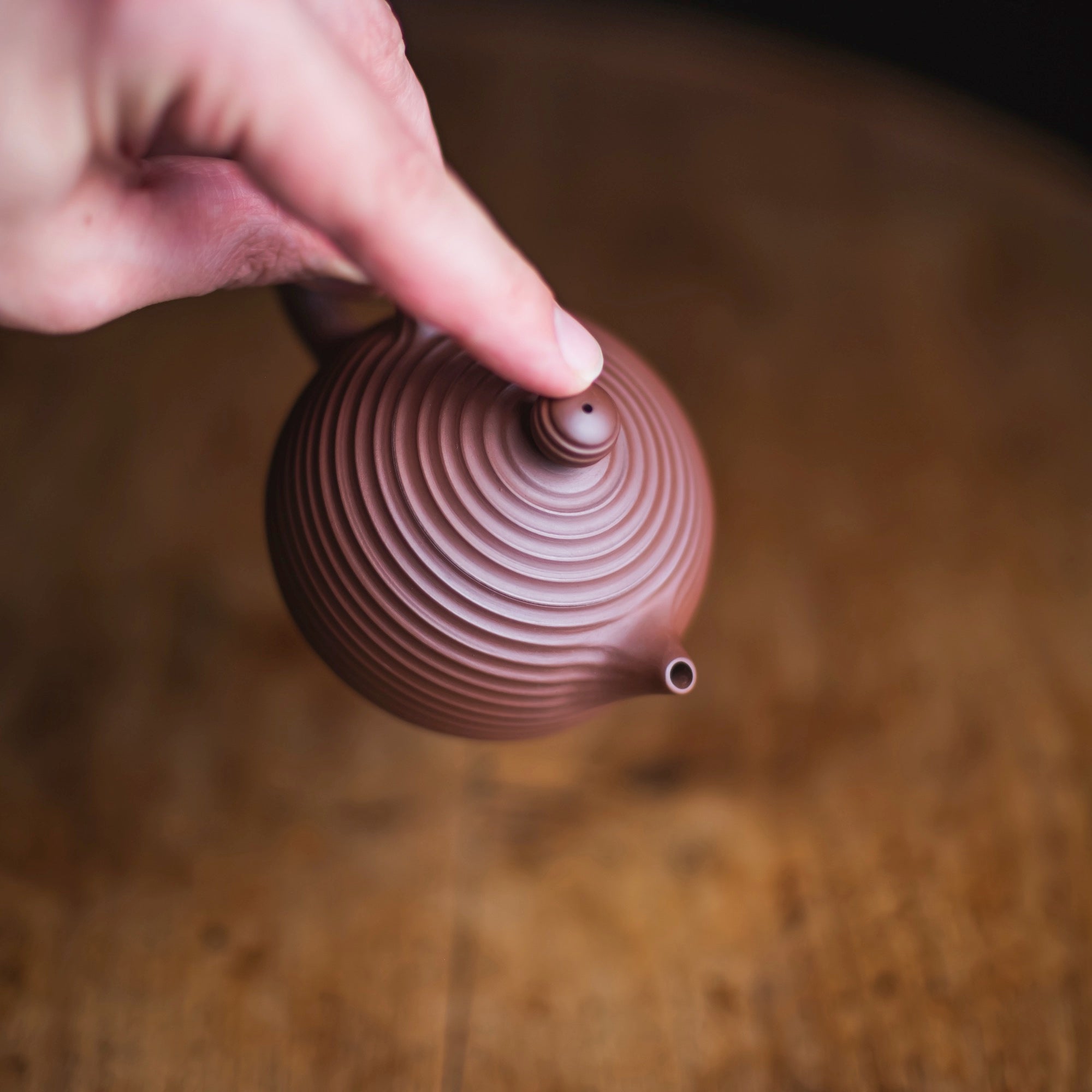
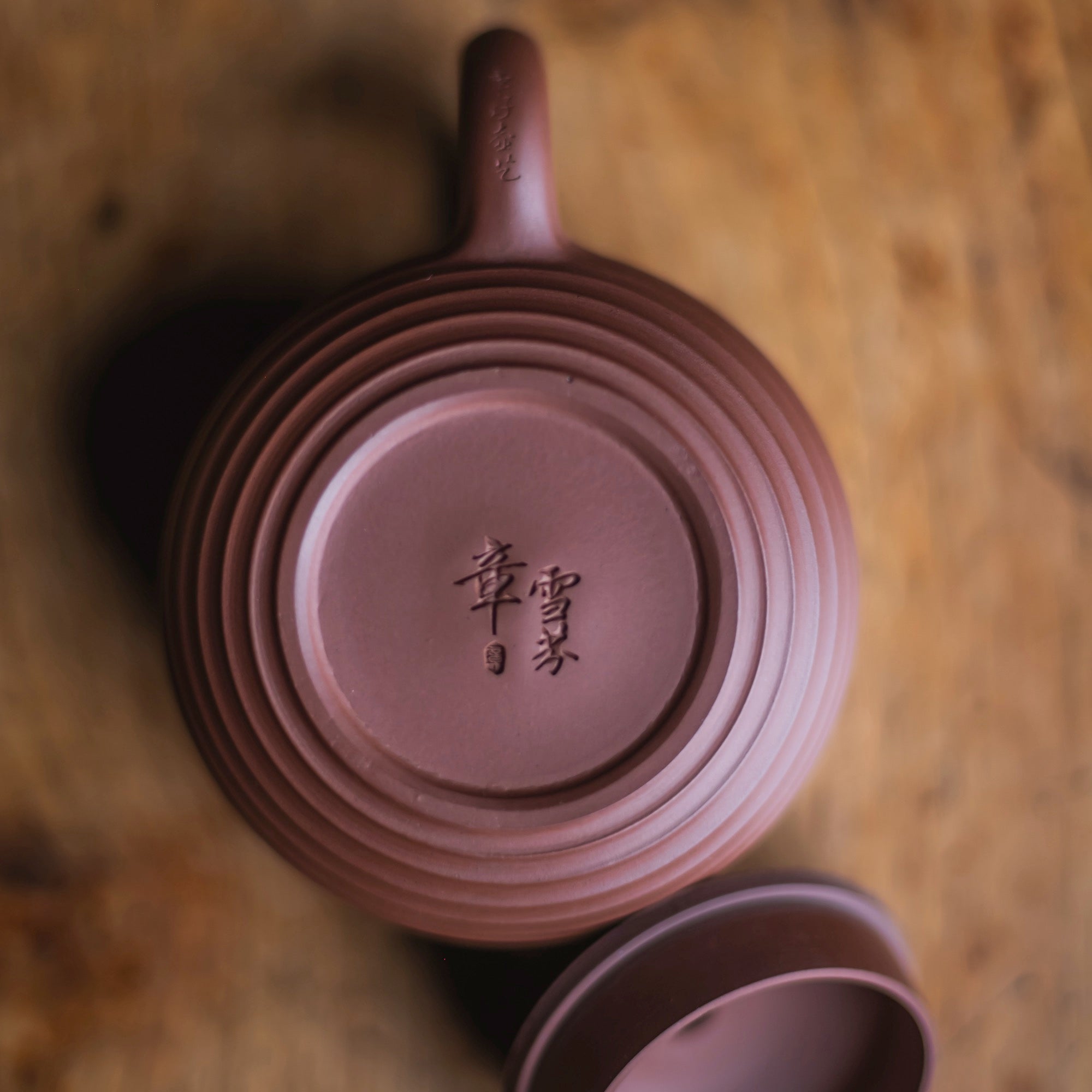
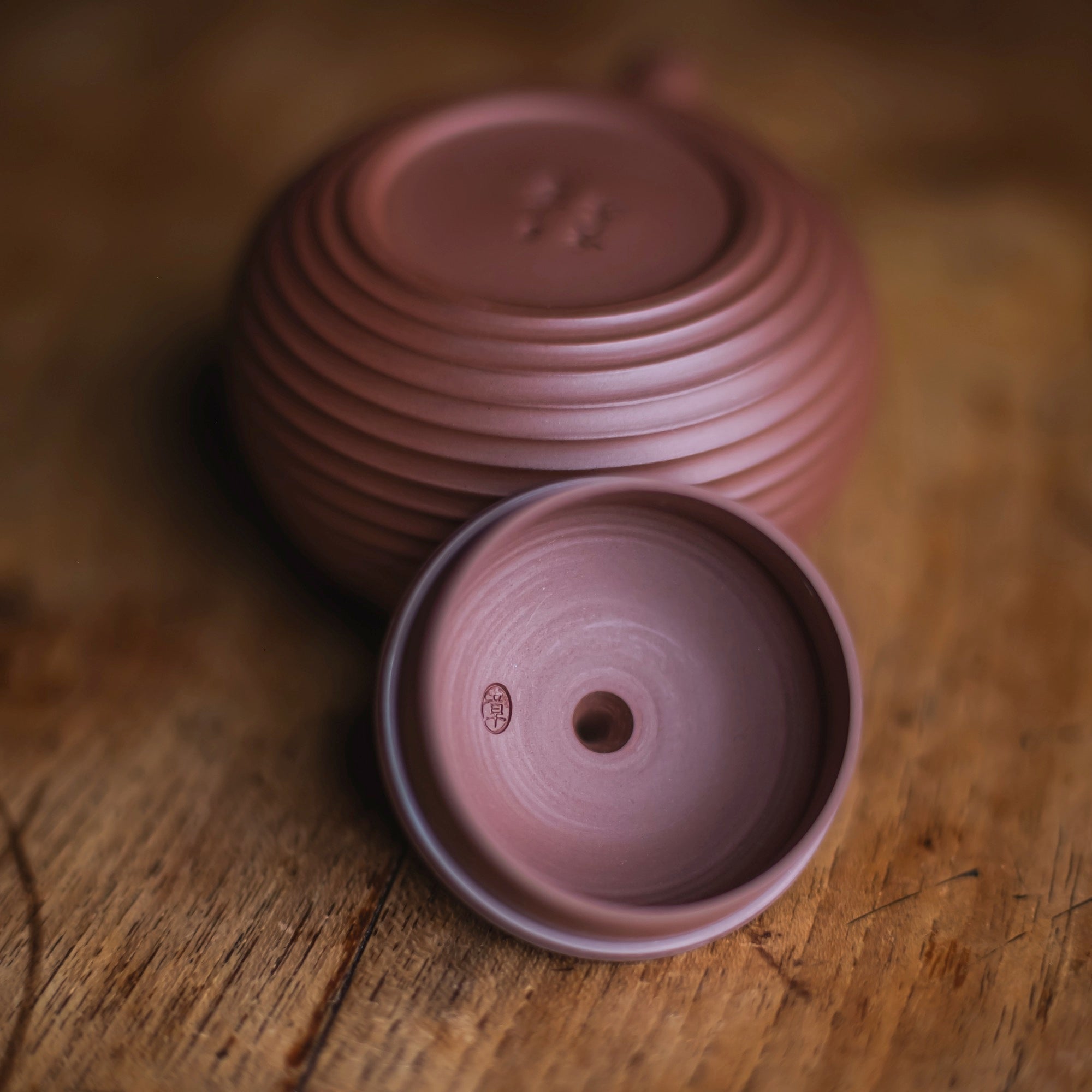
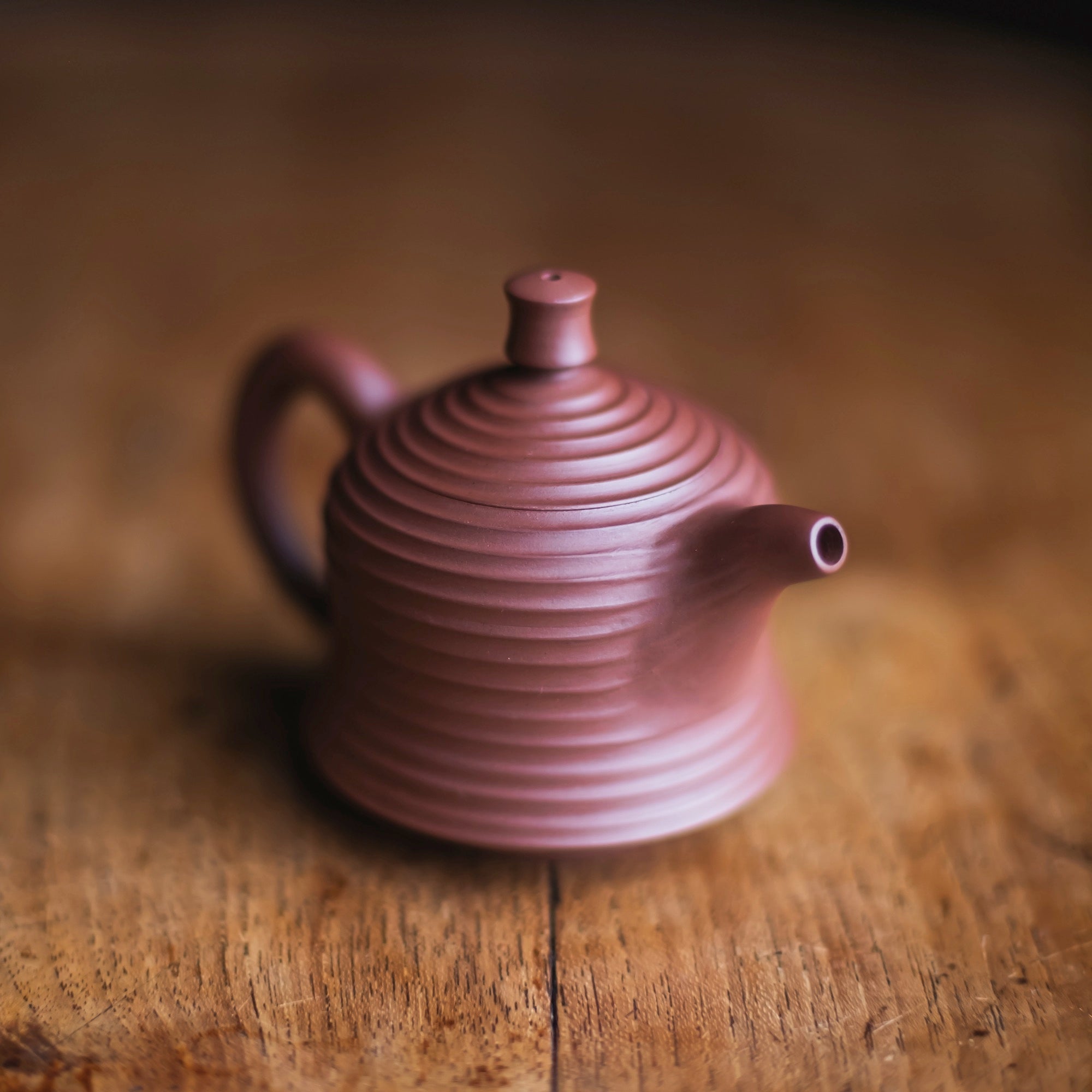
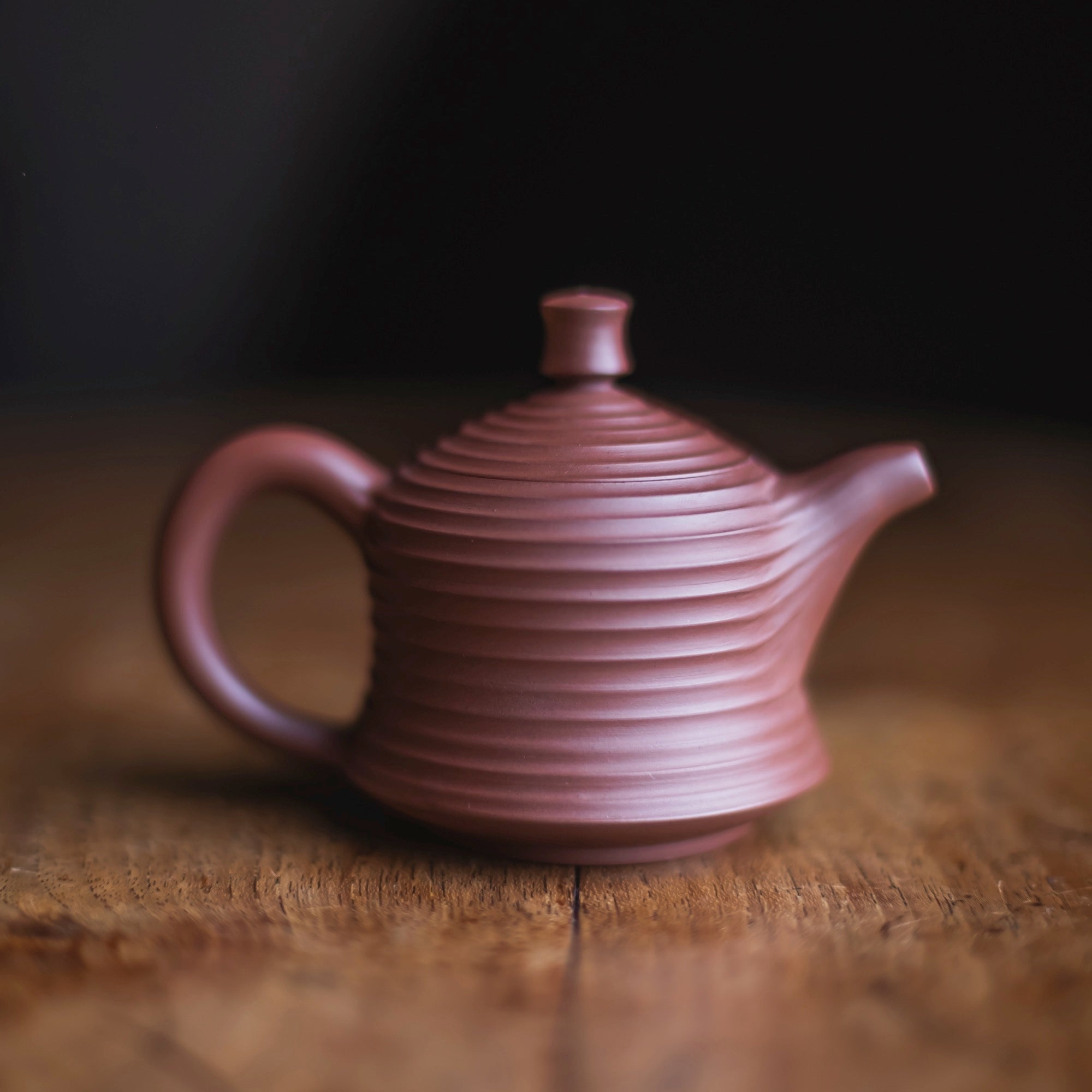
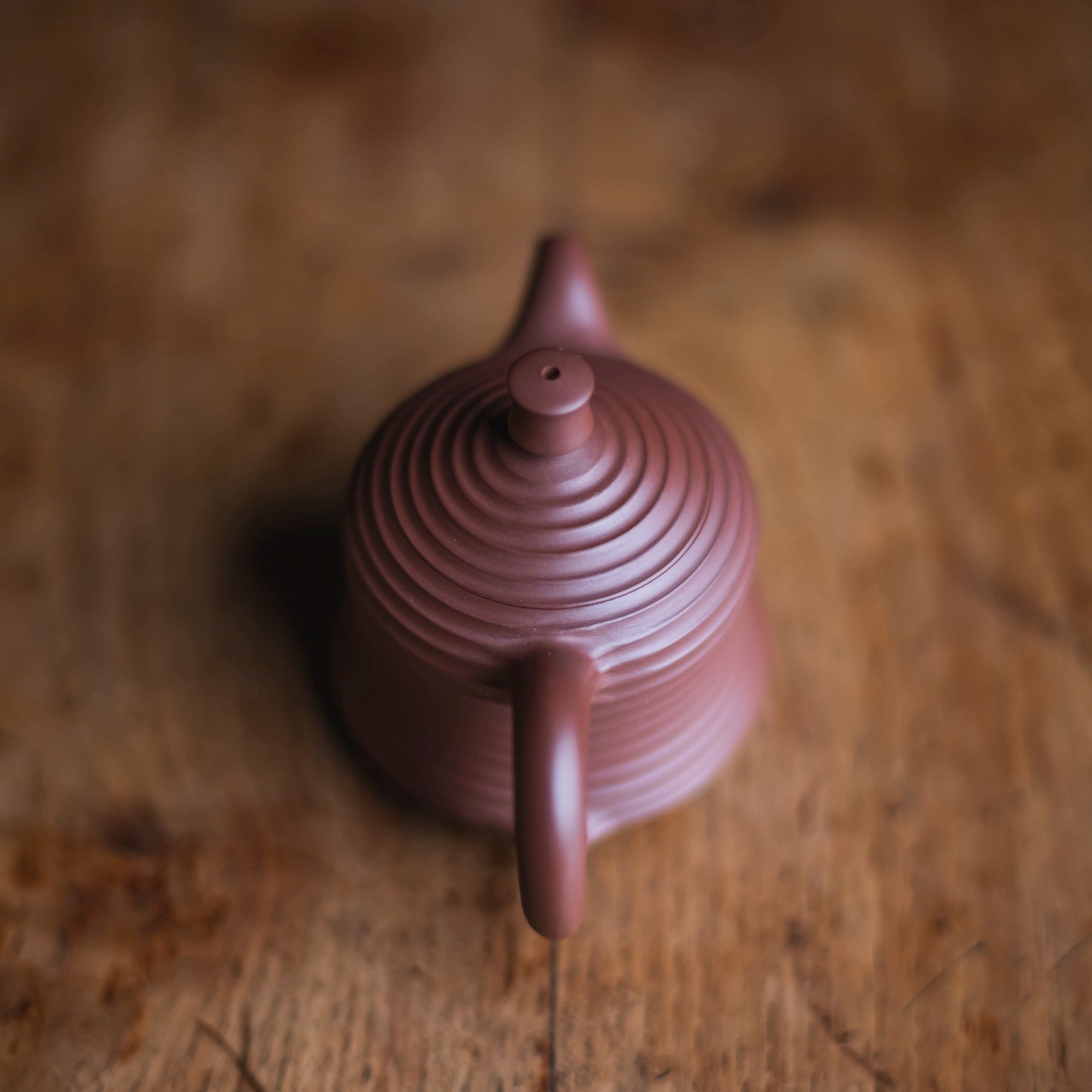
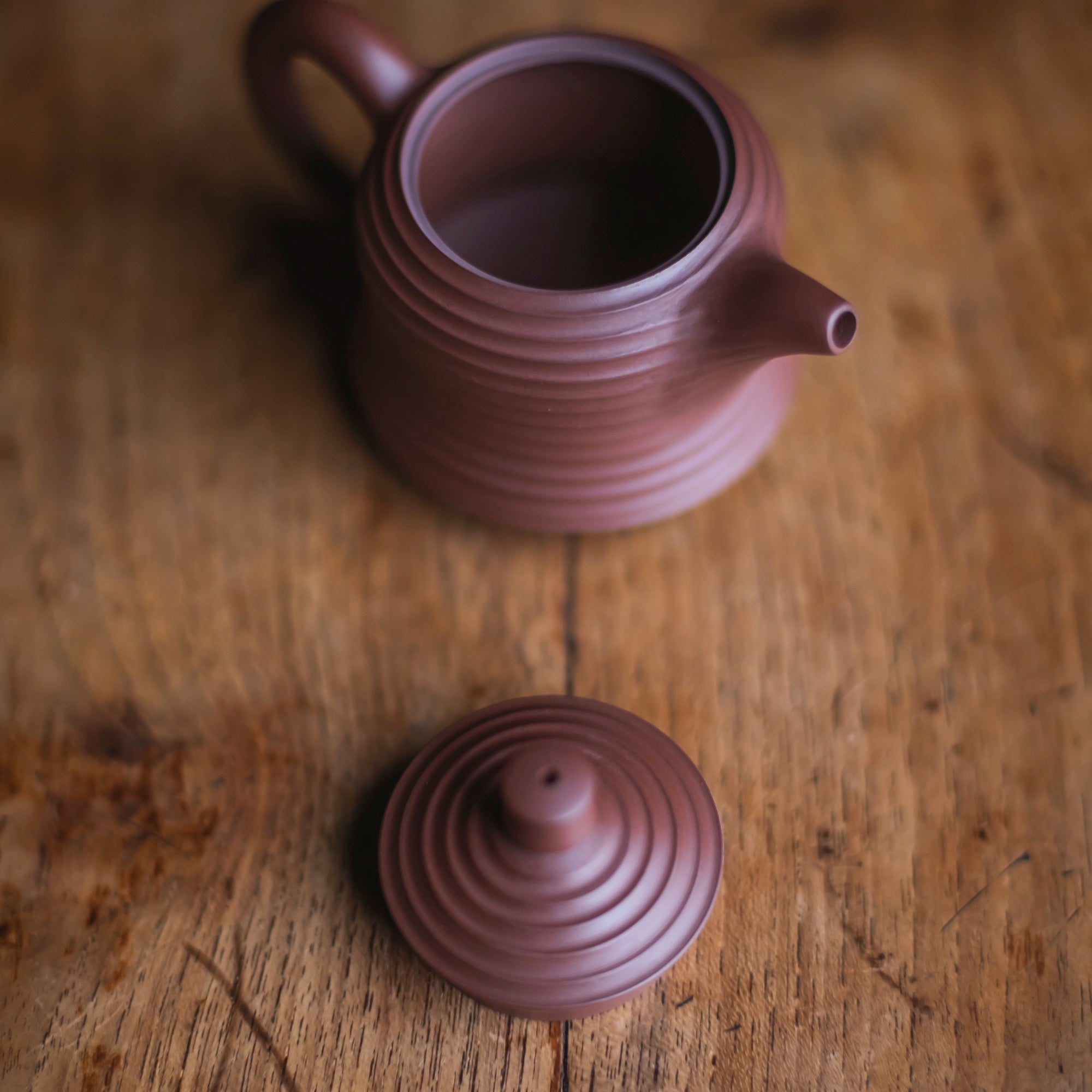
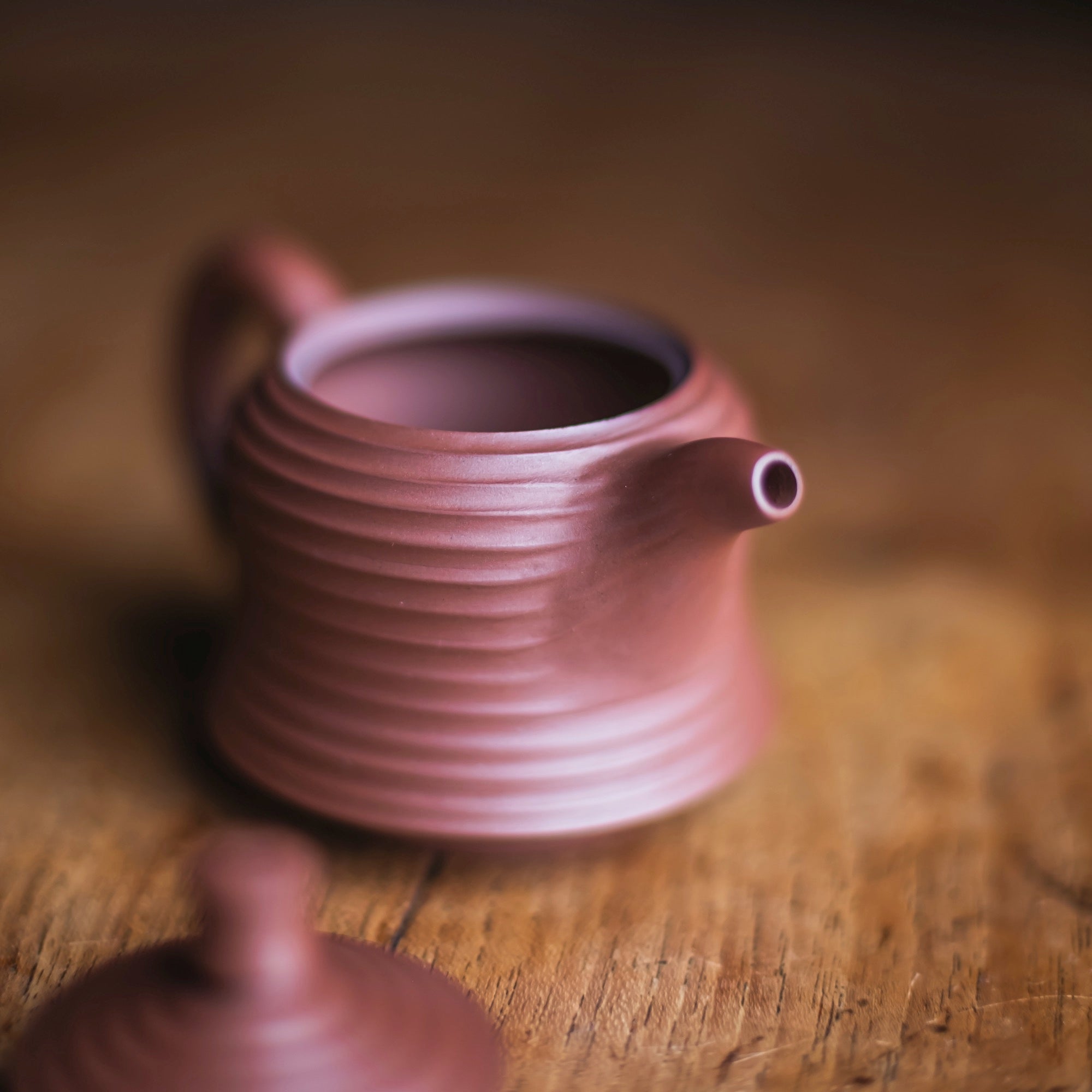
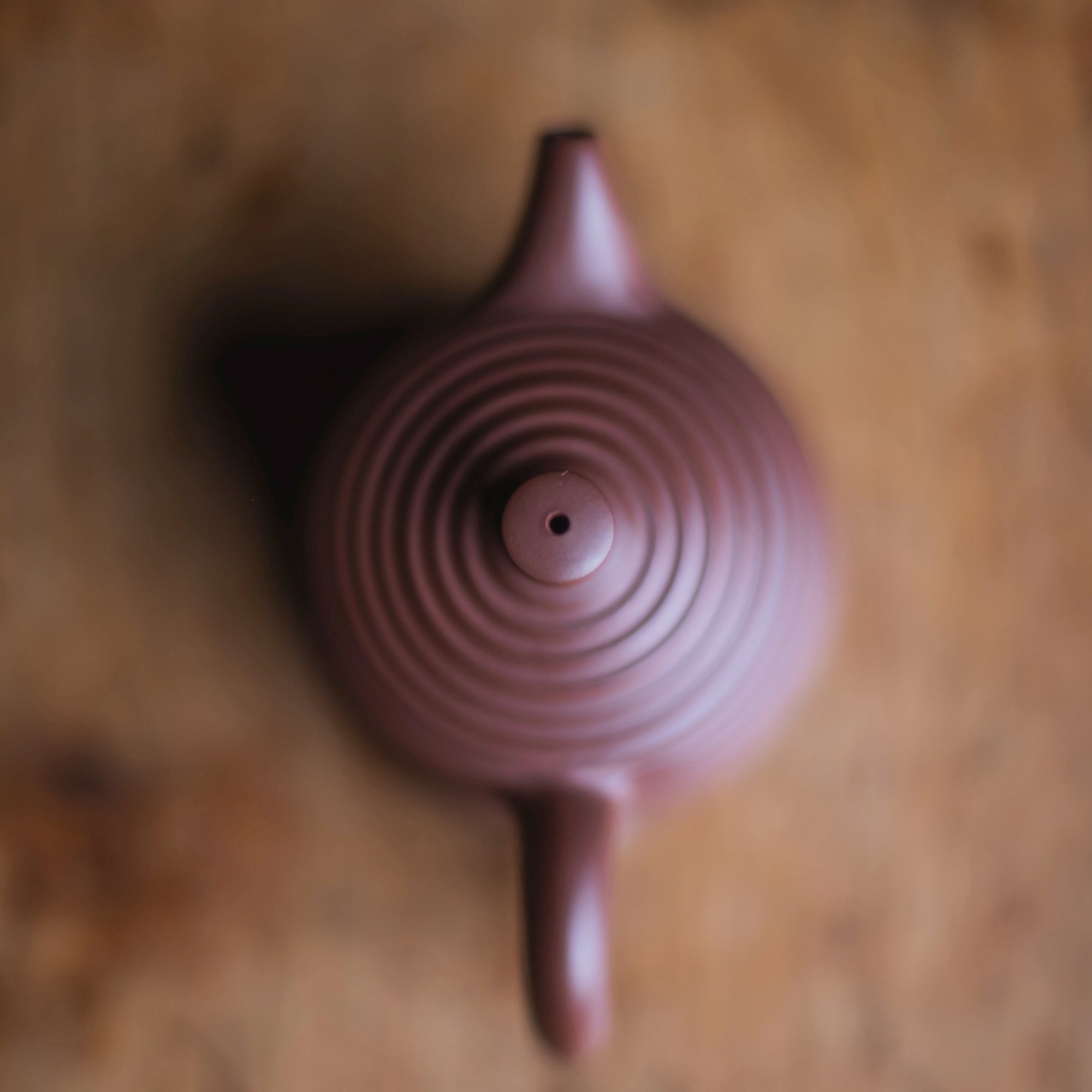
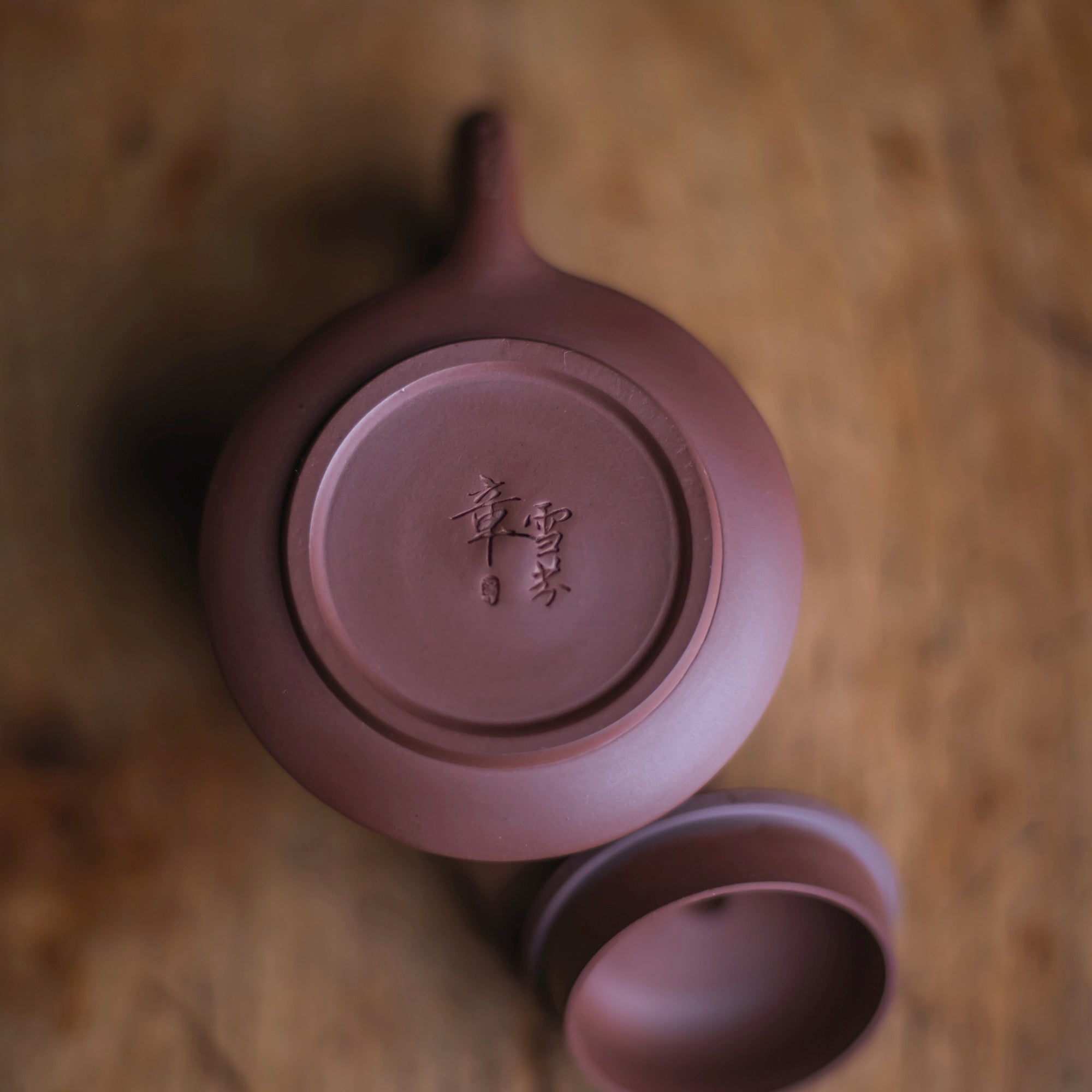
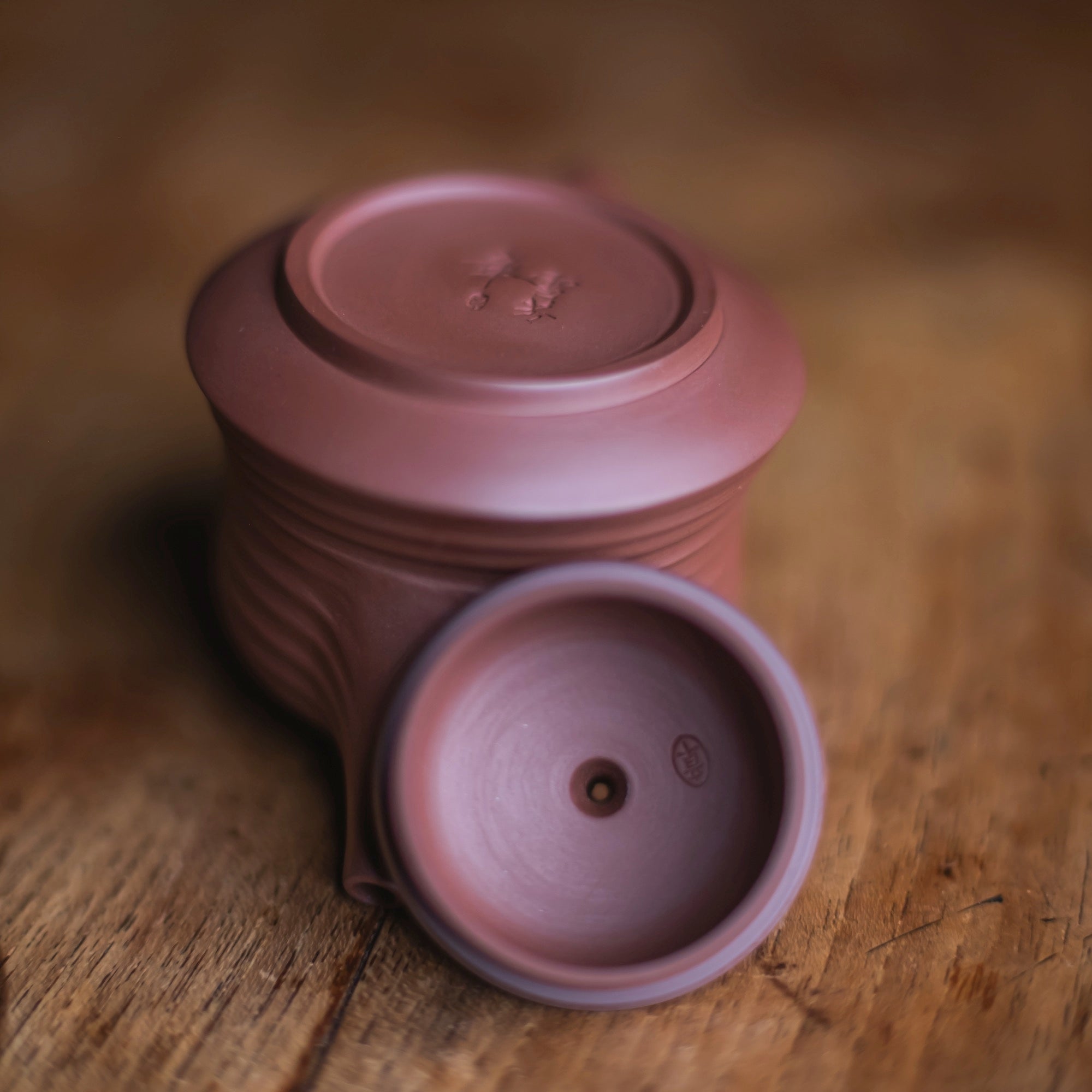


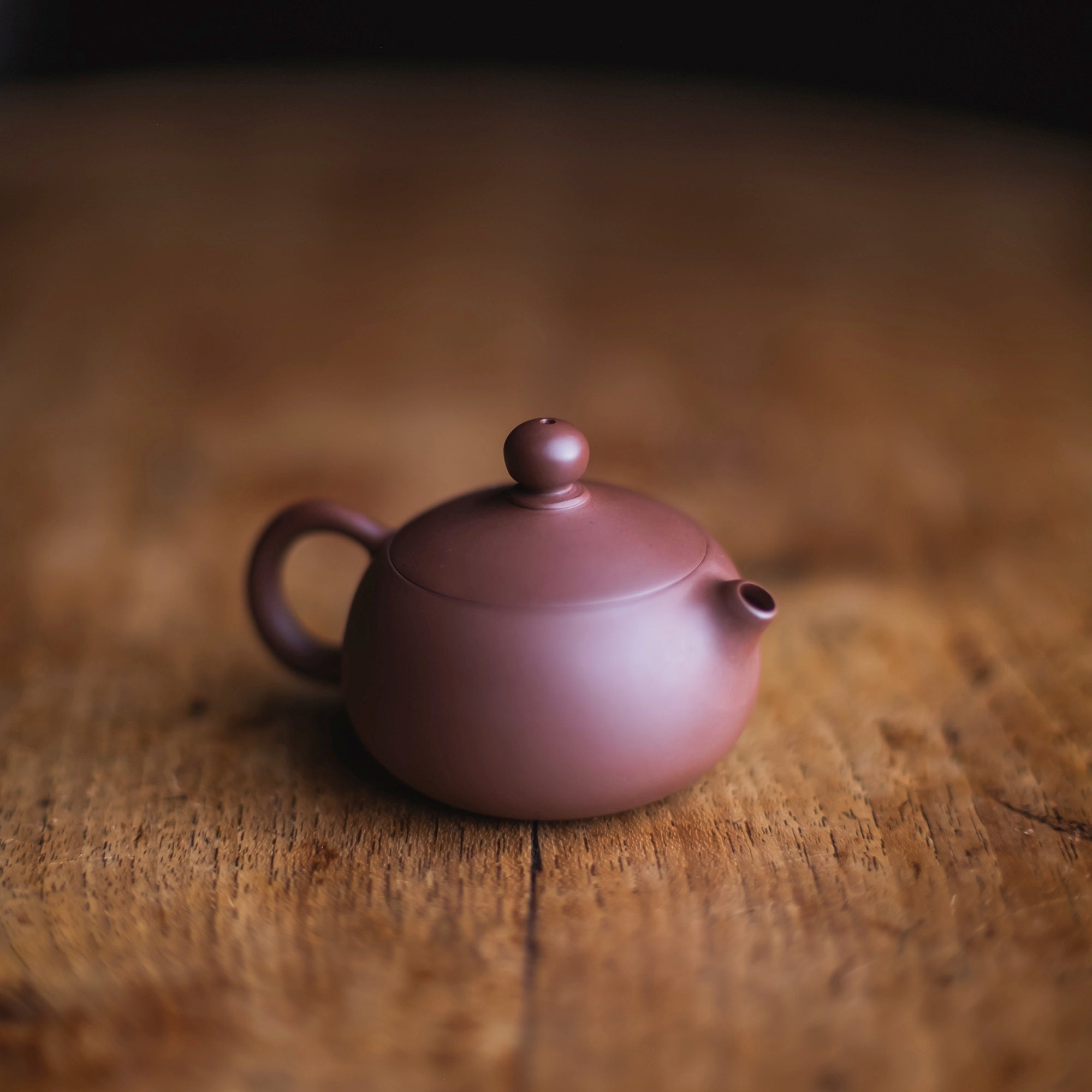
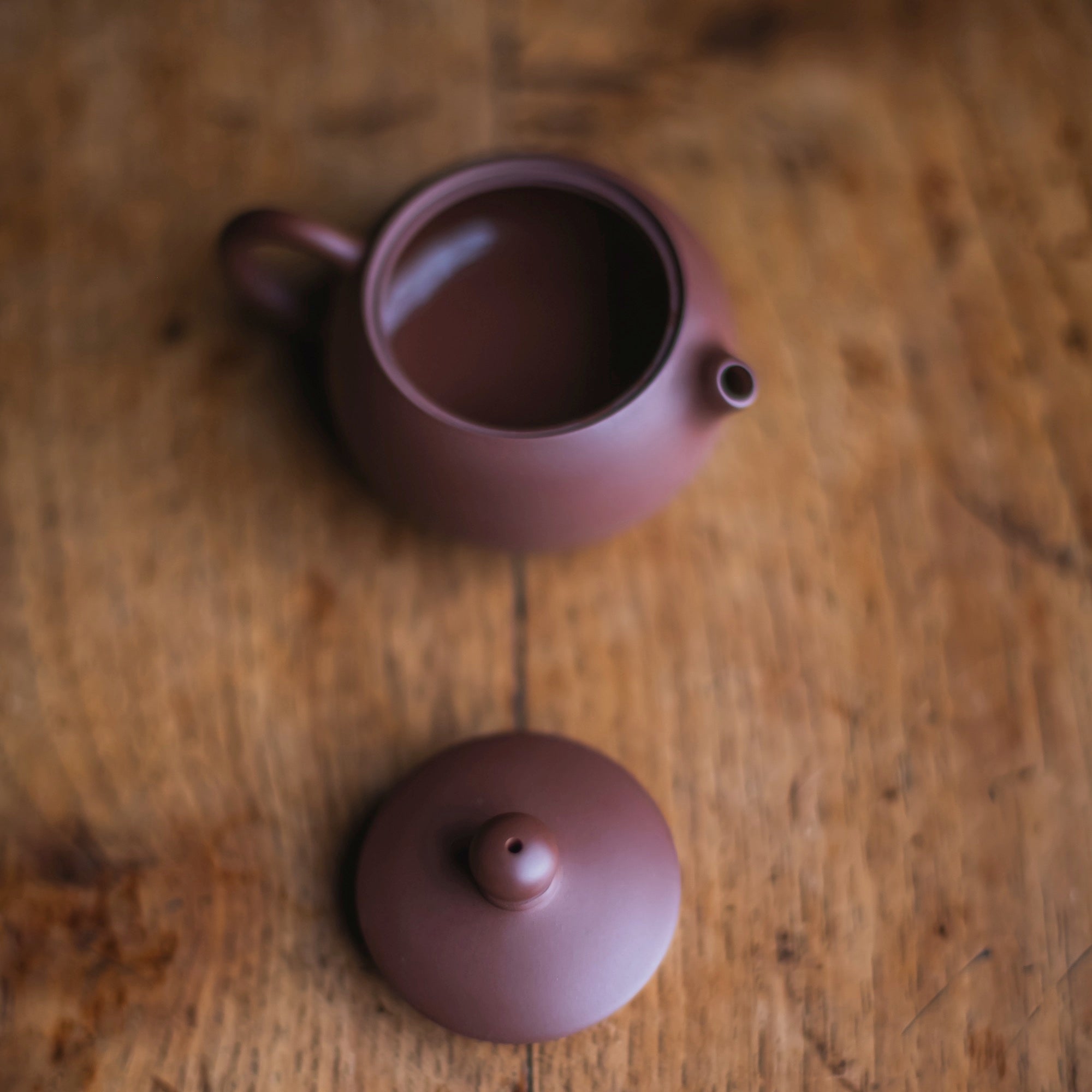
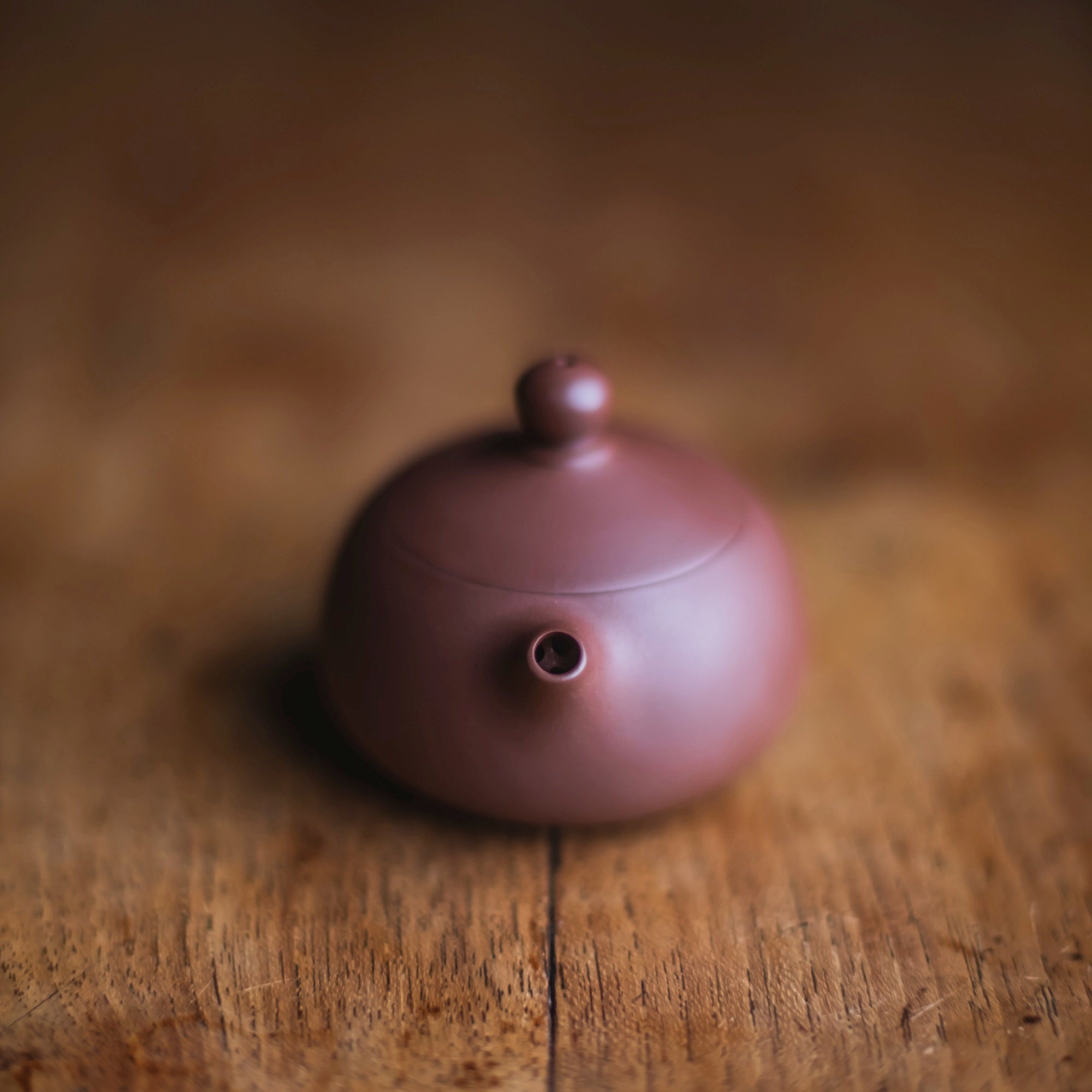
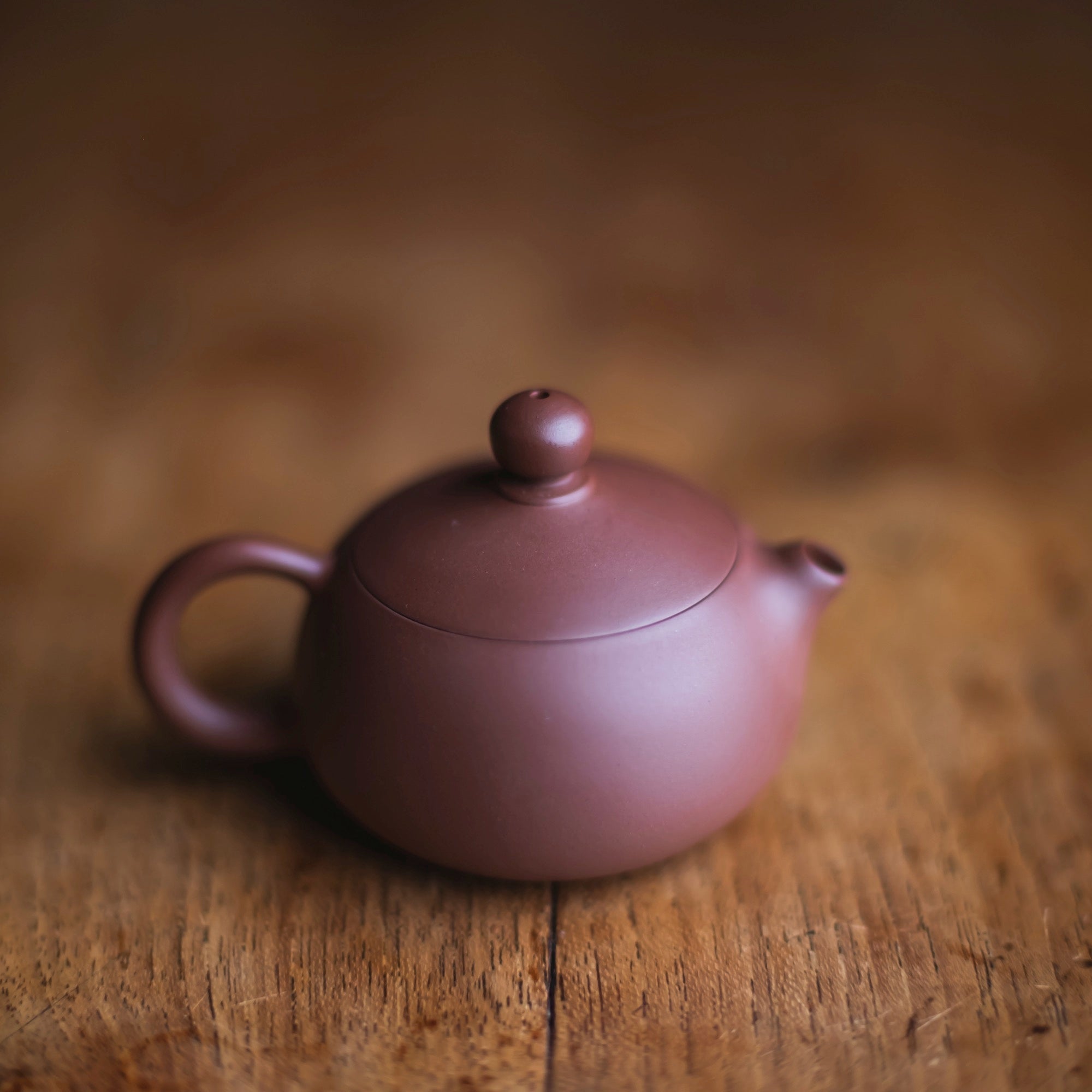
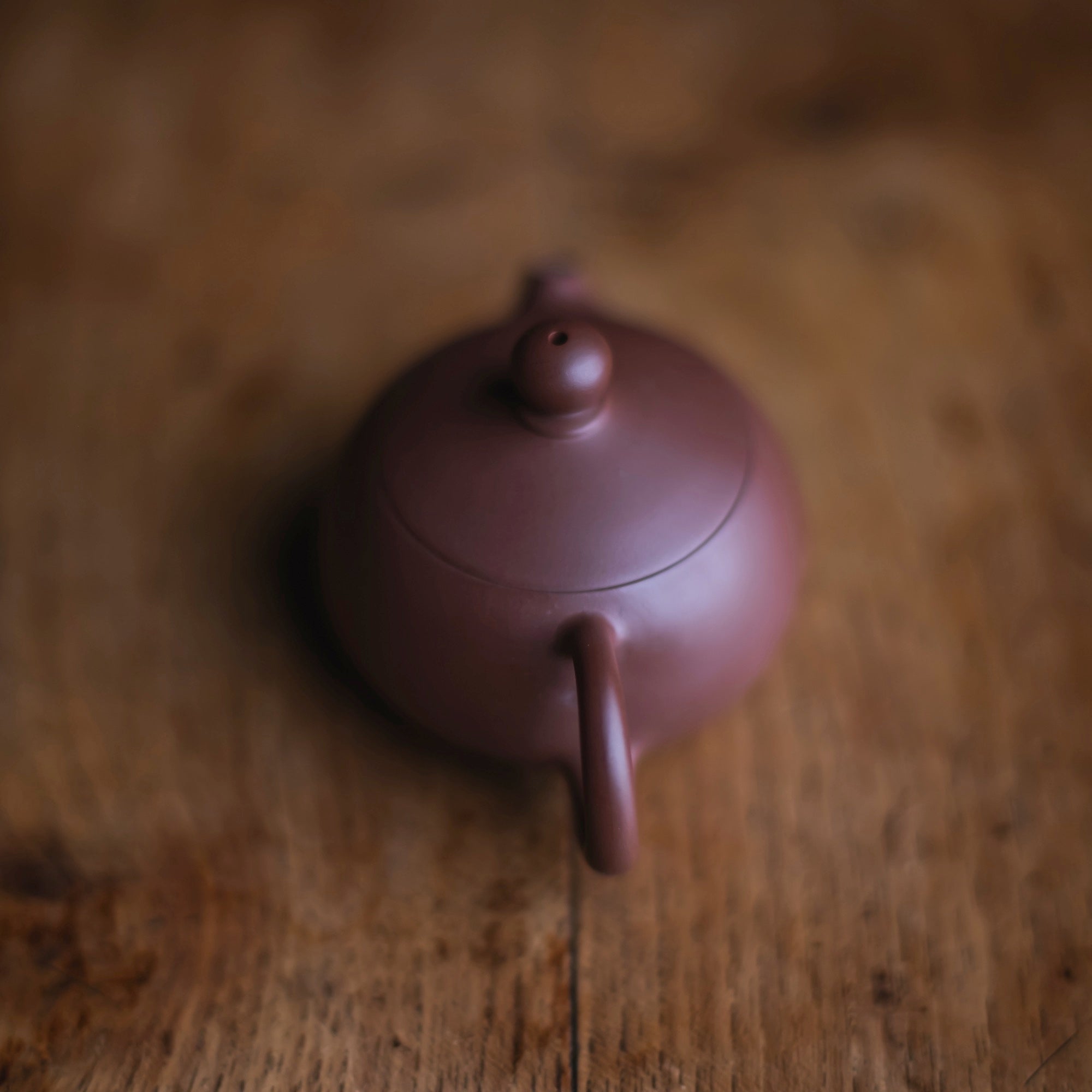
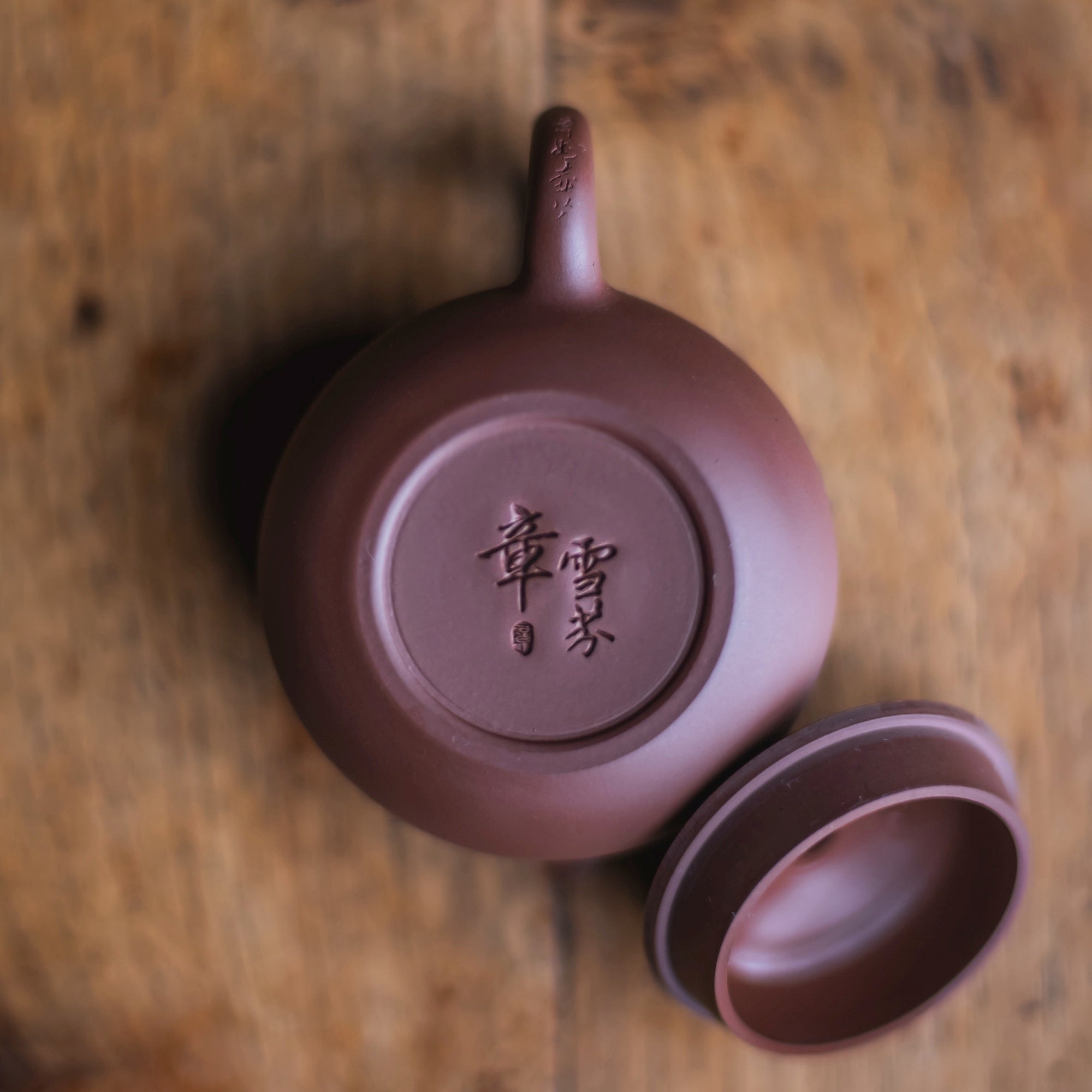


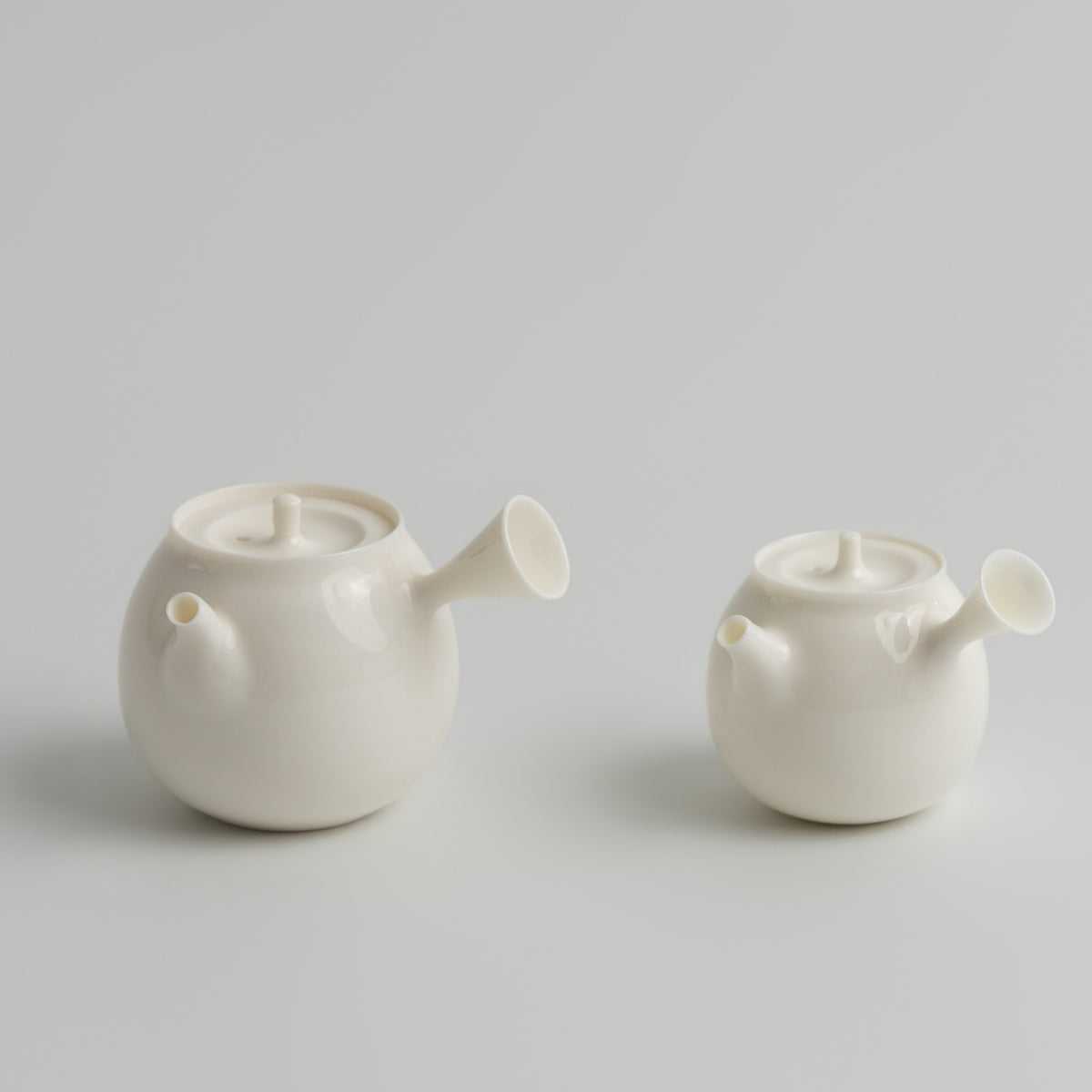

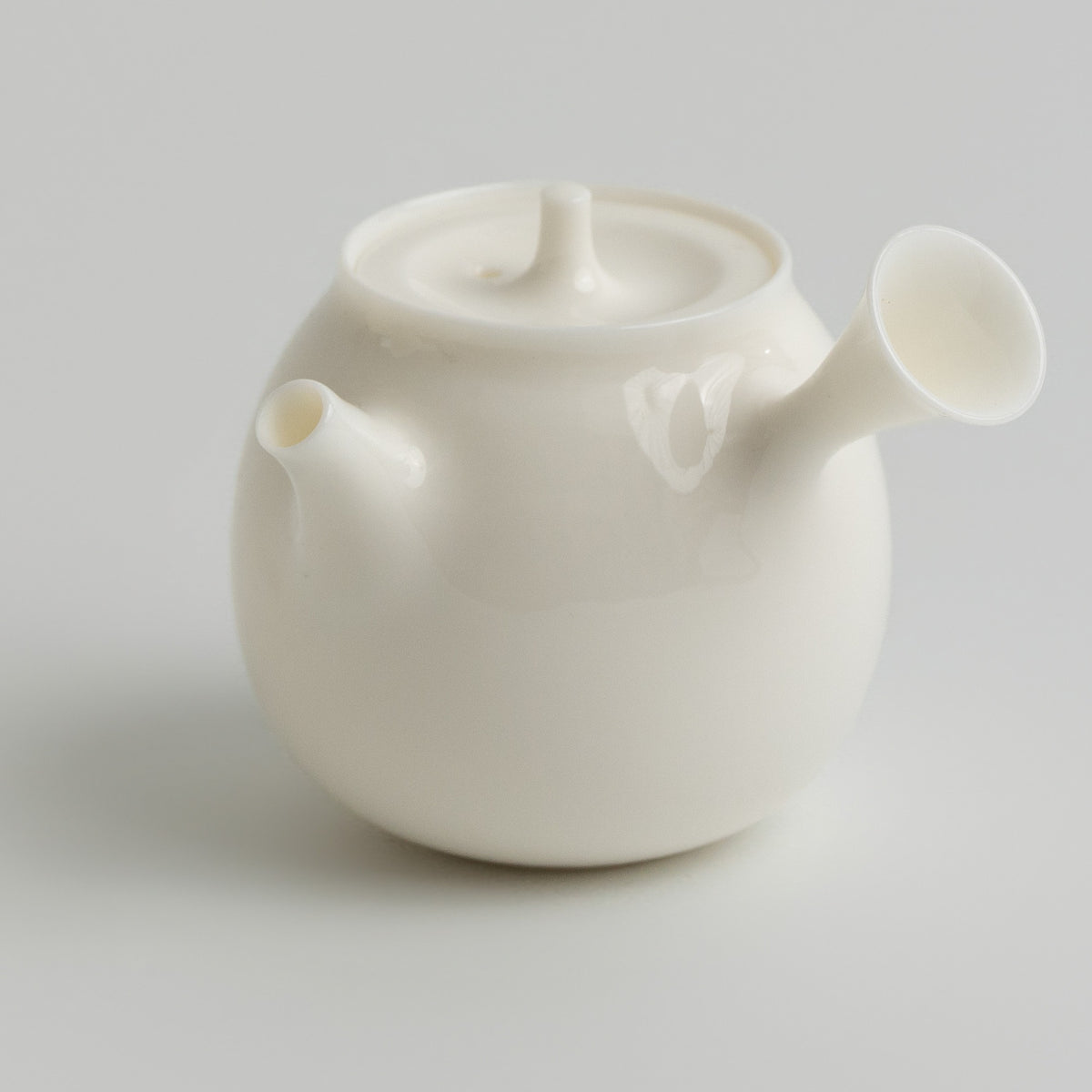



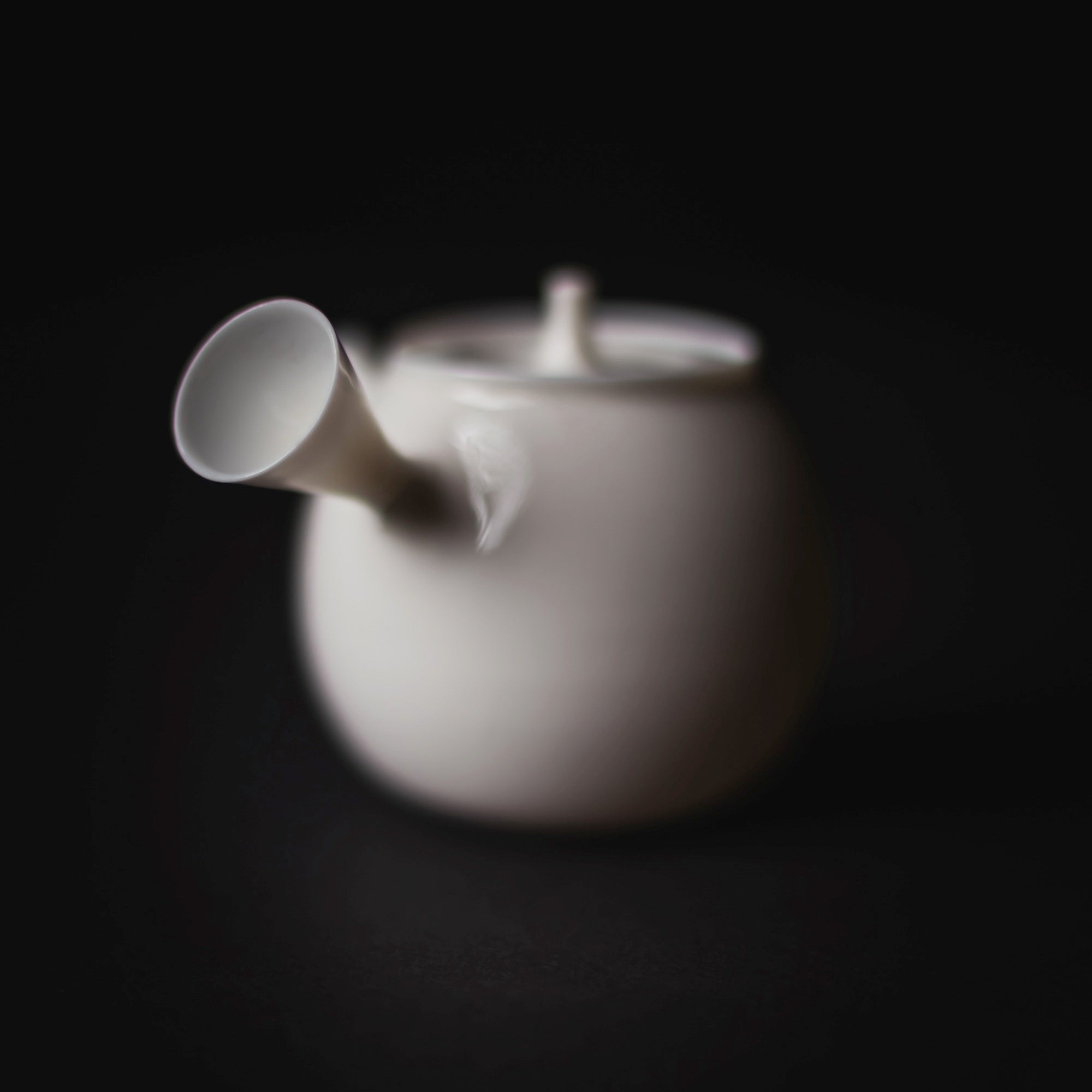




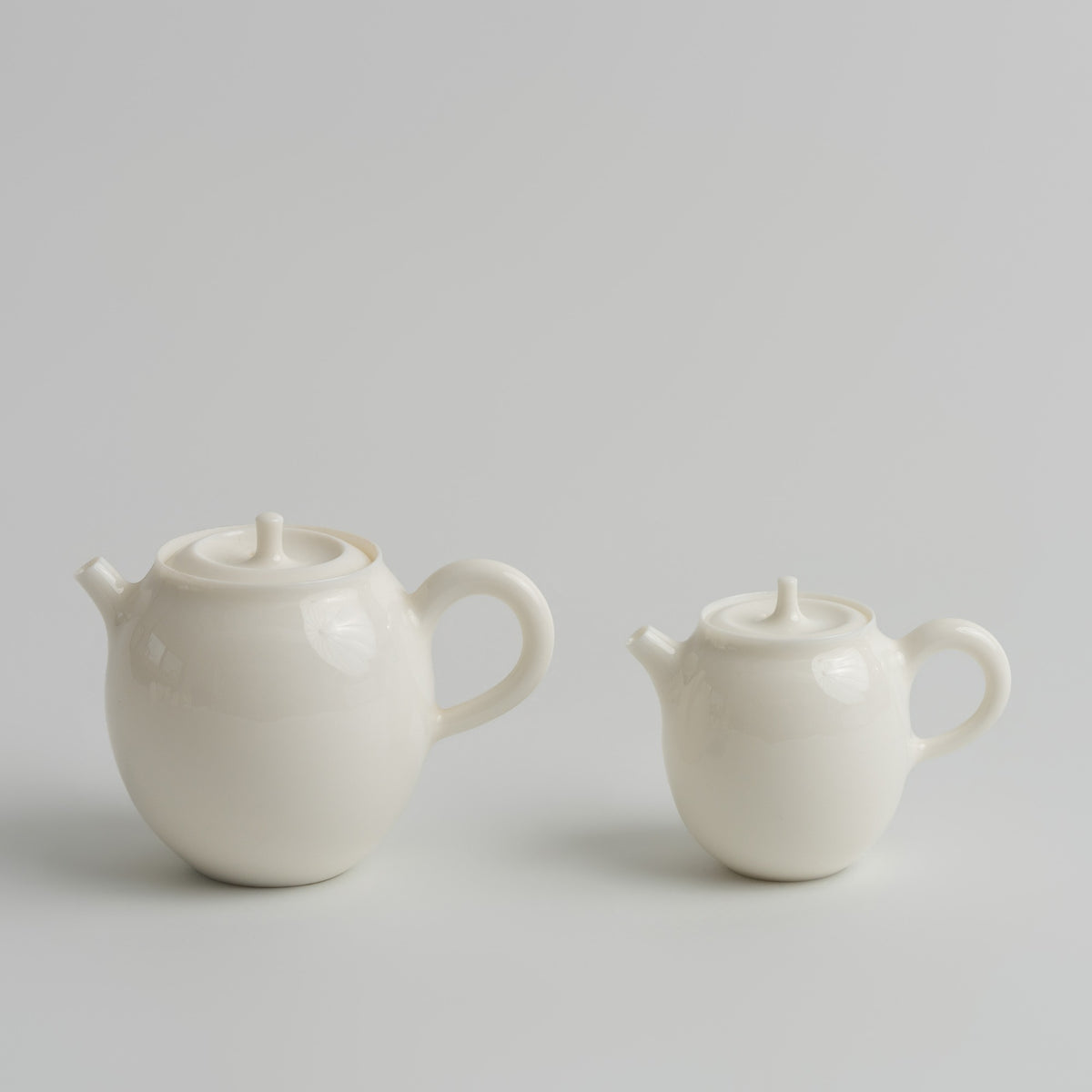


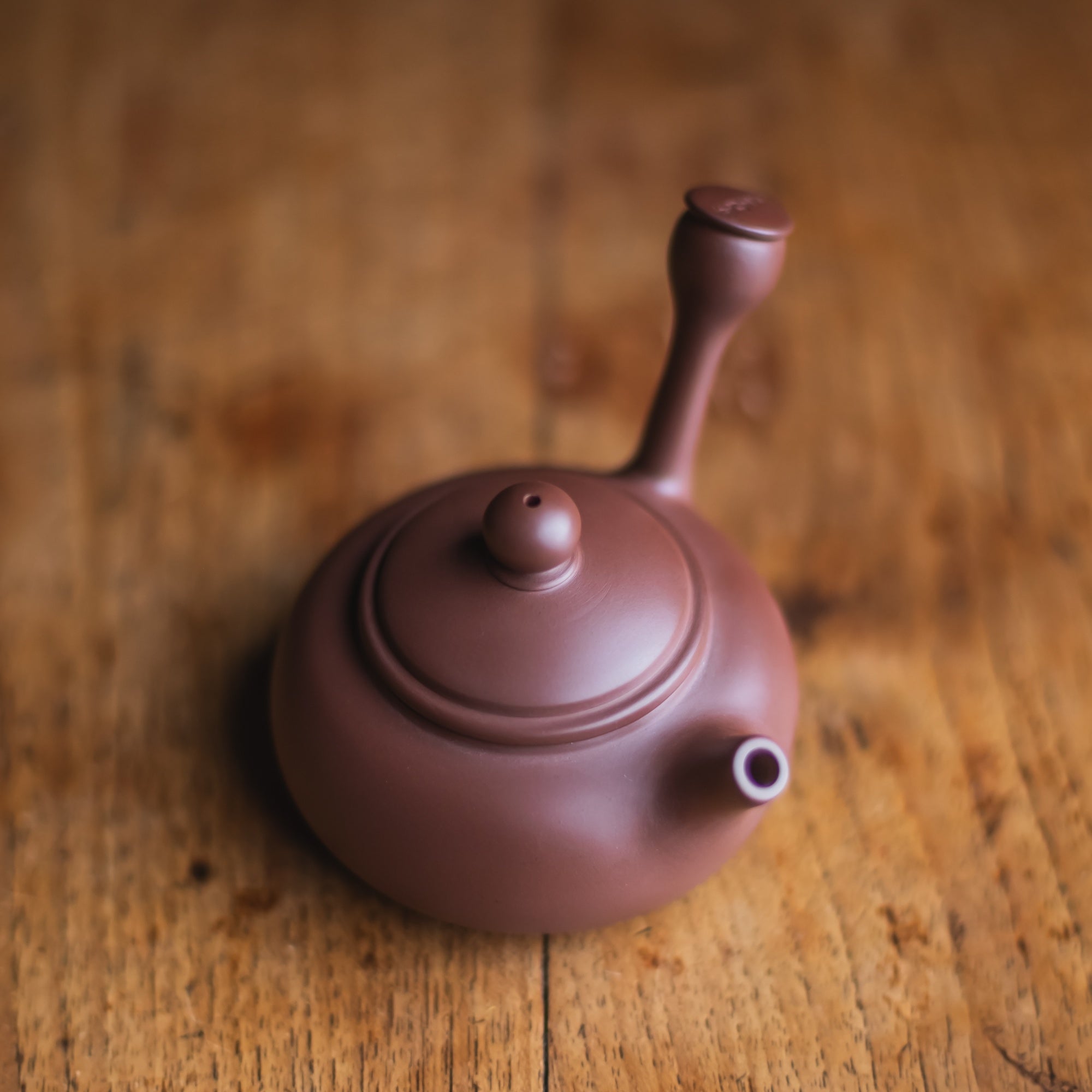
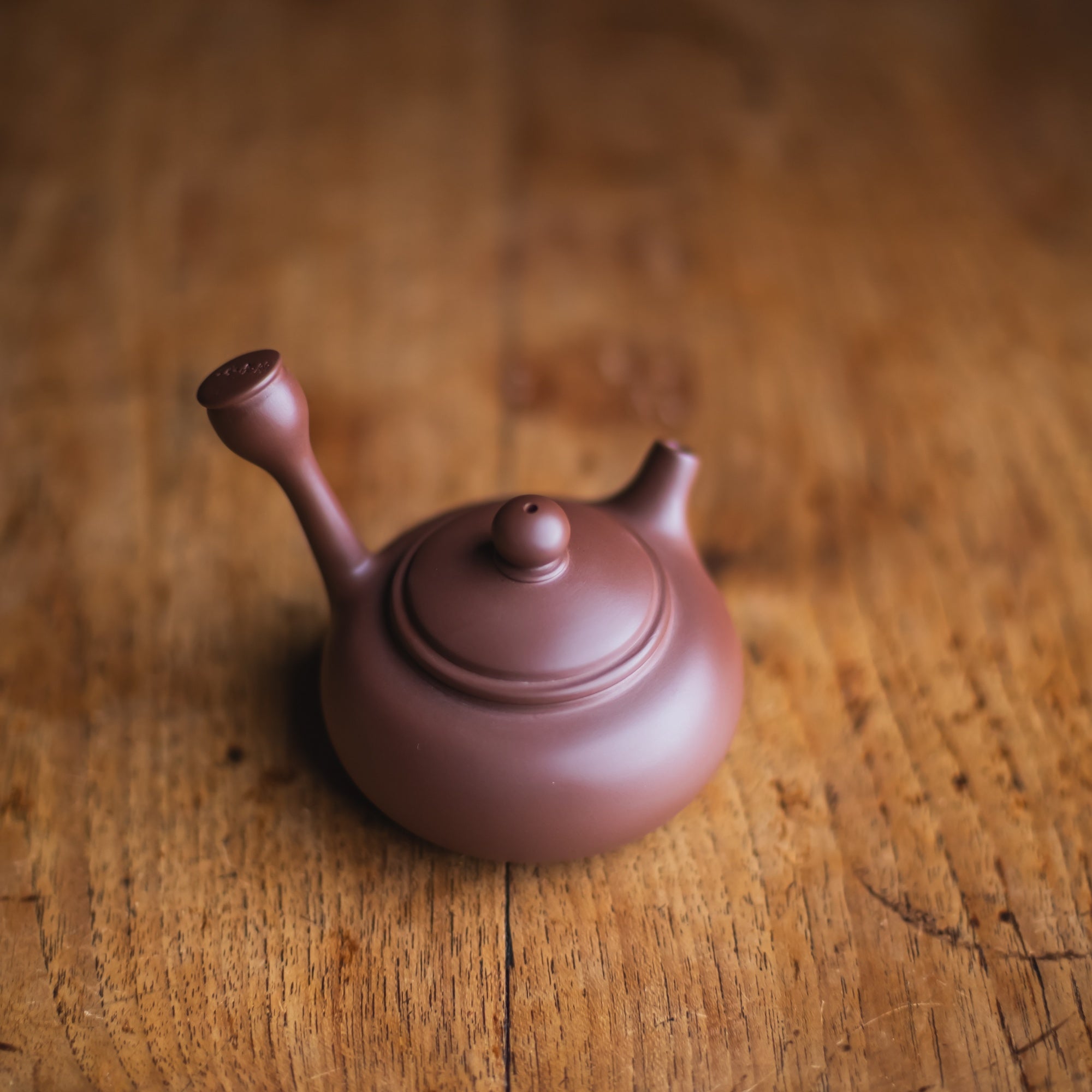
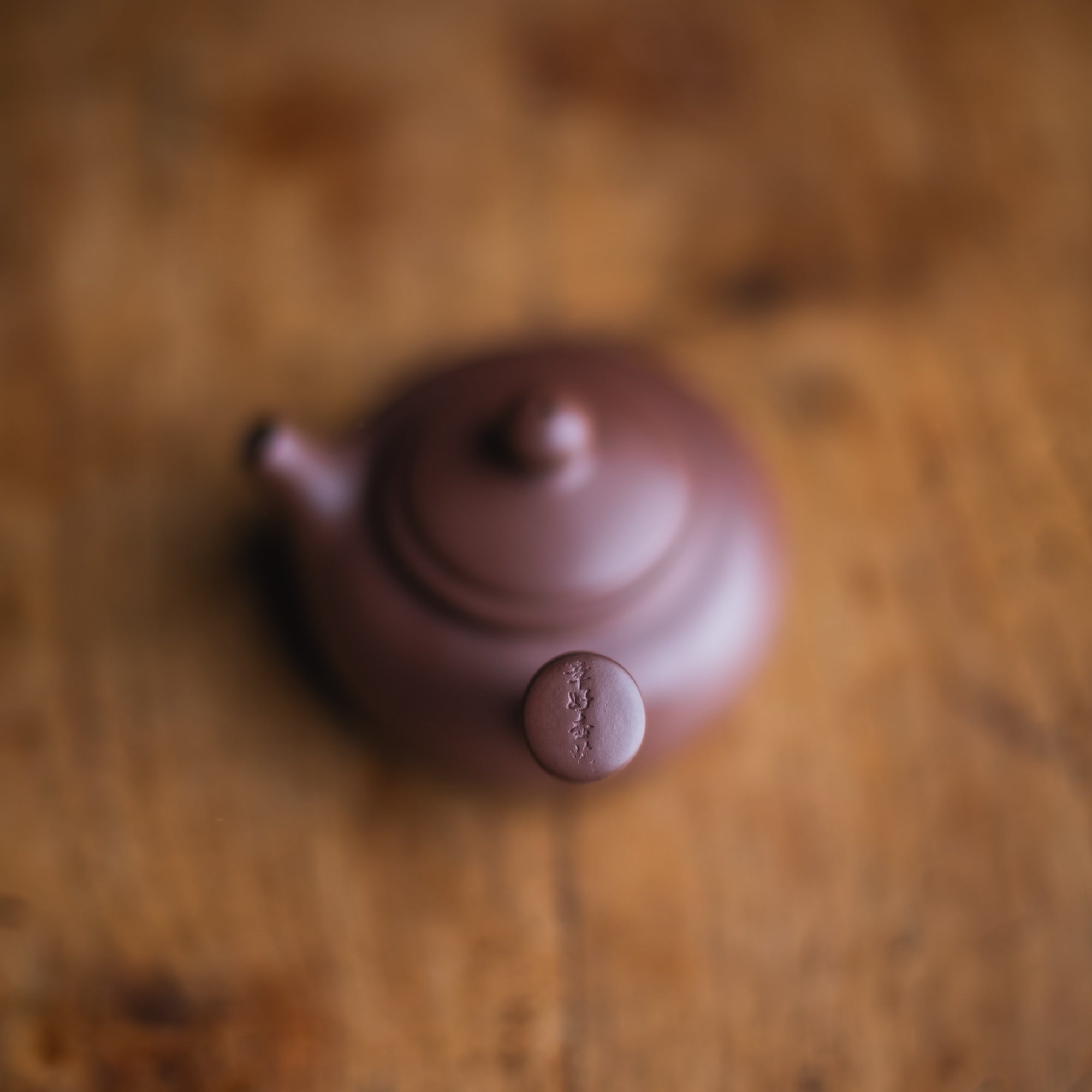
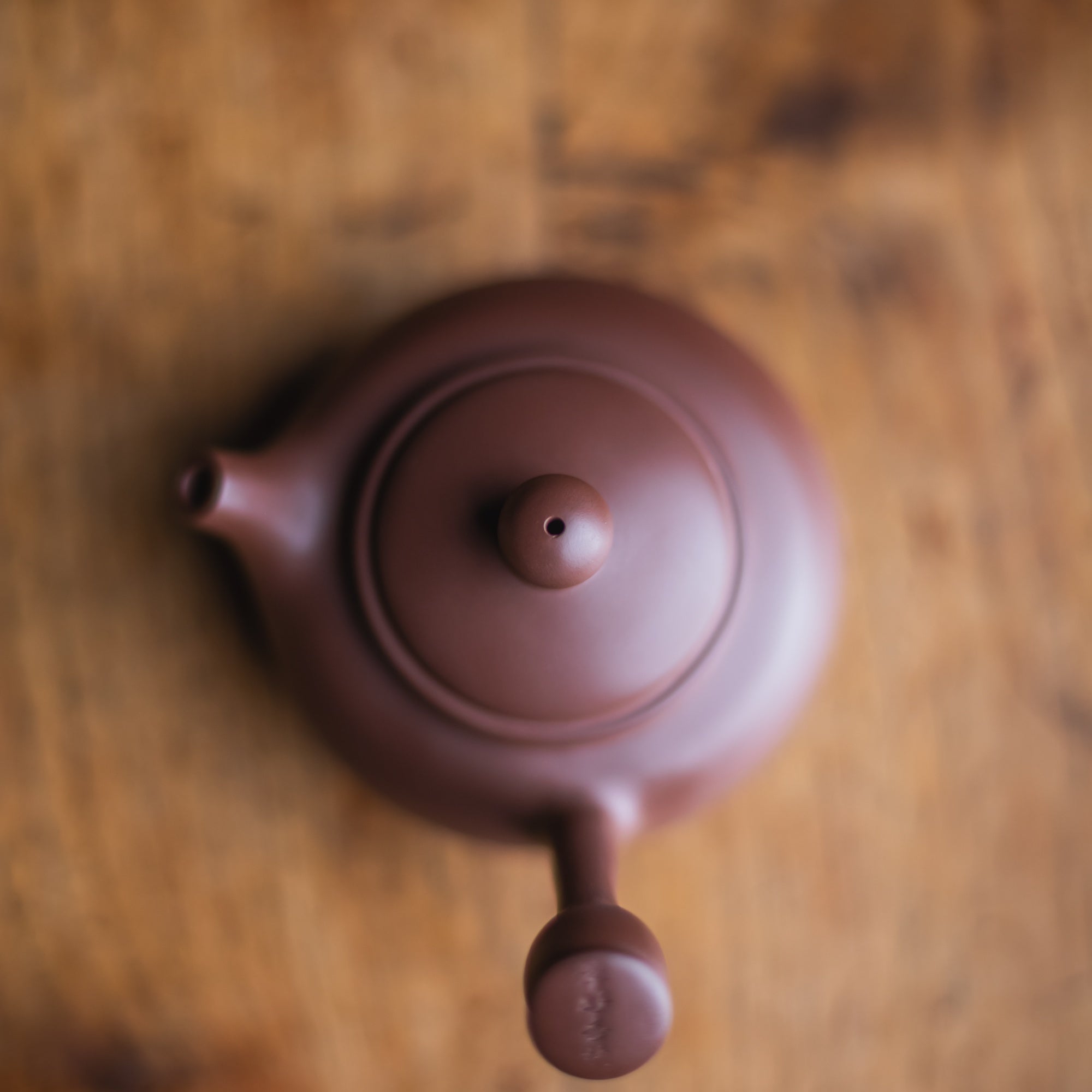
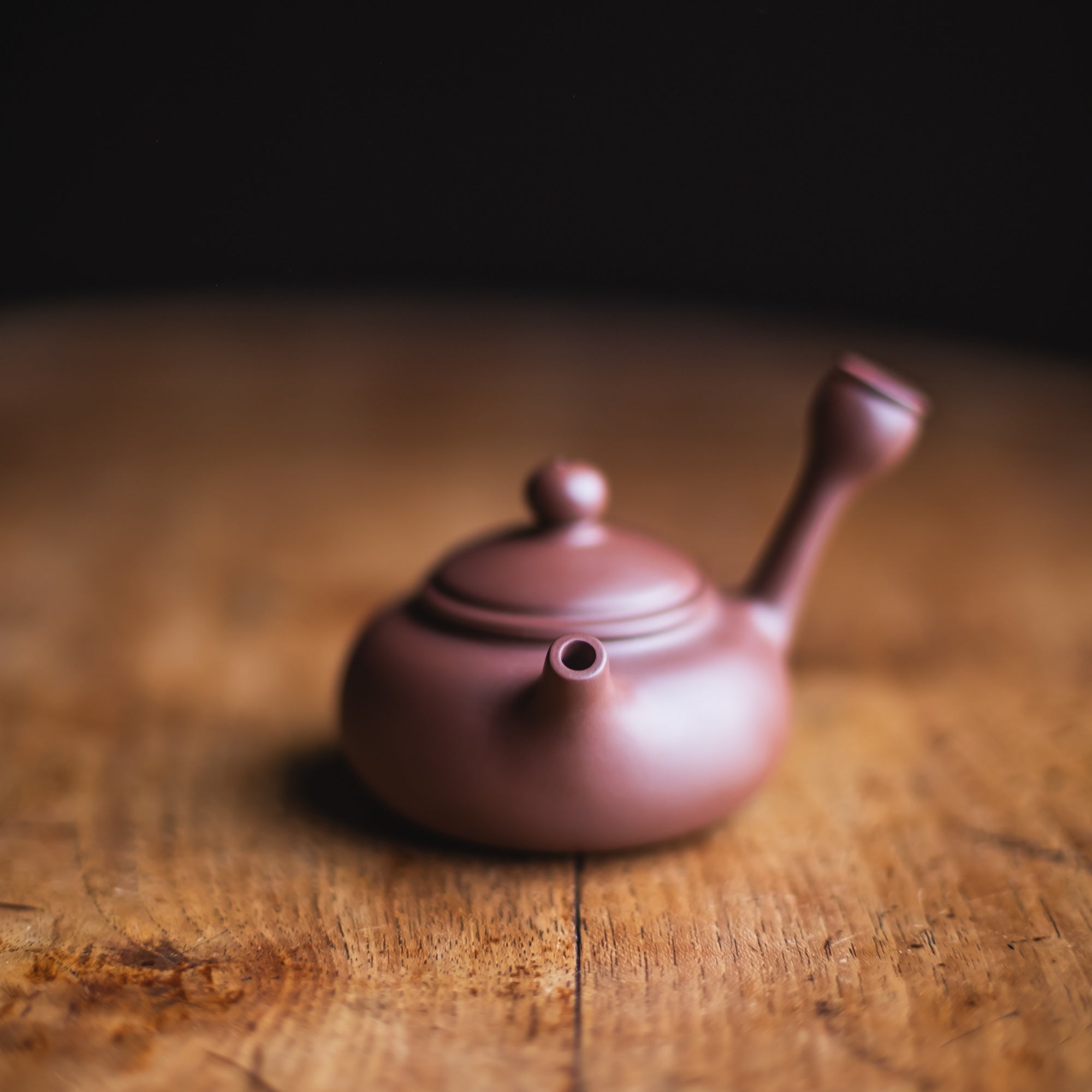
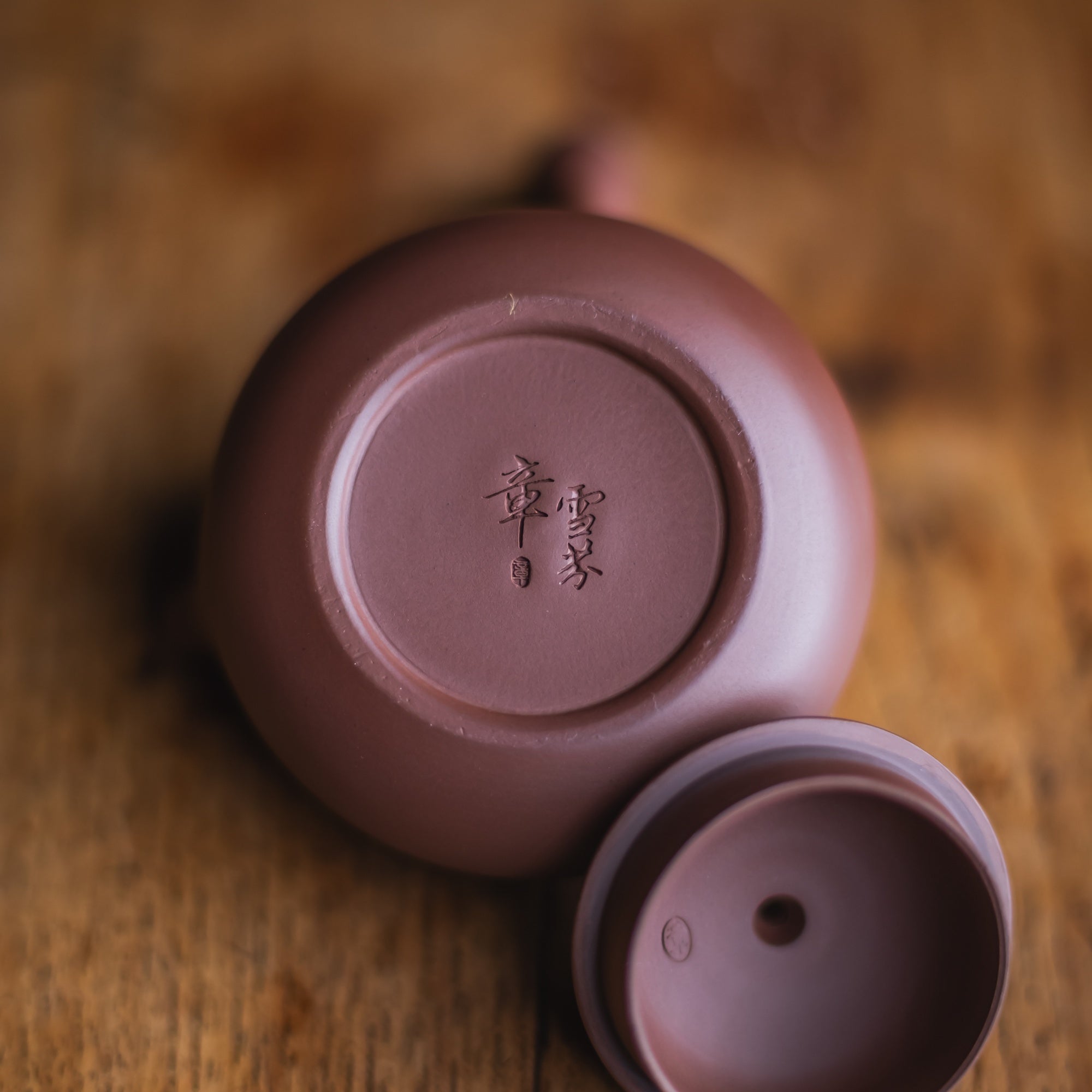


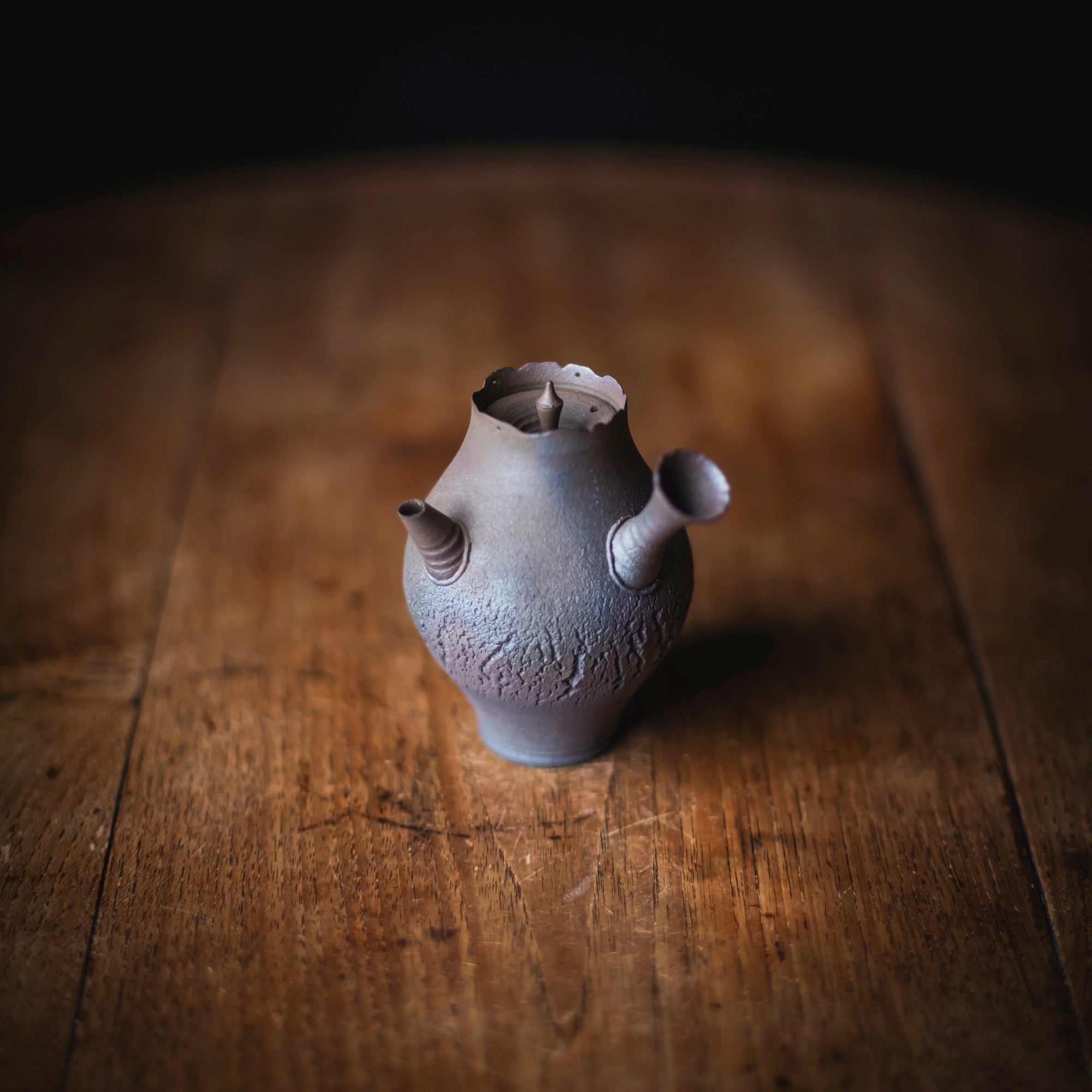
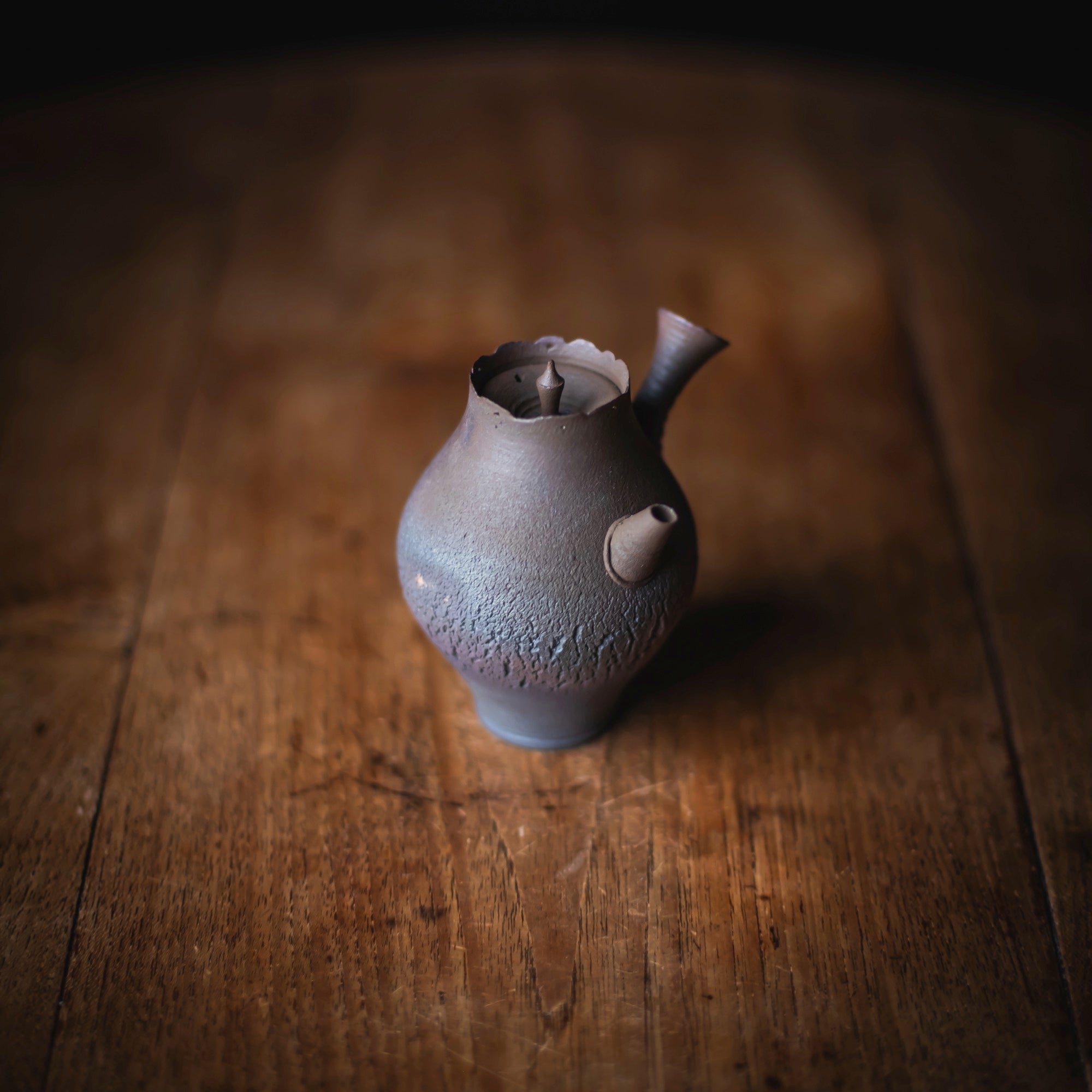
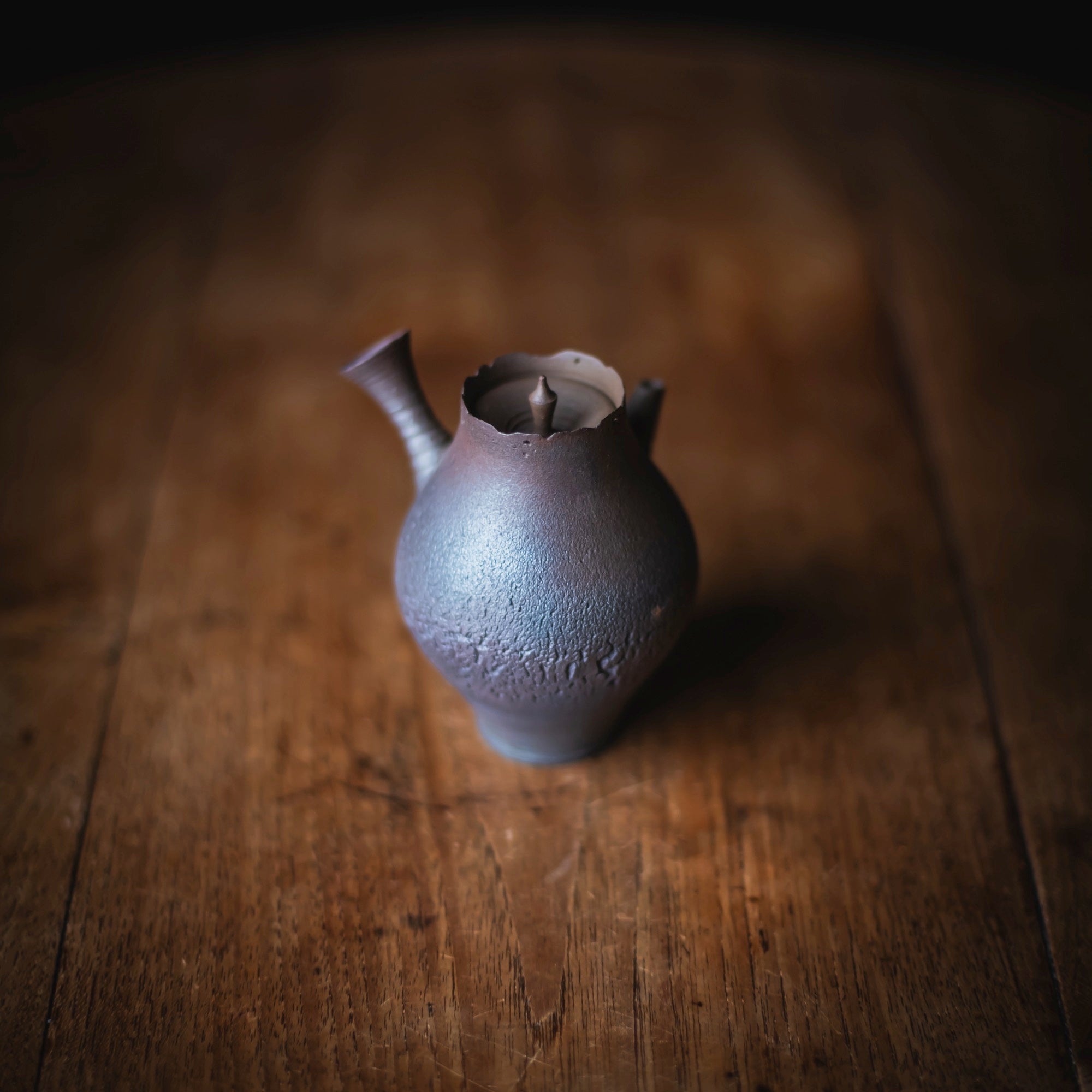
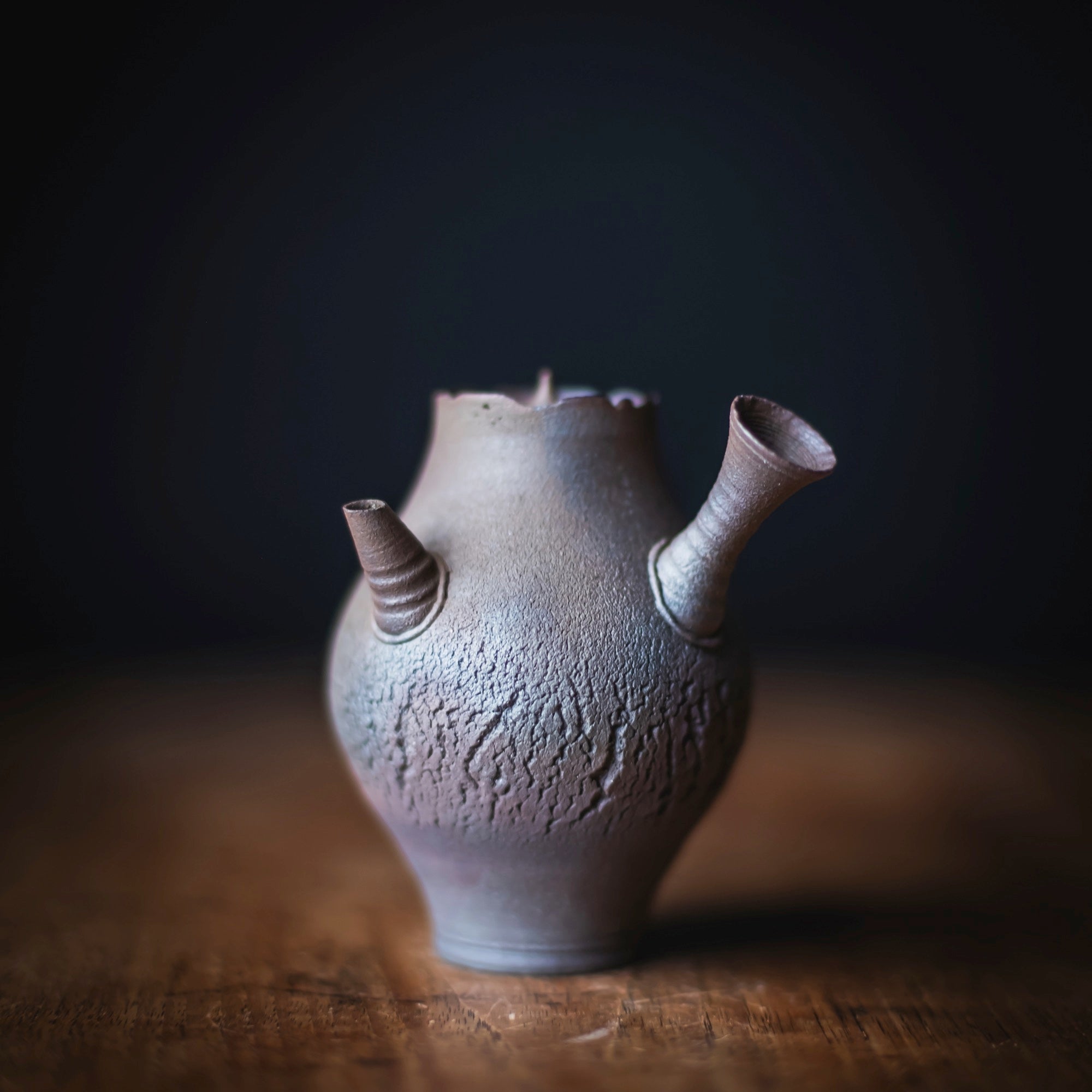
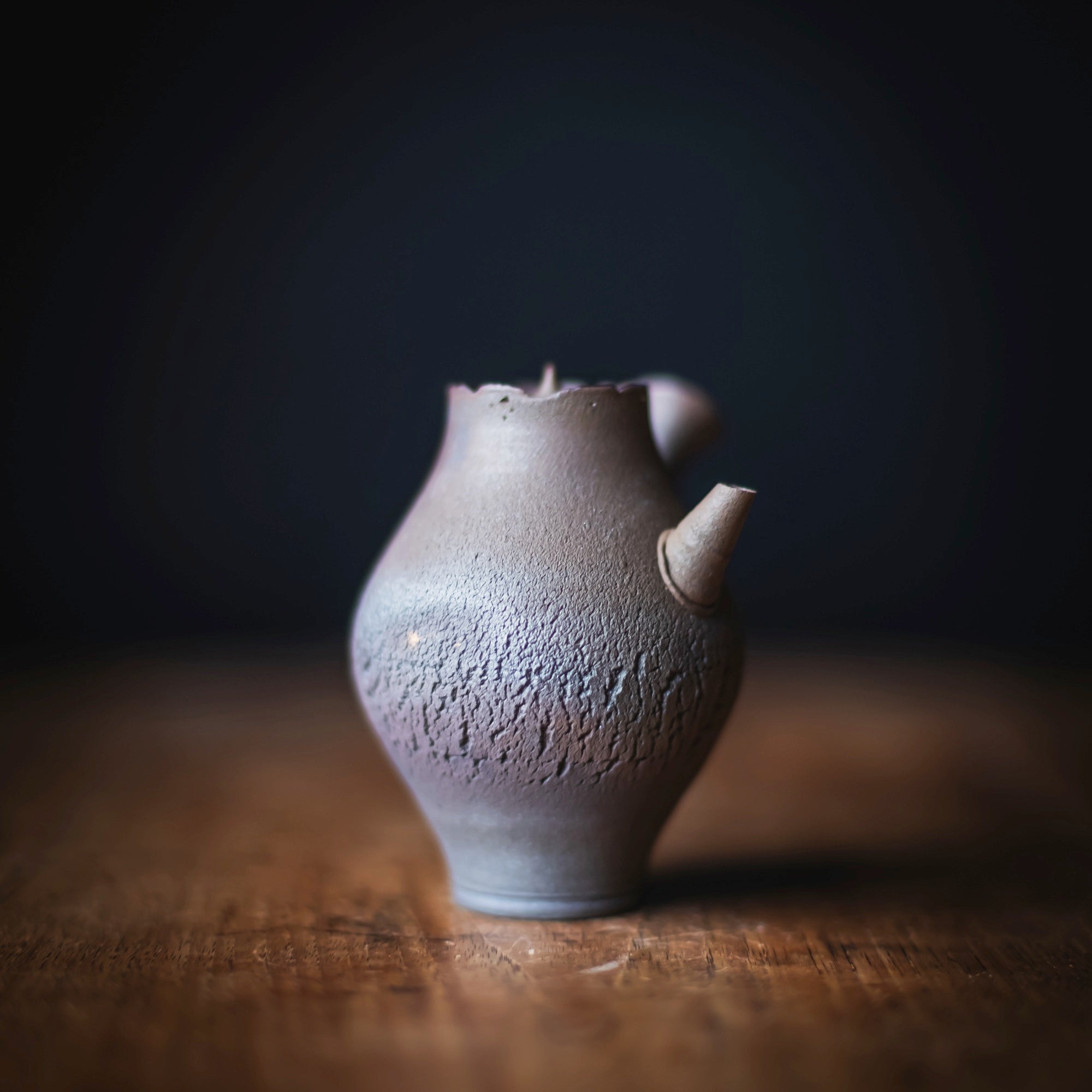
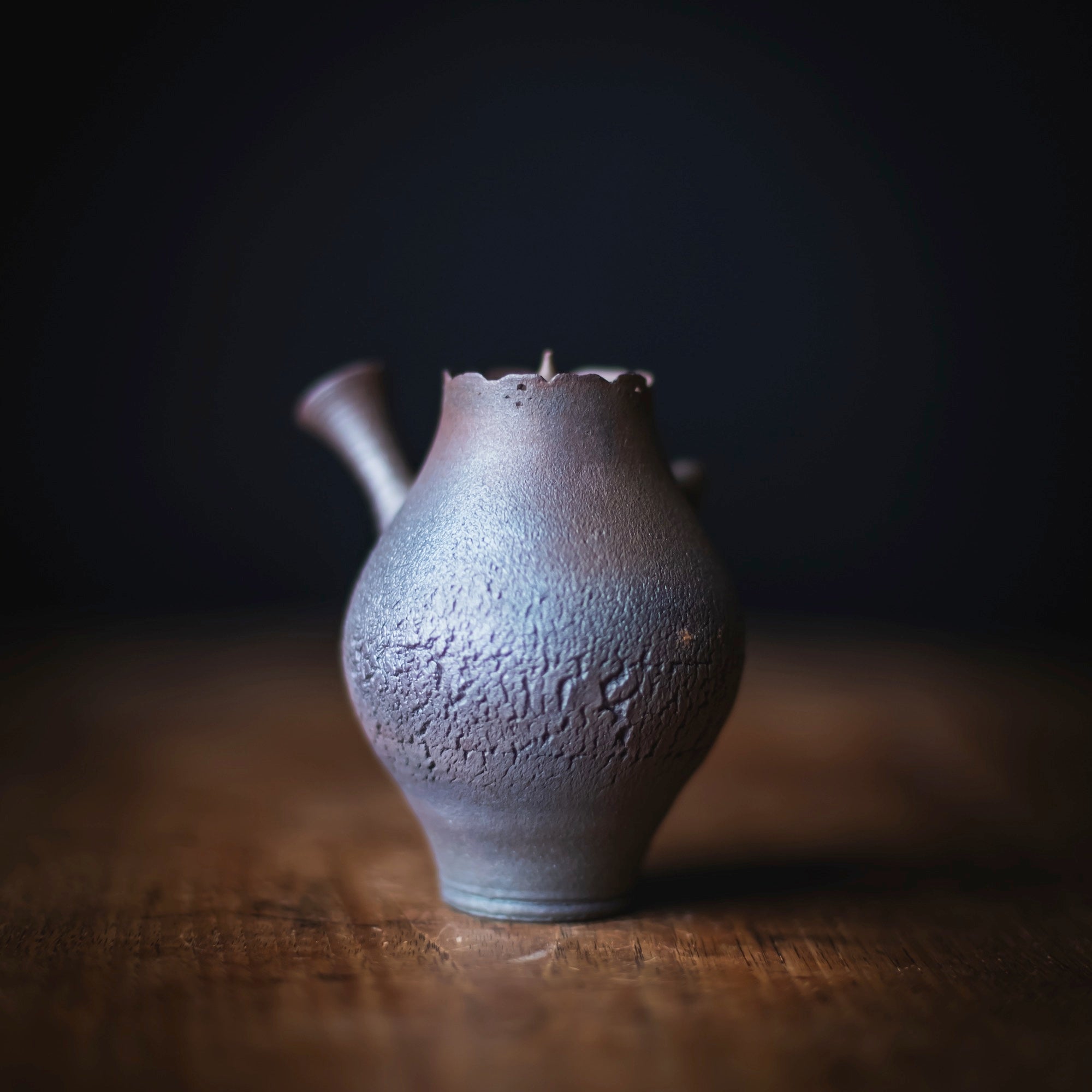
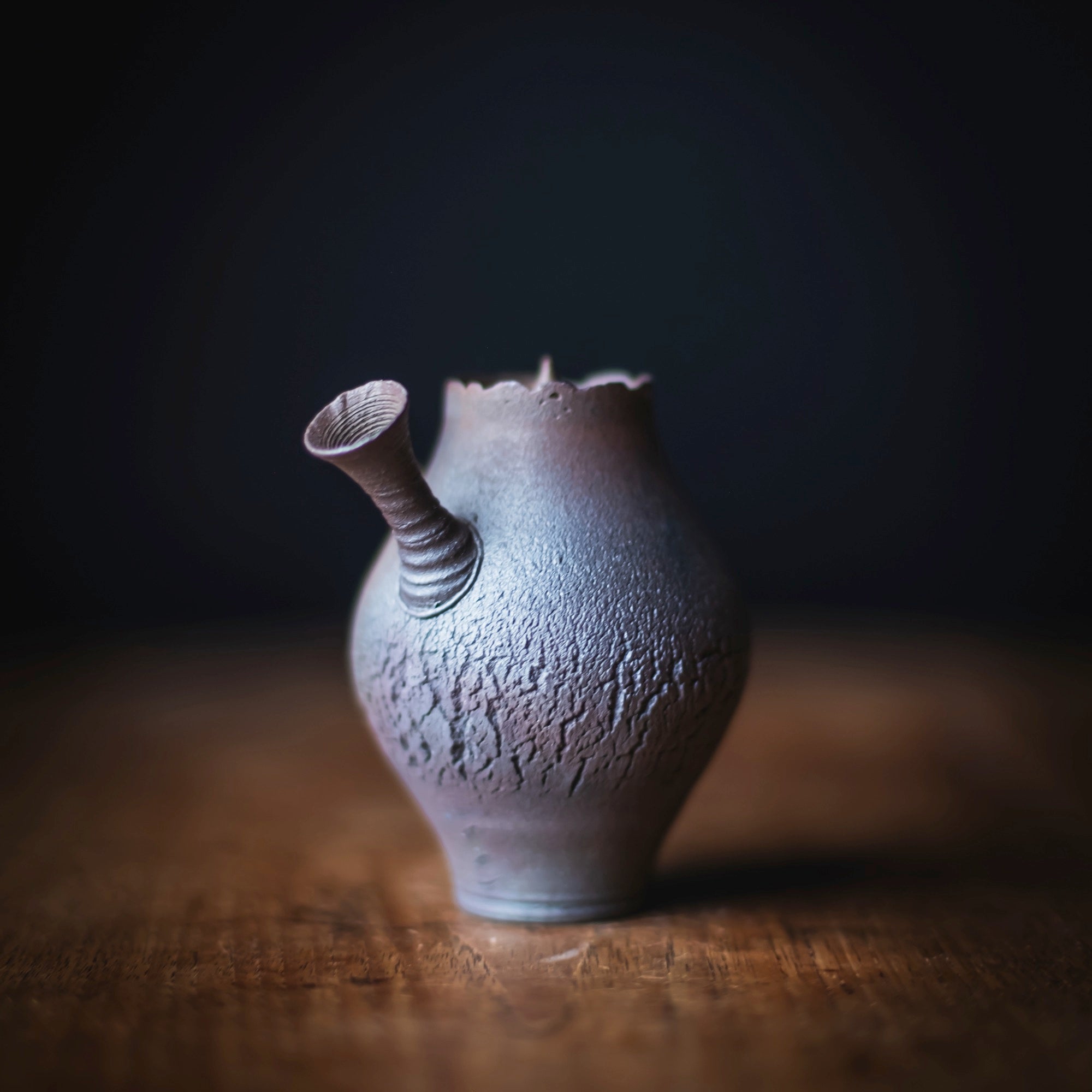
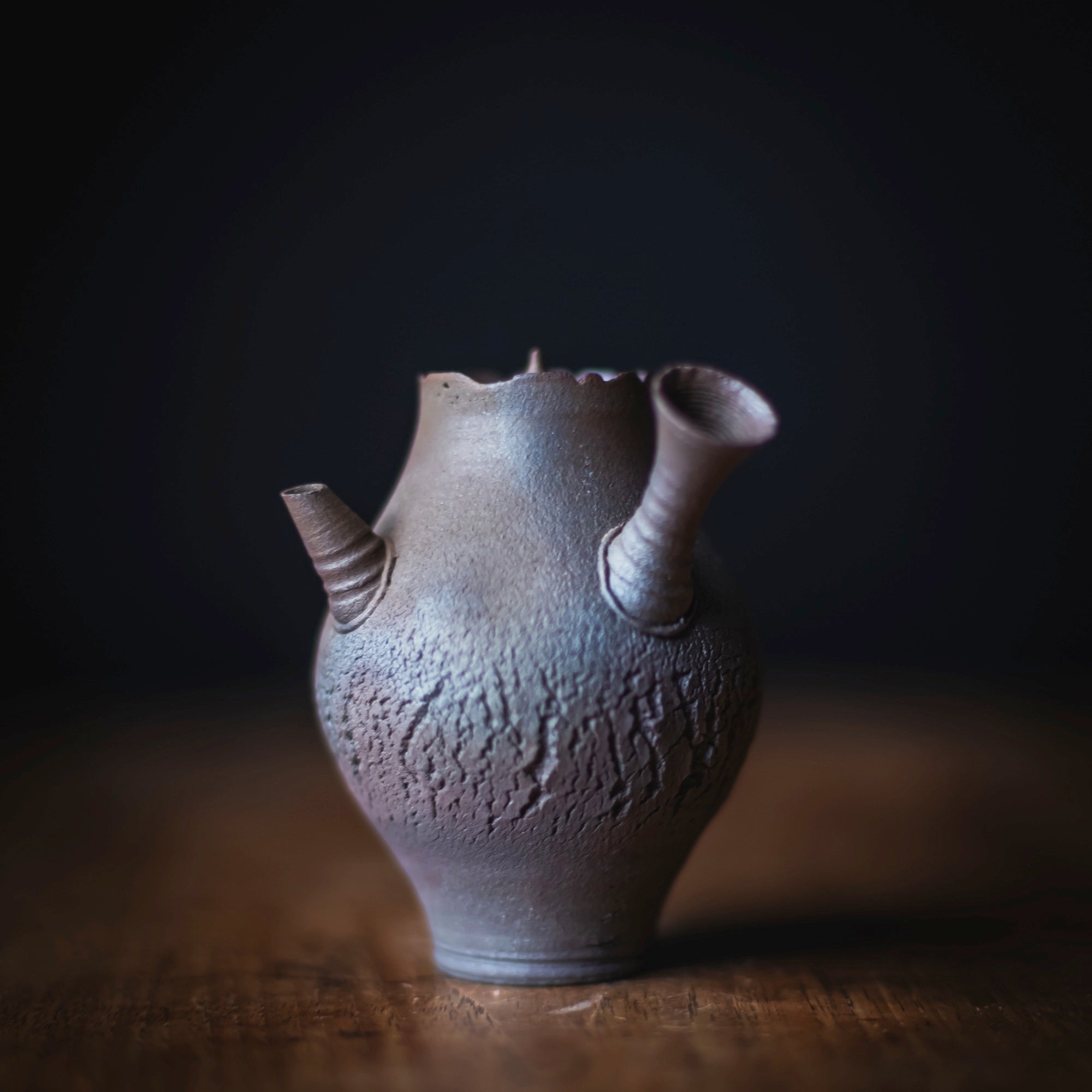
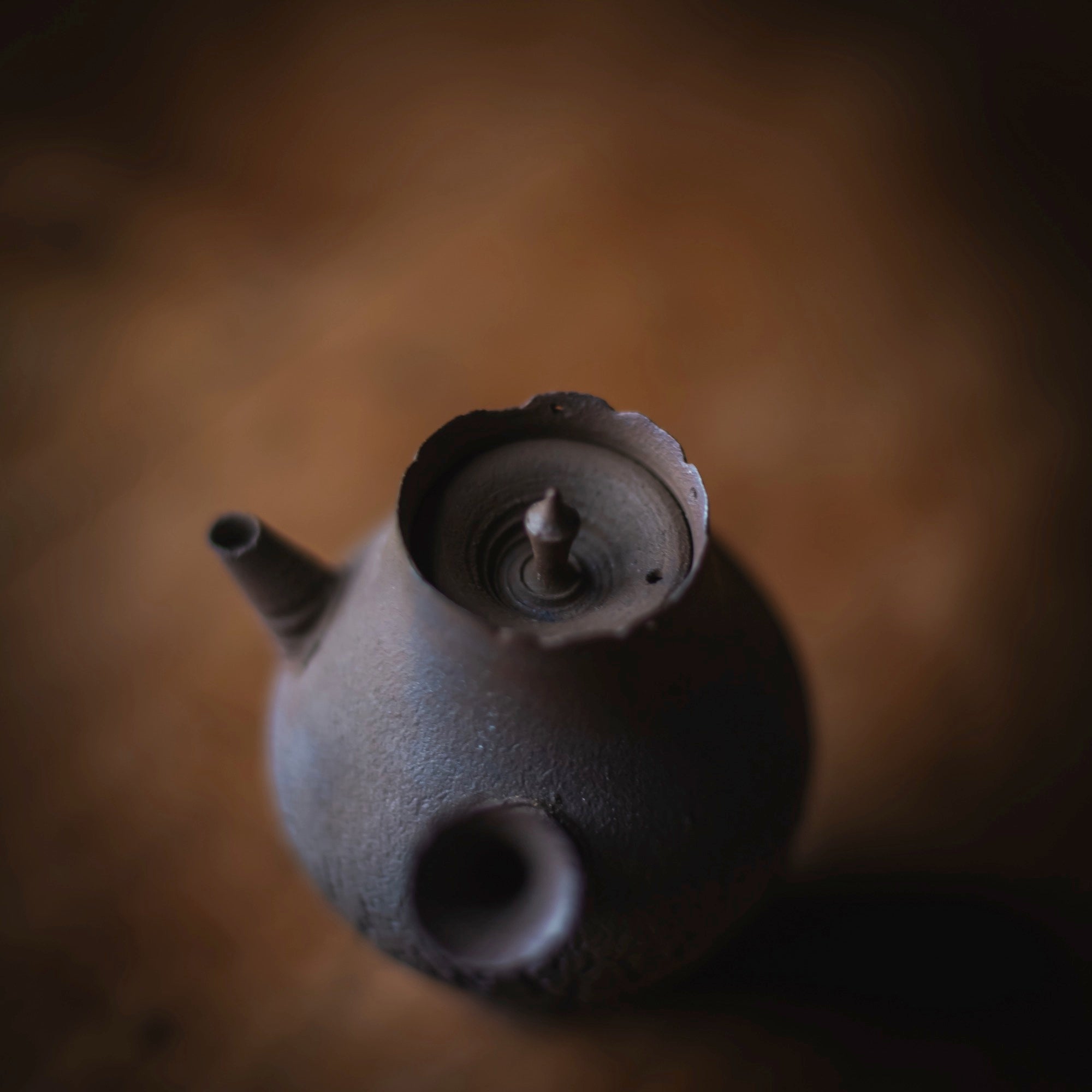
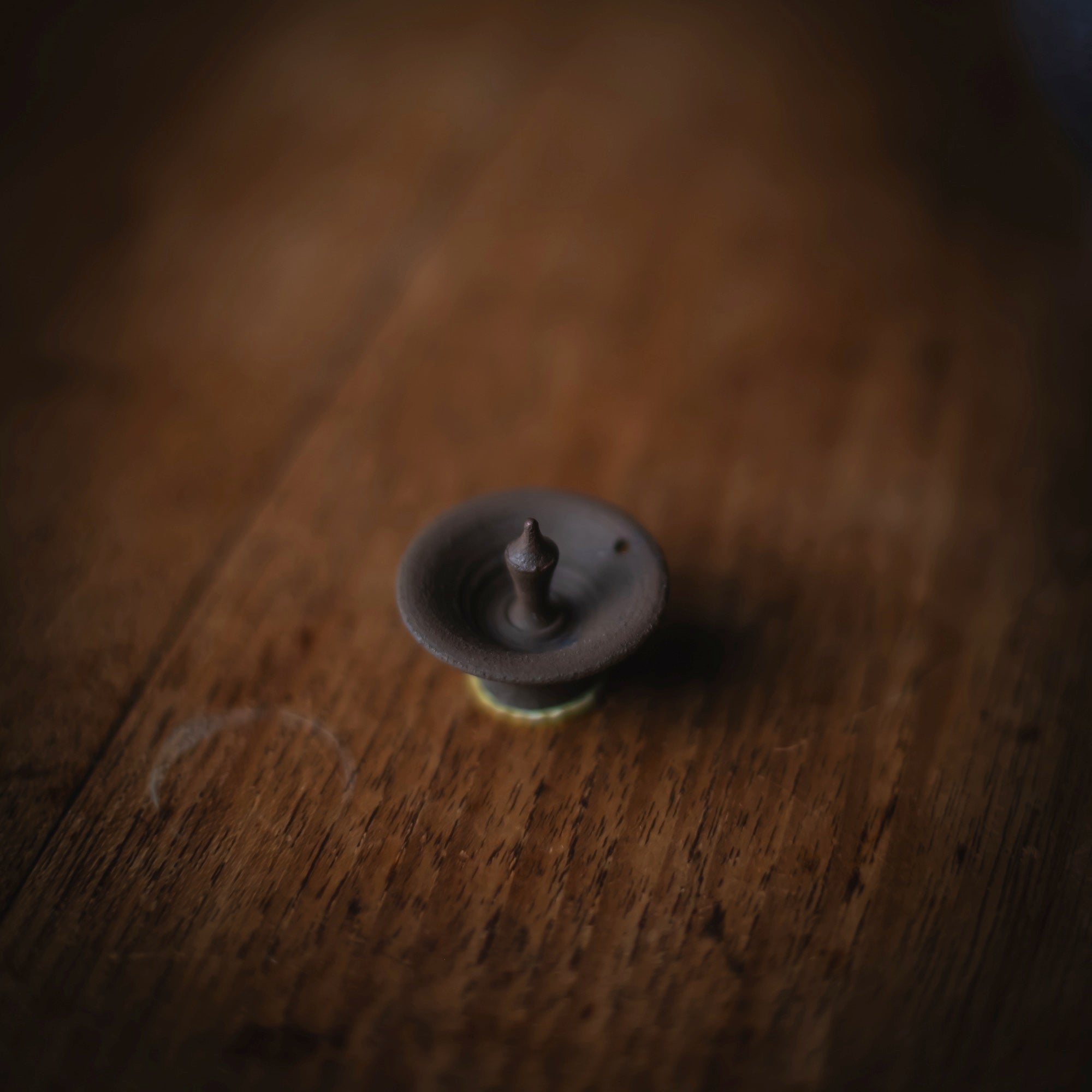
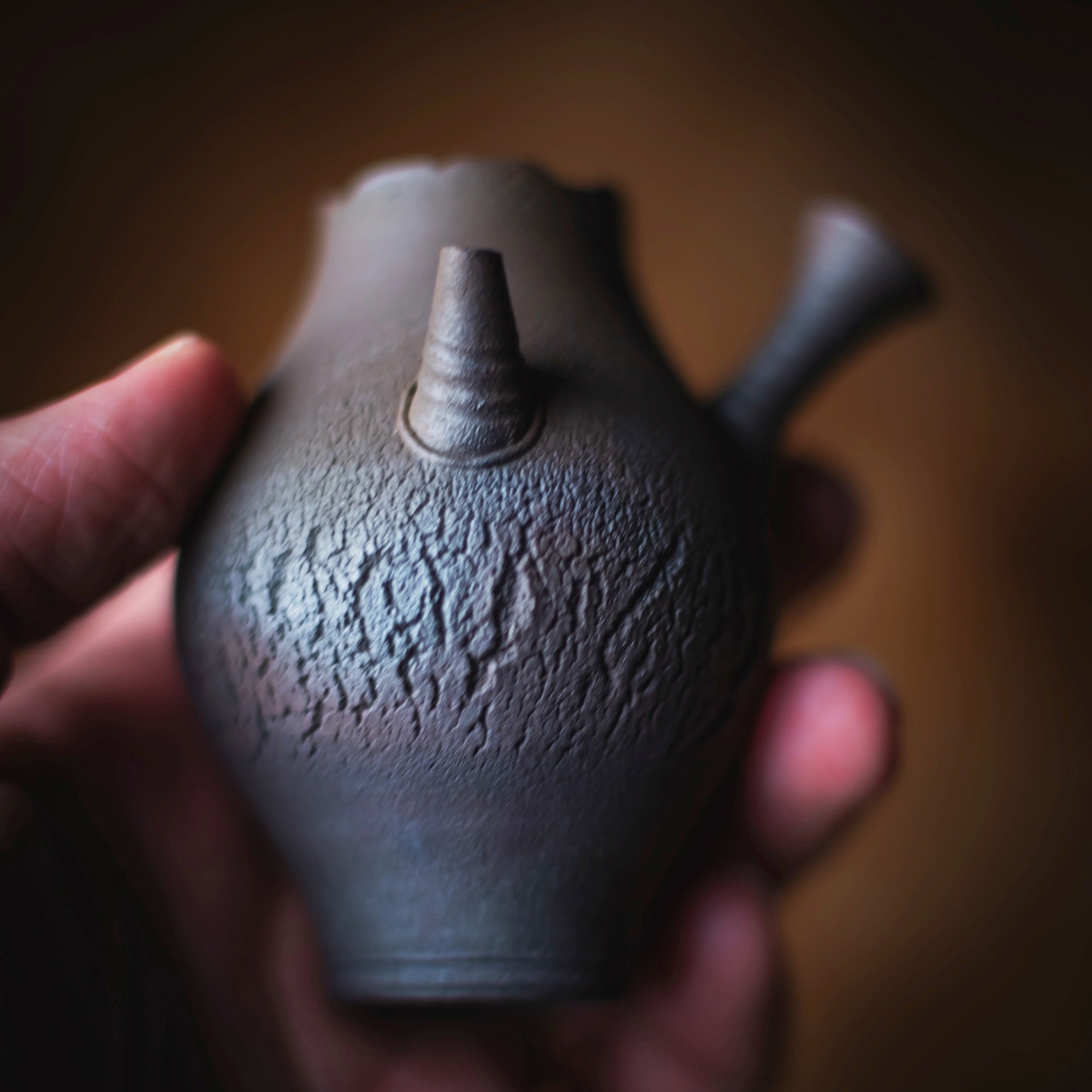
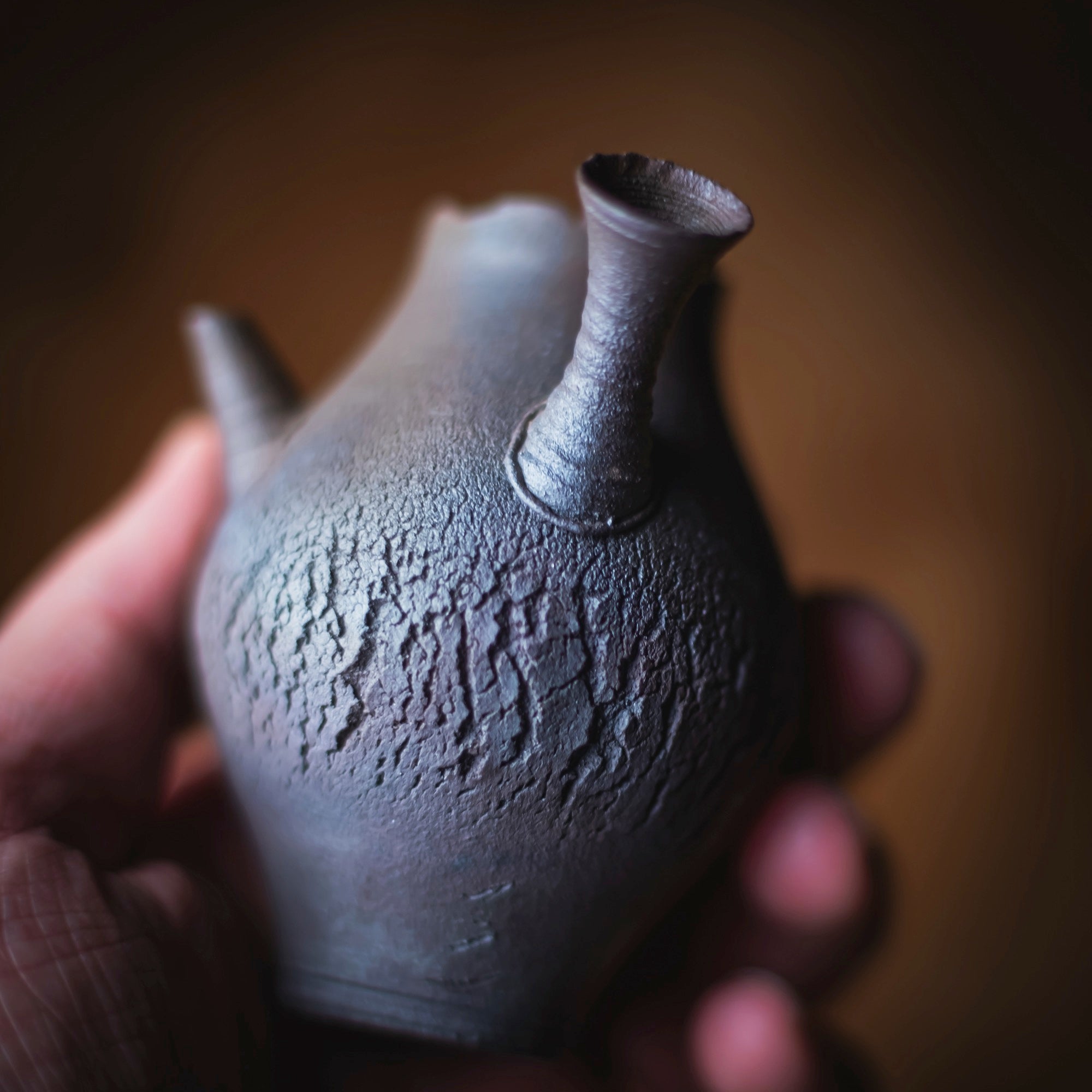
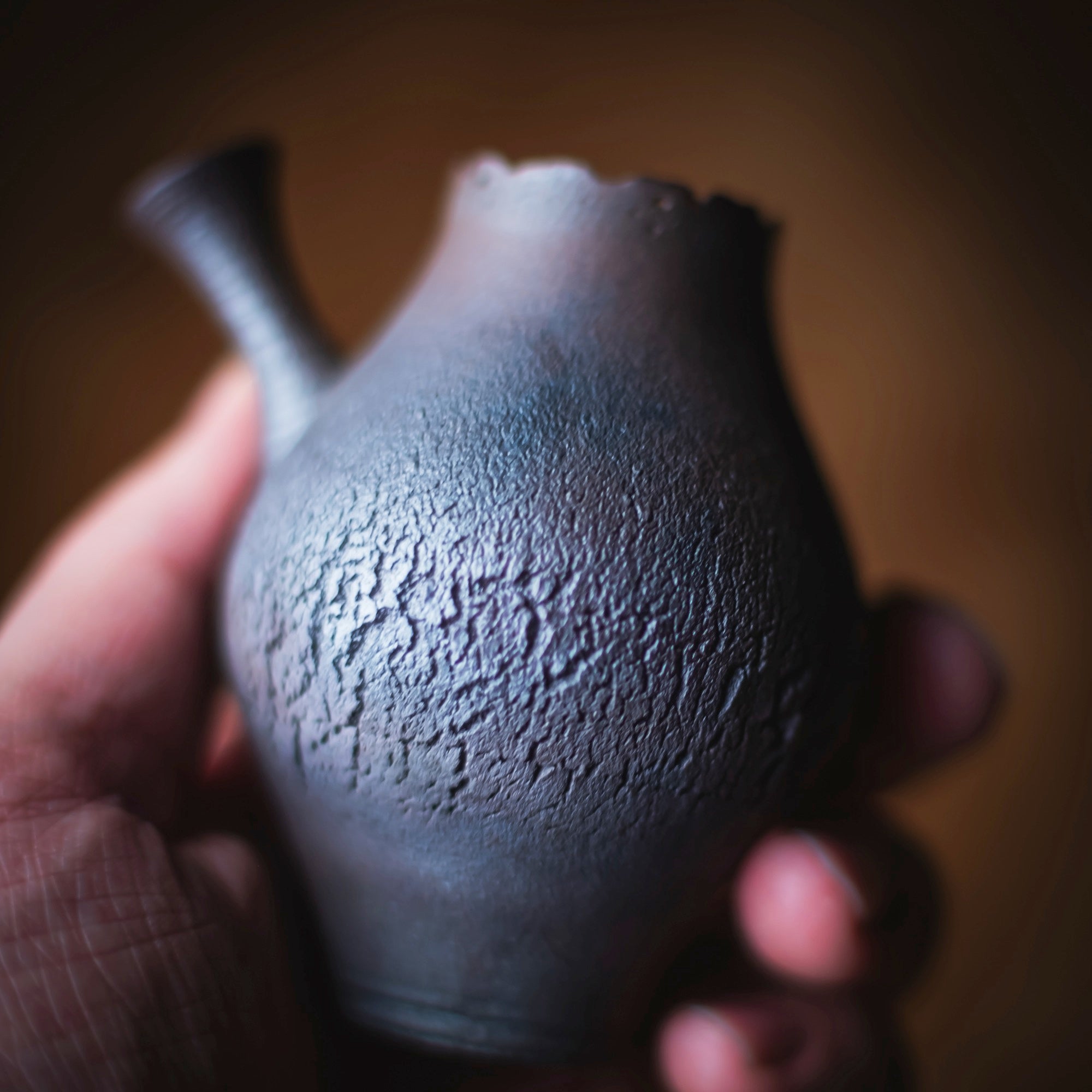
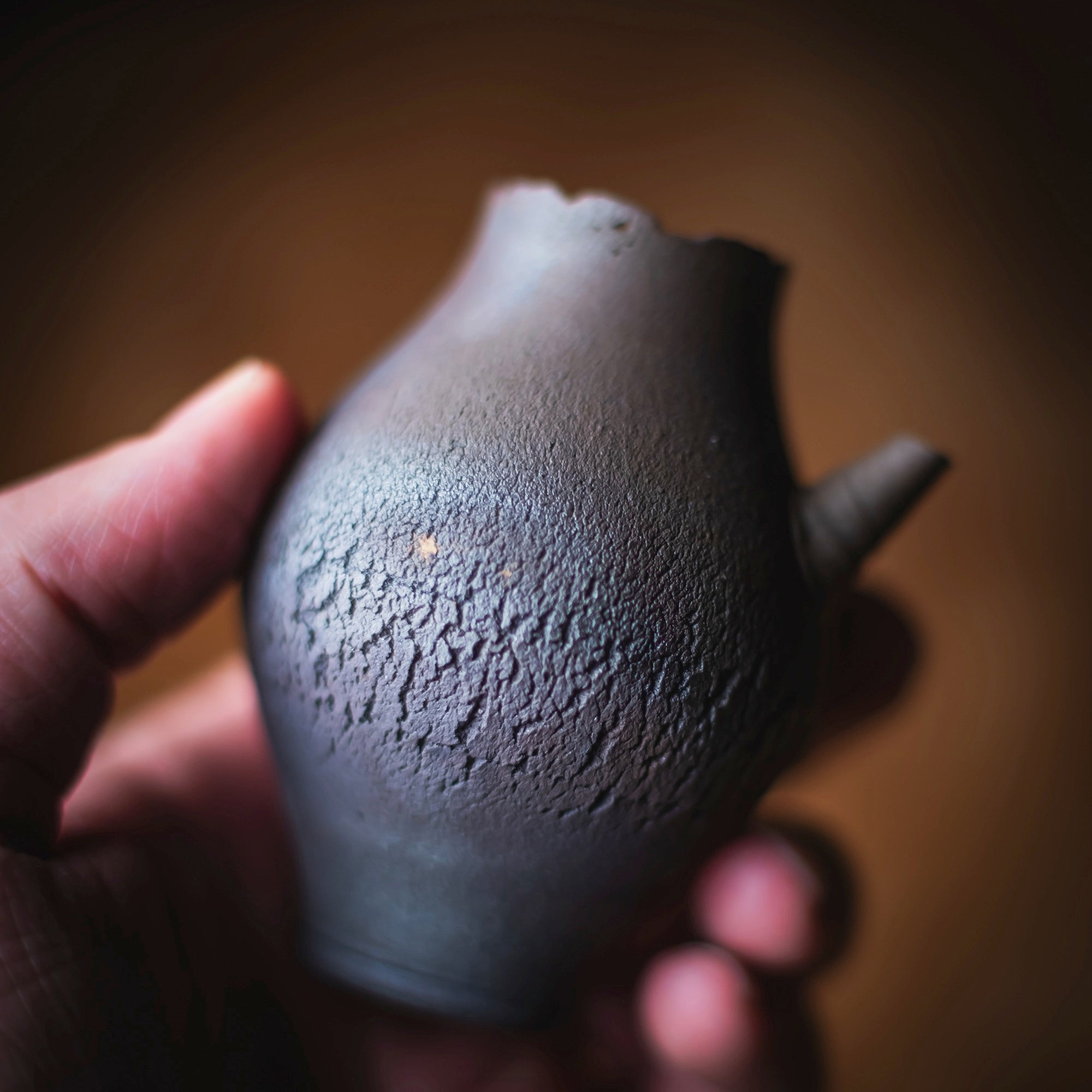
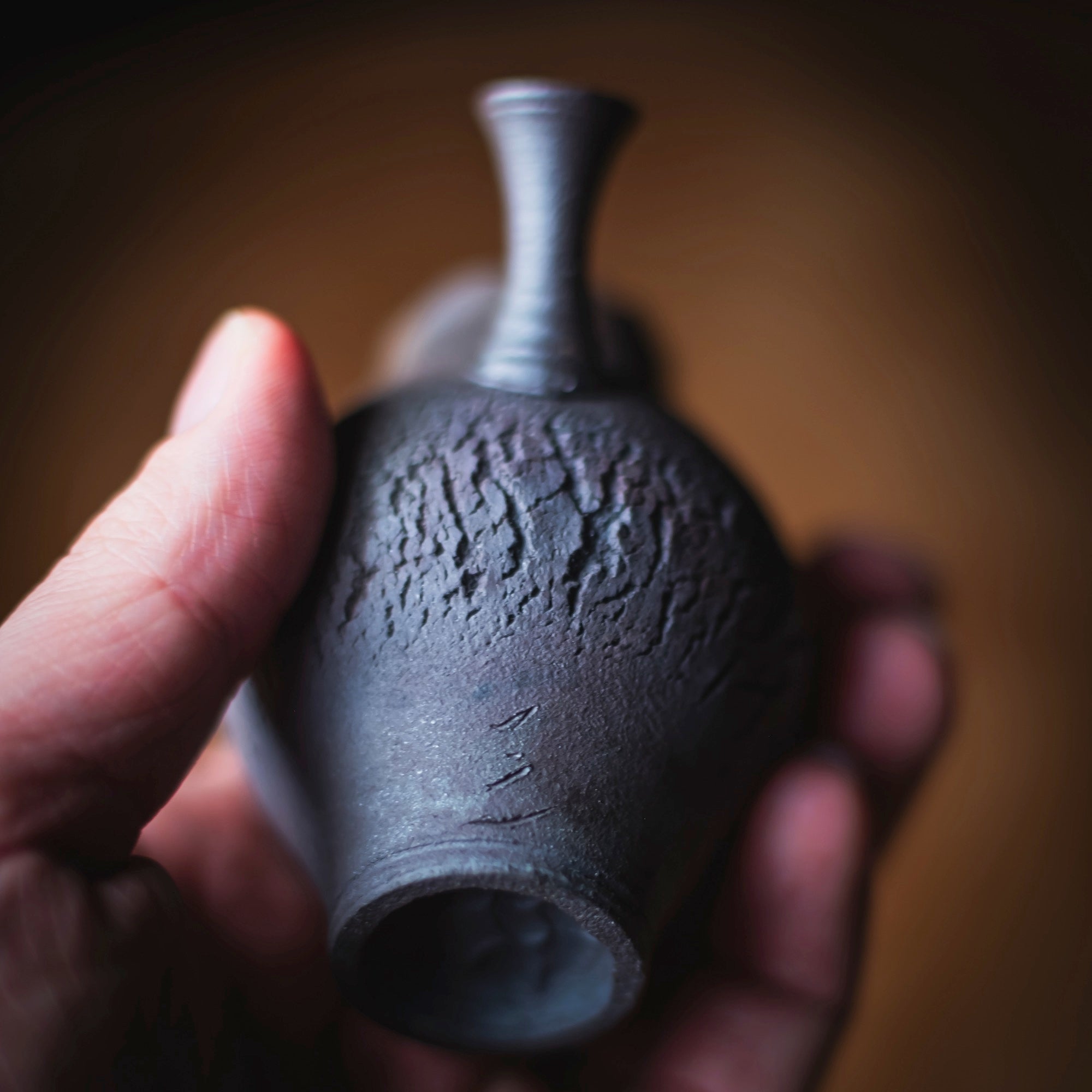
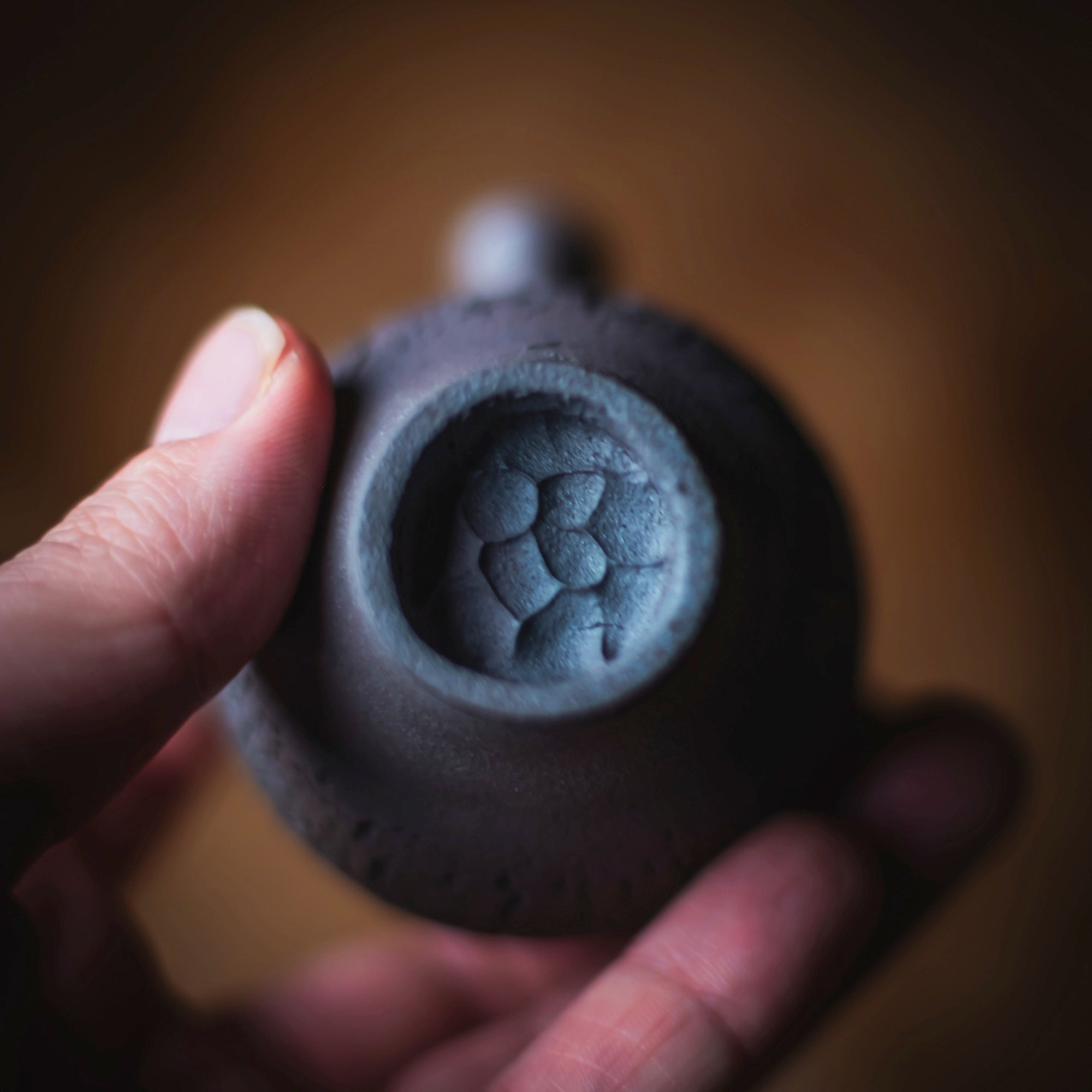
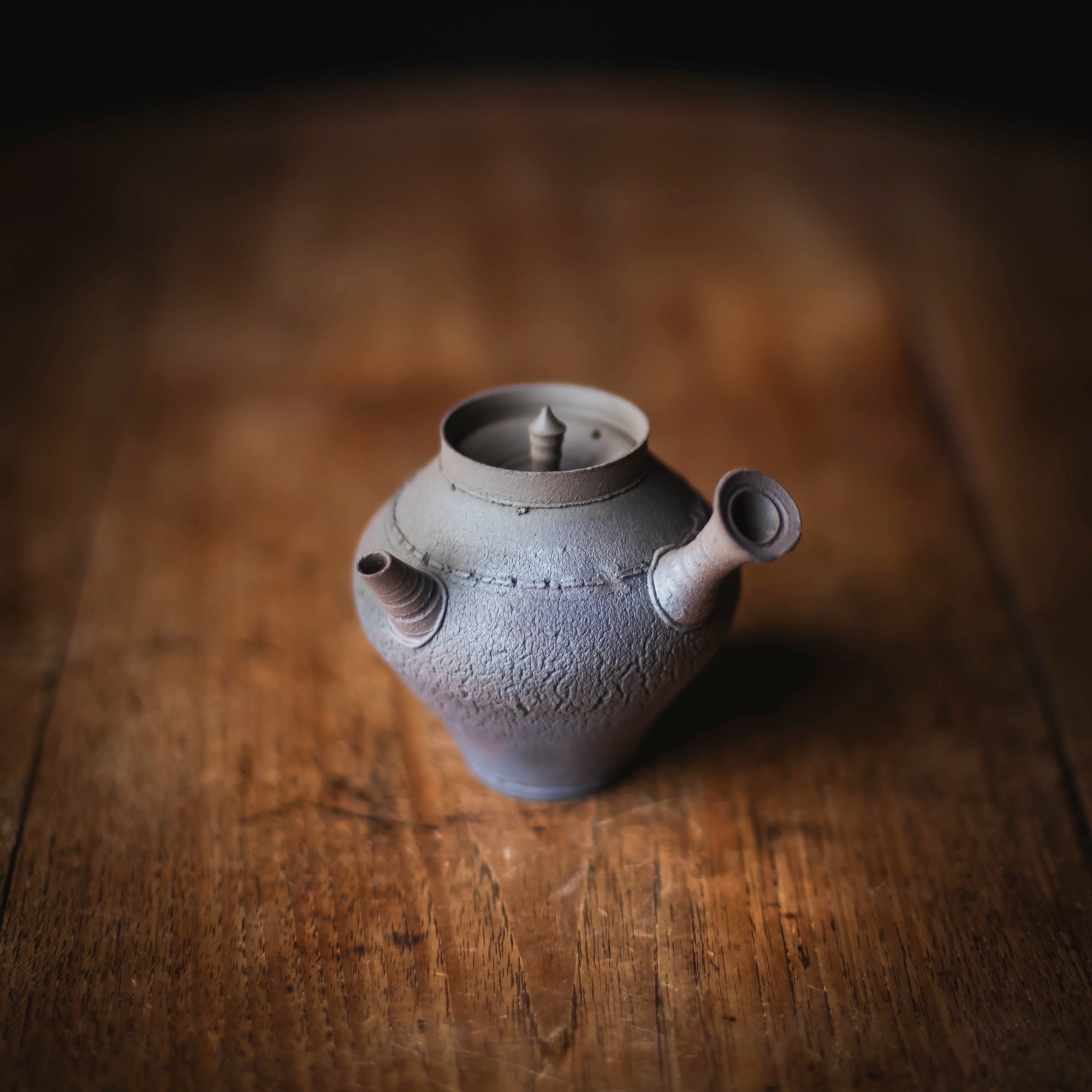
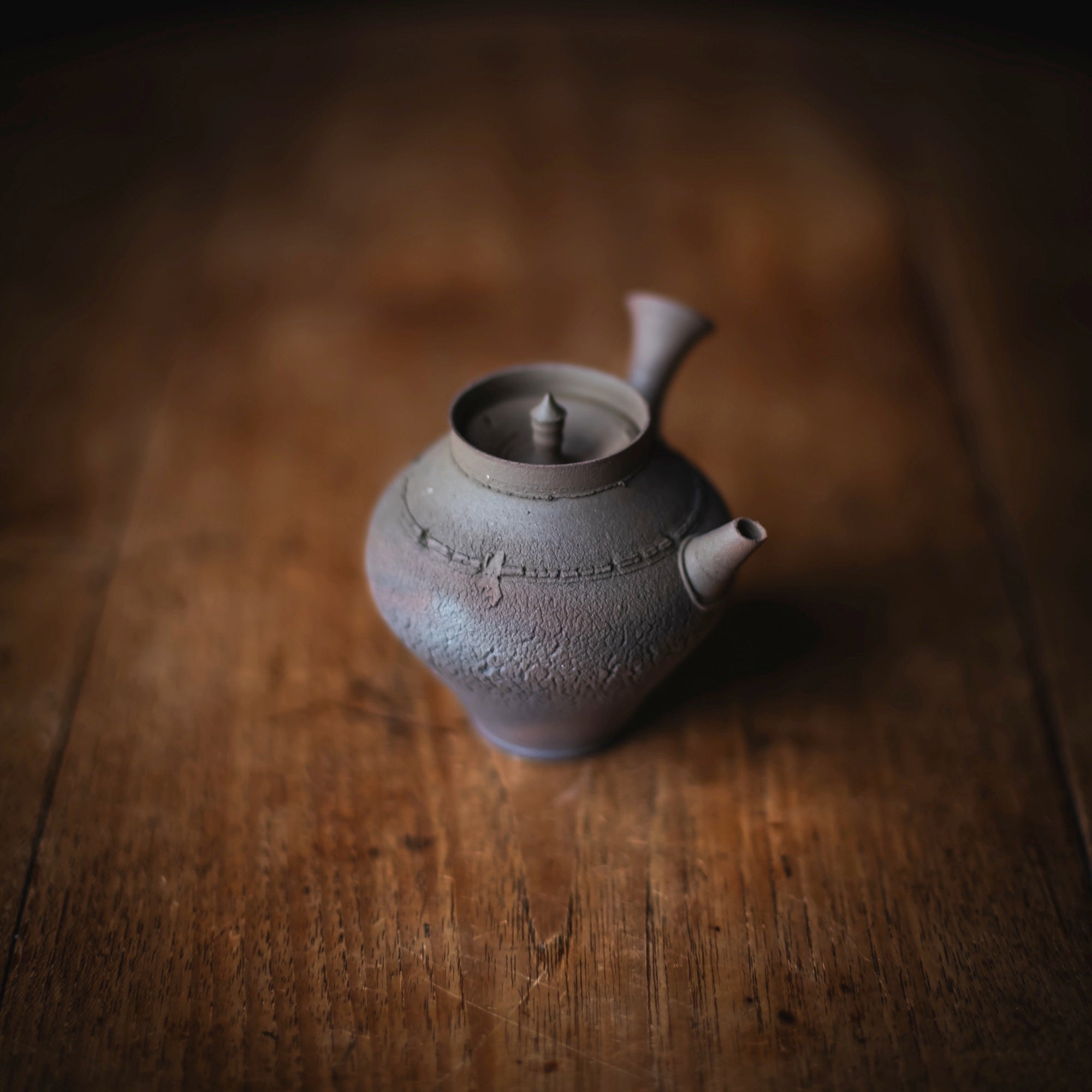
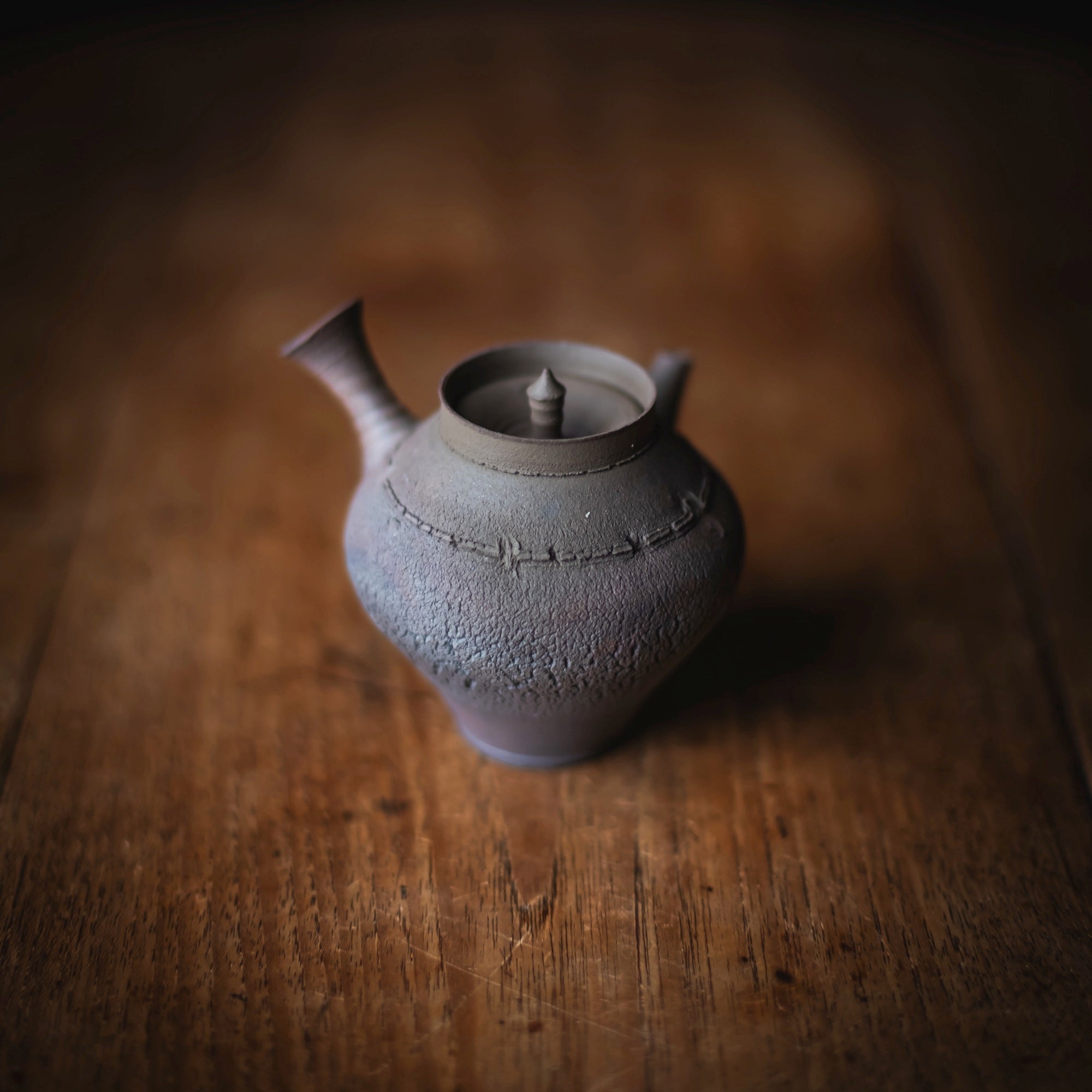
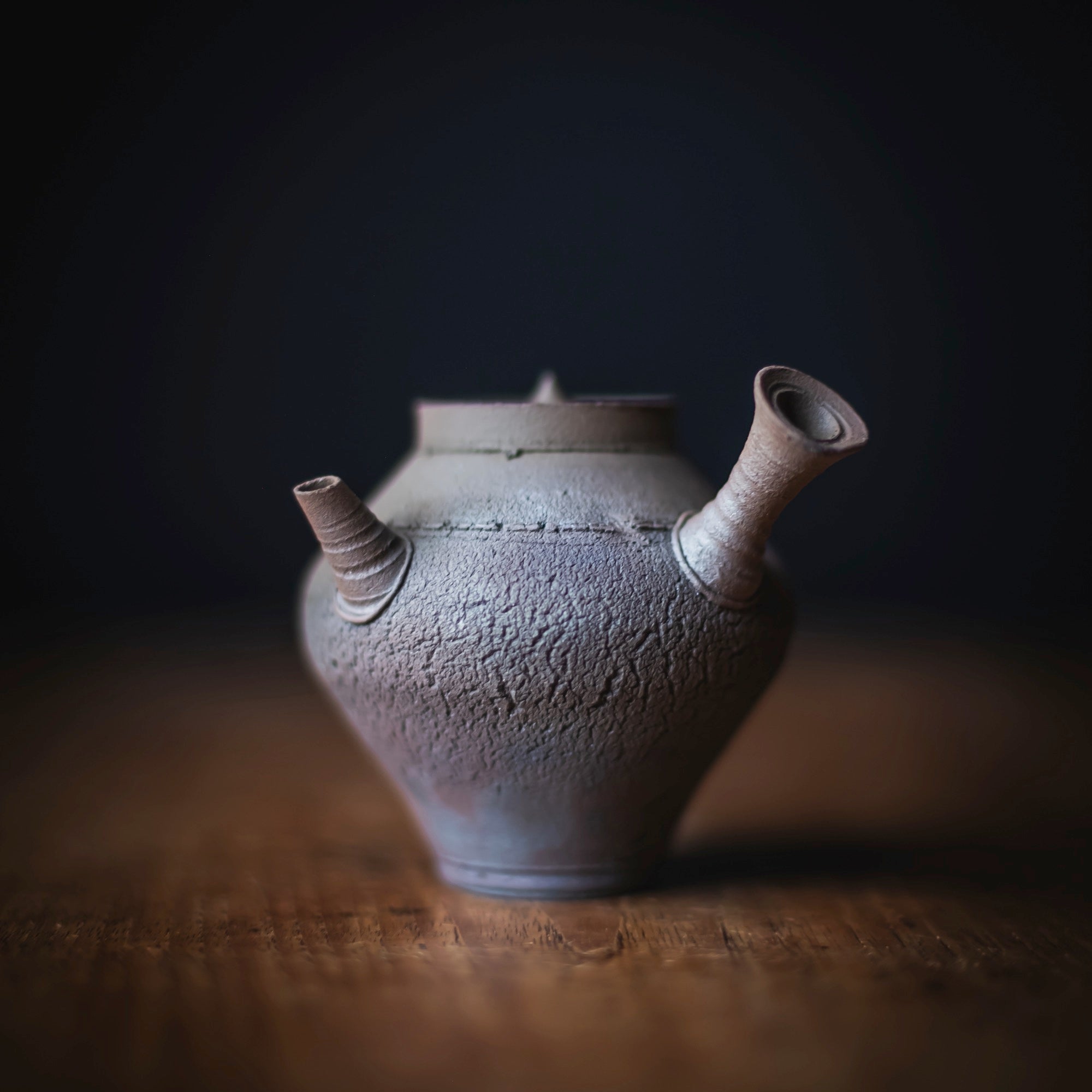
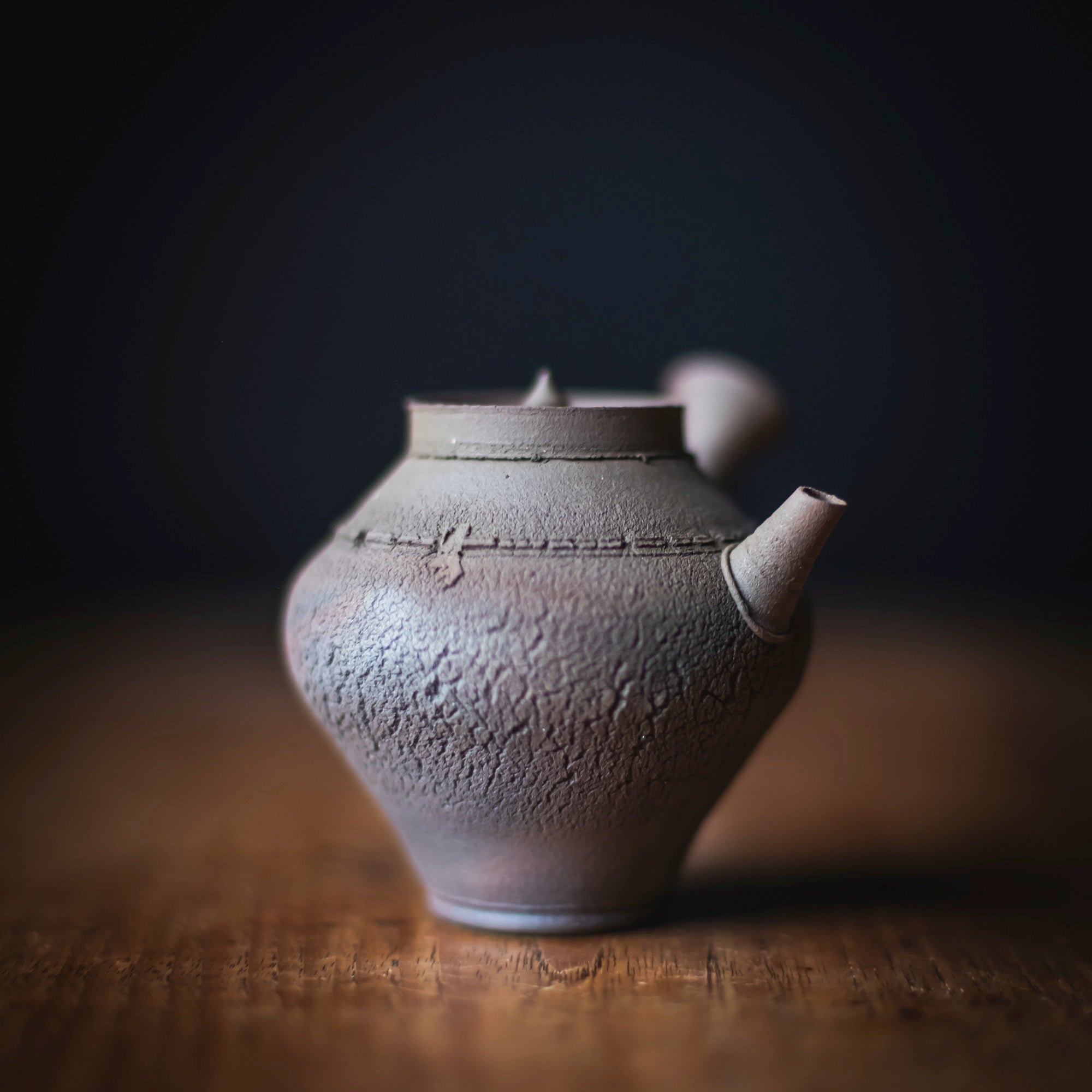
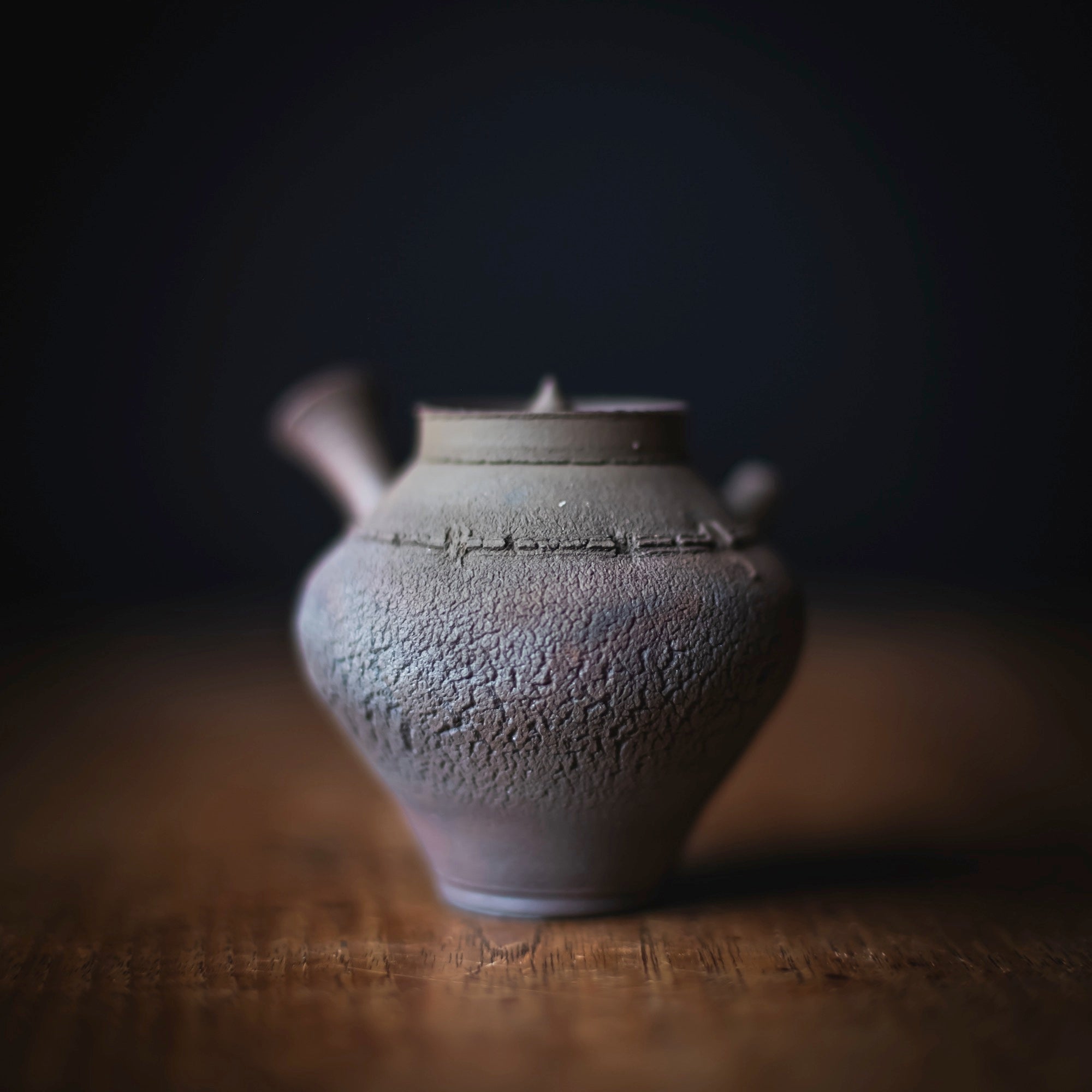
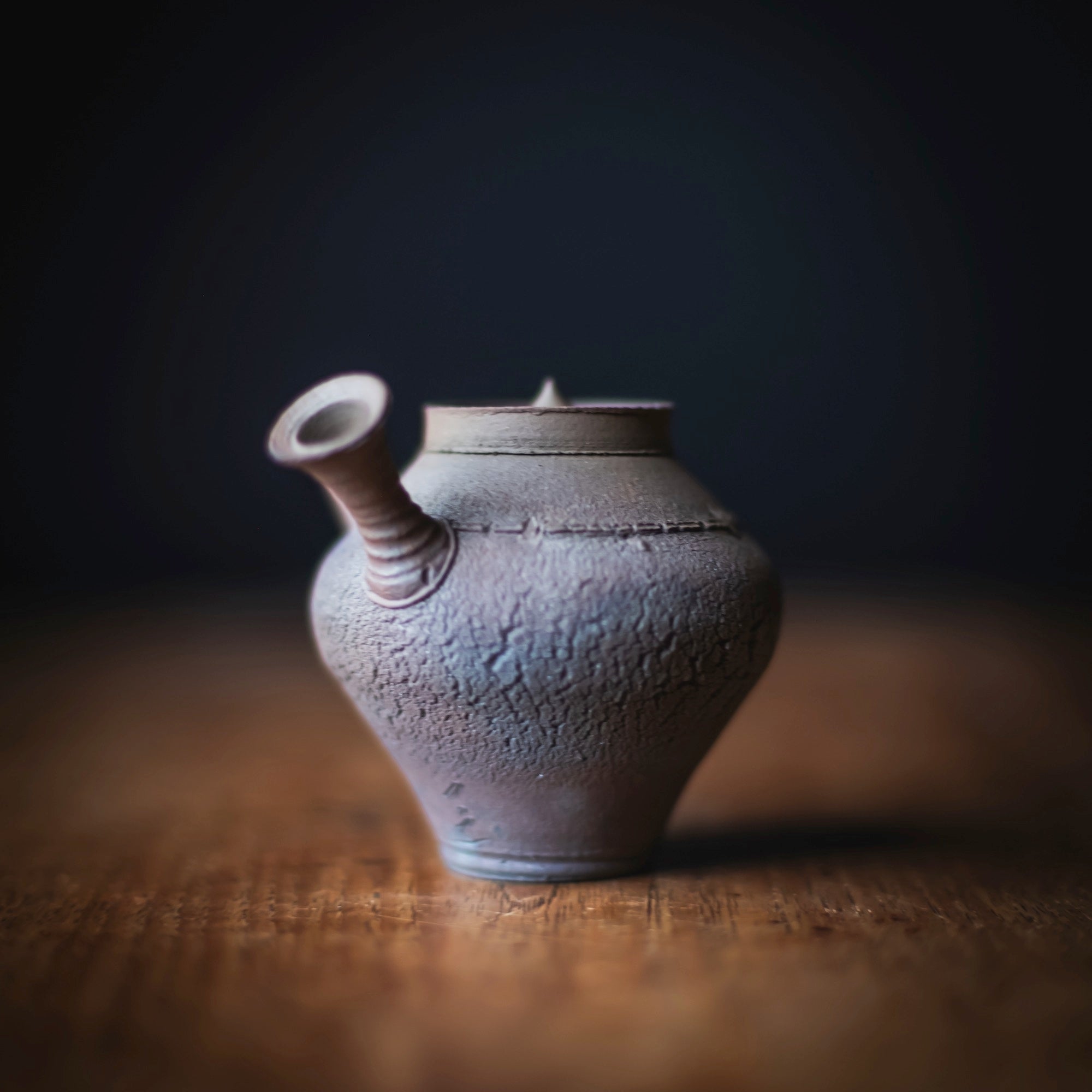
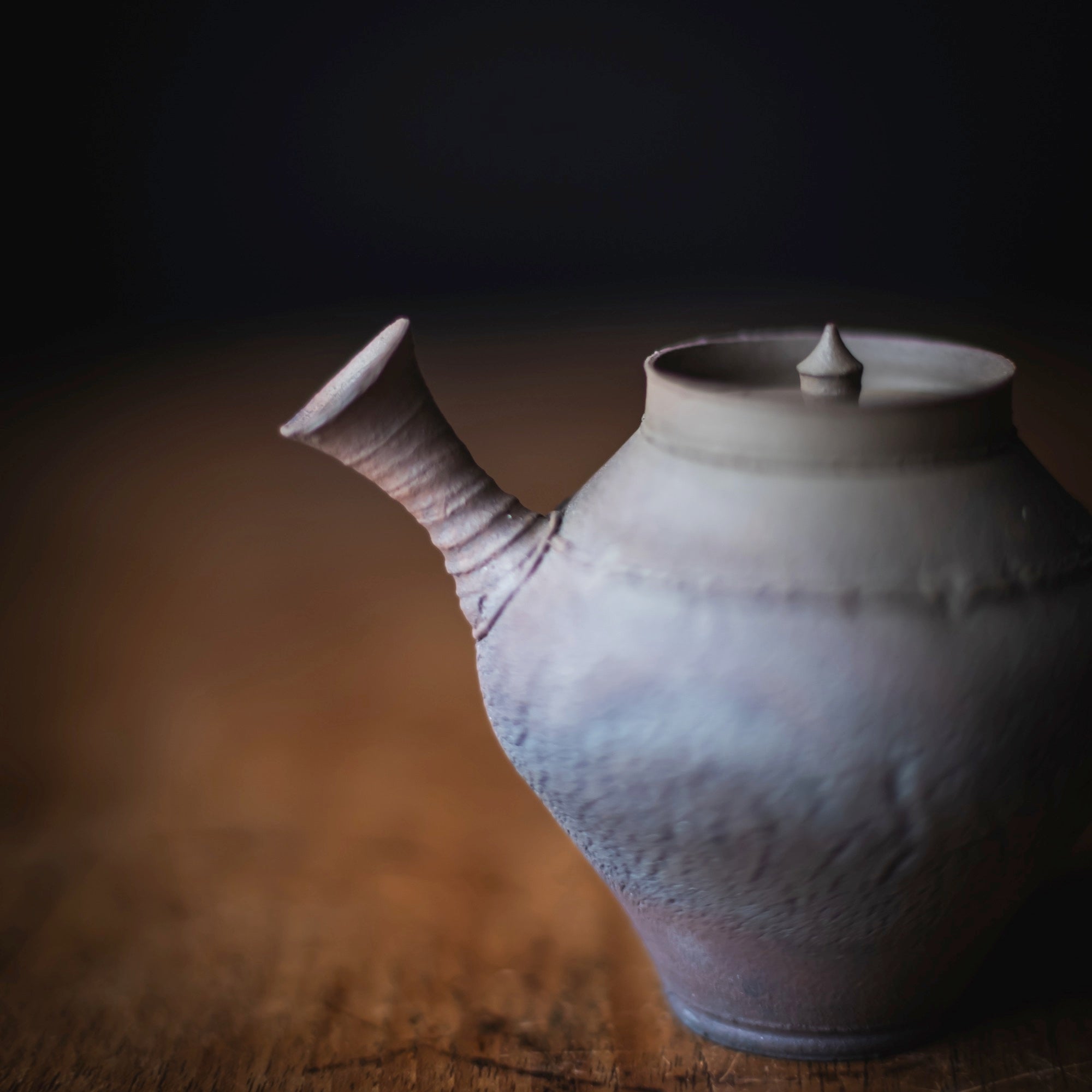
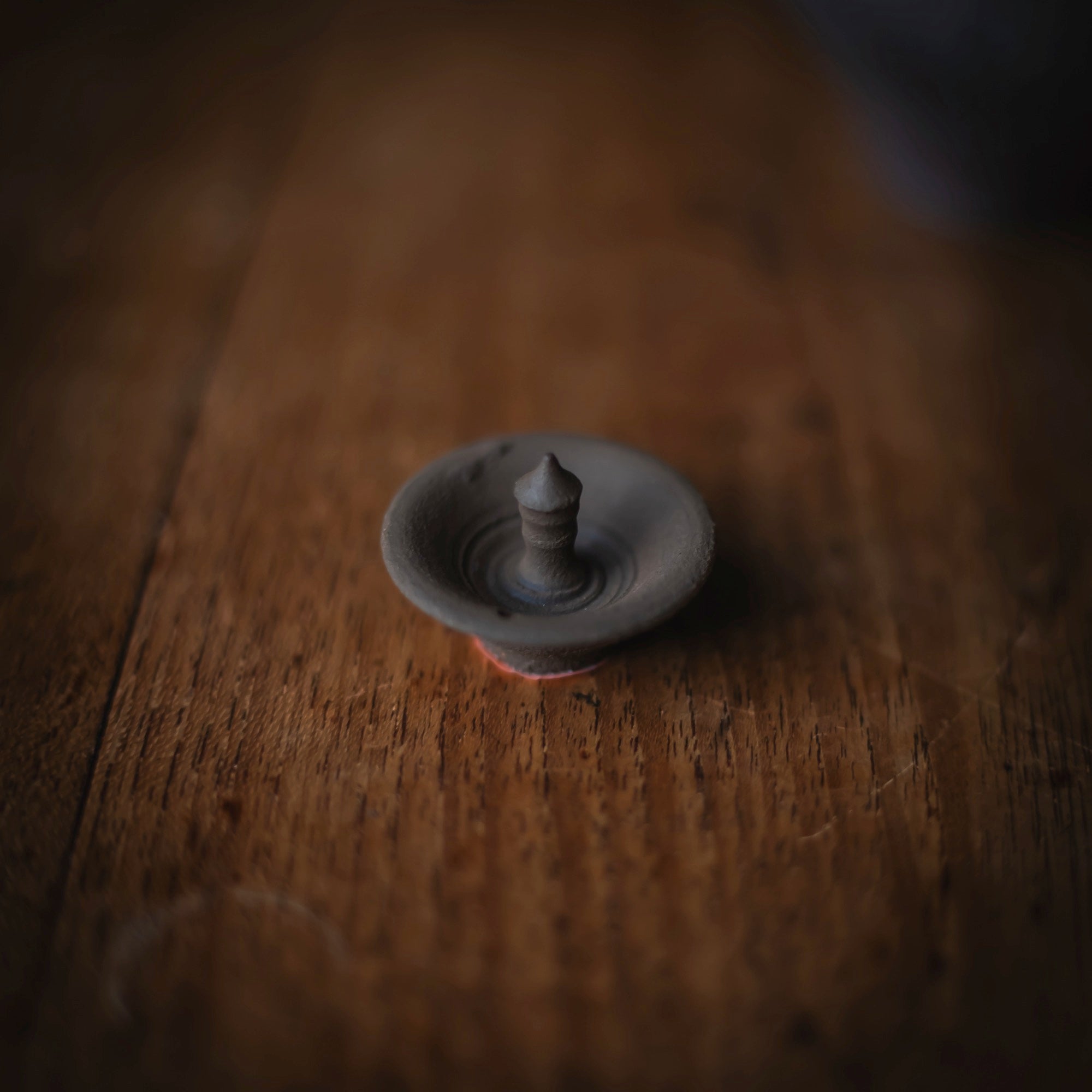
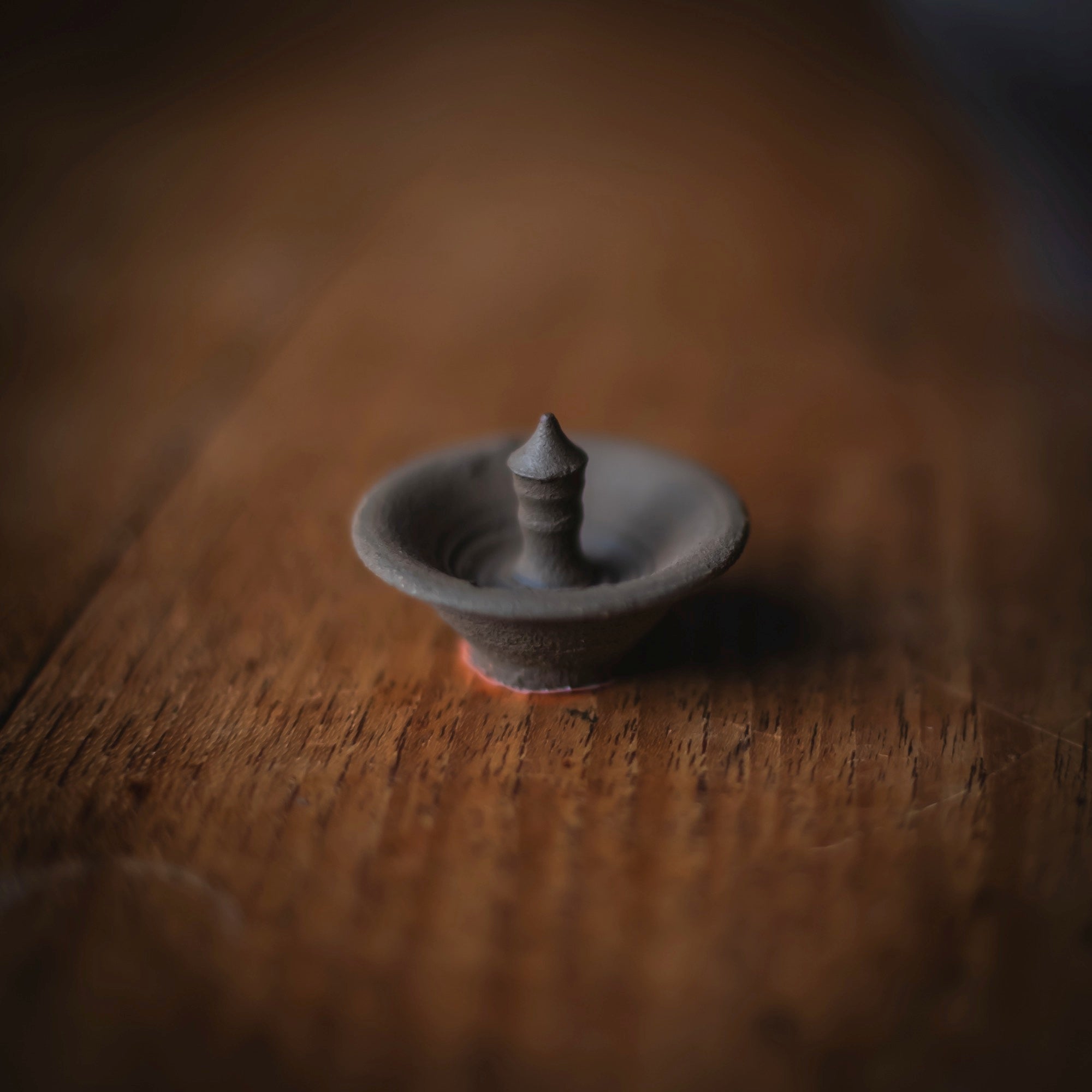
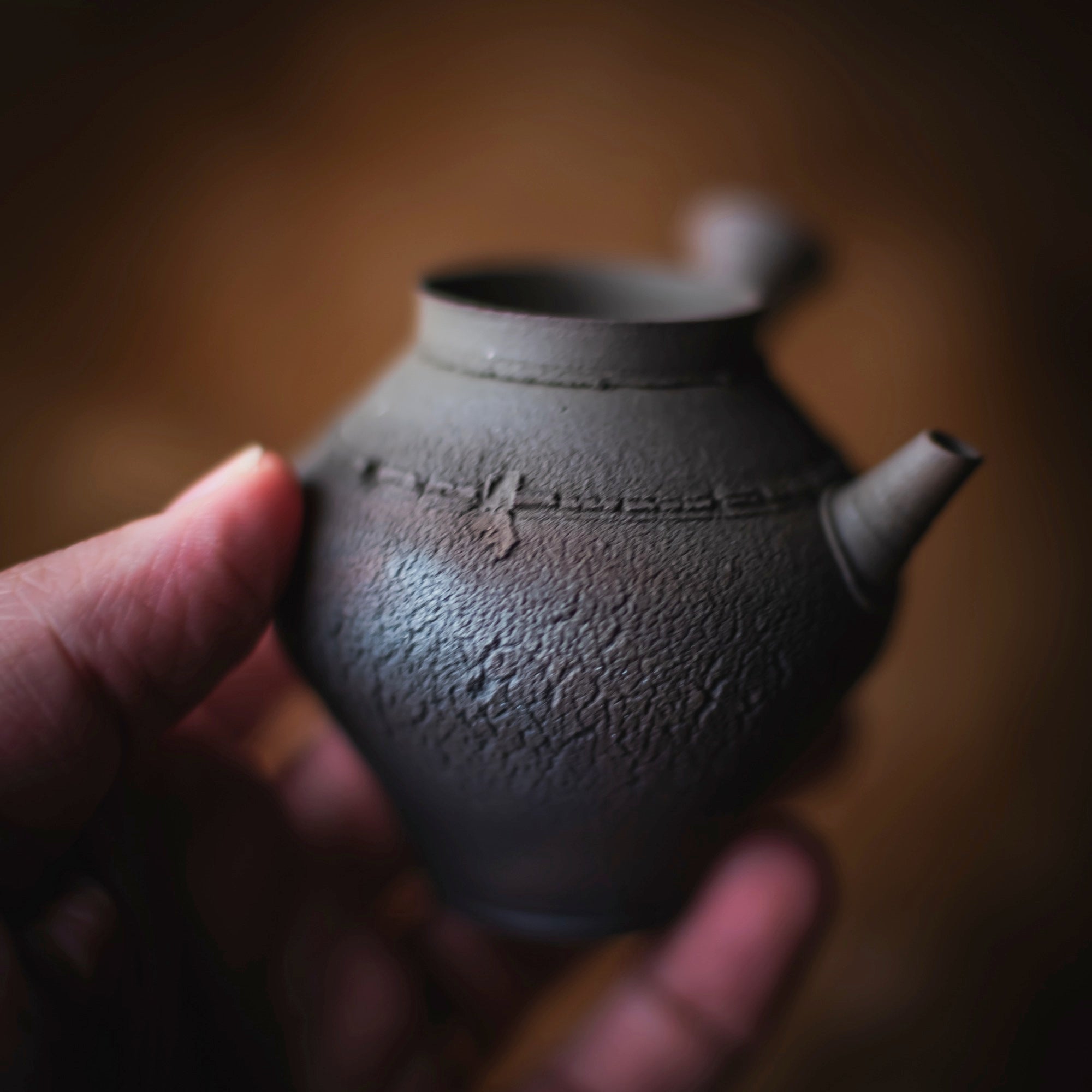
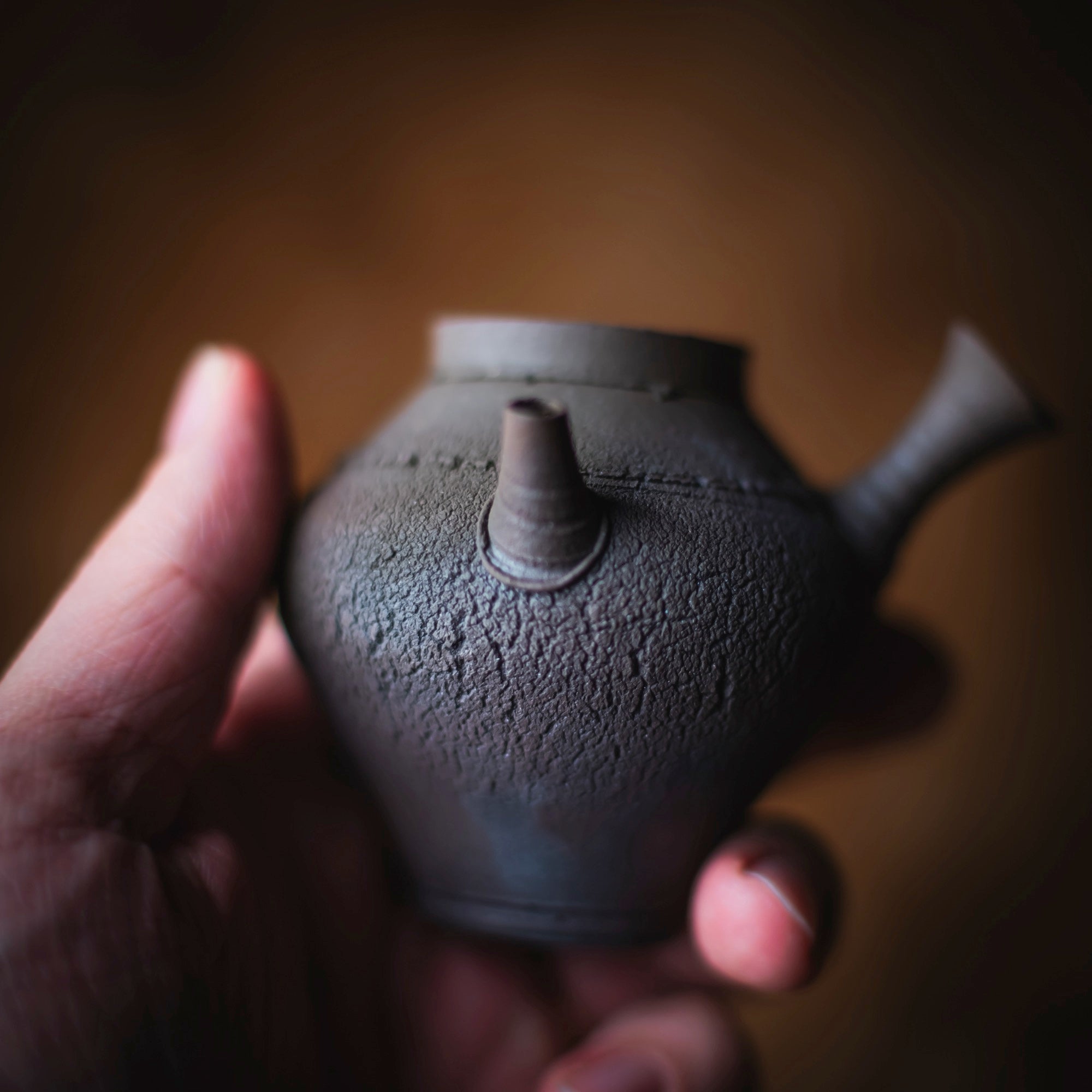
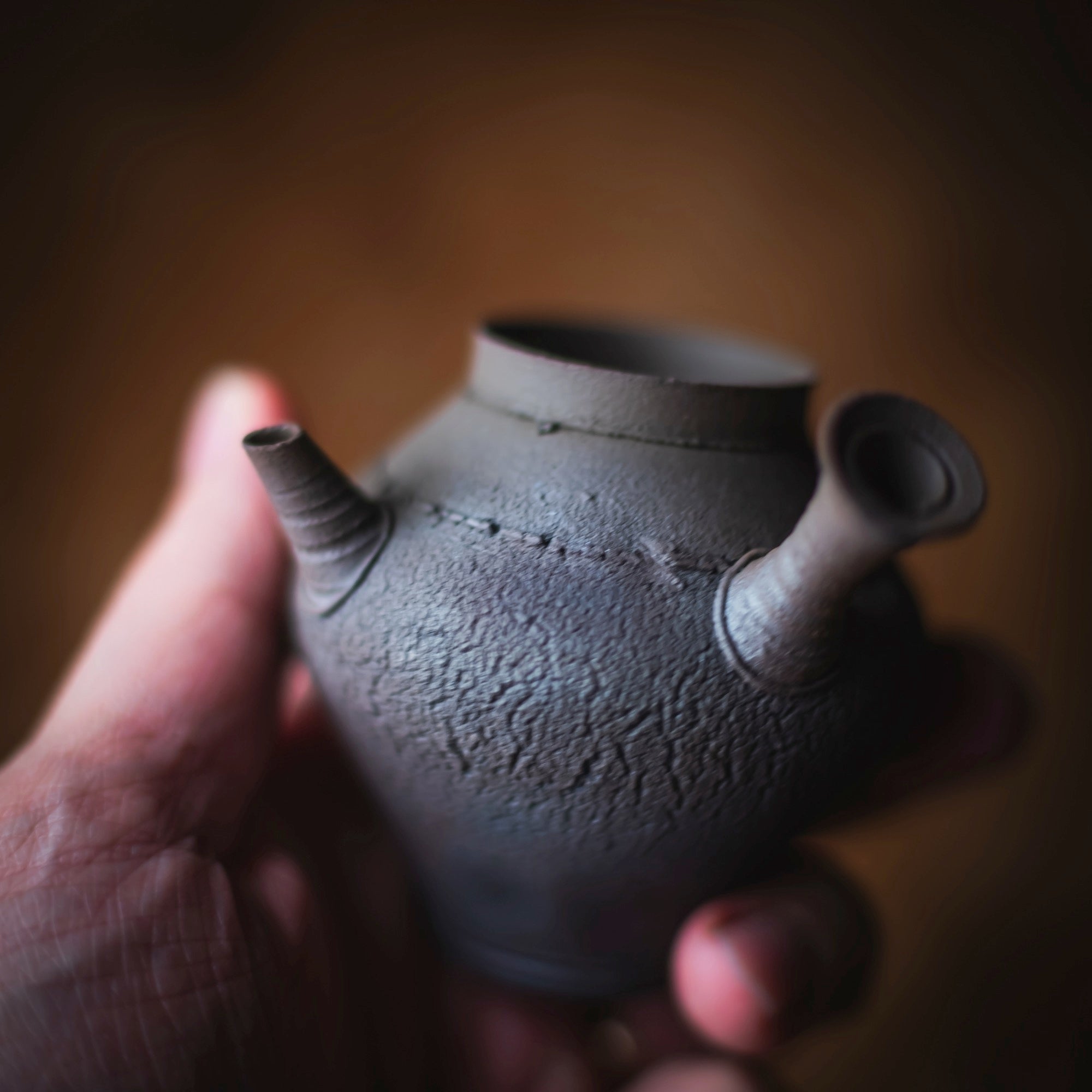
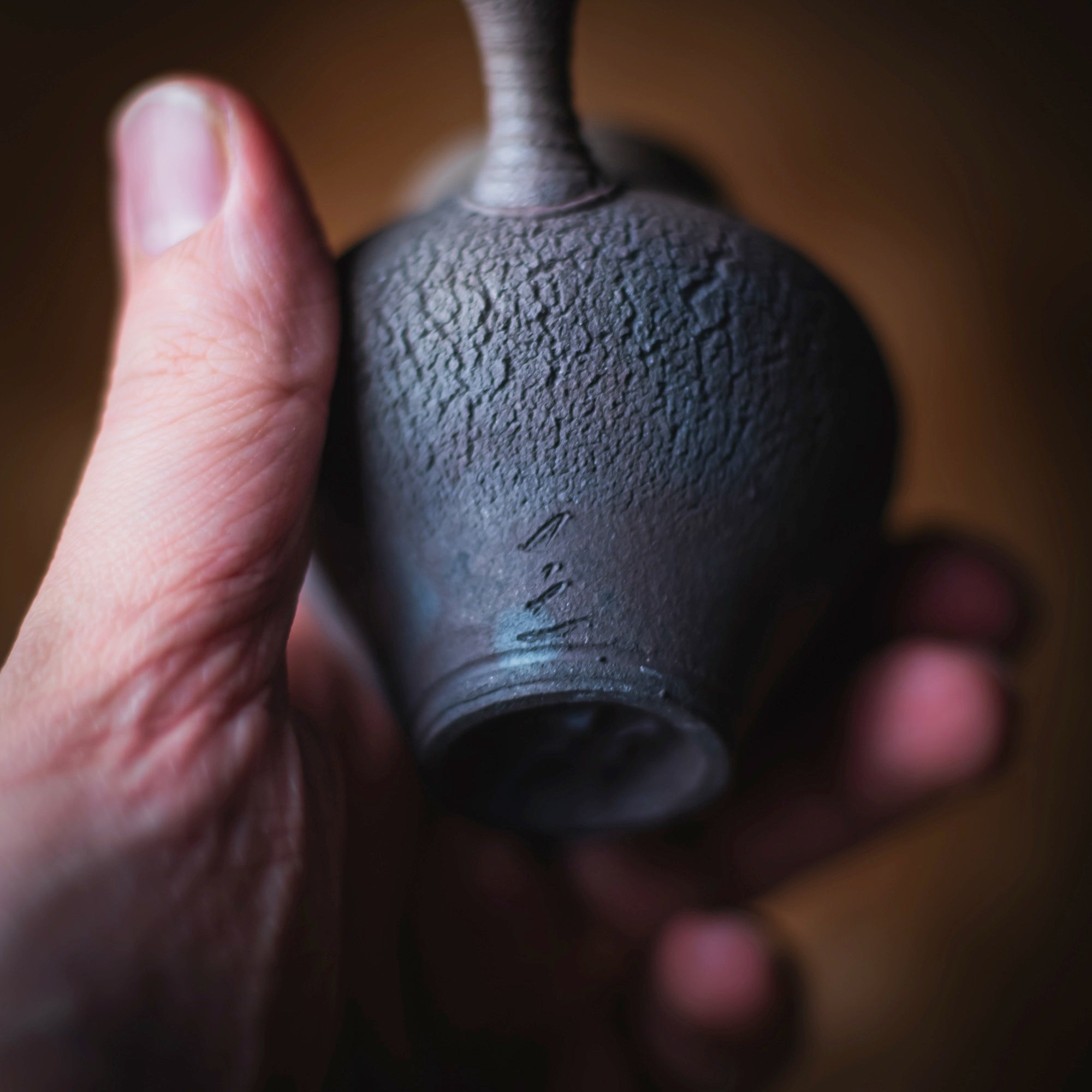
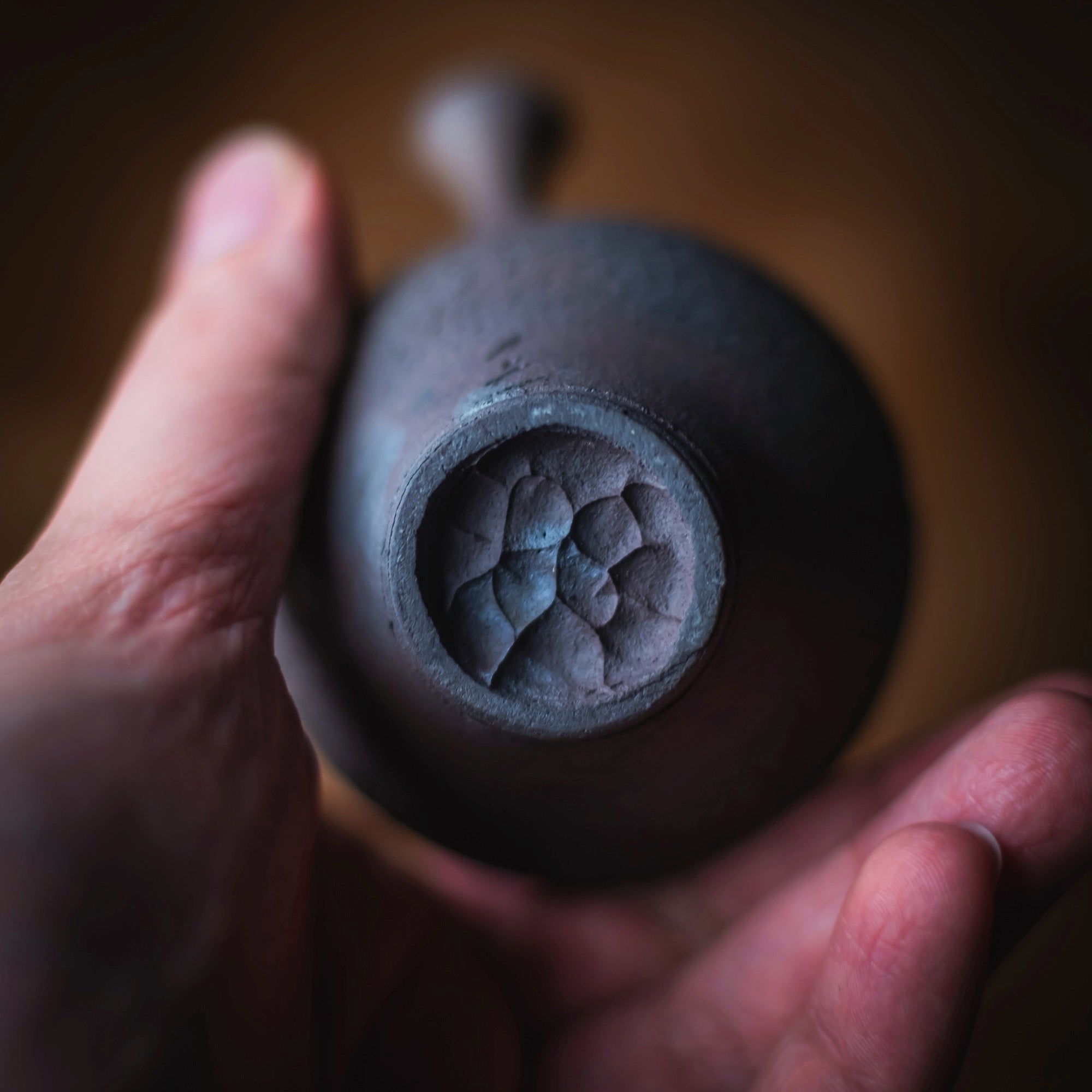
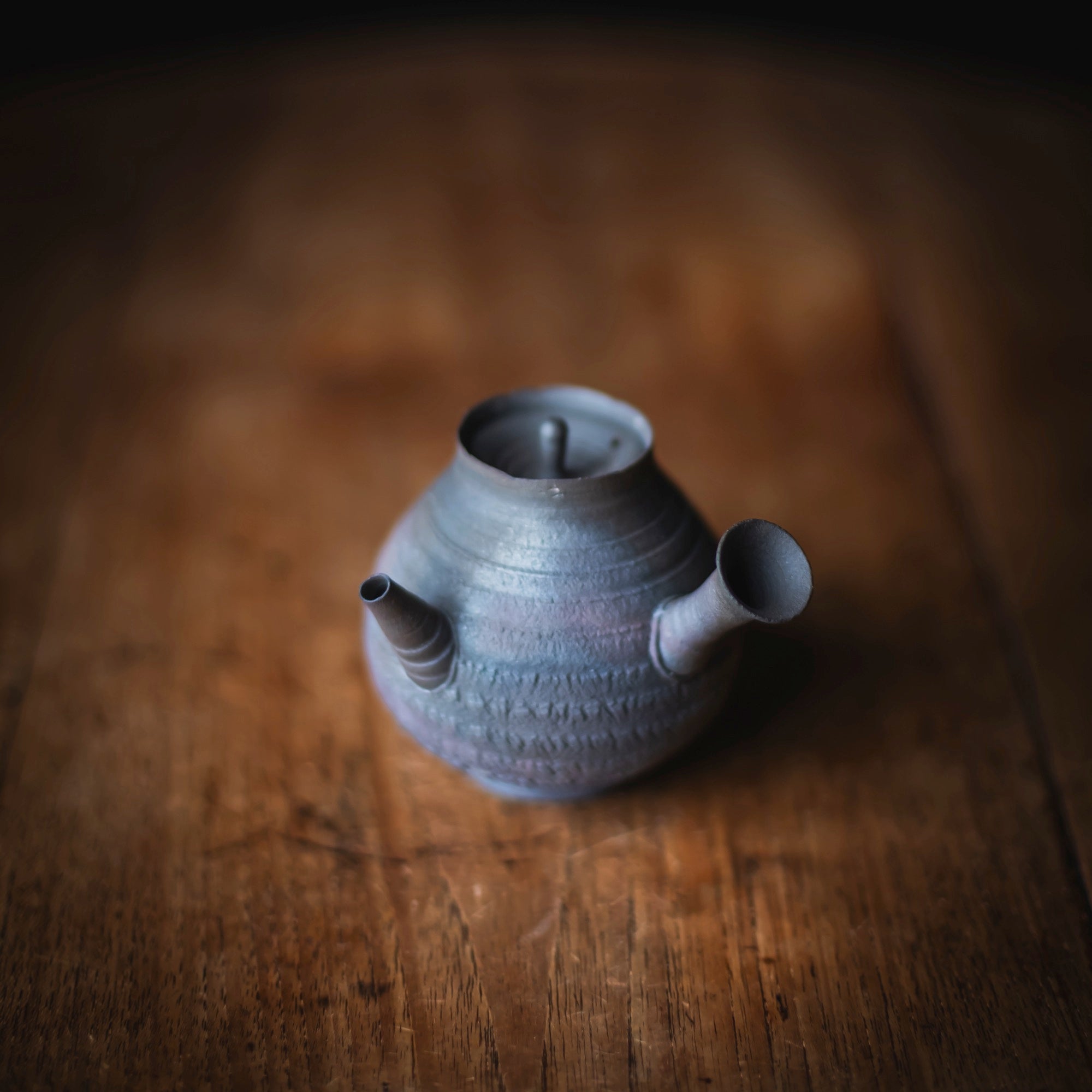
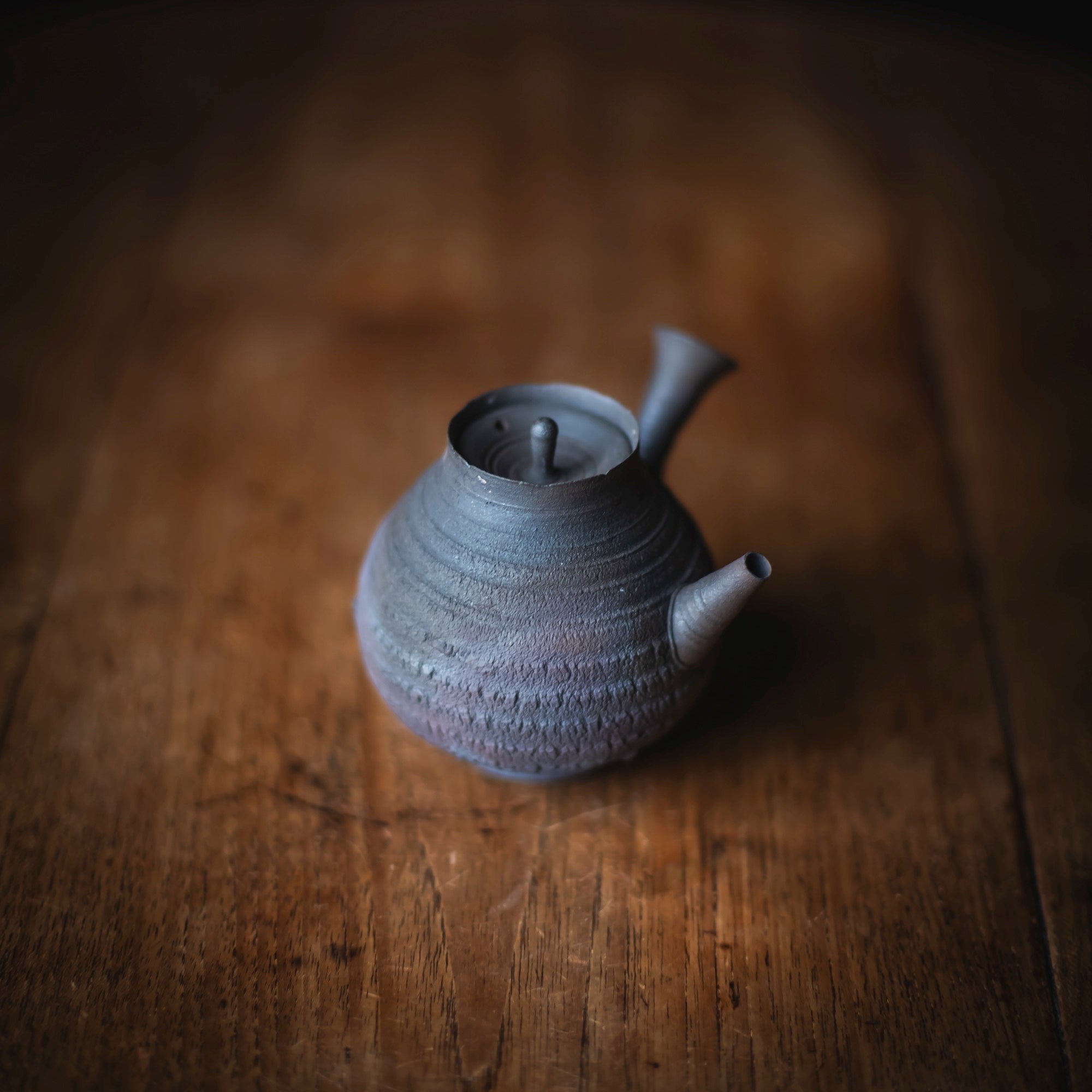
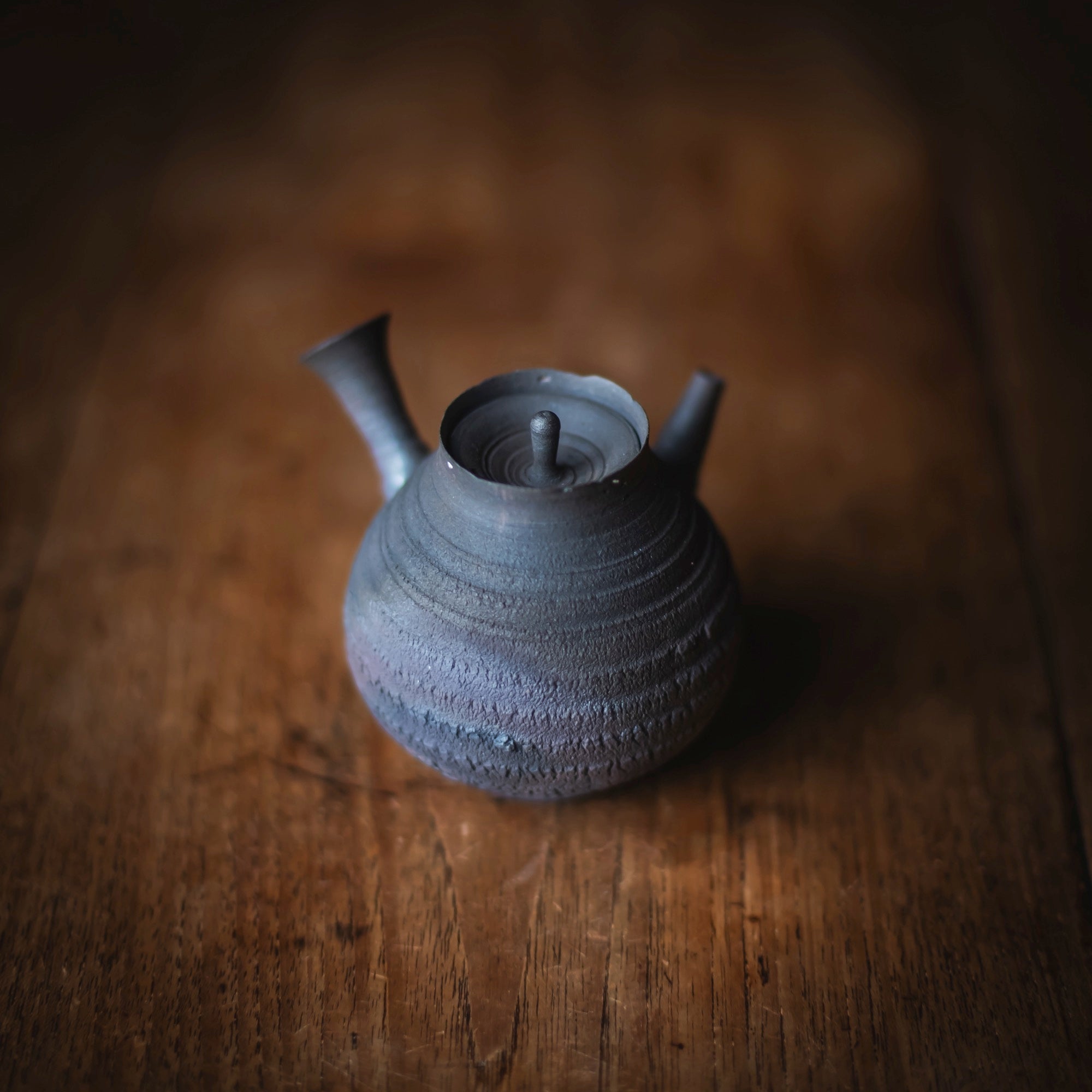
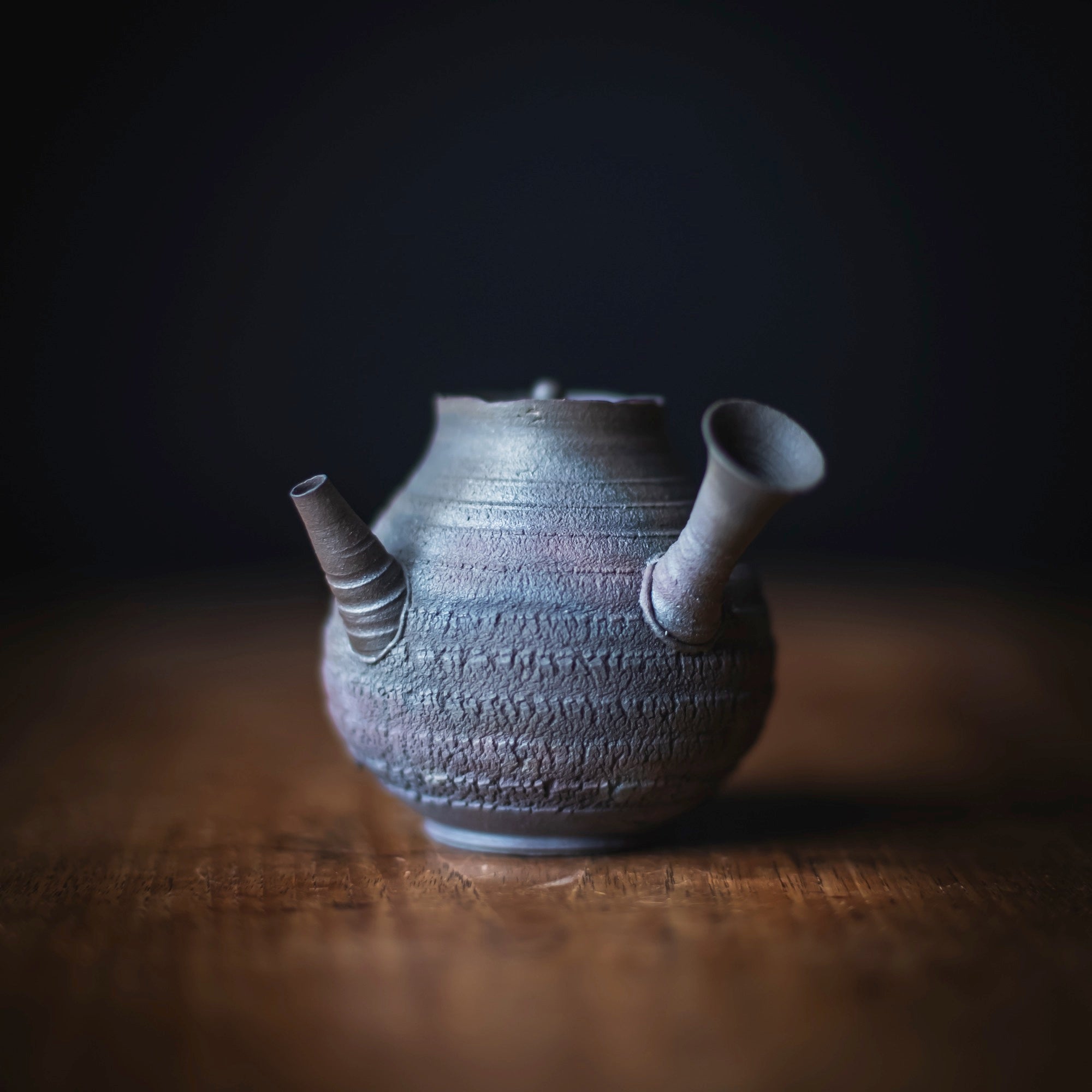
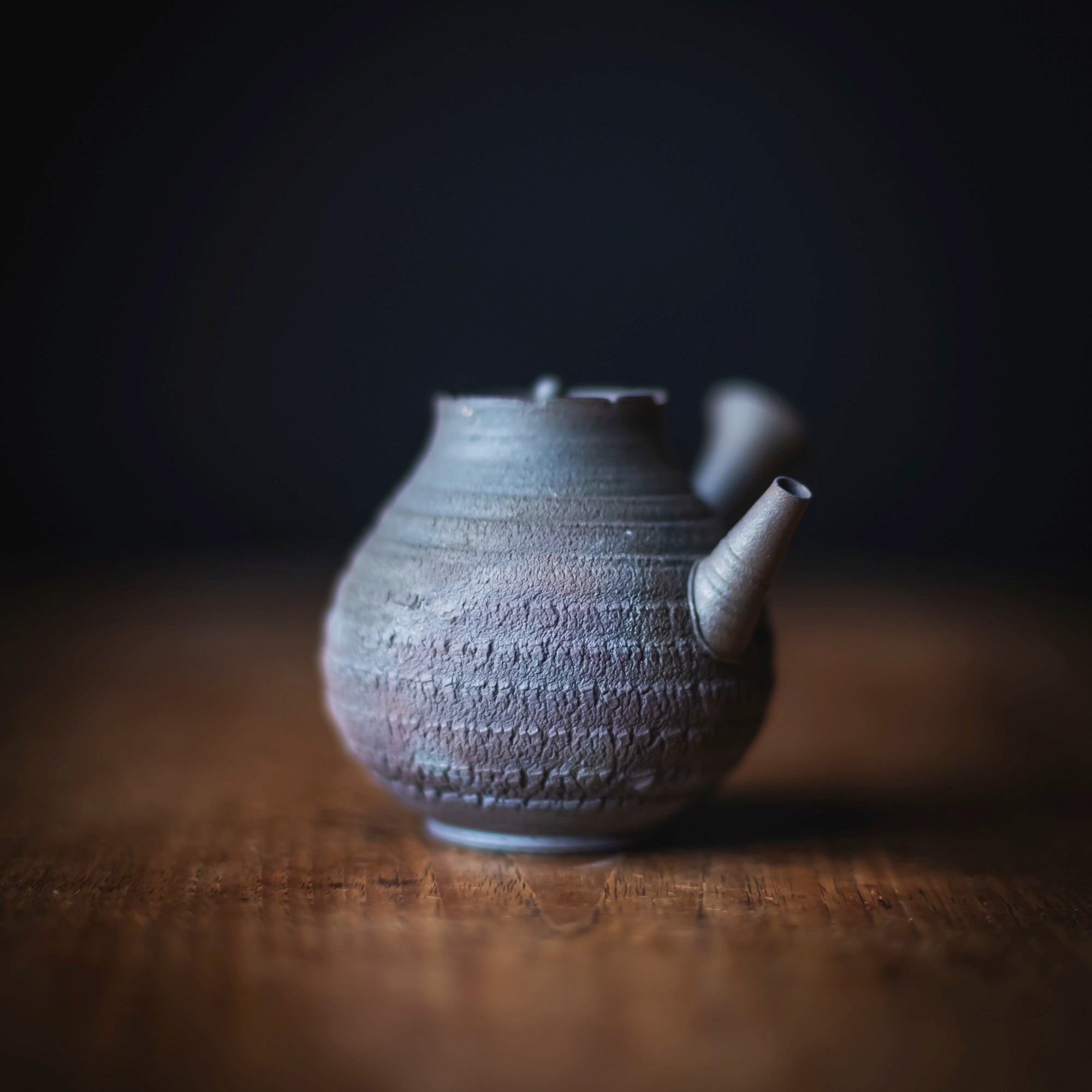
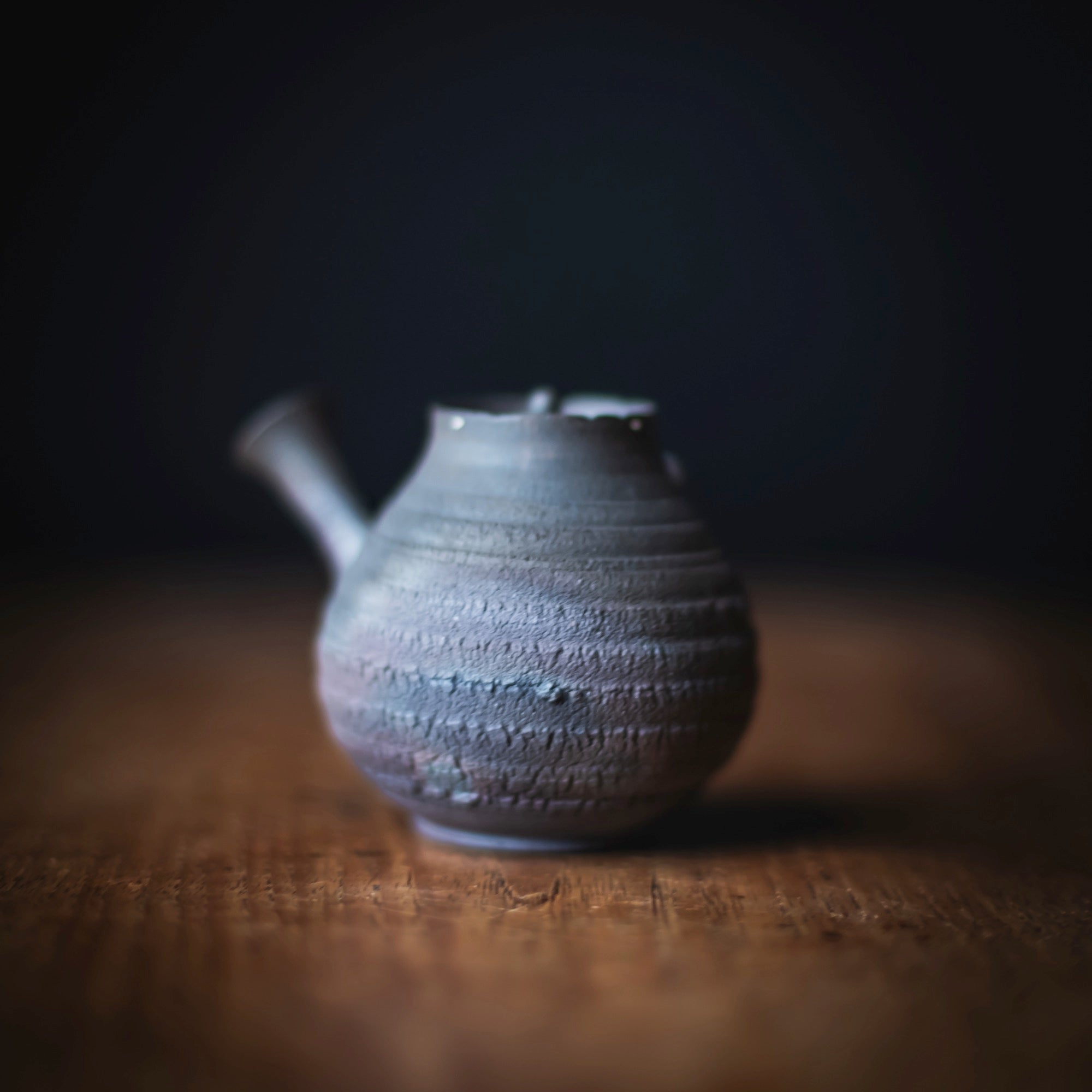
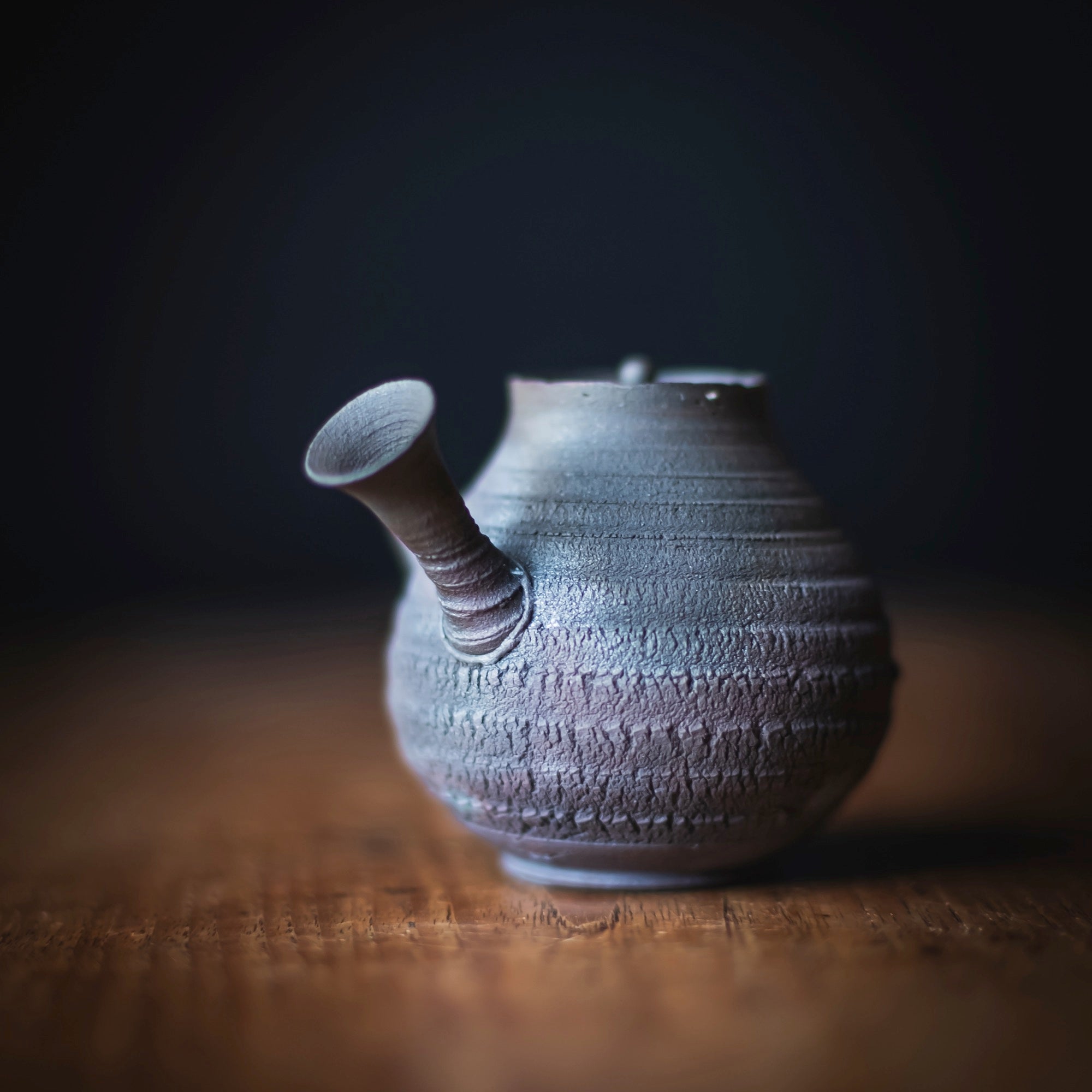
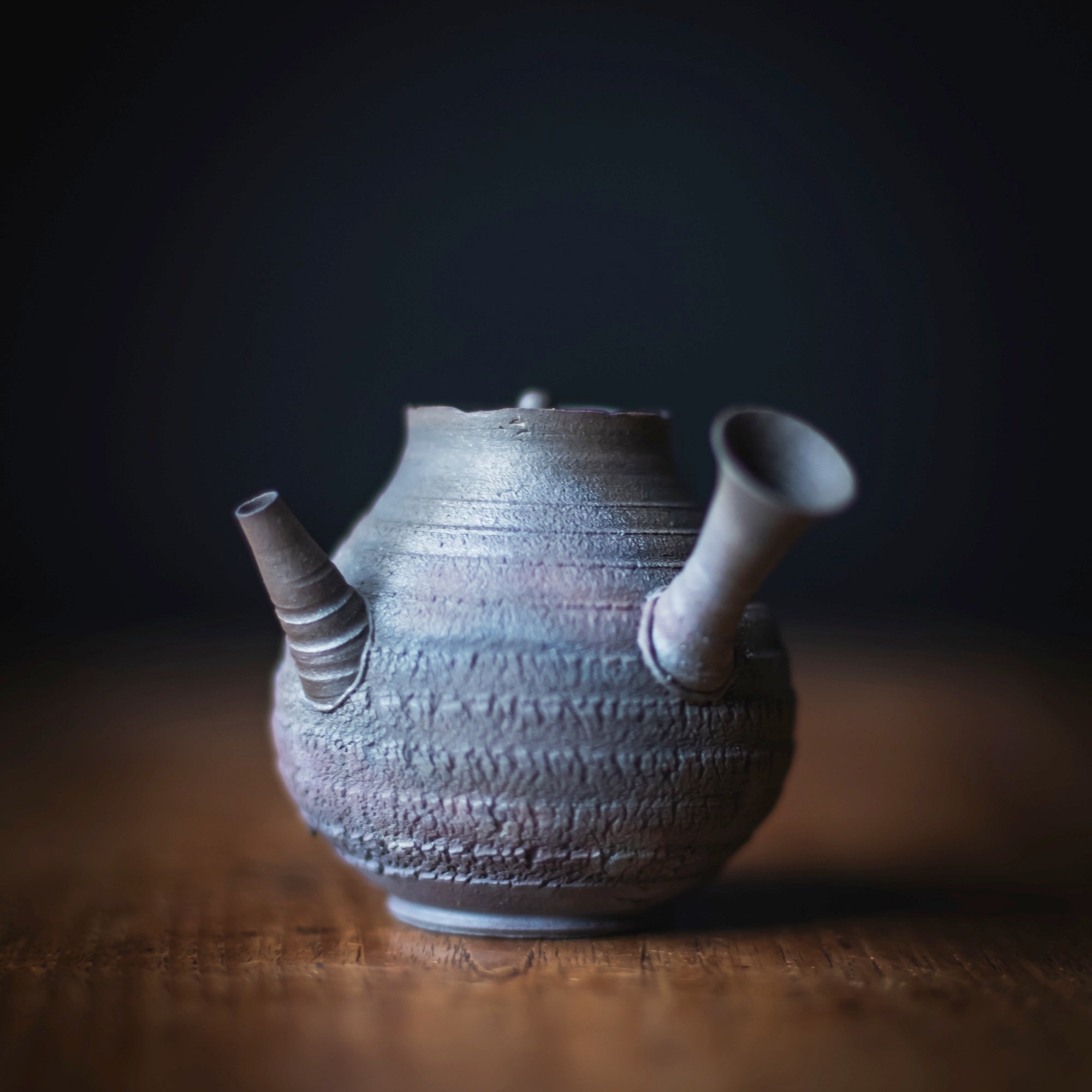
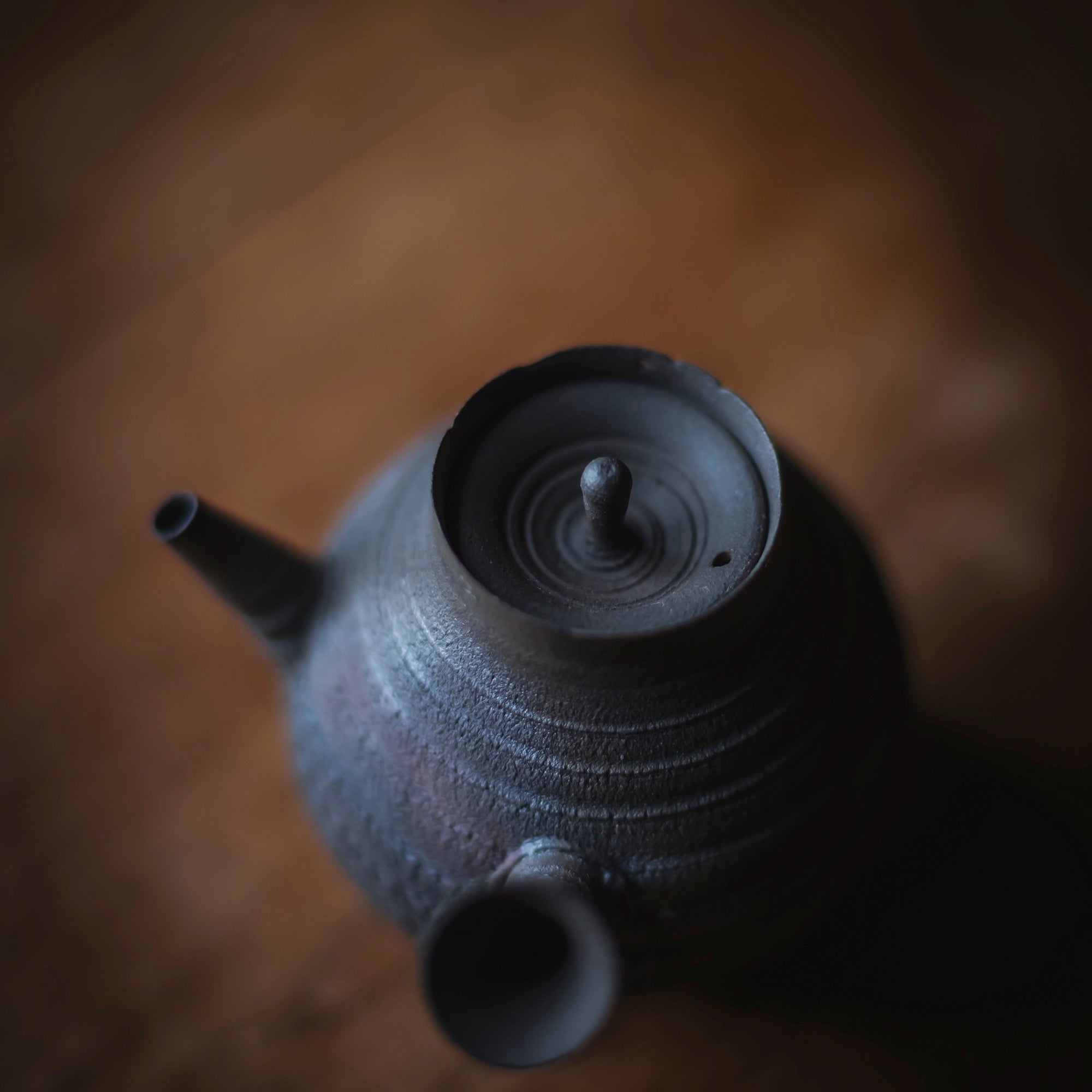
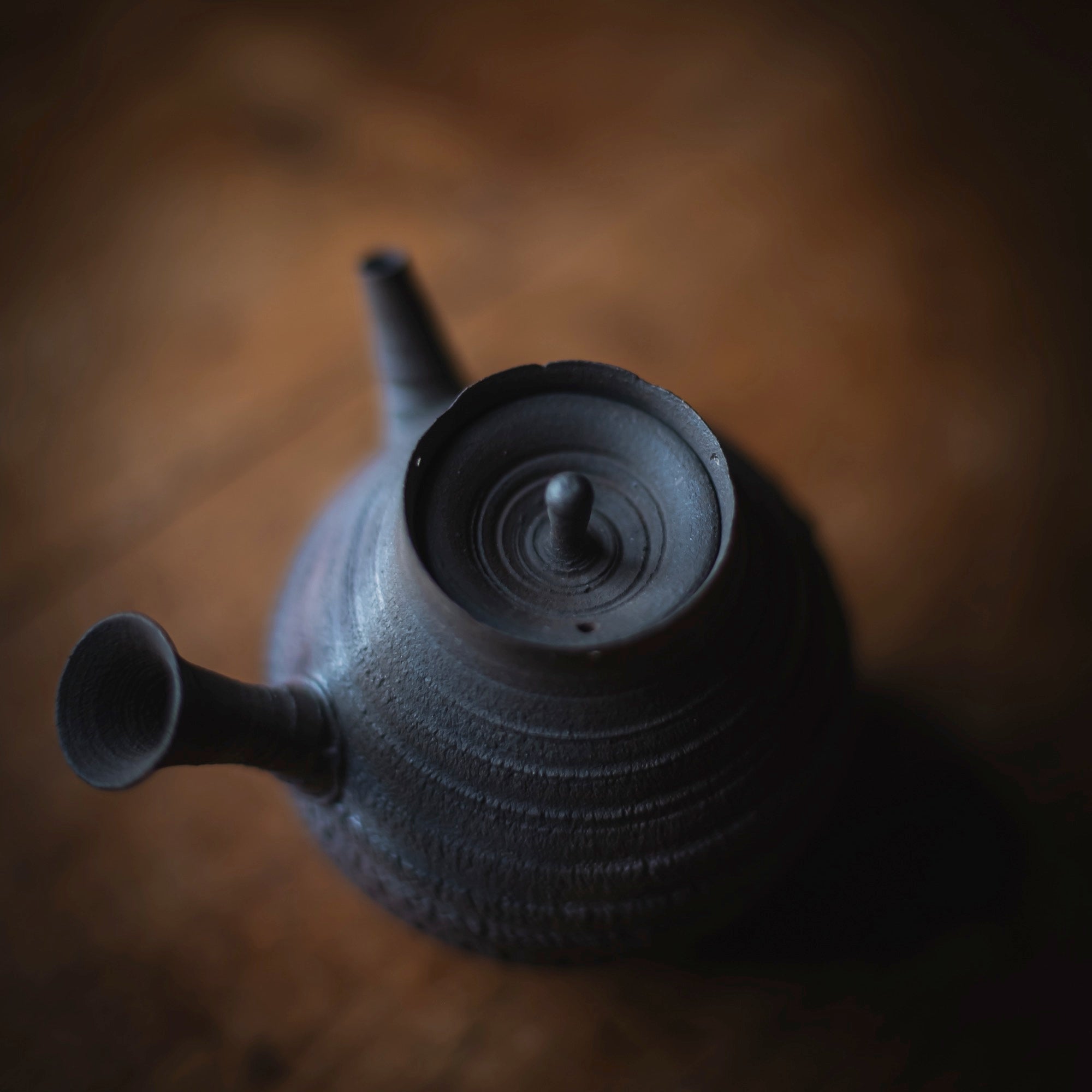
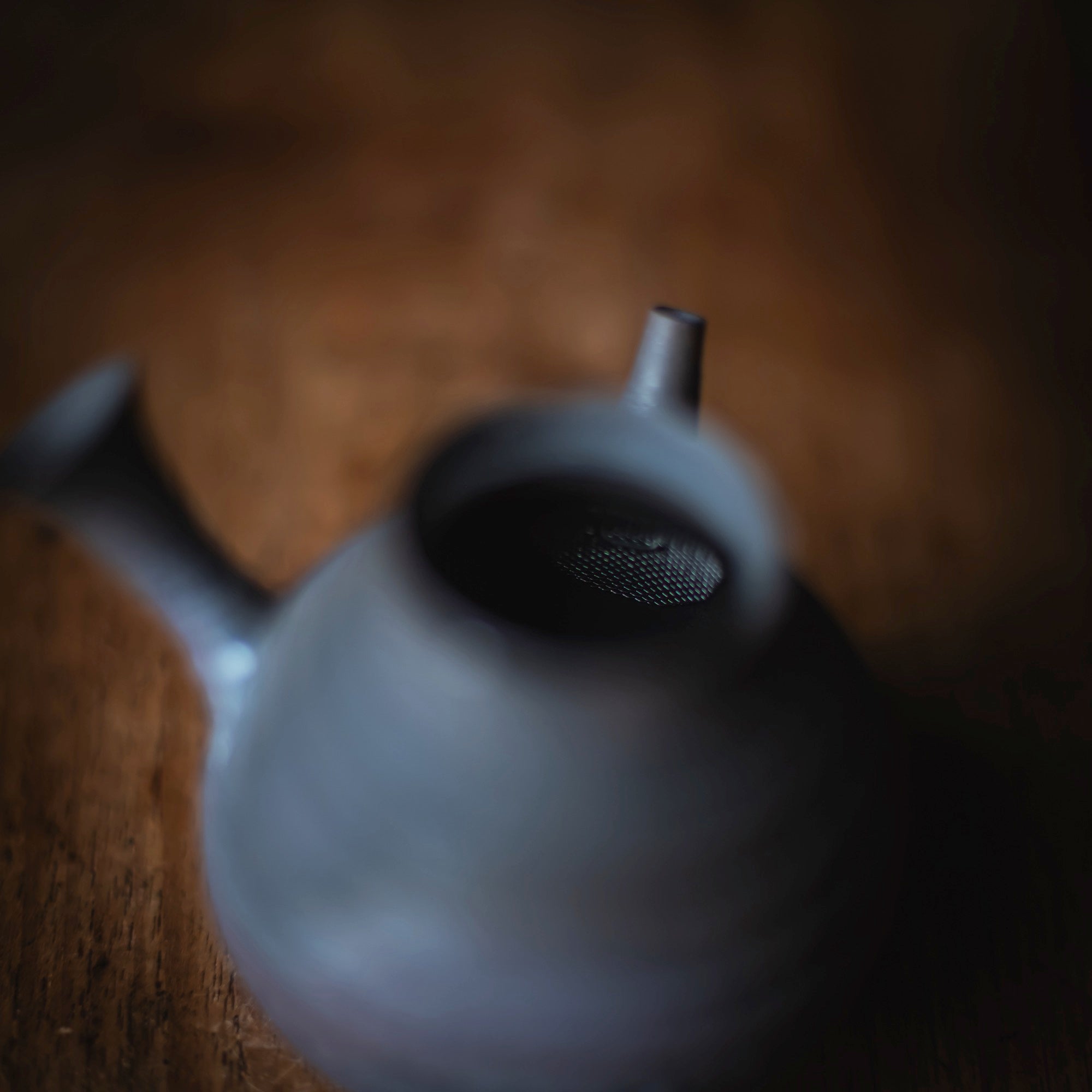
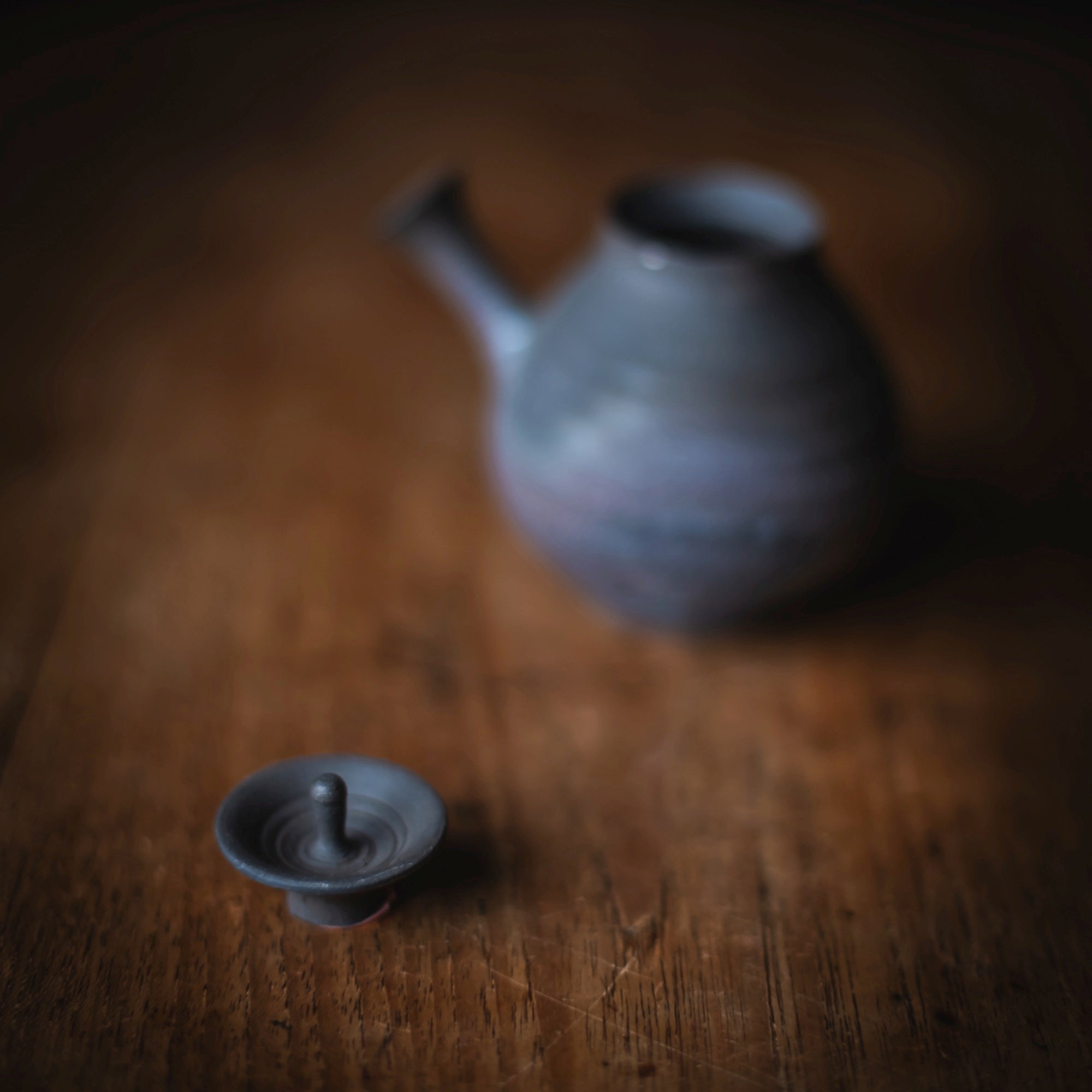
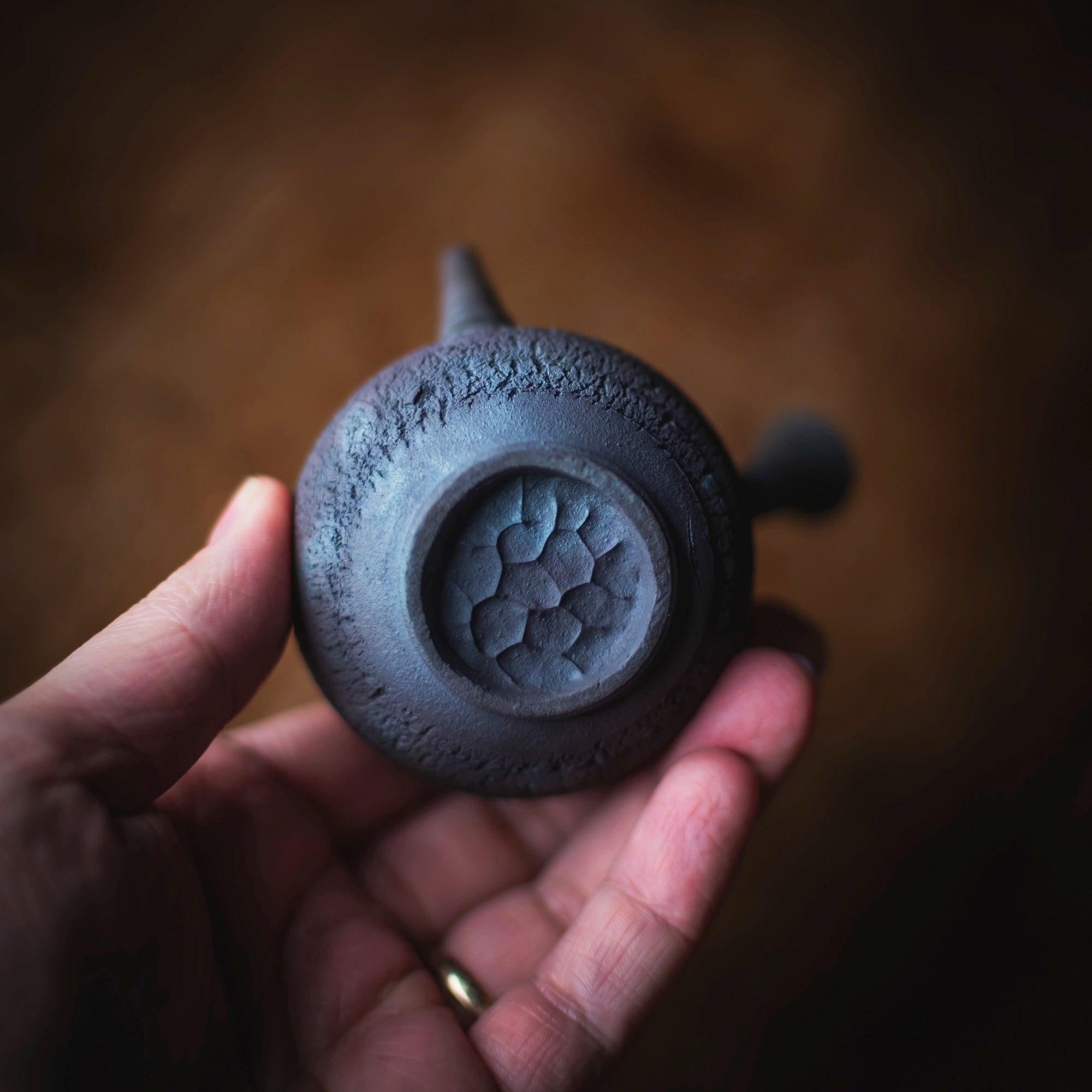
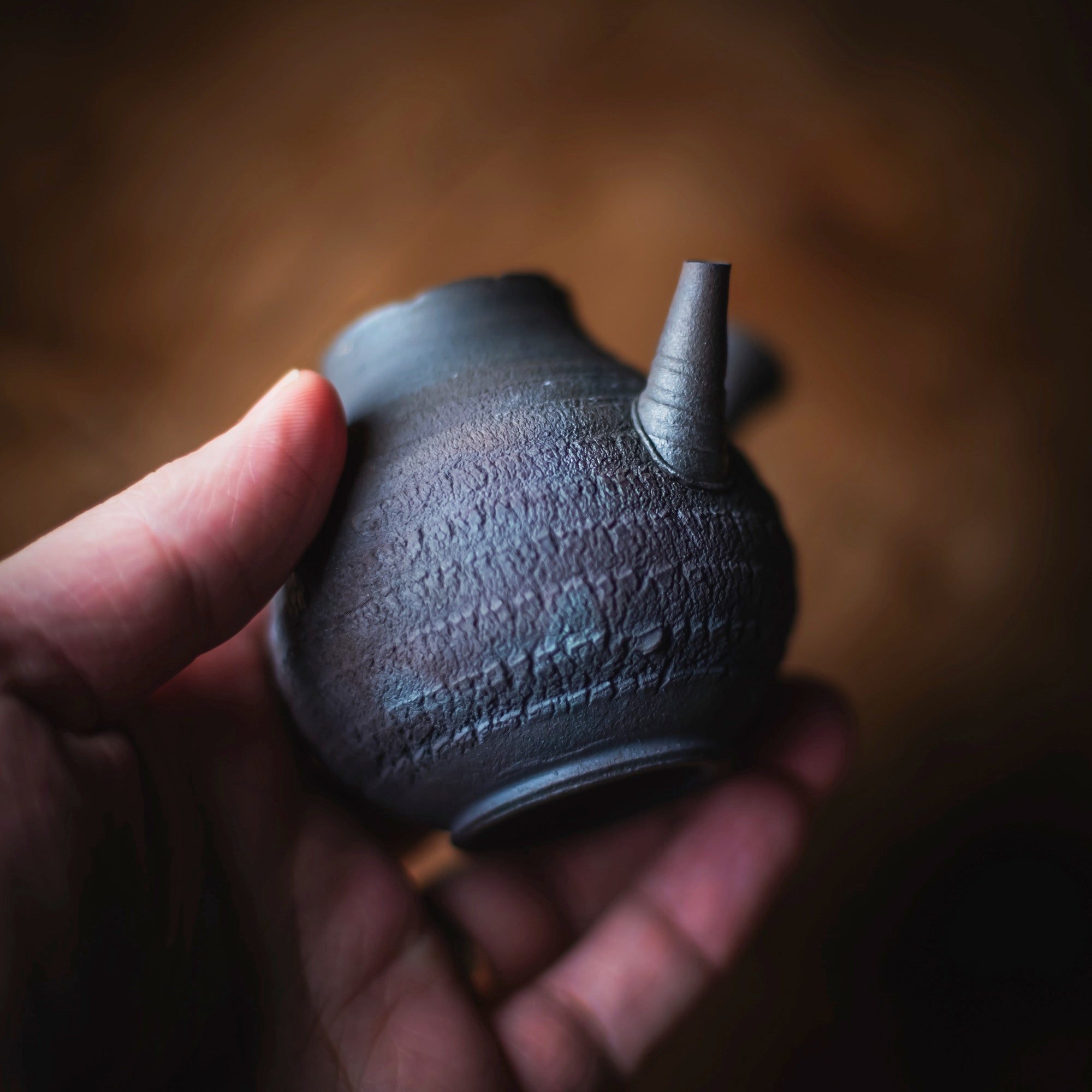
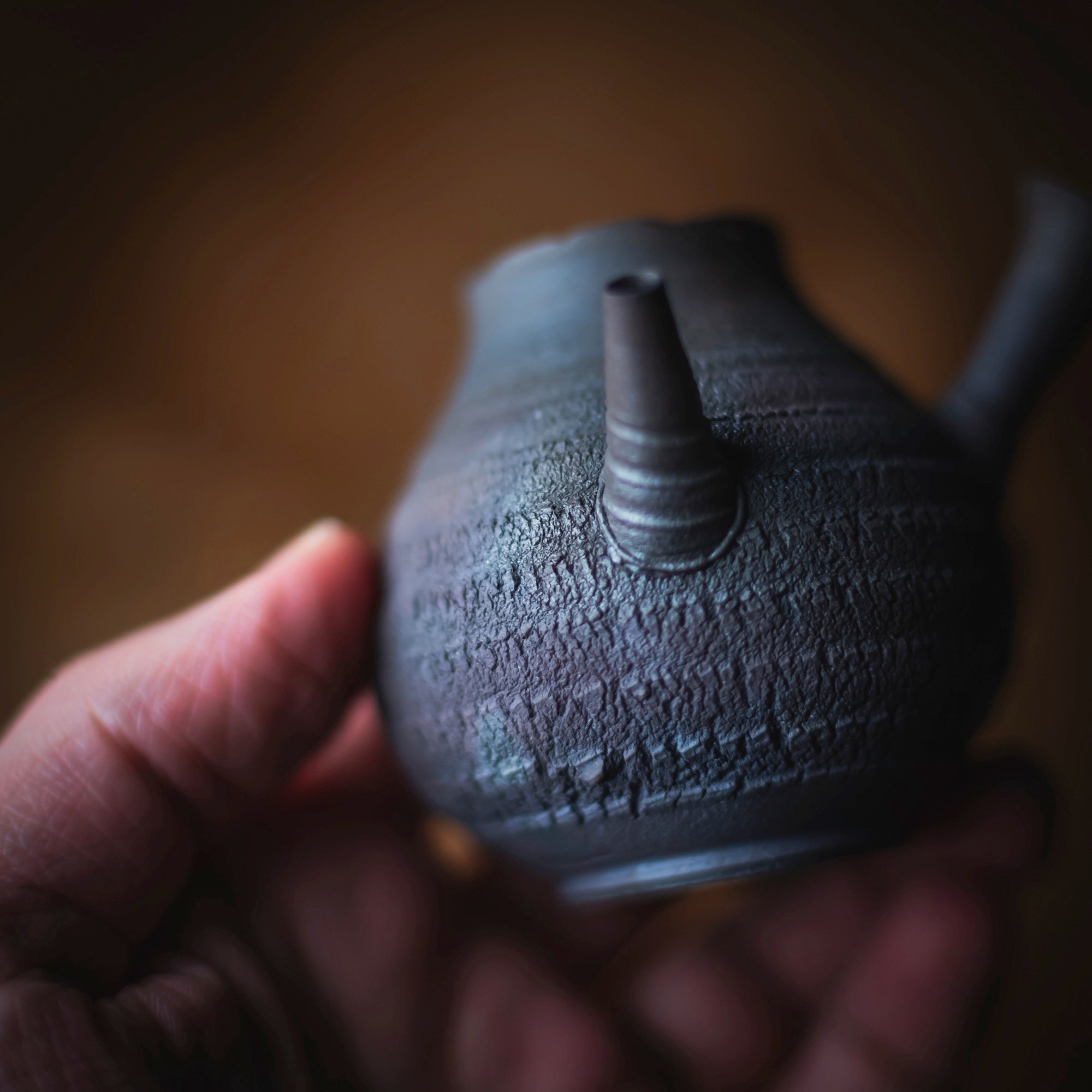
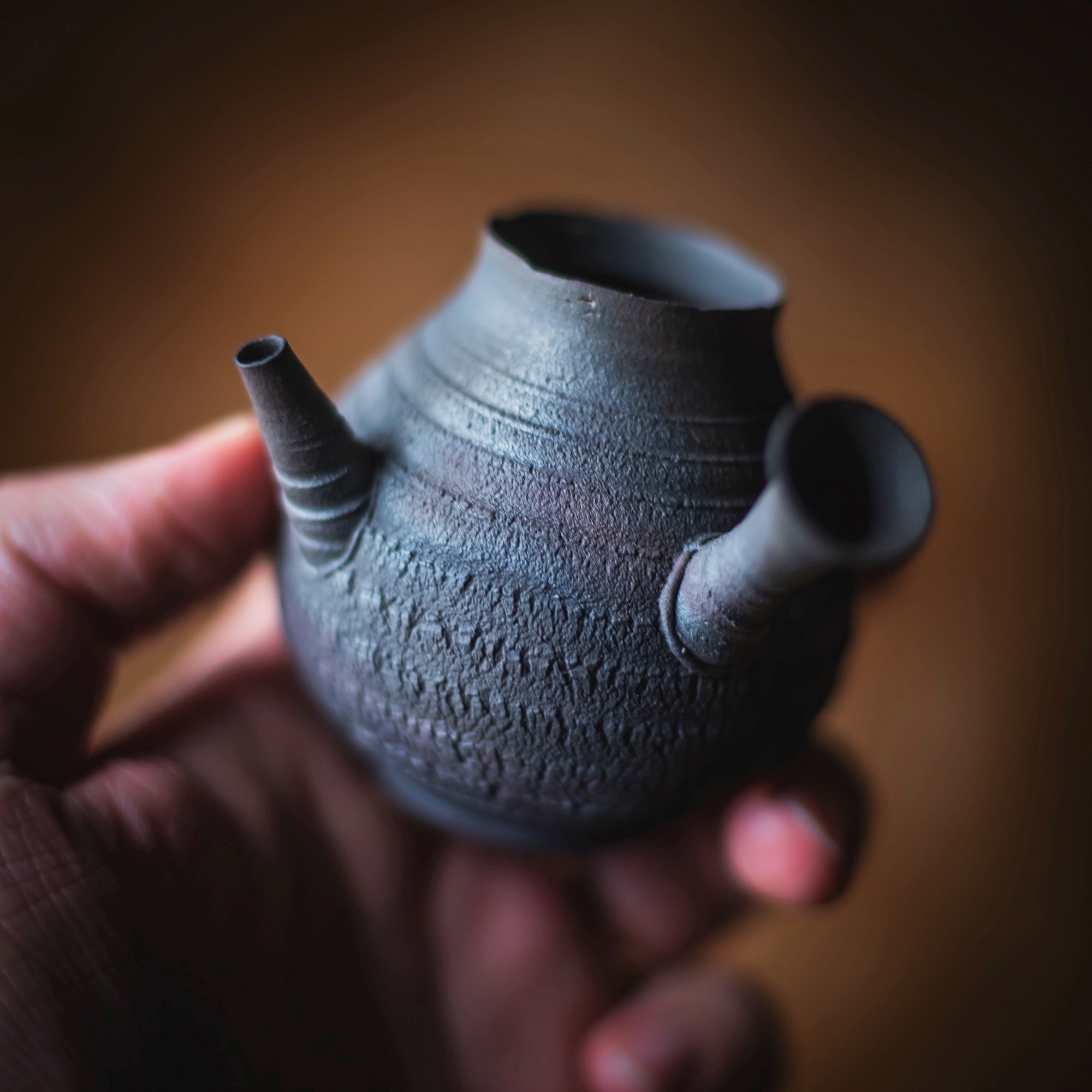
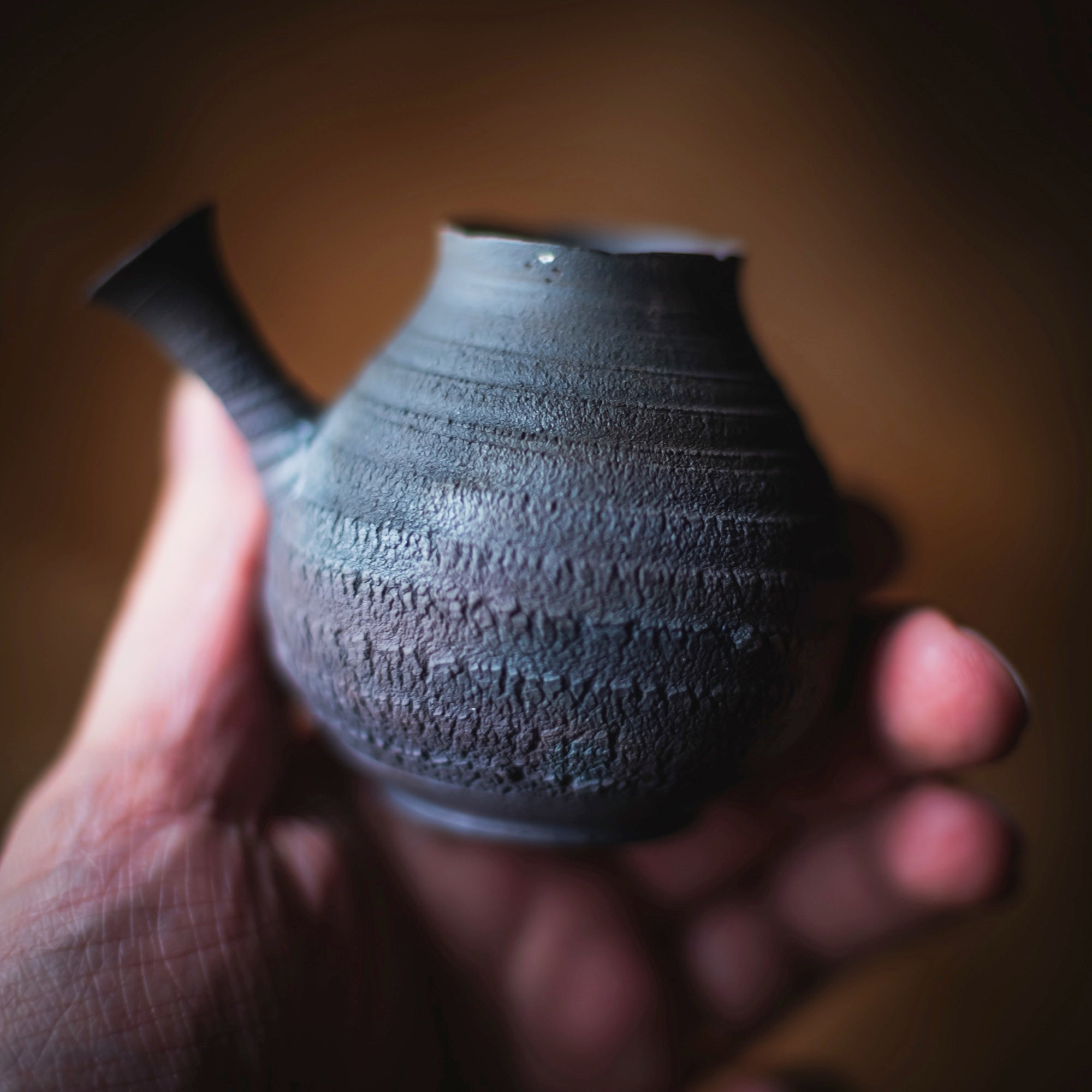
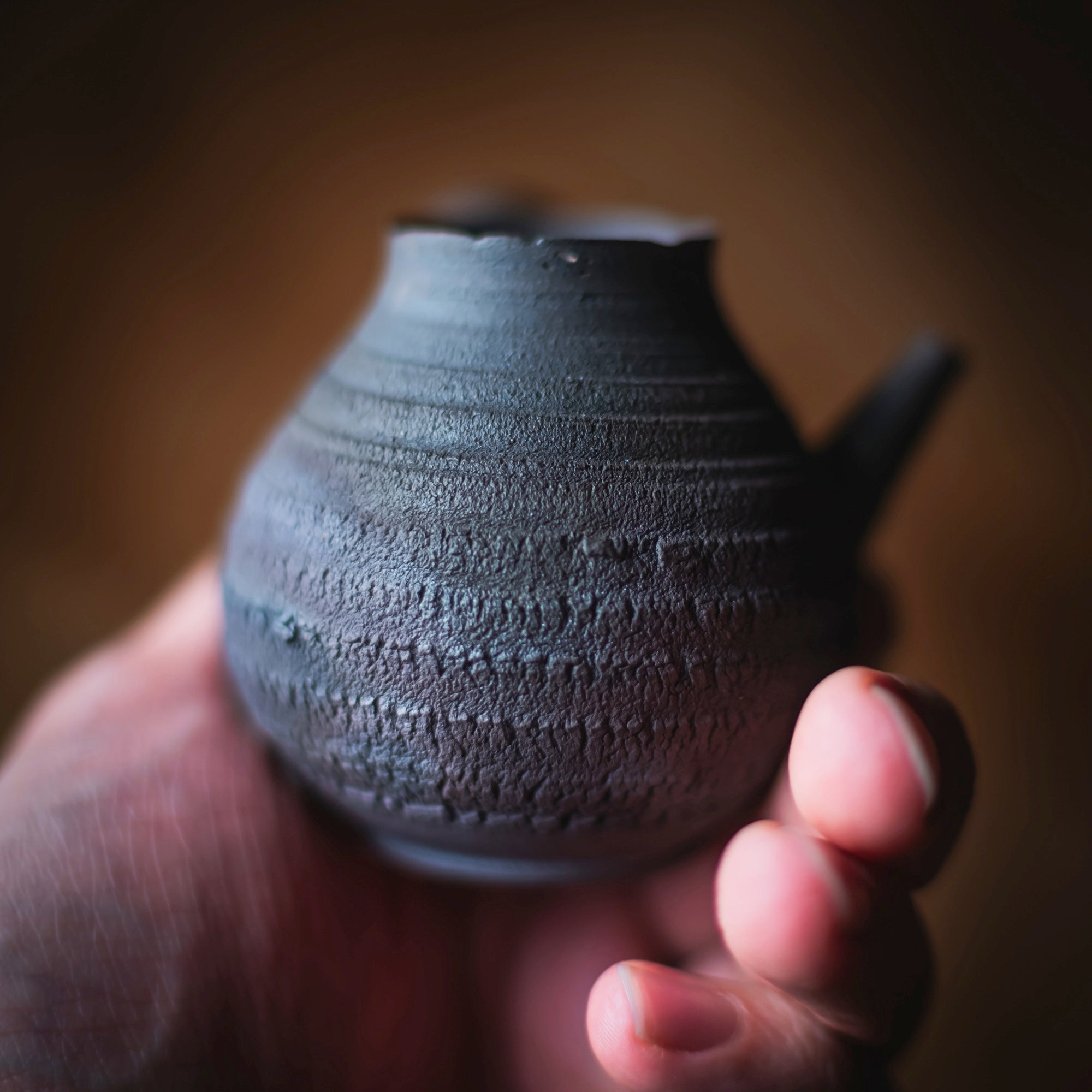
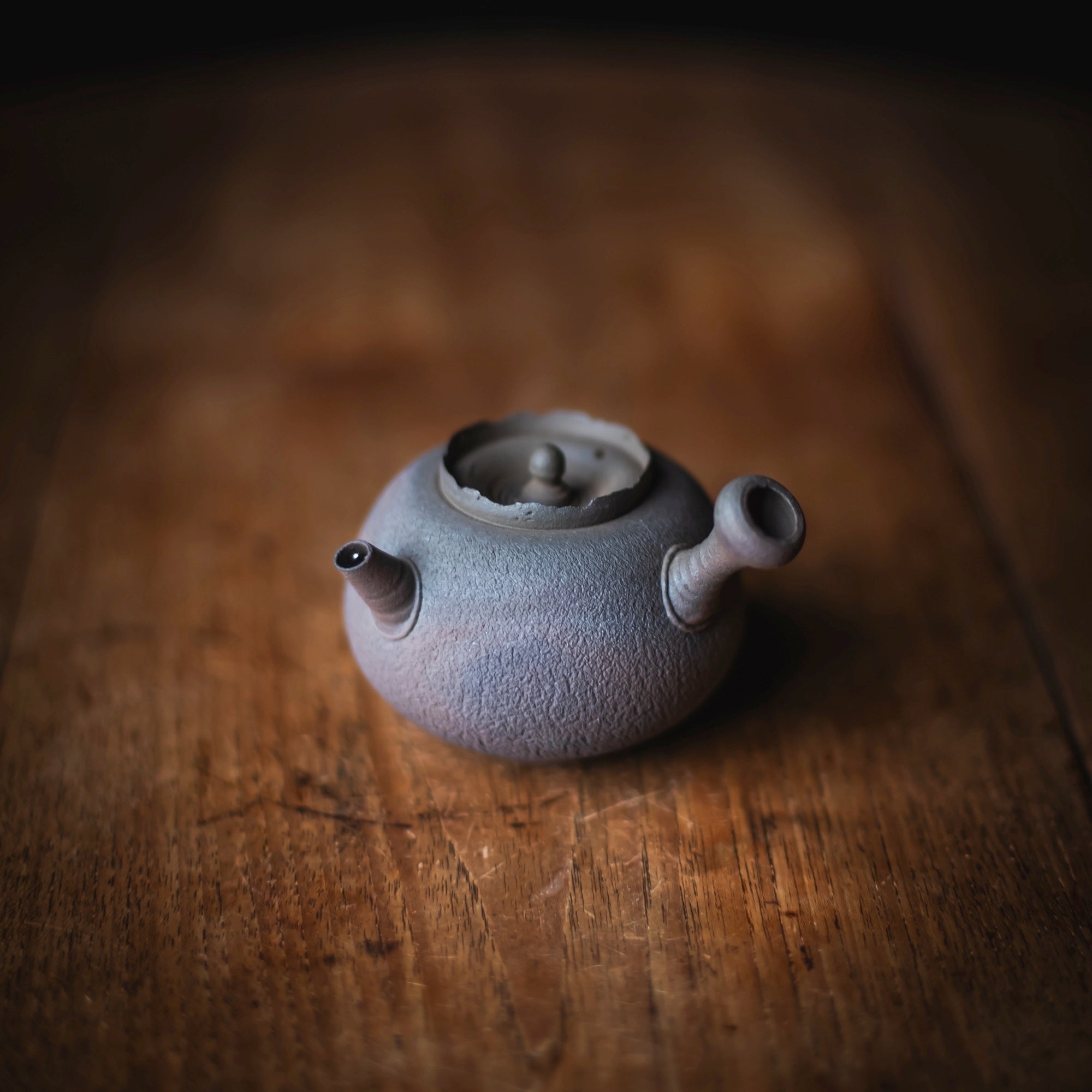
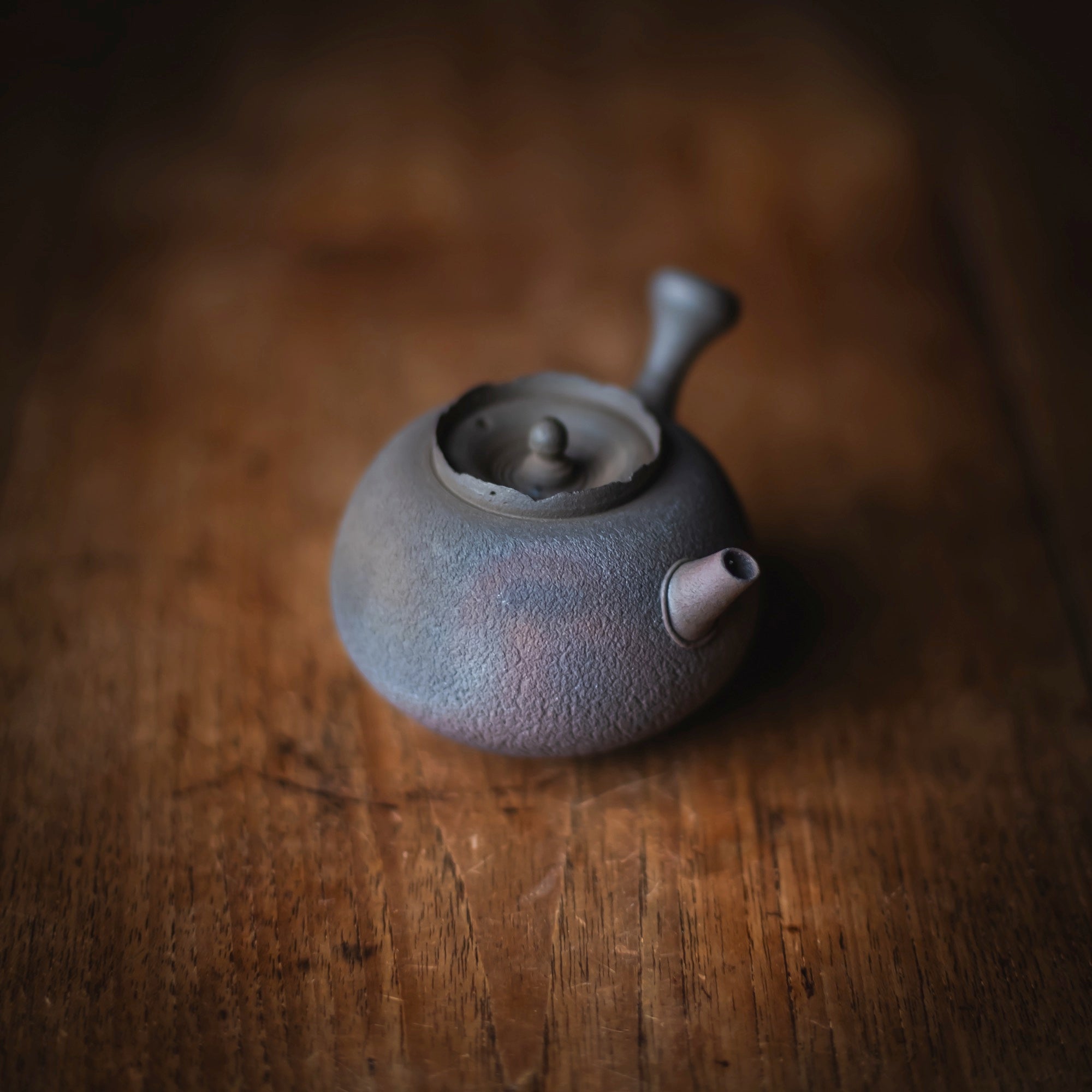
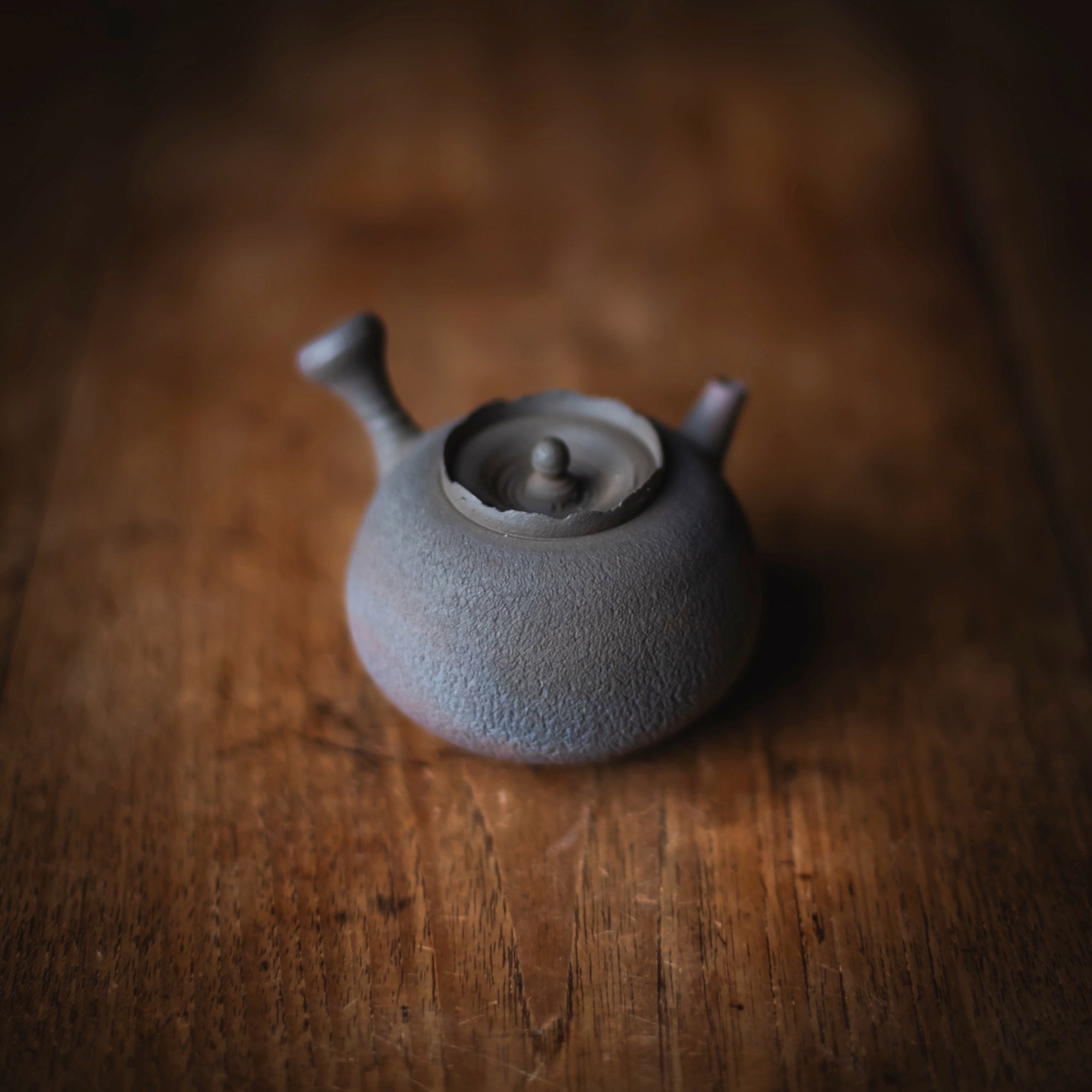
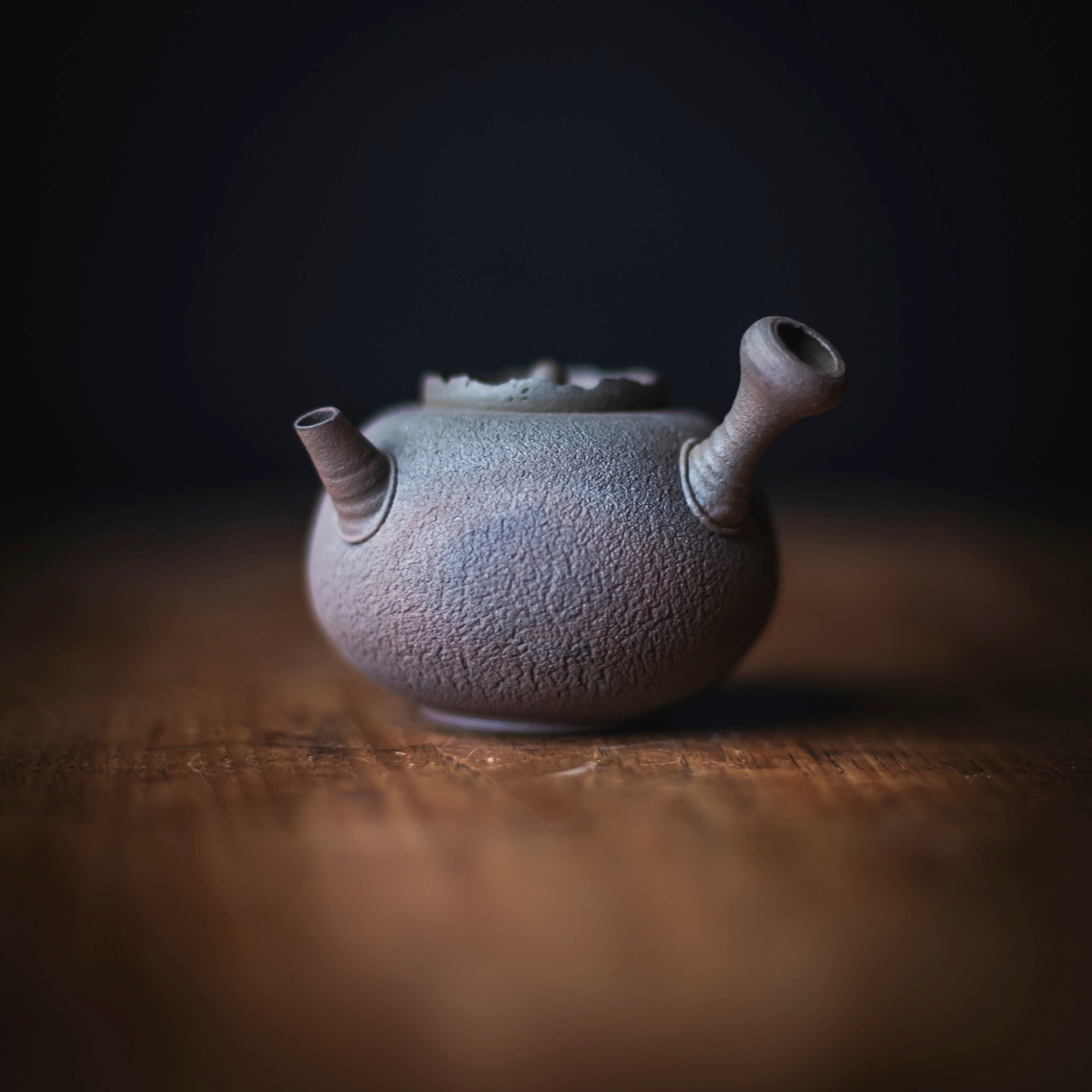
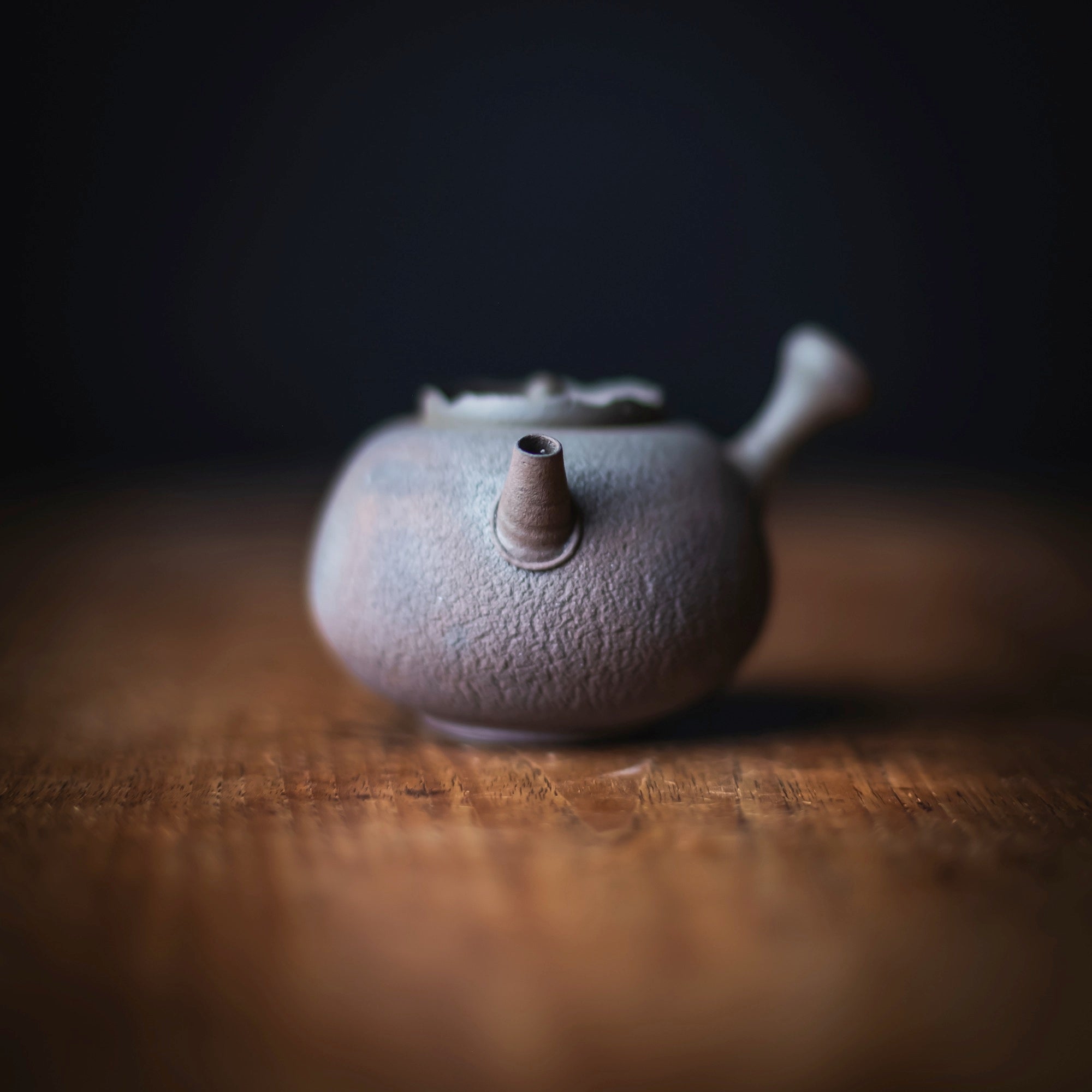
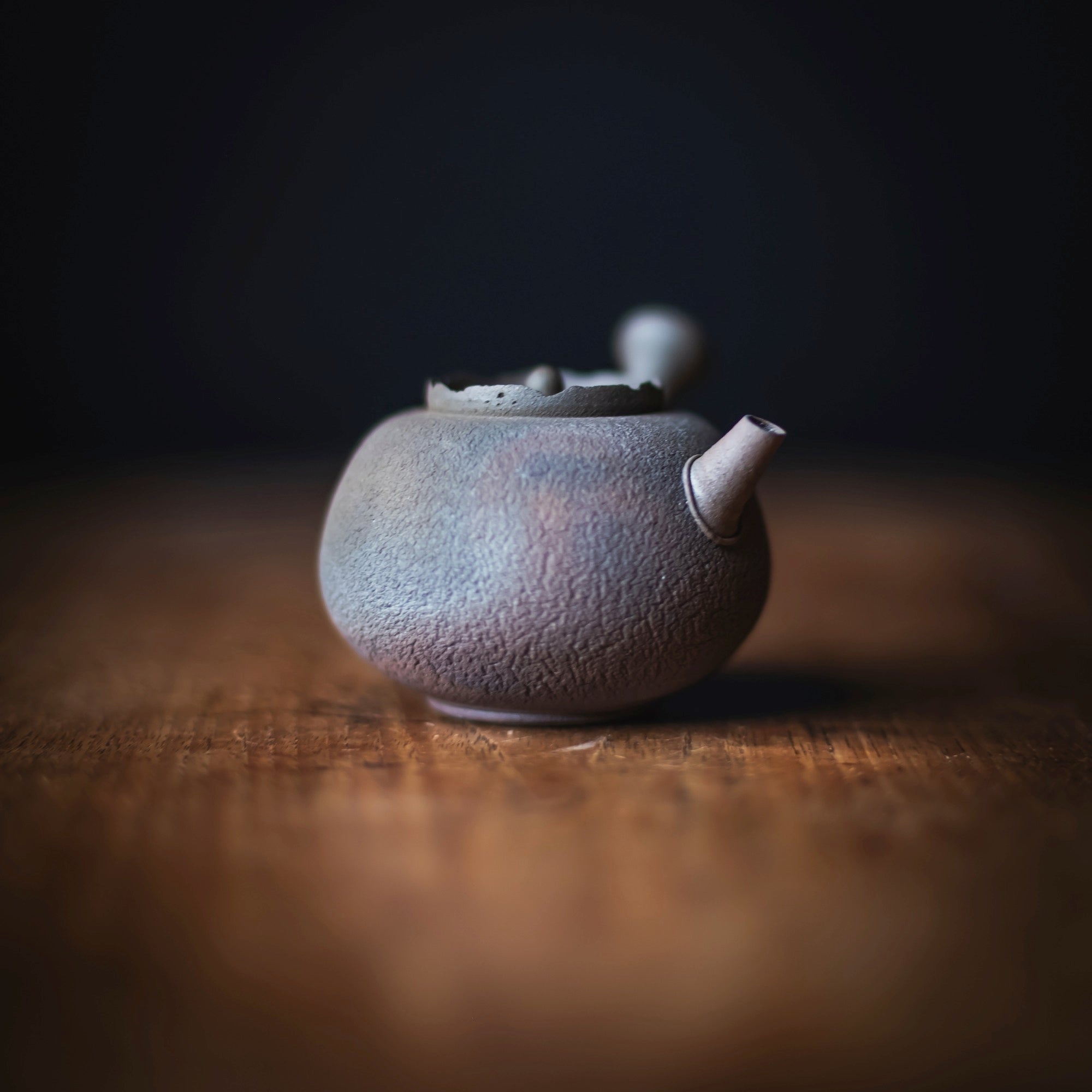
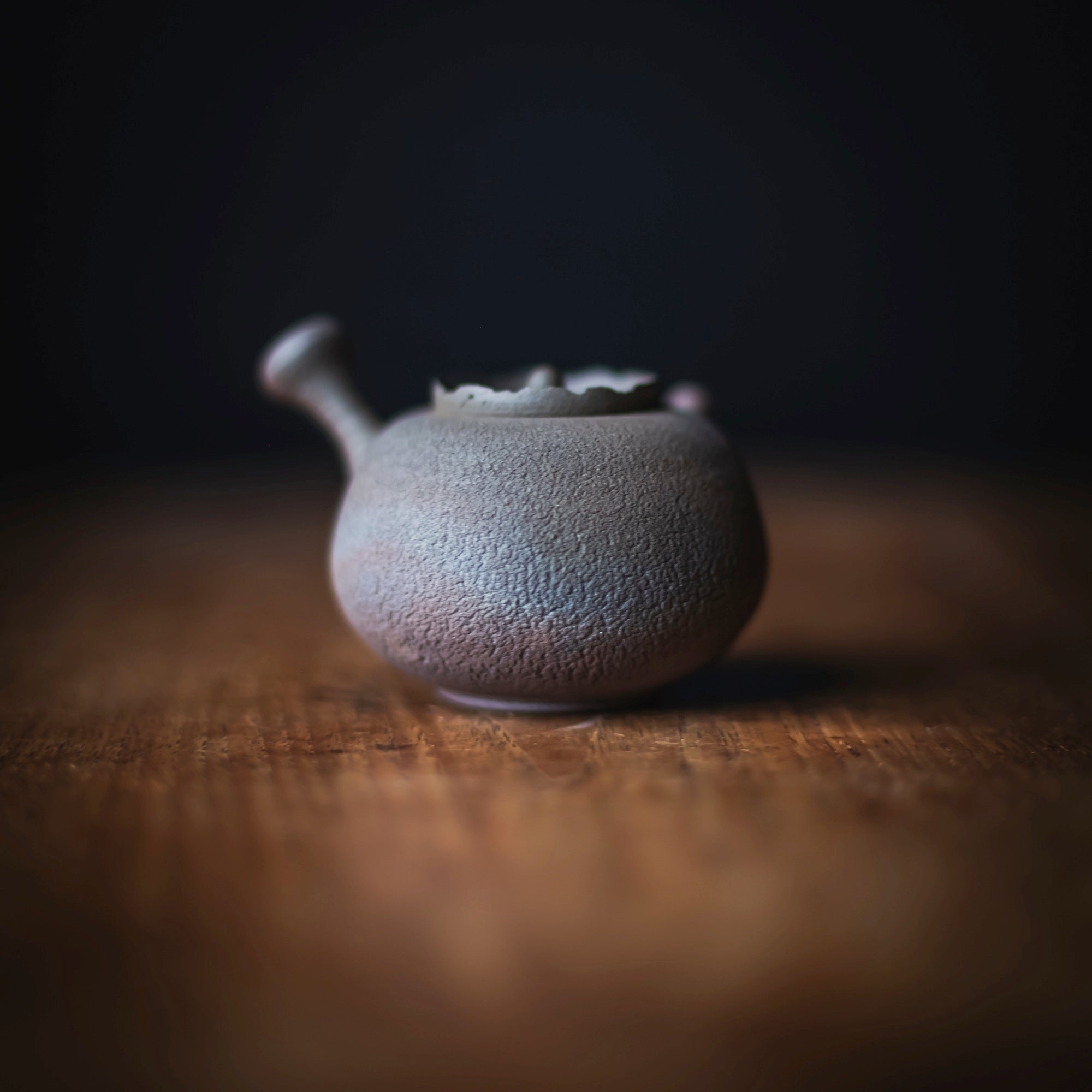
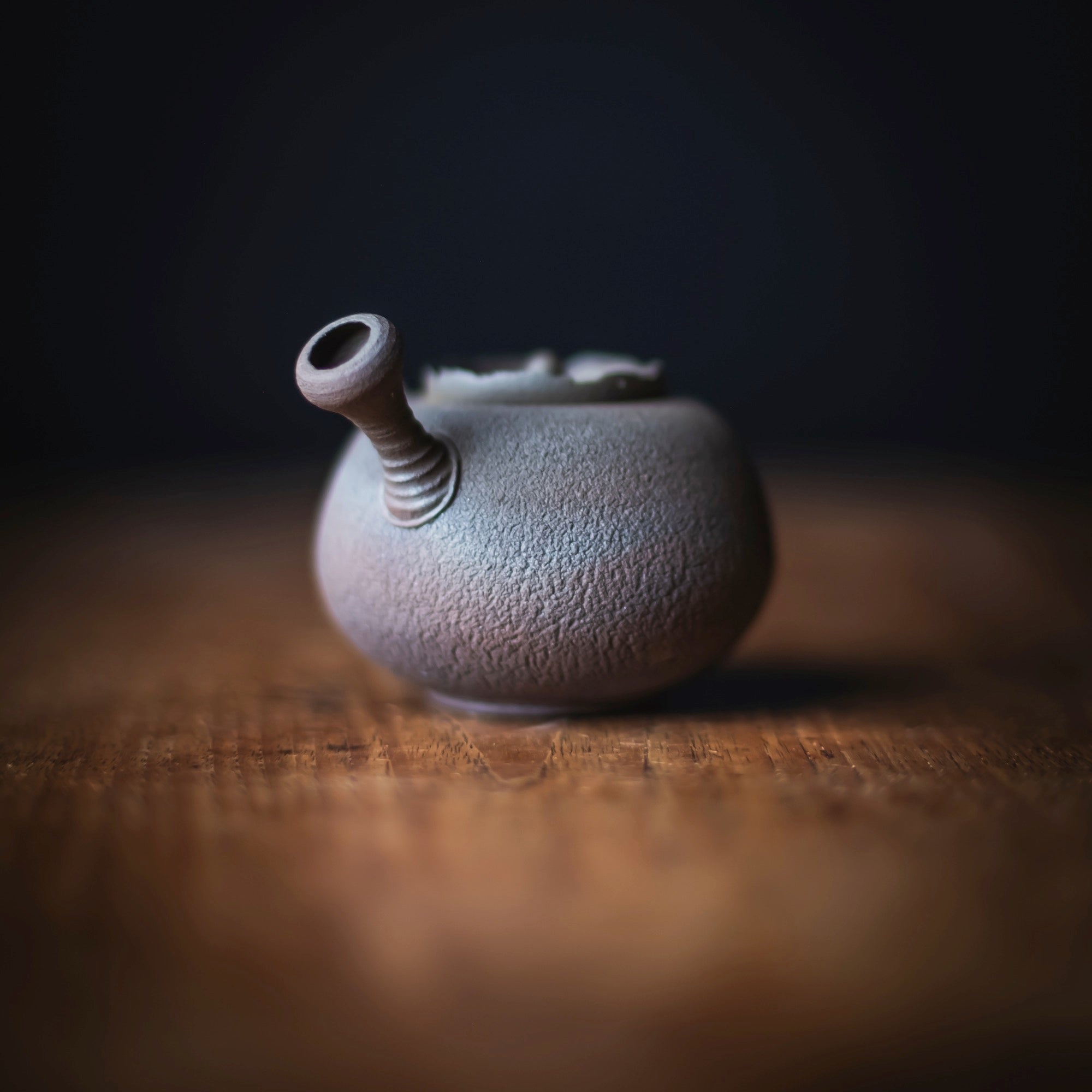
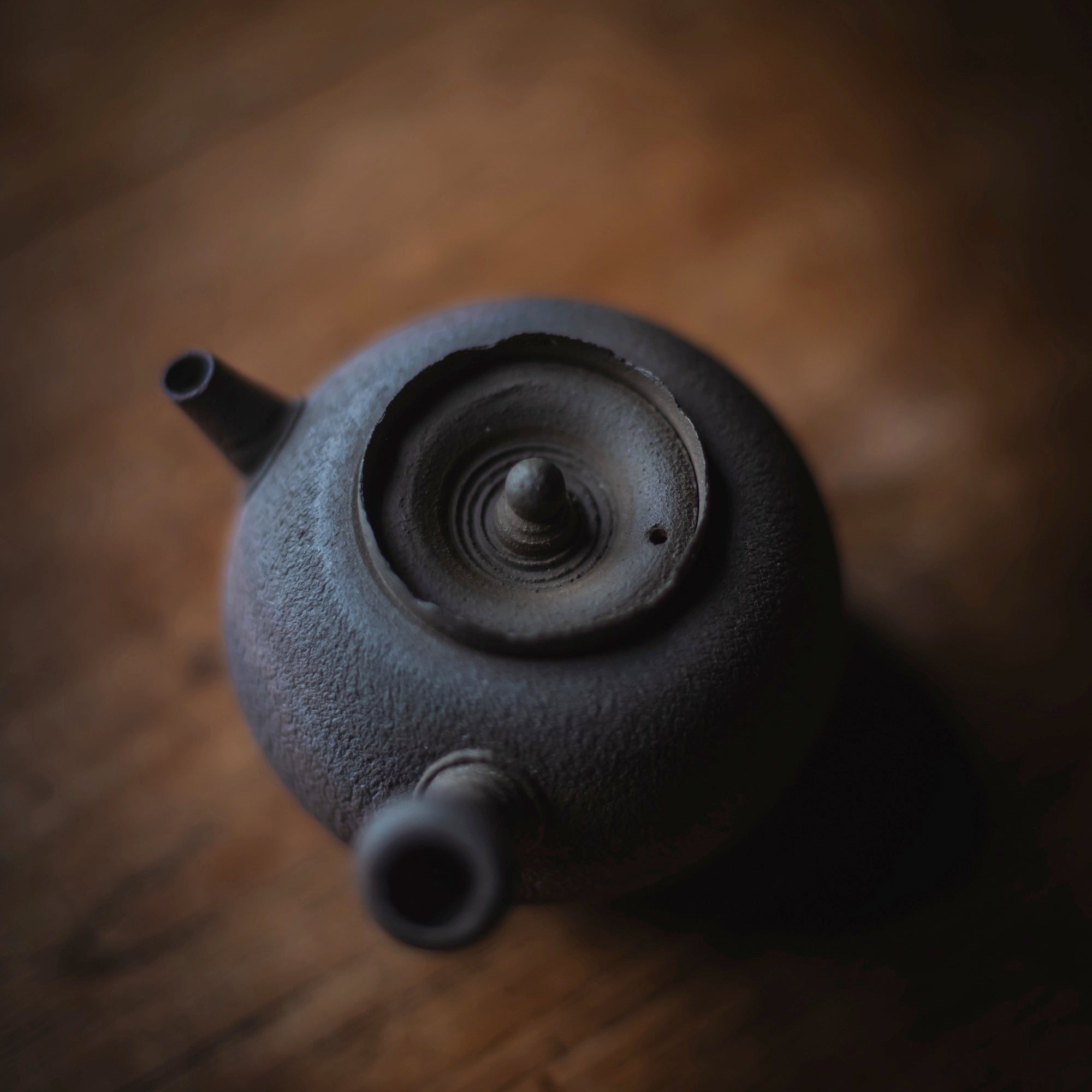

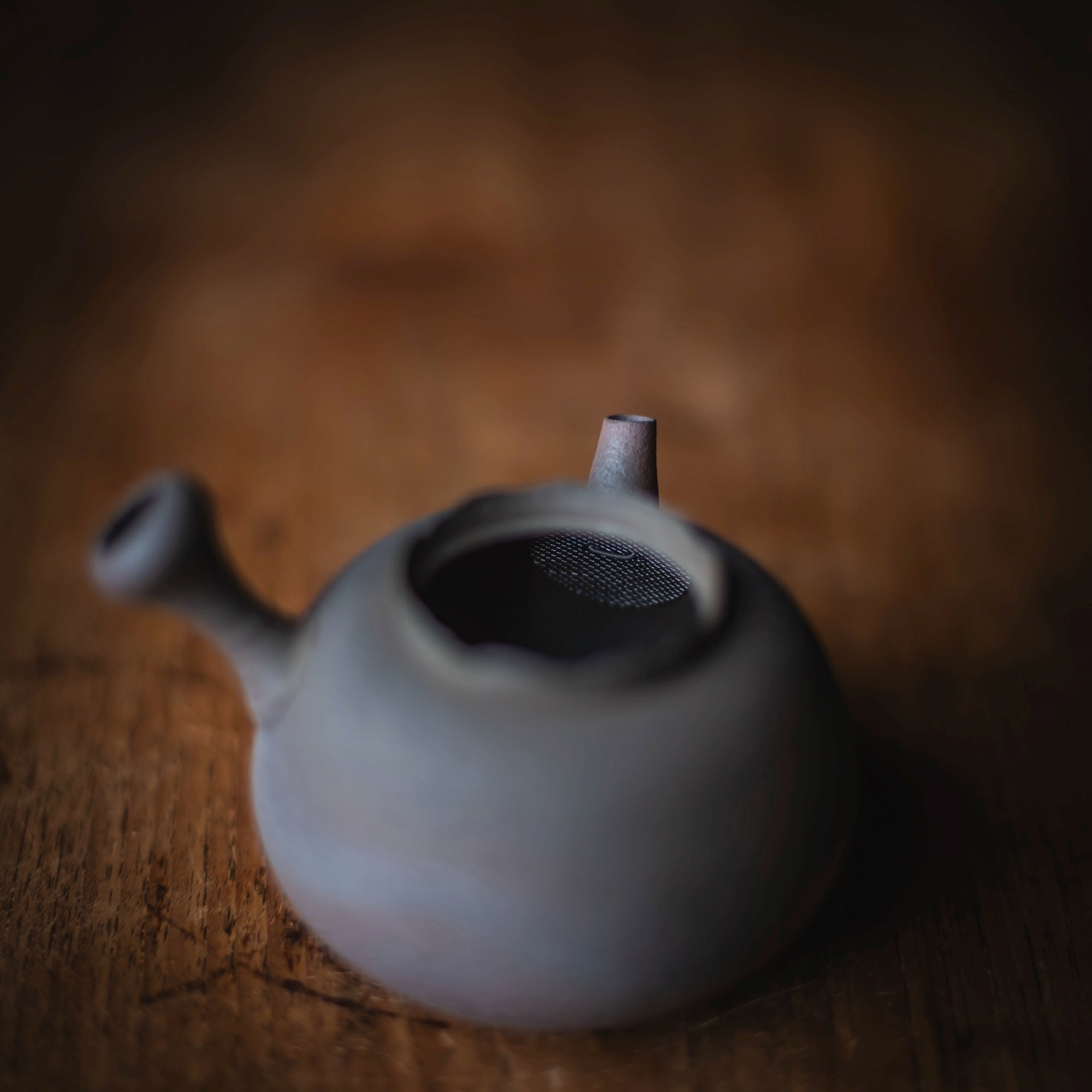
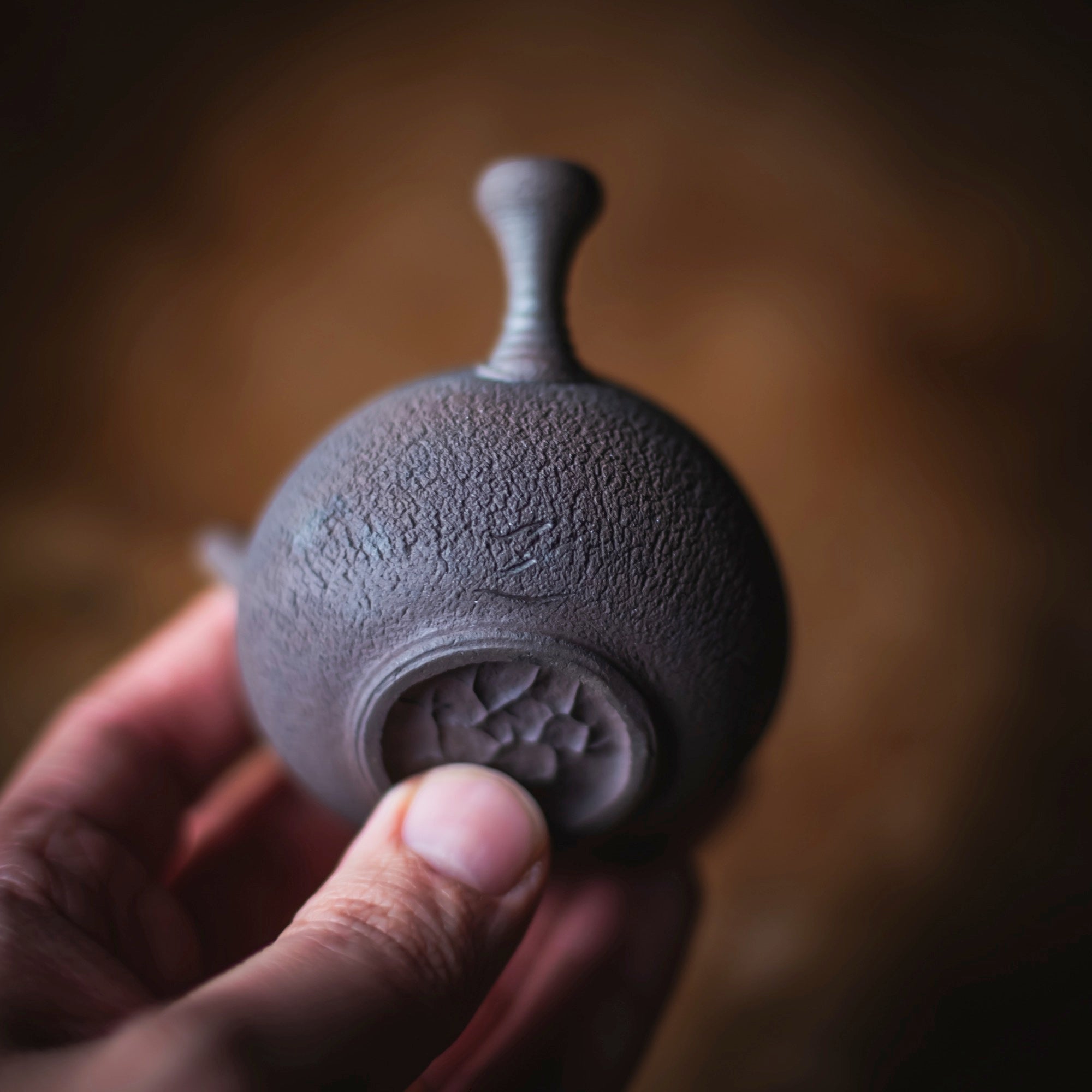

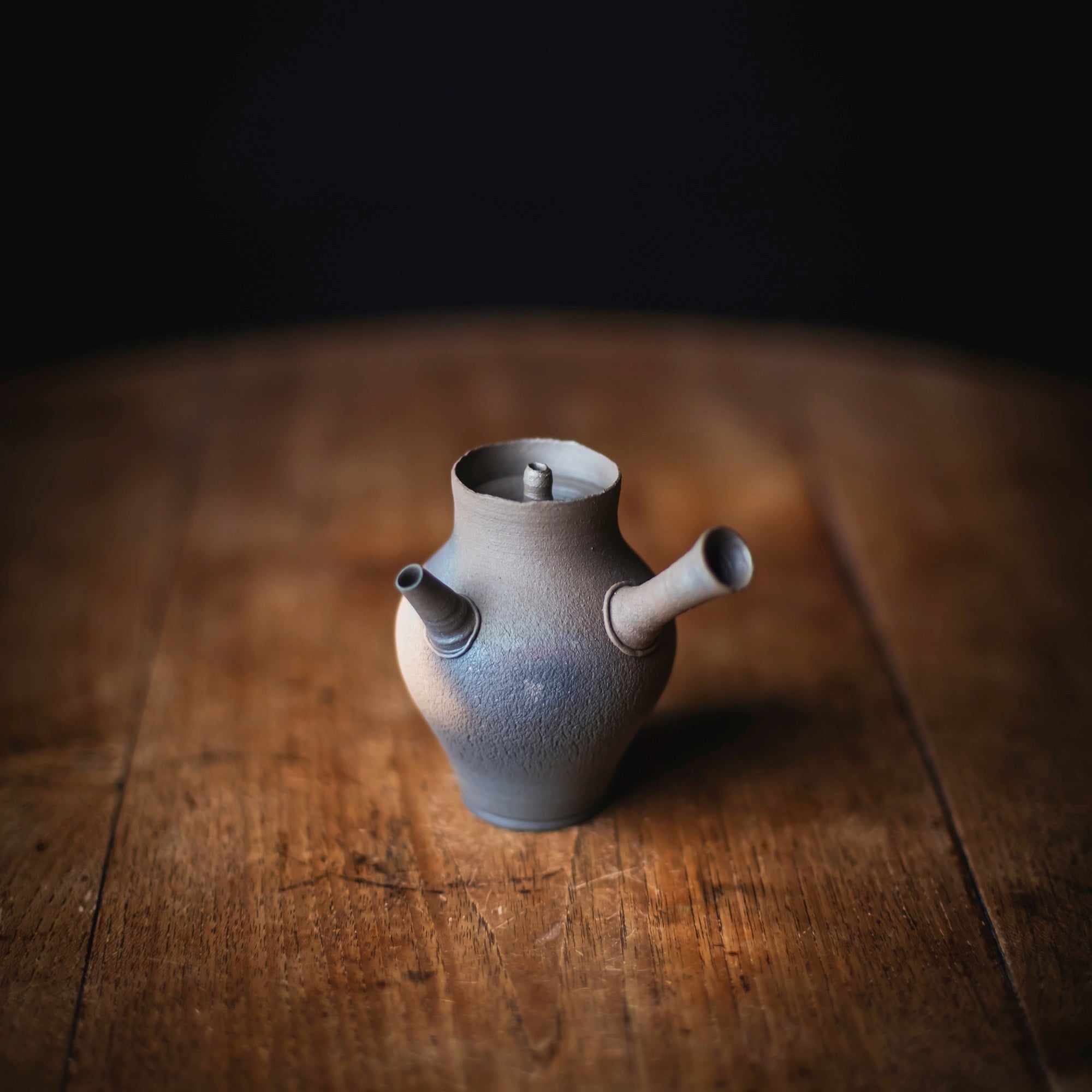
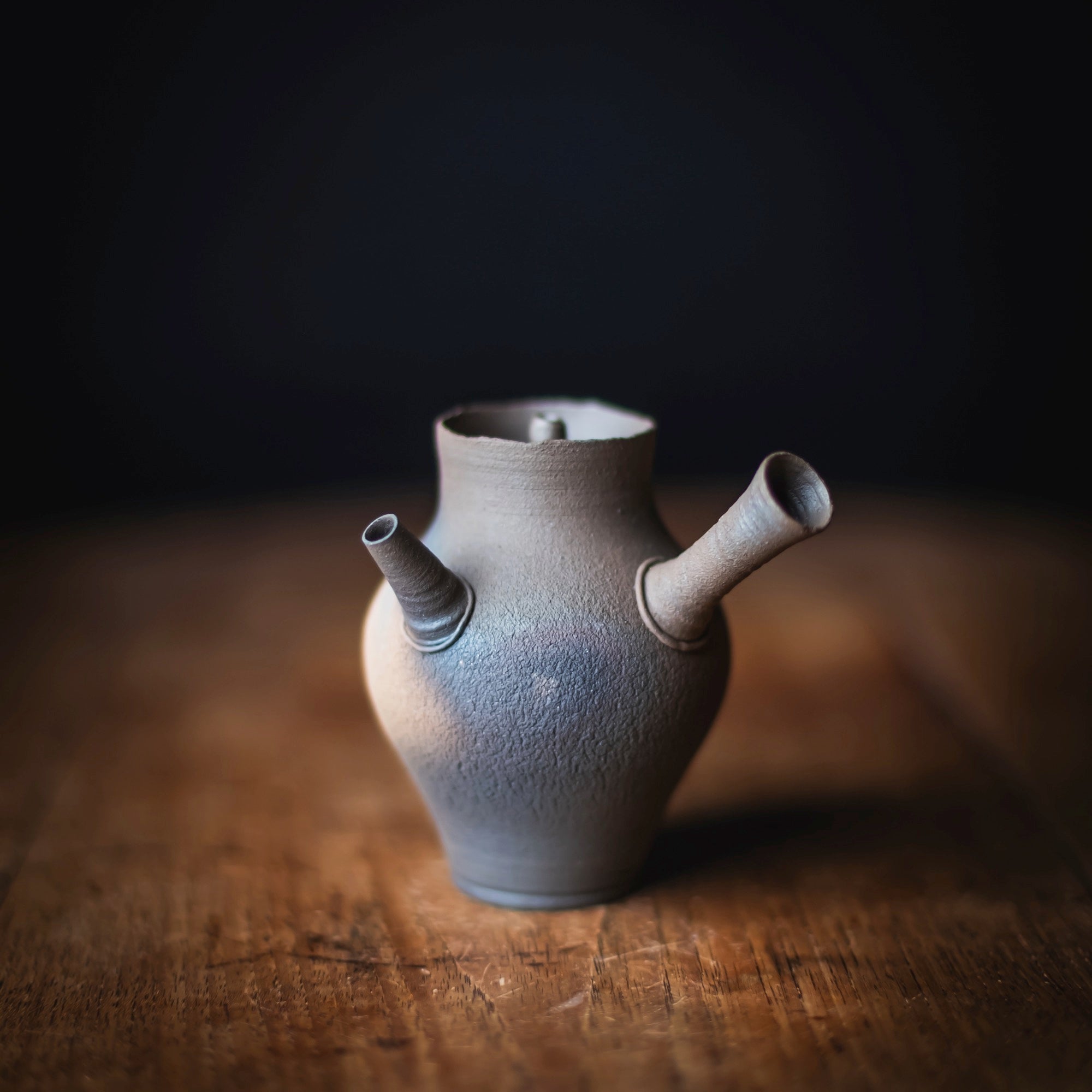
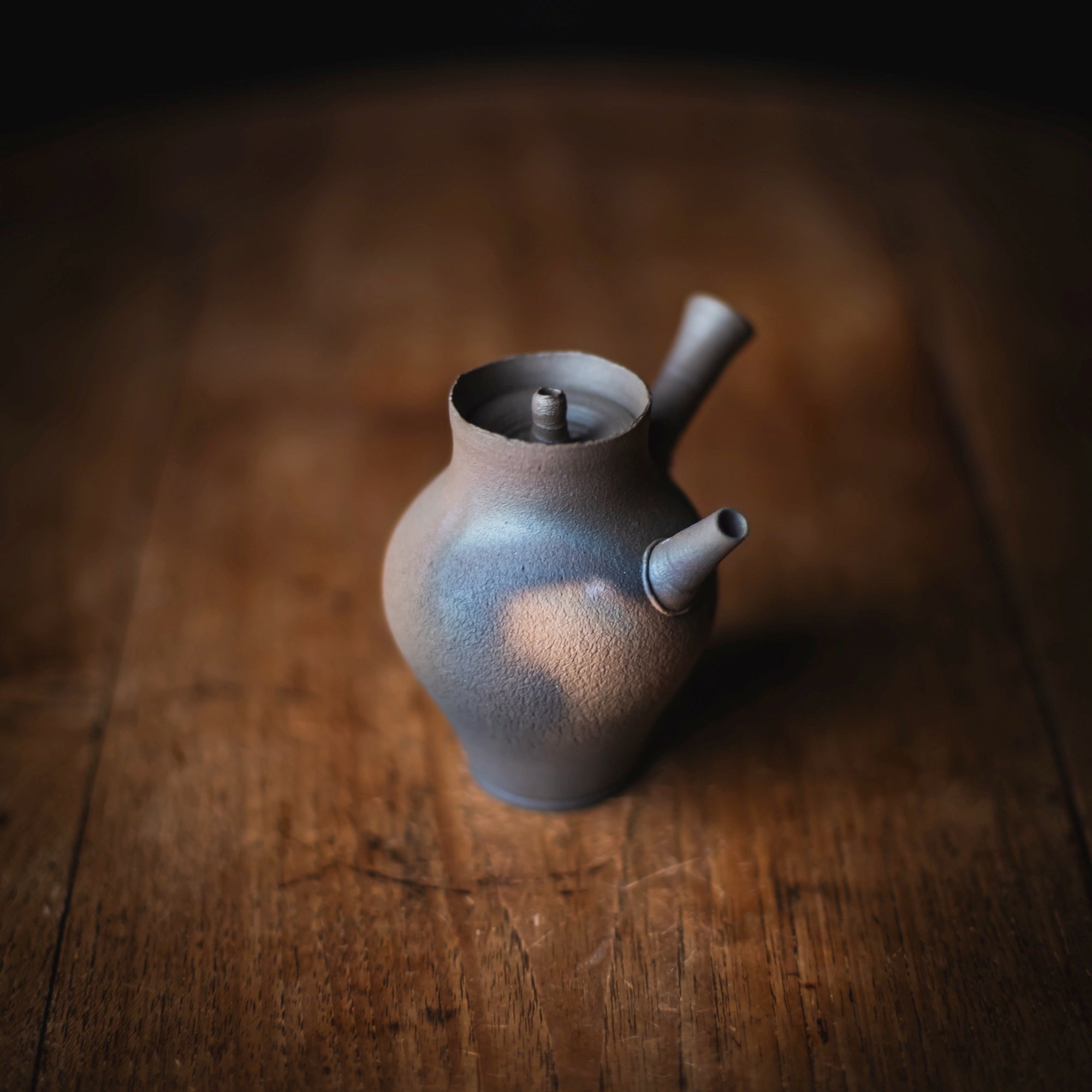
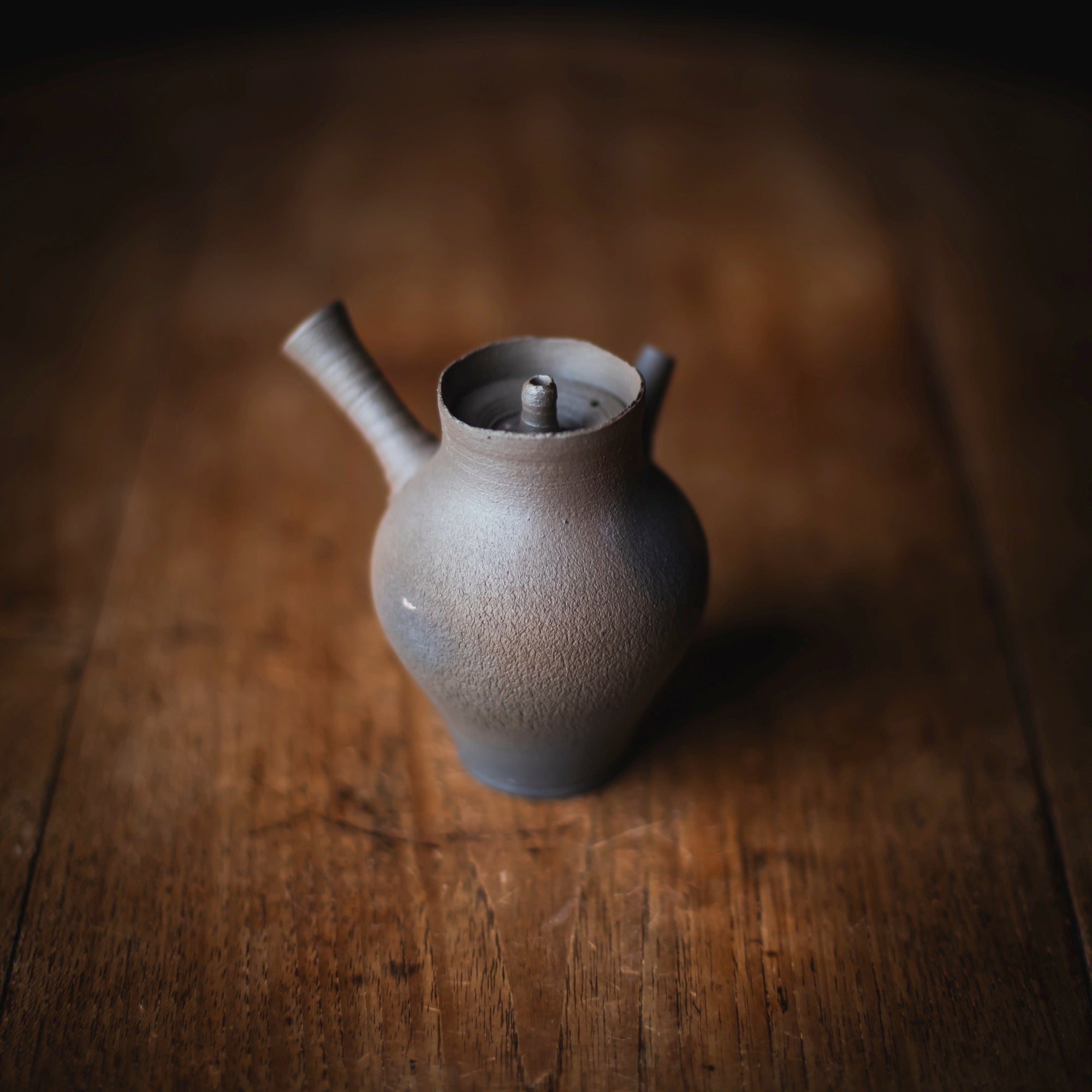
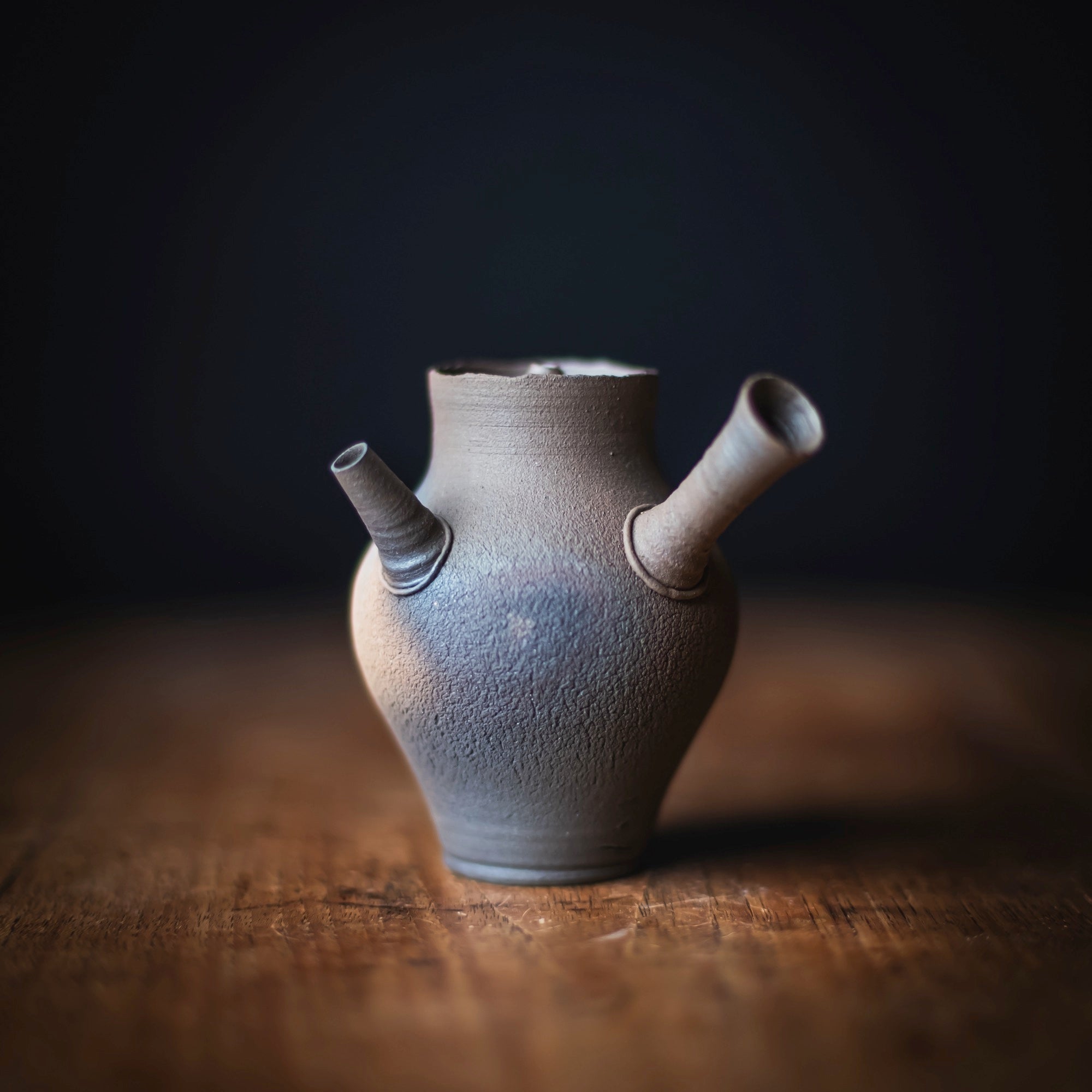
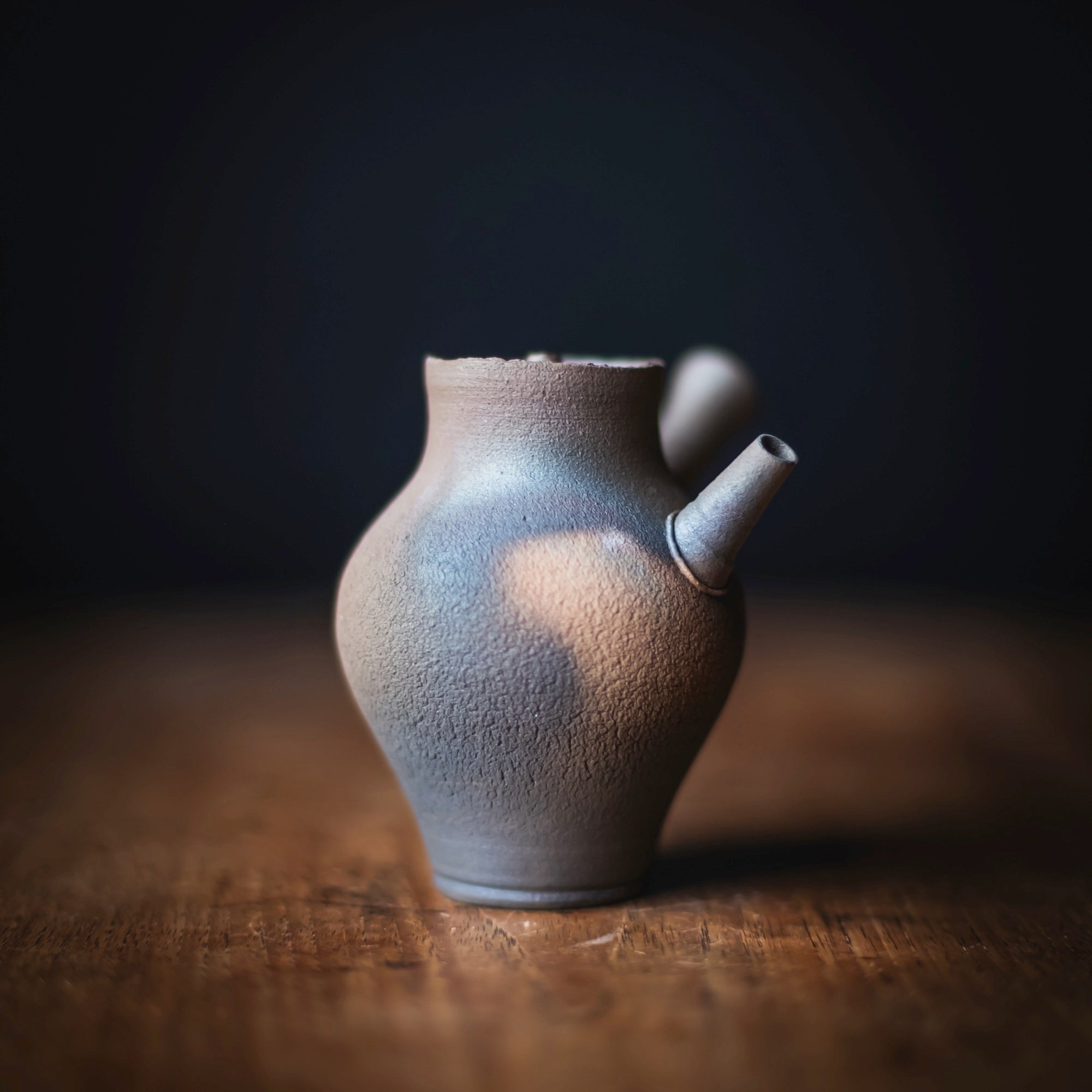
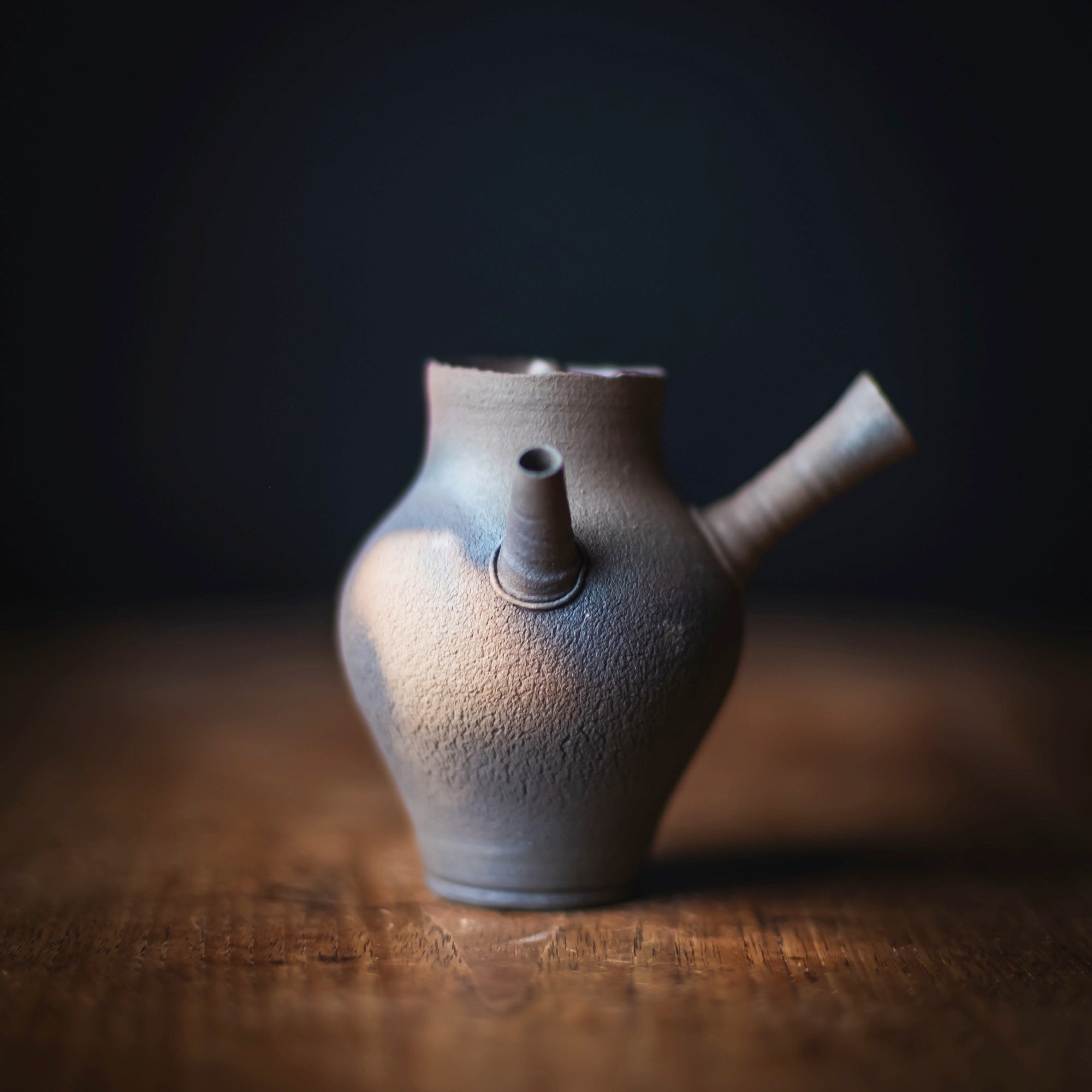
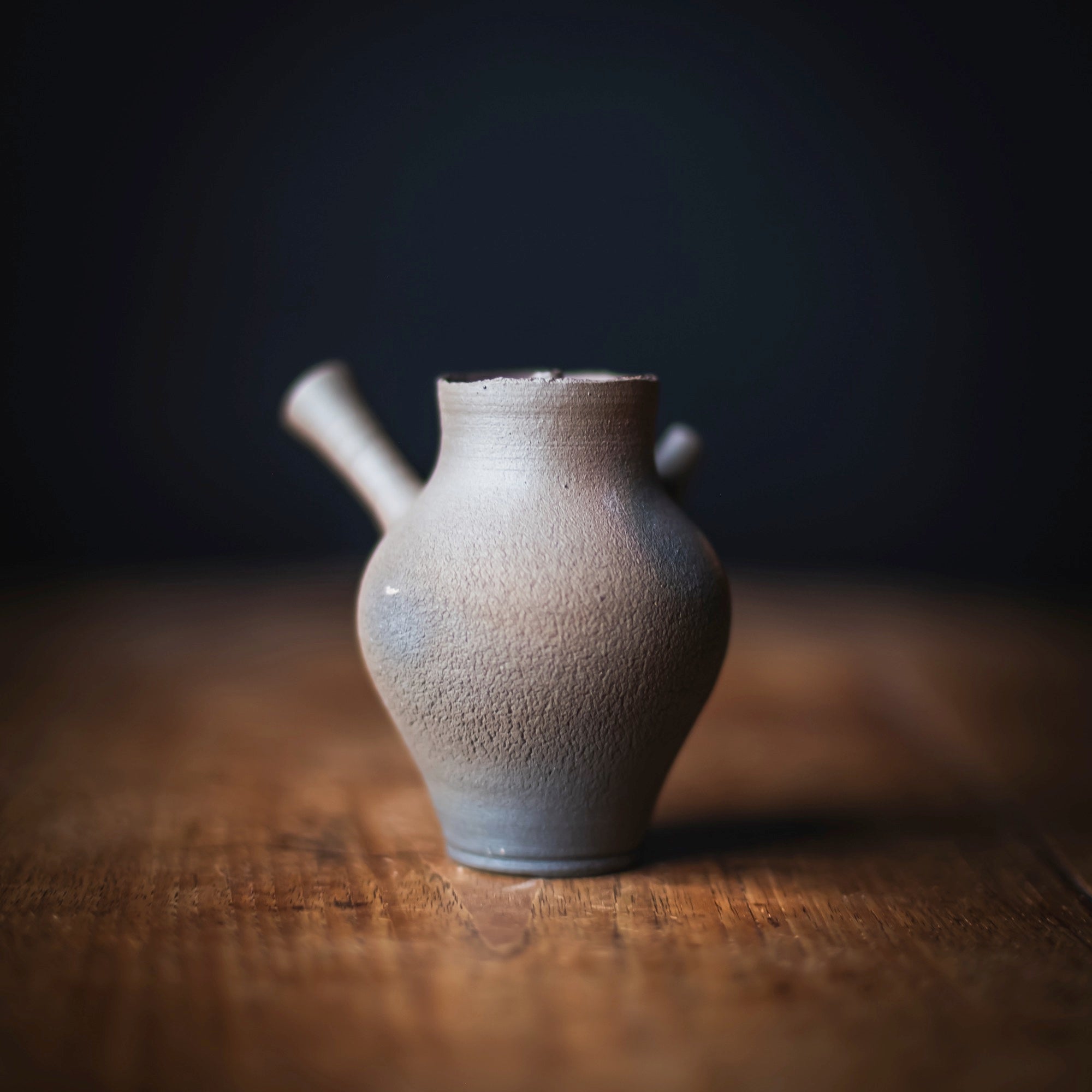
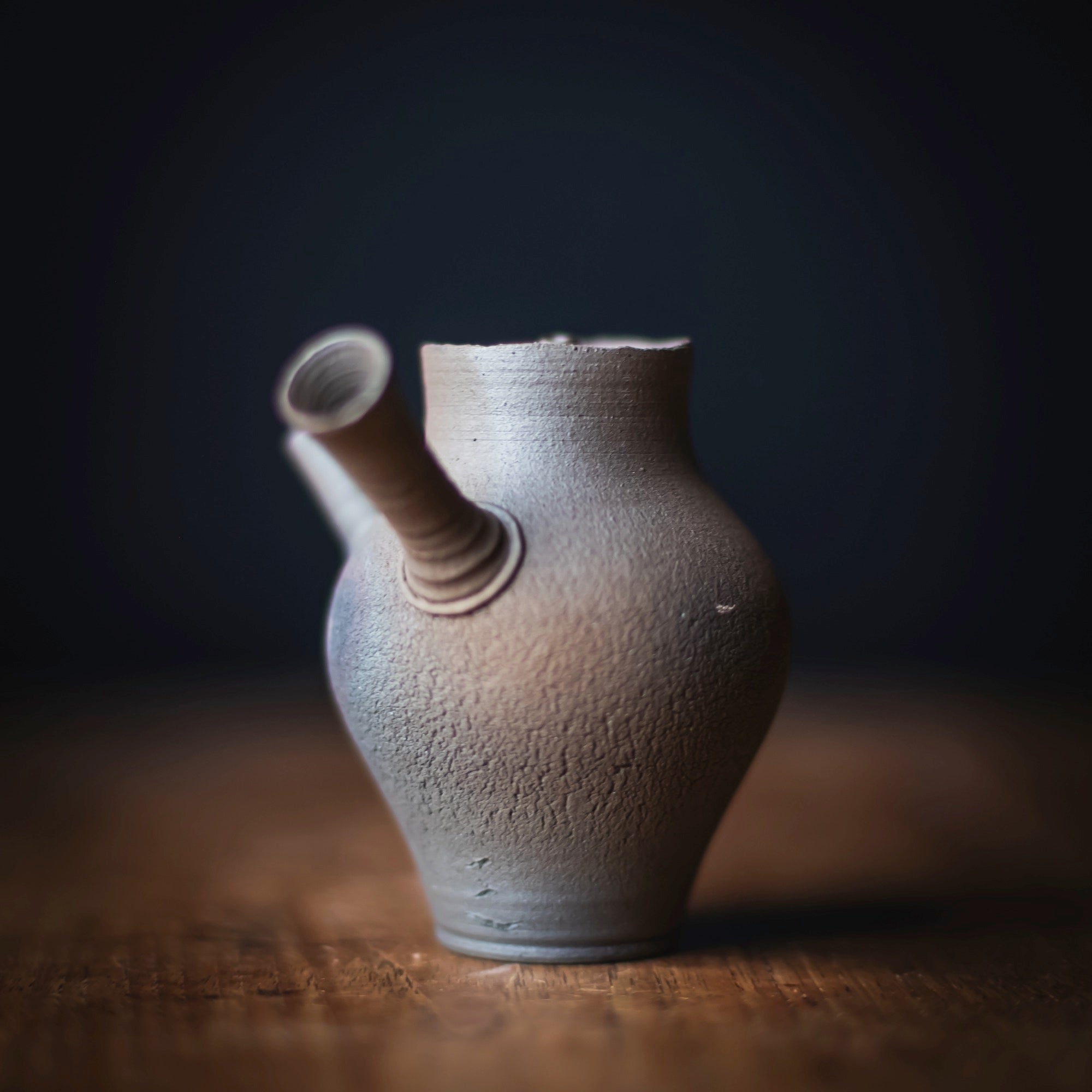
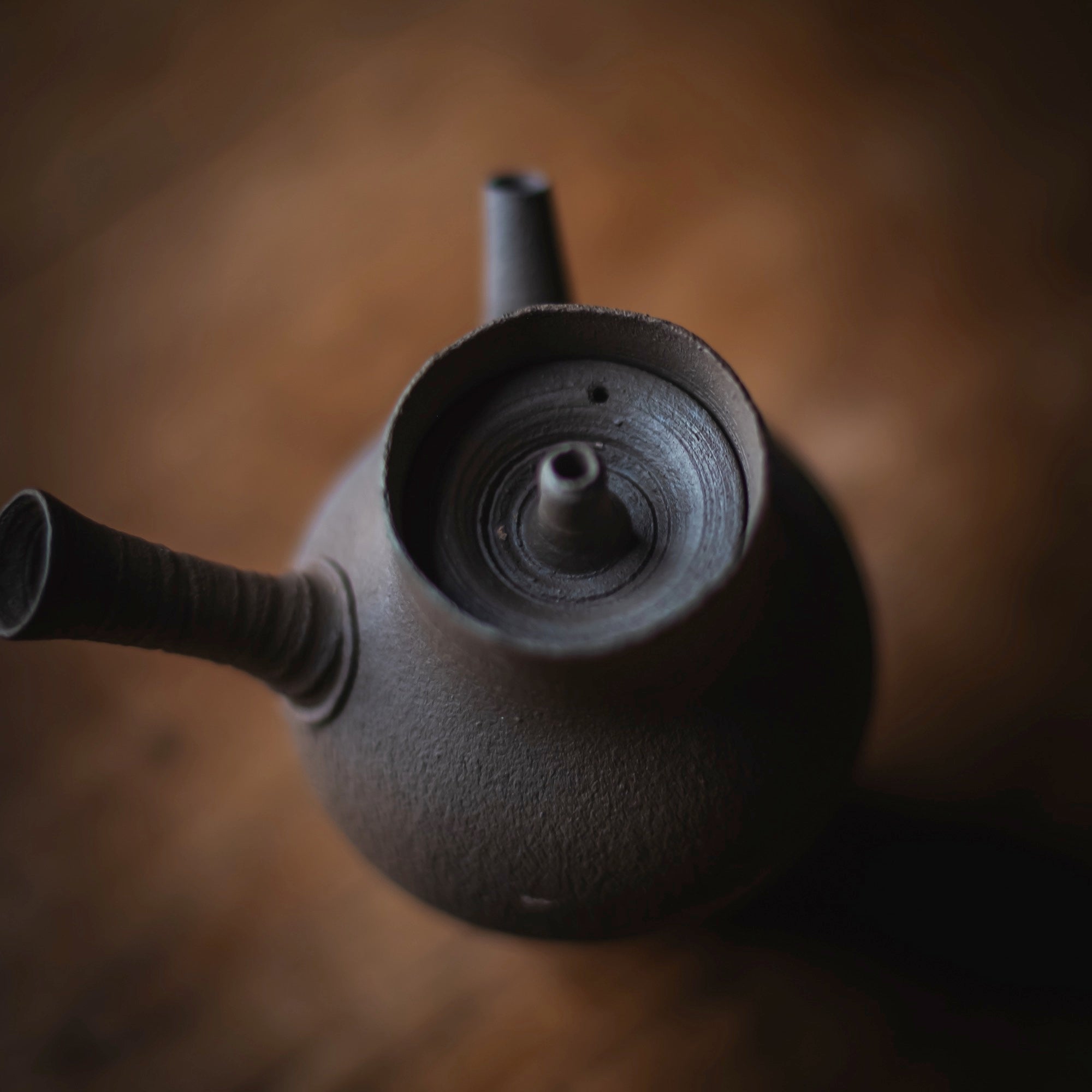
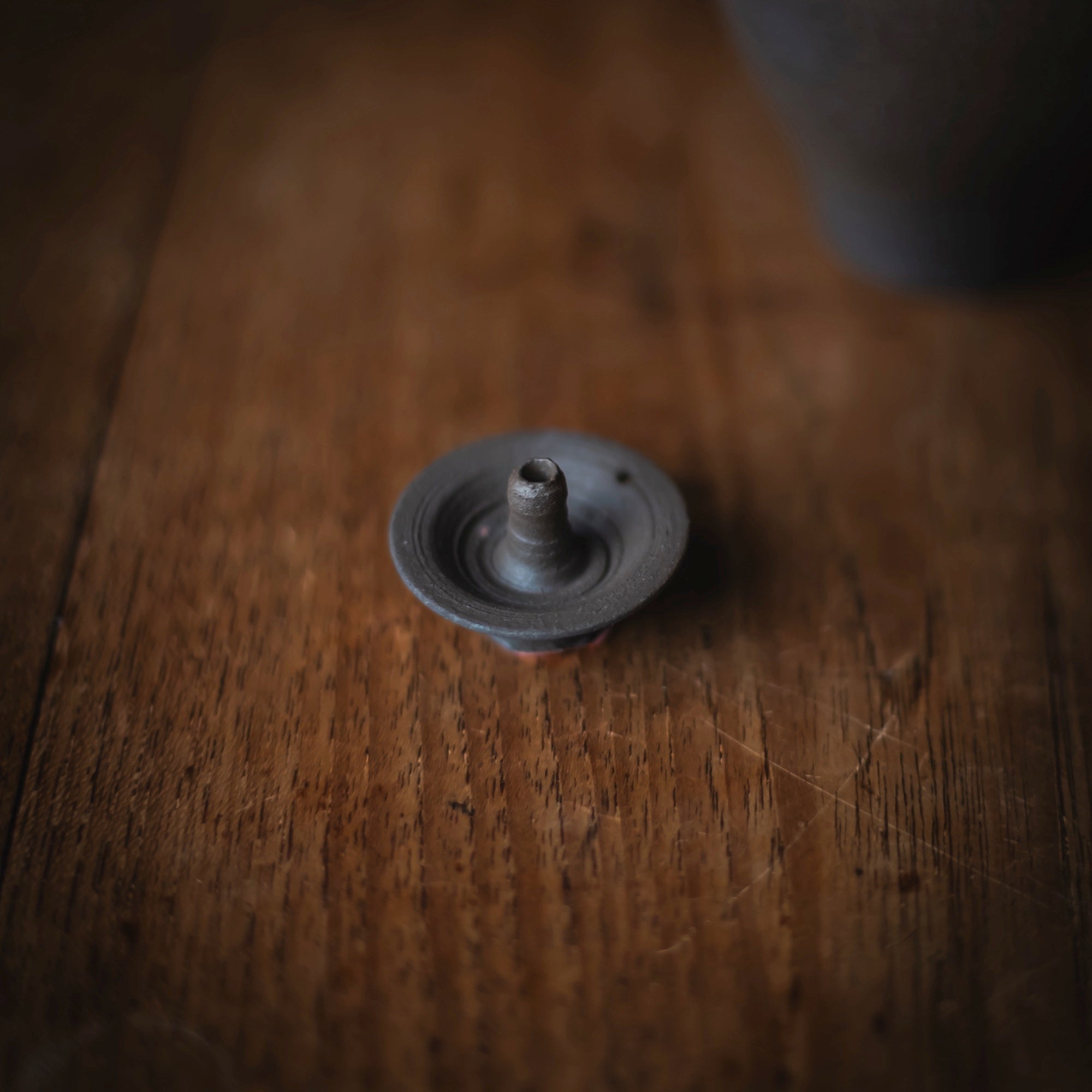
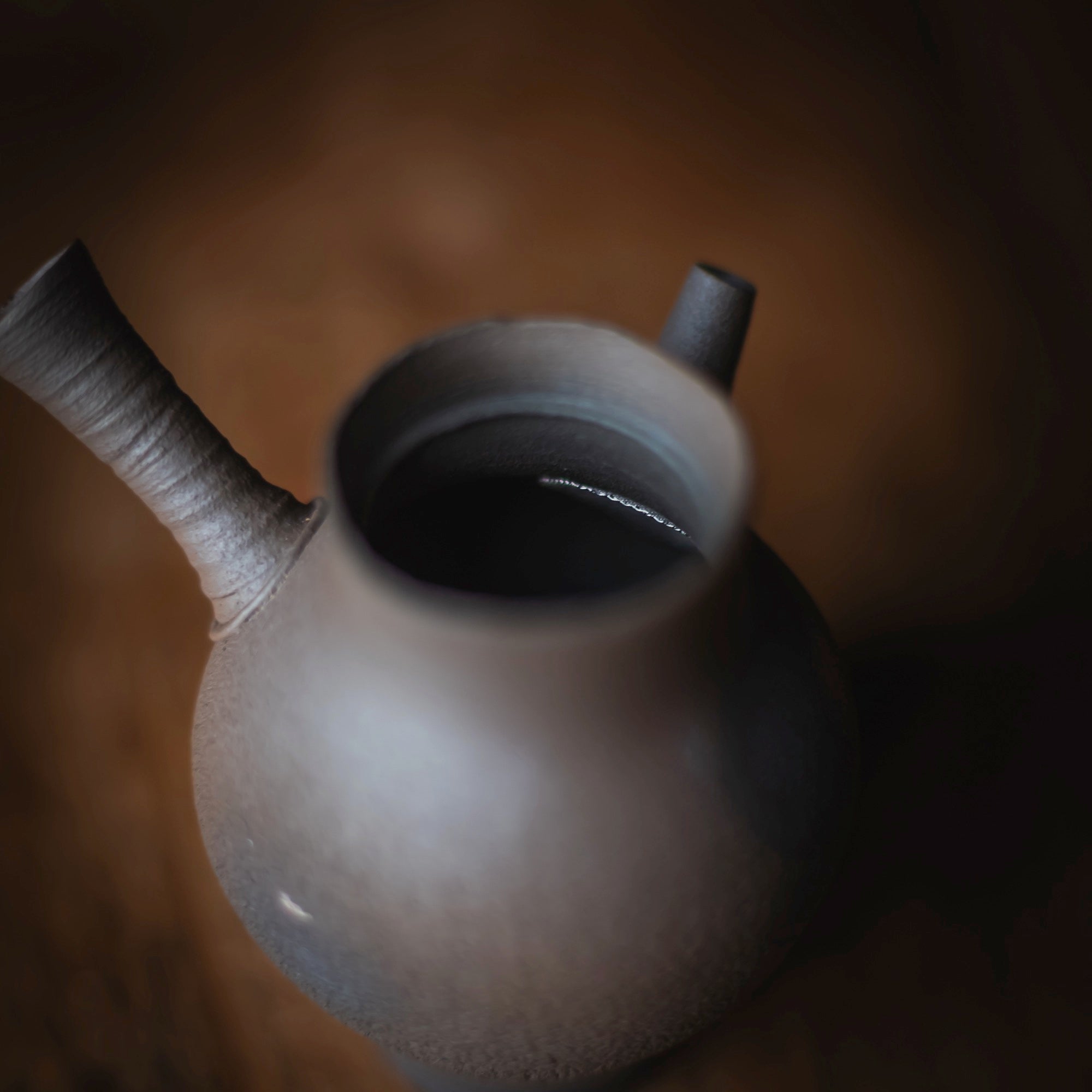
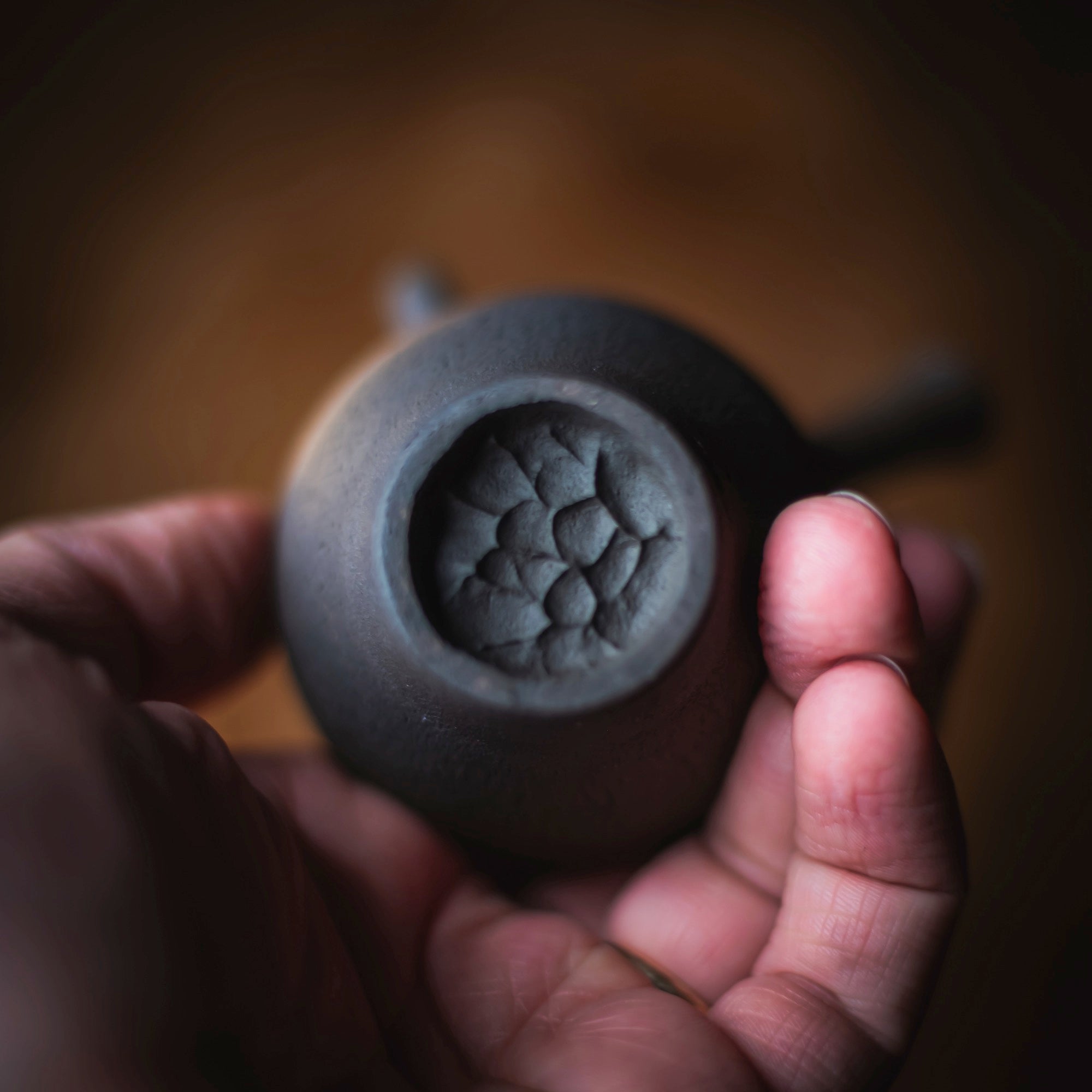


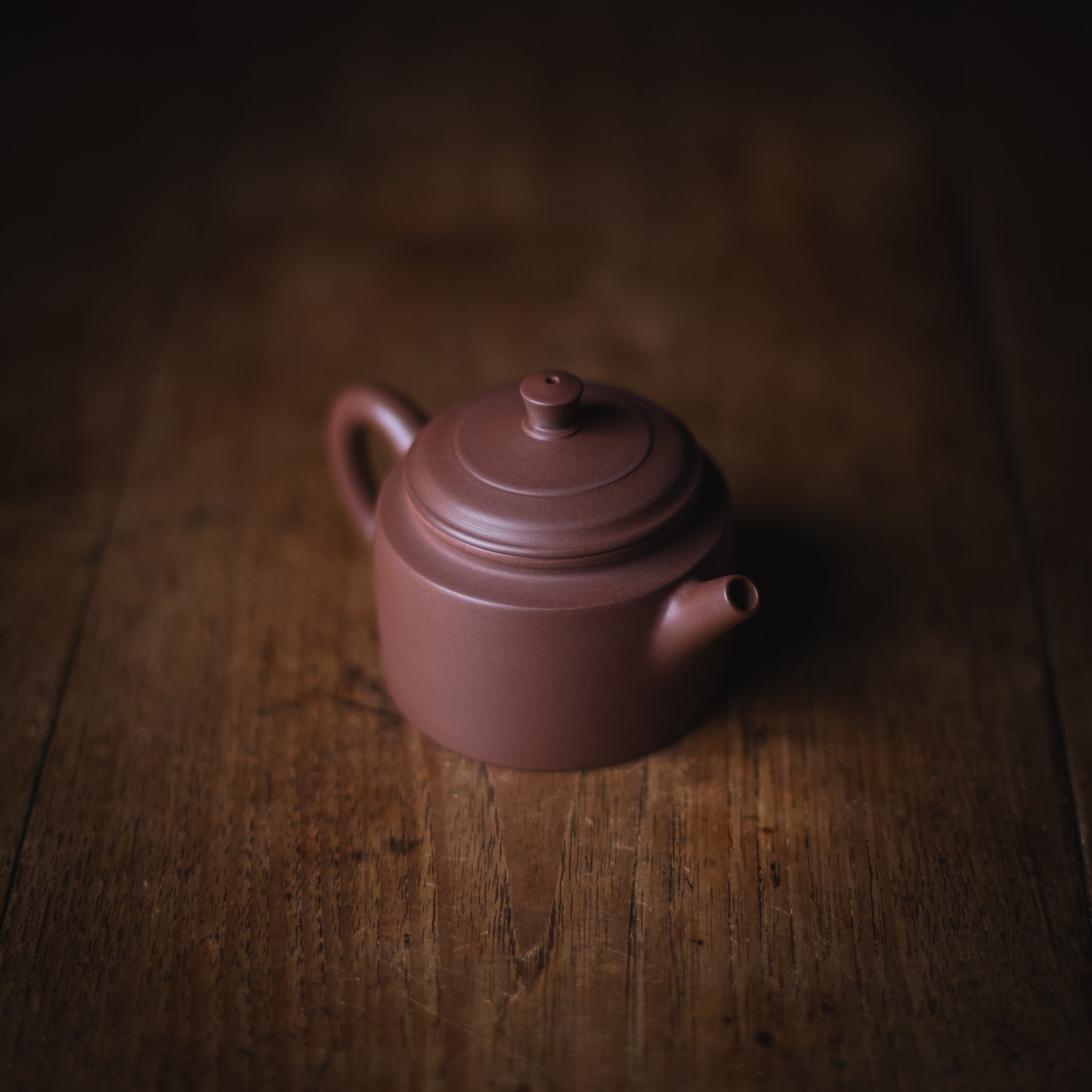
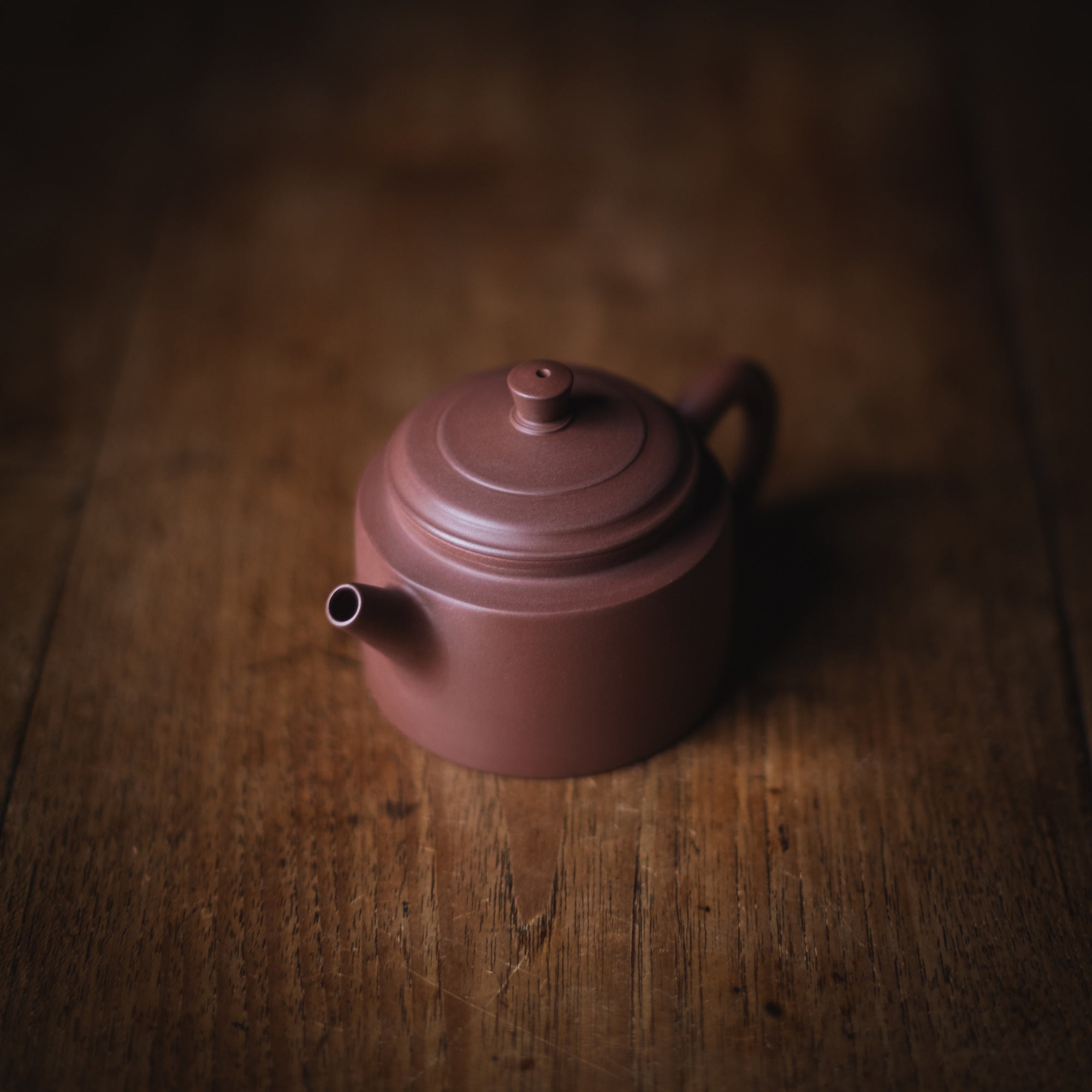
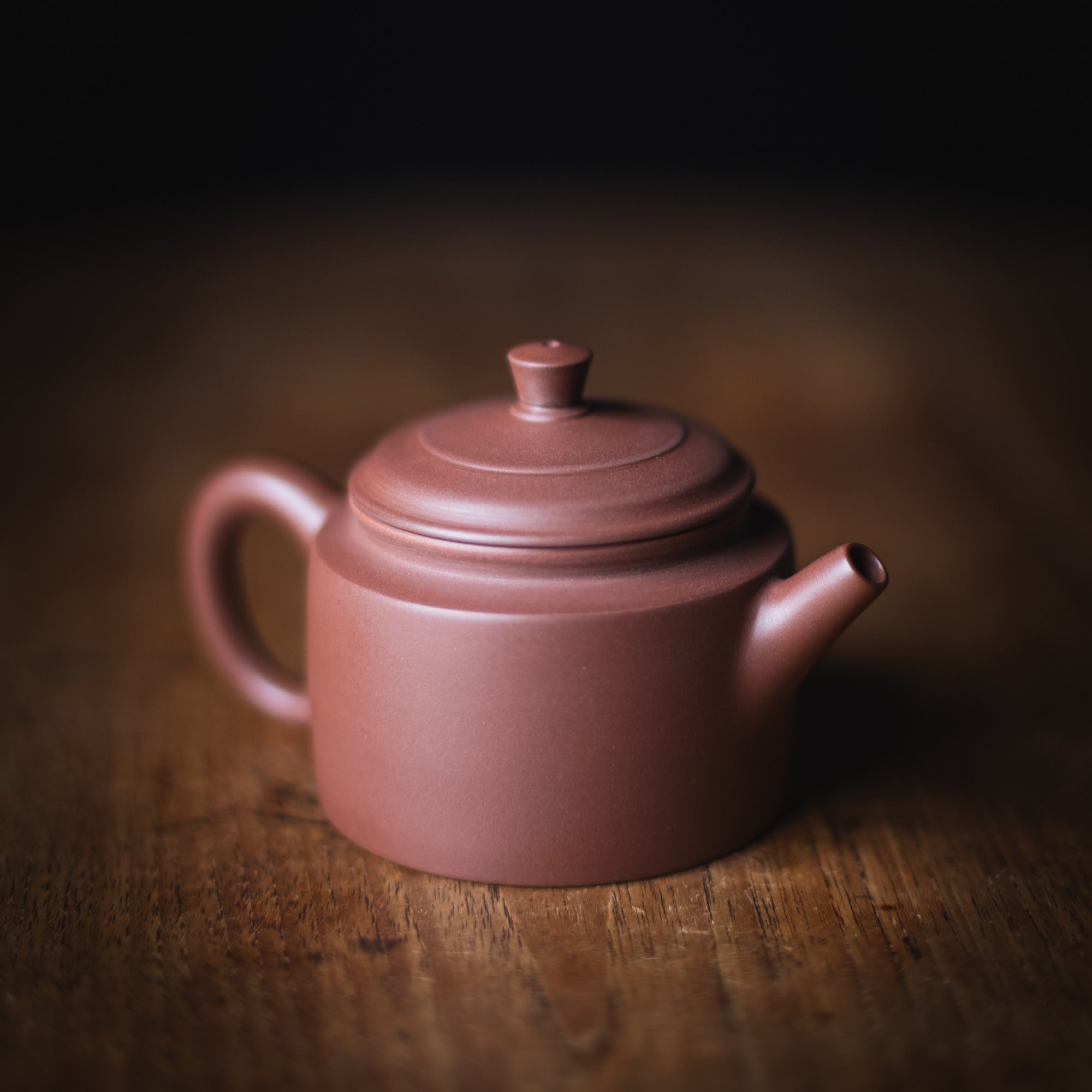
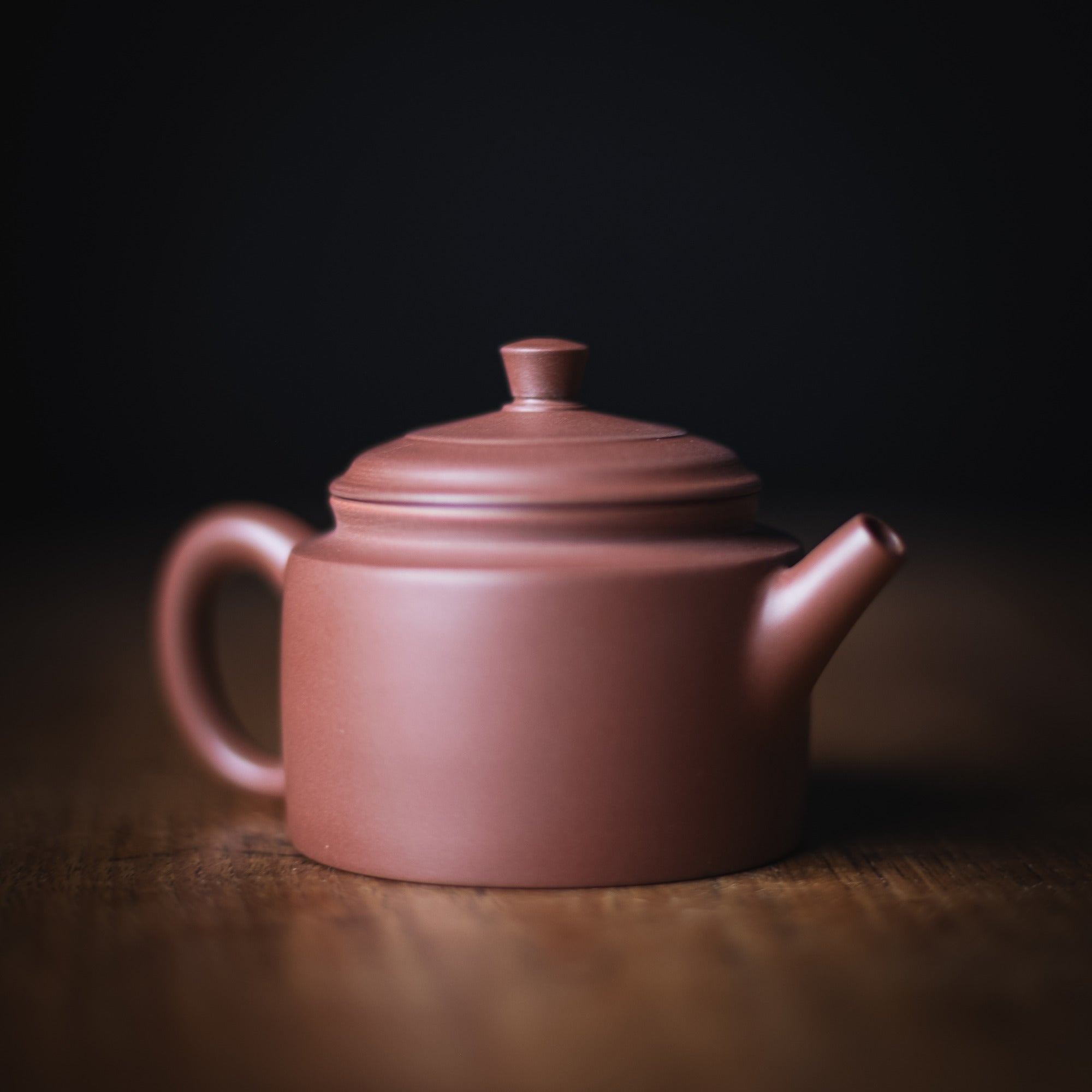
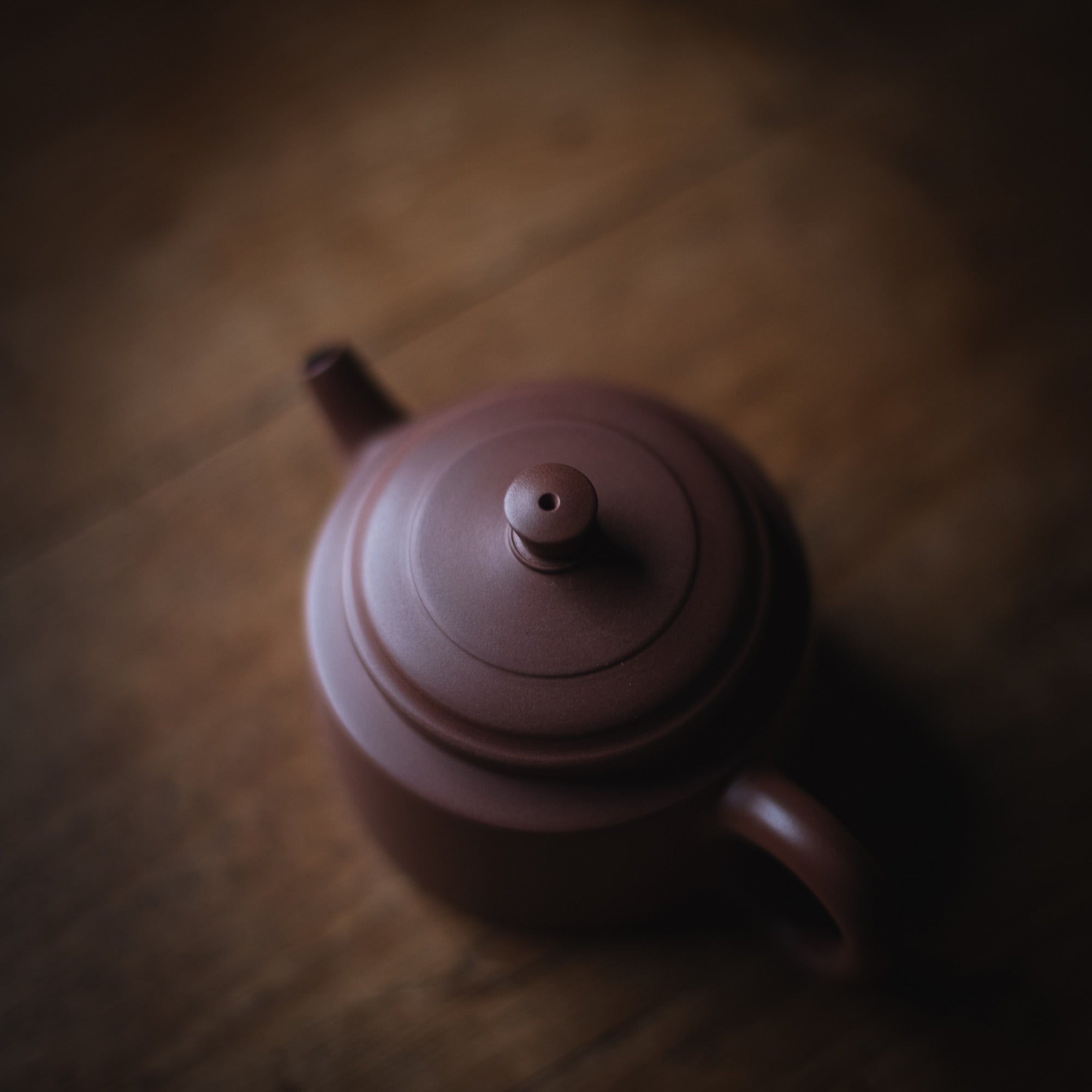
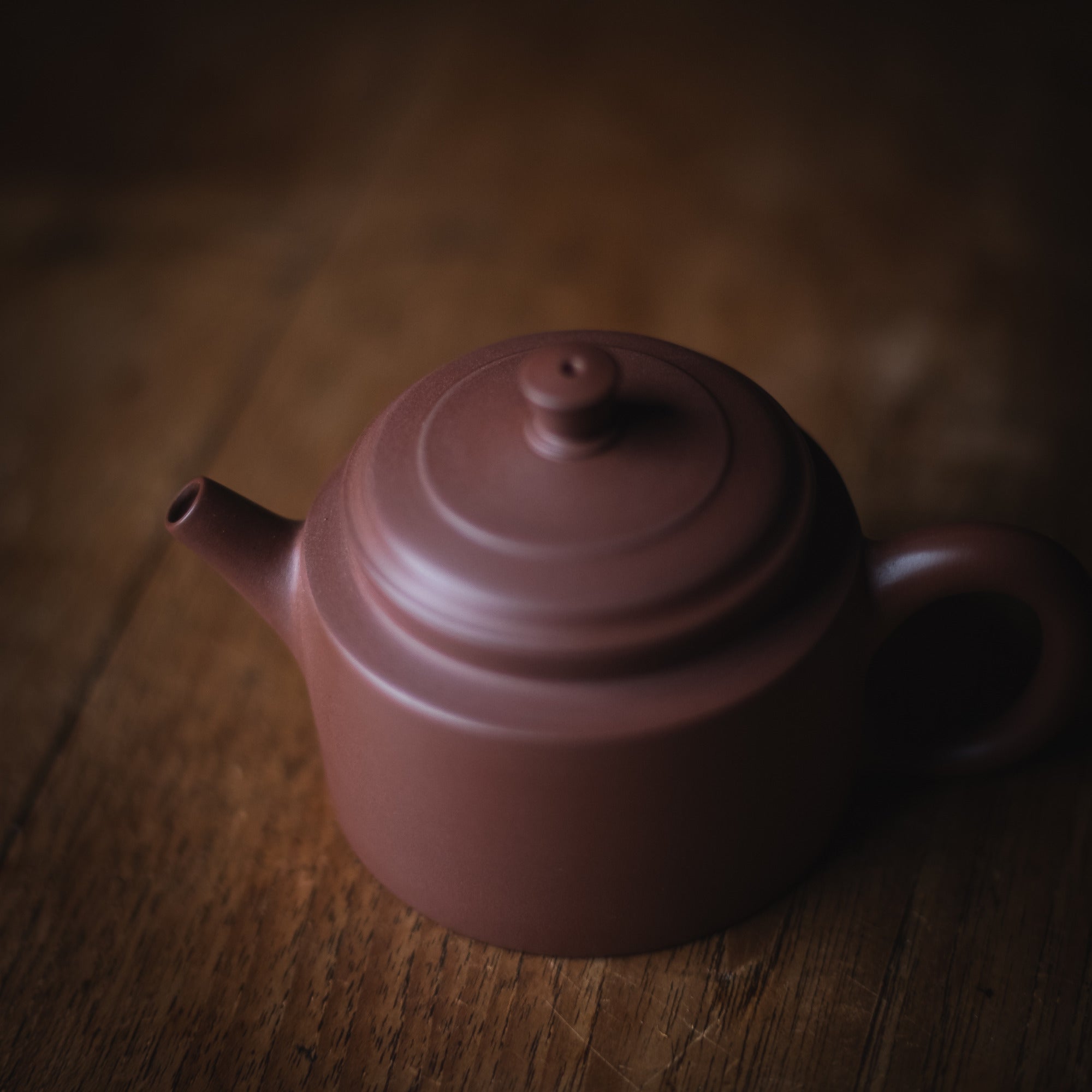
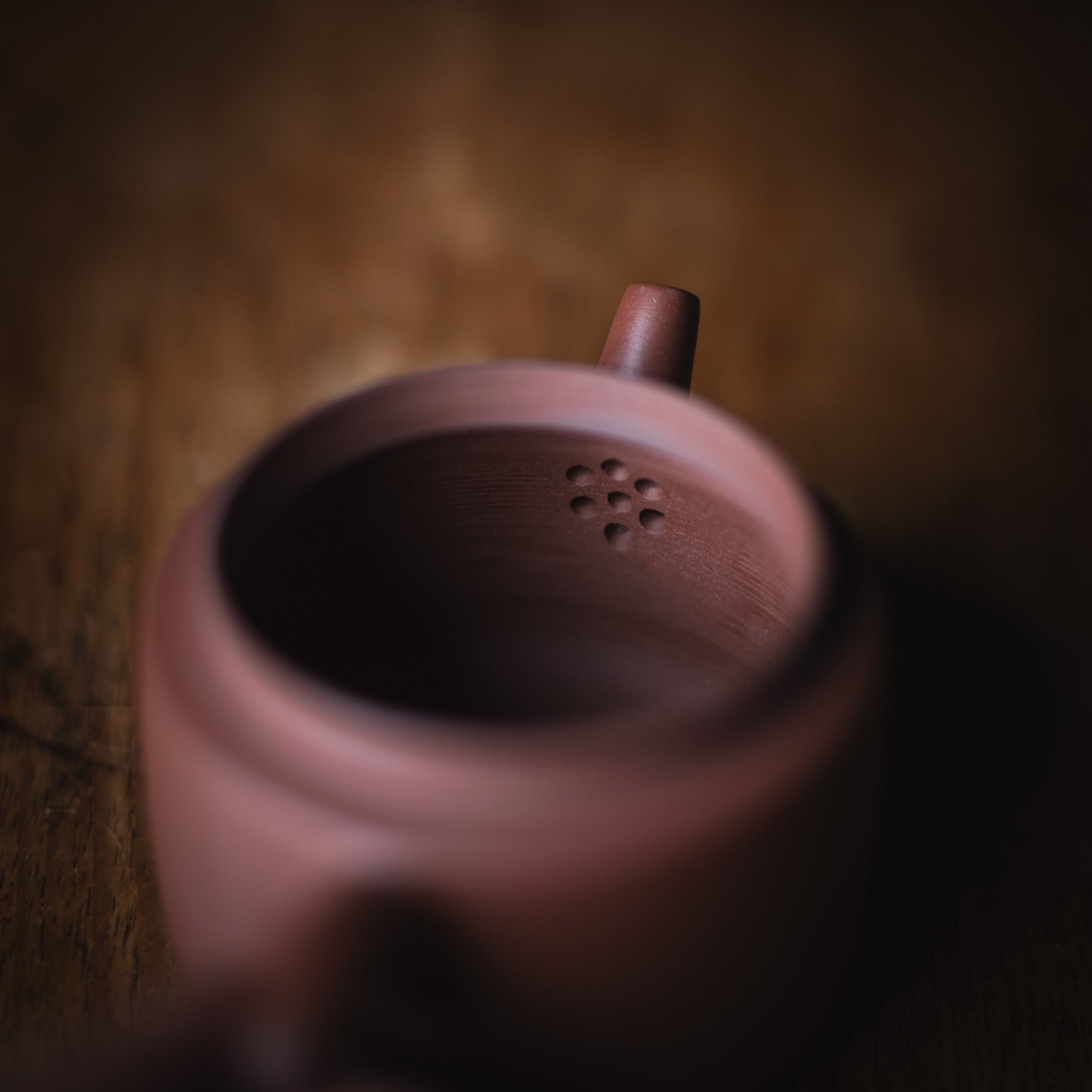
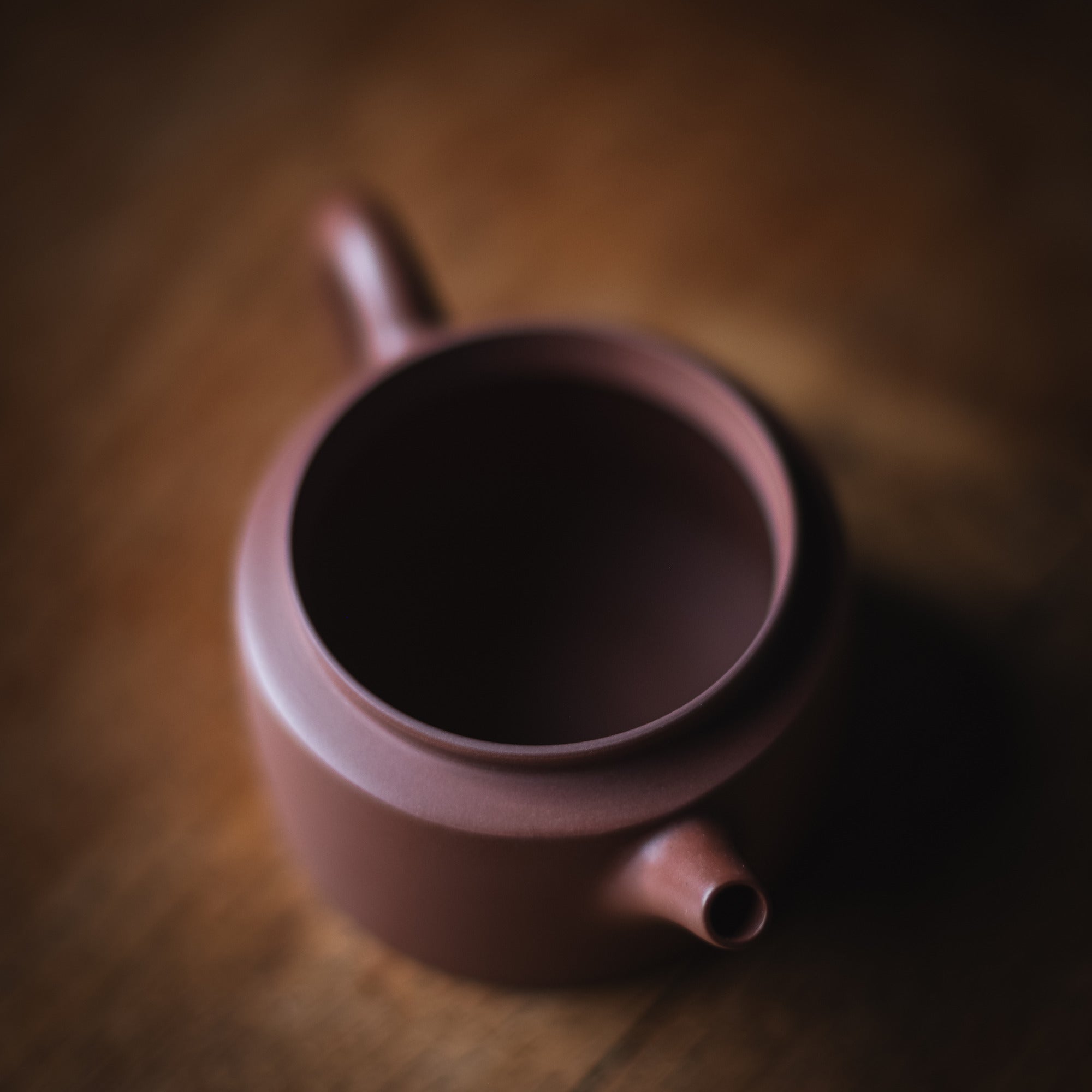
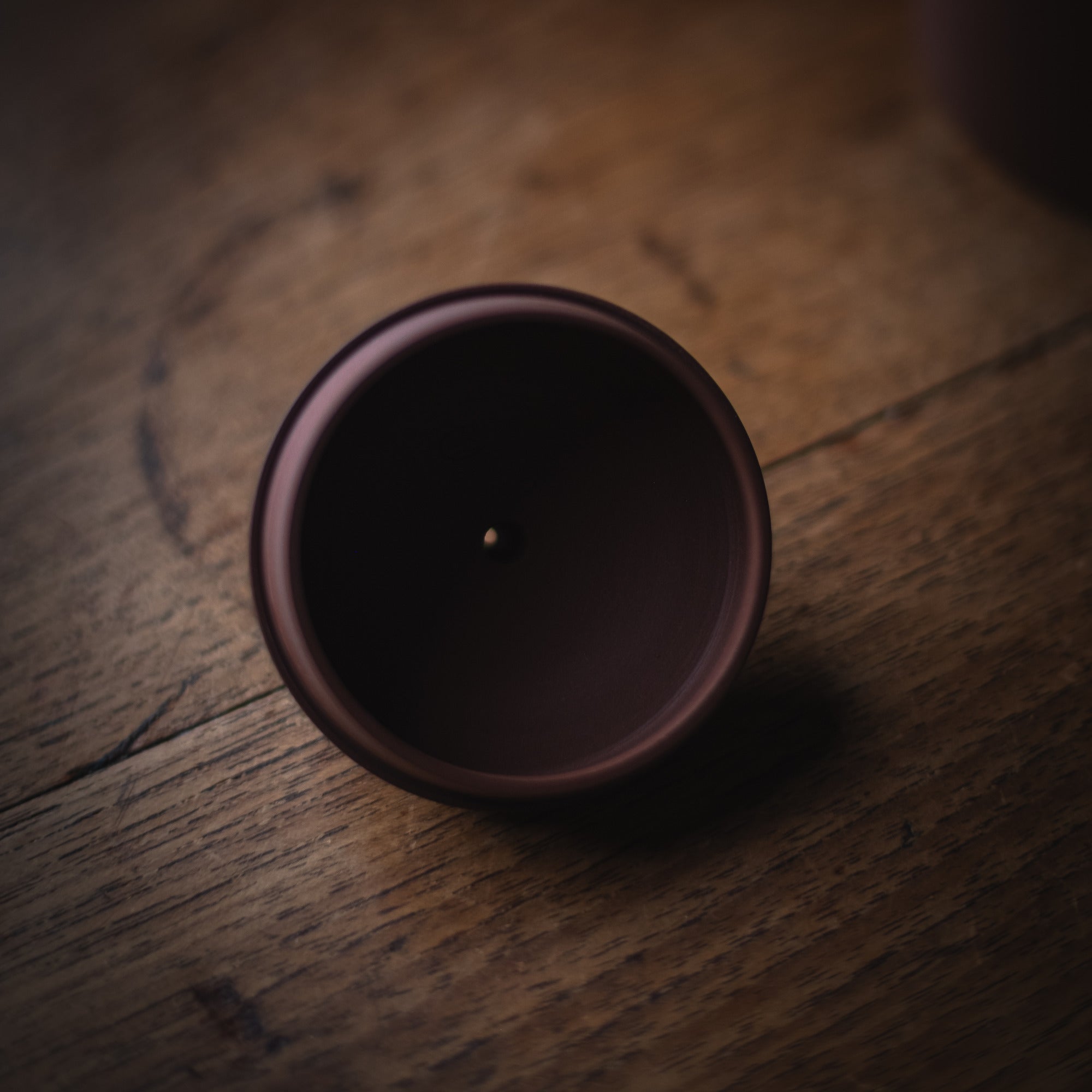
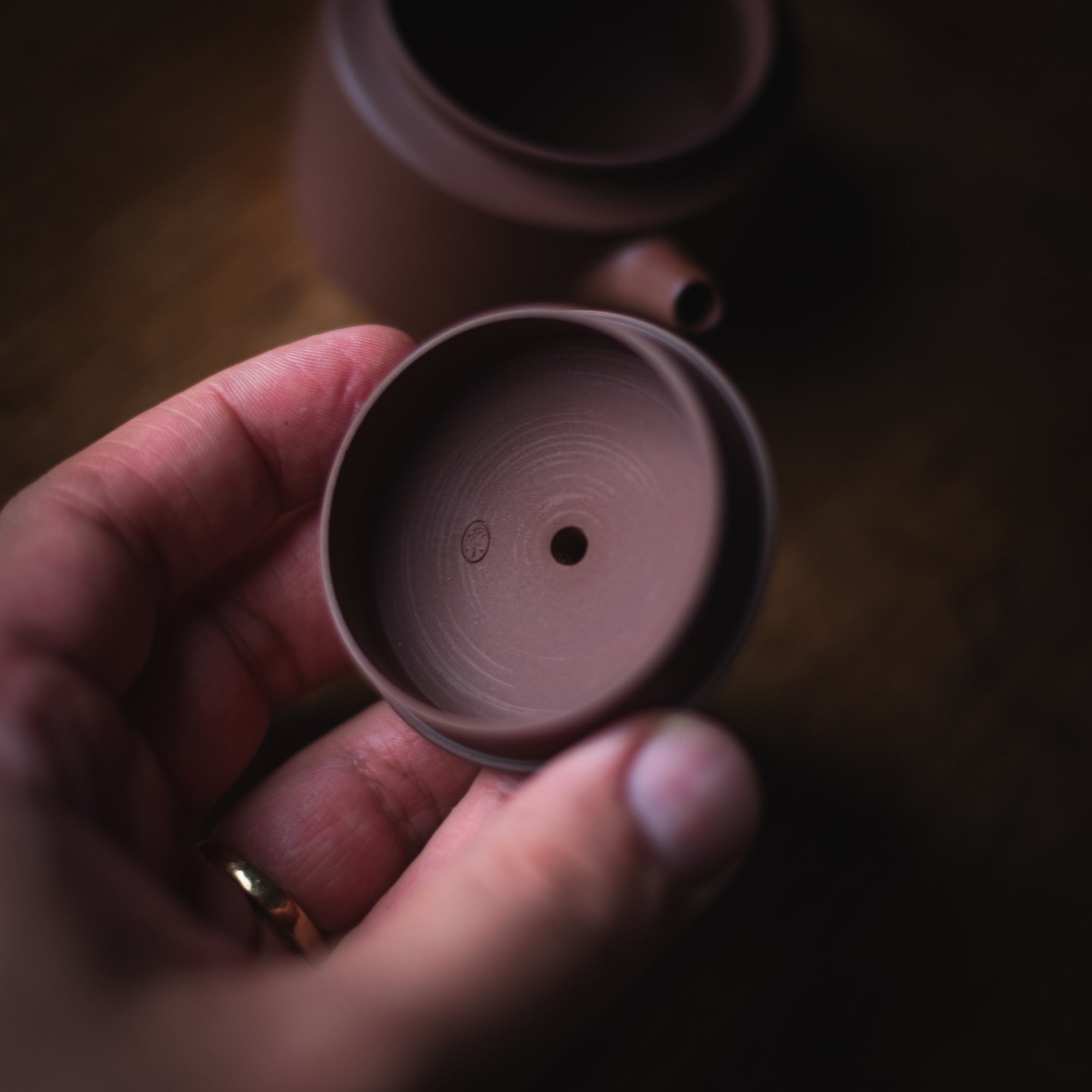
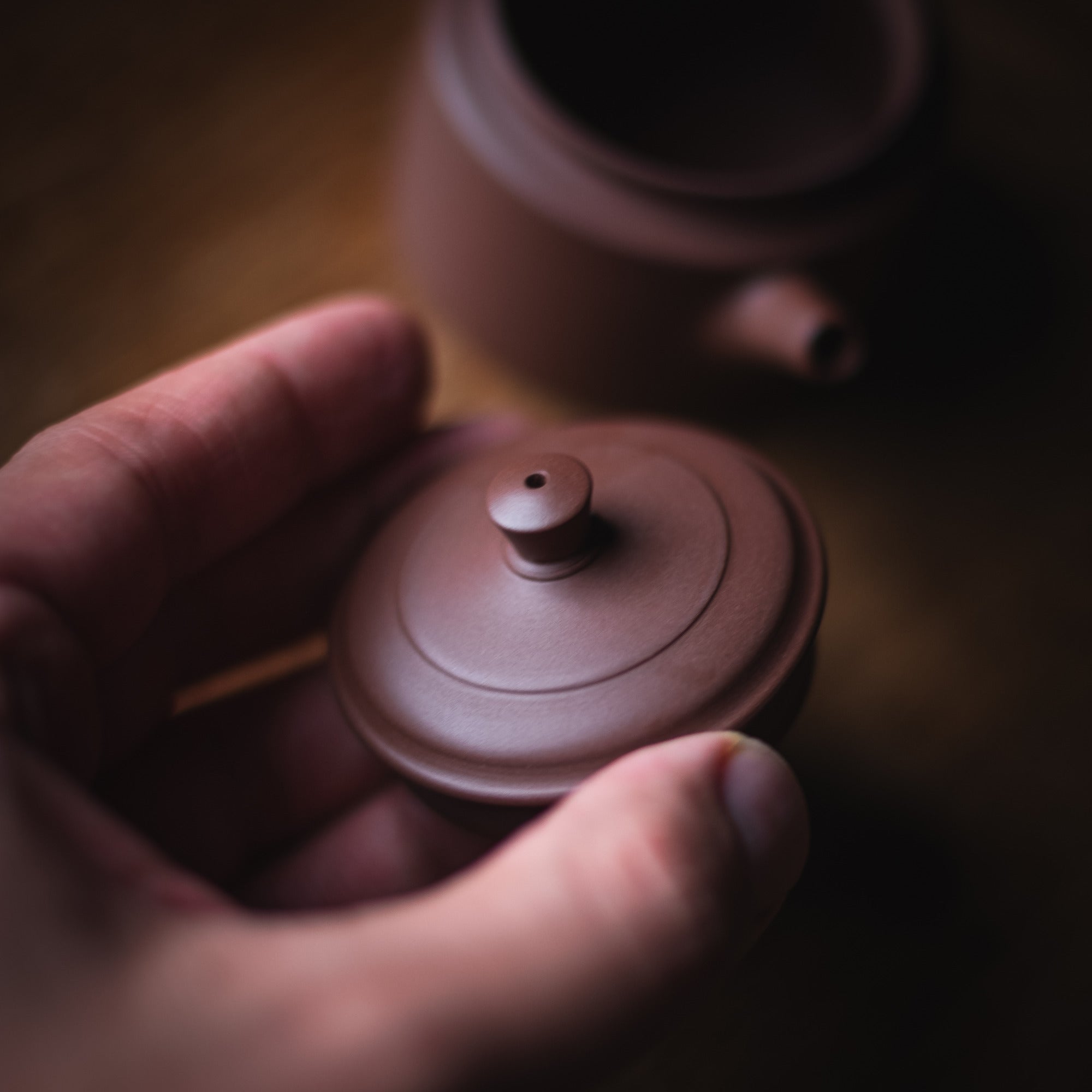
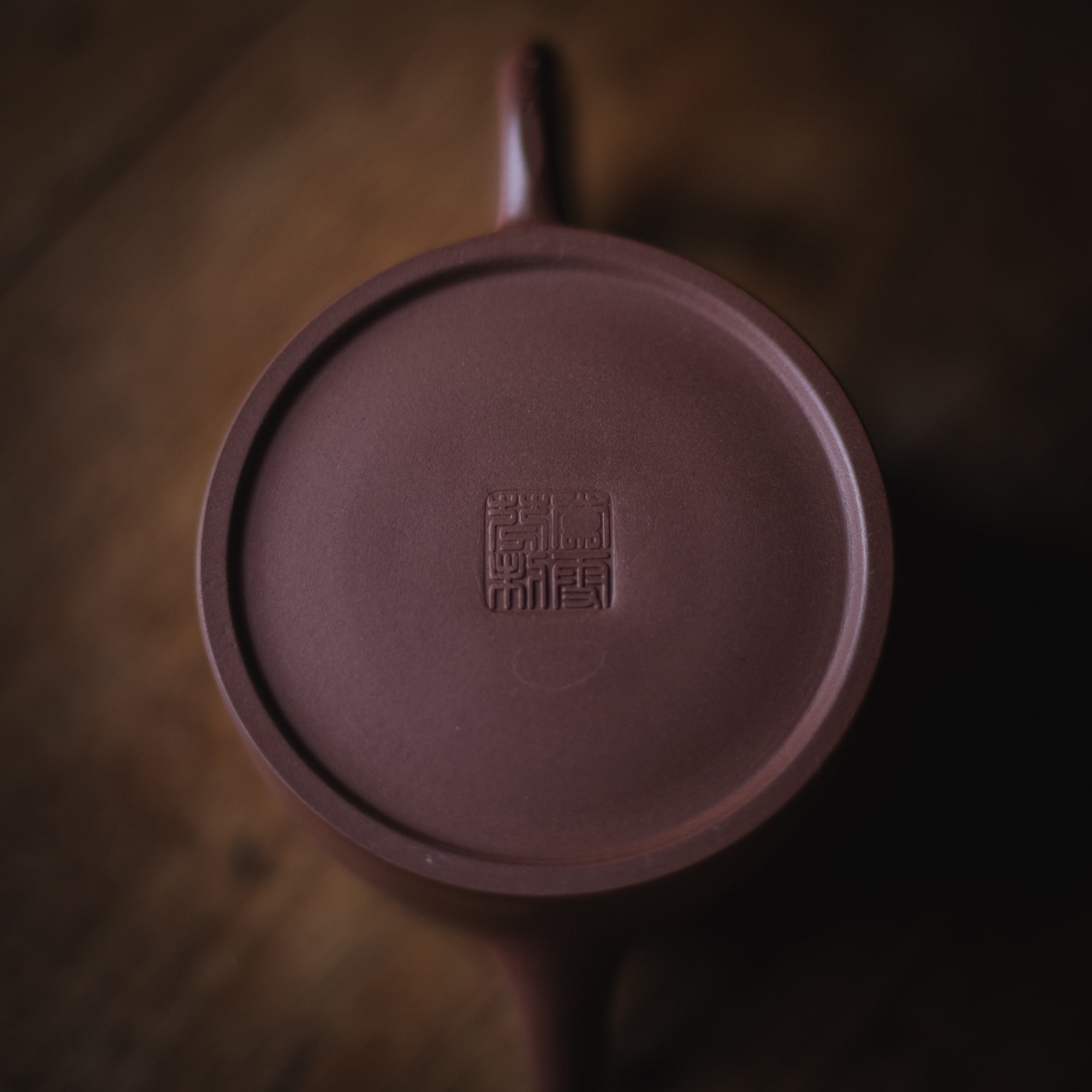
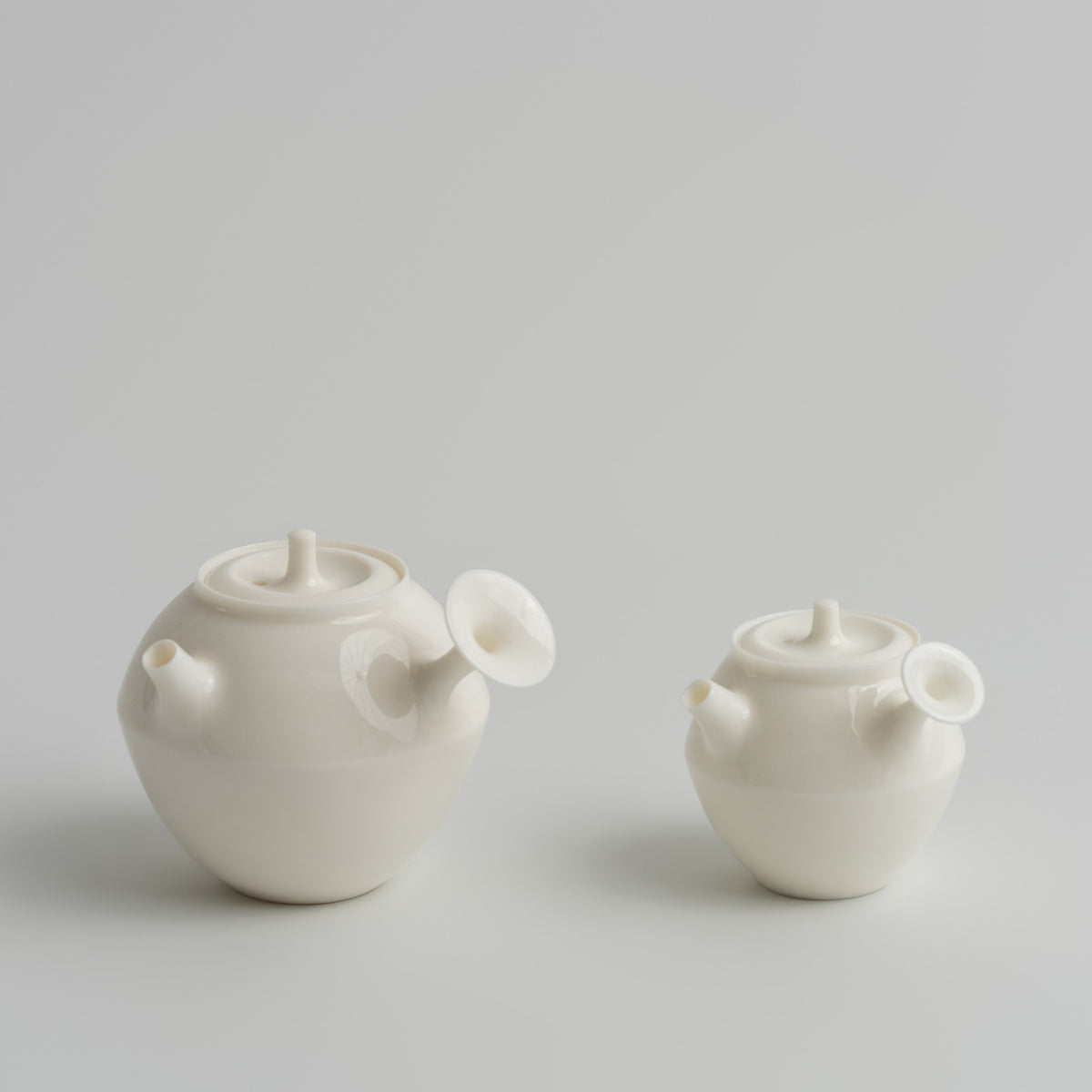

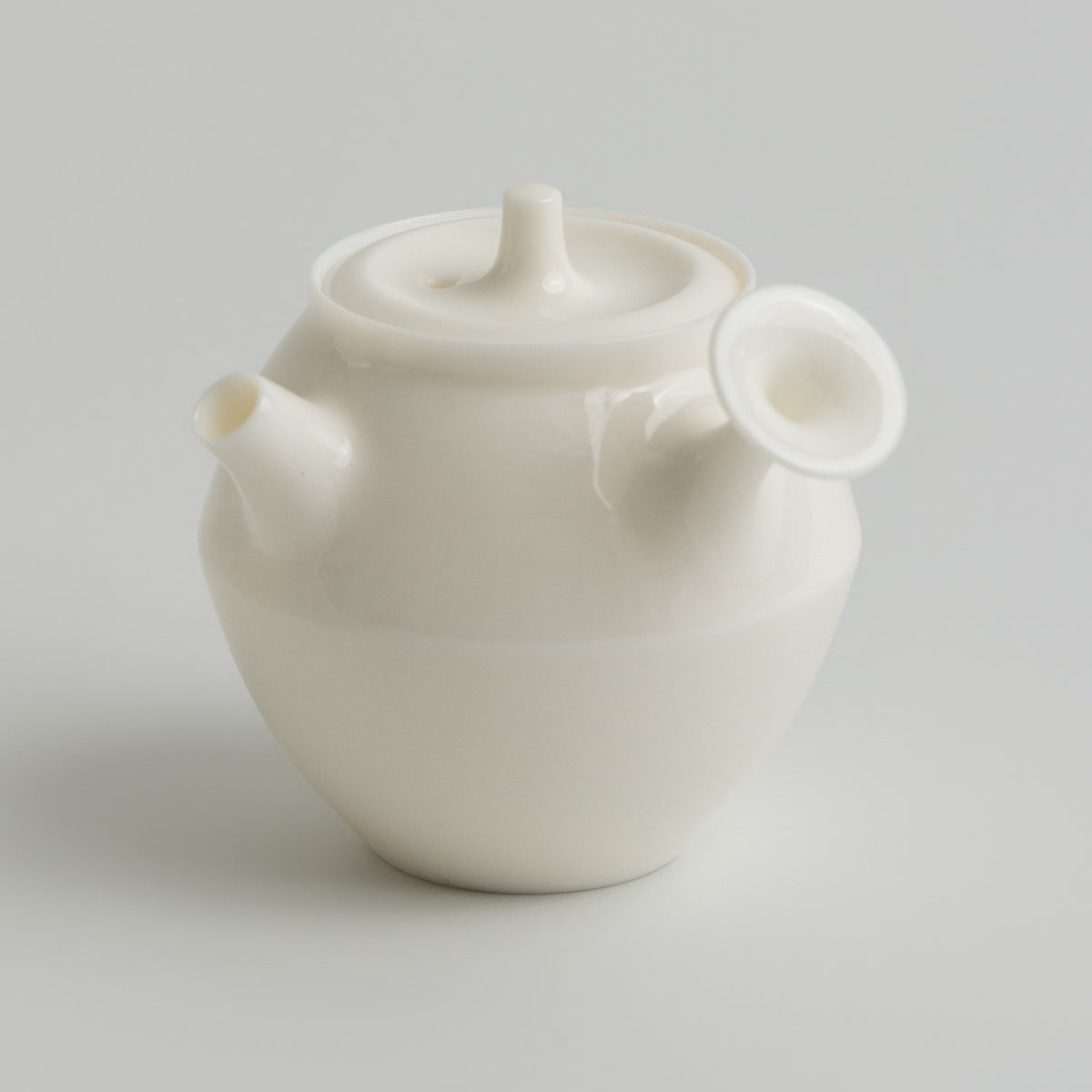


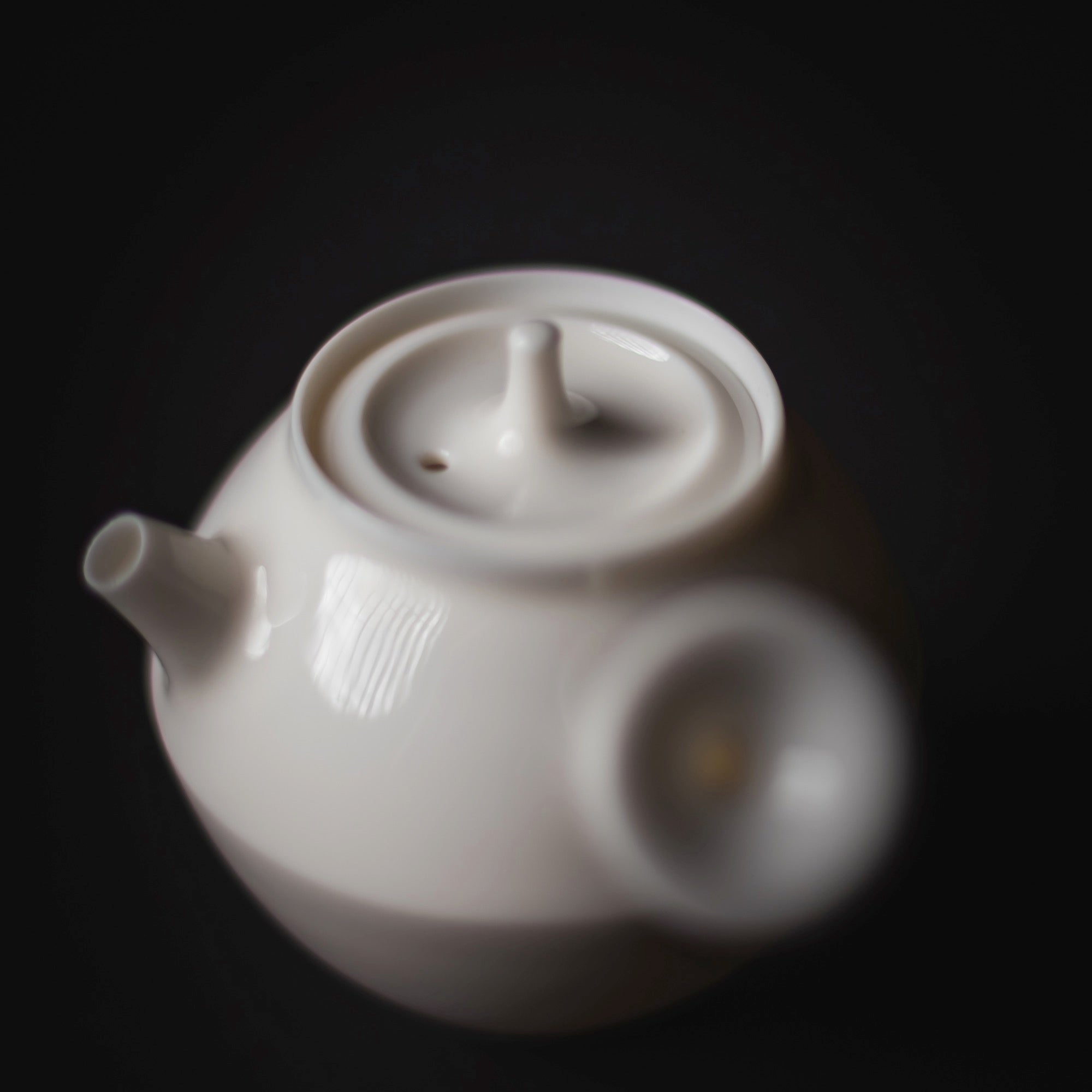


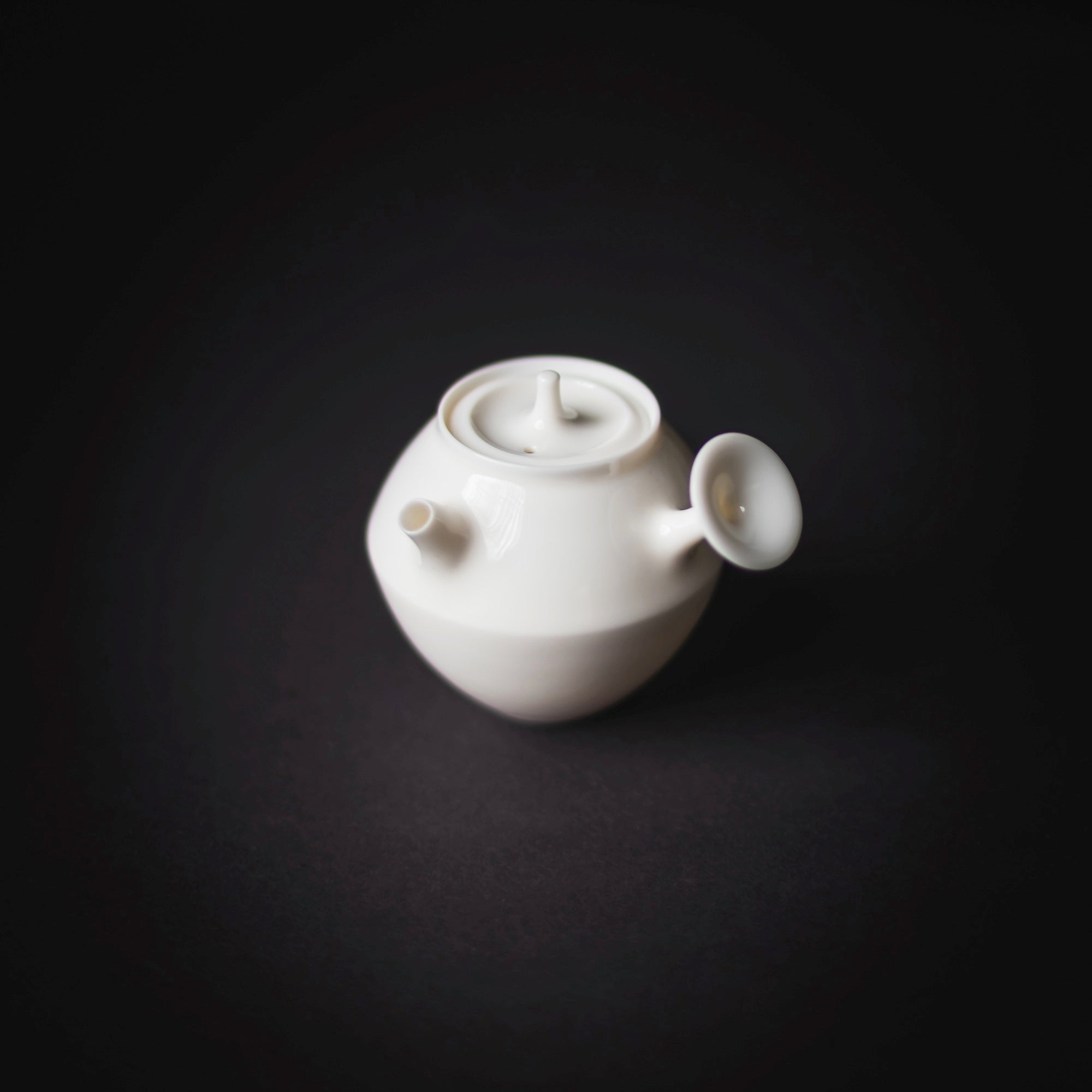


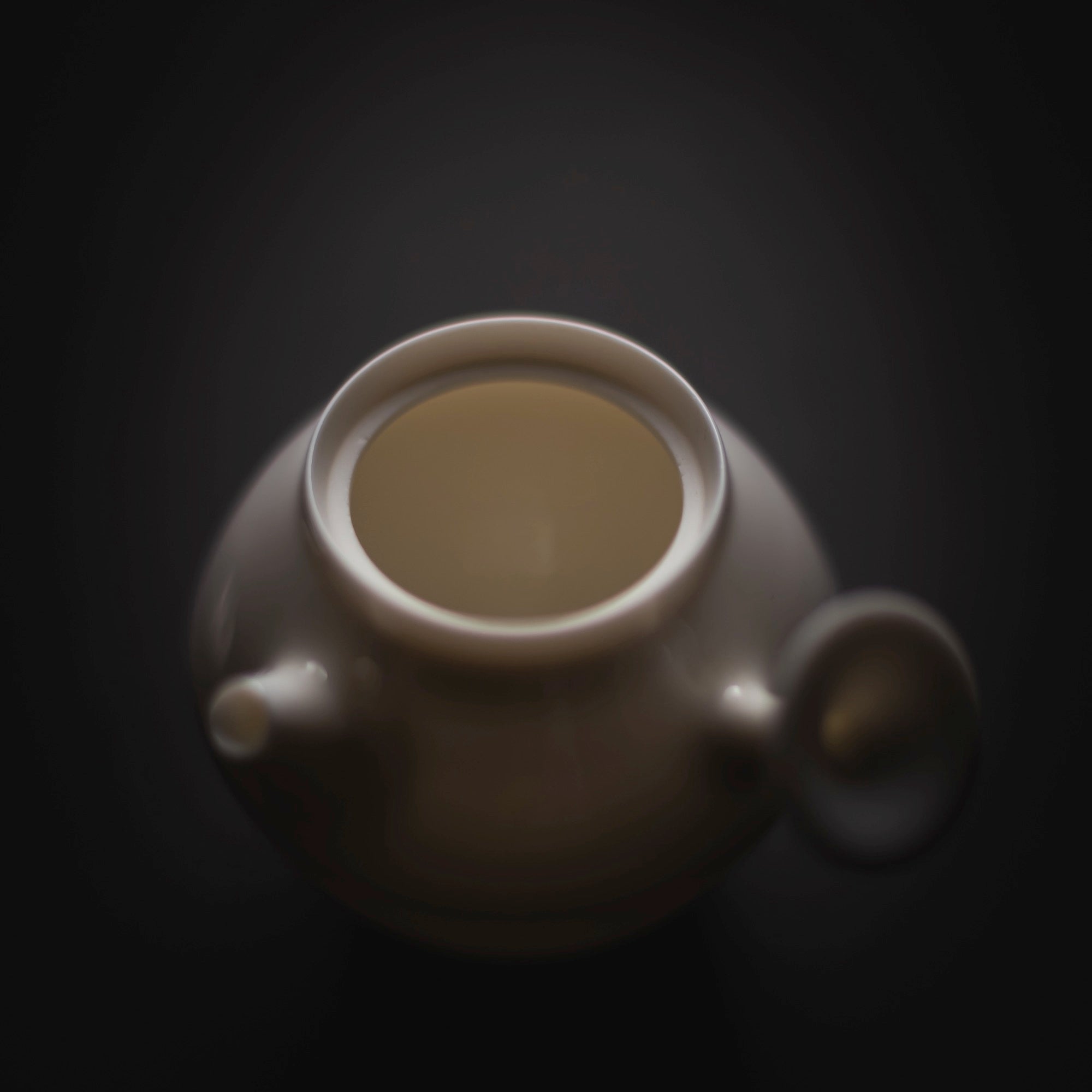


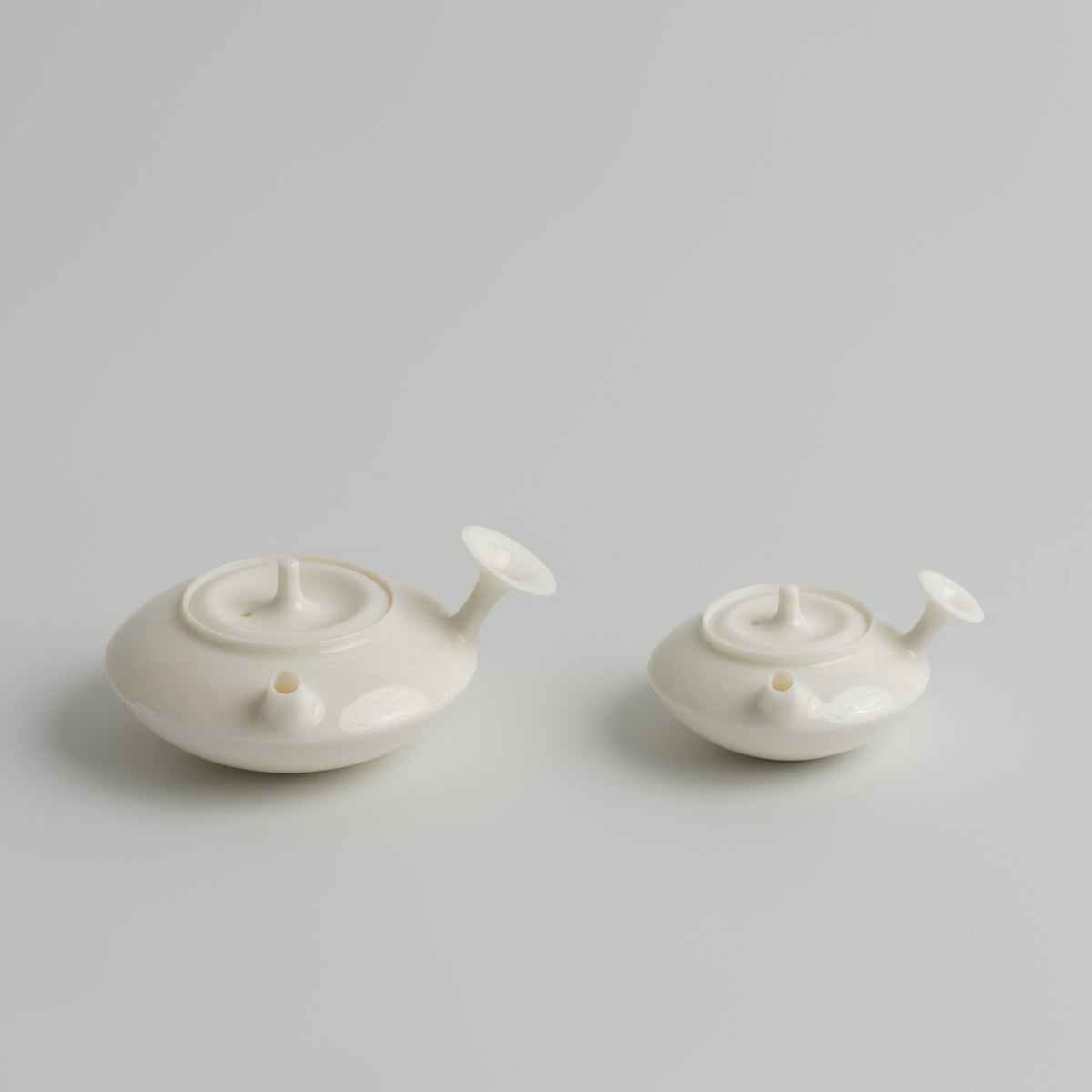

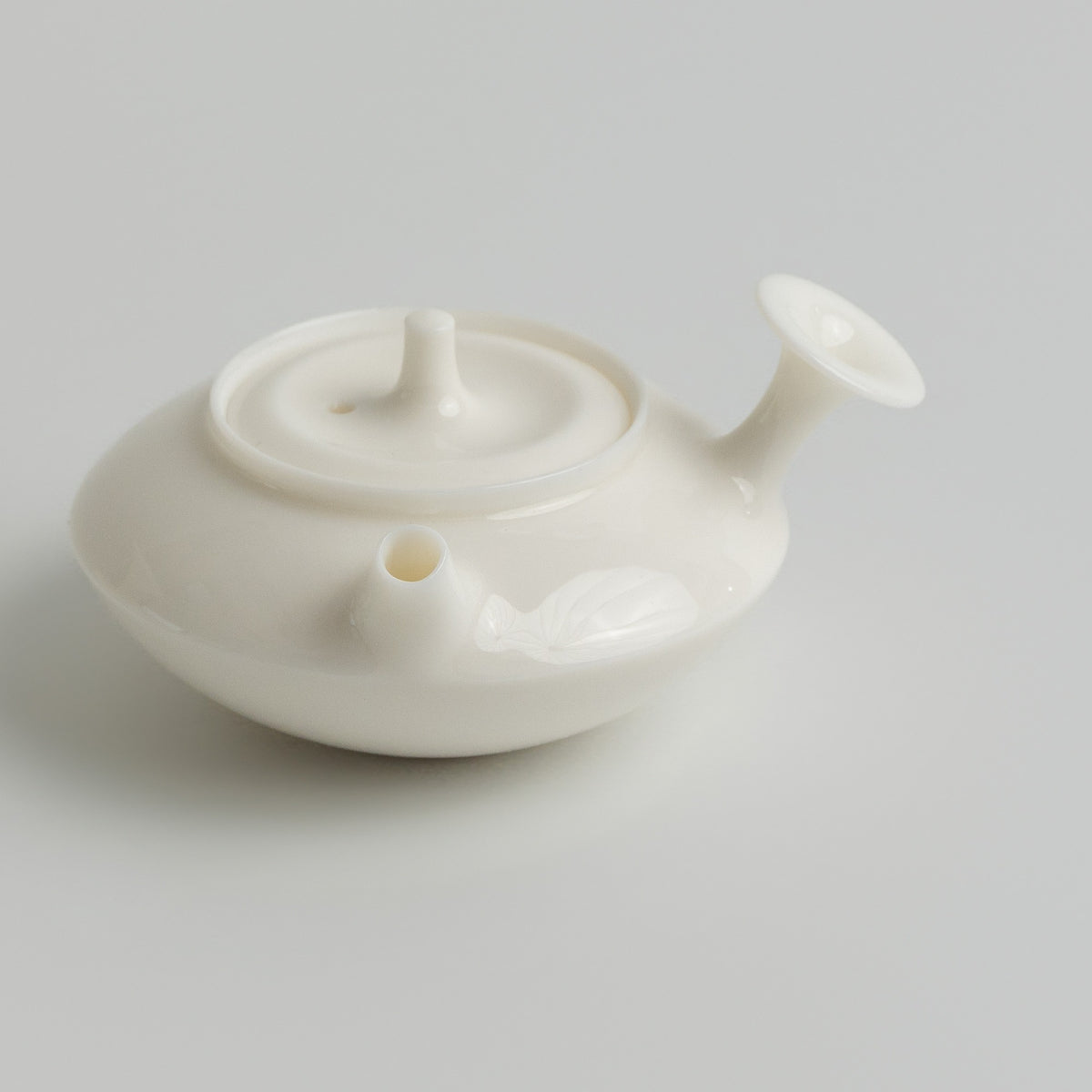


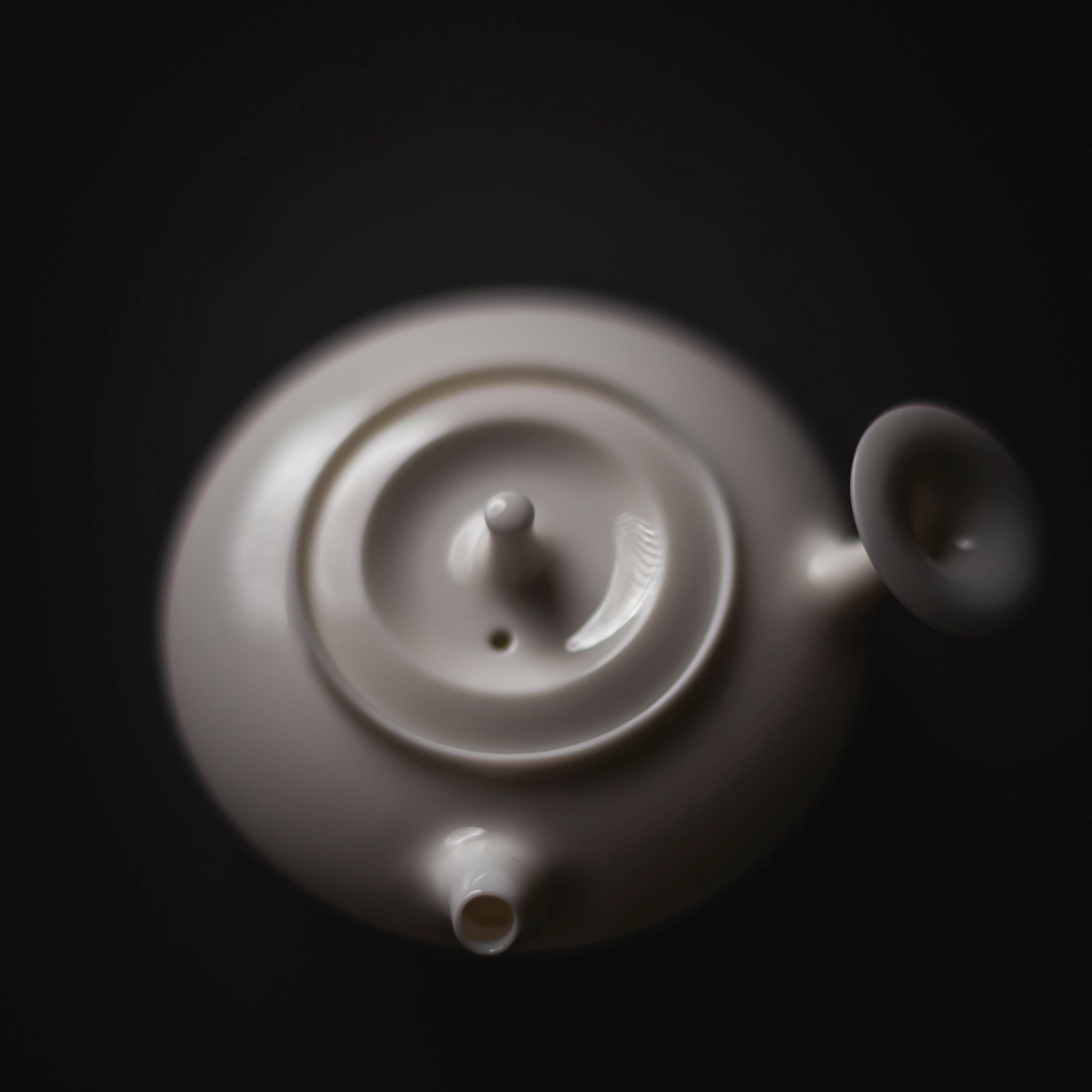


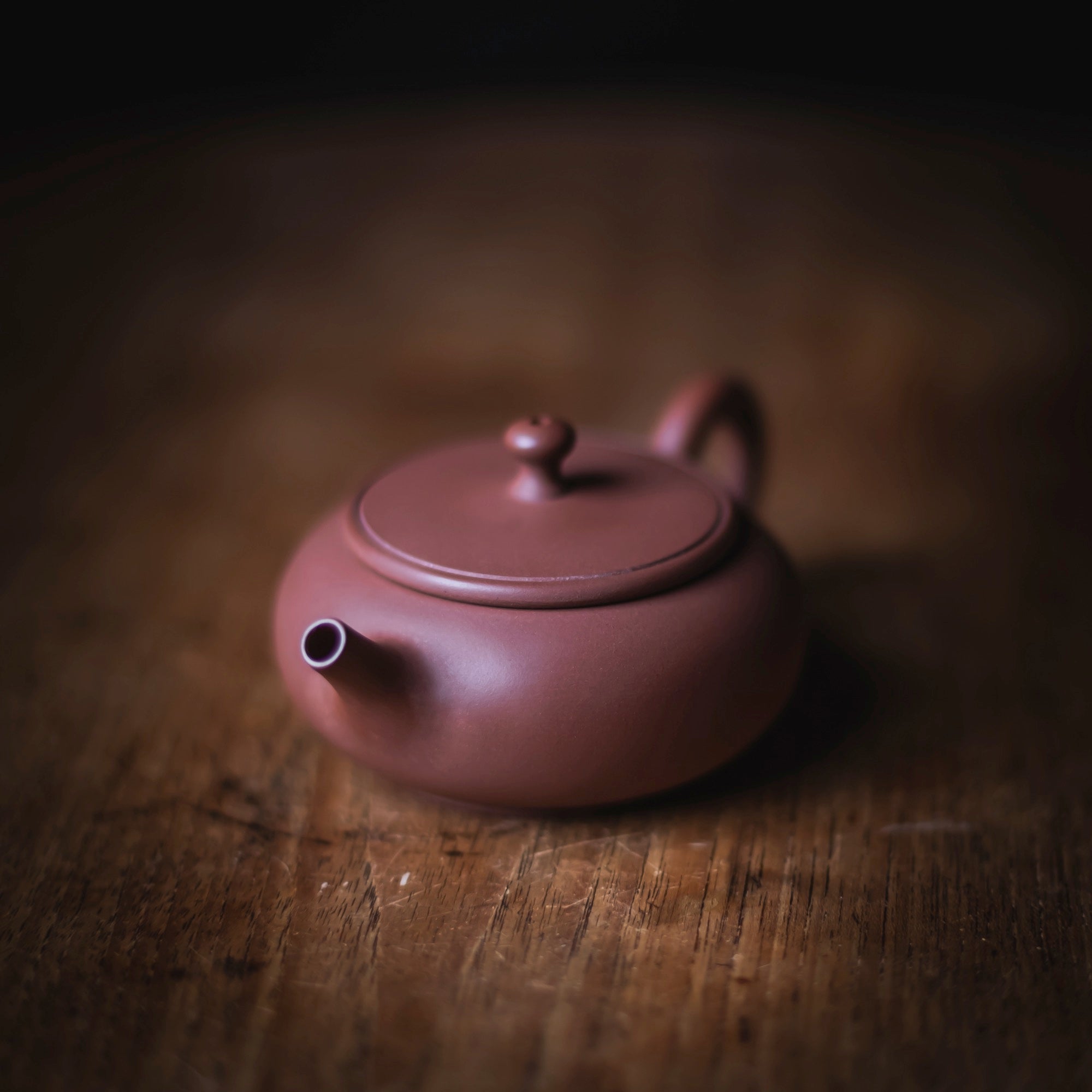
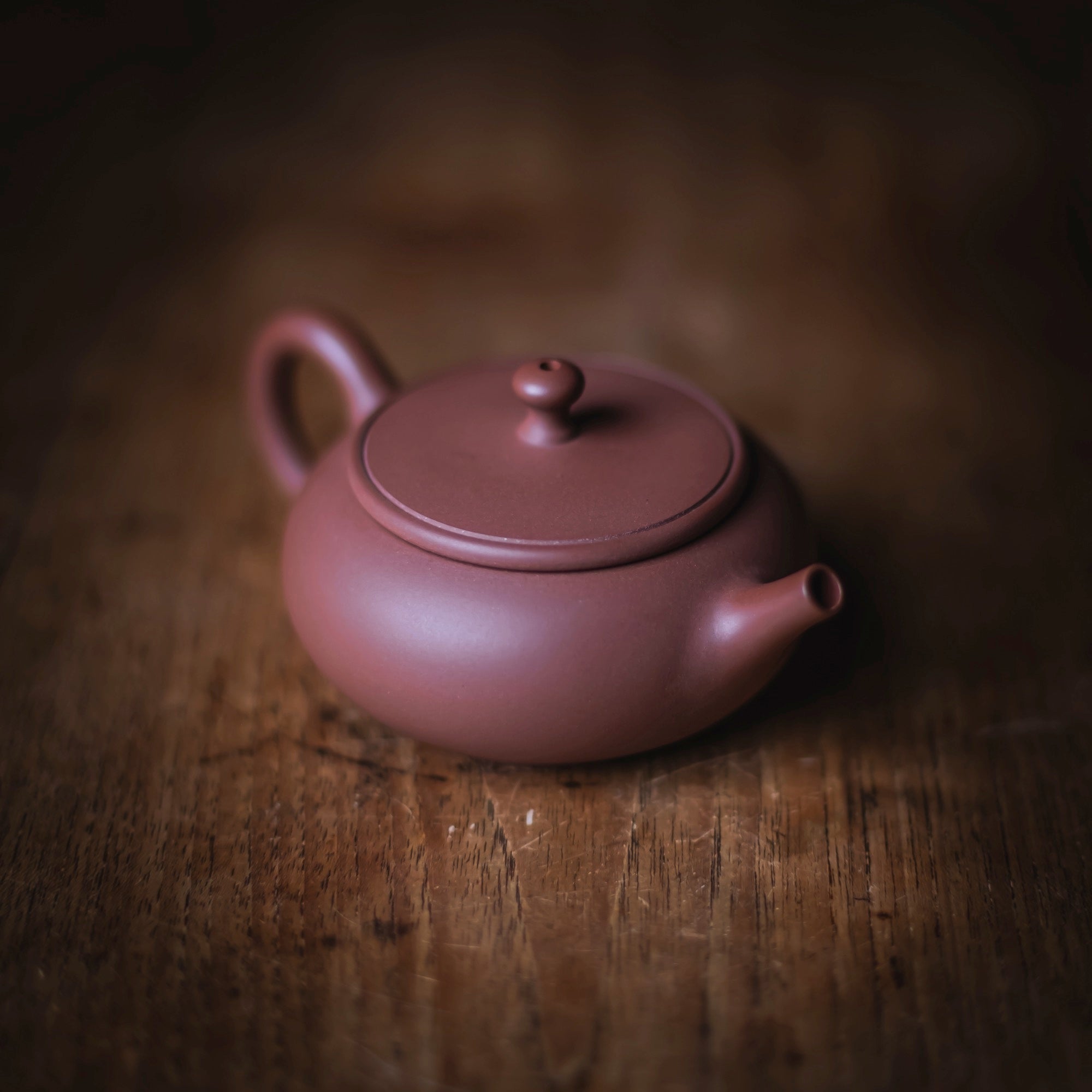
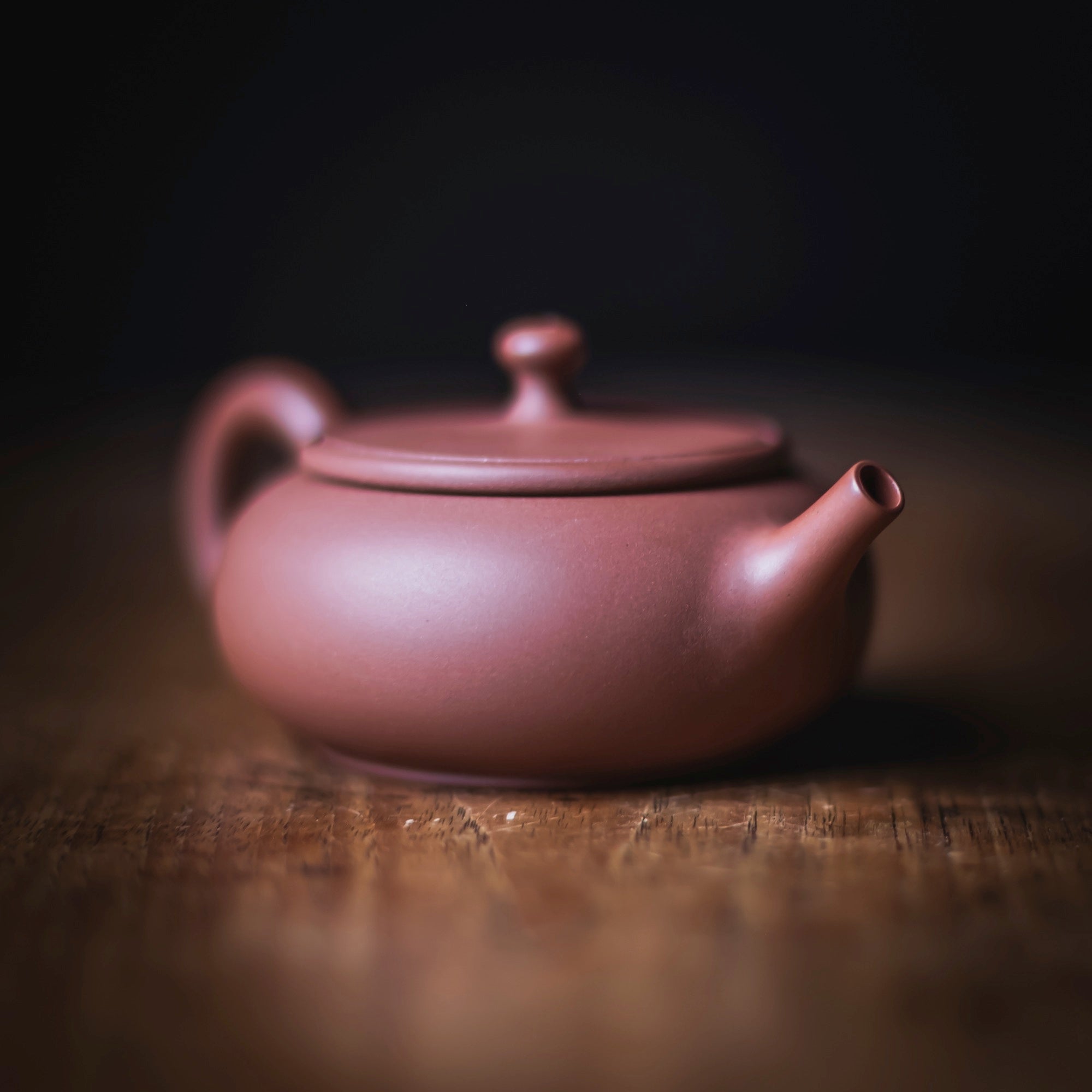
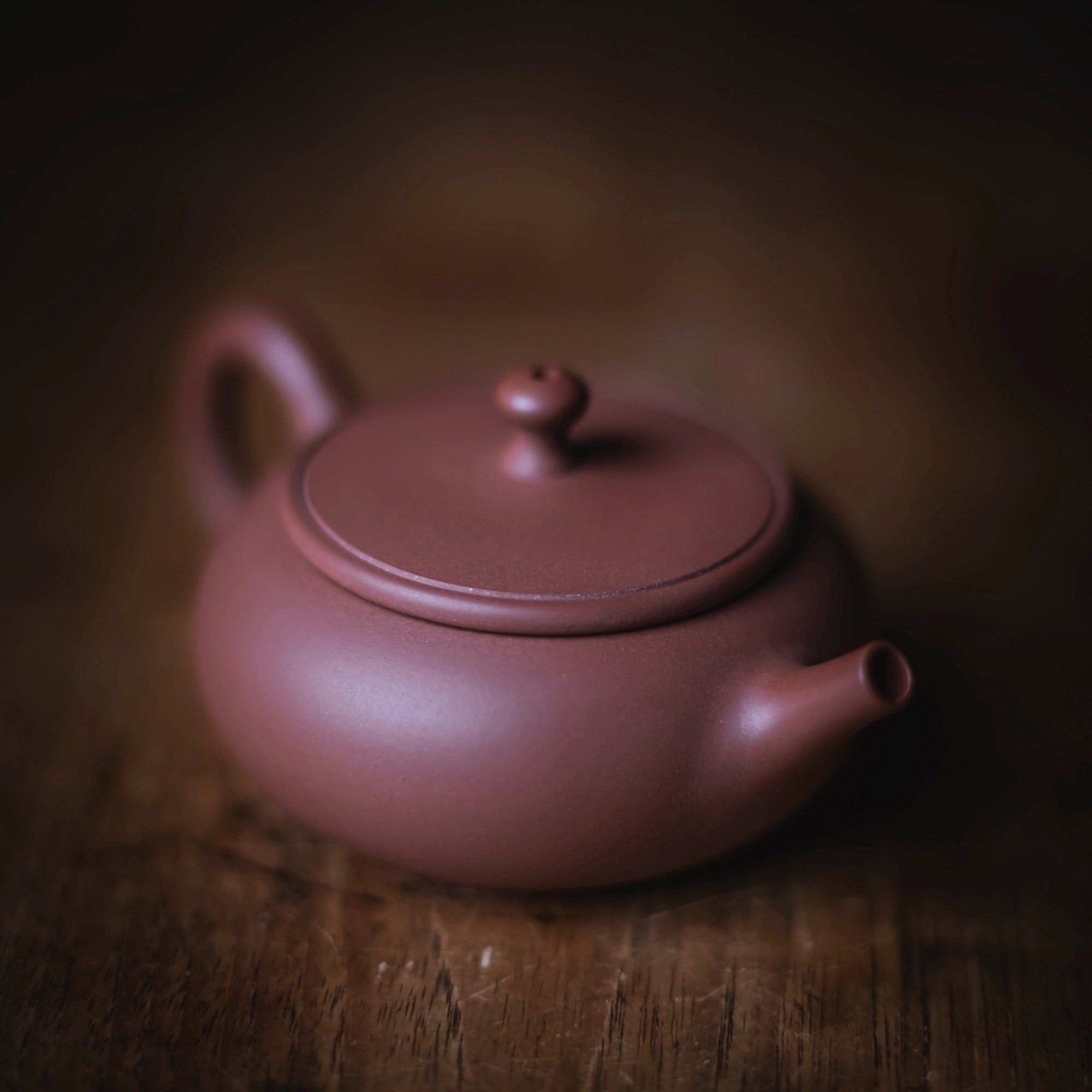
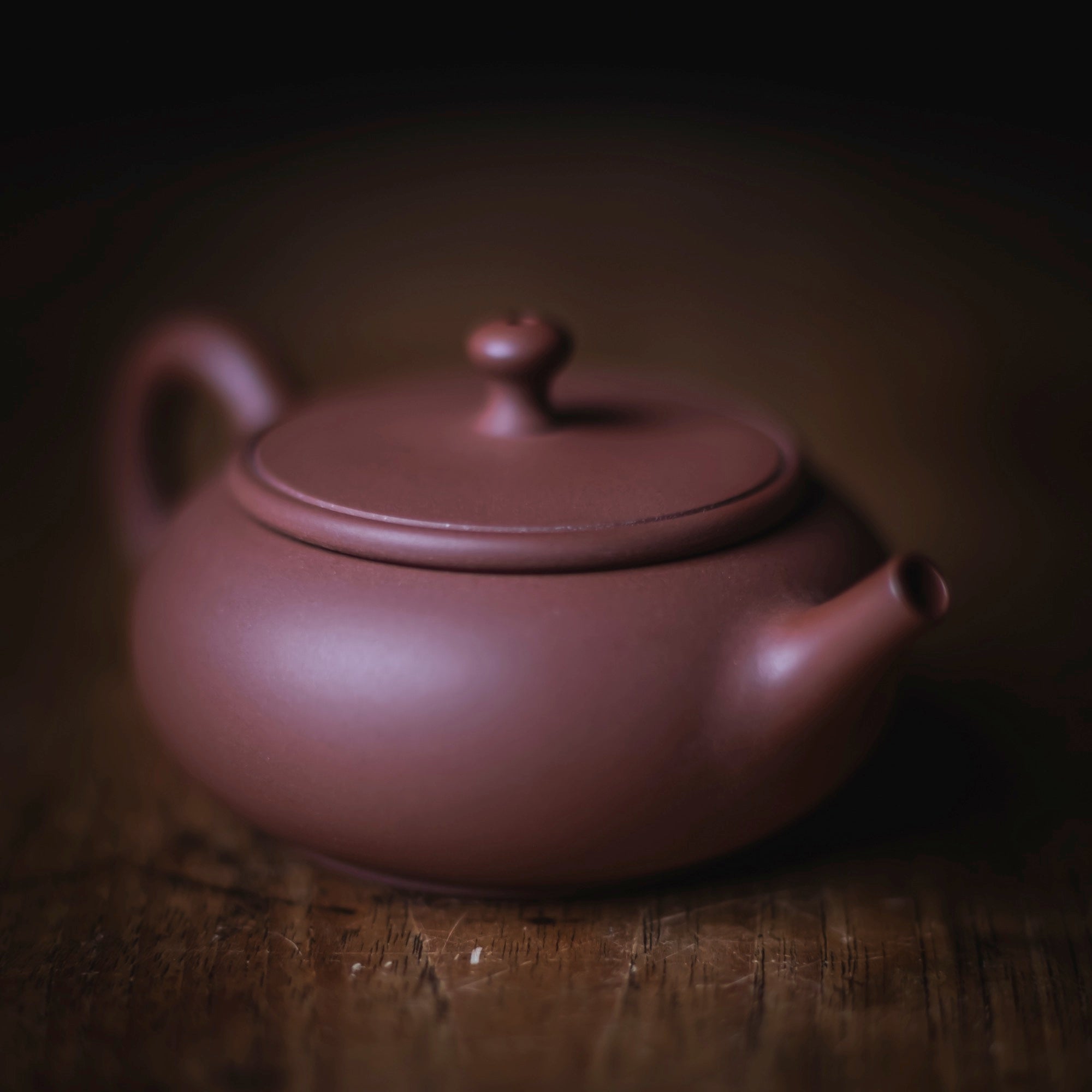
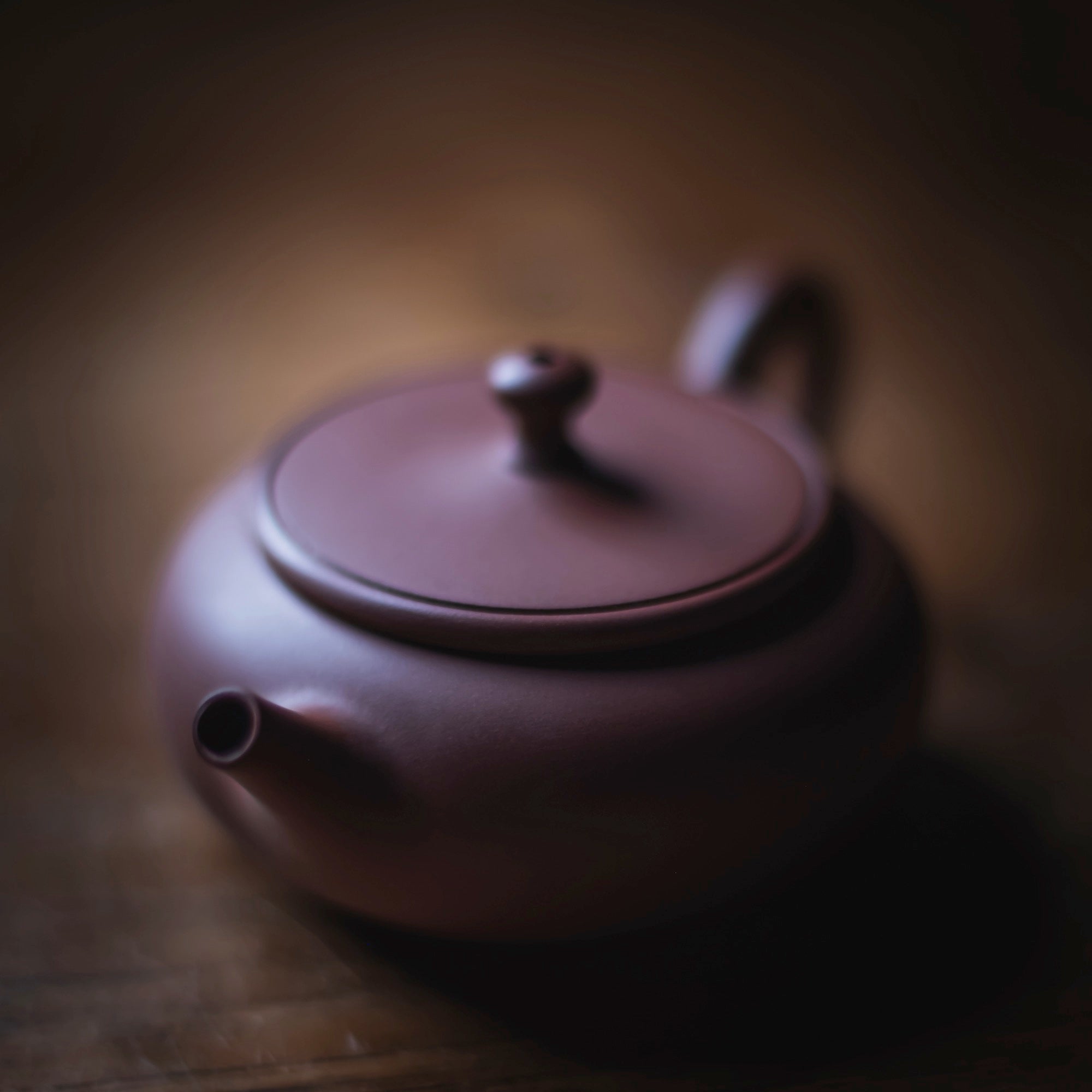
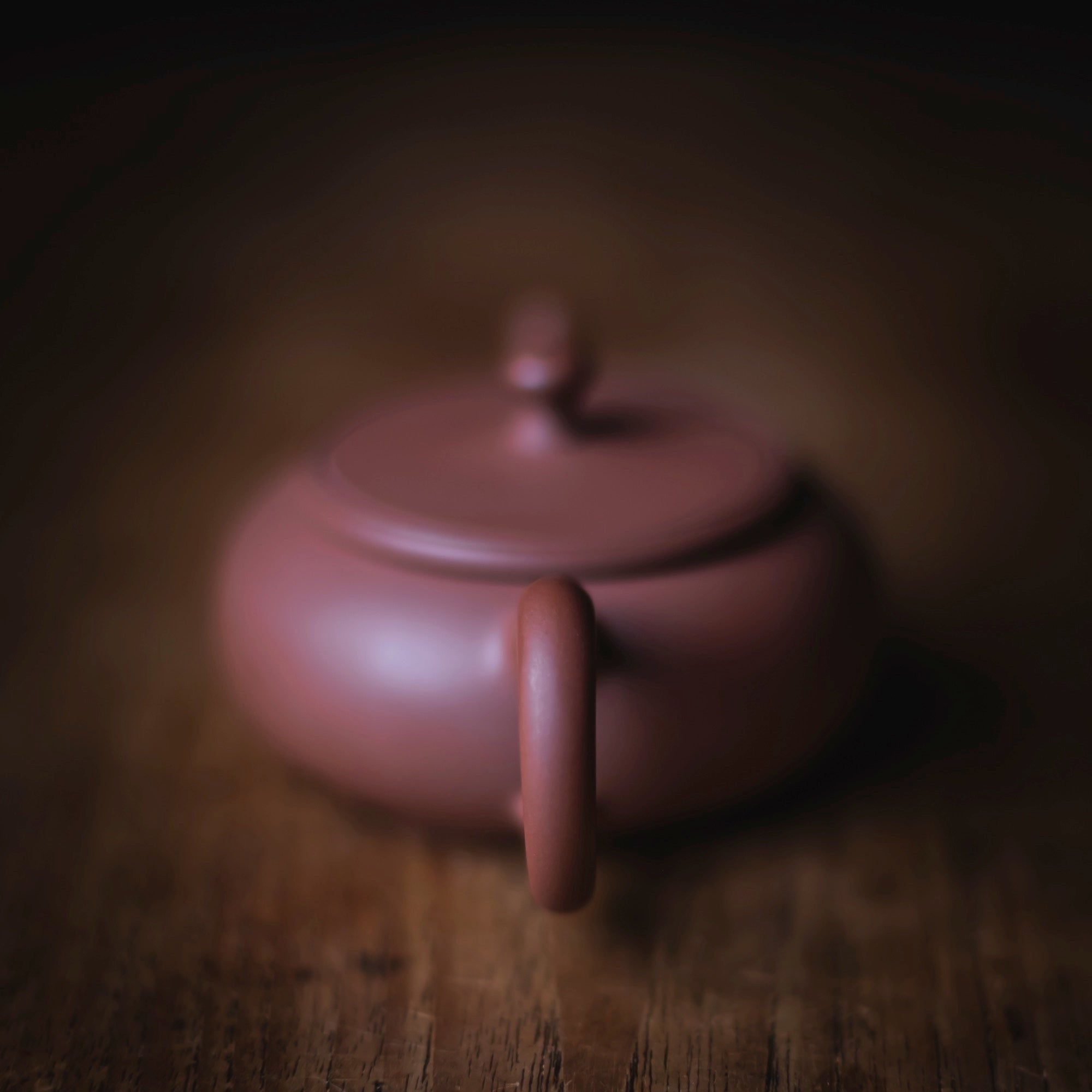
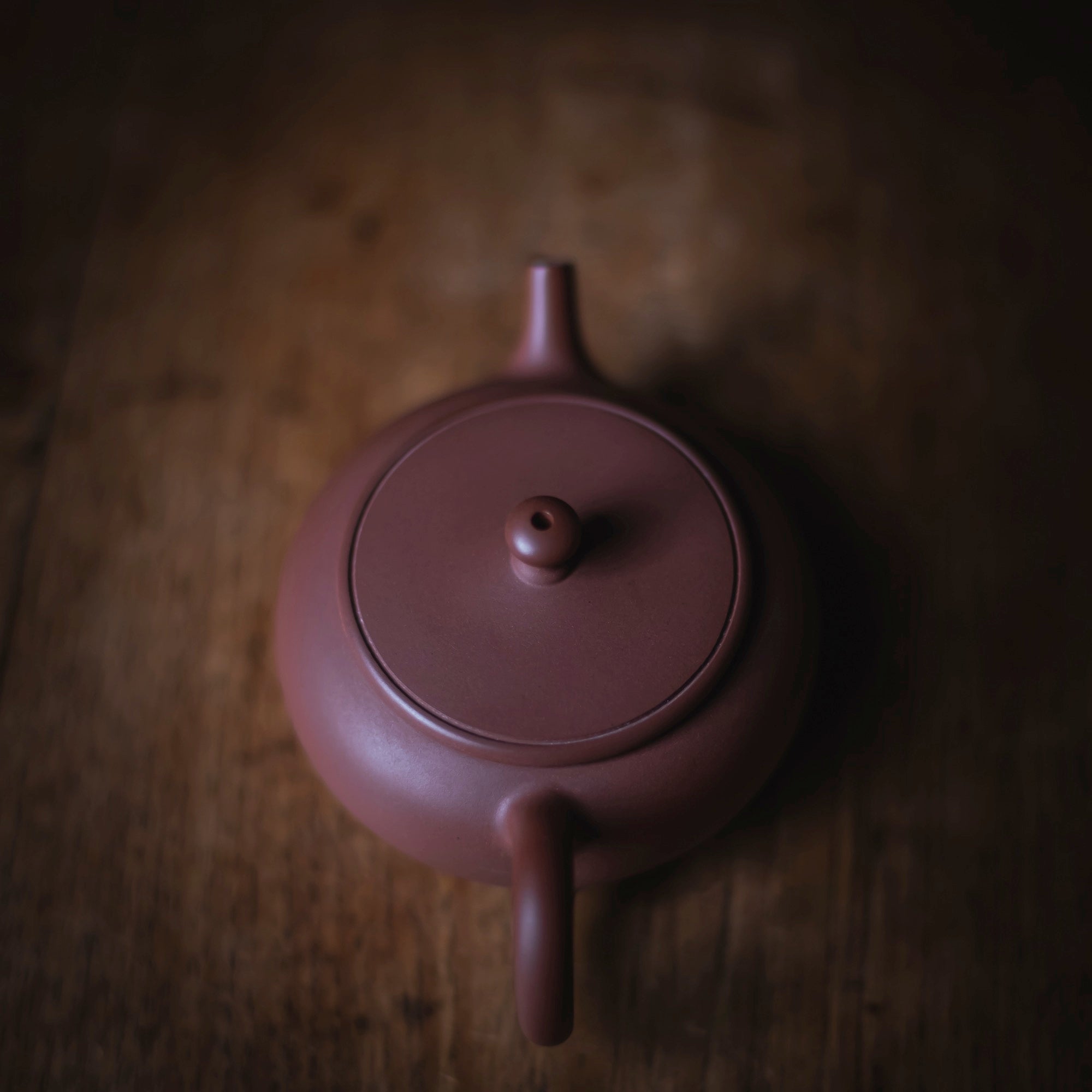
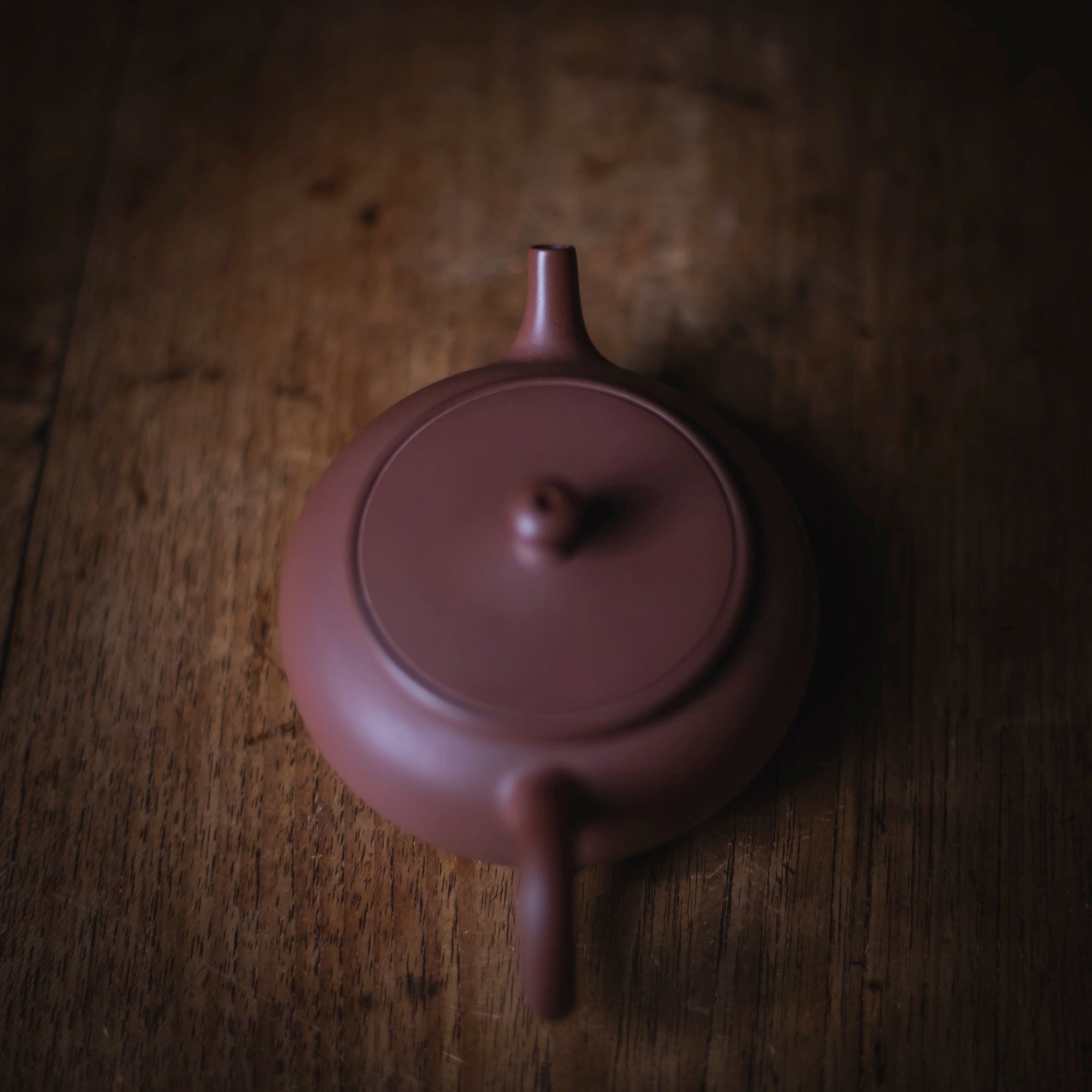
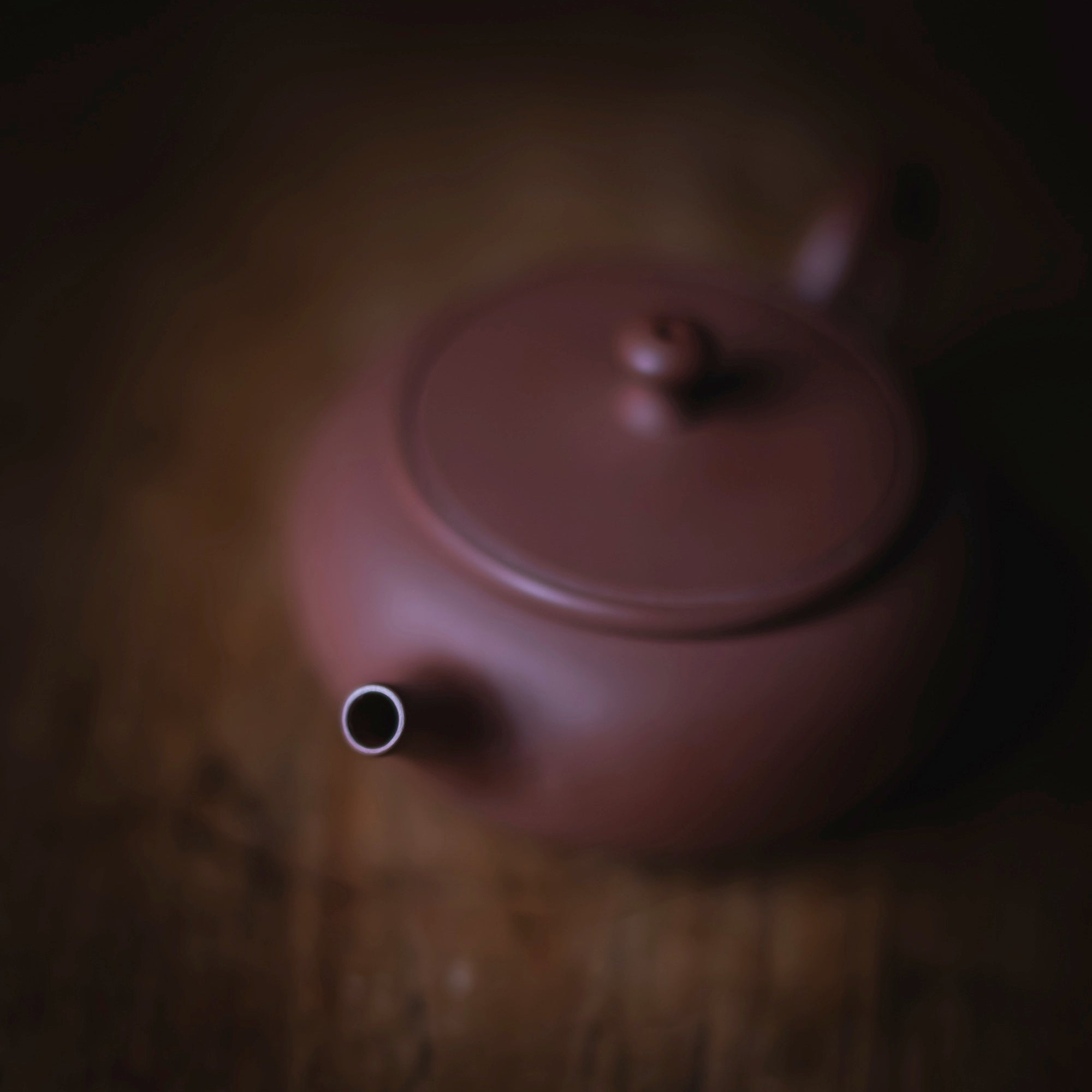
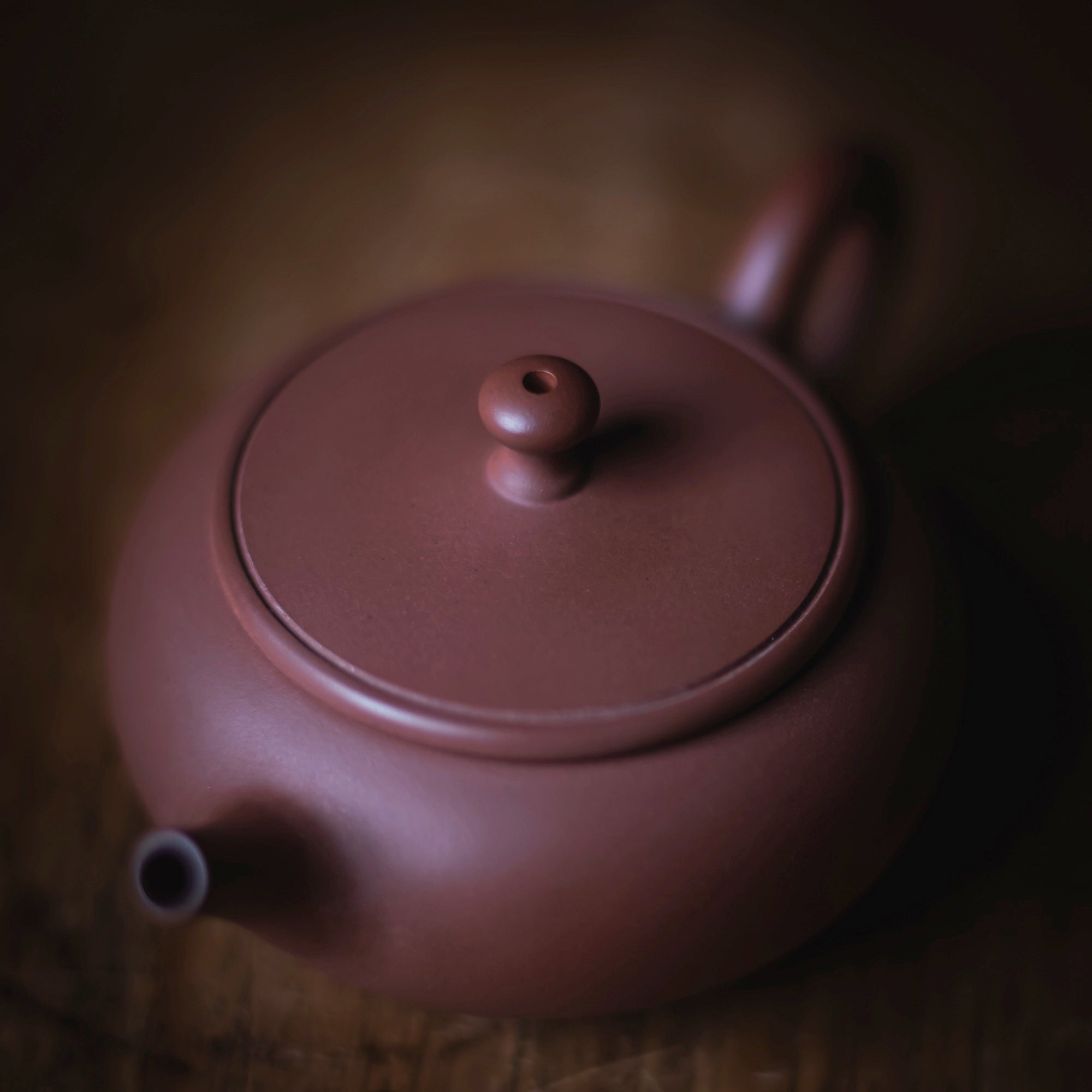
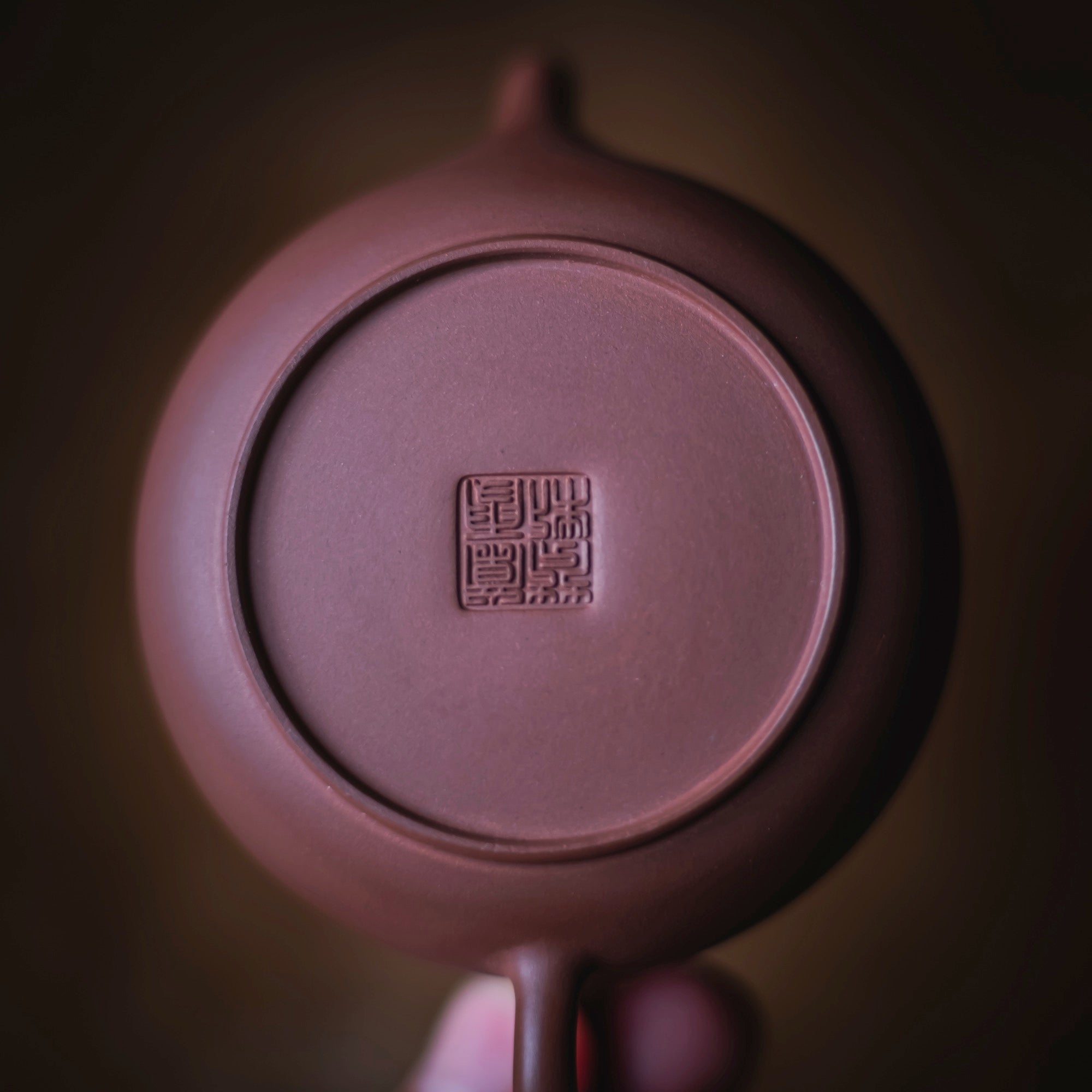
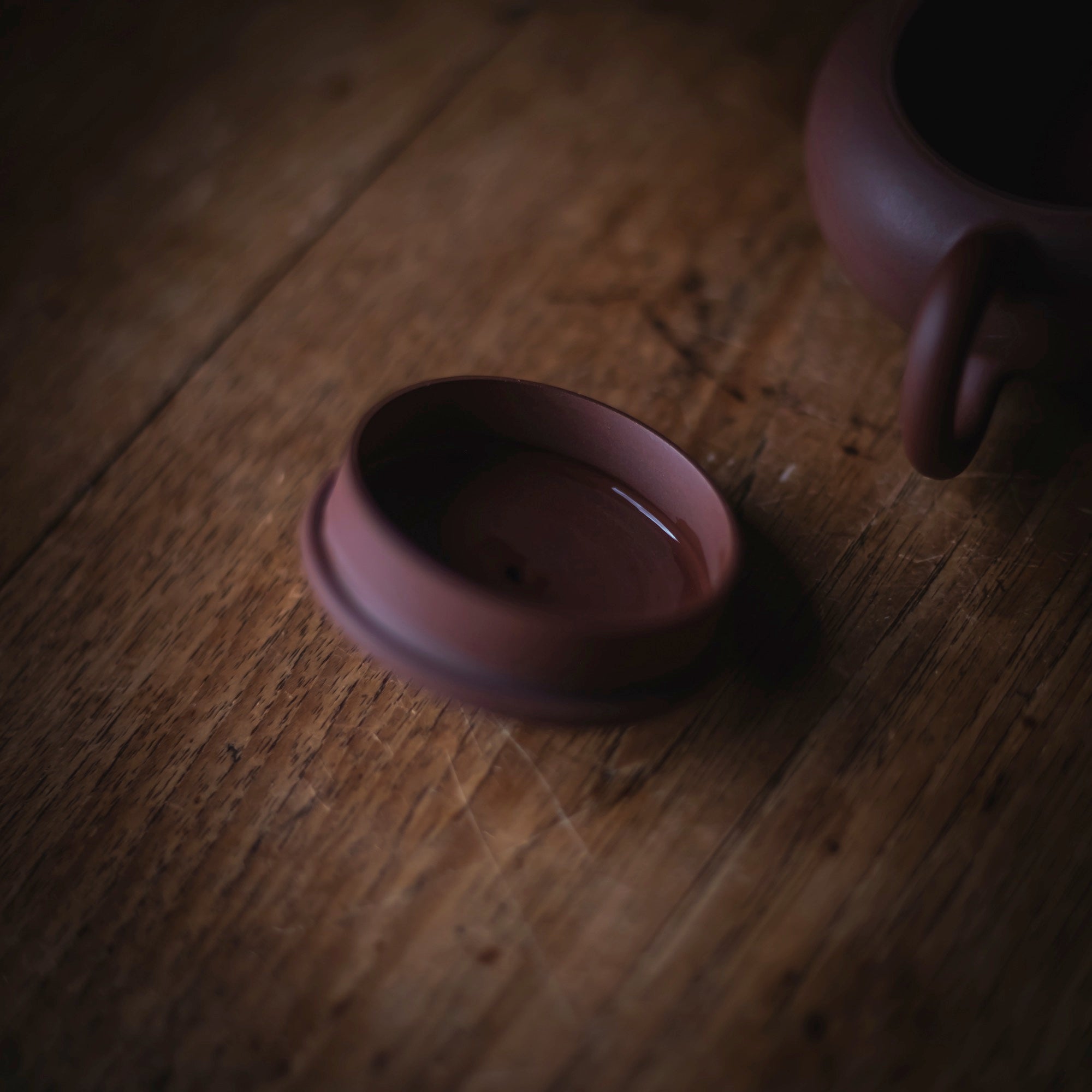
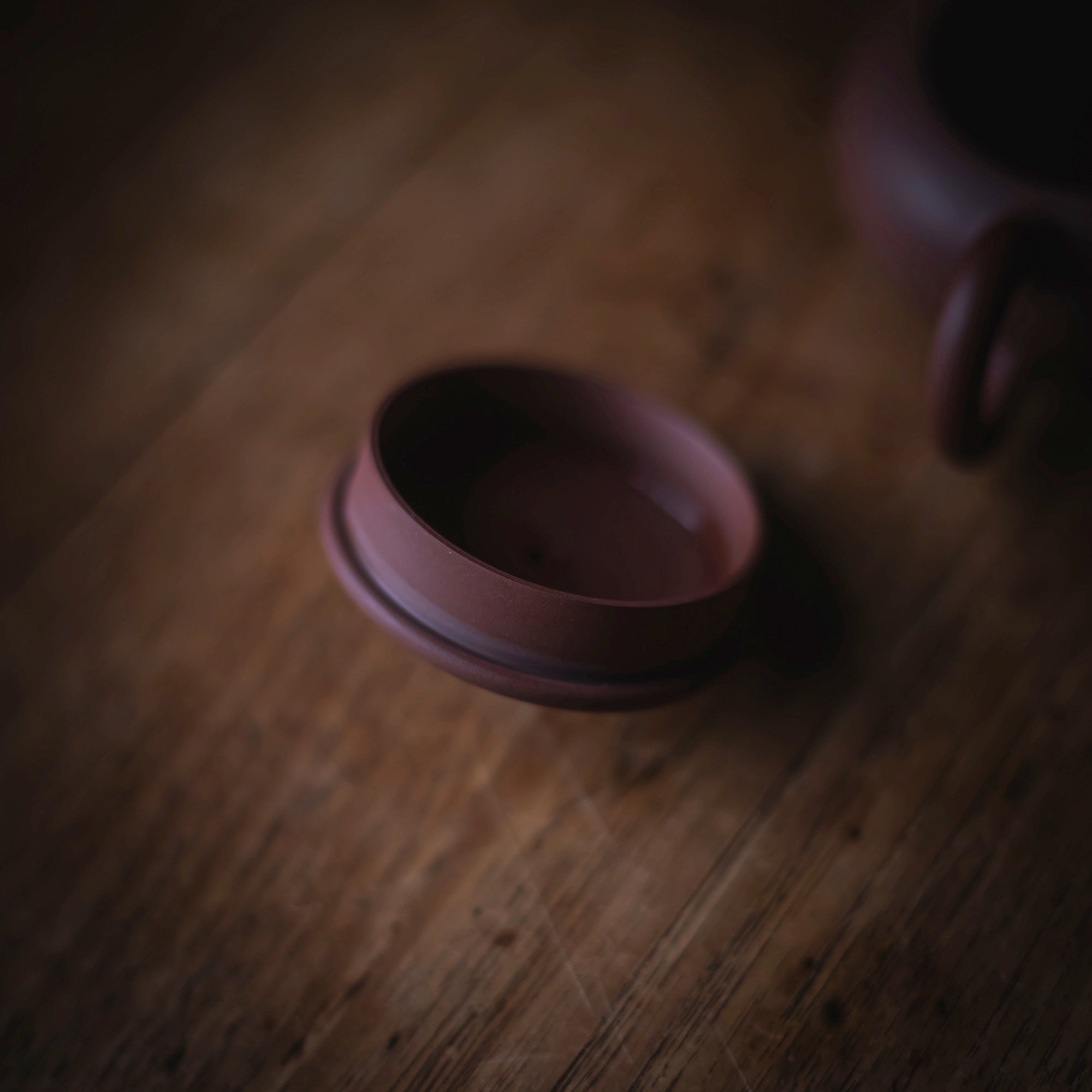
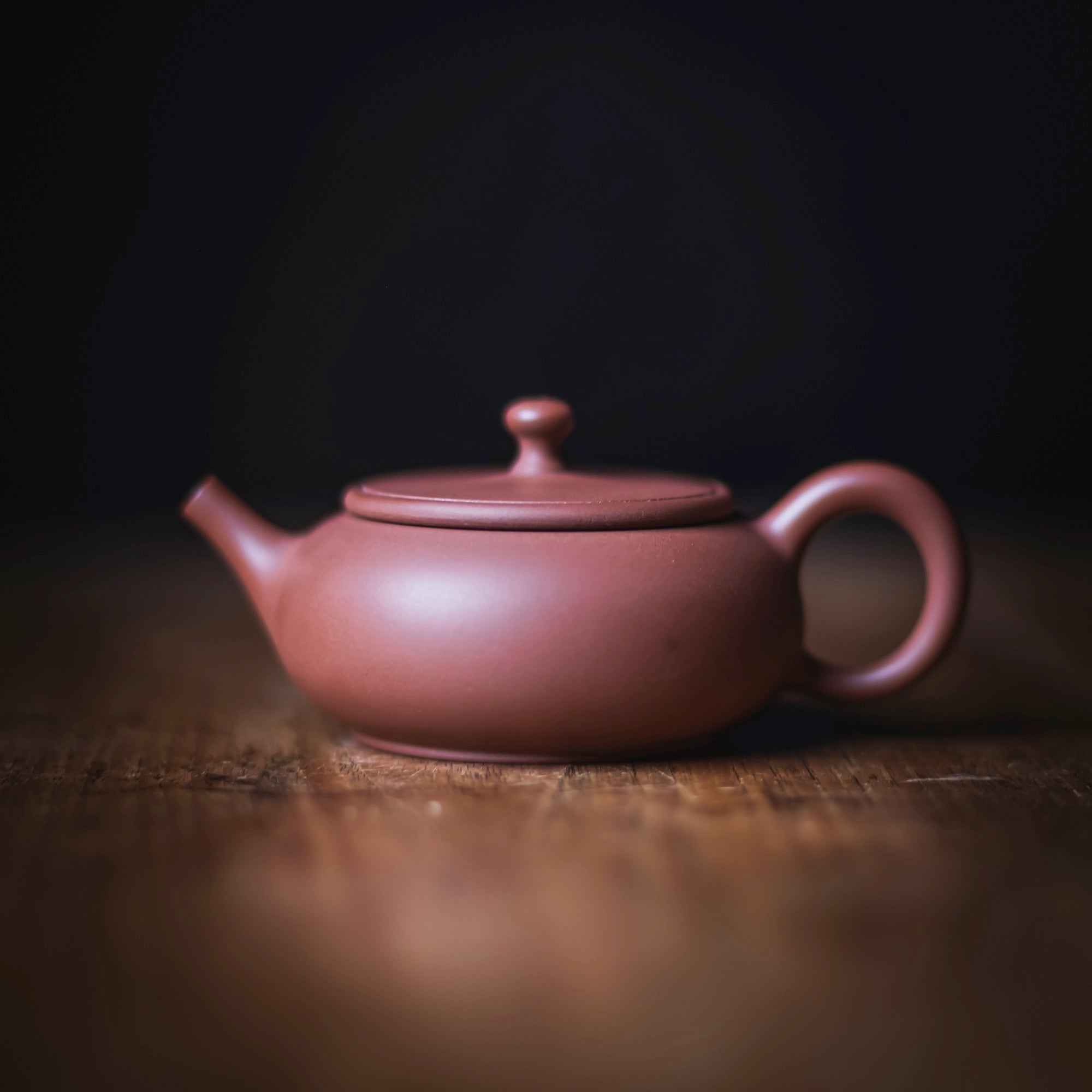
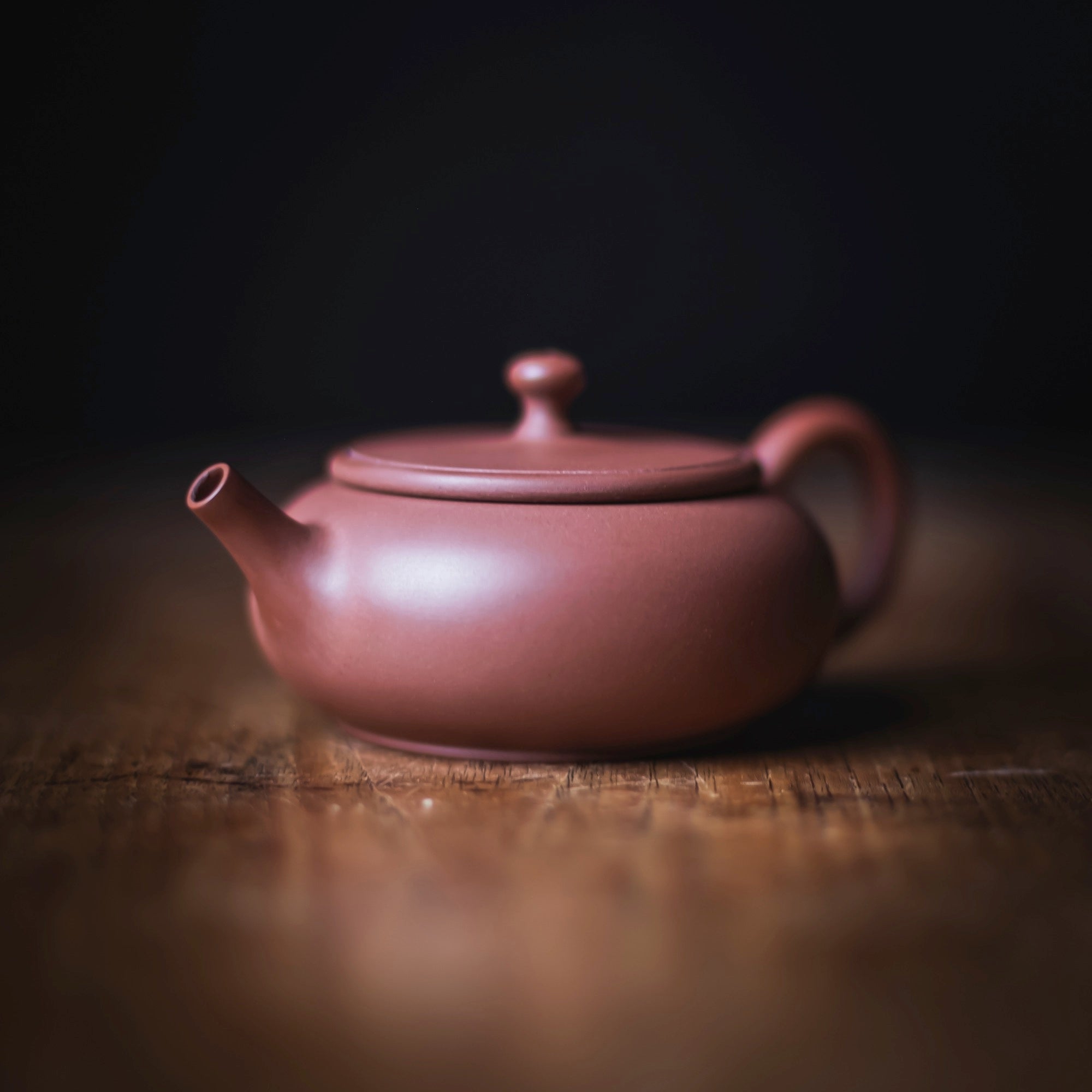
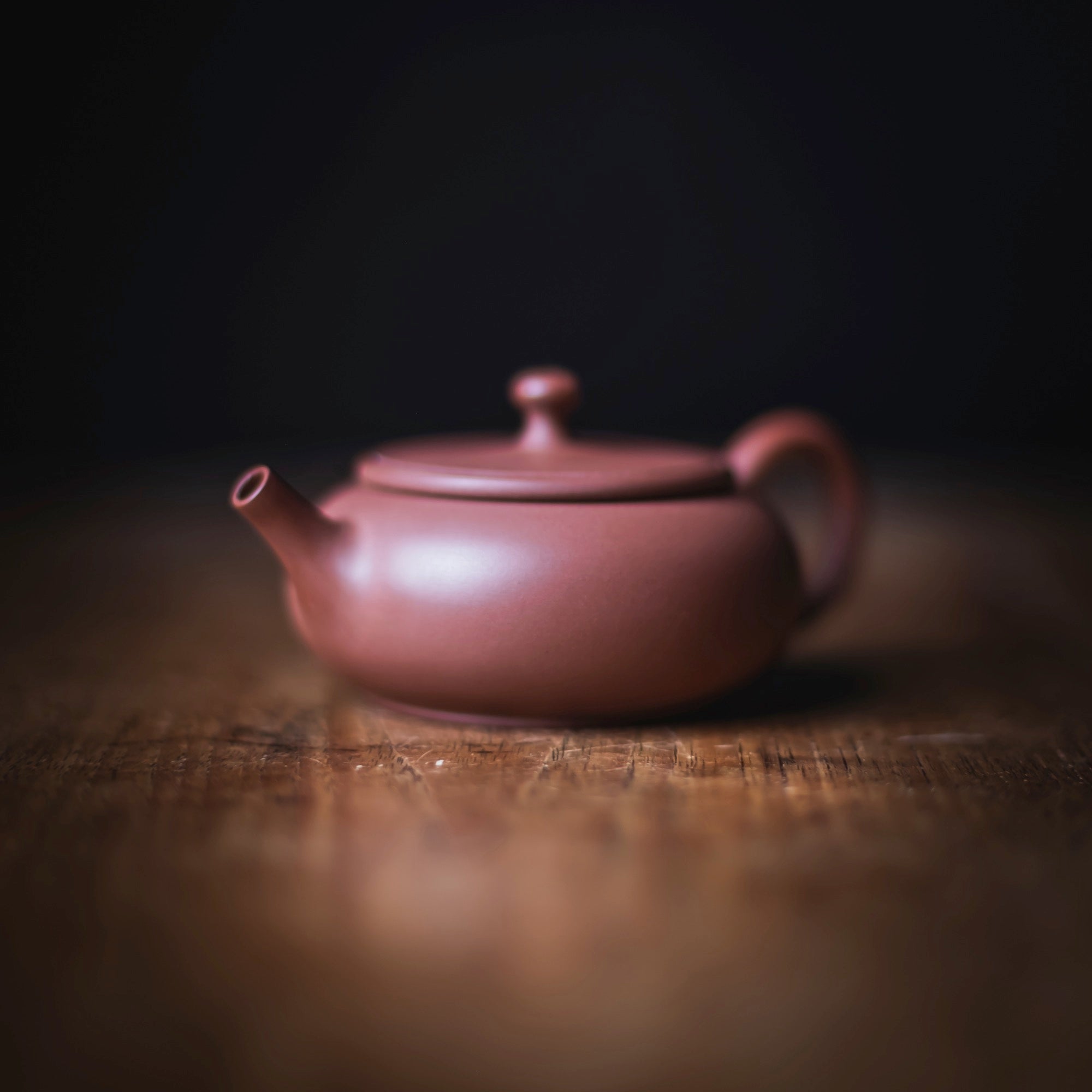


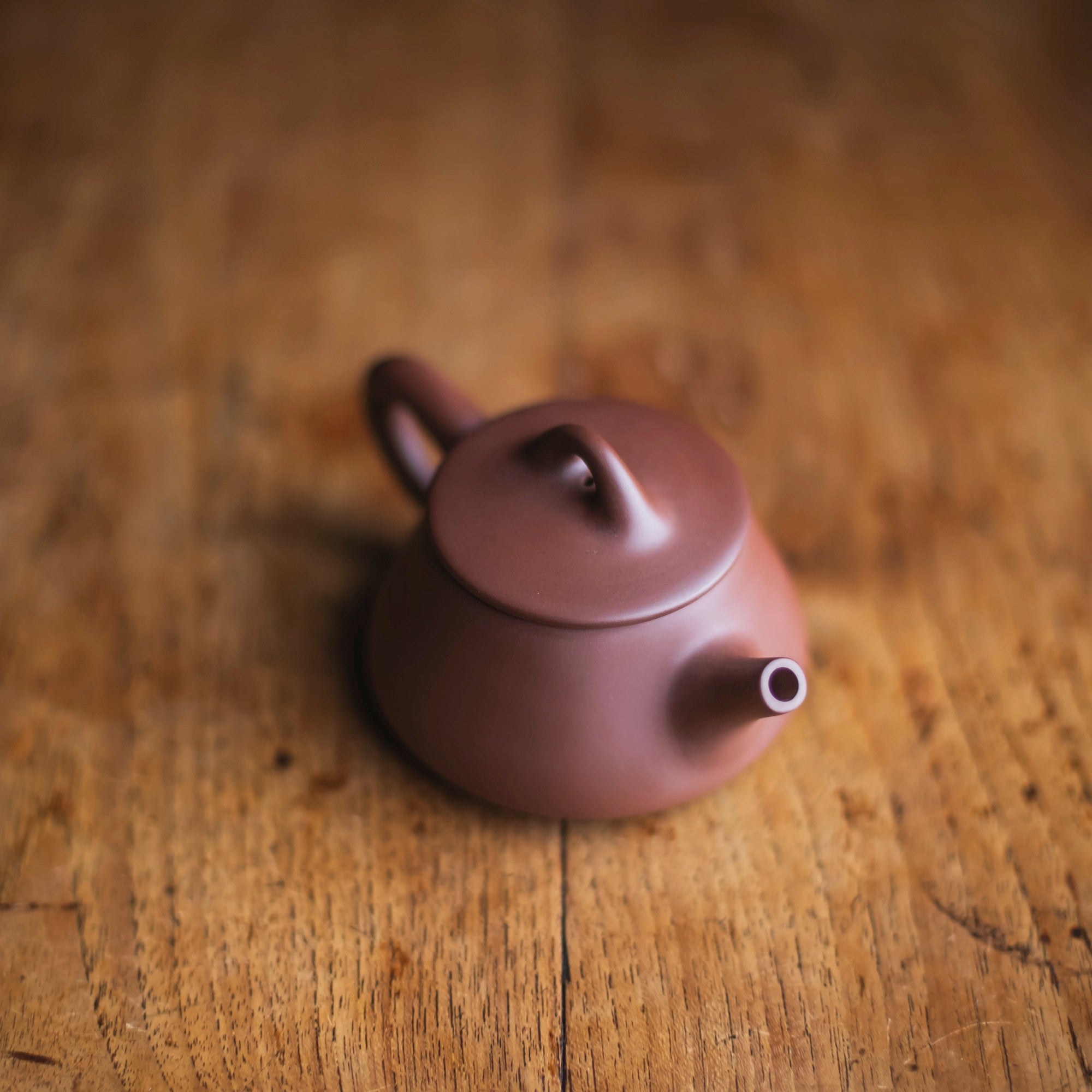
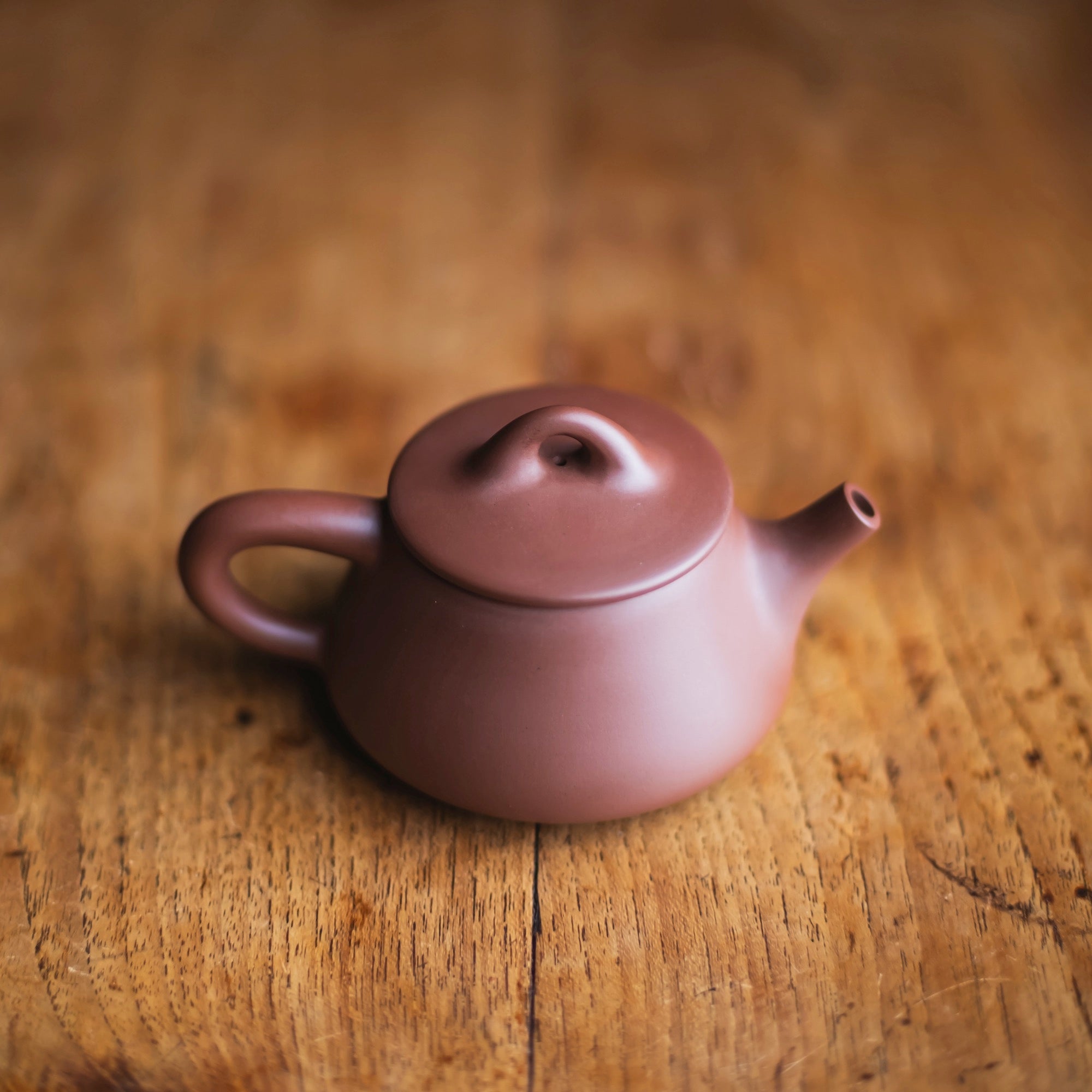
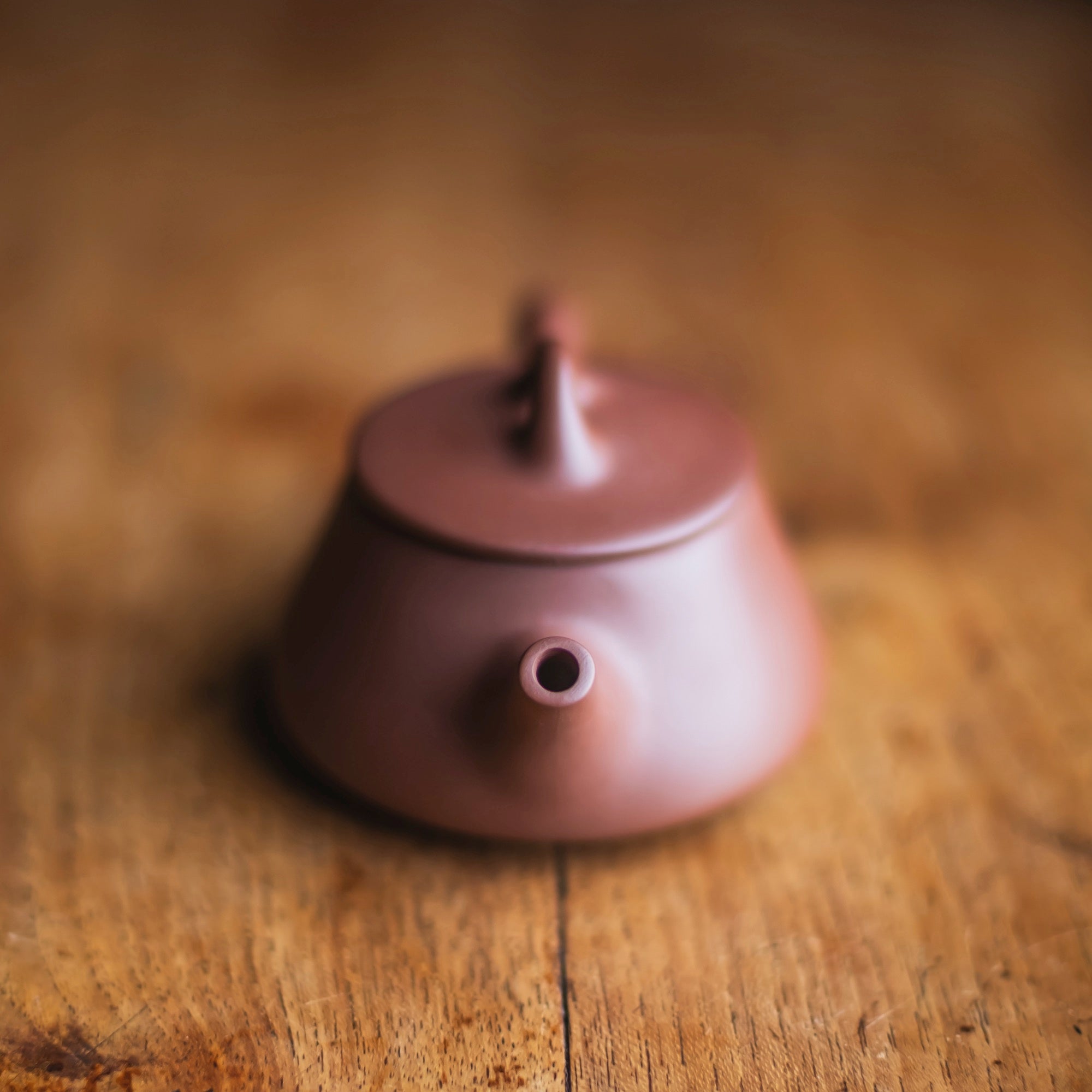
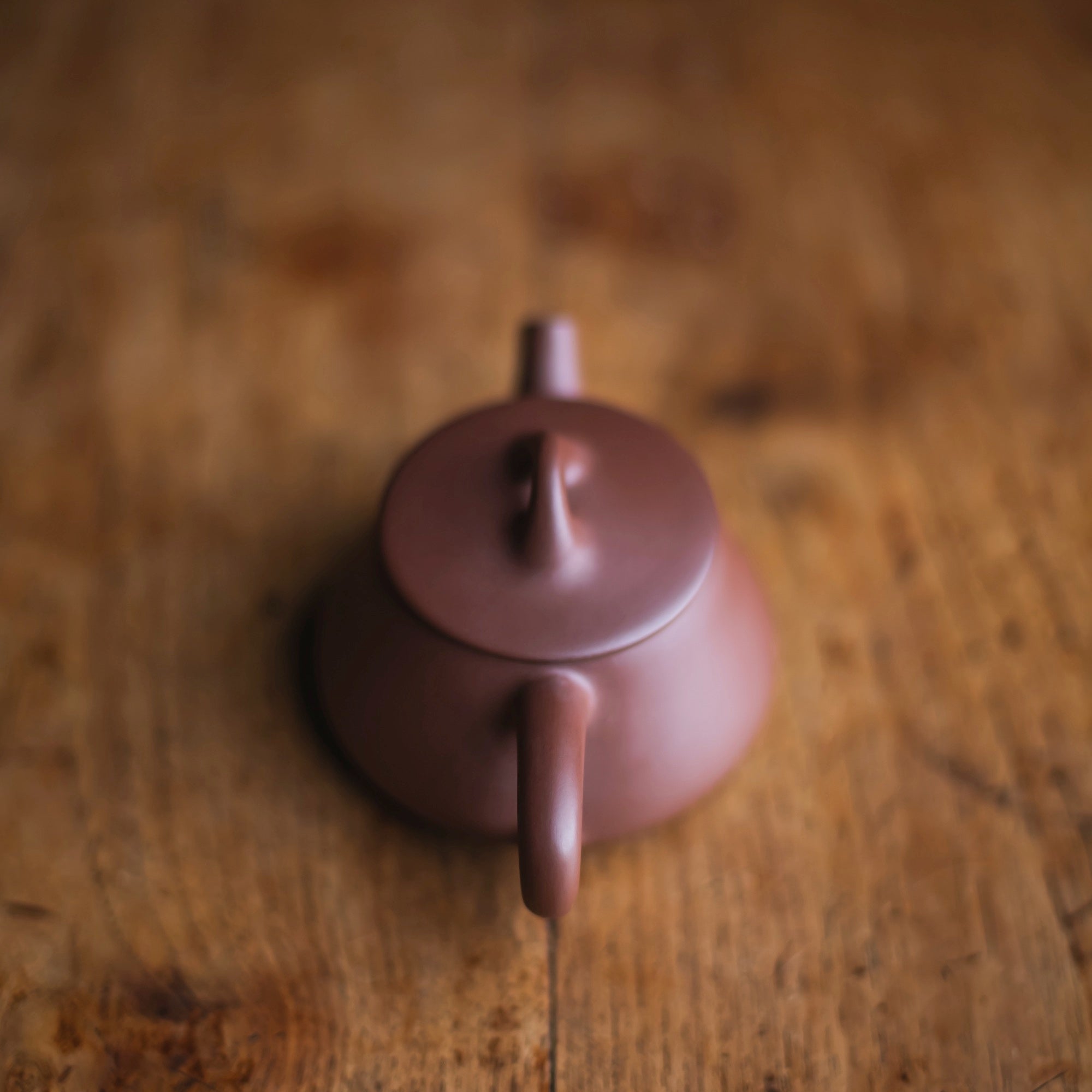
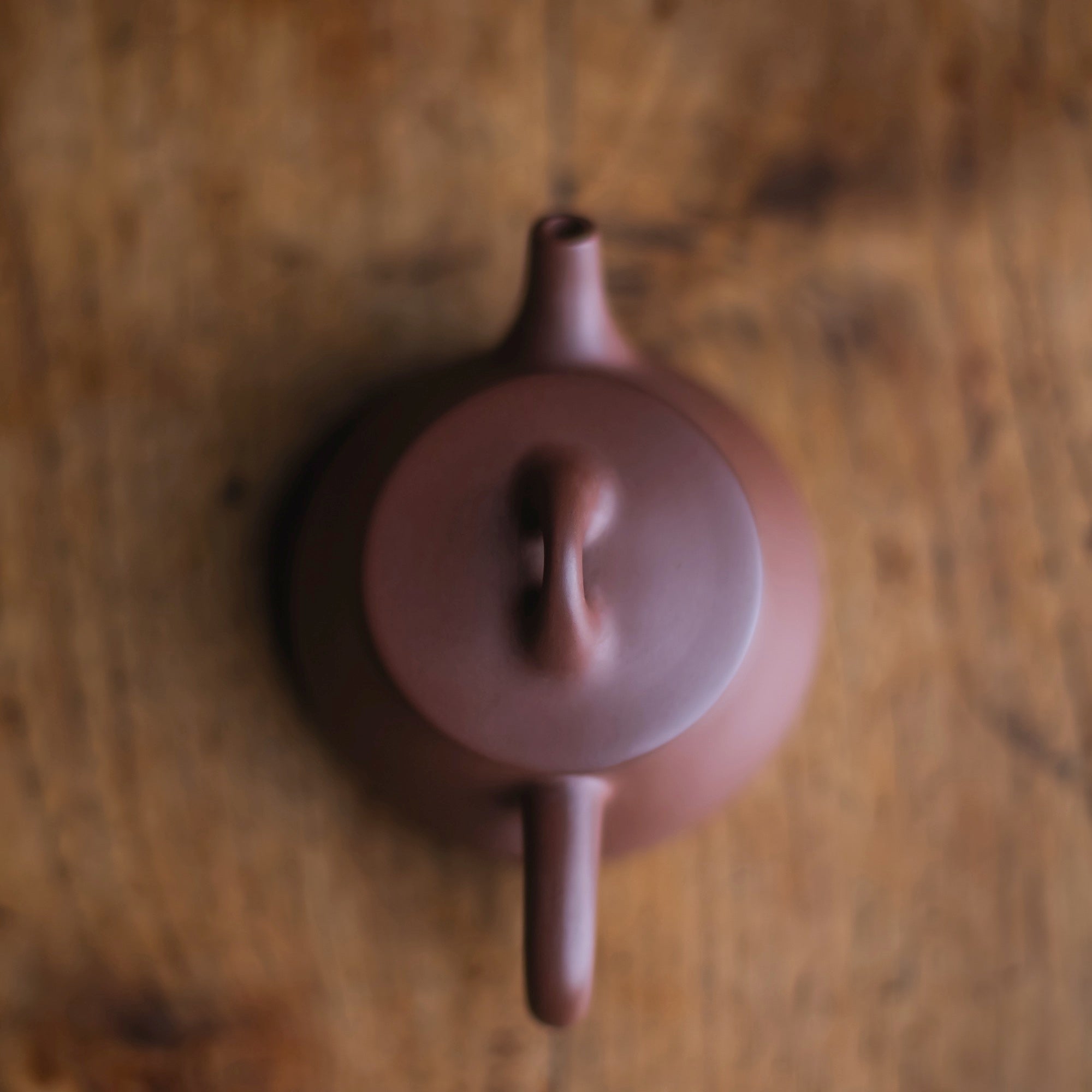
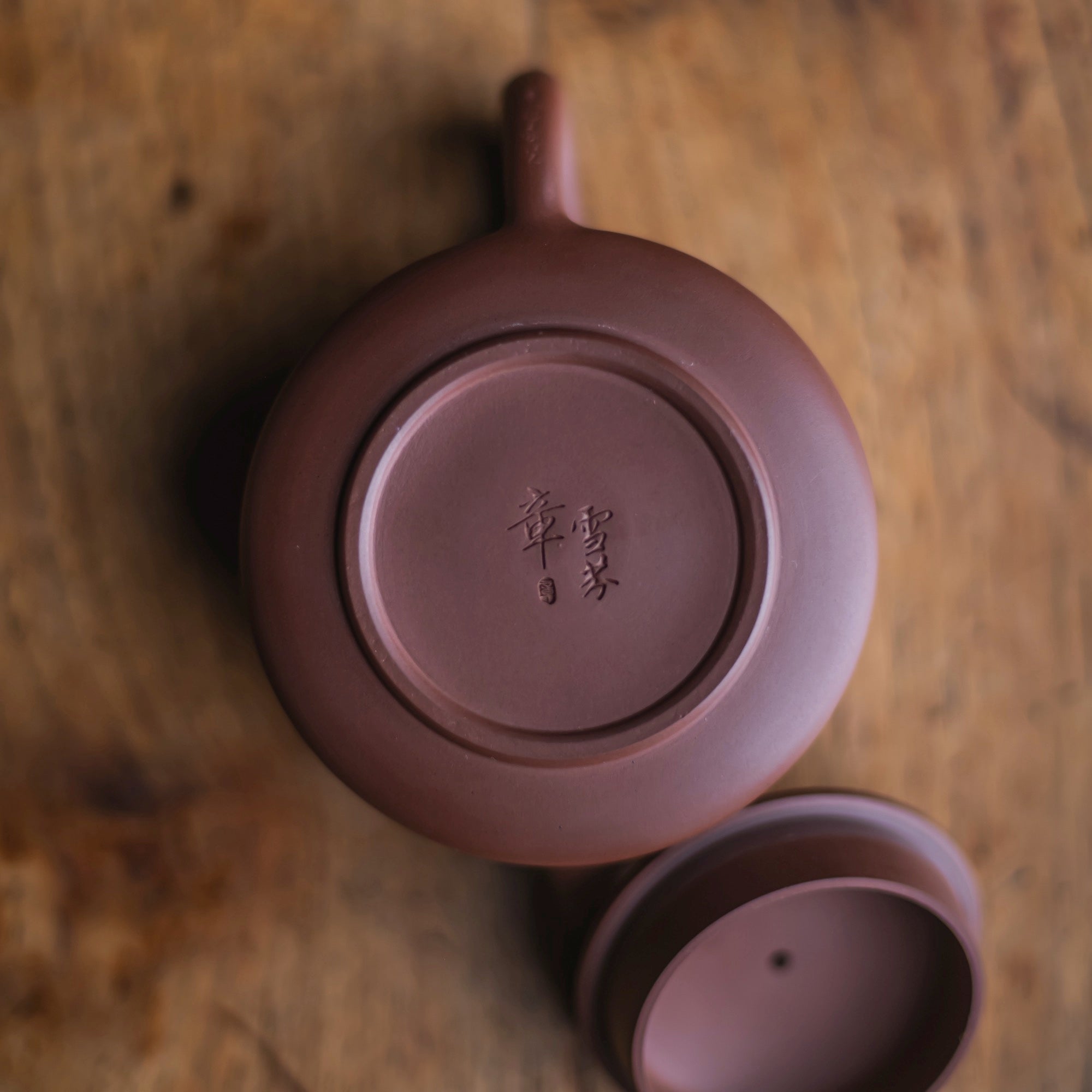
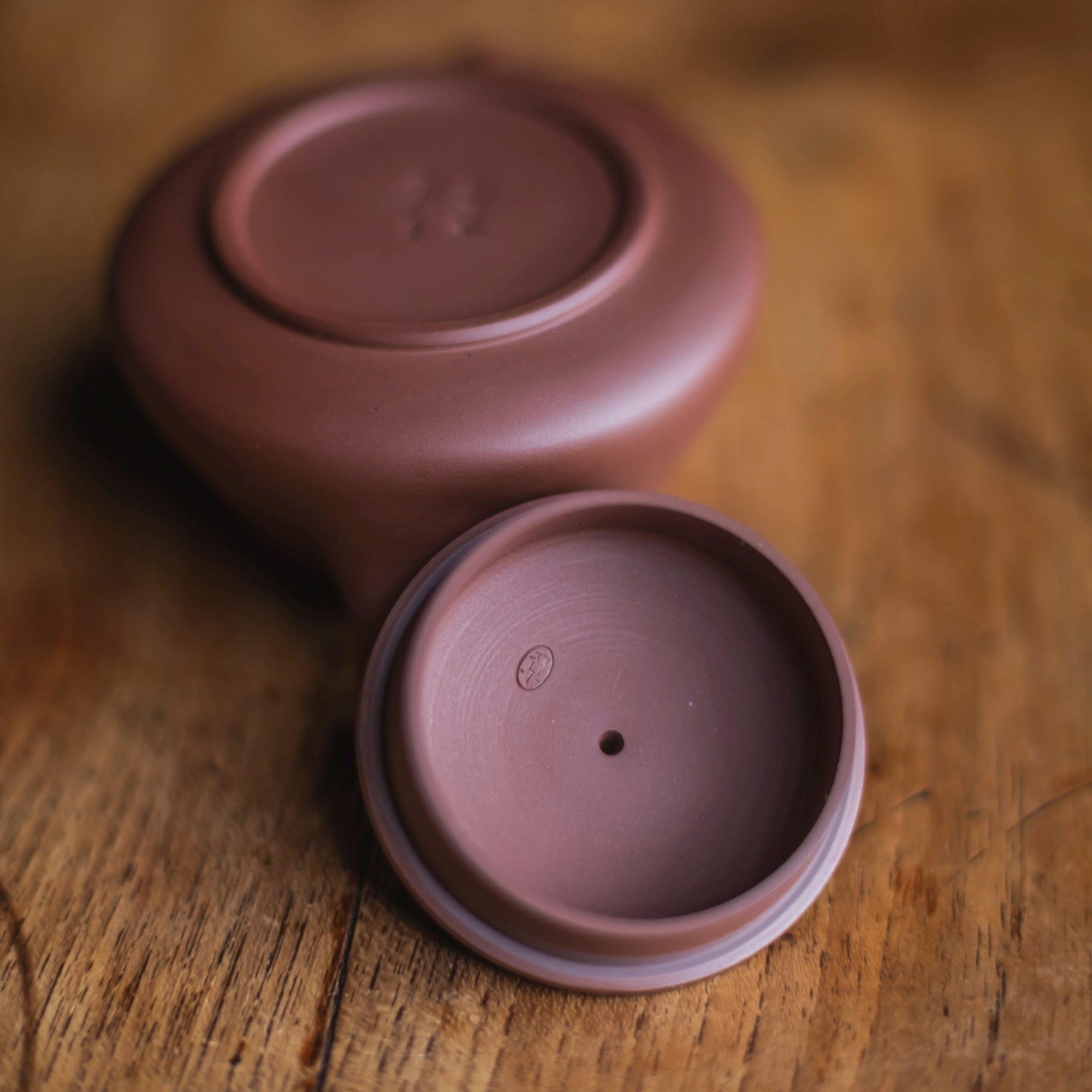
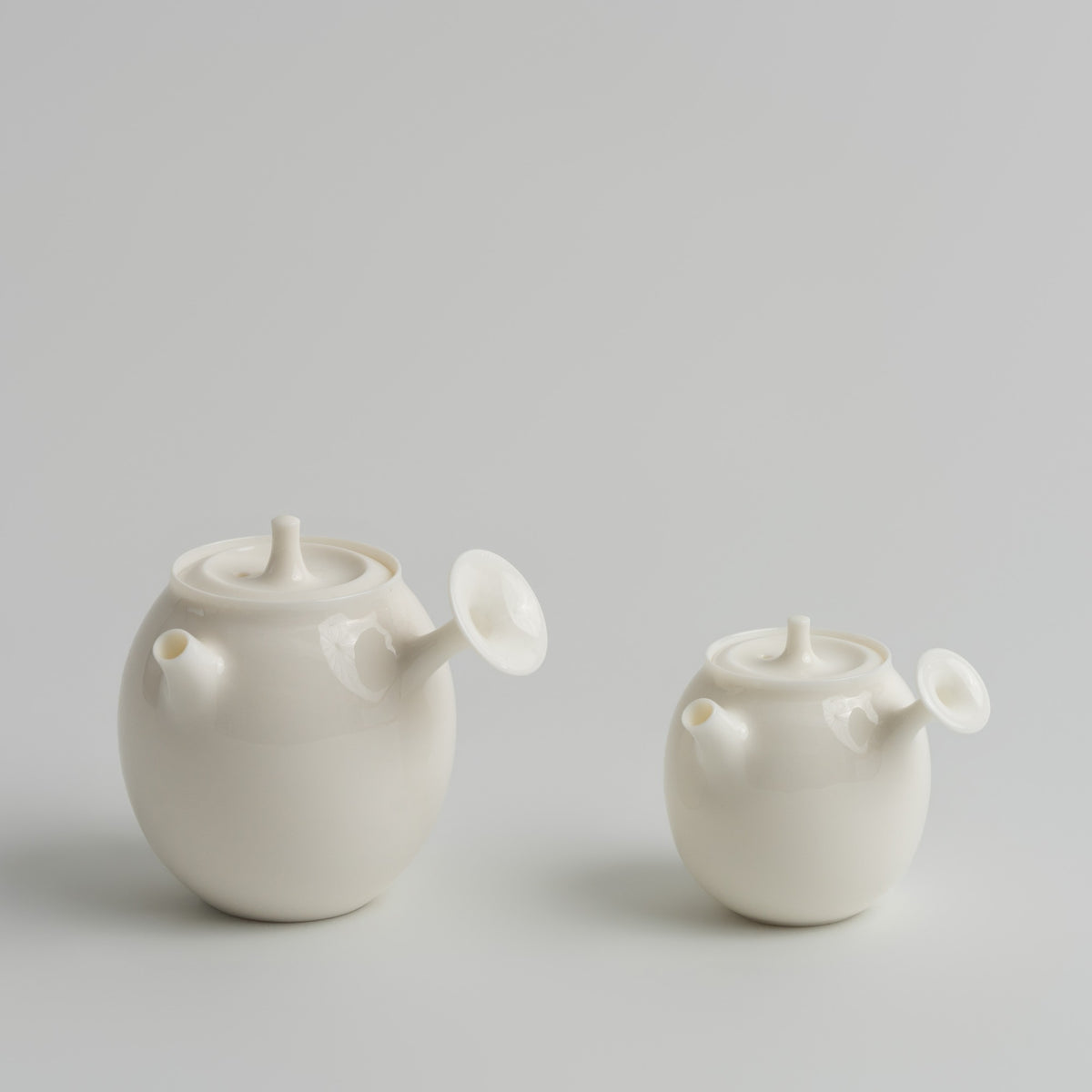

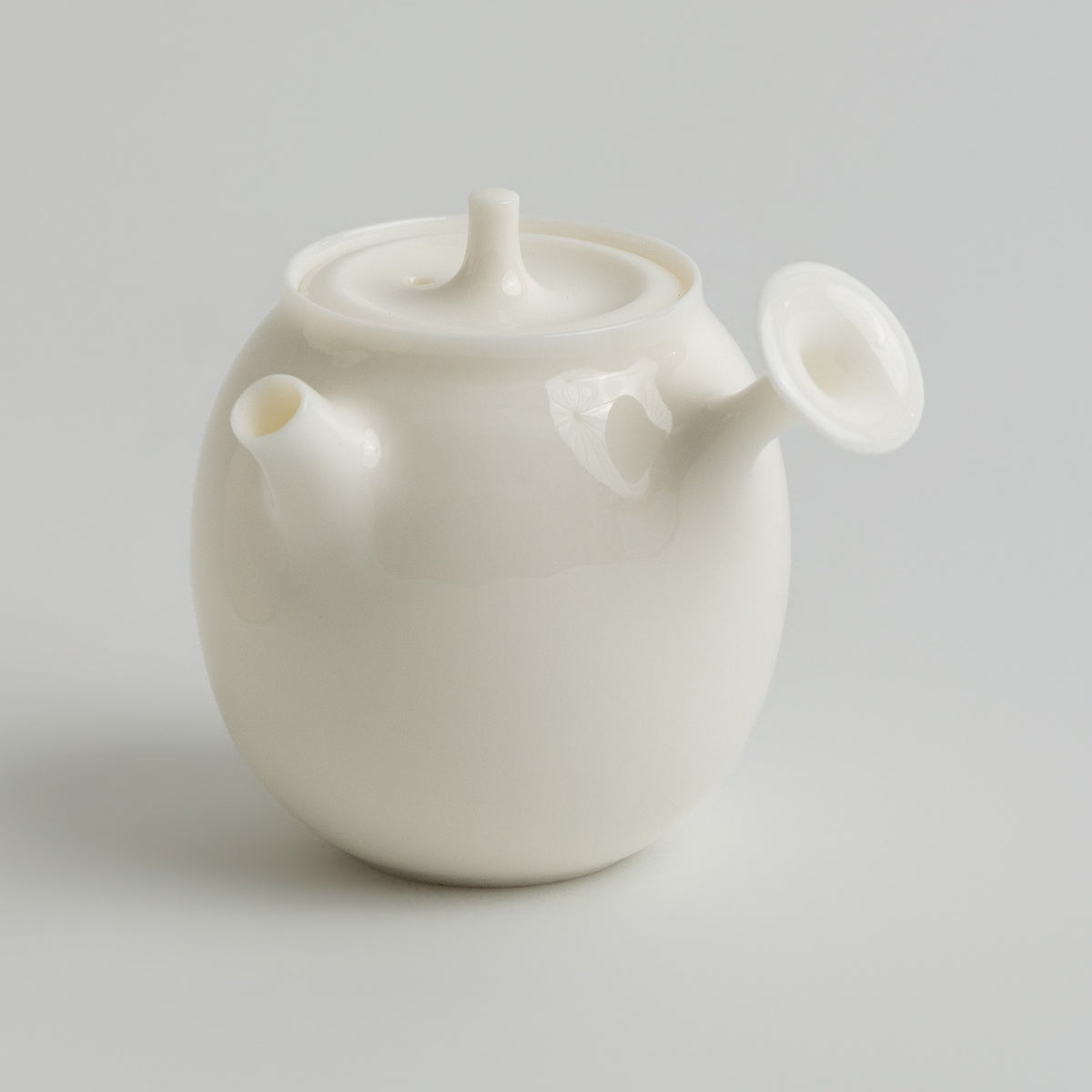


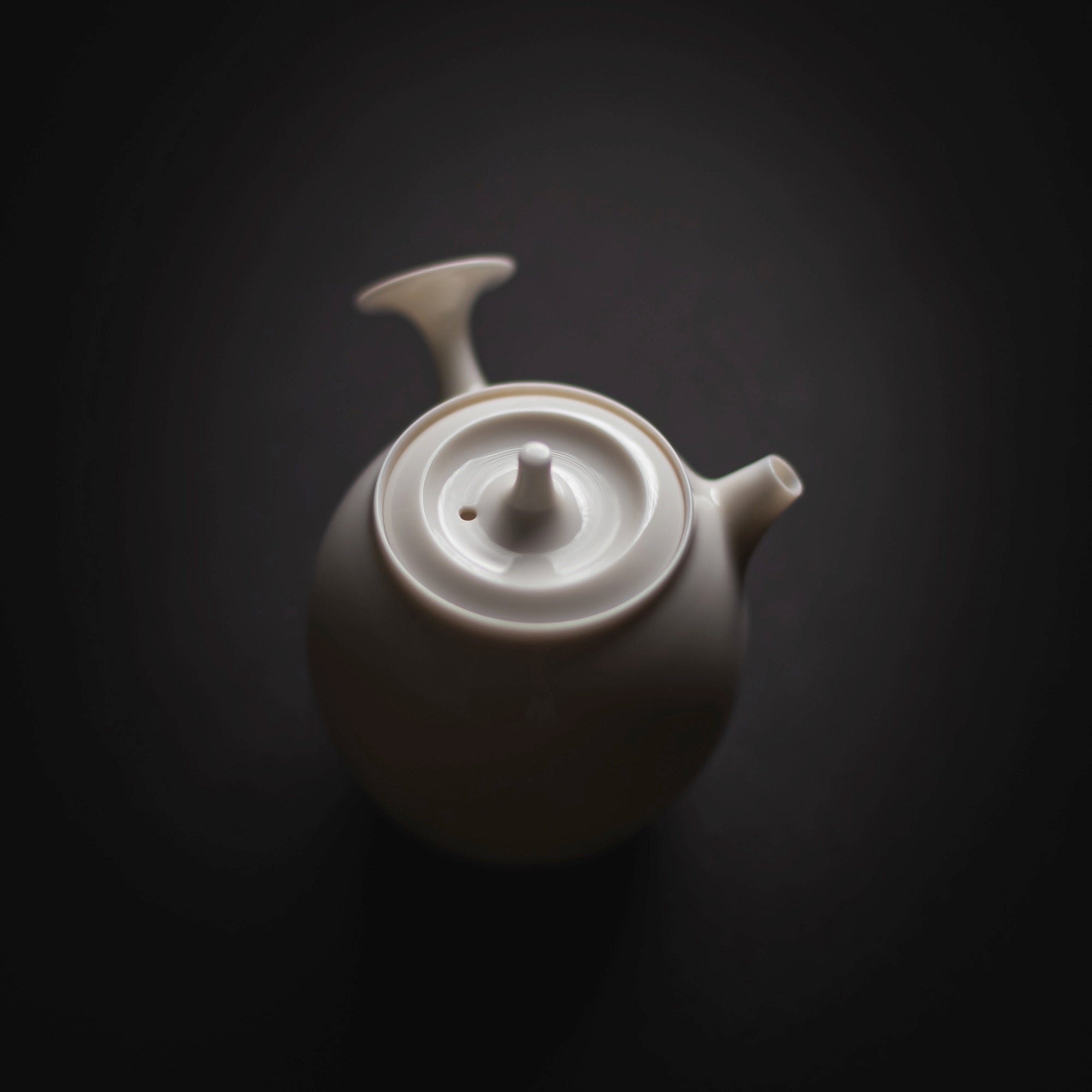


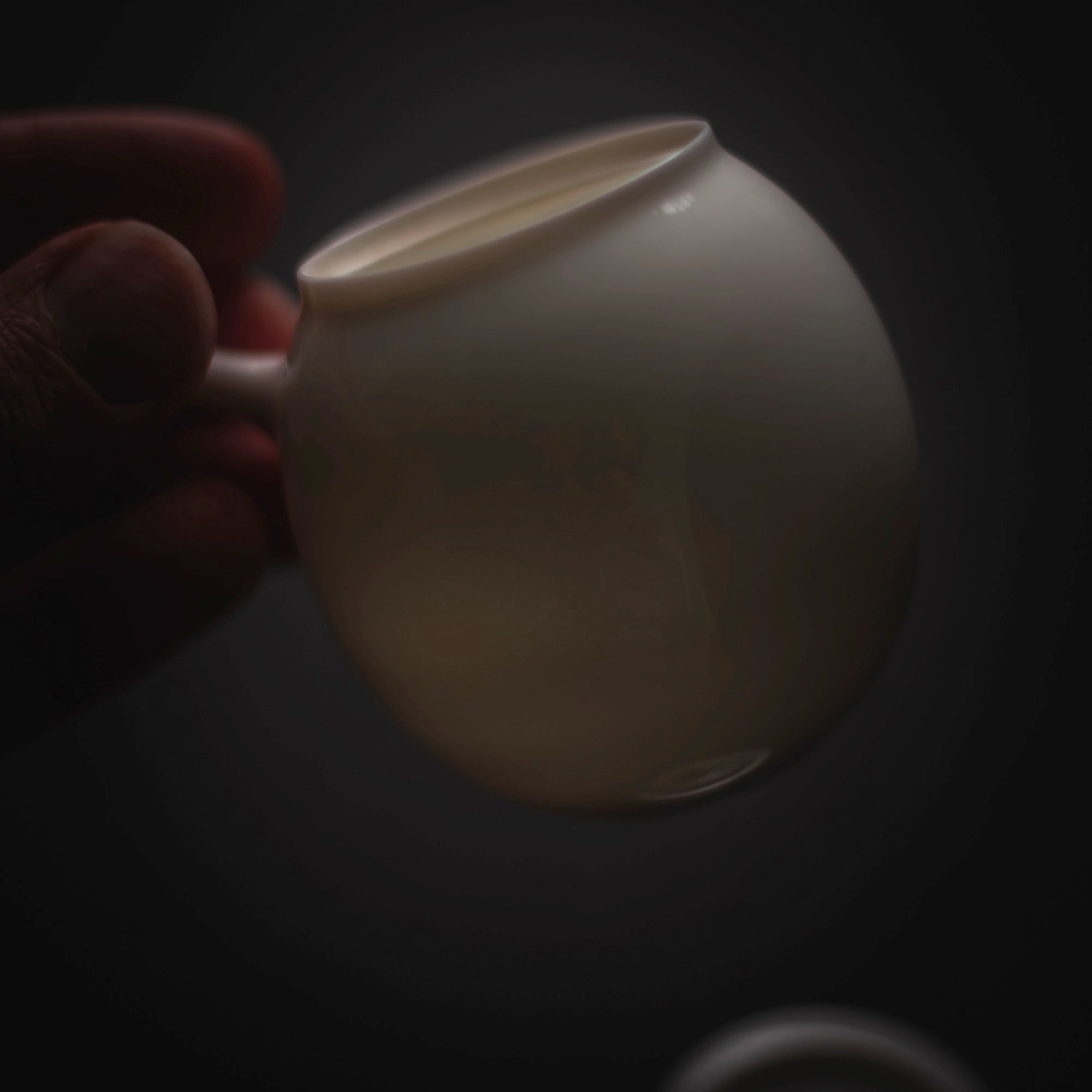


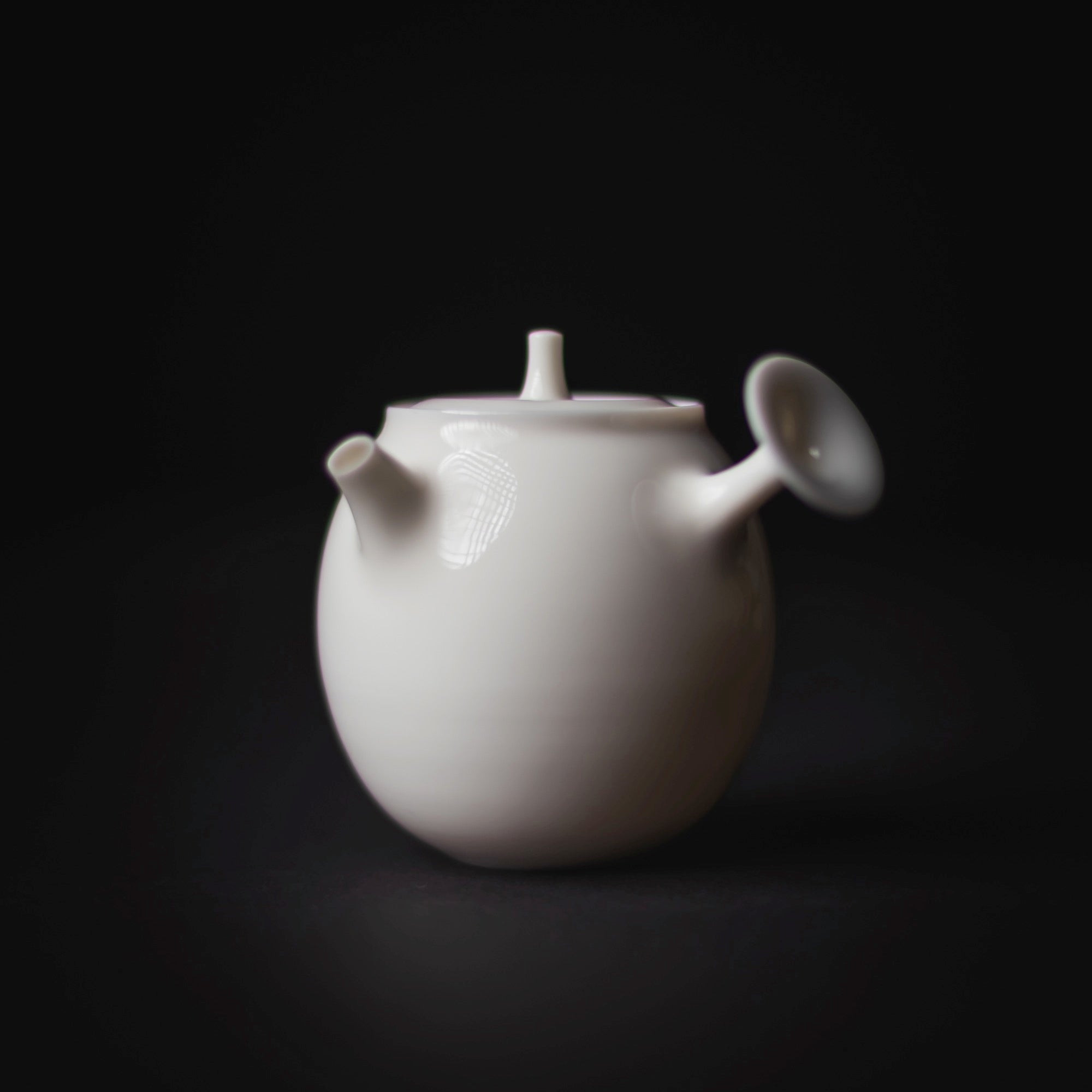


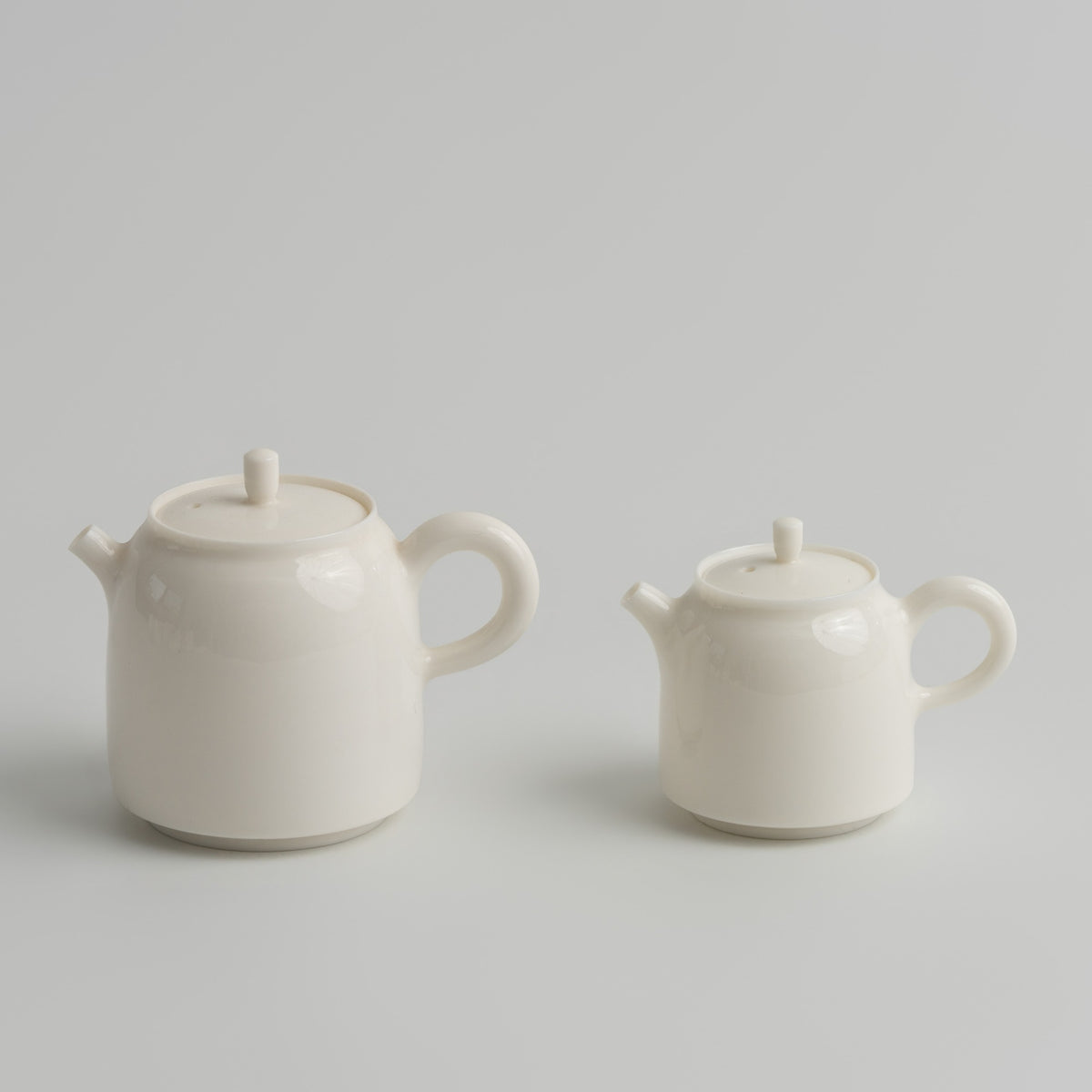


This collection holds our Chinese teapots: Yixing pots by Studio Li, Chaozhou pots by Zhang Xuefen, porcelain pots by Buchangqi Studio from Dehua and wood-fired pots by YiZhi from Jingdezhen. All of them are small pots for gongfu tea which hold between 70 and 160 ml, and the pots in stock cost between €179 and €390. More than 70 pots are listed here, and the pieces in stock come first.
Which Clay For Which Tea
An unglazed clay pot changes the taste of the tea, and how much it changes the taste depends on how porous the clay is. Among the Yixing teapots, Zhuni is the densest clay and it absorbs very little, which is why we use it for high-aroma oolongs such as Phoenix Dancong or Yancha (rock oolong). Zini rounds off a tea and takes away some of the high notes, so it suits ripe and aged puerh and black tea. Duanni is the most porous of the three clays, and we pair it with lighter teas such as green tea, white tea or a young sheng puerh. The purple clay of the Chaozhou teapots is unglazed as well. Chaozhou is the region where Phoenix Dancong grows, and these pots are traditionally used for that oolong. The porcelain pots from Dehua are glazed inside and outside, so they do not take on flavour and one pot can be used for every kind of tea. Our guide to Yixing clay explains the differences between the clays in detail.
Back Handle Or Side Handle
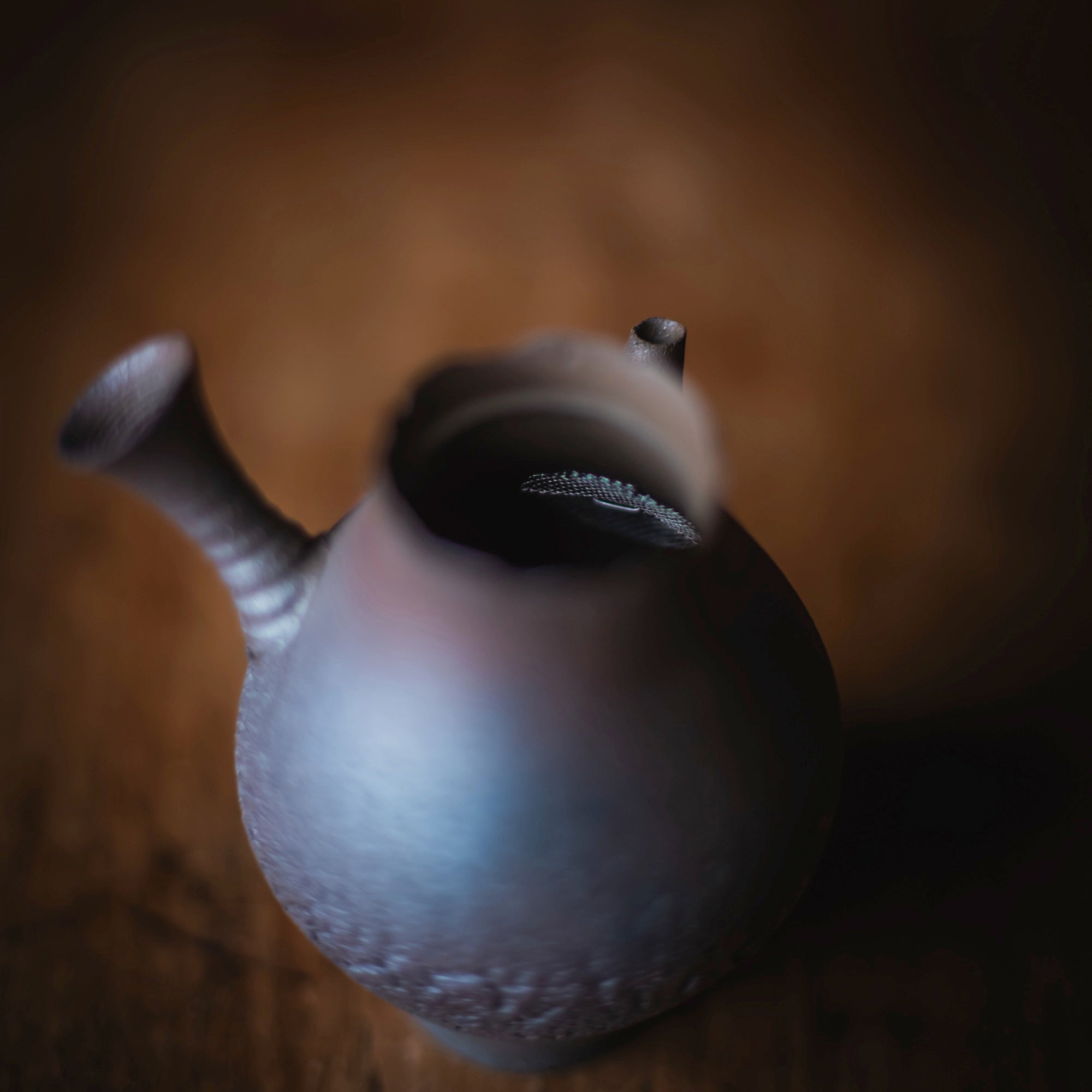
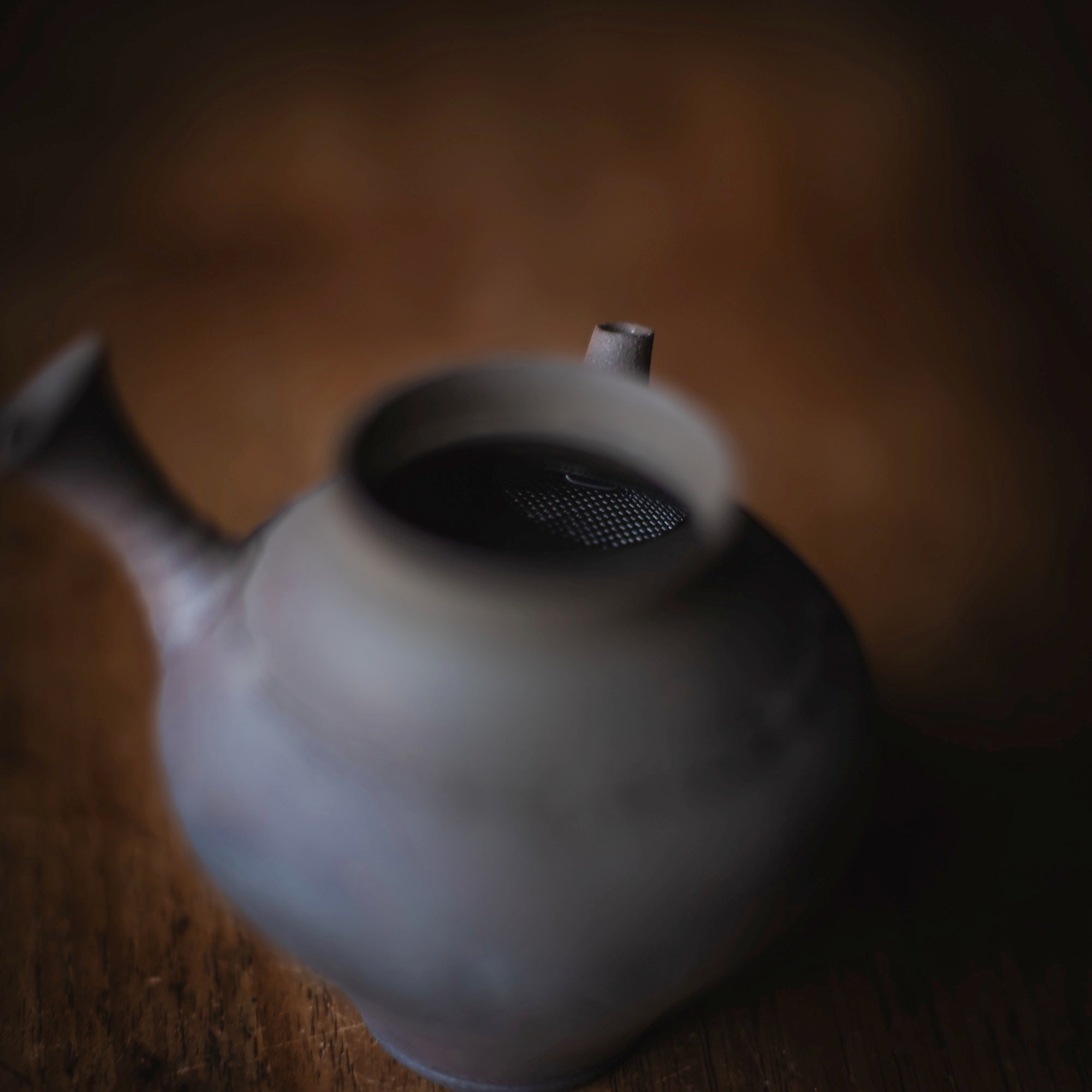
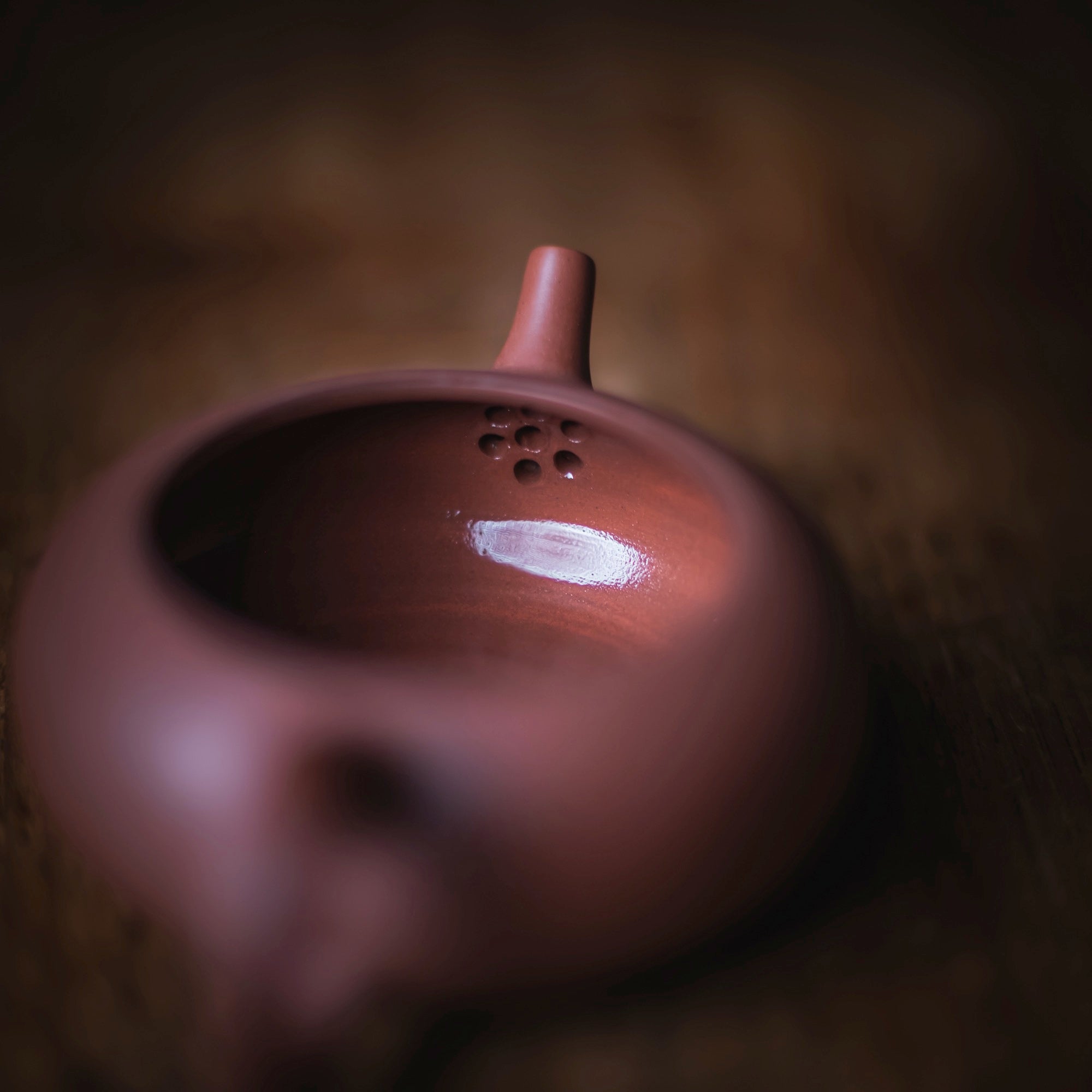
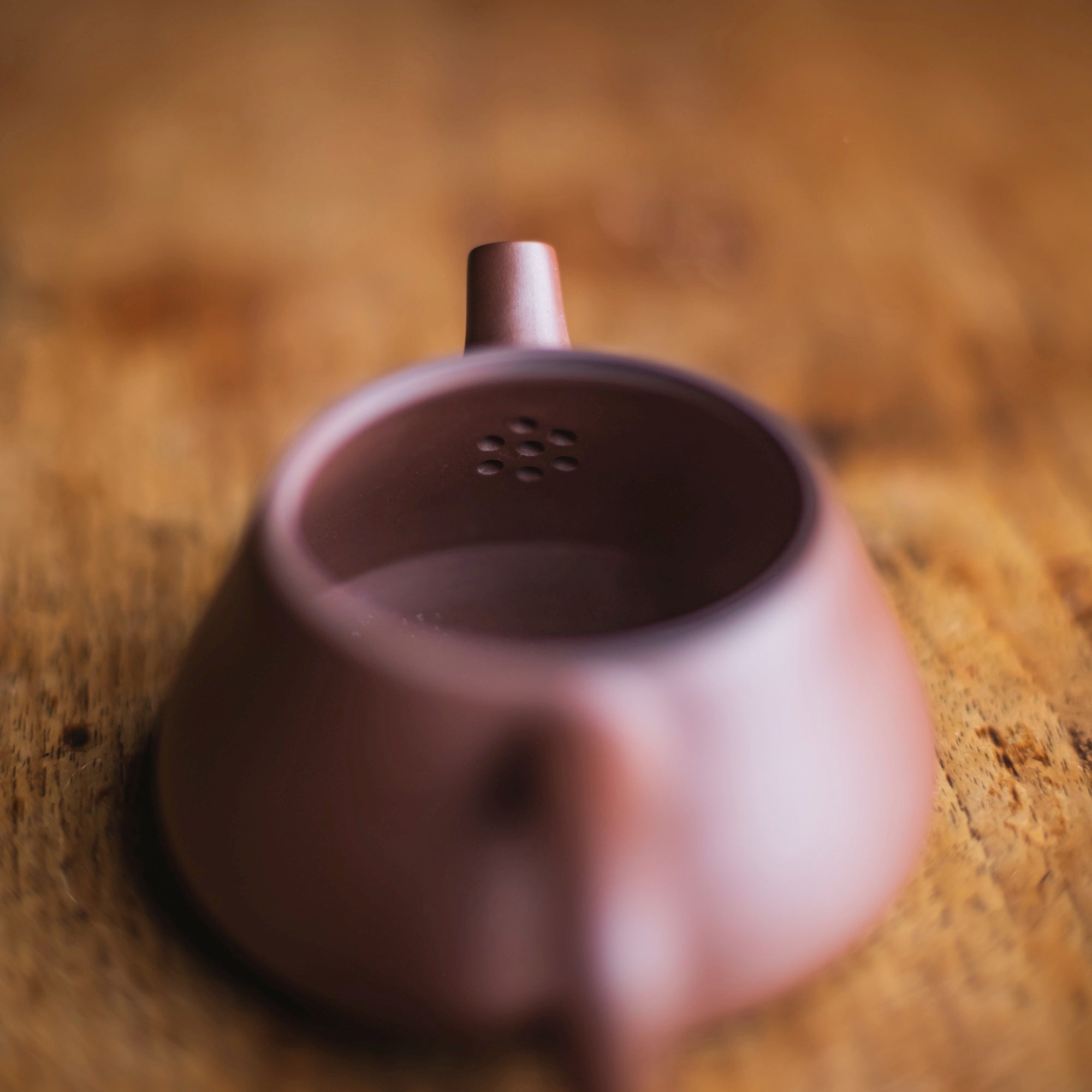
Most of the pots have the handle at the back, opposite the spout. The pots by YiZhi and some of the pots by Zhang Xuefen and Buchangqi Studio have a side handle, which is the form known from the Japanese Kyusu. The filters differ as well: the Chaozhou pots have a 7-hole filter in front of the spout, and the pots by YiZhi have a single hole with a removable metal mesh.
Which Size For How Many People
In gongfu brewing the pot is filled with a lot of leaf, the infusions are short, and the pot is poured out completely every time, either into a chahai or directly into the cups. A pot of 70 to 110 ml is the size for one person, and a pot of 120 to 160 ml serves two or three people. Because an infusion takes only 10 to 30 seconds, the pouring time of the pot matters. The product pages of the Chaozhou pots give this time, for example about 6 seconds for the 70 ml Xi Shi pot and about 15 seconds for the Xi Shi Thousand Lines pot.
What Changes The Price
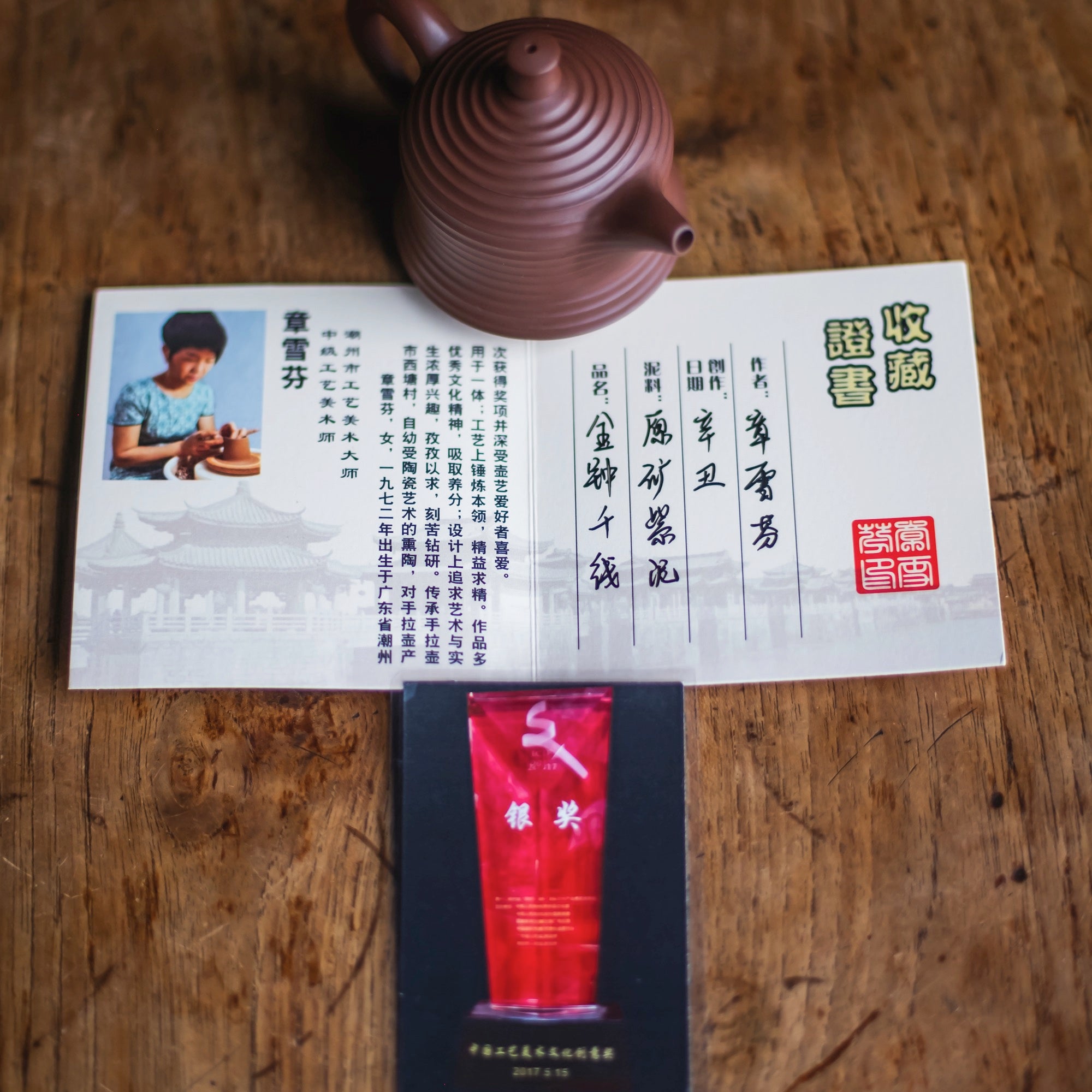
The price follows the amount of handwork and the firing. The Yixing pots by Studio Li are semi-handmade, and they are the least expensive pots in this collection. Zhang Xuefen makes the body and the lid of every pot by hand, and each pot comes with a certificate of authenticity. The pots by YiZhi are made from wild clay, fired in a wood kiln and delivered in a wooden box, and they are the most expensive pieces here.
How An Unglazed Pot Is Cleaned
An unglazed pot is cleaned only with hot water and never with detergent, because the clay would absorb it. For the same reason it is better to have no oil or hand cream on the hands while brewing. Most people keep an unglazed pot for one kind of tea, because the clay takes on the tea over time, and the teas for these pots are in our oolong and puerh collections. A gaiwan is the alternative when one vessel should brew every tea.