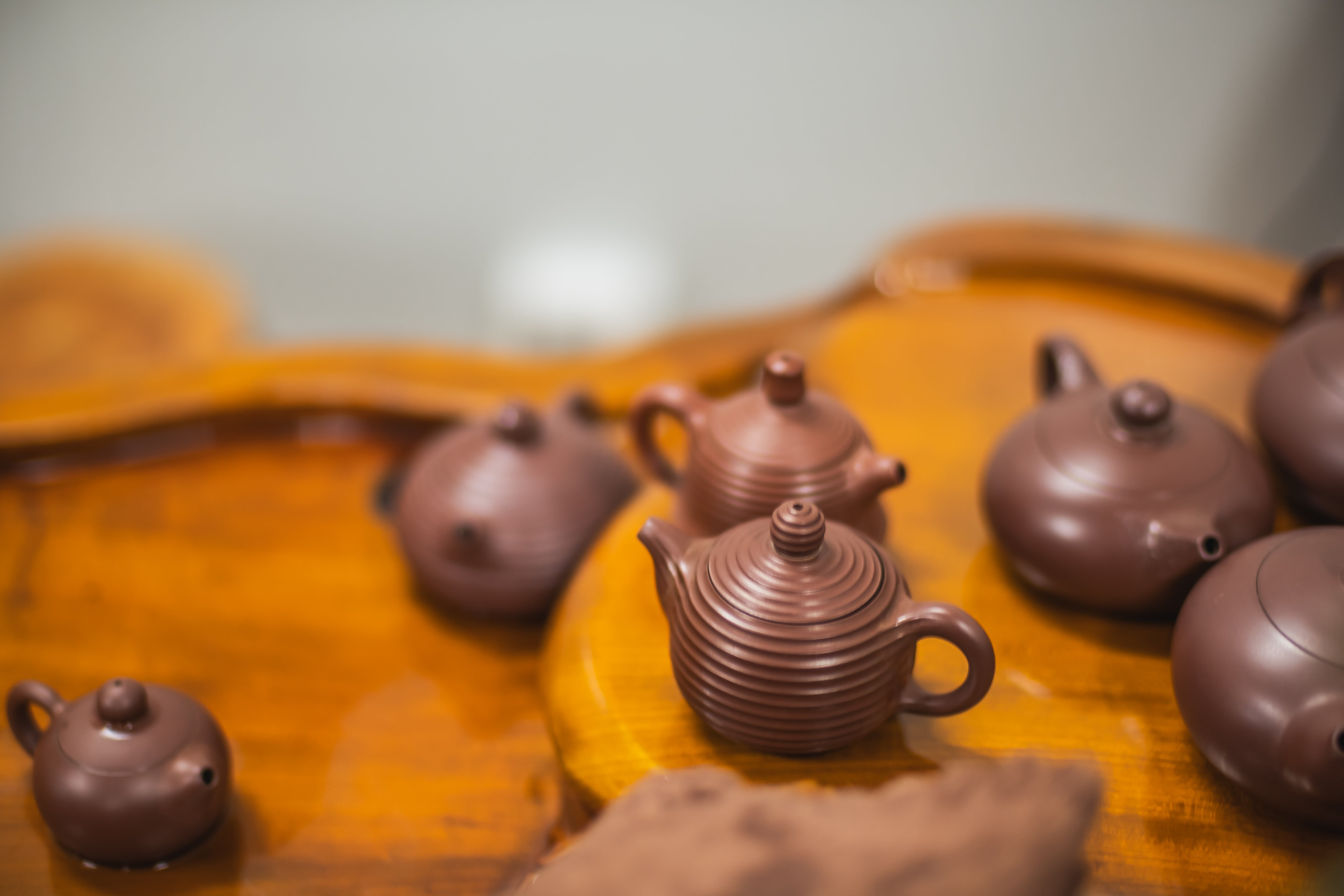


De Zhong 德钟壶 (ca. 120ml)

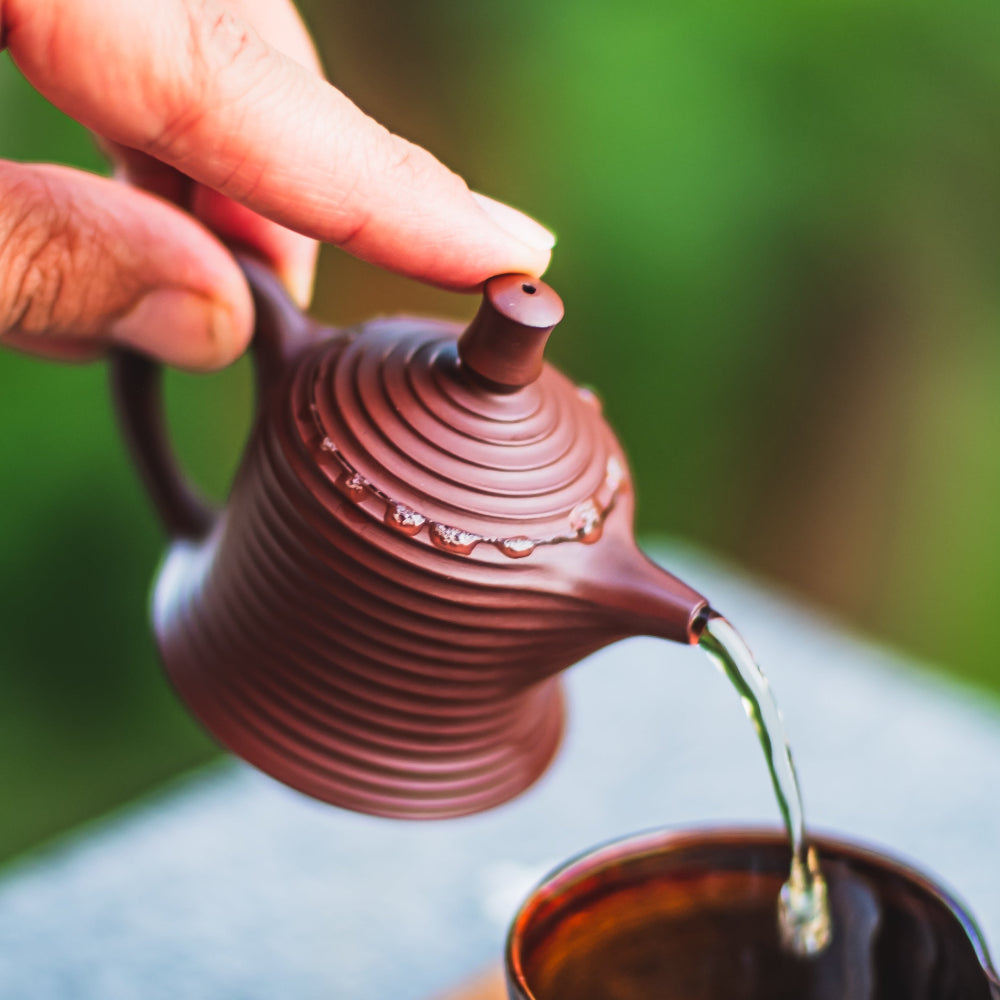
Back-Handle Teapot, Teapot (body and lid) handmade by Zhang Xuefen (Xitang, Chaozhou) We include a certificate of authenticity with each teapot. Zhang Xuefen’s purple Chaozhou clay, unglazed, 7 hole direct filter
德钟壶 is one of the classic Chinese teapot forms, and the name describes it, because 钟 means bell and 德 stands for virtue, so the shape is usually read as the noble bell. The body is the bell standing upright on its base, which gives it a wide flat foot, a wall that rises almost straight and a flat lid that closes flush with the rim. The spout is short and straight and the handle is a simple ear, because this form is carried by its proportions and not by decoration.
Please note: photographs are of example piece, each individual teapot is handmade and can have slight variations. As with all unglazed teaware please don’t use any detergent on this clay, also avoid oil or cream on your hands when brewing. Treat this teapot only with hot/boiling water and excellent tea.
ca. 120ml-130ml
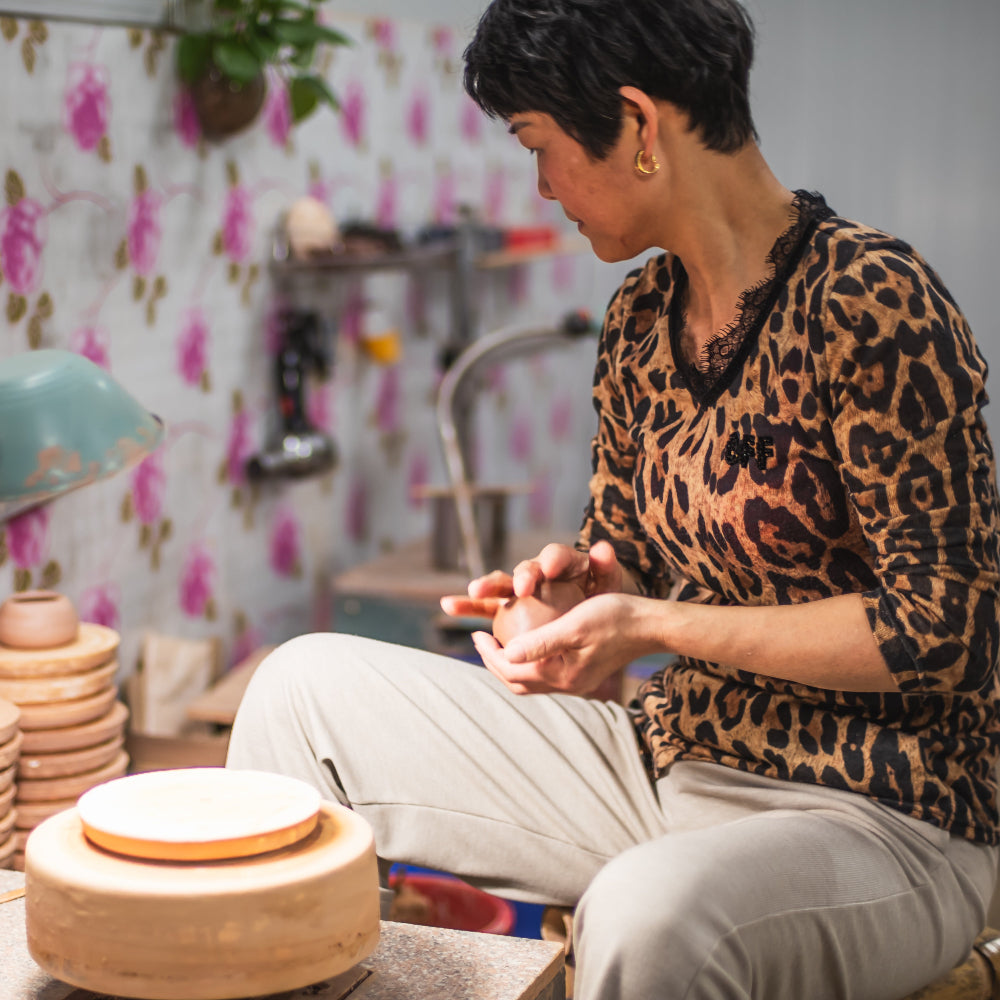
Xuefen Zhang