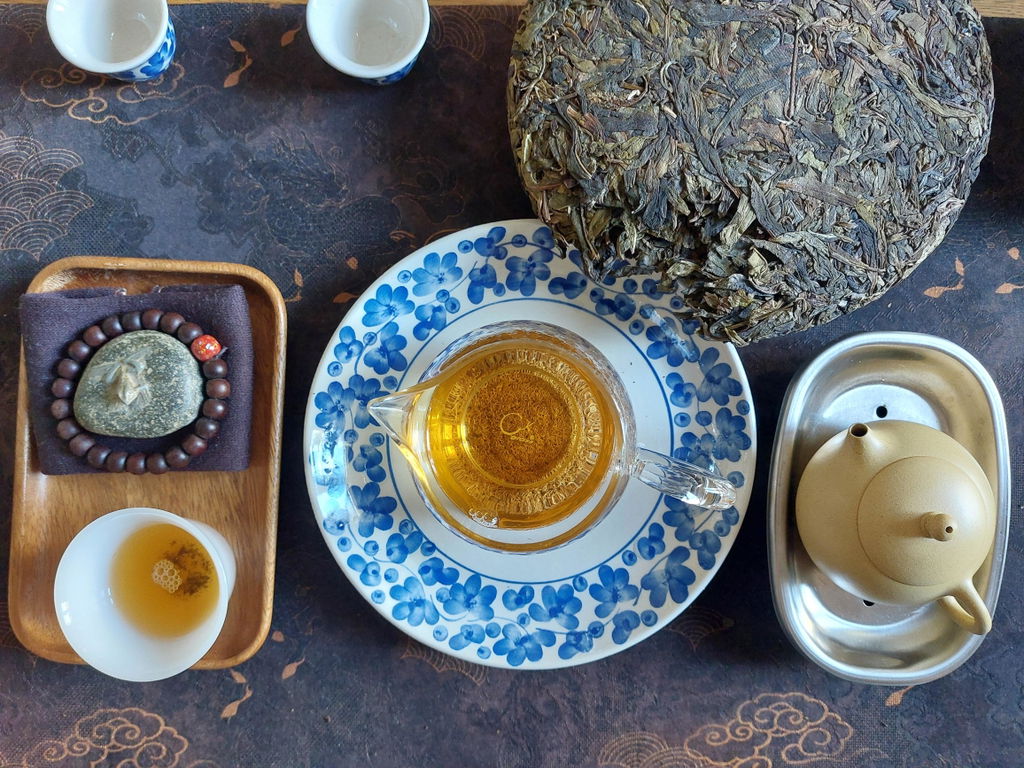


A 120-minute mindfulness practice with brush, ink and tea
This workshop brings together two practices that share the same quality of attention: the Chinese tea ceremony and traditional ink calligraphy. No experience with calligraphy or tea needed. The focus is not on technique or results – it's on slowing down, on the synchronisation of breath and movement, on rhythm, presence and stillness.
How the 120 minutes are structured:
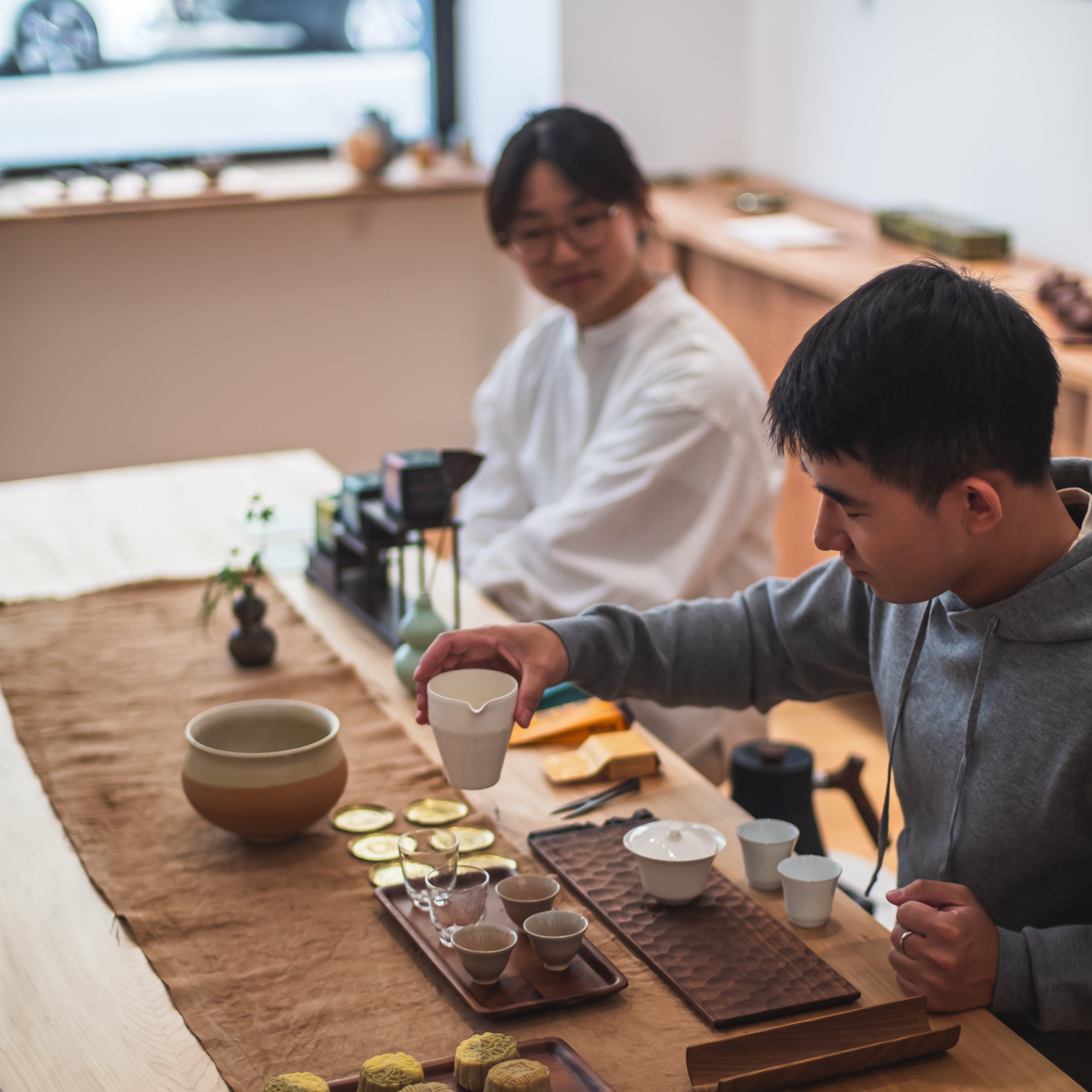
- Arriving, materials & first tea ceremony (around 30 min) – we settle into the space, leave the day behind, and use the first tea ceremony as a centring element that gently brings attention to the breath.
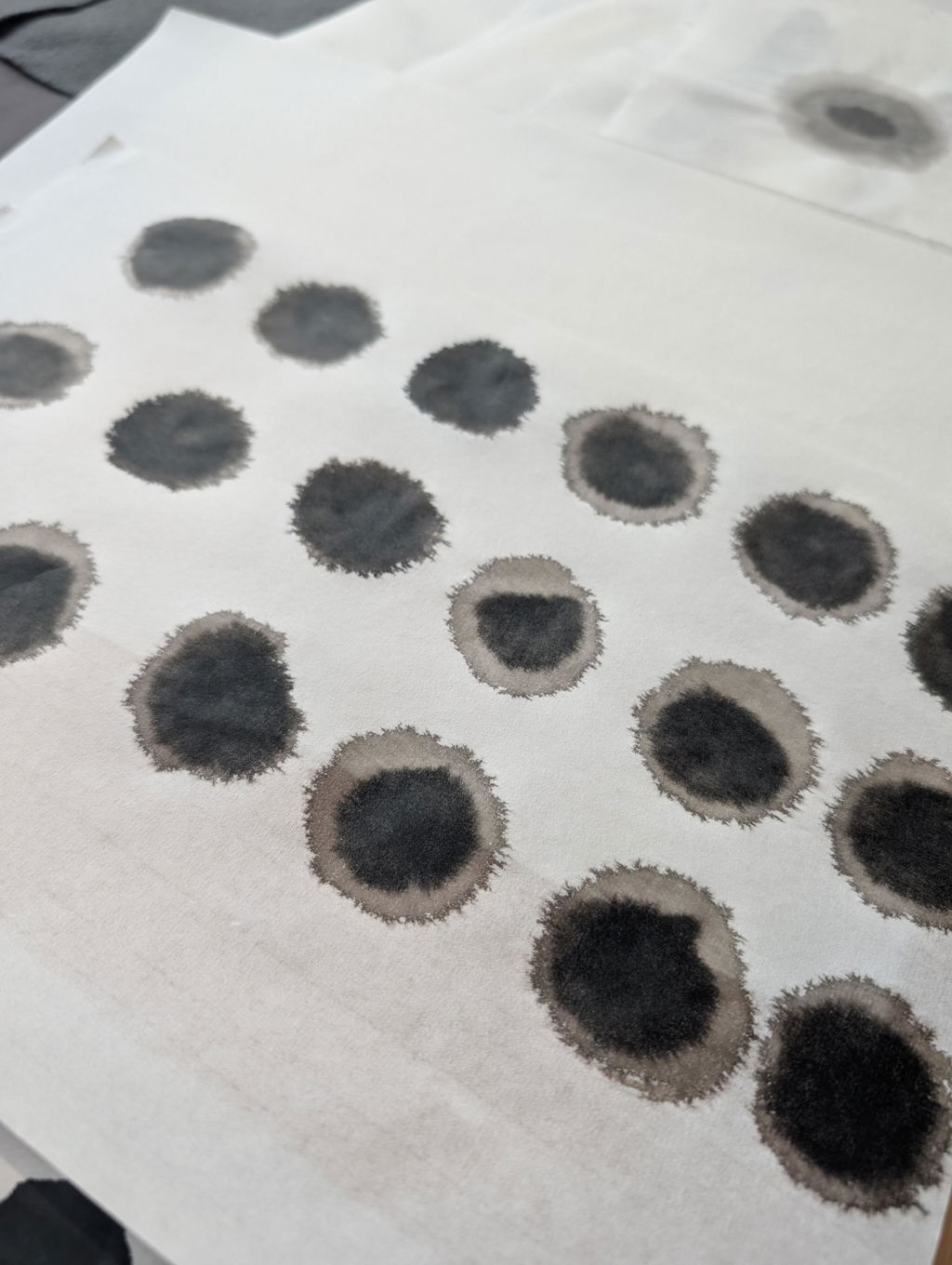
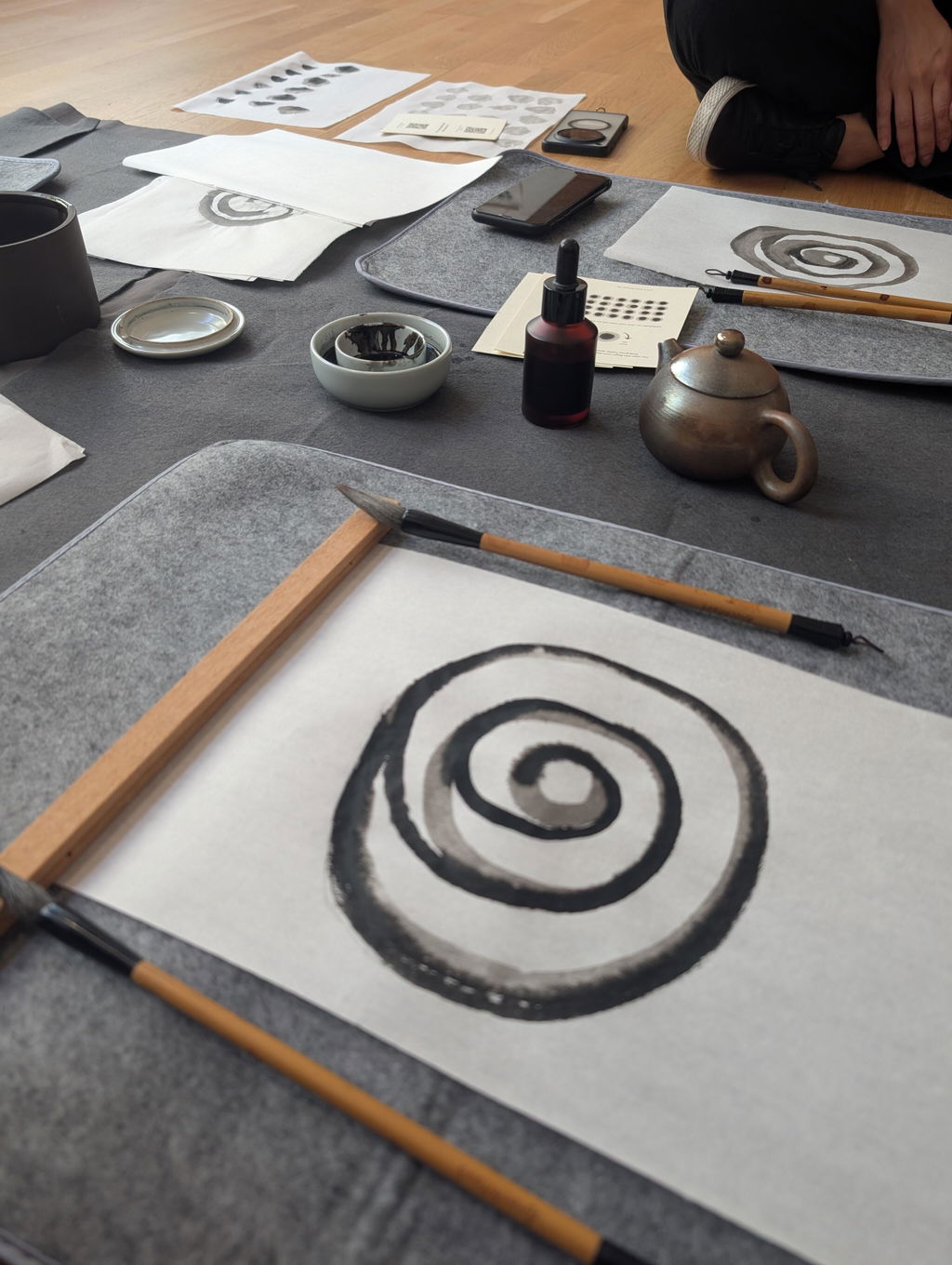
- Rhythmic ink meditation (around 60 min, 2 × 25 min with a 10 min break) – slow, repeating brush movements in tune with the breath. Each session draws 6 exercises from a catalog of 24 ink-breath exercises, so every sitting offers fresh impulses.
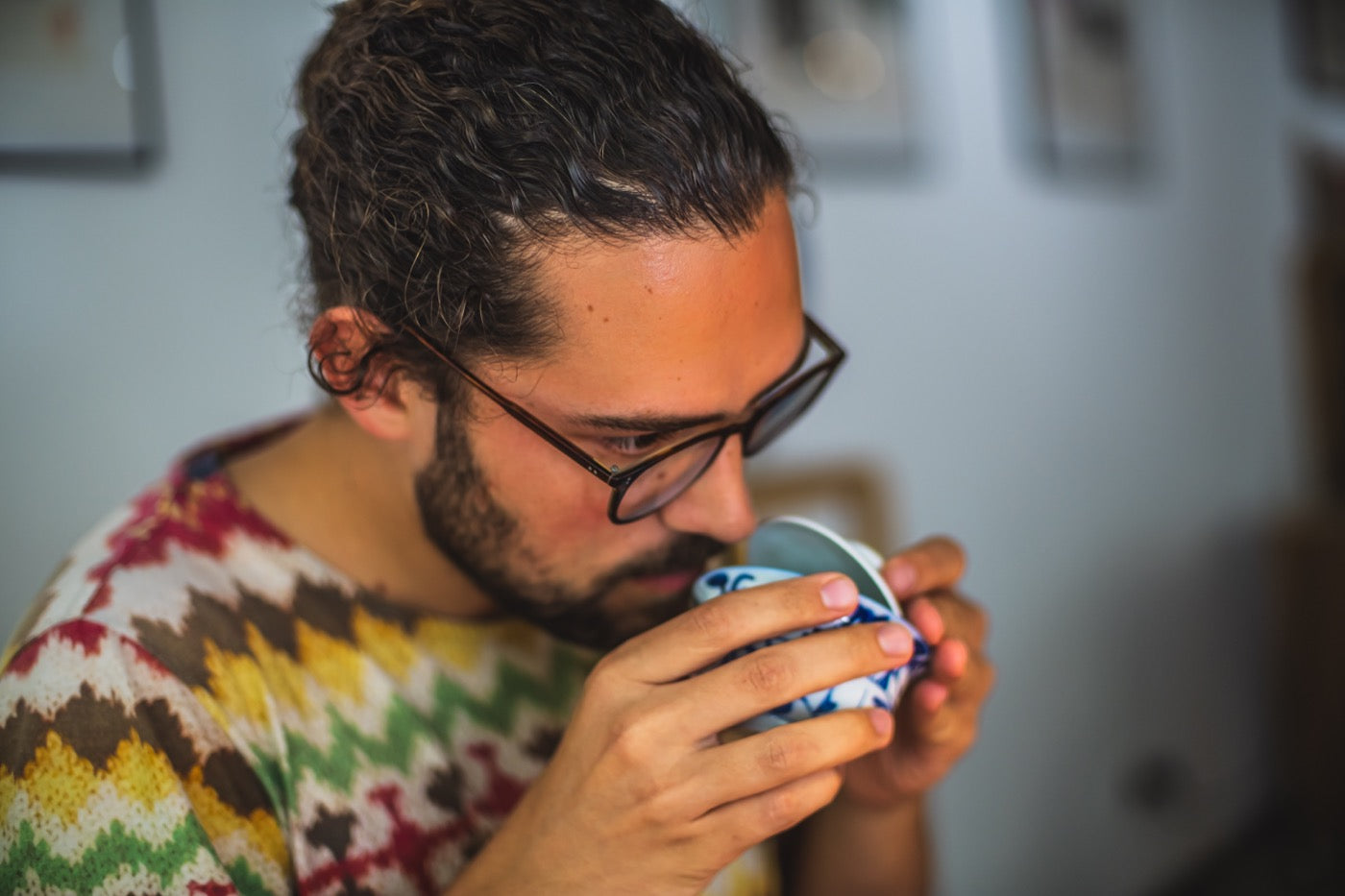
- Second tea ceremony, closing & exchange (around 30 min) – we return to tea and experience it as a deeper, multisensory anchor along the "five-senses path".
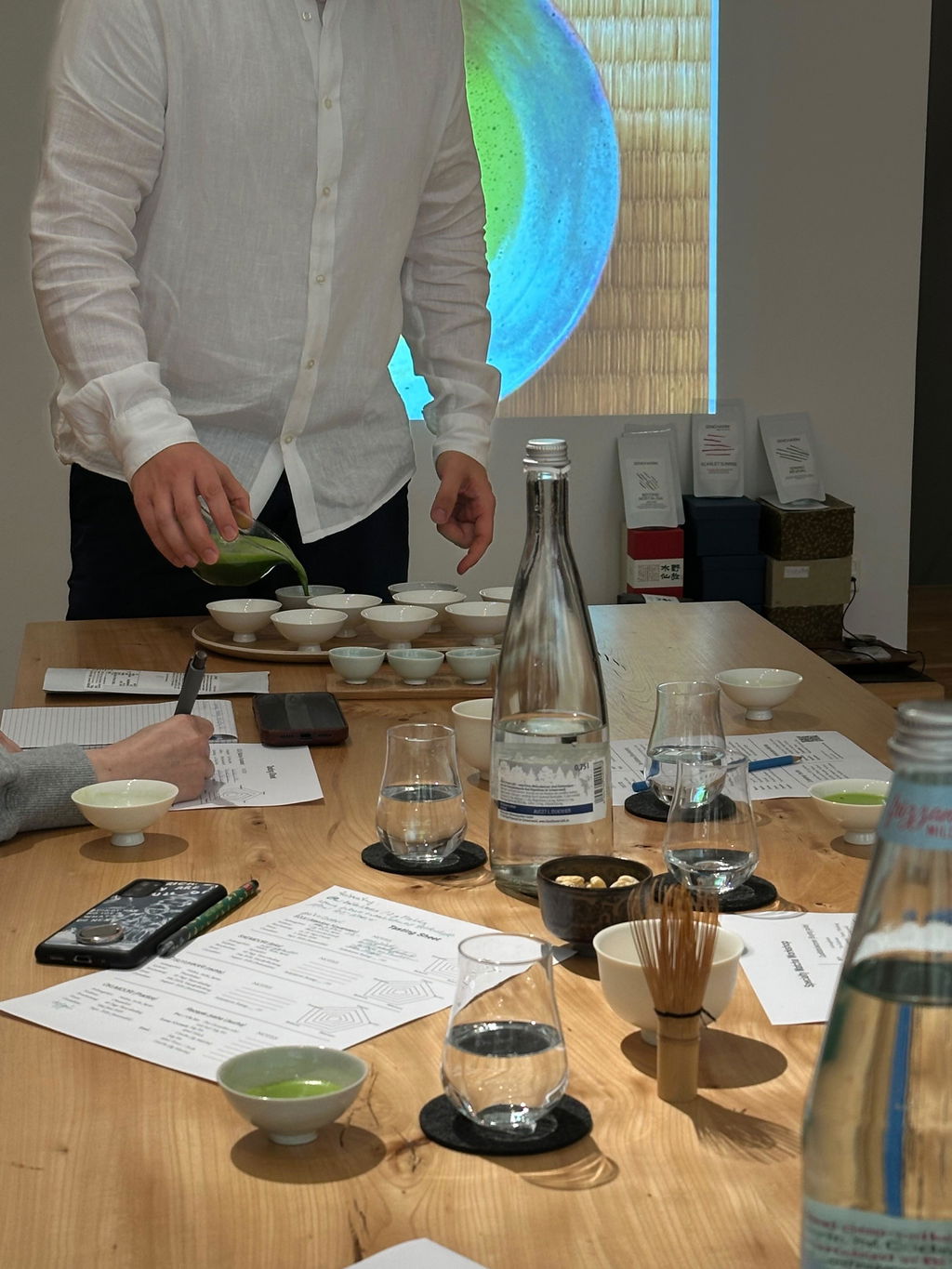
Tea: a different high-quality tea from our collaboration partners is chosen for each live session – so the sensory experience (appearance, form, aroma, taste, texture) is completely new every time.
Led by Zoe (artist name: Knochitaub). Zoe grew up in China and has lived in Germany for many years. Her work combines traditional Chinese calligraphy with contemporary mindfulness practice. In her workshops, brush and ink are not artistic tools – they're instruments of perception. No performance, no prior knowledge needed.
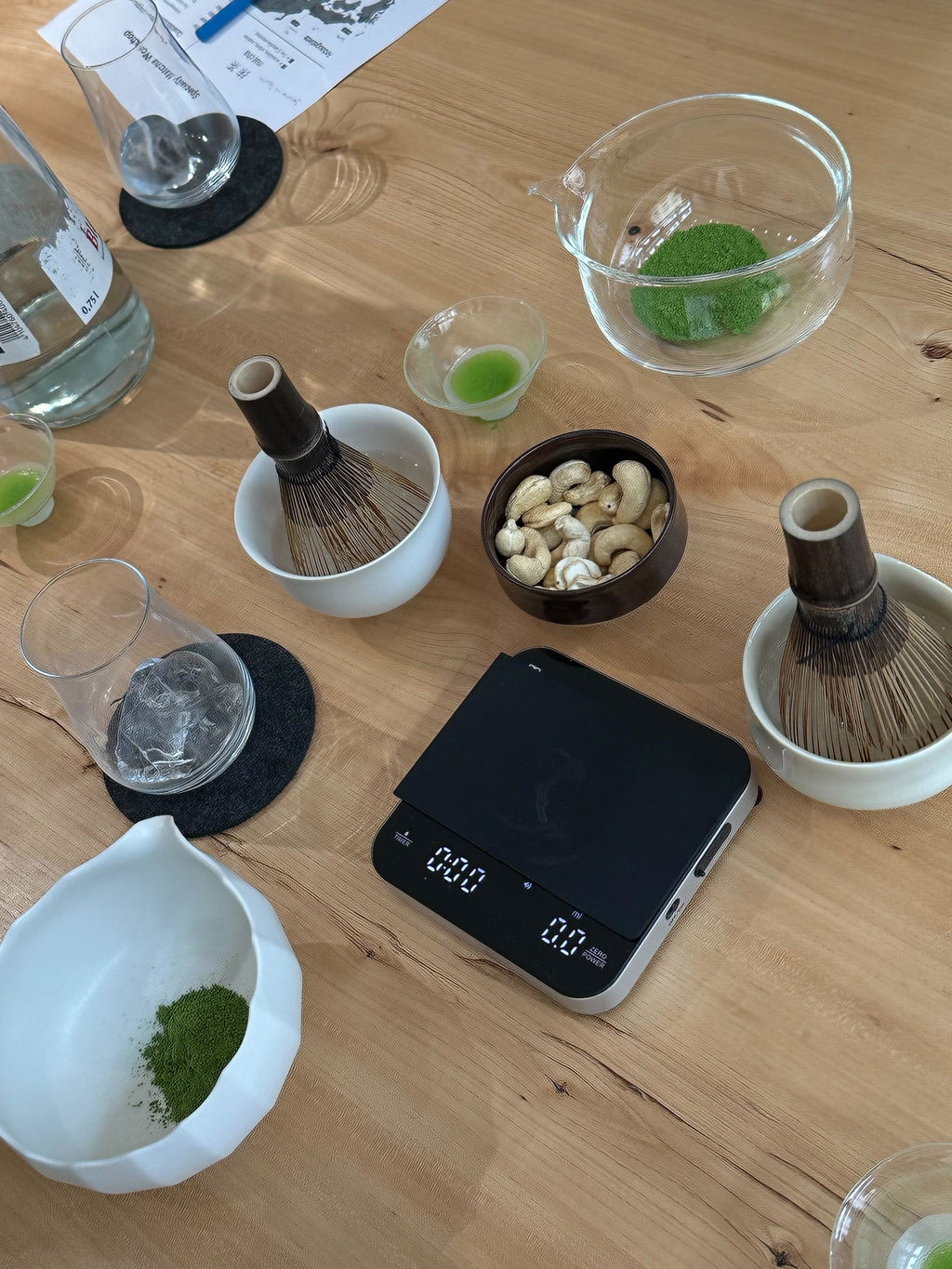
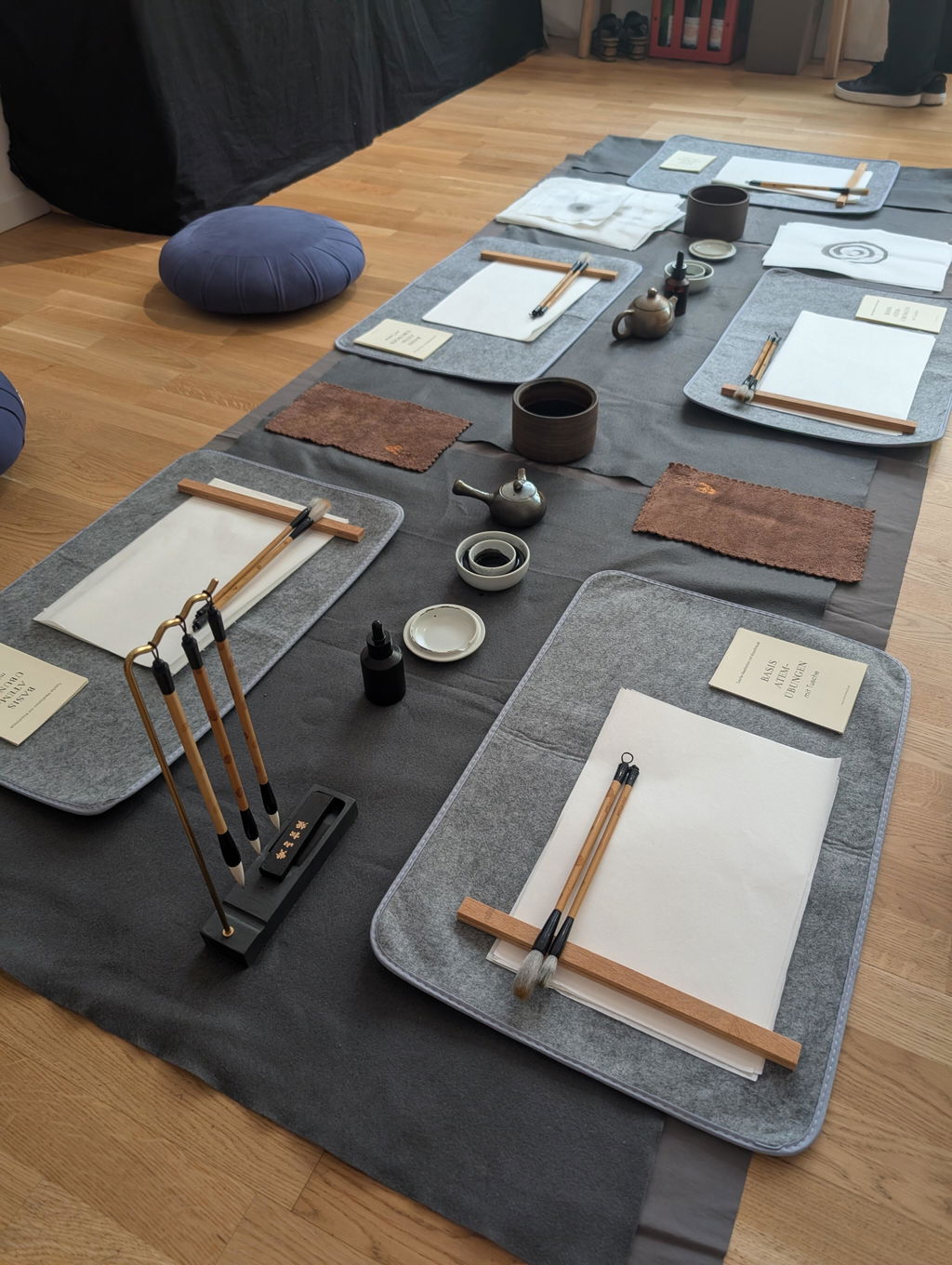
What's included: practice workbook, 5-senses card, 6 sheets of high-quality Xuan rice paper, 2 calligraphy brushes (large & small), fine ink (liquid ink & ink stick), felt mat, brush rest, stone ink container and further accessories.
Time: 3pm–5pm
UNEARTHED gallery, Gabelsbergerstr. 83, Munich
Max. 7 participants. Language: German.
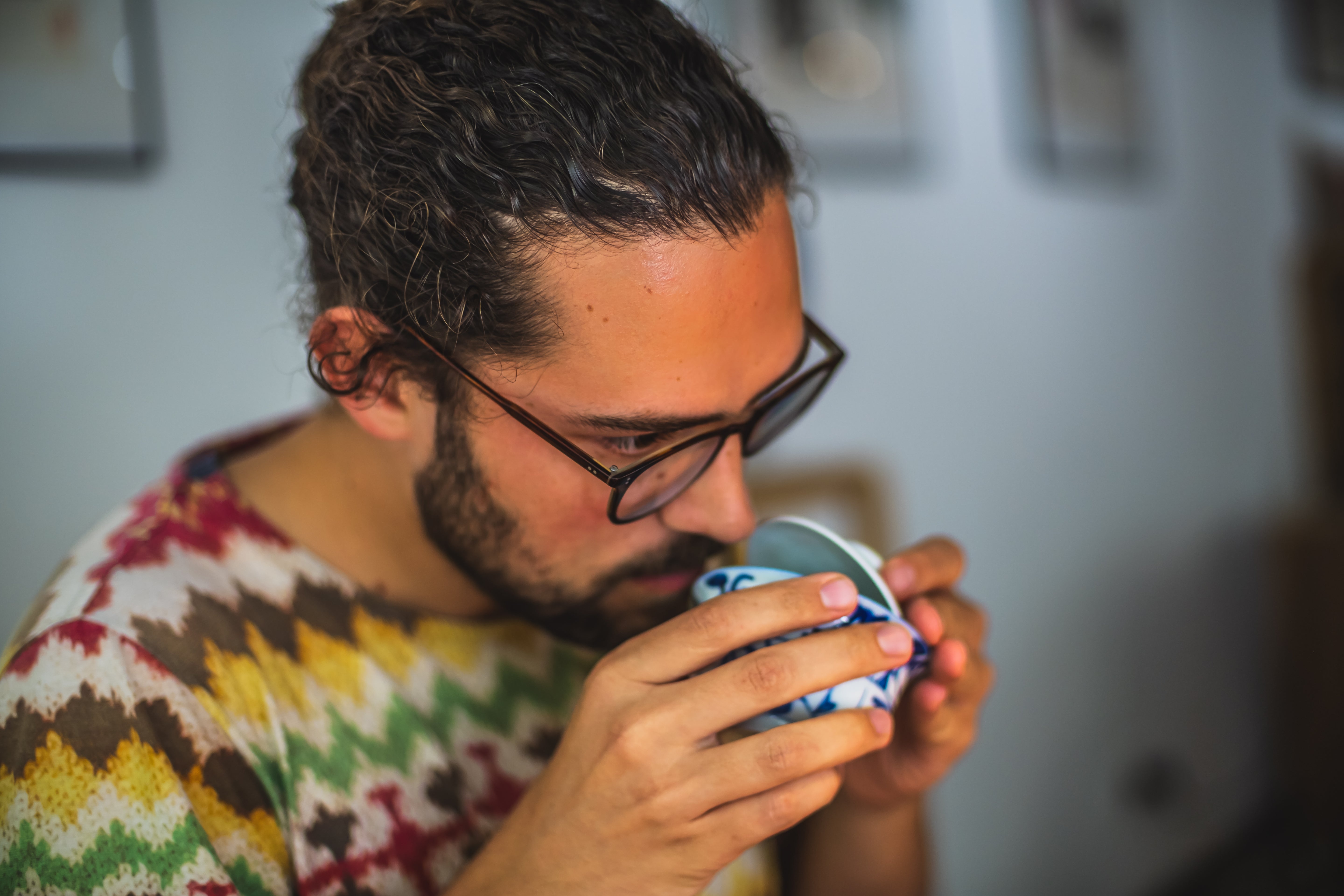
Hosted by Marcel Karcher
His passion for tea led him across continents: a journey that started with selling tea online eventually led to a 9-month sabbatical through India, China and Taiwan, exploring tea at its source. It was during this journey that he deepened his appreciation not just for the leaf, but for the vessels, tools, and stories that surround it.