

Anyone who takes Matcha seriously will eventually encounter the name Nishio. This city in Aichi Prefecture, about an hour southwest of Nagoya, is one of the centres of Japanese Matcha production. In 2024 the city shipped 334 tonnes of Tencha, the shaded green tea that gets ground into Matcha, which is about six percent of the 5,336 tonnes produced in Japan. Aichi Prefecture as a whole ranks fourth among the Tencha prefectures, after Kagoshima, Kyoto and Shizuoka. But Nishio is more than a production address. It embodies a centuries-old relationship between landscape, climate, and careful craft that allows Matcha to be what it can be at its best: a product of exceptional depth, vivid green colour, and that characteristic Umami that lower-quality powders simply lack.
The Geography of Flavour
Nishio sits at the southern edge of the Aichi plain, where the 矢作川 (Yahagi River) meets Mikawa Bay. This position creates a microclimate that is close to ideal for tea cultivation. Proximity to the water moderates temperature swings, while the river generates misty mornings that keep the leaf tissue supple and tender. The soil is loamy and well-drained, rich in minerals from river sediment. This combination of moderate humidity, mild temperatures, and fertile ground lets the tea plants grow slowly and develop concentrated flavours.

The tea gardens of Nishio spread across gentle hills and flat plains. Unlike the steep slopes of Uji or Shizuoka, the terrain here is more open, which calls for a different approach to shading. Traditionally, bamboo mats or woven straw were draped over wooden frames. Today, black netting is increasingly common. Shading begins roughly three to four weeks before harvest and reduces sunlight by seventy to ninety percent. Under this artificial twilight, the plant produces more chlorophyll and amino acids, particularly L-Theanine, while bitter catechins are held back. The result is the velvety sweetness and vivid green colour that characterise Tencha.
The most widely grown cultivar in Nishio is Okumidori (おくみどり), a mid-late variety that responds particularly well to the loamy Yahagi valley soil. Its leaves are fleshy, amino acid concentration is high, and the cultivar is especially well suited to the flat Tencha processing method, where leaves are not rolled. Samidori (さみどり) is also grown here, known for its intense colour and creamy texture. It is often used in premium Single-Cultivar Matcha productions from the region. Our Okumidori Nishio Single-Cultivar Matcha comes from this area.
Historical Roots in Trade
Nishio was a significant castle town and thriving commercial centre during the Tokugawa period. The local economy rested on sake breweries, fishing, and the transport of goods along the Yahagi River. Commercial tea cultivation, however, only began here in the late nineteenth century, when farmers were looking for new sources of income. The Uji region south of Kyoto was already an established Matcha hub at that point, but Nishio's producers recognised the potential of their soils and climate. They adapted techniques from Uji, experimented with shading methods, and developed cultivars specifically suited to local conditions.
In the 1950s and 1960s, as Matcha found increasing use in confectionery production beyond the tea ceremony, demand grew rapidly. Nishio's tea farmers responded by investing in modern processing facilities and standardised quality control. The Nishio Tea Cooperative Association, founded in 2007, now represents the interests of local producers and markets the regional "Nishio Matcha" brand internationally. This cooperative ensures that only tea from the Nishio region may be sold under that name, a protection that safeguards both quality and provenance.
Tencha Production: From Leaf to Powder
The process that produces Nishio Matcha begins with careful selection of the leaves. Only the youngest, most tender shoots are hand-picked, typically from mid-April through early May. This first harvest, the Ichibancha, yields the highest-quality material. The leaves are steamed immediately after picking to prevent oxidation. Unlike Sencha, where leaves are then rolled, Tencha leaves remain flat. They are dried in dedicated ovens while a steady airstream keeps them gently moving and swirling. This drying process takes around twenty minutes and requires precise temperature control.
After drying, stems and leaf veins are removed, a step once done by hand, now largely carried out by machine. What remains is pure leaf tissue, delicate and friable. This Tencha is stored cool, often for months, to let its flavours develop. Only shortly before sale is it ground into Matcha in stone mills. These mills, traditionally made from granite, rotate slowly and produce around thirty grams of powder per hour. The low speed prevents overheating, which would destroy the fragile aromatic compounds. The finished powder is as fine as talc, with a particle size of five to twenty micrometres.
Quality and uses
Not all Matcha from Nishio is the same, and the grade labels the trade attaches to it are not regulated anywhere. What separates one powder from another is harvest timing, leaf selection, length of shading, and processing. A first-harvest Matcha from selectively picked leaves is defined by intense sweetness, vivid colour, and complex flavour, and it is the one to drink straight. A powder from later harvests or less selectively picked leaves is bolder and slightly bitter, and it is suited to drinks, baked goods, or smoothies. That is not a value judgement but a functional distinction: each kind has its place.
At UNEARTHED we understand these nuances. Our Specialty Matcha range includes both blends from well-regarded producers and Single-Cultivar powders from small farms across Japan. We look for Matcha that is not only technically sound but also has something to say: about origin, tradition, and the hands that made it.

Working with Nishio Matcha means respecting its character. A first-harvest powder is best prepared with hot but not boiling water, around seventy to eighty degrees Celsius. It is whisked with a bamboo whisk, the Chasen, until a velvety surface forms. The bowls and Chawan in our collection provide the right space for this: wide openings allow a full, round motion with the whisk, while the tactile quality of the ceramic deepens the sensory experience of drinking.
Nishio Matcha in Contemporary Cooking
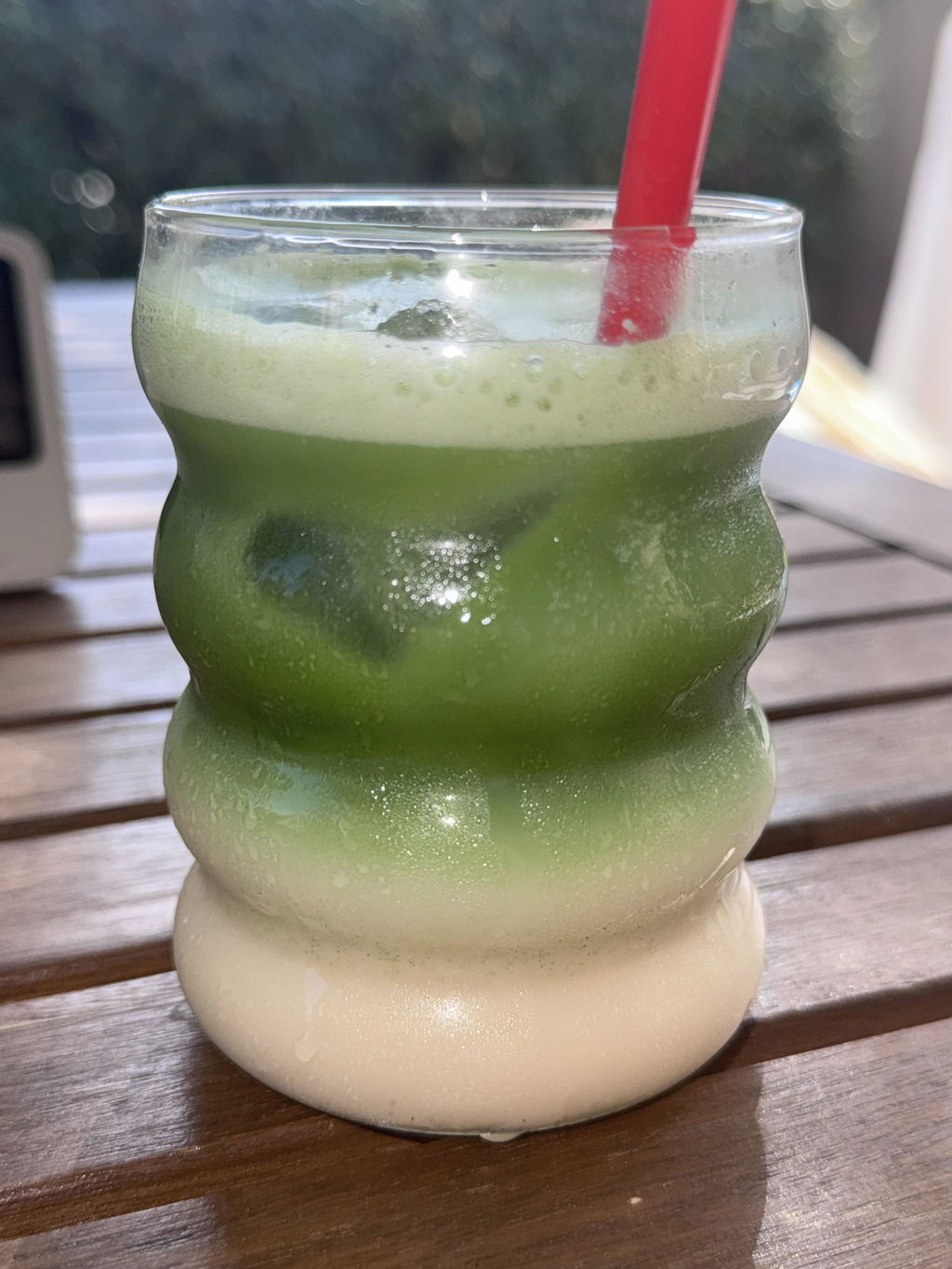
The versatility of Nishio Matcha has carried its use well beyond the tea ceremony. In Japan it appears in ice cream, chocolate, pastries, and even savoury applications like noodles or sauces. This culinary adaptation is not a dilution of tradition but an extension of it, a demonstration that a quality product can move into new contexts without losing its essential character. A simple Matcha latte, properly made with good powder and well-frothed milk, can be just as satisfying as a formal Usucha in the tea ceremony.
Some recipes show how Nishio Matcha works in cocktails: as a bitter note in a gin-based drink, as an earthy base for a sweet syrup, as colour and flavour accent in a dessert cocktail. These experiments require an understanding of how to balance Matcha's natural astringency against other ingredients. Too much Matcha makes a drink unpleasantly bitter. Too little and it disappears, both visually and aromatically.
| Application | Which Matcha | Dosage per Serving | Temperature |
|---|---|---|---|
| Traditional tea ceremony (Usucha) | First harvest | 2 g | 70–80 °C |
| Traditional tea ceremony (Koicha) | The finest first harvest | 4 g | 70 °C |
| Matcha latte | Later or first harvest | 2–3 g | 70–80 °C |
| Smoothies | Later harvest | 1–2 g | Room temperature |
| Baking | Later harvest | 5–10 g per 500 g flour | Processed |
| Ice cream | First or later harvest | 10–15 g per litre | Processed |
The Role of Ceramics
Matcha and ceramics are inseparable. The choice of bowl affects not only aesthetics but function. A wide, shallow bowl allows vigorous whisking. A taller form retains heat longer. The glaze can be matte or glossy, rough or smooth: each surface changes the tactile experience, the feeling of the rim against the lips. Our collection of bowls and cups includes work by Japanese, Chinese, and European ceramicists, each interpreting the dialogue between material and use in their own way.
Japanese Chawan from Tokoname or Shigaraki often show irregular forms, ash glazes, and traces of the kiln. This imperfection is intentional, because it reflects the Wabi-Sabi ideal of beauty in the transient and the natural. European ceramicists bring different sensibilities, often more precise in form and glaze, sometimes cleaner in colour palette. Both approaches are valid. Both can present Matcha with dignity. The choice is a matter of personal affinity.

Nishio in a Global Context
The global popularity of Matcha has put Nishio on the international map. Well-informed sources describe the city as a destination for tea enthusiasts who visit production sites, attend tastings, and buy directly from farmers. This openness to foreign visitors is relatively recent. The Japanese tea trade was traditionally focused on domestic markets, with little direct export. It was only with the international Matcha boom of the past two decades that producers began engaging with overseas customers and distributors.
This internationalisation brings both opportunity and risk. On one hand, it provides economic stability at a time when domestic tea consumption in Japan is stagnating, because younger generations drink less green tea, preferring coffee or soft drinks. On the other hand, rising demand creates pressure to produce faster and at lower cost. Not every tea marketed as "Nishio Matcha" delivers on what the name implies. Geographic indications and certifications help, but ultimately it comes down to informed buyers who can recognise and value quality.
Sustainability is another consideration. Intensive tea cultivation requires pesticides, fertilisers, and water. Some farms in Nishio are experimenting with organic production, but yields are lower and the risks higher. Organic Matcha costs more and is not always available. It is a genuine trade-off between ecological responsibility and economic reality. As a gallery and tea space, we value transparency: we ask about farming methods, visit producers where possible, and share that information with our customers.
Comparison with Other Regions
Nishio is often compared to Uji, the historic Matcha heartland in Kyoto Prefecture. Uji has a longer tradition, a stronger cultural connection to the tea ceremony, and a certain prestige. Nishio, by contrast, is more production-oriented, more pragmatic, less mythologised. These differences show up in the cup. Uji Matcha is often described as finer and more elegant, with subtle notes of seaweed and fresh herbs. Nishio Matcha tends to be fuller, sweeter, sometimes nuttier. These are nuances, not categorical differences.
| Characteristic | Nishio | Uji | Shizuoka |
|---|---|---|---|
| Share of production (Japan) | About 6% of Tencha (2024) | Among the largest shares, the historic centre | Primarily Sencha |
| Geography | River plain, coastal proximity | Hilly terrain | Mountain slopes |
| Flavour profile | Full, sweet, Umami-rich | Elegant, subtle, delicate | Fresh, grassy, lightly astringent |
| Historical significance | Late 19th century | Heian period | Early Edo period |
| Primary use | Ceremony and kitchen | Ceremony | Sencha |
Shizuoka, Japan's largest tea-growing region, produces mainly Sencha, though Matcha farms exist there too. The flavour is distinct: often fresher and grassier, with less Umami weight. These regional differences are not accidental. They are the product of soil, climate, cultivar, and processing. Taking tea seriously means learning to appreciate them, much as a wine enthusiast learns to distinguish Bordeaux from Burgundy.
Nishio and the Practice of the Tea Ceremony
The Japanese tea ceremony, Chanoyu, is a highly formalised practice that brings together aesthetics, philosophy, and social etiquette. Matcha is at its centre, but the ceremony encompasses far more: the choice of bowl, the arrangement of utensils, the gesture of serving, the silence between actions. Nishio Matcha is used in tea ceremonies, though the city itself carries less ceremonial association than Uji or Kyoto. That does not diminish the quality of the tea, but it does shape how it is perceived.
Within the ceremony, a distinction is drawn between Usucha (thin tea) and Koicha (thick tea). Usucha is whisked lightly and forms a foam; Koicha is concentrated, almost syrupy, intense. For Koicha, only the highest-quality Matcha is used, often from older plants whose leaves have developed more complex flavours. Preparation is slow and meditative, each movement deliberate. Nishio Matcha is suited to both forms, provided the quality is there. A poor powder is immediately exposed in the ceremony: there is no milk, no sugar, nothing to mask its shortcomings.
Those who practise the tea ceremony develop a relationship with their utensils. The Kyusu in our collection are primarily intended for Sencha, but the principle holds across all teaware: quality tools deserve respect and care. They are cleaned carefully after each use, never in the dishwasher and never with soap. Over the years they develop a patina, a history that manifests in discolouration and light traces of use. These marks are not flaws. They are evidence of time spent together.
The Future of Nishio Matcha
Nishio faces real challenges. The farming population is ageing and successors are scarce. Young people move to cities and pursue careers outside agriculture. At the same time, international demand for Matcha continues to grow, which requires investment in mechanisation and scale. It is a tension between tradition and modernity, between careful craft and industrial efficiency. Some farms are embracing innovation: vertical shading systems, computer-assisted climate control, new cultivars bred for pest resistance. Others hold to established methods, sceptical of technological change.
Another trend is diversification. Some producers are opening their farms to tourism and offering guided tours, workshops, and farm-to-table experiences. They are selling not just tea but access, stories, context. This can strengthen the economic base, but it carries risks. Tea tourism can become superficial, reduced to moments that photograph well, without any real understanding of the complexity of production. Keeping commerce and authenticity in balance requires a certain care.
The official Nishio Matcha website does useful work on education: farming methods, quality standards, cultural context. It is a worthwhile resource for anyone who wants to go deeper. The Wikipedia entry on Nishio offers the broader urban and economic context, within which tea production is just one sector among many. That wider perspective matters: Nishio is not only Matcha, but a living city with diverse interests and challenges.
The Role of the Gallery
As a gallery for ceramics and tea culture, we see it as our responsibility to share knowledge. We do not simply sell Matcha or bowls. We curate objects with intention. Every teapot, every bowl, every tea in our collection has an origin, a context, a story. We invite our visitors to discover those stories: in workshops, at tastings, in conversation. That is not marketing but conviction. Objects gain meaning when you know where they come from and understand what they are for.
Nishio Matcha is, for us, an example of how geography, climate, and human care work together to produce something worth paying attention to. It is a product that deserves respect, not as an exotic curiosity, but as the result of generations of experience and adaptation. Drinking Matcha from Nishio is not simply drinking green powder. It is a connection to a landscape, a tradition, a particular way of thinking about quality and time.
Nishio embodies the relationship between place and flavour, between traditional craft and contemporary relevance. Those looking for quality Matcha and the right ceramics to accompany it will find a curated selection at UNEARTHED, one that brings together eastern and western aesthetics. Visit us in Munich or online to discover objects that are made not just to be looked at, but to be used.