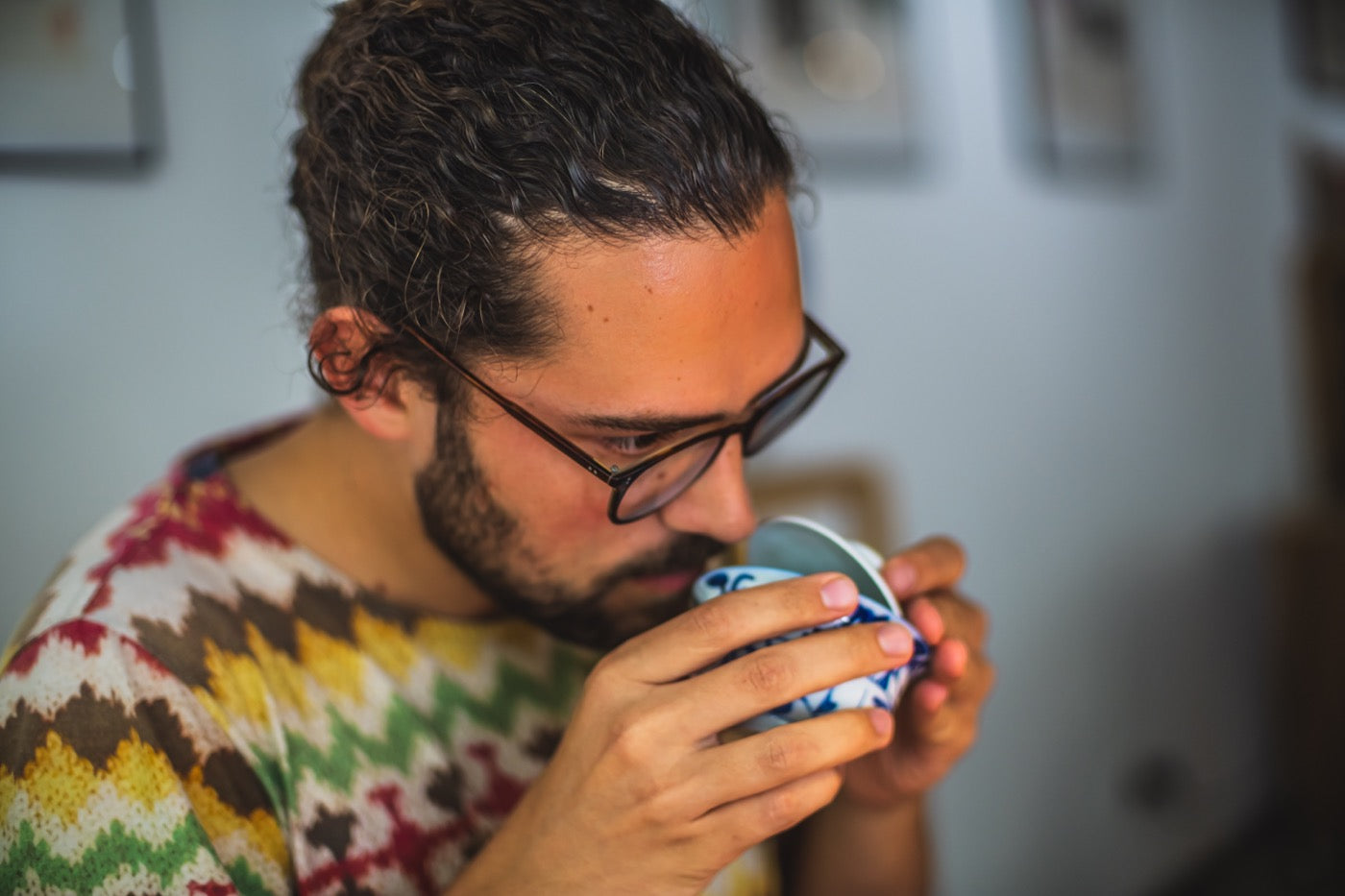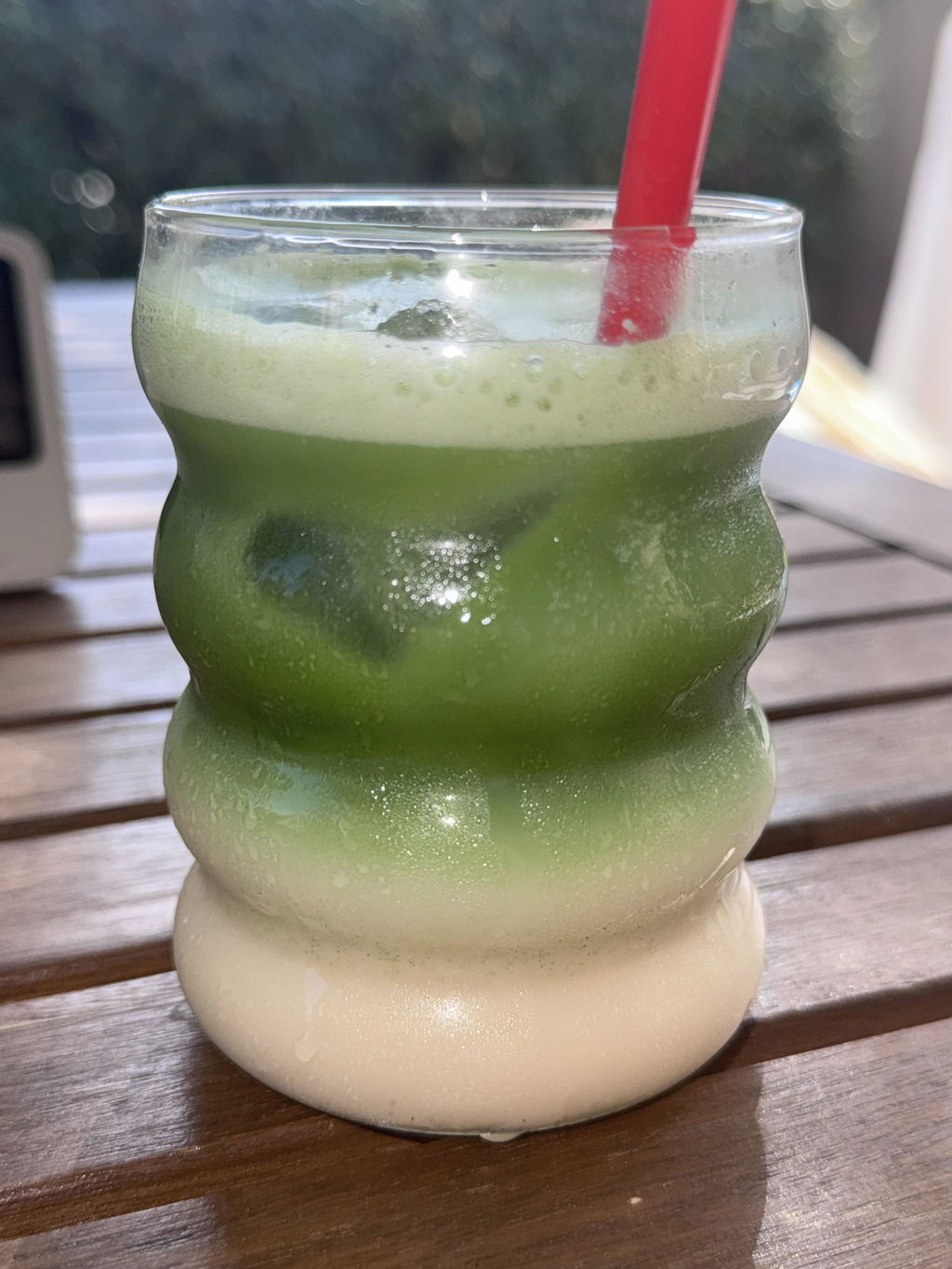


The small city of Uji, south of Kyoto, carries a name that means more to anyone serious about Japanese tea culture than a point on a map. Uji is synonymous with the highest quality, with a tradition proven across centuries, and with a terroir that gives Matcha and Gyokuro a character that remains out of reach elsewhere. Anyone who engages seriously with Japanese green tea cannot bypass this region. The history of tea in Japan is inseparable from Uji, and to this day this landscape along the Uji River sets the standards by which Matcha is judged worldwide.
The historical roots of tea cultivation in Uji
Tea cultivation in Uji traces back to the 13th century. The monk Myōe Shōnin is said to have brought the first tea plants from China to Japan and cultivated them near Kyoto. It was not until the 16th century, however, that Uji established itself as the undisputed centre of Japanese tea production. The climatic conditions proved ideal: misty mornings, moderate temperatures, and mineral-rich soils along the river created a microclimate that gave the tea leaves a particular texture and depth.
During the Momoyama and early Edo periods, local tea farmers refined their methods continuously. The development of the shading technique now known as ōishita saibai marked a turning point. By deliberately shielding the tea plants from direct sunlight in the weeks before harvest, the biochemistry of the leaves changed fundamentally. Chlorophyll accumulated while catechins decreased. The result was a tea of extraordinary sweetness, luminous green colour, and an Umami quality that became the signature of Uji tea.

The tea masters of the Sen schools, who shaped the Japanese tea ceremony, favoured tea from Uji. This connection between ritual practice and the growing region solidified the area's reputation. What grew in Uji became the benchmark for excellence. Even today, in a globalised tea economy, the name Uji carries a weight that goes beyond marketing. It is a designation of origin with real substance.
Cultivation methods and processing steps
Tea cultivation in Uji follows rhythms that have proven themselves across generations. In early spring, preparations begin for the first harvest, ichibancha, which is considered the most prized. About three to four weeks before picking, the tea plants are shaded. Traditionally, hand-woven straw mats resting on bamboo frames were used. Many producers today use modern nets, but the principle remains the same: the plants are stimulated to increase chlorophyll production while bitter tannins are reduced.
Harvesting is still done partly by hand, especially for the highest-quality grades. Only the youngest, most tender leaves are picked. After harvesting, the leaves are steamed to halt oxidation, then dried and separated from stems and coarser leaf veins. For Matcha, the leaves undergo an additional step: they are processed into Tencha, an unfermented tea that is later ground in stone mills into the fine powder we know as Matcha.
The various stages of processing can be traced through the following production steps:
| Step | Process | Purpose |
|---|---|---|
| Shading | 20–30 days before harvest | Increase chlorophyll and amino acids |
| Steaming | Immediately after harvest | Stop oxidation, fix colour |
| Drying | Several hours at controlled temperature | Remove moisture |
| Sorting | Removal of stems and coarser material | Improve purity and texture |
| Grinding | In granite stone mills | Achieve Matcha fineness and consistency |
These traditional methods remain alive in various tea gardens in Uji to this day. Each step demands experience and a precise touch. The temperature during steaming, the duration of shading, the right moment to harvest — all these variables shape the final product. Skilled tea producers in Uji adjust these parameters year after year, depending on weather and soil conditions.
The cultural significance of Uji Matcha
Matcha from Uji is not simply a beverage. It is part of a cultural practice that connects aesthetics, philosophy, and craft. In the traditional Japanese tea ceremony, chanoyu, the quality of the Matcha plays a central role. The Sen schools, which have preserved and refined this art across centuries, source their Matcha preferentially from Uji. The region provided not only the material but also shaped the standards for colour, aroma, and texture.
A high-quality Uji Matcha is distinguished by a luminous jade-green colour, a fragrance that recalls fresh grass and faint marine notes, and a flavour that balances sweetness, Umami, and a fine, barely perceptible bitterness. These characteristics do not emerge by chance — they are the result of centuries of selection, careful cultivation, and the steady refinement of growing techniques.
In contemporary tea culture, Uji Matcha has held its position as a reference point. Whether prepared in the classical way with a bamboo Chasen and Chawan, or in more contemporary interpretations, origin from Uji remains a genuine quality marker. Knowledgeable buyers pay attention to details such as the specific plot, the cultivar, and the producer. Names like Marukyu Koyamaen or Horii Shichimeien represent generations of tea craftspeople passing down their knowledge while connecting tradition with new approaches.

The tea farmers of Uji preserve not only techniques but also an attitude: the conviction that quality takes time, that every harvest is singular, and that respect for the material comes before commercial success. This philosophy is present in every gram of Matcha that leaves the stone mills.
Terroir and cultivar diversity
As with wine, terroir shapes the character of tea. Uji is not a monolithic landscape but a mosaic of microclimates, soil types, and topographic particularities. Tea fields on slopes near the river produce different flavours than those on higher-lying plateaus. Soil composition, the angle of the terrain, proximity to waterways — all of these factors feed into the flavour of the finished tea.
Alongside terroir, the choice of cultivar plays a decisive role. Various hinshu (tea varieties) are cultivated in Uji, each with specific characteristics. The cultivar Samidori, for instance, yields a particularly intense colour and a full, round flavour. Yabukita, the most widely grown variety in Japan, delivers consistent quality and a balanced profile. Gokou is defined by pronounced sweetness and low bitterness, while Uji Hikari develops a complex aromatic range.
The table below shows how different Cultivars produce different flavour profiles:
| Cultivar | Flavour profile | Distinctive characteristics |
|---|---|---|
| Samidori | Intense, full-bodied, rich Umami | Vivid green colour, high amino acid content |
| Yabukita | Balanced, lightly astringent, reliable | Standard variety, versatile |
| Gokou | Sweet, mild, low astringency | Ideal for Gyokuro and premium Matcha |
| Uji Hikari | Complex, floral notes, elegant | Rare variety, high cultivation effort |
Producers in Uji experiment with these varieties, sometimes combining them in blends or focusing on Single-Cultivar Matcha to bring out the specific qualities of a particular plant. Single-Cultivar Matcha offers the opportunity to experience the nuances of a specific terroir and a defined genetics — an approach that has drawn increasing attention in recent years.
Uji in contemporary tea culture
While tradition remains alive in Uji, the region has also opened itself to the present. Younger generations of tea producers are combining inherited knowledge with new approaches. Organic cultivation, precise processing controls, and detailed documentation of origin and production steps are all gaining in importance. The demand for transparency and traceability has led many producers to open up their processes and invite visitors to see the gardens and production facilities directly.
The global popularity of Matcha has brought new energy to Uji, but also real challenges. Demand far exceeds the supply of genuine, highest-quality Uji Matcha. The consequence is that many products sold under the "Uji" label actually originate from other regions or contain lower-grade blends. For those who care about what is in their bowl, it matters more than ever to rely on trustworthy sources and to know the details.
Within the German tea scene, interest in authentic Uji Matcha is growing. Retailers who maintain direct relationships with producers can usually provide detailed information about origin, harvest timing, and processing method. That transparency builds trust and makes it possible to genuinely appreciate the depth of what is in the bowl.
The appreciation for Uji is also reflected in the ceramics world. The right bowl — a Chawan from Japanese or European hands — can deepen the experience of Matcha. The texture of the glaze, the form of the bowl, the way it sits in the hand — all of this contributes to the ritual and turns drinking into something sensory.
The connection between ceramics and tea
The relationship between tea and ceramics is deeply rooted in Japan. Since the development of the tea ceremony in the 16th century, potters have created vessels that are not merely functional but also embody aesthetic and philosophical values. Chawan from Raku, Shigaraki, or Hagi are more than drinking vessels — they are works that honour the tea and intensify the moment of experience.
In Europe, too, there are ceramicists who draw inspiration from Japanese tea culture and develop contemporary interpretations of traditional forms. Their work brings together a Western formal language with an awareness of the tactility and ritual function that a good Chawan should fulfil. In Munich, UNEARTHED Gallery holds a curated selection of such works — ceramics that respect the Japanese tradition while finding their own path.

Preparing Matcha from Uji in a hand-made bowl creates a connection between different craft traditions. The tea, born from generational knowledge and careful tending, meets a vessel formed and fired with comparable dedication. That encounter is more than the sum of its parts — it becomes a moment where material, craft, and culture converge.
High-quality Matcha deserves to be prepared with the corresponding attention. That does not necessarily mean a formal tea ceremony, but rather an awareness of the water quality, the right temperature, the amount of powder, and the way it is whisked. A good organic Matcha from Uji develops its flavours best at around 70 to 80 degrees Celsius, whisked into a fine foam that brings out the creamy texture and the intense green.
Quality markers and how to choose Uji Matcha
Choosing a good Uji Matcha requires attention. Not everything labelled "Uji" delivers what the name implies. Genuine Uji Matcha producers value transparency: they state the precise origin, name the harvest year, the cultivar, and often the specific tea garden as well.
Colour is a first indicator of quality. High-quality Matcha shows a vivid, saturated green — not yellowish, not olive, but intense and fresh. The powder should be very fine, almost talc-like, leaving no coarse particles when rubbed between the fingers. The fragrance should be fresh, grassy, and lightly sweet, without musty or hay-like notes.
When whisked, the Matcha should come together easily into a fine foam. The flavour should be complex: a balance of sweetness, Umami, and a mild bitterness that does not dominate. Good Matcha leaves no dry, furry aftertaste, but a pleasant, long-lingering sweetness.
It is worth buying from reputable retailers who maintain direct relationships with producers. Marukyu Koyamaen, one of the best-known tea companies in Uji, has stood for the highest quality for centuries and is a reliable source for anyone seeking authentic Uji Matcha. The company offers various quality levels, from ceremonial grades through to Matcha for everyday use.
Those who want to go deeper can familiarise themselves with the different quality grades. Ceremonial grade is suited for preparing pure Matcha, Usucha, or Koicha. Premium grade can also be drunk straight, though it tends toward a slightly more robust profile. Culinary grade is intended for cooking, where the finer nuances would be masked anyway.
Proper storage is essential to preserve freshness. Matcha should be kept airtight, away from light, and cool. Once opened, it loses intensity and colour within a few weeks. Buying smaller quantities and using them more quickly is the better approach.