

Quick answer — which Matcha bowl should I buy?
For whisking and drinking Usucha, a classic Chawan with a wide, flat interior at least about 12 cm across is all you need. If you mostly make lattes, iced Matcha, or serve several cups, a spouted bowl (Katakuchi) or a small pitcher is more practical — you whisk and pour from the same vessel. Whatever the shape, the inside must be smooth and roomy enough to move a Chasen freely.
A Matcha bowl is a tool before it is an object. It has to let you whisk a lump-free, foamy bowl of tea, then either drink from it cleanly or pour without dribbling. This guide is practical: what the vessel actually has to do, the three shapes worth owning — bowl, spouted bowl, and pitcher — how material and size change the result, what to pay, and how to keep it.
What a Matcha bowl has to do
The single most important feature is a wide, flat interior. Whisking Usucha is a fast surface-level M or W motion with the Chasen, and the prongs need a flat zone to move across. A narrow or deeply rounded bowl traps the whisk and you never build proper foam. Aim for at least ~12 cm inner diameter for Usucha. Koicha is different — it is kneaded, not whisked — so a smaller bowl is fine there.
Two more functional points decide whether a bowl is pleasant to use day to day:
- The lip. Drinking is not incidental. A slightly incurved or cleanly everted rim meets the mouth without spilling. A thick, clumsy rim ruins an otherwise good bowl.
- Weight and footing. Light enough to lift in one hand to drink, heavy and stable enough on its foot that it does not skate across the counter while you whisk. This is where thin Raku and heavy stoneware sit at opposite ends.
Size, weight, and the lip
If you buy one bowl for everyday Usucha, prioritise the interior: roughly 12 cm or more across, with a flat well in the base and walls that open outward enough to whisk freely. Weight is the most underrated factor — a bowl that is too light wanders under the whisk, one that is too heavy is tiring to hold for drinking. Pick it up before you buy if you can. The balance in the hand tells you more than the dimensions.
Bowl, spouted bowl, or pitcher — which to whisk in
The Chawan (classic bowl)
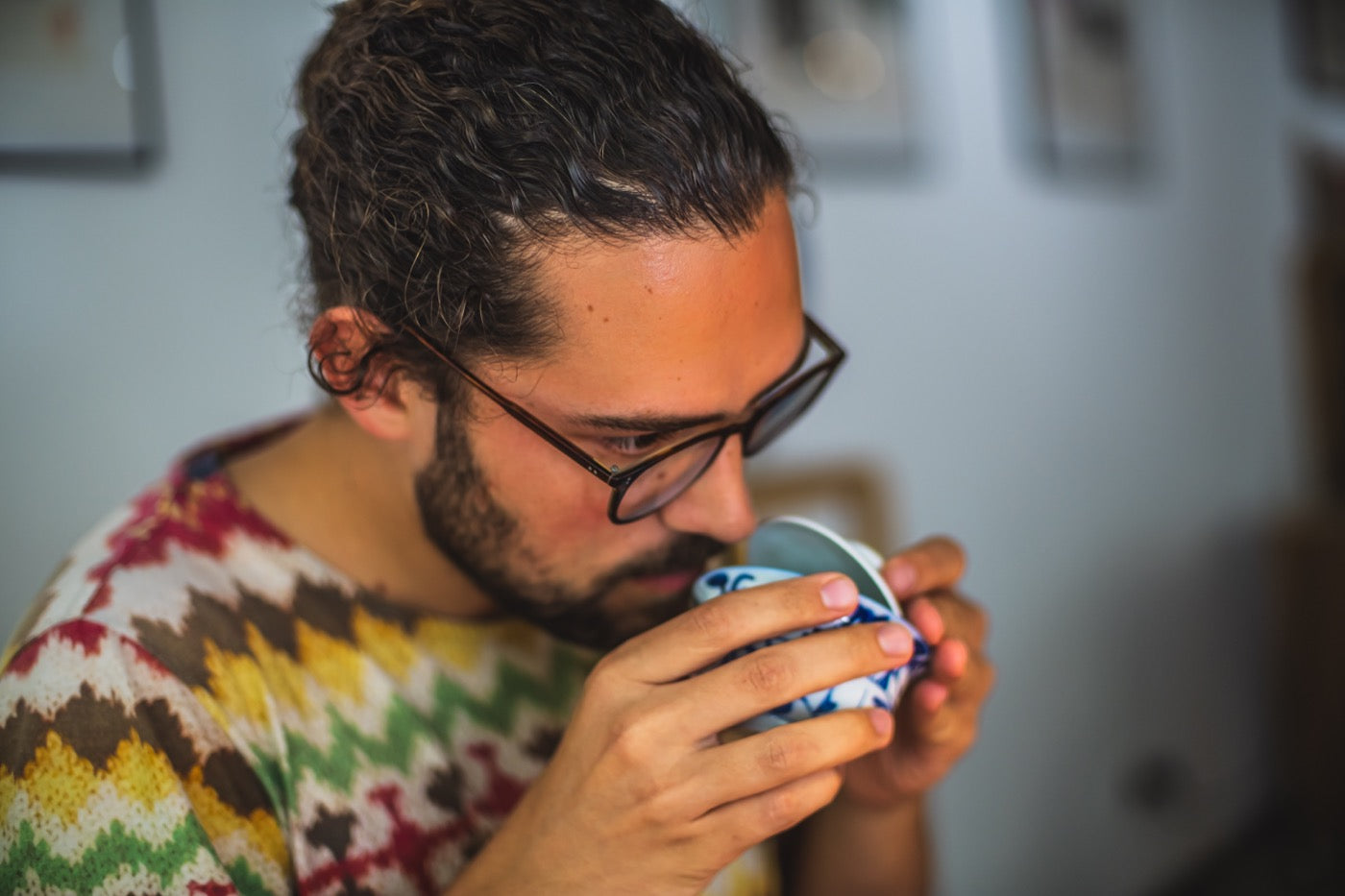
The traditional choice: whisk and drink straight from the same bowl. In formal practice you rotate the bowl before drinking so your lips avoid the shōmen (the decorated "front"), then turn it back before setting it down — a small courtesy worth knowing even at home. A Chawan is the most direct way to drink Matcha and the most rewarding object to own.
The spouted bowl (Katakuchi)
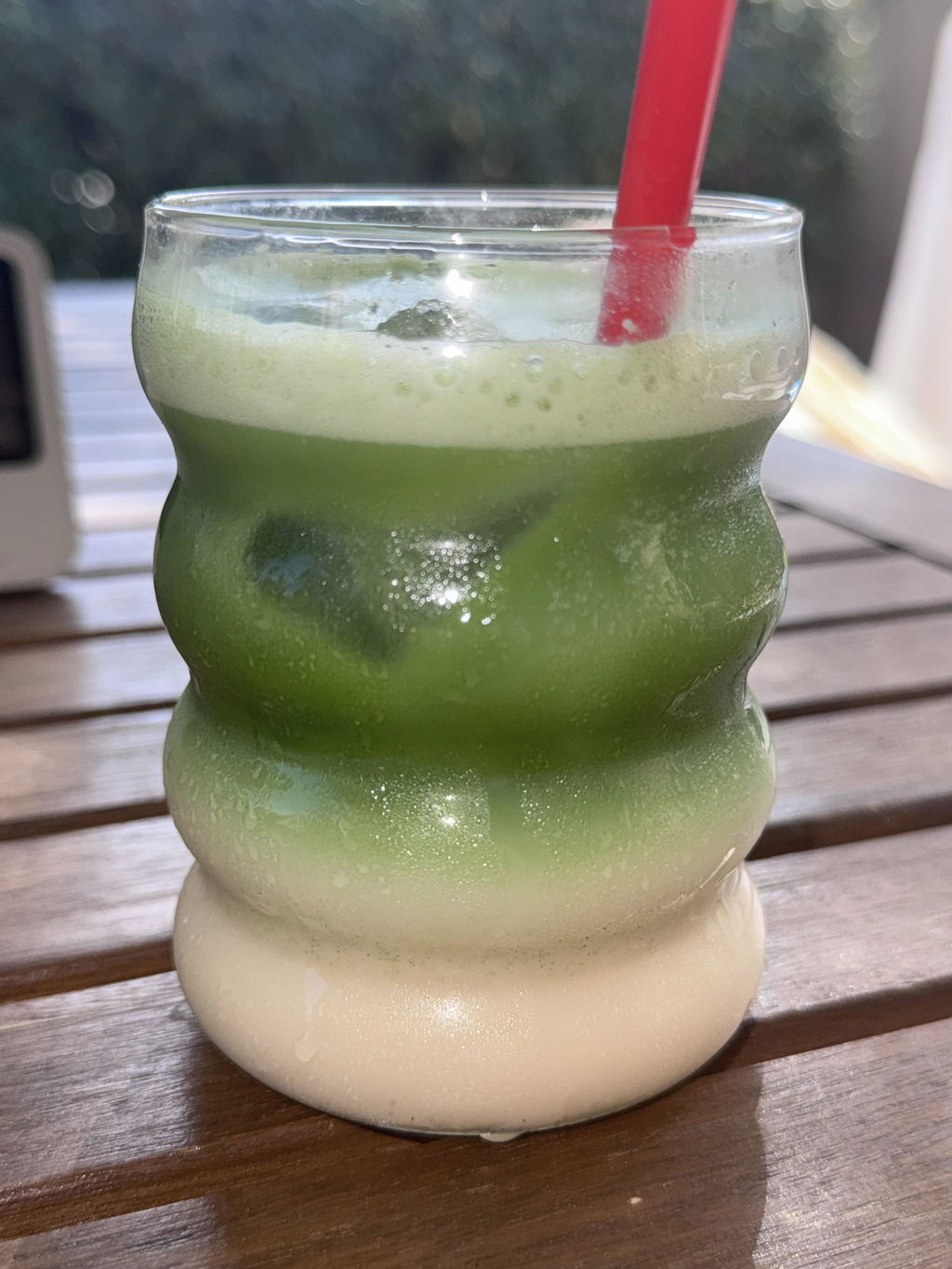
A Katakuchi is a bowl with a pouring lip. You whisk exactly as you would in a Chawan, then pour cleanly into a cup, over milk, or onto ice. It is the most practical single vessel for modern Matcha: ceremonial feel when you want it, easy pouring when you are making a latte, an iced Matcha, or serving more than one person. If you drink Matcha mostly with milk, this is often the smarter first buy.
The pitcher
For high-volume latte making, a small pitcher pours the most cleanly over milk or ice. Some people whisk directly in a wide pitcher. Others whisk in a bowl and decant. It is the café-style, pragmatic option — less ceremony, maximum control over the pour.
Recommendation: own a Chawan first for the experience of drinking Matcha properly. Add a Katakuchi or pitcher if lattes and iced Matcha are your daily habit.
Material — and what it changes
The old tea ceremony ranking of bowls runs 一楽二萩三唐津 — ichi Raku, ni Hagi, san Karatsu: first Raku, second Hagi, third Karatsu. It is about feel and how a bowl ages in use, not a quality grade you must follow. What matters practically is how each material behaves.
Raku
Hand-formed and low-fired (roughly 750–1000 °C), Raku is porous and insulating: it stays cool enough to cradle while keeping the tea warm, with a soft, forgiving feel. It is the classic chanoyu bowl — and the most fragile. Treat it gently and never shock it with sudden temperature changes.
Hagi-yaki
Soft, absorbent clay under a finely crazed glaze, Hagi-yaki changes over years of use as tea seeps into the crackle. This is the celebrated Hagi no nanabake, the "seven transformations" — a Hagi bowl developing patina is desirable, not dirty.
Porcelain
Nonabsorbent and hard, porcelain shows the Matcha's true green, wipes clean instantly, and feels cool and precise. It holds no flavour and needs no special care — which makes it an excellent, honest first bowl.
Stoneware
Vitrified and durable, stoneware is the everyday workhorse: robust, dishwater-tolerant in a way Raku and Hagi are not, and available in the widest range of glazes. If you want one bowl you will not worry about, this is it.
What you pay
- Factory ware (€20–50): consistent and perfectly good to learn on.
- Atelier bowl (€60–150): a maker's hand, individual character, still an everyday object.
- Named potter (€150–500+): signed, collectible — the "best bowl you'll own" tier.
Care
- Rinse with hot water and no detergent, especially for Raku and Hagi — porous clay absorbs soap and odour.
- Dry fully before storing. Trapped moisture causes mould and off-smells in absorbent bowls.
- Never subject Raku to sudden temperature changes.
- Let a Hagi bowl age — the staining is the point.
What to buy first
- Your first bowl: a porcelain or stoneware Chawan, ~12 cm or wider — easy to use, easy to keep.
- If you make lattes or iced Matcha: add a Katakuchi or a small pitcher.
- For ceremony or as a gift: a Raku or Hagi atelier piece.
At UNEARTHED we carry bowls across all of these: browse the Chawan collection, spouted bowls for whisking, pitchers, and complete Matcha sets — from factory pieces to named potters. If you are also choosing a whisk, see our guide to the Chasen. For the Chawan as a cultural object — its history, forms, and role in the tea ceremony — see our Chawan guide.
Last updated June 2026.