

Single-cultivar Matcha from Satsuma, Kagoshima
A direct-sourced, single-cultivar Matcha grown in the remote hills of the Satsuma peninsula, deep in Kagoshima. A clean entry into terroir and cultivar-specific thinking: , with the full-bodied character that Kagoshima's volcanic Sakurajima soils and East China Sea breezes are known for.
Okumidori (奥緑, "deep green") is a late-budding cultivar bred at NARO Kanaya, registered in 1974. Its name refers to its slow start — harvested roughly a week after the main Yabukita crop — and to the deep, stable green that comes from unusually high chlorophyll. The cultivar is cold-sensitive, which is why it thrives in Kagoshima's subtropical, frost-free climate, where the shincha season opens a full week earlier than in Kyoto.
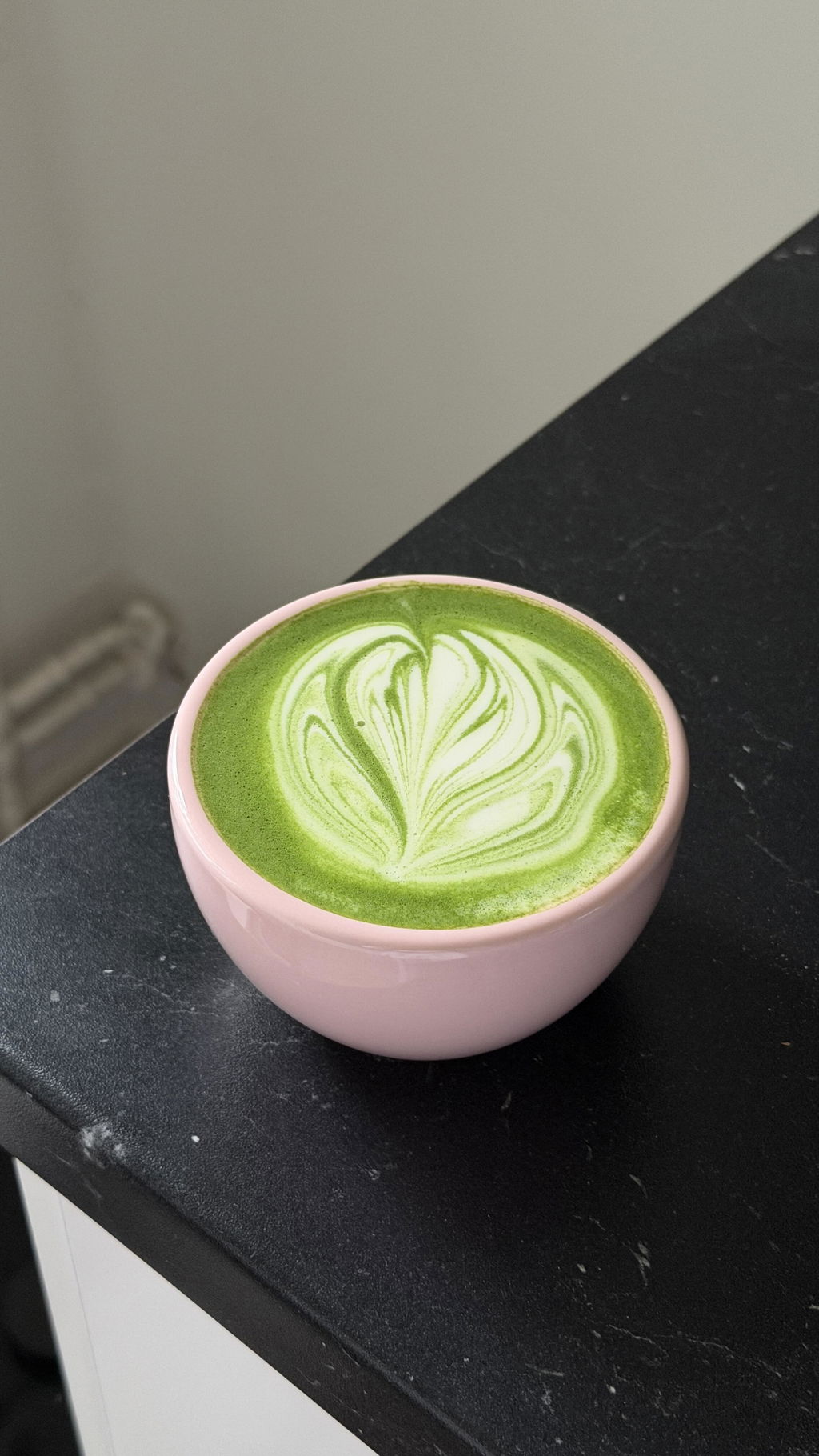
Machine-harvested in late May 2025 after 21–25 days of direct shading, then stone-milled fresh to order. A versatile everyday Matcha — full and umami-forward for Usucha, with enough body to hold its own in milk and mixed drinks.
Origin: Satsuma, Kagoshima, Japan
Cultivar: Okumidori (Yabukita × Shizuoka Zairai No. 16)
Shading: 21-25 days with direct-shading
Harvest: Late May 2025, machine-harvested
Stone-Milled: All our Matcha is freshly milled by order and is stored at 2°C once it arrives in Germany
Taste: Bold, Moderate Umami, with gentle astringency and a nutty-sweet finish
FAQ
| How fresh is this Matcha? | Our Matcha is milled in Japan in small batches close to order and stored at 2 °C from the moment it arrives in Germany. We ship from our gallery in Munich. |
| How should I store Matcha? | Unopened: cool, dark and dry — the fridge is ideal. Once opened, keep the tin or pouch tightly closed and away from light, heat and moisture, and enjoy it within a few weeks for peak aroma. |
| How do I read the best-before date? | Japanese producers usually print the best-before date in the Japanese order YY.MM.DD (year.month.day) — a package marked 27.02.05 is best before 5 February 2027. |
| How do I prepare it? | For Usucha: sift about 2 g, add 60–80 ml of water at around 80 °C and whisk in a rapid M motion until a fine foam forms. Product-specific ratios are in the description above. |