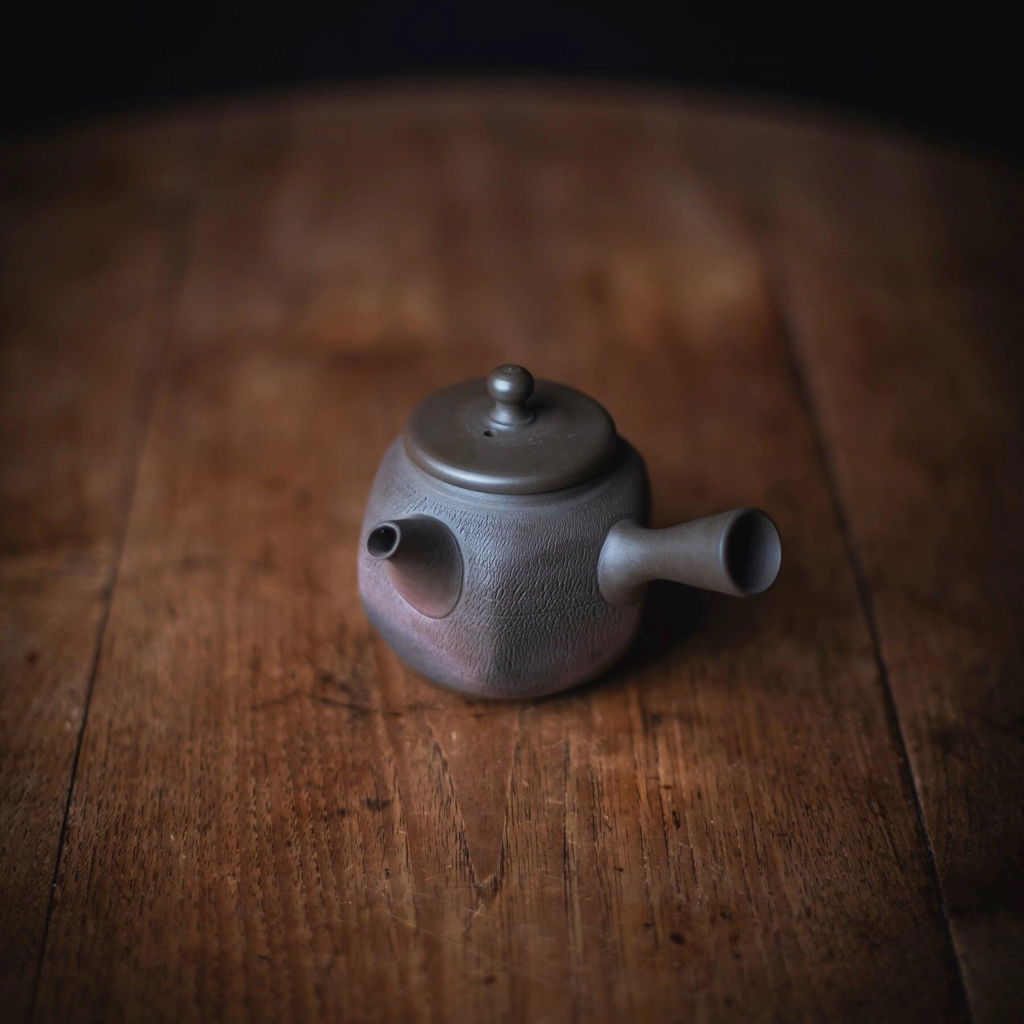


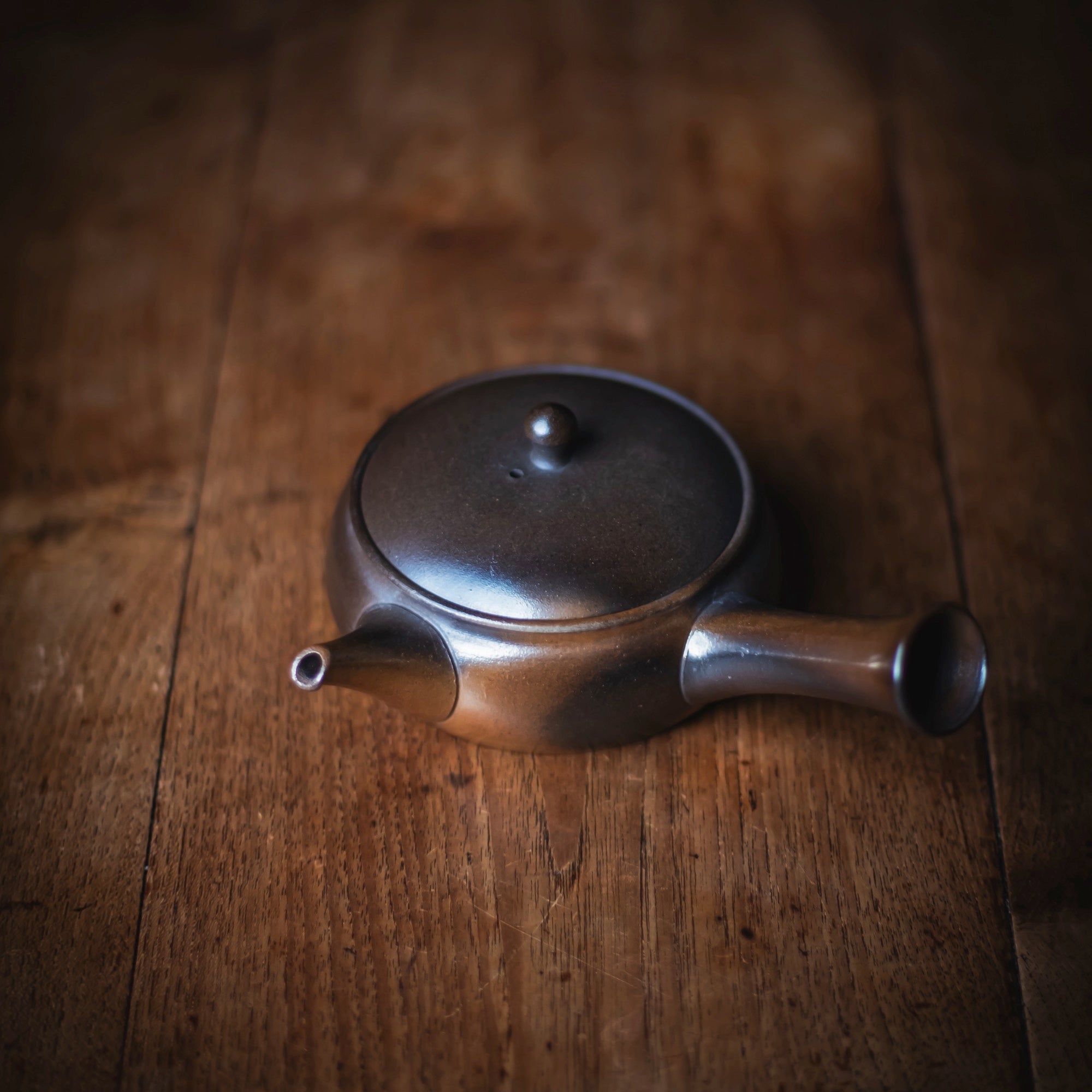
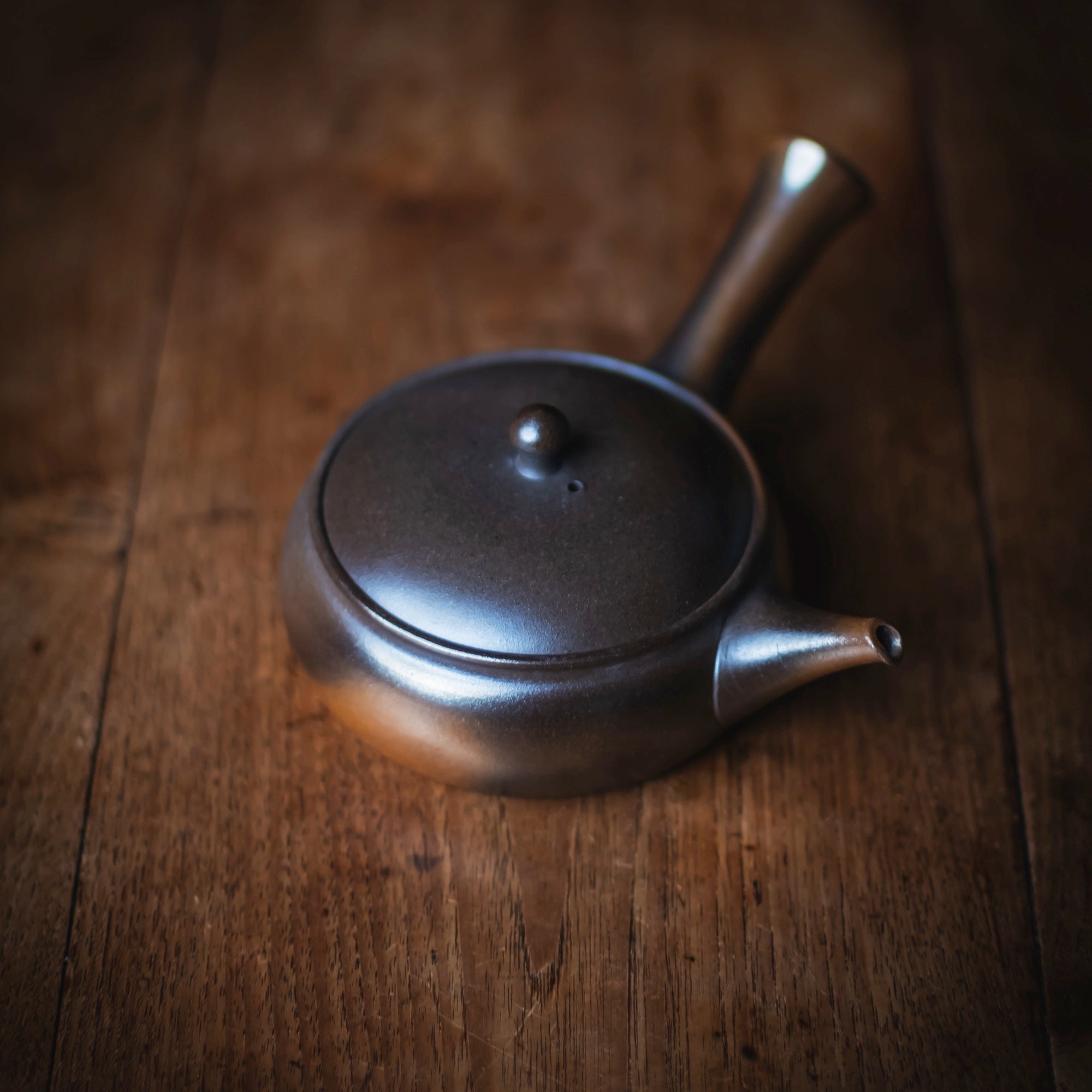
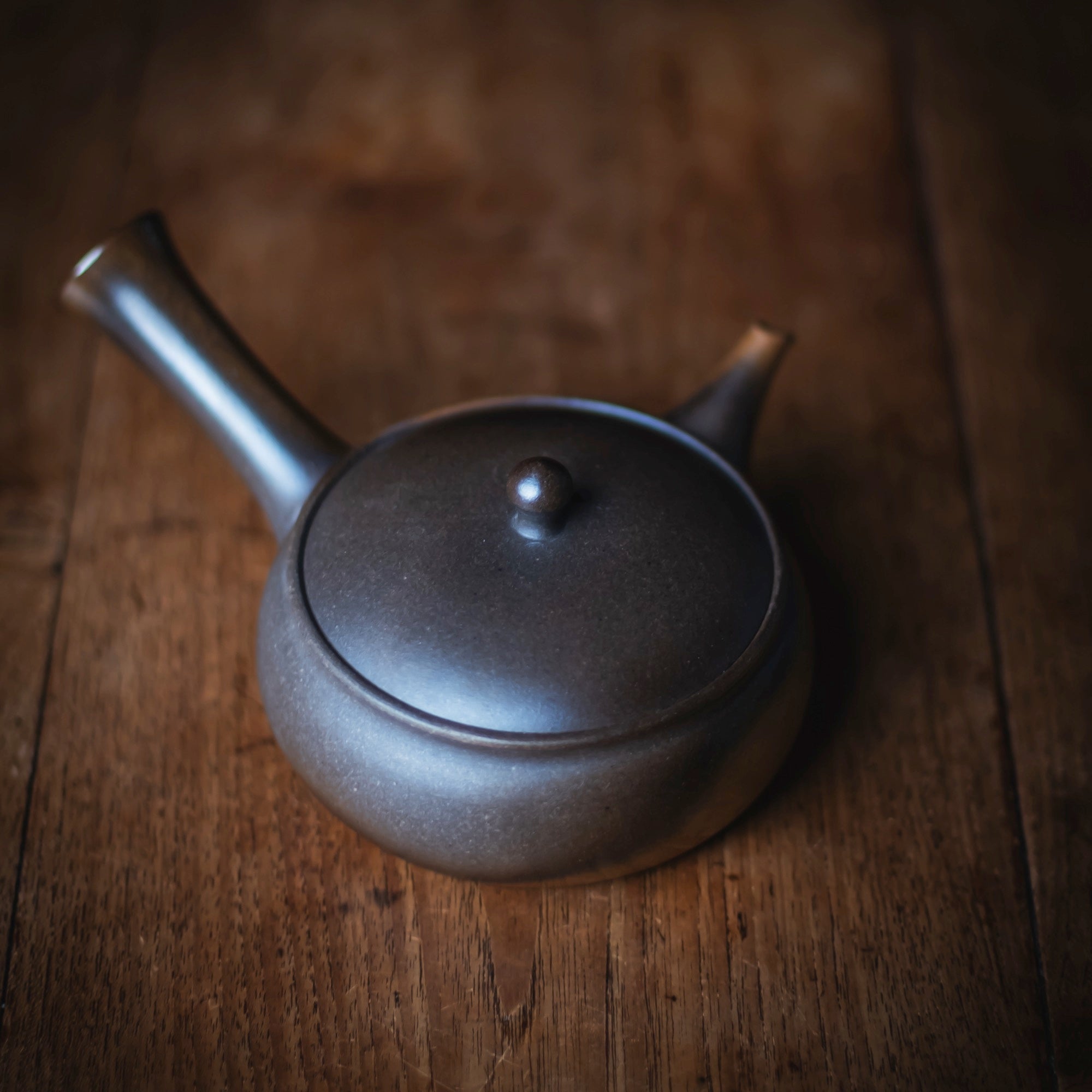
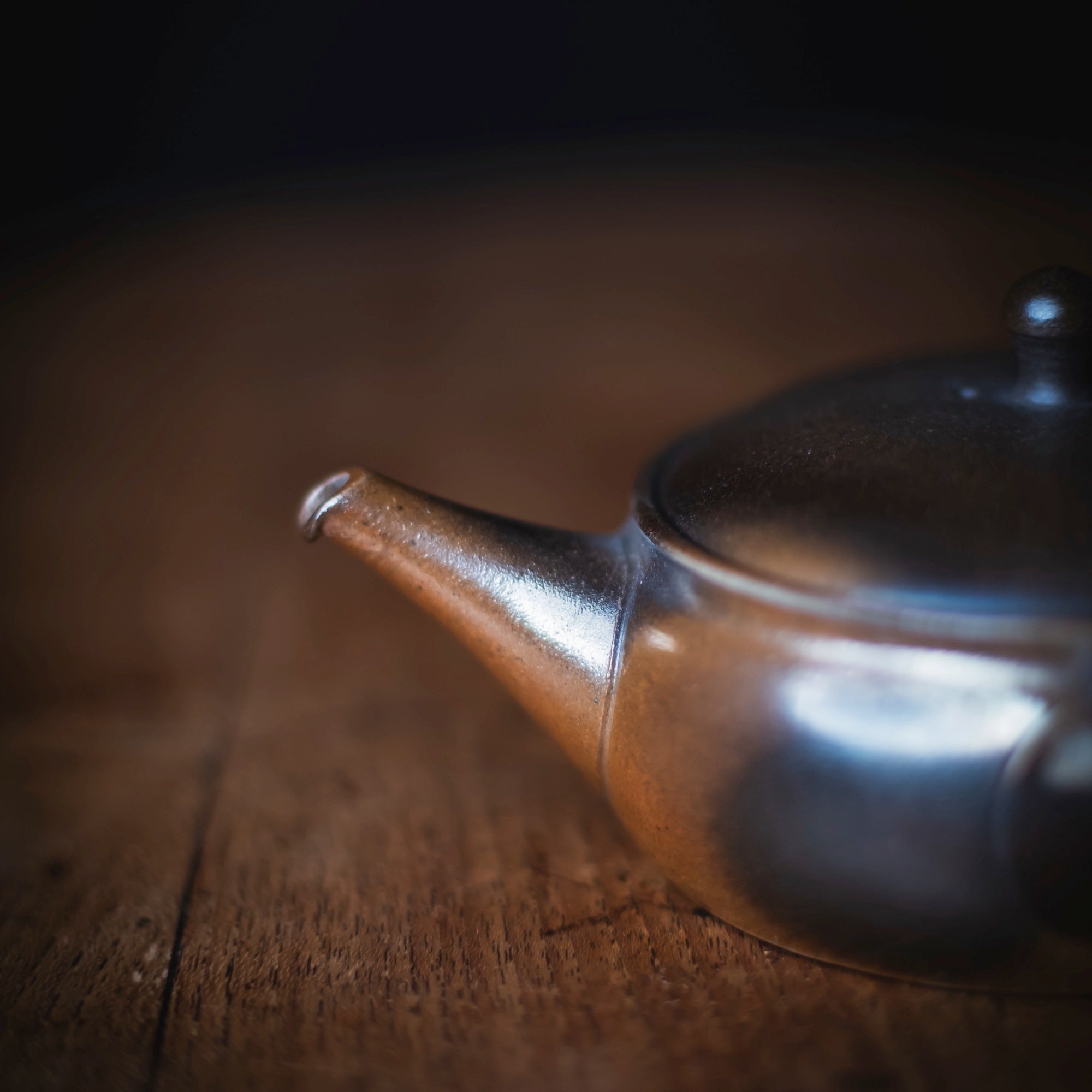
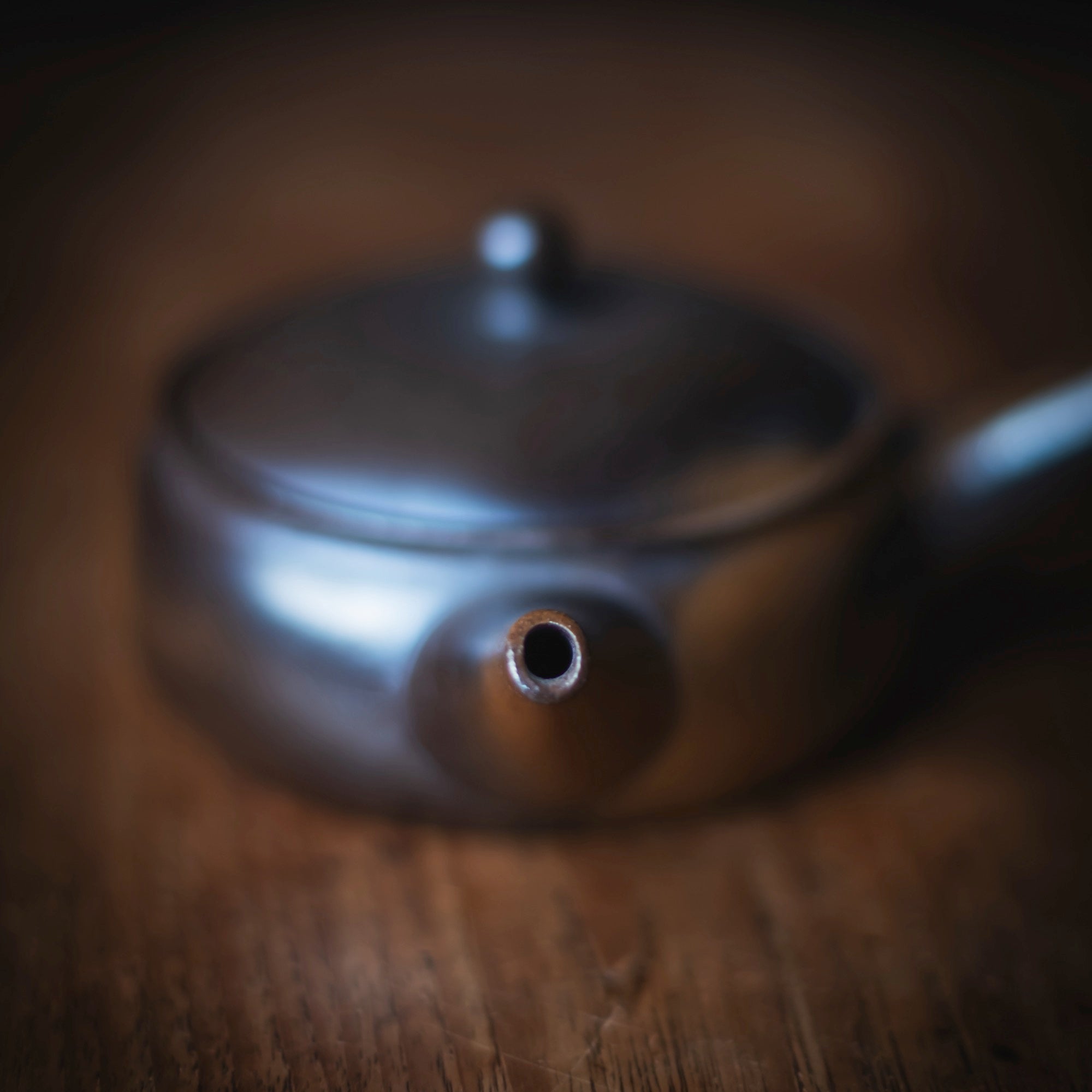
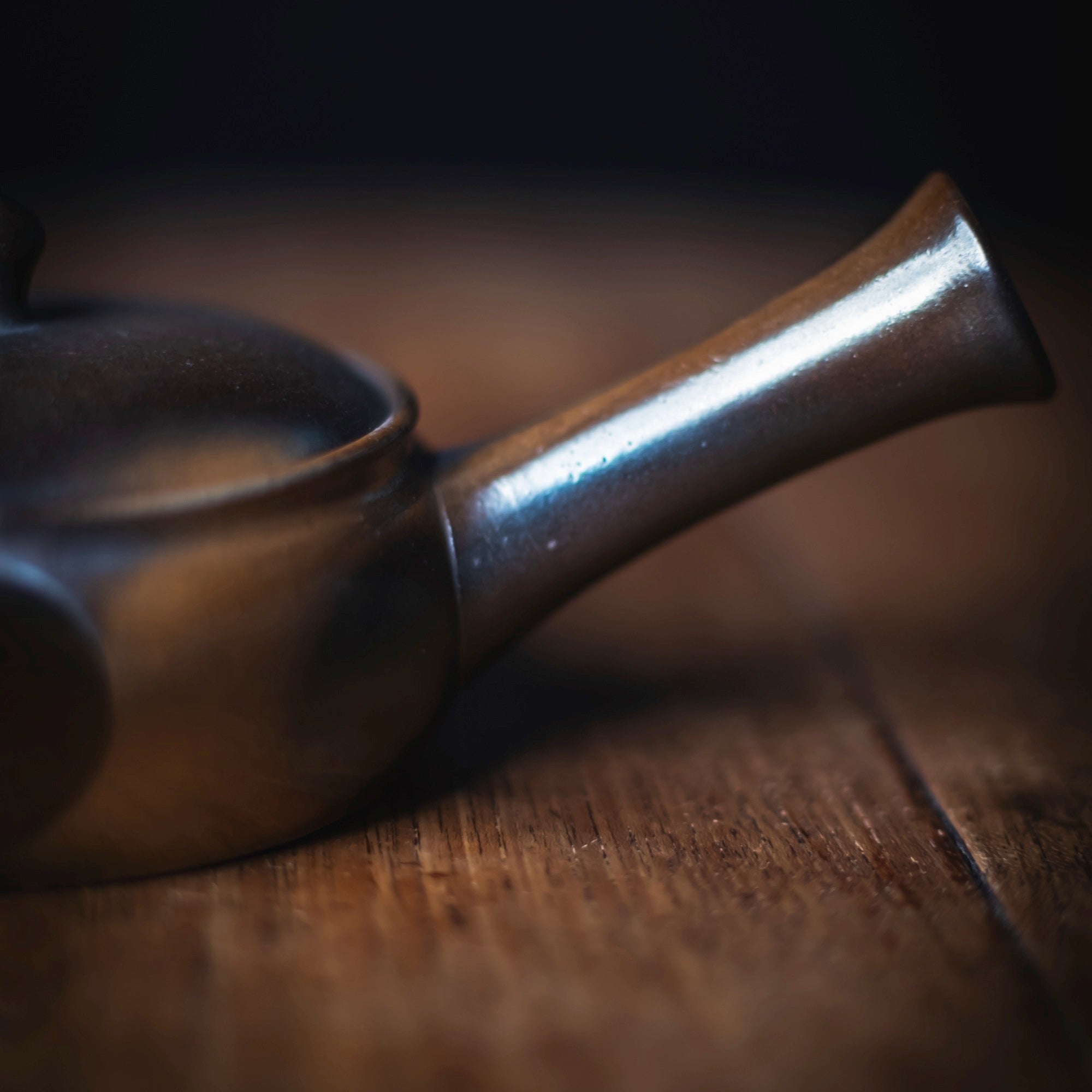
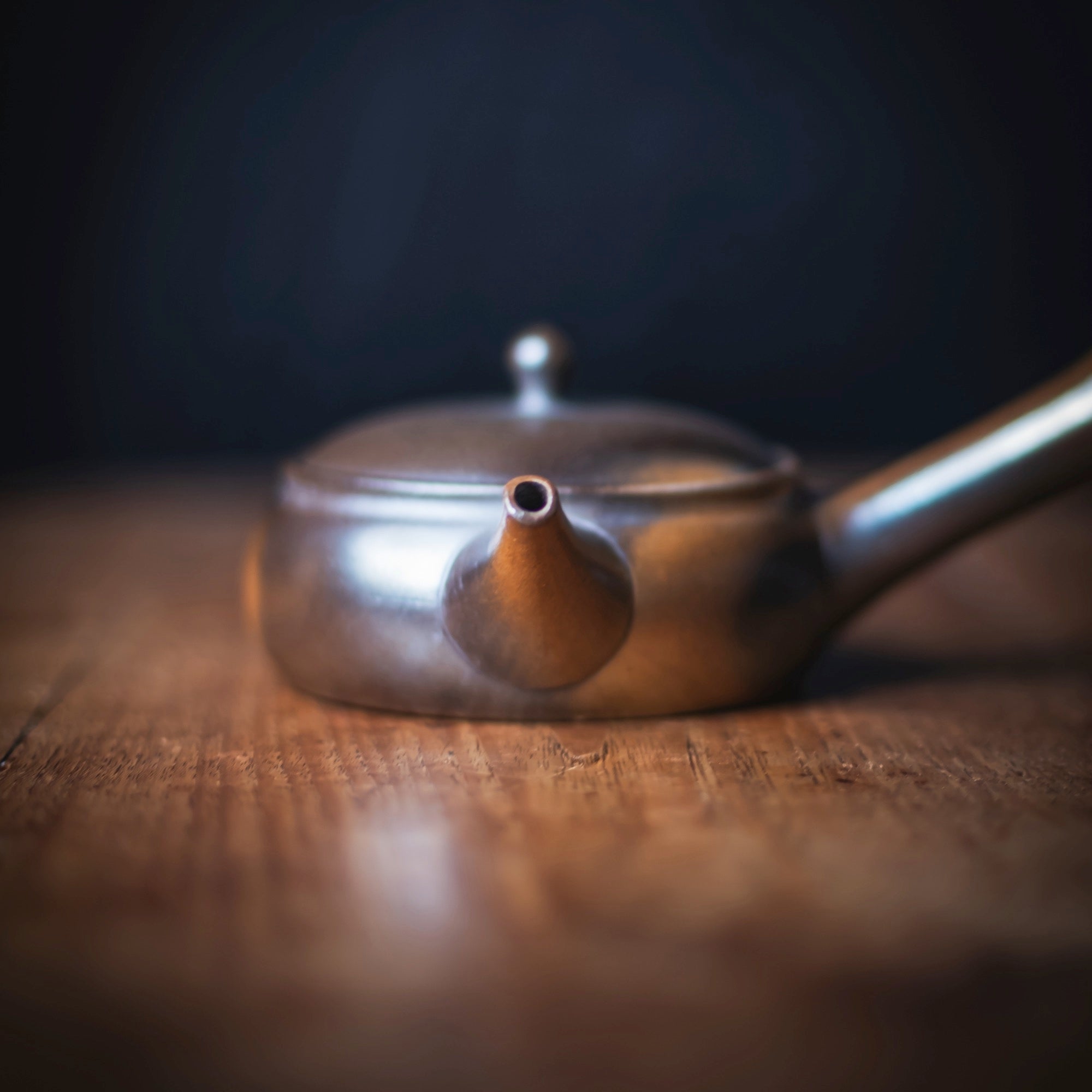
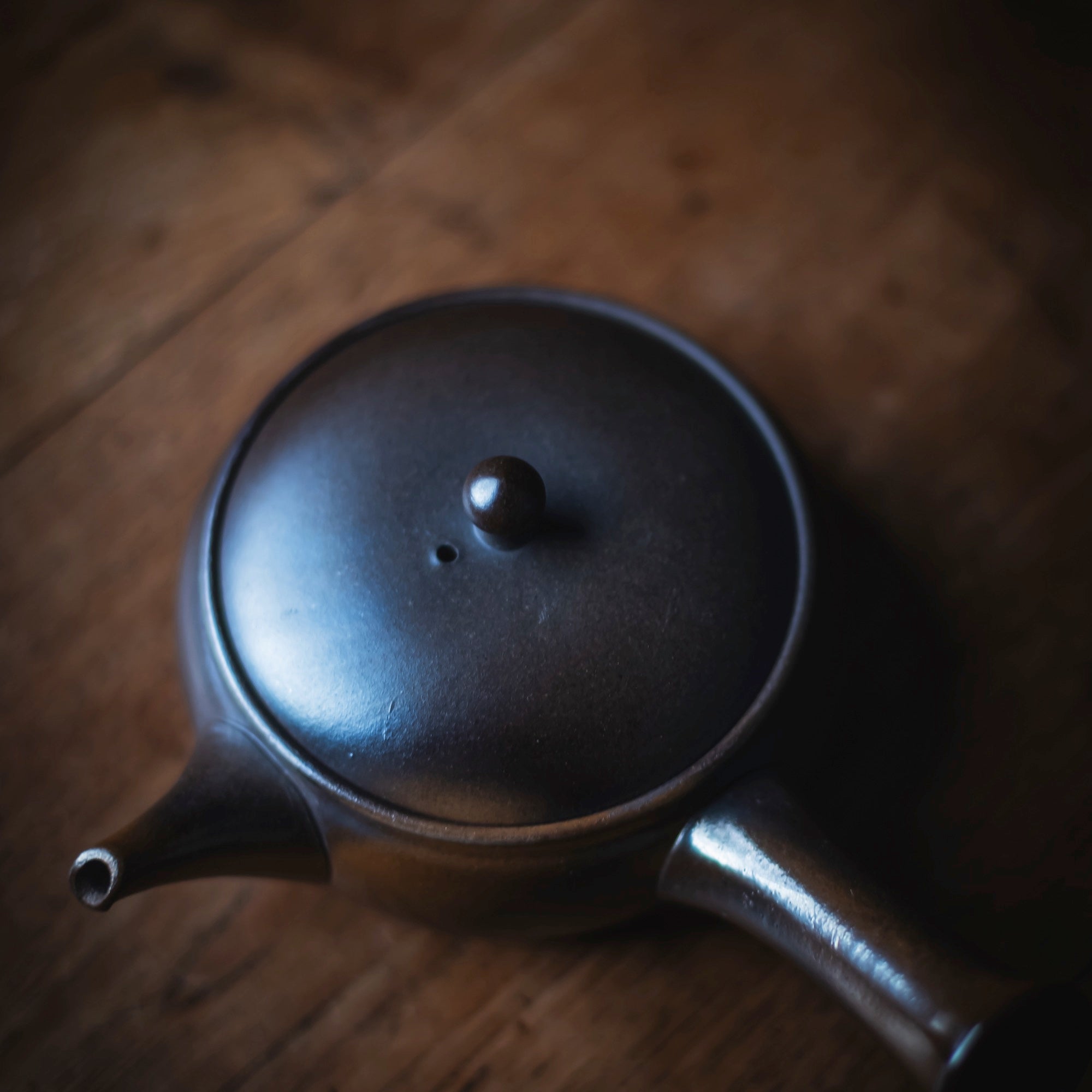
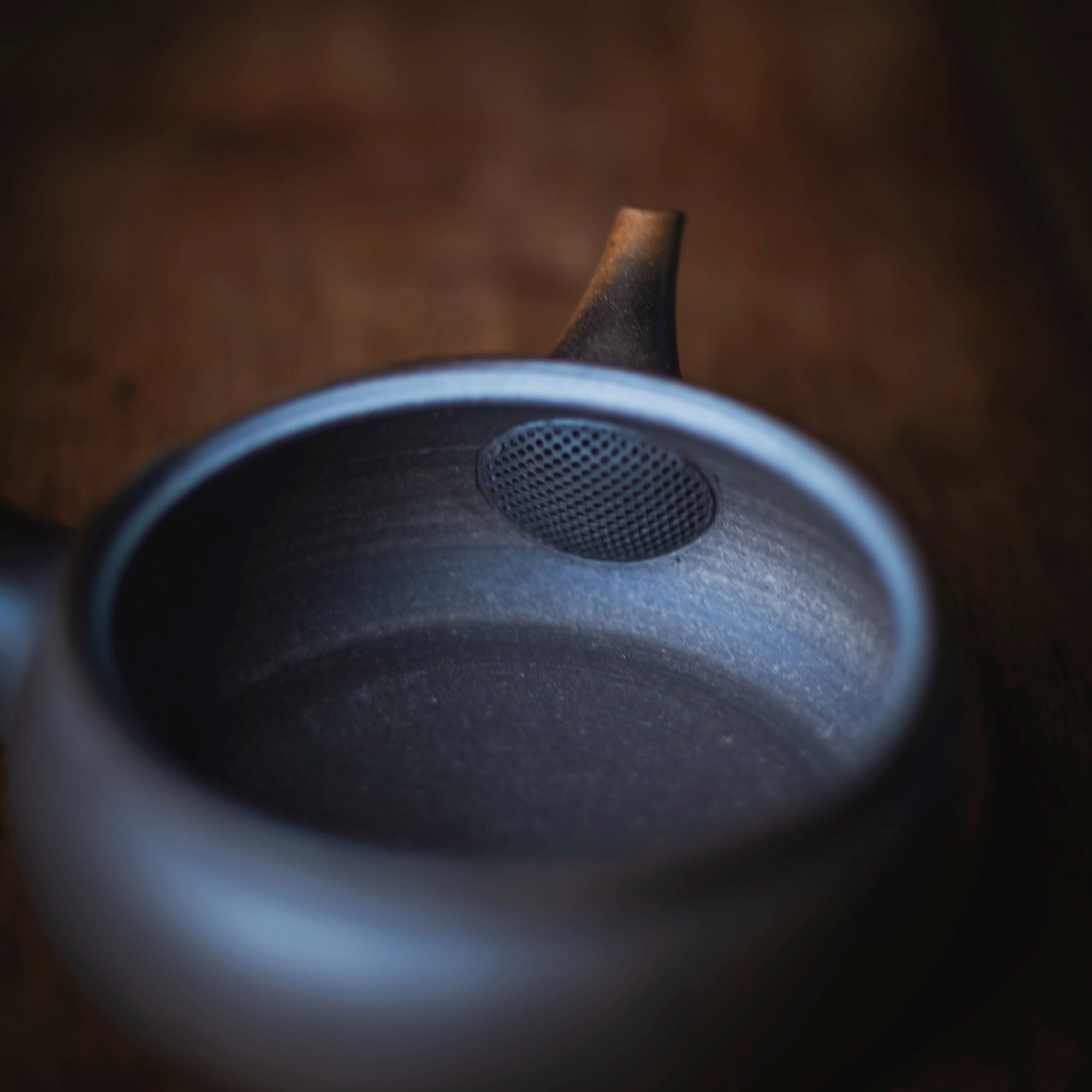
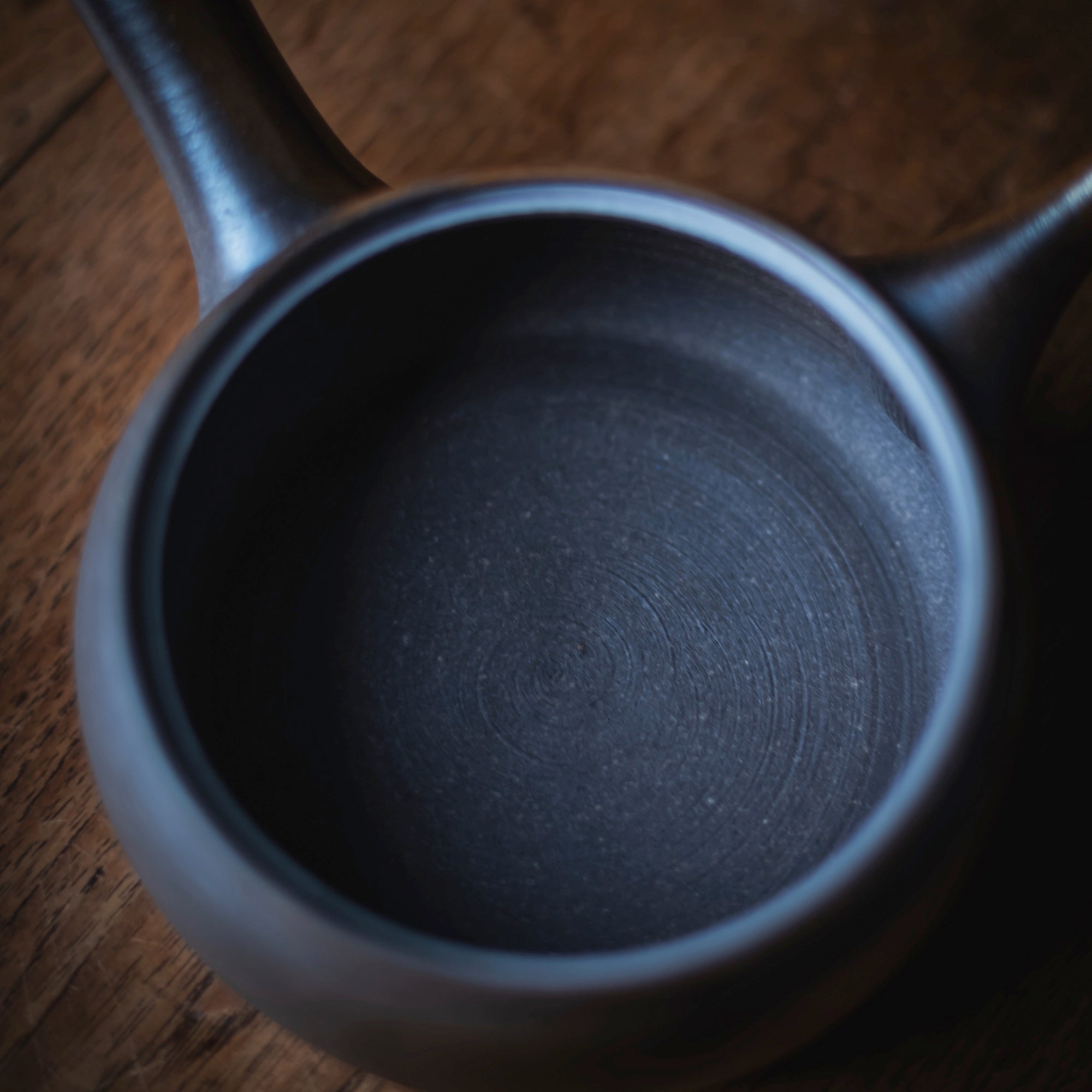
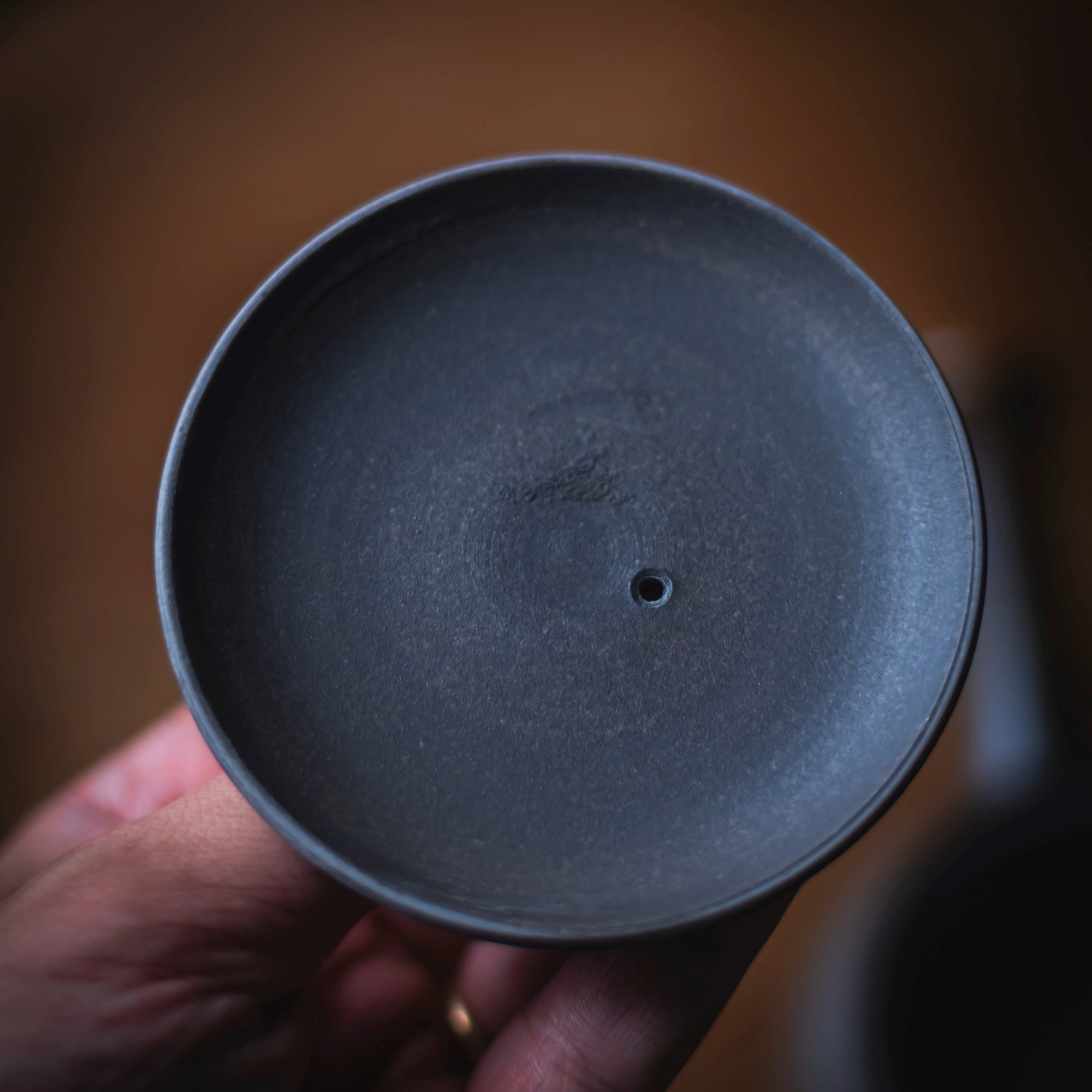
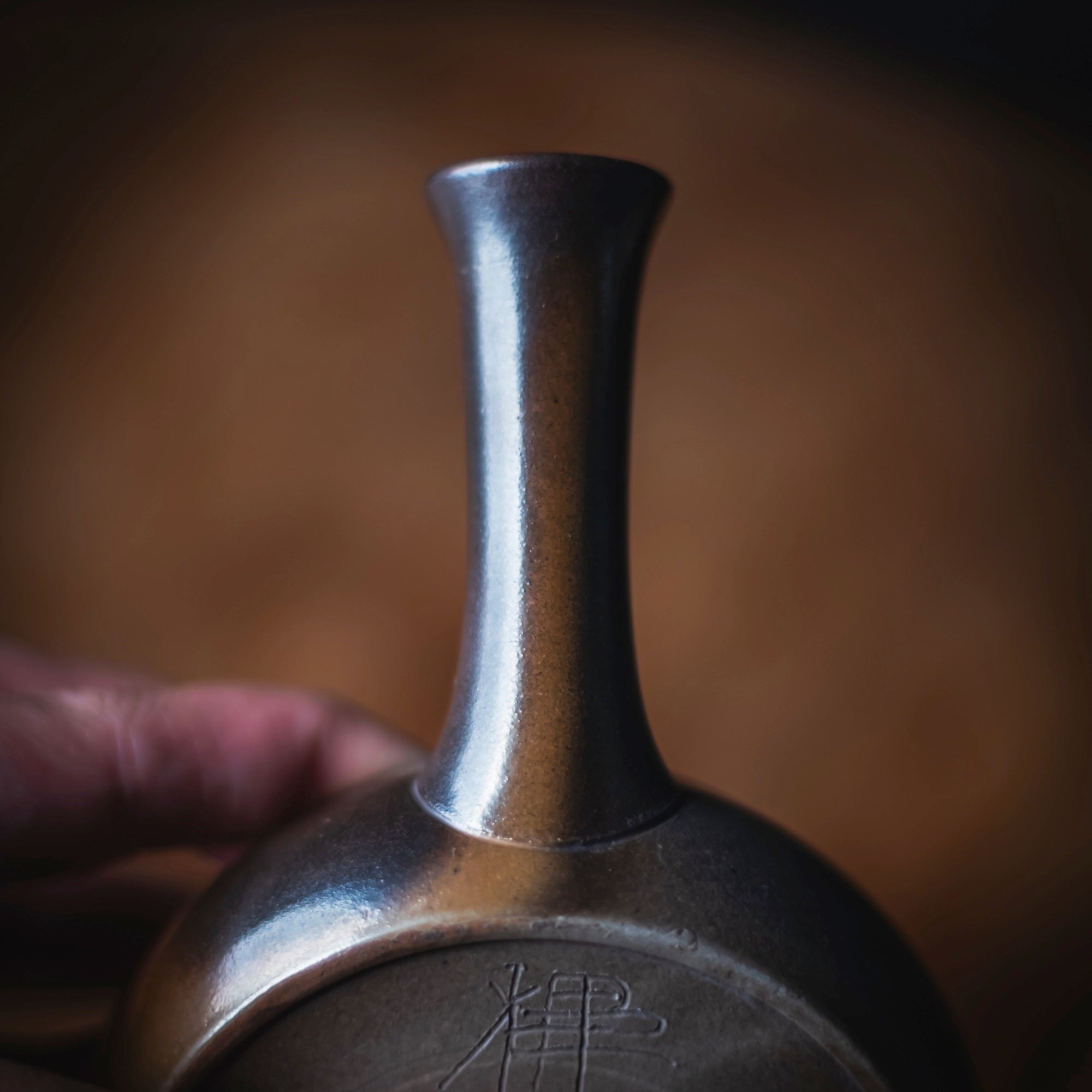


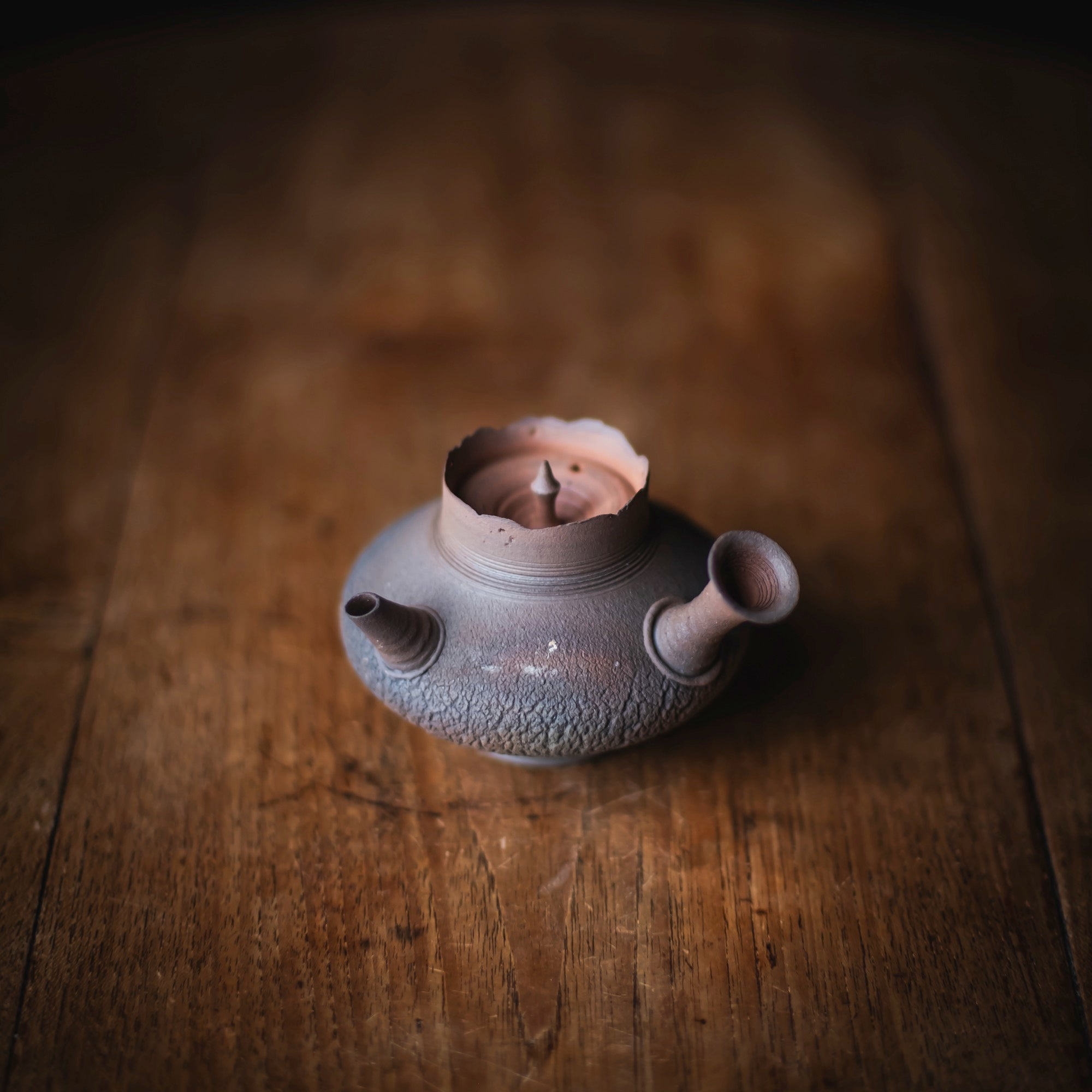
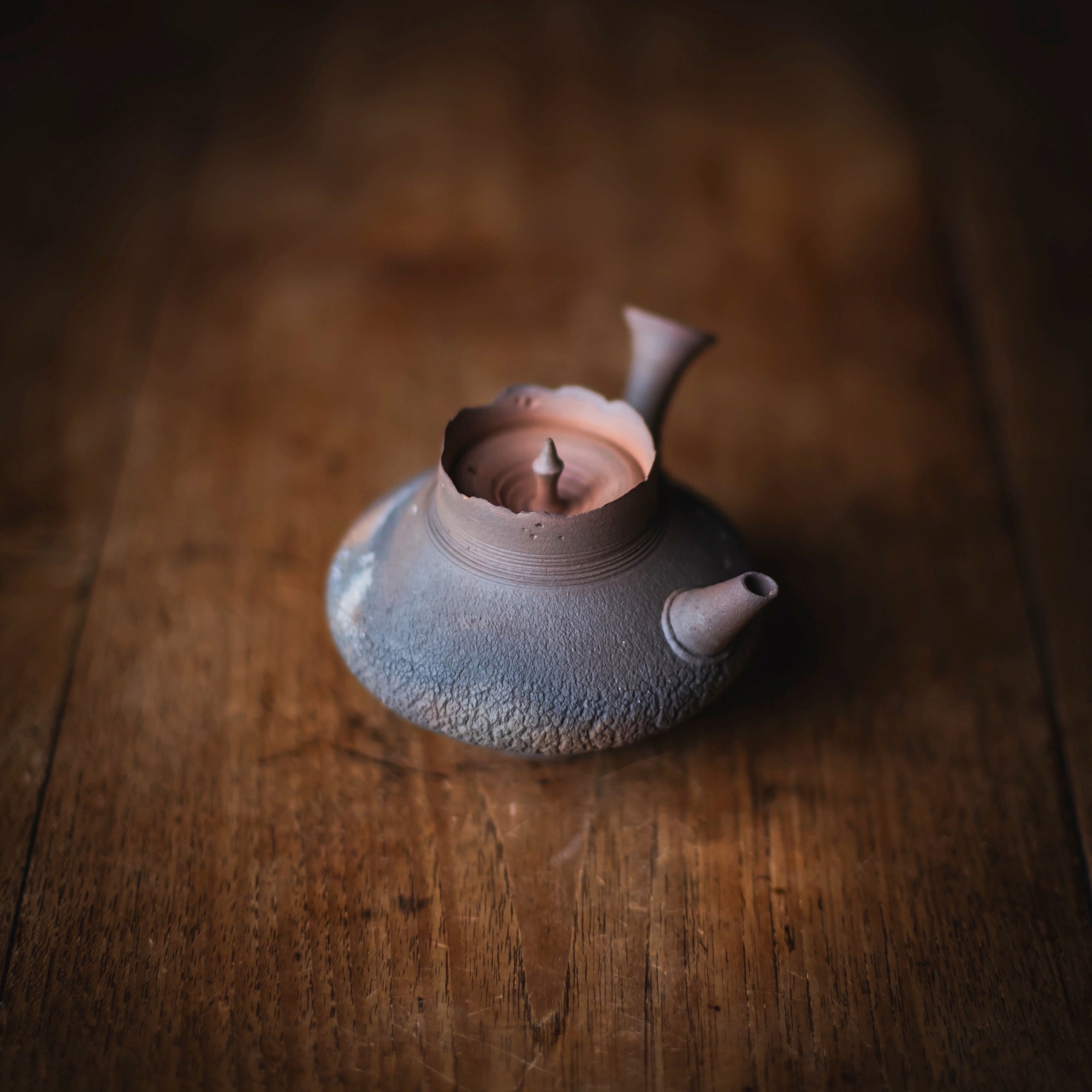
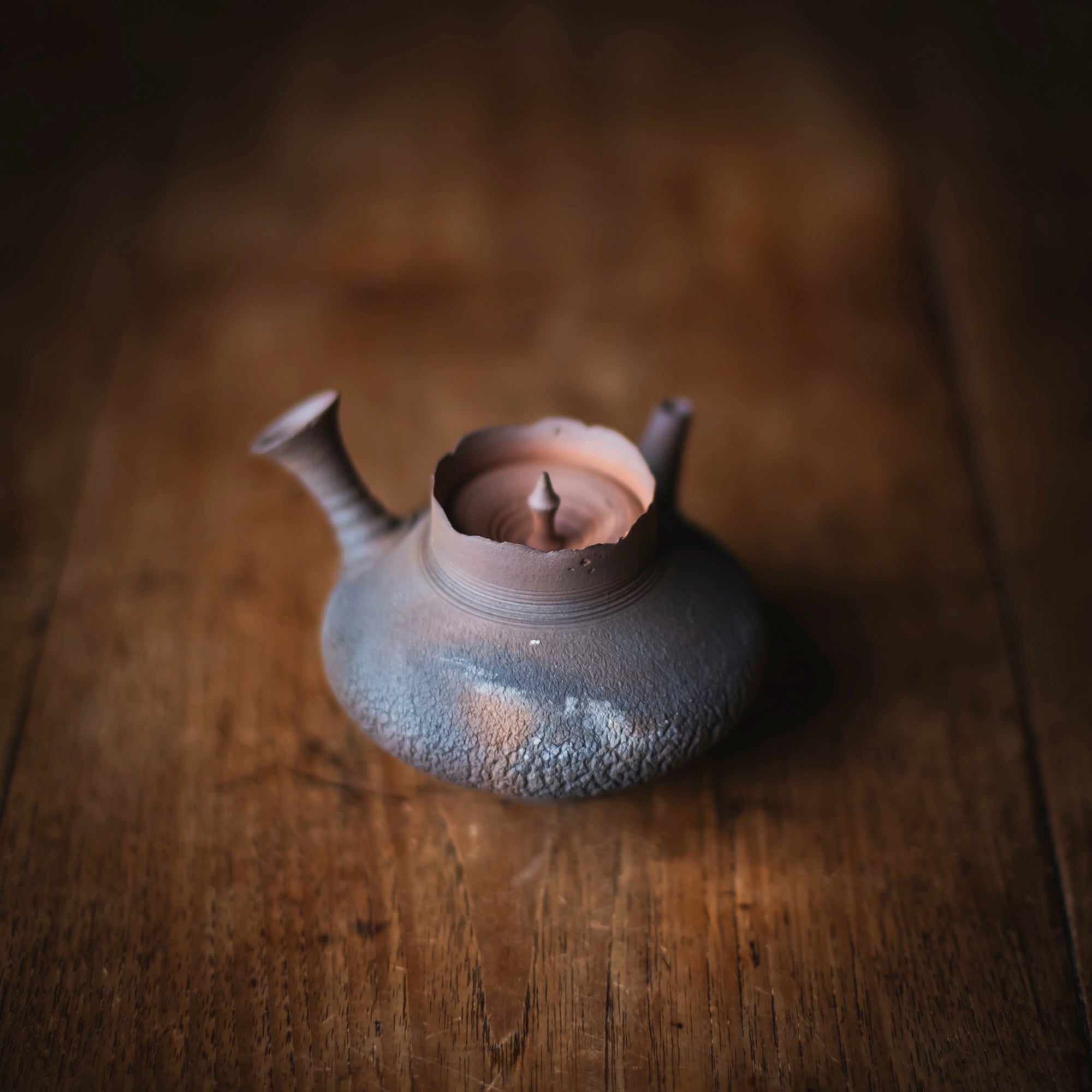
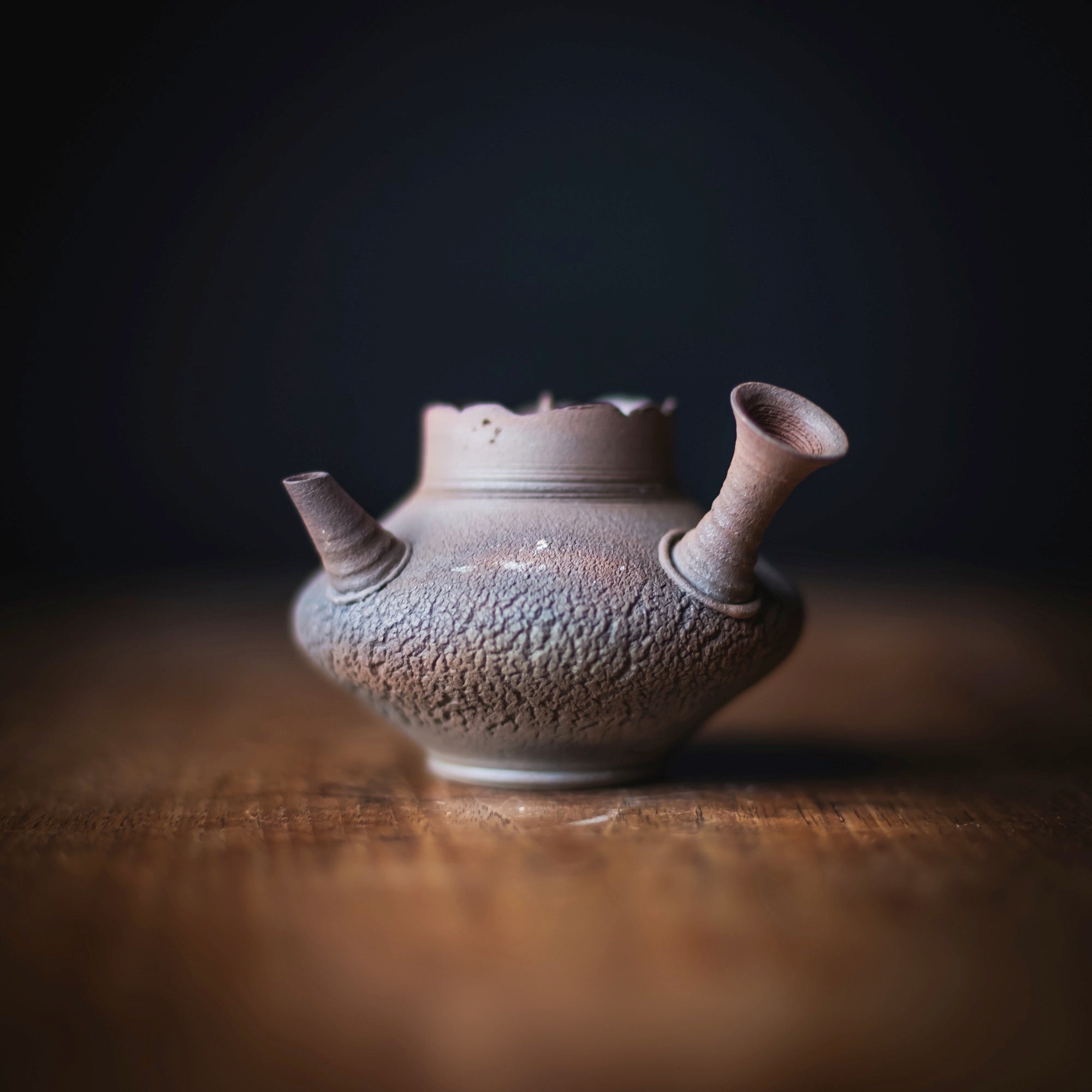
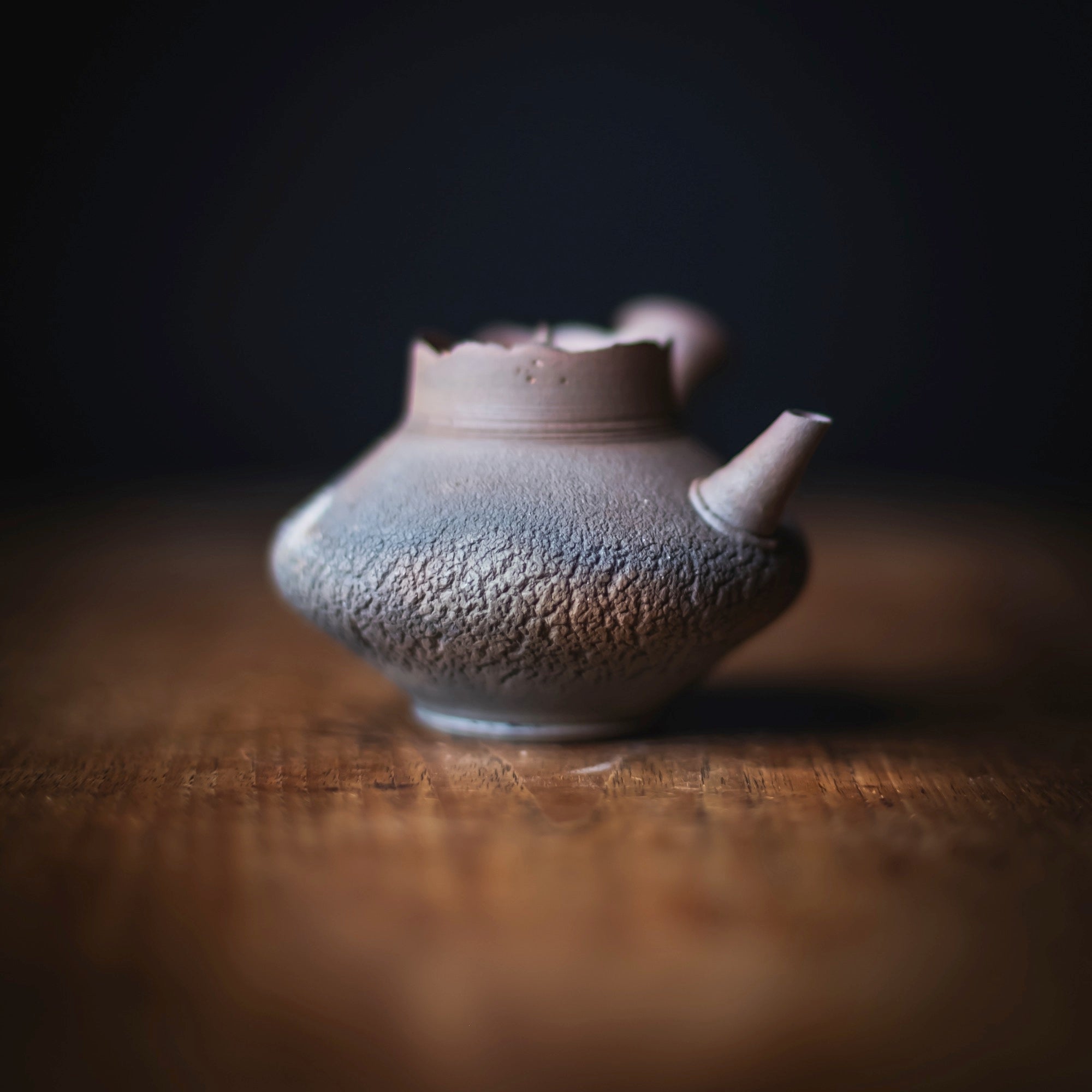
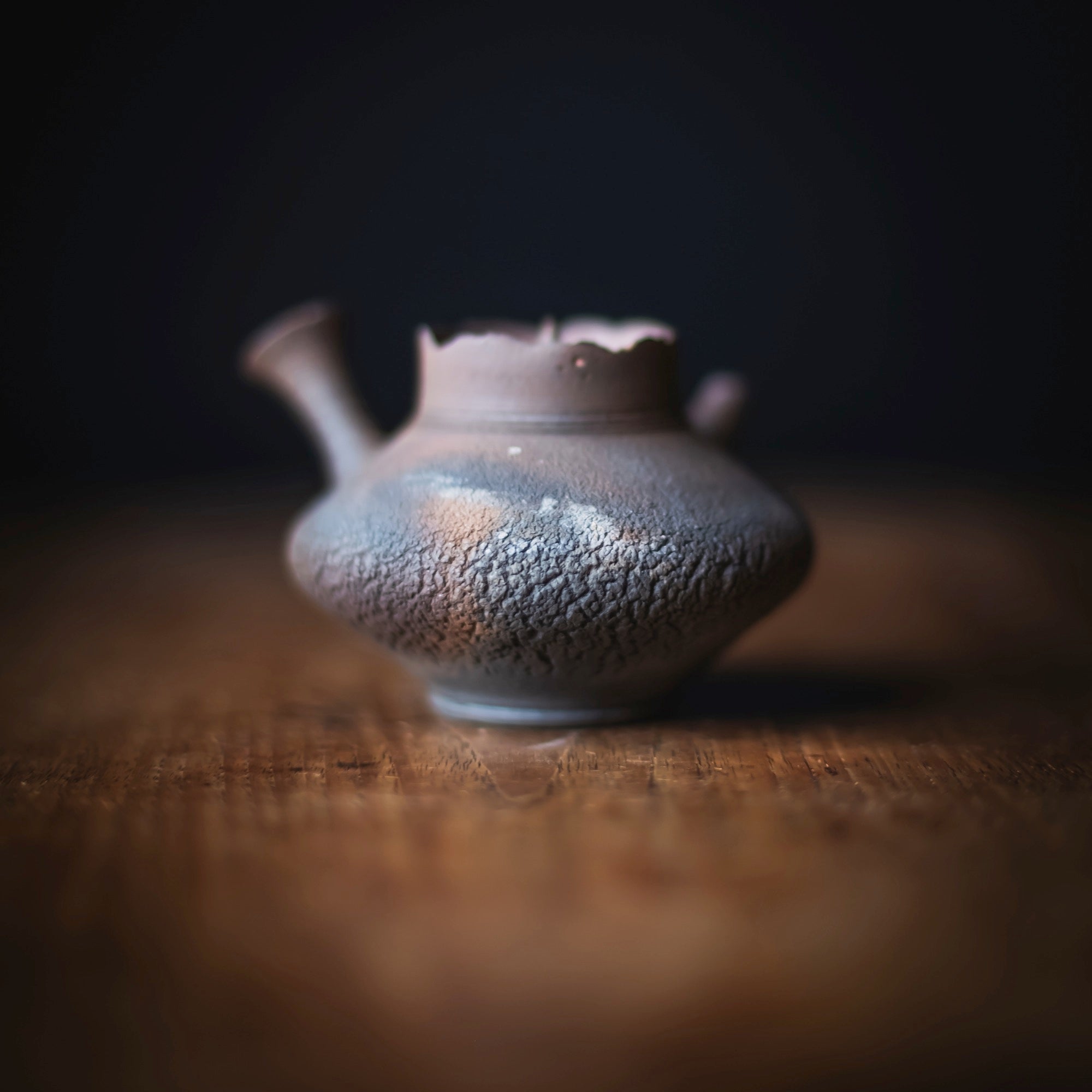
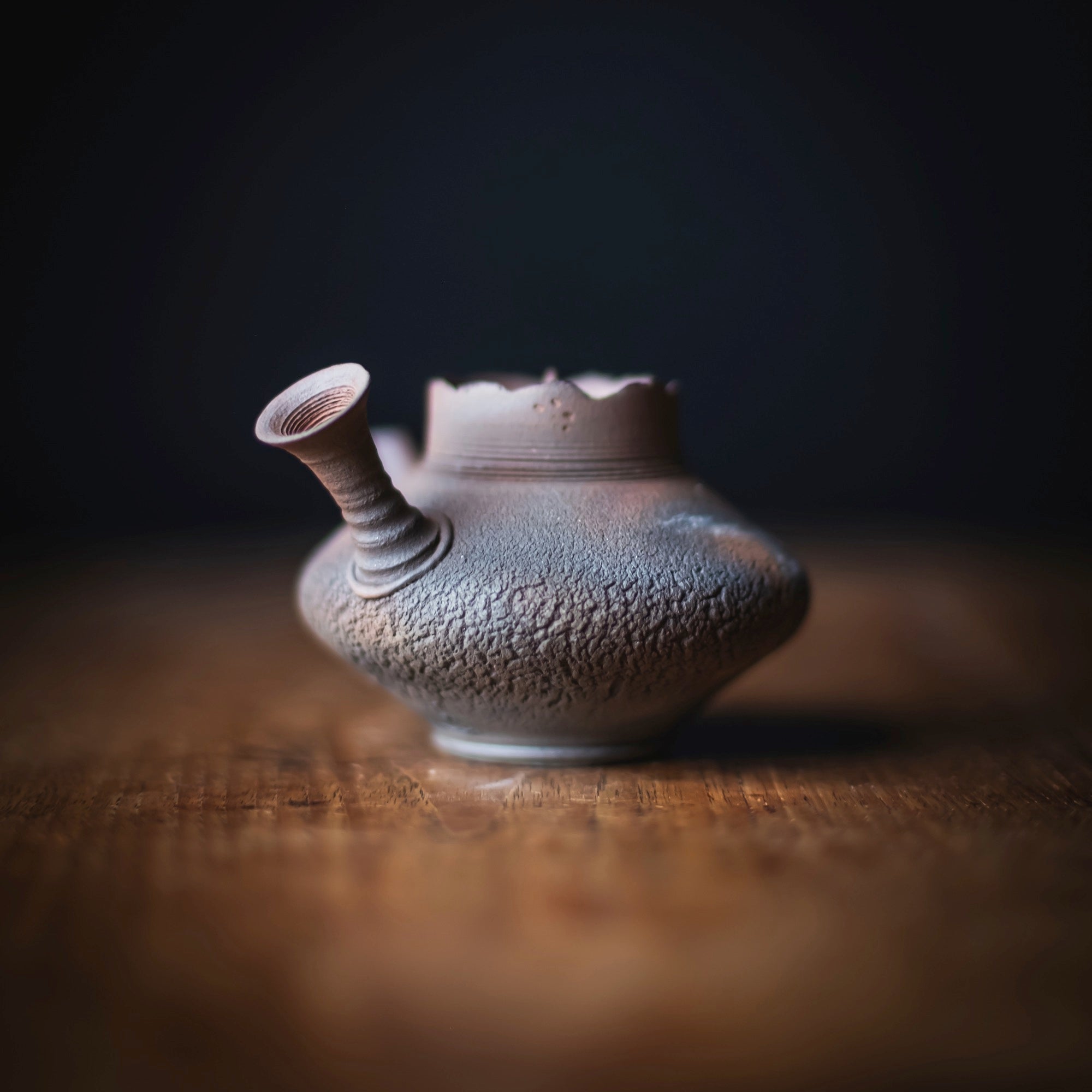
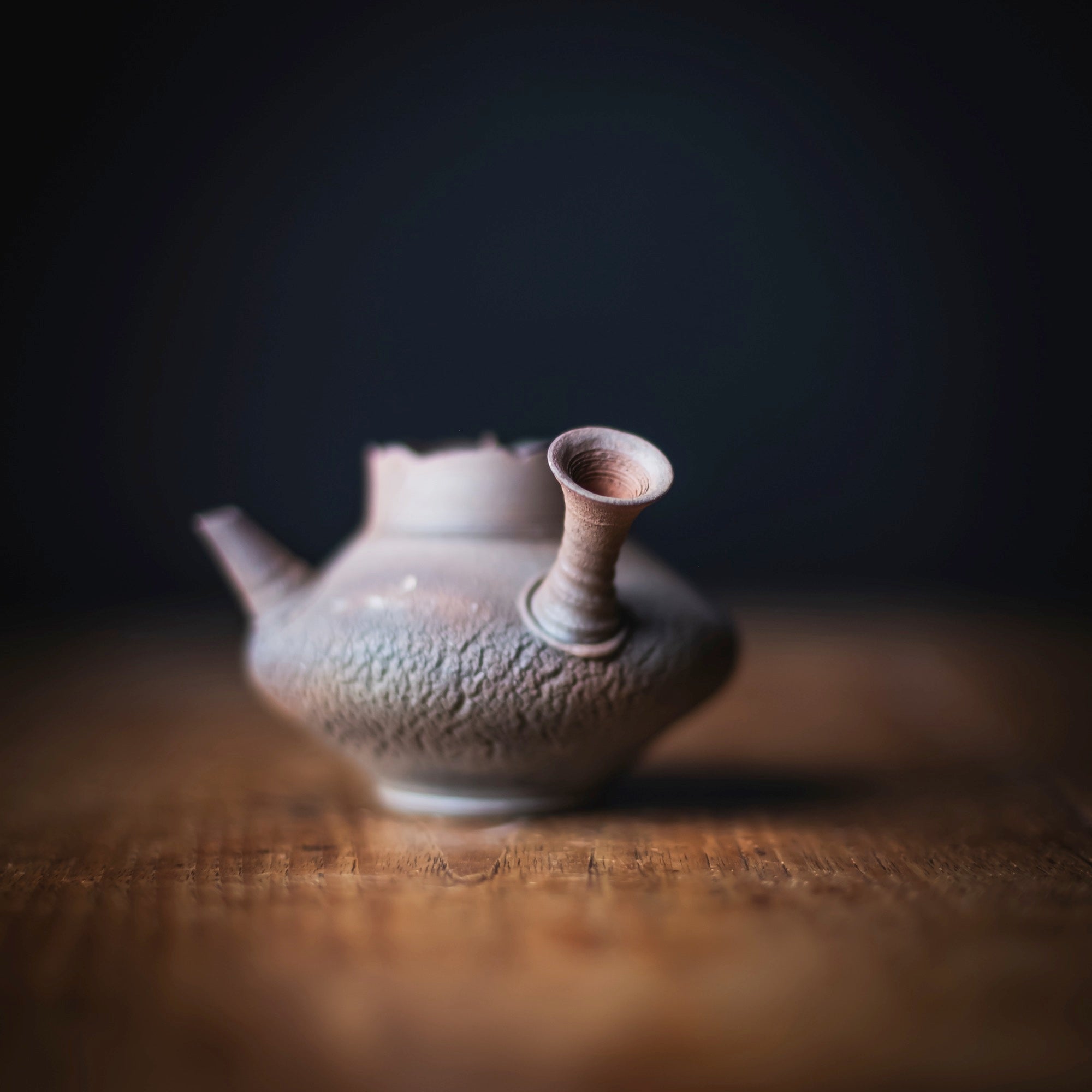
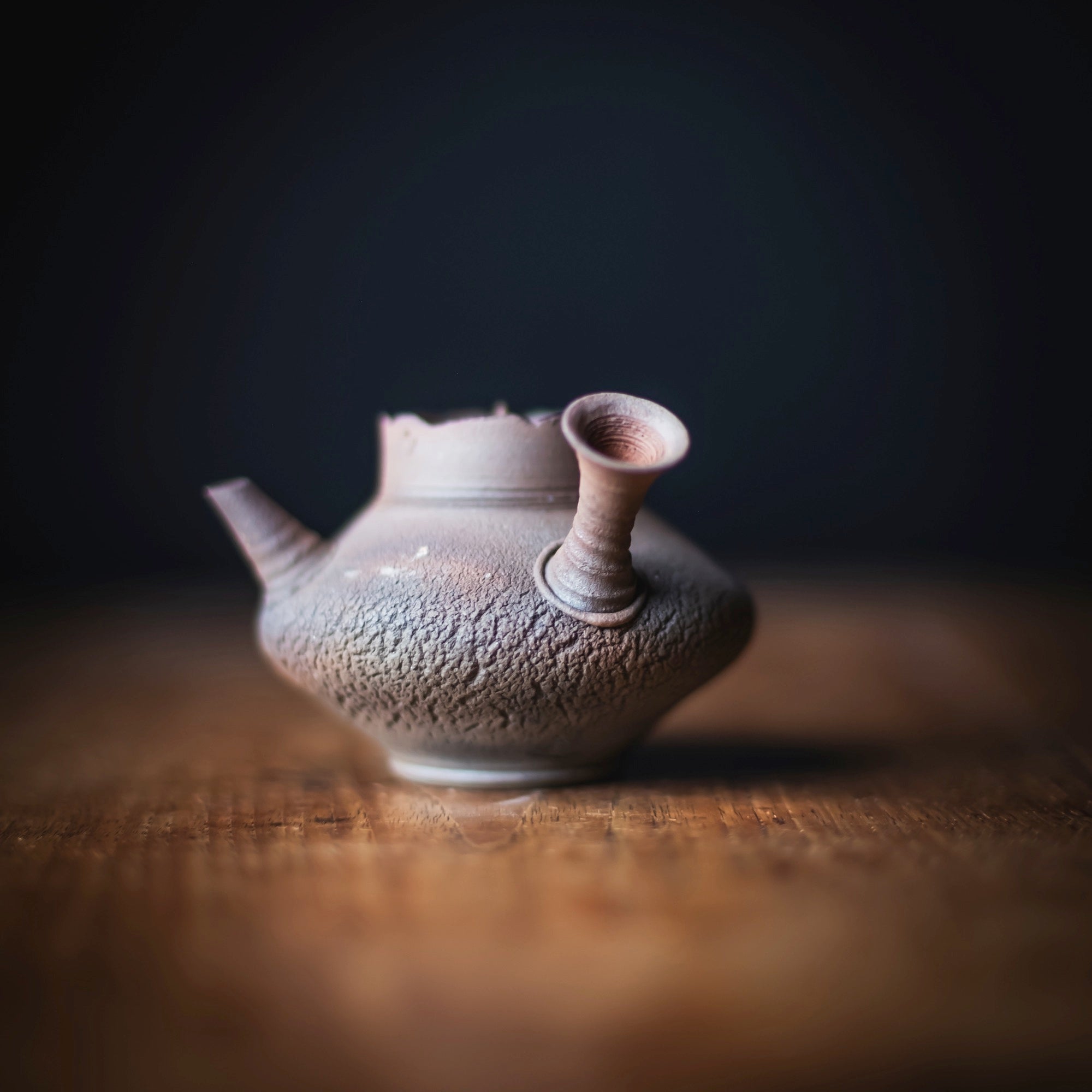
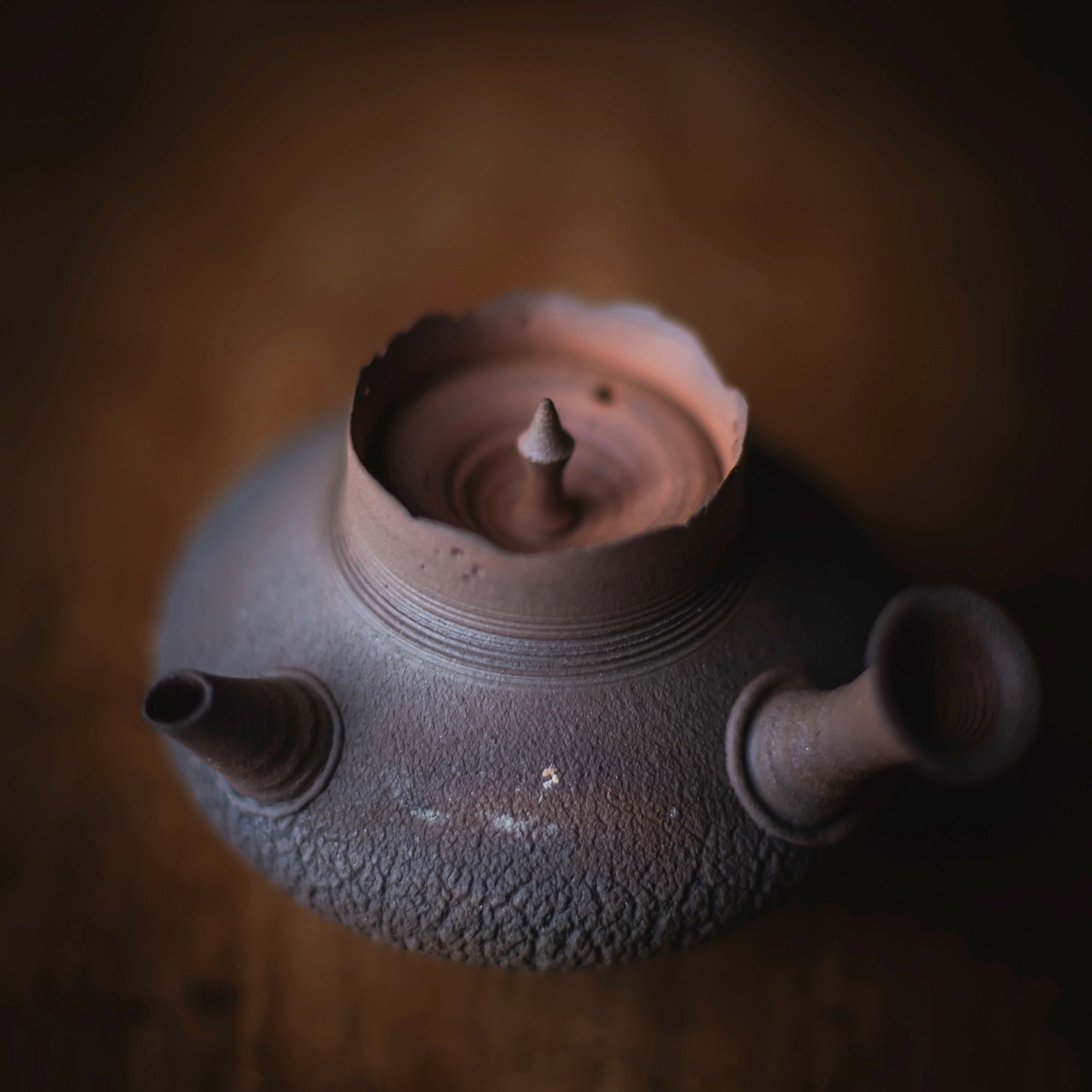
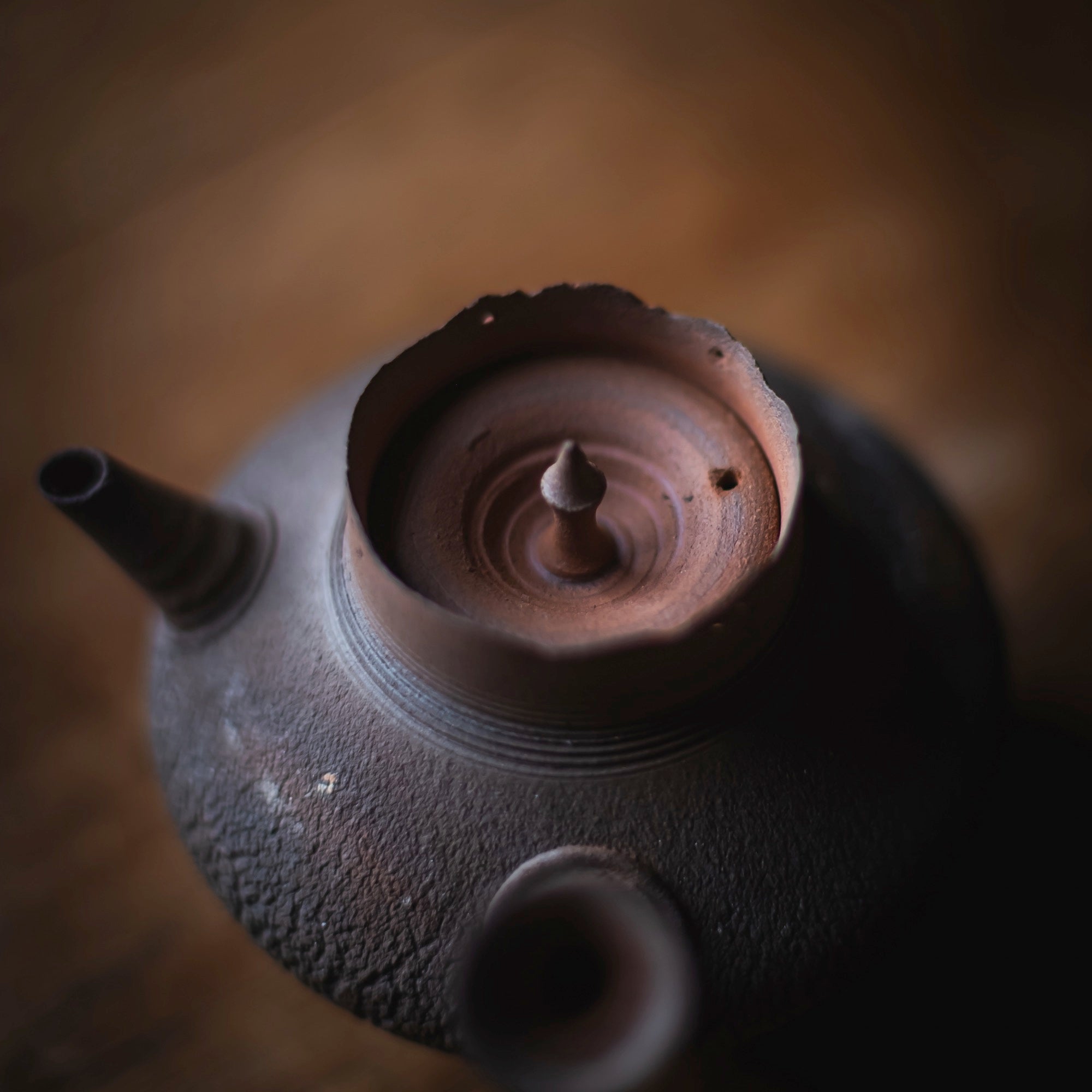
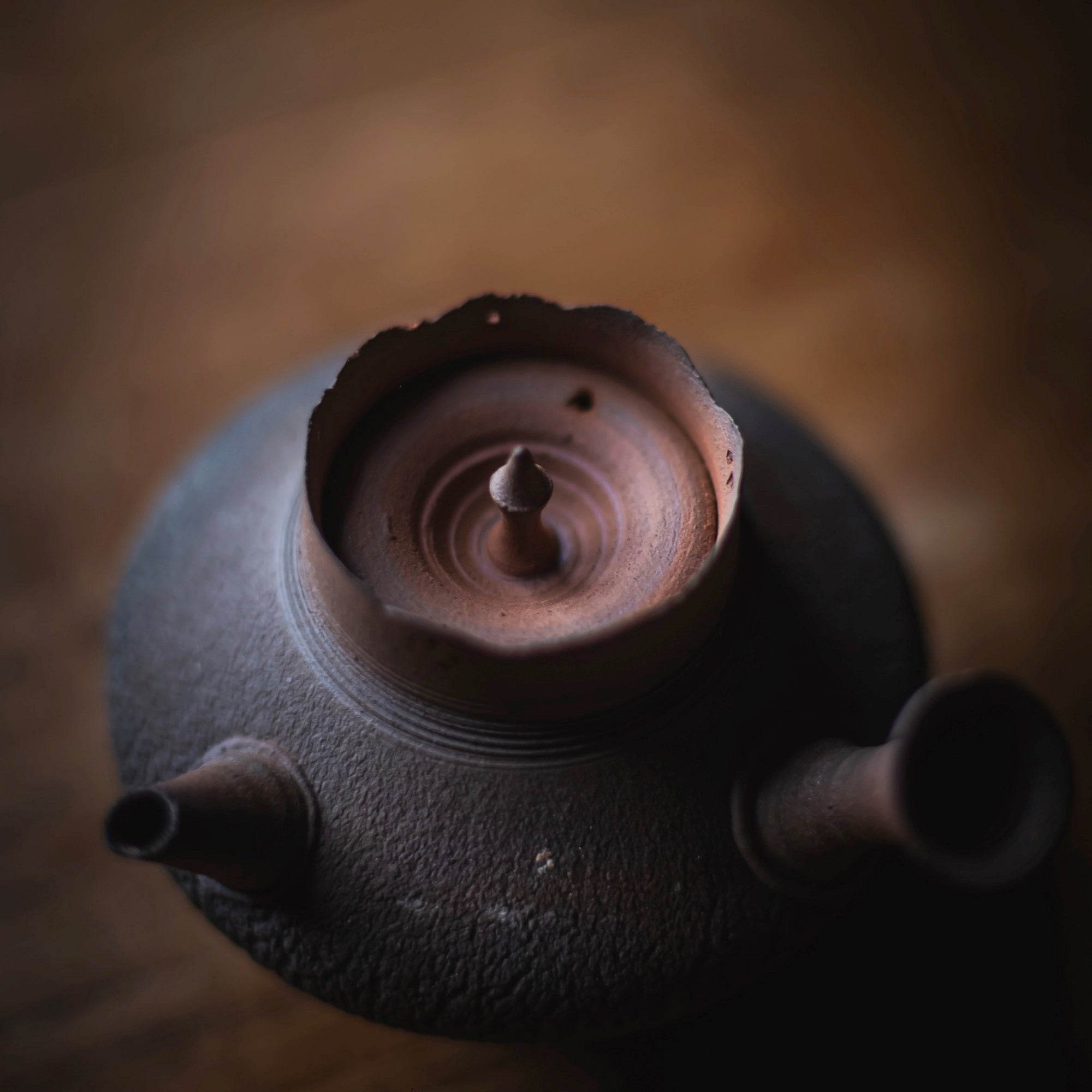
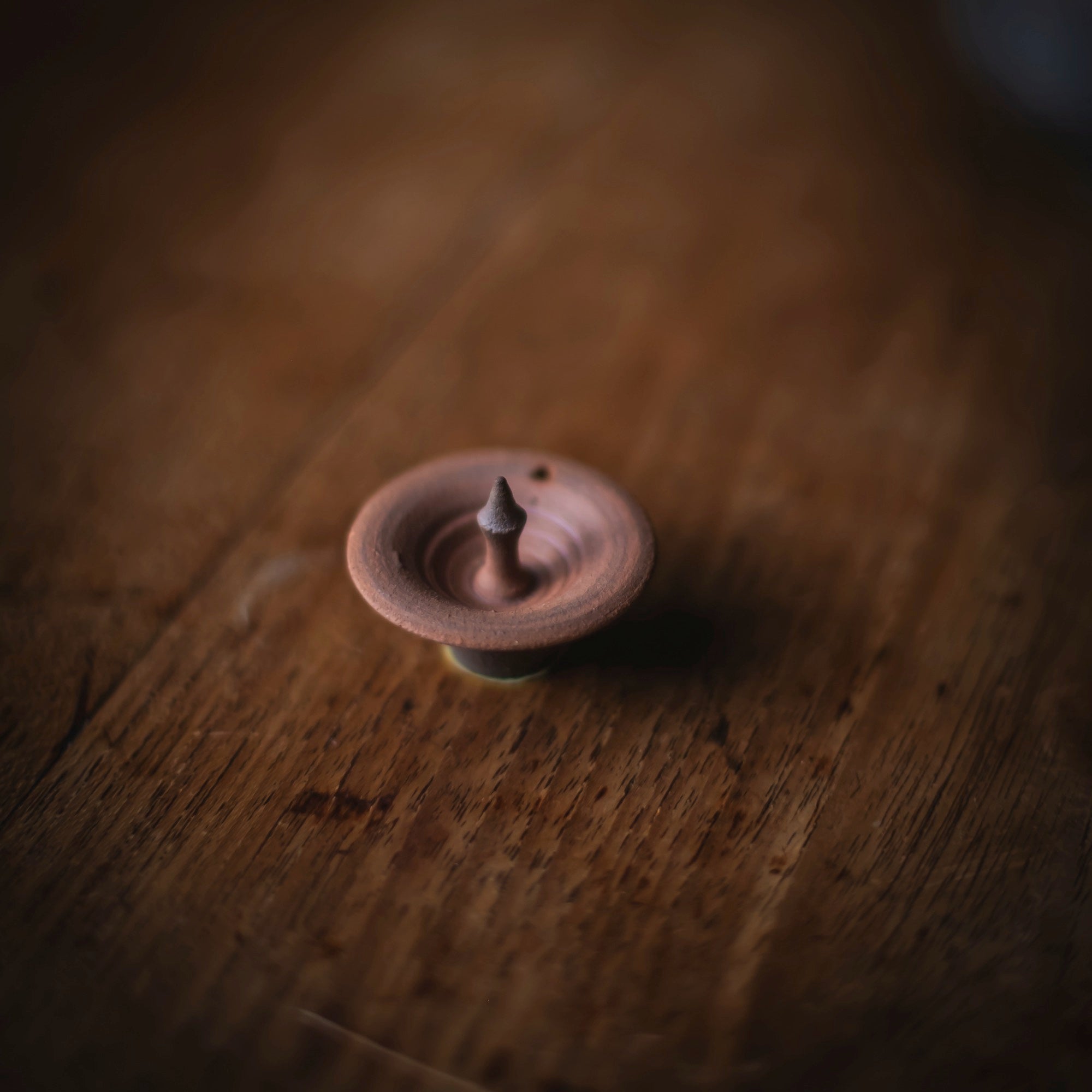
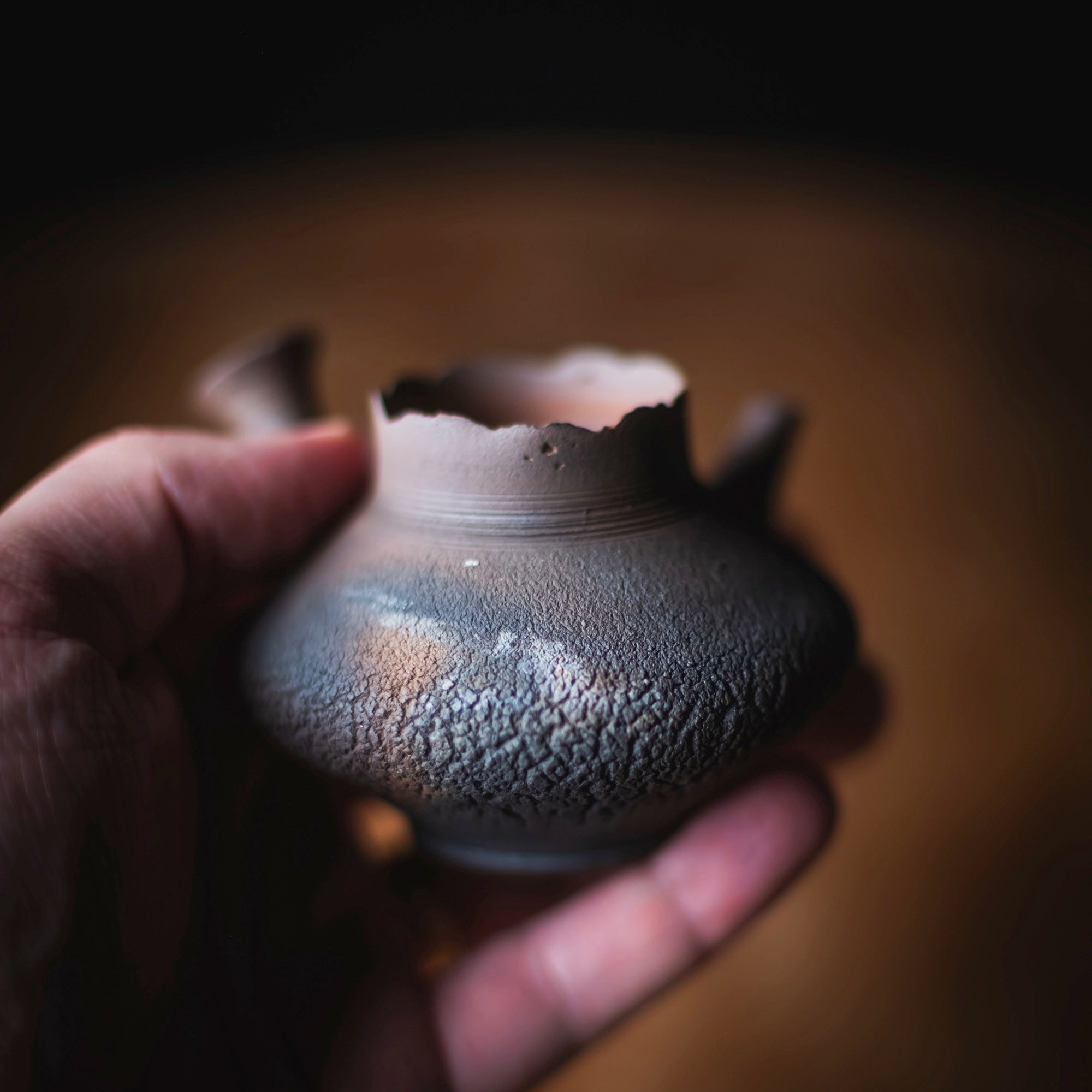
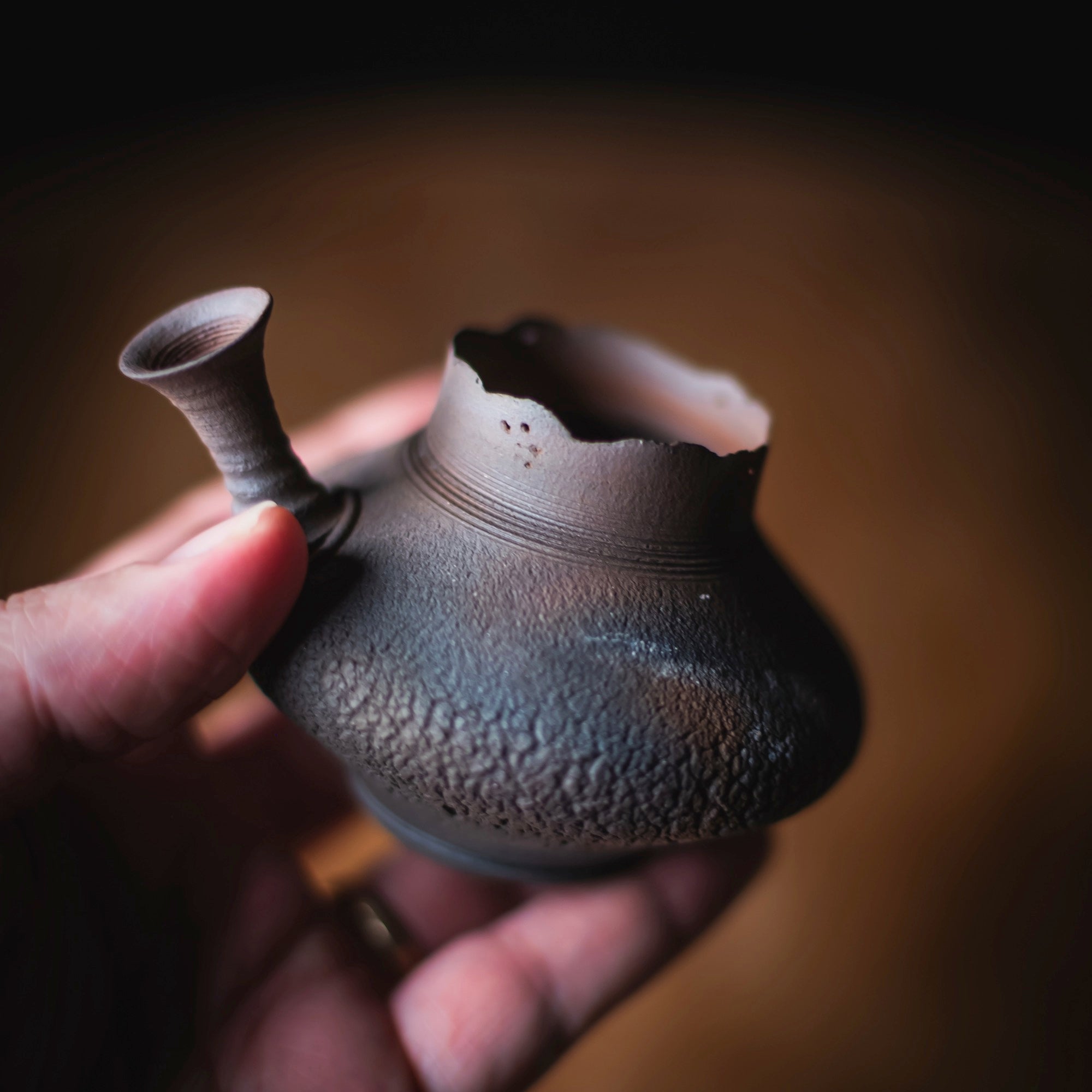
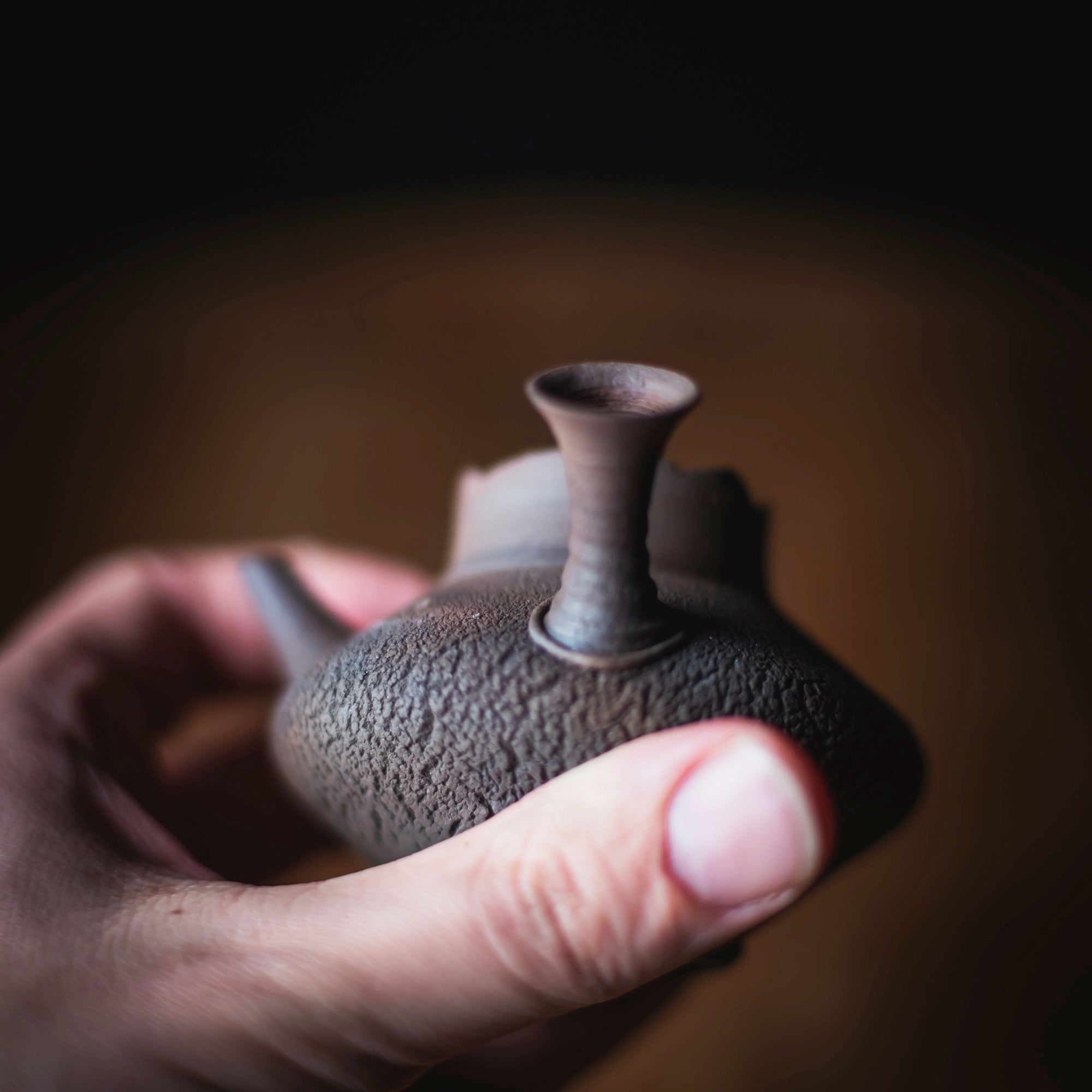
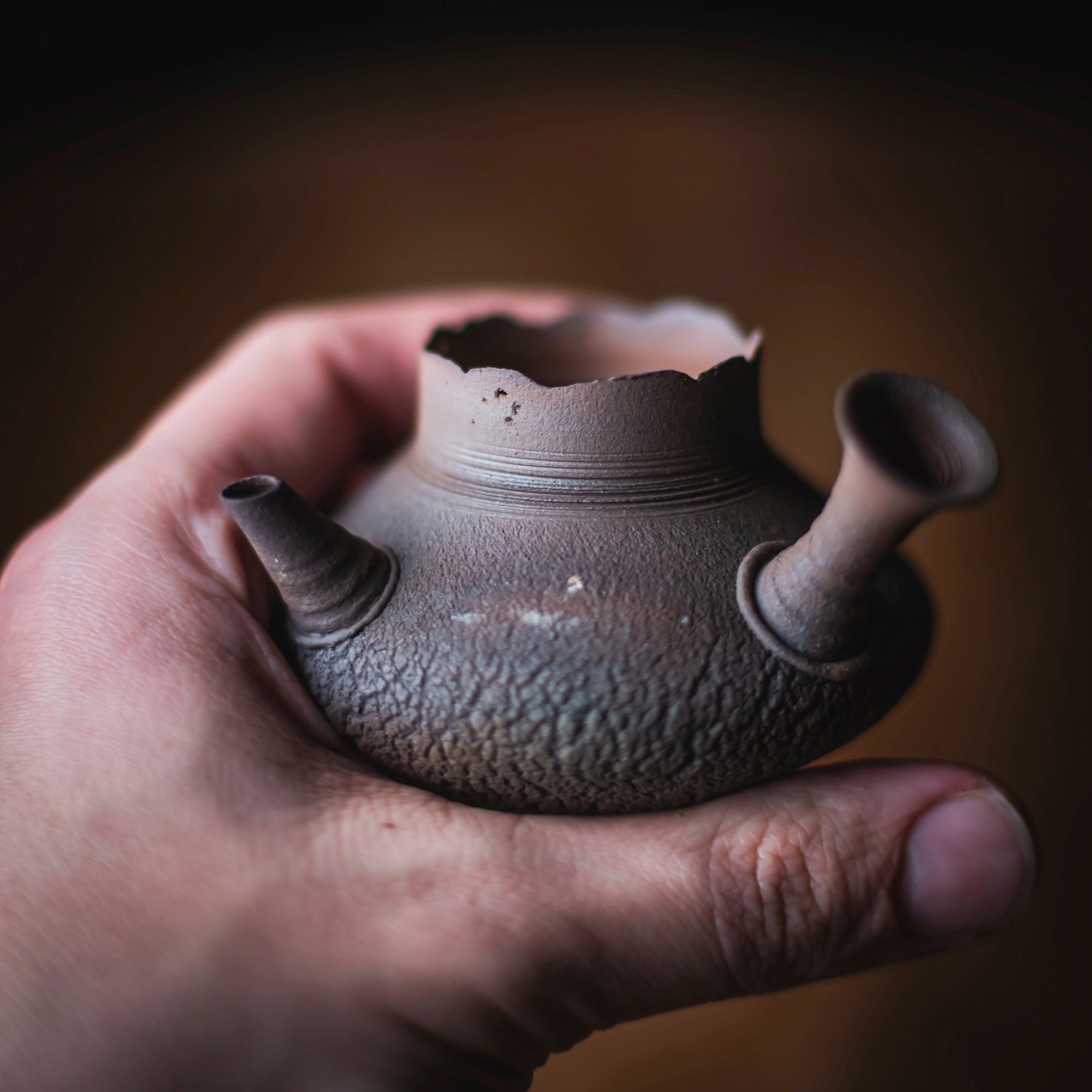
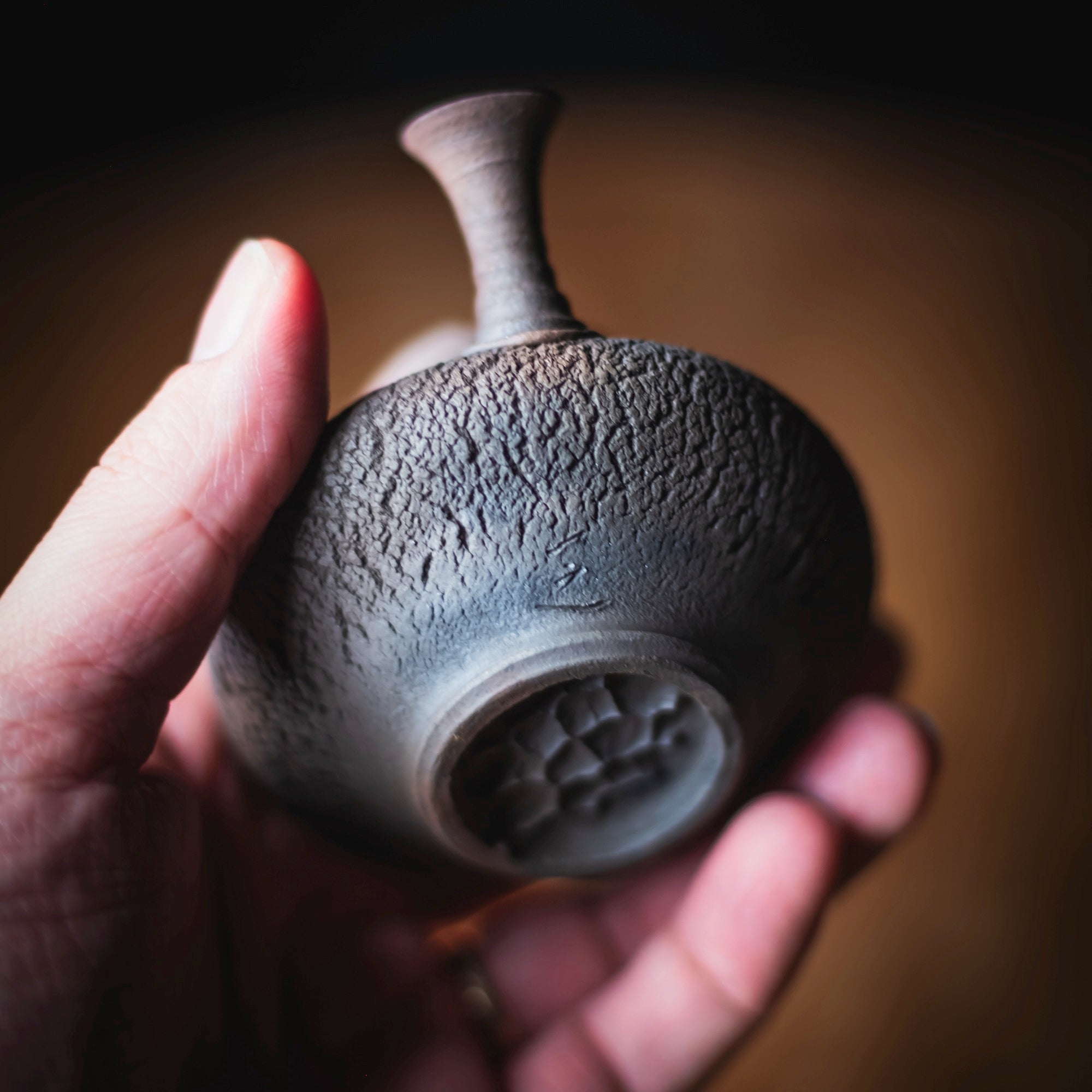
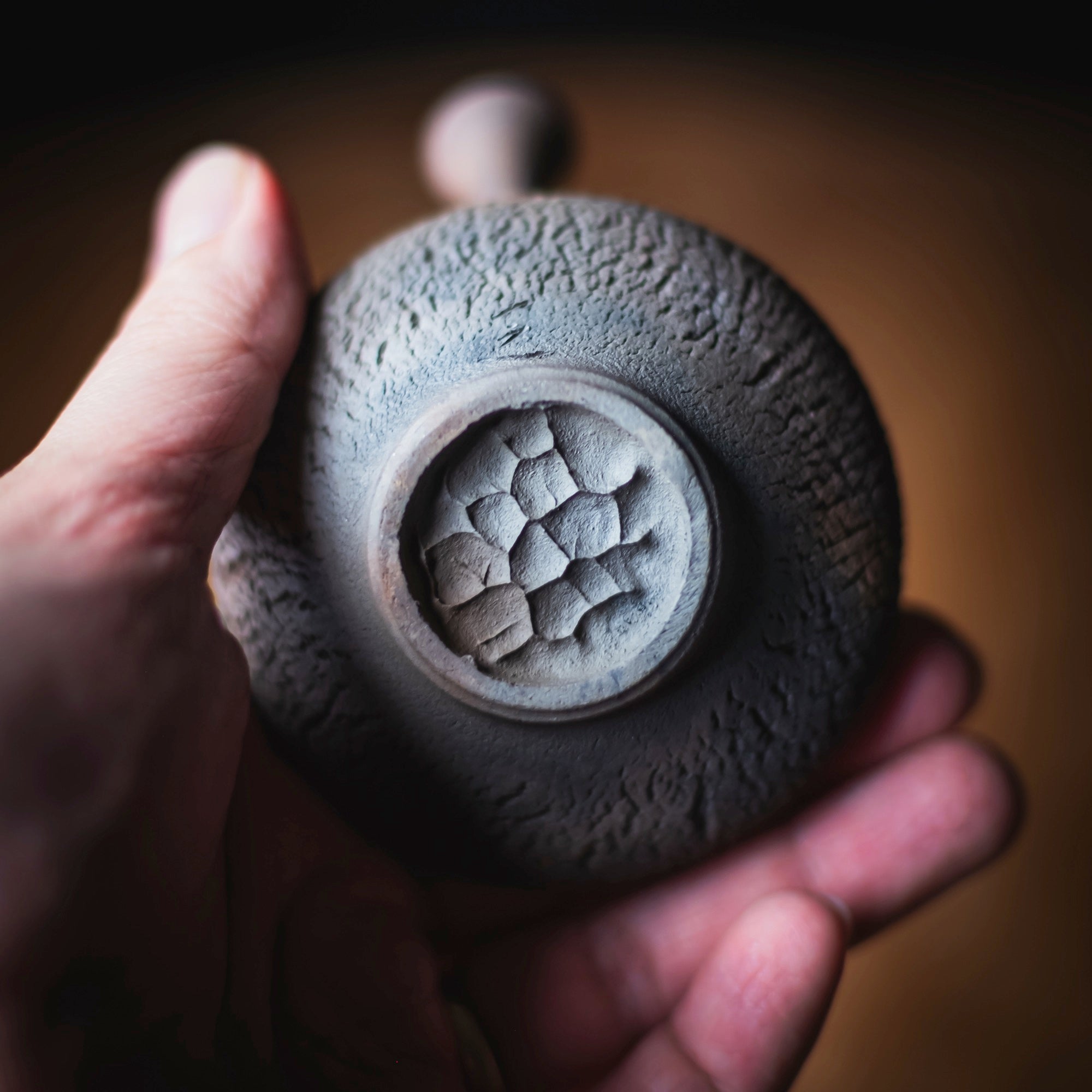
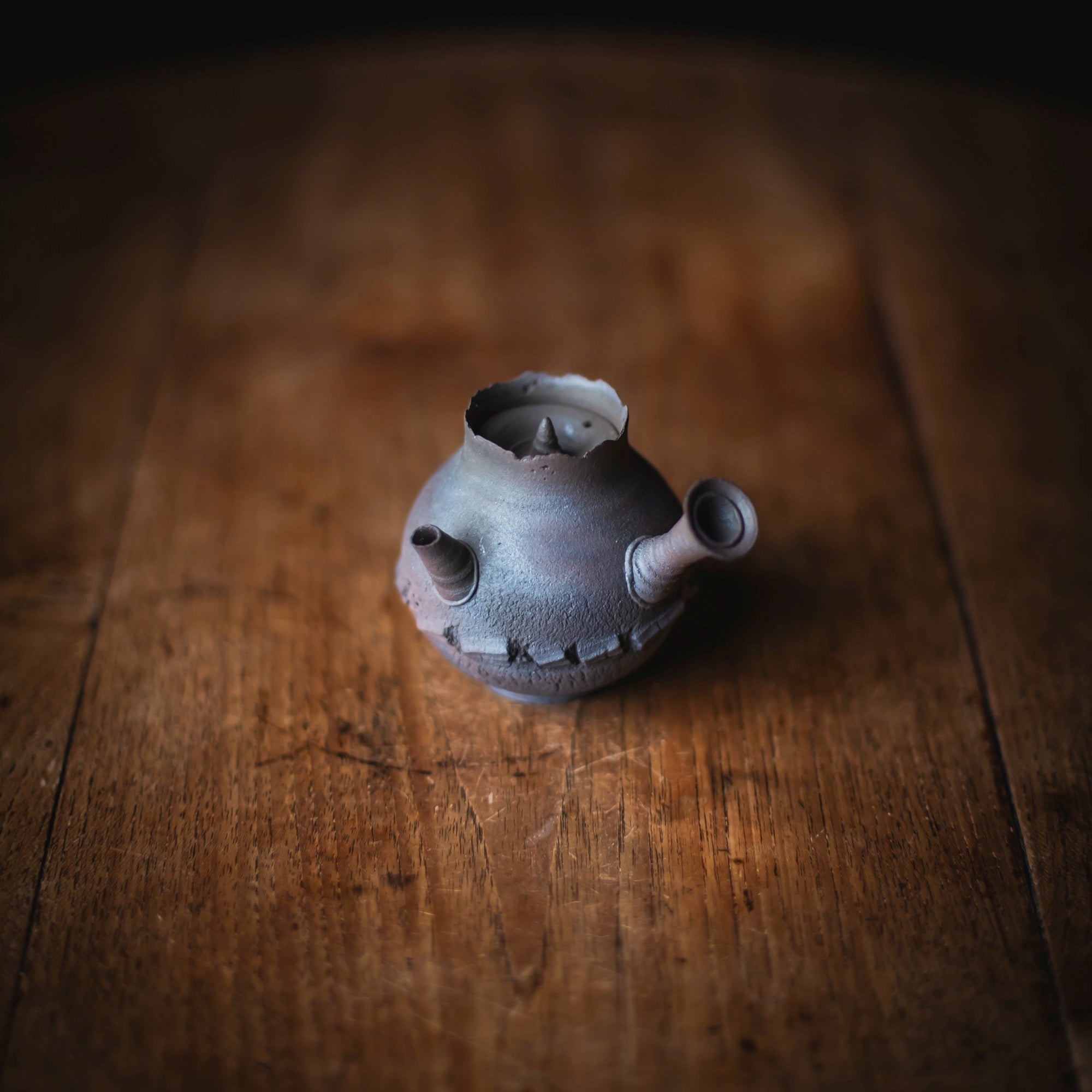

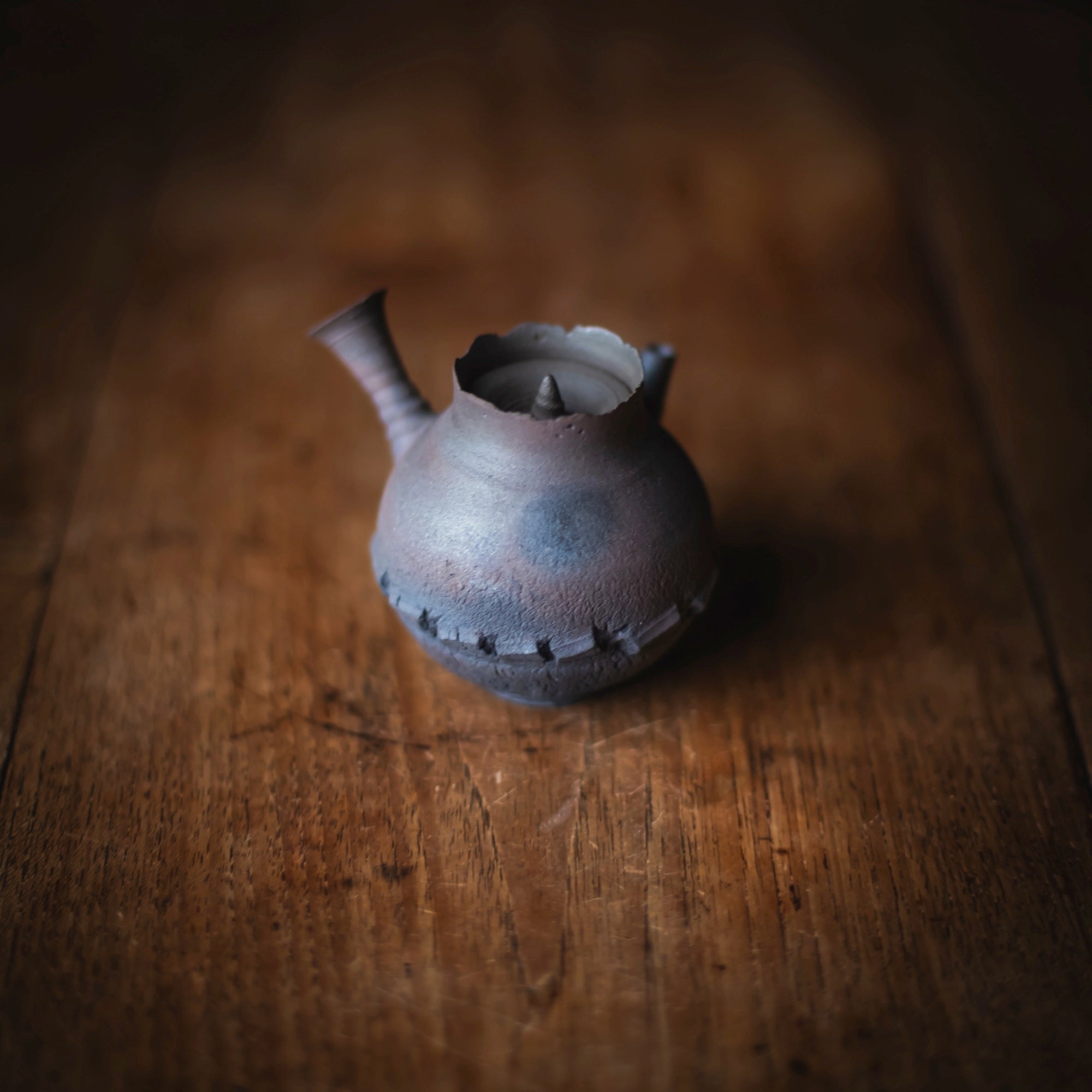
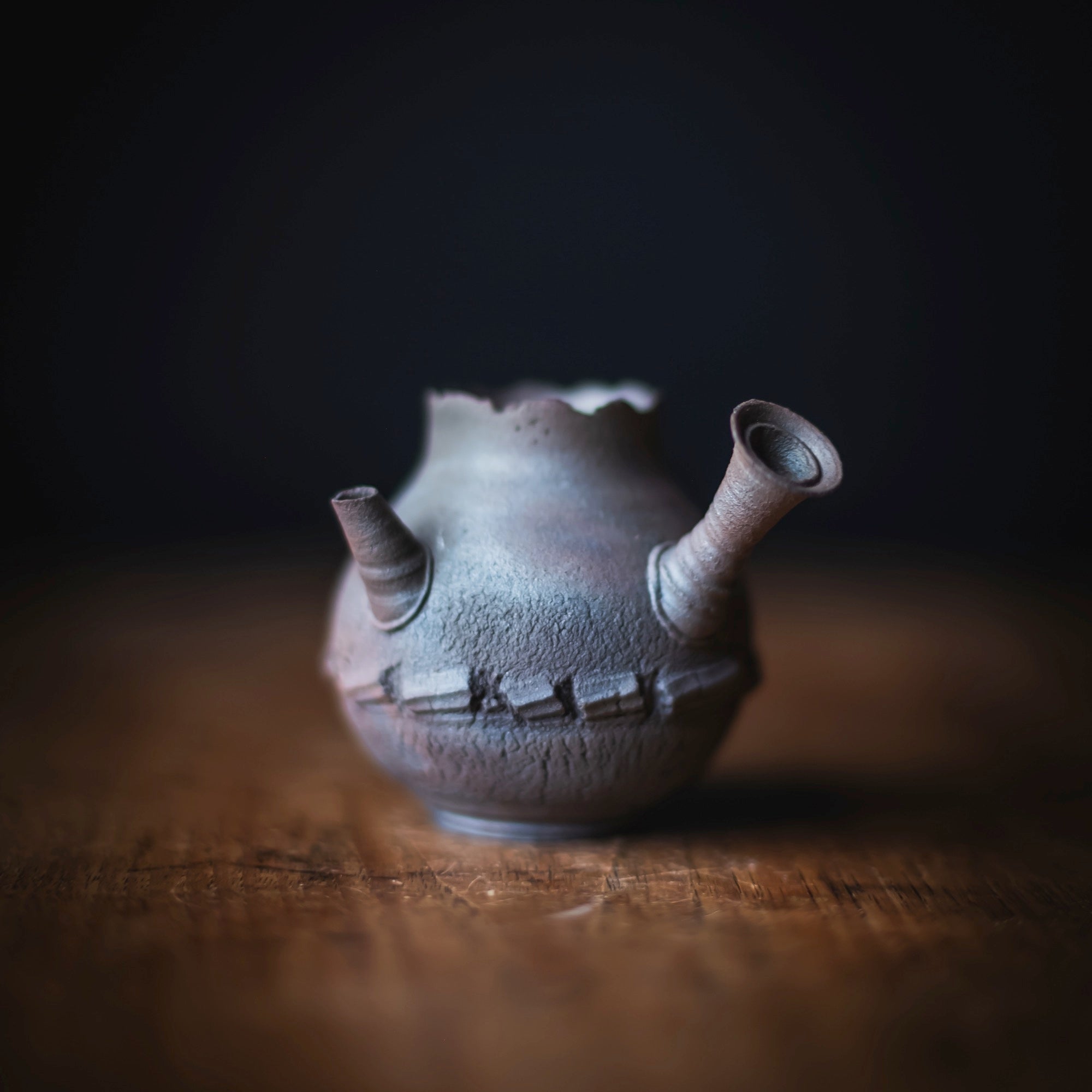
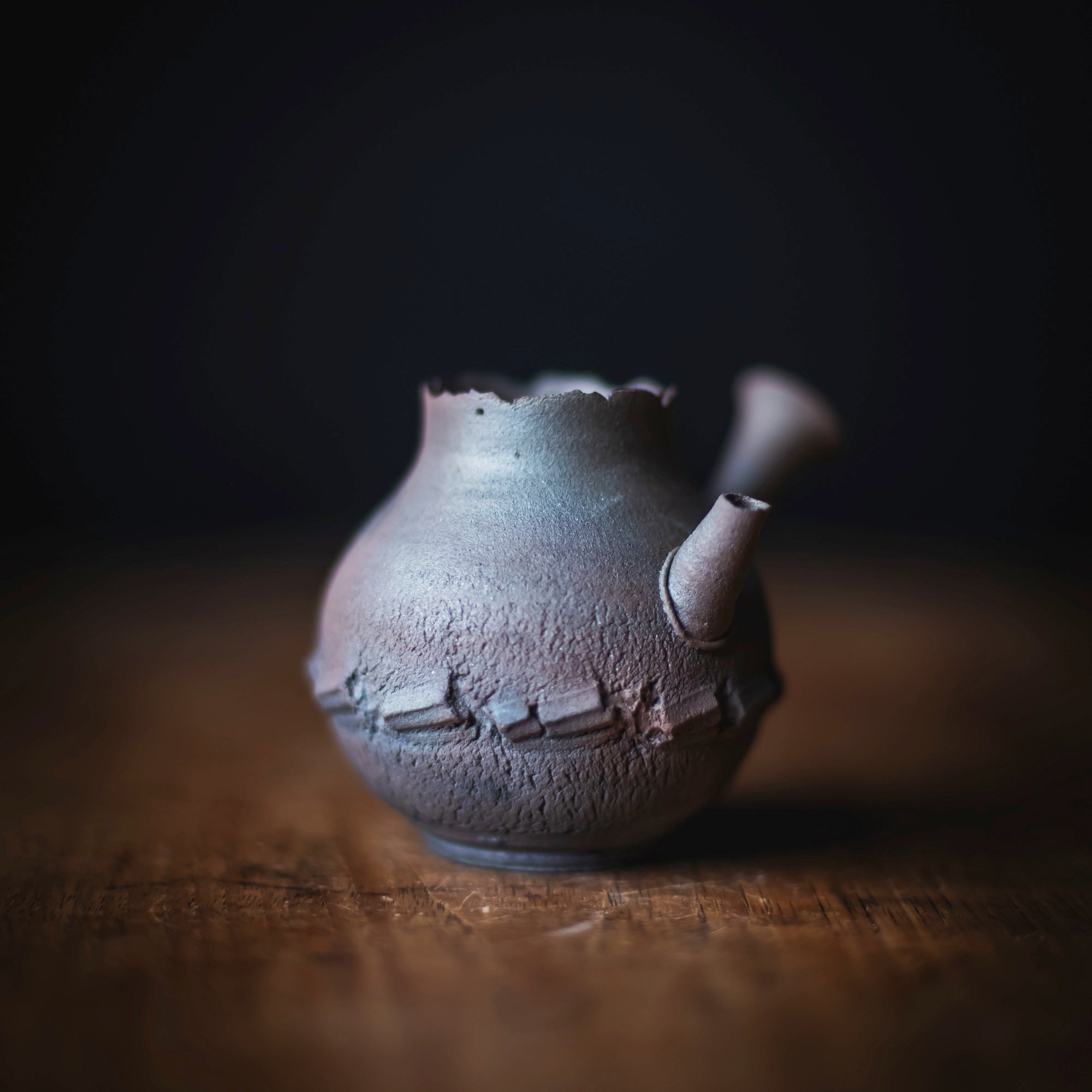
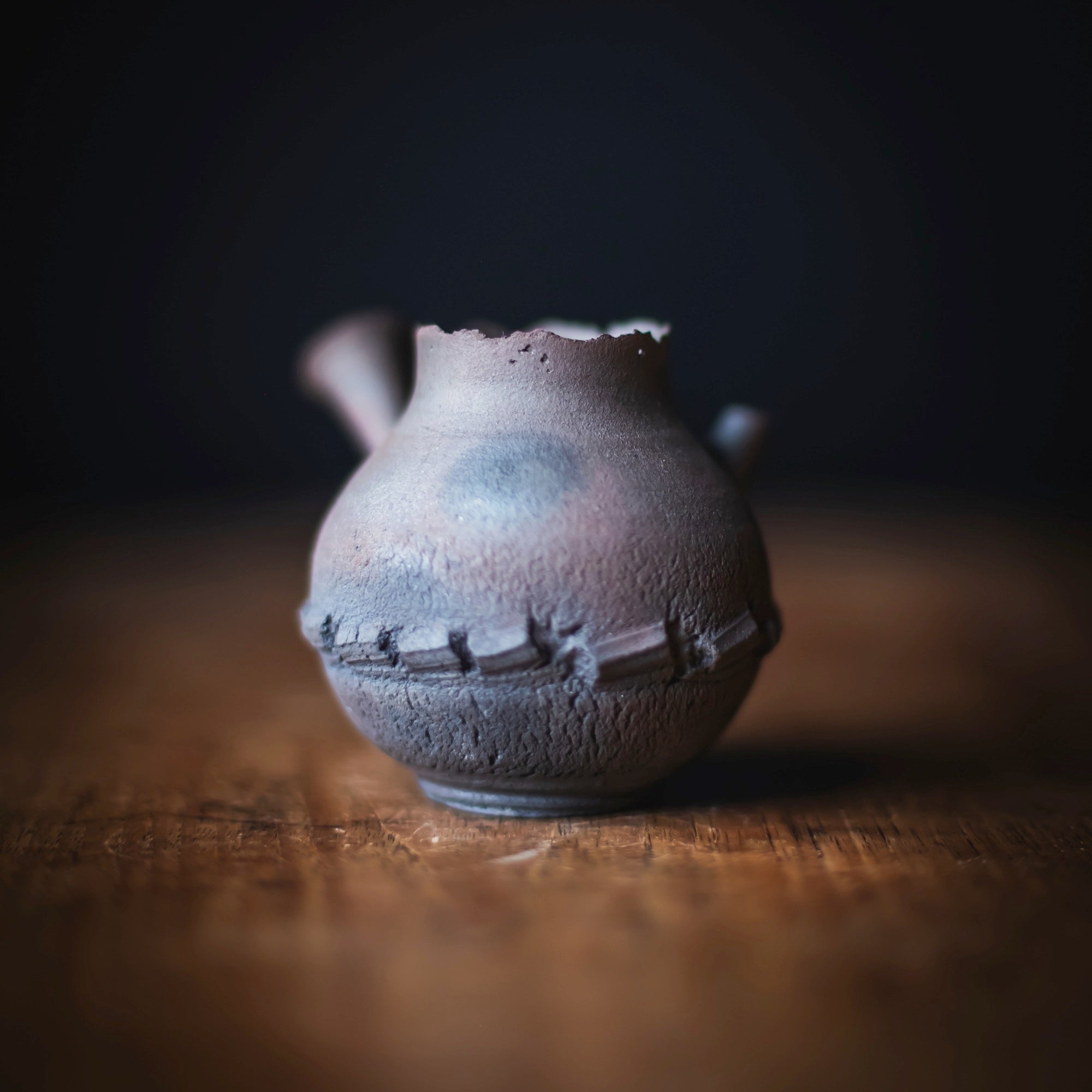
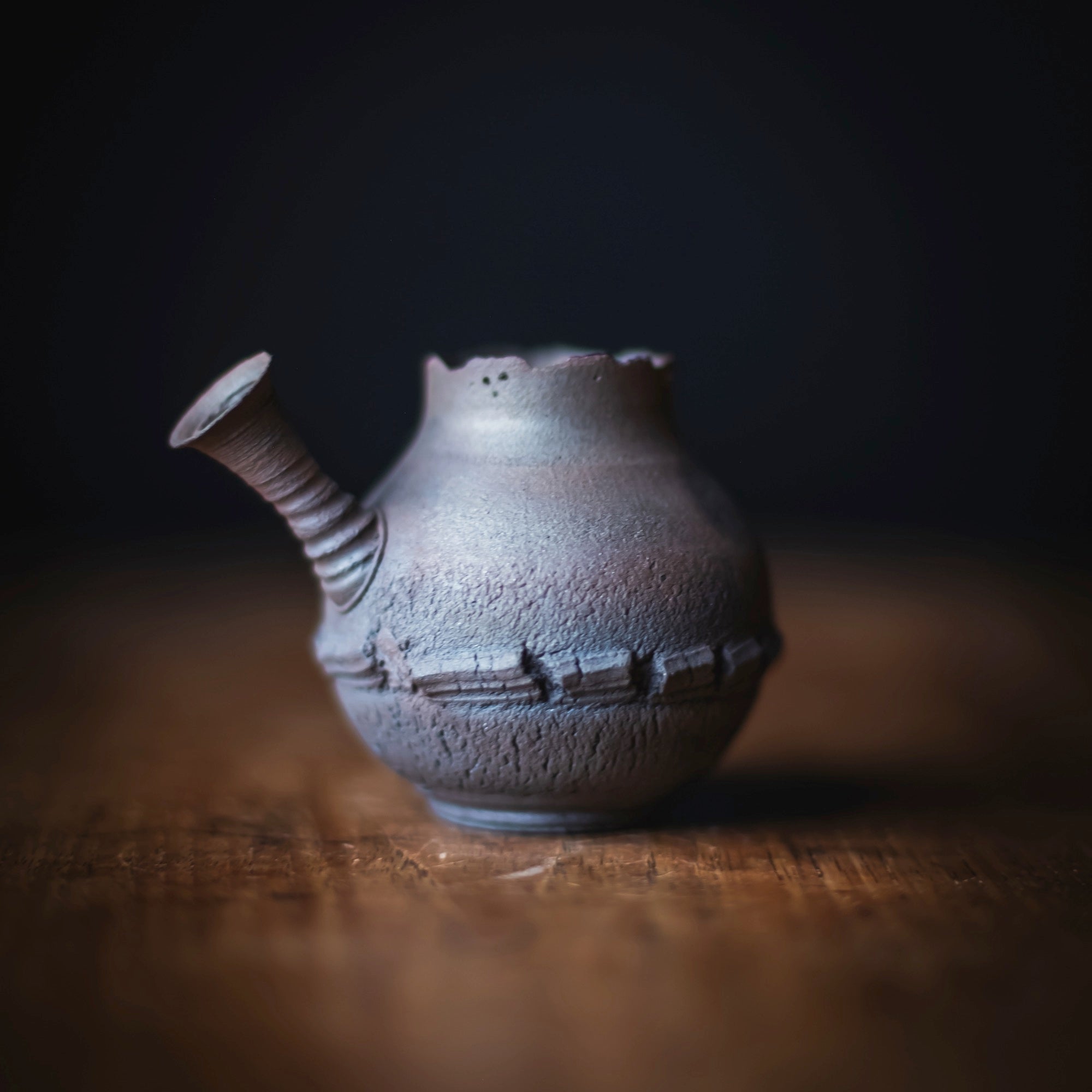
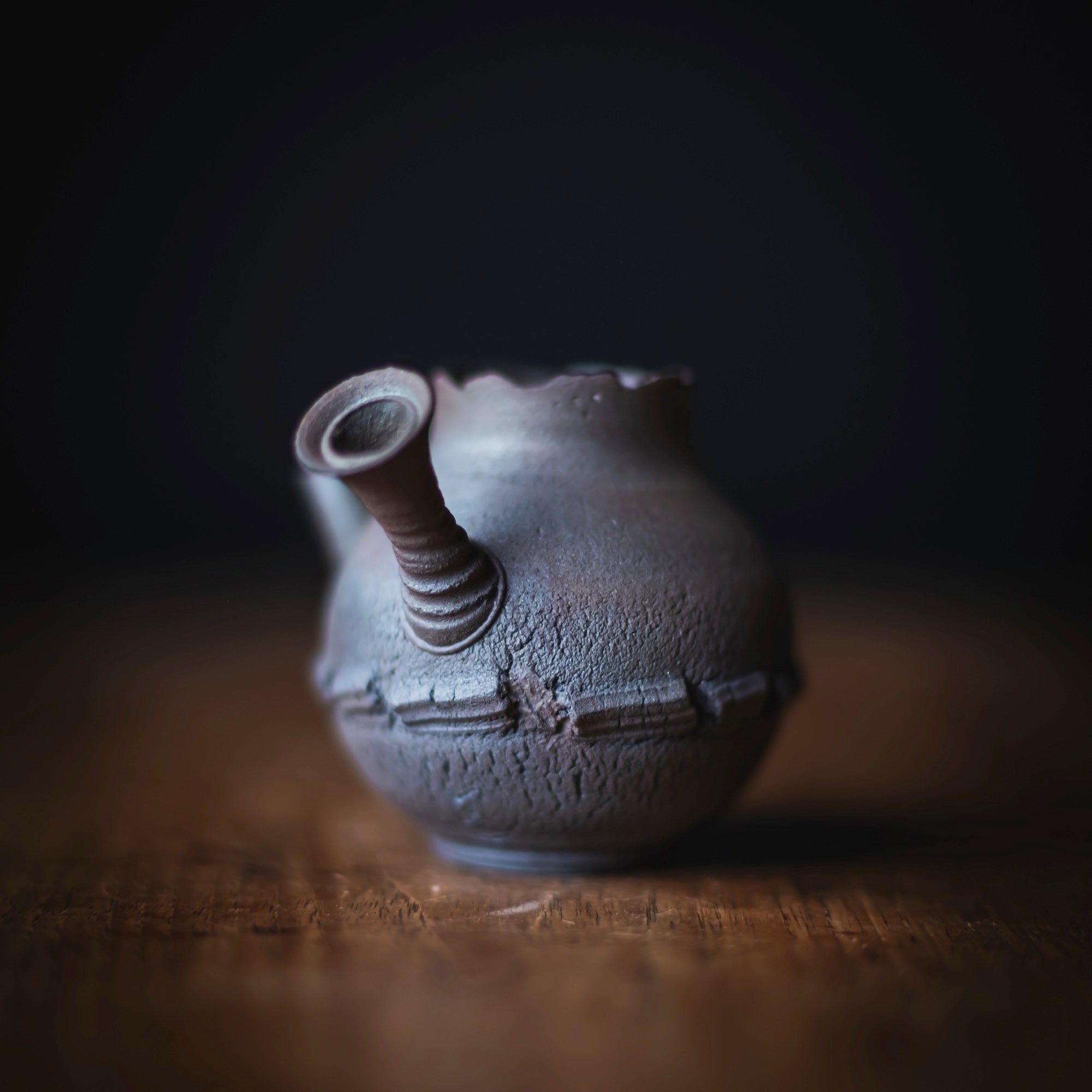
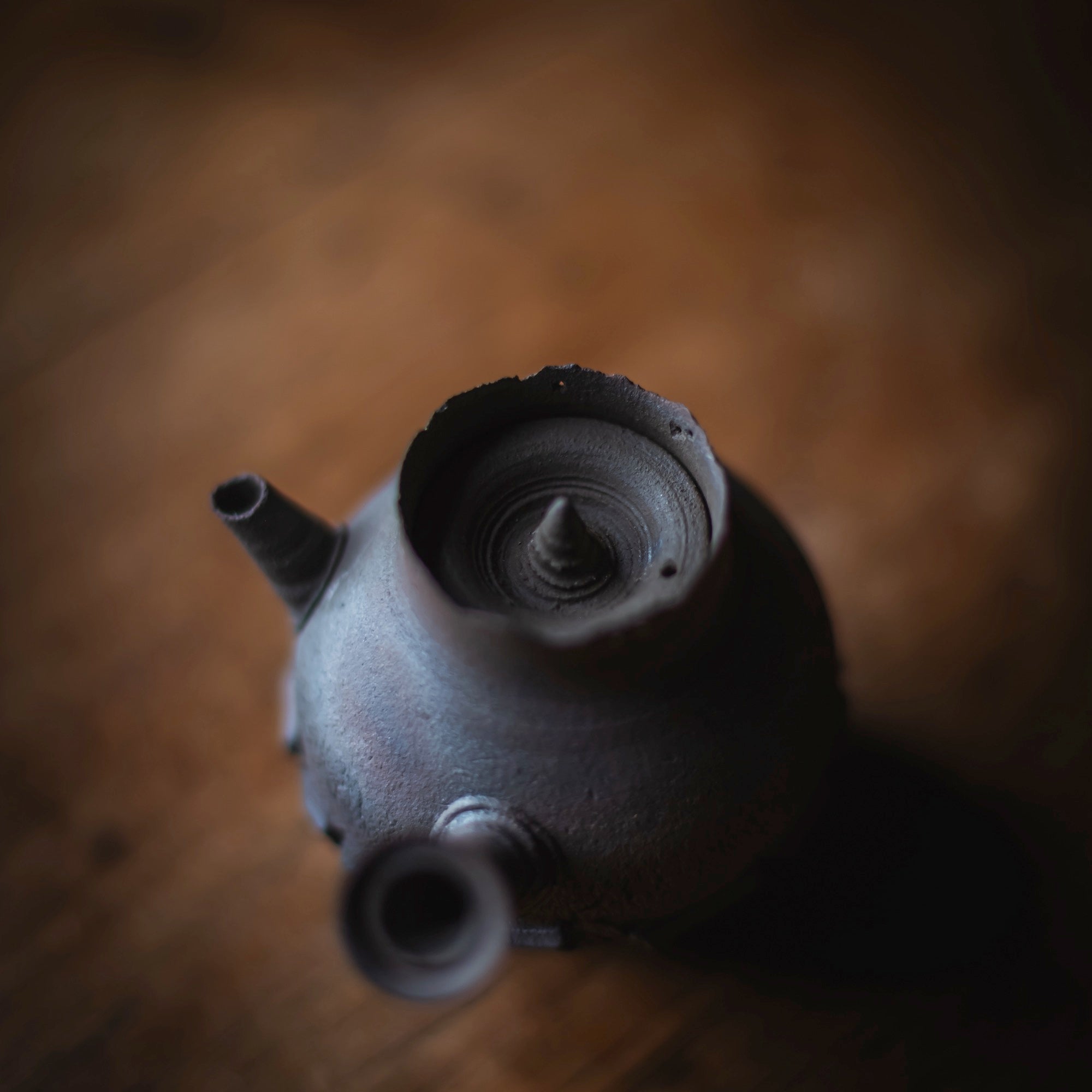
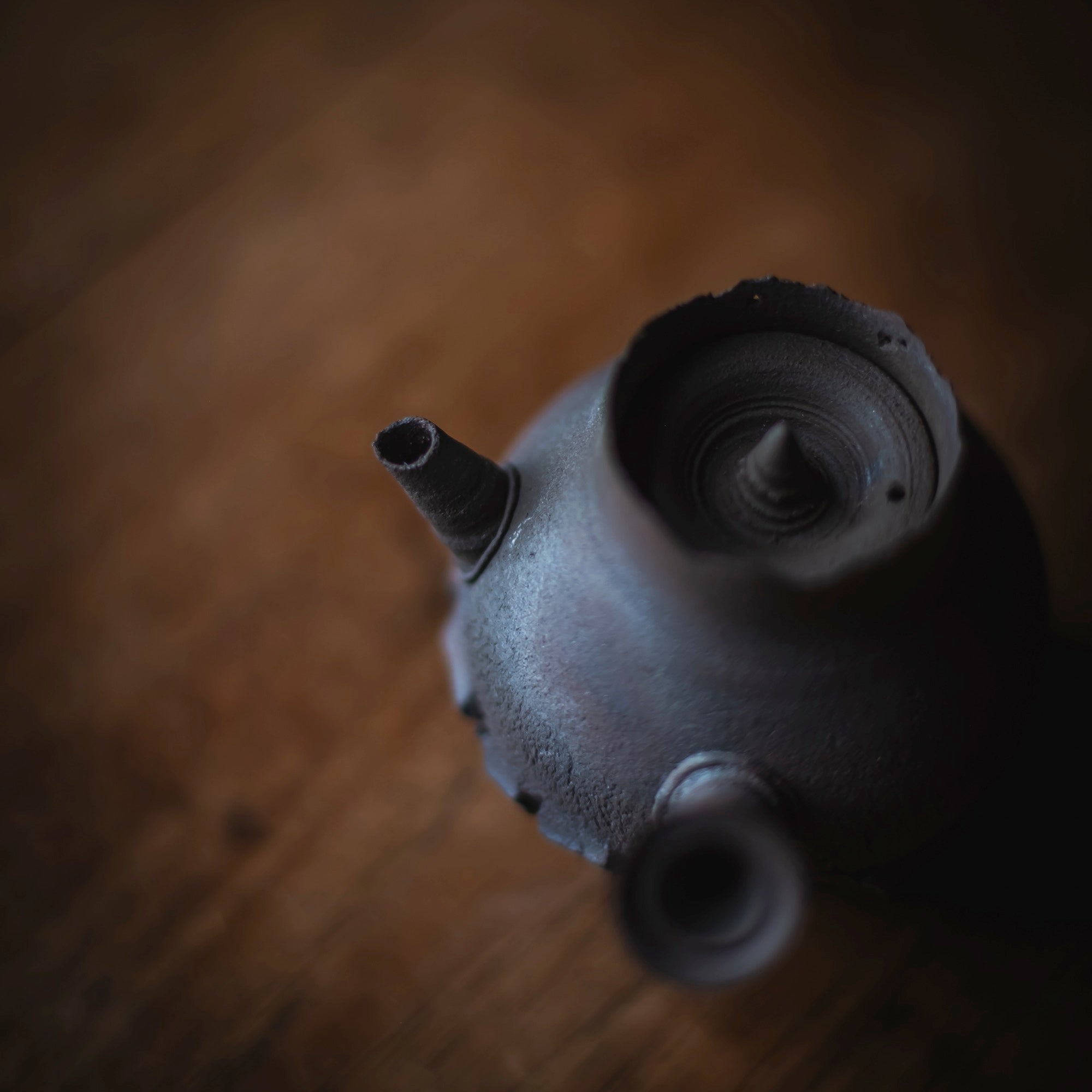
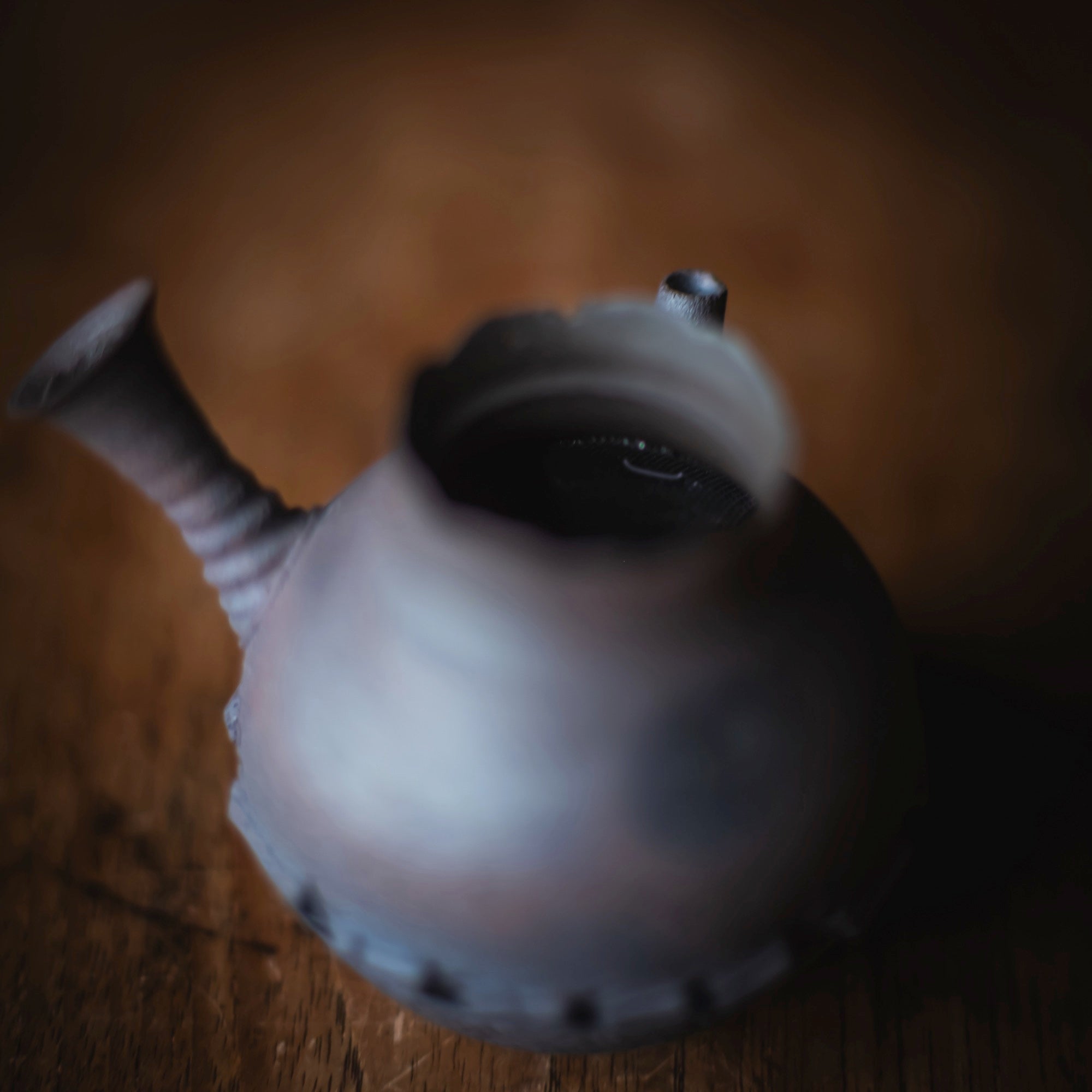
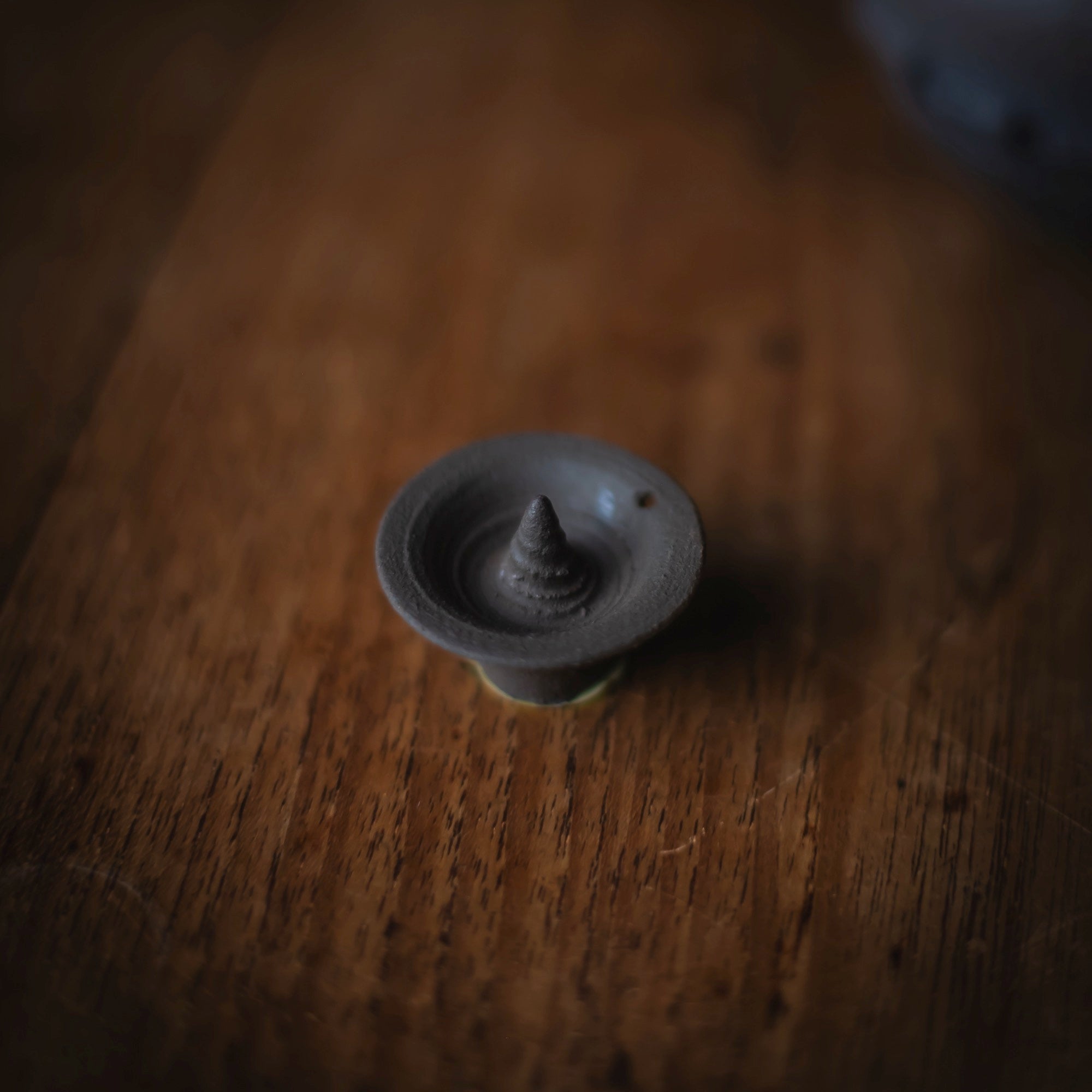
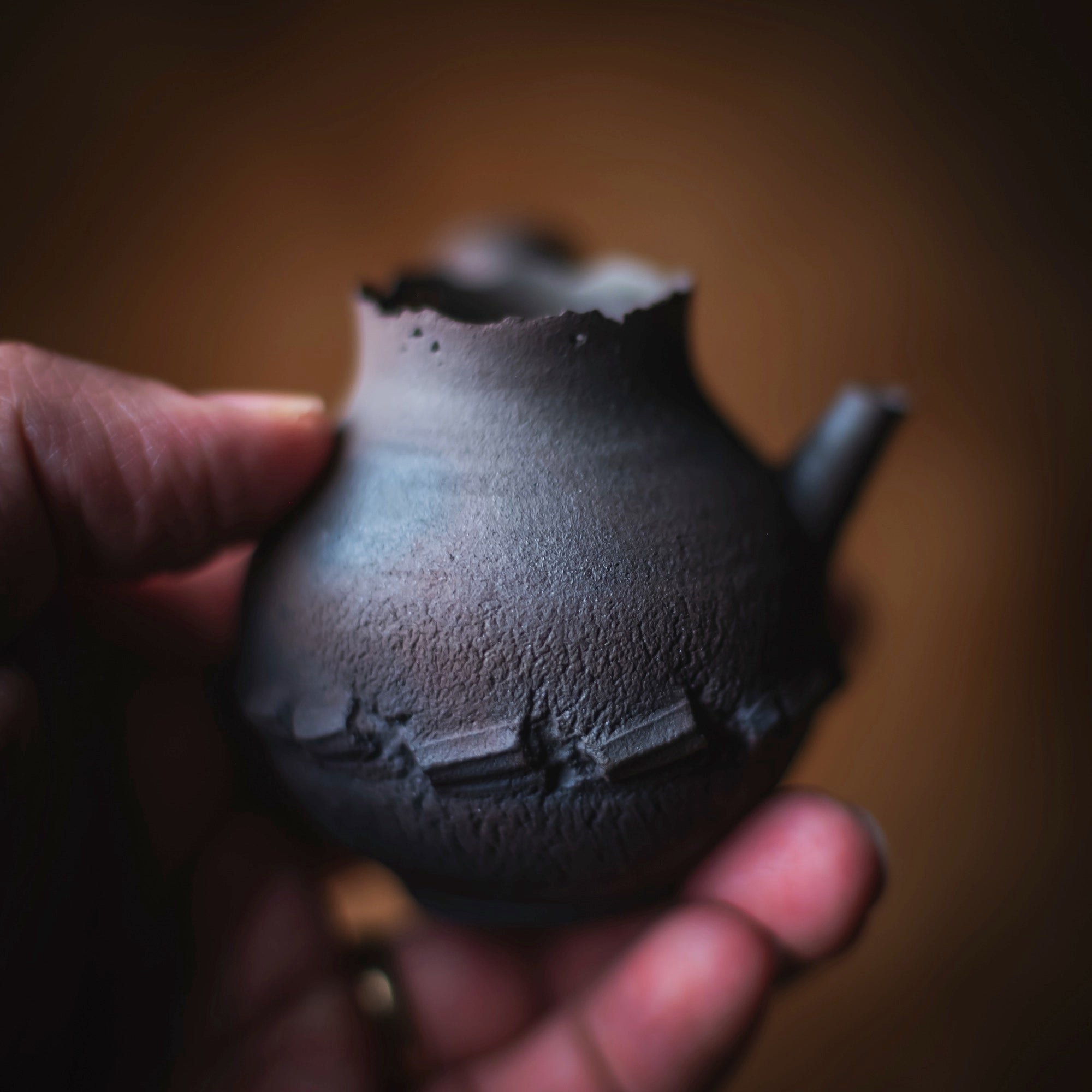
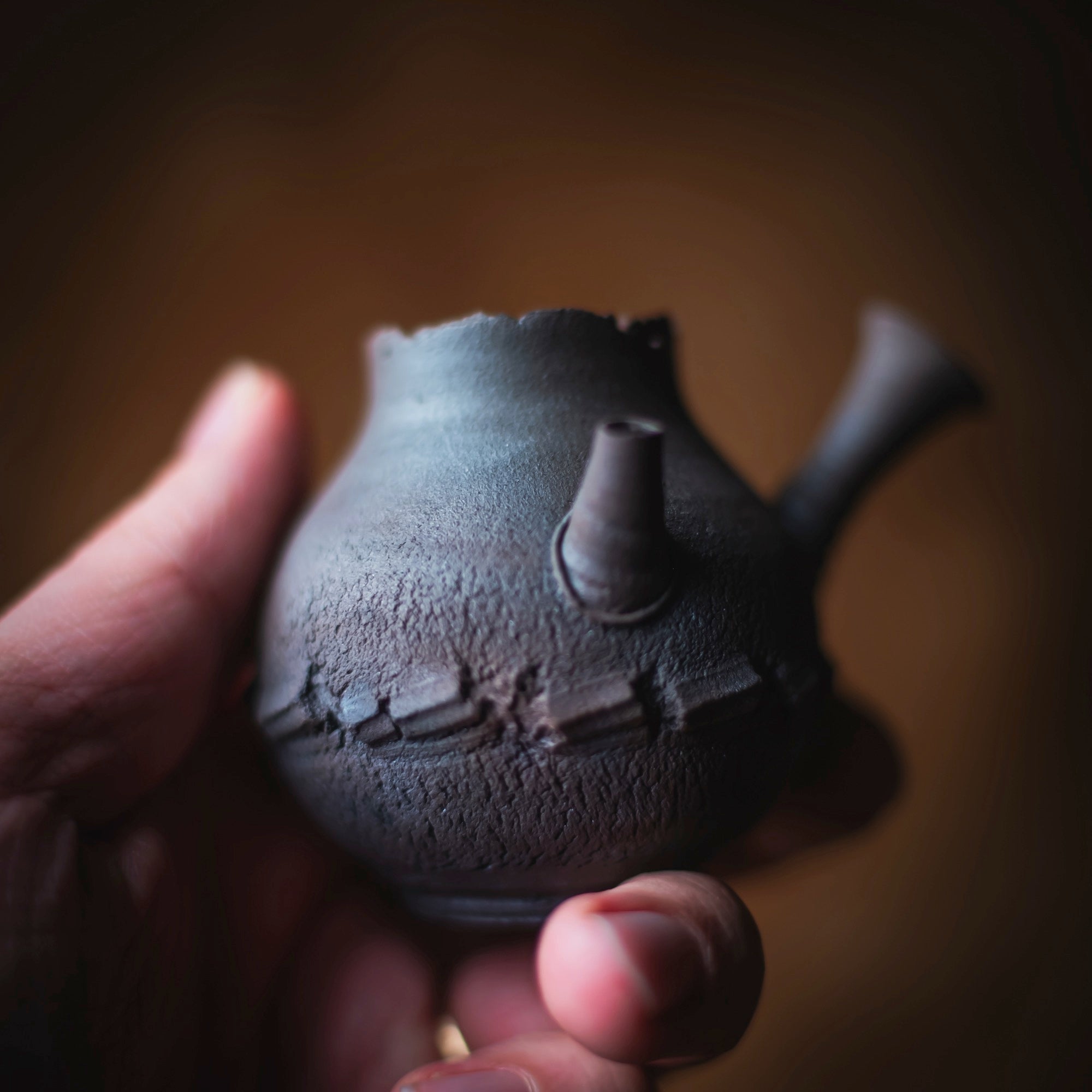
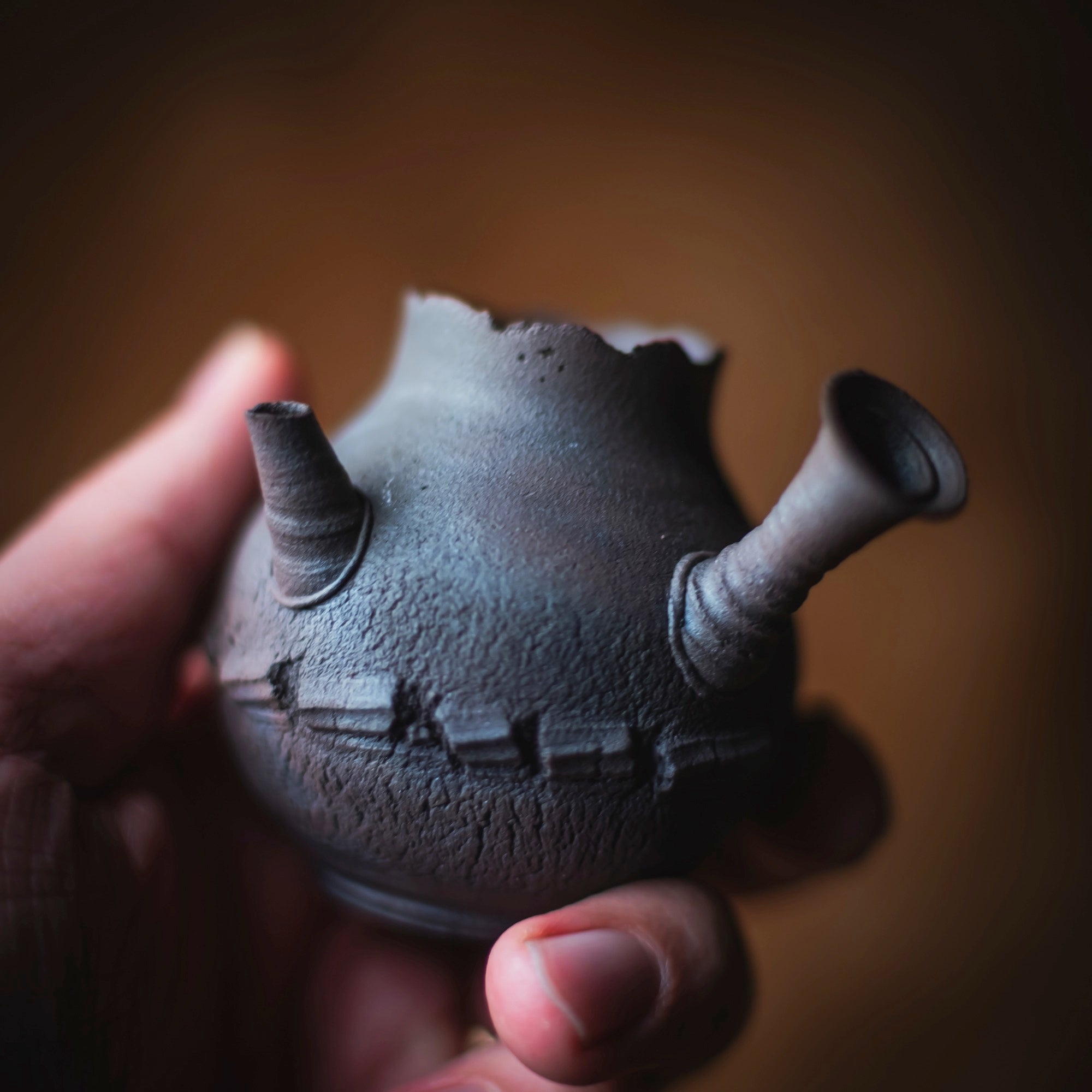
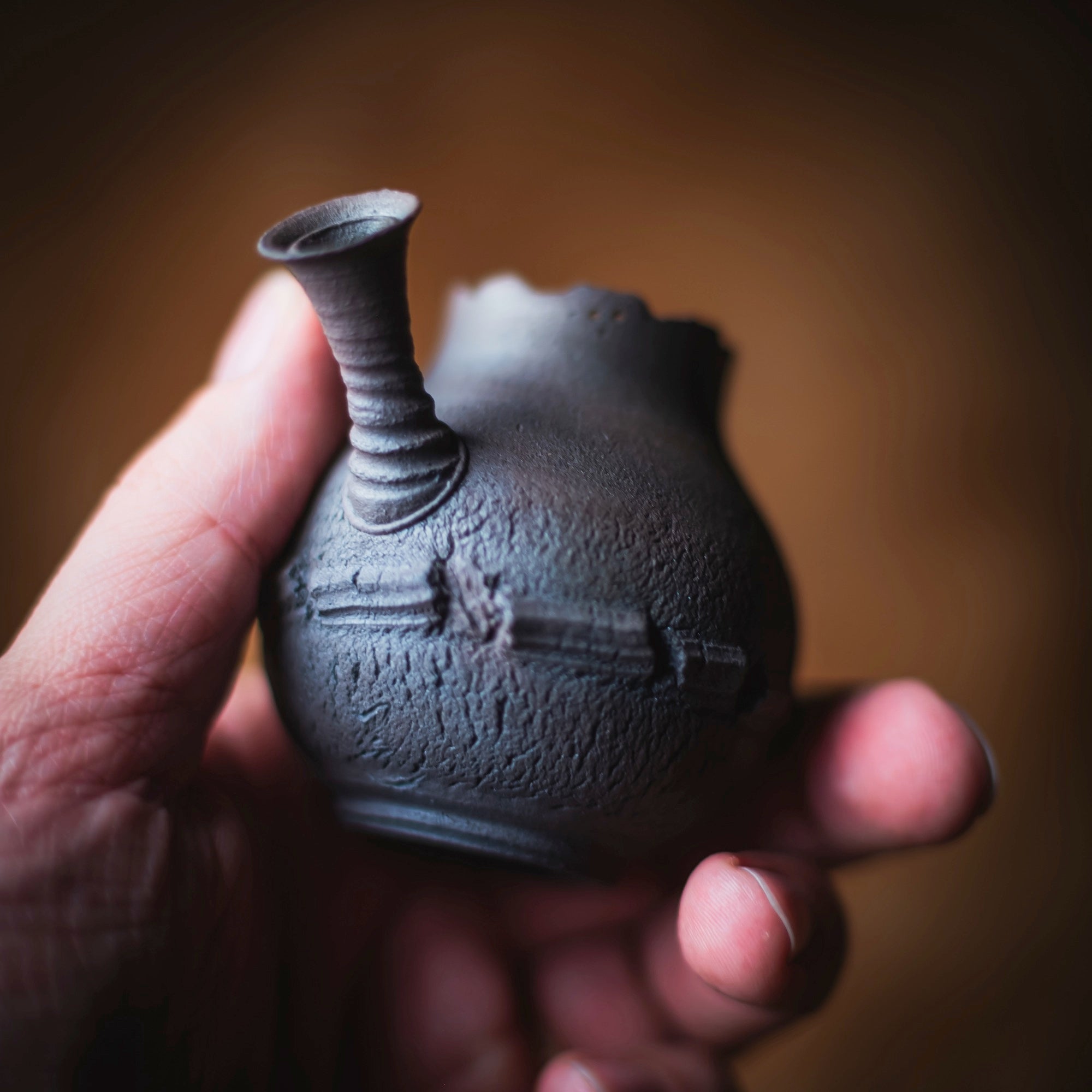
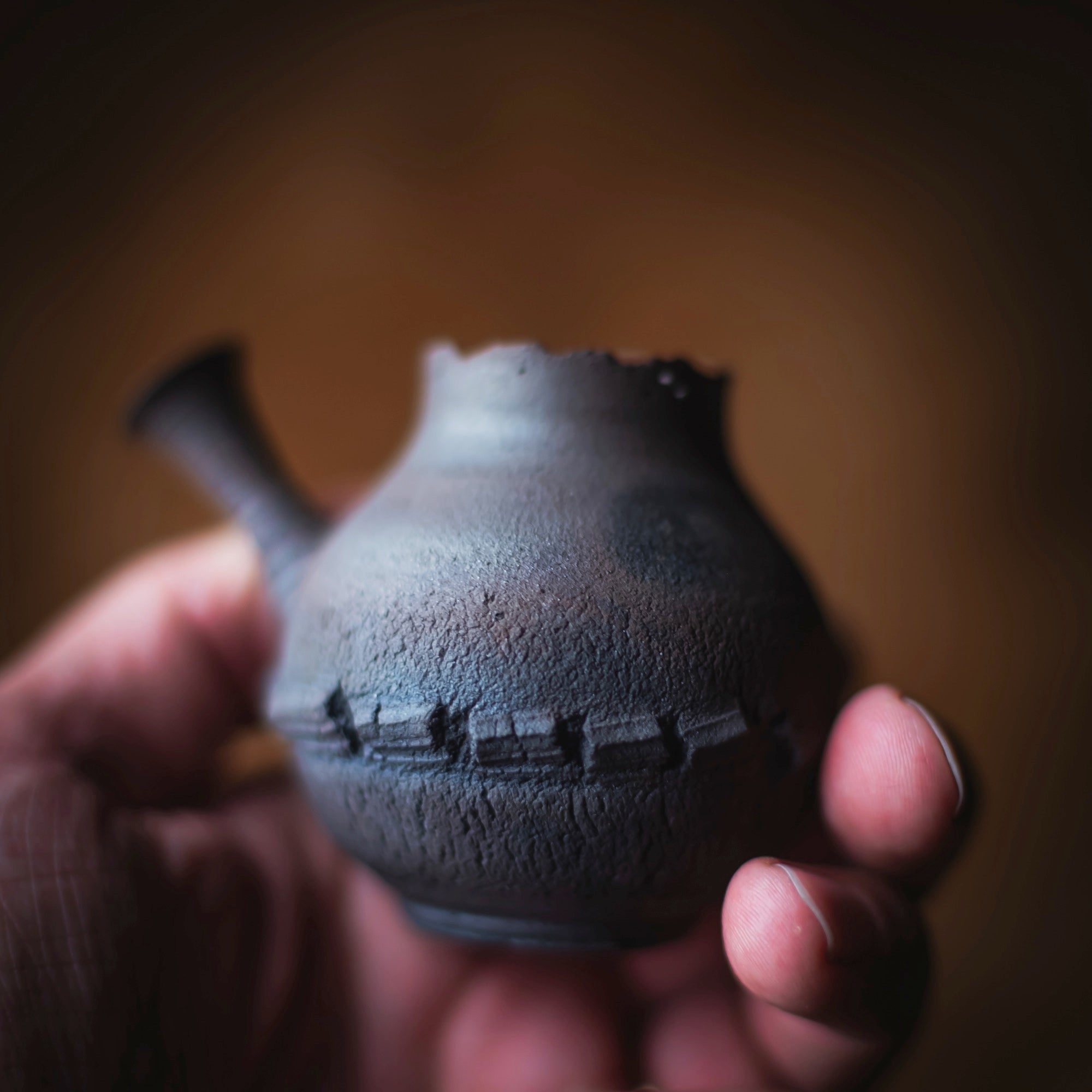
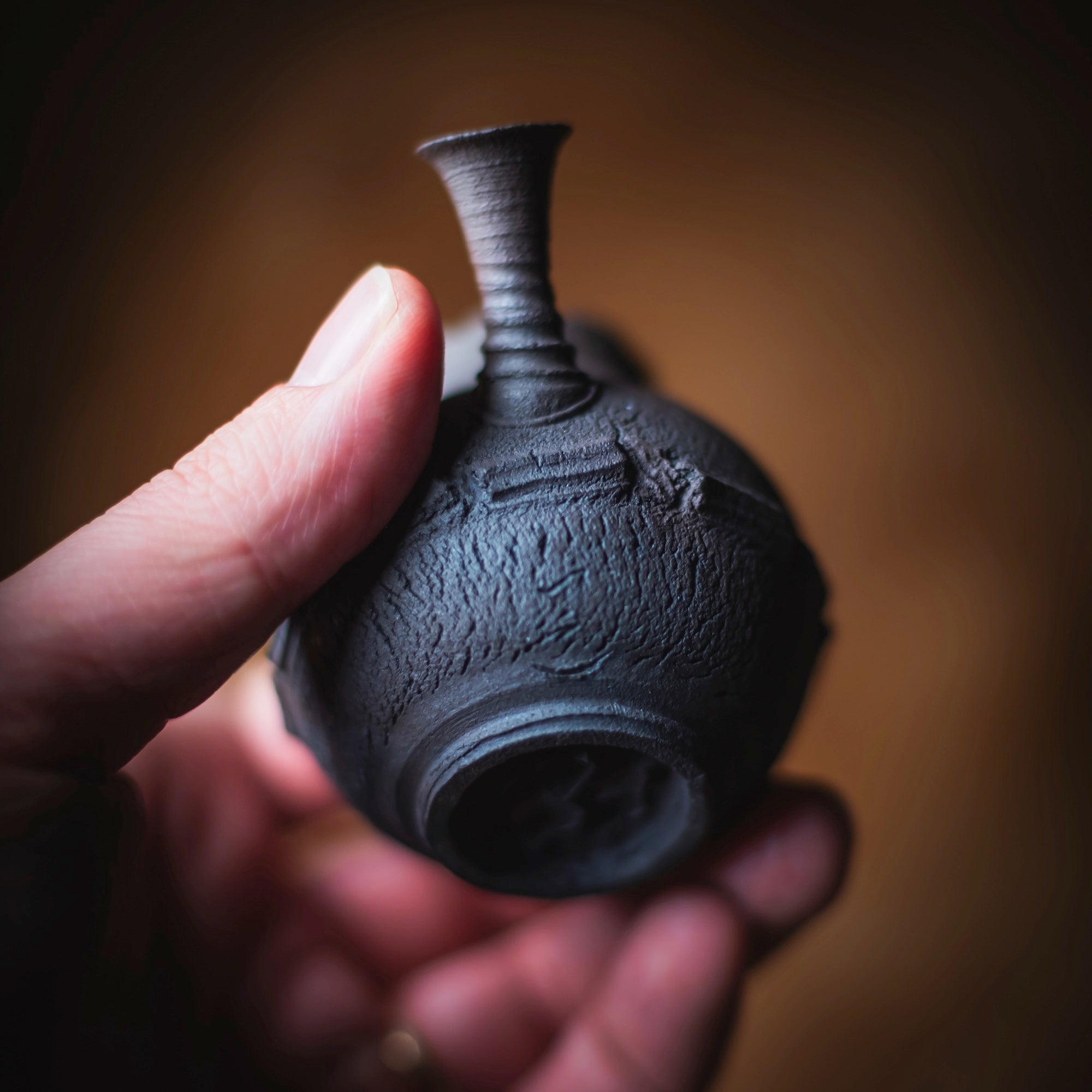

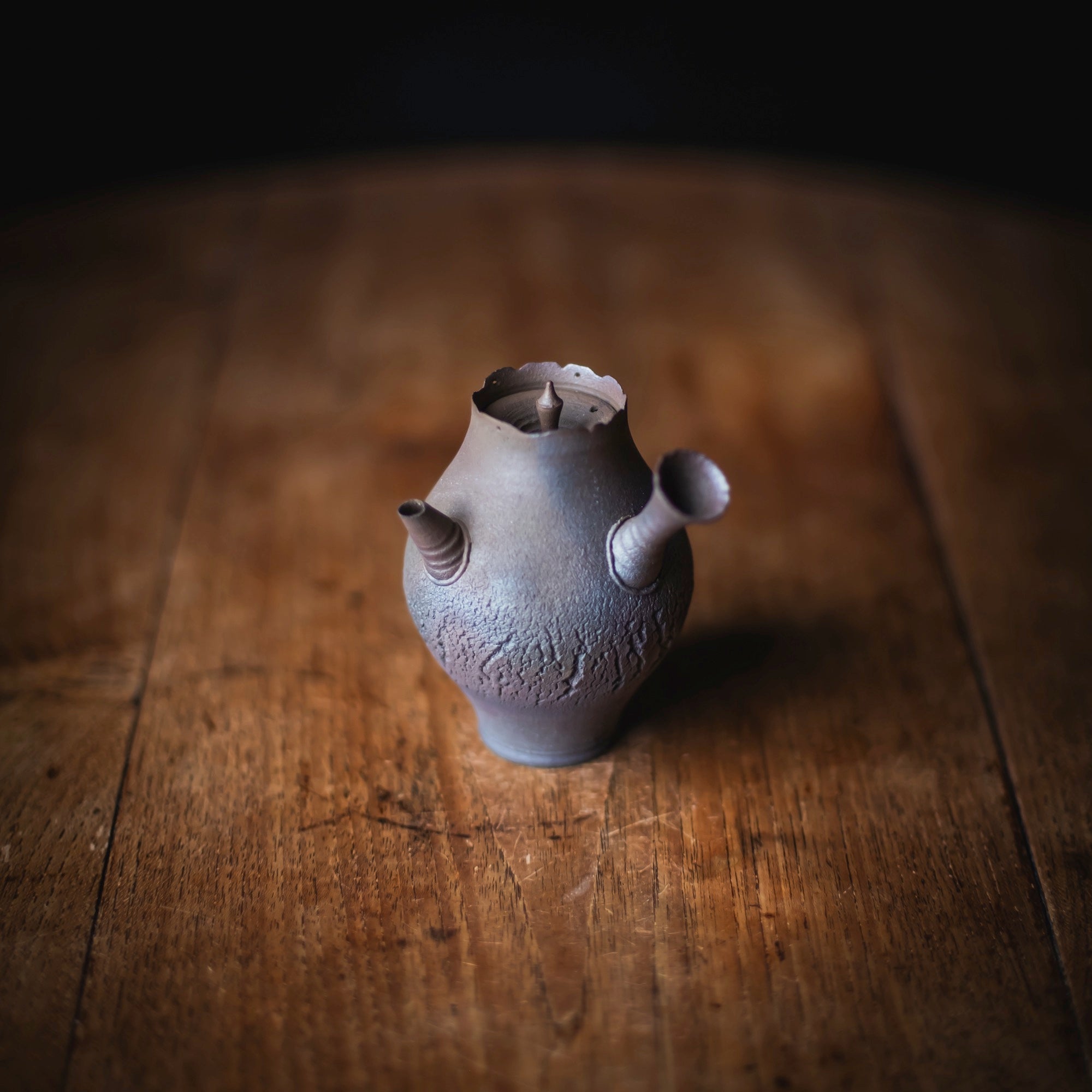
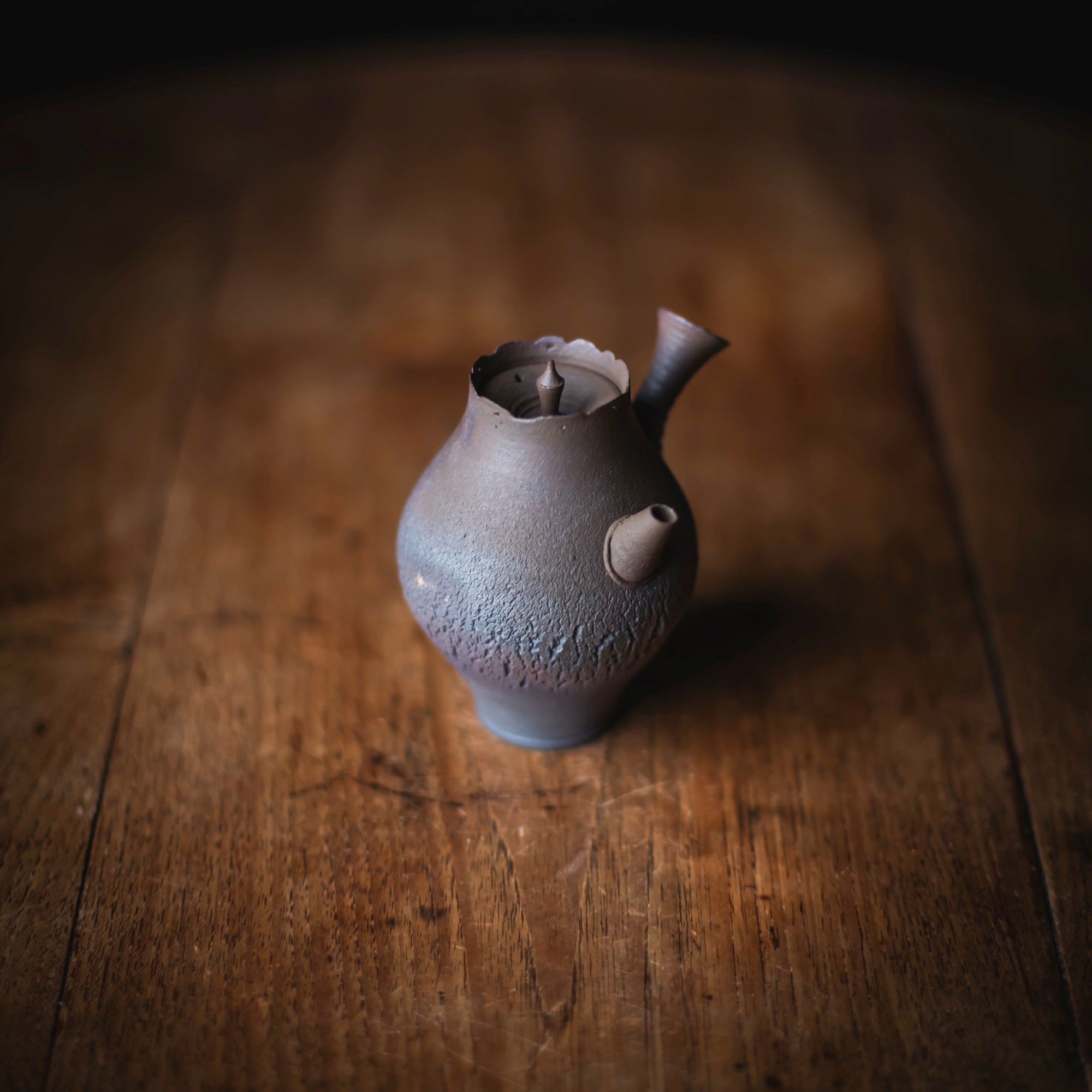
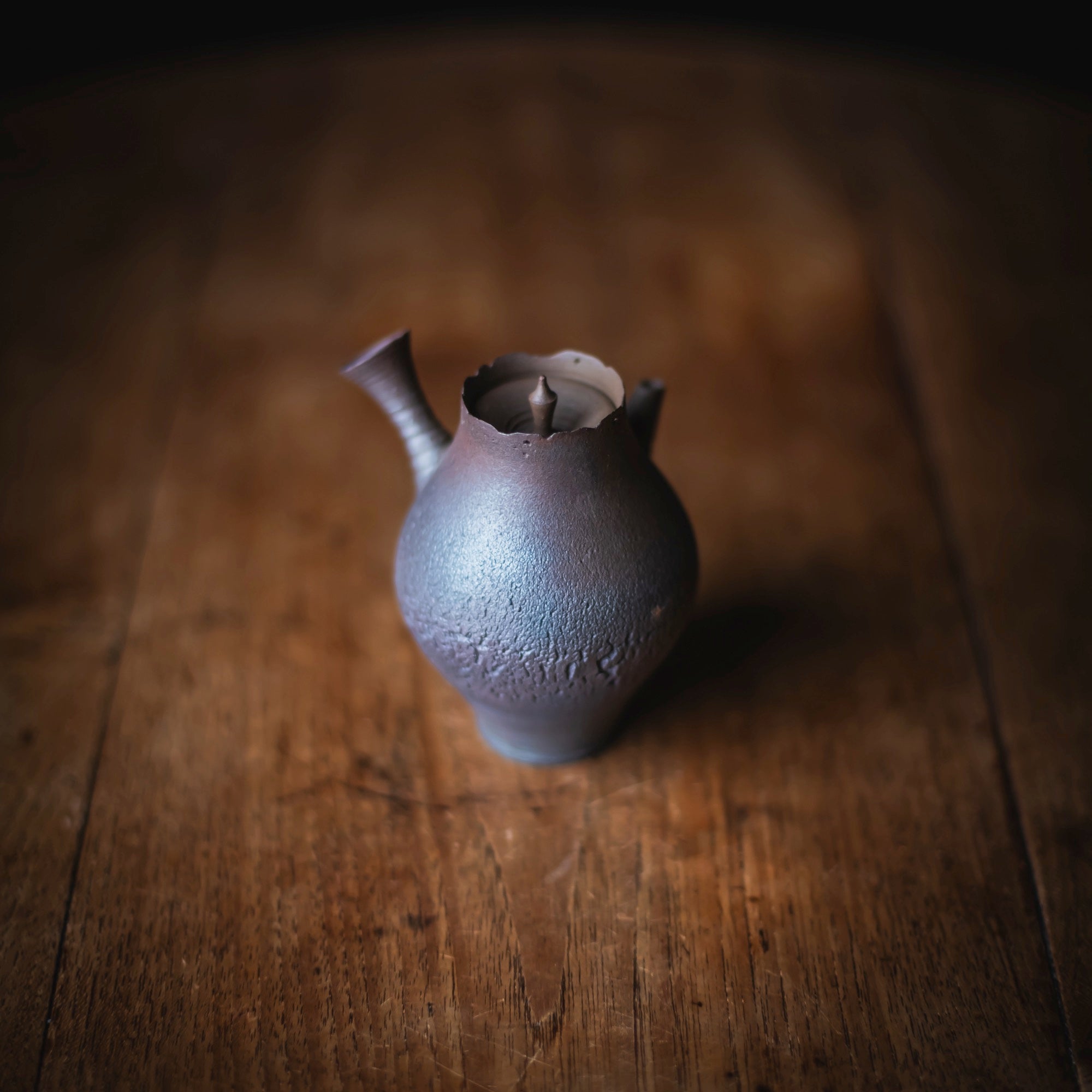
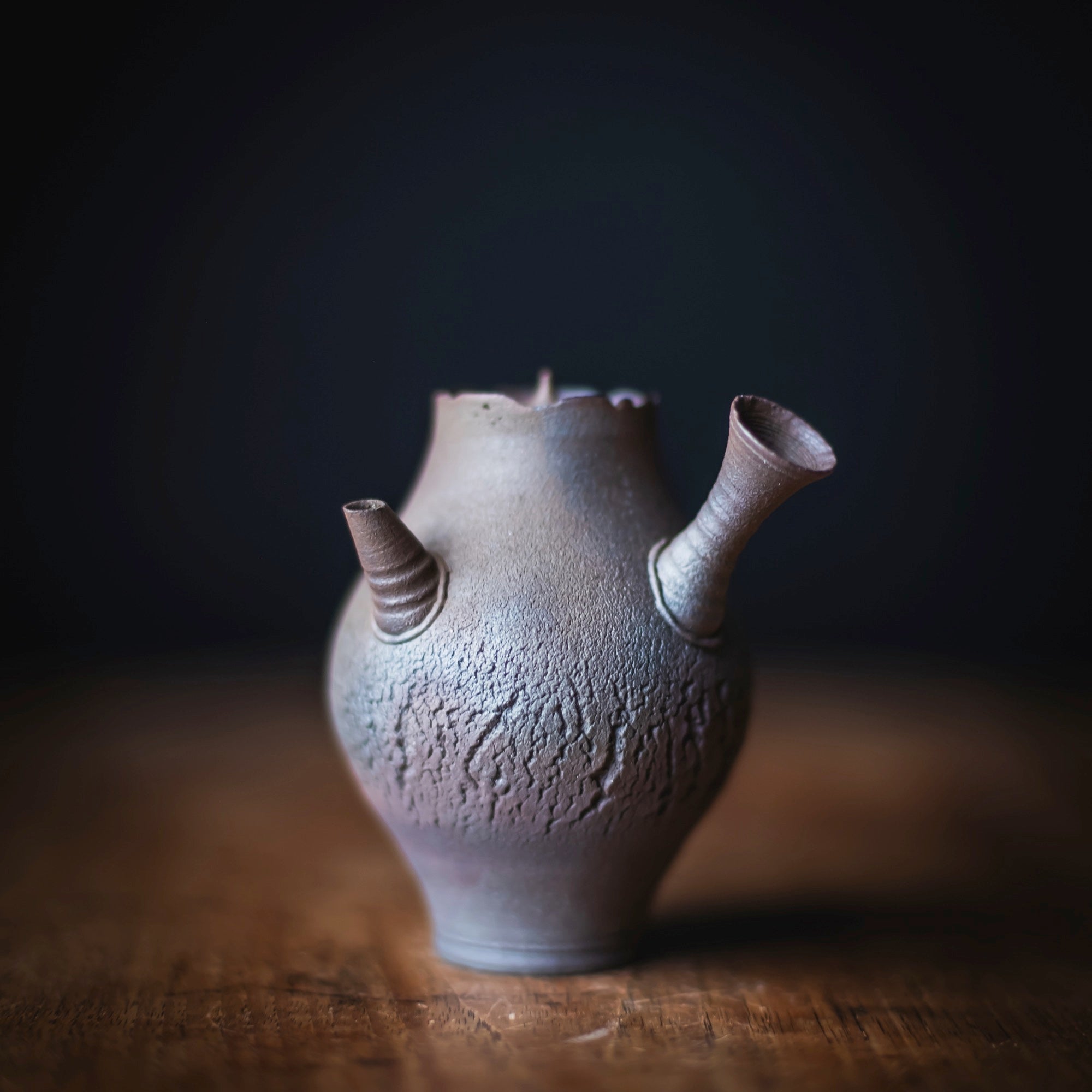
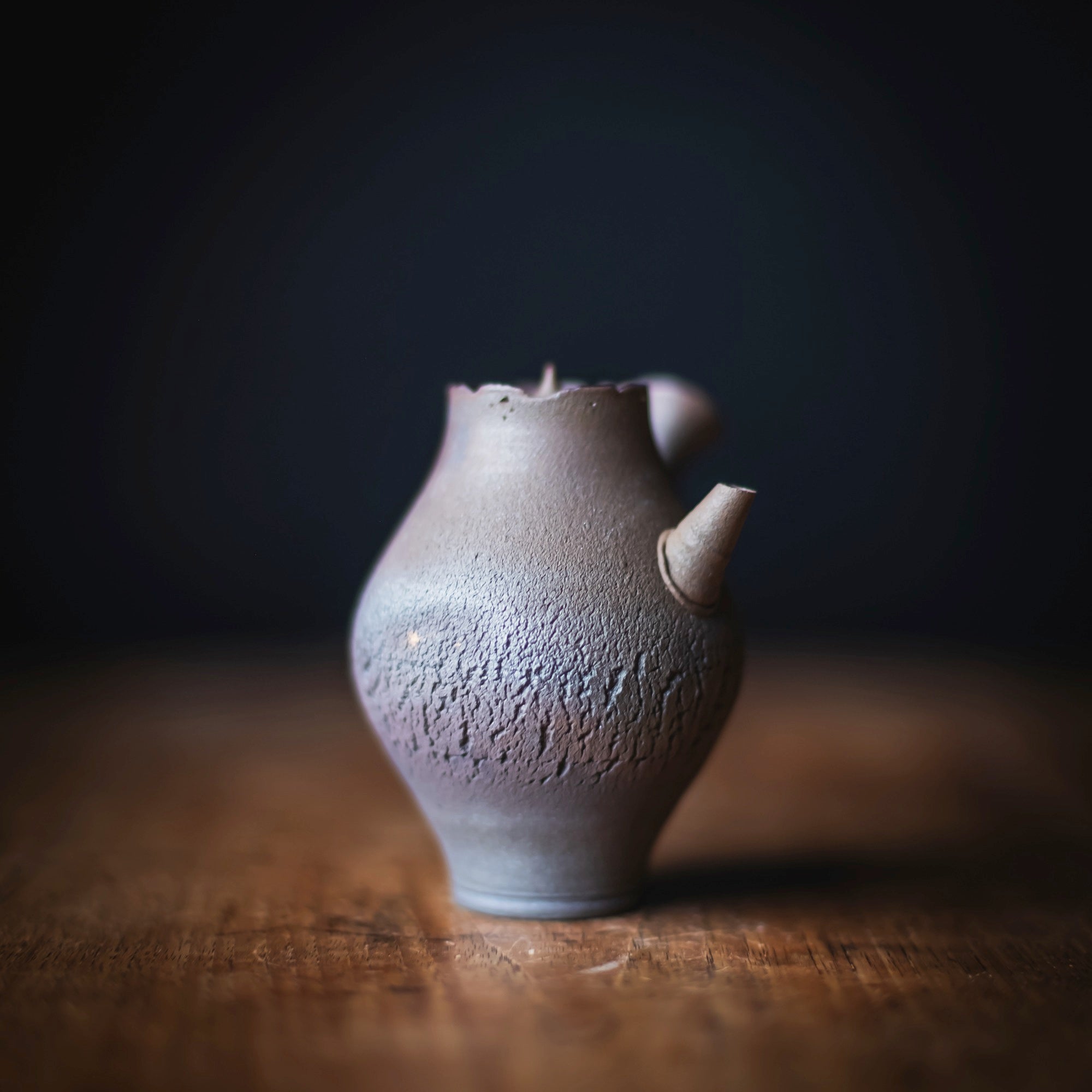
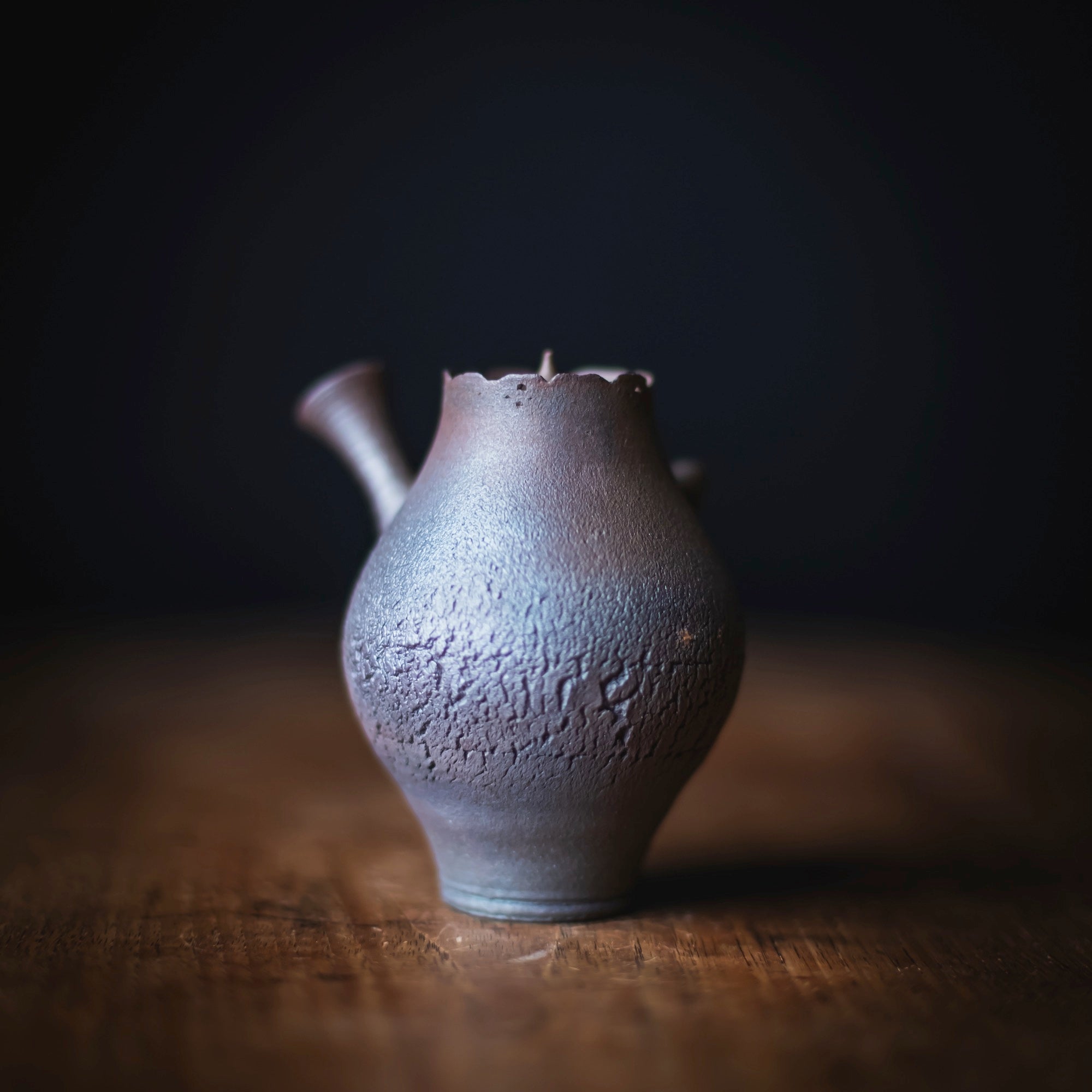
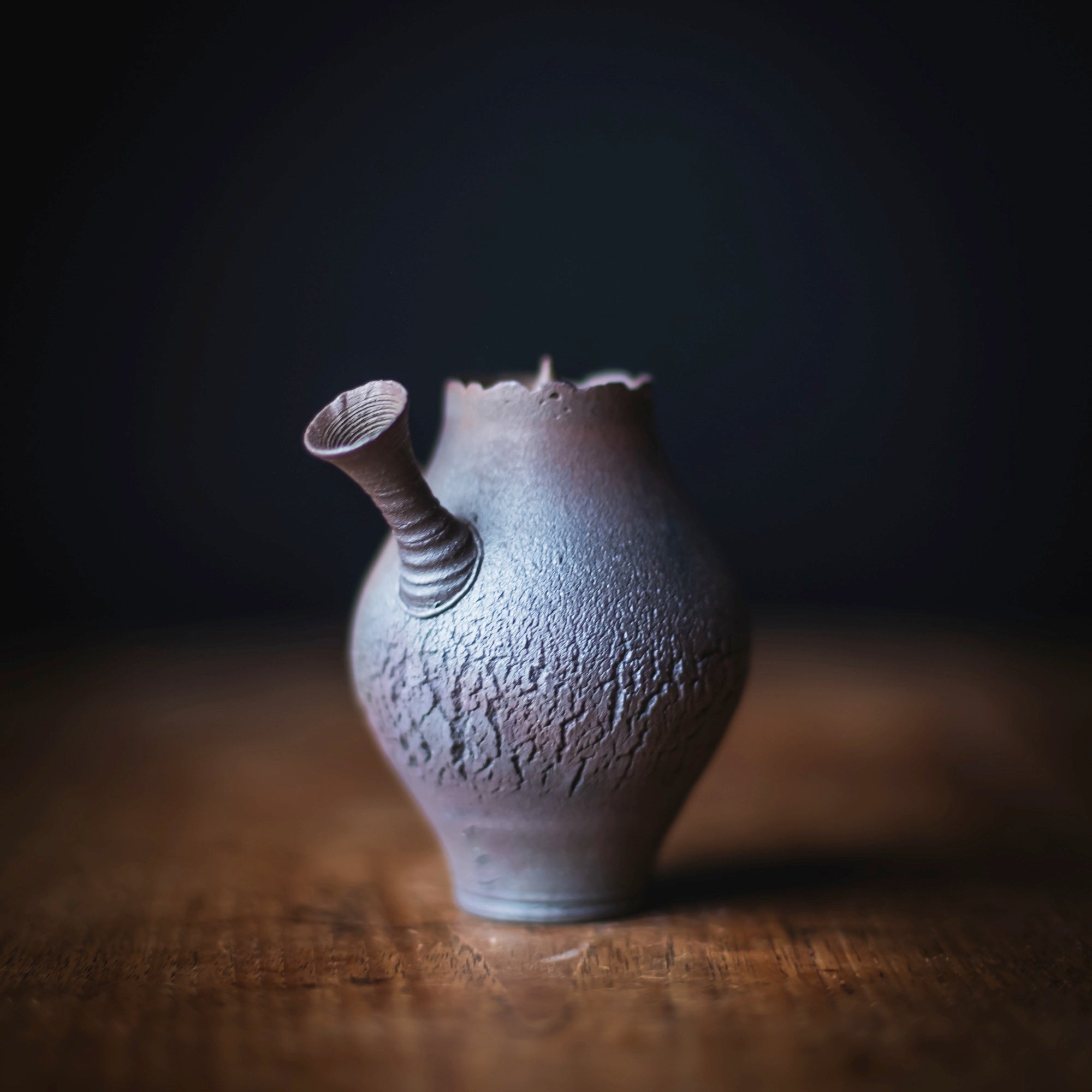
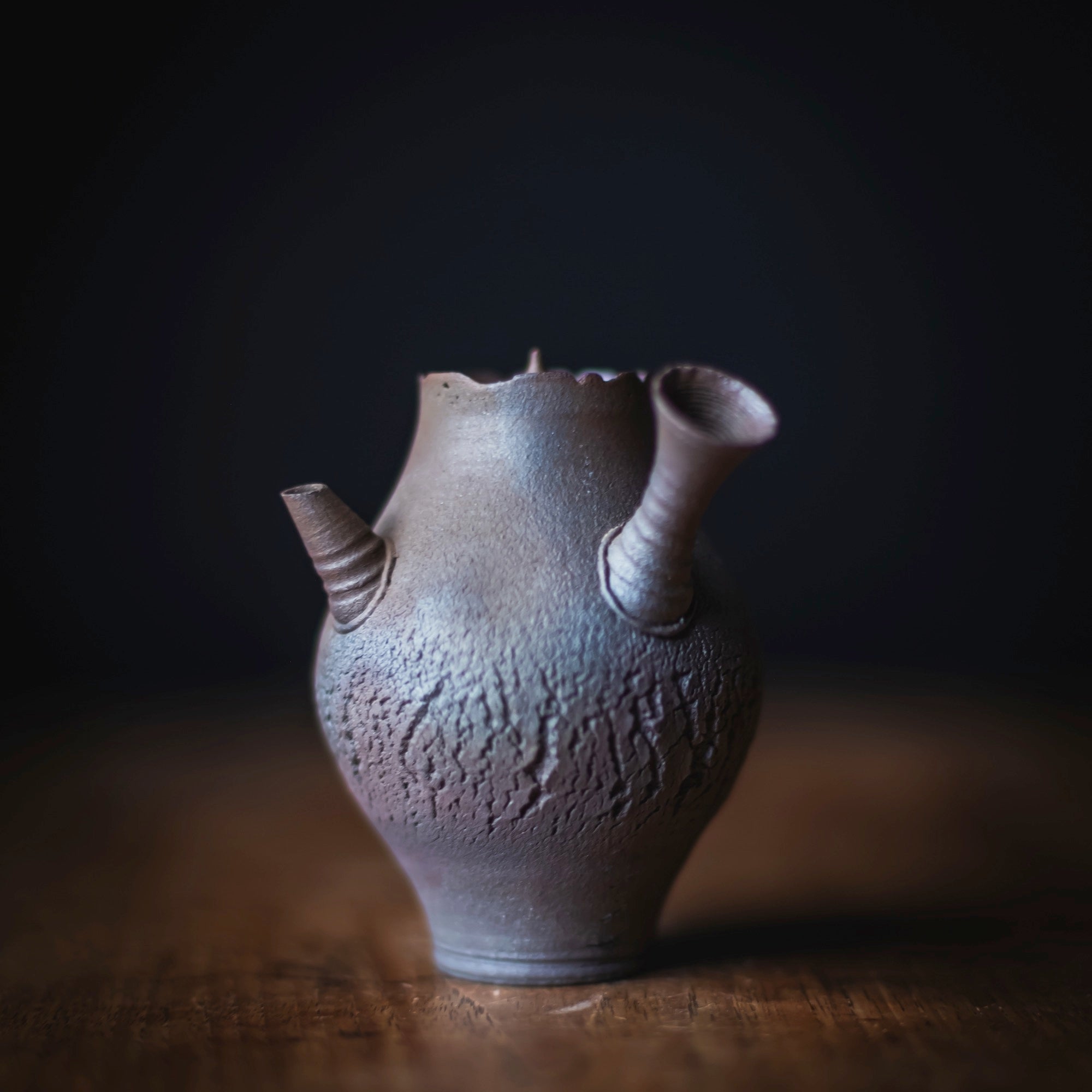
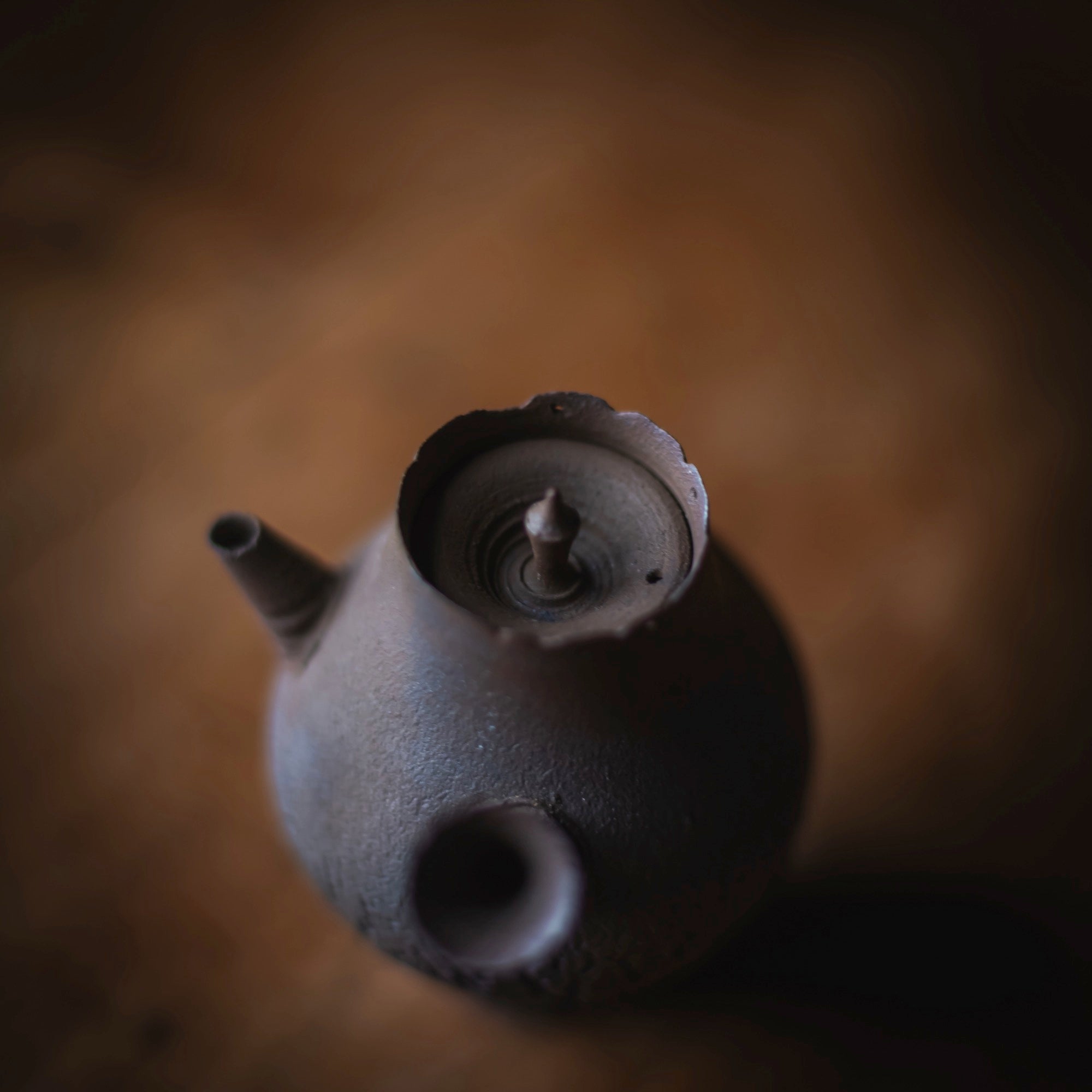
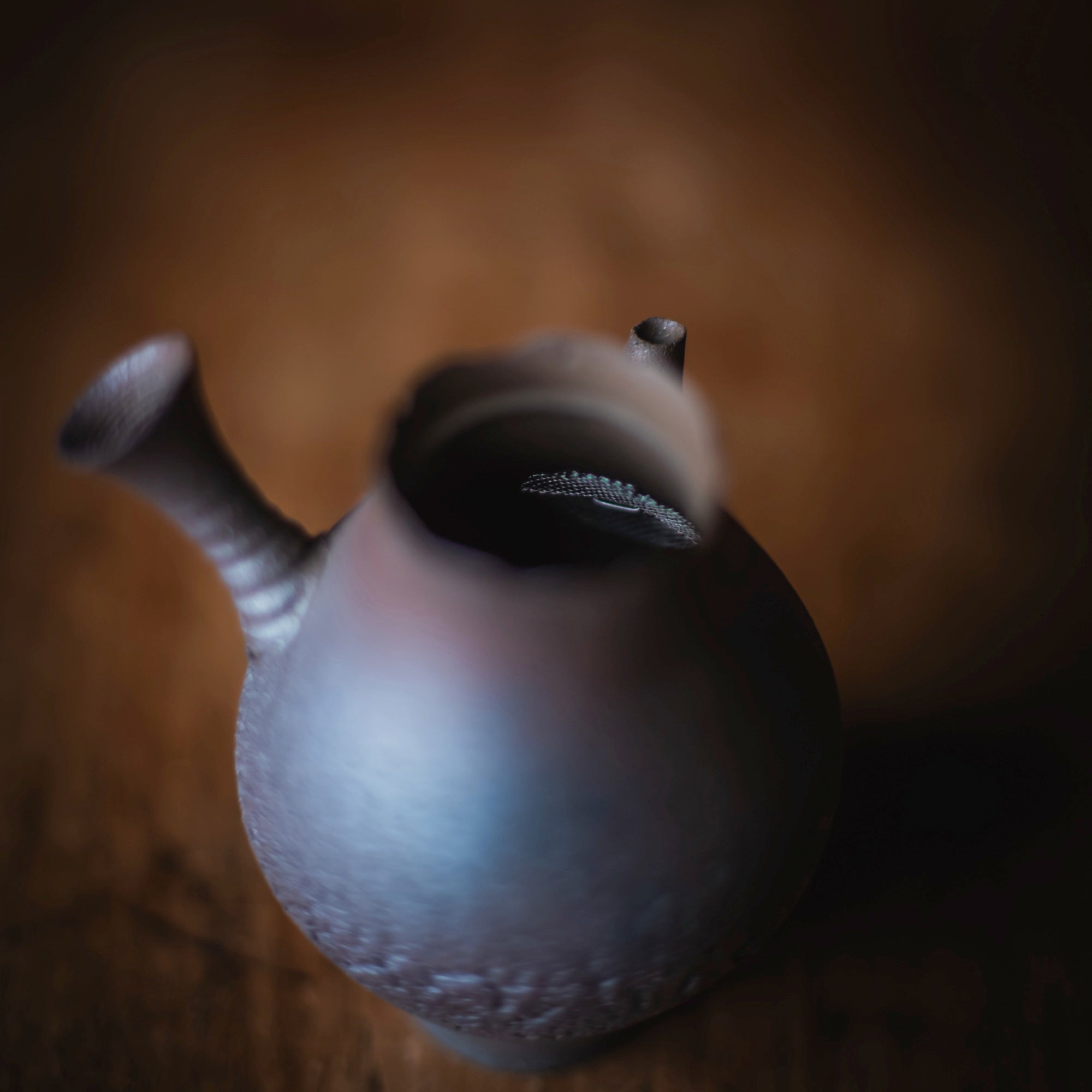
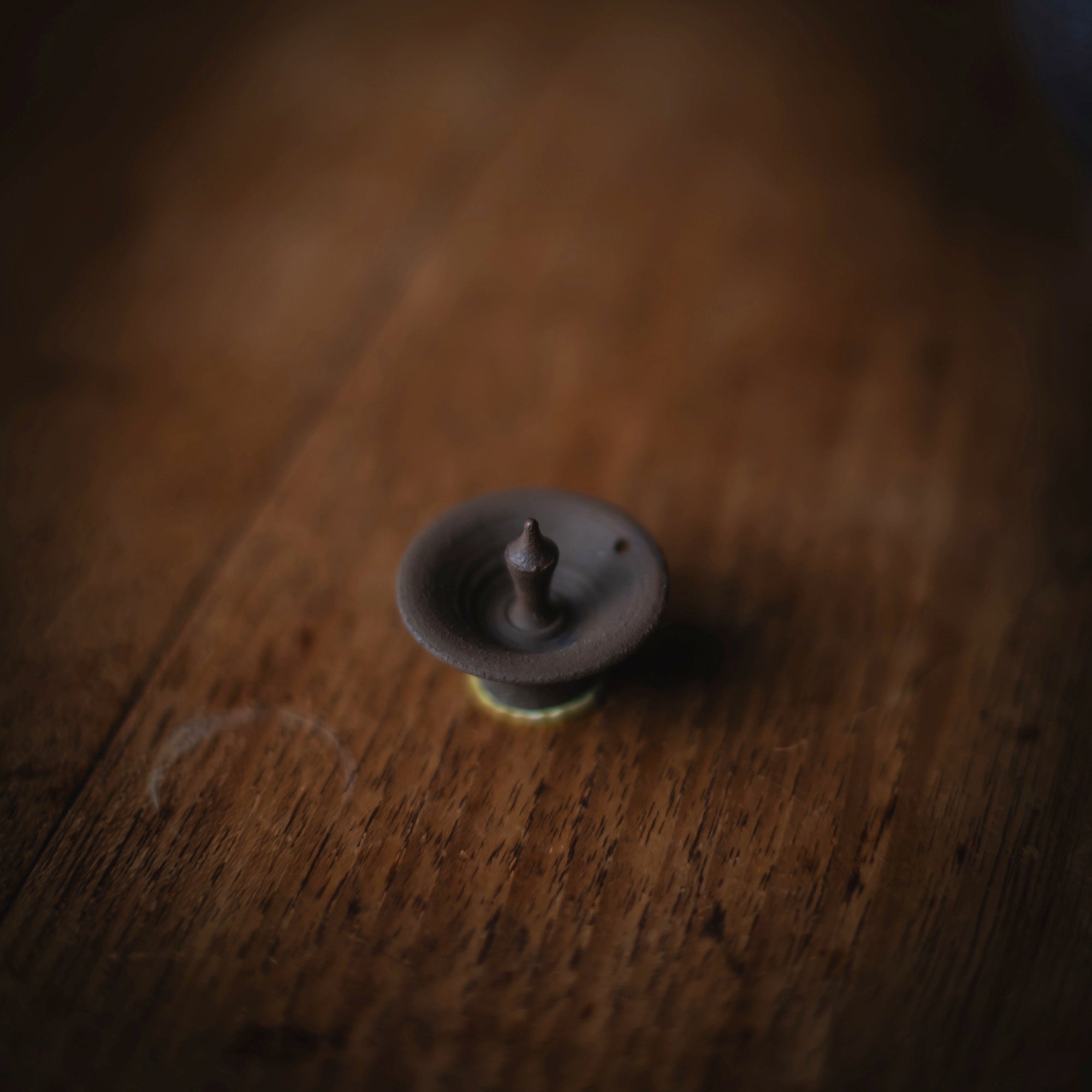
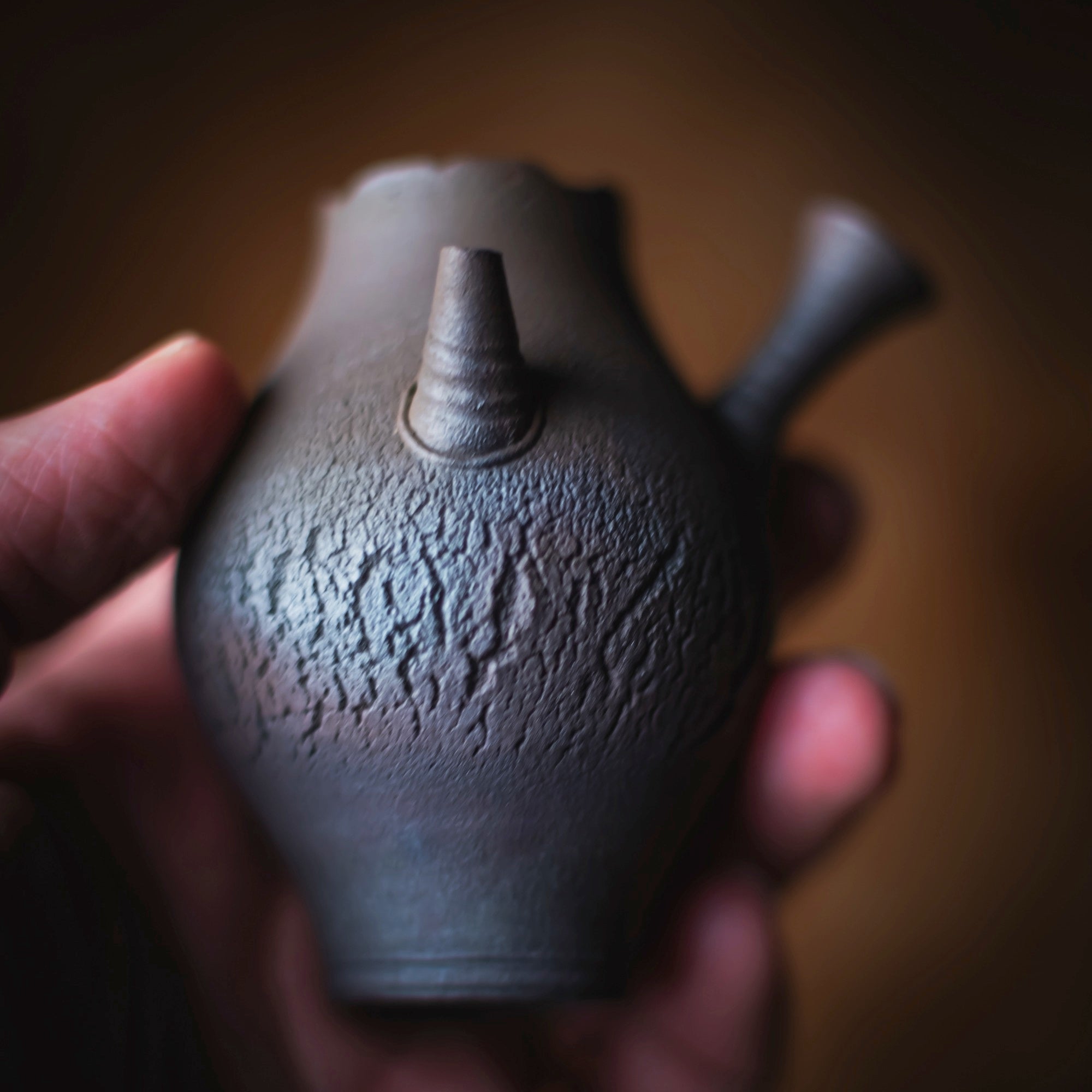
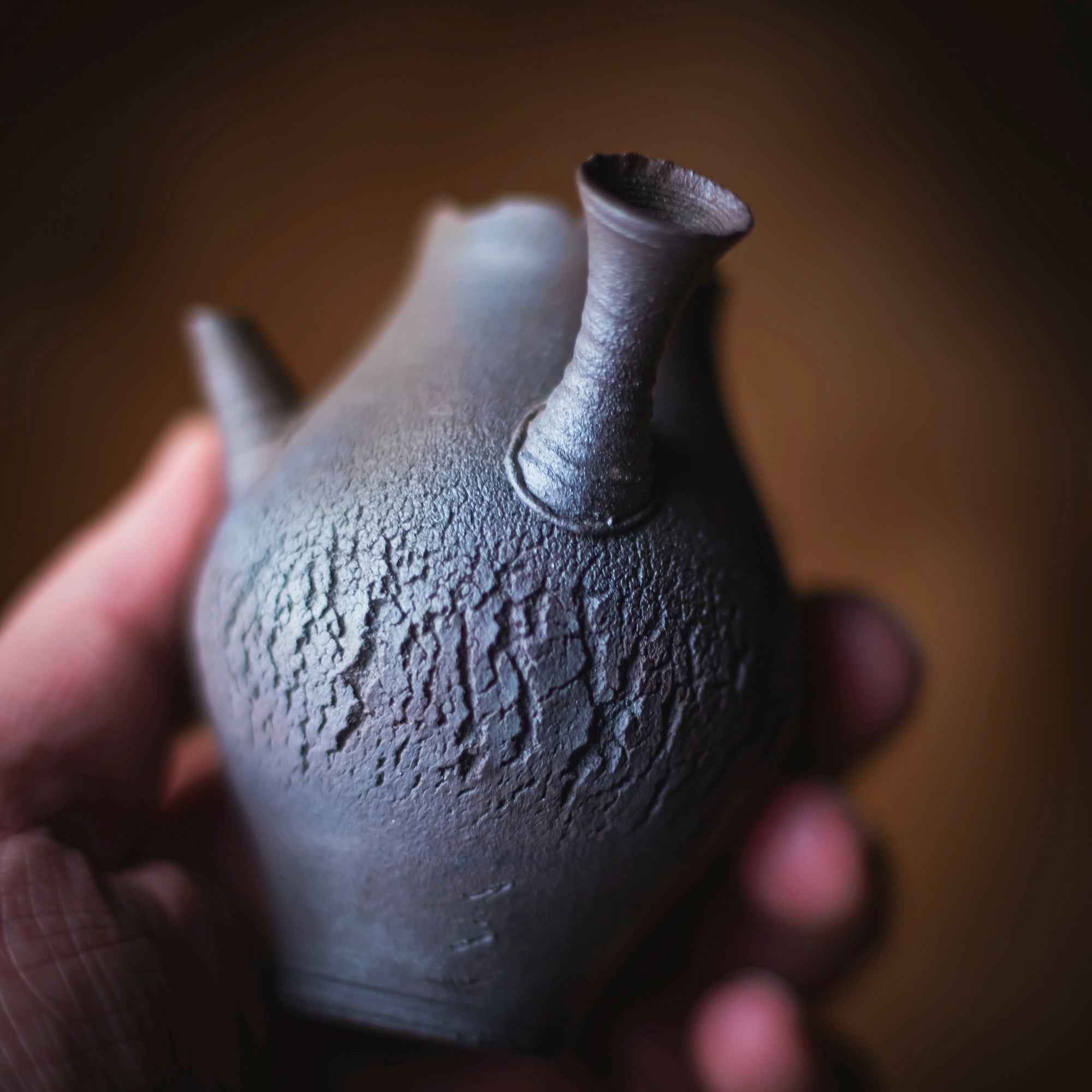
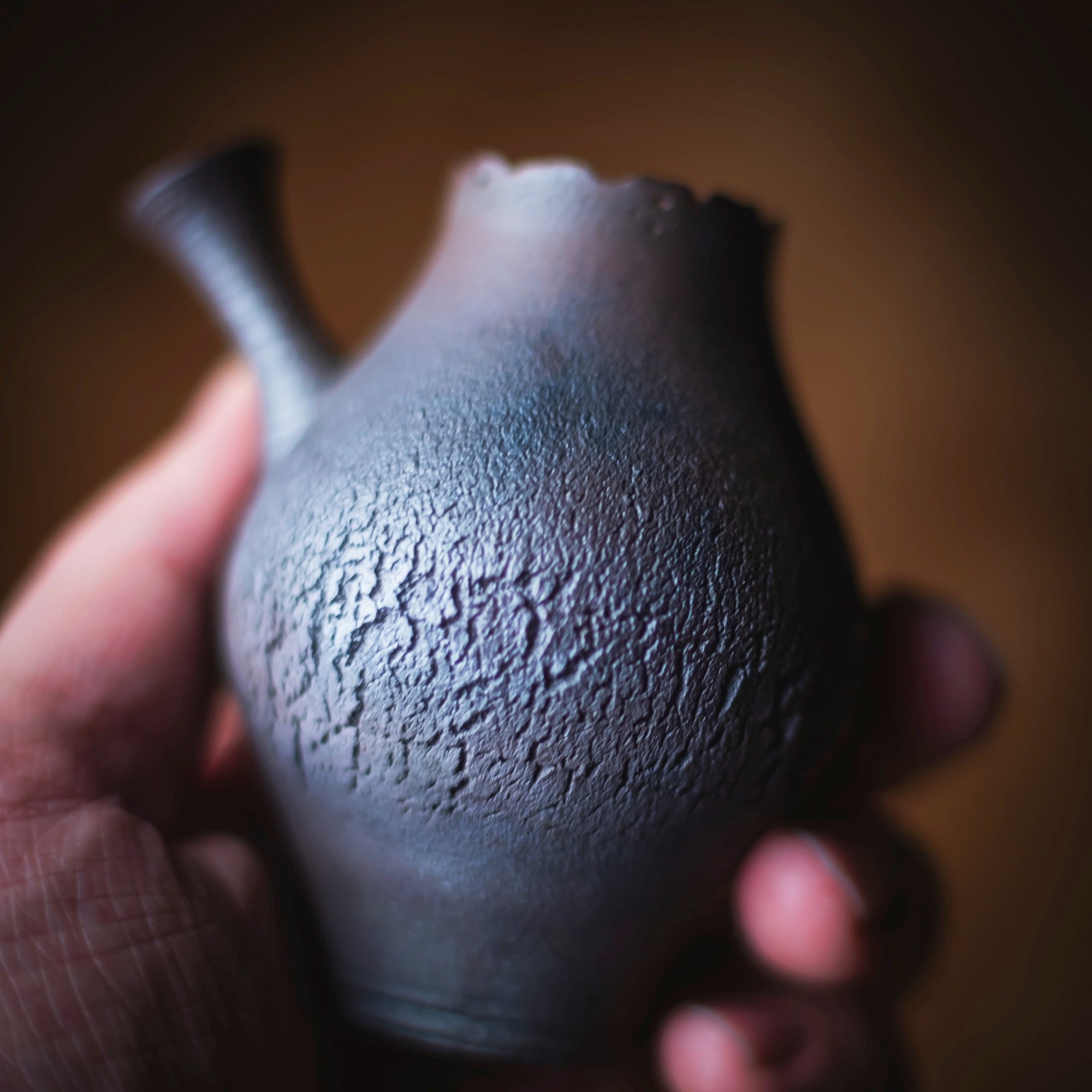
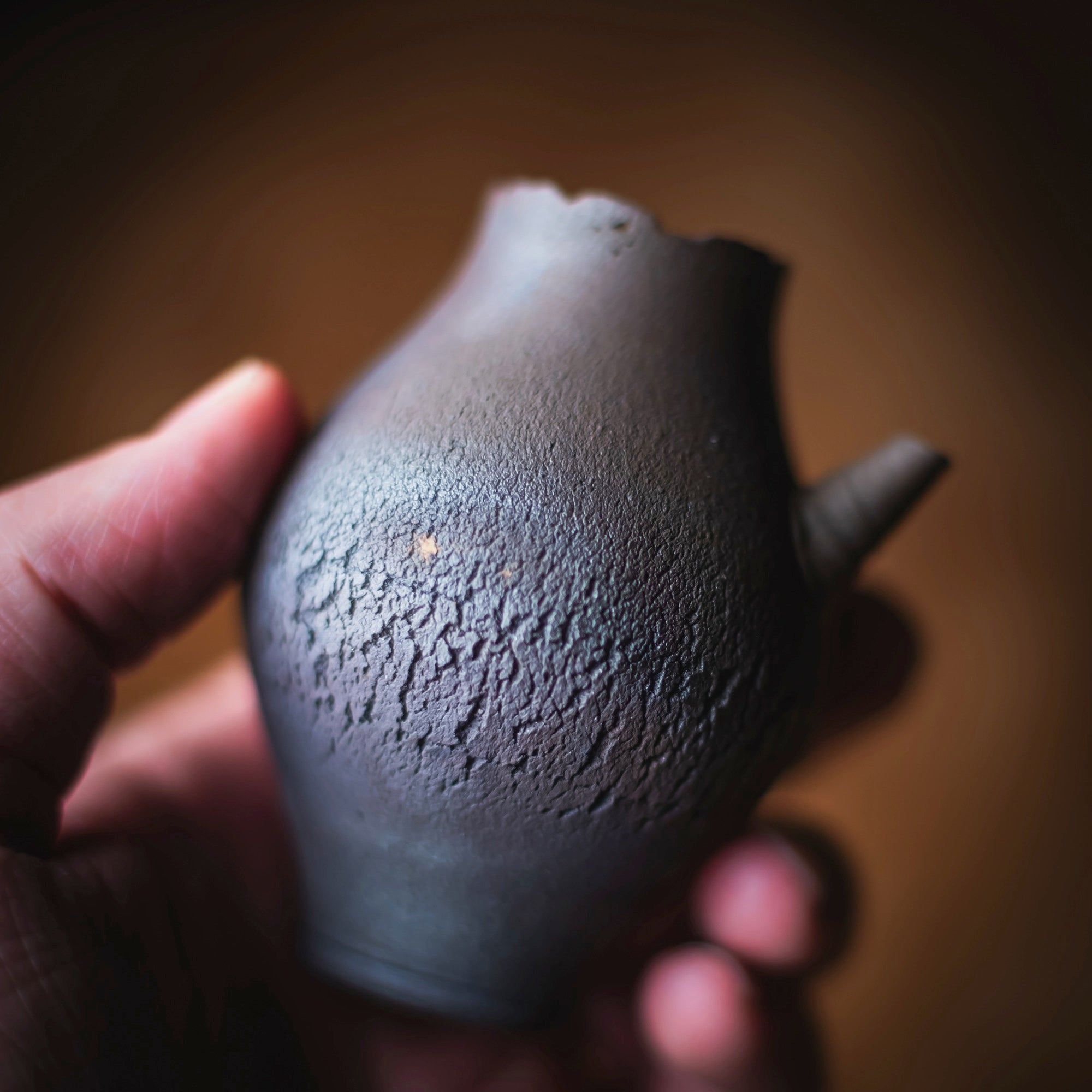
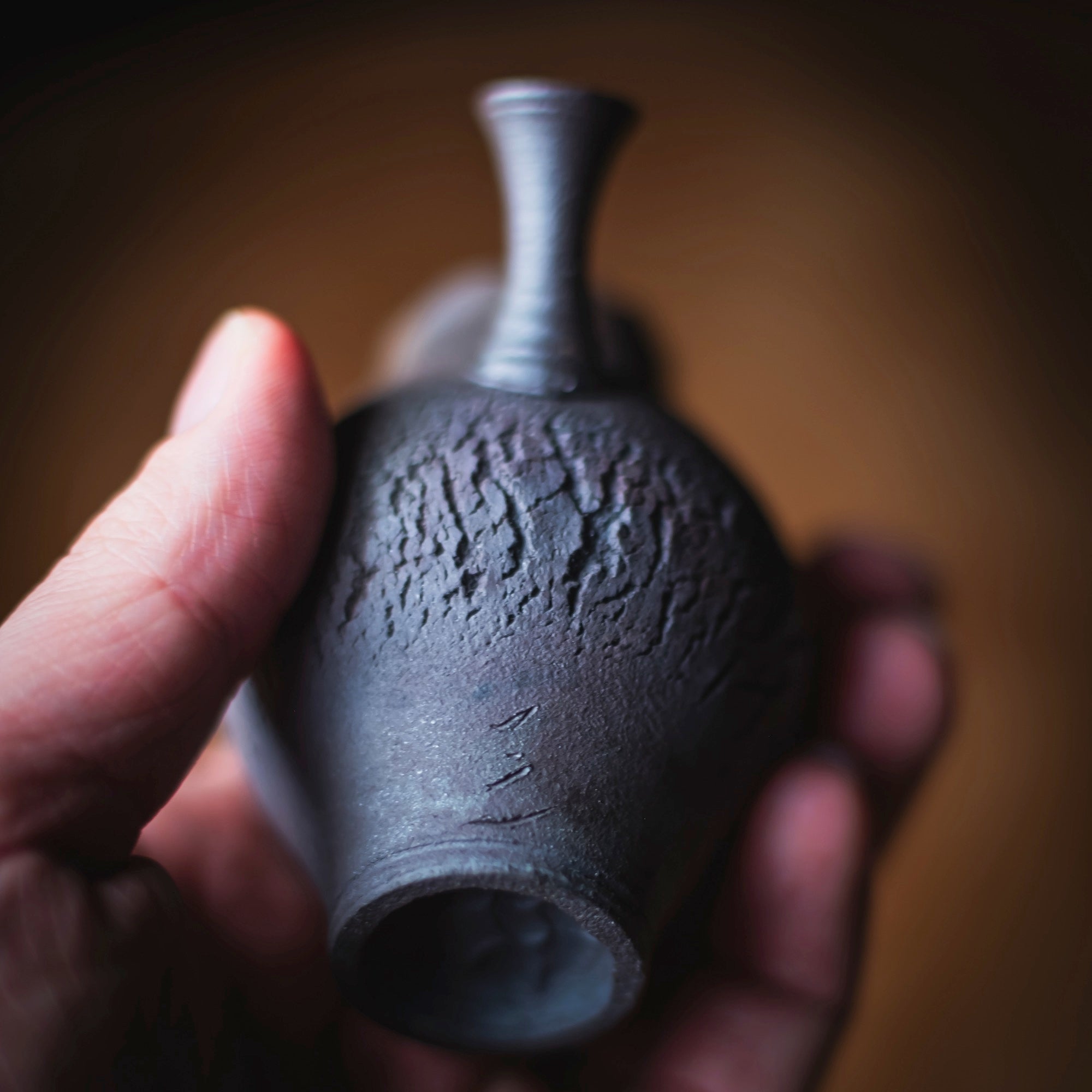
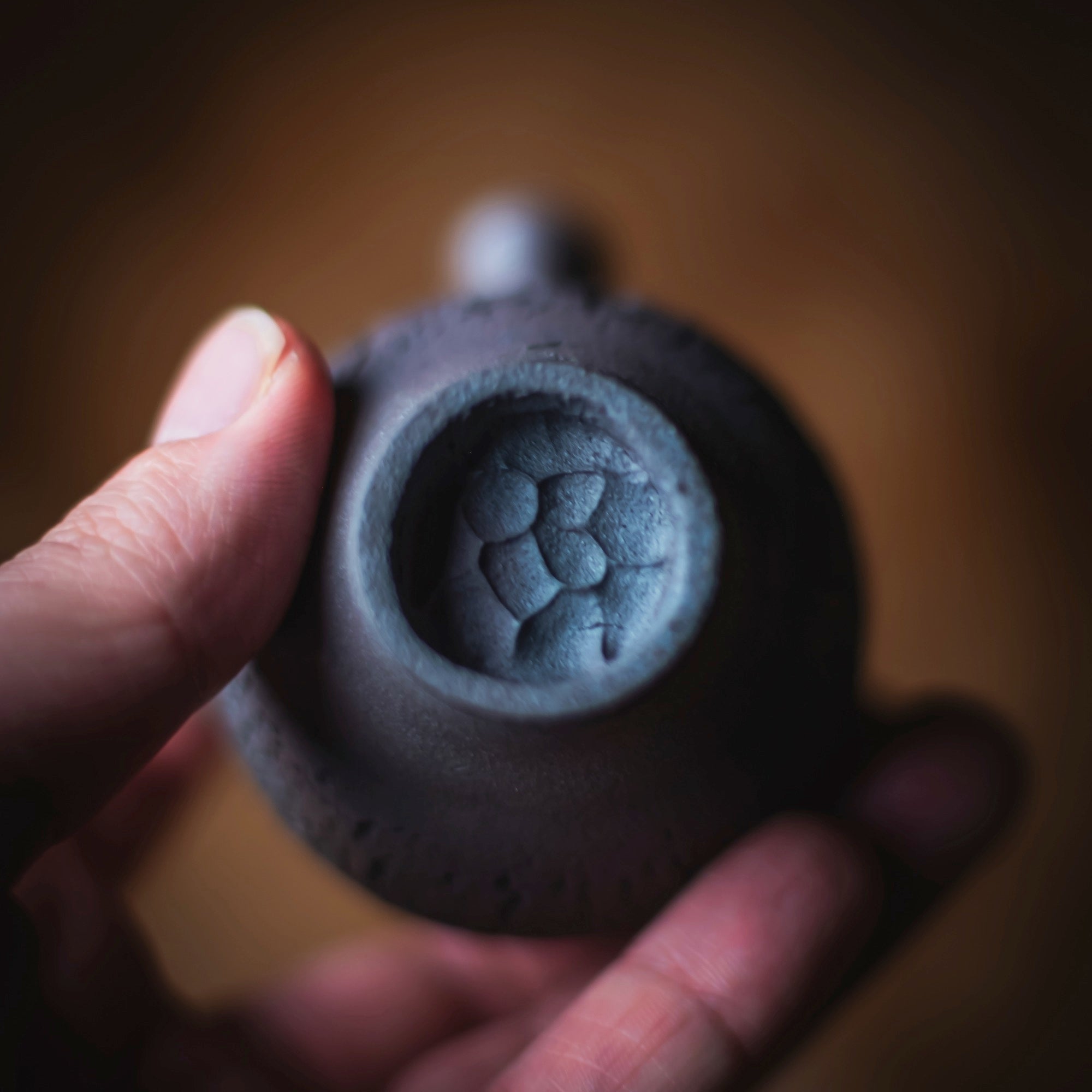
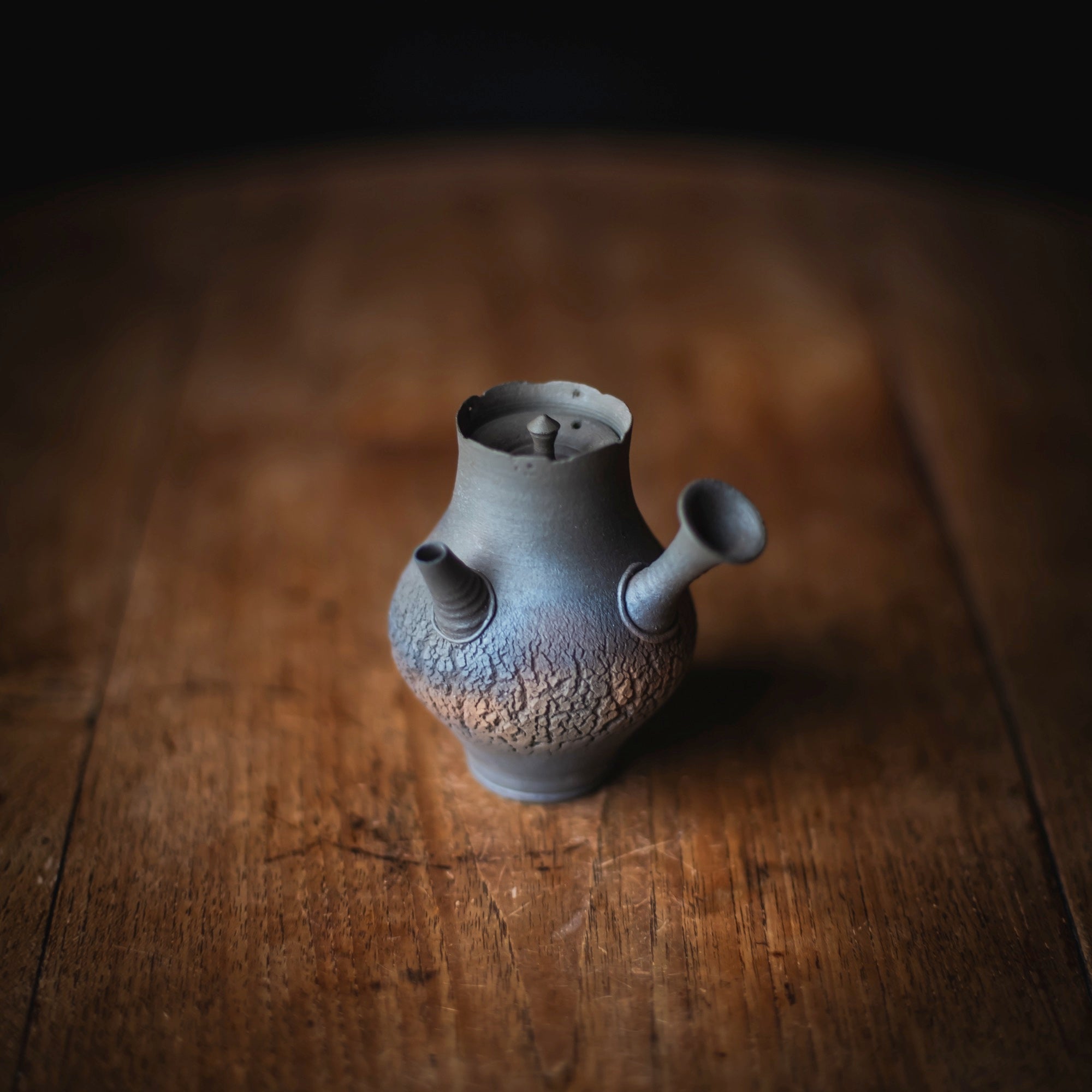
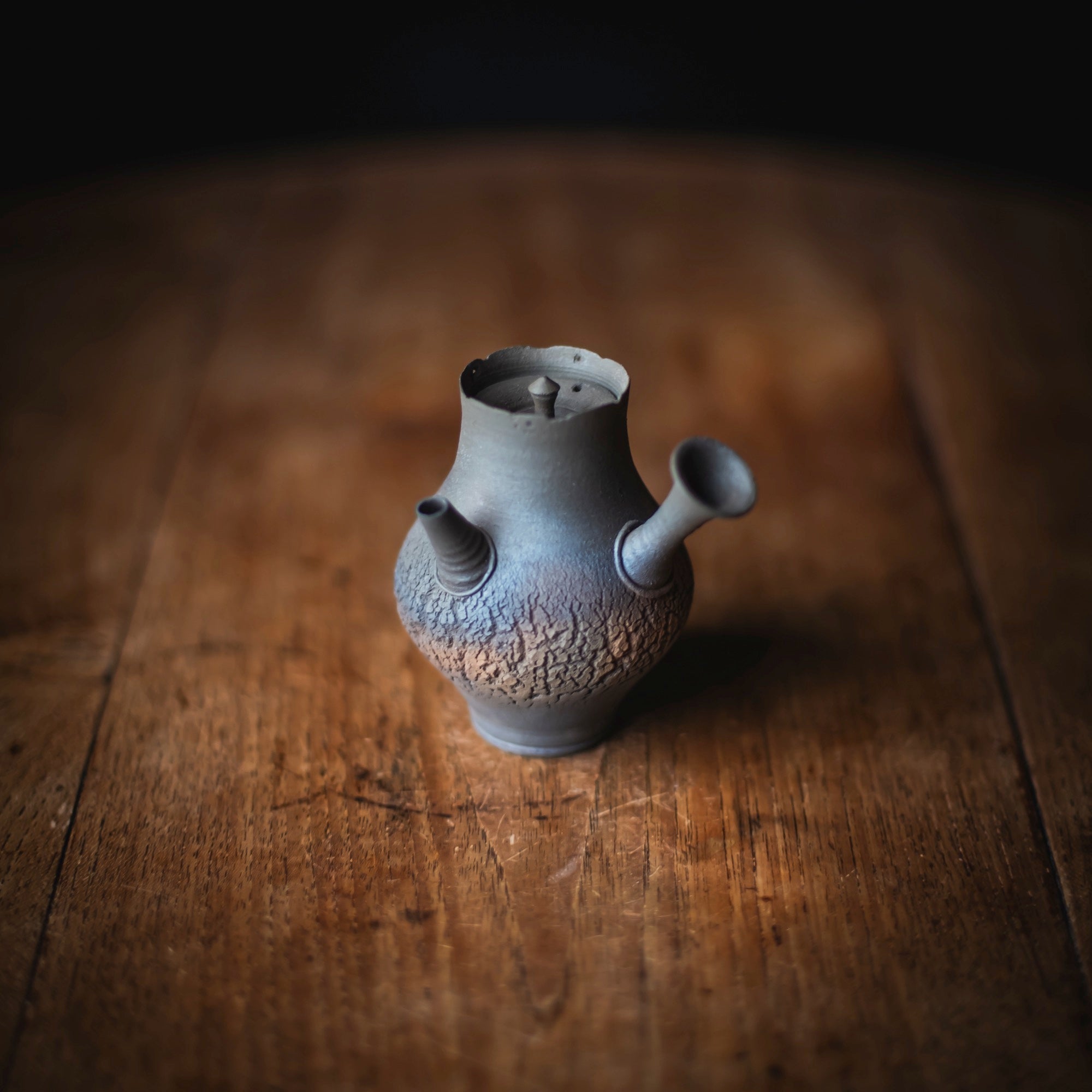
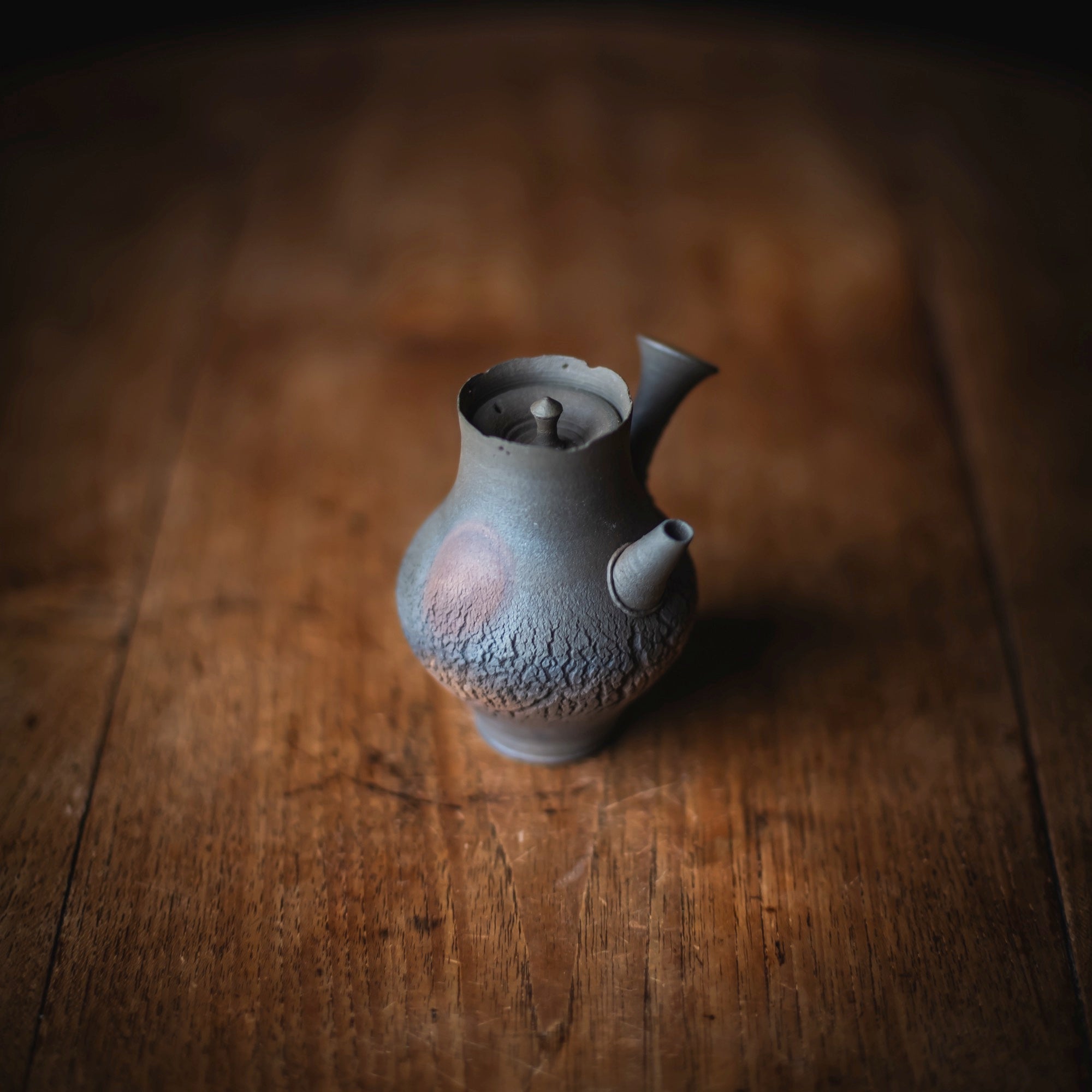
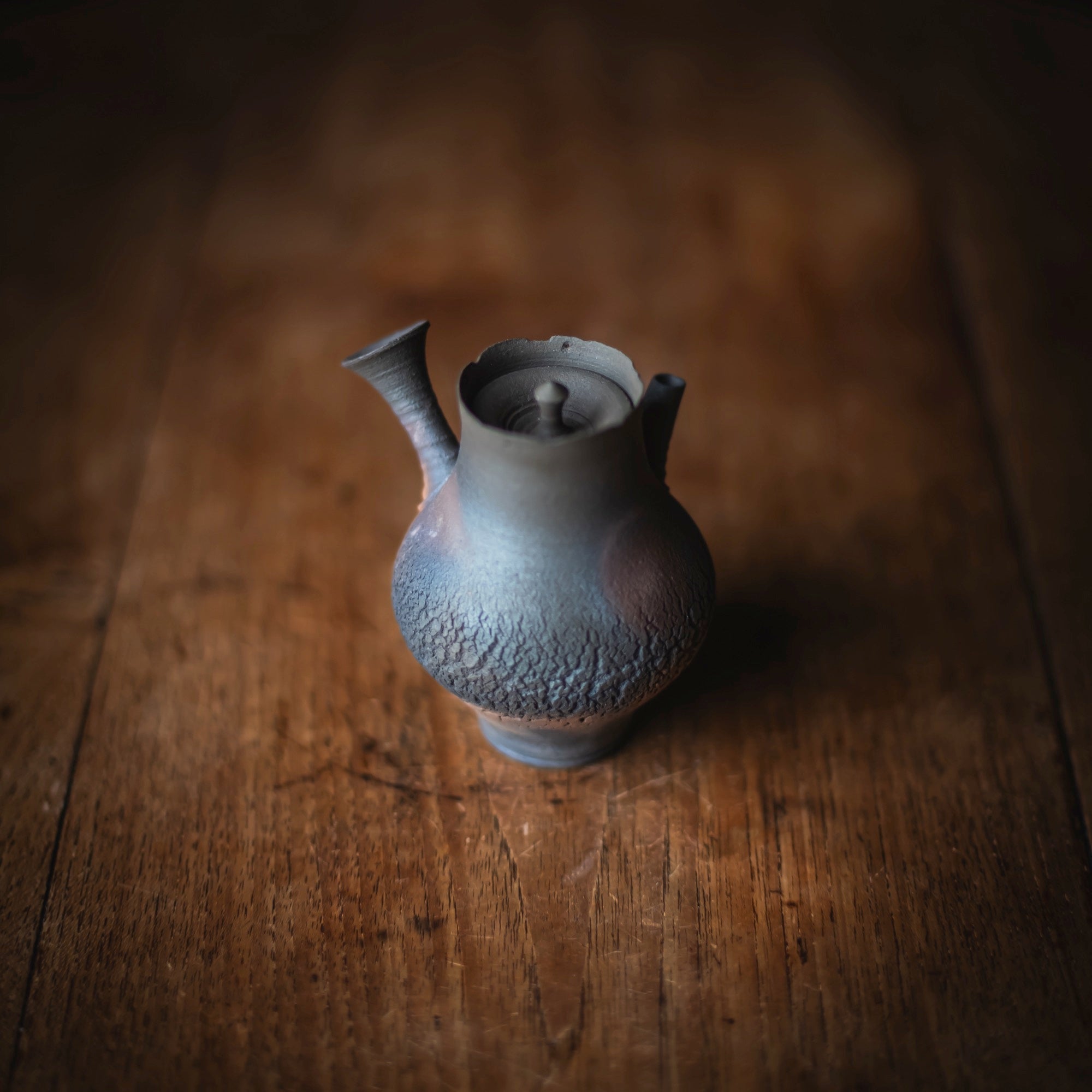
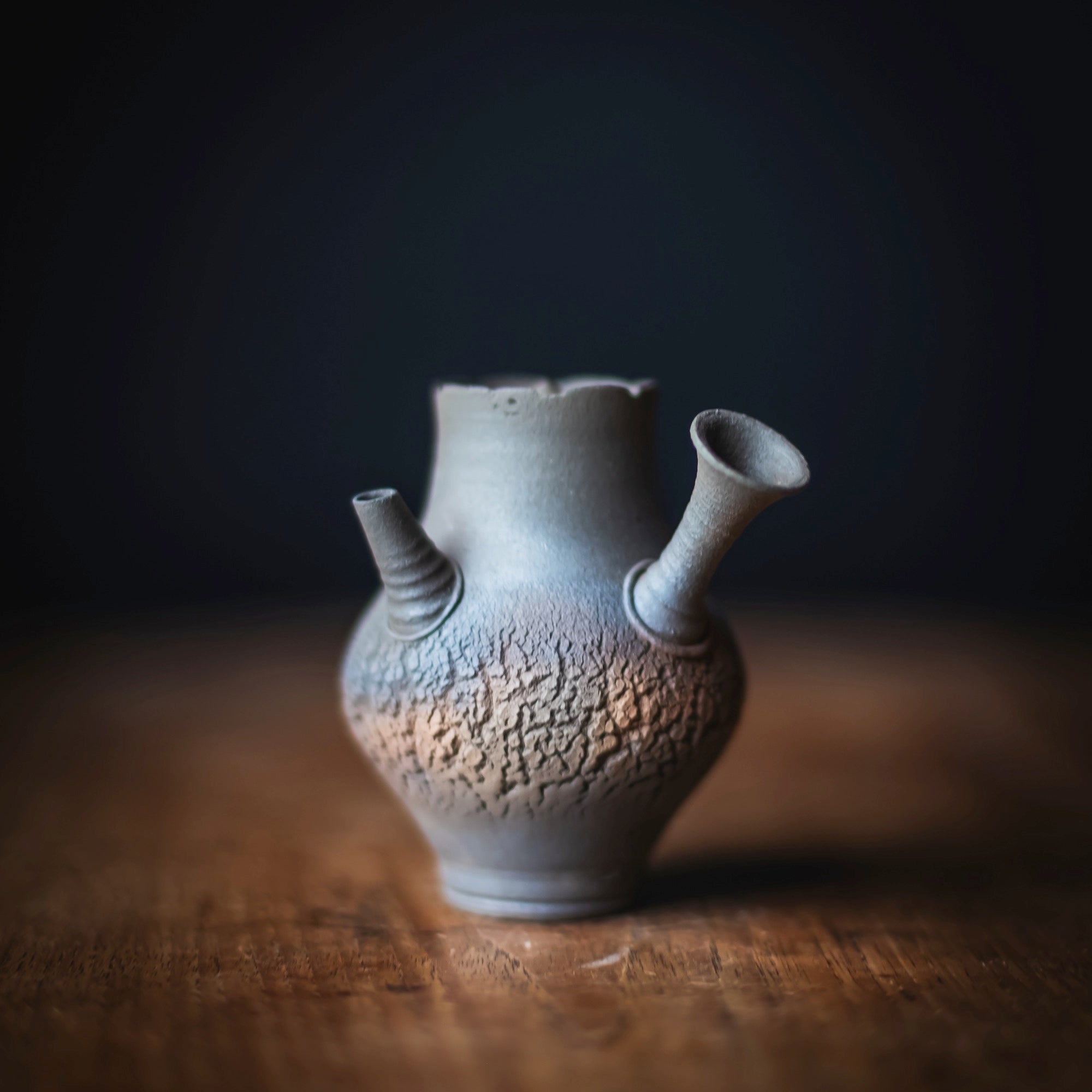
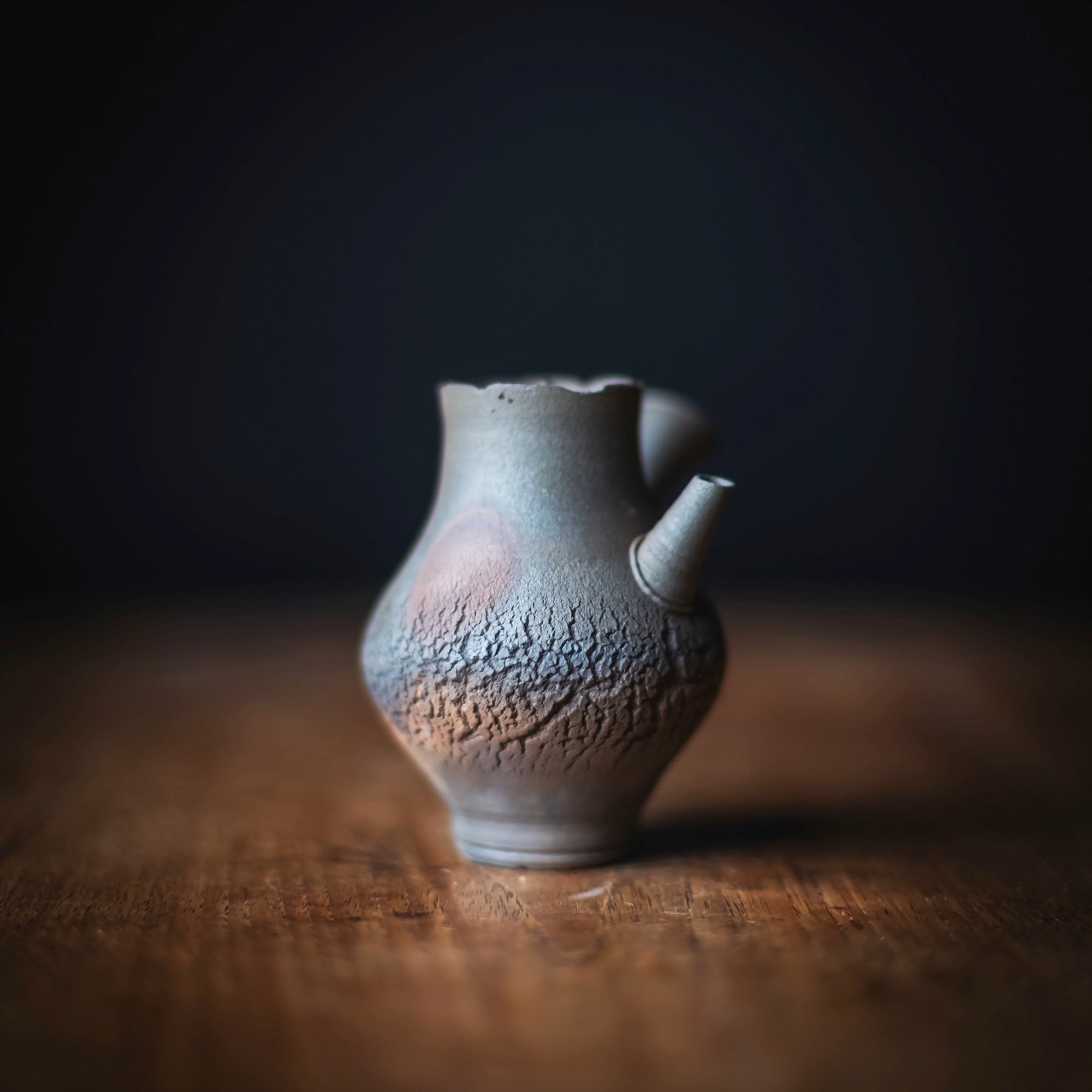
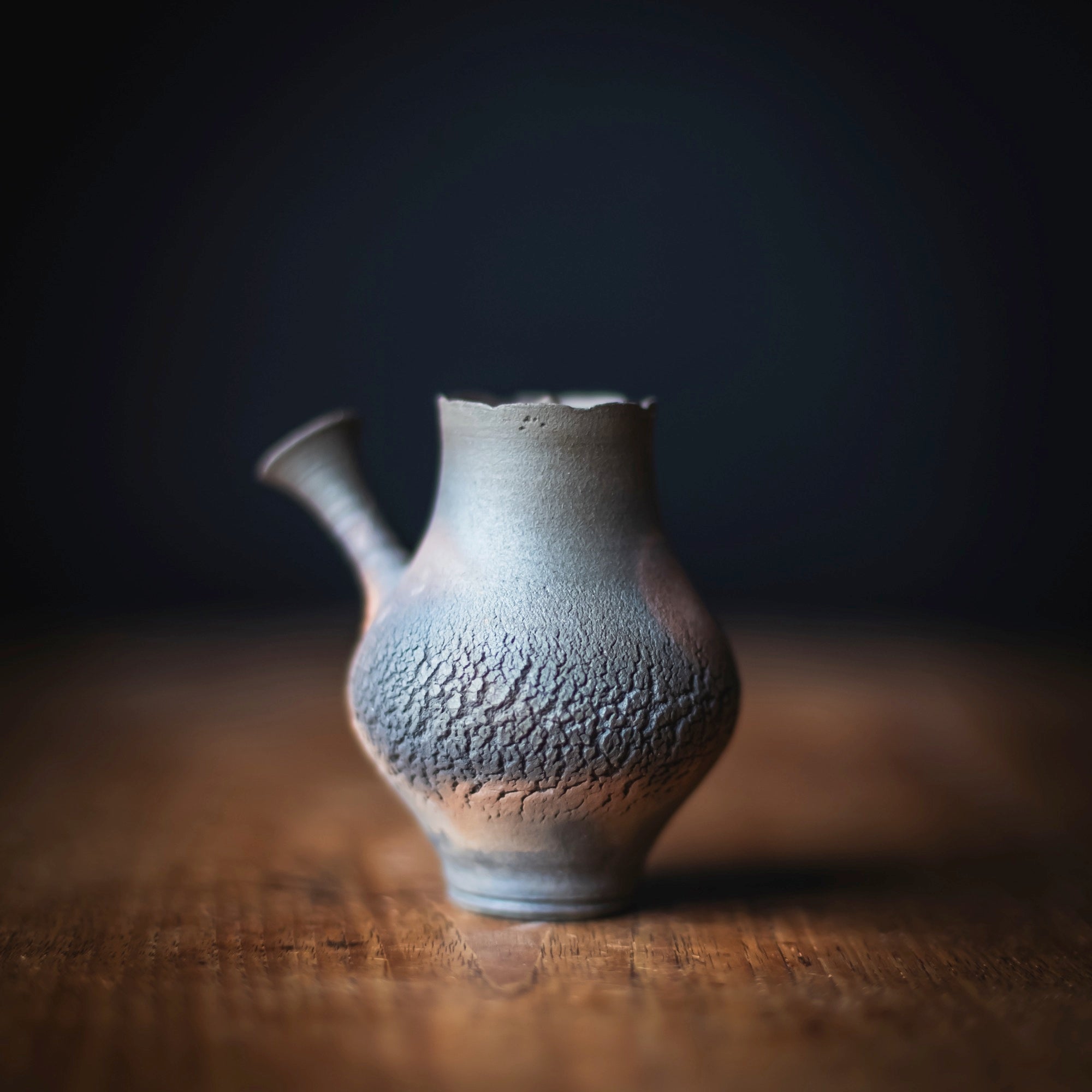
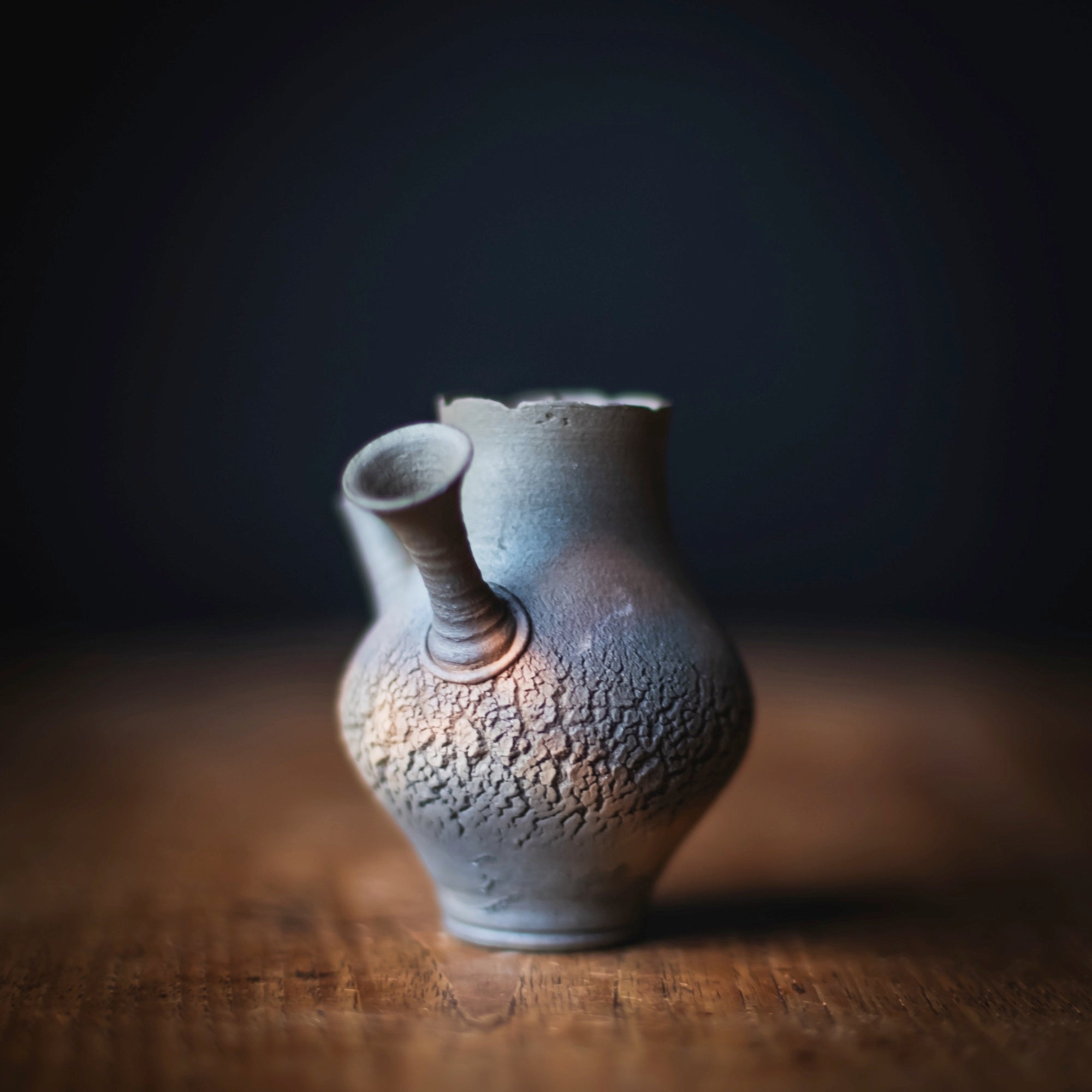
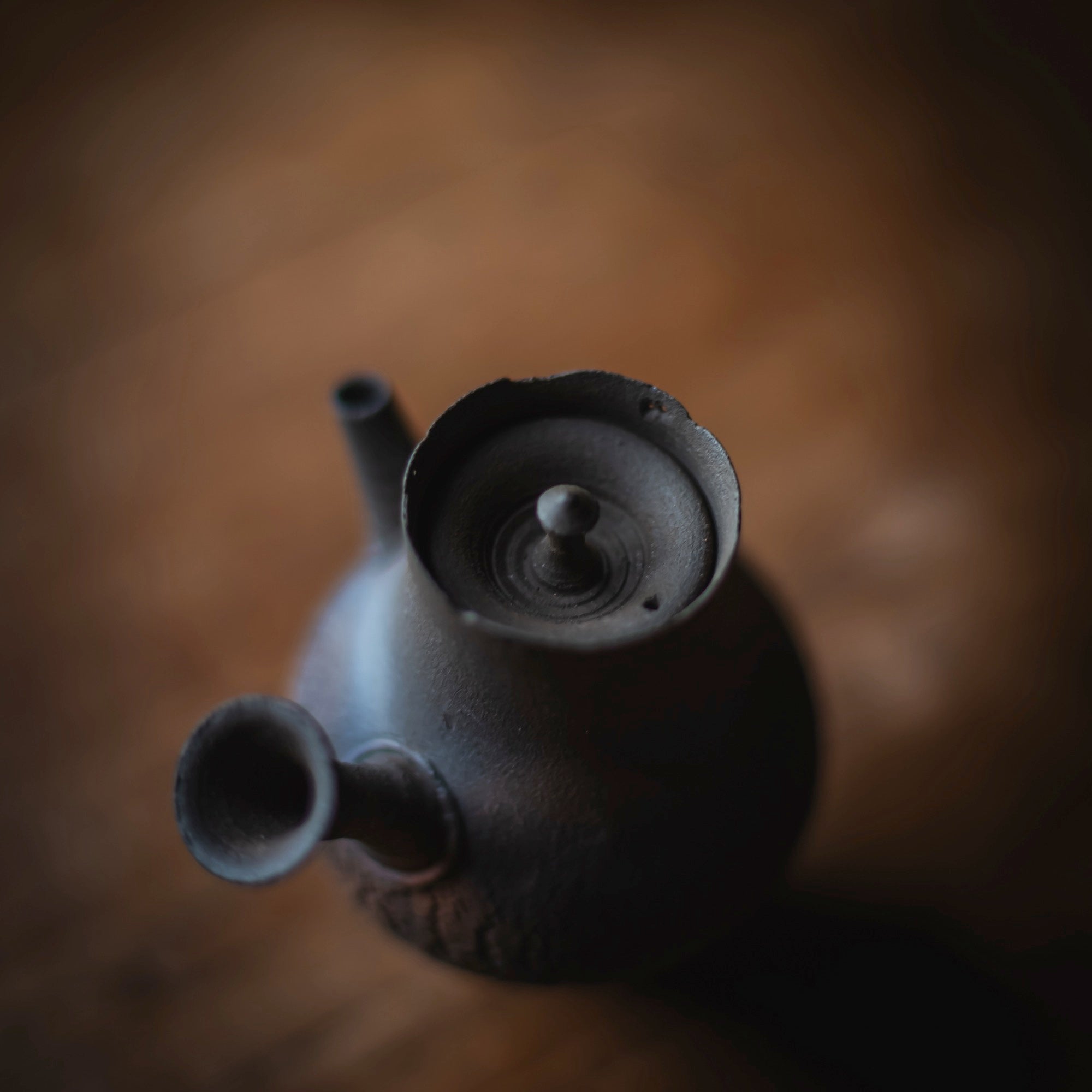
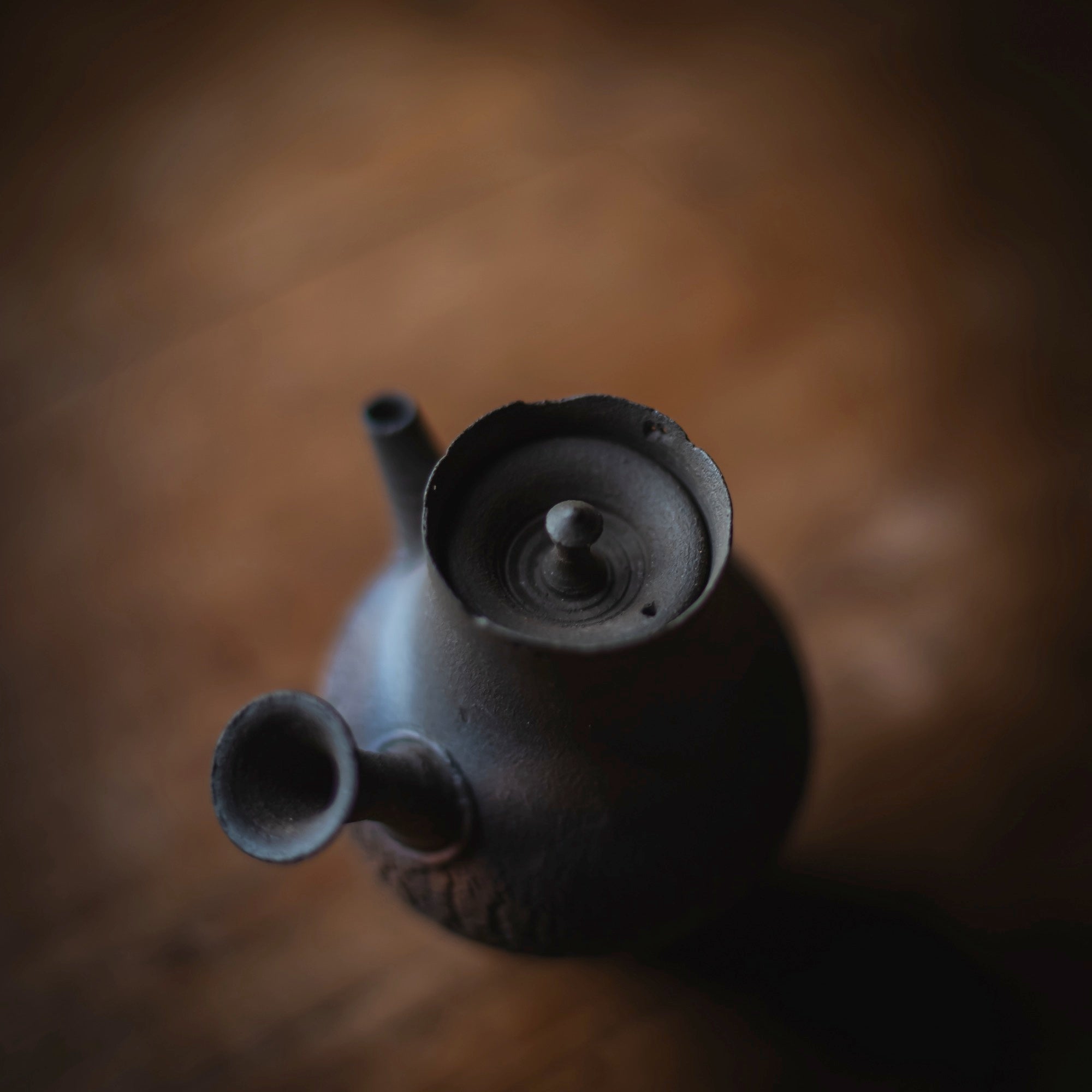
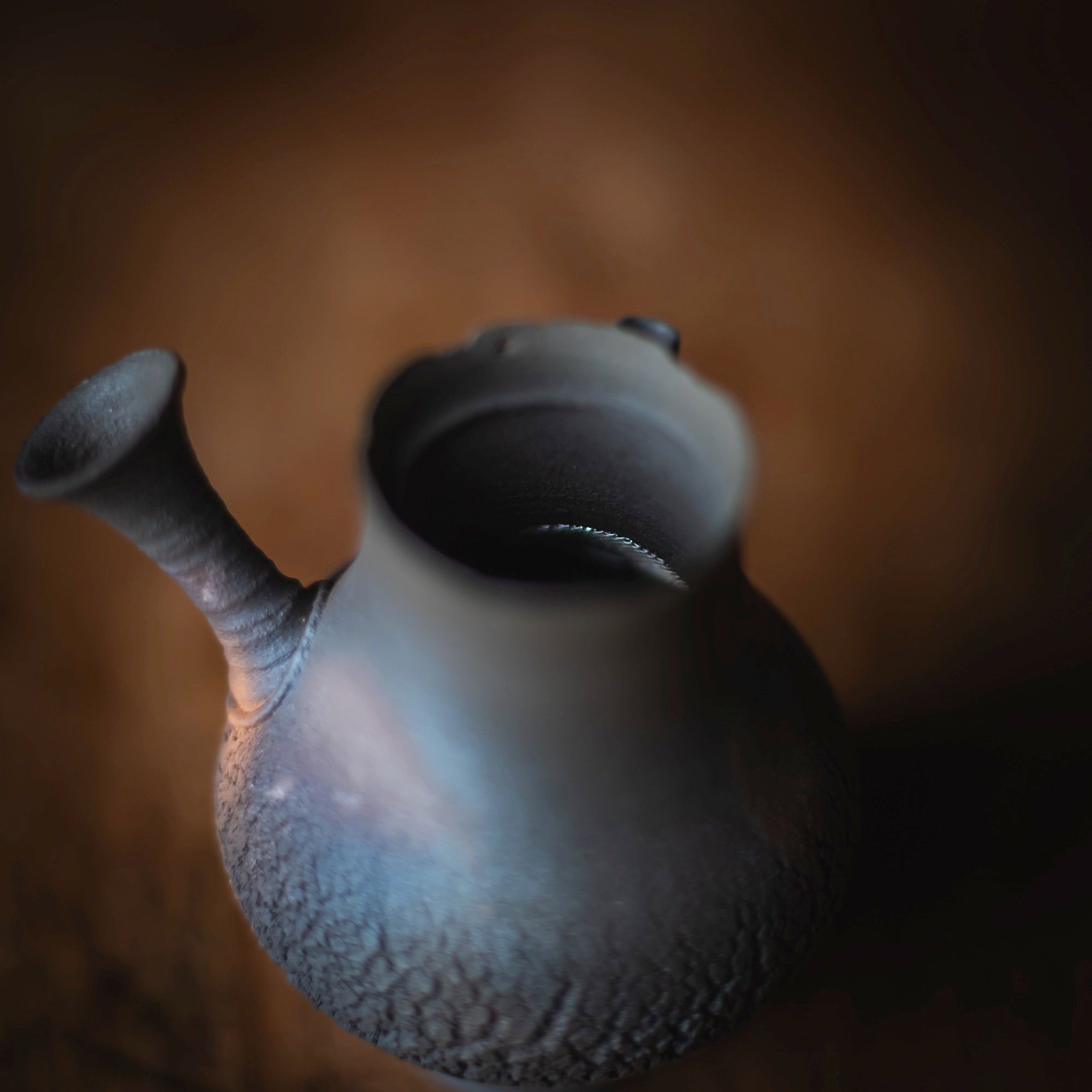
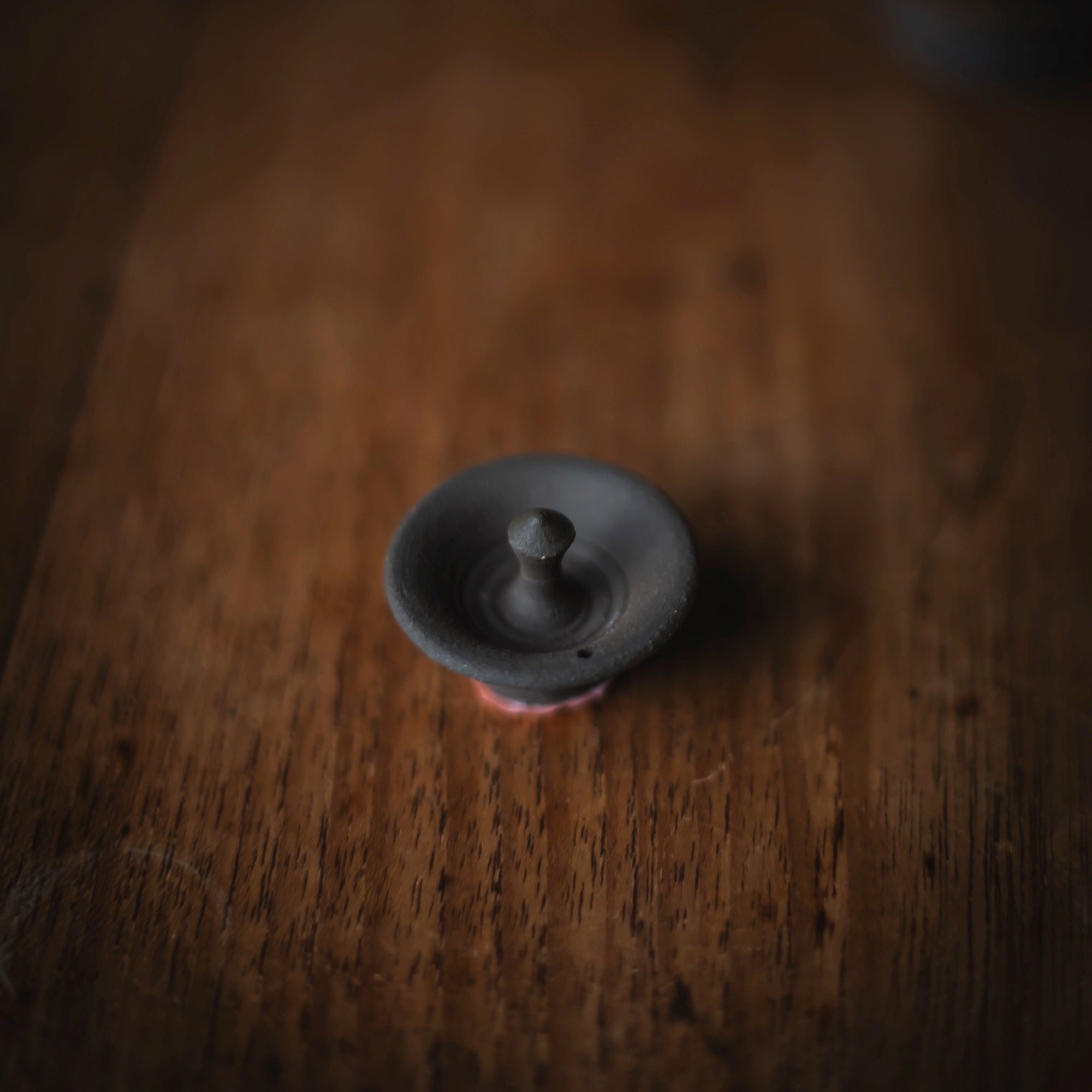
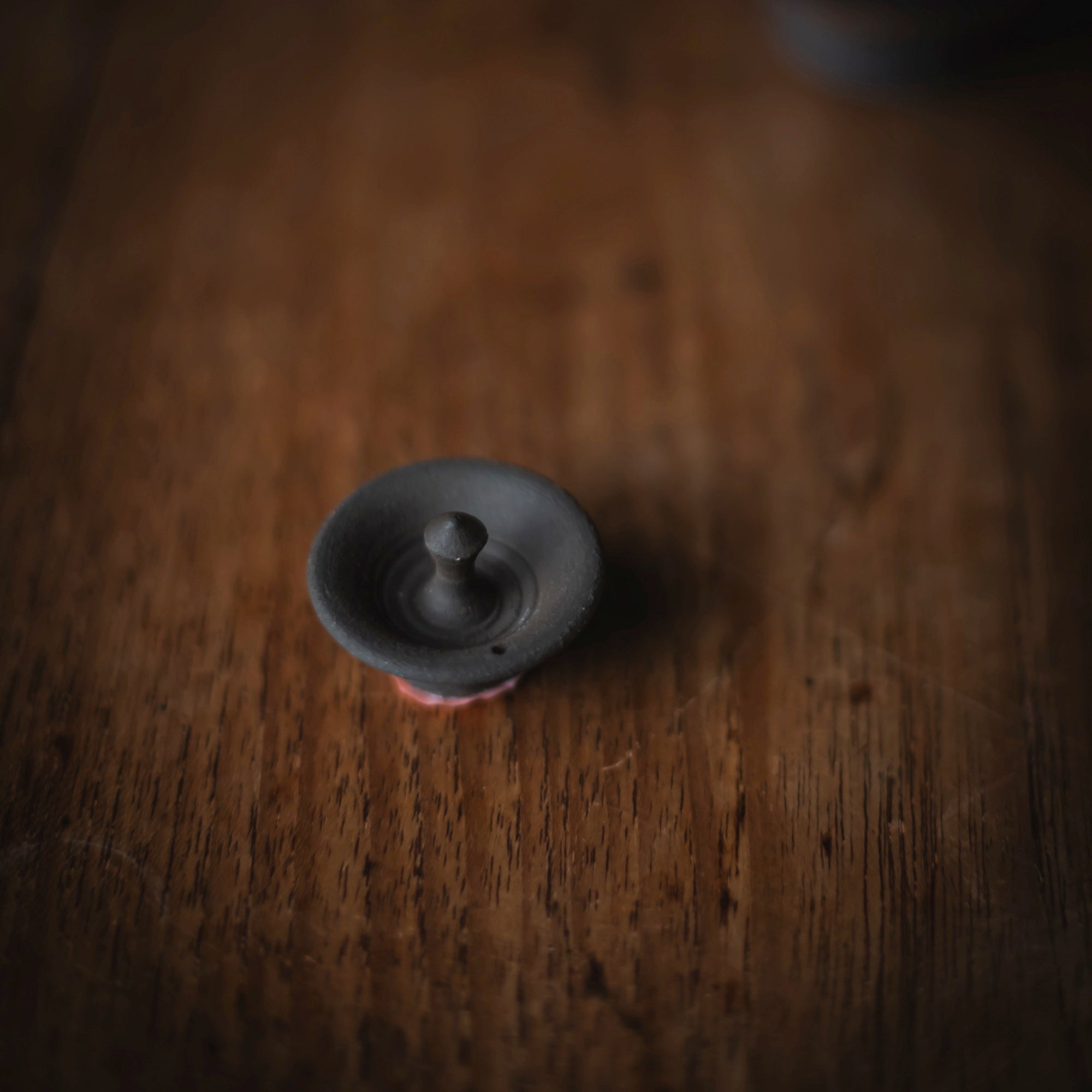

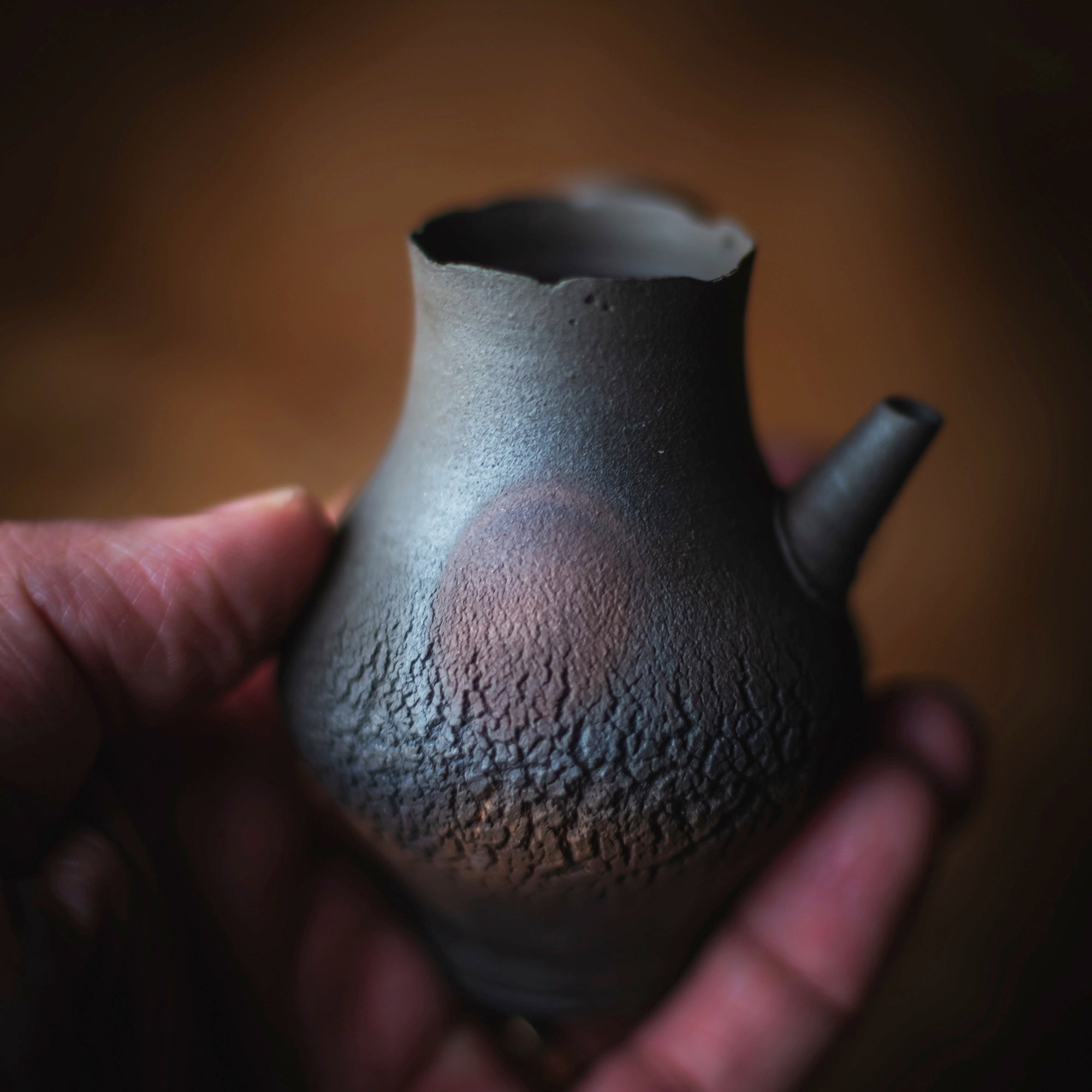
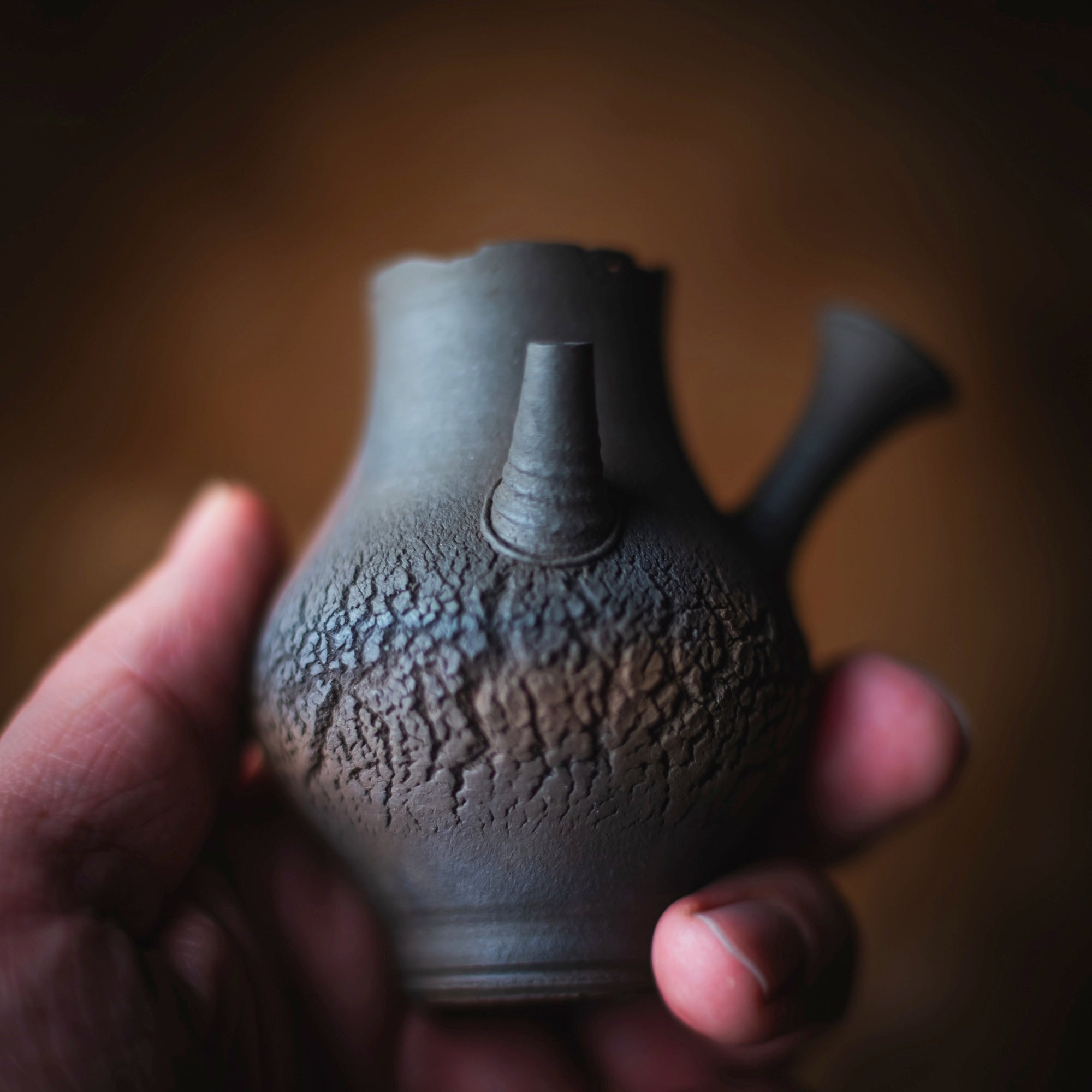
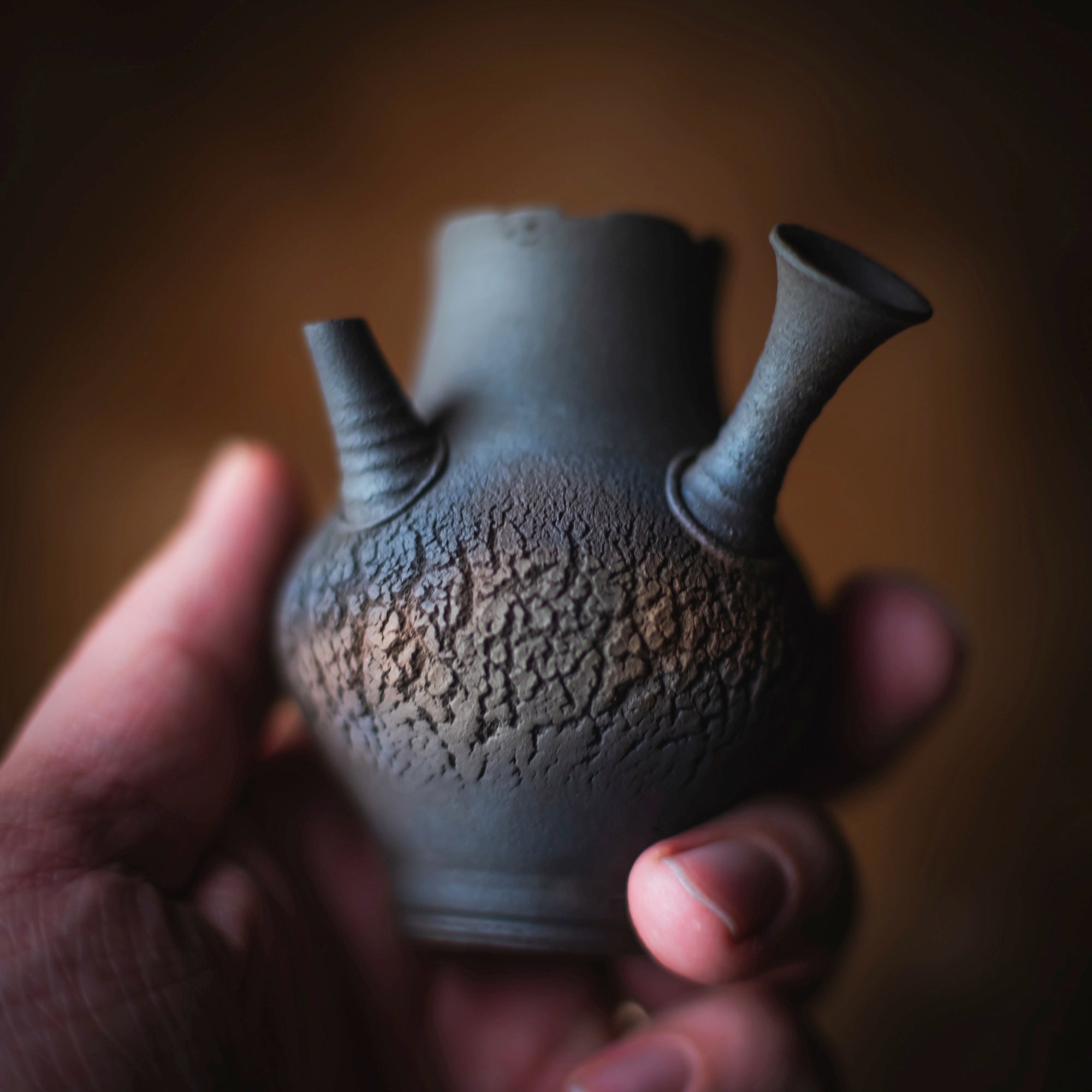

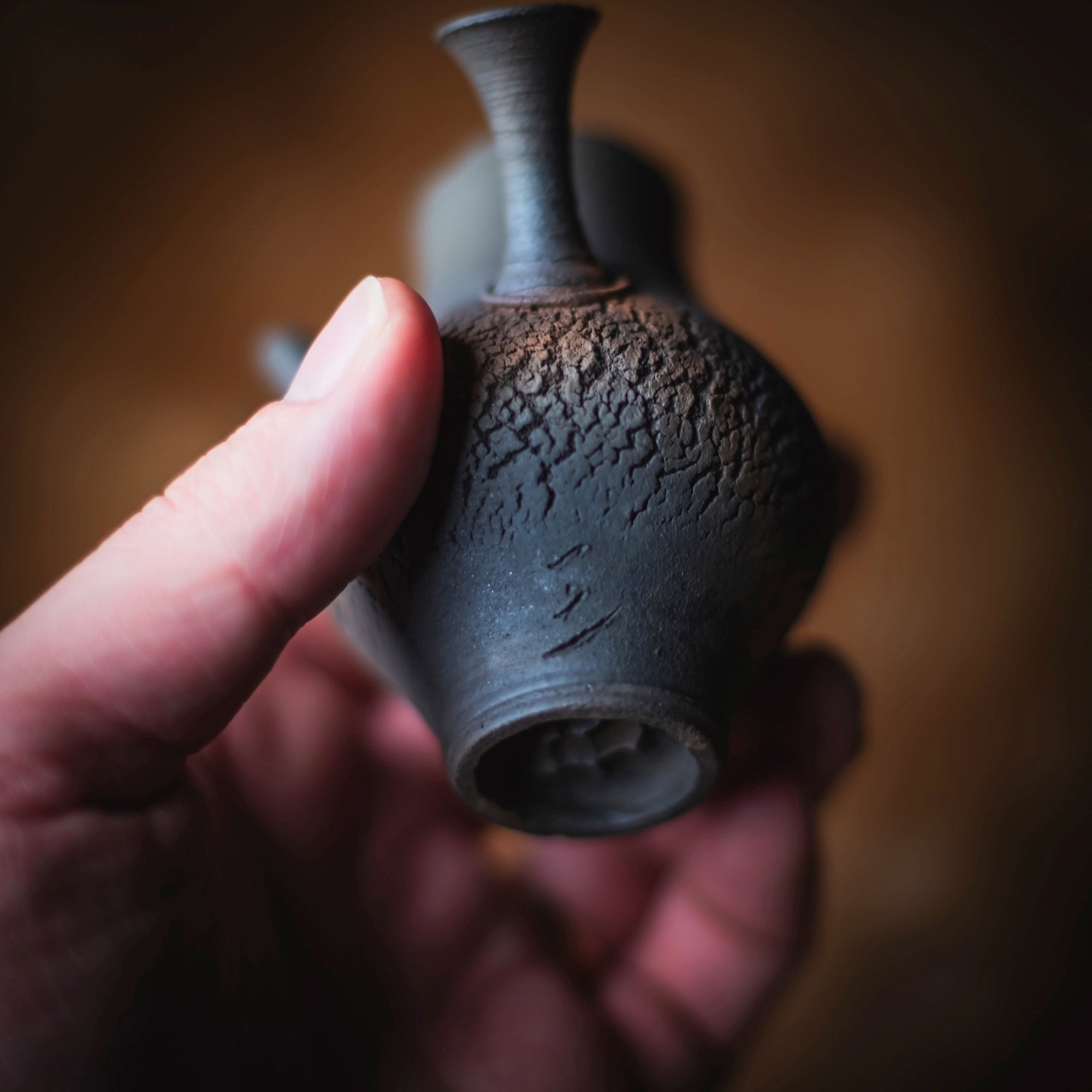
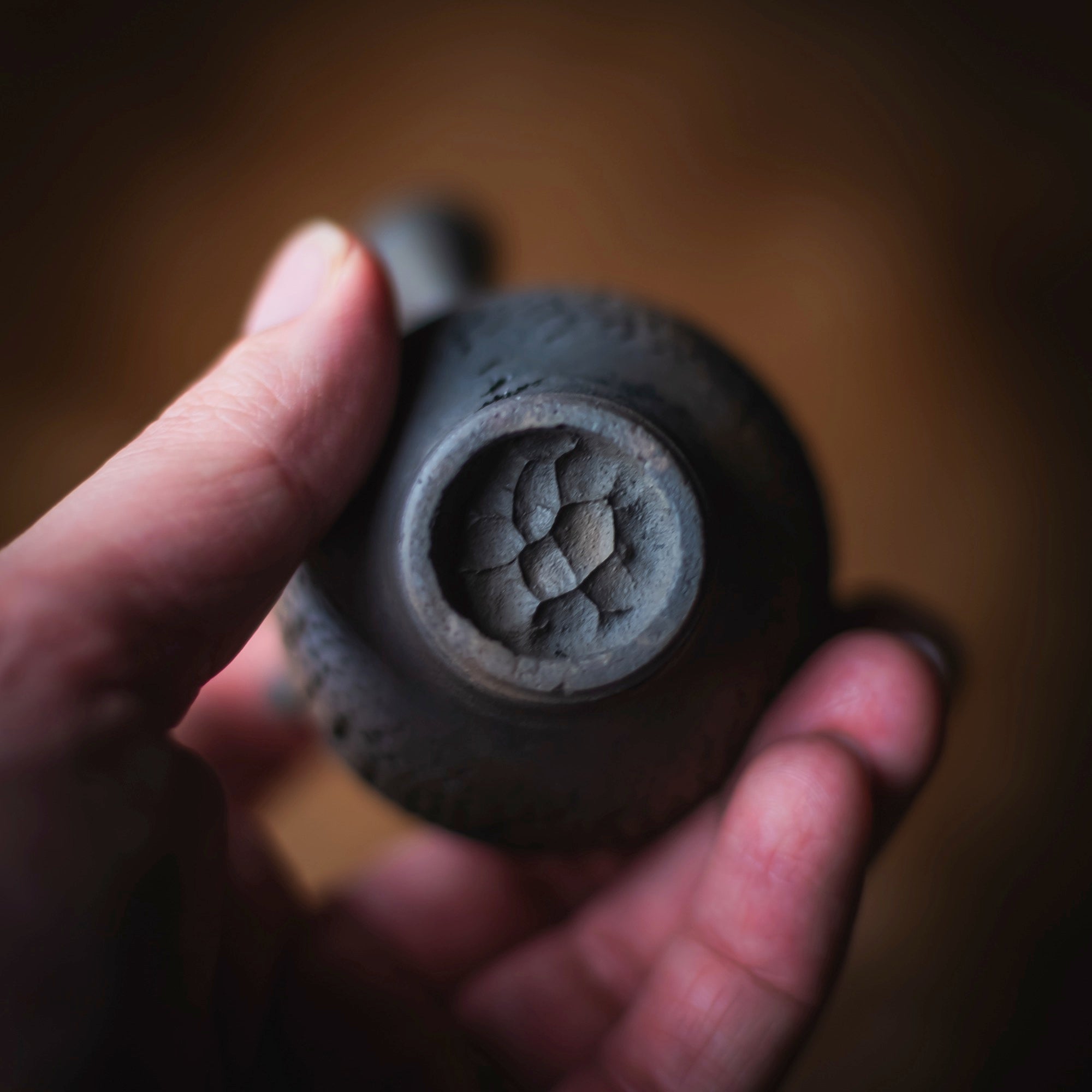
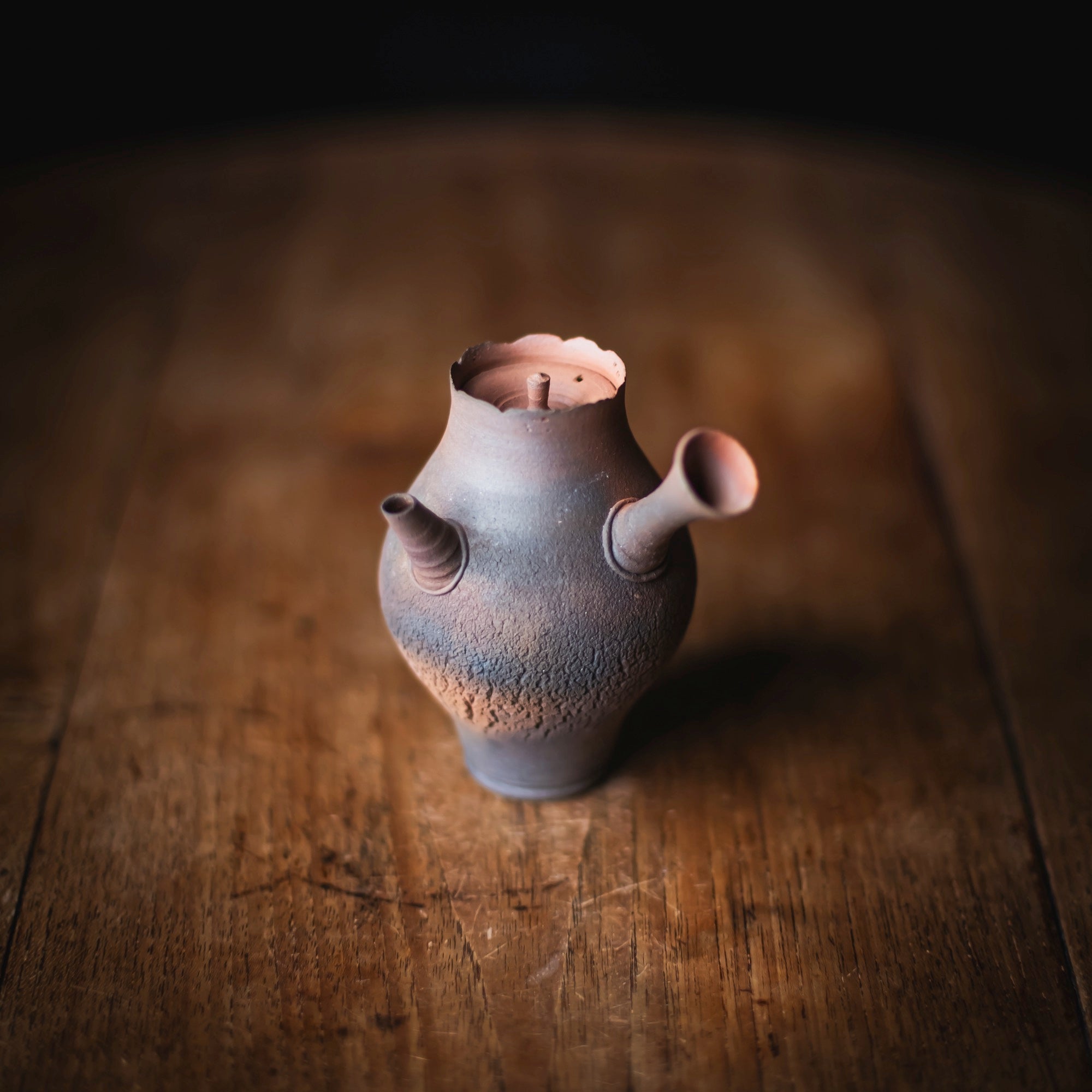

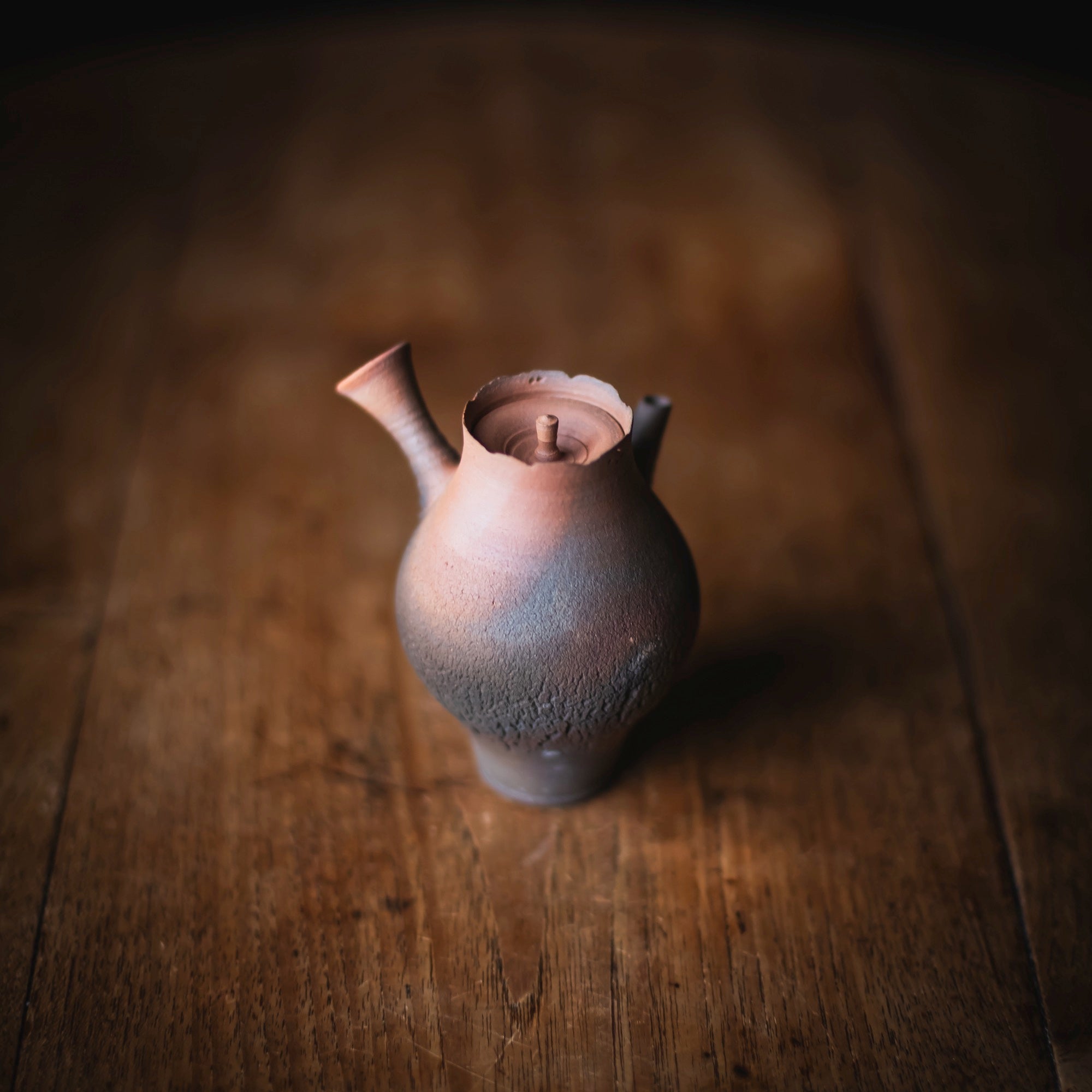
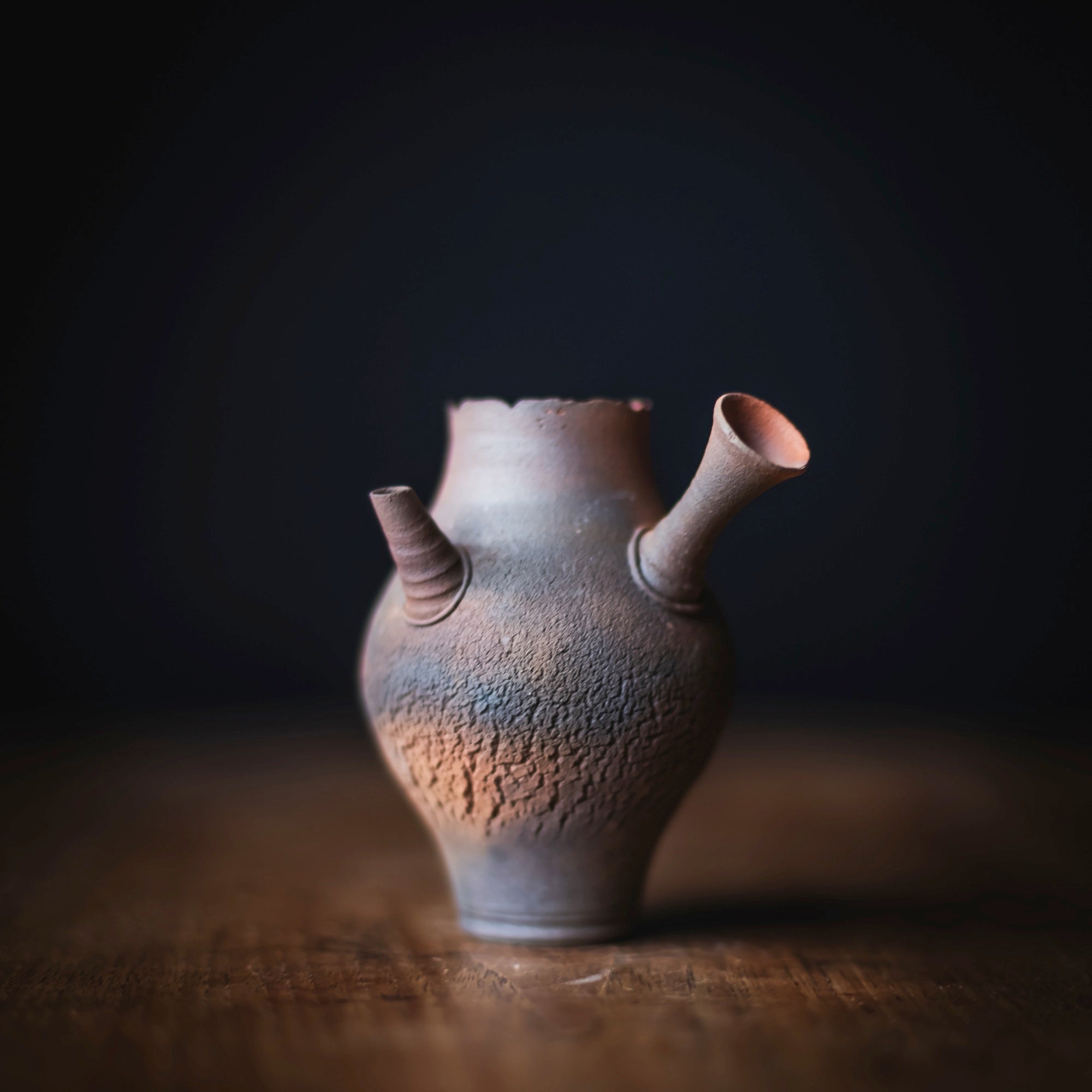
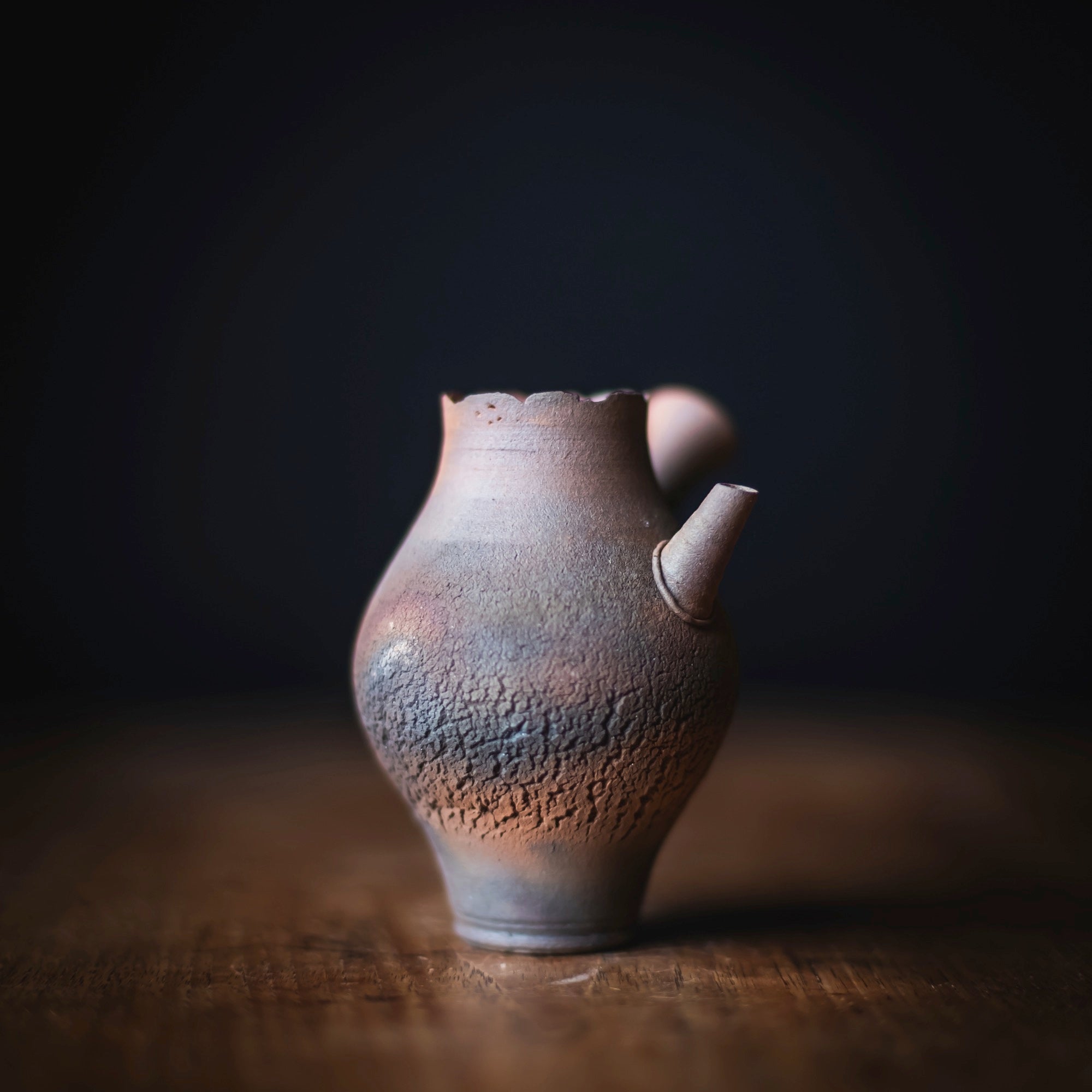
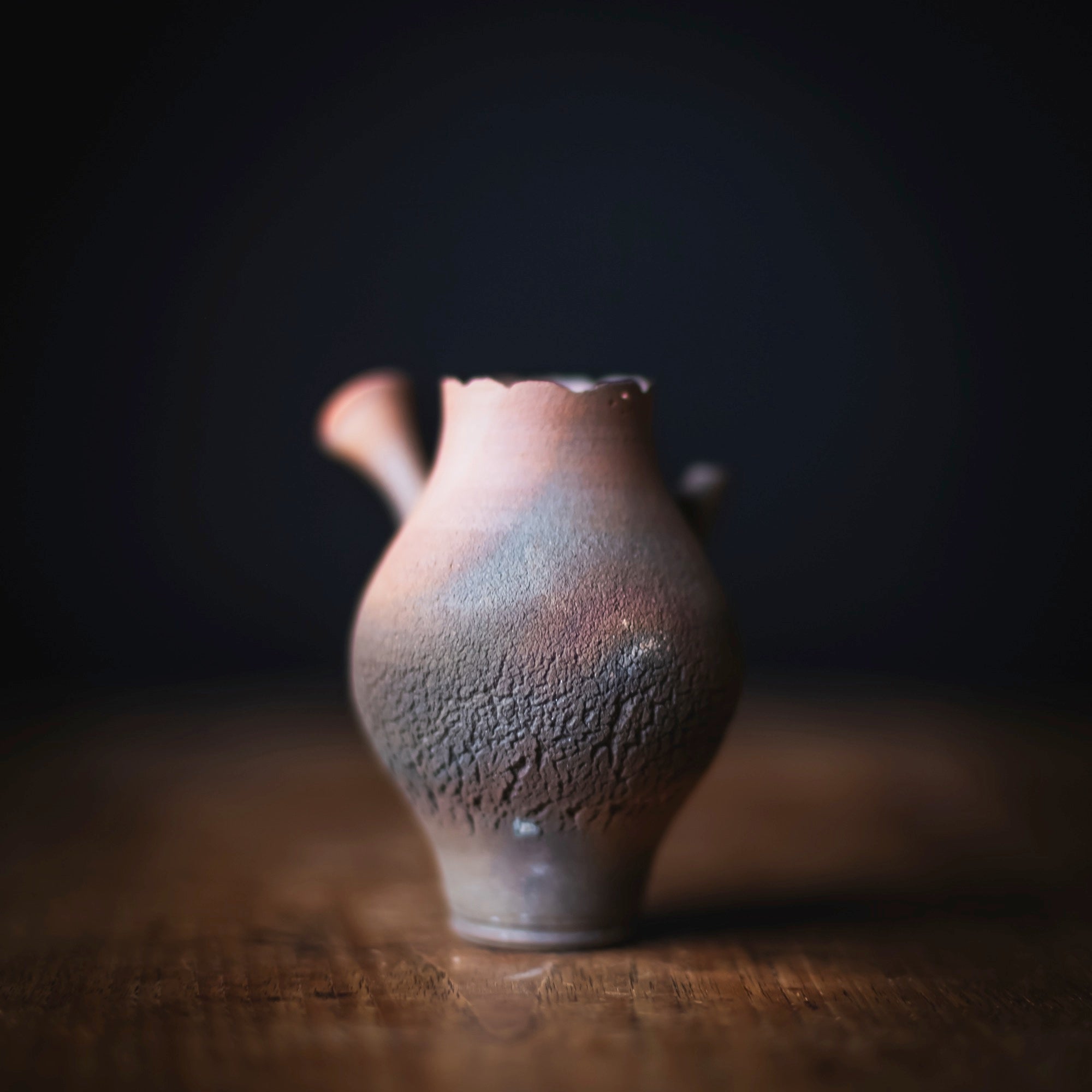
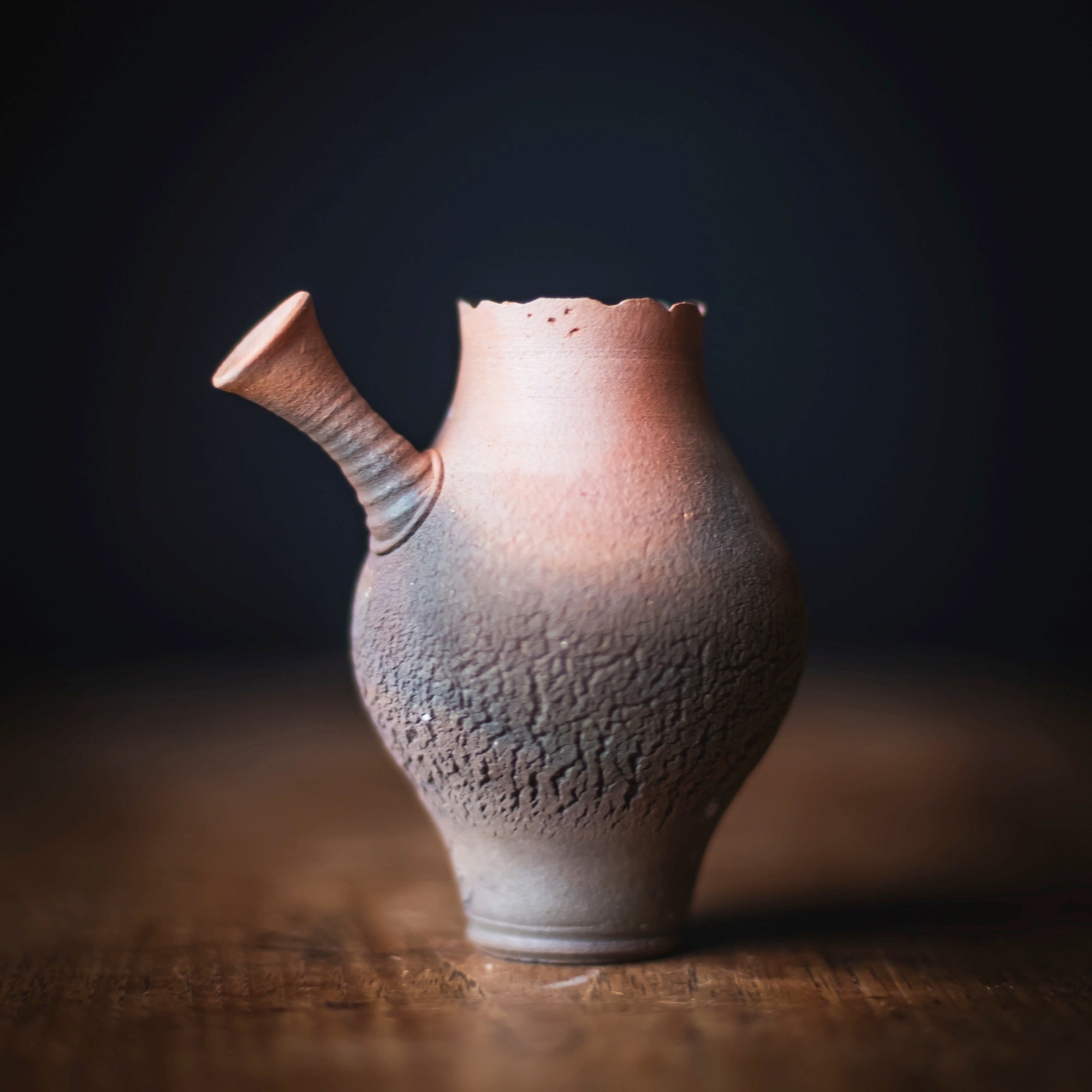

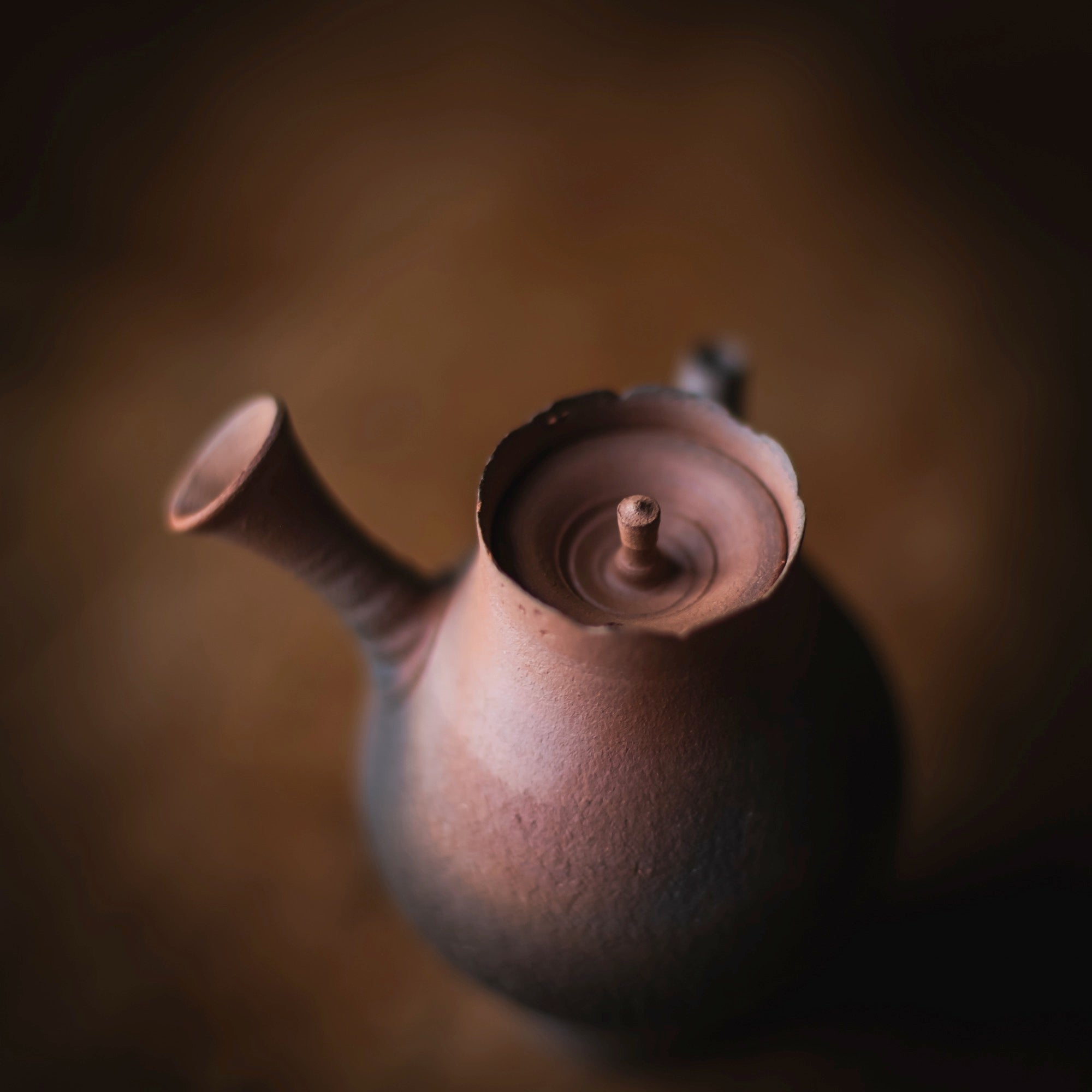
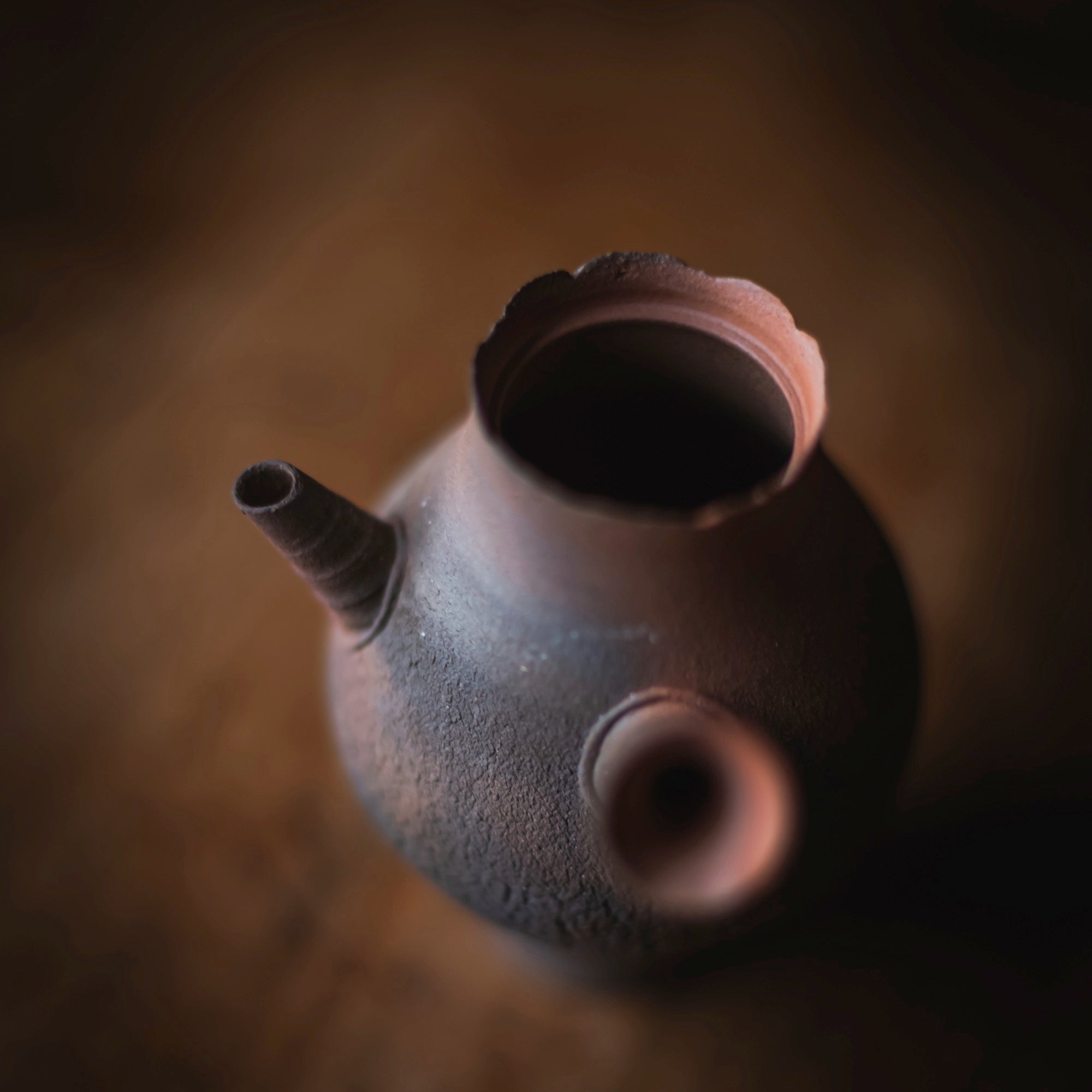

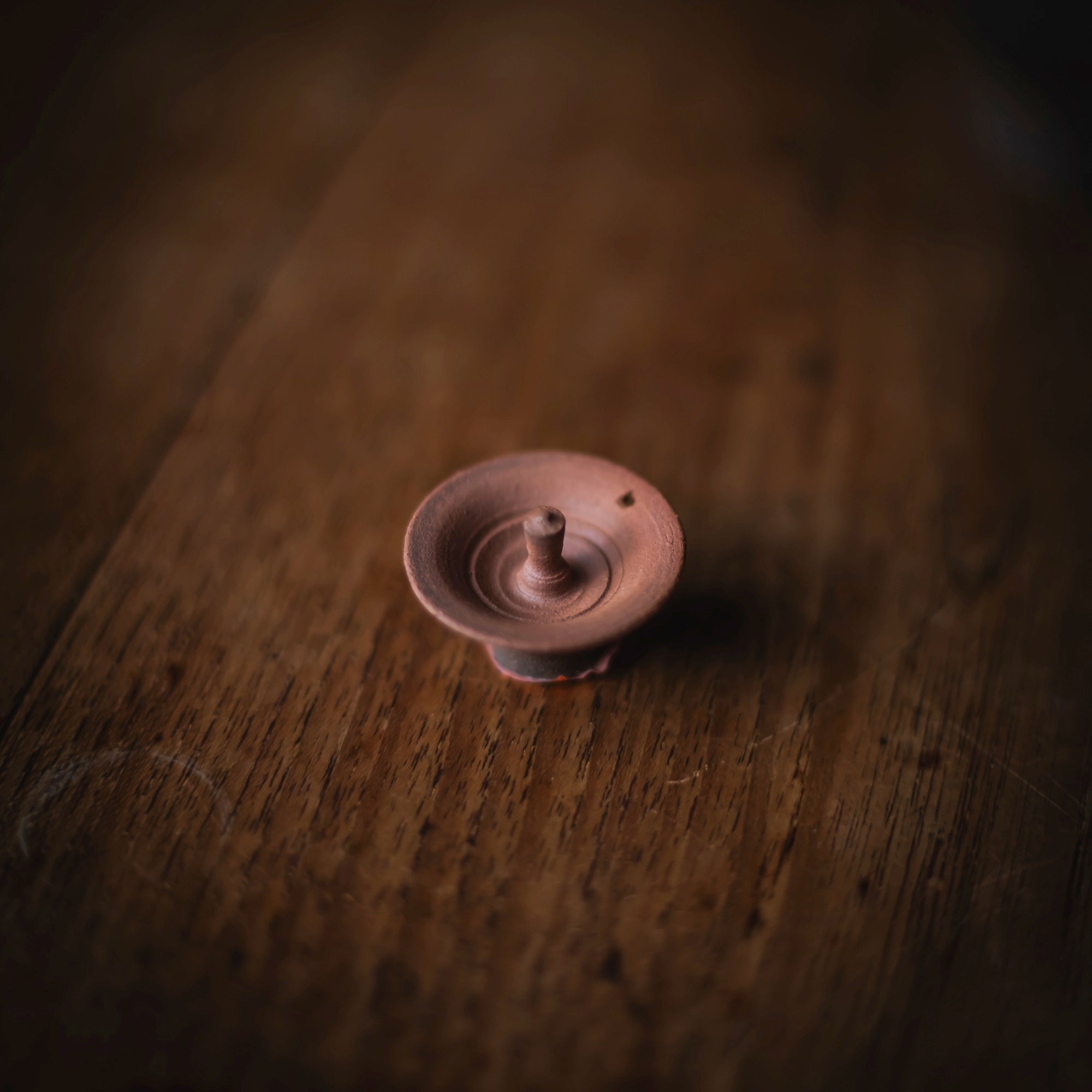
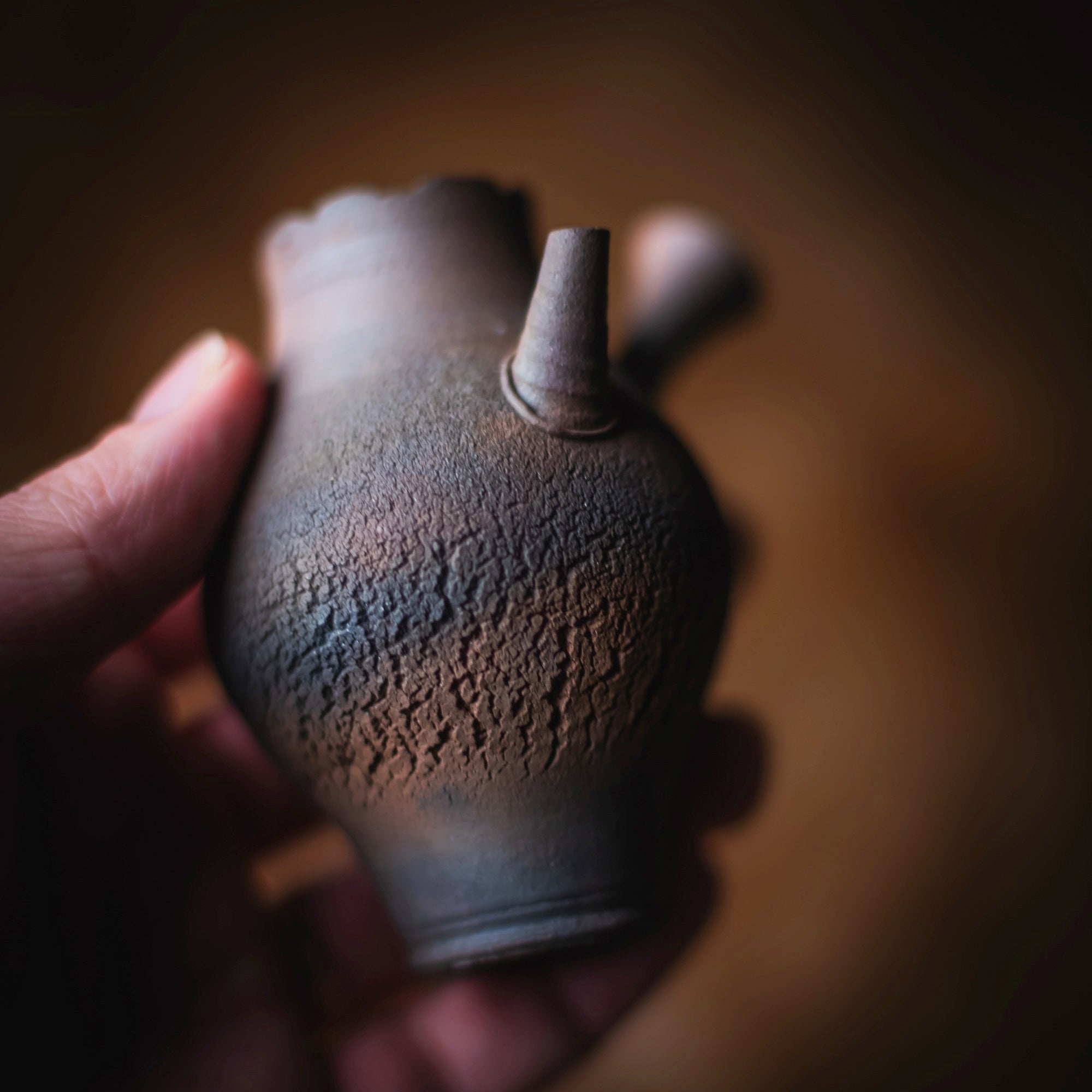
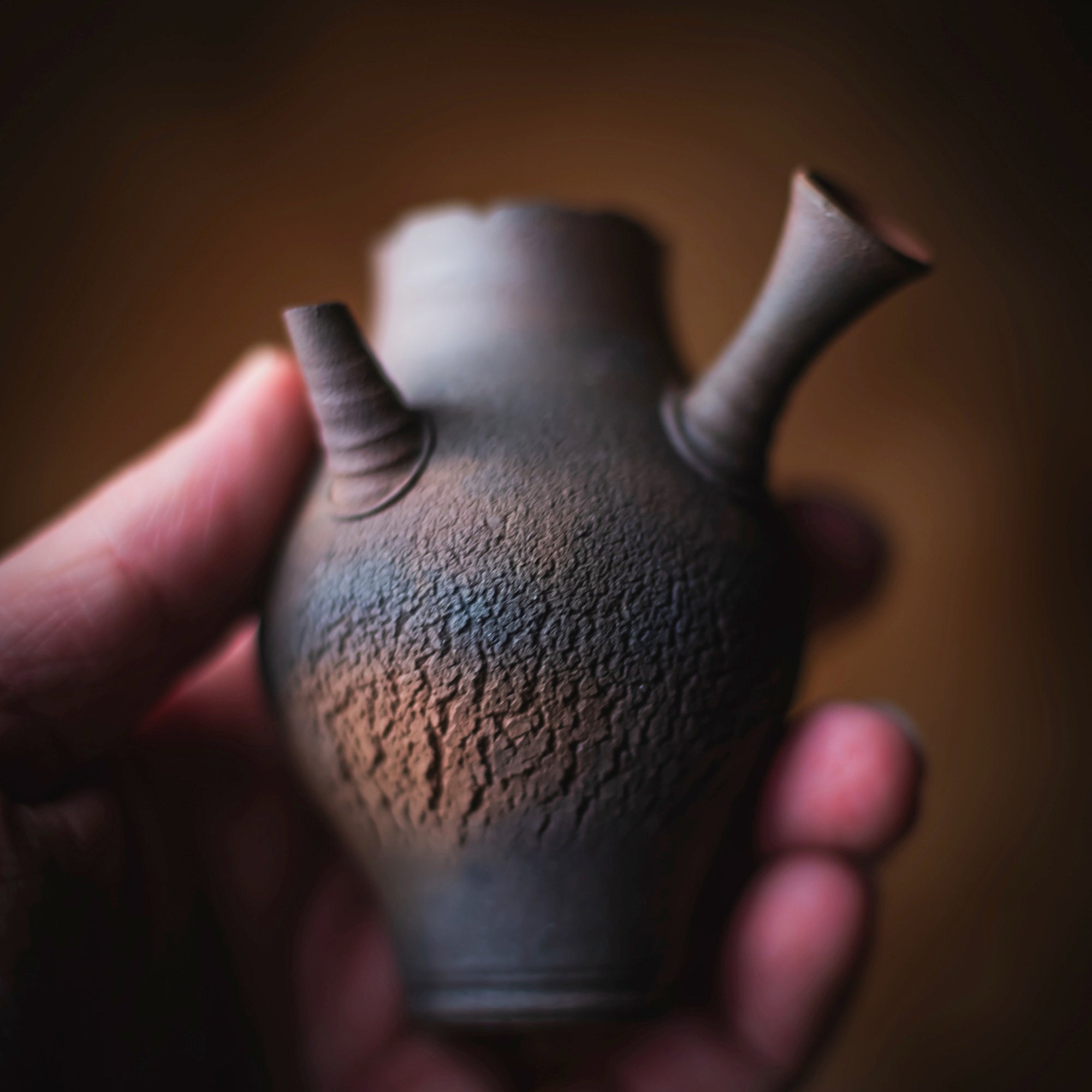
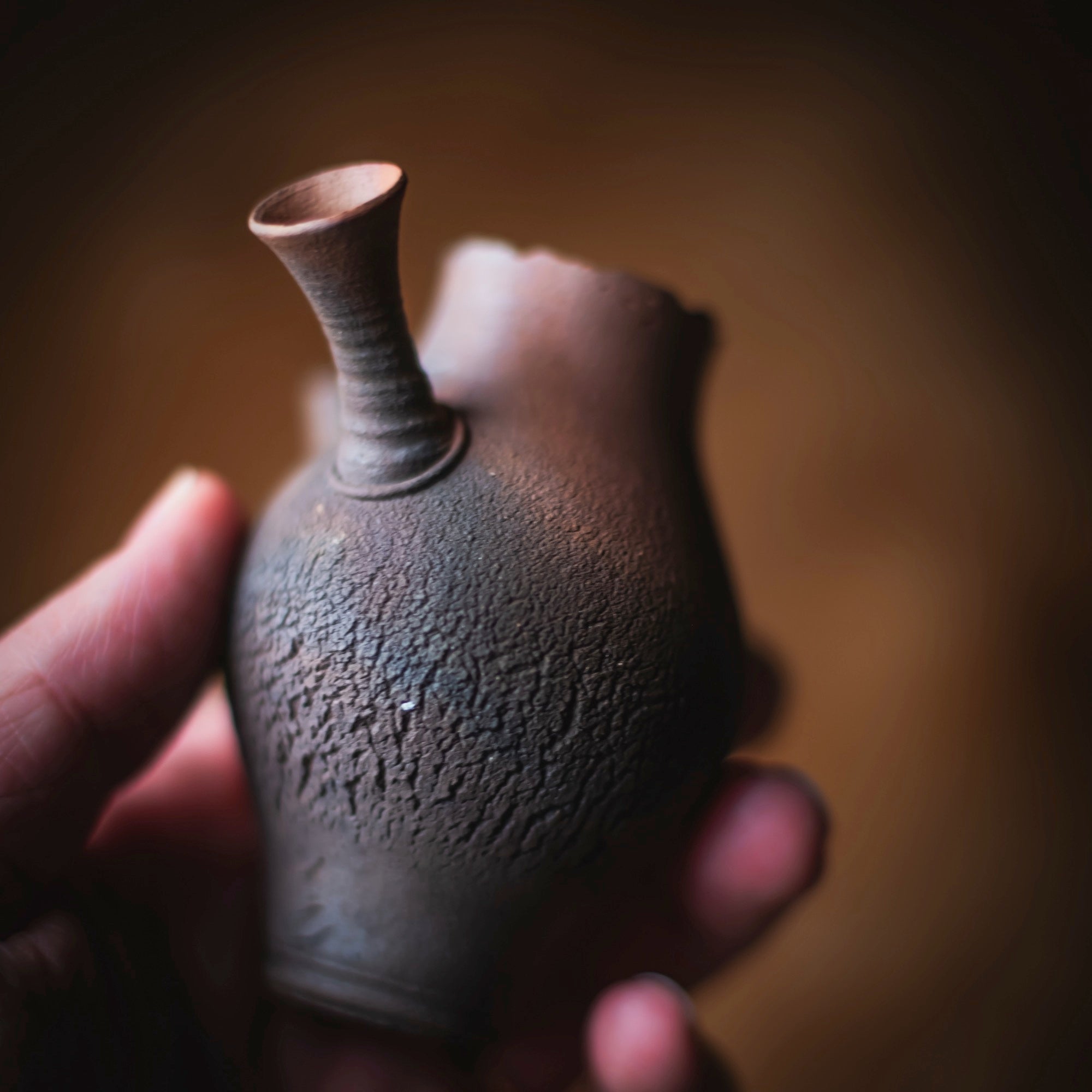
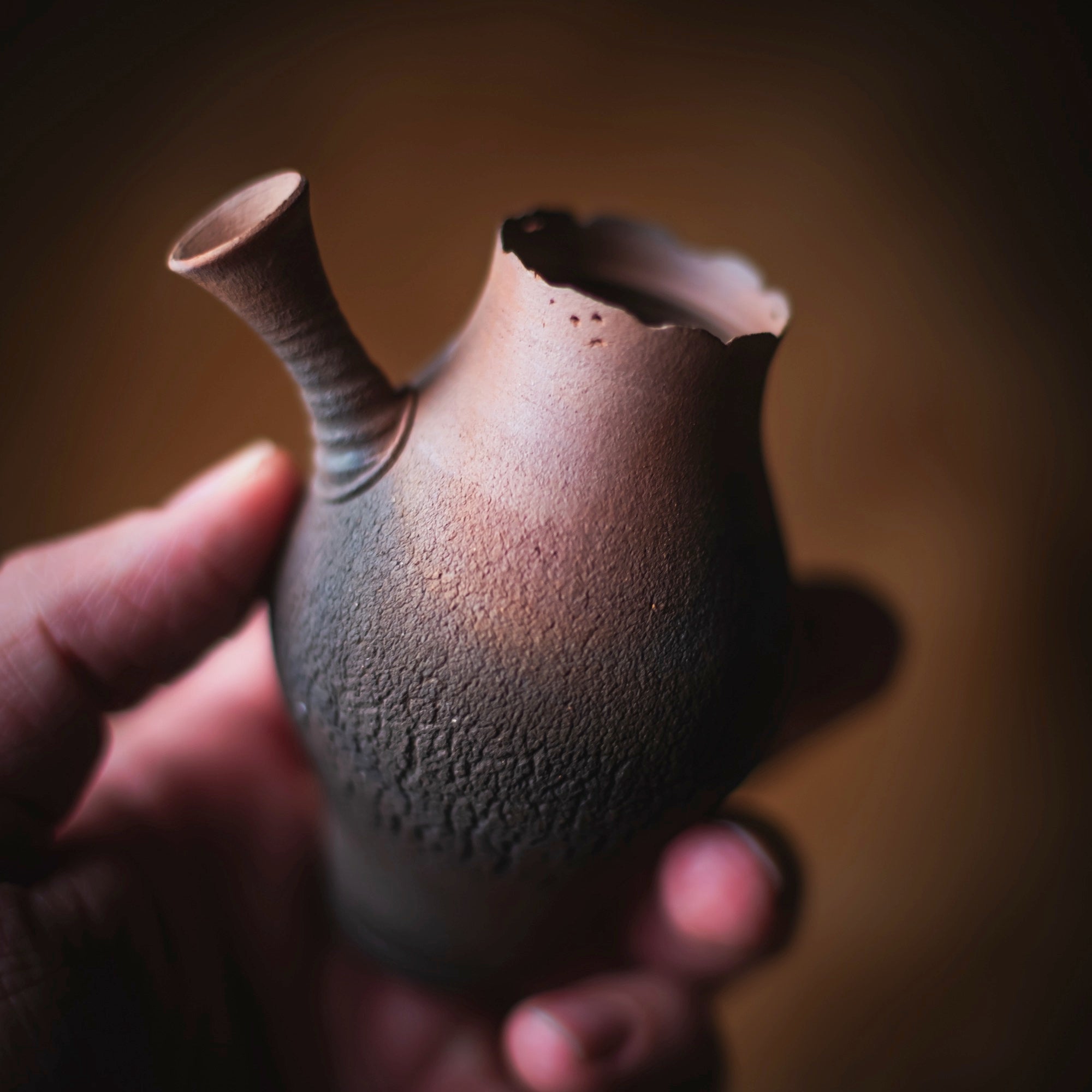
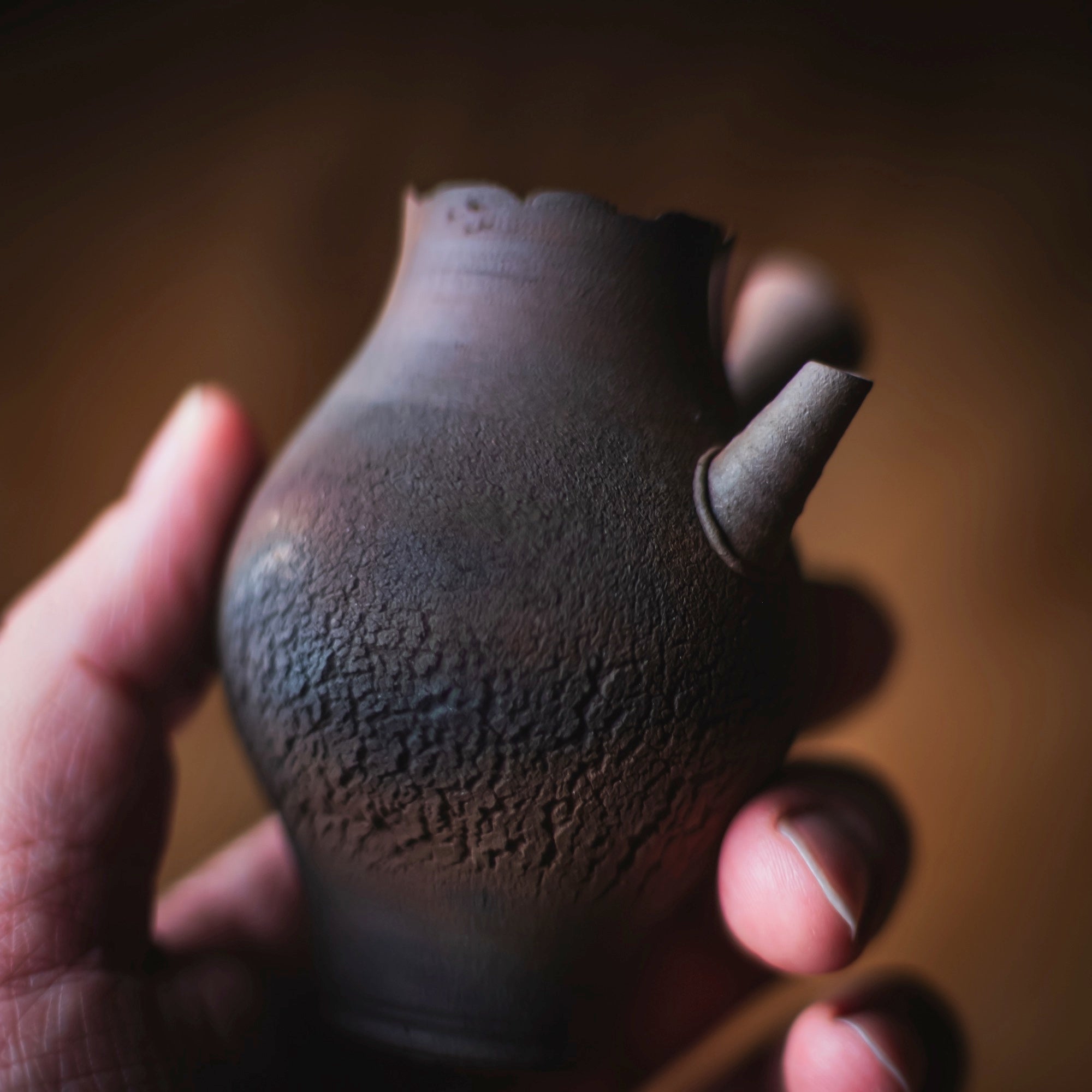


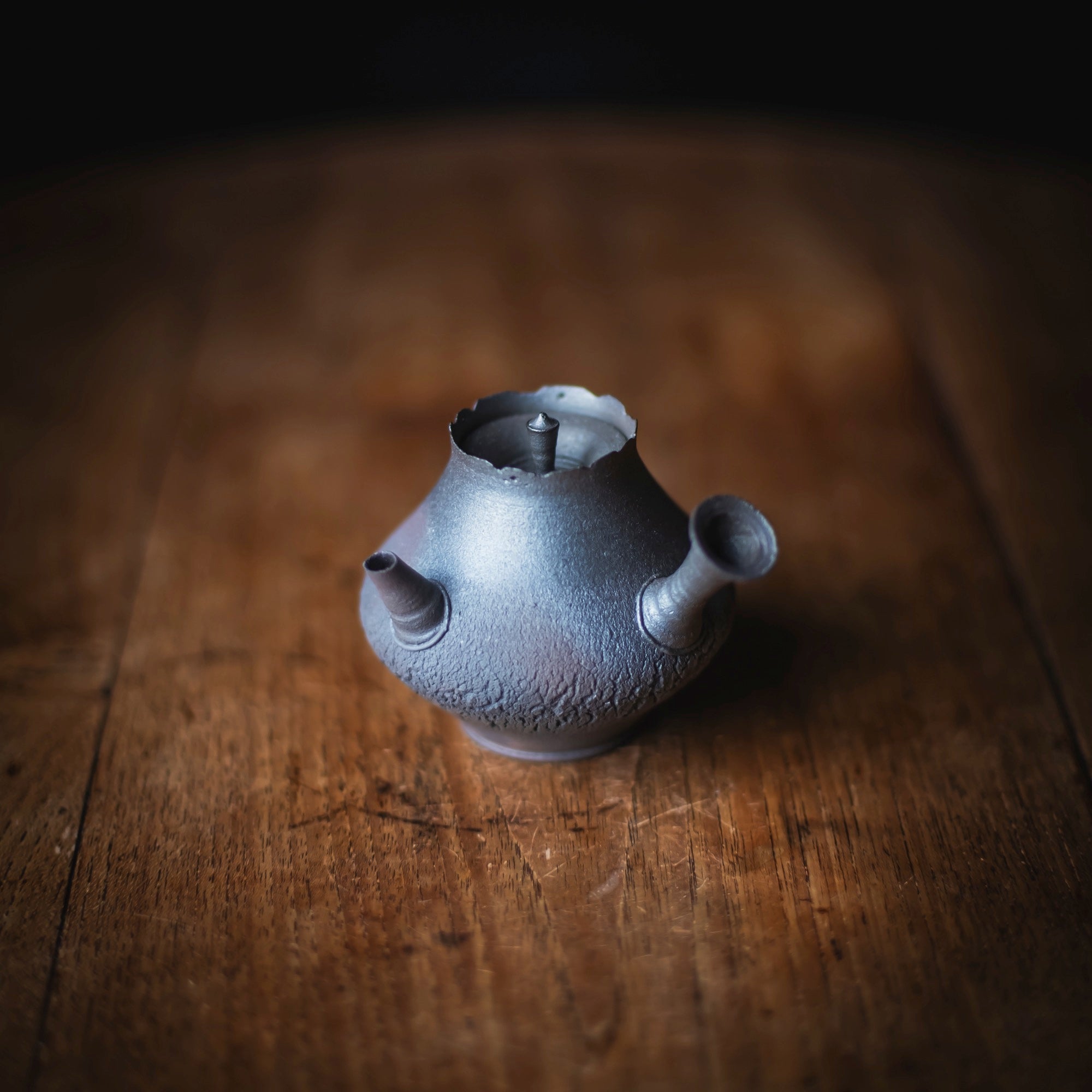
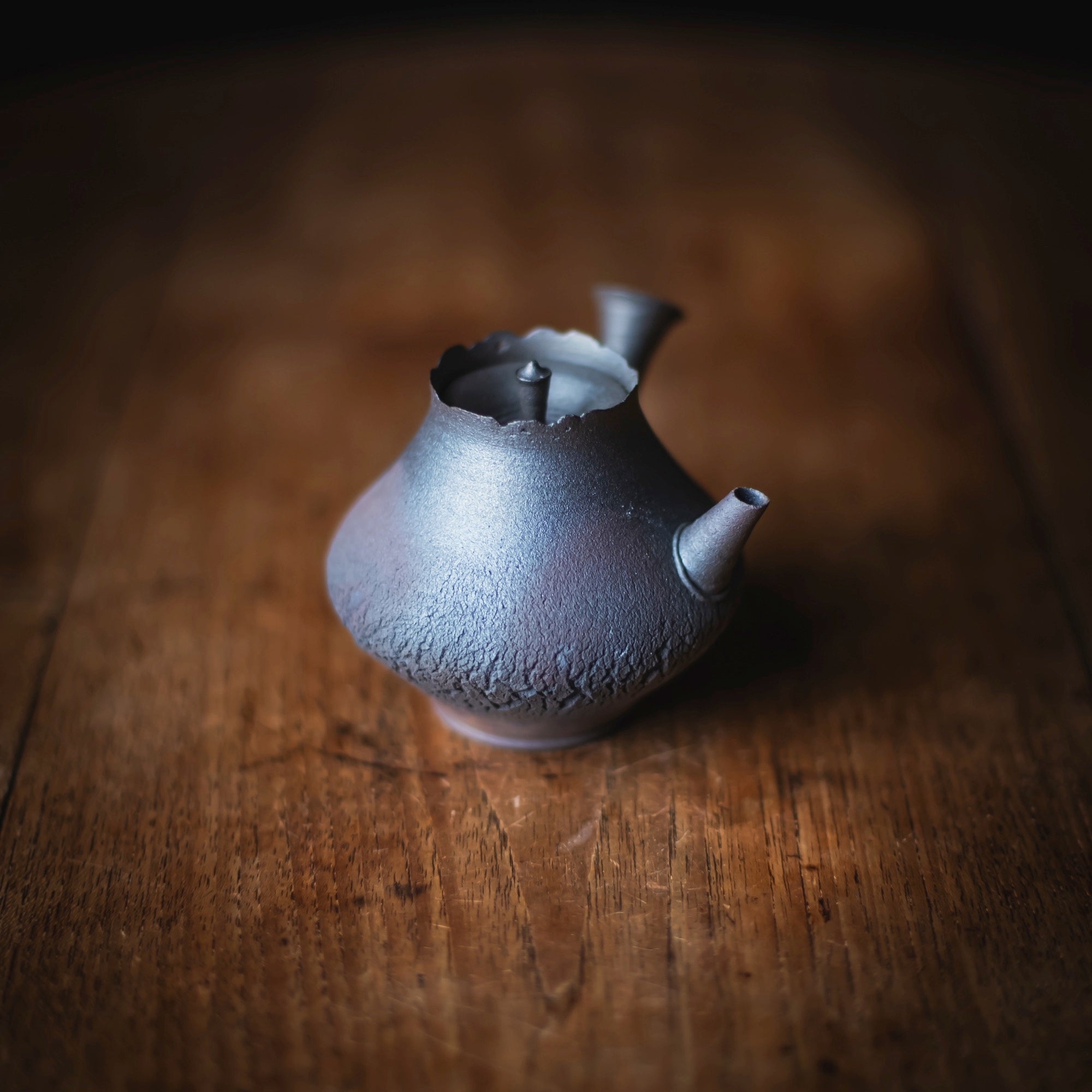
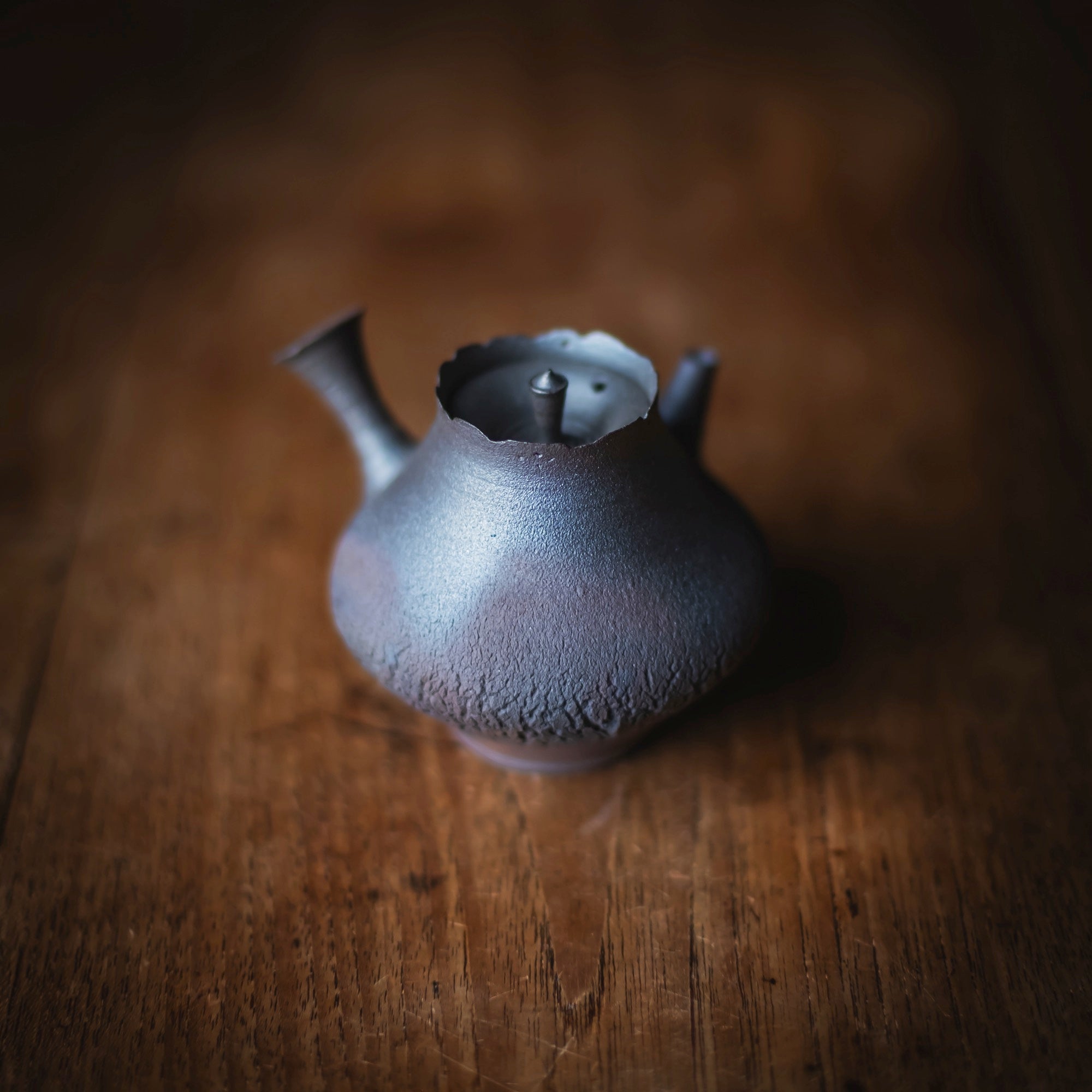
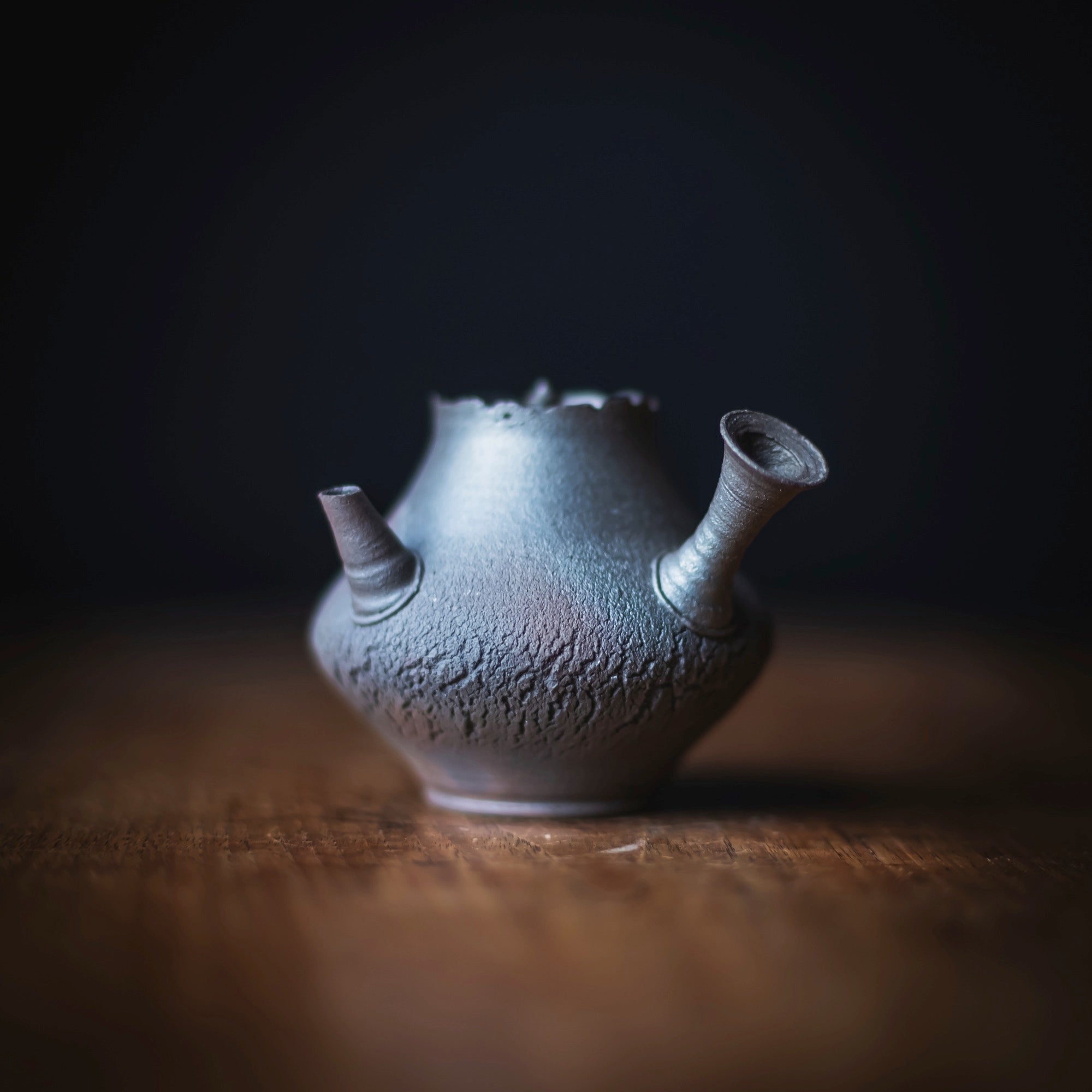
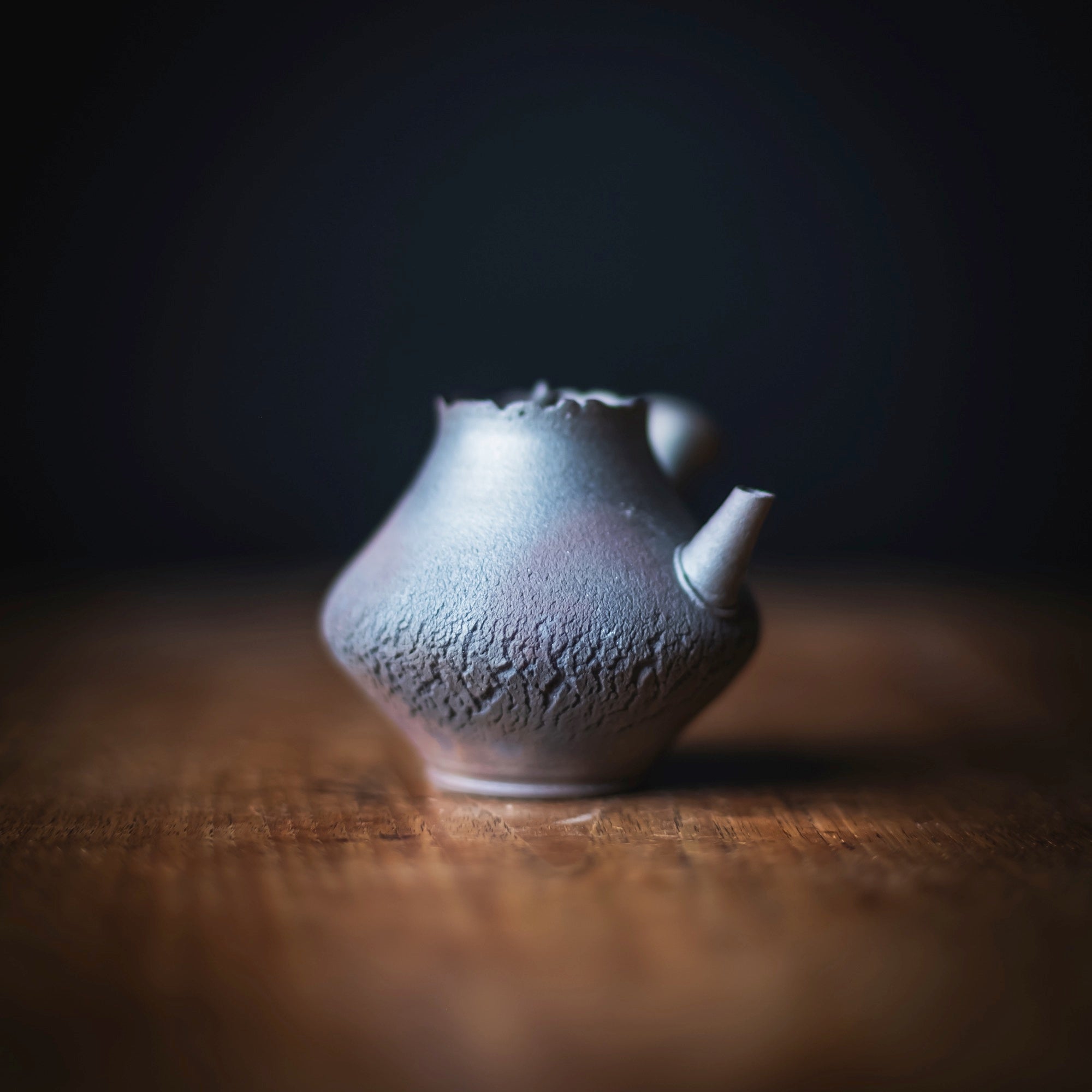
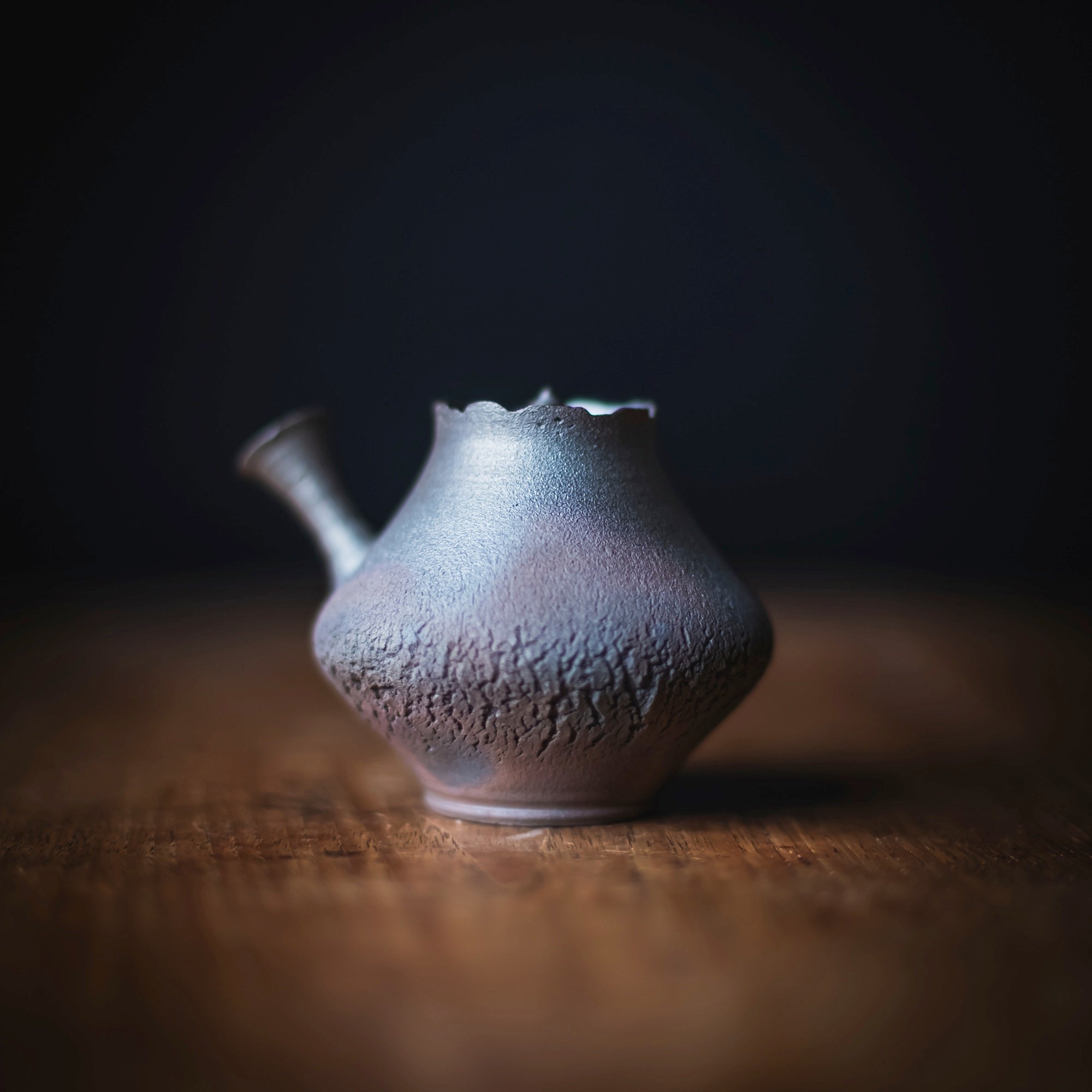
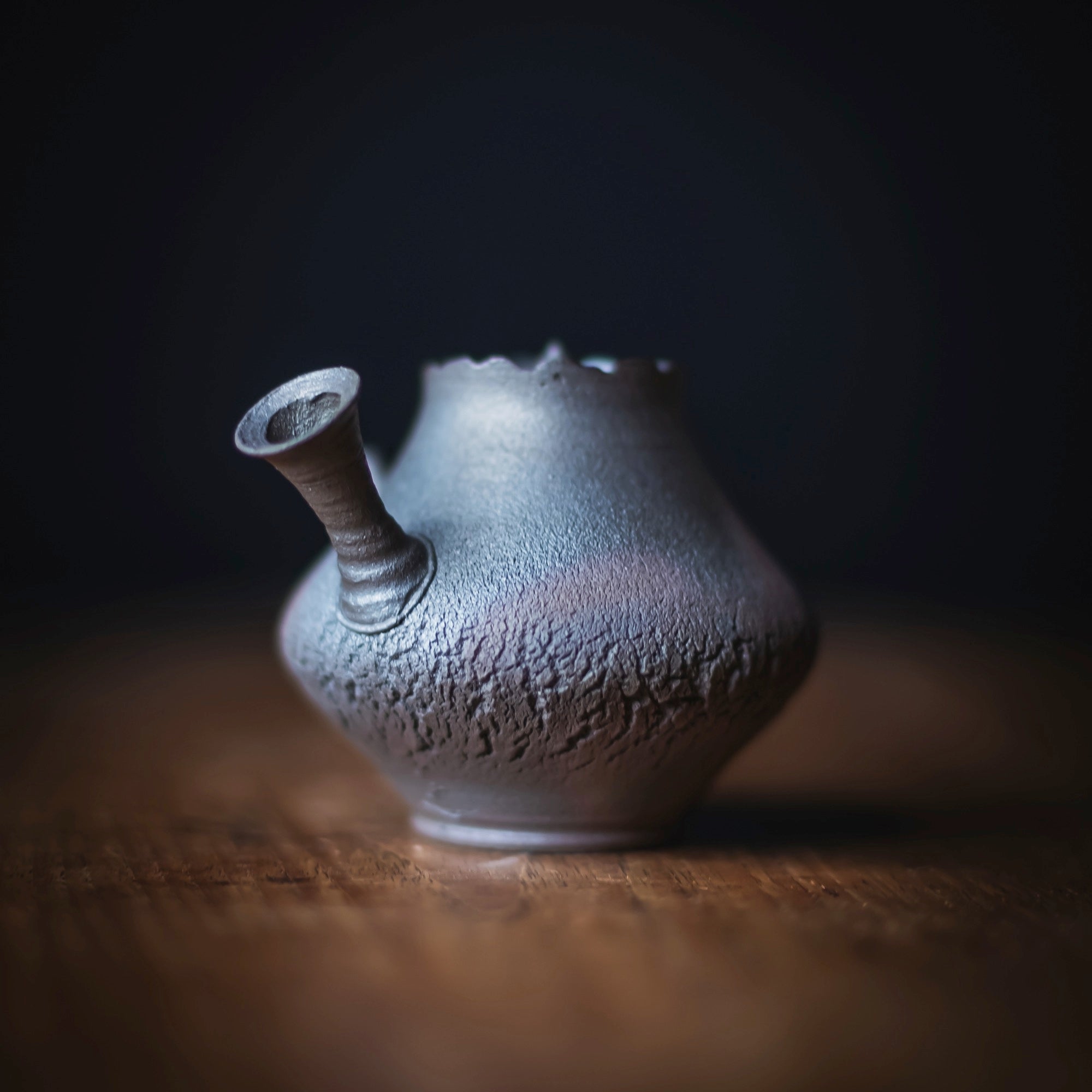
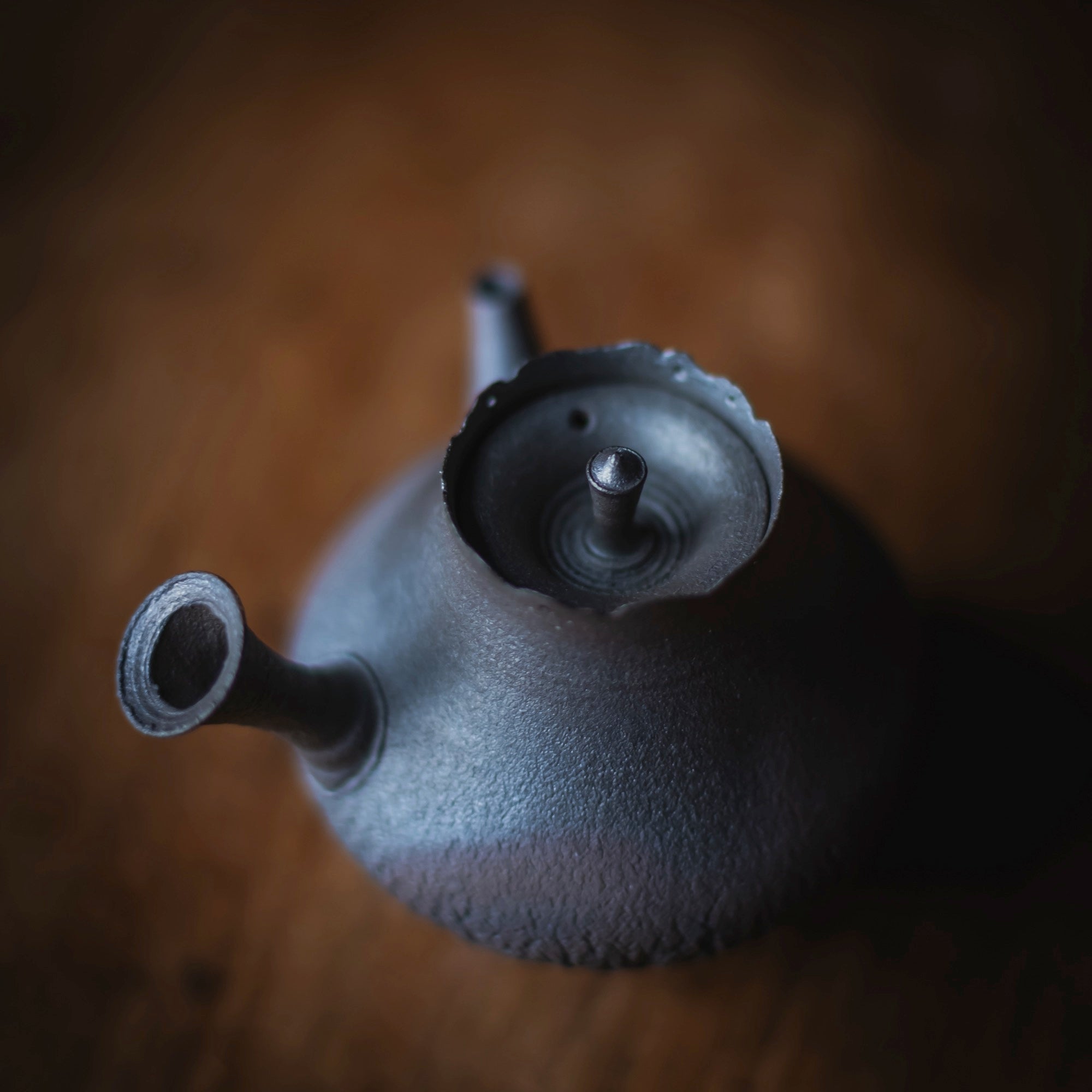


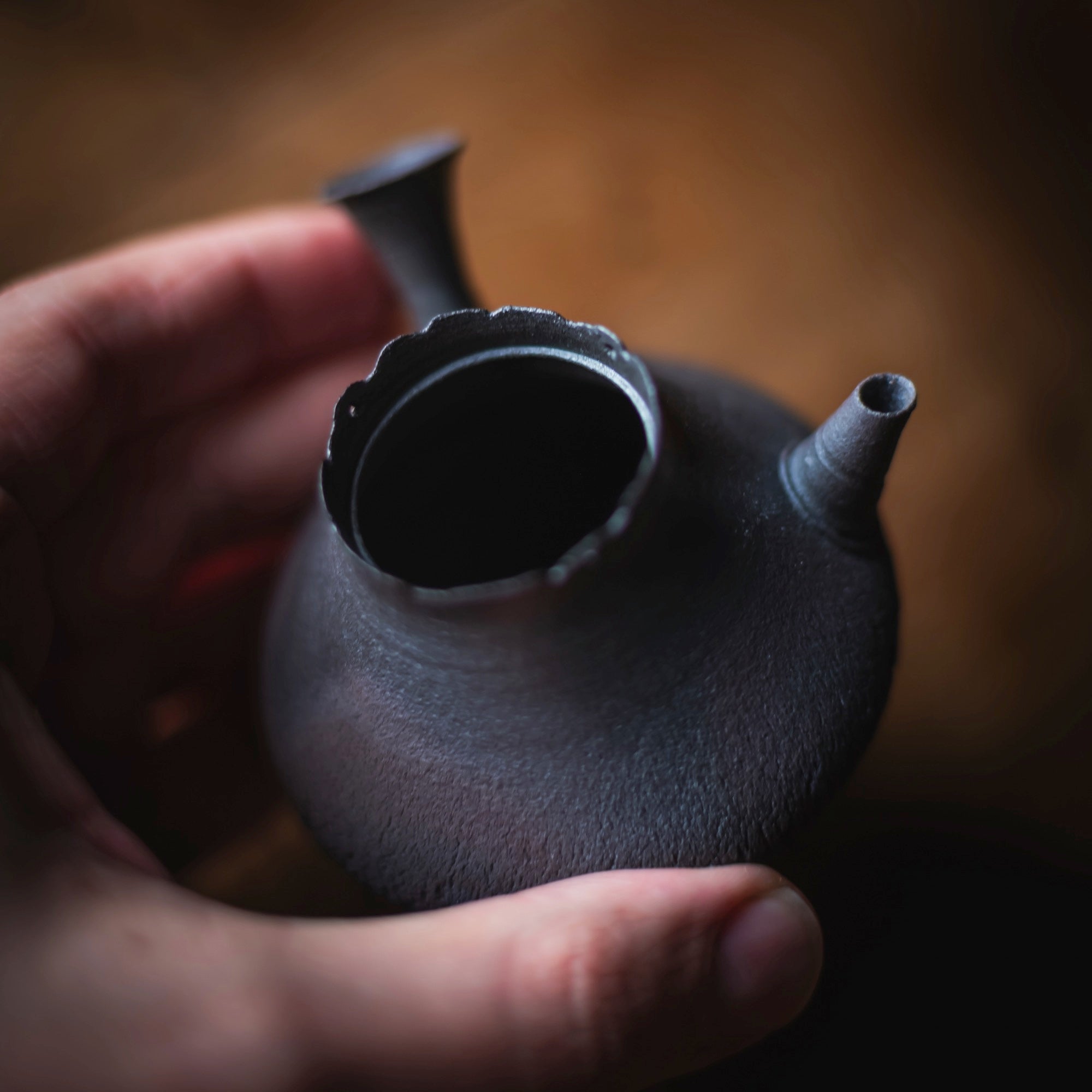

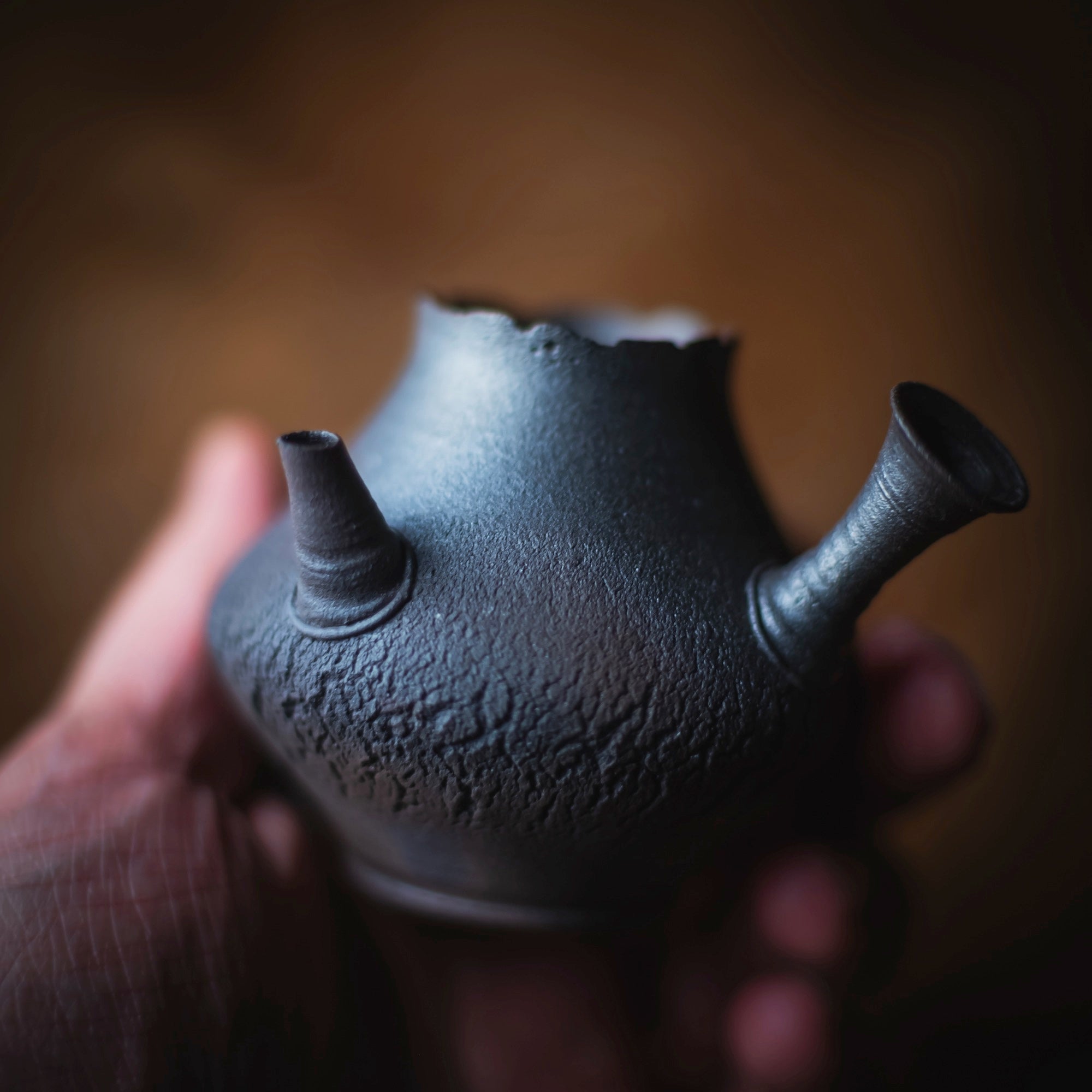
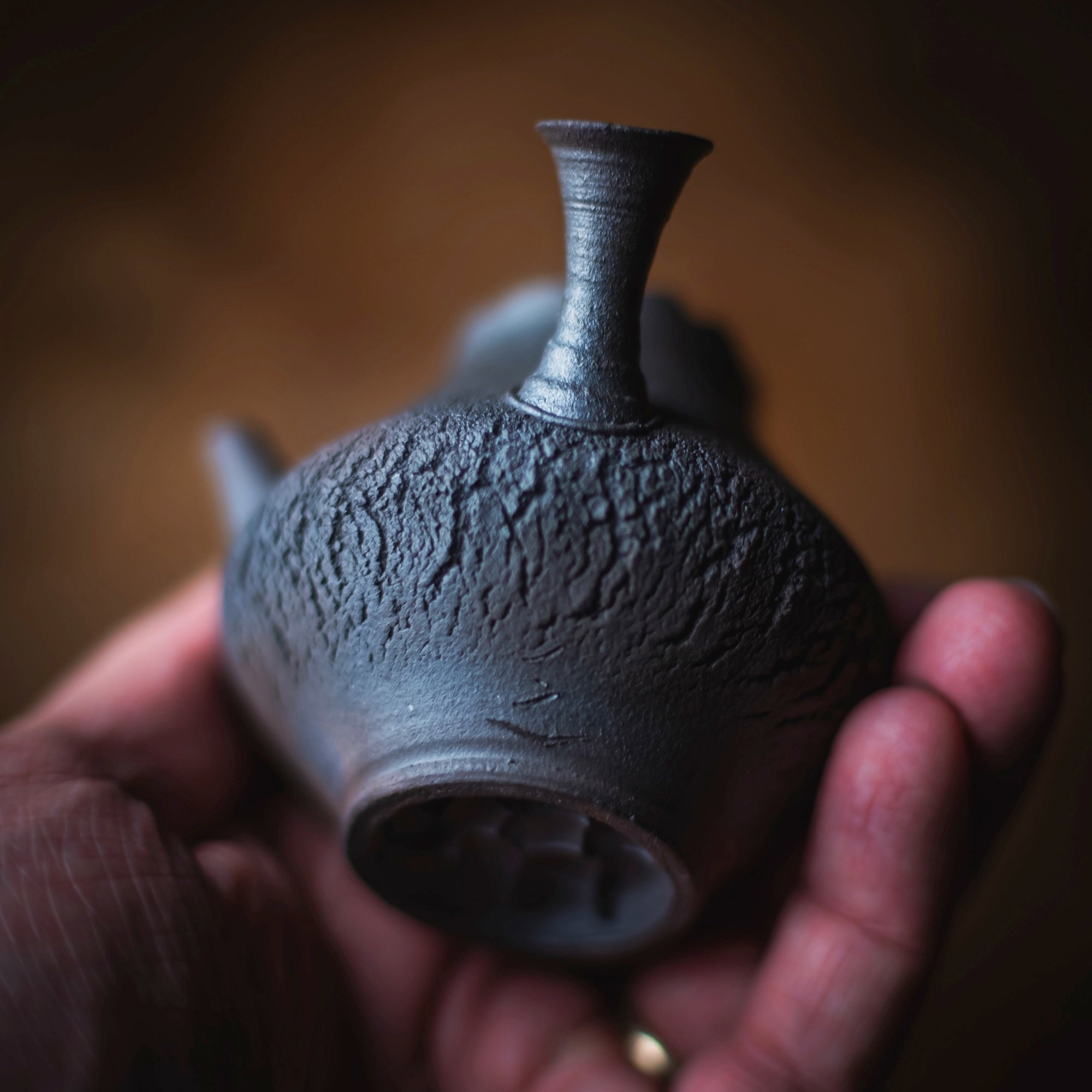

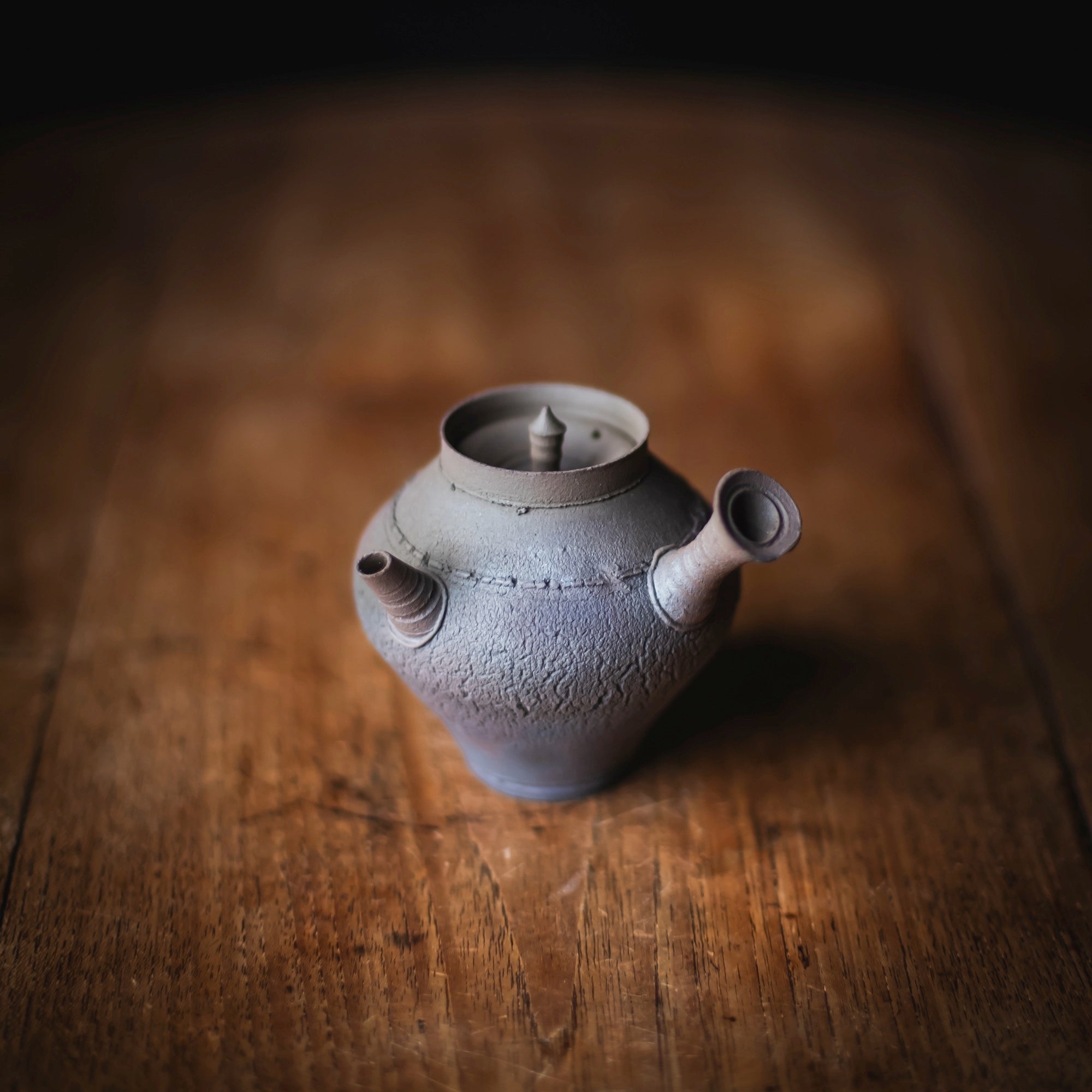
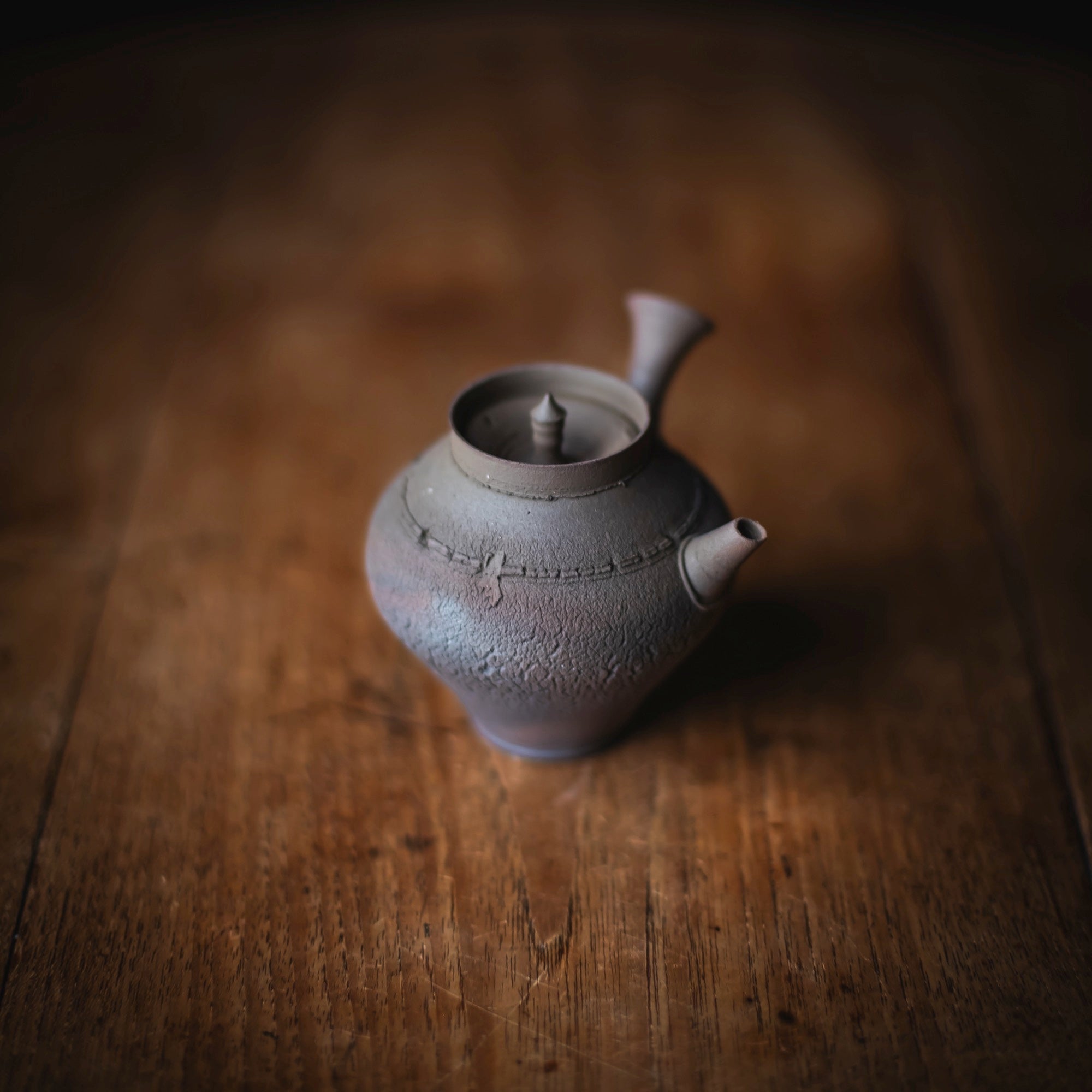
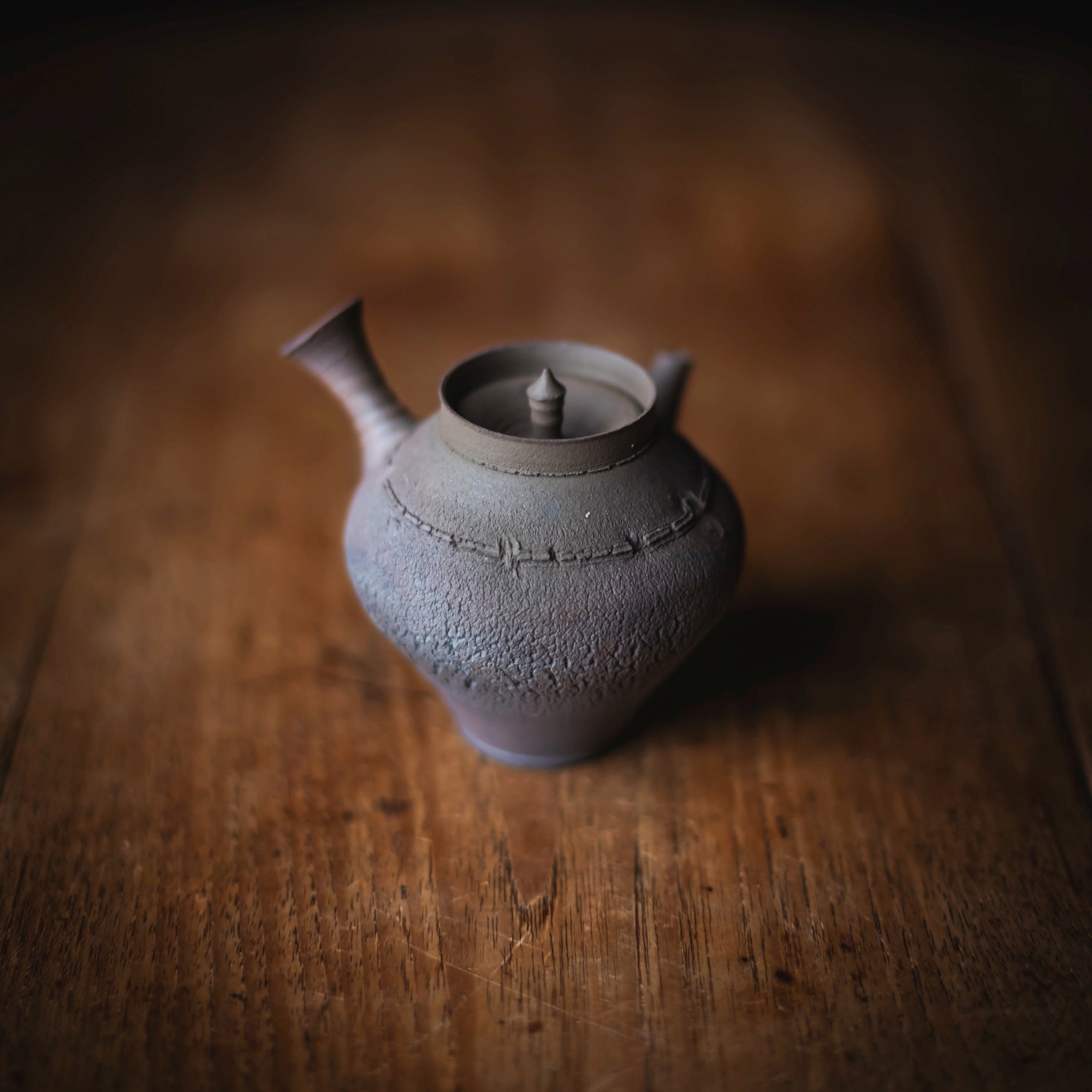
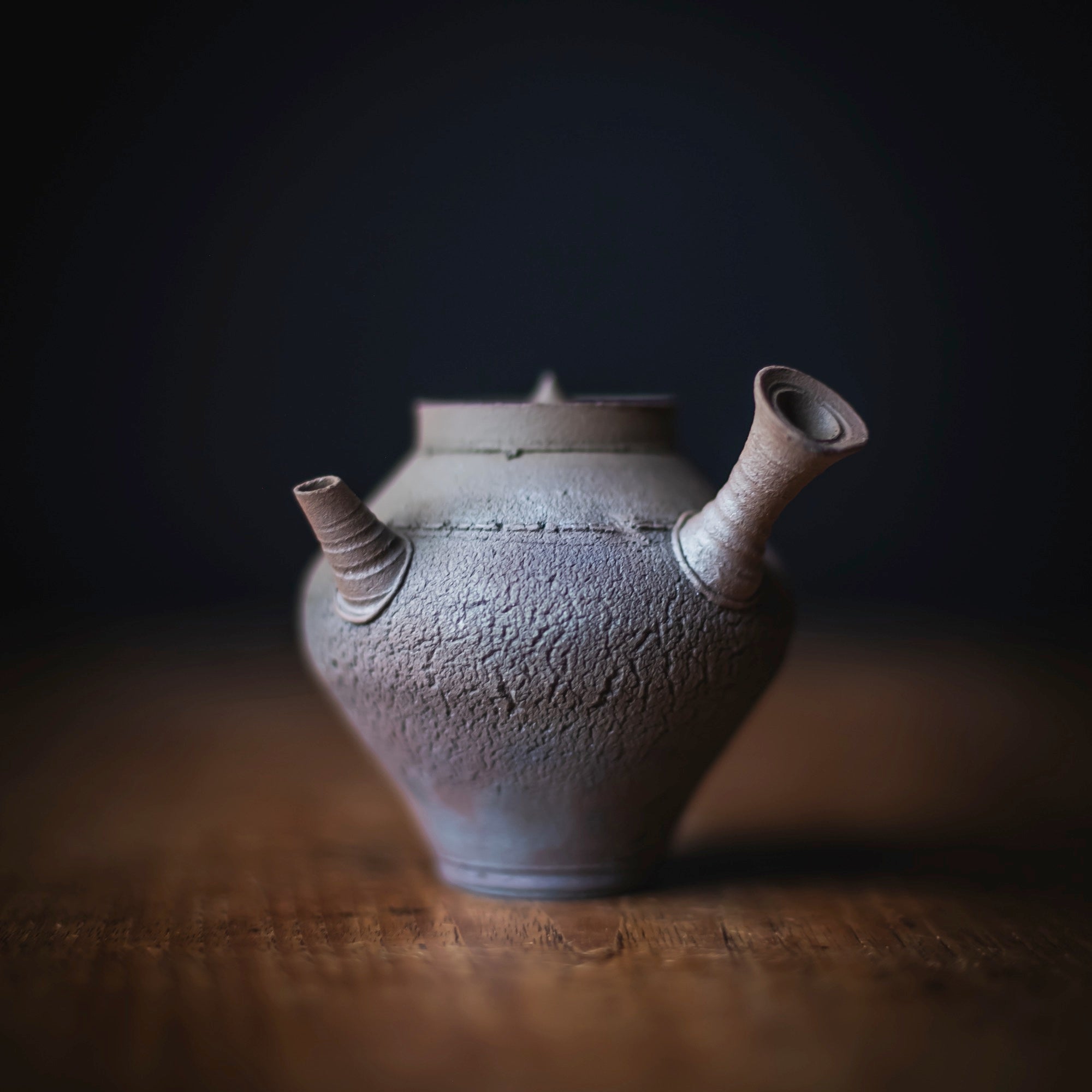
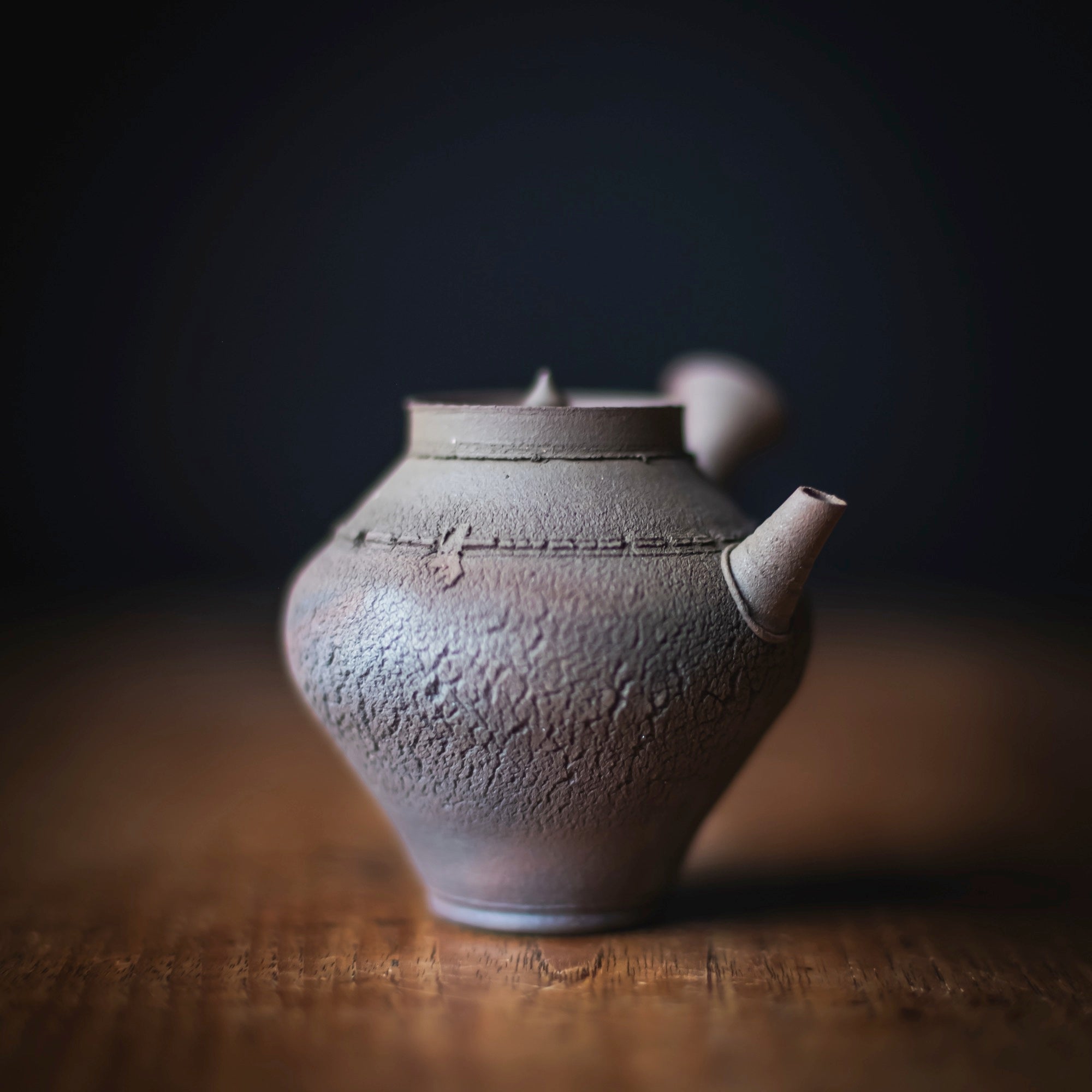
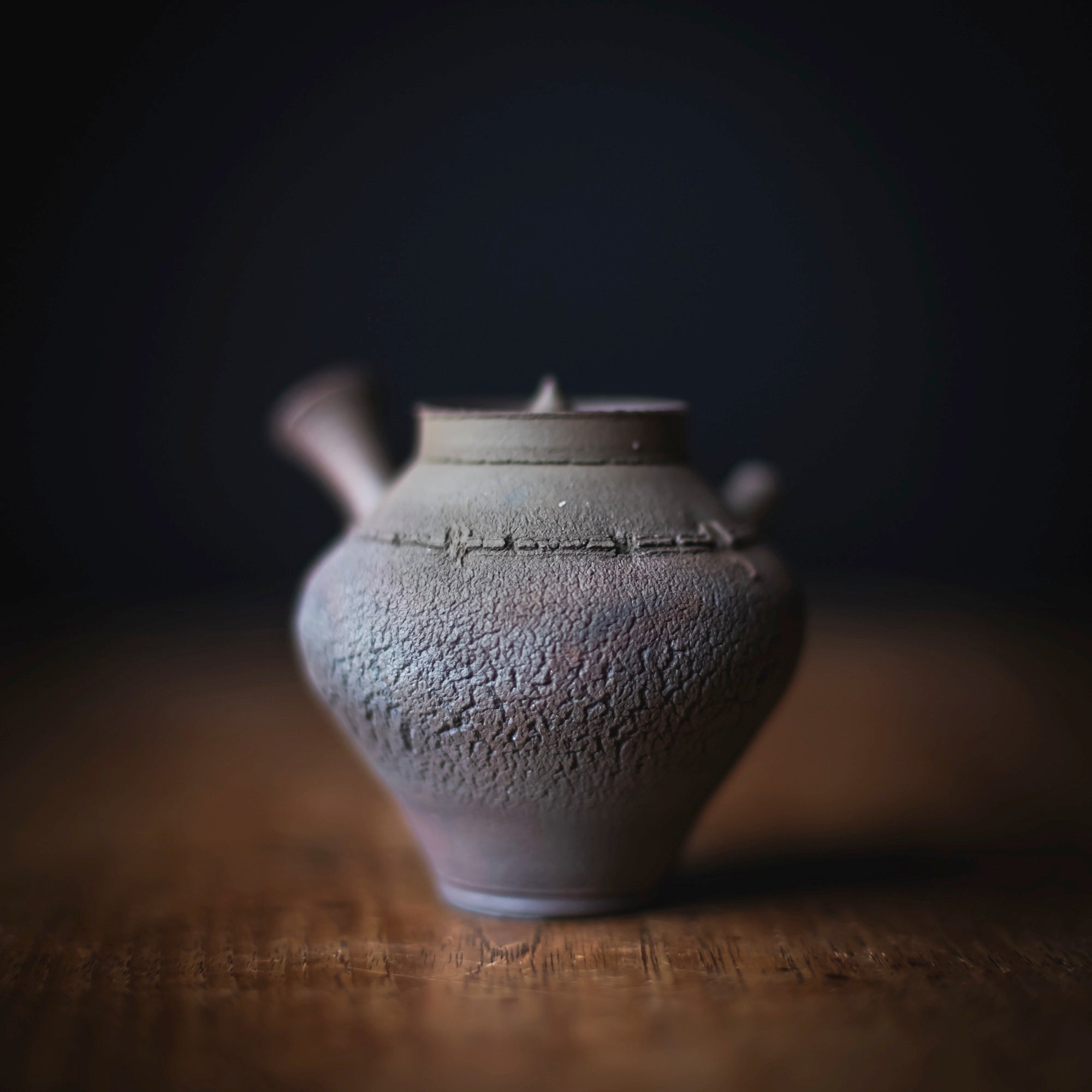
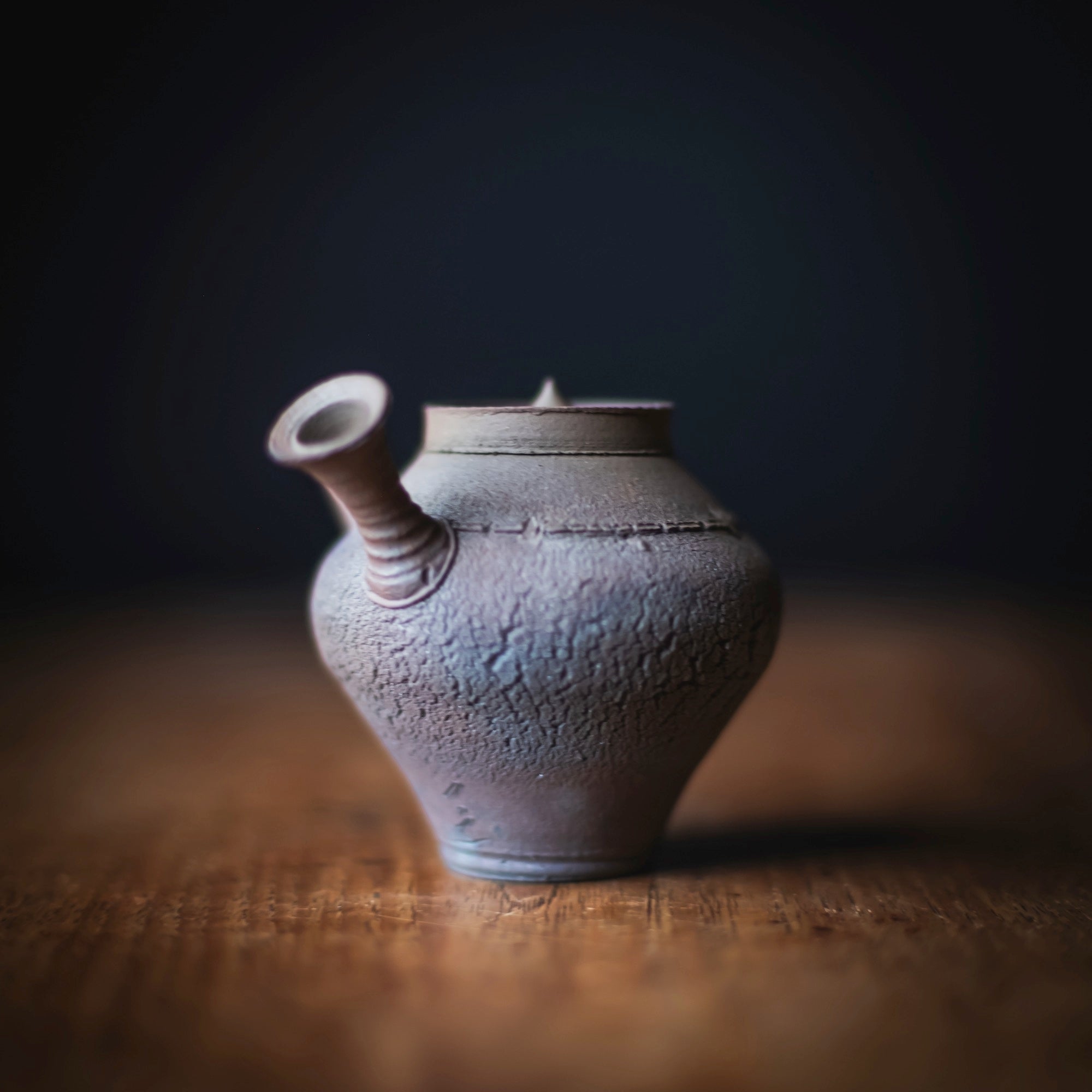
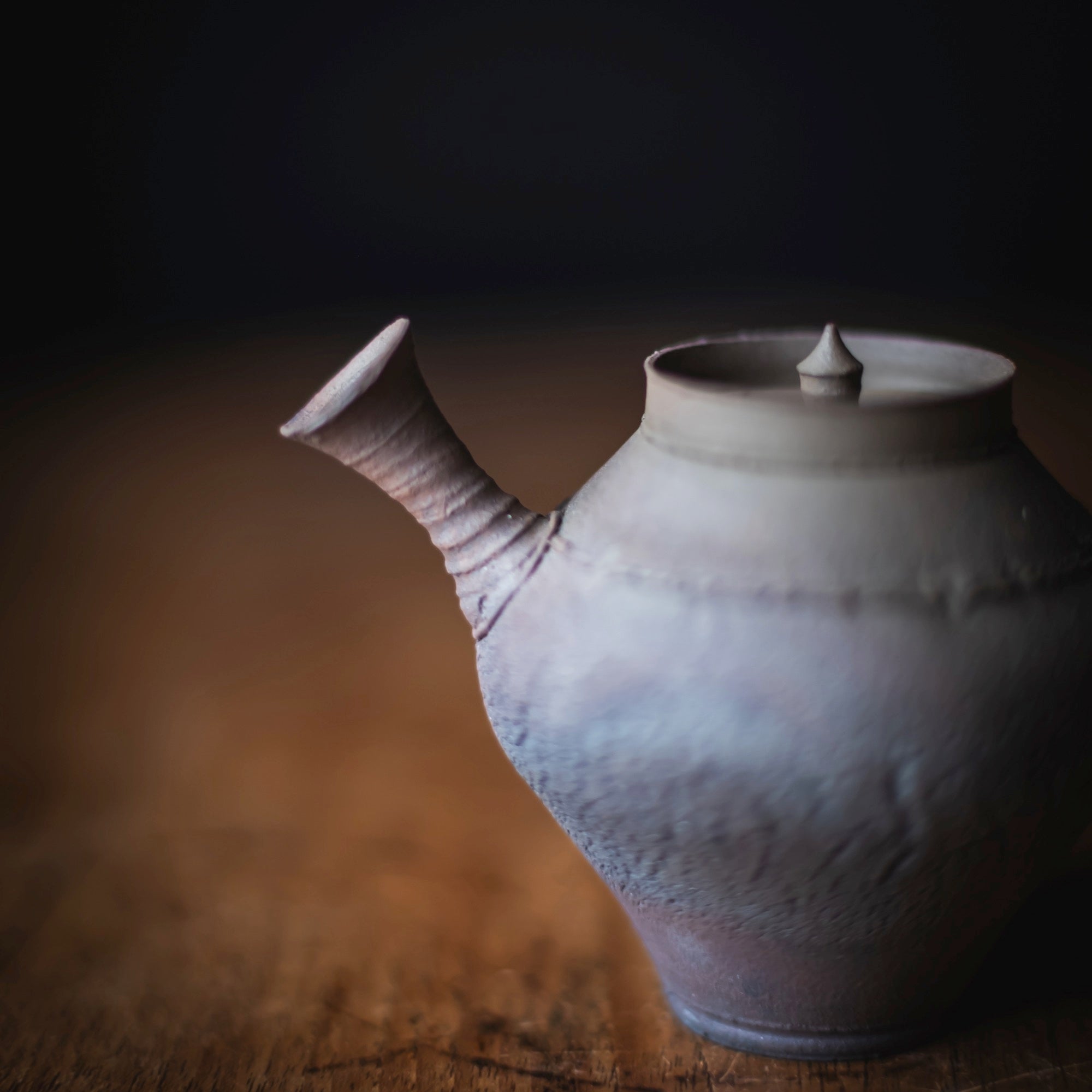
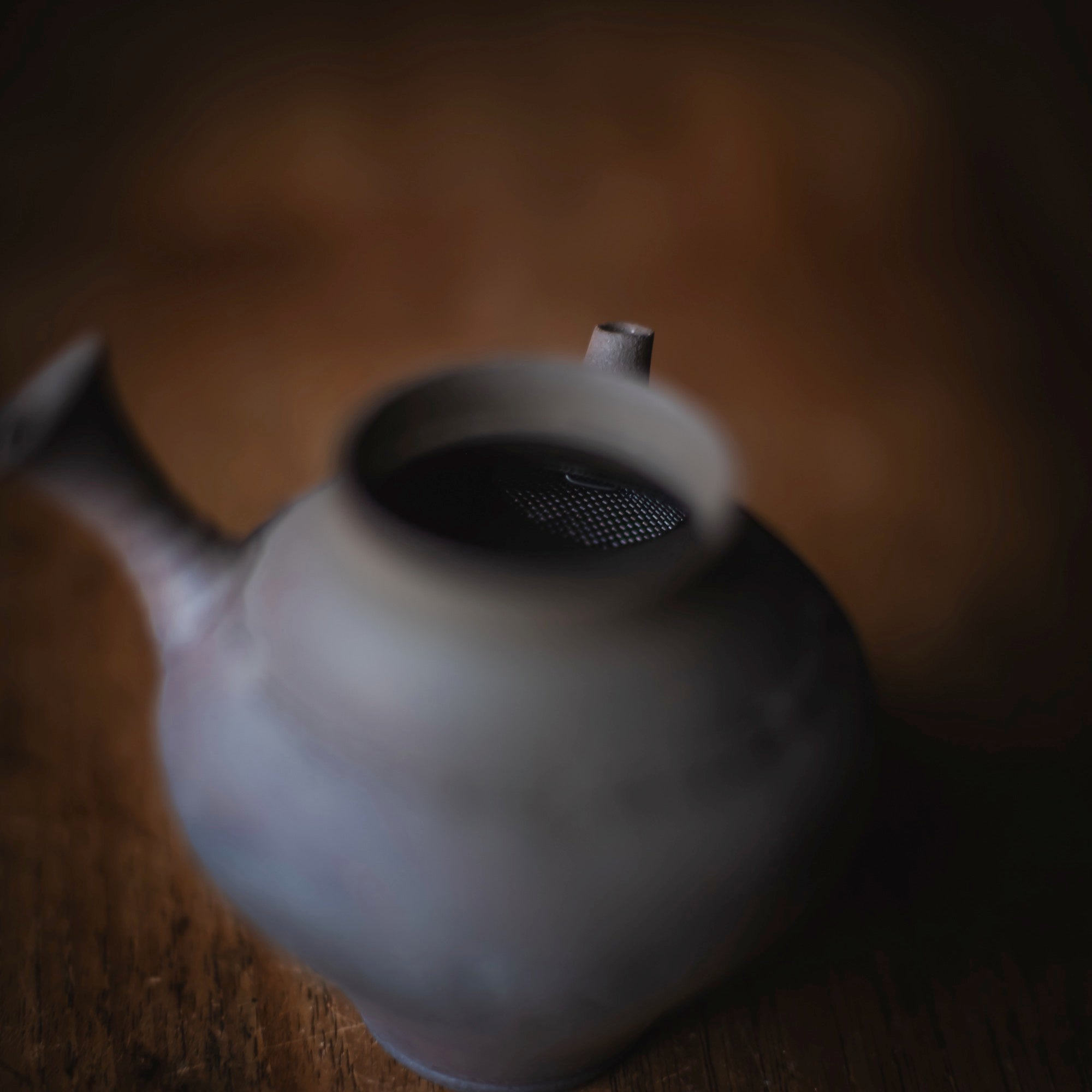
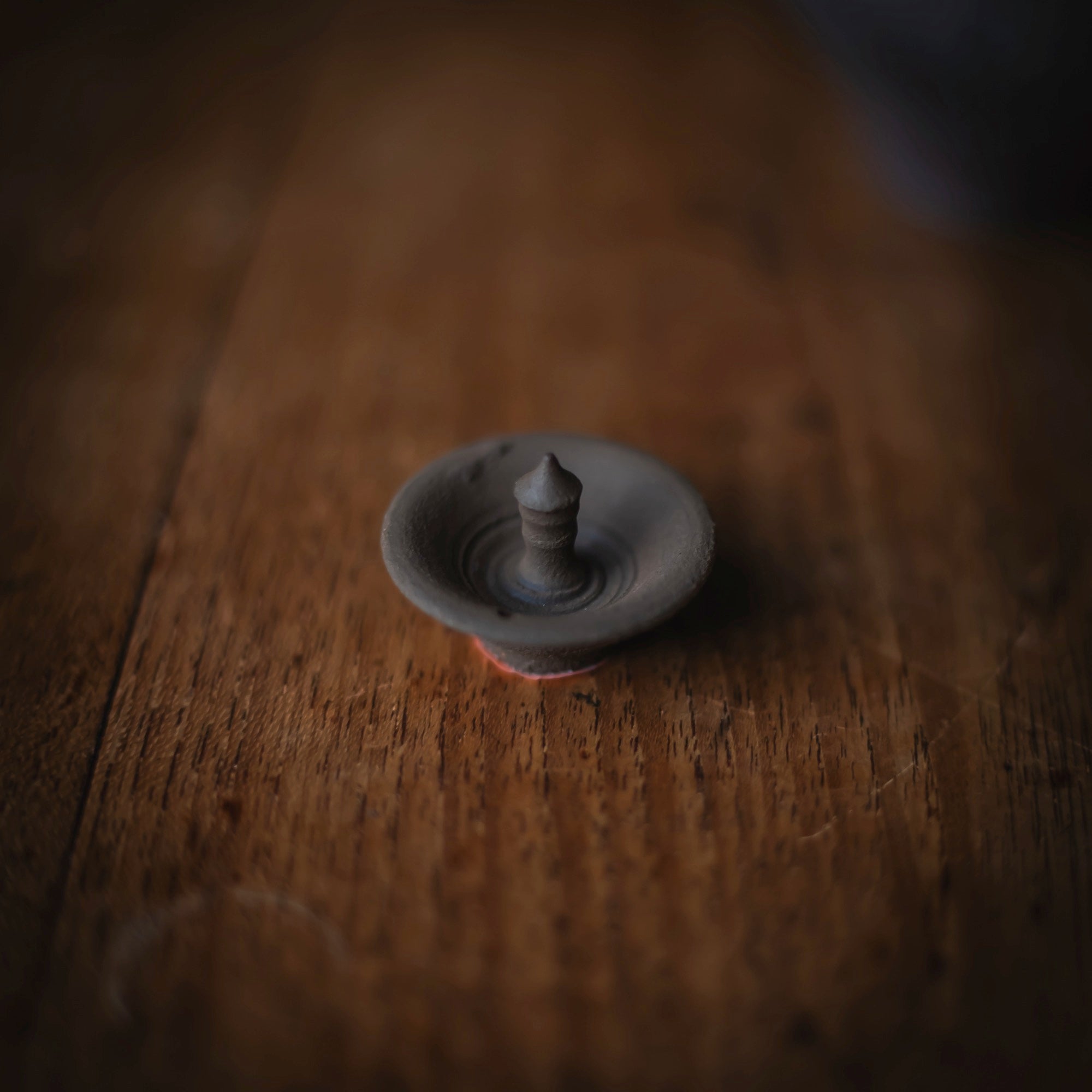
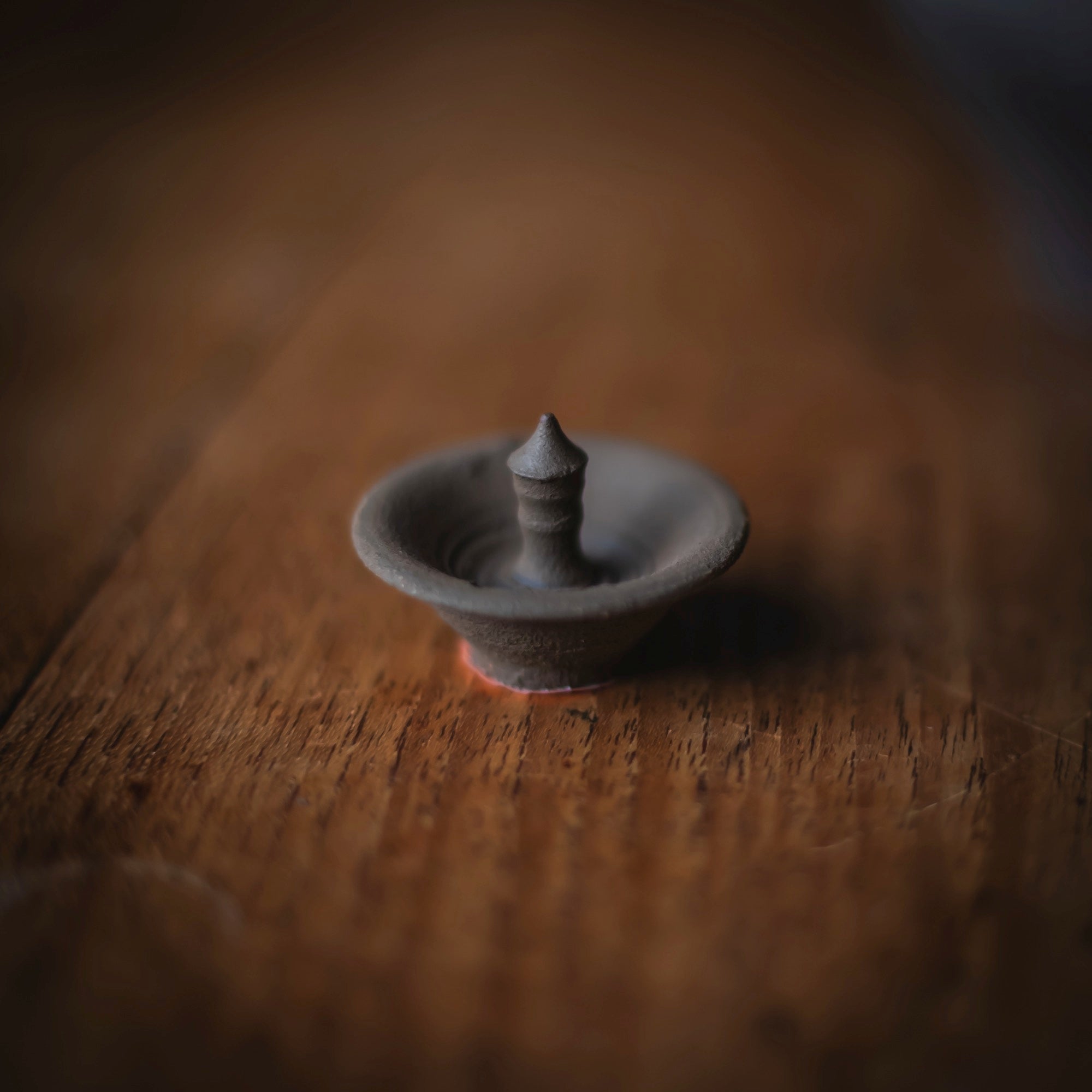
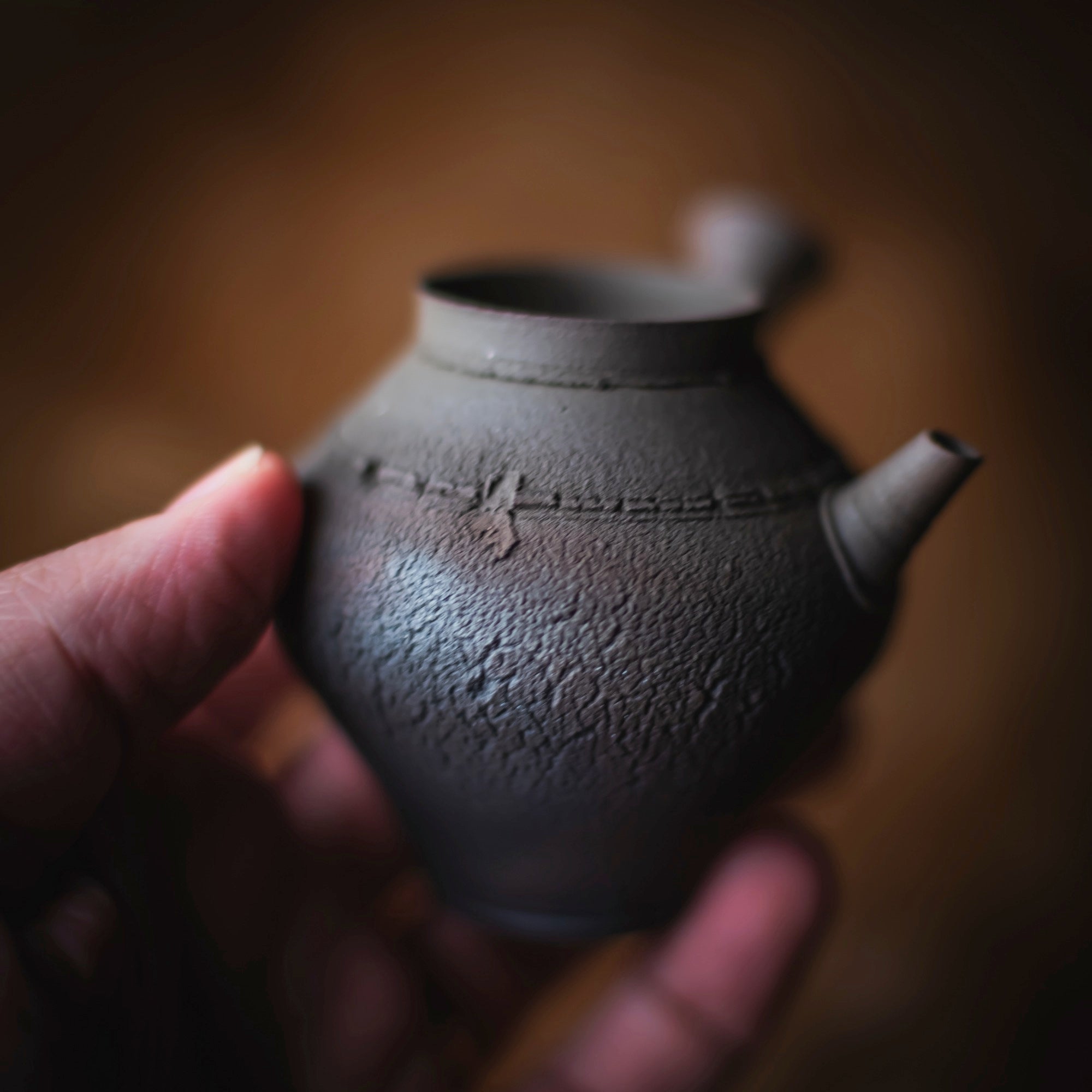
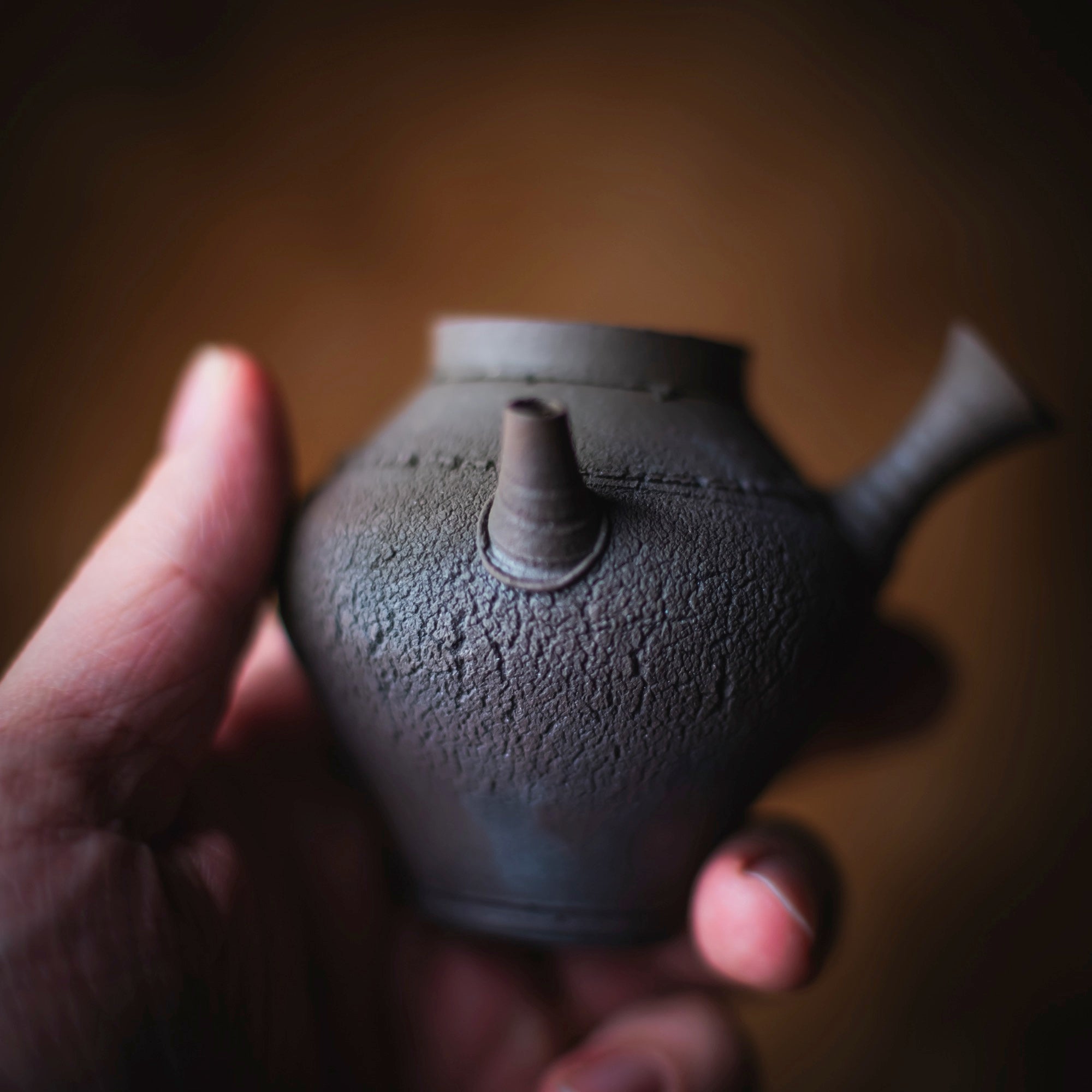
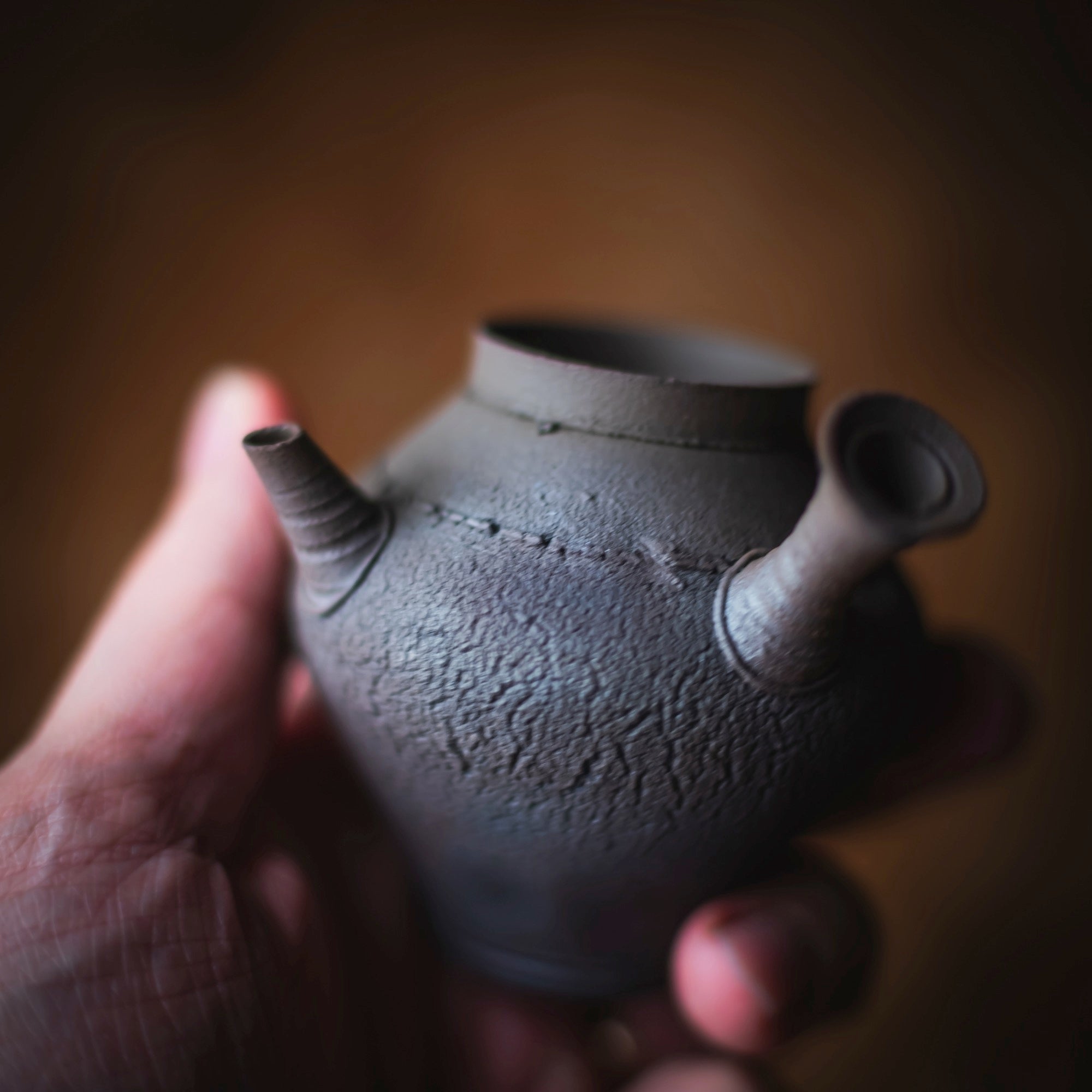
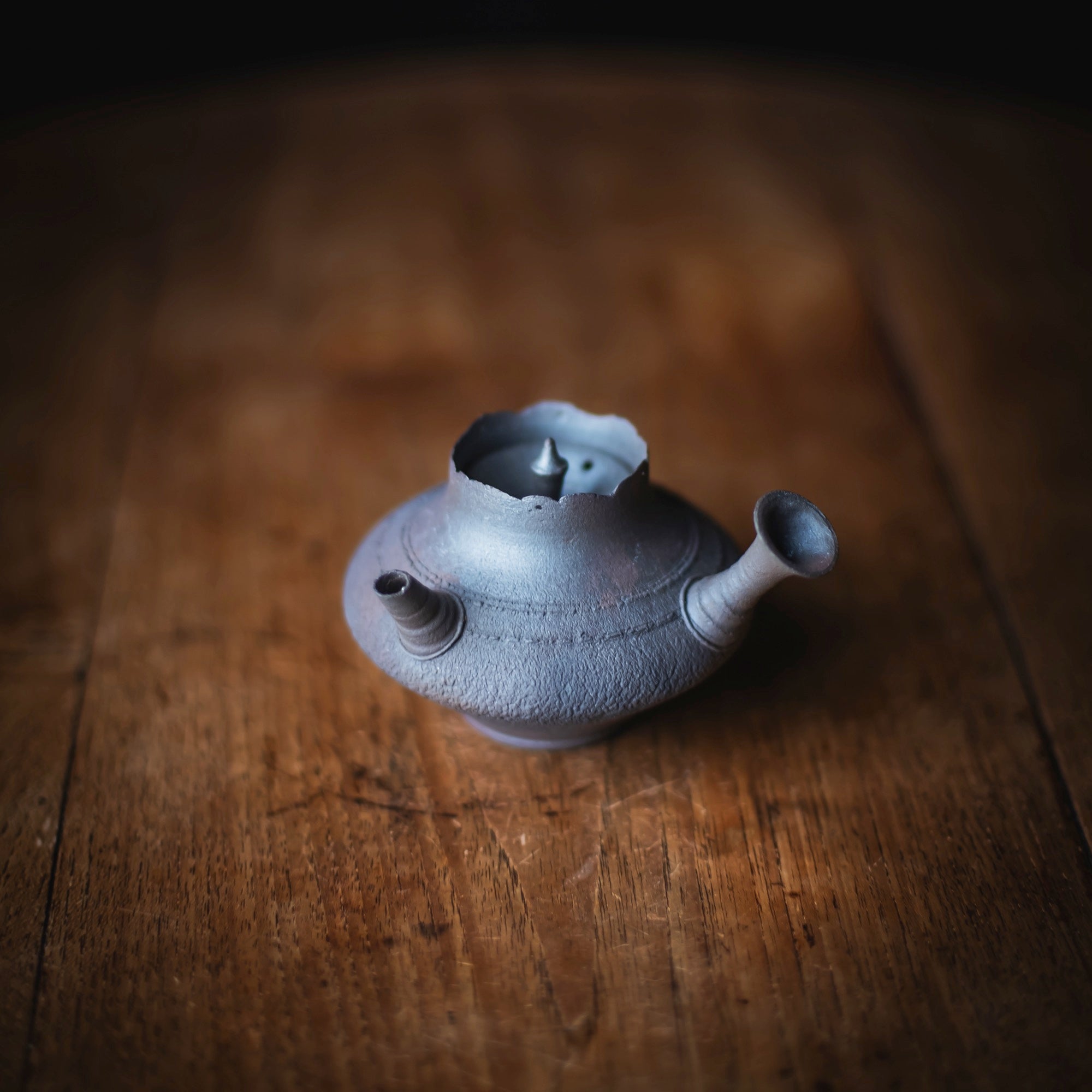
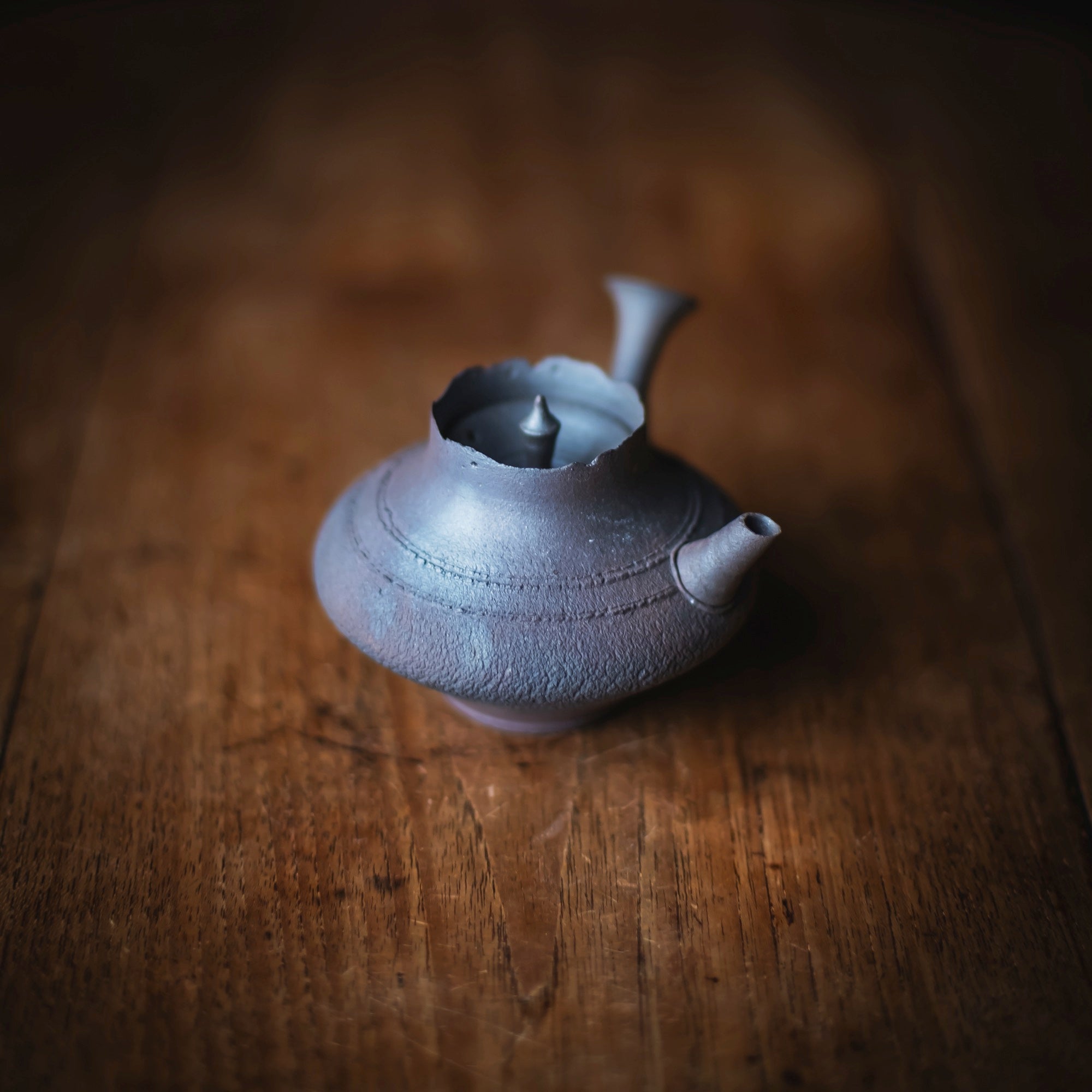
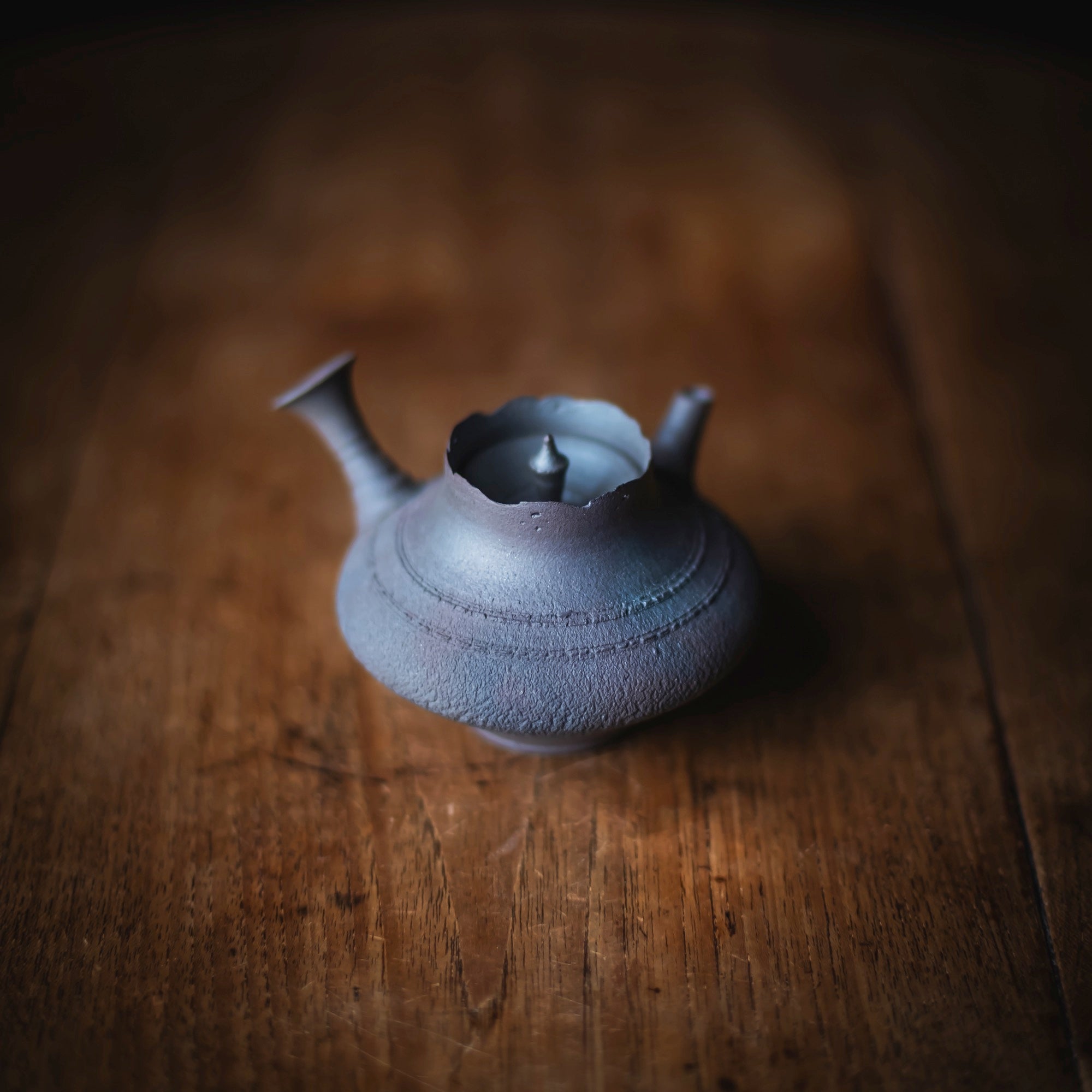
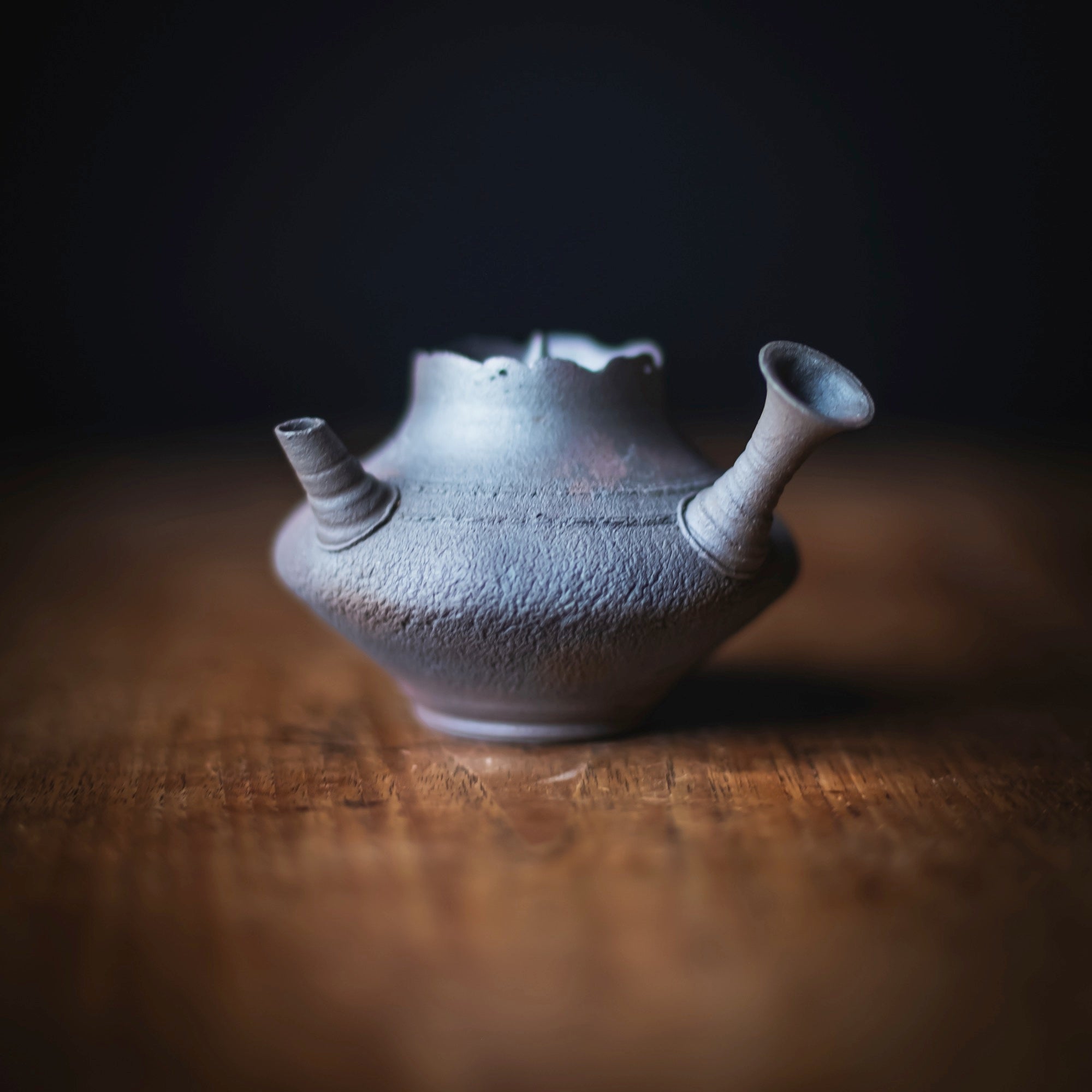
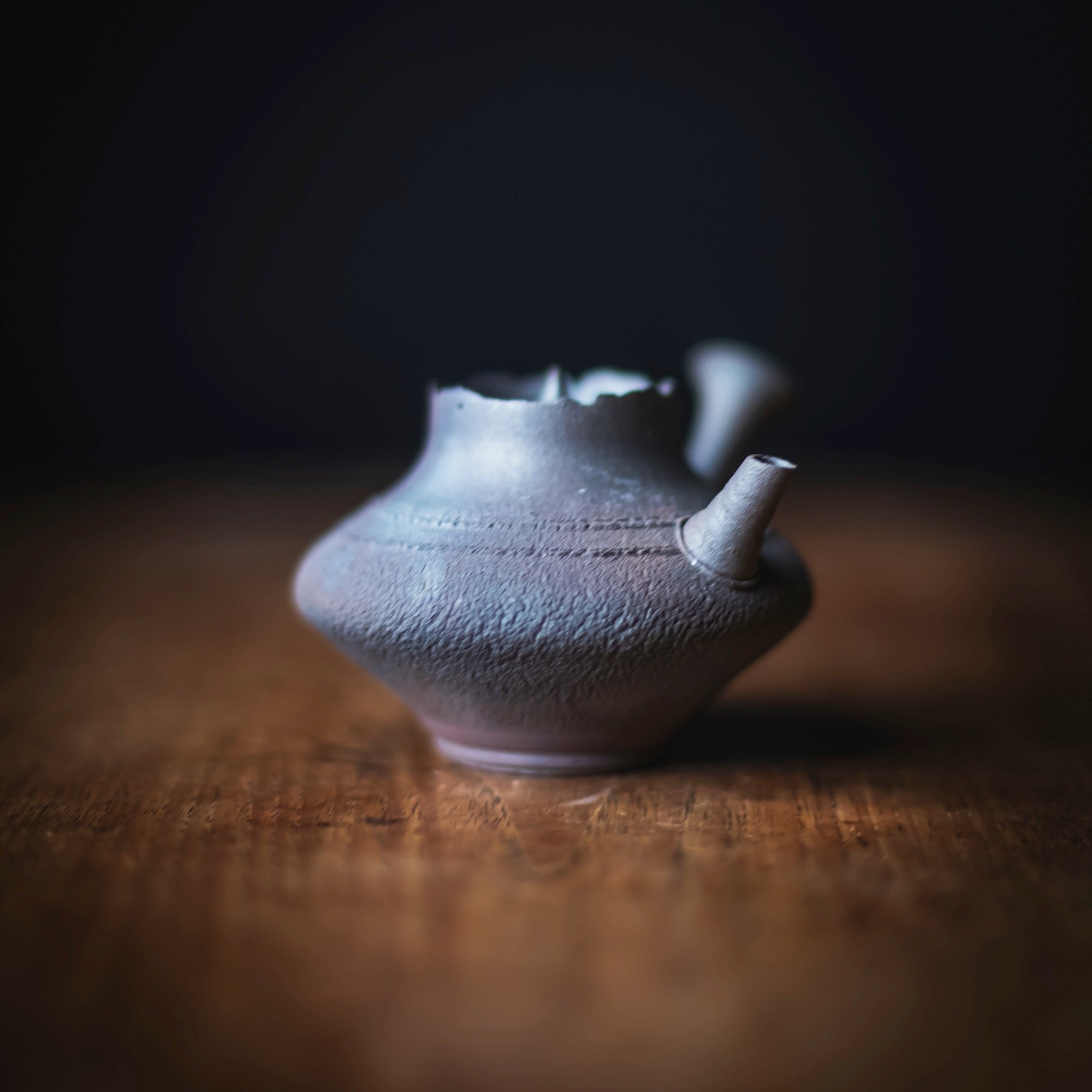
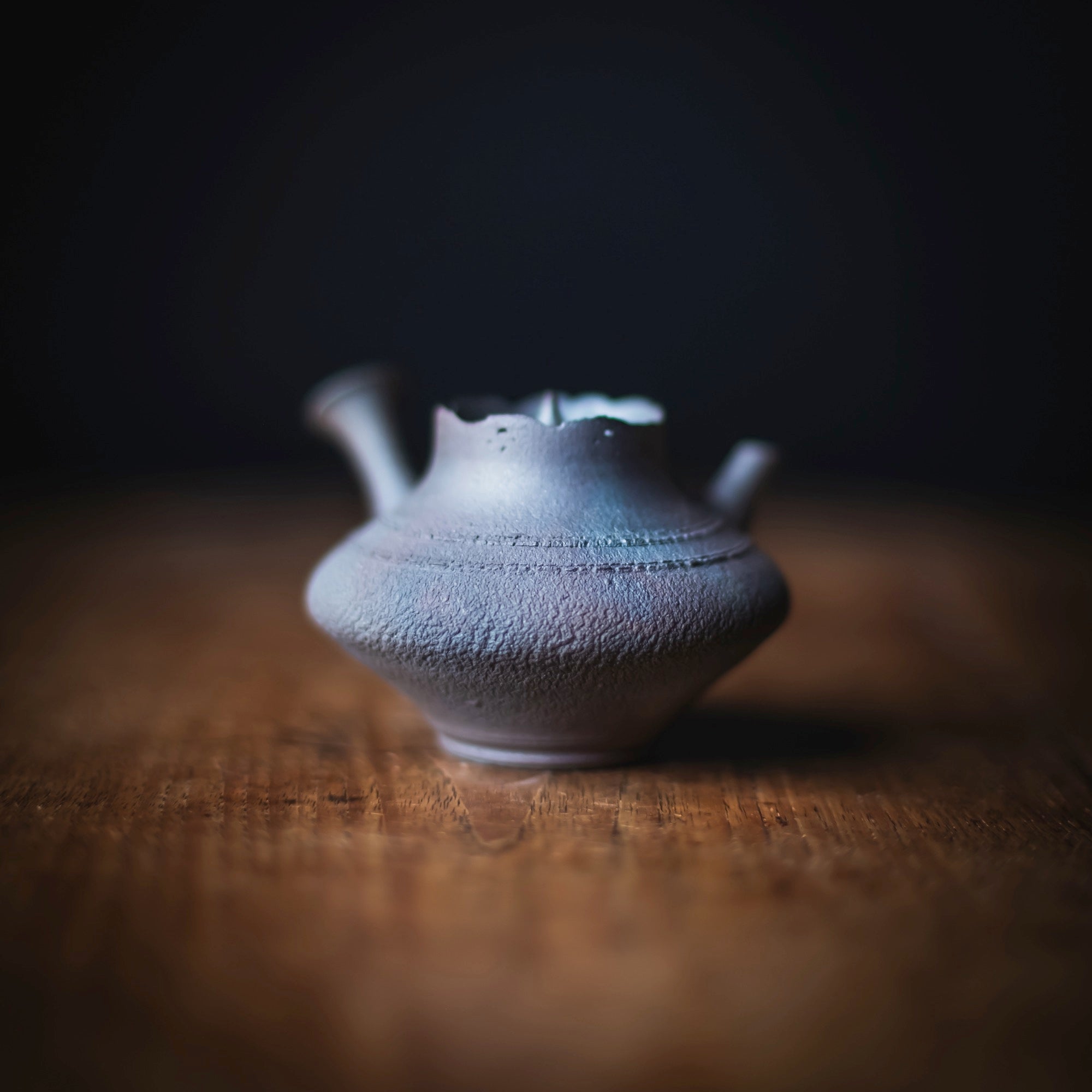
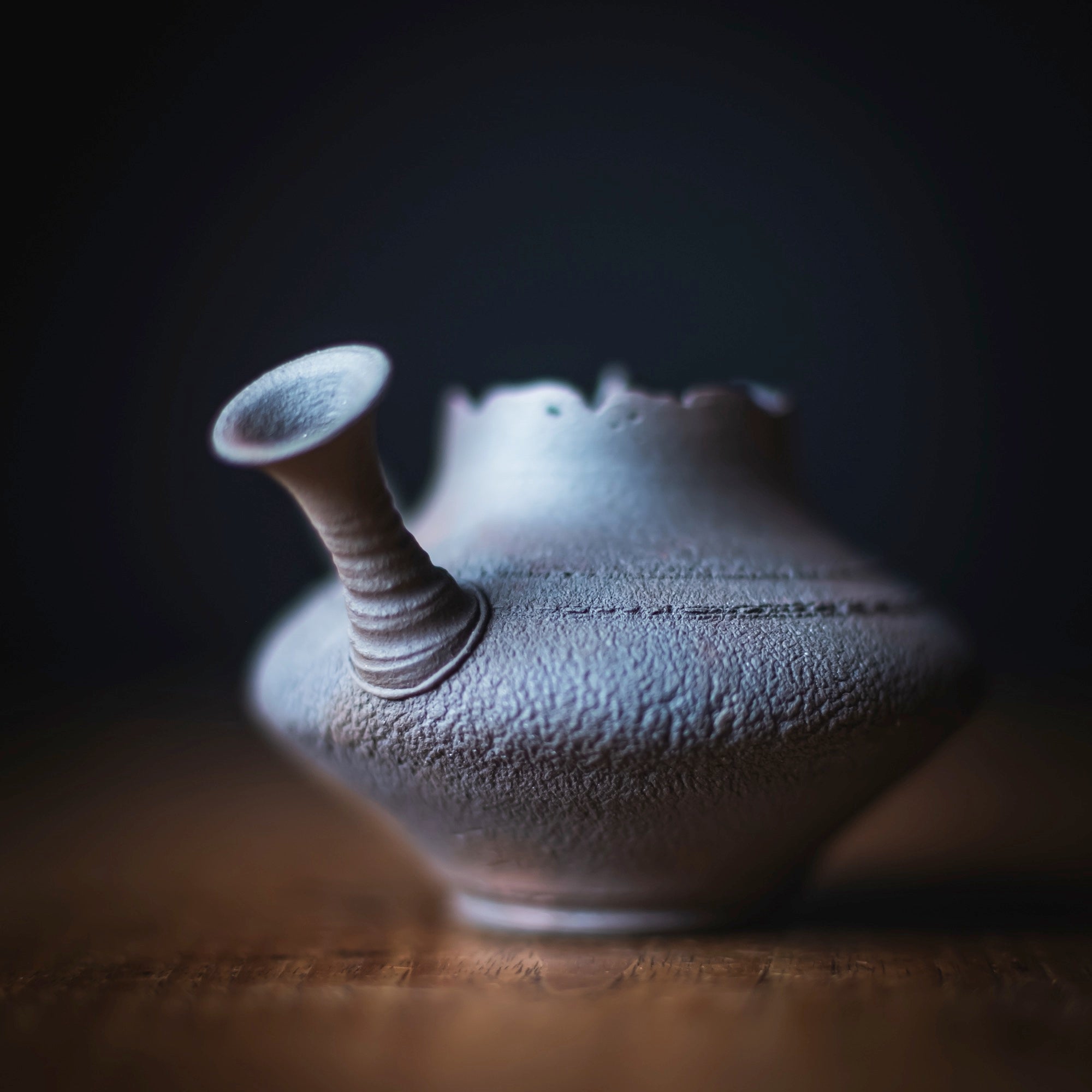
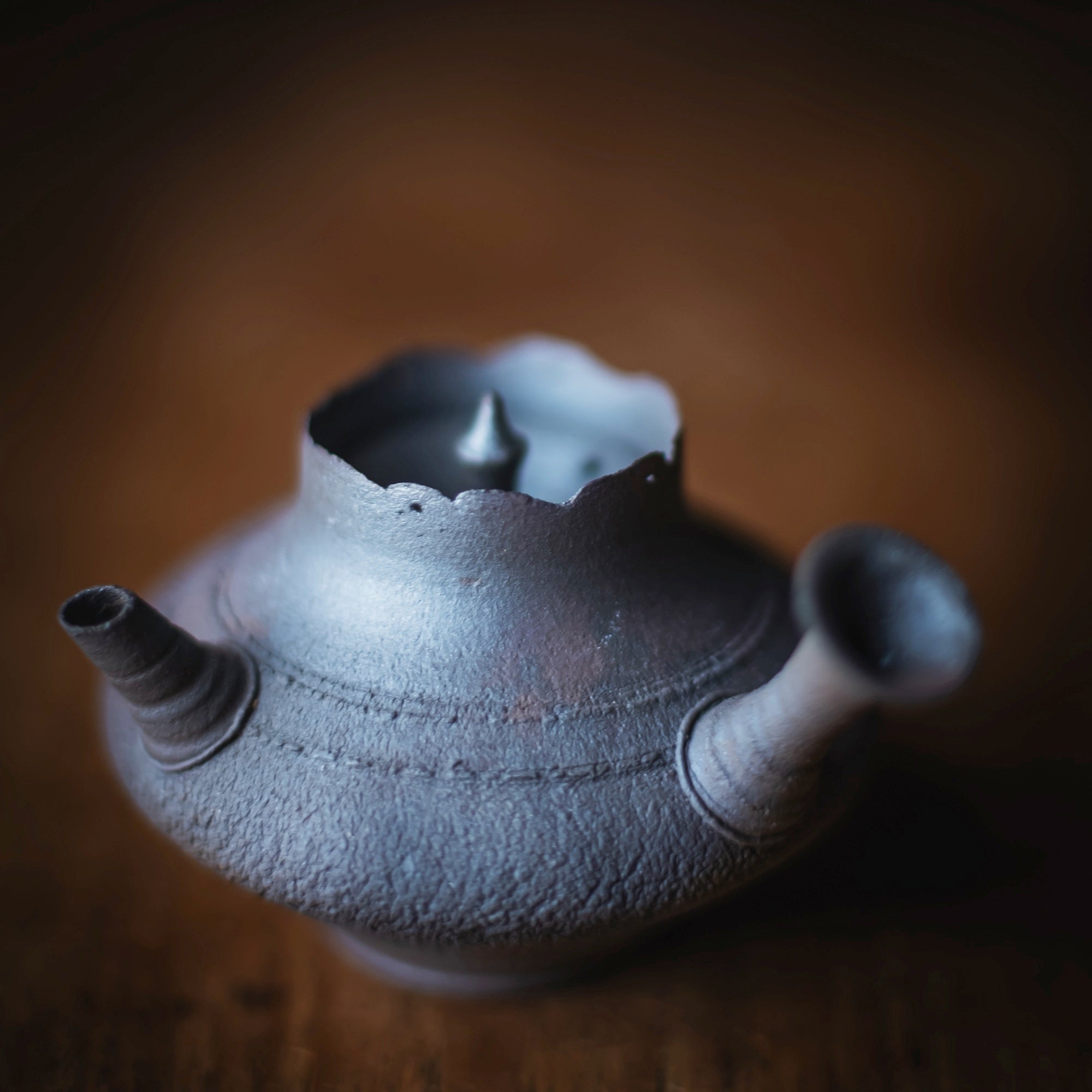
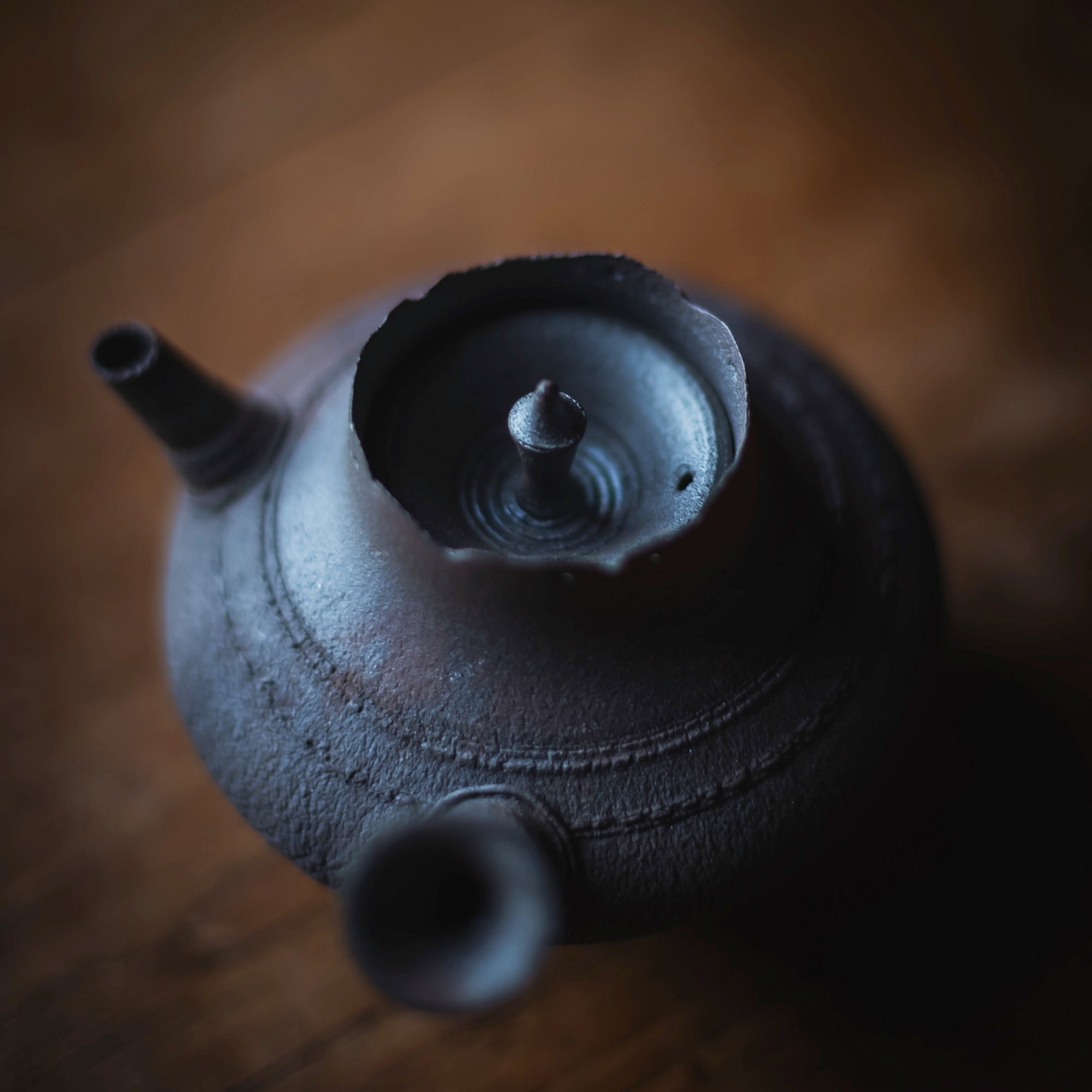
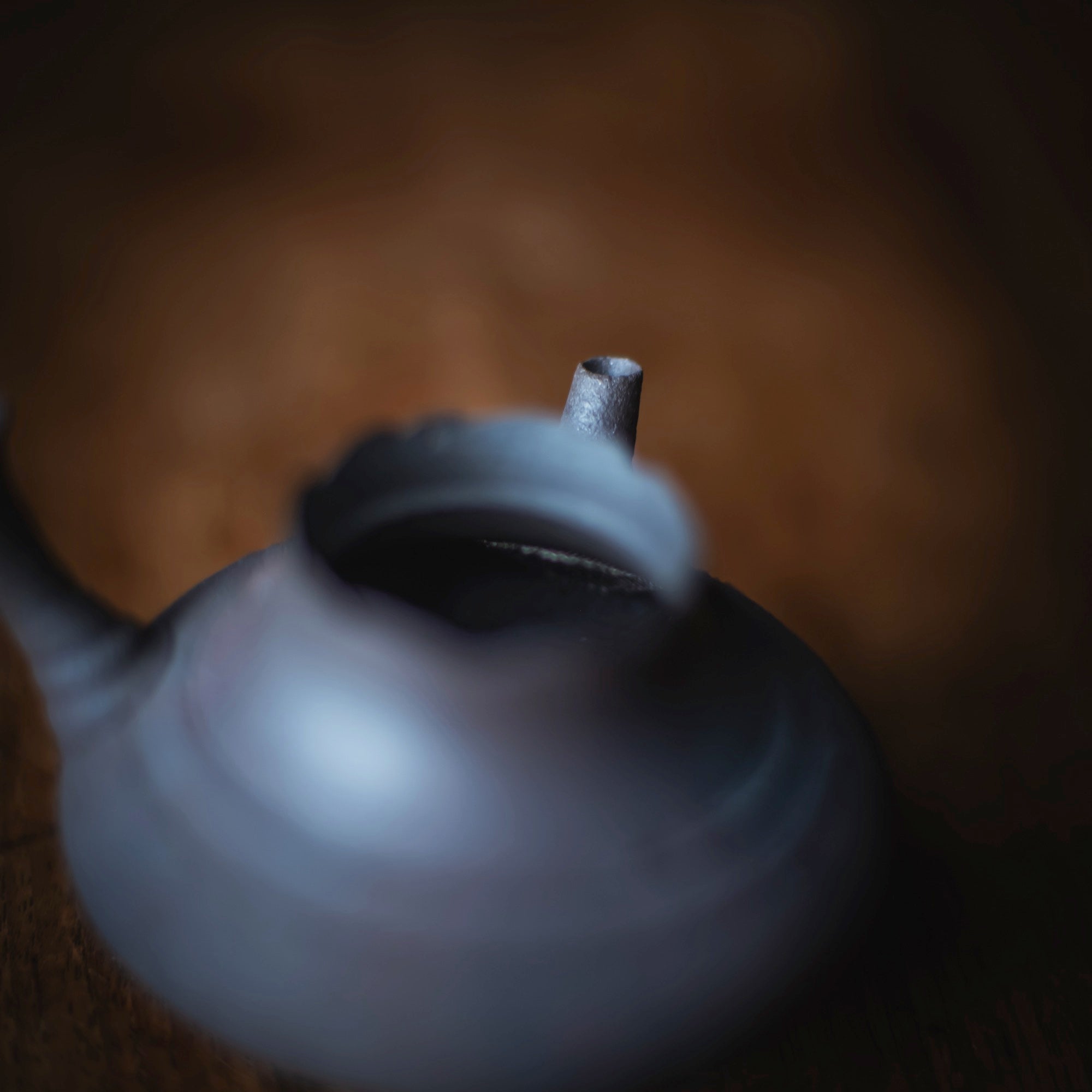
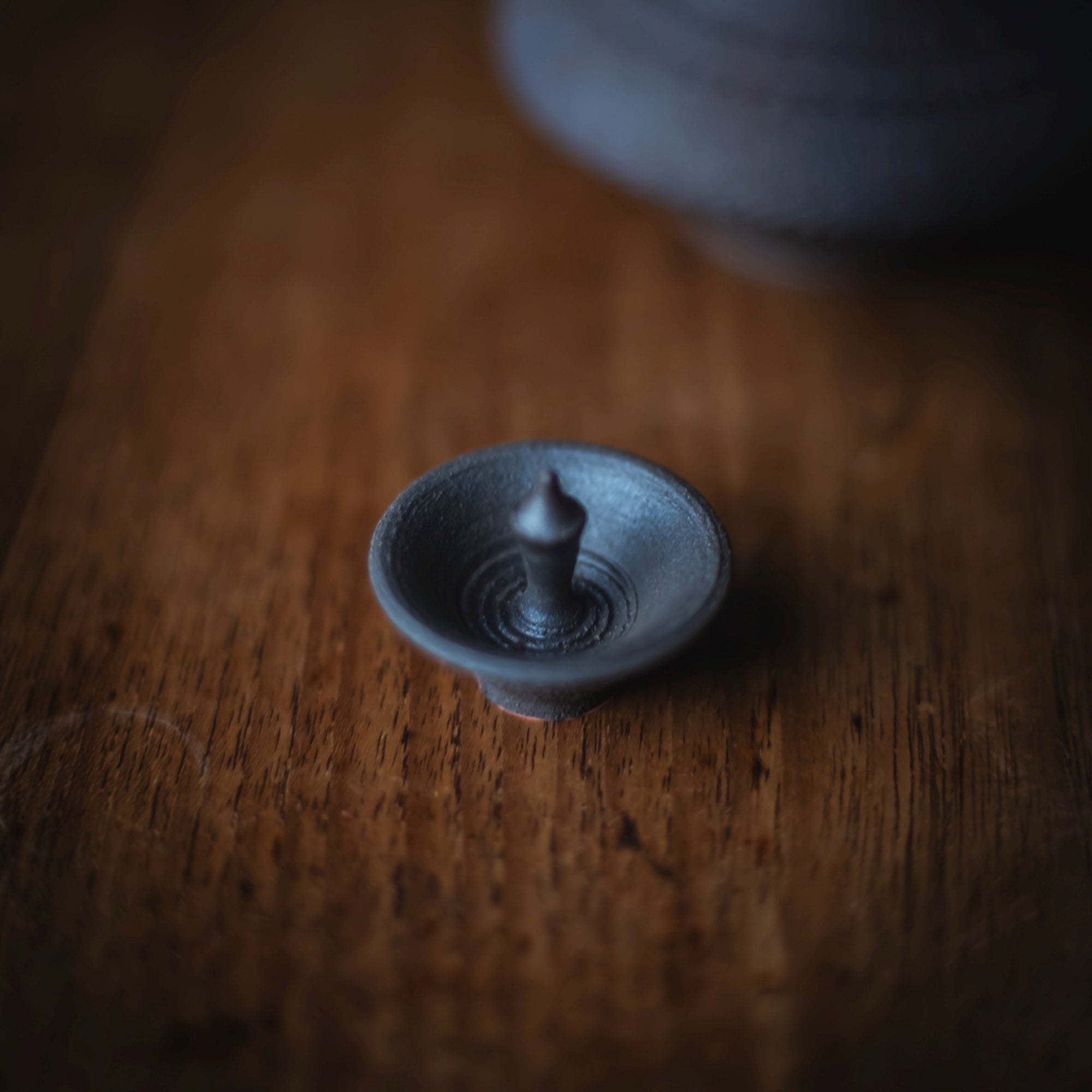
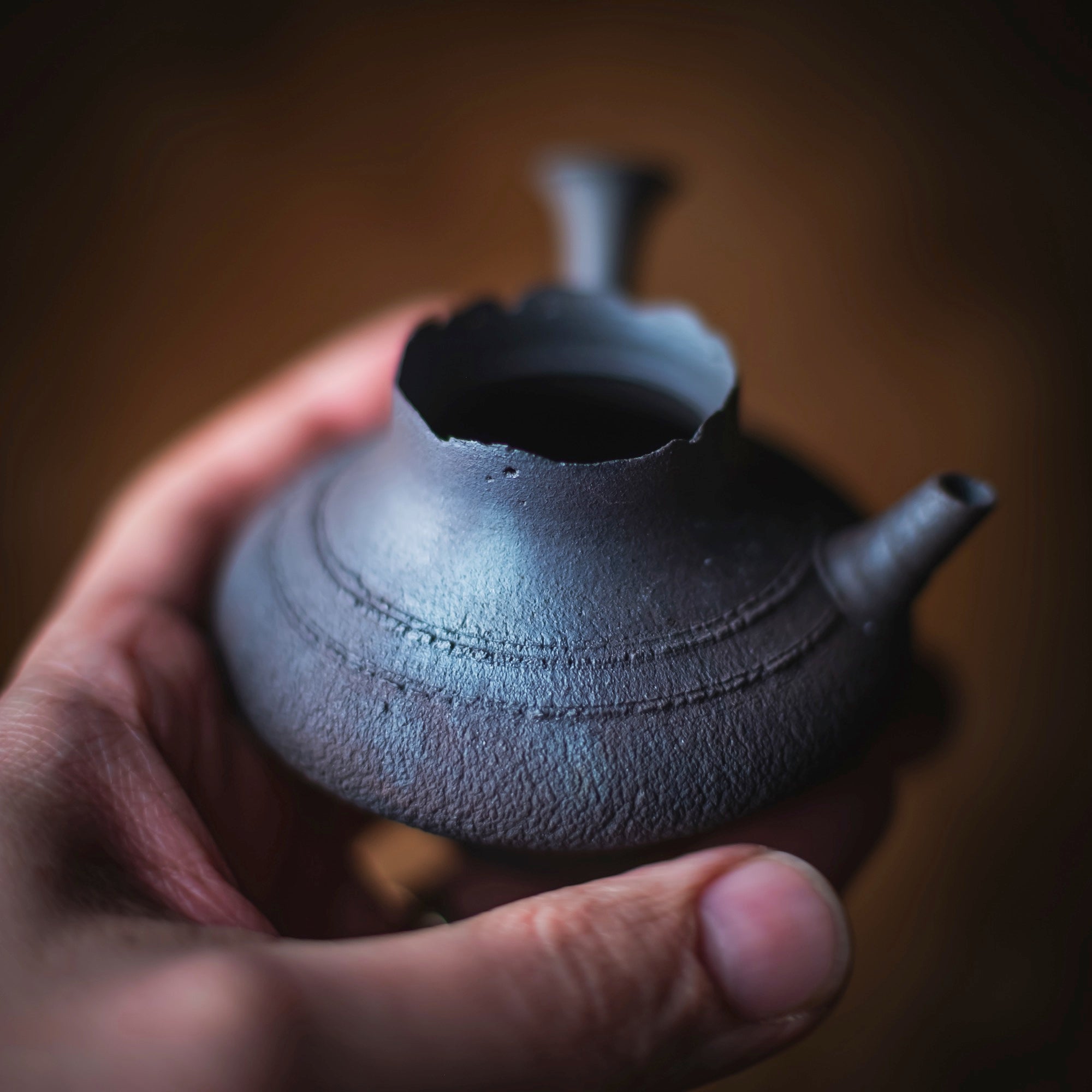
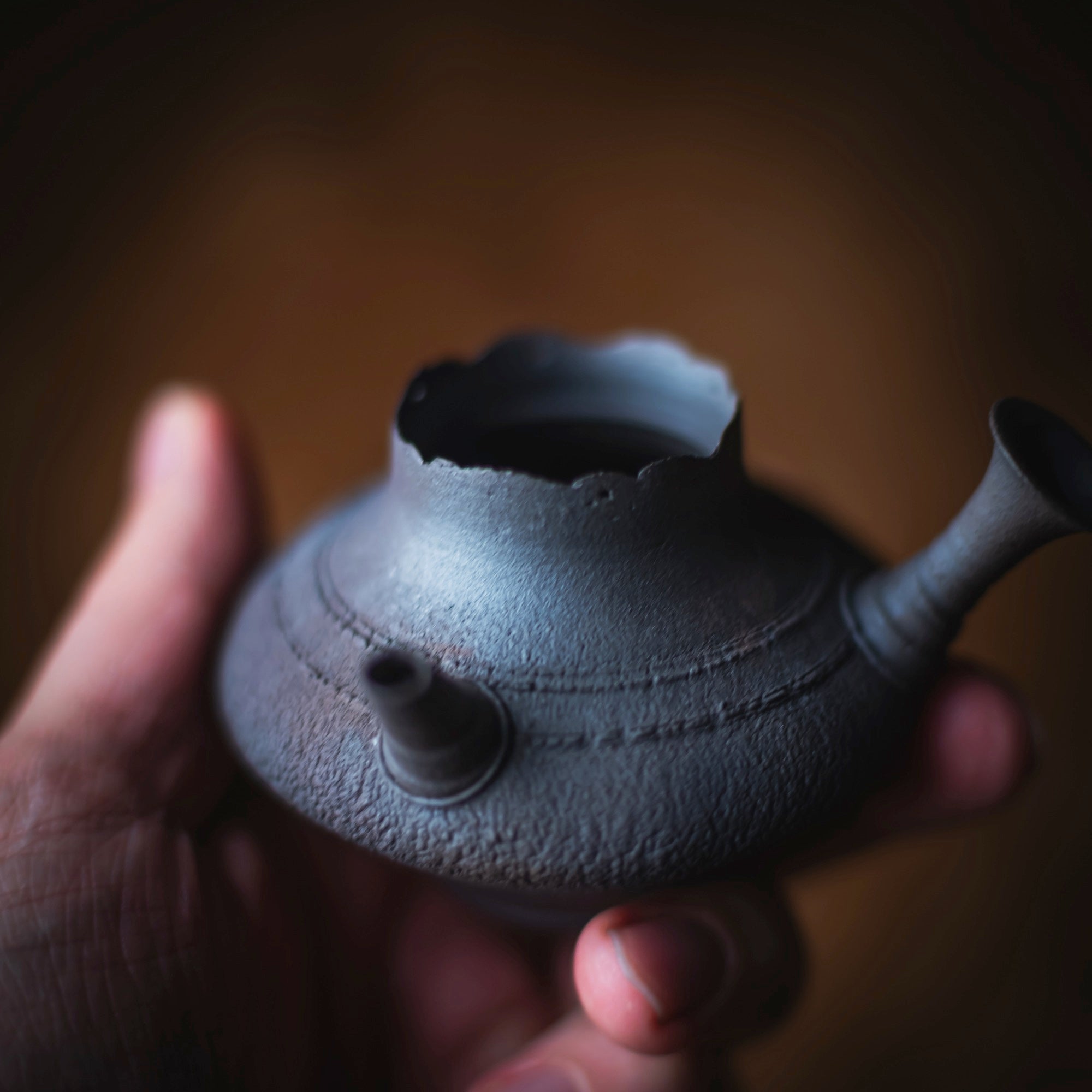
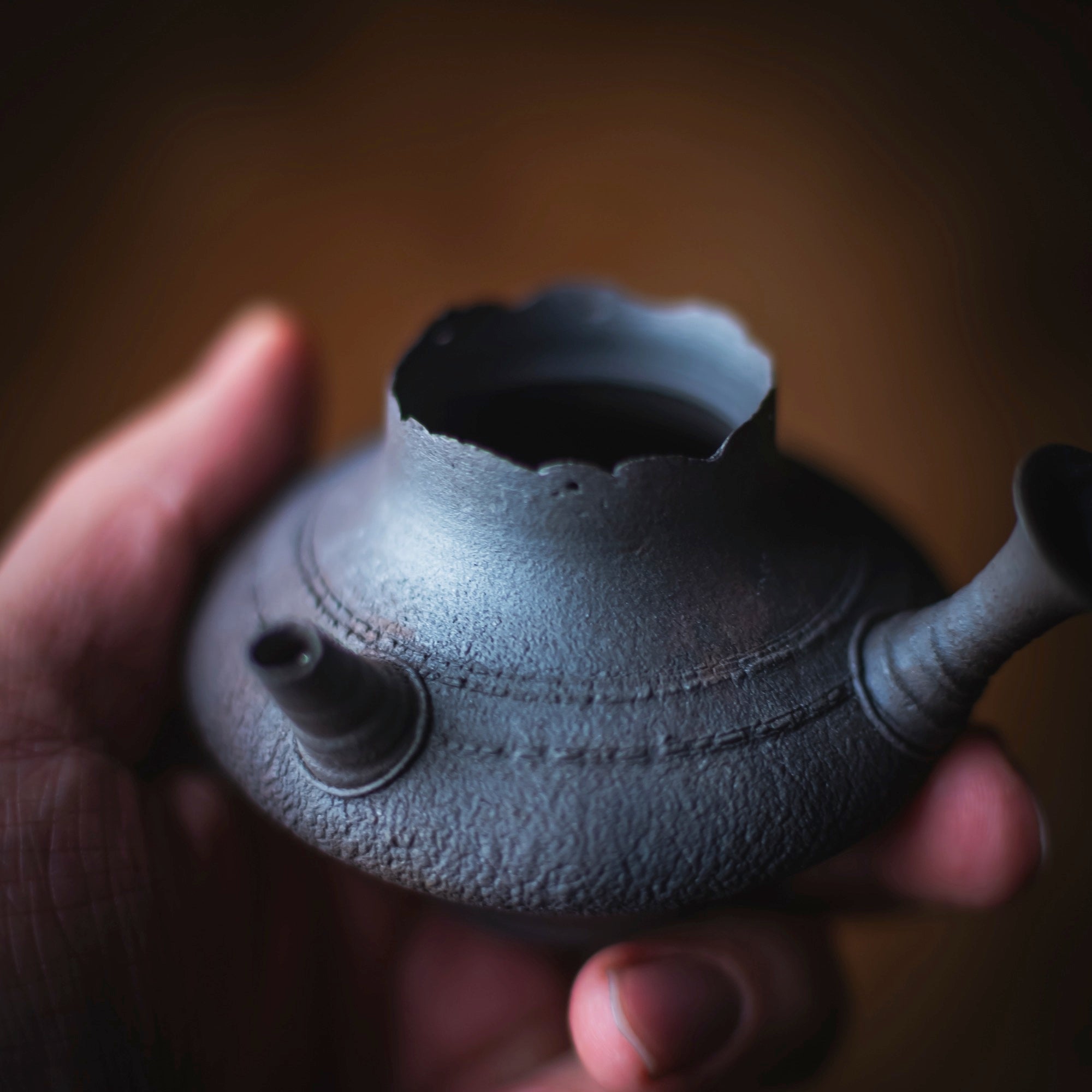
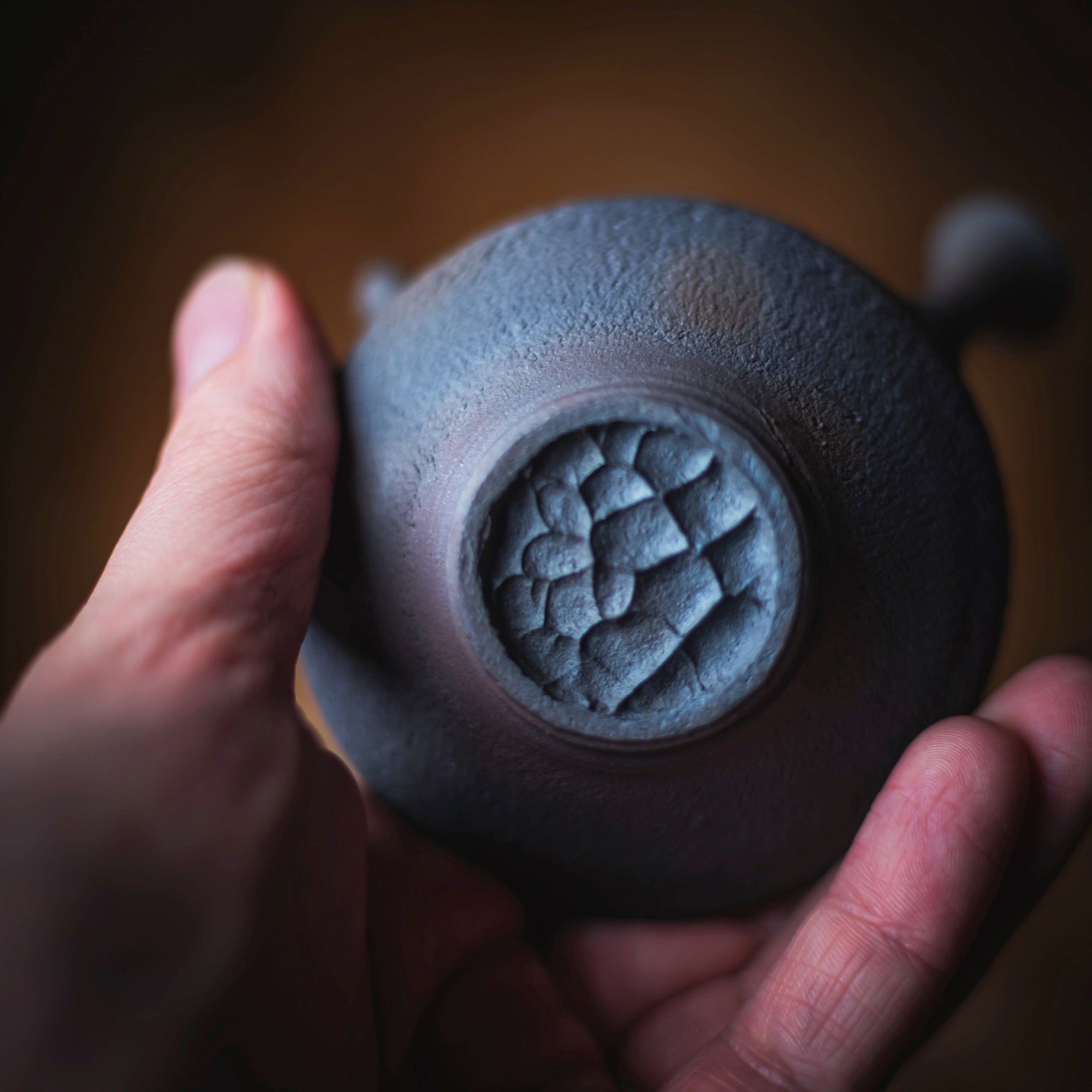
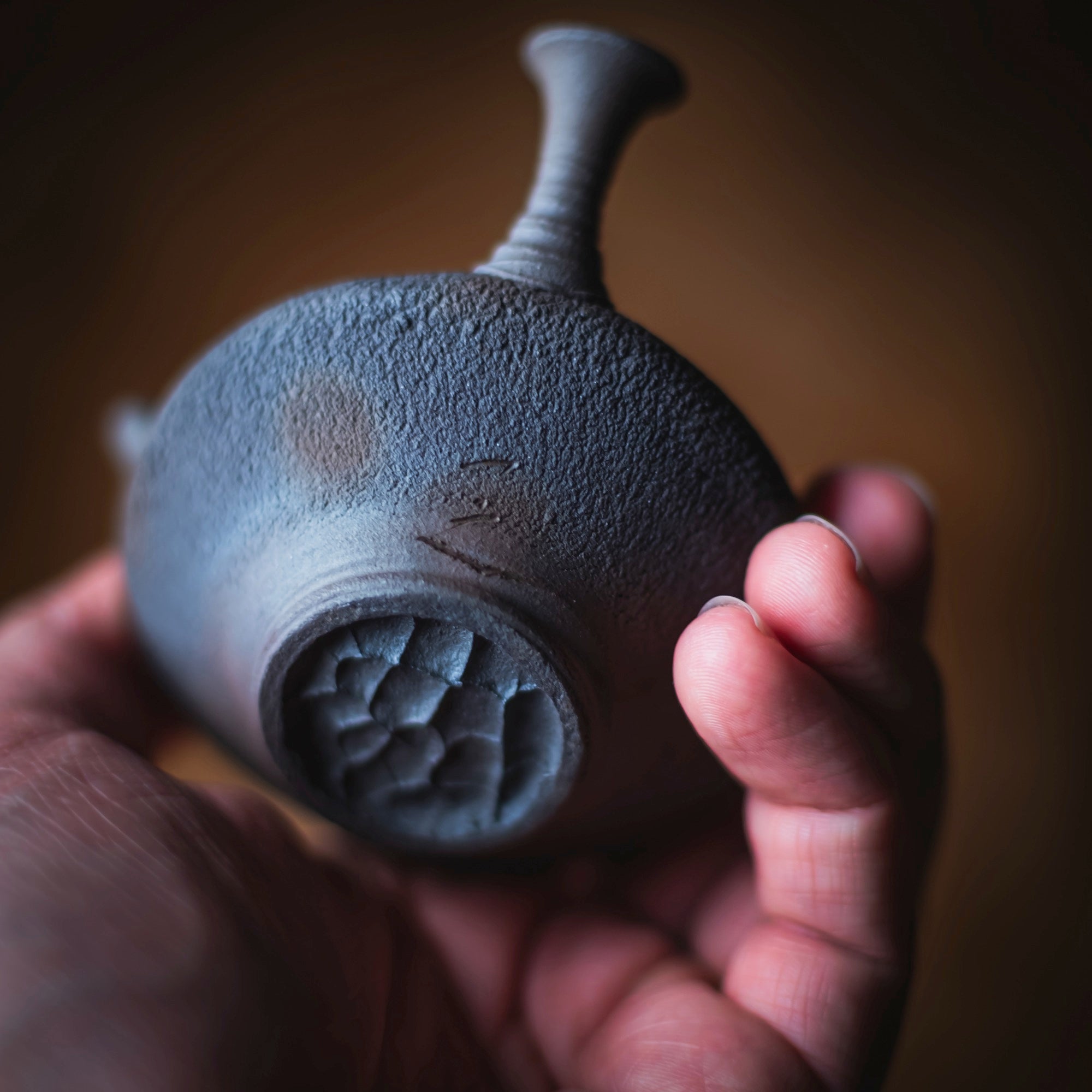
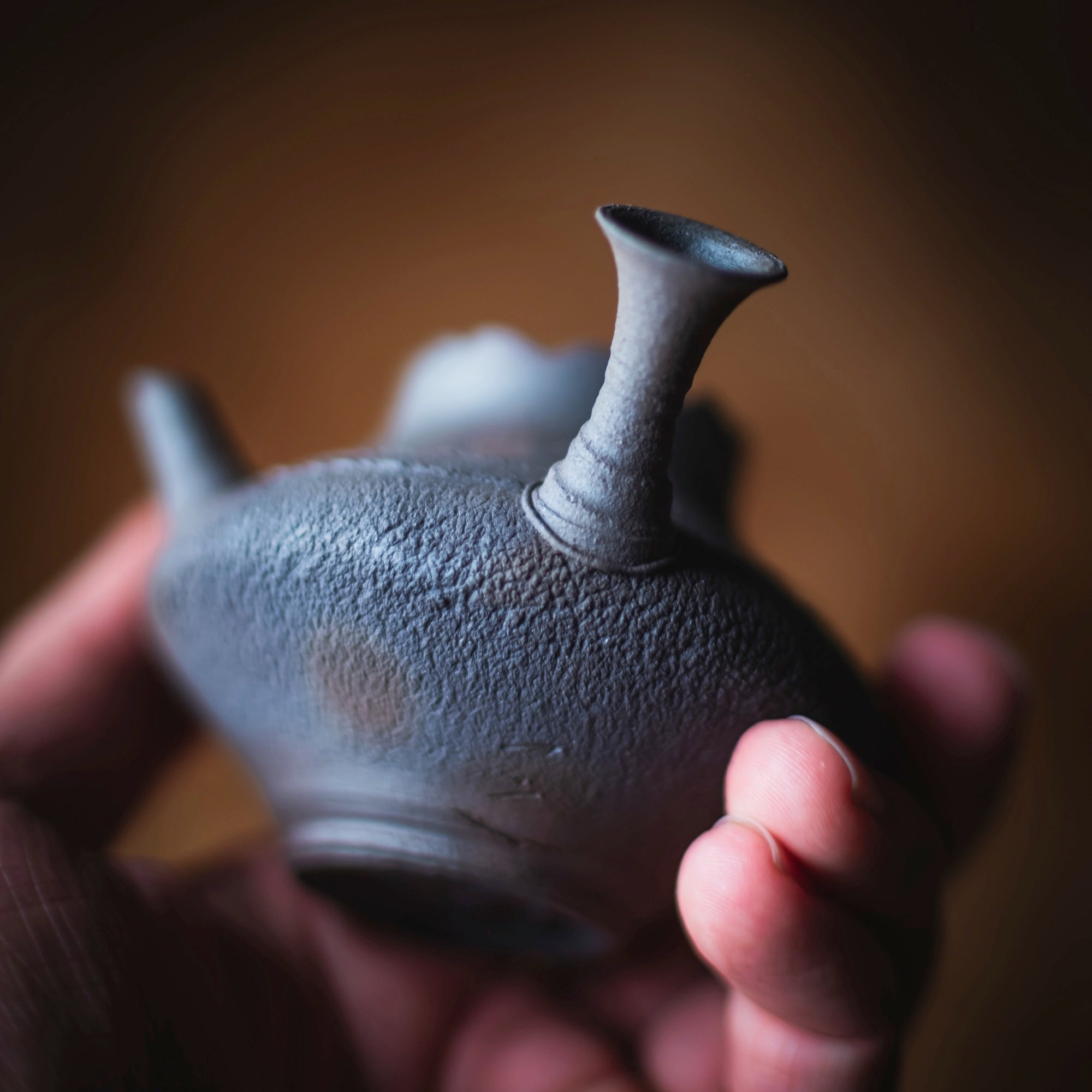
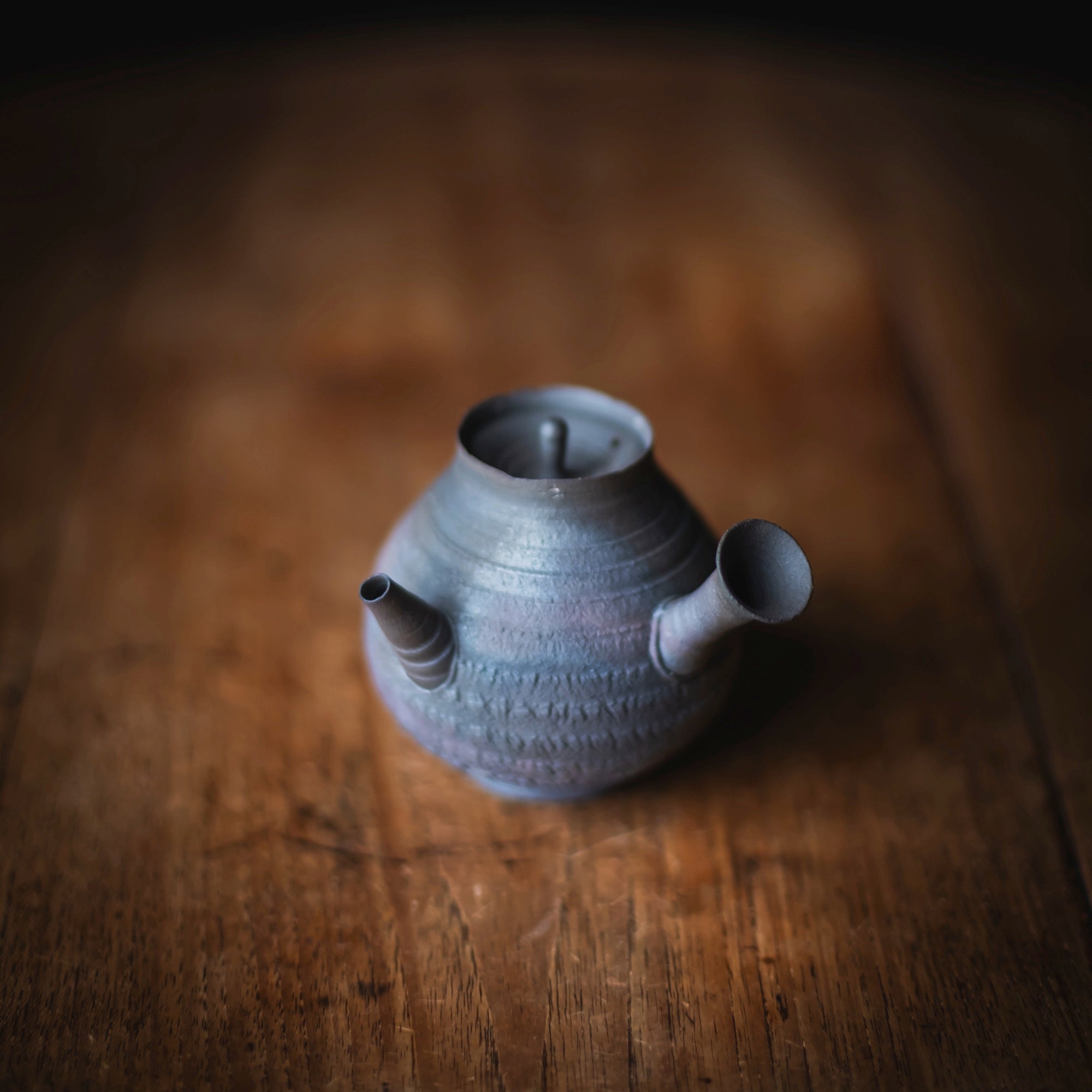
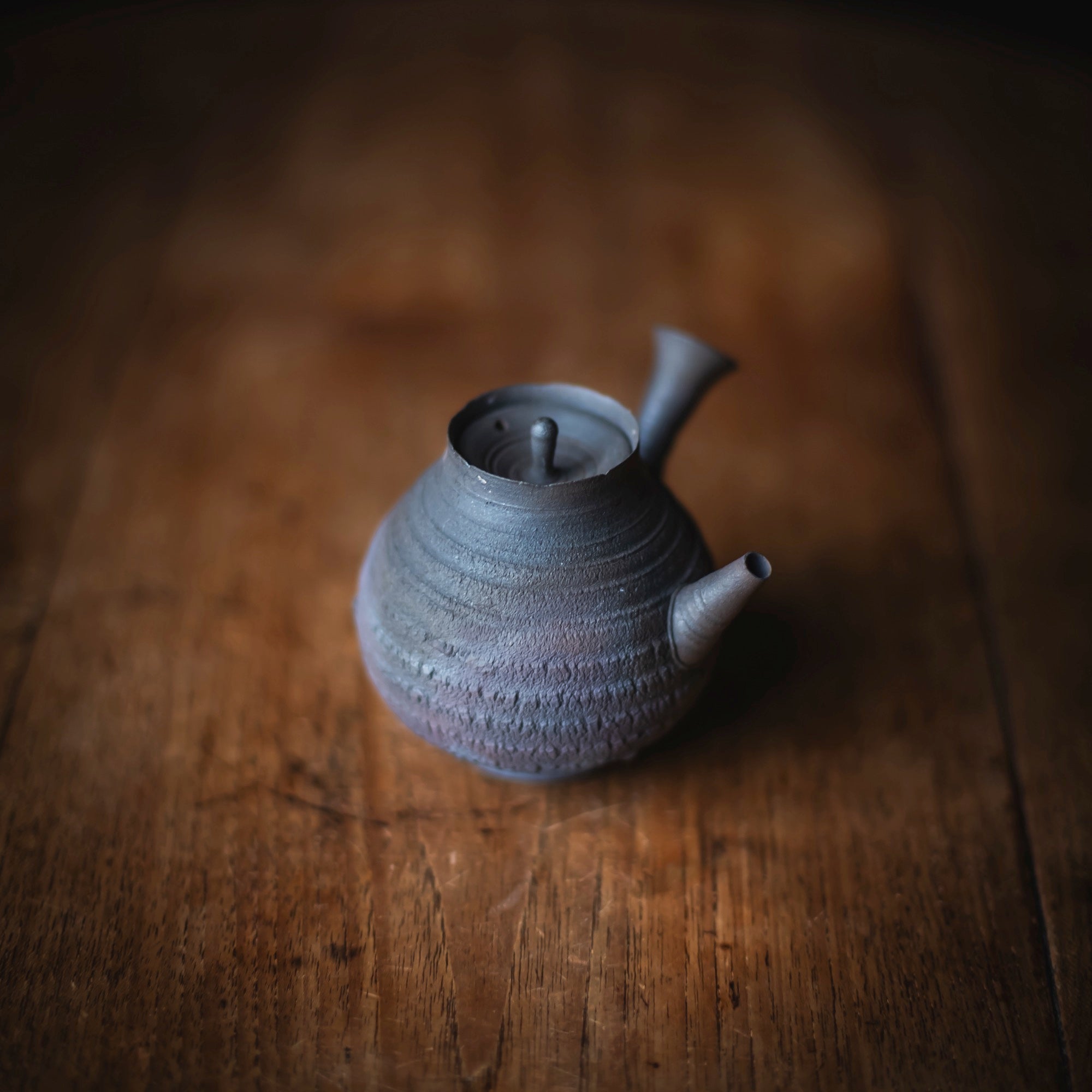
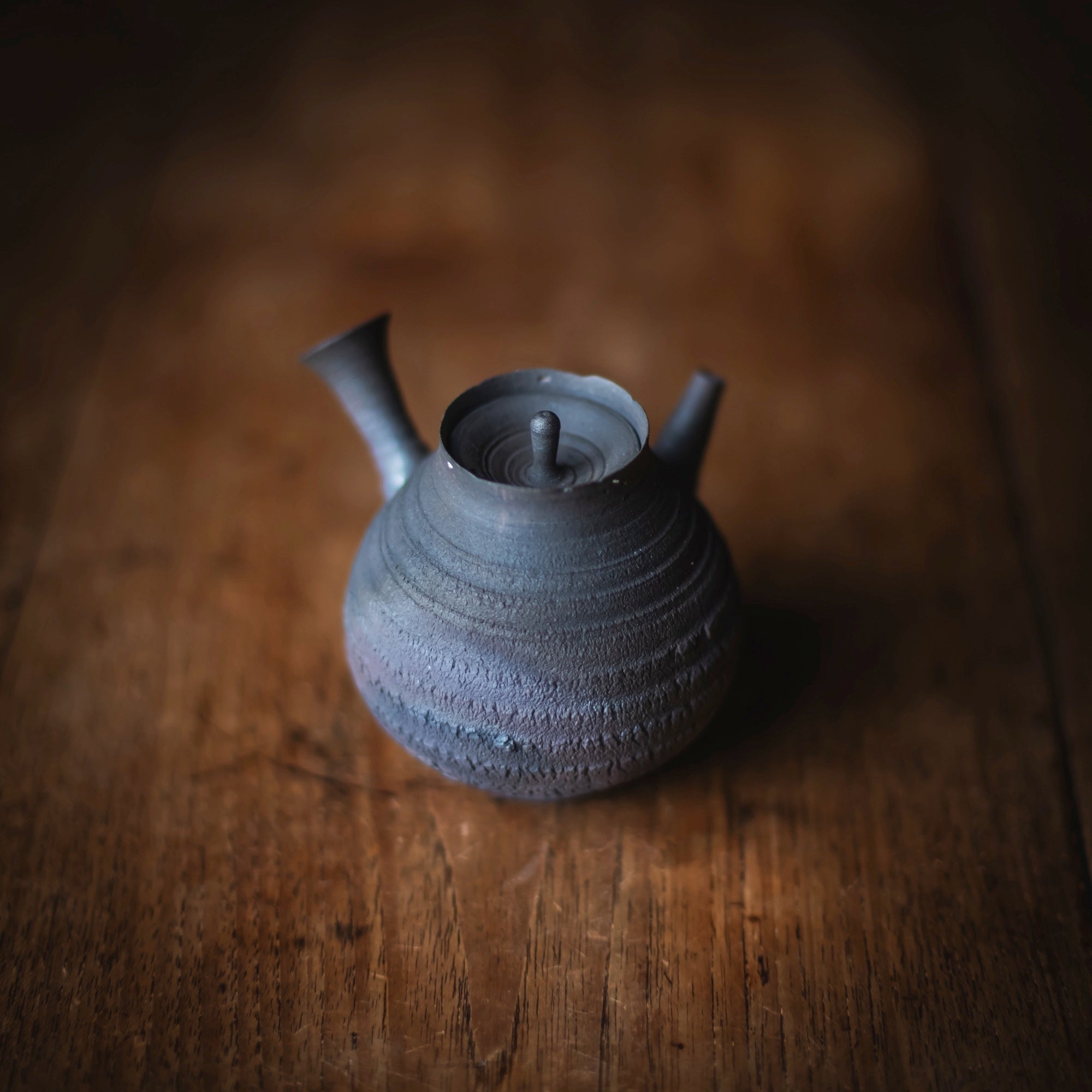
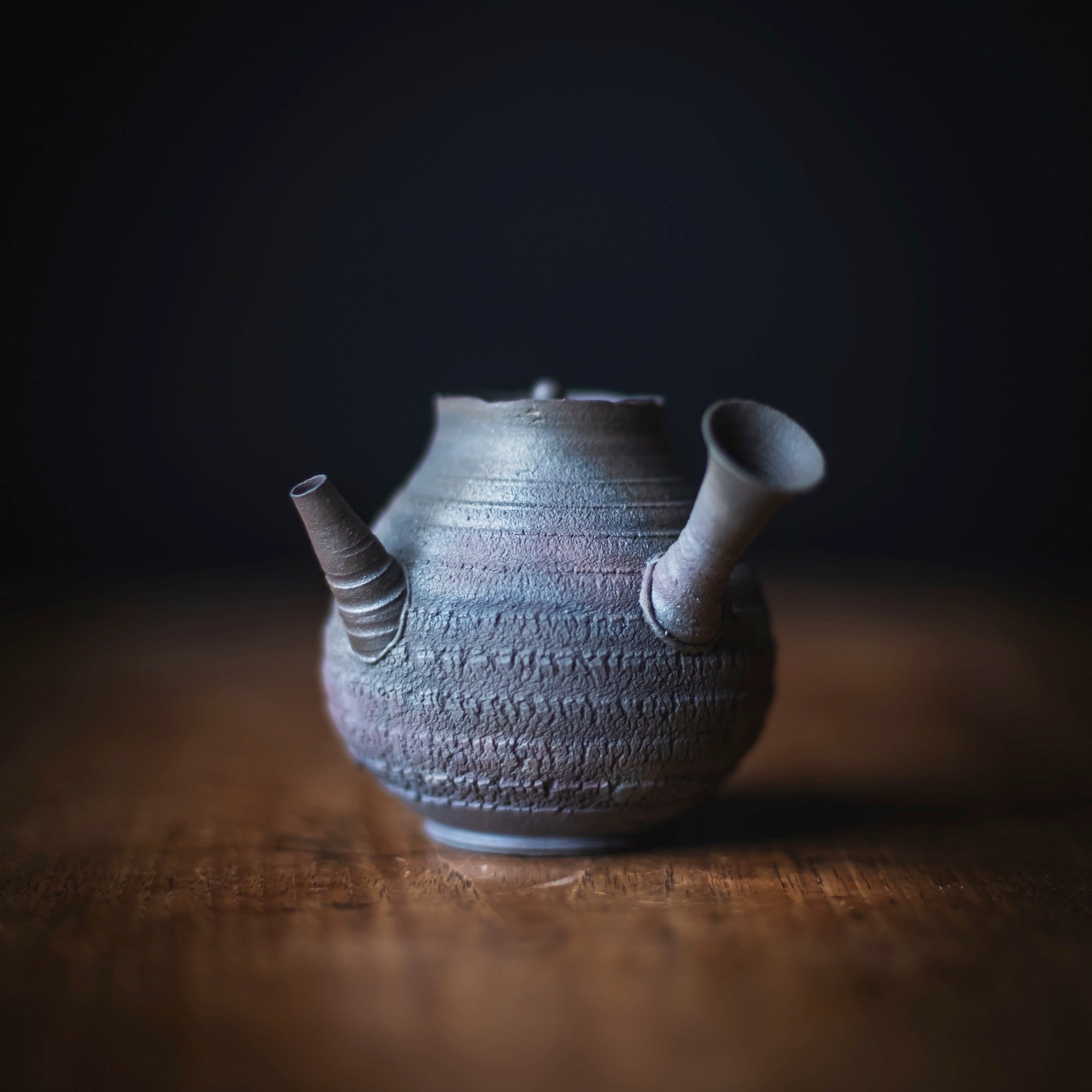
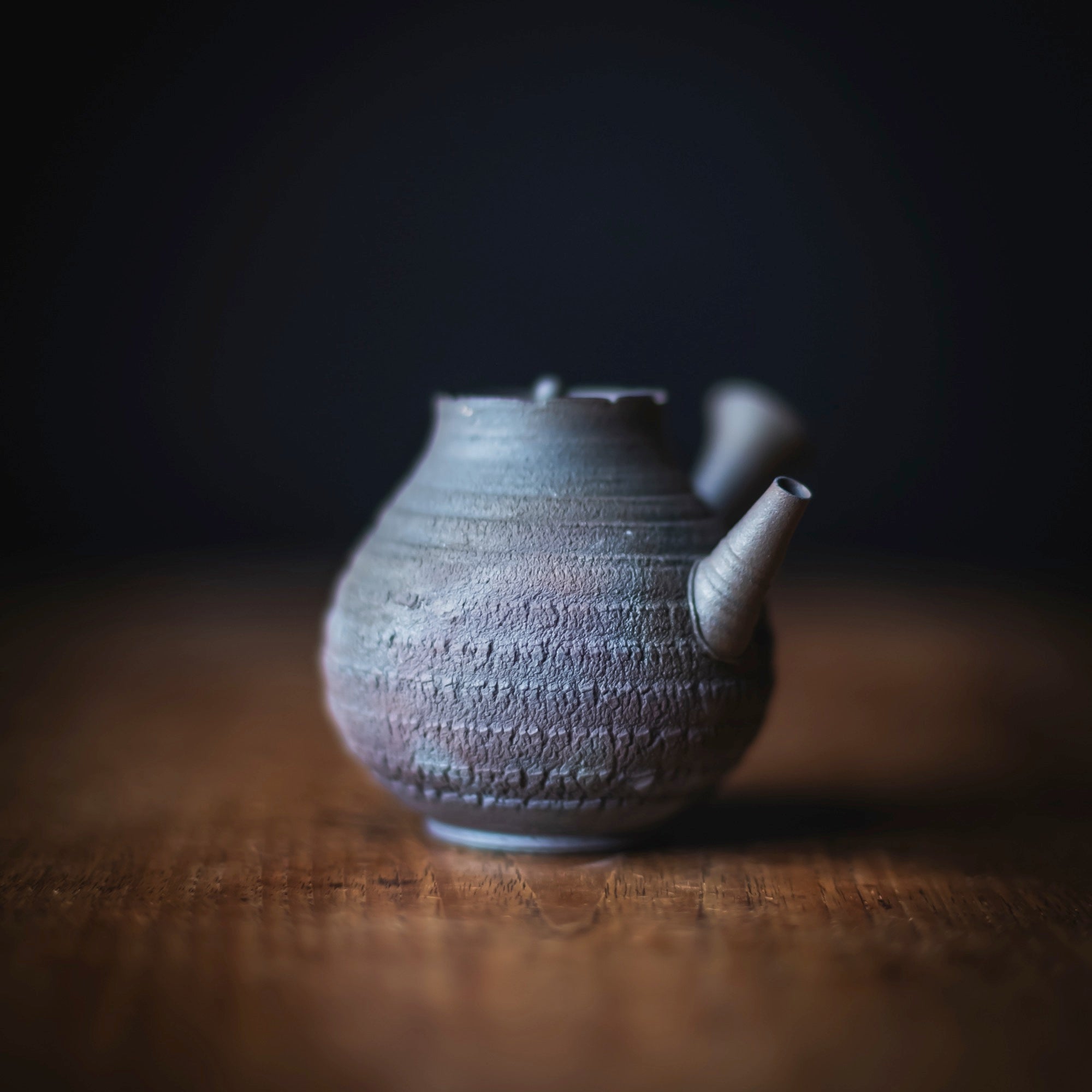
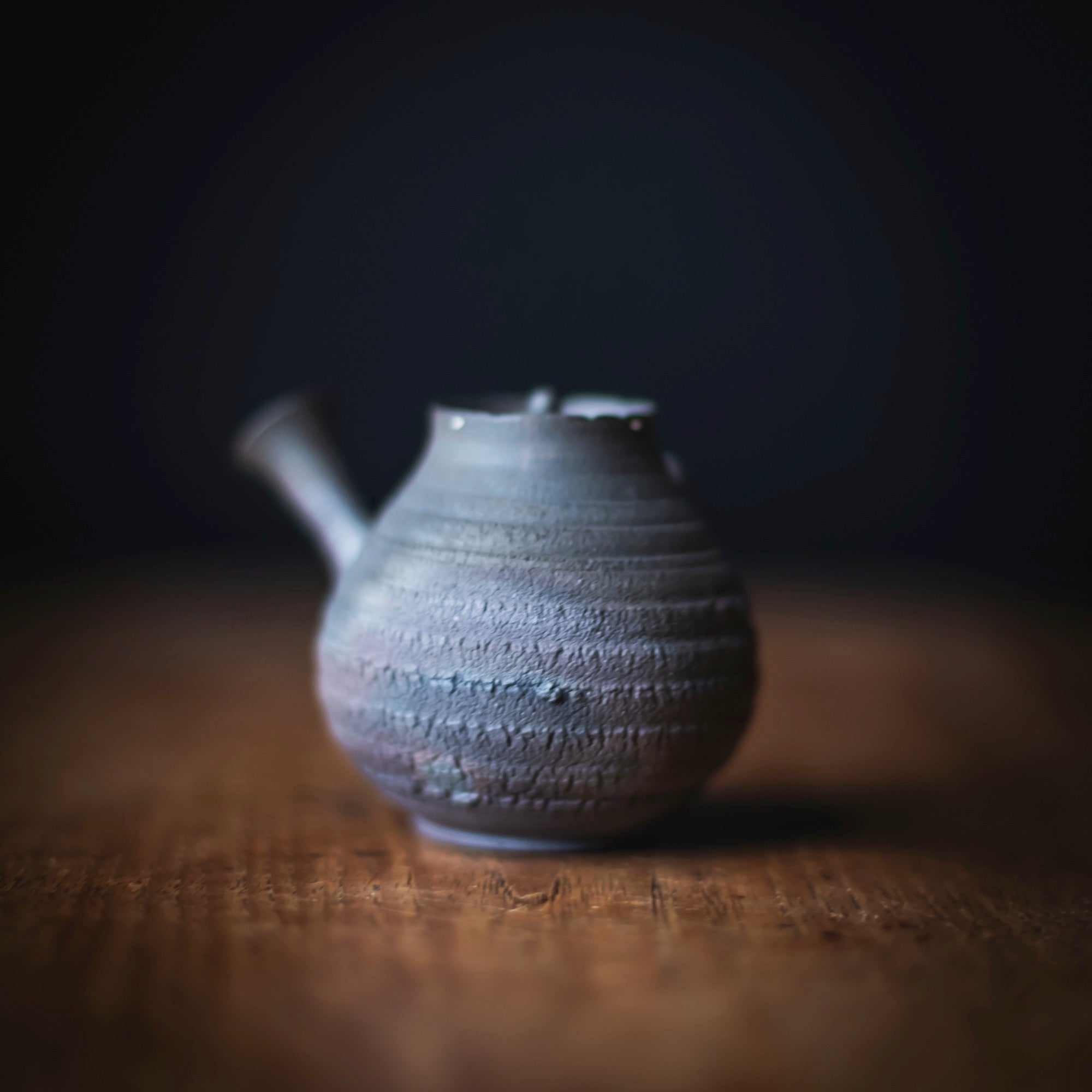
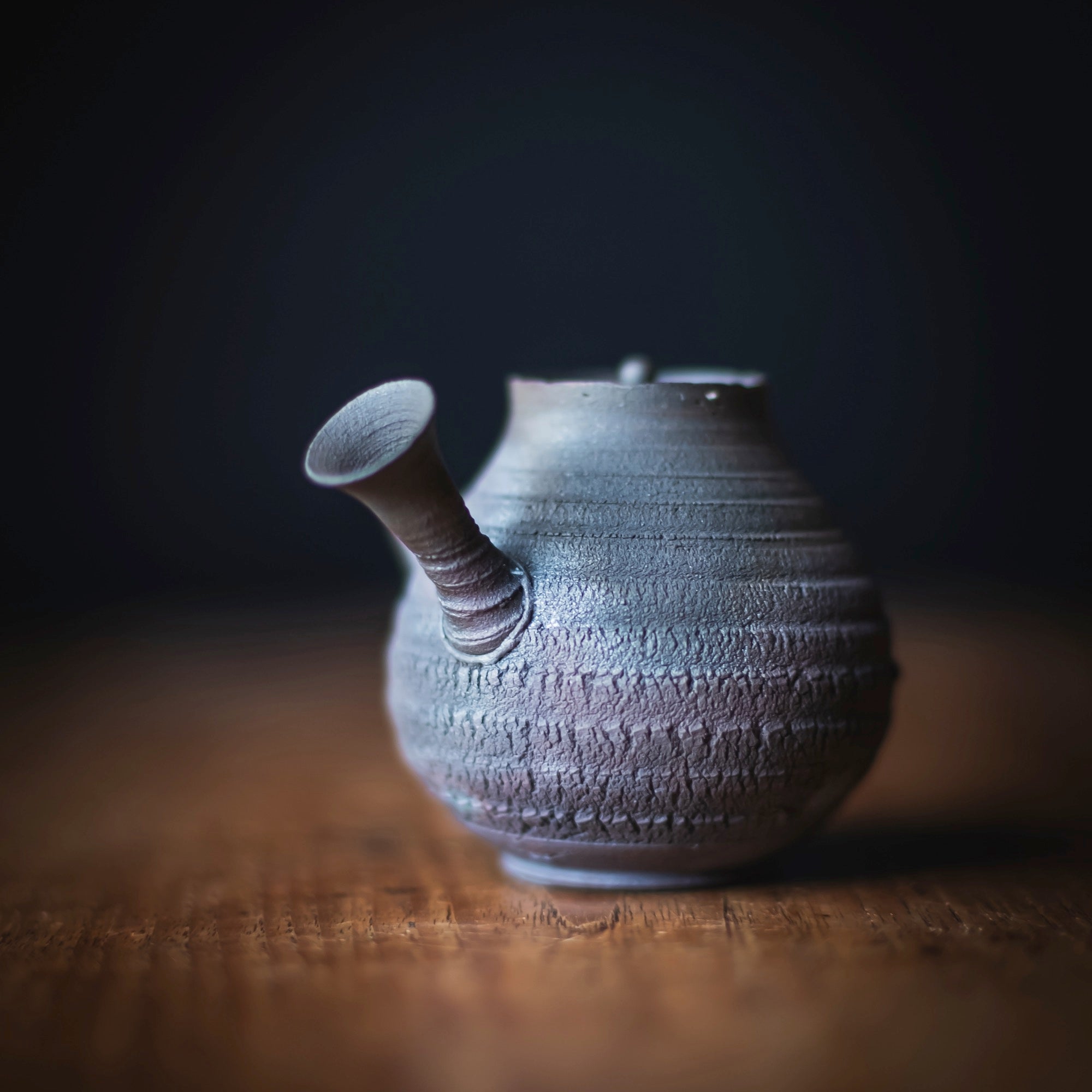
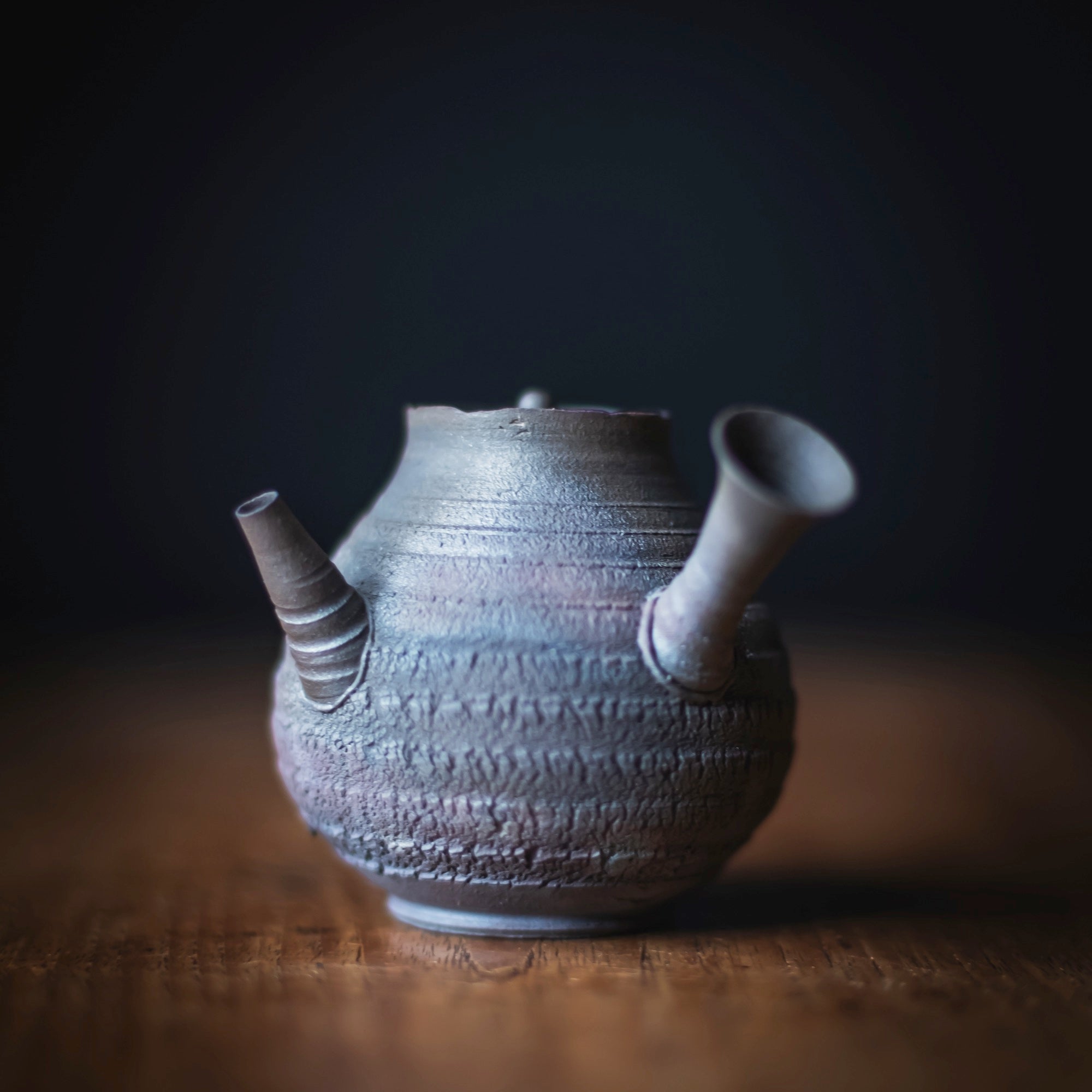
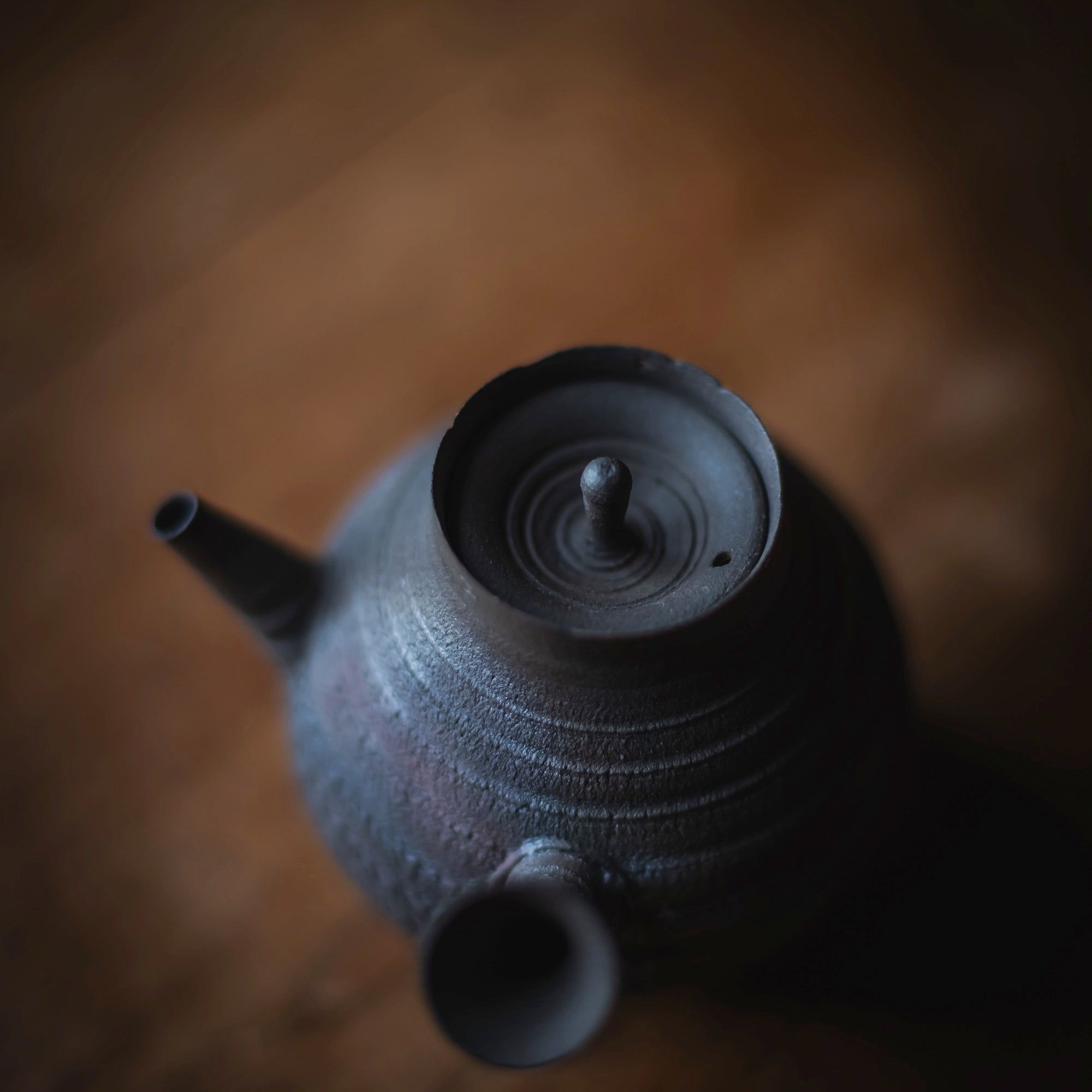
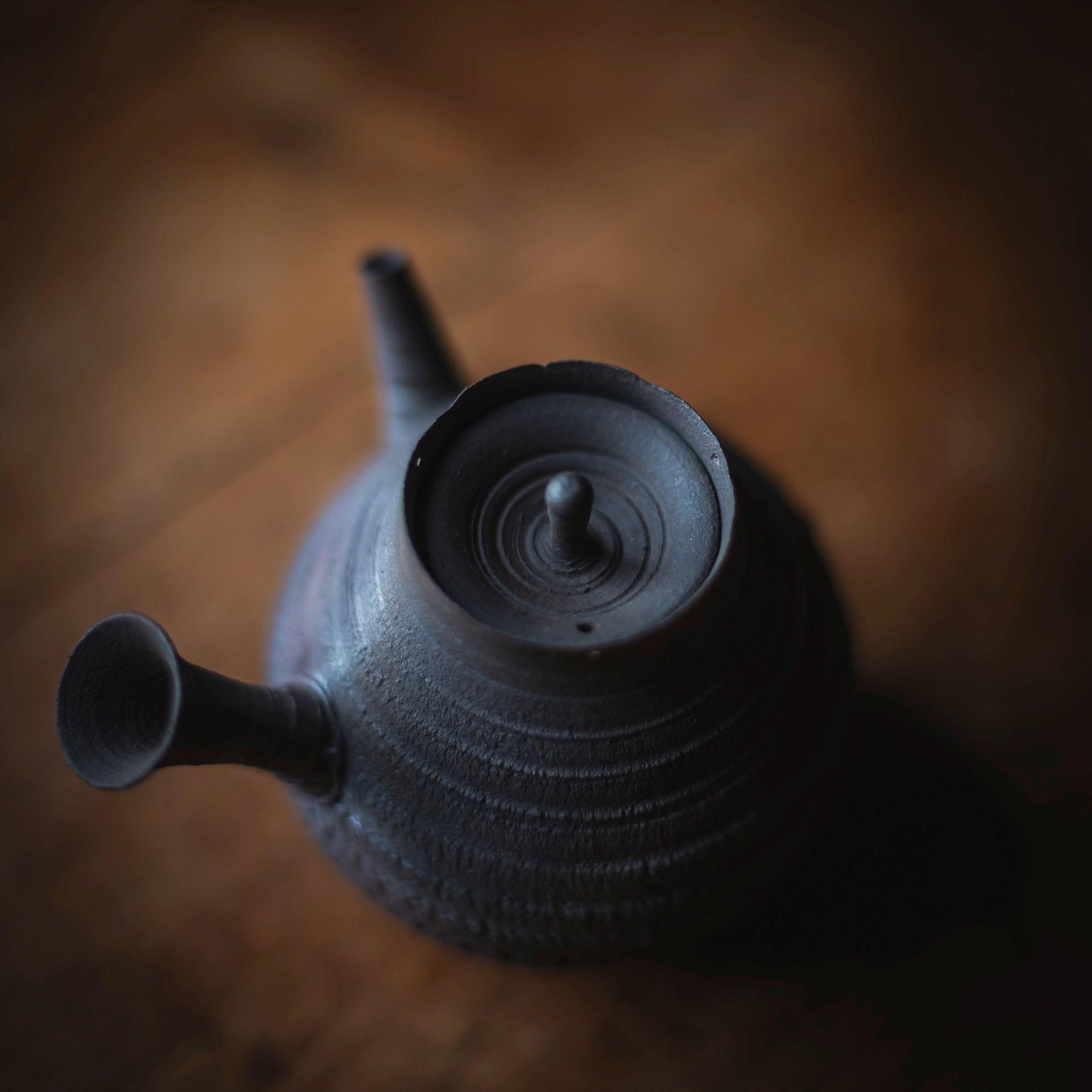
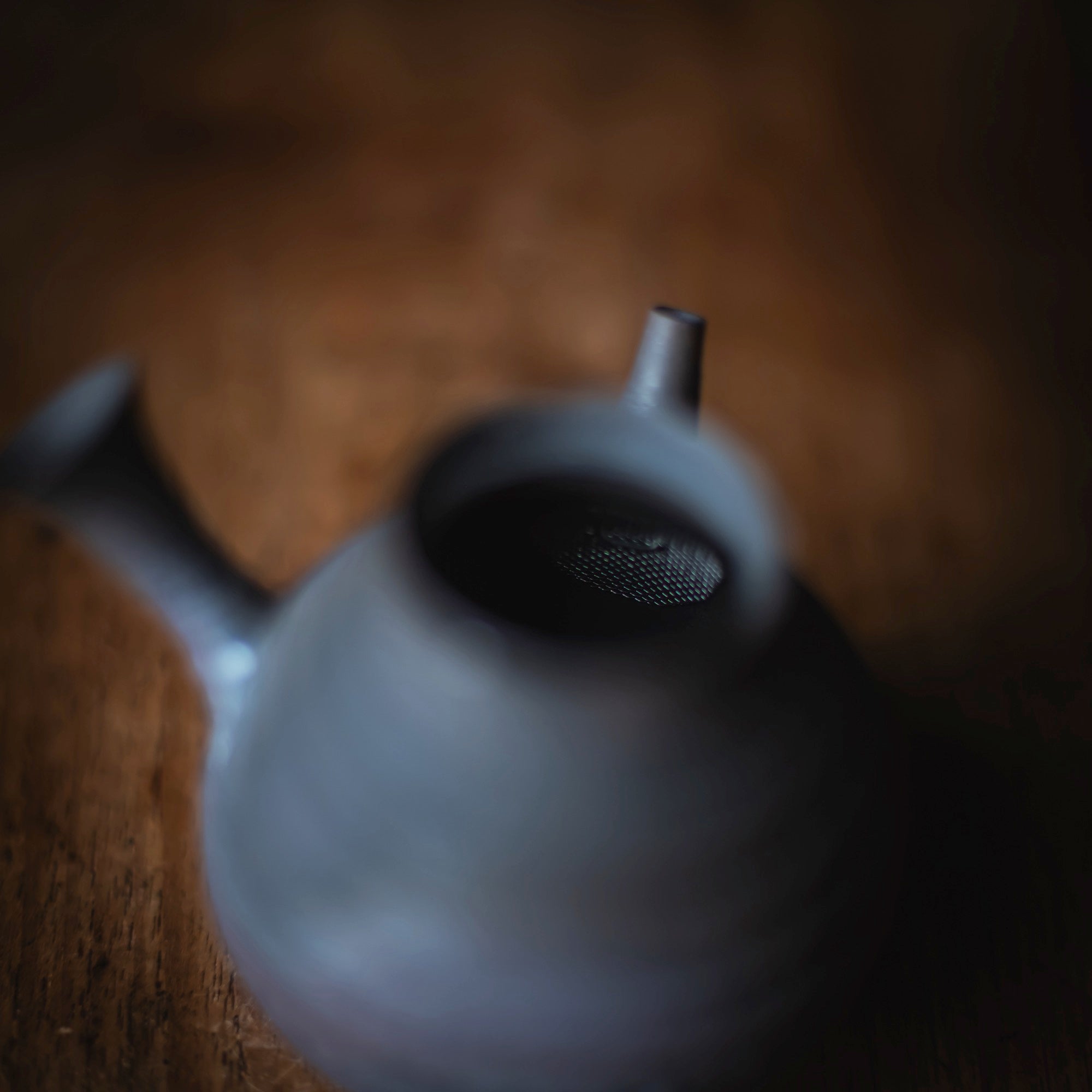
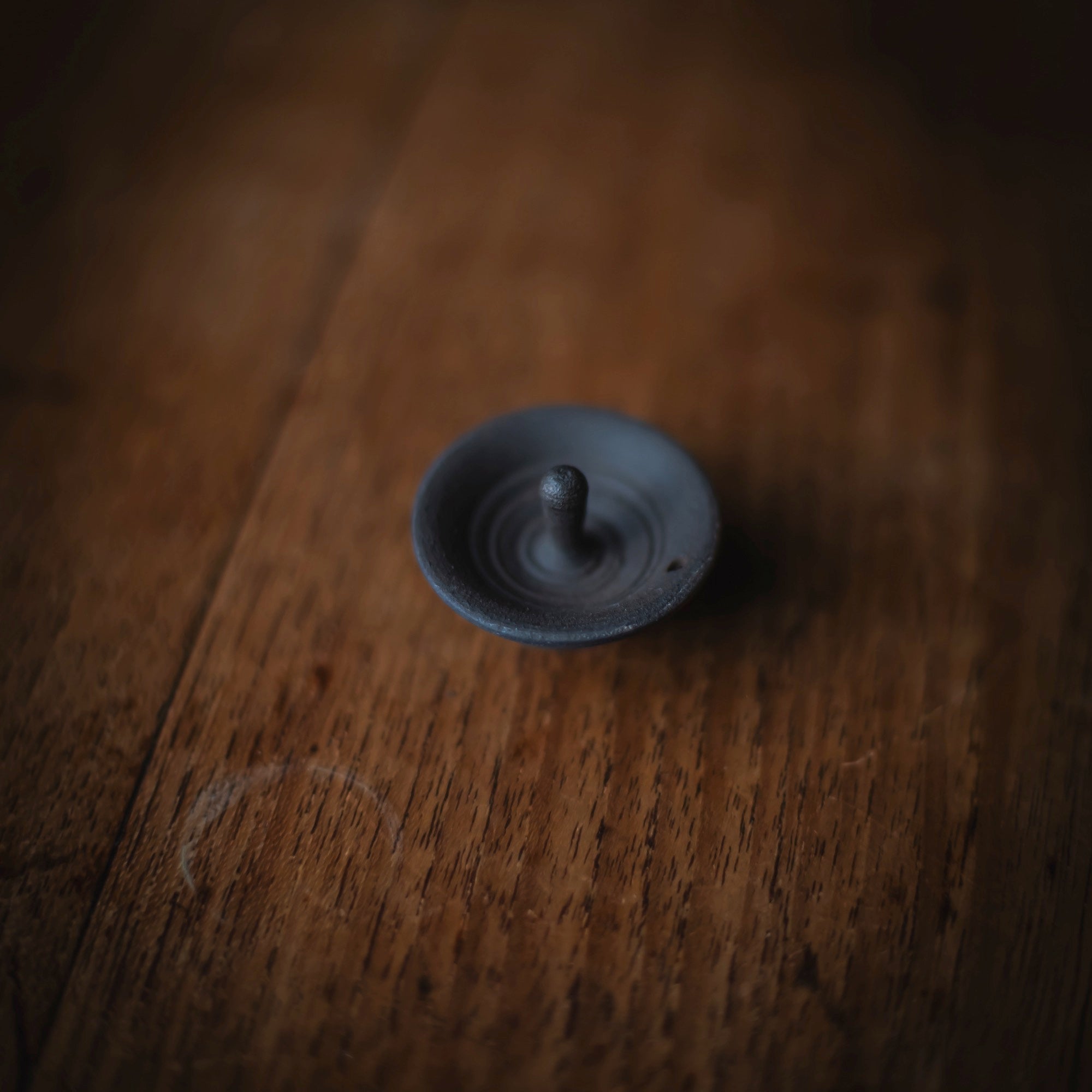
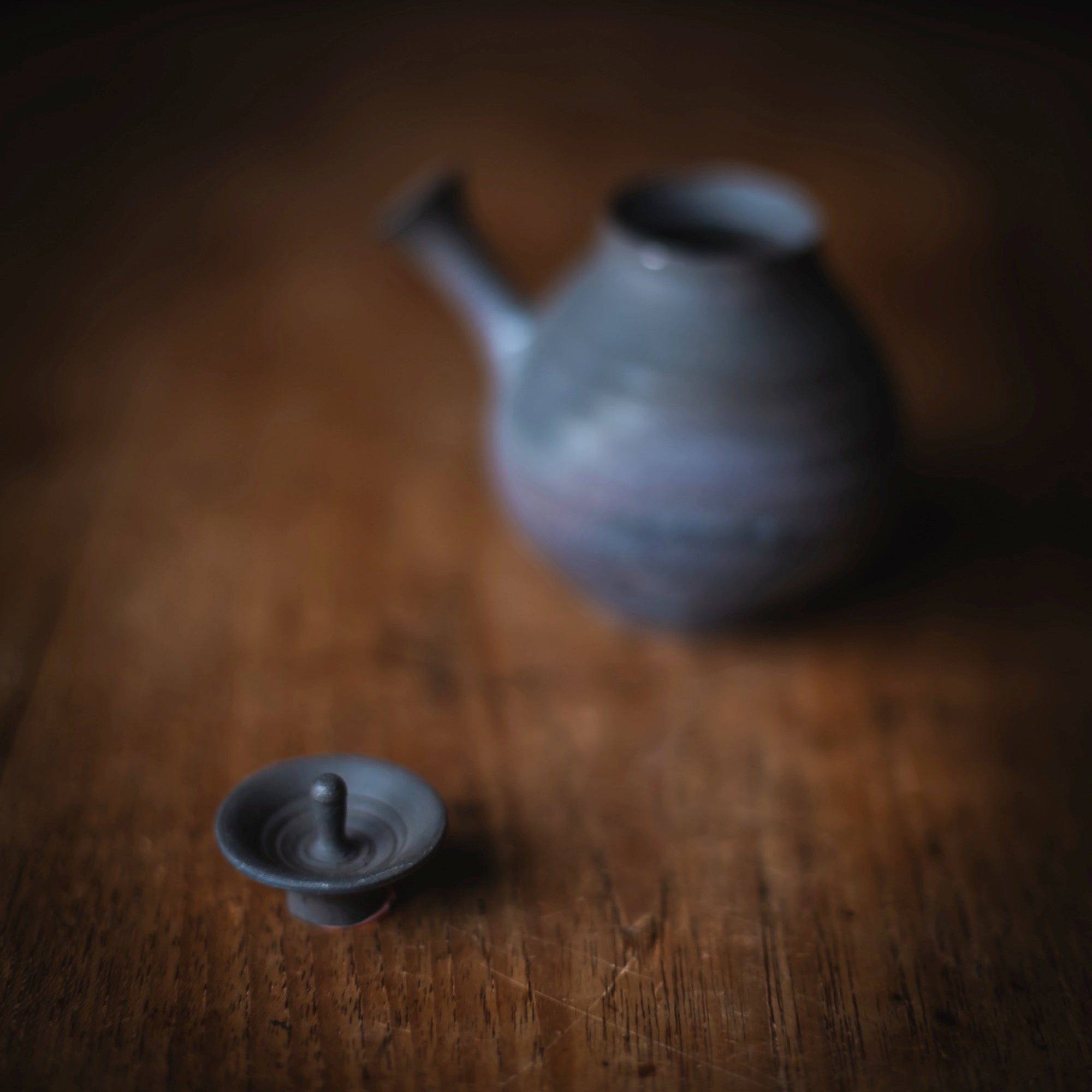
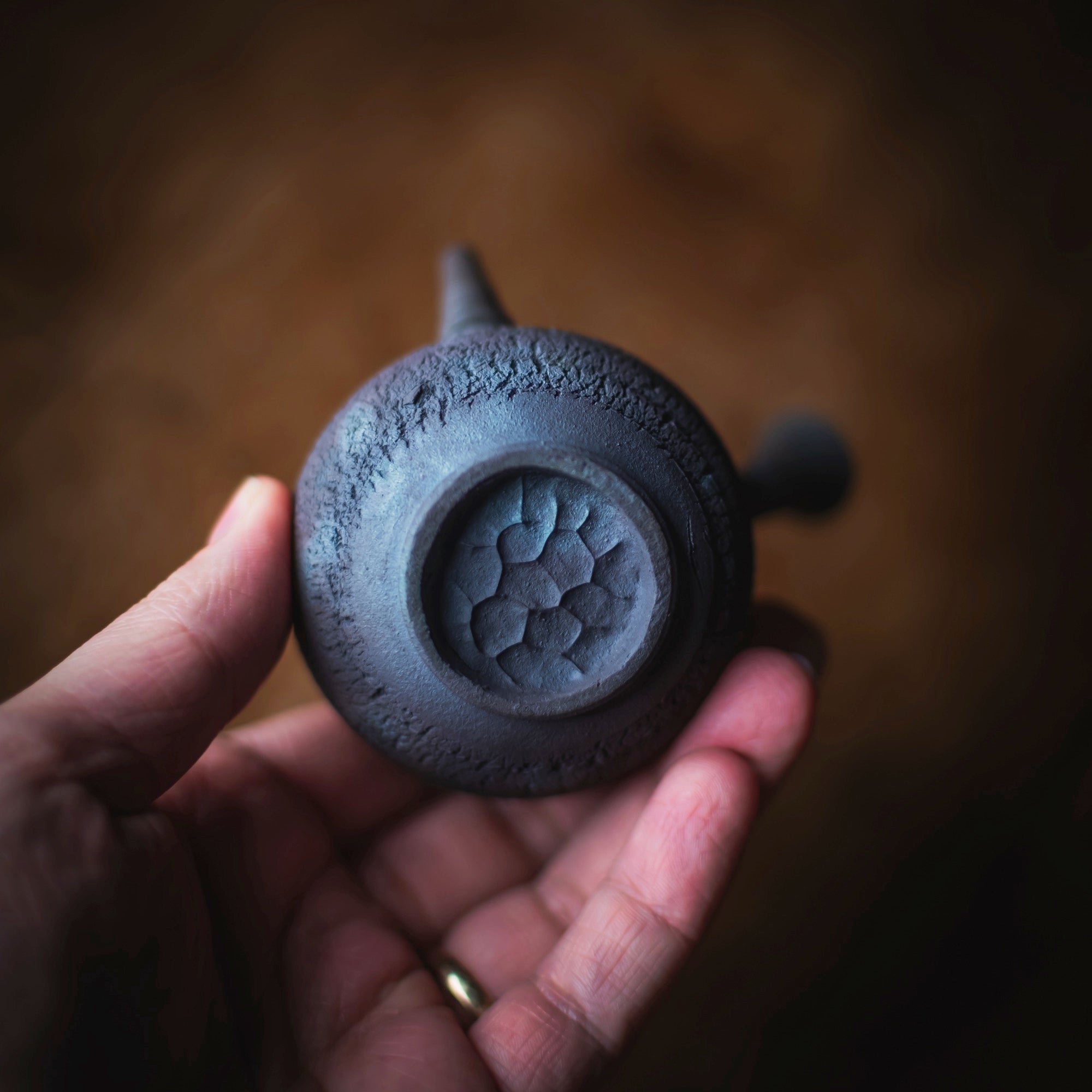
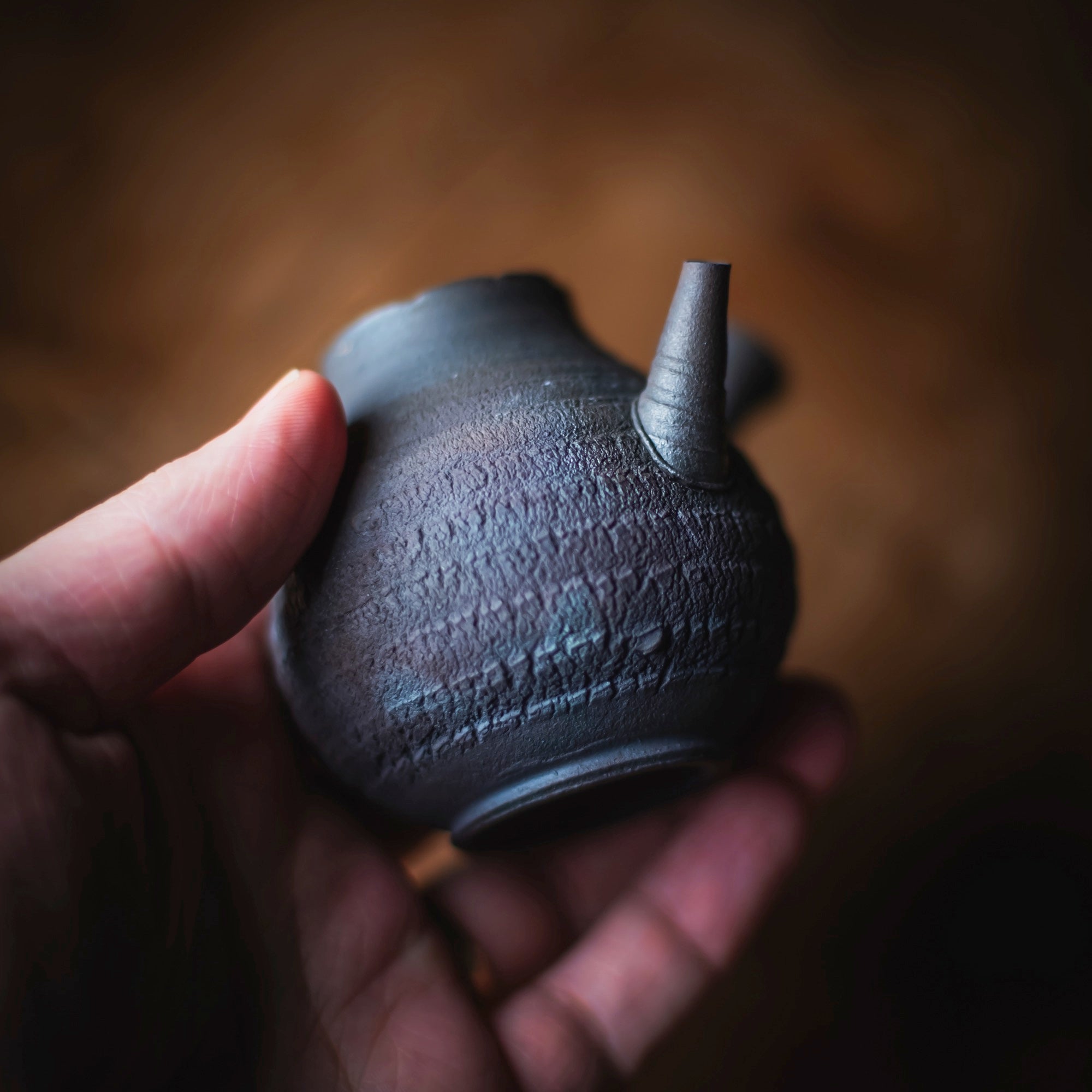
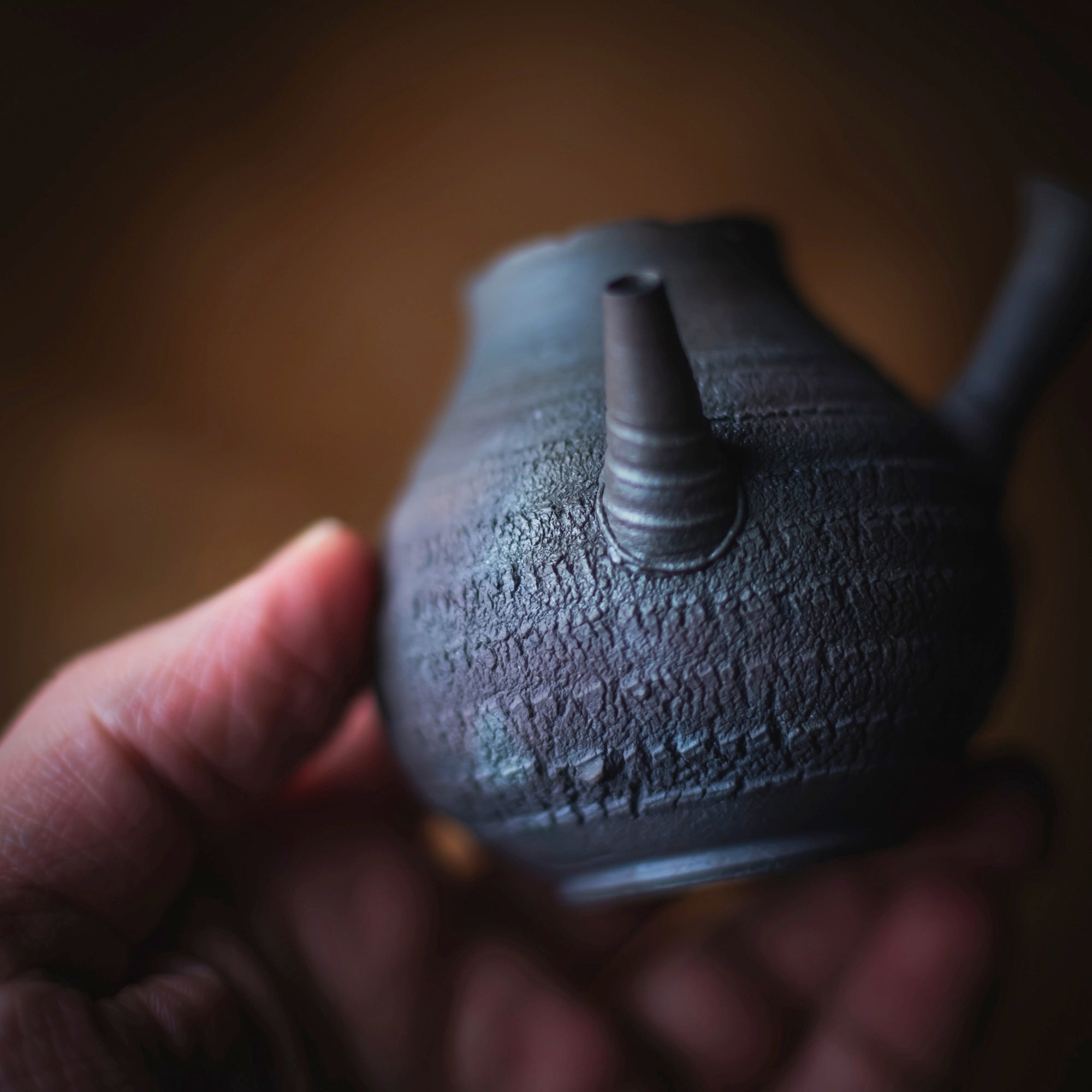
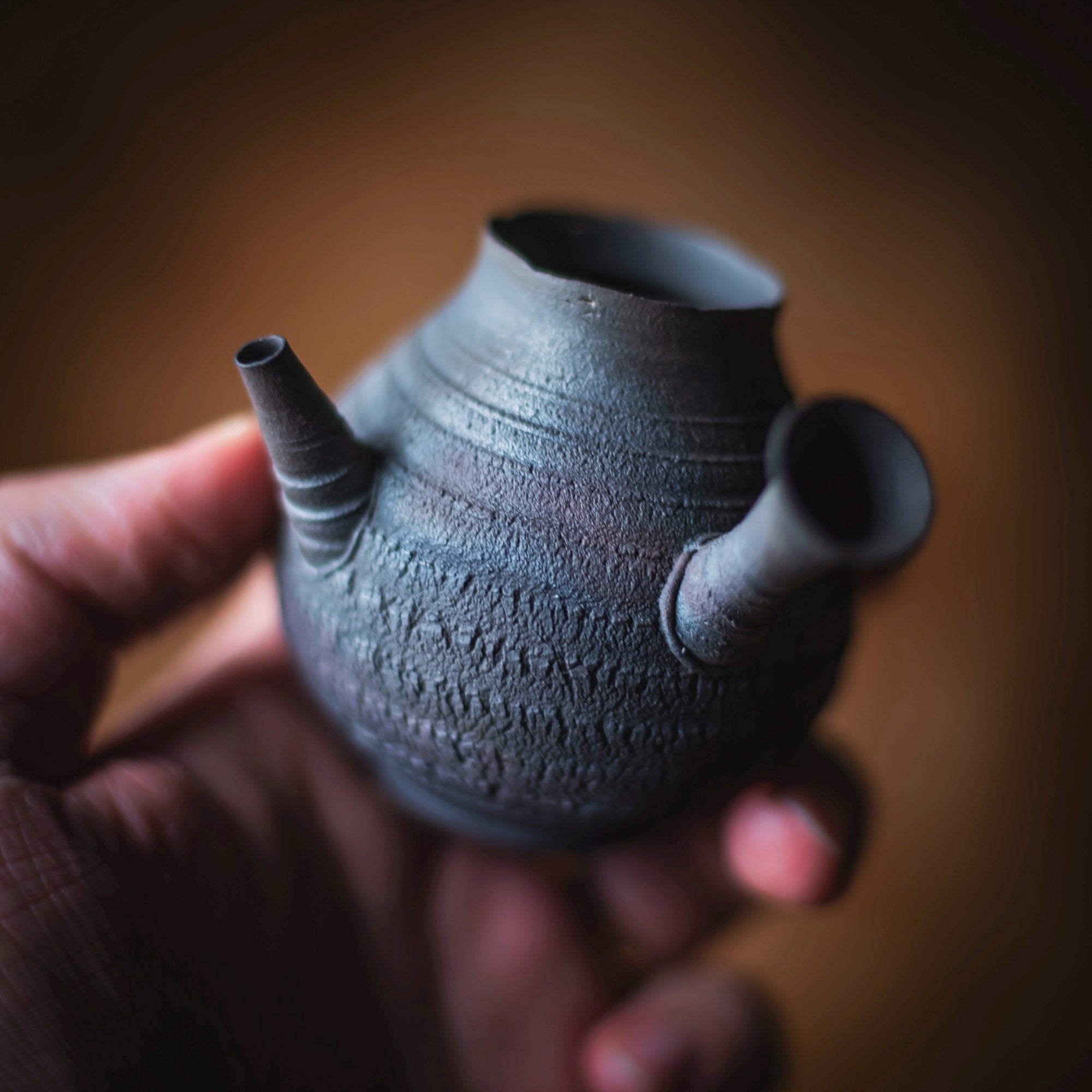
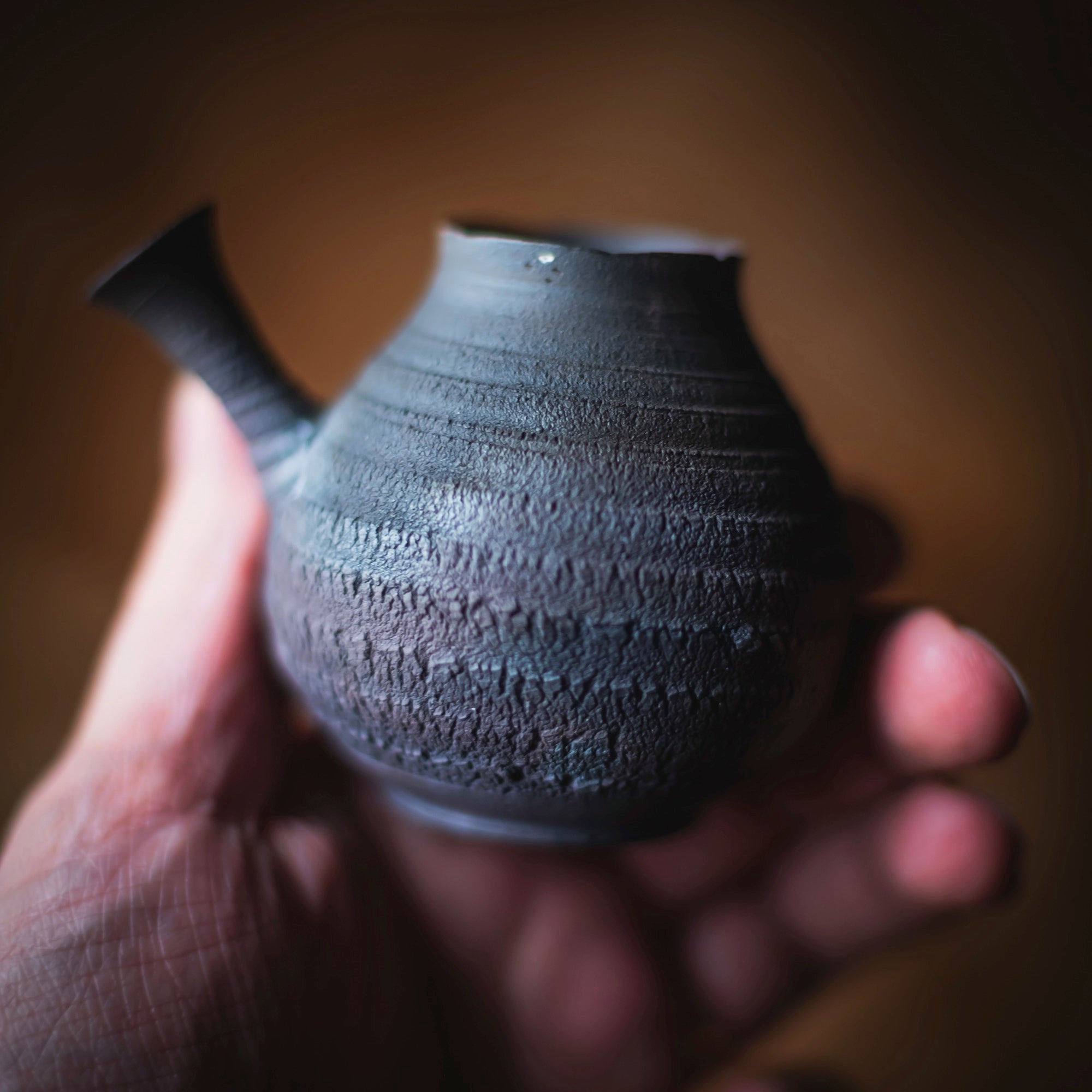
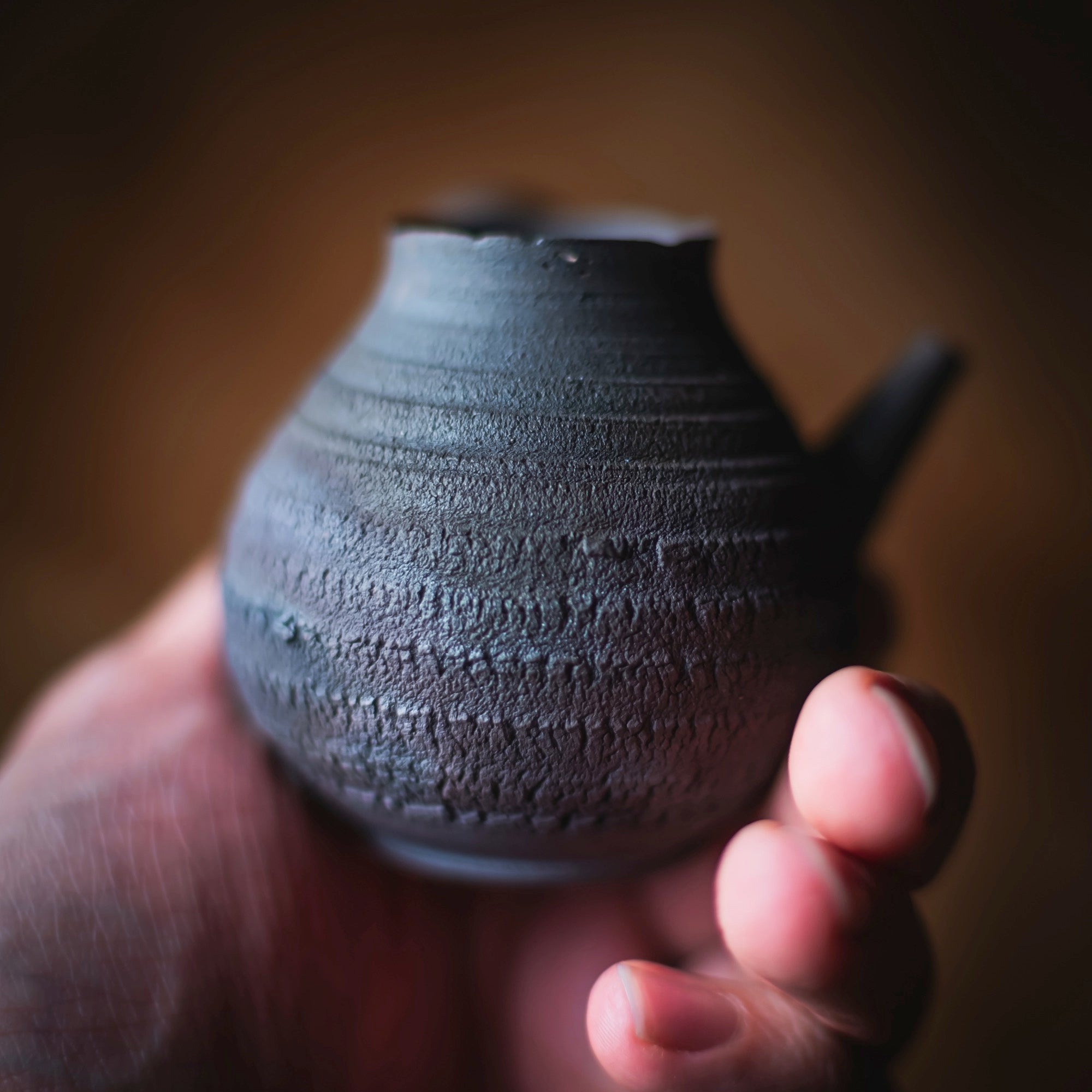
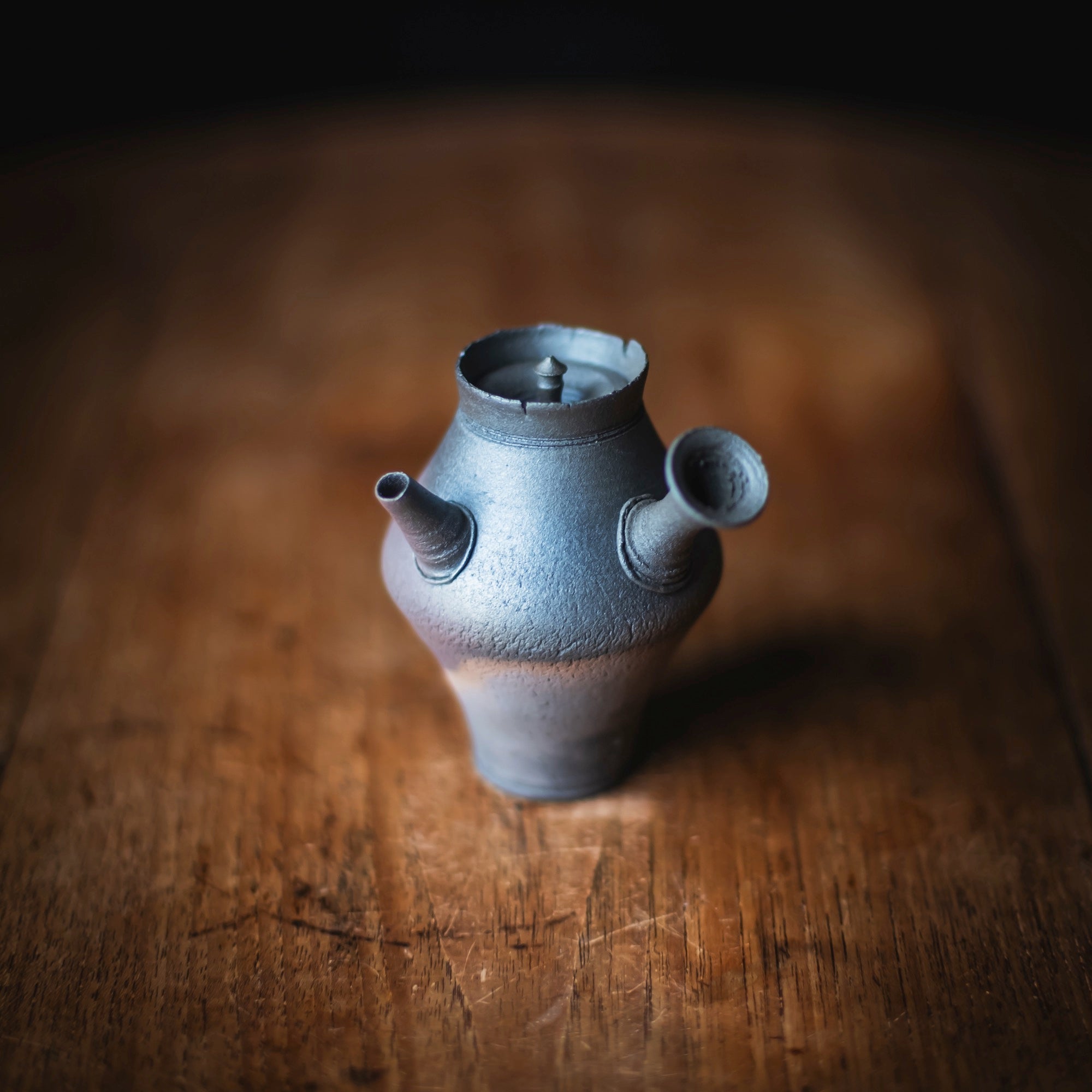
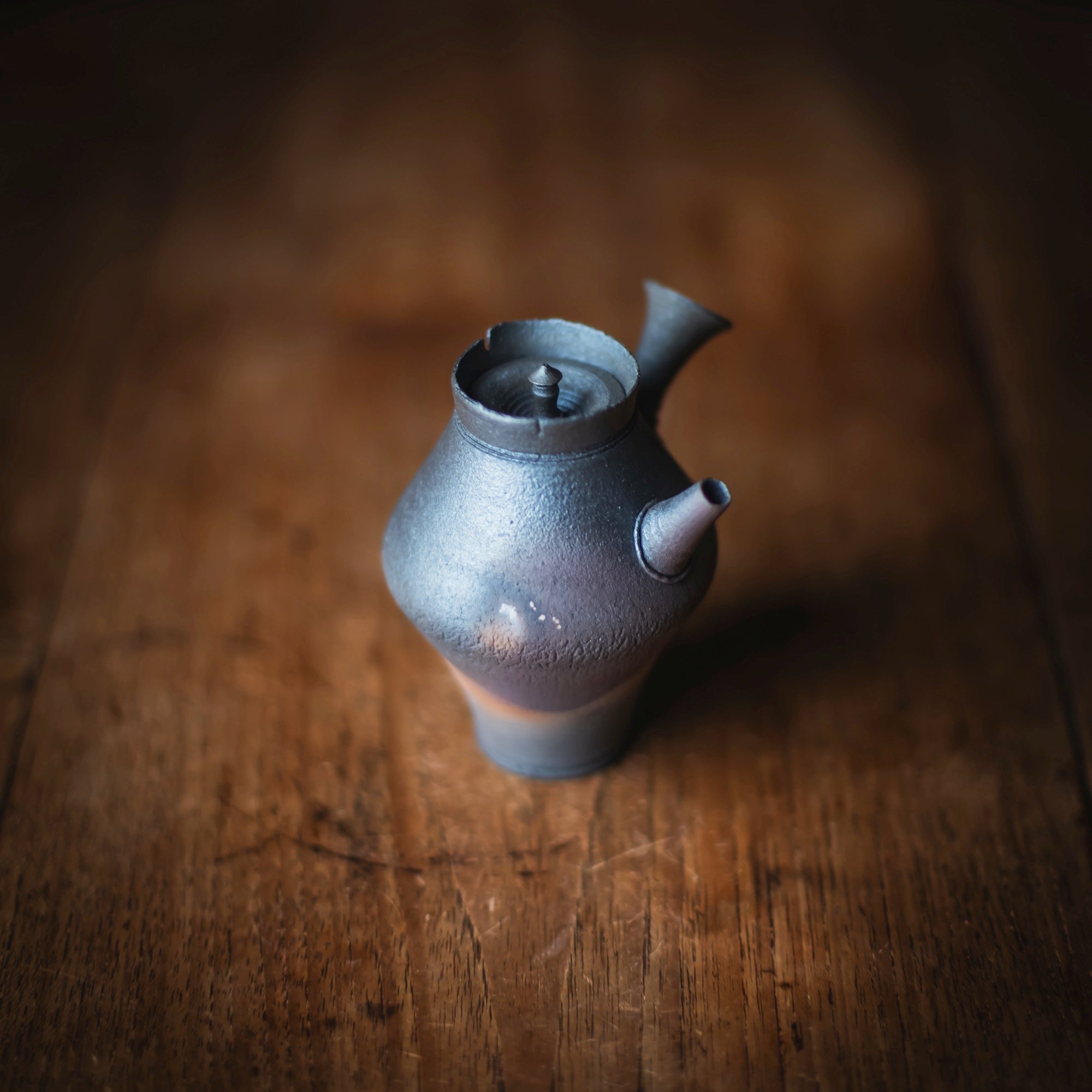
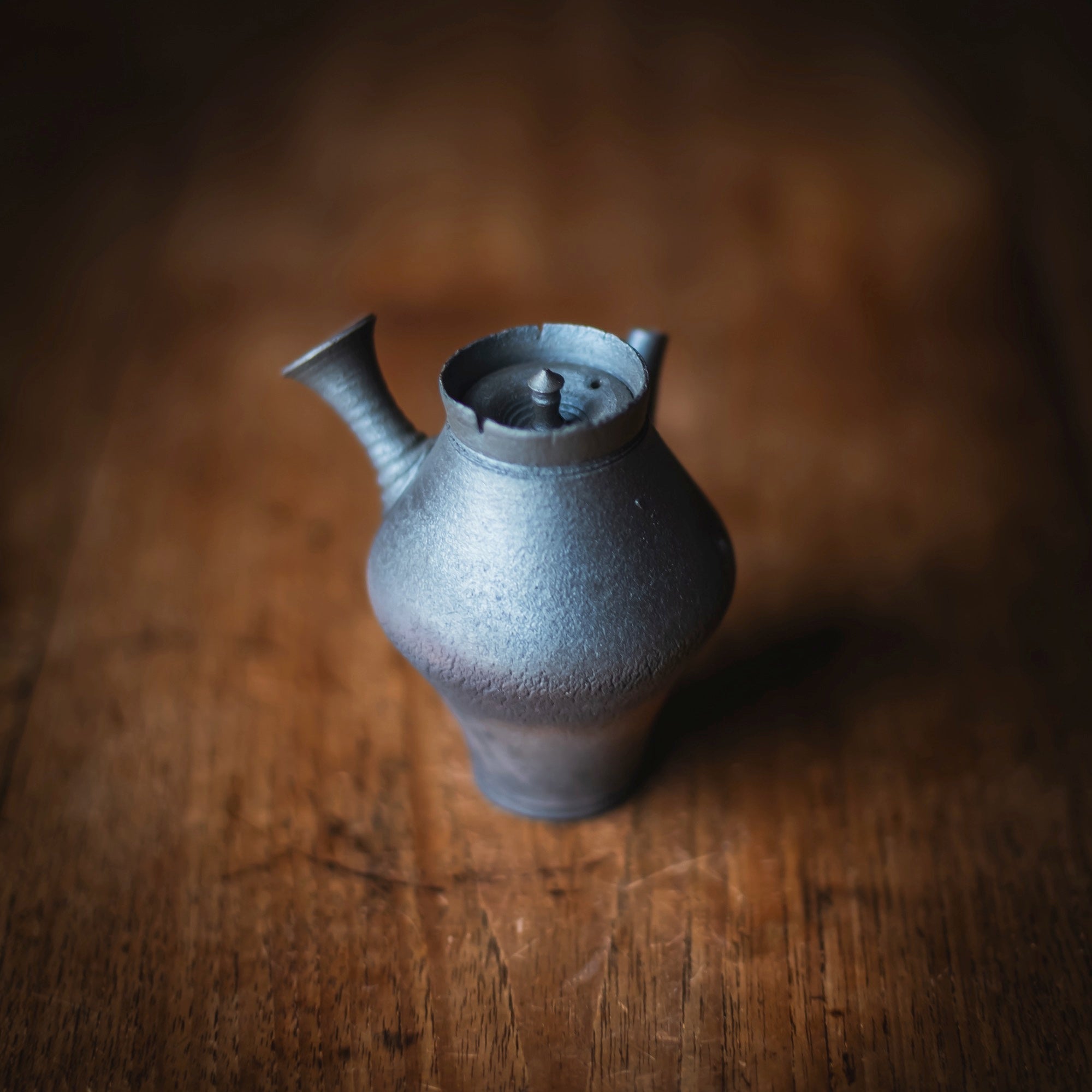
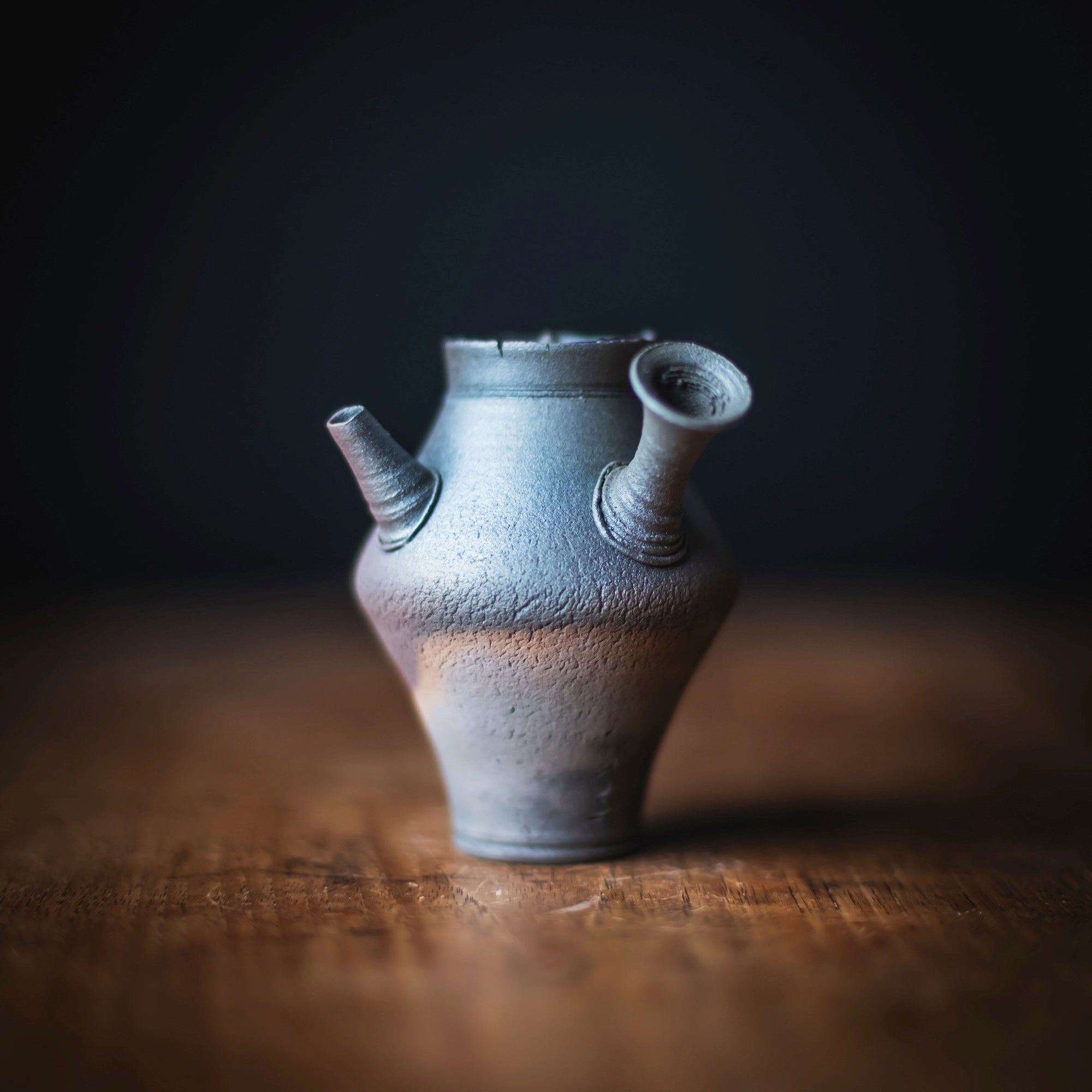
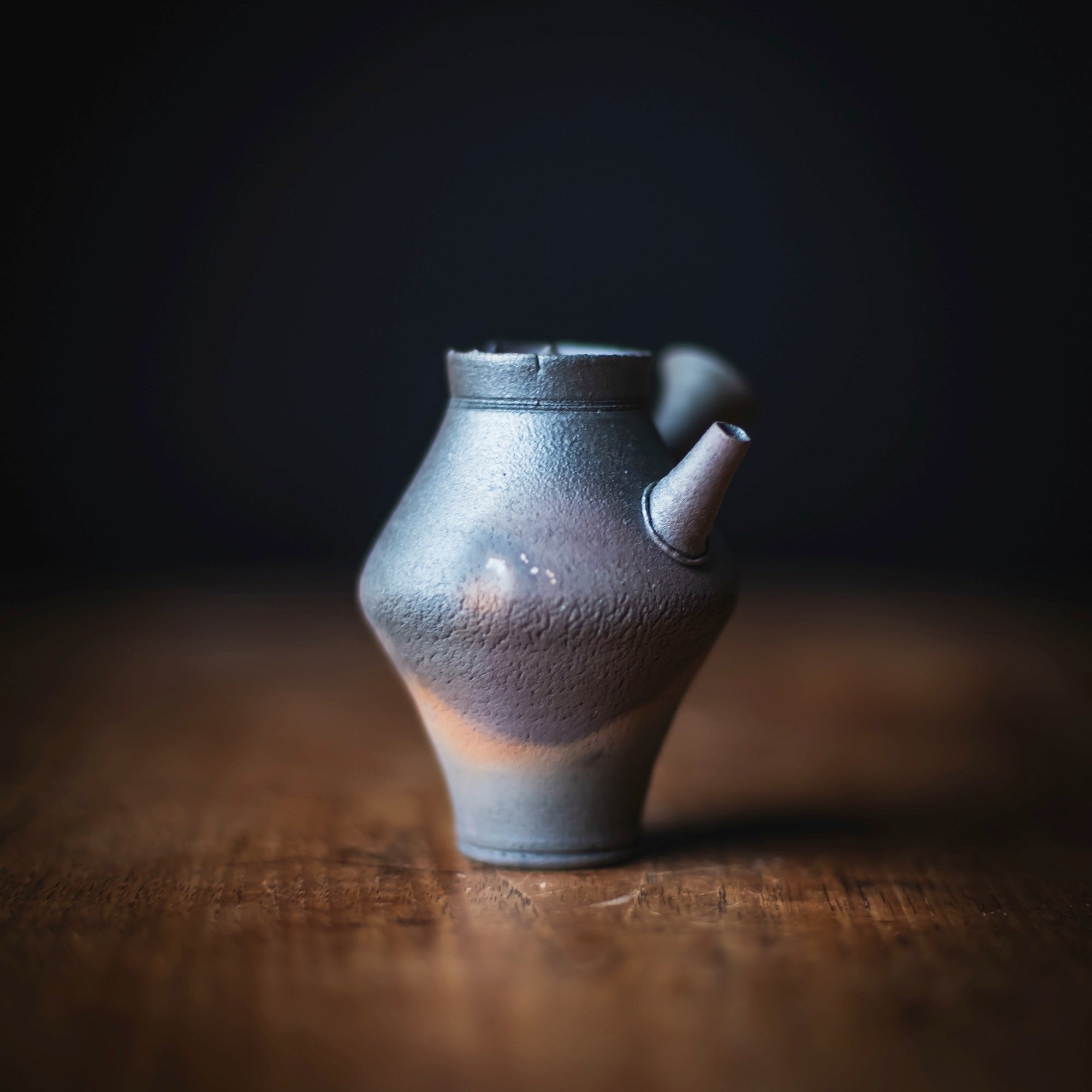
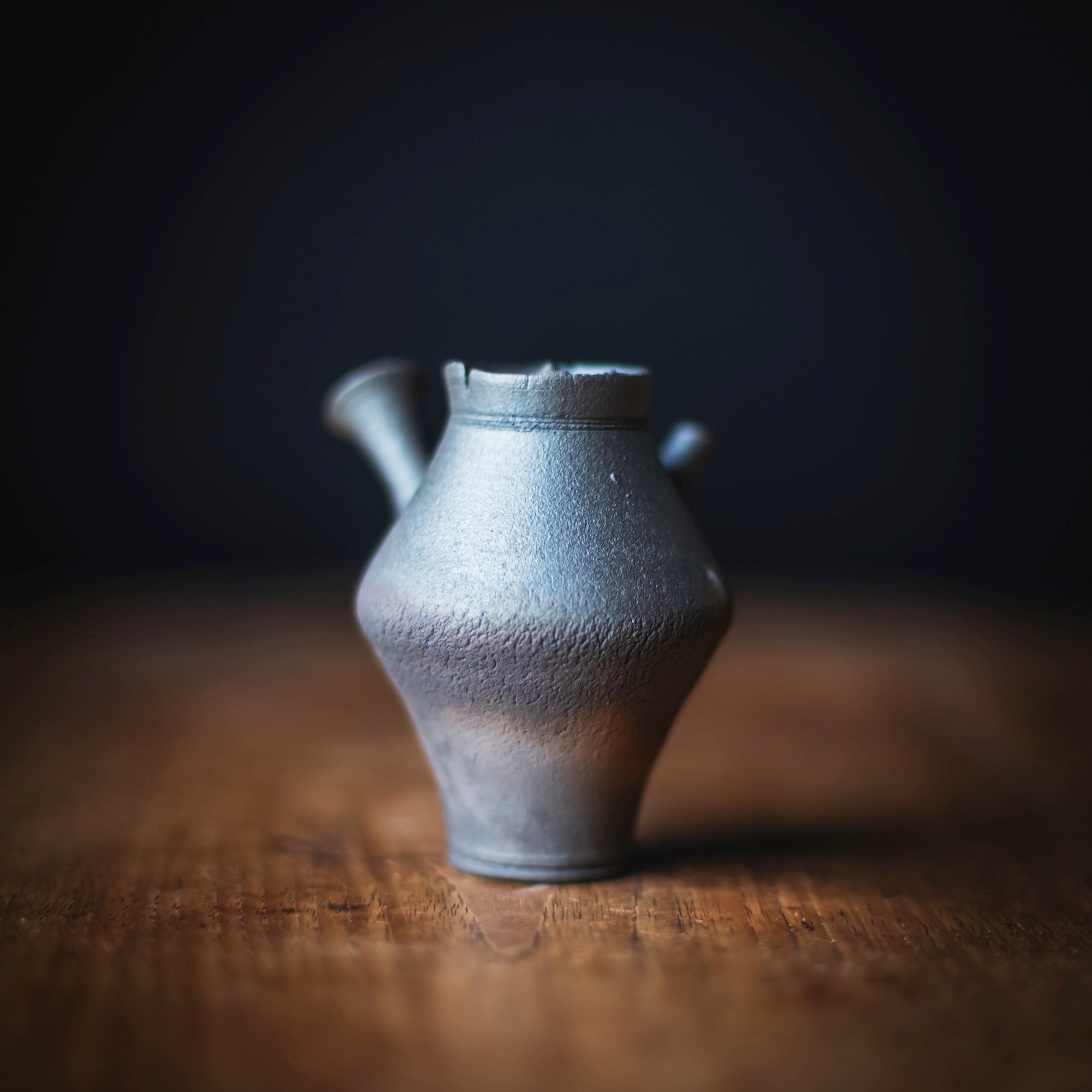
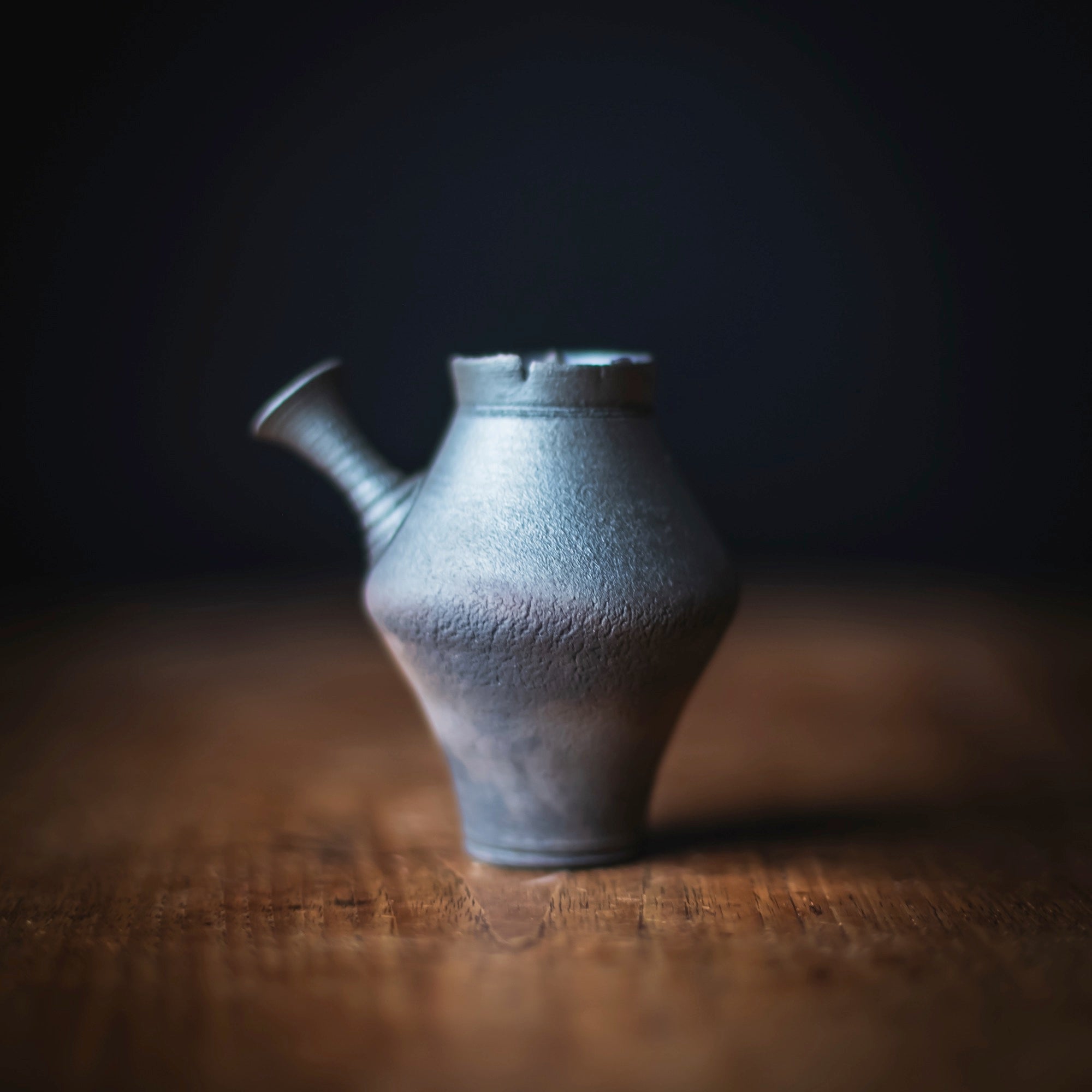
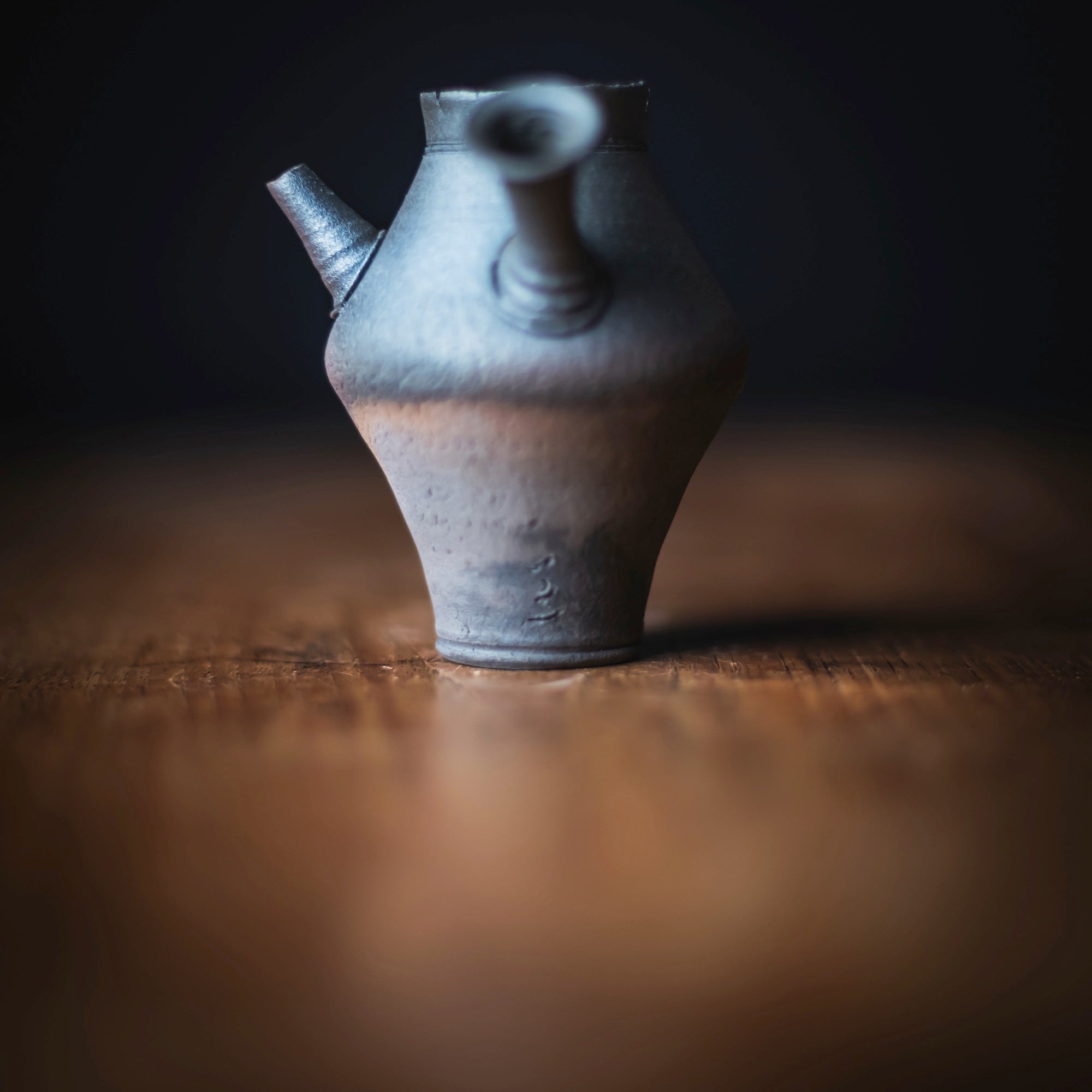
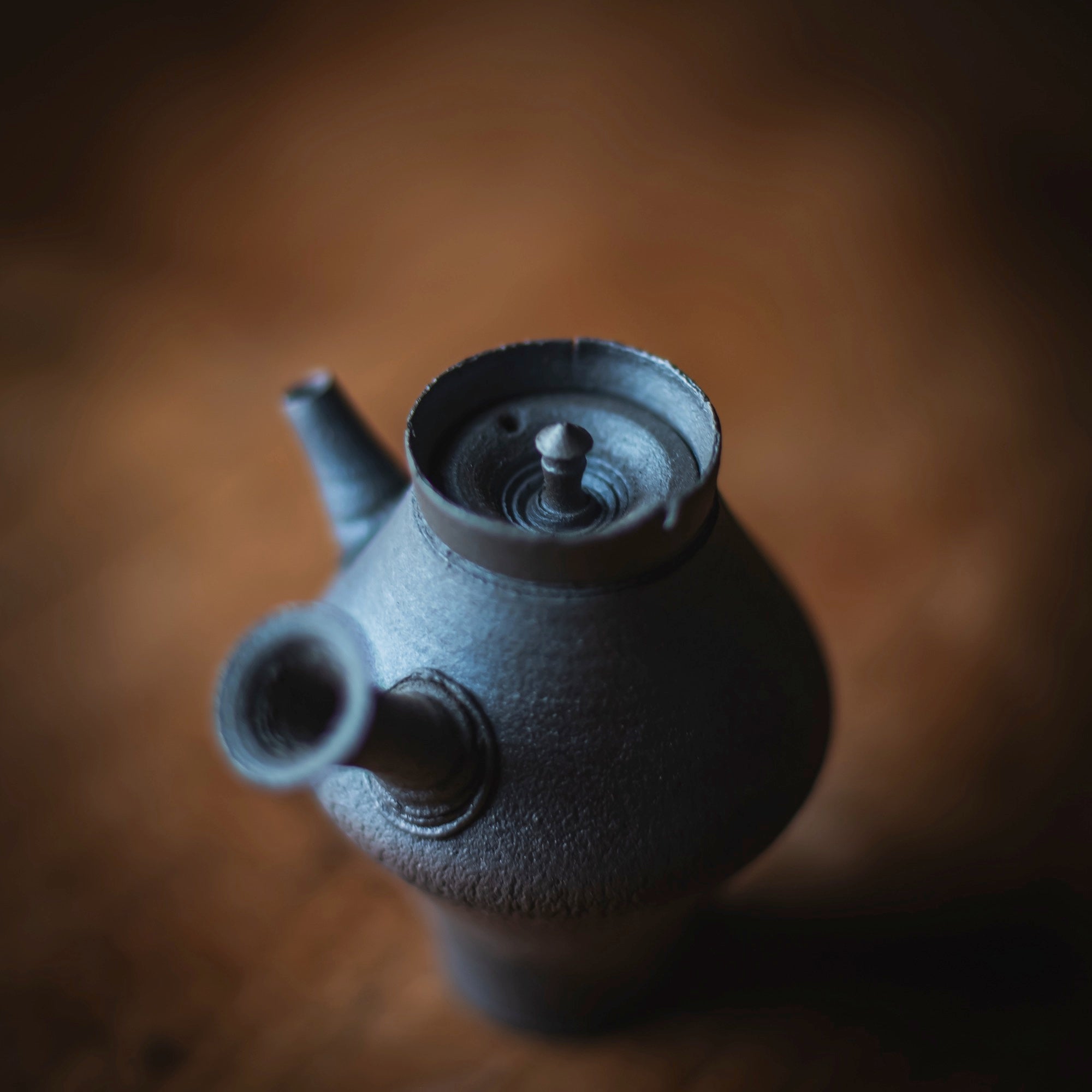
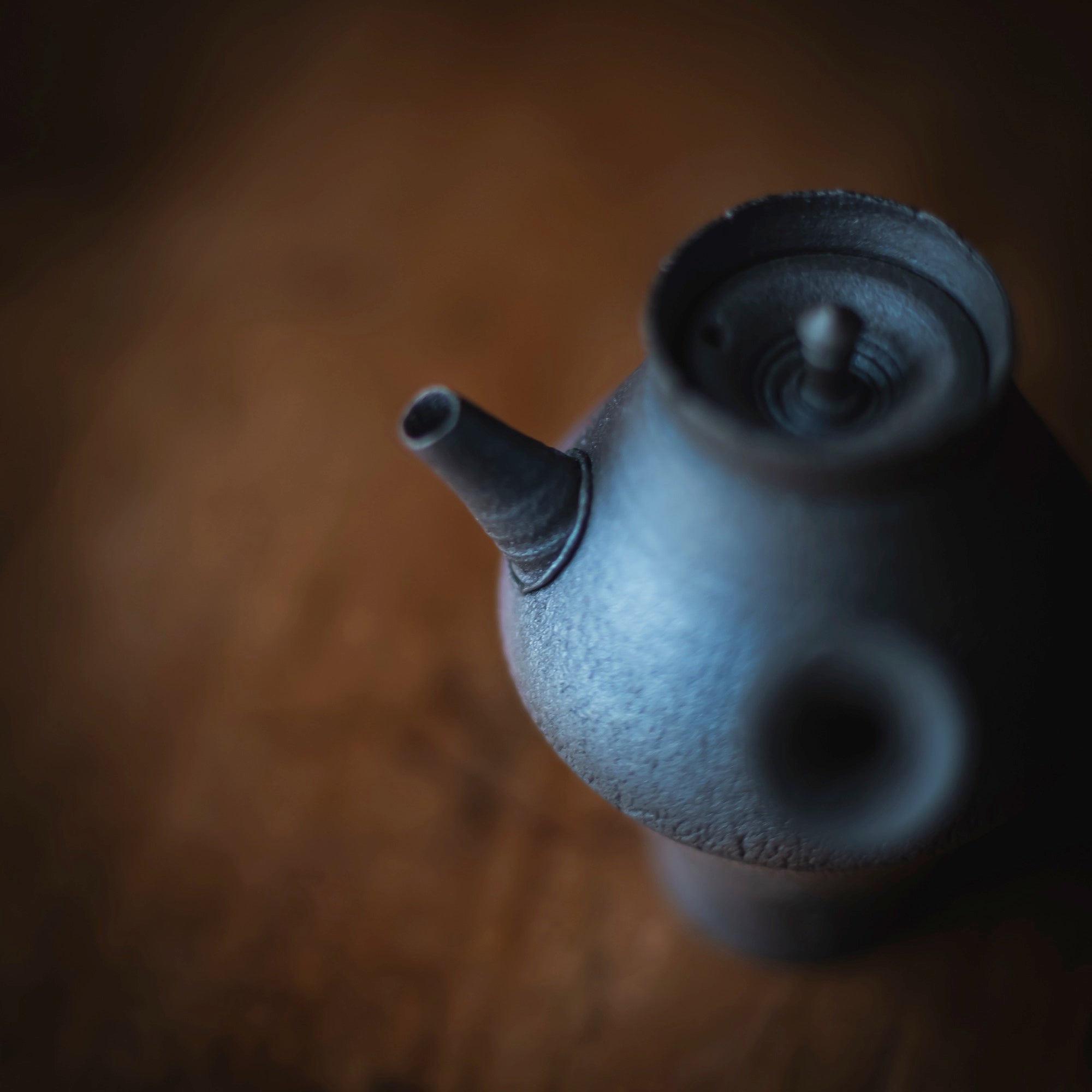
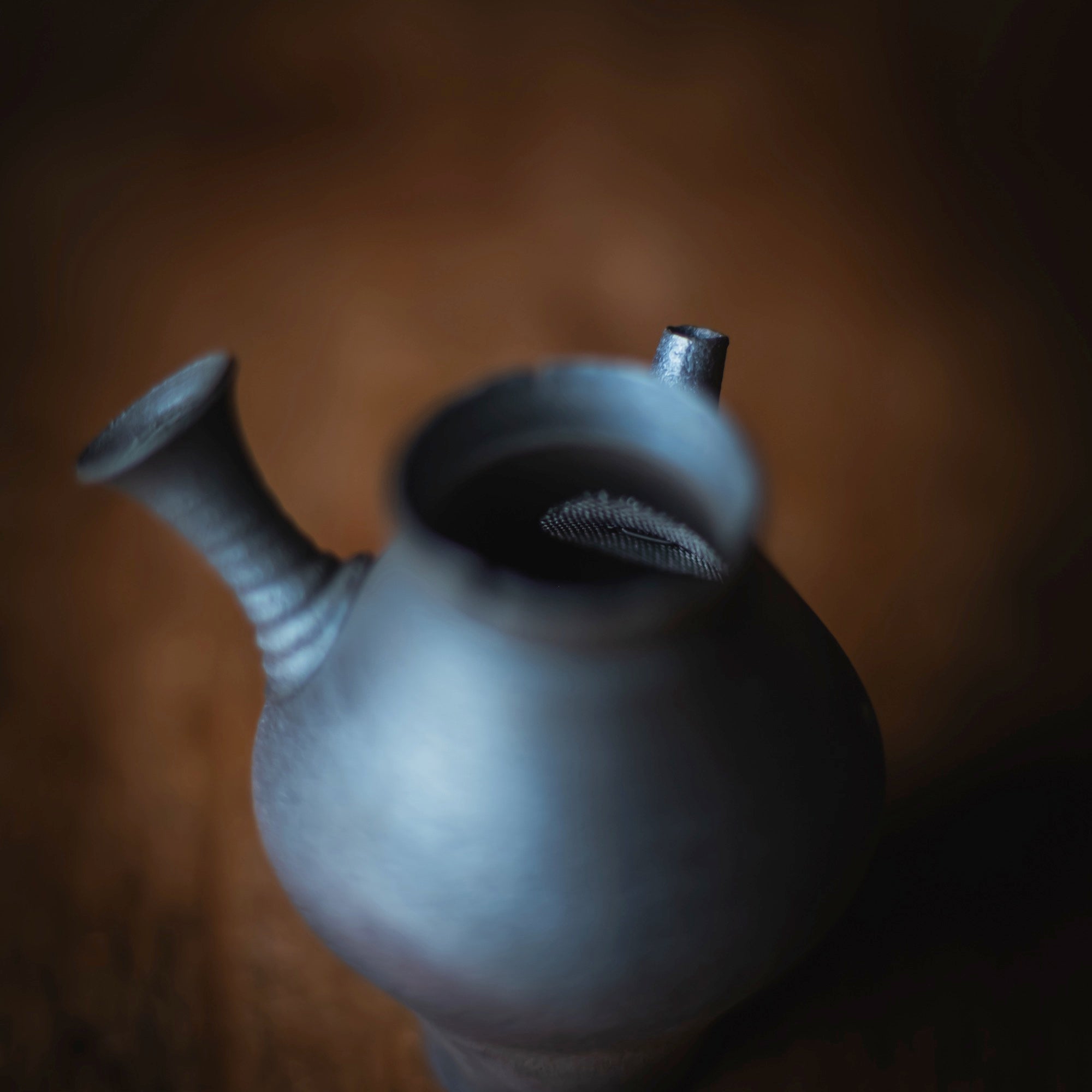
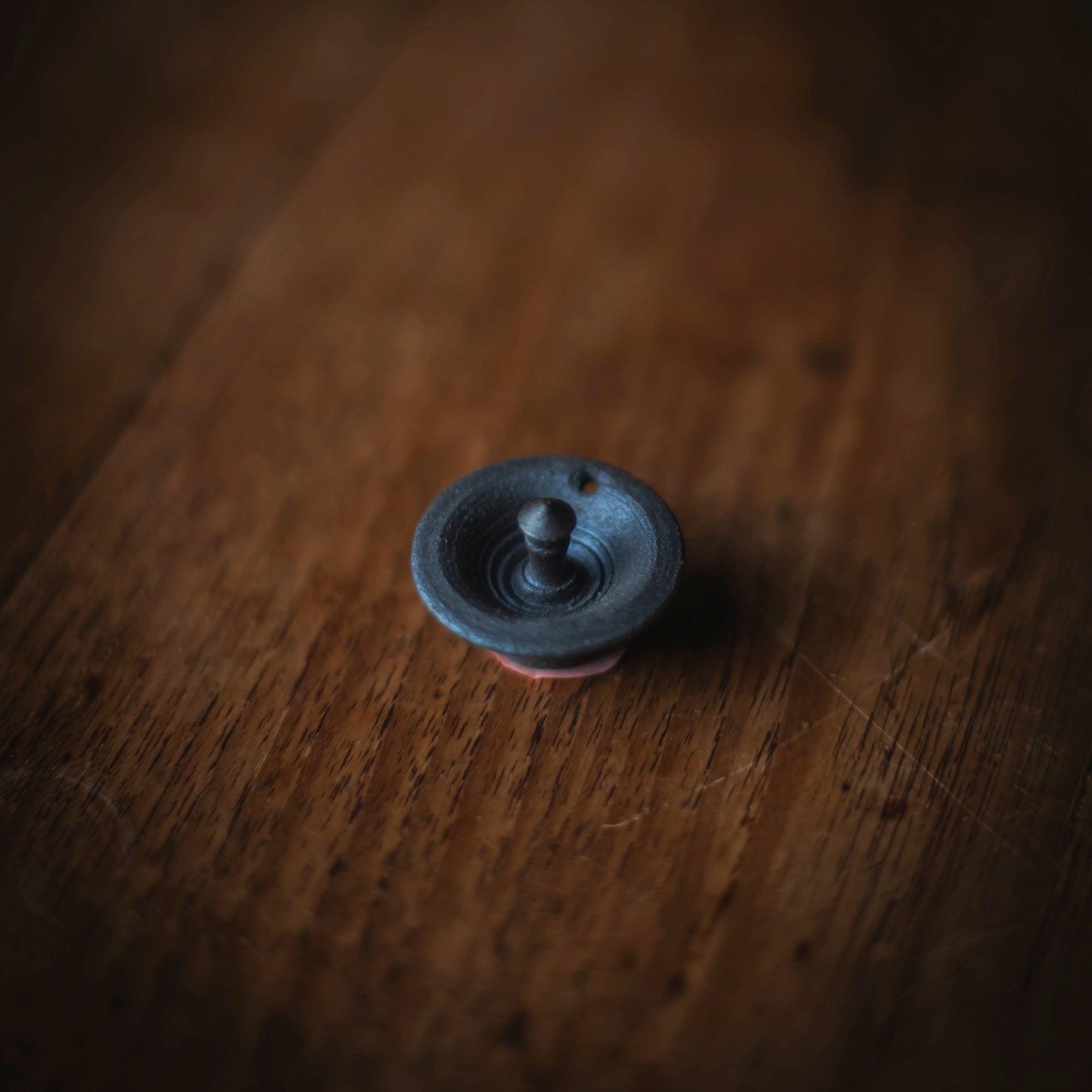
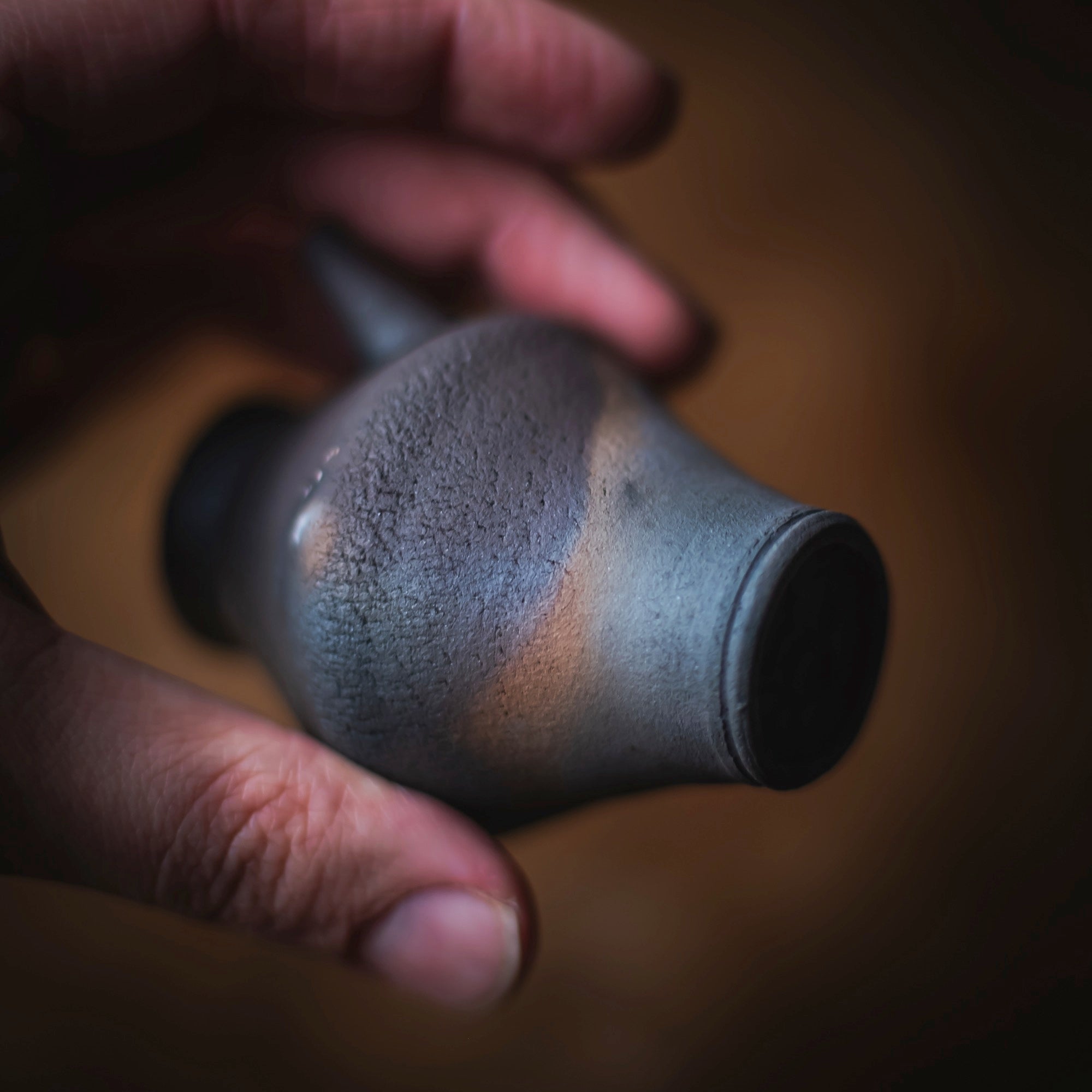
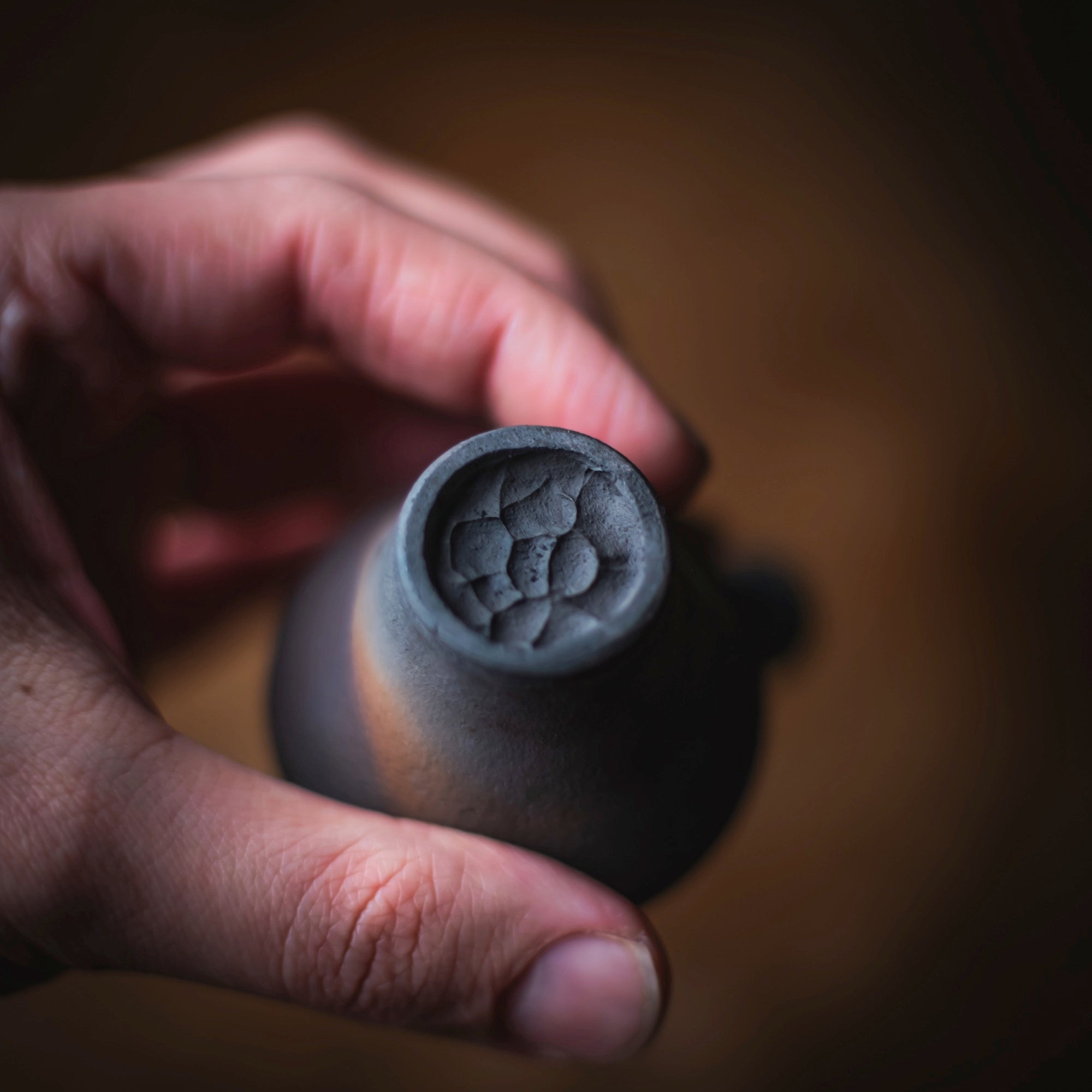
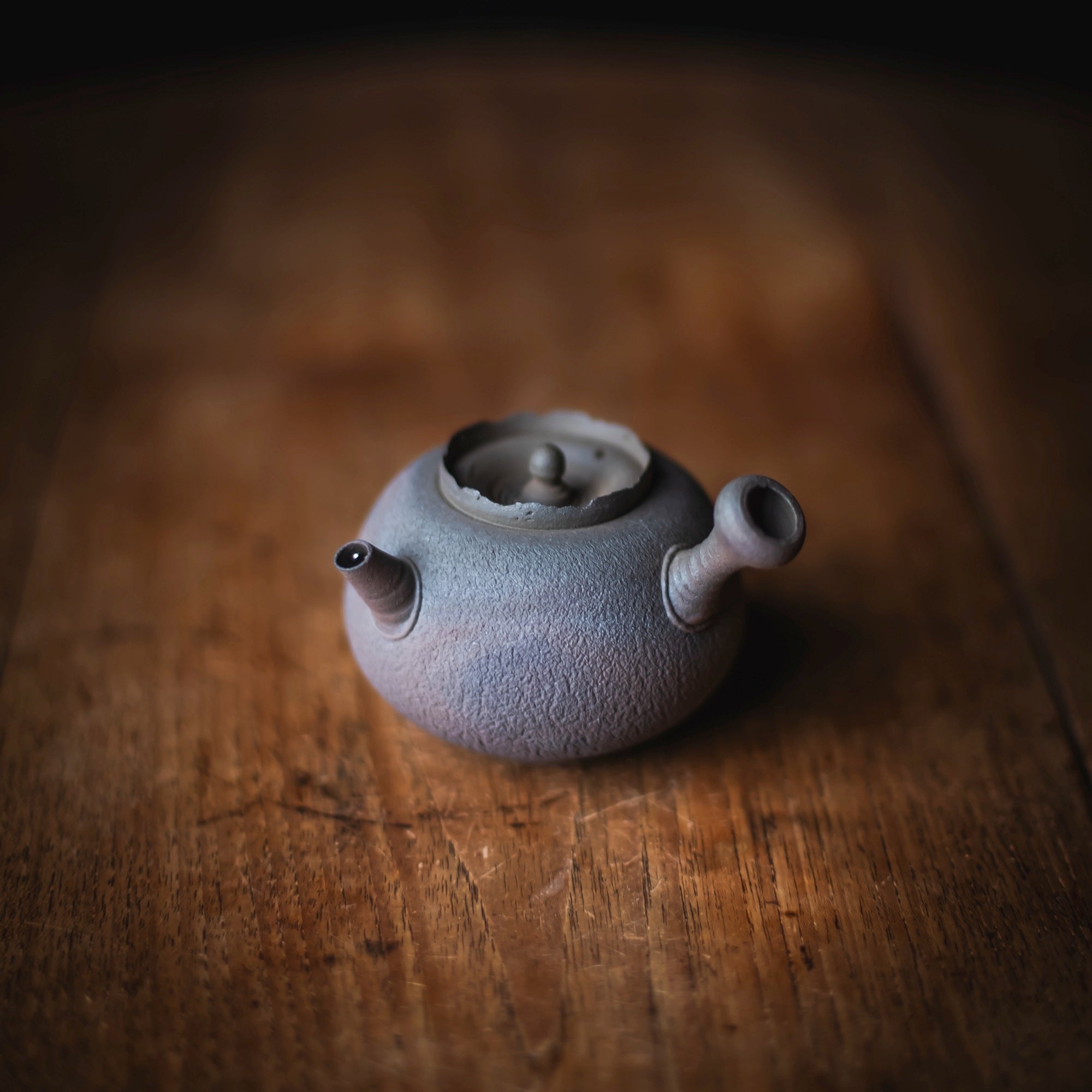
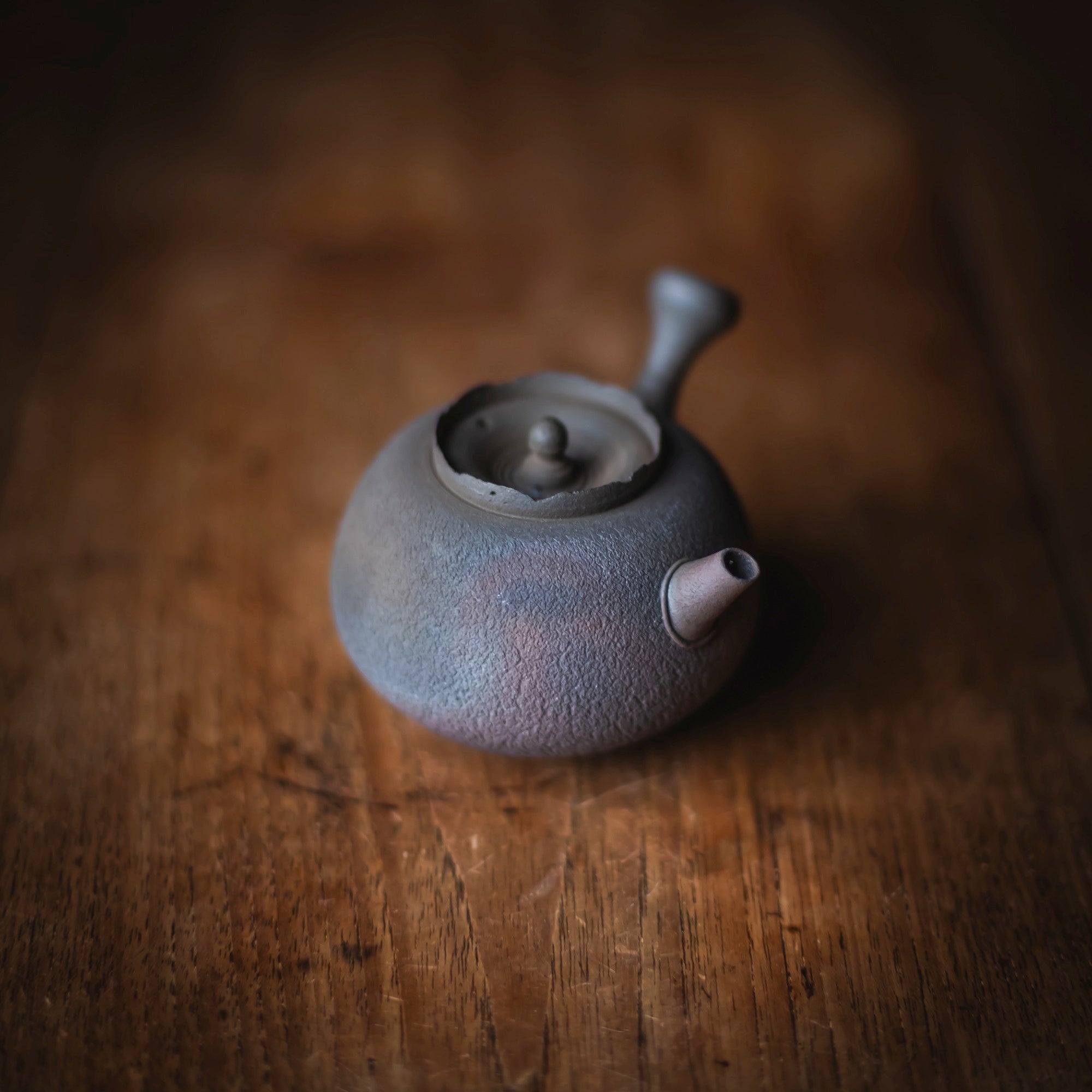
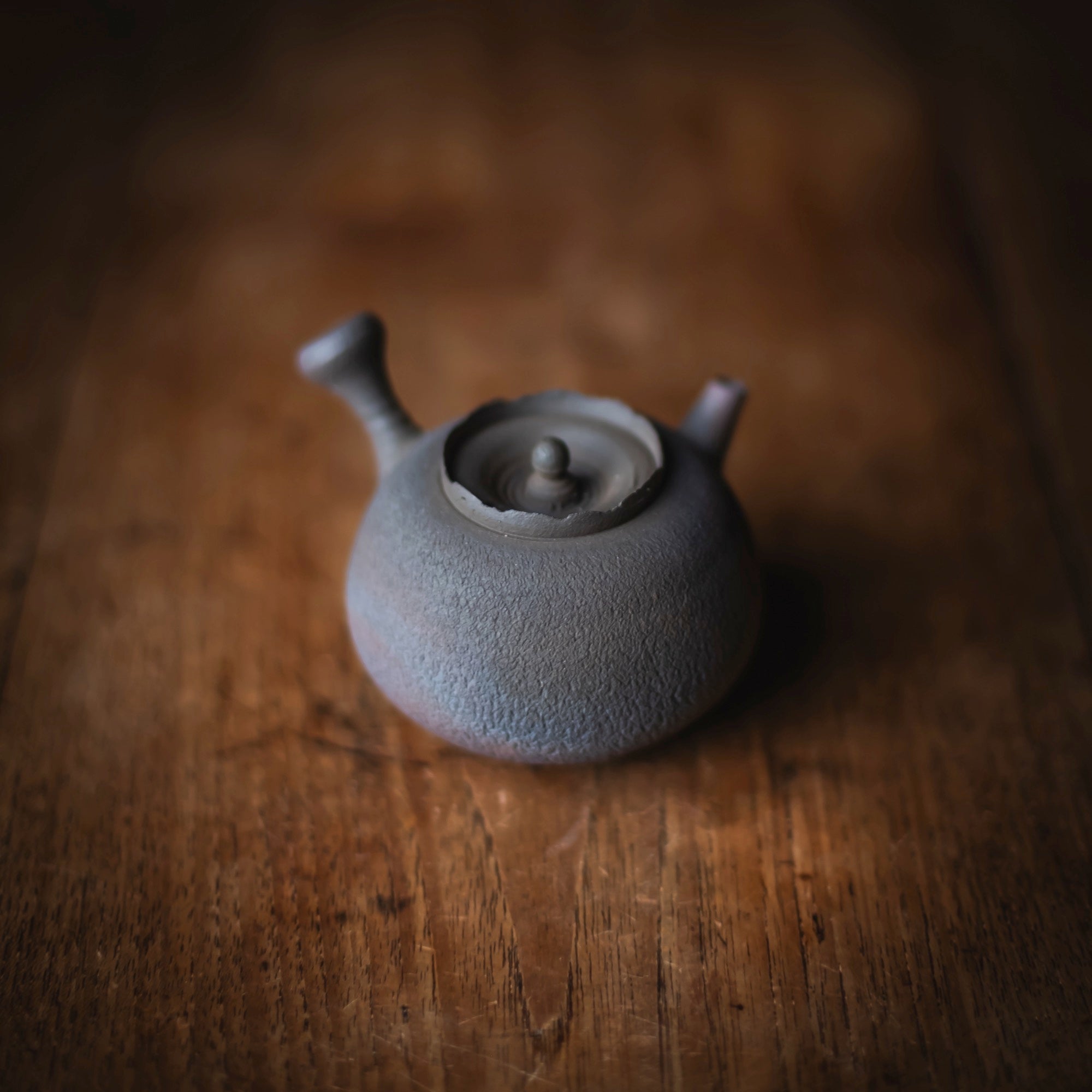
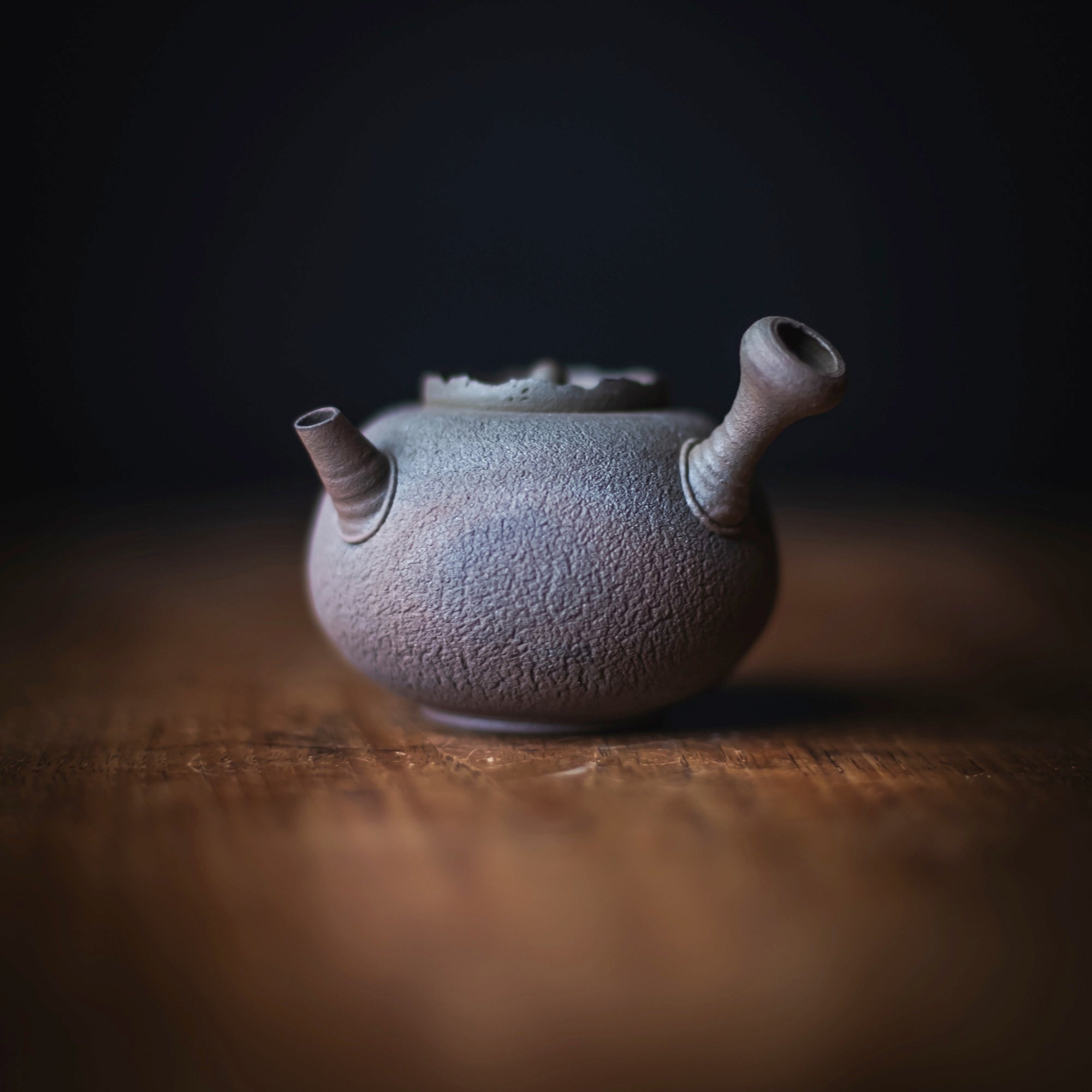
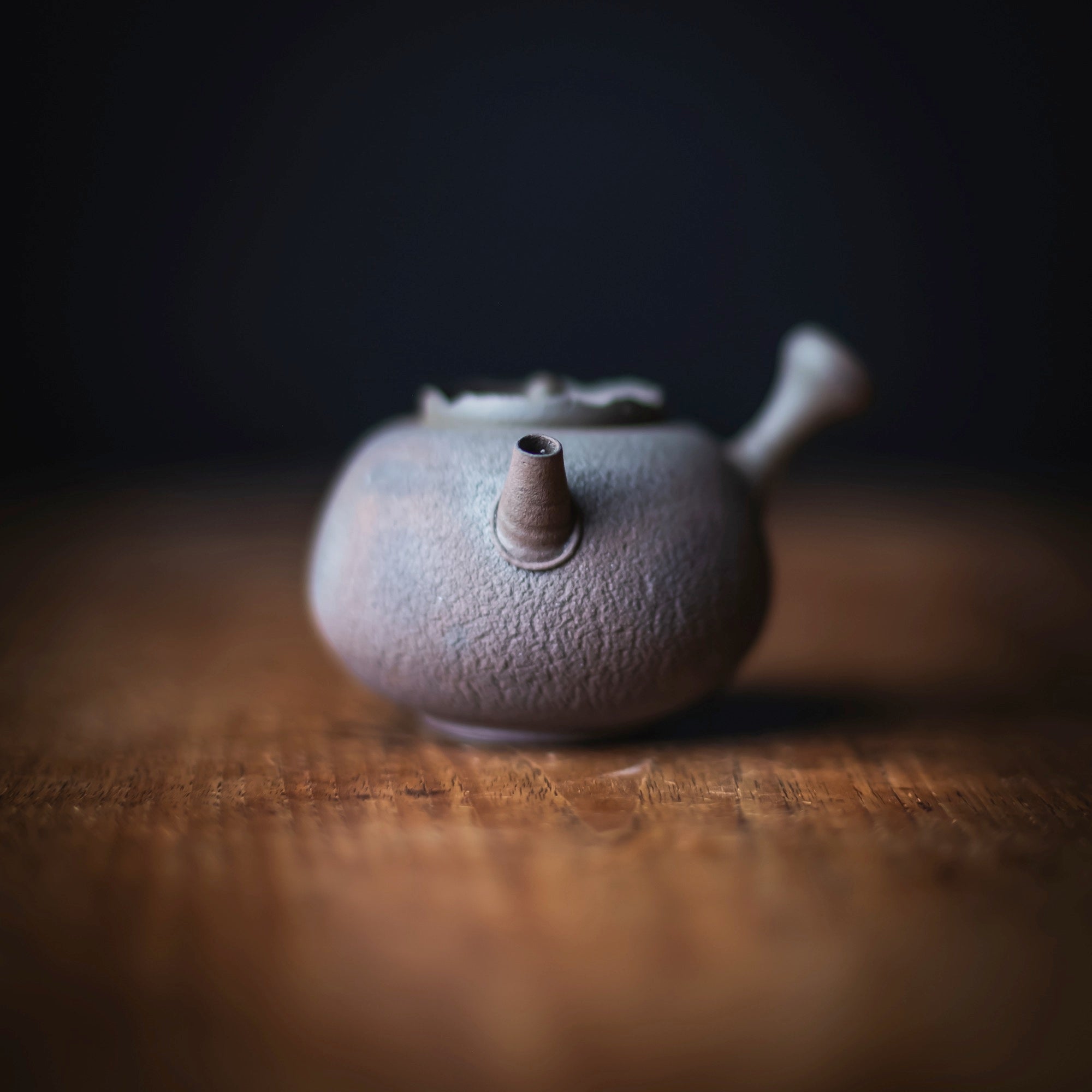
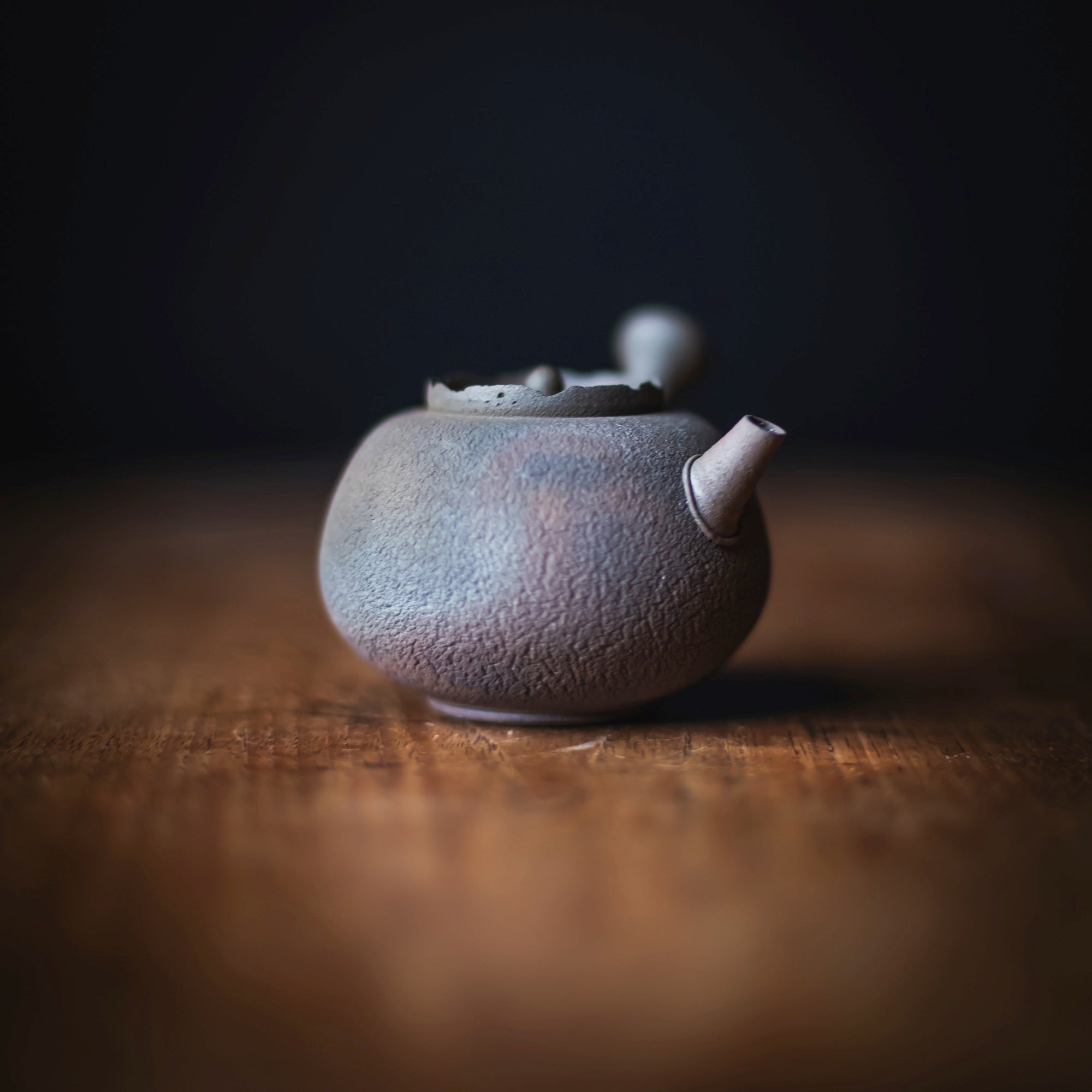
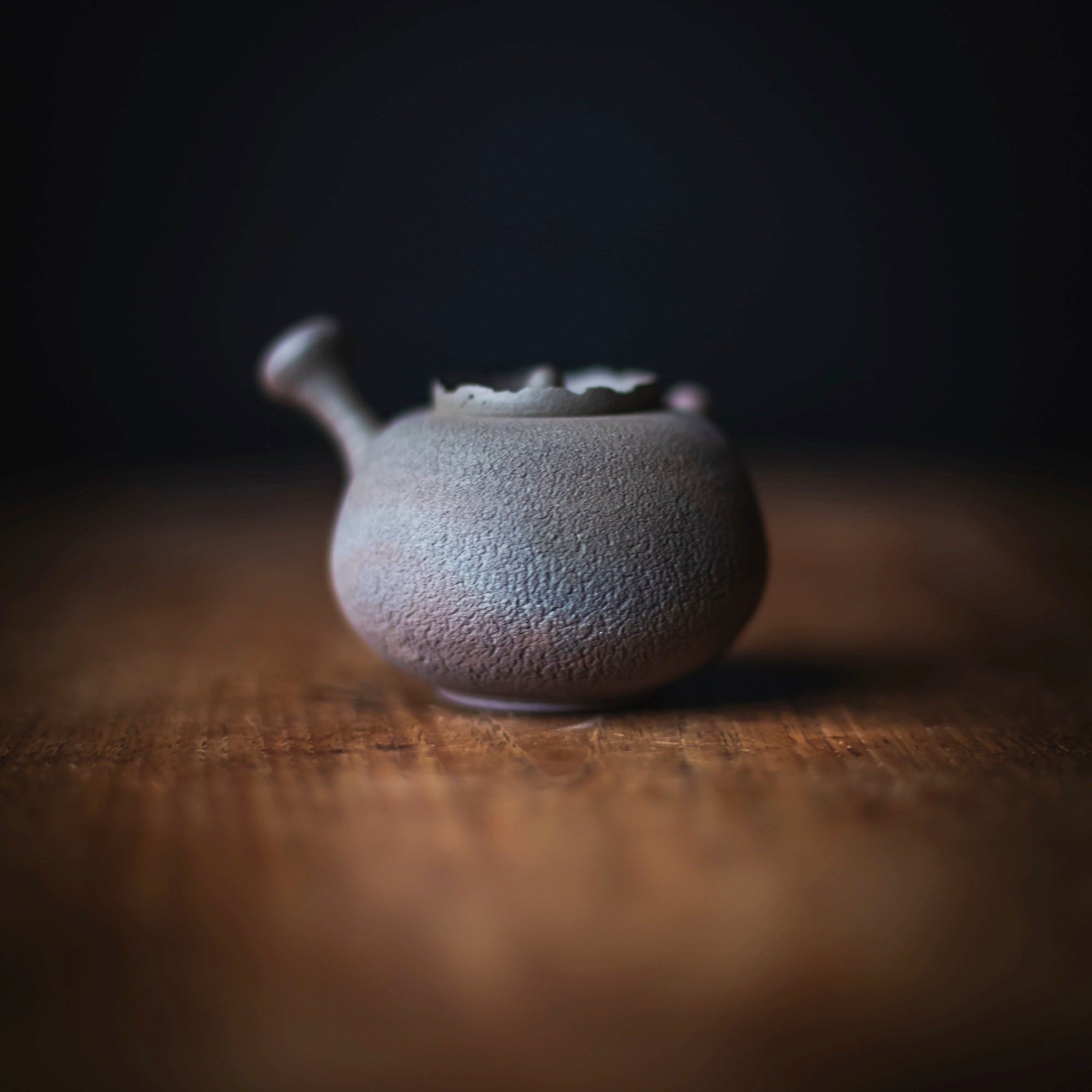
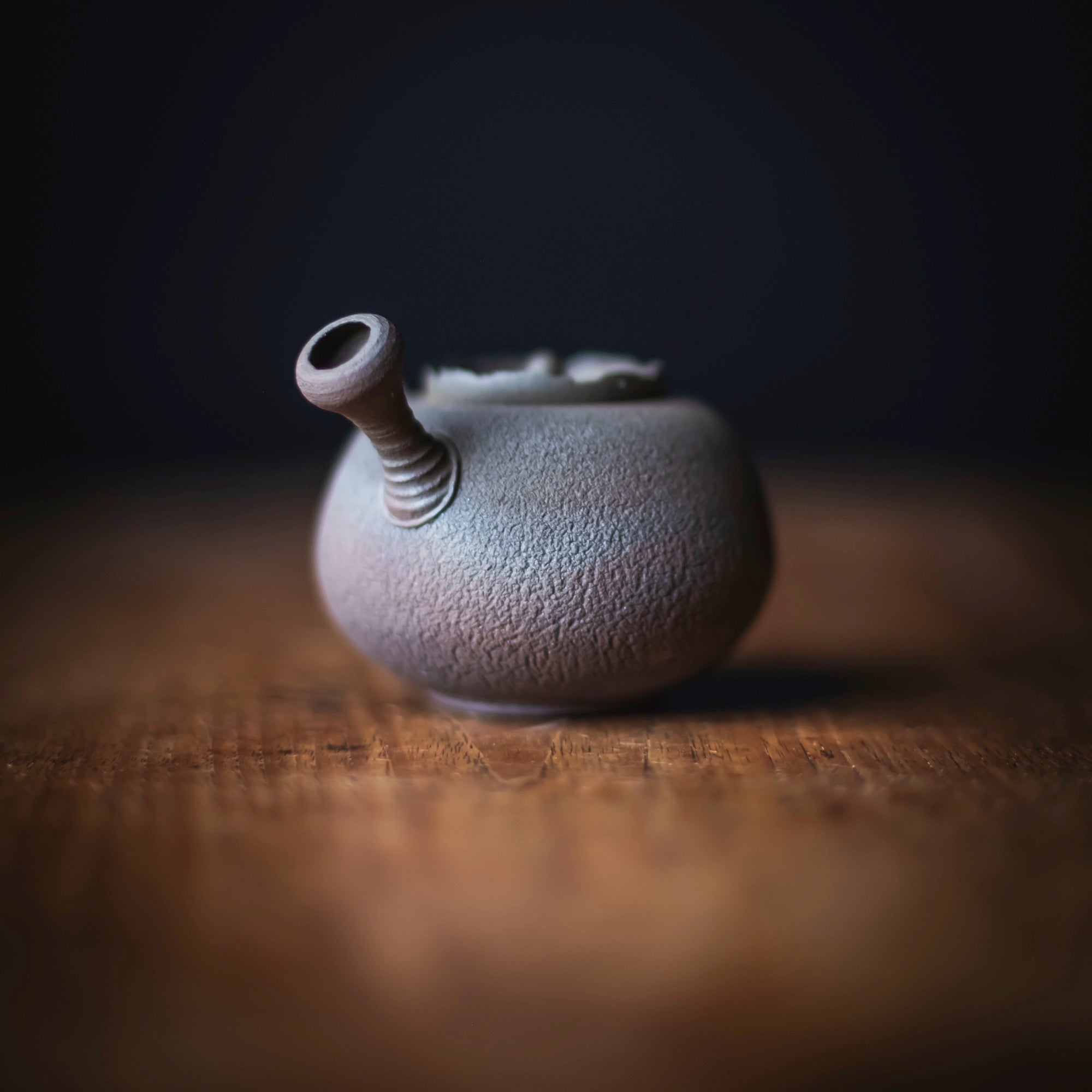
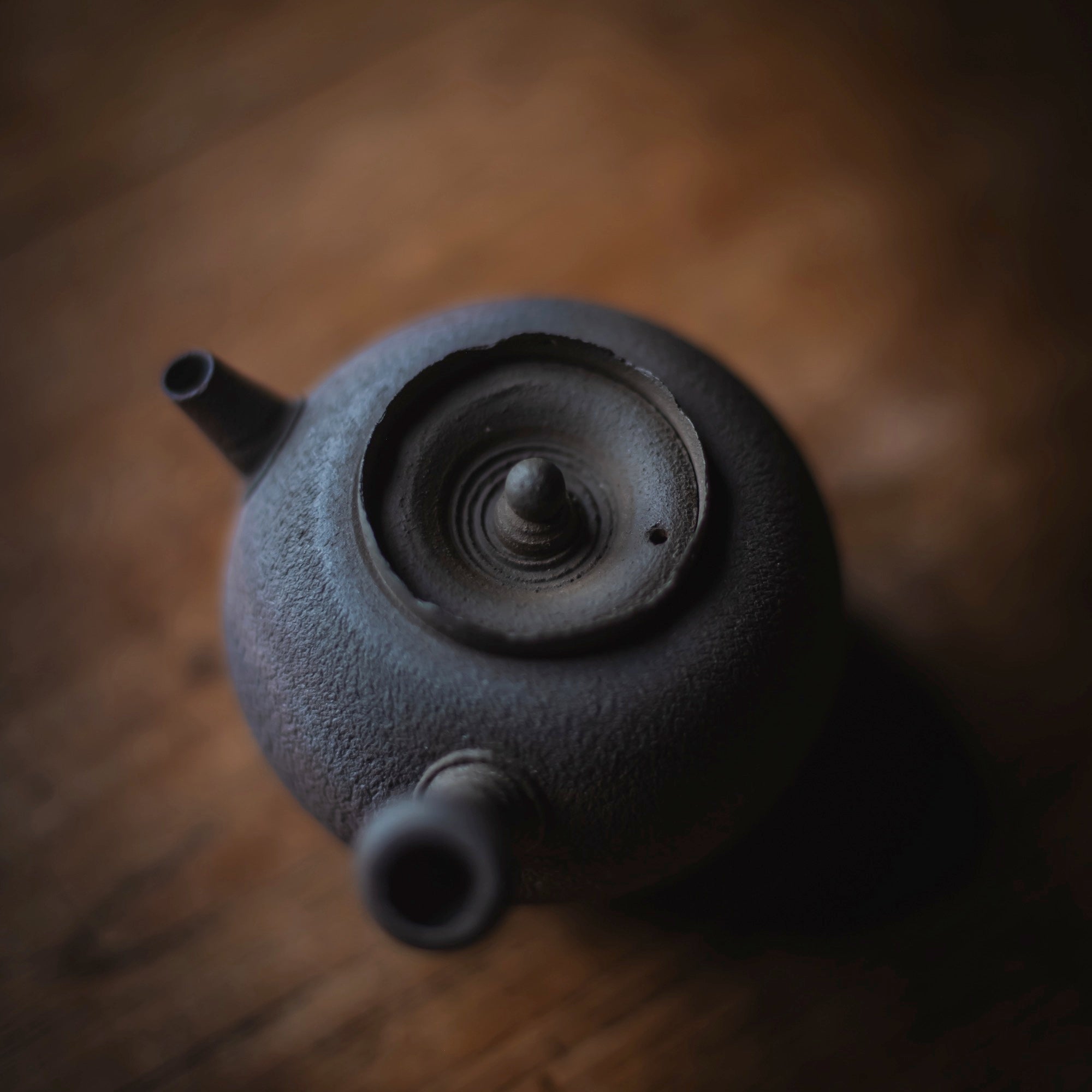

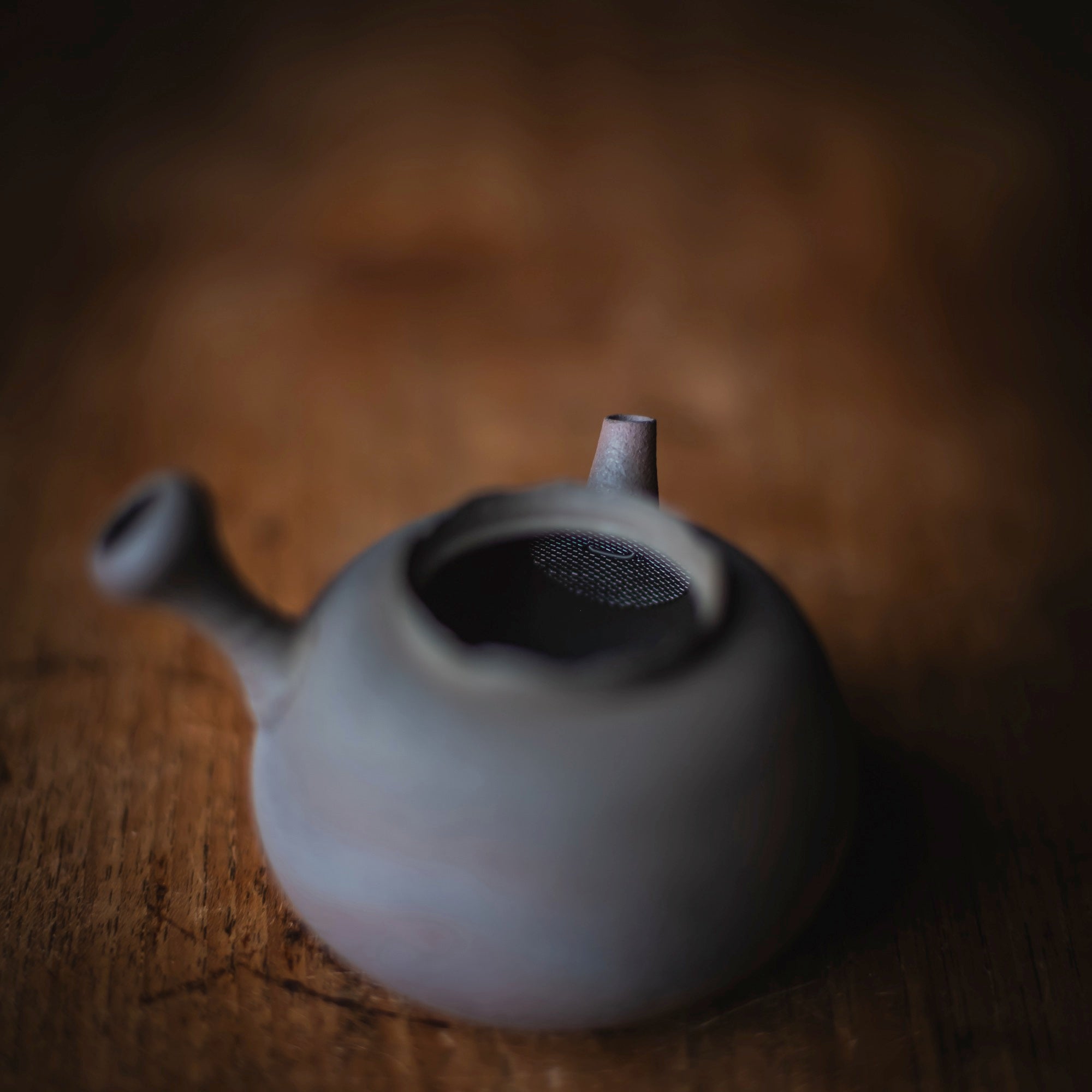
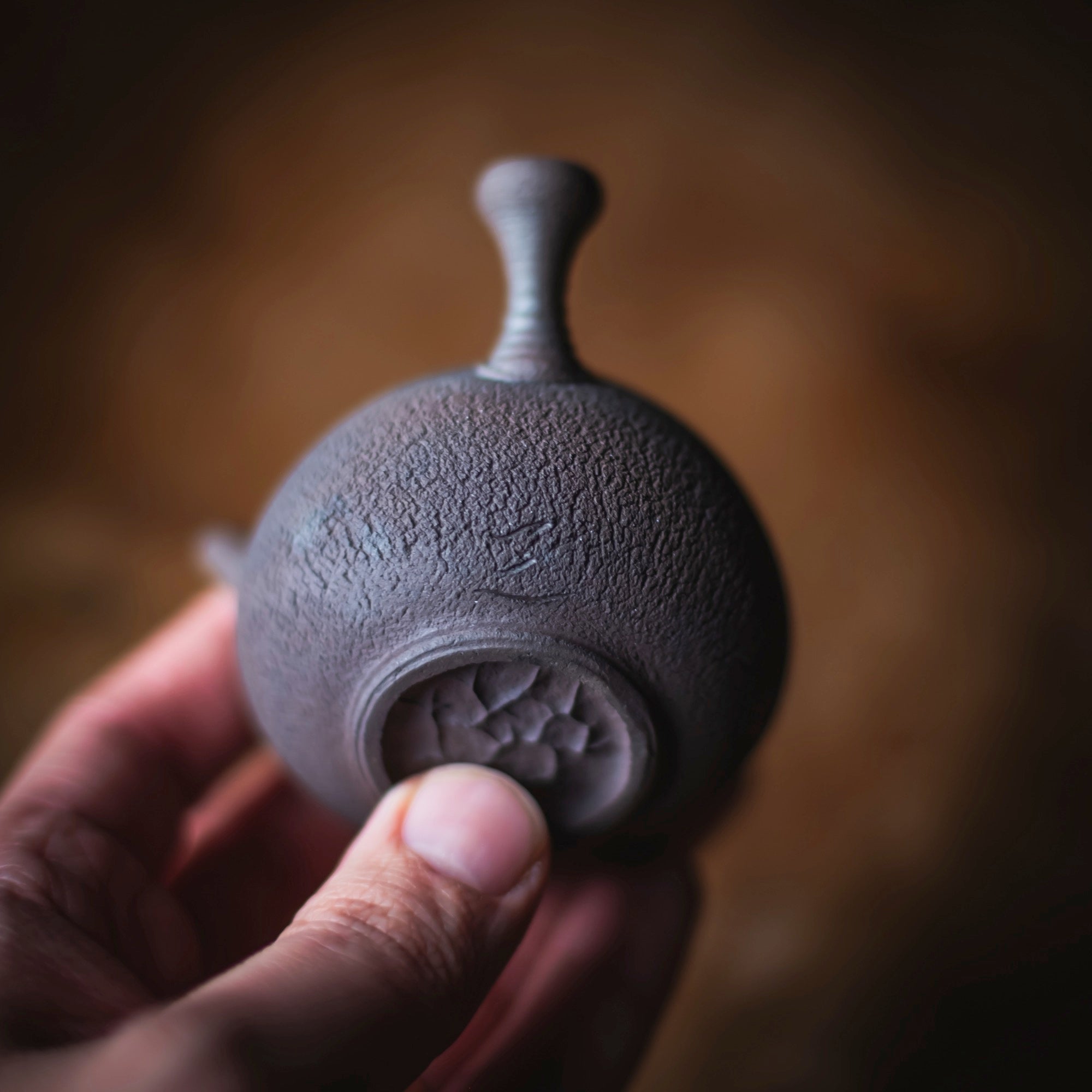

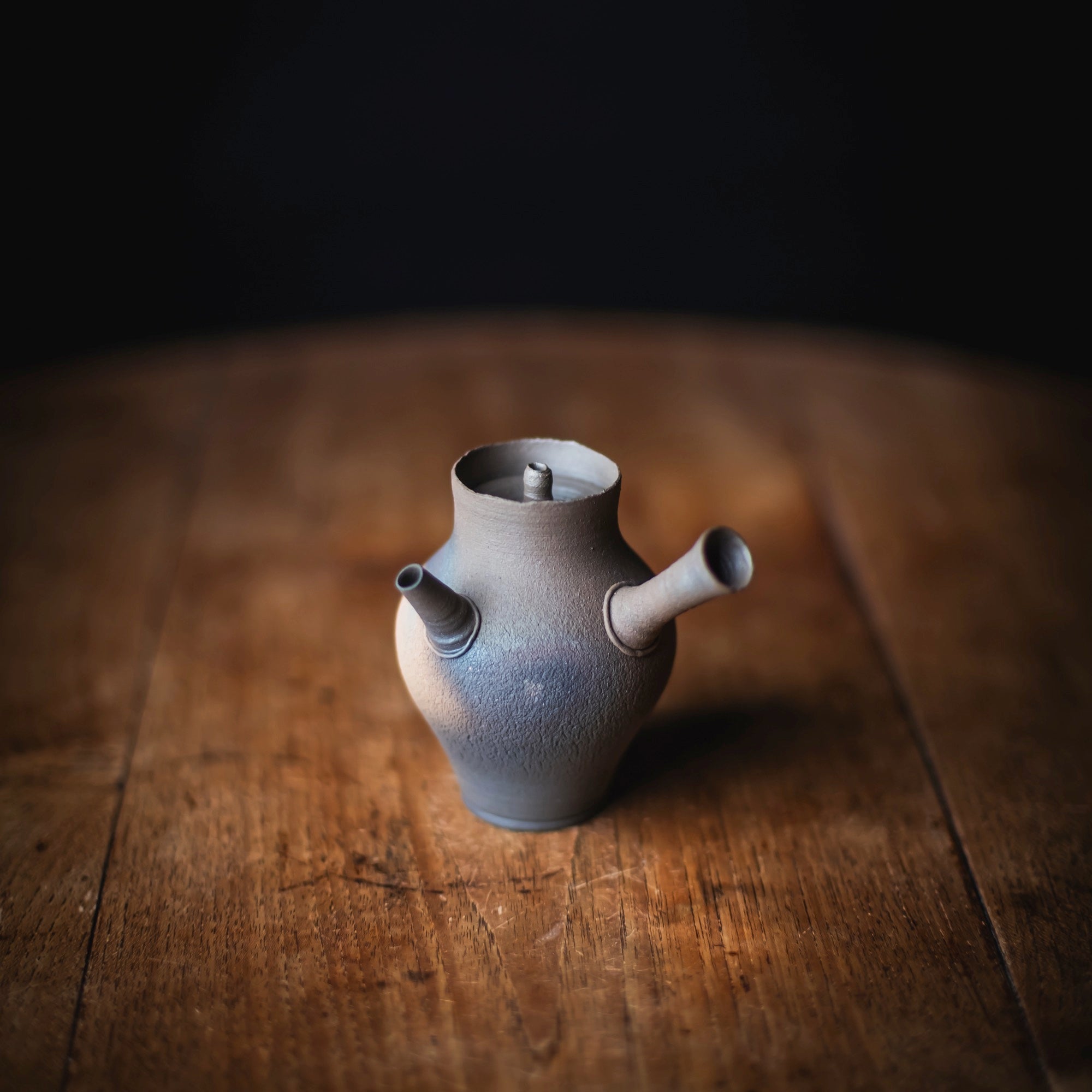
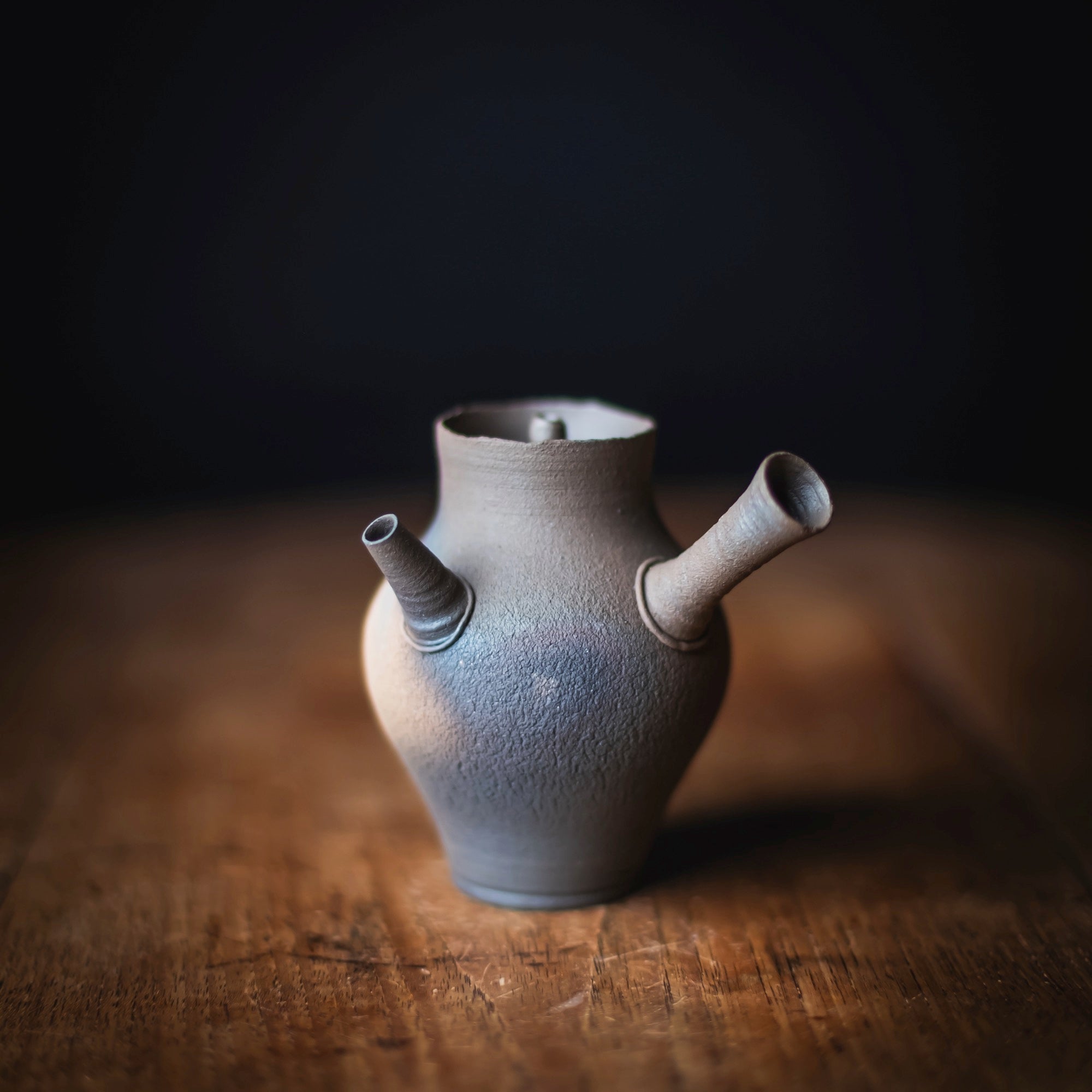
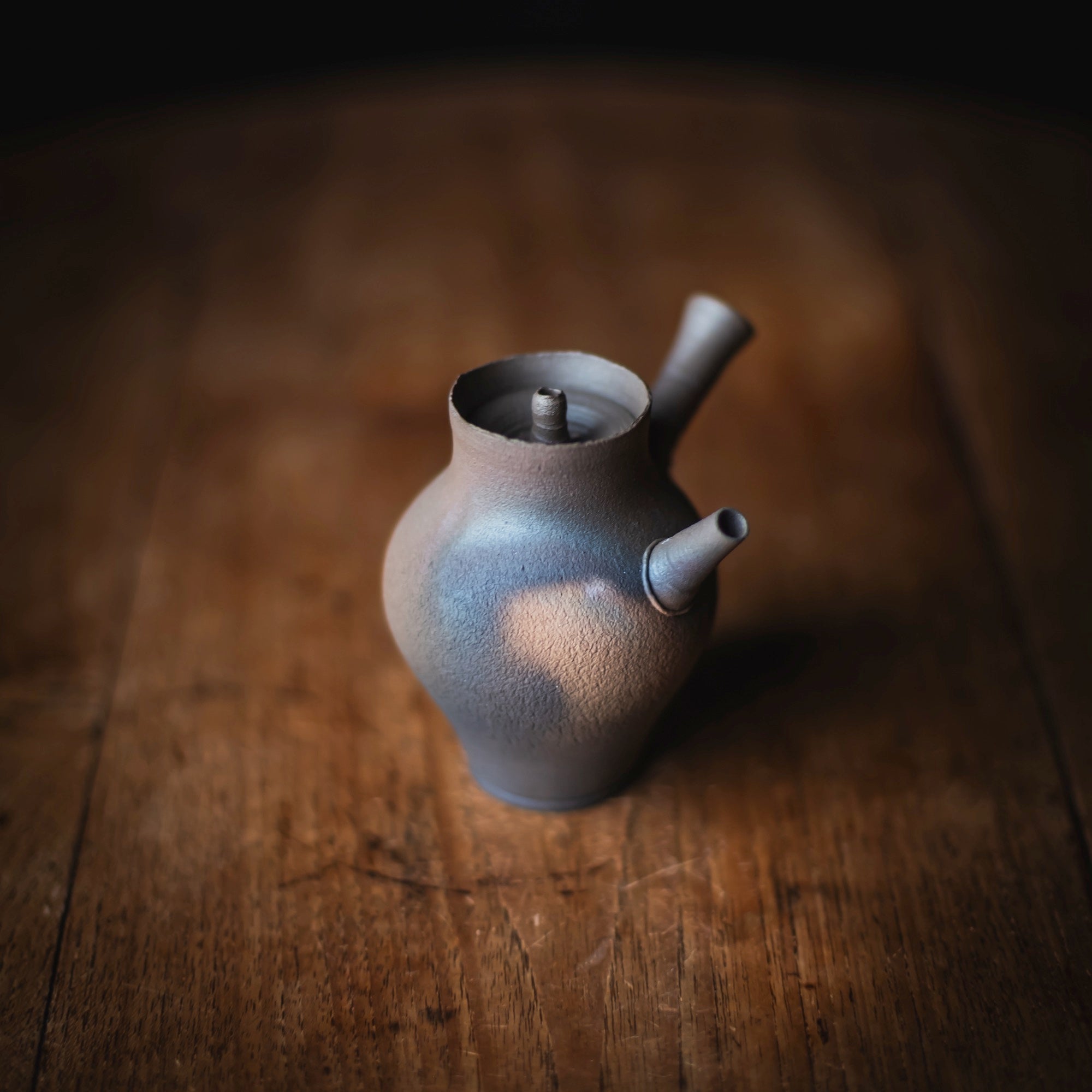
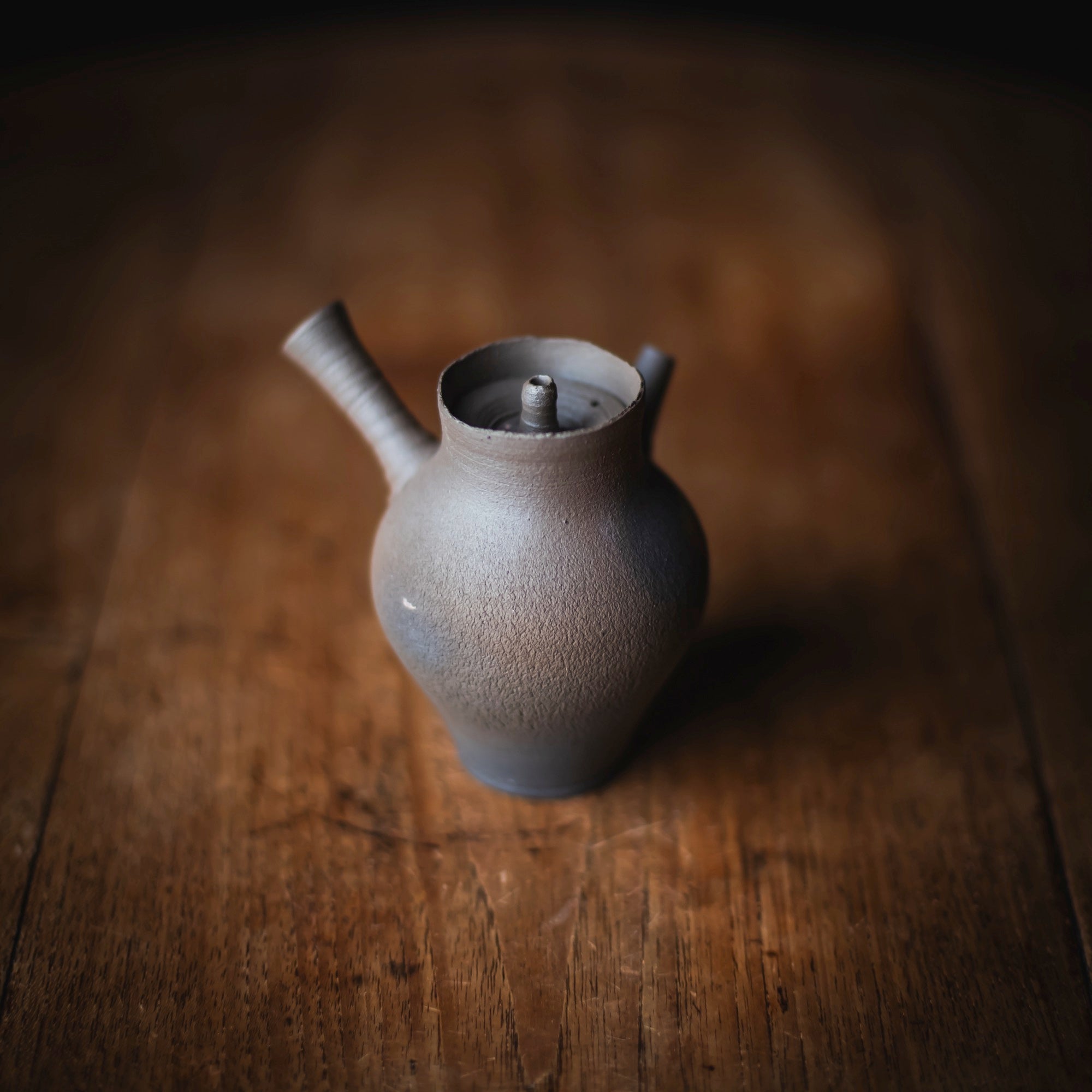
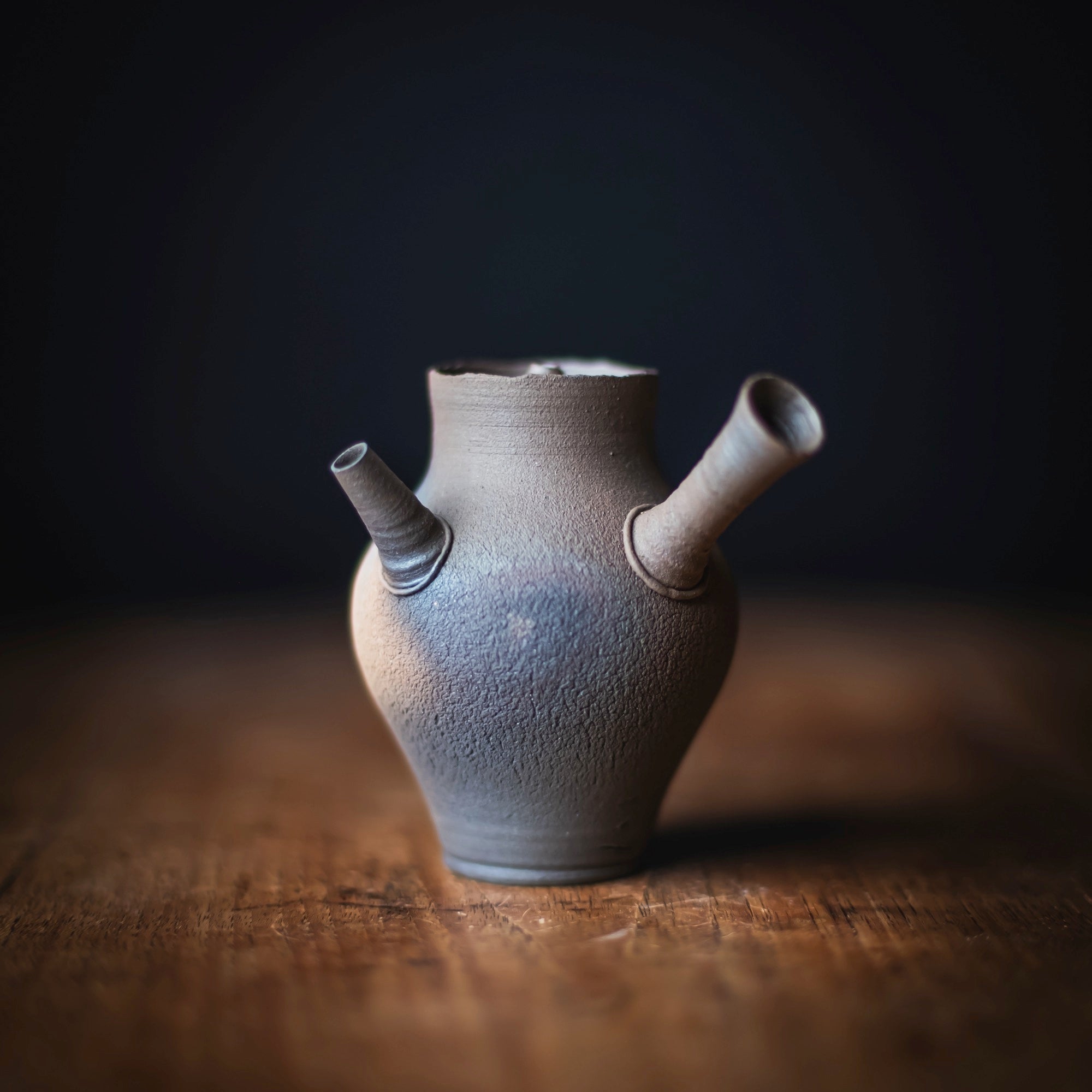
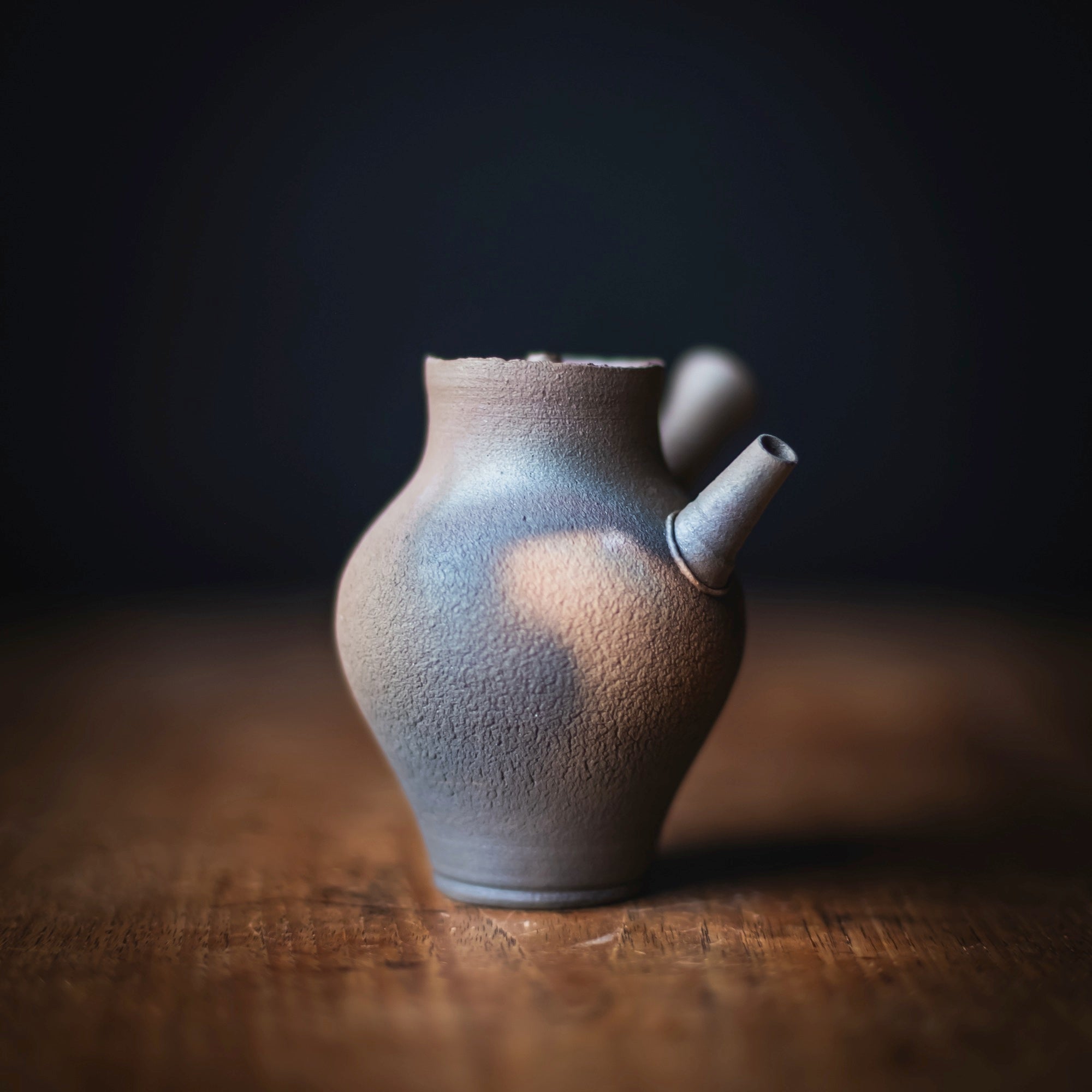
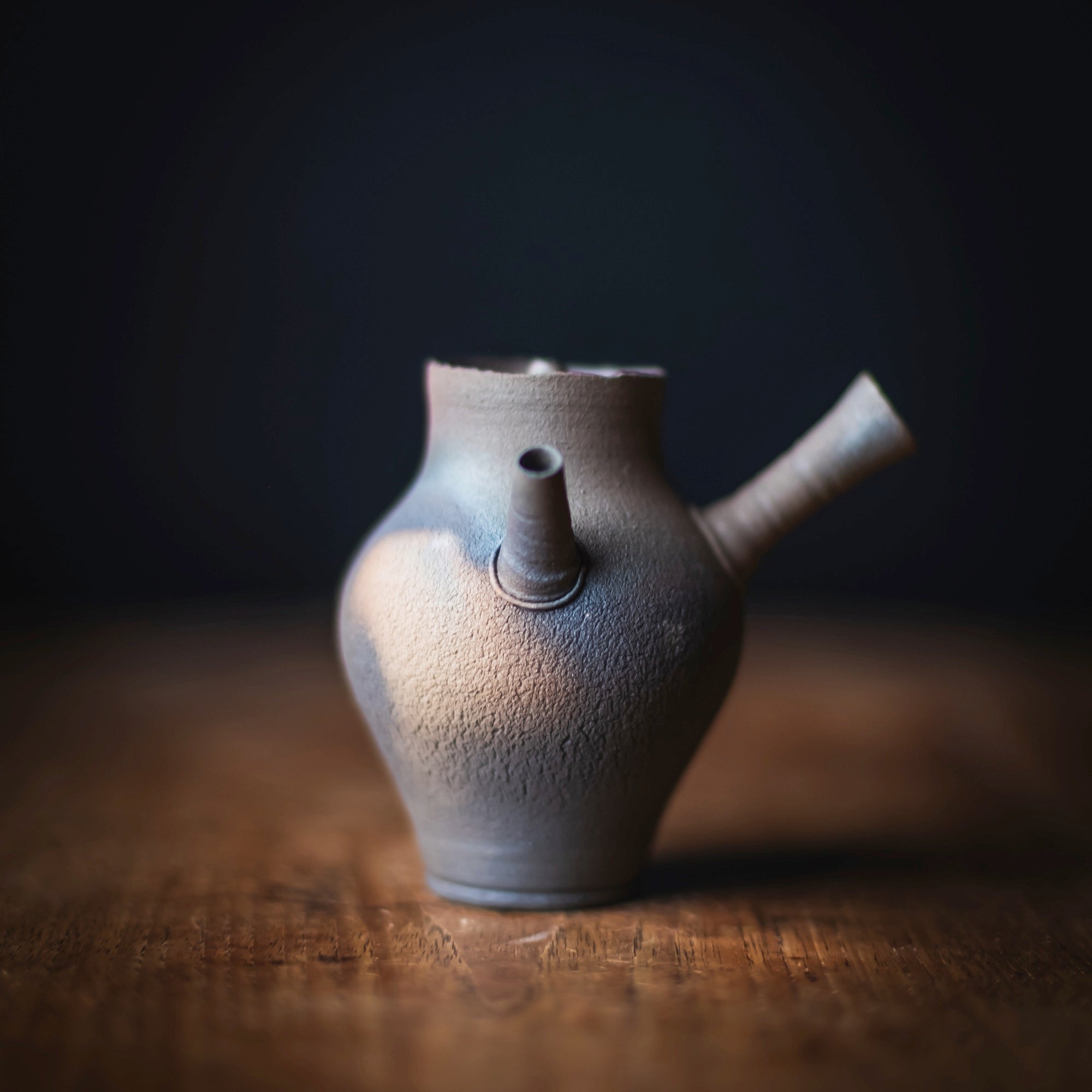
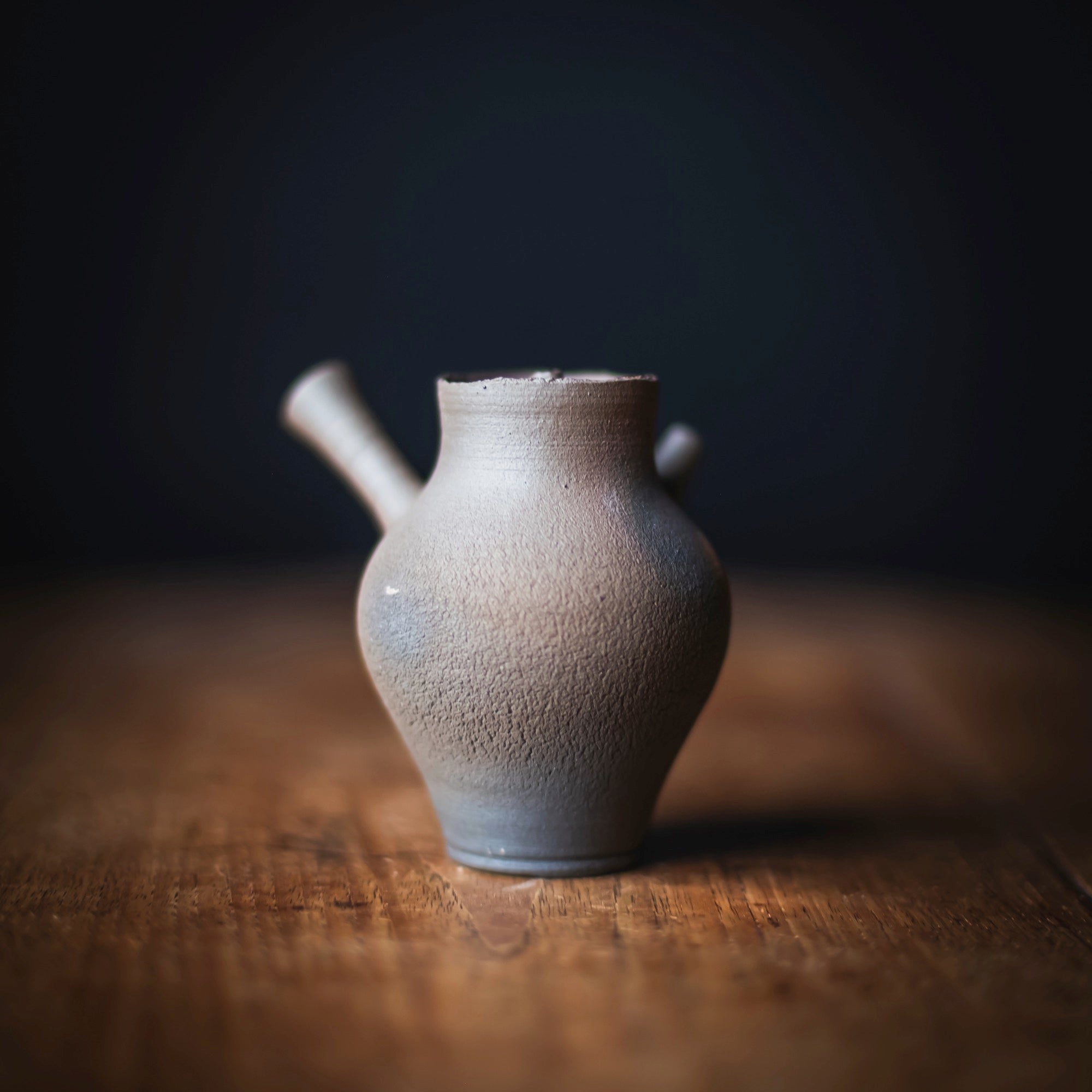
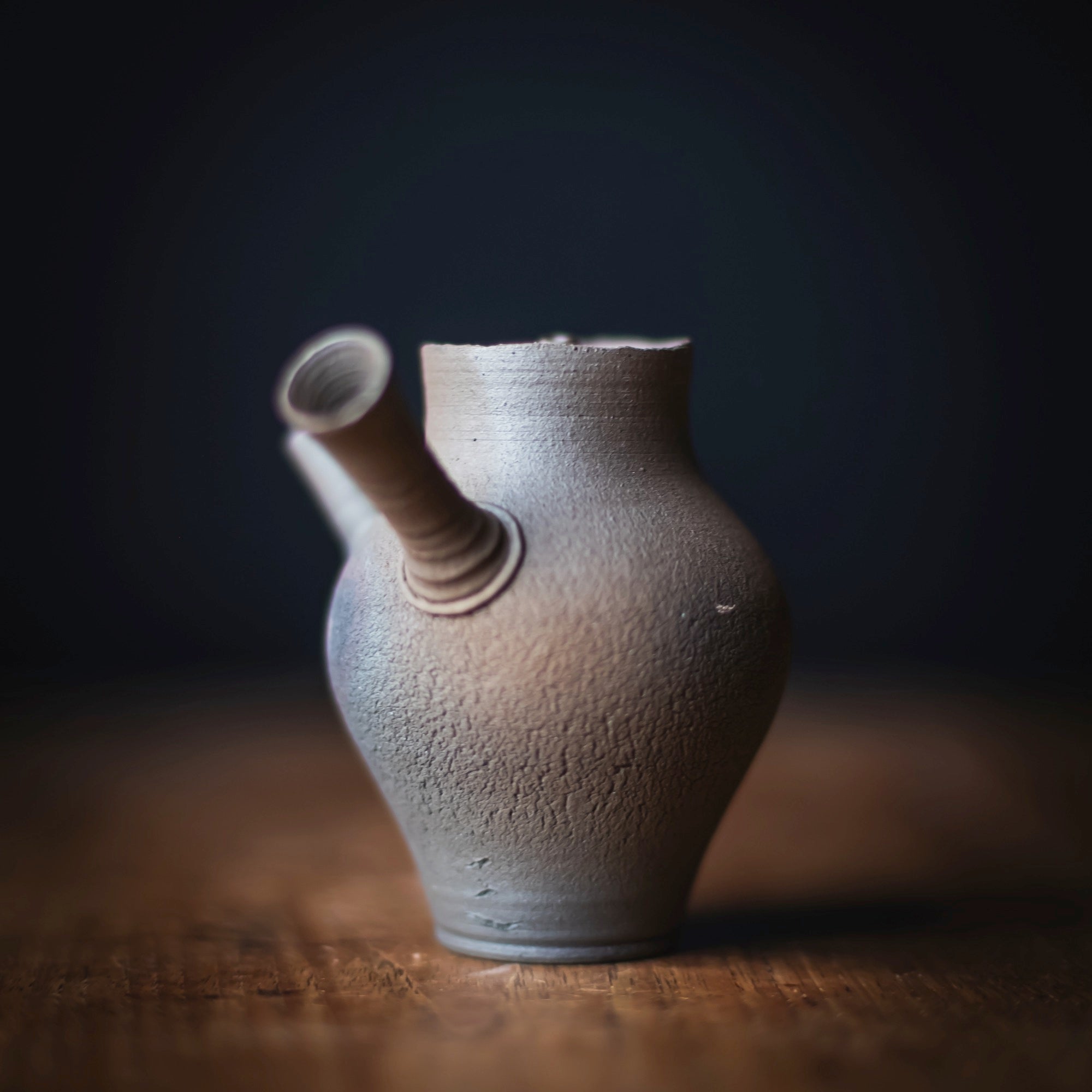
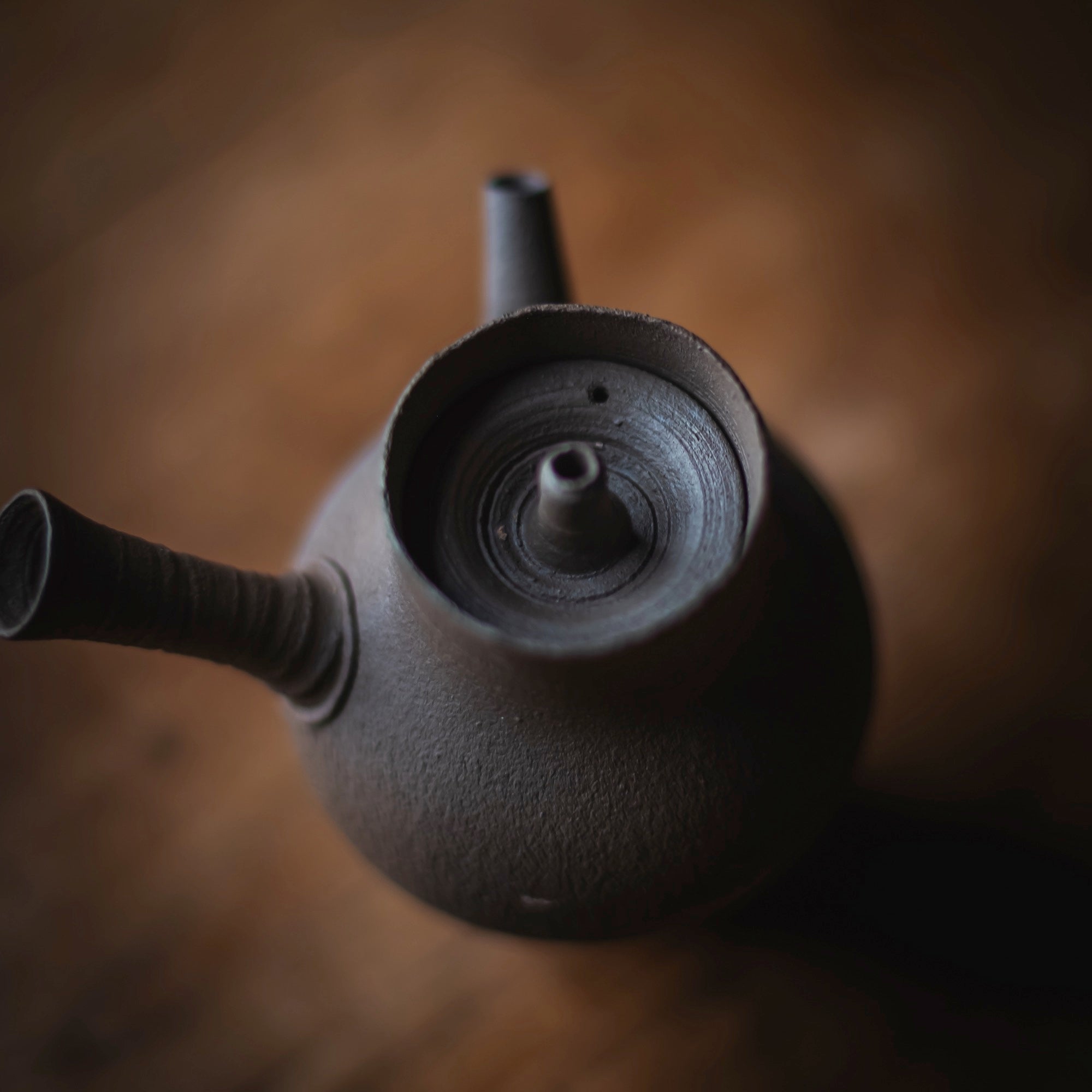
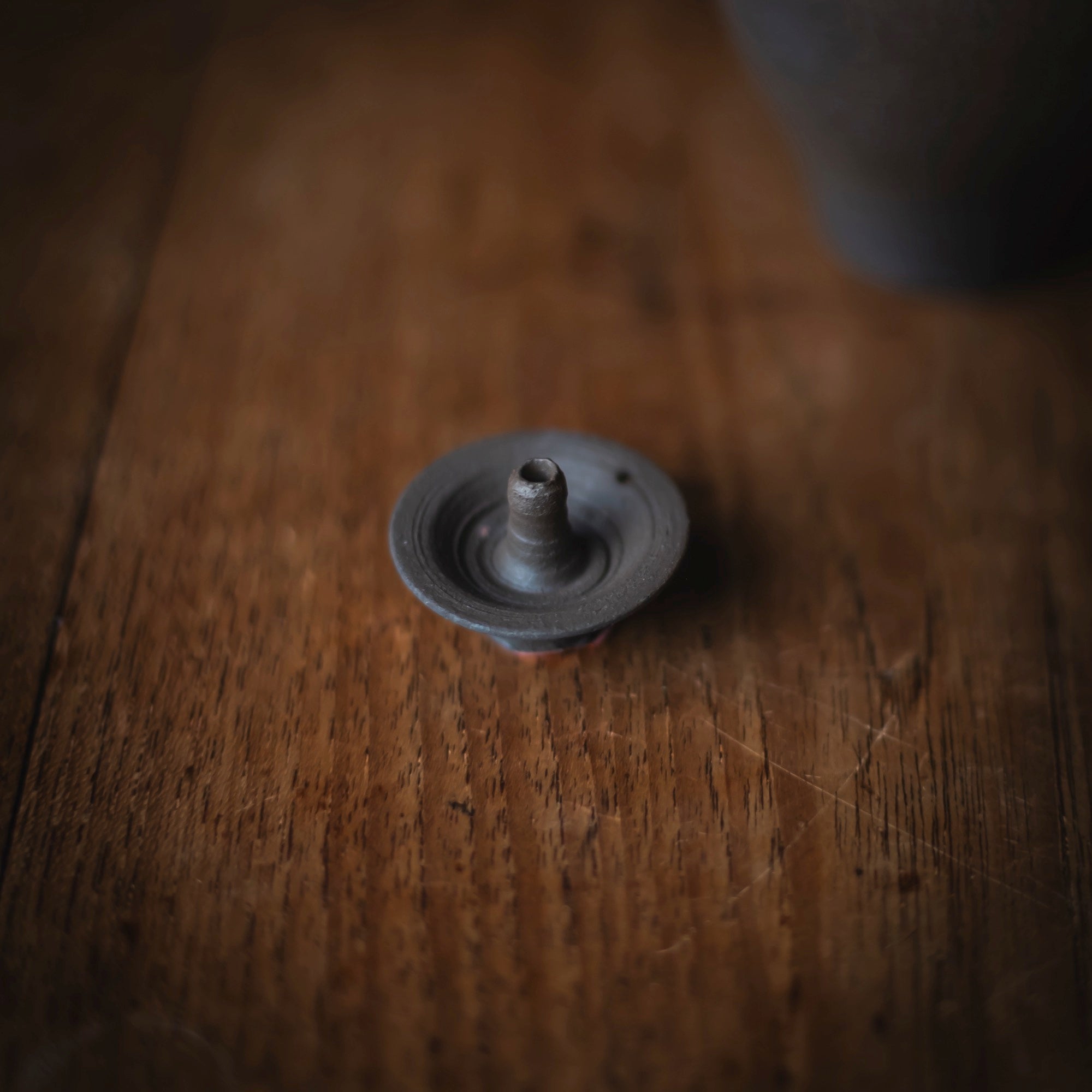
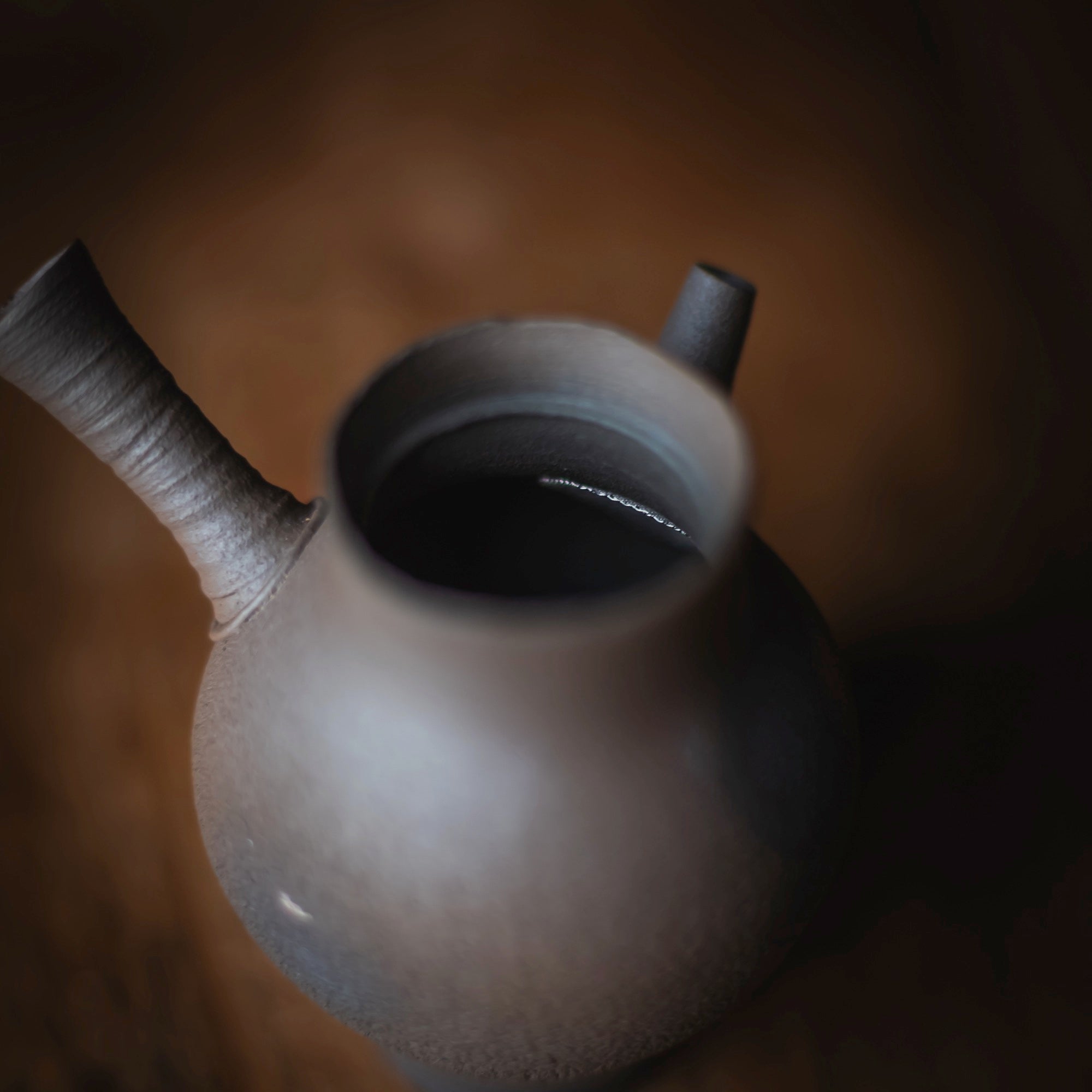
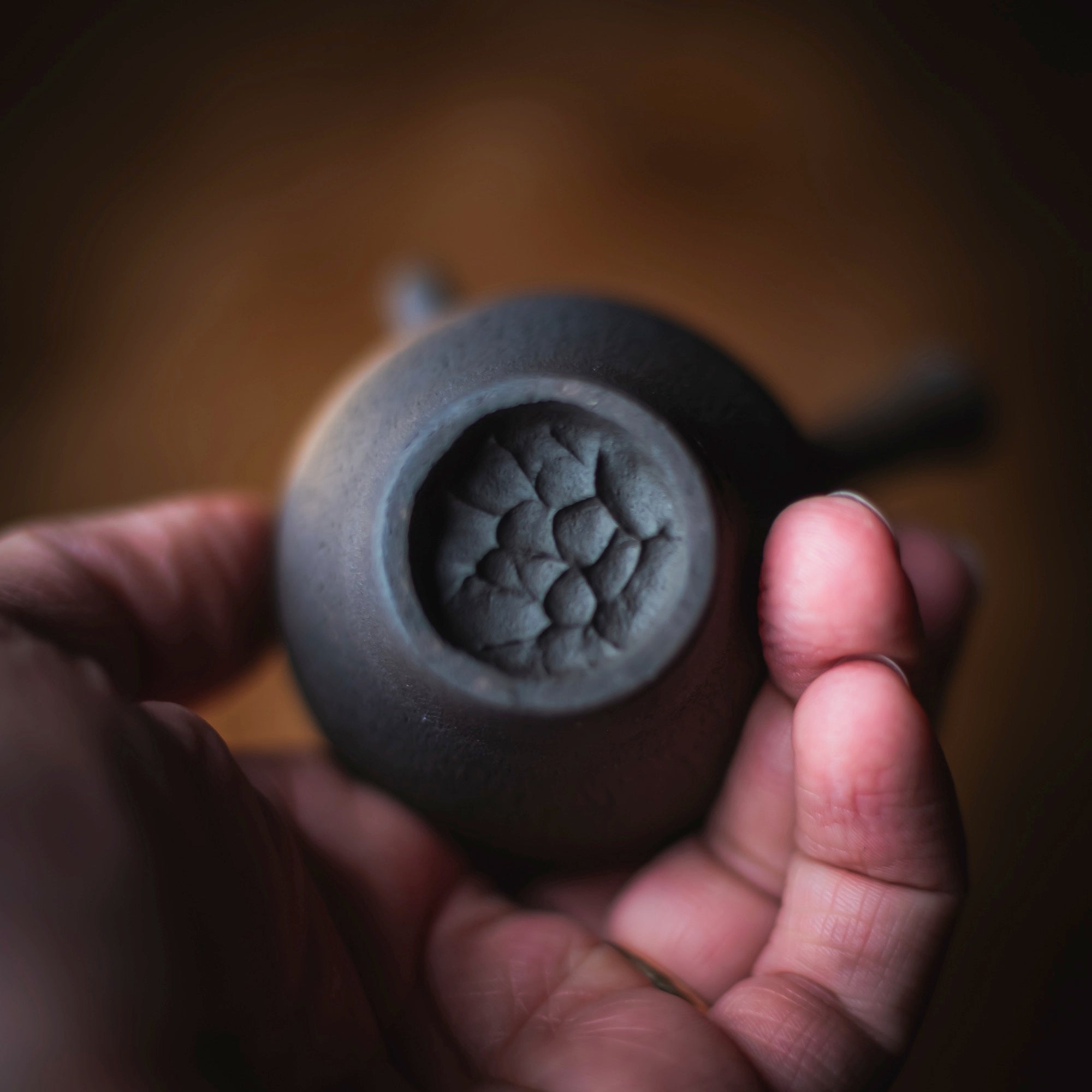
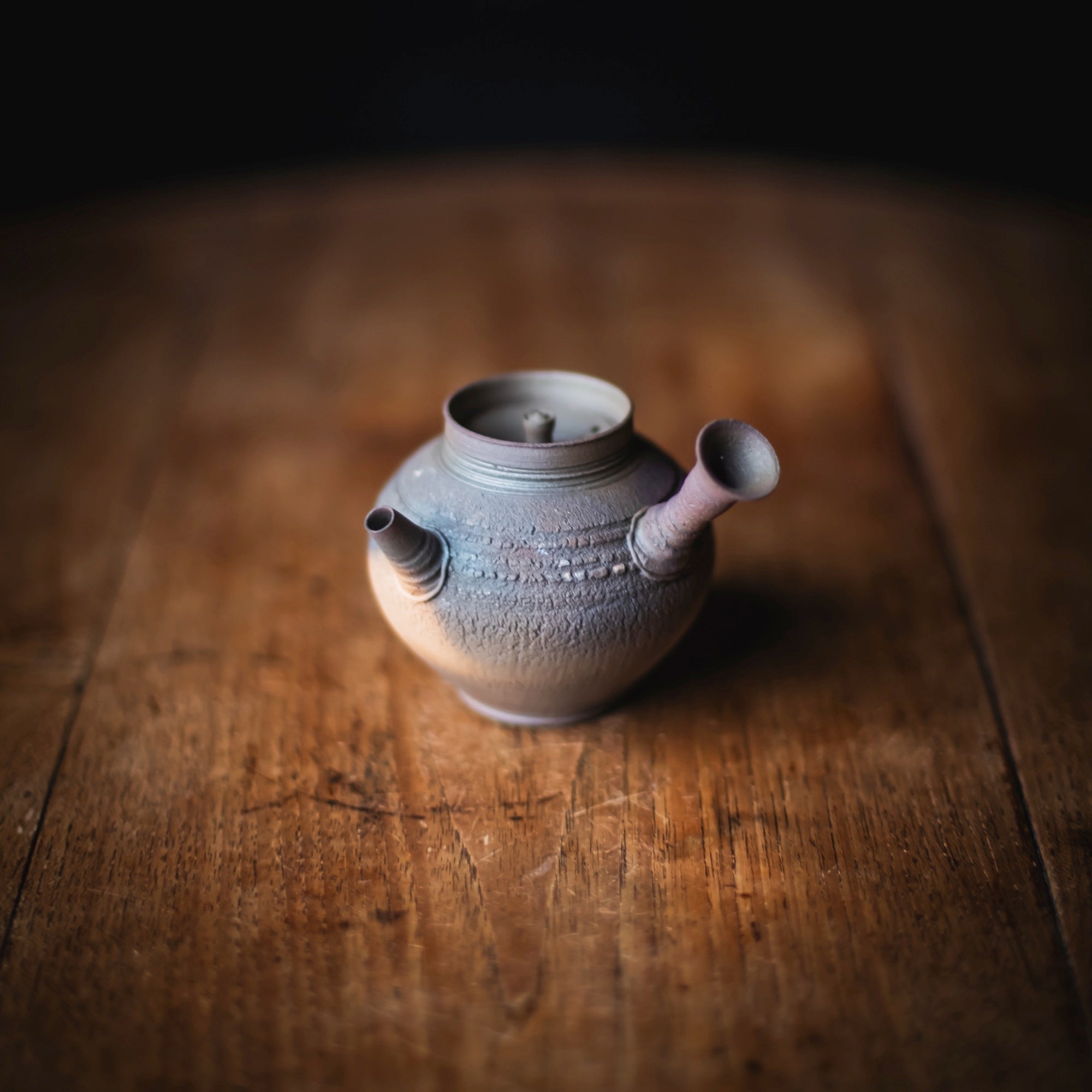
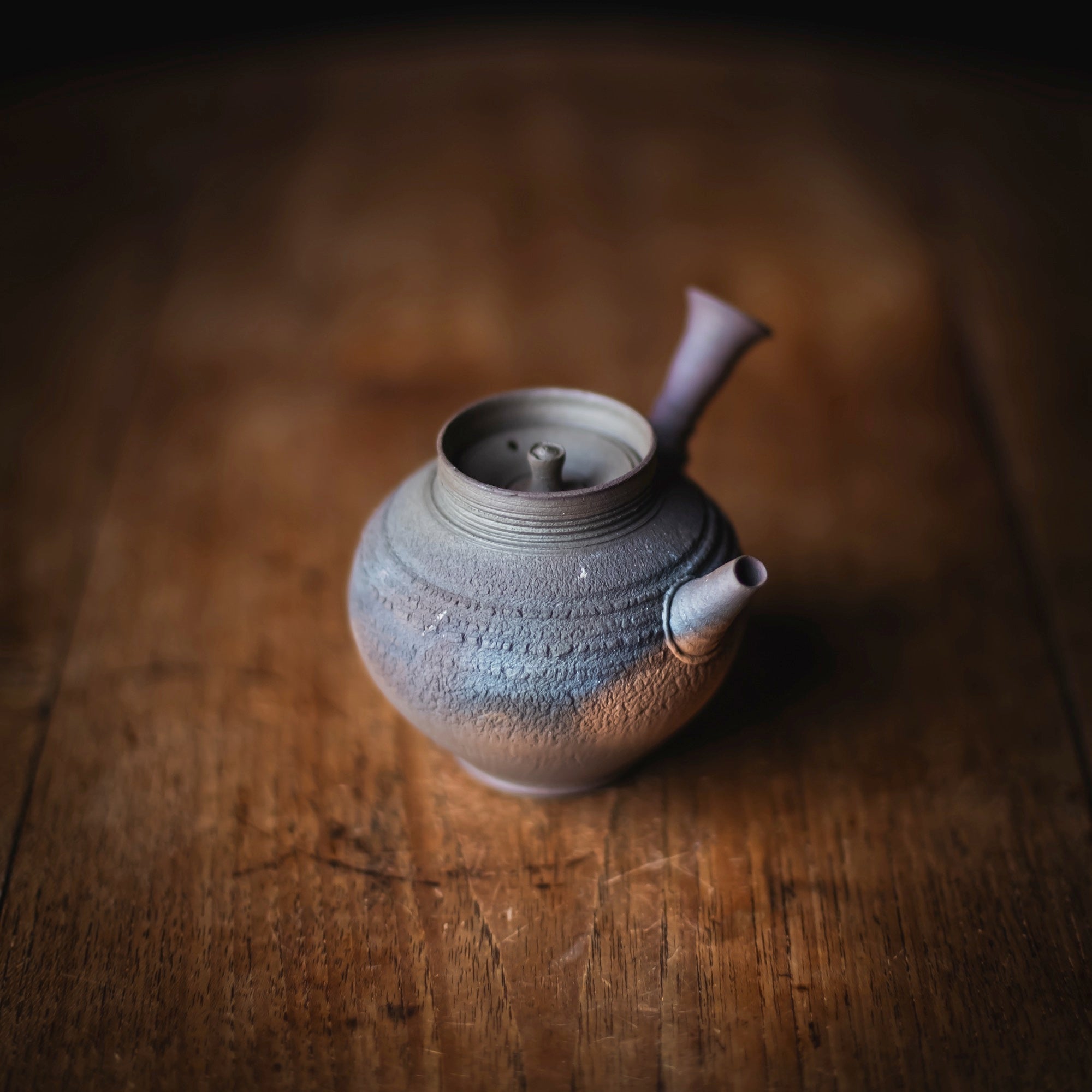
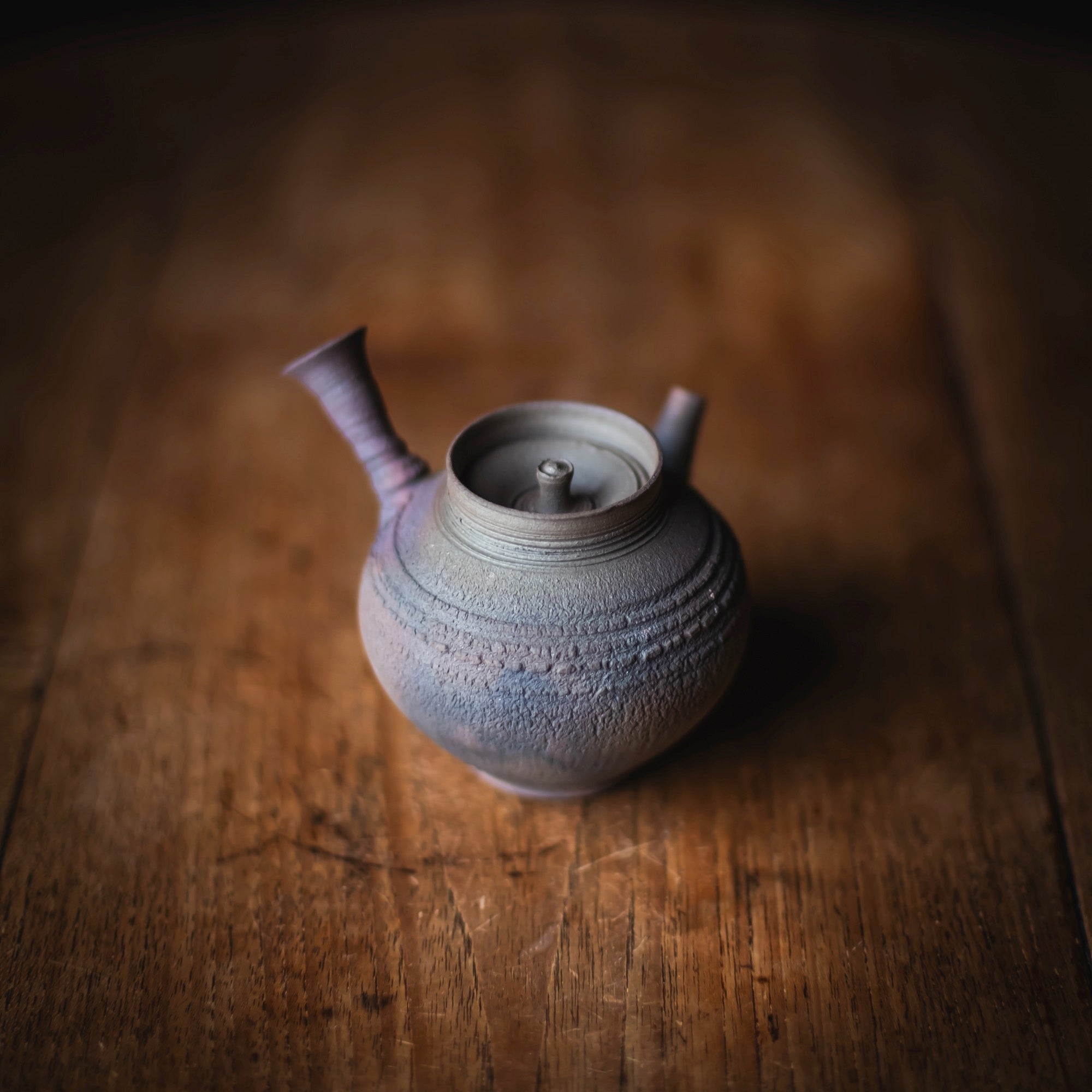
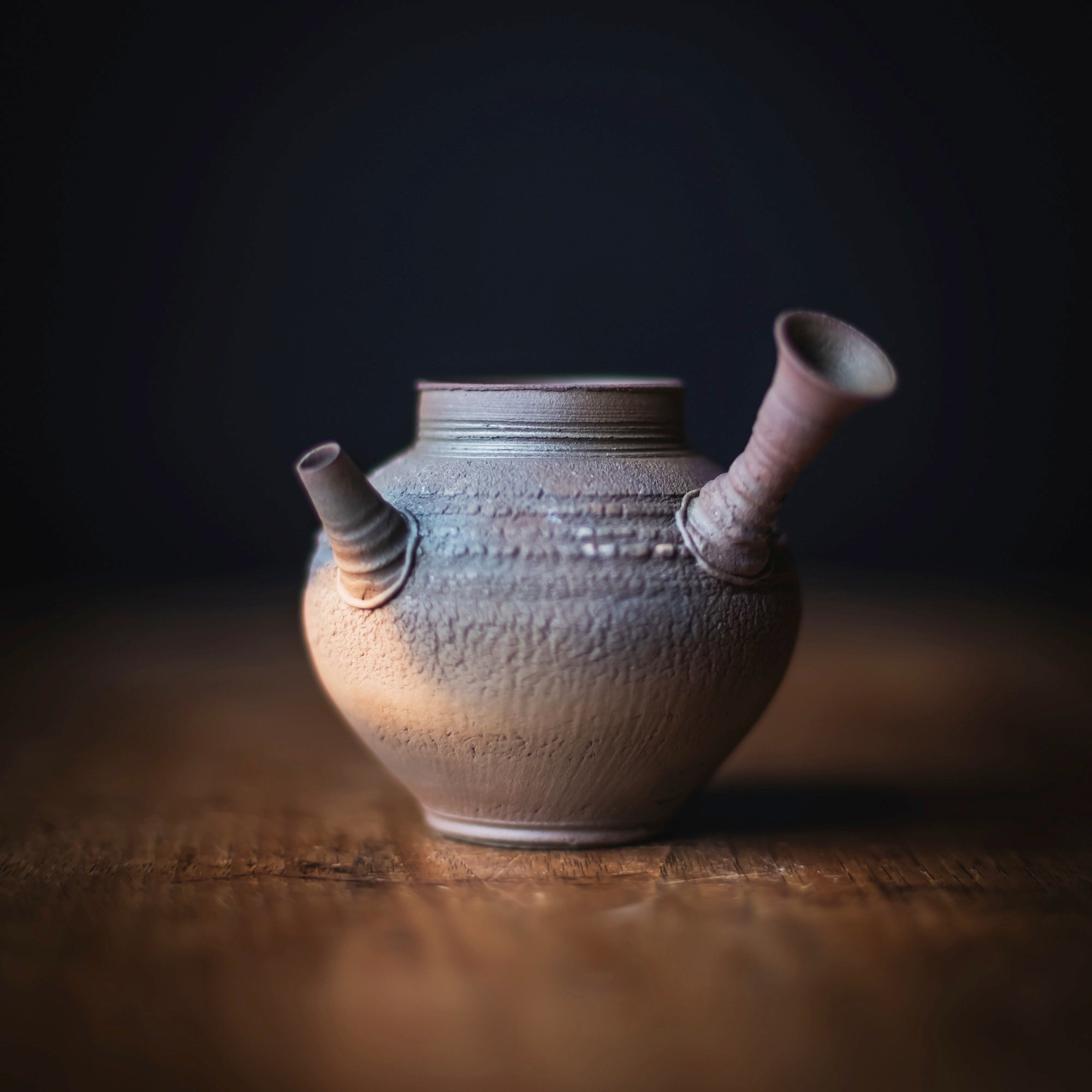
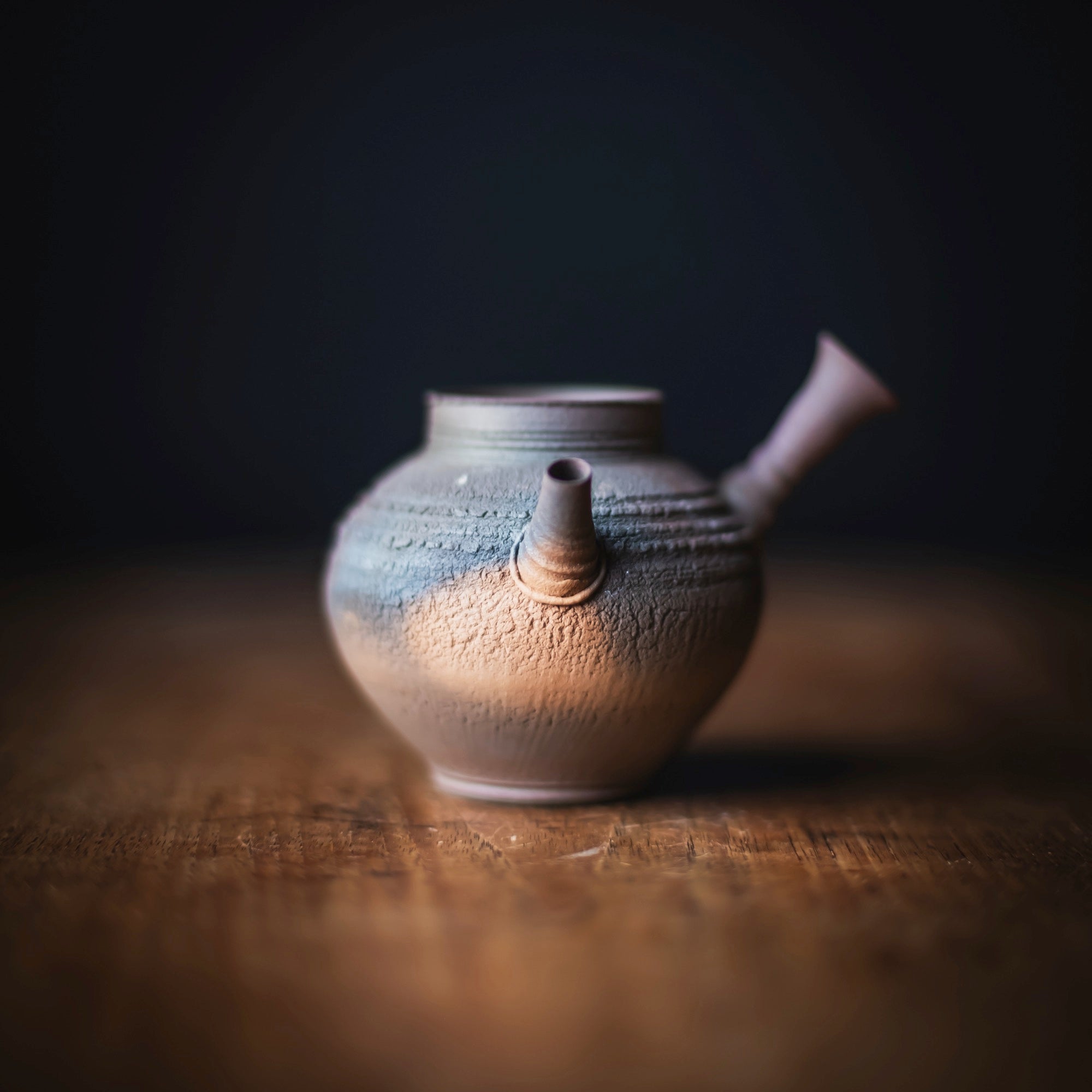
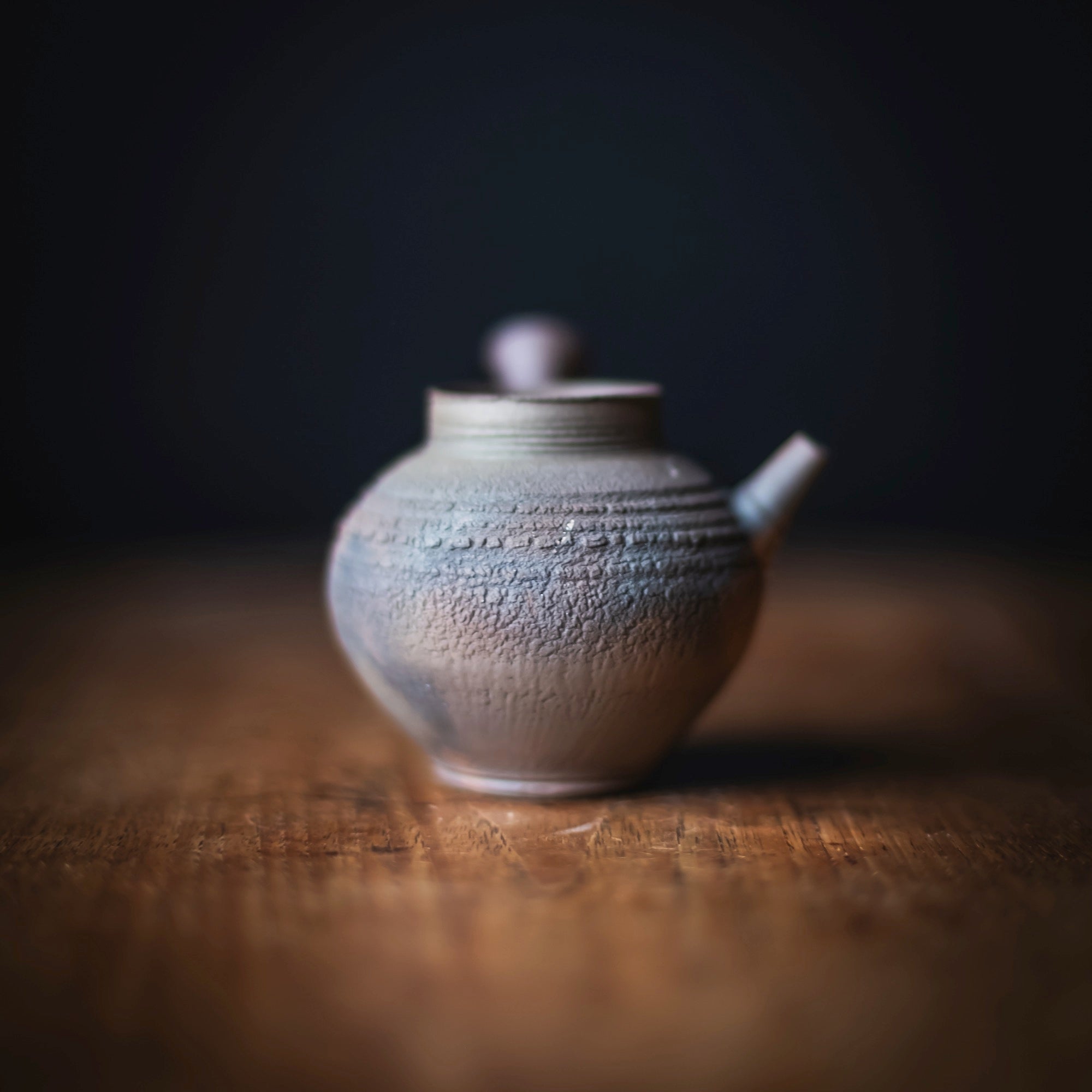
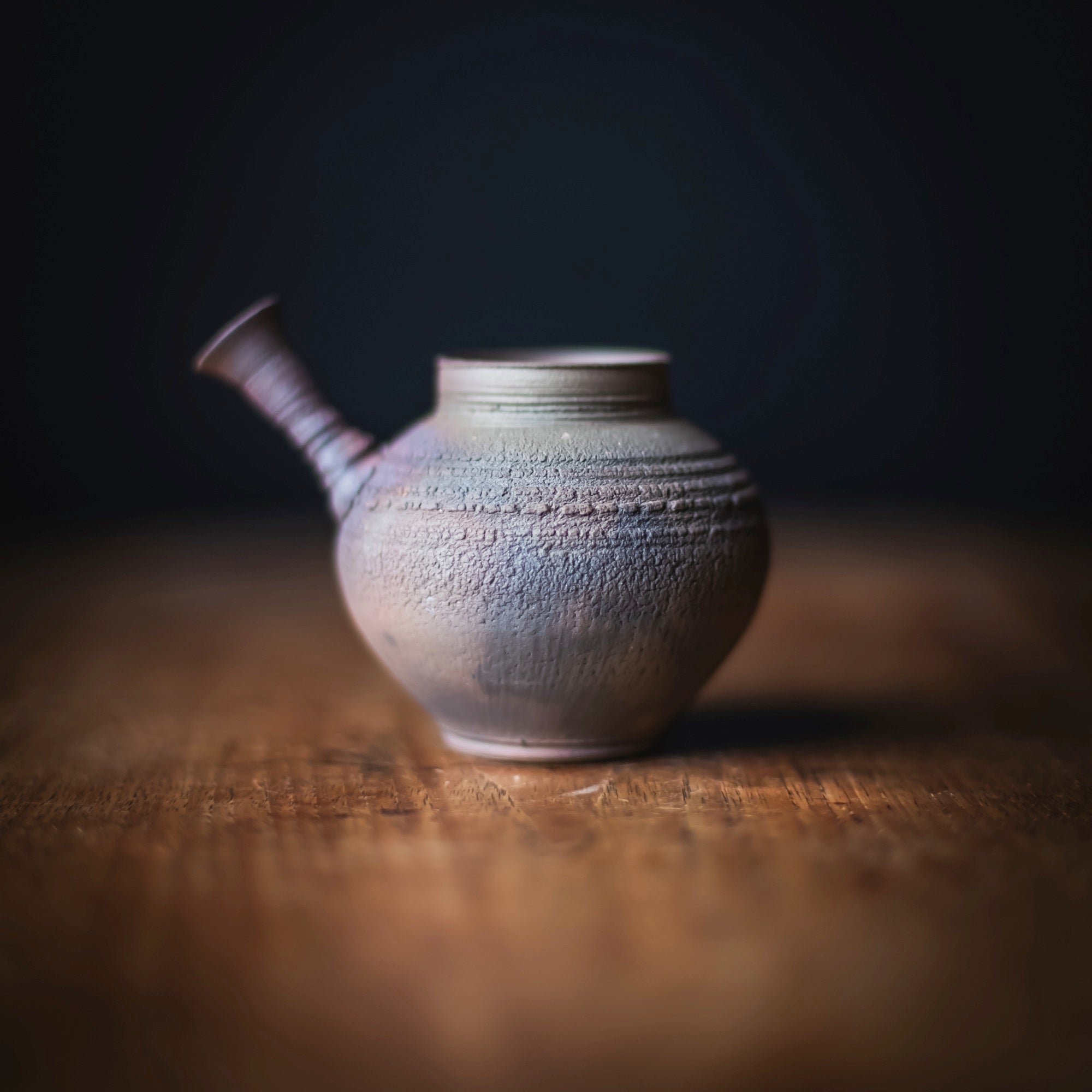
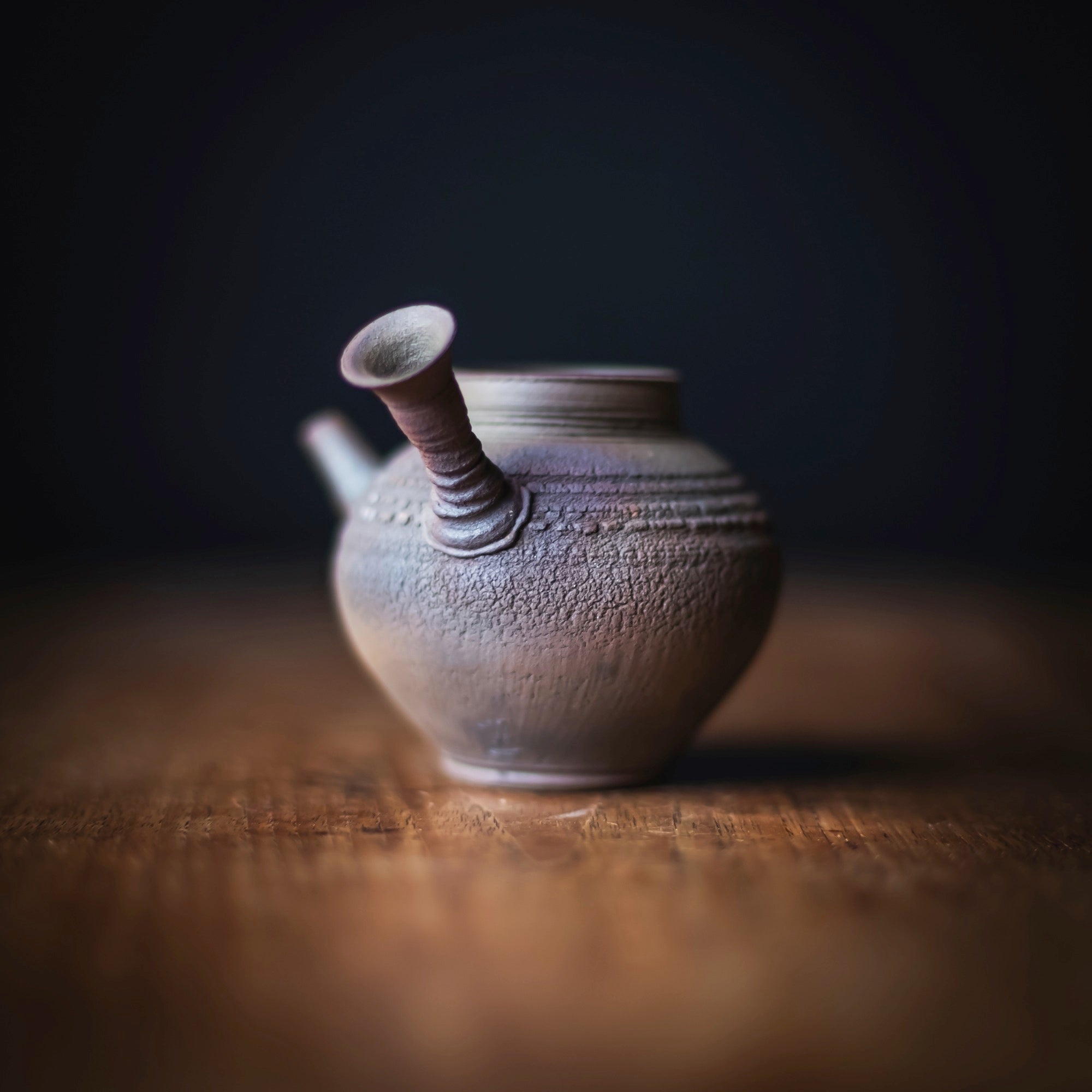
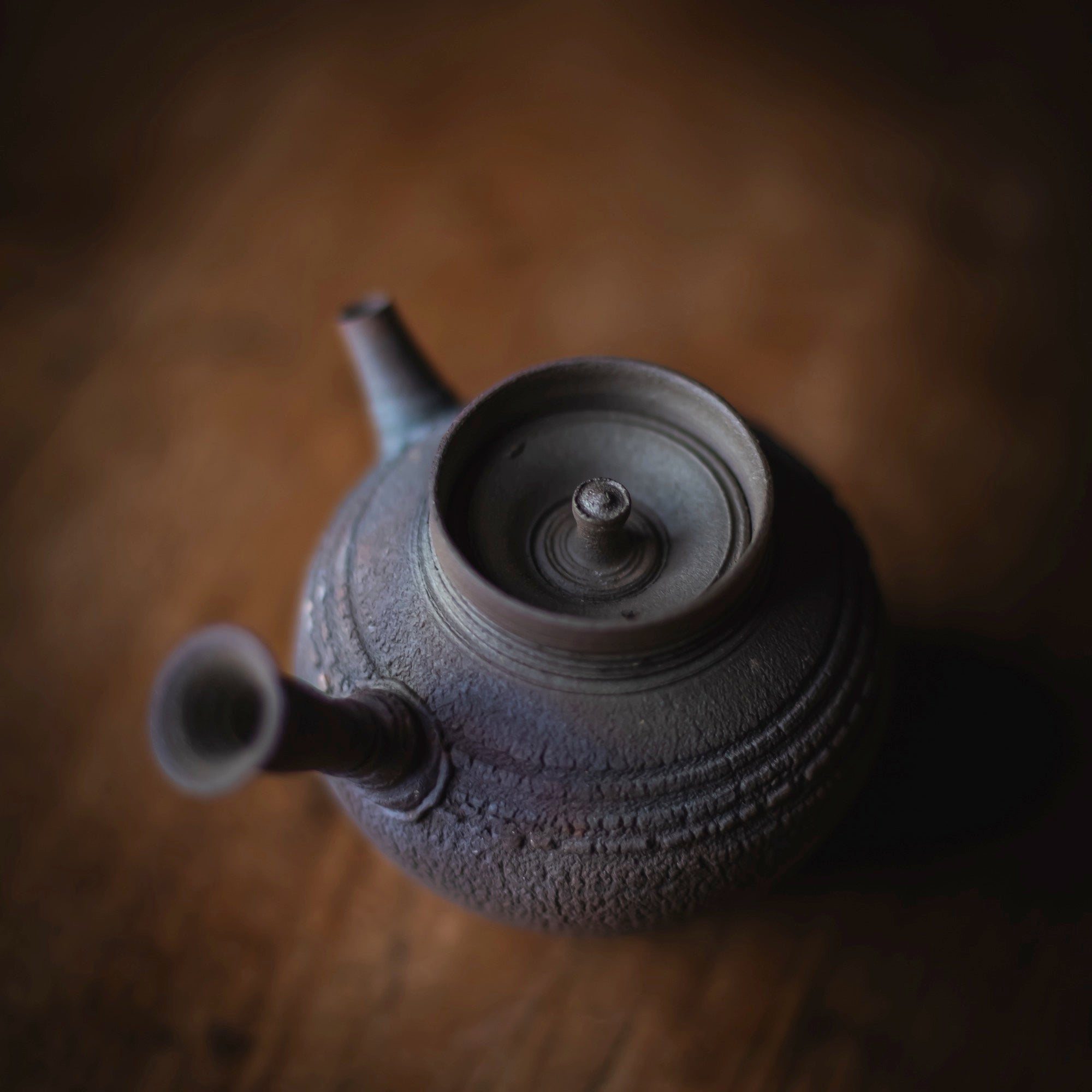
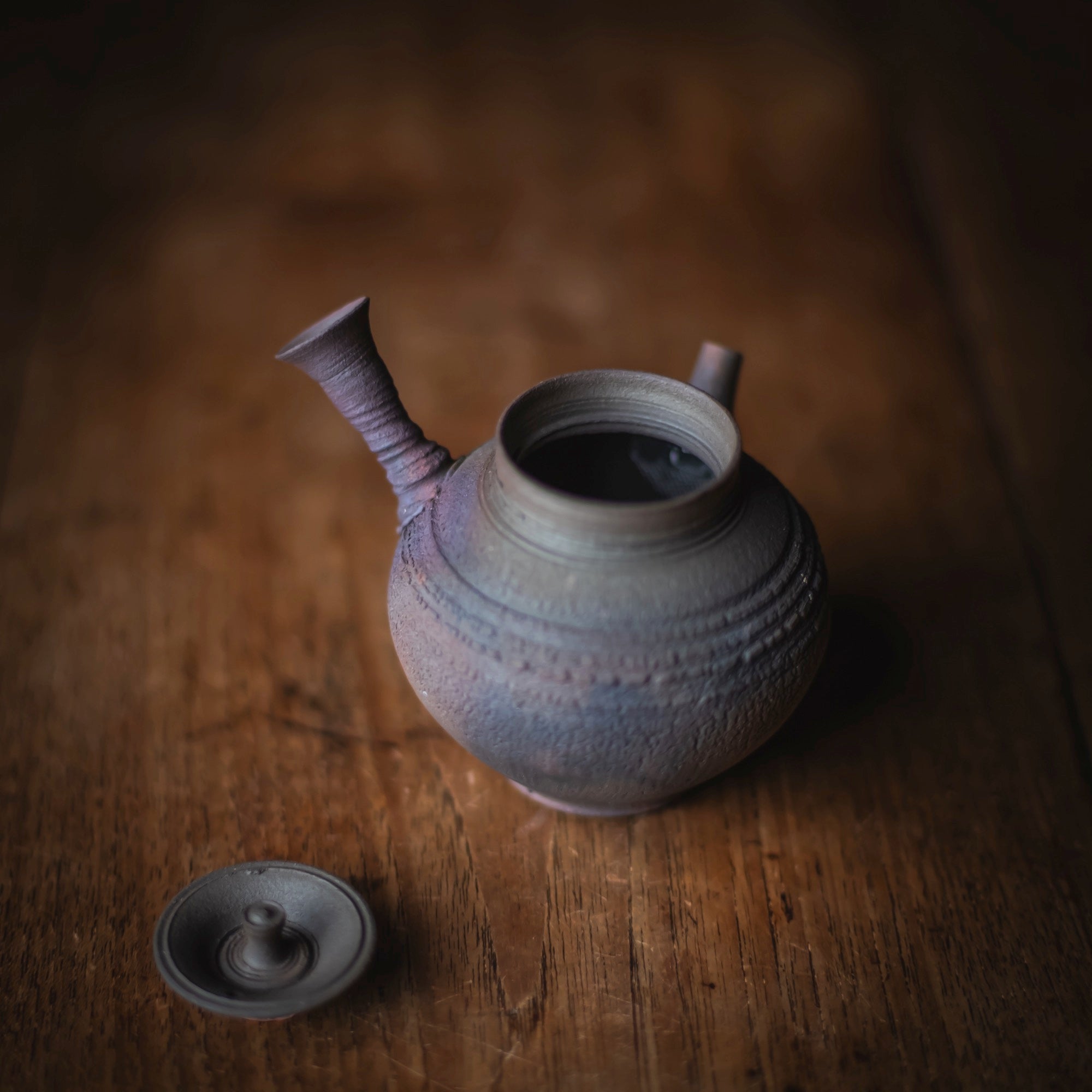
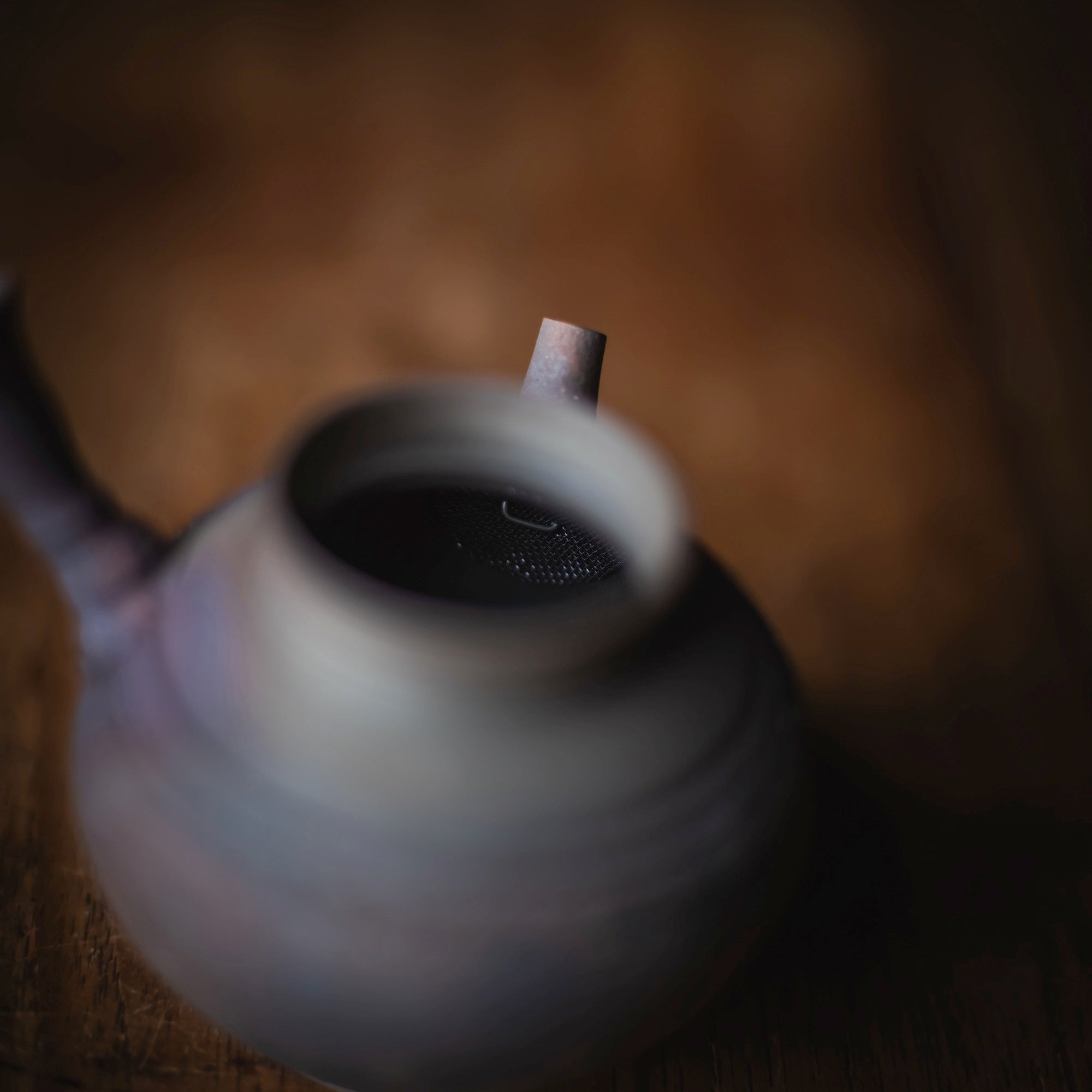
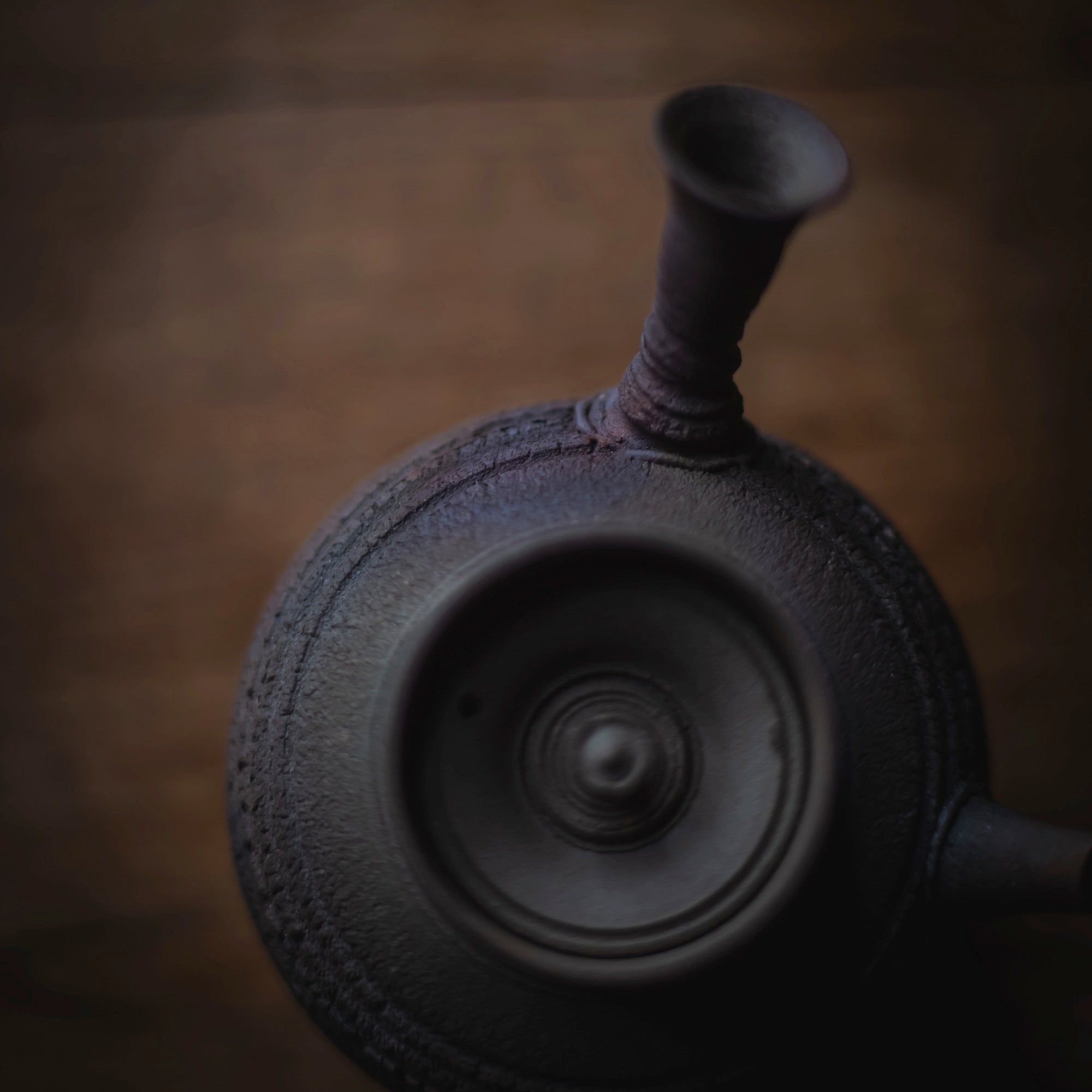
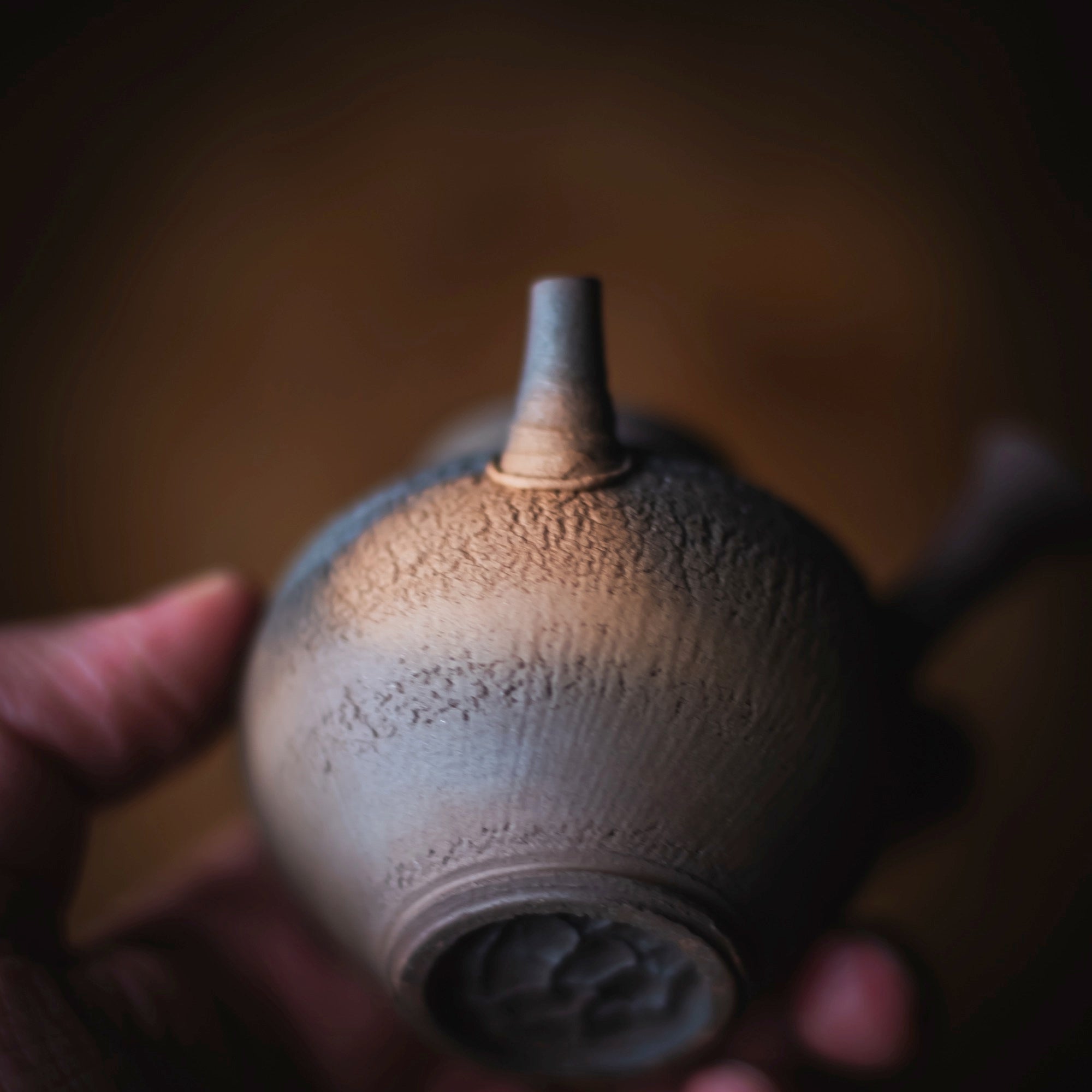
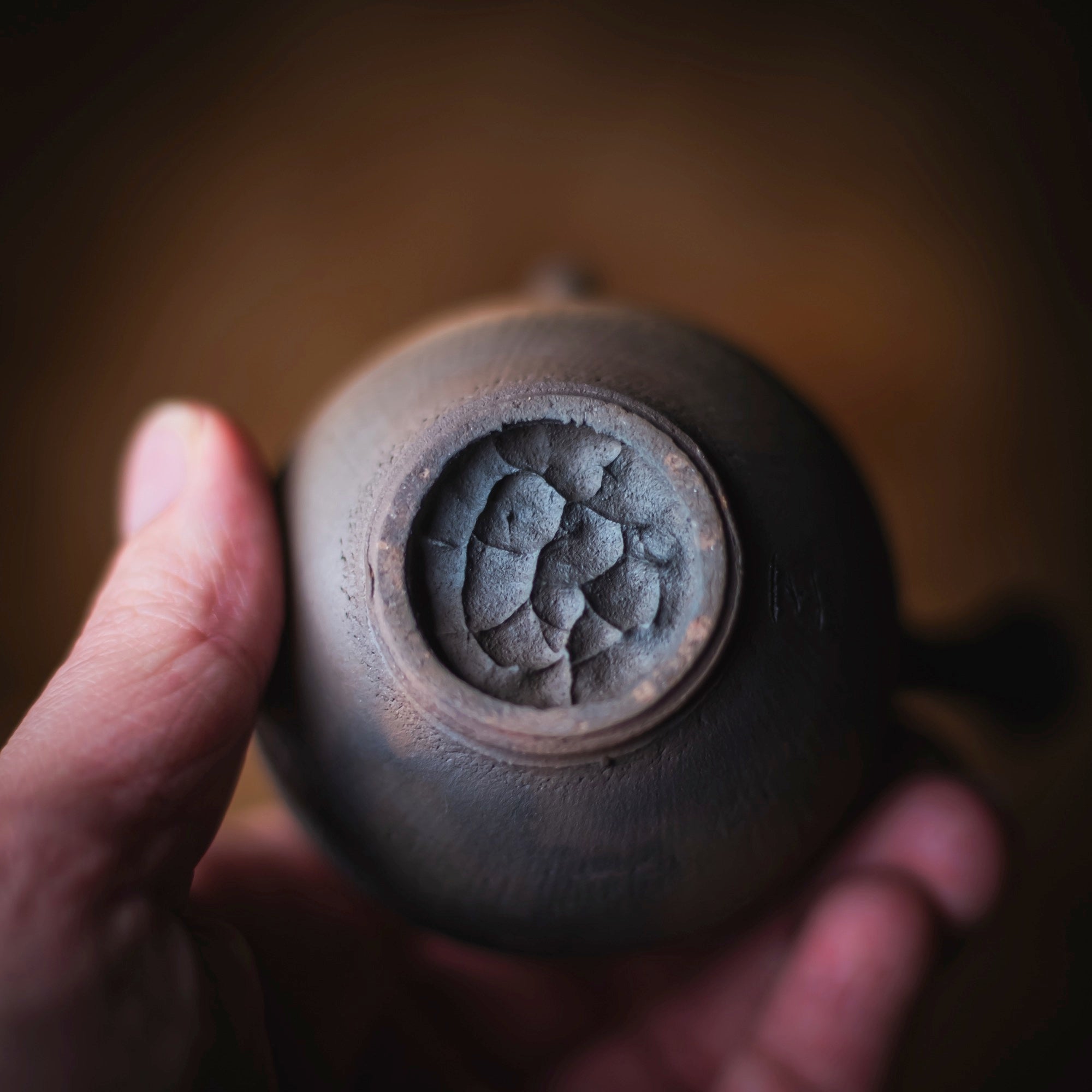


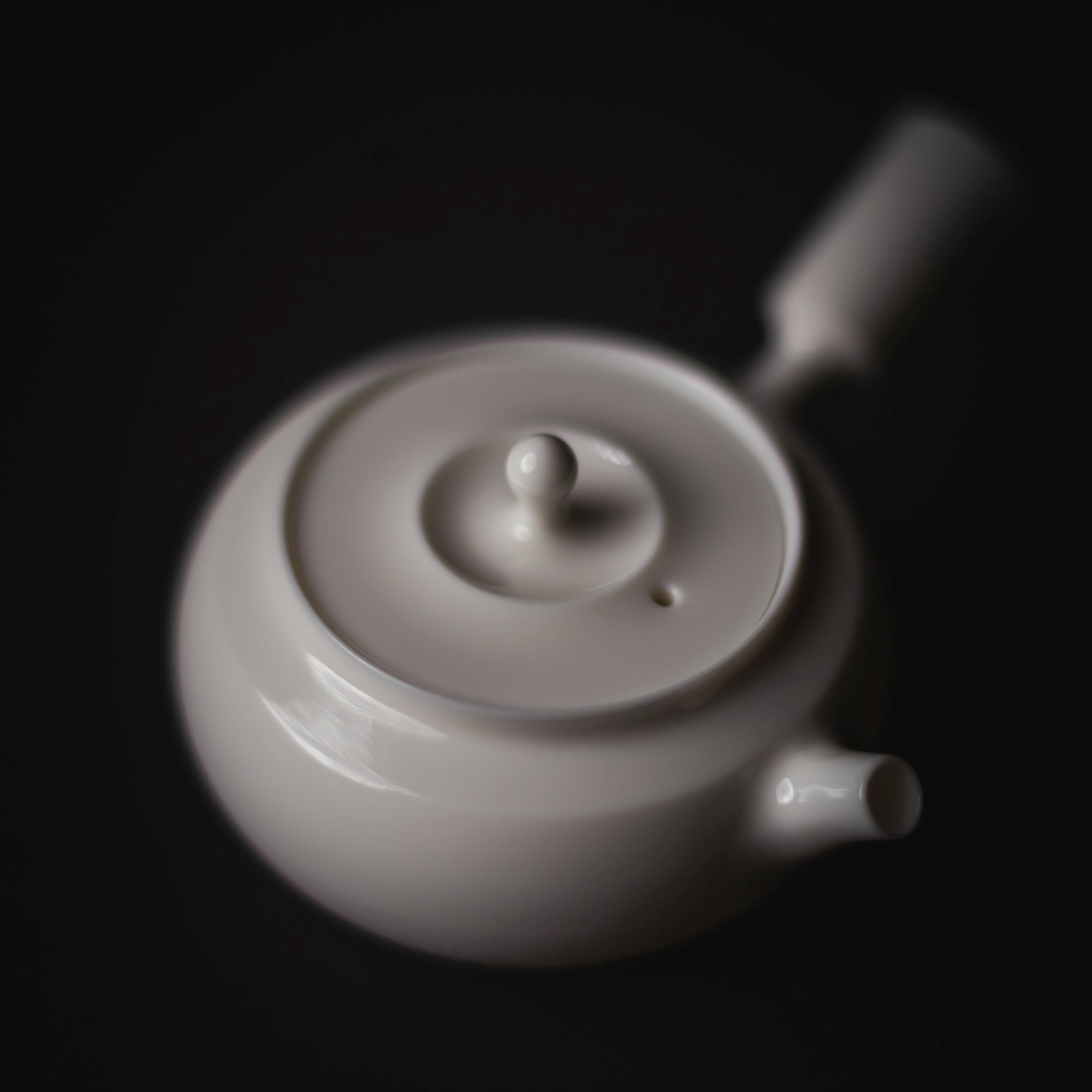


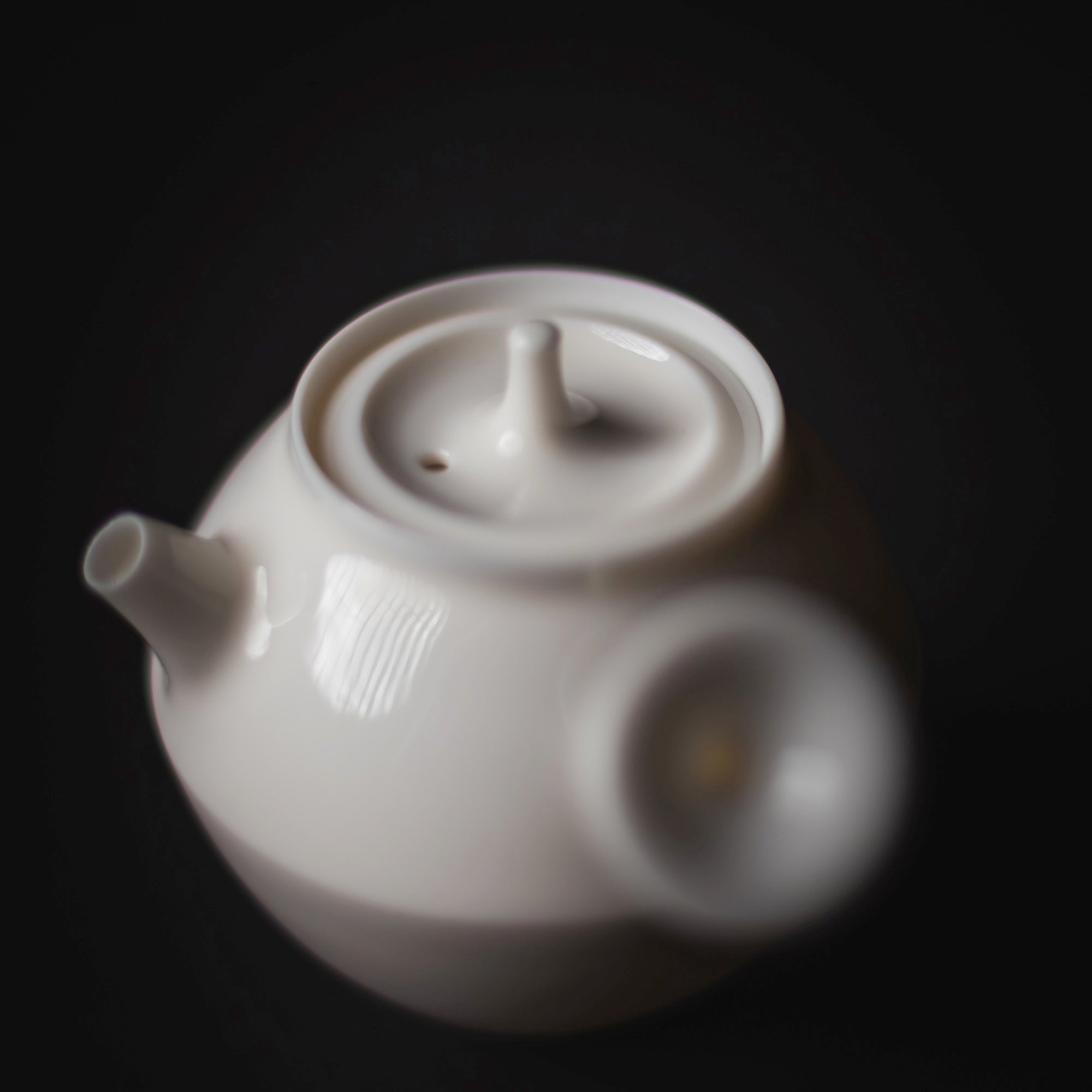


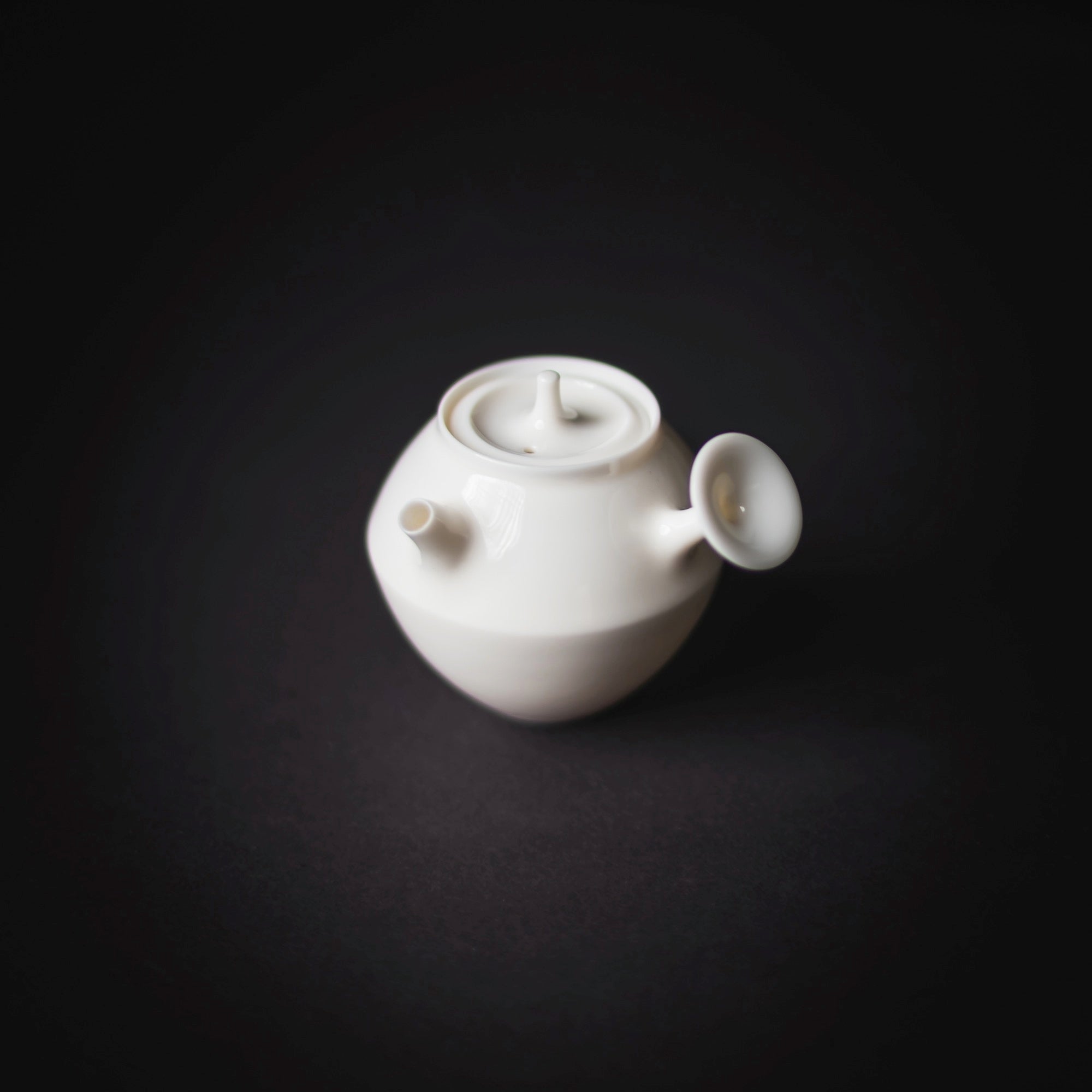


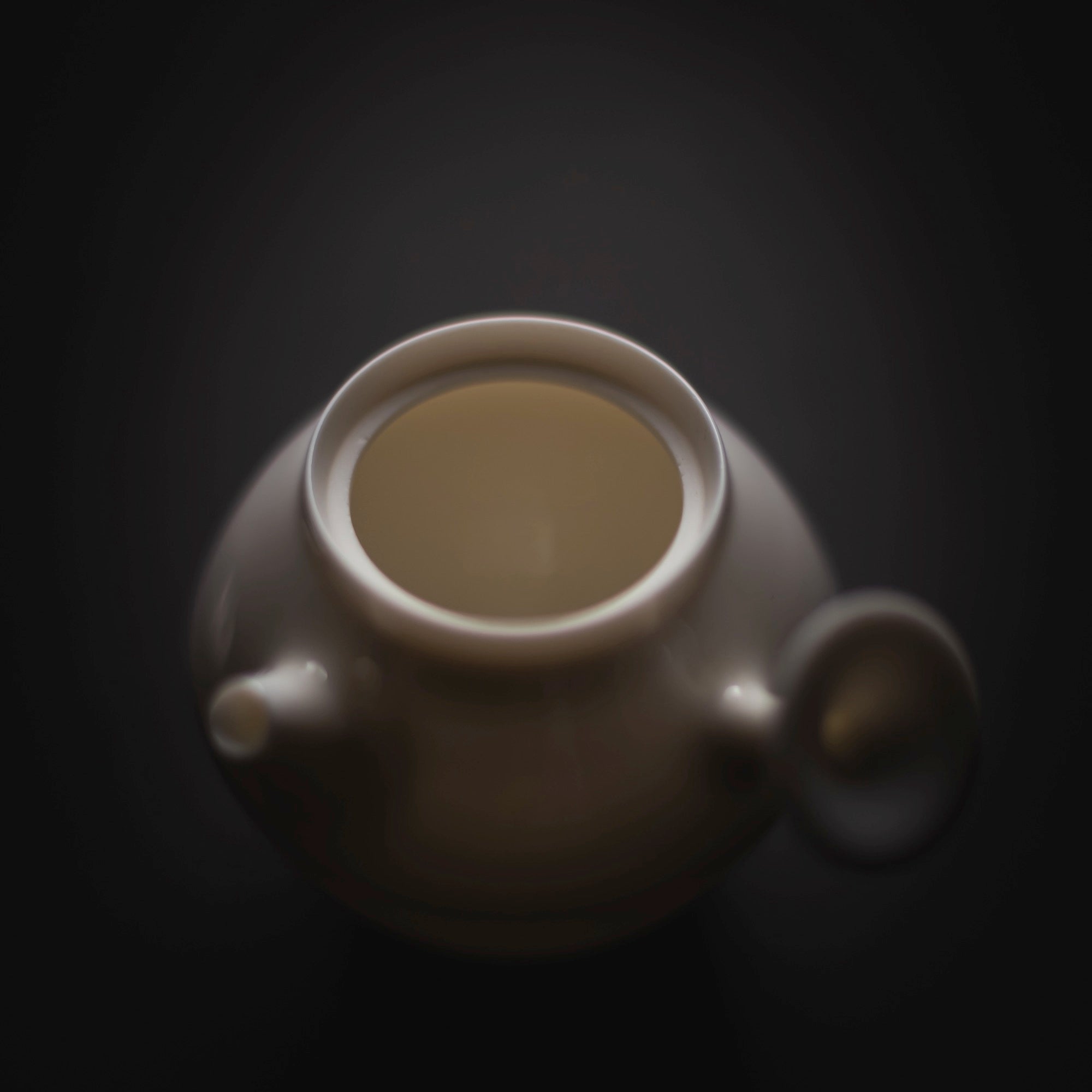


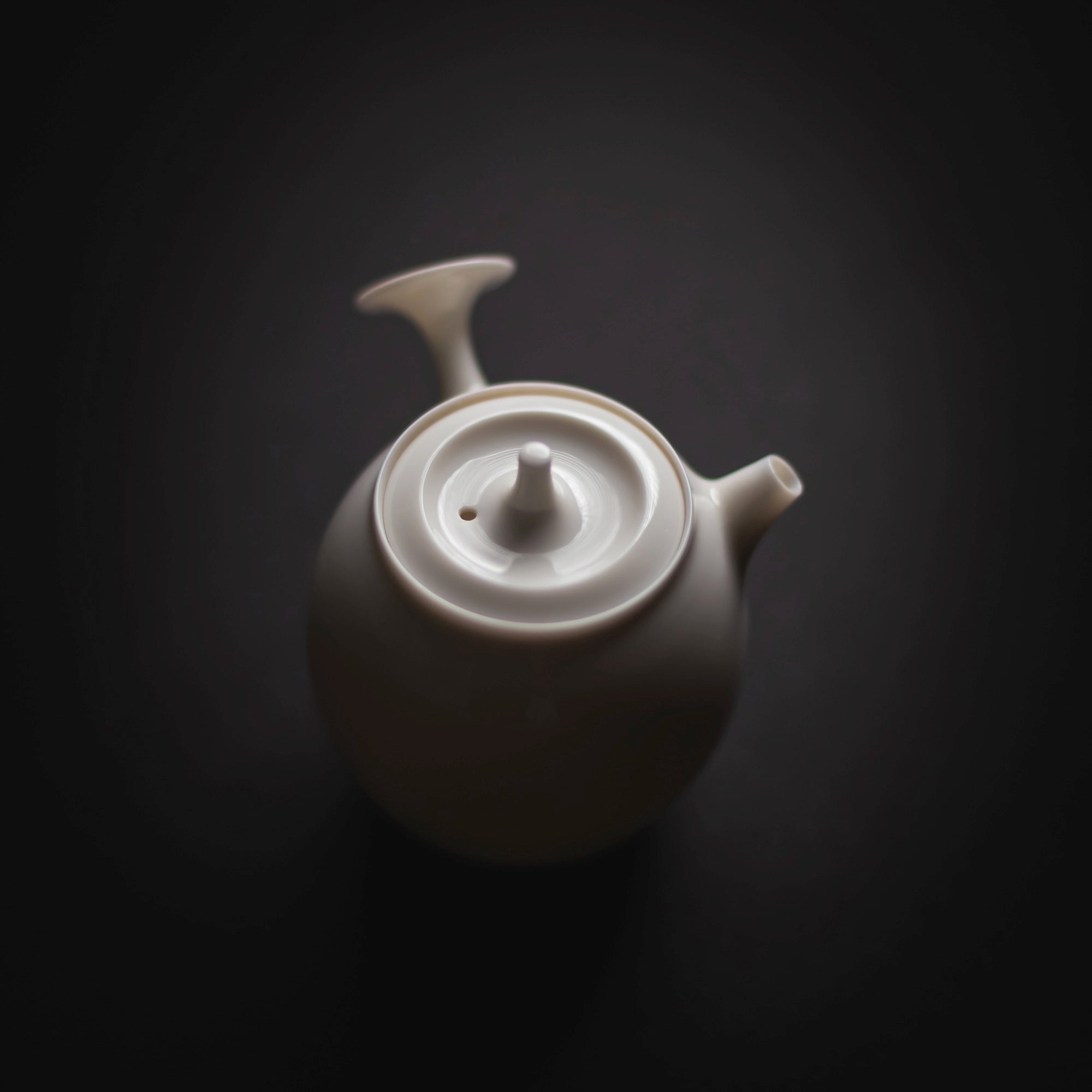


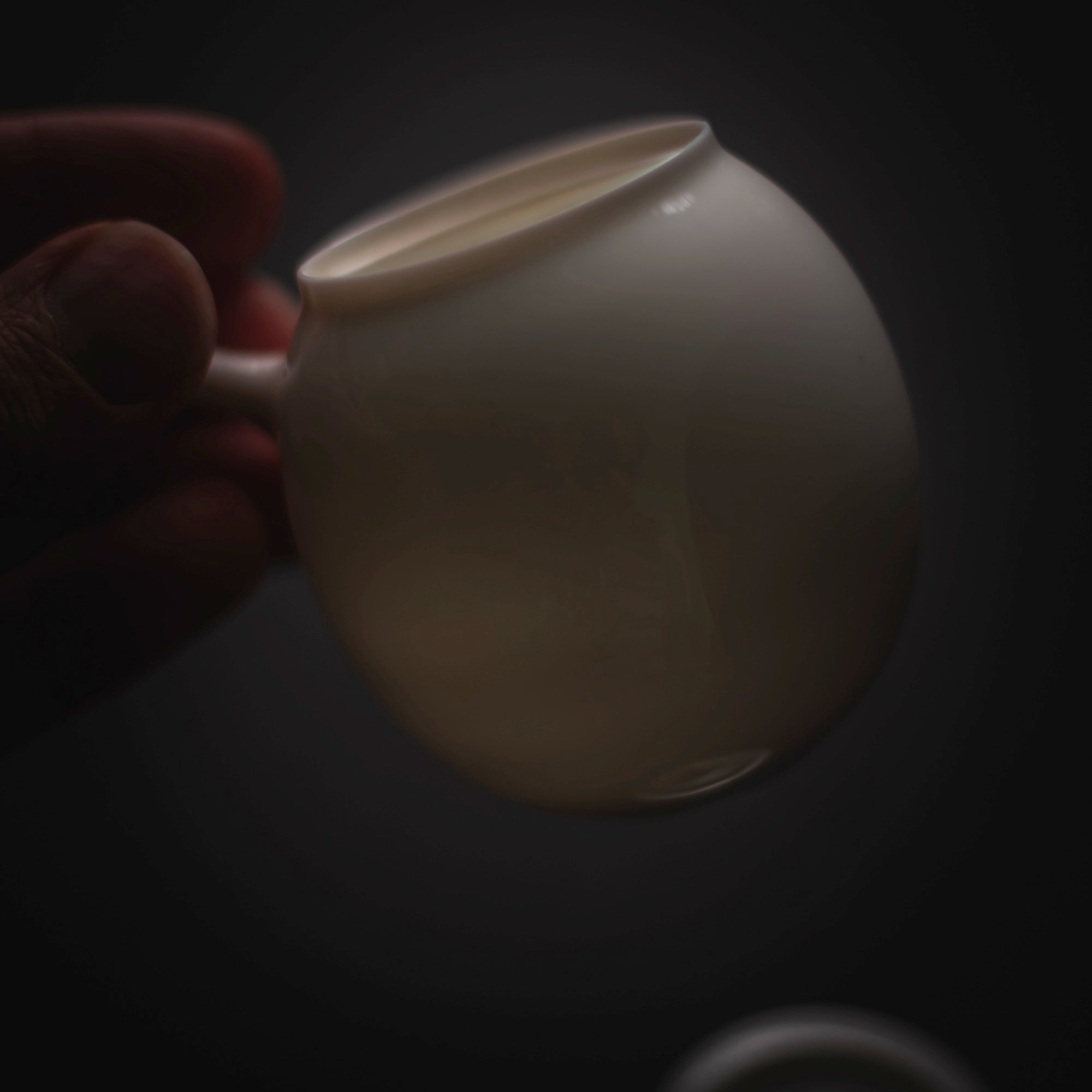


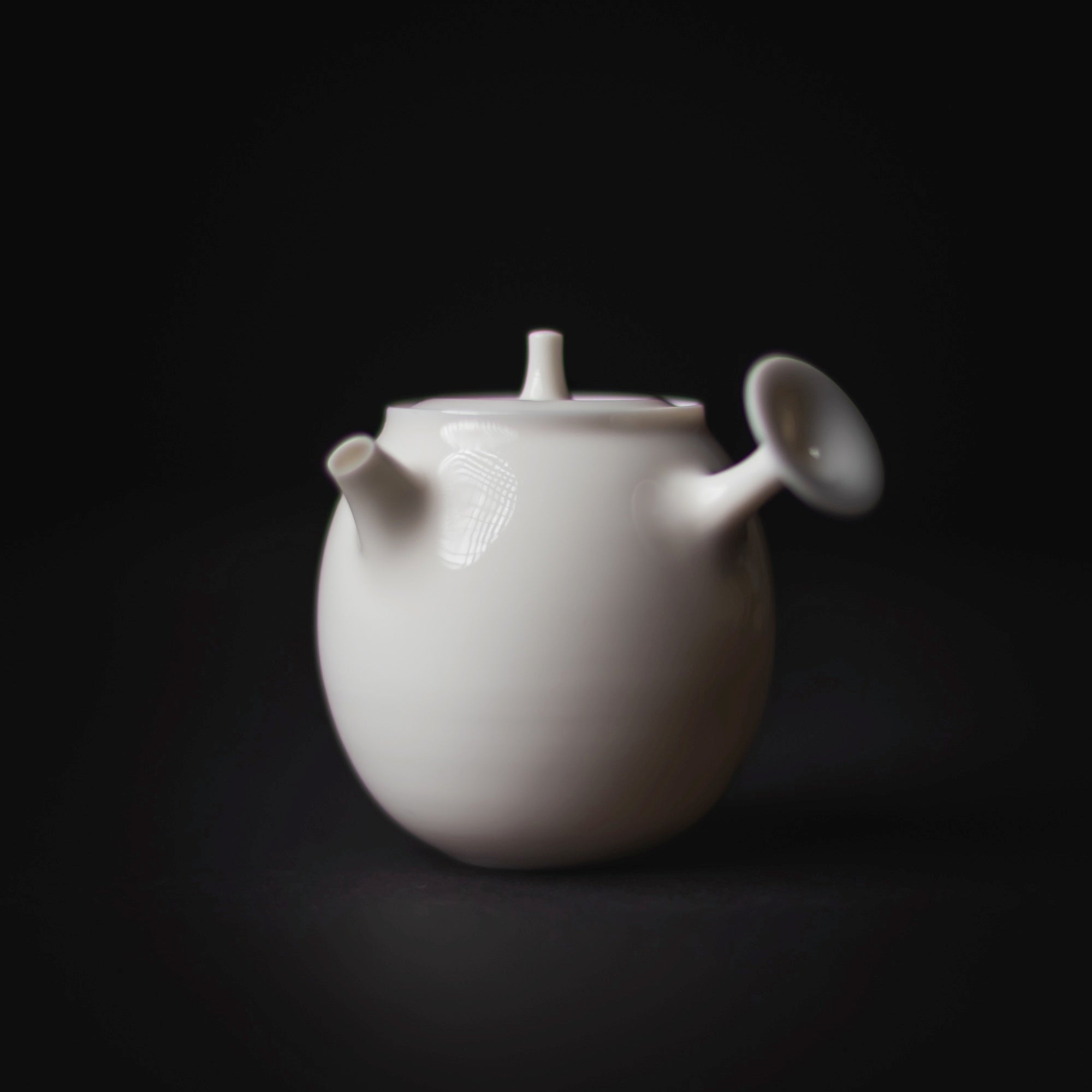


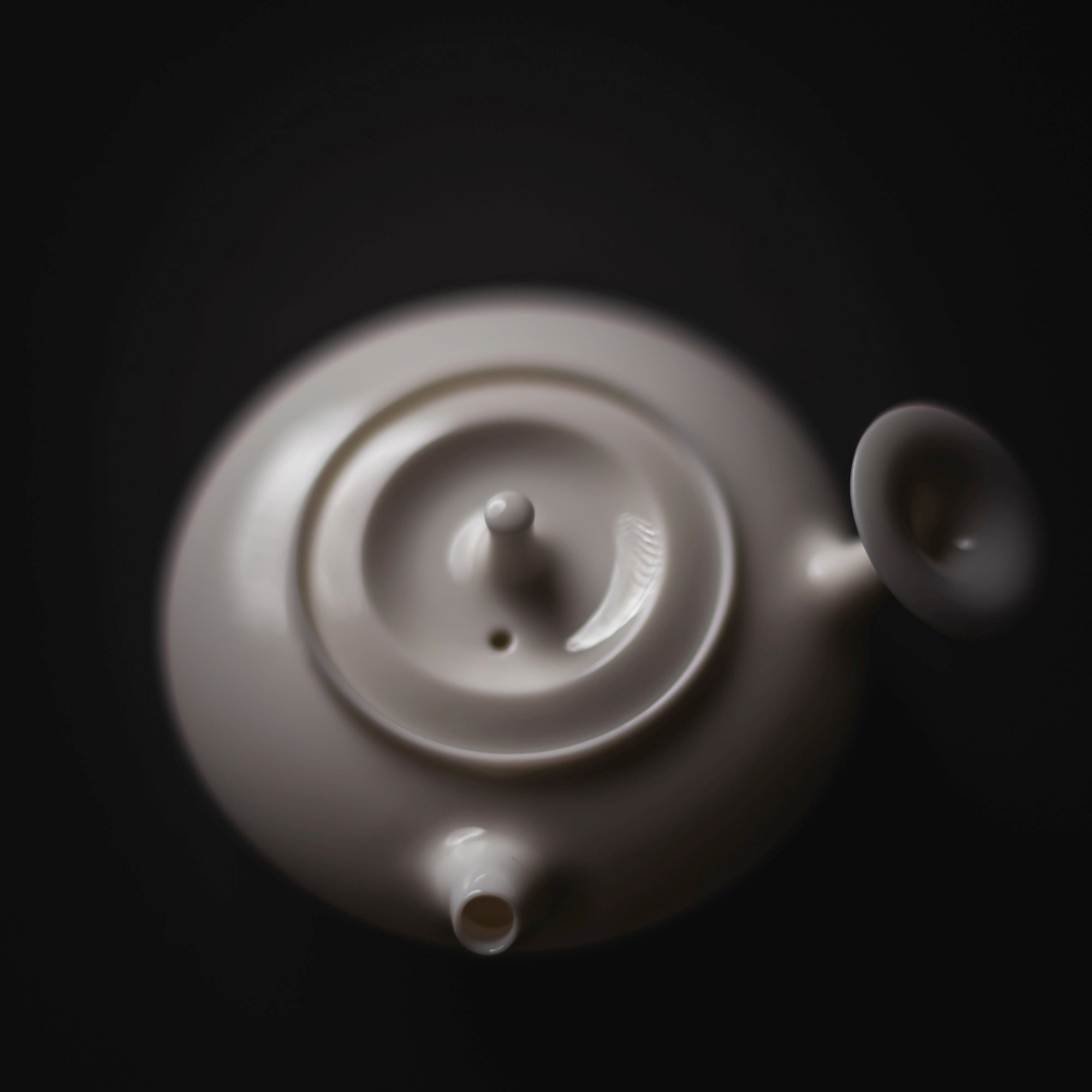


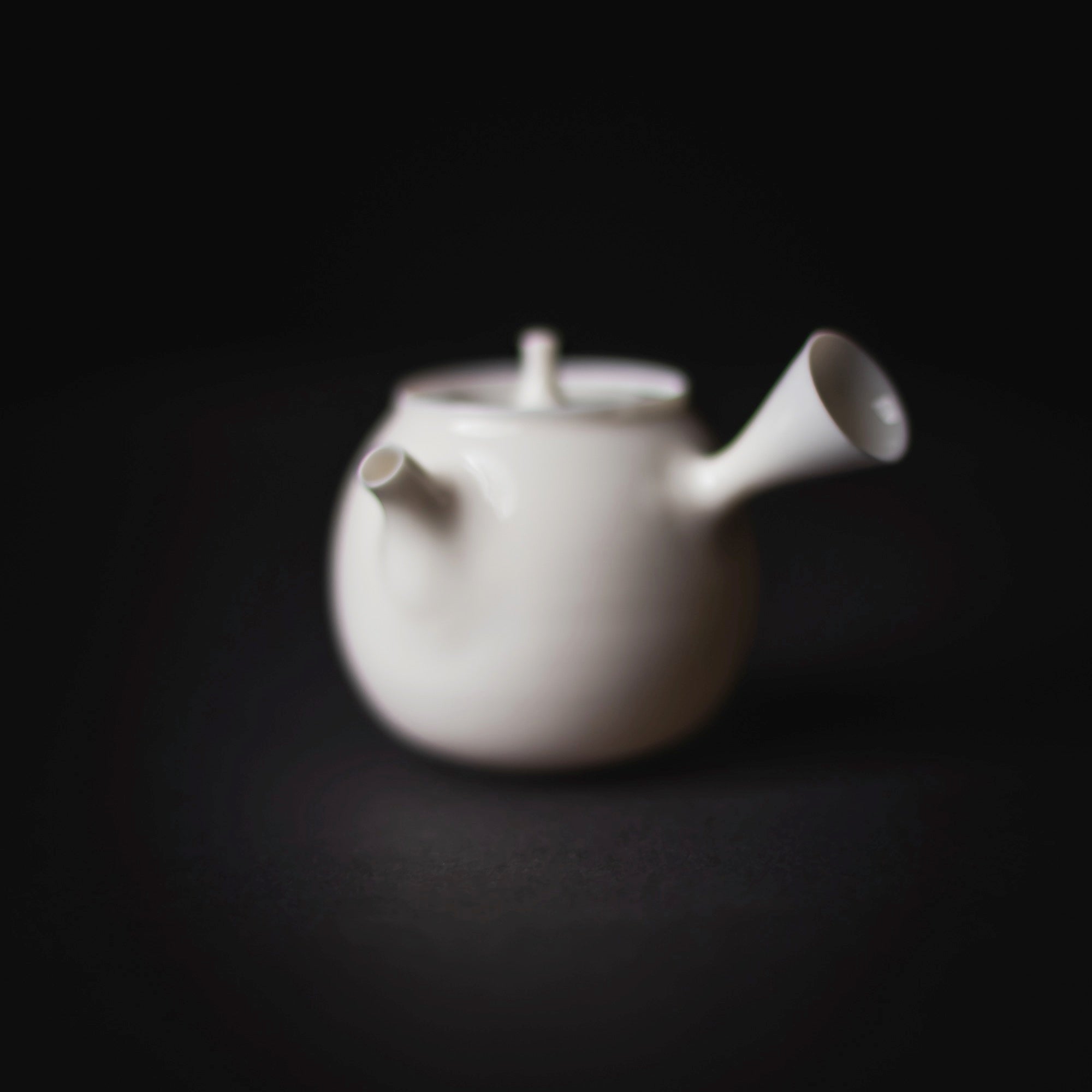

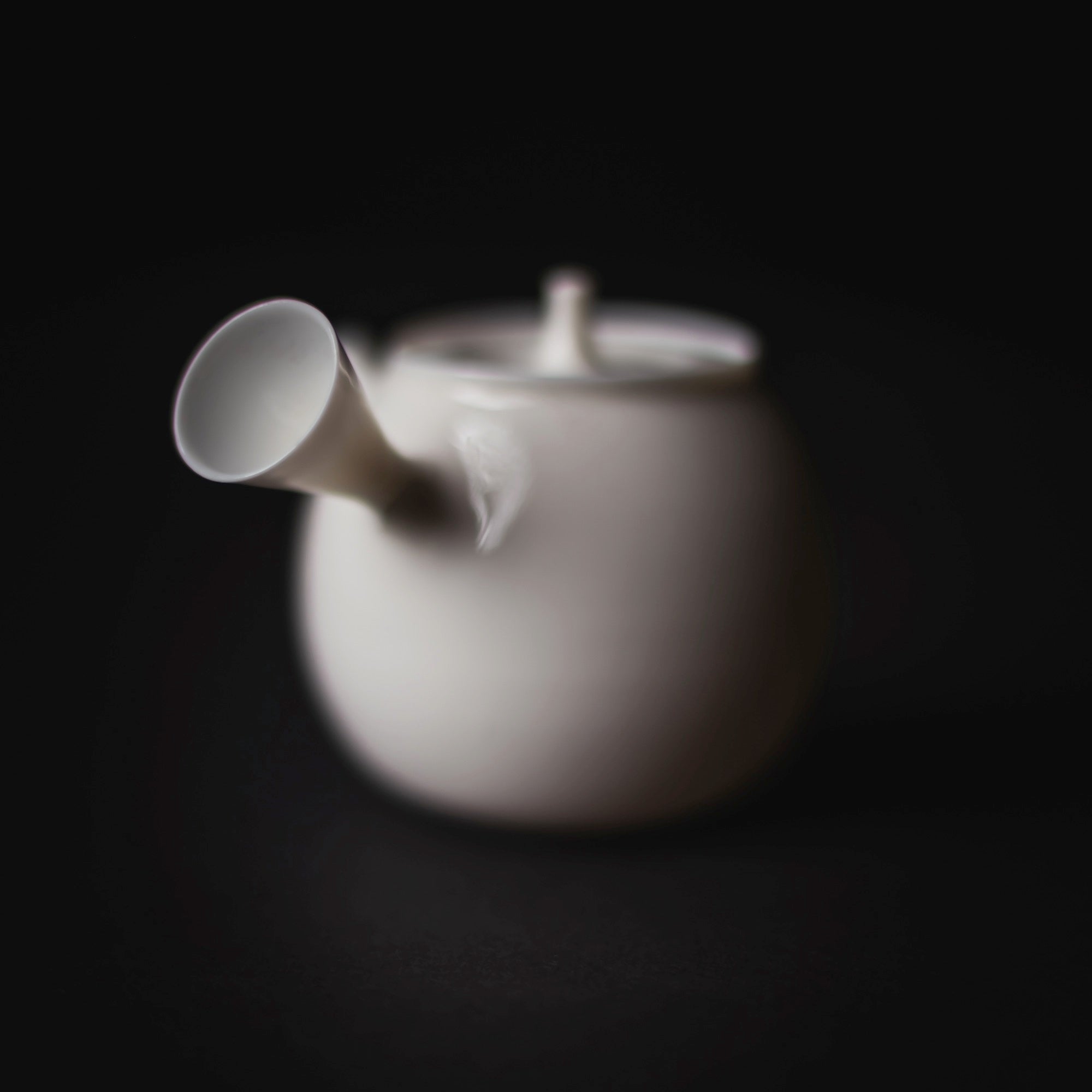




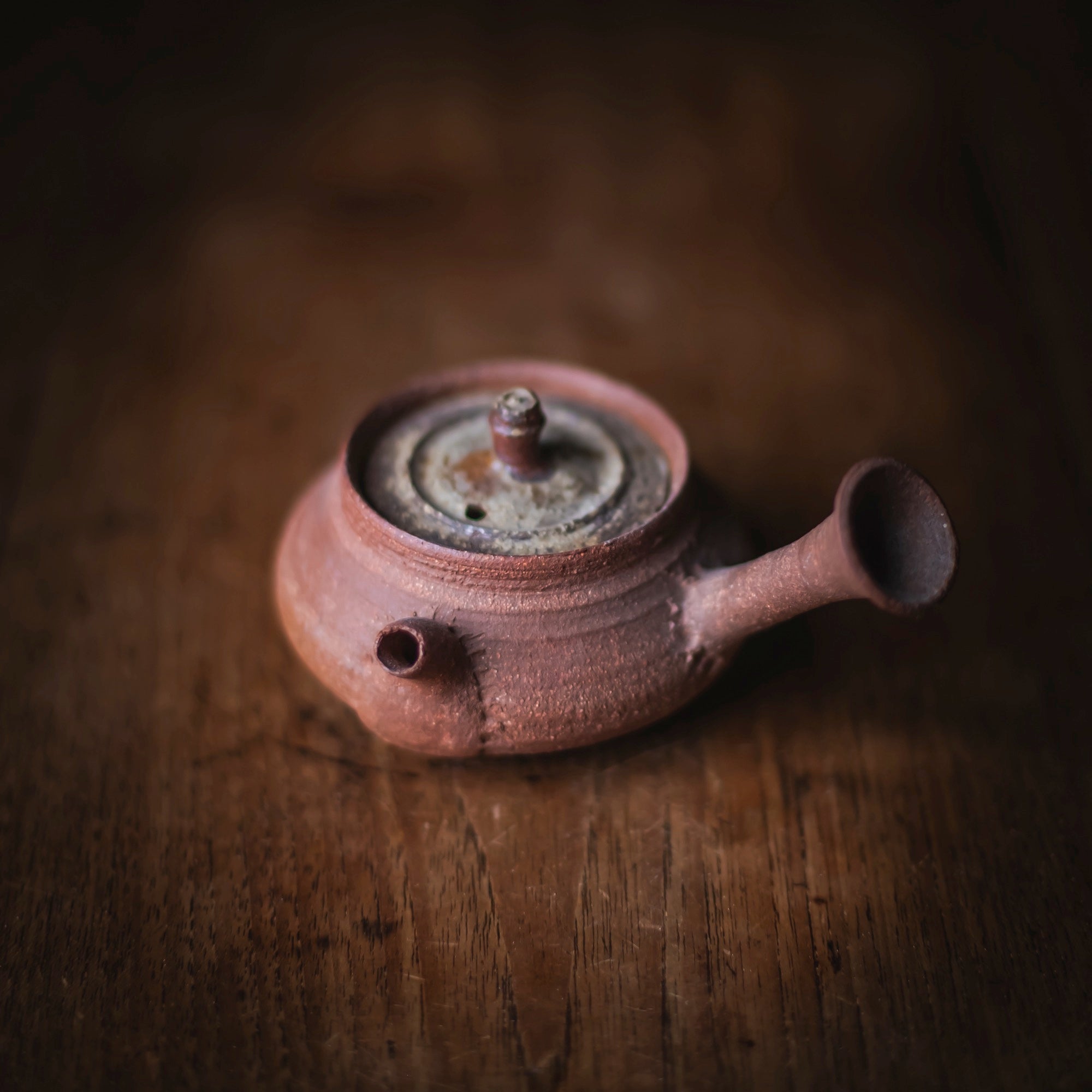
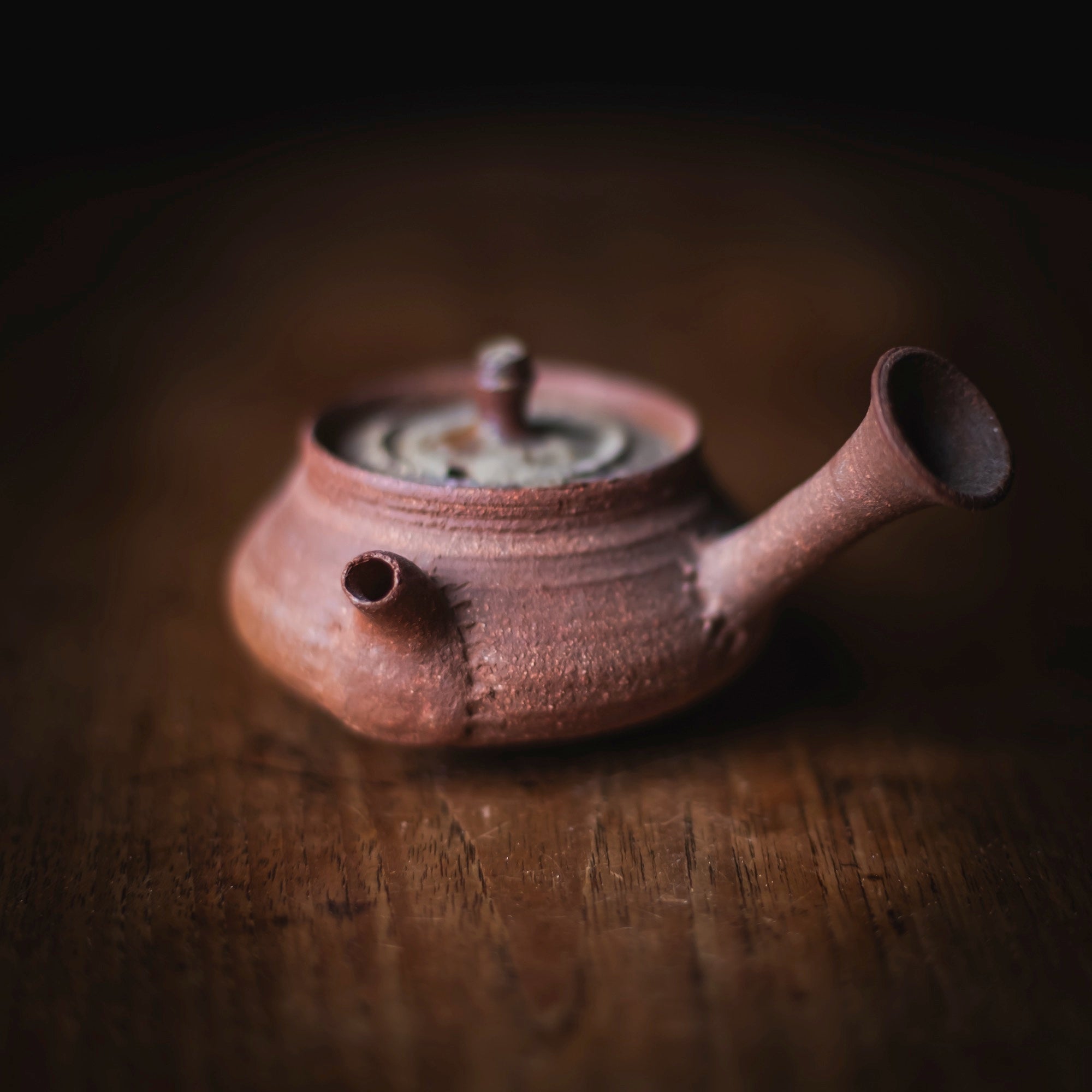
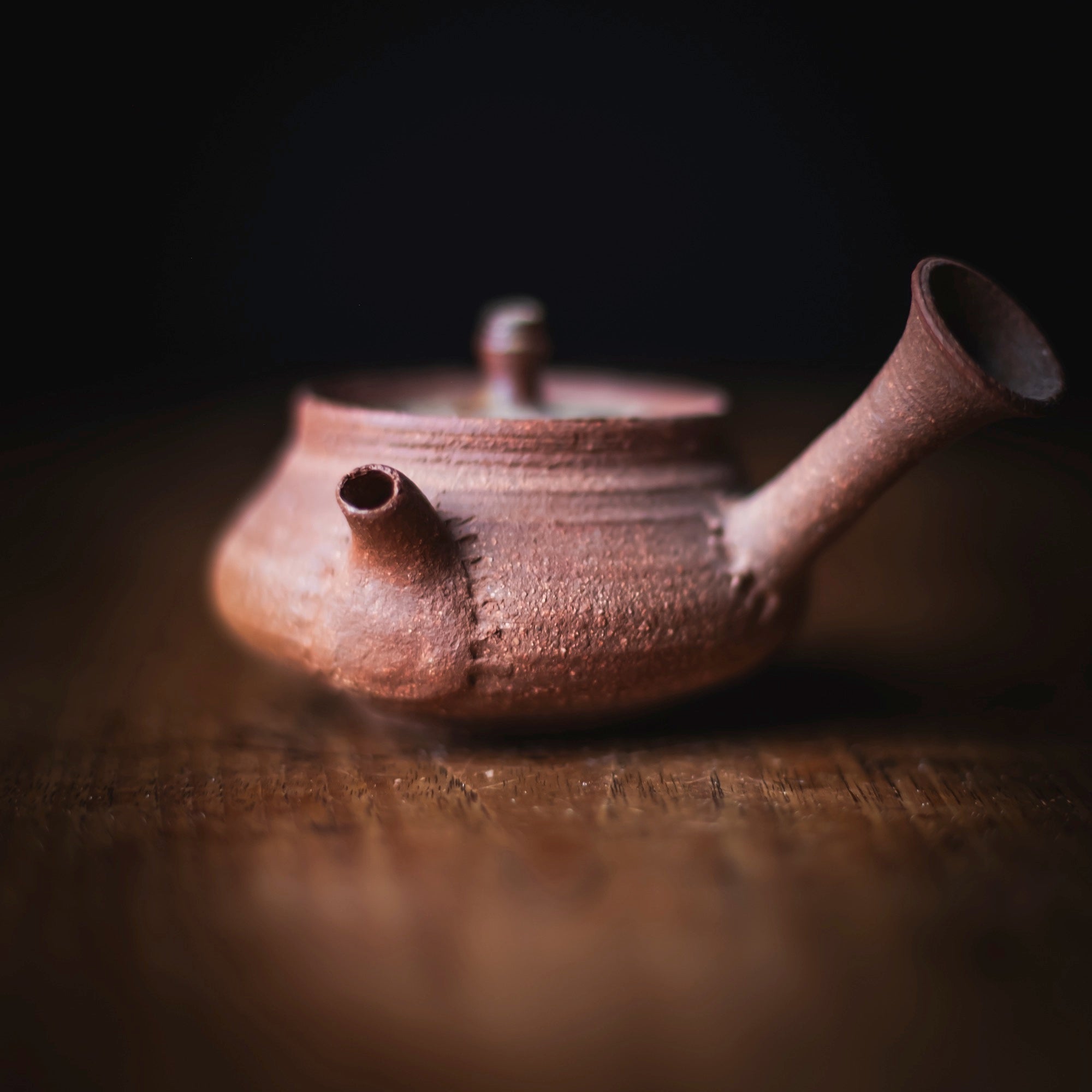
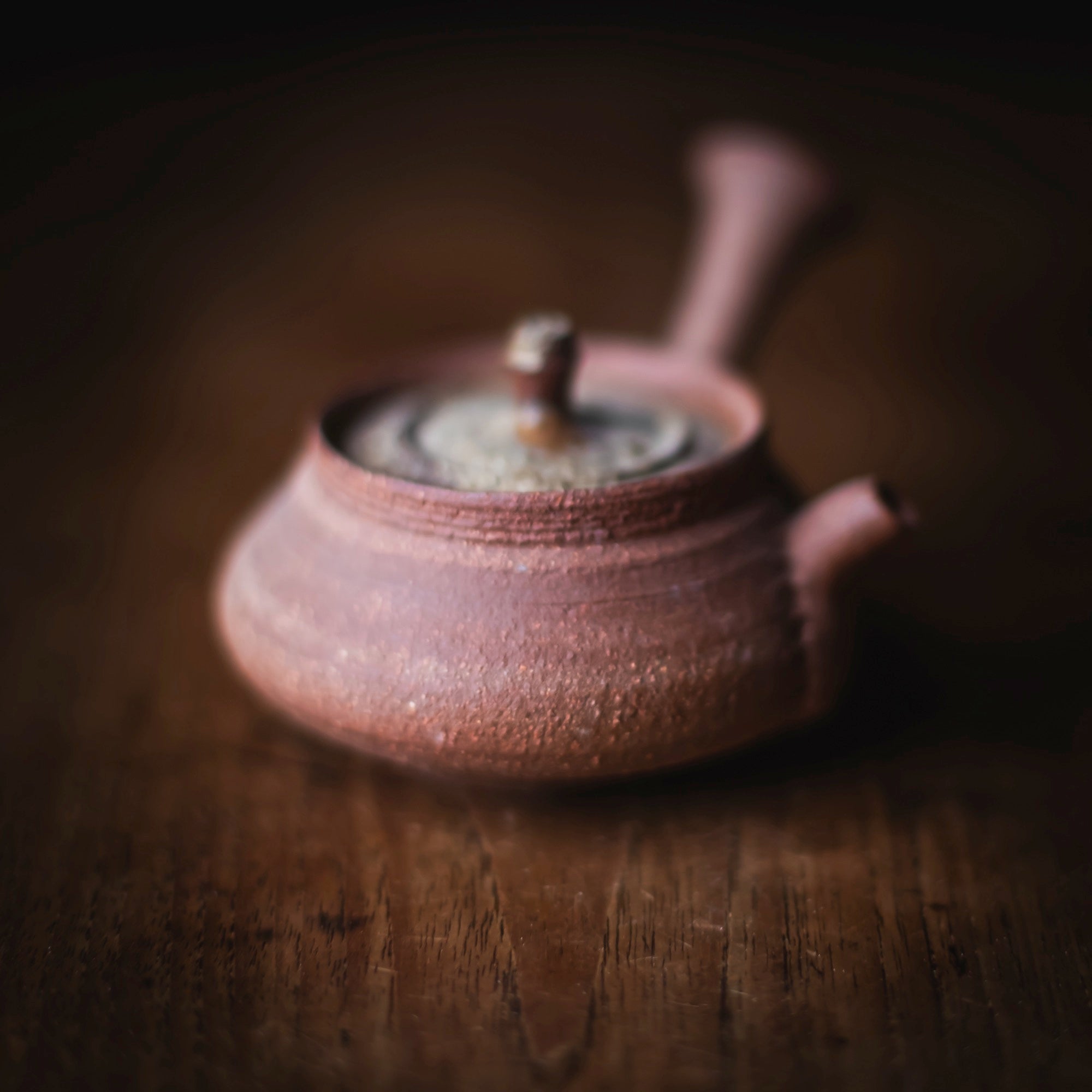
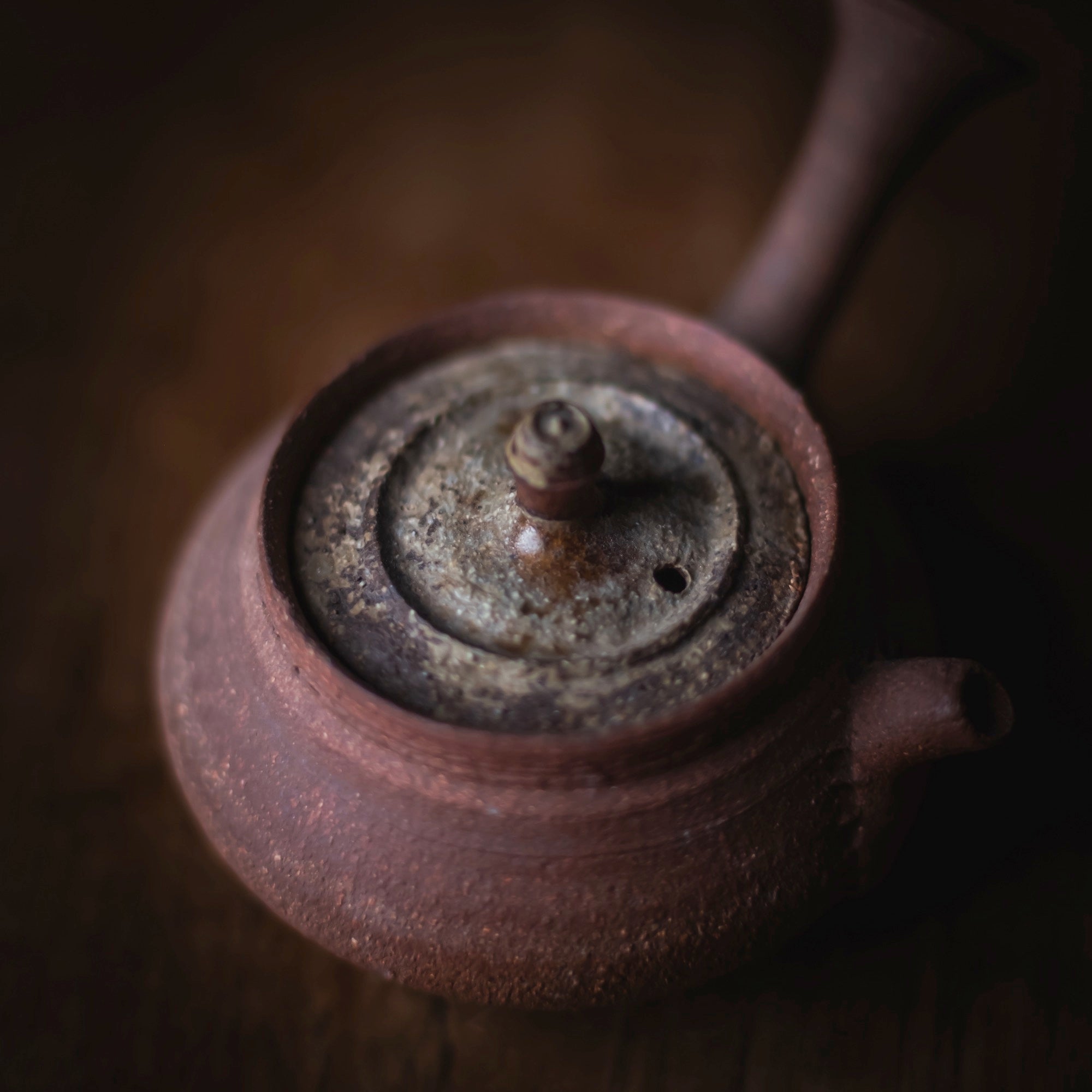
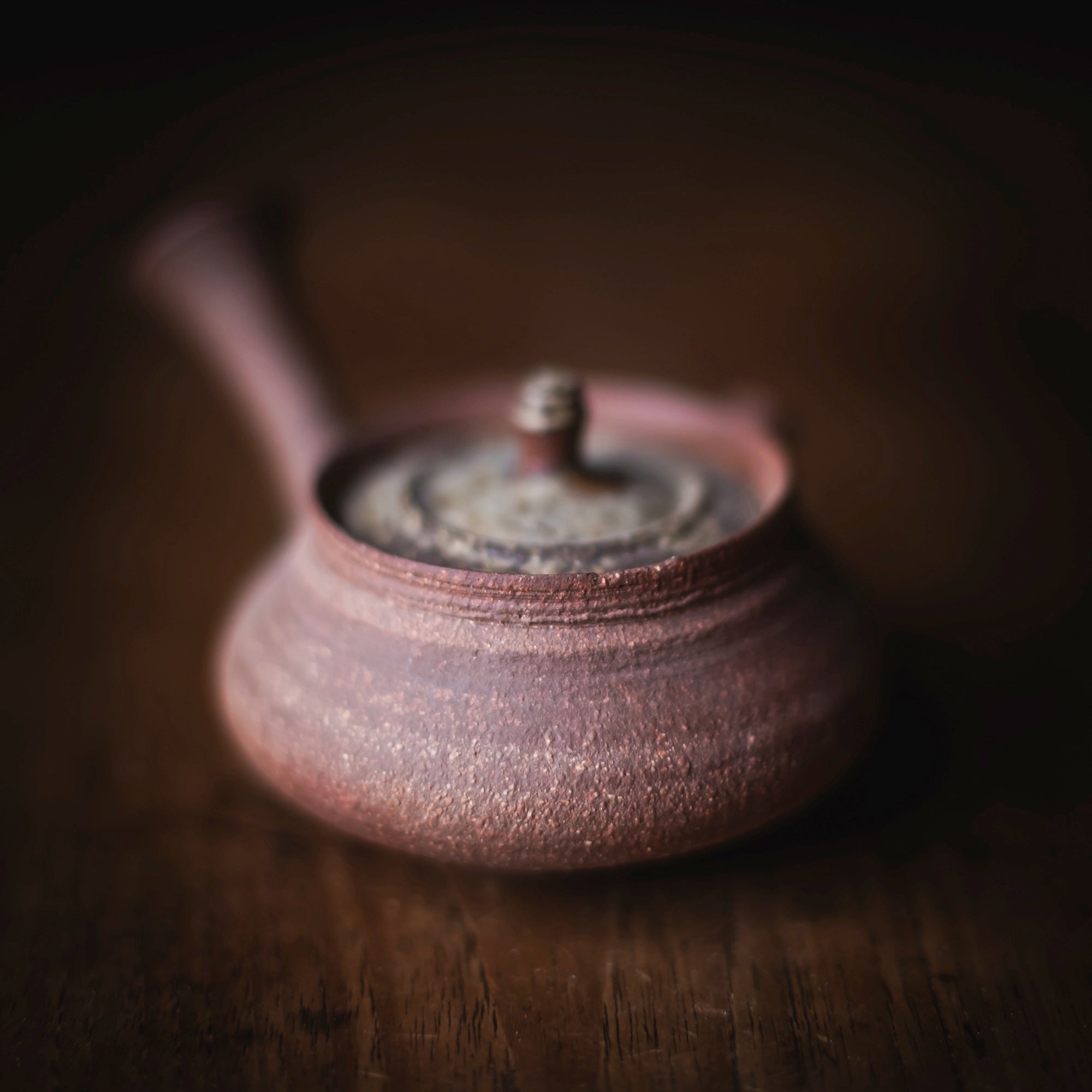
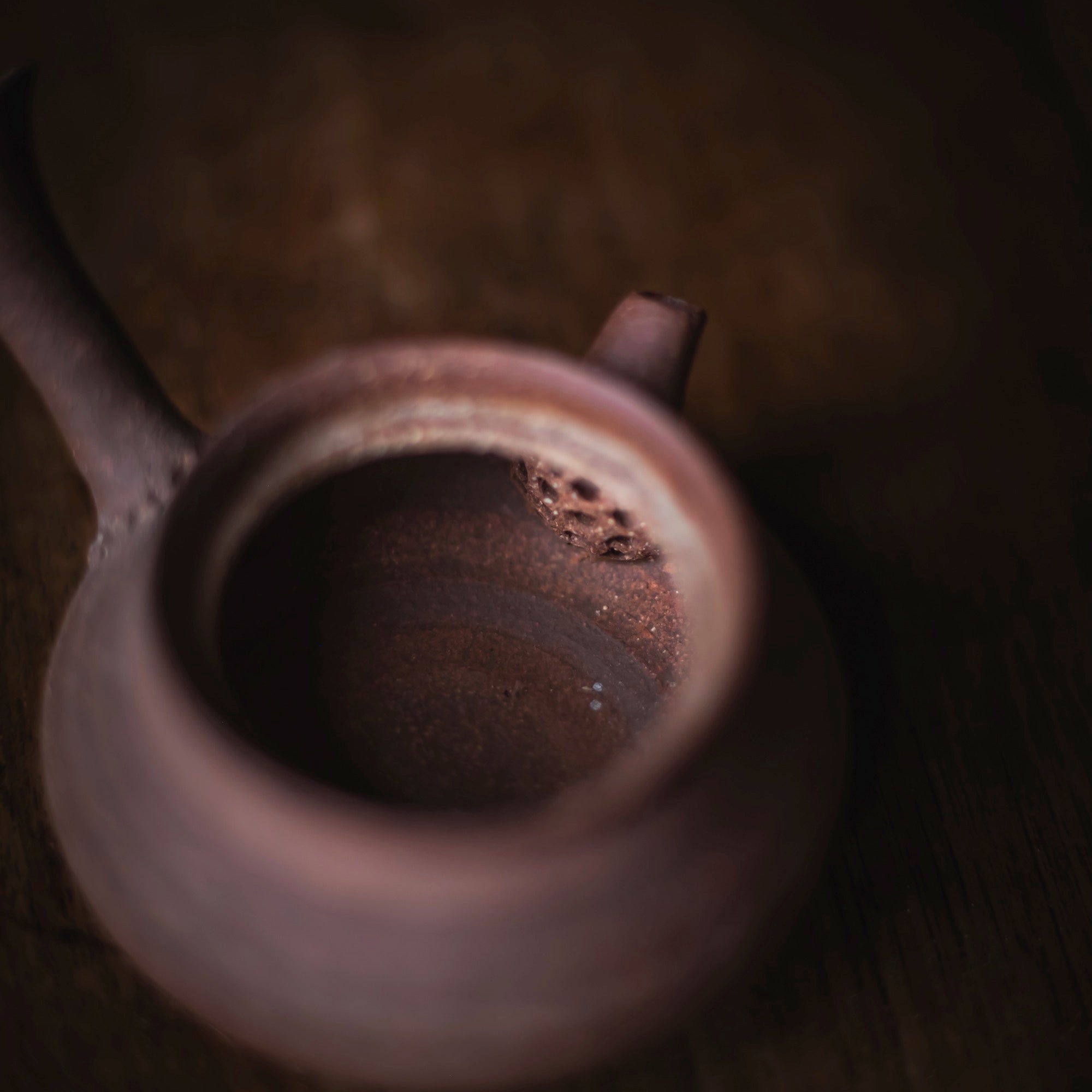
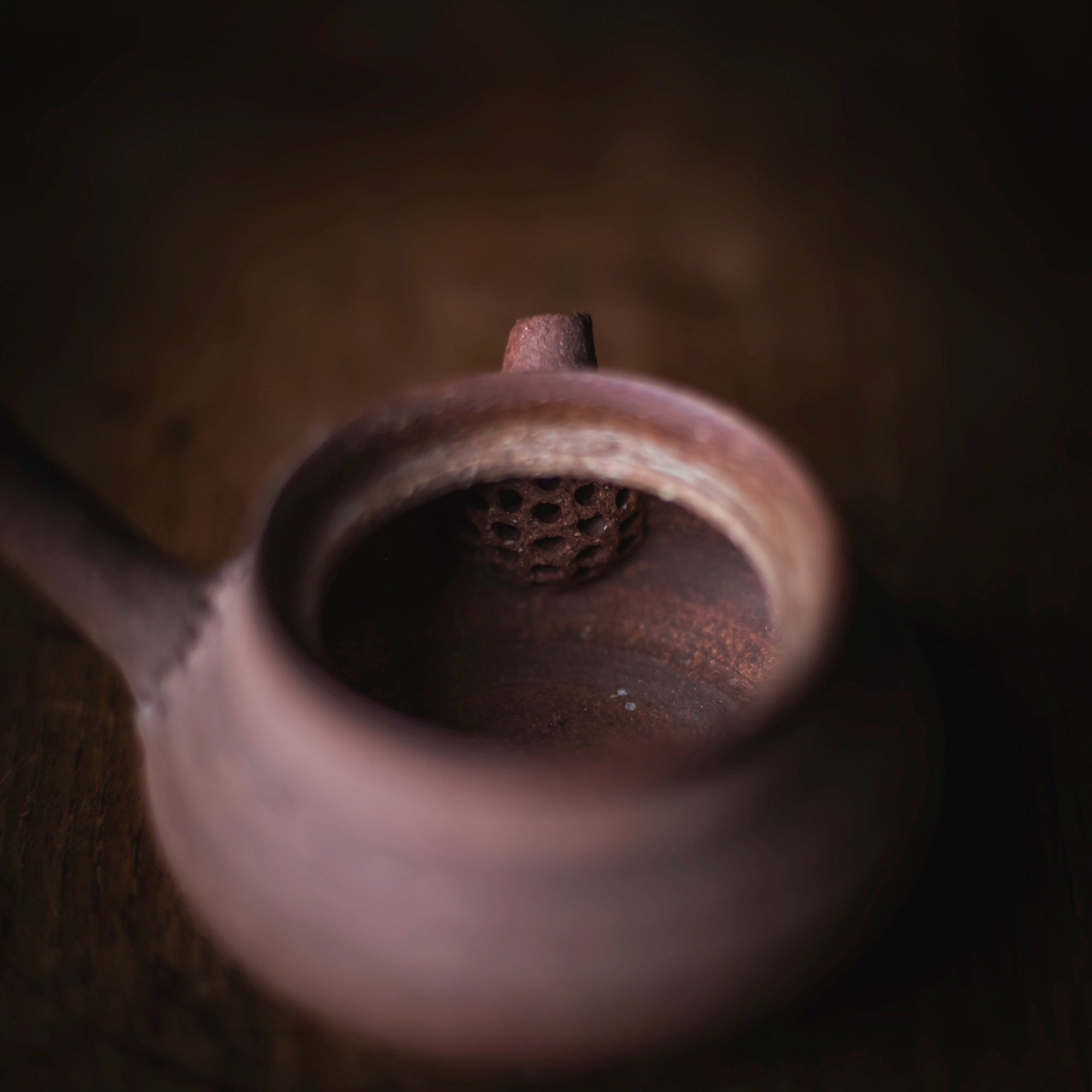
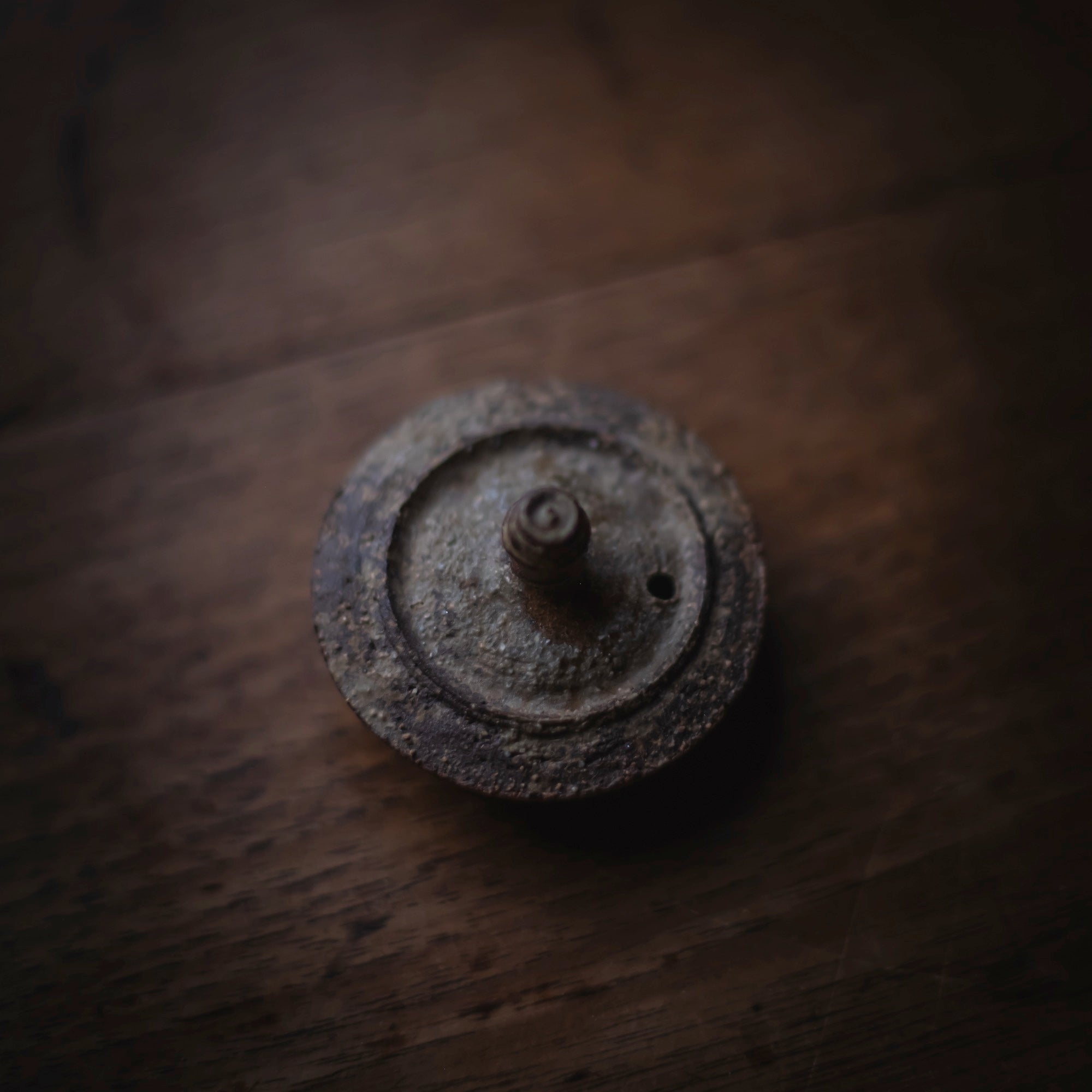
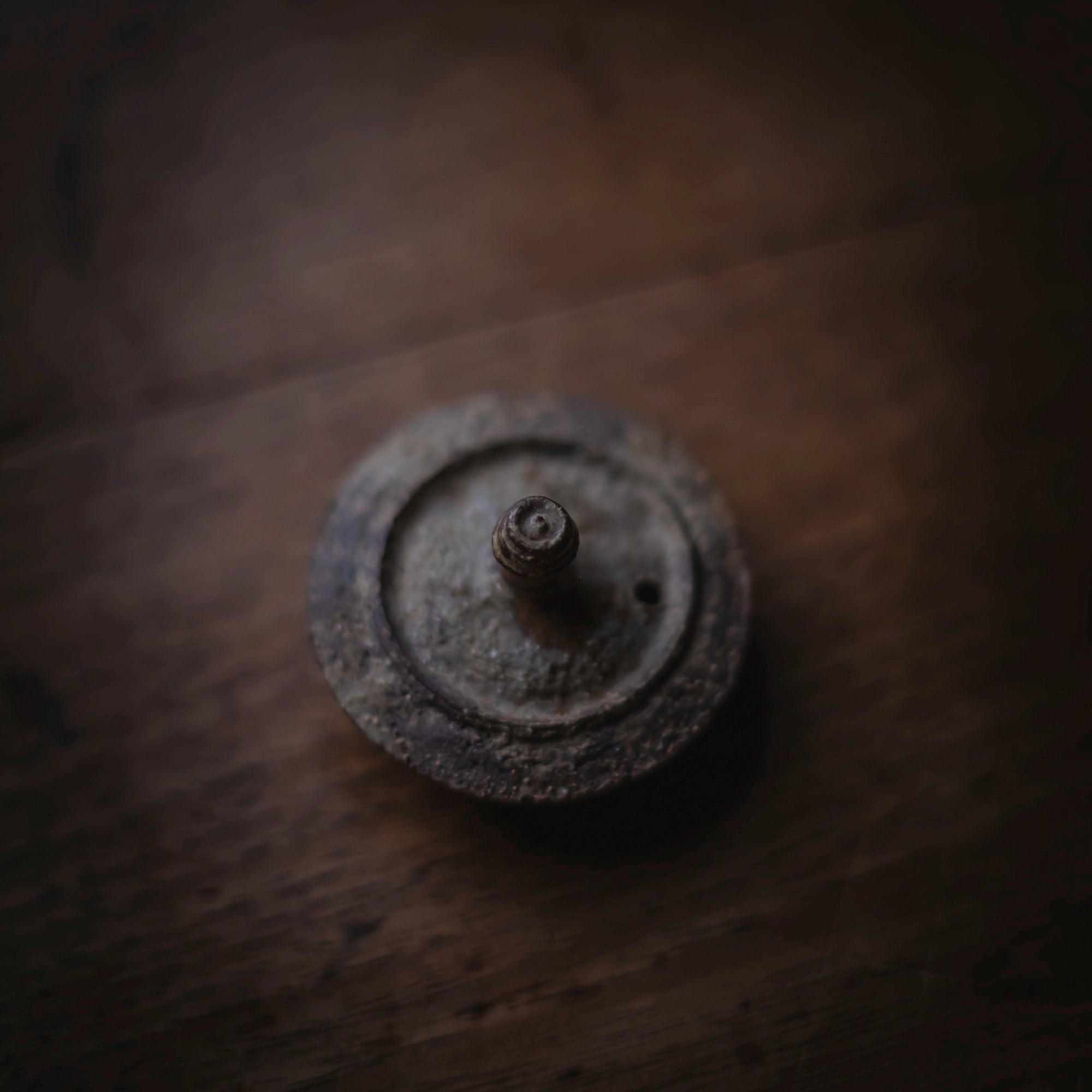
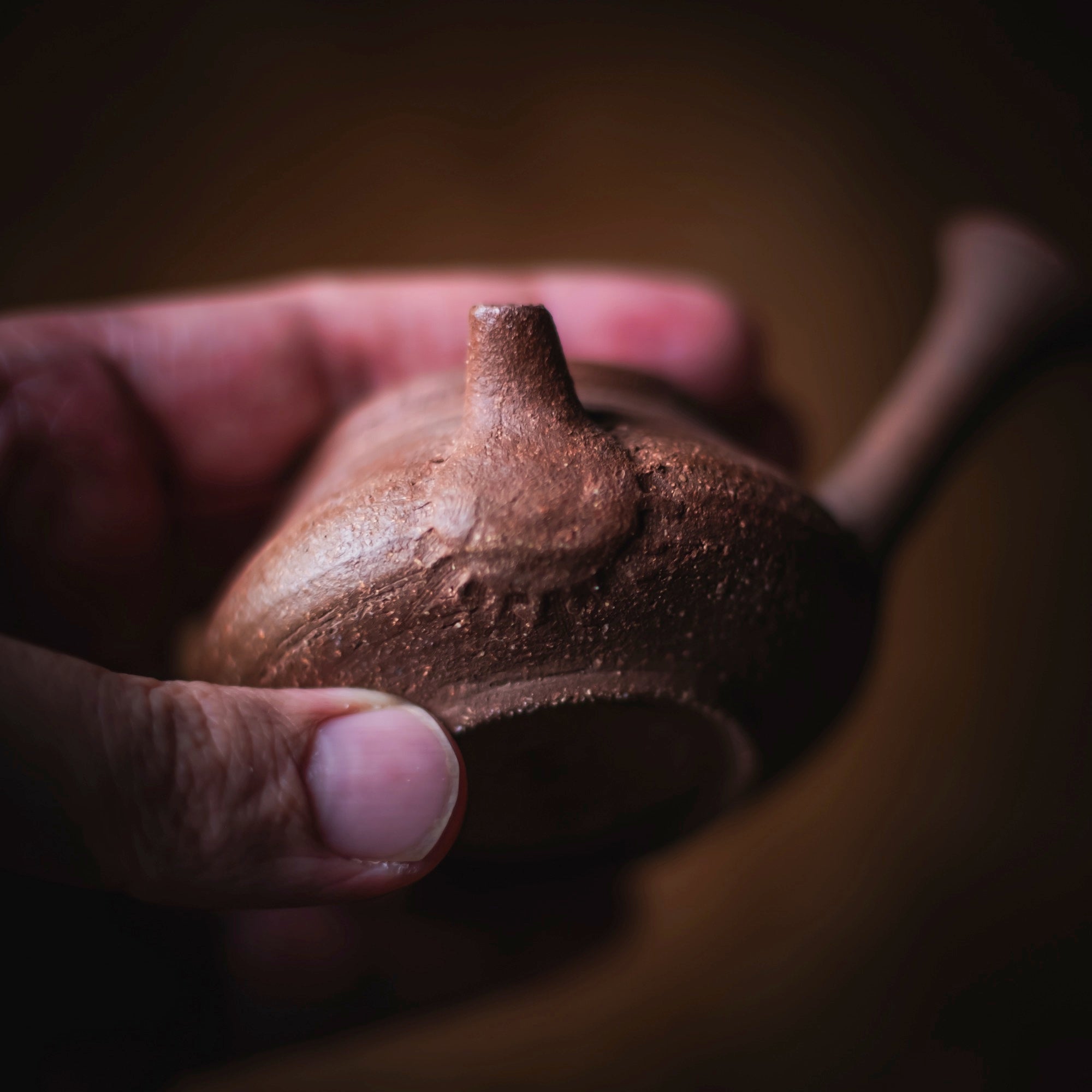
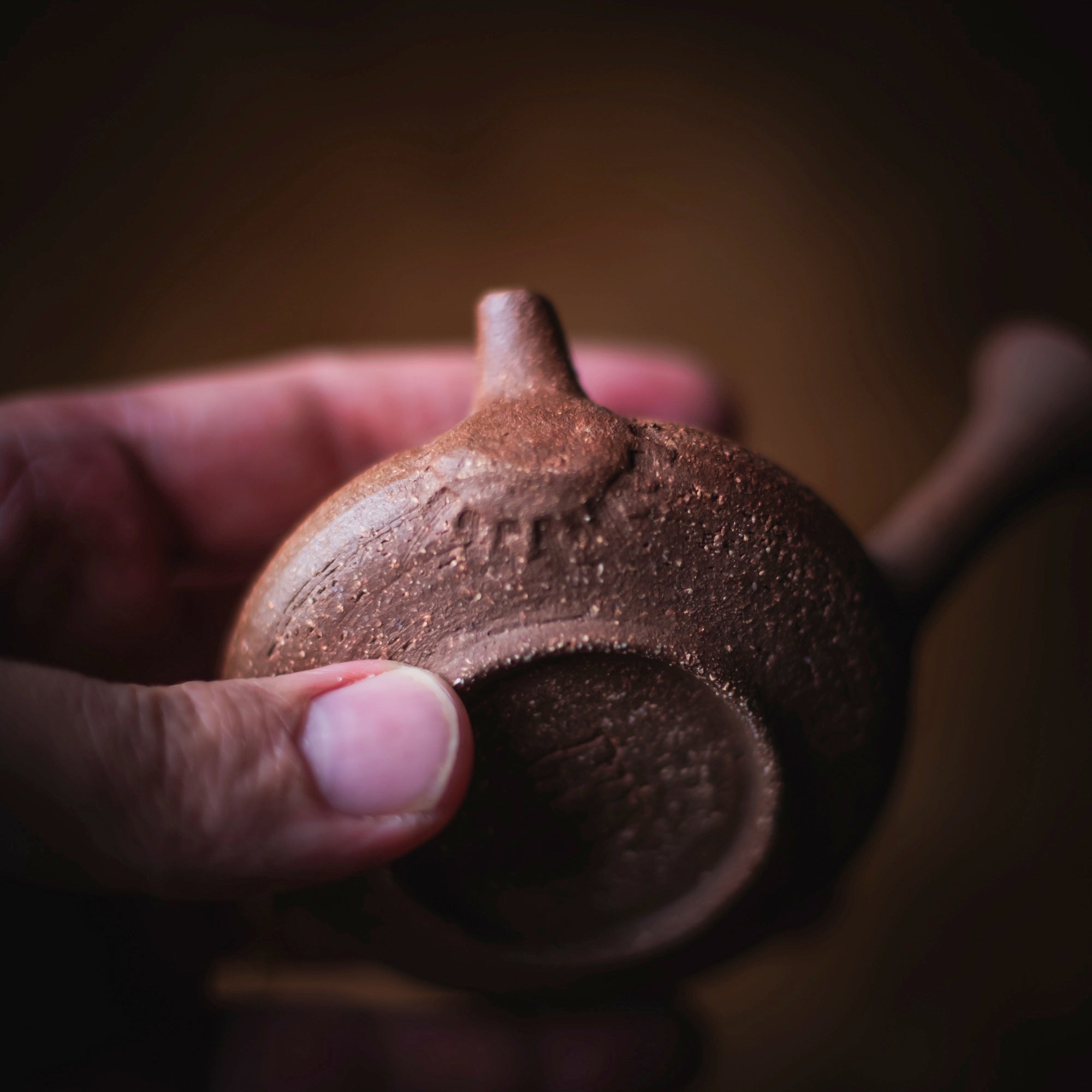
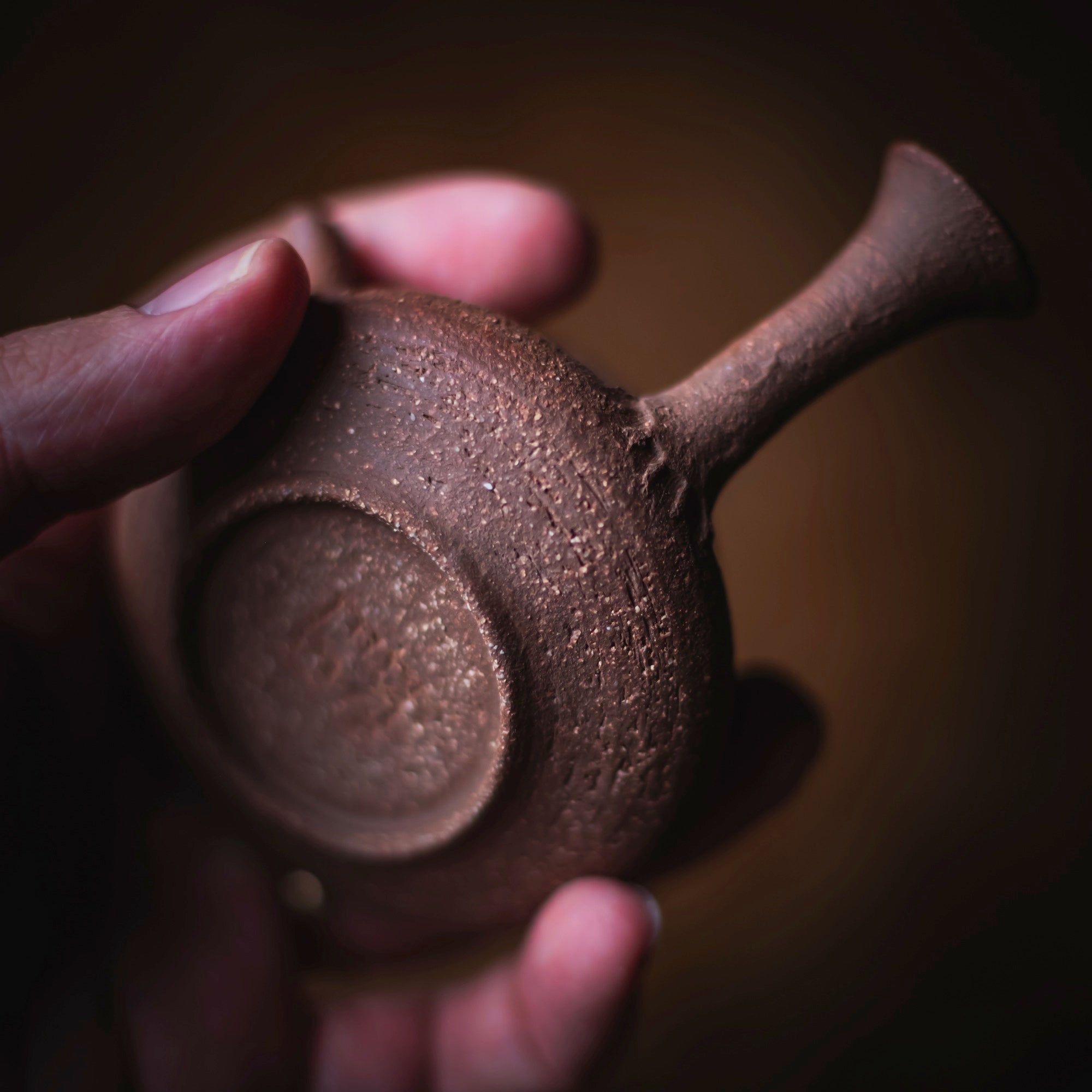
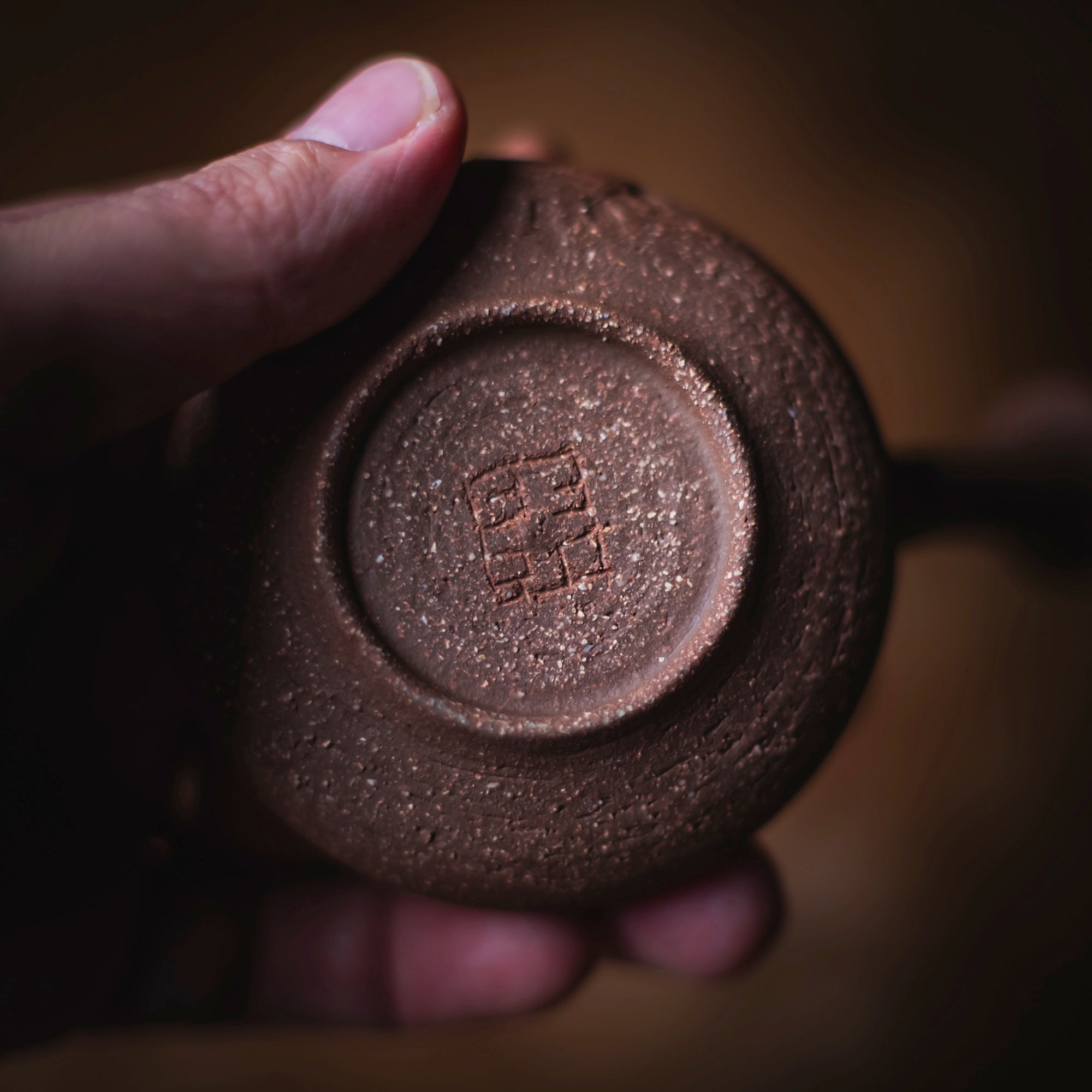
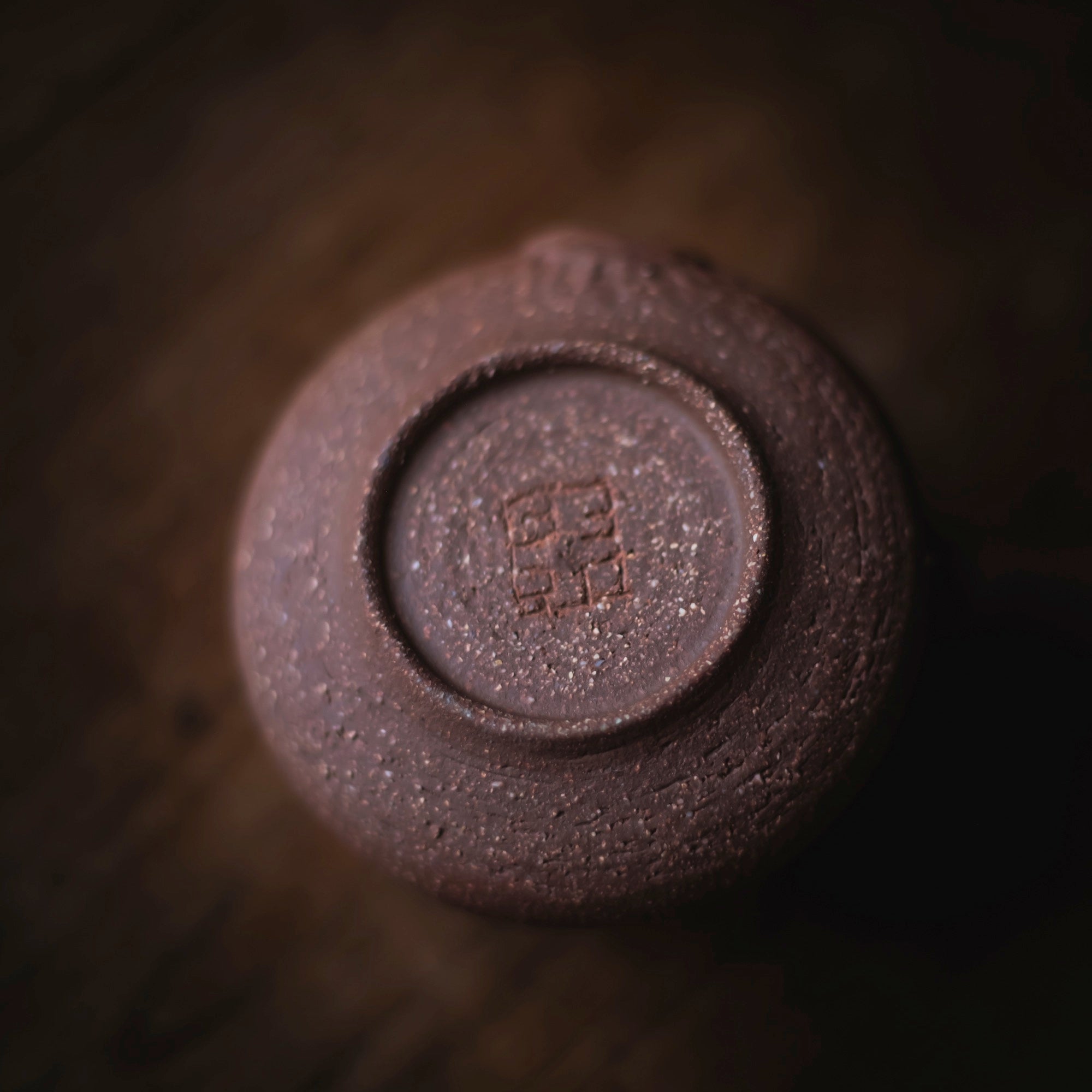
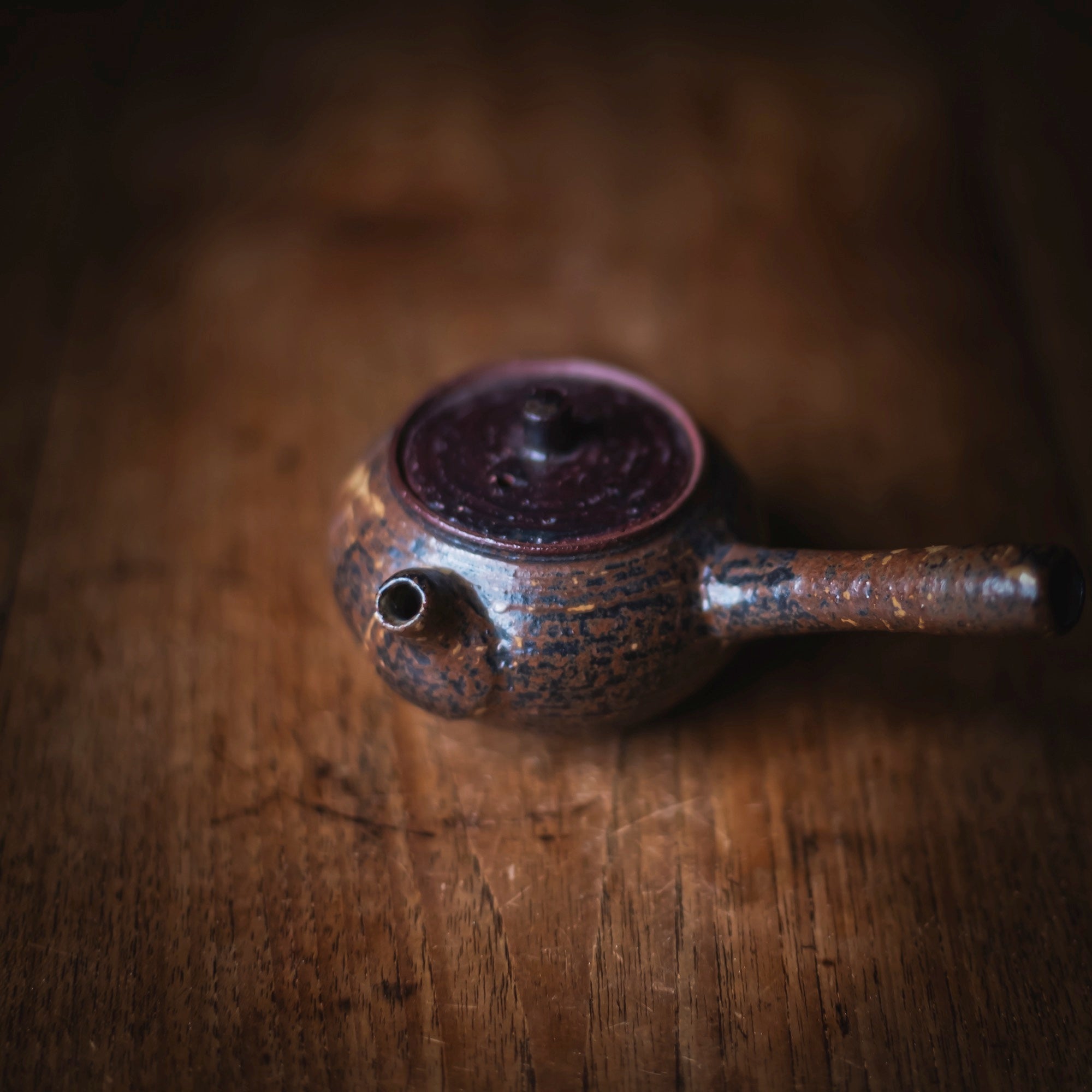
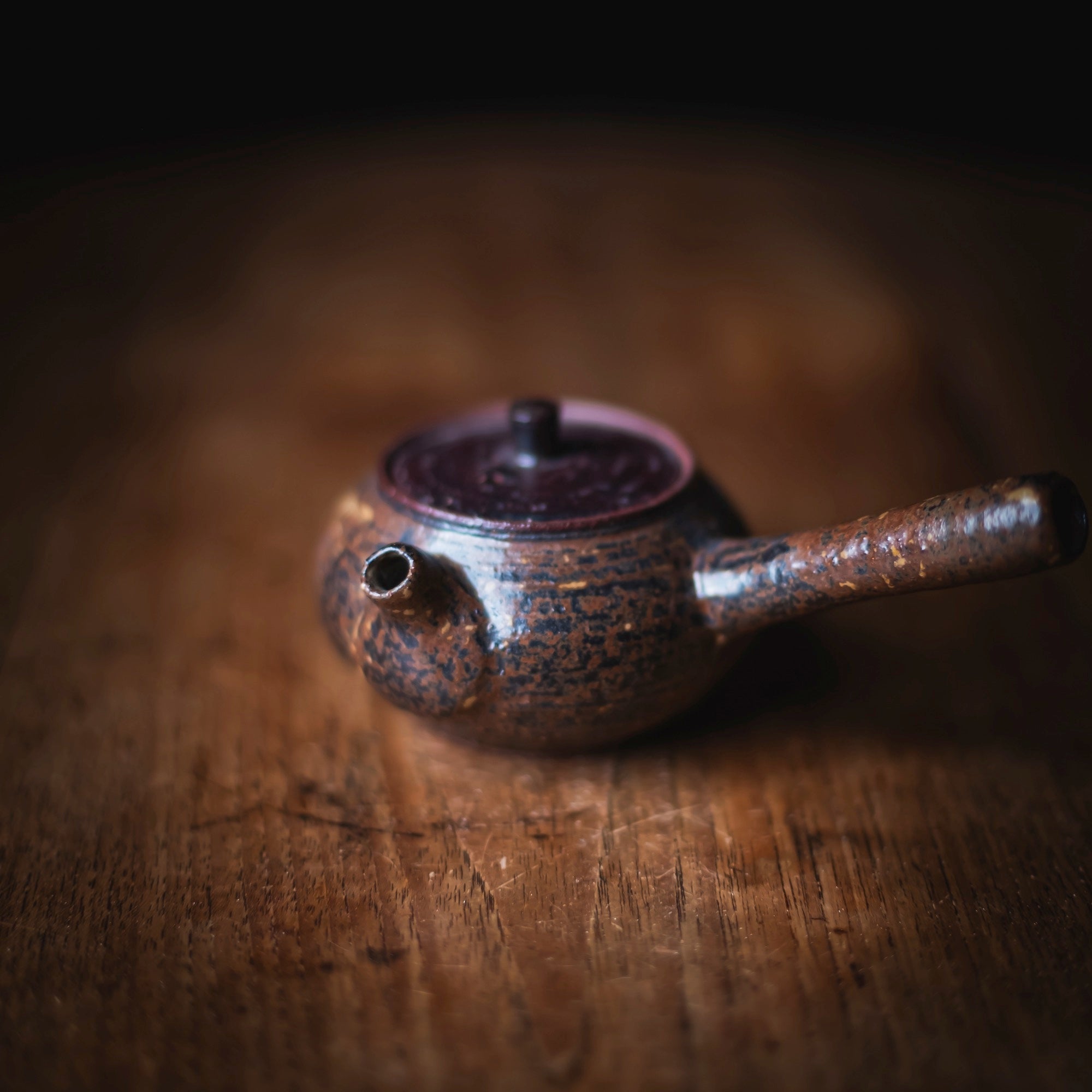
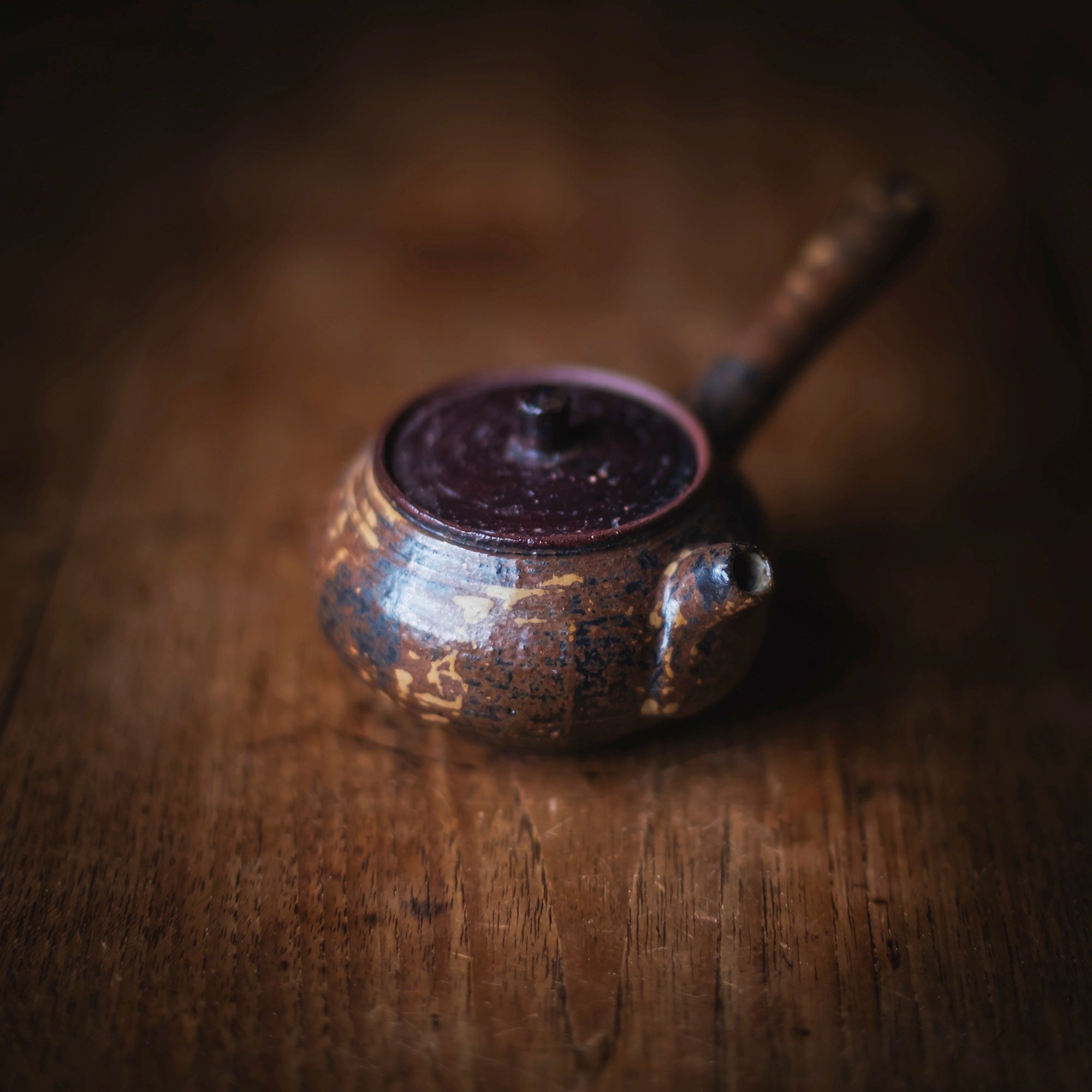
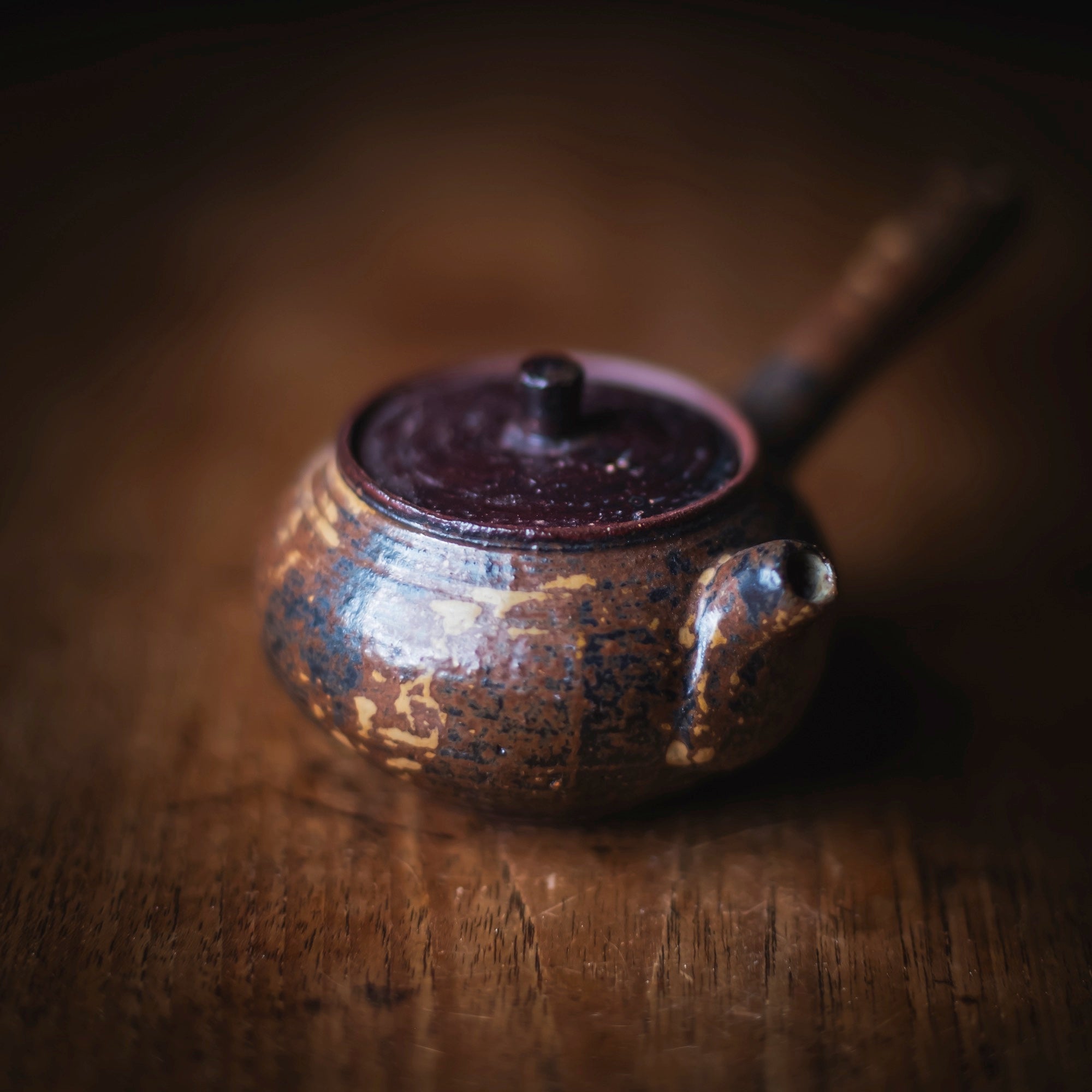
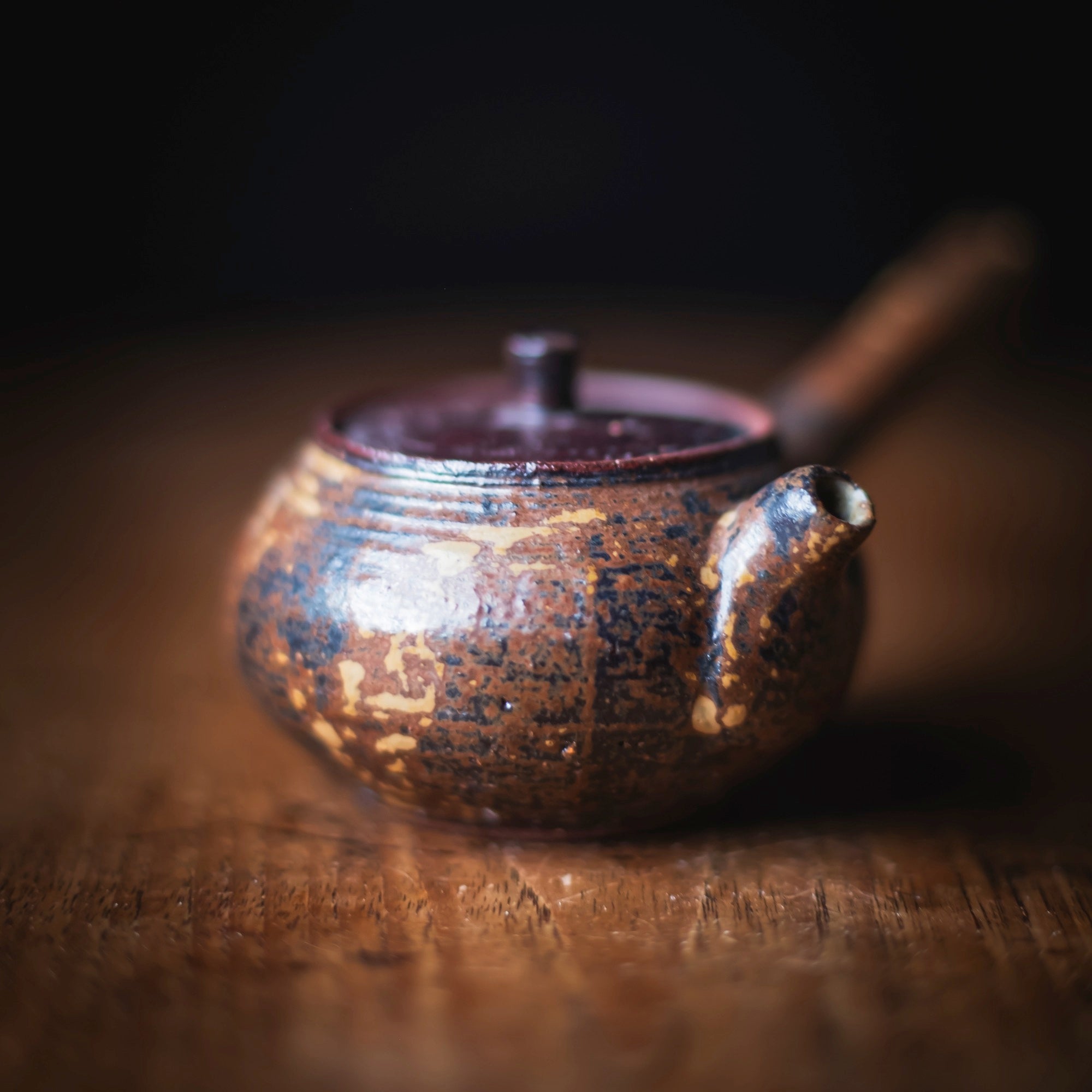
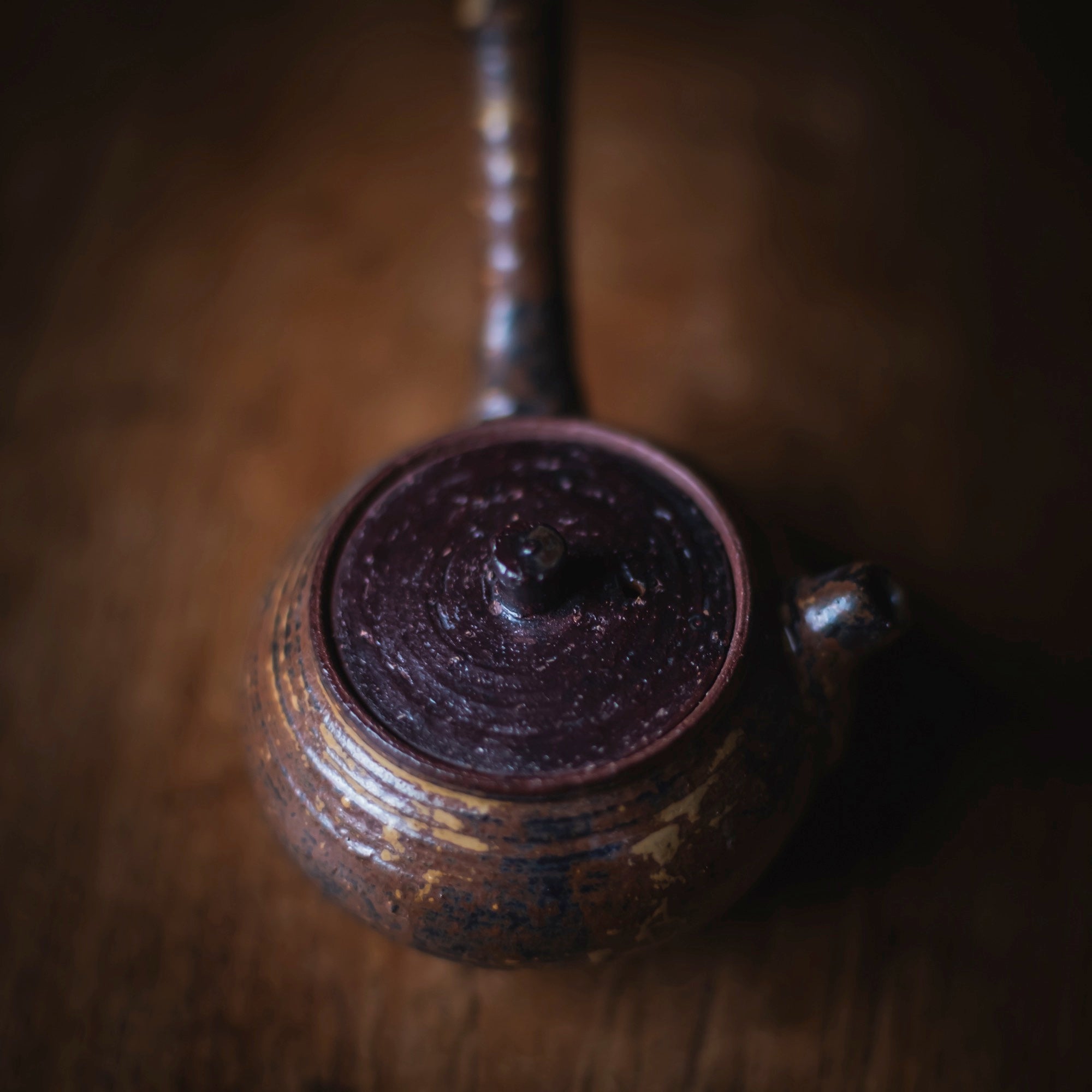
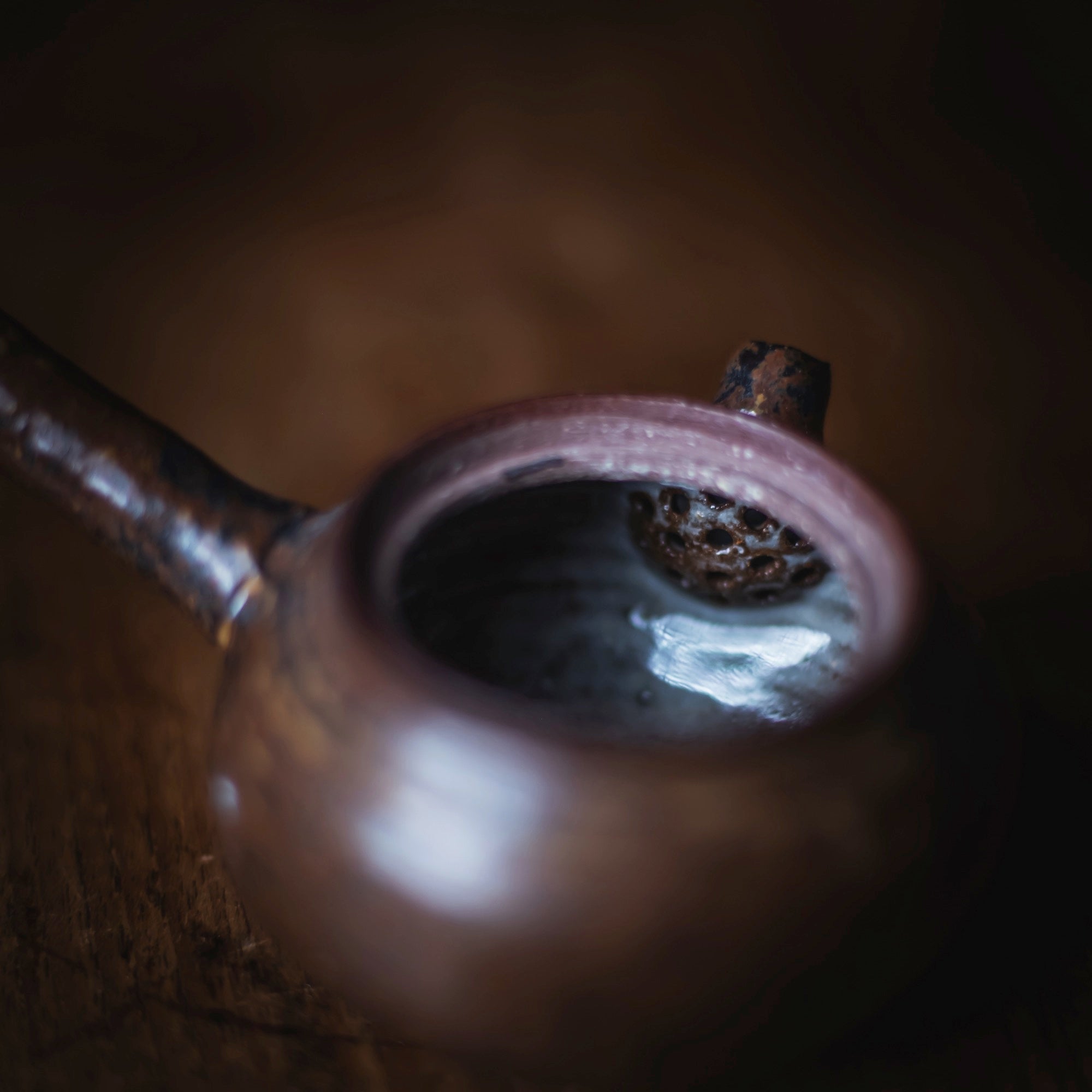
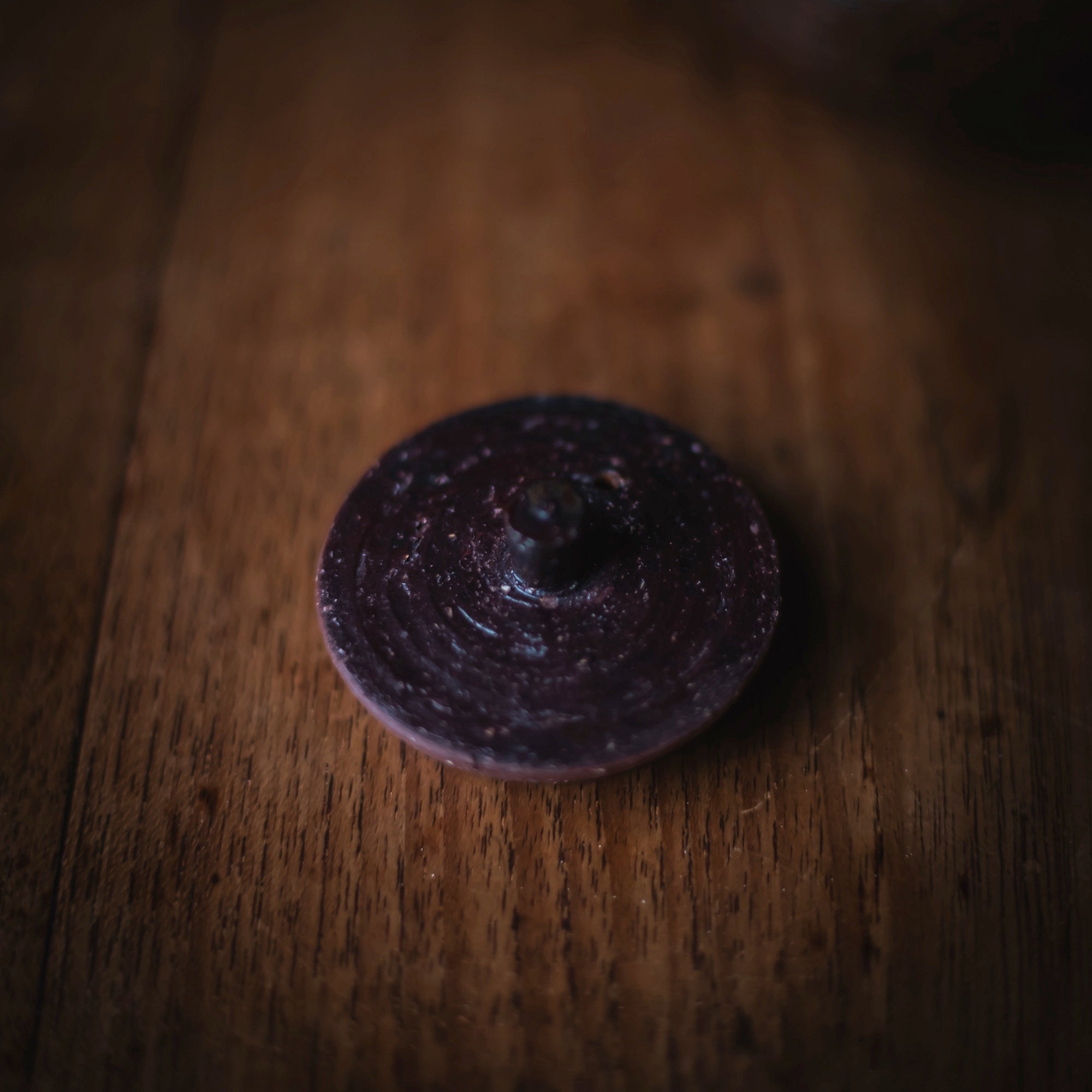
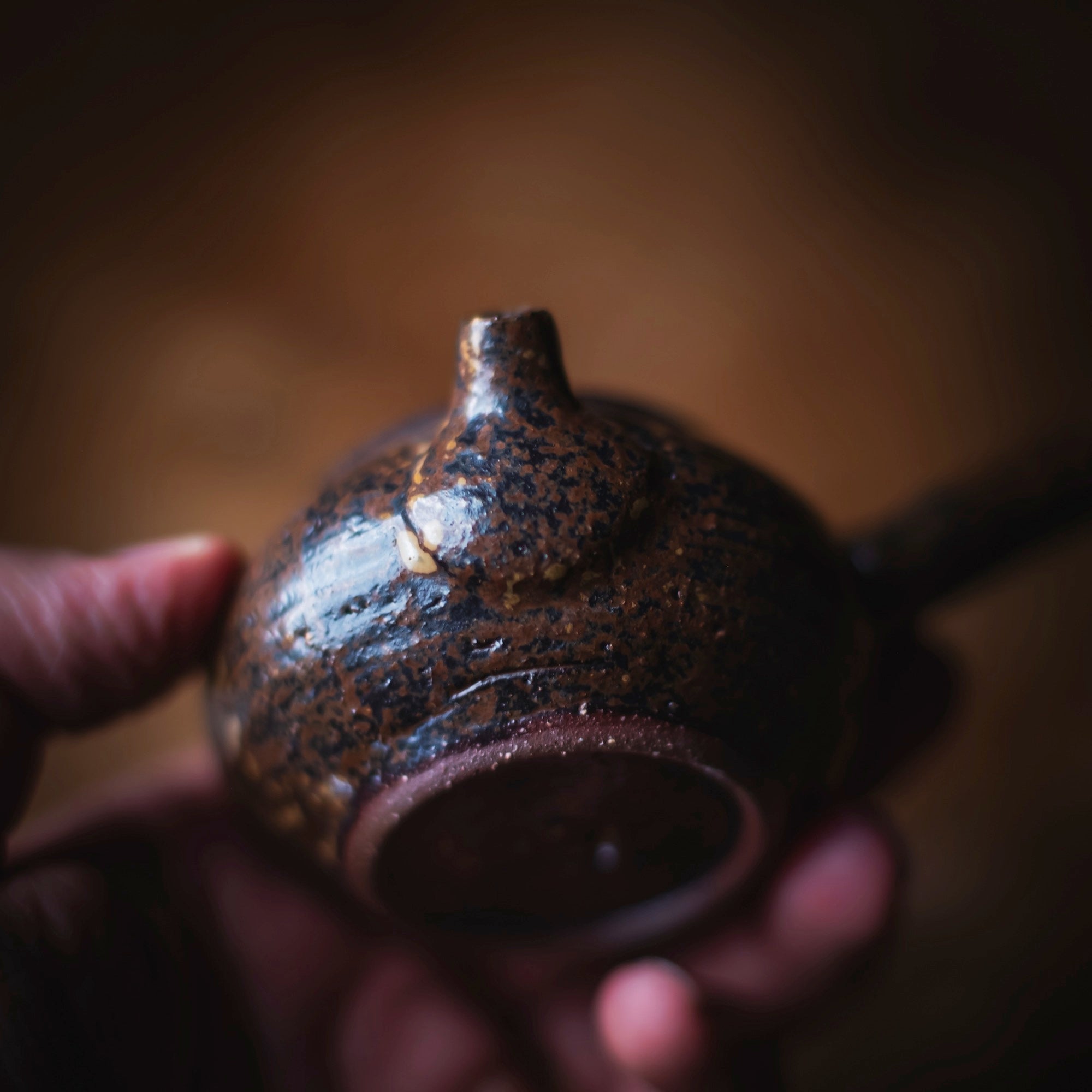
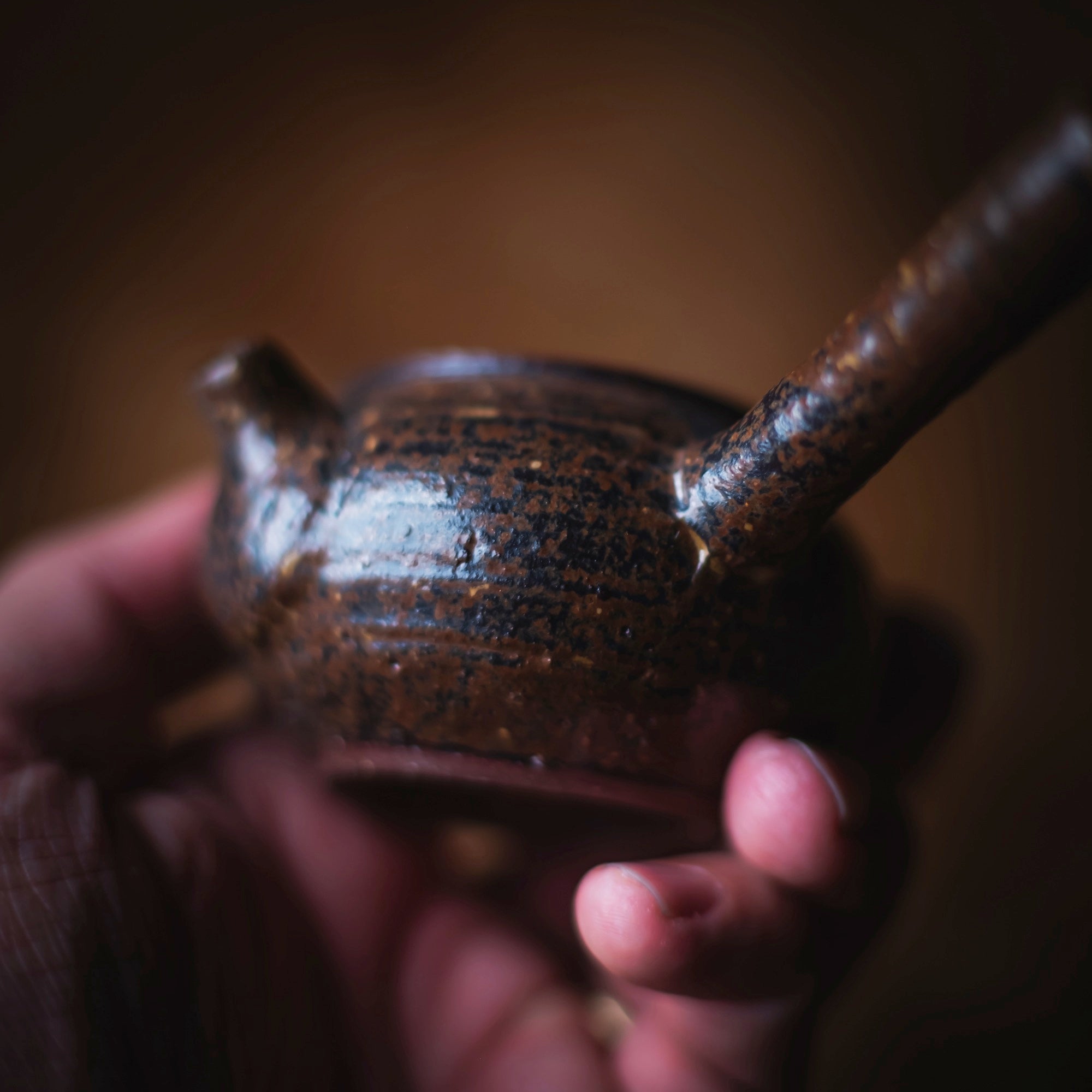
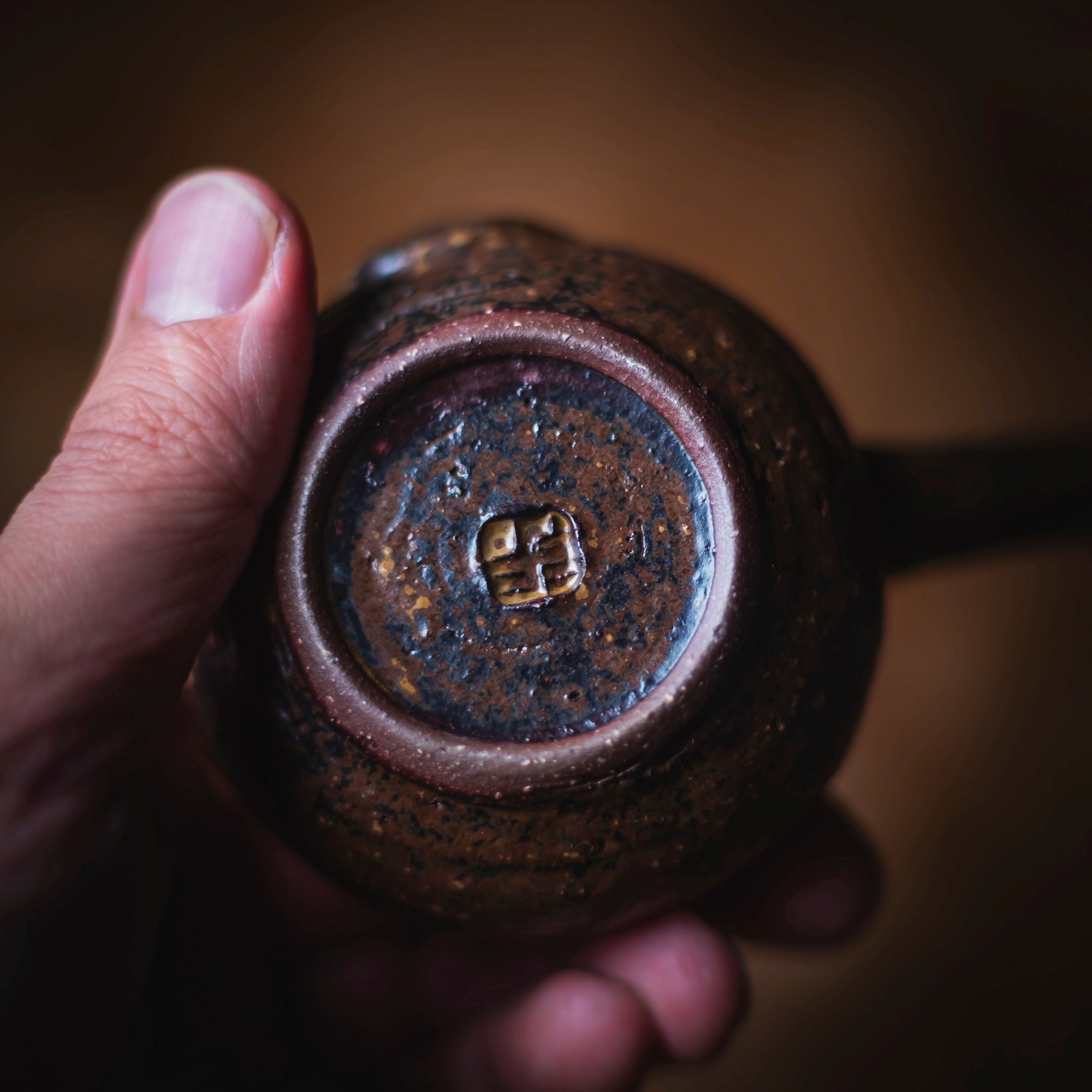
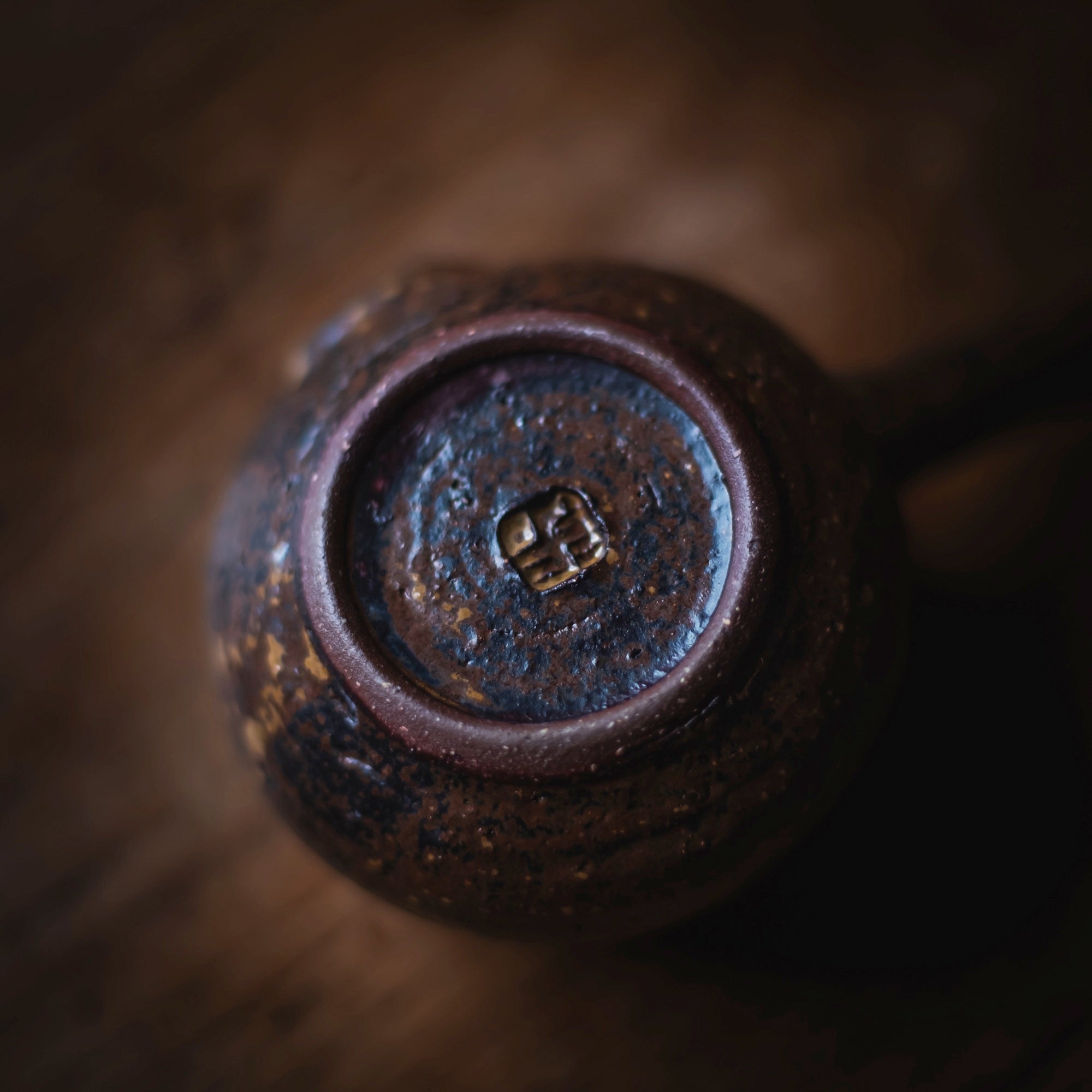
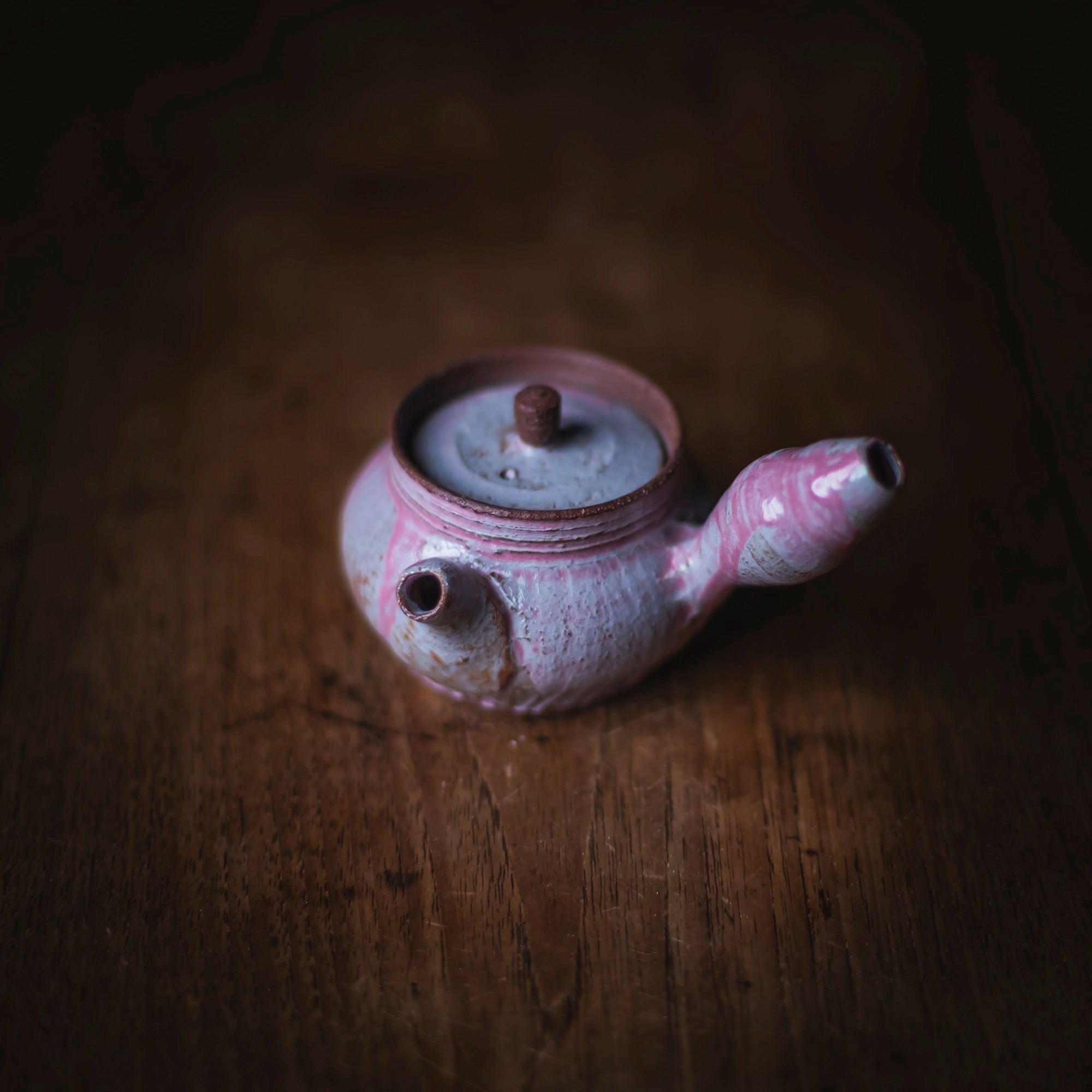
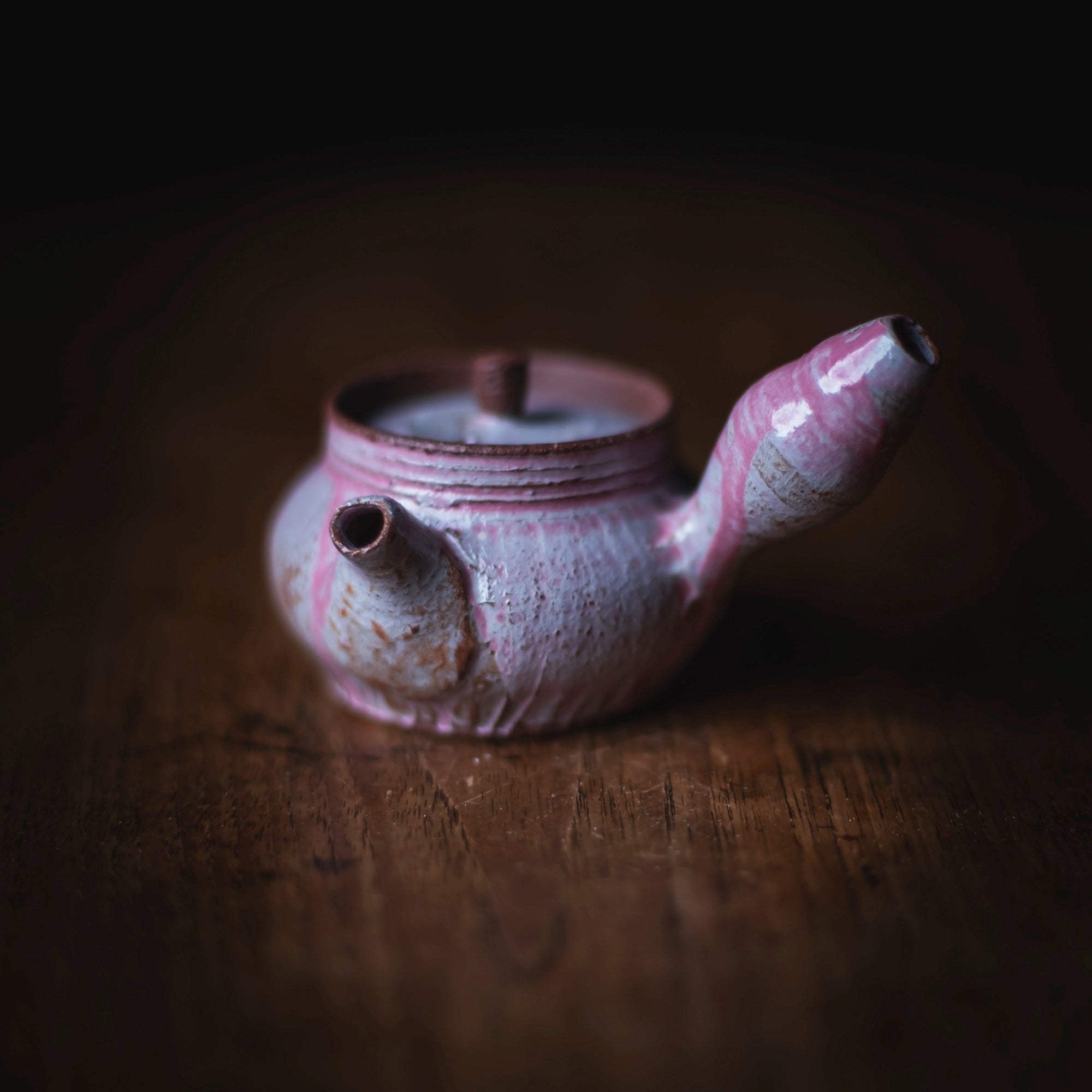
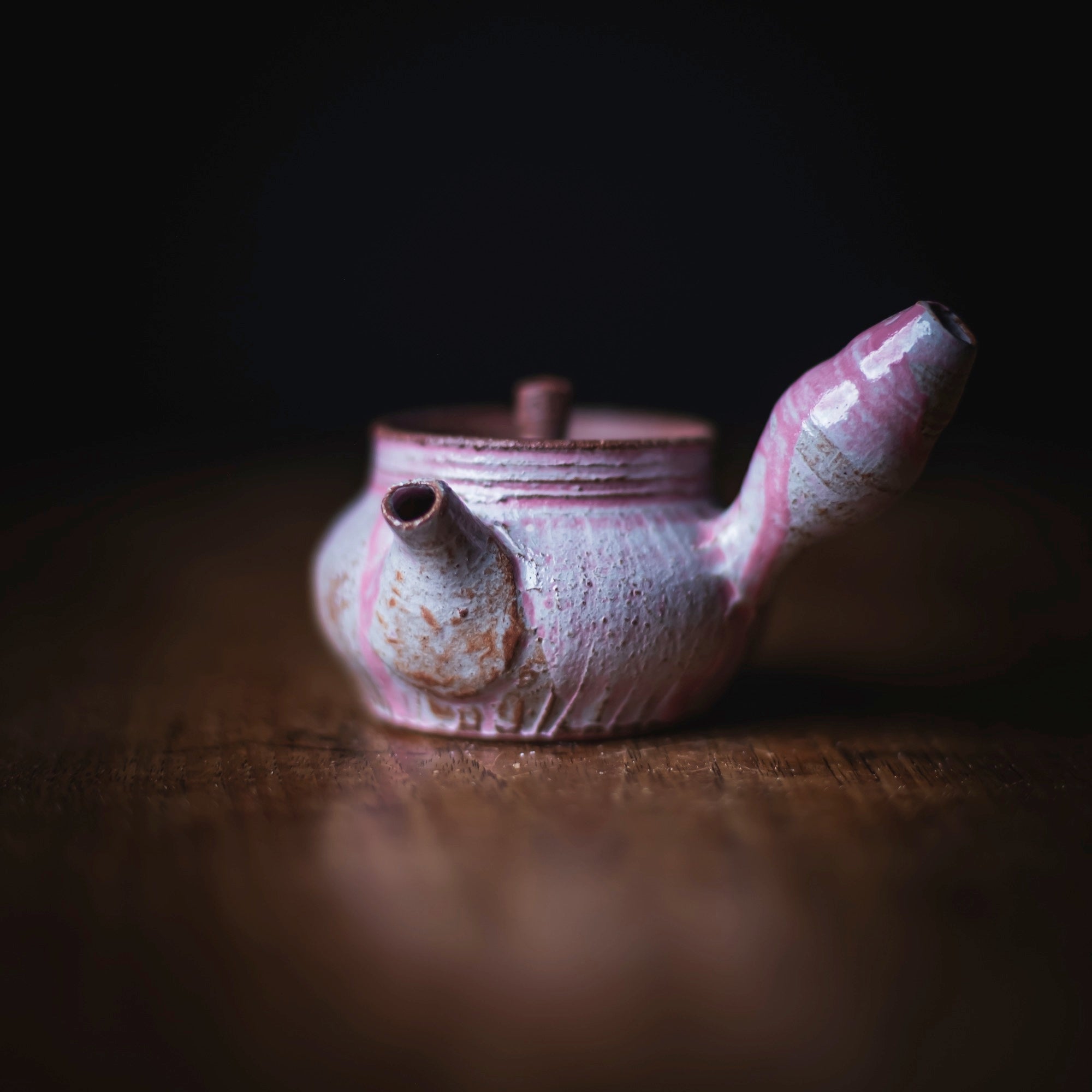
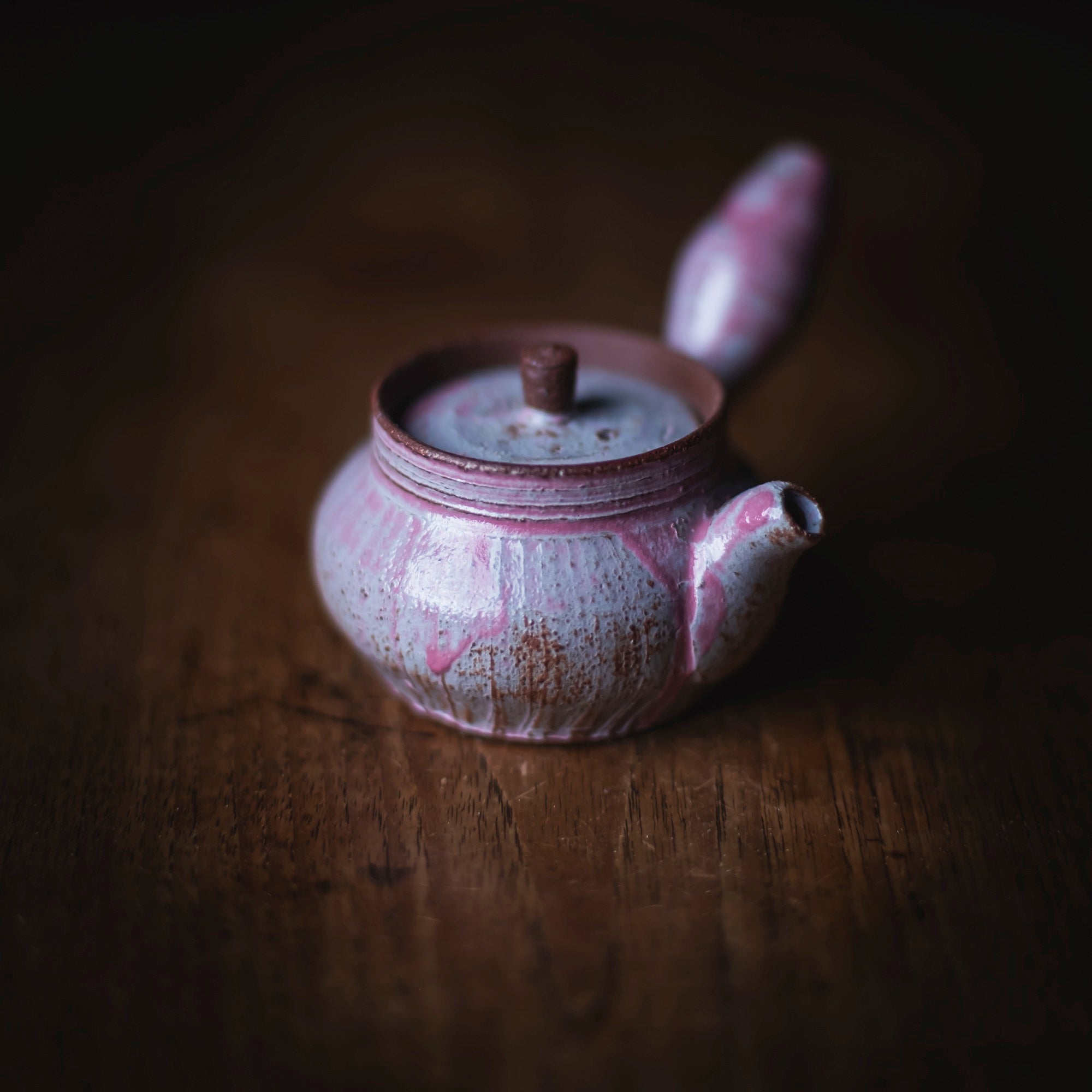
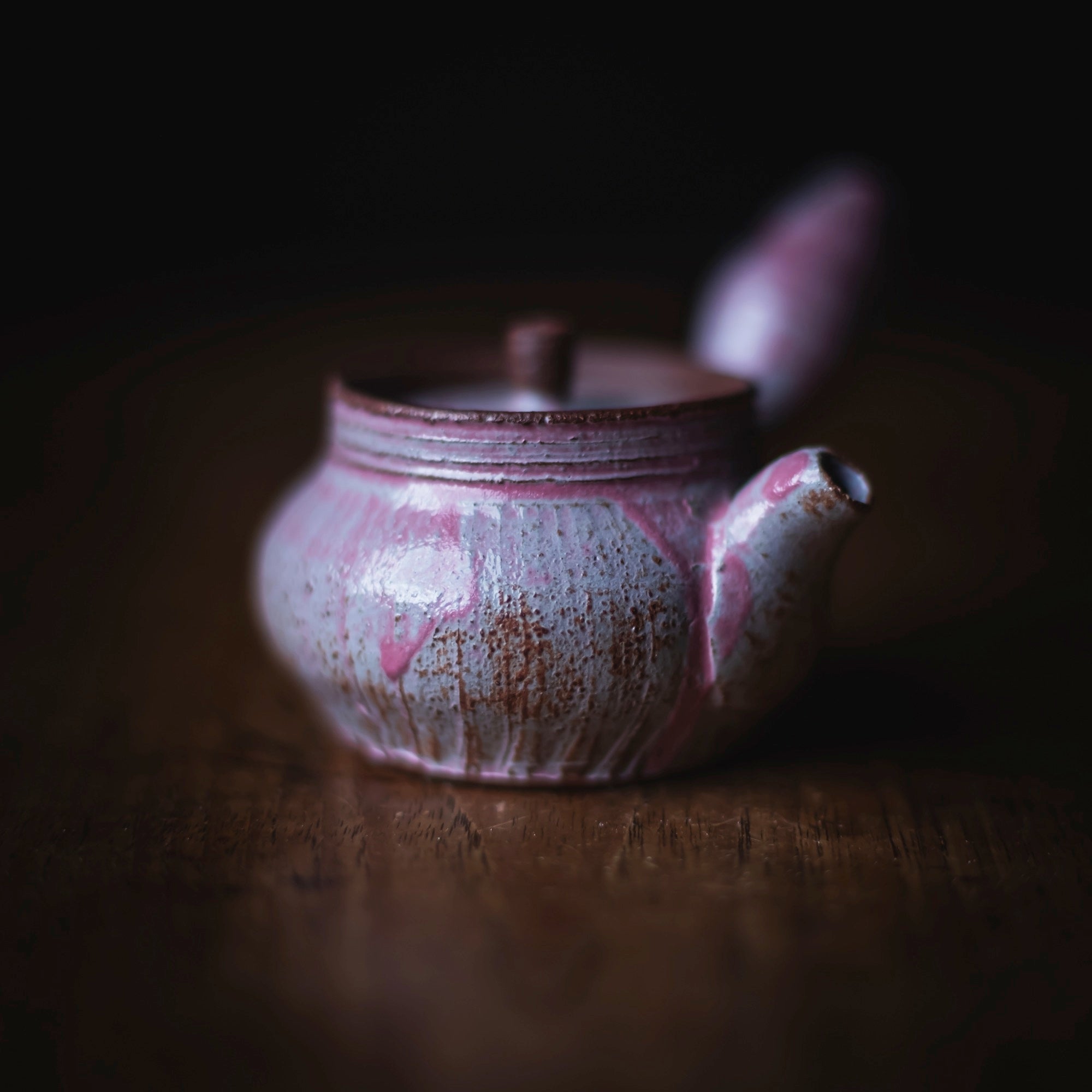
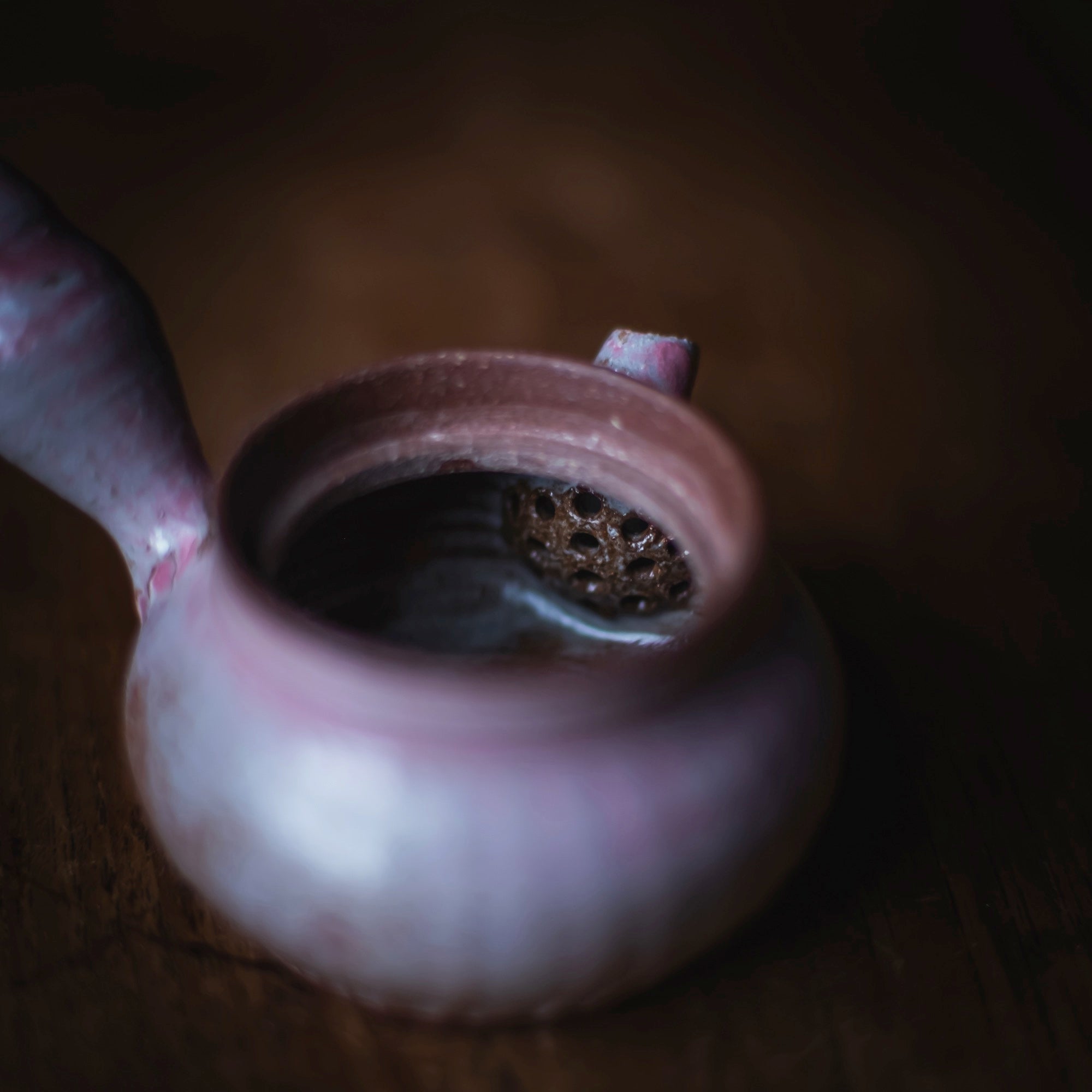
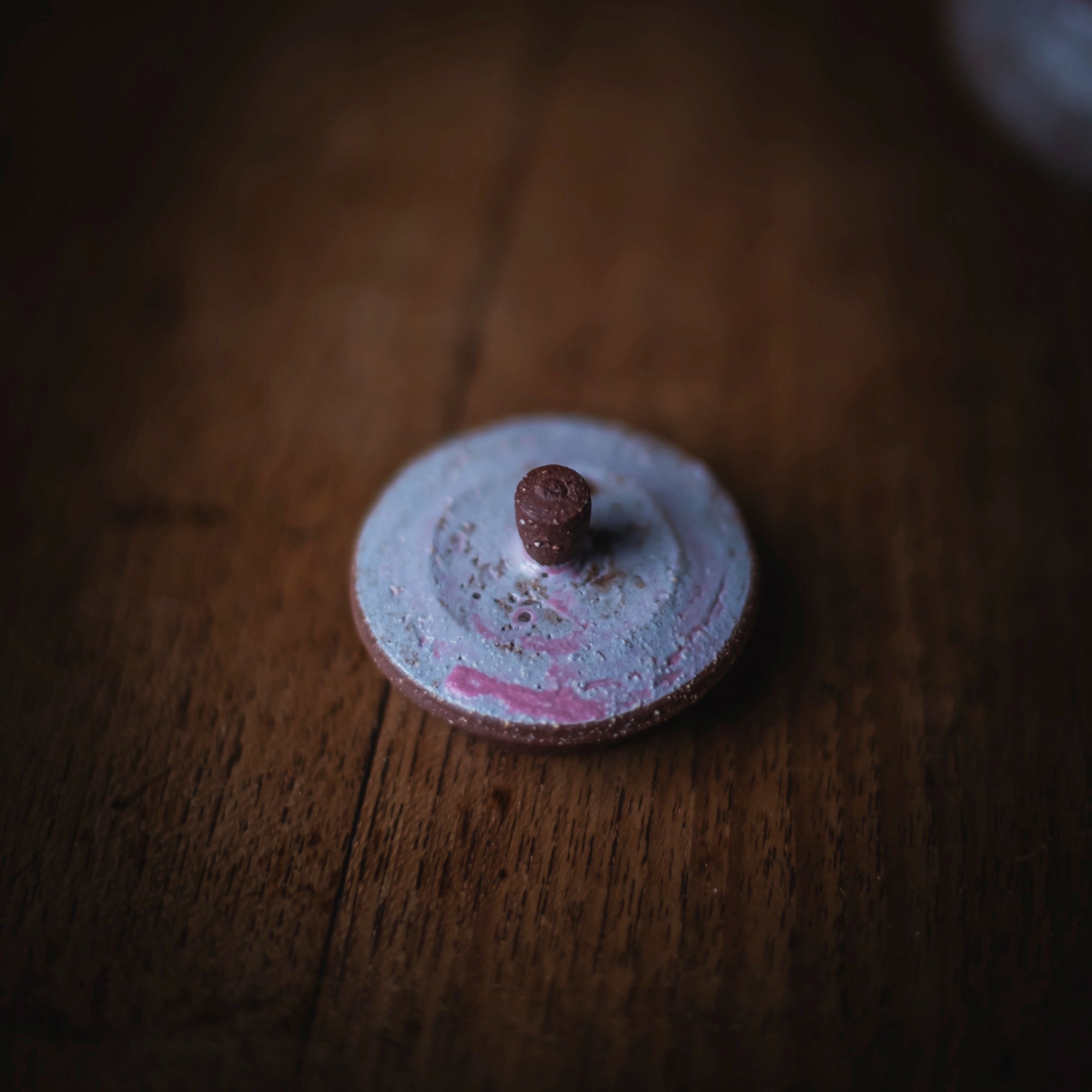
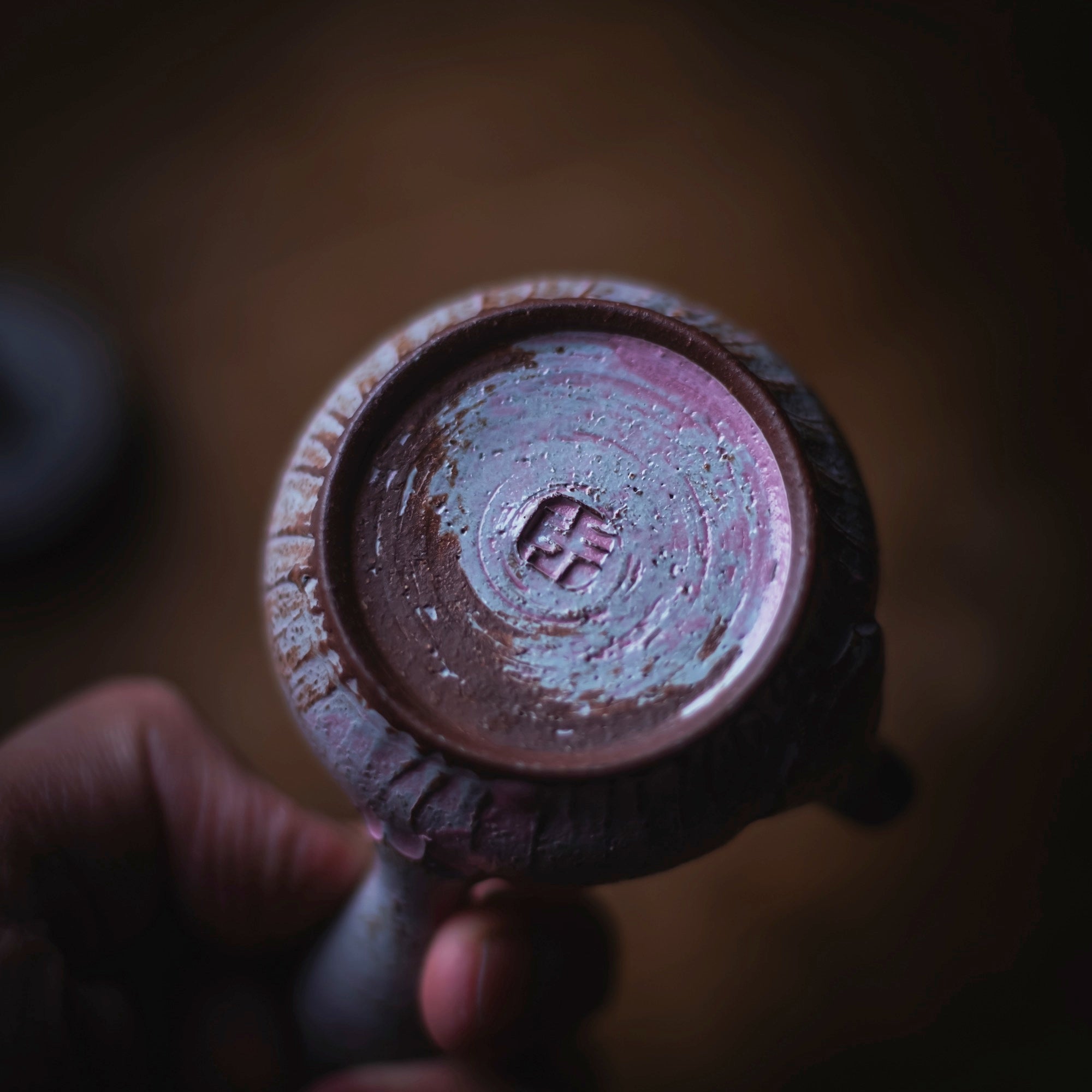
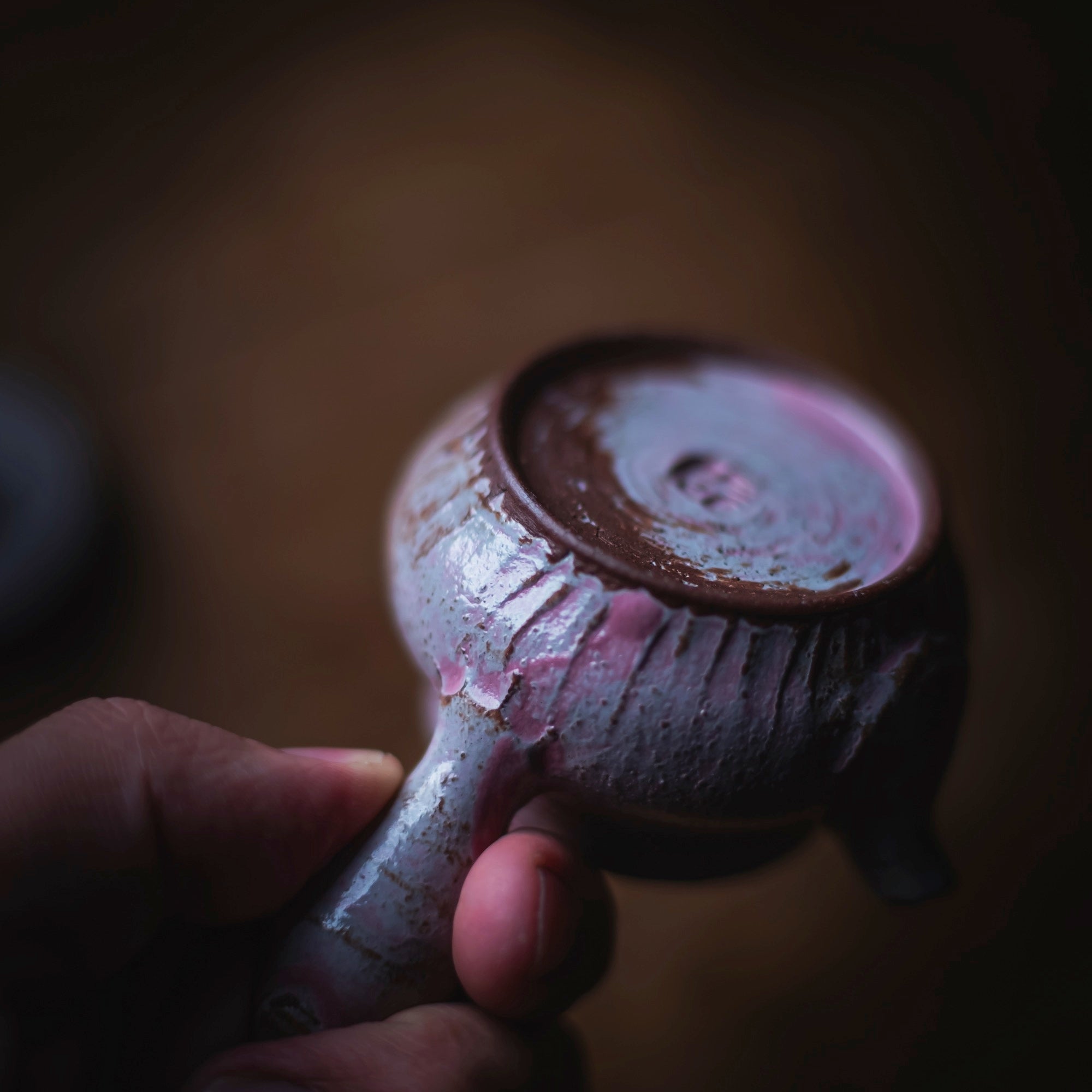
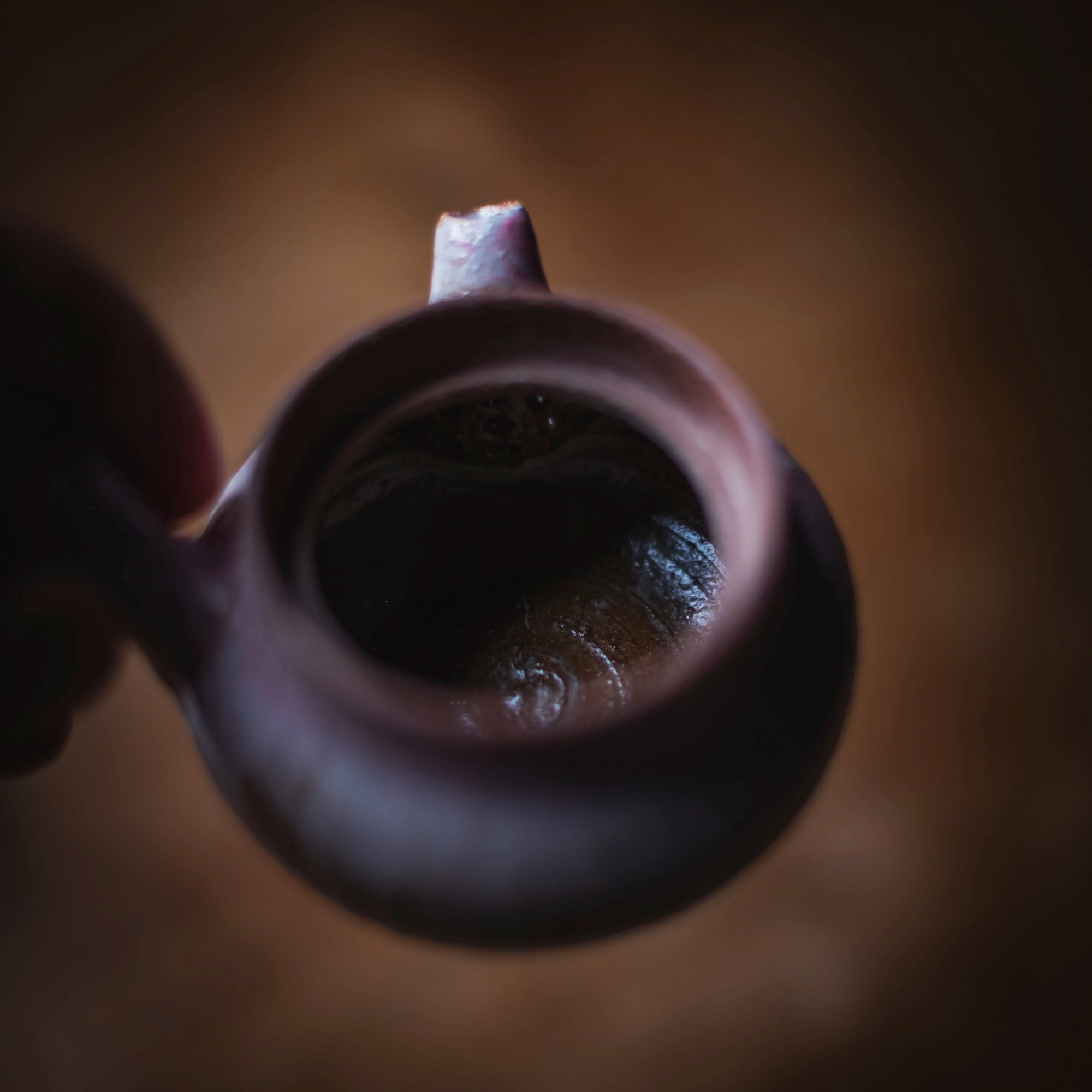
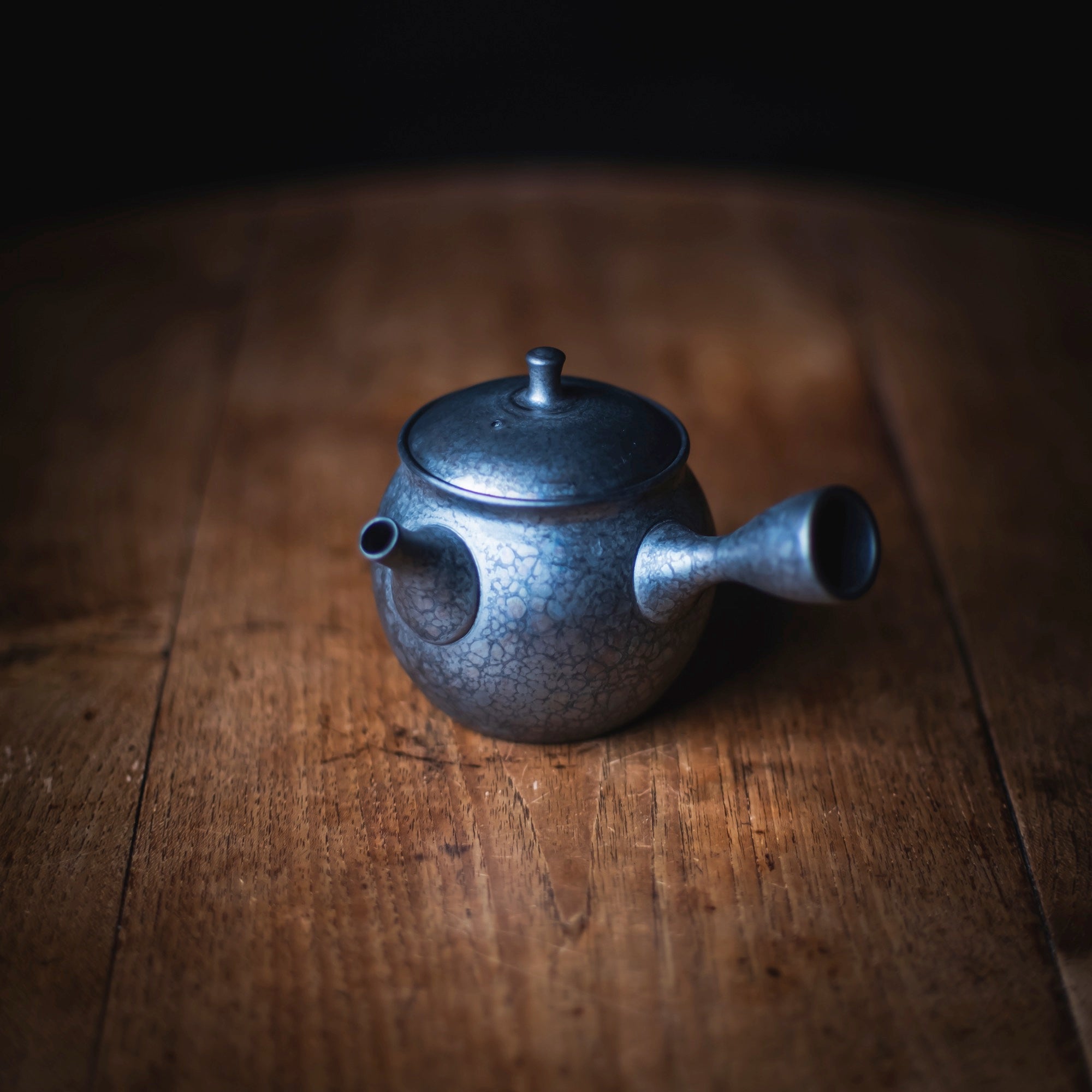
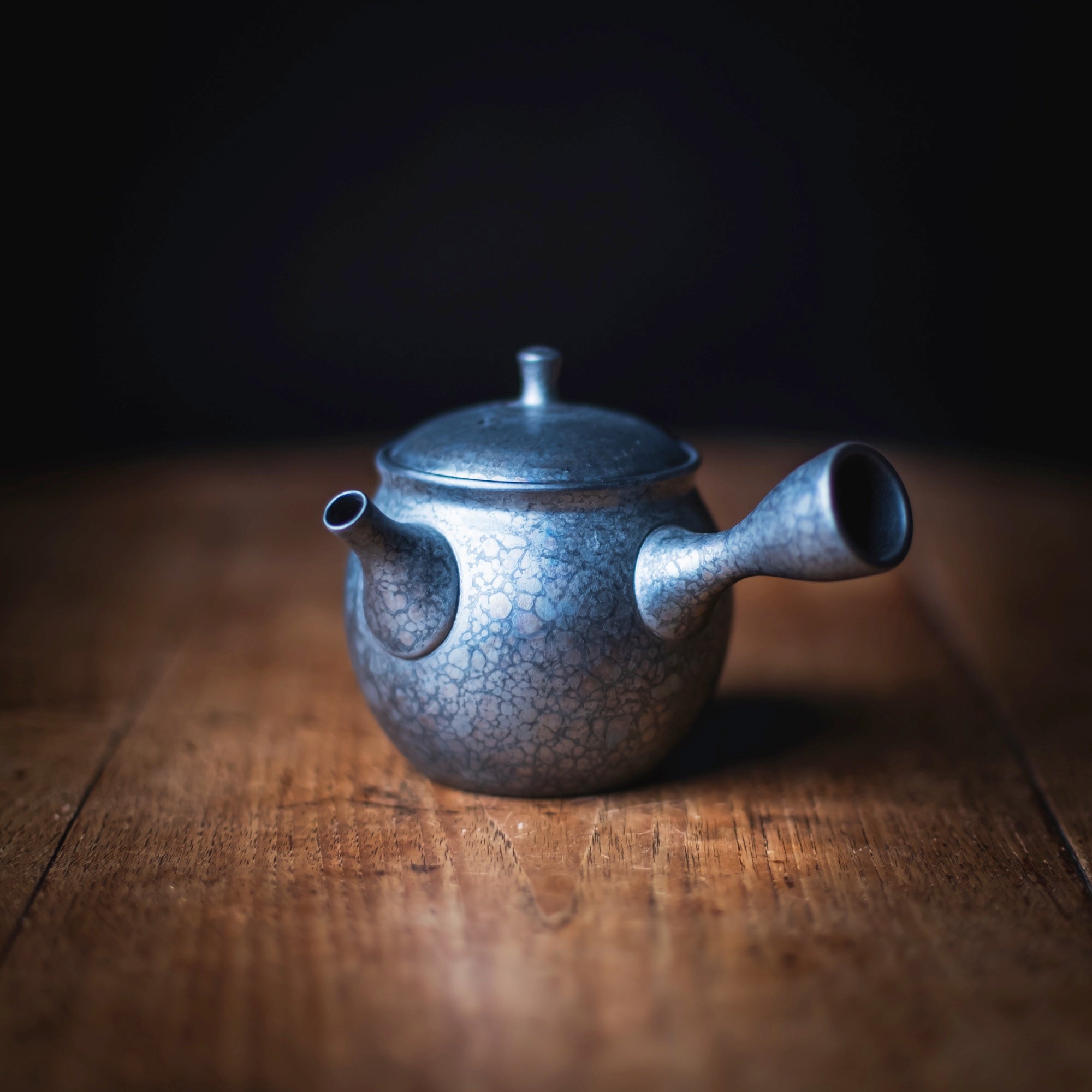
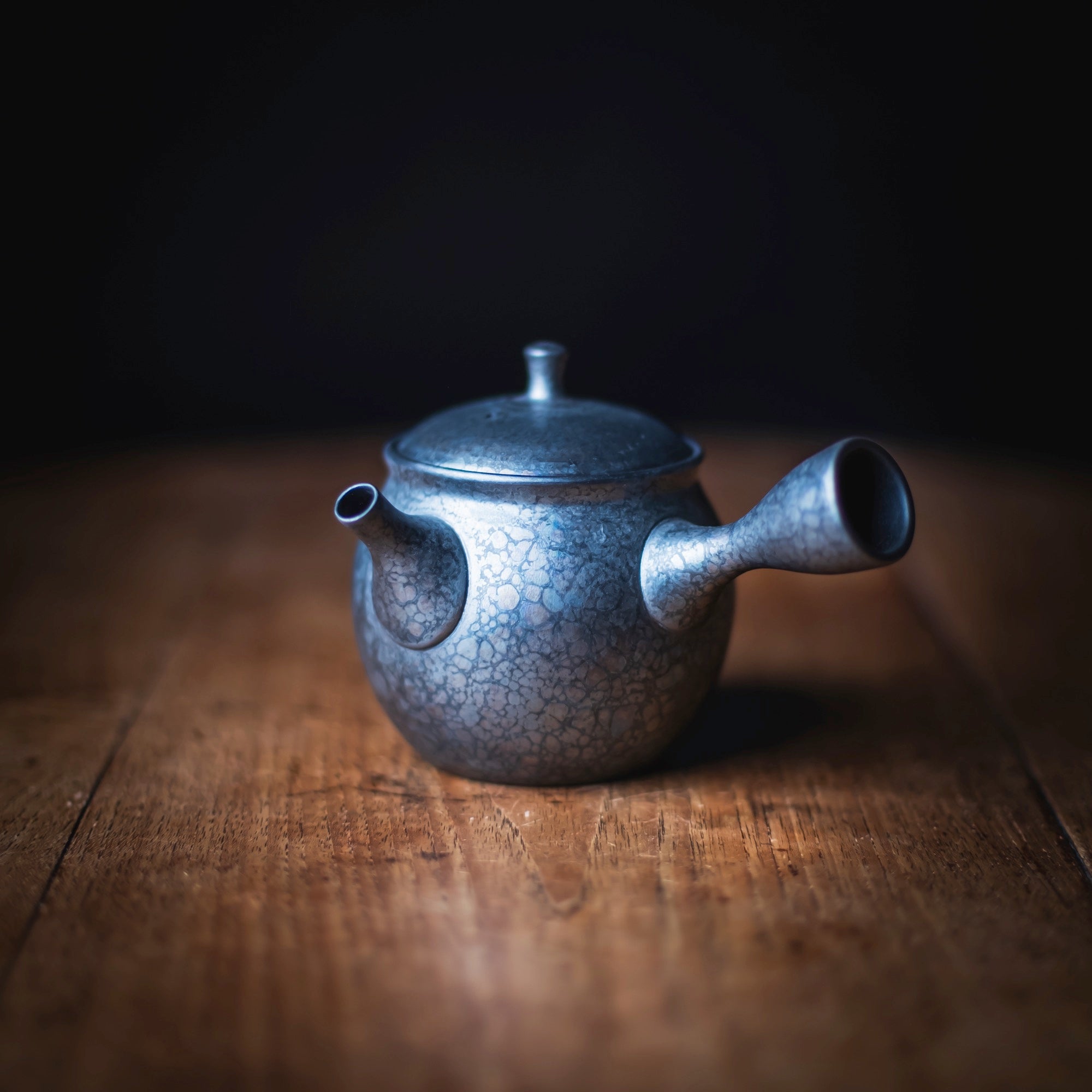
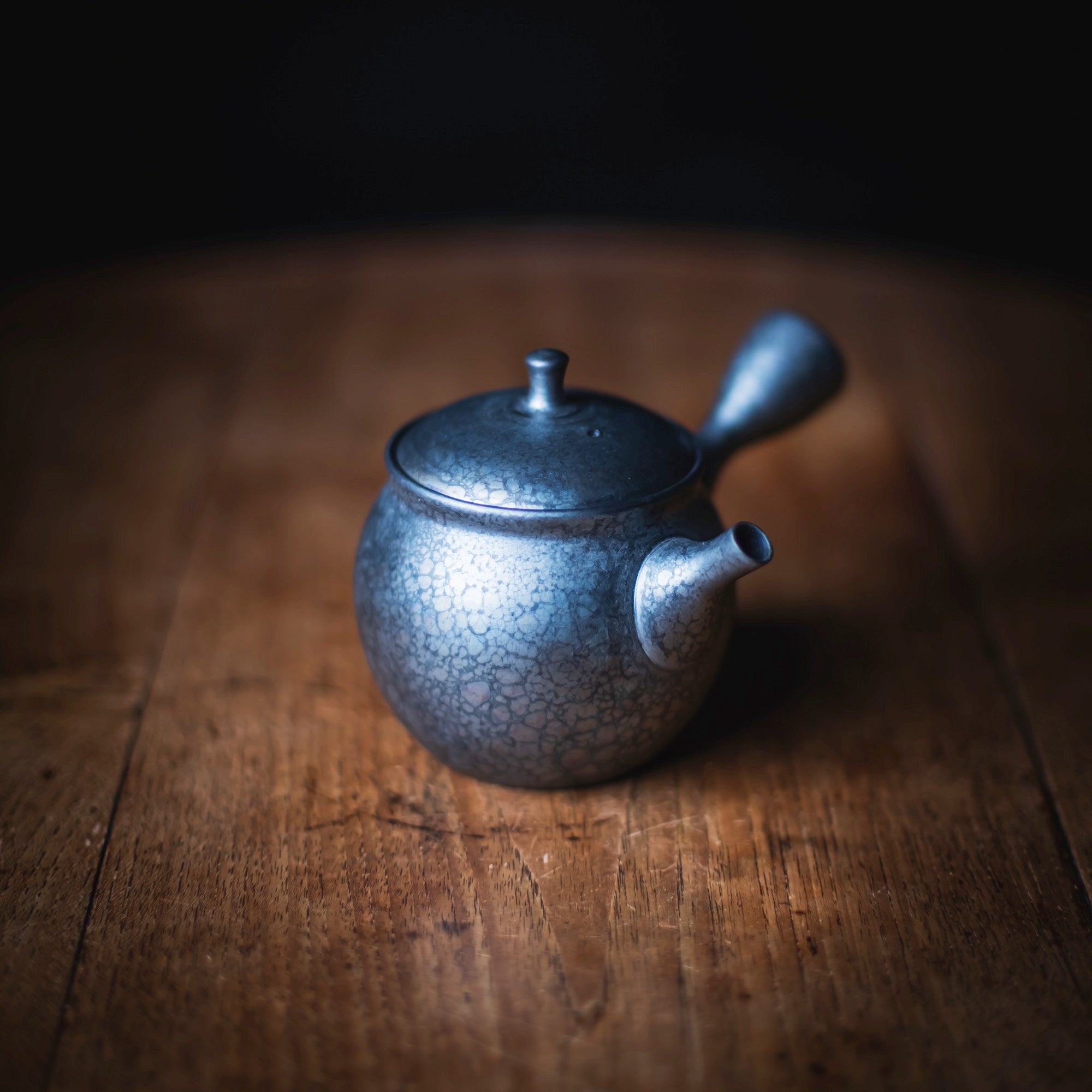
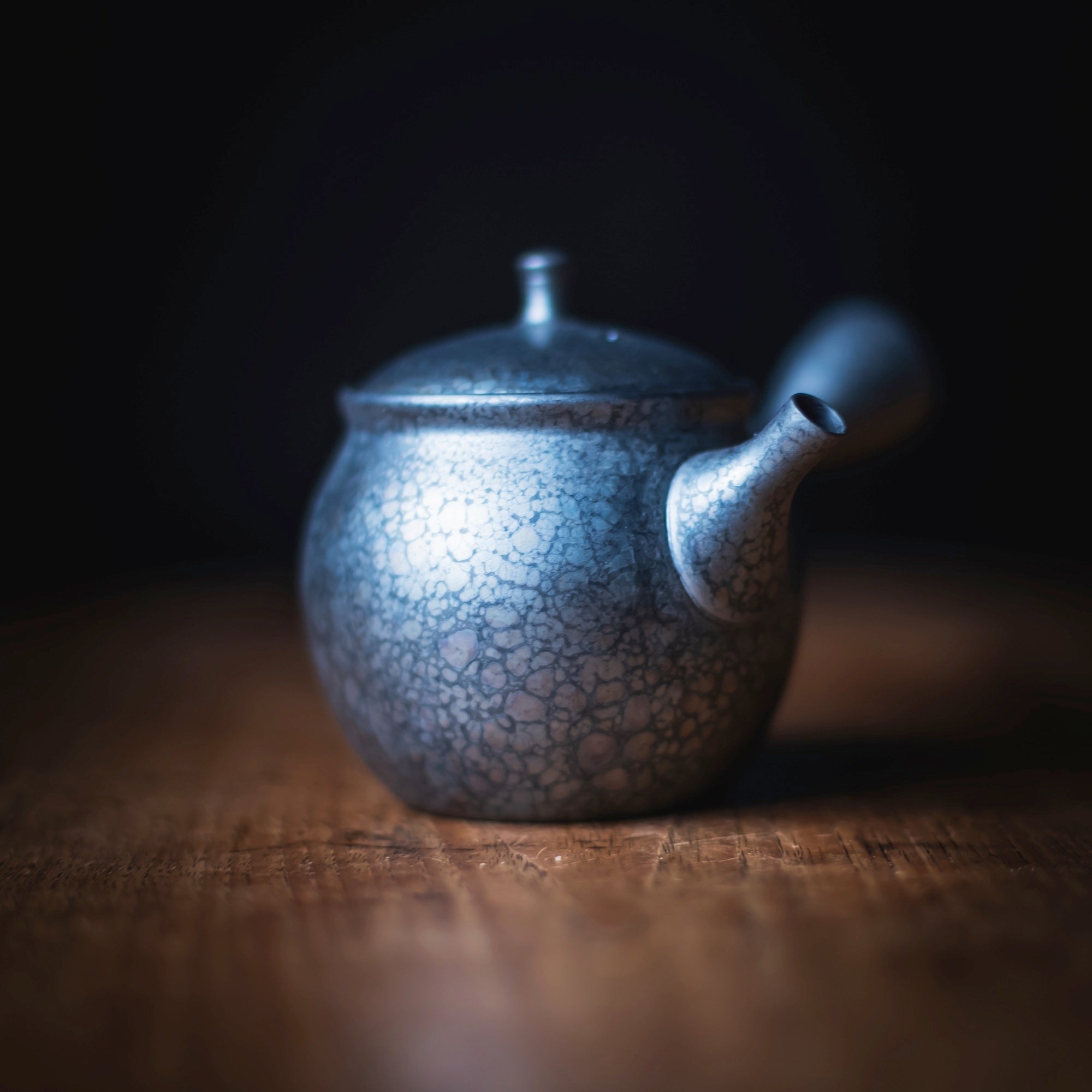
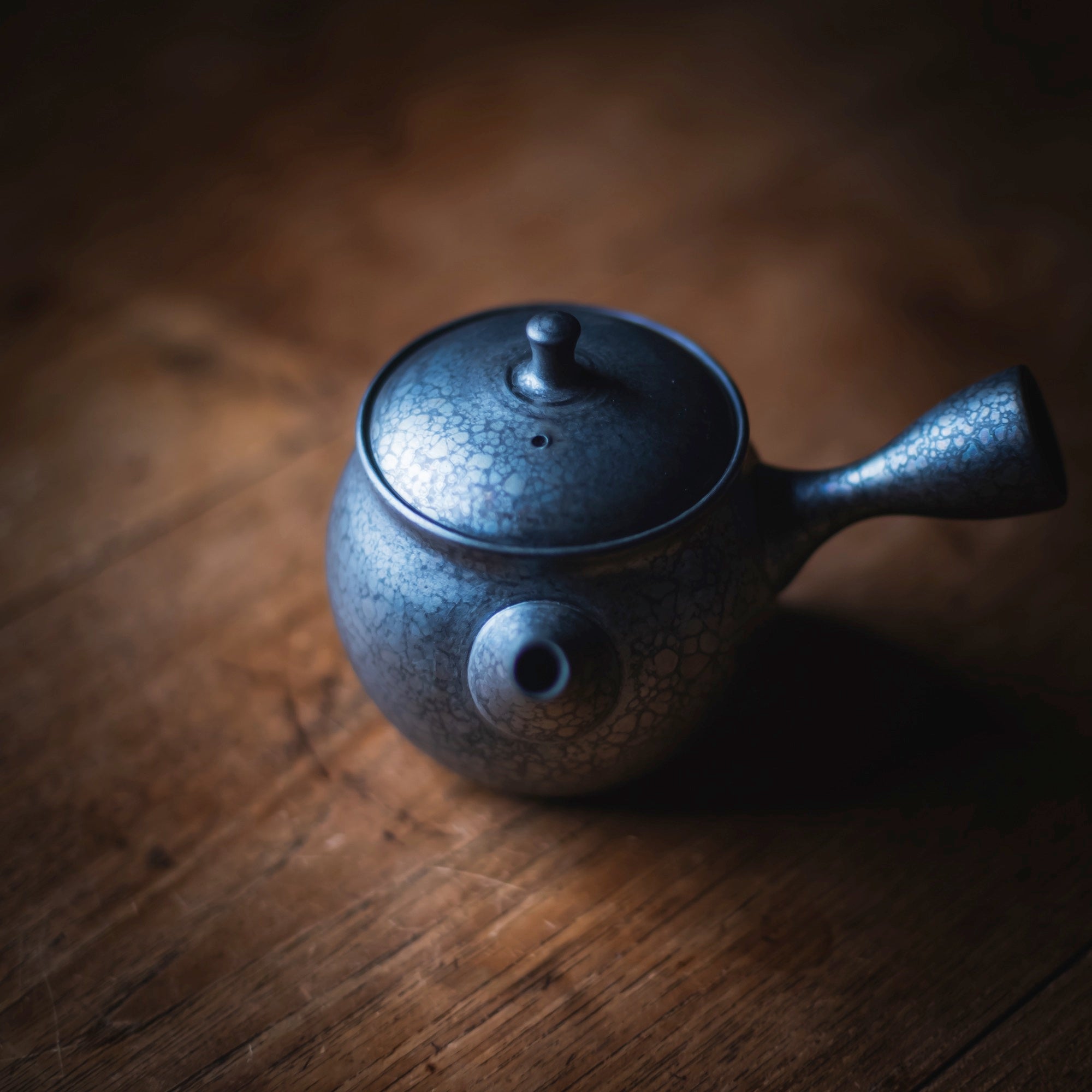
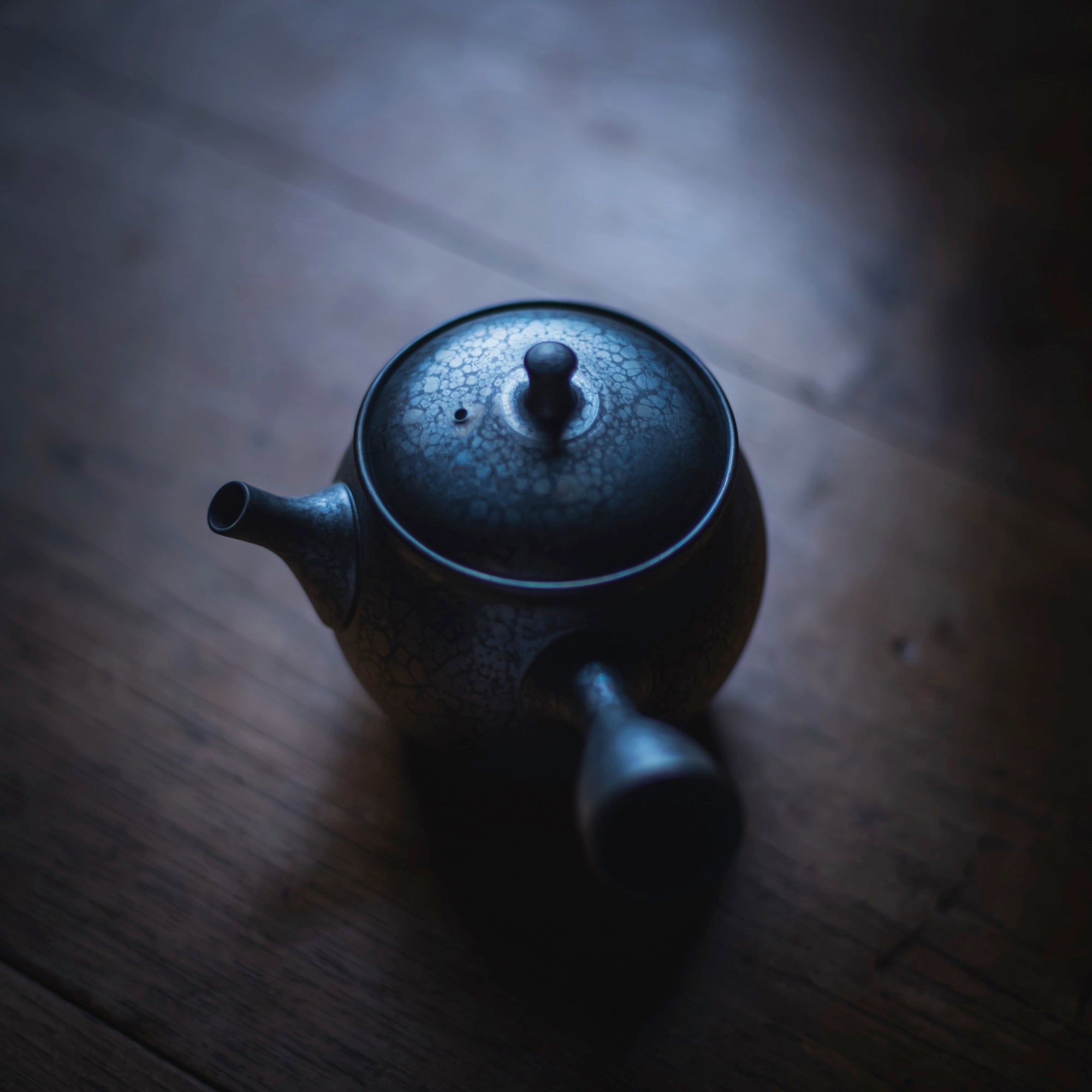
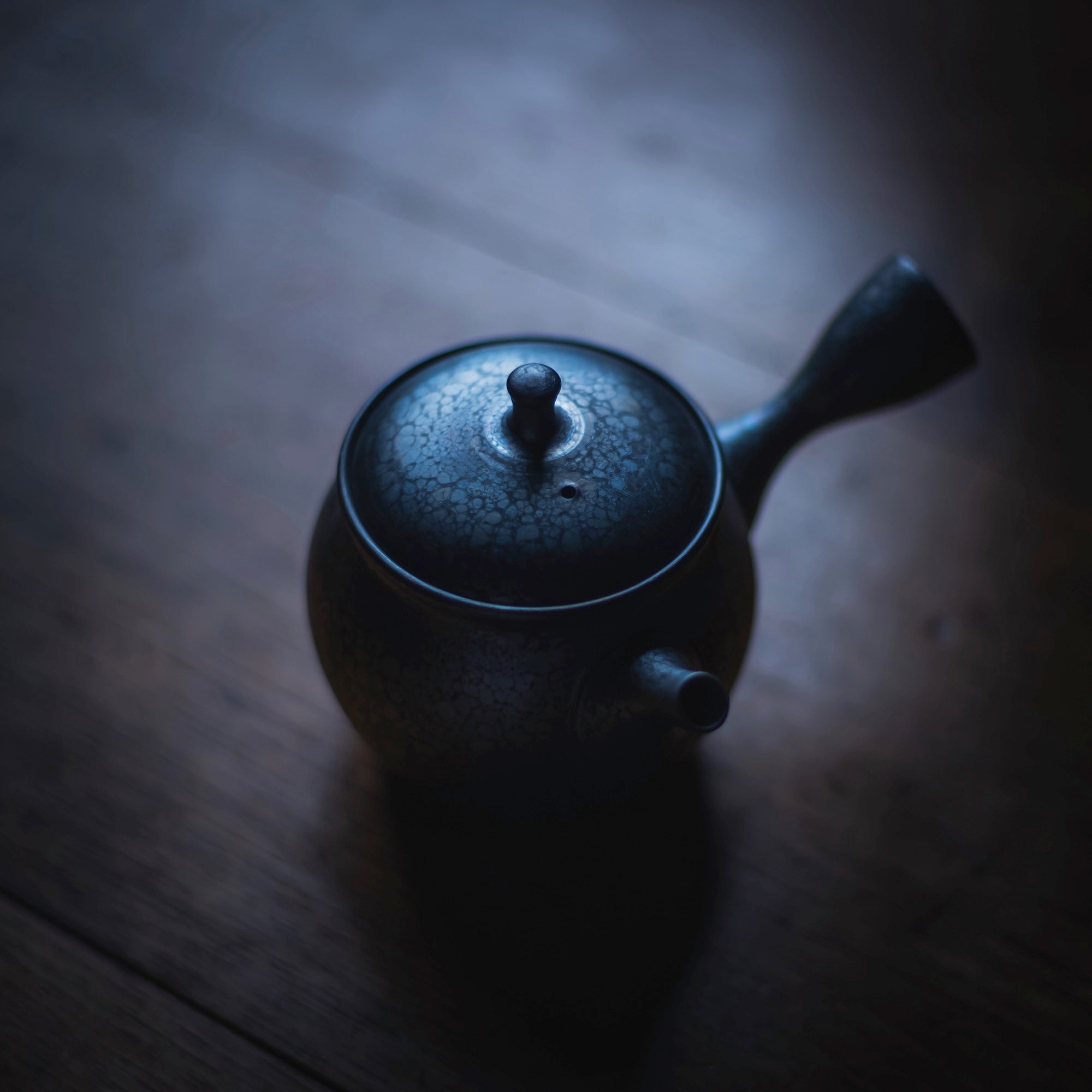
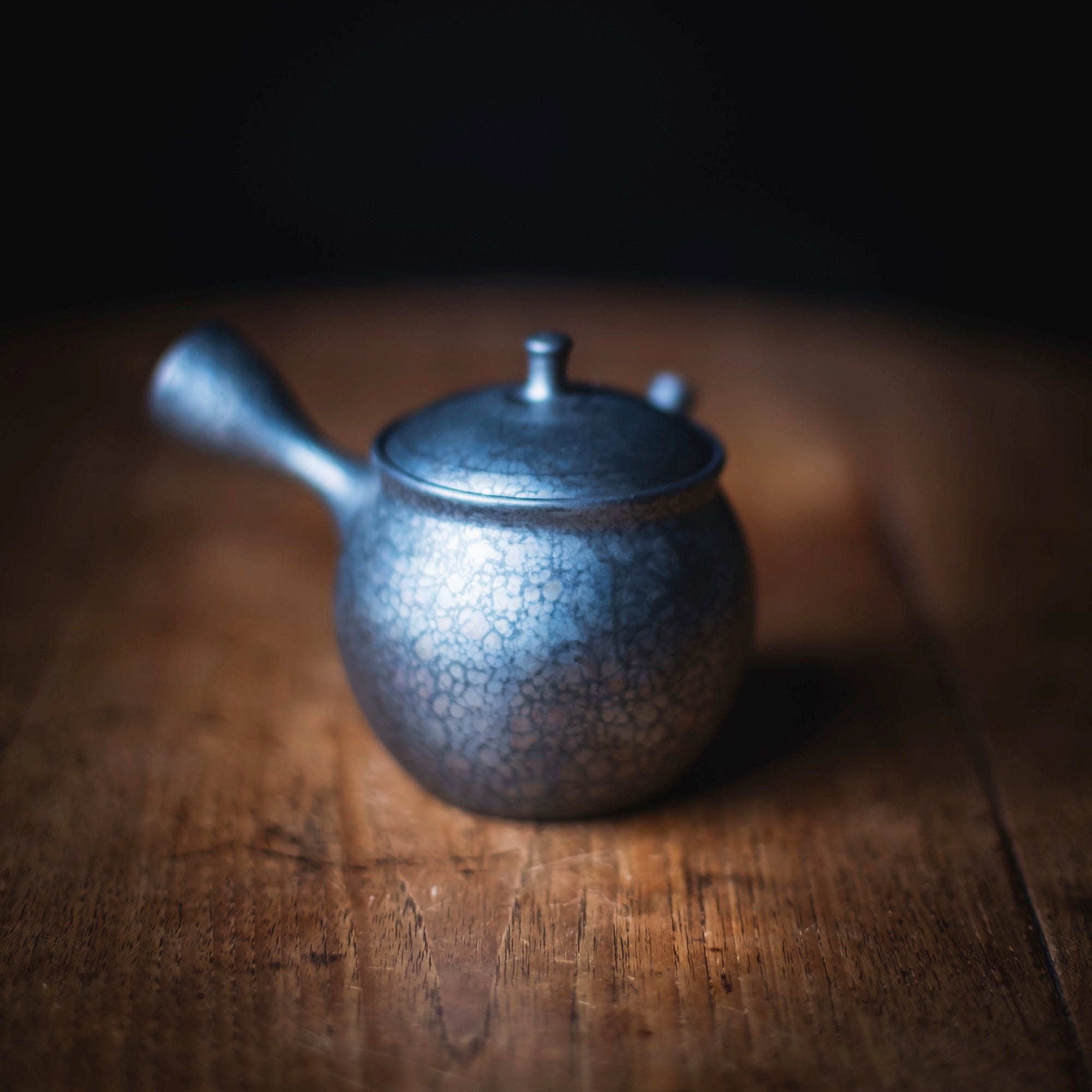
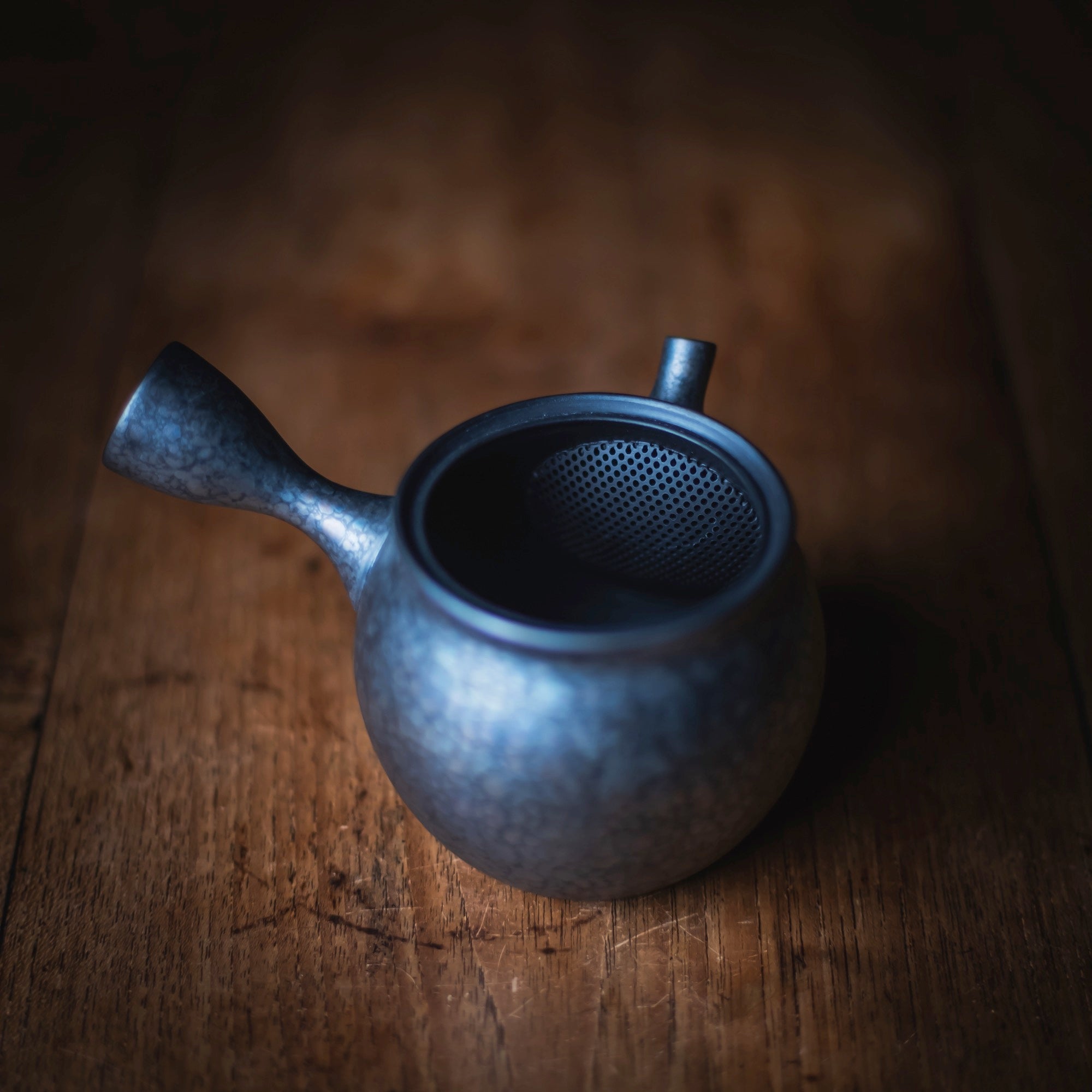
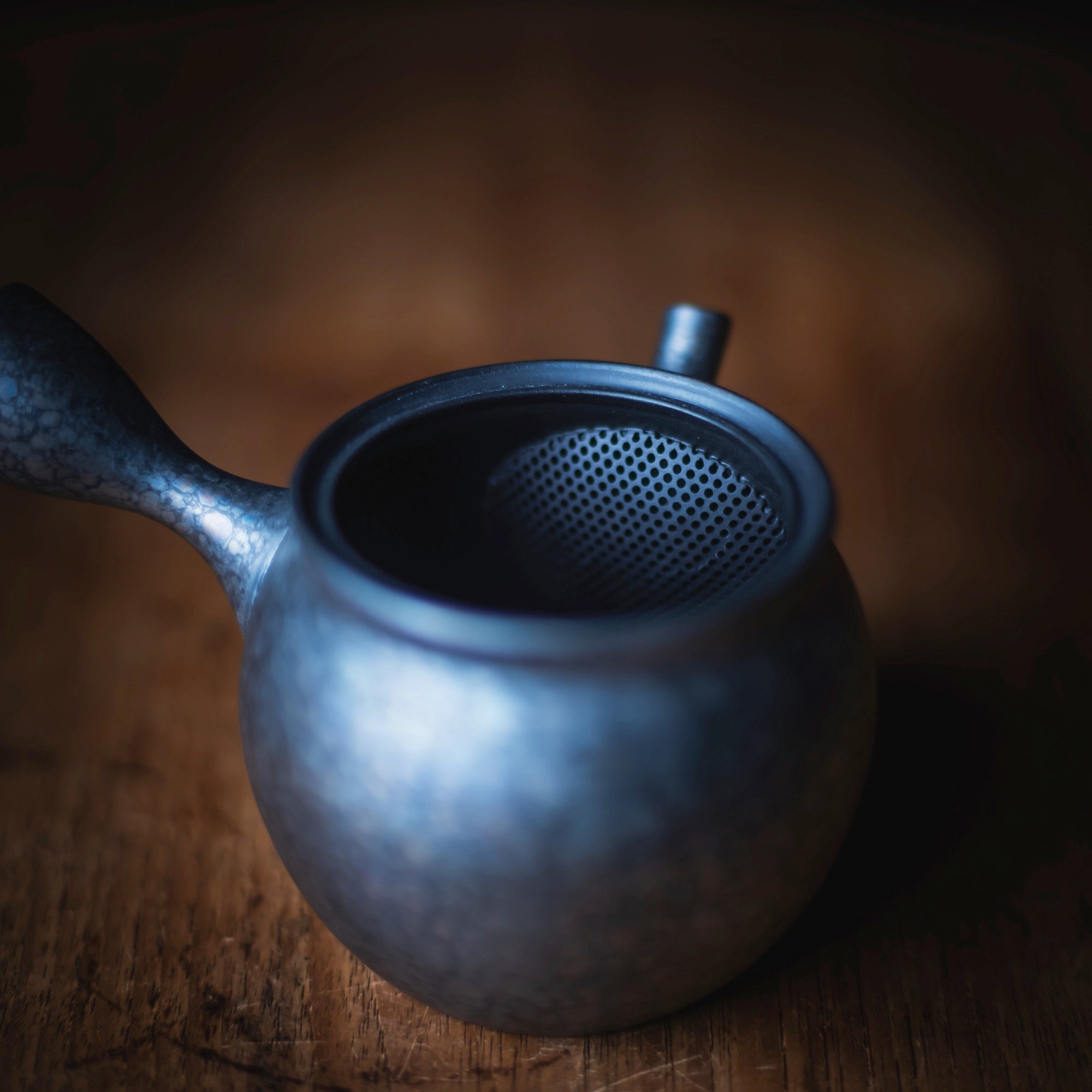
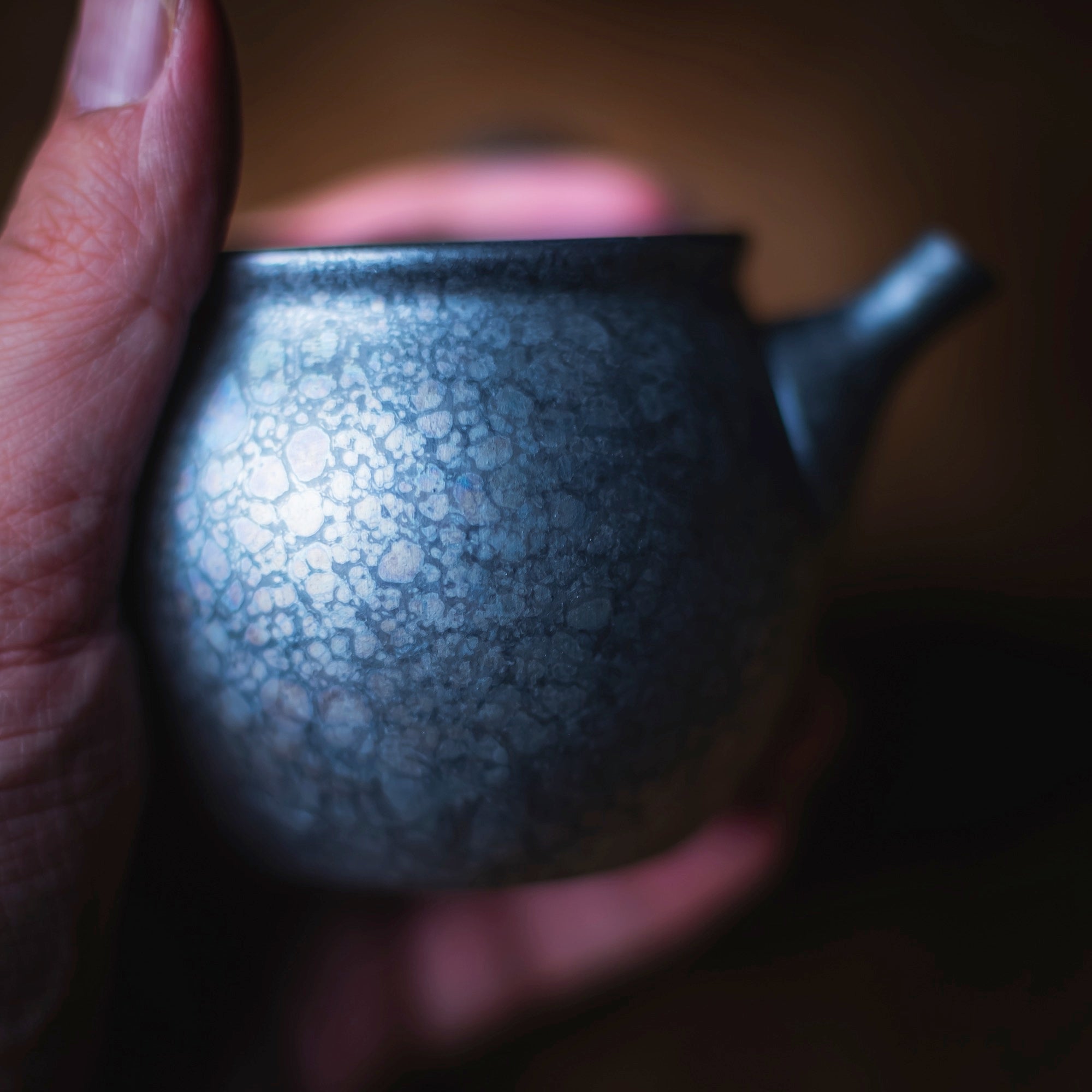
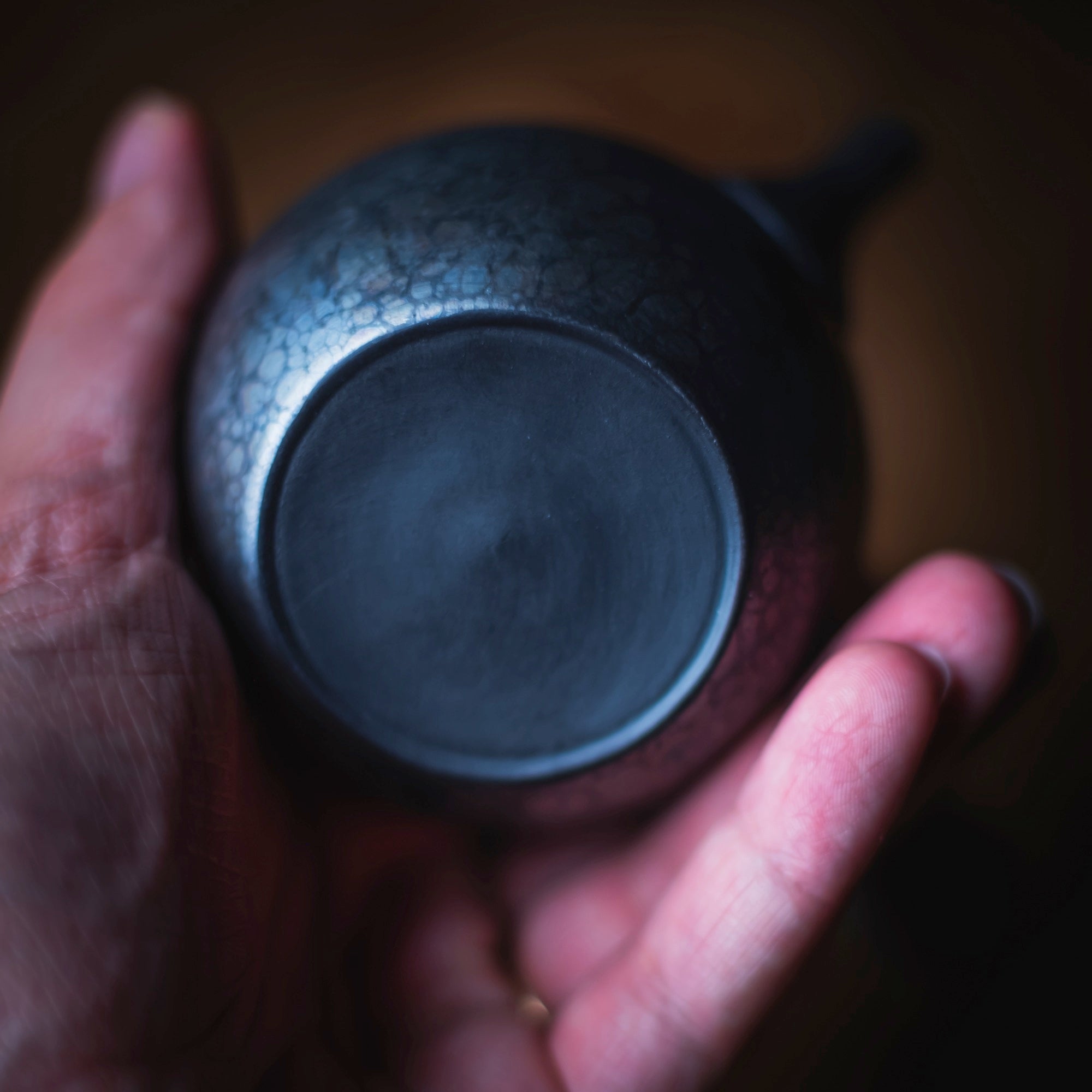
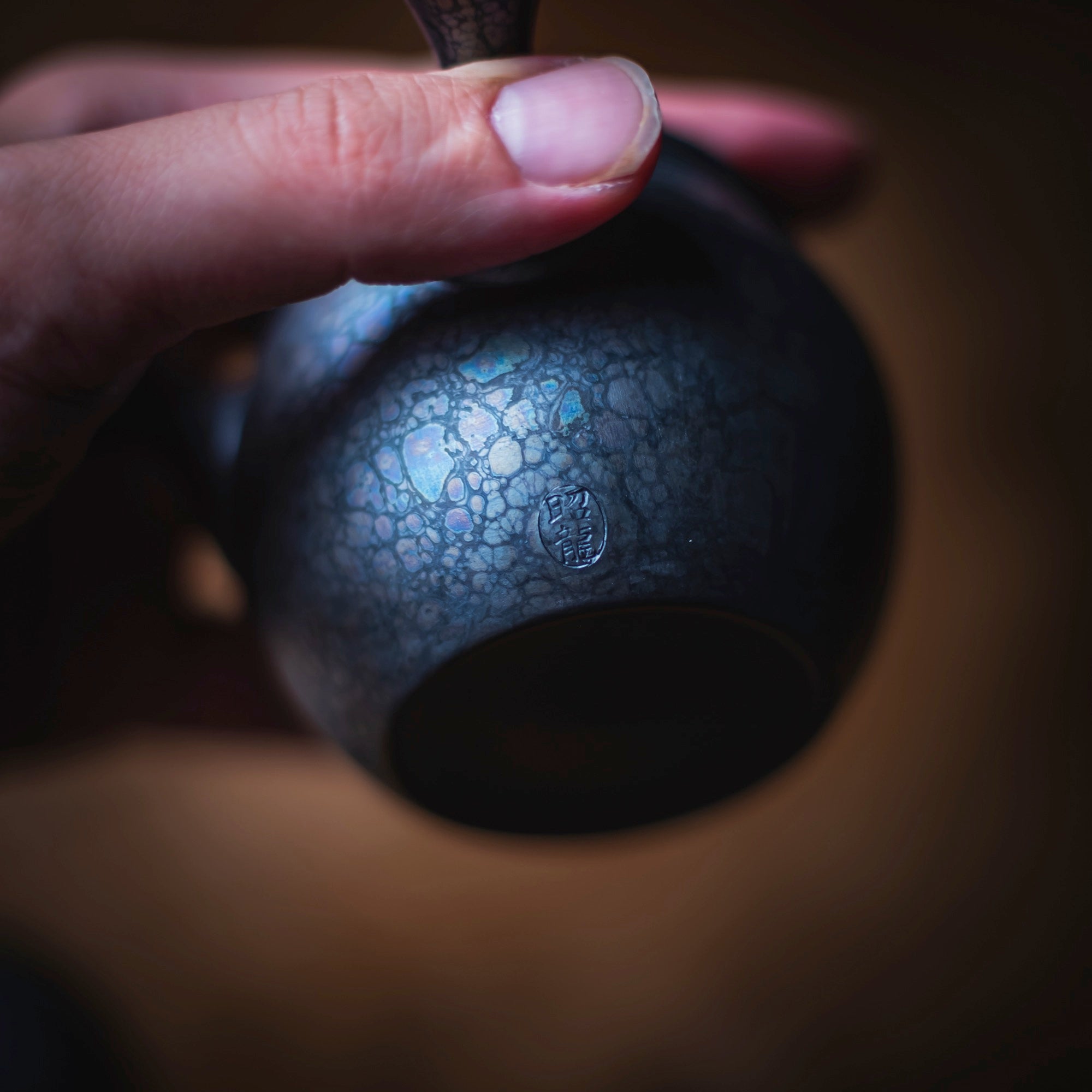
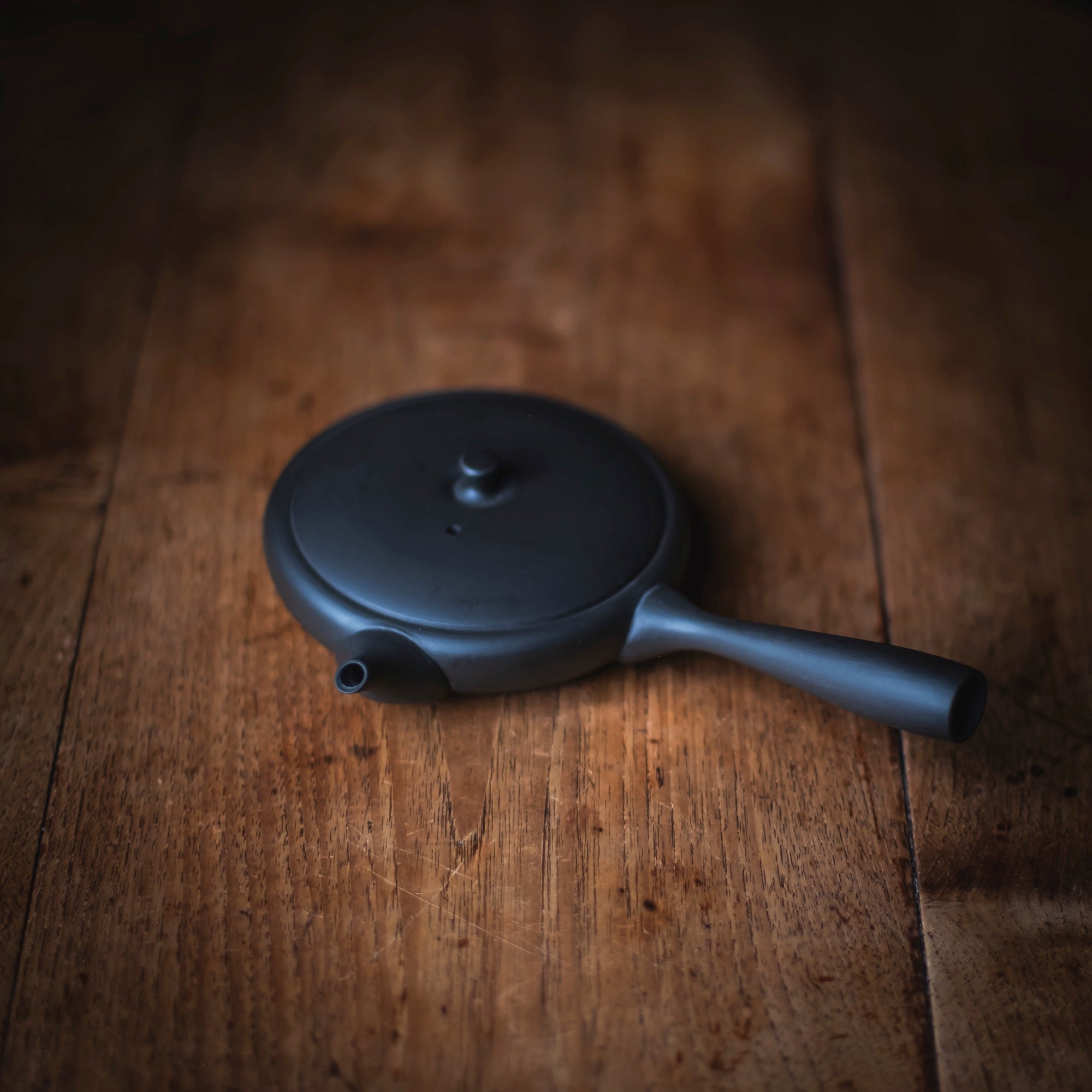
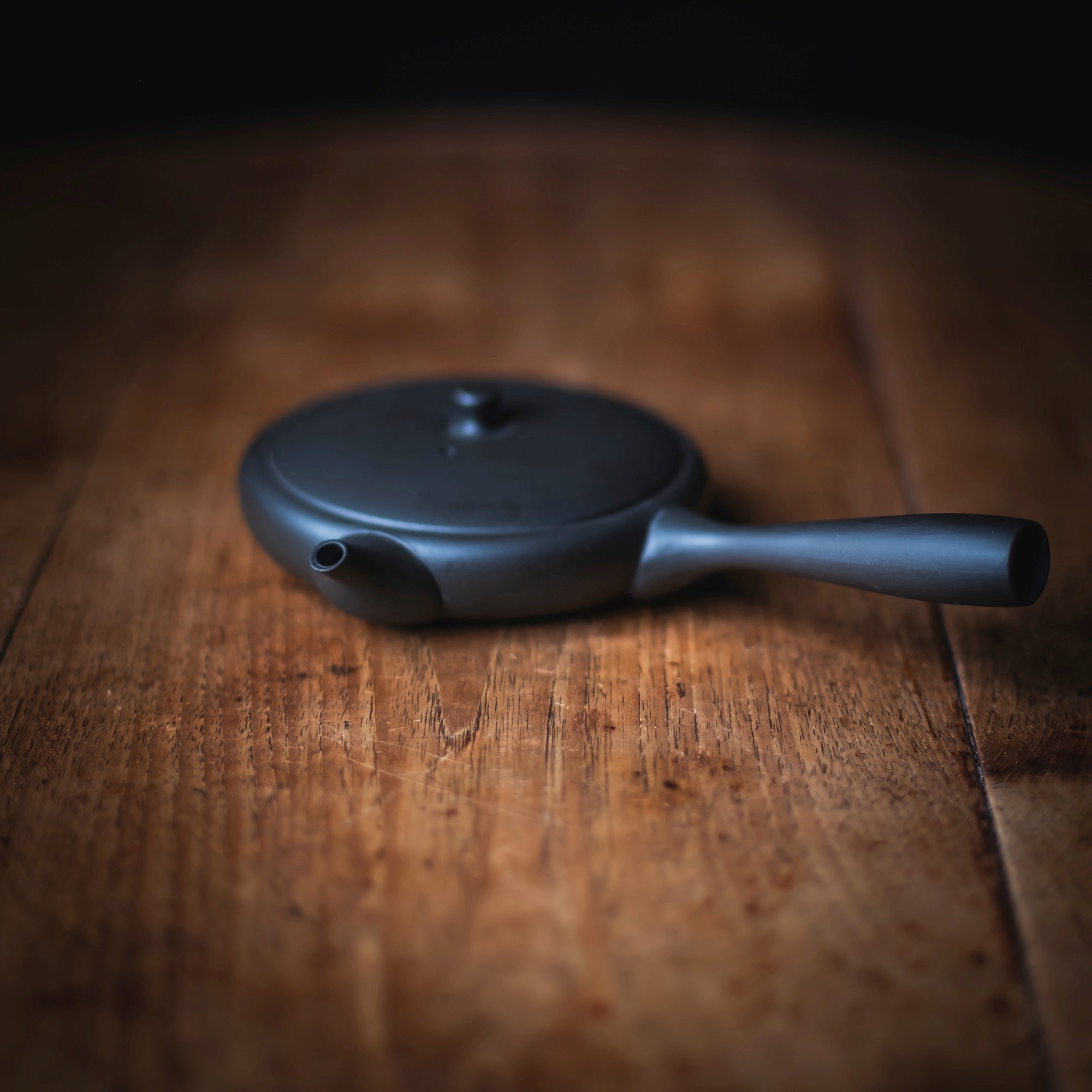
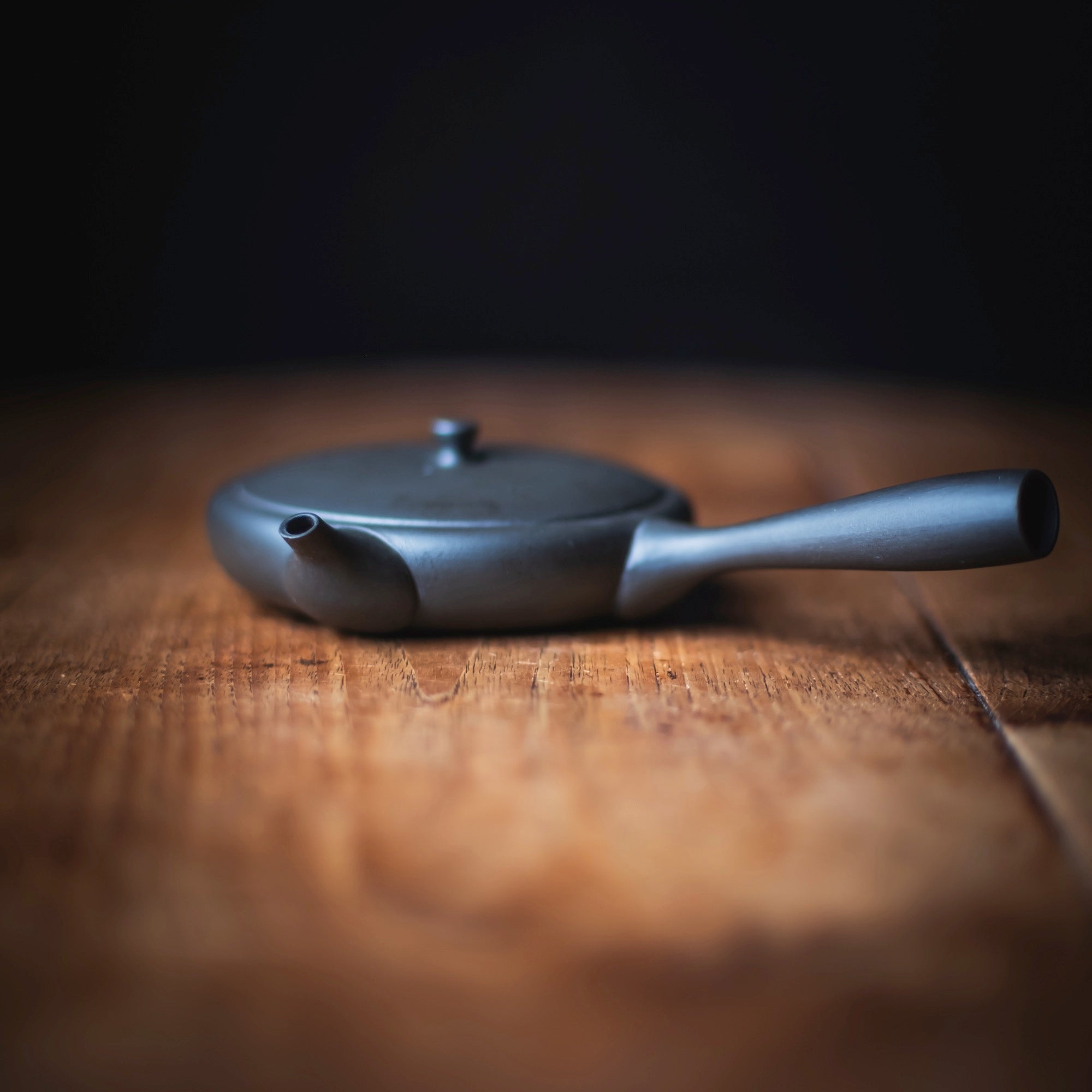
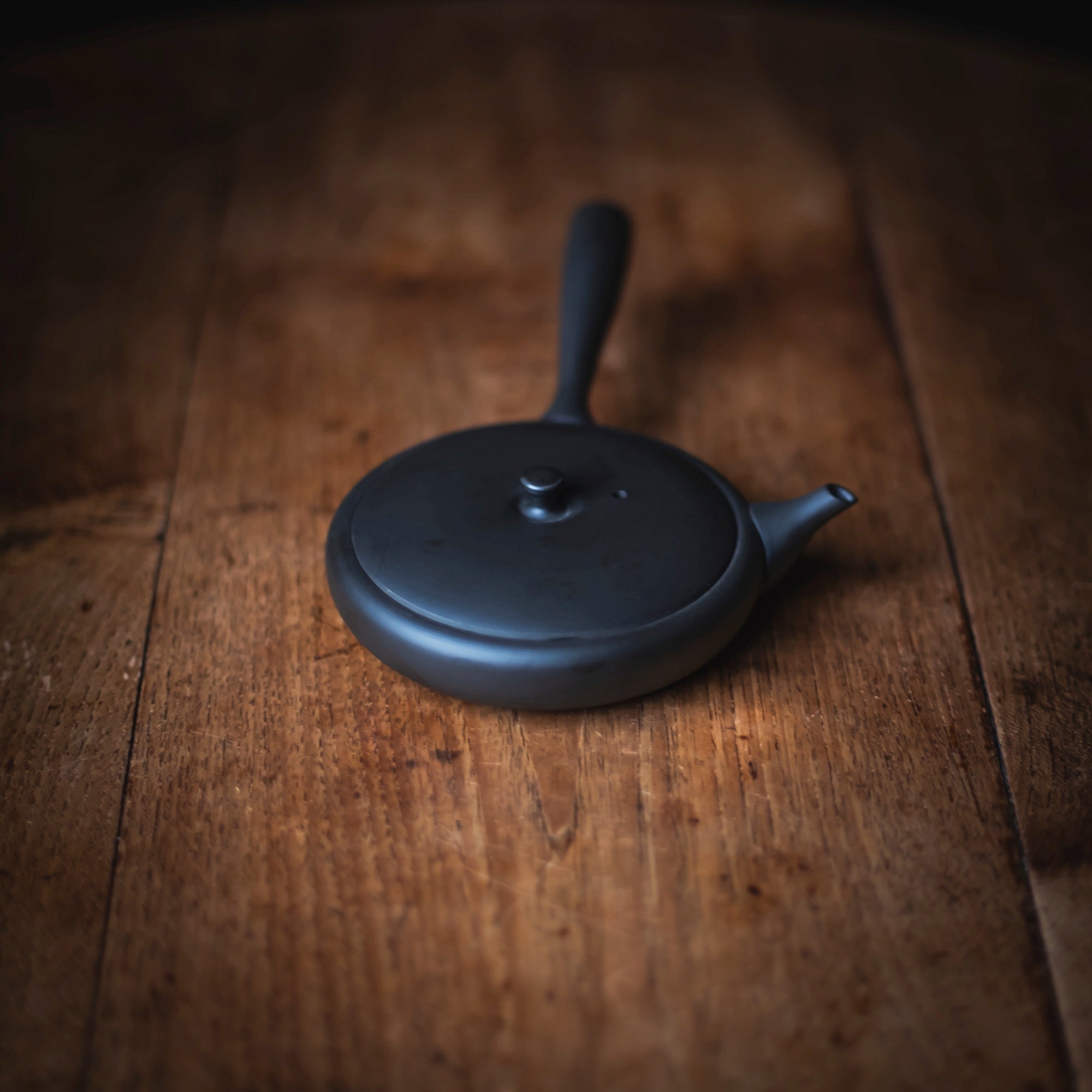
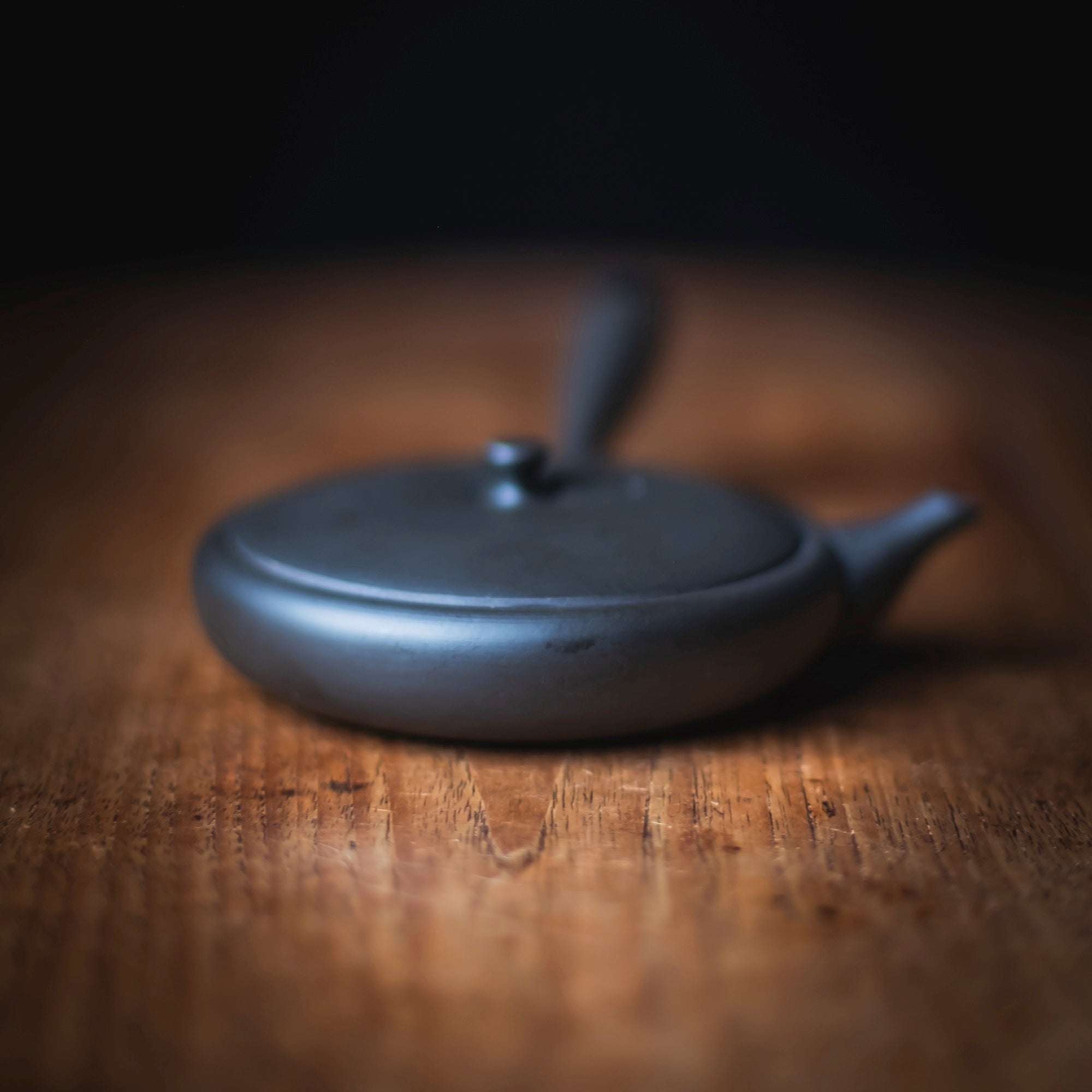
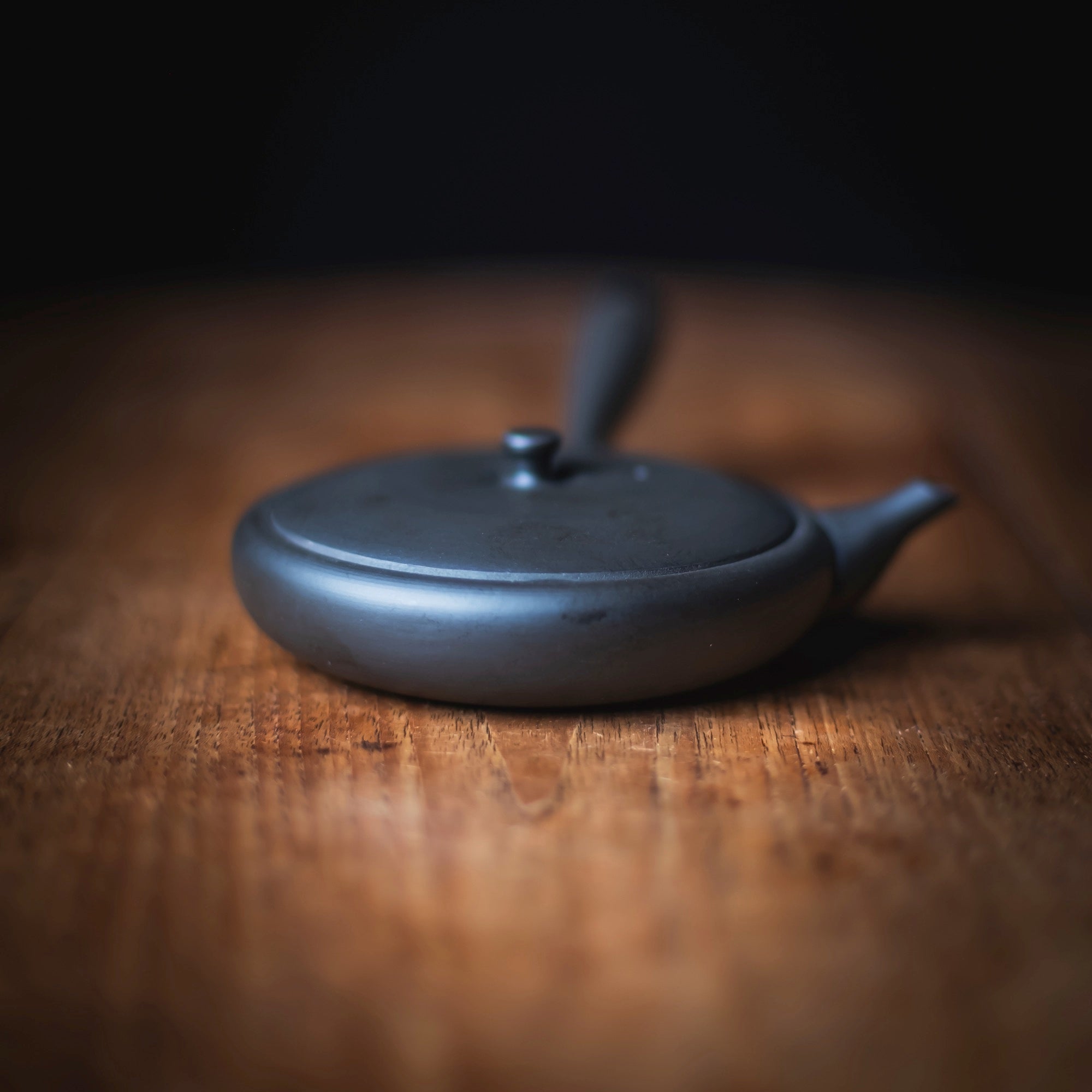
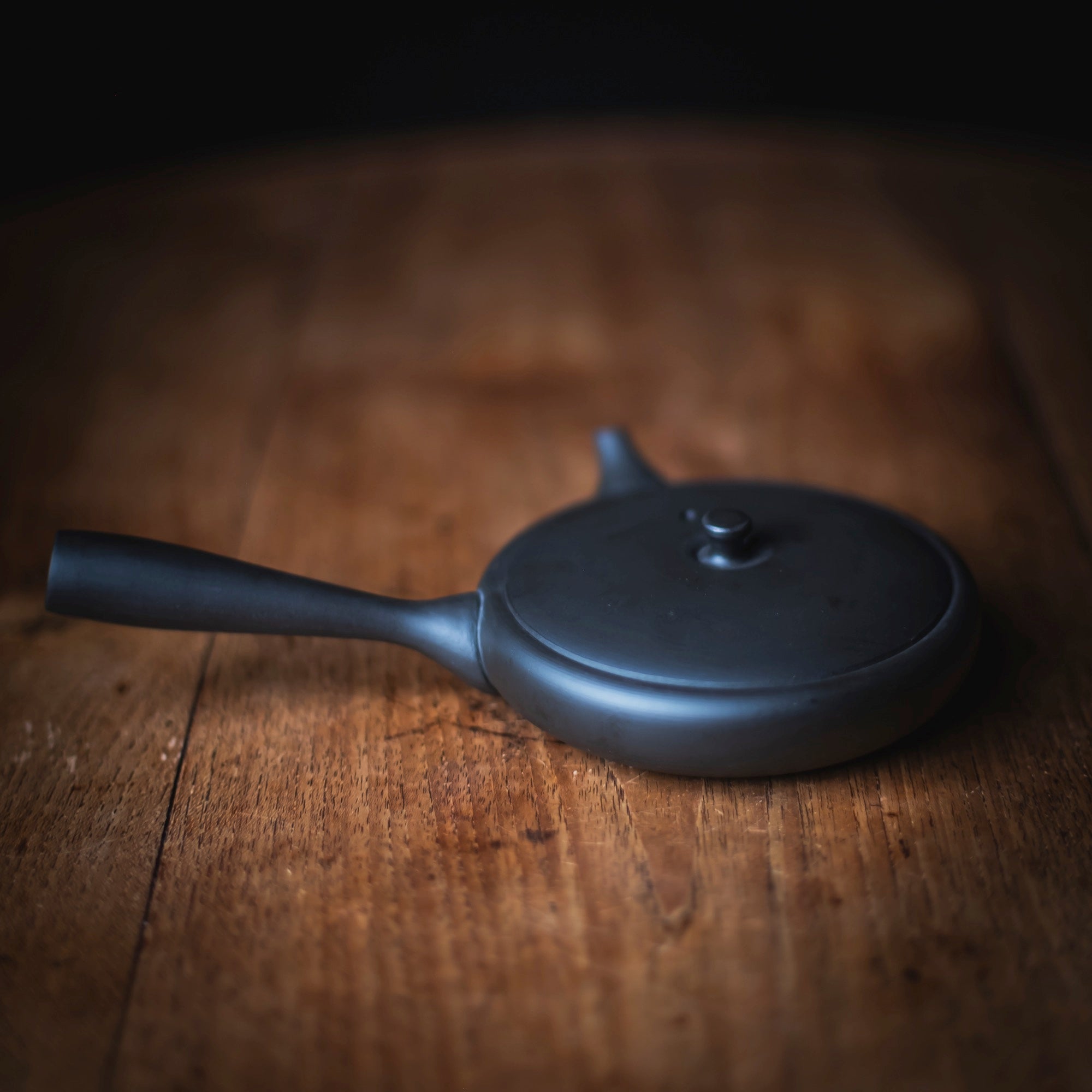
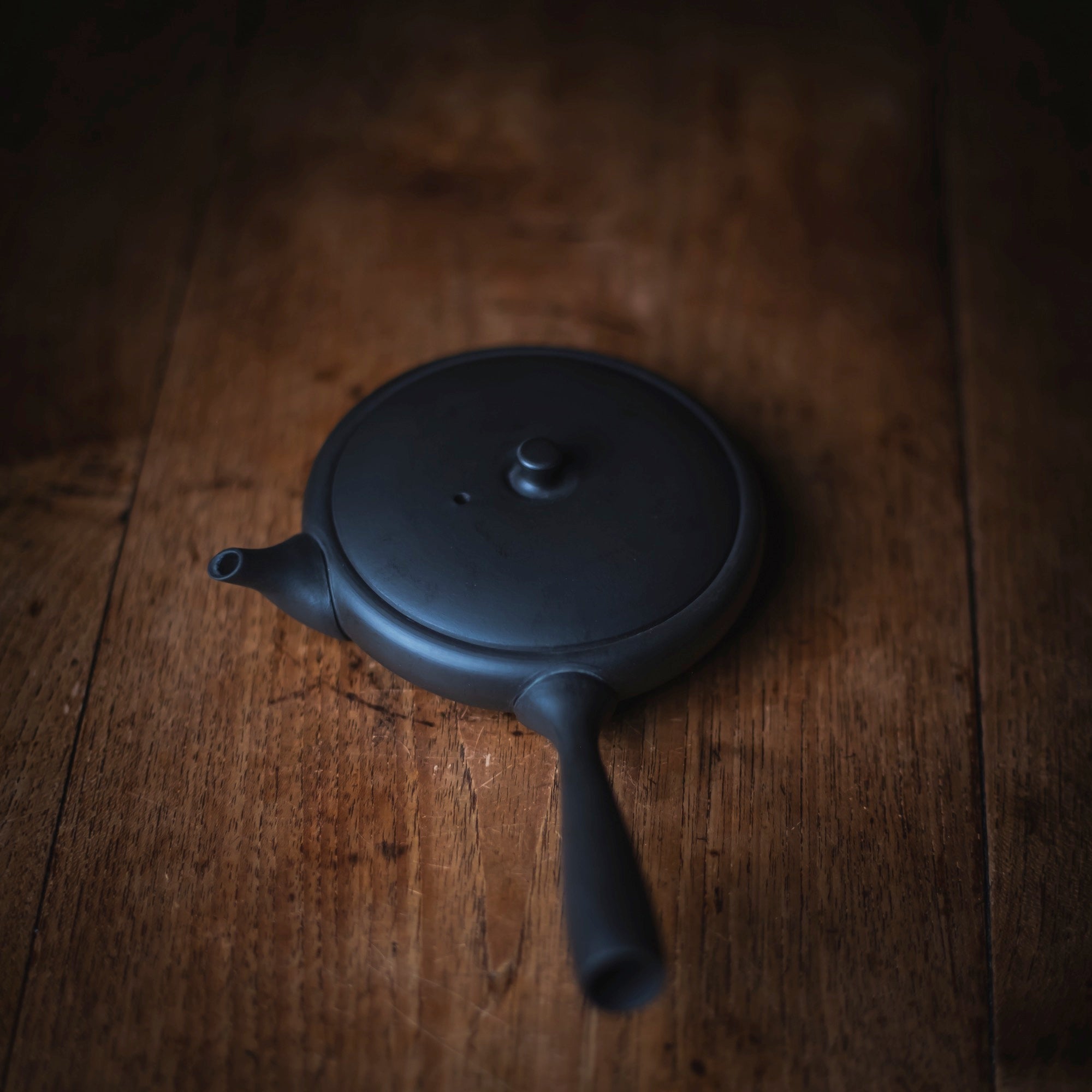
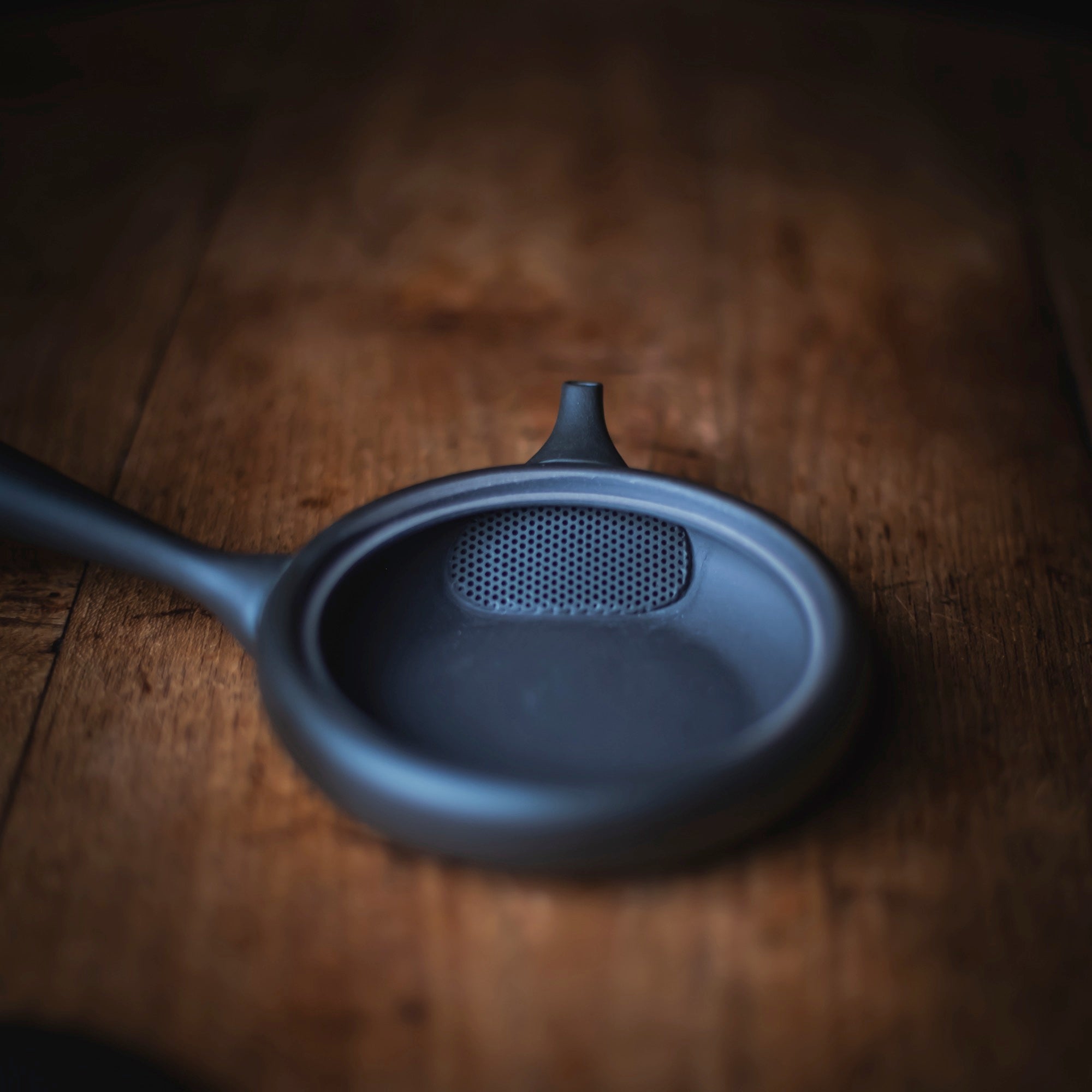
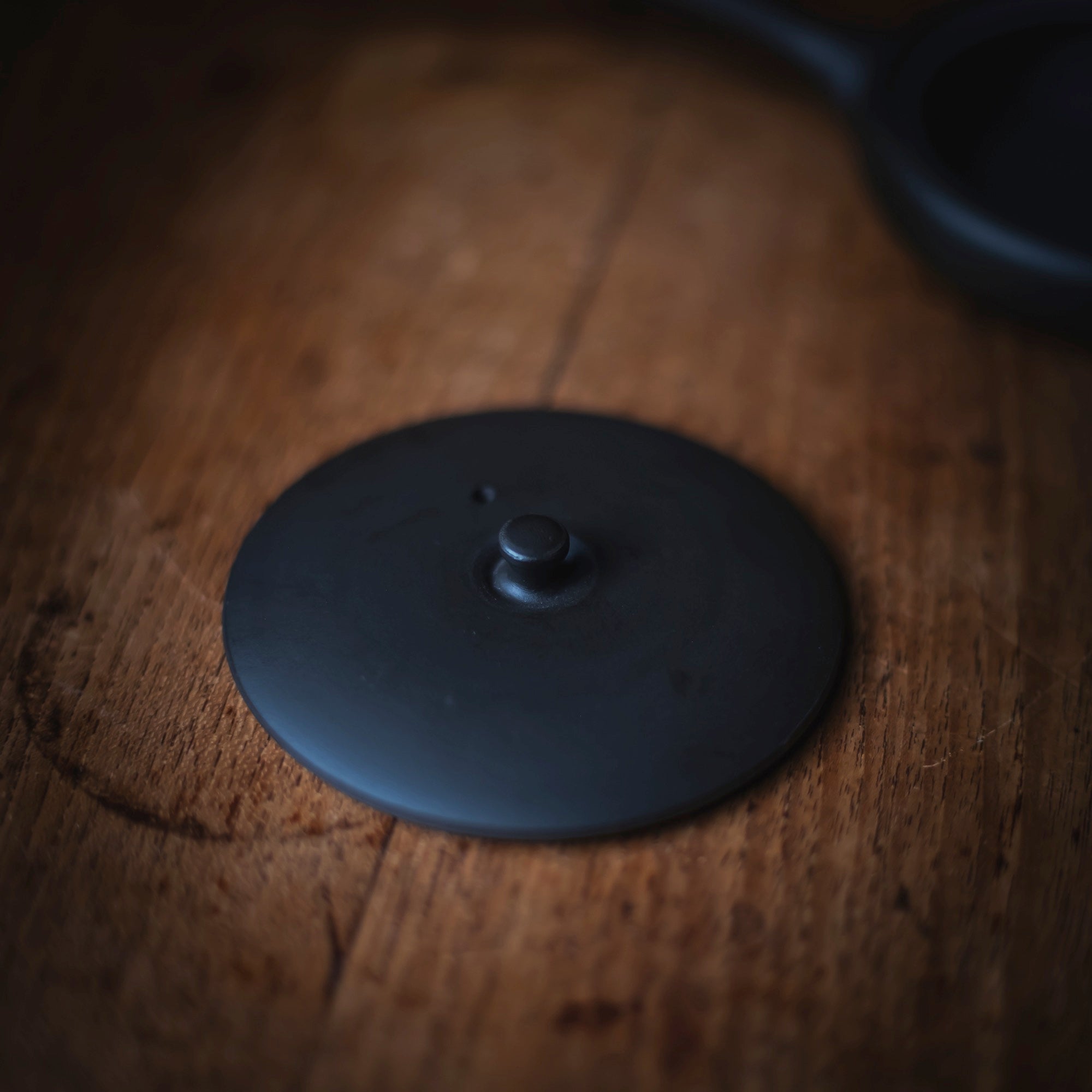
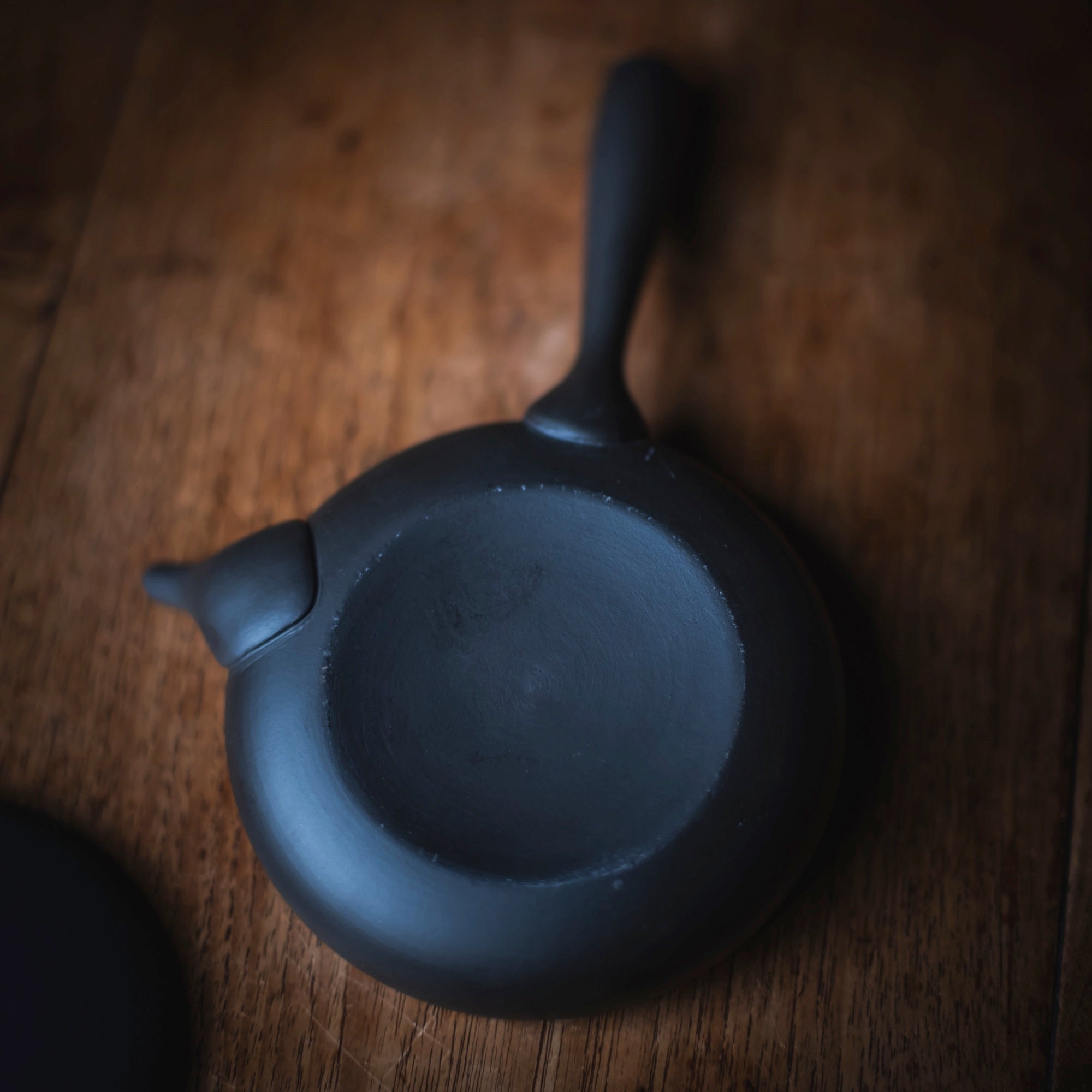
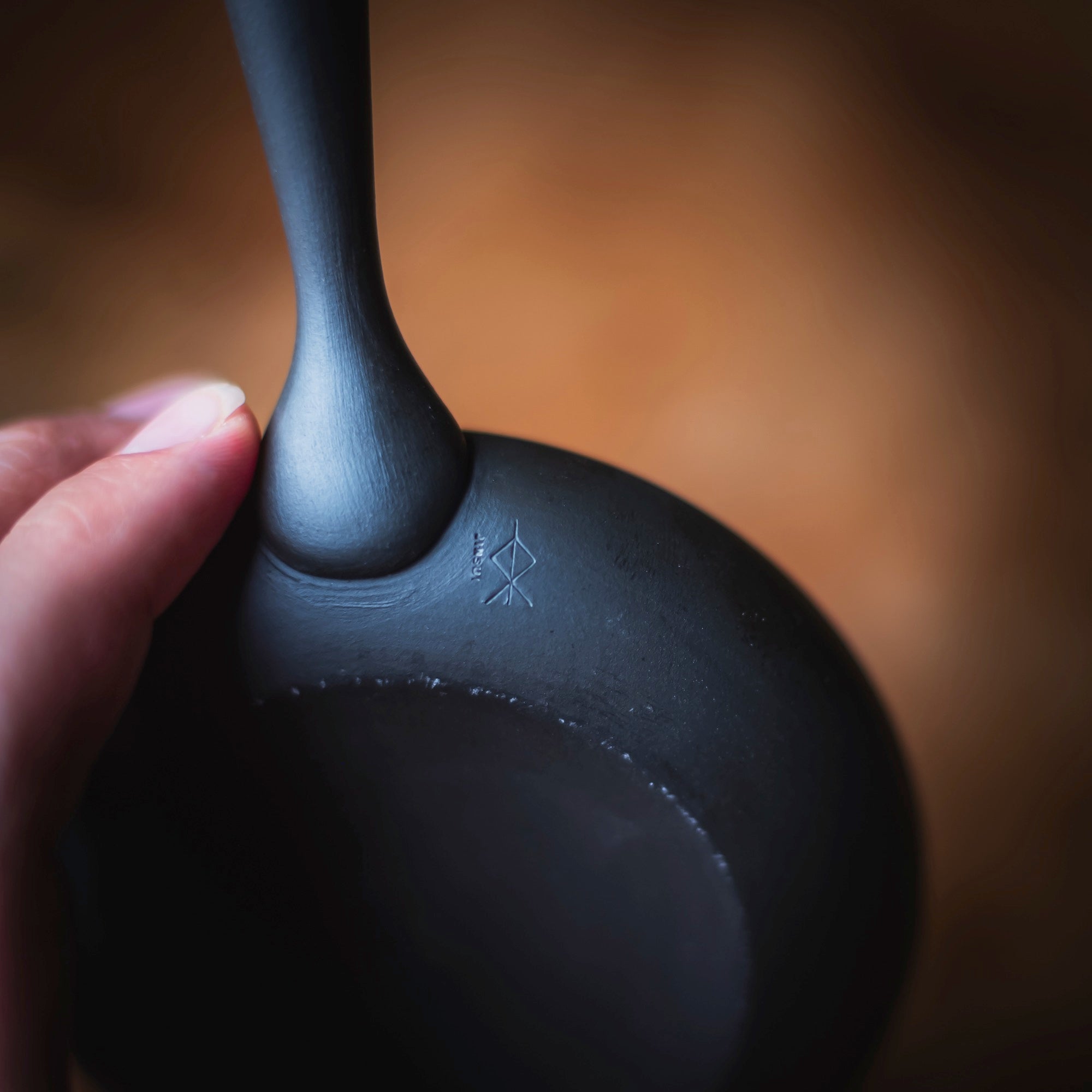
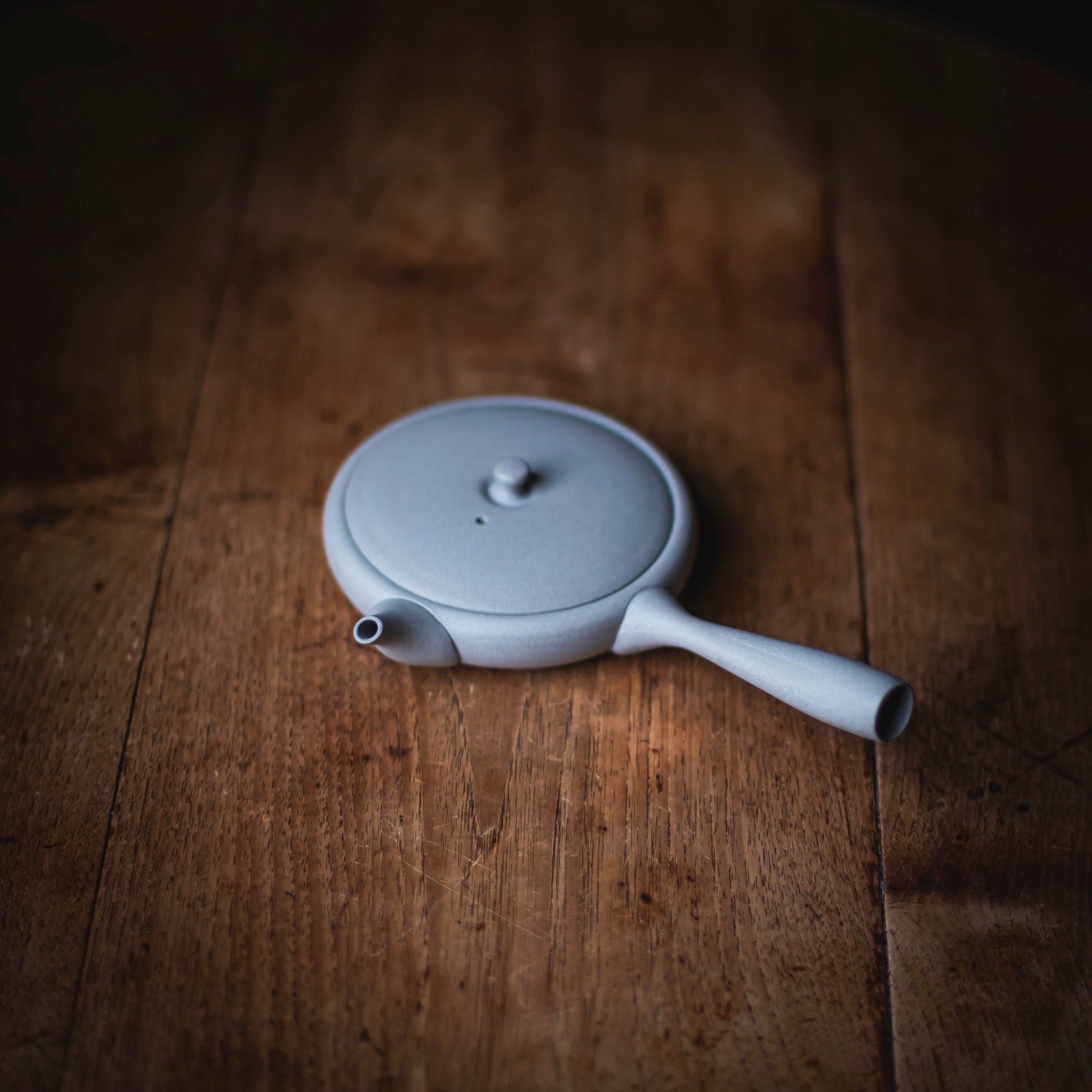
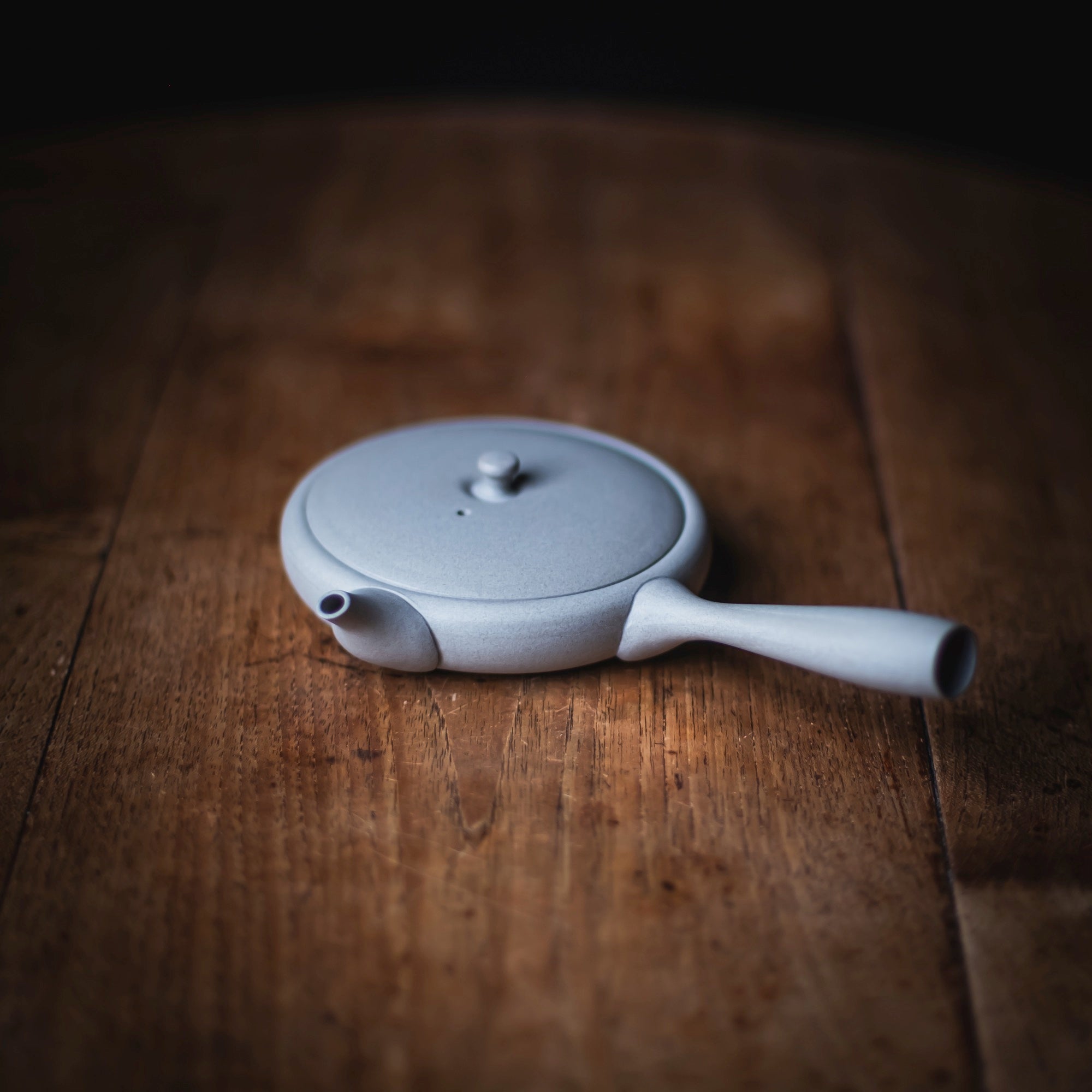
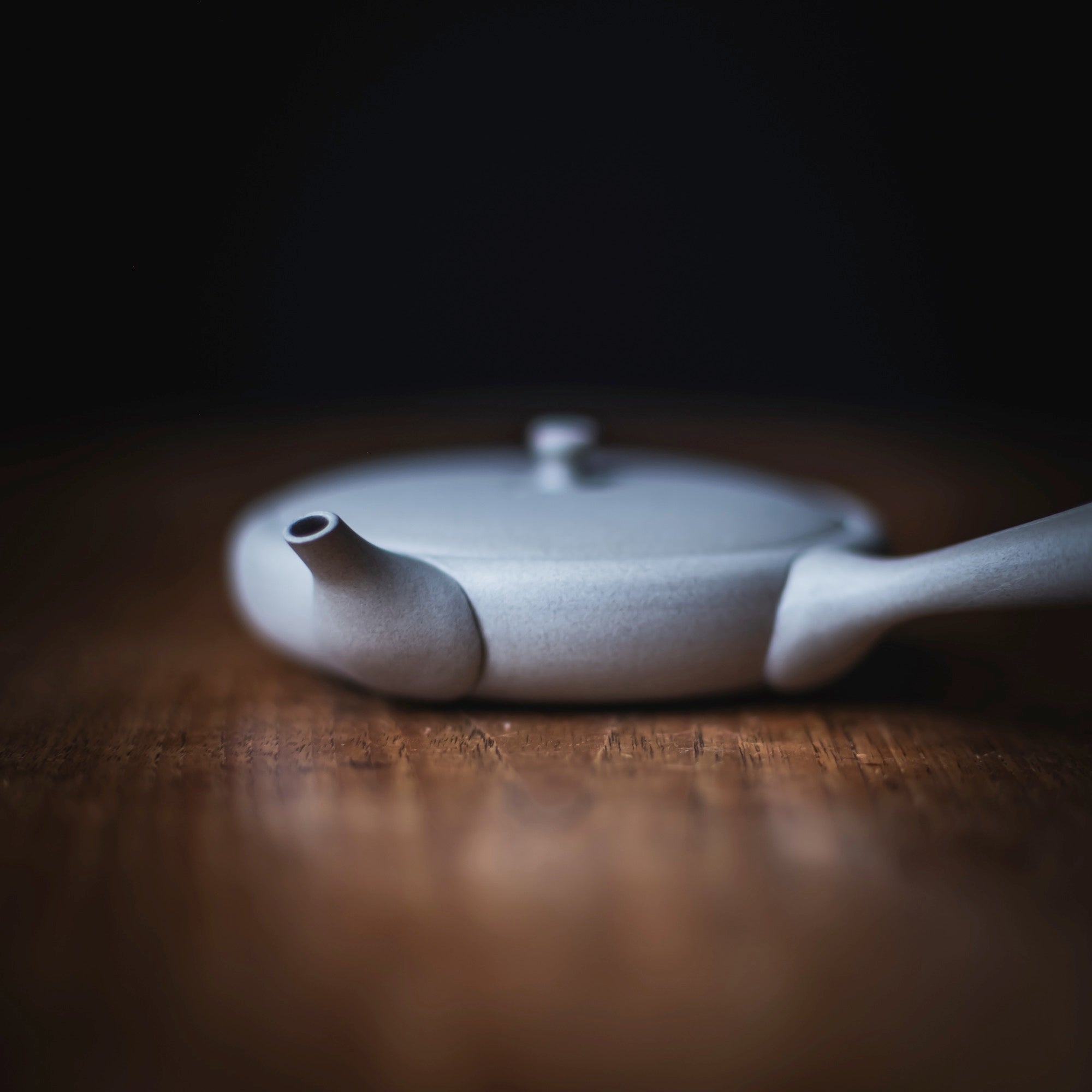
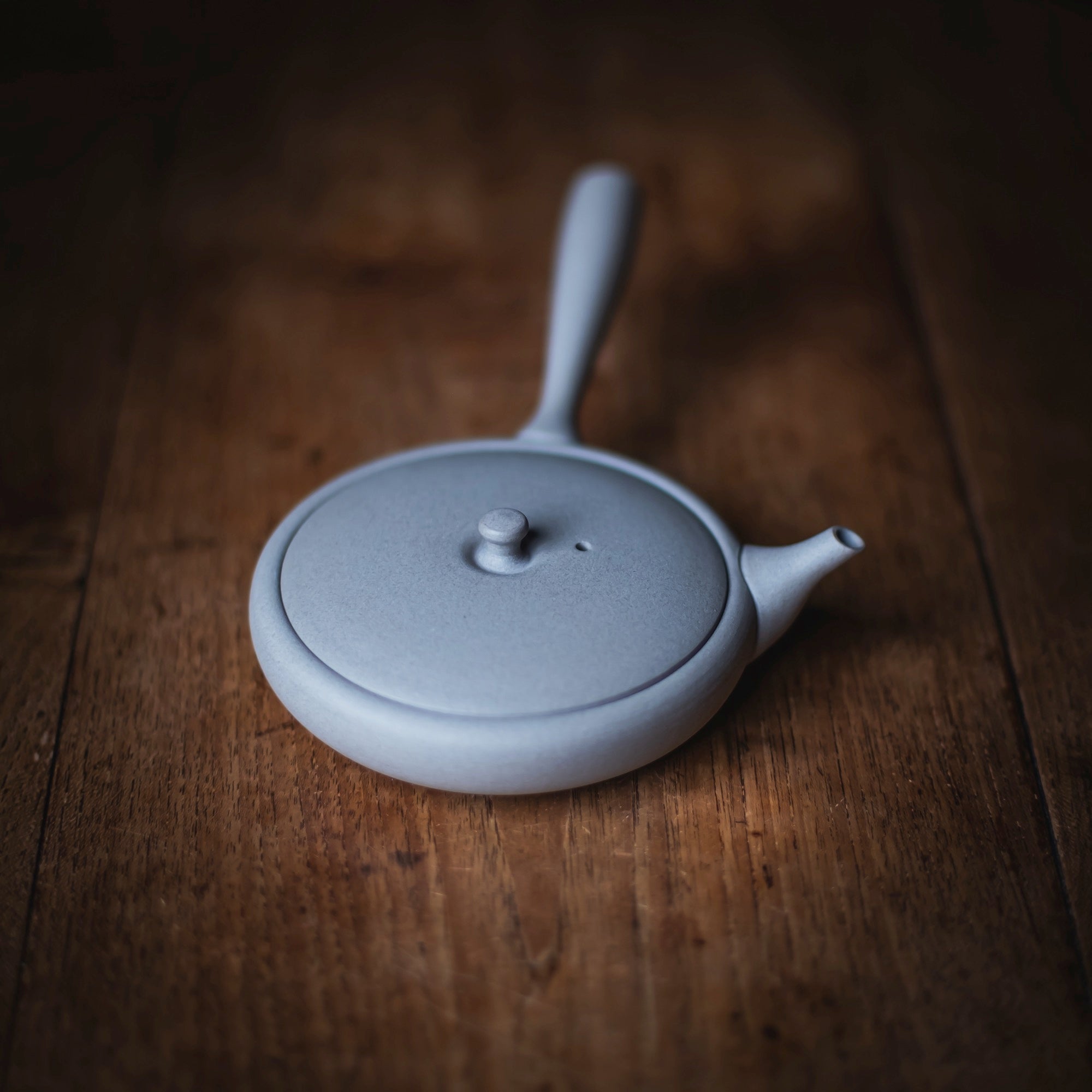
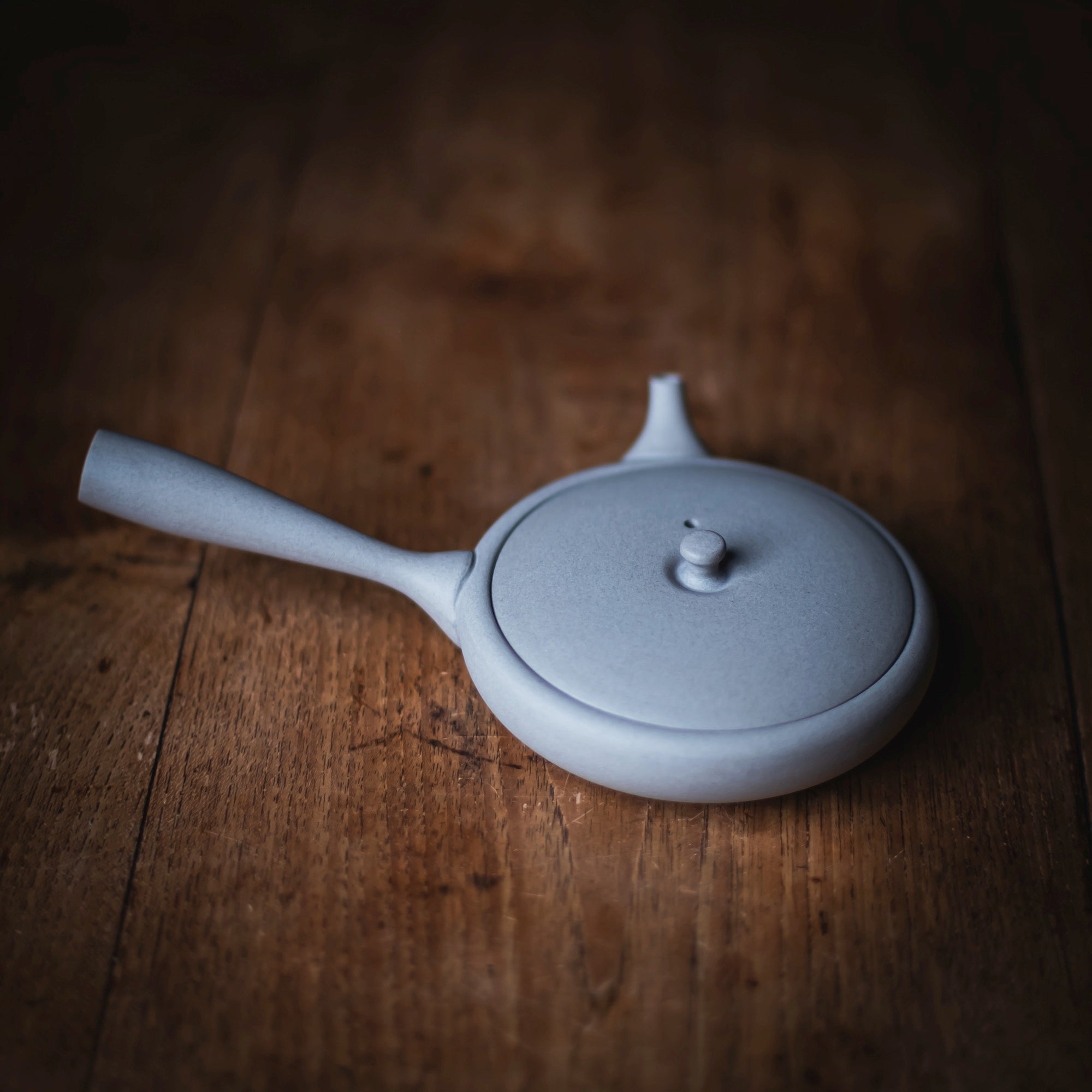
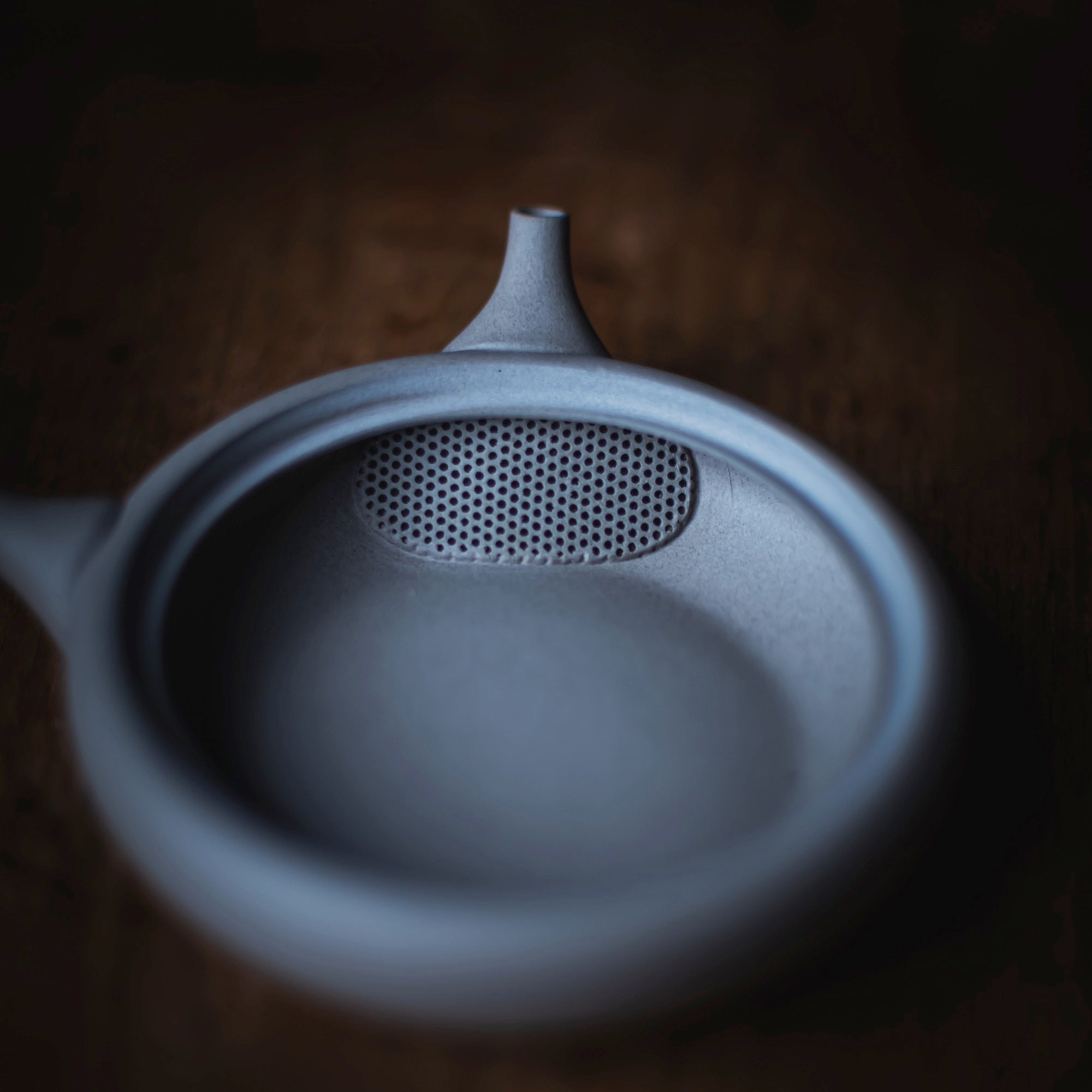
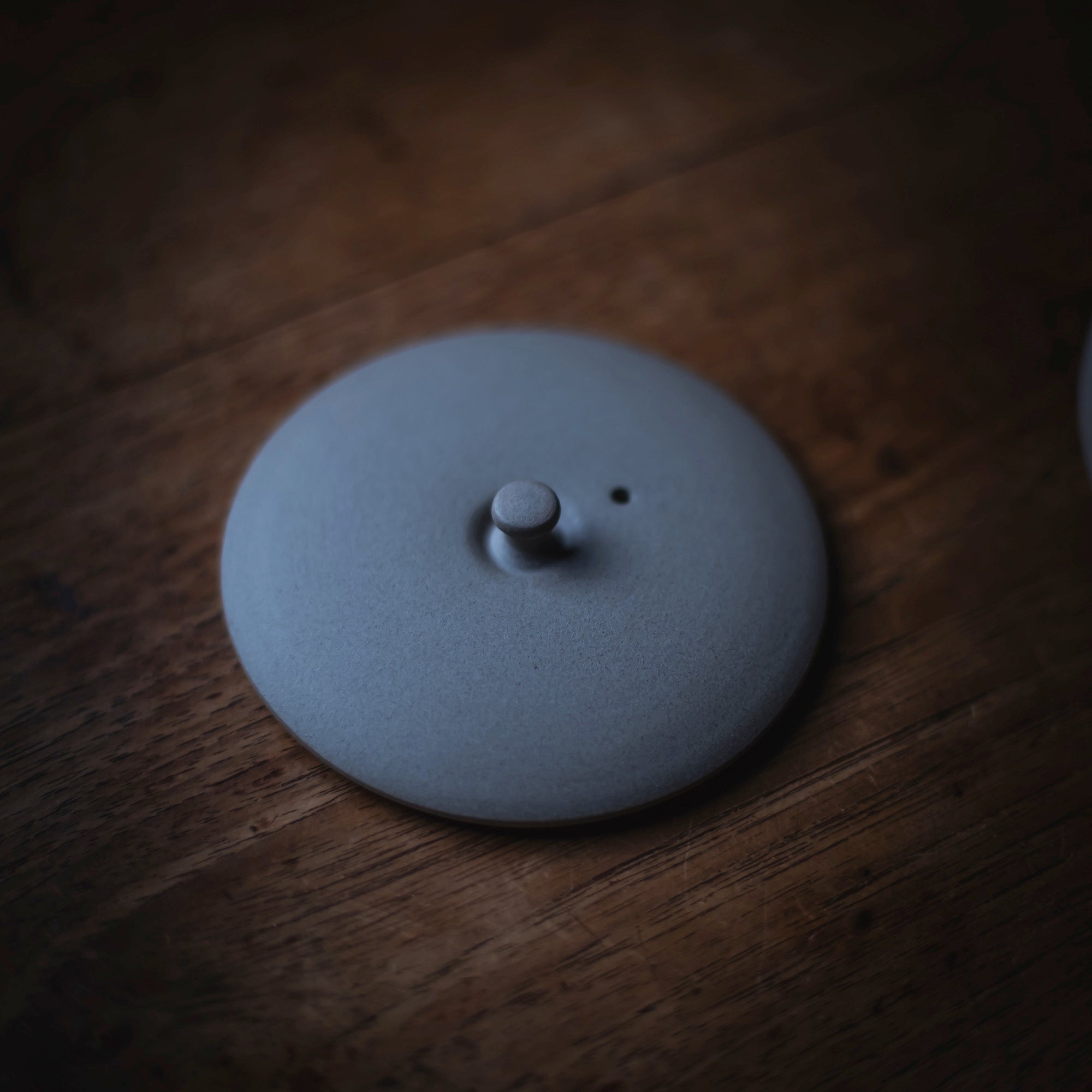
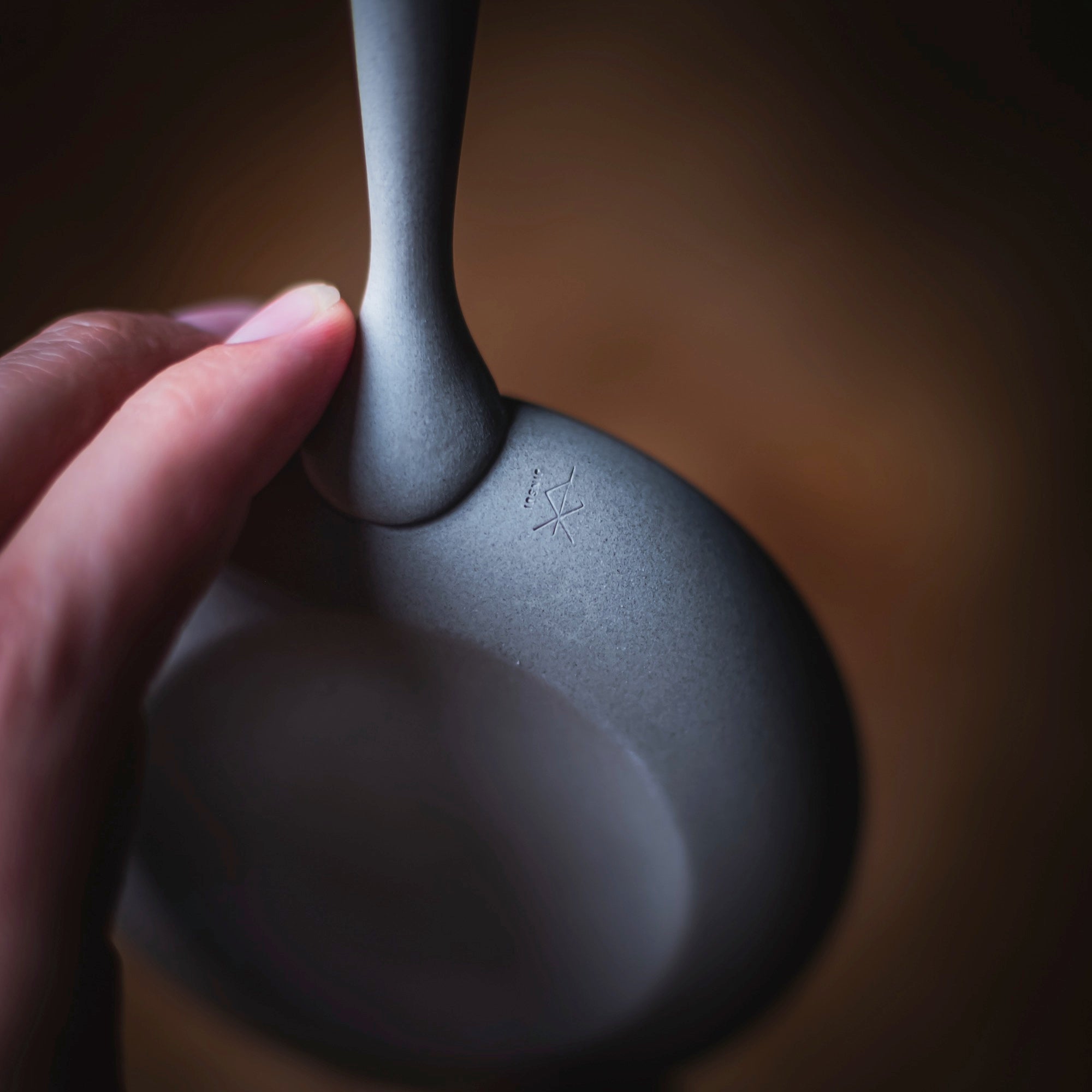
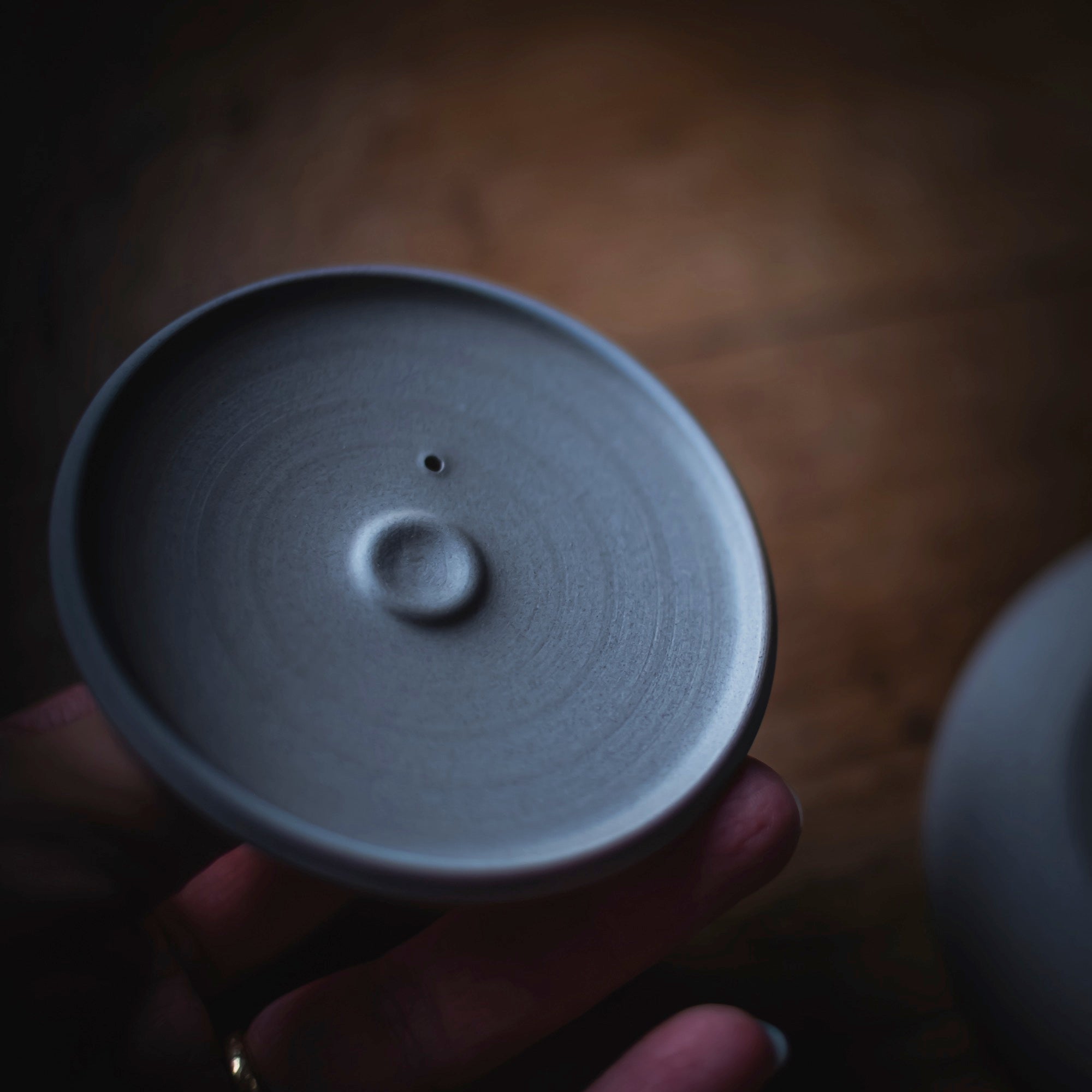
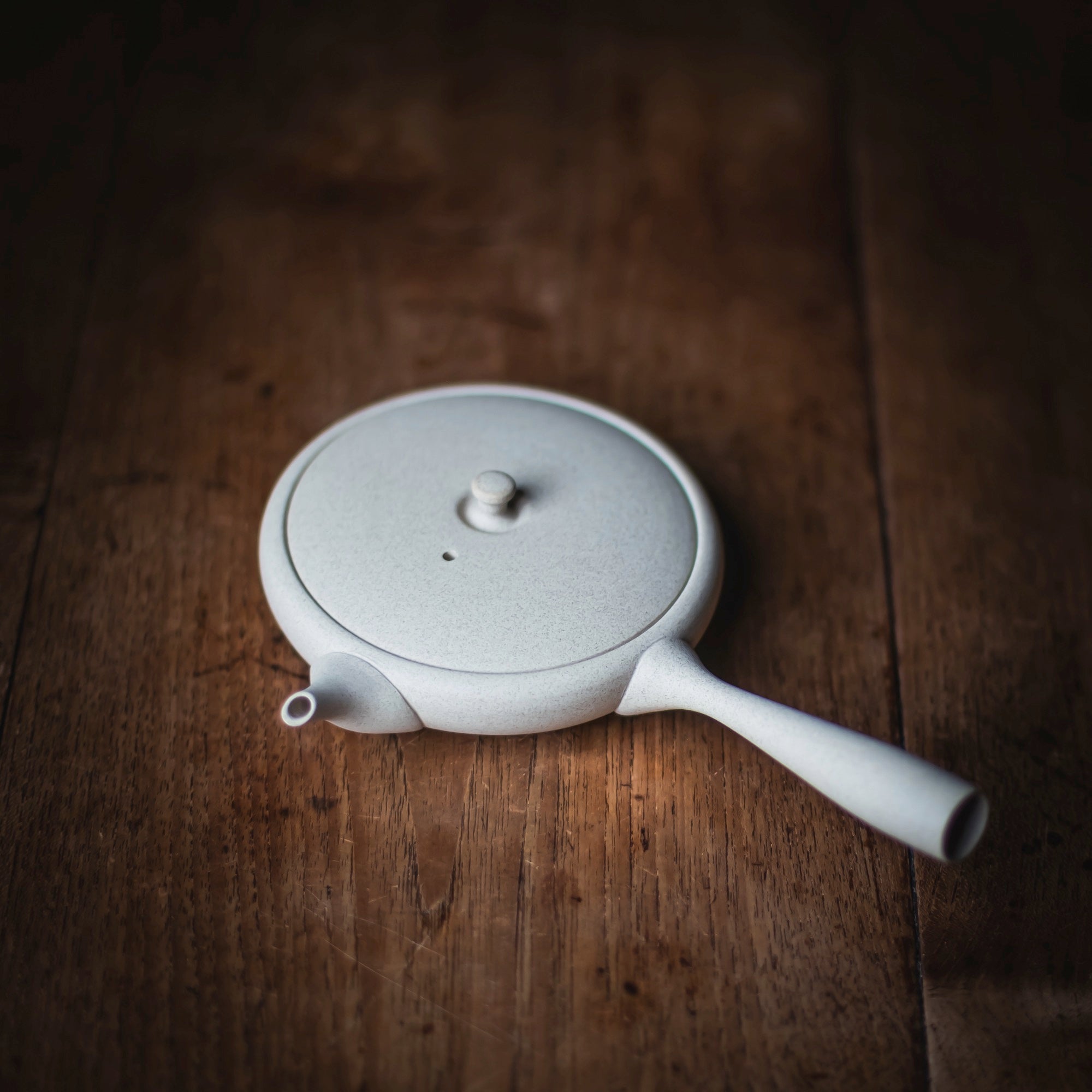
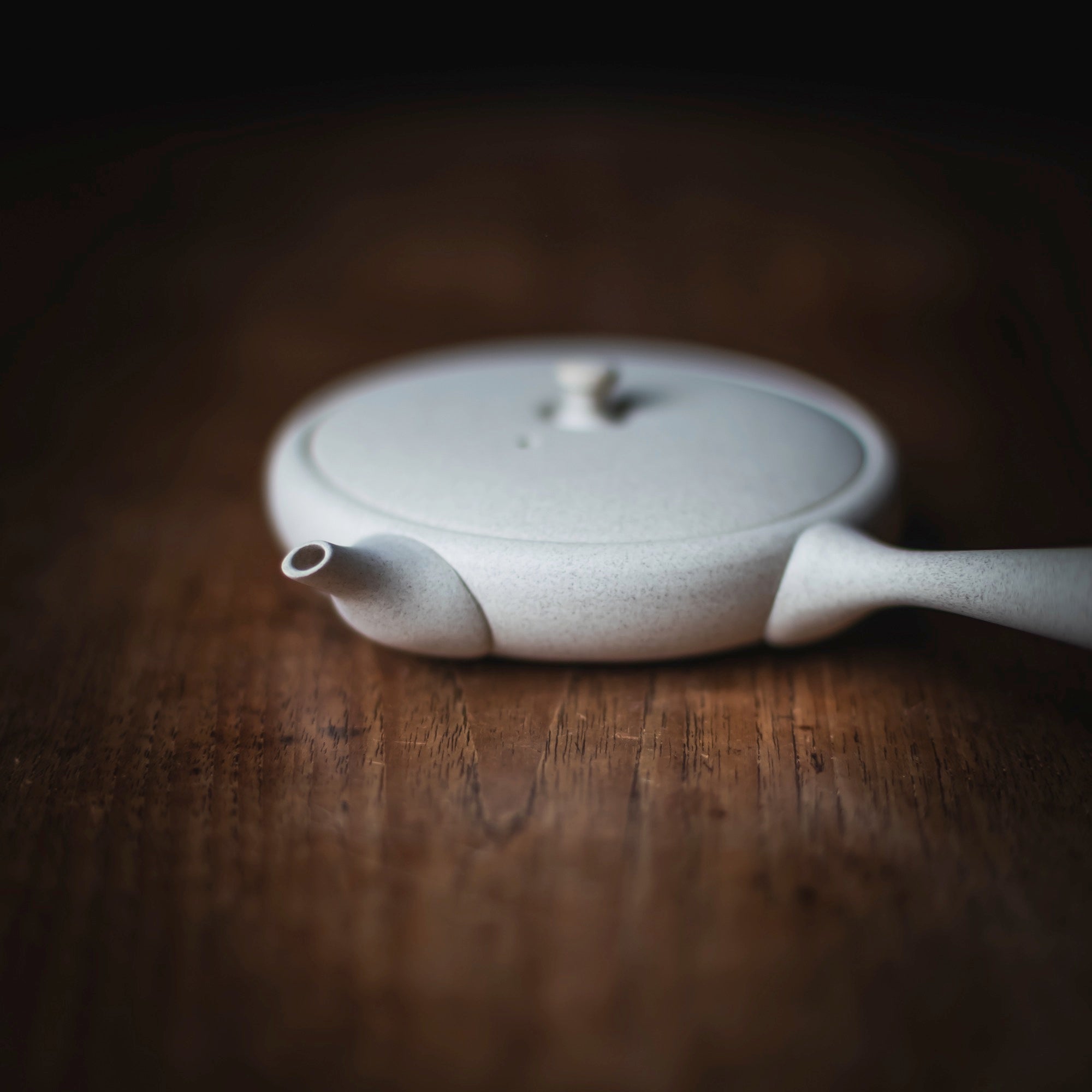
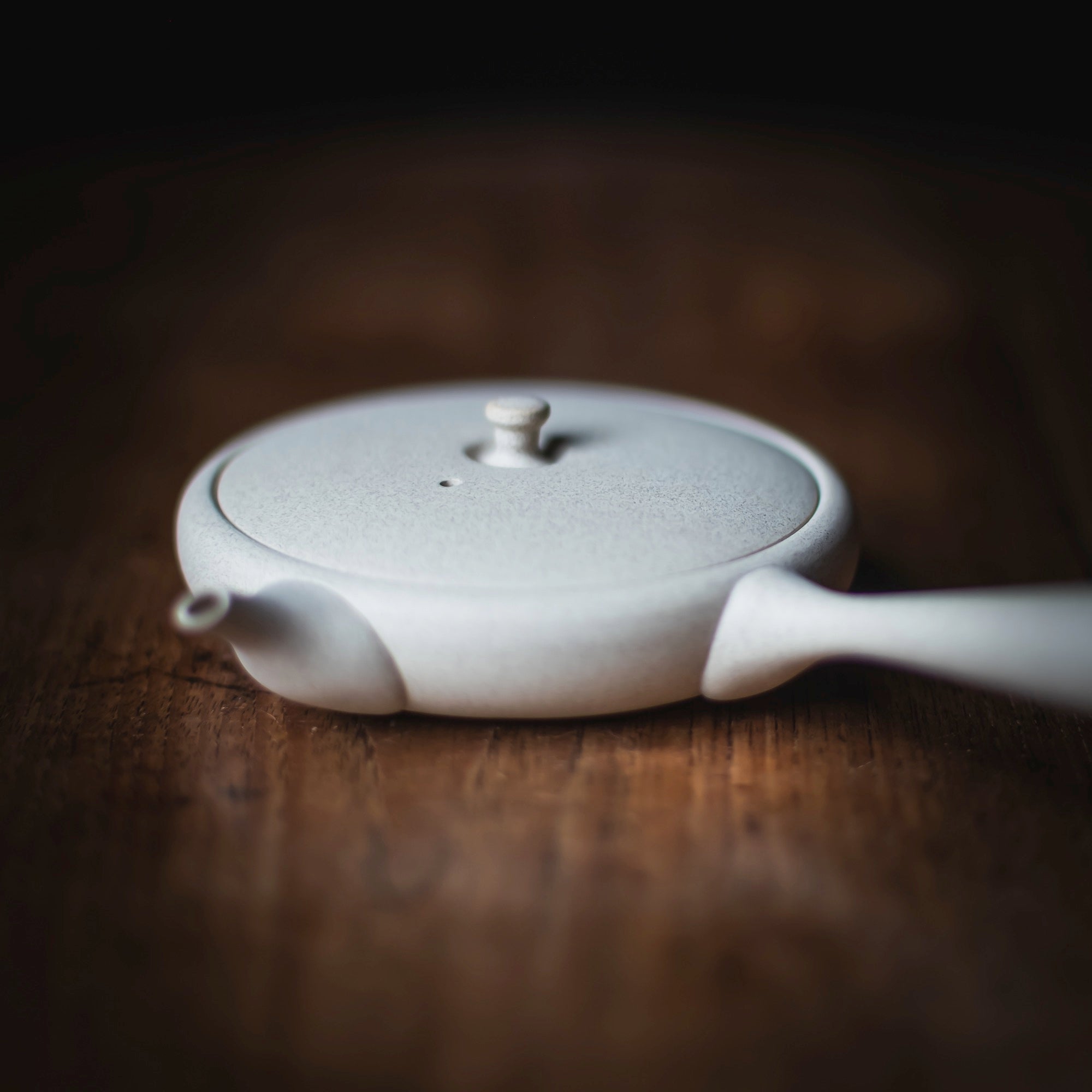
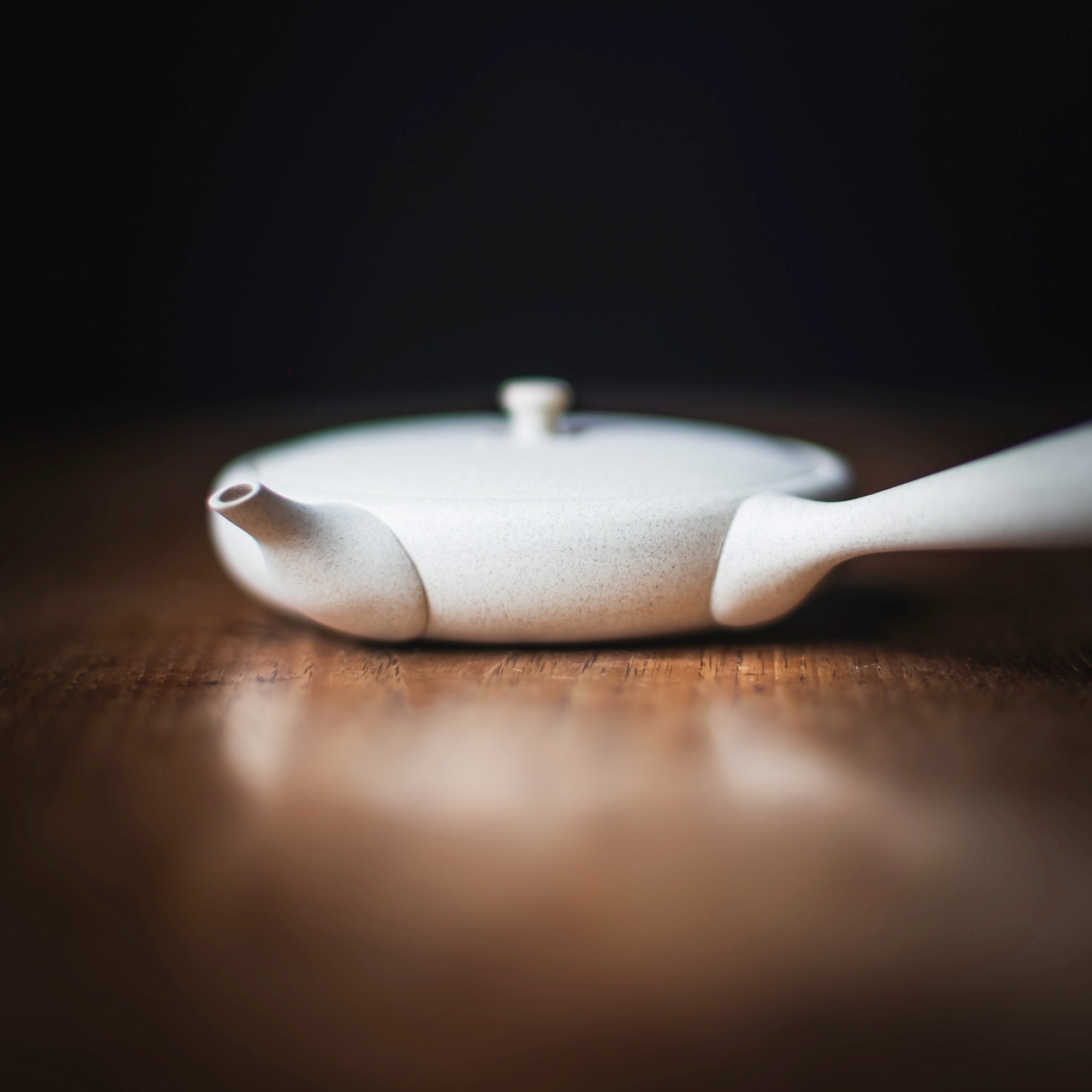
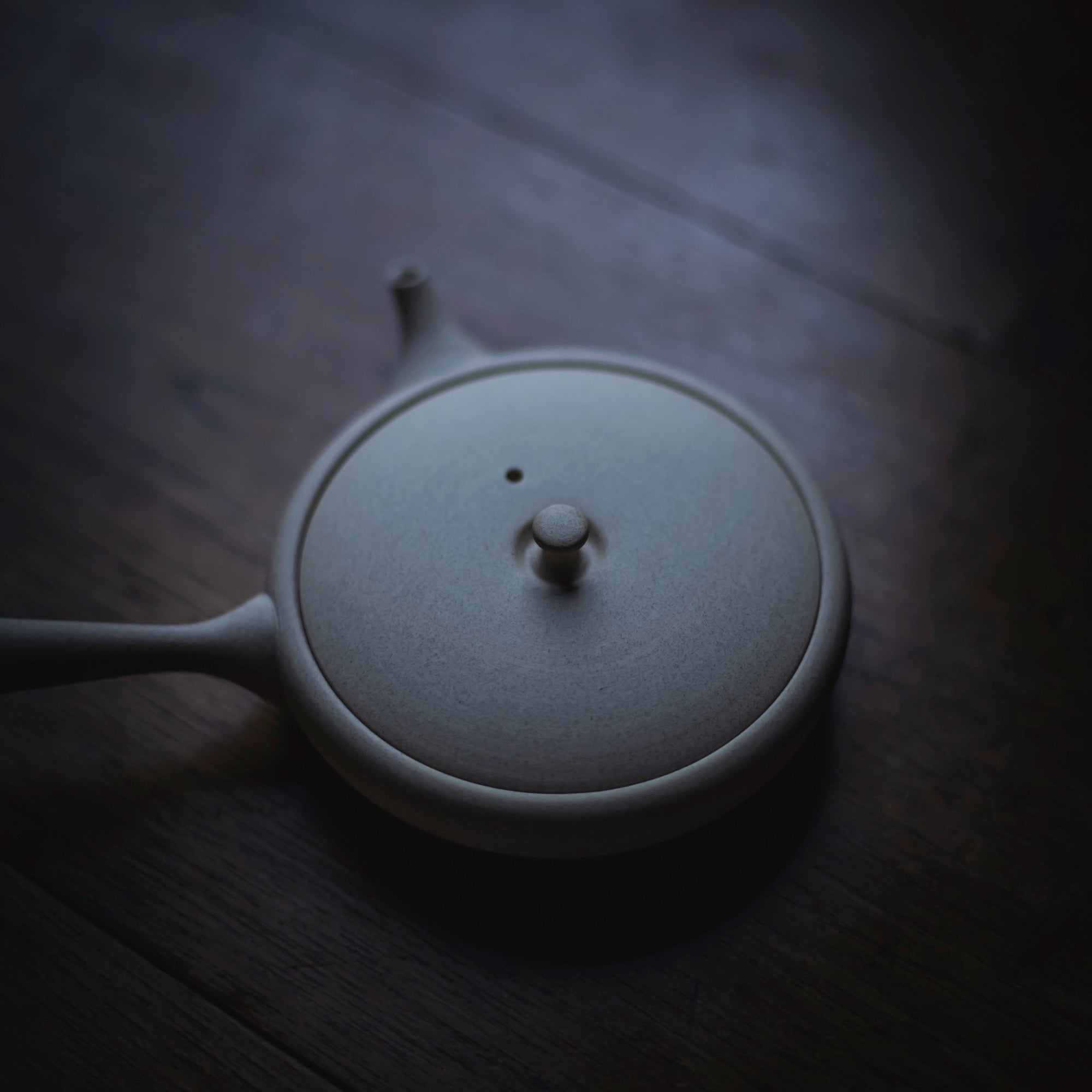
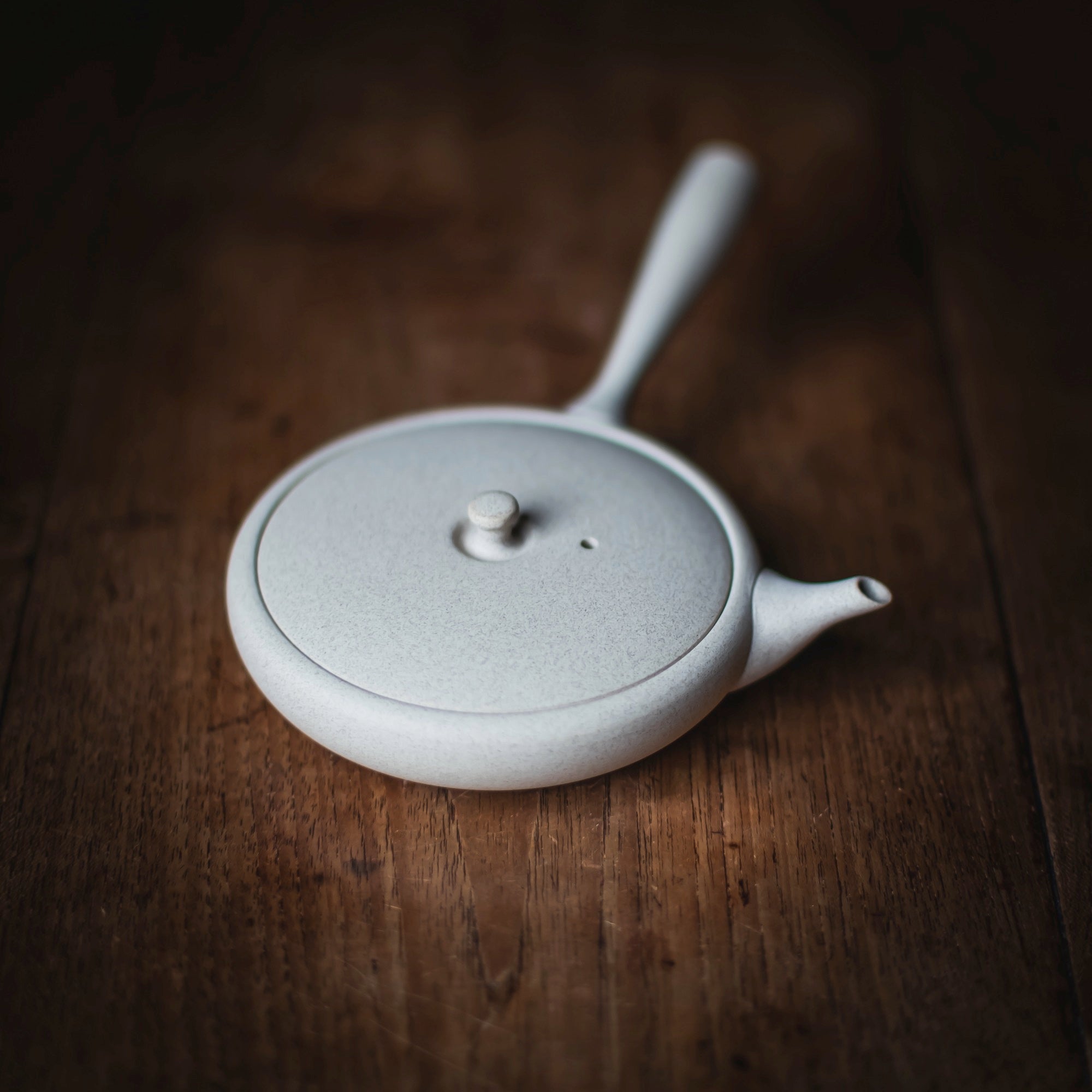
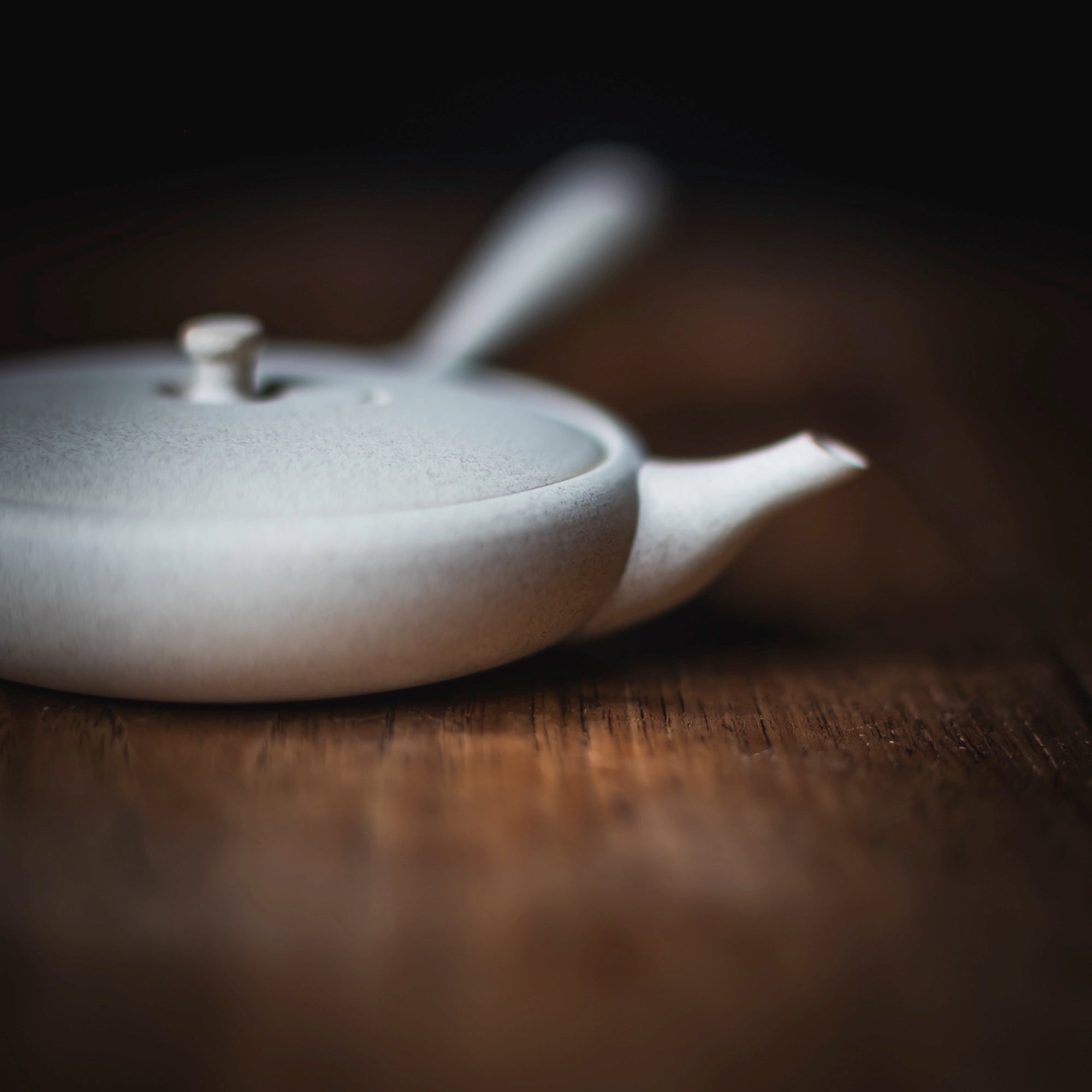
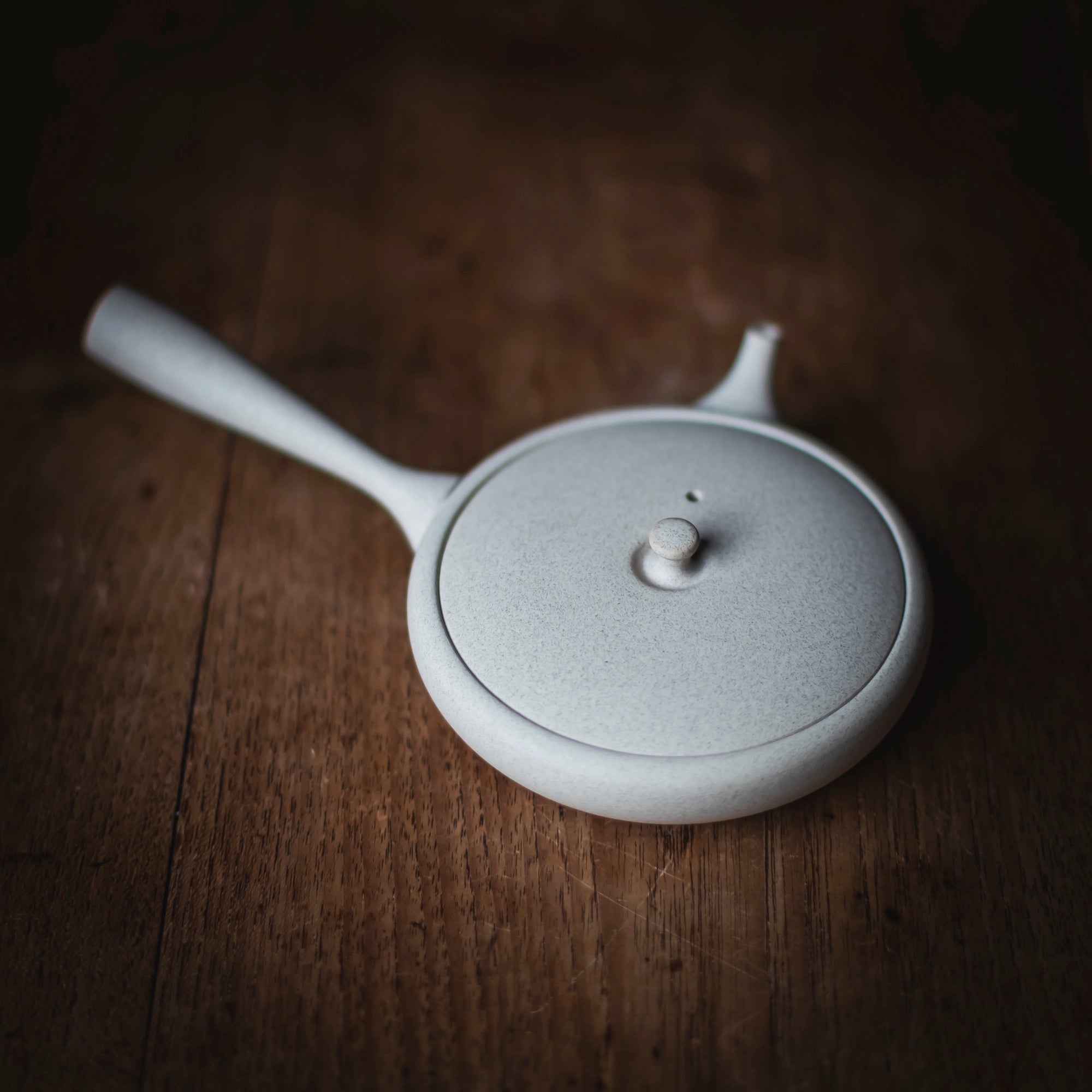
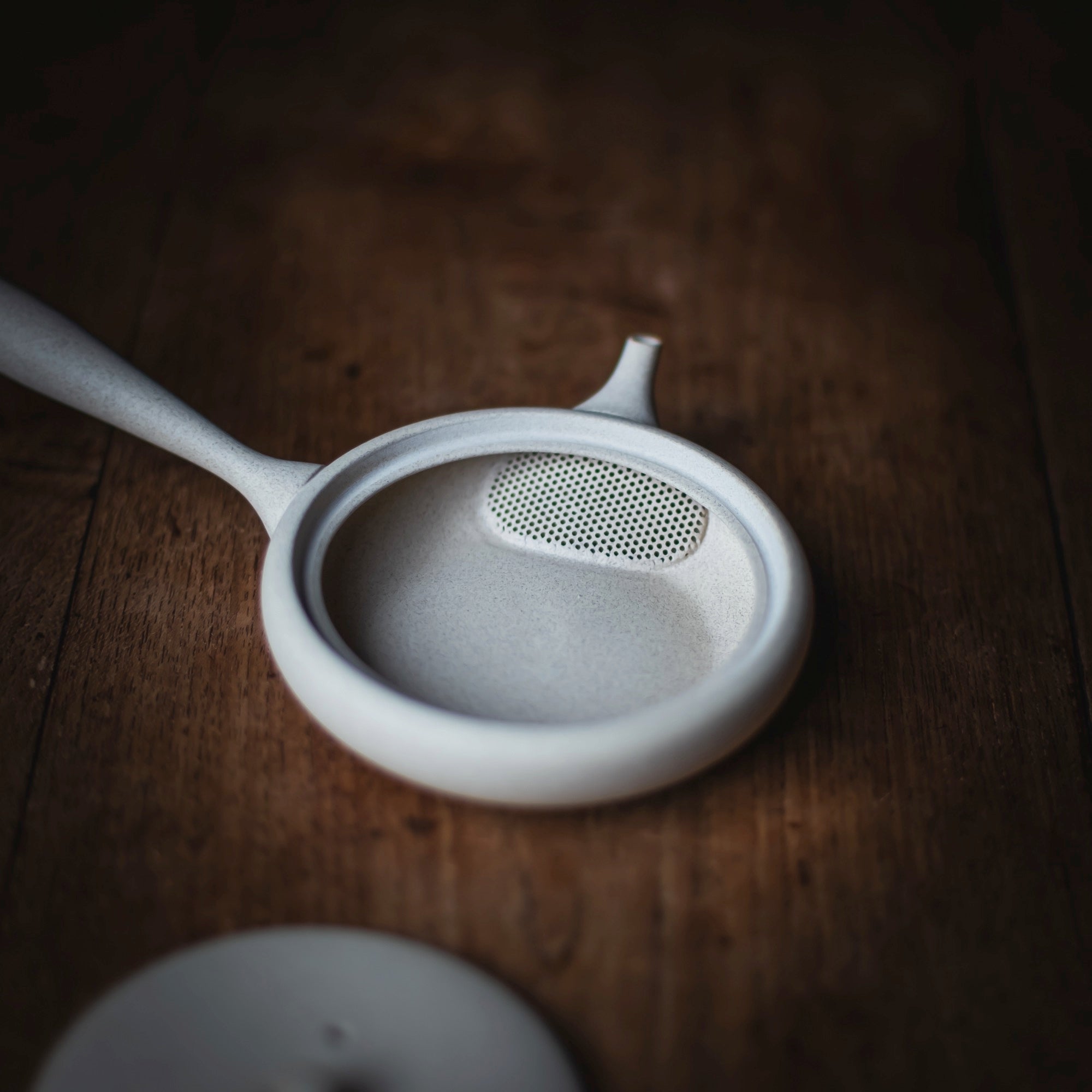
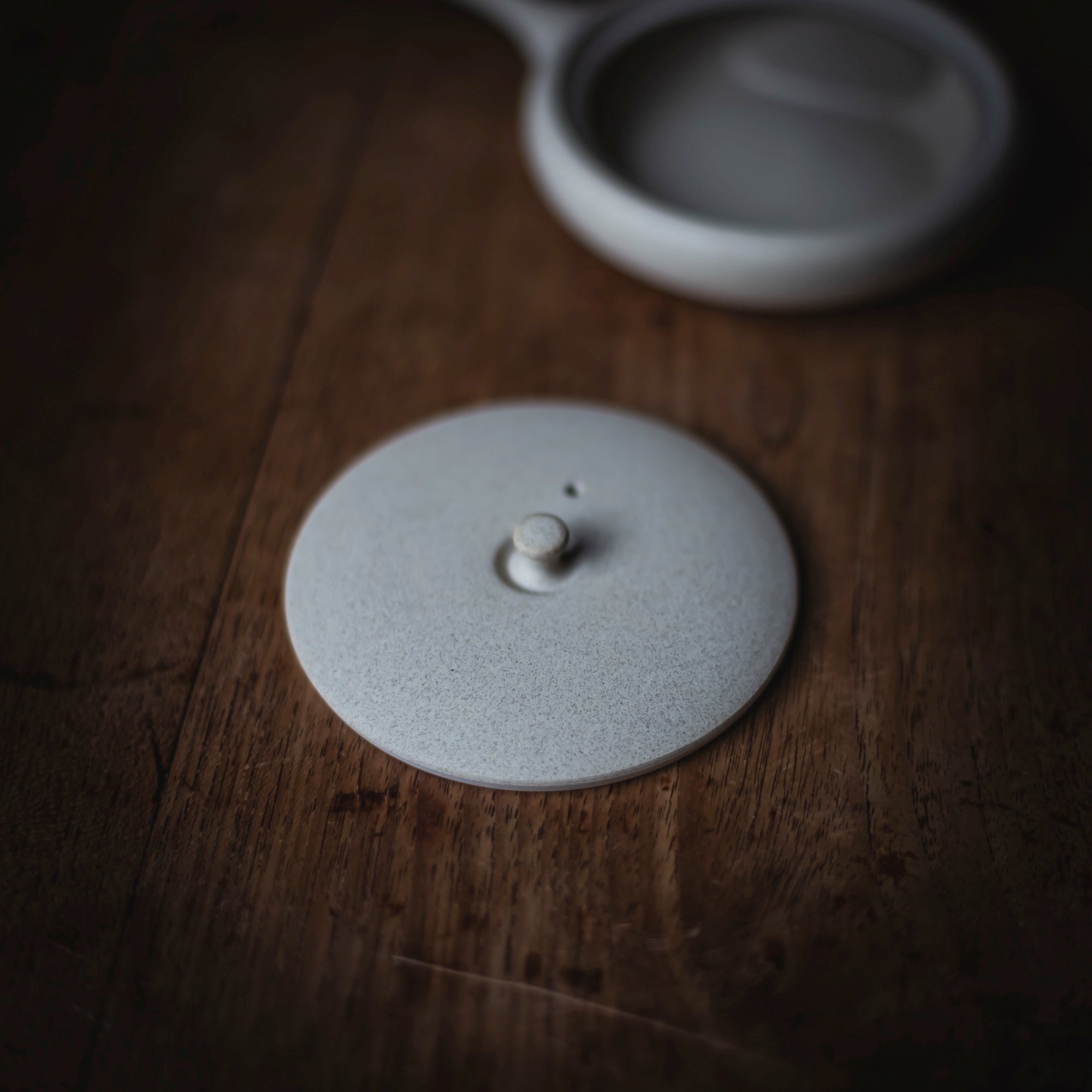
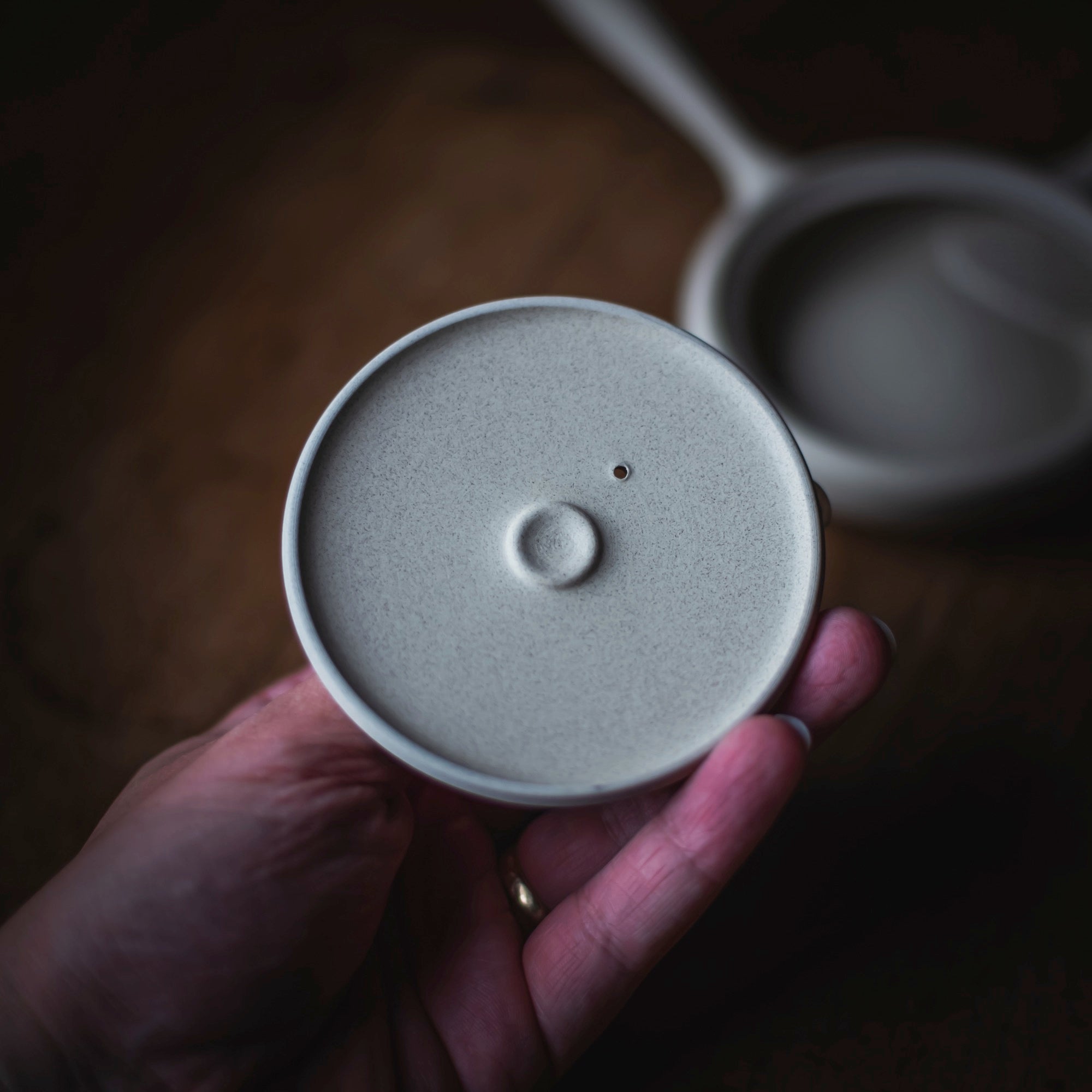
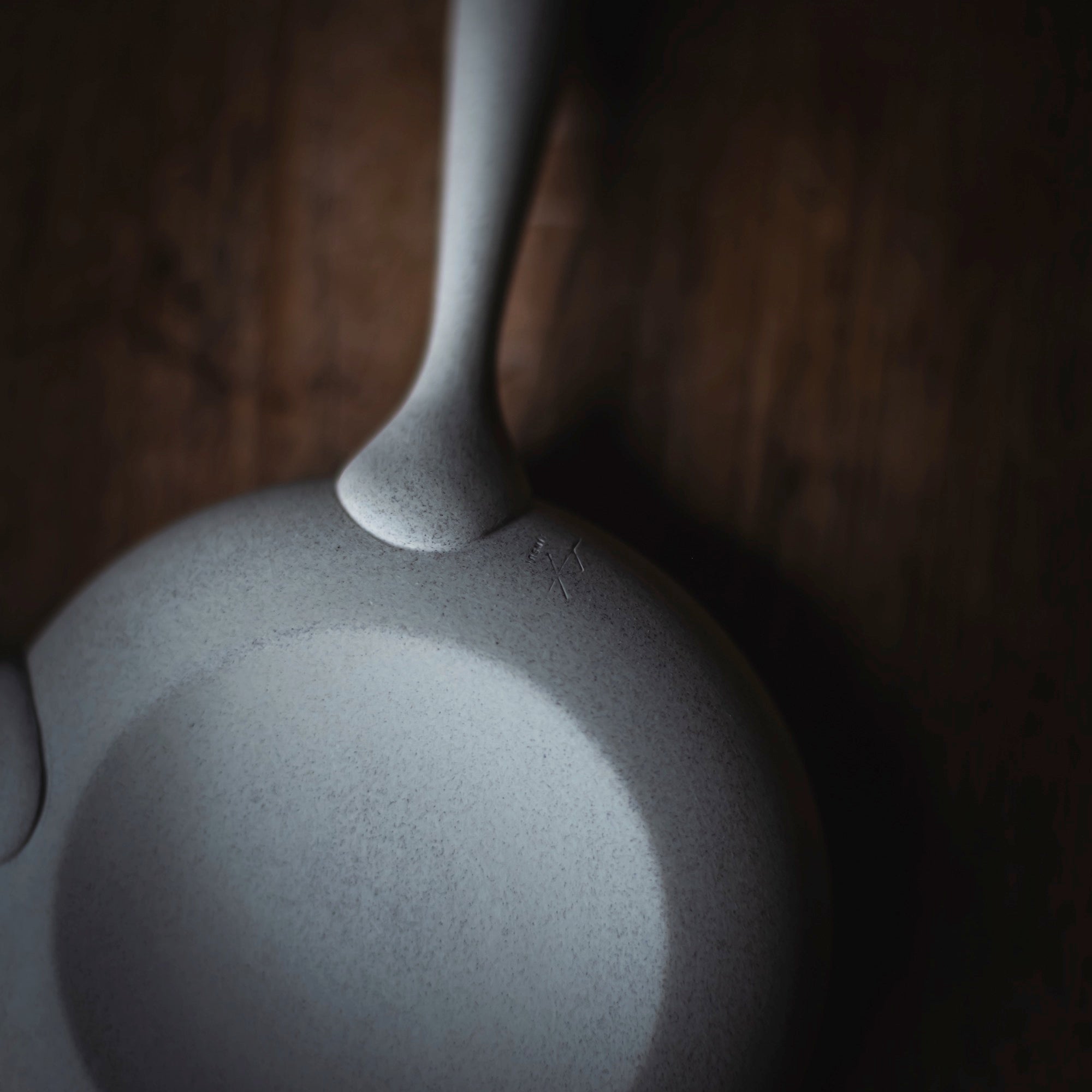
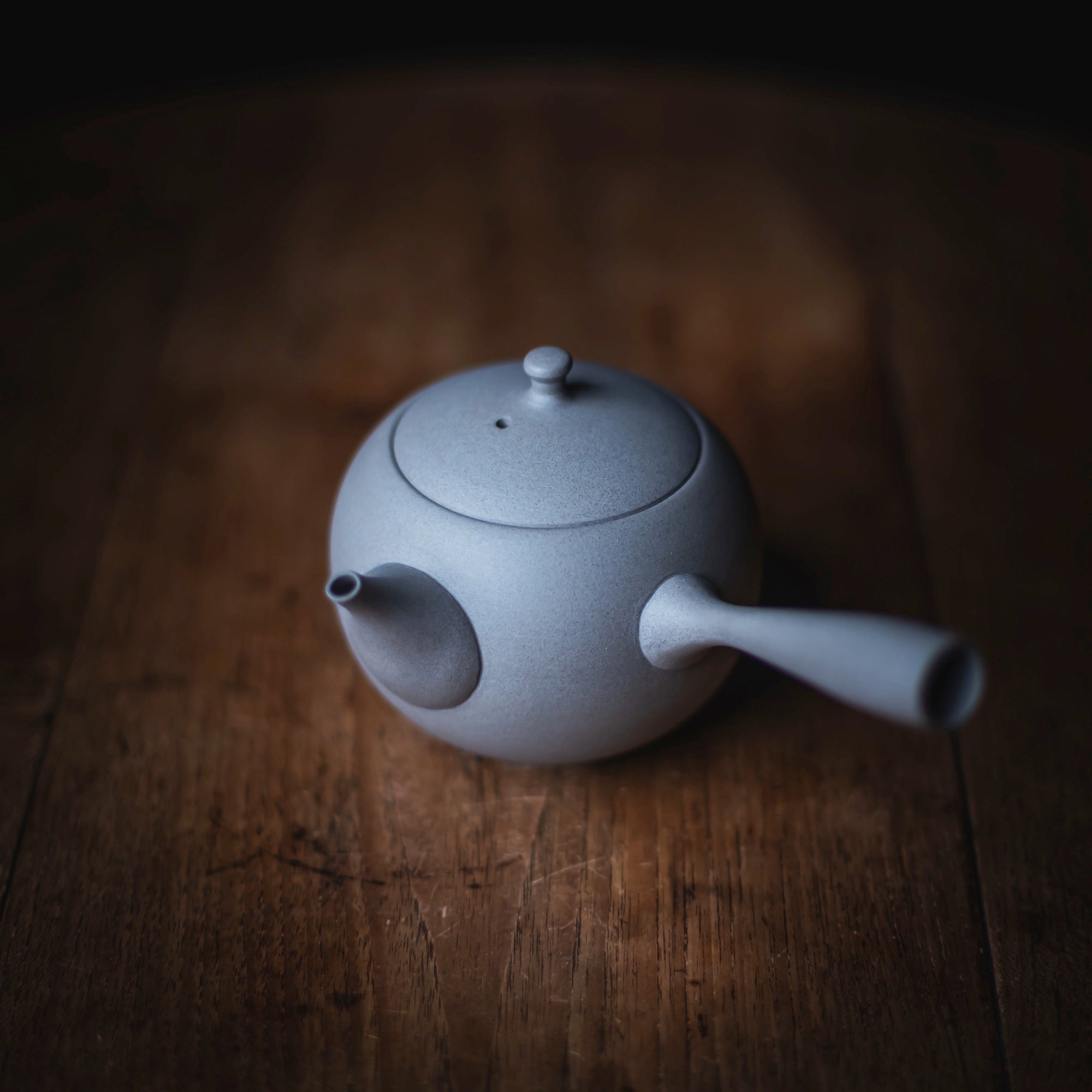
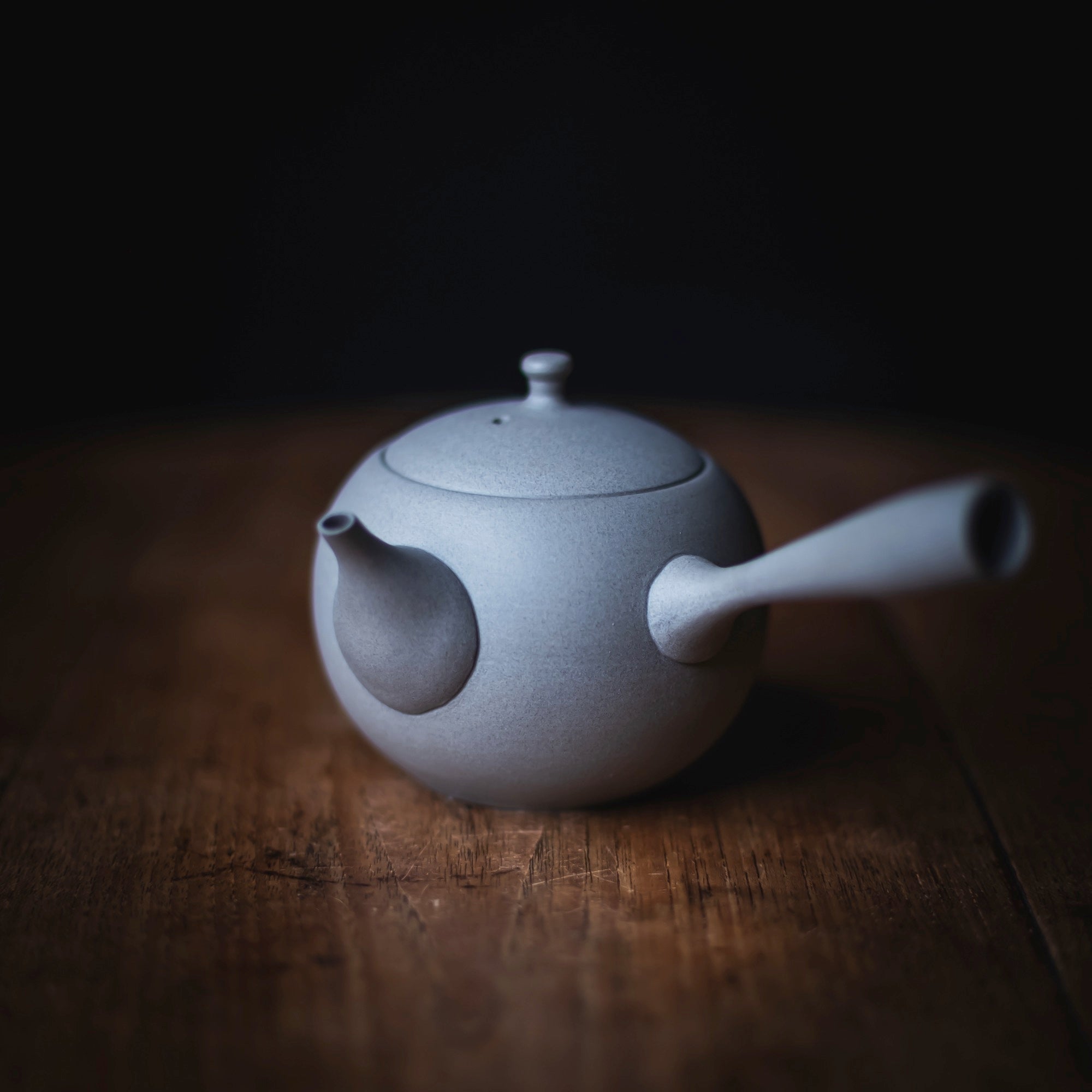
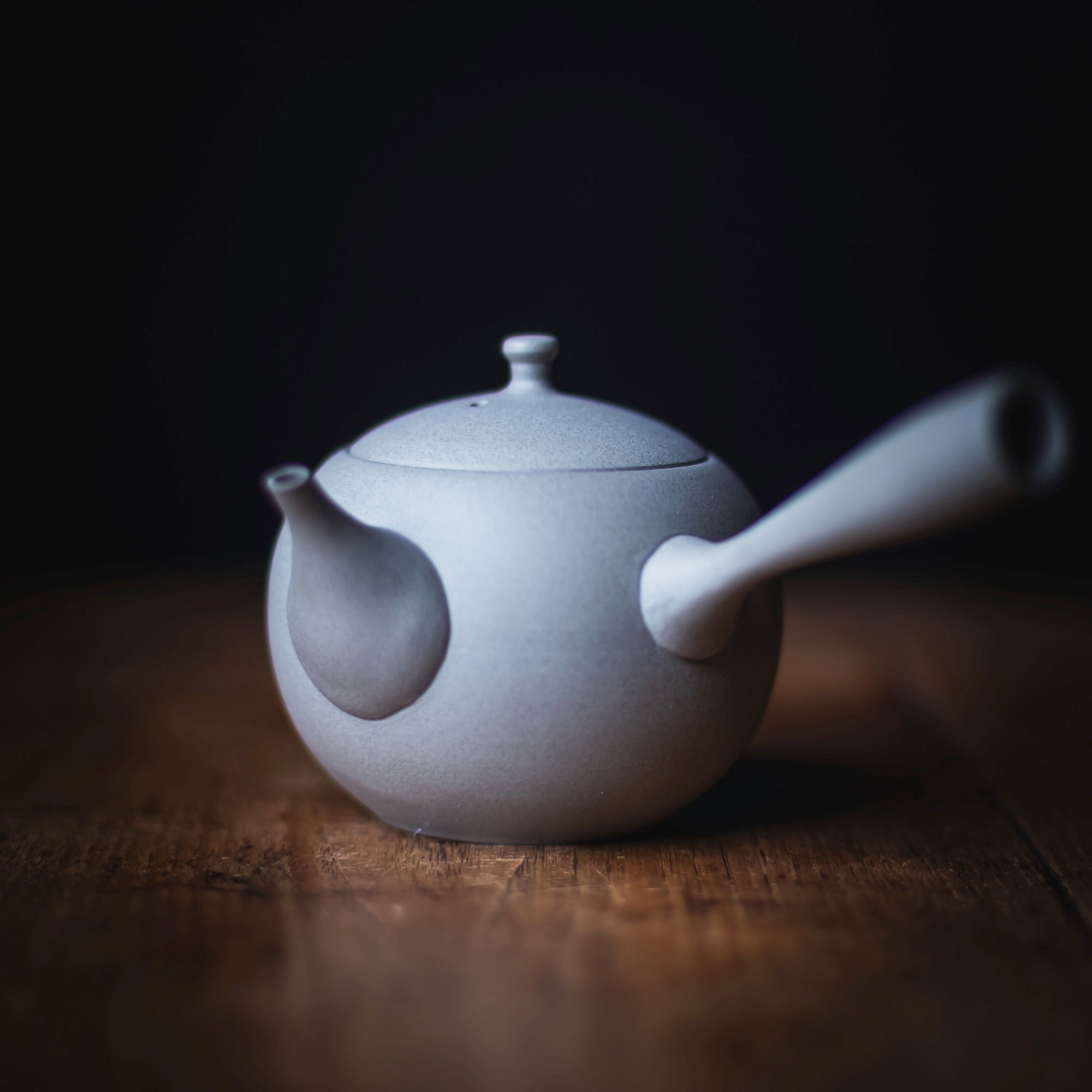
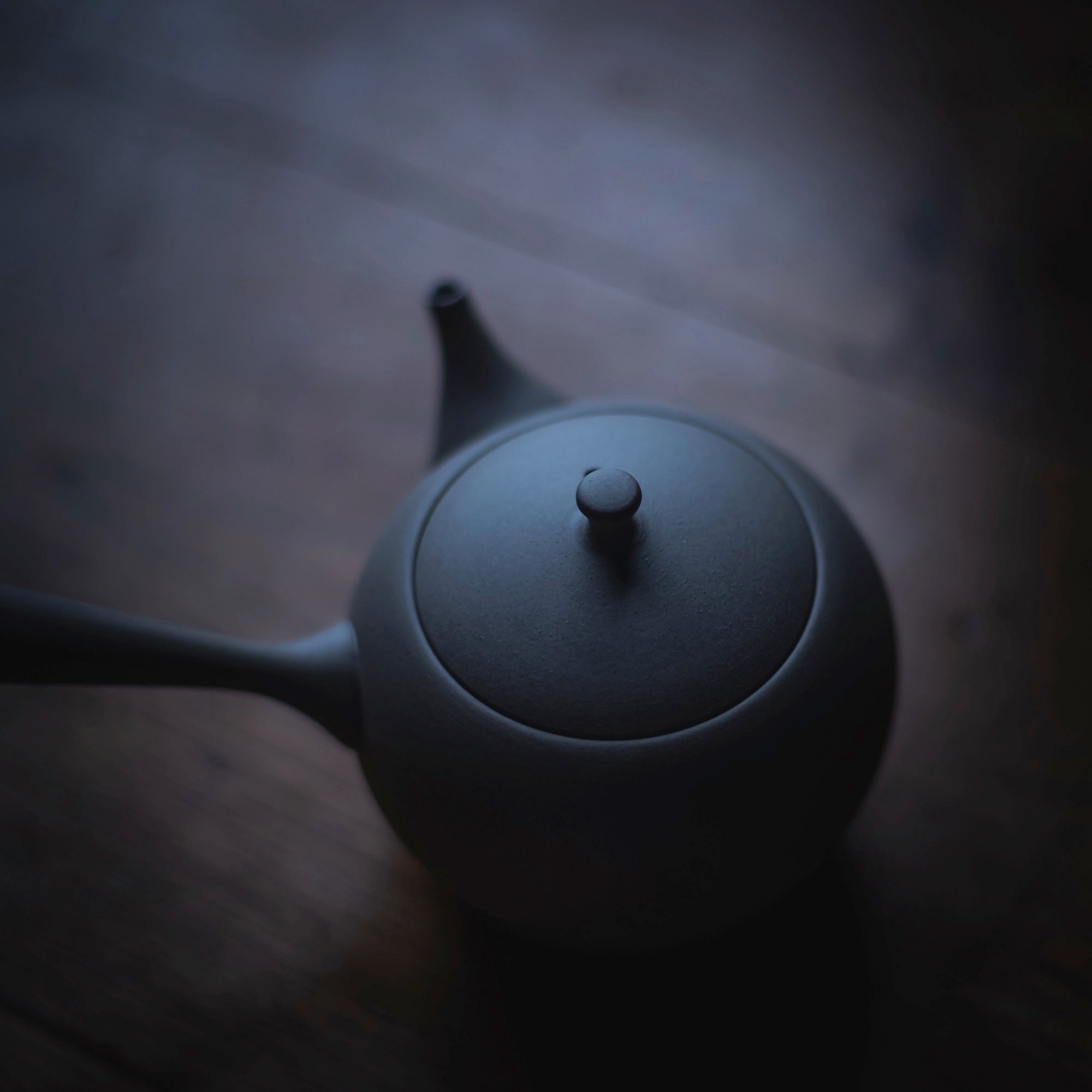
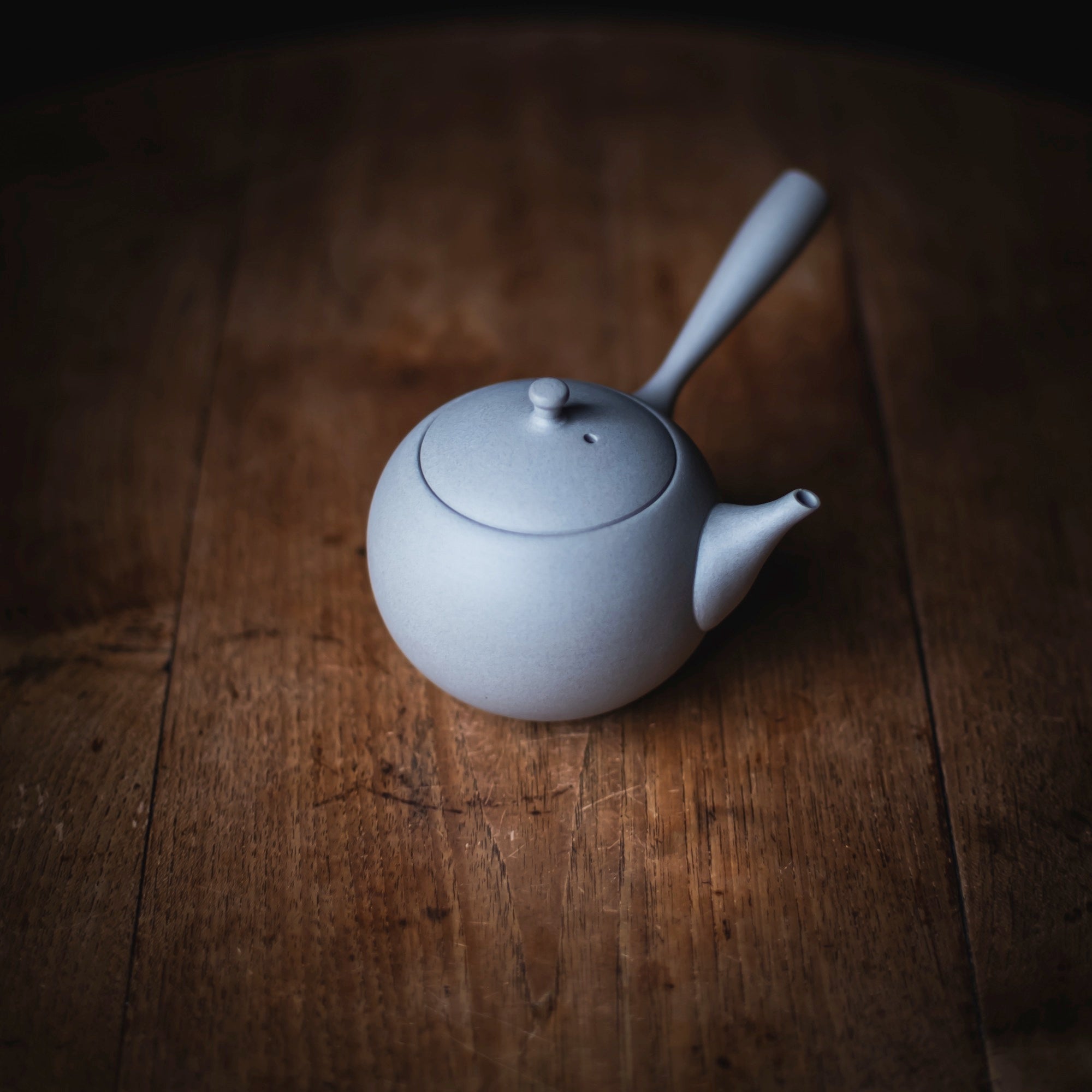
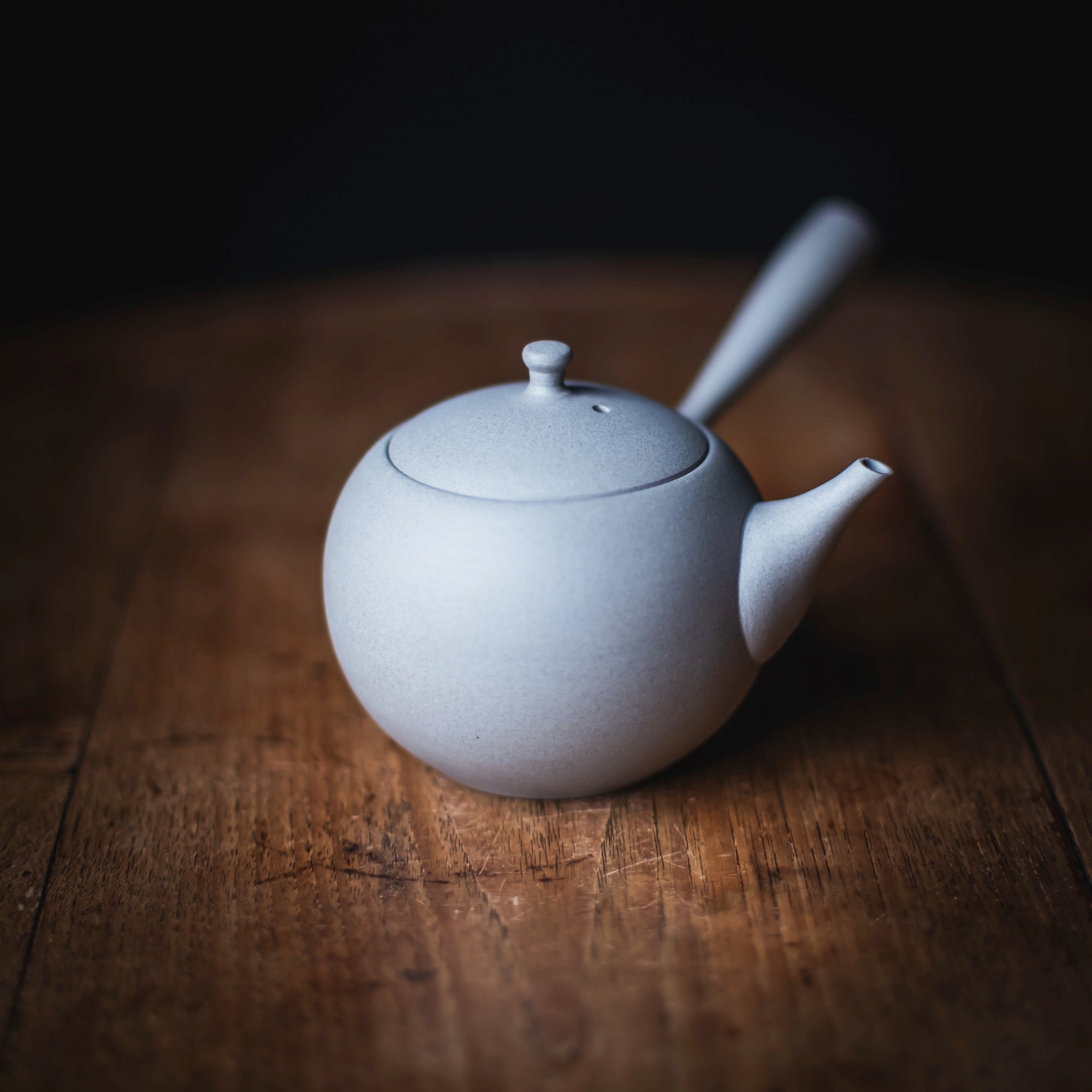
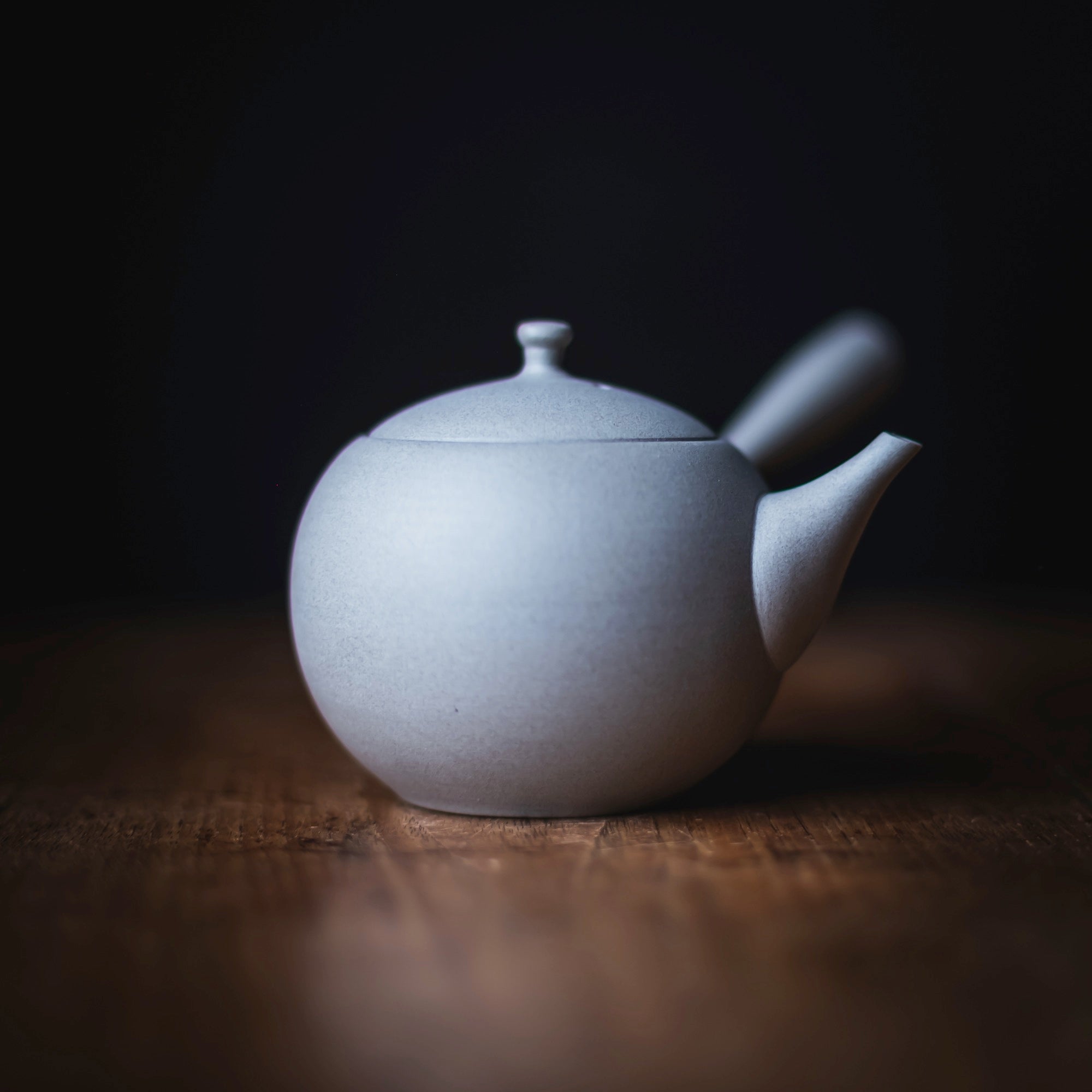
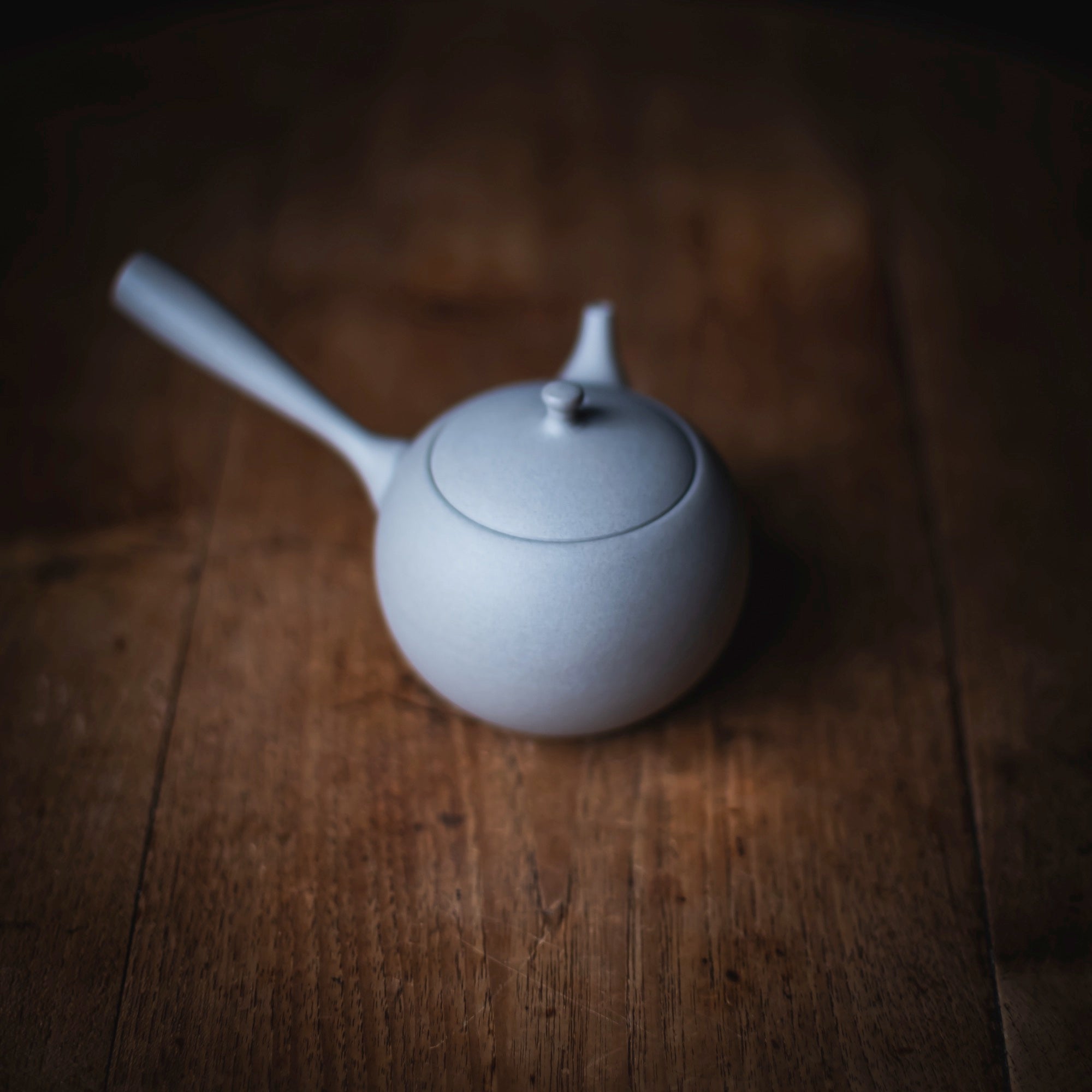
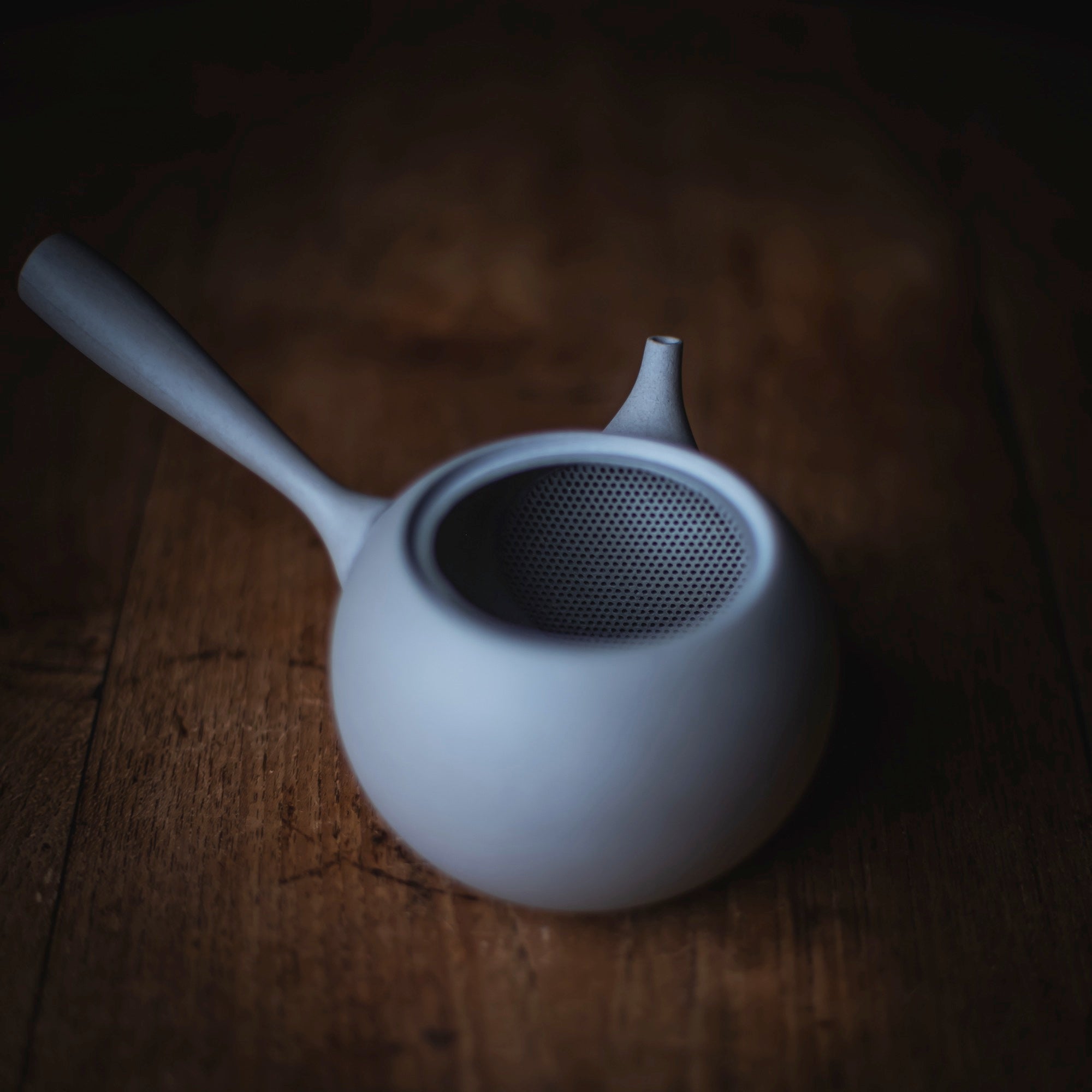
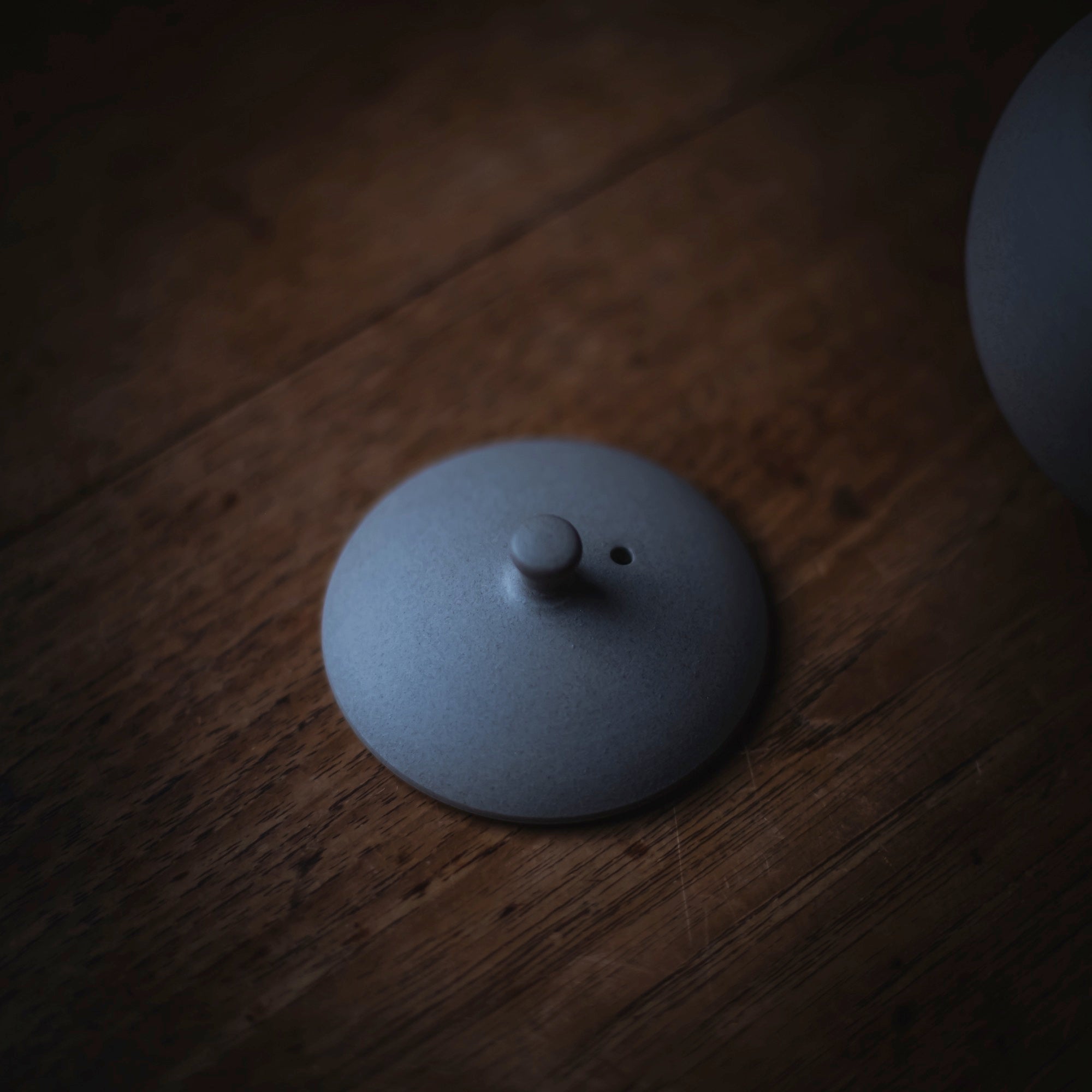
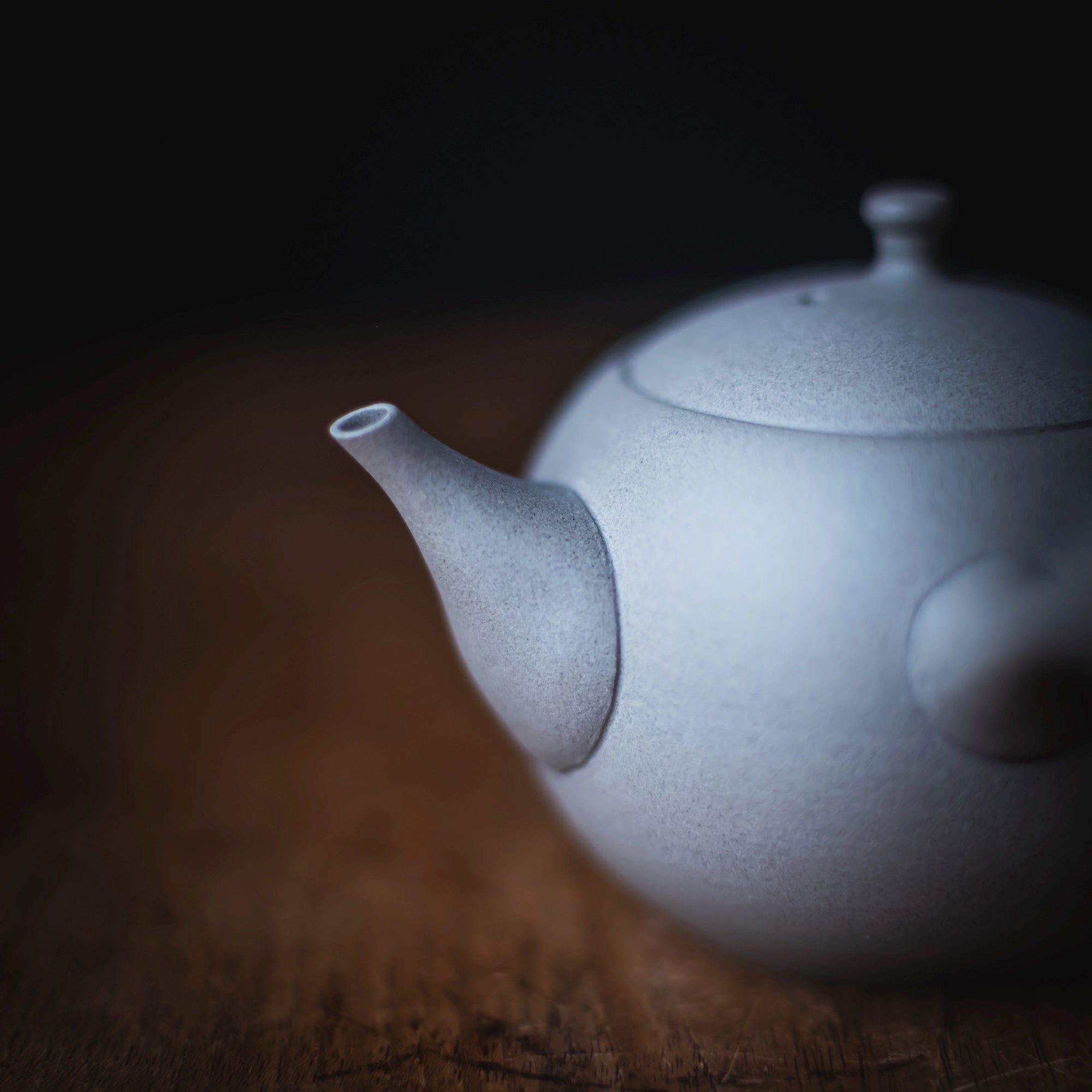
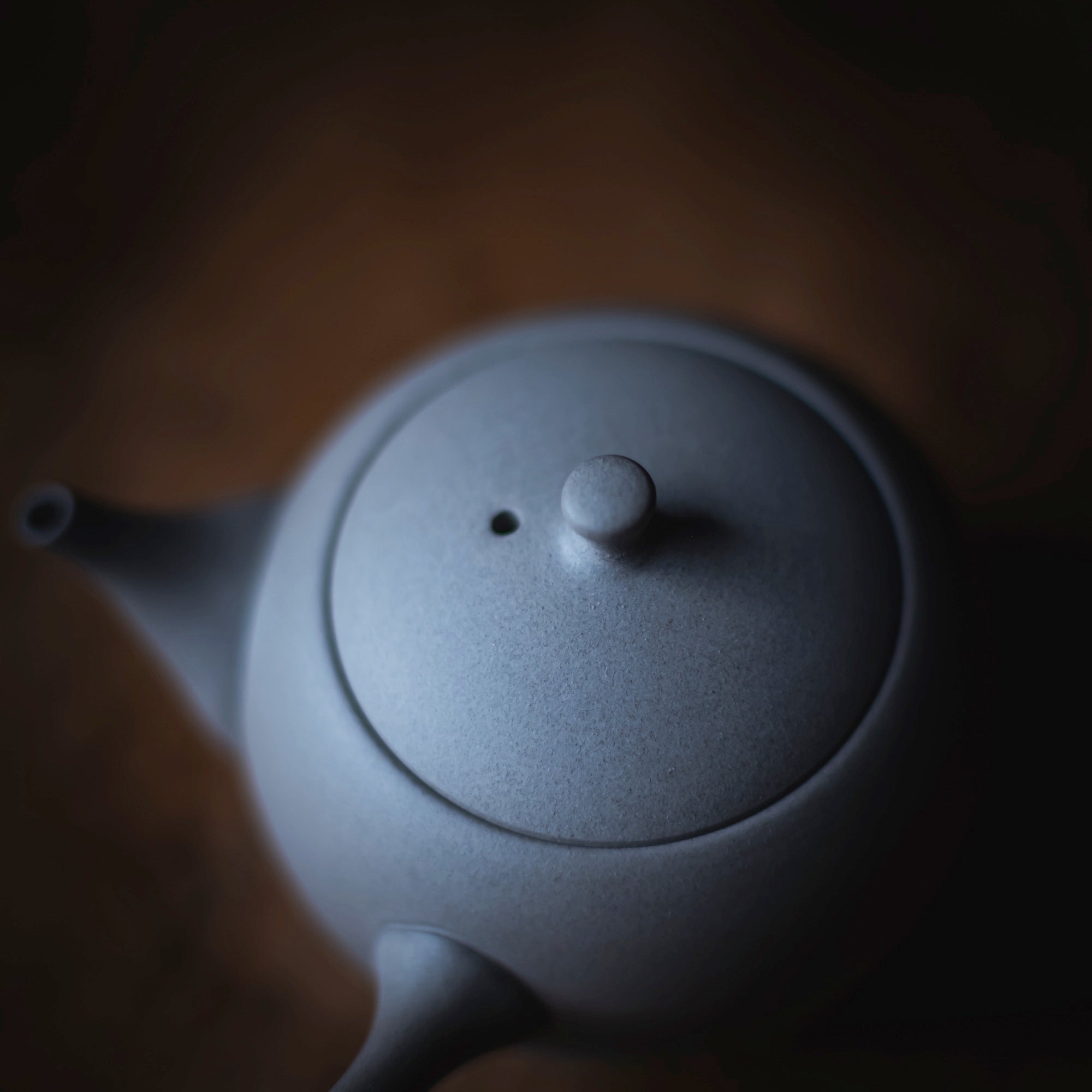
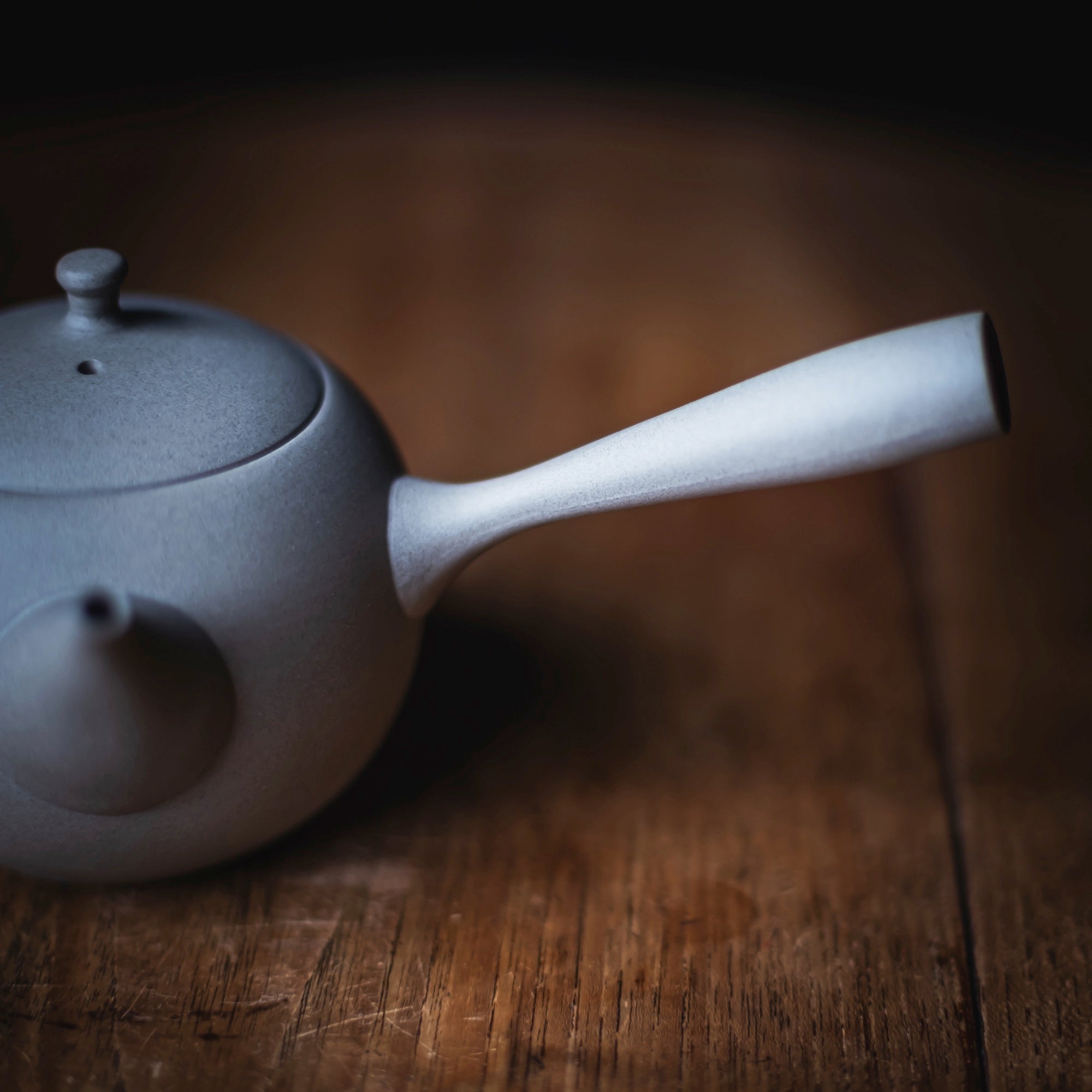
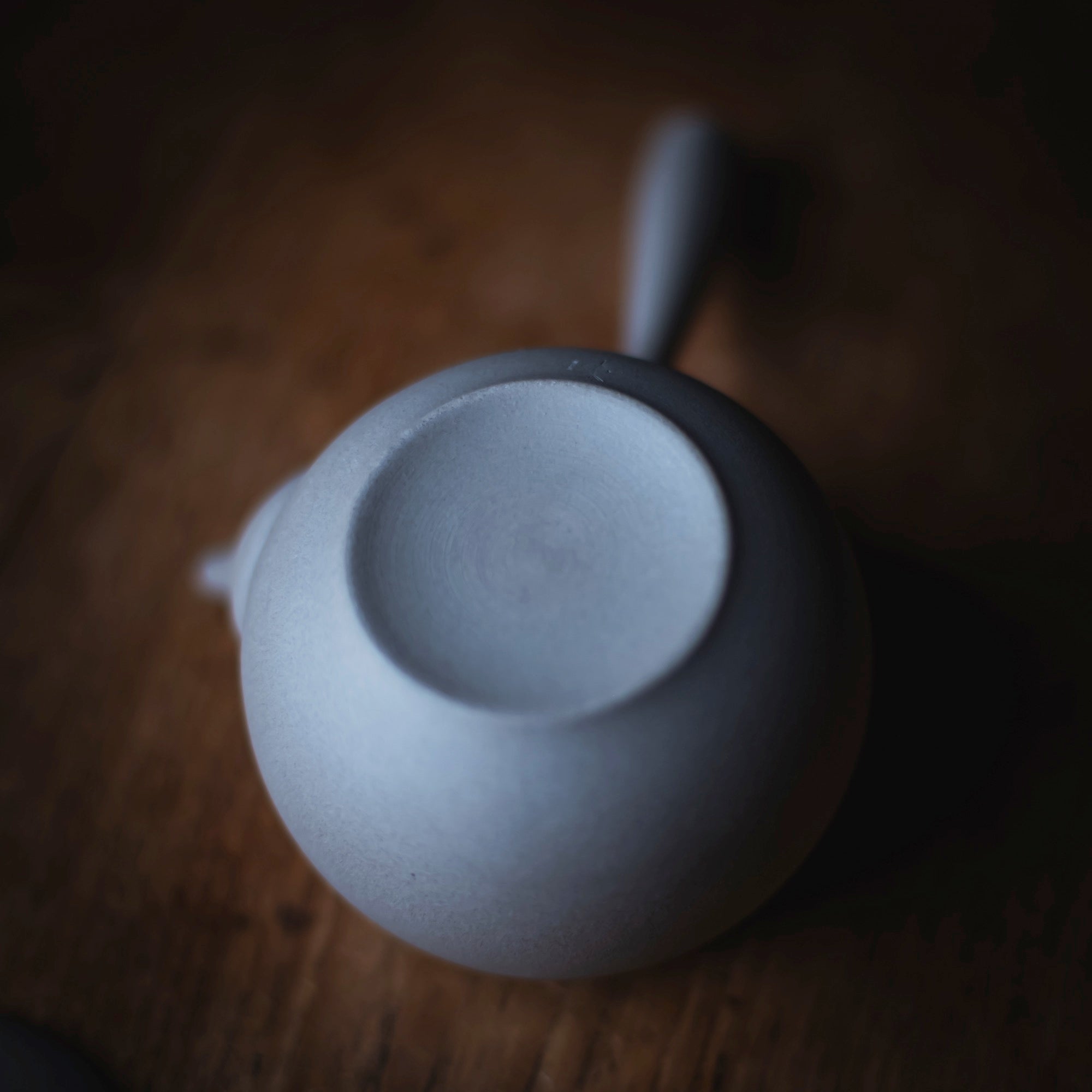
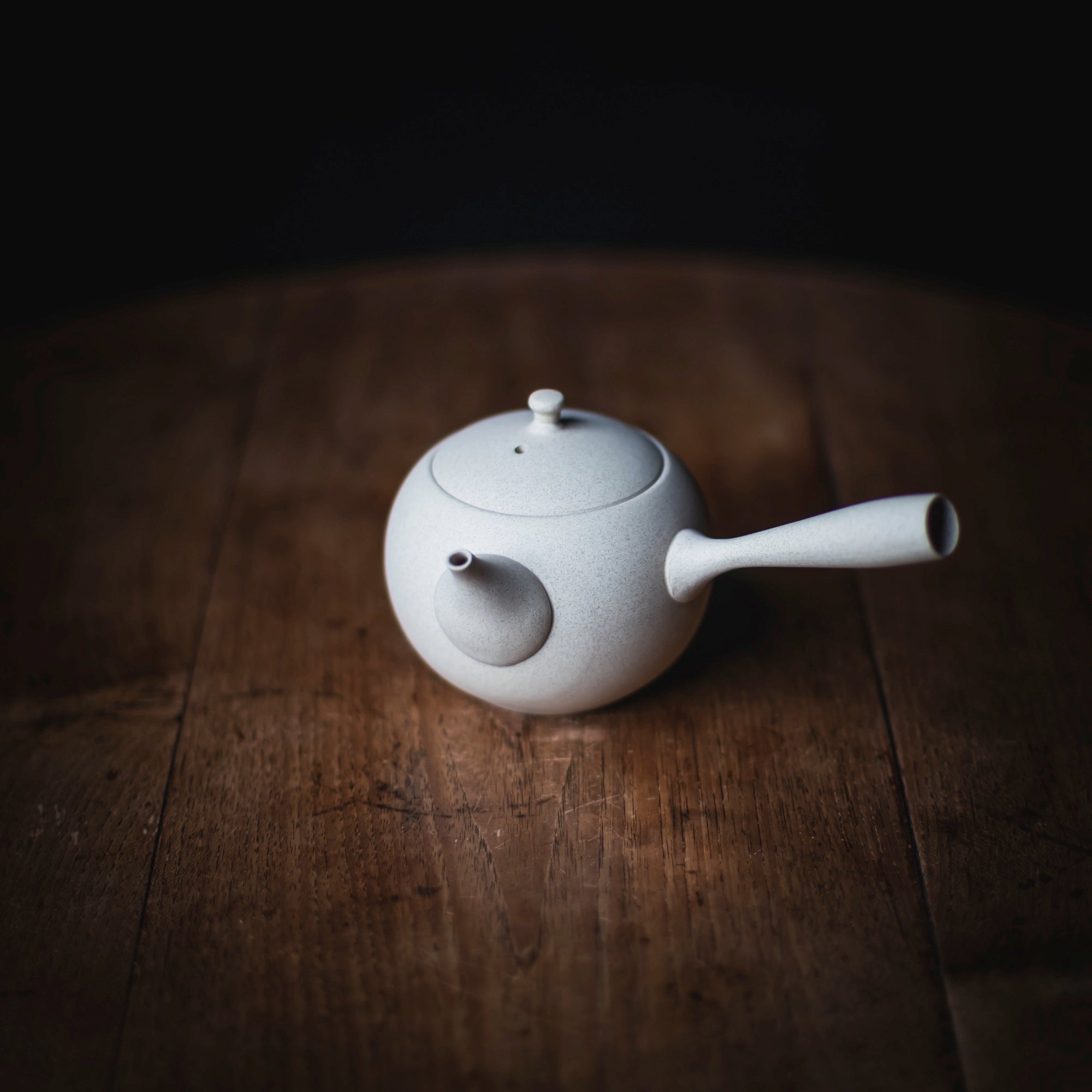
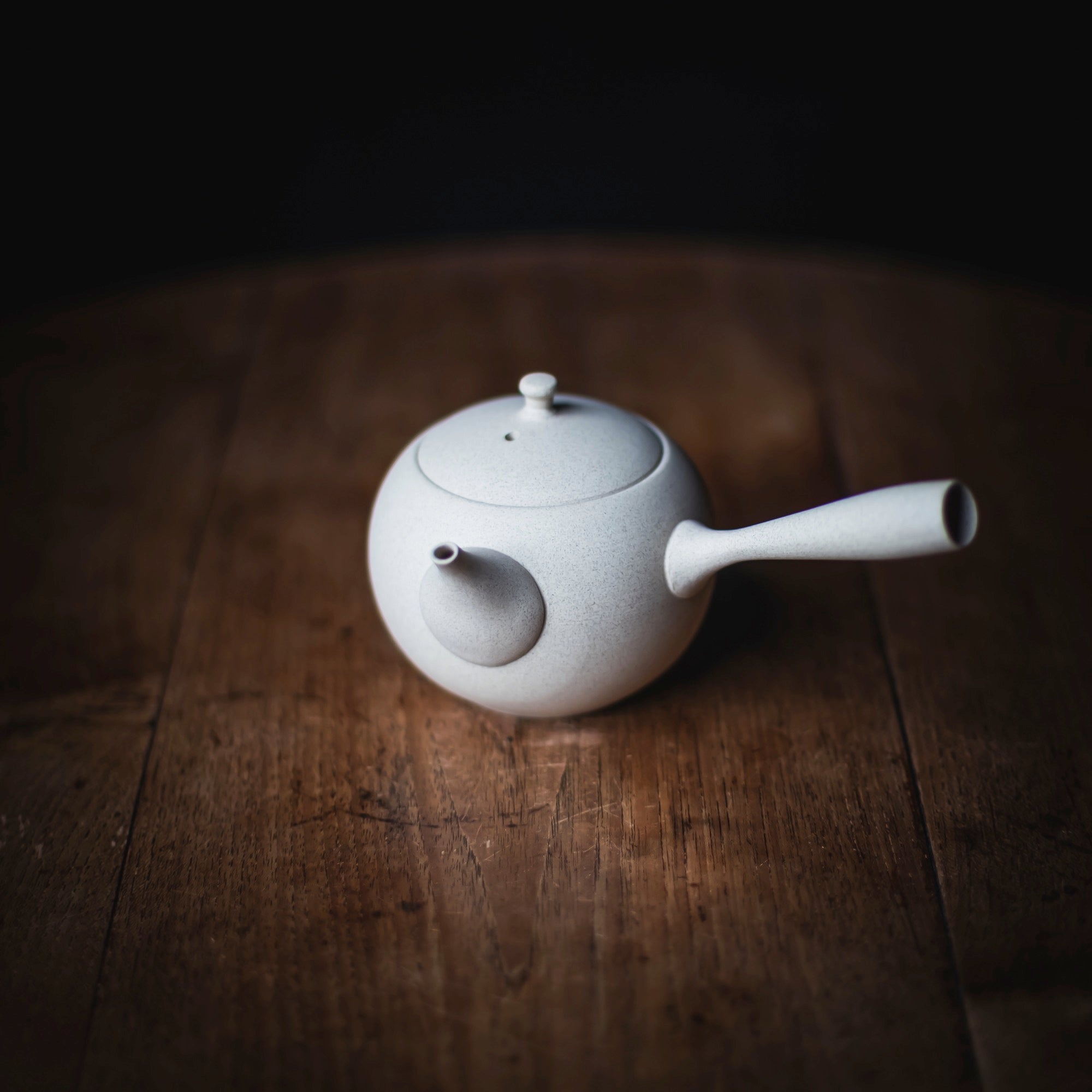
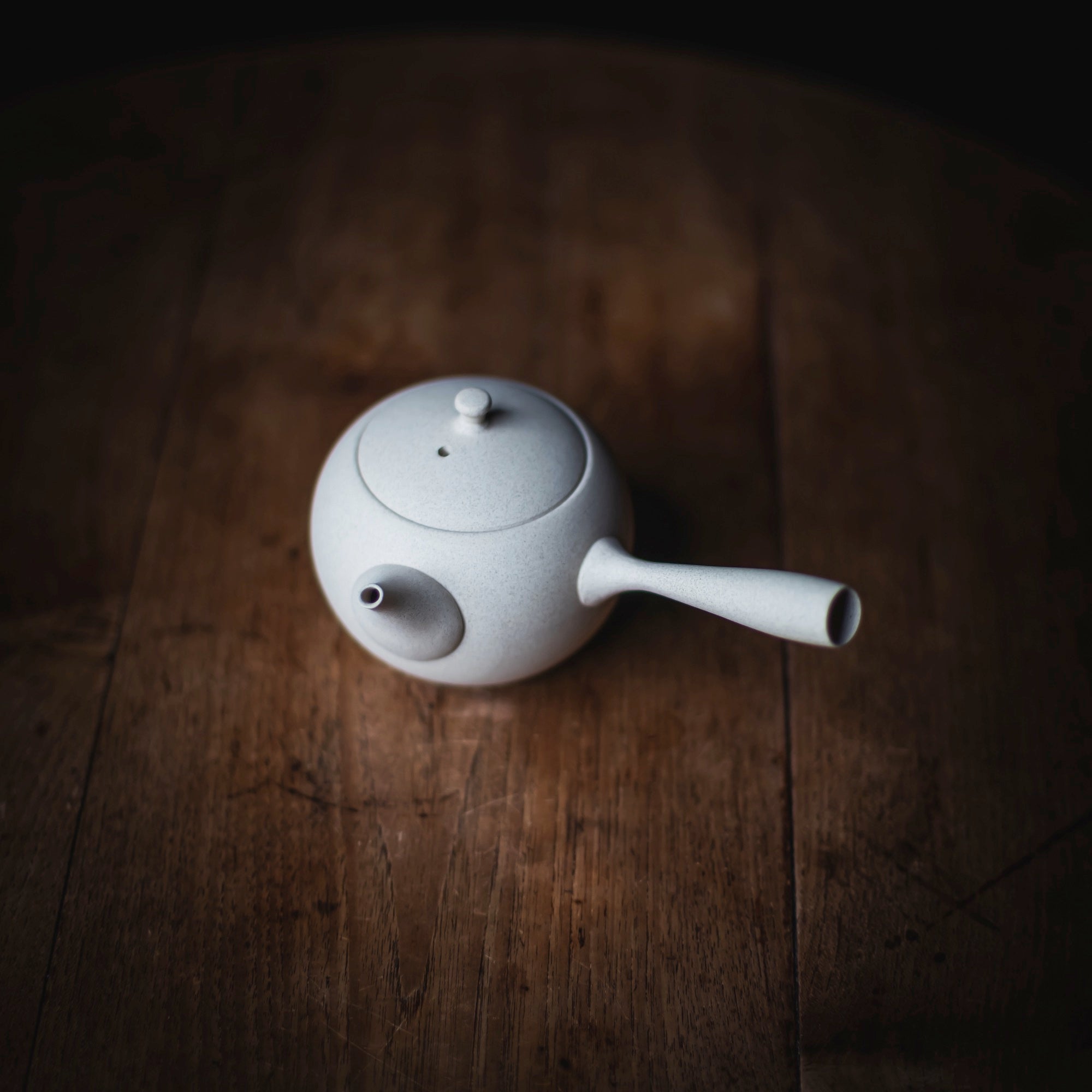
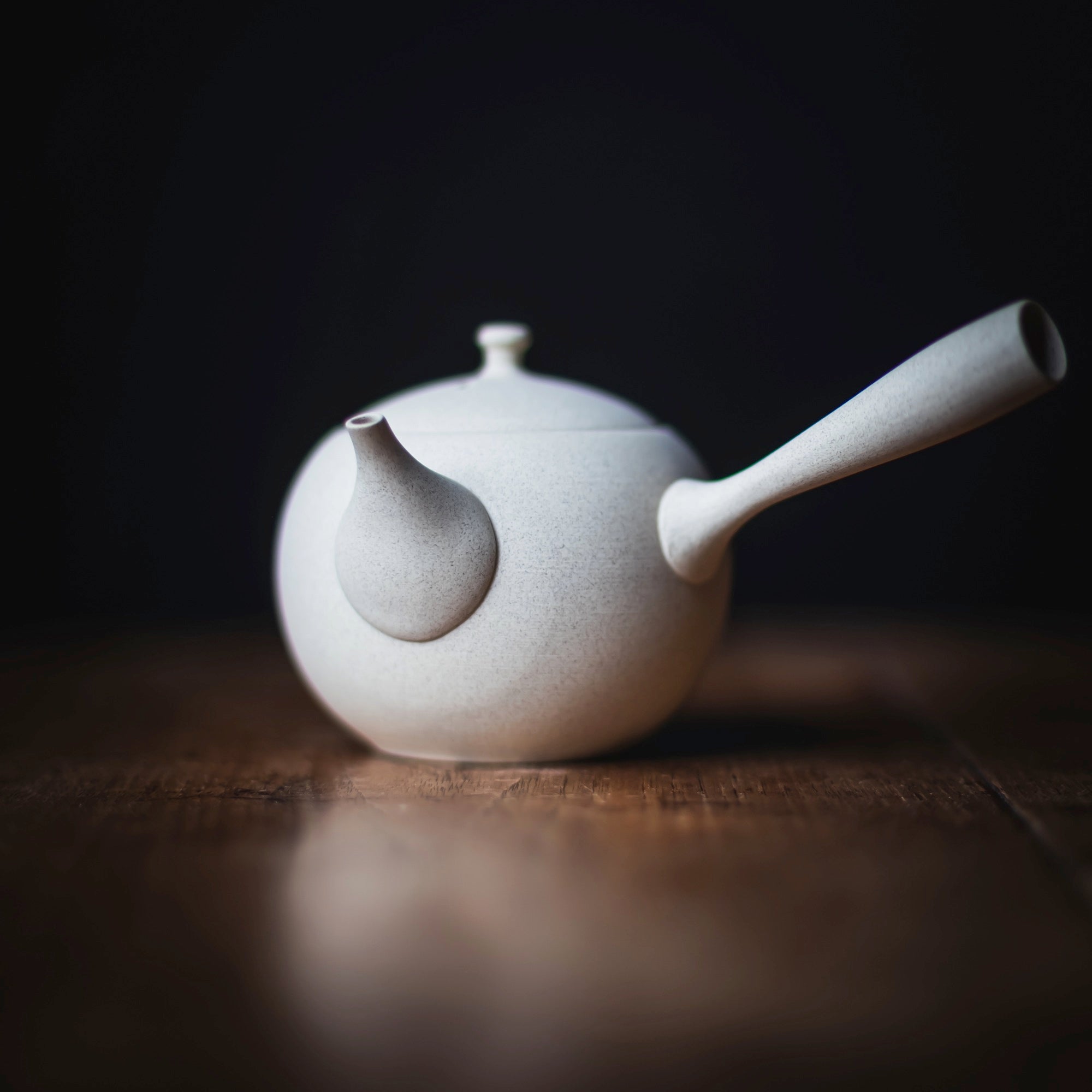
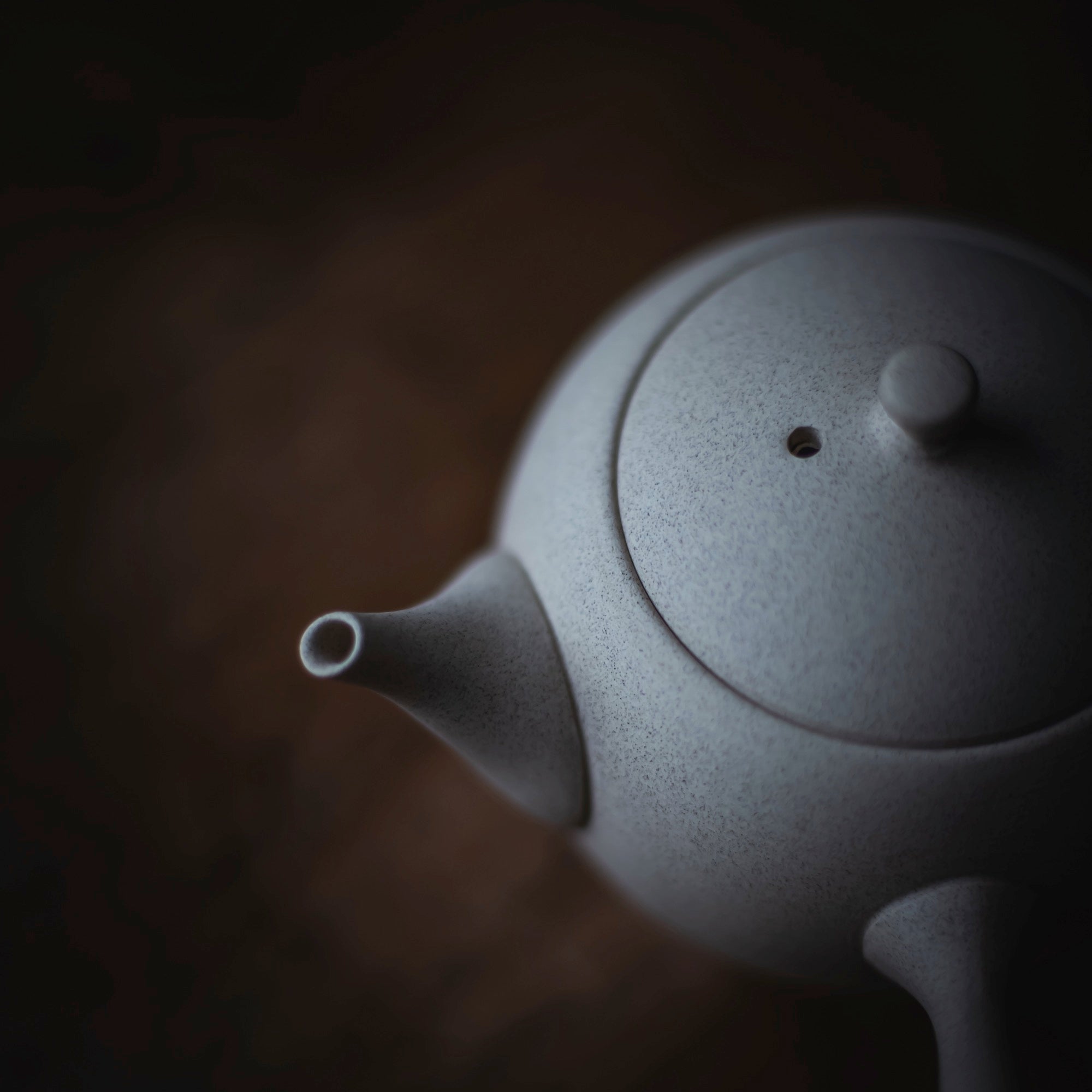
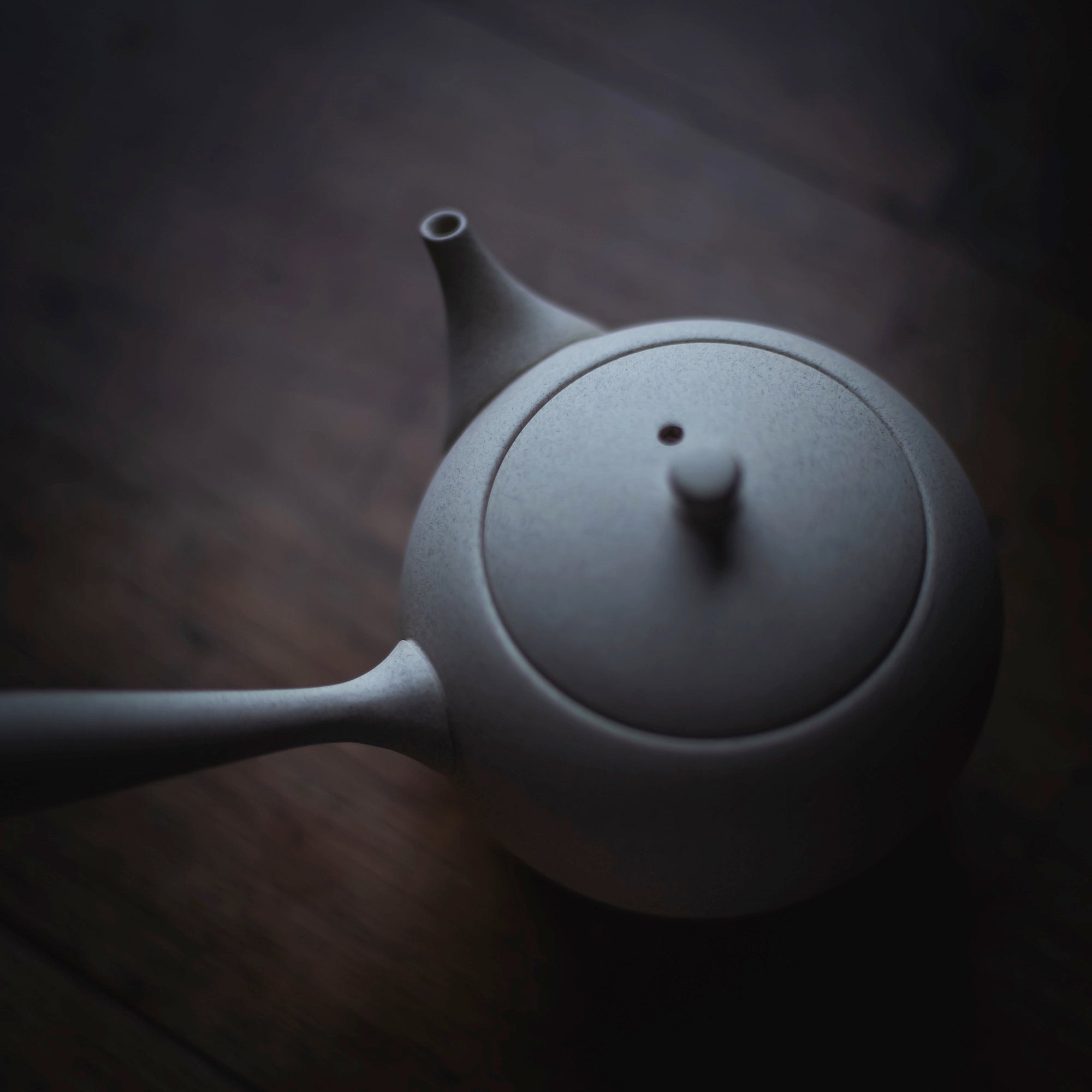
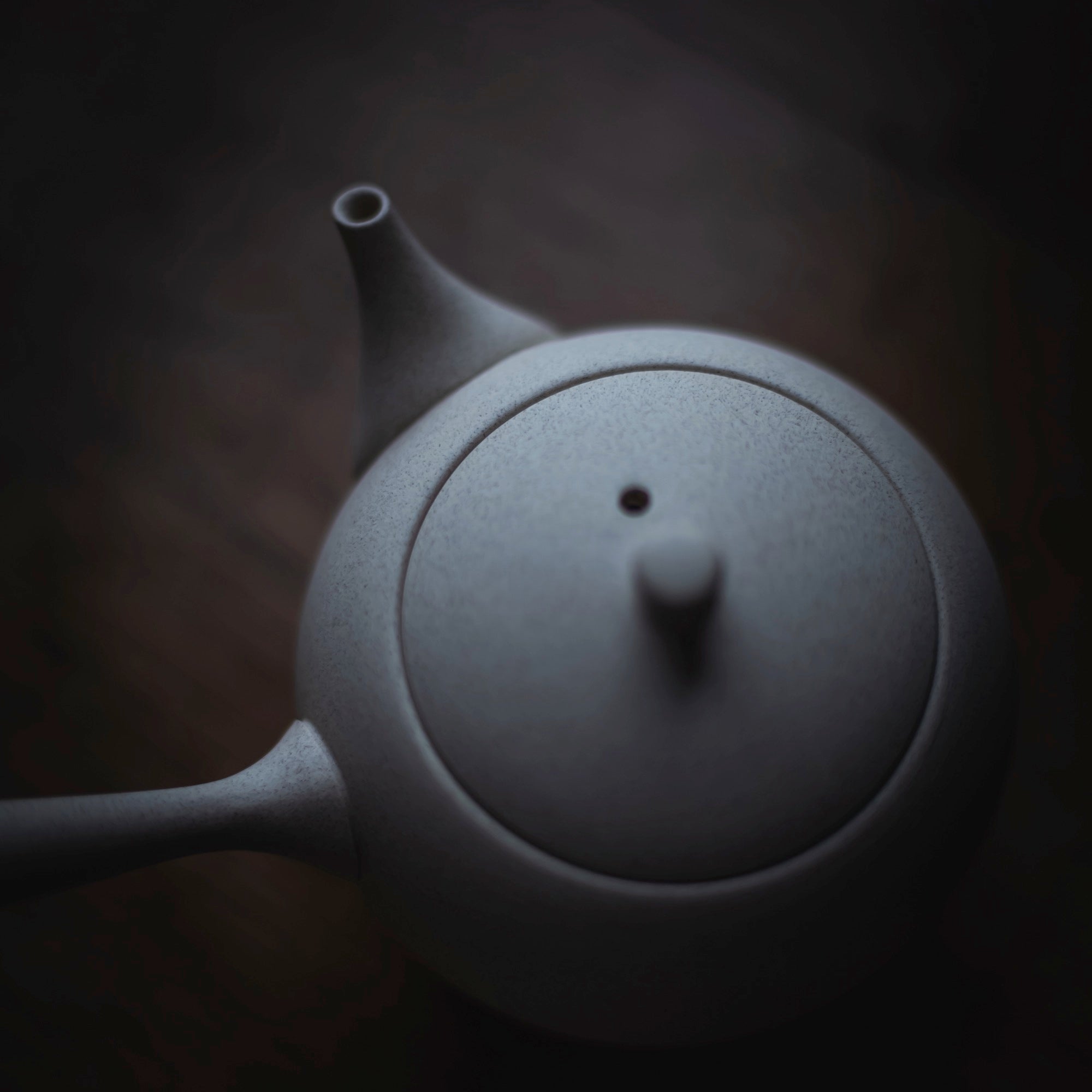
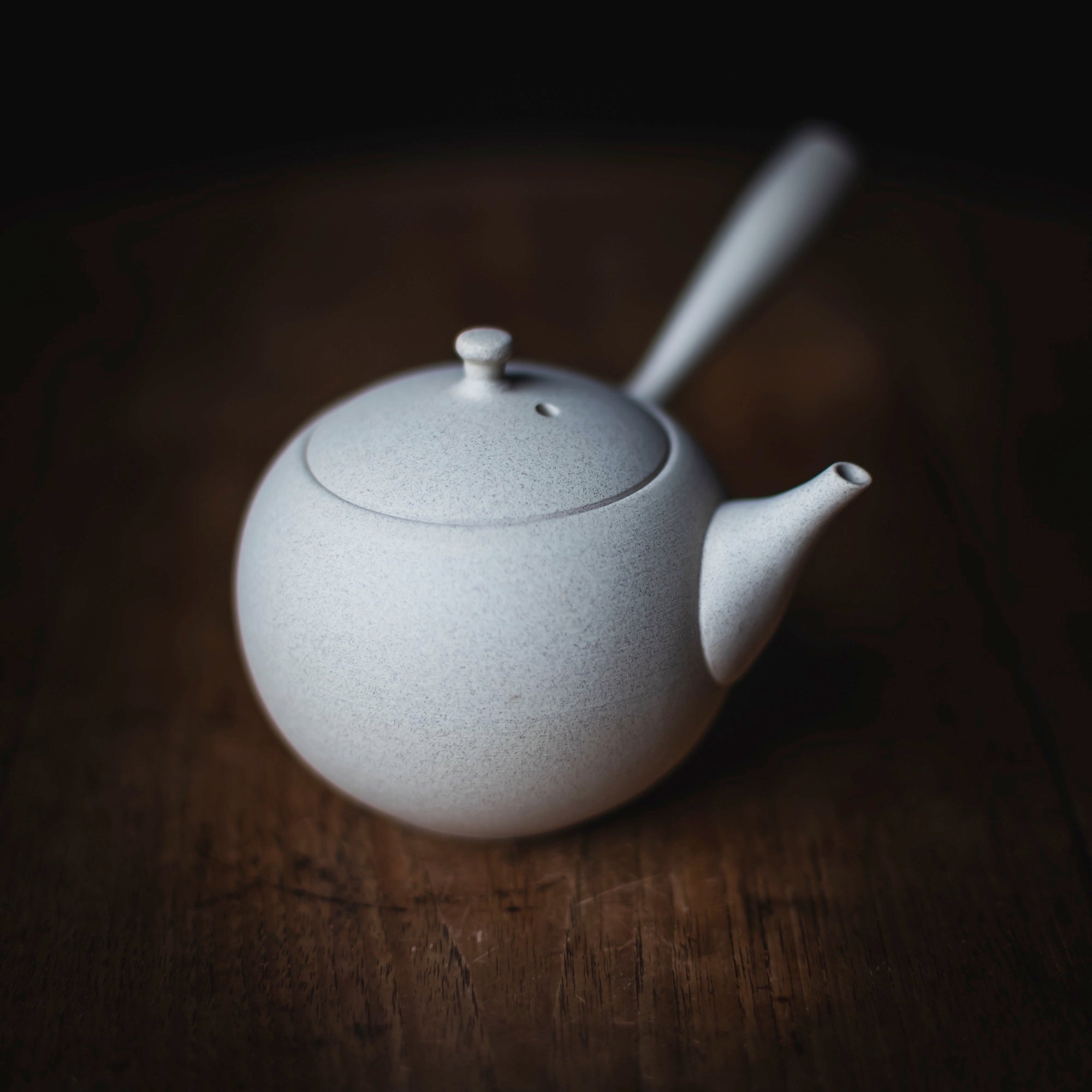
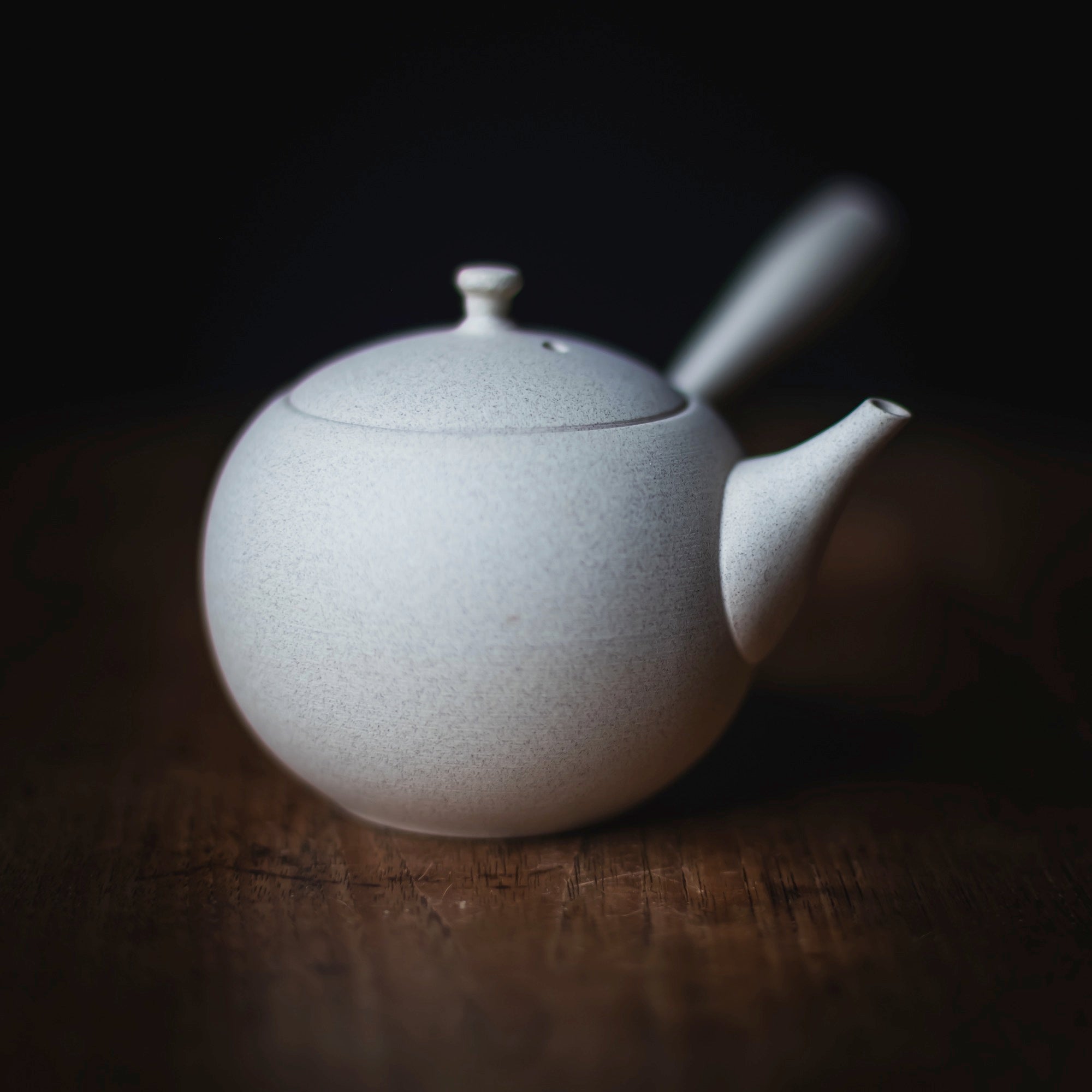
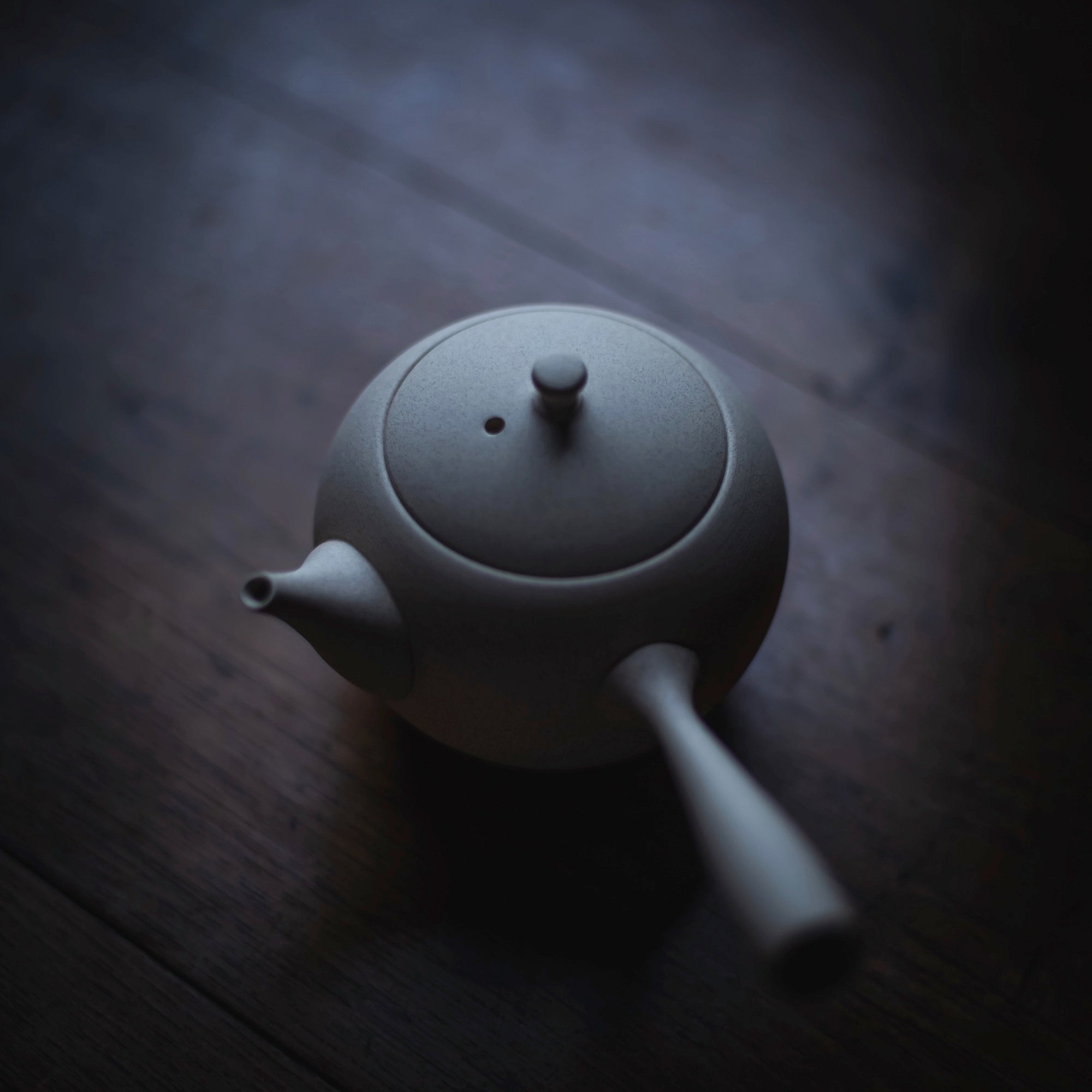
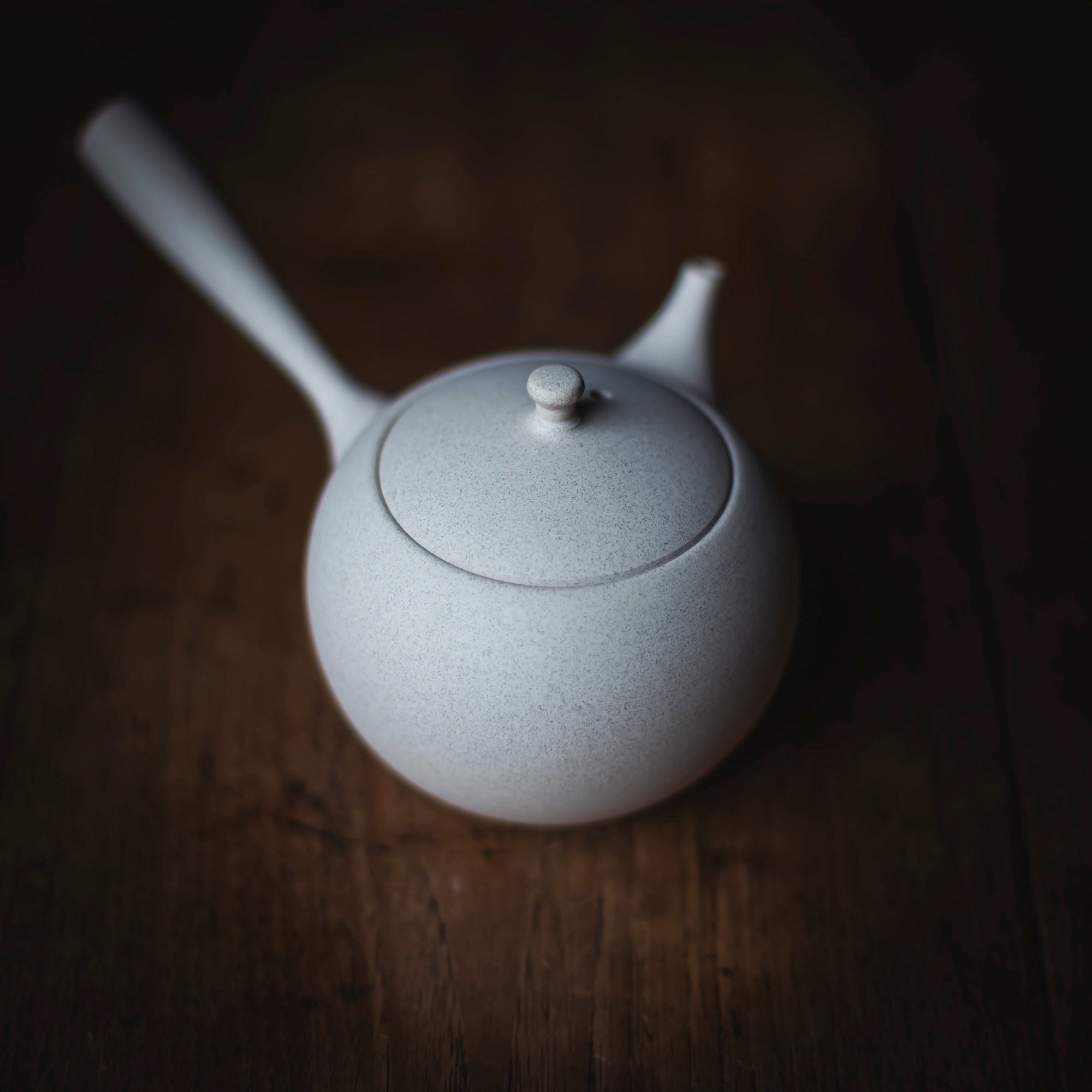
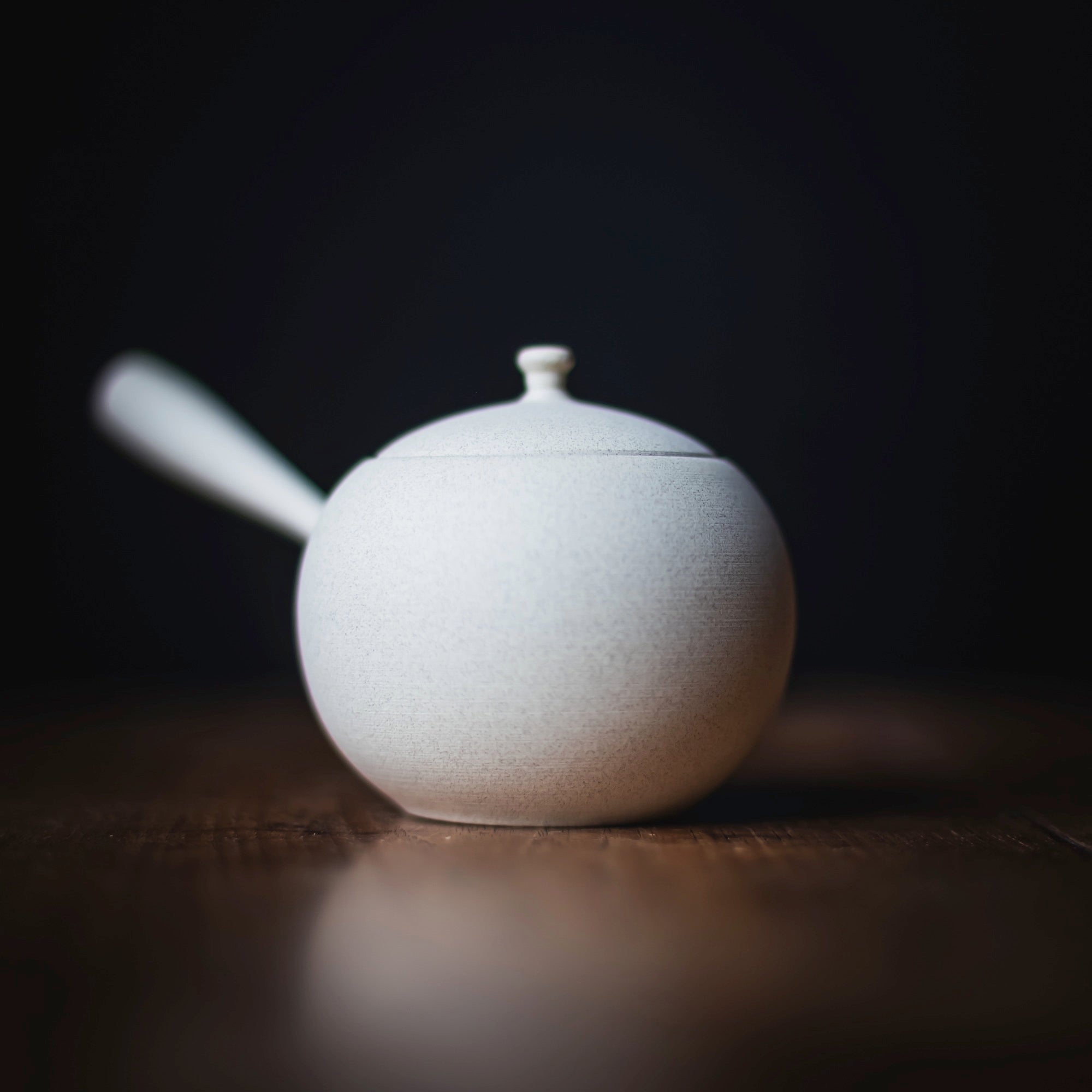
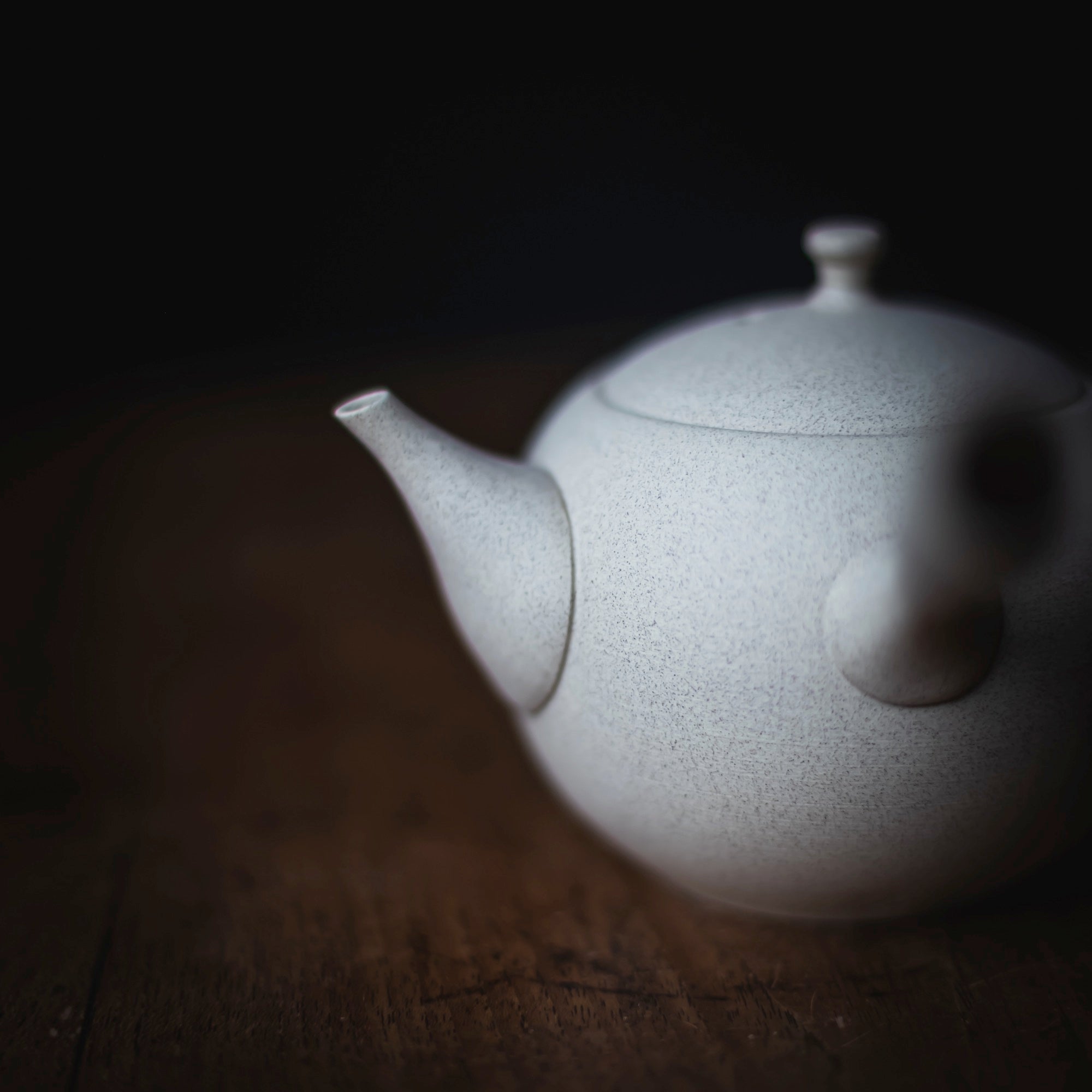
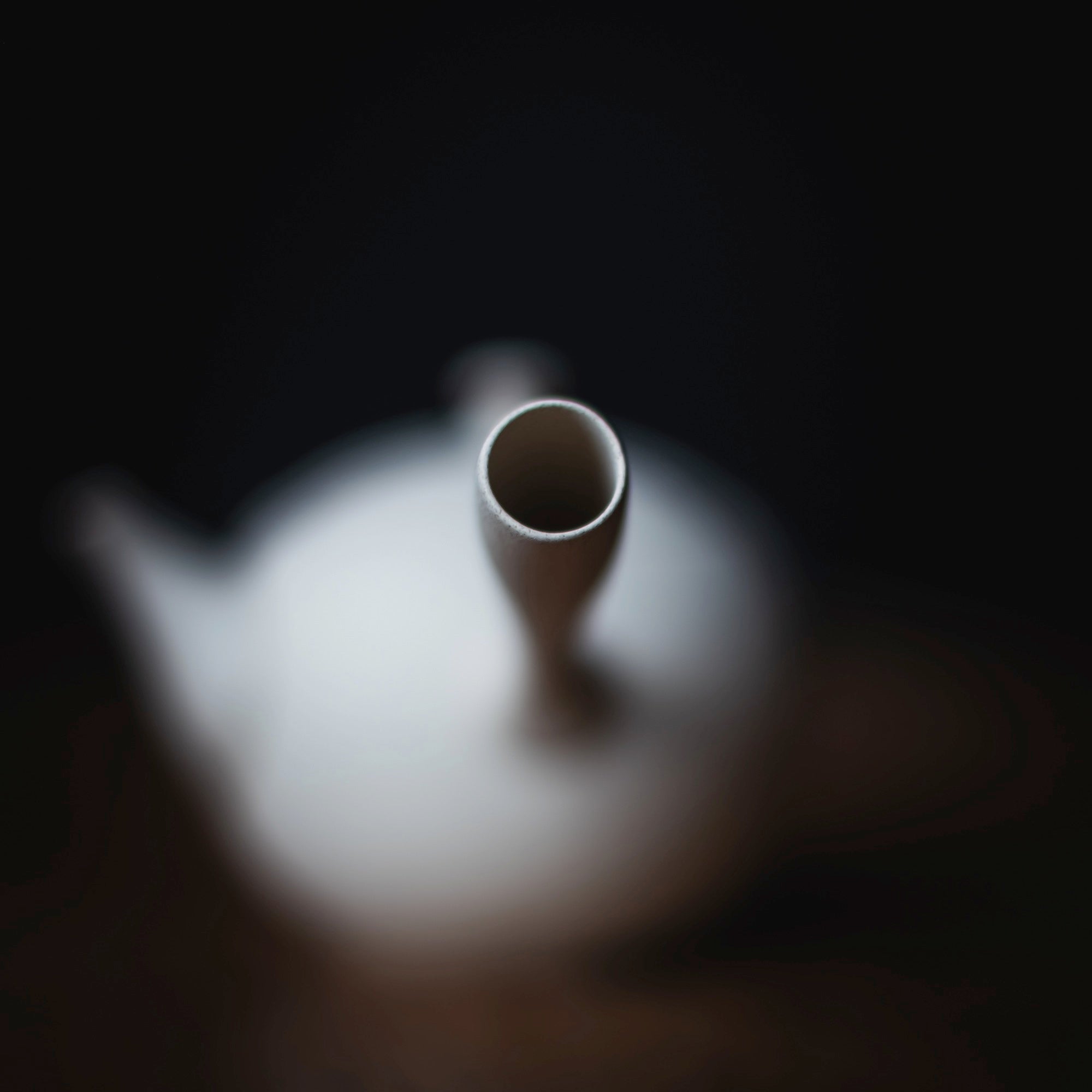
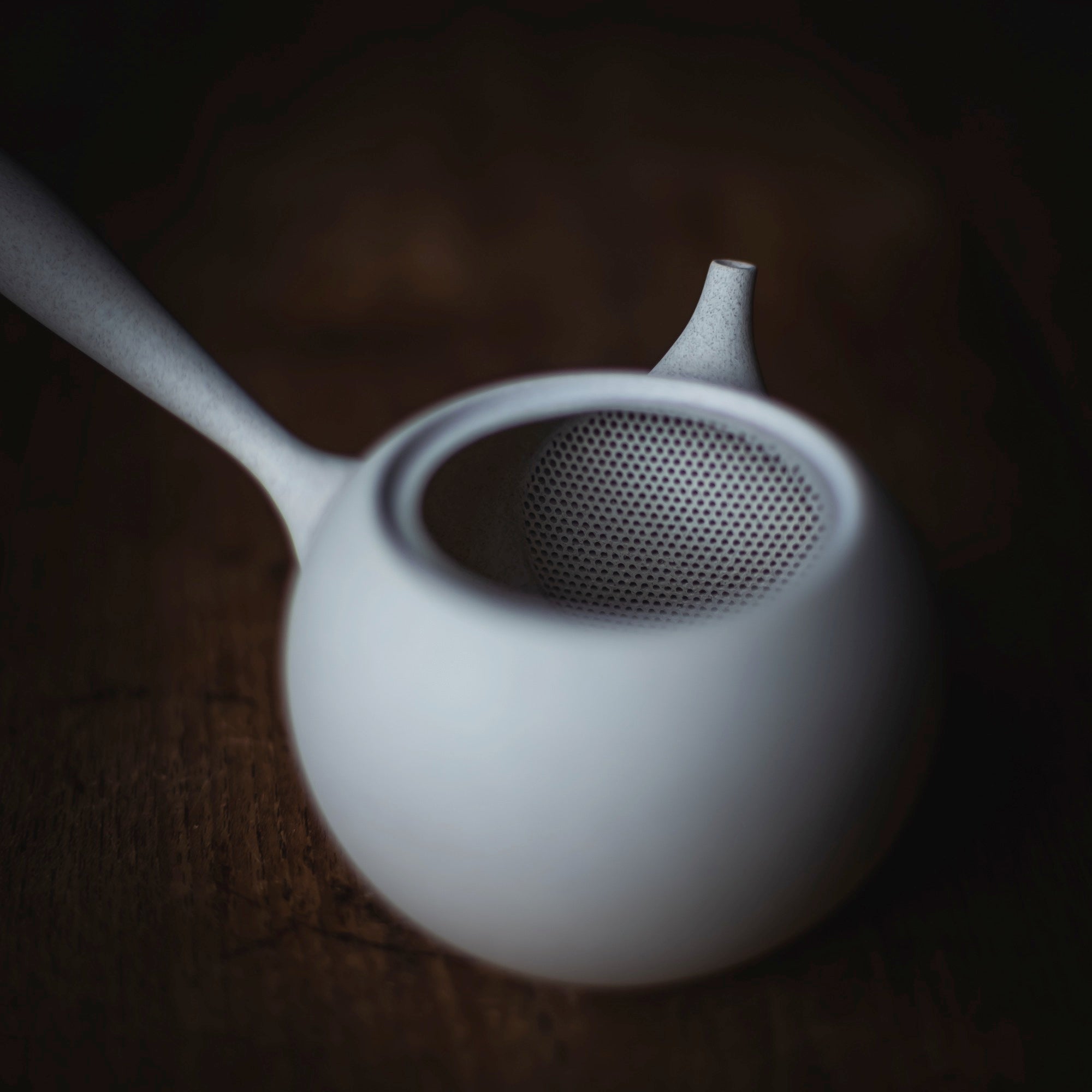
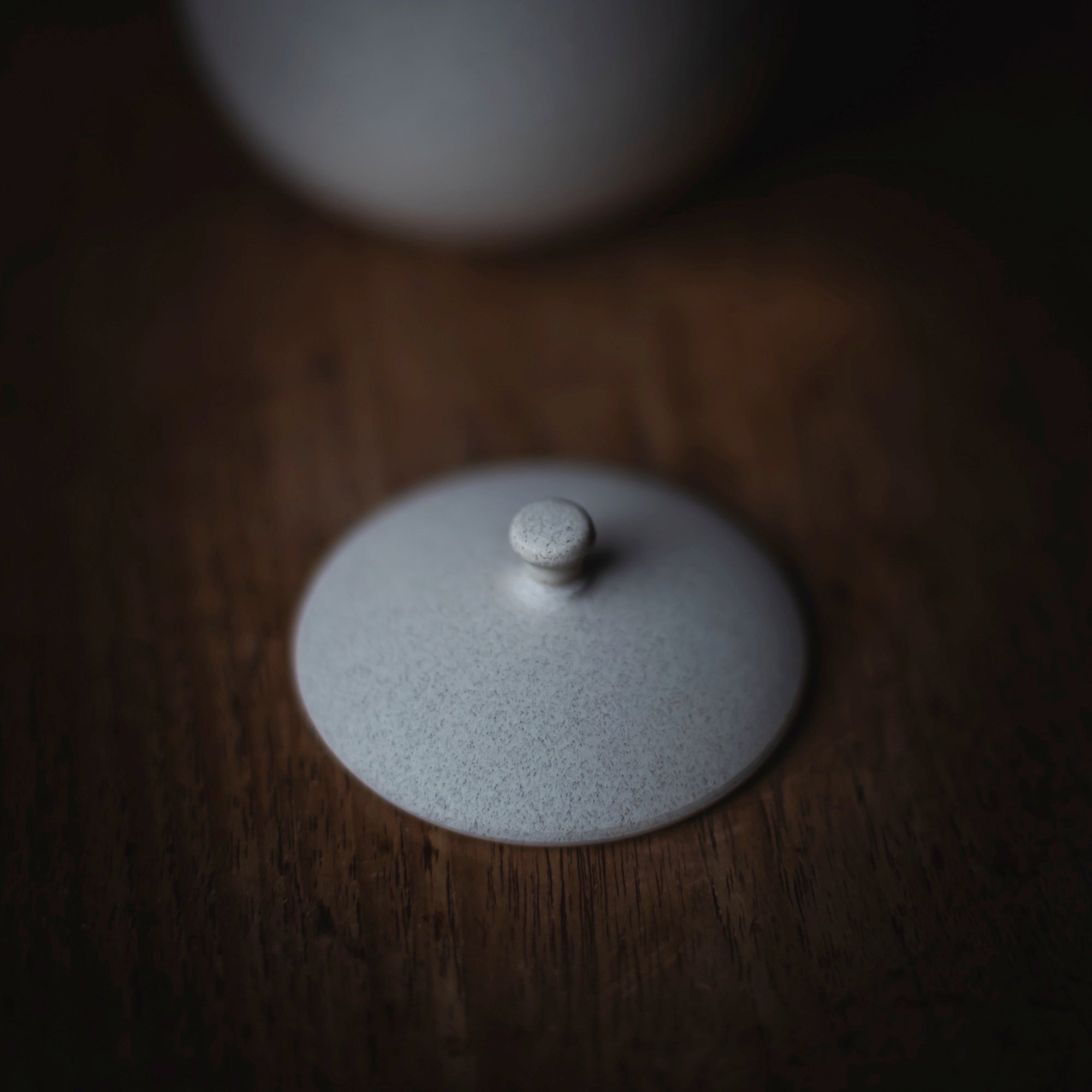
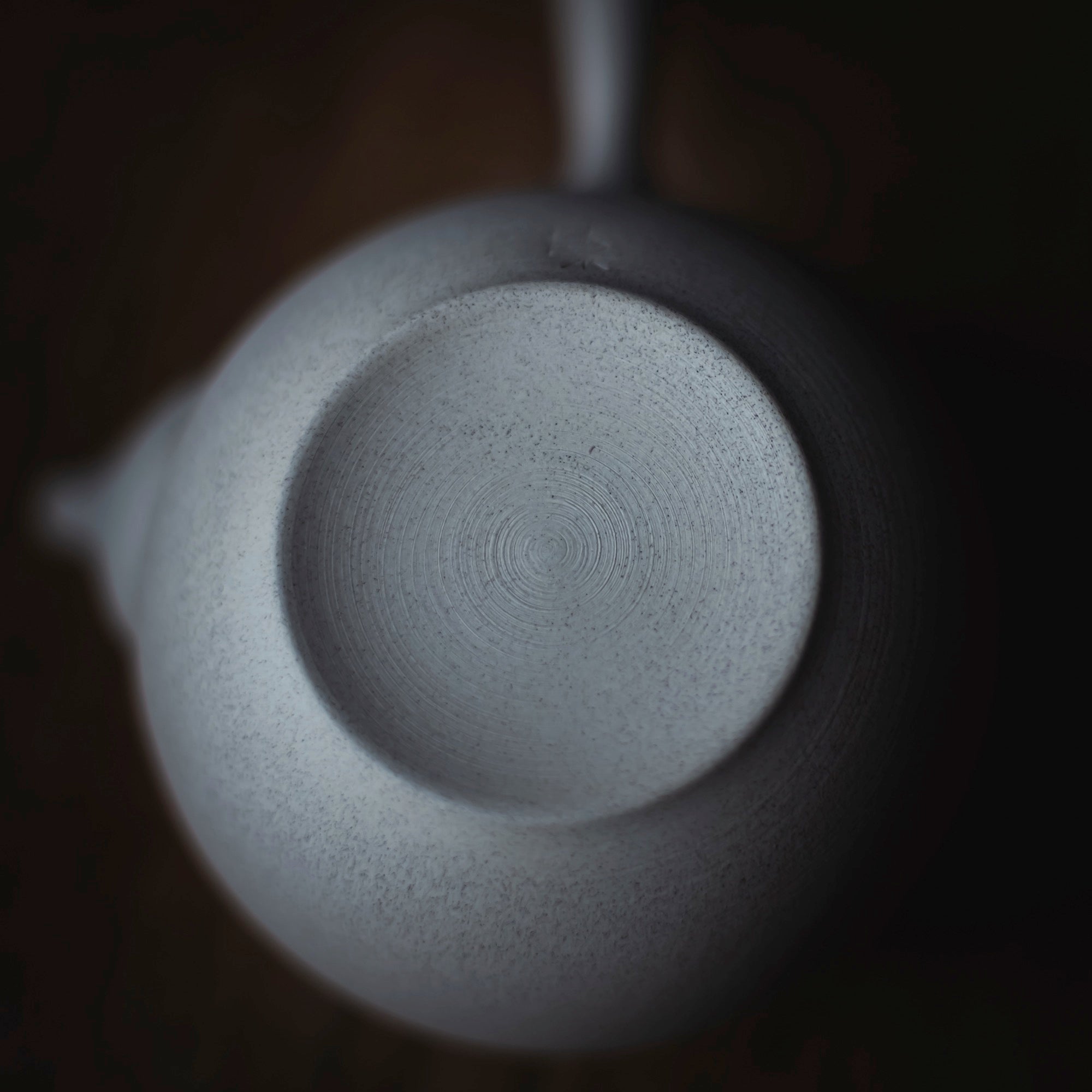
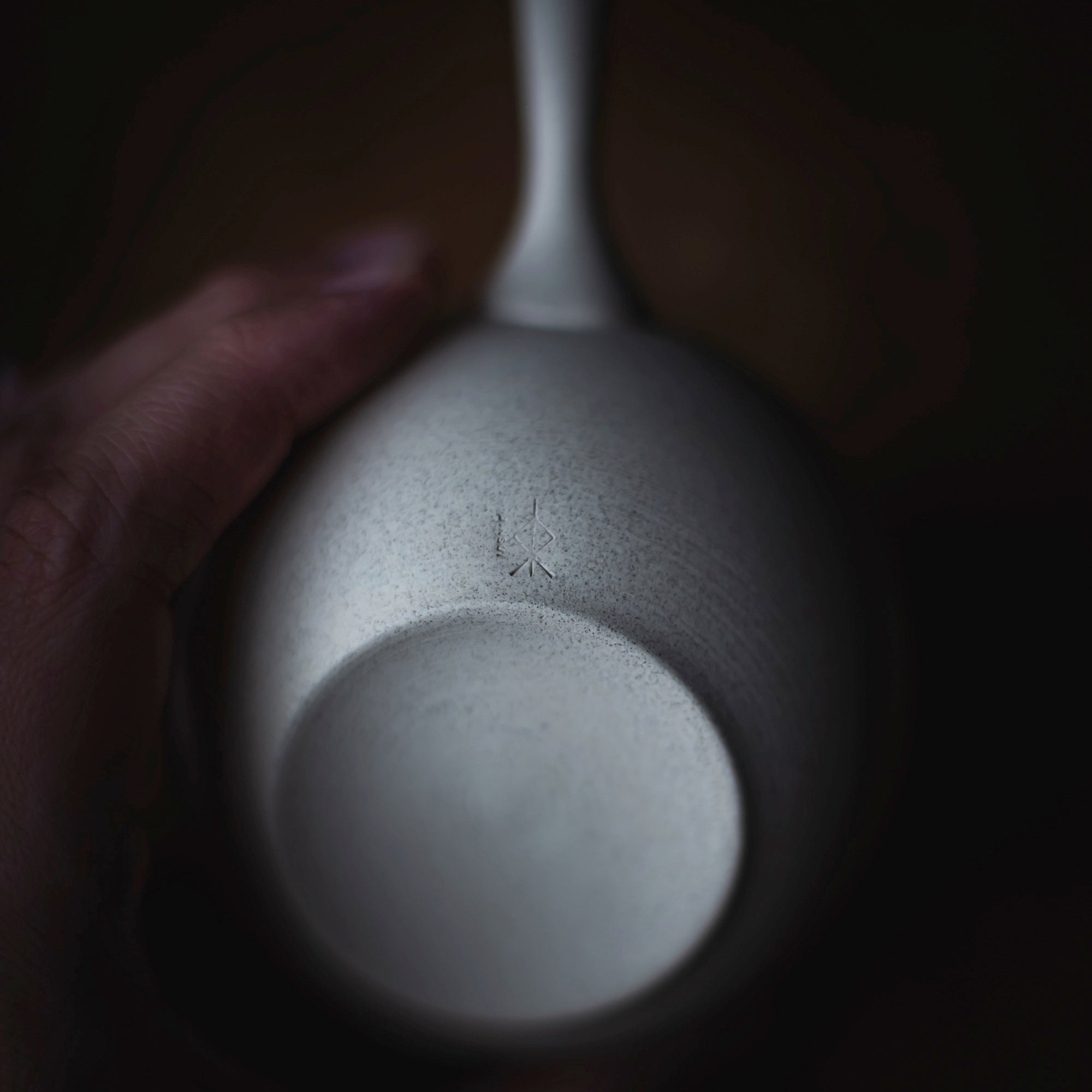
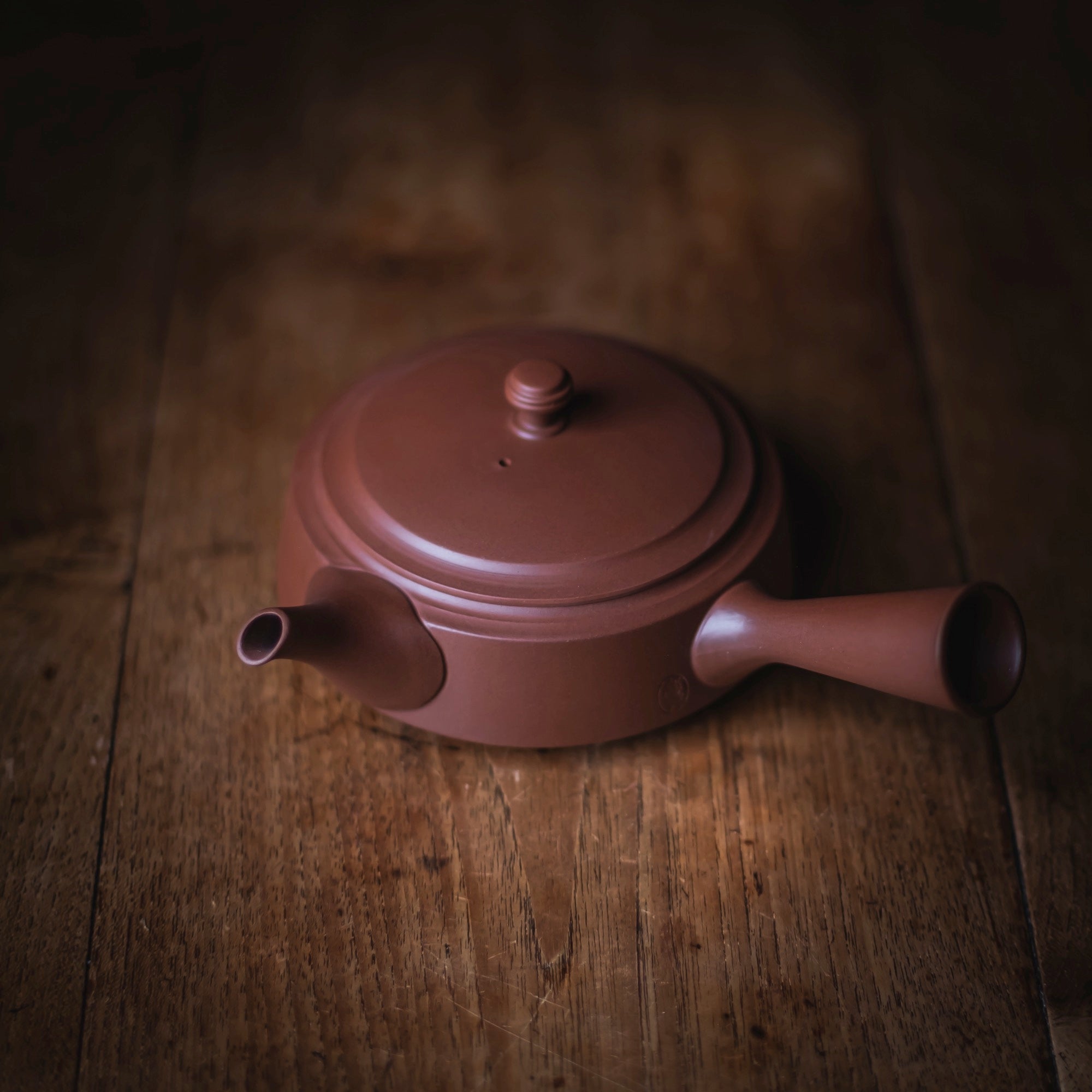
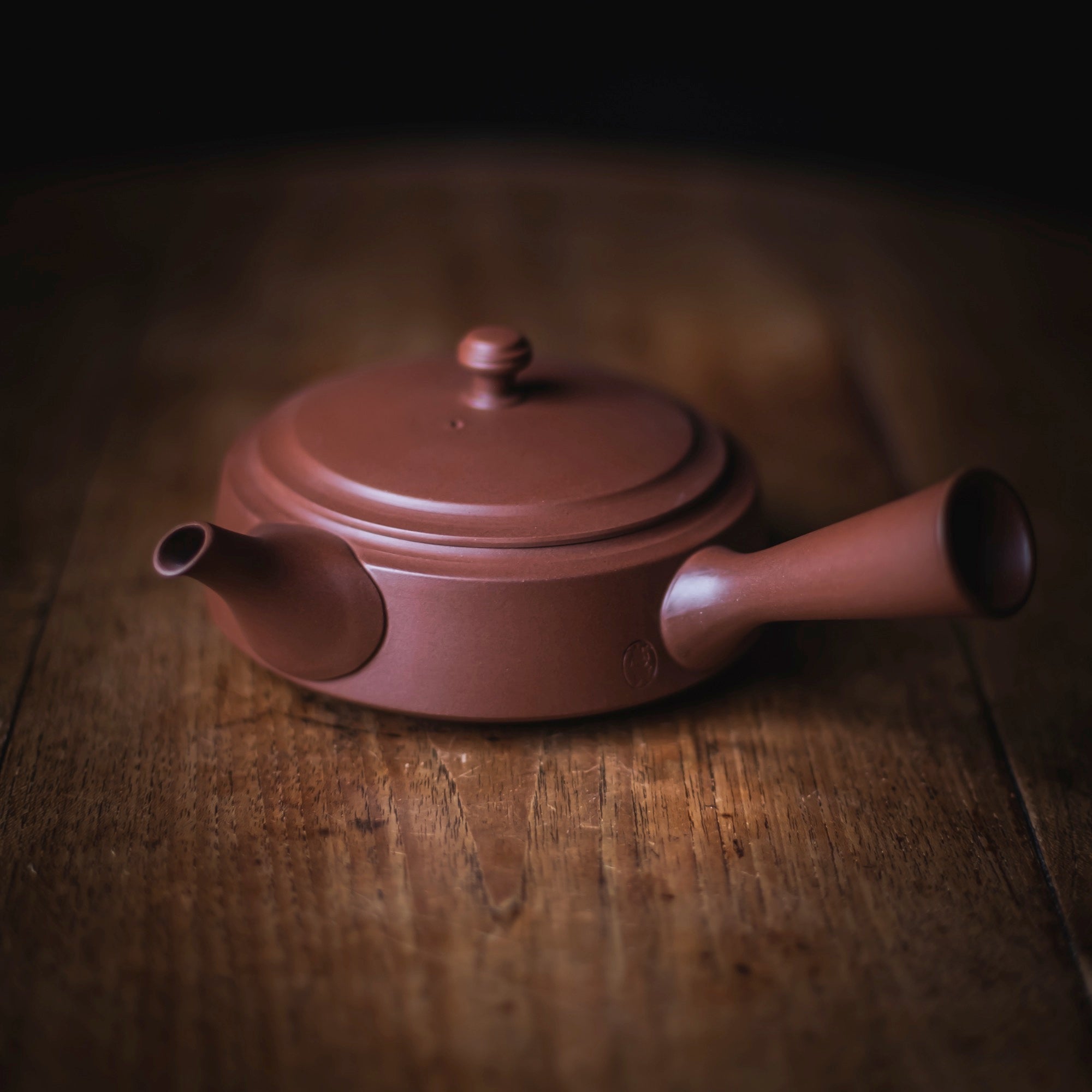
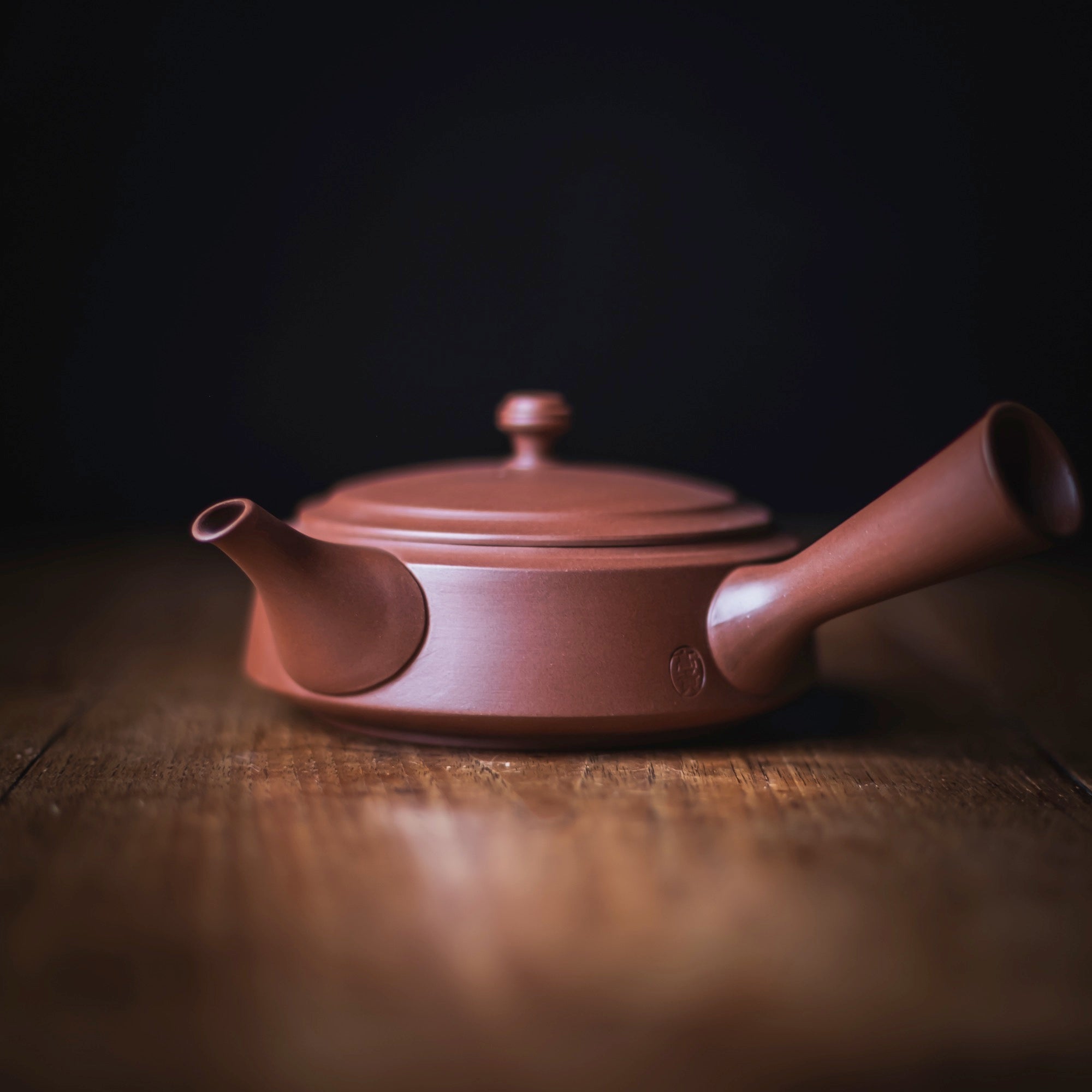
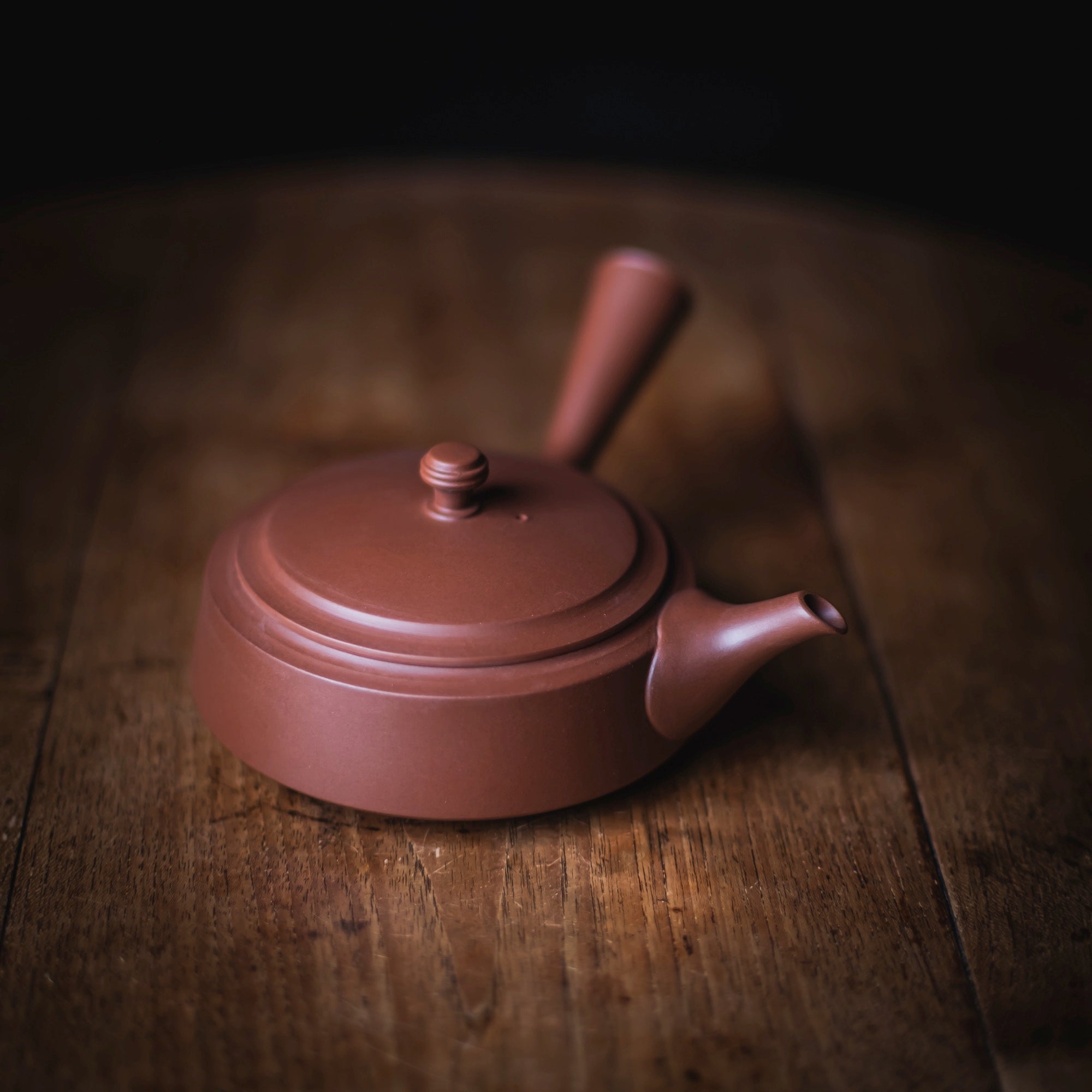
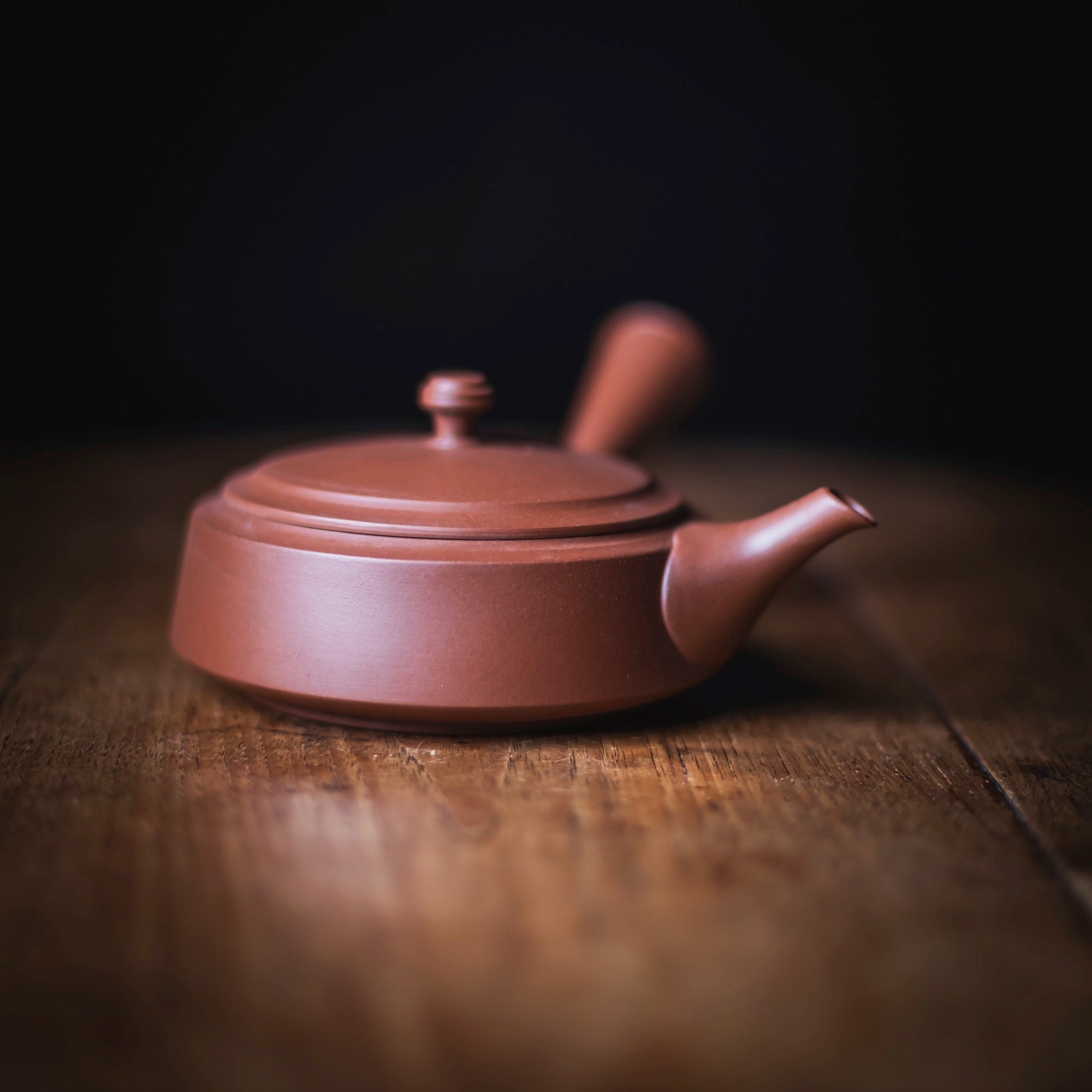
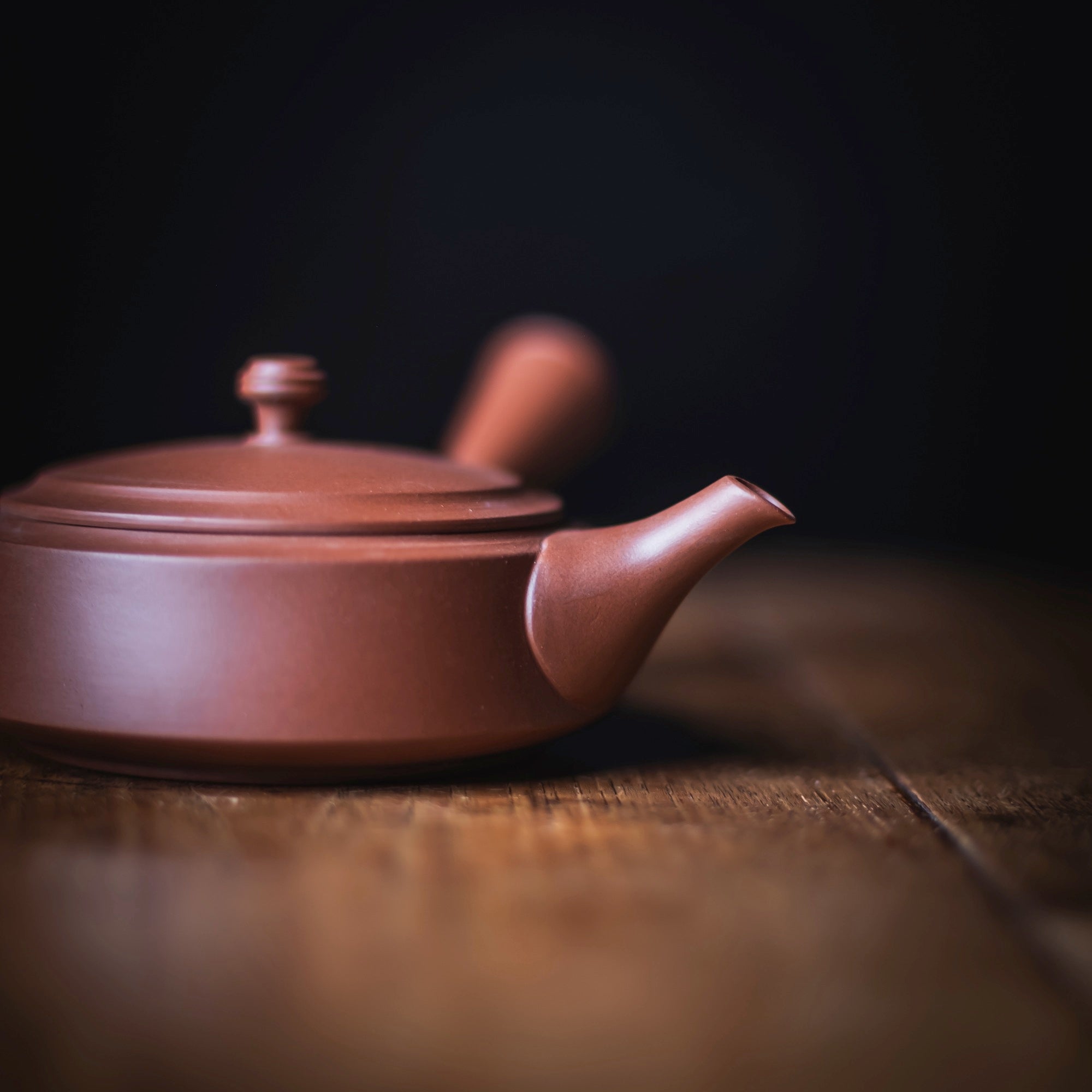
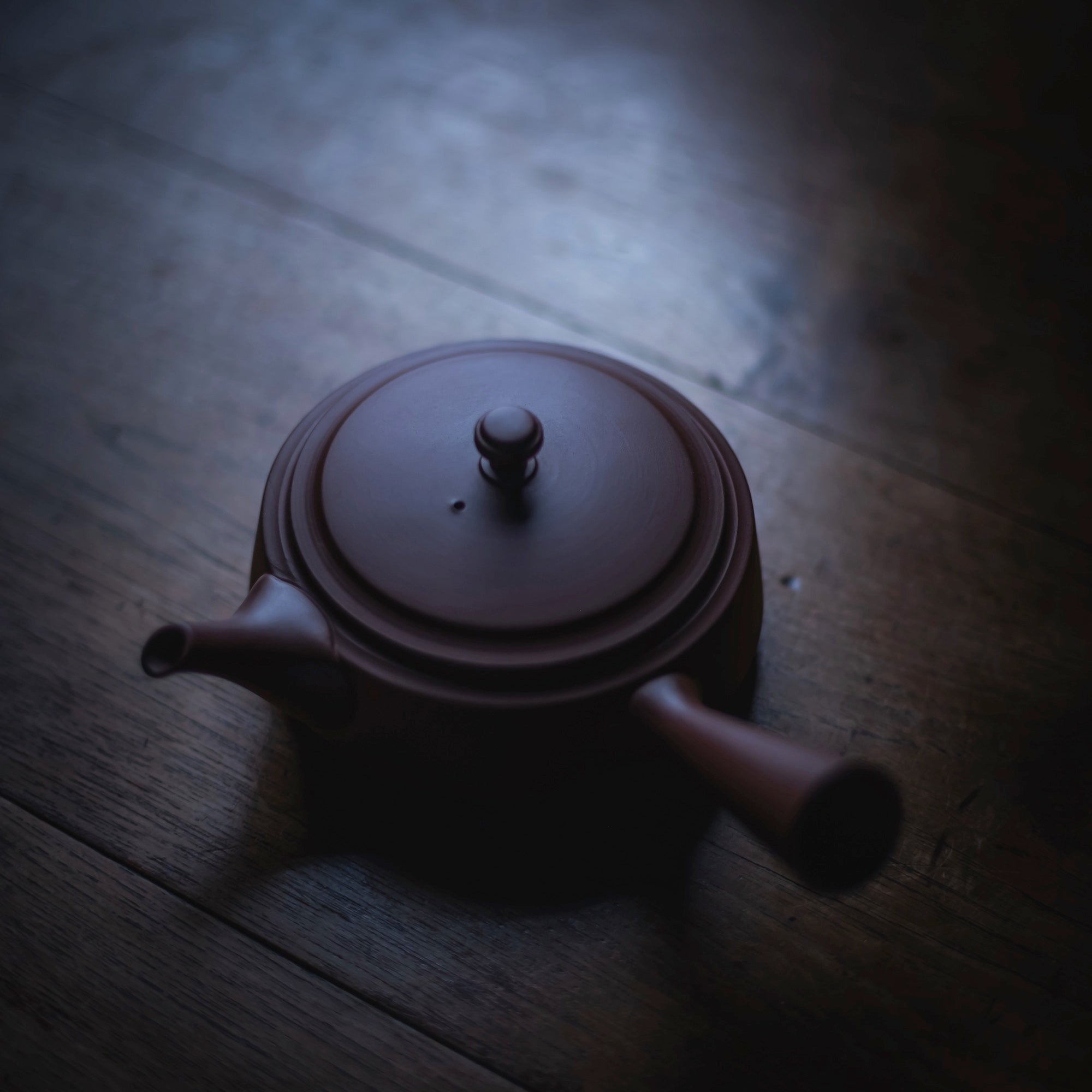
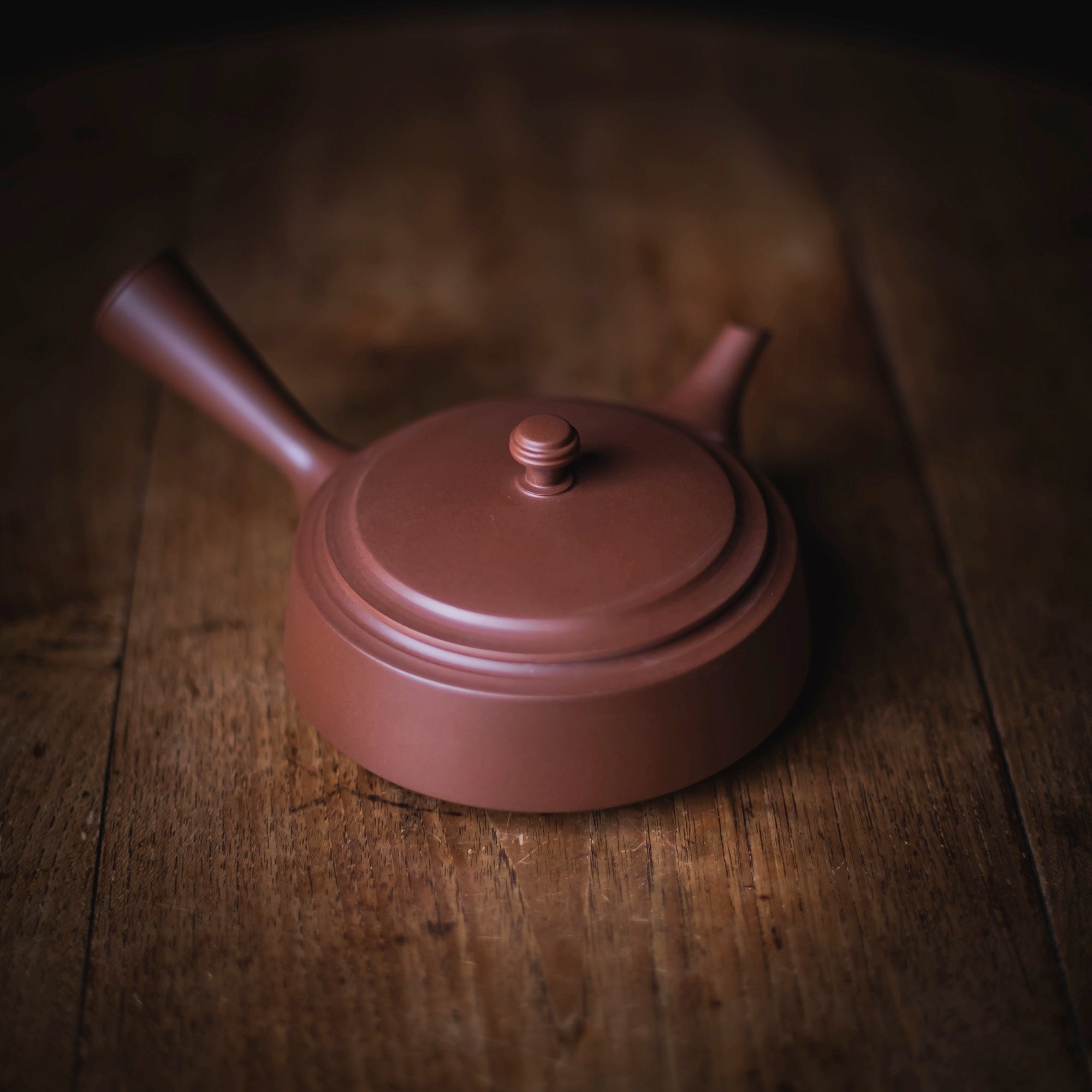
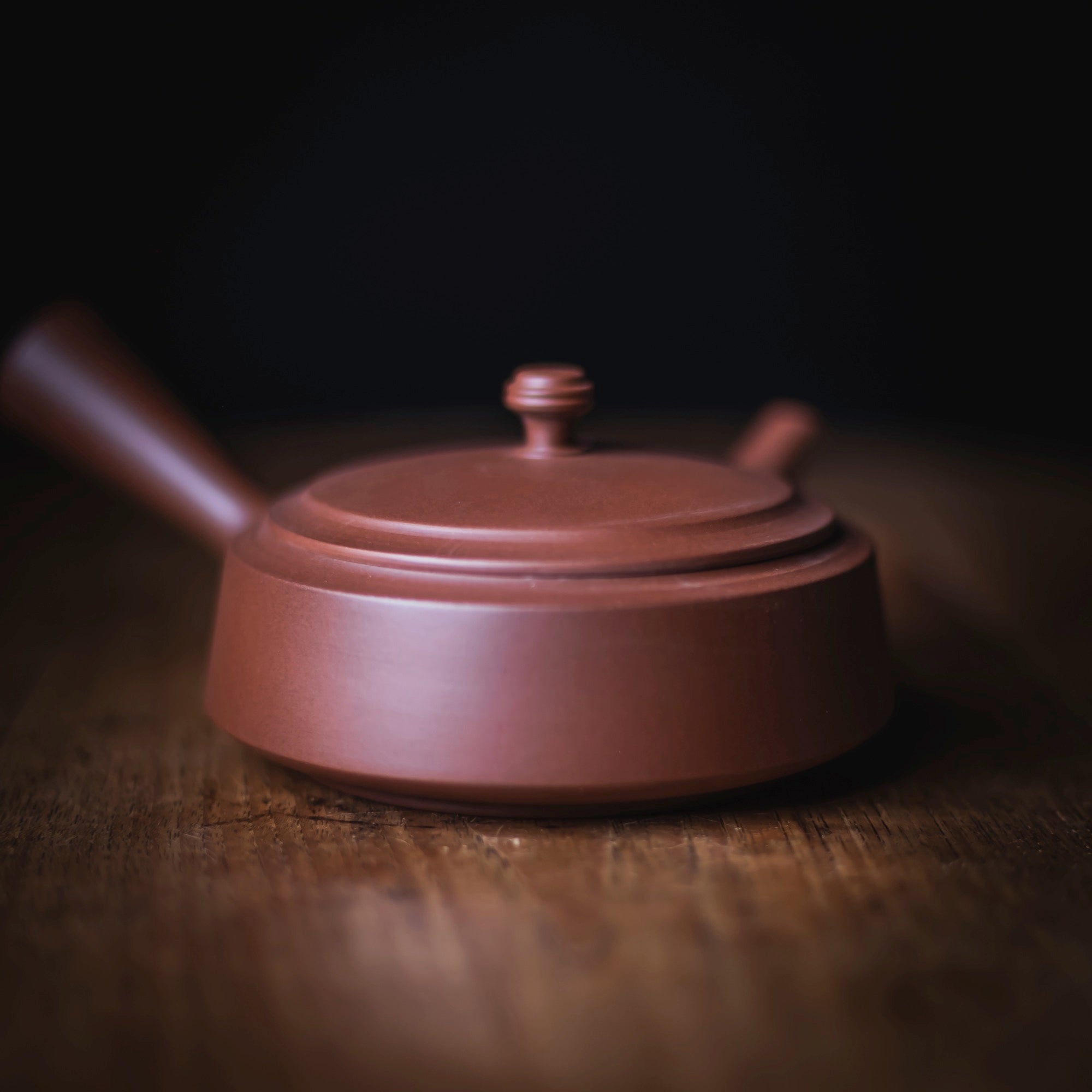
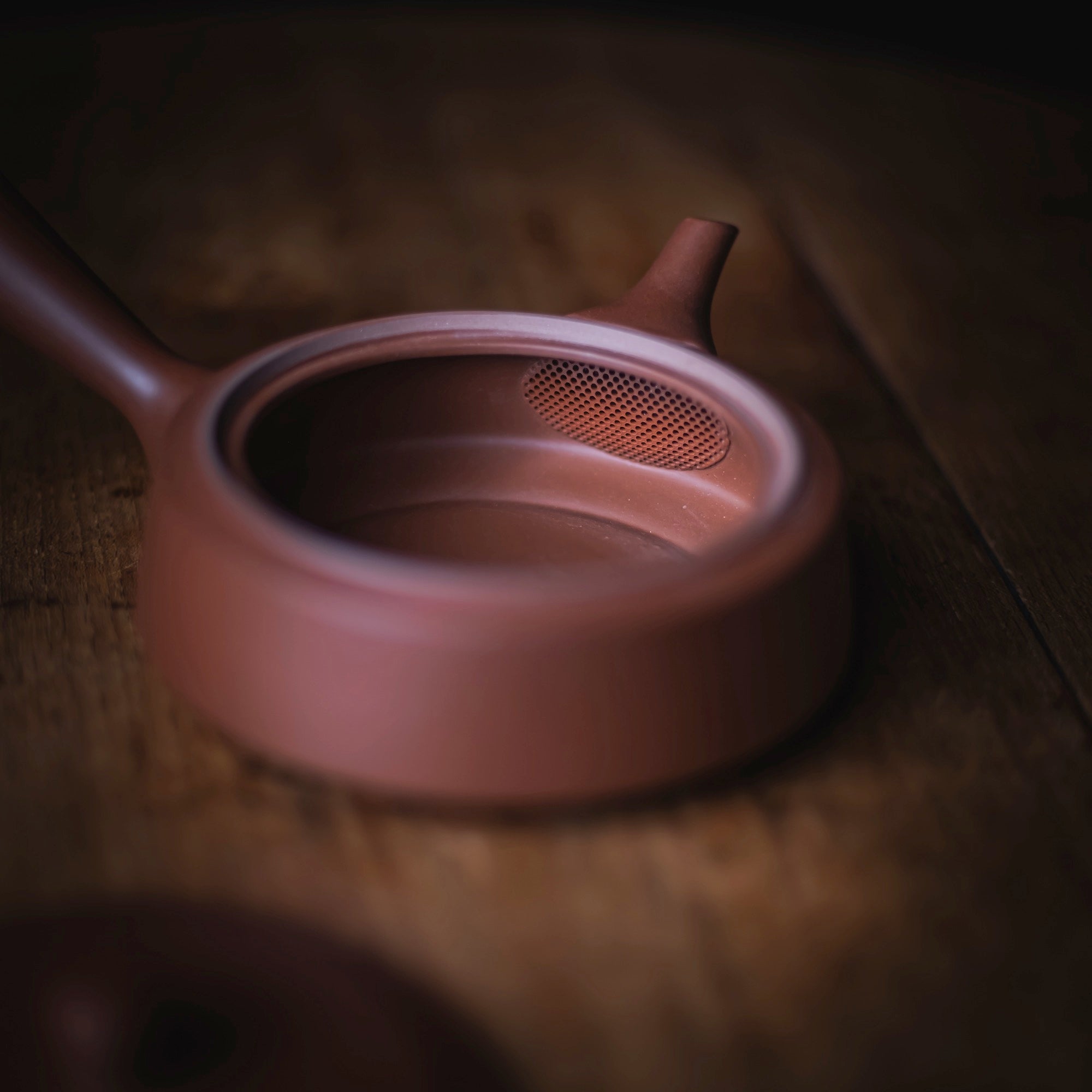
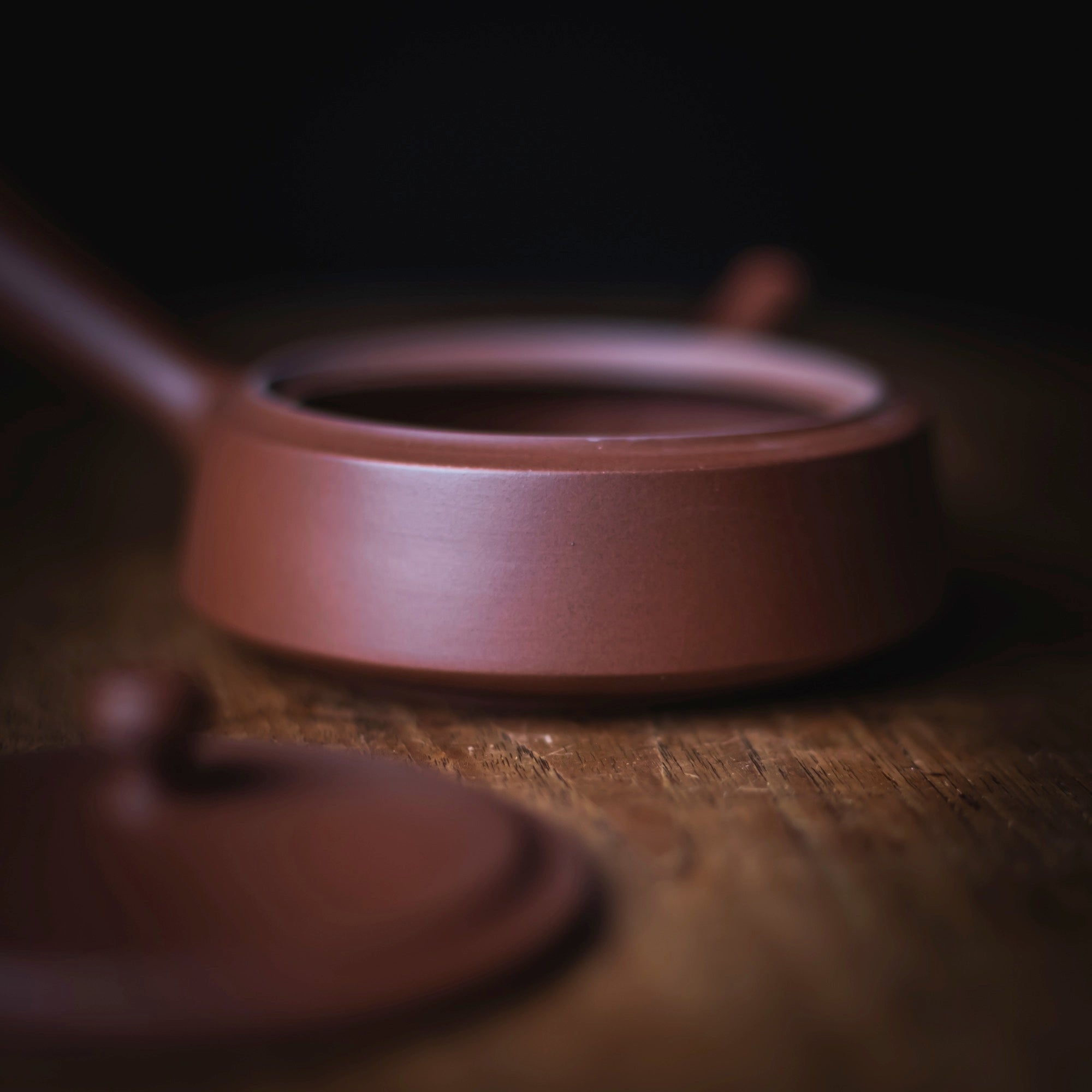
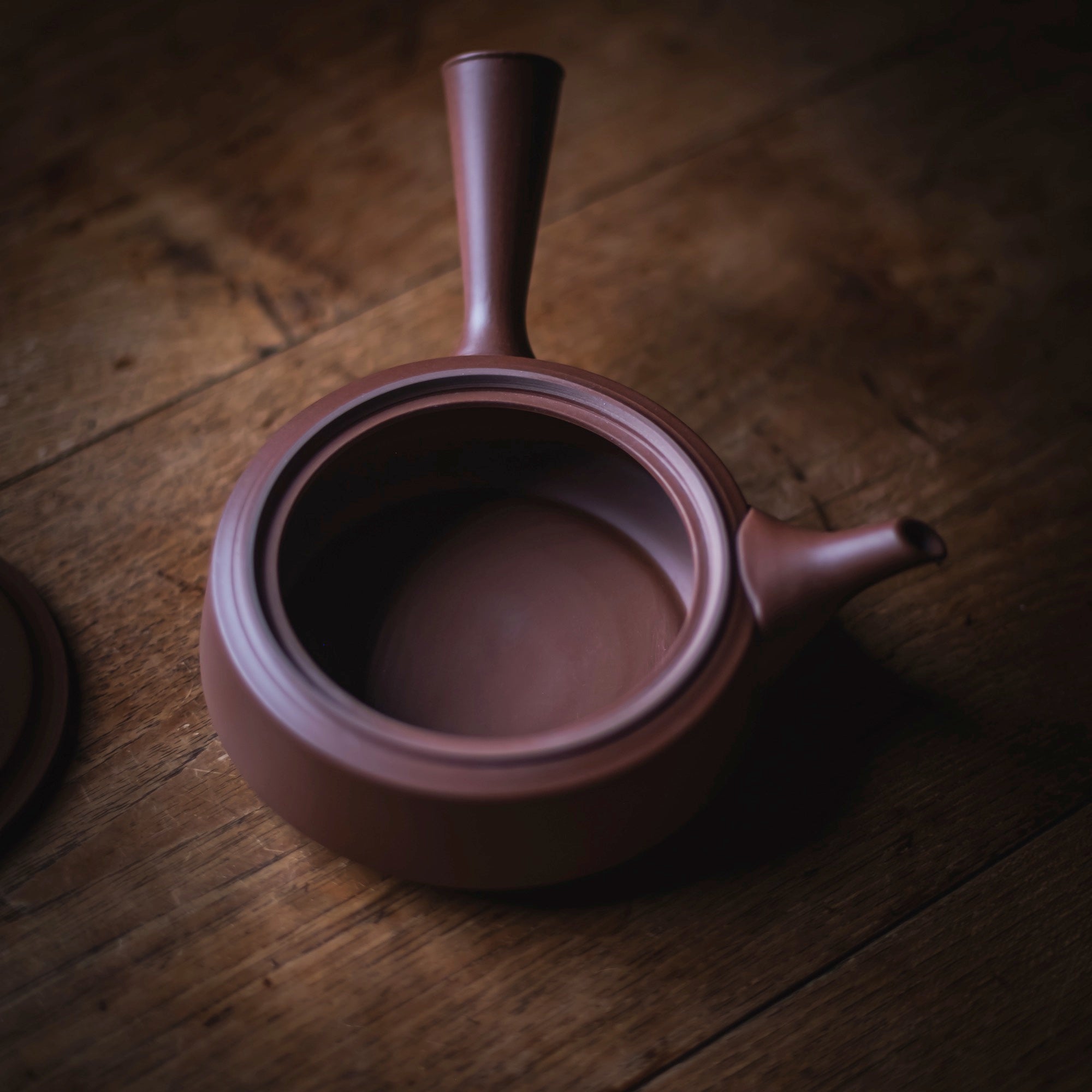
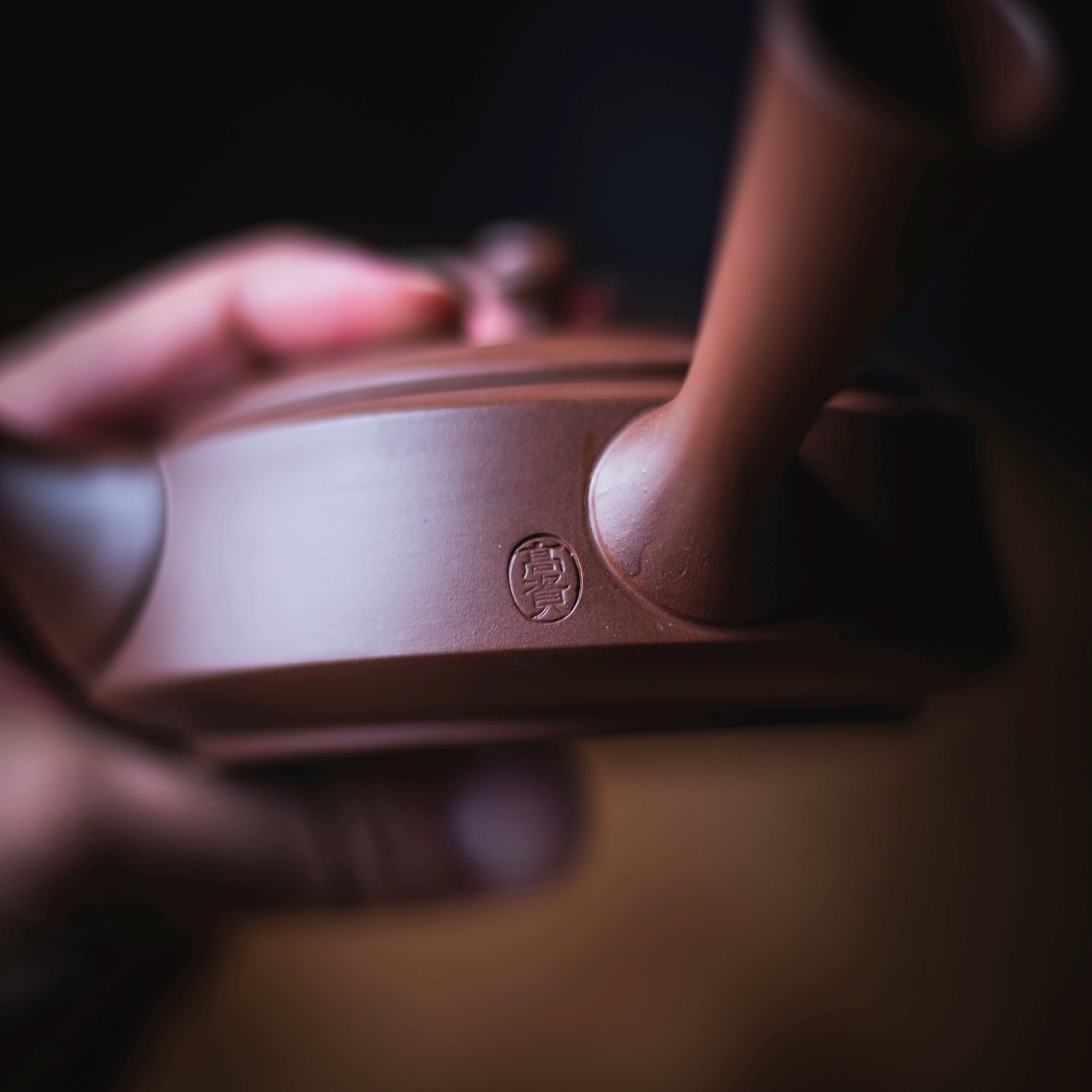
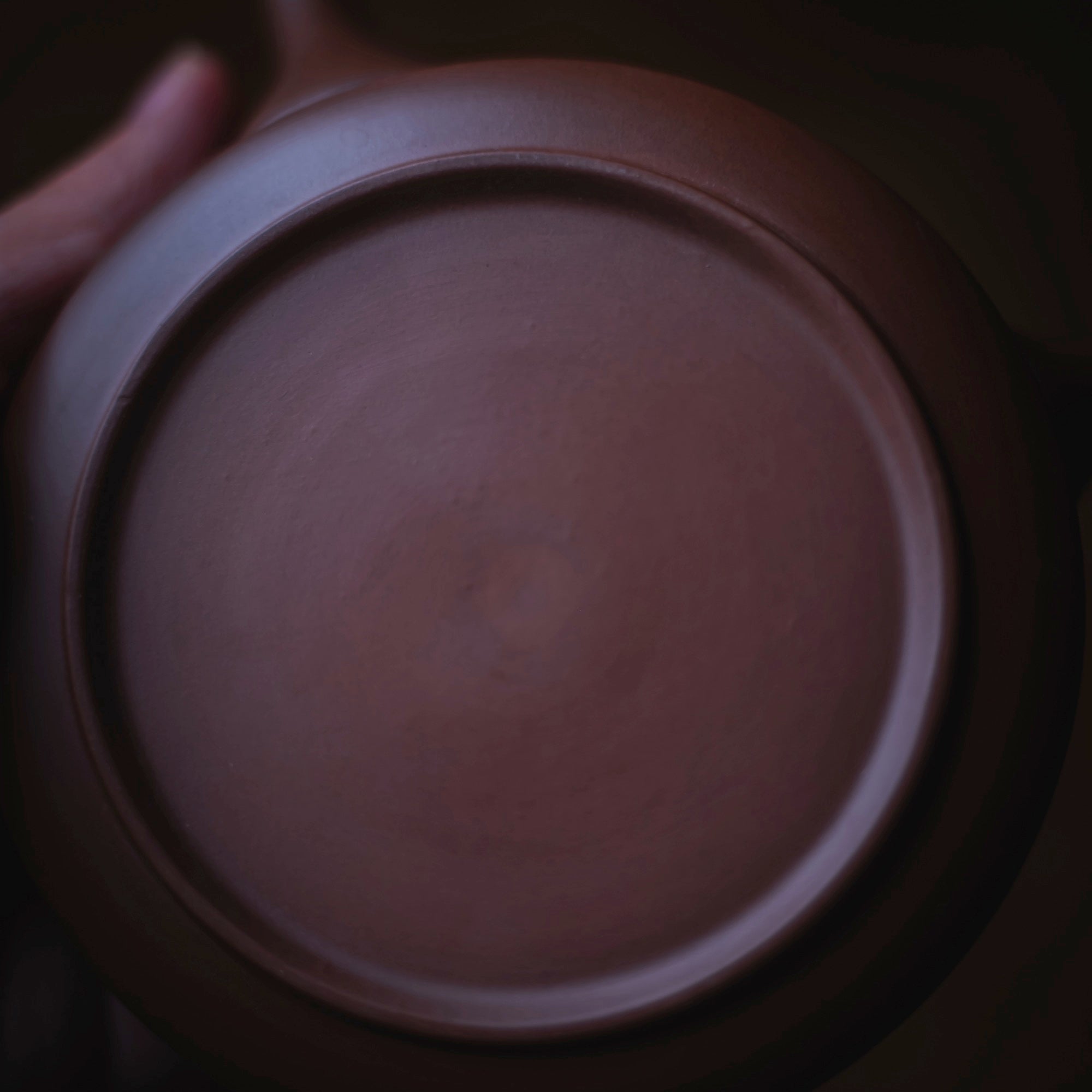
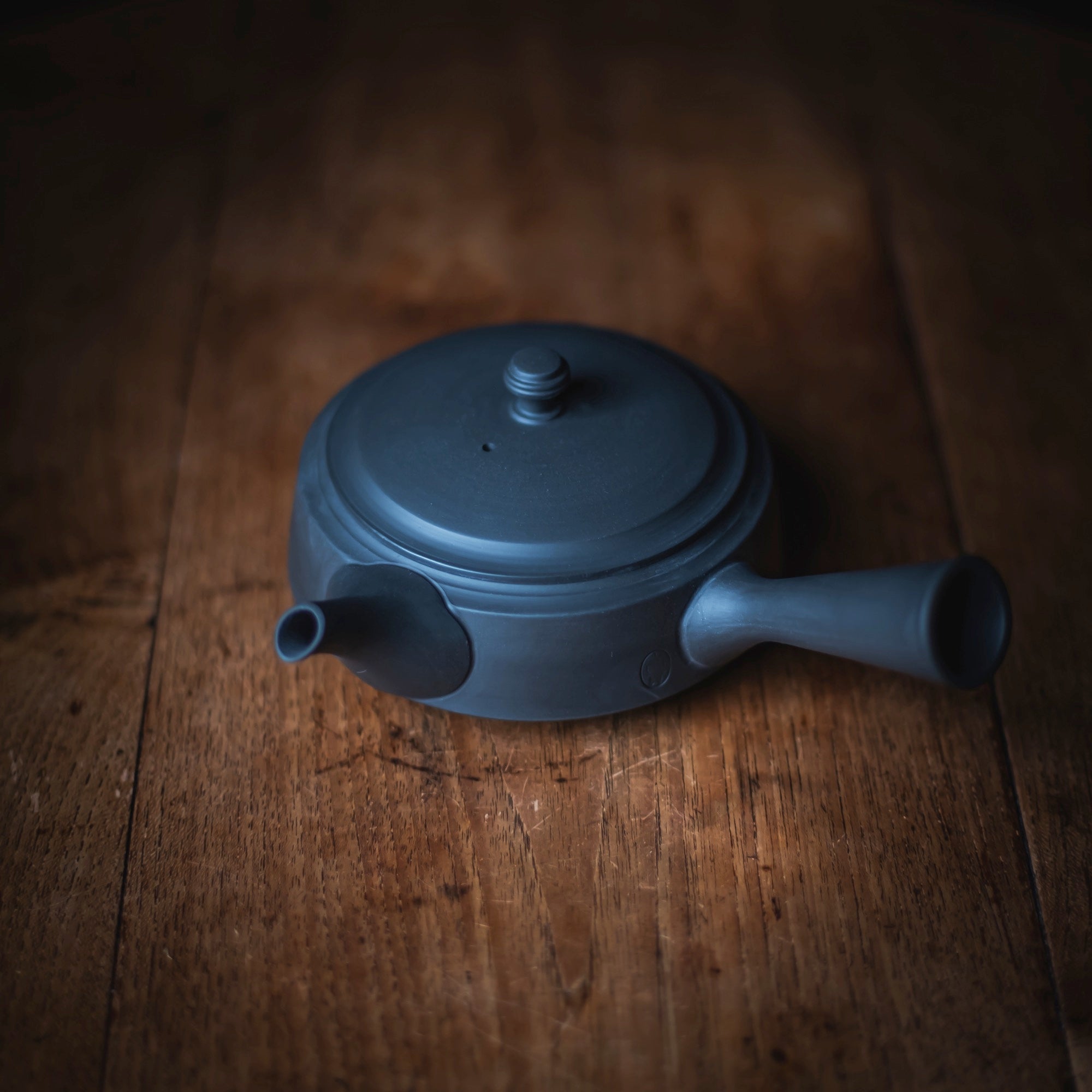
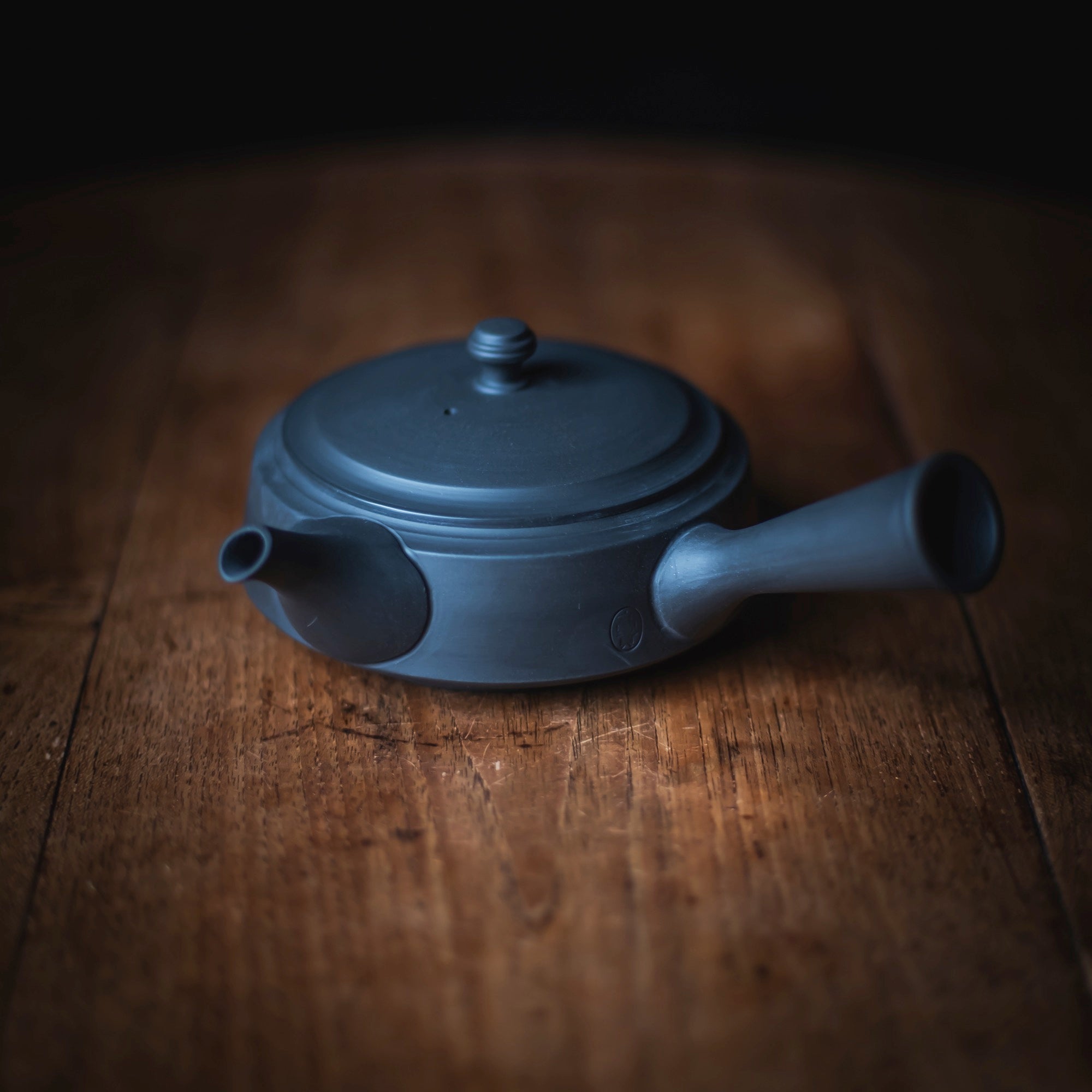
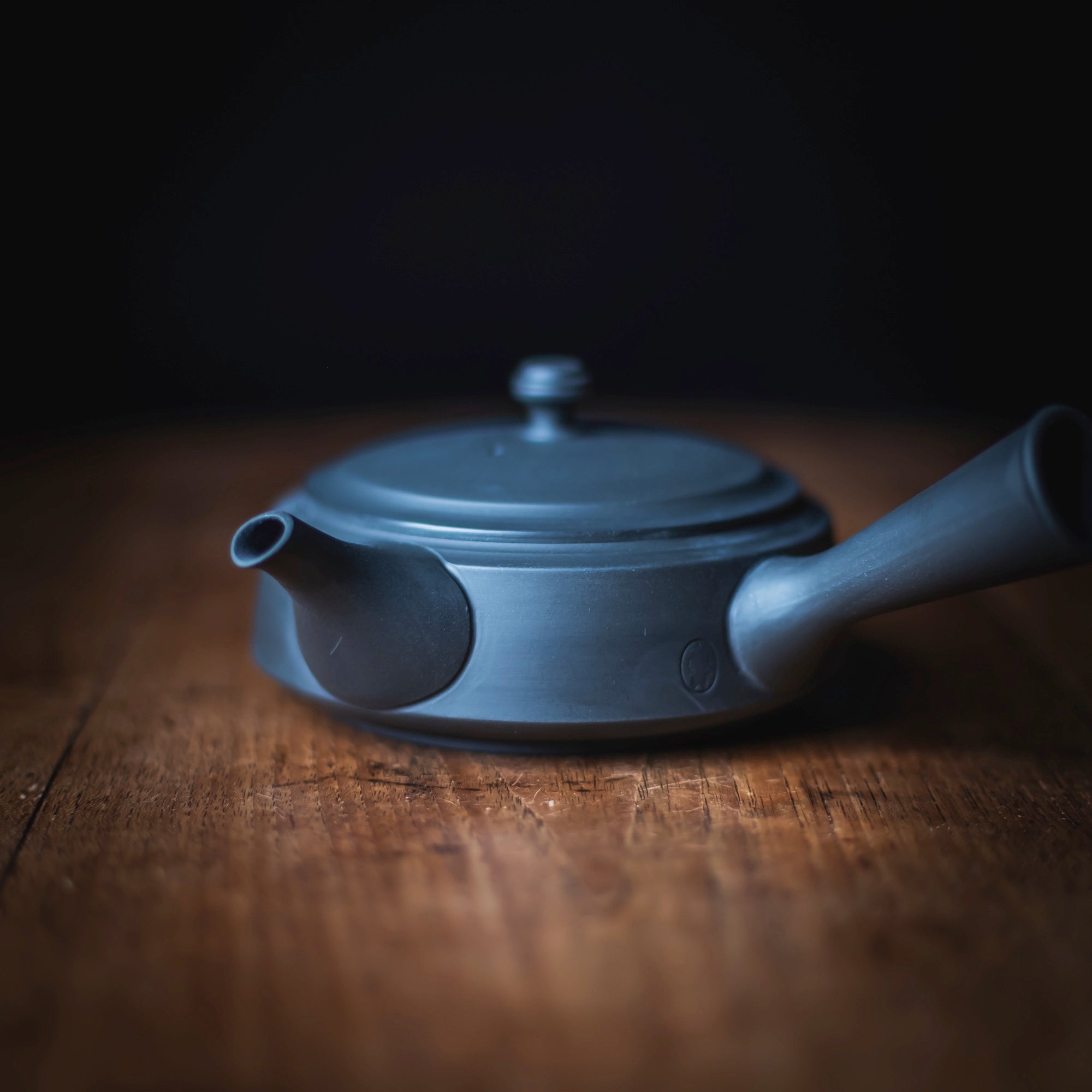
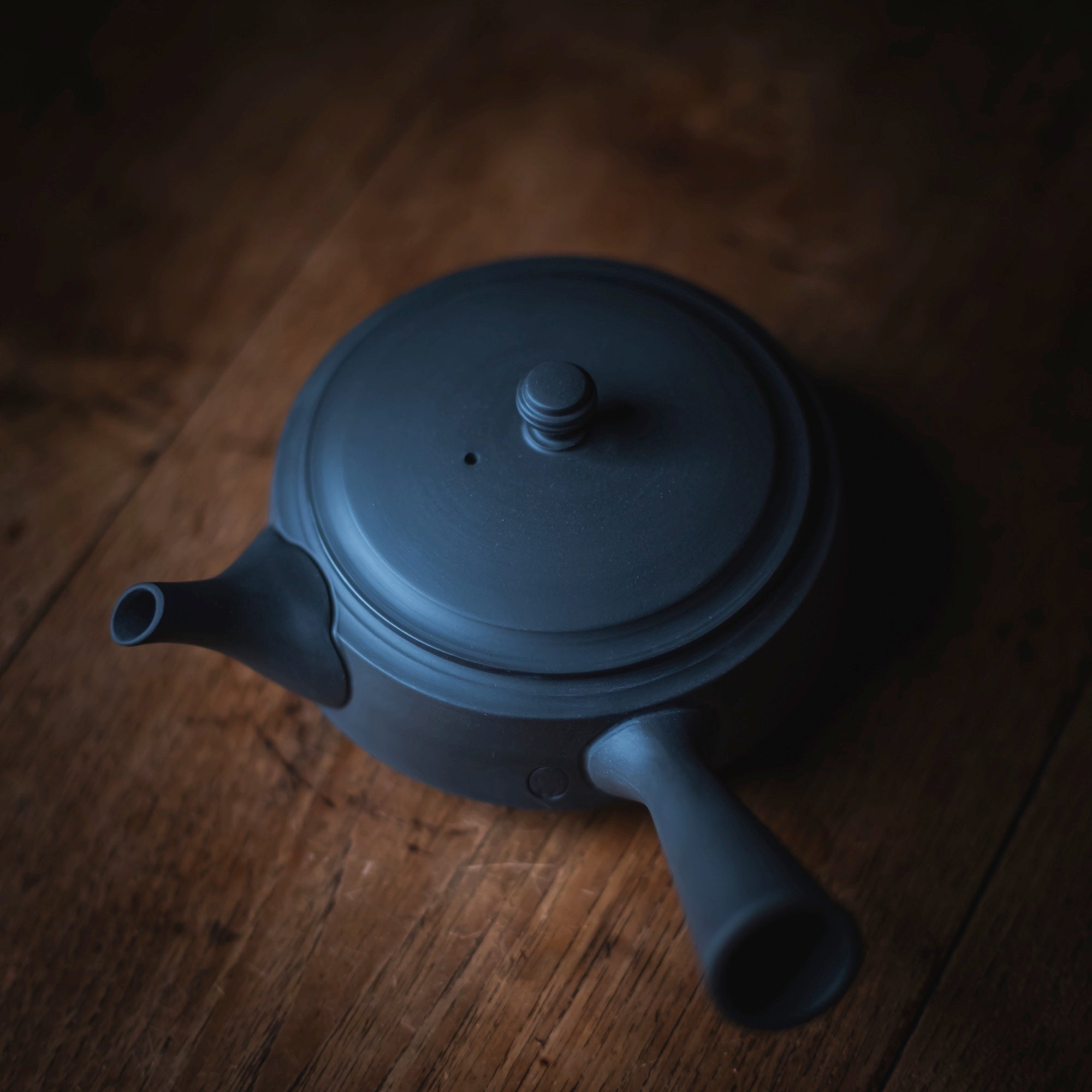
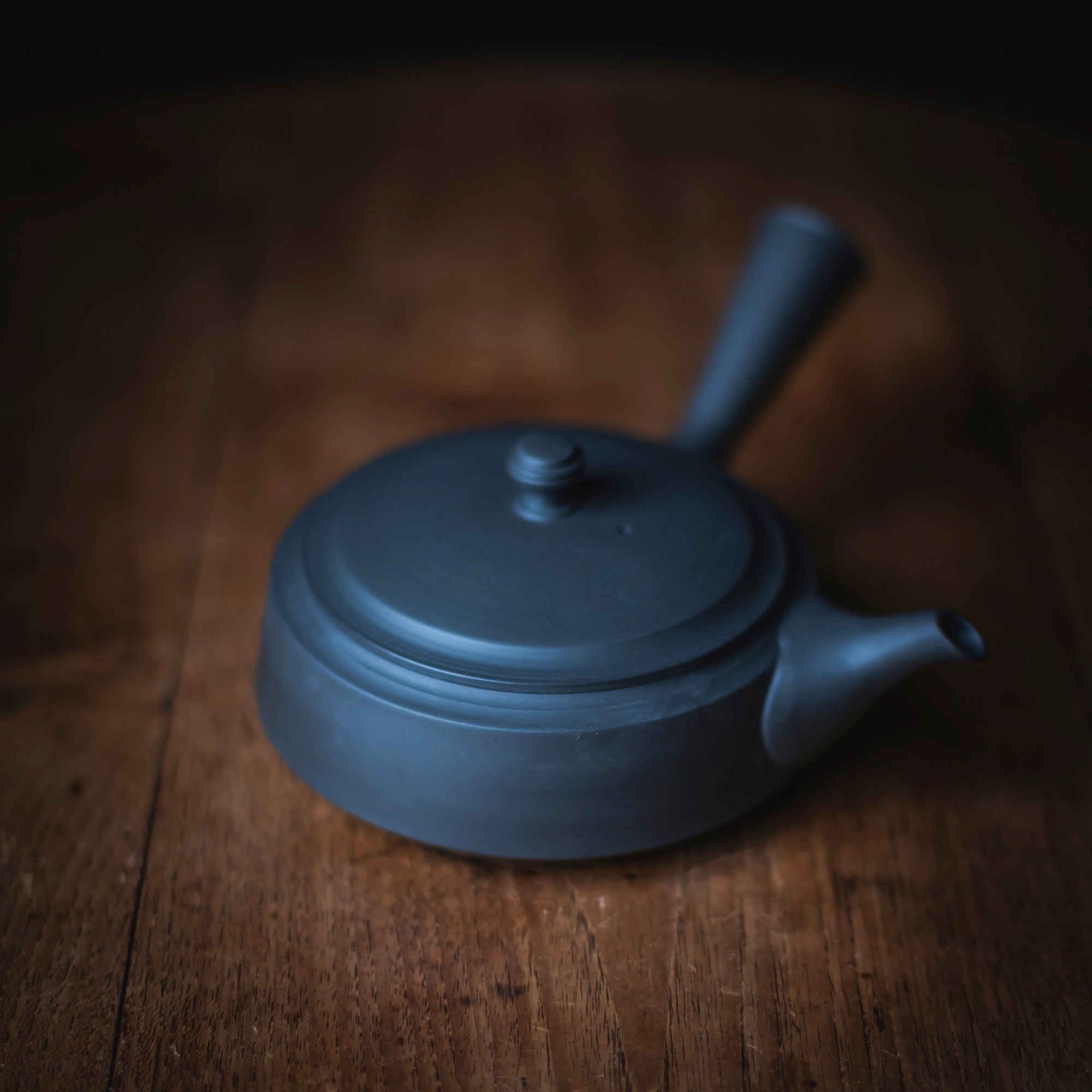
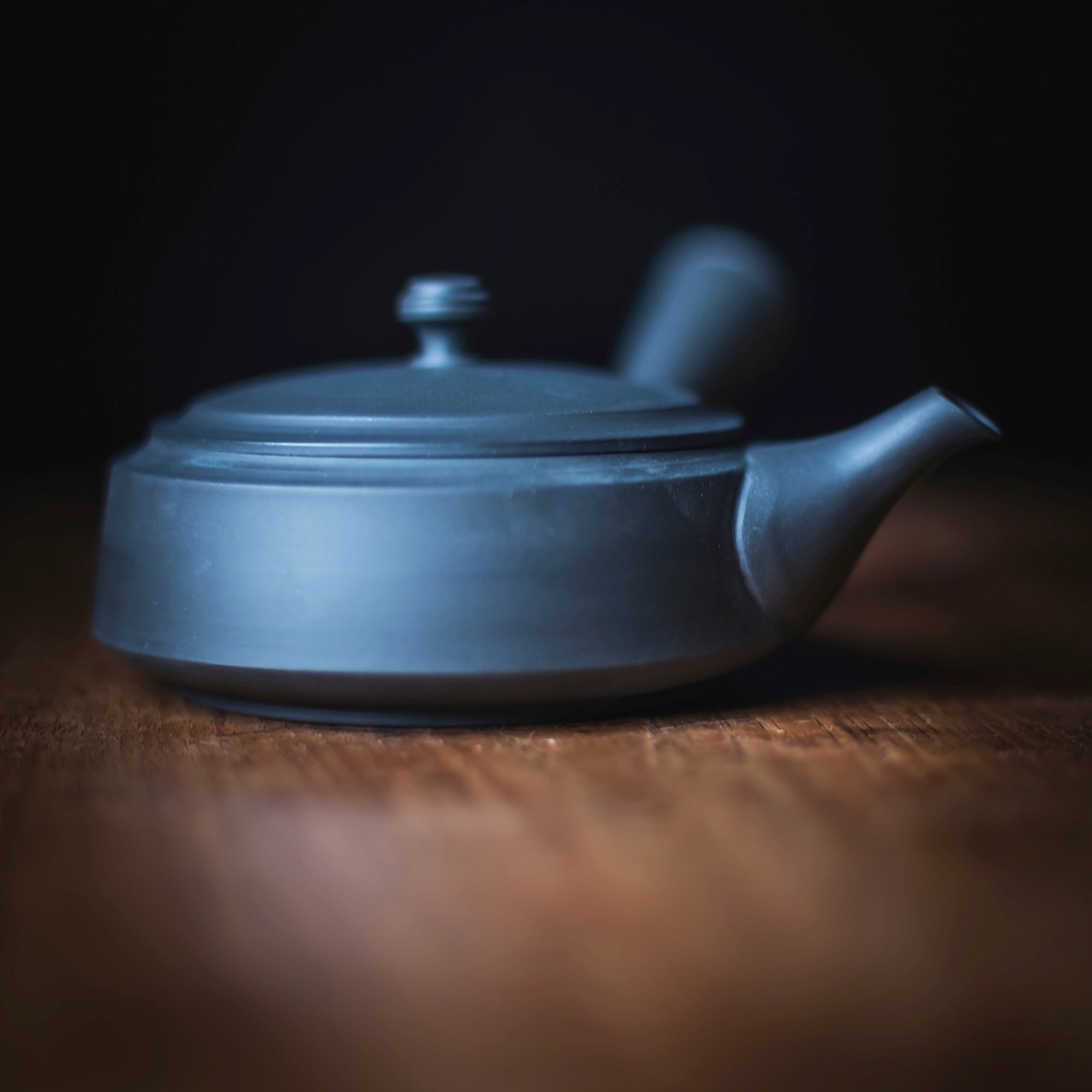
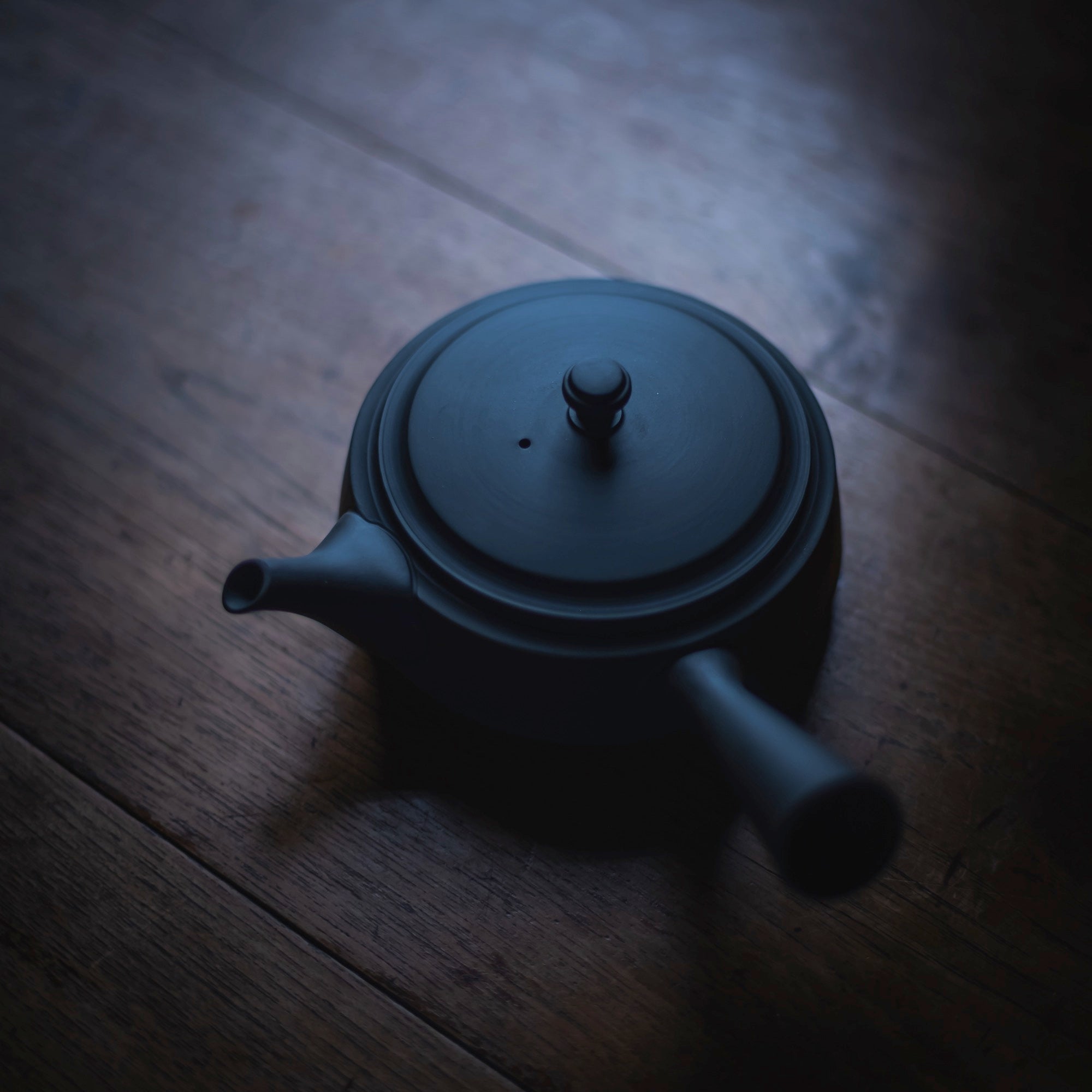
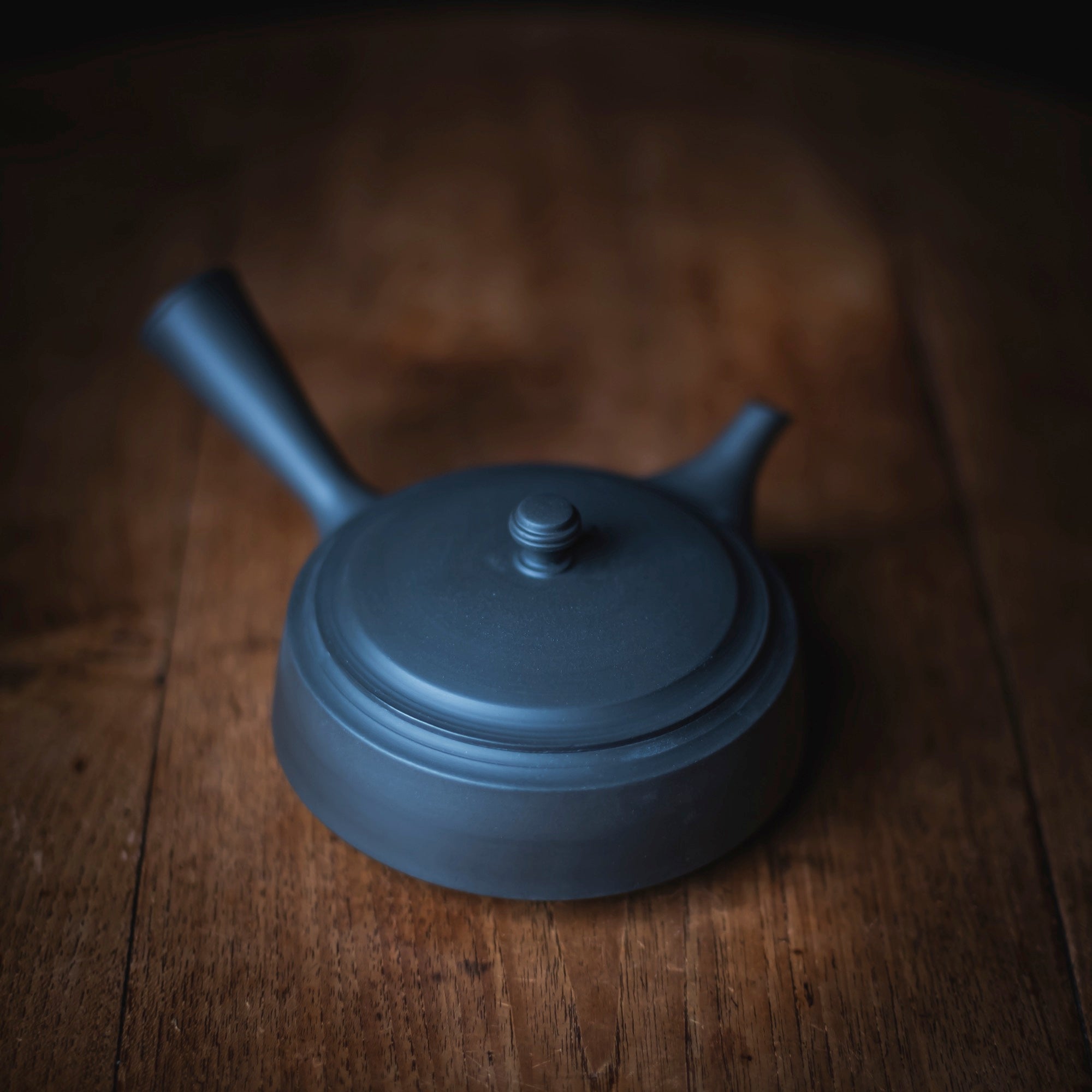
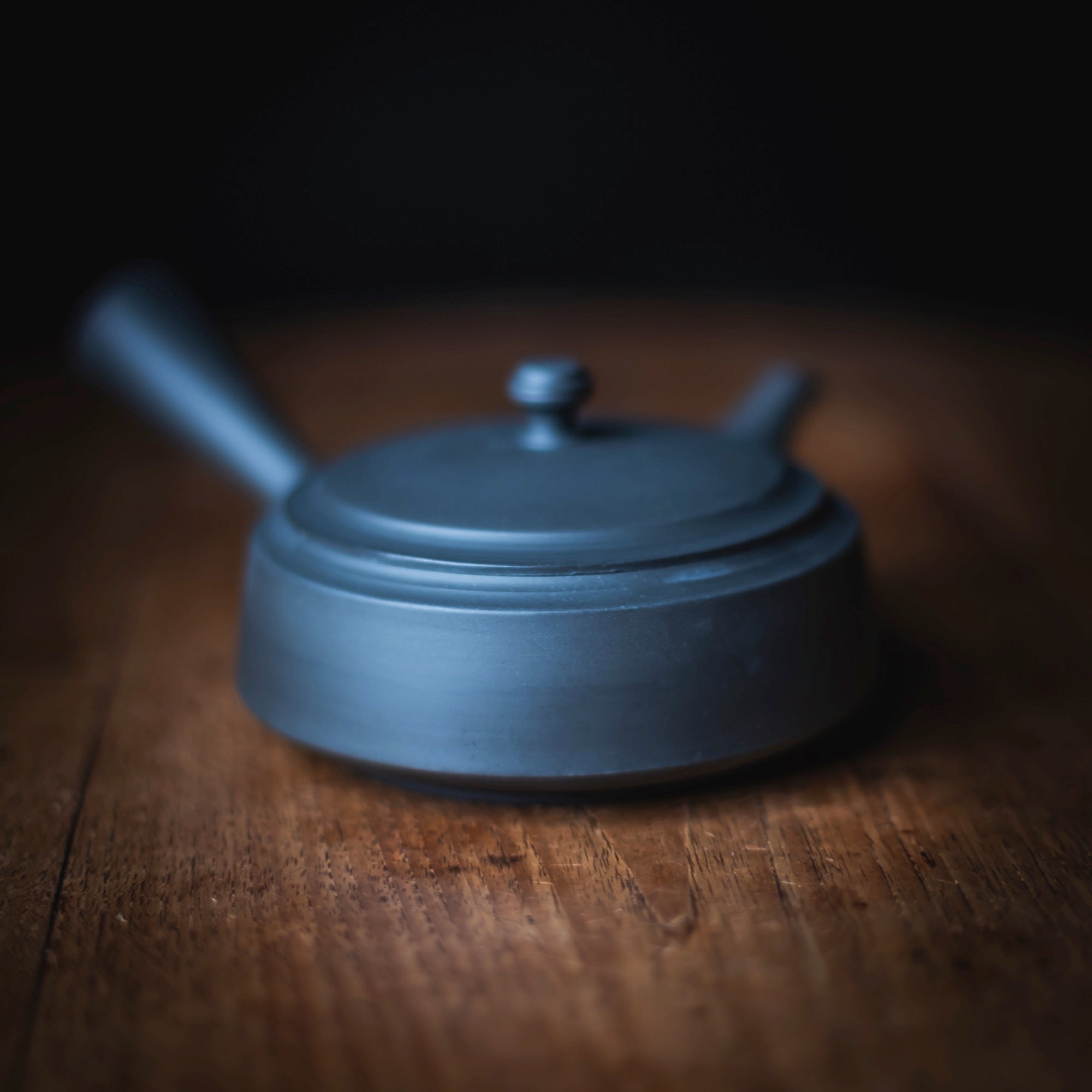
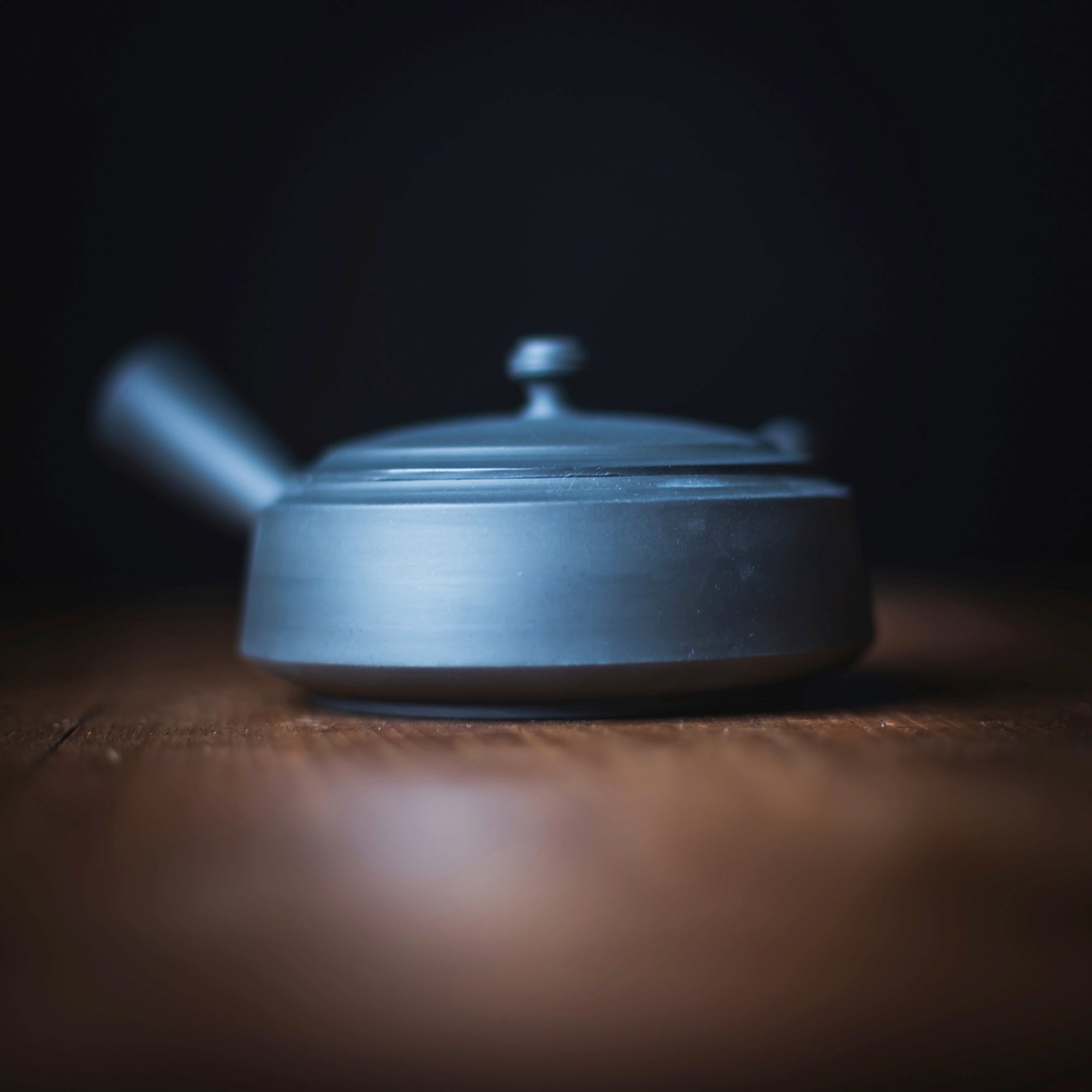
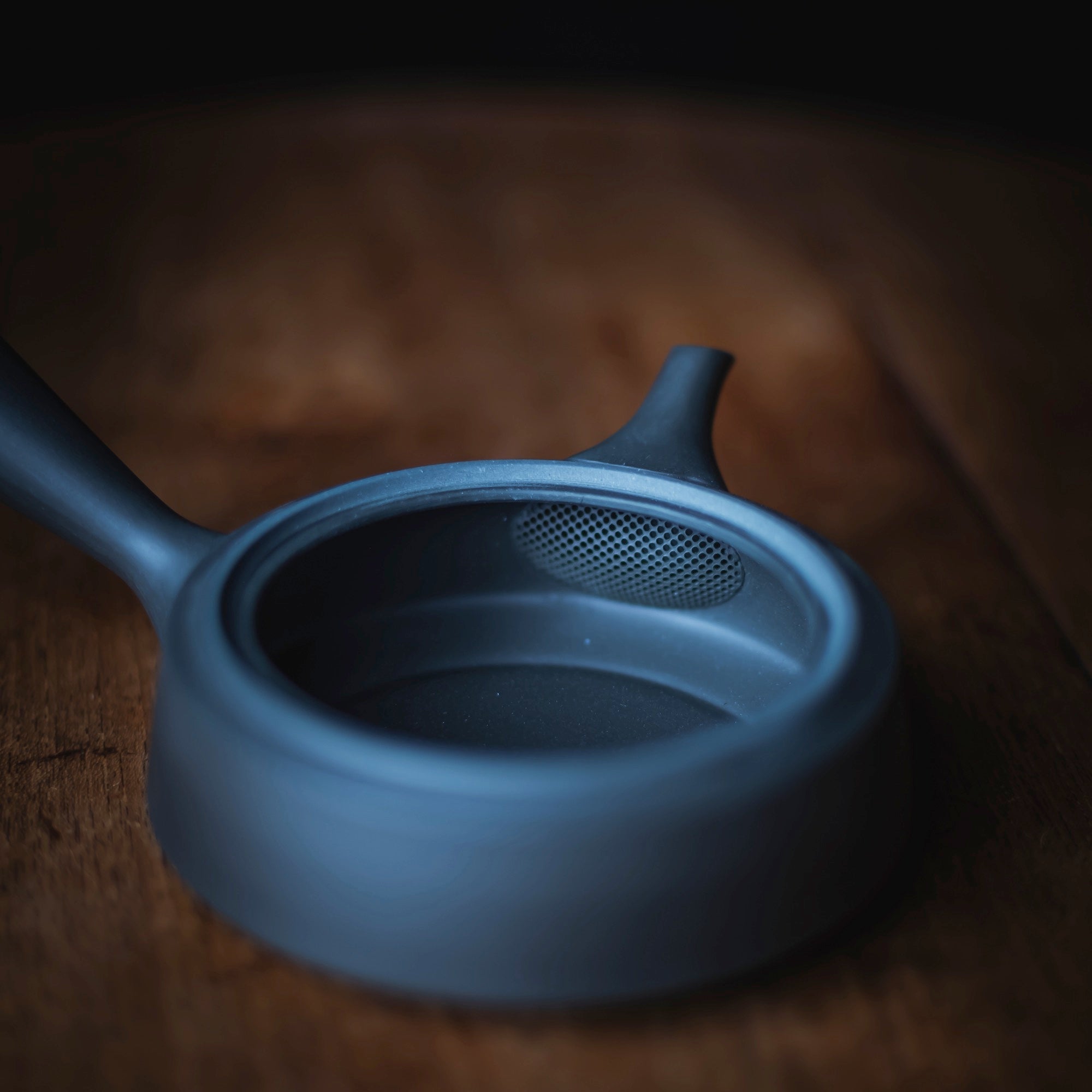
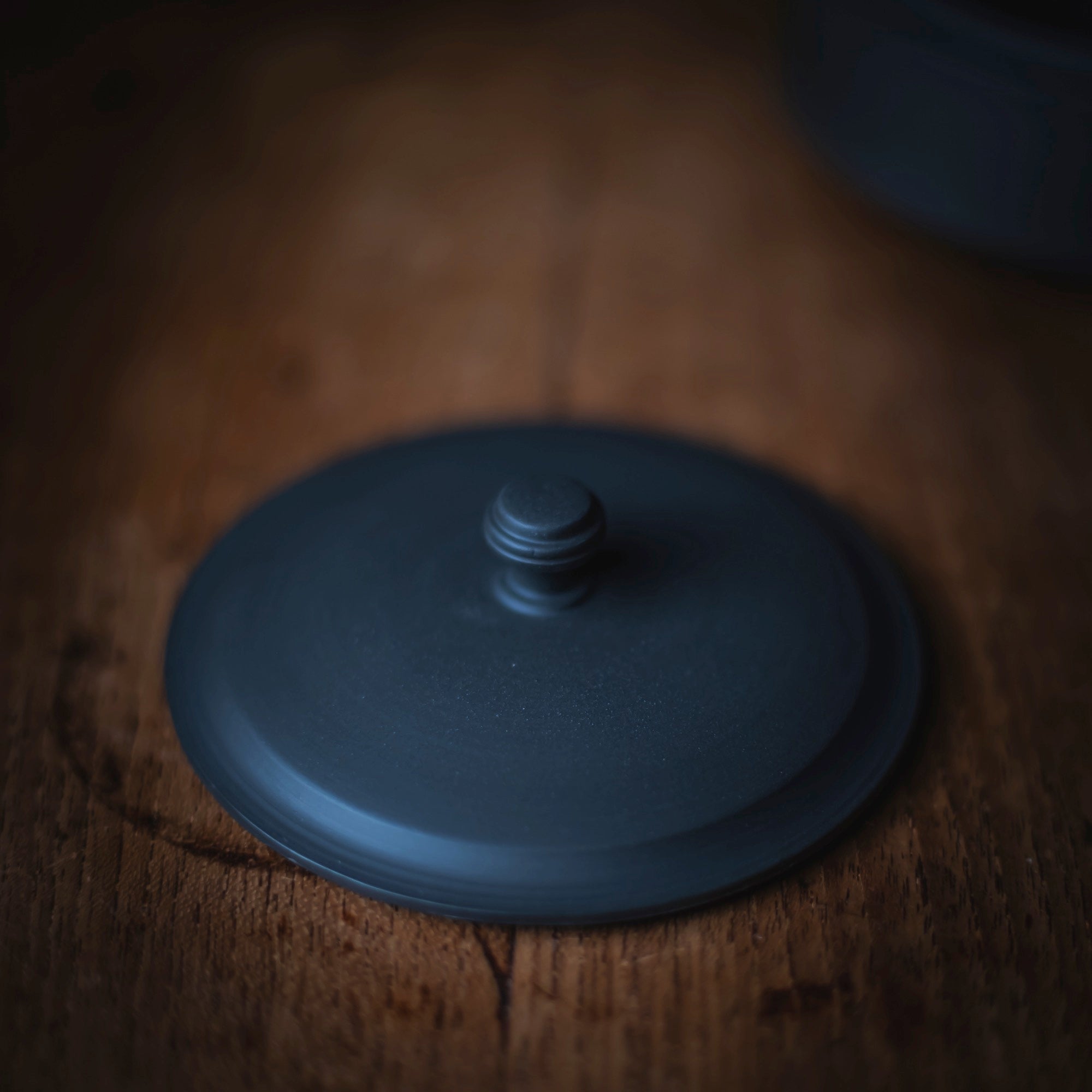
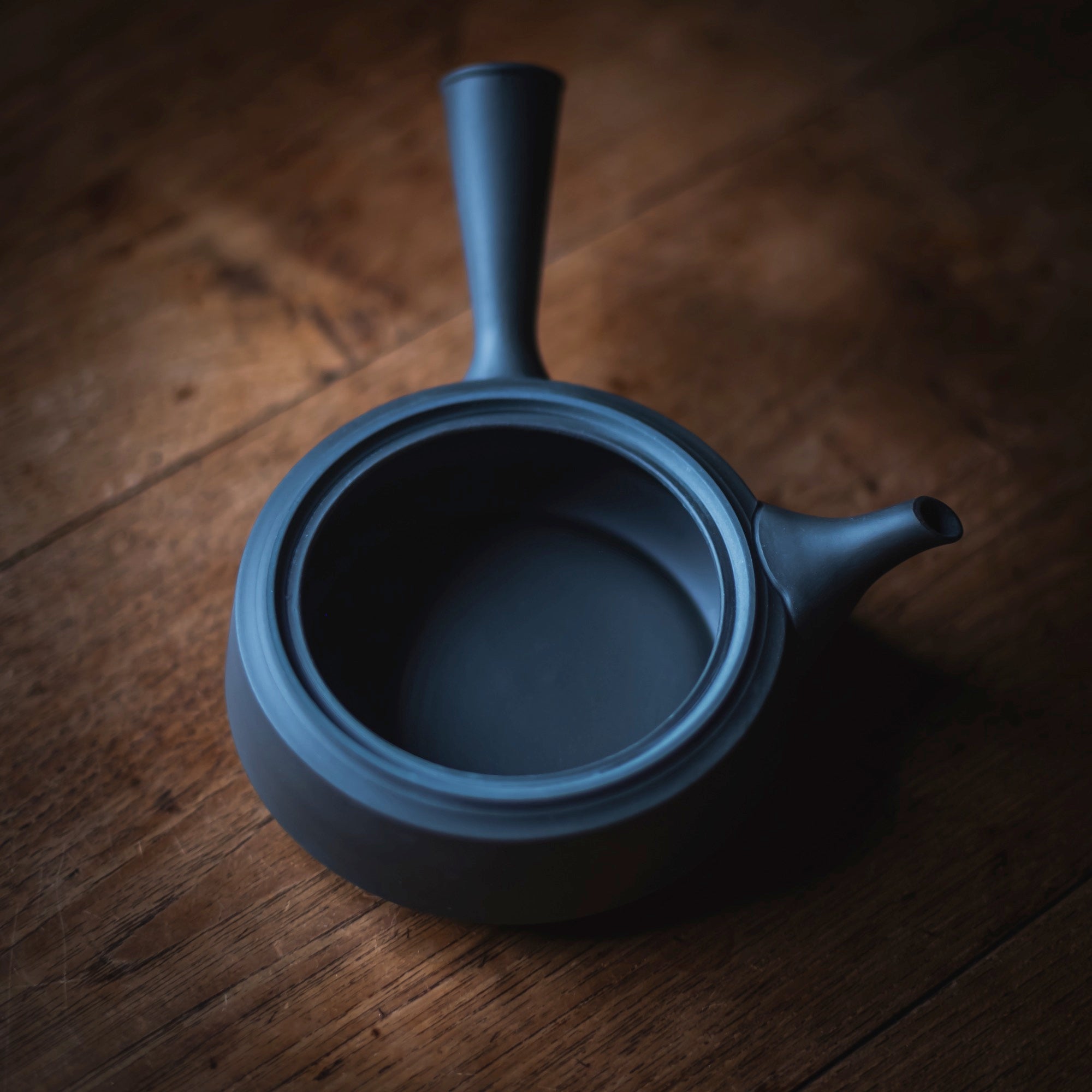
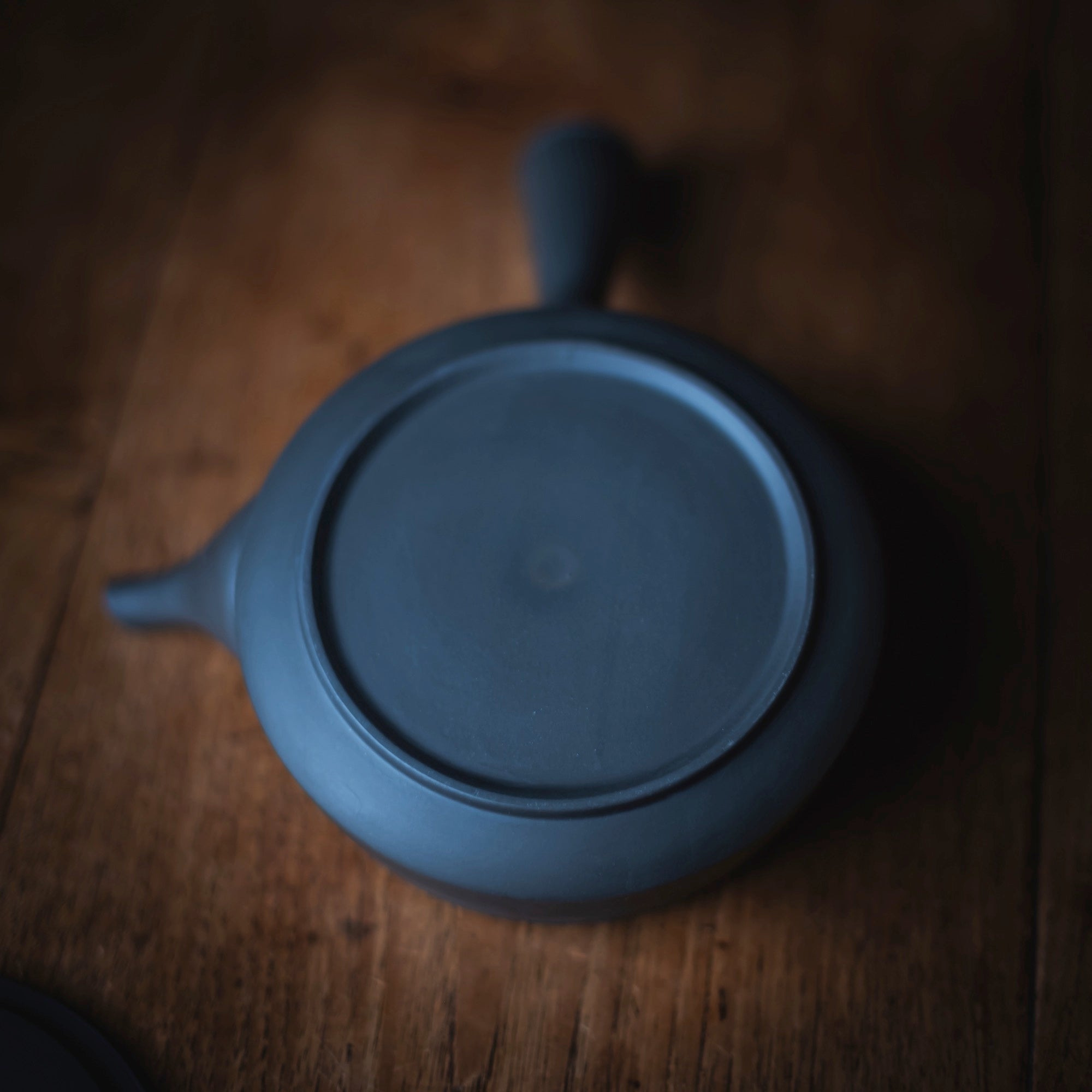
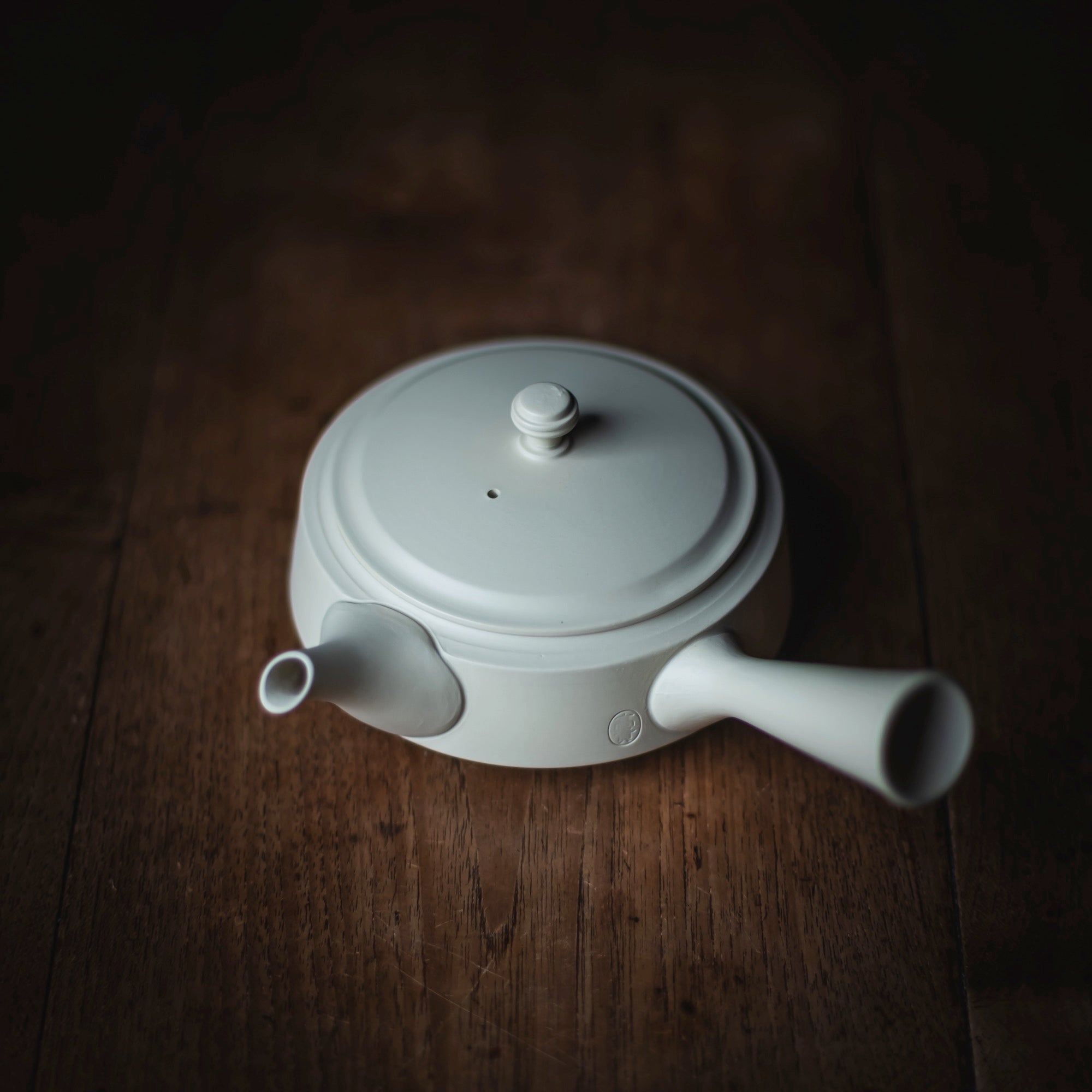
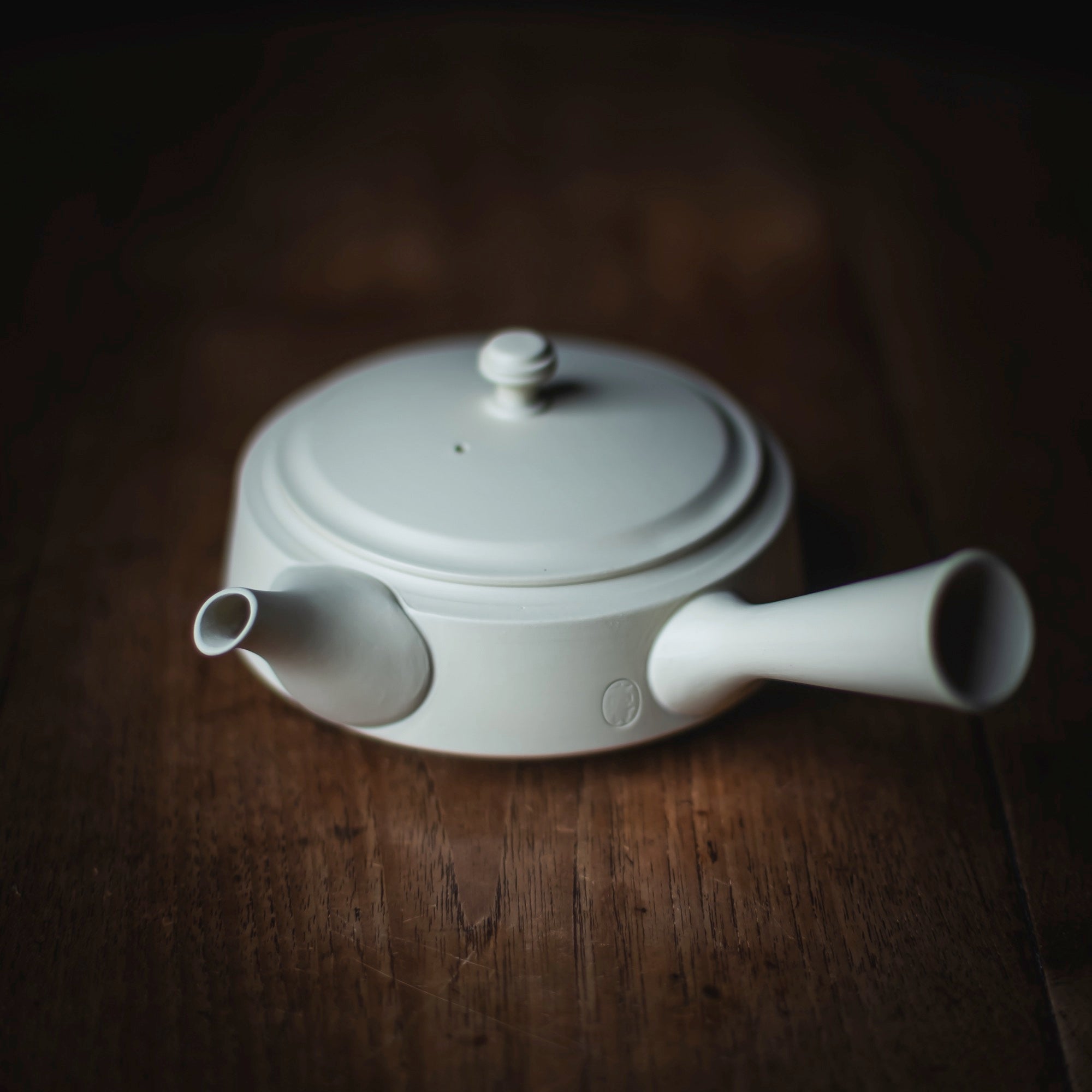
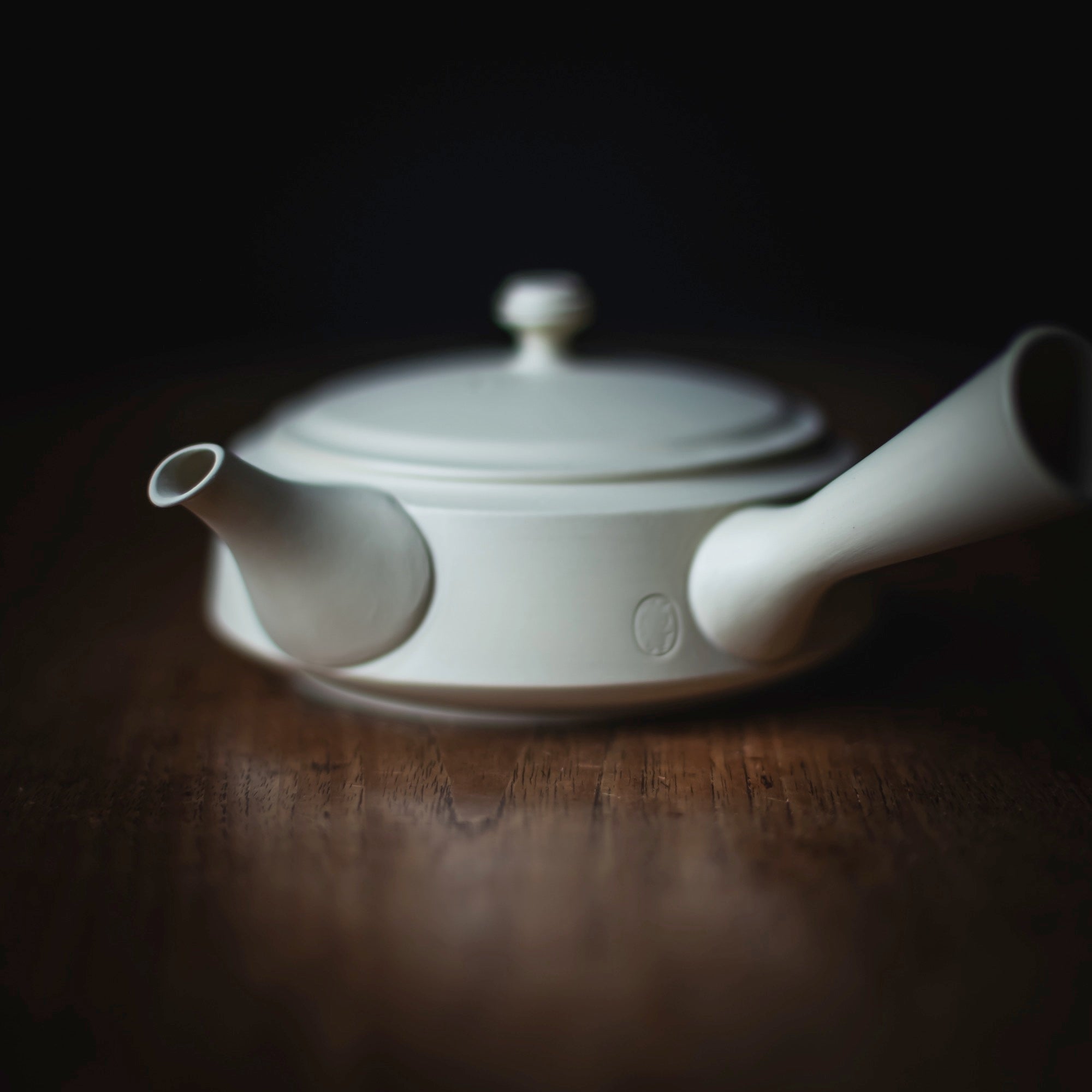
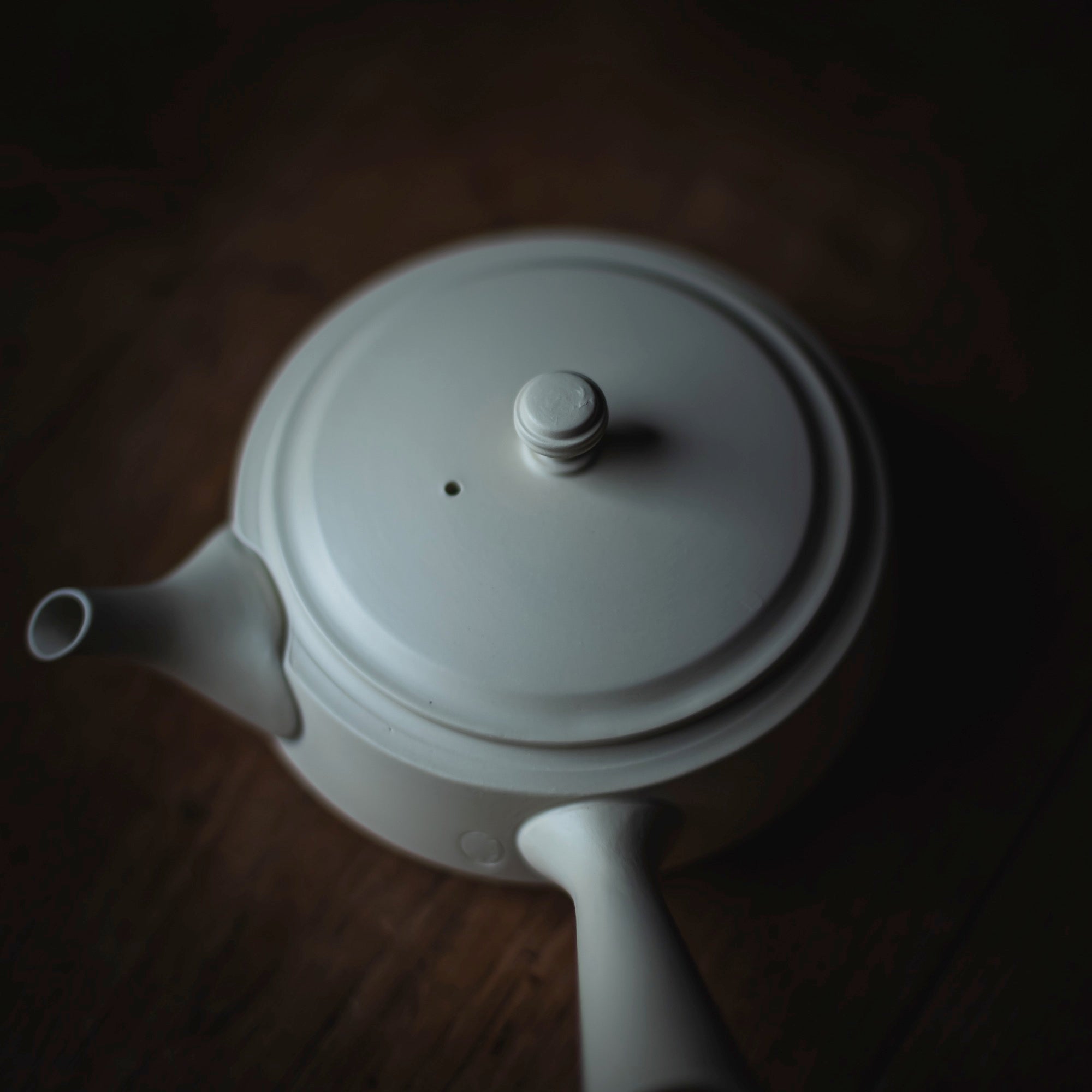
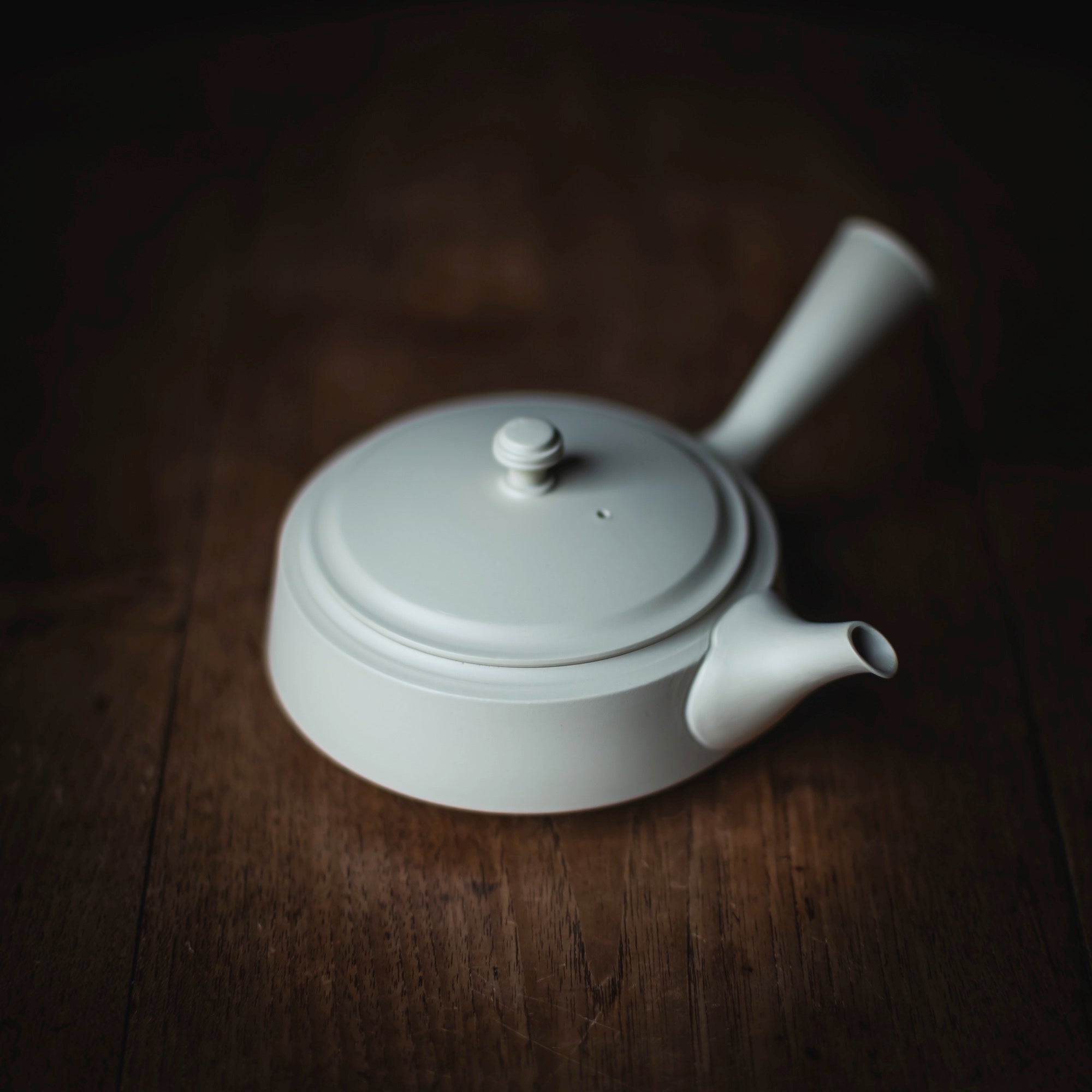
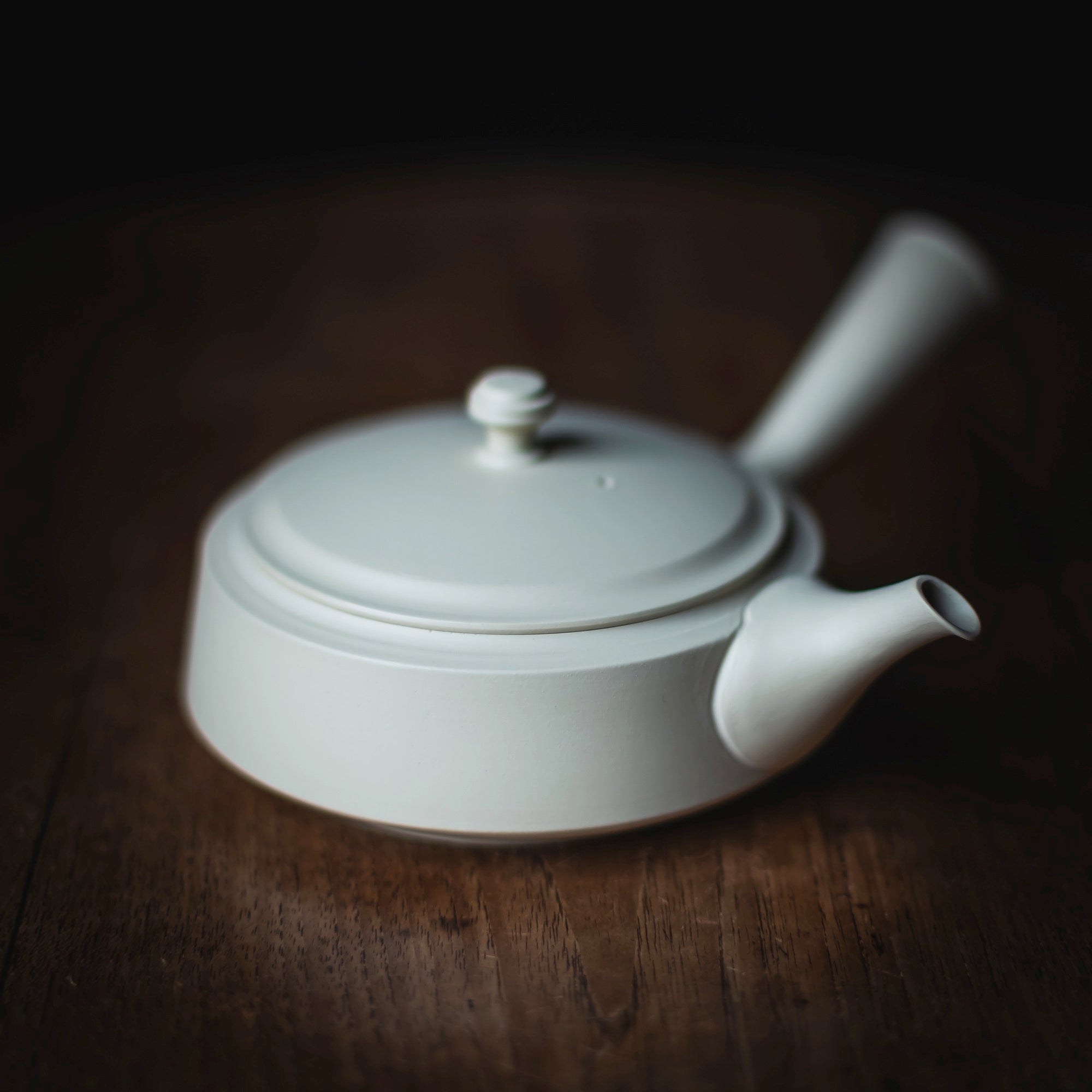
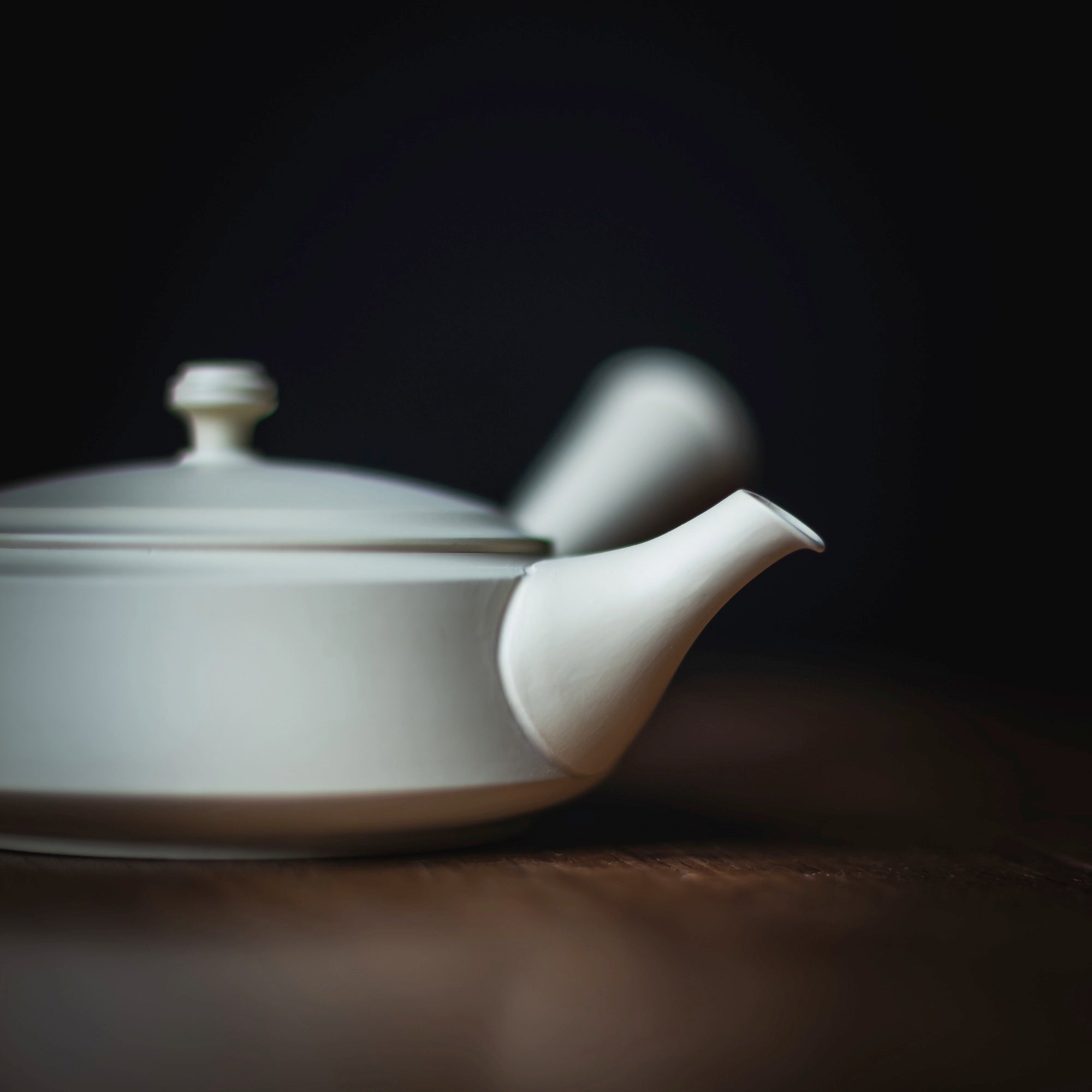
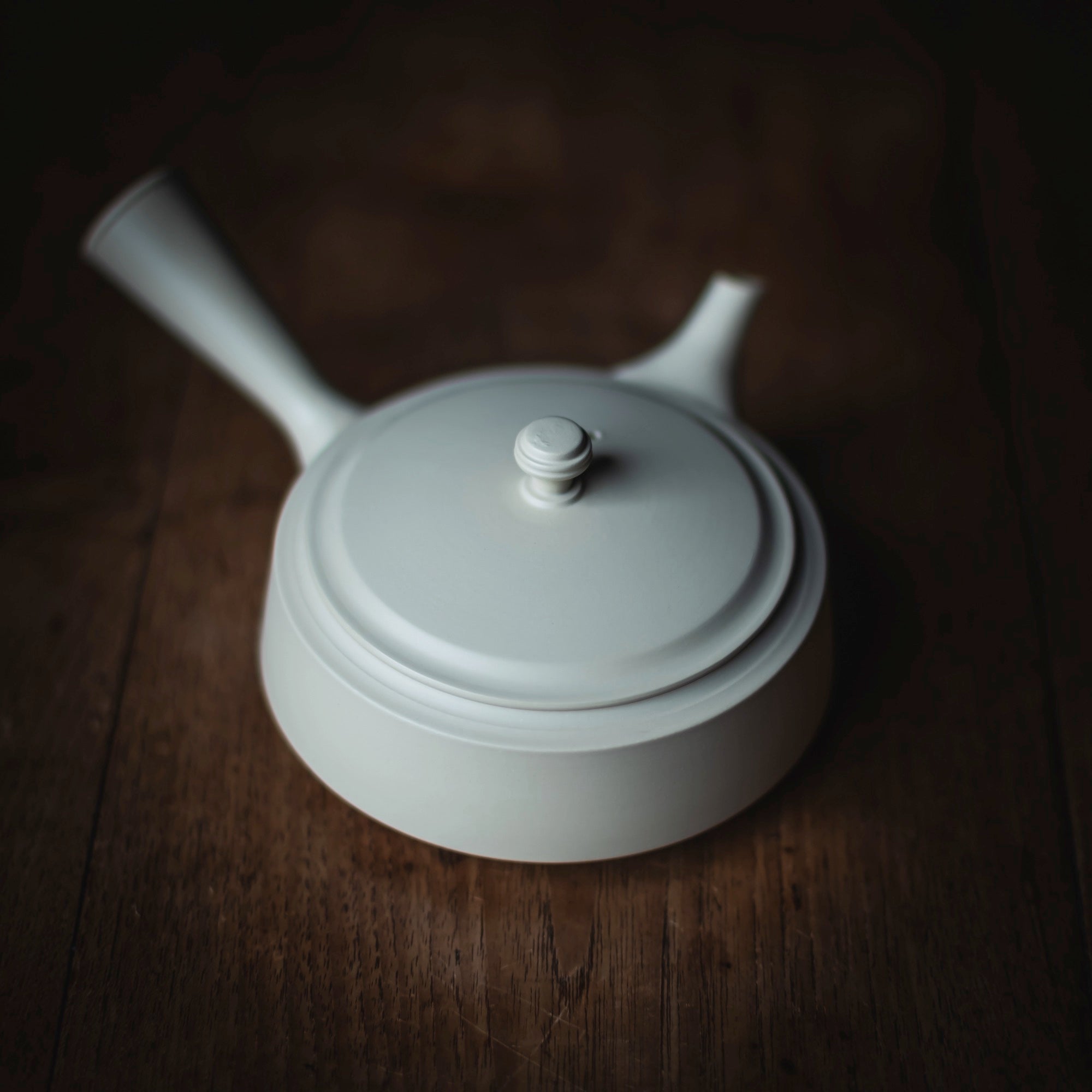
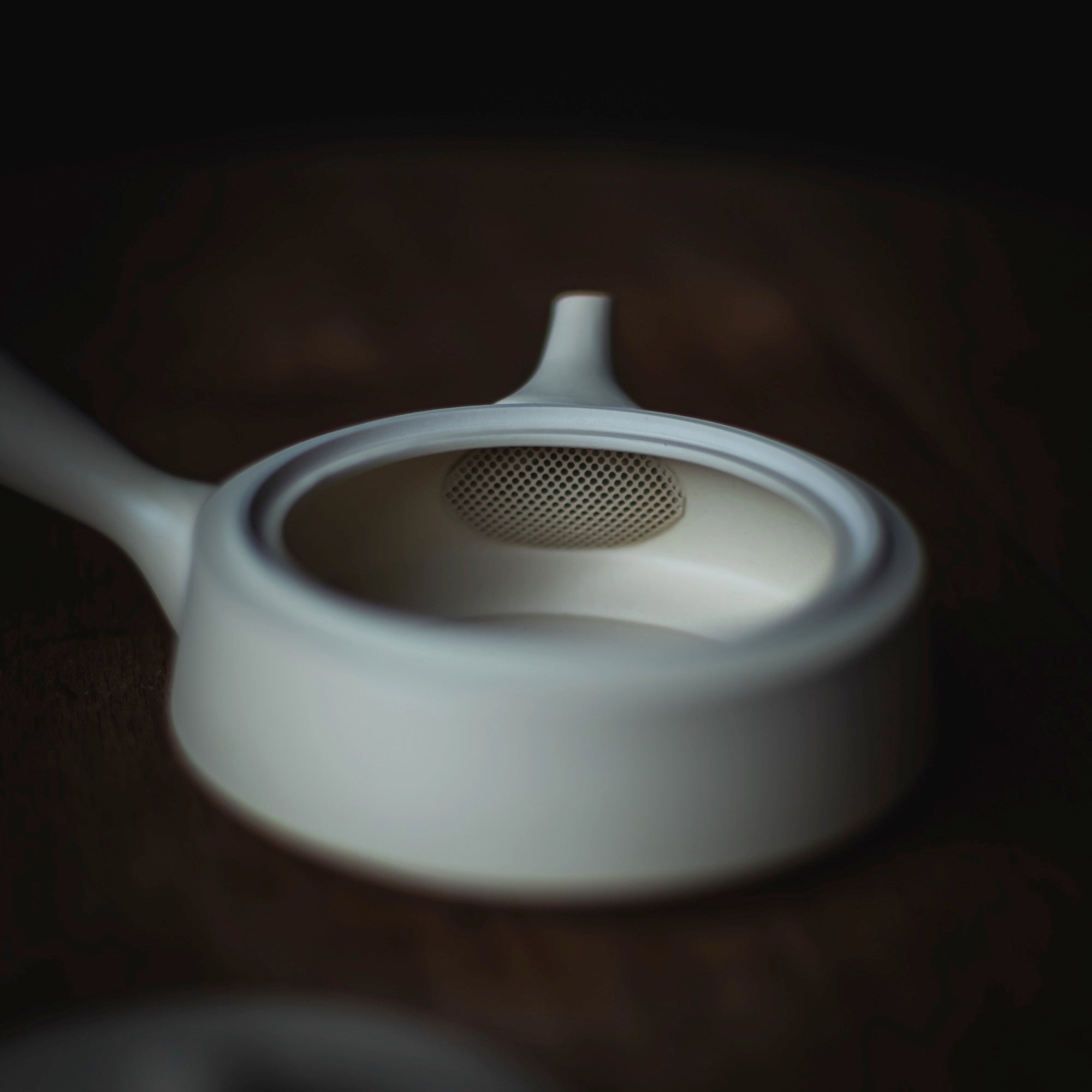
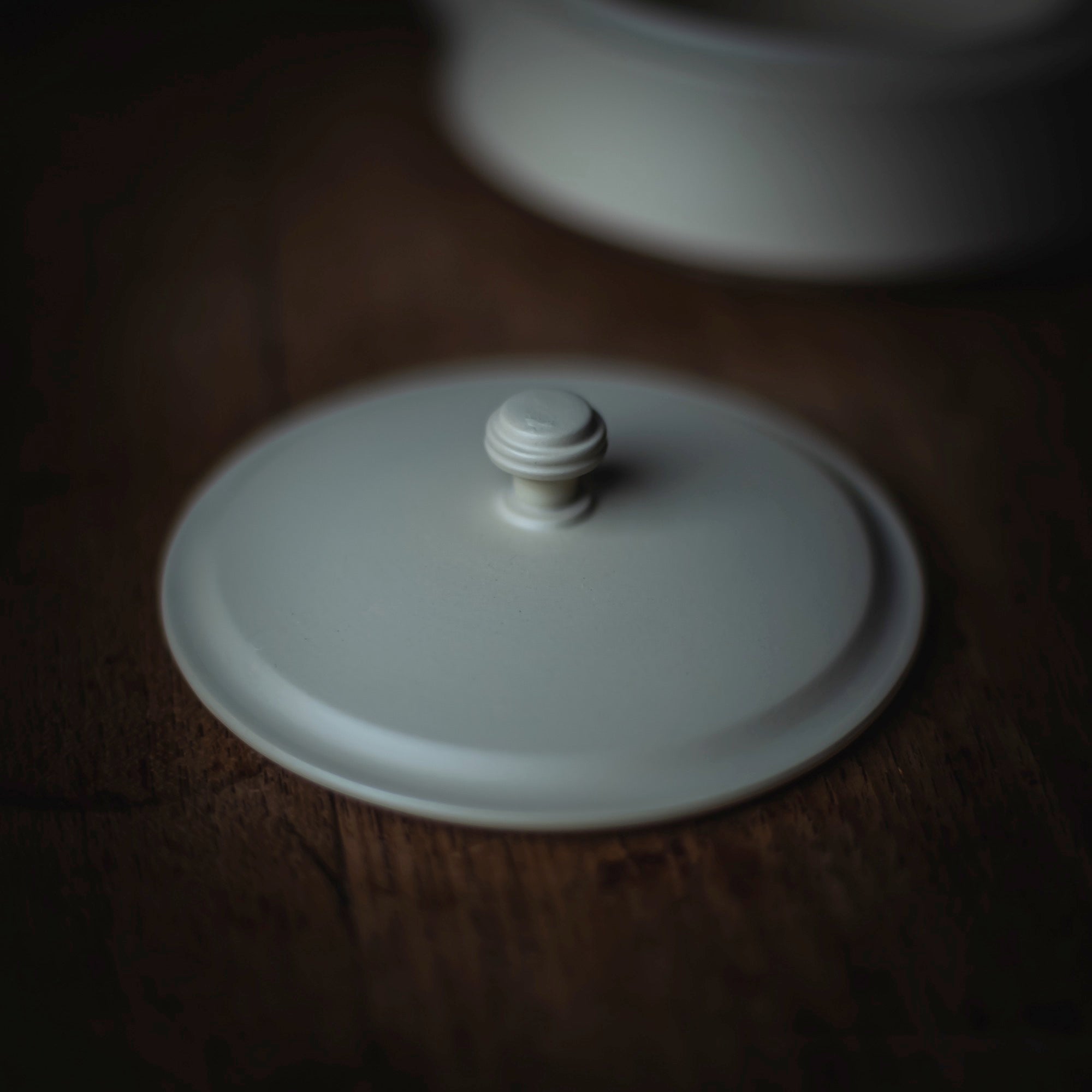
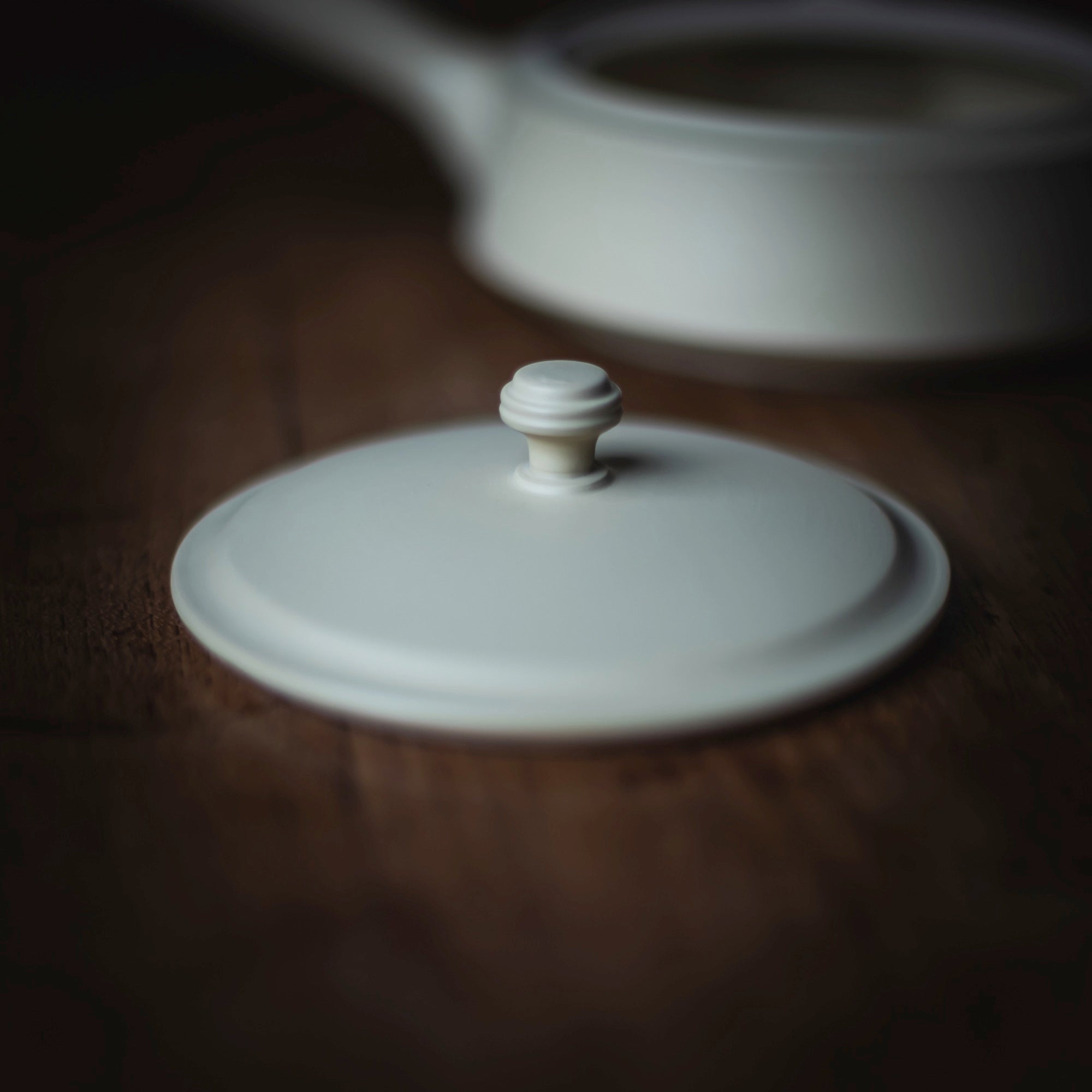
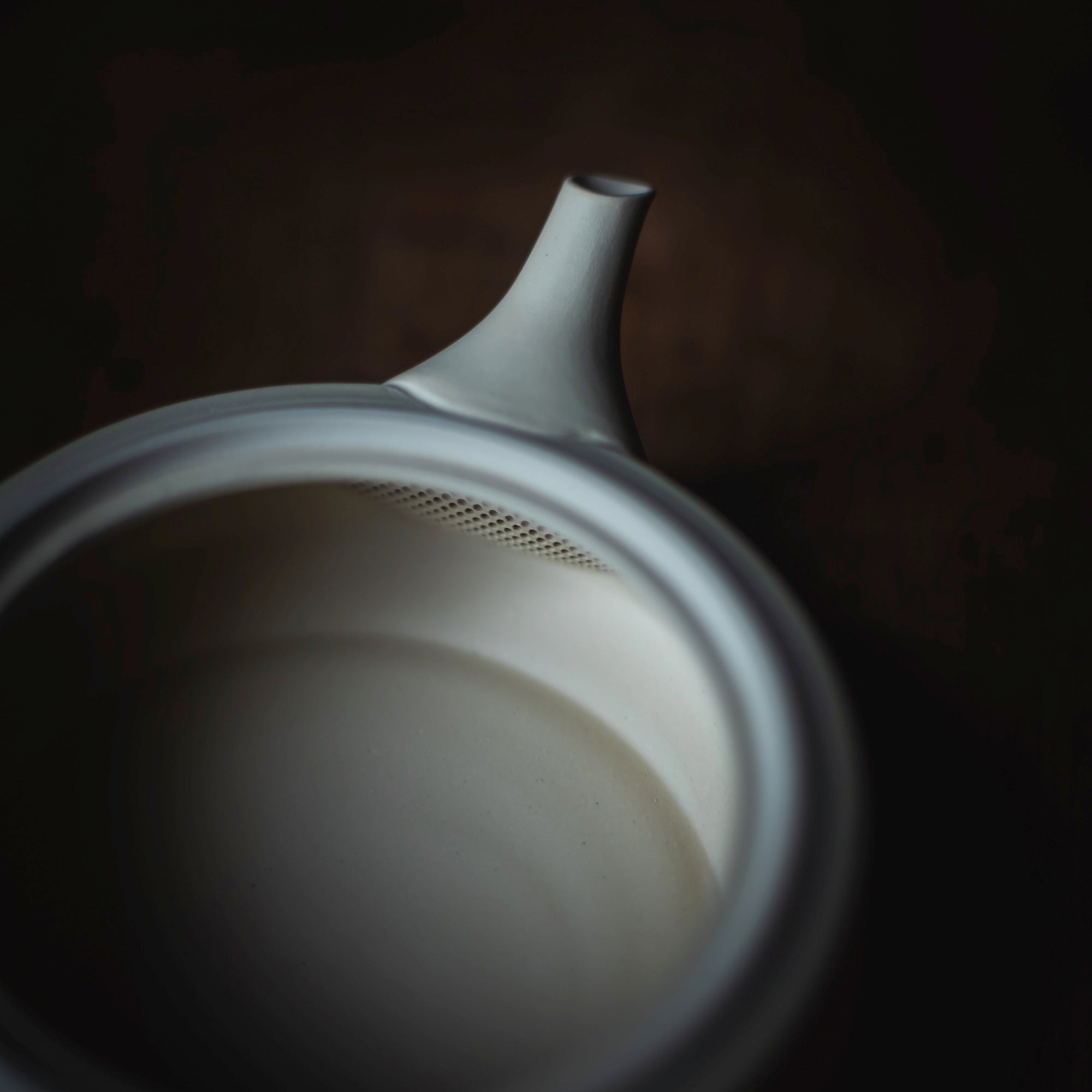
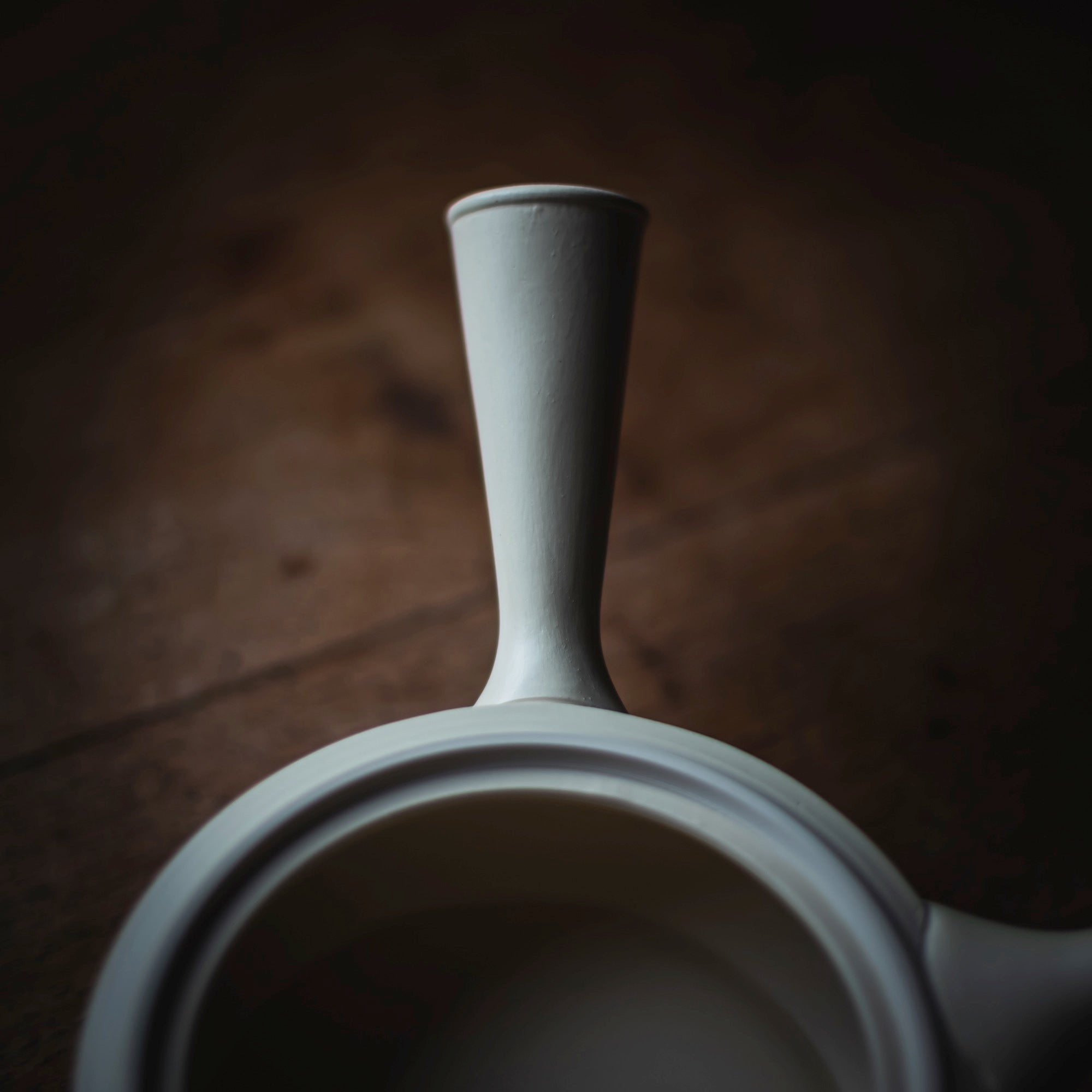
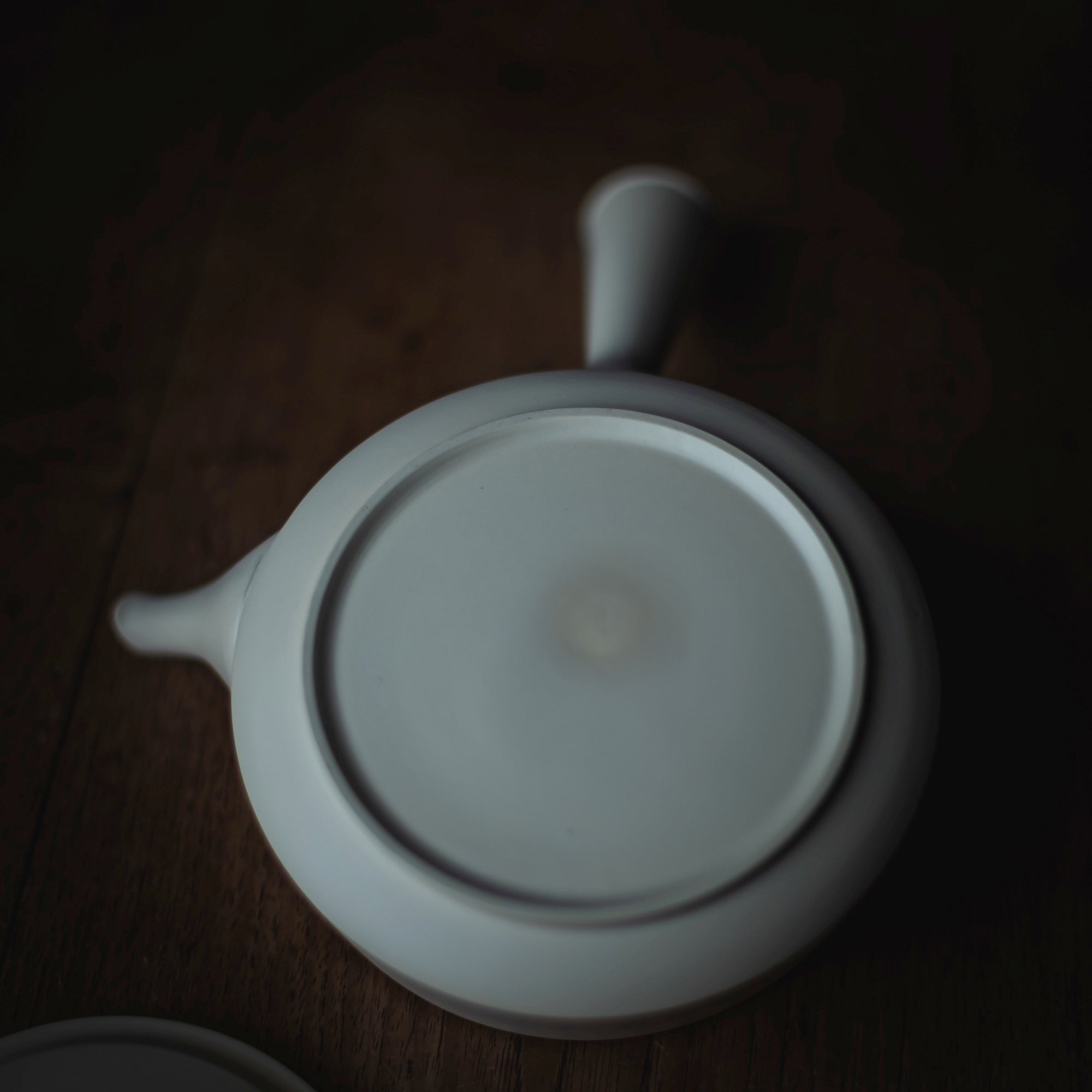
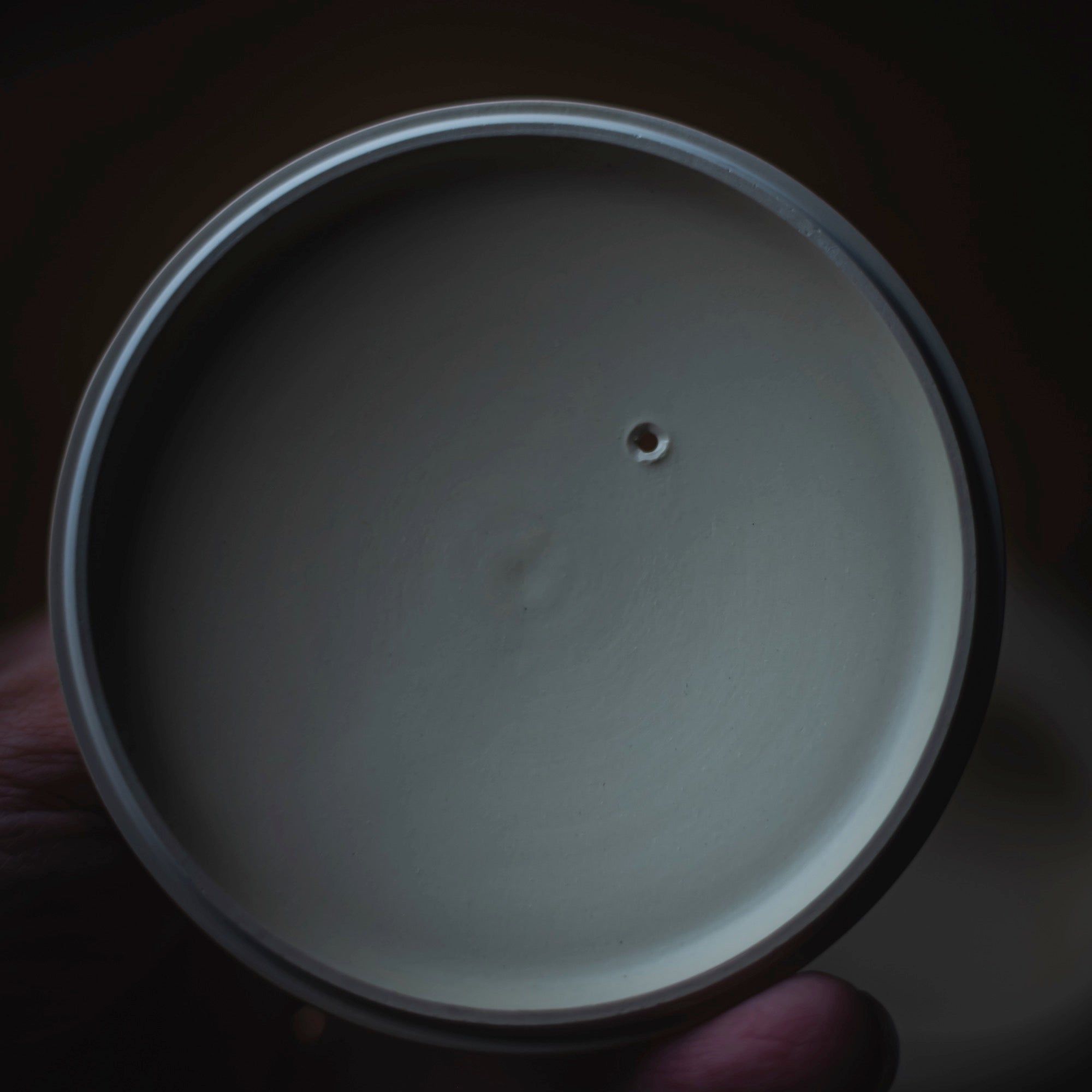
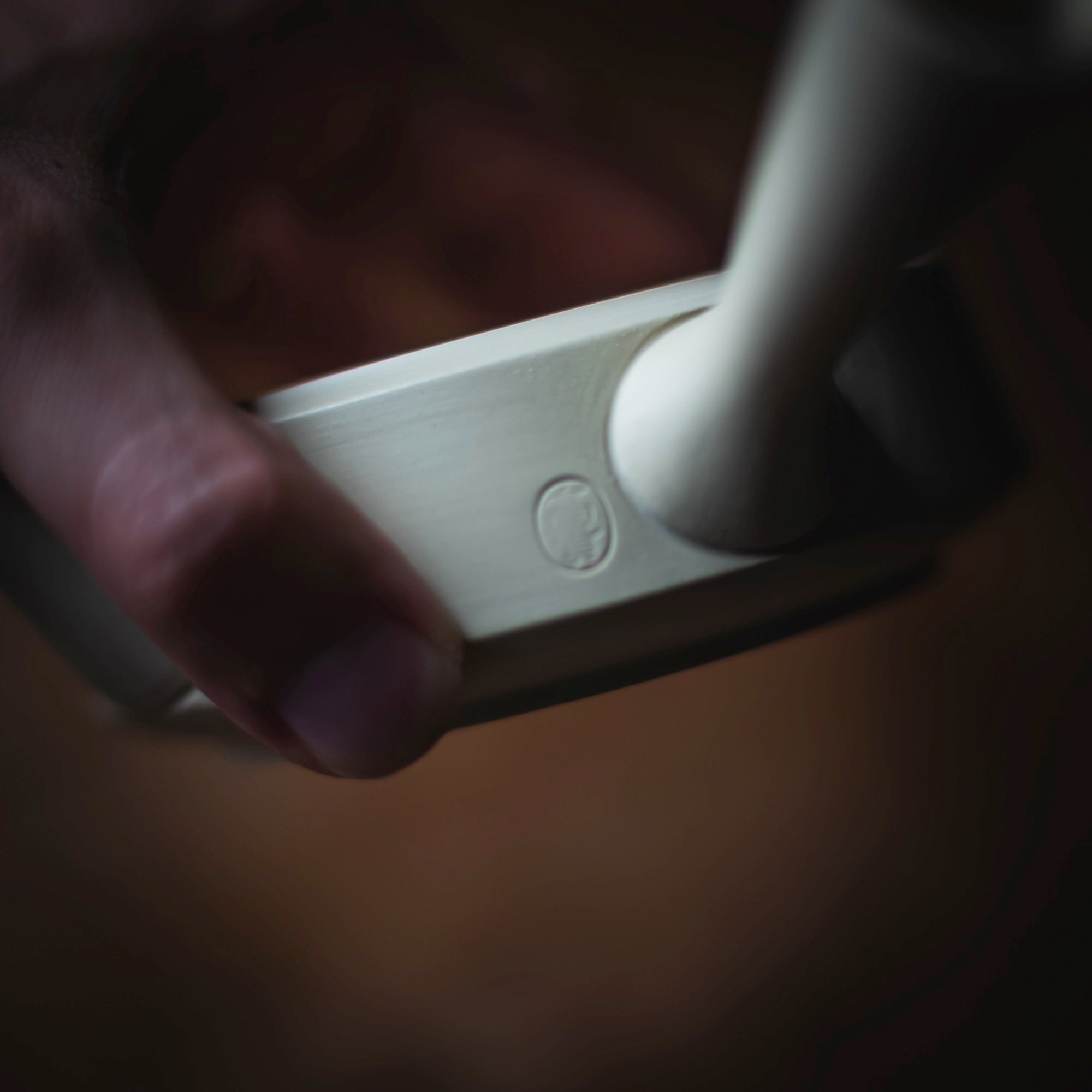
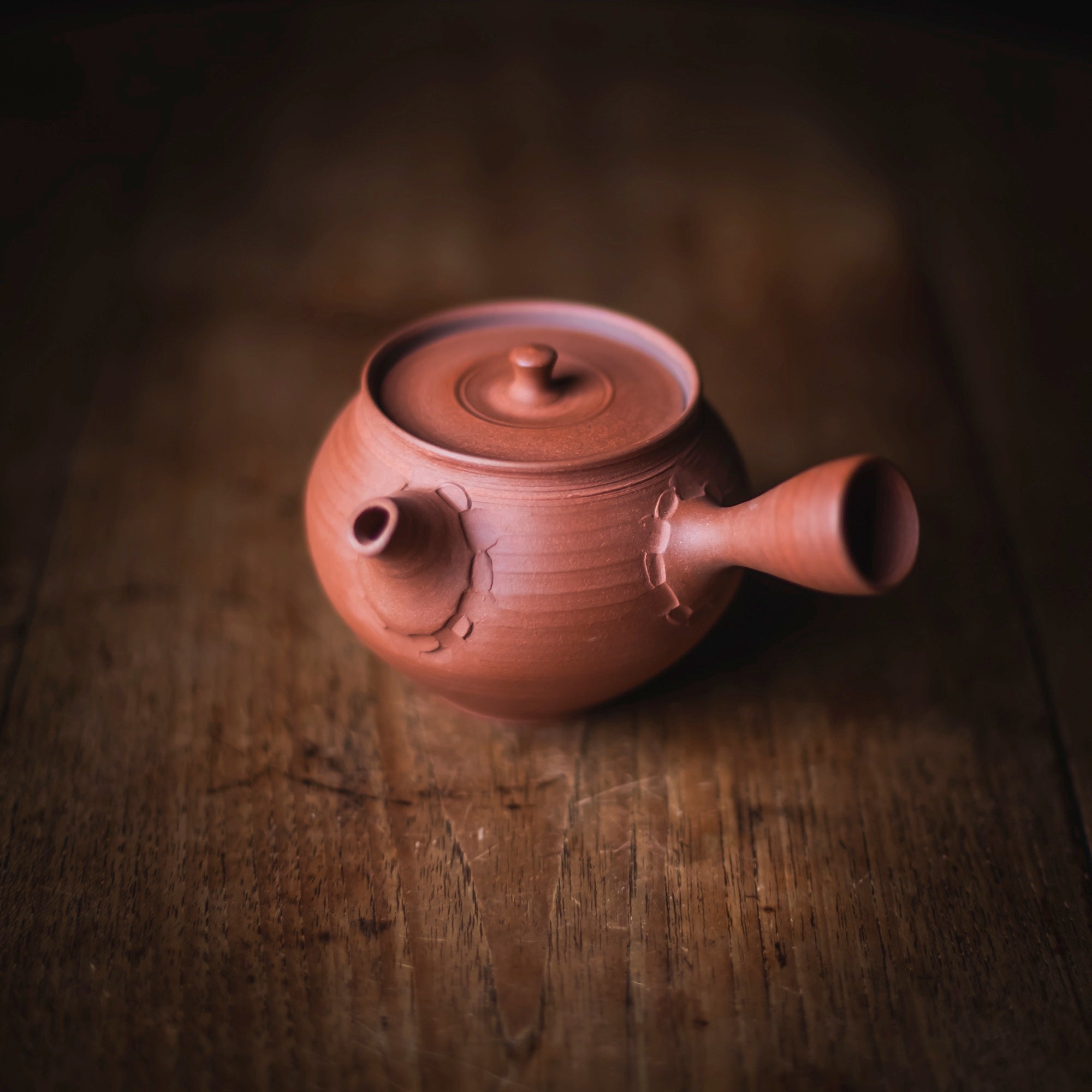
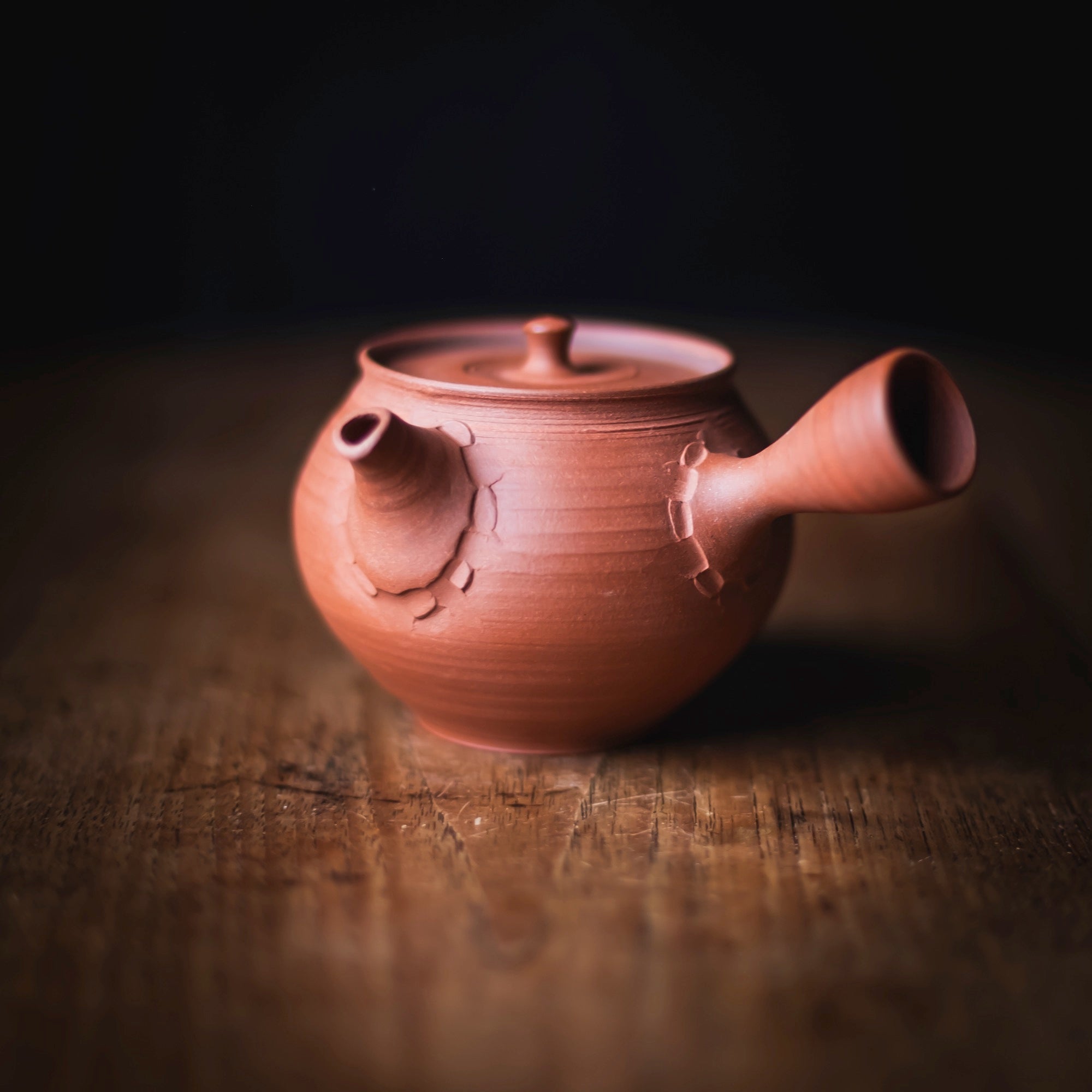
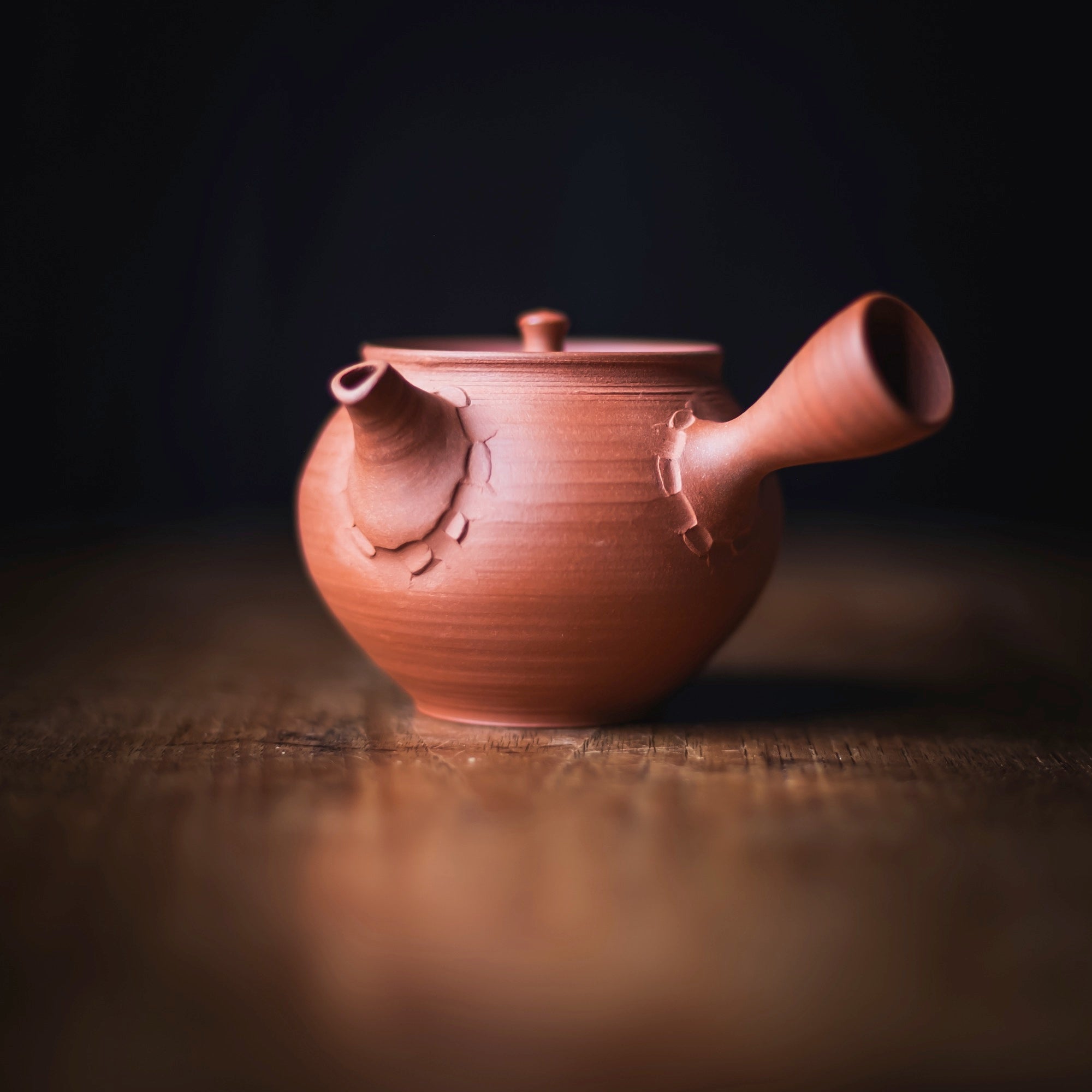
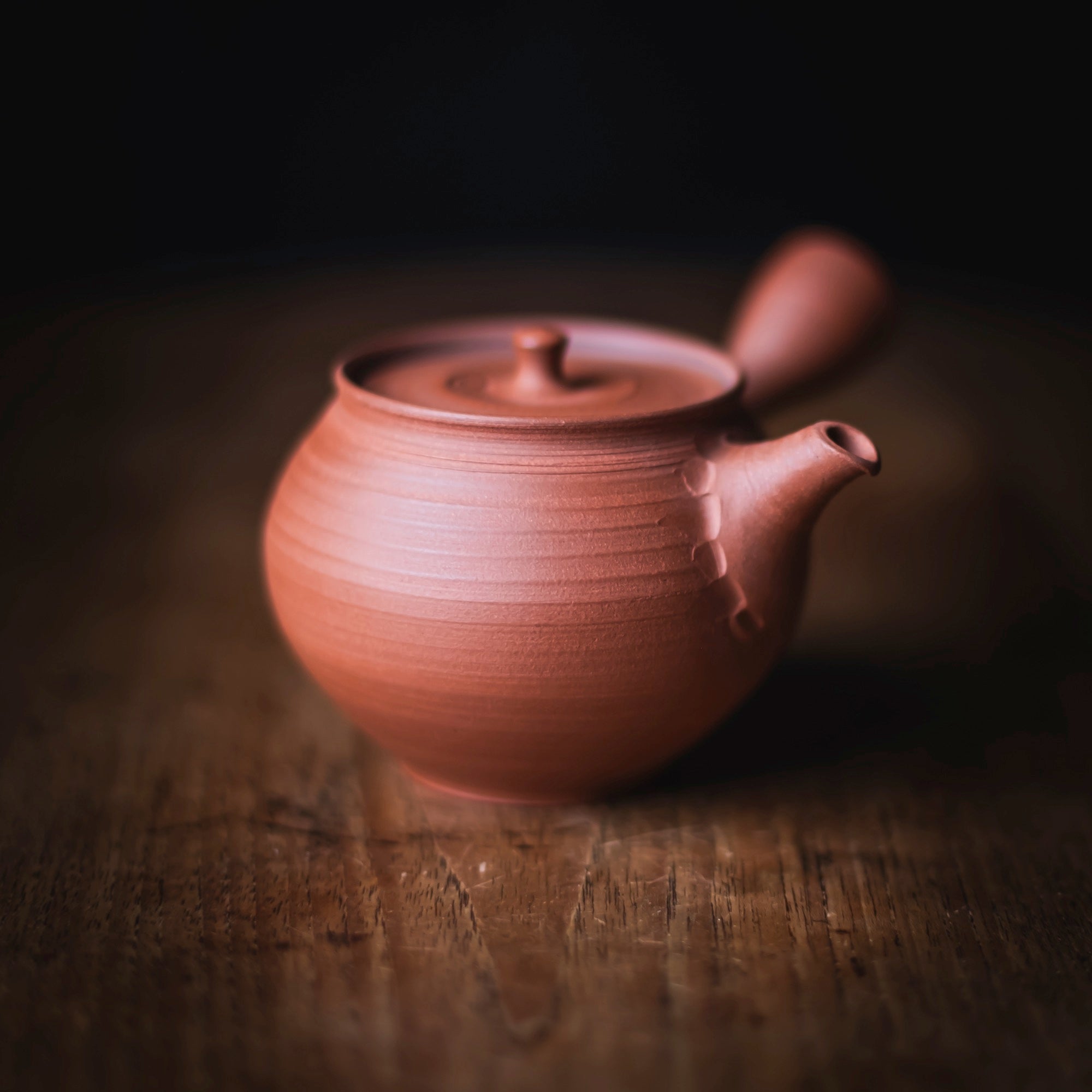
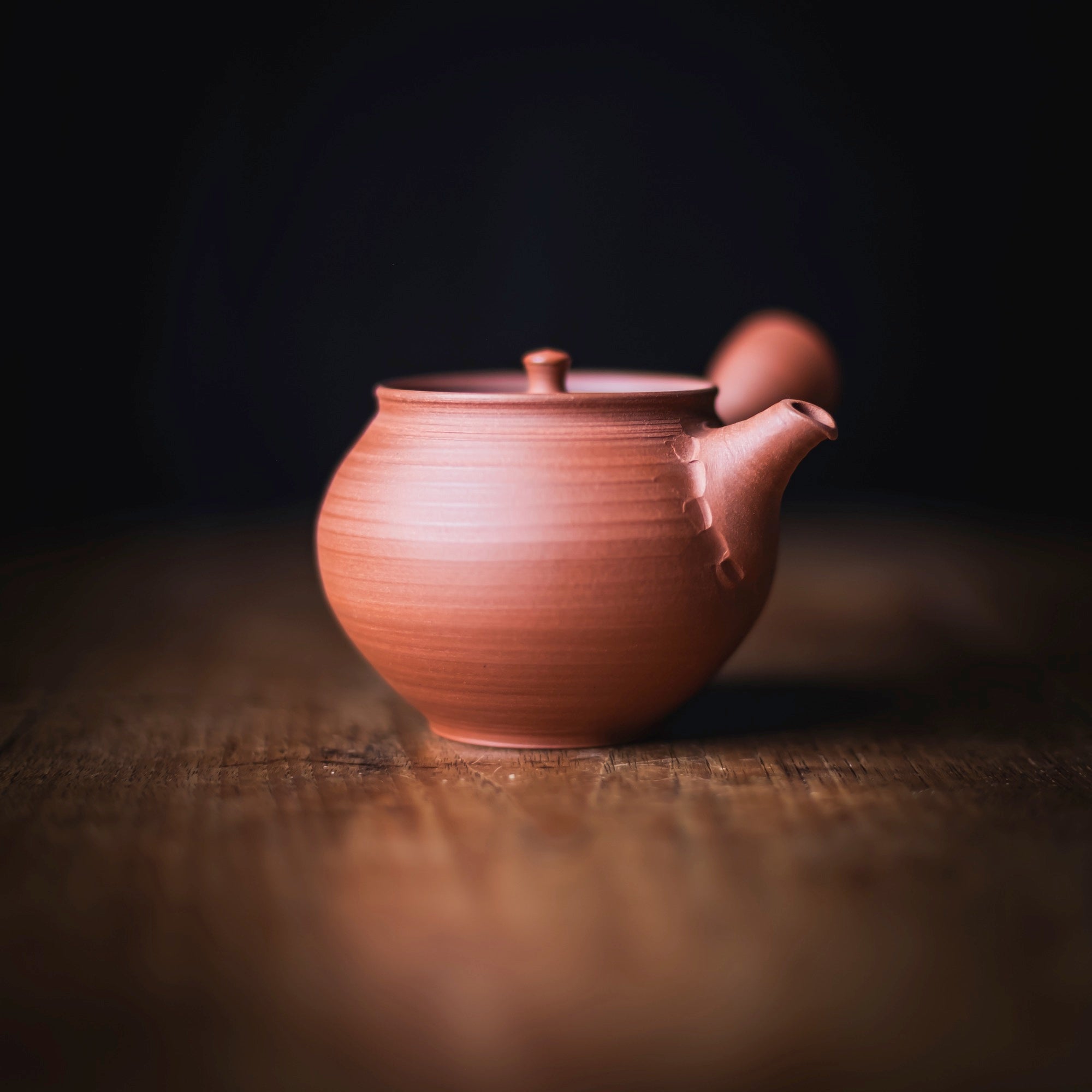
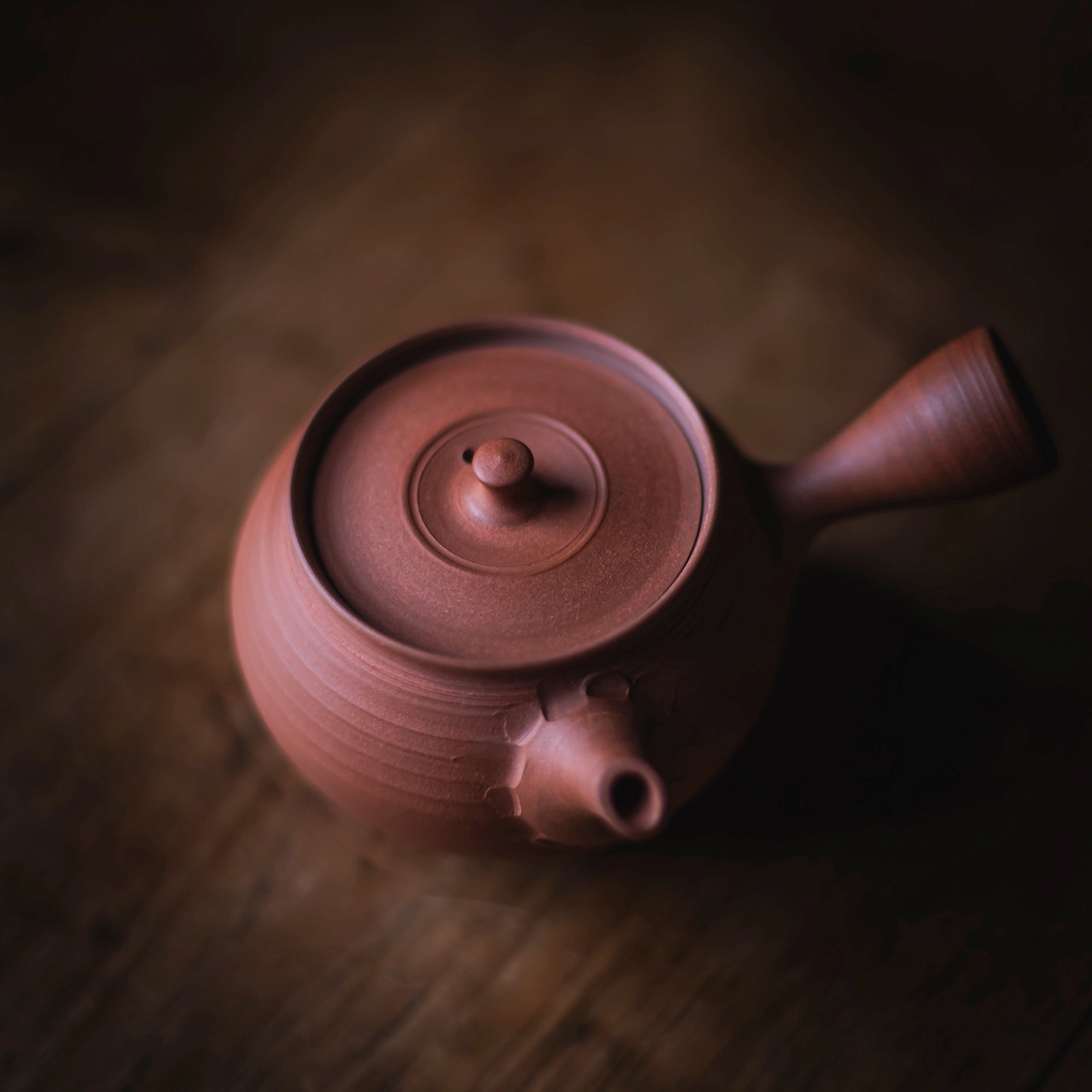
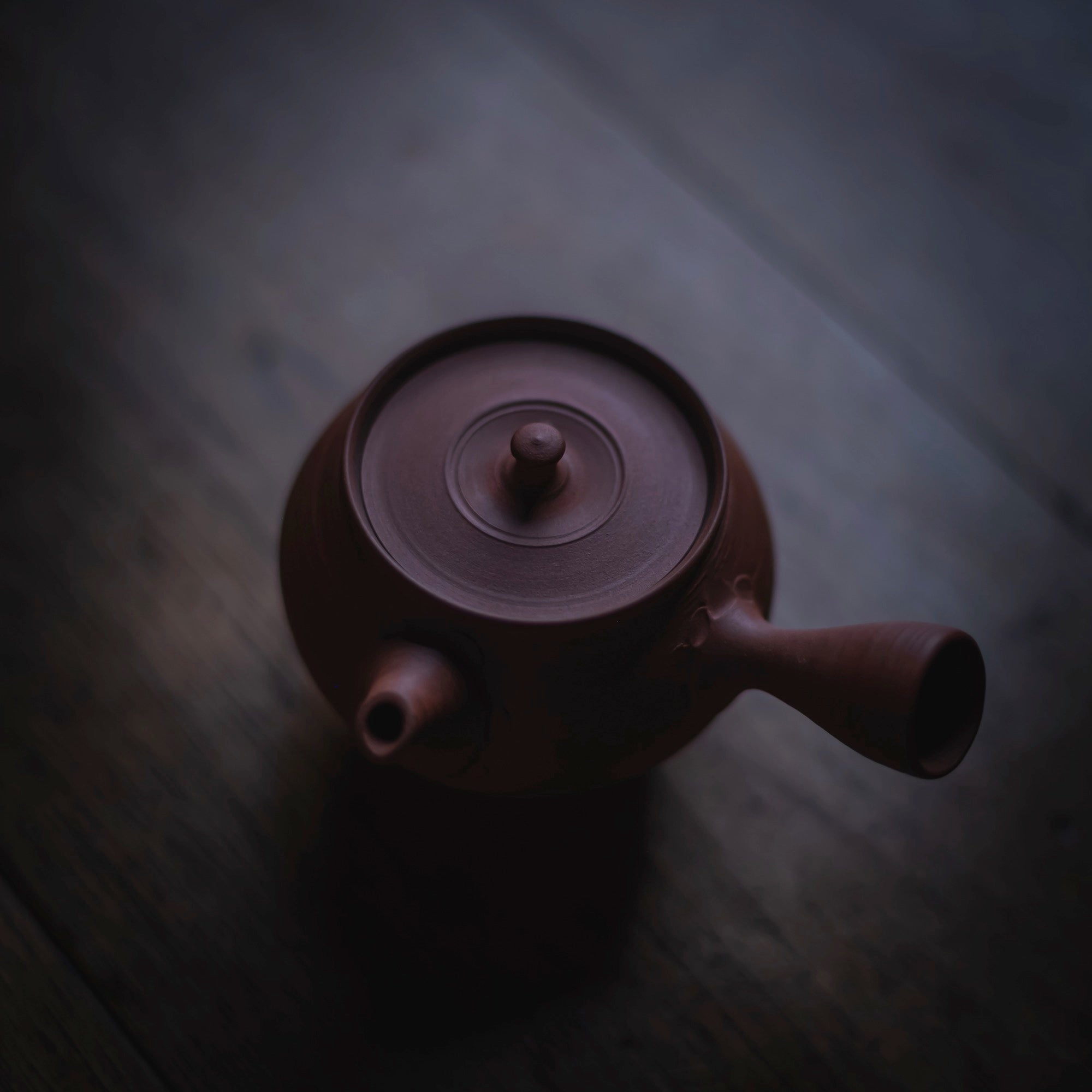
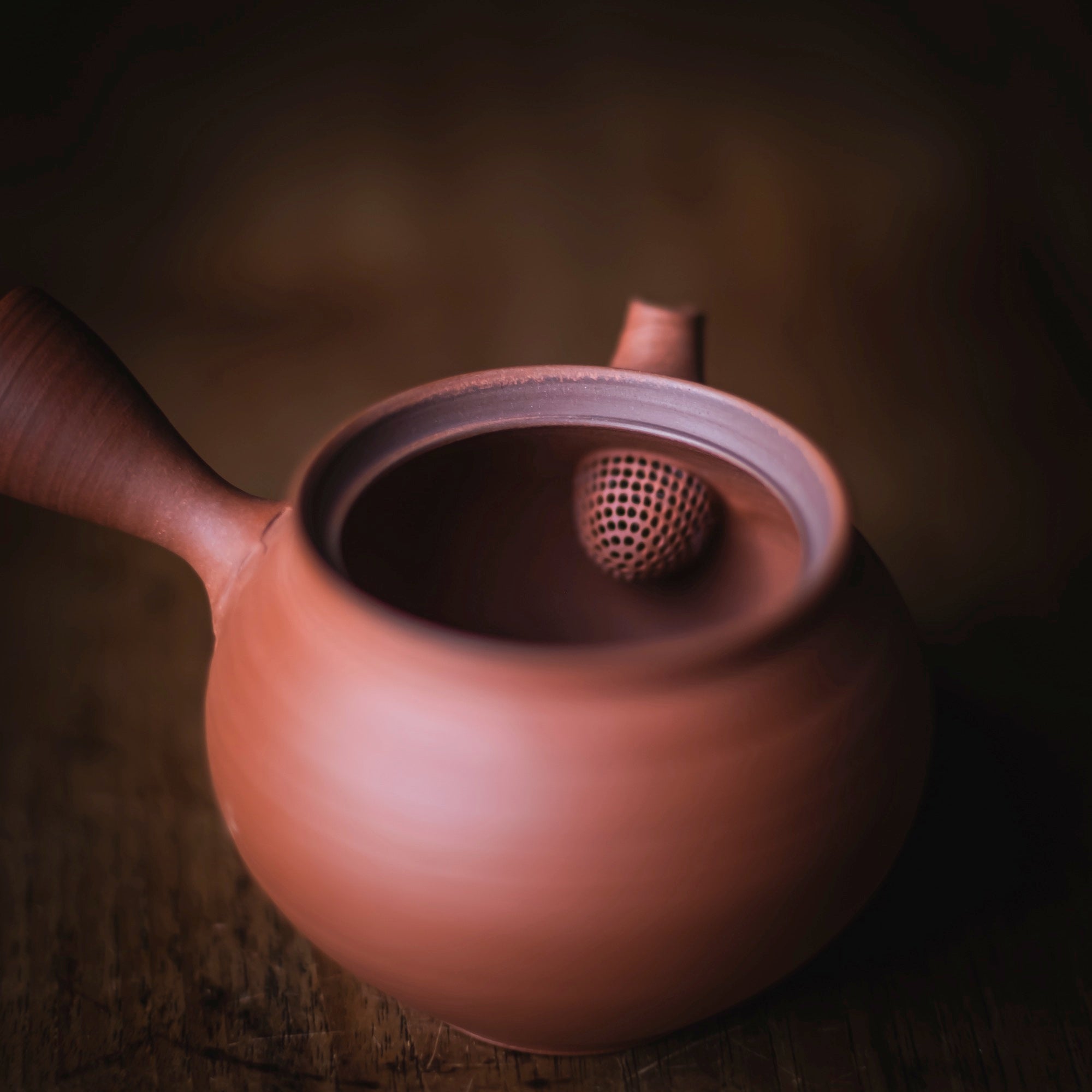
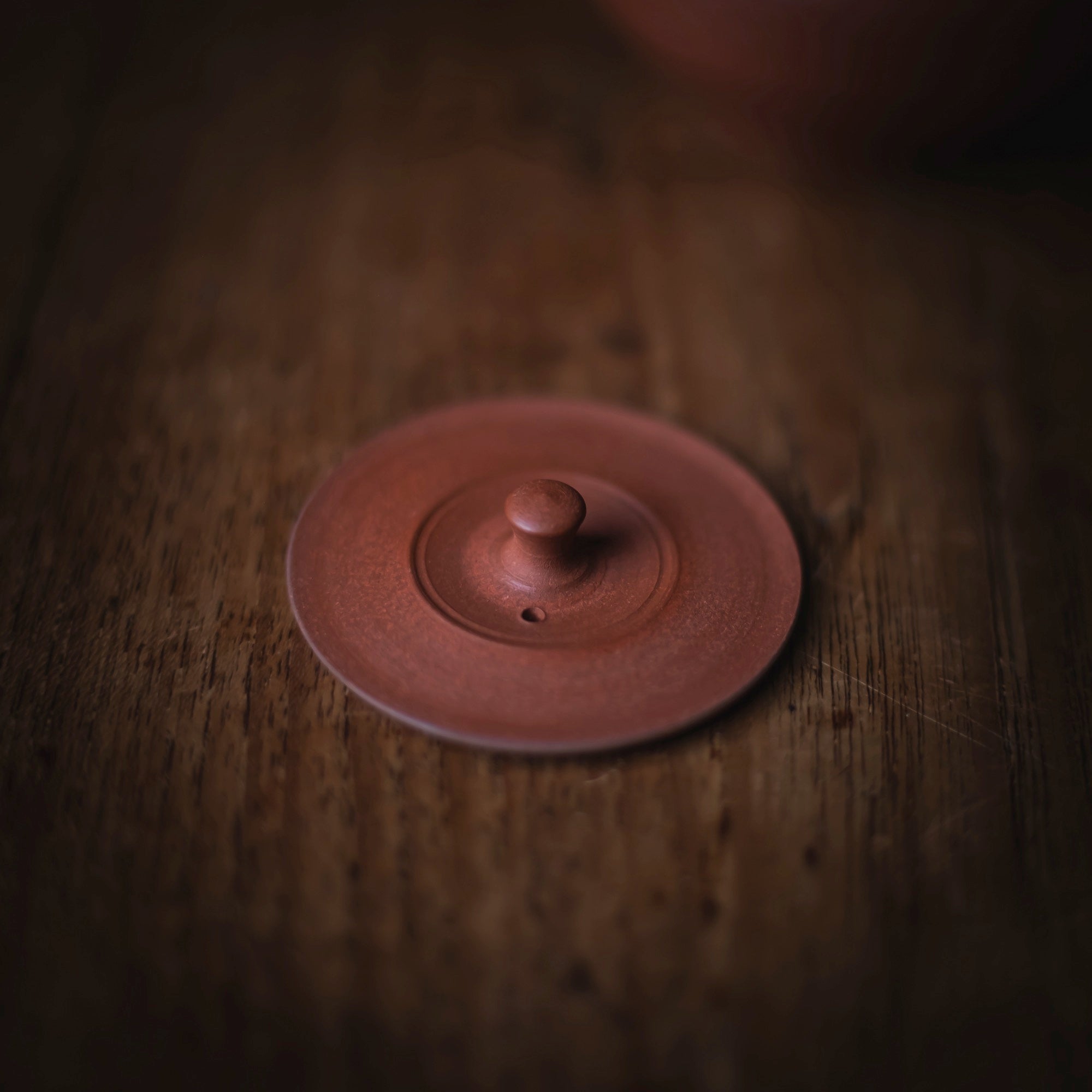
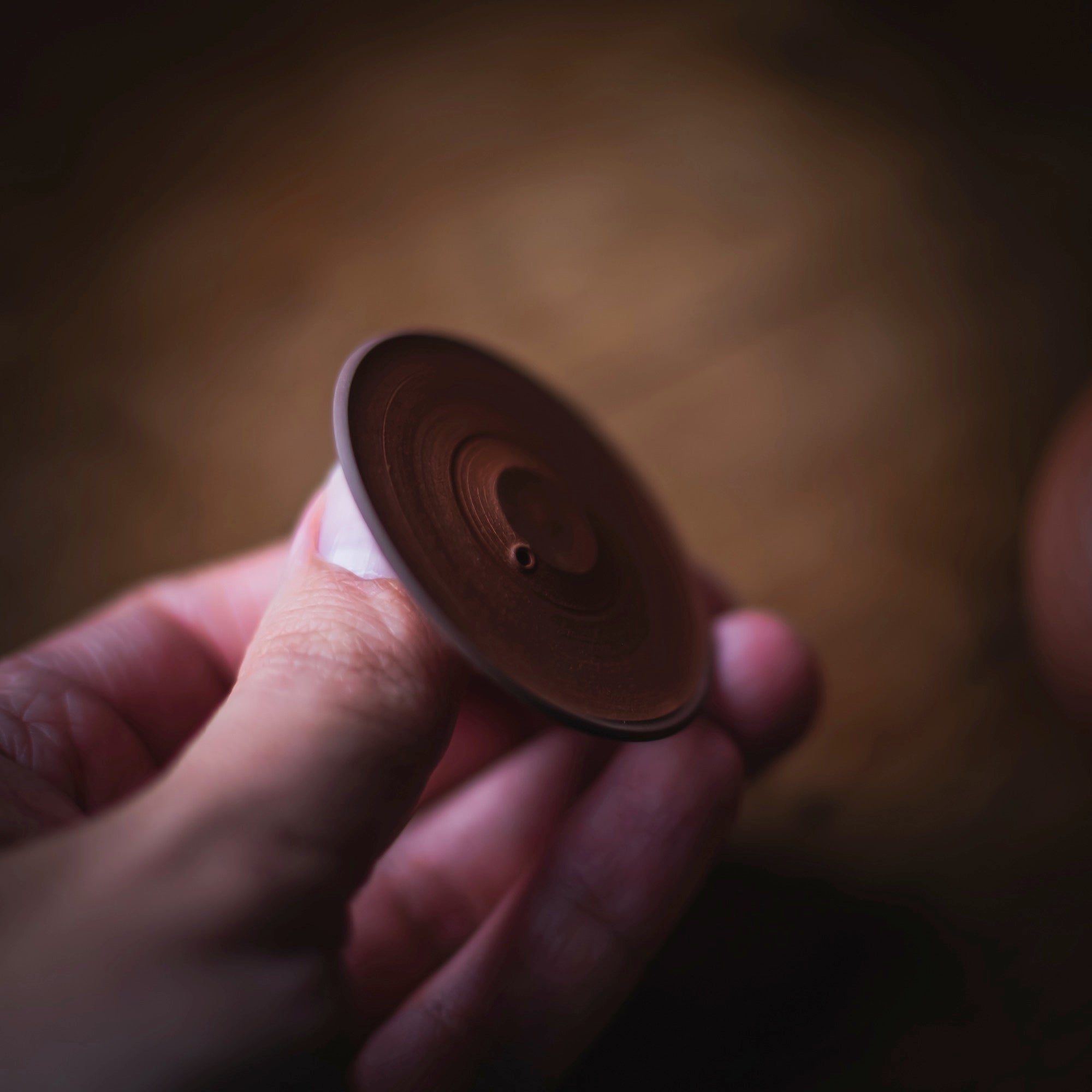
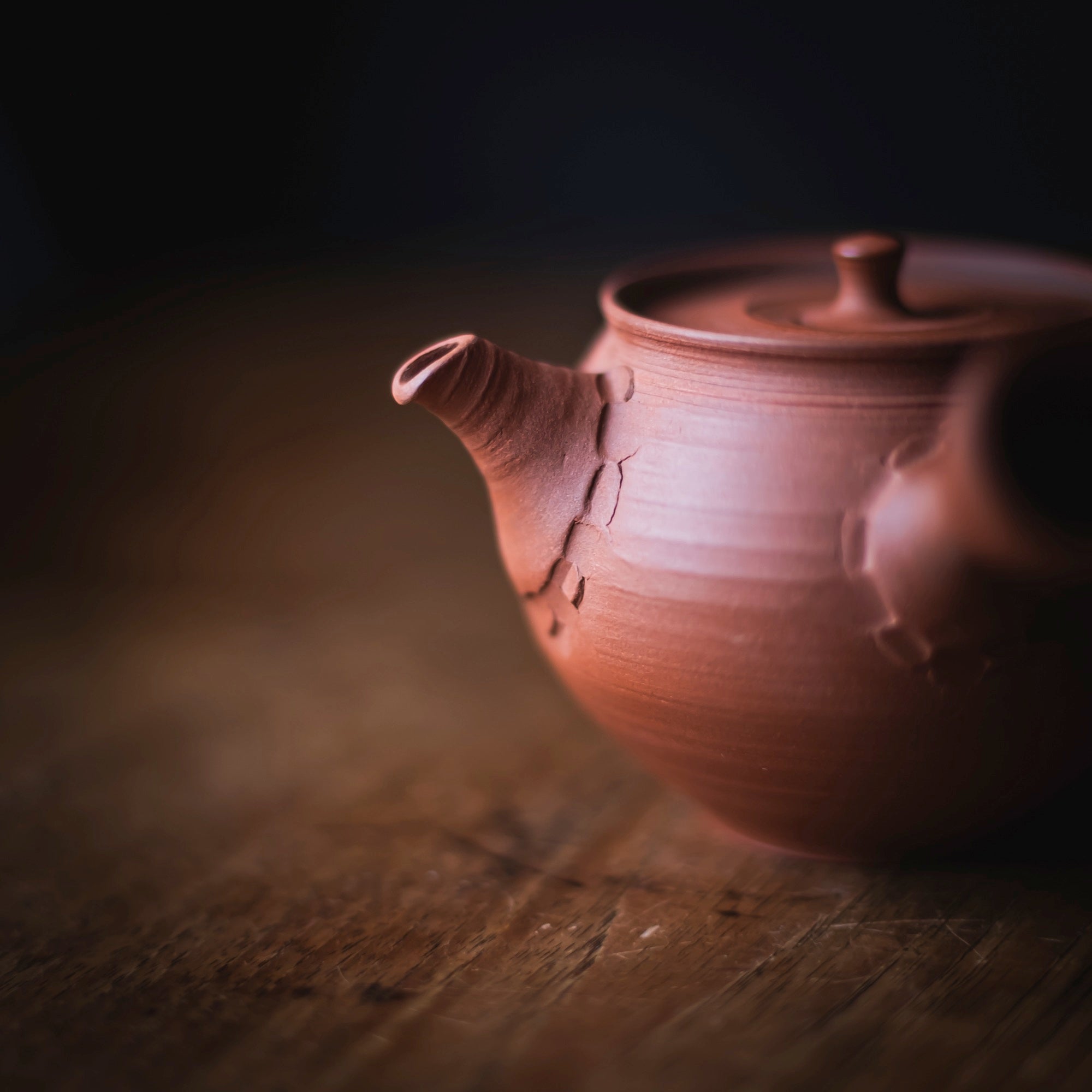
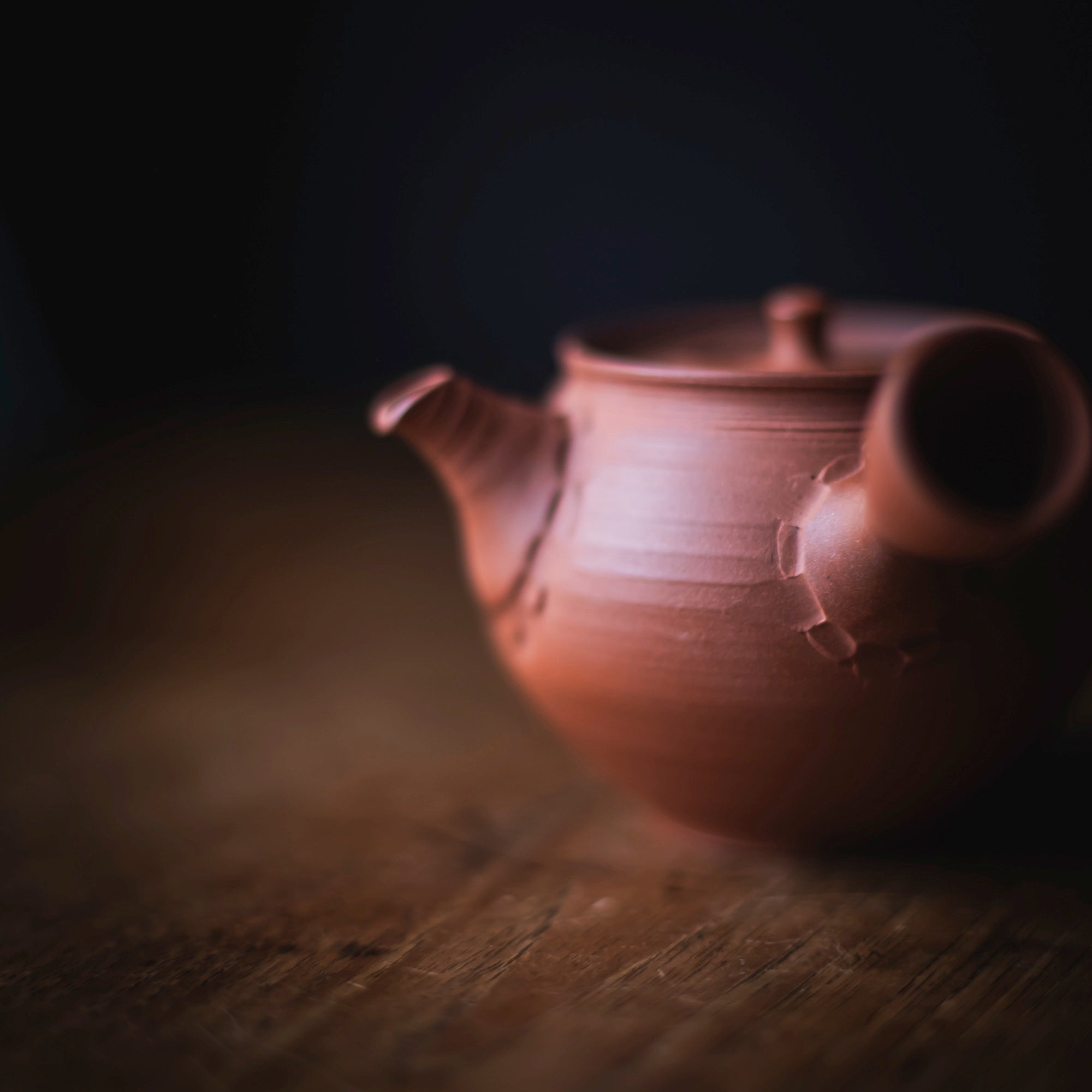
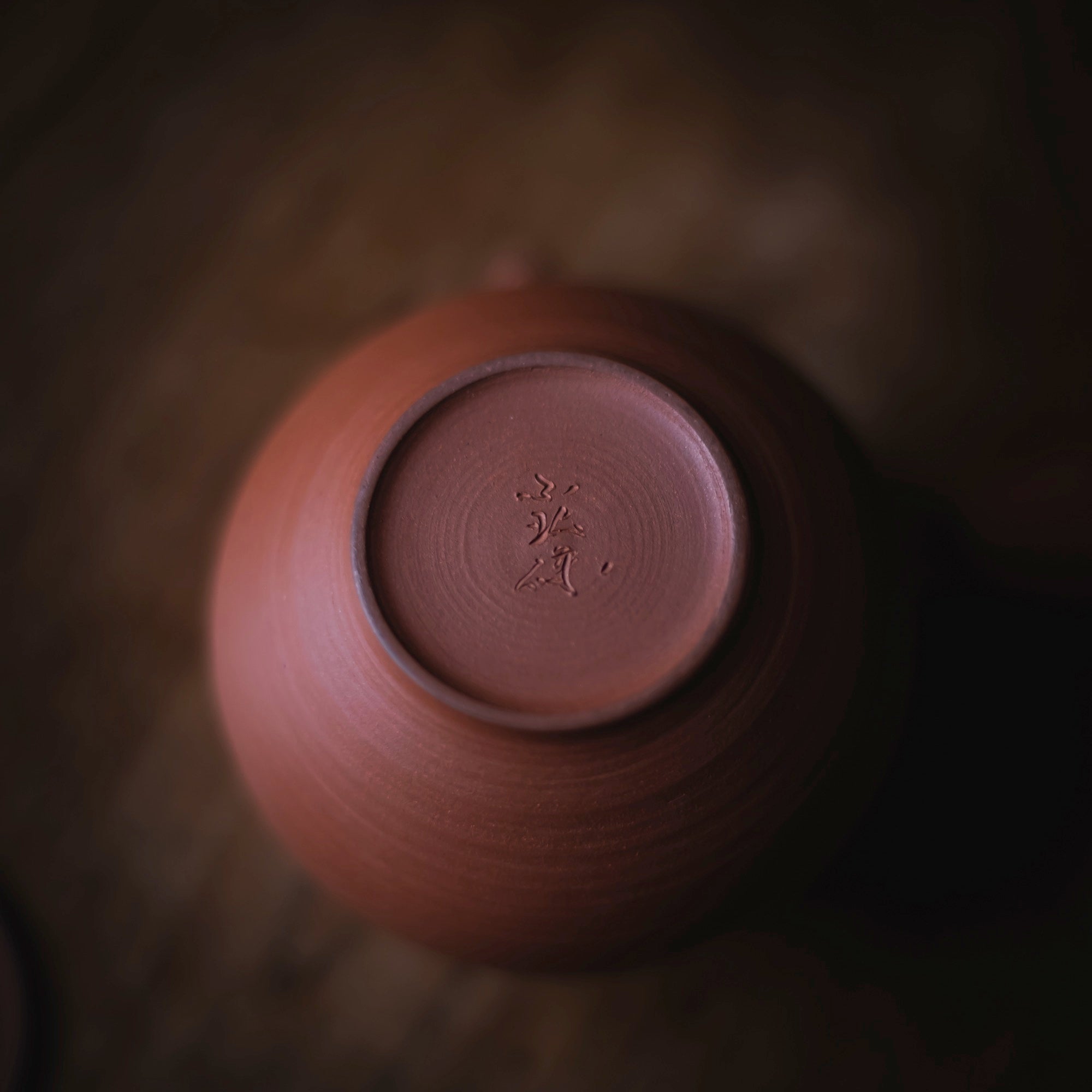
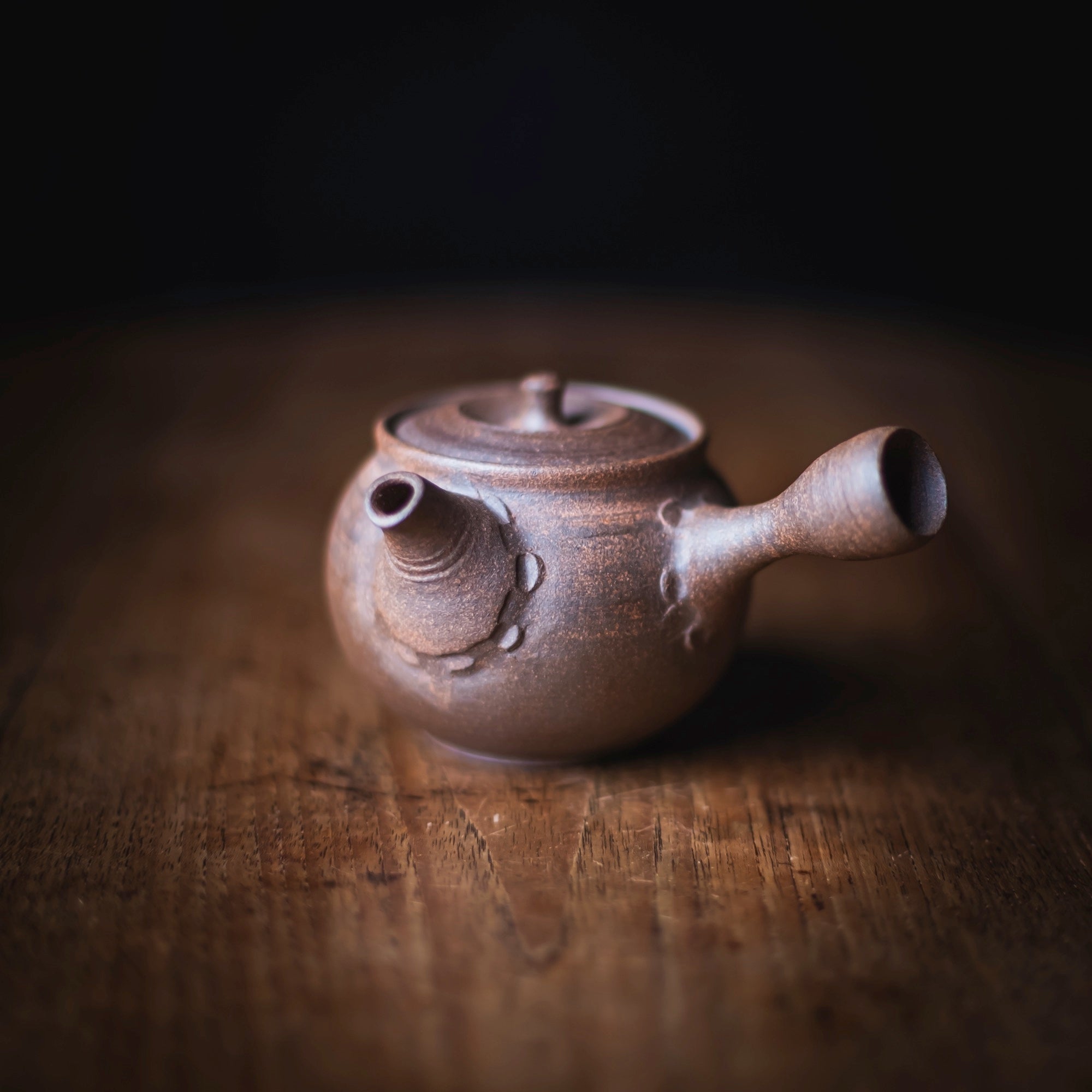
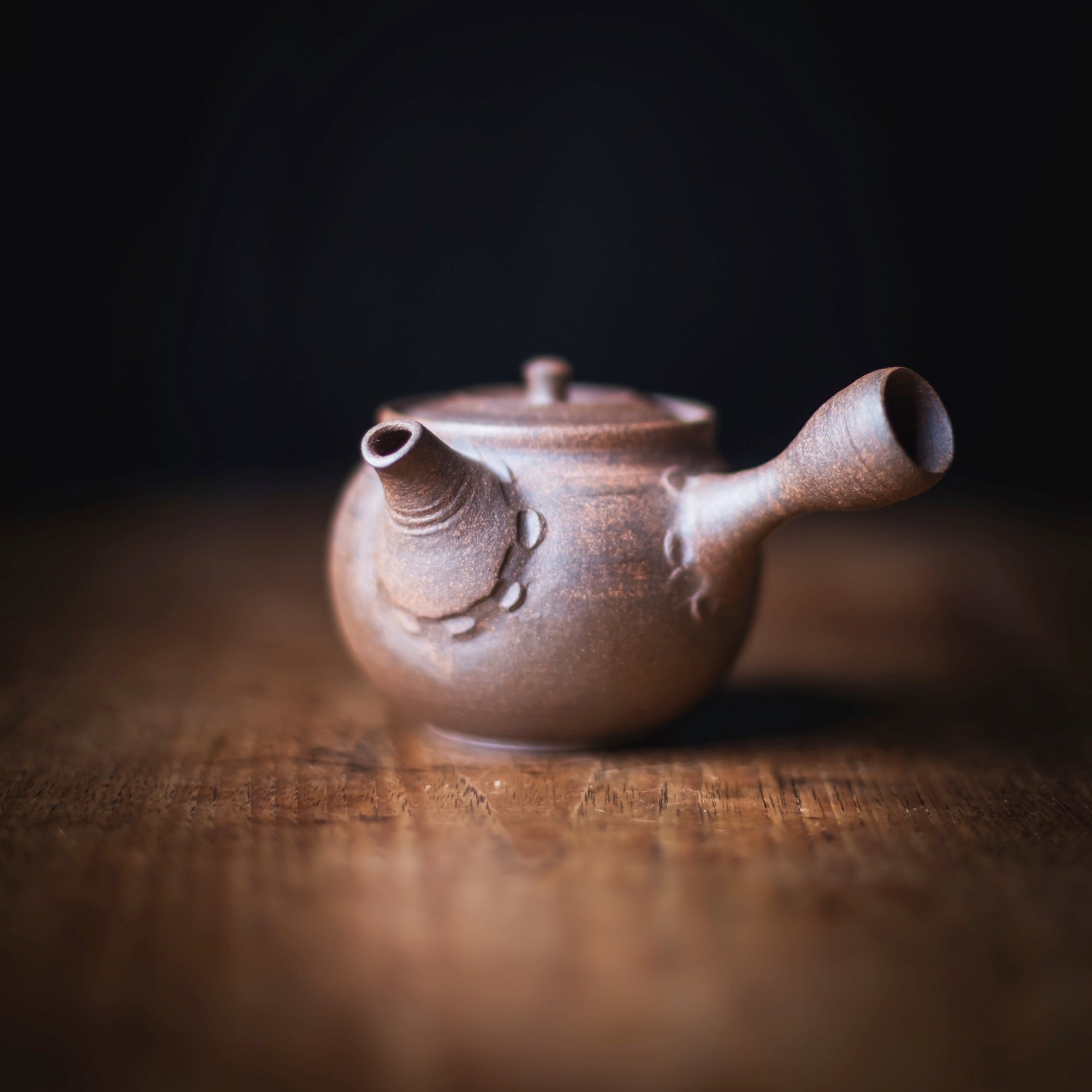
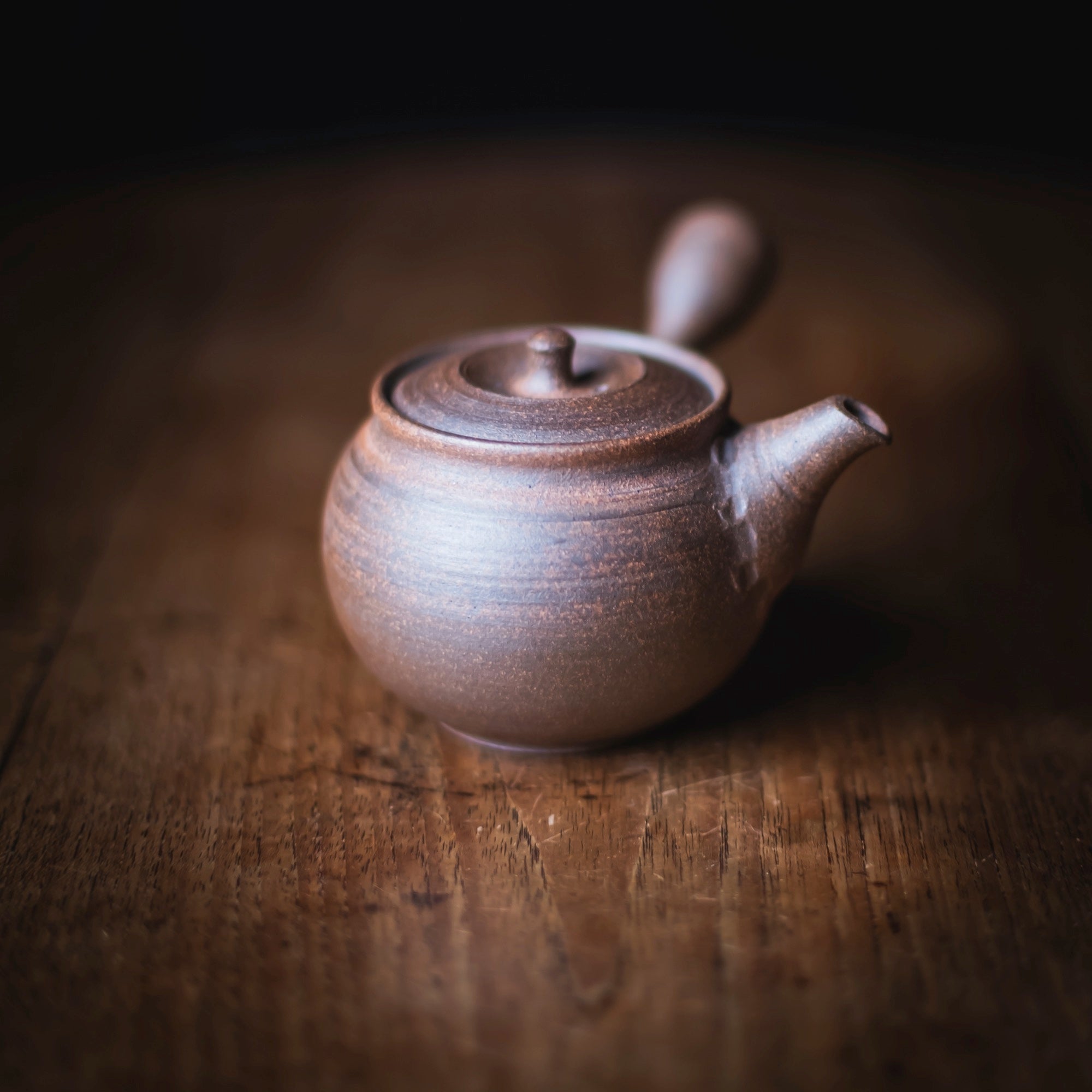
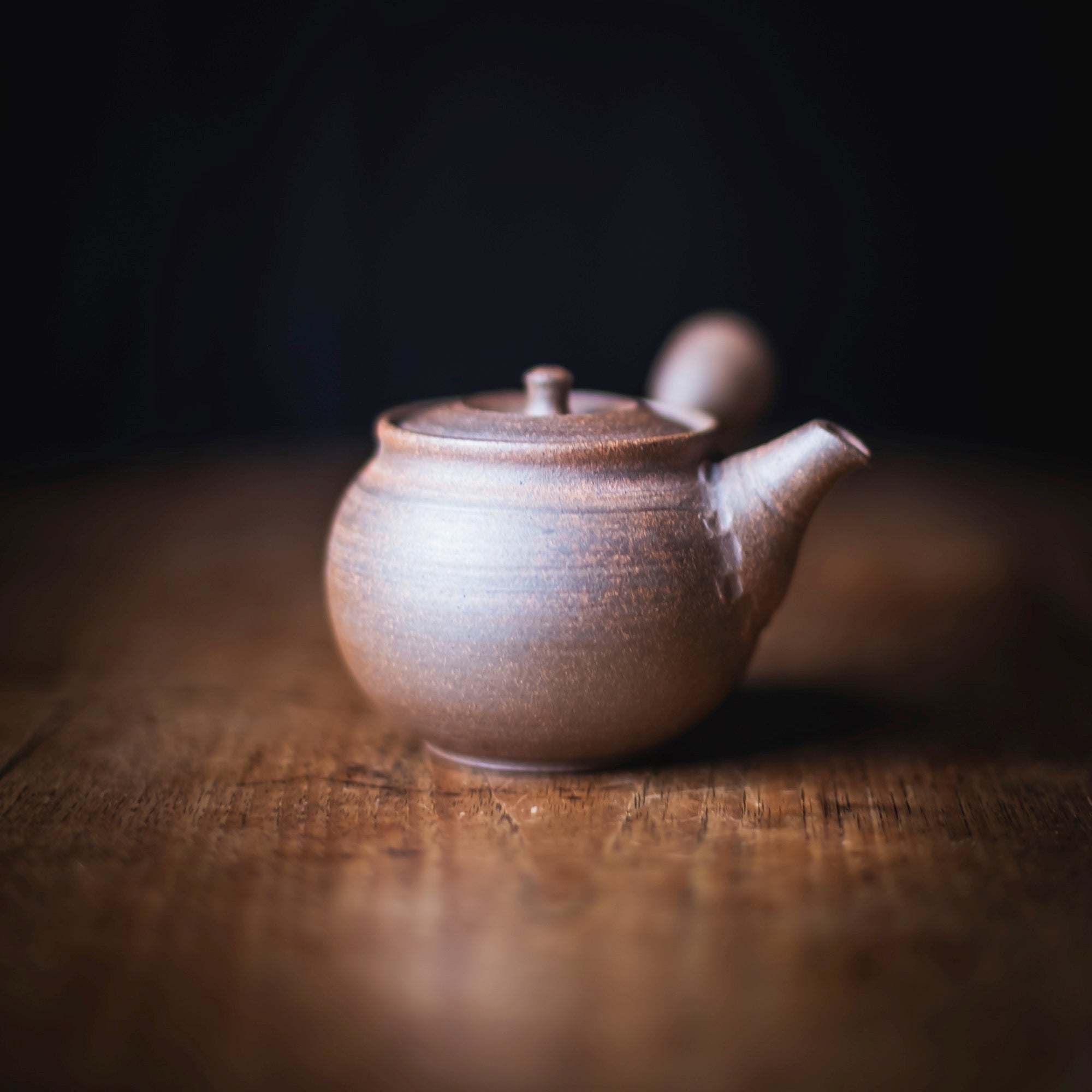
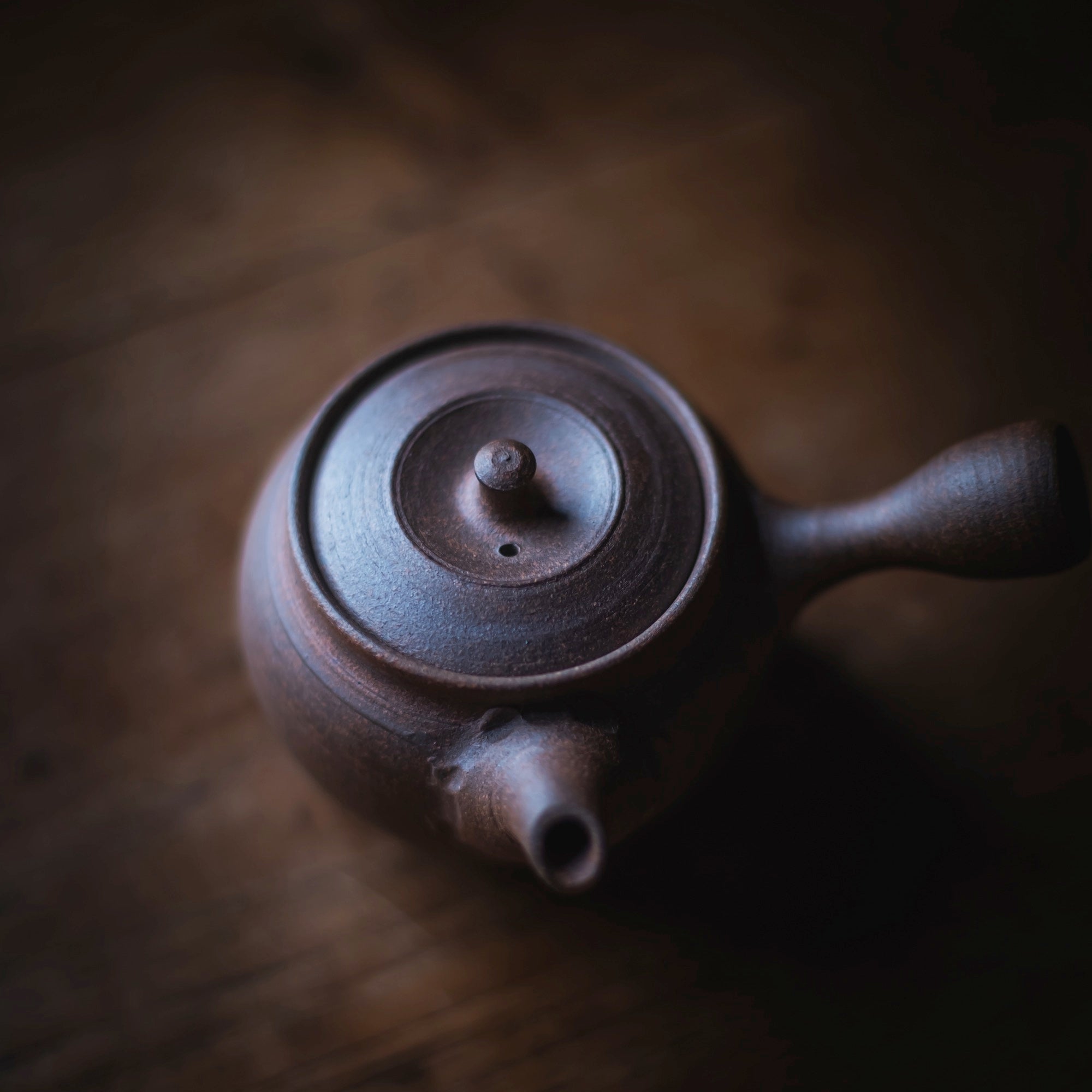
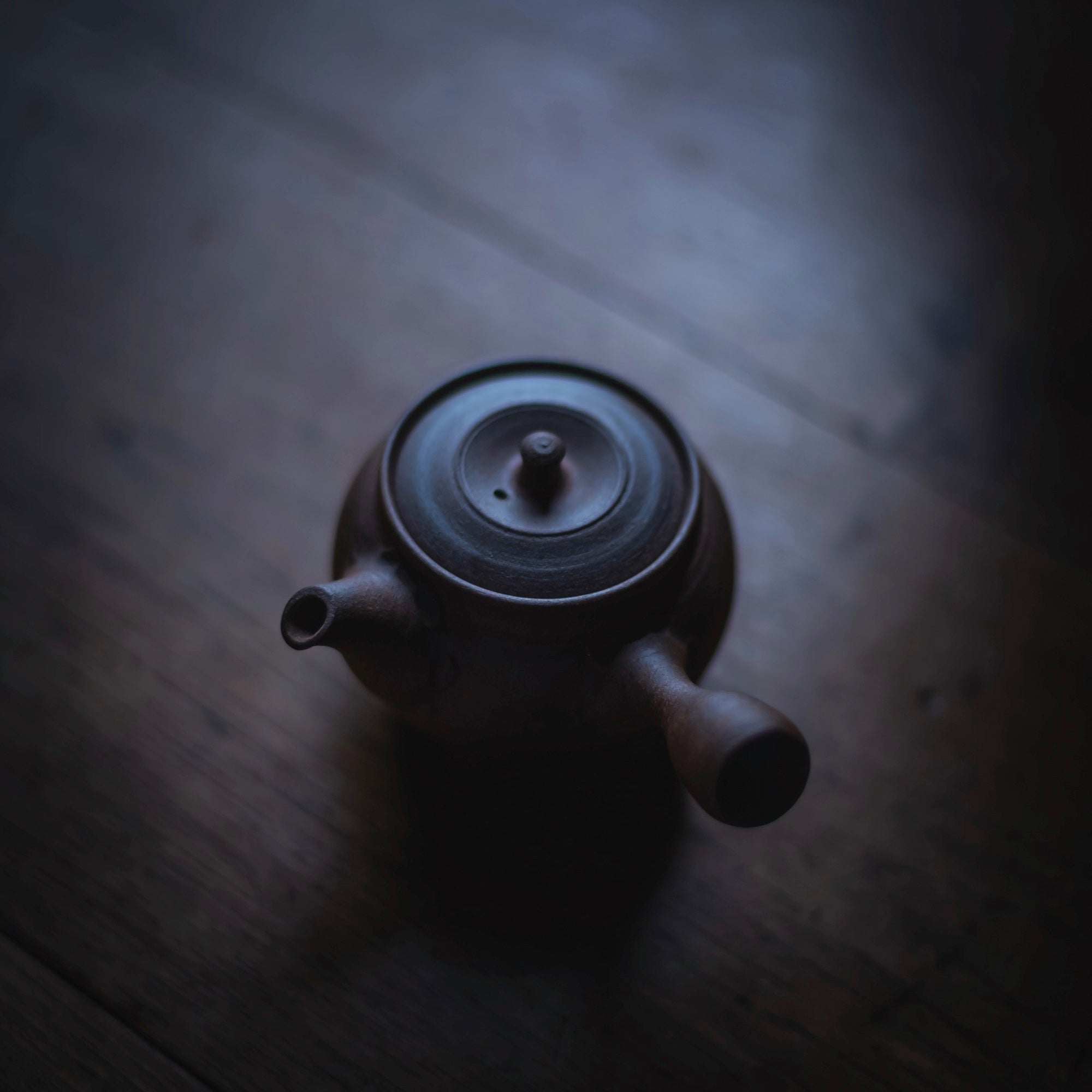
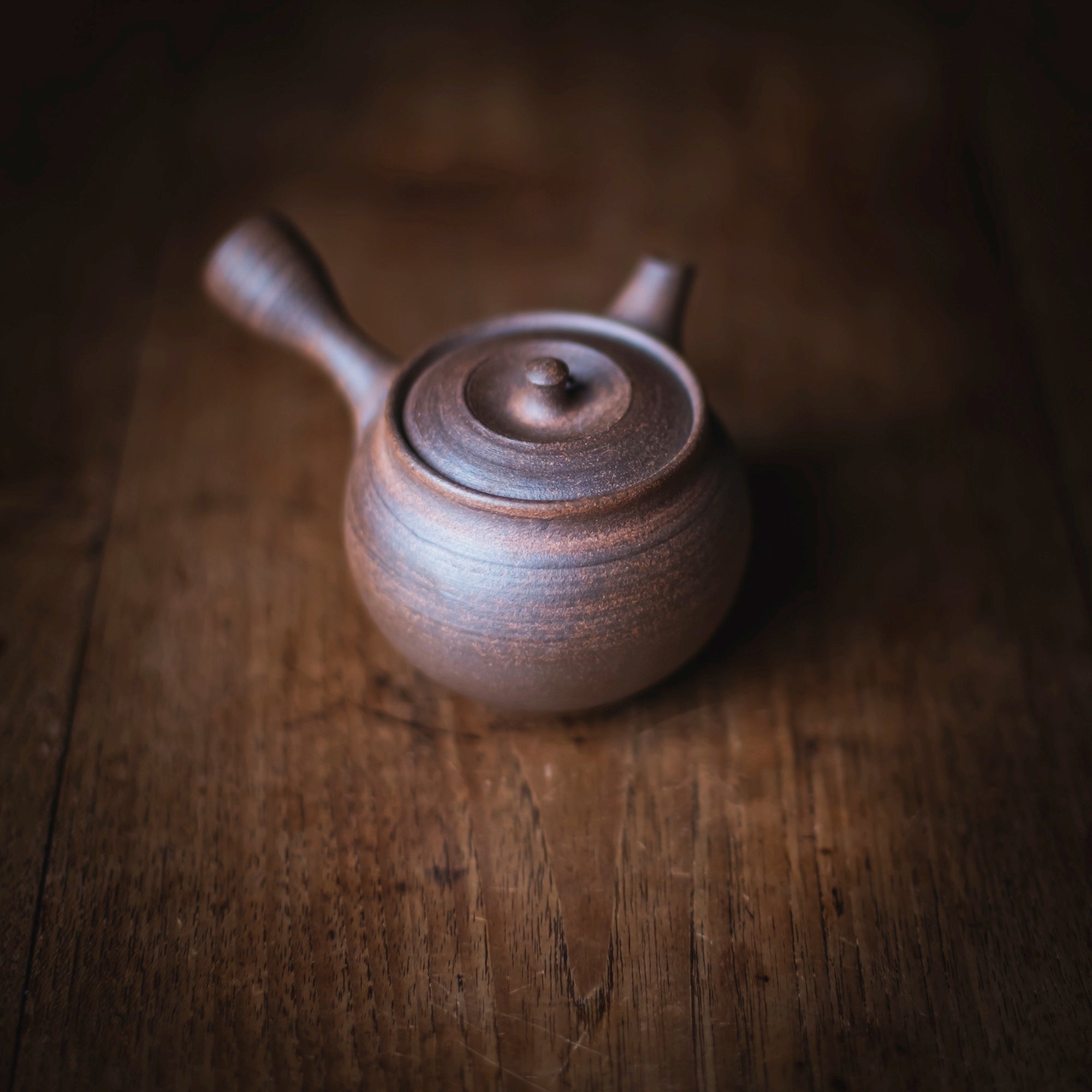
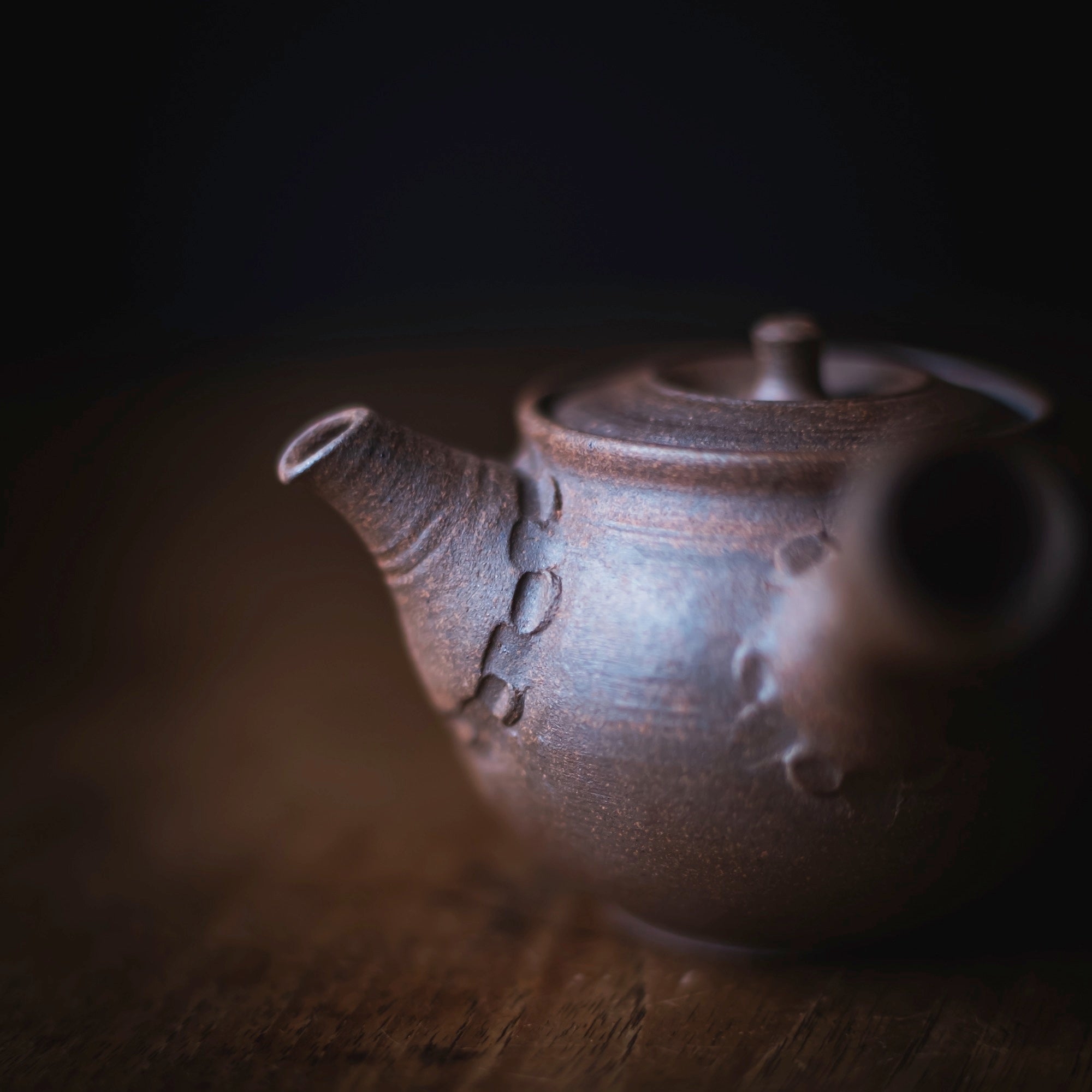
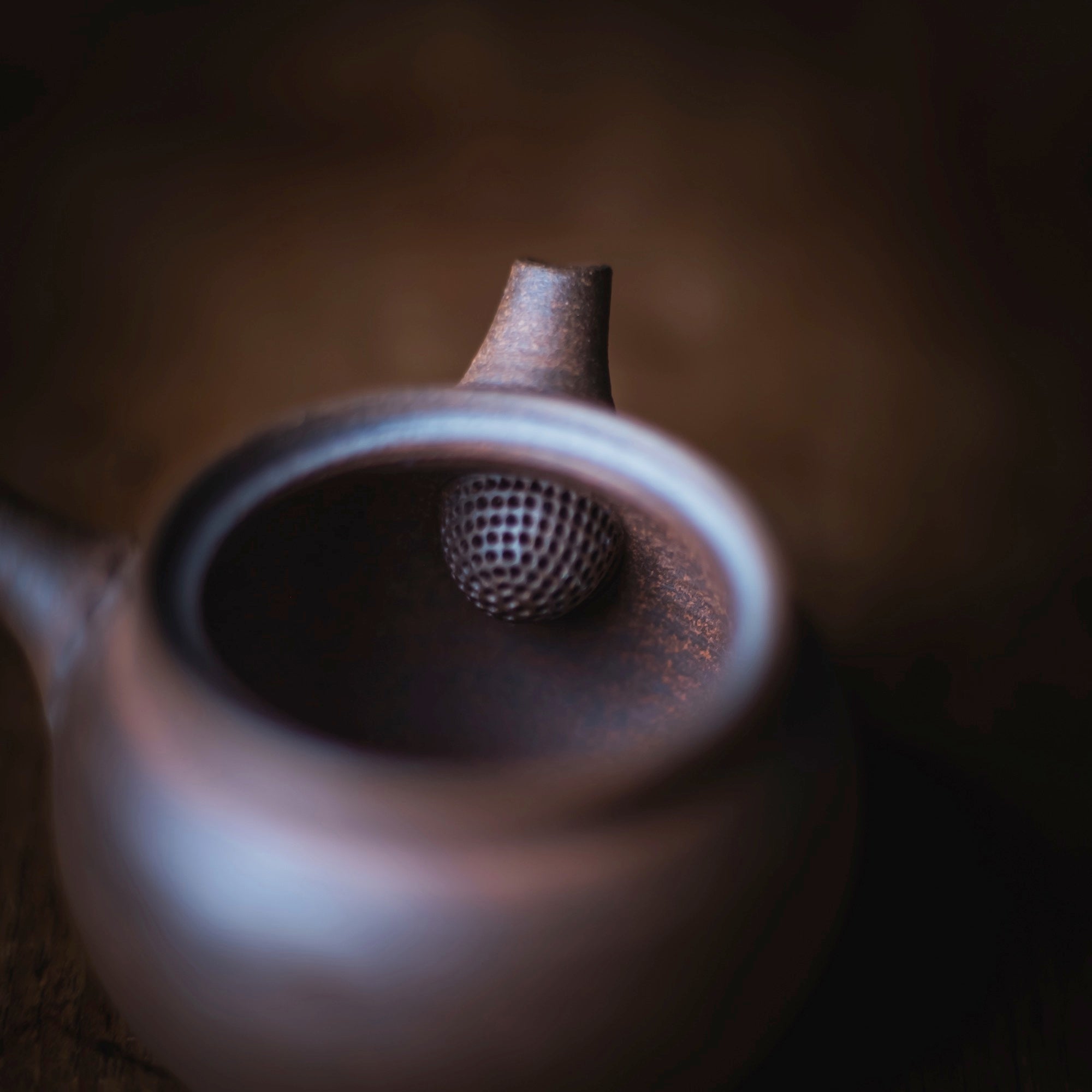
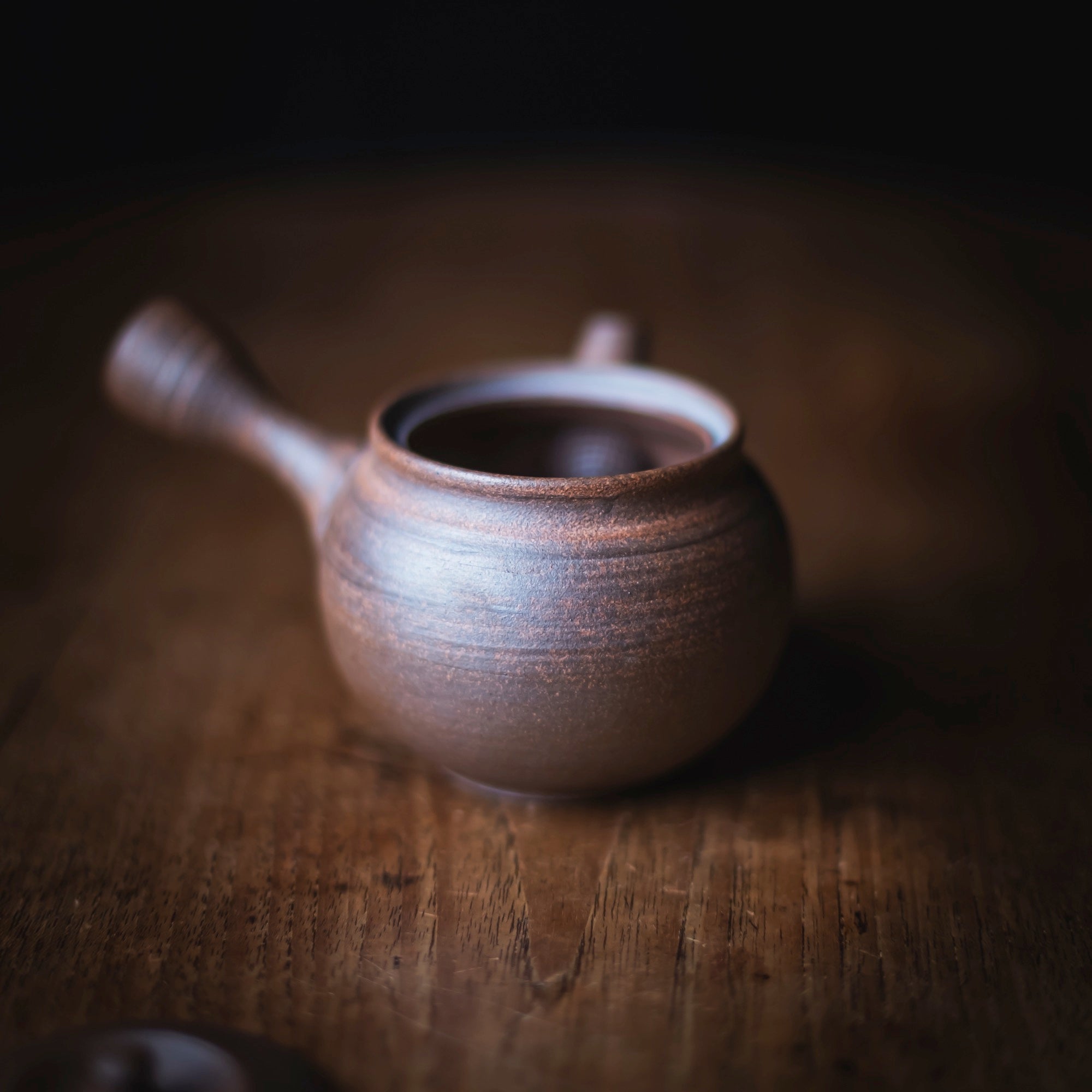
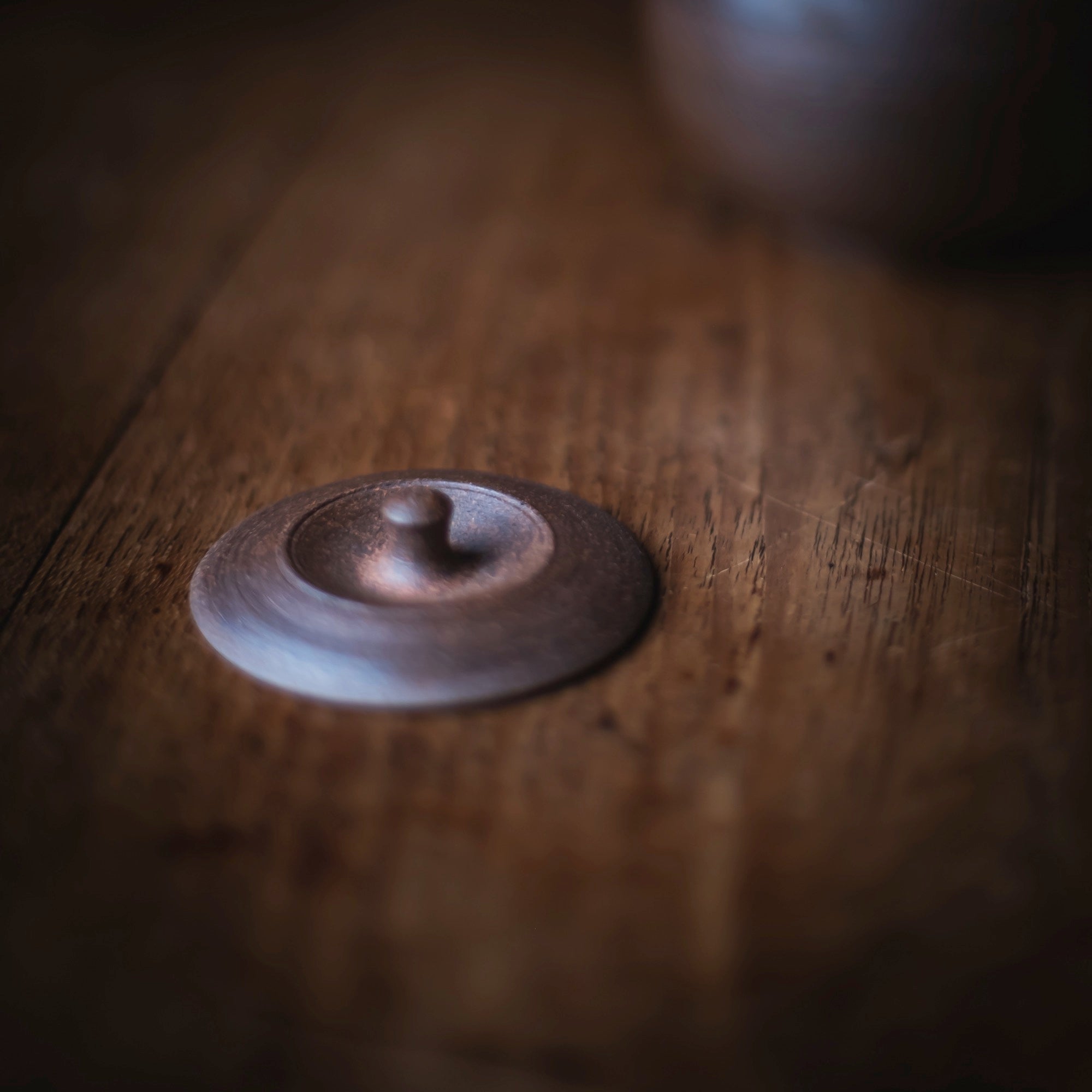
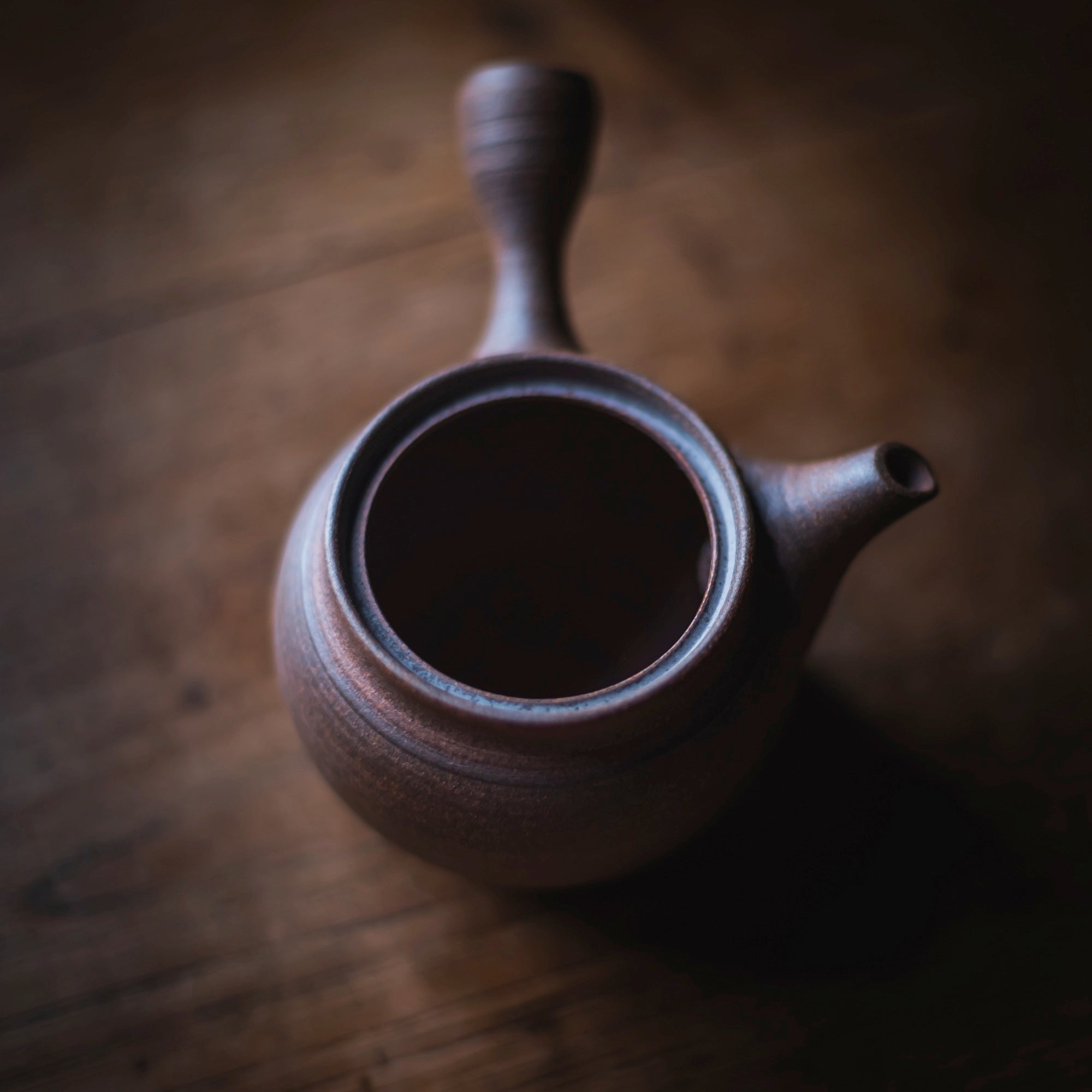
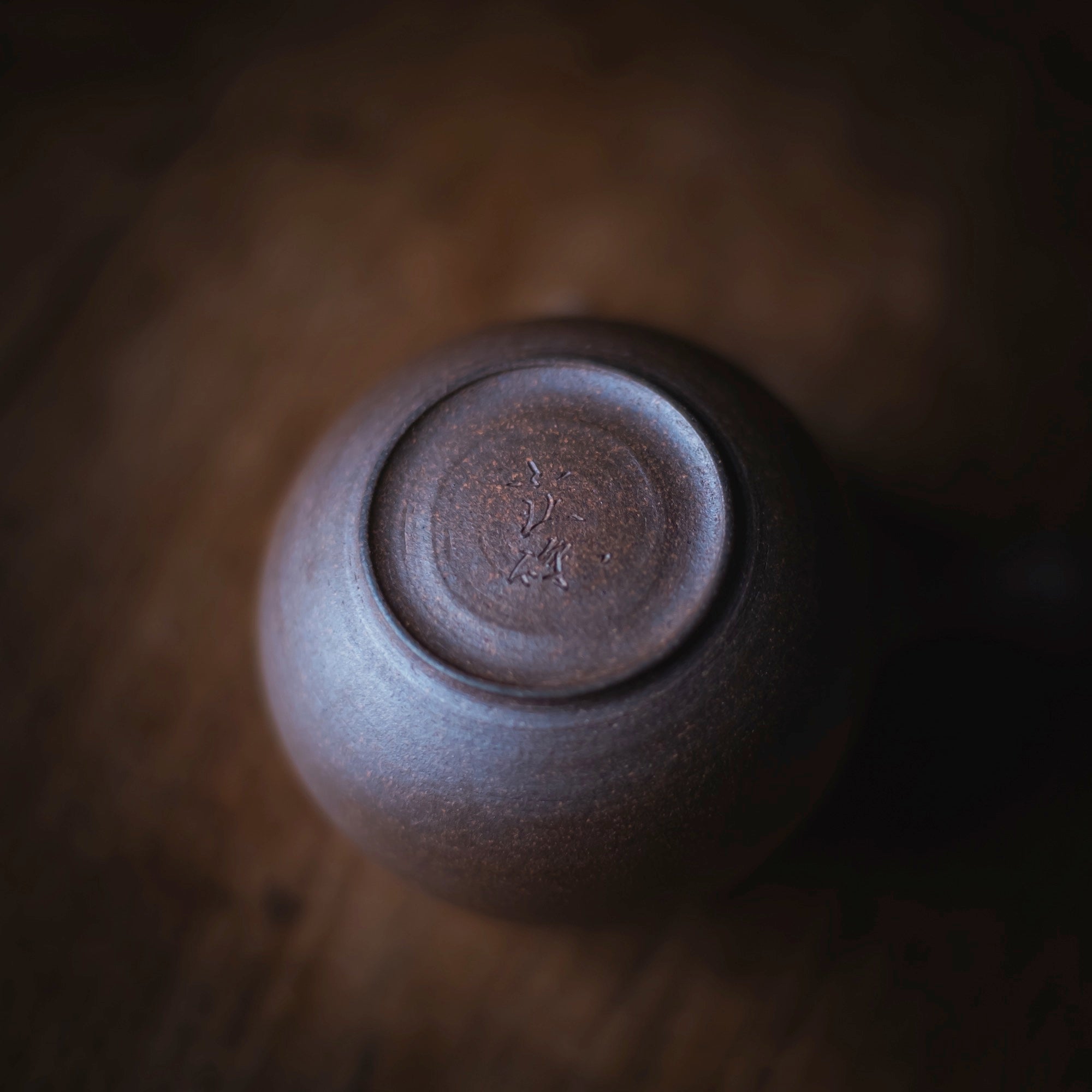
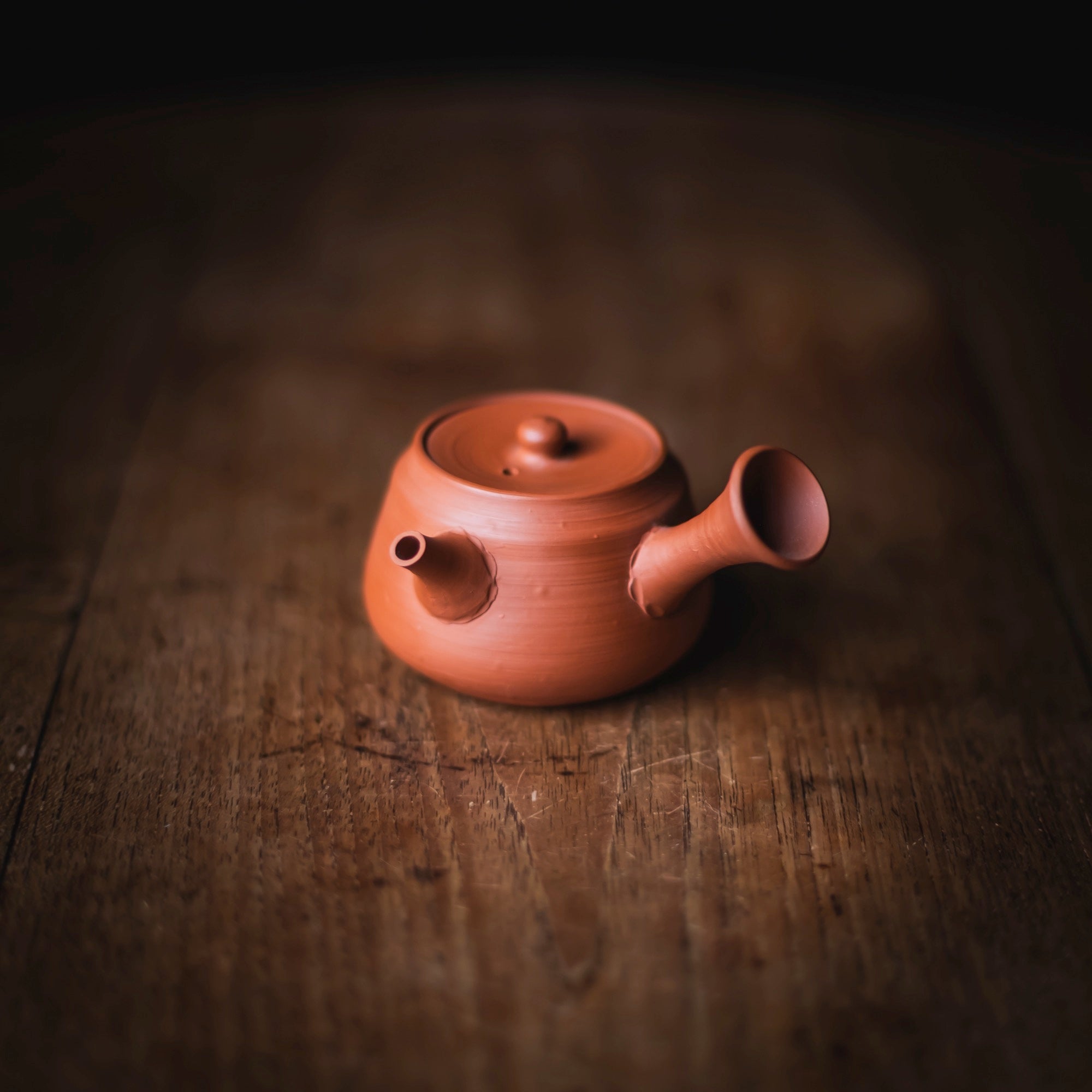
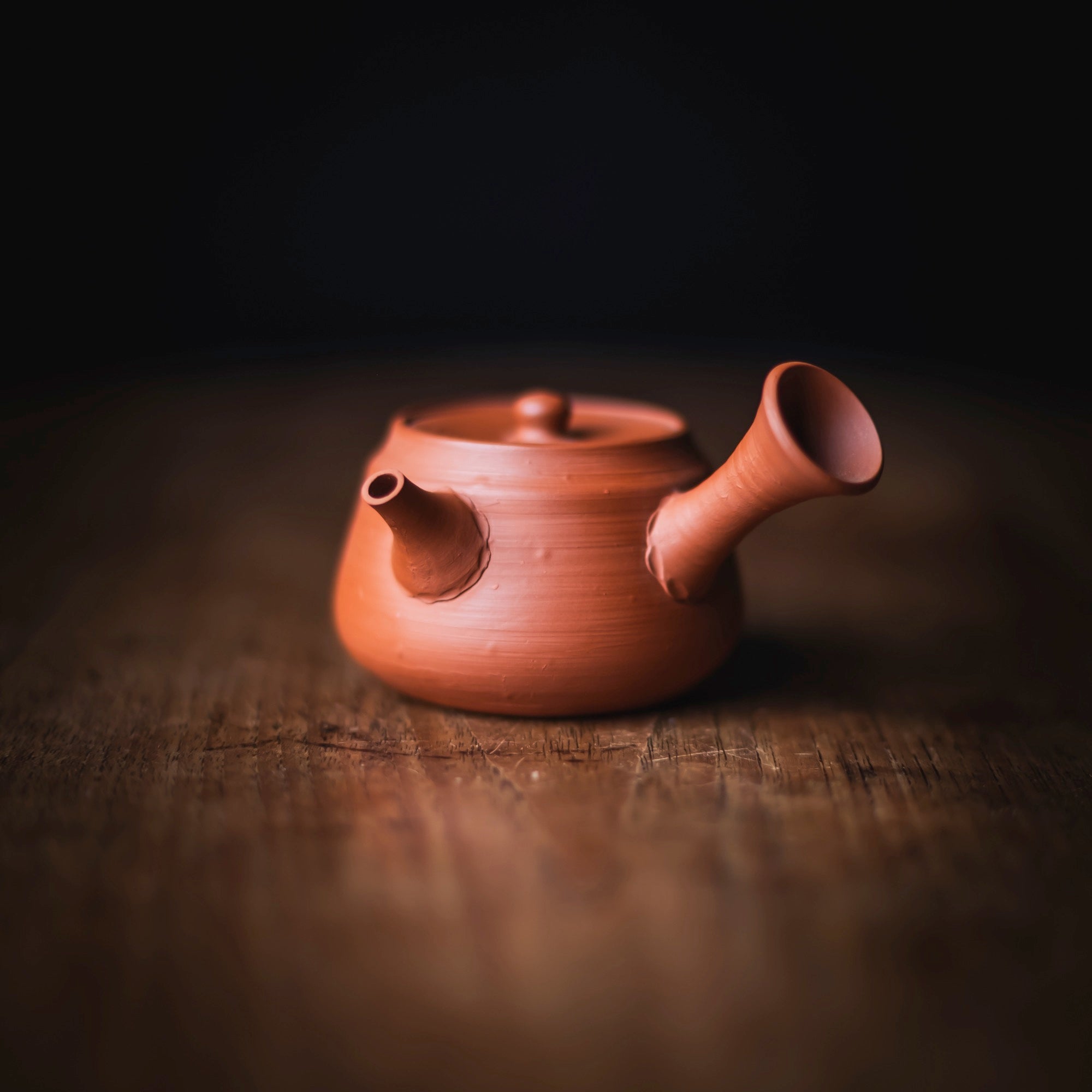
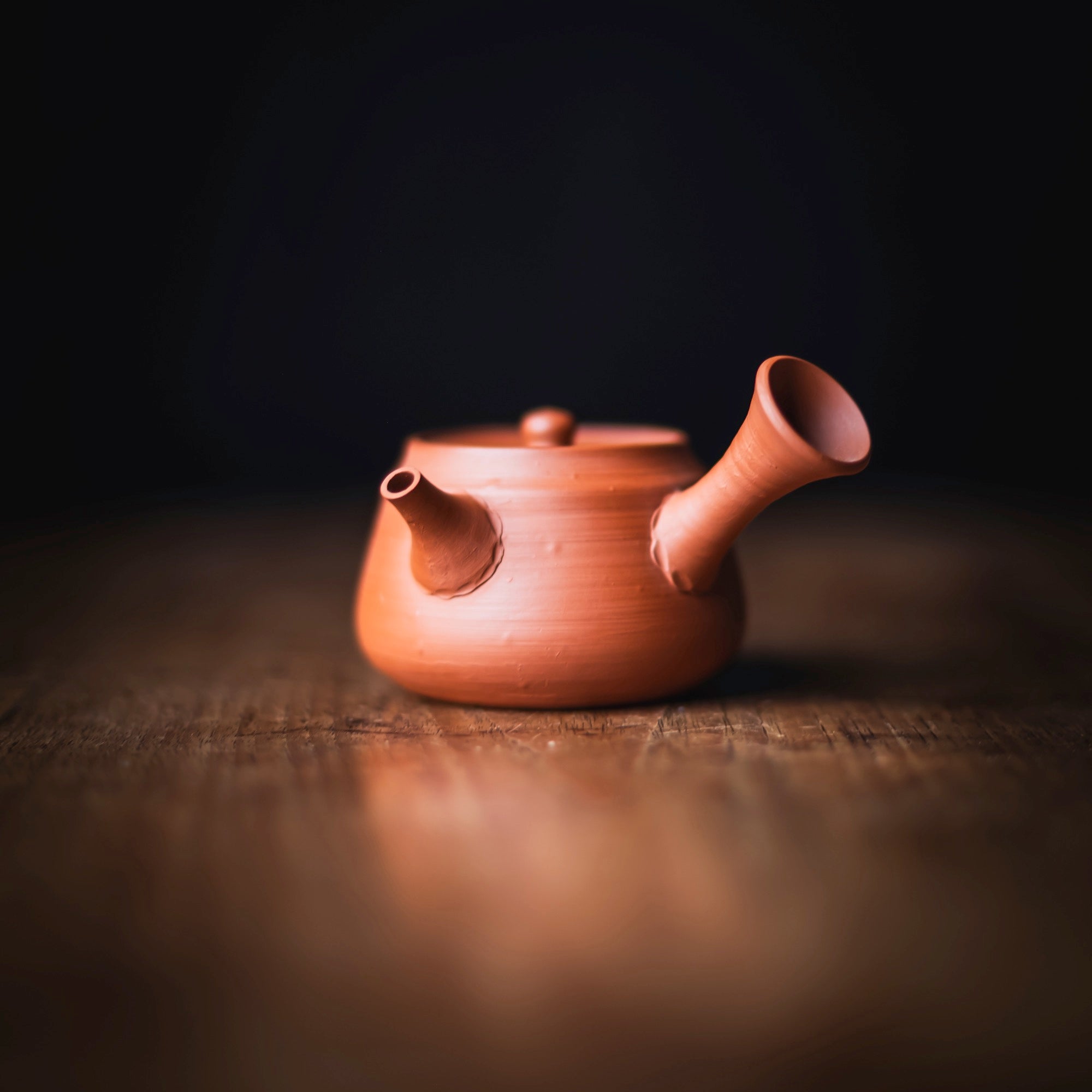
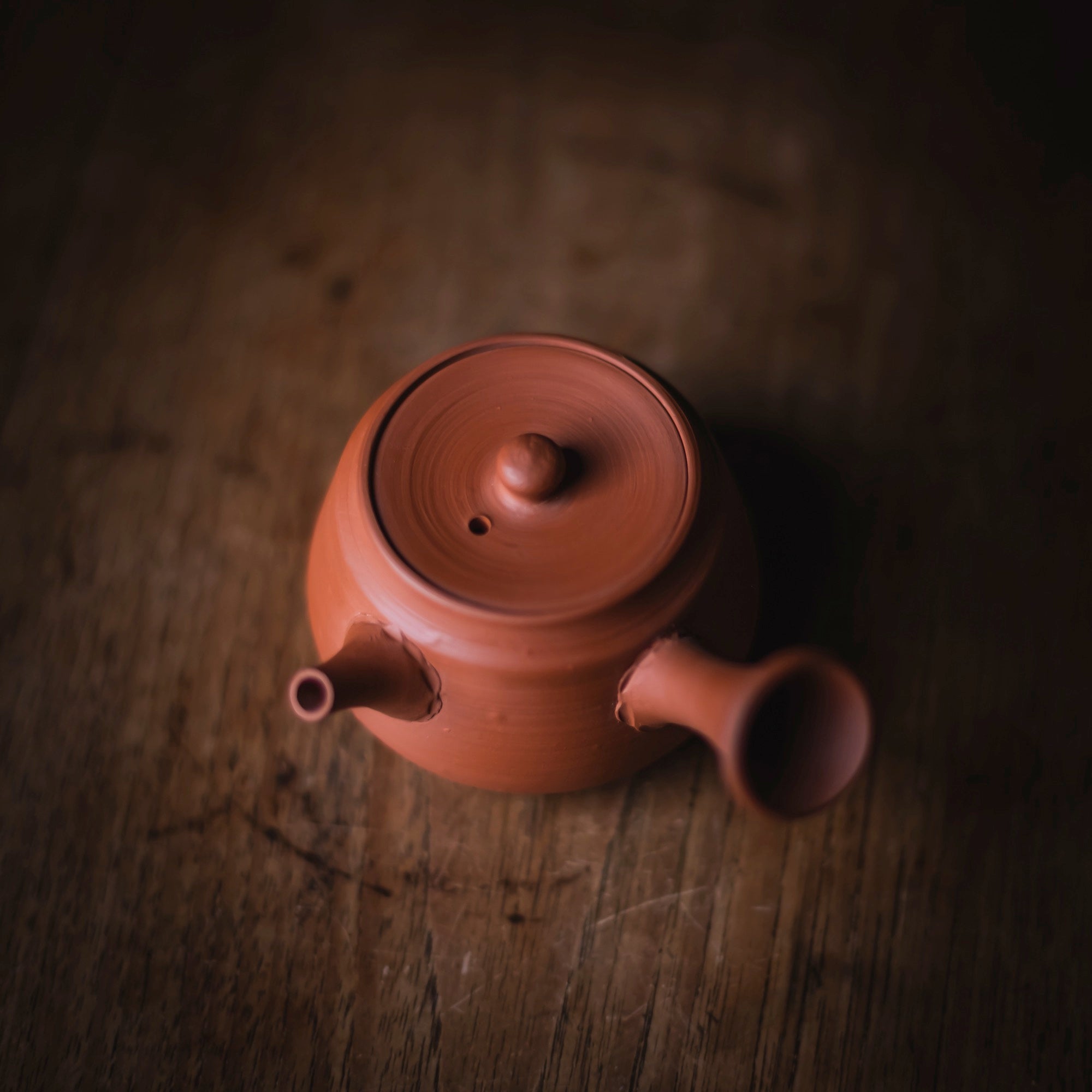
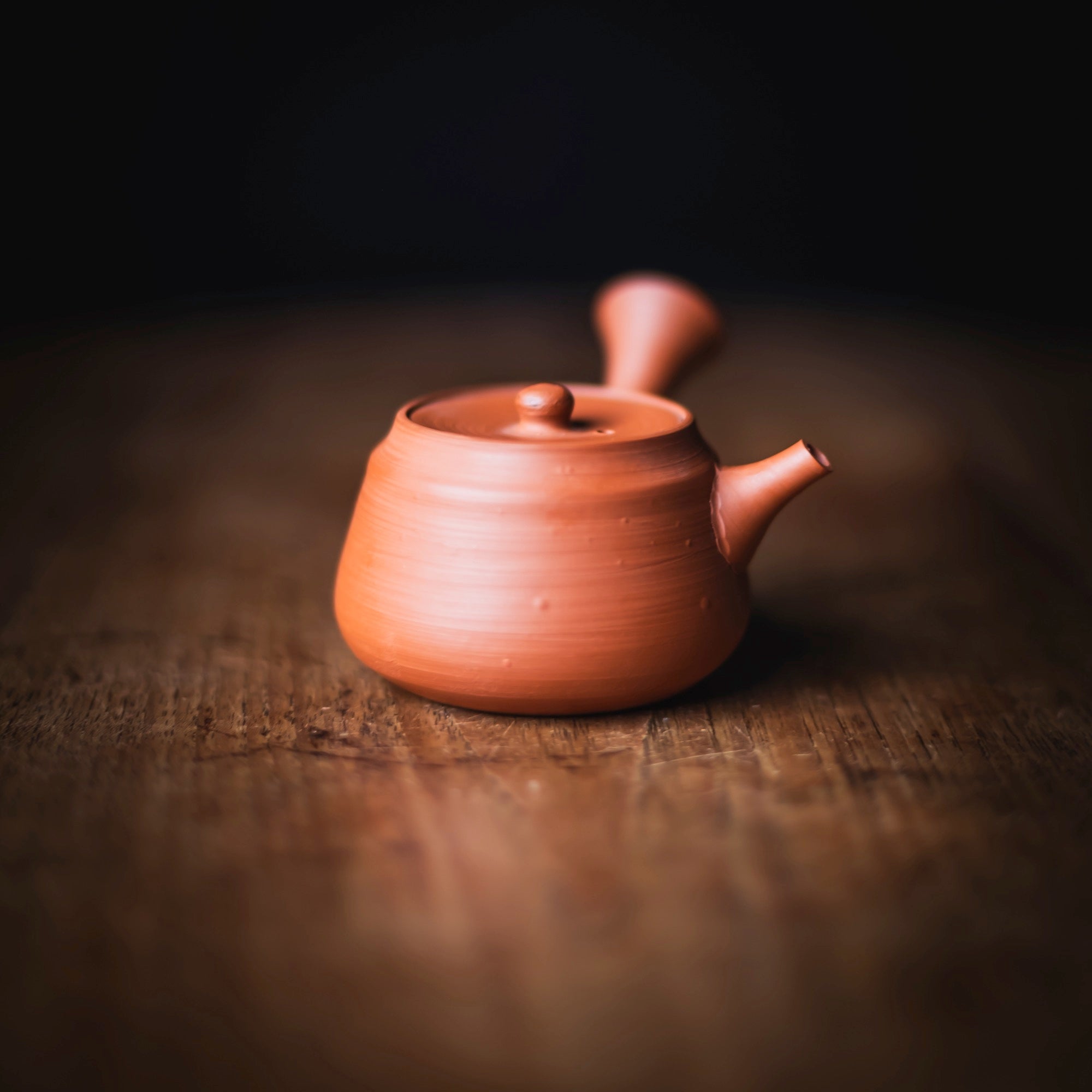
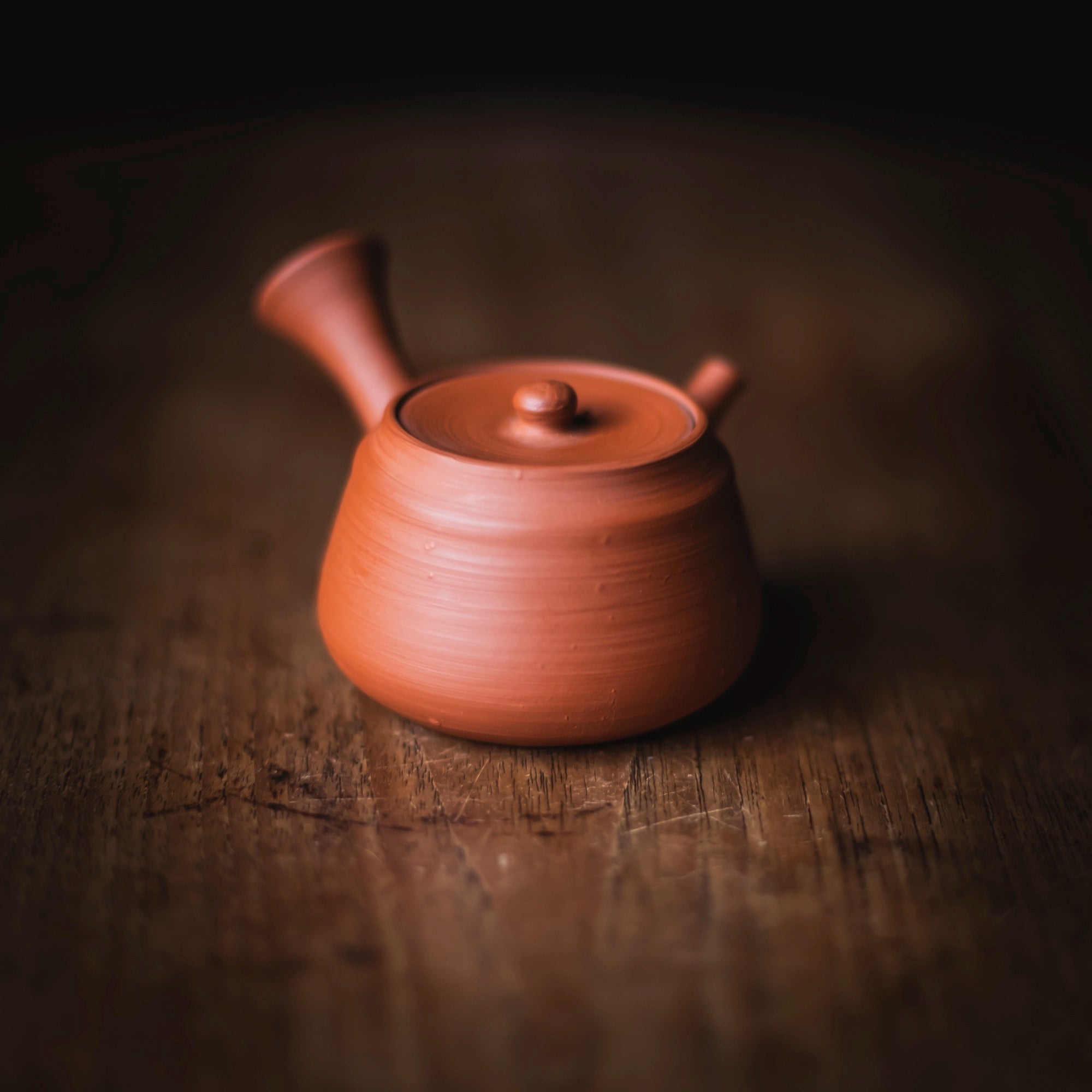
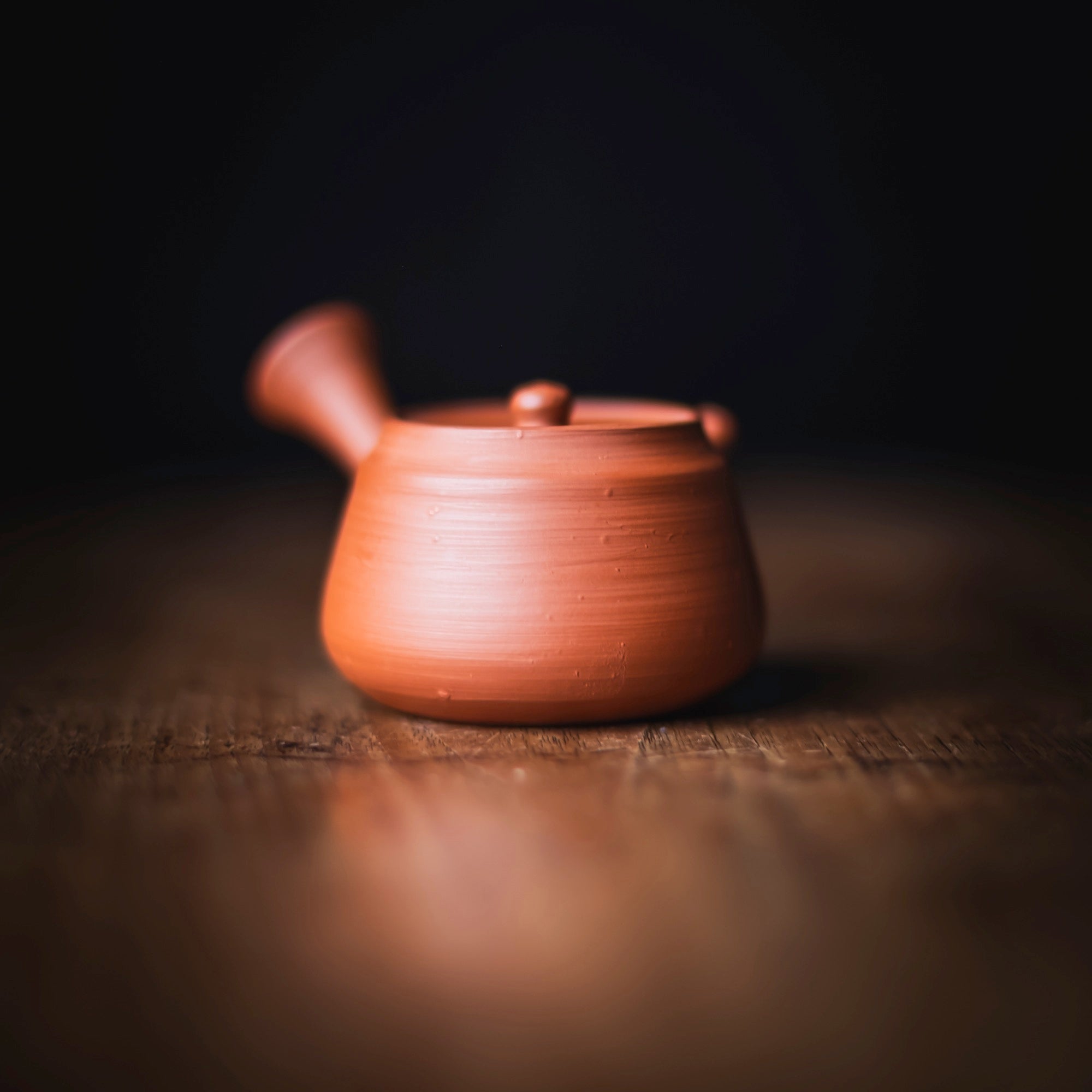
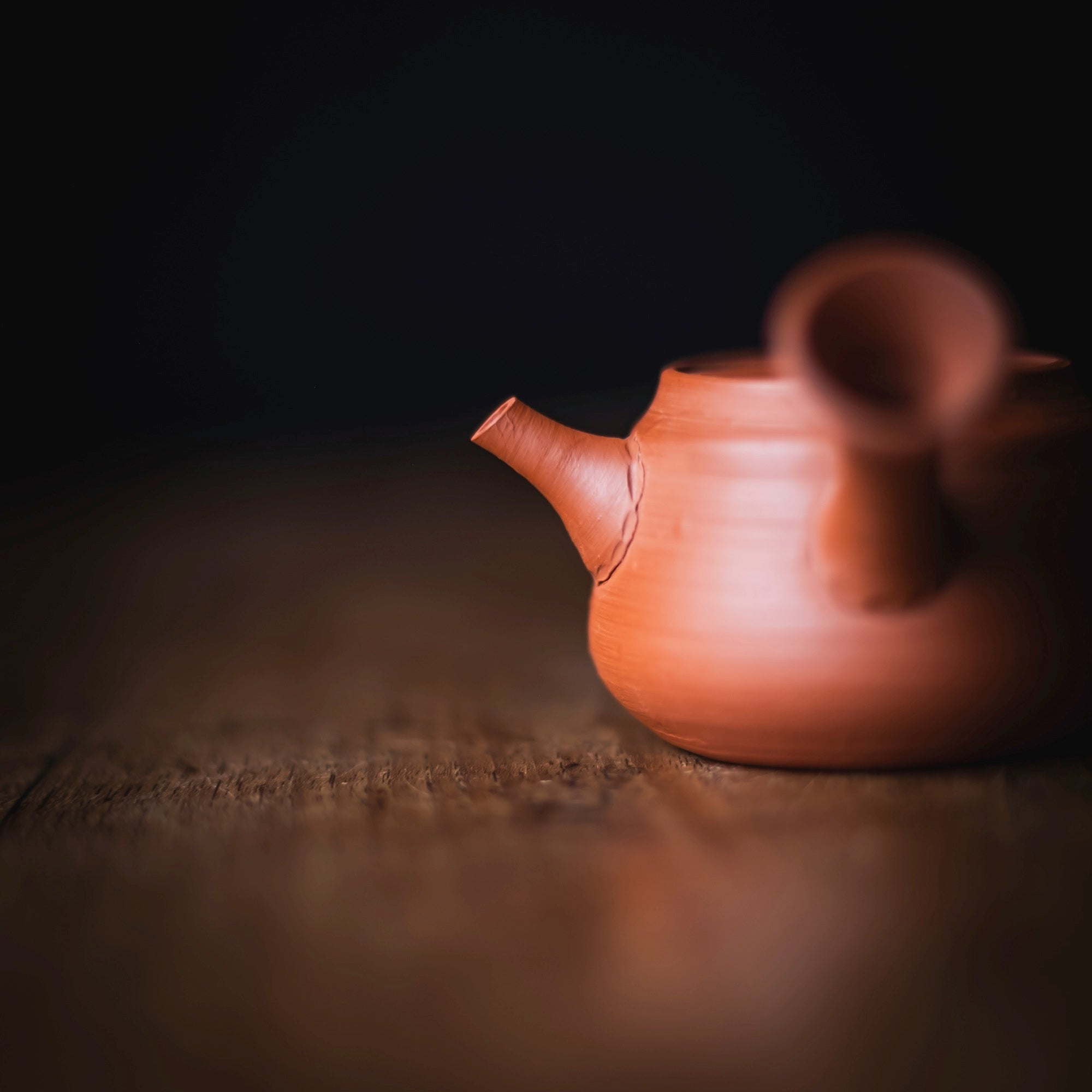
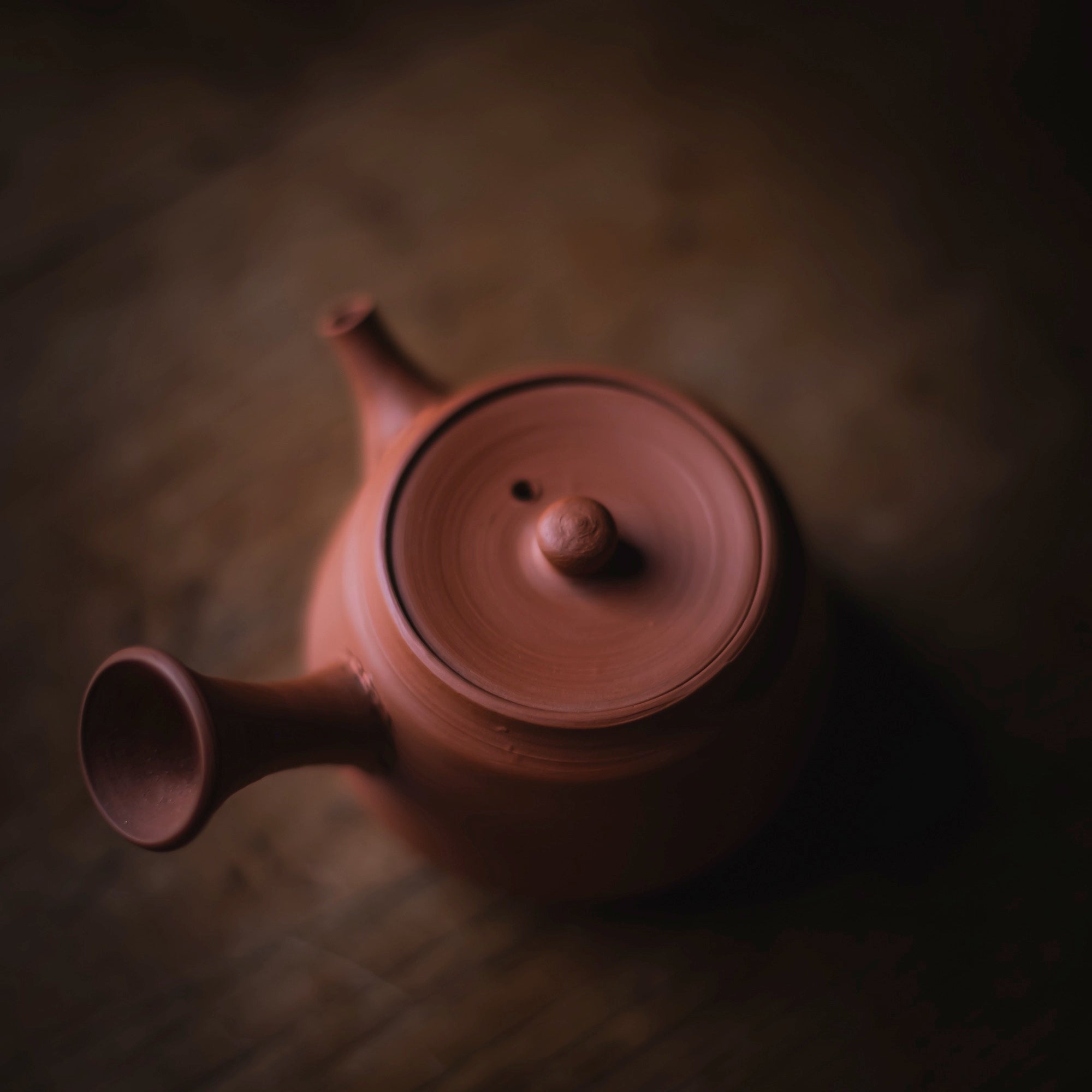
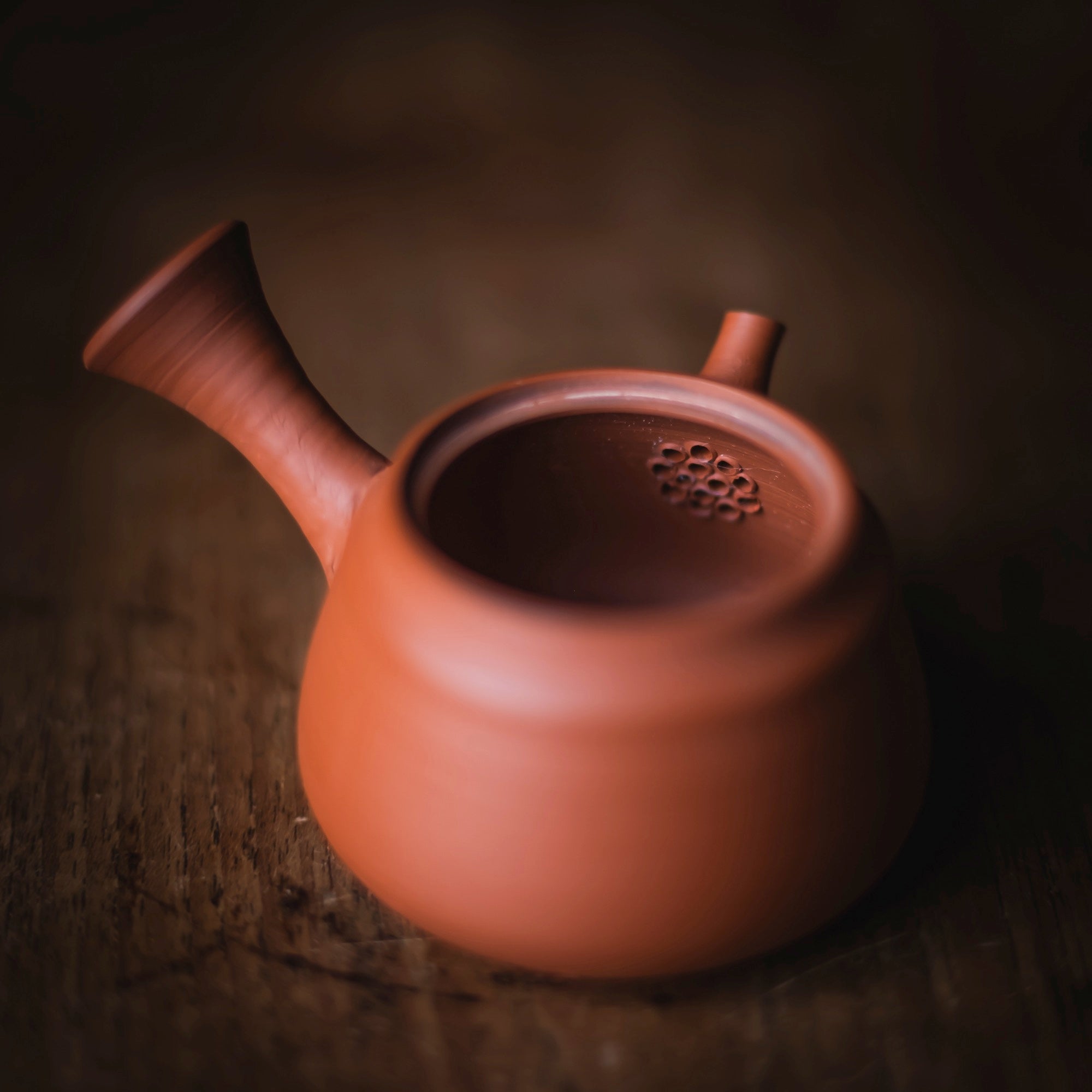
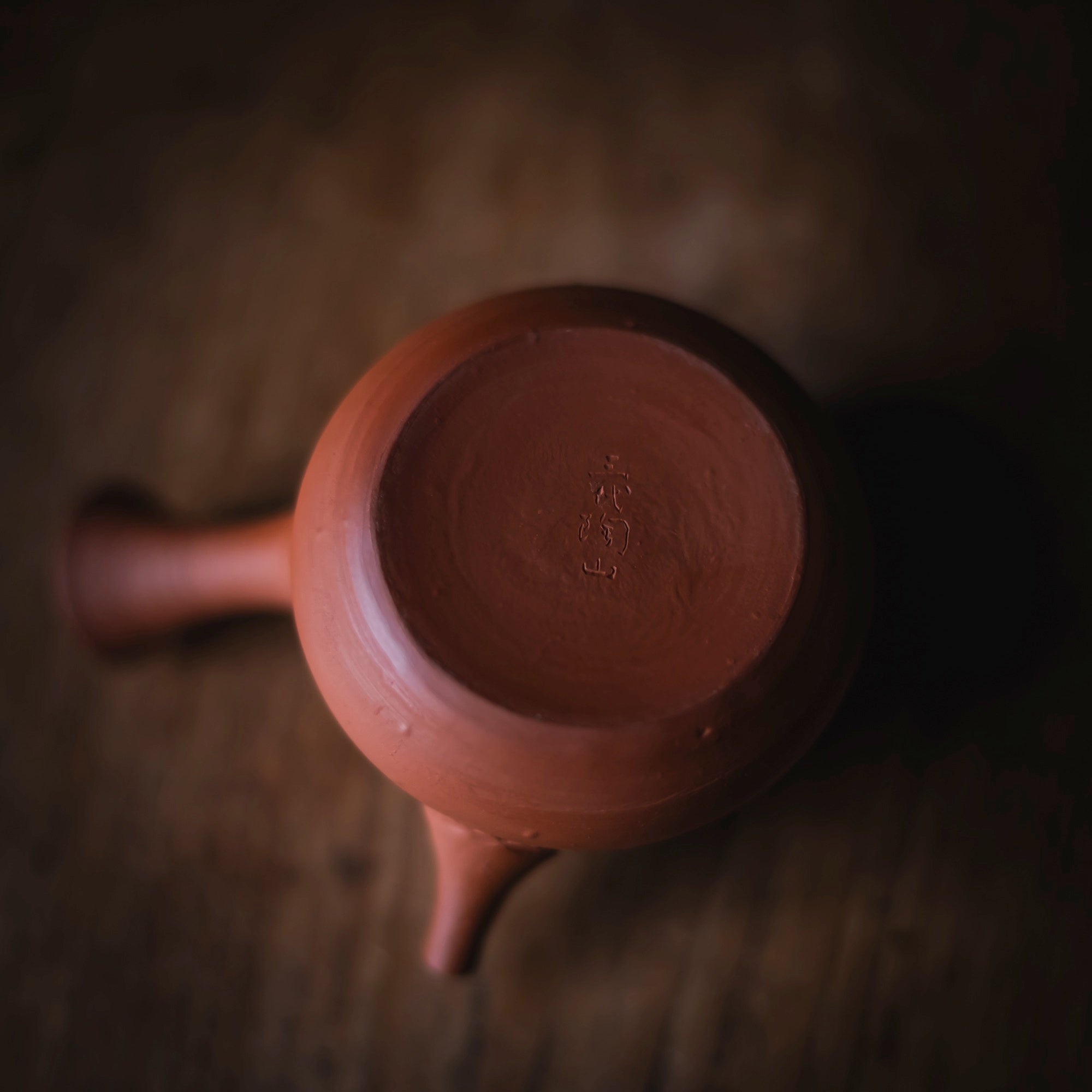
The kyusu is the Japanese teapot in its most functional form: the handle sits at ninety degrees to the spout, so you pour with one hand, thumb resting on the lid. Shape and clay are tuned to green tea — fine built-in filters, low walls, volumes that match how sencha is actually brewed.
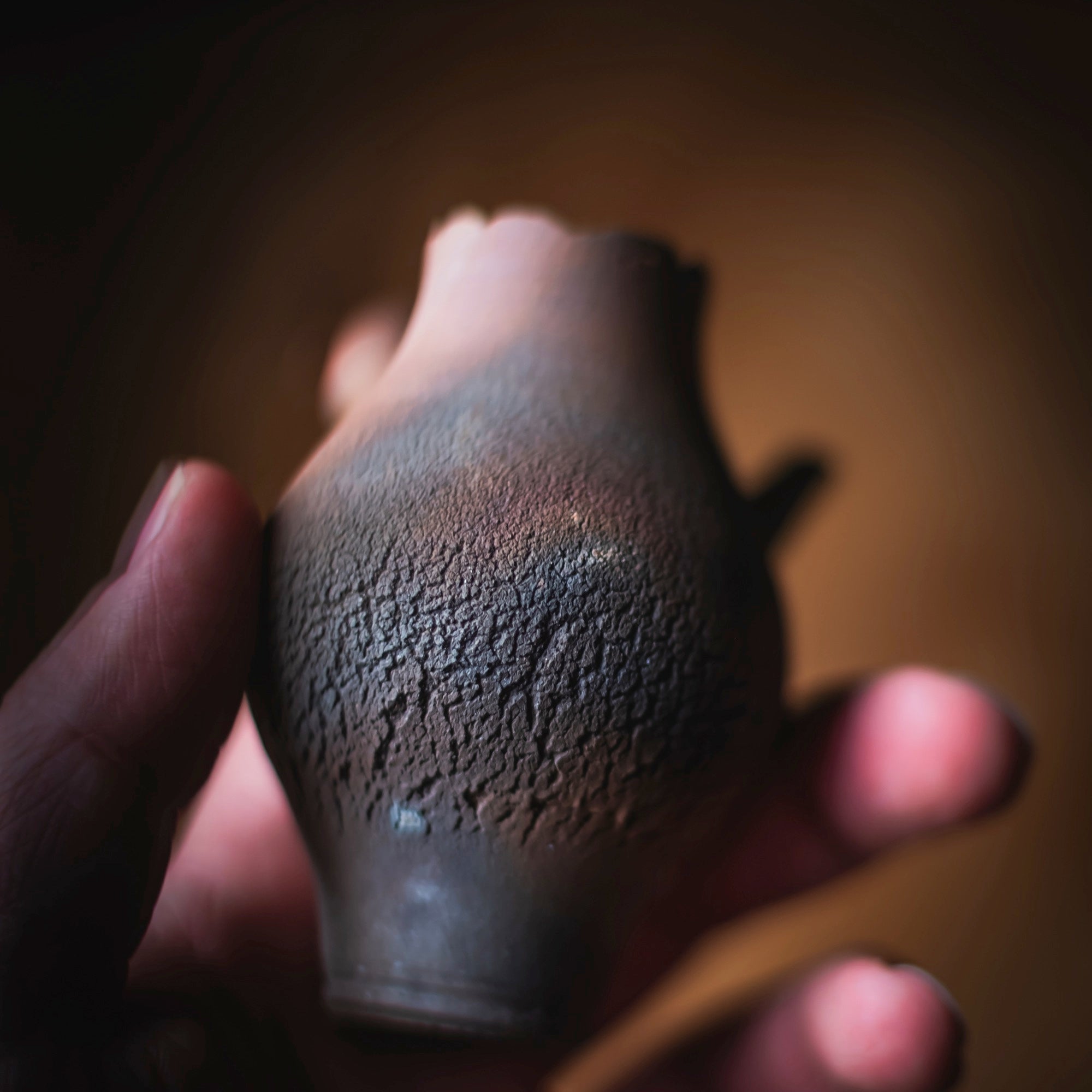
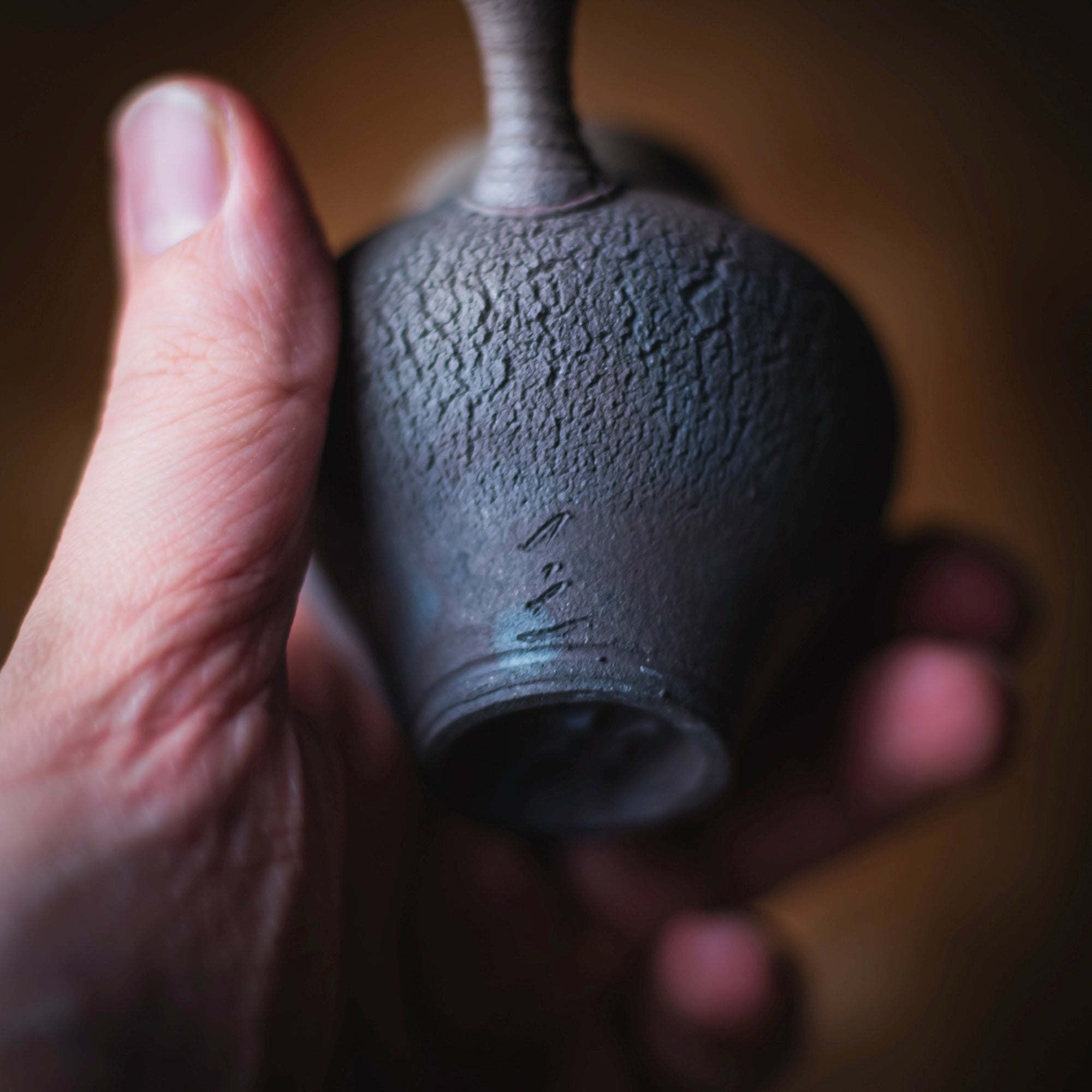
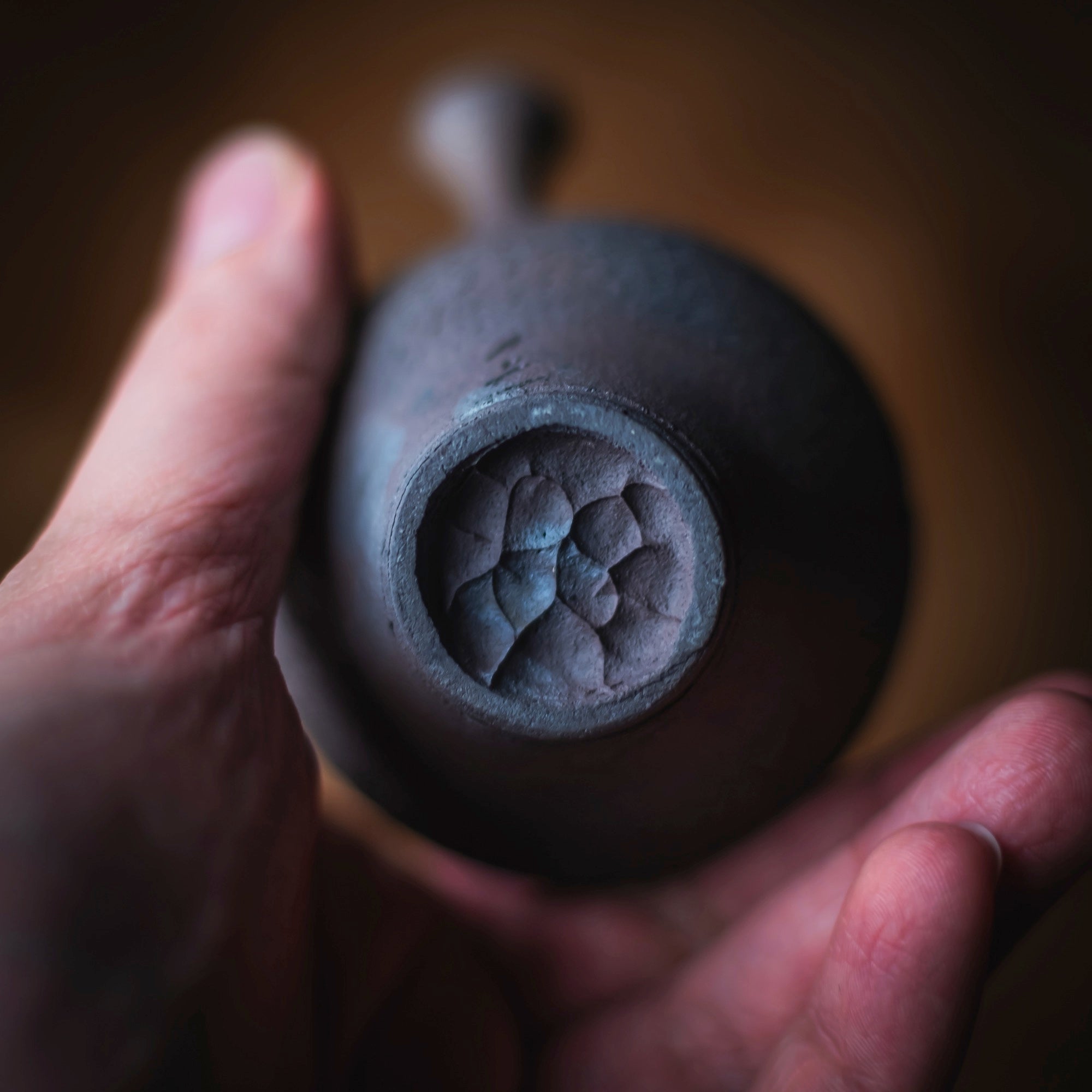
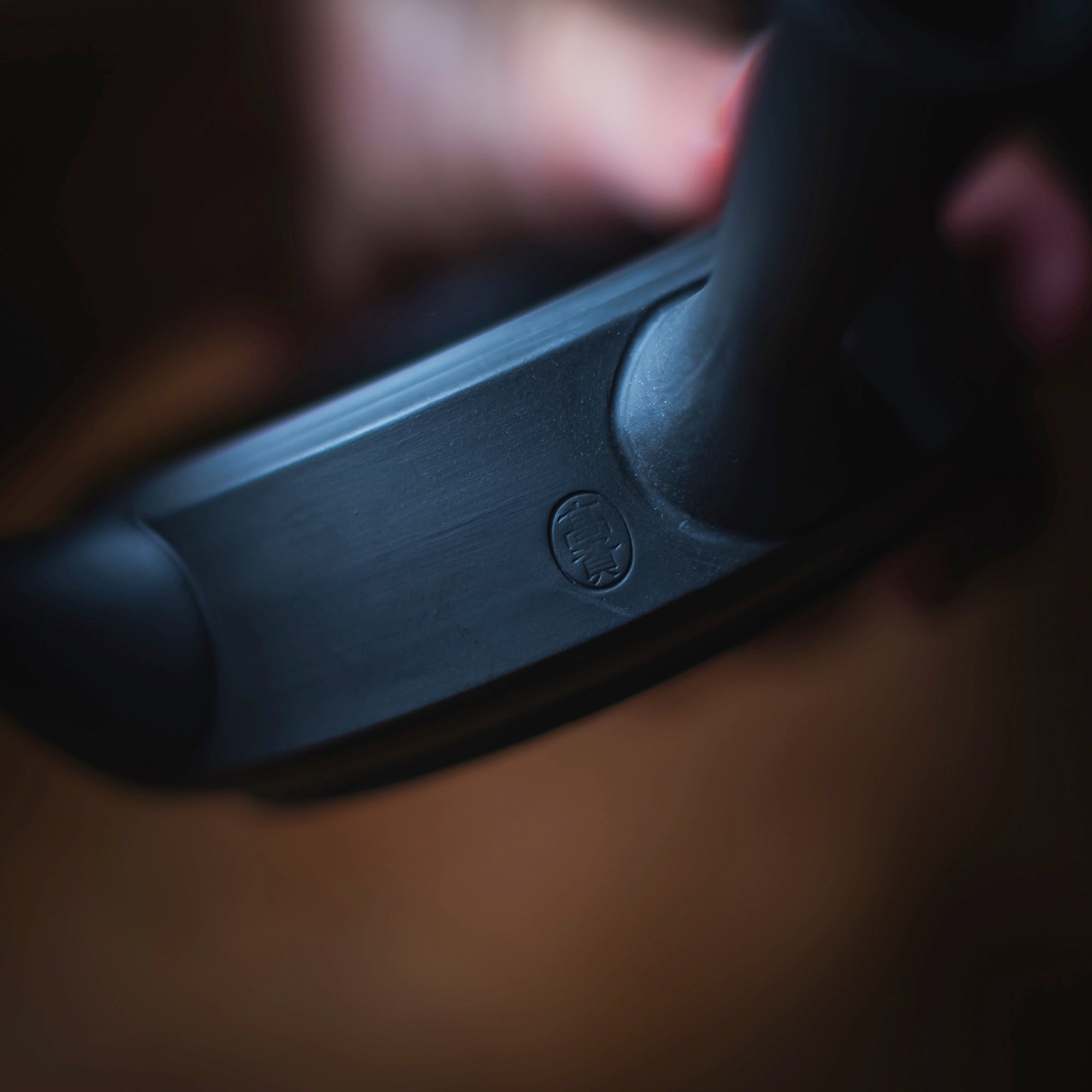
This is the deepest part of our collection: more than 130 teapots. The Tokoname masters — Seiji Ito, Yutaro Yamada, Kanjo Omata, Yokei Mizuno, Teruyuki Isobe — stand next to Chinese side-handle pots from YiZhi and Buchangqi and European interpretations by David Louveau and Andrzej Bero. Unglazed Shudei and seaweed-marked Mogake surfaces dominate; a few wood-fired and glazed pieces round it out.
Choosing: 100–150 ml suits gyokuro and shaded teas; 200–300 ml is the everyday sencha size; Chinese pots pair naturally with oolong and puerh. Our kyusu guide covers handle positions and filters, and the overview of Japanese teapots maps the wider field. Tokoname only: this way.