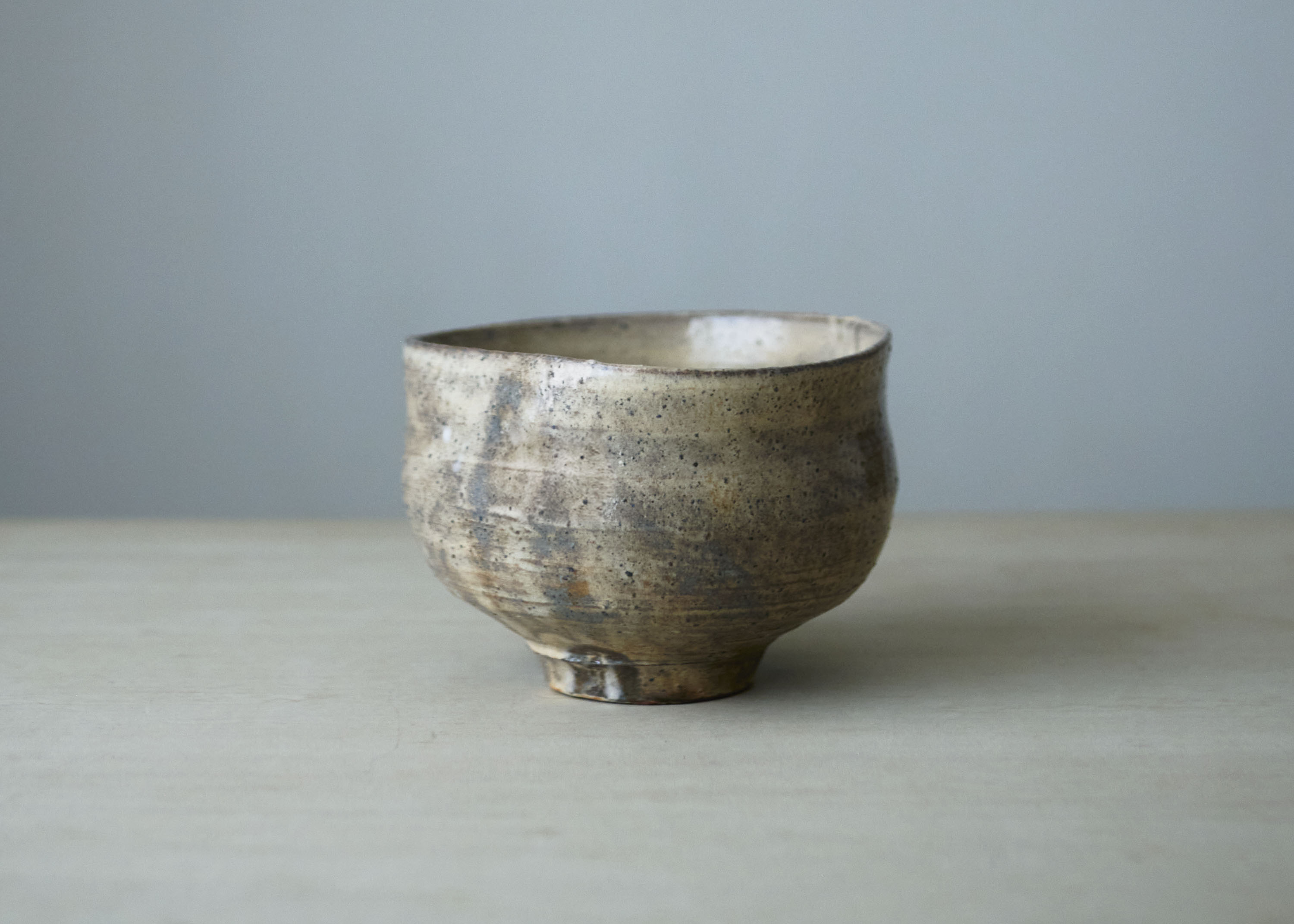
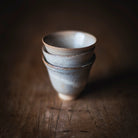
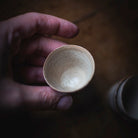
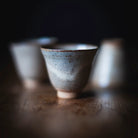
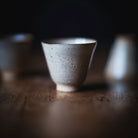
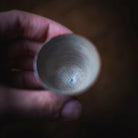

Très belles tasses Hagi-yaki. Parfaites pour boire des Gyokuros d’exception.
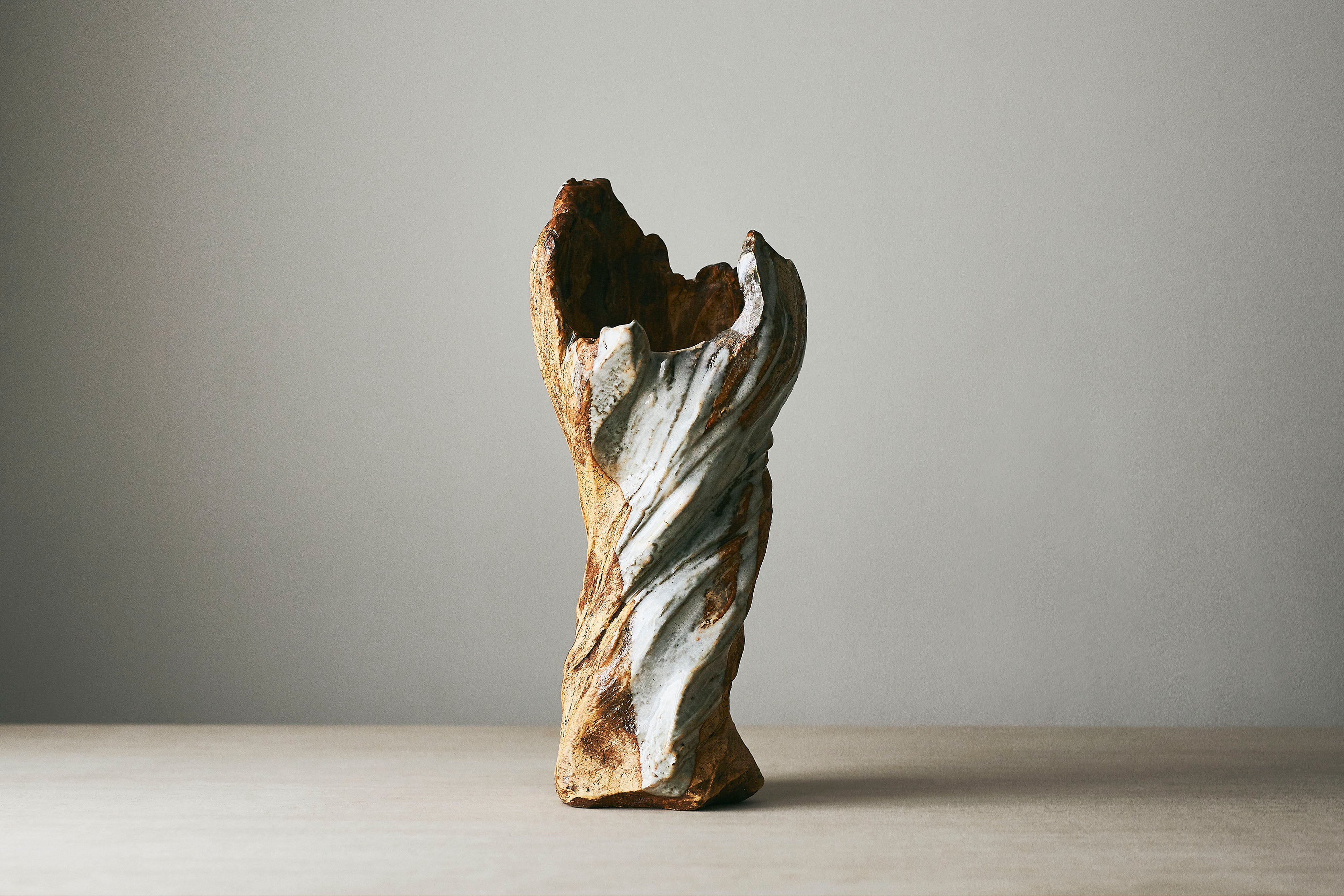
Masahiro Sakakura specializes in Hagi ware, a traditional pottery style from Yamaguchi Prefecture. He emphasizes the intrinsic qualities of local clay, personally excavating and refining it to highlight its unique characteristics. His creations are deeply influenced by the aesthetics of the tea ceremony, focusing on tea pottery.
(Yamaguchi, Japan )
Hagi ware, a traditional pottery from Yamaguchi Prefecture, dates back to the late 16th century when Korean potters Yi Sukkwang and Yi Kyung were brought to Japan by Lord Mori Terumoto. The first kiln was established in Matsumoto village, and by the mid-17th century, production expanded to Fukawa village, creating two main Hagi ware lineages.
Known for its simple aesthetics and unique "kannyu" glaze cracks, Hagi ware changes over time as tea seeps into the glaze, embodying the Japanese wabi-sabi philosophy of beauty in imperfection.
Our gallery, studio, and tea space are a hub for experiencing and sharing the art of ceramics and tea.
Similar to the concept of “Utsuwa-galleries” in Japan, we are holding monthly exhibitions of unique ceramicists from Japan, China and Europe.
We also regularly host Workshops and Tea Experiences.
The teapot is very elegant and precisely made. Pour is crystal smooth and very satisfying. The lid holds by itself while pouring which is great with a side handle. Only downsides : the artist's seal is so small it's almost unreadable if you don't know what it is, and the lid isn't completely water sealed.
Great overall
Great quality half-handmade Zisha pot. Lid fit is very good. Water lock. Pouring line is exquisite for a pot this size. The price is among the best that could be found in EU. 100% recommend.
Aromatisch, süßlich, vollmundig über drei Aufgüsse.
Sehr schmackhaft im empfohlenen Einmalaufguss.
This matcha has small lumps but is really gentle.
I can't wait to try meiju.
Uneven,subtle glaze. The dented spots are particulary cool, since they adjust the cup very much to the hand. The combination of the white glaze with unglazed red clay parts reminds me positevly of 1970s aestetics.