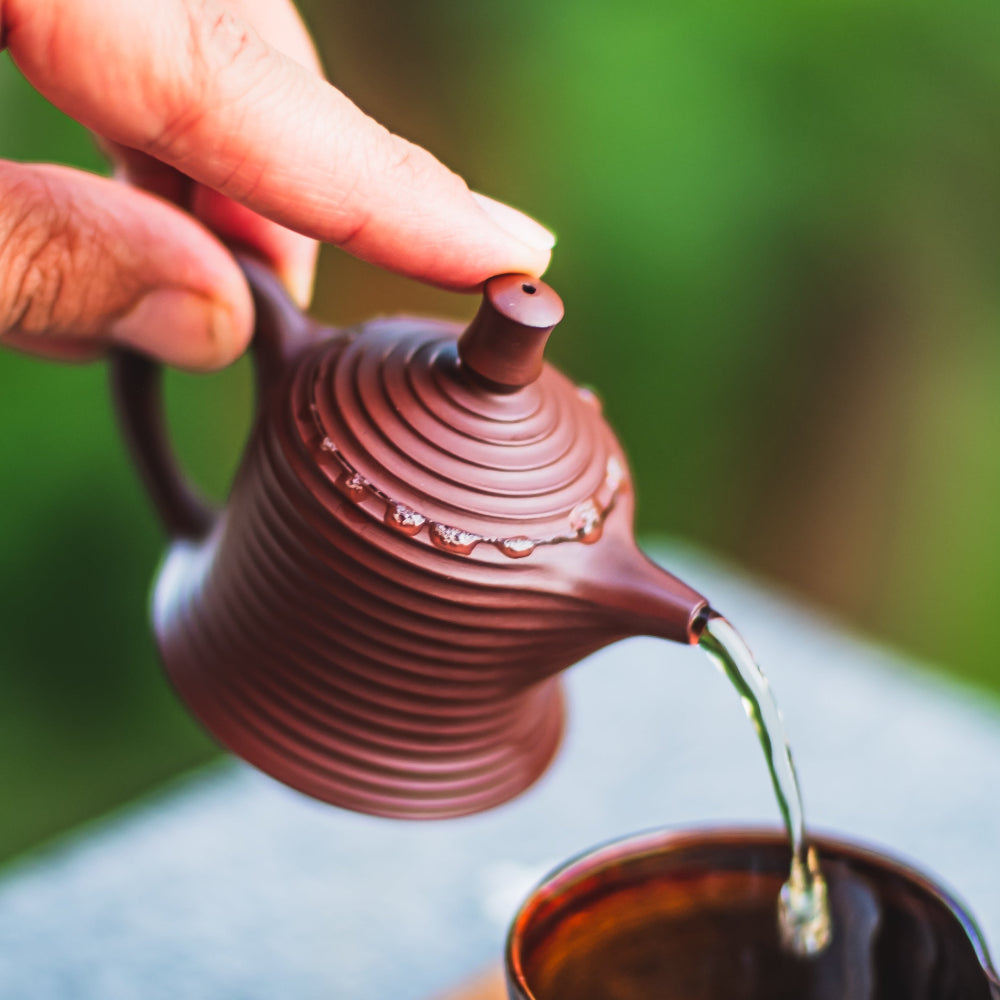
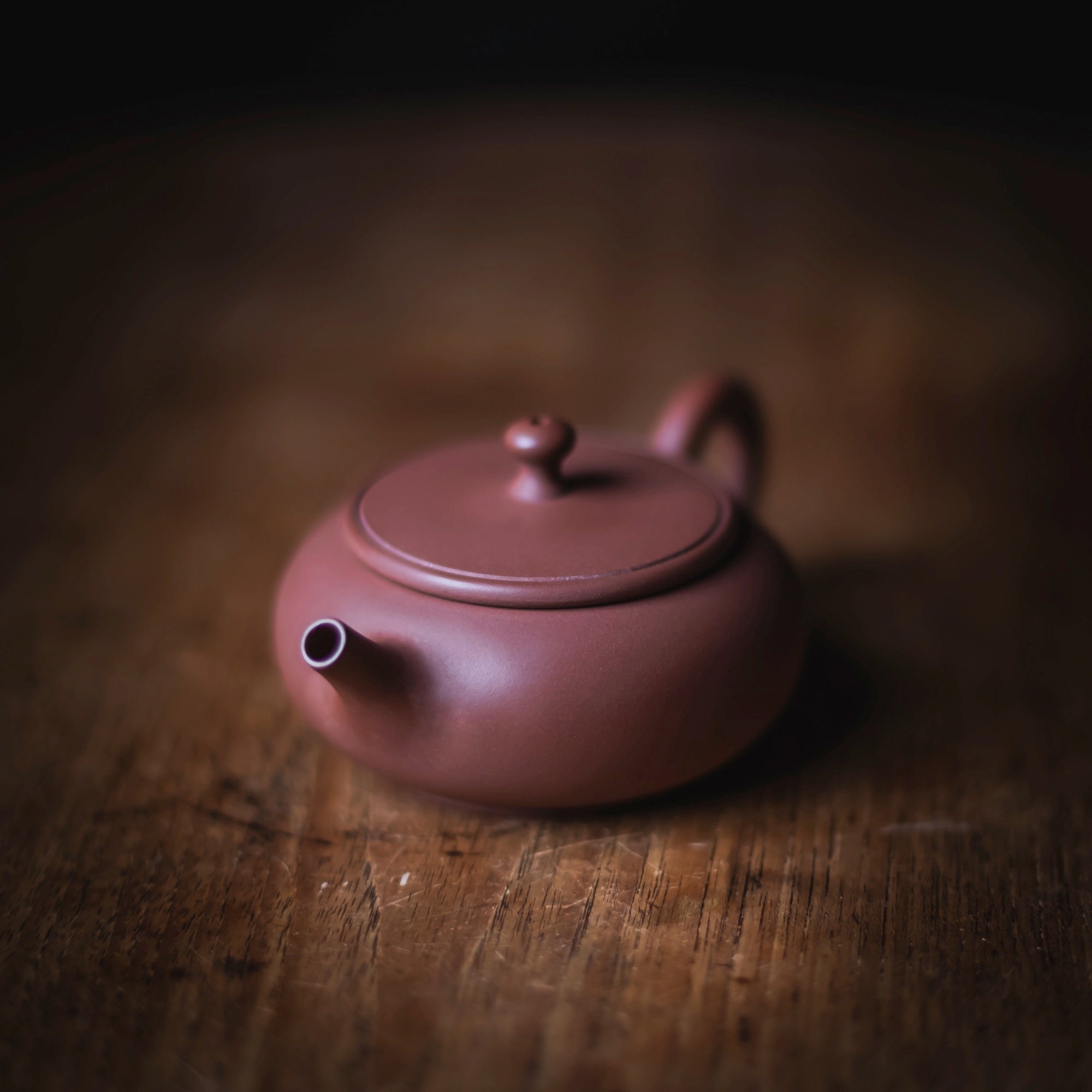
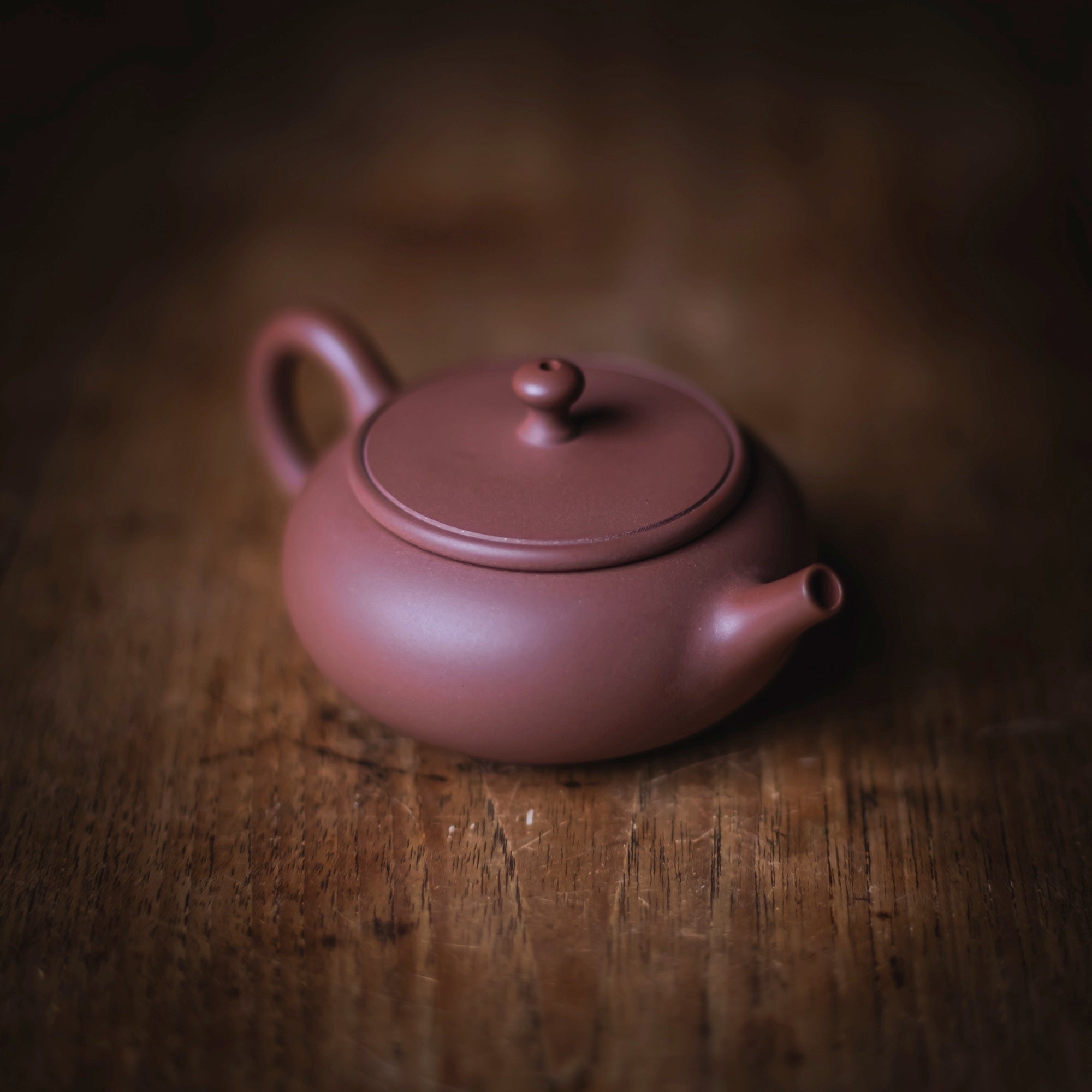
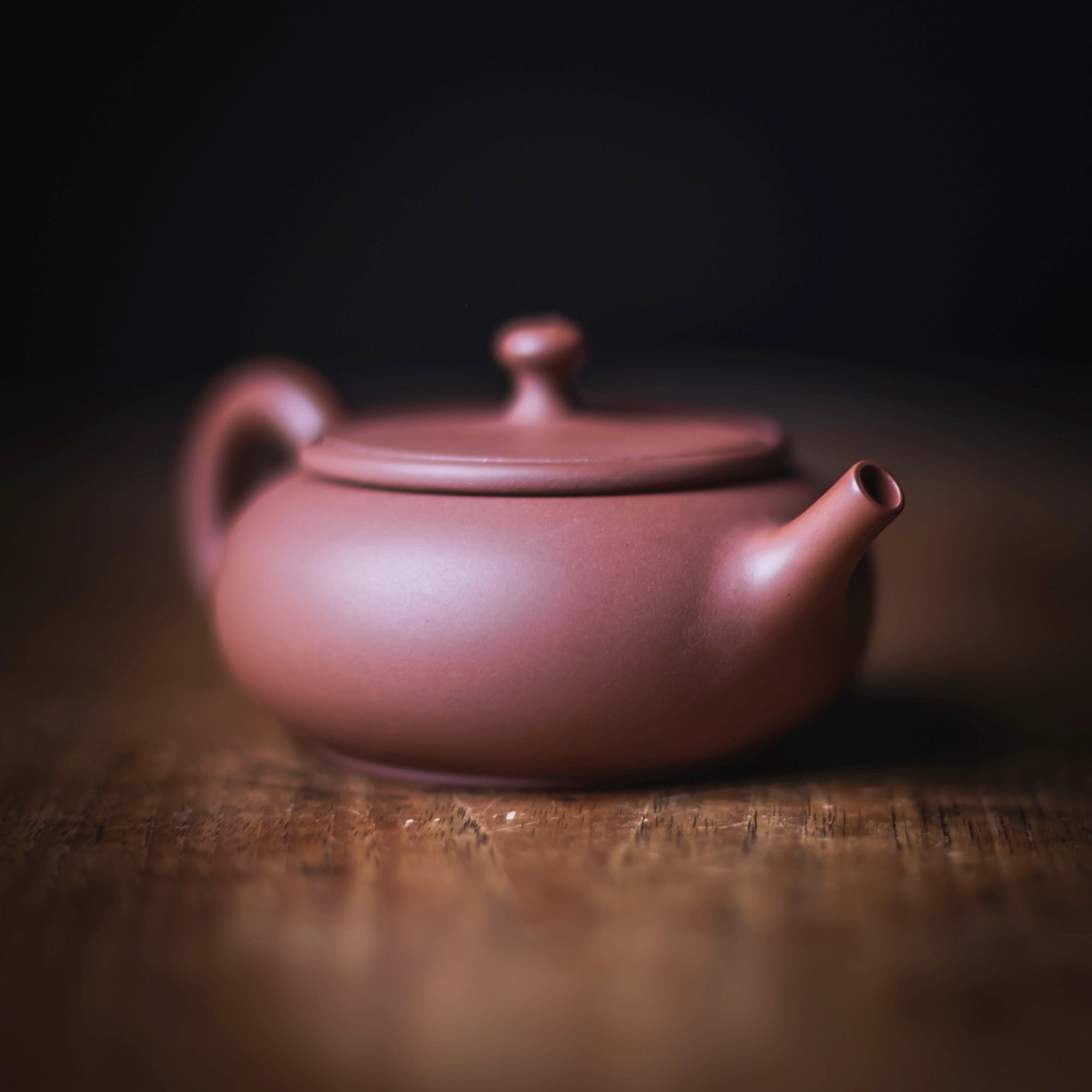
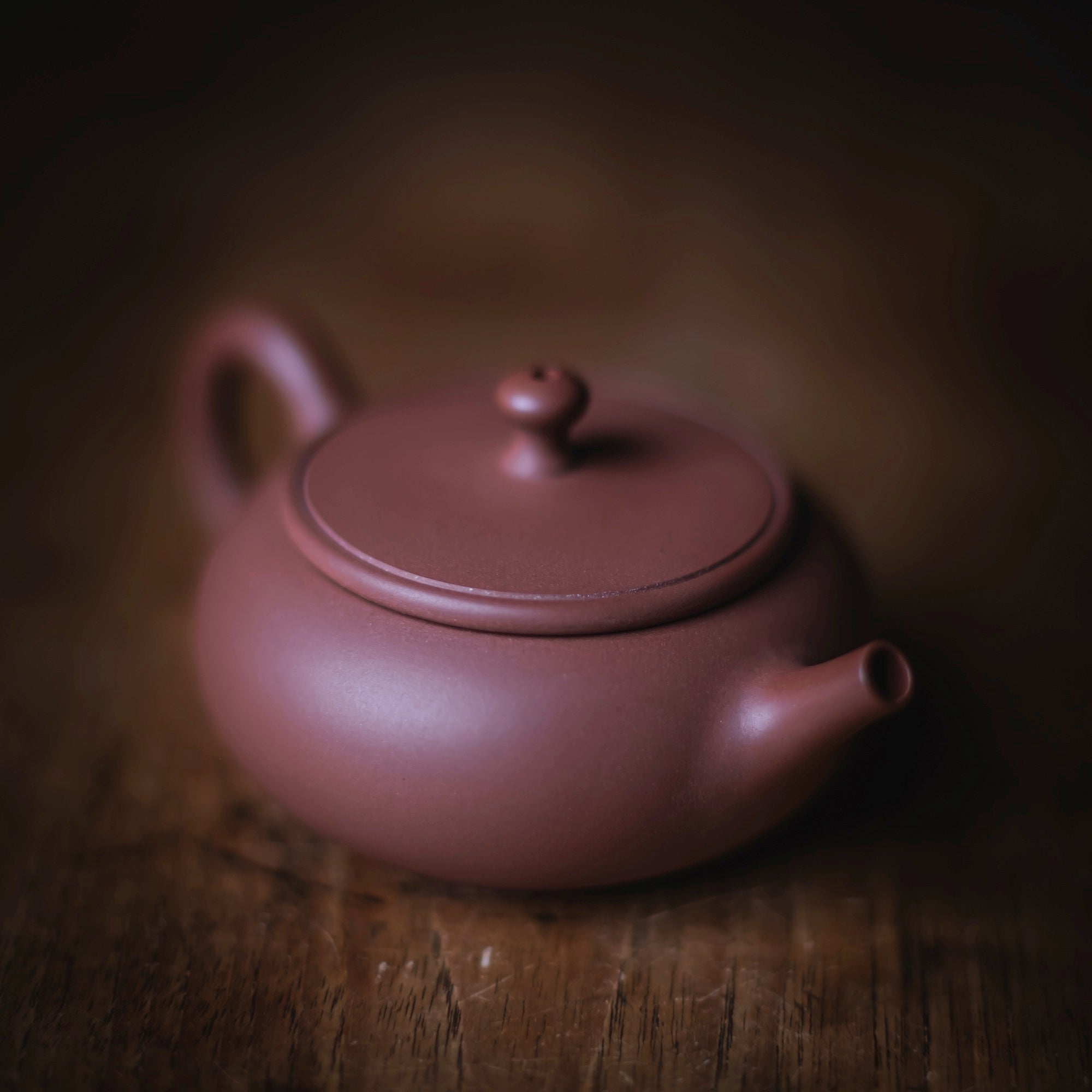
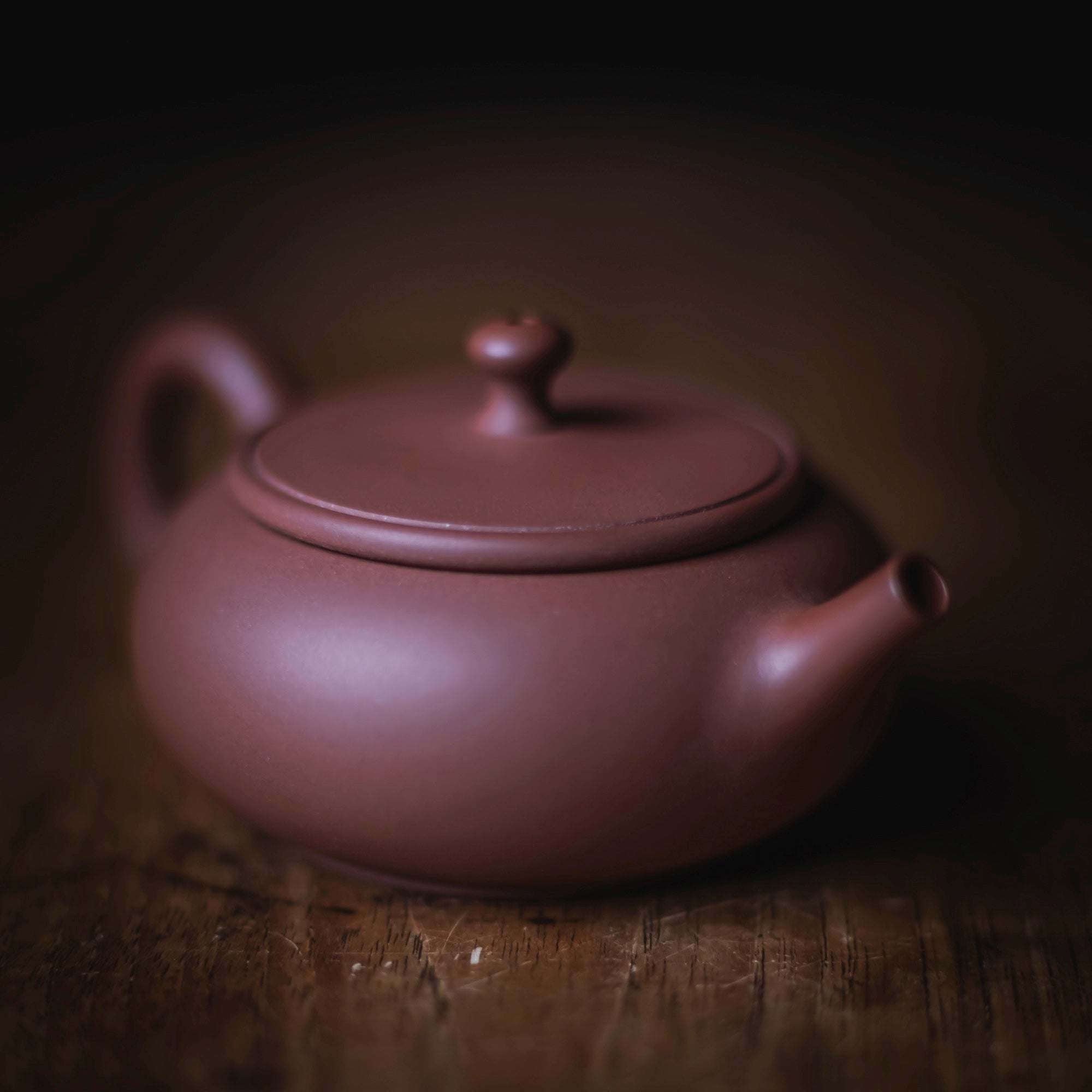
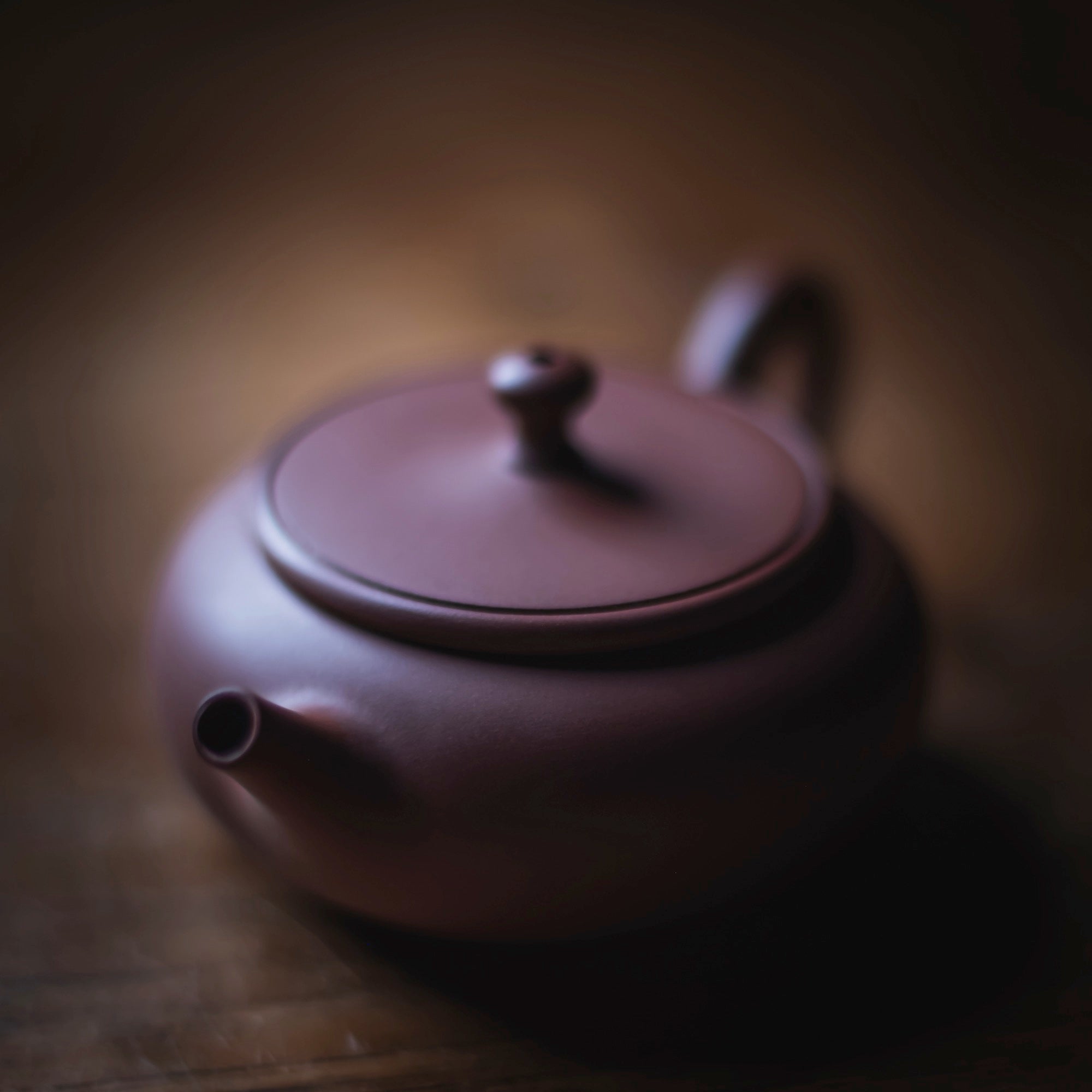
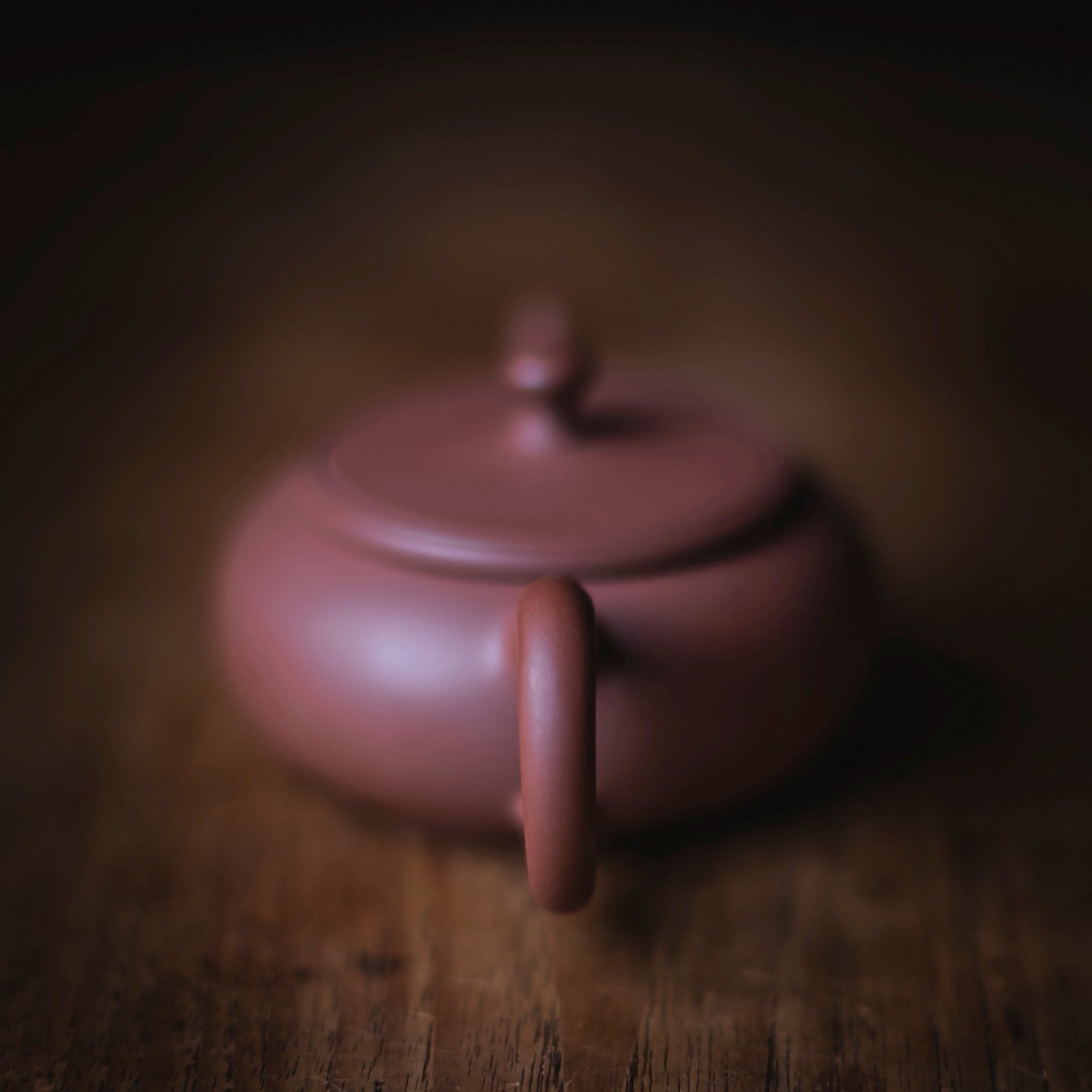
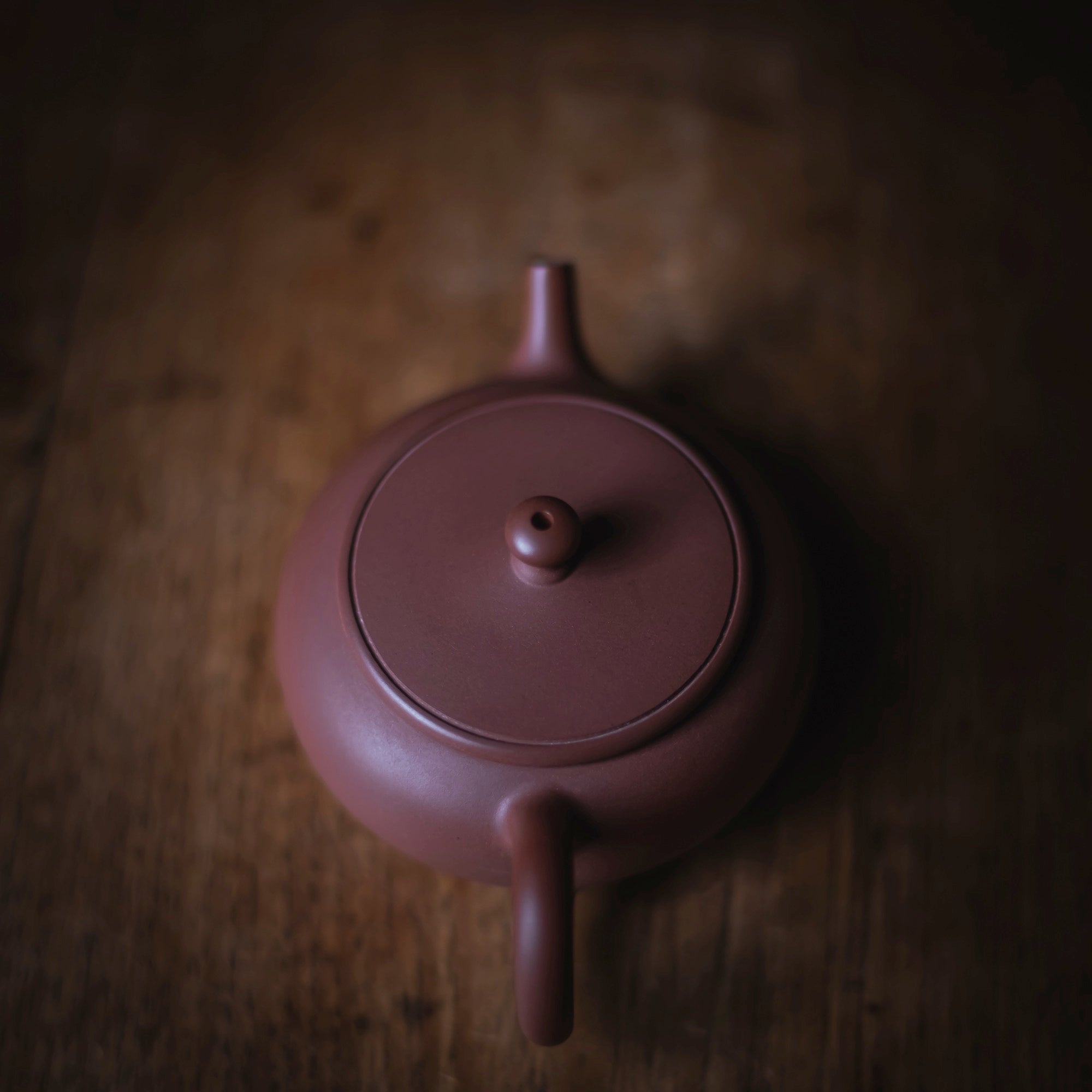
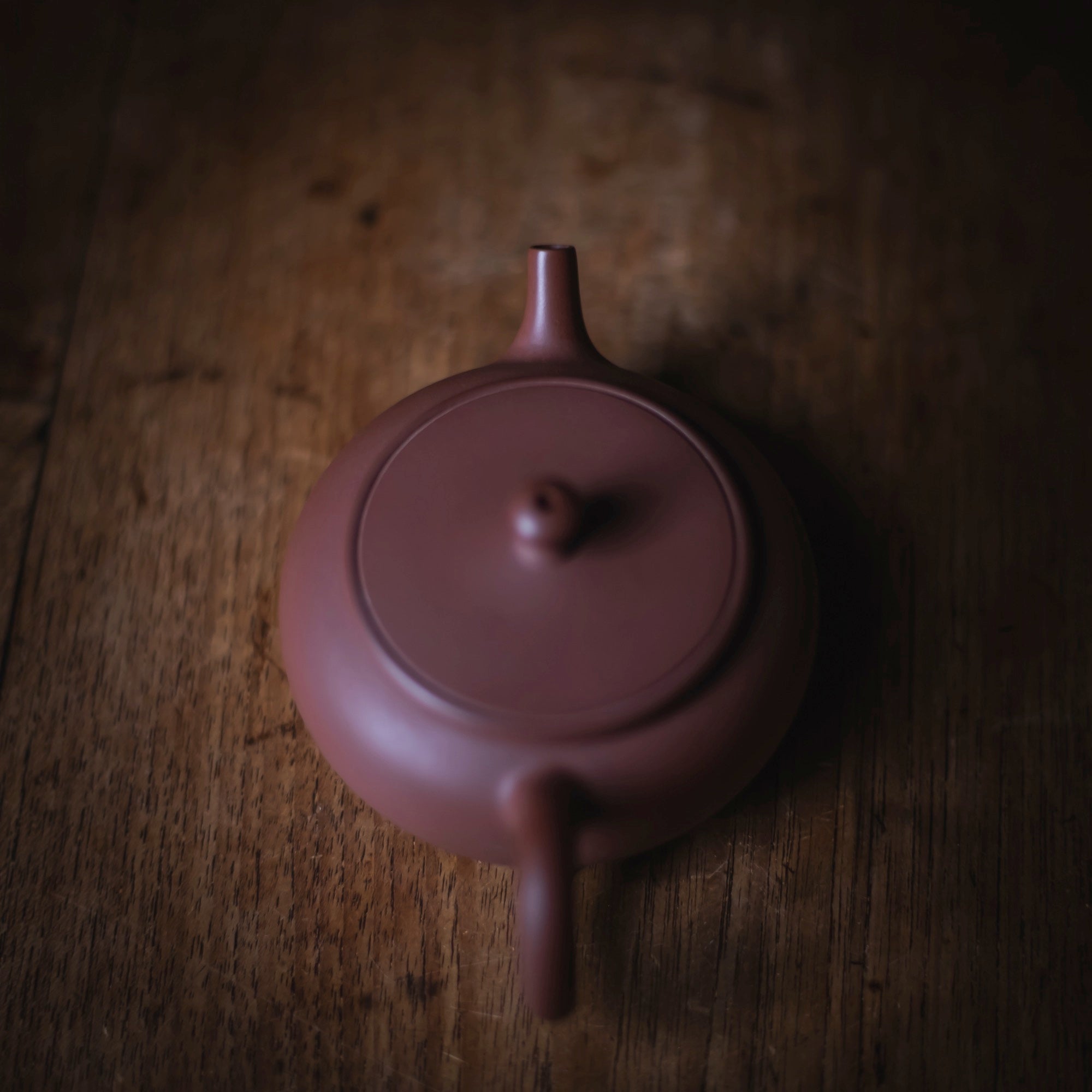
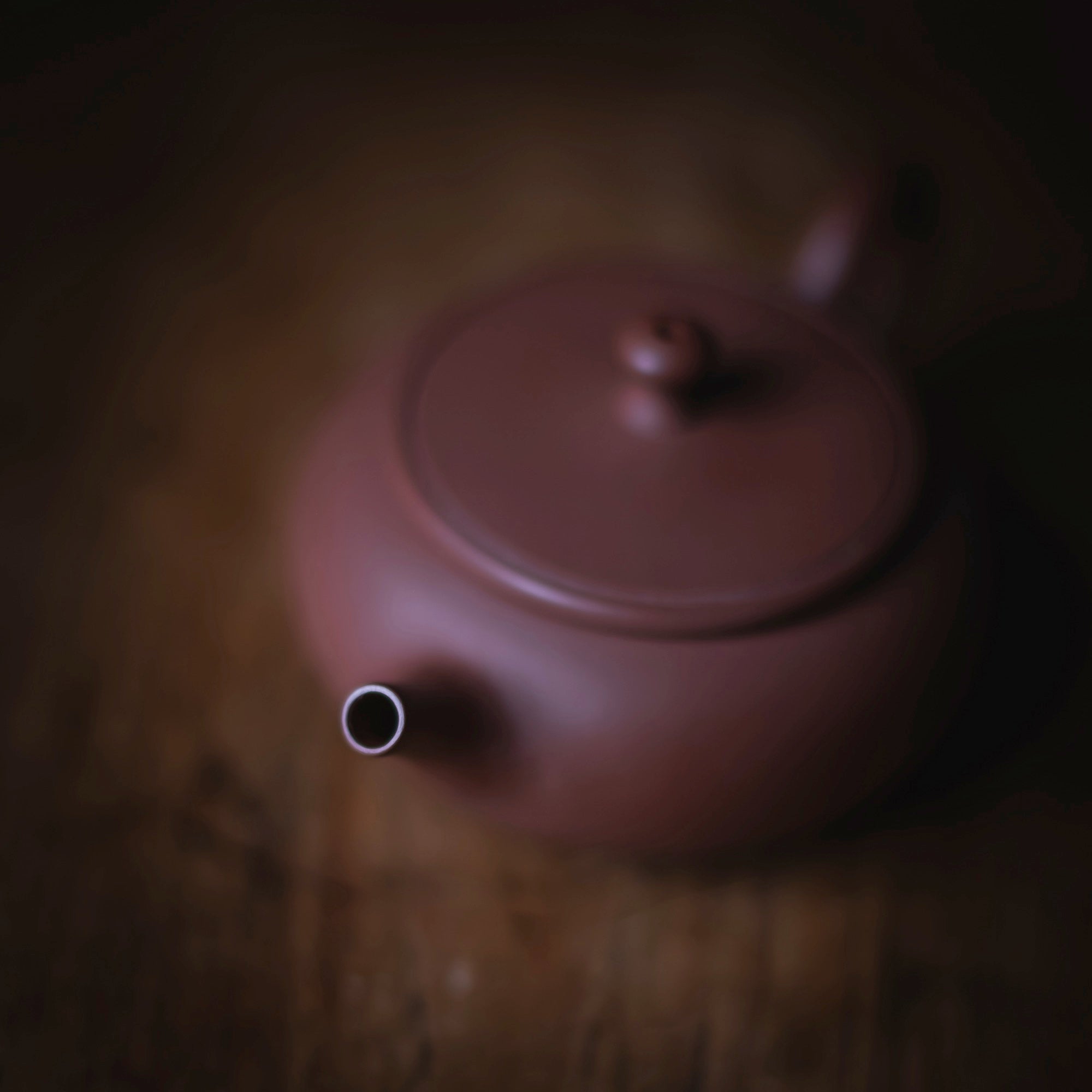
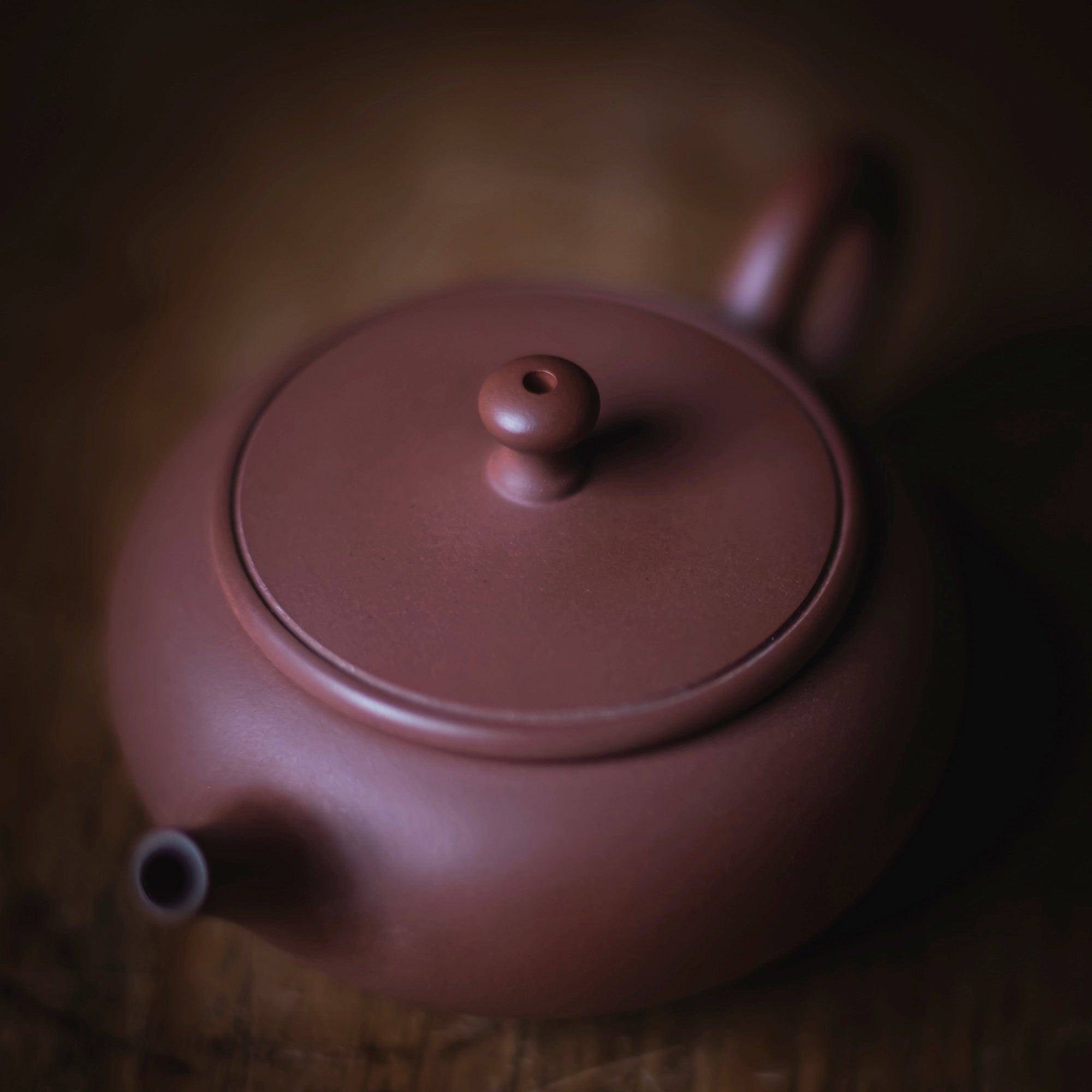
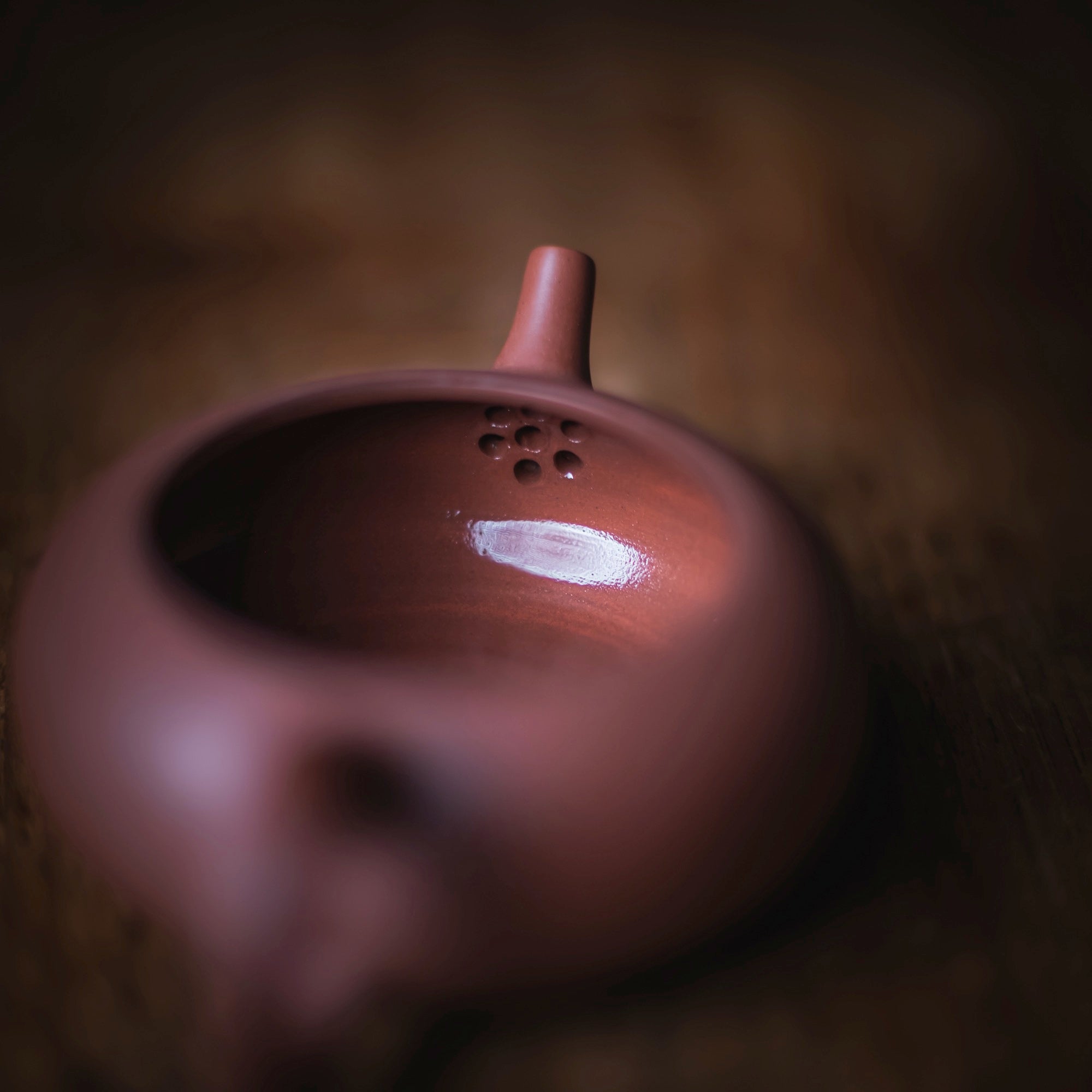
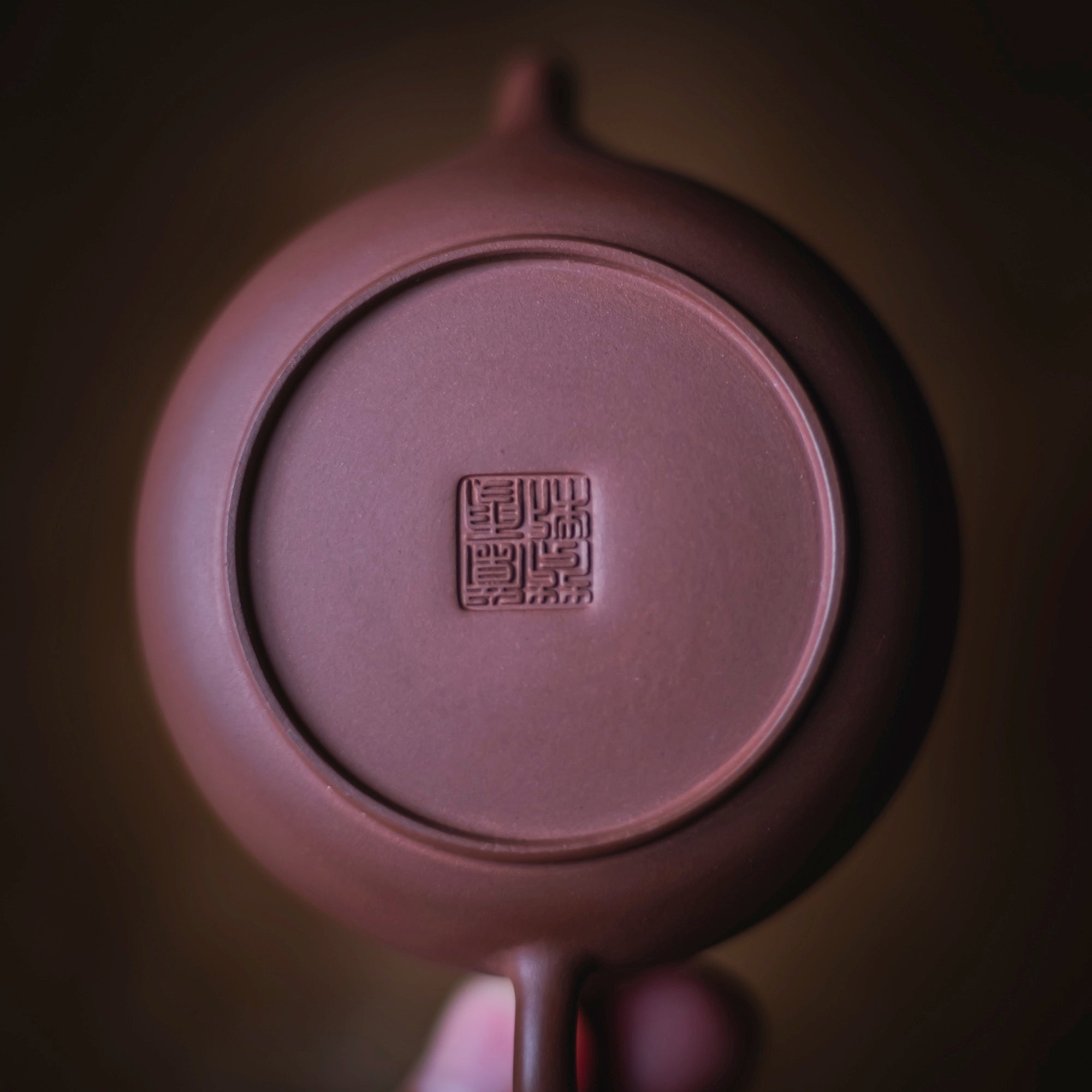
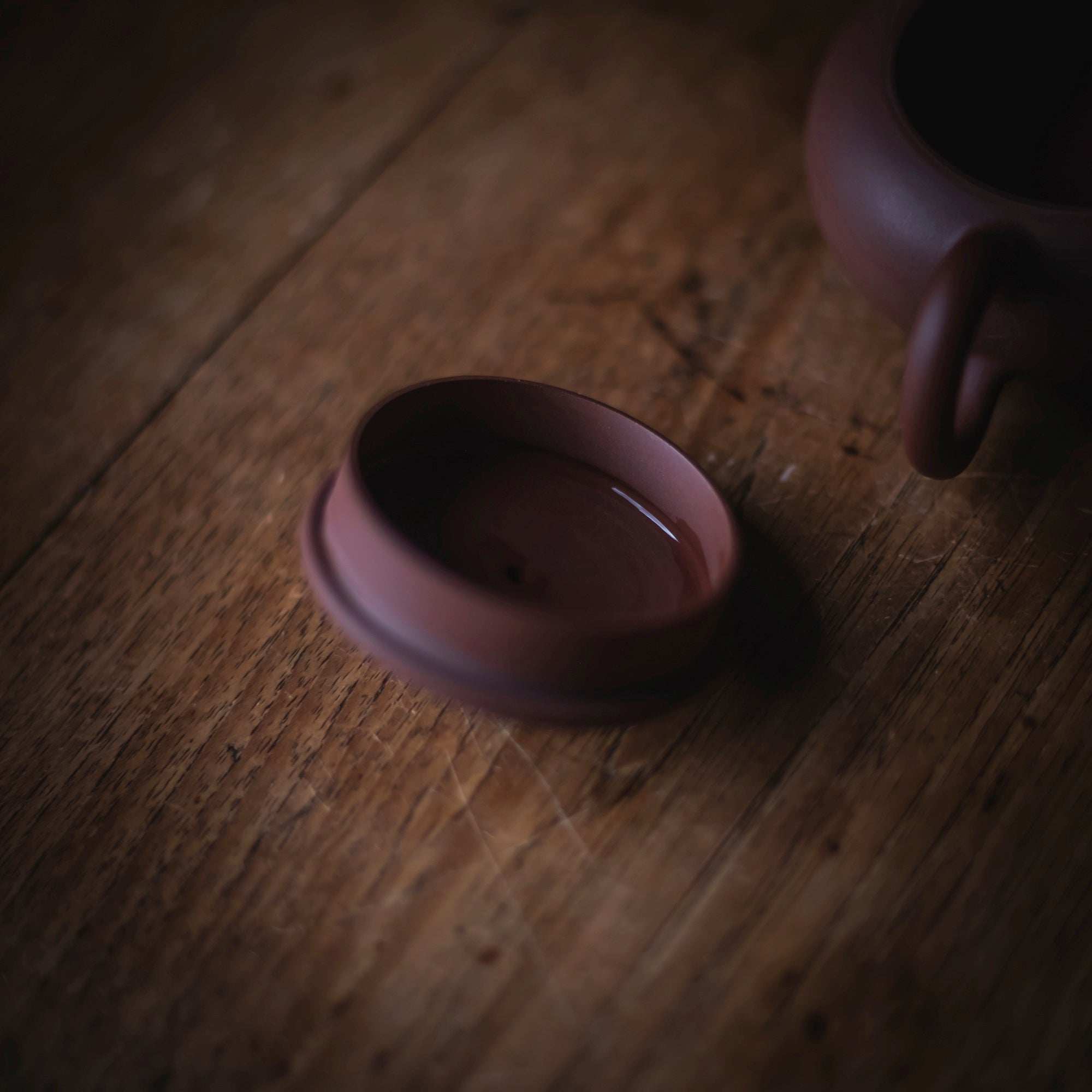
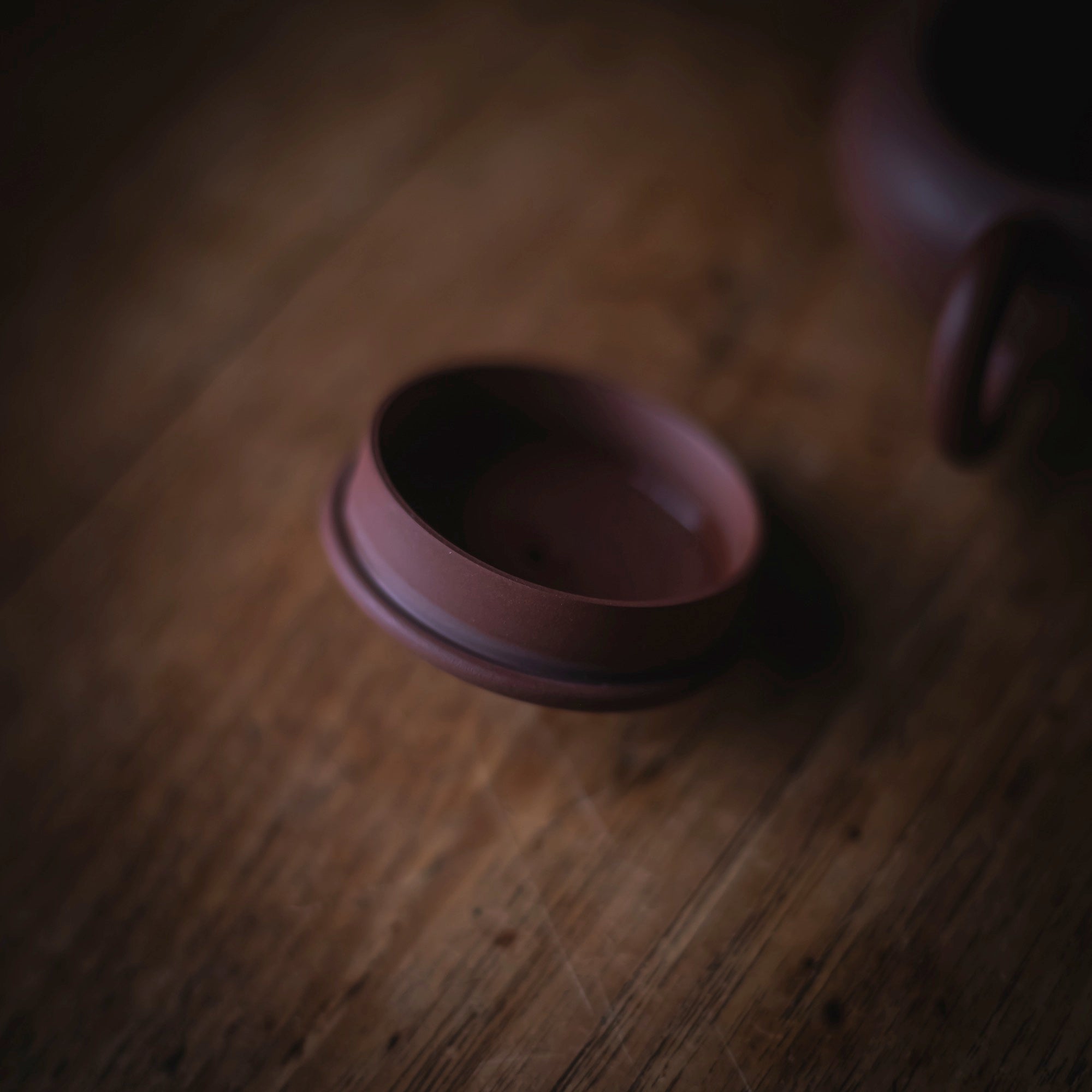
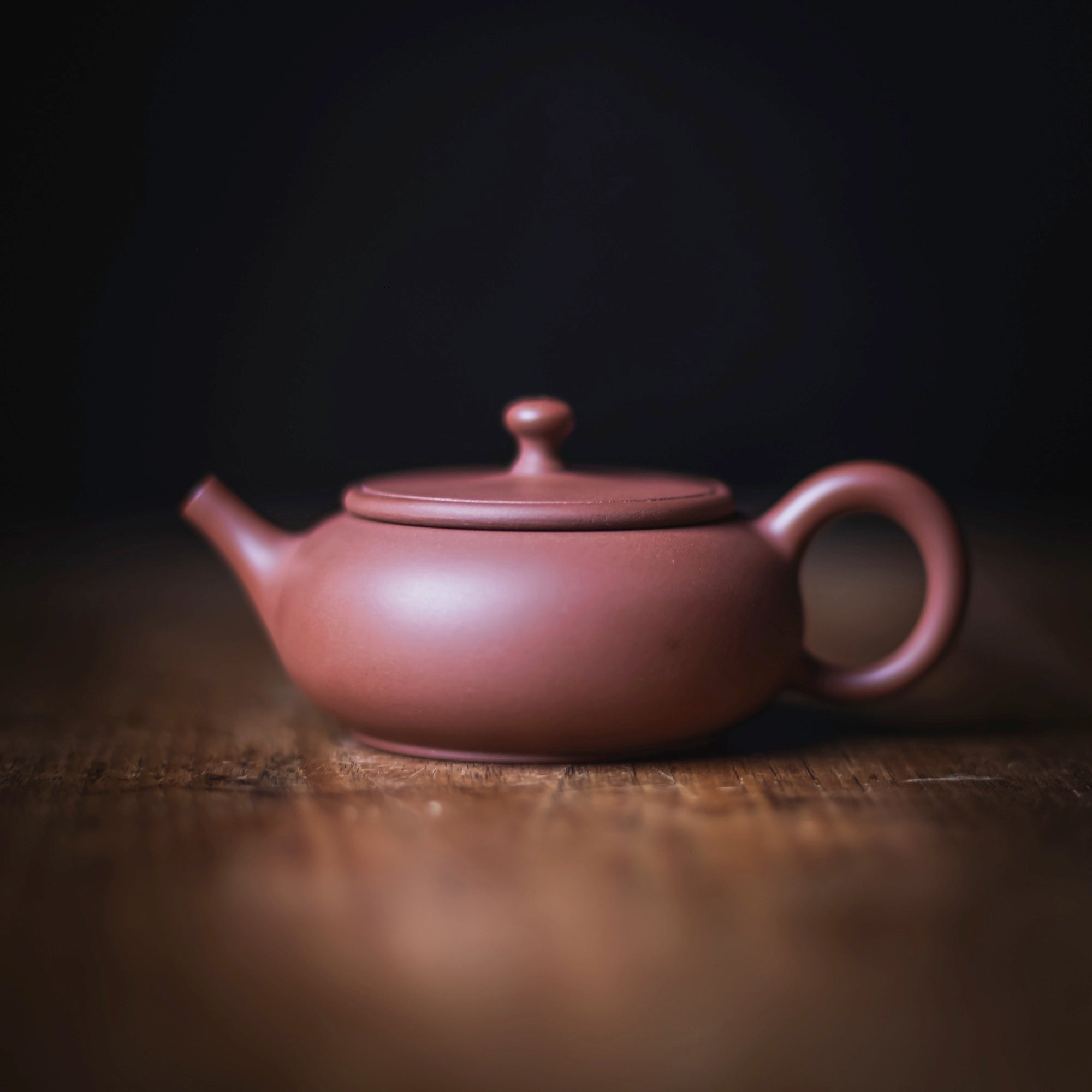
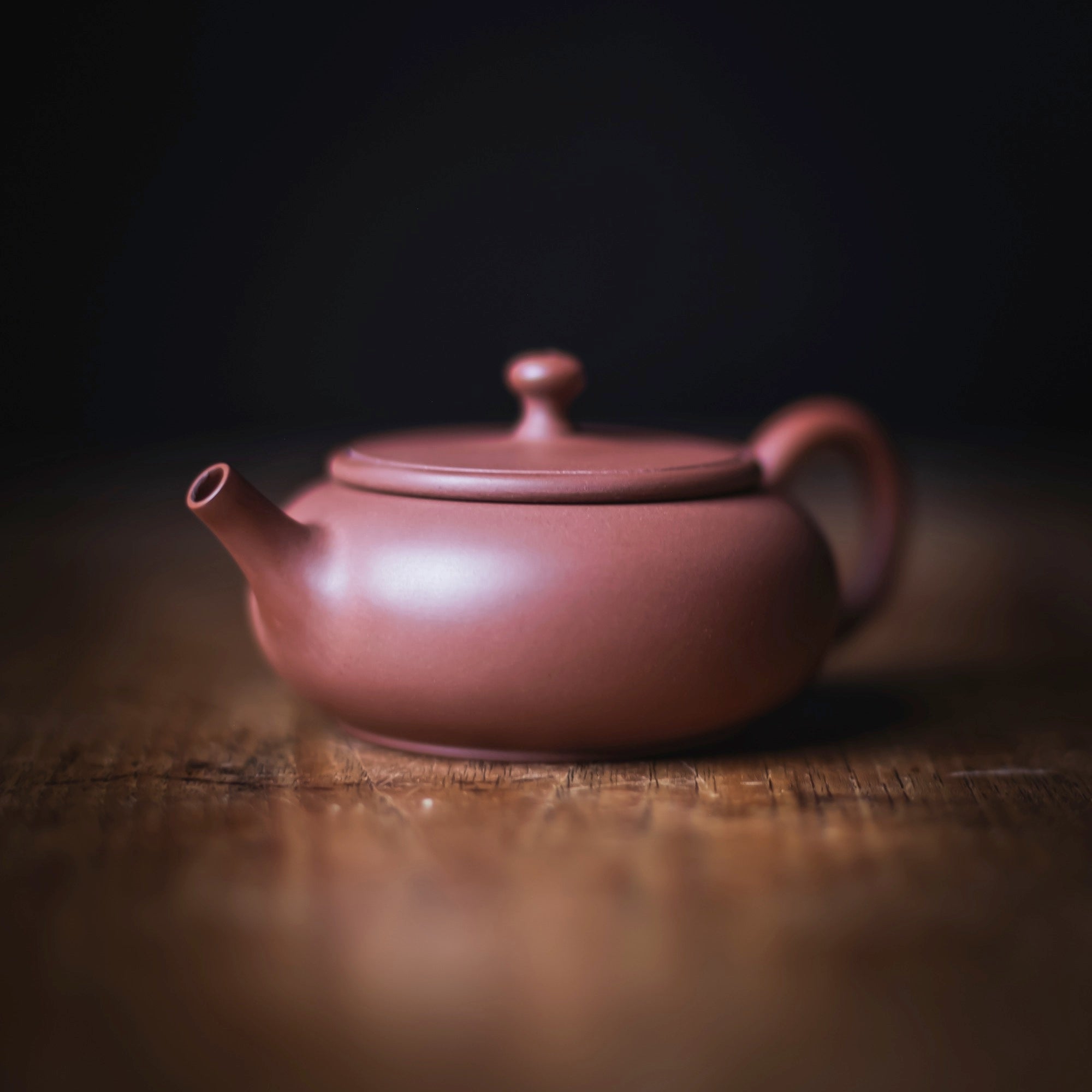
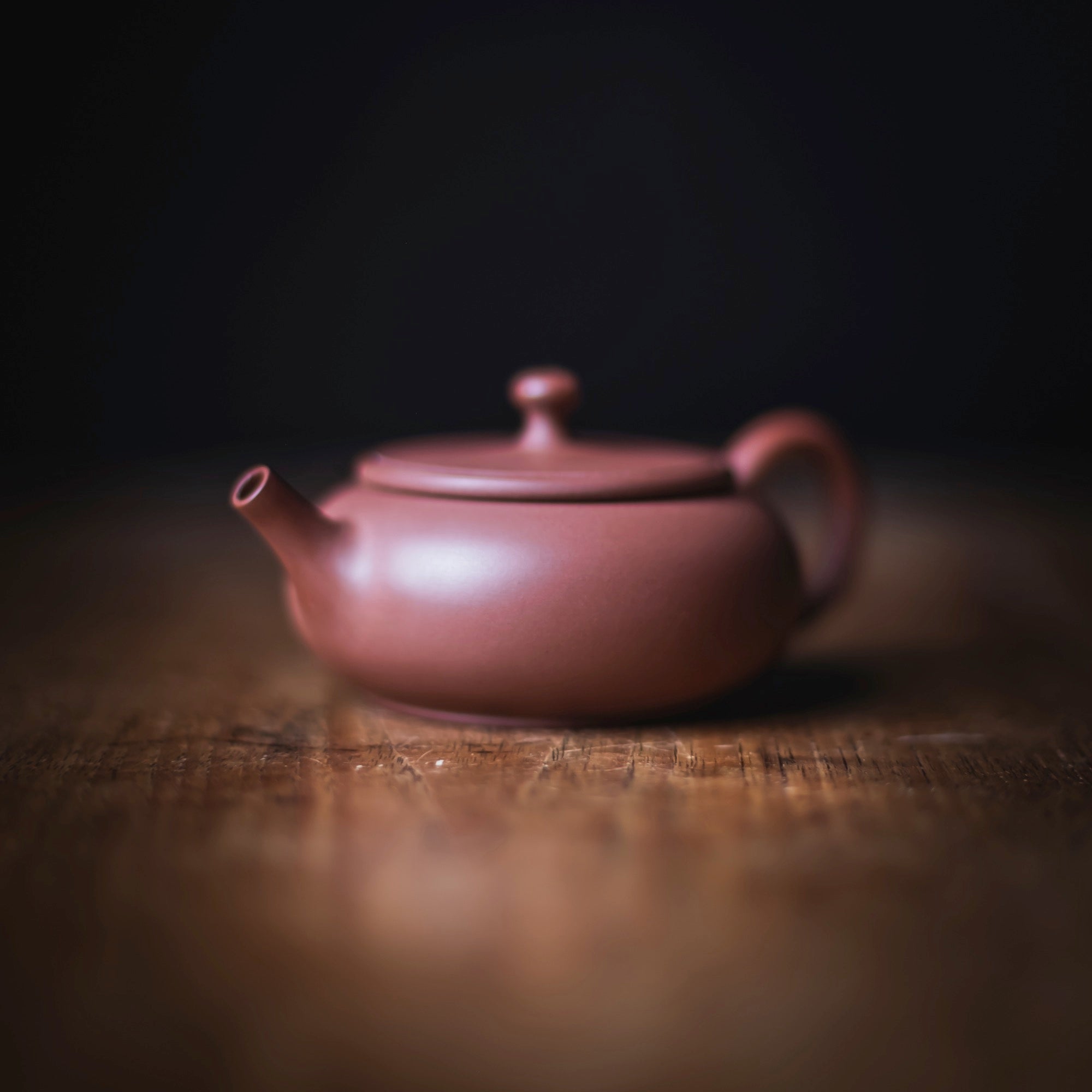
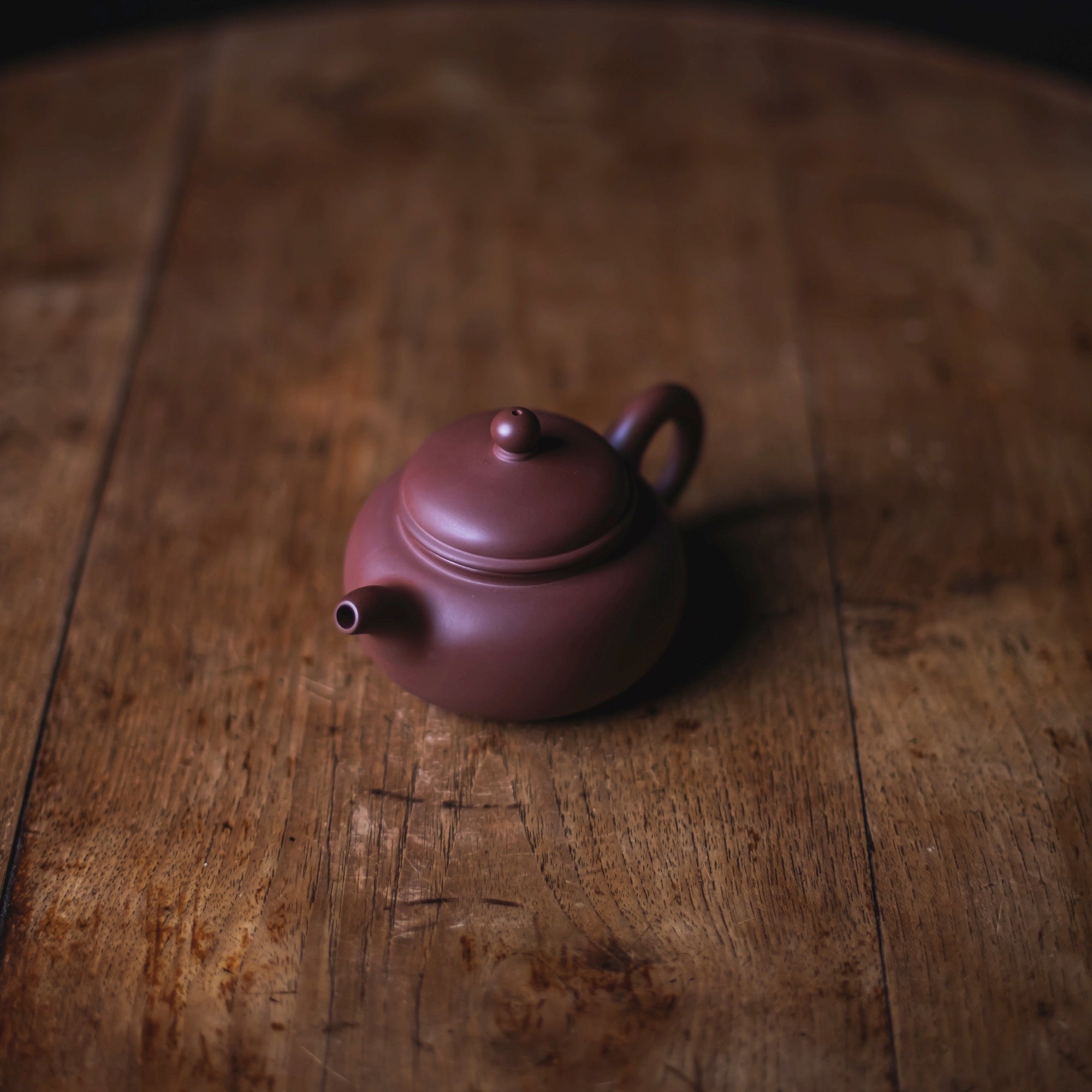
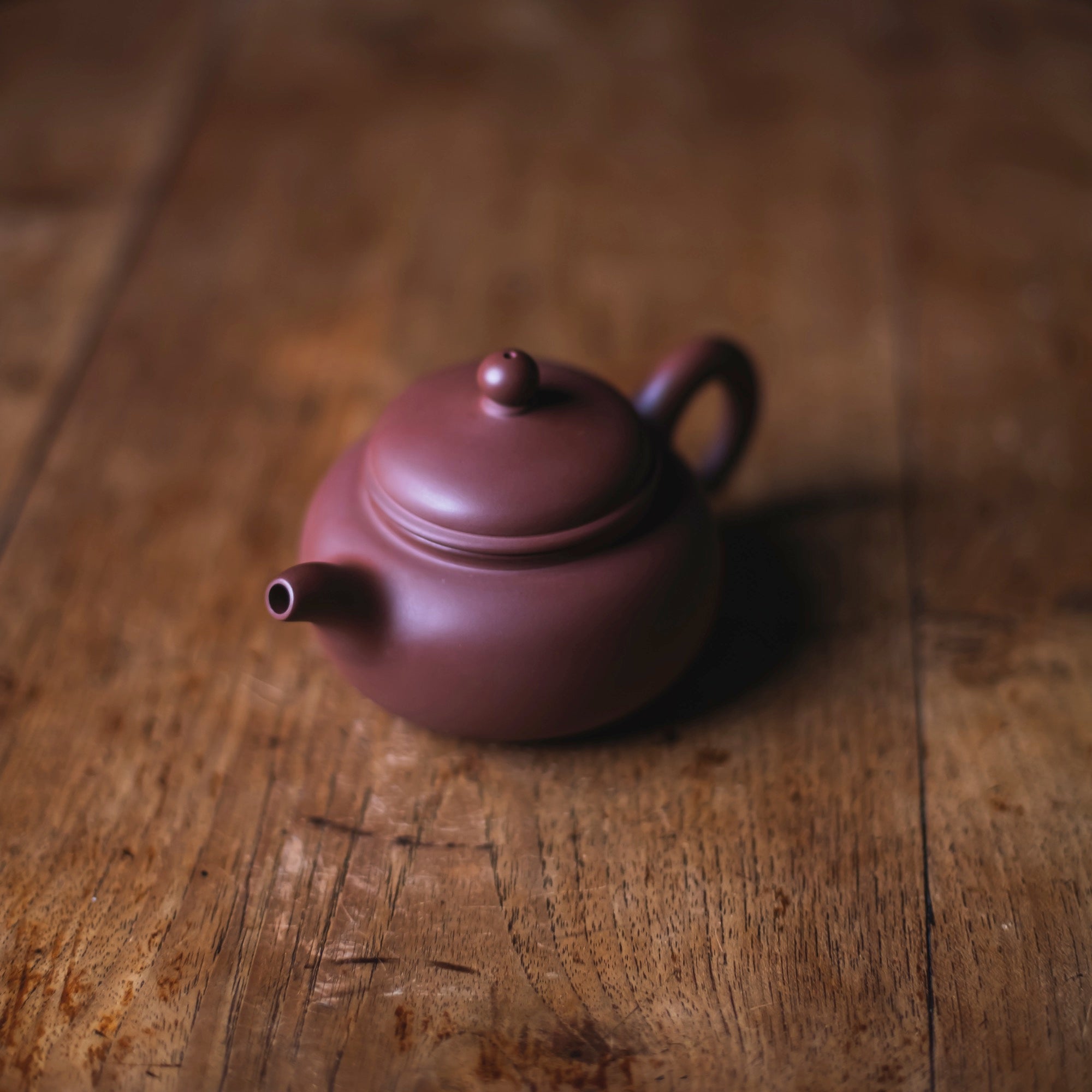
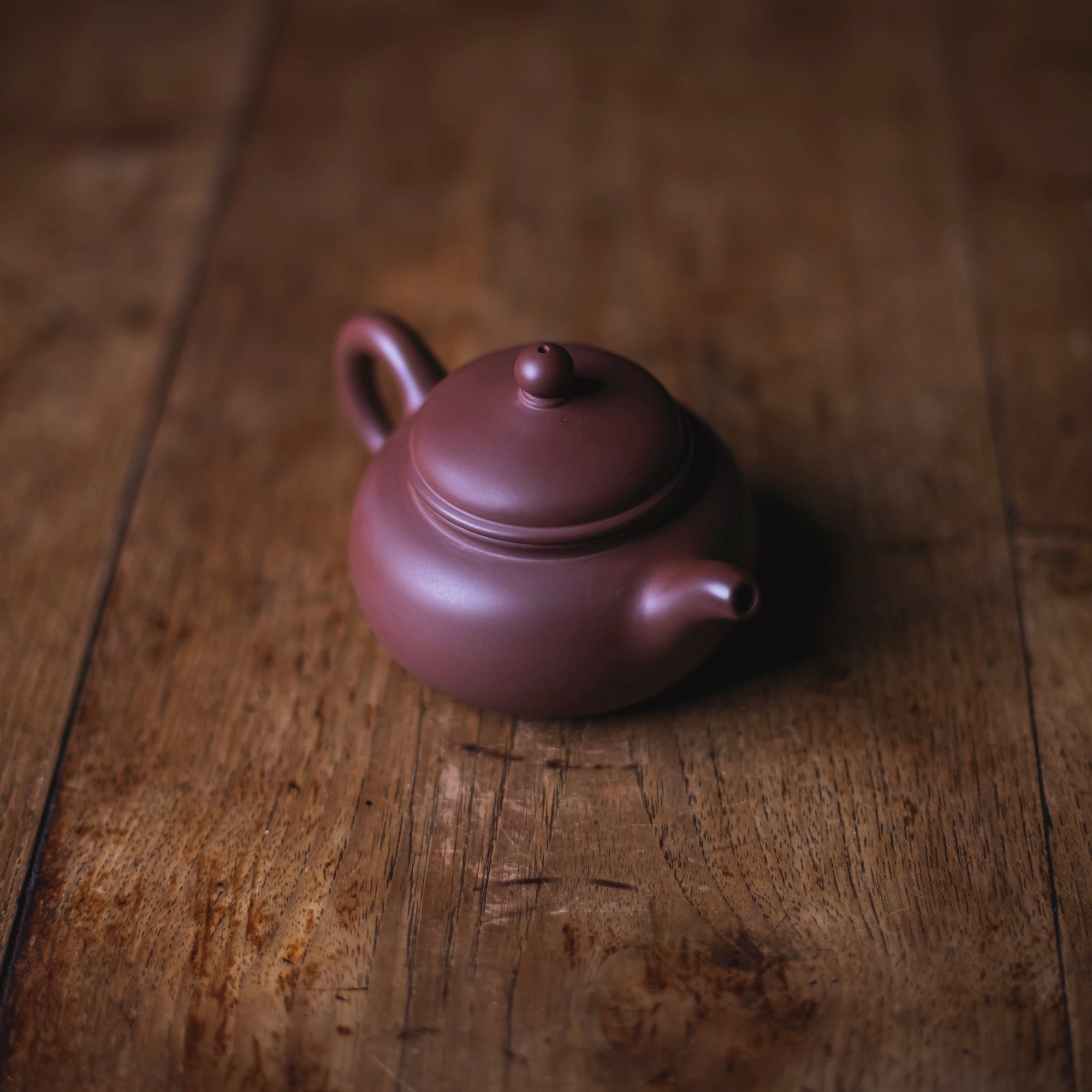
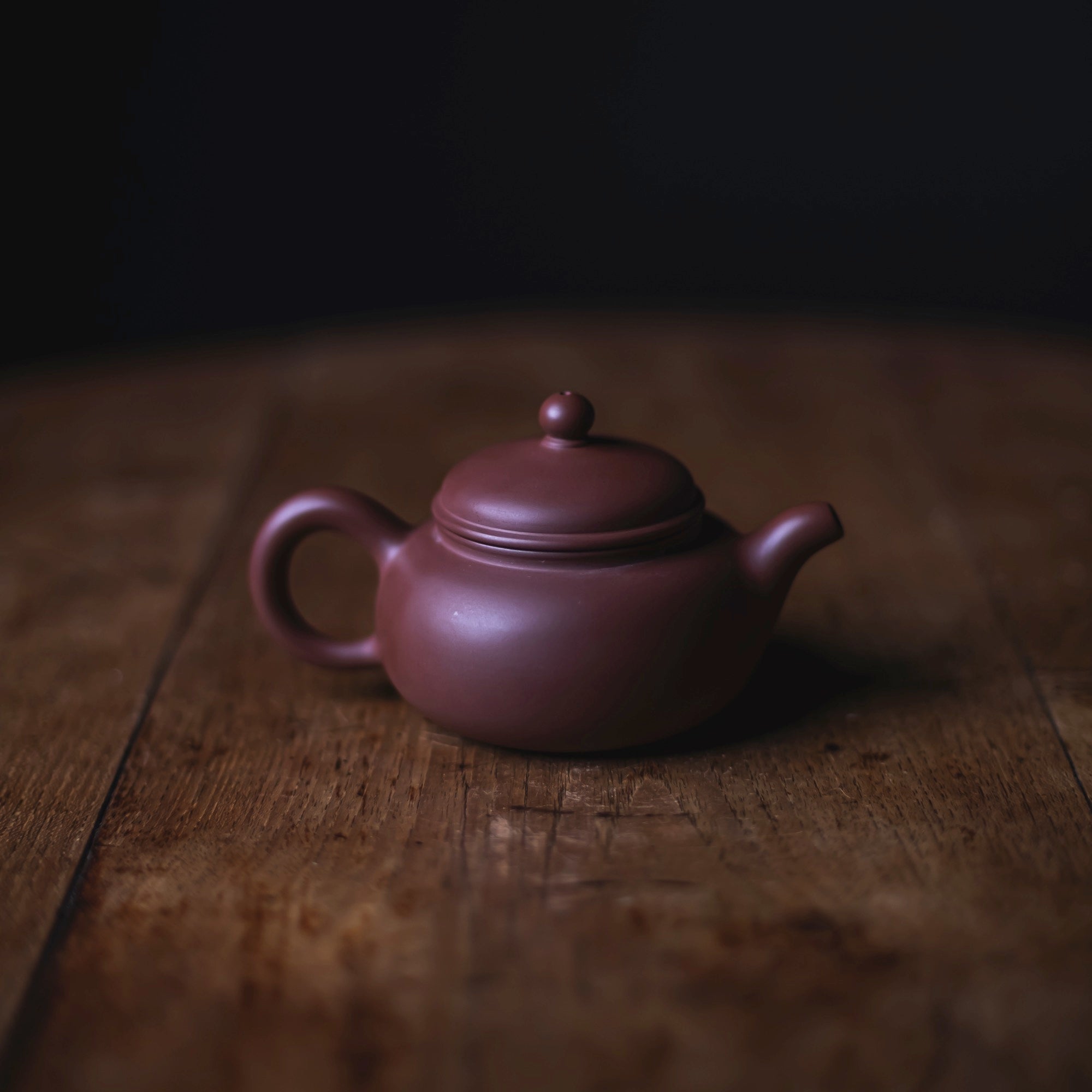
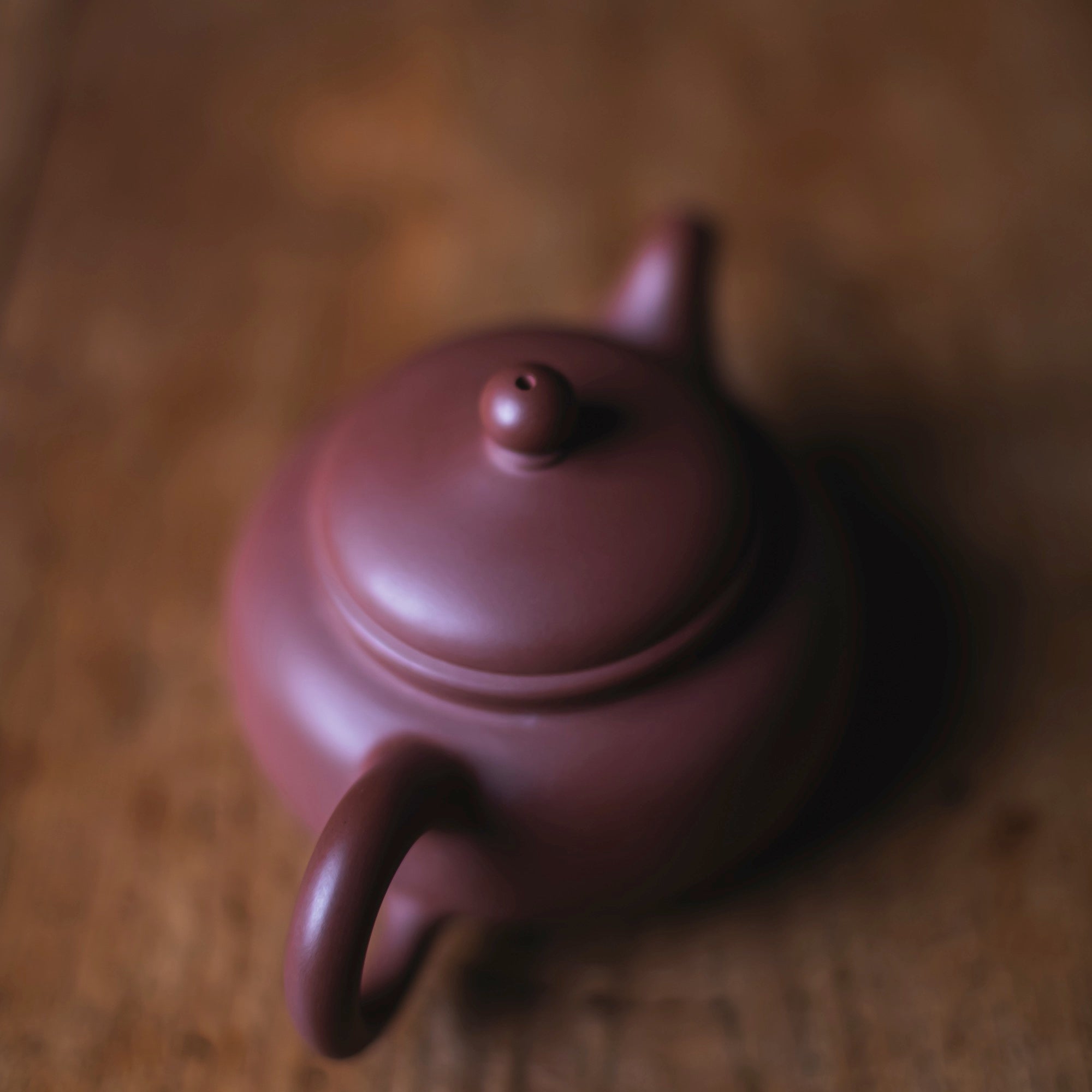
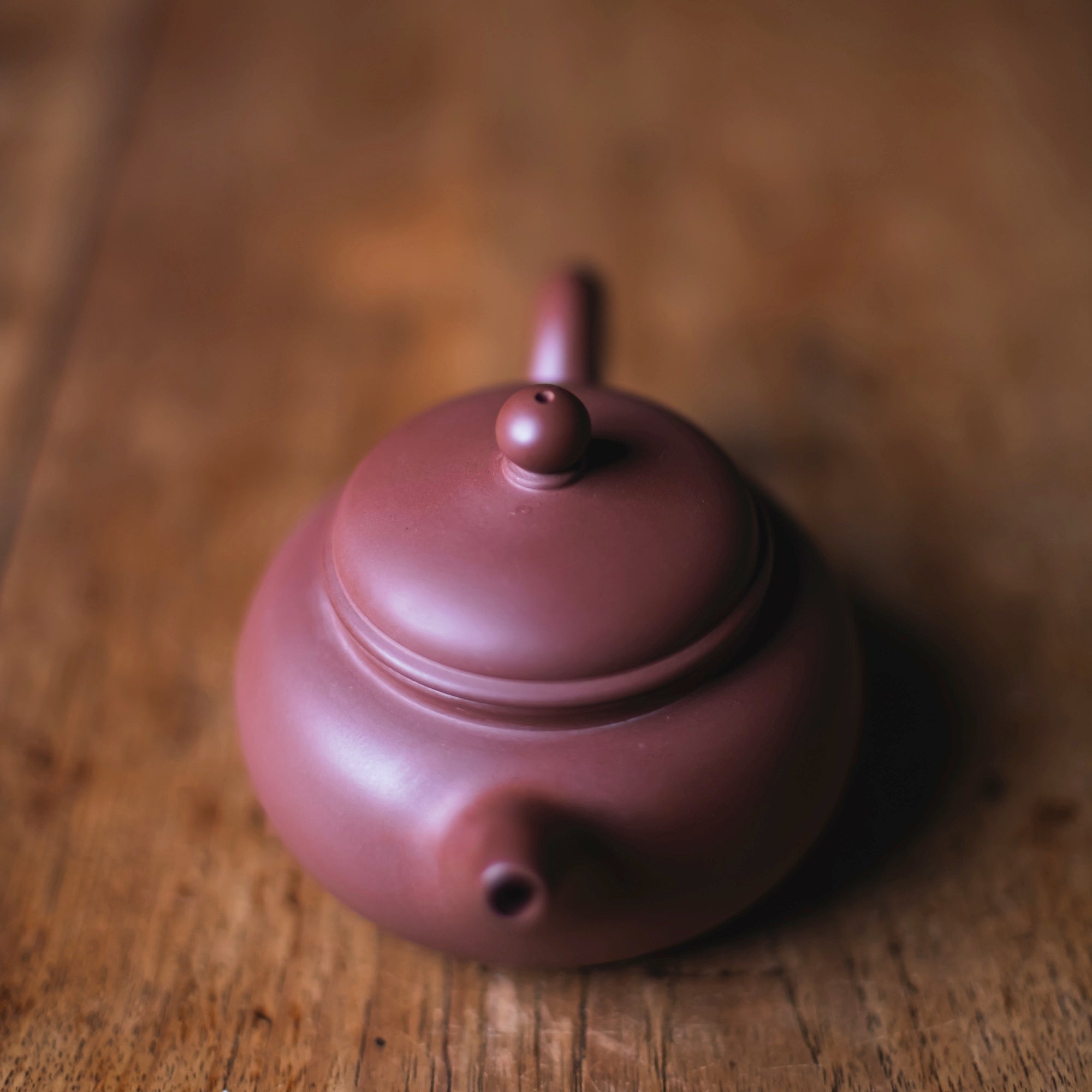
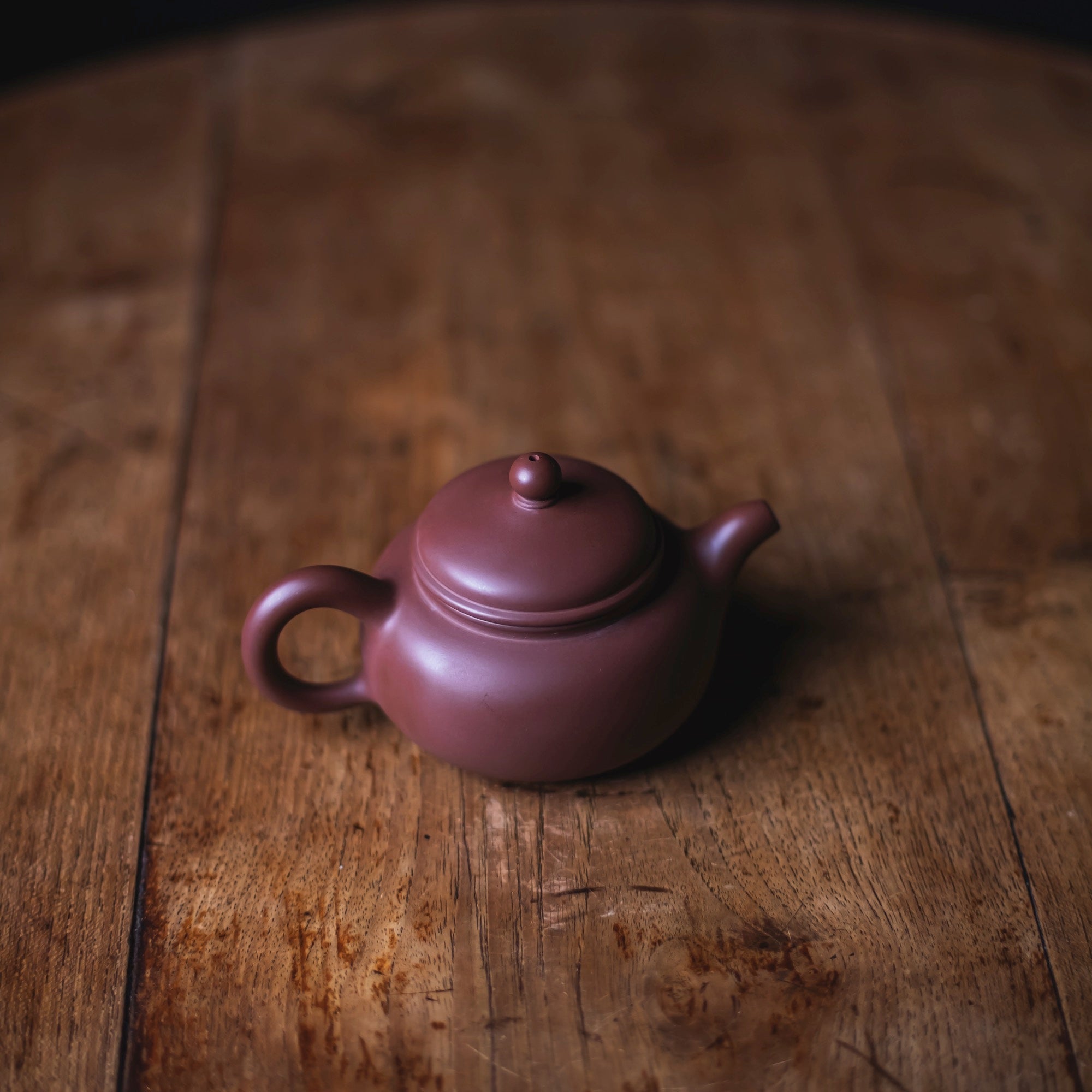
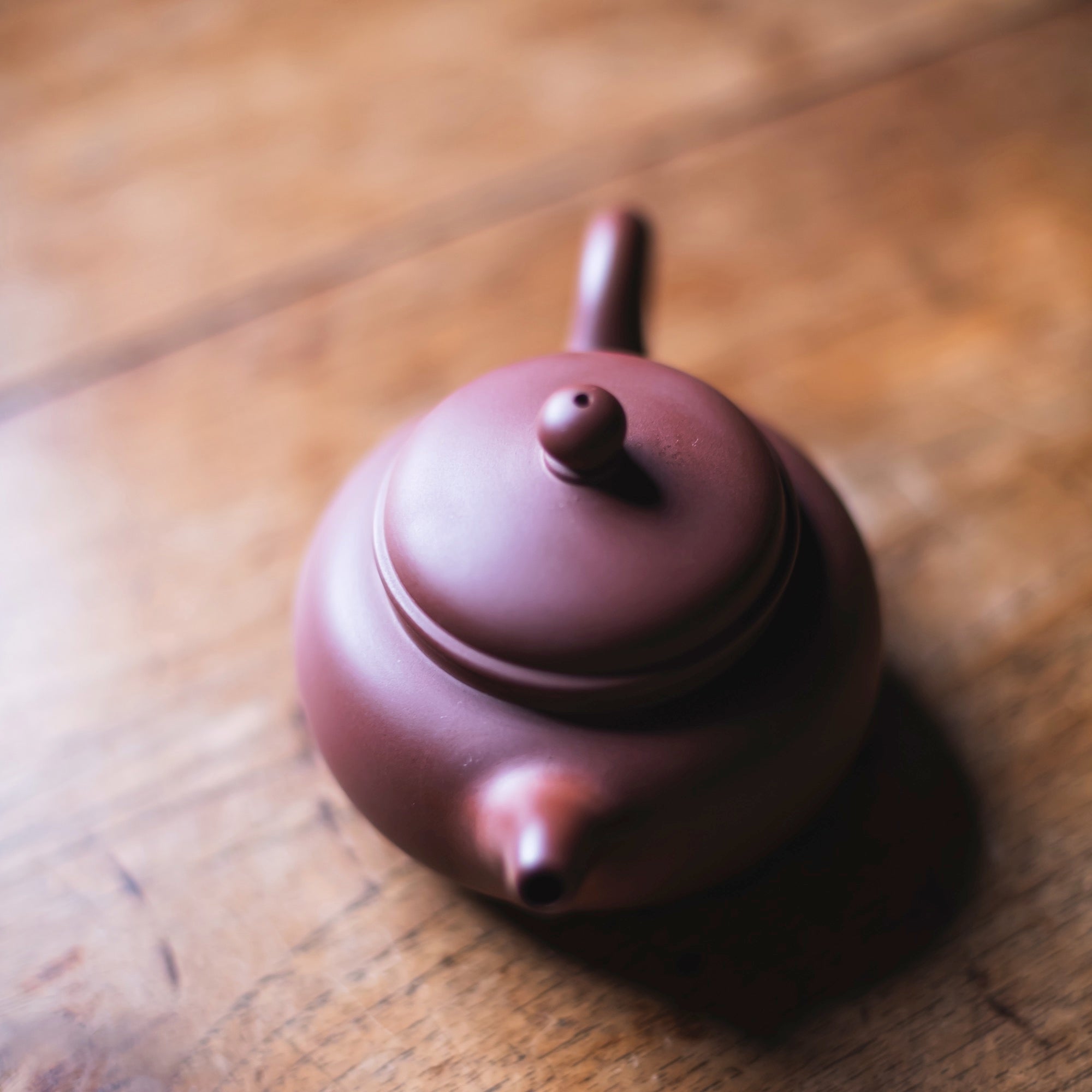
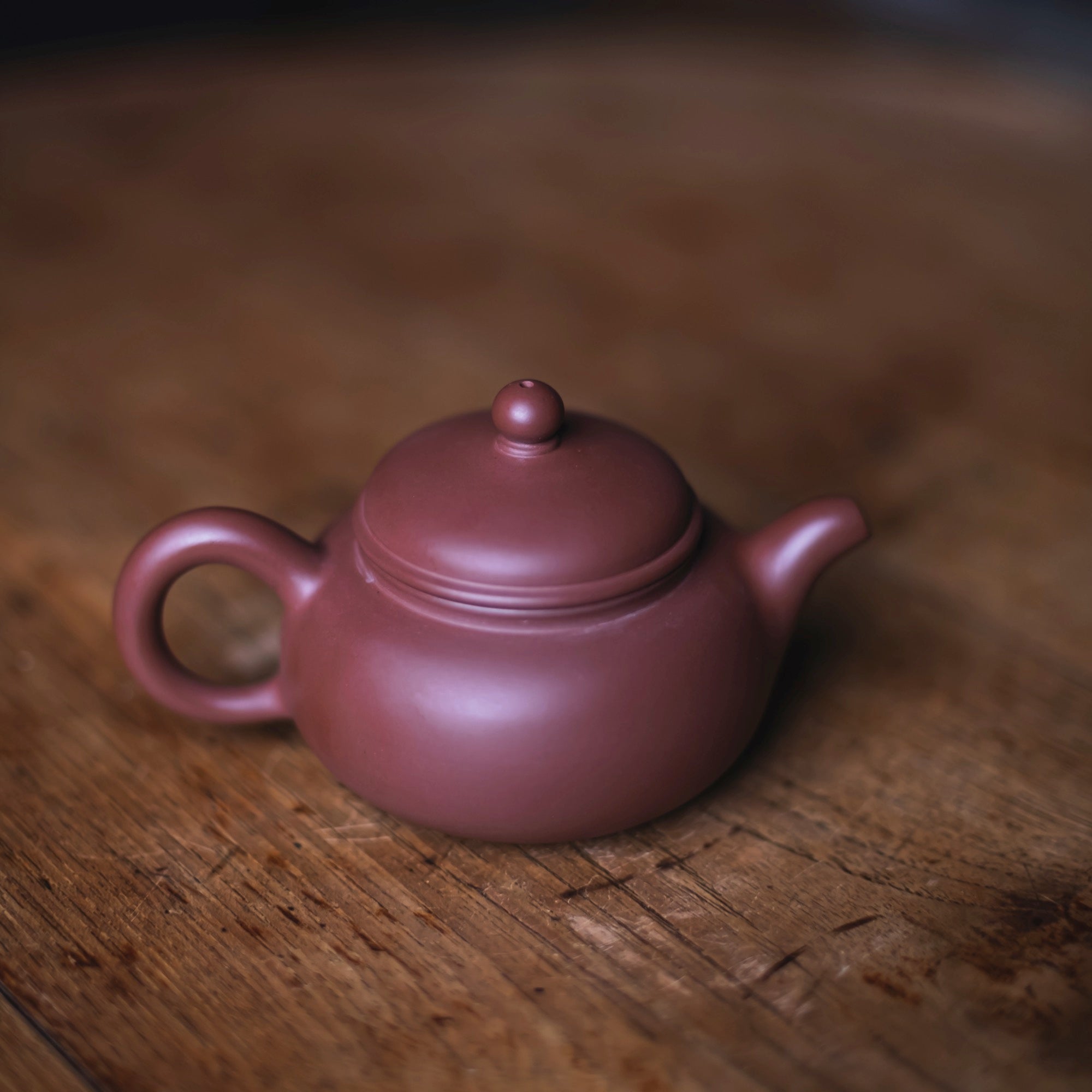
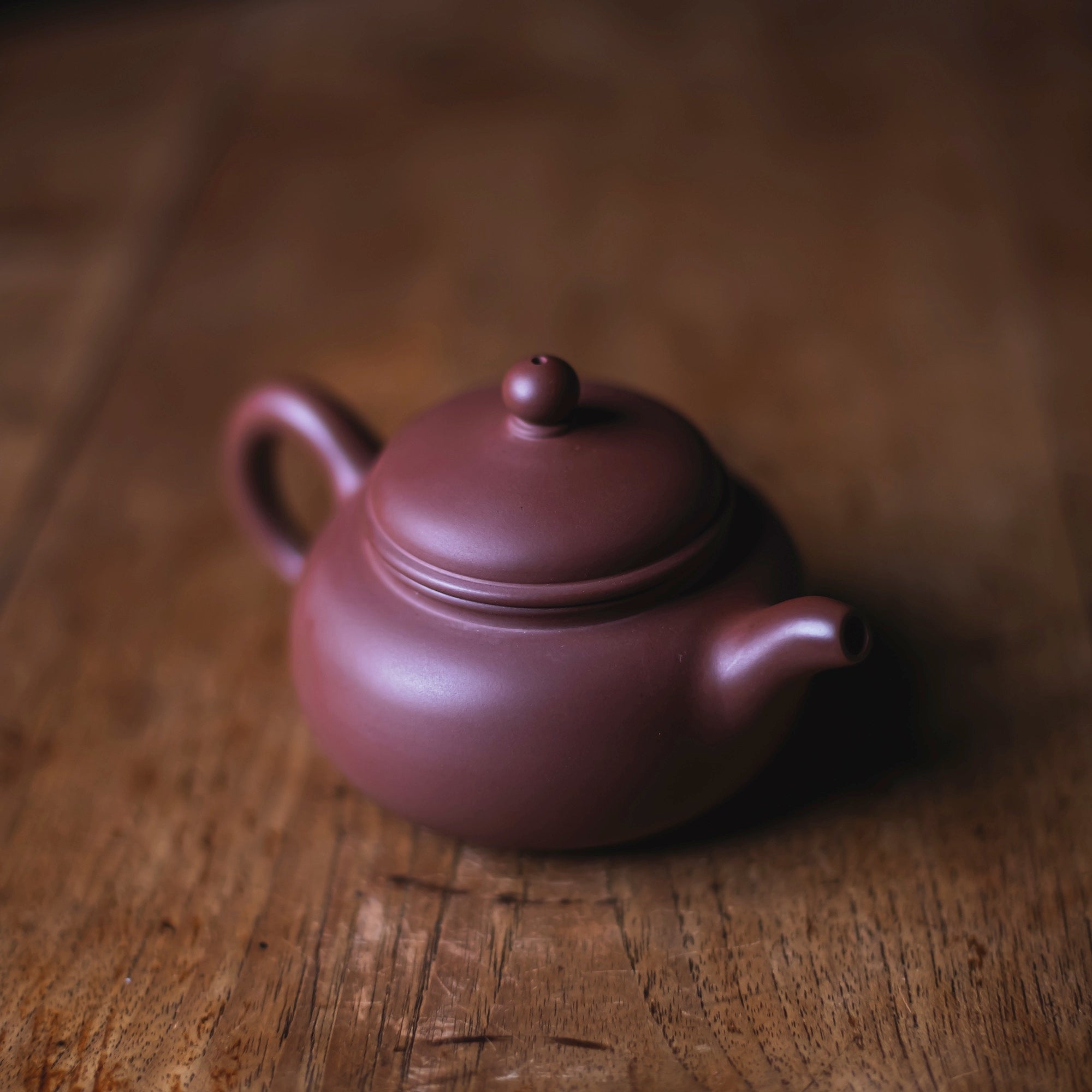
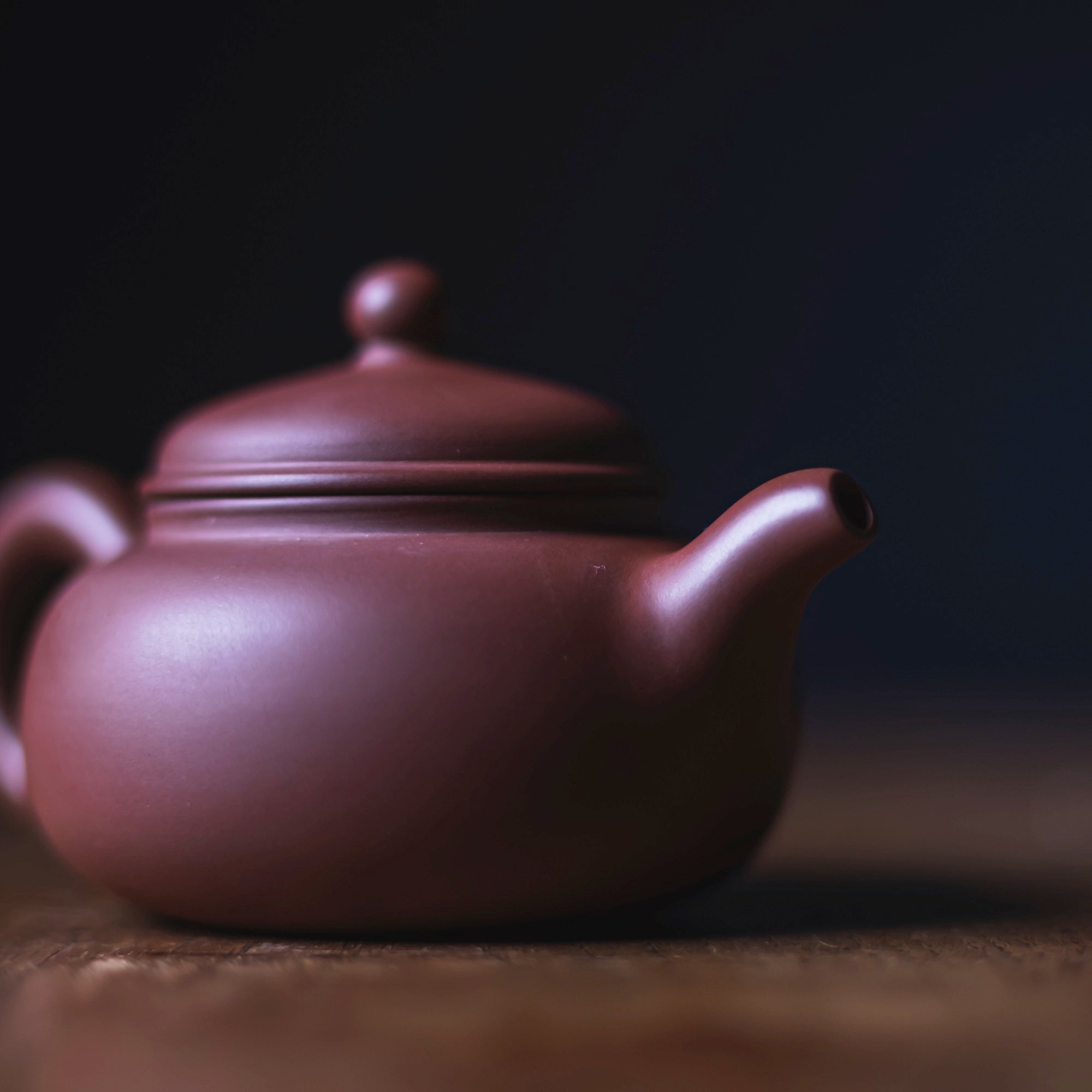
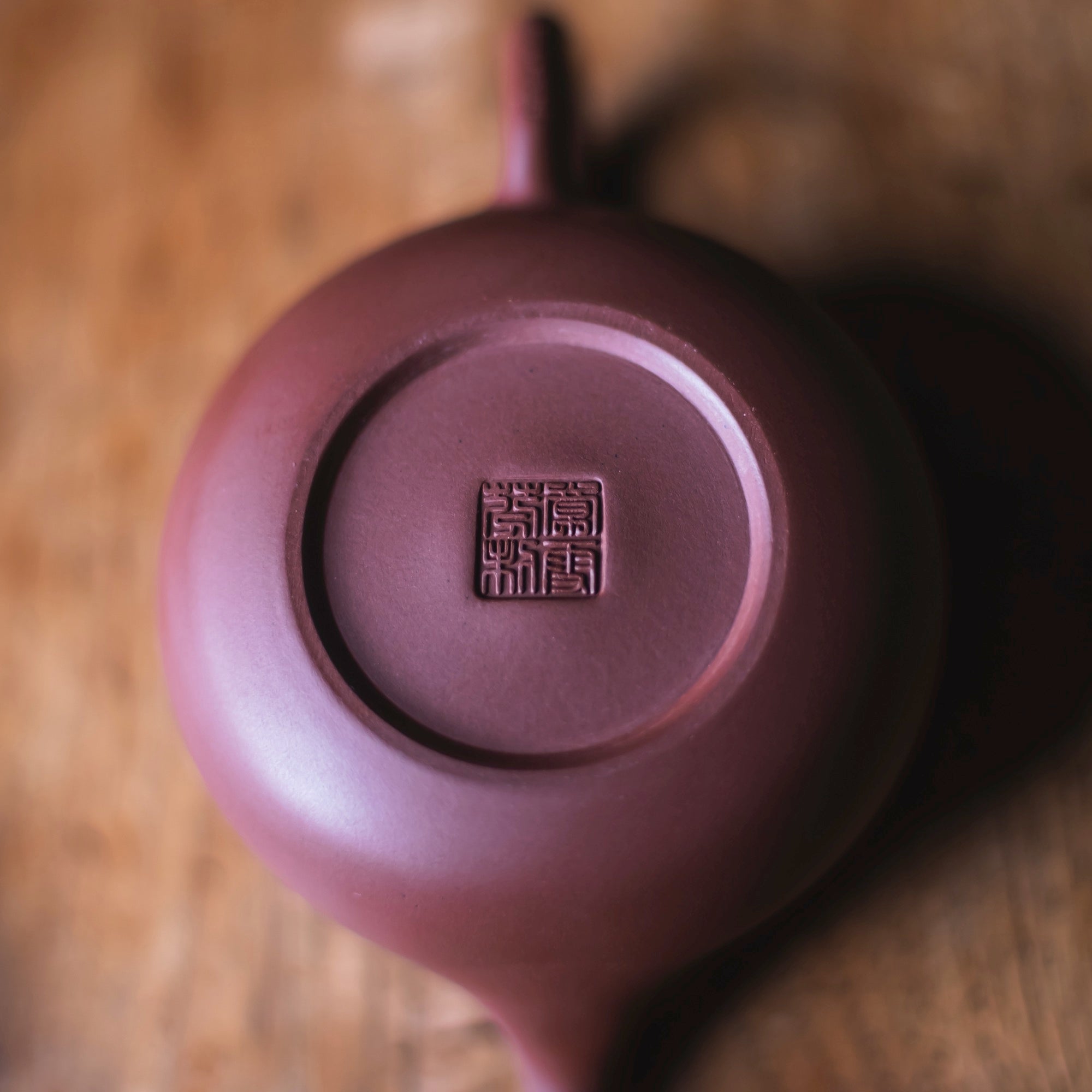
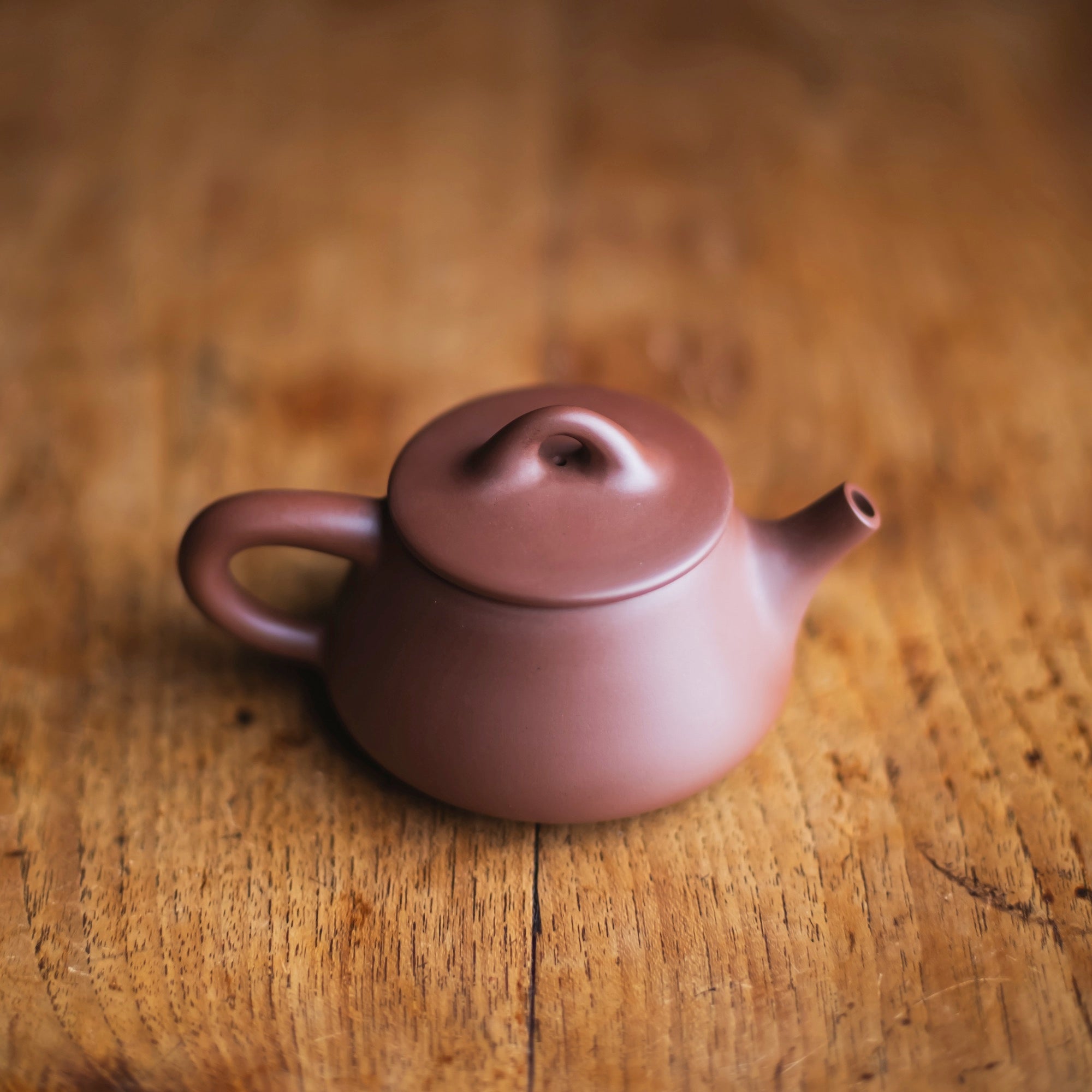
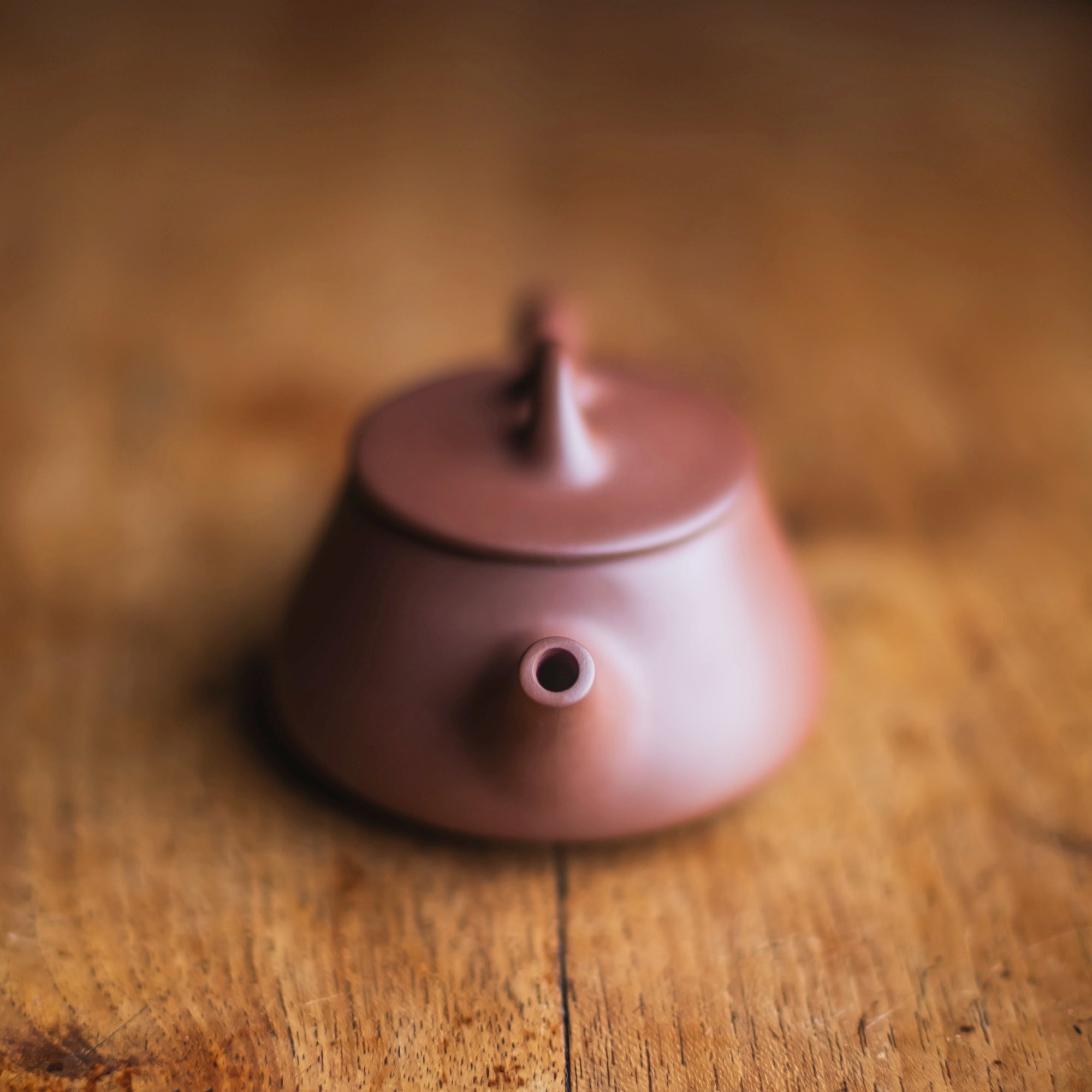
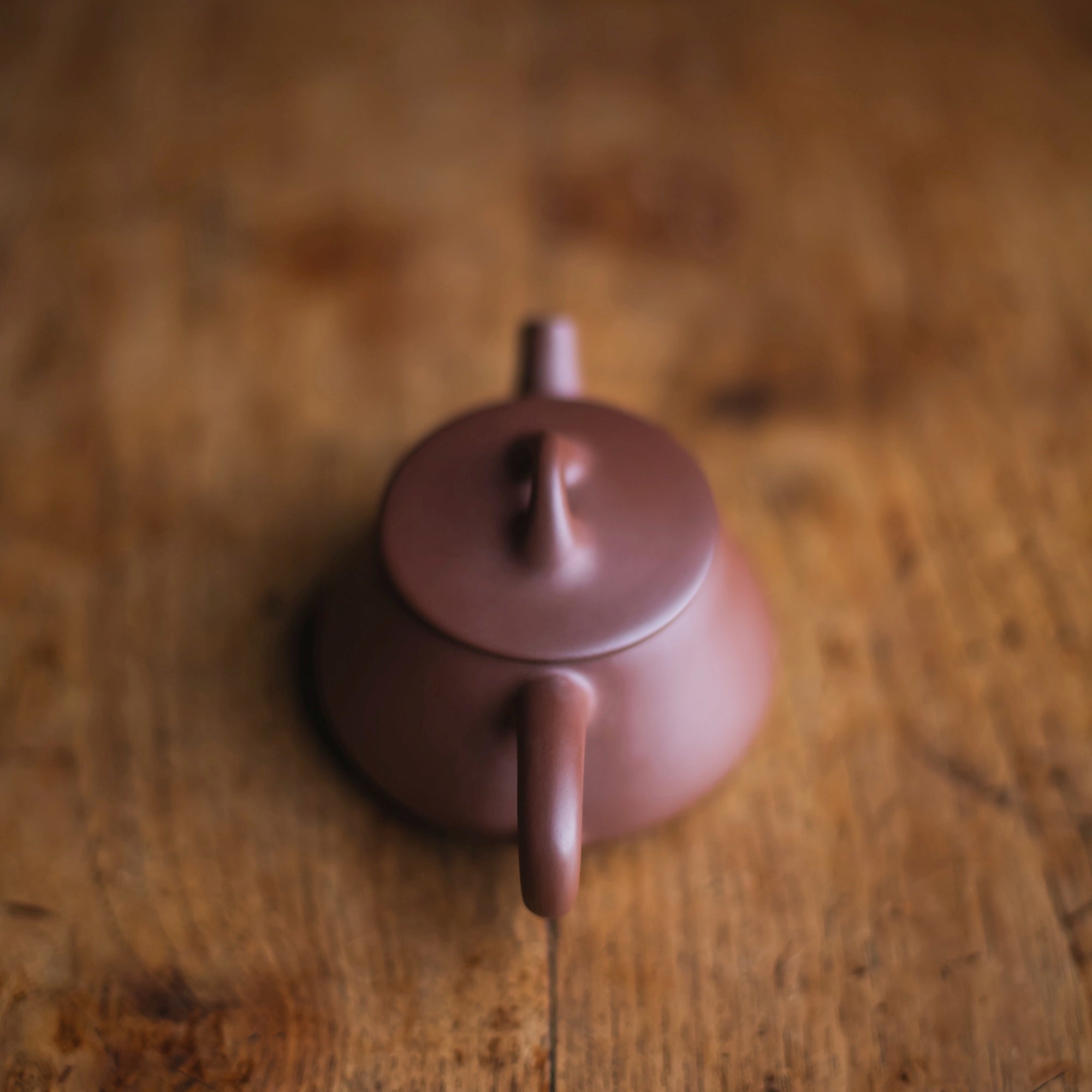
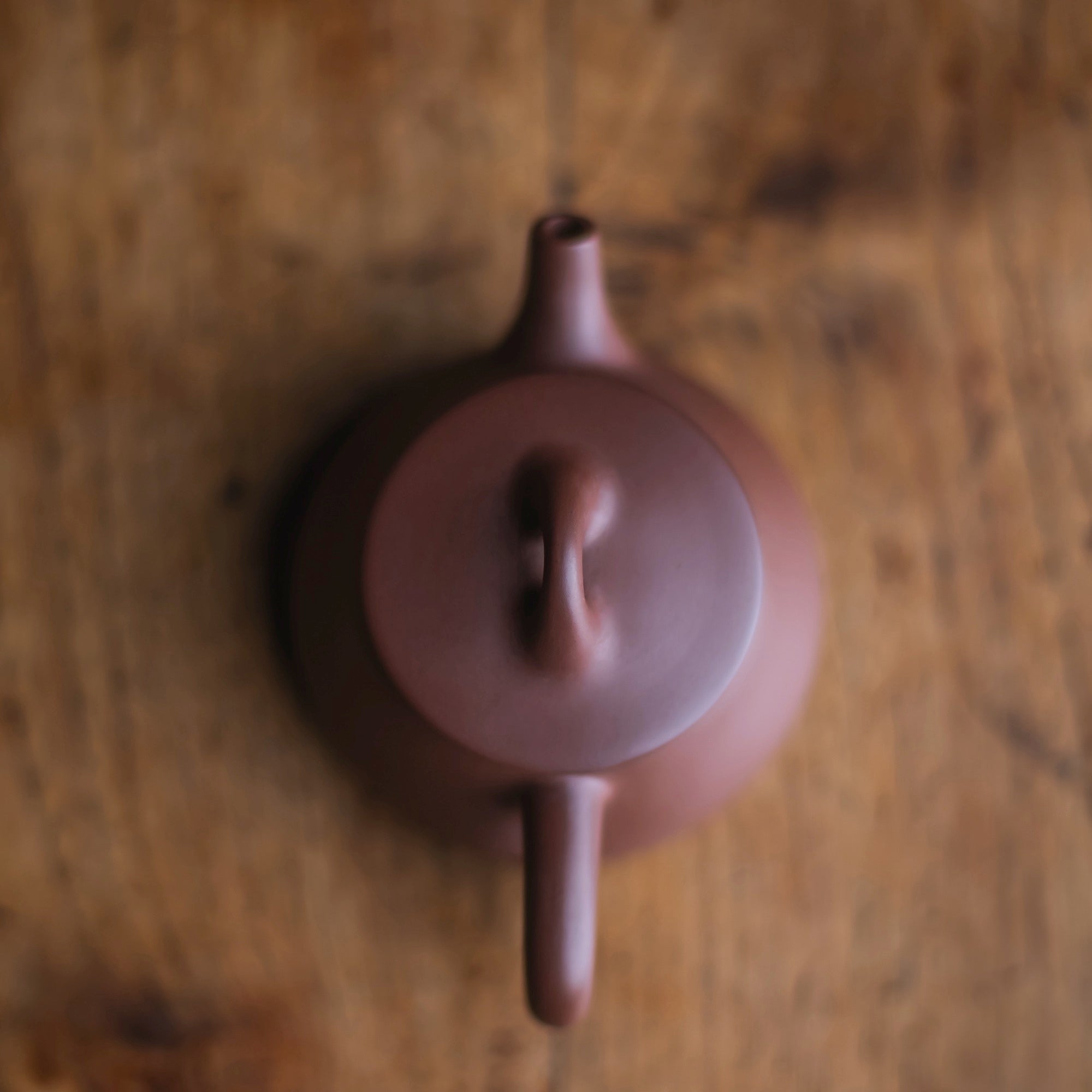
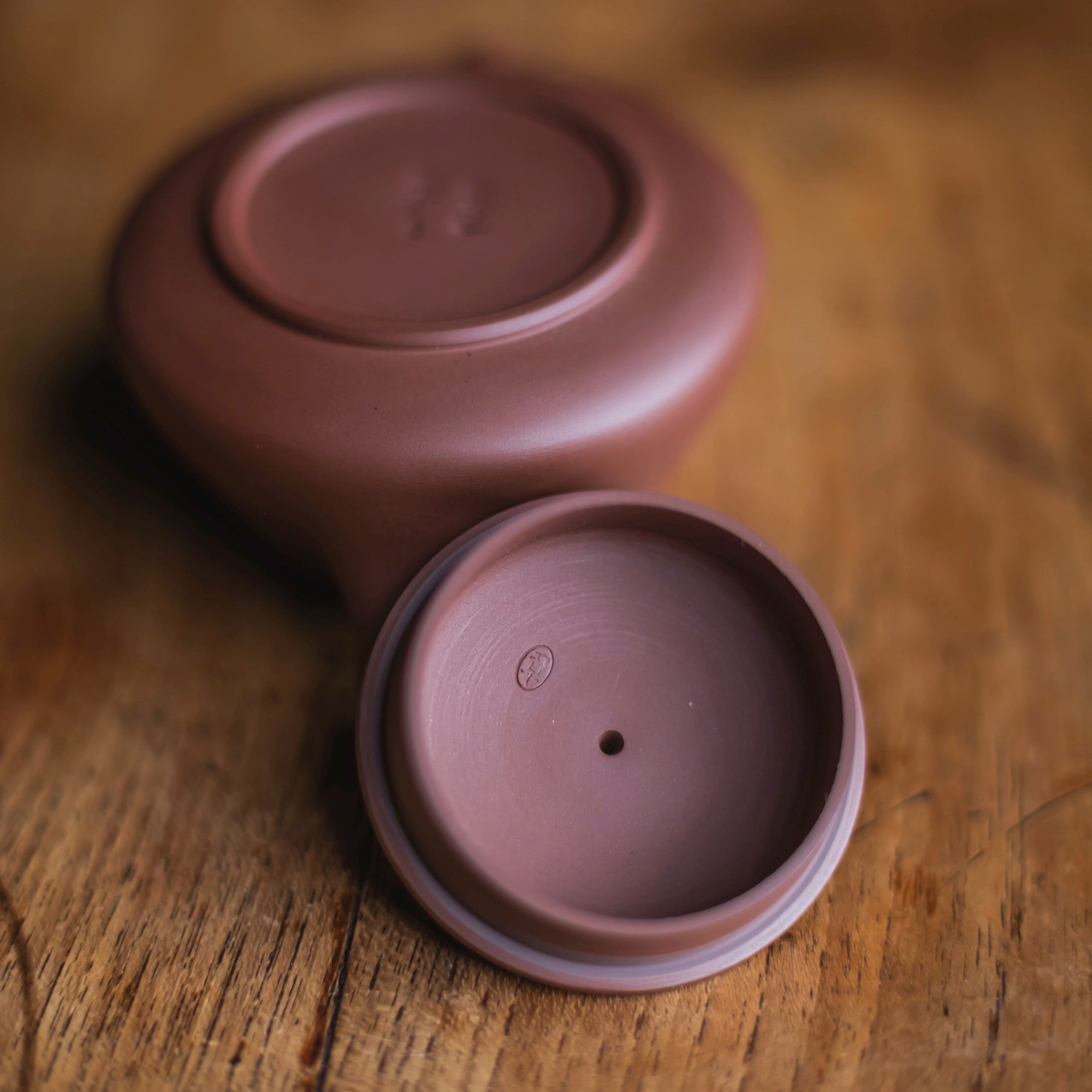
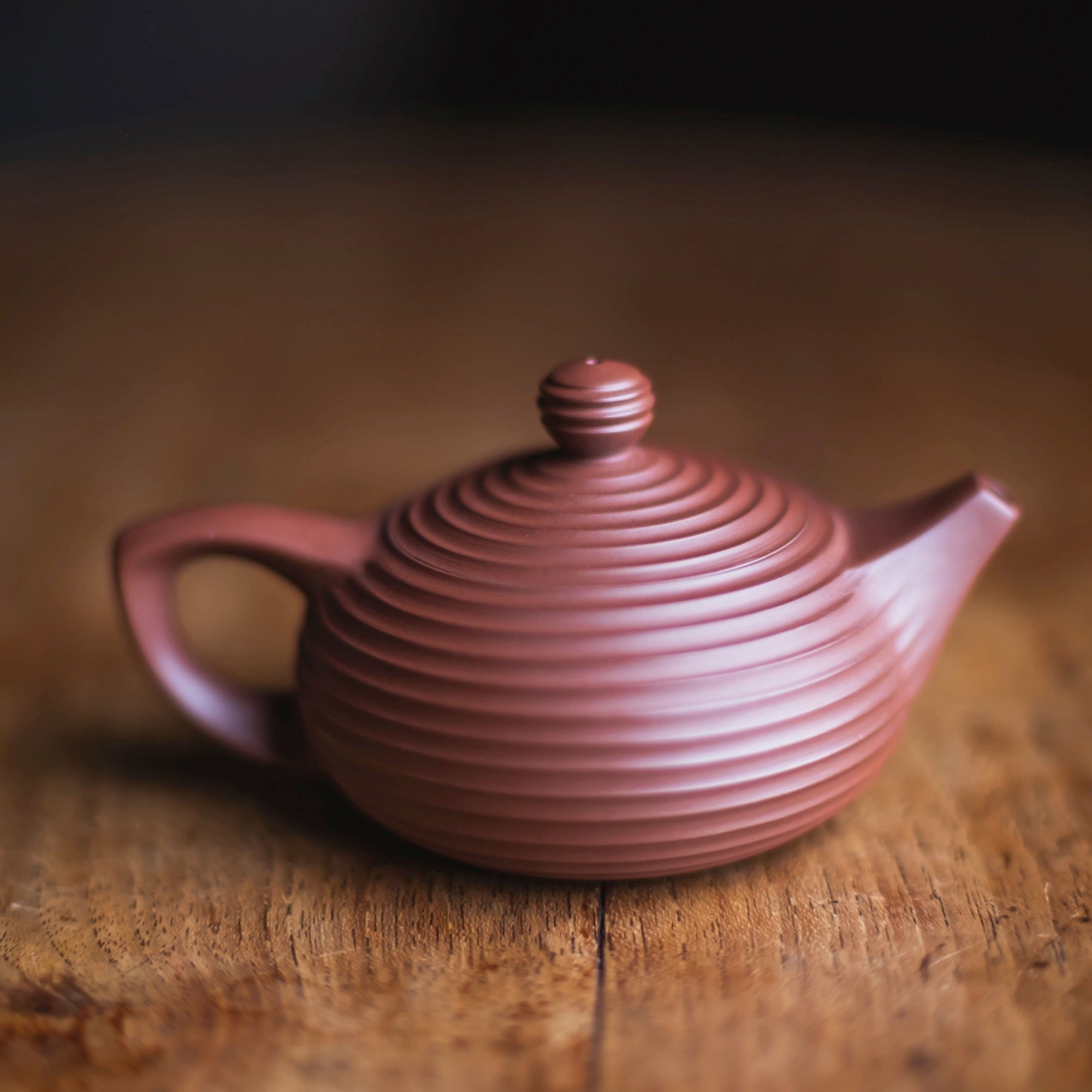
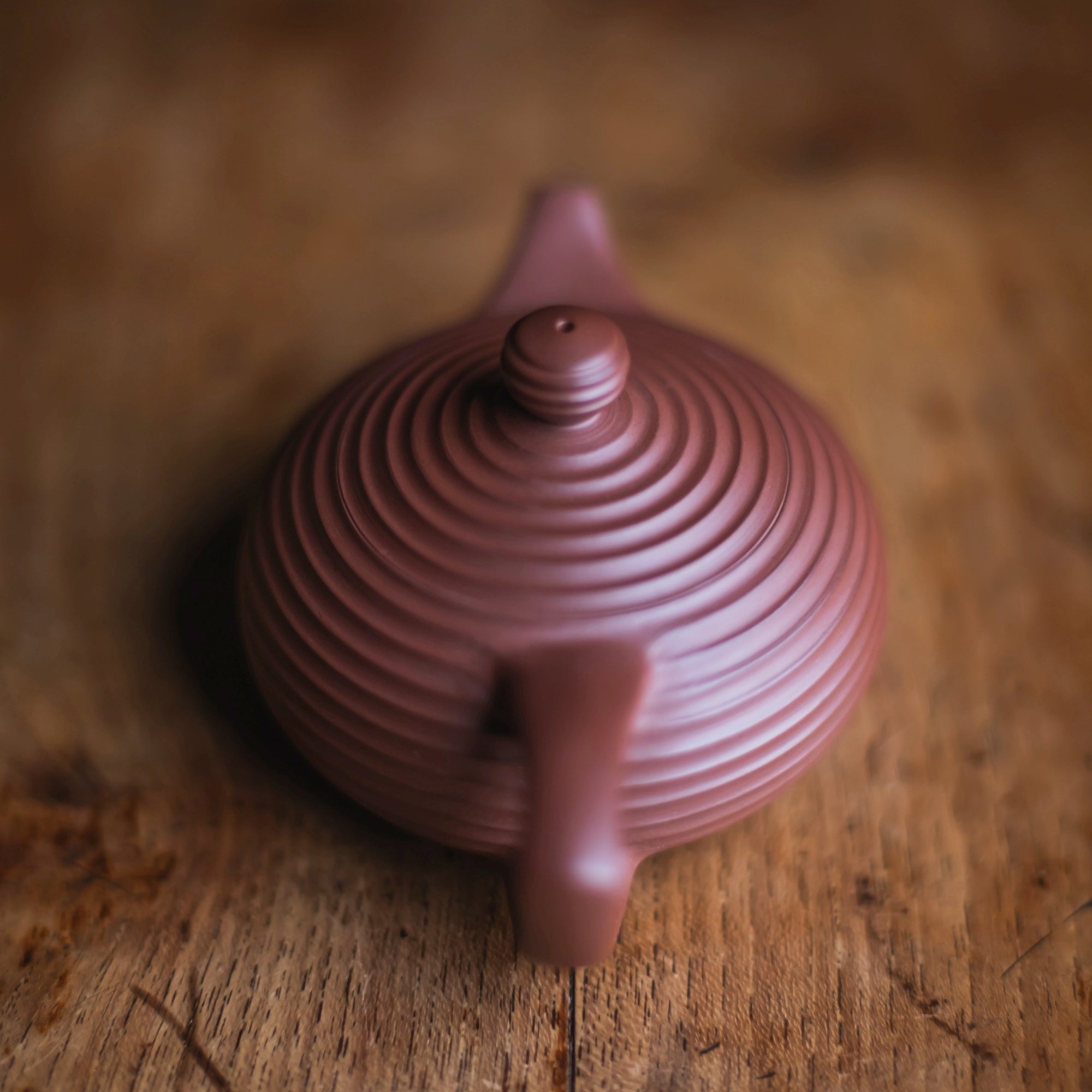
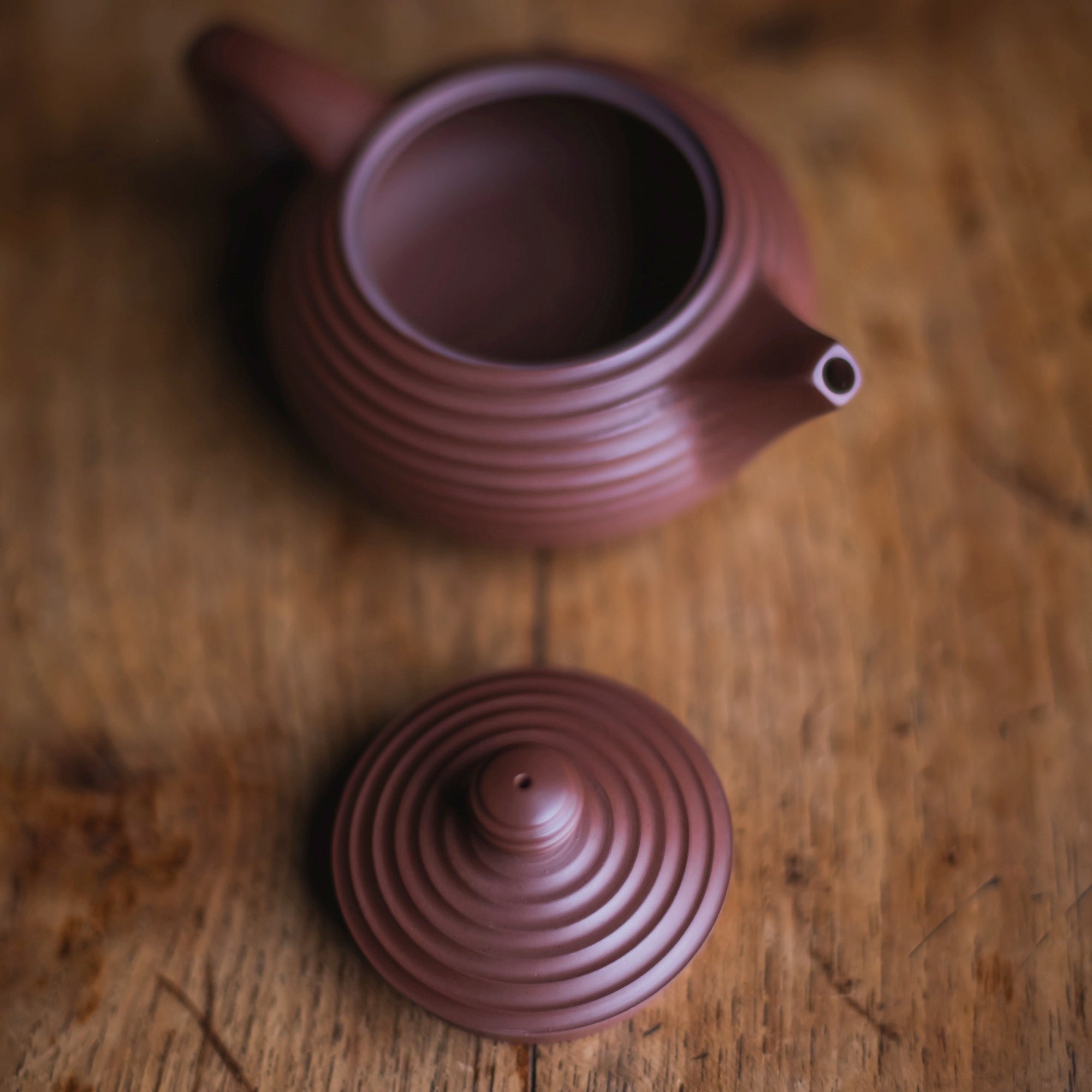
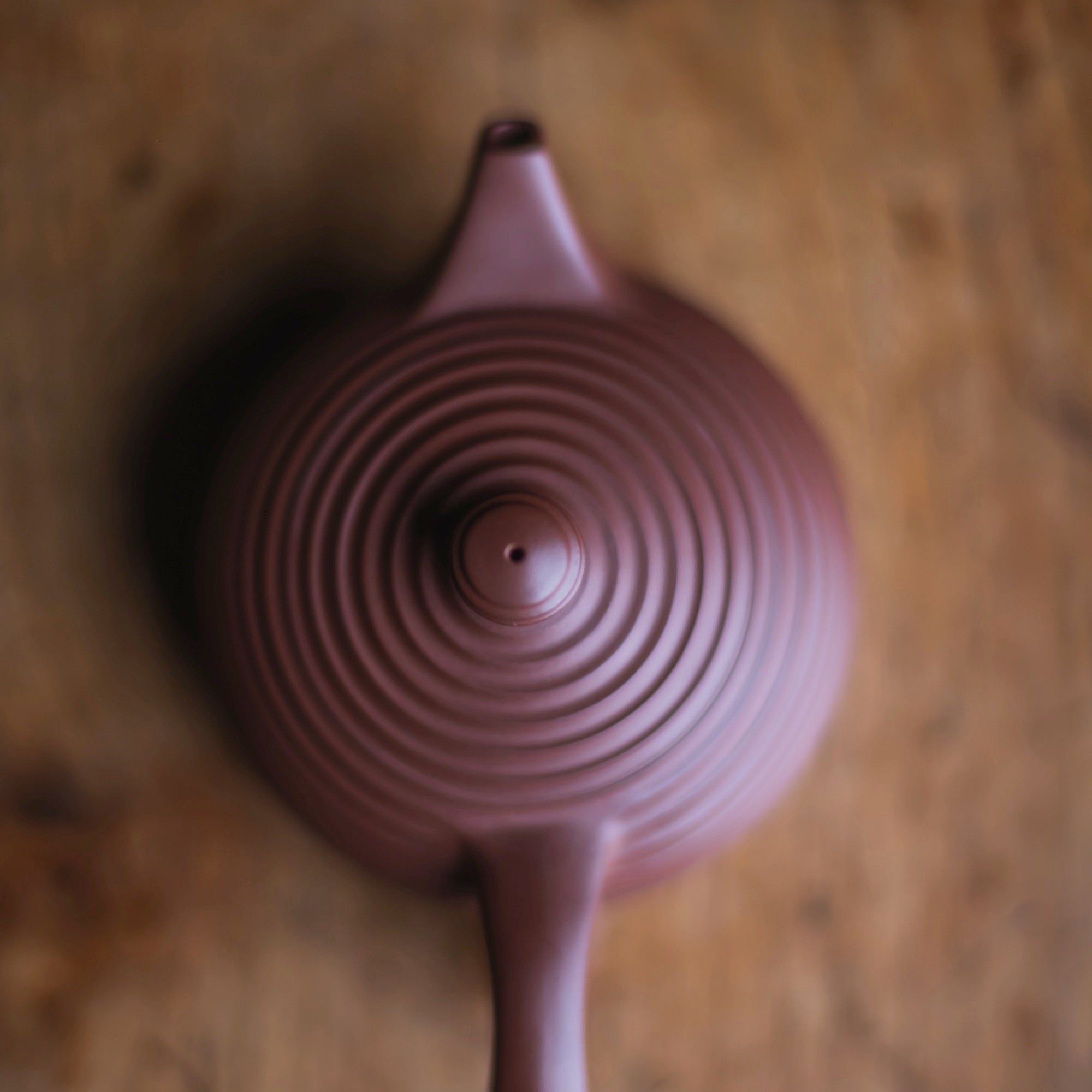
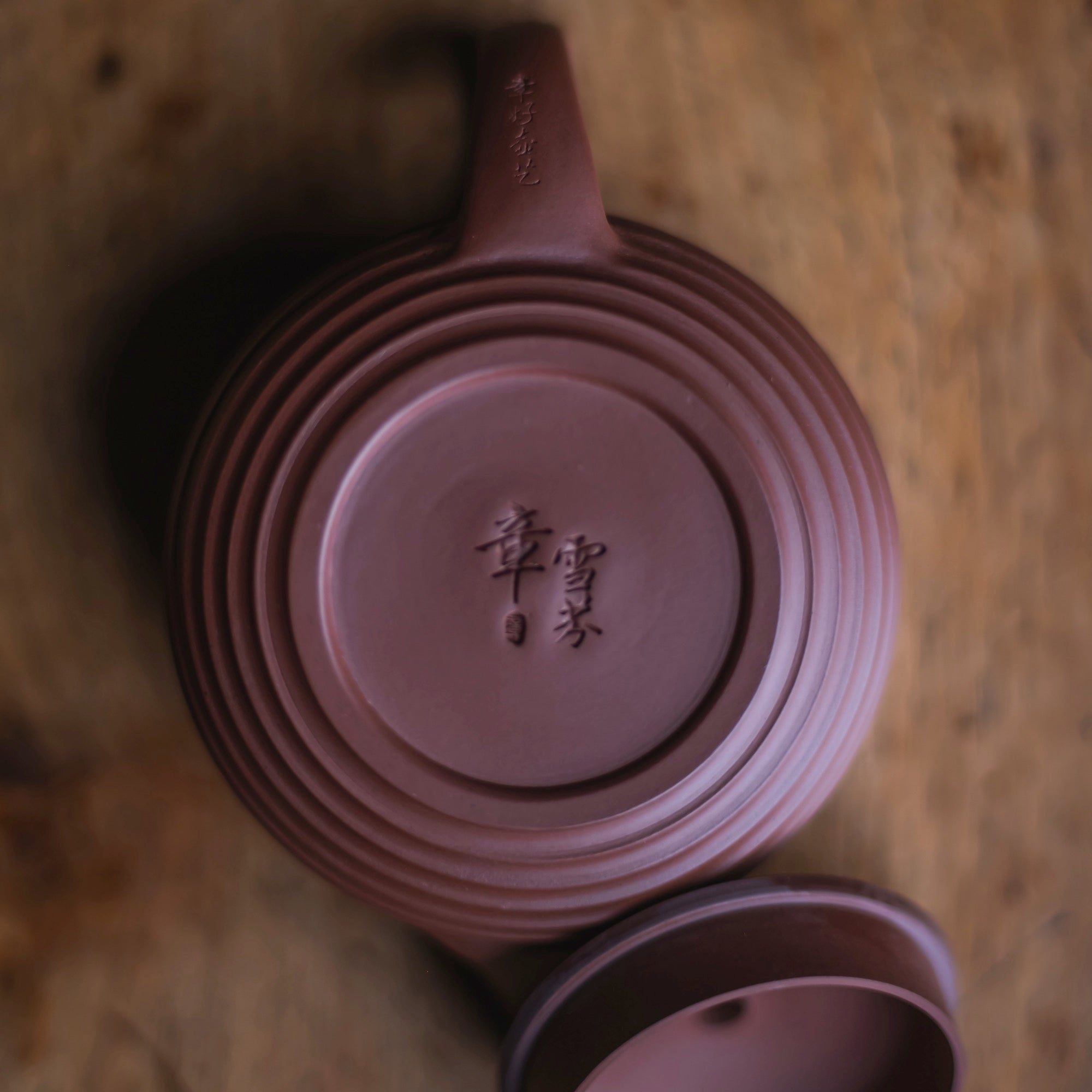
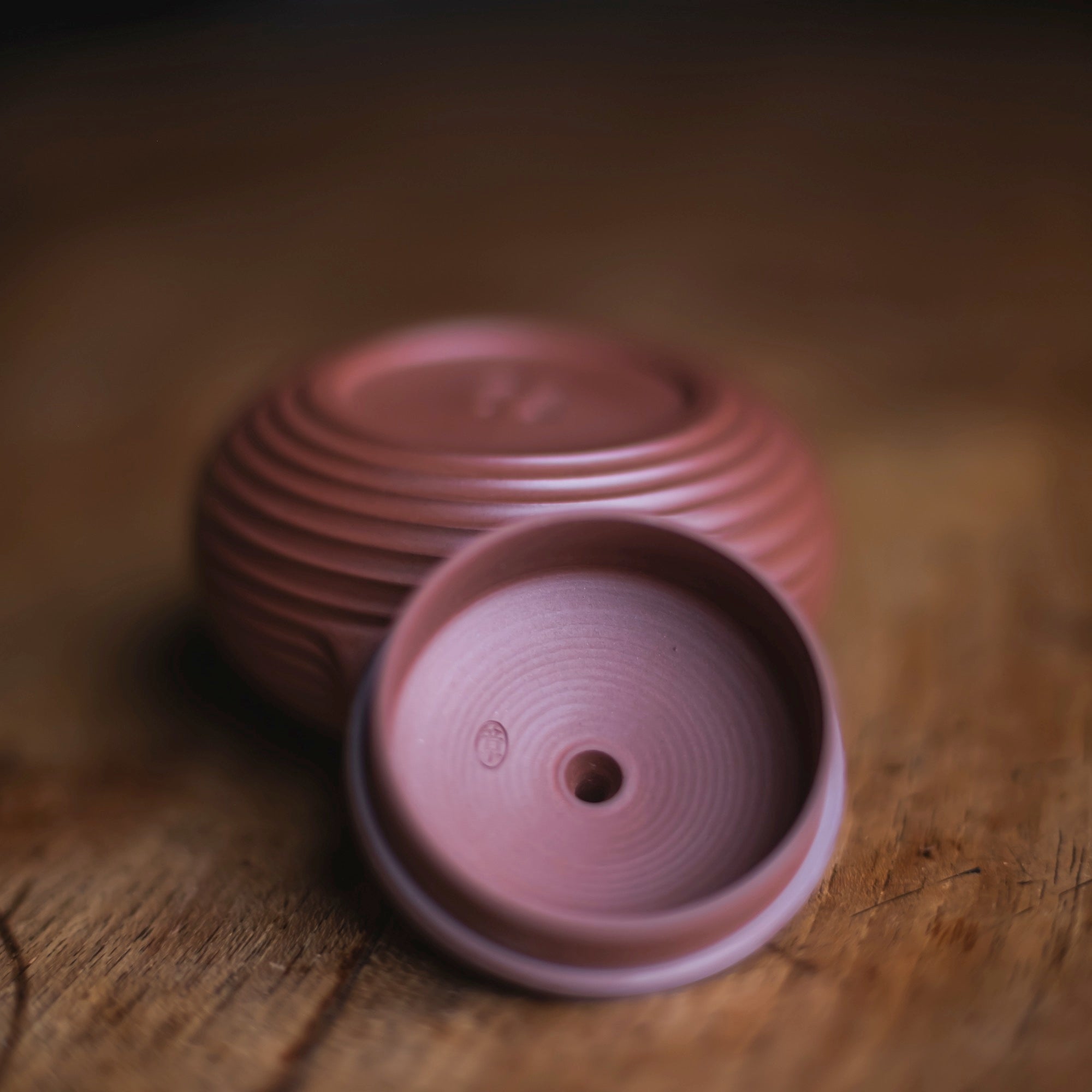
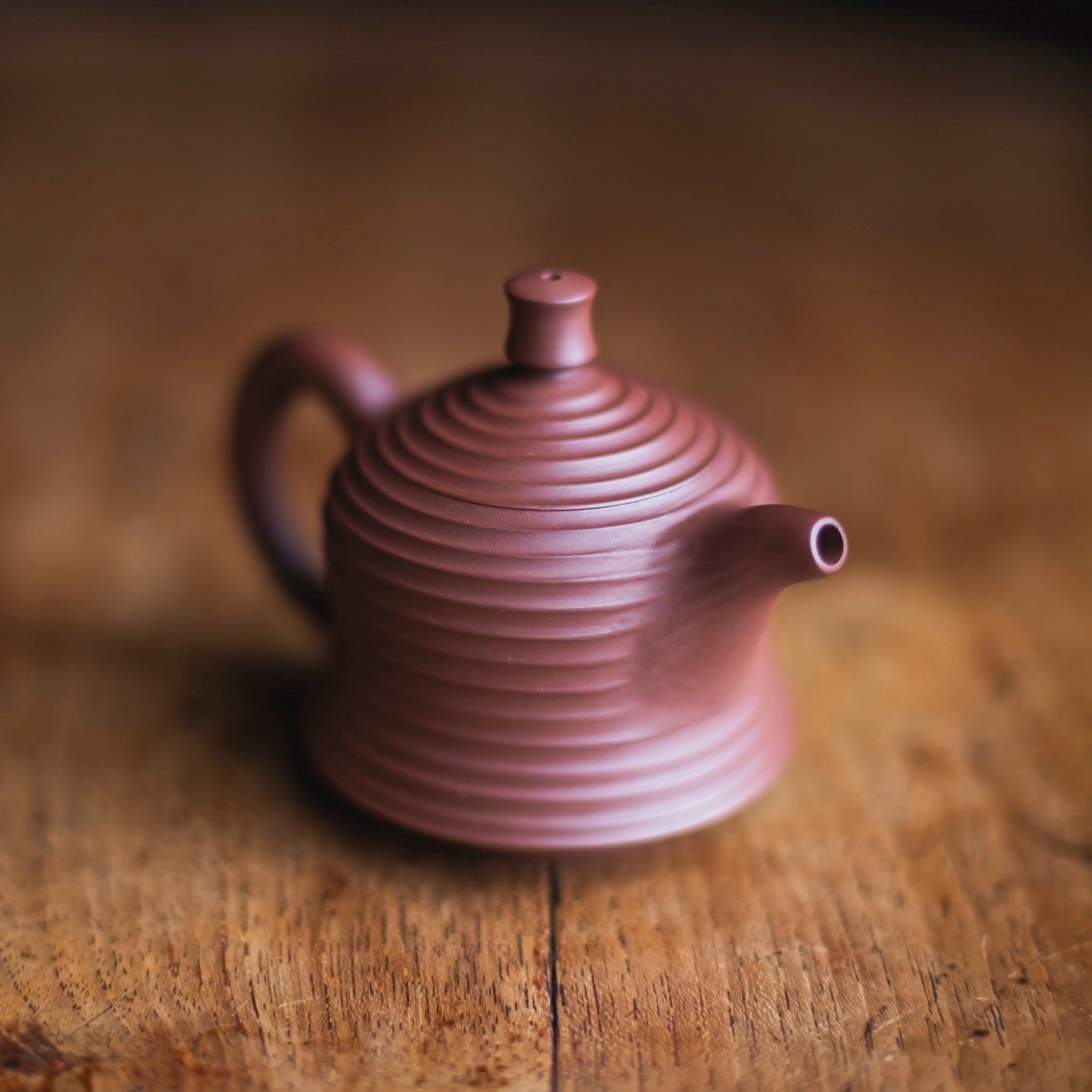
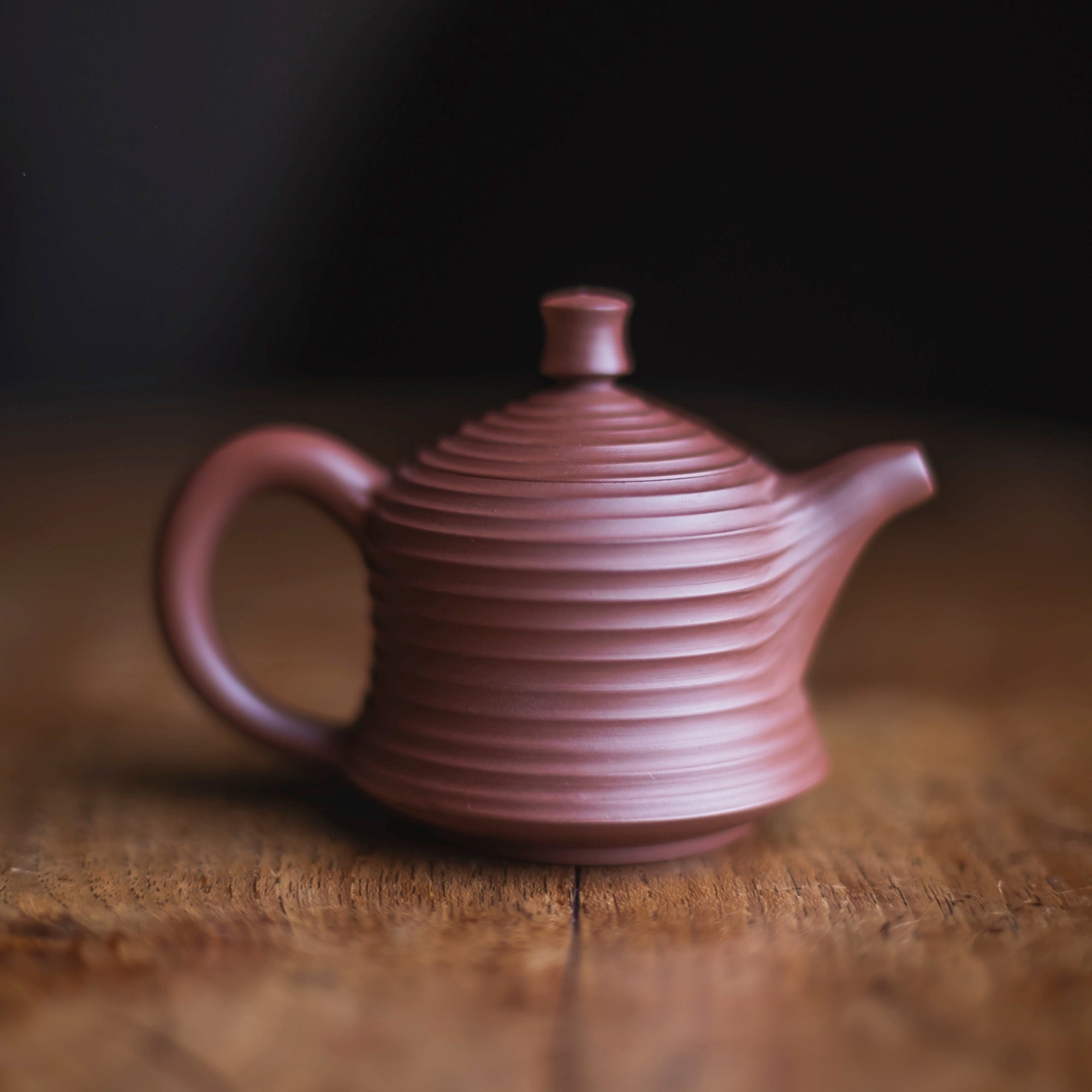
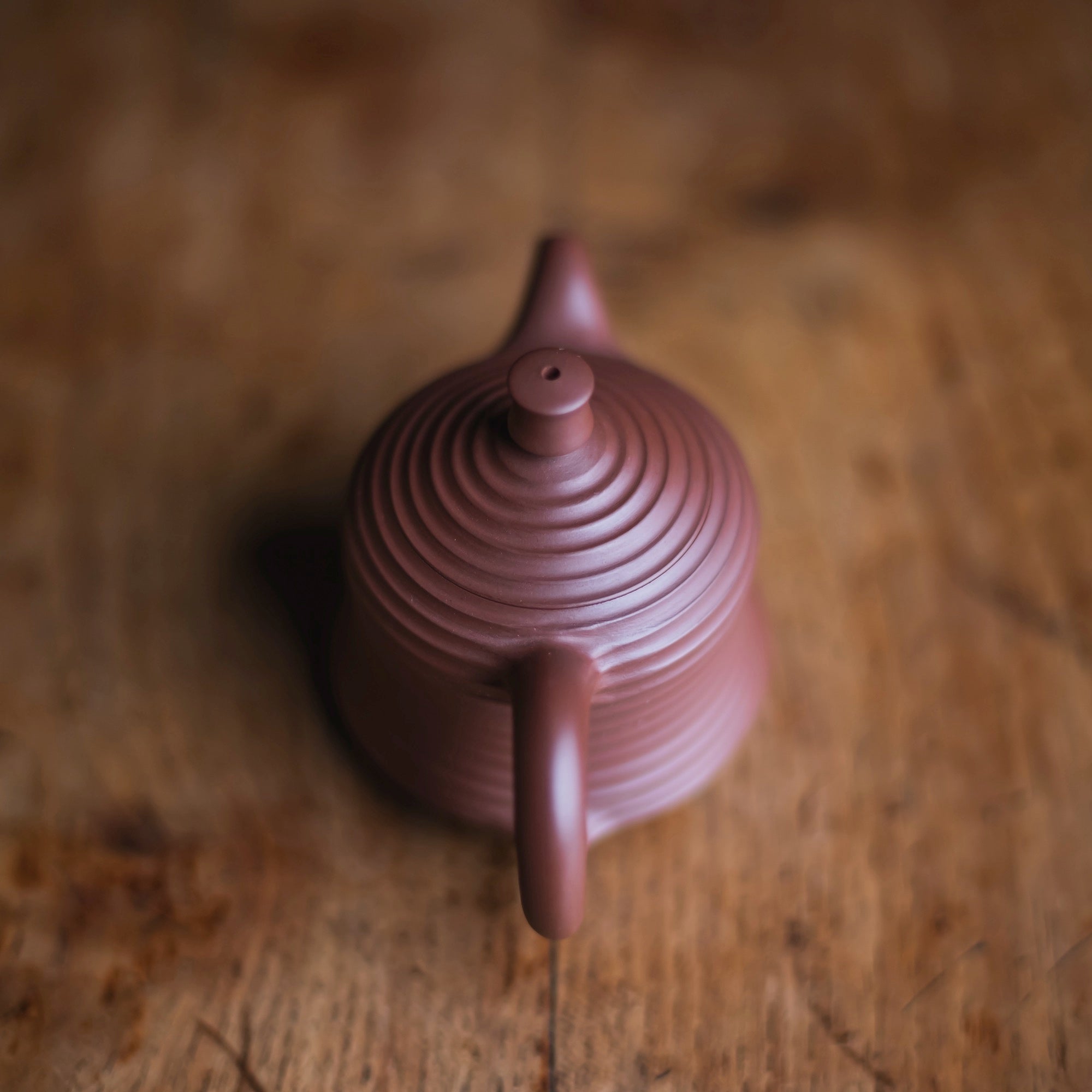
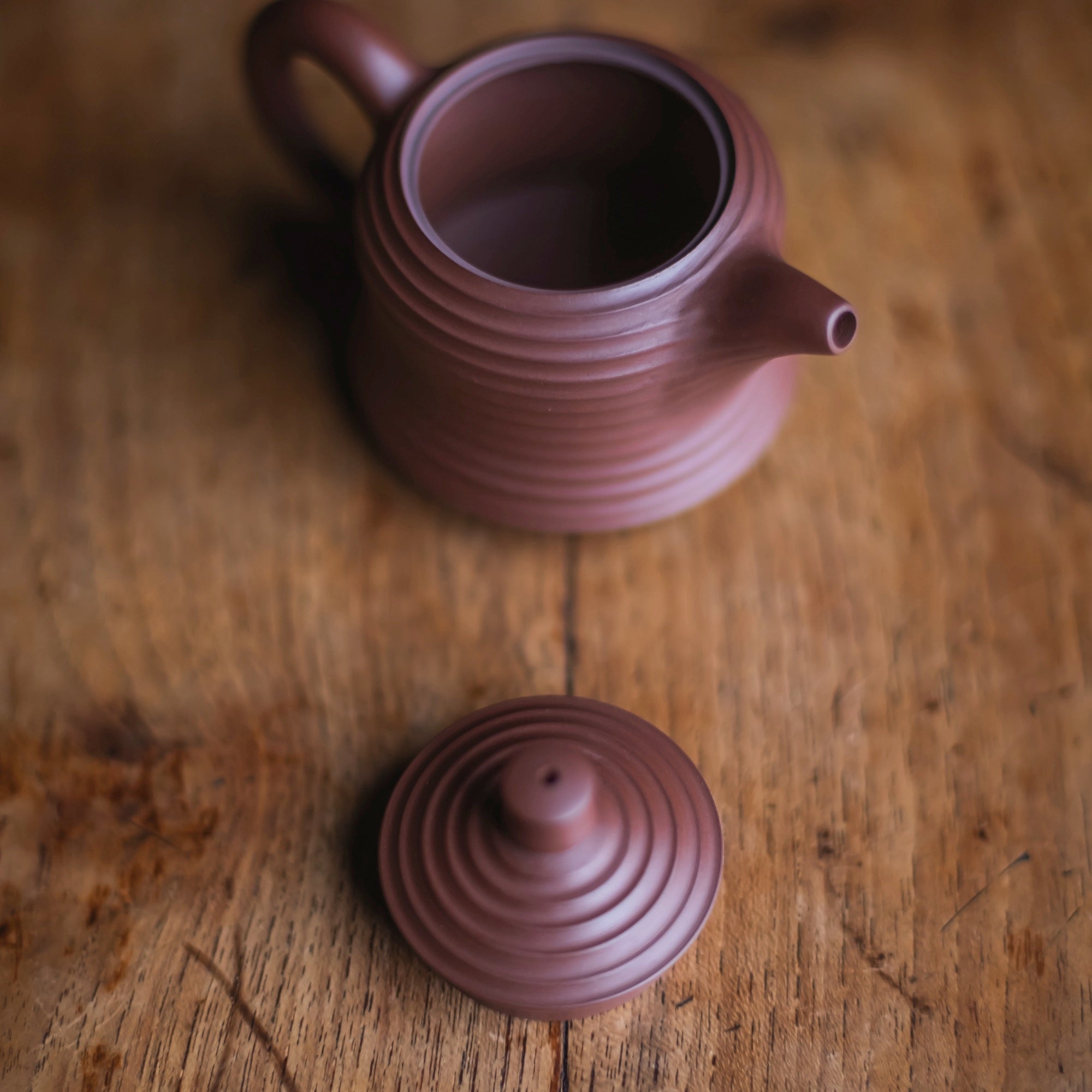
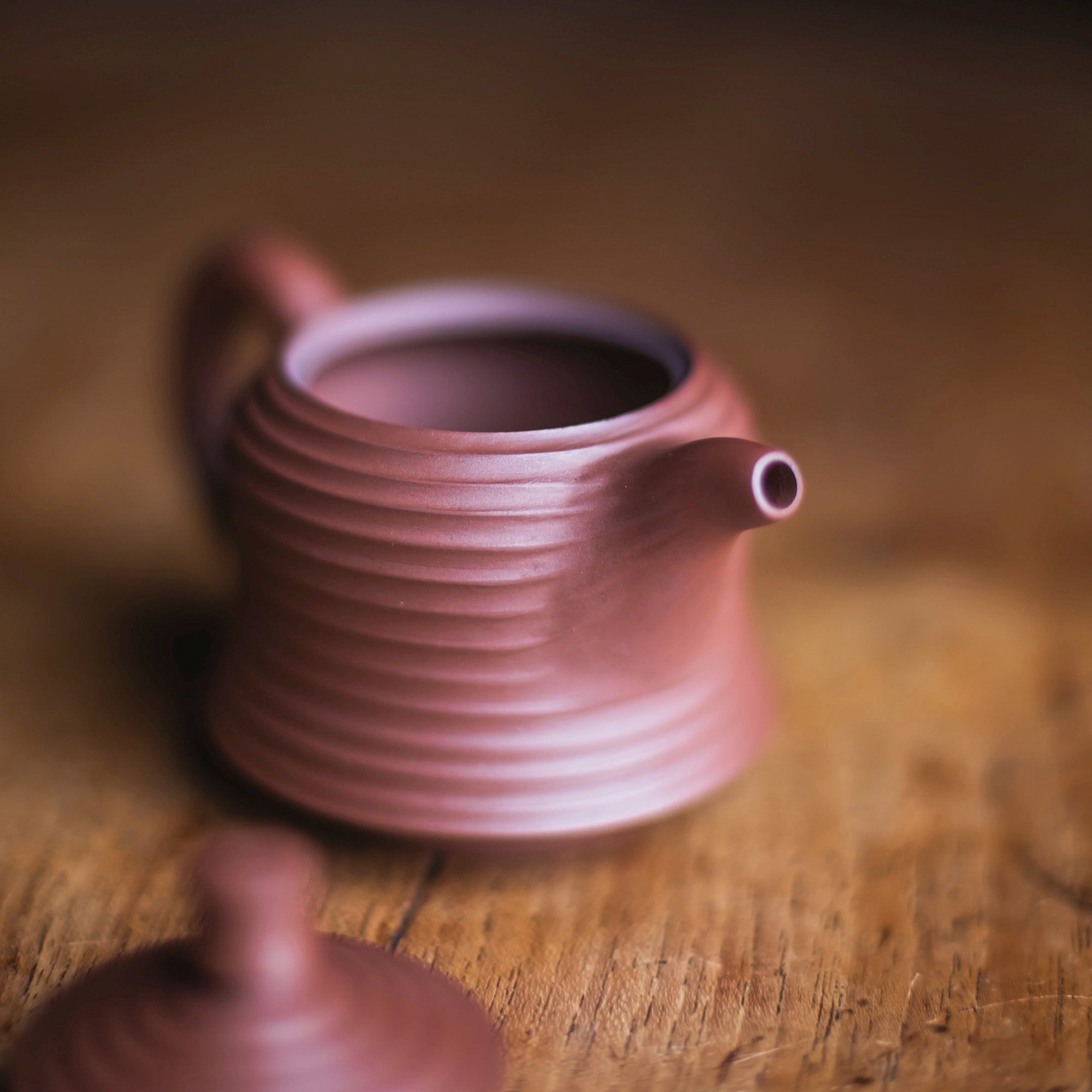
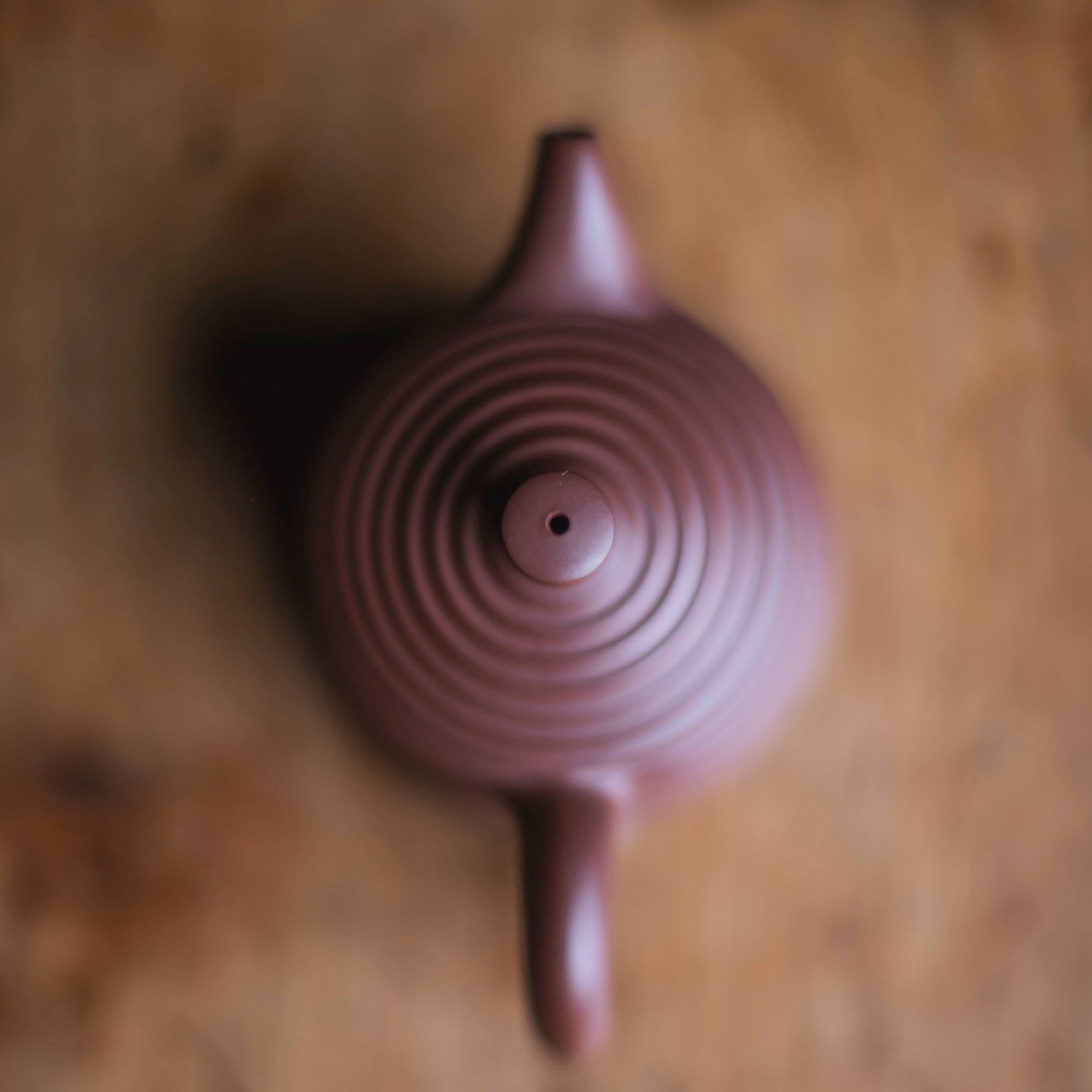
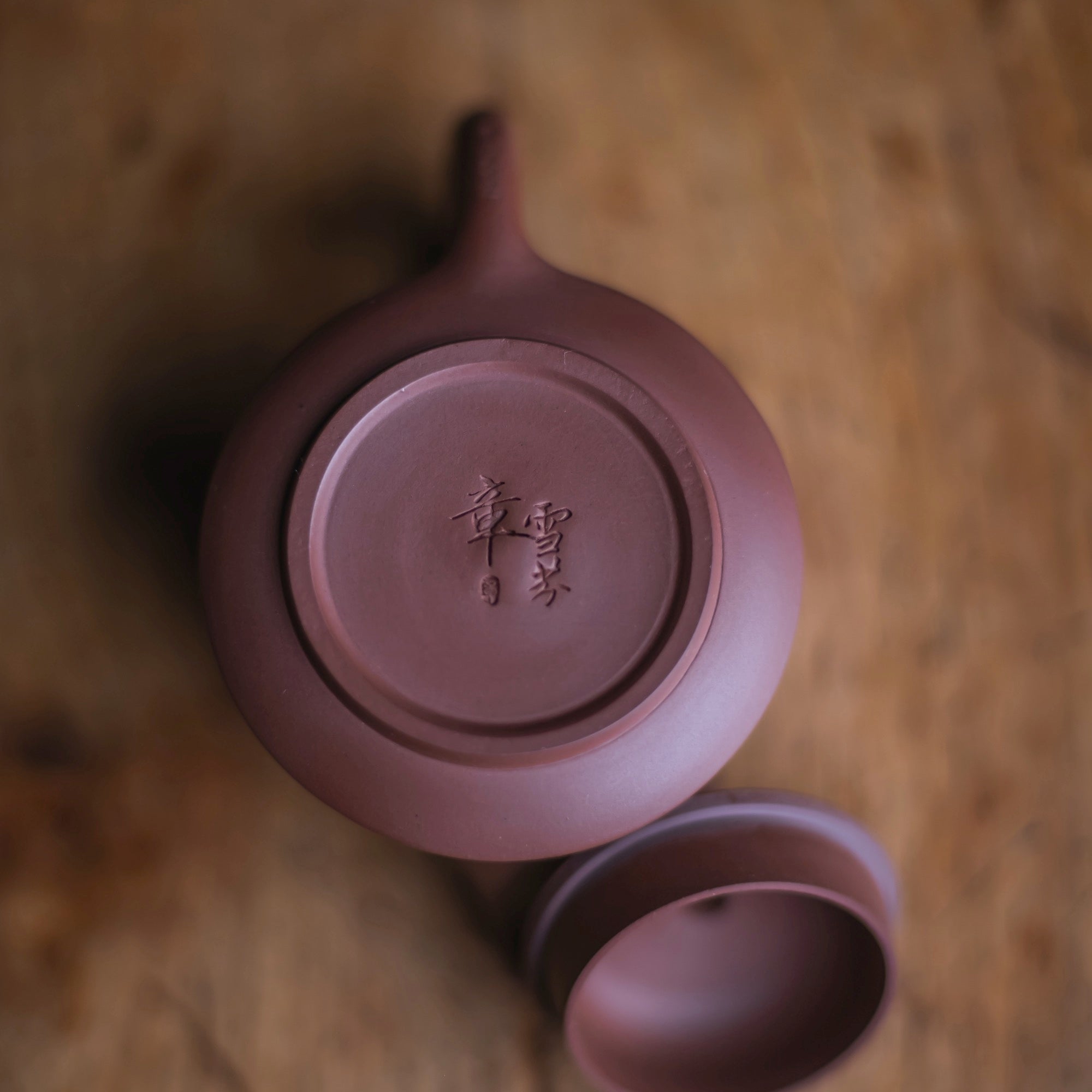
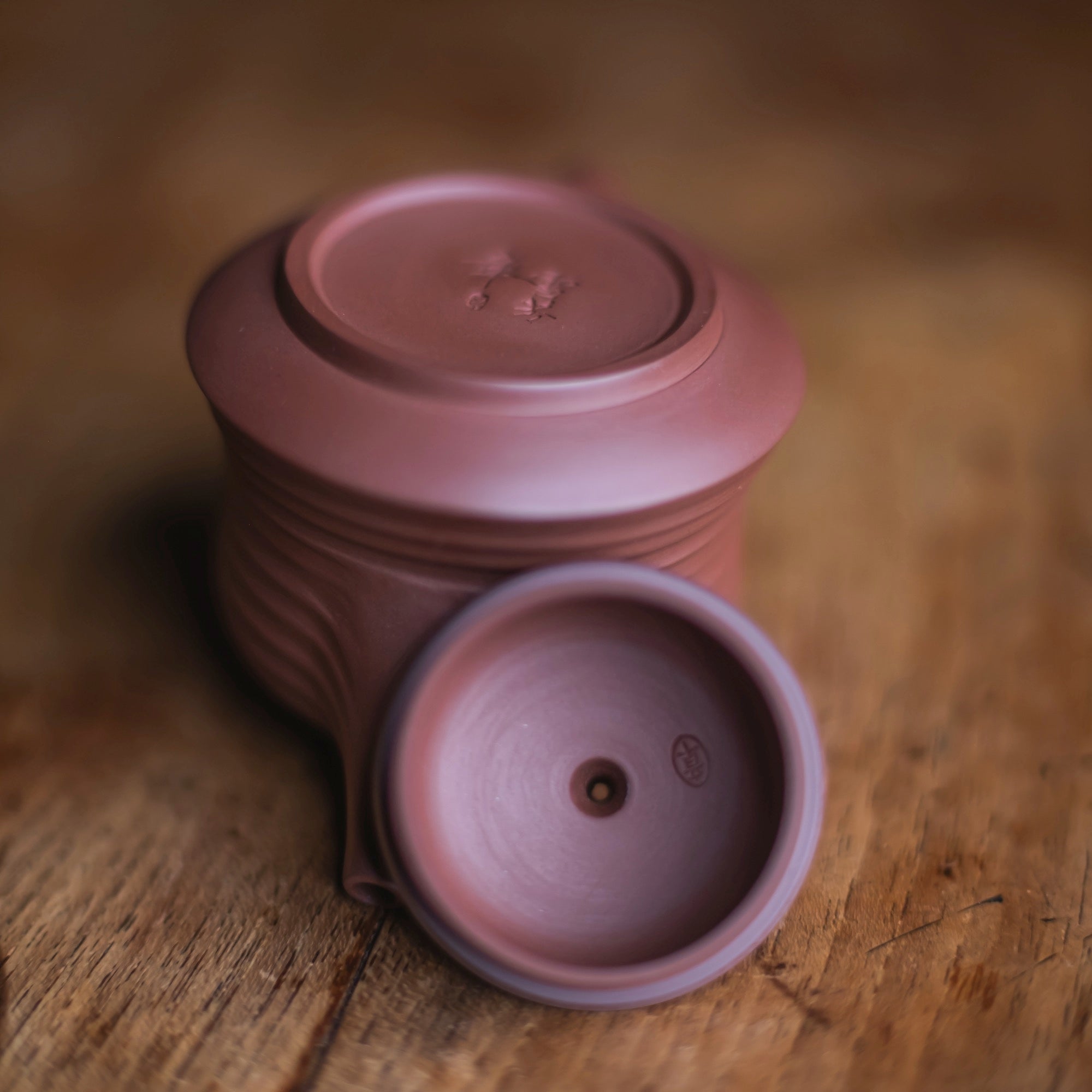
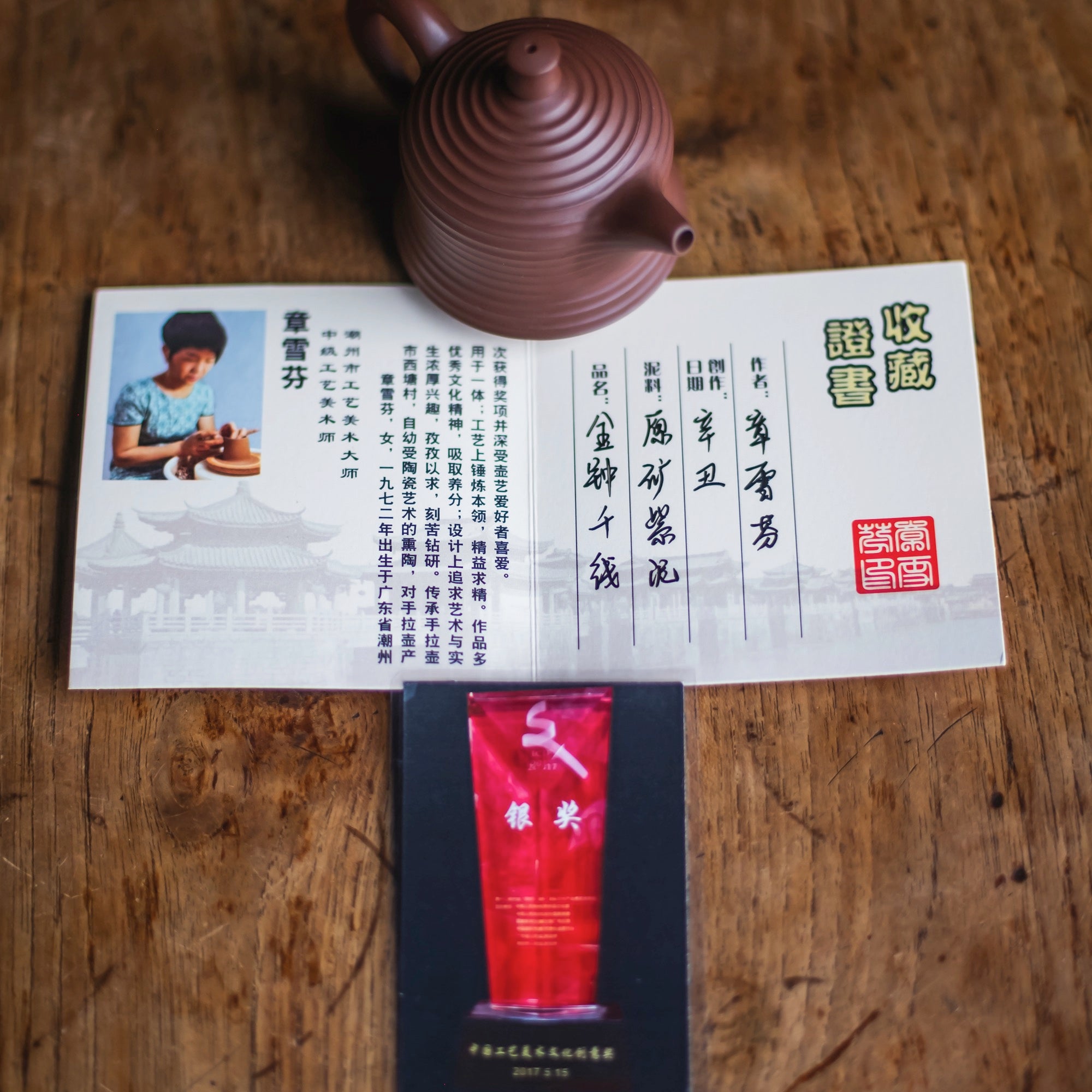
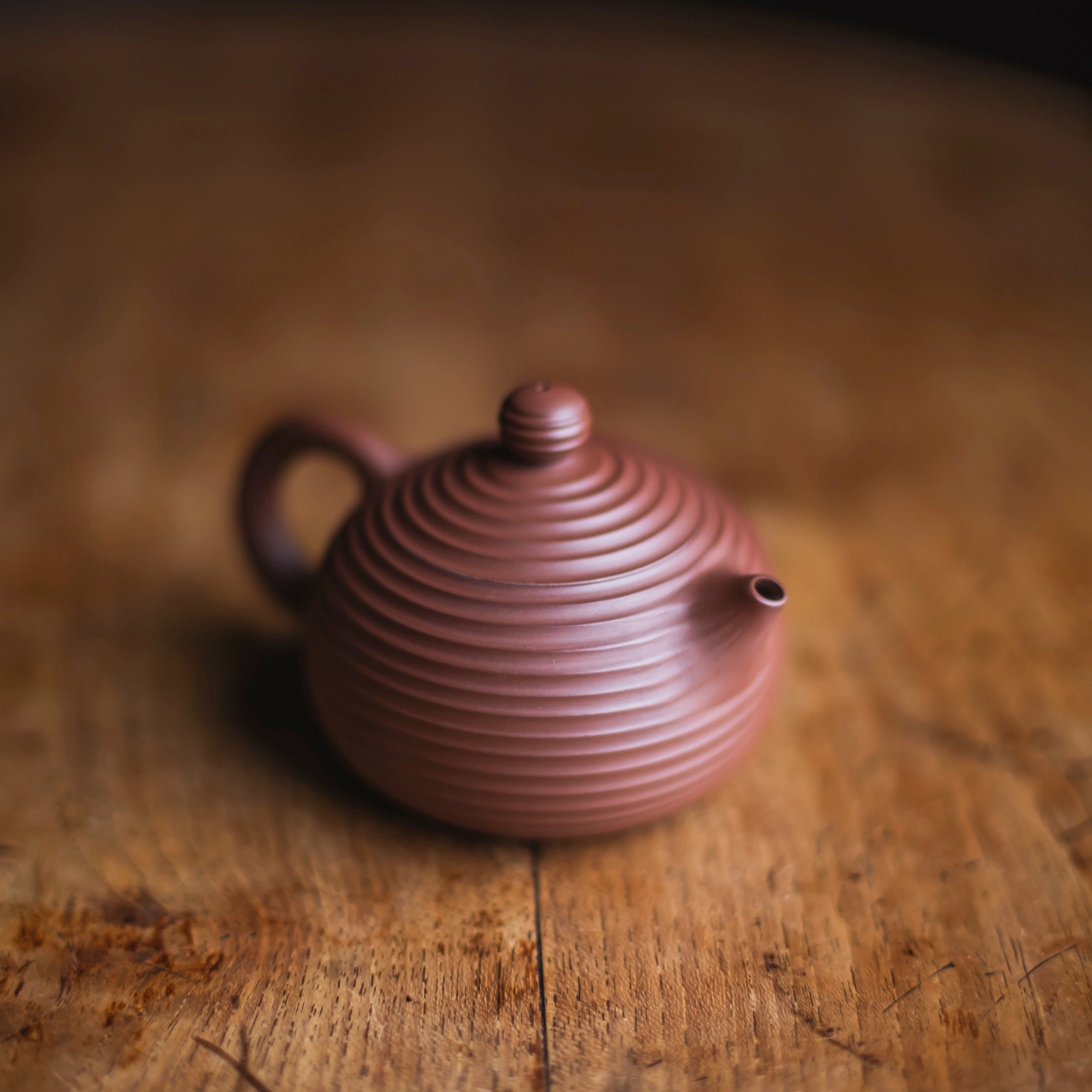
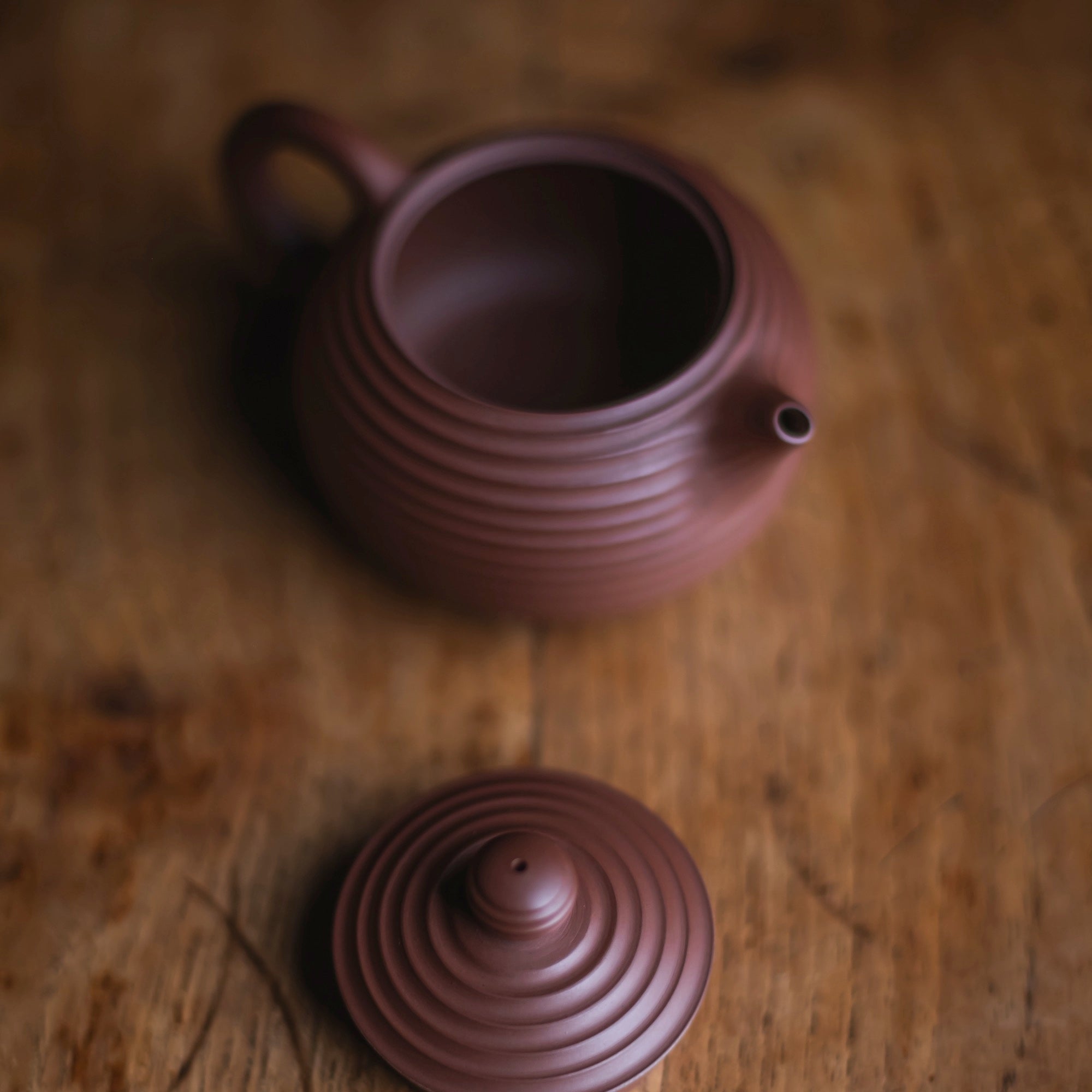
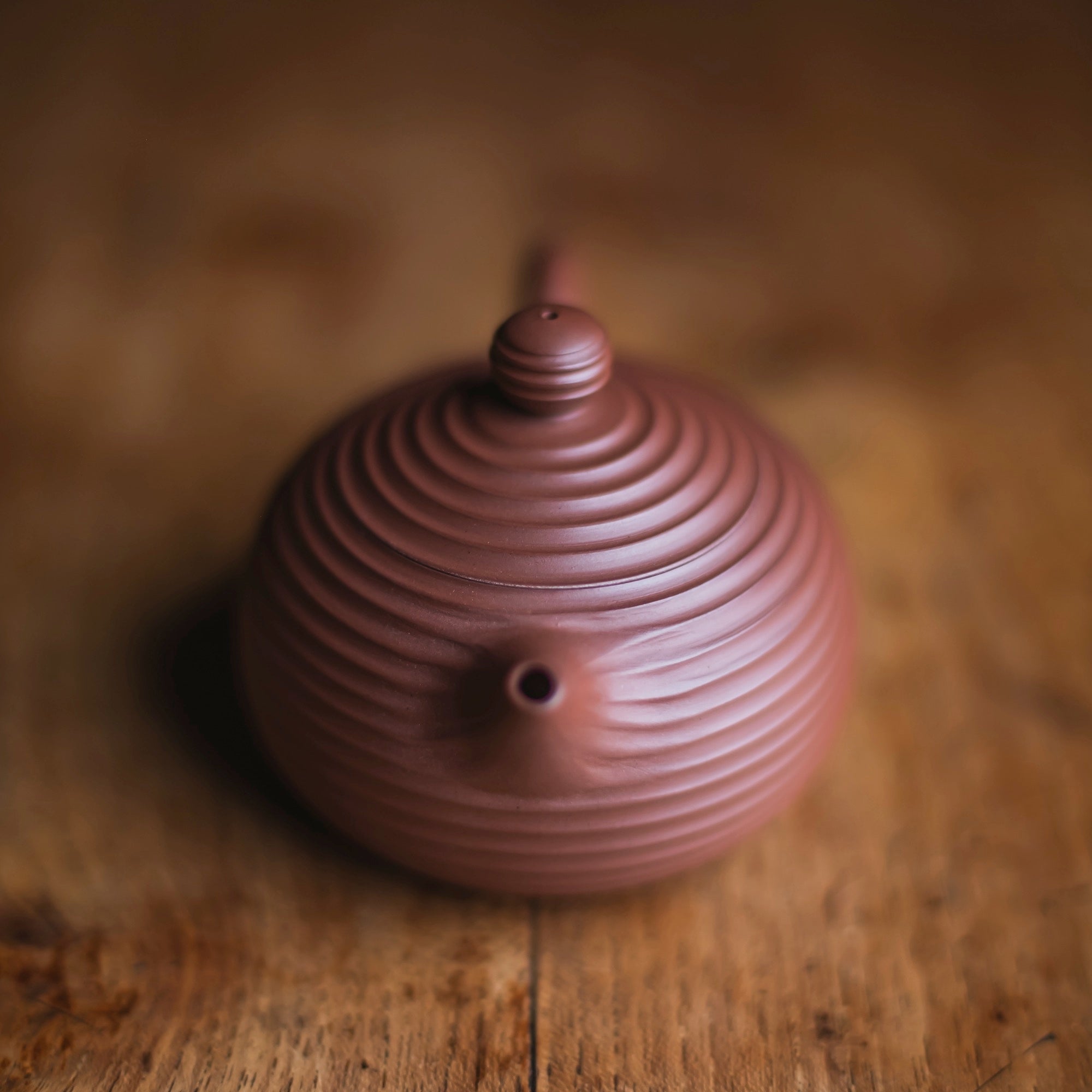
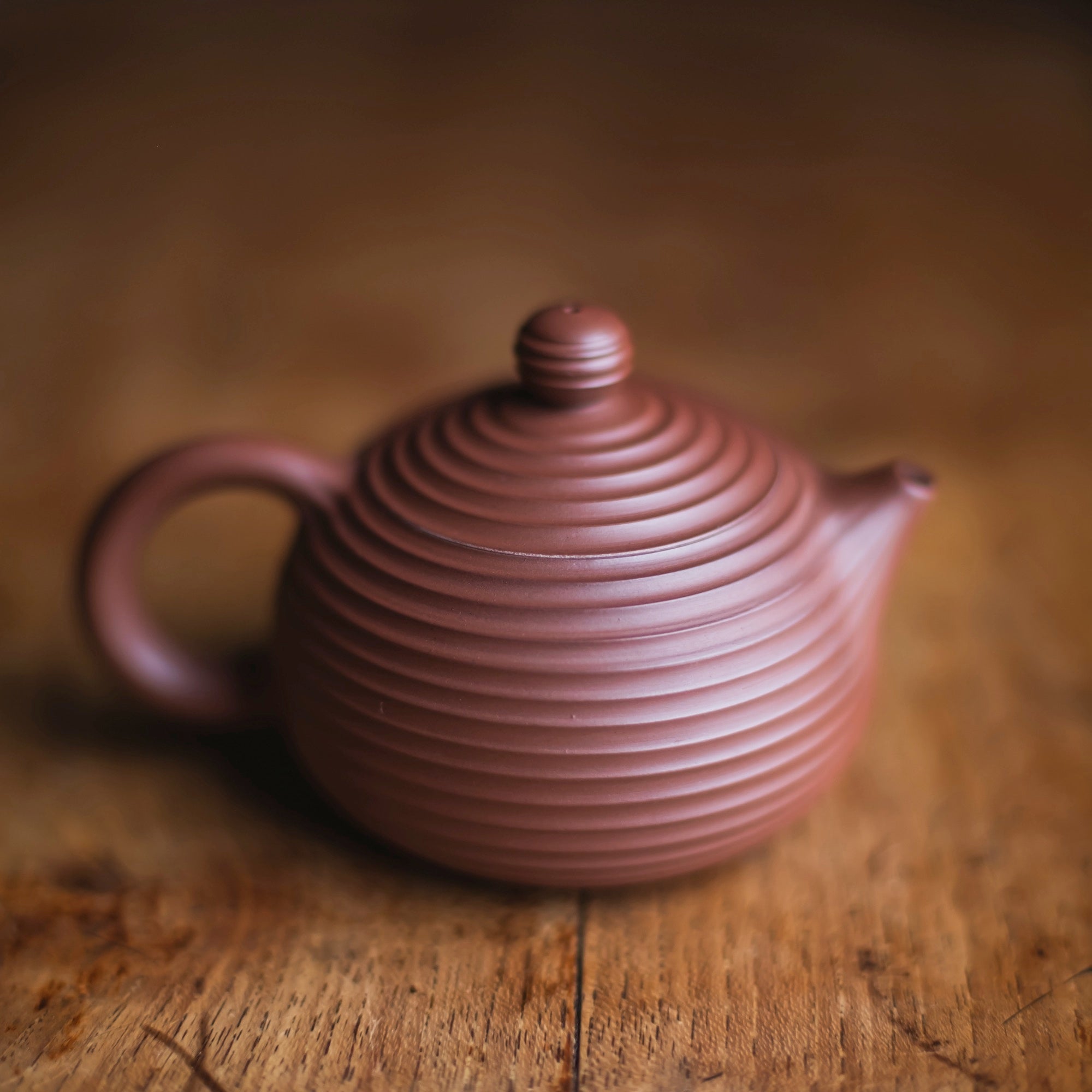
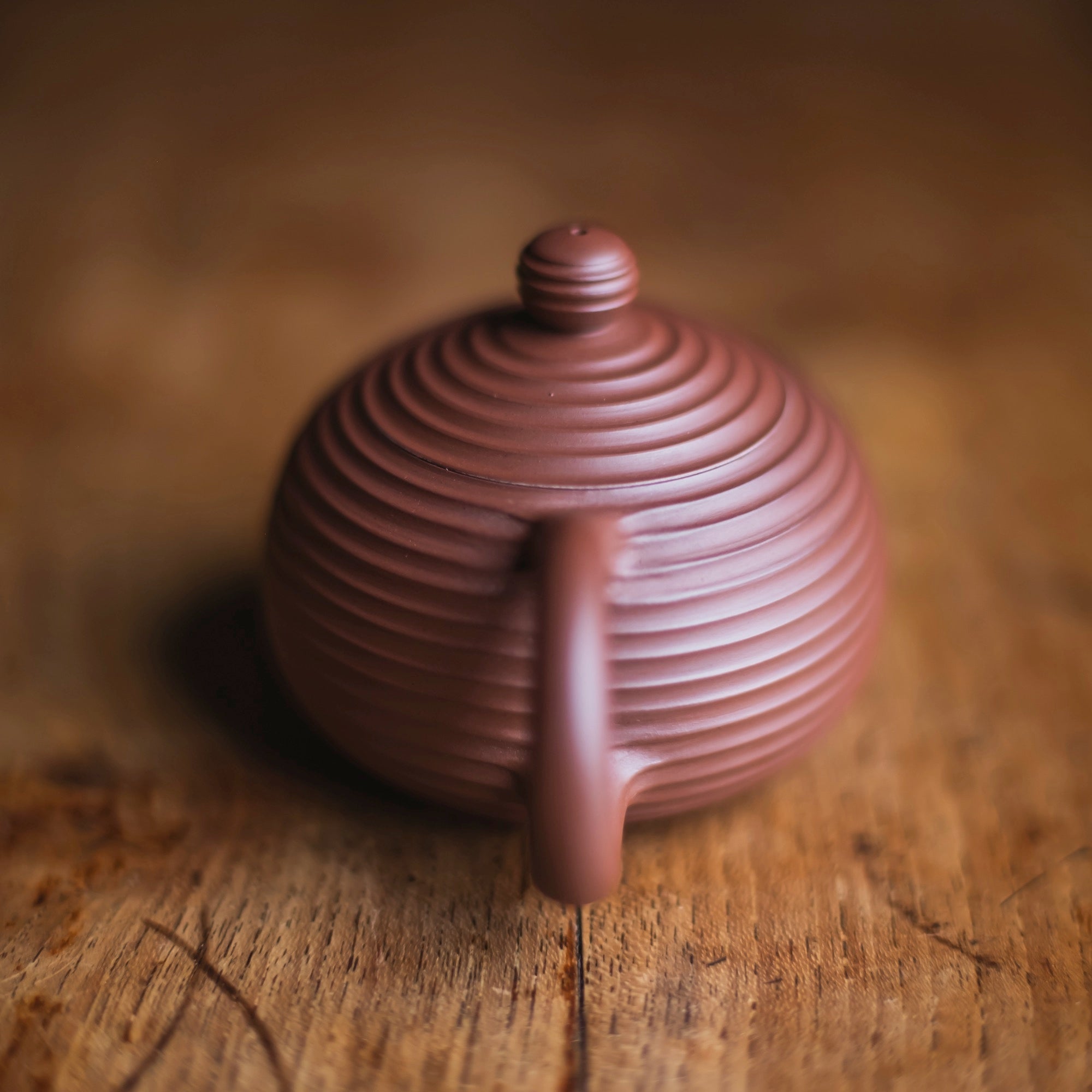
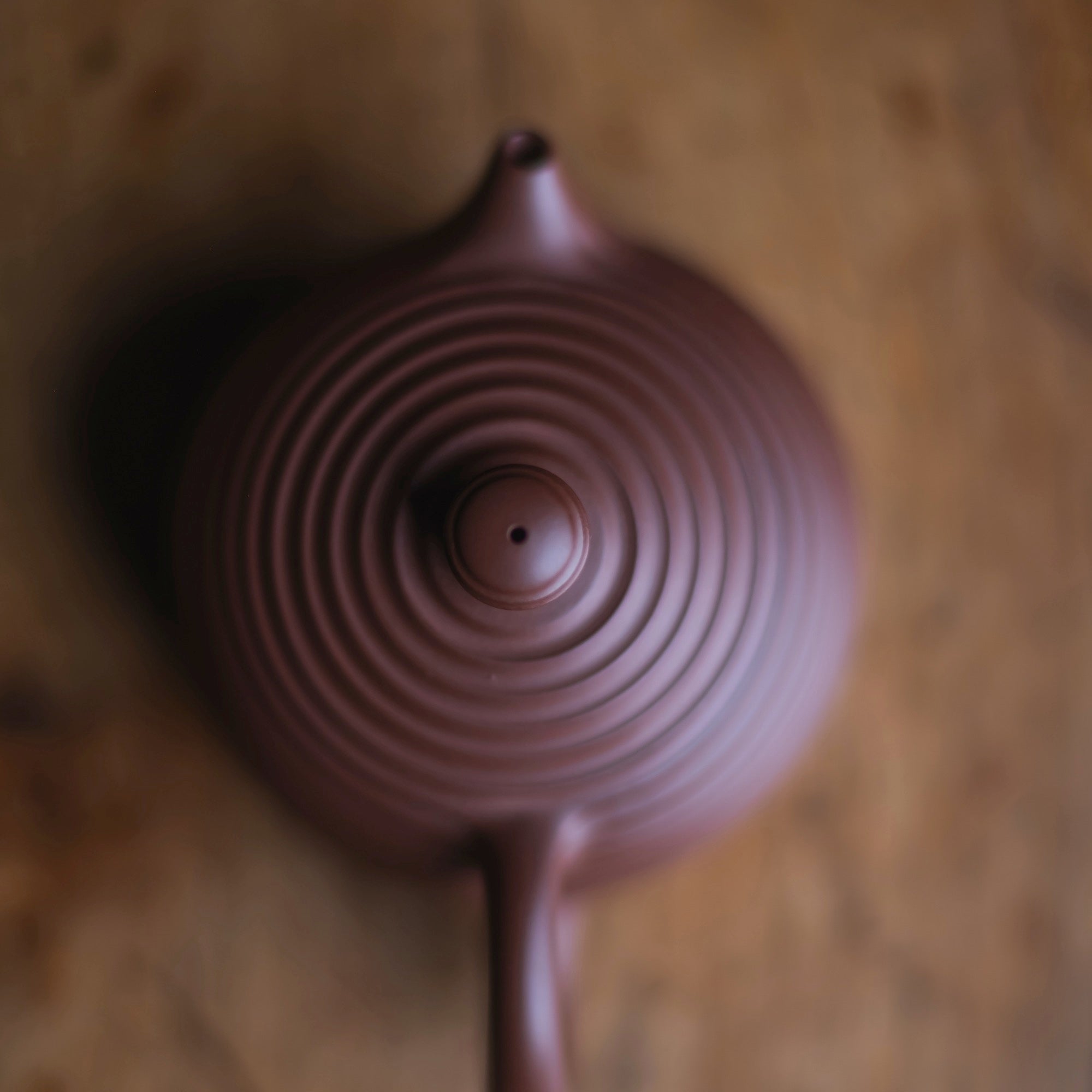
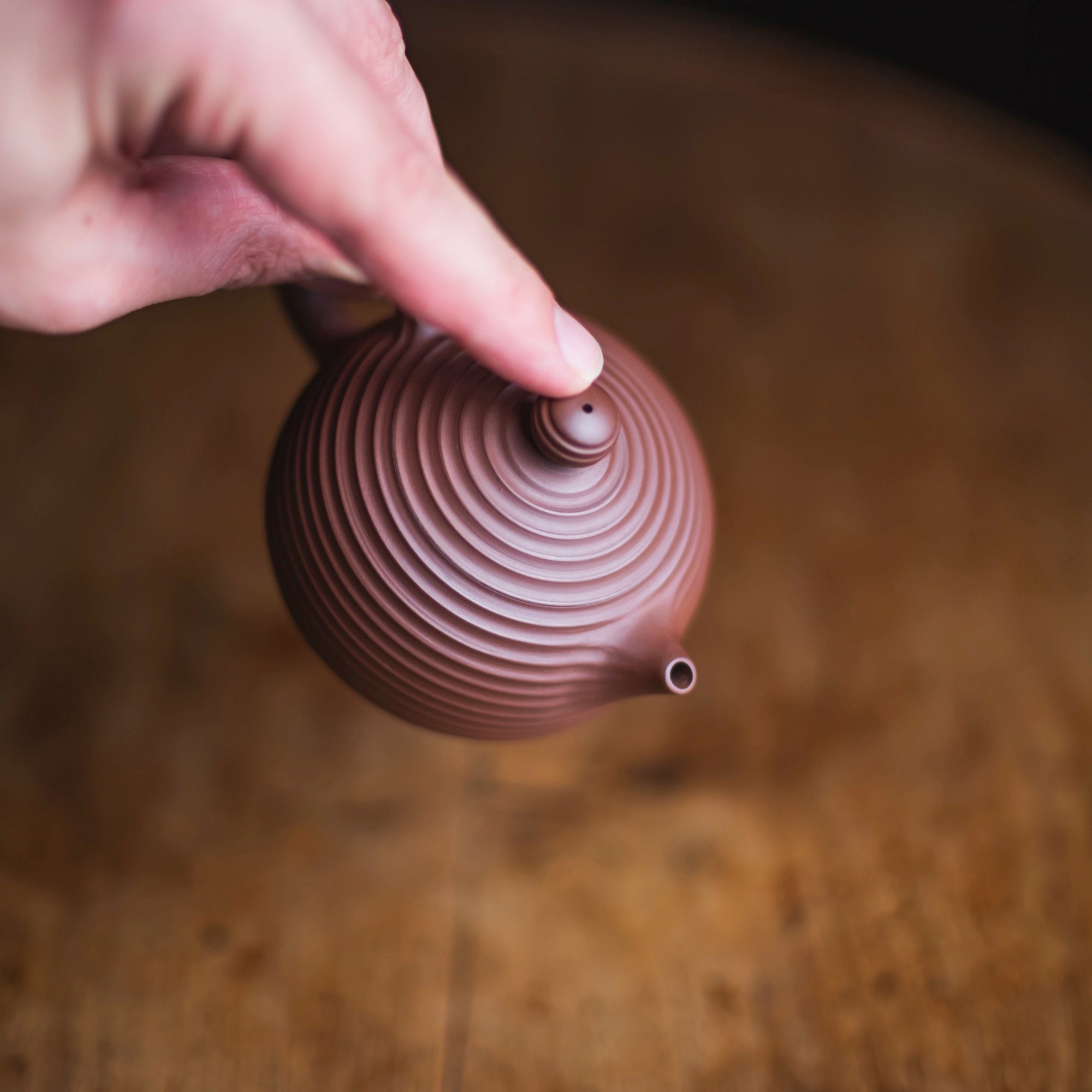
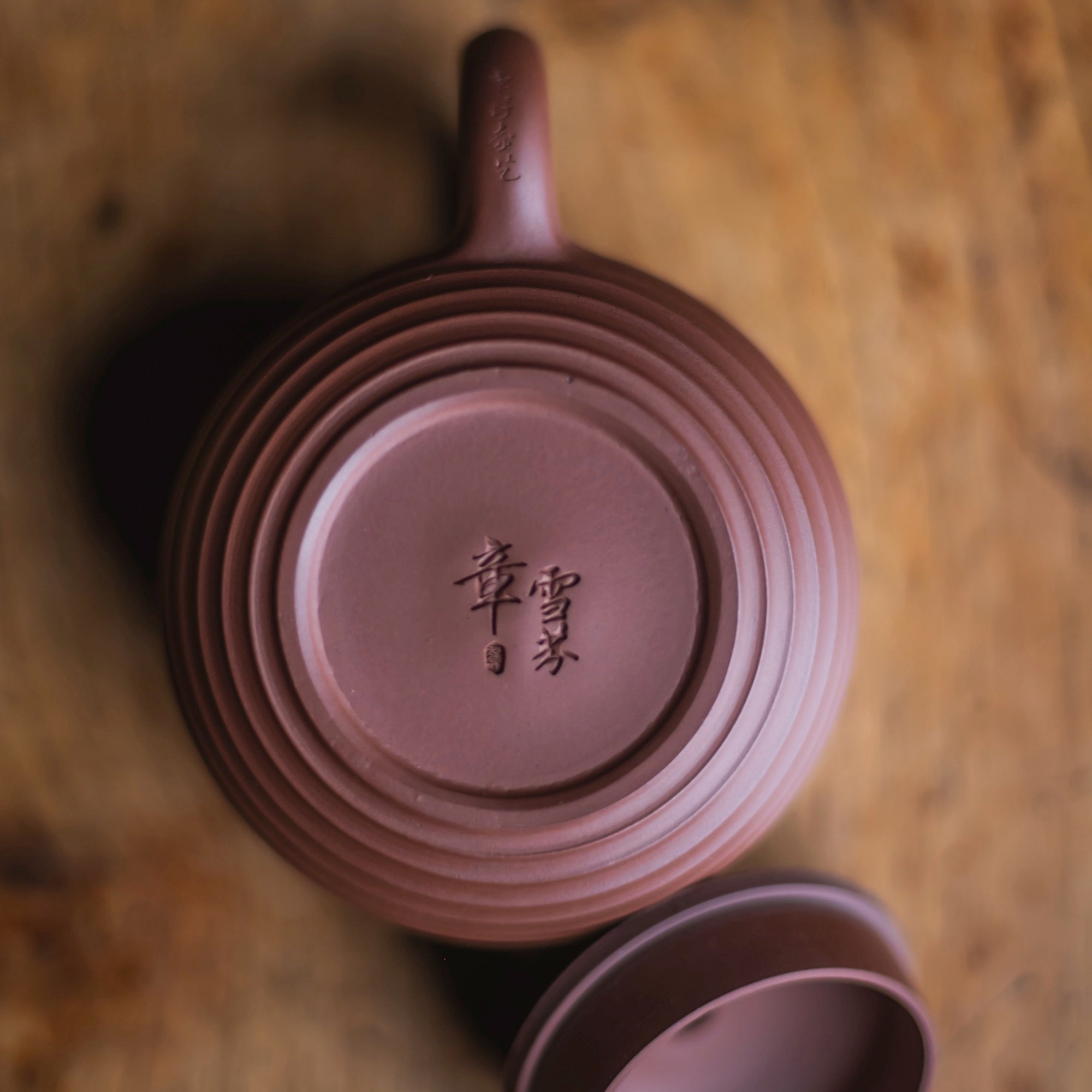
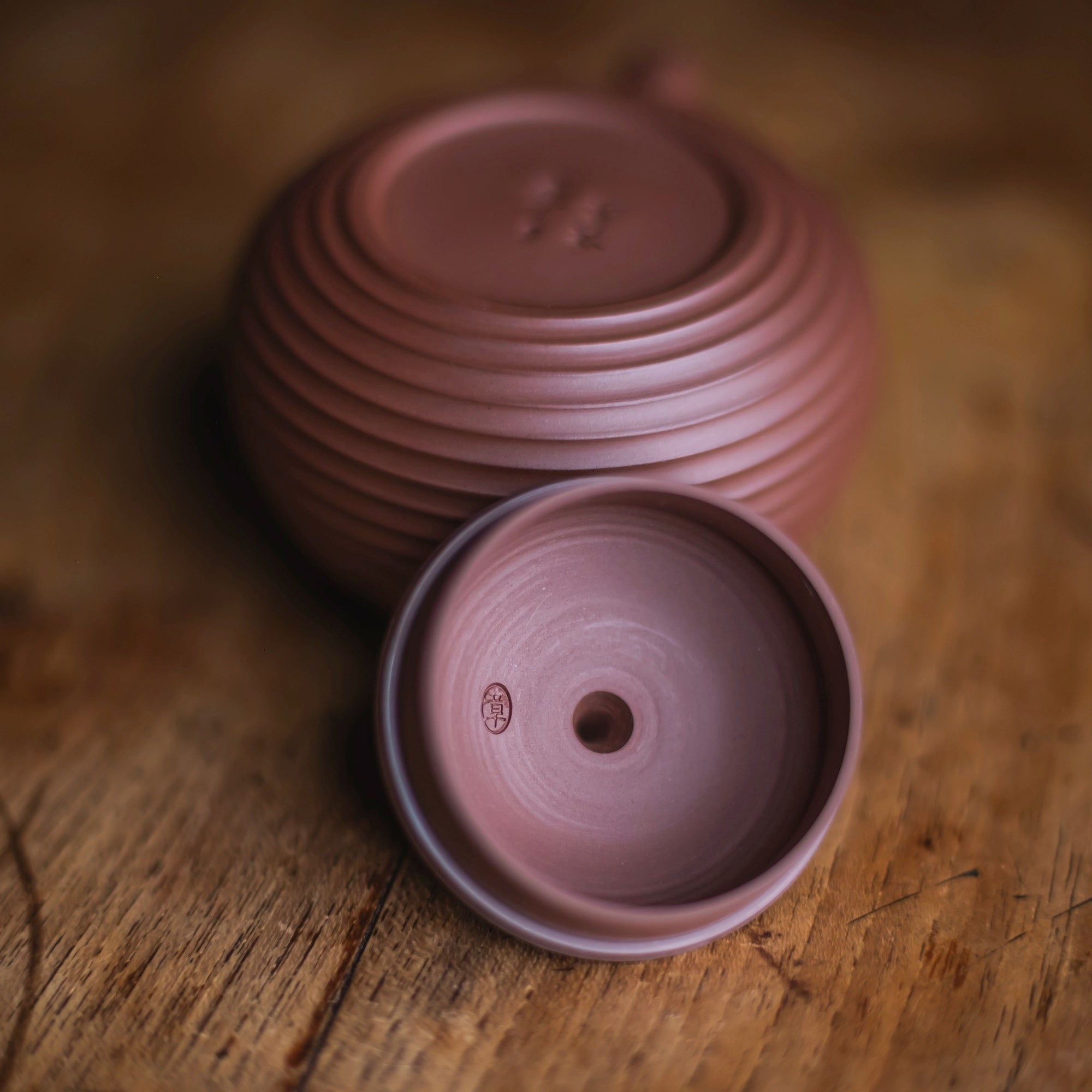
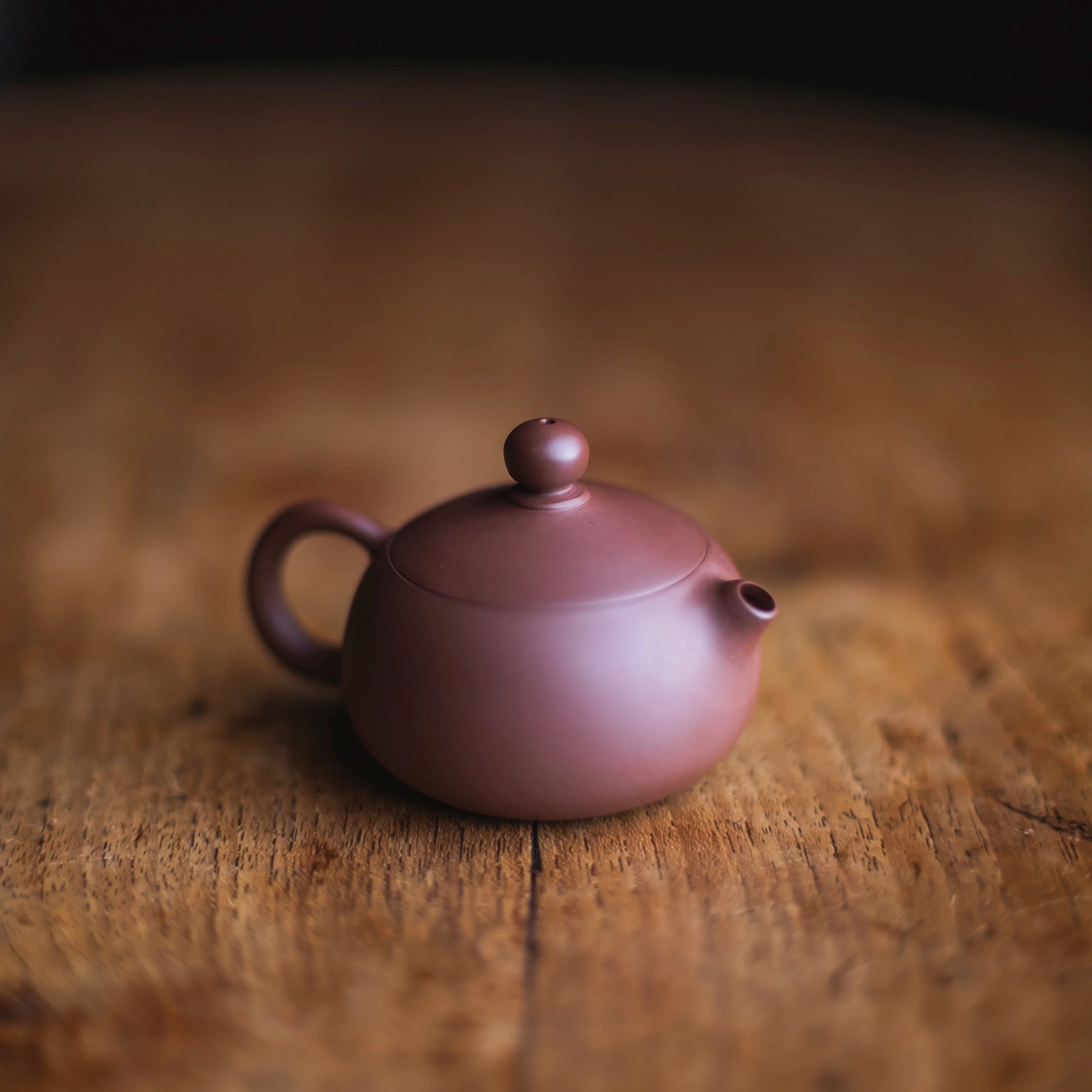
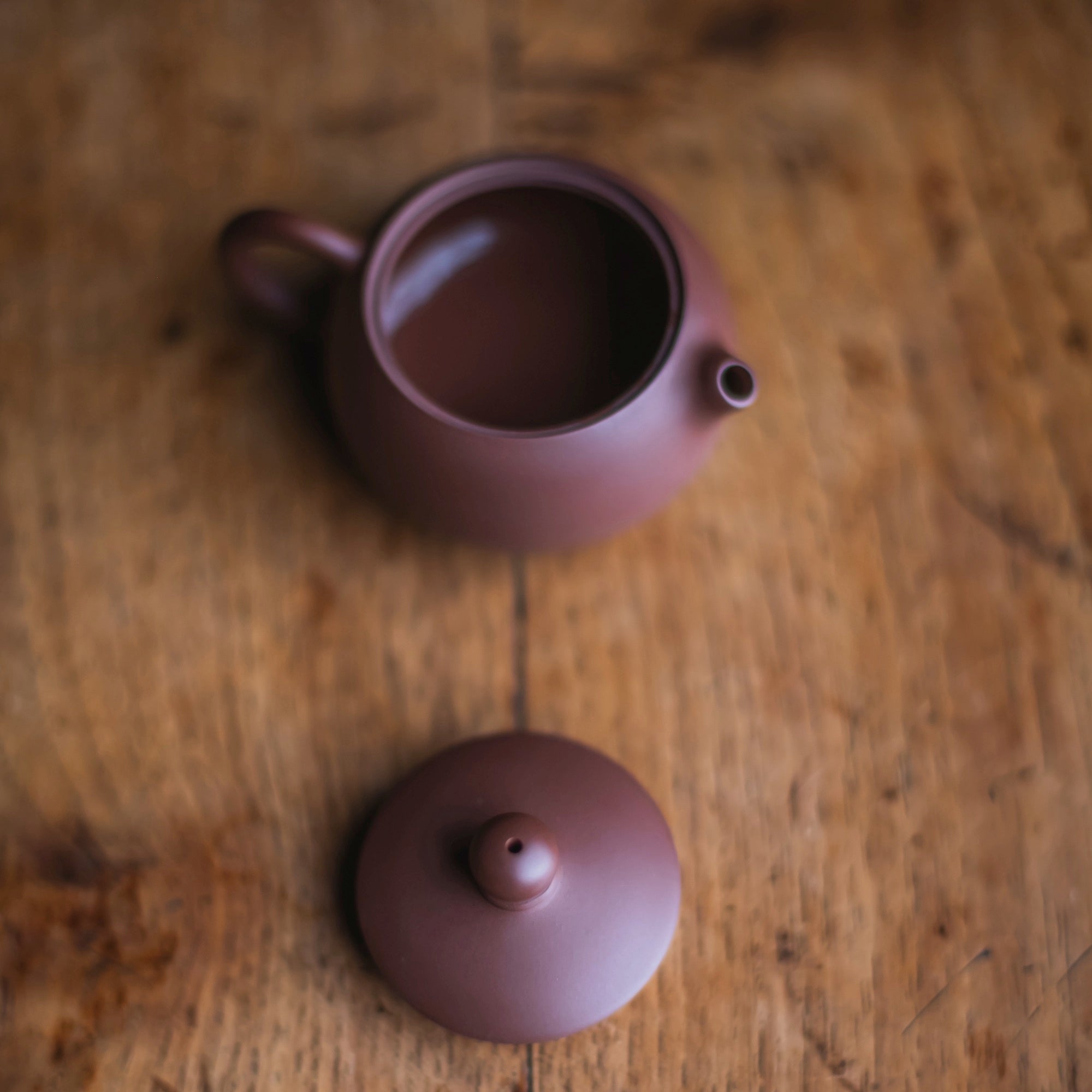
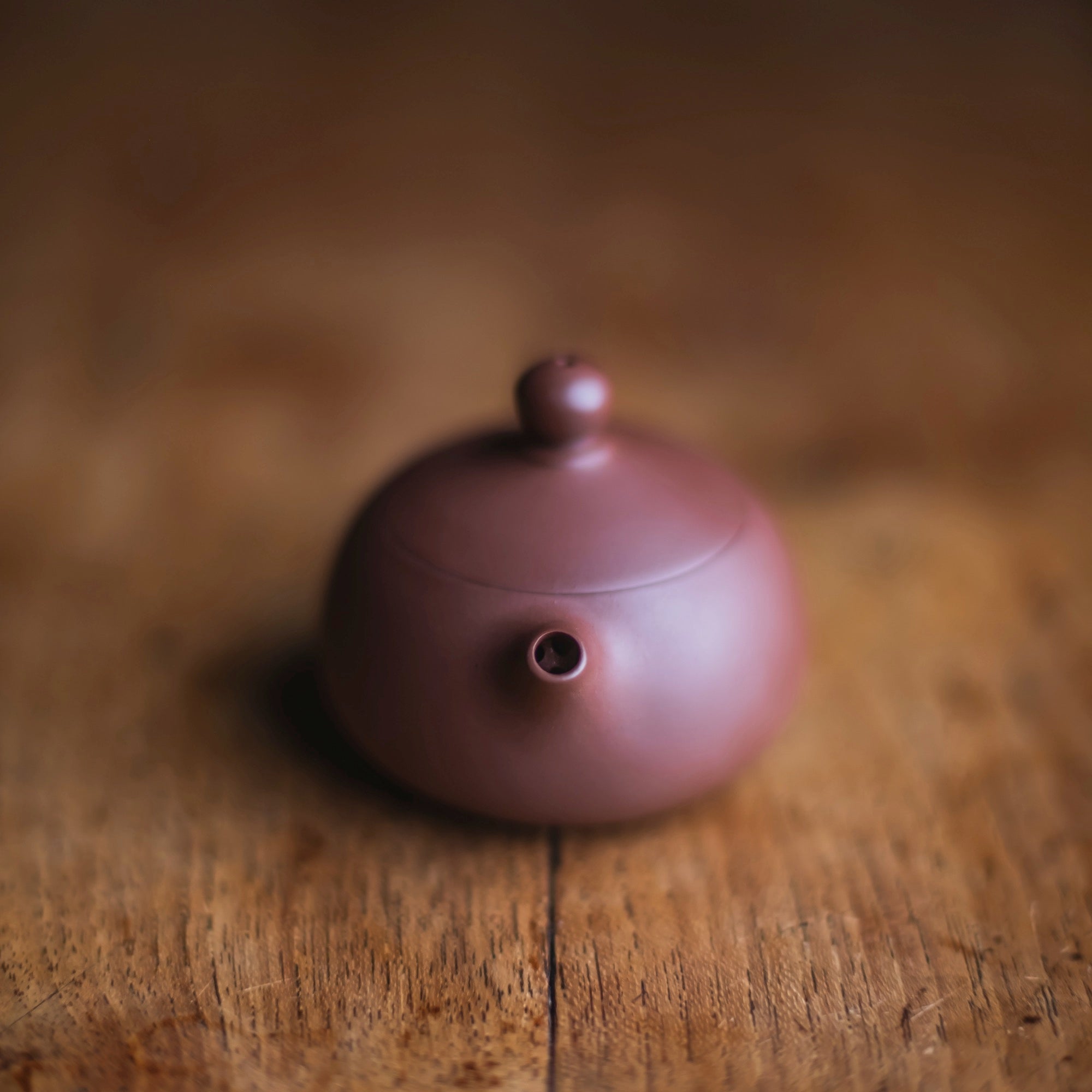
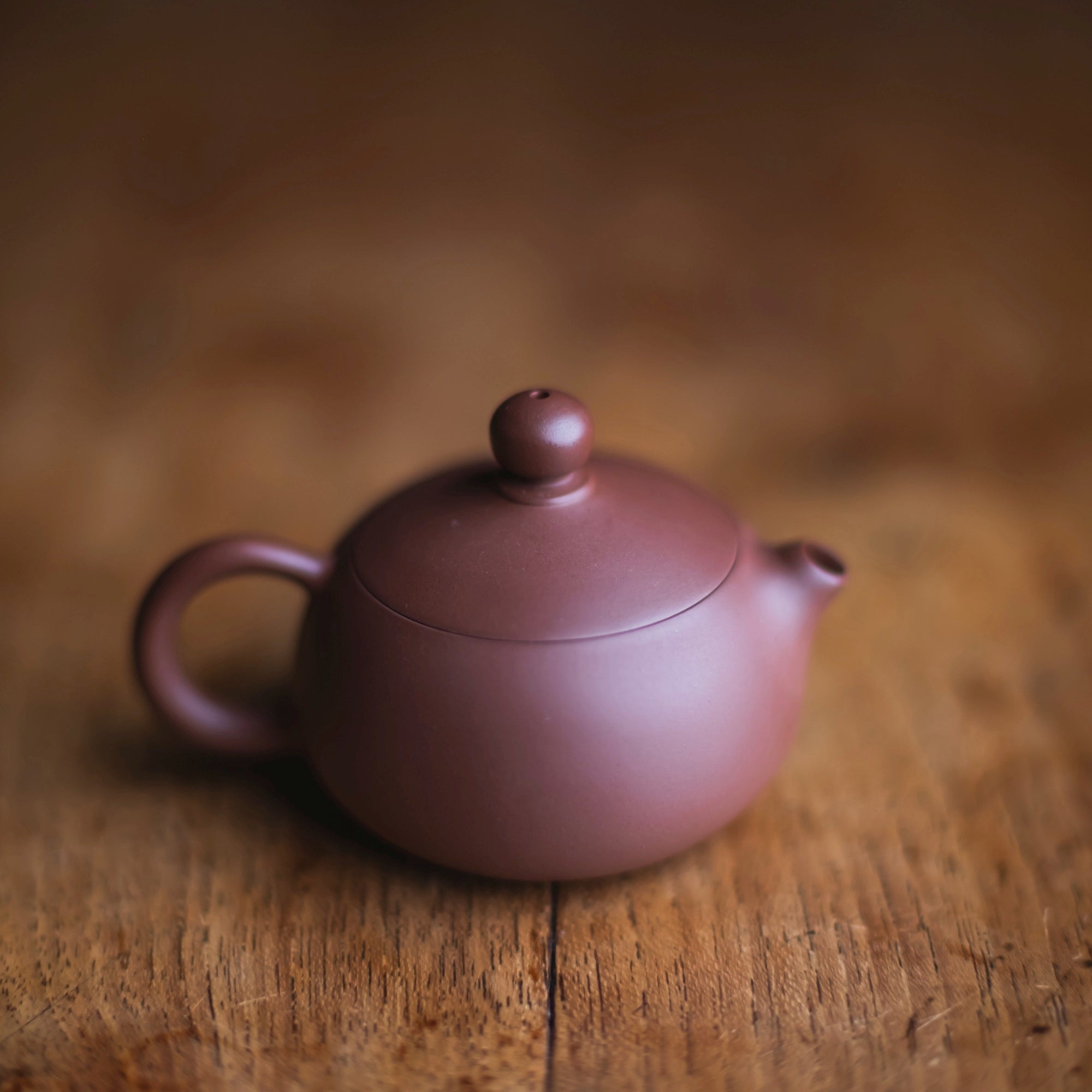
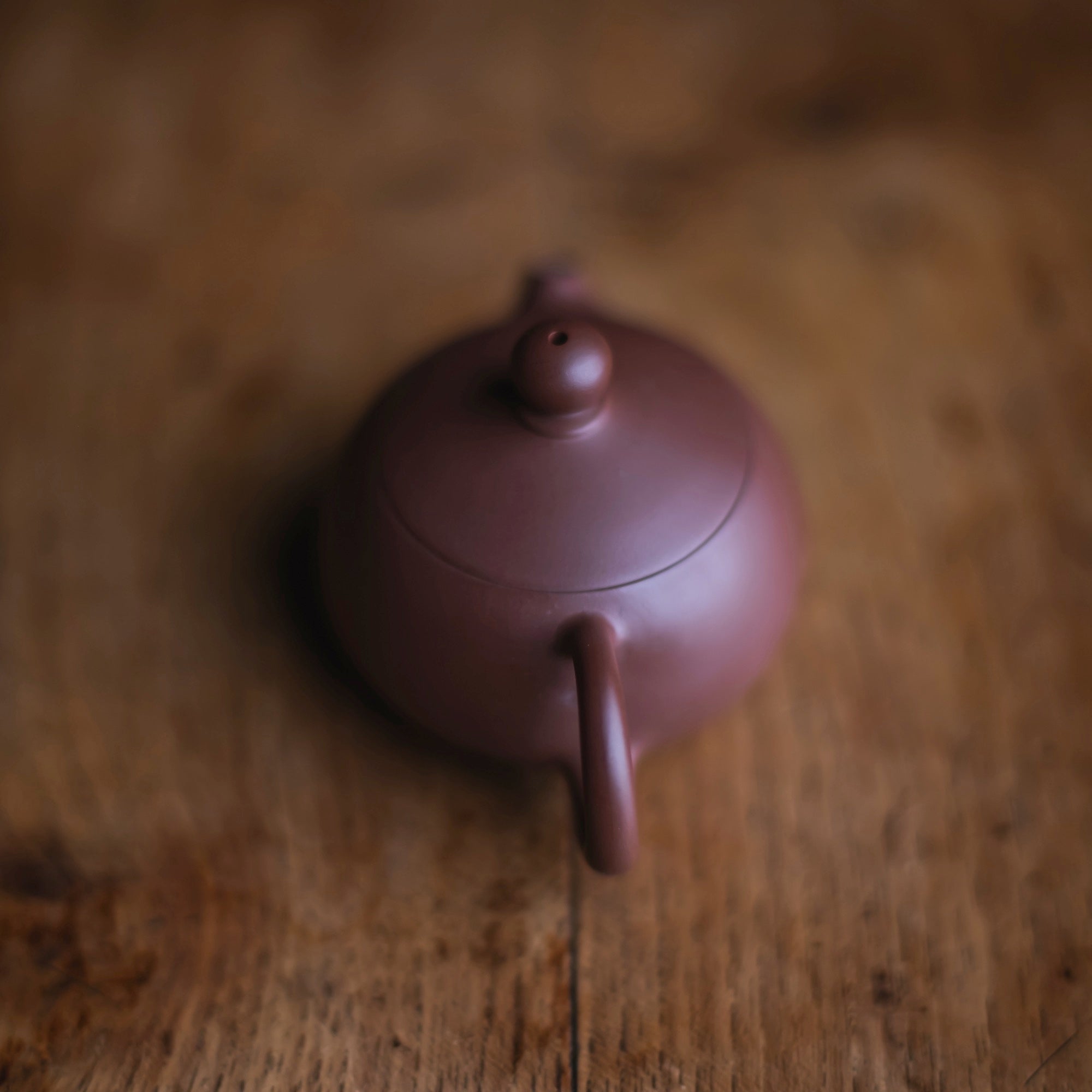
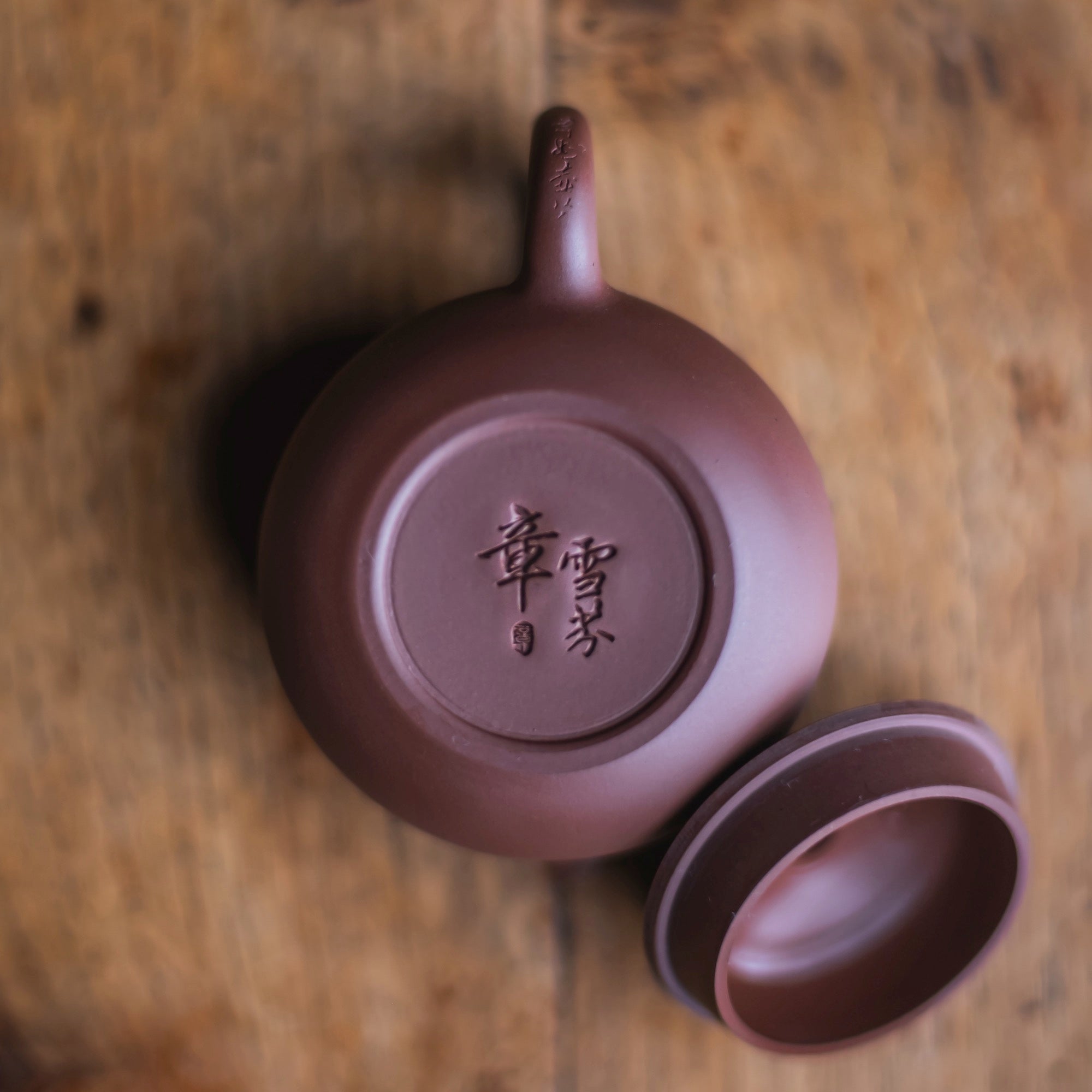
Zhang Xuefen, a master craftswoman in the Chaozhou Arts and Crafts Association, has been hand-throwing teapots for over 30 years. Her work balances ultra-precise lid fit and form with refined aesthetics, particularly in her signature “thousand lines” 千線 series. As one of the few established female teapot artists in Chaozhou, her pieces are a quiet celebration of craftsmanship and resilience.
On a spring day in 2019, I stumbled upon Zhang Xuefen’s studio in a quiet Chaozhou market after wandering past rows of mass-produced wares. I was instantly struck by the flawless craftsmanship of her pots—many of which could be lifted and spun in the air from the lid alone.
What makes Zhang’s work so compelling is her commitment to both form and function. Her teapots, especially her 千線 “thousand lines” pieces, display masterful symmetry and surface detail while remaining deeply practical. I admire her prioritization of usability: handles and knobs are sculpted for balance, pours are clean, and clay texture develops beautifully over time.
Her family-exclusive clay—deep purple, naturally sourced, and processed by hand—yields a finish that shines in a range of red-brown hues depending on use and light. It's this kind of subtle transformation that makes her pots live with you.
“A good teapot should not just be admired, it should be used—daily, and with joy. My work is inspired by traditional forms, yet shaped by personal stories, hands, and memory.”
Zhang uses a rare, dark purple Chaozhou clay mined by her brother and unavailable commercially. The raw ore is ground, sieved, and aged through traditional methods. Fired at a secret temperature, it develops microporosity—perfect for teas that reward depth and aftertaste. This clay is often misidentified as ZhuNi due to its color but remains distinct from the more vitrified Yixing version.
Zhang Xuefen’s teapots pair beautifully with roasted oolongs (Dancong, Wuyi Yancha, Taiwanese), aged Sheng Pu’er, Hong Cha, and other flavor-rich teas. Each teapot becomes more refined with use—its surface developing patina and its pour becoming smoother.
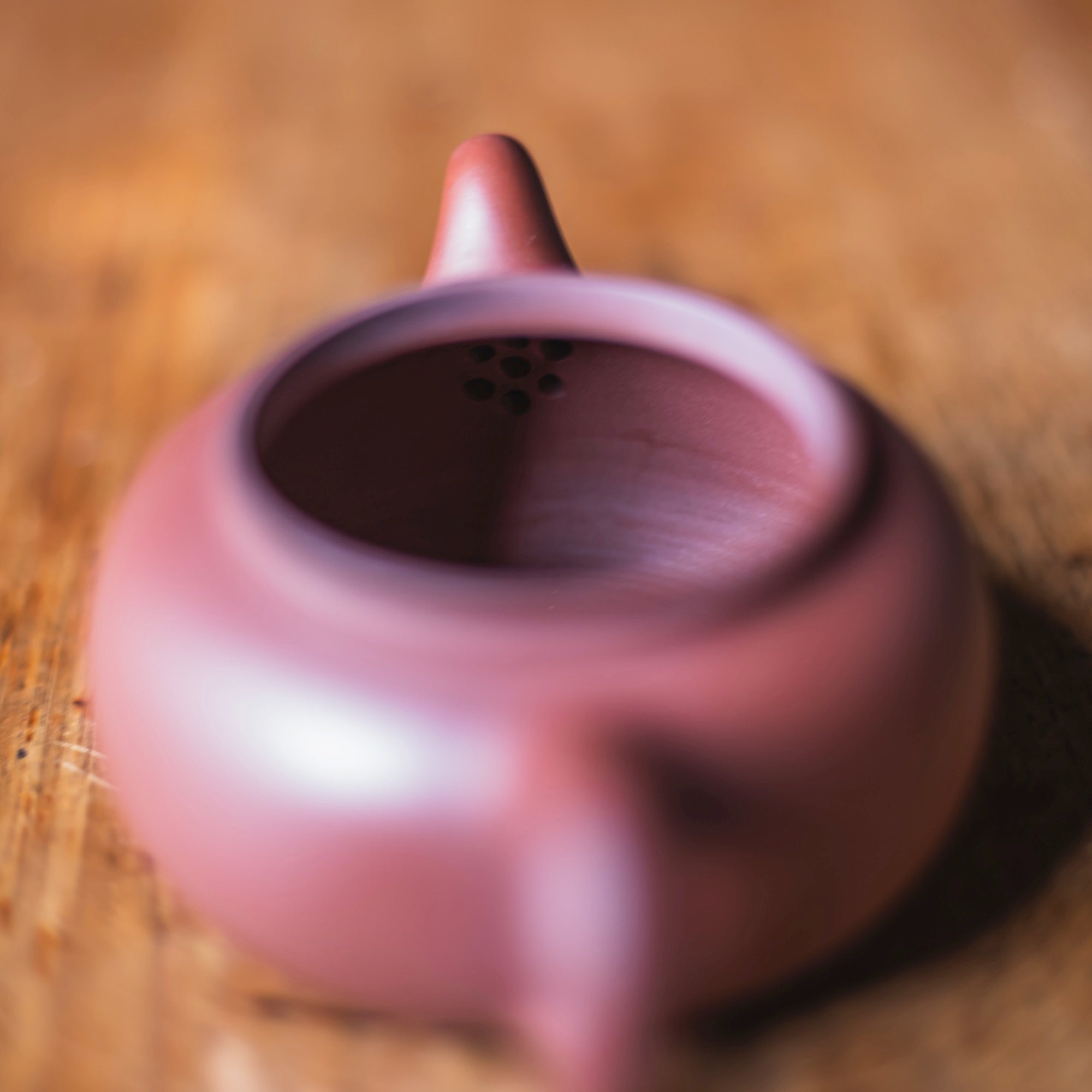
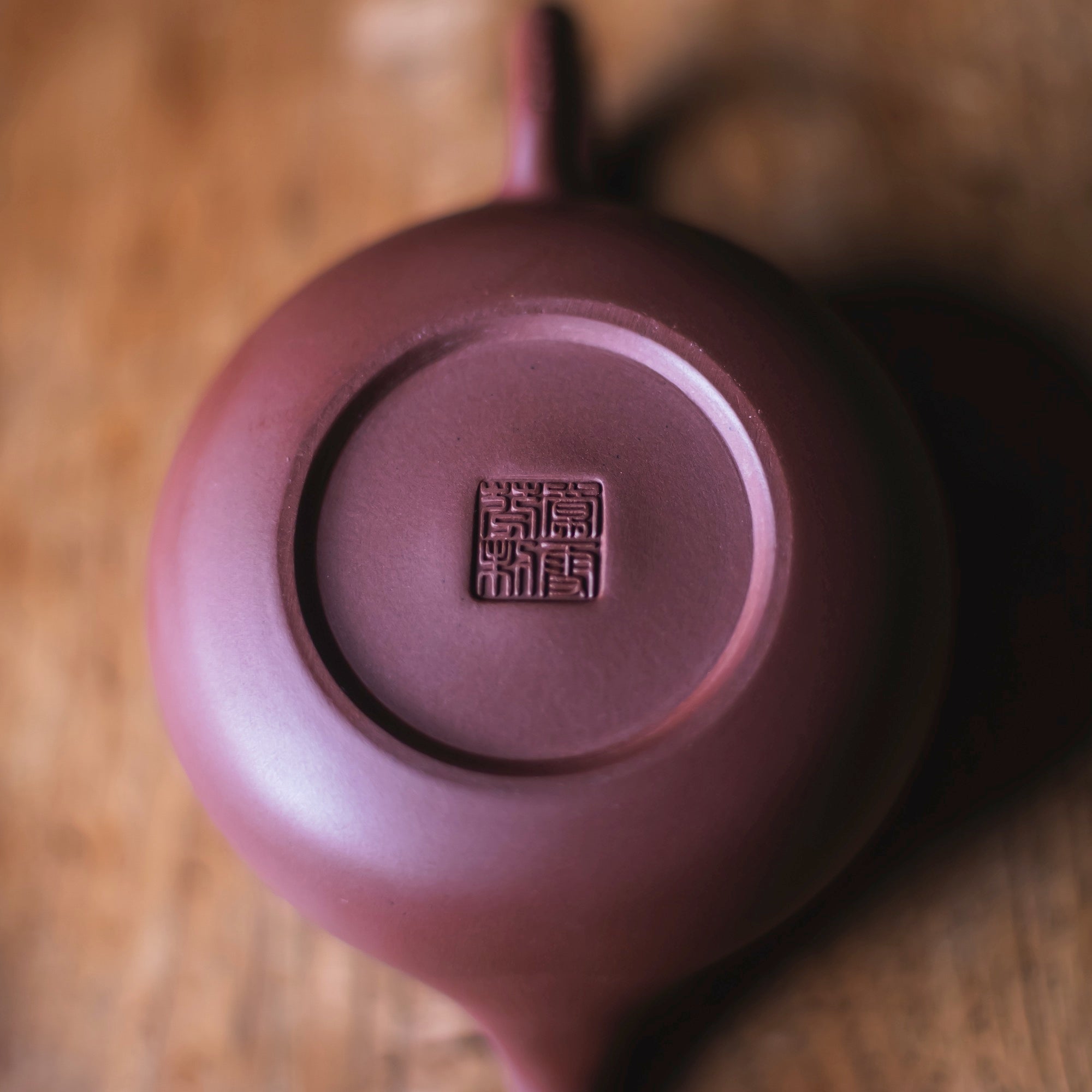
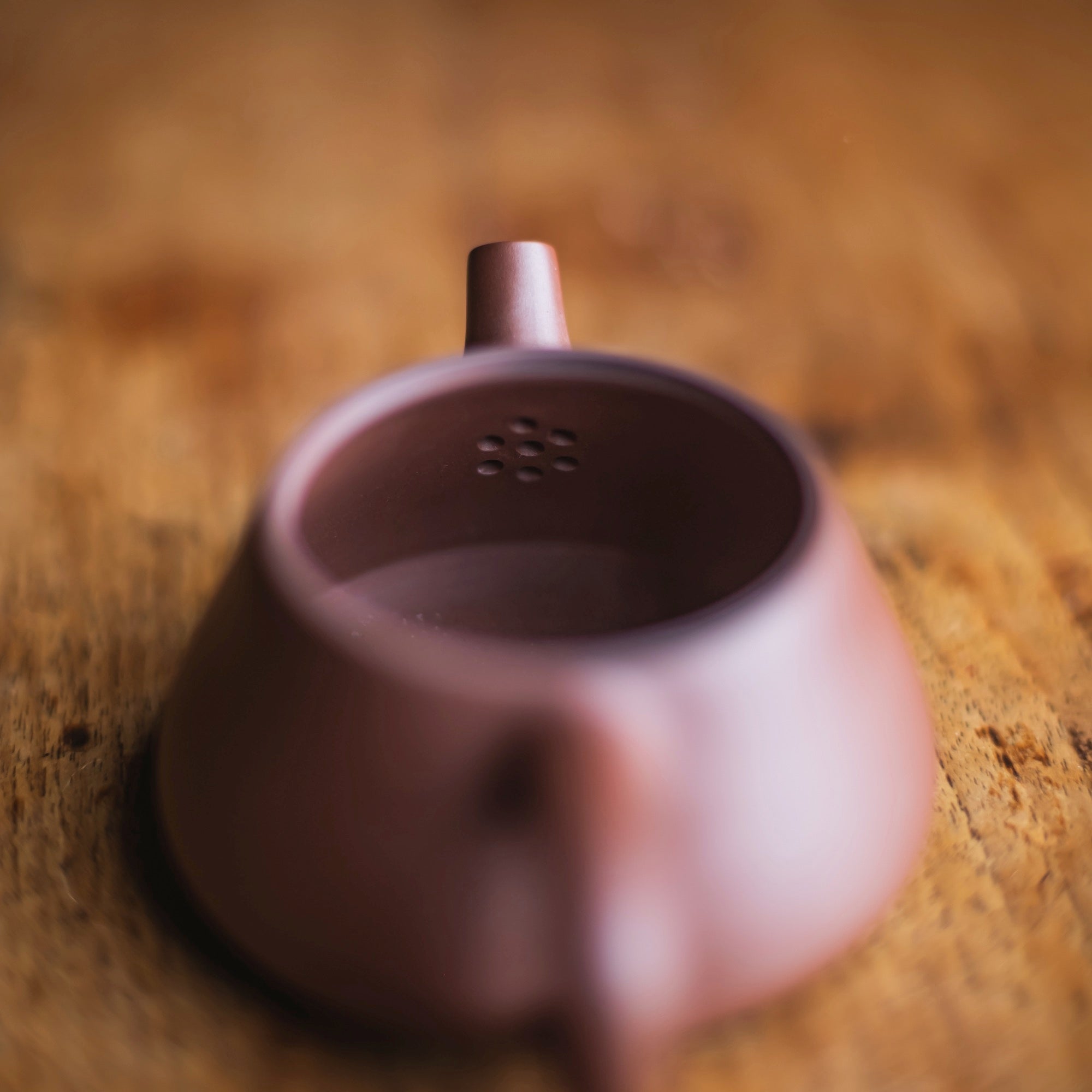
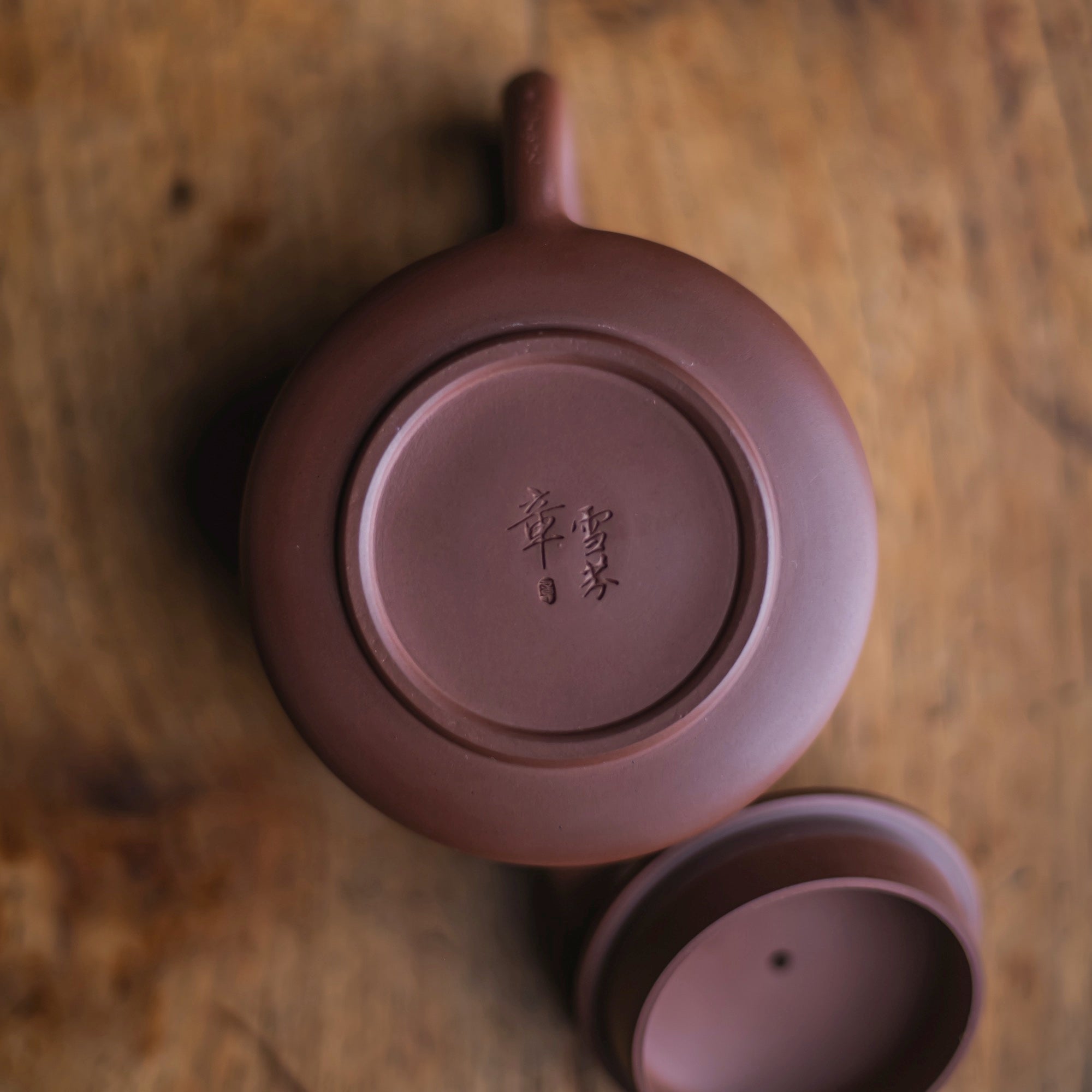
All teapots feature a single-hole filter, are signed, and come in a handcrafted wooden box.
5.0 / 5.0
1 review5.0 / 5.0
1 reviewOur gallery, studio, and tea space are a hub for experiencing and sharing the art of ceramics and tea.
Similar to the concept of “Utsuwa-galleries” in Japan, we are holding monthly exhibitions of unique ceramicists from Japan, China and Europe.
We also regularly host Workshops and Tea Experiences.
Très beau gaiwan, les nuances sont magnifiques et la forme légère , très poétique.
sehr angenehmer Gastgeber, der viele interessante Informationen rund um das Thema Tee vermittelt hat; sehr leckere und hochwertige Tees; die Sitzmöglichkeiten waren leider sehr unbequem und es wäre schön gewesen, wenn noch mehr Kekse etc. angeboten worden wären für die Gruppe

Ich mag diese "Apfelform" sehr. Der Zhuni Ton hat eine leichte organgefärbung, statt wie viele andere Zhunis welche in tieferem Rot sind. Der Deckel wackelt überhaupt nicht und passt wie angegossen - was für halb-handgefertigte Kannen nicht verständlich ist. Ich nutze sie für grünere Oolongs und traditionelle Dong Dings.
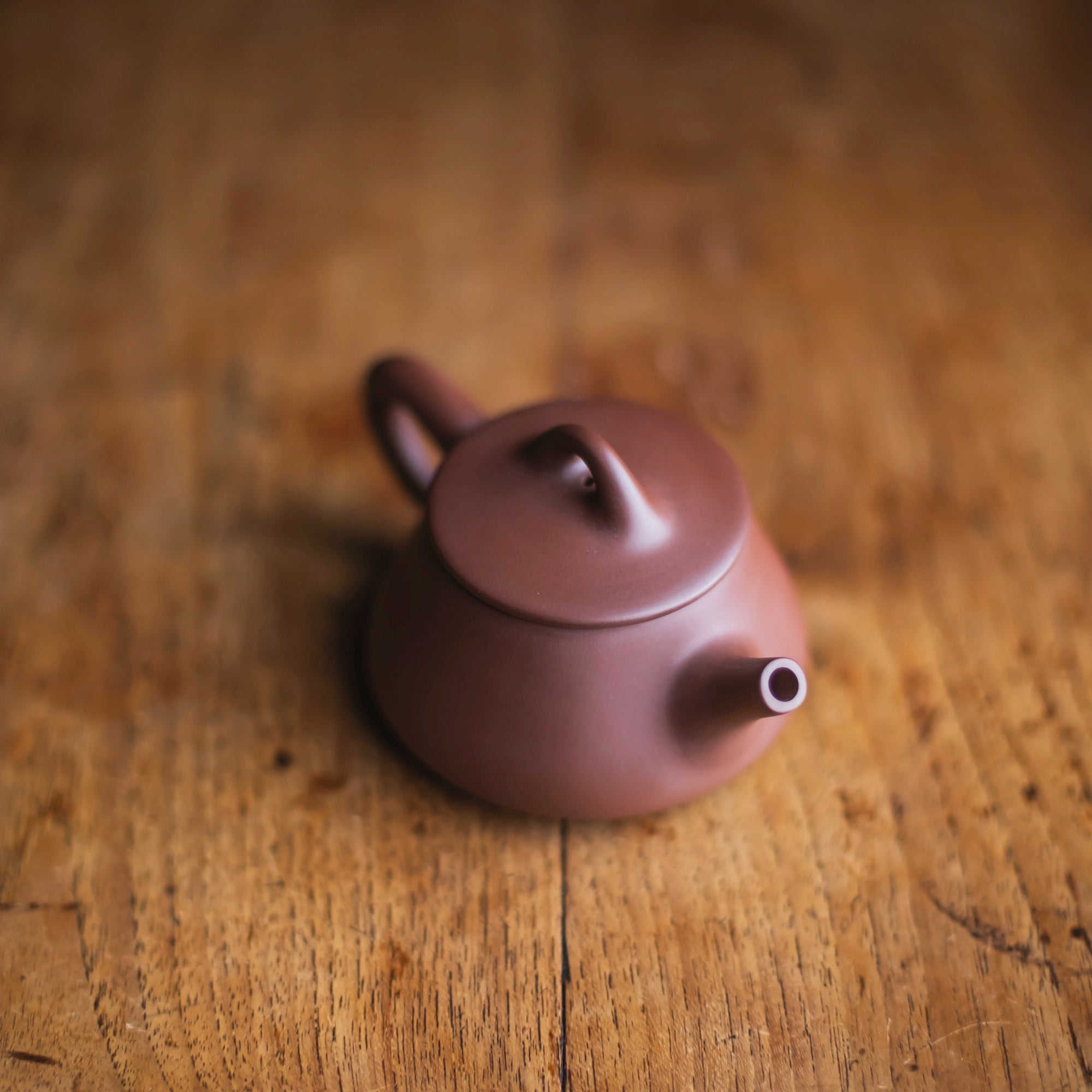
Les céramiques de Takuya ont une couleur verte unique
Très longues infusions, c'est un bonheur. Je fais tourner l'infusion sur 2 jours. Je vous recommande cette pépite trouvé par Marcel.