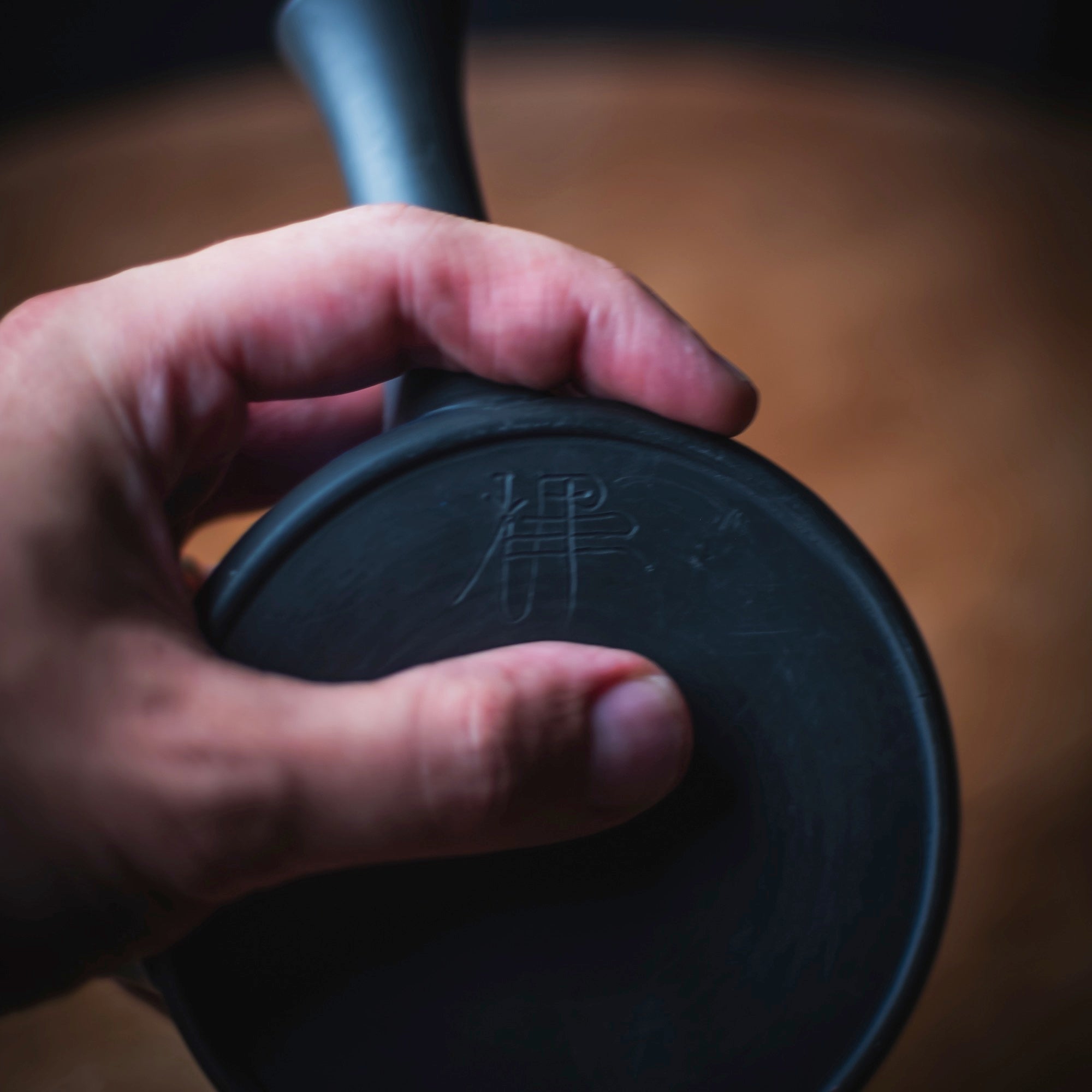
Teruyuki Isobe
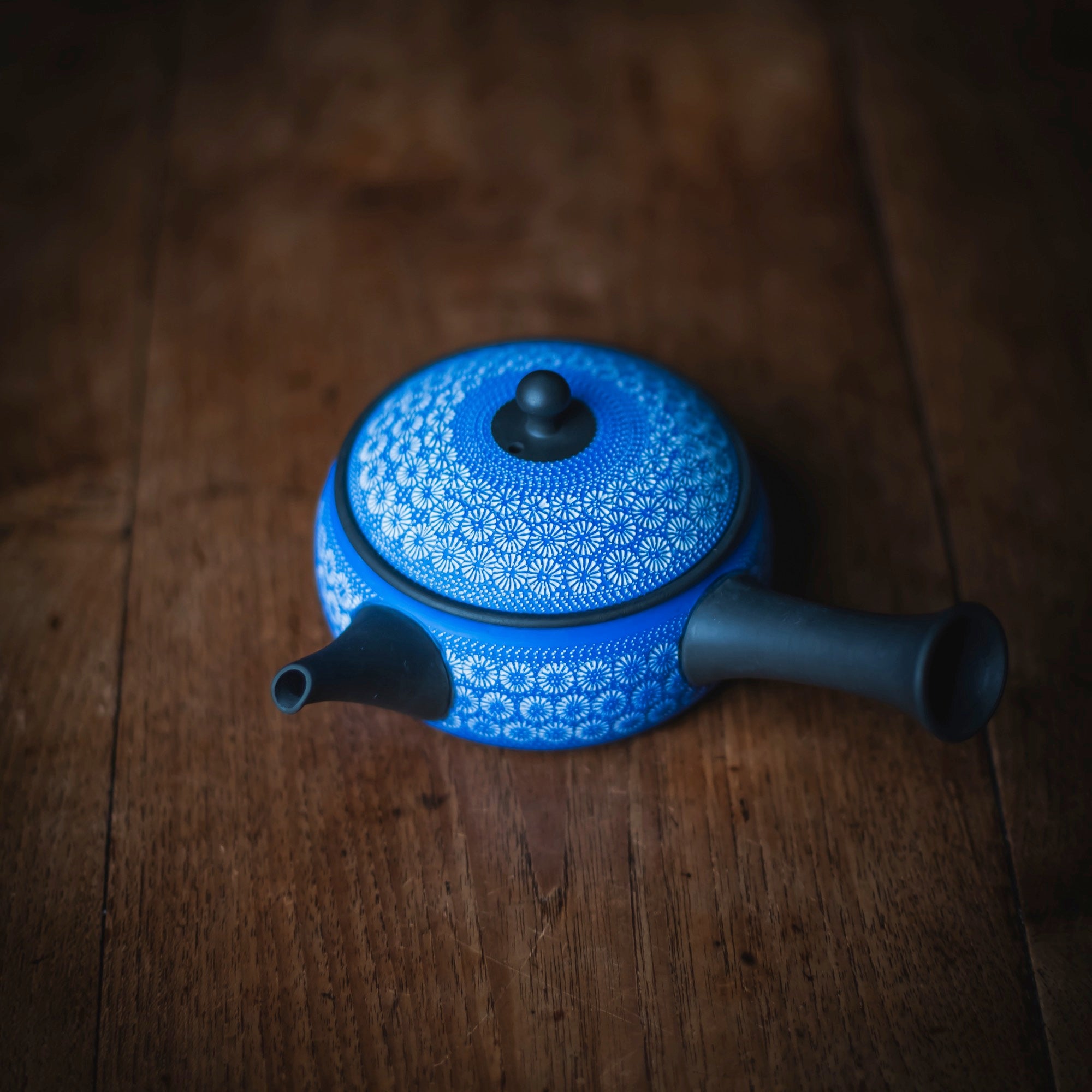
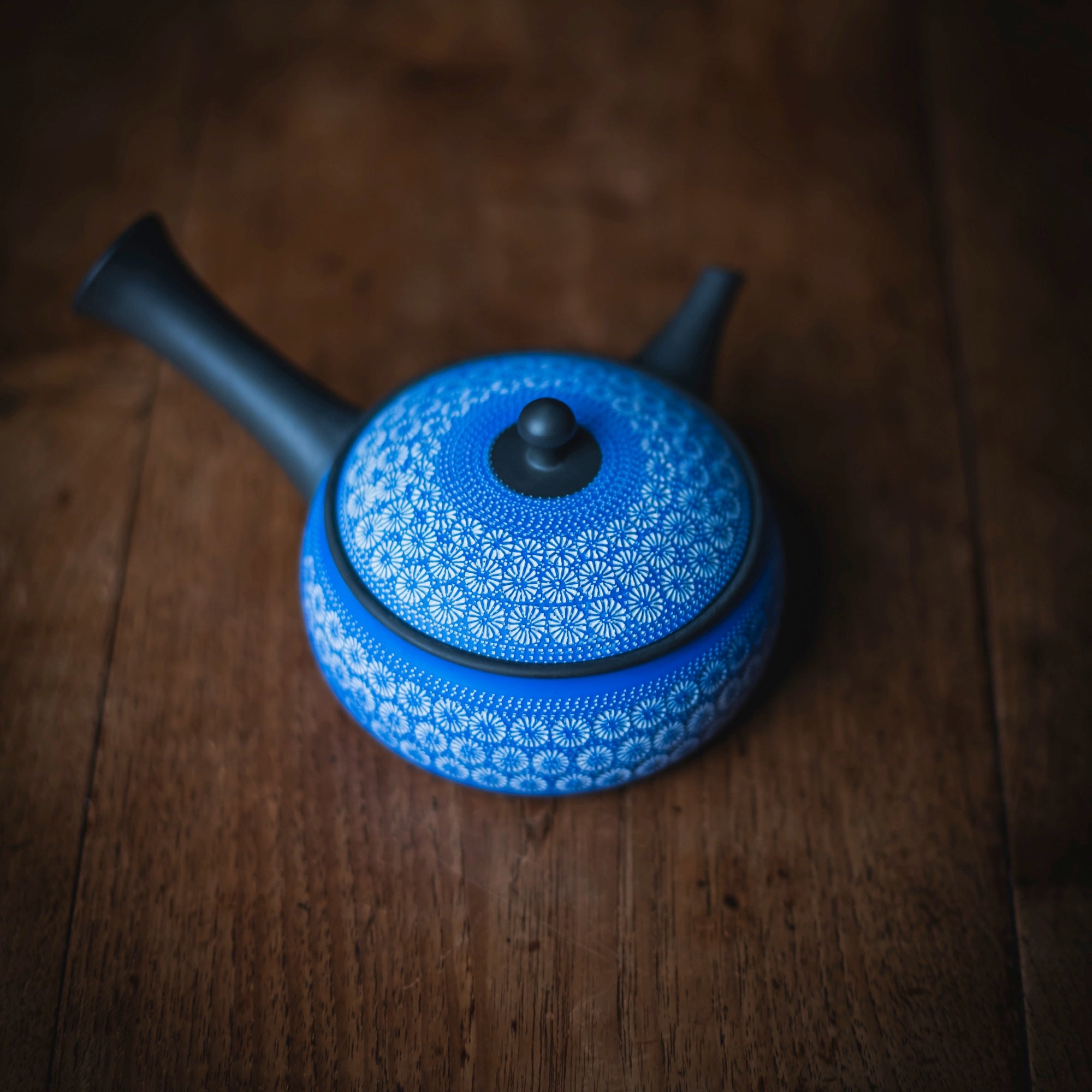
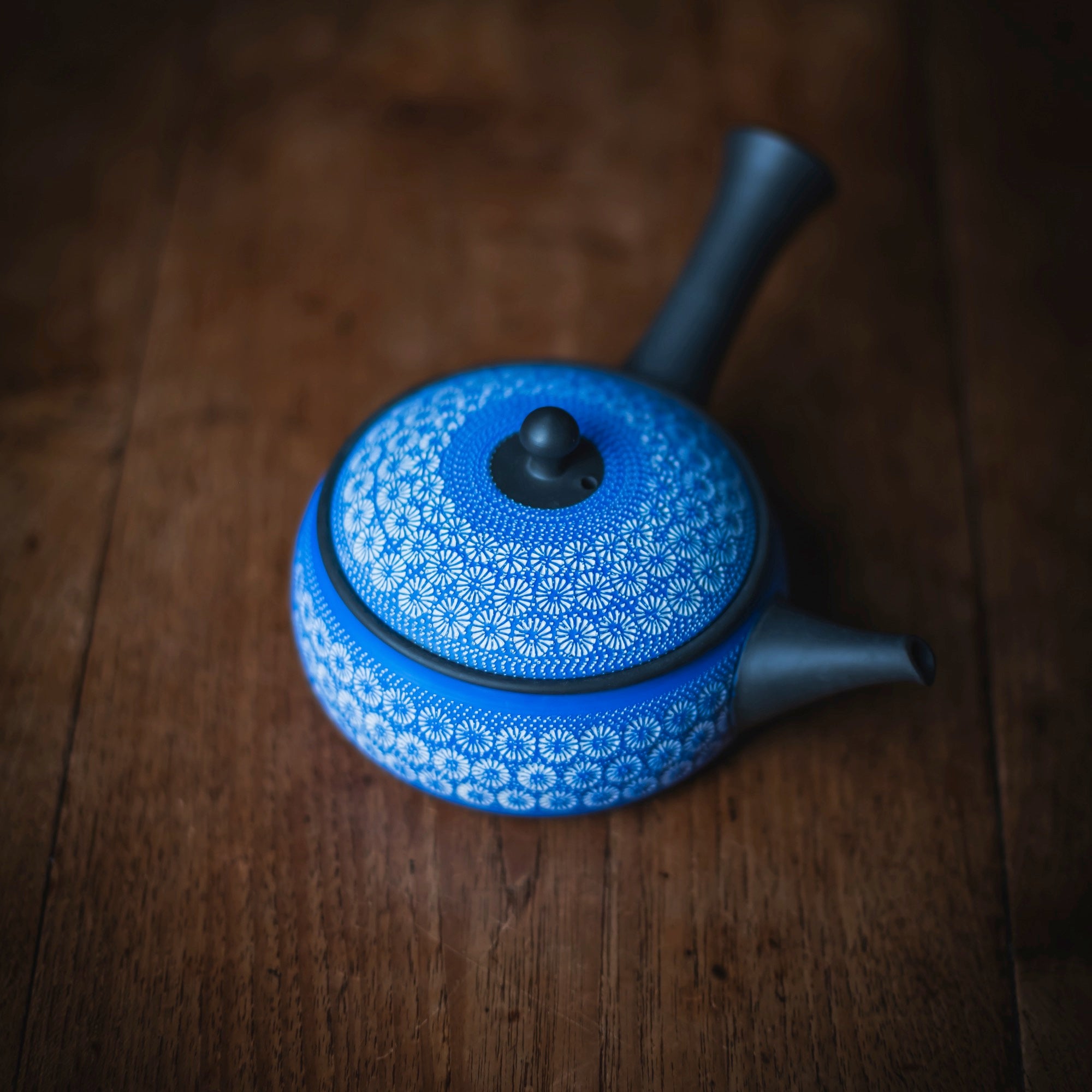
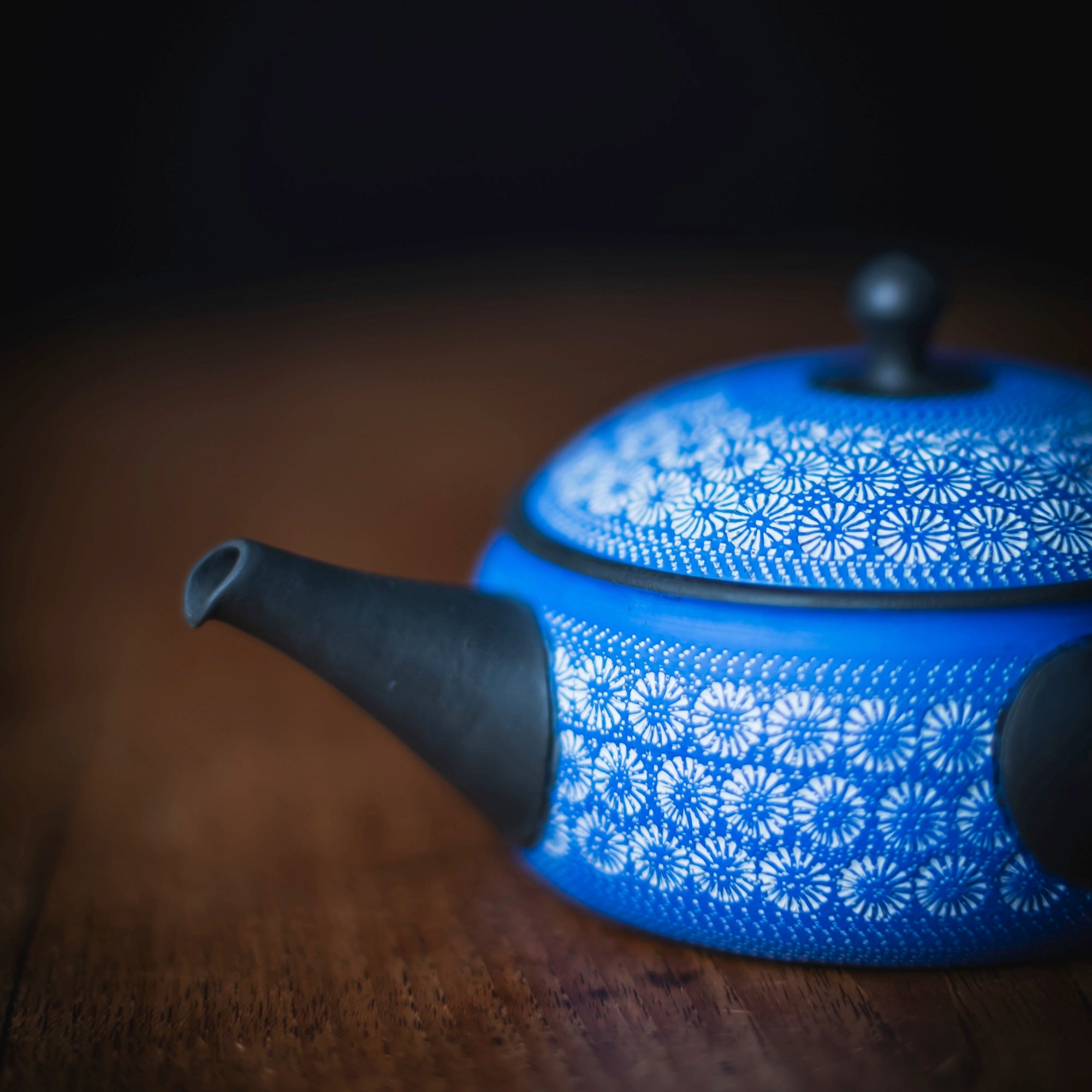
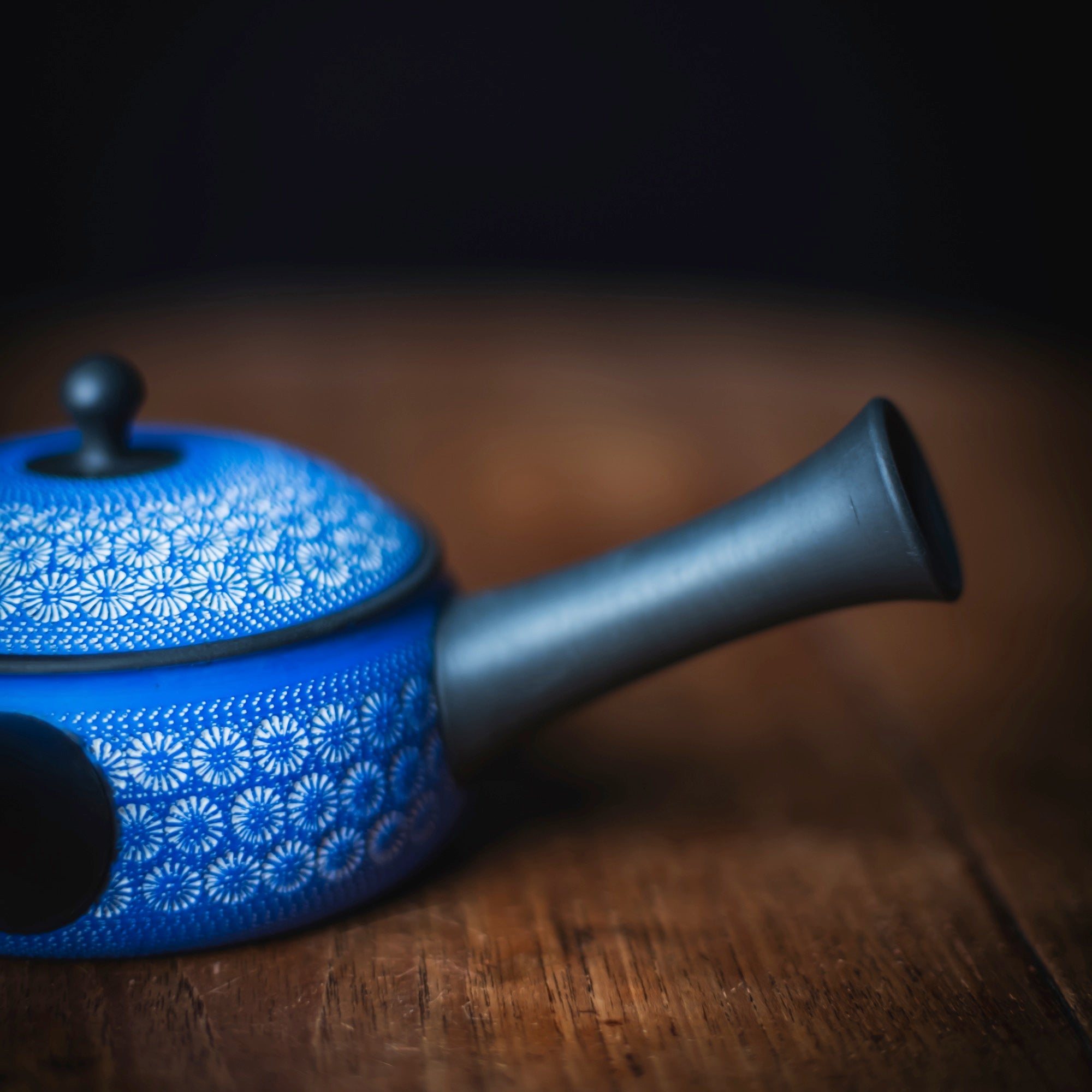
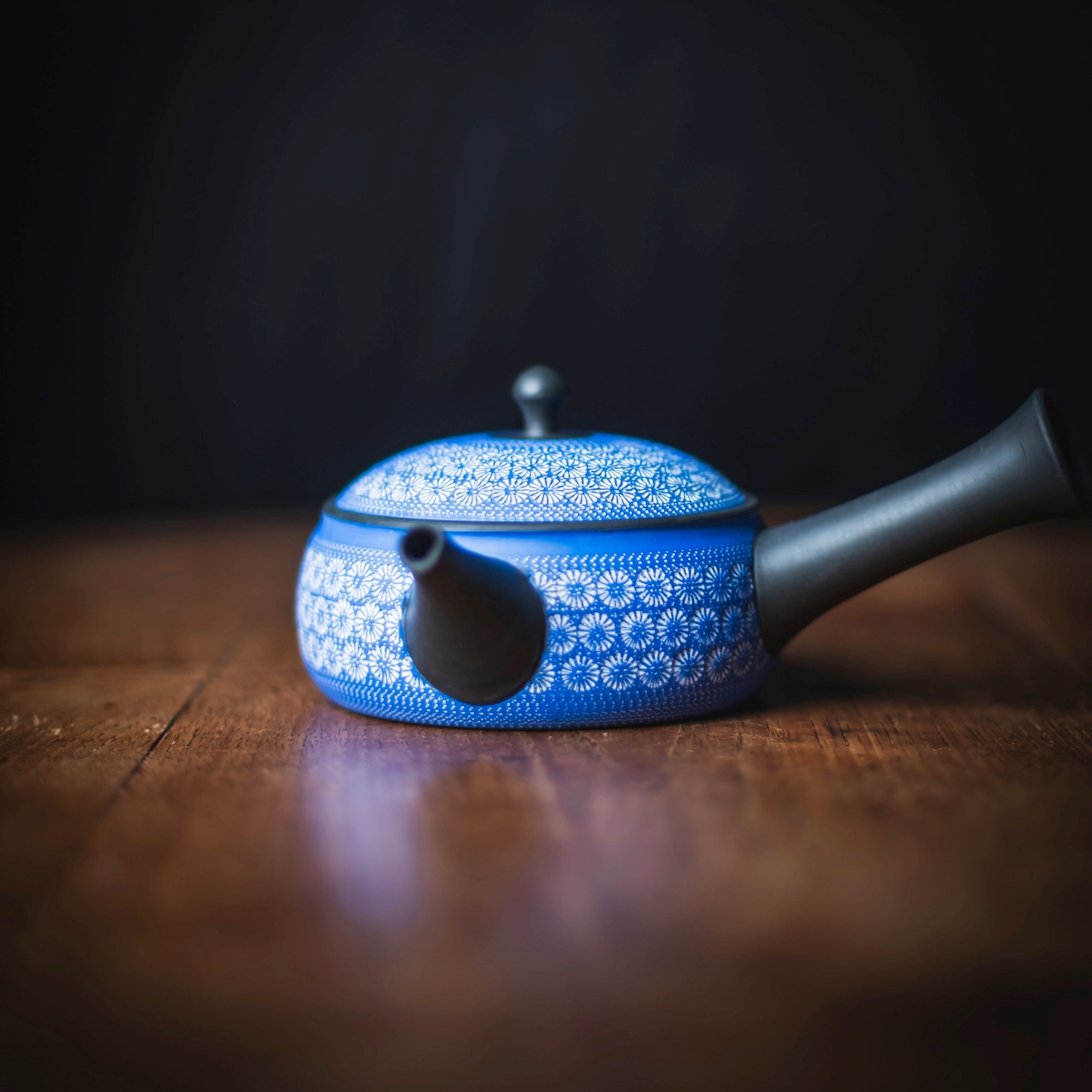
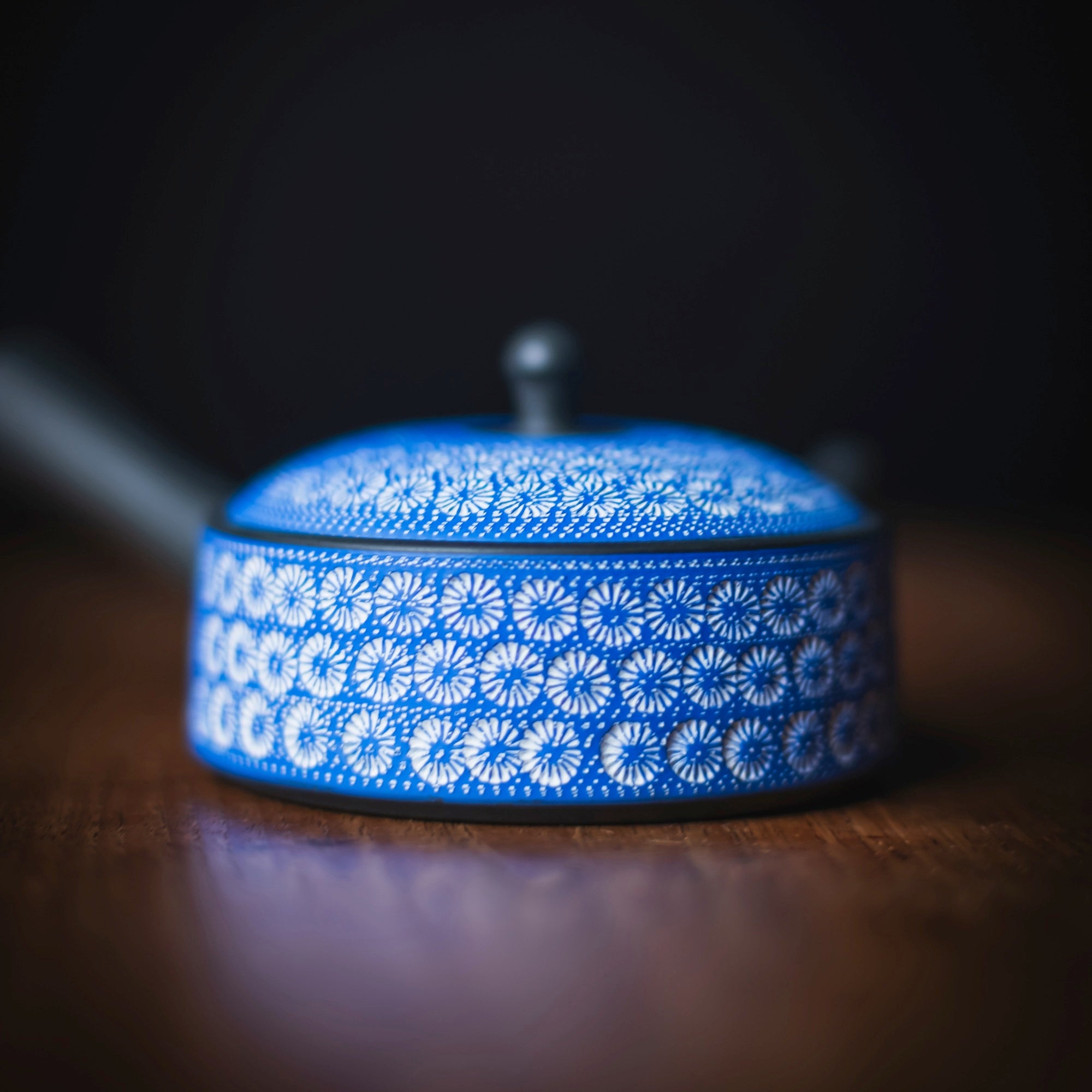
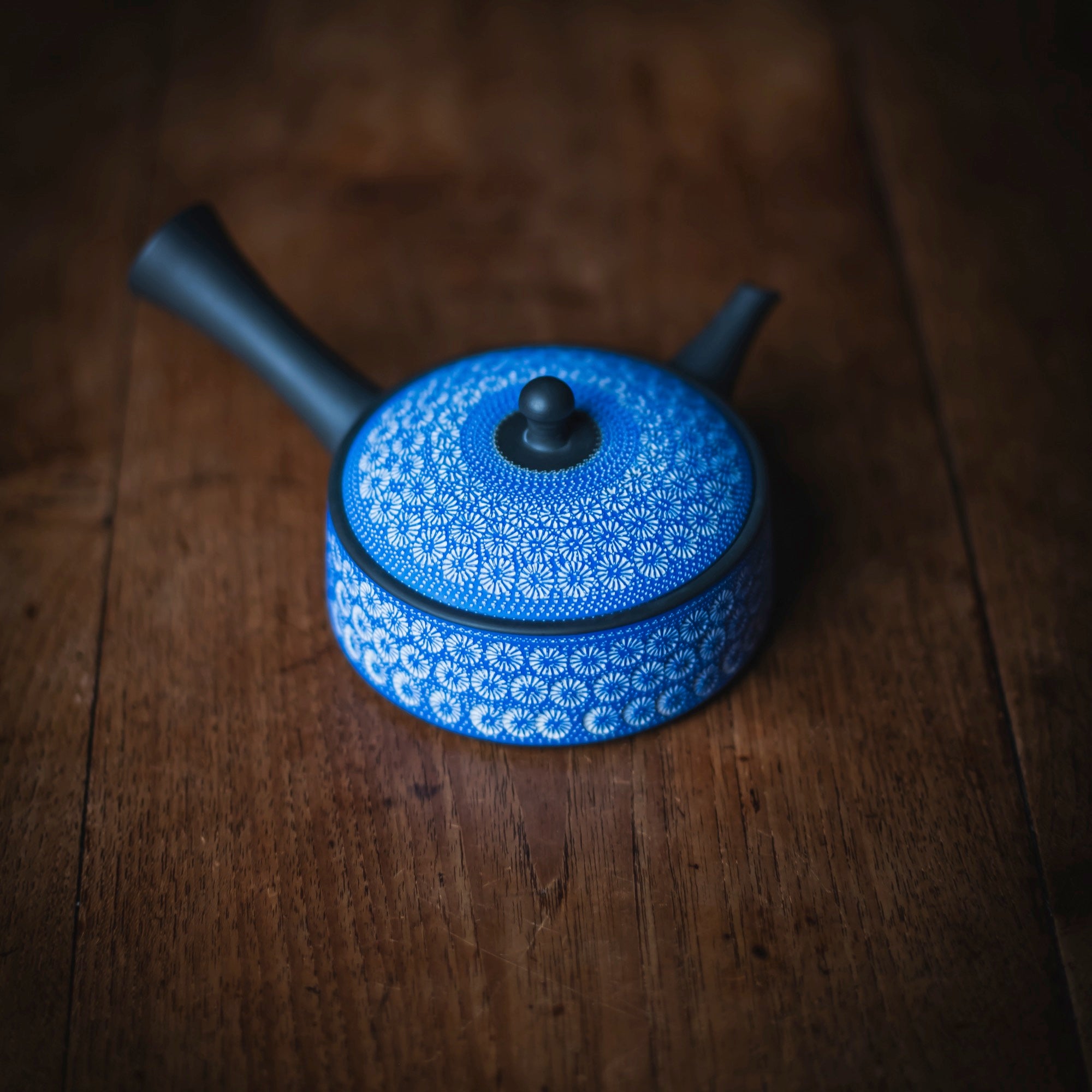
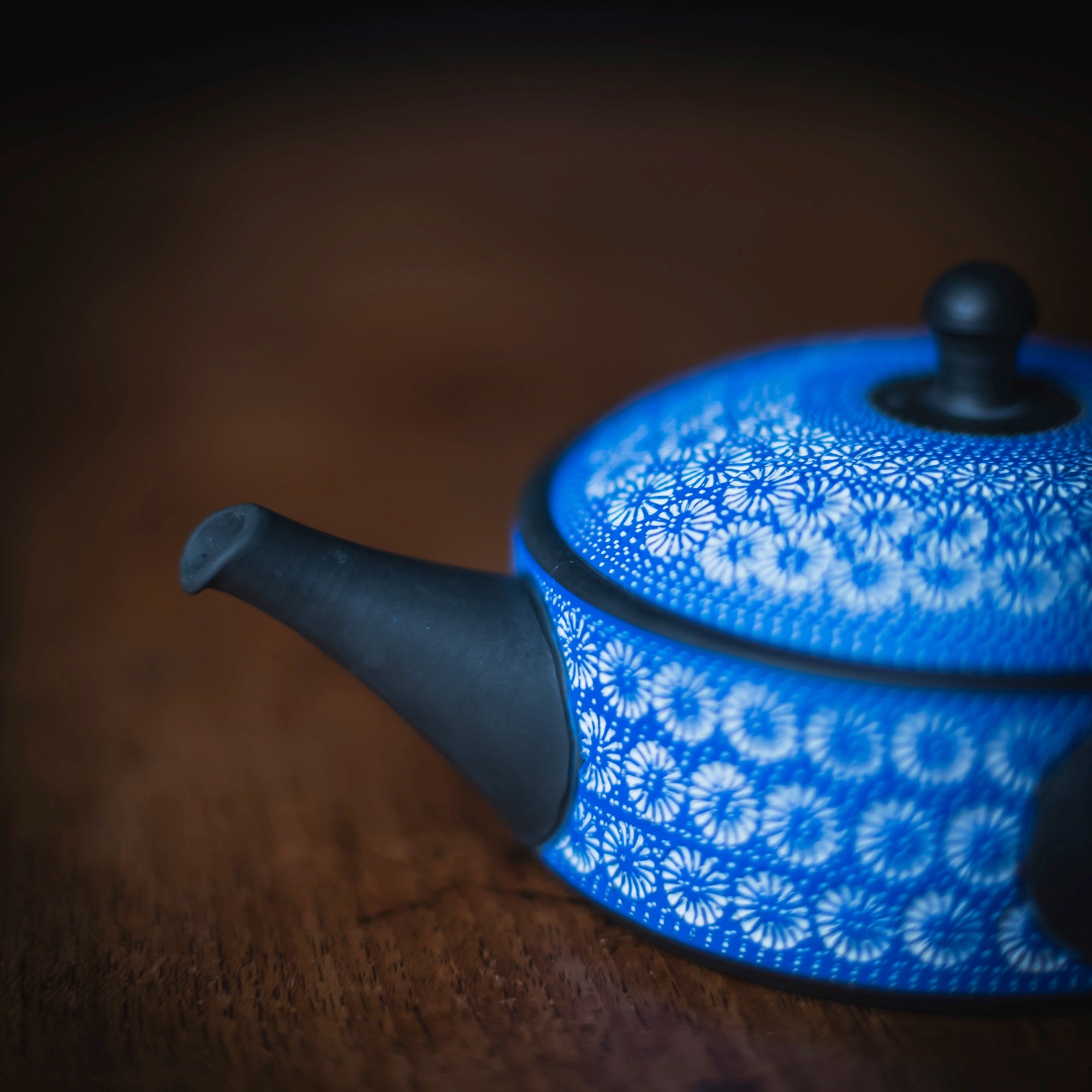
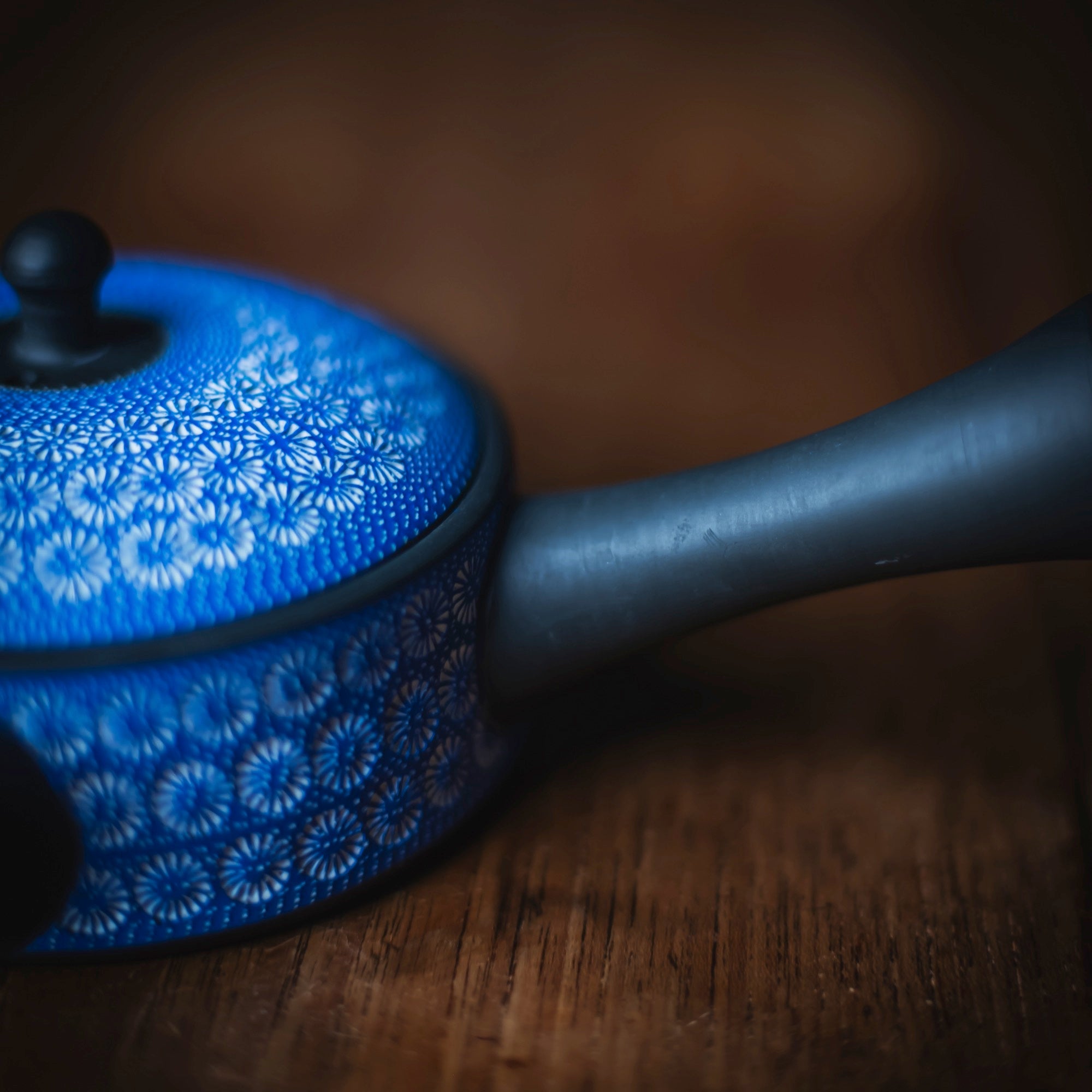
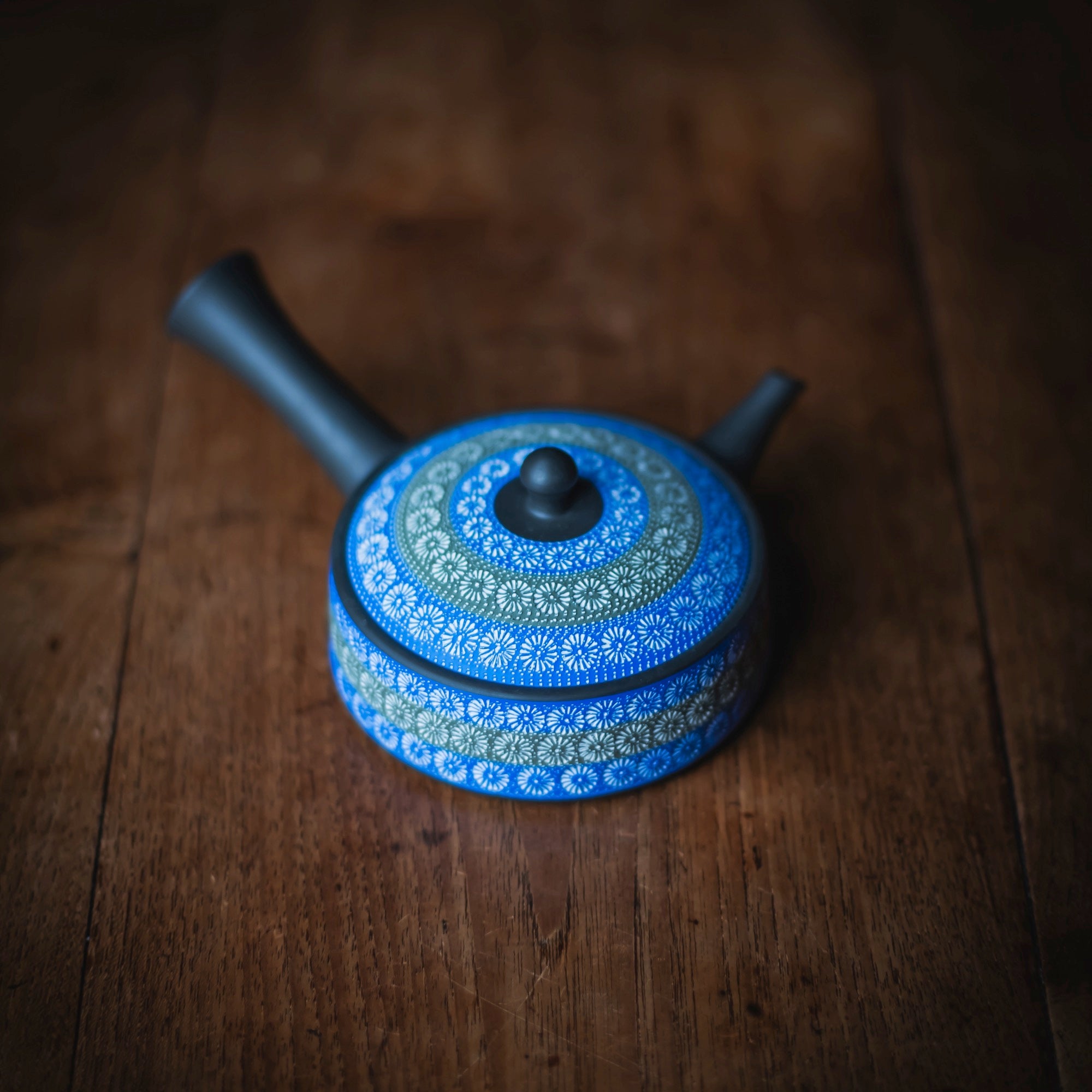
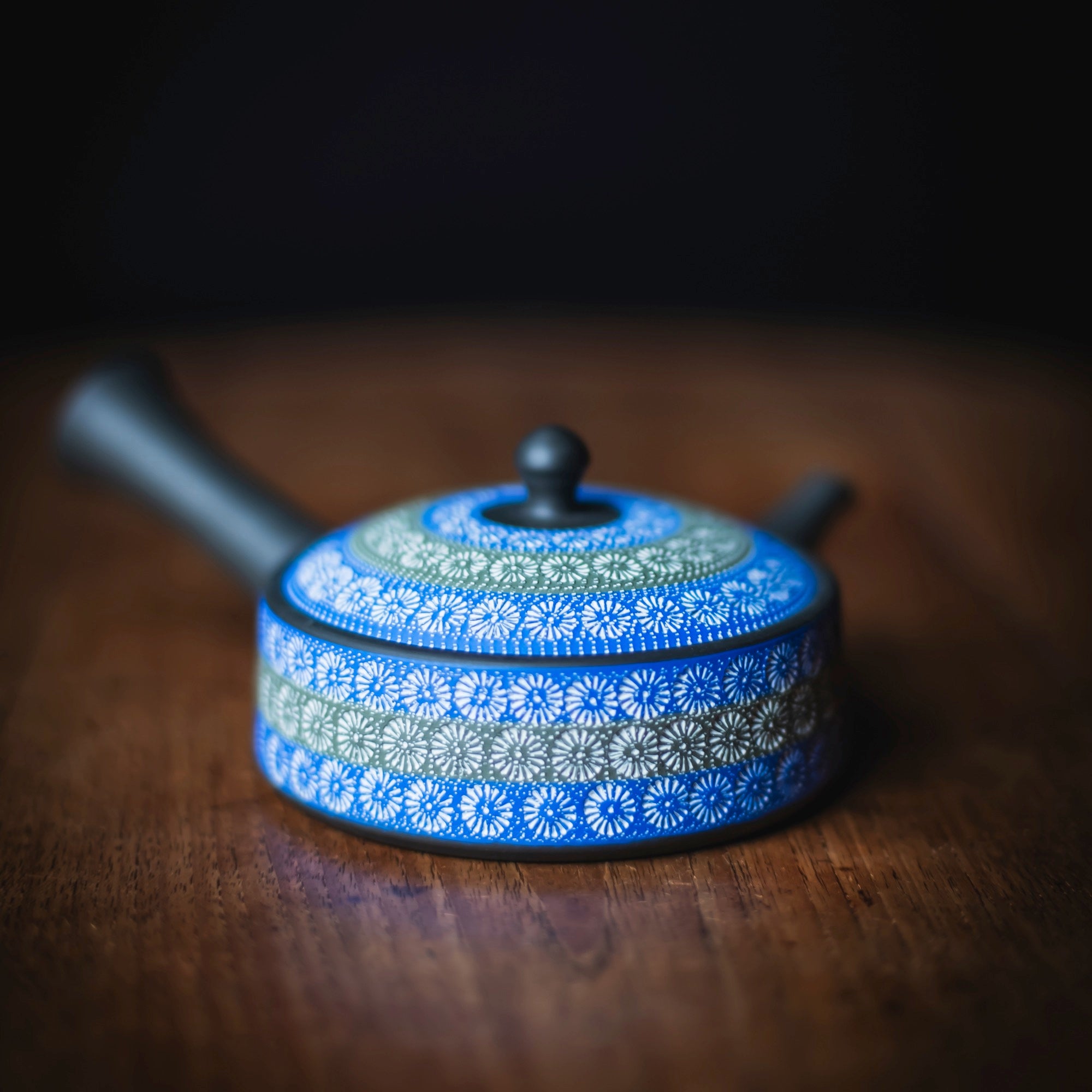
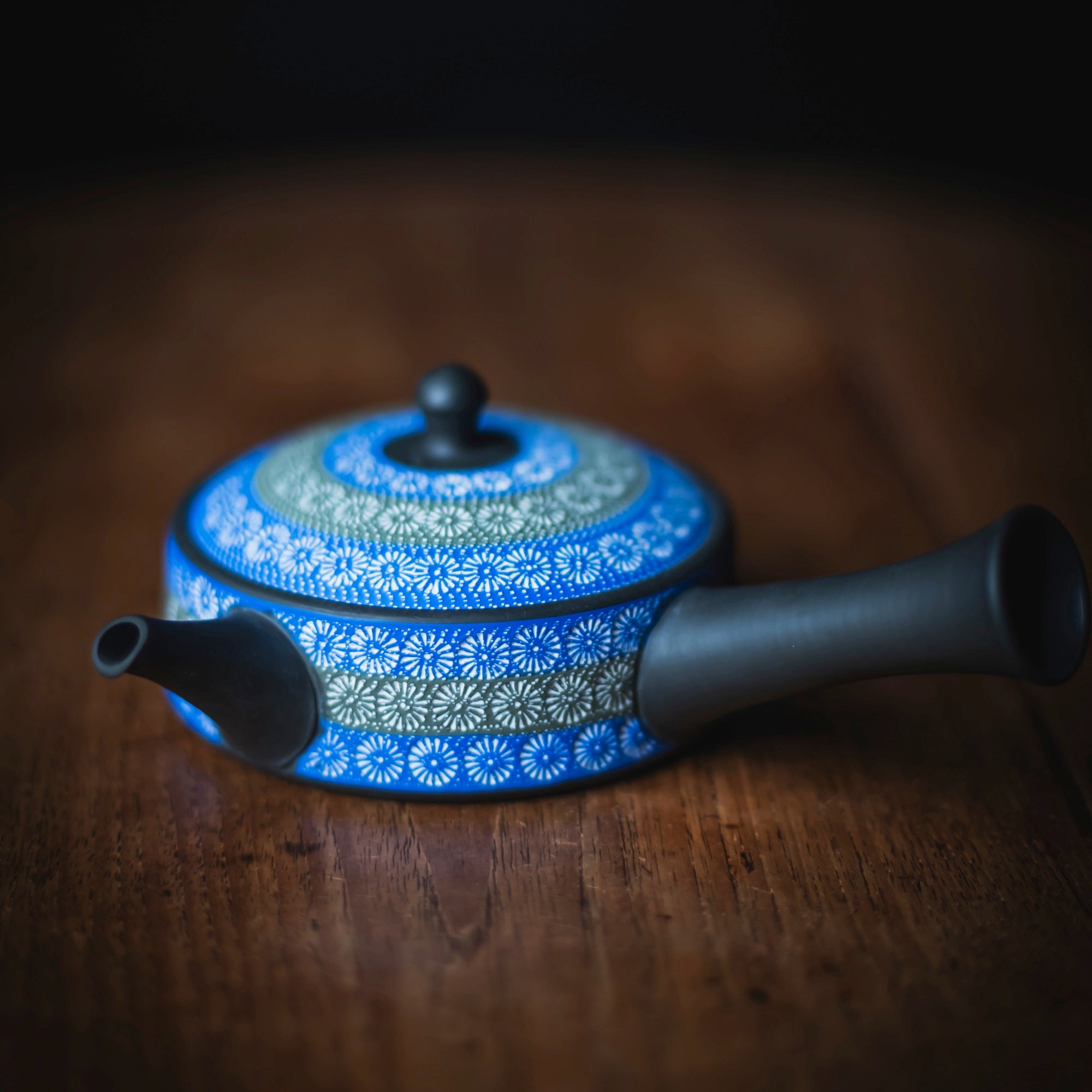
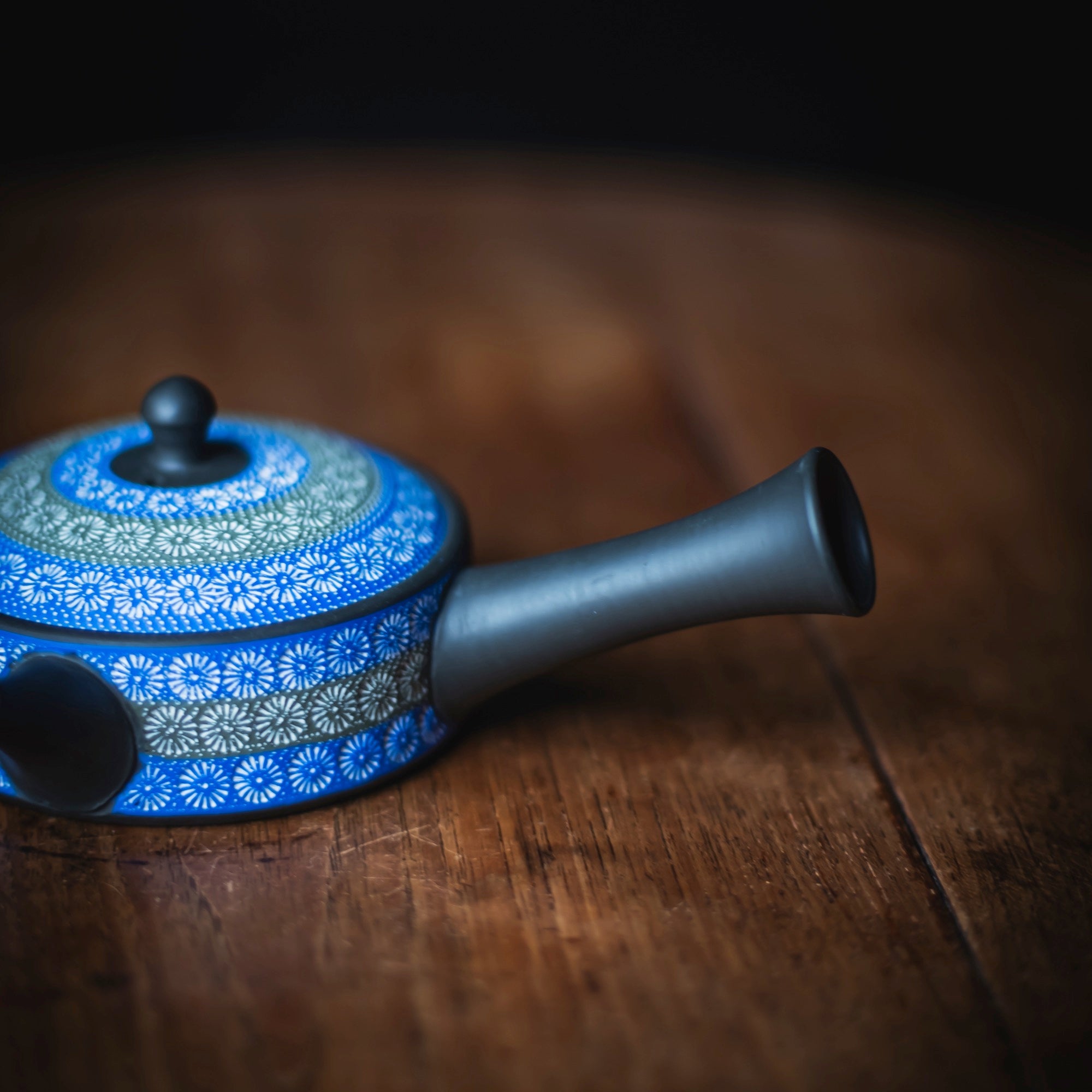
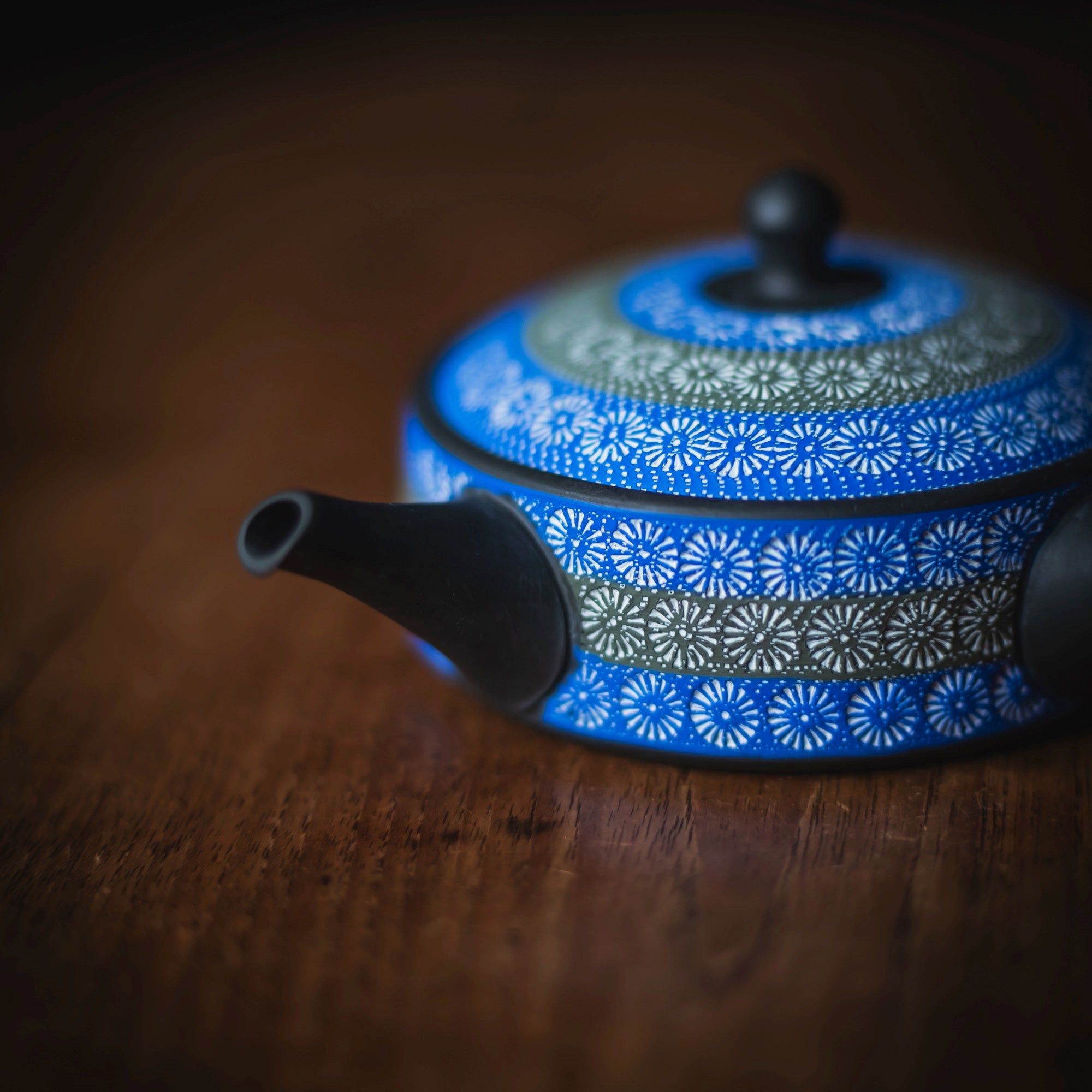
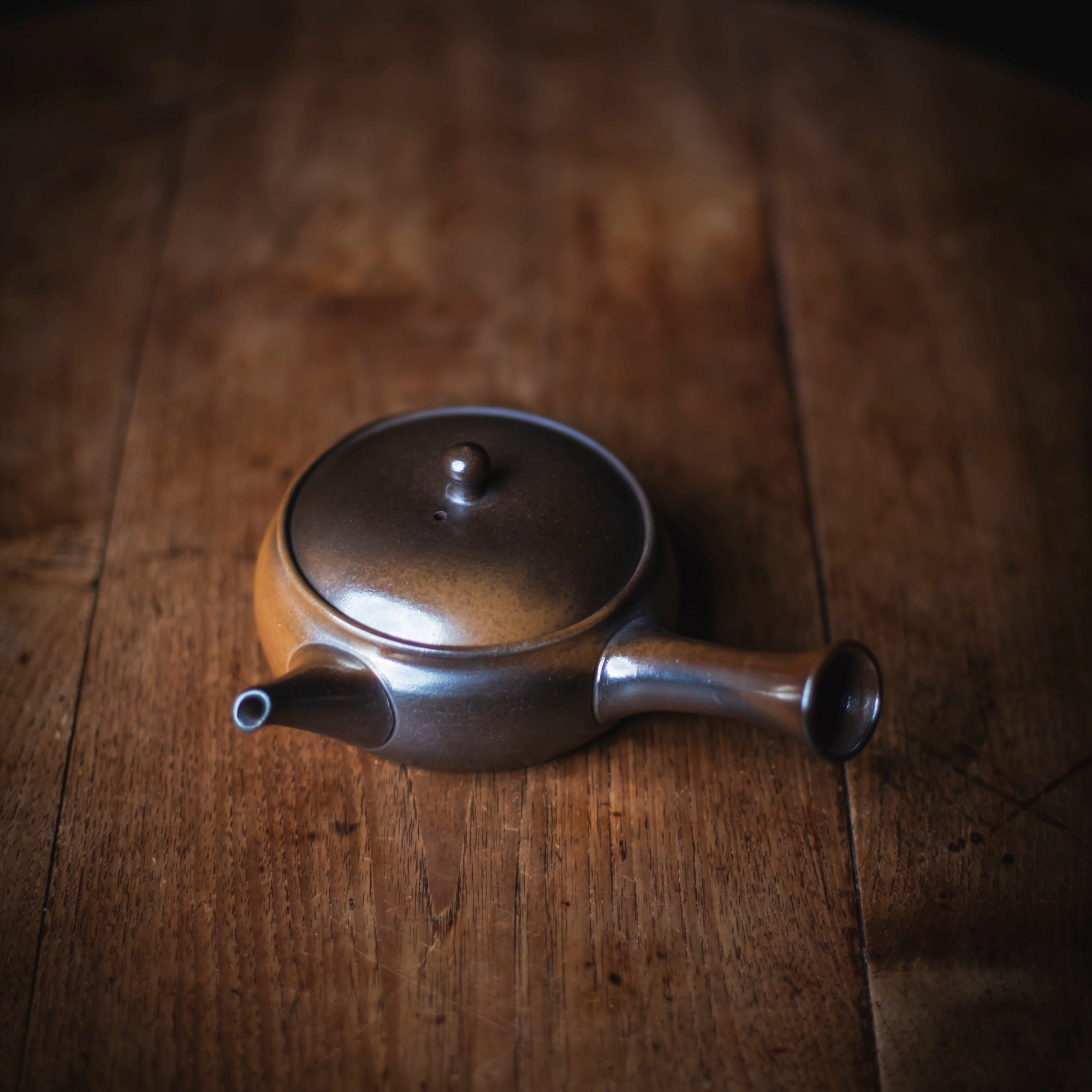
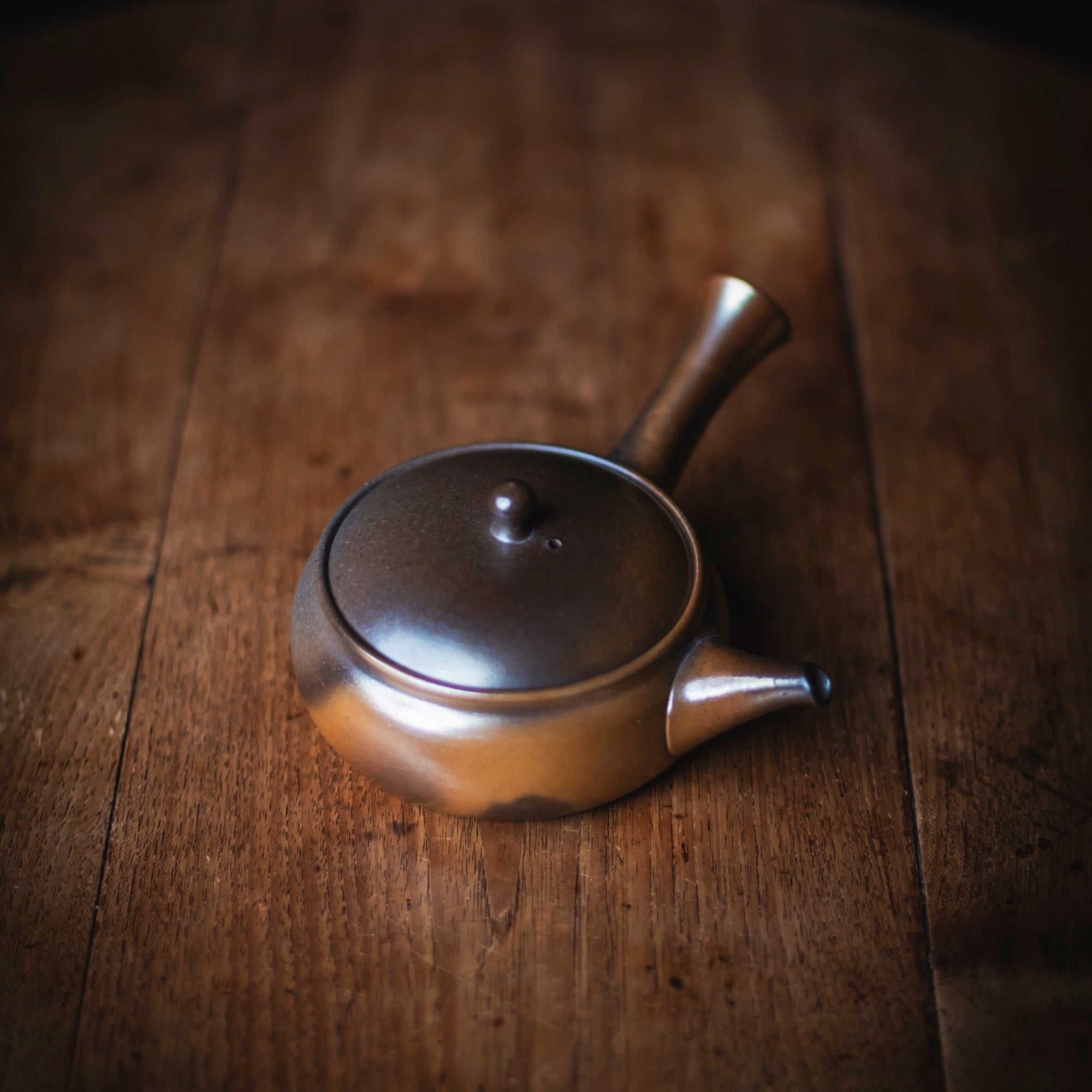
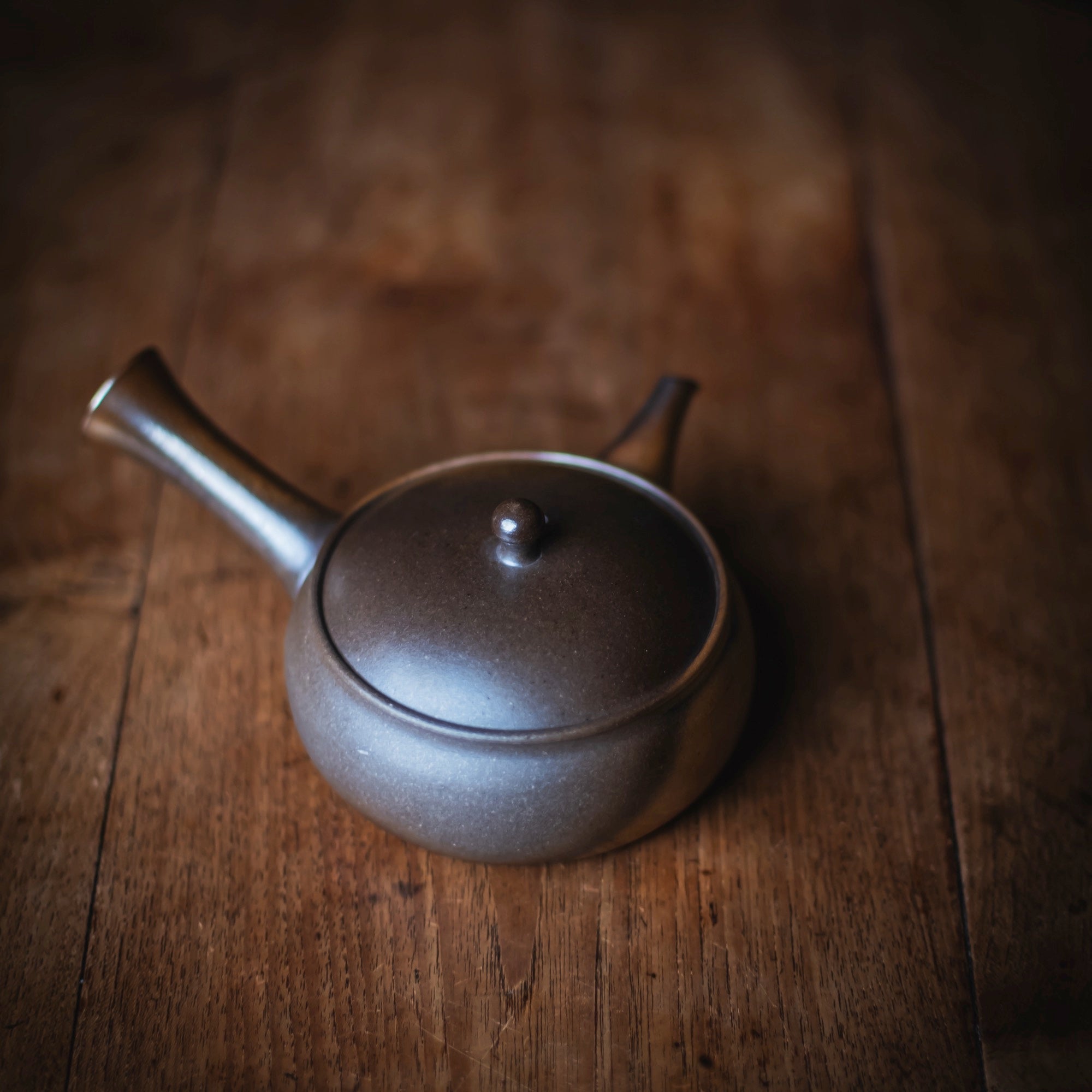
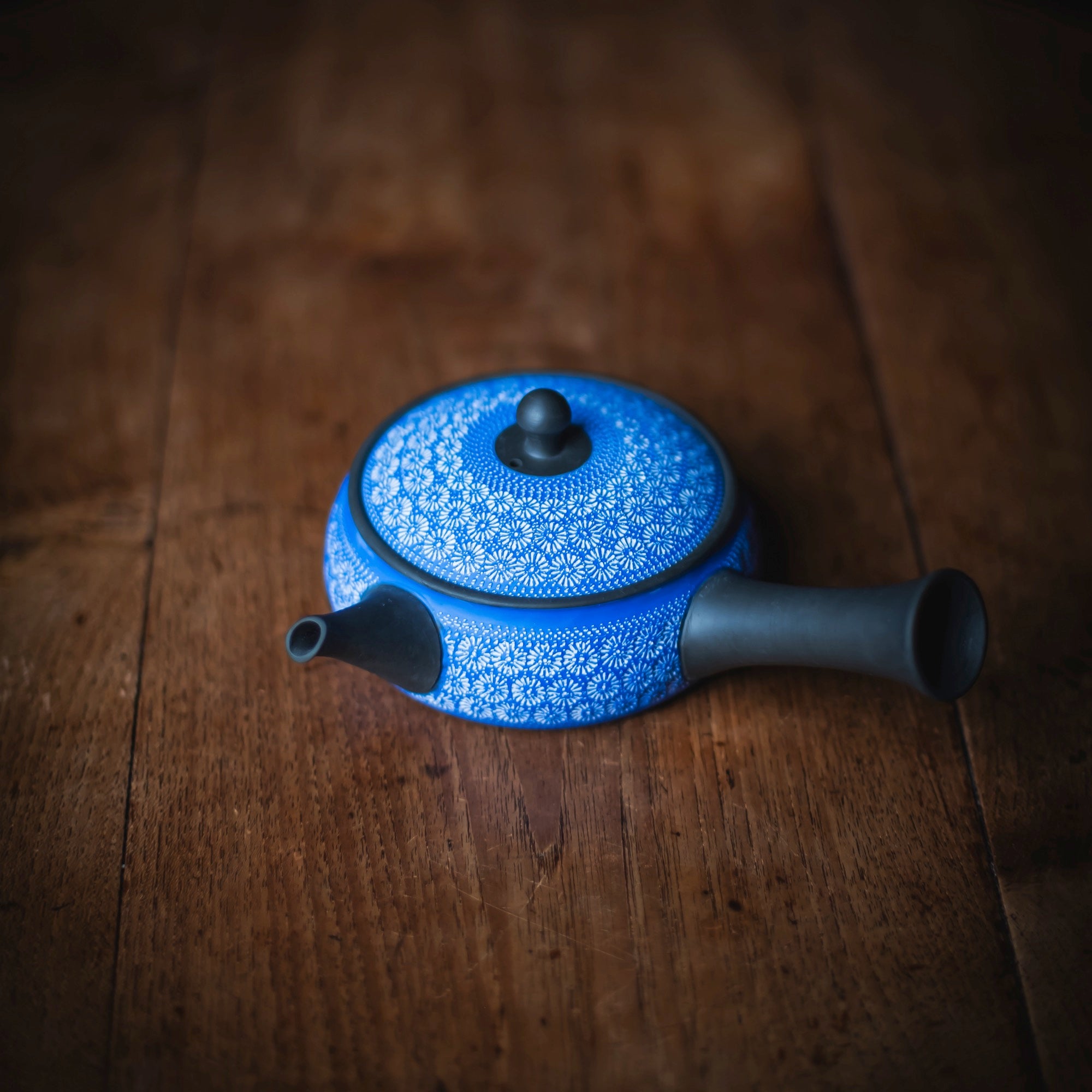
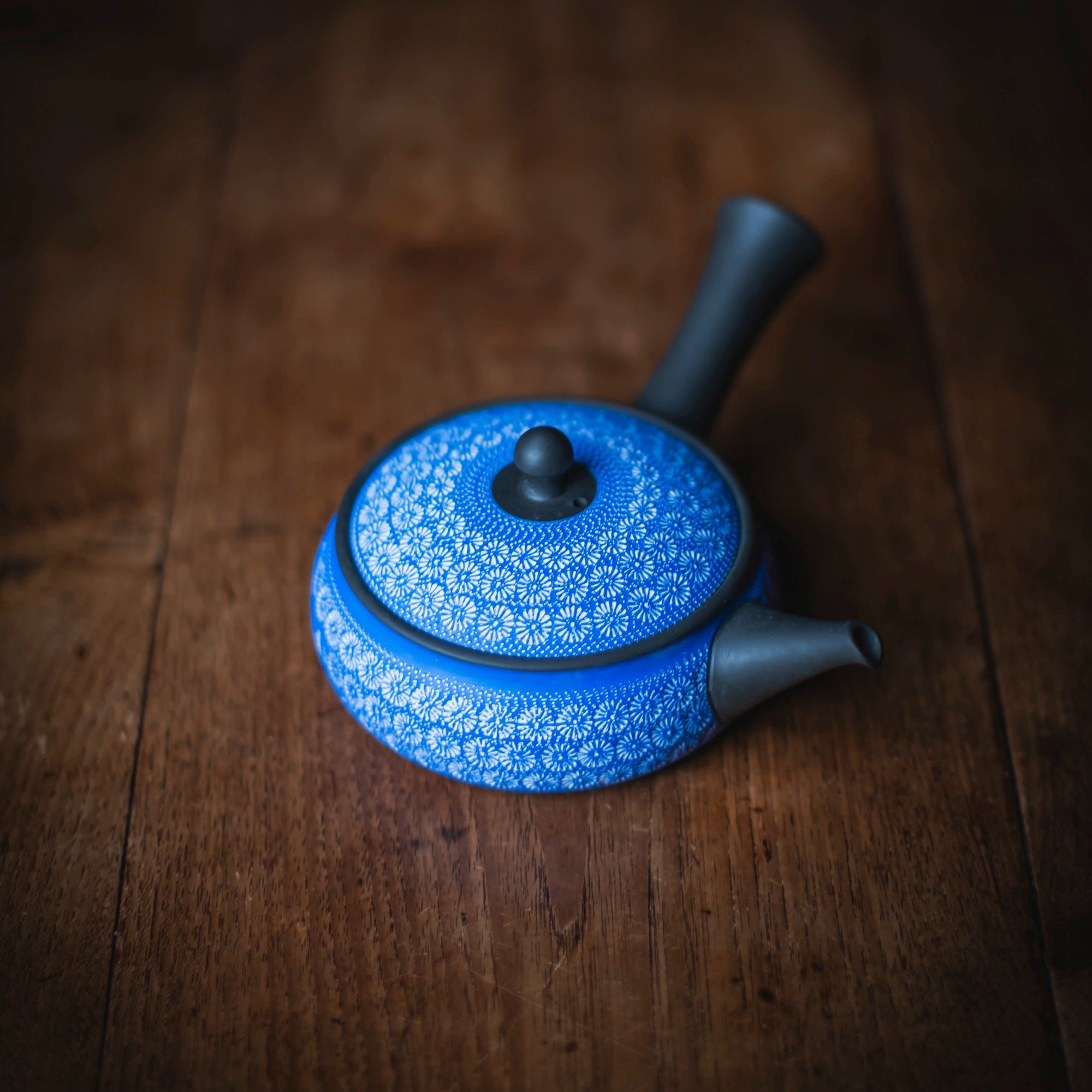
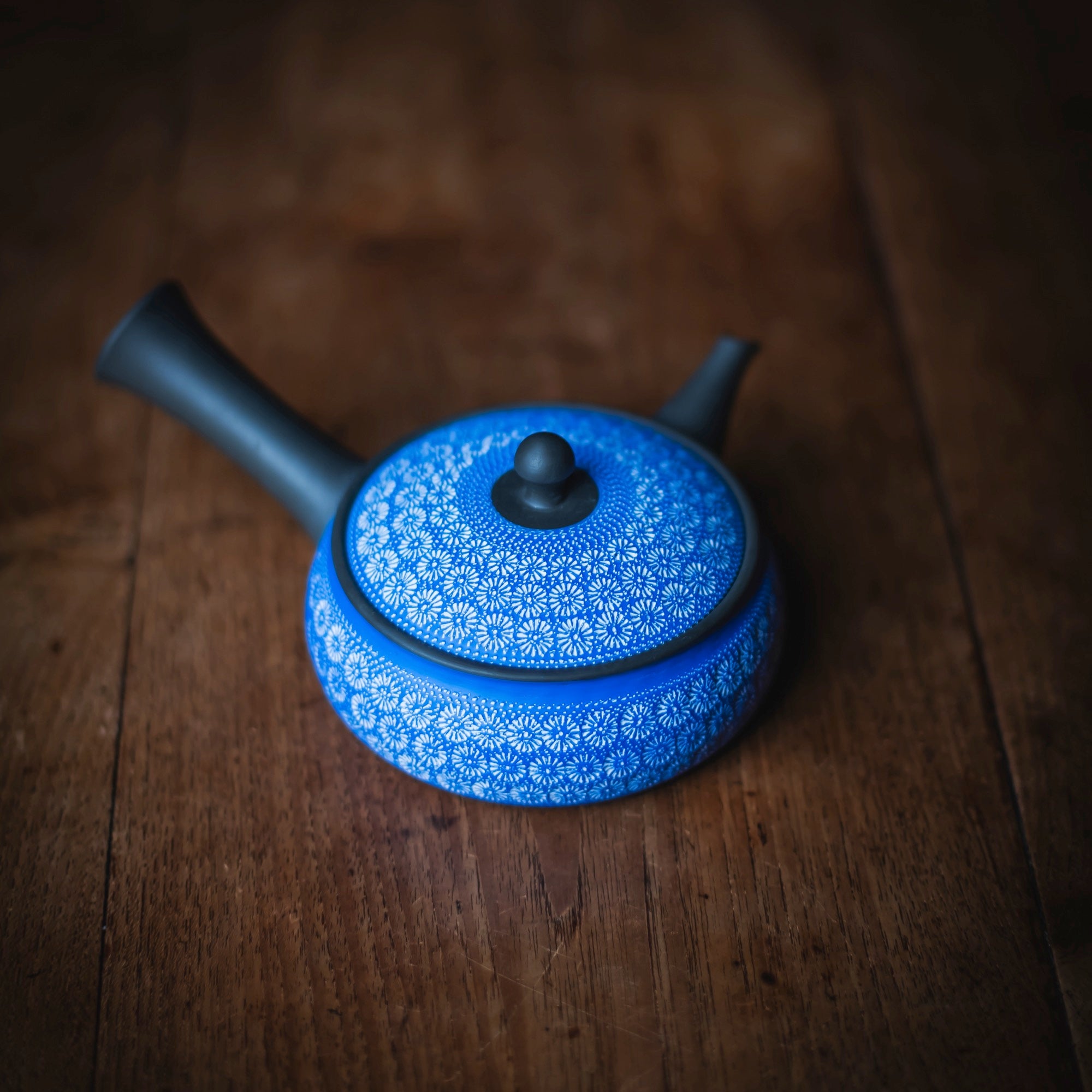
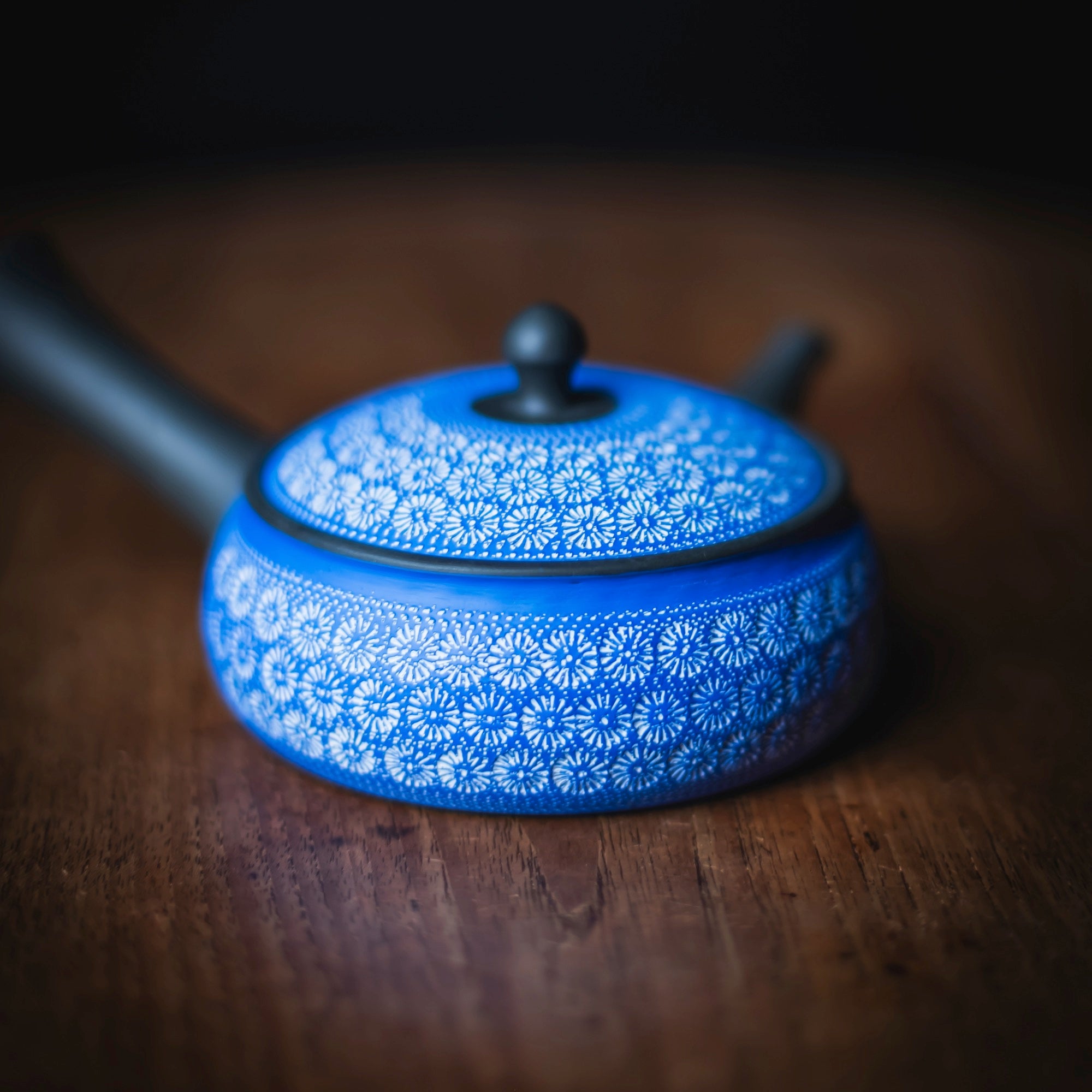
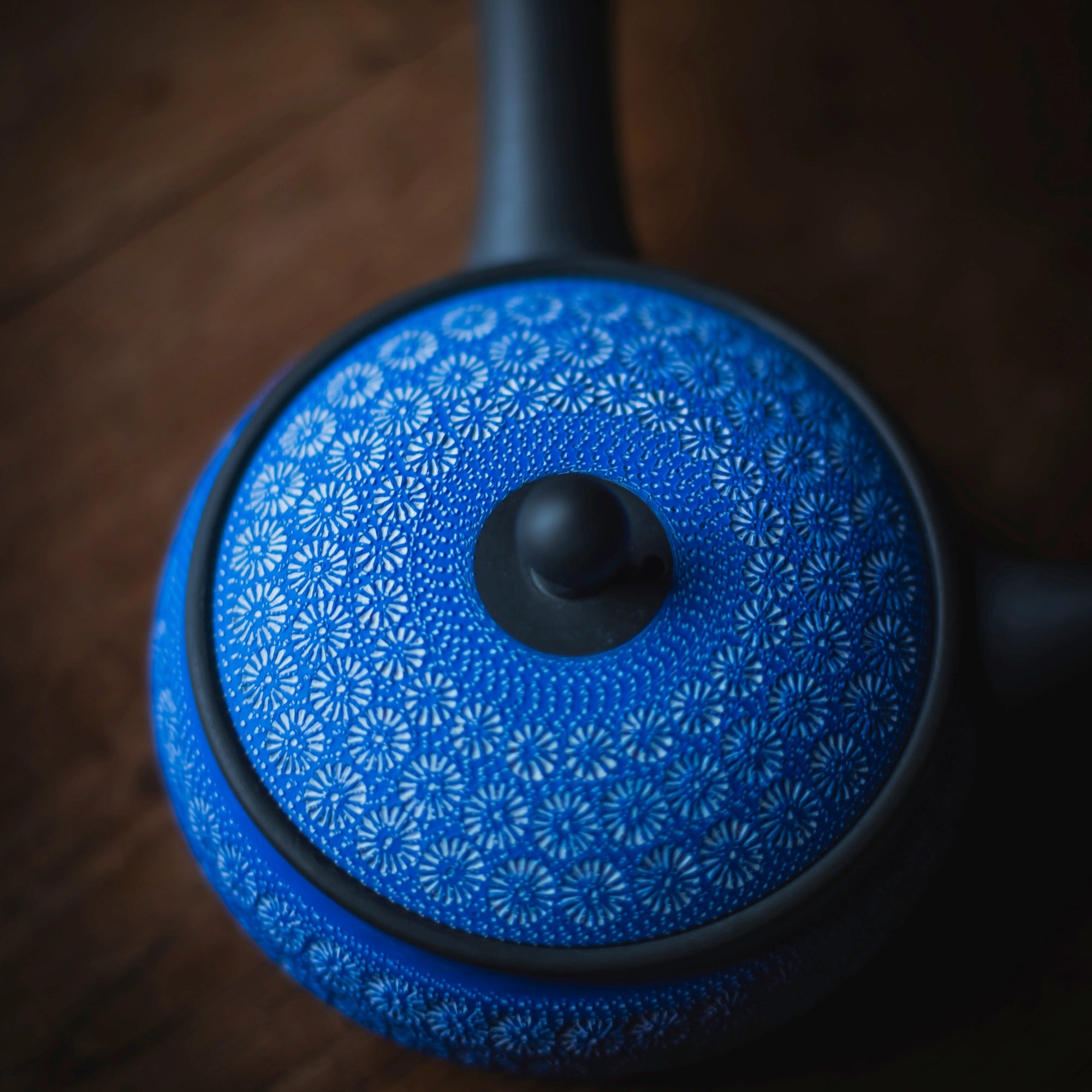
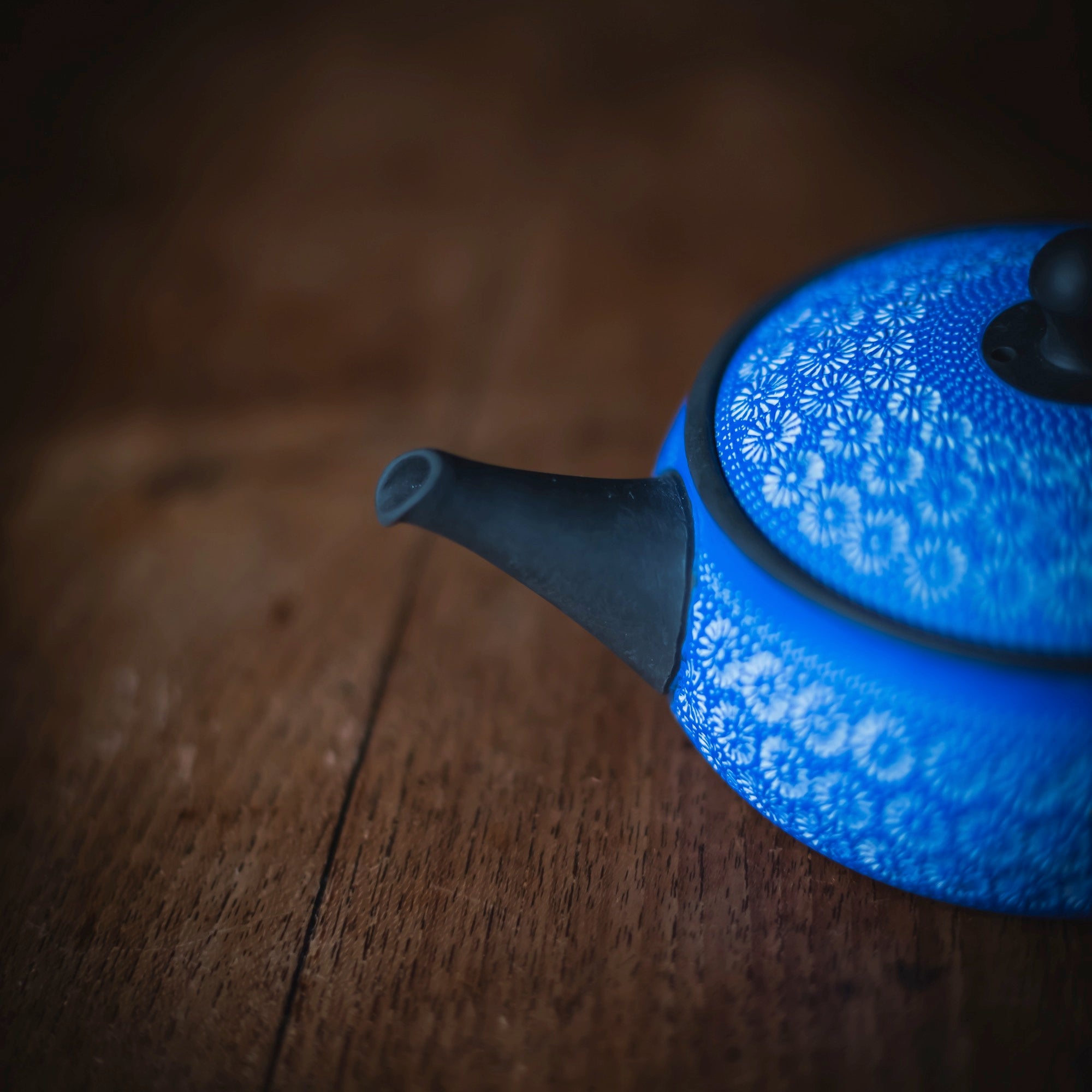
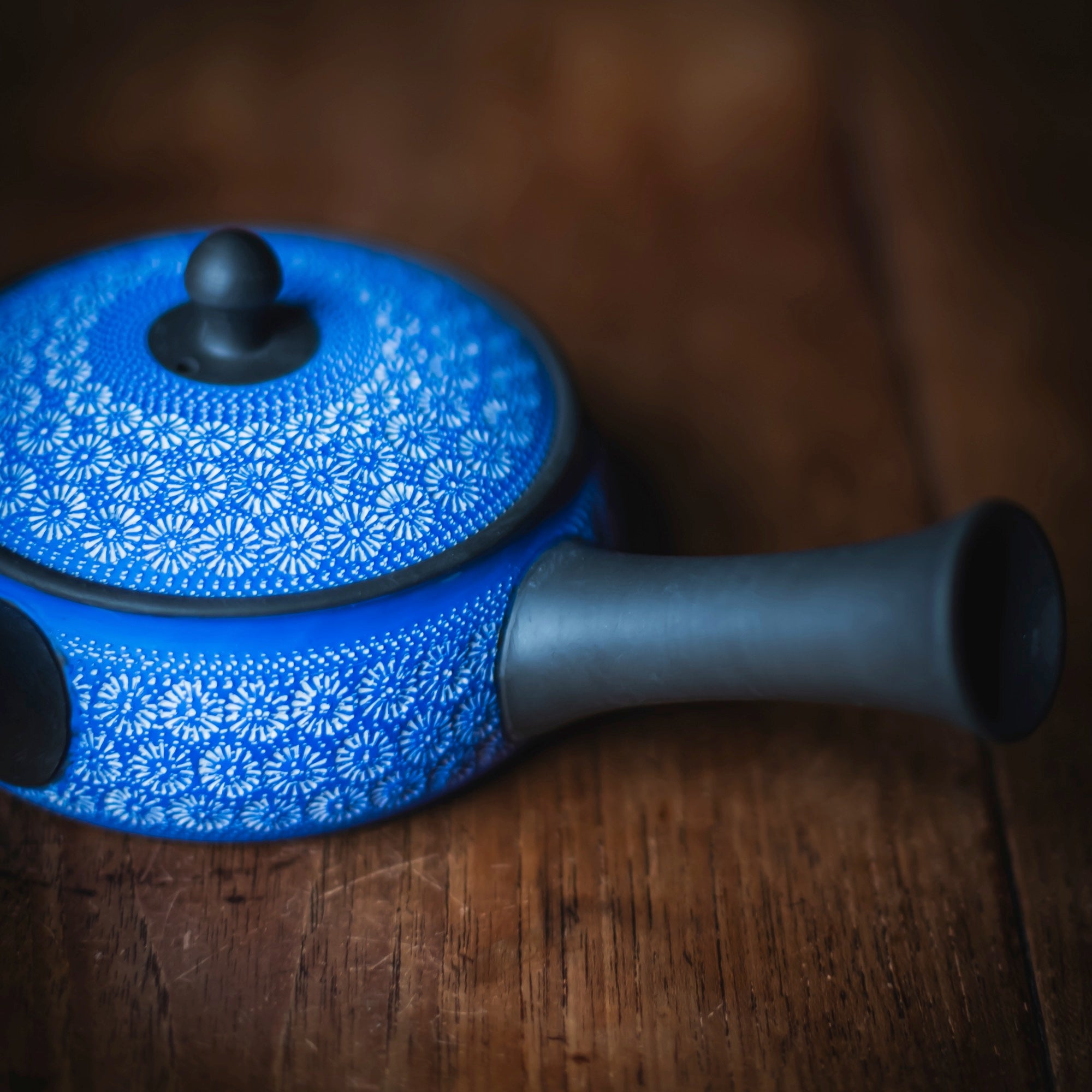
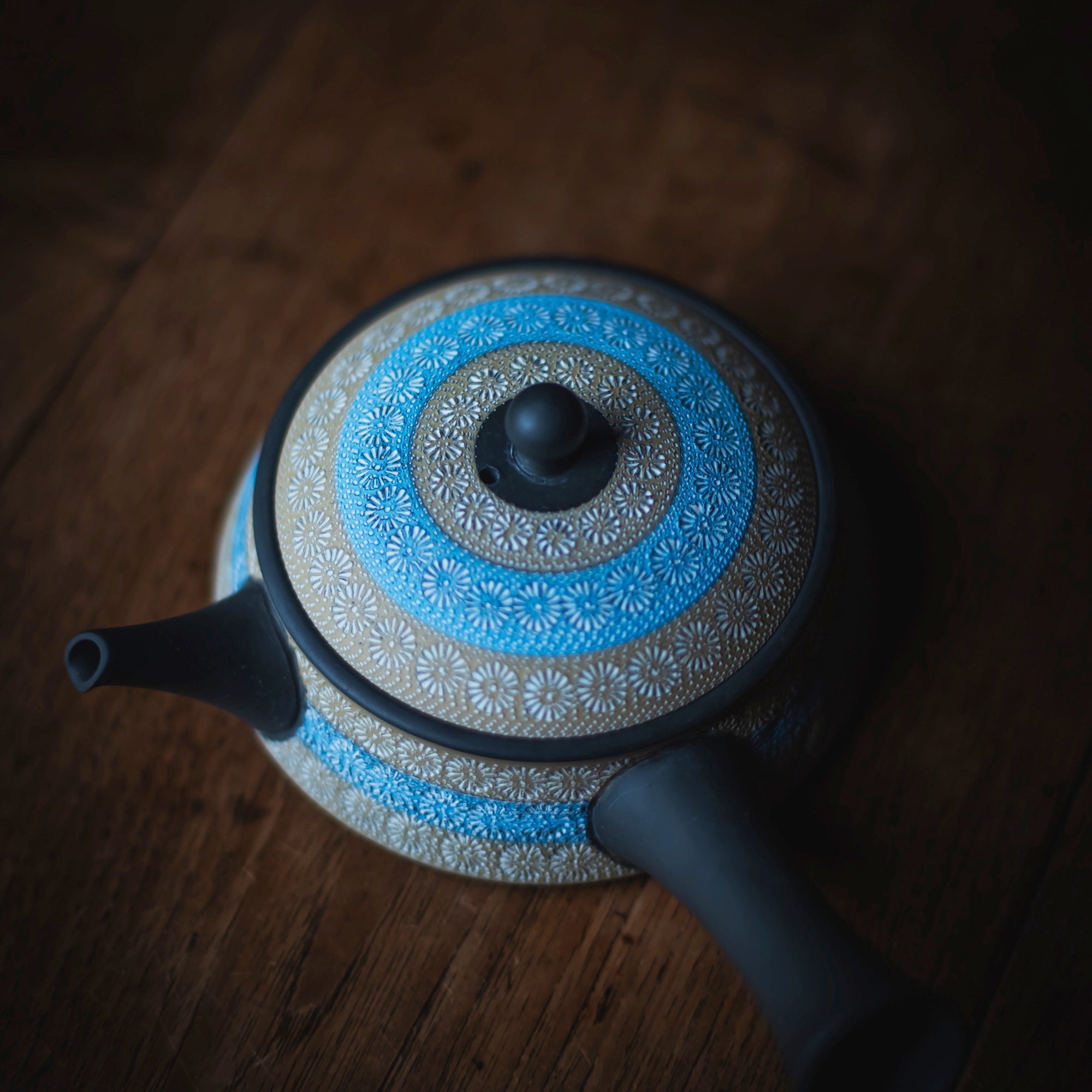
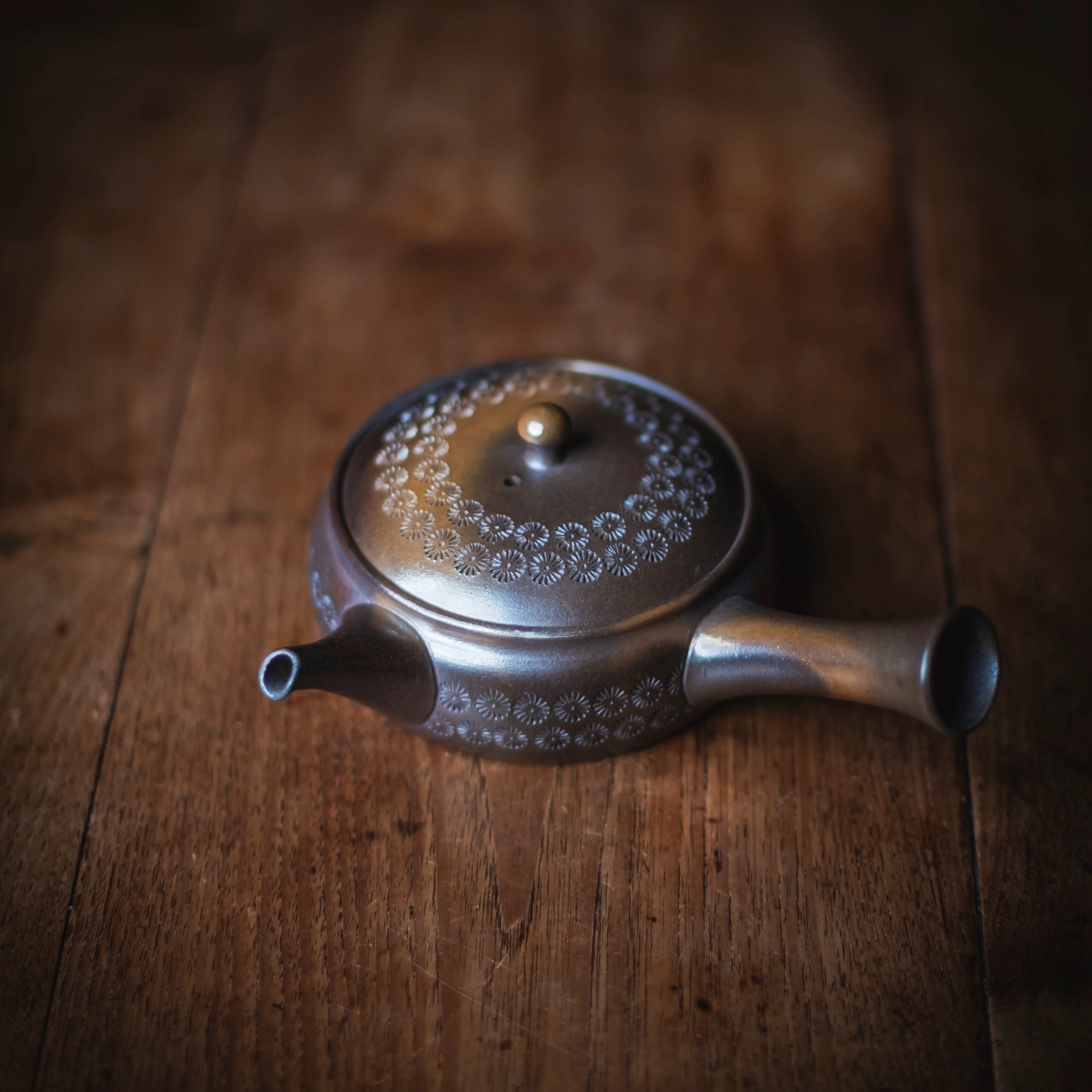
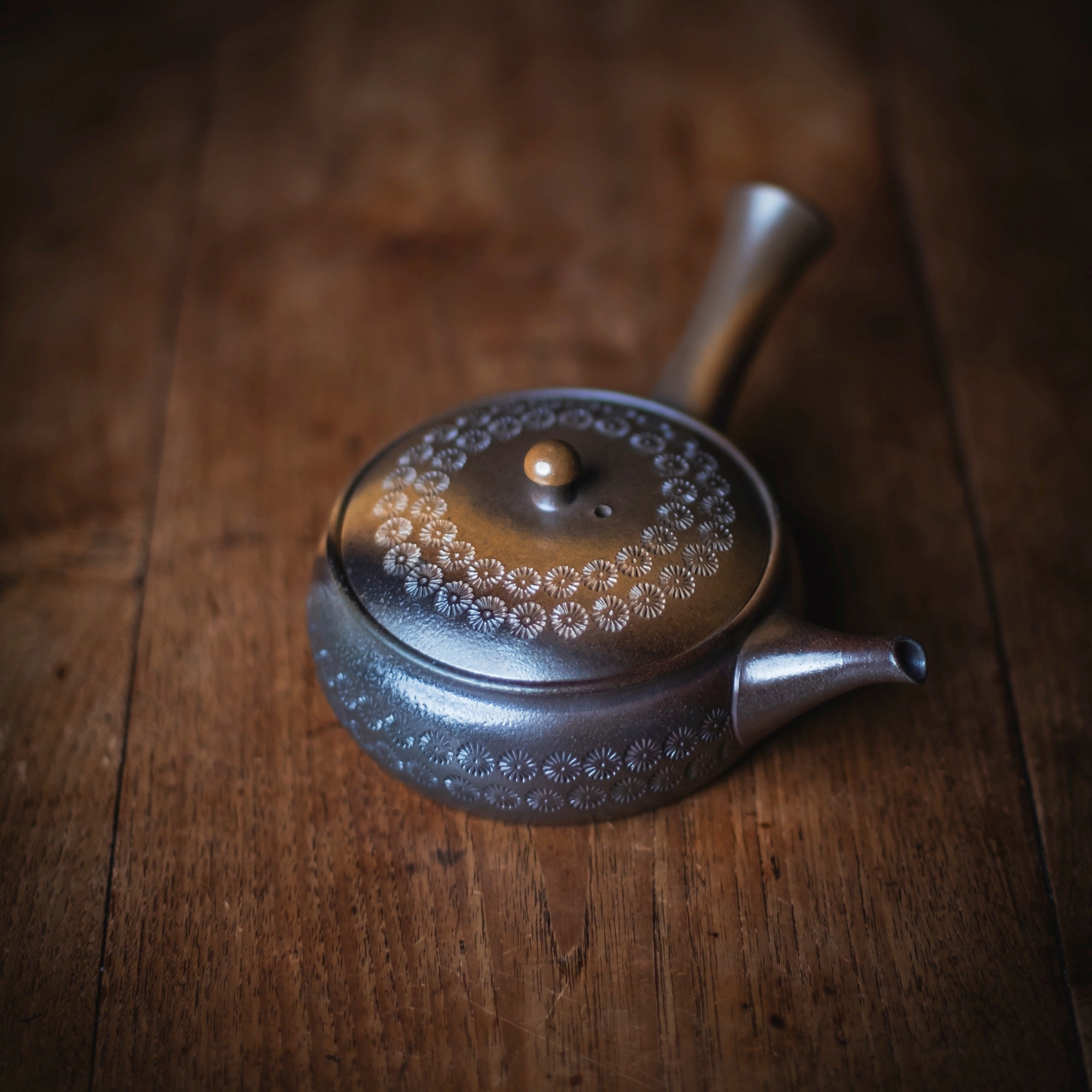
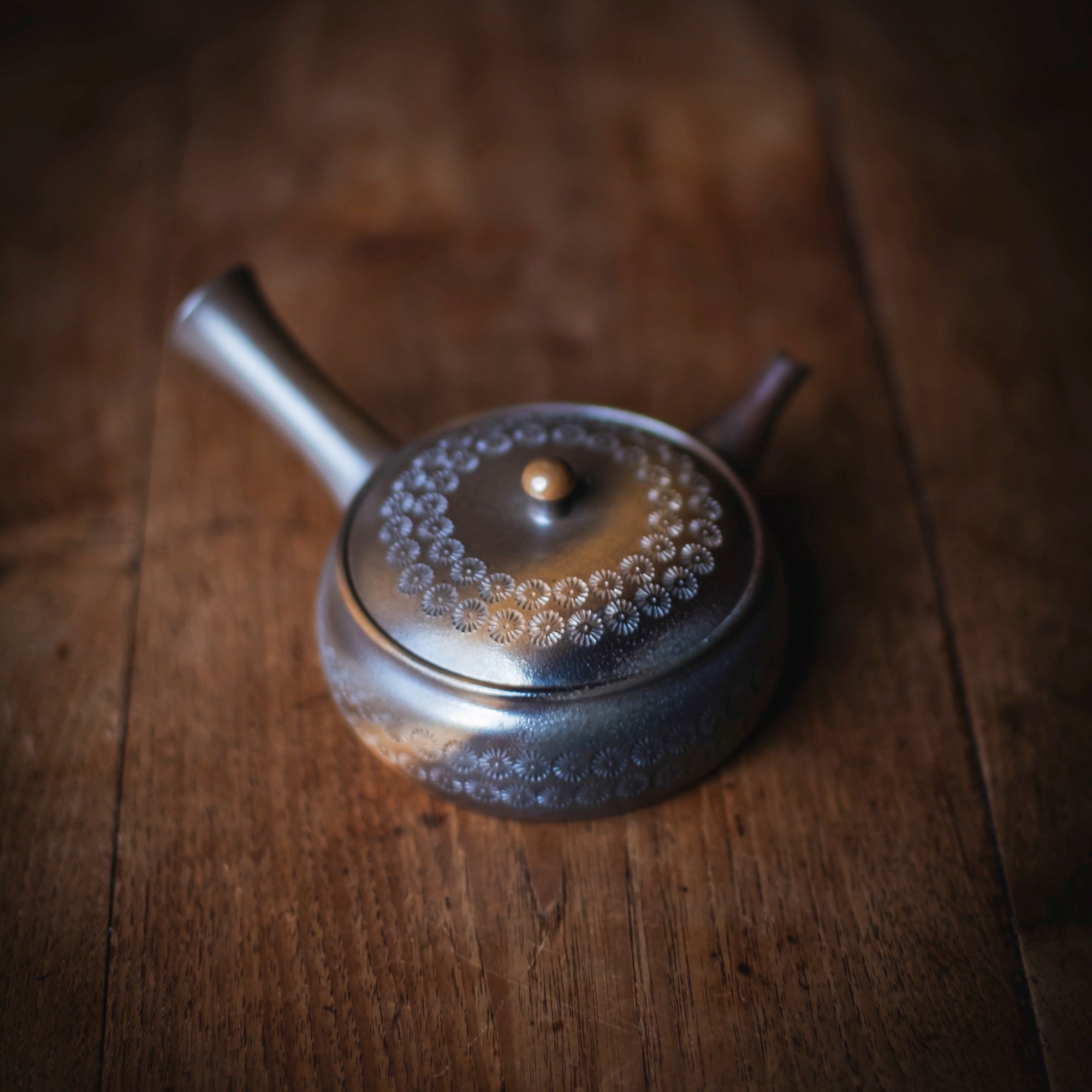
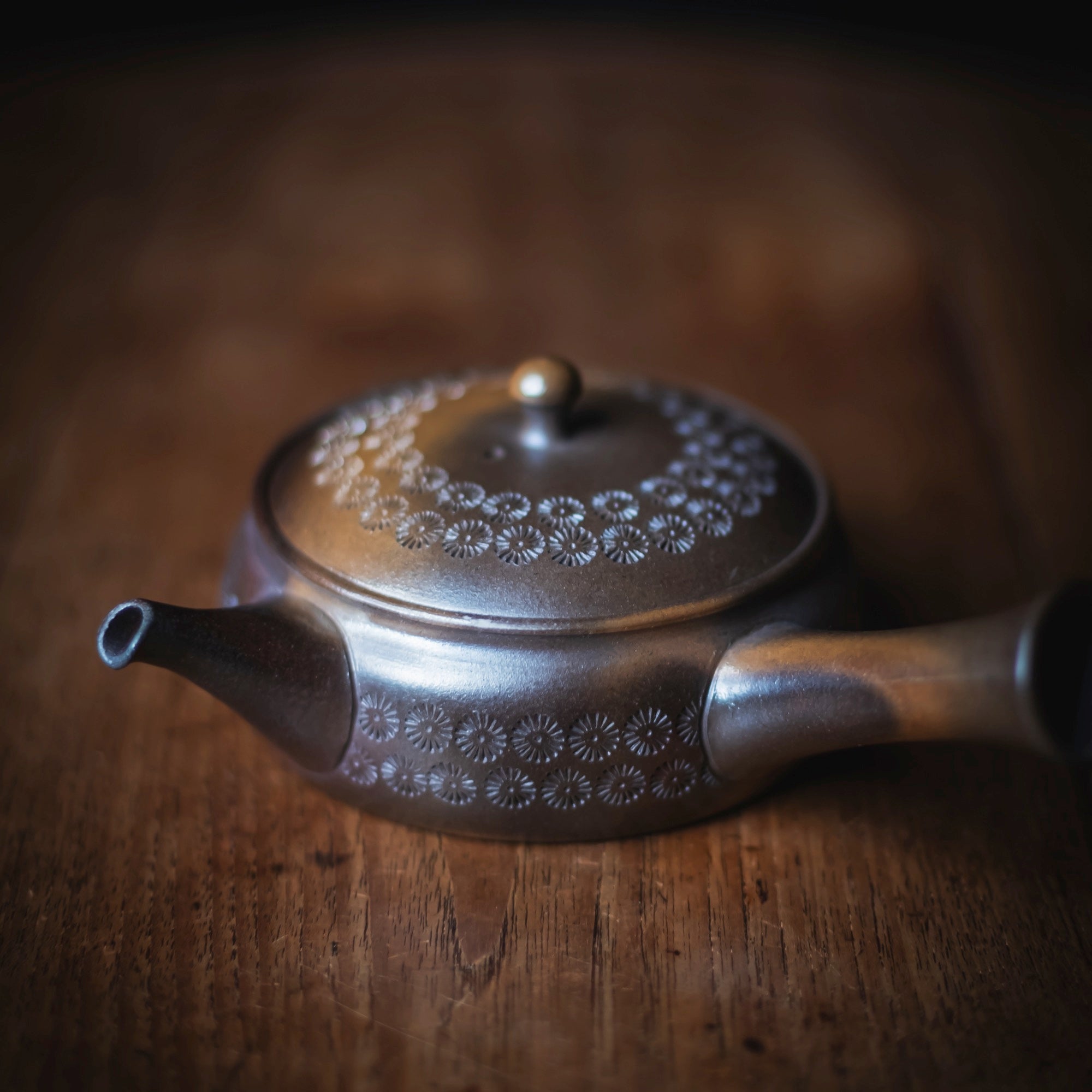
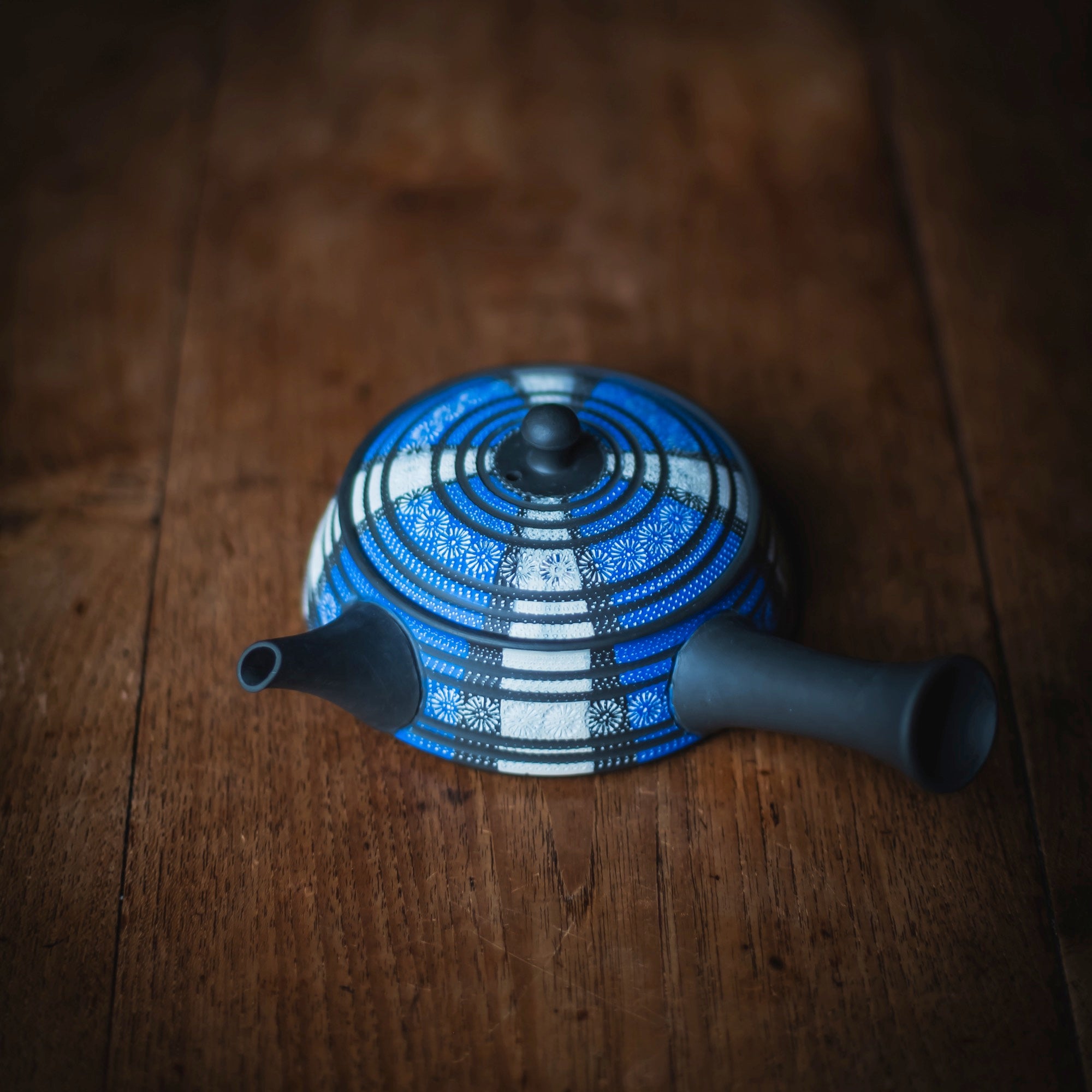
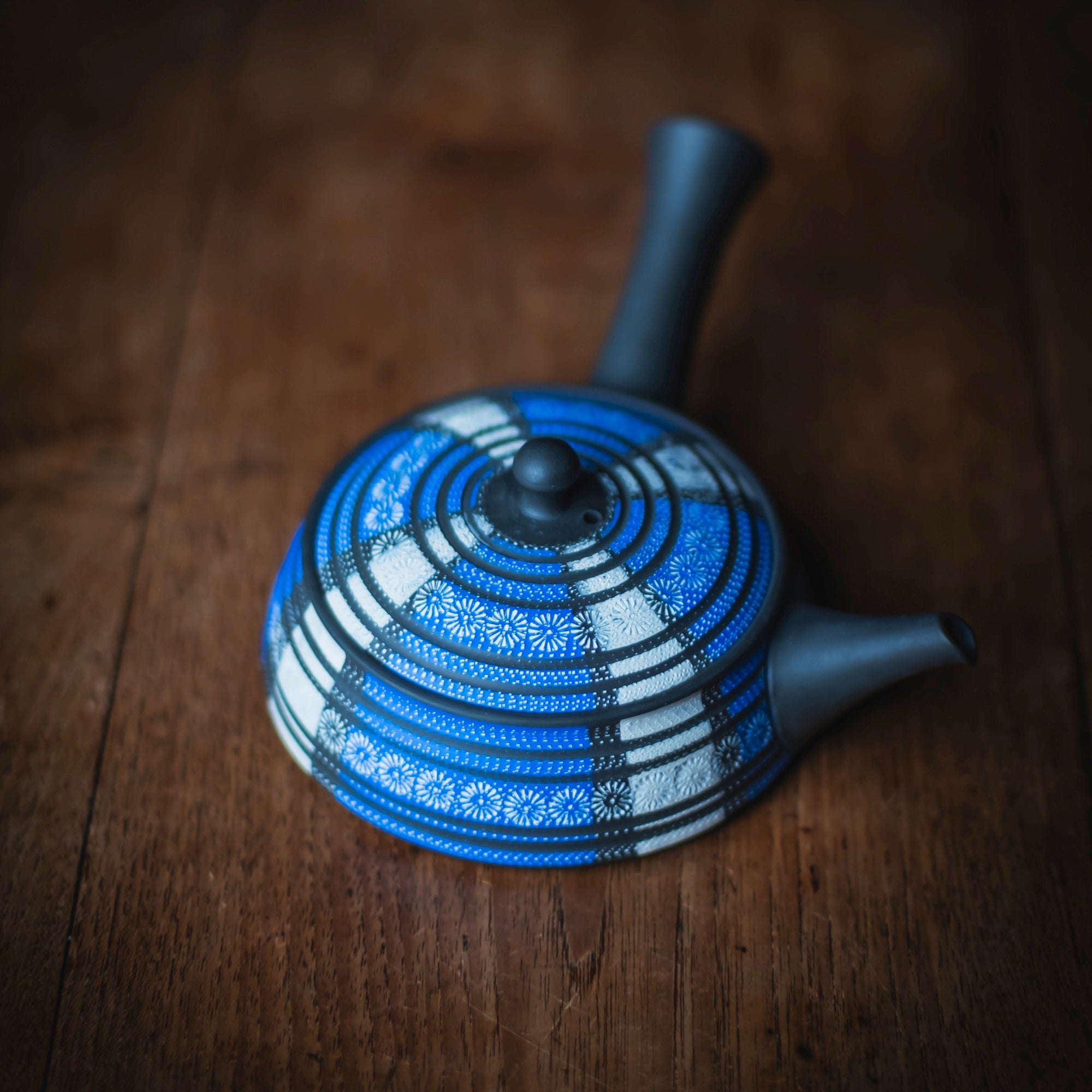
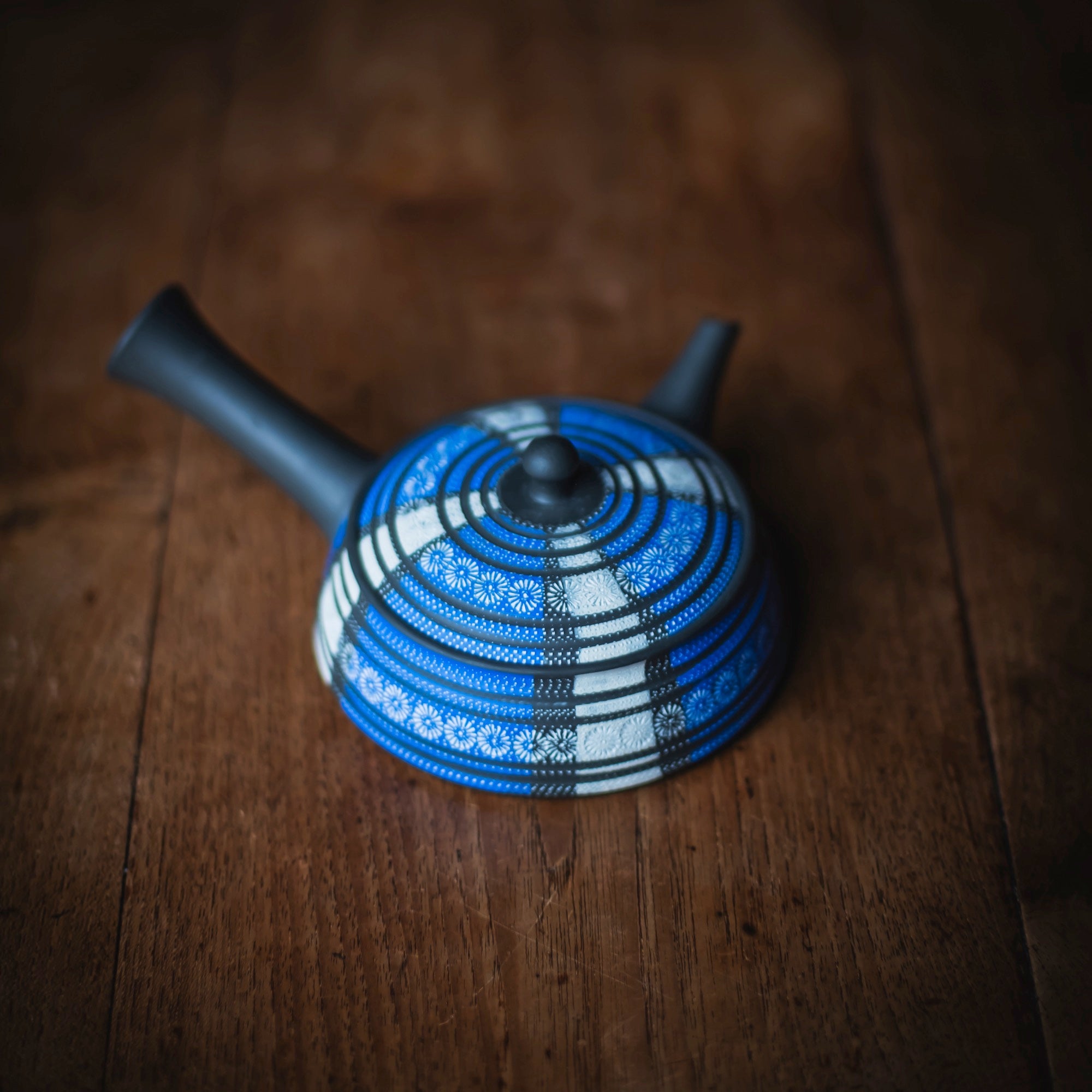
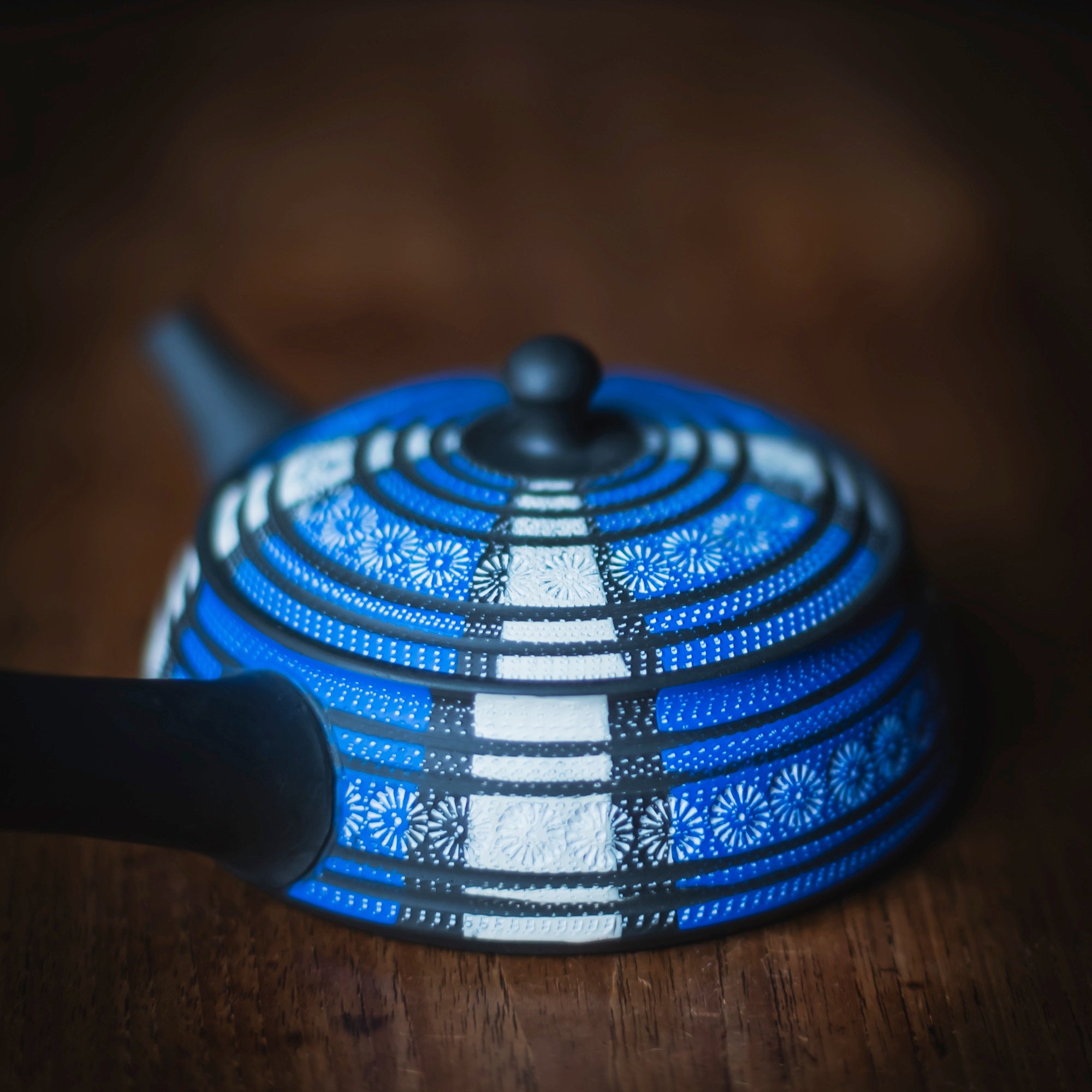
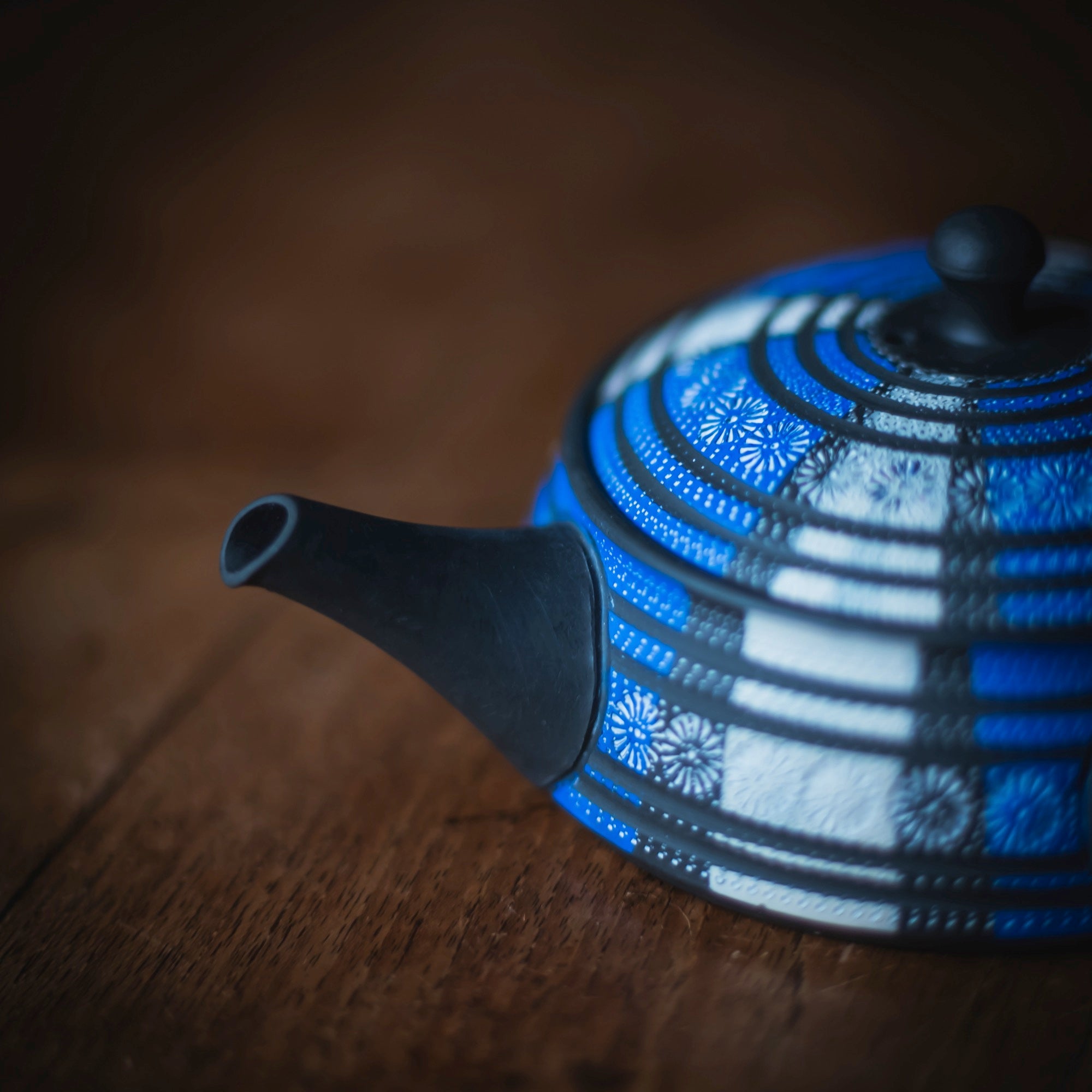
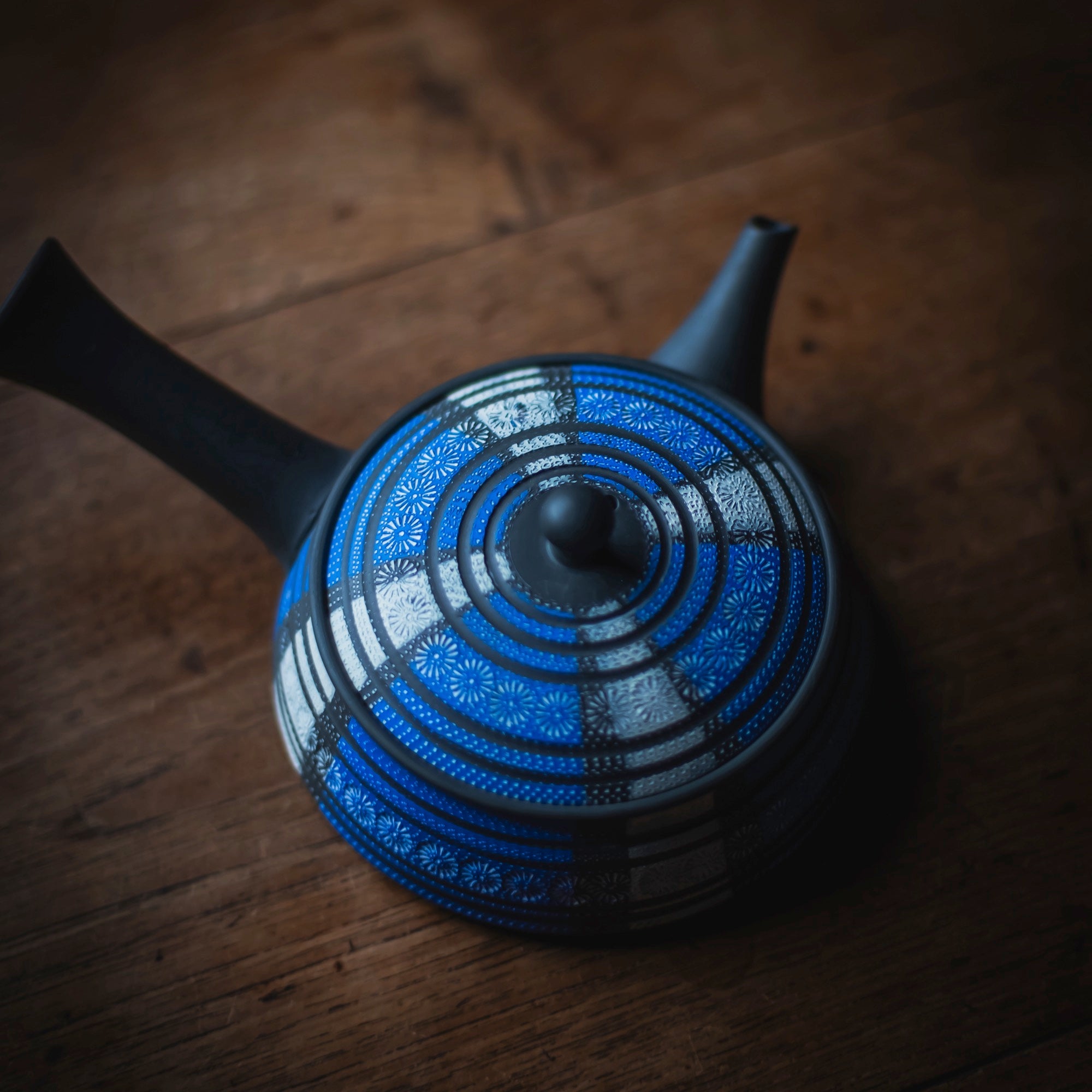
Teruyuki Isobe (磯部輝之, b. 1938) is among the most revered living kyusu makers of Tokoname, renowned for hand-stamped inka floral decoration and flat “hiragata” teapots of exceptional thinness.
About Teruyuki Isobe (Tokoname, Japan)
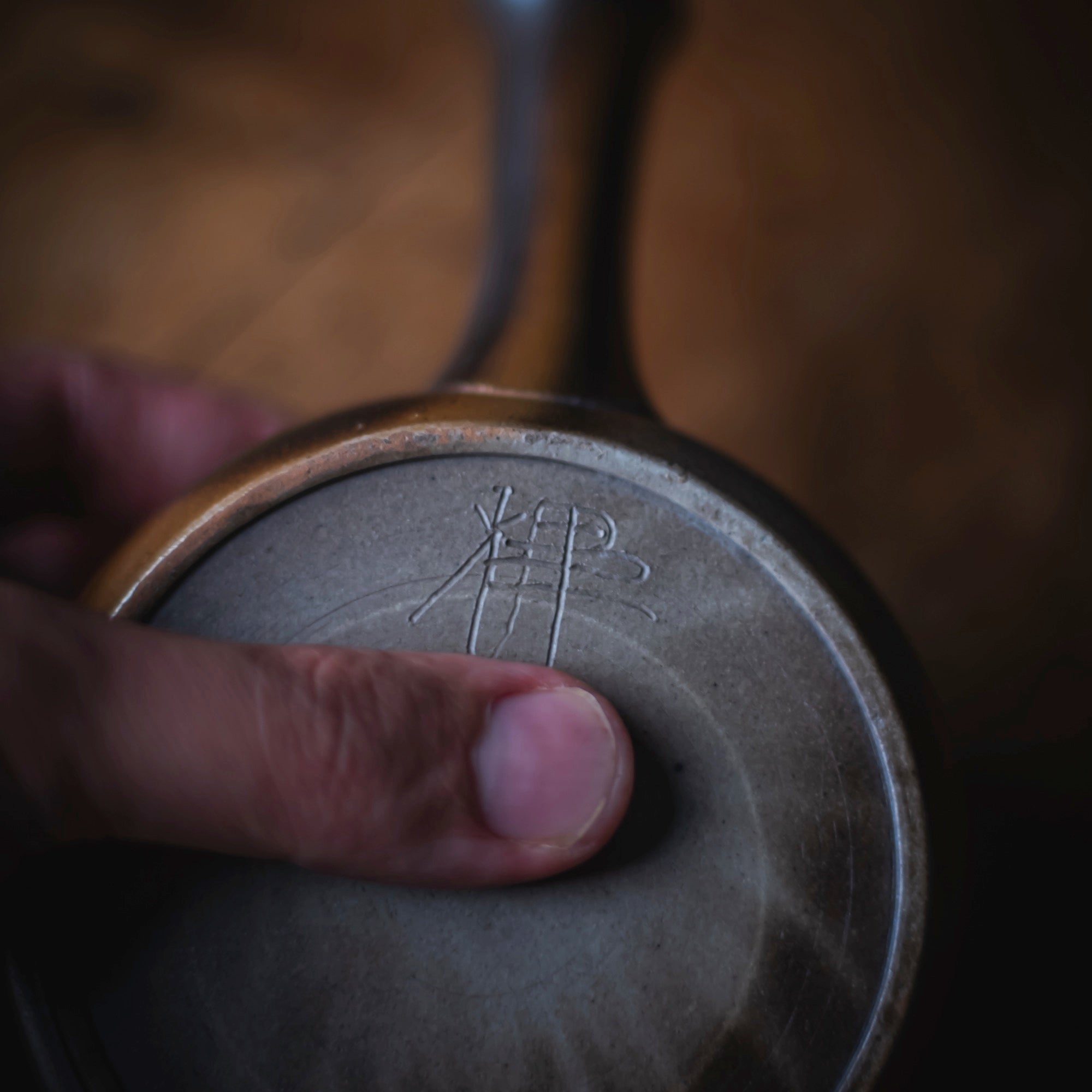
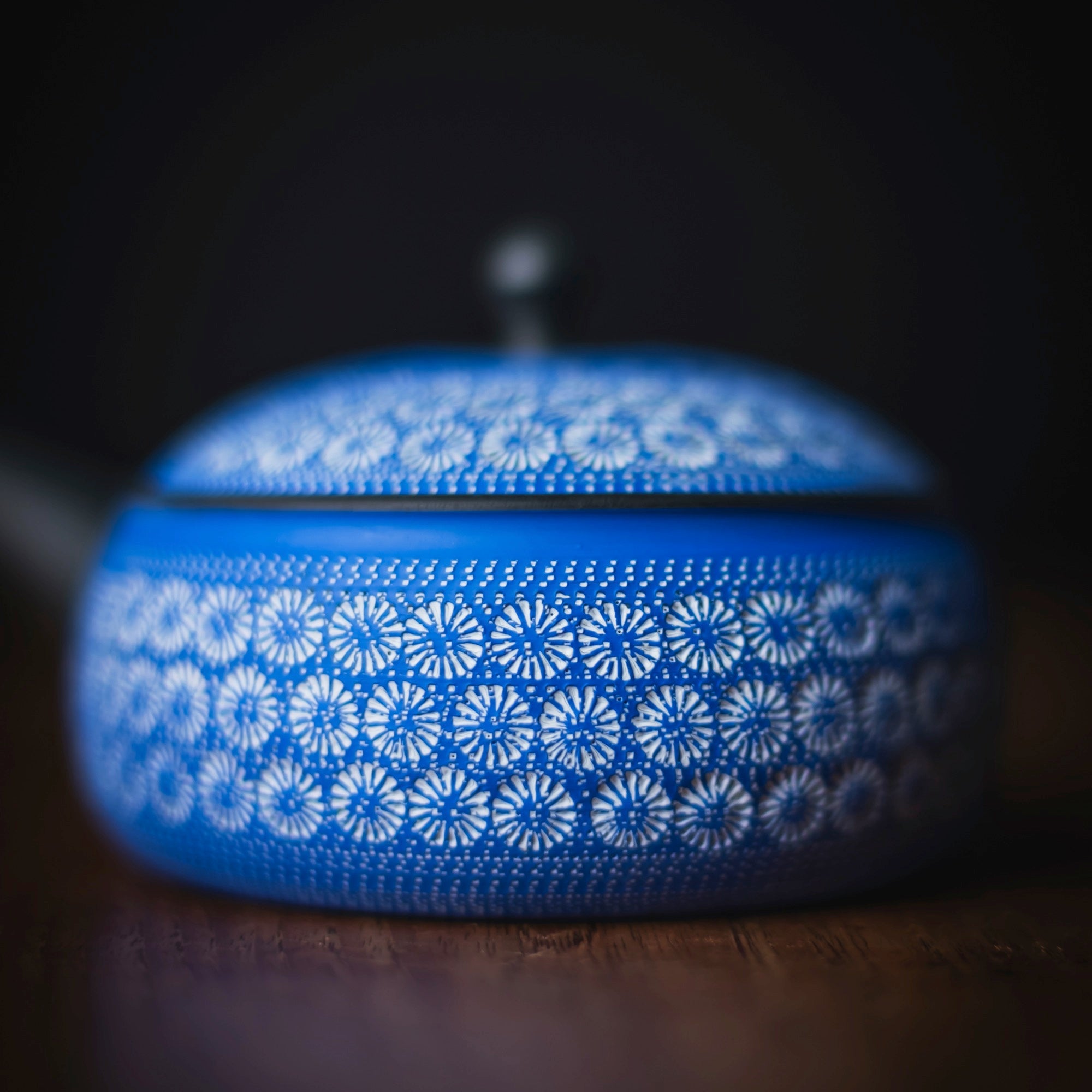
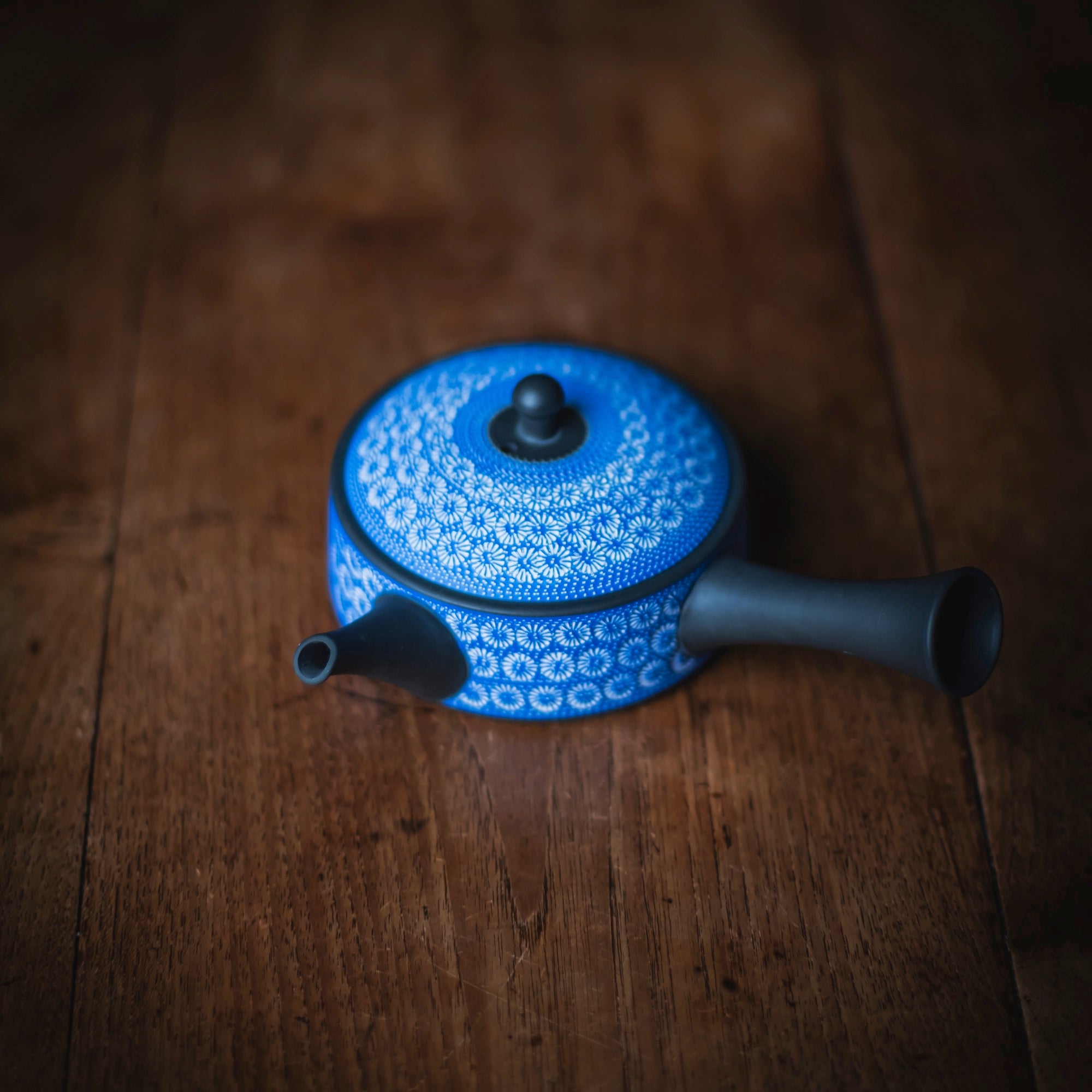
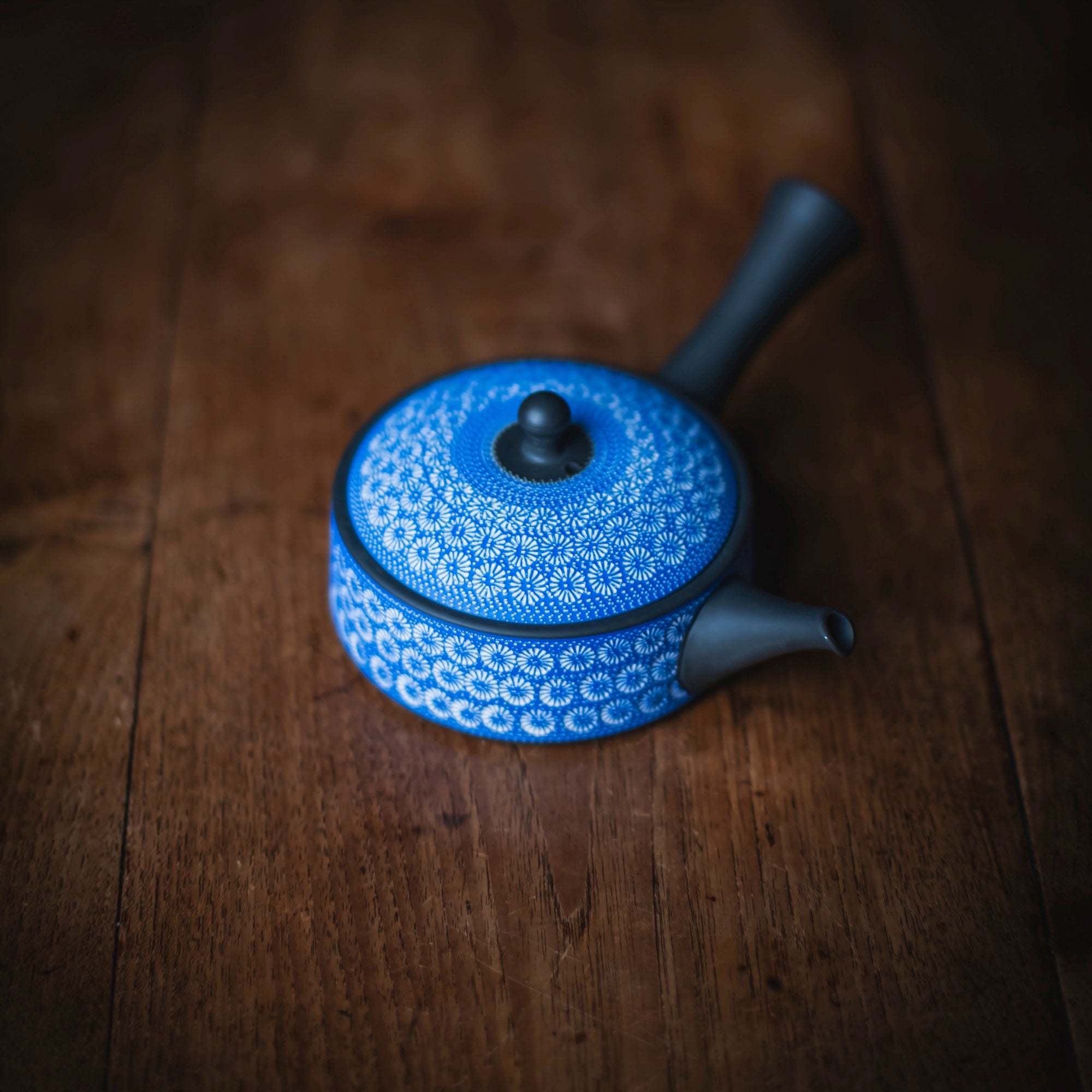
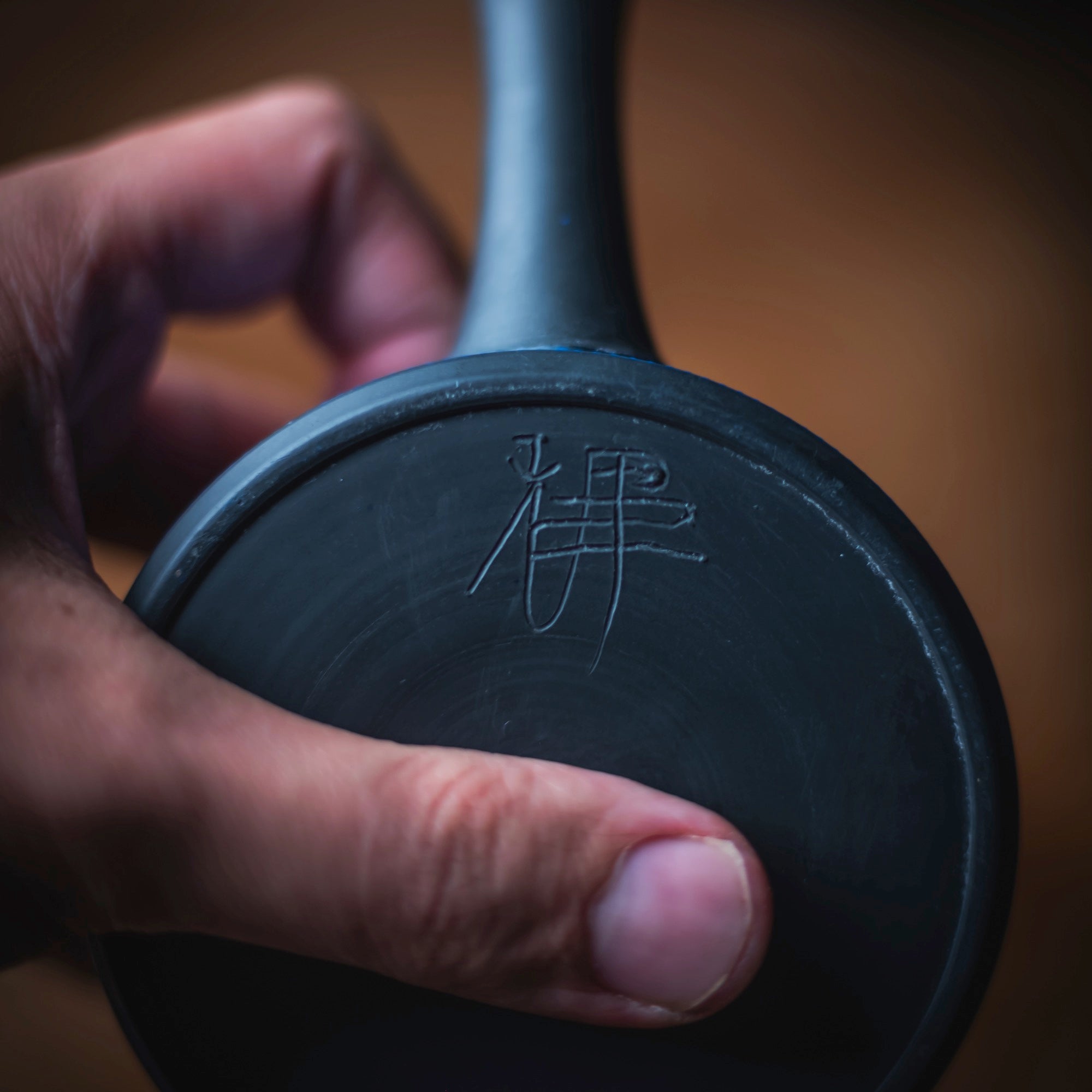
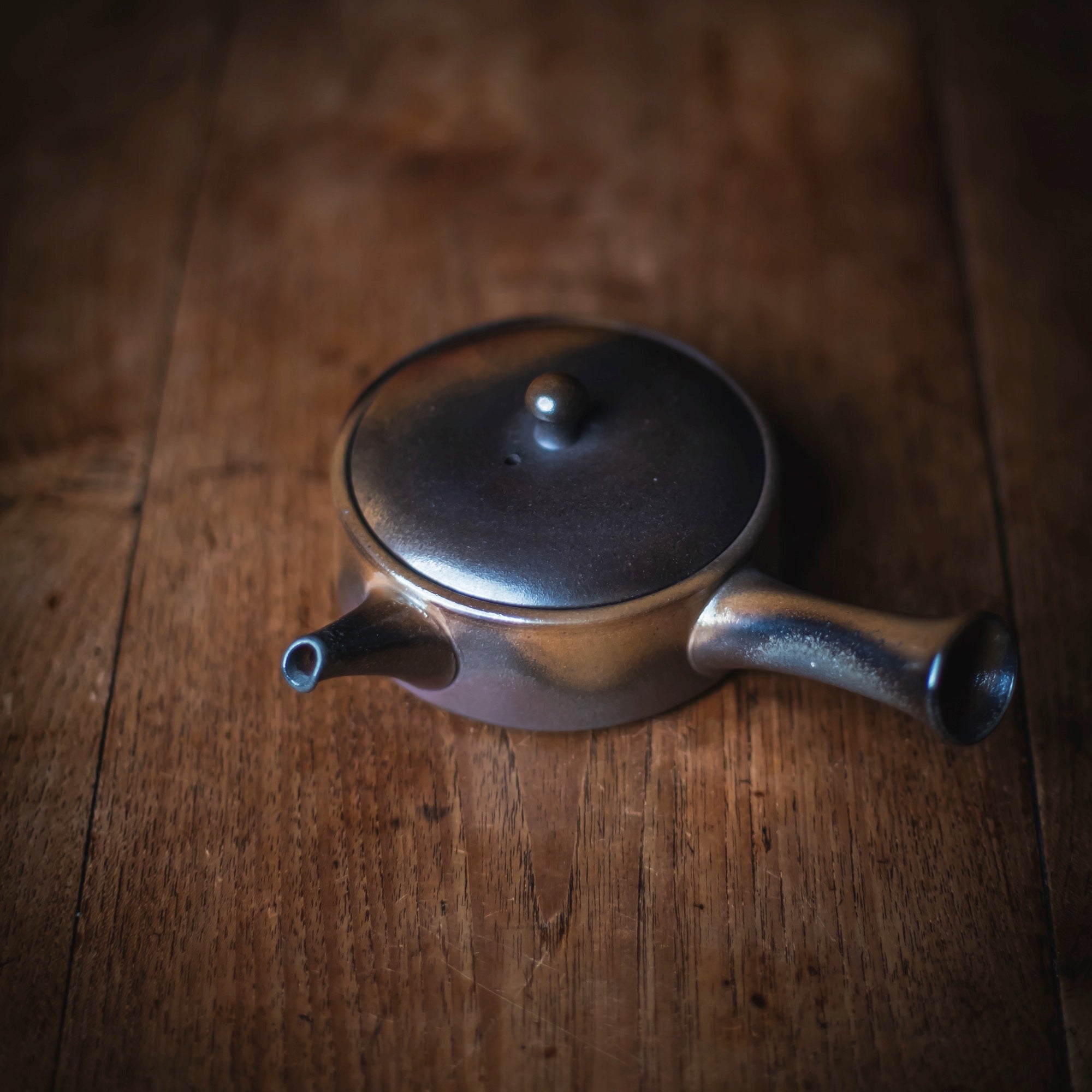
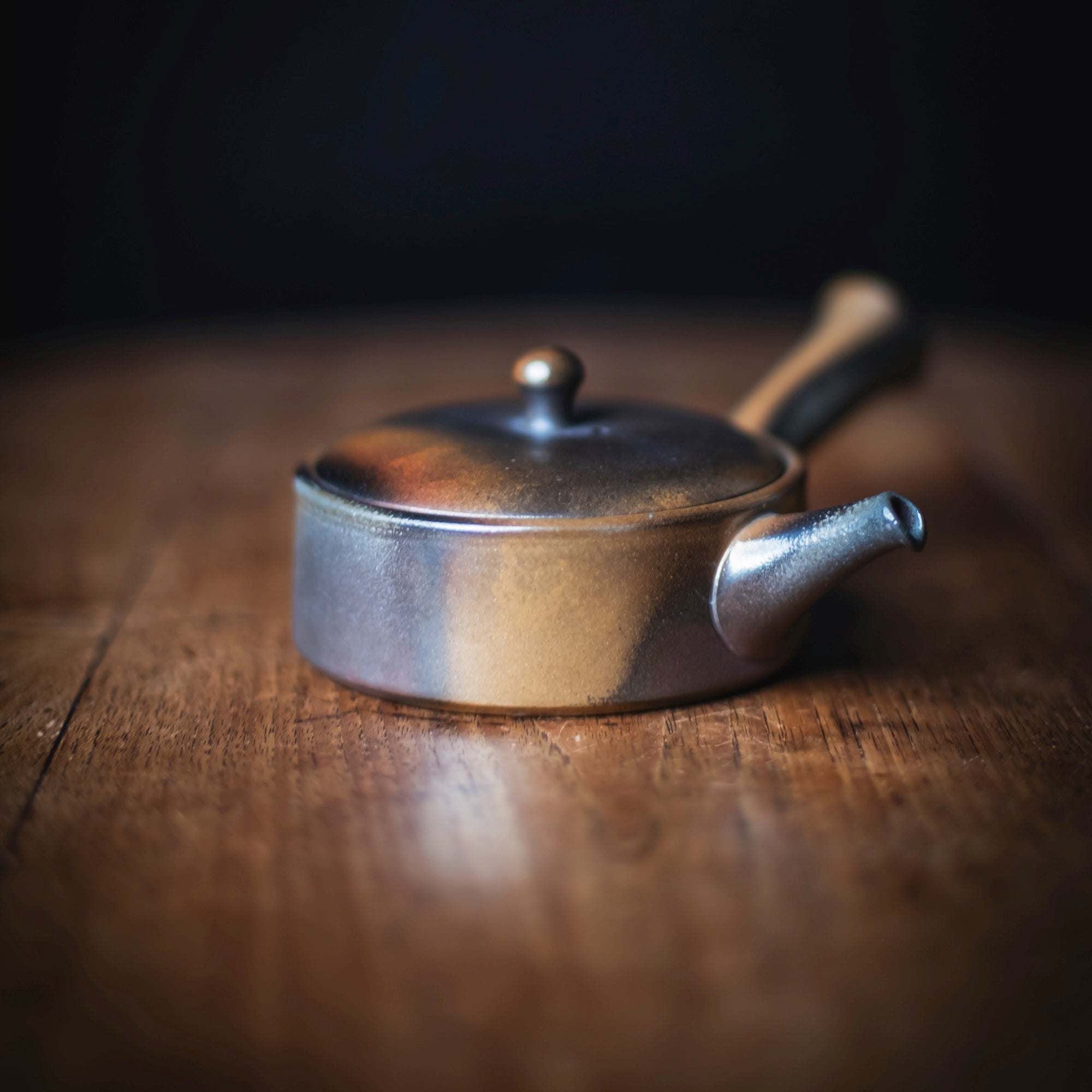
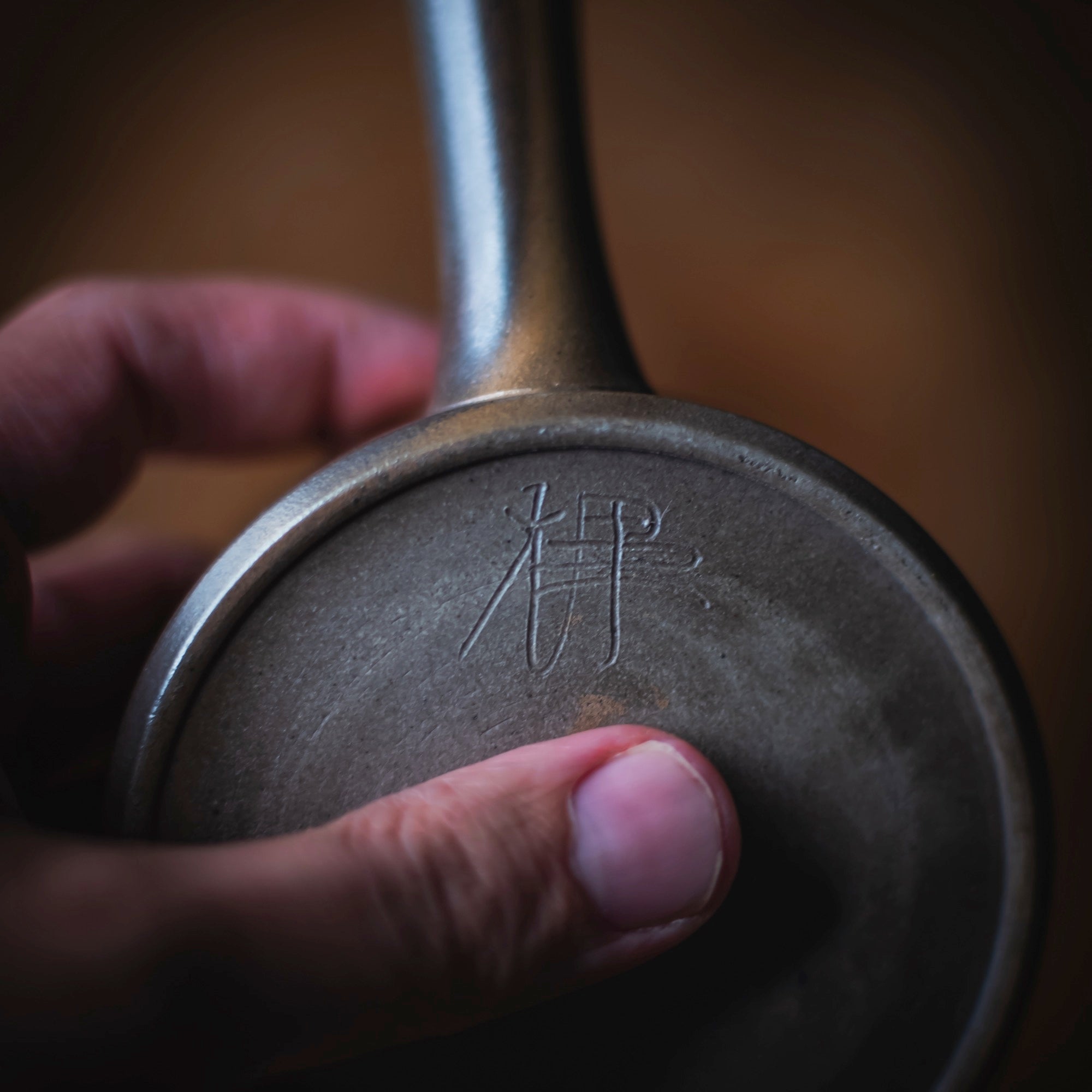
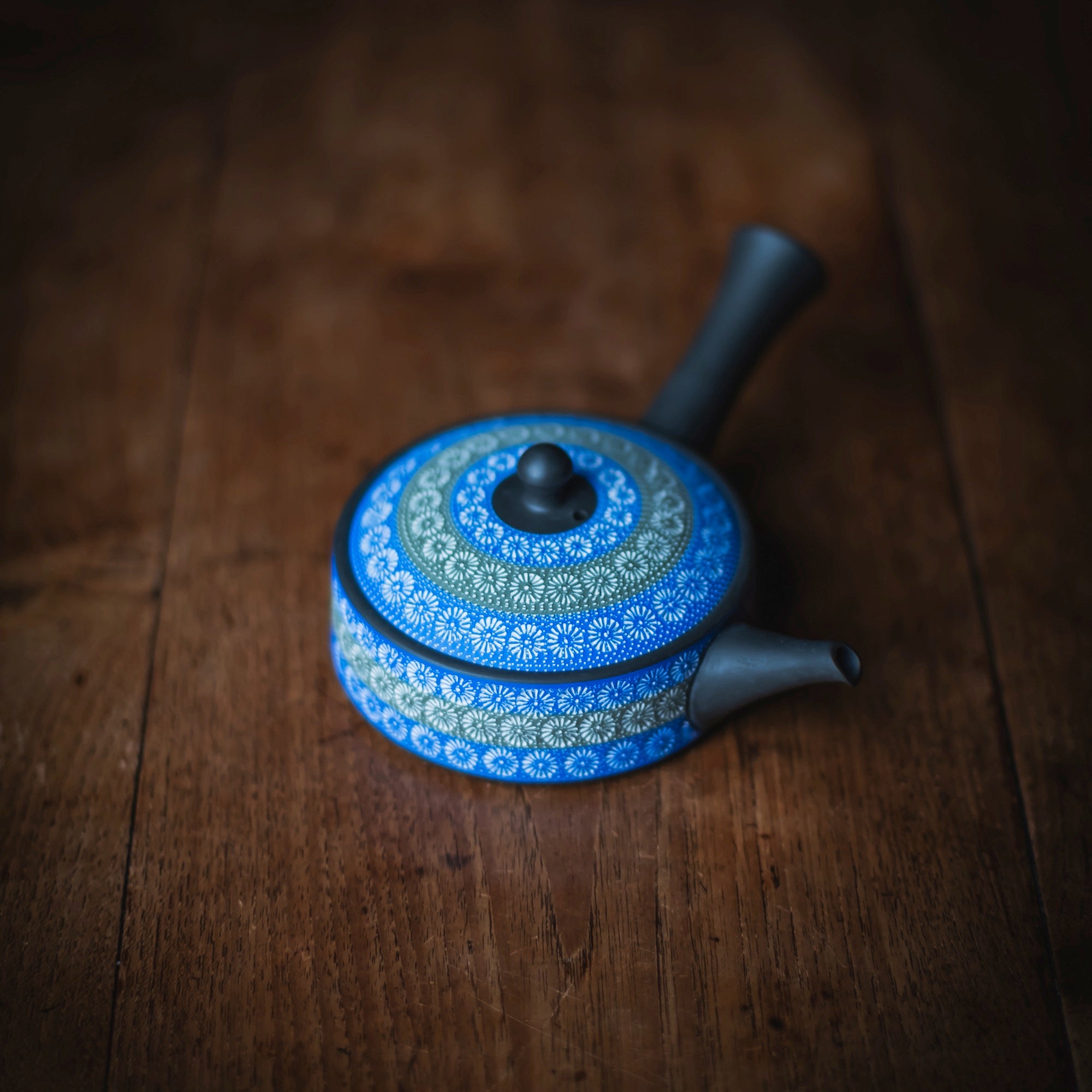
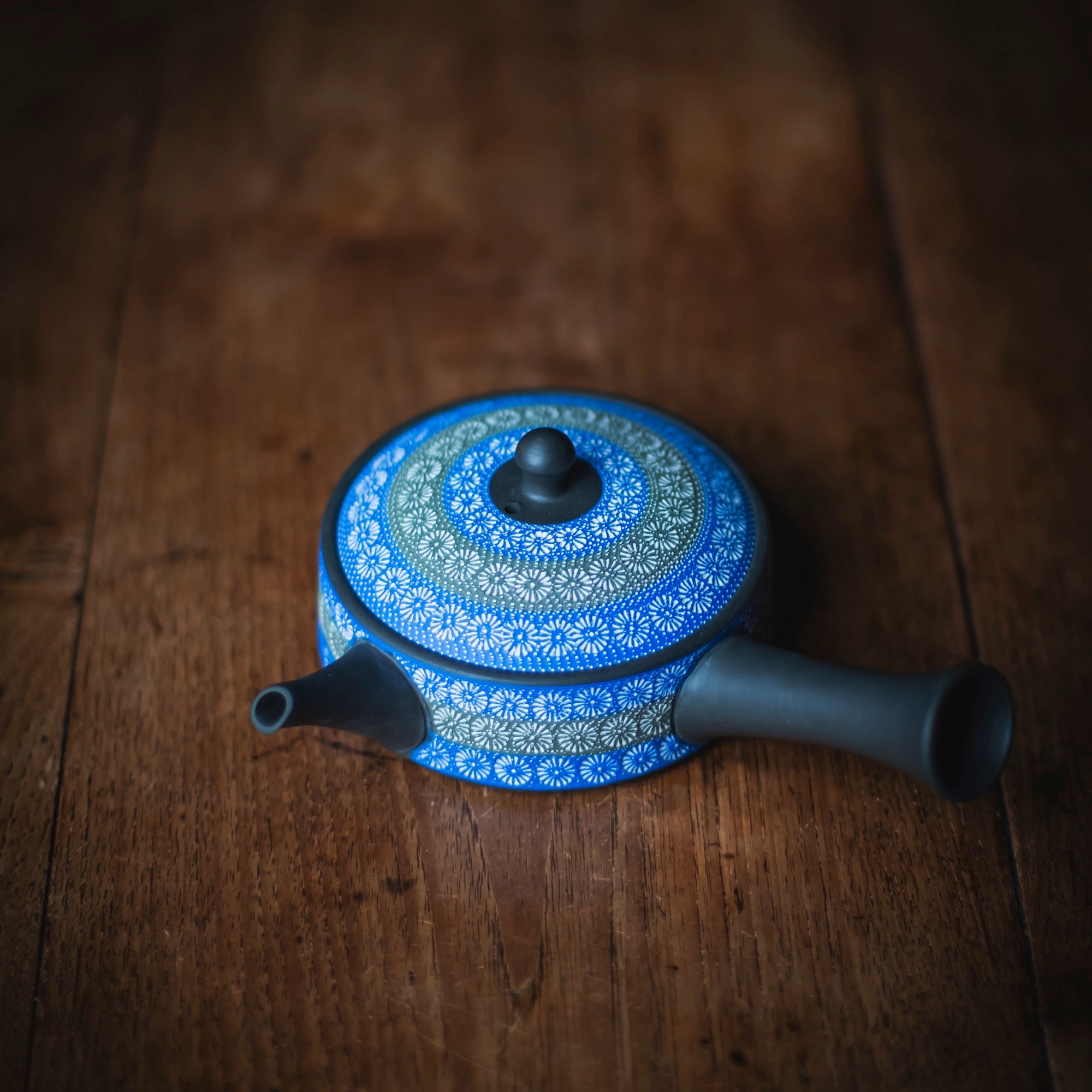
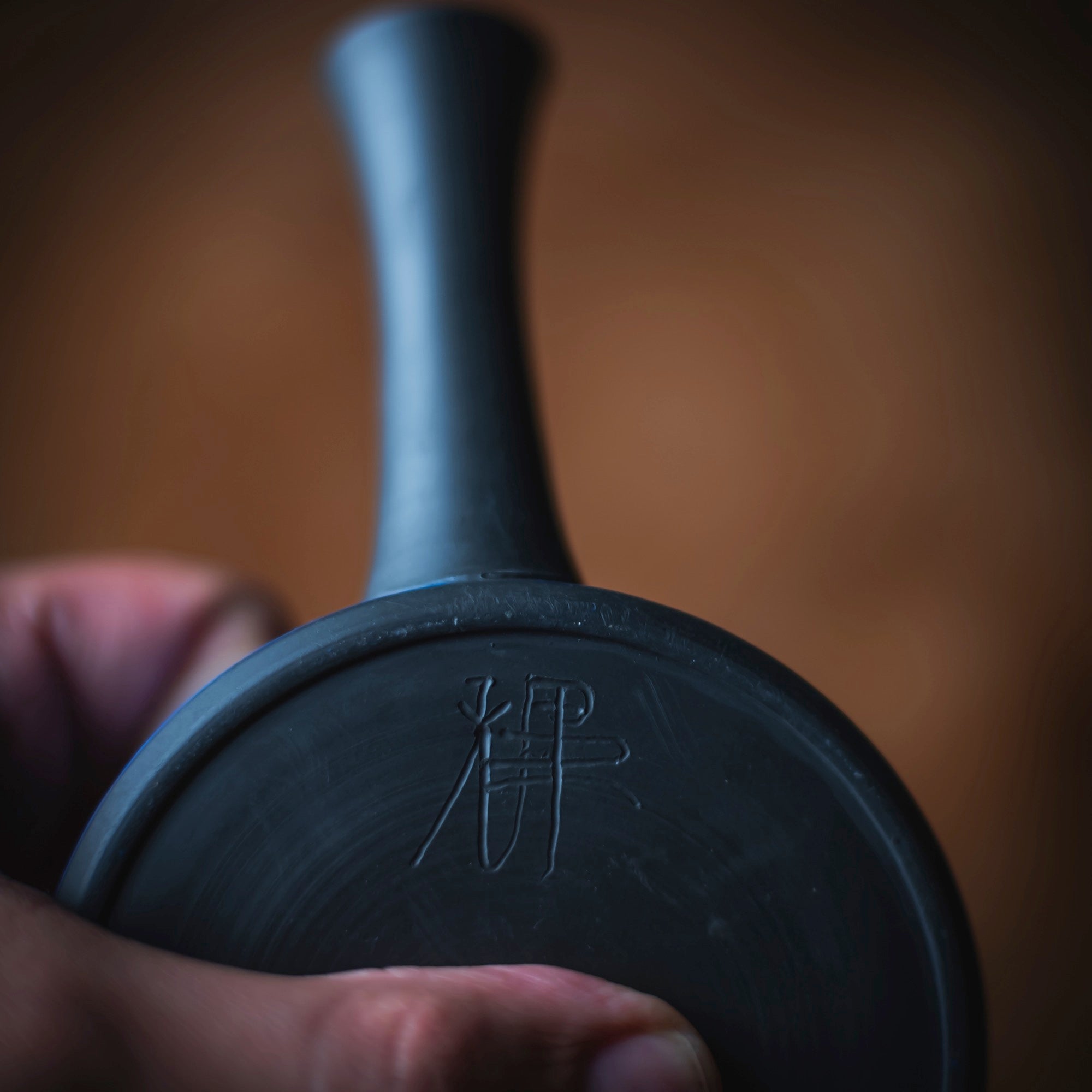
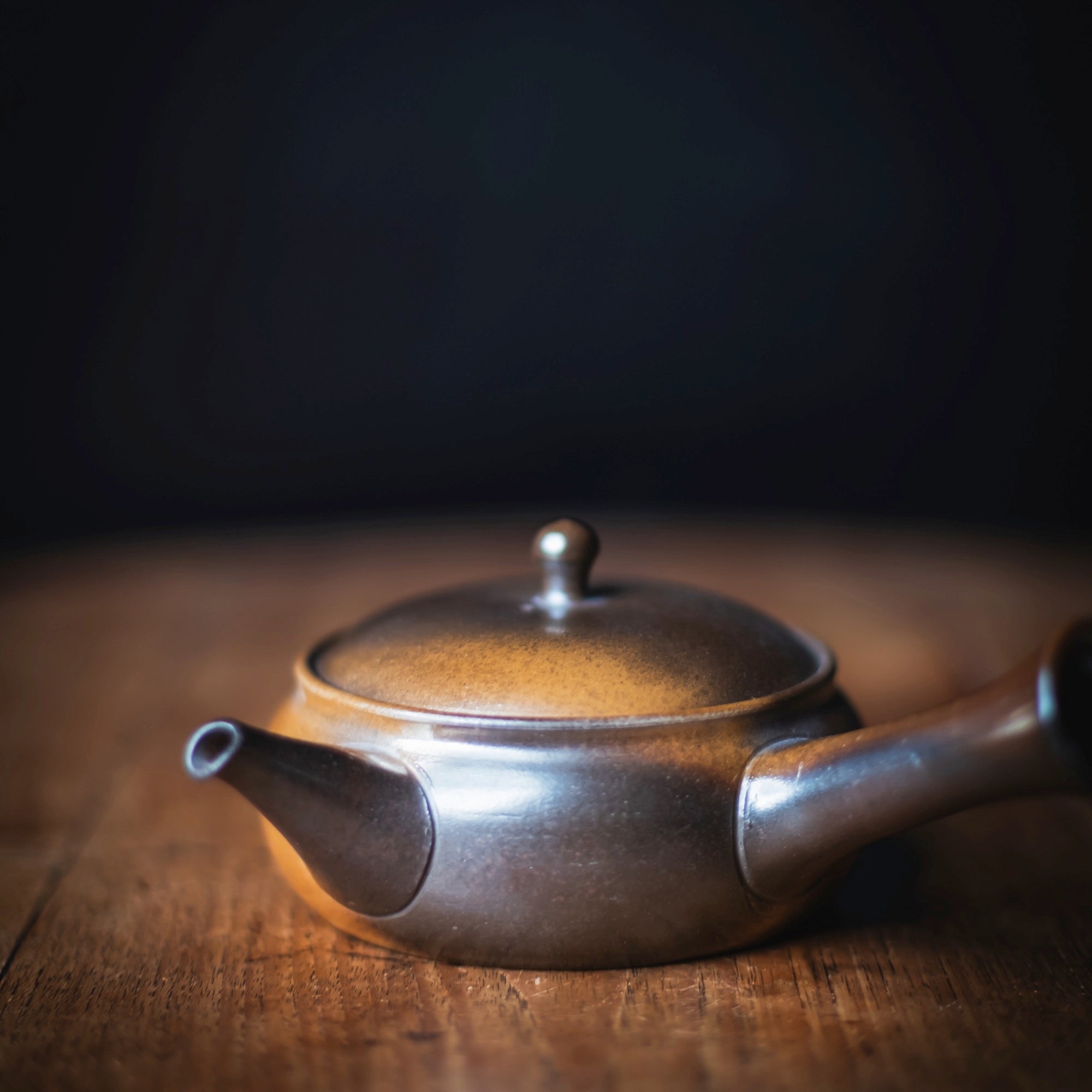
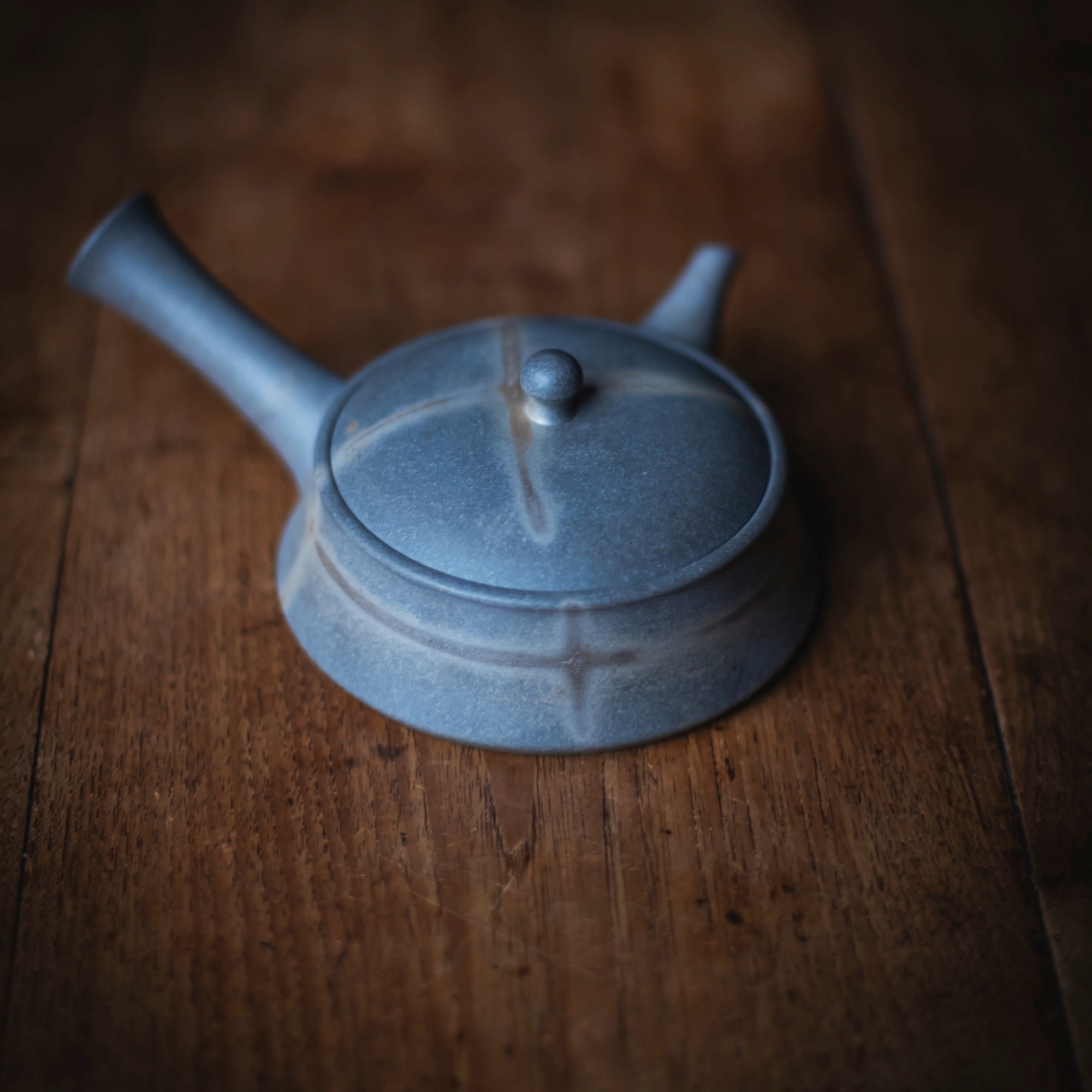
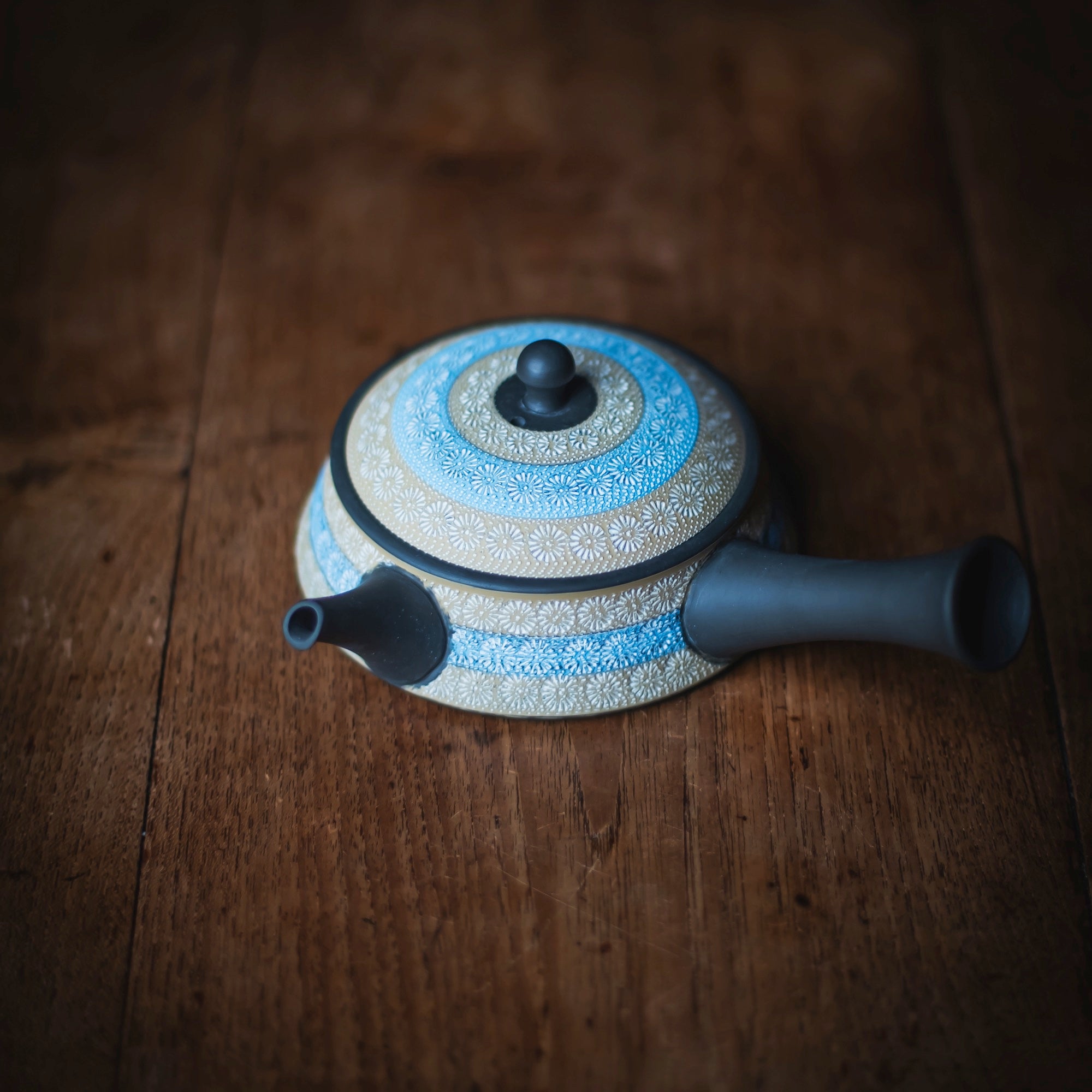
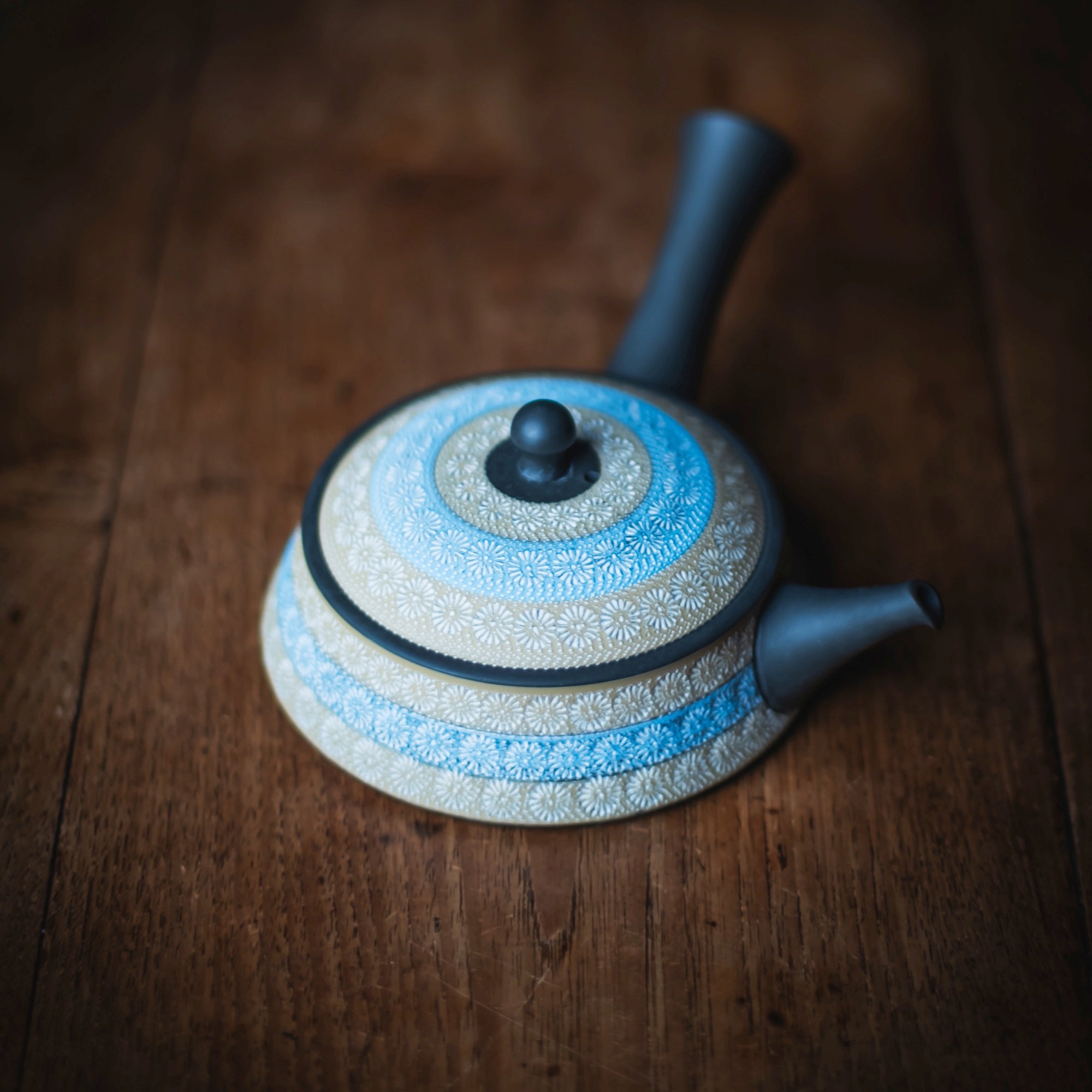
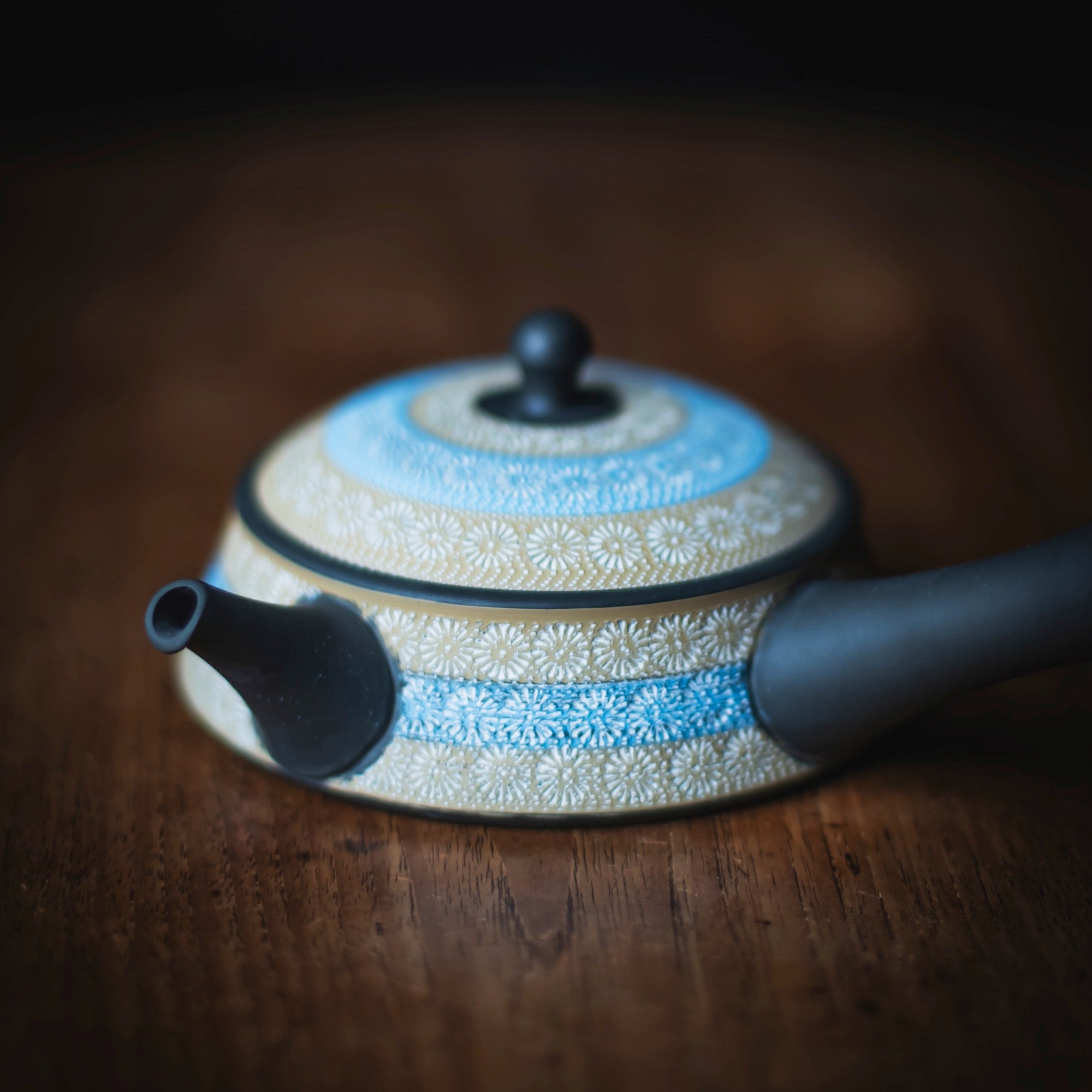
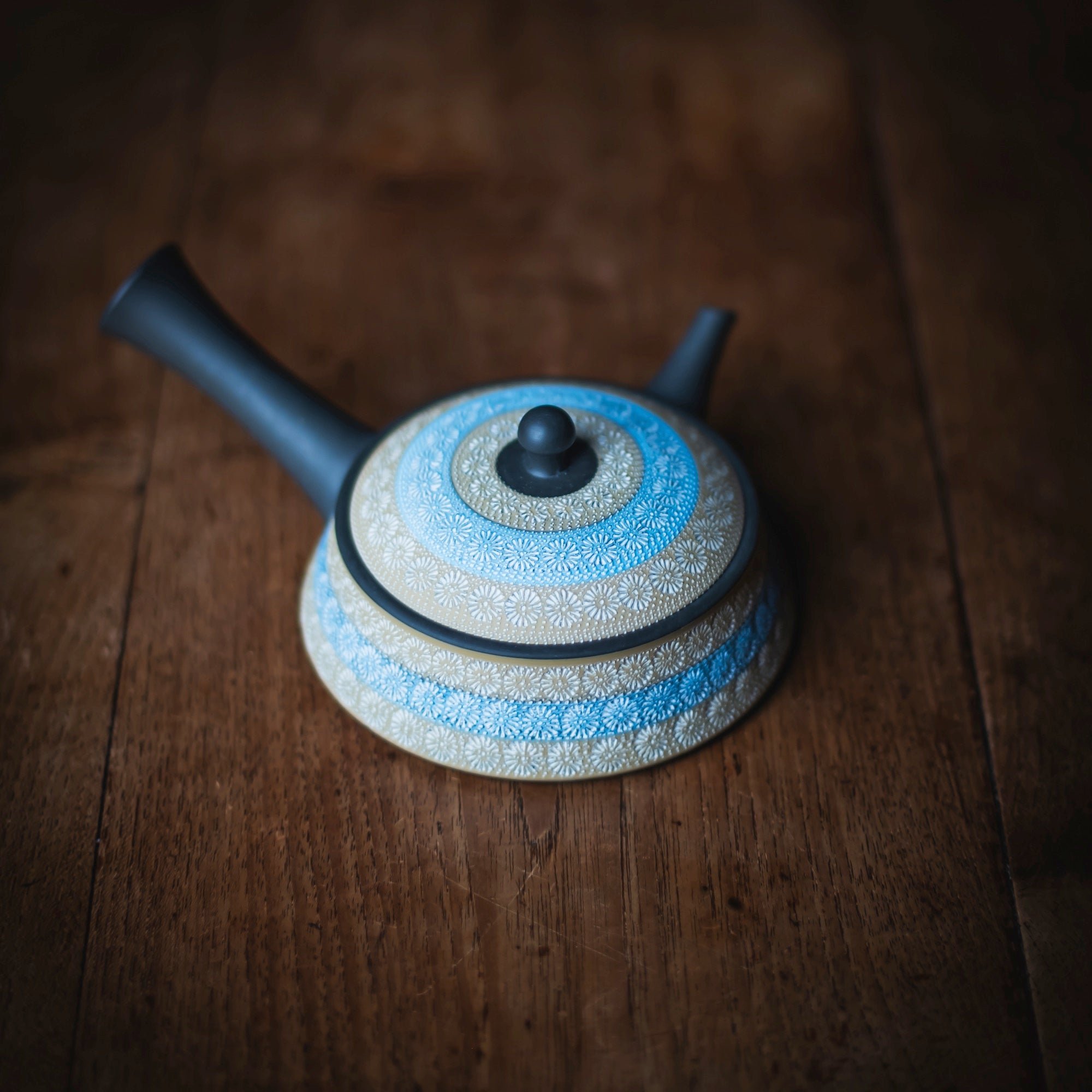
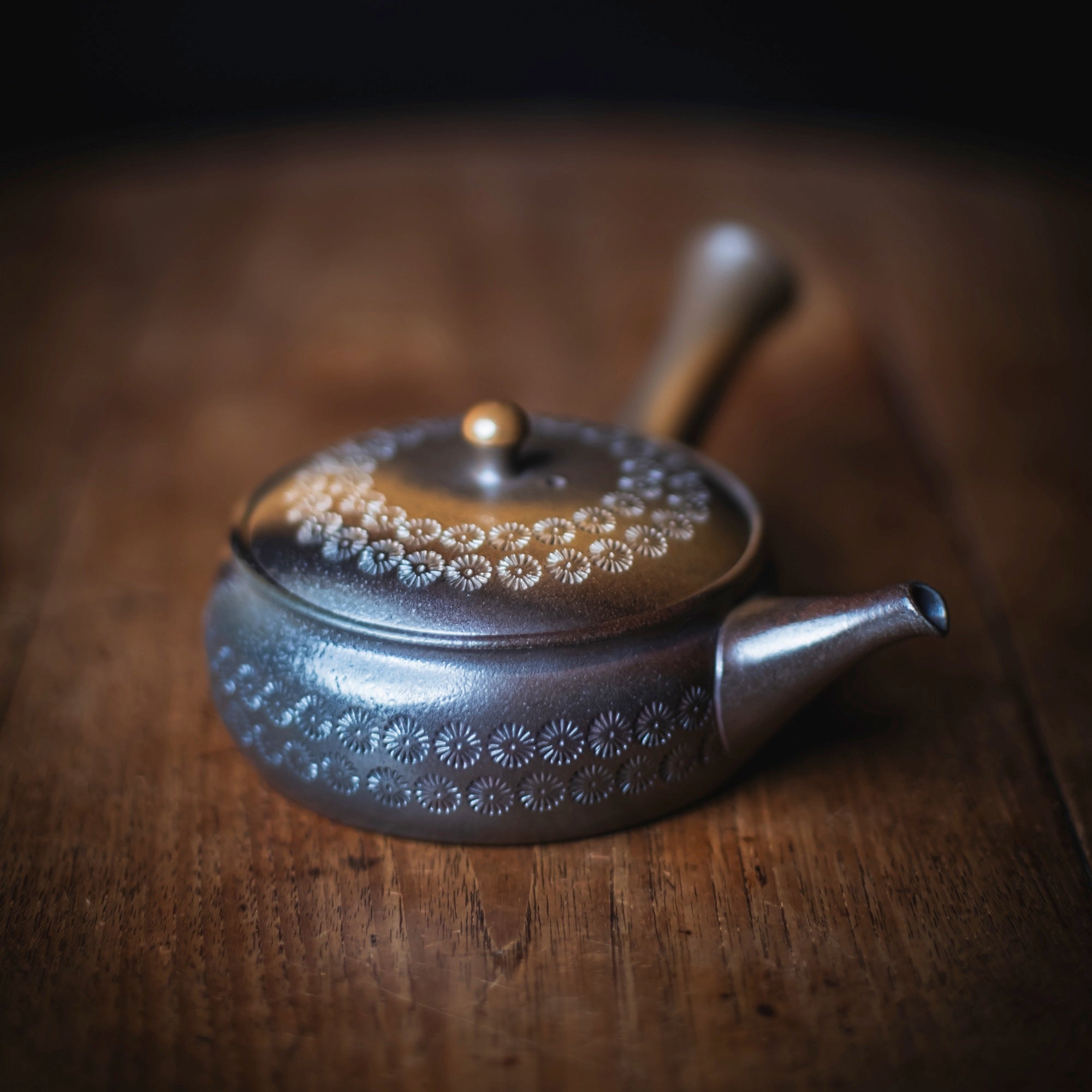
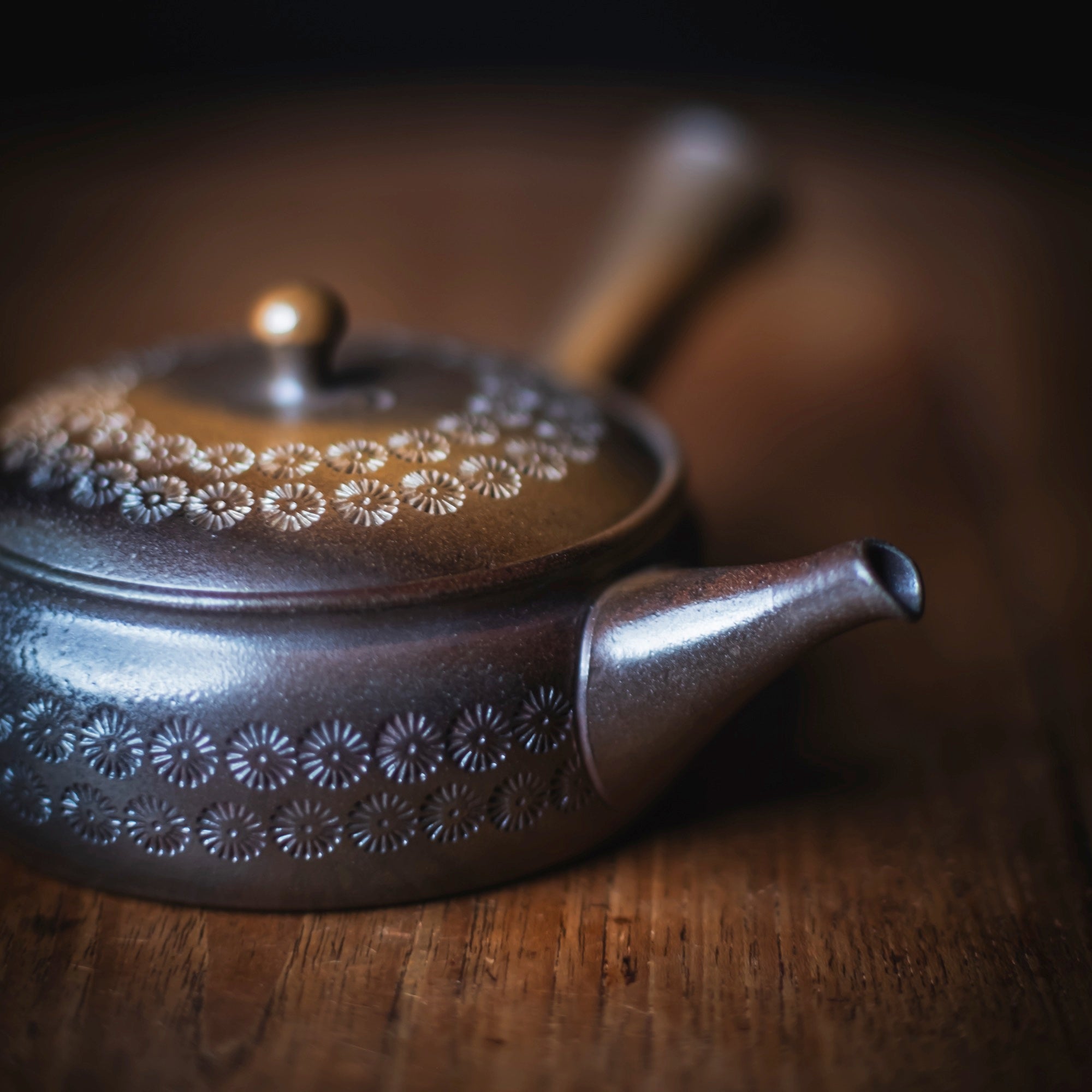
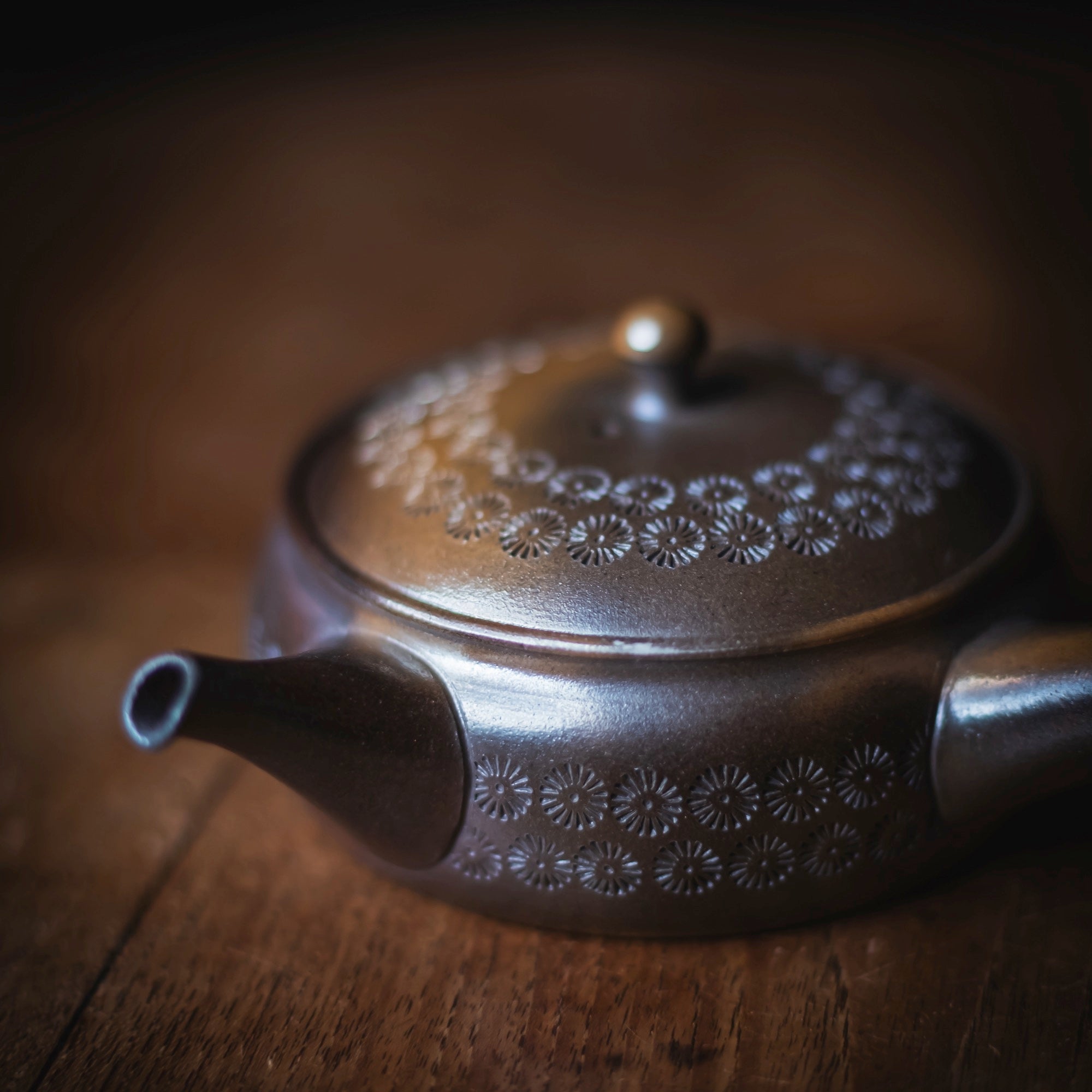
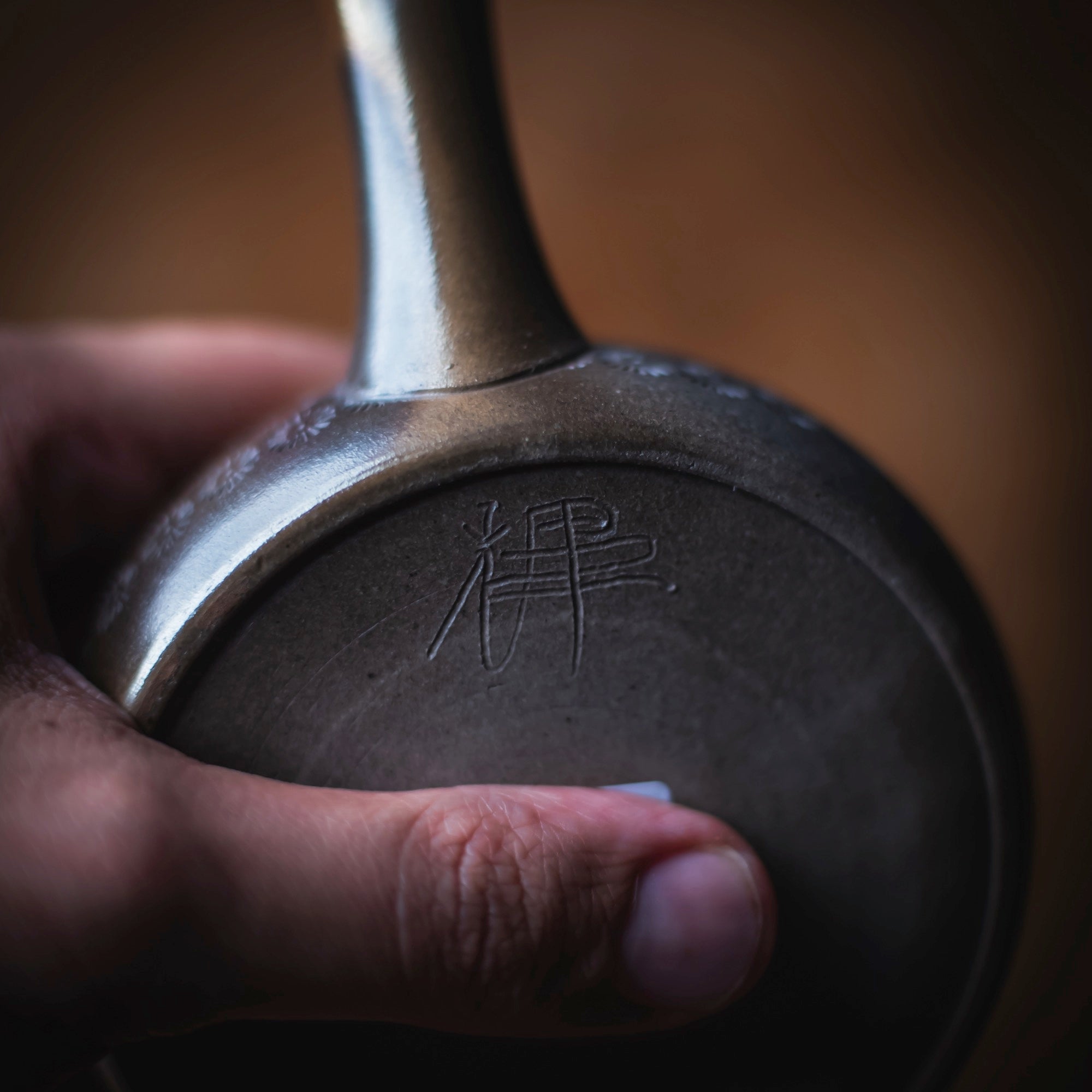
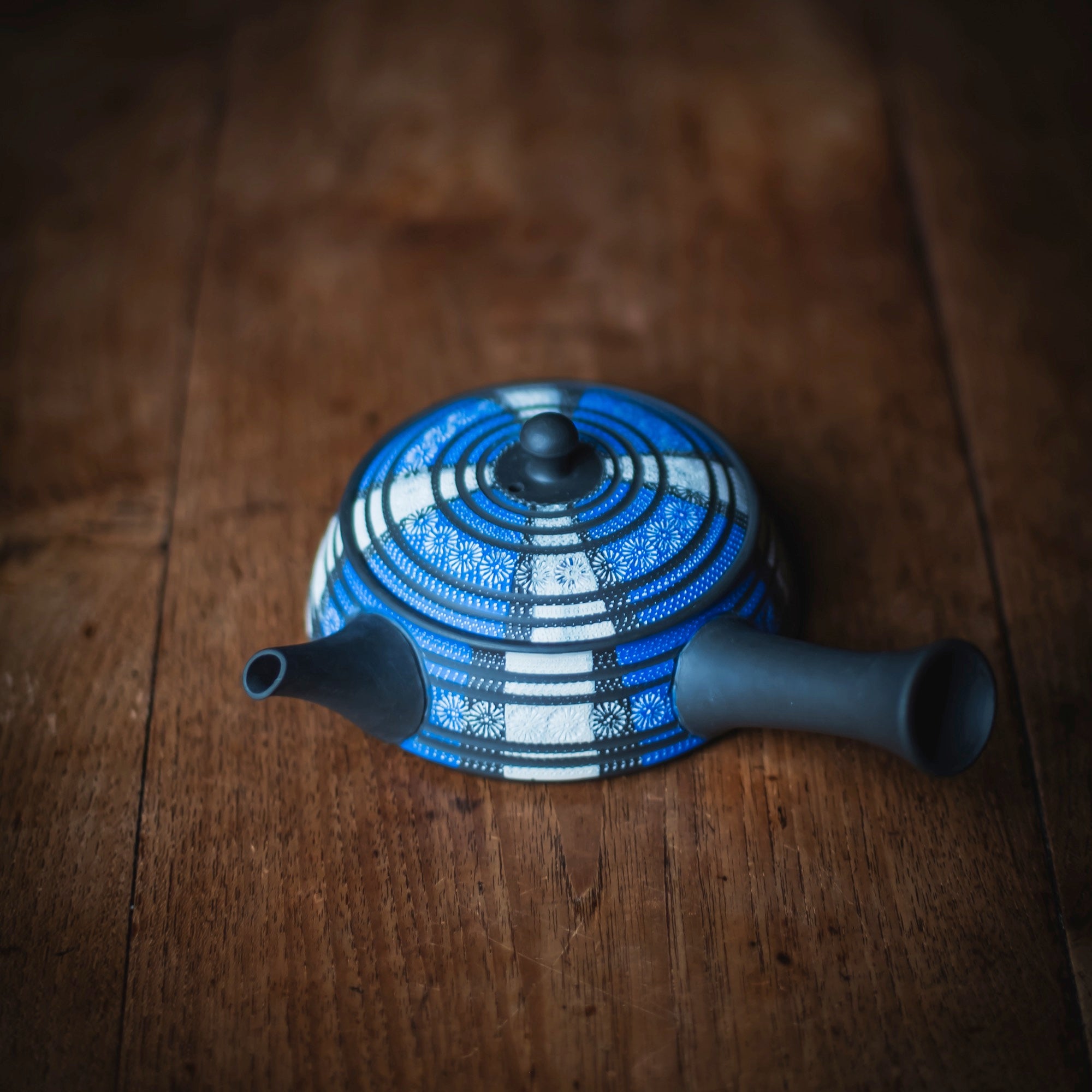
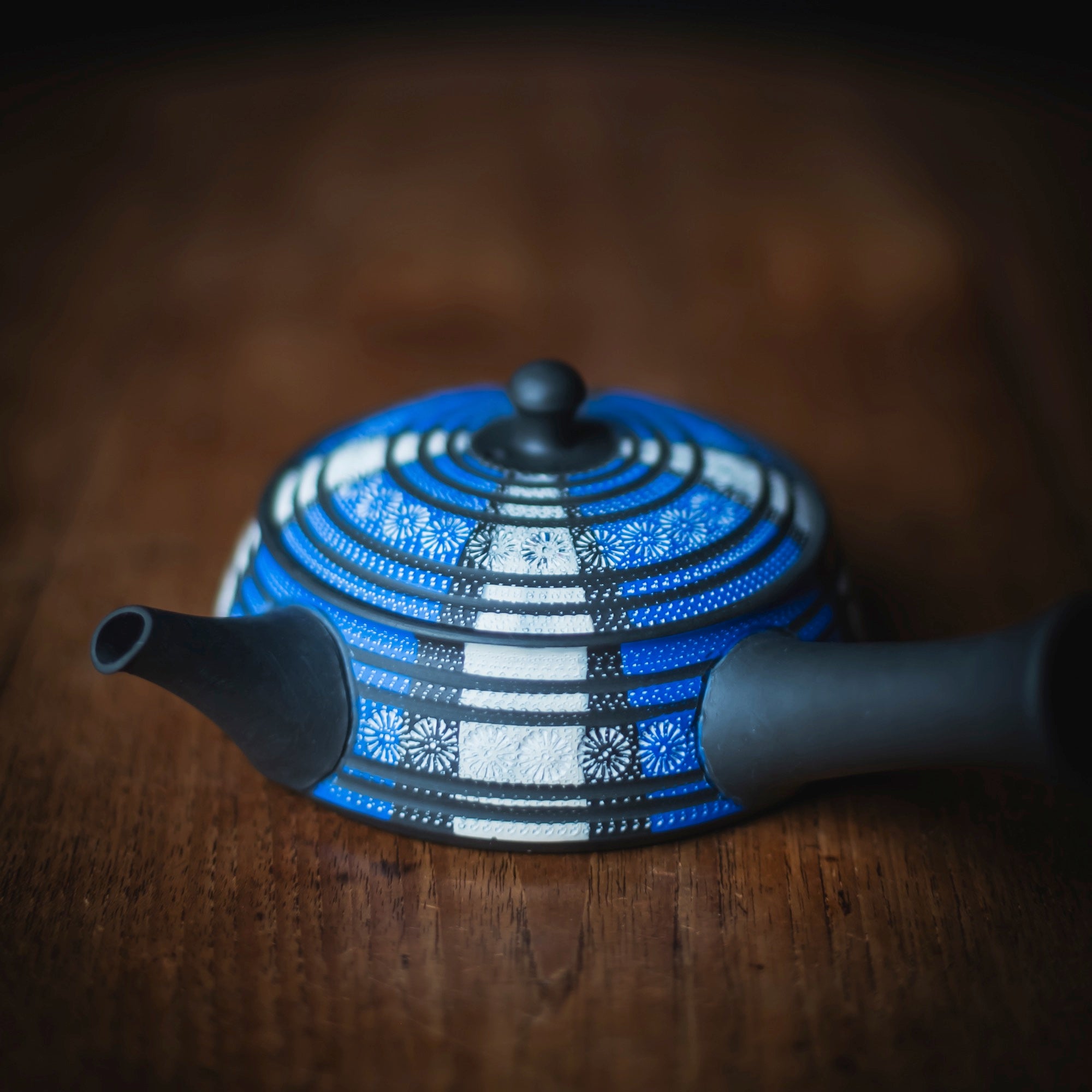
Teruyuki Isobe (b. 1938, Minami-Chita, Aichi) began his life in clay in 1954, apprenticing at the Tokoname workshop Takasuke Toen (高資陶苑), where he shaped handmade teapots for more than fifty years before opening his own kiln, Teruyuki-gama (輝之窯), in 2007. He is best known for inka (印花) — floral motifs pressed into layered coloured clay one stamp at a time — set on remarkably thin, light flat-form (“hiragata”) pots whose lids close with quiet precision.
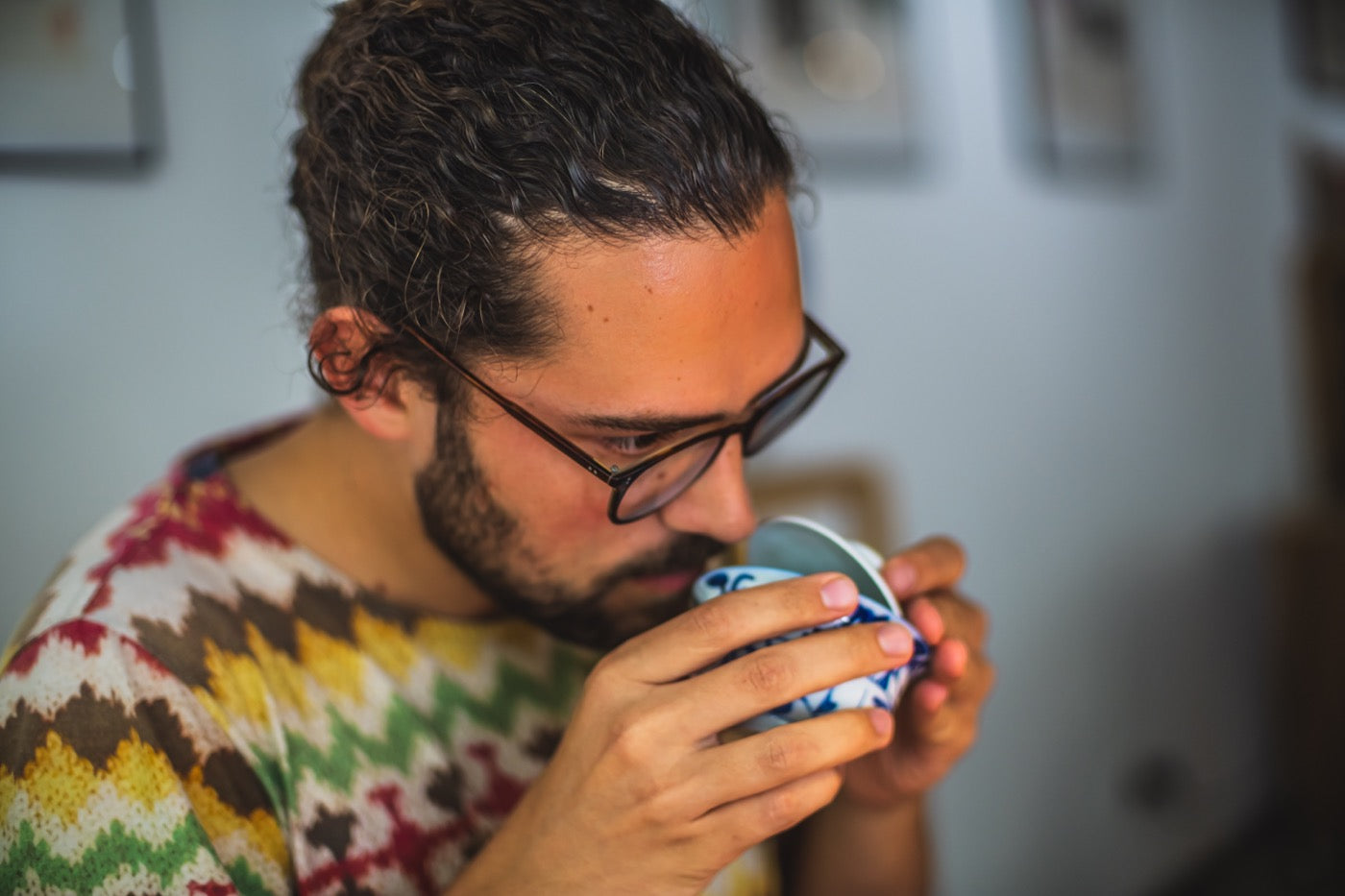
“The kyusu teapot is Oscar's favourite work of Tokoname ware — by master artisan Teruyuki Isobe.”
PAPERSKY, “Japanese Fika”
Short Bio
- Born 1938 in Minami-Chita, Aichi; one of the most respected living kyusu makers of Tokoname, Japan's oldest pottery town.
- Apprenticed in 1954 (aged around sixteen) at the Tokoname workshop Takasuke Toen (高資陶苑), where he made handmade teapots for fifty-three years.
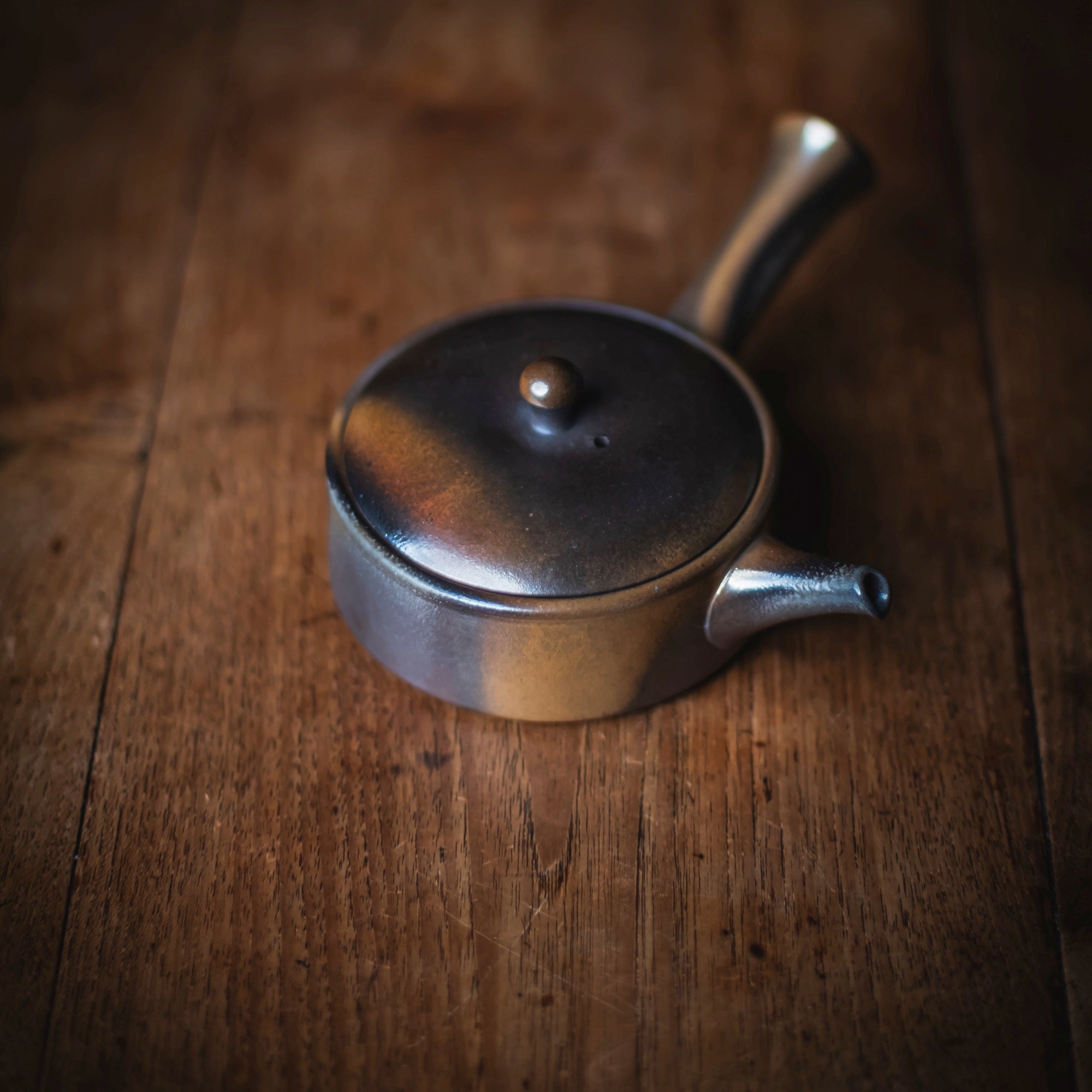
- Established his own kiln, Teruyuki-gama (輝之窯), in 2007, and developed his signature flat-form inka series from around 2013.
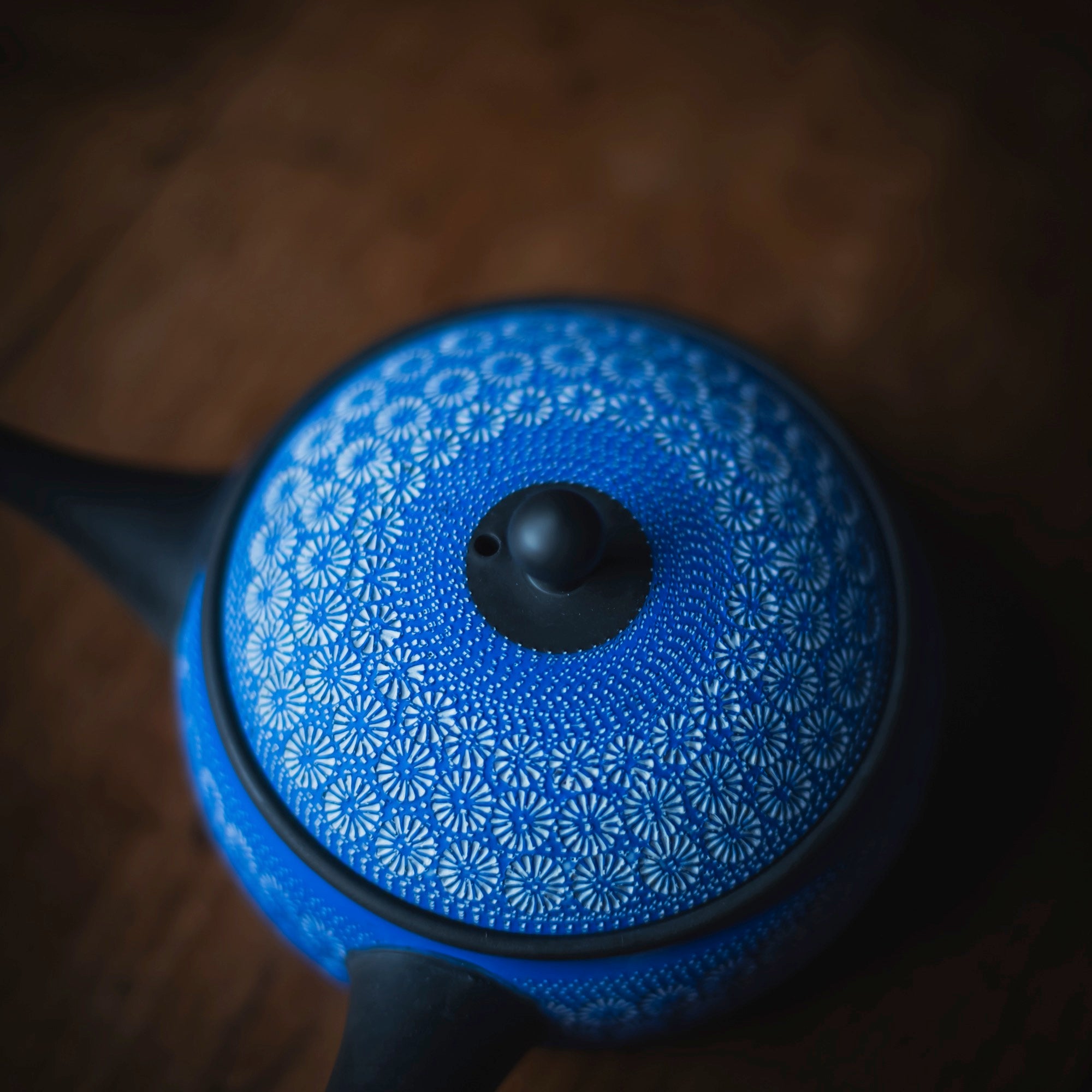
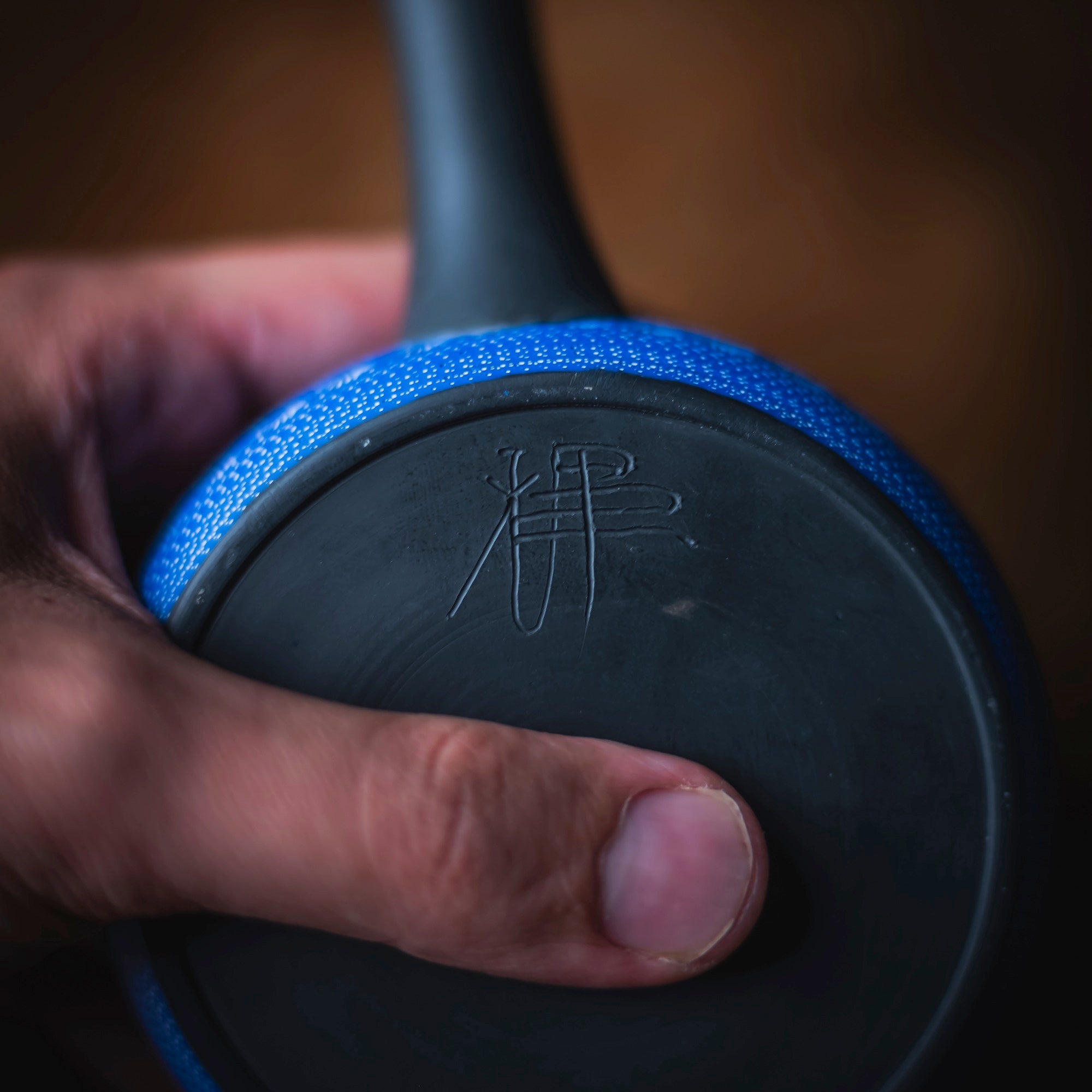
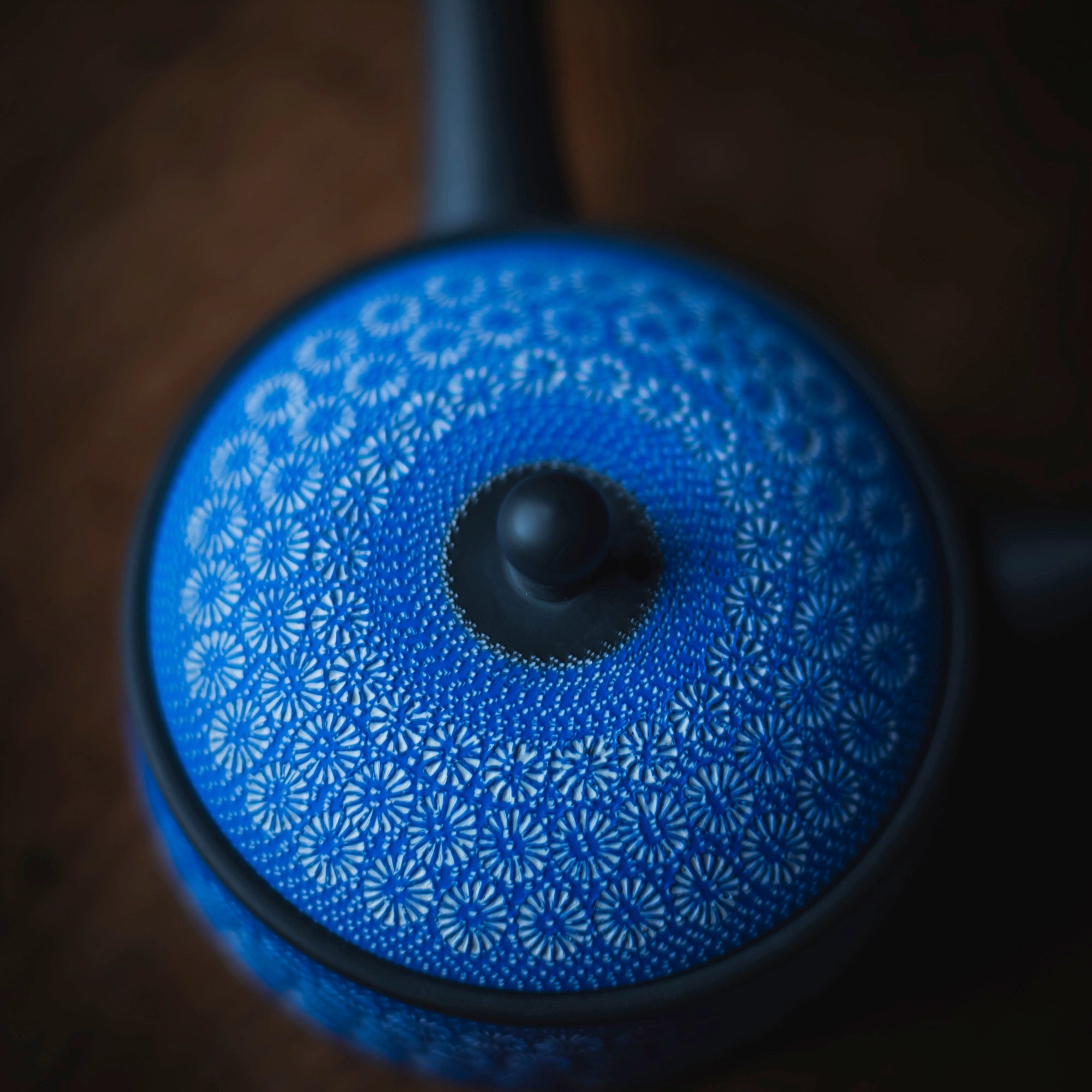
- Best known for inka (印花) decoration — floral patterns hand-pressed one stamp at a time into layered coloured clay, a Tokoname descendant of Korean mishima ware, with often 100 to 200 impressions on a single pot and up to some 500 on larger pieces.
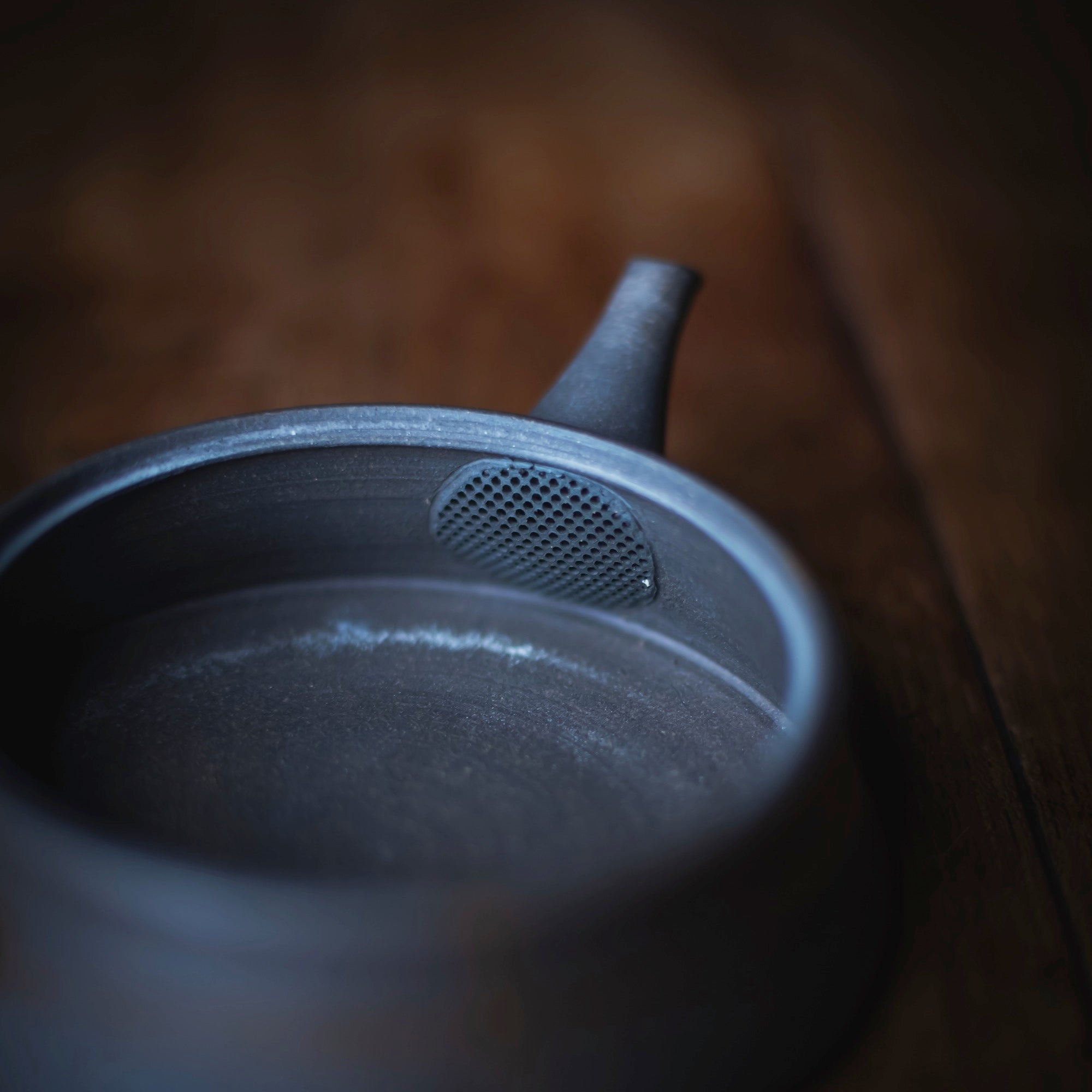
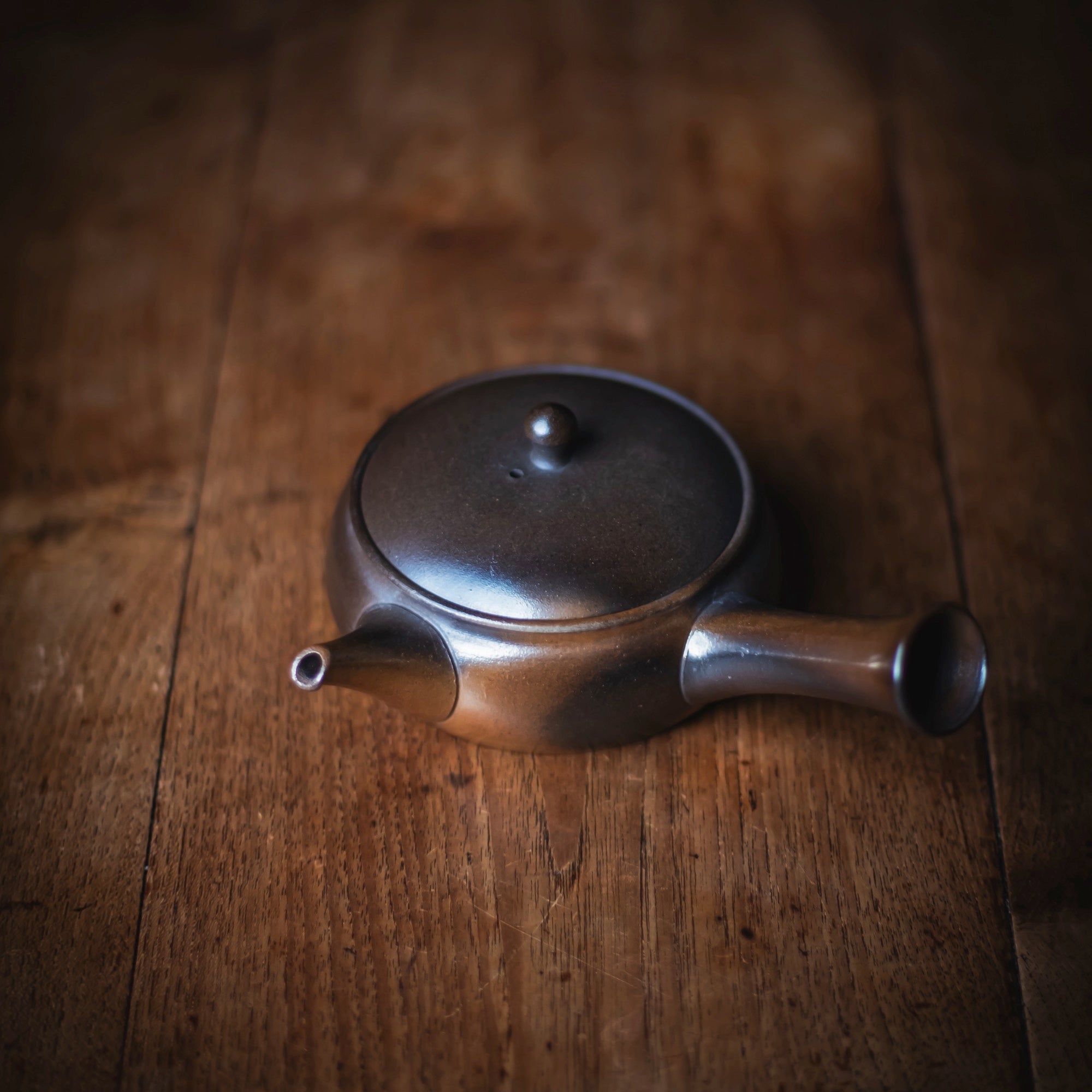
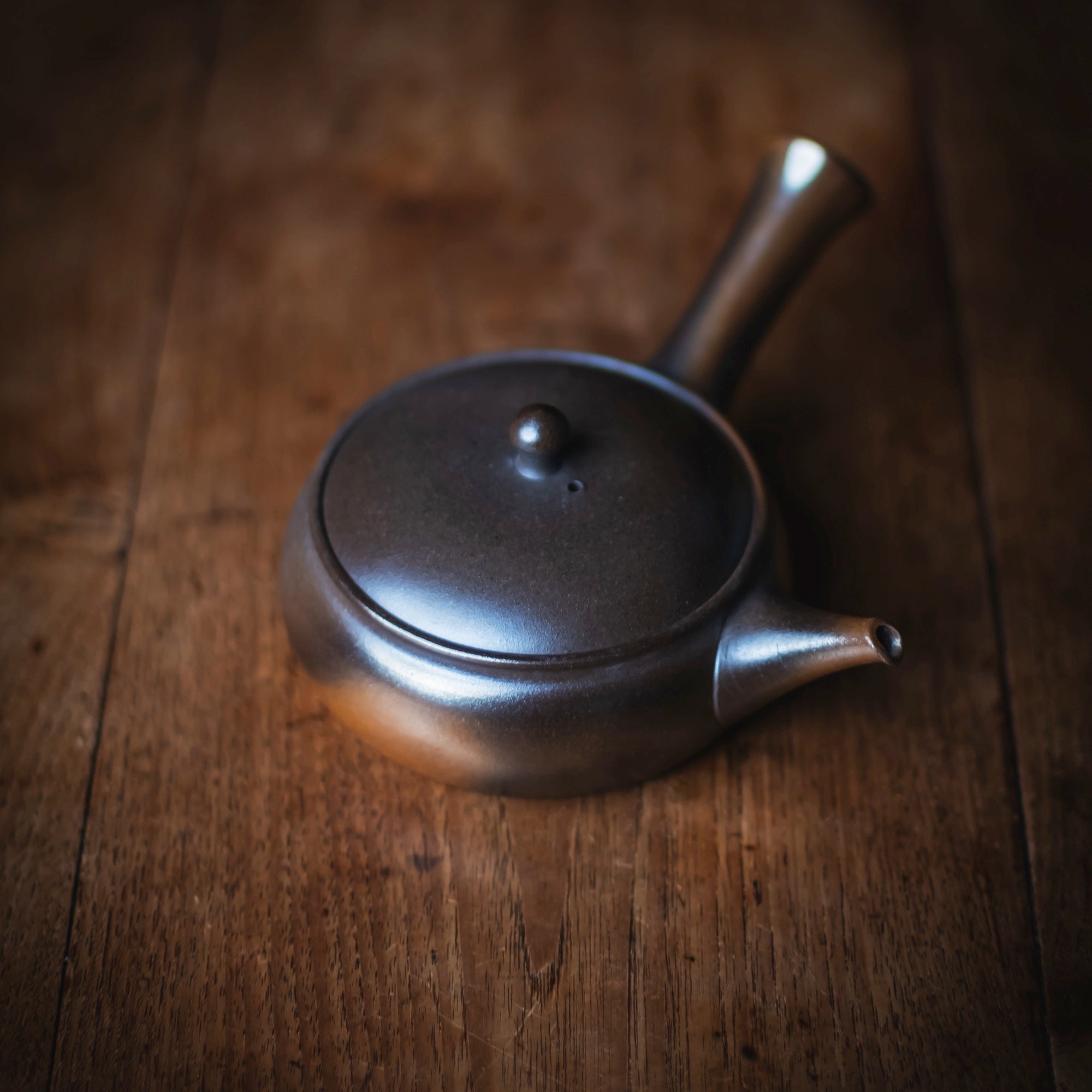
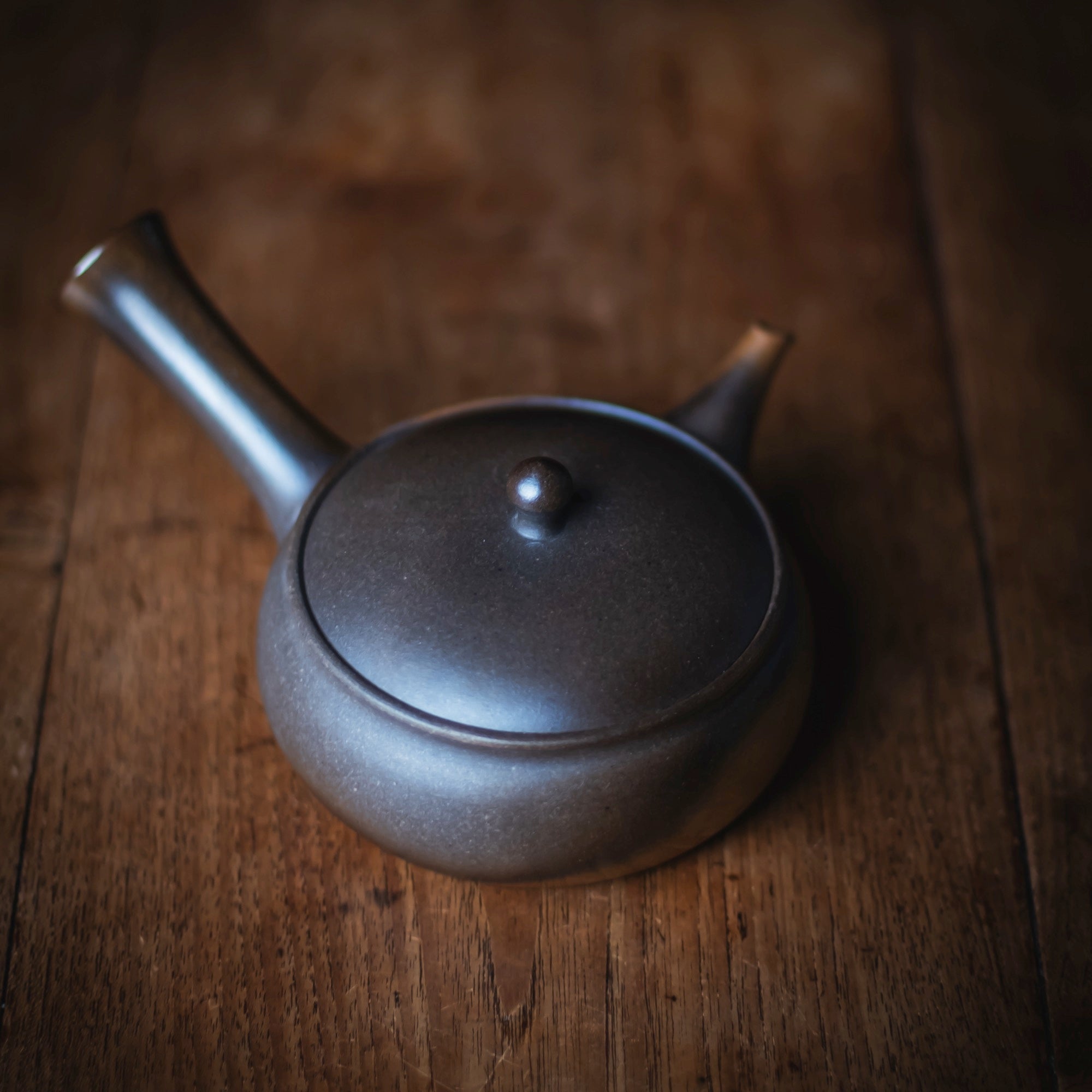
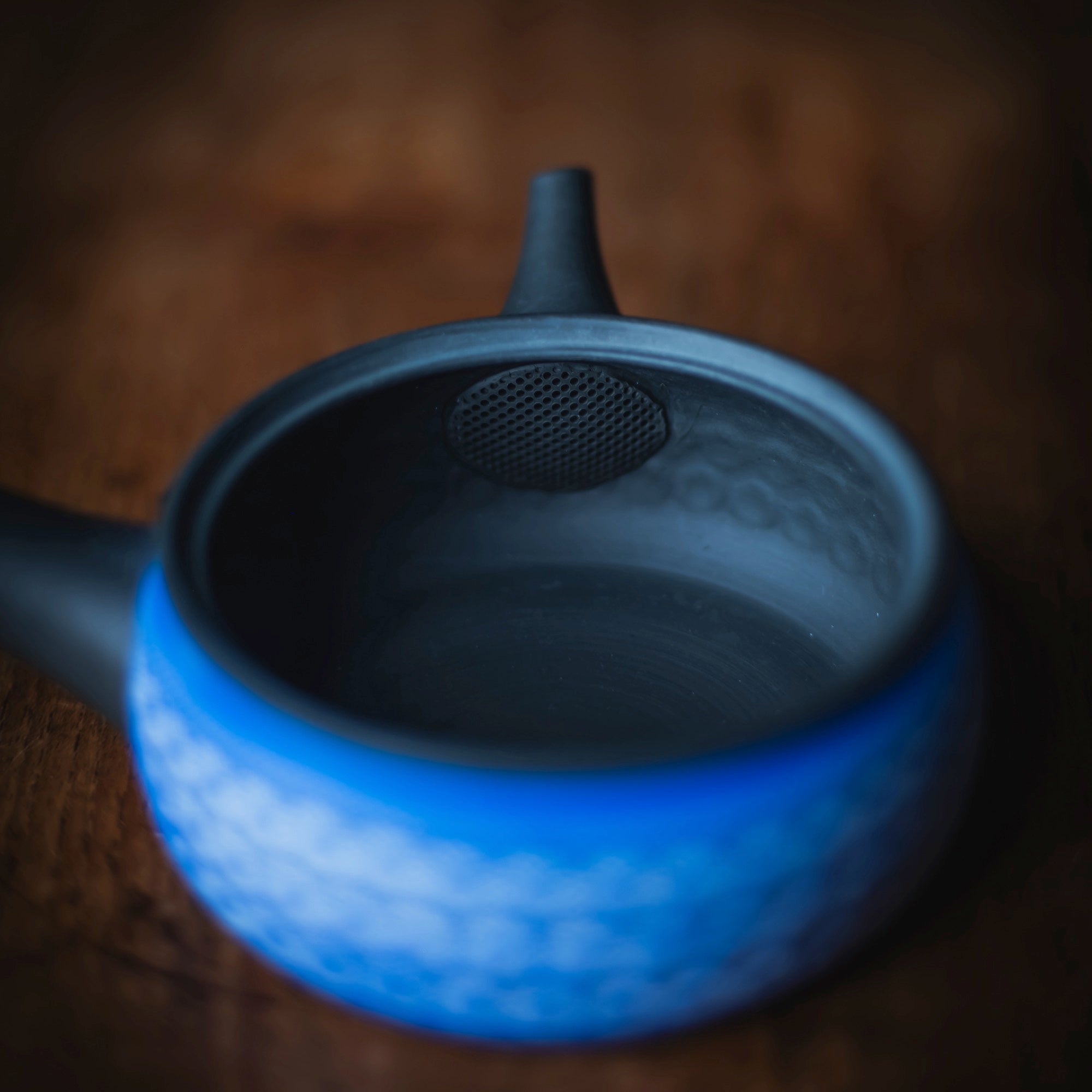
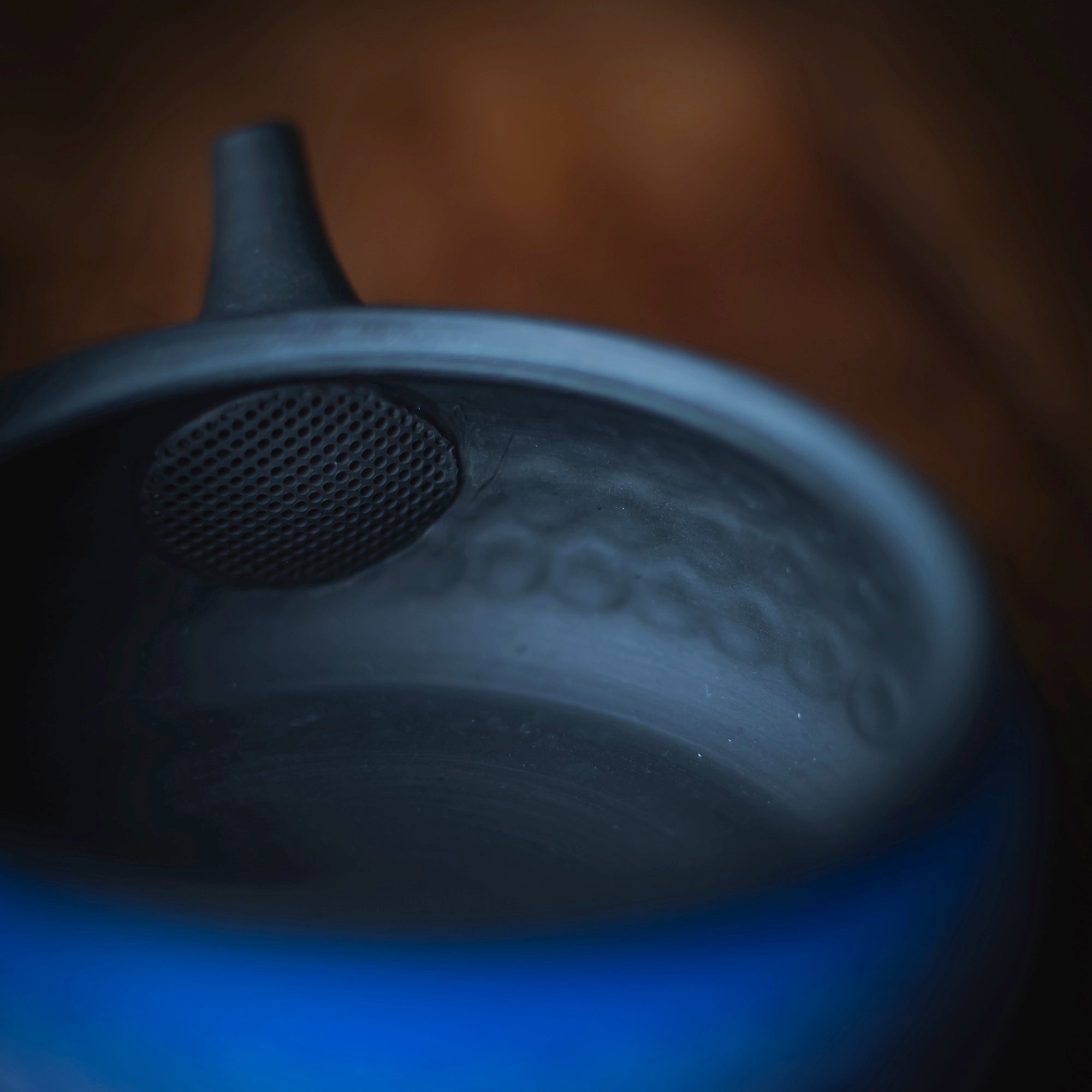
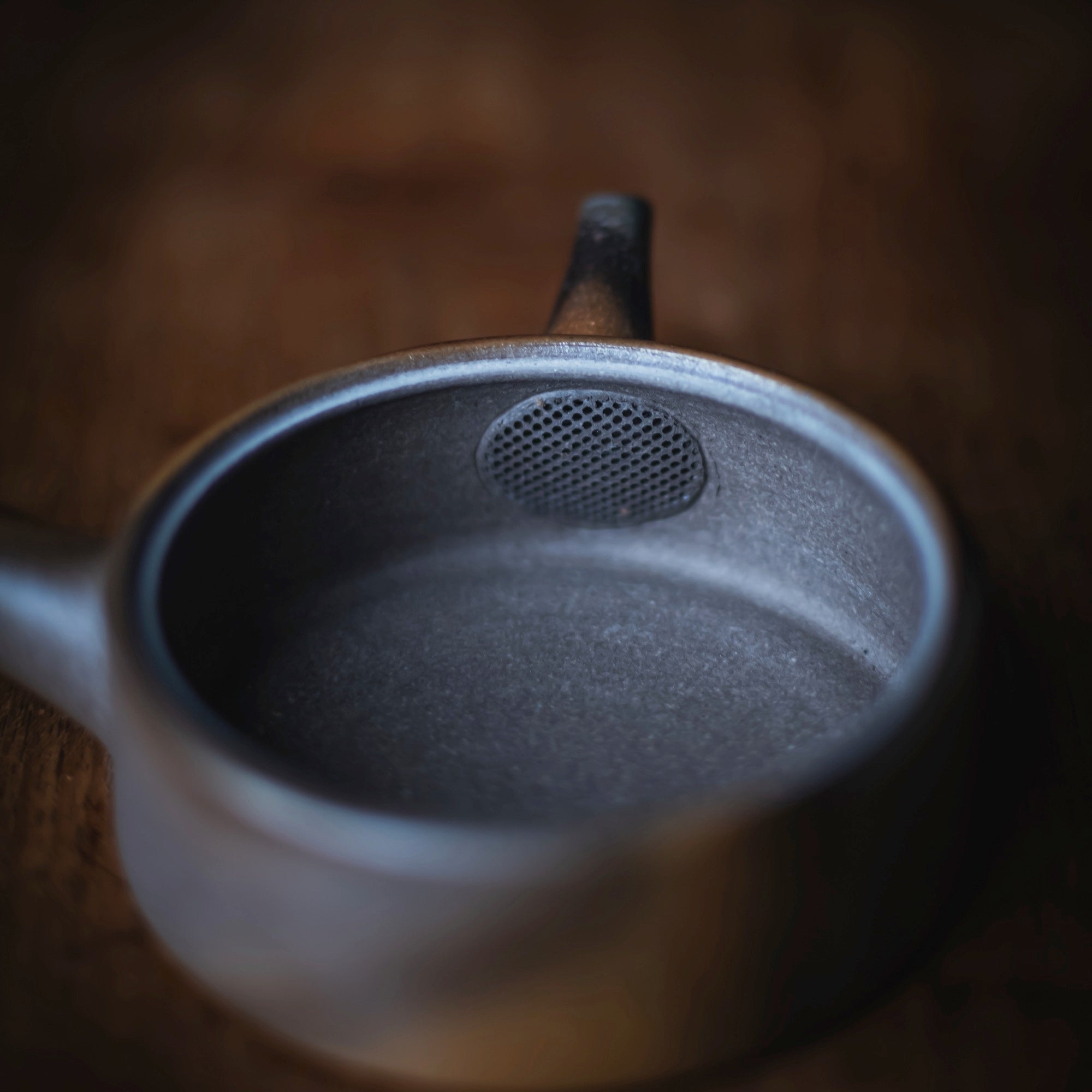
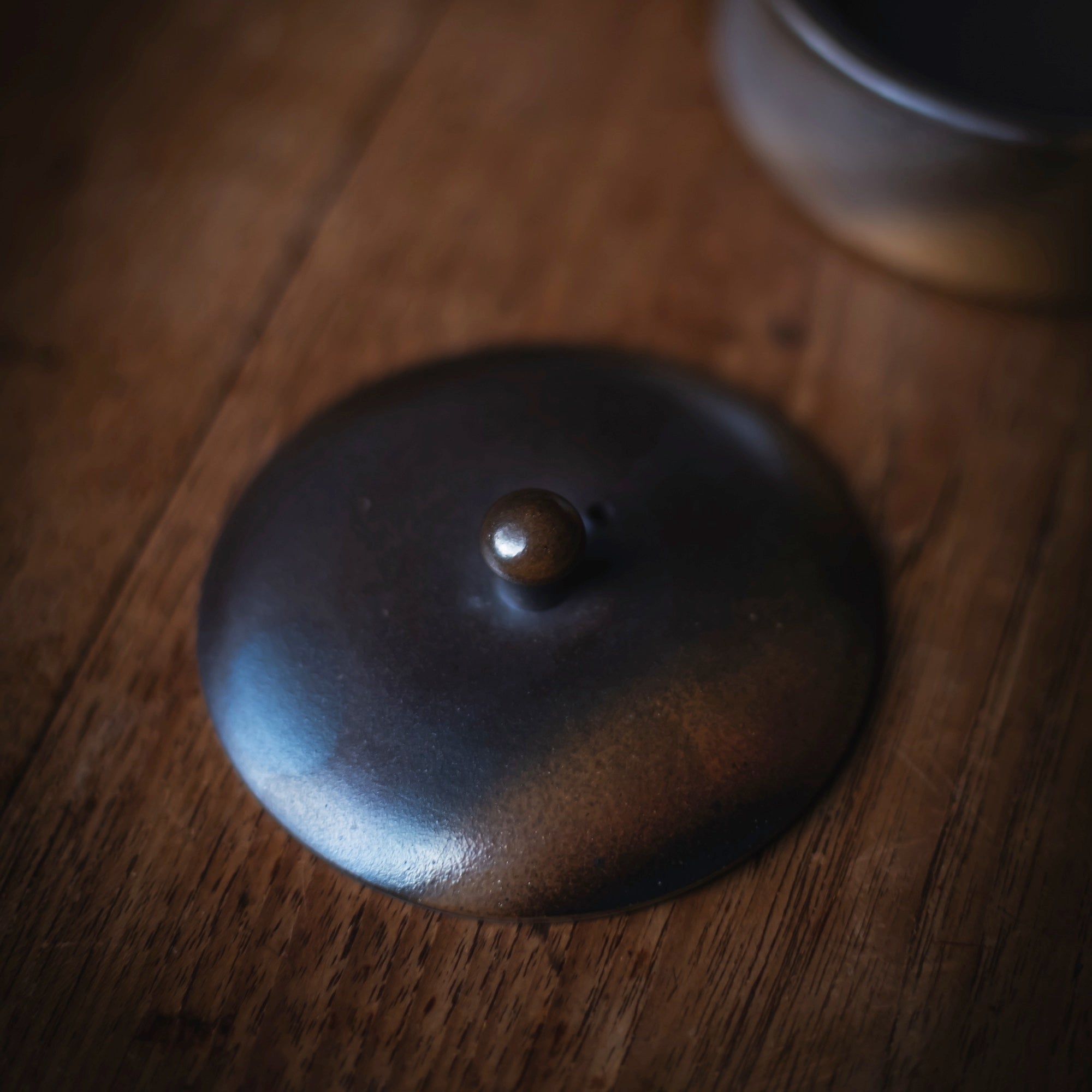
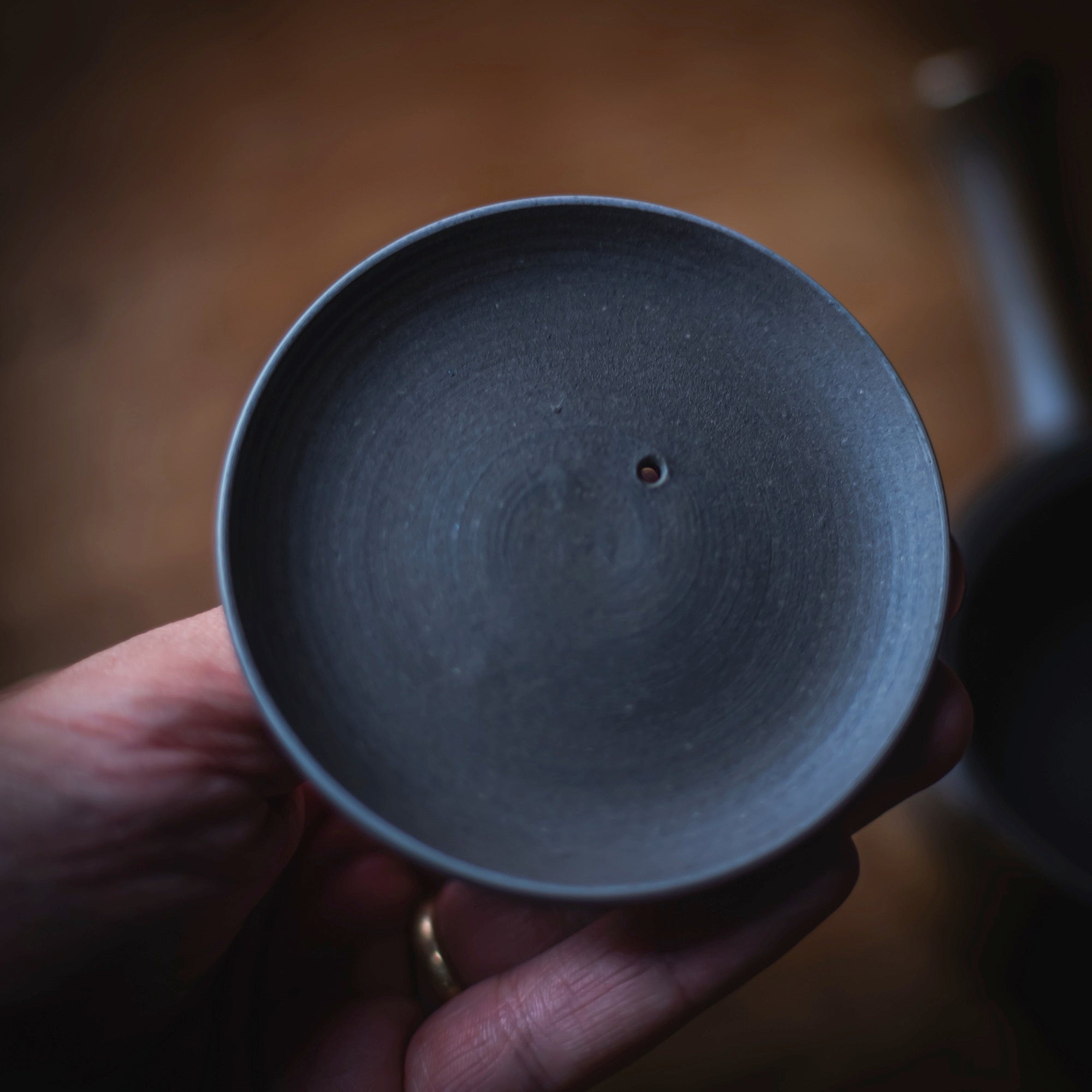
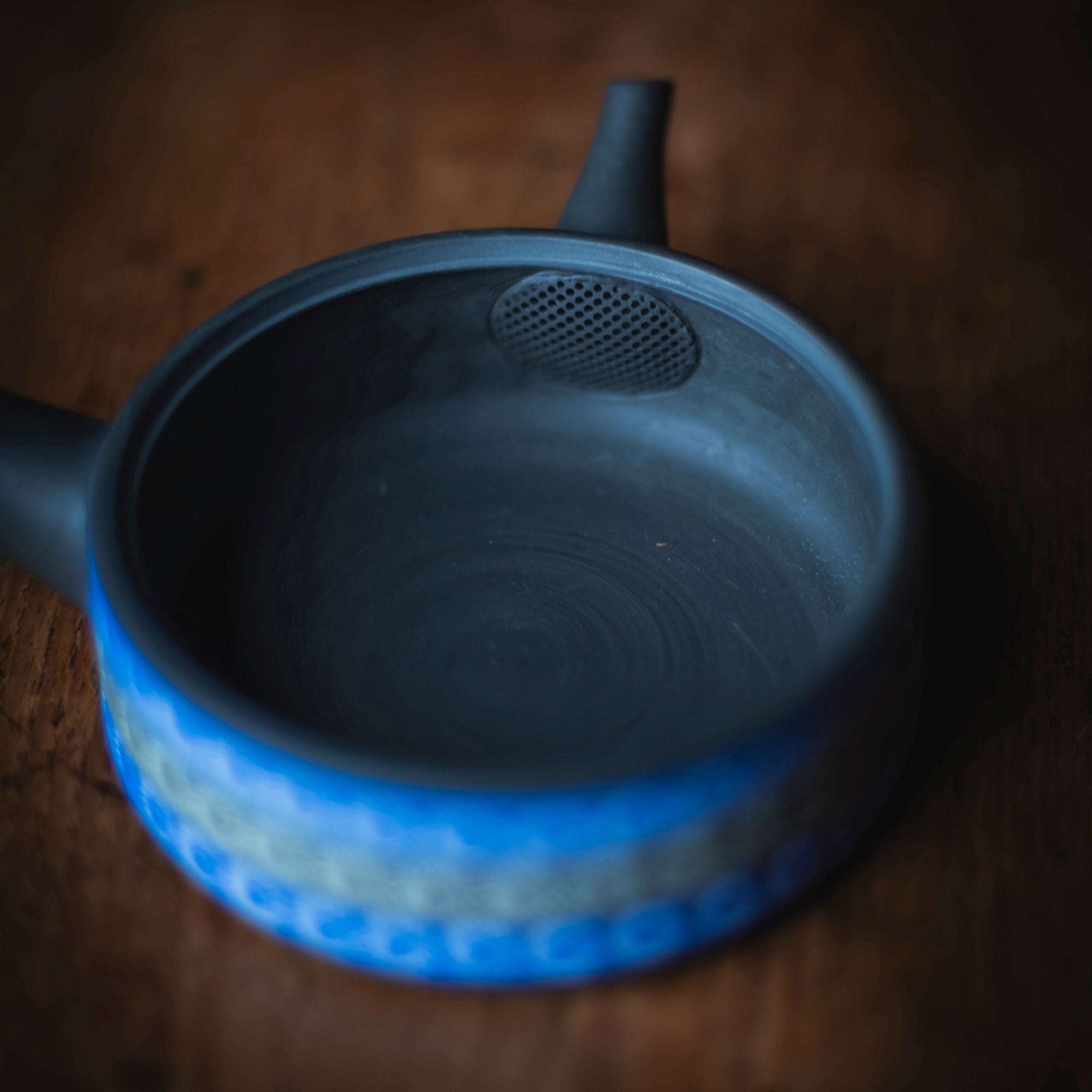
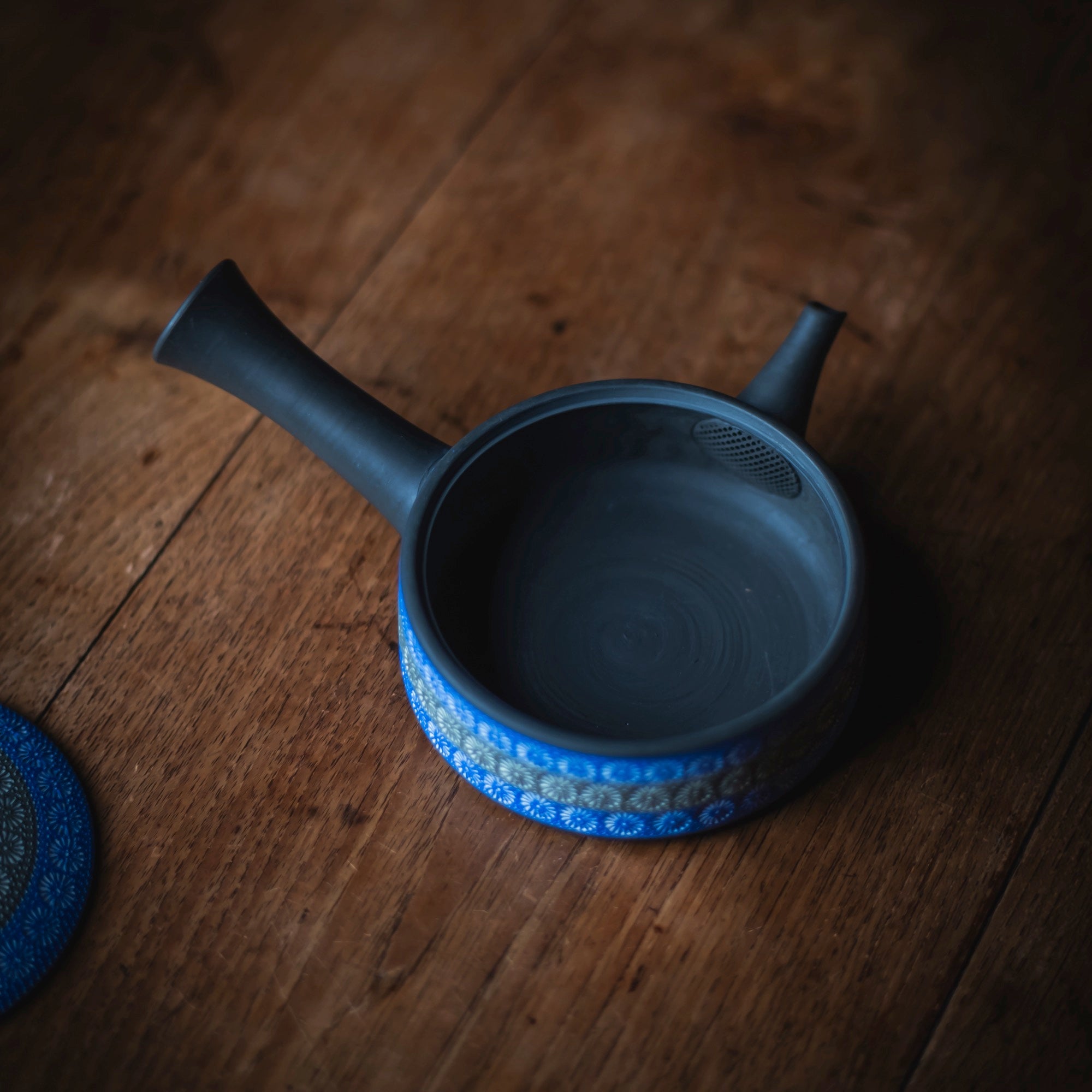
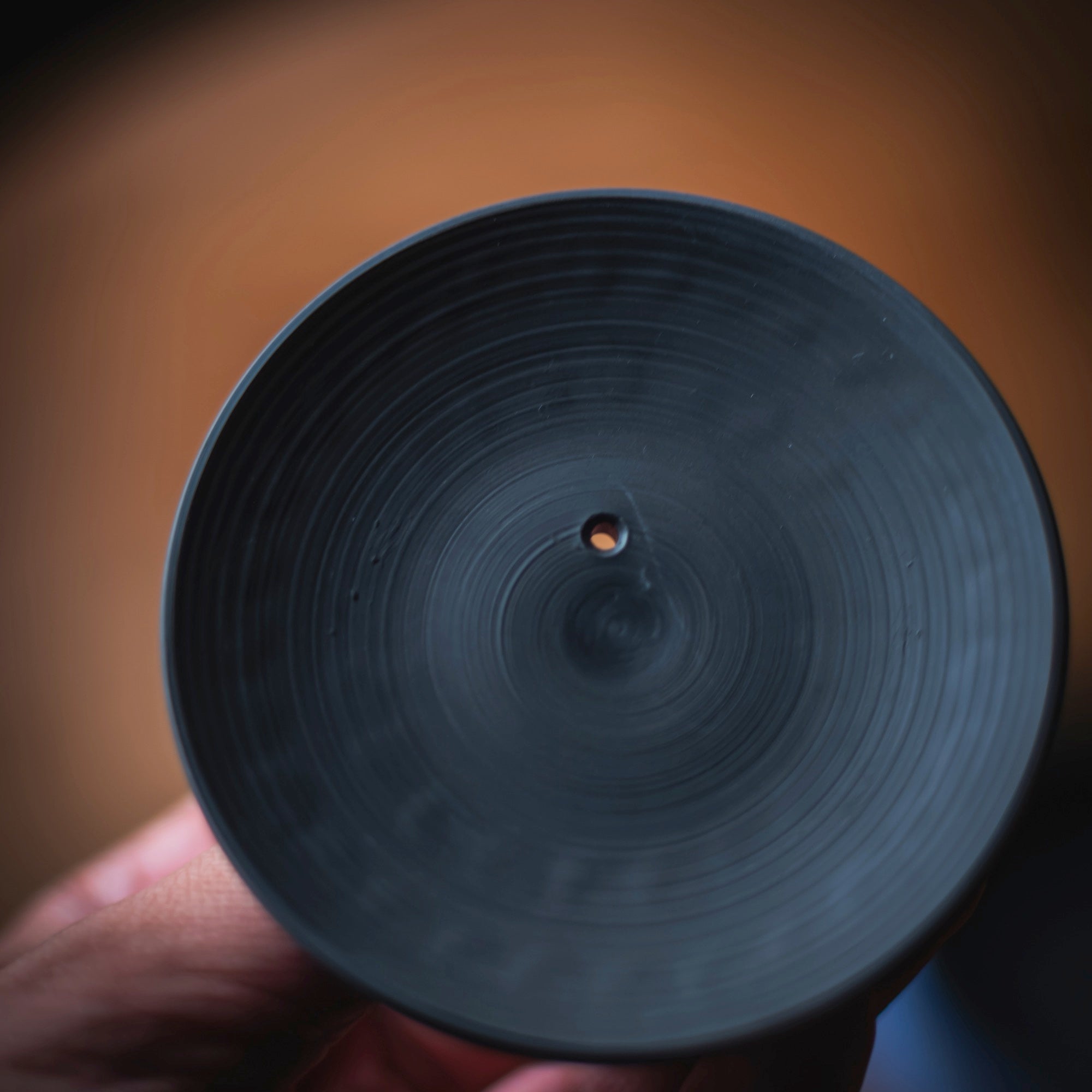
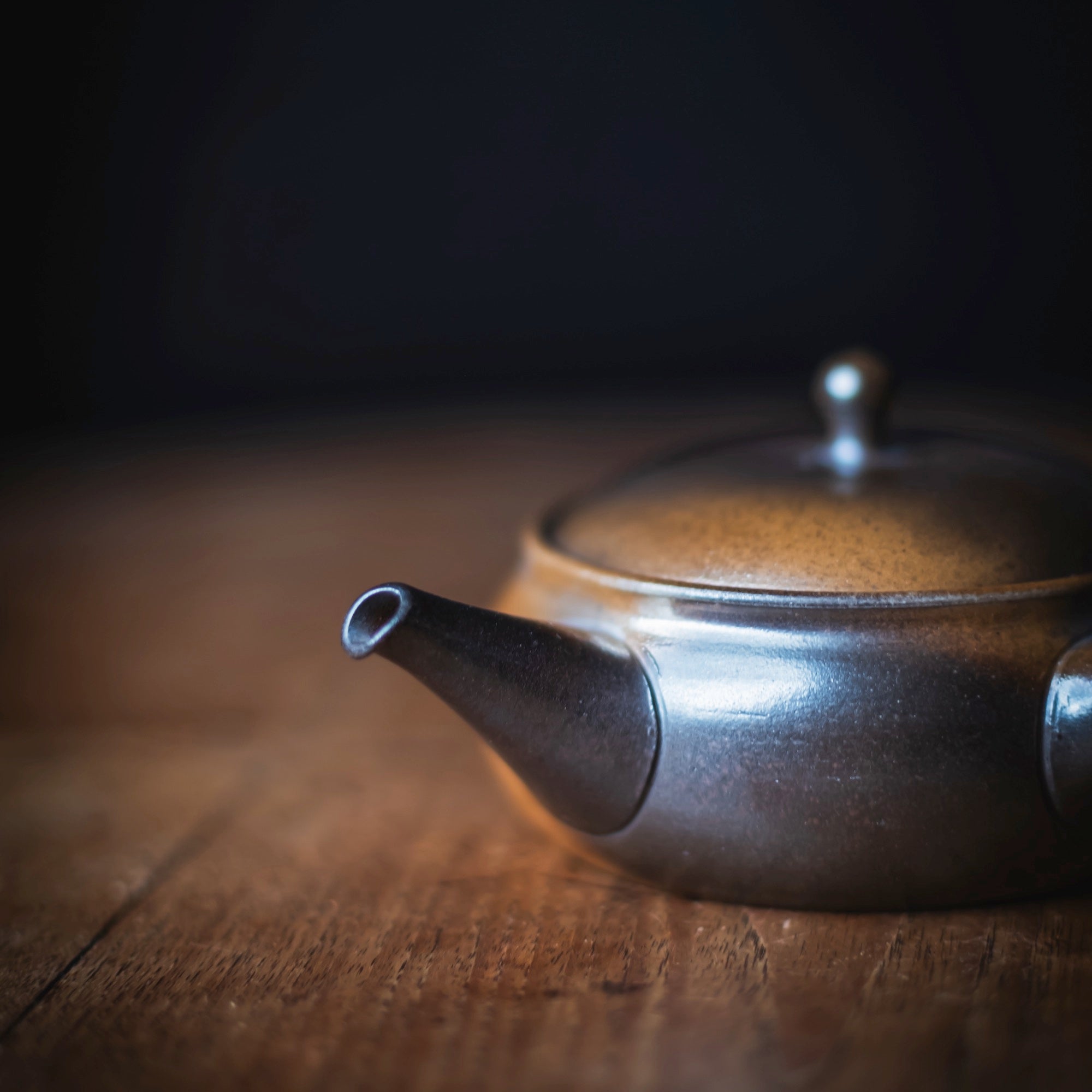
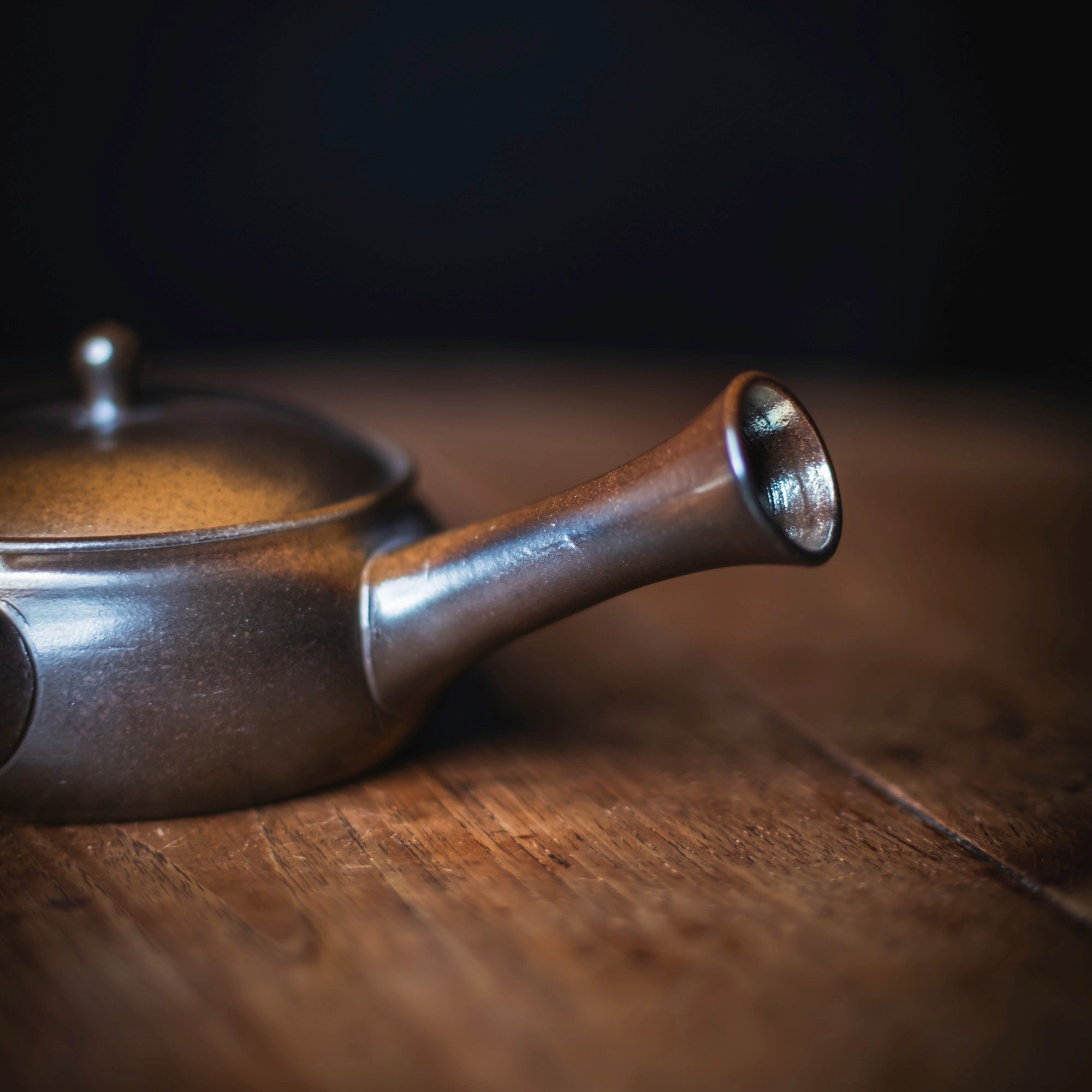
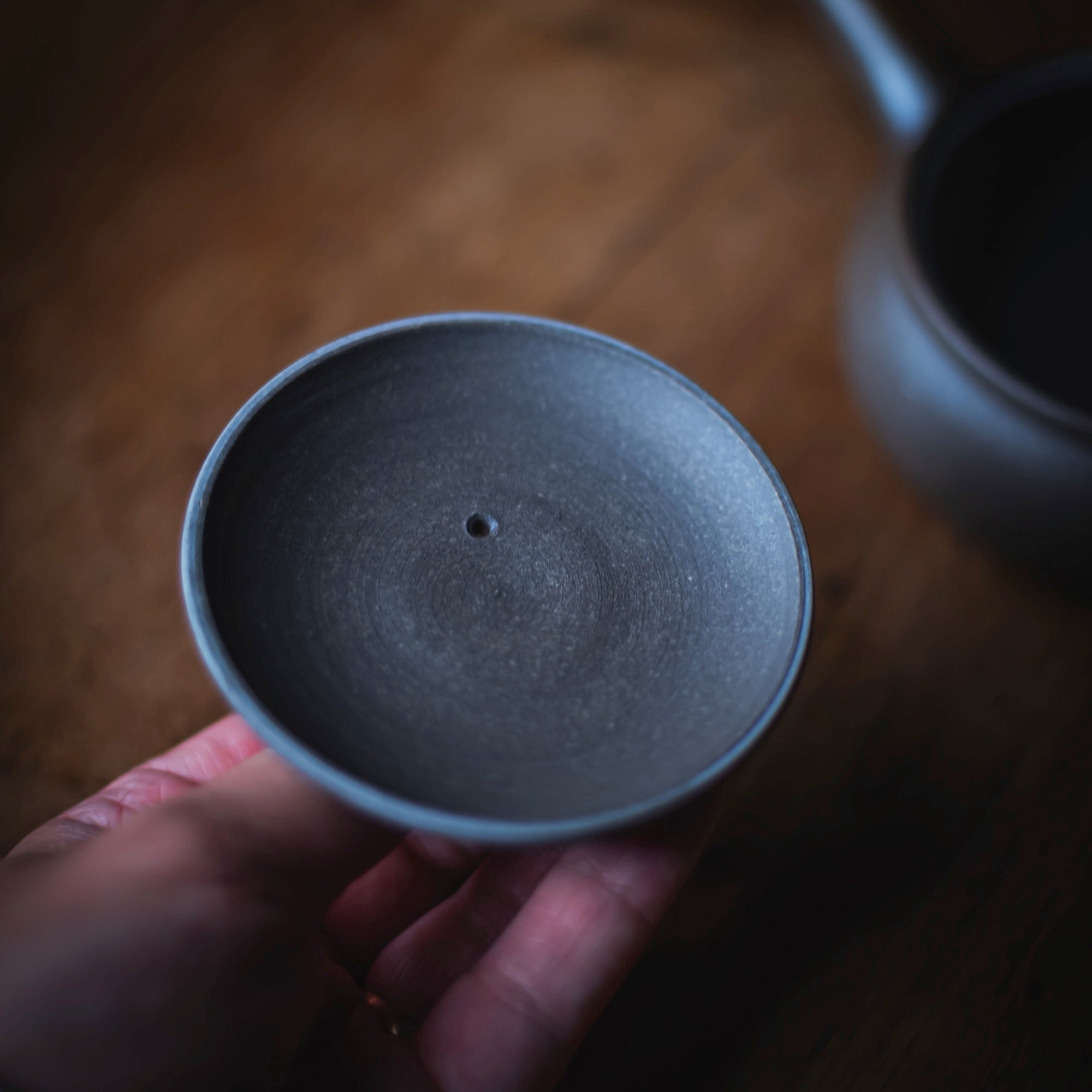
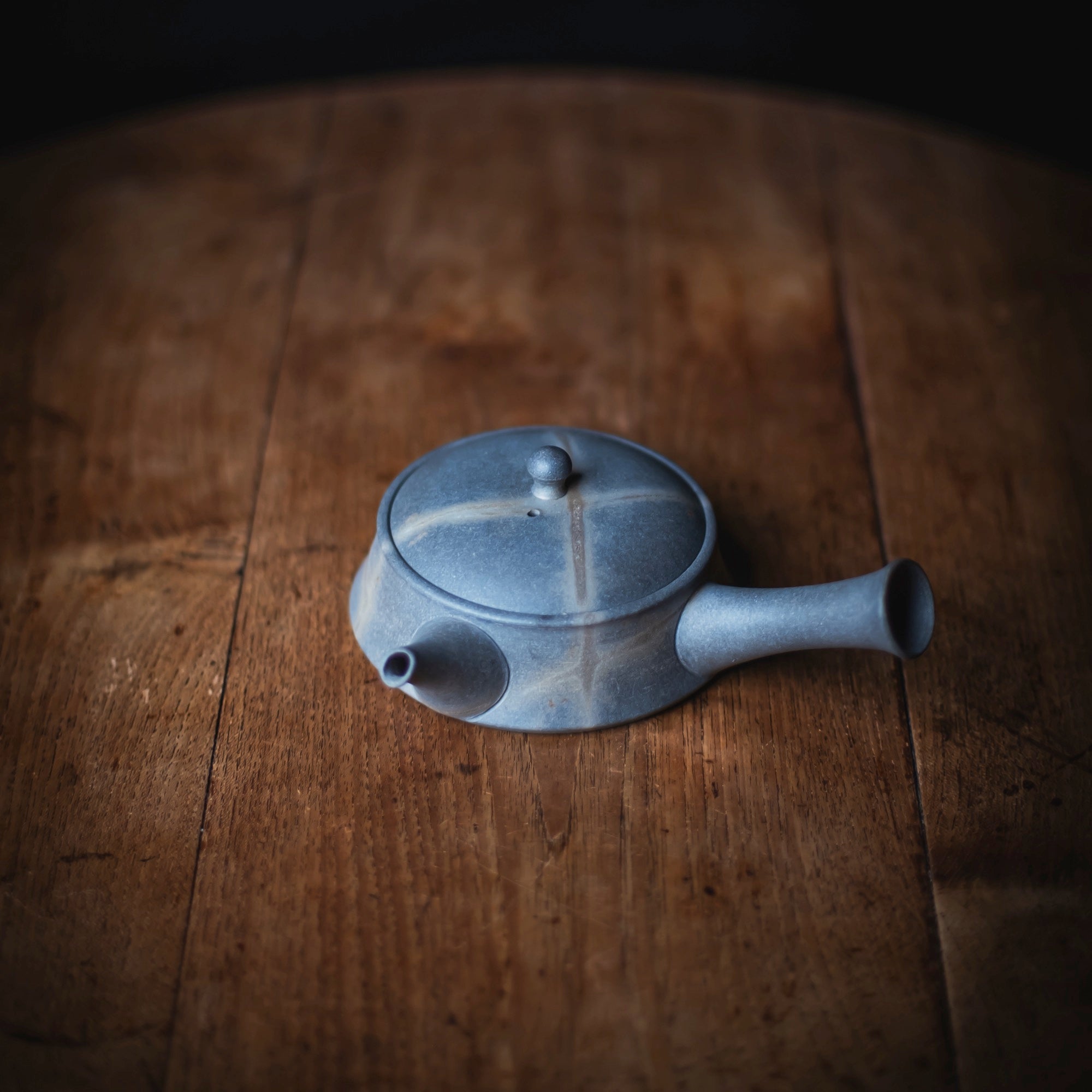
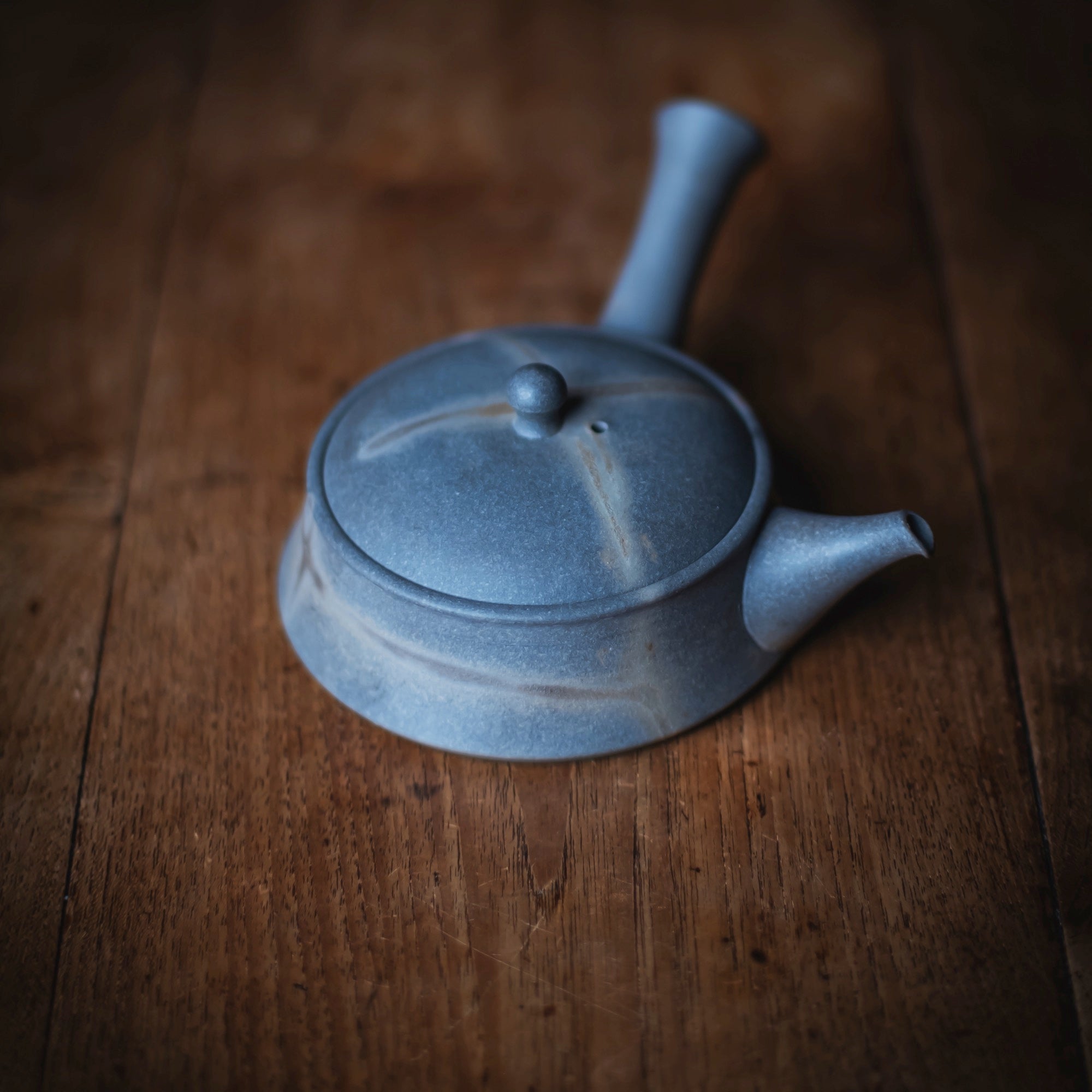
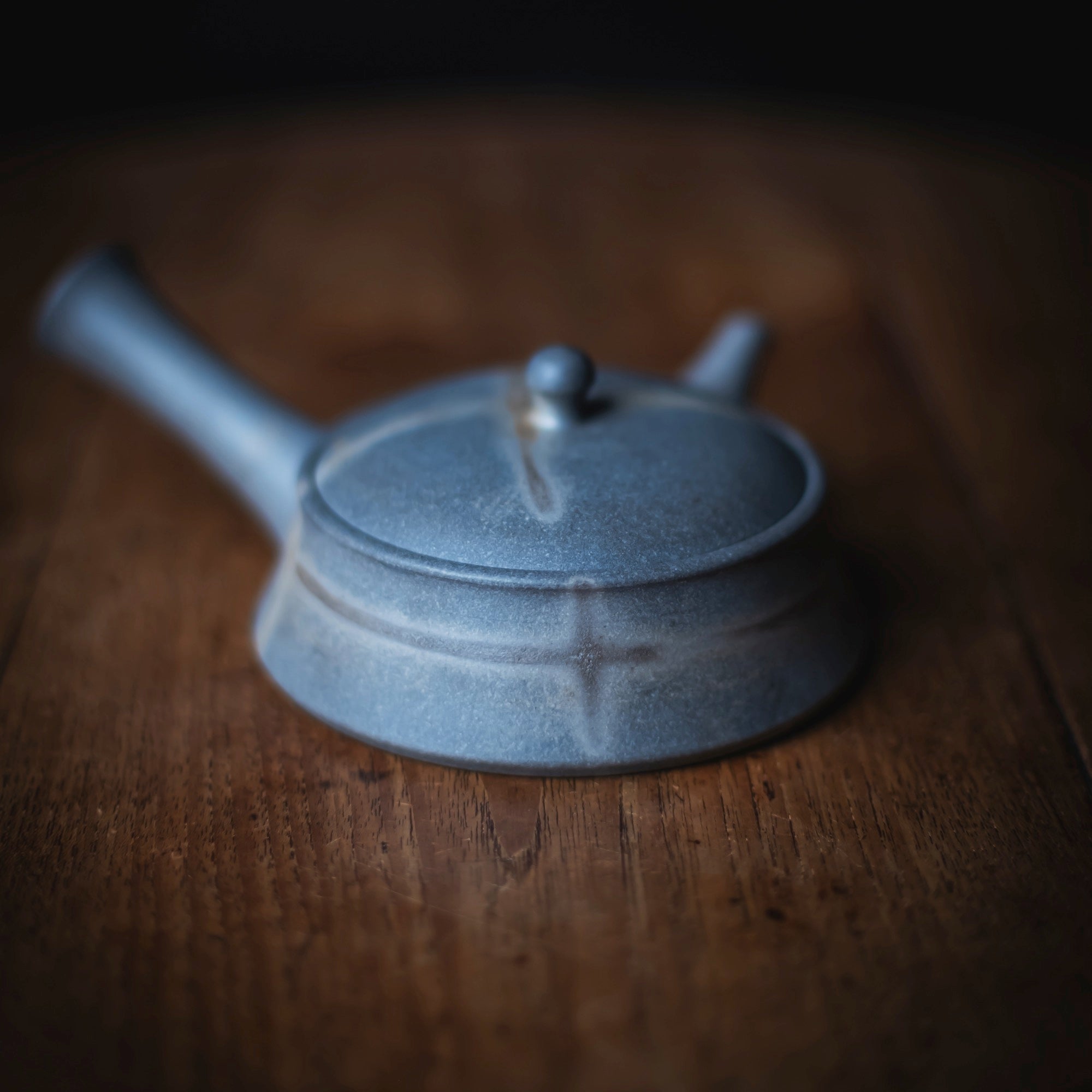
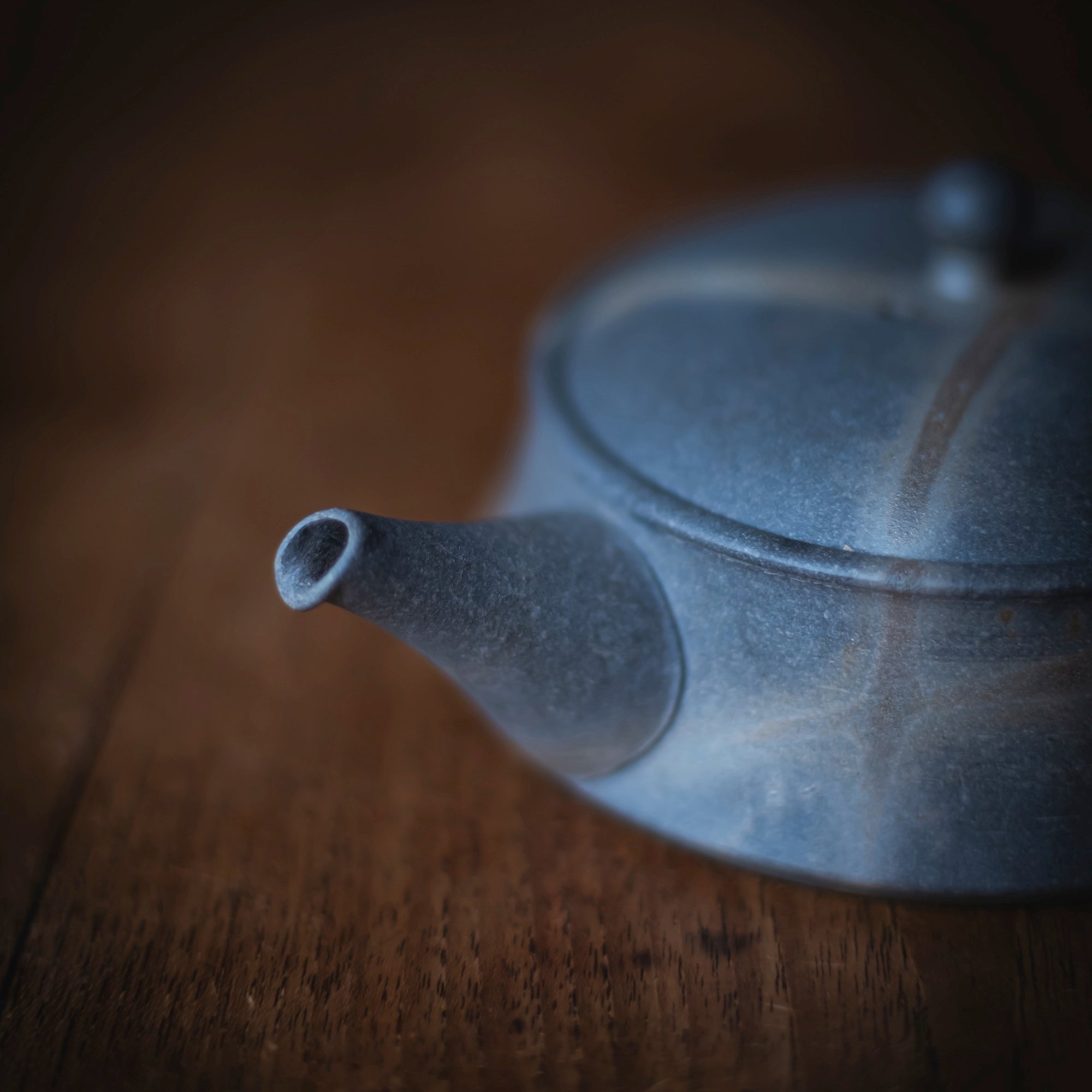
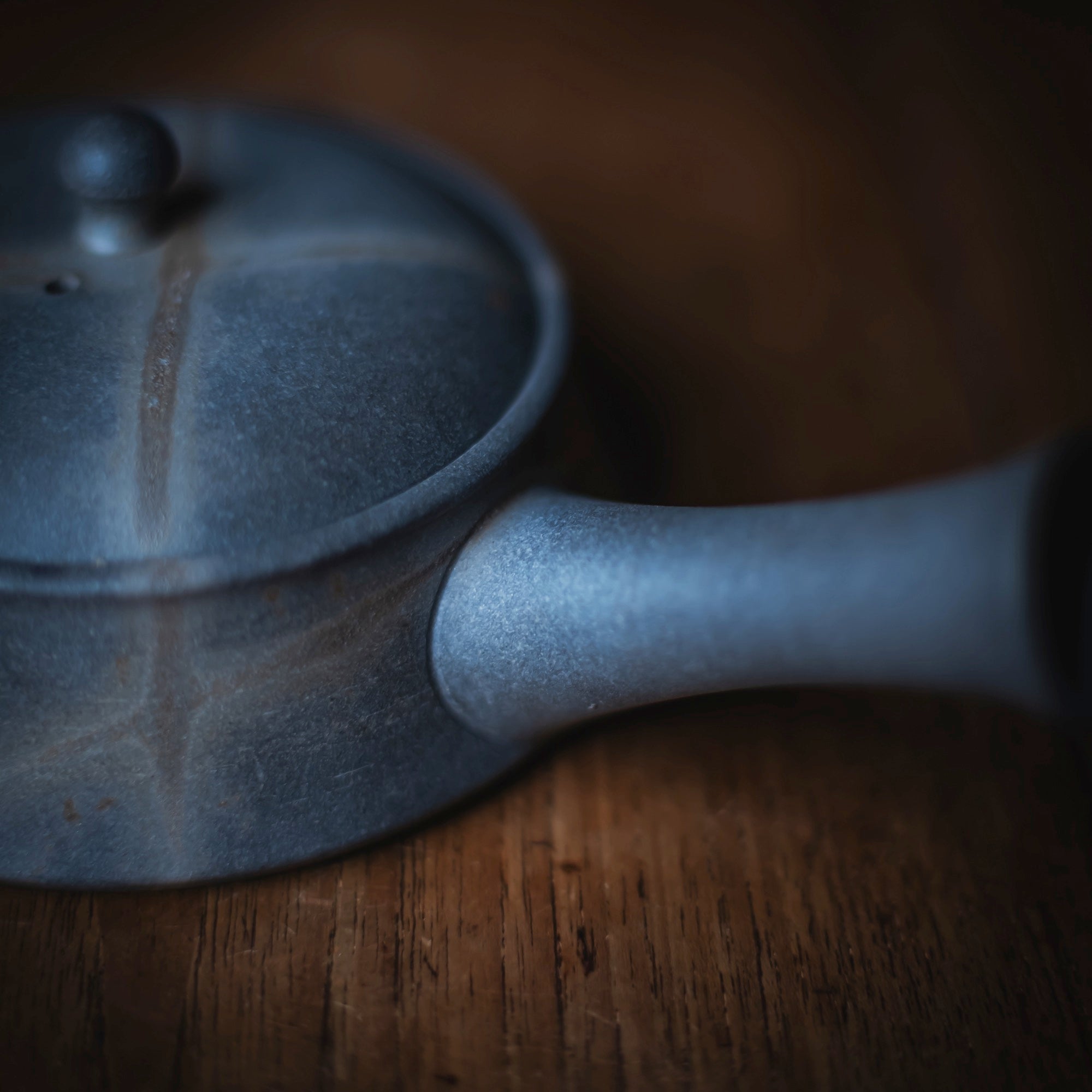
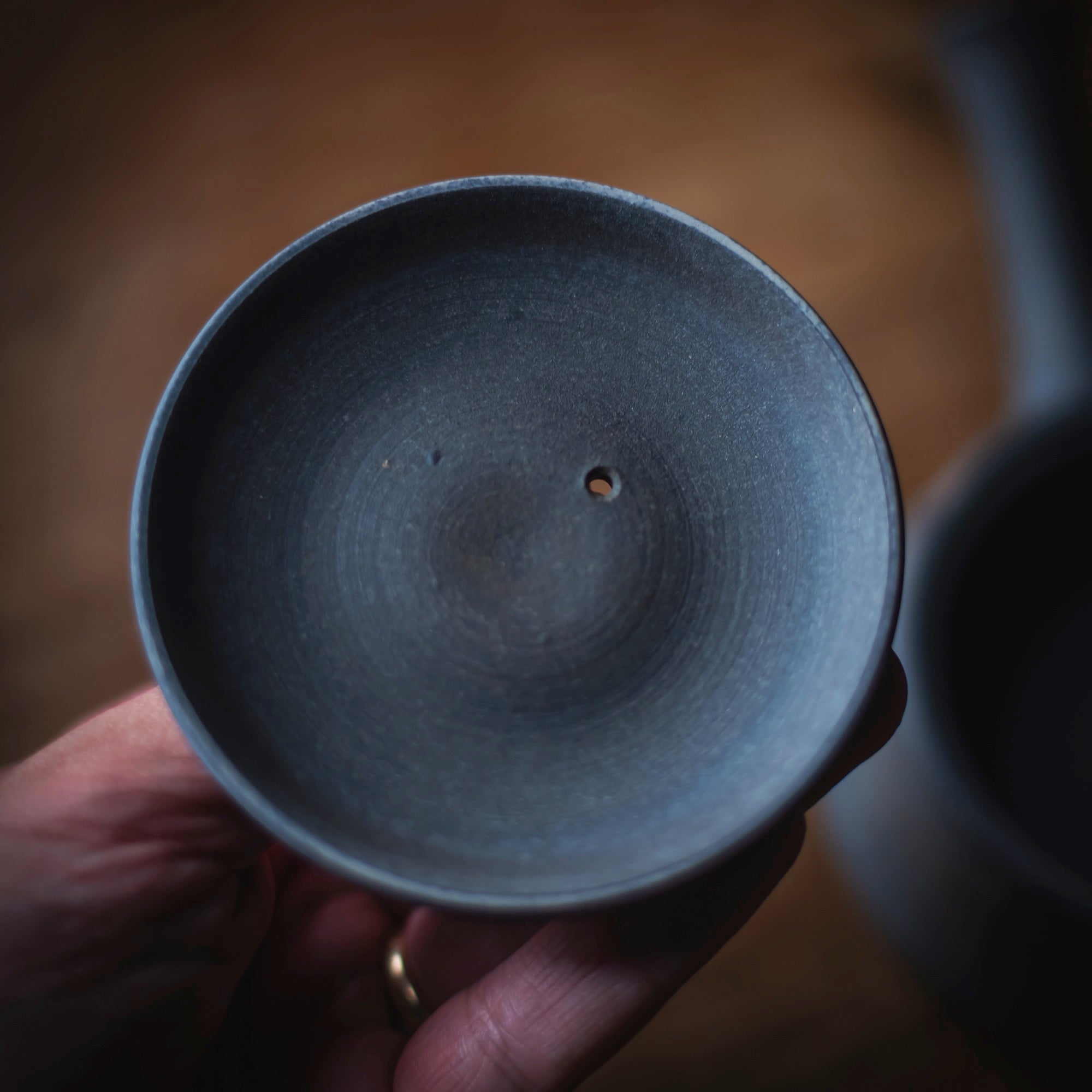
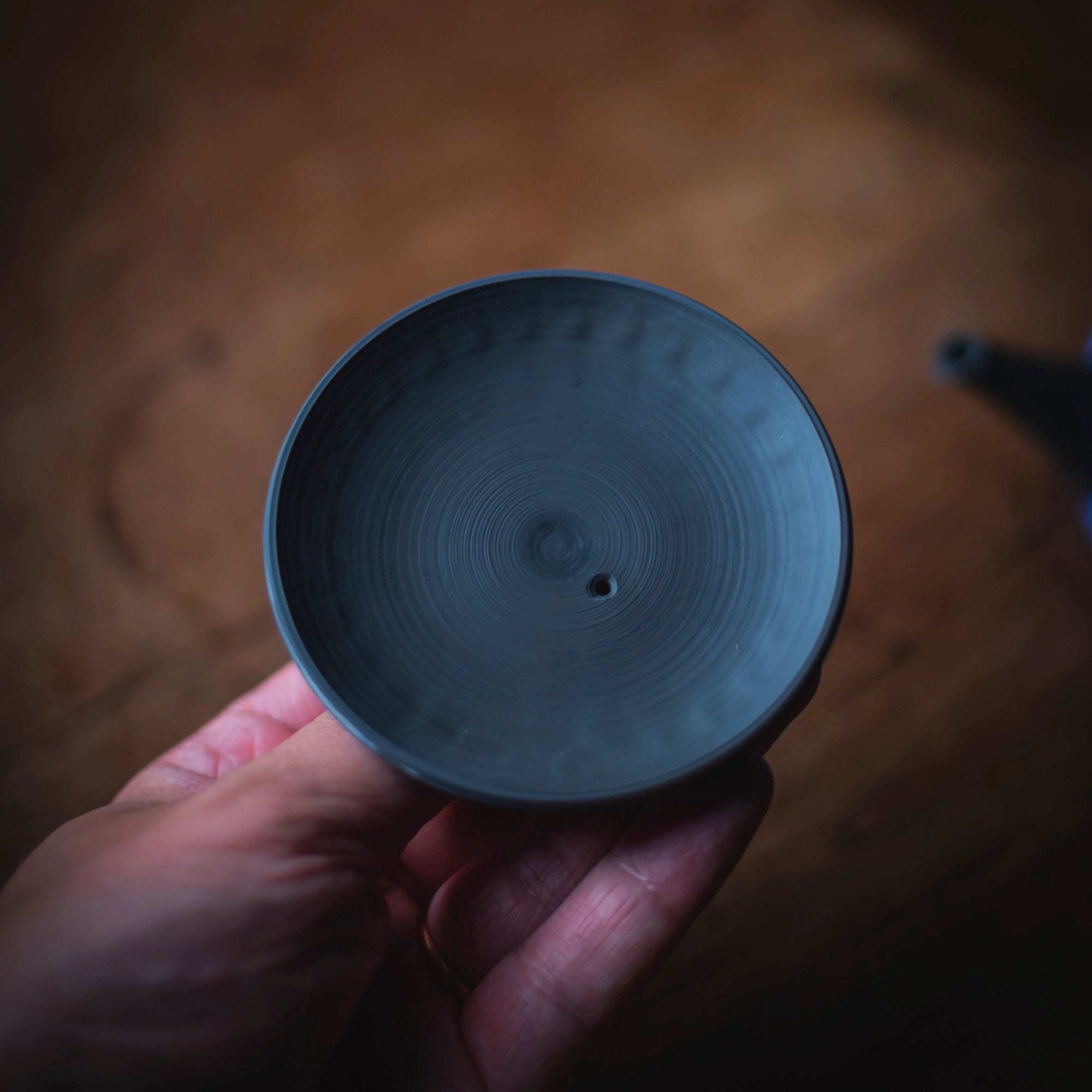
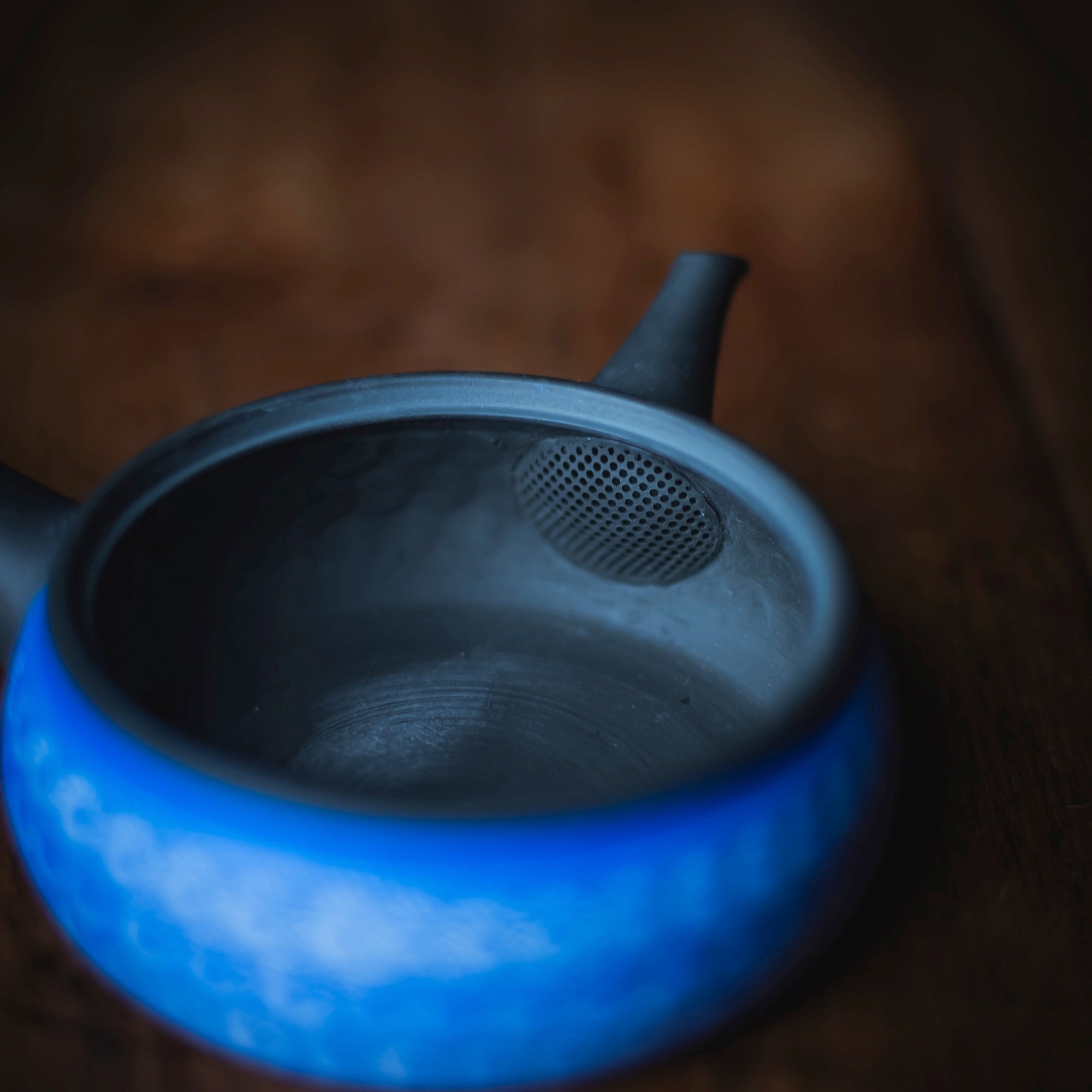
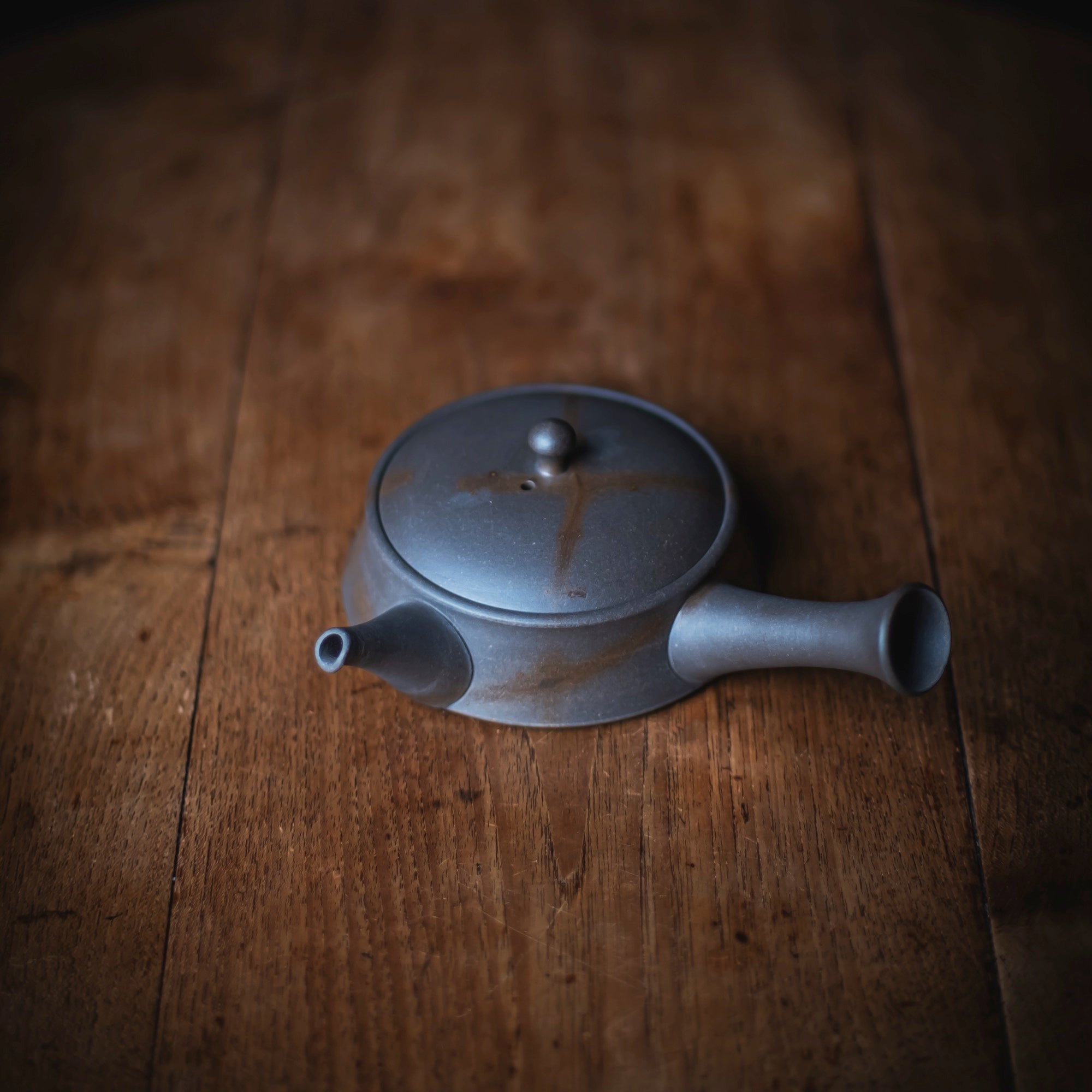
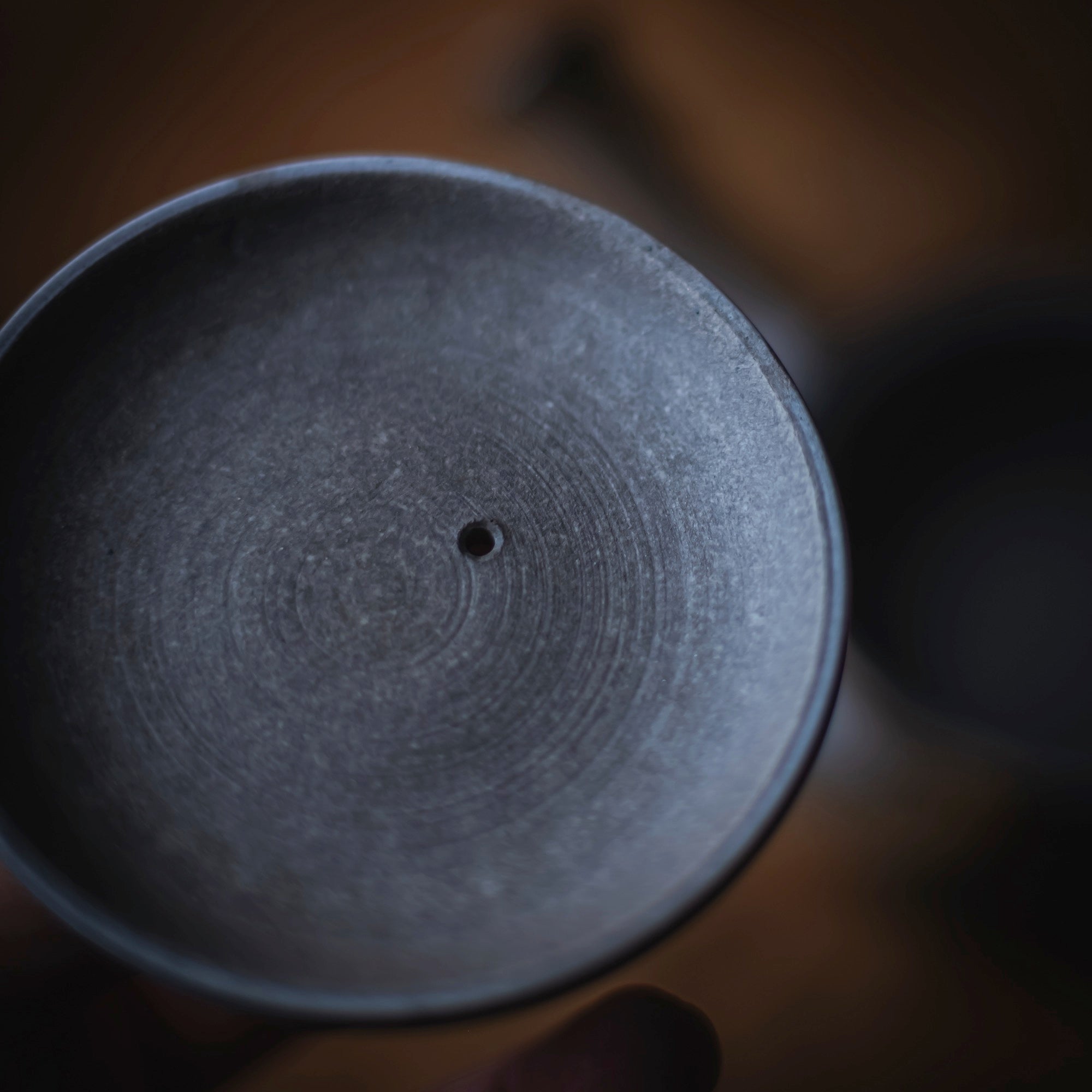
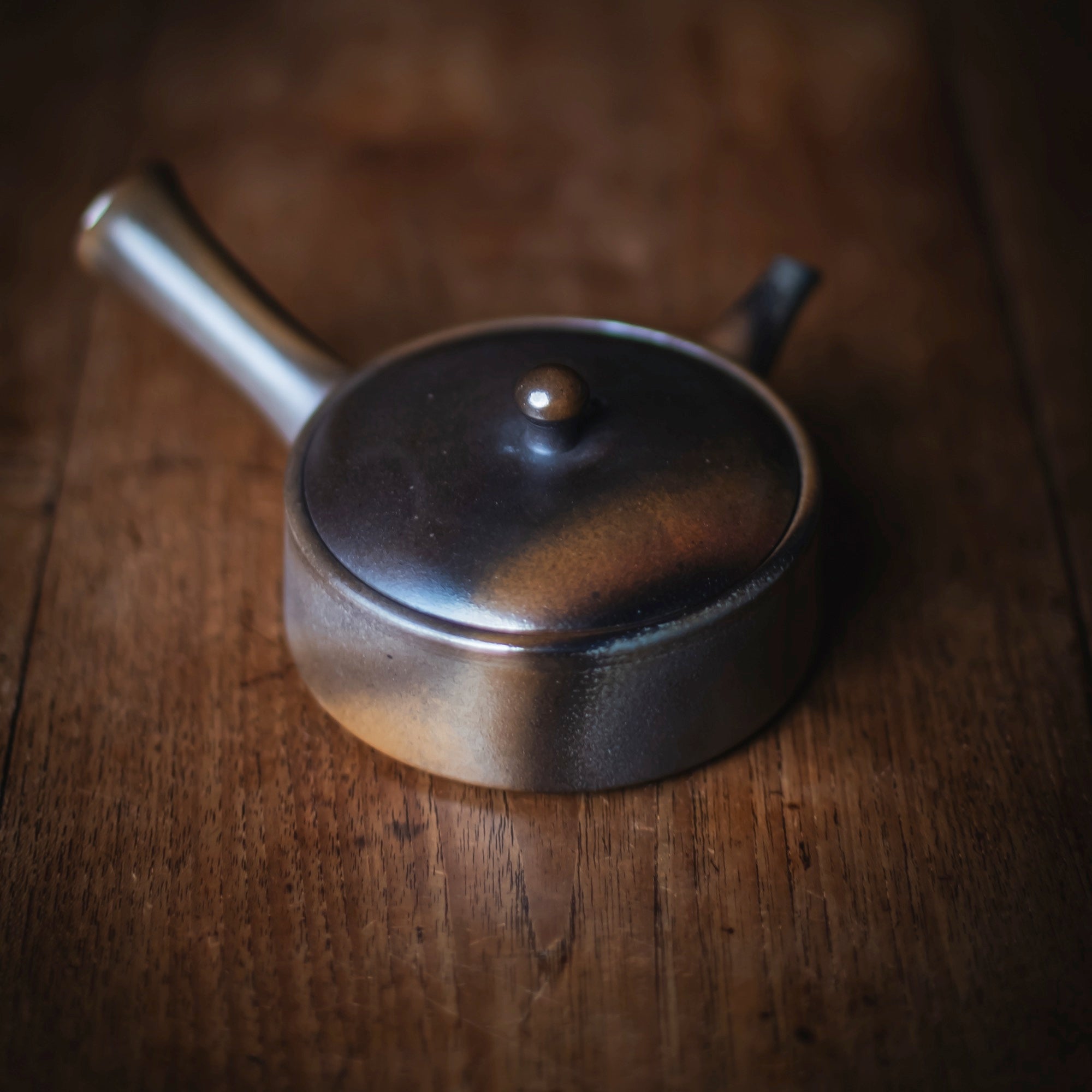
- Celebrated for flat “hiragata” kyusu of exceptional thinness and lightness, with the precise body-to-lid fit prized in Tokoname stoneware.
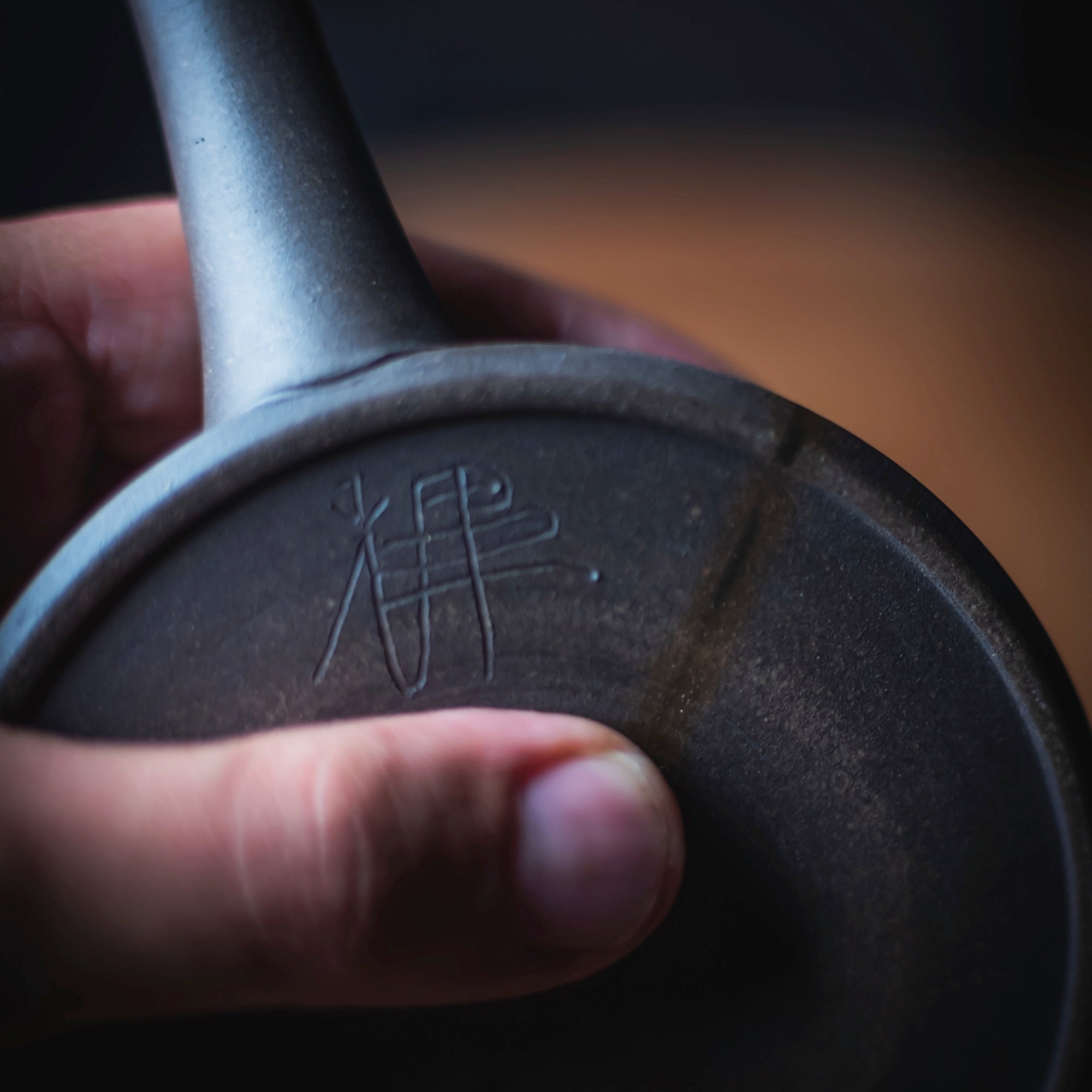
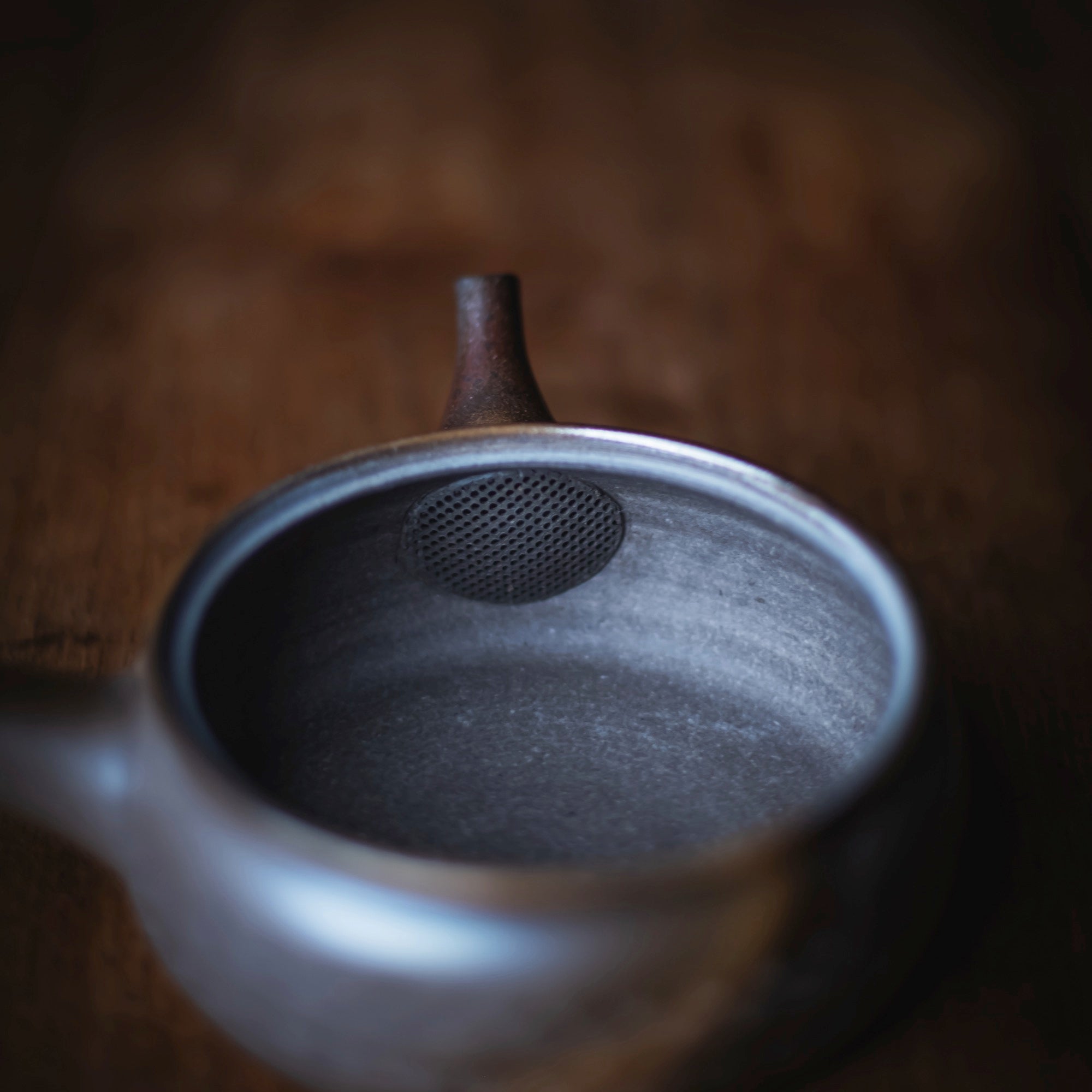
- Works in red (shudei), black (kokudei) and silver-finished (ginsai) clays, including kiln-change (yohen) effects.
- A practitioner of the Way of Sencha, he has won repeatedly at the Chōzan Prize ceramics exhibition (from 1984) and received the Aichi governor's commendation as a distinguished traditional-industry craftsman (1988). His teapots are carried by SENCHAISM and counted among tea master Oscar Brekell's personal favourites.
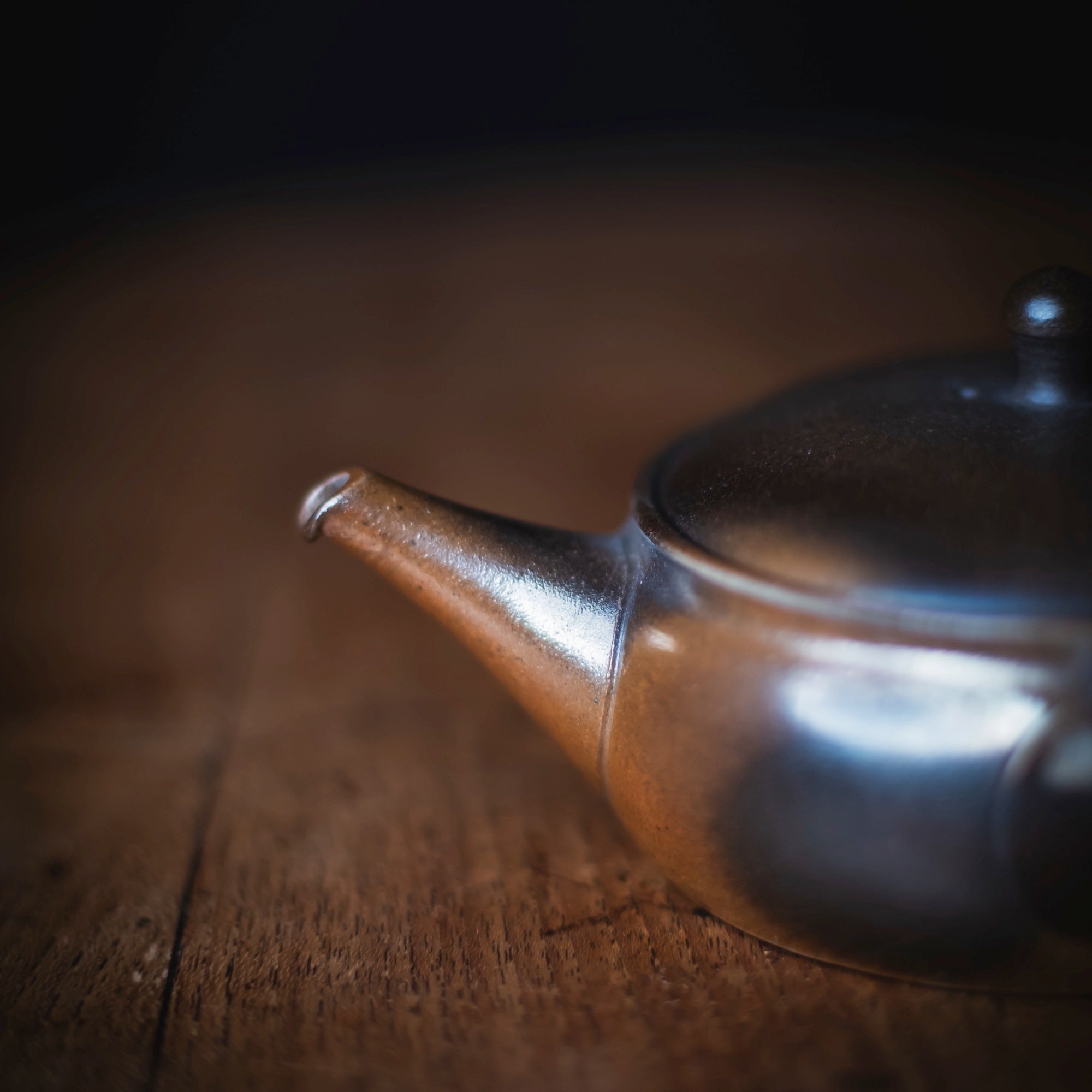
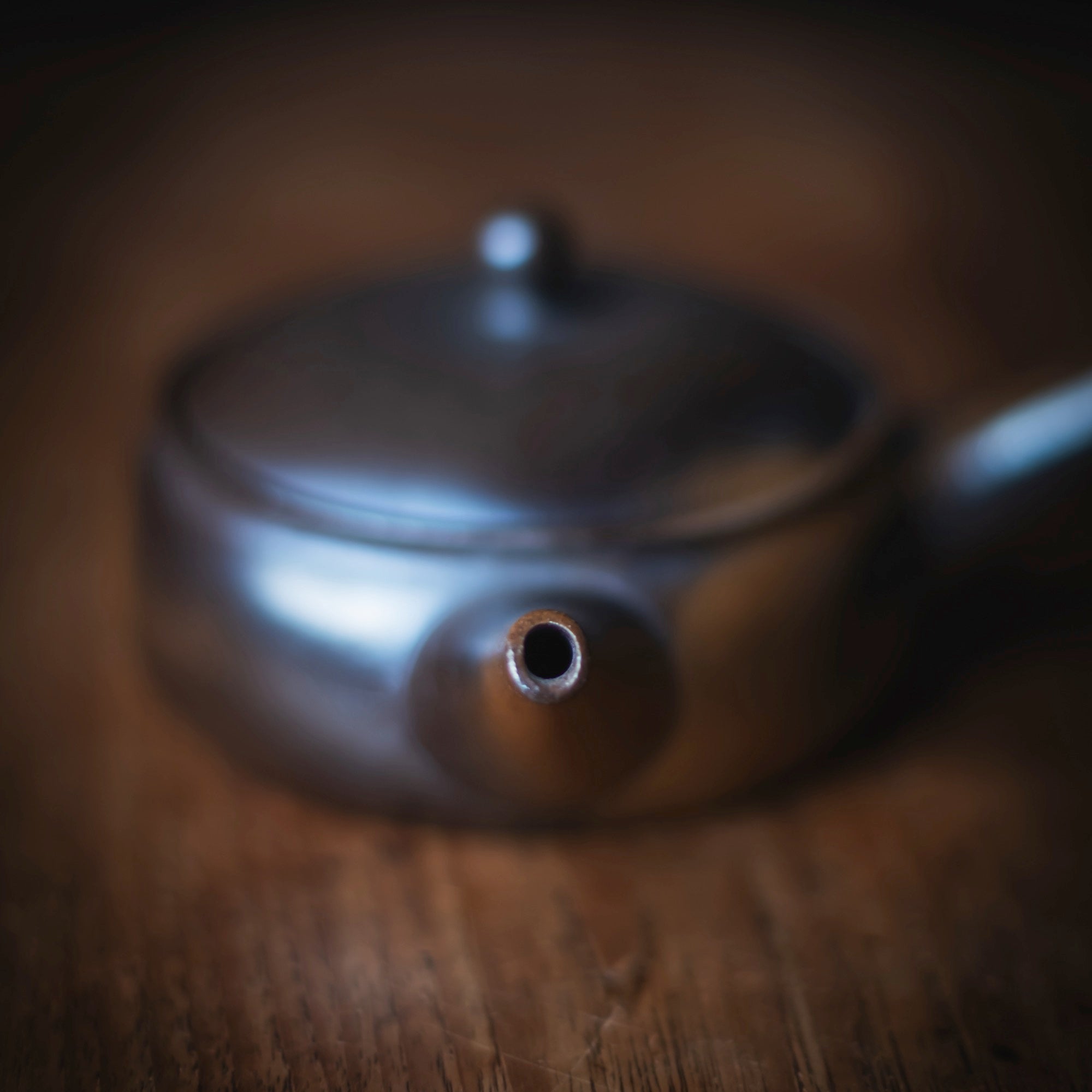
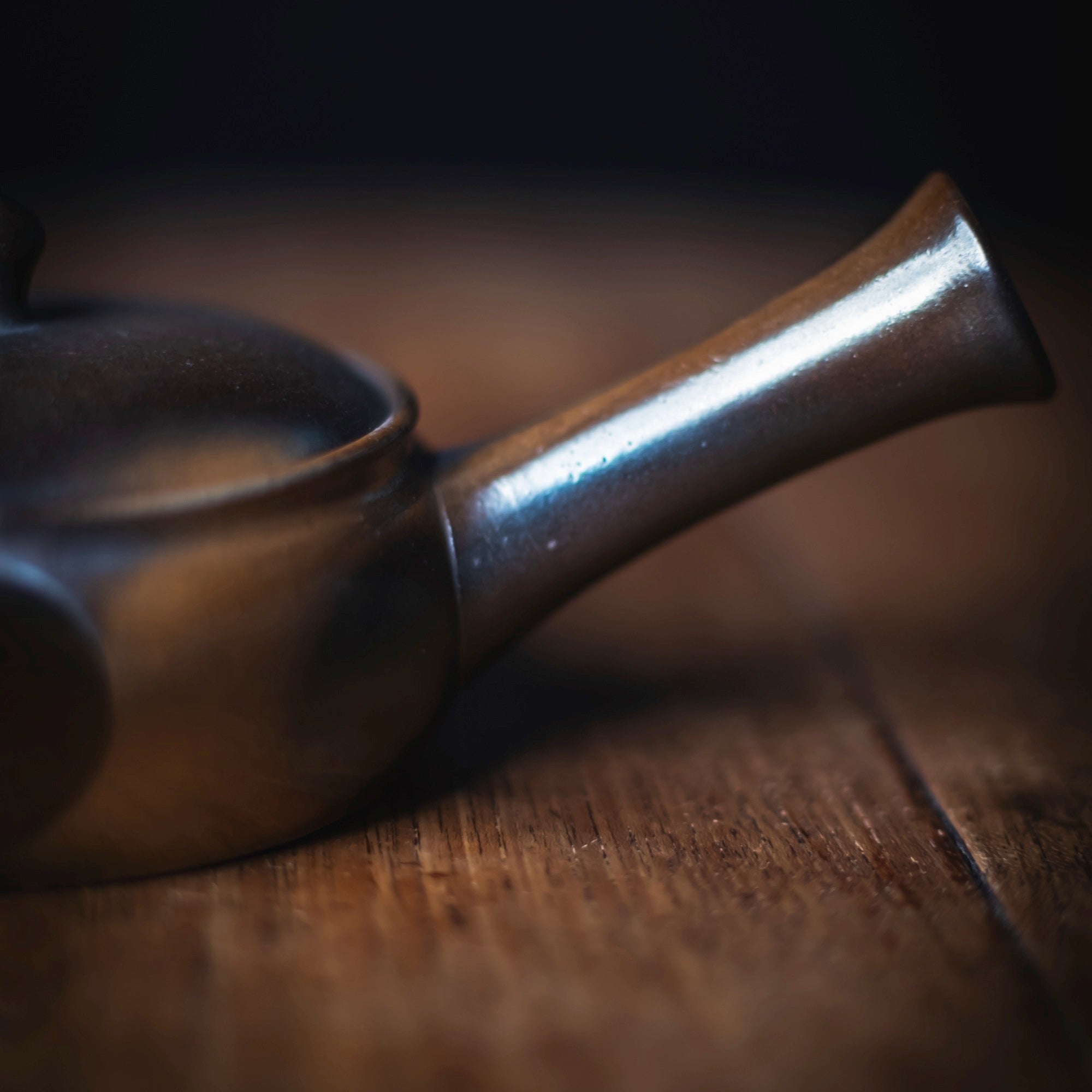
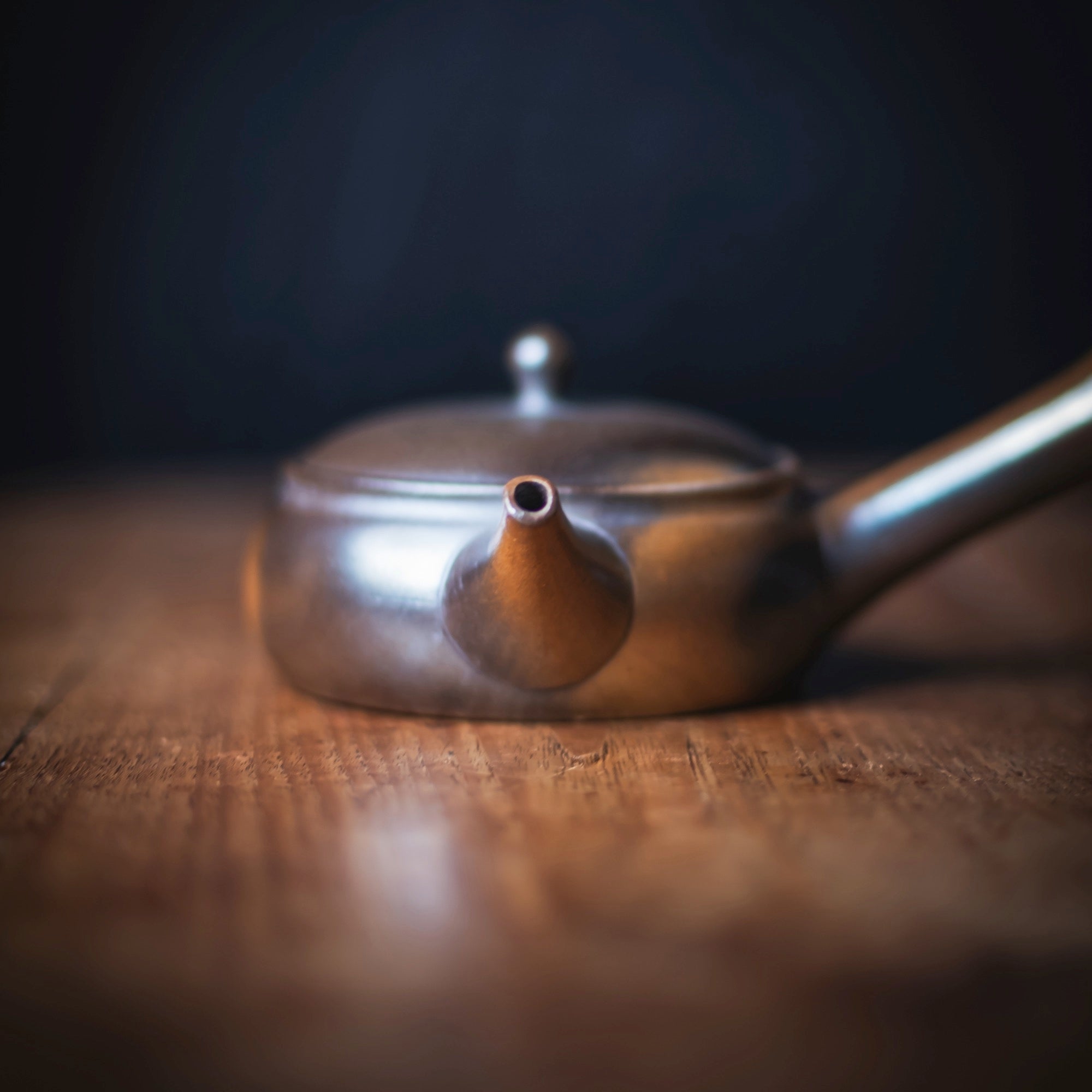
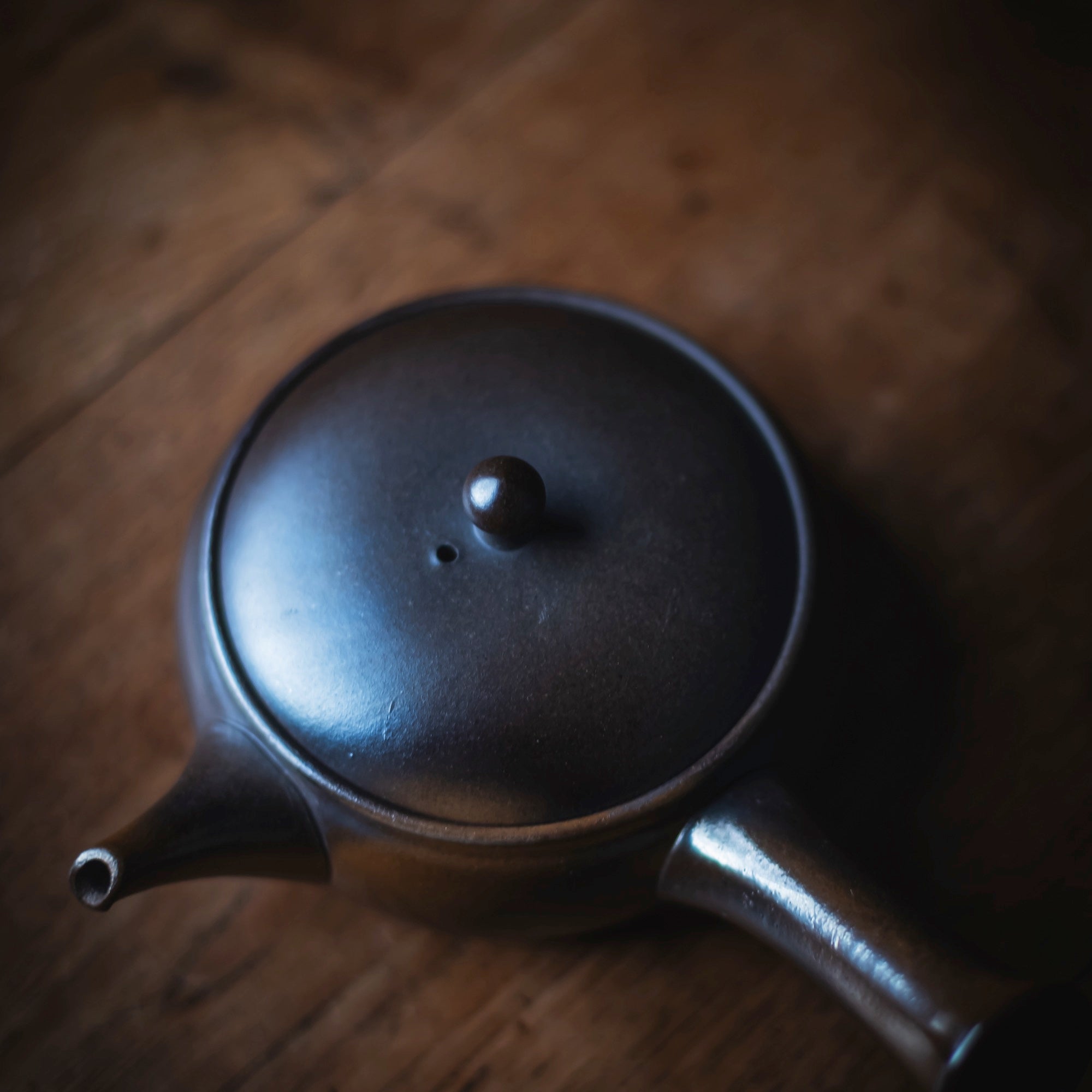
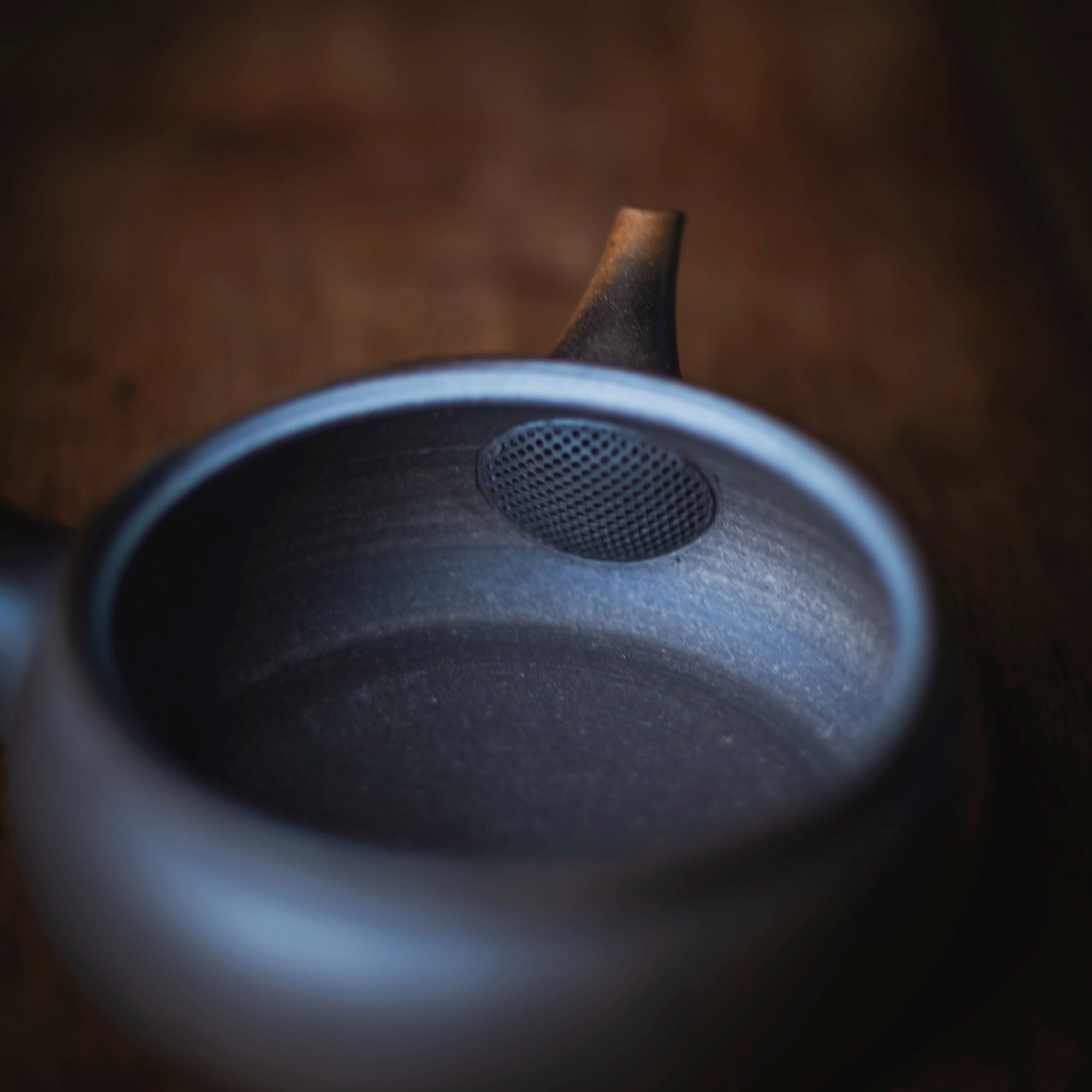
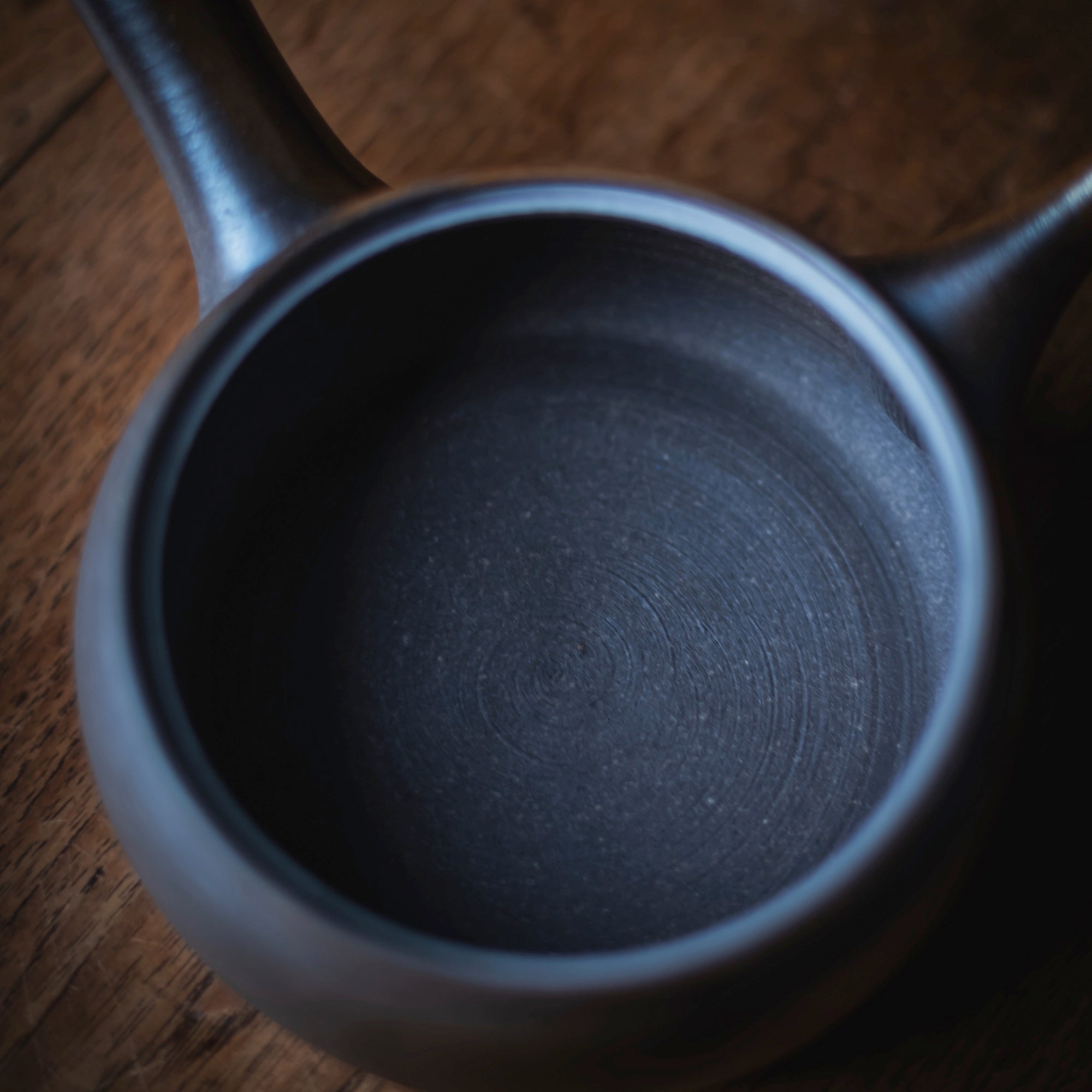
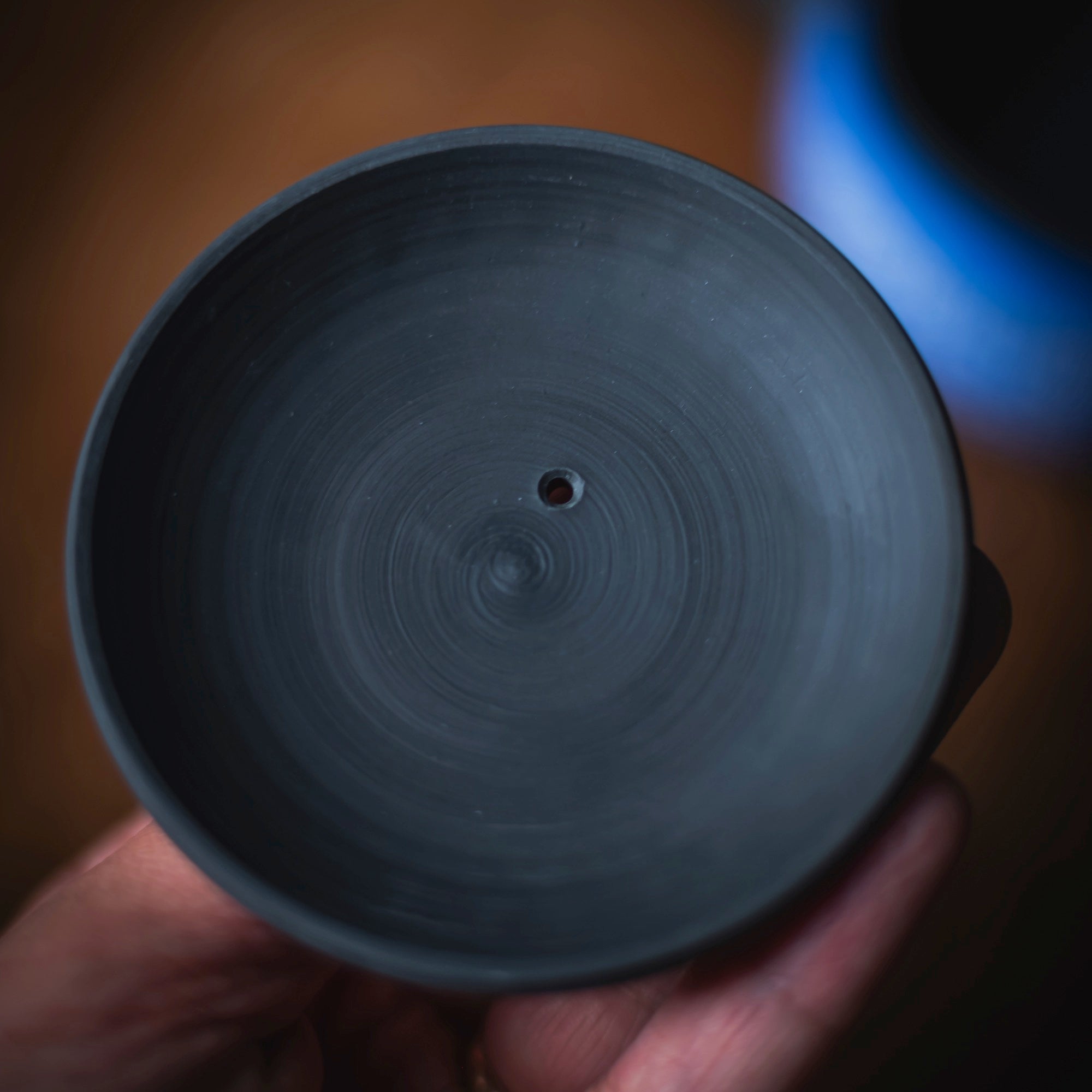
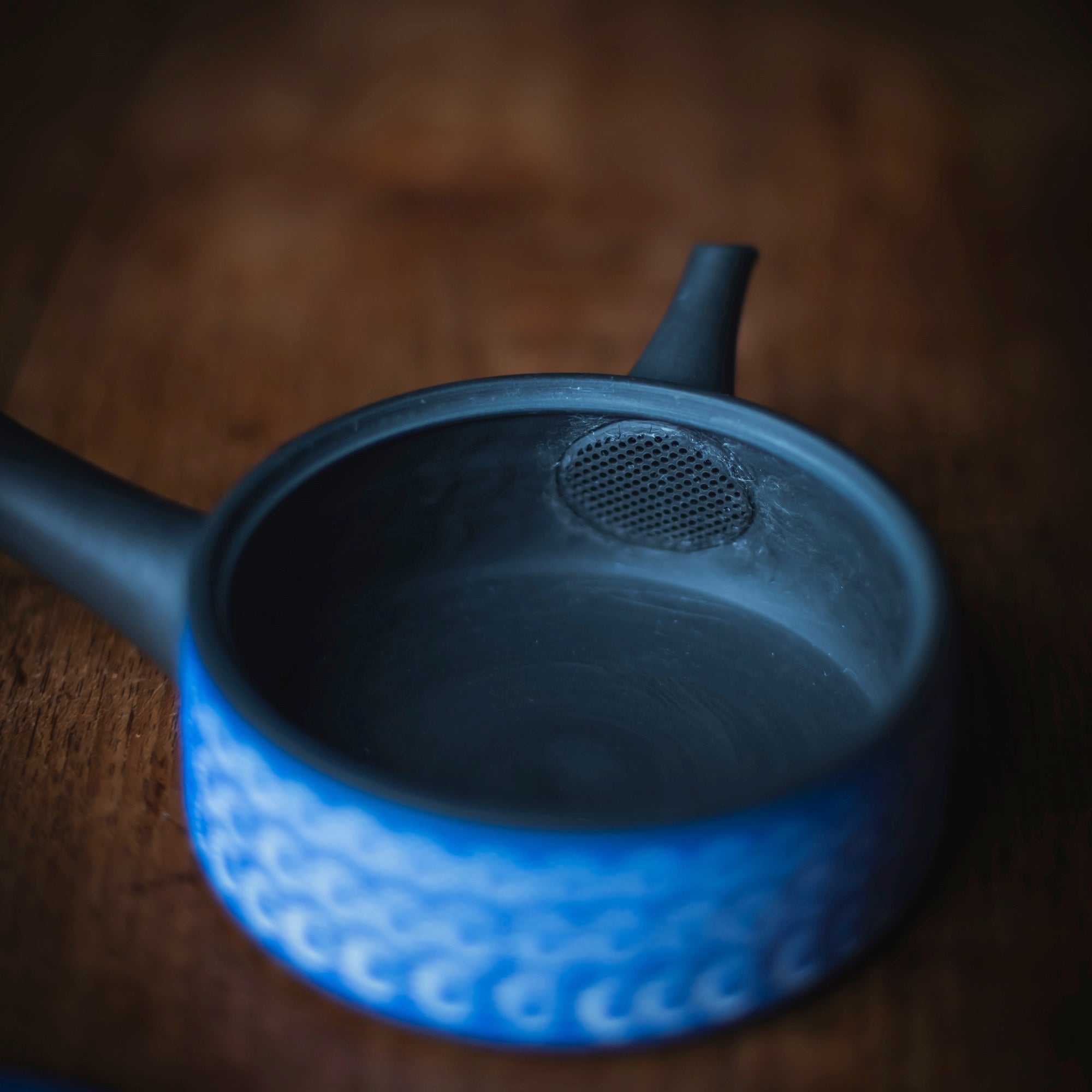
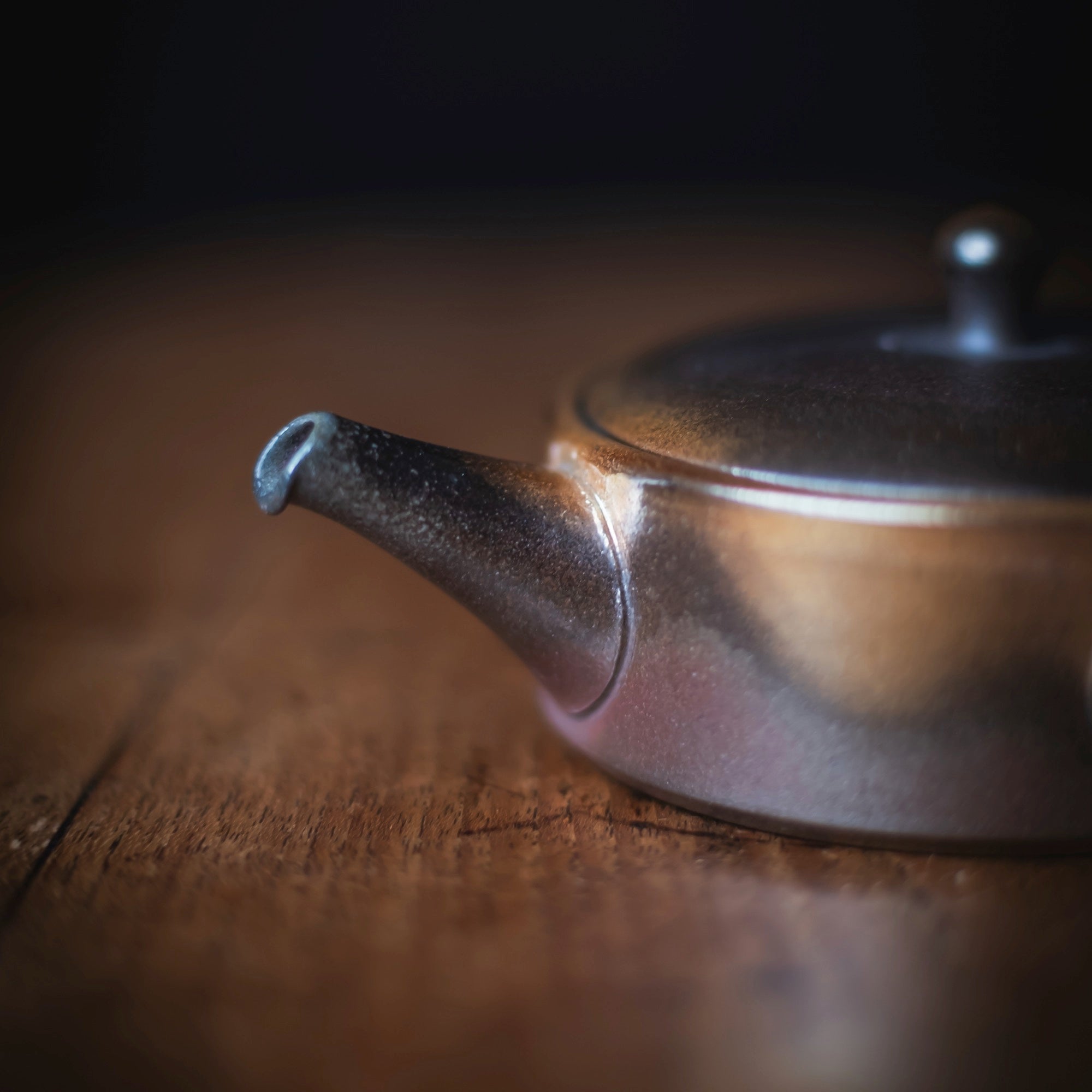
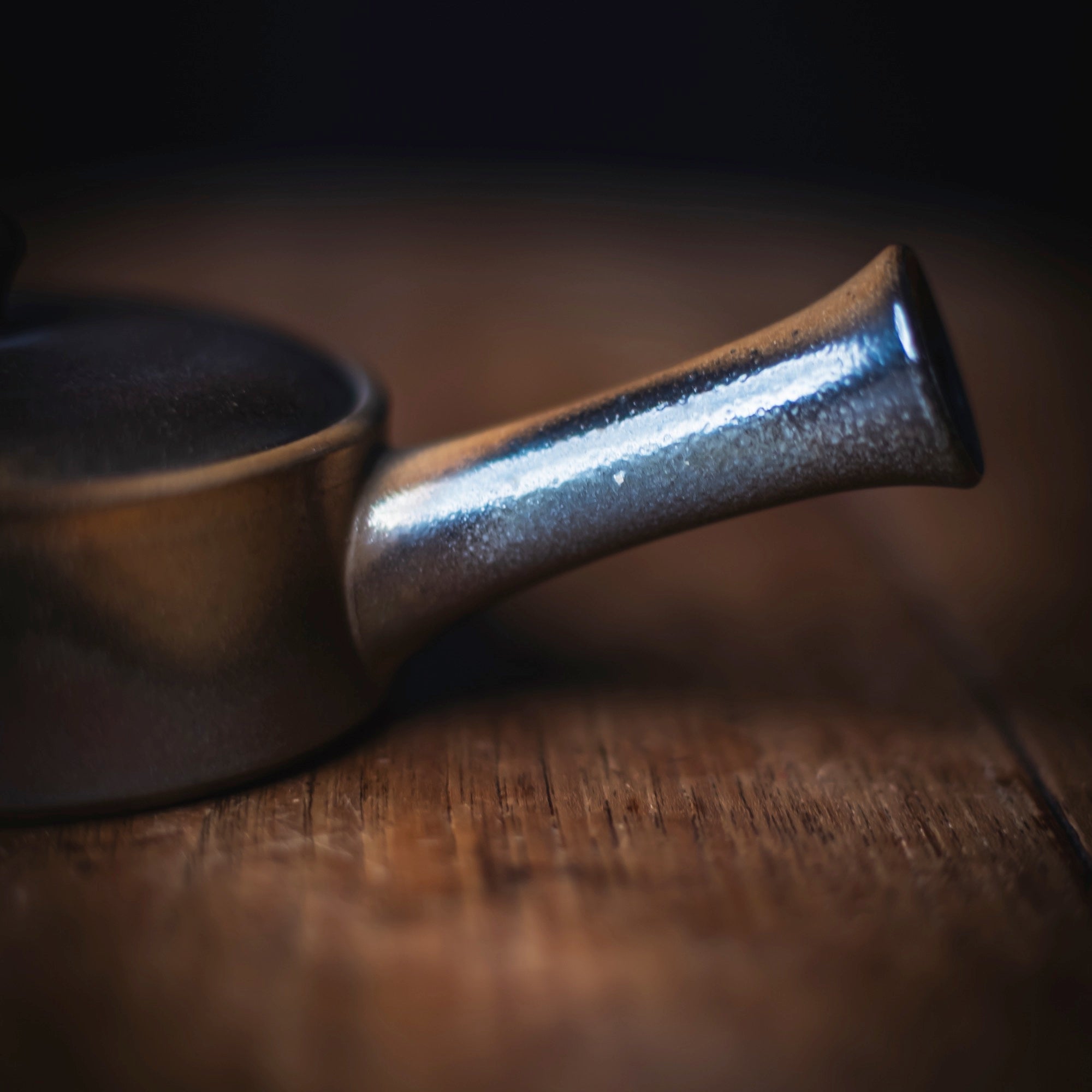
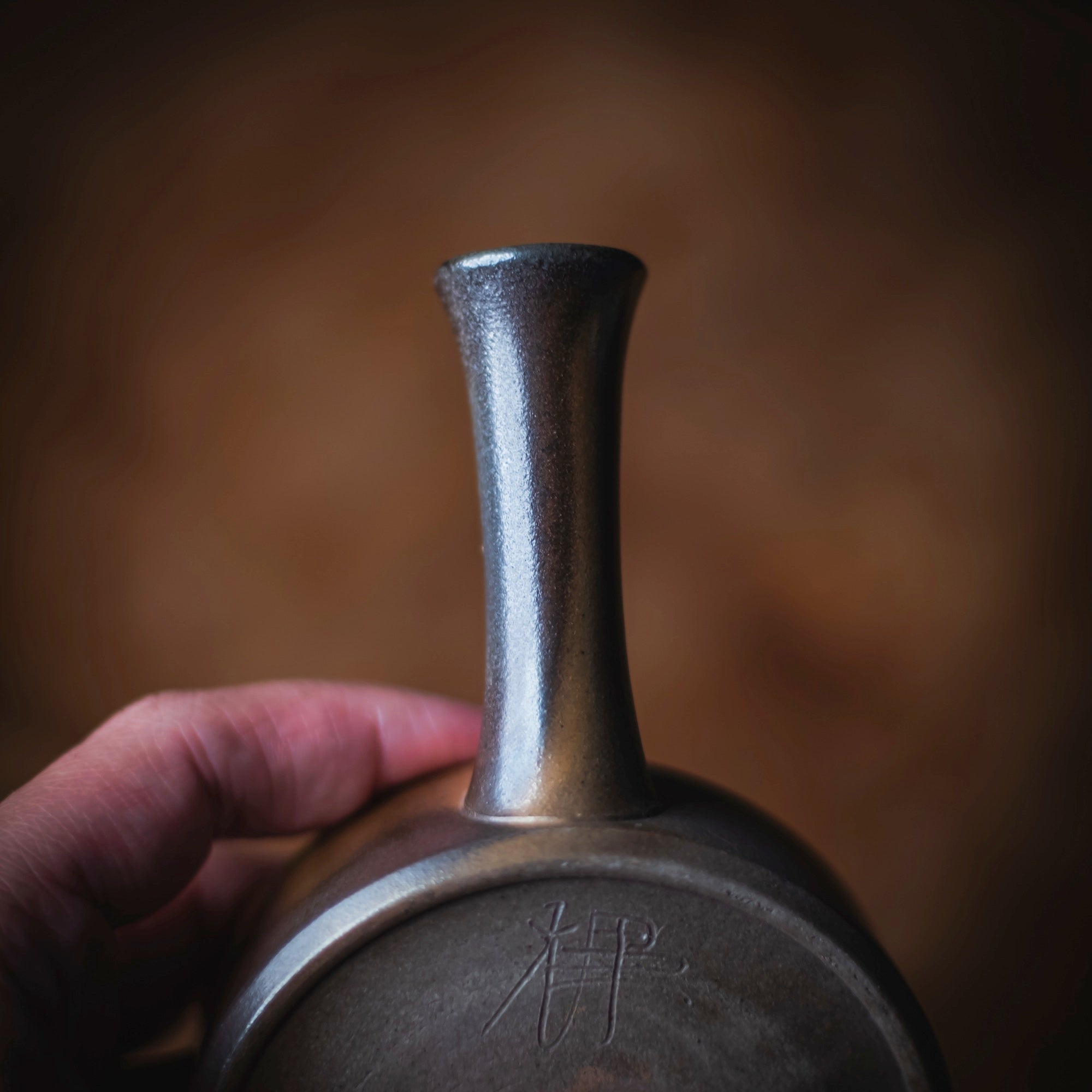
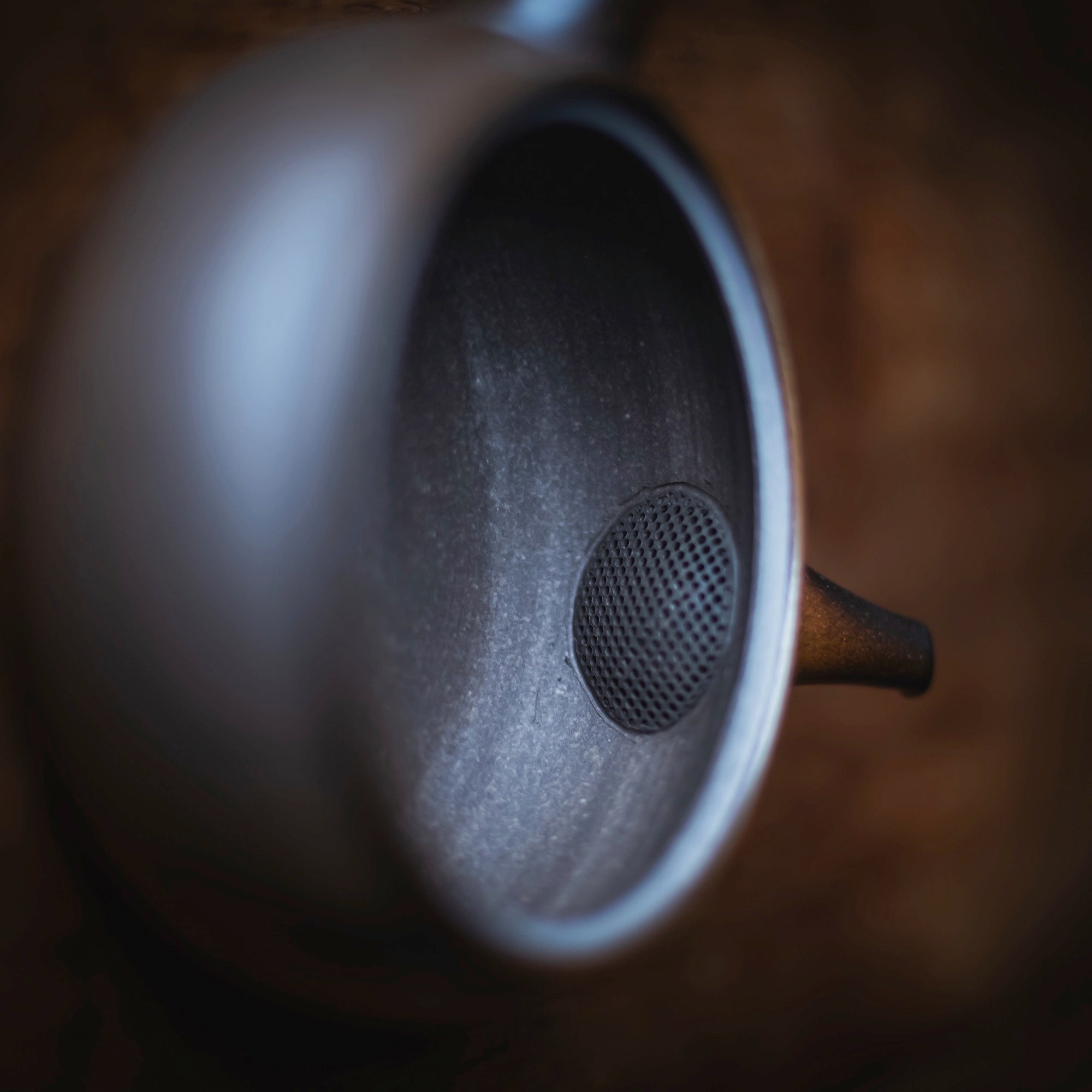
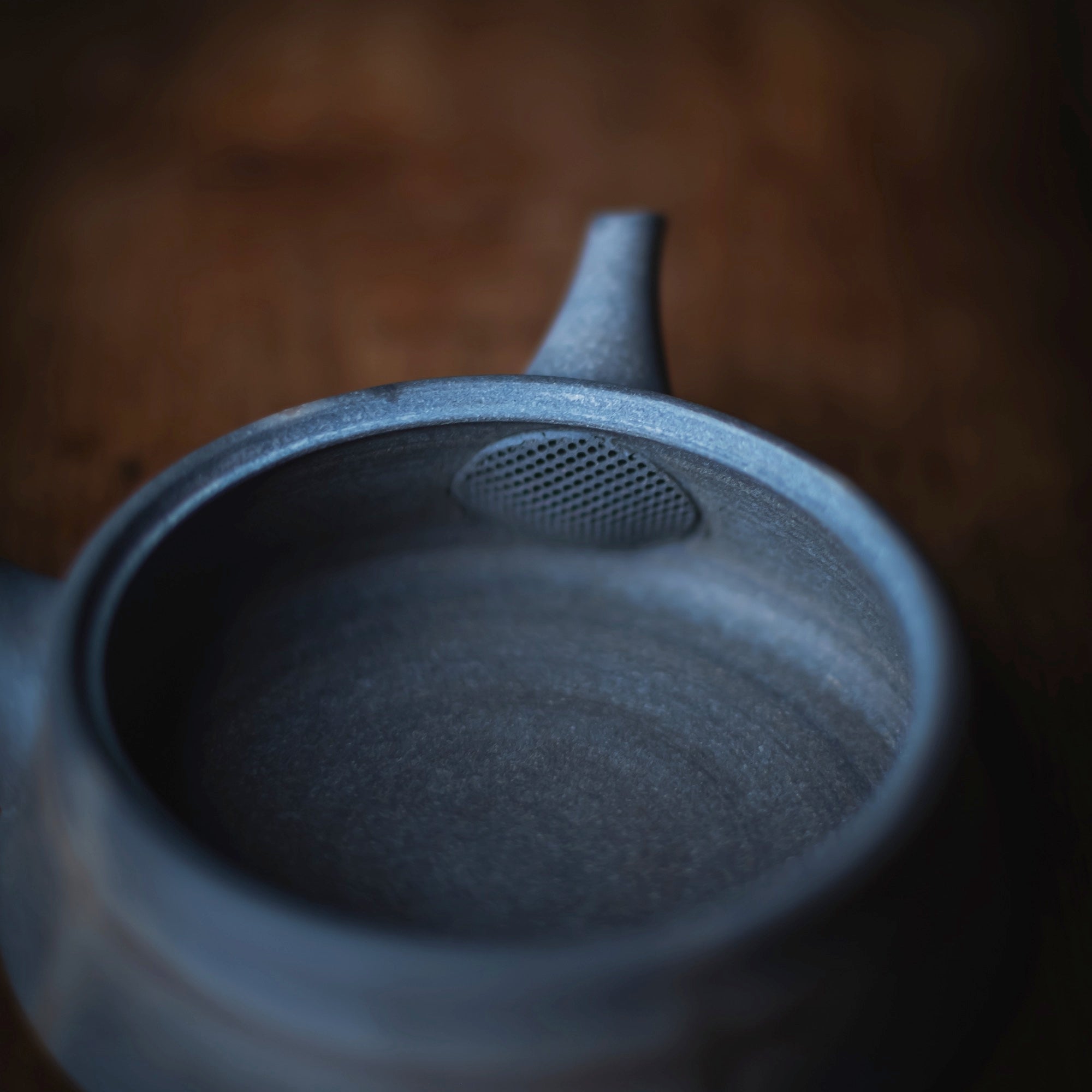
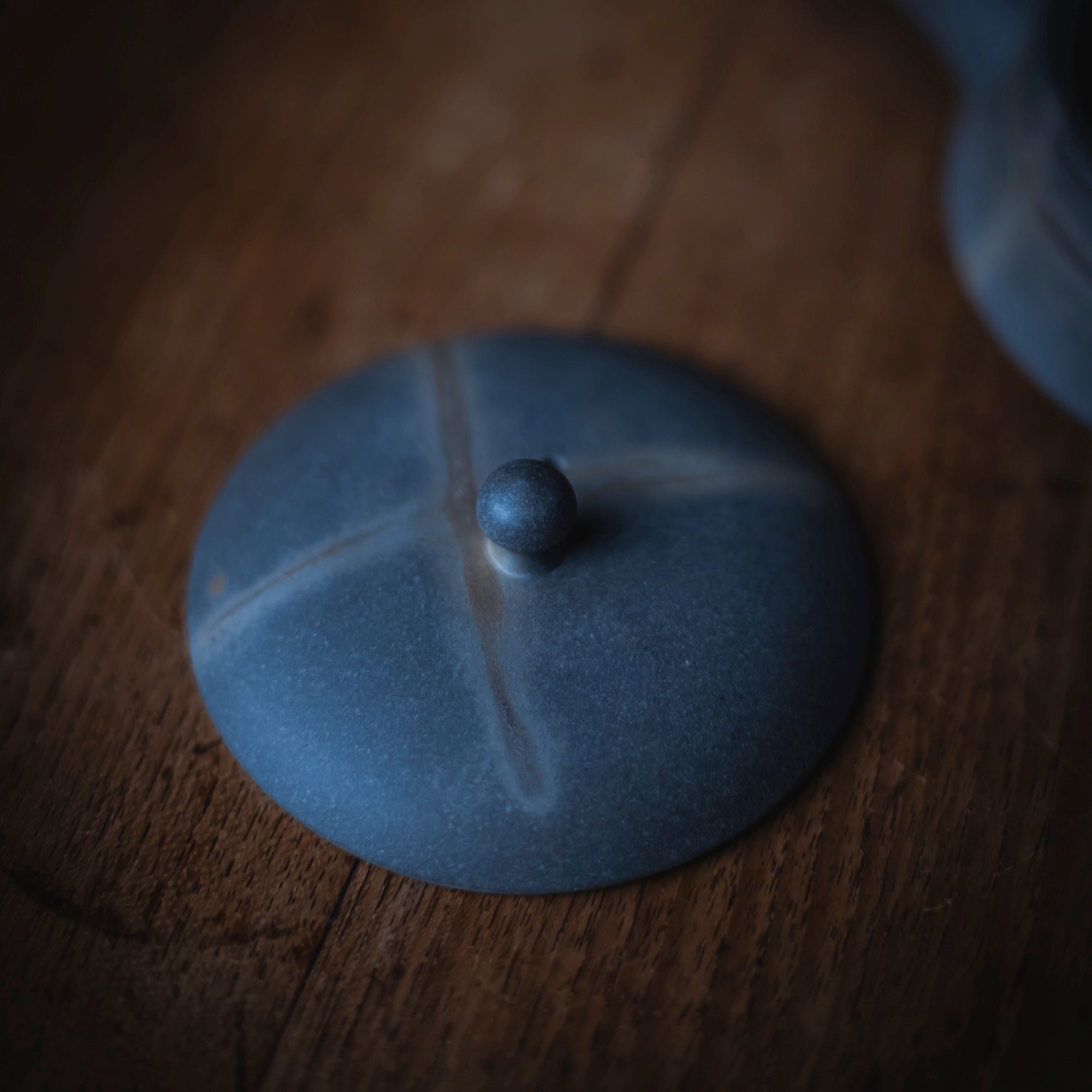
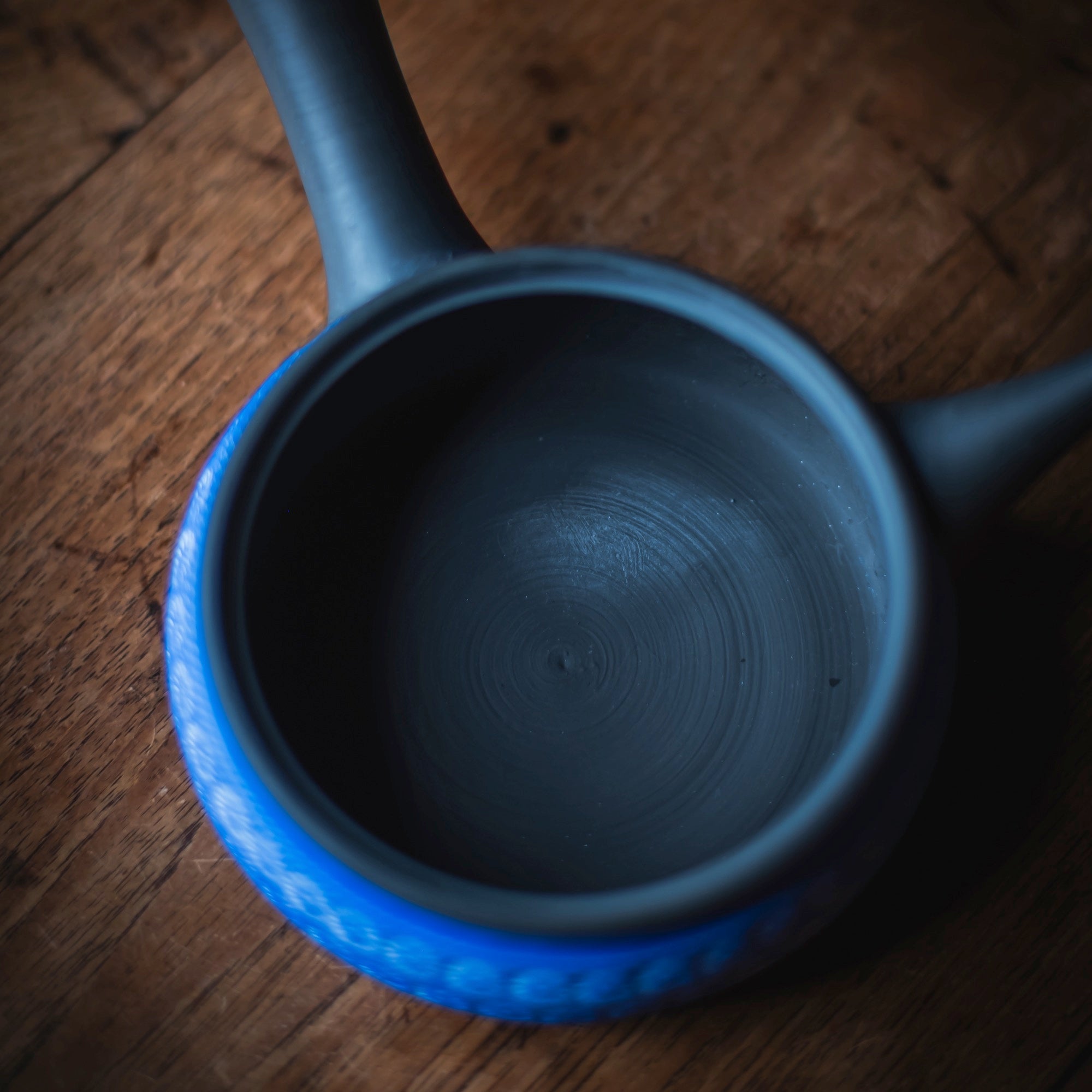
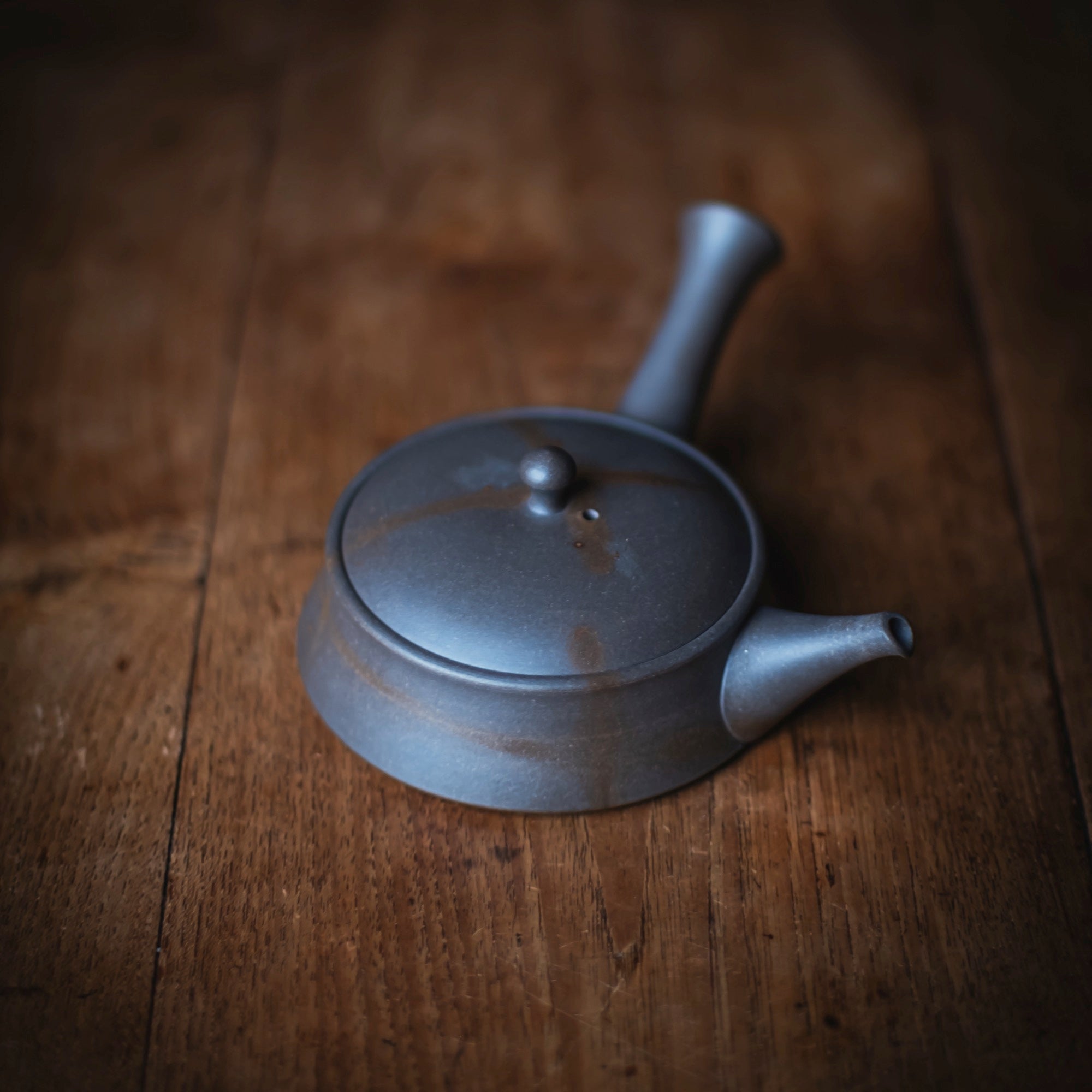
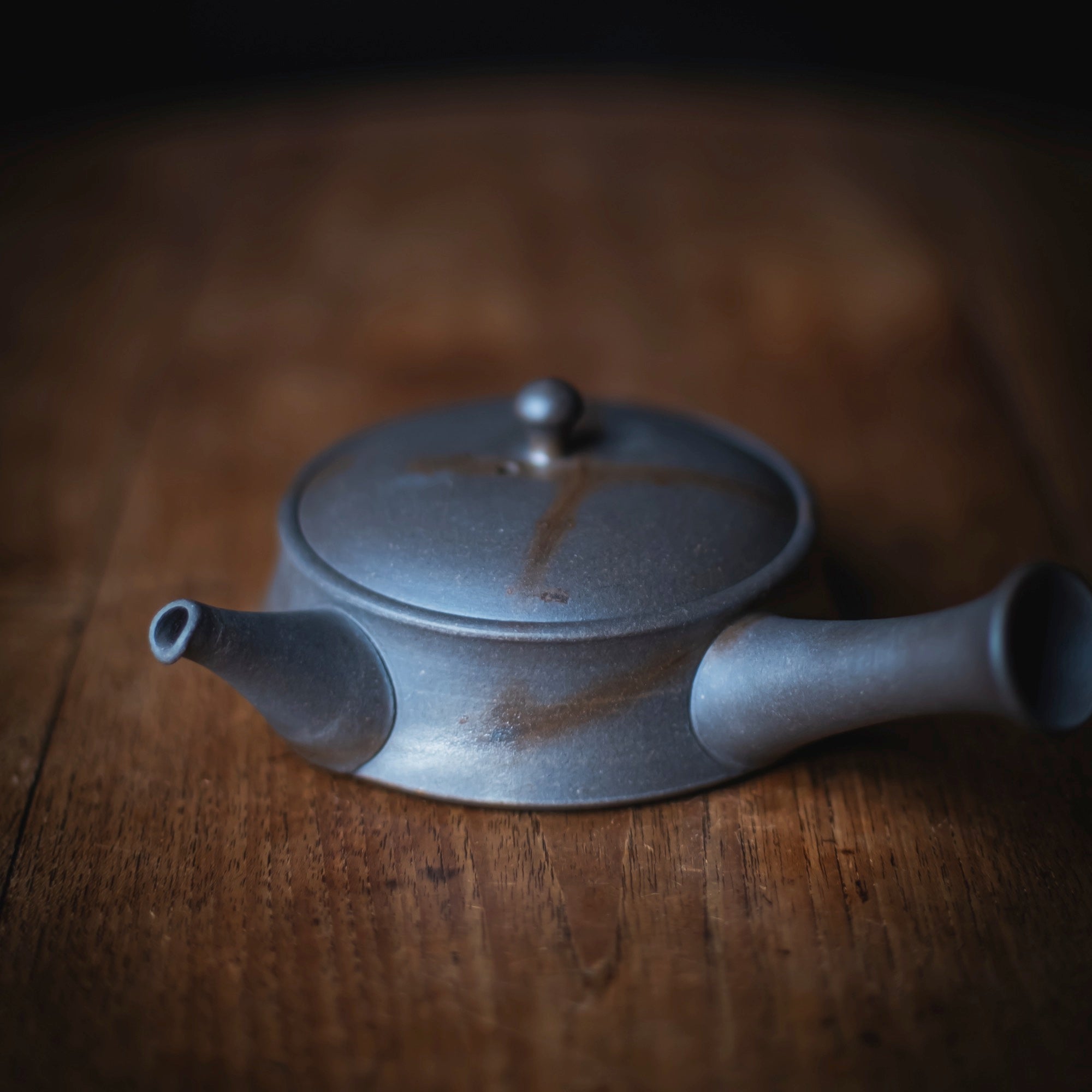
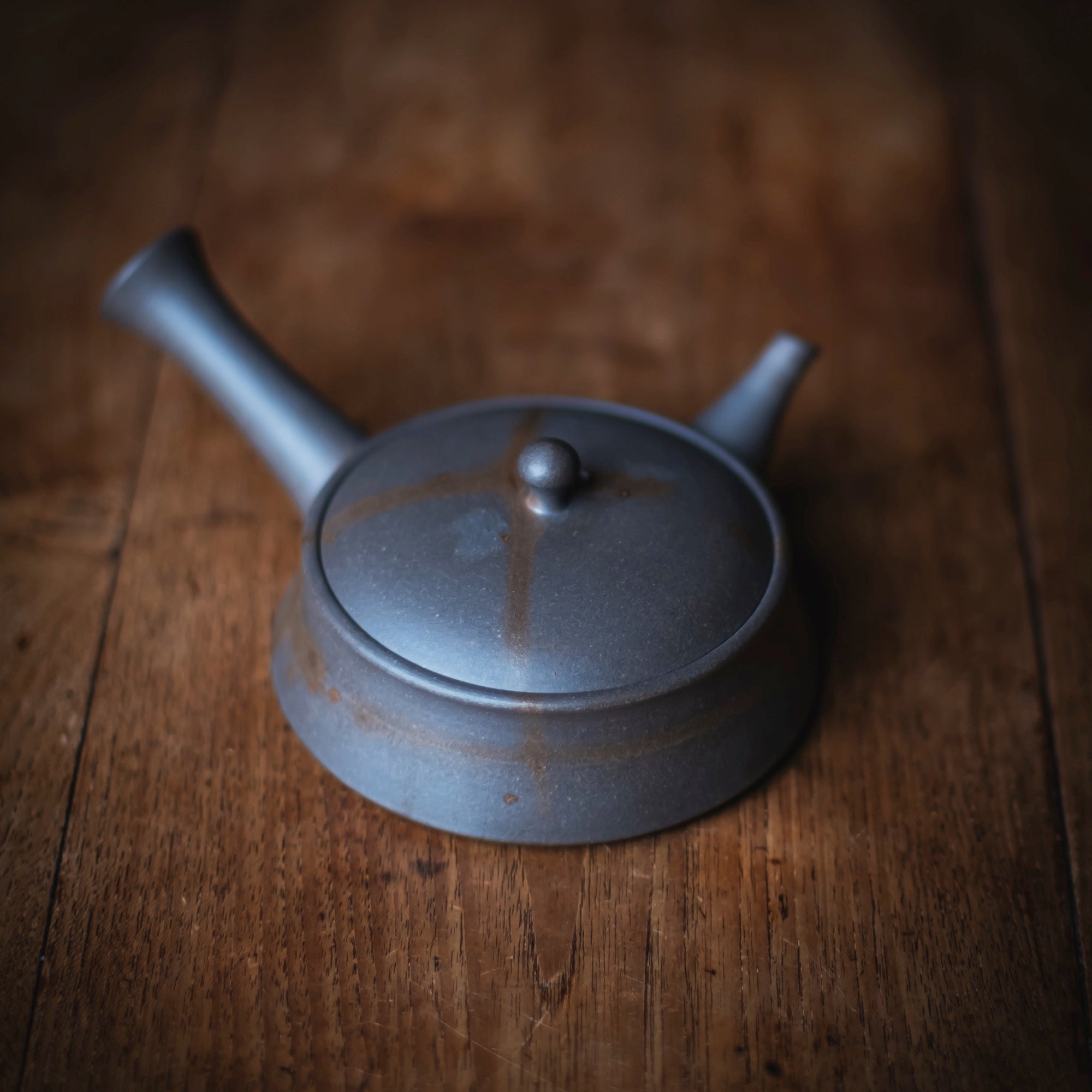
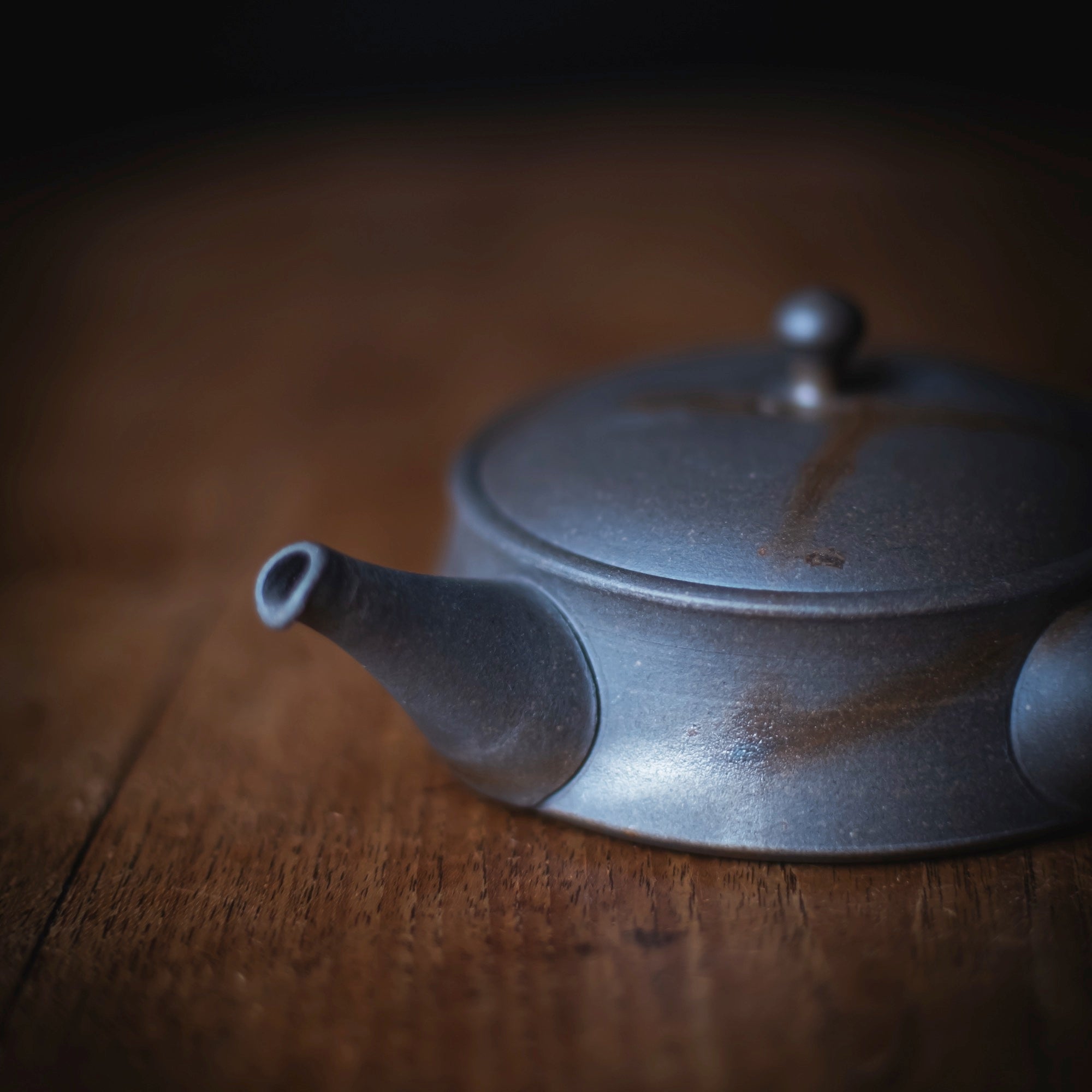
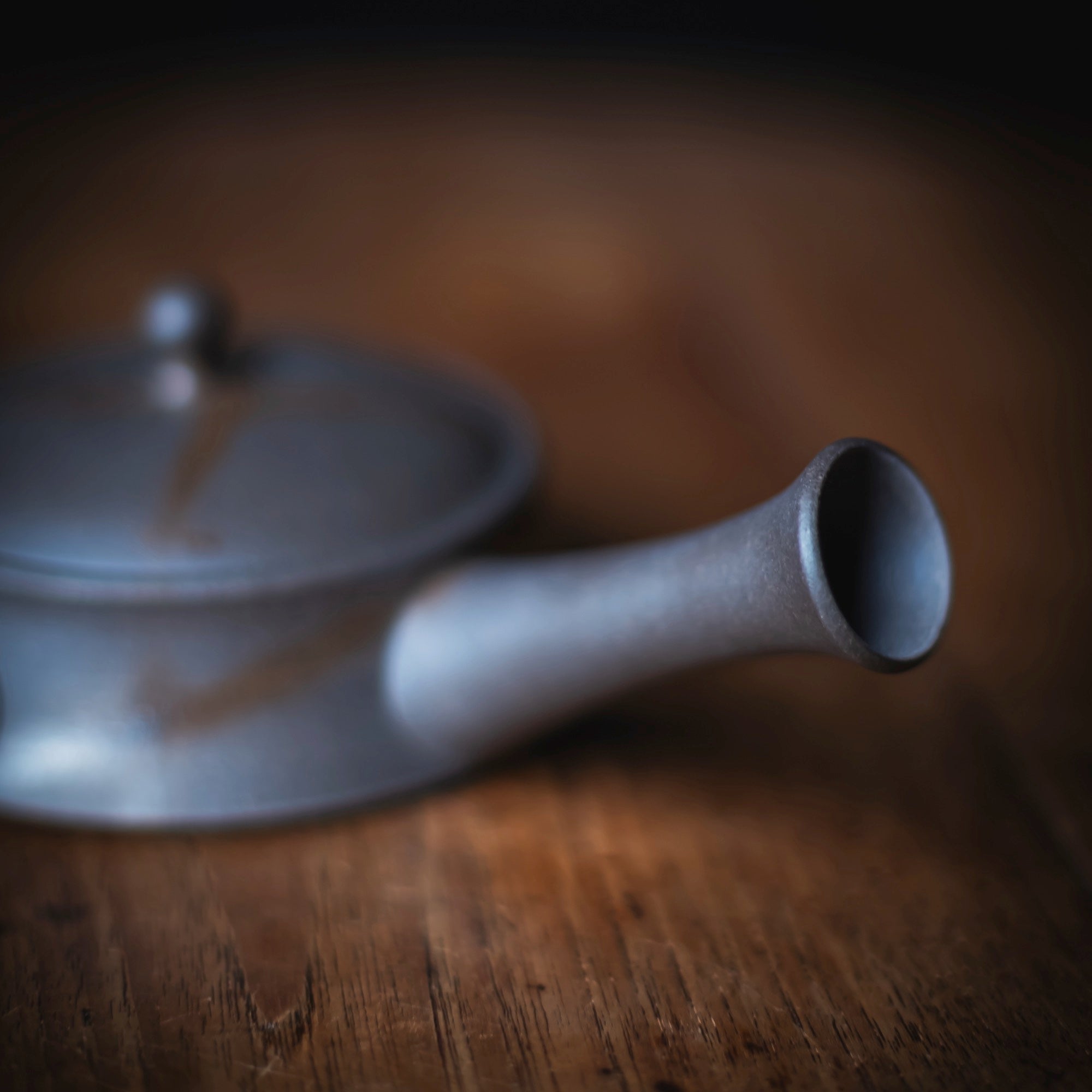
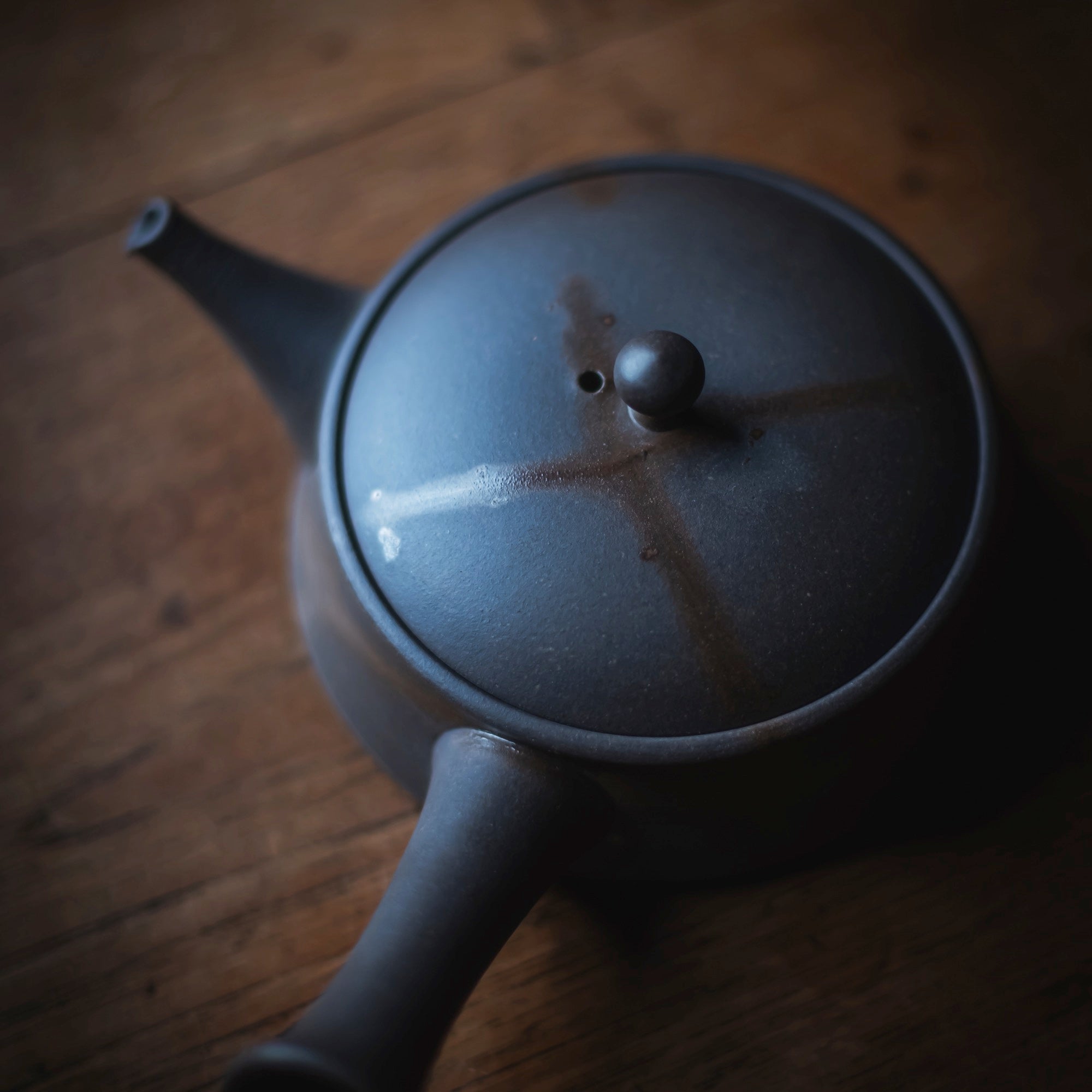
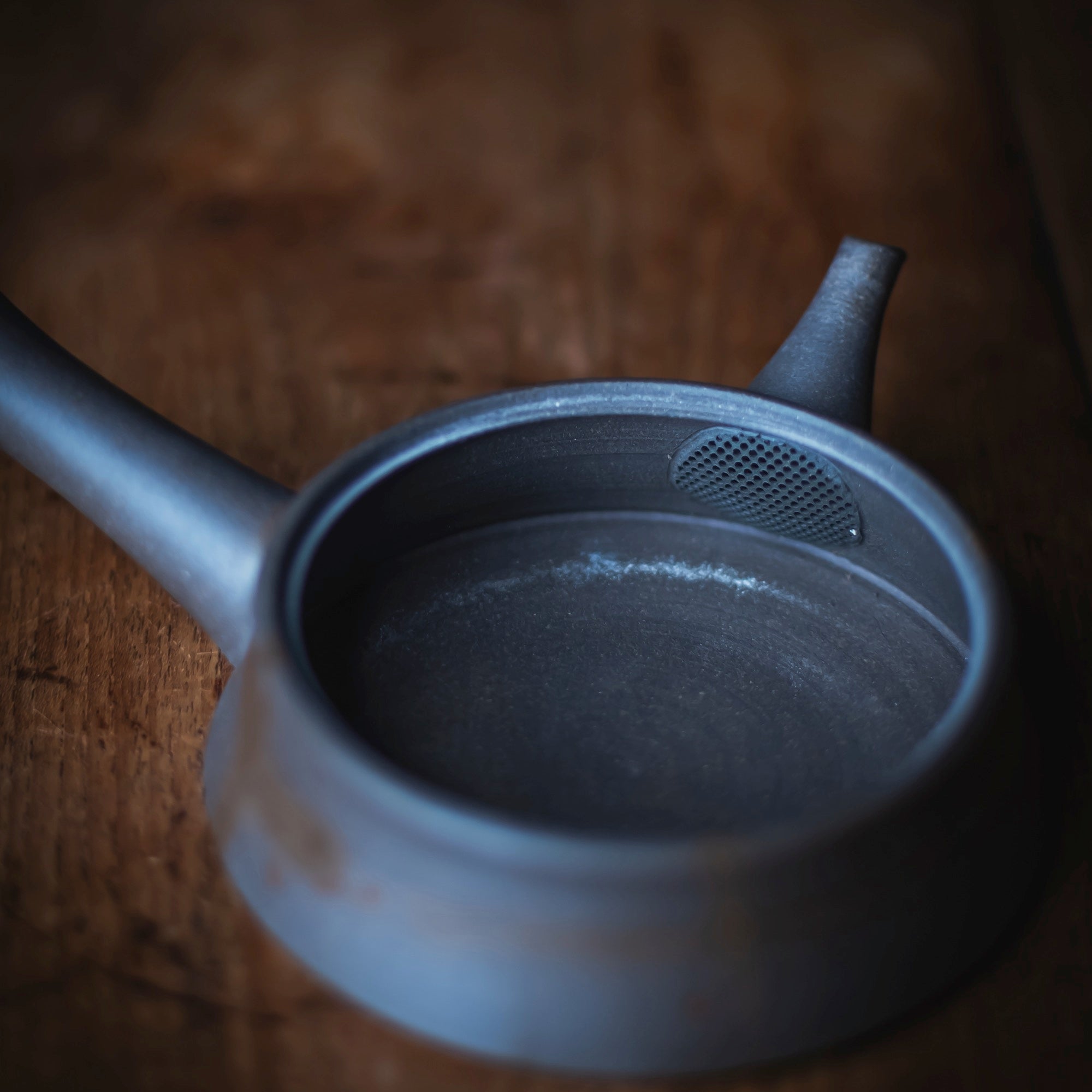
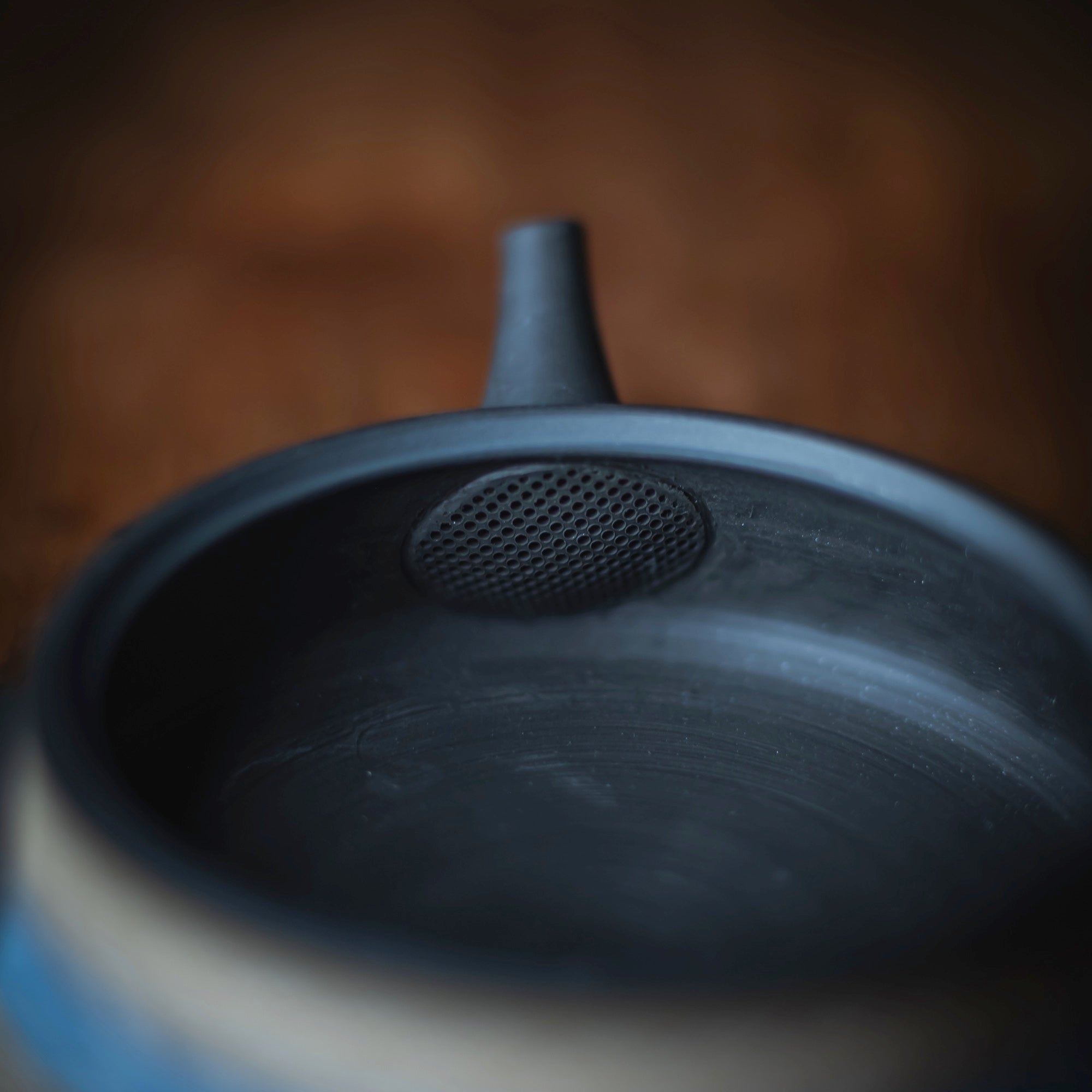
Isobe works in Tokoname stoneware, throwing very thin, light kyusu in flat hiragata and Fuji shapes from red shudei, black kokudei and silver-finished ginsai clays, some touched by the flame-colouring of yohen. His signature is inka: floral motifs impressed individually into layered slip, a Tokoname descendant of the Korean mishima tradition. A lifelong practitioner of sencha, he regards the kyusu first as a tool for steeping tea, and draws his sense of form from the way of tea itself.
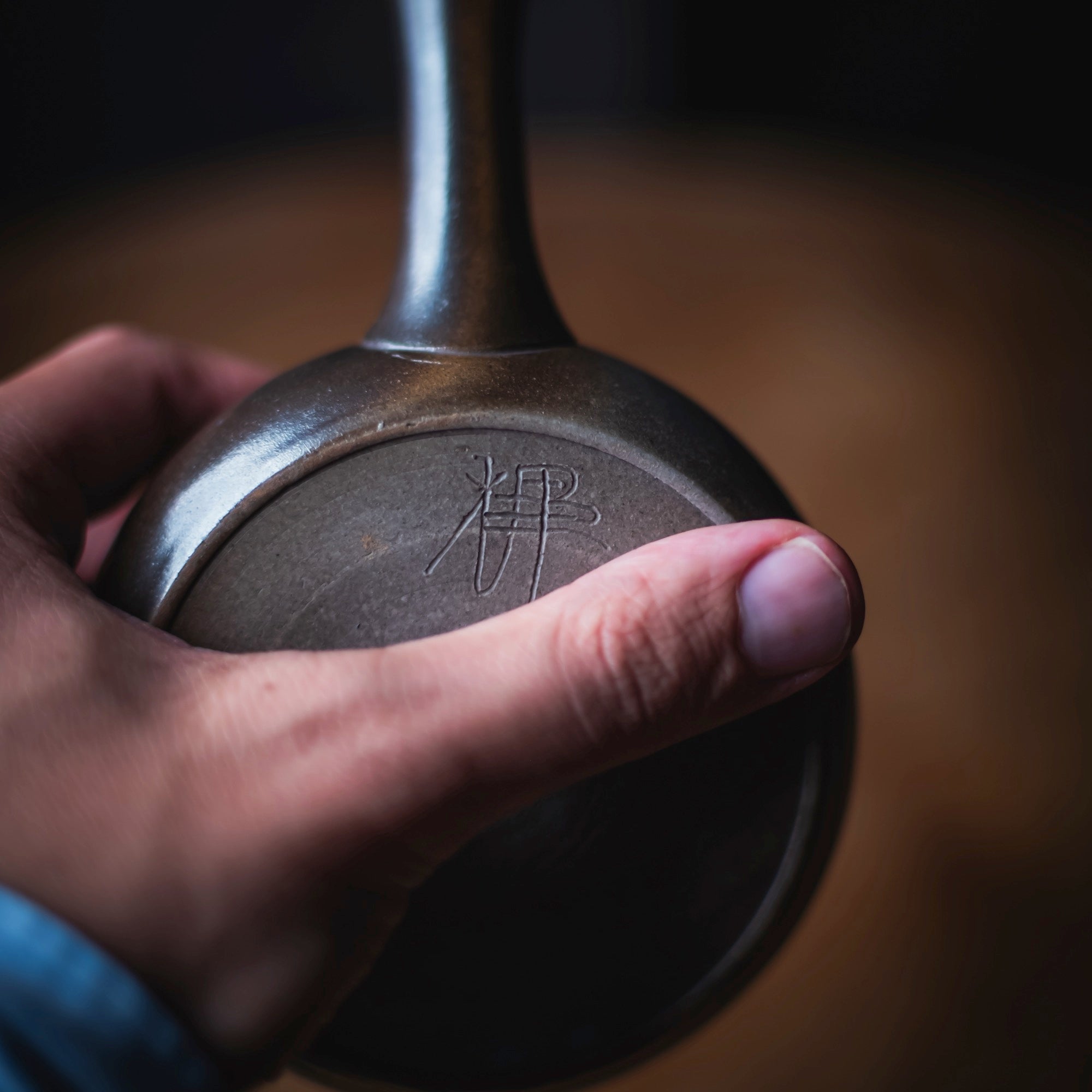
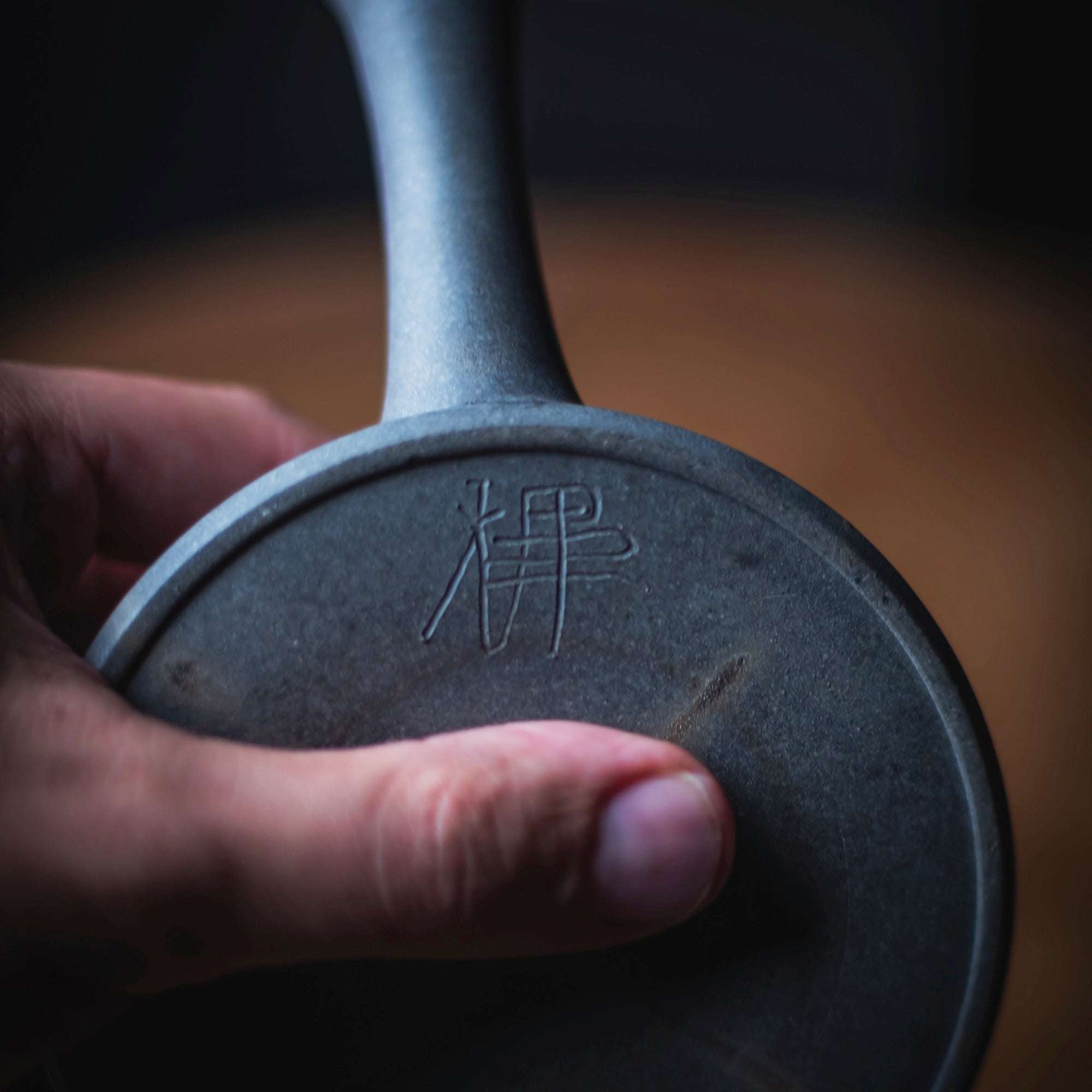
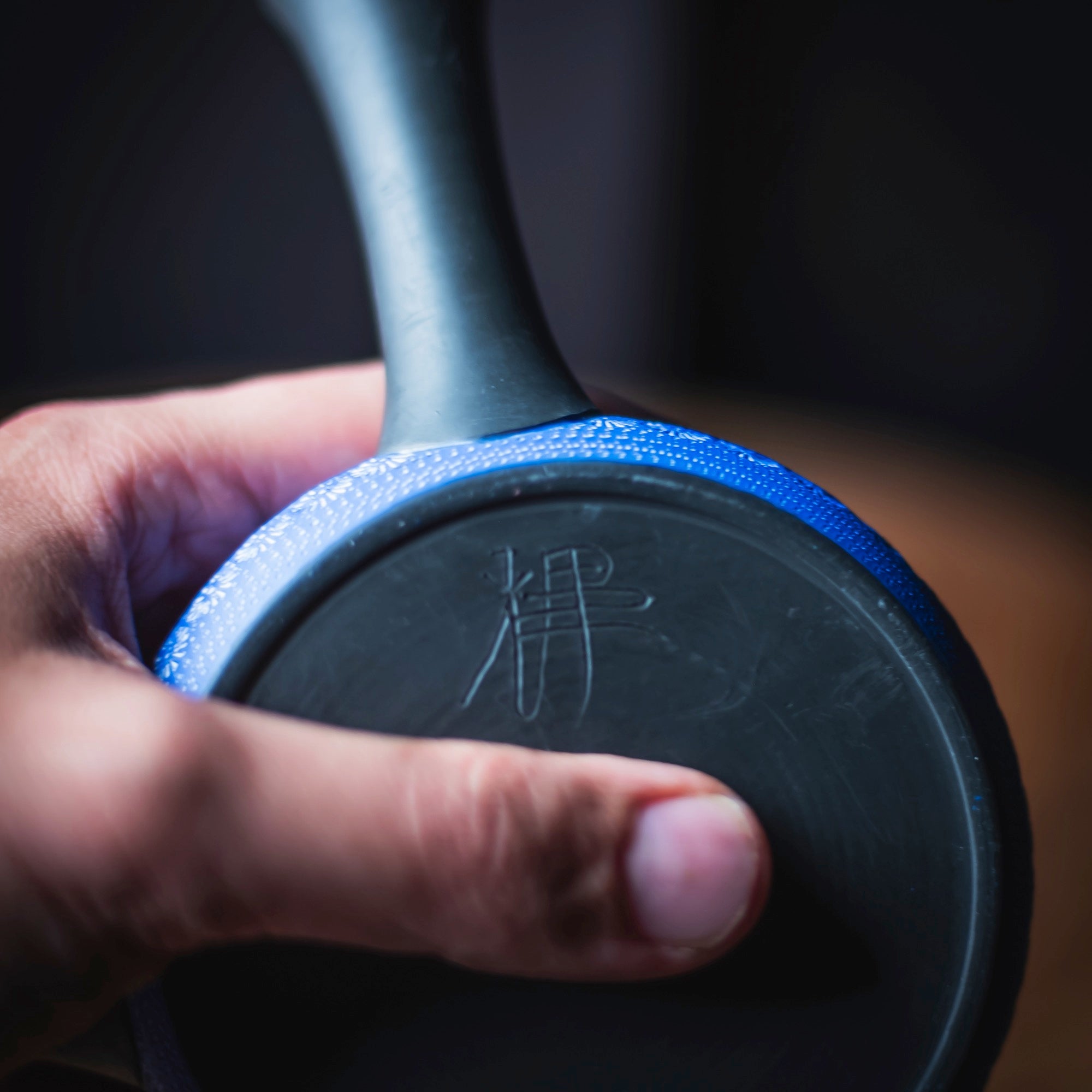
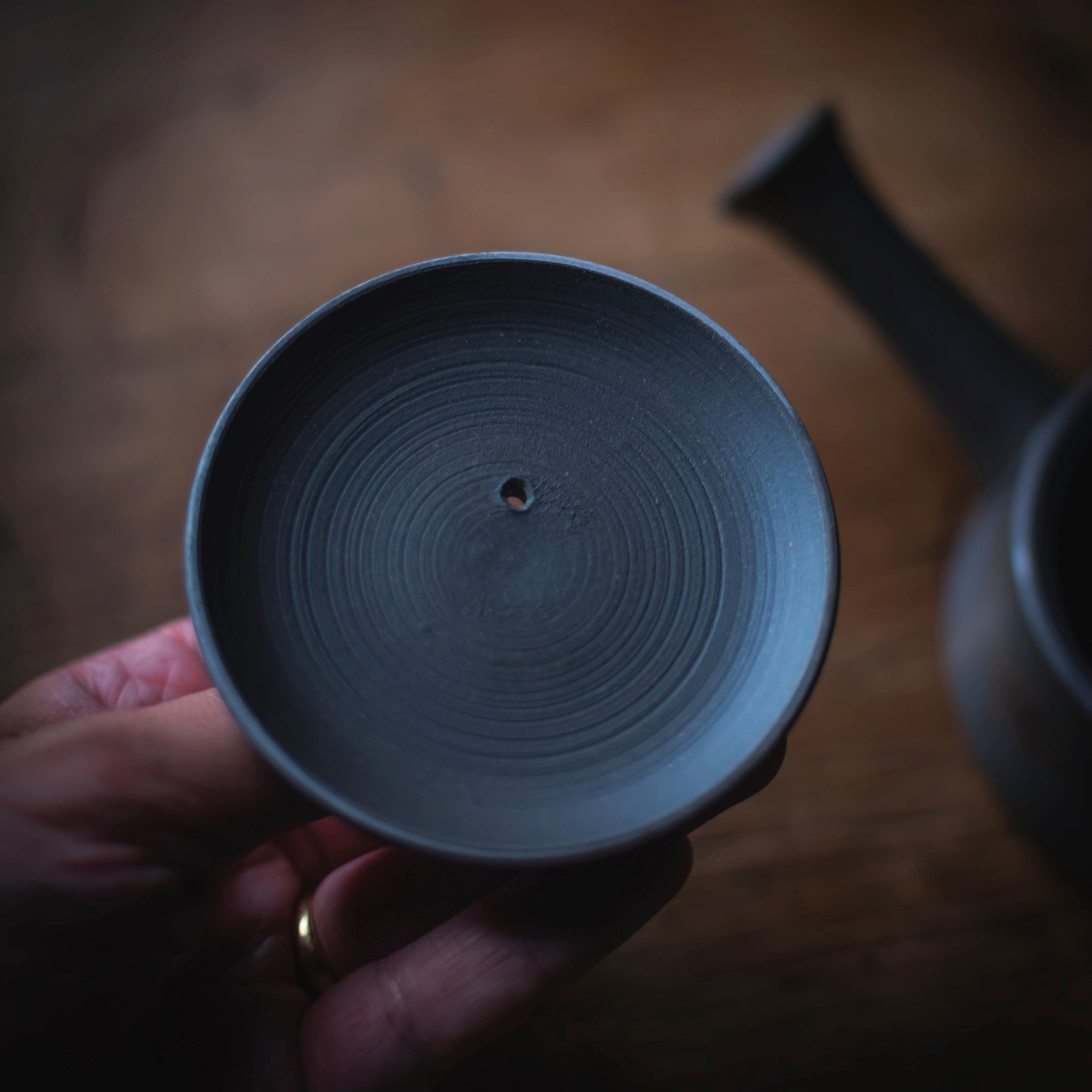
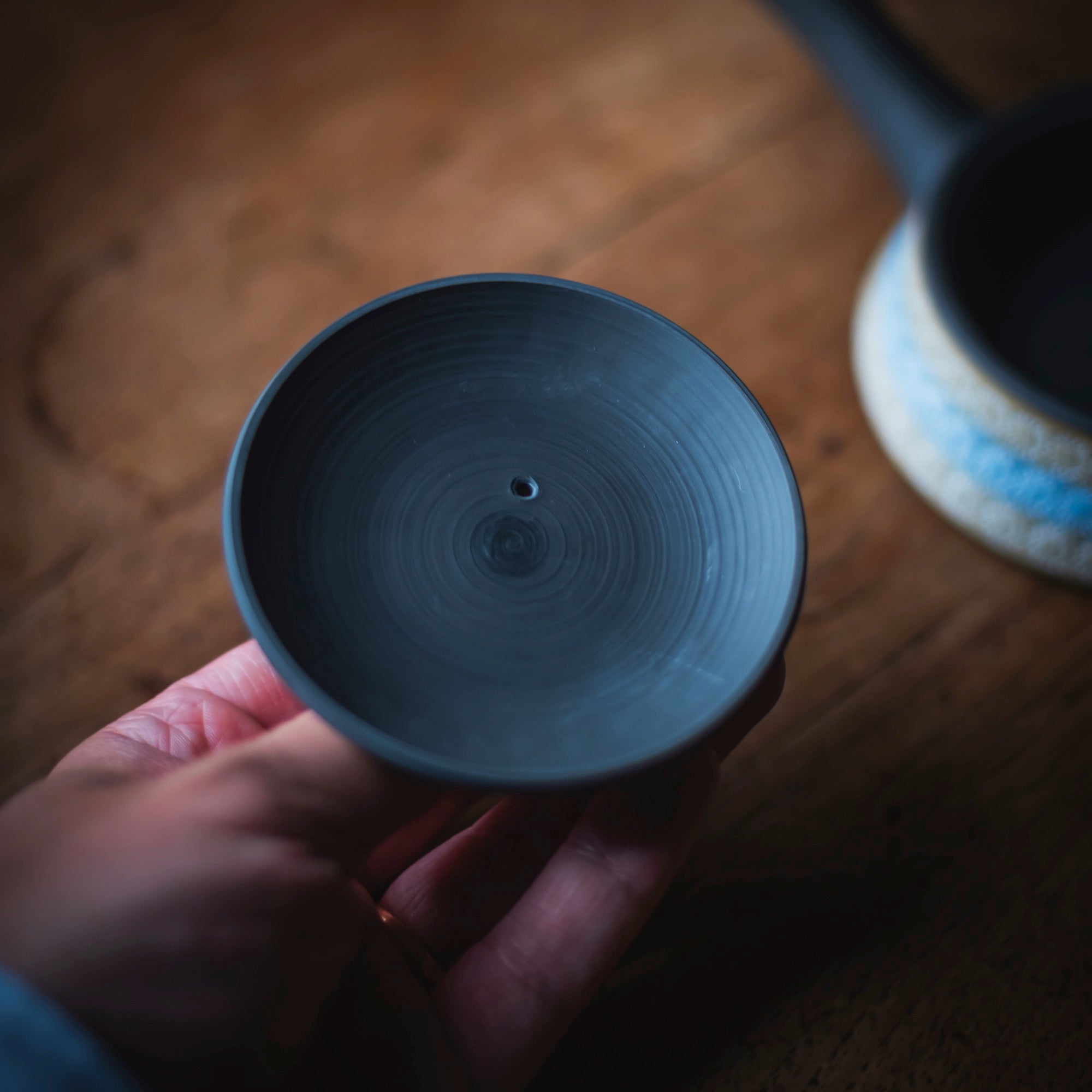
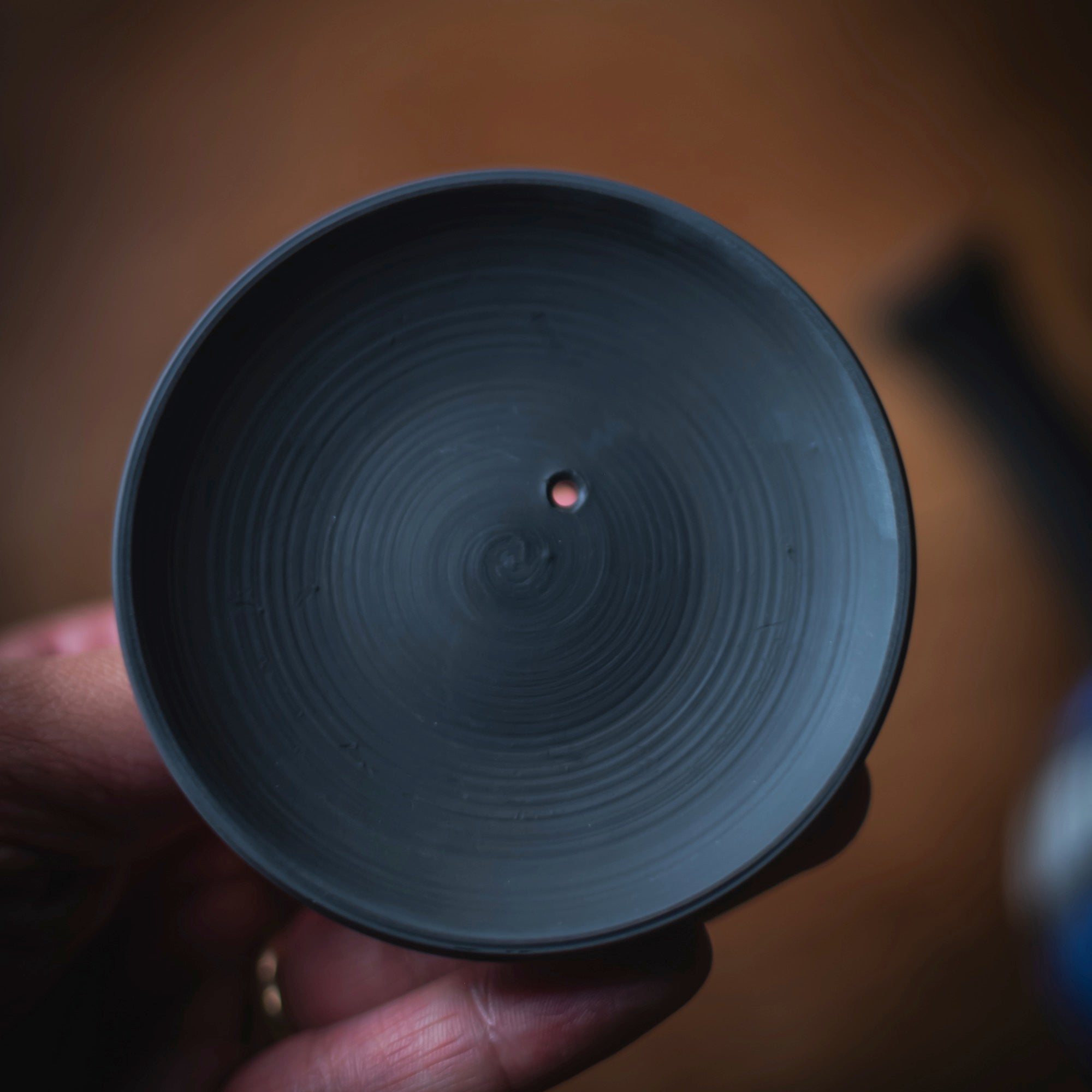
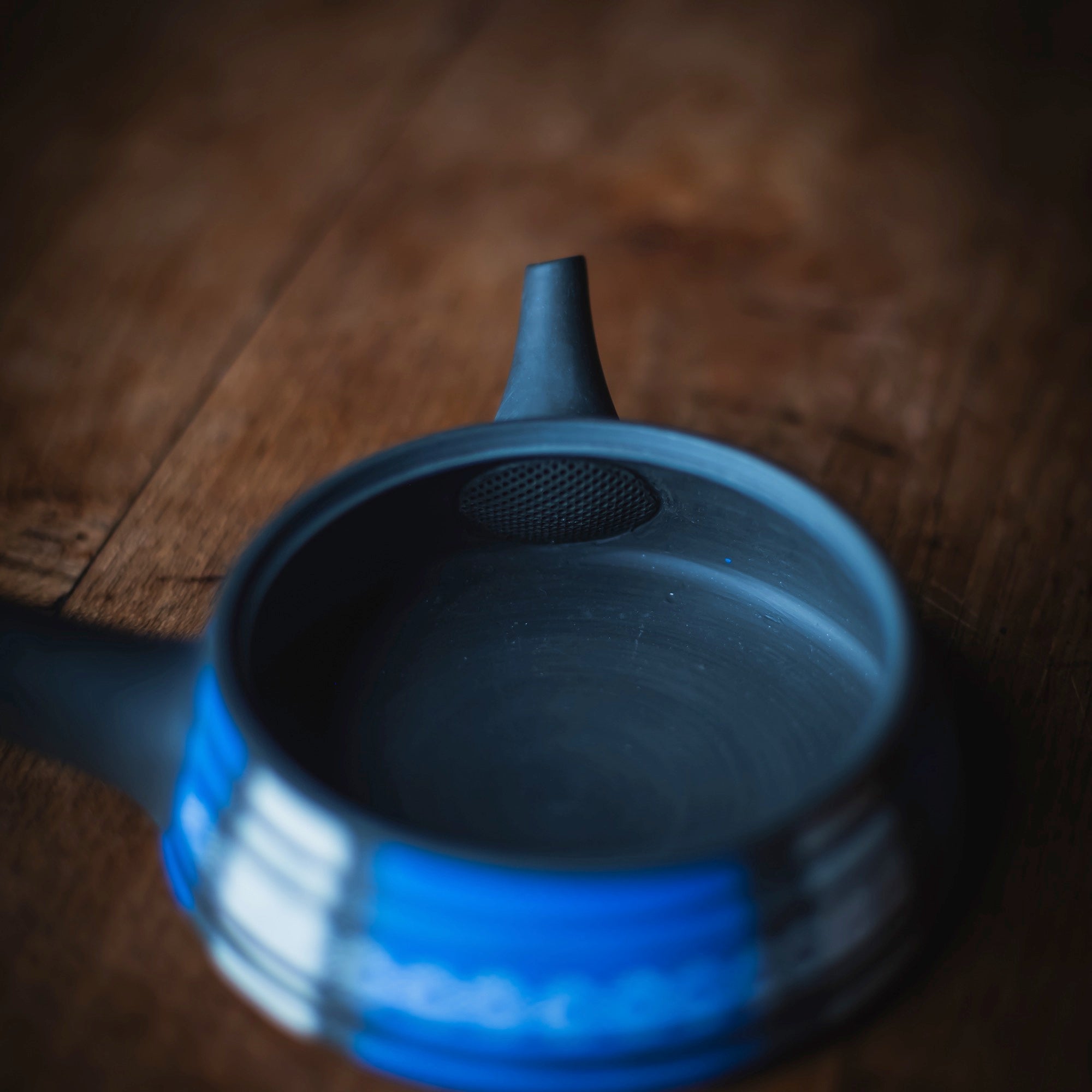
To hold one of Isobe's flat teapots is to feel how much skill hides inside restraint: walls thrown astonishingly thin, a lid that settles without a sound, and a surface quietly alive with hundreds of hand-pressed blossoms. After seven decades at the wheel, his pots wear their mastery lightly.